Cover Story Top Entrepreneur

John and Chris DeVoie Build a Brand — and a Following

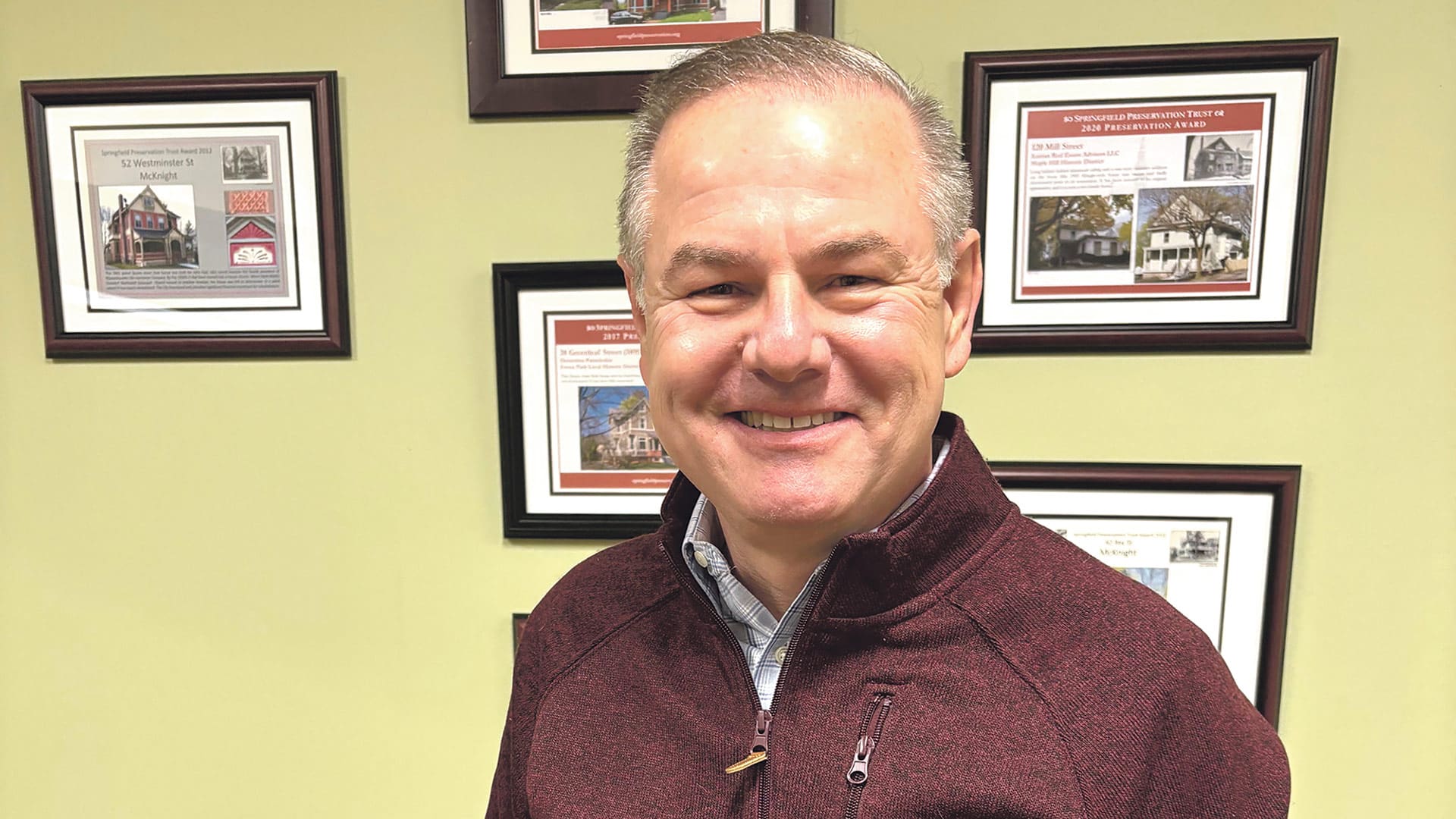
John (left) and Chris DeVoie

John (left) and Chris DeVoie
Photo by Bob Zemba, Simple Truth Imaging

It has established residency in one corner of the conference room at the Hot Table offices on the 23rd floor at Tower Square in downtown Springfield.

And the plaster statue of the character Captain Jack Sparrow from the Pirates of the Caribbean movies — salvaged from a closed seafood restaurant in the Plaza at Buckland Hills in Manchester, Conn., where it greeted visitors at the front door — speaks volumes about the Hot Table chain of panini restaurants and the entrepreneurs who have grown it to 13 locations. And counting.

It speaks to how far the chain, launched in the Breckwood Shoppes in Springfield in 2007, now reaches — south and east of Hartford — but also to how the chain has been able to capitalize on some real-estate opportunities, in this case that failed restaurant, to expand its reach. But mostly, it speaks to how founders and brothers John and Chris DeVoie like to collect memorabilia and, well … also have a good time.

“It was a seafood place with a kind of a pirate theme,” John explained. “The place was emptied out, we went in, demoed it, and that was left over, and we decided to take it and put it in our office. It makes a great conversation piece.

“It scared the cleaning people when we first brought it up here,” he went on, noting that the cigar-store-Indian-like artifact wears a nametag — Rich — for Rich Calcasola, a partner in the Hot Table venture based in North Carolina, so that he can have a physical presence in Springfield.

Other examples of memorabilia include a framed copy of the blueprint, if you can call it that, for the first Hot Table restaurant at the Breckwood Shoppes, now hanging in the sitting area of the Hot Table’s suite of offices at Tower Square, affectionately dubbed ‘Club 23.’ It’s just one sheet of paper, compared to the dozens of pages for some of the latest standalone locations in Chicopee and Westfield. And also the glowing red ‘Hot Table’ ordering kiosk, which sits in another corner of the conference room.

“We were doing great, and then the music just stopped. That was a scary time — we had an 80% drop in revenue from one week to the next. And that was before anyone was talking about PPP or a bailout. We were thinking … do we have a company.”

Other examples of fun include the vintage arcade game installed in Club 23, a nod to the games the DeVoies played in the ’80s — and how they still like playing them — as well as their increasingly famous billboard featuring a cheese-steak panini and the words ‘Bite Me.’

These various items speak to a business, a brand, and an entrepreneurial gambit that continues to grow, evolve, and become an ever-bigger part of the regional landscape, both literally and figuratively.

John (left) and Chris DeVoie with ‘Rich,’

John (left) and Chris DeVoie with ‘Rich,’ some memorabilia from a closed seafood restaurant in Manchester, Conn. that became the latest location for Hot Table.

And one that has earned its founders BusinessWest’s coveted Top Entrepreneur award for 2024.

First presented in 1996, the award pays homage to this region’s strong tradition of entrepreneurship and those that are continuing that legacy. Recipients have ranged from vodka-label founder Paul Kozub to former Springfield Technical Community College President Andrew Scibelli; from the Balise family of auto dealers to the D’Amour family still operating Big Y.

The story of the DeVoies and Hot Table echo some of the region’s better narratives of entrepreneurship, especially that of Curtis and Prestley Blake, founders of the Friendly’s chain of restaurants.

Not in size, certainly — Friendly’s grew to hundreds of locations in its heyday — but in how two brothers took a chance and created both a concept and a following, overcoming some growing pains and extreme adversity, especially during the pandemic, in the process.

“We were doing great, and then the music just stopped. That was a scary time — we had an 80% drop in revenue from one week to the next,” John said, recalling the early days of the pandemic. “And that was before anyone was talking about PPP or a bailout. We were thinking … do we have a company?”

As for size … well, with interest rates high and construction costs still soaring, continued expansion of Hot Table has become a difficult proposition. But the brothers DeVoie continue to look for opportunities and say there are likely to be some, especially with the attrition rate with restaurants in today’s changing, ultra-competitive market, and less sticker shock when it comes to real-estate prices in general.

Beyond expansion, the two like to focus on other aspects of this growing venture, from brand building to getting involved in the many communities where they now have a presence, to the opportunities, and mentoring, they provide to young people.

“We have a lot of success stories … people starting with pressing paninis and advancing to general manager and even regional manager,” Chris said. “Eight of our general managers are homegrown, and we’re very proud of that.”

There is much to be proud of with this growing business — especially the entrepreneurial spirit that launched it and has taken it to the next level.


Chain of Events

By now, most people in this region know at least some elements of the Hot Table story, such as its origins in the Breckwood Shoppes, just a few doors down from Sophia’s Pizza, where both John and Chris worked as delivery drivers while attending Western New England University just across the street.

“That’s how we got our start in the restaurant business,” said John with a laugh, noting that the experience did provide some valuable insight into the industry.

Many folks have also heard how the two, while both working in corporate sales for day jobs, blueprinted their venture in 2007 with an initial focus on coffee and an eventual shift to a design-your-own-panini format after John’s sister and brother-in-law saw such a setup on a cruise ship.

Or how they were turned down for financing by a slew of area lenders before finally securing a loan from Nuvo Bank, a startup in its own right.

Or how they made Tower Square their second location after essentially getting an offer they couldn’t refuse from then-owner MassMutual, and have been there ever since.

Chris (left) and John DeVoie at the company’s Chicopee location

Chris (left) and John DeVoie at the company’s Chicopee location, one of many new stores to open over the past several years.
Photo by Bob Zemba, Simple Truth Imaging

Or how they managed to survive the pandemic in large part because they were already developing an app that would enable people to order online and pick up at the store.

Or how they’ve expanded both within this region — with stores now in Chicopee, Westfield, Hadley, and West Springfield — and well beyond, going as far east as Route 495 in Massachusetts, and deep into Connecticut, with locations in Enfield, Manchester, Glastonbury, and West Hartford.

These are all elements to a compelling story, one that blends opportunity with vision, persistence, and creativity.

And, obviously, some entrepreneurial spirit, something the brothers say runs in the family — their mother, Lois, owned and operated the House of Flowers in East Longmeadow for nearly 40 years. With that background and degrees in business from Western New England in their portfolios, the two brothers developed “an itch to do something,” as John put it, while also working their day jobs.

This itch coincided with the return of John’s brother-in-law, veteran restaurateur Don Watroba, to this region. Watroba had owned and operated several eateries in the area, including Admiral DW’s, Captain DW’s, the Goldmine, and DT Smith’s, before selling them in the early ’90s, moving out west, and returning to this region when his father became ill.

“He was looking for an opportunity also, and we had this itch, so we teamed up with Don, who had some restaurant experience,” John explained, adding that they considered a seafood restaurant and other options before settling on sandwiches and coffee, and especially the latter.

“With John and I being on the road in sales — we were in a lot of different markets in the Northeast — we saw the rise of the café, the fast casuals,” Chris said. “And the coffee aspect was a big part of it.”

The other big part of it, the panini aspect of the venture, traces back to that cruise taken by John’s sister and brother-in-law, and with that concept, the Hot Table picture began to come into focus.


Entrepreneurial Flavor

Fast-forwarding a little, the two partners first made the significant leap from one location to two with the opening of the store in Tower Square, formerly home to Gus & Paul’s and, before that, coincidentally, a Friendly’s location.

“To do two locations,” Chris recalled, “that’s when you said, ‘whoa, we’re running a business, and it’s scalable — we can do this in two places, where we never thought that was possible. We’ve created something that people enjoy and desire. That’s great; it’s very fulfilling.’”

“To do two locations, that’s when you said, ‘whoa, we’re running a business, and it’s scalable — we can do this in two places, where we never thought that was possible. We’ve created something that people enjoy and desire. That’s great; it’s very fulfilling.’”

After that, they continued a pattern of expansion that took them across this region and then well beyond, to communities and locations that made sense: Enfield, Hadley, Marlborough, the Trolley Yard in Worcester, Corbin’s Corner in West Hartford, the jughandle off the turnpike exit in Westfield, Memorial Avenue in Chicopee, and space that was part of Table & Vine in West Springfield.

While adding new locations, the DeVoies and third partner Rich Calcasola have been building a brand, and using many vehicles, including social media and billboards, to do so.

While adding new locations, the DeVoies and third partner Rich Calcasola have been building a brand, and using many vehicles, including social media and billboards, to do so.

Several locations marked milestones, if you will. Enfield, which became a real confidence builder, marked the first time the Hot Table brand was taken to an area loaded with fast-casual competition, such as Panera Bread, Five Guys, and others. Chicopee was the first standalone, new-construction site. Marlborough marked the first venture to the eastern part of the state, and Worcester marked the next major population center.

Calcasola joined the business as a third partner in 2013, just as Watroba was essentially moving on to something else, and Chris gave up his day job and made Hot Table his sole focus in 2018. And over the years, the venture has become a true family affair, with Chris’s wife, Cara, now serving as HR director, and several members of the second generation taking jobs during school vacations and the summer.

The past few years have been extremely busy, with the opening of five new restaurants in 19 months — Westfield, Chicopee, West Springfield, and Franklin, as well as Manchester, Conn., a time that has been followed by a period of absorbing such rapid and profound growth.

“It’s like snake eating a rabbit — it takes time to digest all that,” said John, adding that the cost of each buildout grew higher as inflation climbed. And while those costs have stabilized somewhat, they remain high, making additional expansion a trickier proposition.

“We decided to pump the brakes and evaluate what we were doing because the return on investment was a different proposition,” he explained. “Something that cost $450,000 in 2022 is all of a sudden costing $800,000 in 2024.”

While hitting pause in many respects, the partners continue to search for opportunities for continued expansion, while also looking at the menu in an effort to identify ways to provide more value to consumers and create efficiencies.

“We always want to be nimble — the market changes quickly; that’s one of the things COVID taught us. We always have our eyes open and our ears to the ground, watch what’s happening in other cities and with trends, and not chase every shiny object, especially when it comes to the menu. Do what you do, and do it well.”

“We always want to be nimble — the market changes quickly; that’s one of the things COVID taught us,” Chris said. “We always have our eyes open and our ears to the ground, watch what’s happening in other cities and with trends, and not chase every shiny object, especially when it comes to the menu. Do what you do, and do it well.”

As for eventual expansion, John said the company will look to progress farther south in Connecticut, toward New Haven, along the Route 495 belt (going further east will likely be cost-prohibitive, and labor is in short supply, he noted), and perhaps into Rhode Island — the store in Franklin is near the border. As for the long term, Hot Table could eventually become more of a regional and then national chain, but the company would need to partner with an entity with expertise in capital to take that step.

“We’re going to continue to do what we do — look for good real estate,” said John, adding that franchising, which has been considered, is not in the cards at the moment.

“Getting into franchising is stepping out of the restaurant business — selling and supporting franchises is a completely different company,” he went on. “That’s not something we’re looking to do right now.”


Food for Thought

Beyond adding more restaurants — and collecting memorabilia — John and Chris say they’re hard at work building a brand and creating a culture, complementary assignments that have many aspects to them.

As for brand building, billboards — including ‘Bite Me,’ described by at least one friend as “slightly inappropriate” — are just a small part of the equation, as is a strong social-media presence.

Bigger parts include involvement in the community while also getting the Hot Table name out there. Examples include everything from a partnership with the Springfield Thunderbirds, which includes an animated panini race between periods, to providing meals to the Franklin High School football team; from support of the Hooplandia 3-on-3 basketball tournament at the Big E to setting aside a portion of sales on given days to support area food pantries.

An employee at the Chicopee location presses a panini

An employee at the Chicopee location presses a panini, a concept that has done well in several different markets where the chain now has a presence.
Photo by Bob Zemba, Simple Truth Imaging

Such efforts provide exposure and let people know this is a local, family-owned company, said John, adding quickly that many still believe this is a national chain and the brothers are merely franchisees.

As for culture, Hot Table is establishing itself as a good place to work, where young people (and that’s the bulk of the workforce) can find not only a first job — and many have — but also a real opportunity to grow and develop leadership skills. Indeed, Chris noted that several men and women have worked their way up from the panini line to management positions, progression that he’s proud of.

“They’ve grown with Hot Table — we’ve given them an opportunity to grow from making paninis to a supervisor to assistant manager to general manager,” he explained. “And we’ve had an opportunity to mold them in a way where they have an influence and help us create a culture of good service.

“Sometimes, you get people who have been in the restaurant business for a long, long time, they become hardened to the industry, and with that sometimes come mistakes,” he went on, adding that the ability to teach and mentor new talent is valuable. “And they bring a certain energy level — a newness.”

Jeff Sullivan, president of Springfield-based New Valley Bank — who, as a lender with the institution known then as United Bank, was among those who turned down the DeVoies as they sought financing for the Breckwood location — said the two have succeeded with their niche in large part because of their ability to listen to various constituencies, especially customers, and respond to what they hear.

“They’re very dedicated to continuously improving their business,” Sullivan said. “They are humble in the way they study their business processes and try to listen to the customer, adapting constantly based on the feedback they get from their customer base.

“I think of them as one of those companies that are setting a high bar for service and teaching very valuable lessons to young people, giving them the skills that they can use their whole lives,” he added.

That’s just one aspect of this intriguing success story, one that certainly builds on the region’s strong tradition of entrepreneurship.

Previous Top Entrepreneurs

• 2023: The Food Bank of Western Massachusetts
• 2022: Benson Hyde and Bruce McAmis, co-owners of Provisions
• 2021: Dinesh Patel and Vid Mitta, owners of Tower Square in Springfield
• 2020: Golden Years Homecare Services
• 2019: Cinda Jones, president of W.D. Cowls Inc.
• 2018: Antonacci Family, owners of USA Hauling, GreatHorse, and Sonny’s Place

• 2017: Owners and managers of the Springfield Thunderbirds
• 2016: Paul Kozub, founder and president of V-One Vodka
• 2015: The D’Amour Family, founders of Big Y
• 2014: Delcie Bean, president of Paragus Strategic IT
• 2013: Tim Van Epps, president and CEO of Sandri LLC
• 2012: Rick Crews and Jim Brennan, franchisees of Doctors Express

• 2011: Heriberto Flores, director of the New England Farm Workers’ Council and Partners for Community
• 2010: Bob Bolduc, founder and CEO of Pride
• 2009: Holyoke Gas & Electric
• 2008: Arlene Kelly and Kim Sanborn, founders of Human Resource Solutions and Convergent Solutions Inc.
• 2007: John Maybury, president of Maybury Material Handling

• 2006: Rocco, Jim, and Jayson Falcone, principals of Rocky’s Hardware Stores and Falcone Retail Properties
• 2005: James (Jeb) Balise, president of Balise Motor Sales
• 2004: Craig Melin, president and CEO of Cooley Dickinson Hospital
• 2003: Tony Dolphin, president of Springboard Technologies
• 2002: Timm Tobin, president of Tobin Systems Inc.
• 2001: Dan Kelley, president of Equal Access Partners
• 2000: Jim Ross, Doug Brown, and Richard DiGeronimo, principals of Concourse Communications
• 1999: Andrew Scibelli, president of Springfield Technical Community College
• 1998: Eric Suher, president of E.S. Sports
• 1997: Peter Rosskothen and Larry Perreault, co-owners of the Log Cabin Banquet and Meeting House
• 1996: David Epstein, president and co-founder of JavaNet and the JavaNet Café


Features Special Coverage

Hammer Down

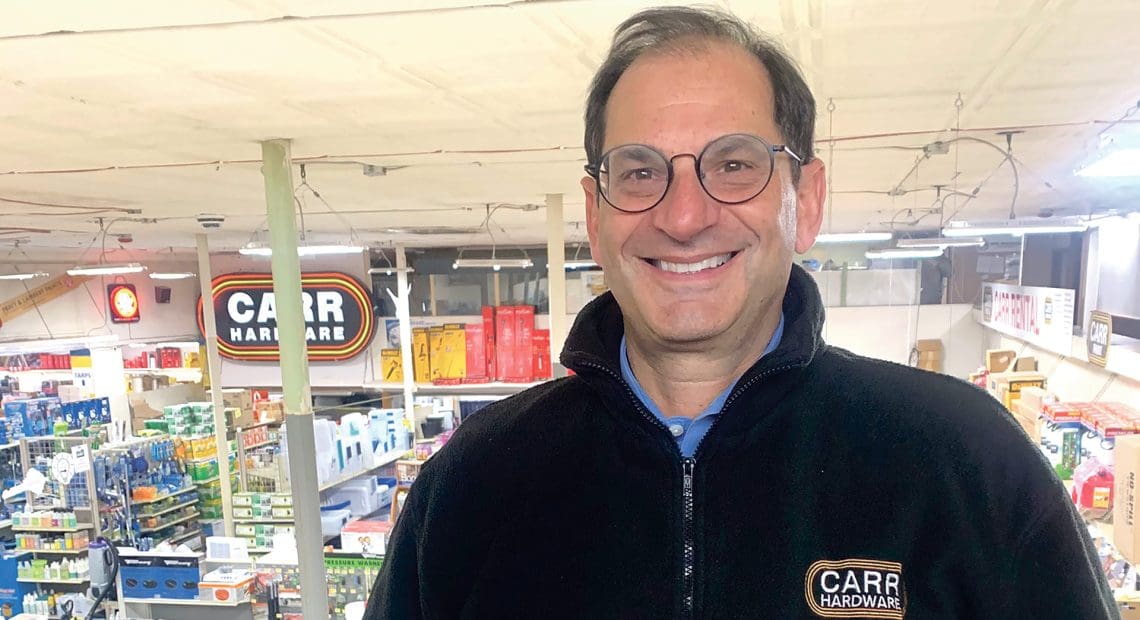
Bart Raser looks over the Carr Hardware location on North Street in Pittsfield.

Bart Raser looks over the Carr Hardware location on North Street in Pittsfield.

While he admits to practically growing up at the Carr Hardware store in Pittsfield, working beside his father, Marshall, during the summer and school vacations, Bart Raser says he had no real interest in living in the Berkshires or making the family business a career.

That all changed when, while he was working in Boston and studying for his MBA, his father became ill with cancer. Raser came home — meaning to the store on North Street — for what he thought might be several months.

“Instead, I kind of fell in love with it and never left,” he said. “It’s a good business. It’s been fun … and it’s still fun. It’s great when you can wake up and love what you do every day.”

Indeed, working beside his father, who was very active in the business until recently (and until he was in his mid-90s), Raser has helped write the latest chapters in an intriguing story that began almost a century ago when Sam Carr put his name over a hardware store that would soon become, and always has been, an institution as much as a place to buy paint, nails, and, more recently, a leaf blower.

An institution that has not only been part of the fabric of the community — in Pittsfield and now several other cities and towns where it has locations — but a force in those communities, with Raser and many of his employees getting involved on many different levels.

“If it wasn’t for our community, we wouldn’t be here, so we support a ton of organizations, we encourage our people to get involved, and we supply our people with the time, and the money if it’s needed, to get involved.”

“It’s a big part of our culture — we’re a community business,” he said. “If it wasn’t for our community, we wouldn’t be here, so we support a ton of organizations, we encourage our people to get involved, and we supply our people with the time, and the money if it’s needed, to get involved.”

As for the business itself, it has evolved and expanded its reach — moving into equipment rentals and a strong online component, and adding stores across Berkshire County and then beyond, with a location in Avon, Conn.

And there are certainly opportunities for more of this expansion, said Raser, especially as Baby Boomers move into retirement and look to sell some of the remaining small, independent stores still to be found in the region.

Bart Raser and his father, Marshall

Bart Raser and his father, Marshall, have grown Carr Hardware to a six-location chain (and counting) over the past 30 years.

“The challenge in our industry is there’s a lot of folks who own hardware stores who are late in their careers, and their kids have no interest in working the kind of hours that are required in retail today,” he explained. “And the business is not easy — it’s capital-intensive, the margins are tight, the competition is tough … you have to work hard.

“So there are plenty of opportunities today, and there are probably more coming,” he went on, adding that plenty of people are looking for such opportunities. “There are a lot of folks who want to buy these stores.”

With that, Raser — who now has his own children working summers and vacations doing everything from making deliveries to assembling grills — effectively summed up the state of this industry as well as the challenges and opportunities facing this nearly century-old business. For this issue, BusinessWest talked at length with him about all that and much more.


A Lightbulb Went Off

As he walked through the Pittsfield store with BusinessWest, Raser passed a row of snow throwers, an item that was in short supply and very hard to get at the height of the pandemic, but not so much the past few years.

“We have plenty of them … it hasn’t really snowed in two years,” he said with a voice that blended frustration with hard reality and an inability to do anything about it. “Let’s hope that changes this winter.”

Weather is just one of the myriad issues and challenges confronting those in the hardware business, a sector that, like many others in retail, has undergone tremendous change over the past few decades, in everything from the scope and nature of the competition — Sam Carr didn’t have Home Depot, Walmart, or Tractor Supply to contend with — to how business is done and what is sold or rented, from baby chicks in the spring to bounce houses.

“There’s all kinds of competition, and that competition has changed over the years,” he explained. “When I first came back, Sears was the big competitor, and that’s certainly evolved. Meanwhile, online is a huge competitor, Home Depot, Walmart, local chains — Rocky’s and Aubuchon — and the independents; there are several of them in the Berkshires.”

Like all Pittsfield-based businesses, this one had to cope with the downsizing of GE in the early ’90s and the huge impact it had, and still has, on the city’s central business district. And, like all retail businesses, this one faces the challenge of finding enough talent for its stores.

“The challenge in our industry is there’s a lot of folks who own hardware stores who are late in their careers, and their kids have no interest in working the kind of hours that are required in retail today.”

Before getting to all that, let’s go back to the beginning.

Calvin Coolidge was patrolling the White House when Sam Carr, a North Adams native who was working for someone else in the hardware sector, decided to go into business for himself. He started in a storefront just a few blocks down North Street, and eventually moved his venture into what had been a Sears Roebuck location, and before that a car dealership, at 547 North St., and the Carr name has been over the door ever since.

In 1962, Marshall Raser, who was already in the hardware business in Quincy with his brothers, met Sam Carr and decided to expand, if you will, into the Berkshires.

“My dad bought Carr Hardware, his brothers stayed in Quincy, and he ran Carr Hardware; together, they were all partners,” Raser noted, adding that the expansion into other Berkshire-area communities began in the ’80s with locations in Lee and Great Barrington. Eventually, what would become a chain had a presence in North Adams as well, before the venture moved into other area markets.

Including Avon in 2019, a Connecticut expansion that certainly wasn’t planned.

“I went in to buy their fixtures, and I walked out with the keys,” he said, referring to a store that was closing its doors, only to open again with a new name over the door. The search for fixtures was prompted by Carr’s purchase of an independent store in Longmeadow and the need to relocate it to make way for a Big Y expansion, a move that brought the chain to Enfield, Conn., a store that would close after seven years of operation.


Nailing It Down

As he talked about the company’s past expansion efforts — and also what might happen in the future — Raser referenced the attrition rate in this business, which has grown steadily higher over the years, even within his own family; indeed, in addition to the Enfield store, which suffered from a poor location, a store in Great Barrington operated by his cousins eventually failed, to be replaced by one opened by Bart and Marshall Raser.

employees take part in downtown Pittsfield’s annual spring cleanup

As part of Carr Hardware’s long tradition of being involved in the community, employees take part in downtown Pittsfield’s annual spring cleanup.

To survive and thrive these days, hardware ventures need several key ingredients, he said, starting with size. Indeed, chains have an enormous advantage over single, standalone stores when it comes to buying power and economies of scale, Raser said, adding that this is one reason why he is continually looking for expansion opportunities.

Meanwhile, a diverse portfolio of products and services is another must, he noted, adding that the company’s equipment- and event-rental business is a good example of such diversity.

“Rental is an important part of our business now,” he said. “If you had told my dad or Sam Carr that we would be renting bounce houses and cotton-candy machines, they’d think we were crazy, but it’s a great part of our business.”

The same can be said for small-engine repair and even the sale of chickens, which started in three of the stores several years ago and remains brisk.

Meanwhile, a large, effective online presence is also a must, and Carr has achieved that as well.

“It’s such a small part of our total volume, but it’s such a fast-growing piece; it grew by more than 100%,” he explained, adding that, while there’s a large volume of returns, consumers are becoming ever-more comfortable with buying hardware online.

Still, when it comes to most projects and products, consumers still need advice, which is why in-store service from qualified experts is another key to success, and Carr features that as well.

As for size, as he noted earlier, Raser said he’s continually looking for growth opportunities, but they have to make sense, and he isn’t looking to grow just for the sake of growth.

“I’ve walked away from far more than I’ve bought,” he said of stores that come on the market, adding that everything has to be right with an acquisition candidate, from the location to the condition of the store to the price, obviously.

“In many cases, people value their business for more than it’s really worth; with these small businesses, there are emotional connections, and they’re multi-generational,” he noted. “We have a lot of things we look at when considering an acquisition, and the biggest is culture, but the metrics have to make sense as well.

“We’re willing to go where there’s opportunity,” he went on, when asked where the company might go next. “But ideally, we would like to fill in the map; it would be great to have something between Great Barrington and Avon.”

Meanwhile, in the communities where it already has a presence, the company makes getting involved a huge part of its culture.

As Raser noted earlier, this is a top-down proposition. He has served, and continues to serve, on a number of different boards, and the company not only encourages employees at all levels to get involved, it gives them the wherewithal — the time off and whatever else they need — to do so.

“If they’re passionate about being a volunteer firefighter, or they want to coach a soccer team, or get involved in Little League, whatever their passion is, we really encourage them to do that,” he told BusinessWest. “And we’re happy to help them support the organization — that’s our starting point.”

It’s just one of many traditions, carried on for almost 100 years now, that promise to continue for decades to come.


Education Special Coverage

Learning Process

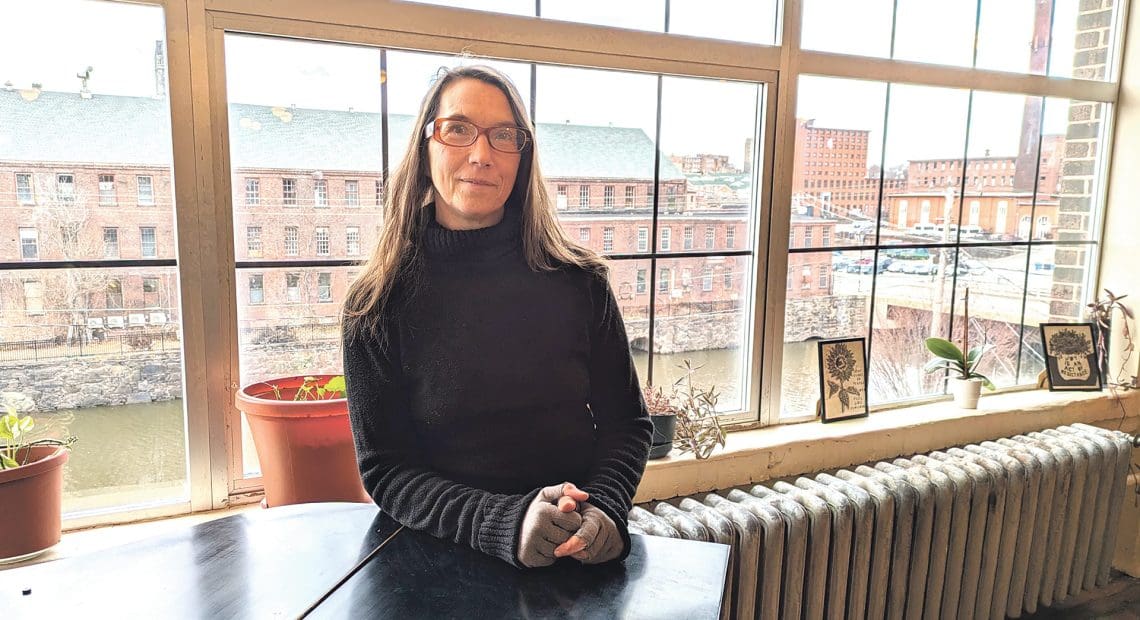
Executive Director Catherine Gobron

Executive Director Catherine Gobron

July 18 to Sept. 3. That’s 47 days. Not quite seven weeks.

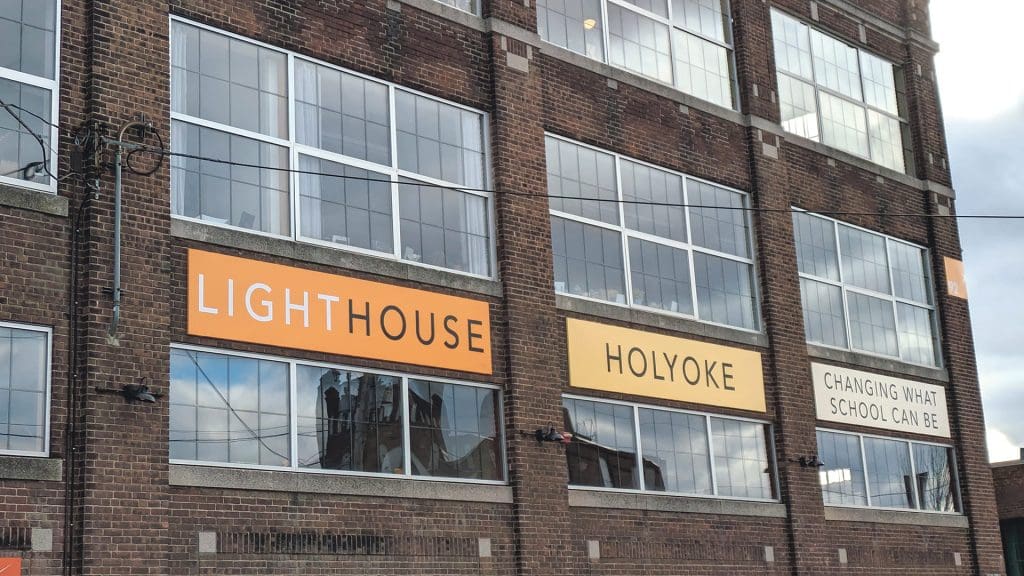
That’s how much time LightHouse Holyoke, a non-traditional middle and high school celebrating its 10th year in operation, had between its purchase of the Gateway City Arts property on Race Street and the start of classes for the 2024-25 year.

Executive Director Catherine Gobron called that whirlwind of activity “amazing” as she gave BusinessWest a tour of the facility during the recent holiday break and reflected on the past few months; the school’s impact on students, many of whom thrive there more than they would a traditional public school; and how the new location opens up more educational programs — and potential career paths — for these teens.

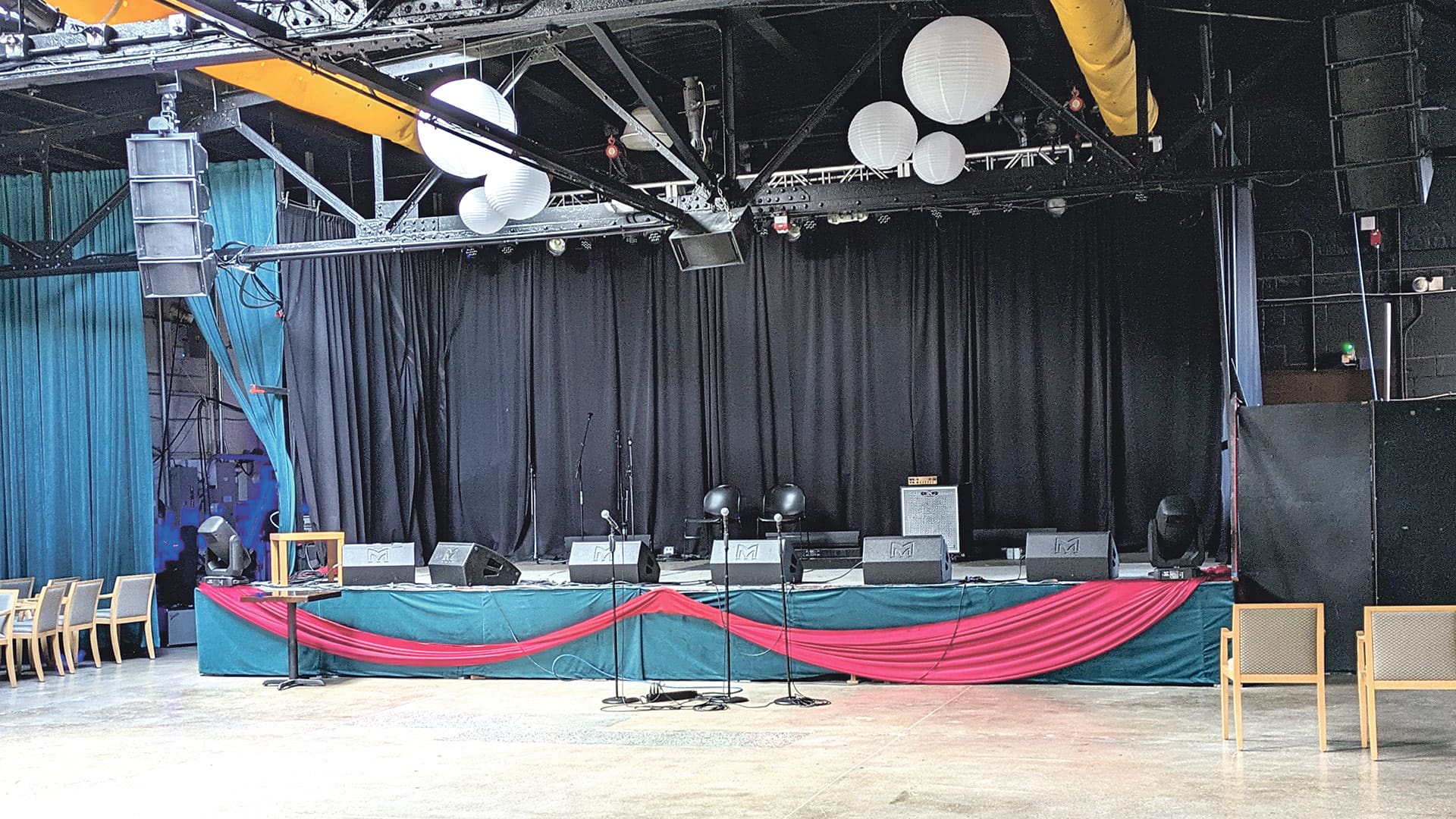
Take, for example, a production academy integrated into two existing performance spaces, a small theater and a larger concert venue that has hosted national touring acts through the years; together, they will allow for training and internship opportunities for young people to learn the many skills associated with the entertainment and event-production industry, from lighting and sound to artist management and beyond. Isaac Eddy, a 12-year veteran of the Blue Man Group, is developing the theater program.

“Our expenses have gone up quite a bit, and we’re still really figuring out how that’s all going to work. But we’ve got a vision to grow it, and I can see it.”

“Different aspects of the work appeal to different students — some kids are really lit up by how to use the lighting board, and other kids are interested in learning sound. Some of these young people, we predict, will go on to careers in the music industry or in the production industry,” Gobron explained, adding that LightHouse is also developing partnerships with the Fine Arts Center at UMass Amherst and a local theatrical stage union, “so hopefully we can feed young people into the union. which would be a win-win.”

Similarly, the complex’s café will reopen to the public, with integrated courses and internships in all aspects of running a café, leading to paid work and future career opportunities. The complex also hosts an 8,000-square-foot community maker space, complete with a woodshop and ceramic studio, hosting classes and workspaces both for LightHouse students and accessible to the wider community.

LightHouse bought the Gateway City Arts complex

LightHouse bought the Gateway City Arts complex on July 18 and started classes on Sept. 3 — a whirlwind of activity Catherine Gobron calls “amazing.”

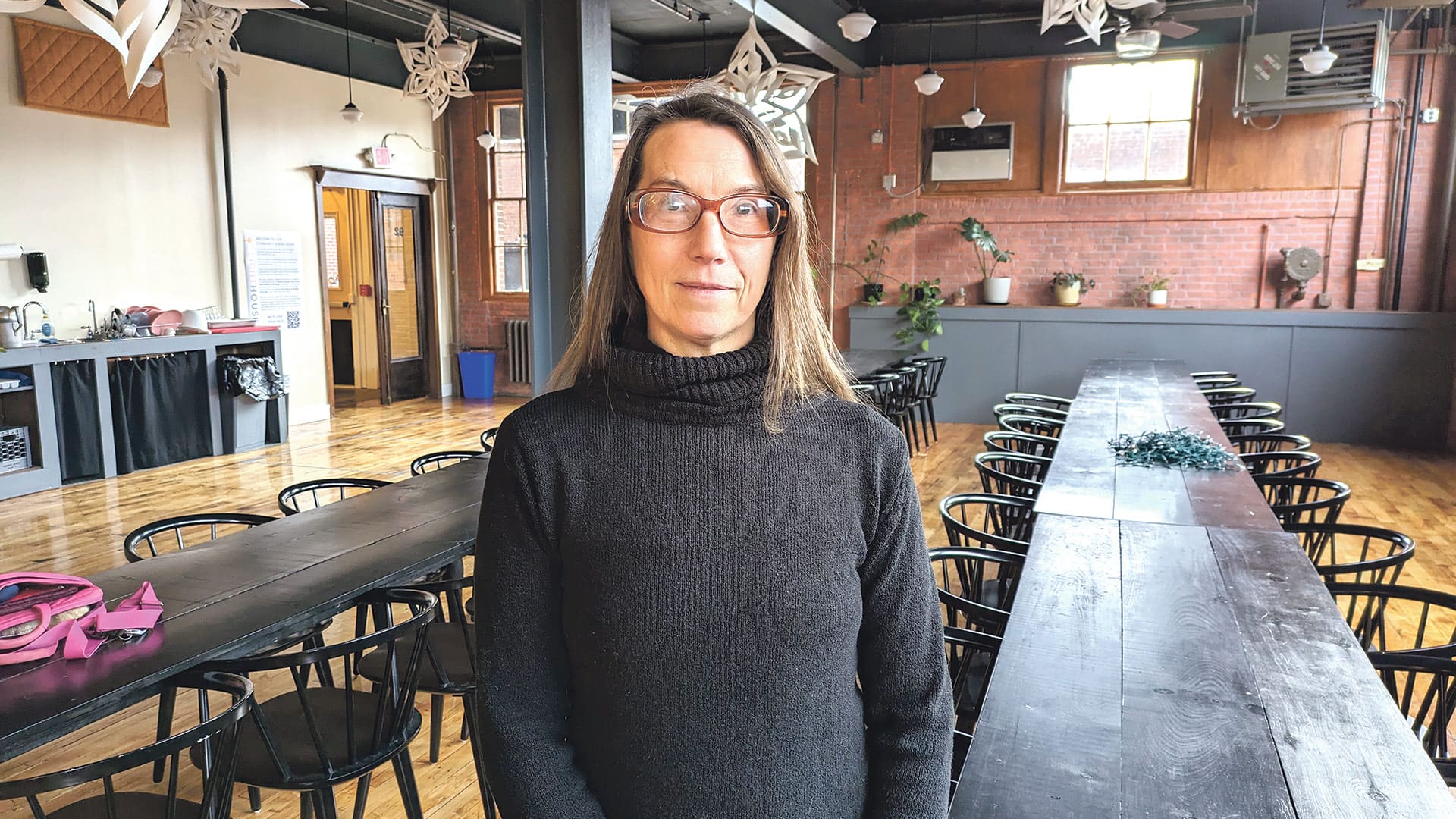
Gobron is also excited that the just-opened kitchen space will serve both the café and student lunches, meaning the school no longer has to rely on one of the large, national lunch suppliers.

“It’s really exciting that we’re going to have a real lunch program, and we’re going to eat together in the dining room every day,” she said. “Many of our young people are not arriving with strong skills or awareness or resources around healthy food choices, and that can have dire consequences.”

So there’s plenty of excitement at LightHouse — which currently enrolls about 75 students and could double that with more buildout — but also a sense of challenge.

Through what Gobron has called “a steady stream of community-supported miracles,” the school raised $1.5 million toward purchasing and renovating the 40,000-square-foot property, and borrowed another $2.5 million in partnership with Greenfield Northampton Cooperative Bank and MassDevelopment. Collaborators on the project included HAI Architects, Houle Builders, and Sarah Reid at Small Victories Interior Design. A second capital campaign aims to raise another $1.5 million; that’s on top of an annual budget that relies partly on tuition, but with philanthropy covering about one-third of the total.

“A lot of times, if a young person isn’t thriving in school, we think that’s the young person’s fault: they have ADHD, they have whatever. We often don’t talk about it as a systemic problem. Here, we don’t try to blame the kid.”

But the school’s mission is important, Gobron said, which is why these efforts are not just challenging, but gratifying. “Our expenses have gone up quite a bit, and we’re still really figuring out how that’s all going to work. But we’ve got a vision to grow it, and I can see it.”


Impactful Journey

Gobron’s life experiences led her to a non-traditional path in the world of education, and eventually to the launch of LightHouse in 2015 along with then-business partner Josiah Litant.

“High school was terrible for me, and I ended up leaving during my senior year. I was a strong student academically, but it was a really negative space for me in other ways,” she recalled. She started her career in alternative education at a Montessori school and eventually made her way to North Star Self-Directed Learning for Teens in Sunderland, where she stayed for 12 years.

While program director there, she dreamed of opening a school in Holyoke focused on self-directed learning that would serve a more urban, diverse population. She and Litant, an education consultant who had worked at Hampshire College, found a home in the Sustainability Technology Entrepreneurship Art Media (STEAM) building on Race Street, which, like Gateway City Arts, was owned by Vitek Kruta and Lori Divine.

Catherine Gobron stands in the school’s dining area, where students will benefit from a just-launched in-house kitchen.

Catherine Gobron stands in the school’s dining area, where students will benefit from a just-launched in-house kitchen.

Gobron said the model isn’t as radical as it sounds, as college students typically craft their own degree track within certain parameters. “But we typically don’t recognize the value in that when it’s teenagers.”

Especially those, like herself, who don’t feel they fit into a traditional high-school structure.

“A lot of times, if a young person isn’t thriving in school, we think that’s the young person’s fault: they have ADHD, they have whatever. We often don’t talk about it as a systemic problem. Here, we don’t try to blame the kid,” she said, noting that LightHouse’s opening coincided with Holyoke Public Schools entering state receivership (which was lifted in 2024). “There were so many kids struggling, we couldn’t blame them anymore. The system had to ask, ‘OK, what are we doing?’ And there was a window of openness to other possibilities that might have otherwise seemed kind of crazy.”

LightHouse actually has partnerships with the public school systems in Holyoke and other communities, taking in a handful of students who are technically enrolled with the city, but do their learning at LightHouse.

“The students they’re sending us are typically disengaged,” Gobron said. “A lot of times, we hear from parents, ‘I used to have a curious and excited kid, and somewhere, that went away.’ And now we have this child who’s kind of shut down and disengaged, thinks that they hate learning, or have any number of challenges.”

“A lot of times, we hear from parents, ‘I used to have a curious and excited kid, and somewhere, that went away.’ And now we have this child who’s kind of shut down and disengaged, thinks that they hate learning, or have any number of challenges.”

Each student has an advisor that becomes their point person, she explained, both for the student and their family — with ‘family’ being an adaptable term. “Some students have two parents; some students have four parents; some students have a grandmother, a social worker, and a probation officer. And the advisor creates a team of support around the student.”

Students are encouraged to pursue their own interests — sometimes with immediate, real-world applications, as with the burgeoning event-production and culinary programs — but still need to achieve the same graduation requirements, in terms of credits and testing, as public-school students in Massachusetts.

“We believe that young people can and should be supported to be the leaders of their own lives,” the school’s website states. “We know that learning is most successful when it is actively chosen and personally meaningful. For us, the purpose of education is to collaborate with young people to cultivate the skills, confidence, and vision to co-create the future.”


Success Stories

Incoming students tend to fall into one of several categories, Gobron noted: young people with passions and interests who seek more time, support, and flexibility to pursue them; those who come from negative schooling experiences, may learn differently, or be anxious, depressed, bullied, ostracized, struggling academically, or managing other challenges; and teens somewhere in the middle, who are open to the possibility of being inspired, but aren’t there yet.

One senior student recently wrote an essay on her experiences, and how she always liked learning, but faced a combination of bullying in middle school and struggles at home.

The stage where many locals have enjoyed concerts over the years will now showcase a blend of student training and community events.

The stage where many locals have enjoyed concerts over the years will now showcase a blend of student training and community events.

“I went from being an honor-roll student to skipping classes and not learning a single thing,” she wrote. “I was so consumed by depression and anxiety that I felt suffocated. I understand that it was a tough time for everyone when COVID hit, and school became completely different, but I’d never done worse in my life in terms of grades. COVID was my excuse. I hid all the parts of me that I deemed weak behind my face mask. I was at an all-time low, and I accepted it.”

Until she found LightHouse — very near her home, actually — and began to reclaim her passion for learning.

“LightHouse was very supportive of me. I’d been used to being treated in a lot of ways. I knew when I was being brushed off, neglected, or taken advantage of, so this feeling was very odd.”

“LightHouse was very supportive of me. I’d been used to being treated in a lot of ways. I knew when I was being brushed off, neglected, or taken advantage of, so this feeling was very odd,” she wrote, later adding, “I’ve been doing all kinds of things, and I’ve honestly never been more motivated in my life. I went from declaring that I was going to drop out to applying for college. That’s what LightHouse has done for me. I couldn’t be more grateful.”

Kruta and Divine are also grateful they were able to sell the Gateway City Arts complex — long a hive of arts, learning, performance, and community connection — to an equally mission-driven entity, and one with which they were already familiar.

“We couldn’t be happier to have LightHouse move into the space that we spent 12 years creating,” Divine said last year. “Our mission was always to create a space for education, community, creativity, and inspiration. This was carried out in our classes, meetings, theater, food, music, and gatherings. LightHouse Holyoke shares so many of our values. When it was clear that Gateway City Arts had to close, our hope was to find a buyer that would continue our vision merged with their own. We applaud what LightHouse brings to the lives of its students and their families and friends. We created a space for learning and sharing — LightHouse will continue that.”

Accounting and Tax Planning Special Coverage

A True Win-win

By Lauren Foley

What if there were a way to support a preferred sponsoring organization while also receiving a valuable tax benefit? Giving to a donor-advised fund (DAF) might be your answer.

DAFs offer a unique opportunity to make a significant impact while enjoying both the emotional satisfaction of giving and the financial benefits of charitable deductions. They are an ideal avenue for increasing community involvement and charitable giving, as well as obtaining a favorable tax deduction. Whether you’re an individual or a corporation, DAFs can help streamline your charitable efforts.

A donor-advised fund, or DAF, is defined by the IRS as “a separately identified fund or account that is maintained and operated by a section 501(c)(3) organization, which is called a sponsoring organization. Each account is composed of contributions made by individual donors.”

Funds are added to the account, and, like an investment, the value will fluctuate based on the stock market. This gives donors the potential to grow their charitable giving over time. When the DAF increases in value or reports a gain, the gain is not taxable to the donor.

The key benefit of investing in a DAF is that the donor does not incur taxes on the growth of their investment. This feature makes DAFs a great option for those looking to maximize their charitable contributions without the burden of additional taxes. Another benefit is that the donor can invest not only cash, but also non-cash assets such as stocks, bonds, and real estate, depending on the specific sponsoring organization, offering even more flexibility in how donations are made.


How Does a Donor-advised Fund Work?

The mechanics of a donor-advised fund are relatively simple, but the possibilities for giving are vast. The money deposited and invested into a DAF must be used to donate to a certified charitable organization. The taxpayer can recommend which charitable organization will receive the donation, providing a sense of control over where their funds go. Once determined, the sponsoring organization retains final authority over whether to accept the recommendation.

Lauren Foley

Lauren Foley

“Funds are added to the account, and, like an investment, the value will fluctuate based on the stock market. This gives donors the potential to grow their charitable giving over time. When the DAF increases in value or reports a gain, the gain is not taxable to the donor.”

However, it is important to note that the taxpayer loses legal control over the funds once they are added to the account. This is an important distinction, as the fund is ultimately governed by the sponsoring organization. In other words, a DAF is a low-cost alternative to a private foundation.


How Does a Donor-advised Fund Affect Your Tax Return?

If a taxpayer itemizes on their personal tax return (Form 1040), the DAF is a great way to increase charitable giving while simultaneously lowering taxable income. When itemizing, cash contributions made through a DAF will be deducted from the taxpayer’s taxable income.

Keep in mind that there are limitations on charitable contributions, including special limits on contributions to DAFs in one tax year, so it’s important to seek advice from a CPA or accounting firm to ensure you stay within the legal guidelines and make the most of your charitable contributions.

A taxpayer can avoid selling securities or non-cash assets and reporting a capital gain by donating them directly to a DAF. By donating the securities directly to a DAF, the taxpayer can avoid the capital-gains tax on the sale of securities. This can be particularly advantageous for individuals who have appreciated assets like stocks or real estate.

As mentioned earlier, the fair market value of donated securities can be deducted from the donor’s taxable income, up to 30% of adjusted gross income. Any amount that is limited during the year the donation is contributed to the DAF can be carried forward to future years. Any future appreciation — whether from dividends, interest, or further gains — while the securities are held within the DAF remains tax-free. Since the DAF is a tax-exempt entity, it does not pay taxes on these gains, either. This makes donating appreciated securities to a DAF an effective way to maximize both charitable giving and tax savings.

There is some control of itemized deductions when donating to charity as the state taxes are capped at $10,000, so investing in a DAF is a good way to group donations. It will allow the donor to take a large charitable donation deduction in one year and then recommend distributions to favorite charities over the next few years.

For corporations, charitable contributions are generally limited to 10% of the company’s taxable income for the year. In contrast, S-corporations and partnerships are pass-through entities, meaning they do not pay income taxes at the corporate level. Instead, income and deductions pass through to the individual owners, who can then deduct their share of the donation on their personal tax returns based on their ownership percentage. This makes DAFs an especially attractive option for business owners who want to incorporate charitable giving into their overall tax strategy.


The Act of Giving

The most important aspect of a donor-advised fund is that it allows taxpayers to invest in charities, support growth and culture for future generations, and give back to those in need. A donor-advised fund allows for the donor to plan and track their charitable donations over time. A DAF opens doors for increased giving and provides taxpayers the opportunity to reflect on their priorities while making a difference in the lives of others.

As always, when engaging in tax planning or investing in a new fund, working with an experienced financial advisor or tax professional can help you navigate donor-advised funds.


Lauren Foley is a senior associate at the Holyoke-based accounting firm Meyers Brothers Kalicka, P.C.


Commercial Real Estate Special Coverage

There’s a Place for Cautious Optimism

Evan Plotkin stands in the space at 1350 Main

Evan Plotkin stands in the space at 1350 Main now occupied by Tech Foundry, one of many new tenants in the downtown Springfield office tower.

Evan Plotkin has been in the business for more than 40 years now, but he can’t recall a time when he’s filled this much office space (150,000 or so square feet, by his estimate) in such a short time — roughly three years.

The president and CEO of Springfield-based NAI Plotkin has been helped in some ways in his efforts to fill empty spaces at 1350 Main St. in the city’s downtown, from state agencies needing new space to a high school seeking an imaginative new home.

But in other ways, he’s created his own luck by being proactive, proposing outside-the-box uses for traditional office and retail space, like a wellness center on the ground floor and a fitness center, and creating an environment that businesses want to be in.

“We’re creating an experience here,” he said. “The tenant is an emphasis for us, and it is throughout the commercial real-estate market. If you want to get the workforce to come back to the office, you have to create a different kind of experience.”

Plotkin’s success at 1350 Main has been somewhat of an outlier in the commercial real-estate sector, with most others describing 2024 as a mostly slower time and a transitional year, if you will, with many business owners and investors playing wait and see when it came to both the election and the interest-rate environment.

But with the election decided and the likelihood of at least slightly lower interest rates, investors are looking to get back in the game, said Demetrios Panteleakis, a principal with the Springfield-based Macmillan Group.

“My prediction for the next 18 months is that investors are going to come off the sidelines. With optimism comes real-estate investors looking for opportunities, and they create a great deal of volume. I’m starting to get the calls back from my usual clients asking me if I see any opportunities out there.”

“My prediction for the next 18 months is that investors are going to come off the sidelines,” he noted. “With optimism comes real-estate investors looking for opportunities, and they create a great deal of volume. I’m starting to get the calls back from my usual clients asking me if I see any opportunities out there.”

Meanwhile, there is optimism on perhaps the largest issue hanging over this sector — the future of remote work, hybrid schedules, and the impact they will have on individual buildings, downtowns, and communities.

Indeed, many of those we spoke with see the tide turning on remote work, pointing to major employers such as Amazon, Pratt & Whitney, and even the federal government ordering people back to the office — or moving in that direction — as evidence.

“A year ago, I predicted there would be a gradual return of people to the office, and we saw a lot of that in 2024,” said Jack Dill, a principal with Springfield-based Colebrook Realty Services, adding that this movement, if it can be called that, made this past year better than many in the industry expected it would be. It also gave brokers, real-estate management companies, and investors some confidence regarding the office market.

“Overall, we saw a pretty normal year — whatever normal is,” Dill went on, adding that, to him, that means pre-pandemic. “It was a year of a gratifying amount of activity; going into both 2023 and 2024, people were waiting for the recession to hit, and, gratefully, the economy seems to have achieved a soft landing.”

Demetrios Panteleakis

Demetrios Panteleakis says 2024 was a transition year, but expects 2025 to be better, especially as investors come off the sidelines.

Bill Low, president of Longmeadow-based L&P Commercial, agreed. He described 2024 as a “funny year,” one in which a white-hot market for industrial properties cooled substantially, but the office market picked up. “And I think that’s going to continue in 2025; it’s not going to be hugely robust, but it should continue to pick up.”

Meanwhile, there are other reasons for optimism among those in this sector, from progress on what could be the largest development deal this region, or this state, has ever seen — a data-center complex in Westfield (more on that later) — to retiring Baby Boomers putting their businesses, and their real estate, on the market.


Space Exploration

Recapping his success in filling a number of vacant spaces at 1350 Main, Plotkin said there were several factors contributing to those lease deals.

Circumstance was part of it, he noted, adding that Discovery Polytech Early College High School’s quest for a new home in the downtown area eventually prompted discussions that led to an outside-the-box reimagining of the top two floors in the building, once home to BankBoston’s regional headquarters, and a quick — as in 90 days — conversion of that space in time for the start of the school year.

Another factor has been businesses and nonprofits becoming frustrated with other property owners in the downtown and seeking what amounts to higher ground.

“Some properties are losing tenants to 1350; we’re building a better mousetrap,” Plotkin said. “It’s not the kind of growth I like to see in downtown, a kind of musical chairs with tenants, but we’re doing things here that are pretty aggressive, and it’s paying off.”

“It was a year of a gratifying amount of activity; going into both 2023 and 2024, people were waiting for the recession to hit, and, gratefully, the economy seems to have achieved a soft landing.”

Indeed, most of the success at 1350 stems from an effort to be creative and find, in many instances, non-traditional uses for traditional office and retail space. That was the case with the high school, and also with the Shops at 1350 Main, a collection of Hispanic-owned startups now occupying a large block of former retail space in the tower.

And while he’s proud of what’s been accomplished at his office tower, Plotkin said there is much work still be done within the city’s central business district, where he estimates there is at least 500,000 square feet of vacant space, much of it class B or C.

Finding creative reuse for this space is paramount, he noted, adding that housing has emerged as both a need and a possible solution — though it’s not suitable for many office structures — to the glut of space.

That has certainly been the case in Amherst, said Barry Roberts, a developer, property owner, and president of the Roberts Group. He noted that several projects in various stages of development, including his work to redevelop the former Hastings building on South Pleasant Street and the property behind it, involve housing components.

Bill Low

Bill Low says he’s seen an uptick in investor activity, but potential buyers remain cautious, especially amid uncertainty about the future of the office.

Another, much larger project is planned for the former Rafters sports bar property at the corner of University Drive and Amity Street, which will be transformed into 85 units of housing in two five-story buildings, as well as retail and office space.

Roberts believes this will barely make a dent in the town’s overall need for new housing of all kinds, but it’s a start.


Back to Normal?

Looking ahead to 2025 and beyond, those we spoke with there are many reasons for optimism — as well as progress on some important development projects.

At the top of that list is a major project near Barnes Airport in Westfield, which received a much-needed boost late last year when the state Legislature approved a measure that exempts data centers from the state’s sales and use tax.

The measure clears the last of many roadblocks to a development projected to cost more than $3 billion at full buildout — making it one of the largest private-sector projects of any type in the state — and involve major tech players like Microsoft, Amazon, and Alphabet in their never-ending quest for more computing power.

“In a normal environment, this project would have moved much more rapidly. This has now gone on for five years, we got hit by COVID … it’s been arduous to say the least. At times, people’s patience has dwindled — it’s been like herding kittens,” said Panteleakis, citing hurdles ranging from needed tax incentives to environmental issues to a power-purchase agreement.

All systems appear go to finalize the purchase of 10 parcels by the developer, Servistar Realties, he went on, adding that ground could be broken later this year on a project that could lead to other, similar developments in the years to come, especially in communities, like Westfield, served by municipal utilities.

Meanwhile, another project, one that has been much longer in the development stages, took a possible step forward in 2024. Indeed, the Paramount Theater and adjoining Massasoit Hotel in Springfield were acquired by Sacdev Real Estate Development of Suffield, Conn. at a highly anticipated auction last fall, said Low, adding that the acquisition could lead to progress at properties that have been vacant or underutilized for decades.

Overall, those we spoke with are looking at 2025 with optimism born from several factors, from confidence generated by the election results to slightly lower interest rates; from retiring Boomers selling their businesses (and real estate coming on the market) to what appears to be a surging retail sector.

Indeed, Ken Vincunas, president of Agawam-based Development Associates, recently returned from the International Council of Shopping Centers conference in New York, which was humming with activity among mall owners, prospective tenants, brokers, and more.

“They all say that market is on fire,” he told BusinessWest, adding quickly that the descriptive phrase doesn’t fully apply to this region, but he is optimistic, especially as he goes about trying to develop a retail center the company owns in East Granby, Conn., not far from Bradley International Airport.

However, while retail may be on fire — at least in other markets — but other sectors of the market are still struggling, and for different reasons, said Vincunas, noting that the industrial market is being hurt by a lack of inventory, and the office market is still trying to fully recover from COVID and remote work.

Still, more frequent headlines about major corporations ordering their employees back to work for at least three or four days a week are generating momentum. Dill believes the office market may never return to what it was pre-pandemic, but the pendulum is clearly swinging back in that direction.

“After a couple of years on the Zoom and Teams screen, I think a lot of folks are pleased to be back in the office,” he said, noting that this sentiment is reflected in lease renewals and the amount of space leased.

At 1441 Main St., the TD Bank Building, which Colebrook manages and Dill co-owns, several government agencies renewed leases, and some took additional space, while Balise Motor Sales moved its corporate headquarters to the third floor of the building, all of which not only fills square footage, but brings more vibrancy to the downtown.

As for investor activity, Low said his firm has also seen an uptick in that realm, although he noted that, given some lingering uncertainty about the future of the office, many are being more cautious than in years past.

“It’s harder to sell an empty building; people don’t take the same risks they did years ago,” he noted, speaking for everyone in this business, adding that, if interest rates continue to creep down, that will certainly help.

That ‘if,’ and many others, continue to put the caution in cautious optimism — but to those with a stake in this sector, it sure beats pessimism.