Daily News

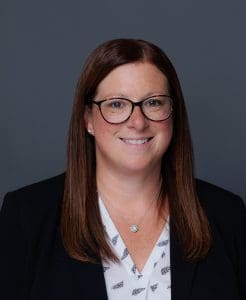
Candace Pereira

WINDSOR, Conn. — Windsor Federal Bank, headquartered in Windsor, Conn., announced that Candace Pereira has joined the organization as vice president, Business Development and portfolio manager.

“Candace takes genuine care in building relationships with her customers and is highly skilled in financial analysis and risk management,” said Mike Moriarty, executive vice president and chief lending officer. “Her addition deepens the roster of our experienced team, benefiting both our customers and the bank as it continues to expand its business offerings.”

Pereira brings nearly 20 years of experience in commercial lending, having held roles as senior credit analyst, commercial lending officer, assistant vice president and commercial portfolio manager, and, most recently, vice president and commercial lender at Florence Bank.

“I am happy to join an organization known for its strong community values,” she said. “I look forward to making an impactful contribution to Windsor Federal’s mission of delivering personalized solutions that help local businesses and communities thrive.”

Pereira obtained her bachelor’s degree in business administration with a focus in management from the University of Massachusetts and is currently pursuing an MBA. She is a 2017 BusinessWest 40 Under Forty honoree and has a history of heavy involvement in her community. She currently serves as treasurer of East Longmeadow High School’s Cheerleading Booster Club and is an ambassador for the Springfield Regional Chamber.

Daily News

NORTHAMPTON — TommyCar Auto Group announced the closure of its Volvo Cars Pioneer Valley location in Northampton after many years of service to customers throughout the Pioneer Valley and beyond.

While the location is closing, the company’s commitment to its customers and community remains strong. Many of the familiar faces from Volvo Cars Pioneer Valley will continue serving customers at Northampton Volkswagen, just around the corner at 361 King St.

“While we are heartbroken to close this location, our commitment to our customers and our community remains as strong as ever,” said Carla Cosenzi, president of TommyCar Auto Group. “The same great team and service you know will be just around the corner at our Northampton Volkswagen location.”

The closure follows a recent zoning amendment — prompted by a citizens’ petition — which prohibits future auto dealerships in Northampton’s Central Business Gateway District. The city’s decision to support this initiative blocked the path for development of the proposed new dealership facility and adjacent commercial plans for the property. Despite significant investment and planning already underway, the change made it no longer feasible to move forward.

Volvo Cars Pioneer Valley had recently relocated from South Deerfield to Northampton, a move meant to contribute positively to the local economy by creating jobs, increasing tax revenue, and boosting customer traffic in the city. The proposed new facility would have created 40 new jobs and reserved more than three acres of the site for additional commercial development. With the zoning change now in place, the property remains vacant.

“We are incredibly grateful to our customers for their loyalty and trust over the years,” Cosenzi said. “It’s been an honor to serve this community, and we look forward to continuing that relationship just around the corner at Northampton Volkswagen.”

Daily News

Carlos Costa

EASTHAMPTON — bankESB recently promoted Carlos Costa to Facilities Maintenance and Operations officer, based at its 36 Main St., Easthampton office.

Costa, who has nearly 20 years of facilities experience, joined bankESB in 2006 as a maintenance specialist. With this expanded leadership role, he will oversee the daily operations of the Facilities departments for his assigned region within Hometown Financial Group’s family of banks, which includes bankESB, bankHometown, North Shore Bank, and Abington Bank, a division of North Shore Bank.

He earned an associate degree in law enforcement from Holyoke Community College.

Daily News

SPRINGFIELD — Bacon Wilson, P.C. announced that attorney Alexandre Pereira recently received a 4.8 out of 5 rating from the National Business Institute for his presentation in the course “Estate Planning for Clients with Minor Children.”

Pereira specializes in elder law, estate planning, long-term care planning, probate, and special needs estate planning. Known for crafting personalized legal strategies, he ensures that each client fully understands the significance of every document and decision in their planning process.

This recognition highlights his expertise and dedication to providing clients with clarity, confidence, and peace of mind for their futures.

Features

Coming into Focus


Carlo Bonavita

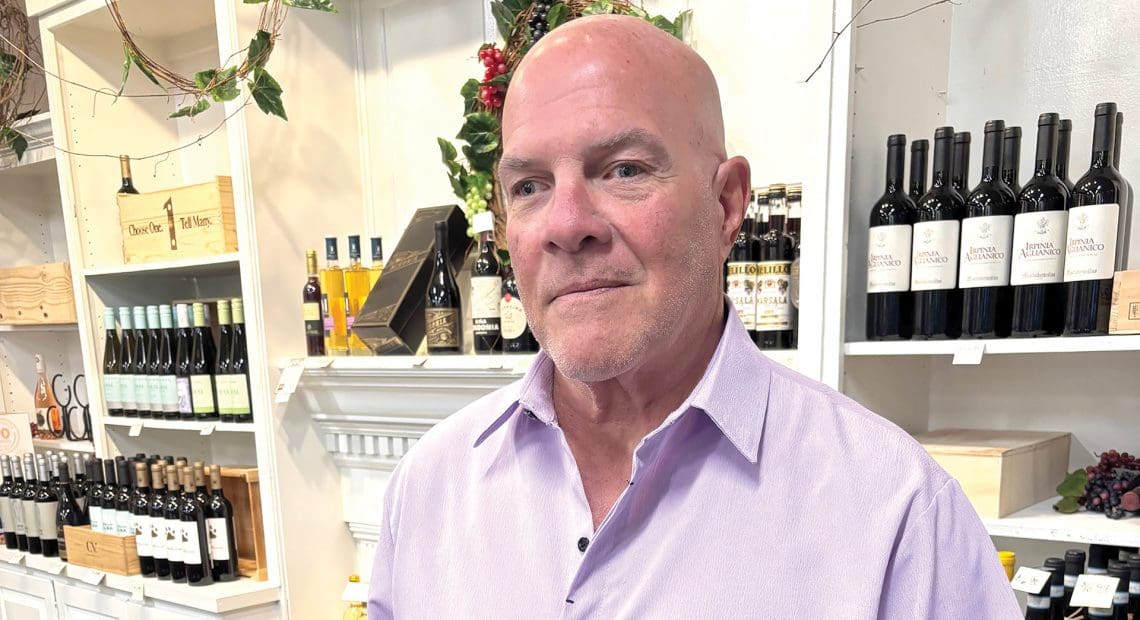
Carlo Bonavita says tariffs will likely prompt some wine drinkers to switch to domestic products.


Clarity.

Ever since tariffs became a main thrust of the Trump administration’s economic policy — that would be day 1 — that’s what business owners and managers have been calling, if not begging, for.

They still don’t have as much as they want, but they now have a lot more than they did 60 or even 30 days ago.

That’s especially true in the auto industry, where trade deals inked with Japan, South Korea, and the EU lock in 15% tariffs on a large list of foreign imports. That translates into a roughly $2,000 increase on an average-priced vehicle, which is now in the mid-40s, said Ben Sullivan, chief operating officer for the Balise Auto Group.

And that number must be put into perspective, he went on, noting that, with the return of incentives such as 0% financing and attractive lease rates, the consumer’s monthly payment — which is what most focus on — may not rise much higher than it is now.

“At the same time as those price increases are coming, most manufacturers have increased production, and when they increase production, they want to sell a bunch of cars, and when they want to sell a bunch of cars, they put incentives on them.”

“At the same time as those price increases are coming, most manufacturers have increased production, and when they increase production, they want to sell a bunch of cars, and when they want to sell a bunch of cars, they put incentives on them,” said Sullivan, who cited the case of a co-worker with a truck coming off lease. She’s getting into a new one and shaving $100 off the monthly payment at the same time.

That’s an indication of how unattractive the incentives were in the years after COVID, and how much better they are now, said Sullivan, adding quickly that, while there’s still a good amount of dust to settle, especially with regard to tariffs imposed on Canada and Mexico and the cars and parts made in those countries, there is a sense of normalcy returning to this sector (more on that later).

Ben Sullivan

Ben Sullivan says that, while car prices are rising by $2,000 on average due to tariffs, with incentives, consumers may not see a rise in their monthly payment.

The same can generally be said for Carlo Bonavita’s business, Springfield Wine Exchange, where clarity is also a technical term.

Bonavita’s shelves are loaded with imported wines, many of which will now be subjected to at least 15% tariffs. This will add a few dollars to the average-priced bottle, which might be enough to sway some consumers to switch to domestic labels, something he’s been promoting for some time now, especially with the prices from some European wines rising even before tariffs were imposed, for reasons he can’t pinpoint.

“The reality is, I’d prefer to find domestic wine alternatives for our customers. It’s our job to go out there and find wines for our customers that are affordable, quality — and that’s easy to do,” he said, adding that he expects that some will shift more to domestic products. “Most people are loyal to the grape, and not necessarily the label,” he said, adding that consumers are likely to trade an Italian Pinot Grigio for one made in California.

There is less clarity in some other sectors, however, and with many different products, especially since a new, wide round of tariffs on individual countries went into effect earlier this month. The countries included Brazil (50%), Switzerland (39%), Vietnam (20%), and Taiwan (20%), and the tariffs are expected to generate price increases on everything from watches to shoes; computers to furniture; coffee to toys.

Construction is another sector where there are still some unknowns.

Dave Fontaine, CEO of Fontaine Bros. Inc., said tariffs will certainly impact the cost of projects large and small because tariffs on products, such as steel or copper, are applied not when they are ordered, but when they enter the country.

“I would equate it to walking into a store … the sales tax is 6.25%, and then, while you’re purchasing the item, the sales tax gets doubled or tripled,” he explained. “That’s going to impact at the register.”

To date, increases in prices from tariffs have been offset by decreases in the cost of some materials due to a general slowdown in the industry, allowing projects to stay on budget, he went on, but it remains to be seen if things will stay that way.

“I don’t know for sure, but I think that what our distributors did, as these tariff talks were going on, was bulk up their warehouses just to get people along for six or seven months in anticipation that the tariff talks would blow over and things would get settled.”

For this issue, BusinessWest talked with business owners and managers across several sectors to get some perspective on tariffs and what they mean for their businesses and their customers.


Grape Expectations

The announcement of Trump’s ‘Liberation Day’ tariffs on April 2 has been followed by four and half months of trade talks, new deals, deadlines made, deadlines extended, and seemingly never-ending speculation about the impact of tariffs on prices, individual businesses, and entire sectors.

In many respects, the speculation is giving way to increased clarity, though there are still plenty of question marks on everything from how much of the price increases will be passed on to consumers to how those same consumers will respond to the higher prices.

More will be known in the weeks and months to come, said those we spoke with, adding that much, but not all, of what’s for sale now — be it cars in showrooms or wines on shelves — were delivered before tariffs went into effect.

That’s true of the popular beers from Germany, Belgium, and other European countries sold at the Student Prince, said Nate Yee, director of Hospitality for the Bean Restaurant Group, which counts the downtown Springfield landmark among the many area eateries in its portfolio.

“I don’t know for sure, but I think that what our distributors did, as these tariff talks were going on, was bulk up their warehouses just to get people along for six or seven months in anticipation that the tariff talks would blow over and things would get settled,” he said, adding that prices have remained remarkably, and unexpectedly, stable. “That’s the only explanation I can think of for why our costs haven’t gone nuclear.”

The company has enough in its own warehouses to get through the Big E, where it will have several locations, said Yee, adding that what happens when the current warehouse stock is replaced with post-tariff products remains to be seen.

“Who knows what will happen?” he said, adding that, if costs rise, the Bean Group will have to think about adjusting its own prices. “But we want to be as price-sensitive as we can; we want to be affordable, and we want our guests to come back multiple times a week, and a big part of that is the value aspect of it.”

Bonavita said almost everything at his storefront in Tower Square, and everything shipped to customers elsewhere, including the eastern part of the state (a growing part of this business), arrived pre-tariffs. It will be September or October, he projects, before the nature of the inventory shifts and prices are adjusted.

And while he will continue to order wines from dozens of other countries (together, they make up roughly 35% of what he sells), he fully expects movement toward domestics as the inevitable price increases come. Meanwhile, like Yee, he said he will likely absorb some of the hit to minimize the impact on the consumer.

“We wouldn’t be here without our customers, so I’ll do whatever it takes to keep our customers,” he explained. “If that means we work on a lesser margin, we’ll work on a lesser margin.”


Driving Forces

Sullivan said many — but certainly not all — the cars on area lots were delivered pre-tariffs. That means consumers might find two almost identical cars at a dealership with different price tags.

And, as he mentioned earlier, while the price tag on the post-tariffs model might be higher, the monthly payment might — that’s might — not be. And that’s just one of the many intriguing dynamics within the auto industry as a once-fuzzy picture sharpens a bit.

“The tariff landscape is coming into clearer focus,” he told BusinessWest. “Now, it’s about what the scale and the impact of the tariffs will be and when it will all settle into something that’s predictable. We’re not home yet, knowing exactly where this whole thing shakes out, but we’re getting closer.”

Elaborating, Sullivan said there will be more clarity in the months and years to come on issues ranging from used car sales to how long consumers hang on to their cars as the cost of maintaining them rises because of tariffs on parts, many of which are made in China.

Meanwhile, with new car sales, as well as the proverbial big picture, there is more normalcy than a few months ago, when panicked consumers were running to dealerships to beat the tariffs.

“Now, things have calmed down,” he said. “People are aware that it’s not as bad as they feared; it’s still going to cost them more to buy a car, but not as much as they feared. So right now, we’re seeing a more normalized market than we’ve seen in a while.”

‘Normalized’ wouldn’t be a word to describe what’s happening in the construction sector, said Fontaine, noting that tariffs are impacting not only projects in progress — such as the new high schools his company is building in East Longmeadow and Agawam — but some initiatives on the drawing board.

“When the cost of materials is going up, that makes construction projects more difficult to to get financed — and more difficult to make sense,” he explained, adding that this is more prevalent on the private side of ledger than on the public side. “And a lot of people are in the wait-and-see phase because of the uncertainty with the economy.”

For construction firms, the challenge is to find ways to minimize the impact through use of more domestically produced materials and other strategies to keep projects on budget.

“We’re spending a lot of time trying to protect ourselves and our clients from the impact of them, and I think we’ve been generally successful with that,” Fontaine said. “We’ve pushed a lot of things to be imported from places that are not impacted by tariffs or made in America. We’re doing everything we can to mitigate costs, but it’s a hot issue in construction right now.”

And in many other sectors as well.

Law

Trouble in Margaritaville

By Hyman G. Darling, Esq.


Over the past couple of years, you may have read about all the famous people who passed away either with no estate planning documents or perhaps documents that were not up to date or complete enough to avoid contest.

In the past two months, there have been several notorious people in the news that are causing lawyers and judges to deal with litigious matters regarding estates. The first estate was Jimmy Buffett’s. In this brewing legal battle, Jane Buffett (his wife) filed a petition to remove her co-trustee of the marital trust, Jimmy’s longtime business manager. It was estimated that the estate was worth approximately $275 million. This trust was to continue for Jane’s lifetime, but she now alleges that the business manager was charging excessive fees, mismanaged the trust, and has become adversarial and hostile toward her.

It is unfortunate this has occurred because now the funds are going to be scrutinized and her legal fees, the trustee’s legal fees, and potentially backup and independent trustees’ fees will be taken from the trust, thus diminishing the funds available to Jane.

Hyman G. Darling

Hyman G. Darling

“It is very important to think clearly about what will happen if the children cannot agree. Perhaps the documents should have a provision stating that, before litigation ensues, the trustees or beneficiaries should be forced to mediate the matter in an attempt to resolve the conflicts without litigation.”

This situation is not uncommon. Clients often wish to name two or more children co-trustees or perhaps powers of attorney, personal representatives (formerly called executors), or healthcare proxy agents. The clients believe the children would get along and make decisions together. However, when one decision maker does not agree with the other, it places the client or their family in a precarious situation because, if they cannot agree, there is a stalemate until such time as either a mediator or court makes a decision as to what is correct or who should make the appropriate decisions.

Some clients feel that the oldest child should serve, some clients feel that the child who is in business should serve, and others believe they should have an independent trustee so that this situation does not occur.

Oftentimes, however, the children cannot agree as to what is best for the parent or for the ultimate beneficiaries of the trust. Therefore, it is very important to think clearly about what will happen if the children cannot agree. Perhaps the documents should have a provision stating that, before litigation ensues, the trustees or beneficiaries should be forced to mediate the matter in an attempt to resolve the conflicts without litigation. Often, once litigation is filed, there is a line drawn in the sand and no turning back, which causes perpetual disharmony in the family.


Dollars and Sense

Another significant celebrity in the news is Jeff Bezos, with his prenup and recent Venice wedding. Since the Amazon founder did not have a prenuptial agreement with his first wife, it was clear to him that he should have a prenuptial agreement for this marriage to Lauren Sanchez.

Although there were somewhat disparaging comments regarding her wedding gown, the location, the cost of the wedding, and the numerous celebrity guests, the reporters did not pay much attention to the prenuptial agreement, the details of which are not public. However, the prenuptial agreement presumably would provide that, if the marriage were to be dissolved or he were to pass away first, his wife would receive a portion of the assets based on how many years he was married to her, or perhaps based on the size of his estate.

While most of you who are reading this do not have an estate the size of Bezos’s (although his estate is reduced by $36 billion in Amazon stock he paid to his first wife), it is important to consider what would happen to your assets if you die leaving assets to your children. Perhaps your children’s marriages are not the most sound, and you wish to be sure that the children or their children will receive assets. Therefore, perhaps a trust should be established for them, or maybe leave some assets to your children and some assets to the grandchildren in order that the in-law (sometimes referred to as the out-law) would not receive this unintended inheritance.


Bottom Line

The lessons here are not only that documents need to be prepared, but significant thought should be given to the language in the documents, the individuals who are named or not named, and the distribution of those assets. Also to be considered are long-term care issues and tax issues to maximize the amount that will be passing to the next generation.

Of course, charities should also considered in estate planning documents, not only to minimize taxes, but also to carry on the legacy built during one’s lifetime.


Hyman Darling works in the Springfield office of Bacon Wilson. He is licensed to practice law in Massachusetts and the U.S. District Court District of Massachusetts. He is an active member of the National Academy of Elder Law Attorneys and is a certified elder law attorney. Additionally, he is a member of the Special Needs Alliance and the Hampden County Bar Assoc.

Law

When a Fire Strikes

By Daryl M. Johnson, Esq.


When a rental property suffers a devastating fire, most owners assume they’ll have the freedom to use the fire insurance proceeds to pay off their mortgage or make other financial decisions. But in cities like Springfield and others in Massachusetts, property owners can be in for quite a surprise. Local ordinances — combined with the city’s enforcement powers — can significantly limit what you and your lender are allowed to do with the building and the insurance funds.


Fire Insurance Proceeds: Not Always Yours to Direct

In many cases, a mortgage instrument allows the lender to apply insurance proceeds toward repairing the mortgaged property or paying down the outstanding loan in the event of a casualty. However, when a building is declared uninhabitable, condemned, or becomes a blighted nuisance, local governments can, and will, step in. In Springfield, under its municipal code and zoning regulations, the city has the authority to initiate enforcement actions in housing court that affect both property owners and lenders.

Daryl M. Johnson

Daryl M. Johnson

“When a building is declared uninhabitable, condemned, or becomes a blighted nuisance, local governments can, and will, step in.”

City Intervention in the Aftermath of a Fire

Under Springfield’s Code of Ordinances — particularly its anti-blight, nuisance, and vacant property regulations — the city may take swift action when a structure is significantly damaged by fire. If the building is left vacant, unsecured, or deemed a public safety risk, the city can initiate a housing court action to enjoin the property owner and the mortgage lender from accessing or making unilateral decisions about the property.

It can also seek a receivership order, allowing a third-party receiver to take control of the property, make repairs, and recover costs via liens, and it can even restrict or monitor the use of insurance proceeds, particularly when used for purposes other than code compliance, demolition, or rehabilitation.

In some cases, the city may record a lien or notice of violation that clouds title and complicates, and in some instances prevents, refinancing, resale, or redevelopment.


Mortgage Lenders Are Not Exempt

Springfield ordinances don’t just target property owners — they also involve mortgage holders, especially when lenders receive insurance proceeds or attempt to foreclose on or dispose of fire-damaged properties without addressing code violations or unsafe conditions.

Housing court judges have broad powers to issue injunctive relief against lenders and loan servicers, require insurance proceeds to be escrowed, and prevent satisfaction or discharge of the mortgage until compliance is achieved.


Best Practices for Owners and Lenders

If you own a fire-damaged rental property in Springfield, consider these immediate steps:

• Notify the city’s Code Enforcement Department to assess the building and clarify obligations.

• Consult legal counsel before using fire insurance proceeds or negotiating with your mortgage lender.

• Secure and maintain the site to avoid blight premises designation.

• Engage a licensed contractor to prepare a code-compliant rehabilitation or demolition plan.

• If you’re a mortgage lender, be prepared for involvement in housing court and restrictions on the application of fire insurance funds to pay off the mortgage loan.


Regional Enforcement: Not Just Springfield

The city of Springfield is not the only municipality in Western Mass. aggressively enforcing fire-damaged and blighted property regulations. Other cities, such as Holyoke, Chicopee, and Worcester, are similarly proactive. These municipalities frequently seek injunctions against both owners and mortgage lenders like those sought out by the city of Springfield.

A fire doesn’t just damage real estate — it can fundamentally alter your legal rights as a property owner or lender. In Springfield and surrounding cities, local governments have legal authority to control what happens next. Whether you’re trying to use fire insurance proceeds to refinance, repair, demolish, or sell the property, failing to understand the municipal framework could land you with housing court violations, penalties, or fines.

Legal counsel familiar with local ordinances and housing court procedure is essential to avoid costly missteps and navigate court-ordered restrictions.


Daryl M. Johnson is an attorney in the Real Estate and Business and Finance practices at the law firm Pullman & Comley. She is based in the firm’s Springfield office.


Law

Avoiding Layoff Pitfalls

By John Gannon, Esq.


Last month, on Independence Day, President Trump signed into law the One Big Beautiful Bill Act (OBBB), a nearly 1,000-page bill addressing significant federal tax and spending policies. According to the White House, the OBBB will act “as a catalyst for job creation, domestic investment, and long-term growth.”

But critics are not so sure the legislation will boost job growth. Indeed, many are concerned that deep spending cuts to social safety net programs such as Medicaid and food stamp benefits, coupled with the end of tax credits tied to clean energy, will cause many Americans to lose their job. One study estimates that 1.22 million jobs could be lost in 2029 due to Medicaid and SNAP cuts.

Given these deep spending cuts, coupled with what seems like daily (and sometimes hourly) uncertainly over foreign tariffs, the Trump administration is leading many businesses to consider cutting labor costs, even if only for the short term. In light of this, employers need to understand the legal and practical ramifications when implementing a reduction in force (RIF), which is a more formal term for layoffs. Key aspects include understanding the relevant legal risks, selecting employees fairly, and providing proper communication and support.

John Gannon

John Gannon

“Employers need to be able to provide legitimate, business-based reasons for implementing a workforce reduction. These typically involve economic considerations, such as the loss of key contracts or higher material costs, but could also be the product of a department or company-wide reorganization.”

Legal Issues

To start, employers need to be able to provide legitimate, business-based reasons for implementing a workforce reduction. These typically involve economic considerations, such as the loss of key contracts or higher material costs, but could also be the product of a department or company-wide reorganization. Whatever the reason(s), businesses need to be able to explain in crystal-clear terms why people are losing their jobs.

There are also a host of employment laws that businesses need to be cognizant of when implementing a RIF. In a large-scale workforce reduction, the most important of these laws is the Worker Adjustment and Retraining Notification (WARN) Act, which requires 60 days notice to all affected employees in the event of a mass layoff or plant closing.

The penalties for failure to comply with WARN are steep. WARN Act violations include back pay and benefits for up to 60 days for each affected employee, civil penalties of up to $500 per day of violation, and potential attorneys’ fees for successful lawsuits. Needless to say, determining whether the WARN Act applies is always step number one when businesses are considering a RIF.

Next, employers must ensure that the selection criteria used to determine who will be included in the RIF are non-discriminatory and based on legitimate business needs. This means reasons for selecting an employee for the RIF cannot be tainted by bias based on age, race, gender, or other protected characteristics, including use of Paid Family and Medical Leave or sick leave protected by the Massachusetts Earned Sick Time law.

To that end, employers should develop an documented selection criteria plan for the decision makers prior to announcing the end result to employees. Establish selection factors with the company’s legitimate business needs in mind, trying to keep the selection process focused on objective, legal criteria as much as possible (such as seniority, elimination of unnecessary categories such as part-time and temporary, elimination or consolidation of unnecessary positions. etc.).

Taking this one step further, employers should consider conducting a detailed analysis of the potential for disparate impact discrimination in a workforce reduction. Disparate impact discrimination occurs when a policy, practice, or decision-making process of an employer that appears to be neutral has a negative impact on a protected group of employees.

For example, if a high percentage of those selected for layoff are over age 40, and a significant amount of those retained are under 40, there is a risk that someone will file an age discrimination claim and argue that the method used to evaluate employees had a disparate impact on those over 40, and, therefore, led to their separation.

Disparate impact testing helps organizations recognize and address biases that might exist within their decision making process, even when there’s no intent to discriminate. We suggest that any disparate impact analysis be conducted by an attorney so that any problematic data that is discovered would be protected from disclosure in lawsuit by the attorney-client privilege.

Finally, employers need to be aware of wage payment obligations for those who are laid off. Under the Massachusetts Wage Act, employees who are laid off as part of a RIF must be paid all earned wages — including pay for all accrued and unused vacation — on their last day of employment. Also, if a worker is subject to the terms of an employment contract (as opposed to be employed at-will), that employee might be entitled payout if the employment relationship ends prior to the expiration of the term set out in the employment contract.


Practical Considerations

Employees who are let go as part of a RIF are likely going to expect severance pay to help pay the bills while they look for new employment. That said, there is nothing that requires employers to offer separation agreements to at-will employees being laid off (note that this might be different if the employee is subject to the terms of an employment contract).

However, most employment lawyers and HR professionals will tell you that offering at least some severance, while not legally required, is a best practice. This is because, as noted above, it provides departing employees with some level of financial stability while they are in between jobs. Severance packages also often include payments for continued health insurance or other benefits, easing the transition and potentially reducing out-of-pocket medical expenses for departing employees.

Finally, obtaining signed severance agreements from departing employees mitigates legal risk, as the agreement should include a legally compliant release of claims against the employer. Stated otherwise, employees accept the severance payments, and in exchange, they agree not to bring a legal action against the company. We see this as a win-win for the employee and the employer.

Finally, as far in advance as possible, businesses need to start developing a clear and transparent communication strategy that will be used to explain the RIF to the workforce. This strategy should involve two messages — one for the entire workforce that explains the business needs for the RIF, and another message that is tailored to those who are affected by the RIF.

For those who will be losing their jobs, conduct private meetings to deliver the news and discuss next steps. This meeting should go over the terms of the severance package, if one is being offered. While the meeting should be brief, employees should be given some time to discuss the positives and negatives of their employment experience, as well as ask questions related to post-employment issues such as unemployment and health insurance continuation.

As for the remaining employees, the business should have a plan in place to discuss how the RIF will affect their day-to-day duties. Is there a plan in place to replace the departing workers if business circumstances improve? Will the RIF lead to longer days and more demands for the remaining employees? Does the company plan to lay off more employees within the next few months?

These types of questions, as well as the psychological impact associated with many co-workers (and friends) losing their jobs, is often referred to as workplace survivor syndrome. Leaders in the organization must be prepared to answer questions from remaining employees about their ‘new normal,’ as well as listen and respond to their concerns and fears, in order to avoid workplace survivor syndrome causing more negative workplace ripples than the RIF itself.

Implementing a RIF is no small task. There are serious legal and practical considerations that businesses need to consider as soon as potential layoffs are a topic of conversation during leadership meetings. Be sure to engage experienced employment counsel early on in the process so businesses leaders do not get caught in traps for the unwary during a workforce reduction.


John Gannon is a partner with Springfield-based law firm Skoler, Abbott & Presser, P.C., a law firm exclusively practicing labor and employment law for more than a half-century, focusing on litigation avoidance, employment litigation, and labor law and relations. He specializes in employment law and regularly counsels employers on compliance with state and federal laws; (413) 737-4753.

Women in Businesss

Connection and Inspiration


Attendees gather at the 2024 Women in Business Summit, also held in Springfield.

Attendees gather at the 2024 Women in Business Summit, also held in Springfield.


It was called the Women in Business Passing the Baton: Today, Tomorrow & Beyond Summit.

That’s … quite a mouthful.

Back in 2005, Kisha Zullo recalled, she was launching an event planning company called Events of Joy and wanted to plan a conference for women who had achieved a certain level of success and could learn from each other.

“But the summit name was very long,” she admitted. “So, later, I scrunched it into the Women in Business Summit, because who’s going to say all that every day?”

But there was a reason for that initially too-long name.

“I wanted the image of passing the baton, like we’re in this race together, and we’re just passing on knowledge so the next generation can close the pay gap — at the time, I think it was 77 cents to a dollar; now it’s about 83 cents. So, things like the pay gap and managing your time, how to communicate with confidence, topics like that have not gone away.”

Which is why Zullo’s annual Women in Business Summit — which started in Connecticut but moved to Springfield three years ago — is still going strong in what will be its 20th iteration next month. The event will take place on Wednesday and Thursday, Sept. 24-25 at Marriott Springfield Downtown. Registration is open at wibsummit.com.

“We started with 60 people, and we’re anticipating about 300 coming into Springfield this year,” she told BusinessWest. “They’re coming from Western Mass., Connecticut, New York, New Jersey … last year I saw Vermont, Florida, Colorado.”

The mission of the conference, as always, is to develop a strong community of women leaders and entrepreneurs by sharing resources, knowledge, and inspiration.

“This year, we’ve chosen to focus on leadership development because we’ve talked to our [past] attendees, and that’s what they want to hone — their leadership skills,” Zullo explained.

“We’re doing a wellness track, and wellness can be mind, body, soul, and spirit, but it can also be your relationship with money,” she added. “If you’re always saying, ‘money moves through my hand quickly’ or ‘I can never keep it,’ well, that’s a mindset shift that maybe you have to make. So I’m excited about that.

Kisha Zullo

Kisha Zullo

“Over the past 20 years, I have been really fortunate to have a really great group of people. Some speakers are returning from last year because their workshops were incredibly popular.”

“Then we have an entrepreneurship track,” she added, “because half of our audience are solopreneurs or small business owners, and the other half work for someone else in nonprofit, corporate, or other industries.”


Women to the Front

This year’s keynote speaker is Endia DeCordova, vice president for Institutional Advancement at Morgan State University and executive director of the Morgan State University Foundation. “She was at the very first Women in Business Summit, and I’ve kind of watched her career soar,” Zullo said.

Other presenters include María Elena Gavilán Alfonso, technology leader and technical program manager with MathWorks; author and activist Choc’late Allen; Jennifer Bouquot, vice president of Talent Development for Liberty Bank; Lisa Carrol, founder and CEO of LIVLY; Orlena Cowan-Bailey, chief elevation officer of HR Zoom Consulting and HR Swag Shop; Sara Diaz, founder of the First Gen Madrina; Iquo Essien, founder of Crowdfund Your Dream; Veronica Garcia, CEO of Latino Marketing Agency; Patsy Mundy, assistant vice president at Travelers; Tessa Murphy-Romboletti, executive director of EforAll Holyoke and Holyoke city councilor; Latonia Tabb, CEO of Cooke Consulting Management; therapist Whitney Wilfred; and Michelle Wirth, co-owner of Mercedes-Benz of Springfield and founder of Feel Good Shop Local. Tiffany Joy Murchison, owner of TJM & Co. Media Boutique, will serve as emcee.

Meanwhile, panel and workshop topics will touch on managing burnout, technology and AI trends, the future of work, leading with purpose, thinking outside the box, entrepreneurship, the power of conversation, and much more.

“It’s really attendee-led,” Zullo said when asked how the roster comes together. “We get a lot of speaker inquiries, but it’s the attendees who tell us what they want to see.”

Take Carrol, who has turned LIVLY into a well-known high-end clothing brand. “I want her to talk about her story of how she brought LIVLY to life and was able to fundraise $10 million,” Zullo said. “That is of interest to an entrepreneur who’s just starting out or in the middle of their career.”

She added, “one the things that I’ve said to the presenters is, ‘please, when you’re in your session, it’s about have the experience … make your presentations interactive so you’re not just sitting there as a talking head in a workshop. And over the past 20 years, I have been really fortunate to have a really great group of people. Some speakers are returning from last year because their workshops were incredibly popular.”


From the Ground Up

Zullo’s event-planning business, Events of Joy, launched in 2005, and the Women in Business Summit — actually, the Women in Business Passing the Baton: Today, Tomorrow & Beyond Summit — was her first event.

“I didn’t know I wanted to be an entrepreneur. I remember, when I was working in D.C., I worked for this really cool property that did so many different events. I saw different types of weddings, cultural weddings, nonprofit events, corporate events, this really amazing mix,” she recalled, adding that she began to wonder about the woman she saw working behind the scenes, and what that job might be like.

“I thought, one day I want to plan parties. So I tucked it away, and when I moved to this area, I thought I would love to start my own business. And then it was like, how do I get it started? And what is going to be the name?”

In fact, Events of Joy has a double meaning, named after both Zullo’s mother and how she feels bringing events to life.

“I started out doing weddings — I don’t plan weddings anymore, but there’s someone on my team who does. I focus primarily on nonprofit signature events, fundraisers, and corporate events. And of course, planning events for the Women in Business Summit.”

Twenty years later, Zullo is gratified by the impact the event continues to have.

“As women leave, they say, ‘oh, I’m so inspired because I heard this,’ or ‘this is a new thought that I can implement the next day at work,’ or ‘I’m going to use this to resolve this issue in my life.’ That just makes my heart soar, to hear those kinds of testimonials.”

Women in Businesss

The Other Side of Victory

By Mia McDonald


One of the most transformative quotes that has inspired my life over the past year is from Ilona Maher. The U.S. women’s rugby player shot to fame when she helped lead her team to a bronze medal at the 2024 Paris Olympics — the first time an American team has ever taken home a medal in this event.

Following this feat, she was asked in an interview about her experience with impostor syndrome. Confidently and without hesitation, she declared, “I don’t have that” because “it’s OK to be proud of what you’ve done. It’s OK to believe you deserve something because you’ve put in the work for it.”

This is a concept more women should feel empowered and energized by. Being confident and unapologetically sharing your confidence — and your passion — will only work to inspire and lift others up around you. Empowered women empower women.

Mia McDonald

Mia McDonald

“Being confident and unapologetically sharing your confidence — and your passion — will only work to inspire and lift others up around you. Empowered women empower women.”

Ilona is only one of the many current voices in women’s sports in whom I have found inspiration, and whose exemplary leadership has helped guide me to where I am today in my professional career. Another one of the most powerful moments came just weeks ago, when Faith Kipyegon became the first woman to attempt running under four minutes in the mile. This experiment is incredibly significant to the athletics and running community, because while thousands of men have achieved this feat, it is one that no woman has ever accomplished.

Faith, the world record holder in this distance, embraced the challenge head-on with the full support of her sponsor, Nike, and their innovative teams and technology, which sought to optimize the perfect conditions and variables to best set her up for success. Following this attempt, as a fan of the sport and as a woman, was incredibly motivating and exciting and came with major takeaways that can be applied to women in the workplace. Here are four of them.


Find a Team and Trust in Them

To break a barrier as significant as Faith set out to do, alone, would be impossible. Faith had a team on the track — 13 world-class pacers who were all also Olympians and champions in their own right. They were organized in a meticulous formation to minimize draft and pull her along to her goal time.

There was something incredibly emotional and empowering about watching all of these men and women come together and be unified in the support of Faith and her goal. In addition to this direct support on the track, Faith had a stadium full of fans cheering her on in person, and countless others across the world.

The same concept is applicable to the professional environment. Especially when first entering the field, it can be intimidating as a woman to speak up in a room that is often full of men. There is also so much to balance throughout the day, be it work-related goals and obligations, family, volunteering, outside passions, mental and physical health, or any other commitments. What is most important is building a community of people who you trust and can lean on for support as needed.

Whether offering advice or providing cheers and moral support, having teams of people you love and look up to is the foundation of success. To this point, it is also essential to surround yourself with people who challenge you. When your support system has role models who can push you to improve and who have achieved successes that you aspire to reach, it will provide a source of continuous motivation.


Try Something New

In Faith’s case, this was all orchestrated and designed by Nike’s innovation team, much like a science experiment. It included new shoes, new high-tech gear, new pacing formations, and so much more, all aimed to create optimal conditions.

Although optimal conditions are never truly realistic or practical, this attempt goes to show the benefits of not being afraid to switch things up in the workplace. Change is uncomfortable, but growth comes from being able to exist in and embrace this discomfort. This can help foster a fresh take and create a culture where new ideas are welcomed and encouraged.

Whether it improves efficiency or helps to create stronger bonds across different teams, being open to change comes with so many benefits. In addition, on an individual level for women in the workplace, it opens up new opportunities to take on leadership roles and provide mentorship to others. Being confident enough to challenge yourself and step out of your typical comfort zone will lead by example for other women to do the same and will help their aspirations and growth trajectory.


Be Bold, Be Confident, and Don’t Stop Trying

Faith may not have become the first woman to break four minutes in the mile, but at its core, that was not the purpose of the challenge or what it represented for women. Faith set out to prove that she is brave enough to set a scary goal and to try something perceived as impossible. Then, she was strong enough to persevere when it did not go as hoped.

And even though she did not reach this stretch goal on her first true attempt, she turned around and ran a world record in the 1,500-meter race the next weekend, which is a distance just shy of one mile. Even though she did not hit her first goal, this is a remarkable testament to how she was able to take all her training, enthusiasm, and drive, and then pivot, refine a new goal, and execute.

The same concept is applicable to professionals. It is important to not get discouraged when challenges are encountered. Although it is OK and normal to become frustrated with difficulties, what will truly yield the best results is when you don’t allow yourself to dwell on these perceived failures.

The ability to be coached — being able to seek out and be open to receiving feedback — is what encourages growth. It is even more powerful and impactful to find other women who have grown through the workforce and experienced similar challenges, learn from their experiences, and take lessons back to your own.


Be Passionate and Excited About Something

Faith’s love of the sport and desire to advance it and be challenged is what makes the seemingly impossible, possible. This passion and excitement is also what creates value as a woman in the workplace. When you are doing something that is meaningful or that makes you happy, you’ll be more productive and better at communicating and lifting others up.

Being a woman in the profession comes with knowing you have the opportunity to inspire others, and it is so important to be able to use this to offer continuous encouragement and share the excitement and the triumphs that come with achieving meaningful milestones. Although these successes look different to everyone, it is incredibly impactful to be in a position where you can help to celebrate daily accomplishments big and small, and grow the next generation of strong, confident women.


Mia McDonald is a senior associate at the Holyoke-based accounting firm Meyers Brothers Kalicka, P.C. and a member of the BusinessWest 40 Under Forty class of 2025.

Home Improvement

Career Minded


Last week, the Healey-Driscoll administration awarded $24.2 million in Career Technical Initiative (CTI) implementation grants to 23 school districts to train 2,490 individuals for careers in high-demand occupations within the trades, construction, and manufacturing sectors across Massachusetts.

The CTI grant program partners with career and technical education schools to provide adult learners, especially unemployed and underemployed individuals from underserved populations and underrepresented groups, with career training and technical skills to meet the needs of Massachusetts employers.

Since 2023, the administration, in partnership with Commonwealth Corp., has awarded $53 million in CTI grants, projected to train more than 6,090 unemployed and underemployed individuals. Last week’s announcement launches the 10th cohort of CTI grants. Among nine awarded cohorts to date, roughly 4,400 total participants have received training, 3,150 participants have completed training, 3,100 have earned industry-recognized credentials, and 2,360 have secured employment.

“The CTI program opens doors for adult learners by providing the hands-on training they need to step into high-demand careers in construction, the trades, and manufacturing,” Gov. Maura Healey said. “With some of the best public career technical education schools in the country and strong employer partnerships, Massachusetts is positioned to prepare our residents for rewarding, lifelong careers.”

Lt. Gov. Kim Driscoll added that “these awards are a key part of our agenda to build a job-ready workforce for today and the future. By tapping into our world-class education system and investing in targeted job training, we’re growing the talent pipeline that employers across Massachusetts depend on to compete and thrive.”

The Executive Office of Labor and Workforce Development (EOLWD) oversees the CTI program, which is administered by Commonwealth Corp., a quasi-public agency of EOLWD. In partnership with the Executive Office of Education, CTI aims to transforms career and technical education schools across the state to become ‘career technical institutes’ that run three shifts a day for skill-building programs in the trades, construction, and manufacturing career pathways. The latest $24.2 million awarded focuses on job training for adult learners participating in the evening hours, or third shift.

Lauren Jones

Lauren Jones

“By leveraging available resources at career and technical education schools across Massachusetts, we are opening more opportunities to help train and prepare untapped talent for current workforce demands.”

“By leveraging available resources at career and technical education schools across Massachusetts, we are opening more opportunities to help train and prepare untapped talent for current workforce demands,” Secretary of Labor and Workforce Development Lauren Jones said. “This program is a great example of the collaborative efforts needed to build our workforce. We appreciate the partnership with career and technical education schools, MassHire Regional Workforce Boards and career centers, businesses, and labor for paving the way for more job seekers to gain meaningful skills and employment in Massachusetts.”

Three of the awards involve schools in Western Mass.:

• Franklin County Technical School in Turners Falls will receive $2,219,375 to provide training to 216 participants for auto tech, building maintenance, carpentry, electrical, horticulture, plumbing, and welding positions.

The school will partner with Ames Electrical Consulting, National Grid, Crocker Electrical Services, Indie Automotive, Harrison Diesel Solutions, Cherry Rum Automotive, Built for the East Offroad, Grass Roots Landscaping LLC, Pioneer Gardens Inc., Snow & Sons Landscaping, Sugarloaf Gardens, Champion Tree and Lawn Care, Franklin County Regional Housing and Redevelopment Authority, Doyle Properties, Ironworkers Local 7, Winchester Precision Technologies, SMART Local #63 Joint Apprenticeship and Training Center, Sheet Metal Workers Local 63, Sandri Energy, Mike Woodard Plumbing, Carpenters Local 336 North Atlantic States Regional Council of Carpenters, Mowry & Schmidt Inc., Fine Line Builders, Neal Leno Carpentry, Ron Grogan Homebuilder, and Salmon Falls Builders.

• Pathfinder Regional Vocational Technical High School in Palmer will receive $730,000 to provide training to 72 participants for CNC Machine operator, electrician, and plumbing positions. It will partner with Viant, Sanderson MacLeod, Knight Machine, B&R Machine, IMI Adaptas, Noonan Energy, NBE, KACO, PVE, EWS, and Aquarius.

• Smith Vocational and Agricultural High School in Northampton will receive $479,998 to provide training to 60 participants for culinary arts positions. It will partner with Snapchef, Tosca, Smith College Dining Services, Atkins Farms, River Valley Co-Op, Pete’s Sweets, Ana Bandeira Chocolates, and Hungry Ghost Bread.

“With this investment in career technical education, we are creating more pathways for adult learners to gain the skills and experience needed to enter high-demand industries like the trades, construction, and manufacturing,” Education Secretary Patrick Tutwiler said. “I’m grateful to our schools and employer partners whose collaboration is helping to expand access to career-connected learning and grow our state’s workforce.”

Added Tom Hooper, vice president of Sector Strategies at Commonwealth Corp., “vocational schools across Massachusetts continue to be the backbone of the Career Technical Initiative, delivering hands-on, high-quality training in critical industries like construction, manufacturing, and the skilled trades. Their leadership and commitment are essential to building the talent pipelines our workforce needs to thrive.”