Daily News

The news that came out of Hampshire College on Tuesday — that the nearly 60-year-old, unconventional liberal arts institution will be closing — was hardly a surprise.

The news came maybe a little sooner than many expected, but the handwriting has been on the wall for some time now. Indeed, this quirky school had fought a brave fight to keep the doors open over the past decade or so, but in the end, it simply could not overcome a powerful mix of forces, everything from a sharp drop in enrollment to an inability to refinance its bond debt to a waning unrestricted endowment.

“Despite this herculean effort, the financial pressures on the college’s operations have become increasingly complex, compounded by shifting external factors,” college President Jennifer Chrisler wrote in a letter to the Hampshire community. “We are faced with the clear, heartbreaking reality that progress … has fallen far short of what we had hoped.”

Another reality is that, while Hampshire’s situation was dire and certainly magnified by the fact that it became increasingly difficult to attract students to a college with a seriously uncertain future, many private colleges are struggling and may soon face hard choices themselves.

Indeed, a new forecast by the Huron Consulting Group projects that nearly one-quarter of the nation’s 1,700 private, nonprofit four-year colleges and universities are at risk of closing or having to merge within the next 10 years.

To survive, these schools must find ways to increase enrollment at a time when the number of high school graduates continues to fall, and convince enough families of the value of a four-year college degree.

If current trends continue, this will become an increasingly tall order, and the higher education landscape in this region and this country could change considerably.

That, too, is a heartbreaking reality.

Daily News

LONGMEADOW — The Colvest Group announced it has filed an appeal with Hampden County Superior Court challenging the Longmeadow Planning Board’s decision to modify the developer’s site plan by restricting access at the primary driveway of its proposed retail development at 916 Williams St., known as Towne Shoppes of Longmeadow.

Colvest says the restriction could put in jeopardy a project backed by the community and expected to generate significant new tax revenue for the town. In all other respects, the board approved the developer’s site plan proposed by Colvest.

The proposed development is designed to expand the Longmeadow Shops area, providing retail and restaurant options that residents have supported throughout the zoning process. It is projected to generate an estimated $250,000 to $300,000 in new annual tax revenue, supporting the town’s growing budget needs.

The project record includes two independent traffic studies, including one commissioned by the Planning Board and reviewed by public safety officials, none of which recommend that full access from the primary driveway be restricted to accommodate projected traffic. Colvest contends that limiting the primary access driveway to right-turn-only exit does not improve safety, according to these studies, and creates inconvenient traffic patterns that threaten project viability and tenant interest.

“This project received strong support from Longmeadow residents, and it represents an opportunity to strengthen the commercial corridor while contributing meaningful revenue to the town,” said Frank Colaccino, CEO of the Colvest Group. “We are filing this appeal to ensure the decision reflects the facts and allows safe, functional development to move forward.”

Colvest’s appeal asks the court to annul the Planning Board’s restriction on left-turn exiting from the primary driveway or to direct the board to revise its site plan approval by deleting the restriction on left-turn exiting from the primary driveway.

Daily News

MONSON — Monson Savings Bank announced that Stacee Duda has joined the bank as assistant branch manager in Wilbraham, bringing extensive banking leadership experience and a strong commitment to community engagement.

Duda brings more than 30 years of experience in retail banking, branch operations, and customer-focused leadership. In her role, she supports daily service operations of the Wilbraham branch, provides employee development support to the branch team, and works closely with customers to provide tailored financial solutions. She is passionate about creating a welcoming branch environment that reflects Monson Savings Bank’s commitment to personal service and meaningful community connections.

“We are excited to welcome Stacee to the Monson Savings Bank team,” said Dan Moriarty, president and CEO of Monson Savings Bank. “Her depth of banking experience, leadership skills, and long-standing commitment to community involvement align perfectly with our mission as a community bank.”

Prior to joining Monson Savings Bank, Duda served as branch sales manager at Arrha Credit Union in West Springfield, where she led branch performance by building trusted relationships with members and strengthening the institution’s visibility through community outreach and local engagement efforts.

She previously held roles as senior banker at PeoplesBank and assistant branch manager at United Bank, where she developed strong expertise in branch leadership, consumer lending, regulatory compliance, and staff mentoring. She holds federal NMLS registration and is a notary public in the Commonwealth of Massachusetts.

Throughout her career, Duda has remained actively involved in the communities she serves. She regularly participates in local chamber and community events and previously served for three years as treasurer of the Suffield Chamber of Commerce, supporting local businesses and economic development initiatives. She believes community banks play a vital role in strengthening neighborhoods, supporting local organizations, and fostering lasting relationships.

“I am proud to join Monson Savings Bank, an institution that truly values community and relationships,” she said. “I look forward to working closely with customers, supporting local organizations, and being actively involved in the communities where we live and work.”

Daily News

WESTFIELD — Westfield State University is now accepting applications for the next paramedic program cohort starting in September. This program is designed to establish a direct career pathway for emergency medical technicians (EMTs) to advance to paramedics.

Students will benefit from a comprehensive curriculum, expert faculty, and state-of-the-art training facilities. The program includes one year of classroom instruction followed by clinical, field, and capstone internships, and can be completed in 12 to 18 months with an accelerated track. To meet the diverse needs of working students, the program offers an optional hybrid live lecture model enabling remote participation with the in-person classes. Hands-on skills labs are held in-person.

After completing the didactic phase of the program last December, the inaugural paramedic cohort has transitioned into field and clinical internships. Students are now building hands-on experience with regional healthcare systems and emergency response partners, including Cooley Dickinson Hospital, Holyoke Medical Center, and Mercy Medical Center; fire departments in East Longmeadow, Longmeadow, Southwick, and Westfield; and EMS providers such as Chapin Ambulance, Northern Berkshire EMS, and Cataldo Ambulance.

As EMS agencies across the region continue to face staffing shortages, increasing call volumes, and expanding demands for advanced prehospital care, graduates of Westfield State’s paramedic program will play a vital role in strengthening emergency medical services and ensuring timely, high-quality care for residents. Westfield State ensures the curriculum reflects industry standards, equipping students with the skills and expertise needed for immediate employment in emergency medical services.

Prospective students can visit www.westfield.ma.edu/paramedic for detailed admission requirements and program specifics for the next cohort.

Daily News

AMHERST — The Hampshire College board of trustees has voted to permanently close the college following the fall 2026 semester, citing a lack of resources to sustain full operations and meet regulatory responsibilities.

“The inability to substantially grow enrollment would mean extraordinary cuts to our operating budgets to educate the student body we can reasonably anticipate,” according to a public letter released today by the board and college President Jennifer Chrisler. “Additionally, the degree of short-term debt tied to our land assets means that even a favorable sale would not change our long-term financial trajectory given current enrollment.”

The letter notes that, “seven years ago, the Hampshire community presented the college with a powerful mandate: to maintain independence and remain true to Hampshire’s deepest-held values. Since then, we have all worked together toward those goals, facing daunting challenges with the ingenuity and resolve that define the best of what happens here. We left no stone unturned, no solution unexplored, and made many sacrifices along the way.

“Despite this herculean effort, the financial pressures on the college’s operations have become increasingly complex, compounded by shifting external factors,” it continues, noting that attempts were made to increase enrollment, refinance existing debt, and realize new revenue via the sale of a portion of land.

“We have long known that addressing these issues is essential to establishing a stable financial foundation, supporting long-term operations, and meeting regulatory requirements. We are faced with the clear, heartbreaking reality that progress on each of these three key factors has fallen far short of what we had hoped.”

The announcement was made with the goal of helping current students complete their education at Hampshire or a partner institution.

“We want to assure you that Hampshire’s board made its decision only after exploring every possible alternative,” the letter continues. “Nearly every trustee is an alum, and we share in the community’s heartbreak. Yet we know that you will come together, as you always do, to support each other and take much-deserved pride in what makes this college unlike any other.”

Daily News

SPRINGFIELD — The Naismith Basketball Hall of Fame has donated $8,500 to the Springfield Rotary Club to support local nonprofit organizations through the club’s Community Grants Program.

The funds were raised during the Basketball Hall of Fame and the Rotary Club of Springfield’s annual Service Above Self Luncheon and were presented at a recent Rotary meeting by Frank Colaccino and Chelsea LaCoille.

“This partnership reflects what’s possible when institutions like the Basketball Hall of Fame and Rotary come together to invest in our community,” said Samalid Hogan, vice president of the Springfield Rotary Club. “These funds directly support local nonprofits that are doing critical, on-the-ground work to uplift families, create opportunities, and strengthen Springfield. It’s a powerful example of service in action.”

The donation will help fund grants that will be awarded during the Rotary Club’s upcoming Paul Harris Luncheon & Community Awards, scheduled for Thursday, April 30 at 11:30 a.m. at the Student Prince & Fort Restaurant.

At the event, the Rotary Club of Springfield will also recognize Carla Alves as its 2026 Paul Harris Fellow, one of the Rotary’s highest honors, awarded to individuals who demonstrate outstanding commitment to service and community impact. Alves, vice president and business banking loan officer at Country Bank, as well as treasurer of the Springfield Rotary Club, is being honored for her dedication to supporting local businesses, strengthening community partnerships, and embodying the Rotary’s motto of “Service Above Self.”

Tickets for the luncheon cost $40 per person and include lunch. Tickets are available on the Rotary Club of Springfield’s website at www.springfieldmarotary.org.

Daily News

LONGMEADOW — Glenmeadow announced that Nick Testa, director of Food and Beverage, has been named the 2026 Director of Dining Services of the Year by the Senior Dining Assoc.

Testa joined Glenmeadow in 2023 and quickly distinguished himself as a collaborative, innovative leader. Just months into his role, he successfully guided dining operations through a 16-month construction project that impacted two major venues, ensuring exceptional service was maintained throughout holidays, events, and daily dining.

He also led the opening of Glenmeadow’s new Doorstop Lounge and the implementation of its CCRC liquor license, enhancing the overall resident experience.

“Nick’s creativity and warmth shine through every interaction. He brings joy to the dining experience at Glenmeadow,” said Meaghan Carrier, vice president of Resident Experience. “Residents consistently praise the experience he and his team create, describing it as welcoming, joyful, and even magical. Nick has elevated dining into a vibrant and engaging part of community life.”

This national recognition from the Senior Dining Assoc. honors Testa’s leadership, positivity, and commitment to excellence in senior living dining. He will be formally recognized at the SYNERGY 2026 Conference, taking place this week in Charlotte, N.C.

Features

Making Cents of It

Karen Randall says Randall’s Farm is resisting when it comes to retiring the penny, but she’s not sure how long it can keep doing that.

Karen Randall says Randall’s Farm is resisting when it comes to retiring the penny, but she’s not sure how long it can keep doing that.


Gerald Friedman says he’s been advocating, quietly, for the death of the penny for more than 30 years now.

Indeed, while he’s certainly not a fan of the Trump administration, he believes this is one thing it got right.

“It just makes sense; they’ve done the right thing,” said Friedman, a professor of Economics at UMass Amherst, adding that, if he was in charge, he wouldn’t stop there, and would also phase out the nickel and convert to a dollar coin, which he believes would be far more convenient than bills.

But for now, let’s focus on the penny, which is no longer being produced and is being phased out of use. Consumers are coping, said th ose we spoke with, and so are retailers, many of which have implemented systems of rounding sales up or down so that no pennies need to be exchanged.

Springfield-based Rocky’s Ace Hardware implemented such a system a few months ago, said Johnny Falcone, director of growth for the company and the fourth generation of the Falcone family to lead the business, started almost exactly 100 years ago.

“We tried to prolong it as long as we could, but our local banks started running out of pennies,” he explained, adding that the chain worked with its software company to implement a rounding system.

He acknowledged that rounding doesn’t permit a totally accurate account of total sales, something businesses prefer to have, but assuming a roughly equal amount of rounding up and down, it’s basically a wash.

“Our accounting team likes to refer to it as ‘an immaterial amount,’” he went on. “That said, from an overall sales perspective, we’ve seen a very minor decline because, when in doubt and to take care of the customer, we’ll err on the side of rounding up the customer’s change or rounding down the sale.”

When asked to quantify this impact, he said it might be a few dollars a day, a figure that reflects the downward trend in the use of cash.

GERALD FRIEDMAN

Gerald Friedman

“It just makes sense; they’ve done the right thing.”

Meanwhile, Ludlow-based Randall’s Farm is “resisting for the moment,” said owner Karen Randall, noting that the company is still dispensing pennies, though she’s not sure for how much longer. The banks have stopped supplying pennies, she noted, adding that she has been encouraging employees to roll what pennies they have, and the store holds on tight to the few pennies that come in from customers during the day.

“I think we might be able to hold out a few more weeks — it depends on how many pennies people bring us,” she said, adding that the company, which dispenses maybe 500 to 600 of them a day, has a system in place for rounding cash transactions up or down and will put it to use when it can no longer meet demand.

There are fewer pennies seemingly every month, she noted, adding that cash is involved in fewer than 20% of transactions. Falcone put the number at closer to 10% to 15%, adding that the number has continued on a downward trajectory for years now, with most consumers using debit and credit cards, Apple Pay, Venmo, and other methods of payment that don’t involve cash.

And those we spoke with expect that trend to continue and even accelerate as members of all generations move away from cash. But retail establishments need to meet consumers where they are when it comes to how they pay, and that means continuing to handle cash.

As for the penny … they don’t make it anymore, so its days are numbered, said Friedman, adding that he’s not sure how many days.

“On the outer edge, it will be until pennies wear out, and most pennies will wear out in a decade,” he explained, adding that most consumers and businesses will stop dealing with them long before then.


Much Ado About … Very Little

Friedman said he doesn’t believe many people are bemoaning the demise of the penny.

“It only hurts the people who make them,” he said with recognizable cynicism in his voice, listing zinc mine owners whom he suspects have been behind successful efforts to lobby for continued production of the coin for years now, even as inflation has rendered it all but worthless. “It helps everyone else.”

By that, he meant retailers who will no longer have to devote a cash register drawer to the coin or count them at the end of the day, as well as banks, which will no longer have to supply them, and consumers, who will no longer have to carry them around or figure out what to do with those they’ve accumulated.

Indeed, he said the penny is not worth the aggravation it creates — figuratively and quite literally.

“From an overall sales perspective, we’ve seen a very minor decline because, when in doubt and to take care of the customer, we’ll err on the side of rounding up the customer’s change or rounding down the sale.”

“We produced 3.5 billion pennies in 2024; they were worth $35 million, and they cost $100 million to make,” he said, adding that this simple math explains why the penny should have been discontinued long ago. “We’re going to save money, and that’s a good thing. Businesses will save because who wants to deal with pennies — you have to sort them, you have to count them … it’s an expense for business.

“And consumers … I used to have quart containers filled with pennies; I used to put them in wrappers and bring them to banks, but it’s not worth it to do that anymore,” he went on. “It costs the Treasury money, it’s a hassle to business, and most cash registers have a limited number of drawers. If we got rid of the penny, we could use that drawer for dollar coins.”

Drawing on what he’s seen when other countries, such as Canada and France, have discontinued their lowest-value coin, Friedman said the phasing out of the money should be a relatively painless exercise, and there is little impact on consumers, although he acknowledged that rounding generally favors business.

“The Federal Reserve had a paper on this a while back, and their expectation was that doing away with the penny would lead to a small increase in prices paid by consumers,” he said, adding that the overall impact will be mitigated by the continued downward spiral in the use of cash.

That trend brings conveniences for businesses — fewer trips to the bank and fewer change orders, for example — but also expenses, in the form of the fees charged on debit card purchases (just under 1% on average) and credit card transactions, generally 2% of each sale, with American Express charging closer to 3%.

“It’s the reality of the digital world we live in, and we need to make sure that we’re ready to accept payment however the customer is most comfortable making it,” Friedman said, adding that this will always include cash.

Randall agreed, adding that, for some younger employees, this means training that would not have been necessary a decade or so ago. Indeed, she said many younger employees simply don’t know how to use cash because they’ve never had to. Many don’t know how to write a check, either, but that’s another story.

“We’ve sent people home to learn how to count money before we’d hire them,” she noted. “We tell them, ‘talk to your parents and learn how to count cash and understand money,’ because they don’t have any conception — because they’ve just sent the money. It’s a little scary, but it’s reality.”

Penny for Your Thoughts

Speaking for most retailers, Randall said that, when it comes to the phasing out the penny, “the consumer will get used to it.”

Speaking from what certainly appears to be the minority perspective, she added quickly, “I don’t like it — I don’t mind the penny, and I still use cash.”

Most probably don’t mind the penny, but they also don’t give it much thought. And soon — how soon no one really knows — they won’t have to give it any thought.

Because, in most respects, as Friedman said, it’s just not worth it.

Construction

Beyond the Quick Fix
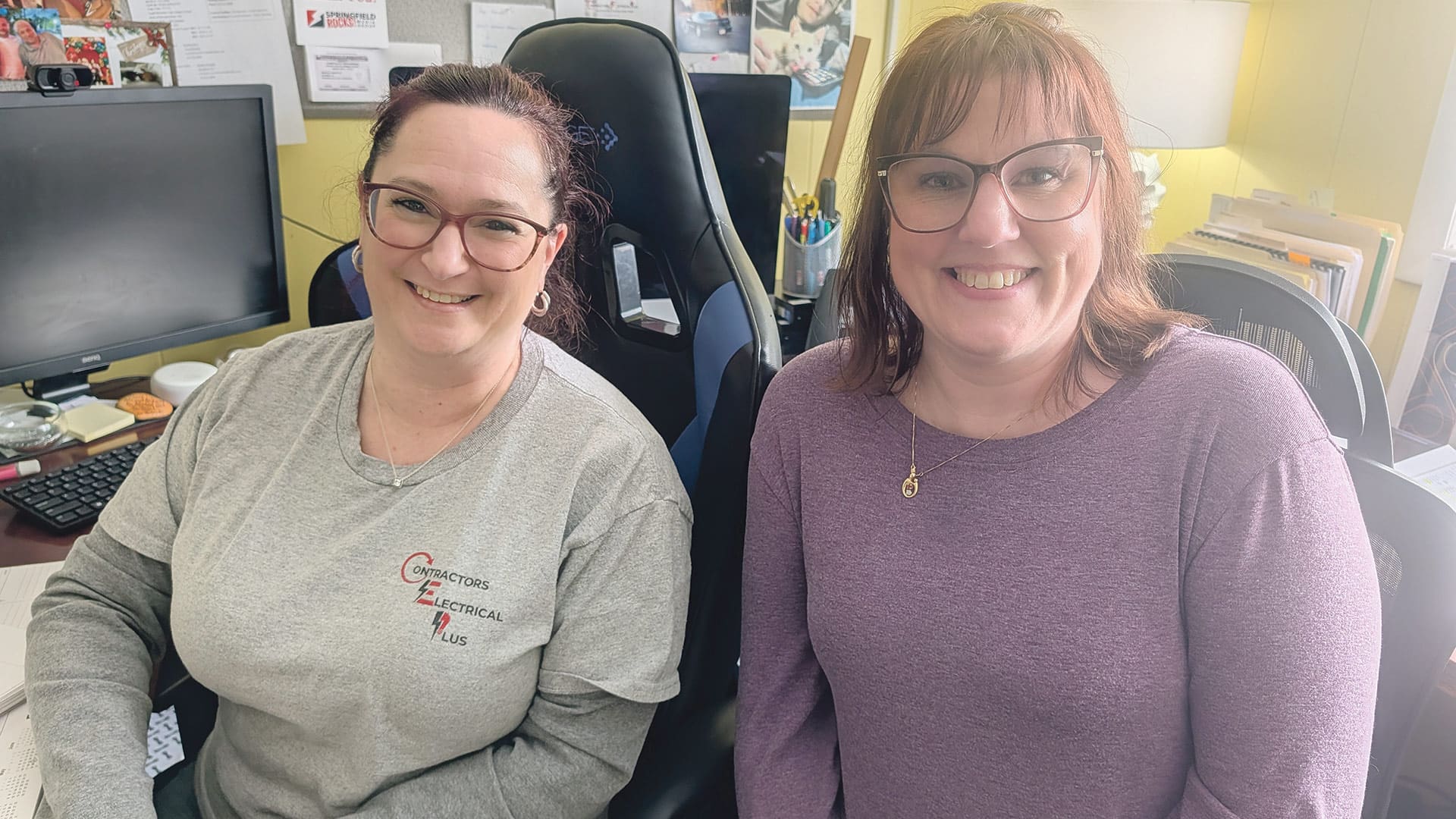
Company owners Kristin Wampler (left) and Kristen Sgroi.

Company owners Kristin Wampler (left) and Kristen Sgroi.

When Kristin Wampler and Kristen Sgroi met, they became fast friends. And now, they’ve turned that friendship into a women-owned electrical contracting company that has carved out an intriguing niche in Western Mass.

Specifically, they met while working for a commercial electrician, and they hit it off immediately. So when they started talking about launching a business of their own — Wampler has a long entrepreneurial background — an electrical firm made sense. Even though they’re not electricians themselves, they knew enough about the trade — and plenty more about running the back end of a business — to give it a go.

But as they launched Contractors Electrical Plus in Westfield, they quickly pivoted away from the commercial and industrial side, instead planting a flag in what they felt was an undertapped market in residential jobs.

“My husband does home improvement, a lot of remodeling, and he’s always looking for electricians and plumbers and HVAC people,” Wampler said. “So I said to Kristen one day as we were driving, ‘you know, with all the knowledge that we’ve gained, we can open up our own residential service and repair business.’”

So they did — and their model proved to be a successful one.

“Our motto is that we protect your most valuable assets, which are the people in your home,” Sgroi said, adding that they aim to be a more relatable company for women.

“My husband does home improvement, a lot of remodeling, and he’s always looking for electricians and plumbers and HVAC people.”

“Who tends to call for services? It’s more often women who call,” she noted, adding that she and Wampler stress peace of mind in customer interactions, as all technicians are thoroughly background checked and drug tested, scheduled times are strictly kept, and all pricing is detailed up front, with no surprises later — with the same price offered weekdays, nights, or weekends.

Also, “one of us usually comes out, and we introduce ourselves. That puts the homeowner at ease, too,” Wampler said. “When another woman is coming to the house, you have that commonality. We understand what it’s like to be a woman home alone when somebody comes knocking at your door. It’s been awesome, the people we’ve met, and some of our customers have become good friends of ours.”

The company offers an annual membership plan as well, which offers perks like always having an electrician on call, services warrantied for the life of the membership, and discounts on the work itself.

But where Contractors Electrical Plus really sets itself apart is the way it educates customers.

“A friend of mine lost her home to an electrical fire,” Wampler said. “So we really want to educate customers on the risks of their electrical panel — because she actually had some rodents coming in the wintertime; they built a home in her panel, which caught a spark and ignited the house.

“With our program, we do home safety inspections. Once a year, we’ll come through your house and educate you on your electrical system — because you’re using electricity 365 days a year. That’s the heart of your home.”

Even during routine jobs, the company’s technicians make a point of pointing out and clearly explaining issues — and how to prevent them in the future.

Master electrician Gary Martineau, a former teacher, has been effective at educating customers and mentoring younger employees.

Master electrician Gary Martineau, a former teacher, has been effective at educating customers and mentoring younger employees.

“When you’re working in the big industrial space, everything is kind of open, where, in a house, everything is behind walls. Nobody sees it,” Wampler said. “When you go into parking garages, you can see all the conduit, but nobody gets to showcase their good work in residential. When we do new builds, we’ll take pictures, but once the panel goes up, you never see it again. But there’s so much that happens behind the walls.”

As an example, she noted that a customer recently had some bathroom fans changed out. “You wouldn’t believe how disgusting they were. When we took it down, it was just corroded with stuff. The homeowner was like, ‘wow.’ It’s the dust, and you don’t realize that’s coming back into the air. So with our home inspections, we’re checking all of that, and we’re making sure you’re breathing clean air, your smoke detectors are up to date, and all your safety hazards are taken care of.”

She shared other electrical hazard stories — of a smoking thermostat, improper phone chargers, and other small issues that had the potential to turn into bigger issues, and even fires.

“There could be a million electricians out there, but what’s going to set you apart from the other ones is being relatable, being empowering, and the customer knowing that they’re actually talking to somebody who cares enough to educate them. They don’t just come to your house and say, ‘OK, that’ll be $150’ or ‘that’ll be $300,’ and not tell you what made that happen, so you can prevent it in the future.”


Knowledge Is Power

The business partners take their motto seriously.

“This really is about protecting our most valuable assets,” Wampler told BusinessWest. “Like I said, my friend lost everything in that fire. Thank goodness she didn’t lose her kids or anything. But there are sentimental pieces that you can never get back.

“Electrical fires happen. Just recently, there were six fires in Springfield, and they were all from electrical malfunctions,” she went on. “So I really want to educate the homeowners on the safety risks. If we see something, we educate the homeowner. It doesn’t matter if you’re in our plan or you’re not in our plan, it does not matter. We educate the homeowner.”

“Electrical fires happen. Just recently, there were six fires in Springfield, and they were all from electrical malfunctions. So I really want to educate the homeowners on the safety risks.”

She noted that the company includes an actual teacher, Master Electrician Gary Martineau, a veteran of Westfield Technical Academy. “He’s a great educator when he goes out to homes and talks to homeowners. He’s also a great mentor to our apprentices. He takes his time with them and educates them. He’s been amazing.”

The mention of Martineau and his experience training teenagers got Wampler and Sgroi talking about the challenge of introducing young people to the trade, as her own son has been.

“The trades in general — that’s one thing AI is not going to replace,” Wampler said. “Like, plumbers are a dying breed. I feel like these young kids need to be more involved in getting into plumbing because there are so many old-timers in plumbing, and when they retire, they’ve got to pass this down — because AI is not going to replace them. Same thing with electrical or HVAC or carpentry.”

In that way, teaching young people the trades, including electrical work, is a way to empower them, she went on.

“Do something with your hands, because that’s never going to go away. You can always make money. You’re never going to be without a job because you can always do side stuff. My son has always loved electrical. He’s always wanted to know how things work. So he liked the flow of this work.

“Not everybody’s meant to sit behind a desk and do computer stuff,” she added. “They’re meant to be out there, and they want to build things. And that’s the future, building.”

Wampler said she and Sgroi plan to visit area vocational schools in an effort to bring more girls into the trade.

“If you’re in trade school, you don’t have to go into cosmetology; you can choose this. We want to empower them to choose a different path than they might have thought about.”


Team Players

Meanwhile, they continue to go into the field themselves, delivering parts, generally helping out, and talking to customers.

“It really shows your employees that you’re a team player — you’re not just the boss, you’re not just the one in the office, you’re not a dictator, but you’re out there with us,” Wampler said. “So we do that quite often.”

“And,” Sgroi added, “we try to keep open communication with all of our employees. It’s an open door policy, if they have any concerns.”

The bottom line, Wampler said, is that “we make sure we take care of our employees because our employees take care of us. That’s huge, knowing and appreciating the people that work with you. And they don’t work for us, they work with us. That’s what we try to instill — we’re here for you, and we’re doing this all together.”

They employ a team of six right now and provide constant opportunities for training, including how to sensitively talk with customers, but also be firm when an issue needs to be fixed.

“It’s communicating with the the homeowner on what things are urgent and what things can wait, and how to deal with somebody who hems and haws and is just looking for a Band-Aid,” Wampler said. “I’m not about a Band-Aid because the minute that we touch it, we now own it. And if we’re the last person to touch it, we’re going to fix it right the first time, or you can call somebody else.”


Technology

Straight Talk About AI

By Sean Hogan

AI is everywhere right now. I have never seen a new technology move as fast as this. The pace of change is hard to keep up with, and it is already changing how businesses operate on a daily basis.

In our office, we have been using AI across several areas. Like most companies, we started with the basics. We used tools like Chat and Copilot to help with content writing, documentation, and internal processes. These tools helped us build standards and procedures faster than before.

The impact was immediate. Tasks that used to take hours, like drafting documents or editing content, could now be done in a fraction of the time. We used AI to create job descriptions, prepare presentations, and clean up written communication. It did not replace our work, but it removed a lot of the repetitive effort that slows teams down. That was what I would call phase one of AI.

The next step came when we introduced meeting transcription and summaries. We started using Otter to capture our meetings and generate notes automatically. This was a turning point for us. Instead of worrying about who was taking notes or what might be missed, we had a full record of every conversation.

This made our meetings more productive. People could stay focused instead of trying to write everything down. After the meeting, we had clear summaries, action items, and records we could refer back to. It saved time and reduced confusion. It also helped with accountability because everyone could see what was discussed and what needed to happen next.

Sean Hogan

Sean Hogan

“AI is not just for fun. It can support real marketing efforts, from content creation to visual design to campaign planning. It helps teams move faster and test ideas more easily.”

As useful as that was, AI did not stop there. We quickly moved into what I would call phase two.

AI has become a major force in marketing and design. When we first experimented with AI-generated images and branding, the results were rough. Tools struggled with basic things like spelling and consistency. Logos looked off, and text often did not make sense.

That has changed very quickly. Today, these tools are far more capable. They can generate clean visuals, help brainstorm campaign ideas, and support content creation at scale. My kids actually introduced me to Grok, and we had some fun turning still images into short videos. While that started as entertainment, it showed me how fast the technology was improving.

More importantly, it showed how we could use these tools in a business setting. AI is not just for fun. It can support real marketing efforts, from content creation to visual design to campaign planning. It helps teams move faster and test ideas more easily.


Next Steps

From there, we expanded AI into our broader technology stack. We are no longer using it just for administrative tasks or marketing support. We are using it to improve productivity and efficiency across the business.

One of the biggest changes has been in our help desk operations. We have introduced AI into our tier-one support process. With the help of an AI management layer, we can now resolve and remediate common support tickets using a proprietary AI tool. This allows us to handle routine issues quickly and consistently.

The benefit is clear. Our technicians are no longer tied up with repetitive tickets. They can focus on more complex problems that require deeper expertise. This improves both the quality of our service and the development of our team.

It also allows us to deliver a higher level of support to our clients. Instead of spending time on basic issues, our team can focus on solving bigger challenges and providing more value.

Our most recent addition is an AI-powered auto attendant. This is not the old style phone system that most people are used to. This is an agent that can answer calls, ask the right questions, and gather the information we need to help the client. It acts as the first point of contact and sets the tone for the entire interaction.

This has been a major improvement for both our team and our clients. Instead of sending calls to voicemail, clients can speak to an agent right away. The agent collects the necessary details, understands the request, and documents the conversation. That information is then passed along to the appropriate person or team.

Anyone who has ever had to repeat the same issue to multiple people knows how frustrating that can be. This process reduces that problem. The full conversation and transcript are captured and shared, so the next person already has the context they need. If a client needs to open a support ticket, the agent can guide them through the process step by step. It ensures that all required information is collected up front.

There is also a level of consistency that is hard to achieve otherwise. The agent does not forget to ask key questions. It does not miss details. It does not have a bad day or get distracted.

For years, I have emphasized to our team the importance of collecting and confirming information on every call. Do we have the correct phone number? The right email address? The proper contact details? These are simple things, but they matter. The AI agent handles this every time without fail.

We are also looking ahead at how AI can integrate with other systems, including CRM platforms, ERP systems, and inventory management. The goal is to create a more connected environment where information flows smoothly and processes are more efficient.


Risk and Reward

This is an exciting time to be in technology. AI represents a major shift, and we are choosing to embrace it.

That said, AI is not without risk. You need to be careful with how you handle data and personal information. Security and privacy should always be a priority. AI tools are powerful, but they need to be used responsibly. That is a much larger topic and one worth discussing in detail on its own.

AI is not perfect, but it is very capable. It can handle complex tasks, support decision making, and free up time for more important work. The key is to use it as a tool. Challenge it. Test it. Find ways to apply it that make your business stronger and more efficient. If you ignore it, you will fall behind. If you use it wisely, it can give you a real advantage.

One last note: I still write my own blogs. But once I am done, I run them through AI to proofread and clean things up. It turns out AI is pretty good at that, too.


Sean Hogan is president of Hogan Technology Inc.

Healthcare News

Meeting a Critical Need

By UnitedHealthcare


Behavioral health has become a strategic priority over the past five to 10 years. As utilization rises and employee expectations shift, employers are navigating new pressures: managing costs, meeting demand for specialized support, and demonstrating that their benefits actually drive value.

For organizations trying to support workforce well-being while keeping benefits costs sustainable, understanding these trends is essential. Here are seven trends defining behavioral healthcare in 2026 — and why they matter now.

“One-size-fits-all approaches to mental health are losing ground. Employers are increasingly focused on offering benefits that reflect their employees’ specific circumstances.”

1. Behavioral Health Care Utilization Is Up — and So Are Costs

More employees are seeking mental health support than ever before. In fact, a recent survey found that nearly half of Americans (48%) plan to seek therapy within the next year — a 5% increase from last year. Although this utilization is a positive sign that the stigma continues to decline, it comes with financial consequences. Behavioral health claims have been rising rapidly and are predicted to increase by 10% to 20% in 2026.

The challenge for employers isn’t whether to invest in behavioral health — it’s how to invest wisely. Not every employee needs traditional treatment-first therapy, which can be unsustainable. An estimated 50% of members seeking mental health support may be good candidates for lower-severity options, such as behavioral health coaching or self-help apps. Navigating employees to the right level of care can help manage costs while still getting people the support they need.


2. Specialized Support Is Becoming the Expectation

One-size-fits-all approaches to mental health are losing ground. Employers are increasingly focused on offering benefits that reflect their employees’ specific circumstances.

For example, most benefits leaders want to better support neurodivergent employees and families, such as those with autism, dyslexia, and attention deficit hyperactivity disorder. In addition, employers are becoming increasingly aware of the disproportionate mental health burden women tend to be under, whether that’s from the added stress many women tend to take on as the main decision makers for their families or the impact that the maternal health and menopause life stages can have on their bodies and minds.

Similarly, employers are realizing that caregivers more broadly need targeted behavioral health resources. Whether supporting aging parents, children with behavioral health needs, or both, caregivers often face significant stress that spills into the workplace. Organizations that can meet these varied needs may see stronger engagement and retention.


3. Increased Burnout Is Impacting Mental Health — and Costs

Burnout has reached a six-year high among American workers. According to recent workforce surveys, 66% of employees reported experiencing burnout in the past year. Gen Z has now surpassed Millennials as the most burnt-out generation.

Return-to-office mandates are adding to the pressure. Seventy percent of employees reported feeling heightened anxiety about the shift back to the office. Working parents, especially mothers, and the ‘sandwich generation’ who are caring for both children and aging relatives are feeling the strain most acutely.

For employers, the takeaway is straightforward: behavioral health costs don’t exist in a vacuum. Workplace policies — including decisions about remote work, flexibility, and workload expectations — shape whether employees thrive or struggle. Organizations that want to manage behavioral health spending may need to look beyond their benefits package and consider how the work environment and culture they create either support emotional wellness or undermine it.


4. Employers Want ROI, Not Just Access

Access to care was once the primary metric for evaluating the success of behavioral health benefits. That’s no longer enough. Today’s employers want evidence that their programs are working. They’re looking for measurable outcomes: reduced absenteeism, improved retention, and demonstrable return on investment.

Research suggests that well-designed behavioral health programs can deliver. One analysis found that comprehensive behavioral health benefits generated a pooled ROI of 2.3 times program costs — with every $100 invested yielding roughly $190 in medical claims savings.

As behavioral health usage rises, organizations that can measure and demonstrate impact — without adding administrative complexity — may be best-positioned to meet workforce needs. Working with a carrier that not only has a continuum of behavioral health options to meet different severities of needs, but also the care navigation strategies to help ensure employees are being guided to the most appropriate support, is important.


5. AI and Advanced Technologies Are Reshaping Access to Care

Artificial intelligence is transforming how employees find and receive behavioral health support. From AI-powered triage tools to predictive analytics that identify employees at risk, these technologies are helping close gaps in care.

Importantly, AI isn’t replacing clinicians; it’s supporting them. Used responsibly and with appropriate oversight, AI can streamline administrative tasks like documentation and surface needs earlier through digital screening tools to help match employees to the right support. For employees in areas with mental health provider shortages — more than a third of Americans — AI-enabled tools can help expand access without increasing wait times.

As AI tools proliferate, employers should look for carriers and solutions that abide by clear ethical frameworks — with human oversight, accountability, and transparency built in.


6. Whole-person Healthcare Is Becoming the Norm

The industry is moving away from siloed treatment models toward integrated approaches that connect behavioral and physical health. This shift reflects growing evidence that mental health conditions affect chronic disease management, medication adherence, and overall health outcomes.

The connection runs in both directions. Employees managing chronic conditions like diabetes, heart disease, or chronic pain often experience higher rates of depression and anxiety. Addressing both physical and behavioral health together can improve outcomes and reduce overall costs.

For employers, this creates an opportunity to rethink how benefits are structured. Rather than treating behavioral health as a standalone category, organizations can look for solutions that embed mental health support into primary care pathways, chronic condition programs, and care navigation.


7. Continuous Care and Digital Tools Are Gaining in Popularity

Mental health needs don’t stop when a therapy session ends — and, increasingly, neither does support. Employers are investing in digital tools that extend care beyond scheduled appointments, helping employees stay engaged between sessions and access support whenever they need it.

These tools take many forms: guided self-help exercises, session summaries that reinforce key takeaways, and 24/7 talk-based support for in-the-moment needs. When integrated thoughtfully, these technologies create a continuous care experience that keeps employees connected to their mental health goals.

For employers, continuous care models offer the potential for better outcomes without proportionally higher costs.