Home 2026

Daily News

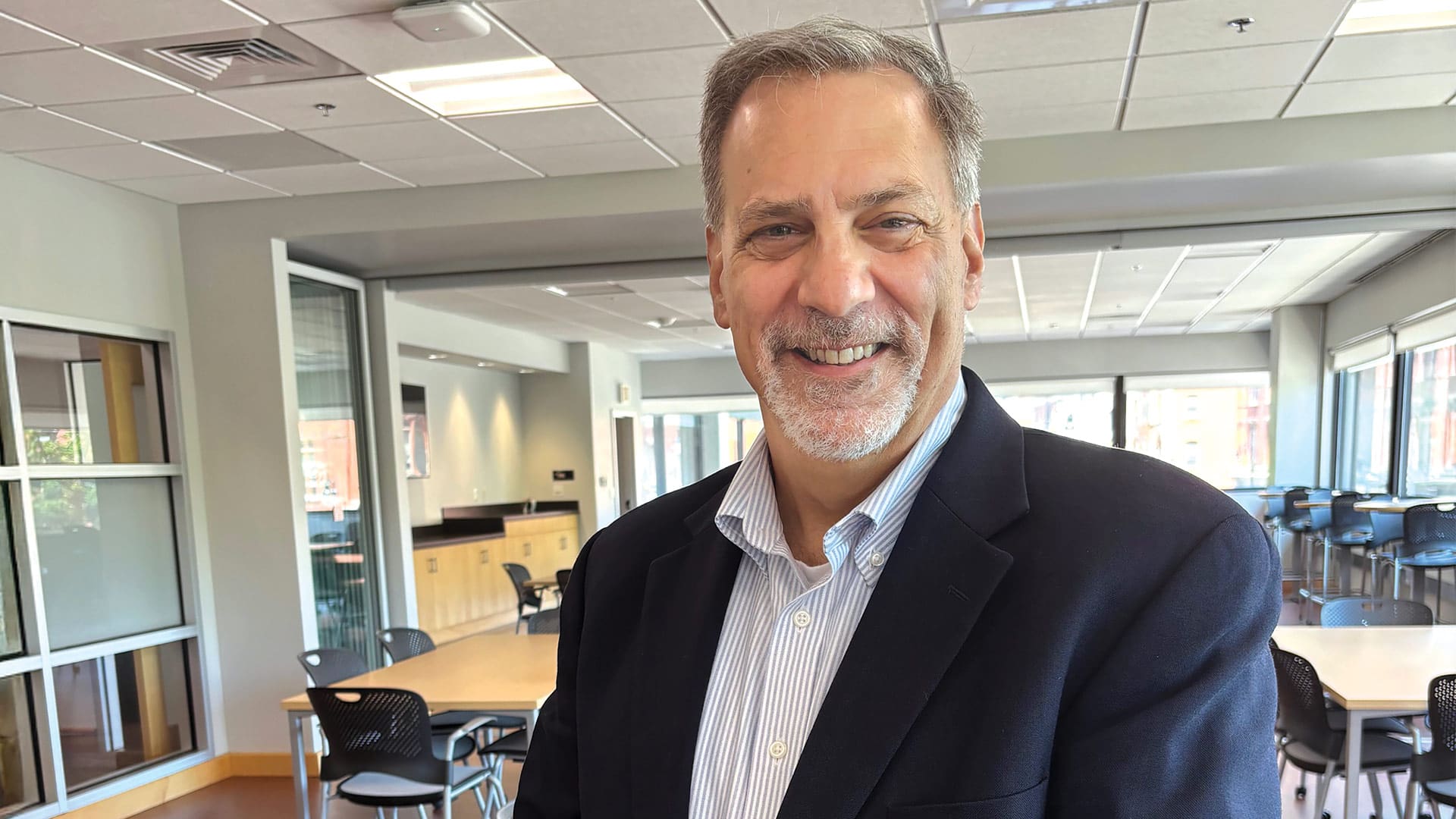
SPRINGFIELD — This month, Garvey Communication Associates Inc. (GCAi) marks 35 years in business — a run that traces the arc of modern communications itself, from retail politics to the dawn of the web to the AI-driven answer engines reshaping public relations today.

Founder John Garvey launched GCAi in 1991, fresh off a short stint as a legislative aide to the vice chairman of the Massachusetts House Ways and Means Committee. He started with a name on the door, no clients, and a family that, by his own account, ate ramen noodles for several years after. That lean stretch didn’t last long. Springfield City Councilor Brian Santaniello called looking for fresh re-election ideas and hired Garvey. The campaign topped the ticket, finishing first among all City Council candidates — and a first-time candidate GCAi also represented won a seat as well.

Political consulting proved a fast way to gain broad experience, and the legendary political consultant Joe Napolitan took Garvey under his wing. But Garvey chose a different road, turning toward the private sector — where two early wins shaped everything that followed. He became the first marketing consultant Tom Burton hired for Hampden Savings Bank and the first marketing and PR consultant Sam Hanmer brought on for his insurance network, then known as Field Eddy & Bulkley.

GCAi’s edge was an unusual one for a PR firm: Garvey knew computer programming and had worked in a computer center, and technology never frightened him. The firm was building websites in 1996, before most companies knew what a website was — GCAi first lived at AskMyDog.com (it’s a long story). Banking and insurance became a core focus, but over the years, the firm has worked across nearly every vertical, from healthcare and transportation to accounting, legal, and grocery.

GCAi also became known for getting there first. It built its first dot-com bank, yourebank.com, in 1998. It helped pioneer SEO PR and the use of video as a digital communications tool, and was among the first to use social media to distribute PR. Over time, through effective paid campaigns, the firm pushed PR beyond its traditional limits, showing it could be more than just the coverage a company earns.

Those instincts drew recognition along the way: an Ad Club Creative Award for the documentary-style “Innovation Series” hosted by PeoplesBank, a Daily Hampshire Gazette Reader’s Choice award for Best Marketing/Advertising Agency, a Small Business Recognition Award from the Greater Springfield Chamber of Commerce, and a national Top Ten Social Media Standout honor from Snap Fitness. The firm is a Google partner and a Meta marketing agency partner.

Giving back has been part of GCAi from the start — perhaps because Garvey’s first venture out of college, before the State House and before GCAi, was a social enterprise: Dispute Resolution Services Inc., which he founded and ran for nearly a decade, and for which he was later presented with the Brent P. Davis Award for his support of the community mediation process.

With Attorney Scott Foster, Garvey helped develop permanent funding for Valley Venture Mentors, and he spent years as a mentor and PR and digital marketing instructor for MassChallenge. Organizations the firm has helped more recently include Tech Foundry, Square One, Martin Luther King Jr. Family Services, Revitalize CDC, and a Garvey favorite, the Gray House.

Some of the firm’s favorite memories are the least corporate ones. Both of Garvey’s children, James and Quinn, practically grew up in the office at Tower Square — testing the patience of building security as they raced the elevators from the 24th floor to the second, with Edwards Books as their other favorite hangout. More than a dozen associates have come through GCAi’s doors over the years and gone on to bigger markets — New York, Los Angeles, and beyond. One even beat Garvey to retirement and now lives in Oahu. Quinn still works for GCAi today, specializing in TikTok content from her perch in the Hollywood Hills, and runs her own marketing business focused on vintage luxury estate and home sales.

That same get-there-first instinct defines GCAi’s work today. The firm now applies answer engine optimization and generative engine optimization to PR, shaping how AI tools like ChatGPT and Google’s answer engines understand, describe, and cite the brands it represents.

As GCAi sees it, the audience once reached through a ranked list of links is now handed a synthesized answer, and the job is to be inside it. AI-powered discovery rewards brands with genuine authority, and the firms that establish that authority early are remarkably hard to displace.

One person stands at the center of the milestone. Garvey’s son James grew up to become GCAi’s vice president and director of Digital Marketing — a Google Ads certified planner, a member of Facebook’s Business Insights Panel, and a national award winner for social media marketing. He didn’t just buy ads; he built campaigns that worked for clients who trusted him completely, and he was doing the work he loved right up until the day he passed away nearly two years ago. So much of what GCAi is today, James helped build. The 35-year milestone is his as much as anyone’s.

Thirty-five years on, GCAi extends its thanks to every client, associate, mentor, and friend who has been part of the journey — and to James, always.

Daily News

WEST SPRINGFIELD — Each year, Eastern States Exposition (ESE) donates 1% of its annual gross operating revenue to the town of West Springfield to continue the Eastern States Exposition-West Springfield Trust. On June 25, ESE President and CEO Gene Cassidy and members of the wider team visited Mayor William Reichelt at West Springfield Town Hall to present a check for $351,742 to the trust.

Cassidy, Reichelt, and attorney Mary Paier Powers are all on the board for the trust and were present at the press conference and check presentation. This executive body reviews grant applications and awards a percentage of the donations to applicants. The allotted donation benefits education, youth, athletics, and the elderly, as well as combating food insecurity in West Springfield, among other assistance. The remainder accrues with each donation.

As a not-for-profit entity, ESE does not receive federal support, state support, or funding from local taxes. This sets the Big E, which has grown to be the fourth-largest fair in North America, and the broader organization apart from most fairs. To express appreciation to the populace that continues to support its mission faithfully, ESE partnered with the town to create the Eastern States Exposition-West Springfield Trust.

“Congratulations to all who were awarded a grant,” Reichelt said. “We received a lot of requests this year, and it’s always difficult to whittle down which causes we give to. Thank you for joining us today.”

Added Cassidy, “I’m proud to be at the helm of an organization capable of giving back to West Springfield. Our total payments to the town in 2025 were more than $2.2 million across taxes, licensing, and more. Even with significant expenditures, we continue to grow the trust.

“Since it was first founded more than three decades ago in 1995, Eastern States Exposition has contributed $6.1 million to West Springfield through the trust,” he went on. “When we started, it was easy to decide where grants would be awarded because we had so few applicants. Now, it’s difficult to choose between the many impactful projects proposed. We are proud to invest in the town we call home and the people that live there.”

Daily News

SPRINGFIELD — Leap into Law, a new workforce development initiative designed to expand access to careers in the legal field, officially launched in Springfield and is currently underway with its first cohort of 15 participants. The program supports residents seeking stable, living-wage career opportunities within the legal services sector.

The initiative, funded by the Massachusetts Executive Office of Economic Development and the Irene E. and George A. Davis Foundation, is led by Springfield WORKS, a workforce development effort of the Western Massachusetts Economic Development Council. Springfield WORKS serves as a regional convener, bringing together employers, educators, and community organizations to build career pathways, support worker advancement, and pilot workforce solutions that strengthen economic mobility across Western Mass.

Developed in partnership with Katie Manzi McDonough, partner at the law firm Hinckley Allen, Leap into Law responds directly to the growing demand for entry-level and early-career legal talent. The program creates a clear and accessible pathway into the legal field through structured training and direct employer engagement.

Leap into Law prepares participants for in-demand legal support roles while helping employers build a stronger, more diverse talent pipeline. Program components include contextual training and hands-on skill development; digital literacy instruction; professional readiness and wraparound support; exposure to legal career pathways, including legal assistant and paralegal roles; employer engagement opportunities, including experiential activities and job shadowing; and support for notary public applications.

“Leap into Law is about creating real access, not just awareness, to legal careers that offer stability, growth, and long-term economic mobility,” said Anne Shecrallah Kandilis, director of Springfield WORKS. “This program bridges talent and opportunity while responding directly to employer needs in our region.”

The current cohort includes 15 participants who are actively engaged in training at the Roderick J. Ireland Courthouse, providing an immersive learning environment within the legal system. Participants receive individualized support throughout the program to ensure readiness for employment and long-term career success.

Leap into Law is made possible through partnerships with Springfield WORKS, Hinckley Allen, the Hampden County Bar Assoc., Tech Foundry, the Massachusetts trial courts, and many other partners in the Greater Springfield area. This collaborative approach reflects a shared commitment to workforce development and economic mobility.

“The legal field offers a wide range of meaningful and sustainable career paths, and employers in our community need strong candidates to fill essential administrative roles to support their work,” said Manzi McDonough, who was born and raised in Western Mass. “Leap into Law removes barriers by creating direct connections between participants and employers, opening the door to a career in the law with real opportunity for growth and stability right here in the Greater Springfield area.”

Partnership opportunities remain available, including hosting interns, providing training support, interviewing candidates for part-time or full-time positions, and contributing to program expansion.

Daily News

HOLYOKE — Holyoke Community College President George Timmons and the HCC board of trustees have been selected to join the second cohort of the Aspen Presidents & Trustees Collaborative.

This year-long initiative, led by the Aspen Institute College Excellence Program, brings together colleges nationwide to strengthen alignment between boards and presidential leadership and advance long-term student success.

Through this collaboration, Timmons and HCC trustees will engage with national experts and peer institutions, learning from best practices of Aspen Prize-winning colleges and leveraging Aspen’s Trustee Framework. The goal is to build sustainable governance practices that drive meaningful reforms in student success.

According to the Aspen Institute, “Aspen’s research into community college excellence reveals that long-term, scaled change depends on college presidents and trustees having a shared understanding of why student outcome reforms are needed, agreeing on prioritized reform strategies, and aligning their review of metrics, policies, and budgets to those priorities.”

The Aspen Institute College Excellence Program aims to strengthen higher education leadership and practice to improve student outcomes, with the ultimate goal of advancing economic mobility and developing talent for the good of each individual and society as a whole.

Daily News

WARE — Country Bank announced the recent promotions of seven employees across its commercial banking, retail banking, lending, and marketing divisions, recognizing their leadership, commitment to customers, and contributions to the bank’s continued growth and positive community impact.

“These promotions recognize a talented group of leaders who consistently deliver exceptional service, drive meaningful results, and embody Country Bank’s corporate values of integrity, service, teamwork, excellence, and prosperity,” said Miriam Siegel, chief Culture & Development officer at Country Bank. “Each of these individuals has demonstrated strong leadership, dedication to our customers and communities, and a passion for helping Country Bank continue to make a difference for the communities we serve.”

Angela Barahona was promoted to first vice president, Cash Management team lead. With a combined 24 years at the bank and extensive cash management experience, she has played an instrumental role in strengthening municipal and commercial banking relationships while helping advance the bank’s cash management strategy.

Jennifer Bujnevicie was promoted to first vice president, Retail Banking regional manager. With more than 21 years of banking experience, she has driven significant consumer loan and deposit growth in the bank’s East Region and played a key role in opening several new banking centers.

Cristina Consalvo was promoted to vice president, Marketing. Since joining the bank last year, she has leveraged her 14 years of marketing experience to lead strategic initiatives, including implementing and optimizing marketing automation systems to enhance lead generation, analytics, and overall marketing effectiveness.

Sarah Yurkunas was promoted to vice president, commercial lender. A nearly 20-year veteran of the bank, she manages a substantial commercial lending portfolio, including complex construction and commercial relationships, while remaining actively involved in community initiatives throughout the region.

Kimberly Eaton was promoted to assistant vice president, Retail Banking officer. Over the past four years, she has demonstrated strong leadership and sales performance, contributing to growth in the bank’s Worcester market. She is also deeply committed to community involvement, regularly volunteering at local events and organizations.

Kelly Kemp was promoted to assistant vice president, Retail Lending officer. With more than 20 years of experience at Country Bank, she consistently delivers exceptional service and is highly regarded for her expertise in supporting homebuyers. She is also recognized for her strong commitment to community involvement.

Janelle Soucia was promoted to assistant vice president, Retail Lending officer. Throughout her 19-year tenure with the bank, she has earned a reputation for outstanding customer service, strong sales performance, and active engagement in financial education and community outreach initiatives.

“These leaders each make a meaningful impact in their own unique way,” Siegel added. “Their commitment to our customers, communities, and colleagues reflects the very best of Country Bank’s culture and values.”

Daily News

SUFFIELD, Conn. — One of Northern Connecticut’s largest summer celebrations returns today as the sixth annual Suffield Summer Fair brings three days of live entertainment, carnival rides, local food vendors, artisan shopping, and a spectacular fireworks finale.

The free community event takes place Thursday, June 25 through Saturday, June 27 at Suffield Middle School, 350 Mountain Road, Suffield.

Fair hours are Thursday, June 25 from 5 to 9 p.m.; Friday, June 26 from 5 to 9 p.m.; and Saturday, June 27 from noon to 10 p.m. The Suffield Summer Fair’s signature Grand Fireworks Show will light up the sky on Saturday, June 27, beginning at 9 p.m.

More than 30,000 residents and visitors attended last year’s event, making the Suffield Summer Fair one of the region’s most anticipated summer traditions.

“People told us last year’s fireworks were the best they had ever seen, and we’re excited to bring that experience back for families and visitors to enjoy,” said Frank Campiti, organizer of the Suffield Summer Fair. “Suffield is an incredible community, and we’re proud to offer a free event that brings neighbors together and helps kick off the summer season.”

In addition to the fireworks, attendees can enjoy live music throughout the weekend, carnival rides and games, specialty food trucks, and dozens of local artisans and craft vendors. A complete entertainment schedule and event information are available at www.suffieldsummerfair.com.

The Suffield Summer Fair Grand Fireworks are sponsored by Artioli Dodge Chrysler Ram, AMP Electrical Inc., and PeoplesBank.

Campiti Ventures, founded by Suffield resident Frank Campiti, produces community events including the Suffield Summer Fair and Grand Fireworks Show, as well as the Great Halloween Drive-Thru in Windsor, Conn.

Daily News

SPRINGFIELD — On June 23, Tech Foundry, Western Massachusetts’s preeminent IT workforce and digital skills training program, graduated its spring 2026 cohort of Tech Launch students at the Community Music School of Springfield. The graduates dedicated 18 weeks to advancing their technology skills to prepare for entry-level tech roles in helpdesk, systems, and network administration. Students have completed Tech Launch’s rigorous classroom training and month-long internships and earned Google IT Support Certificates.

Dr. M.V. Lee Badgett, chief economist and founding partner of Koppa LGBTI+ Economic Power Lab and professor emeritx of Economics at UMass Amherst, served as keynote speaker, noting that “the most important parts of an economy are the people in it — the skills, creativity, and knowledge that they bring.”

She addressed the graduates directly, saying, “the skills and knowledge you’ve learned at Tech Foundry are making you stronger, and they will make our economy stronger. Your hard work will benefit us all. It’s hard to predict what will come next on your pathway to a career, but it’s all important. You can learn something and contribute something in any job.”

Jean Corbin and Appolonia Saraci were elected by their peers as class representatives. They both remarked on the incredible sense of community that they encountered throughout the program, thanking their instructors, their fellow graduates, and the Tech Foundry staff for their dedication.

“We are constantly in awe of the perseverance and hard work shown by the Tech Launch students,” Tech Foundry CEO Tricia Canavan said. “Today’s graduation ceremony was a testament to their willingness to go above and beyond to advance their careers — uplifting themselves, their families, and the entire community. We couldn’t do this work without the incredible generosity of our donors, employer partners, board, and advisory board, and the commitment of the Tech Foundry team.”

Daily News

SUFFIELD, Conn. — One of Northern Connecticut’s largest summer celebrations returns this week as the sixth annual Suffield Summer Fair brings three days of live entertainment, carnival rides, local food vendors, artisan shopping, and a spectacular fireworks finale.

The free community event takes place Thursday, June 25 through Saturday, June 27 at Suffield Middle School, 350 Mountain Road, Suffield.

Fair hours are Thursday, June 25 from 5 to 9 p.m.; Friday, June 26 from 5 to 9 p.m.; and Saturday, June 27 from noon to 10 p.m. The Suffield Summer Fair’s signature Grand Fireworks Show will light up the sky on Saturday, June 27, beginning at 9 p.m.

More than 30,000 residents and visitors attended last year’s event, making the Suffield Summer Fair one of the region’s most anticipated summer traditions.

“People told us last year’s fireworks were the best they had ever seen, and we’re excited to bring that experience back for families and visitors to enjoy,” said Frank Campiti, organizer of the Suffield Summer Fair. “Suffield is an incredible community, and we’re proud to offer a free event that brings neighbors together and helps kick off the summer season.”

In addition to the fireworks, attendees can enjoy live music throughout the weekend, carnival rides and games, specialty food trucks, and dozens of local artisans and craft vendors. A complete entertainment schedule and event information are available at www.suffieldsummerfair.com.

The Suffield Summer Fair Grand Fireworks are sponsored by Artioli Dodge Chrysler Ram, AMP Electrical Inc., and PeoplesBank.

Campiti Ventures, founded by Suffield resident Frank Campiti, produces community events including the Suffield Summer Fair and Grand Fireworks Show, as well as the Great Halloween Drive-Thru in Windsor, Conn.

Daily News

SPRINGFIELD — American International College (AIC) has expanded its student support services through the LIFT Center (Linking Individuals to Fundamental Tools), a new resource hub that connects students with essential resources and assistance.

The initiative is supported by $85,000 in grant funding, including a $34,000 award from the Beveridge Family Foundation and a $51,000 grant from an anonymous foundation supporting student success.

Located in the James J. Shea Sr. Memorial Library, the LIFT Center connects students with resources addressing food insecurity, housing instability, transportation, childcare, public benefits, and other essential needs.

“At AIC, we understand that our students carry more than textbooks — many are balancing work, family, and financial hardship while pursuing their degrees,” said Kevin Lopez Giraldo, assistant director of Student Success Advising and Initiatives. “The LIFT Center reflects our commitment to supporting the whole student and ensuring that life’s challenges do not stand in the way of educational success.”

The LIFT Center serves as a central point of access for student support and referrals. Services include food pantry access, meal vouchers, emergency financial assistance, housing referrals, public benefits enrollment support, childcare resources, legal aid referrals, financial counseling, and transportation assistance.

Students may access services directly or be referred by faculty, advisors, and campus partners. Support is offered in a confidential, welcoming environment designed to help students navigate challenges and remain focused on their educational goals.

“This innovative program provides students with the support they need to continue — and complete — their studies,” said Ward Caswell, president of the Beveridge Family Foundation. “It reflects AIC’s commitment to meeting students where they are and addressing the real challenges they face in today’s complex world. With targeted, meaningful support, AIC is helping students stay on track to become tomorrow’s leaders.”

By connecting students to critical resources and reducing non-academic barriers, the LIFT Center advances AIC’s mission of expanding educational opportunity and supporting student success.

“The Beveridge Family Foundation’s support is transformative — not just for the LIFT Center, but for every student who walks through our doors in need of a helping hand,” Lopez Giraldo said. “This funding ensures students facing food insecurity, public benefits challenges, or housing instability do not face those challenges alone. We are deeply grateful for this partnership and excited to reshape student support at AIC.”

Daily News

SPRINGFIELD — The Women’s Fund of Western Massachusetts announcde $195,000 in general cycle grant awards to 17 organizations serving women, girls, and gender-diverse people across Berkshire, Franklin, Hampden, and Hampshire counties in June.

The Women’s Fund’s total fiscal year grant cycle, between August 2025 and June 2026, awarded $450,000 in community investment grants that were distributed throughout the four-county region.

The fund highlighted its 30-year anniversary of grantmaking to reflect on decades-long partnerships throughout Western Mass., while inviting new partners to expand its network.

“This is an opportunity to reflect on 30 years of grantmaking,” said Kelley Bryant, director of Grantmaking and Impact. “The community investments committee, board, and staff sought to invest in close partners and new partners that sustain local communities and fuel gender equity in Western Massachusetts.”

Julia Keosaian, executive director of Berkshire Nursing Families, added that “this support strengthens our ability to provide free, compassionate perinatal and lactation care to families across our region during one of the most vulnerable and transformative times of their lives. Maternal and child health in the Berkshires depends on the kind of sustained, community-centered investment that the Women’s Fund has championed — and we’re proud to be partners in that work.”

Turmoil in the national funding landscape is causing instability for organizations providing direct support in the region. “This investment in our organization comes at a meaningful time,” said Jasarah Burgos, executive director of Enlace de Familias/Holyoke Family Network. “Flexible funding such as this allows us to remain responsive, innovative, and grounded in our mission of supporting and uplifting our community.”

Grantees from this cycle reflect the Women’s Fund’s focus areas of leadership, economic security, and freedom from gender-based violence. The awarded organizations include Amherst Survival Center, Arise for Social Justice, Berkshire Nursing Families, the Care Center, Community Action Pioneer Valley, Enlace de Familias/Holyoke Family Network, Flying Cloud Institute, Gardening the Community, Girls Inc. of the Valley, Girls on the Run, the Heartwing Center, Neighbor to Neighbor, Northampton Survival Center, Planned Parenthood – Western Massachusetts Health Center of Springfield, Rites of Passage and Empowerment, Salasin Project, and Volunteers in Medicine Berkshires.

Grant funding is provided by donors and foundations that rely on the Women’s Fund’s knowledge of regional gender equity challenges and expertise in identifying promising solutions. Support gender equity and become a donor at mywomensfund.org/give-now.

Daily News

SPRINGFIELD — Baystate Academy Charter Public School will welcome prospective students and their families to an open house on Thursday, July 9 from 2 to 4 p.m., providing an opportunity to learn more about the school’s unique educational approach, meet faculty and staff, and explore the campus.

The event is designed for families interested in enrolling students in grades 6-12 and offers an inside look at Baystate Academy’s college preparatory curriculum, which features enriched experiences in health sciences and a strong focus on preparing students for success in higher education and future careers.

During the open house, visitors will have the opportunity to tour the school’s campus at 2001 Roosevelt Ave. and learn about academic programs, student support services, extracurricular opportunities, and the school’s commitment to developing habits of both scholarship and character. Faculty and administrators will be available to answer questions about enrollment, academics, and student life.

One of the school’s signature programs is its nationally recognized Project Lead the Way (PLTW) biomedical science program, which provides students with hands-on, real-world experiences that support Baystate Academy’s mission of preparing and exposing students to careers in the health sciences industry. Through PLTW, students explore medicine, human body systems, and a wide range of biomedical science careers while developing the critical thinking, problem solving, and technical skills needed for future success.

This year, Baystate Academy was named a 2025-26 PLTW Distinguished School for the fourth consecutive year, placing it among a select group of high schools nationwide recognized for increasing student access, engagement, and achievement in career-connected learning.

The PLTW Distinguished School recognition honors schools that demonstrate a strong commitment to expanding opportunities in STEM education and career readiness. Baystate Academy earned the designation by meeting rigorous criteria, including student participation rates, course availability, and continued engagement in multiple PLTW courses. The school’s partnership with PLTW helps connect classroom learning to real-world applications and future career pathways in healthcare and related fields.

“At Baystate Academy, we are committed to creating an environment where students are challenged academically, supported personally, and inspired to become leaders in their communities,” Executive Director Timothy Sneed said. “We look forward to welcoming prospective families and sharing the many opportunities available to our students, including our award-winning biomedical science program.”

Baystate Academy serves students from across the Springfield area and offers an interdisciplinary curriculum with a special emphasis on health sciences, helping students explore pathways to college and careers in healthcare and other high-demand fields.

Families interested in attending the open house are encouraged to stop by to learn more about enrollment opportunities for the upcoming school year. School representatives will be available to discuss the admissions process and answer questions about becoming part of the Baystate Academy community.

For more information about the Open House or enrollment opportunities, call Baystate Academy Charter Public School at (413) 366-5129 or visit www.bacps.net.

Daily News

GREENFIELD and NORTHAMPTON — Community Legal Aid, a nonprofit organization that provides free legal services annually to more than 9,000 low-income and elderly residents of Central and Western Mass., has named new managing attorneys for its operations in Franklin and Hampshire counties.

Annie Connor

Annie Connor has been named managing attorney of Community Legal Aid’s Northampton office, which serves Hampshire County residents. Connor joined Community Legal Aid in 2022 as a staff attorney with the CORI & Re-Entry Unit and then became the coordinating attorney for that unit in 2023. She came to Community Legal Aid from the city of Somerville Mayor’s Office, where she served as director of Intergovernmental Affairs and Legislative Liaison under Mayor Joseph Curtatone.

Prior to that, Connor spent five years as a public defender at the Committee for Public Counsel Services in Roxbury, Dorchester, and Worcester. A graduate of Northeastern University School of Law, she also holds a master’s degree from the London School of Economics and Political Science and a bachelor’s degree from Vassar College.

Santina Sciaba-Douglas has been named managing attorney for Community Legal Aid’s Greenfield office, which services Franklin County residents. After graduating from Western New England University School of law, Sciaba-Douglas began her legal career as a law clerk to the judges of the Western Massachusetts Superior Court. She then worked as a special attorney general for the Massachusetts Department of Health’s Lead Program while also representing individuals facing involuntary treatment hearings, monitoring court-approved treatment programs, and serving as guardian ad litem through the Committee for Public Council Services.

Sciaba-Douglas also worked at the Center for Public Representation (CPR) for close to 20 years, representing individuals appealing the denial of Social Security benefits at all levels of the administrative appeal process, including in federal court. While at CPR, she also advocated for students with disabilities seeking special education services and challenging school suspension and/or expulsion. Prior to joining Community Legal Aid, she served as deputy executive director and interim executive director for Disability Rights CT. She is a native Spanish speaker.

Connor and Sciaba-Douglas are replacing Jennifer Dieringer, who led the Northampton office since 2011 and the Greenfield office since it opened in 2024. Dieringer is leaving Community Legal Aid for a position as a full-time lecturer at UMass Amherst.

Daily News

HOLYOKE — For the fourth year, Meyers Brothers Kalicka, P.C. (MBK) partnered with A Bed for Every Child, based out of Lynn. Unlike previous years, PeoplesBank joined the initiative and co-hosted the event with MBK.

Spearheaded by Chelsea Russell from MBK and Thomas Borek from PeoplesBank, the businesses were paired together for a collaborative build and networking event. Collectively as a group, the two businesses pledged to build 20 beds for children in Western Mass. Throughout the event, teams worked side by side building beds from scratch, which encouraged communication, creativity, and problem solving, while also providing opportunities to learn more about one another’s businesses and services.

“So many children go without beds, and having the ability to build and provide a child with a bed is giving them a place to dream,” Russell said. “By participating together, MBK and PeoplesBank combined their efforts to build beds for local families.”

Added Borek, “it’s always rewarding to partner with another business that shares the same commitment to giving back. Seeing our teams work side by side is a great reminder of what can happen when businesses come together to support our community and the real impact it can have on the families that live here in it.”

Daily News

MONSON — Monson Savings Bank is supporting Monson Free Library with a $2,000 donation as part of its 2026 Community Giving Initiative, a program driven by community participation and dedicated to supporting local nonprofit organizations.

Dan Moriarty, president and CEO of Monson Savings Bank and former member of the Monson Free Library finance committee, recently met with Hope Bodwell, director of Monson Free Library, to present the donation on behalf of the bank. They were joined by Michael Rouette, executive vice president and chief operating officer of Monson Savings Bank, and Kim Golinski, a member of the Monson Free Library board of directors. The contribution reflects the voices of the community, as Monson Free Library was selected through public voting in the bank’s annual initiative.

“We are proud to present this donation to the Monson Free Library on behalf of Monson Savings Bank,” Moriarty said. “As someone with deep roots in this community, I have seen firsthand how valuable the library is for residents of all ages. From educational programming to access to important resources, it plays an essential role in enriching lives throughout Monson and the surrounding area.”

Added Rouette, “supporting organizations like the Monson Free Library is a meaningful way for us to invest in the strength and vitality of our community. Libraries are essential spaces for learning, connection, and opportunity, and we are proud to stand alongside them in serving residents of all ages.”

Monson Free Library serves as a vital resource for the community, offering free access to reading materials, educational programming, technology, and cultural opportunities. Focused on supporting community priorities, the library provides a welcoming environment where individuals and families can learn, connect, and grow.

“We are incredibly grateful for Monson Savings Bank’s continued partnership and support,” Bodwell said. “We also extend our sincere thanks to the community members who voted for us through the Community Giving Initiative. Their support means so much and helps us continue to provide valuable services to the people we serve.”

Daily News

SPRINGFIELD — New Valley Bank & Trust announced the appointment of Aaron Goodman as chief lending officer.

In his new role, Goodman will oversee and manage all lending activity for the bank, leading efforts to provide responsive, relationship-focused financial solutions to businesses and individuals throughout the region. He will work closely with the lending team to advance New Valley Bank & Trust’s lending objectives while maintaining the high standards of integrity, service, and local decision making that define the organization.

Goodman brings a combination of banking expertise and real-world business experience to the position. As one of the original founders of New Valley Bank & Trust, he served on the bank’s board of directors and director’s loan committee from 2019 to 2022, helping guide the institution during its formative years. Throughout his career, he has successfully developed and managed a recycling business, a self-storage facility, and various real estate investments. His firsthand understanding of entrepreneurship and business operations provides valuable insight into the challenges and opportunities facing local business owners.

“Aaron’s extensive business experience, deep understanding of our organization, and customer- focused approach make him an outstanding addition to our leadership team,” said Jeff Sullivan, CEO of New Valley Bank & Trust. “As one of the bank’s original founders, Aaron has long believed in our mission and commitment to helping local businesses grow and succeed.”

As chief lending officer, Goodman will be responsible for overseeing commercial and consumer lending activities, supporting portfolio growth, and ensuring customers receive timely, personalized service tailored to their financial goals. He earned a bachelor’s degree in business administration from the University of Connecticut.

Daily News

NORTH ADAMS — Educators from across the region will gather at Massachusetts College of Liberal Arts (MCLA) on July 6-8 for the Leadership Conference, the capstone of the Leadership Academy’s 2025 cohort and the kickoff for the incoming 2026 cohort.

The conference will open Monday, July 6 with a keynote address from Julie Haagenson, founder of New Pathways, from 6:30 to 8:30 p.m. in Murdock Hall. Scholar Robert Putnam will give the July 7 keynote, also 6:30 to 8:30 p.m. in Murdock Hall. Morning presentations will follow from Leslie Blake-Davis on July 7 and Matthew Bishop on July 8.

Concurrent sessions run July 7 and 8 from 10 a.m. to 3:45 p.m., led by members of the 2025 cohort. Presenters will share the research, strategies, and leadership practices they have built over the year.

Sessions will take on the issues schools face now: building inclusive communities, strengthening instructional leadership, improving operations, and supporting every student. They are organized around the four standards of the Massachusetts Department of Elementary and Secondary Education’s Professional Standards for Administrative Leadership: instructional leadership, management and operations, family and community engagement, and professional culture.

“The Leadership Conference is the culmination of a year of growth, collaboration, and commitment to educational excellence,” said Marianne Young, director of the Leadership Academy. “These presentations show the talent and dedication of current and aspiring school leaders working to create better outcomes for students, families, and communities across the region.”

The conference will run in a hybrid format, with sessions open on campus or remotely. Registration is encouraged by clicking here.

The Leadership Academy supports educators working to strengthen their leadership skills and lead effective, equitable, student-centered schools. The annual conference both celebrates the cohort’s work and gives educators a chance to learn alongside colleagues from across the region.

Daily News

SPRINGFIELD — Skoler, Abbott & Presser, P.C. announced that five of its attorneys have been recognized on the 2026 Massachusetts Super Lawyers and Rising Stars lists. Each year, no more than 5% of lawyers in Massachusetts are selected as Super Lawyers, while the Rising Stars designation is reserved for no more than 2.5% of attorneys in the state — those who are 40 years old or younger, or who have been in practice for 10 years or less.

The following Skoler, Abbott & Presser attorneys have been selected as 2026 Super Lawyers:

• Marylou Fabbo has been a partner at Skoler, Abbott & Presser for more than 30 years and heads the firm’s immigration team. She is recognized for her work in employment law and immigration, and has been repeatedly named a Super Lawyer, a Top Women of the Law honoree by Massachusetts Lawyers Weekly, and a Legal Luminary and Go-To Employment Lawyer for 2025. Fabbo has represented clients before state and federal courts and agencies including the EEOC, MCAD, and the Connecticut Commission on Human Rights and Opportunities.

• Timothy Murphy is a partner whose practice spans labor relations, union campaigns, collective bargaining and arbitration, and employment litigation. He has been recognized in Best Lawyers in America since 2013 and has been named Lawyer of the Year in both Litigation Labor and Employment and Labor Law Management. Murphy is active in the Greater Springfield community, serving on the boards of organizations including Community Legal Aid, the Human Services Forum, and the World Affairs Council of Western Massachusetts.

• John Gannon is a partner whose practice focuses on employment litigation, personnel policies and practices review, wage and hour compliance, non-compete and trade secrets litigation, and OSHA compliance. He is a frequent speaker on employment law topics and has appeared on Western Mass News and the Massachusetts Lawyers Weekly podcast. Gannon was named a BusinessWest 40 Under Forty honoree in 2016 and serves on the boards of Riverside Industries and the Chicopee Chamber of Commerce.

• Erica Flores is a partner whose practice involves employment litigation in state and federal courts and agencies; class and collective action wage and hour litigation; discrimination, harassment, and retaliation defense; and counseling employers on day-to-day employment issues. She has repeatedly been named a Super Lawyer, was a BusinessWest 40 Under Forty honoree in 2018, and was a Massachusetts Lawyers Weekly Top Women of Law honoree in 2021. Flores currently serves on the board of directors of the Greater Westfield Chamber of Commerce.

The following attorney has been named a 2026 Rising Star:

• Amelia Holstrom is a partner whose practice covers employment litigation, labor relations, advice and training, litigation avoidance, wage and hour compliance, and MCAD and EEOC proceedings. She has been named to the Rising Stars list for several consecutive years and has received numerous other accolades, including Massachusetts Lawyers Weekly’s Top Women of the Law (2023), BusinessWest 40 Under Forty (2015), and the Massachusetts Bar Assoc. Community Service Award for Hampden County (2016). Holstrom is active in the community, serving on the boards of Clinical & Support Options Inc. and ERC5. She is also a Library trustee for the town of Wilbraham.

“We are proud that our attorneys have been recognized for their well-deserved honors,” said Marylou Fabbo, partner at Skoler, Abbott & Presser, P.C. “These awards reflect not only their exceptional legal skill, but also their unwavering commitment to excellence, integrity, and the clients we serve.”

Daily News

PITTSFIELD and NORTH ADAMS — BFAIR and UCP of Western Massachusetts announced a significant milestone in their ongoing merger exploration, including a leadership transition that will position the combined organization for continued growth and impact in serving individuals with disabilities and their families across the region.

Following a joint agreement by the boards of directors of both BFAIR and UCP of Western Massachusetts, Randy Kinnas has been appointed CEO of both organizations. This appointment marks a pivotal step in the unification process, establishing a single, unified executive leadership structure to guide the merged entity through its next chapter.

“We are proud to move forward together under unified leadership,” said Randy Kinnas, CEO of BFAIR and UCP of Western Massachusetts. “This merger represents a shared commitment to expanding the quality and reach of services for the individuals and families we are privileged to serve. Together, we are stronger.”

Both boards also recognize and celebrate the retirement of Ethel Altiery, who served as interim CEO. “Her steady, compassionate leadership during a critical period of transition has been invaluable to both organizations,” the board stated. “Altiery’s guidance helped lay the foundation for the unified future that BFAIR and UCP of Western Massachusetts now pursue.”

Added Kinnas, “Ethel’s leadership during this transition has been a true gift to both organizations and to the people we serve. We are deeply grateful for her dedication, her wisdom, and her heart. We wish her all the best in a well-deserved retirement.”

The merger of BFAIR and UCP of Western Massachusetts brings together two longstanding organizations with a shared mission: to support individuals with disabilities in living full, meaningful, and self-directed lives. By combining resources, expertise, and community relationships, the merged organization will be better equipped to expand services, strengthen programs, and advocate for those who depend on them.

Both boards of directors have approved this leadership structure as part of the broader integration plan, reflecting their confidence in a unified future that honors the legacy of both organizations while embracing new opportunities for impact.

Daily News

Version 1.0.0

SPRINGFIELD — A new children’s book designed to inspire confidence, self-belief, and purpose in young readers is now available. Emilio and the Spirit Tunnel, written by Danielle Delgado, a local educator and school administrator in Springfield, tells the story of a young student who discovers the strength, resilience, and potential that have been within him all along.

Set within a vibrant school community, the book follows Emilio as he navigates challenges, builds meaningful relationships, and learns to believe in himself. More than just a story, Emilio and the Spirit Tunnel highlights the important role that schools, families, and communities play in helping children develop confidence and a strong sense of identity.

“As an educator, I have witnessed firsthand the incredible impact that encouragement, belonging, and positive relationships can have on a child’s life,” said Delgado, a member of BusinessWest’s 40 Under Forty class of 2026. “Emilio and the Spirit Tunnel was written to remind children that they already possess the courage, potential, and spirit needed to achieve great things.”

The book reflects Delgado’s real-life work as a principal, where she uses ‘spirit tunnels’ to harness the positive energy and enthusiasm of students and staff to build a sense of community. Her school’s spirit tunnels were inspired by and featured on The Jennifer Hudson Show.

In addition to inspiring young readers, proceeds from Emilio and the Spirit Tunnel will support future generations through a scholarship fund that will help students pursue their educational goals and dreams.

For more information about Emilio and the Spirit Tunnel, upcoming book events, or scholarship fund initiatives, email Delgado at [email protected].

Daily News

BELCHERTOWN — Window World of Western Massachusetts announced that 22 members of its team have successfully completed the InstallationMasters certification program, making the company one of the most highly credentialed exterior remodeling teams in the region.

The certification program covers critical areas of the building envelope, including advanced water management, structural integrity, flashing systems, and thermal performance — all essential components for protecting homes in the demanding New England climate.

“Our team has always taken tremendous pride in their craft, but achieving this certification on such a large scale takes that commitment to another level,” said Nick Drost, owner and installation manager of Window World of Western Massachusetts. “By investing in nationally recognized training standards, we’re ensuring that every homeowner we serve receives an installation performed with the highest level of precision, consistency, and care. It’s about doing the job right the first time — every time.”

The InstallationMasters program is a nationwide training and credentialing initiative developed by the Fenestration and Glazing Industry Alliance. The program is designed to ensure installers are trained in current industry best practices and national installation standards for windows and doors in both remodeling and new construction applications. This accomplishment follows Window World of Western Massachusetts’ recent recognition as a Best of the Valley winner.

“For homeowners, properly trained installation teams provide more than quality workmanship — they provide peace of mind,” the company stated. “Proper installation is essential for maintaining energy efficiency, ensuring long-term performance, protecting manufacturer warranties, and helping prevent costly issues such as water infiltration and structural damage.”

Added Drost, “at the end of the day, homeowners are trusting us with one of their largest investments — their home. This achievement reflects our commitment to protecting that investment with the highest standards possible.”

Daily News

BOSTON — In acknowledgement of his demonstrated excellence in driving business success, Beacon Bank Chief Marketing Officer Gary Levante has been recognized as a finalist in the inaugural BostonCMO ORBIE Awards.

The 2026 BostonCMO ORBIE Awards honor chief marketing officers with proven leadership and management effectiveness, business value driven by marketing initiatives, and engagement in industry and community endeavors. Finalists were selected through an independent, peer-adjudicated process led by prior ORBIE recipients in categories based upon the size and scope of their organization and responsibilities.

In his role, Levante is responsible for advancing Beacon Bank’s strategic goals by establishing the bank’s brand, deepening client engagement, and delivering integrated marketing and communications programs. He works closely with other members of the leadership team and board to strengthen the brand and deepen the bank’s connection to its employees, clients, and broader communities.

Community Spotlight

Bryson Busiere says it started as a hobby.

Then it became a “second business.” And there are plans — it will take several years to a decade for them to become fruition — for it to become a full-time pursuit, a career.

Bryson Busier and his father, Marc, have guided their maple syrup business to continued growth and diversification.

We’re talking about Bryson’s Maple Syrup, an undertaking he started with his father, Marc, 15 years ago when he was in middle school. Together, they’ve grown it steadily to where they now tap 3,000 trees across four main properties, and produce 400 to 600 gallons of maple syrup a year.

They use it create a wide range of products, from bottled syrup to candy to some infused offerings, and sell them at craft fairs, farmers markets, and other events across the region and throughout the year, although summer and the holidays are the busiest times.

“We typically do one fair each weekend,” said Busiere, who works in construction by day, adding that the Pioneer Valley Wine Festival in Brimfield was one of recent stops. “But we’re looking at doing two or three, depending on the week. We’re trying to branch out a little more now that we’re making enough syrup to be able do that.”

Bryson’s Maple Syrup is part of an eclectic business community in Monson that includes many small businesses and second businesses, shops along Main Street, and several agriculture-related ventures.

And it’s one of many converging stories in this town of roughly 8,000 people. The biggest, of course, is the redevelopment of the former Monson Developmental Center (MDC), a saga that started when the institution officially closed in 2012 — although speculation began long before that as operations wound down at the complex — and has moved in mostly slow motion for most of that period.

But the pace of progress has accelerated in recent years, starting with the acquisition of the property by Westmass Area Development Corp. And the pace quickened further last month with town meeting approval of a zoning change to create a planned village district that will include housing, commercial, and retail spaces.

What for many years was conceptual is now real, and it will become more real as demolition continues, with the site, which includes more than 30 buildings, due to be fully cleared roughly a year from now, Westmass President and CEO Jeff Daley said.

Meanwhile, numerous other storylines are taking shape in this community, Town Administrator Jennifer Wolowicz said, including:

• A comprehensive reconstruction of a mile-long stretch of Route 33 (Main Street). Now in the planning and public-hearing stage, the projected $15 million initiative is scheduled to start in 2028 and will be the first major reconstruction of the street in roughly a century;

• Expansion of the Board of Selectmen from three members to five; and

• Plans to apply for a grant from MassDevelopment to eventually undertake infrastructure work on a stretch of Route 20 that goes through Monson, Palmer, and Wilbraham to encourage more commercial development there.

The Route 20 initiative — and the MDC project, for that matter — are efforts to bring more development, vibrancy, and people to the community, but without changing the rural character of the town that its residents value, Wolowicz noted.

“Getting this property transferred over to Westmass for oversight and now ownership will provide Monson with an opportunity,” she said. “And opportunities can look and feel different for everyone. I’m sensitive to the historic charm that Monson has, and I’ve loved it since I moved here myself.

“I’ve talked to a lot of people who have lived here their whole lives, and generations before them, who are excited about the project,” she went on. “They’re looking at it as an opportunity to downsize from the large home that they’re still living in because their children have grown and moved and have homes of their own; Monson does not have any 55-and-over communities to offer to our seniors.”

For this latest installment of its Community Spotlight series, BusinessWest takes an in-depth look at Monson and the many developing stories there.

Progress Report

Craig Swietzer, president of Monson-based Sweitzer Construction, has served on the town’s Planning Board for decades now.

He recalls maybe one subdivision plan in all that time, with all other housing being essentially one-offs. So he can understand why there might be some apprehension about the MDC site and plans for more housing than the community has seen over the past several decades combined.

But he believes most of that apprehension has been alleviated through a thorough review process of Westmass’s plans, coupled with strong desire to see something happen with the long-dormant property — something that will generate tax revenue for the community — as well as recognition that housing of various forms is needed, and will come in phases at the MDC site over the next several years.

Jennifer Wolowicz

“Opportunities can look and feel different for everyone. I’m sensitive to the historic charm that Monson has, and I’ve loved it since I moved here myself.”


“The town gets it,” he told BusinessWest, adding that the vote to approve the village district was nearly unanimous, for all those reasons. “It’s easy to be afraid that this thing is going to be huge and there’s going to be 1,000 new residents, but it’s not going to be like that.
It’s going to be market-driven; we anticipate slow, steady, sensible growth.

“Obviously, some adjustments will be needed, like fire and police, but I think this growth can be absorbed efficiently,” he went on, adding that, given the decline in enrollment in town schools, additional students can be absorbed without any new building needed.

Wolowicz agreed, noting that there is some apprehension and negativity concerning the MDC project, but mostly relief that a site that had been vacant for so long is finally being developed, as well as optimism about the various housing options that might emerge at the site.

“One of the things that we hope will be part of this is a mixed-use type of property where you’ll have cluster housing with single-family homes, but you’ll also have a 55-and-over living community that also has some businesses connected to it, like an occupational therapist business or a coffee shop,” she said, adding that, while the property is in Monson, it is near the border with Palmer, and could benefit the residents of that community as well.

Jeff Daley says demolition of the buildings at the MDC site should be concluded by the summer of 2027, with infrastructure work to follow.

Daley agreed. When it comes to the market, he anticipates there will be solid interest in housing of various types in a community just a mile or two off the Palmer turnpike exit — and only a few hundred yards from the planned east-west rail station in town — and a project that will provide a more affordable alternative to the sky-high prices in Greater Boston and the comparatively high prices in the Worcester area.

“It’s a four-minute ride to the Palmer exit,” he said, adding that, overall, the goal will be to use Westmass’s experience in site development and housing construction to create homes that will be more affordable than those built in other locations and by other developers.

As for the timetable moving forward, demolition of the site is the next priority, Daley said.

“Our goal is to have everything on the ground and the site basically cleaned and ready for development by June 2027,” he noted, adding that the contractor, Associated Building Wreckers, is on pace to meet that goal.

After demolition will come infrastructure work — water, sewer, and electricity — and then market-driven development.

“We’re putting together a development plan for how the site could lay out in the future,” he said. “When that comes to fruition, we’ll likely be the land owner, and a good chunk of the developments will happen with us or through us managing those.

“At the of the day,” he added, “our estimate is that it will be $300 million to fully develop the site with all the infrastructure that needs to be done and the housing and commercial use — and anywhere from 10 to 20 years of work.”

Sweet Success

Busiere told BusinessWest that the family maple syrup venture has grown and evolved over the years.

Indeed, that branching out he mentioned has been happening on many levels, starting with the number of taps. But it also includes the roster of events where the company has a presence, the portfolio of products sold, and a “help yourself farm store” in front of the family home, a miniature sugar house, as he put it.

As for the products, there are now 50 to 75 of them, depending on the year, and these include maple syrup, maple candy, maple cream, and a variety of infused maple syrups, including coffee, cinnamon, and many others.

Most of these items are produced at the sugar house in Monson, but the company also rents out a commercial kitchen for some of its items, including maple-coated peanuts and walnuts as well as a planned maple mustard.

“We’re on track to double in size for the next several years,” he said, adding that the long-term goal is to make this a full-time venture, perhaps in a decade at the current rate of growth and progress.

“It’s easy to be afraid that this thing is going to be huge and there’s going to be 1,000 new residents, but it’s not going to be like that. It’s going to be market-driven; we anticipate slow, steady, sensible growth.”

As noted earlier, Bryson’s Maple Syrup is part of an eclectic business community in Monson, one that includes few large employers, but many smaller, venerable institutions, from Monson Savings Bank to the Woodbine Country Store, a fixture on Main Street for generations.

James Przypek, CEO of the Quaboag Hills Chamber of Commerce, which serves 15 communities, including Monson, said the community boasts a wide range of businesses in sectors ranging from construction to telecommunications; from HVAC to farming and the growing realm of agritourism.

Indeed, ventures such as Echo Hill Orchards Winery & Distillery and Silver Bell Farm, known for its elaborate holiday lighting displays, are helping to make Monson a destination.

“Silver Bell is an amazing attraction — people keep coming back for it,” he noted, adding that the community features many smaller businesses, from cookie makers to roadside farm stands that give it a unique flavor .

As for Sweitzer Construction, it has been part of the Monson landscape for more than 40 years now. A family business, it covers two generations, with Craig and his wife Pat at the helm, and sons Brian and Michael serving as project managers.

The company specializes in in high-tech, design-build work that includes dental construction, a unique niche, but also medical facilities, commercial and manufacturing construction, and, most recently, cannabis facilities.

The business has grown steadily over the years — from its portfolio of projects to its team — and is looking to sustain that growth and “feed the machine,” as Craig put it.

“That can be the tricky part,” he said. “To keep up the volume and the numbers that we need, sometimes we travel more than we like to, but that’s the nature of the beast.”

Elaborating, he said the company has, over the years, expanded its geographic base, both to serve long-term customers, such as Attleboro-based Rust-Oleum, and to secure new work, such a recent project in New Haven. 

Overall, each project is unique and brings its own set of challenges, Pat added. “There are a lot of projects that are complex, and they’re really fun — it’s not the same production work over and over. They’re unique projects, and we’re lucky to have a lot of customers like that.” 

Law

Advice for Employers

By Michael Lewis, Esq.

Michael Lewis

Michael Lewis

Federal workplace enforcement has picked up speed. The EEOC continues to pursue discrimination, accommodation, and retaliation claims. OSHA has renewed its focus on heat hazards. The NLRB has adjusted charge-handling guidance in ways that can shape how workplace disputes start, spread, and settle. For employers, the point is simple: now is the right time to inspect your policies, your records, and the choices your managers make every day.

The risk rarely begins in court. It usually begins earlier, with a charge, an inspection, or a demand for records. At that stage, agencies tend to look for the same things: a written policy, a clear paper trail, and proof that the company followed both. When the file tells a scattered story, the problem grows. When the handbook says one thing and supervisors do another, the gap invites scrutiny.

The EEOC’s recent activity reflects a steady push toward disability issues, retaliation claims, and broader workplace practices, not just one-off incidents. That should force a hard question. If an employee requests an accommodation tomorrow, would your managers know the next step? If an employee reports bias, would your team respond and document the response in a way that holds up under scrutiny? A policy alone will not carry the day. Your records, your training, and your follow-through will do that work.

OSHA’s renewed attention to heat hazards carries the same lesson. Employers with outdoor crews or hot indoor worksites should not treat heat as a seasonal annoyance; they should treat it as a safety issue that requires a concrete plan. Water, rest, training, supervisor awareness, and site-level judgment all count. So does documentation. If an inspector arrives after a stretch of high heat, you will want more than a binder on a shelf. You will want records that show what your company actually did.

 “For employers, the point is simple: now is the right time to inspect your policies, your records, and the choices your managers make every day.”

Labor enforcement also remains active, even for non-union employers. Many business owners still assume labor law concerns only union shops. That assumption can create avoidable risk. Employee complaints about pay, schedules, staffing, safety, or workplace rules can raise labor issues in an ordinary workplace. When a manager reacts too quickly or writes a rule too broadly, a routine personnel issue can turn into a charge.

Prevention carries real value. A sound handbook, current policies, manager training, and disciplined record keeping can stop problems before they spread. They can also put an employer in a far stronger position when an agency comes calling. Early review usually costs far less than late repair.

Now is a smart time to ask a few blunt questions. Do your accommodation procedures work in practice? Do your wage-and-hour records hold together? Do your safety policies match conditions on the ground? Do your managers document facts, or do they leave gaps for someone else to fill?

Business owners do not need more paper for paper’s sake. They need policies that fit the workplace, records that tell a clear story, and guidance that catches trouble early. A focused review now can spare a great deal of cost, distraction, and strain later.

If you would like to review your handbook, audit key employment policies, train managers, or prepare for agency scrutiny before it arrives, reach out. Early attention often marks the difference between a contained problem and a long, expensive fight.

Michael Lewis is an associate in the Massachusetts office of Halloran Sage.

Wealth Management

The Quiet Countdown

By Alyssa Mandeville

Ask most business owners when they plan to step back from the company they built, and the honest answer is usually “not yet.” But new national research suggests that day is closer than many of them let on — and that the years immediately surrounding it deserve far more planning than they typically get.

Raymond James recently released its 2025 Business Owner Report, a survey of 540 privately held business owners conducted in April 2025. The headline finding is striking: 88% of owners plan to financially exit their business, in part or in full, within the next decade. More than half — 56% — expect to transition their financial stake within just five years. Whether they realize it or not, a large share of the business community is already inside the runway to a major transition.

The encouraging news is that most owners are not flying blind. Eighty-five percent reported having a transition plan in place. That is a meaningful figure, and it reflects a generation of owners who take the responsibility of a smooth handoff seriously — to employees, to customers, and to the families who depend on the business. The harder question is whether those plans extend beyond the operational handoff to the personal financial picture that surrounds it.

That picture is more concentrated than many owners appreciate. The survey found that 44% of owners say their business represents more than half of their total wealth, and nine in 10 say it accounts for at least one-quarter. Among Baby Boomers, the concentration is more pronounced still: 31% reported that more than three-quarters of their personal wealth is tied up in the business — a rate nearly three times higher than among their Gen X and Millennial counterparts.

Concentration like that is the natural result of decades of reinvesting in something you believe in. But it also means that a single event — a sale, a partial recapitalization, or a transfer to the next generation — can reshape an owner’s entire financial life in a matter of months. When most of your net worth is illiquid and bound to one enterprise, the transition is not just a business decision. It is the single largest personal wealth event most owners will ever experience.

What strikes me most about the data is what owners intend to do next. Nearly two-thirds (63%) say they plan to keep working in their business or start or invest in a new venture after they exit their current financial stake. This is not a generation looking to disappear; they are looking to redeploy. And 85% expect they will need a capital infusion to fund their next stage of growth, though there is little consensus on whether that capital should come from private equity, lending, or personal resources. The appetite to build again is alive and well — but it requires liquidity, and liquidity requires planning.

That is where the window matters. In our experience, the 18 to 24 months before and after a transition are the most consequential — and the most overlooked. It is the period when succession structure, income and estate tax mitigation, estate planning, risk management, investment objectives, and short-term personal cash flow all collide at once. Decisions made hastily in that window, or deferred until after a deal closes, are difficult and sometimes impossible to undo. Decisions made deliberately, well in advance, are where real value is preserved.

The practical takeaway for owners is not to rush toward the exit; it is to start the conversation earlier than feels necessary. If you are among the 56% who anticipate a transition within five years, the planning work ideally begins now, not when a buyer appears or a family member raises a hand. And if you are among the 44% whose wealth is heavily concentrated in the business, diversification and liquidity planning deserve a seat at the table long before any transaction is on the horizon.

Business owners are some of the most capable planners I know — it is how they built what they have. The opportunity this research highlights is to bring that same discipline to their personal financial lives, and to treat the transition not as an endpoint, but as the next phase of a long and deliberate plan. The countdown may be quieter than it sounds. The owners who thrive will be the ones who start preparing while there is still plenty of time on the clock.

Alyssa Mandeville is senior vice president, head of Wealth Management at PeoplesBank.

Wealth Management

Preparing for Takeoff

Brendan Roberts

SpaceX conducted its initial public offering last week at a $1.77 trillion market cap, making it the largest IPO ever; it has surged significantly since. By trading at this valuation, it became a top-10 market cap company on day one, leapfrogging Tesla itself in in the process. SpaceX is also projected to do less than two-thirds the revenue of Tesla this year, all while having negative cash flow.

To put that in perspective, when Google first became public in 2004, it was a $23 billion market cap and didn’t even place in the top 100 companies by market cap. Meta Platforms (Facebook) debuted in 2012 at a $104 billion market cap, placing it inside the top 25 most valuable companies at that time, surpassing heavyweights like Amazon, Citigroup, and McDonald’s.

Artificial intelligence continues to permeate markets the same way the internet captivated the world when it went mainstream in the late ’90s. The IPO window is open, and SpaceX is just the beginning.

Later this year, the companies behind ChatGPT (OpenAI) and Claude Code (Anthropic) are in a full sprint to list their shares publicly as well. They have seen the fastest product adoption since smartphones, the internet, and social media. If you thought launching rockets into space was ambitious, these companies double their revenue every few months. Despite the macro headwinds from multiple global conflicts, persistent inflation, and lower-income consumers under pressure, the markets continue to creep higher. 

Although there are many different polarizing conversations to have about AI and IPOs, we now must consider how these firms fit into our world of investing. Are owning these companies considered high-risk? Is it appropriate for people entering retirement to hold a position like SpaceX, Anthropic, or OpenAI? Are passive indices such as the S&P 500 eventually going to have exposure to these companies? What about my retirement funds? These are the type of client questions we’ve received — and they are timely conversations to have with your financial advisor.

Is Passive Index Investing at Risk?

Passive indexing, the S&P 500 as one example, gives you broad exposure to the U.S. economy by proportionally allocating capital to the largest public companies by market cap weighting. New risks may arise, however, if companies like SpaceX, Anthropic, OpenAI, and others are included in the index well before they generate positive cash flow. If a company cannot generate positive cash flow, it makes it more difficult to support paying a dividend or buying back company stock. Therefore, it’s very unlikely a company can return capital to shareholders until they do generate positive cash flow.

This means, as an investor, most (if not all) of your investment returns must come from price appreciation through the stock price heading higher, which is driven by investor sentiment. 

“Artificial intelligence continues to permeate markets the same way the internet captivated the world when it went mainstream in the late ’90s. The IPO window is open, and SpaceX is just the beginning.”

Although this is certainly a possibility, as it is with any stock, an investor must consider the risks of the stock itself, in addition to the market dynamics at play, to potentially make a positive return on their investment. Many of the early insiders who owned these companies prior to the IPO have already made a ton of money and will advantageously use the IPO as an exit strategy — i.e., sell their shares to capture some, if not all, of their profits.

However, there are lockups involved for insiders and employees, meaning they cannot divest their shares immediately when the stock first begins trading. This could result in many months (if not years) of selling pressure as investors look to ring the register on a company they’ve already made a lot of money from. One may question, what about the passive indices? Won’t they be forced to buy the IPO since it’s projected to be a top 10 market cap company? Not necessarily.

Bending Rules Based Investing

The Nasdaq Composite is an index comprised of the 100 largest non-financial companies listed on the exchange. This index is already dominated primarily by tech, software, and telecommunications sectors. Previously, a stock would have to be a public company for at least three full calendar months before being considered for inclusion in the index.

Surprisingly, Nasdaq implemented a new ‘fast entry’ rule effective May 1 of this year, by which the top 40 non-financial companies can be fast-tracked into the index in as little as 15 days. This is a rule change that occurred just months before the SpaceX IPO, which raised concerns for many investors. 

The S&P 500 index has a rule where a company would have to demonstrate cumulative GAAP profitability over the most recent four consecutive earnings reports to qualify for inclusion in the index. Previously, S&P Global considered making an exclusion for ‘megacap’ companies like the three IPOs discussed today, but they recently changed their tone and said they will not make any exceptions. This means it will likely be some time before SpaceX is included in the S&P 500, as it is not likely to meet the profitability metrics in the near term required for inclusion.

S&P Global is in a difficult position because, if they do not include SpaceX, it could result in a tracking error and possibly worse performance than funds that do choose to allocate capital to the company. Alternatively speaking, if they manipulate their own rules to try to include a company with no cash flow, it could compromise their rules-based investing approach, which has worked for decades.

Active Versus Passive Investing

Actively managed investing involves someone selecting the investments rather than getting exposure to a defined basket of investments as determined by an index fund. For example, someone about to enter retirement or already in retirement may not view SpaceX as an appropriate investment for them, given it’s considered high-risk as measured by its lack of profitability, lofty valuation, and continuous share dilution, among many other risks.

Something else to consider is the tax consequences of where you choose to hold the stock. If the SpaceX IPO is not successful and the stock price falls significantly, you could benefit from realizing a loss in a taxable account as a tax write-off as opposed to a retirement account, where you could not write it off.

Conversely speaking, if SpaceX makes new highs and you have significant gains in a taxable account, you would have to factor in capital gains tax when choosing to sell the position. If it were held in a retirement account, there would be no tax consequences to selling the position at a gain. (With any financial advice, it should be tailored to the individual, family, or institution.)

Unfortunately, there is not a one-size-fits-all solution to decide if these IPOs are appropriate investments for you or not. Fortunately, there are plenty of capable investment professionals to have this conversation with you and help determine what is appropriate for your situation. 

We will be watching these IPOs intently in the coming months. Although the prospect of exposure to such a disruptive and innovative company is compelling on the surface, we remind investors to proceed with extra caution with IPOs, especially when they are widely hyped and sought after by the public.

Brendan Roberts is a portfolio manager at St. Germain Investment Management, serving in a dual role as both an advisor and a member of the firm’s investment policy committee. His responsibilities include equity research, trading, and financial advising.

St. Germain Investment Management does not intend or suggest investment advice through this information. This information is provided for educational purposes only and should not be construed as advice. This presentation has been prepared without consideration to the circumstances and objectives of a particular individual; therefore, investment vehicles mentioned may not be suitable. Investors should carefully consider risks, investment objectives, fees, and potential expenses before investing. Individual results may vary, and past performance does not guarantee future results. Market and economic conditions beyond our control, such as inflation, interest rates, and other exogenous events, may or may not have played a role during the time period, and such conditions or material data, whether in whole or part, does not suggest similar investment outcomes in the future or that such conditions would prevail in like fashion. Neither the data nor rate of return reflect the particular objectives or investment goals of any individual, group, or company at St. Germain Investment Management.

Wealth Management

Exploring New Frontiers

Jeffrey Liguori

Momentum behind all things outer space is building rapidly. The aerospace field is advancing quickly toward ambitious goals beyond mere exploration, such as in-space manufacturing, lunar data centers, space-based solar power, lunar mining for rare earths and metals, and space tourism. Space is nearly a $700 billion industry today and likely to surpass $1 trillion in about five years, and $2 trillion by 2040.

For years, exploring and working outside of the Earth’s atmosphere has been almost entirely driven by the governments of sovereign nations, largely dominated by the U.S. and Russia, with China emerging as a powerful competitor in more recent years. Private contractors dabbled in space travel as early as 1982, but with intermittent success, constrained by the enormous amounts of capital required to support an ongoing effort. That all changed in 2002, the year that SpaceX was founded. 

Elon Musk tasked SpaceX with slashing the cost of reaching space to unlock bolder exploration and broaden access, with the long-term aim of making humanity multi-planetary. To bring that vision within reach, SpaceX is building fully reusable rockets and spacecraft that could one day help establish a self-sustaining city beyond Earth.

It is no surprise, given the size of the industry and the bold ideas of the company and its founder and CEO, that the SpaceX initial public stock offering was the largest ever, with a $1.77 trillion market capitalization, or total value, when shares began being sold to the public this month. Until now, the IPO for Visa in 2008 was the largest ever, valuing that company at $20 billion. 

All this makes SpaceX the eighth-largest public company by value on the planet, and one of only two in the top 10 with fewer than 20,000 employees.

Market Indexing and Institutional Buying

While the overall valuation of SpaceX is massive, the company is only selling about 5% of all shares, which means investors only have to deploy between $6 and $8 billion to support the offering, with all proceeds going directly to the company. Musk will retain approximately 42% of equity (with about 85% voting power) after the IPO. 

The pattern in many ‘hot’ IPOs is familiar: a strong opening surge followed by a cooling-off period over the next 12 months. Visa was no exception, climbing roughly 50% in its first month as a public company before briefly trading below its IPO price a year later. For patient shareholders, however, the outcome was far more compelling: the total return of Visa shares since coming public is about 2,500%, versus roughly 725% for the S&P 500 through May 31, 2026.

Visa’s macroeconomic backdrop in the throes of the Great Financial Crisis was far different from today’s market, where equities are hitting new highs almost daily. And past performance is no indication of future results. 

Given SpaceX’s expected size at listing, the company is likely to join the Nasdaq soon after its IPO, creating a potential technical tailwind for the shares. Because many ETFs and other passive funds are required to track the index, inclusion would likely trigger incremental buying demand. Analysts expect that index-related flows could begin roughly 15 days after the offering, providing an additional source of near-term support for the stock.

“This year, individual investors have shown a strong tendency to chase winning stocks, which can make market moves bigger and more volatile.”

The expected timeline is as follows: Nasdaq inclusion roughly 15 days following the IPO, following a rule change that allows SpaceX to qualify. S&P 500 inclusion is likely to be delayed by approximately 12 months because the index did not change its rules. (A company must be profitable for addition to the S&P 500, and despite lobbying efforts on behalf of SpaceX, which isn’t currently profitable, Standard & Poor’s refused to change its rules.)

The Active Retail Investor

You and I — the retail investor — may matter more to SpaceX’s IPO than index funds or other passive buyers. This year, individual investors have shown a strong tendency to chase winning stocks, which can make market moves bigger and more volatile. Much of that buying has been concentrated in semiconductor names such as Nvidia, Micron, SanDisk, and Advanced Micro Devices, as well as in leveraged ETFs tied to those trades.

Those gains are now large enough that retail investors could have an outsized influence on the IPO. If even a small share of recent profits is redirected into SpaceX, demand could be powerful relative to the limited number of shares available for trading.

That could lead to two clear outcomes. First, strong retail demand could push the stock well above expectations after the IPO. Second, investors may sell other recent winners to free up cash to buy SpaceX, which could create short-term pressure in parts of the broader market, especially in leveraged funds, where selling can have an amplified effect.

Investor enthusiasm around a SpaceX IPO may be adding fuel to an already stretched stock market. Many Wall Street strategists warn that AI-driven gains have pushed valuations toward historically elevated levels, increasing the risk of speculative excess. SpaceX could intensify those concerns: at nearly 110 times revenue and with no current profitability, its valuation would reflect exceptionally high expectations for future growth. Even at the peak of the late-1990s tech bubble, valuations generally topped out around 10 times revenue, making SpaceX’s projected multiple extraordinary by historical standards.

Still, the IPO market may suggest a different conclusion. More than 1,100 companies went public during the buildup to the tech bubble from 1998 to 2000 before the market eventually broke. By contrast, only about 235 IPOs have come to market over the past three years, including SpaceX and others expected later this year. If IPO volume offers any signal about the broader market, the current rally may still have room to run.

As always, it is difficult to predict if the SpaceX IPO moves the market to even loftier heights, or marks a turning point whereby stocks come back to earth. Either way, it will be one hell of a ride — pun intended.

Jeffrey Liguori is executive vice president of Bradley Foster & Sargent Inc.

Law

If It Cannot Run the Deal, It Cannot Protect the Business

By Tanzi Cannon-Eckerle, Esq.

Contracts are supposed to reflect the ‘meeting of the minds’ of the contracting parties. Yes, that is a legal term. It means the contract is supposed to be well thought out, and that, when Monday morning arrives and something goes sideways, as it inevitably does, both sides should understand the deal the same way.

A contract should not be a stack of recycled clauses, optimistic assumptions, and whatever someone copied from the last transaction. It should be a negotiated operating framework that turns business expectations into actual obligations, decision rights, escalation paths, and exit routes. If the document does not tell the business what performance is expected and what happens when performance slips, costs rise, or milestones move, it is not done. It is simply signed. And those are not the same thing.

By the way, I have heard from many business owners that they do not want to jinx the deal or upset the other company by negotiating or making changes to the contract. Negotiating material terms of the contract is not an offensive act. It is a thoughtful and prudent act, and it is expected by the courts. Furthermore, most companies want to do business with savvy companies that have transparent and honest business practices. A heavily negotiated contract is the epitome of transparent — when you draft what you mean.

When the Contract Is Vague, the Dispute Is Already Brewing

Most contract failures do not begin with villains or cinematic betrayal. They begin with imprecision. Most people leave the signing table thinking the business terms are clear, and then the team responsible for delivery opens the agreement and finds words like ‘timely,’ ‘reasonable,’ ‘commercially acceptable,’ and ‘best efforts.’

Tanzi Cannon-Eckerle

“A contract should not be a stack of recycled clauses, optimistic assumptions, and whatever someone copied from the last transaction. It should be a negotiated operating framework that turns business expectations into actual obligations, decision rights, escalation paths, and exit routes.”

Those are legal terms with legal meaning for sure. But for operational purposes, those phrases are only workable right up until a launch date slips, a service level is missed, or a deliverable turns out to be neither clearly defined nor practically achievable. The terms need to be clearly defined in plain language and measurable. Otherwise, operators are set up to fail, and a dispute is teed up for the first round of litigation.

What smart leaders do instead: they force the contract to say what the deal actually is. Deadlines. Service levels. Acceptance criteria. Payment triggers. Dependencies. Who approves what. What happens if any of those things fail. If a supplier reads a delivery date as aspirational and the customer has built a production schedule around it as fixed, the dispute did not begin later. It began in the drafting. The same goes for “full onboarding support,” “industry standard quality,” or “small event.” Those are not terms; those are opinions. If the contract leaves core obligations to assumption, the parties are not aligned. They are simply optimistic. Draft what you mean.

Boilerplate Is Where Leverage Hides

Executives sometimes treat boilerplate as background noise — the legal equivalent of the fine print nobody reads on the back of the shampoo bottle. That is a mistake. Those supposedly standard provisions often determine where a dispute gets decided, how notice must be given, whether a missed deadline can be cured, what damages are recoverable, and whether a party can force performance or is left holding a claim for money after the operational damage is already done. Boilerplate is often where the real allocation of business risk is hiding in plain sight. Don’t just cut and paste.

I have seen contracts Frankensteined together from well-loved templates where one clause requires litigation in Massachusetts and another mandates arbitration in New York. That is not efficiency. That is deferred cost wearing a nice suit. The same is true when a company signs a form saying time is ‘of the essence’ while the internal team is quietly thinking, ‘well, within reason.’ If the contract says one thing and operations is prepared to do another, legal will eventually be cleaning up the misunderstanding with invoices attached.

The operational takeaway: treat every clause that affects timing, money, remedies, notice, forum, exclusivity, or termination as a business term. If it changes leverage when something goes wrong, it is not filler.

If You Did Not Negotiate the Exit, You Did Not Finish the Deal

A surprising number of contracts explain (at length) how to begin a relationship and then get very coy about how to end one. That is a problem. There is nothing wrong with a prenup. Every meaningful agreement should address not only termination for cause and termination for convenience, but also what happens when one party signals ahead of time that it is not going to perform. That is called ‘anticipatory breach.’

It is not letting anyone off the hook, either — it is smart and practical and anticipates that things happen. If your supplier tells you in June that it cannot possibly make a September delivery, you should not be forced to sit there politely until the formal breach date arrives like some sort of legal waiting room. 

What belongs in the contract: clear, practicable, and articulable exit rights. Who can terminate, on what grounds, after what notice, with what cure period, and with what post-termination duties. Can the customer walk for convenience on 30 or 60 days notice? Does the vendor get paid for work properly performed and non-cancelable commitments? Is there transition support or data return? And if anticipatory breach is in play, define what statements or conduct count, whether adequate assurances can be demanded, and how long the other side has to respond.

Remedies Deserve the Same Level of Practical Thinking

If delay creates measurable but hard-to-prove harm, liquidated damages may make sense, but only if they are drafted as a reasonable pre-estimate of likely loss. In real life, that means tying the number to something you can explain with a straight face: downtime costs, lost margin on delayed production, replacement costs, service credit exposure, or the carrying cost of idle labor and equipment. Where money is not enough, the contract should also preserve the right to seek specific performance and injunctive relief. Courts do not hand those remedies out automatically. If they matter, draft it.

A Signed Contract Still Needs an Owner

Even an excellent contract can fail if nobody owns execution after signature. This is why contract management should not be treated as clerical aftercare. It should be part of someone’s official duties, with authority and accountability to monitor milestones, approvals, change orders, notice deadlines, renewal dates, pricing adjustments, service levels, insurance certificates, and termination triggers. Once the agreement is signed, someone should be responsible for translating it into operational reality for the people who now have to live inside it.

What that looks like in the real world: a company misses an automatic renewal cutoff because no one owned the calendar, and suddenly it is committed to another year of underperforming service it never wanted. Strong contract management does not eliminate risk. It catches the problem before it grows teeth.

What Smart Operators Negotiate Up Front

For CEOs and COOs, the playbook is not academic. It is operational discipline in legal form:

• Write in executable terms. If the people running the deal cannot tell what happens next, the document is not ready.

• Negotiate for failure, not just success. Define what counts as breach, anticipatory breach, delay, non-conformity, and inadequate assurance.

• Build an exit before you need one. Termination rights, cure periods, transition support, data return, and payment consequences should be explicit. This is not expecting failure; it is just being prepared.

• Match remedies to real business harm. Use liquidated damages where losses are hard to measure, and preserve specific performance or injunctive relief where money is not enough.

• Assign an owner after signature. Contract management should be an actual responsibility, not an assumption. It is an essential function. 

• Document changes while the relationship is healthy. If scope, pricing, or deadlines move, the paper should move with them. Review contracts often. 

Heavily negotiated contracts are often the cheapest contracts a company will ever sign. The time spent clarifying scope, defining remedies, pressure-testing exit rights, and aligning the document with actual operations is almost always less expensive than litigating ambiguity later. A good general counsel does not just mark up clauses and hand back a cleaner draft. The job is to translate business reality into contractual architecture that protects the company when the relationship is working — and when it is not.

The Bottom Line for CEOs and COOs

Most contract disputes do not begin with dramatic table-flip moments. They begin with avoidable ambiguity, weak ownership, and a document that never captured how the business expected the relationship to function in real life. A contract must clearly express the deal, define the early warning signs of failure, and provide a practical off-ramp when performance breaks down. When that work is done well up front, companies spend less time arguing about what they meant and more time doing what they set out to do.

For more information about drafting contracts or fractional general counsel services, reach out to Tanzi Cannon-Eckerle at General Counsel by Cannon, PLLC, a New England-based labor and employment and business law firm offering fractional general counsel services in New England; [email protected]

Daily News

SPRINGFIELDBusinessWest and HealthcareNews.com are now accepting nominations for the 10th annual Healthcare Heroes awards. Nominations for the Healthcare Heroes class of 2026 are due by Thursday, July 23, and may be submitted online by clicking here.

The Healthcare Heroes program was created in 2017 to honor the individuals and organizations working across the region’s vast, diverse, and essential healthcare and wellness sector. These leaders, innovators, and collaborators have devoted their careers to improving the quality of individual lives and the health of entire communities.

Since its inception, Healthcare Heroes has more than fulfilled its mission of identifying truly inspirational people and organizations — and sharing their compelling stories. Year after year, the program has highlighted outstanding achievements and contributions from throughout the healthcare and wellness industry.

For more information, contact Heather Leclerc, Marketing and Events director, at (413) 781-8600, ext. 100, or [email protected].

Daily News

Stephanie Vincelette

EASTHAMPTON — bankESB announced the promotion of Stephanie Vincelette to vice president, Human Resources Operations, based at the bank’s 36 Main St. office in Easthampton.

Vincelette joined the bank in 2012 as a part-time payroll specialist and has steadily advanced throughout her tenure, demonstrating a strong commitment to operational excellence and employee support. She has held several key roles in the Human Resources department, including payroll manager and human resources operations officer. Most recently, she served as assistant vice president, Human Resources Operations.

In this expanded leadership role, Vincelette oversees the operations side of Human Resources, including payroll, benefits, compensation strategy, compliance, HRIS, and overall HR administration. The Human Resources Operations team serves as a shared services function across Hometown Financial Group, the parent company of bankESB, bankHometown, TruNorth Bank, and Hometown Mortgage, and has grown into a team of five under her leadership.

Vincelette holds a bachelor’s degree in business administration from Western New England University and is certified as a senior professional in human resources (SPHR). Her career progression reflects both her adaptability and her leadership throughout a period of organizational growth, including multiple mergers and acquisitions that expanded the scope of her responsibilities. She has played an integral role in scaling HR operations to meet evolving business needs.

“I’m passionate about mentoring, coaching, and developing our team as we continue to grow,” Vincelette said. “I truly believe a leader is only as strong as their team, and I wouldn’t be where I am today without their hard work and support.”

Daily News

WEST SPRINGFIELD — The West of the River Chamber of Commerce will welcome its newest member, Cannabis Hut Dispensary, with an official ribbon-cutting ceremony on Tuesday, June 23 from 10 a.m. to noon at 1010 Union St. in West Springfield.

Cannabis Hut Dispensary is a locally owned and family-operated business committed to providing quality products, exceptional customer service, and a welcoming experience for adult consumers in the community. The new dispensary represents continued investment in West Springfield’s local business community and economic growth.

The ribbon-cutting ceremony will bring together chamber members, local business leaders, community supporters, and elected officials to celebrate this new addition to the local business landscape.

“We are excited to welcome Cannabis Hut Dispensary to the West of the River Chamber of Commerce and celebrate the opening of this family-owned business,” said Robin Wozniak, executive director of the chamber. “Supporting local entrepreneurs is at the heart of our mission, and we look forward to their success as part of our business community.”

Community members are invited to attend the celebration, meet the Cannabis Hut team, and learn more about the business.

Daily News

SPRINGFIELD — United Way of Pioneer Valley (UWPV) will host a Community Leadership Connect (CLC) Leaders Lounge on Wednesday, July 9 from 8:30 to 10 a.m. to celebrate the Summer Step Up (SSUP) initiative and connect critical community resources. The event will be held at UWPV’s offices in the TD Bank building, 1441 Main St., Springfield. Click here to register.

The Summer Step Up grant expands access to summer learning in early education across the region. Funded through the Massachusetts Department of Elementary and Secondary Education and administered by United Way of Massachusetts Bay, the grant is supported locally by United Way of Pioneer Valley, which provides oversight and resource coordination for participating agencies. In Springfield, grantees include Square One and the Springfield Boys & Girls Club; in Holyoke, grantees include Valley Opportunity Council and Holyoke Public Schools. Together, these local agencies are receiving $300,000 to broaden summer learning opportunities for area children.

This summer’s funding will support approximately 158 youth in six weeks of summer programming throughout July and August, with transportation provided so that more families can take part, and will fund 541 hours of professional development for early education staff.

Created in the years following the COVID-19 pandemic, the grant helps families with young children access expanded summer education as their children prepare to enter school age and transition into the coming school year. The programming’s earlier success in preparing youth for school led to its continuation and expansion, allowing more children and families to benefit each year. The funding supports increased professional development for early education staff, transportation assistance, and enrollment of children whose families do not have a childcare voucher.

As part of UWPV’s CLC Leaders Lounge series, the July 9 coffee hour will bring grantees together with the local resources they have identified as most critical to the families they serve. These include United Way Pioneer Valley’s own direct services — its Basic Needs and Financial Wellness programs — alongside regional partners the Food Bank of Western Massachusetts and 413Cares, a local online resource directory. Each week, UWPV’s Basic Needs programs serve between 400 and 600 households, and its Thrive Financial Wellness program supports roughly 500 individuals each year. UWPV is a member agency of the Food Bank of Western Massachusetts and an outreach partner for 413Cares.

The CLC Leaders Lounge is an ongoing offering of United Way Pioneer Valley that convenes local leaders to solve problems collaboratively and support leadership development across Western Mass. This session is designed both to highlight summer early education programming through Summer Step Up and to help partners connect programs and resources more effectively for the families who depend on them. Grantees, those involved in the resources being highlighted, and anyone interested in — or who has something to add to — the conversation on supporting families through early education, both in and outside of school, are welcome to attend.

Business Talk Podcast Special Coverage

With new episodes airing every other Monday, BusinessTalk features in-depth interviews and discussions with local industry leaders who offer thoughtful perspectives on the Western Massachusetts economy and the many business ventures that keep it running. BusinessTalk is sponsored and presented by Greenfield Cooperative Bank.

Go HERE to view all episodes

Episode 259: June 22, 2026

George O’Brien talks with James Krupienski, Partner at Meyers Brothers Kalicka, P.C, and 2026 Alumni Achievement Award Winner

When James Krupienski was named to BusinessWest’s 40 Under Forty class of 2010, he was CPA manager for the Health Care and Pension Audit Divisions at Meyers Brothers Kalicka, P.C. (MBK). Now, he’s one of six partners who together manage all operations at the firm. But it takes much more than a change in title to be named Alumni Achievement Award winner, as James was earlier this month. That prestigious honor reflects how much an individual has accomplished since joining the 40 Under Forty club, and James has excelled not just at his job, but as a mentor to many young people entering the accounting field, and as someone who gives back to the community in many ways, both through his own volunteerism and the way he encourages the firm to support local causes. On the next episode of BusinessTalk, James talks with BusinessWest contributing writer George O’Brien about all of that, and why it’s so gratifying. It’s must listening, so tune into BusinessTalk, a podcast presented by BusinessWest over both audio and video platforms, and sponsored by Greenfield Cooperative Bank.

Sponsored by:

Also Available On

Daily News

SPRINGFIELD — Springfield Technical Community College (STCC) students earned second place in the 2026 Community College Innovation Challenge (CCIC), a prestigious national competition sponsored by the American Assoc. of Community Colleges (AACC) in partnership with the National Science Foundation (NSF).

STCC was one of only 12 community colleges nationwide selected as finalists and the only community college in Massachusetts to advance to the competition’s final round. The student team presented its innovative project, HydroShield, during a poster session on Capitol Hill in Washington, D.C., on June 9 before congressional leaders, including U.S. Rep. Richard Neal, STEM leaders, and a panel of judges.

HydroShield is a replaceable washing machine filter designed to capture microplastic fibers before they enter waterways. The low-cost system uses a specialized coated textile layer and a sensor that alerts users when the filter needs replacement. The innovation aims to reduce microplastic pollution, improve water quality, and address long-term environmental health concerns.

The STCC team consisted of Phi Theta Kappa Honor Society students Shahmeer Ali, Vincent Githiri, and Sophia Landrau, who graduated in May with an associate degree in biology. The team worked under the guidance of Associate Professor of Biological Sciences and PTK advisor Reena Randhir.

“Congratulations to our talented students for this remarkable accomplishment,” said John Cook, STCC president. “As Massachusetts’ only technical community college, STCC has always focused on connecting classroom learning with practical solutions that improve lives and strengthen communities. We are incredibly proud of Shahmeer, Vincent, and Sophia for earning national recognition under the guidance of Dr. Randhir, who recently was honored as Faculty of the Year at STCC.”

Randhir described the accomplishment as “an extraordinary achievement for Sophia, Shahmeer, and Vincent, and a proud moment for us.

“Their success reflects months of research, teamwork, and perseverance. Their courage to believe that their ideas can protect our water, advance U.N. One Health, and create meaningful change is truly inspiring,” she added. “I am deeply grateful to the organizers [AACC and NSF[, inspiring interactions with the other brilliant finalist teams, and for the priceless friendships we formed along the way.”

The Community College Innovation Challenge, now in its 10th year, encourages entrepreneurial thinking among community college students by challenging them to develop science, technology, engineering, and mathematics (STEM)-based solutions to real-world problems. This year’s finalist projects addressed issues ranging from food insecurity and water quality to search and rescue operations, energy efficiency, infrastructure, education accessibility, and fraud prevention.

As finalists, the STCC students participated in an Innovation Boot Camp in Washington, D.C., where they worked with entrepreneurs, industry experts, and business leaders on topics including strategic communication, stakeholder engagement, business planning, and marketplace dynamics. The experience culminated in presentations before judges and a public showcase on Capitol Hill.

According to AACC, the 2026 finalist projects showcased student-led innovations that protect the environment, improve infrastructure, and advance public health and safety.

“You have distinguished yourself as creative thinkers and problem solvers,” AACC President and CEO DeRionne Pollard told the students during the event, according to a Community College Daily article.

The first-place award was presented to SUNY Broome Community College of New York for its Hands-on Quantum Education project. STCC earned second place for HydroShield, and De Anza College of California received third place for the Micro-Buoy project.

Daily News

BOSTON – The Executive Office of Labor and Workforce Development (EOLWD) released Massachusetts unemployment and job estimates for May, with preliminary data indicating that payroll jobs decreased by 2,900 for the month, following a revised increase of 7,400 jobs in April.

Massachusetts has added more than 17,600 payroll jobs, including 14,100 private sector jobs, since September. Preliminary data also shows the May unemployment rate dropped to 4.5%, and labor force participation rate decreased slightly to 65.4%.

BLS categories with the strongest growth month-over-month for Massachusetts employment in May include government; education and health services; trade, transportation, and utilities; and information.

“The unemployment rate fell this month to its lowest level since last August,” said Mark Rembert, chief economist with EOLWD’s Department of Economic Research. “At the same time, we continue to see shifts in the labor force as more older workers retire. Combined with elevated job posting activity, these trends suggest the labor market could continue to tighten through the summer.”

Daily News

SPRINGFIELD — On Wednesday, June 24, the public is invited to come together, online and in person, for a powerful, 24‑hour Day of Compassion fundraiser supporting the Reese Fund, created in honor of Reese, a dog who endured unimaginable cruelty at the hands of a human. Today, the fund provides emergency medical and recovery care for animals who have experienced severe neglect, cruelty, or abuse.

Participants’ generosity will also help support the Reese Pet Food Initiative, a new partnership with Lorraine’s Soup Kitchen in Chicopee. This program provides pet food and supplies, both onsite and through a mobile delivery service, to families who need extra support to keep their pets healthy, safe, and at home where they belong.

From midnight to midnight on June 24, the organization will raise funds online, and from 10 a.m. to 2 p.m., all are invited to stop by the Thomas J. O’Connor Animal Control and Adoption Center at 627 Cottage St. in Springfield for an in‑person pet food drive. Among the requested items are dog and cat food (wet and dry), treats (no rawhides), and new toys.

Attendees will be able to enjoy lunch from Wandering Waffles and check out the exclusive Reese Day T‑shirt, available both online and onsite at TJO for one day only.

“Please consider making a gift on June 24 to the Reese Fund Day of Compassion,” organizers said. “We have a goal to raise $10,000 for the Reese Fund and to collect 400 pounds of pet food for Lorraine’s. Together, we can give animals a second chance, keep pets fed, and strengthen the bond between people and their animals.”

Cover Story Features

Experts in Their Field

Jennifer Core is certainly familiar with the myriad challenges facing the region’s farms these days.

Indeed, she and her husband, Olivier Flagollet, operate Heddy Bell Farm, a livestock farm in rural Warwick, specializing in beef, lamb, pork, Thanksgiving turkeys, and more.

“We see it all, every day,” said Core, who, through that operation, became familiar with, and supportive of, the nonprofit agency CISA (Community Involved with Sustaining Agriculture) and its broad mission to build a stronger, more resilient, and more just local food system.

So supportive, in fact, that when longtime Executive Director Phil Korman retired in 2025, she sought to succeed him in that role.

One of CISA’s primary missions is to promote the region’s nearly 2,000 farms and everything they produce.

“CISA has been this cherished place in my heart and mind for a long time,” she said. “I feel fortunate to have landed at CISA, where we celebrate all the farms in this area and talk about the issues that impact farms, educate and engage the community — and now, I get to see it from the other side.”

For this issue, we talked at length with Core and others at CISA about the state of farming in Western Mass., and about CISA’s mission and how it carries it out.

Regarding the former, she said this region boasts a strong, vibrant farming community, one that is diverse — everything from livestock to vegetables; hay to fruit trees — and features many young, first-generation operators. But it’s also one that, like farms across the country, faces numerous challenges.

“According to a recent legislative report, two-thirds of the farms in Massachusetts are earning about 95.5 cents for every dollar they spend on their farm operations.”

They range from various climate change-induced weather extremes — at present, it’s persistent drought — to succession issues involving the many family farms that remain, to the pressures facing all large landowners during an ongoing housing crisis.

And then, there’s simple economics.

“According to a recent legislative report, two-thirds of the farms in Massachusetts are earning about 95.5 cents for every dollar they spend on their farm operations,” she said. “And that’s important to understand … that’s not sustainable, and that’s why many farmers need multiple careers.

“If I were ever to be stuck on an island with one other person in the world, I would want it to be a farmer — because farmers tend to know how to do a lot of things, how to problem solve, and how to work really hard creatively,” she went on. “And that is asked of them every day in this economy, in the recent past and moving forward.”

From left, Claire Morton, Margaret Christie, and Jennifer Core handle the many aspects of CISA’s broad mission.

And CISA exists essentially to assist farmers with all they must confront, said Margaret Christie, special projects director, who has been with the agency almost from its beginning in in the early ’90s. And this assistance comes in many forms, from workshops on issues ranging from succession to irrigation to climate change, to targeted programs such as the Local Hero ‘buy local’ campaign and an emergency farm fund that provides zero-interest loans to assist farmers and farm businesses struggling to meet their immediate needs in the aftermath of severe weather events and other emergencies.

“We try to be a one-stop shop, which doesn’t mean we can solve every problem that every person has,” said Christie, who, like others we spoke with, described CISA as a resource, but also an important connector, linking farmers with experts and information.

Claire Morenon, CISA’s communications manager, agreed, noting that many of the agency’s initiatives, and part of its mission, is to create opportunities to both support the region’s farmers and address food insecurity issues in the region.

Such efforts include the Senior Farmshare program, which subsidizes summer CSAs for low-income seniors, and HIP (Healthy Incentives Program), which offers individuals and families in the Bay State receiving SNAP benefits an automatic rebate on purchases of fruits and vegetables from farmers markets, farm stands, mobile markets, and CSAs.

“We talk about that program being a win-win program — it increases food access for low-income people, but it’s also an important revenue stream for farmers,” Morenon said. “In larger conversations about policy and how we want to see our local food system be supported in a more general sense, we’re thinking about solutions that are at the intersection of benefiting the larger community, but also providing really important financial support for farms.”

By the Numbers

Core told BusinessWest that the latest census data shows there are nearly 2,000 farms across Franklin, Hampshire, and Hampden counties (CISA’s service area), 94% of them are family farms, and about one-third of them sell directly to consumers through farmstands, CSAs, and farmers markets. The value of what’s produced in the three-county area is more than $162 million, she noted, adding that this is more than one-third of what’s produced across the Bay State.

The buy-local thrust so critical to its messaging is essentially how CISA started.

The most popular crops are mixed vegetables, feed corn, hay, and tobacco, she went on, adding that many of those managing area farms would be considered first generation, an encouraging sign for the region.

“The vast majority of the farms in this area are new and beginning farmers, meaning they’re first-generation farmers,” Core said. “Many came to this region for school — our higher education activities in this region draw young people, and we’re talking more about food systems at the university level than ever, which piques a lot of interest.

“A lot of folks who come to farming from a values perspective or an academic interest may not stay in production farming,” she went on. “But they may end up in ag-adjacent careers, system careers, so it is driving a tremendous amount of economic activity.”

When asked how these farms, and all the region’s farms, are doing, she said they are holding their own given all they have to contend with.

“There are a few compounding factors at play right now. Climate is one; the norm now is that farmers have to be ready for any possibility all the time, and that’s a pretty risky endeavor and a costly endeavor. We’ve had late frosts, we’ve had early frosts, we’ve had drought, we’ve had extreme precipitation events, flooding events … and all of those take a toll on crop production in our area.

“That is combined with incredibly increased input costs,” she went on, listing everything from gasoline to fertilizer. And then, there’s a pinch in the agricultural labor market with recent immigration efforts, “which have created an incredible amount of stress on the agricultural workforce, which is a very skilled and valued workforce in our area.”

All this helps explain why many farmers need other sources of income, usually second jobs, said Core, adding that this is an understandably difficult proposition given how taxing farm work is.

“We try to be a one-stop shop, which doesn’t mean we can solve every problem that every person has.”

And it also explains why farm owners are feeling extreme pressure when it comes to keeping their land devoted to farming.

“There’s tremendous development pressure — both housing and solar pressure,” she told BusinessWest. “It’s a lot easier to put solar on agricultural land — it’s flat and accessible. And there’s a vulnerability in farming … when we think about farm transitions and succession planning, that’s a very vulnerable moment for the farmland itself if it’s not protected.

“We’re lucky to live in a state that has exceptional farmland protection programs — that’s something we should all be proud of, that our taxpayer dollars do protect farmland,” she went on. “But farmers are particularly vulnerable for financial reasons; most of the farm equity serves as retirement funds for retiring farmers, most of the time. Balancing and weighing the tradeoffs of how you can pass the business on to another grower or whether you need to liquidate your assets is a tricky moment and an incredibly personal decision, but a decision that could actually impact all of us.”

Planting Seeds

When asked what climate change has brought to this region and those 2,000 farms, Christie said it’s not one specific pattern such as warmer temperatures or more rain.

Profitability has become a key issue for area farms.

“The short answer is that weather is less predictable and more extreme, meaning that we’re more likely to have drought and more likely to have floods,” she explained. “Our rain tends to come in bigger, more precipitous events — we get more rainfall in shorter periods of time rather than more gentle rainfall that is spread out, and that causes drainage problems and erosion problems, and can cause flooding, as we saw in 2023.

“Sometimes, people think that, ‘well, if the climate’s getting warmer, we’ll just be able to grow things that normally don’t grow well here because we’re too far north — all we have to do is shift our product mix,’” she went on. “But, in fact, the weather is getting more erratic and more extreme, so it’s more difficult to plan and make adjustments.”

Helping farmers cope with these extremes and unpredictability is just one of many forms of assistance provided by CISA, she continued, adding that such help generally falls into one of three buckets: business support, including training and technical assistance for both farm and food businesses; promotion of local farms and communication about agriculture and local food; and “making the system work bett`er,” as she put it, meaning the larger system of both farming and food access.

And a big part of that category is advocacy, she went on, adding that this takes many forms, including work to monitor progress on both the federal and state farm bills now working their way through the legislative process, and help ensure that they support that constituency.

Overall, CISA does act as a connector, Christie said, adding that, for some issues, the agency can and will refer farmers to groups such as the UMass Cooperative Extension for production issues, and Land for Good for succession matters.

Promotion of the region’s farms is one of the key aspects of CISA’s mission, Morenon said, adding that the primary goals are to inform area residents of all that is produced in the region and then encourage local buying.

And a key instrument in this work is the Local Hero campaign, the longest-running ‘buy local’ program in the country. It has grown into a comprehensive public awareness and marketing effort with 400 local business members, including farms, farmers markets, distributors, butcher shops, and more.

“This was one of the first ideas that CISA was founded on — the idea that using mainstream media tools to promote local farms and local farm products could be a really powerful way to help farms survive, and not just survive but thrive,” Morenon told BusinessWest, adding that the initiative includes advertisements to alert residents about what’s in season as well as an online database of farms that are part of CISA’s program, detailing what they grow and where their products can be found.

“A lot of other communications work is about helping farmers and other local food businesses tell their own stories,” she went on. “And that’s about highlighting the people who are part of this larger food system and helping them make connections to the community around them.”

This buy-local thrust was essentially how CISA started, she continued, adding that it has branched out in different directions since, including technical assistance and programs designed to address both food insecurity and the needs of farmers.

And that technical assistance takes several forms and addresses a number of issues, from immigration to disaster response, with many of them involving the larger issue of profitability, said Christie, citing those numbers mentioned earlier, as well as the attention given to inflation and the higher cost of going to the grocery store.

Often lost in that dialogue is the plight of farmers producing those products.

“We have prioritized low prices for food, even though, right now, food prices feel high to many people, and they’re not wrong — food prices are high,” she noted. “No one would blame people for wanting prices to come down, but it’s also true that we don’t really pay enough for food to ensure that farmers can pay their workers well, take care of their land, and make sure that their own families are able to be comfortable and send their kids to college and plan for retirement.”

Educating the public on such matters is just one of the many ways CISA goes about its mission of helping farmers grow crops, but also grow their business. 

Features Special Coverage

Back on the Bus

Secretary Eric Paley says Massachusetts will not thrive as it should unless all regions of the Commonwealth, from the 413 to the 617, are doing well.

Eric Paley calls it “one of my biggest concerns — maybe my biggest concern that keeps me up at night.”

Specifically, “we have a very robust economy, but there’s tremendous economic dispersion. So how do we handle the fact that we have this K-shaped economy throughout Massachusetts?” said Paley, Massachusetts’ secretary of Economic Development, using a term for an uneven growth environment where different segments of the economy or population experience different outcomes.

And in grappling with that question, he knows he’s accountable to not only dozens of sectors, but 351 municipalities.

“The people on the ground, they’re the ones who know what matters in their community,” he went on. “So we can’t sit here thinking we know all the answers to solving the problems in those communities.”

In the spirit of mutual education, communication, and collaboration, Greenfield Savings Bank hosted its third annual bus tour to the State House on June 3, bringing about 50 regional business and nonprofit leaders to Boston to speak with legislators and department and committee chairs about economic development, discuss issues ranging from housing to clean energy to transportation, and hear about the legislative process that moves the needle on all of it.

The importance of those “people on the ground” is why Paley conducts roundtables in local communities, he said, in addition to the one that came to him on this occasion, as he gave the main address over lunch in a Senate meeting room.

“It’s why I want to talk to the bankers — because the bankers tend to invest in and support businesses that, on paper, make no sense whatsoever. It’s because they know the people, and they’re willing to commit and support those people,” he said. “Sometimes people have misconceptions about bankers, but community banks step up in ways that are extraordinary, and I see it all the time.”

Tara Brewster, Greenfield Savings Bank’s vice president of Business Development and director of Philanthropy, said the annual trip keeps building on previous successes.

“We have new people on the bus each year, making meaningful connections with each other in the 413 as we travel to the 617, to the State House, to make meaningful connections with the elected officials there,” she told BusinessWest on the ride home. “We heard from so many amazing elected officials, senators, representatives, chairs, all listening about how they want to help all of Massachusetts strengthen each other.

“We have amazing elected officials, and we know they do the hard work every day, every week, every month, to really champion us in Western Massachusetts, and it was time for us to start doing some of our own heavy lifting for them,” Brewster added, describing how the annual trip came together two years ago. “So this has been such an incredible trip, so meaningful, toward collaboration, friendship making, bridge building, and convening of Western Mass. constituents, both nonprofit and for-profit.”

“The people on the ground, they’re the ones who know what matters in their community. So we can’t sit here thinking we know all the answers to solving the problems in those communities.”

Paley pointed to a February report by JPMorgan Chase & Co. that surveyed business owners nationwide. Among Massachusetts employers, positivity about their own business was well above the national average, but when asked about the overall economy, they were much less positive than the national average.

“When I go to groups of business owners, a lot of people start shaking their heads and tell me, ‘I worry about it.’ But why are we so negative?” he went on. “I think some of it is, we are disproportionately affected by a lot of the federal policies today. The whole country’s felt a lot of volatility around this. You think of something like tariffs — we are a very heavy exporter of money. That doesn’t explain it alone, but that is key.

“Then there’s immigration — we are a top five immigration state. I didn’t know that we have more immigration per capita in Massachusetts than Texas does; that kind of blew me away. But as we’ve seen ICE crackdowns and all this anti-immigration stuff, the sense that people can’t get visas, borders are closed … I think that’s created a lot of anxiety. Some people are not coming to work because they’re so worried about raids.

“And then the biggest one that I think is unique to us is our research economy, which is a huge engine of our overall economy,” Paley explained. “We get more federal research dollars than any state in the country, and there’s been a huge cutback in federal research. So a lot of the universities are really struggling. UMass is a really great example of that, but every major research institution has massive uncertainty.”

Developing Matters

Peter Albero says legislators have responded positively to Greenfield Savings Bank’s annual bus trip.

In another session on June 3, Carole Fiola, House chair of the Joint Committee on Economic Development and Emerging Technologies, addressed a number of topics, including the importance of both collaboration and persistence when it comes to getting things done — because no projects move as quickly as their proponents would like.

As one example, she cited South Coast Rail, a $1 billion project connecting Boston and Southeastern Mass. that was 30 years in the planning and development before coming to fruition last year.

“With 351 cities and towns, everyone wants the attention of the administration; everybody wants that infrastructure grant, right?” Fiola said. “So you’ve got to be focused, you’ve got to have a good message, you’ve got to have an idea of how the funding streams can work, and the private-public partnerships that would be needed.”

Especially over a 30-year timeline, she added, “administrations change. Some of the community leaders change. And as elected officials move and change, priorities can change — but if your priority hasn’t changed, you’ve got to stay with it. I can’t repeat that enough because, finally, after 30 years, it happened.”

Later, Secretary of Housing and Livable Communities Juana Mattias said constituents need to bring similar energy and persistence to matters like housing stock, which has become a serious concern for communities of all sizes across Western Mass.

“Showing up to those town meetings, showing up to those discussions and saying, ‘this is where the business community stands,’ ‘this is where the nonprofit community stands,’ writing op-eds in your local newspaper, all makes a huge difference,” Mattias noted. “We have to organize and understand, who are the partners at the state level, at the regional level? What are the stories we’re bringing to the forefront?

“It’s reminding [state and local leaders], ‘you had an opportunity to raise your family. Your kids had an opportunity to leverage the public school system. What we want to do is make sure that other people have the same opportunity.’ It has huge implications on our ability to remain the state that we are. So organizing and leveraging your voices is critically important.”

Others who spoke to the bus trip participants included state Sens. Jo Comerford and Barry Finegold and state Rep. Lindsay Sabadosa, and the day concluded with a tour of the State House. But the liveliest conversation emerged from Paley’s talk, which touched on everything from Community One Stop for Growth, a streamlined application portal and collaborative review process of grant programs, to a recent effort to lower LLC filing fees for small businesses.

“We are a global competitor. People don’t even realize, if Massachusetts were a country, we would be the fourth most productive economy in the world by GDP per capita,” he said. “So we want to attract global investment. We get a lot of it anyway, but we need to really build business development programs and activities around this.”

He also touted a ‘one Massachusetts’ model, noting that “people in Greater Boston need to understand Boston ultimately will not thrive if the whole state is not thriving. The rest of the state also needs to appreciate it; if the region inside 128 or 495 is not thriving, the rest of the state won’t. We are one state.”

“We have amazing elected officials, and we know they do the hard work every day, every week, every month, to really champion us in Western Massachusetts, and it was time for us to start doing some of our own heavy lifting for them.”

Paley also discussed continuing conversations around affordability in Massachusetts and how that affects outmigration, and, as a related matter, the importance of talent capture amid all that movement. “We think we have the best talent engine in the world,” he noted, “but a disproportionate percentage of it leaves.”

Keeping the Conversation Alive

State Sen. Jo Comerford addresses a gathering of about 50 Western Mass. business and nonprofit leaders at the State House.

A former venture capitalist who shifted to a career in public service, Paley said he’s constantly learning new things every day, and those emphases on learning, communication, and listening framed a busy day in Boston for the Western Mass. contingent.

“I’m learning stuff I’ve never seen before, being challenged in ways I’ve never been before,” he said. “I literally feel like the limit might be my capacity to learn as fast as I want to learn. I remember feeling like that in college, wishing there was a way to inject the knowledge. I feel that way again. It’s been incredibly exciting and challenging.”

Peter Albero, president and CEO of Greenfield Savings Bank, said he hoped all the guests on the bus trip embraced the same spirit of learning and collaboration.

“We think it’s important for Greenfield Savings Bank to bring all these organizations in Western Massachusetts to Boston to voice their concerns and hear directly from the legislators about what they’re doing to address those concerns,” he told BusinessWest.

“We think, as a community bank, one of our main missions is to bring the community together, and we think this is one of the best ways we can do it,” he added. “This is our third year in a row doing this, and when we talk to legislators, they think it’s important for us to continue to do this year in and year out. So we’ll be back next year and in the years to come.” 

Features Special Coverage Where Are They Now?

Dr. Andrew Lam inside the restored Brewer-Young mansion

Where Are They Now?

It’s called the ‘Cobra Effect.’

And Dr. Andrew Lam is more than happy to explain.

“In India in the 1800s, the British in Delhi had a problem: there were too many cobras. So they said, ‘let’s make a bounty on cobras; if the people bring us a dead cobra, we’ll pay them,’” he explained. “At first, it seemed to be going great; they were getting all these cobras, and the native cobra population declined. But for some reason, the cobras kept coming, and they realized people were breeding cobras so they could get paid for them. So they stopped doing the bounty, and then the people released their cobras into the wild because they were worthless, and that increased the cobra population.

“It was a classic backfiring of a well-intended policy,” Lam went on, noting that he made this case part of a chapter in his latest book, called What Could Possibly Go Wrong? Unintended Consequences, Unnecessary Blunders, and the Urgency of Avoiding Tomorrow’s Mistakes.

It is expected to be released early next year, said Lam, who gave BusinessWest a sneak preview of sorts — a breakdown of tentatively titled chapters and cases to be explored within them. 

In the chapter called “Resist the Easy Fix,” he looks at China’s one-child policy, price freezes, and rent controls. In one called “Assume Your Invention Will Be Misused,” he explores the work of the Wright Brothers, Alfred Nobel, and Richard Gatling, as well as developments such as AI. And in a chapter called “Do Good Carefully,” he addresses Prohibition and the Bay of Pigs.

We’ll get back to What Could Possibly Go Wrong? later. It represents just that latest … well, chapter in Lam’s story, and there are many of them, all ongoing.

Dr. Andrew Lam has written four books, with a fifth slated for release next year.

Let’s start with his day job. He’s a senior partner at New England Retina Consultants and professor at UMass Medical School. And there are his books, several of them now. The others are Saving Sight, in which he describes his life as a retinal surgeon while also telling the stories of doctors whose inventions make saving sight possible; Repentance, an award-winning novel drawn from the heroic story of a Japanese-American regiment that fought in World War II; Two Sons of China: A Novel of the Second World War; and The Masters of Medicine: Our Greatest Triumphs in the Race to Cure Humanity’s Deadliest Diseases.

And then, there’s his work in the community of Longmeadow. He started on the Historical Commission, later served on the Finance Committee, and, in 2024 was elected to the Board of Selectmen.

“I enjoy doing everything I can to help make Longmeadow better,” he said. “And I’m particularly passionate about helping to steer a prudent fiscal course.”

Meanwhile, Lam and partners Henry Clement and Chris Orszulak restored the historic Brewer-Young mansion on Longmeadow Street into co-working space called Modern Workspace. The venture, which had to endure its own battle to win approval from town board and, ultimately, town meeting voters, has successfully transformed the landmark, which had fallen into deep disrepair, into home for a wide array of professionals.

And just this past week, Lam gave the keynote speech as Longmeadow celebrated the nation’s 250th birthday party with an event on the town green.

Most of the above has happened since he was named a 40 Under Forty winner in 2014. Back then, he had two books published — Saving Sight and Two Sons of China — and was just starting to get involved with the town, on the Center School Council and Longmeadow Soccer Assoc., for example.

He’s added to the résumé in both realms, especially as a public servant, which he finds rewarding, but worlds apart from his work as a retinal surgeon, as he explained.

“I don’t think there’s anything as antithetical to the skills and attitude of being a surgeon as being in government,” he said. “As a surgeon, you learn to be decisive, and sometimes the stakes are extremely high. In government, it’s the exact opposite; it moves like molasses, and things that seem like common sense take a long time because of the process.”

For this latest installment in its Where Are They Now? series, we look at the many aspects of Lam’s life and career, and how he makes time for them all.

Learning from History

Dr. Andrew Lam in 2014, when he was named to the 40 Under Forty.

In his address to those assembled at Longmeadow’s 250th celebration, Lam offered some history lessons about men from Longmeadow who left their homes to travel to Boston the day after the battles of Lexington and Concord — men whose names now grace streets and open spaces in town: Captain Simon Colton, Medad Stebbins, and others.

He also offered some thoughts on the nation’s first 250 years and the forces that have shaped its trajectory.

“History shows us the story of American progress is not a straight line upward,” he said. “It has always involved setbacks, disagreements, sacrifice, and renewal. It has included grievous errors, from slavery to prejudice, nativism, and some wars fought abroad that contributed to untold havoc and suffering. 

“We’ve made mistakes, but the difference between us and the monarchies and dictatorships of the past and present is that our system allows us to recognize those mistakes and correct them,” he went on. “We do not have to pretend we are perfect. We can believe we have an excellent form of government and that America can be a force for good in the world, without insisting that we are exceptional or somehow better than people in other nations.”

These comments display Lam’s passion for history, public service, and learning lessons from past mistakes with an eye toward not repeating them. And these passions have driven his writing, which covers considerable ground — from China during World War II to efforts to cure deadly diseases — and different genres.

“A smart author would only do the same kind of book every time because you make a ton of connections with reviewers and readers,” he explained. “When I did the historical novels, I got lots of connections with people who write blogs and reviewers and podcasts on that subject. And with the medical books, I made a lot of connections. But I can only write well if I’m really interested and fascinated by the subject.”

This mindset includes his latest effort, which is much more than a comprehensive listing of things that have gone wrong over the years, everything from plastic bag bans to desegregation busing; tariffs to geoengineering; the ill-fated bullet train between Los Angeles and San Francisco to overreaction to the ‘shoe bomber.’

It’s also a look into what drives these failures — the cognitive biases, emotional drivers, and systemic blind spots that consistently derail even the most thoughtful plans.

“With optimism bias, we plan for perfection,” he explained, adding that this mindset drives everything from cities staging the Olympics to towns (like Longmeadow) building new DPW facilities, to people scheduling their day and leaving for appointments. And this bias helps explain why things go wrong — and why people are late.

“People expect there to be no traffic, no parking problems — we do this all the time in our daily lives; we’ll leave at the last second, for everything,” he said, adding that this is just one tiny example of how thinking everything will go right is a major contributor to things ultimately going wrong.

By cataloging some of the more infamous things that have gone wrong over the years, Lam hopes these cautionary tales can perhaps prevent future calamities on many different scales.

“This book covers our worst mistakes in government, business, medicine, the military, and more,” he said. “The idea is to learn lessons from these errors and apply them to future problems.”

The Write Stuff

Like most authors, Lam said that, even before his latest book has been published, he’s thinking about the next one.

He has an idea, but isn’t ready to share it just yet. Suffice to say it will address something he’s passionate about — and that certainly covers a lot of ground. 

Features Law Special Coverage

From left: Frederick Sullivan, Meghan Sullivan, Gordon Quinn, and Layla Taylor.

Early in 2000, on one of her first days on the job at Sullivan, Hayes & Quinn, Meghan Sullivan visited a lead smelting and refining plant in New York, one of the firm’s clients.

Her father, Frederick, the founding partner who co-created the firm in 1976, asked the plant manager to give her a tour.

“I thought, all right, I’m going to go walk around the plant. And all of a sudden, I’m being sized up for the respirator mask for my face,” said Meghan, now managing partner. “I was in there climbing ladders to look down into smelters, and when I came out, I asked, ‘why did you make me spend three hours doing that?’ And he said, ‘so you understand.’

“It was a wonderful learning moment — that we are obligated to understand a client, more than just what their statement of purpose is when they file their incorporation, and to have as broad an experience as possible, so we can picture it when our client calls and says, ‘this is the issue we have today.’ We’re able to understand it and picture it so that we can give relevant advice, not just something out of a book that’s theoretical.”

And plenty has changed in the 50 years since Frederick Sullivan and Dick Hayes hung a shingle in Springfield. As the firm reflects on this milestone year, its attorneys also recognize the many changes that have emerged in labor and employment law over a half-century.

“When I joined the firm in 1990, there was no Family Medical Leave Act. The American Disabilities Act came online later in the year I joined,” Partner Gordon Quinn said. “The whole concept of sexual harassment in employment, was still a novel legal claim. And there’s been an explosion of laws that have happened since then.

“Just look at the leave laws,” he went on, citing not just the federal Family and Medical Leave Act, but Massachusetts’ Earned Sick Time and Paid Family and Medical Leave laws. “It’s become a much more challenging environment for employers because of this mushrooming of laws.”

“We’re able to understand it and picture it so that we can give relevant advice, not just something out of a book that’s theoretical.”

Frederick couldn’t have predicted all of that, but said he fell in love with this area of the law at at an early age and found someone equally enthusiastic when he met Hayes, and the rest is history — a constantly changing, evolving history.

In the beginning, he said, the primary focuses were union organizing, collective bargaining, strikes, and wage and hour issues, all working on behalf of the employer, as remains the case today. “But we have seen great changes within the discipline. And we were able to stay abreast of it — and try to stay ahead of it.”

“We’re all nimble,” Partner Layla Taylor said, and that goes for tools of the trade as well as ever-changing laws and regulations. “One of the things I’ve appreciated since I’ve been here is, whenever there’s a new technology or there’s a new thing that we need to adopt, we’re pretty quick to adopt it. We all recognize that we need to be able to speak with the same tools as our peers.”

The firm is also deeply collaborative, Quinn said.

“If I have an issue or a question about immigration law, I know I’m going to be talking to Layla. Or if there’s something that could involve a criminal issue, I’ll talk to Meghan. If it’s a really heavy-duty labor law issue, I’ll talk to Fred. We all have open-door policies, and we’re all in constant communication. We talk to each other.”

“We always looked upon ourselves as the partners of the entrepreneur, trying to accomplish what the entrepreneur sought, but to do it in a lawful way, in a way that was really the right way when it came to employees.”

And not only at formal meetings, he added. “We just go into each other’s offices. If it’s a complex issue, I’ll say, ‘have you handled an issue like this before?’ And that’s invaluable. We’re not all cubbyholing in our offices. We all interact with each other, ask each other questions. And I’ve found that very rewarding. I’ve always felt secure in the advice I give, not only from the research I do, but also being able to talk to people and work it out and think about things from a different perspective.”

Proactive Strategy

The partners emphasized that their roles don’t stop with actual issues that arise, and the negotiation and/or litigation that follows. That’s where experiences like the lead plant tour come in — Sullivan, Hayes & Quinn prioritizes understanding a client’s business inside and out, so they can identify potential employee issues and legal landmines that might arise, before it’s too late.

“As much as everyone wants to avoid litigation, we all feel very fortunate that we consistently have clients who are just inclined to do what they’re supposed to do — to do the right thing and be fair,” Meghan said. “So that’s nice, when we come in and navigate situations that can feel very complex. We also know that our clients are partners with us in trying to make sure that the way that they’re treating their employees is the way that they would want to be treated, or would want their own family members to be treated.”

Quinn agreed. “A typical question might be, ‘we have an employee, and there’s an absentee issue there.’ We try to be proactive, obviously, to help them navigate those laws to avoid what we call landmines — a misstep that could lead to costly litigation and vast defense costs. So the proliferation of all these laws — and that’s just in the leave and absence area — have made it a lot more interesting for us, and a lot more challenging for our clients.”

From the very beginning, Frederick said, “going back to the days of Dick Hayes and myself, we always looked upon ourselves as the partners of the entrepreneur, trying to accomplish what the entrepreneur sought, but to do it in a lawful way, in a way that was really the right way when it came to employees, because that went to the question of productivity, too.

“So it’s been an interesting 50 years, with the people that we’ve met. We’ve worked with casinos. We’ve worked with convents. We’ve worked with zoos, hospitals, colleges, museums, public sector employers in schools and towns … just about every type of employer. And we’ve met wonderful people along the way who basically wanted to do the right thing. They wanted to be successful, and they realized there is a real art to managing people.”

Meghan said she enjoys the educational aspect of the job, as it applies to helping companies understand how — and why — to do the right thing.

“I love doing trainings. Whether I’m presenting to college professors or third-shift factory workers, I know that I have an ability to take this abyss of legal compliance and make it understandable.

“Every employment law, just like every labor law, gets presented as if it’s an employer’s obligation and an employee’s right,” she went on. “But frequently, they’re mutual rights and mutual obligations. So I love that part of the work that we do, where we get to go into this diverse set of workforces with vastly different types of jobs and talk about what it means to be an employee or a supervisor and the fact that it is mutual.”

And she understands the limits of legal consulting, especially when it runs into bottom-line issues. “I very much appreciate when we are dealing with people who want to do the right things. But we know they can’t just do everything that someone demands because every budget is only so large, and they need to have the ability to make payroll after that.

“But when we help a client navigate a murky situation, and the result of it is satisfactory to the employer, but also satisfactory in a way that that employee-employer relationship is not completely disturbed or that doesn’t lead to a massive morale issue, that’s always a happy day. To resolve a situation artfully means considering the bigger picture of what it means to be a manager or a supervisor, and you still need a workforce that wants to continue.”

Never a Dull Moment

Whether it’s working with issues of discrimination and harassment, wage and hour, labor relations, workplace safety, or any number of other employment matters, the constant evolution of workplace laws is, on a personal level, very intellectually fulfilling, Taylor said.

“If you’ve been doing this long enough — and all of us here have been — you start seeing the history of the American workforce, and how that evolves. And it’s a really fascinating thing.”

Indeed, the team brings plenty of institutional knowledge to work every day; Taylor came on board in 2003, the most recently of the four.

“Not only has there been a proliferation of laws, but the administrative agency involvement in the legal process has evolved,” she said. “And now we’re starting to see emergent things that we hadn’t seen before. AI is one of them — and the impact that’s having on the workplace. So, intellectually, you’re not going to get bored because there’s always going to be something new.

“Sometimes we’ll start with a client from its business inception, so we’re looking at compliance; we’re looking at getting things right from the start,” Taylor added. “But sometimes we’re actually helping clients at the end of their life, in their succession planning and how that’s going to work. We get involved with purchase and sale. We get involved with reductions in force. It’s a really fascinating thing we do. Every day we come in, it’s a little bit different.”

“I’ve always felt secure in the advice I give, not only from the research I do, but also being able to talk to people and work it out and think about things from a different perspective.”

Frederick praised not only the experience of his team, but their creativity.

“It takes creativity, it takes foresight, it takes anticipating where the judicial boards are going to be going, how people are going to be thinking. And 99% of the professionals are routine in their approach: the law says yes, the law says no,” he explained. “I think what has made the people who have worked for this firm different is that they are creative in how to accomplish what should be accomplished.”

That’s part of why so many clients are long-term — including the firm’s very first client, a third-generation metallurgy enterprise, which is still on board.

“It’s very rewarding, working with the variety of clients that we have, not just private sector, but public sector as well,” Quinn said. “And when you have public sector clients in towns and cities and schools, they have another layer of laws that regulate how they interact with their employees. Whether it’s collective bargaining or dismissal decisions or disciplinary decisions, being able to work with them and guide them through that process is … well, they say variety is the spice of life. And we see a lot of variety here.” 

Features Special Coverage Wealth Management

Merrill Gagne knew his $10,000 matching investment in a Franklin County gift card promotion last year — making each $25 card worth $50 at participating stores, restaurants, and other businesses — was going to be popular when one woman wanted to buy 200 of them.

“She basically wanted to use it to pay for her wedding venue,” he laughed. “That’s smart — I get it. So we had to put a limit on it.”

The more obvious sign the promotion was a hit was the fact that the 400 cards sold out in three hours. Earlier this month, the Franklin County Chamber of Commerce Gagne issued a second round of gift cards doubled by another $10,000 donation from Gagne, and they sold out as well — this time, in just 17 minutes.

The idea — like other such programs in the Valley, like the doubled gift card Scott Keiter has funded with the Greater Northampton Chamber of Commerce for a few years now — is to use philanthropy to boost local businesses. And for Gagne, president of Gagne Wealth Management Group in Greenfield, who has given back like few business owners have over the years (much more on that later), it just made sense.

“It’s just the idea of trying to infuse some cash into the businesses so that people are buying gift cards and then spending it locally,” he said. “You’re really benefiting local businesses because people are coming back and spending their card, and the money goes back into the community.”

Jessye Deane, executive director of the Franklin County Chamber, has worked with plenty of nonprofits and sees the good that can come from giving — and the joy of celebrating that support in a public way.

“But with Merrill, it’s less about celebration and more about the impact. That’s always what stands out,” she said, adding that this is the only countywide gift card match in the Pioneer Valley, encompassing 26 towns.

“Instead of a generic gift card or an Amazon gift card, this is a card that guarantees the money secures local spending in a way that’s really unique. People can choose where to spend it, but also find new favorite businesses to fall in love with, and really increase their foot traffic.”

Hannah Rechtschaffen says Merrill Gagne’s philanthropy not only benefits the GBA, but inspires others to do the same.

Hannah Rechtschaffen, director of the Greenfield Business Assoc., is celebrating Gagne’s community support as well, touting a challenge grant created last year whereby he donated $10,000, which the GBA then had to match through its own fundraising, followed by another $15,000, which it again had to match, for a total of $50,000 toward the association’s work to promote the economic and civic vitality of the Greenfield business community.

“People want to feel a part of something,” Rechtschaffen said. “You need that leader. You need someone to say, ‘I will take a gamble on you, on your organization, on what you’re telling me you’re going to accomplish.’ Without that person, it is harder to go after other large gifts. But when I can go to someone and say, ‘look, Merrill Gagne is willing to vote confidently in our favor. Will you join him in that?’ — it puts me in a different position as a fundraiser. So it is a gift in itself for him to take that kind of chance.”

The success of that $25,000 challenge gift has already helped catalyze a broader wave of support for the GBA’s vision. In February, it inspired a successful fundraising event at JaDuke Center for the Performing Arts (co-sponsored by Gagne), where business owners, community members, and local leaders came together to dance, sing, and raise more than $31,000 to support the next phase of the association’s organizational growth.

“I just think Merrill is a real standout when it comes to the way he sees his business fitting into the greater ecosystem,” Rechtschaffen said, adding that Franklin County may not have as much investment capability or as many angel investors as larger counties, but they exist, and may just need motivating.

“Merrill is part of this conversation of who could be involved more, and how do we get them involved? How do we get them thinking about themselves as philanthropists, as impact investors, and really being a part of things? In that way, he’s driving a lot here — it’s not just simple sponsorship.”

National Reach, Local Impact

Jessye Deane says Merrill Gagne’s gift card match not only excites local consumers, but keeps money circulating at local businesses.

When BusinessWest sat down recently with Gagne in his Main Street office in downtown Greenfield, he said giving back has long been part of his business model, especially with a concept he calls philanthropic marketing.

“That is, putting as much good out into the world as possible without expecting any return, just assuming that it’ll eventually all be paid forward, as they say,” he explained. “And living in this community, I grew my whole business over the last two decades under the premise, and the promise, that we were going to give back and do good things.

“We’re licensed in 42 states,” he went on. “So it allows us to not only draw from Boston, but we have clients all over the country, as far as Alaska. We can literally jump on a Zoom or a Teams meeting at any time. It’s fantastic. But all of those dollars that those clients are paying come back to Franklin County.

“That allows us to grow from an economy of scale perspective — I mean, we’re just shy of a billion dollars in assets under management. And that gives us the ability to have all that revenue come back here and support the local community in as many ways as we can.”

Gagne’s community efforts include fully sponsoring the Learn to Skate program with the Franklin County Hockey Assoc., backing Greenfield Minor League Baseball, spearheading holiday food drives, generating support for the Greenfield Public Library, and serving as a leader and donor for the YMCA, the United Arc, Rachel’s Table, and the Children’s Advocacy Center.

He has also established match incentives for the Children’s Advocacy Center, Community Action Pioneer Valley, and, as noted, the GBA and the chamber.

Meanwhile, he has developed a relationship with JaDuke since it opened its Greenfield location in 2025.

“I worked with [executive director] Kim Williams right away in order to foster a program where we would pay for any kid that doesn’t have access to the money to be able to pay for dance classes, and then pay for their dresses and their dance recitals, so they can go perform on the main stage,” Gagne said. “So it’s not their parents choosing whether they’re going to spend the money on it or not, because we’re going to cover that cost for them.”

And on Monday, Sept. 28, the Gagne Wealth Impact Invitational will debut — a first-of-its-kind golf tournament at the Crumpin Fox Golf Club in Bernardston. All tournament expenses, including lunch, dinner, and an open bar, have been underwritten by Gagne Wealth Management, and 100% of all entry and raffle fees are awarded to the top three nonprofit organizations selected by participating players.

“We always started with children and local families,” Gagne said. “Like, 10 years ago, with the Franklin County Hockey Association, we decided we were going to pay for all of the ice time for the Learn to Skate program — because if a family has to choose between spending 500 bucks on ice time or not, they’ll choose not. But if it was free, it would provide access, and those kids then go on to feed the hockey program — which has literally quadrupled in size in the last five years.

“People don’t always put their money where their mouth is. They always have an opinion, but they’re not willing to listen, step up, and be the difference in the world. So that’s what we’re trying to do, and it’s really easy to start out with children and families,” he went on.

“I’ve been told, ‘my kid just loves hockey now. He’s changed. He doesn’t want to be on video games anymore; he just loves being out there on the ice. And I never would have had the money to be able to do that. It’s really changed our family.’ I’ve heard that story dozens of times.”

Future Focused

Gagne didn’t wait for his degree from the Isenberg School of Management at UMass Amherst to start working; he paid his way through college by interning as a financial advisor.

“I grew up very poor in downtown Springfield, so I knew that the only way [to attend college] would either be to take on debt, or to work. And I always knew, early on, that I’d be good at managing money.”

Now, about 20 years into his business, he has evolved from an early focus on estate planning to a wide-ranging, higher-end, boutique wealth management firm, one that serves both individuals and businesses. “We do full-level estate planning, financial planning, and then income and wealth management all together.”

The average client, he added, is past what’s known as the accumulation phase and into the distribution phase — in other words, figuring out what to do with their money.

“That’s the fun part. And then also, how do I leave it to my kids? How do I leave it to charity?” he said. “Most of my clients don’t even know what a qualified charitable donation is — at age 70½, you can take IRA money pre-tax and give it to charity at $100,000 a year and never pay taxes on it. I see people all the time who take all the money out, then cut a check out of their checkbook. It’s after-tax money, they do the donation, and they never get to deduct it.”

“With Merrill, it’s less about celebration and more about the impact. That’s always what stands out.”

Besides this educational aspect, Gagne enjoys the fact that no day is the same — because all clients are different. “I have a CFA, a CFP, a full suite of advisors in my office who all work for me only, and only my clients. And we customize every single person’s portfolio to their risk tolerance, where they’re at, their goals, what they care about. There’s not a single client in my books that’s the same. I mean, the concepts are the same, but the stories are different.

“My job is being with people,” he went on. “And when I’m in front of people, we talk about finance for, like, three minutes, and the other 97% of the meeting is therapy. We’re talking about how you’re feeling, what’s going on, divorces, children, grandchildren, babies, all that stuff. It’s almost like going to like a family reunion every time I see a new client. We catch up on life. It’s such a rewarding thing, being able to be there for people when they need you the most.”

As for business clients, Gagne is gratified to help them strategically grow, figure out what their markets are, and work effectively in that space as well. Rechtschaffen sees him as a local success story, one who wants to pay that success forward.

“Merrill has been in this community for a very long time. And he’s choosing to be here,” she said. “He could take his business anywhere. And I hear a lot of business owners say that: ‘I could do this anywhere.’ But people are choosing to be here.”

And some of them are choosing to do good outside their office walls.

“I think,” Gagne said, “if more people just gave because they want to be here and they want to be community-driven, it would be better for everybody.”