

Common Capital Helps Entrepreneurs Realize the Dream
Getting a Leg Up
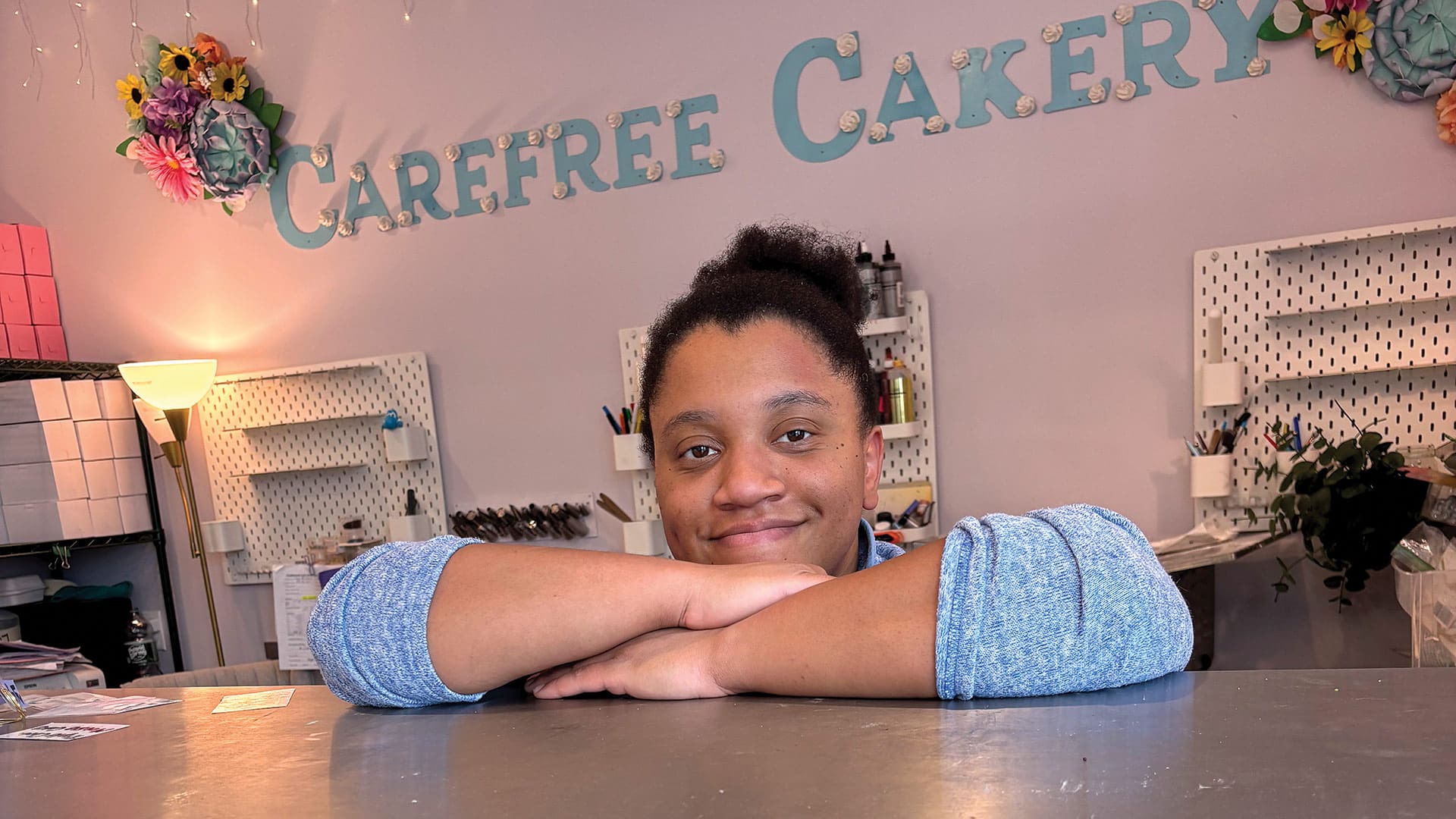
Alysia Bryant, founder of Carefree Cakery
It was the height of the pandemic, and Alysia Bryant had reached an inflection point.
She was managing a Sherwin Williams store, and increasingly asking herself …. ‘why?’
“I was considered an essential worker, but it didn’t feel like the work I was doing actually mattered at all; I was selling paint,” she told BusinessWest. “I thought, ‘if I’m going to be giving this much of myself to anything, it may as well be something that matters to me at my core,’ and that’s what pushed me all the way out of working my comfortable corporate job and doing something for myself.”
That ‘something else’ was baking, something she started doing back in high school when she would bake box mix brownies and sell them out of her backpack. She put this passion aside, thinking she should be “doing something really important with my life,” and started thinking about becoming a doctor.
But that wasn’t the right fit for her, so she looked at perhaps baking with a purpose, as she called it, and opening a free-trade bakery to make sure the farmers providing her with chocolate, vanilla, coffee, and other goods were paid a living wage for their work, a concept that would grow in scope — while she was selling paint — to include being allergy-friendly.
It was a noble concept, but one she quickly understood would only become reality if she got a little help — on the financing side and otherwise.
“I thought, ‘if I’m going to be giving this much of myself to anything, it may as well be something that matters to me at my core,’ and that’s what pushed me all the way out of working my comfortable corporate job and doing something for myself.”
That help came from Common Capital, the Springfield-based agency that offers small business loans of any size up to $300,000 to individuals in the four counties of Western Mass. — capital that can be used for everything from a business startup to working capital, inventory, supplies, and equipment.
Bryant, who said she didn’t even consider traditional bank financing because she had nothing for collateral and wouldn’t be a good candidate, used a loan of just over $100,000 from Common Capital to launch Carefree Cakery in the Mill District in North Amherst, selling cakes and a wide range of other products that have drawn a strong following. But she was quick to note that, beyond the money, the agency has provided support in areas ranging from accounting to marketing that she considers critical to her ongoing success.
Such multi-faceted assistance from Common Capital, founded in 1990, has helped launch and accelerate some of the region’s better-known success stories in recent decades — including the Hot Table chain of panini restaurants, which started in Springfield and now stretches across the state and into Connecticut; Youth on the Move, the Indian Orchard-based transportation company specializing in shuttling young people, which has grown exponentially over the past decade; White Lion Brewing Co., which now has two locations and has expanded its reach across the state; and Rozki Rides, another youth-focused transportation company based in Agawam.
More recently, the client list has grown to include a widely diverse mix of new ventures, from a growing list of behavioral health-related ventures to Elliott Fire, a Holyoke-based company that repairs, inspects, and maintains fire sprinkler systems, to Higher Expectations, a sports training facility on Cadwell Drive in Springfield.
These stories and countless others are all different, but there is generally a shared sentiment that, if it weren’t for Common Capital, the venture likely would not have moved off the ground — and certainly not as quickly.
“White Lion was not a bankable entity. We were a startup; it was a concept,” founder Ray Berry recalled, noting that he became involved with the agency 12 years ago. “I like to say that, if Common Capital wasn’t around, and if it didn’t have the capacity to seed White Lion, I’m not sure where this brand would be right now.”
And while assisting countless entrepreneurs with realizing and then rewriting their business plans, Common Capital is updating its own.
It calls for continually growing a portfolio of loans that has essentially doubled over the past seven years, from $5 million to $9 million, with plans to reach $15 million, said Raymond Lanza-Well, the agency’s president, adding that this threshold will move the organization closer to self-sustainability.
Overall, the agency has been in a strong growth pattern of its own, he went on, building on the foundation laid by Common Capital founder Chris Sikes and aggressively expanding the portfolio through a philosophy of assuming more risk, especially through more smaller loans of less than $50,000, adding new programming, and strengthening partnerships with several constituencies.

Raymond Lanza-Well says Common Capital is in a growth mode, having doubled the size of its loan portfolio from $5 million to more than $9 million over the past seven years.
These include agencies within the region’s and state’s entrepreneurship ecosystem — from EforAll to the Massachusetts Small Business Development Center; from the Sphere Northampton to the LGBTQ Chamber in Easthampton — as well as the region’s banks and credit unions, which will often refer business loan applicants they have to turn down to the agency.
For this issue, we take an in-depth look at Common Capital, several of the businesses in the growing client portfolio, and what’s ahead for all of them.
Getting Down to Business
Chris Elliott had been working for sprinkler installation and service companies for more than 30 years when he reached the point most entrepreneurs reach — the one where they decide that it’s time to work for themselves rather than someone else.
“I like to say that, if Common Capital wasn’t around, and if it didn’t have the capacity to seed White Lion, I’m not sure where this brand would be right now.”
And while he had the drive to strike out on his own, again, like many entrepreneurs, he lacked the capital — and the ability to attain it from traditional sources.
“We simply weren’t bankable,” said Elliott, referring to himself and his wife and business partner, Cristie, adding that the dream was more or less put on ice until, like hundreds of other aspiring entrepreneurs, he was referred to Common Capital.
The Elliotts used their $150,000 loan to set up shop in a building on Main Street in Holyoke. But beyond that, taking advantage of services that go well beyond capital, such as training initiatives in accounting, booking, and website development, they’ve been able to grow the business from humble beginnings — Cristie’s Rav 4 was detailed with the company logo, and it served as the primary operating vehicle for several years — adding several government contracts and large clients such as Tower Square in Springfield and General Dynamics.
The Elliotts’ story — and Bryant’s, and Berry’s — are fairly typical of those who ‘find’ Common Capital, said Roberto Nieves, who left the banking industry to become the agency’s director of Outreach and Communications. He told BusinessWest that this region has always had a deep well of entrepreneurial energy, but the pandemic inspired more people, like Bryant, to pursue dreams and go into business for themselves.
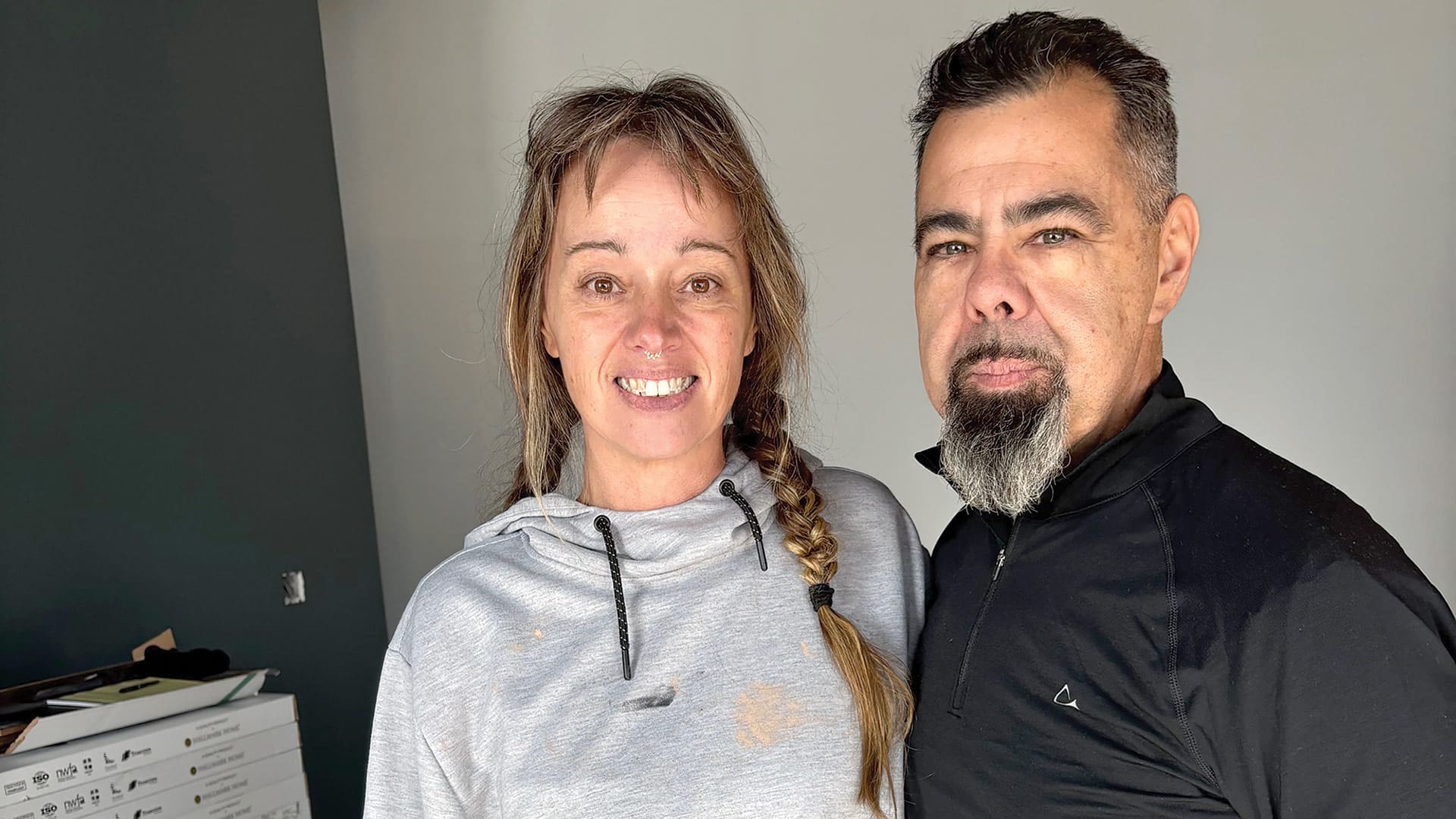
Cristie and Chris Elliott, owners of Elliott Fire, another success story accelerated by Common Capital.
“Many of the essential workers were working longer hours, working double shifts, doing all of these things that were necessary for us to move forward during the pandemic,” he recalled. “And they got to a point, post-COVID, where they said, ‘if I’m going to work this hard, I’m going to do it for me and not for you.’”
This phenomenon was reflected in many ways, from registered nurses starting home health agencies to a surge in new behavioral health agencies to new businesses of all kinds, Nieves said, adding that many of these ventures are being launched by women and people of color, many of whom are living in low- to moderate-income neighborhoods.
All this is reflected in Common Capital’s portfolio of clients, he noted, adding that 80% of borrowers are now women, a rise from 42% in 2020, and many of these are women of color, inspired — and helped along — by the growing number of accelerator programs in the area.
Lanza-Well agreed. He succeeded Sikes as the agency’s president in 2018 after working first in banking and then for a succession of community loan funds, including, most recently, the Vermont Community Loan Fund.
That agency is roughly the same age as Common Capital, but about twice the size when it comes to the loan portfolio, even though it serves a smaller population.
“That told me, without doing anything particularly scientific or complicated, that there was a lot of untapped opportunity for Common Capital to grow,” he told BusinessWest, adding that he and his team of eight have been focused on seizing that opportunity.
Specifically, the agency has been thinking differently about its lending, said Lanza-Well, adding that he has tapped his vast experience in community development lending to expand the portfolio.
“The lending business is a business of risk management,” he explained. “We all take risks as lenders, and I think I helped us look a little bit differently at the risks.”
Elaborating, he said that, for loans up to $50,000 — a fast-growing segment of the portfolio — collateral is not a material consideration.
“We pull credit reports, we look at credit behavior, we spend a lot of time talking to our applicants about their credit behavior, but we don’t use the score itself because the score is based on an algorithm, and the algorithm has all sorts of biases built into it, and we’re dealing with folks who live outside algorithms.”
“We absolutely require every applicant, every borrower, to pledge whatever collateral is available to support their loan,” he explained. “But for most of our loans that are less than $50,000, there’s hardly enough collateral to cover the loan. That would scare the heck out of a bank, but it’s what we do every day.”
Banks are generally not interested in loans of less than $50,000 in most circumstances, he went on, adding that the Small Business Administration’s microloan program, which provides capital for loans up to $50,000, has been a critical factor in the agency’s strong growth pattern. In fact, Common Capital is the largest SBA microlender in the state, as well as the largest non-bank guaranteed lender with the SBA in the state, despite serving a region that has only 17% of the population.
Other goals include broadening its network of relationships with both banks and agencies within the entrepreneurship ecosystem to put more potential borrowers in the pipeline, Lanza-Well said, adding that the average loan amount is currently about $65,000, a number that helps spread risk throughout the portfolio.
Meanwhile, still another growth factor is a philosophy of “lending to people, not paper,” he noted.
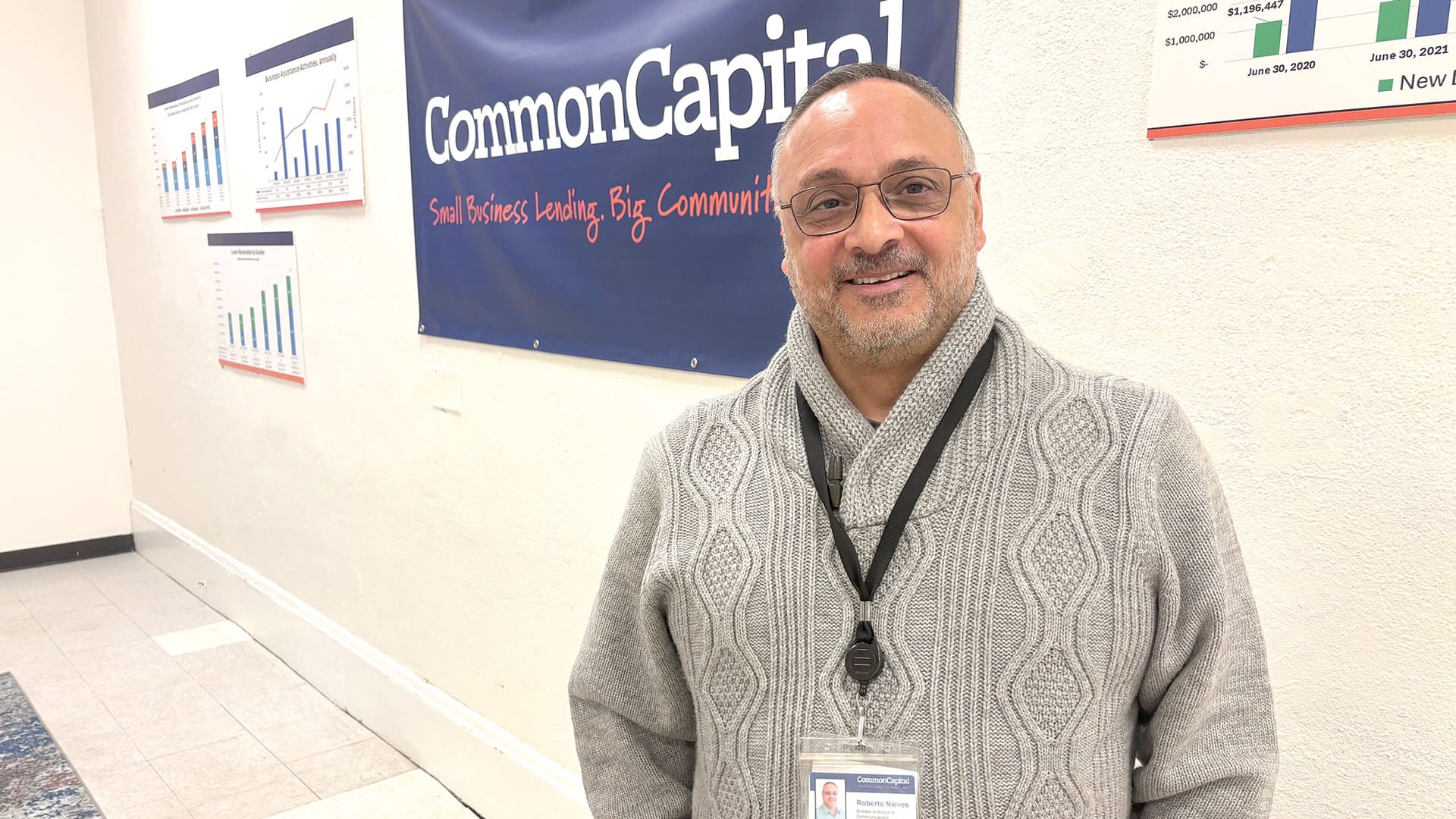
Roberto Nieves says a pandemic-fueled surge in entrepreneurship has been led by women and people of color, and this is reflected in Common Capital’s loan portfolio.
“Unlike a bank, unlike a credit card company, unlike most conventional lenders, we don’t use credit scores. We pull credit reports, we look at credit behavior, we spend a lot of time talking to our applicants about their credit behavior, but we don’t use the score itself because the score is based on an algorithm, and the algorithm has all sorts of biases built into it, and we’re dealing with folks who live outside algorithms.”
It’s Not a Piece of Cake
Bryant said she started off being conservative with her staffing and spending, knowing that many new businesses fail in the first few years due to poor cash flow.
“But I completely underestimated how much the community would be excited about this,” she noted. “We sold out within our first two hours the first day we were open, and that continued for the first two weeks.
“We were exhausted — it was me and one other person,” she went on, adding that she would eventually bring on more help and now has a staff of six. “We’re growing and doing well.”
But despite this success, there are stern challenges to sustainability, she went on.
“I went for a business model that really increases my base prices for many items; our ingredients are just more expensive because they pay the people who make them,” Bryant explained, adding that chocolate prices have doubled since last year. “If this can just work, that will be enough for me. I want this shop to thrive; I want it to be a cornerstone of the community.”
Like others we spoke with, Bryant said the support from Common Capital has gone well beyond the loan — and is ongoing.
“It’s not just, ‘here’s the money,’ and you’re gone,” she explained. “There’s ongoing coaching; I have access to people who have experience running a business, so I can just talk to them, but they can also pair you up with people who can help you with other elements, such as marketing and bookkeeping.”
Indeed, Common Capital’s Business Resource Center provides a wide range of services, from one-on-one business navigation to credit counseling to a series of training webinars.
These offerings include recent programs, undertaken in partnership with the Center for Women & Enterprise, with titles such as “Navigating Change: Embracing Uncertainty” and “Finding Calm in the Holiday Chaos.”
“Even with a business degree and some experience, the ongoing help from Common Capital has been invaluable,” said Bryant, adding that she never feels alone as she continues on the journey of entrepreneurship.
Spreading the word about such impact and growing Common Capital’s own brand is one ongoing mission and yet another factor in the agency’s growth pattern, said Nieves, who noted that relationships, and being visible, are keys to success in these efforts.
“I’m a member of 10 chambers of commerce, and, between Raymond and I, we’re represented on every single economic development committee of significance through all four Western Mass. counties,” he explained, adding that, most recently, there’s been a strong push in the Berkshires, an area that had been perhaps underrepresented in the agency’s portfolio, with better numbers over the past several years.
Such outreach has enabled more people to gain access to capital, programs that help their ventures remain sustainable, and opportunities to ride the roller coaster that is entrepreneurship.
“It’s been a heck of a ride — I don’t get days off at all,” Bryant said. “But it’s the most fulfilling thing I’ve ever done, by far.”
And a dream, like so many others, made possible by Common Capital.