Home Posts tagged Support
Cover Story

Getting a Leg Up

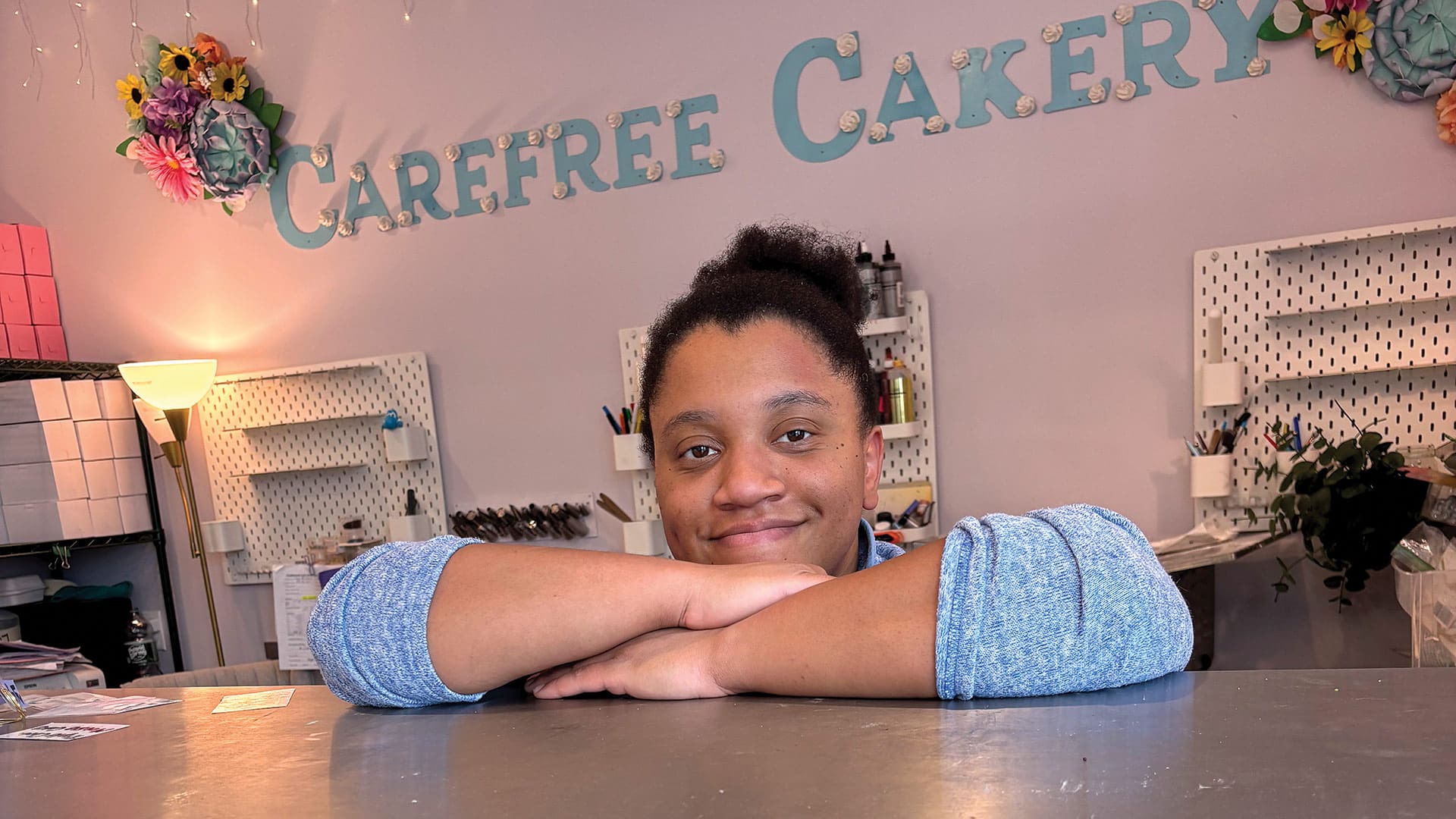
Alysia Bryant, founder of Carefree Cakery

Alysia Bryant, founder of Carefree Cakery


It was the height of the pandemic, and Alysia Bryant had reached an inflection point.

She was managing a Sherwin Williams store, and increasingly asking herself …. ‘why?’

“I was considered an essential worker, but it didn’t feel like the work I was doing actually mattered at all; I was selling paint,” she told BusinessWest. “I thought, ‘if I’m going to be giving this much of myself to anything, it may as well be something that matters to me at my core,’ and that’s what pushed me all the way out of working my comfortable corporate job and doing something for myself.”

That ‘something else’ was baking, something she started doing back in high school when she would bake box mix brownies and sell them out of her backpack. She put this passion aside, thinking she should be “doing something really important with my life,” and started thinking about becoming a doctor.

But that wasn’t the right fit for her, so she looked at perhaps baking with a purpose, as she called it, and opening a free-trade bakery to make sure the farmers providing her with chocolate, vanilla, coffee, and other goods were paid a living wage for their work, a concept that would grow in scope — while she was selling paint — to include being allergy-friendly.

It was a noble concept, but one she quickly understood would only become reality if she got a little help — on the financing side and otherwise.

“I thought, ‘if I’m going to be giving this much of myself to anything, it may as well be something that matters to me at my core,’ and that’s what pushed me all the way out of working my comfortable corporate job and doing something for myself.”

That help came from Common Capital, the Springfield-based agency that offers small business loans of any size up to $300,000 to individuals in the four counties of Western Mass. — capital that can be used for everything from a business startup to working capital, inventory, supplies, and equipment.

Bryant, who said she didn’t even consider traditional bank financing because she had nothing for collateral and wouldn’t be a good candidate, used a loan of just over $100,000 from Common Capital to launch Carefree Cakery in the Mill District in North Amherst, selling cakes and a wide range of other products that have drawn a strong following. But she was quick to note that, beyond the money, the agency has provided support in areas ranging from accounting to marketing that she considers critical to her ongoing success.

Such multi-faceted assistance from Common Capital, founded in 1990, has helped launch and accelerate some of the region’s better-known success stories in recent decades — including the Hot Table chain of panini restaurants, which started in Springfield and now stretches across the state and into Connecticut; Youth on the Move, the Indian Orchard-based transportation company specializing in shuttling young people, which has grown exponentially over the past decade; White Lion Brewing Co., which now has two locations and has expanded its reach across the state; and Rozki Rides, another youth-focused transportation company based in Agawam.

More recently, the client list has grown to include a widely diverse mix of new ventures, from a growing list of behavioral health-related ventures to Elliott Fire, a Holyoke-based company that repairs, inspects, and maintains fire sprinkler systems, to Higher Expectations, a sports training facility on Cadwell Drive in Springfield.

These stories and countless others are all different, but there is generally a shared sentiment that, if it weren’t for Common Capital, the venture likely would not have moved off the ground — and certainly not as quickly.

“White Lion was not a bankable entity. We were a startup; it was a concept,” founder Ray Berry recalled, noting that he became involved with the agency 12 years ago. “I like to say that, if Common Capital wasn’t around, and if it didn’t have the capacity to seed White Lion, I’m not sure where this brand would be right now.”

And while assisting countless entrepreneurs with realizing and then rewriting their business plans, Common Capital is updating its own.

It calls for continually growing a portfolio of loans that has essentially doubled over the past seven years, from $5 million to $9 million, with plans to reach $15 million, said Raymond Lanza-Well, the agency’s president, adding that this threshold will move the organization closer to self-sustainability.

Overall, the agency has been in a strong growth pattern of its own, he went on, building on the foundation laid by Common Capital founder Chris Sikes and aggressively expanding the portfolio through a philosophy of assuming more risk, especially through more smaller loans of less than $50,000, adding new programming, and strengthening partnerships with several constituencies.

Raymond Lanza-Well says Common Capital is in a growth mode

Raymond Lanza-Well says Common Capital is in a growth mode, having doubled the size of its loan portfolio from $5 million to more than $9 million over the past seven years.

These include agencies within the region’s and state’s entrepreneurship ecosystem — from EforAll to the Massachusetts Small Business Development Center; from the Sphere Northampton to the LGBTQ Chamber in Easthampton — as well as the region’s banks and credit unions, which will often refer business loan applicants they have to turn down to the agency.

For this issue, we take an in-depth look at Common Capital, several of the businesses in the growing client portfolio, and what’s ahead for all of them.


Getting Down to Business

Chris Elliott had been working for sprinkler installation and service companies for more than 30 years when he reached the point most entrepreneurs reach — the one where they decide that it’s time to work for themselves rather than someone else.

“I like to say that, if Common Capital wasn’t around, and if it didn’t have the capacity to seed White Lion, I’m not sure where this brand would be right now.”

And while he had the drive to strike out on his own, again, like many entrepreneurs, he lacked the capital — and the ability to attain it from traditional sources.

“We simply weren’t bankable,” said Elliott, referring to himself and his wife and business partner, Cristie, adding that the dream was more or less put on ice until, like hundreds of other aspiring entrepreneurs, he was referred to Common Capital.

The Elliotts used their $150,000 loan to set up shop in a building on Main Street in Holyoke. But beyond that, taking advantage of services that go well beyond capital, such as training initiatives in accounting, booking, and website development, they’ve been able to grow the business from humble beginnings — Cristie’s Rav 4 was detailed with the company logo, and it served as the primary operating vehicle for several years — adding several government contracts and large clients such as Tower Square in Springfield and General Dynamics.

The Elliotts’ story — and Bryant’s, and Berry’s — are fairly typical of those who ‘find’ Common Capital, said Roberto Nieves, who left the banking industry to become the agency’s director of Outreach and Communications. He told BusinessWest that this region has always had a deep well of entrepreneurial energy, but the pandemic inspired more people, like Bryant, to pursue dreams and go into business for themselves.
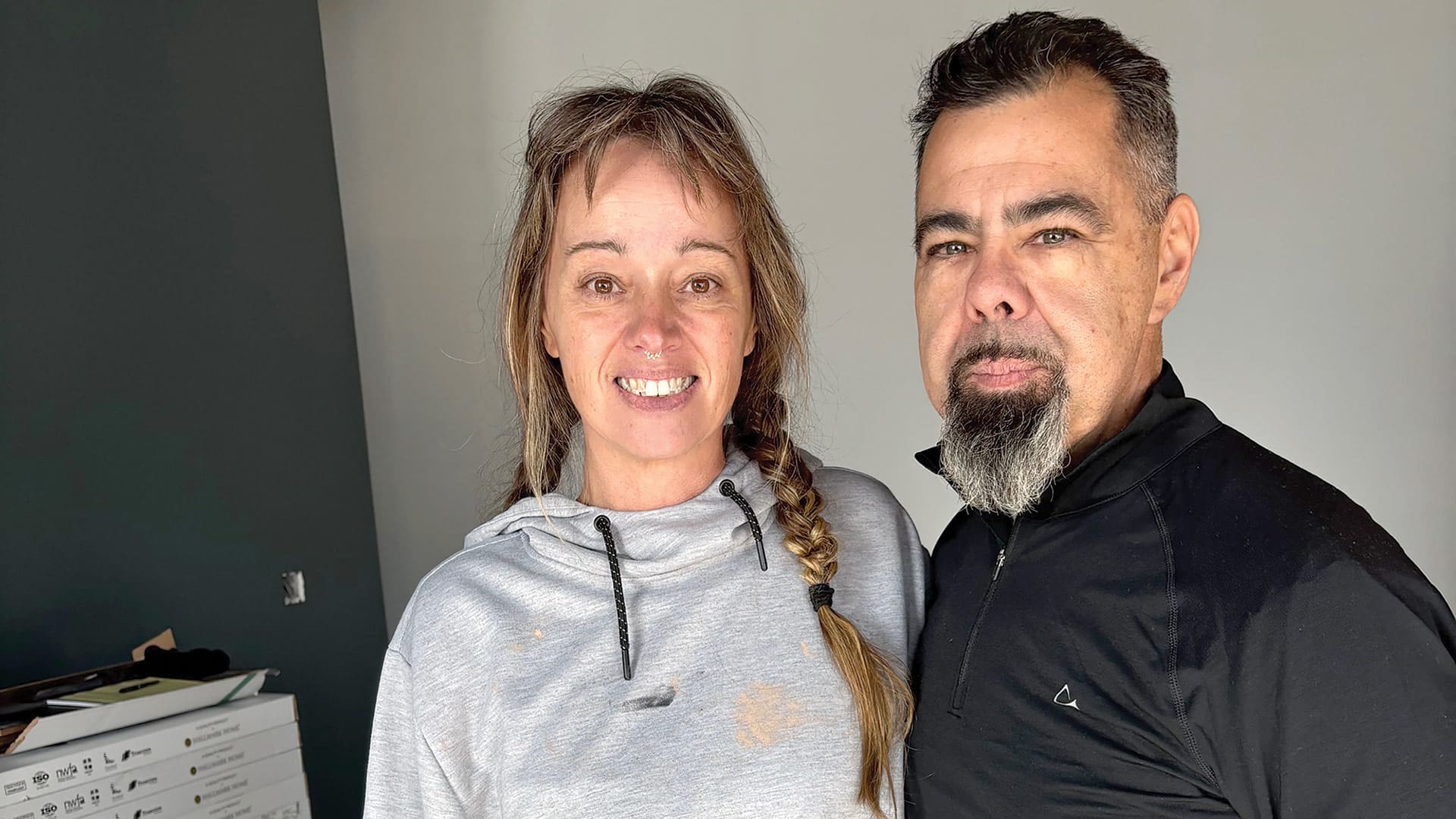
Cristie and Chris Elliott, owners of Elliott Fire

Cristie and Chris Elliott, owners of Elliott Fire, another success story accelerated by Common Capital.

“Many of the essential workers were working longer hours, working double shifts, doing all of these things that were necessary for us to move forward during the pandemic,” he recalled. “And they got to a point, post-COVID, where they said, ‘if I’m going to work this hard, I’m going to do it for me and not for you.’”

This phenomenon was reflected in many ways, from registered nurses starting home health agencies to a surge in new behavioral health agencies to new businesses of all kinds, Nieves said, adding that many of these ventures are being launched by women and people of color, many of whom are living in low- to moderate-income neighborhoods.

All this is reflected in Common Capital’s portfolio of clients, he noted, adding that 80% of borrowers are now women, a rise from 42% in 2020, and many of these are women of color, inspired — and helped along — by the growing number of accelerator programs in the area.

Lanza-Well agreed. He succeeded Sikes as the agency’s president in 2018 after working first in banking and then for a succession of community loan funds, including, most recently, the Vermont Community Loan Fund.

That agency is roughly the same age as Common Capital, but about twice the size when it comes to the loan portfolio, even though it serves a smaller population.

“That told me, without doing anything particularly scientific or complicated, that there was a lot of untapped opportunity for Common Capital to grow,” he told BusinessWest, adding that he and his team of eight have been focused on seizing that opportunity.

Specifically, the agency has been thinking differently about its lending, said Lanza-Well, adding that he has tapped his vast experience in community development lending to expand the portfolio.

“The lending business is a business of risk management,” he explained. “We all take risks as lenders, and I think I helped us look a little bit differently at the risks.”

Elaborating, he said that, for loans up to $50,000 — a fast-growing segment of the portfolio — collateral is not a material consideration.

“We pull credit reports, we look at credit behavior, we spend a lot of time talking to our applicants about their credit behavior, but we don’t use the score itself because the score is based on an algorithm, and the algorithm has all sorts of biases built into it, and we’re dealing with folks who live outside algorithms.”

“We absolutely require every applicant, every borrower, to pledge whatever collateral is available to support their loan,” he explained. “But for most of our loans that are less than $50,000, there’s hardly enough collateral to cover the loan. That would scare the heck out of a bank, but it’s what we do every day.”

Banks are generally not interested in loans of less than $50,000 in most circumstances, he went on, adding that the Small Business Administration’s microloan program, which provides capital for loans up to $50,000, has been a critical factor in the agency’s strong growth pattern. In fact, Common Capital is the largest SBA microlender in the state, as well as the largest non-bank guaranteed lender with the SBA in the state, despite serving a region that has only 17% of the population.

Other goals include broadening its network of relationships with both banks and agencies within the entrepreneurship ecosystem to put more potential borrowers in the pipeline, Lanza-Well said, adding that the average loan amount is currently about $65,000, a number that helps spread risk throughout the portfolio.

Meanwhile, still another growth factor is a philosophy of “lending to people, not paper,” he noted.
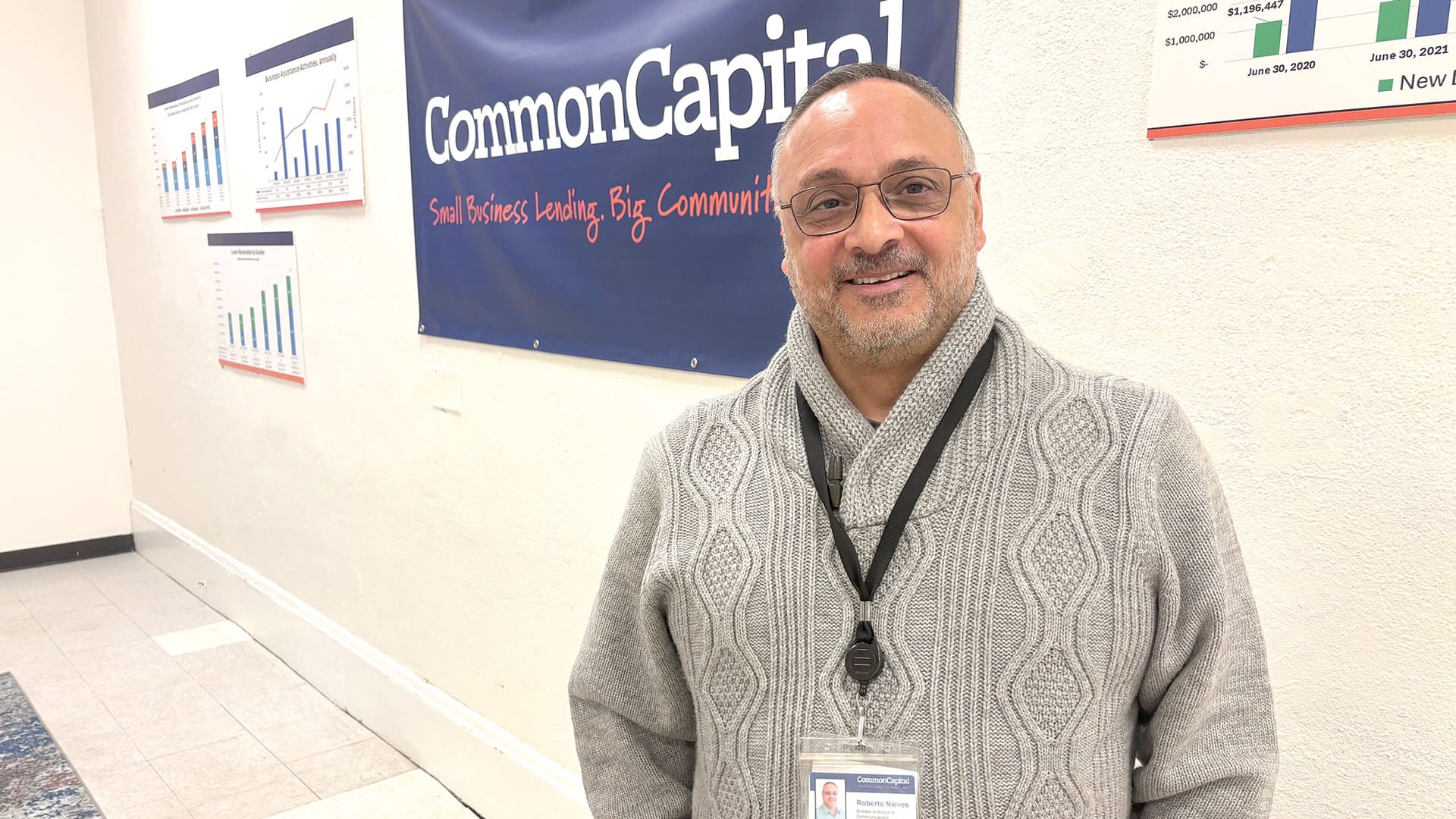
Roberto Nieves says a pandemic-fueled surge in entrepreneurship has been led by women and people of color

Roberto Nieves says a pandemic-fueled surge in entrepreneurship has been led by women and people of color, and this is reflected in Common Capital’s loan portfolio.

“Unlike a bank, unlike a credit card company, unlike most conventional lenders, we don’t use credit scores. We pull credit reports, we look at credit behavior, we spend a lot of time talking to our applicants about their credit behavior, but we don’t use the score itself because the score is based on an algorithm, and the algorithm has all sorts of biases built into it, and we’re dealing with folks who live outside algorithms.”


It’s Not a Piece of Cake

Bryant said she started off being conservative with her staffing and spending, knowing that many new businesses fail in the first few years due to poor cash flow.

“But I completely underestimated how much the community would be excited about this,” she noted. “We sold out within our first two hours the first day we were open, and that continued for the first two weeks.

“We were exhausted — it was me and one other person,” she went on, adding that she would eventually bring on more help and now has a staff of six. “We’re growing and doing well.”

But despite this success, there are stern challenges to sustainability, she went on.

“I went for a business model that really increases my base prices for many items; our ingredients are just more expensive because they pay the people who make them,” Bryant explained, adding that chocolate prices have doubled since last year. “If this can just work, that will be enough for me. I want this shop to thrive; I want it to be a cornerstone of the community.”

Like others we spoke with, Bryant said the support from Common Capital has gone well beyond the loan — and is ongoing.

“It’s not just, ‘here’s the money,’ and you’re gone,” she explained. “There’s ongoing coaching; I have access to people who have experience running a business, so I can just talk to them, but they can also pair you up with people who can help you with other elements, such as marketing and bookkeeping.”

Indeed, Common Capital’s Business Resource Center provides a wide range of services, from one-on-one business navigation to credit counseling to a series of training webinars.

These offerings include recent programs, undertaken in partnership with the Center for Women & Enterprise, with titles such as “Navigating Change: Embracing Uncertainty” and “Finding Calm in the Holiday Chaos.”

“Even with a business degree and some experience, the ongoing help from Common Capital has been invaluable,” said Bryant, adding that she never feels alone as she continues on the journey of entrepreneurship.

Spreading the word about such impact and growing Common Capital’s own brand is one ongoing mission and yet another factor in the agency’s growth pattern, said Nieves, who noted that relationships, and being visible, are keys to success in these efforts.

“I’m a member of 10 chambers of commerce, and, between Raymond and I, we’re represented on every single economic development committee of significance through all four Western Mass. counties,” he explained, adding that, most recently, there’s been a strong push in the Berkshires, an area that had been perhaps underrepresented in the agency’s portfolio, with better numbers over the past several years.

Such outreach has enabled more people to gain access to capital, programs that help their ventures remain sustainable, and opportunities to ride the roller coaster that is entrepreneurship.

“It’s been a heck of a ride — I don’t get days off at all,” Bryant said. “But it’s the most fulfilling thing I’ve ever done, by far.”

And a dream, like so many others, made possible by Common Capital.

Opinion

Opinion

By Dr. Nicole Brady

As summer winds down and the school year approaches, many parents watch their teens prepare for major life transitions. Some are getting ready for college, while others are starting jobs, taking gap years, or navigating the uncertainty that often follows high school graduation.

No matter what path your child is on, one thing remains true: this stage of life is full of physical and emotional shifts, and mental health should be part of the conversation.

The late teens and early 20s are a time of major neurological and emotional development. According to the National Alliance of Mental Illness, 75% of all lifetime mental illnesses begin before age 24. This may make early adulthood a critical window for both challenges and opportunities for support.

Mental health concerns among young people may be more common than many realize. Recent data from UnitedHealthcare’s College Student and Graduate Behavioral Health Report shows 60% of college students self-report experiencing mental or behavioral health challenges, including anxiety, depression, eating disorders, and suicidal ideation or intent.

The report also found that, while 20% of college students said their mental health had declined since high school, only about 10% of parents reported noticing the same. This disconnect underscores the importance of communication and awareness, as many parents may be unaware of the full extent of their child’s mental health challenges and how they may evolve over time.

It’s normal for young adults to seek independence, but that may not mean they stop needing support. Research shows that supportive parenting, characterized by warmth, open communication, and clear boundaries, is a vital protective factor against mental health problems in adolescents and young adults.

Moreover, data from UnitedHealthcare found that both college students and college graduates who engaged in more frequent conversations with their parents about their mental health reported higher rates of positive outcomes, including feelings of support, feeling heard and understood, and strengthening their relationship with their parents.

While your day-to-day role in your child’s life may have shifted over time, your guidance is still essential. You can still be a steady, comforting presence and a reminder that they don’t have to navigate adulthood alone. Here are three ways to help stay supportive through the back-to-school transition:

• Initiate the mental health conversation. Start casual, open-ended conversations about how your young adult is feeling, not just what they’re doing. The goal isn’t always to problem-solve, but to signal that emotional check-ins are important and OK. If you’re not sure where to start, try asking questions like: “what’s been on your mind lately?” “What’s something you’re excited, or nervous, about right now?” “How are you doing, really?”

• Normalize seeking help from a professional. Whether your student is struggling now or not, introduce the idea that support may always be available and valid. Talk about options like campus counseling centers, teletherapy platforms, or local providers. If your child is on a family insurance plan or a student plan, share information on how they can learn about their benefits, find a provider, and seek help. Framing mental health care as a routine, not a last resort, may help reduce stigma and build openness if they need it later.

• Keep showing up for your child. Young adulthood, especially college life, can feel overwhelming. Your persistent presence — through texts, short calls, or moments when you’re together — may offer a powerful reminder that they are not alone. If you notice changes in mood, behavior, sleep, or social habits, don’t hesitate to gently check in.

Whether your child is headed to a dorm, starting a new job, or exploring what comes next, the transition beyond high school is a significant one. As a parent or caregiver, you’re in a unique position to help. By keeping mental health on the radar and offering consistent, compassionate support, you can help them move forward with confidence and care.


Dr. Nicole Brady is chief medical officer at UnitedHealthcare Student Resources.

Healthcare News Special Coverage

Crossing the Finish Line

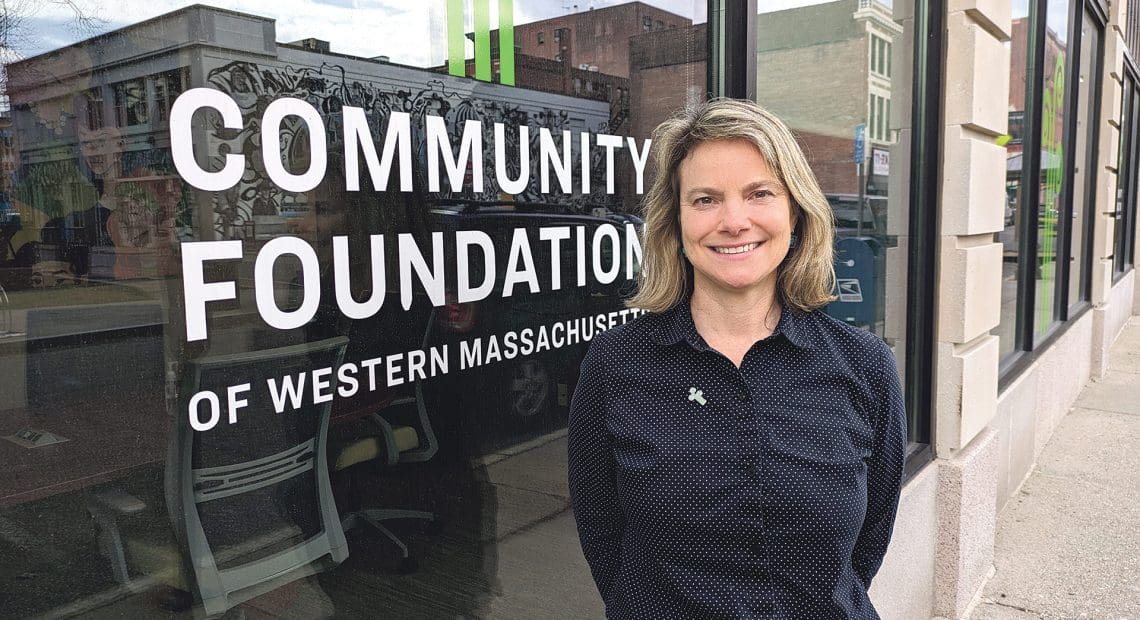
Community Foundation of Western Massachusetts President and CEO Megan Burke

Community Foundation of Western Massachusetts President and CEO Megan Burke


A few years ago, faced with a daunting statistic — that average college graduation rates are 60% at four-year institutions and 25% at two-year institutions — the Community Foundation of Western Massachusetts commissioned a study on factors that contribute to higher-education persistence.

From that effort emerged a program called Western Mass Completes, which recently supported 50 nursing and health-sciences students from 10 of the region’s colleges and universities, all of them identified by their schools as possibly being at risk of not finishing their degrees, for a variety of reasons.

The result? Forty-nine of them graduated on time and passed their certification exam, and most have secured employment in their field. The 50th simply missed a class and had to add an extra semester, but is expected to join the list of success stories.

That’s a remarkable result, but what may be even more impressive is the level of financial support involved: just $2,500 per student, to help pay for a range of expenses, from equipment to transportation to exam fees.

“From all these students who potentially were at risk of not completing, to have that much of a completion rate is really important,” said Megan Burke, president and CEO of the Community Foundation. “And because there was a preference for commuter students, these are now qualified nurses who are in our communities and are part of the local workforce. And most of them, as of this past winter, were employed — which isn’t surprising because we know there’s a great need for nurses.”

“It’s important to lift up the fact that there’s regional economic impact — that these folks are gainfully employed, making livable wages, and contributing to their local communities, which are very likely in the three counties that we serve.”

Based on the research of Becky Packard, a Community Foundation trustee and professor of Psychology and Education at Mount Holyoke College, who spearheaded the initial research, Western Mass Completes was developed with the understanding that it’s not enough to help students enter college — the bigger priority, for them and the region, is to see them cross the finish line.

Ten local colleges and universities joined the endeavor — UMass Amherst, Westfield State University, Bay Path University, Springfield College, American International College, Elms College, and Western New England University, as well as Greenfield, Holyoke, and Springfield Technical community colleges.

The research showed that students often need more time and more resources to complete degrees; many are working full-time while in school and taking a reduced course load, while others are balancing school, work, and family responsibilities. Those financial roadblocks create barriers to completion, especially for high-need, first-generation students.

Denise Hurst, vice president for Community Impact and Partnerships at the Community Foundation, noted that Western Mass Completes emerged from a growing focus on access to post-secondary institutions and the emerging realization that the biggest issue isn’t enrollment, but persistence and completion.

“From there, we really started to look at the areas where students were more apt to encounter financial barriers to completion,” she told BusinessWest. “And then the pandemic hit, and we knew there was a shortage in the nursing and allied health-sciences fields.”

Denise Hurst

Denise Hurst says Western Mass Completes has undoubtedly helped change the trajectory of some nursing students’ lives.

So the nonprofit launched a pilot program at four local colleges, providing financial grants to 20 nursing students. When the results came back positive, the program was expanded to 10 institutions and 50 students, some of them not in nursing but in health sciences, as not every school has a nursing program.

“We did that with the same sort of intention — how do we mitigate any financial barriers to completion — providing them with a grant during their time in school so that they could reduce their work hours, use it for food, gas, whatever it was that they needed that could impede their completion,” Hurst explained. “And we followed that up with providing them with a grant toward their NCLEX exam so they could be prepared to go right out into the workforce.”

While the Community Foundation is still working on next steps — determining what lessons can be gleaned from the pilot and how they can be applied to an overall workforce strategy in the region’s healthcare economy — it’s clear that students reaching the finish line is critical not only to their own career success, but to the long-term growth of a key sector.


Meeting a Need

Hurst listed a number of factors that Western Mass Completes seeks to address:

• The demand for skilled nurses has been at an all-time high and escalated with COVID-19, yet many aspiring nurses struggle to complete their education due to financial barriers.

• While tuition is a significant cost, smaller, but critical, expenses — like certification exam fees, technology costs, transportation to clinical training, medical equipment, and scrubs — can be the deciding factor between completing a degree or dropping out of an academic program.

• These challenges disproportionately affect students from low-income backgrounds and those without financial safety nets.

• Investing in students not only supports individuals, but strengthens the entire healthcare system by ensuring communities have access to well-trained professionals.

“Even though we might not know what particular niche of nursing they’ll go into,” she noted, “it’s important to lift up the fact that there’s regional economic impact — that these folks are gainfully employed, making livable wages, and contributing to their local communities, which are very likely in the three counties that we serve.”

Burke said it was important that colleges selected students for this assistance who were most in need of it.

A recent graduating nursing class at Holyoke Community College, one of the 10 partnering institutions in the Western Mass Completes program.

A recent graduating nursing class at Holyoke Community College, one of the 10 partnering institutions in the Western Mass Completes program.

“We recognized that the schools know their students really well and know who might be struggling or who might be facing barriers. When there is an application process, you don’t necessarily get the students who most need it; you sometimes get the students who are best able to complete an application.

“A lot of the students were so surprised and almost didn’t even believe it,” she added. “That was one of the challenges that our researchers had to overcome, which was to say, ‘no, no, this is for real. We’re giving you money, and we want you to be successful.’ And one of the things the students noted in the evaluation is that this vote of confidence, that we want you to succeed, was a really valuable component of the program for them.”

The fact that a relatively small grant can make a significant impact on completion rates is important to note, Burke said.

“It’s concerning that you could get three out of four years through nursing school and then potentially leave without a degree, not be able to pay back your student loans, not necessarily have an income to support your family — and $2,500 really made a significant difference in people’s lives,” she told BusinessWest. “It also helps to fill a nursing shortage in our economy.”


Strategy Sessions

The next big step, Burke said, will be a strategic planning process. “We really want to get a lot of community input into where can we best add value. So we’ve made it pretty clear that we will not be launching a new phase of Western Mass Completes right away until we can do some more of that learning.

“We do have other ongoing things that we’ll continue to do that contribute to student success, like our scholarship program, our interest-free student loans, and other pieces,” she added.
“But in this particular area of study, we’re waiting to learn what could be most useful.”

Another emerging factor, particularly for the community-college partners, is the success of MassReconnect and MassEducate, the state programs that offer an associate degree free of charge to a wide swath of Massachusetts residents.

“There’s also some input we’d like to get from employers who might be saying, ‘we have this program to try to recruit nurses,’ or maybe there’s a need in the early-education space, the daycare centers, who are struggling to employ. How can we build on the efforts that some of the employers are having?” Burke went on.

She noted that many students who are a good fit for a program like Western Mass Completes are

non-traditional students — typically older students who are returning to their education.

“A significant percentage have children, so they’re parenting, they’re sustaining a family, and they’re doing all these other things while they get their education. These are folks who are trying hard to improve the situation for their entire family. And the fact that we could do that with a couple thousand dollars — it feels so gratifying to know you’re helping a family stabilize itself, benefiting not just the one individual, but everyone else they’re supporting as well.”

Hurst agreed it has been satisfying to see the initial impact of the project, whatever strategies come of it. “To know that you were able to change the financial trajectory of someone’s life, something we know has generational impact, is really exciting.”

Opinion

Opinion

The recent news that two small businesses located in the Shops at Marketplace in downtown Springfield — Serendipity and Alchemy Nail Bar — will be closing permanently due to a sharp decline in business from the pandemic provides more direct evidence of the damage being done to the business community from this crisis.

A number of small businesses have already closed over the past four and a half months, and those numbers will surely rise as the pandemic continues to keep people in their homes. Many of these closings are seemingly unavoidable — they involve businesses, such as event venues, bars, and restaurants, where people gather in large numbers indoors, something the pandemic has made all but impossible if people want to stay safe.

But some could be avoided if the residents of this area find ways to provide needed support. Many are already doing that, but these numbers need to grow if the Western Mass. business community is to avoid losing more of its valued members.

And we say valued, because that’s exactly what they are. Businesses are not simply establishments that occupy space in buildings and provide goods and services. They are part of the community, and often a big part.

They employ people. They pay taxes. They support organizations like the United Way and the Chamber of Commerce. Their employees often serve on boards and commissions and lend their support to local causes.

When a business closes, we lose a lot more than a place to buy shoes. When a restaurant closes, we lose more than our favorite pizza joint. When a tourist attraction shuts its doors, we lose more than a place to take the kids on a Saturday.

Supporting local businesses has always been important, but it is even more so during this crisis because so many of them are imperiled. As we have chronicled over the past several months, ventures in every sector of the economy have been rocked by this pandemic.

Indeed, companies recording sales of 60% or 70% of last year’s totals are having a good year. And most are not in that category, with declines of 70%, 80%, or even 90% over last year. Many of these businesses have been helped by assistance from the federal government in the form of PPP loans, SBA loans, and small grants from individual cities and towns. But many have exhausted those funds, and the pandemic shows no signs of letting up.

It doesn’t take someone with a degree in accounting to understand that most businesses simply cannot sustain losses like this for much longer. And some have already concluded that they can’t sustain them any longer.

With each headline like the one about Serendipity and Alchemy closing, there is regret about what we’ve lost. And as mentioned earlier, we lose more than a shop that sells an item or makes good Italian food. We lose tax dollars, and we lose a piece of our community.

There are many ways to support a business even if you can’t visit it in person — from buying a gift certificate to getting takeout to buying online. And by exercising these options, we can perhaps avoid losing some of the businesses that still call Western Mass. home.