
Cornering the Market
Baystate Merger Is a Lifeline for Mercy —
but Poses Some Risks, Too
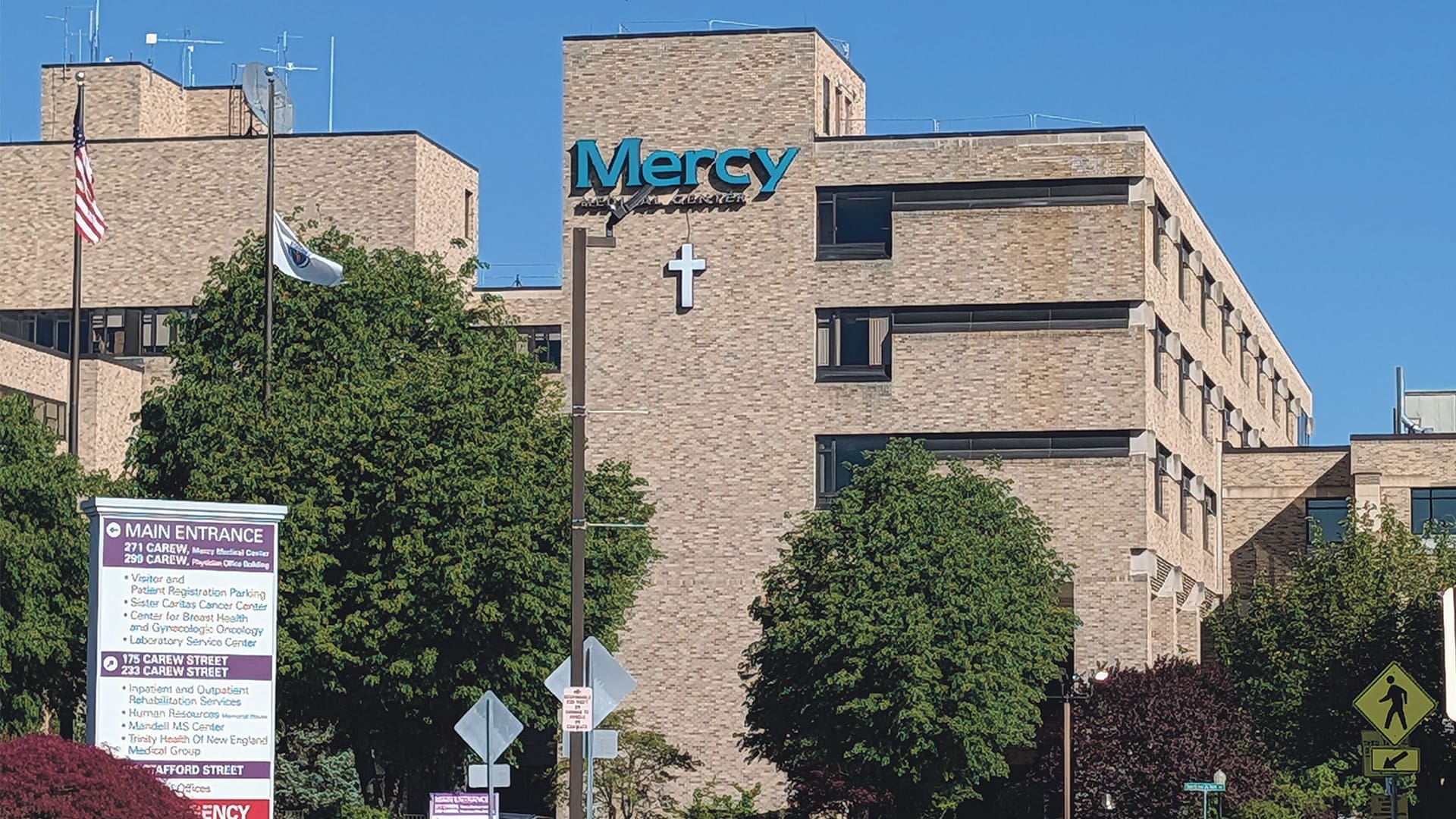 At a recent community forum where leaders of Baystate Health and Mercy Medical Center discussed why Mercy will be absorbed into the vast Baystate system later this year, Dr. Robert Roose positioned the move as a matter of survival.
“Mercy treats a population with the greatest proportion of Medicaid and Medicare patients of any hospital in the entire Commonwealth of Massachusetts,” said Roose, president of Community Hospitals for Trinity Health Of New England.
“That’s a community that needs care, but it’s one where the reimbursement does not match the cost of care,” he went on. “Medicaid reimburses, on average, about 62 cents on the dollar, Medicare about 85 cents. So there’s a financial equation that can be difficult to sustain. In addition to that, we know, with federal funding cuts and other changes to payments, that revenue will continue to decrease while costs continue to rise.”
Dr. Robert Roose
There’s a financial equation that can be difficult to sustain. In addition to that, we know, with federal funding cuts and other changes to payments, that revenue will continue to decrease while costs continue to rise.

At the same time, he said, Mercy has struggled with recruitment of critical specialties of providers — a reality that played out late last year when Mercy shuttered its obstetrics services, with most of those patients moving to Baystate Medical Center.
“So really, for the last decade, there have been questions around the long-term viability of Mercy Medical Center,” Roose went on. “Even as part of a large system like Trinity Health … it makes sense to strengthen the network of care here in Western Massachusetts.”
For Baystate, having a facility the size of Mercy — with its 191 licensed beds, 7,800 discharges per year, and 45,000 emergency room visits per year — simply close its doors would put far too much strain on other Baystate facilities, said Dr. Scott Lichtenberger, chief operating officer for Baystate Health.
“Springfield needs two hospitals, full stop,” he noted. “If Mercy Medical Center didn’t exist, Baystate could not absorb — not only at Baystate Medical Center, but even across our system — that kind of volume. So, to preserve services in the community and to be able to provide that kind of access, we have to have two hospitals.”
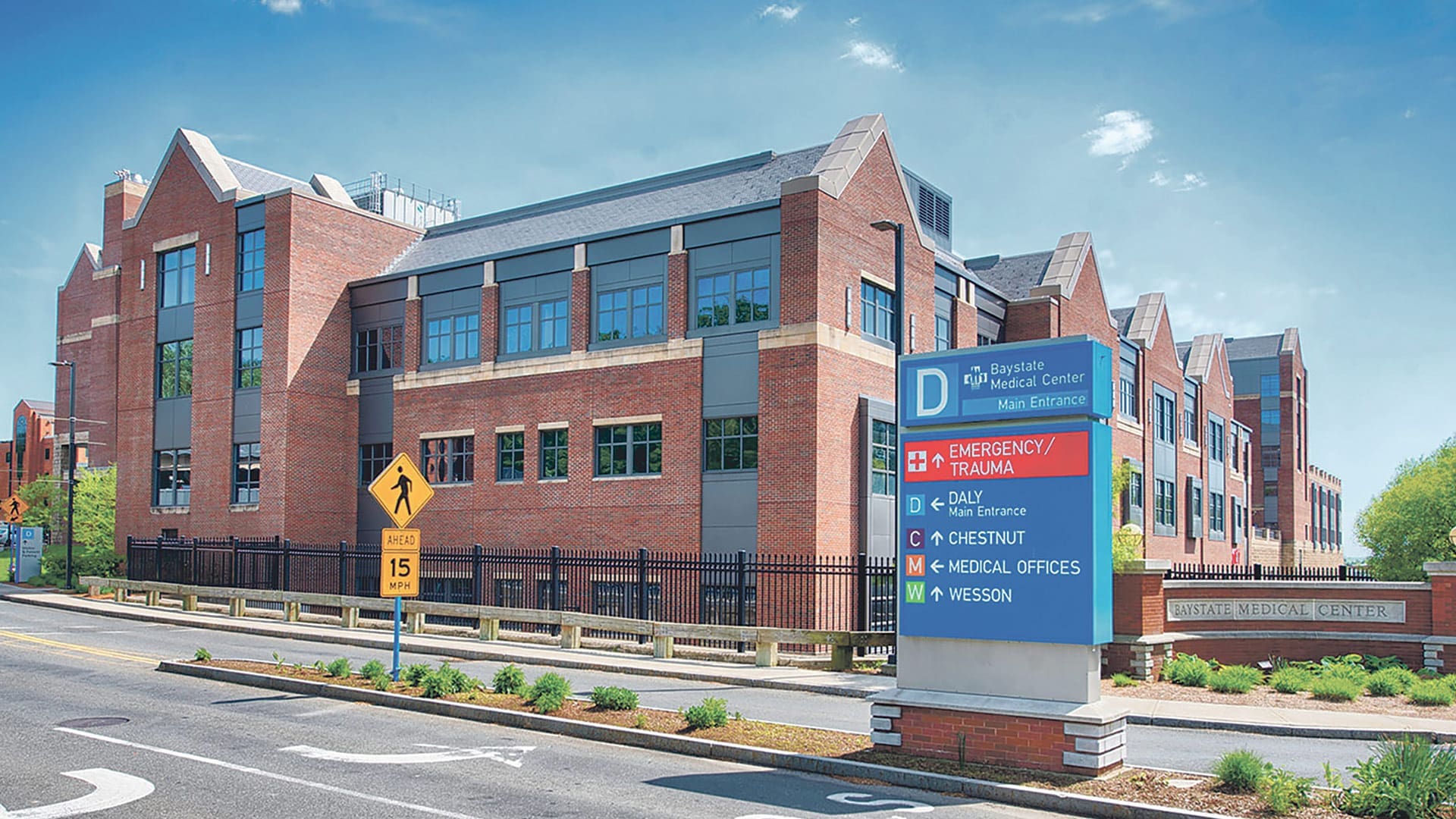 Those, in effect, are the arguments for a merger scheduled to take effect on Nov. 1: if Mercy can’t survive on its own, and if Baystate Health believes bringing a fifth full-service hospital into its system makes economic sense from a scale and efficiency perspective, then the move simply makes sense.
Not everyone is sure, however. Michal Horny, assistant professor of Health Policy and Management at UMass Amherst, told BusinessWest that there’s a good amount of evidence from across the U.S. that, when two hospitals very near each other merge, and are no longer in competition with each other, costs inevitably rise for patients.
“Any health plan that operates primarily in the Springfield area, before the merge, they had some leverage over hospitals — if you don’t strike a deal with one hospital, you can go to the other,” he explained. “After the merger, with two main hospitals in Springfield now part of a single system, no health plan can afford to operate in the Springfield area without having a contract with both those hospitals. So that gives the hospitals some very good bargaining power when negotiating prices.
“So what starts to happen is prices, on average, at both hospitals go up. I don’t know how much, but we’ve seen in other markets an average increase of about 6%. So that affects everyone with private insurance,” Horny explained (more on that later).
Dr. Scott Lichtenberger
“If Mercy Medical Center didn’t exist, Baystate could not absorb — not only at Baystate Medical Center, but even across our system — that kind of volume. So, to preserve services in the community and to be able to provide that kind of access, we have to have two hospitals.”

At the same time, while Baystate and Mercy leaders tout potential efficiencies, he noted, “as far as quality of care, the argument from the hospitals is that there’s better coordination and shared resources. Economists have studied this; it’s theoretically a valid point — but the evidence is not there. There doesn’t seem to be any improvement in quality.”
But for proponents of the merger, the survival of Mercy and its services in a community that needs them is an overriding positive.
“I am pleased that Baystate Health and Trinity Health have reached an agreement that will allow these two vibrant hospitals to continue serving our communities,” U.S. Rep. Richard Neal said, noting that, at a time of serious federal spending cuts, “this acquisition will expand access to healthcare and improve services throughout the Pioneer Valley and beyond.
“Together, these institutions represent more than three centuries of service to Western and Central Massachusetts,” Neal added. “Ensuring their viability and continued success is vital to the health of our families and our local economies, and this announcement represents a critical step in strengthening our regional healthcare system for generations to come.”
Local Impacts
In their announcement on April 28 that Baystate Health and Trinity Health Of New England had signed a definitive agreement to transition Mercy Medical Center, its joint venture affiliates, and medical group entities in Massachusetts to Baystate Health, pending regulatory approvals, they made it clear that Trinity Health will continue to own and operate Brightside for Families and Children, Mercy LIFE, Mary’s Meadow at Providence Place, Beaven Kelly Home, and Saint Luke’s Home.
They also asserted that “Baystate Health will preserve Mercy’s nonprofit mission, community commitment, and legacy of high-quality care.” Both entities will continue to operate independently until the transition is complete this fall.
“Mercy and the Sisters of Providence have been a fixture in our community since 1874,” said Peter Banko, Baystate Health president and CEO, in a statement on April 28. “This is an investment in both the past and the future of healthcare and economic development in Western Massachusetts. Today, access forces too many patients to leave the region to seek care, and we need to ensure that care is compassionate, high quality, affordable, and local. We have been and will continue to be a pillar of our community — rooted here, serving here, and helping generations thrive here.”
One topic raised at the May 12 community forum — and one discussed at length in the article on page 22 about the region’s workforce outlook — is the difficulty recruiting people into a healthcare system that desperately needs them, and how the Baystate-Mercy merger will impact that equation for both institutions.
During the forum, Tania Barber, president and CEO of Caring Health Center in Springfield, asked what Baystate expects to happen when the most severe impacts from the One Big Beautiful Bill Act (OBBBA) come to fruition next year and area residents start losing health coverage.
“The health safety net cannot absorb it. We know that there’s going to be an influx of individuals that will be coming to the hospital, coming to community health centers, and we know there will be staffing shortages — provider shortages, nursing shortages, it goes on and on,” Barber said. “Recruitment continues to be a challenge, so I’d like to learn a little bit more about how you will address the enormous amount of individuals who are going to utilize hospital services because they’re losing their insurance.”
Lichtenberger countered that frontline staffing levels are up at Baystate despite a recent series of high-profile layoffs, mostly administrative, throughout the system. “And as we get bigger, I think it becomes a more attractive place to recruit physicians. We’ve just got to make sure that this remains a destination place that people want to work and that people are proud to work.”
Despite a challenging landscape for healthcare staffing, he noted that Baystate plans to keep Mercy’s critical services operating — and having two hospitals within a mile of each other will bring advantages of efficiency — and even grow them.
For example, “the emergency room at Mercy Medical Center — again, pending regulatory approval — will remain open 24 hours, seven days a week,” Lichtenberger said. “And about half of the beds at Mercy are now available — we want to fill those beds. We want to grow services so that we keep more care here locally. And when we talk about filling those beds, that’s creating jobs.”
But the cost issue for patients — again, when health plans lose leverage in a less competitive environment — is still a matter of concern, Horny said.
“Even when insurance pays for a portion of their healthcare, if prices are higher, that inevitably translates to higher premiums. Insurance doesn’t absorb the increased costs — it shifts them to consumers. So eventually, you can expect premiums for plans in the Springfield area to go up.”
Drawing on data from the Health Care Affordability Lab, a Yale University-based group of economists who study healthcare markets and translate their research for various audiences, Horny noted that, while healthcare consumers and payers initially absorb health cost increases, it eventually hits employers as well.
“Employers usually don’t cut wages, but they’ll cut the number of available positions, so one of the downstream effects is fewer employment opportunities,” Horny said, which eventually translates to decreased state and federal revenues, and more uninsured people going without care — which could increase mortality.
Challenges Continue
Dean Sanpei, chief administrative officer and chief strategy officer for Baystate Health, also addressed the community forum, noting that virtually all Mercy employees that work specifically for that
hospital, and not in an administrative role at Trinity, will come over in the deal.
“We do think this can improve community care and our provision of care in the area,” he said. “There are synergies that are created when institutions are able to come together. You’re able to create more hubs and spokes. You’re able to create centers of excellence and places where you can focus higher specialties of care and get better outcomes. And you’re able to distribute services as needed, and effectively. So we’re hoping to bring all these synergies together and create a better process and better care for our community.”

Michal Horny
“No health plan can afford to operate in the Springfield area without having a contract with both those hospitals. So that gives the hospitals some very good bargaining power when negotiating prices.”
Sanpei also agreed with Lichtenberger that the expanded Baystate footprint in Springfield will make the system more attractive and an easier place to recruit physicians.
“As we recruit more physicians, we can open up more beds, and we can have more capacity,” he went on. “And as we’re able to do that, it enables those who live here, who want to have care here, to get care here — which helps all of us. It helps residents locally, but it also helps the health system because those dollars are not going to go east, they’re not going to go south; they’ll stay here. So that’s an opportunity for us as well.”
That said, Baystate certainly continues to face headwinds, like an expected $150 million impact from the OBBBA.
“This transaction doesn’t occur for us until November. Until that time, we will continue to have the challenges that we’ve had to date, and we’re going to continue to have to do the efficiencies that we’ve done to date. Those things, in many ways, are separate. Those challenges are going to continue,” Sanpei said.
To that end, he continued, “we’re going to have to continue to increase our operating efficiency. We’re going to continue to have to look at our expense structure, and that won’t necessarily change overnight. Once we have the joint entity, the synergies we have then will come into play, and it will be better moving toward the future.” ◆