Home Posts tagged Health New England
Features Special Coverage

Baystate Merger Is a Lifeline for Mercy —
but Poses Some Risks, Too
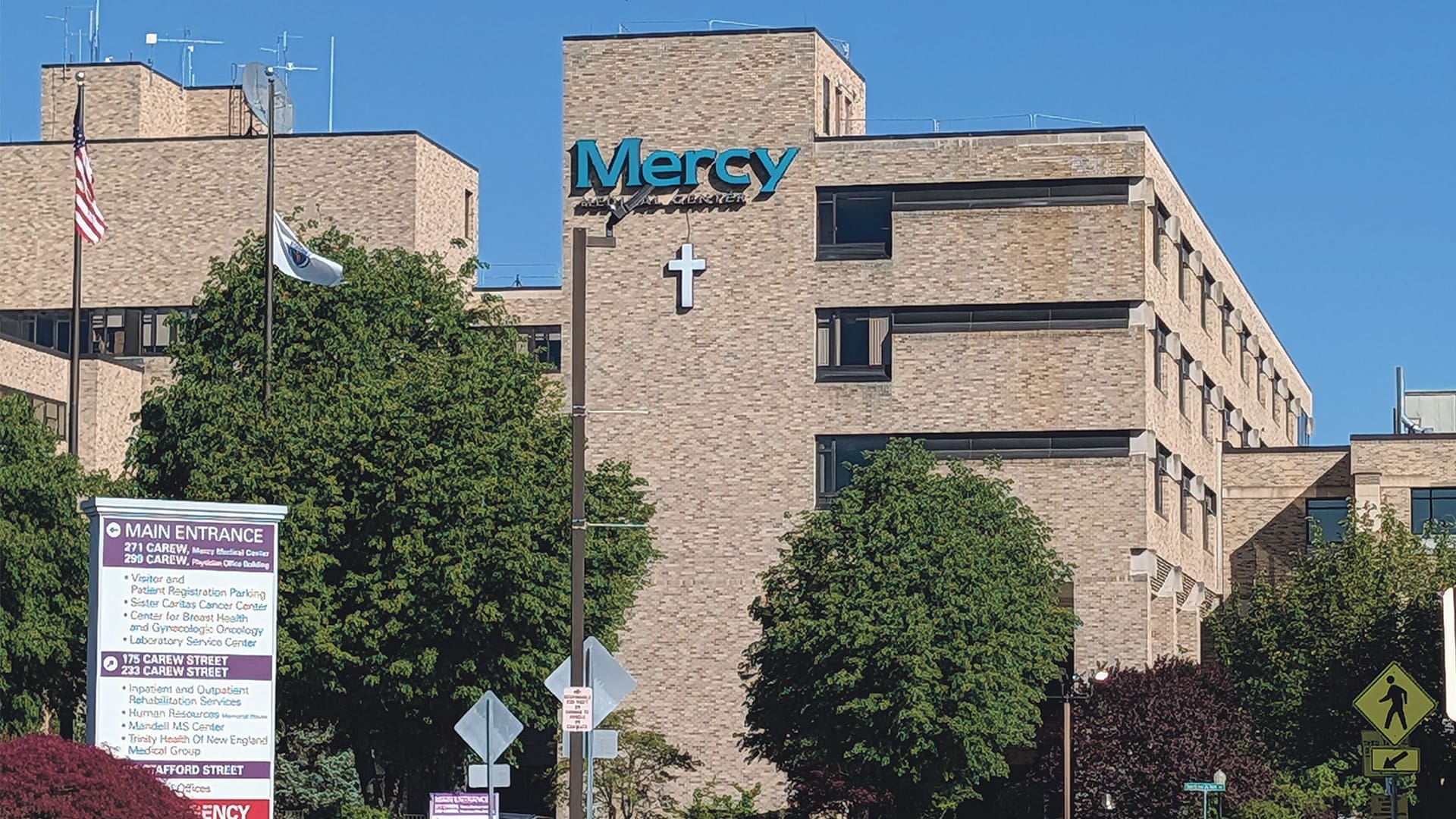
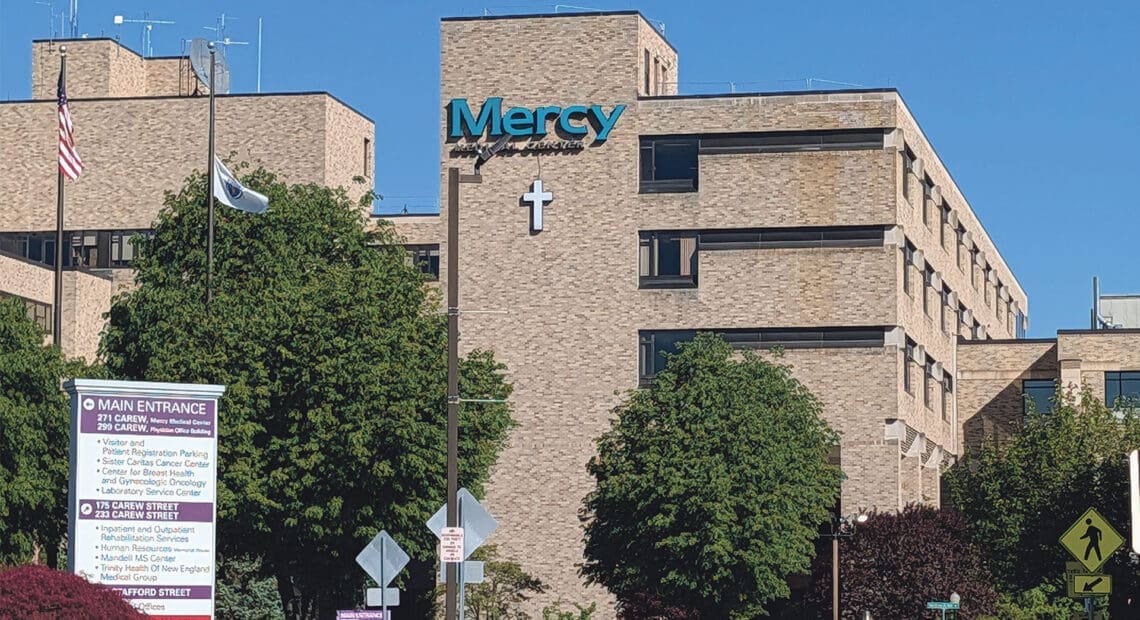
At a recent community forum where leaders of Baystate Health and Mercy Medical Center discussed why Mercy will be absorbed into the vast Baystate system later this year, Dr. Robert Roose positioned the move as a matter of survival.

“Mercy treats a population with the greatest proportion of Medicaid and Medicare patients of any hospital in the entire Commonwealth of Massachusetts,” said Roose, president of Community Hospitals for Trinity Health Of New England.

“That’s a community that needs care, but it’s one where the reimbursement does not match the cost of care,” he went on. “Medicaid reimburses, on average, about 62 cents on the dollar, Medicare about 85 cents. So there’s a financial equation that can be difficult to sustain. In addition to that, we know, with federal funding cuts and other changes to payments, that revenue will continue to decrease while costs continue to rise.”

Dr. Robert Roose

There’s a financial equation that can be difficult to sustain. In addition to that, we know, with federal funding cuts and other changes to payments, that revenue will continue to decrease while costs continue to rise.

At the same time, he said, Mercy has struggled with recruitment of critical specialties of providers — a reality that played out late last year when Mercy shuttered its obstetrics services, with most of those patients moving to Baystate Medical Center.

“So really, for the last decade, there have been questions around the long-term viability of Mercy Medical Center,” Roose went on. “Even as part of a large system like Trinity Health … it makes sense to strengthen the network of care here in Western Massachusetts.”

For Baystate, having a facility the size of Mercy — with its 191 licensed beds, 7,800 discharges per year, and 45,000 emergency room visits per year — simply close its doors would put far too much strain on other Baystate facilities, said Dr. Scott Lichtenberger, chief operating officer for Baystate Health.

“Springfield needs two hospitals, full stop,” he noted. “If Mercy Medical Center didn’t exist, Baystate could not absorb — not only at Baystate Medical Center, but even across our system — that kind of volume. So, to preserve services in the community and to be able to provide that kind of access, we have to have two hospitals.”
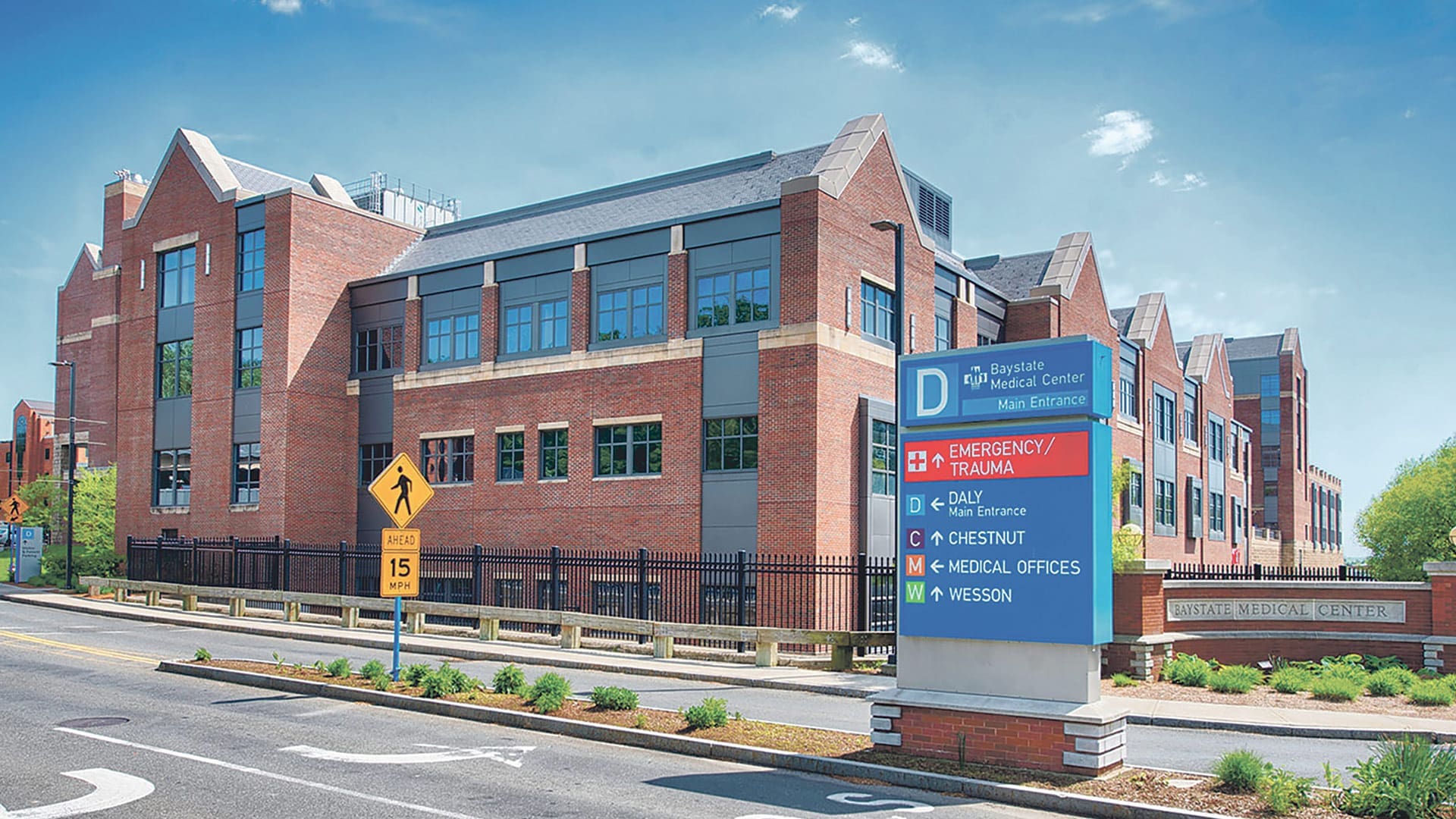
Those, in effect, are the arguments for a merger scheduled to take effect on Nov. 1: if Mercy can’t survive on its own, and if Baystate Health believes bringing a fifth full-service hospital into its system makes economic sense from a scale and efficiency perspective, then the move simply makes sense.

Not everyone is sure, however. Michal Horny, assistant professor of Health Policy and Management at UMass Amherst, told BusinessWest that there’s a good amount of evidence from across the U.S. that, when two hospitals very near each other merge, and are no longer in competition with each other, costs inevitably rise for patients.

“Any health plan that operates primarily in the Springfield area, before the merge, they had some leverage over hospitals — if you don’t strike a deal with one hospital, you can go to the other,” he explained. “After the merger, with two main hospitals in Springfield now part of a single system, no health plan can afford to operate in the Springfield area without having a contract with both those hospitals. So that gives the hospitals some very good bargaining power when negotiating prices.

“So what starts to happen is prices, on average, at both hospitals go up. I don’t know how much, but we’ve seen in other markets an average increase of about 6%. So that affects everyone with private insurance,” Horny explained (more on that later).

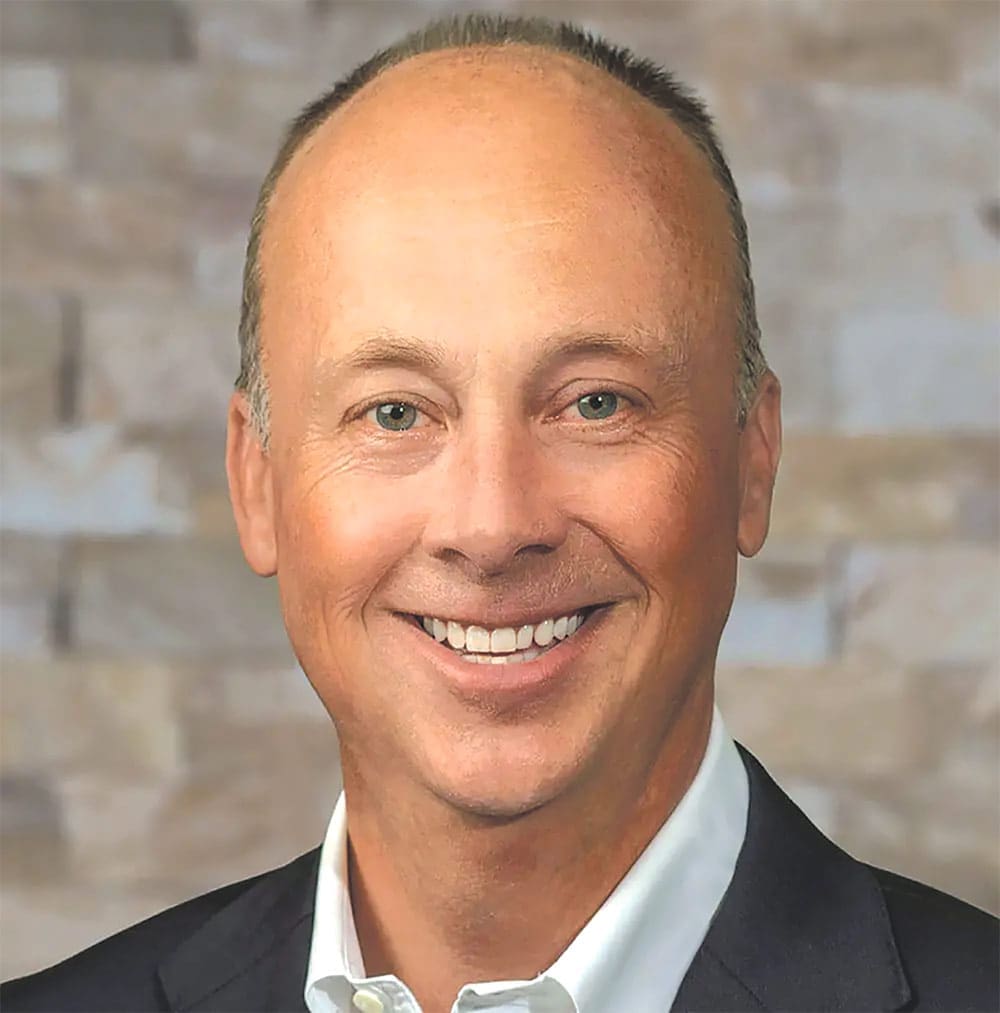
Dr. Scott Lichtenberger

“If Mercy Medical Center didn’t exist, Baystate could not absorb — not only at Baystate Medical Center, but even across our system — that kind of volume. So, to preserve services in the community and to be able to provide that kind of access, we have to have two hospitals.”
At the same time, while Baystate and Mercy leaders tout potential efficiencies, he noted, “as far as quality of care, the argument from the hospitals is that there’s better coordination and shared resources. Economists have studied this; it’s theoretically a valid point — but the evidence is not there. There doesn’t seem to be any improvement in quality.”

But for proponents of the merger, the survival of Mercy and its services in a community that needs them is an overriding positive.

“I am pleased that Baystate Health and Trinity Health have reached an agreement that will allow these two vibrant hospitals to continue serving our communities,” U.S. Rep. Richard Neal said, noting that, at a time of serious federal spending cuts, “this acquisition will expand access to healthcare and improve services throughout the Pioneer Valley and beyond.

“Together, these institutions represent more than three centuries of service to Western and Central Massachusetts,” Neal added. “Ensuring their viability and continued success is vital to the health of our families and our local economies, and this announcement represents a critical step in strengthening our regional healthcare system for generations to come.” 

Local Impacts

In their announcement on April 28 that Baystate Health and Trinity Health Of New England had signed a definitive agreement to transition Mercy Medical Center, its joint venture affiliates, and medical group entities in Massachusetts to Baystate Health, pending regulatory approvals, they made it clear that Trinity Health will continue to own and operate Brightside for Families and Children, Mercy LIFE, Mary’s Meadow at Providence Place, Beaven Kelly Home, and Saint Luke’s Home.

They also asserted that “Baystate Health will preserve Mercy’s nonprofit mission, community commitment, and legacy of high-quality care.” Both entities will continue to operate independently until the transition is complete this fall.

“Mercy and the Sisters of Providence have been a fixture in our community since 1874,” said Peter Banko, Baystate Health president and CEO, in a statement on April 28. “This is an investment in both the past and the future of healthcare and economic development in Western Massachusetts. Today, access forces too many patients to leave the region to seek care, and we need to ensure that care is compassionate, high quality, affordable, and local. We have been and will continue to be a pillar of our community — rooted here, serving here, and helping generations thrive here.”

One topic raised at the May 12 community forum — and one discussed at length in the article on page 22 about the region’s workforce outlook — is the difficulty recruiting people into a healthcare system that desperately needs them, and how the Baystate-Mercy merger will impact that equation for both institutions.

During the forum, Tania Barber, president and CEO of Caring Health Center in Springfield, asked what Baystate expects to happen when the most severe impacts from the One Big Beautiful Bill Act (OBBBA) come to fruition next year and area residents start losing health coverage.

“The health safety net cannot absorb it. We know that there’s going to be an influx of individuals that will be coming to the hospital, coming to community health centers, and we know there will be staffing shortages — provider shortages, nursing shortages, it goes on and on,” Barber said. “Recruitment continues to be a challenge, so I’d like to learn a little bit more about how you will address the enormous amount of individuals who are going to utilize hospital services because they’re losing their insurance.”

Lichtenberger countered that frontline staffing levels are up at Baystate despite a recent series of high-profile layoffs, mostly administrative, throughout the system. “And as we get bigger, I think it becomes a more attractive place to recruit physicians. We’ve just got to make sure that this remains a destination place that people want to work and that people are proud to work.”

Despite a challenging landscape for healthcare staffing, he noted that Baystate plans to keep Mercy’s critical services operating — and having two hospitals within a mile of each other will bring advantages of efficiency — and even grow them.

For example, “the emergency room at Mercy Medical Center — again, pending regulatory approval — will remain open 24 hours, seven days a week,” Lichtenberger said. “And about half of the beds at Mercy are now available — we want to fill those beds. We want to grow services so that we keep more care here locally. And when we talk about filling those beds, that’s creating jobs.”

But the cost issue for patients — again, when health plans lose leverage in a less competitive environment — is still a matter of concern, Horny said.

“Even when insurance pays for a portion of their healthcare, if prices are higher, that inevitably translates to higher premiums. Insurance doesn’t absorb the increased costs — it shifts them to consumers. So eventually, you can expect premiums for plans in the Springfield area to go up.”

Drawing on data from the Health Care Affordability Lab, a Yale University-based group of economists who study healthcare markets and translate their research for various audiences, Horny noted that, while healthcare consumers and payers initially absorb health cost increases, it eventually hits employers as well.

“Employers usually don’t cut wages, but they’ll cut the number of available positions, so one of the downstream effects is fewer employment opportunities,” Horny said, which eventually translates to decreased state and federal revenues, and more uninsured people going without care — which could increase mortality.

Challenges Continue

Dean Sanpei, chief administrative officer and chief strategy officer for Baystate Health, also addressed the community forum, noting that virtually all Mercy employees that work specifically for that
hospital, and not in an administrative role at Trinity, will come over in the deal.

“We do think this can improve community care and our provision of care in the area,” he said. “There are synergies that are created when institutions are able to come together. You’re able to create more hubs and spokes. You’re able to create centers of excellence and places where you can focus higher specialties of care and get better outcomes. And you’re able to distribute services as needed, and effectively. So we’re hoping to bring all these synergies together and create a better process and better care for our community.”
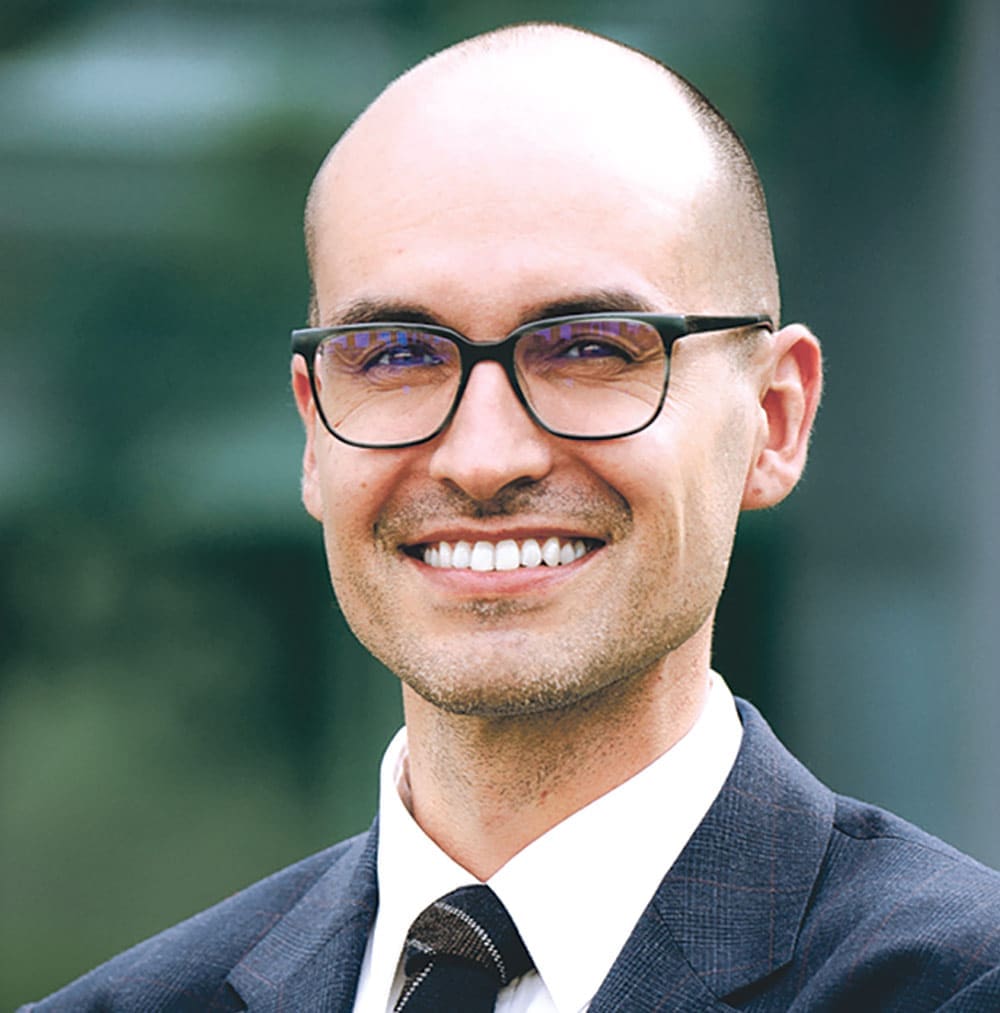
Michal Horny

“No health plan can afford to operate in the Springfield area without having a contract with both those hospitals. So that gives the hospitals some very good bargaining power when negotiating prices.”

Sanpei also agreed with Lichtenberger that the expanded Baystate footprint in Springfield will make the system more attractive and an easier place to recruit physicians.

“As we recruit more physicians, we can open up more beds, and we can have more capacity,” he went on. “And as we’re able to do that, it enables those who live here, who want to have care here, to get care here — which helps all of us. It helps residents locally, but it also helps the health system because those dollars are not going to go east, they’re not going to go south; they’ll stay here. So that’s an opportunity for us as well.”

That said, Baystate certainly continues to face headwinds, like an expected $150 million impact from the OBBBA.

“This transaction doesn’t occur for us until November. Until that time, we will continue to have the challenges that we’ve had to date, and we’re going to continue to have to do the efficiencies that we’ve done to date. Those things, in many ways, are separate. Those challenges are going to continue,” Sanpei said.

To that end, he continued, “we’re going to have to continue to increase our operating efficiency. We’re going to continue to have to look at our expense structure, and that won’t necessarily change overnight. Once we have the joint entity, the synergies we have then will come into play, and it will be better moving toward the future.” ◆

Daily News

SPRINGFIELD — Health New England recently awarded $176,000 in grants to nonprofit organizations that are creating more inclusive, accessible, and supportive communities across Western and Central Mass. The company’s Community Benefits Mini-Grants went to 49 organizations in Berkshire, Franklin, Hampden, Hampshire, and Worcester counties, all working to help people reach higher levels of health and well-being.

Health New England Community Benefits Mini-Grants are part of the company’s commitment to improving community health by addressing disparities in health outcomes, access, and experience. Alongside its parent company, Baystate Health, and with collaboration from local community partners, Health New England supports programs that open doors to better health for all.

This year’s grants focus on initiatives that address at least one social factor known to impact health, such as access to nutritious food, education, safe housing, healthcare, transportation, and opportunities for connection and belonging. By investing in these areas, Health New England aims to help ensure that everyone has the resources and support needed to live healthy, fulfilling lives.

“We are so proud to support such a wide variety of community-serving organizations with Health New England’s Community Benefits Mini-Grants,” said Katie Bruno, Health New England’s manager of Quality Improvement Programs. “These grants recognize and uplift the many outstanding regional organizations that share Health New England’s commitment to advancing the health of our communities and empowering individuals and families to lead healthy, successful lives.”

Health New England, a regional not-for-profit health plan, continues to invest in the health and well-being of the people in the communities it serves. Now in its sixth year, the Health New England Community Benefits Mini-Grants program has awarded $595,000 to local nonprofits addressing health equity in Western and Central Mass.

Daily News

GREENFIELD — Community Action Pioneer Valley (CAPV), the federally designated anti-poverty agency for Franklin and Hampshire County, has been named a 2025 Health New England Well Worth It Award recipient at the Gold level for successful worksite health promotion. The award recognizes CAPV’s commitment to its employees’ overall health and its achievements in implementing health and wellness programs during the previous year.

An effective worksite wellness program can improve the well-being and productivity of the workforce while managing employee turnover, behavioral health concerns, and the rising cost of healthcare.

Whether encouraging those from different departments to get to know one another with cross-department lunch opportunities, offering prompts to encourage gratitude, or sharing wellness resources, CAPV aims to weave a thread of wellness through day-to-day agency life.

“The Well Worth It Award allows Health New England to recognize our employer groups who work hard to provide their employees the opportunity to focus on overall well-being, both personally and professionally,” said Katie Bruno, manager of Quality Improvement Programs at Health New England. “CAPV has demonstrated our mission of helping to improve the health and lives of the people living in our communities with its commitment to wellness in the areas of awareness generation, education, skills development, and self-confidence. We are excited to recognize CAPV for always being caring, thoughtful, and committed to helping employees thrive.”

Bernadette Bean, director of Human Resources at Community Action Pioneer Valley, added that “we’re honored to receive this recognition from Health New England. The HR team participated in a walking challenge. Our walking challenge was more than just steps — it was about building community among our staff and demonstrating that wellness is a priority at every level of our organization. This award reflects our commitment to creating a workplace where everyone can bring their best selves to the important work we do.”

Cover Story

A Time to Re-energize

Michael Treash


“This is complicated, but it’s not that complex.”

That’s how Michael Treash chose to describe the challenges he faces as he takes the helm at Health New England, and there are many of them, including those common to all health plans — everything from the rising cost of healthcare to the poor image of this industry to integrating technology (and paying for it).

But his most immediate challenge involves re-energizing a company that was due to be sold by its parent, Baystate Health, before that sale was terminated, and creating a growth plan for the short and long terms. And here’s where it’s not that complex, he told BusinessWest.

“We’re going to have to focus on growth and on opportunities,” he said, noting that the vast majority of these lie within Medicare and with small-business groups. “We can focus on a handful of things, most of them quality-driven, where we can change the narrative and change the game.”

Elaborating, he said doing this comes down to listening, responding, and providing value to members, and Treash firmly believes that provider-based health plans, like Health New England, are uniquely positioned to create needed trust and generate value for members.

“The beauty of provider-based health plans, the integrated system, is that we can work with our clinical partners to craft messages,” he went on. “Let’s be honest — when you list what industries you trust the most, rarely do you see health insurers on this list; we’re just above tobacco companies, usually. People trust their physician and their pharmacist more than they trust us. We can craft a really meaningful message, and that is our opportunity; that’s how we transfer power to the consumer.”

Treash most recently served as chief operating officer and senior vice president at Health Alliance Plan in Detroit, and his previous leadership roles include vice president of Enterprise Operations at Priority Health in Grand Rapids, Mich., interim CEO of Missouri Health Care Cooperative, COO of the Outsource Group, and executive vice president and COO at Mercy Health Plans in Chesterfield, Mo.

“You can actually work with physicians and nurses and people who are on the front lines, and not many people who work with insurers can say that. That’s what attracts me. It’s a unique space — I can stay close to the customer; I can stay close to the clinician. That’s how you innovate; that’s how you influence the customer experience. I wouldn’t give up this space for anything.”

Treash’s appointment comes just a few months after that planned sale of Health New England to Point32Health was effectively terminated. When asked if the company lost momentum, in all its various forms — from workforce morale to making needed investments in technology — during the lengthy sale process, and how much, Treash didn’t answer that question directly, opting instead to focus on what will happen next, and also what happened at Health Alliance Plan.

“I got there right after an acquisition didn’t go through. The organization needed an energy boost, and it needed to get re-engaged with its parent, similar to where we’re at,” he explained. “Eight years later, we were an organization where people wanted to come to work for us, we were making money while the rest of the insurers in the state were losing money, and we were growing.

“We can do it here,” he went on, adding that he intends to draw on his vast experience with provider-based plans to generate growth, as he did at Priority Health, which is in many ways similar to Health New England and served a region comparable to this one.

“It was owned by a large provider system, it’s a mid-sized city, the competitive landscape is pretty darned similar,” he explained. “When I was there, we had incredible growth; we went from 700,000 members to 1.1 million, and we did that by focusing on Medicare, we focused on quality, we focused on the customer experience.”

The plan will be to do the same at Health New England, where there will be a hard focus on Medicare and certain segments within it amid the ongoing open enrollment period.

“Age 65 — that is our sweet spot because they’re new to Medicare and they’re making decisions,” he said, while explaining one example of broad and emerging strategies to grow membership, currently at about 164,000. “We have to get in front of them and illustrate that we can offer a different experience.”

“There’s an adage in this industry … if you just do the basics well, you can really get ahead,” he went on. “I believe that, but things are changing; I don’t think doing the basics well is good enough anymore — we really have to use our data assets and use our collective insights into the patient experience, and we need to morph that into something which is tangible.”

“When I say, ‘this is where we’re going to head,’ so far, what I’ve heard is, ‘that’s great; how fast can we go?’”

For this issue, BusinessWest talked at length with Treash about his plans for re-energizing the company and achieving the kind of growth he’s generated elsewhere.


Making Connections

Treash said he has spent almost his entire career with provider-based health plans and described this as a “unique space,” one he enjoys working within.

“You can actually work with physicians and nurses and people who are on the front lines, and not many people who work with insurers can say that,” he explained. “That’s what attracts me. It’s a unique space — I can stay close to the customer; I can stay close to the clinician. That’s how you innovate; that’s how you influence the customer experience. I wouldn’t give up this space for anything.

“The provider space itself … we’re constantly in marriage counseling between the two of us; when we’re aligned, it is remarkable what we can accomplish,” he went on. “I’ve been with provider-based health plans in competitive markets such as Detroit and St. Louis, and I’ve also been in smaller cities and rural areas in Texas and West Michigan. It’s different challenges; in competitive markets, like Boston, it’s a challenge — you have competitive health systems; you have competitive health plans. It’s very different in a market like this, where you have a unique opportunity to connect with the community, and part of our challenge here is that we are — and we can be more of — a driver of the local economy.”

Treash arrived in Springfield in mid-October and immediately commenced what he called a comprehensive listening tour, one that will continue for some time and involve a number of constituencies, including local officials, business leaders, those in the healthcare community, and, especially, his own employees, who have been through a challenging time for the company and the industry.

“They’ve been through the ringer, and right now, they want direction,” he explained. “I’m getting good responses, though. When I say, ‘this is where we’re going to head,’ so far, what I’ve heard is, ‘that’s great; how fast can we go?’”

As noted earlier, he didn’t want to talk about the sale that was terminated and what was lost during that process. “If I had a time machine, I’d go back and try to change that narrative, but I can’t do that right now — the only thing I can speak to is where we go from here.

“Right now, we’ve got to get energized, and where we can get energized is by focusing on Medicare, because we have opportunities there to change the experience of Medicare. We have opportunity to grow; we have opportunity to recapture revenue which is leaving Western Mass. — these are things I can change.”

“And right now, we’ve got to get energized, and where we can get energized is by focusing on Medicare, because we have opportunities there to change the experience of Medicare. We have opportunity to grow; we have opportunity to recapture revenue which is leaving Western Mass. — these are things I can change.”

Assessing the current landscape for providers, Treash acknowledged the obvious — “in this business, scale is our enemy.”

“We have to do the same things that United does, Aetna does, Cigna does, Blue Cross of Massachusetts does, but we don’t have 5 million members to spread those fixed costs across,” he explained, adding that, despite this size disadvantage, the company can compete by making full and effective use of technology and data.

“We’re at an inflection point in this industry right now,” he said. “The game is about data and insights, using your combined data assets to drive insights, and that’s not very capital-intensive; that’s about training your leaders and asking your leaders, mid-career, to shift and enter the gray area.

“Most of my folks, if you ask them — and if you go to any insurer and ask the people who have fancy titles — ‘on your résumé, do you have anything about how you use data to grow the business, improve the business, and improve the customer experience?’ you will not see a single hand go up.

“Then, if you ask them, ‘do you think you need to add that to your résumé to advance your career in the next decade?’ every hand would go up; they get it,” he continued. “That is the equalizer for us. We’ll use our data assets to create a new way to compete through customer experience.”


Healthy Discussions

As he talked about where he wants to take the company, Treash related a recent experience at Austin Airport and Southwest Airlines.

“There was this big digital board, and they’ve got, ‘Gate A13 — Better Hurry Up.’ ‘Gate A14 — You Have Time for a Cup of Coffee.’ ‘Gate A15 — You Can Grab Breakfast.’ I thought, ‘that’s great because that’s what I really wanted to know.’ They thought ahead to what the consumer was thinking.

“That’s our opportunity,” he went on. “Our opportunity is to see craziness and the things that go off the rails before you do and get in front of it. And if something does go off the rails, acknowledge it; I don’t want to make you have to call me.”

Such thinking will help drive the growth strategy for Health New England, the blueprint for which will emerge in the months to come, he said, emphasizing that the opportunities are in Medicare and small-employer groups.

With the latter, he acknowledged that small businesses are certainly the mainstay of the regional economy, and thus there is obvious potential for growth.

But there is also considerable competition for that segment of the market, he said, adding that he faces a learning curve when it comes to this specific market and its needs, as well as the broker community that plays a vital role in this process.

With Medicare, the basic strategy calls for segmenting the market and responding to the needs of the various segments, he explained.

“That creates real opportunities when we engage with providers because now we look at Medicare differently,” Treash noted. “As an insurer, we need to have a mix — we need to have folks out there who are going to supplement the folks who are sick, and you need to have those people who have a lot going on in their lives healthcare-wise, because we’re a nonprofit organization, and we have a fiduciary responsibility to serve everyone; you have to balance it out.”

As an example of these segments, he mentioned younger seniors new to Medicare.

“It takes us a couple of years to get them engaged and get them to the point where we have a meaningful, engaged relationship,” he noted. “If we lose them in that first two years, we’ve lost a lot of effort. We have to get people to year two, which means engaging them on a personal level, reminding them why they enrolled in Health New England and getting their physician partners involved and doing outreach.

“If we get them to year two, they become more comfortable with us because it’s a very price-sensitive market, and price elasticity is sky-high,” he continued. “Once we get them to year two, we’ve done our job engaging them in a meaningful manner, the price elasticity goes down, and we’ve created that stickiness.”

Meanwhile, within all segments, the company must work hard to understand how to meet and communicate with them, Treash told BusinessWest.

“How you connect with someone who’s going through cancer is very different from how you connect with someone dealing with pulmonary disease and learning how to live with that on an ongoing basis,” he said. “We have to figure out how we message those individuals and where we message them. We don’t want to see providers texting people with a cancer diagnosis, but there are certain things you want to hear from your provider on your time.

“The folks aging into Medicare right now are digital junkies,” he went on. “If you are not present with them both on an individual basis — taking their phone calls and being willing to have one-on-ones with them — and if you’re not willing to meet them on their iPad, you’re falling down.”

Rather than fall down, Treash wants Health New England to move up, grow membership, become an employer of choice, and broaden its overall impact in the community.

And as he said, the path to get there is complicated, but not that complex.

Daily News

SPRINGFIELD — As the government shutdown continues to impact the stability of families throughout the region, Square One is providing relief to those enrolled in its early education and care programs. Using a reserve fund previously gifted by Health New England, Square One will waive all parent fees for child care for the month of November.

“Seventy-five percent of Square One families receive SNAP benefits,” said Dawn DiStefano, Square One president and CEO. “With families currently receiving half of what they qualify for food assistance, we did not want to put our families in a position to have to choose between feeding their children and paying their childcare fees. We hope this gesture brings a bit of relief to our families during these challenging times.

“We are grateful to our wonderful partners at Health New England for recognizing the need for an emergency reserve fund gifted previously to be used to at a time when families need it to meet their basic needs,” she added. “Their gift came at an ideal time.”

As part of its mission to provide a healthy foundation for all children, Square One has an unwavering commitment to ensuring that its children receive healthy breakfasts, lunches, and snacks every day while they are in care. All meals include fresh fruit and vegetables. The agency partners with community organizations including Rachel’s Table, Gardening in the Community, the Food Bank of Western Massachusetts, and others to ensure that all families have access to food supplies.

Daily News

SPRINGFIELD — Baystate Health announced the appointment of Michael Treash as president of Health New England, effective Oct. 6. Treash will report directly to Baystate Health President and CEO Peter Banko and serve as a member of the president’s council.

The appointment comes at a pivotal time as Baystate Health and Health New England deepen their integration across care coordination, physician alignment, and value-based care. Together, the organizations aim to advance Baystate Health’s growth strategy, enhance member value, and build a healthy, mission-driven future for the communities they serve.

Treash, a seasoned healthcare executive with more than three decades of leadership experience in provider-based health plans and health system integration, will oversee all operations of Health New England. His responsibilities will include strategic planning, sales, product development, actuarial services, provider relations and contracting, health services, and day-to-day operations.

“Mike brings a proven track record of operational excellence, innovation, and consumer-focused leadership,” said Peter Banko, president and CEO of Baystate Health. “At this critical moment, his vision and expertise will accelerate Health New England’s ability to grow, deliver differentiated value, and strengthen the connection between Baystate Health and Health New England. We are thrilled to welcome him into this important role.”

Treash most recently served as chief operating officer and senior vice president at Health Alliance Plan in Detroit, where he led operations, IT, PMO, supply chain, and data insights while developing and executing a multi-year data transformation strategy. His previous leadership roles include vice president of Enterprise Operations at Priority Health in Grand Rapids, Mich., interim CEO of Missouri Health Care Cooperative, chief operating officer of the Outsource Group, and executive vice president and chief operating officer at Mercy Health Plans in Chesterfield, Mo.

He holds a bachelor’s degree in political science from Western Michigan University and a master of public administration degree from Arizona State University.

Daily News

NORTHAMPTON — D.A. Sullivan & Sons Inc. (DAS), a general contracting firm based in Northampton, has been named a 2025 Health New England Well Worth It Award recipient at the Bronze level for successful worksite health promotion and employee health improvement. The award recognizes DAS’s commitment to its employees’ overall health and their achievements in implementing health and wellness programs during the previous year.

This recognition underscores DAS’s commitment to supporting the overall well-being of its employees through programs that nurture physical, mental, and emotional health. In addition to providing comprehensive health coverage for employees and their families — including life and disability insurance — DAS has invested in resources that promote a balanced and active lifestyle. Recent initiatives include the creation of a private fitness studio, the addition of indoor and outdoor recreational spaces, and encouragement of employee participation in community activities such as volunteer programs and charitable races.

“The Well Worth It Award allows Health New England to recognize our employer groups who work hard to provide their employees the opportunity to focus on overall well-being, both personally and professionally,” said Katie Bruno, manager of Quality Improvement Programs for Health New England. “DAS has demonstrated our mission of helping to improve the health and lives of the people living in our communities with its commitment to wellness in the areas of awareness generation, education, skills development, and self-confidence. We are excited to recognize DAS for always being caring, thoughtful, and committed to helping employees thrive.”

Daily News

SPRINGFIELD — Peter Banko, president and CEO of Baystate Health, today announced that, as part of an ongoing “transformation” at the healthcare system, another 43 jobs will be eliminated, on top of the 7% reduction in the overall workforce that has been implemented since last fall.

In a prepared statement, Banko said the positions eliminated were “selected to minimize impact to direct patient care.” There was no further information on where the cuts will be made.

“This week we will complete one of the most disruptive components of our transformation journey in FY25 — reducing our workforce,” said Banko. “Since November 2024, we have had to make some very difficult decisions to reduce our workforce in total by 7%, and while this directly impacted a significant number of our team members, 60% of the total reductions were realized through attrition, a gradual reduction through resignations or retirements with elimination of those positions by not filling the vacancies.

“Even with this ongoing focus and disciplined approach to attrition, we did have to make the difficult decision to eliminate positions within Baystate Health this week, and as a result, 43 individuals will be leaving Baystate Health,” he went on. “Individual discussions with those impacted will be completed no later than Friday, May 2.”

Eligible team members who are not transitioned to another position in the organization will receive severance pay and other job support, including access to career transition services, he said. “We deeply understand the profound effect these transitions have on our people, their families, and our community as the anchor employer in Western Mass. We continue to aggressively recruit, hire, and retain physicians, advanced practice providers, and bed-side caregivers.”

Banko stressed that Baystate’s transformation is ongoing.

“Since launching our core operations improvement journey in October 2024, we are seeing meaningful and measurable progress — both in the success of our transformation efforts and, most important, in our progress toward long-term consistent and predictable financial resilience,” he noted. “In late February, we met with the Fitch Rating Agency — one of the “Big Three” nationally recognized rating organizations designated by Wall Street — and they affirmed our A+ credit rating with a negative outlook. The rating came as a timely, objective affirmation that Baystate Health continues to be a very high-credit-quality health system with a strong capacity to meet all our financial commitments.

“The rating also attests to the decisions we have made and the new processes we have established regarding our organizational structure, streamlined decision-making, management spans and layers, the efficiency and effectiveness of corporate functions, contract and premium labor, and external spend,” he went on. “The transformation workstreams to date — coupled with a busy respiratory season and increased emergency department volume and surgical throughput — has resulted in four consecutive months of positive operating margin and cash flow for the health system. I am so proud of a true team effort — all our incredible caregivers — individually and collectively contributing quickly to turning the corner toward a renewed, healthy, growing, and independent future for Baystate.

“We have more work to do to achieve sustainable financial transformation and re-invest more than $1.2 billion in our people, services, and technology over the next six years,” he continued. “We are currently actively working on redesigns in supply chain, pharmacy, and revenue-cycle management. This summer, we will start planning for FY26 by focusing on the physician enterprise (Baystate Medical Practices) and care management (including acute length of stay management) across the enterprise. At the same time, we will initiate an intentional implementation of Baystate Health 2030 (our new strategic plan) to grow our hospitals and service lines, integrate Health New England, and more supportively engage, retain, and develop our employees.”

Daily News

SPRINGFIELD — Baystate Health has called off plans to sell it’s not-for-profit health insurer, Health New England, to Boston-based Point32Health.

Baystate and Point32Health announced the $165 million sale in February 2024, and it had received approval from state insurance regulators.

“After further analysis, Point32Health and Baystate Health will not be moving forward with the acquisition of Health New England,” Baystate noted in a statement. “Point32Health and Baystate Health will continue their in-network relationship for Point32Health Commercial, Medicare, and Exchange members in the Western Massachusetts region. We appreciate the support and thorough review from the regulators, and both organizations look forward to continuing to serve their respective members, patients, and communities throughout New England and Western Massachusetts.”

The announcement means Baystate Health and the affiliated physicians through Baycare Health Partners remain in network for Point32Health plan members. There is no change to current coverage, benefits, or provider network for members. Meanwhile, Health New England will continue to operate as usual, with no change to current coverage, benefits, or provider network for members.

Baystate Health will retain ownership of Health New England,” the health system explained, adding that “Baystate Health governance and senior leadership will be taking the next few months to evaluate the strategic positioning and performance of Health New England to inform future decisions.”

Daily News

SPRINGFIELD — Health New England awarded $250,000 in grants to five local organizations in honor of Dr. Mark Keroack, former president and CEO of Baystate Health and chair of Health New England’s board of directors. Keroack retired earlier this year after serving in these roles for a decade.

The Dr. Mark A. Keroack Health Equity Grant was designed to fund the work of nonprofit organizations advancing equity in healthcare, a passion and priority of Keroack, who served on the committee that chose the winners. These grantees will receive $50,000 each to fund these programs:

• Community Legal Aid’s Pioneer Valley Farmworker Medical-Legal Partnership embeds an attorney from its Central West Justice Center affiliate into the farmworker healthcare team at Baystate Brightwood Health Center, also known as La Cliniquita. The attorney will work onsite educating staff on patients’ legal rights, screening for social determinants of health, conducting know-your-rights workshops, and collaborating with the care team to address systemic challenges.

• Wellspring Community Harvest will expand its Go Fresh Mobile Market’s prescription produce program to Brightwood, Mason Square, and High Street health centers. The program connects individuals with diet-related illnesses to healthy foods through healthcare-prescribed fresh produce. The grant will also enable the distribution of health and nutrition information to the mobile market’s 12 other sites in public housing, senior housing, and community centers across Springfield. The initiative includes nutrition classes, screenings, and medical advice to promote the consumption of fruits and vegetables to reduce chronic health conditions like obesity, hypertension, and diabetes.

• Planned Parenthood of Massachusetts will develop strategies to ensure equitable, dignified, and quality care for undocumented immigrants and refugees seeking sexual and reproductive health services. The organization will use the funding to collect data, enhance language accessibility with translated materials, target its marketing efforts, and host know-your-rights education sessions. Planned Parenthood will also increase recruitment of multi-lingual staff.

• Stone Soup Cafe in Greenfield will enhance its weekly Community Meal and Community Store programs. Every Saturday, the Community Meal provides 550 to 600 balanced, nutritious, scratch-cooked meals made from fresh ingredients to more than 180 households on a pay-what-you-can basis, totaling 31,812 meals in 2023. The Community Store, open every Saturday, extends this impact by providing 80 to 110 households with groceries, produce, and personal-care items.

• The Care Center’s Healthy Homes, Healthy Families program in Holyoke will provide 10 families headed by low-income women with safe, stable housing; behavioral-health services; healthcare; and a tuition-free education from November 2024 to October 2025.

“I am deeply honored that Health New England has chosen to celebrate my work with these generous grants to advance health equity in Western Massachusetts,” Keroack said. “These organizations are critical to improving the social determinants that can have such a devastating effect on people’s ability to be well. They are true partners in helping improve the health of our communities in so many ways, and I am grateful to see their efforts recognized and supported.”

Added Richard Swift, president and CEO of Health New England, “in his leadership roles at Baystate Health and on Health New England’s board, Dr. Keroack has been a tireless advocate for making healthcare accessible to all. He played an integral role in selecting these projects, and we are proud to honor his legacy by funding these impactful initiatives.”

Daily News

SPRINGFIELD — To honor Dr. Mark Keroack’s 10 years on the board of directors of Health New England, the health plan is creating a $250,000 grant-making fund to help community organizations improve health equity.

Keroack, president and CEO emeritus of Baystate Health, retired at the end of June. As chair of the board of Health New England, a not-for-profit health plan owned by Baystate Health, he helped form a deeper, more collaborative relationship between the entities.

The Dr. Mark A. Keroack Health Equity Grant program will provide local nonprofit organizations with a one-time grant of up to $50,000 to advance health equity in healthcare over a one-year period.

Programs are required to promote health equity and include community collaboration resulting in improved health outcomes. Programs must target communities in Franklin, Hampden, or Hampshire counties and focus on one or more of these populations: children and youth, communities of color, individuals experiencing poverty or with low incomes, or older adults.

Nonprofit organizations can learn more or apply for the grant by Aug. 28 at healthnewengland.org/community/grantprogram.

The grant program focuses on health equity as that was one of Keroack’s passions. For example, one result of his tenure is the BeHealthy Partnership, a value-based care arrangement designed to address health equity — environmental and social factors that affect health — while providing direct medical care. The BeHealthy Partnership, an accountable-care organization, serves approximately 50,000 members who qualify for insurance through MassHealth.

“The BeHealthy Partnership and its success in whole-person healthcare is my number-one fond memory and my proudest accomplishment working with Health New England,” Keroack said. “I am so honored that Health New England has created this fund in my honor, and I am thrilled that it will benefit people from marginalized communities.”

Richard Swift, president and CEO of Health New England, added that “Mark helped lead Health New England during some of the hardest days: the COVID-19 pandemic. For that, we owe him our gratitude. I will always be grateful for Mark’s passion for helping those with fewer resources to access healthcare in a groundbreaking way. Health New England is proud to have partnered with Mark and the rest of the Baystate Health team in creating the BeHealthy Partnership, and we thank him for his inspirational leadership.”

Daily News

SPRINGFIELD — In honor of Tania Barber’s eight years of service on the board of directors of Health New England (HNE), the not-for-profit health plan is donating $5,000 to Caring Health Center. Barber recently retired from the HNE board and is currently the president and CEO of Caring Health Center, the only federally qualified community health center in Springfield.

The grant will focus on Caring Health Center’s new Tania M. Barber Learning Institute, which offers training for professions in the healthcare industry. The model of the Learning Institute, developed by Barber, pays students, often individuals from historically underrepresented groups, while they undergo training for jobs.

“By serving on Health New England’s board, Barber has helped enhance the company’s partnerships with community health entities to form a more collaborative healthcare ecosystem,” said Richard Swift, president and CEO of Health New England. “She helped steer the company through the COVID-19 health emergency while managing her frontline health center as it dealt directly with the ravages of the pandemic. That is exceptional work. We will miss Tania on our board and thank her deeply for her service.”

Barber’s vision for the Learning Institute is to address systemic barriers affecting BIPOC, immigrant, and refugee communities in Springfield. She prioritizes hiring from within the community to respond to workforce shortages and disparities, like racial wealth gaps and barriers to access education. During her two decades at Caring Health Center, she has been committed to lifting others up.

“This donation is so appreciated. The Learning Institute will use these funds to help us keep the doors open, transform lives, and train the next generation of healthcare professionals,” Barber said. “The work we do today will shape the future of so many people and change our community for the better. These funds will also help people from Springfield and other communities gain the skills they need to get jobs with good pay in the healthcare field. It has been a great pleasure serving on the board of Health New England, and I thank my fellow board members for their support of community health.”

Daily News

SPRINGFIELD — Point32Health, the not-for-profit parent company of Harvard Pilgrim Health Care and Tufts Health Plan, announced it has signed a definitive agreement with Baystate Health to acquire its subsidiary, Health New England.

Health New England, a not-for-profit health plan in Springfield, offers a range of plans in the commercial, Medicaid, and Medicare markets and serves approximately 180,000 members concentrated in Western Mass. Canton-based Point32Health offers employer-sponsored plans, Medicare and Medicaid plans, plans on the state exchange, and plans for those who are dually eligible for Medicare and Medicaid. It serves 1.9 million members in Massachusetts, Maine, Connecticut, New Hampshire, and Rhode Island.

The acquisition is expected to improve product offerings and expand access to a broader network with wider geographic reach. Among both organizations’ shared priorities is expanding high-quality programs and services, particularly those that cover underserved populations and seniors, as well as maximizing the benefits that not-for-profit health plans provide to communities.

“Preserving and enhancing strong, high-quality, not-for-profit health plans is critical for Massachusetts health care,” said Cain Hayes, president and CEO of Point32Health. “We are excited at the possibility of welcoming Health New England into the Point32Health family of companies. As the only two health plans in the state that serve commercial, Medicaid, and Medicare populations, we have the commitment and expertise to serve people of all socioeconomic backgrounds, especially the underserved, and to improve members’ quality of life through programs and services that improve whole-person health.”

Point32Health aims to harness the strengths of both organizations and bring value to Health New England members and the broader community by providing greater value to consumers by combining complementary strengths, administrative efficiencies, and a broader product offering; expanding access to care for underserved populations and preserving not-for-profit options through extensive experience in serving these populations; and advancing the quality of healthcare members receive through a commitment to addressing behavioral health, health equity, and social determinants of health.

“It is vitally important to the communities that we serve that Health New England and its programs continue to grow and evolve,” said Dr. Mark Keroack, CEO of Baystate Health. “Point32Health is a vibrant organization and is widely recognized for the quality of its products, strength of its network, and commitment to underserved populations. Point32Health offers resources necessary to support Health New England members by advancing its efforts to support wellness, population health, and disease management throughout the region.”

The agreement, which was unanimously approved by the board of directors of Point32Health and the board of trustees of Baystate Health, is subject to regulatory approvals.

Daily News

SPRINGFIELD — Health New England announced the recent appointment of two vice presidents: Sarah Morgan, vice president of Human Resources, and Shawn Thamert, vice president of Sales and chief growth officer.

Sarah Morgan

Morgan has been promoted from within the organization, where she had been serving as director of Human Resources since 2021. In her new role as vice president of Human Resources, she leads and oversees Health New England’s human-capital and organizational-development operations, ensuring that business strategies, plans, and initiatives are developed and implemented in compliance with governing regulations, internal policies, and procedures. She is also responsible for identifying and implementing long-range strategic talent management goals.

Morgan joined Health New England in 2019 as assistant general counsel. She was previously a litigation associate at Bulkley Richardson in Springfield. Morgan is a graduate of UMass Amherst and earned her juris doctor degree from the Western New England University School of Law. She is currently a master’s-degree candidate in diversity, equity, inclusion & justice leadership at Tufts University.

“We are thrilled to promote Sarah to the role of vice president,” said Richard Swift, president and CEO of Health New England. “Since joining the HR team, she has been recognized for her important work leading the development of our COVID response plans and managing the transition of Health New England to a mostly remote workplace. Sarah has long championed our diversity, equity, inclusion, and belonging programs for our more than 400 associates, and she is committed to advancing health equity and social justice within the communities we serve.”

As vice president, Thamert is responsible for the strategic direction, leadership, and oversight for all sales, product-development, and marketing programs, including the Medicare line of business. He is also responsible for Health New England’s partnerships with brokers, employer groups, and community nonprofit organizations.

Shawn Thamert

Thamert joined Health New England as interim vice president, Sales and Marketing, in February 2023. Since then, he has focused on strategic membership growth across all lines of business. He has nearly 25 years of healthcare leadership experience, including as vice president, Market Development for Commonwealth Care Alliance, as well as senior sales positions with MultiPlan, Geisinger Health System, Jackson Health System, Humana, Highmark, and Coventry. He received his bachelor’s degree from Penn State University.

“We are excited to welcome Shawn to this position of vice president and chief growth officer,” Swift said. “As we look to 2024 and beyond, Shawn will serve an important role in strengthening our strategic growth potential in the market. We look forward to his collaborative leadership and the continued success of our commercial and Medicare lines of business so we can continue to uphold our commitment to our employer groups and members and deliver on our mission to improve the health and lives of the people in our communities.”

Morgan and Thamert are members of Health New England’s executive leadership team, reporting directly to Swift, and they join the Baystate Health leadership team as part of the health system.

Insurance

Addressing Unique Needs


Health New England is the sixth health plan in the country to earn the National Committee for Quality Assurance (NCQA) Health Equity Certification for Medicare, and the first in Massachusetts to earn the recognition for both its Medicare and commercial health plans.

Health New England received this certification for its Medicaid, Medicare, and commercial plans by demonstrating exceptional efforts in reducing health disparities and addressing the unique needs of diverse populations.

To earn NCQA Health Equity Certification, health plans must build an internal culture that supports health-equity work; collect and assess data to help create and offer culturally humble care, including language services; ensure that its provider networks are delivering culturally and linguistically appropriate care to meet individuals’ diverse needs; and identify and act on opportunities to reduce health inequities and improve care.

Richard Swift

Richard Swift

“We are committed to continually improving our efforts to reduce health disparities, eliminate barriers to care, and ensure equitable access to healthcare services for all.”

“At Health New England, we believe that everyone should have the opportunity to achieve their best possible health. Receiving Health Equity Certification from NCQA underscores our commitment to advancing health equity for our members and the communities we serve,” said Richard Swift, president and CEO of Health New England. “This achievement reflects the hard work and dedication of our entire team, as well as our ongoing collaboration with healthcare providers, community organizations, and members. We are committed to continually improving our efforts to reduce health disparities, eliminate barriers to care, and ensure equitable access to healthcare services for all.”

NCQA President Margaret O’Kane noted that “the prevalence of racial and ethnic disparities has been a barrier to improving the quality of healthcare of many Americans for too long. Organizations achieving Health Equity accreditation are leaders in closing this gap, and NCQA commends them for their dedication.”

NCQA Health Equity Certification debuted in late 2021. Massachusetts will require health plans to obtain the certification for their Medicaid (MassHealth) plans by 2025. To ensure equity for all members, Health New England led an organization-wide strategy to achieve the certification for all plans.

“We believe that all customers deserve fair and equitable access to care and services no matter what type of health plan they have,” said Shelly McCombs, Quality and Accreditation manager for Health New England. “We are not just looking at whether people have physical health problems like diabetes. We are looking at the social determinants of health — the societal factors that affect people’s ability to be well, such as housing, healthy-food access, the availability of good jobs and childcare, and more. These are all factors that impact people’s ability to focus on their well-being.”

Such health-equity practices have had real-world outcomes. For example, Health New England worked to develop a program through its BeHealthy Partnership Plan with Revitalize Community Development Corp. and Baystate Health. Health New England identified the need to address social determinants of health to help diabetic members access healthy food. Members enrolled in the program receive a cooking appliance of their choice (microwave, slow cooker, or induction cooktop); a kitchen-supply bag; diet education; and 10 weeks of home-delivered, nutritious groceries specially curated for people with diabetes by registered dietitians. The groceries are culturally tailored and feature foods that promote a carbohydrate-controlled, therapeutic diet.

Health New England has made an organization-wide commitment to health equity, McCombs said, and continues to work with the healthcare practitioners in its network, community organizations, and other stakeholders to provide culturally humble care, identify health inequities, and bridge gaps. NCQA Health Equity Certification has helped Health New England earn a four-star overall health-plan rating from NCQA for commercial and Medicaid plans.

Daily News

SPRINGFIELD — Health New England has awarded Maybury Material Handling of East Longmeadow and Community Action Pioneer Valley of Greenfield its Well Worth It Award, Gold designation, for outstanding employee-wellness programs.

Maybury Material Handling provides industrial products and services to manufacturing, distribution, and warehousing customers. Community Action Pioneer Valley is a not-for-profit that helps those with low incomes achieve economic stability and security, and works to build communities in which all people can thrive.

Both employers demonstrated their responsibility to the health and well-being of their employees by encouraging them to use Health New England’s suite of health and wellness services. These include its Healthy Choices Rewards Program that offers monetary rewards for healthy activities, such as joining a gym, nutrition counseling, smoking cessation, and more.

“Creating a culture in which employees are encouraged and empowered to use their wellness programs can be critical to improving their health, and thus the health of the business,” said Richard Swift, president and CEO of Health New England. “Maybury Material Handling and Community Action Pioneer Valley are among the best at recognizing this and taking steps to help their employees reach their best overall health. We are pleased to recognize their dedication with this Well Worth It Award Gold designation.”

Will Maybury, chief financial officer of Maybury Material Handling, added that “we are so proud to receive this award from Health New England. It is a testament to our commitment to helping our employees reach their best possible health, both mentally and physically. A healthy team is critical to offering our customers best-in-class service.”

Jess Thompson, associate director of Community Engagement at Community Action Pioneer Valley, noted that “the health of our employee team is tantamount to our ability to help others. We see the impact every day of health challenges on our communities. It is important to us to do everything we can to help our employees be as healthy as possible, and Health New England’s programs help us do that. We are honored to be recognized for this work.”

Health New England also awarded Well Worth It Awards in the Silver designation to Scantic Valley Regional Health Trust and PeoplesBank, and in the Bronze designation to Springfield Area Transit Co. Inc./Pioneer Valley Transit Authority.

Well Worth It Award winners will be honored at a luncheon on Oct. 5 at the Sheraton Springfield.

Daily News

SPRINGFIELD — The Wellness Council of America (WELCOA) awarded Health New England its Well Workplace Award at the gold level. The awards recognize organizations that contribute to workplace health and employees’ ability to lead healthy, resilient, and fulfilling lives through their wellness efforts.

WELCOA, a membership organization for health promotion and wellness professionals, judged employers over seven benchmarks, including support for the whole employee, support for a health-promoting environment, policies and practices, commitment of leadership, and meaningful data collection.

Health New England’s employees have access to the same health programs the insurer offers its customers. Its Healthy Directions worksite wellness programs include reimbursements for fitness and wellness activities, nutritional counseling, tobacco-cessation programs, health education, and more.

Health New England has been honored in past years with the Well Workplace Award at the bronze level. In 2022, the company concentrated even more on expanding its programs and ensuring its employees understand the resources available to support their mental, physical, and emotional health.

“Earning a WELCOA Well Workplace Award at the gold level affirms Health New England’s dedication to the health and well-being of our employees,” said Katie Bruno, Public Health and Wellness program manager for Health New England. “I am proud of the areas we focused on growing in the last year. We became even more focused on offering the support employees need mentally, physically, and emotionally. We also celebrated associates’ successes, whether related to one of our programs or not. We are all on different health journeys, and it is important to be recognized for progress.”

For Health New England’s Mary Santiago, a Senior Provider Relations representative, the programs helped her through a time of great loss.

“I have experienced more grief than most people do in a lifetime. My mental health was suffering; I was functioning like a robot,” said Santiago, who signed up for Health New England programs, including one on resilience and thriving. “I began to rewire myself to switch from sad to happy. It was like I was a caterpillar who became a butterfly. Using the tools from the programs helped me get better physically, spiritually, and mentally. I am more present with my children, family, work, and friends.”

Daily News

SPRINGFIELD — Richard Segool, a pediatrician practicing at Pioneer Valley Pediatrics and co-founder of Health New England, is retiring from the Health New England board and from his practice, mostly. He will still see patients one day a week but is largely pulling away from his practice of 47 years.

To honor his contribution to the local healthcare ecosystem, Health New England has made a $100,000 grant to the Baystate Division of Midwifery and Community Health’s Community Connections Program, to help with maternal and infant care. The focus could not be more personal for Segool, as he and his wife, Hélène, experienced the loss of a twin daughter at birth.

In 1986, Baystate Medical Center, two other hospitals, and a group of physicians formed an innovative, co-owned health plan with a mission to improve the health and lives of the people in the communities they served. As one of the first to join the plan and a member of the charter corporation, Segool has helped guide Health New England as it evolved into the only local not-for-profit, hospital-owned health plan in the region. He has served on its board of directors since then.

Daily News


SPRINGFIELD — Health New England is offering $100,000 in grants for non-profit organizations that address inequities to improve maternal and infant health. The company’s Diversity, Equity, Inclusion and Belonging (DEIB) grants will award up to $10,000 per organization. 

The DEIB grants will fund non-profits whose programs address health equity and focus on engaging at least one social determinant of health (SDOH). SDOHs are conditions in which people are born, grow, live, work, and age that affect health, quality of life, and life expectancy. These may include socioeconomic status, food insecurity, education, access to health care, safe housing, discrimination, violence, and trauma, etc.  

Registered 501(c)(3) non-profits focused on communities in Berkshire, Franklin, Hampden, Hampshire, and Worcester counties are eligible. Eligible organizations can find out more and apply for the grant here. Submissions are due by midnight on May 30. 

“Health New England’s Community Health Needs Assessment shows that Black women in Berkshire, Hampden, and Worcester counties are more likely to receive inadequate prenatal care compared to White women. The same holds for Latinas in Berkshire, Franklin, Hampden, and Hampshire counties. Funding programs that reduce barriers in accessing critical prenatal care for Black and Latina women will improve health outcomes for moms and their babies,” said Katie Bruno, Health New England’s Public Health and Wellness Program Manager.  

Health New England, a Baystate Health-owned not-for-profit health plan, continues to invest in the health and well-being of the people in the communities it serves. Over the past four years, Health New England’s grants have provided more than $1.2 million in funding to nonprofits in Western and Central Massachusetts.  

Daily News

SPRINGFIELD — Health New England (HNE) awarded $400,000 in grants to help three nonprofit organizations improve the health and well-being of vulnerable populations in Western Mass.

The grants, made via HNE’s Where Health Matters grant program, will allow Wellspring Cooperative’s GoFresh Mobile Farmers’ Market, Girls on the Run of Western Massachusetts, and the Care Center’s Roqué House Program to expand needed programs focusing on food, girls’ health, and supporting mothers seeking college educations, respectively.

“Health New England has a responsibility to help lift our communities, especially now with the COVID-19 pandemic bringing unprecedented challenges to those with fewer resources than most,” said Richard Swift, president and CEO of Health New England. “The recipients of this year’s Where Health Matters grants serve these populations in creative and effective ways, and we are proud to support the work they do.”

The Wellspring Cooperative’s GoFresh Mobile Farmers’ Market aggregates fresh local produce and delivers it through pop-up markets at low-income housing sites, senior centers, health clinics, and community organizations. The three-year, $150,000 grant will enable Wellspring to double the number of people it provides access to fresh, healthy, local foods; enact a pilot program to expand the GoFresh farmers market throughout winter (the current program operates from May to October), providing year-round access to health foods; partner with local health clinics to establish a food-referral program that meets the needs of patients with chronic conditions through education and access to healthy foods; and continue to support minority and immigrant farmers via the Wellspring Harvest greenhouse program in the Indian Orchard neighborhood.

Girls on the Run of Western Massachusetts helps girls develop essential social, emotional, and physical skills to successfully navigate life experiences and prepares them physically and mentally to participate in a celebratory 5K run. The two-year, $100,000 grant will enable the organization to double the number of chapters of the popular program and expand into Holyoke and Chicopee.

The Care Center’s Roqué House Program provides stable housing for young parents, primarily women of color, working toward a college degree, as well as their children. The three-year, $150,000 grant will fund an artist in residence and counselor for families who live in Roqué House.

Health New England’s Where Health Matters grant program, now in its fourth year, has invested $1.2 million in nonprofits in Western and Central Mass. Health New England also partners with each awardee via volunteering and advising to help them thrive.

Cover Story

A Different Kind of Gig

For roughly two decades, Richard Swift hop scotched the country on a series of interim assignments during which he shared his considerable expertise with several different health plans. As fruitful as this niche has been for Swift, he has traded his ‘interim’ tag for something permanent at Health New England — the role of president and CEO — and at a very unique and challenging time, for him and the company.

Richard Swift says he applied for the position of interim chief financial officer at Health New England with the expectation that this assignment would be like all the other longer-term interim gigs that had dominated his résumé for the previous few decades.

To say that things haven’t turned out as he originally thought would be a huge understatement.

For starters, while he interviewed for the position at Health New England’s offices in Monarch Place in downtown Springfield and had the opportunity to meet many of those in the finance team before starting, once he was awarded the job, he wouldn’t set foot in those offices for close to six months, and only then for short, very infrequent stops.

His arrival coincided almost exactly with that of COVID, which would put him in a working environment unlike anything he was used to.

“I’m told I was the first person they remotely onboarded,” he said, adding that several days before his scheduled start date the company had begun “experimenting” with employees working remotely, experiments that went very well. “They said, ‘I guess we’ll just send you a laptop.’ They sent me a computer, the IT folks hooked me up … the first time I came into the office was in August.”

While that was a huge adjustment for him, there was an even bigger one to come later.

Indeed, he would soon lose the word ‘interim’ from his business card — only he never actually had any in the CFO role, to the best of his recollection — not only from that title, but from the one he would be given roughly a year ago — president and CEO, succeeding Marion McGowan, who would become executive vice president and chief operating officer at Baystate Health, which owns Health New England.

After roughly 20 years of taking on year-long assignments as president of Medwise Partners and flying home every weekend from wherever he was stationed to his home in Arizona, he was planting roots; he even bought one of the Classical High Condominiums. When asked why, and why at Health New England, he said, “this was the right opportunity at the right place at the right time.”

It’s certainly been a whirlwind 18 months for Swift, whose tenure has, indeed, been dominated by the pandemic in every way imaginable, from its impact on Health New England and all health plans, to how and where the 380 employees at the company get work done, to the company’s work within the community and how it has changed in some ways but not in any of the ones that matter.

In a wide-ranging interview from his office at Monarch — he’s been there for several months now, usually without much company — Swift talked about all of the above. And in so doing, he provided some keen insight into what it’s been like to manage during a period unlike anything that a business manager has seen before.

“One size is not going to fit all. And for the 360 of our 380 employees who have been remote for the past year and a half, it’s been an almost seamless process. So given the fact that it’s been successful, it makes it hard to say ‘you have to come back, because it hasn’t been successful and that’s the only way to make it work.’”

“We need to be sensitive to our diverse workforce and their diverse and different needs,” he said, while summing up the challenge of leading at this time. “As a leader, I need to be sensitive to these varying needs, and I need to make sure the organization is sensitive to them. One of the things this experience has taught me is the need to be adaptable — both personally, for myself, and the organization and everyone within it — and accessible.”

As for the pandemic and health plans like Health New England, he said COVID and the changes resulting from it have brought challenges in many shapes and sizes, including to the bottom line. Indeed, while 2020 saw insurers facing far fewer claims than would be considered normal, and most eventually issuing rebates to members, 2021 has seen a surge in claims, with many health plans posting losses in the second quarter.

Swift said Health New England posted losses in that quarter as well (specific numbers were not available), but it has been able to avoid layoffs and cutbacks while actually increasing its involvement in the community, financially and otherwise (more on that later).

As for where and how people work, Swift said the pandemic gave him a first-hand look at how effective employees can be when working from their home office or dining-room table.

And he is using that experience as he goes about setting policy for the company. Above all else, he said he’s learned that managers must be practical and flexible in such matters.

“One size is not going to fit all,” he noted. “And for the 360 of our 380 employees who have been remote for the past year and a half, it’s been an almost seamless process. So given the fact that it’s been successful, it makes it hard to say ‘you have to come back, because it hasn’t been successful and that’s the only way to make it work.’”


Assignment Desk

As he talked about his lengthy tenure as a consultant to a number of different health plans and life as an ‘interim,’ Swift said he thoroughly enjoyed what he considered a ‘niche,’ and a successful one at that.

“For me, it was fun to parachute in somewhere and learn new people, new things, and new places; I liked to travel — it was fun to go back and forth,” he told BusinessWest, adding that his various gigs took him to all corners of the country and for assignments — usually as CFO but also CEO and COO — that varied with the health plan in question.

“Sometimes they were eight months long, sometimes they were for a couple of years,” he explained. “In some cases, people left suddenly; in other cases, it wasn’t suddenly, but they realized that they didn’t necessarily have the successor they thought they had, or they knew they didn’t have one and were going into a search process.

“Sometimes they were successful, strong health plans that just needed some expertise, and some of them were turn-arounds,” he went on. “What I brought to the table was that experience of running that business.”

Health New England was looking to tap into that experience early in 2020 when its CFO announced his retirement and a search for a successor had commenced. As noted earlier, Health New England was going to be another one of those interim assignments.

“When I looked at what was going on here, and at the opportunities that Baystate has with Health New England and that Health New England has with Baystate, I realized that there is so much that we can do together in the Western Massachusetts market.”

But things didn’t go according to script, starting with day one — or actually, even before day one.

Indeed, Swift was scheduled to start in April of 2020. COVID, as we all know, made its arrival in the 413 in mid-March, abruptly changing the landscape for the company and its new CFO (he quickly lost the interim tag), who wouldn’t have to get on a plane to take on his latest assignment.

He recalls that leadership at the company was going to use March 13, 2020, a Friday, as an experiment to see how effectively people worked remotely. That experiment went so well, and COVID invaded so suddenly, that workers never came back. In his case, he never arrived.

“I remember that conversation about ‘we’ll just send you a computer and you’ll work remotely,’ and how stunned I was at the time,” he recalled. “Because in 20 years of interim work, I pretty much got on a plane every week and flew out to my client. I was in my office in whatever city it was, on site. So the notion of doing all this remotely … it took me a while to wrap my head around it.”

While making these adjustments, Swift would soon have to make some others as well.

Indeed, in June, as McGowan was assuming some duties at Baystate while still serving as president and CEO at Health New England, Swift picked up some additional responsibilities for the company. And in October of last year, as McGowan moved to Baystate full time, he was asked to become CEO — again, without the ‘interim’ before the title.

When asked what he saw in Health New England that made him accept a permanent position — he had declined a few offers of that type in the past — he said it was a combination of things, including the team that was in place at Health New England and the opportunities he saw to partner with Baystate in meaningful ways.

“When I looked at what was going on here, and at the opportunities that Baystate has with Health New England and that Health New England has with Baystate, I realized that there is so much that we can do together in the Western Massachusetts market,” he said. “And I was really excited by those possibilities.”


By the Numbers

Looking back on his first 18 months with the company — and ahead to what might come next — Swift said this has obviously been a different and very challenging time for Health New England, and all health plans.

And the pandemic is just one reason why, albeit a big reason. At first, it contributed to a steep decline in claims because people were not visiting the doctor or seeking help even if they needed it. And then, it prompted a huge surge as people went back to the doctor and the emergency room, often with conditions made more serious by not seeking care through most of 2020. Meanwhile, treating COVID itself has often required lengthy and very expensive hospital stays.

“We’re certainly seeing more members having more claims and more services, and more-costly services than we did in 2019,” he said, adding that all this certainly contributed to the company’s second-quarter losses.

Richard Swift

Richard Swift

“COVID has brought a tremendous level of uncertainty. So all of us who put plans and benefits and rates in place for 2021 did that in the summer of 2020 in the middle of COVID, trying to understand what that would look like, and we’re doing it now for 2022, and we don’t know what next month is going to look like, let alone six months from now.”

But mostly, the pandemic has created uncertainty and even greater difficulty forecasting into the future, which creates problems for health plans, Swift noted.

“We set rates well in advance based on what we think our costs are going to be, and we don’t really have a chance to revisit those until the next year,” he explained. “And we obviously don’t know what the services are going to be or what new technologies are going to emerge.”

Elaborating, he said that telehealth technology certainly came of age during COVID, and Health New England, like many health plans, had previously created a telehealth benefit for members.

“In all of 2019, we had something like 850 or 900 total claims for telehealth visits; over the past year, it has averaged almost 30,000 per month,” he noted, citing this as just one example of how quickly and profoundly the landscape can change and health plans can be impacted by those changes.

Vaccines are another example, he said, adding that health plans couldn’t anticipate a two-dose vaccine when they set rates for 2021 last year, and they couldn’t have anticipated a booster, or third shot, as they set rates for next year.

“COVID has brought a tremendous level of uncertainty,” Swift went on. “So all of us who put plans and benefits and rates in place for 2021 did that in the summer of 2020 in the middle of COVID, trying to understand what that would look like, and we’re doing it now for 2022, and we don’t know what next month is going to look like, let alone six months from now.”

As noted earlier, the surge in claims and other factors have generated losses for some health plans in recent quarters and prompted layoffs and cutbacks as well.

Health New England has been able to avoid such cuts, he said, adding that, in the meantime, it has been able to maintain and, in many ways, increase its financial support to the community and its business community, something Swift takes great pride in.
“Even with everything going on with COVID, we’ve continued, and increased, the community support in terms of activities, foundations, grants, and actually providing PPE and hand sanitizer to people who didn’t have the wherewithal and the ability to get it themselves,” he said. “A lot of companies have turned inward, and many of them have laid people off; we made a conscious decision not to lay people off if we could at all avoid it, and fortunately, we have been able to avoid that.”

Elaborating, he said the company adjusted some of its sponsorship activity to accommodate what it would call “COVID mini grants,” roughly $300,000 worth of them that were awarded to community organizations that needed support to address their COVID-related needs.

In addition, the company created Where Health Matters grants, multi-year grants totaling $50,000 to $150,000 awarded to organizations to help offset the effects of COVID on their operations.


Giving the Forecast

Moving forward, Swift said the company would continue its pattern of flexibility and responsiveness to changing conditions as a fall shrouded by uncertainty approaches.

As he talked with BusinessWest, he noted that he was one of very few employees in the building that day, and things would probably remain that way for the foreseeable future. Employees were slated to return, in a hybrid format, by this time, he went on, but there is now more of a wait-and-see approach than a definitive schedule.

Meanwhile, Health New England has joined a growing number of businesses, especially in the broad healthcare realm, that have made vaccination a requirement for employment, a step taken in the interest of maintaining the safety of employees and customers alike.

“One of the things we’ve said concerning our coming back to the office is that we don’t know what we don’t know,” he said. “The only thing we know for sure is that things are going to change.”

And with those sentiments, he summed up both the short term and what could be called the post-pandemic world — whenever that arrives. When it does, said Swift, noting that, in some respects, it is already here, it won’t look like the pre-pandemic world.

And that goes for everything from how and where employees work to how people will access healthcare.

With regard to the latter, telehealth will almost certainly continue to increase in popularity, he said, adding that while the numbers have fluctuated as the pandemic has waned and surged, the technology has gained a broad level of acceptance.

“I do think you’ll see a lot more movement to leverage the technology that’s out there and technology that’s being developed for care without having to traditionally go back and see your doctor in the office on their schedule,” he explained.

As for the office setting and what it will look like, Swift said things simply won’t go back to the way they were in 2019. Companies have learned that employees can work effectively in remote settings, and thus it only makes good business sense to allow them to continue doing so, either in a fully remote fashion or in a hybrid format now being tried by many area businesses of all sizes.

“We have some departments that, by and large, were partially remote before and will be partially, or maybe completely remote in the future,” he explained. “The work they’re doing is such that it’s fine remotely, and they’ll stay that way.

“We have not come out with any edicts that people have to be here on ‘x’ amount of days,” he went on. “Because we know that one size does not fit all and there are certain departments and functions that have very different needs than others; we came to the conclusion that an edict was as arbitrary as pre-COVID, Monday through Friday, 8 to 5, in some respects.”

And there’s a competitive aspect to creating flexibility with working conditions, he said, adding that Health New England can now hire talented individuals from outside the 413 and even outside the state because they have the ability to work remotely.

As for business strategy and long-term planning, Swift said COVID has certainly made such exercises more difficult. But companies still have to plan, he noted, adding that there must be layers of flexibility built into such plans.

“I think that COVID requires us to plan even further ahead, but be more nimble with those plans,” he explained. “Our original date for returning to the office was Sept. 1; with what’s happened over the past several weeks, we’ve pushed that back. But in the spring, we threw out that date of Sept. 1 as the one we were targeting, again with the caveat that everything is subject to change.”


Bottom Line

Swift told BusinessWest that, a few weeks back, his sister called him asking for recommendations on restaurants in Detroit, which she would soon be visiting.

He was able to help her, because that was one of the places he parachuted into while doing his consulting work.

That life has ended, at least temporarily, with a permanent assignment, one that is a far cry from what he thought he was originally signing up for back in March of 2020.

He was, by most accounts, the first Health New England employee to be onboarded remotely, but he certainly wasn’t the last. His first 18 months have been a learning experience on myriad levels, and in all ways it is still ongoing.


George O’Brien can be reached at [email protected]

Daily News

SPRINGFIELD — Health New England announced the recent appointment of Dr. Ira Klein to the role of vice president and chief medical officer. In this position, he is responsible for ensuring the quality and cost-effectiveness of healthcare services for Health New England members, and will focus on clinical excellence, innovation, and technology to improve health outcomes.

Klein joins Health New England’s executive leadership team and reports directly to Richard Swift, president and CEO.

“We are excited to welcome Dr. Ira Klein as our new chief medical officer. With decades of experience in the healthcare industry, he is uniquely qualified to serve our members and strengthen our mission to improve the health and lives of the people in our communities,” Swift said. “He is joining Health New England at a very important time and will be a tremendous asset to our organization and our community.”

Before joining Health New England, Klein served as senior director and lead, Healthcare Quality Strategy at Janssen for Johnson and Johnson Inc. in New Brunswick, N.J. Previously, he held various positions at Aetna Inc. in Hartford, Conn., including medical director, Patient Management, Northeast Region; senior medical director and analyst, National Accounts; and chief of staff and national medical director, Clinical Thought Leadership.

Klein has published articles in several medical and insurance-industry journals. In addition, he is active on various industry committees, including National Academy of Medicine, Pharmacy Quality Alliance, National Quality Forum, Network for Excellence in Healthcare Innovation, Foundation for eHealth Initiative, National Pharmaceutical Council, Pharmaceutical Research & Manufacturing Assoc., and Patient-Centered Primary Care Collaborative.

He is a diplomate of the American Board of Internal Medicine and a member of the American College of Physicians, as well as a certified health-insurance executive with the Assoc. of Health Insurance Plans, Executive Leadership Program.

Klein holds an MBA degree from Rutgers University’s Graduate School of Management, a doctor of medicine degree from the University of Medicine and Dentistry of New Jersey – Robert Wood Johnson Medical School, and a bachelor’s degree from Rutgers University’s College of Pharmacy.

Daily News

SPRINGFIELD — Richard Swift, who has served as Health New England’s (HNE) interim chief financial officer since April, has been appointed president and CEO, effective immediately.

Swift is an experienced chief executive officer and chief financial officer for provider- owned health plans, and a senior healthcare executive with over 30 years of leadership with integrated delivery systems, health plans, and provider groups throughout the country.

He has served as president of Medwise Partners, a health-insurance consulting company he founded in 1996. In that capacity, he has served in numerous interim executive roles for regional health plans throughout the U.S. He holds a bachelor’s degree from Mercer University and an MBA in healthcare administration from the University of Miami in Florida.

As president and CEO, Swift will be responsible for the successful operation of HNE; driving growth across the organization, including the development and execution of strategic plans; successful introduction of new programs and services; membership growth; operational, financial, and service excellence; and continued improvements in clinical quality with a focus on lowering the cost of care in Western Mass.

HCN News & Notes

SPRINGFIELD — Health New England is launching its “Where Health Matters” grant program as part of its Community Benefits Program for the third year in a row. The grant application process runs through April 27.

The “Where Health Matters” grant program is designed to advance the health and well-being of vulnerable population groups living in Central and Western Mass. Health New England will award five $50,000 grants to community nonprofit organizations, for an annual total of $250,000. The grant program focuses on three areas of health and social factors that influence health: built environment (such as access to healthy foods and places to exercise), transportation, and care coordination.

“We are pleased to continue our grant program in 2020 and acknowledge the importance of giving back to the community to help support the health needs of our most vulnerable community members,” said Marion McGowan, president and CEO of Health New England. “We look forward to partnering with five local organizations that have strong community relationships and are committed to improving the health outcomes of our at-risk residents.”

The grant program will award both one-year and multi-year grants to eligible non-profit organizations, with current IRS-designated 501(c)(3) status, that manage innovative, community-based programs benefiting underserved residents of Berkshire, Hampden, Hampshire, Franklin, or Worcester counties of Massachusetts, with a particular focus on Greater Springfield. Preference will be given to programs that focus on mental health, substance use, chronic health conditions (obesity, cardiovascular disease, diabetes, asthma, cancer), and the need for increased physical activity and healthy diet.

Health New England’s “Where Health Matters” Grant application process begins with a letter of intent. Organizations meeting the request for proposal (RFP) criteria are encouraged to submit a letter of intent online by 5 p.m. on Monday, March 23. Complete grant RFP applications are due by 5 p.m. on Monday, April 27. For additional information, visit healthnewengland.org/community/grantprogram.

Daily News

SPRINGFIELD — Health New England has been recognized as one of the 2019 finalists of the Healthiest Employers of Massachusetts, a nationally recognized awards program powered by the Springbuk Health Intelligence Platform.

Applicants to the Healthiest Employers awards program were evaluated across six key categories, representing a holistic view of employee well-being: culture and leadership commitment, foundational components, strategic planning, communication and marketing, programming and interventions, and reporting and analytics. All companies that applied to the awards program were ranked according to the proprietary Healthiest Employers Index, a 1-100 rubric for employee well-being programming.

Ranked second in the 100- to 499-employee size category in Massachusetts, Health New England was honored for its commitment to employee health and corporate health programming. As an award finalist, Health New England has demonstrated a strong commitment to the health and well-being of its team members.

“We are honored and excited that Health New England is being recognized for the work we do to empower our associates to make positive changes in their health journeys,” said Katie Bruno, Public Health and Wellness program manager at Health New England. “We strive to improve the health and lives of the people in our communities, and we bring that same mission to our worksite wellness program. My team, in collaboration with our wellness committee, implements engaging, innovative, and meaningful programs that support our associates’ health needs.”

Health New England offers traditional wellness programs that allow employees to partake in short-term programs individually or with a team, and identifies ways to encourage long-term behavior change by building a work culture that supports overall health. This includes leadership support, internal partners, mindfulness training, health coaching, flexible work hours and location, and increased benefits and rewards.

“We congratulate Health New England for their efforts to make workplace health a top priority for their organization and their team members,” said Rod Reasen, co-founder and CEO of Springbuk. “Each year, it’s our privilege at Springbuk to recognize the best of the best in corporate health through the Healthiest Employers awards program. Across the nation, we’re encouraged by the tremendous efforts of corporate health leaders proactively investing in the well-being of their employee population.”