Aiming High
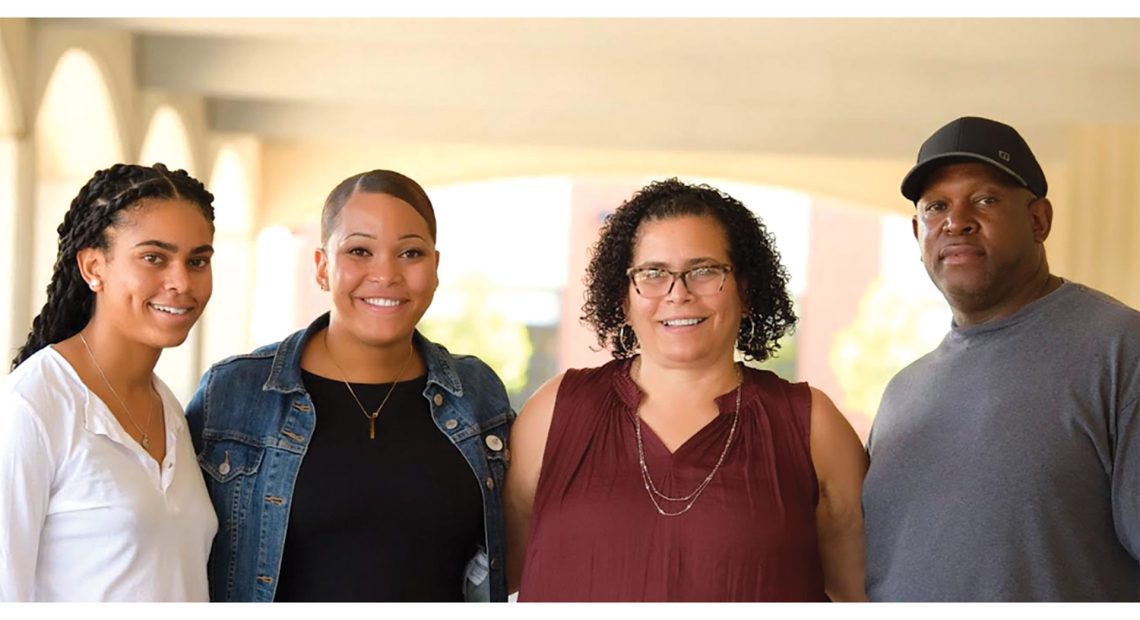
The executive team at 6 Brick’s includes, from left, Taylor Shubrick, Payton Shubrick, and their parents, Dawn and Fred Shubrick.
Payton Shubrick always wanted to effect change in the world.
She never thought it would be through a product that was, for most of her life, illegal.
Specifically, when she graduated from the College of the Holy Cross in 2015 with a degree in political science — and concentrations in Africana studies and peace and conflict studies — the goal was to enroll in law school, she explained.
“Our speaker for our class talked heavily about moving mountains — ‘how do you leave this college on a hill and move mountains the rest of your life?’” she recalled. “So my idea was, I was going to have this landmark case that would change the trajectory of my career and rewrite some type of law.”
But she found herself working full-time at MassMutual instead — and missing her college days filled with extracurricular activities. “It was work, work out, and go home. There was nothing in between.”
So, with the help of her father, Fred, she secured an internship with the Springfield City Council. Meetings became more interesting after Massachusetts voters approved the legalization of adult-use cannabis in late 2016, with out-of-state operators hanging around and officials trying to hash out what the rules would be for zoning and other aspects of legalization. And Shubrick was intrigued — so much that, when the councilor she was interning for lost a re-election bid, she kept attending meetings anyway.
“I was hearing so much conversation about how these businesses were going to make millions. Honestly speaking, they made it sound so easy.”
“I was hearing so much conversation about how these businesses were going to make millions,” she recalled. “Honestly speaking, they made it sound so easy.”
But as Shubrick thought about her own potential in this new industry, she had something else in mind besides dollar signs. She’d read Michelle Alexander’s book The New Jim Crow and gained an understanding of how the failed war on drugs had impacted urban communities like Springfield. And she saw the cannabis industry as a way to engage with that community, succeed in business there, and pay it forward.
“I went to a Springfield public high school, where, if somebody dropped a dime bag, they were going to in-house suspension or being arrested in the middle of the school day because you had police officers present in the building with you. So, when you start to peel back the layers and realize this is going to be a billion-dollar industry, how can you get people in your community to benefit from that?”
The answer is 6 Brick’s, an adult-use retail cannabis shop expected to open early in 2022 on Main Street in Springfield, in the Republican complex.
“We are what most would describe as a mom-and-pop shop, which I tend to agree with since both my parents are on the executive team,” she told BusinessWest.
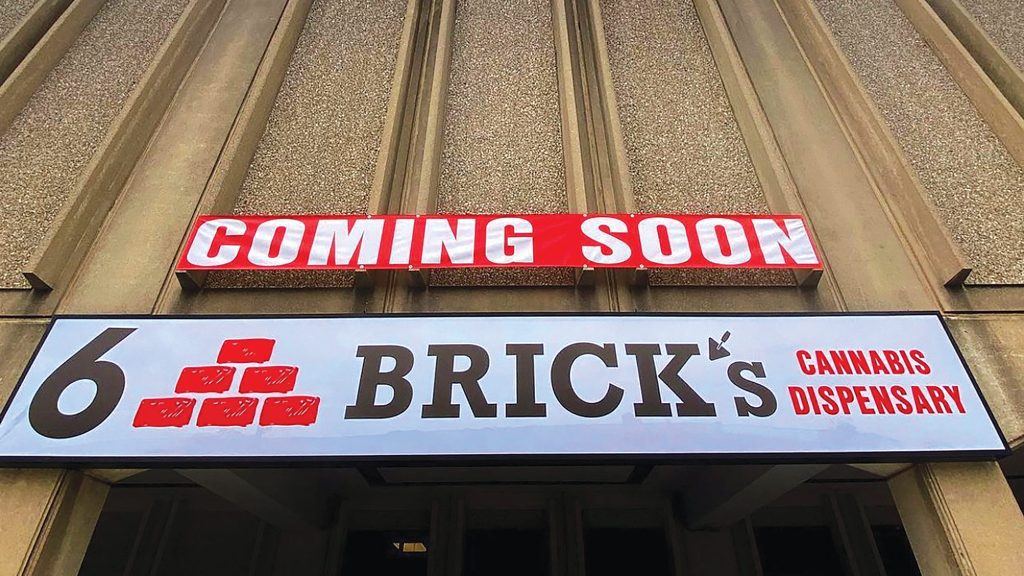
The Shubrick family hopes to have 6 Brick’s open by early 2022.
She thought her biggest hurdle would be getting her father on board. “Saying I wanted to be a lawyer has a certain level of prestige around it. Saying I wanted to be a legal drug dealer and own a cannabis dispensary … not so much. How do you make that business case and get Dad to switch gears?”
But not only has Fred become her biggest supporter, he’s also chief procurement officer at 6 Brick’s — a name that echoes the family name, Shubrick. Payton is CEO, while her mother, Dawn, is executive secretary, and her sister, Taylor, is head of community responsibility and quality assurance. Two younger siblings — who aren’t currently old enough to work in cannabis — round out the ‘6’ in the company name.
Once she decided to wade into this burgeoning industry, Payton knew she wanted to do it in Springfield.
“There’s this idea that, to be a star, you have to leave the area and go to Boston or New York. I heard, ‘you have so much potential; go somewhere.’ That was frustrating because I’ve always seen the potential Springfield has, and this industry, in many ways, allows me to prove people wrong; I can stay here, and I can be successful in my own right, and I don’t have to move out of the city of Springfield to do that.”
“Saying I wanted to be a lawyer has a certain level of prestige around it. Saying I wanted to be a legal drug dealer and own a cannabis dispensary … not so much.”
Furthermore, she said, “I can participate in an industry that previously caused so many people’s lives to be disrupted and negatively impacted, and I can try my hand at something I had always been interested in, which is entrepreneurship.”
It hasn’t been easy, and the journey is far from over — and the cannabis landscape in Massachusetts is still a difficult one for minority entrepreneurs, despite the state’s establishment of a social-equity program (more on that later). In a wide-ranging interview, Shubrick talked about why that’s the case, and what can be done to improve the prospects of business owners who lack the resources of large, established companies and, ultimately, create a more level playing field.
No Easy Road
Shubrick and her family officially launched 6 Brick’s in 2019, and the road since has been a thornier one than she had imagined.
Back in 2017, “I thought if I did my homework and put together a really strong application, I would get the license. I didn’t expect an RFP, 27 groups applying, only four being selected. That’s when your heart starts to do many palpitations — what if we don’t get picked? What happens next? I didn’t have a plan B.”
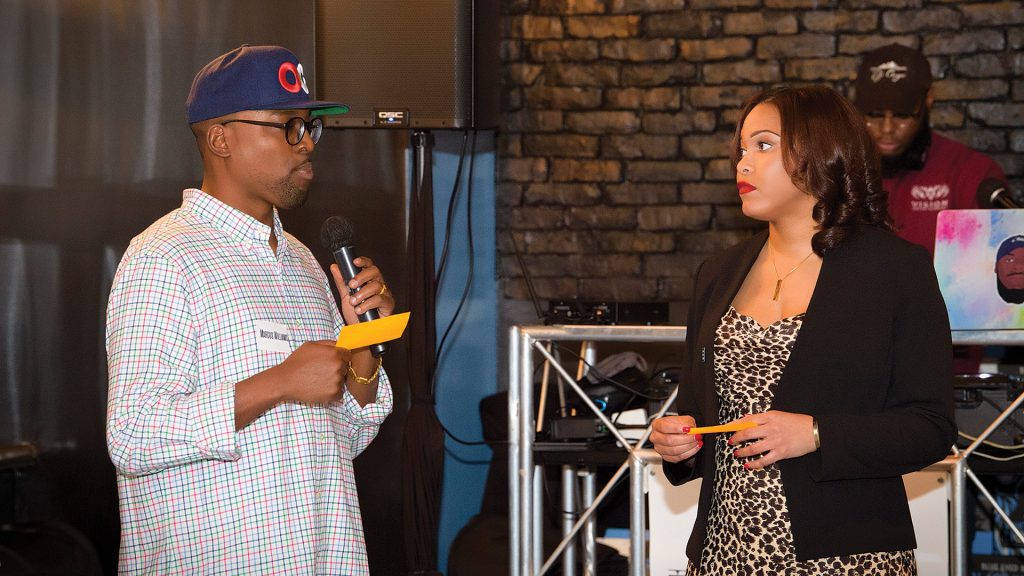
Payton Shubrick and Marcus Williams, president of the Block, which seeks opportunity for minority-owned cannabis businesses, share a few words at a recent mixer.
But she did fight through to become one of the four entities chosen in Springfield’s first round of permits.
“The running joke in the industry is they never ask when are you going to open, they say where are you in the process,” Shubrick said, noting that it’s a two-pronged process. At the city level, it involves a special permit and a host-community agreement, while the state’s Cannabis Control Commission (CCC) requires a provisional license, post-provisional-license inspections, and other steps, including a certificate of occupancy (back to the city for that), which is required by the state for the final license.
Shubrick described it all as a long sequence of queues, of getting on meeting agenda after meeting agenda. “It’s a very layered process with two entities that don’t talk to each other, and you need a series of documents from each. It’s a series of waiting rooms in some capacities.”
On top of that, 6 Brick’s has had to deal with supply-chain issues during the pandemic to get its space — now 90% built out — up and running. It even had to wait for doors that were stuck in shipping containers. “There’s not a lot in your control as you think about moving through this process. So patience is key.”
All along, a Springfield-based business was the only goal, she noted, as opposed to, say, Northampton, which never capped the number of cannabis permits.
“I didn’t look to start as a business model that was going to be rinse and repeat in any city,” she explained. “I looked at it as, ‘I can be the hometown hero because, when I hire people, I’m going to hire them from the community, and I’m going to hire those who were impacted by cannabis prohibition.’ And that doesn’t just mean who did jail time — it could be their daughter, their niece, their nephew, because, let’s be honest, when someone is removed from the home and incarcerated, that whole family is impacted.”
In short, “for me, this was aligned to social-justice elements of my hometown and less aligned to me becoming a millionaire overnight.”
She found tht the road to being profitable at all begins with a lot of money up front — between $1 million and $2.5 million, typically, depending on the state of the building, its HVAC requirements, and other costs.
“I didn’t look to start as a business model that was going to be rinse and repeat in any city.”
That has been a roadblock for many applicants that have gone through the state’s social-equity program aimed at creating an entrepreneurial path for communities that were particularly hard hit by the war on drugs — most of them minority-dominated communities. Today, only 8% of cannabis companies currently open in Massachusetts are run by those who emerged from the social-equity program.
“Some go through the process but have no funding at the end of the program,” Shubrick said. “So now you’re well-versed in the process and know how to get through it, and you’re looking around, and there’s no banks giving you money. If you don’t know people with deep pockets, how do you get the right investors? I’ve seen horror stories of people who have the best of intentions and got so far in the process, but you have the wrong investor, and then it becomes a nightmare. And now you’re selling for pennies, and you’ve lost time, energy, and money.
“That’s the heartbreak people don’t talk about,” she went on. “And I wouldn’t categorize it as those people failing; I would categorize it as not having have a holistic structure in place that supports people from start to finish. It’s almost a tease in order to say, ‘hey, I’m going to show you how to make a pizza, but I’m never going to give you the ingredients so you can make your own.’ Many people simply can’t raise the money to do what they’ve gone through a program to learn how to do.”
In an editorial last week, the Boston Globe agreed, noting that the state has ignored calls to create a loan program to help equity applicants, adding that, “as if the barriers to entry weren’t high enough already, getting financing for a marijuana business is difficult because of its murky legal status.”
But the Globe cites other barriers to social-equity applicants as well, particularly the power of municipalities — which are not required to consider equity when awarding licenses — over the approval process, not to mention the head start large medical-marijuana businesses have had in the recreational license-approval process, which has paved the way for bigger medical companies to dominate the market.
“So the state has to double down on its social-equity program and prioritize licensing for minority applicants,” the Globe argues.
It’s also a hyper-competitive industry in general, Shubrick said, one where players are fiercely protecting their piece of the pie, and new retailers are often offered unfair deals to partner with growers, manufacturers, and wholesalers, and vice versa.
“It’s key to have a team of lawyers and accountants help you stay away from the sharks in the water because people are so hyper-focused on trying to extract as much money as possible, they’re not thinking through long-term impacts like ‘how can I be a decent businessperson to this other individual so maybe down the line we can do business together?’ Instead, it’s ‘how can I squeeze as much equity as possible? How can I give them terms that maybe aren’t favorable because I’ll benefit in the short term?’
“Other states around us are legalizing, so the captive audience in Massachusetts won’t be the same,” she went on, “and that doesn’t bring out the best in people when they don’t view competition as healthy and an opportunity to get better.”
Seeking Solutions
Proponents of true social equity in cannabis are working toward a more equitable industry, however. Earlier this month, the Block — an organization that aims to support black and Latino cannabis professionals in Massachusetts — held the last of three networking mixers at White Lion Brewery in downtown Springfield. About 80 people attended, including a CCC commissioner.
In addition to efforts around business development, resources, and connections for its members, the Block is also developing options for members to gain capital, such as minority-owned investment firms, crowdsourcing, and more traditional, institutional backing.
“Plenty was discussed. It was a really good evening overall,” Shubrick said. “Social equity here in Massachusetts is well-intentioned, but logistically, it has opportunities to become more meaningful so we see more people opening doors who have gone through the program.”
She stressed that she’s fortunate to be entering this business backed by people — her family foremost — with her best interest at heart, and she’s passionate about using her business to lift up the only city she considered for this business.
“I want to hire folks from the community who can benefit from this industry, not just because they were impacted by the war on drugs, but also because Springfield should be benefiting from these jobs.”
That passion, she noted, will be shared by ‘budtenders’ who understand the plant and can educate customers on the store’s products, many of them created by local manufacturers that are also smaller companies, many owned by women, veterans, and people of color.
“We’re being intentional about our partnerships and helping customers understand why we’re partnering with them,” she said. “So it’s more of an experience and less of a transaction.”
Certainly, opening a cannabis retail shop — and, again, it’s a long process, one that’s not over yet — has been quite the experience for the Shubrick family.
“Not everything that is faced can be changed, but nothing can be changed until it is faced,” wrote James Baldwin, a quotation Payton calls her favorite. Indeed, she’s facing the challenging realities of cannabis entrepreneurship — with a mind to change things for the better for those who come after.
Joseph Bednar can be reached at [email protected]