Experts in Their Field
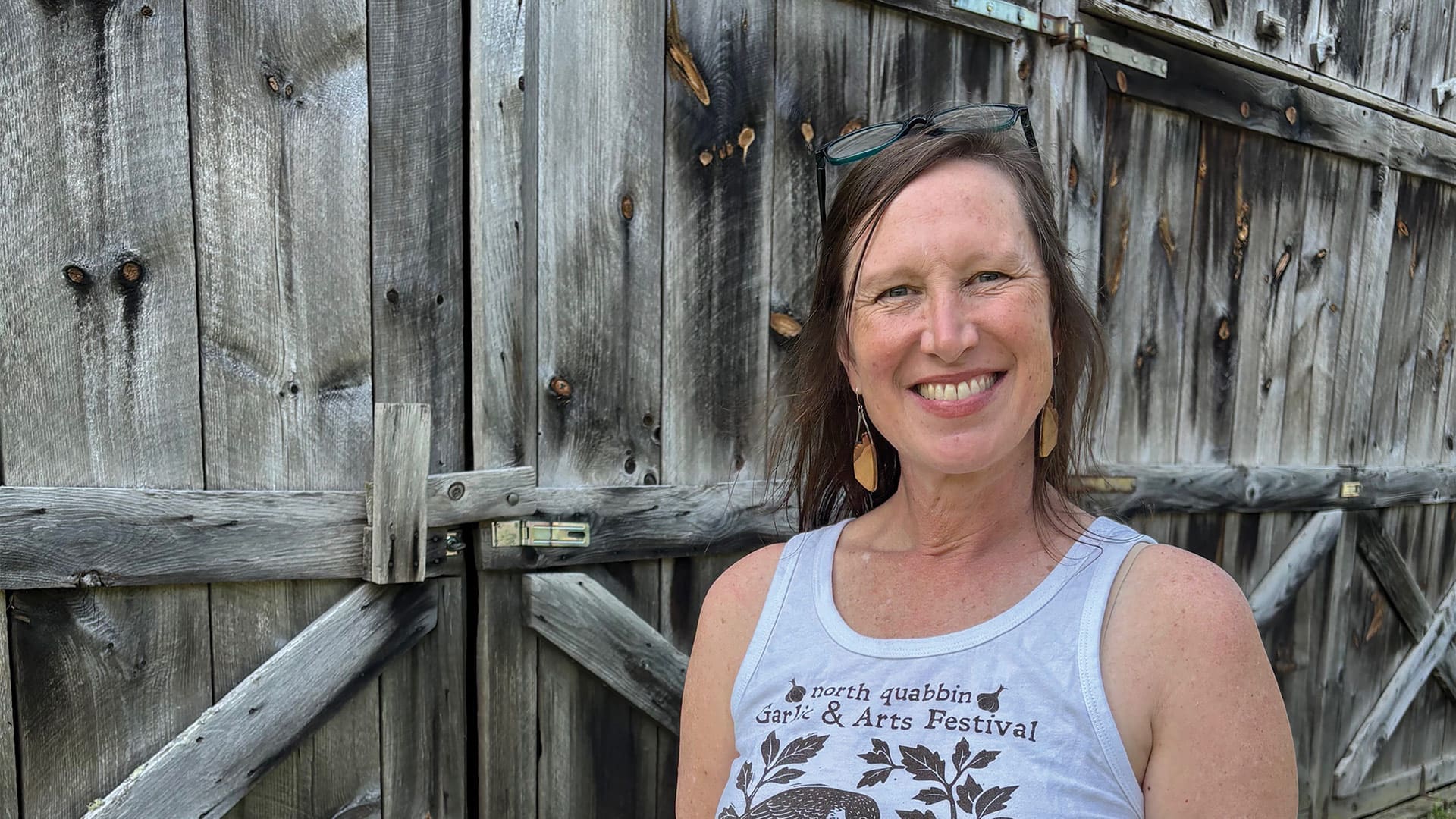
Jennifer Core is certainly familiar with the myriad challenges facing the region’s farms these days.
Indeed, she and her husband, Olivier Flagollet, operate Heddy Bell Farm, a livestock farm in rural Warwick, specializing in beef, lamb, pork, Thanksgiving turkeys, and more.
“We see it all, every day,” said Core, who, through that operation, became familiar with, and supportive of, the nonprofit agency CISA (Community Involved with Sustaining Agriculture) and its broad mission to build a stronger, more resilient, and more just local food system.
So supportive, in fact, that when longtime Executive Director Phil Korman retired in 2025, she sought to succeed him in that role.
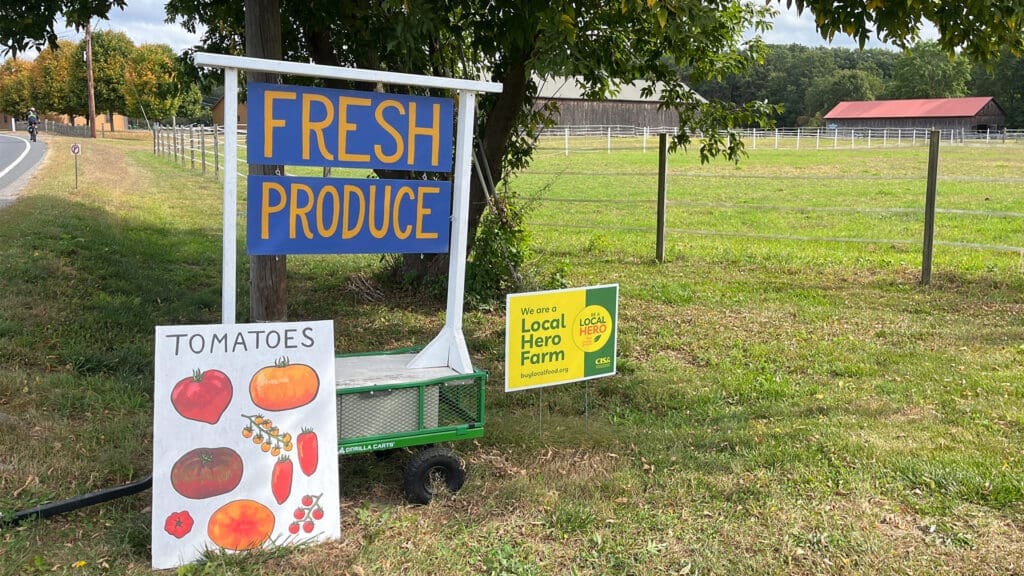
One of CISA’s primary missions is to promote the region’s nearly 2,000 farms and everything they produce.
“CISA has been this cherished place in my heart and mind for a long time,” she said. “I feel fortunate to have landed at CISA, where we celebrate all the farms in this area and talk about the issues that impact farms, educate and engage the community — and now, I get to see it from the other side.”
For this issue, we talked at length with Core and others at CISA about the state of farming in Western Mass., and about CISA’s mission and how it carries it out.
Regarding the former, she said this region boasts a strong, vibrant farming community, one that is diverse — everything from livestock to vegetables; hay to fruit trees — and features many young, first-generation operators. But it’s also one that, like farms across the country, faces numerous challenges.
“According to a recent legislative report, two-thirds of the farms in Massachusetts are earning about 95.5 cents for every dollar they spend on their farm operations.”
They range from various climate change-induced weather extremes — at present, it’s persistent drought — to succession issues involving the many family farms that remain, to the pressures facing all large landowners during an ongoing housing crisis.
And then, there’s simple economics.
“According to a recent legislative report, two-thirds of the farms in Massachusetts are earning about 95.5 cents for every dollar they spend on their farm operations,” she said. “And that’s important to understand … that’s not sustainable, and that’s why many farmers need multiple careers.
“If I were ever to be stuck on an island with one other person in the world, I would want it to be a farmer — because farmers tend to know how to do a lot of things, how to problem solve, and how to work really hard creatively,” she went on. “And that is asked of them every day in this economy, in the recent past and moving forward.”
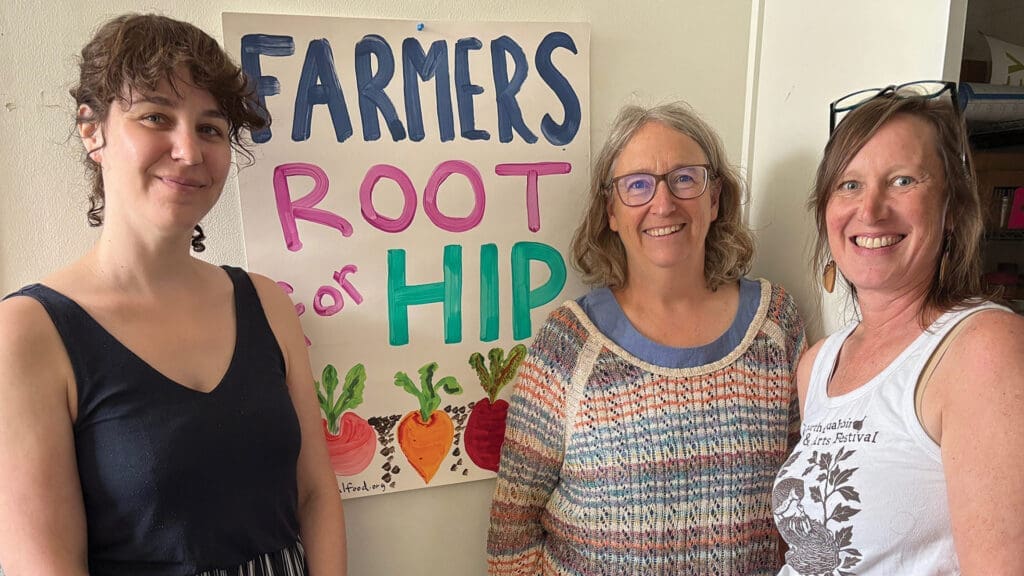
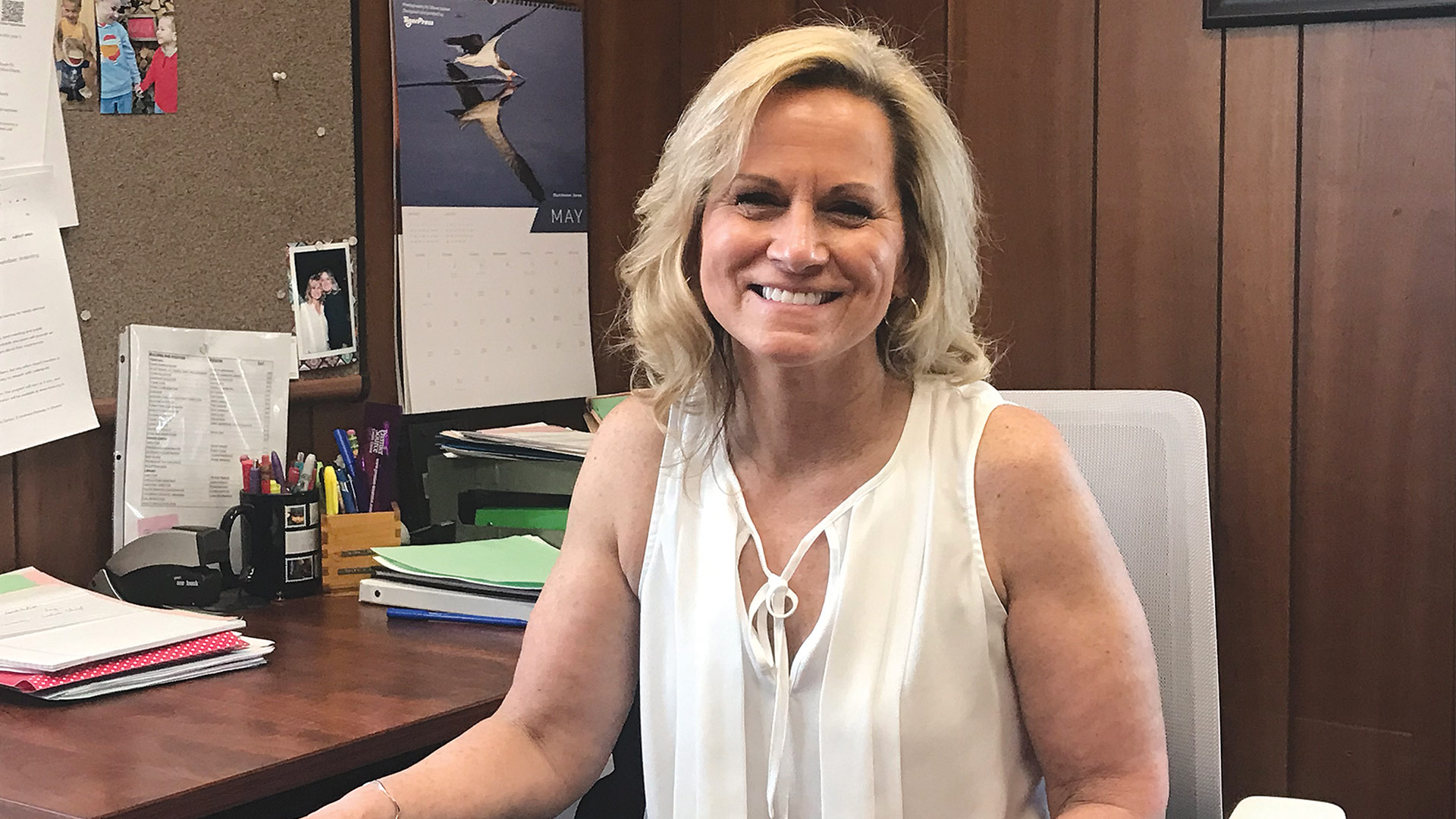
From left, Claire Morton, Margaret Christie, and Jennifer Core handle the many aspects of CISA’s broad mission.
And CISA exists essentially to assist farmers with all they must confront, said Margaret Christie, special projects director, who has been with the agency almost from its beginning in in the early ’90s. And this assistance comes in many forms, from workshops on issues ranging from succession to irrigation to climate change, to targeted programs such as the Local Hero ‘buy local’ campaign and an emergency farm fund that provides zero-interest loans to assist farmers and farm businesses struggling to meet their immediate needs in the aftermath of severe weather events and other emergencies.
“We try to be a one-stop shop, which doesn’t mean we can solve every problem that every person has,” said Christie, who, like others we spoke with, described CISA as a resource, but also an important connector, linking farmers with experts and information.
Claire Morenon, CISA’s communications manager, agreed, noting that many of the agency’s initiatives, and part of its mission, is to create opportunities to both support the region’s farmers and address food insecurity issues in the region.
Such efforts include the Senior Farmshare program, which subsidizes summer CSAs for low-income seniors, and HIP (Healthy Incentives Program), which offers individuals and families in the Bay State receiving SNAP benefits an automatic rebate on purchases of fruits and vegetables from farmers markets, farm stands, mobile markets, and CSAs.
“We talk about that program being a win-win program — it increases food access for low-income people, but it’s also an important revenue stream for farmers,” Morenon said. “In larger conversations about policy and how we want to see our local food system be supported in a more general sense, we’re thinking about solutions that are at the intersection of benefiting the larger community, but also providing really important financial support for farms.”
By the Numbers
Core told BusinessWest that the latest census data shows there are nearly 2,000 farms across Franklin, Hampshire, and Hampden counties (CISA’s service area), 94% of them are family farms, and about one-third of them sell directly to consumers through farmstands, CSAs, and farmers markets. The value of what’s produced in the three-county area is more than $162 million, she noted, adding that this is more than one-third of what’s produced across the Bay State.
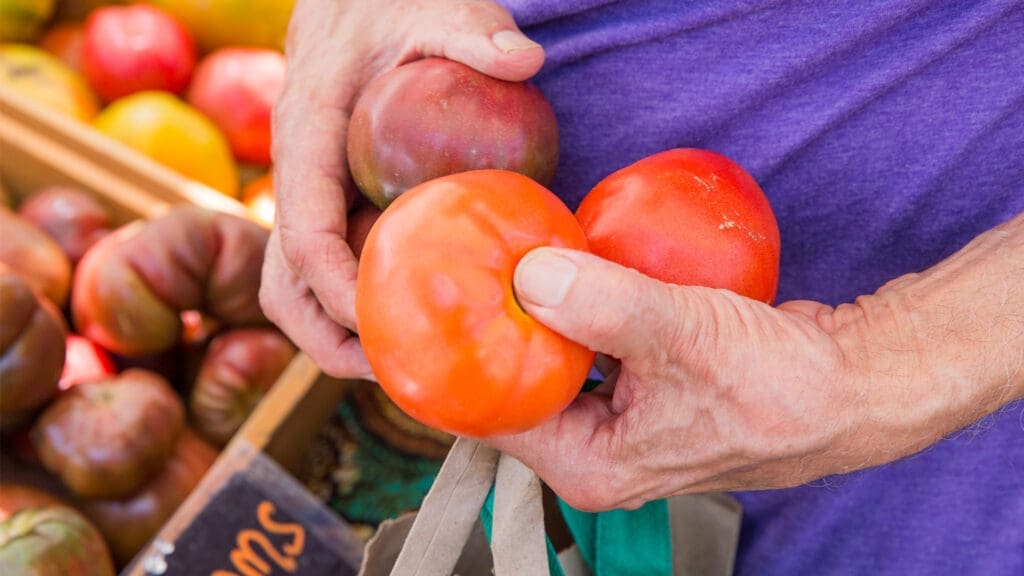
The buy-local thrust so critical to its messaging is essentially how CISA started.
The most popular crops are mixed vegetables, feed corn, hay, and tobacco, she went on, adding that many of those managing area farms would be considered first generation, an encouraging sign for the region.
“The vast majority of the farms in this area are new and beginning farmers, meaning they’re first-generation farmers,” Core said. “Many came to this region for school — our higher education activities in this region draw young people, and we’re talking more about food systems at the university level than ever, which piques a lot of interest.
“A lot of folks who come to farming from a values perspective or an academic interest may not stay in production farming,” she went on. “But they may end up in ag-adjacent careers, system careers, so it is driving a tremendous amount of economic activity.”
When asked how these farms, and all the region’s farms, are doing, she said they are holding their own given all they have to contend with.
“There are a few compounding factors at play right now. Climate is one; the norm now is that farmers have to be ready for any possibility all the time, and that’s a pretty risky endeavor and a costly endeavor. We’ve had late frosts, we’ve had early frosts, we’ve had drought, we’ve had extreme precipitation events, flooding events … and all of those take a toll on crop production in our area.
“That is combined with incredibly increased input costs,” she went on, listing everything from gasoline to fertilizer. And then, there’s a pinch in the agricultural labor market with recent immigration efforts, “which have created an incredible amount of stress on the agricultural workforce, which is a very skilled and valued workforce in our area.”
All this helps explain why many farmers need other sources of income, usually second jobs, said Core, adding that this is an understandably difficult proposition given how taxing farm work is.
“We try to be a one-stop shop, which doesn’t mean we can solve every problem that every person has.”
And it also explains why farm owners are feeling extreme pressure when it comes to keeping their land devoted to farming.
“There’s tremendous development pressure — both housing and solar pressure,” she told BusinessWest. “It’s a lot easier to put solar on agricultural land — it’s flat and accessible. And there’s a vulnerability in farming … when we think about farm transitions and succession planning, that’s a very vulnerable moment for the farmland itself if it’s not protected.
“We’re lucky to live in a state that has exceptional farmland protection programs — that’s something we should all be proud of, that our taxpayer dollars do protect farmland,” she went on. “But farmers are particularly vulnerable for financial reasons; most of the farm equity serves as retirement funds for retiring farmers, most of the time. Balancing and weighing the tradeoffs of how you can pass the business on to another grower or whether you need to liquidate your assets is a tricky moment and an incredibly personal decision, but a decision that could actually impact all of us.”
Planting Seeds
When asked what climate change has brought to this region and those 2,000 farms, Christie said it’s not one specific pattern such as warmer temperatures or more rain.
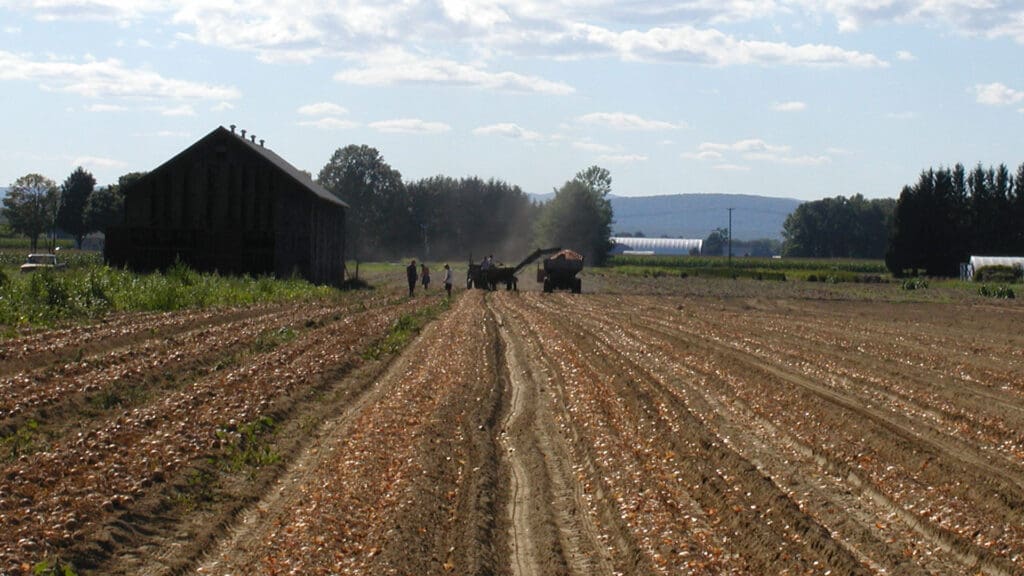
Profitability has become a key issue for area farms.
“The short answer is that weather is less predictable and more extreme, meaning that we’re more likely to have drought and more likely to have floods,” she explained. “Our rain tends to come in bigger, more precipitous events — we get more rainfall in shorter periods of time rather than more gentle rainfall that is spread out, and that causes drainage problems and erosion problems, and can cause flooding, as we saw in 2023.
“Sometimes, people think that, ‘well, if the climate’s getting warmer, we’ll just be able to grow things that normally don’t grow well here because we’re too far north — all we have to do is shift our product mix,’” she went on. “But, in fact, the weather is getting more erratic and more extreme, so it’s more difficult to plan and make adjustments.”
Helping farmers cope with these extremes and unpredictability is just one of many forms of assistance provided by CISA, she continued, adding that such help generally falls into one of three buckets: business support, including training and technical assistance for both farm and food businesses; promotion of local farms and communication about agriculture and local food; and “making the system work bett`er,” as she put it, meaning the larger system of both farming and food access.
And a big part of that category is advocacy, she went on, adding that this takes many forms, including work to monitor progress on both the federal and state farm bills now working their way through the legislative process, and help ensure that they support that constituency.
Overall, CISA does act as a connector, Christie said, adding that, for some issues, the agency can and will refer farmers to groups such as the UMass Cooperative Extension for production issues, and Land for Good for succession matters.
Promotion of the region’s farms is one of the key aspects of CISA’s mission, Morenon said, adding that the primary goals are to inform area residents of all that is produced in the region and then encourage local buying.
And a key instrument in this work is the Local Hero campaign, the longest-running ‘buy local’ program in the country. It has grown into a comprehensive public awareness and marketing effort with 400 local business members, including farms, farmers markets, distributors, butcher shops, and more.
“This was one of the first ideas that CISA was founded on — the idea that using mainstream media tools to promote local farms and local farm products could be a really powerful way to help farms survive, and not just survive but thrive,” Morenon told BusinessWest, adding that the initiative includes advertisements to alert residents about what’s in season as well as an online database of farms that are part of CISA’s program, detailing what they grow and where their products can be found.
“A lot of other communications work is about helping farmers and other local food businesses tell their own stories,” she went on. “And that’s about highlighting the people who are part of this larger food system and helping them make connections to the community around them.”
This buy-local thrust was essentially how CISA started, she continued, adding that it has branched out in different directions since, including technical assistance and programs designed to address both food insecurity and the needs of farmers.
And that technical assistance takes several forms and addresses a number of issues, from immigration to disaster response, with many of them involving the larger issue of profitability, said Christie, citing those numbers mentioned earlier, as well as the attention given to inflation and the higher cost of going to the grocery store.
Often lost in that dialogue is the plight of farmers producing those products.
“We have prioritized low prices for food, even though, right now, food prices feel high to many people, and they’re not wrong — food prices are high,” she noted. “No one would blame people for wanting prices to come down, but it’s also true that we don’t really pay enough for food to ensure that farmers can pay their workers well, take care of their land, and make sure that their own families are able to be comfortable and send their kids to college and plan for retirement.”
Educating the public on such matters is just one of the many ways CISA goes about its mission of helping farmers grow crops, but also grow their business.