UMass Gets OK for Law School
BRIDGEWATER — The Mass. Board of Higher Education voted unanimously on Feb. 2 to approve the application by UMass Dartmouth to award the Juris Doctor, the first professional degree in the study of law. The approval comes one week after discussion of the application at the Board’s Assessment and Accountability Committee meeting in Worcester, including public testimony from approximately 30 individuals, most of whom spoke in favor of the application, and after a positive recommendation from staff at the Department of Higher Education. Gov. Deval L. Patrick praised the board’s decision, noting in a release, “this is another historic moment in education for the Commonwealth. Yesterday’s unanimous vote to approve the law program at the University of Massachusetts is a victory for our students and their families. I’m thankful to the Board of Higher Education, the University of Massachusetts system, and the Southern New England School of Law for all of their thoughtful work and effort to make an affordable public opportunity to aspiring young people in the Commonwealth.” Following last week’s committee meeting, the Department completed its analysis of the university’s proposal and recommended approval of the application. Staff found that the proposed UMass Dartmouth Juris Doctor met review criteria, and that the university will be able to start and operate a law school that will achieve American Bar Assoc. accreditation in a reasonable time frame, presuming it will attain its enrollment goals and prudently utilize associated financial resources. The university’s proposal was made possible in part by an offer from the neighboring Southern New England School of Law to donate its buildings and assets to facilitate UMass Dartmouth being able to offer a Juris Doctor. The Southern New England School of Law will file for institutional closure with the Department of Higher Education within 90 days following the spring 2010 student graduation. UMass Dartmouth intends to invite current SNESL students, faculty, and staff to study and work at the new UMass Dartmouth law program. With this program approval, the university is authorized to enroll its first class in the fall 2010 semester. In spring 2013, upon graduating the first class of first-year students in the Juris Doctor program, the university will submit to the Board a status report addressing its success in reaching program goals and in the areas of enrollment, curriculum, faculty resources, program effectiveness, and accreditation status.
Brightside Closing Some Programs
WEST SPRINGFIELD — The residential and school programs of Brightside for Families and Children will cease operations by April 2. Since its founding in 1881, Brightside has repeatedly evolved to meet the changing needs of the community, and for the past few years, supported the residential treatment and school program at a census level that was significantly less than half of its capacity. Despite extensive efforts by the Brightside management team to increase referrals, there was no expectation that census levels could improve to viable levels. Additionally, company officials note that funding sources are not available to place children in residential programs like Brightside. More than 130 positions will be eliminated due to the closure of these programs, and affected employees can apply for any open position within the Sisters of Providence Health System for which they may qualify. Brightside’s Family Stabilization Team (FST) will continue to provide outpatient services as they work to integrate Providence Behavioral Health Hospital’s Child and Adolescent inpatient (CHAD) and Acute Residential Treatment (ART) programs with the FST program.
Girls Inc. Joins National Investment Challenge
HOLYOKE — Girls Incorporated of Holyoke is one of two Girls Inc. organizations to join the ING-Girls Inc. Investment Challenge, an innovative nationwide program launched last year that gives girls practical, hands-on investing experience while allowing them to keep their gains in the form of college scholarships. With the help and guidance of trained Girls Inc. staff and ING employee volunteers, teams of girls build and manage diversified, real-time portfolios as part of an integrative investment and economic-literacy curriculum. All portfolios are managed and tracked using a state-of-the-art online-trading platform that allows the ING-Girls Inc. Investment Challenge participants to track their performance, absolutely and relative to the other challenge teams. After three years, two-thirds of any gains in the portfolio will be paid by the ING Foundation to the girls in the form of Girls Inc. scholarships for post-secondary education; one-third of the gains will be given to the local Girls Inc. affiliate to support local programming. The original $50,000 principal will then be reassigned to the incoming team. Girls in the ninth grade in the Greater Holyoke area are welcome to participate in the program. For more information, contact Sarah Dunton, director of youth development programs at Girls Inc. of Holyoke, at (413) 539-4505.
Slight Growth Seen in Services Sector
TEMPE, Az. — Economic activity in the non-manufacturing sector grew in January, according to the nation’s purchasing and supply executives in the latest Non-Manufacturing ISM Report on Business. The NMI (Non-Manufacturing Index) registered 50.5% in January, 0.7 percentage point higher than the seasonally adjusted 49.8% registered in December, indicating growth in the non-manufacturing sector. The Non-Manufacturing Business Activity Index decreased 1 percentage point to 52.2%, reflecting growth for the second consecutive month. The New Orders Index increased 2.7 percentage points to 54.7%, and the Employment Index increased 1 percentage point to 44.6%. The Prices Index increased 1.6 percentage points to 61.2% in January, indicating an increase in prices paid from December. According to the NMI, four non-manufacturing industries reported growth in January. The four industries reporting growth are other services, utilities, information, and wholesale trade. The 11 industries reporting contraction in January — listed in order — are arts, entertainment, and recreation; mining; retail trade; transportation and warehousing; management of companies and support services; professional, scientific, and technical services; health care and social assistance; finance and insurance; educational services; public administration and accommodation; and food services. The report is based on data compiled from purchasing and supply executives nationwide.
Documentary Explores Holyoke’s Roots
HOLYOKE — Interviews with local leaders, business owners, entrepreneurs, artists, and young people bring the past and the present of the City of Holyoke to life in a new documentary, Creating Holyoke: Voices of a Community. The documentary will premiere on March 22 on WGBY, and copies are available at the Wistariahurst Museum Gift Shop for $17.95. Written by Priscilla Kane Hellweg and Rachel Kuhn of Enchanted Circle Theater and Kate Navarra Thibodeau, former city historian for Holyoke, the documentary tells the story of Holyoke’s rich history. The documentary was funded by the National Endowment for the Humanities, the Nan and Matilda Heydt Fund, and WGBY, and was produced by Navarra Thibodeau. For more information, visit www.creatingholyoke.org.
UMass Endowment Ranks in Top Quartile of Investment Returns
BOSTON — Despite a challenging environment, UMass turned in an endowment performance in fiscal year 2009 that ranked in the top quartile of American colleges and universities reporting performance for one-, three-, and five-year returns, according to the National Assoc. of College and University Business Officers (NACUBO). The data came from in-depth surveys of 842 U.S. institutions of higher learning, including public and private colleges and universities, their supporting foundations, and community colleges that participated in the 2009 NACUBO-Commonfund Study of Endowments. Based on change in market value, UMass placed seventh among universities with endowments of $100 to $500 million and 53rd overall, losing only 4.6% of its overall market value. The UMass endowment, which stood at $367 million at the close of FY09, turned in investment performance of -15% last year against an average of
-18.7%, and returned three- and five-year returns of 3% and 4.7%, placing it in the top quartile for performance for those periods.
Study: Struggles Remain For Those Seeking Emergency Food Aid
HATFIELD — A landmark study recently released by the Food Bank of Western Mass. and Feeding America, the nation’s largest domestic hunger-relief organization, reports that more than 91,000 people, including 32,000 children, receive emergency food each year through the Food Bank and its network of food pantries, meal sites, and shelters. In Western Mass., this represents a 22% increase in the number of residents seeking emergency food assistance since 2006, the last time the study was conducted. Hunger in America 2010 is the first research study to capture the significant connection between the recent economic downturn and an increased need for emergency food assistance on a local and national level. In this region, more than 65,000 residents are experiencing food insecurity, not knowing where they will find their next meal, according to Andrew Morehouse, executive director of The Food Bank of Western Massachusetts. An estimated 15,000 people receive emergency food assistance each week from a food pantry, meal site, or shelter served by the Food Bank of Western Mass. Morehouse noted that the Food Bank is seeing more people struggling to make choices between food and other basic necessities like rent, utilities, or health care. “We know that nearly three-quarters of all those who seek emergency food assistance are living in poverty and simply cannot make ends meet, so they turn to their local food pantry or meal site for help,” he said in a release. Morehouse added that donors and volunteers have stepped up to help the Food Bank respond to the growing food crisis in Western Mass., including boosting distribution capacity of local partner agencies around the region. The report was based on independent research conducted on behalf of Feeding America by Mathematica Policy Research, a non-partisan social-policy research firm based in Princeton, N.J. A summary of the Western Mass. findings is available at www.foodbankwma.org. The full national report is available at www.feedingamerica.org/hungerstudy.
Unemployment Filings Still Rising
NEW YORK — In the week ending Jan. 30, the advance figure for seasonally adjusted initial claims was 480,000, an increase of 8,000 from the previous week’s revised figure of 472,000. The four-week moving average was 468,750, an increase of 11,750 from the previous week’s revised average of 457,000. The advance seasonally adjusted insured unemployment rate was 3.5% for the week ending Jan. 23, unchanged from the prior week’s unrevised rate of 3.5%. The advance number for seasonally adjusted insured unemployment during the week ending Jan. 23 was 4,602,000, an increase of 2,000 from the preceding week’s revised level of 4,600,000. The four-week moving average was 4,617,500, a decrease of 51,250 from the preceding week’s revised average of 4,668,750. The fiscal year-to-date average for seasonally adjusted insured unemployment for all programs is 5.362 million. The advance number of actual initial claims under state programs, unadjusted, totaled 530,405 in the week ending Jan. 30, an increase of 28,234 from the previous week. There were 682,176 initial claims in the comparable week in 2009. The advance unadjusted insured unemployment rate was 4.4% during the week ending Jan. 23, an increase of 0.1 percentage point from the prior week. The advance unadjusted number for persons claiming UI benefits in state programs totaled 5,665,141, an increase of 62,784 from the preceding week. A year earlier, the rate was 4.3% and the volume was 5,806,901. Extended benefits were available in Alabama, Alaska, Arizona, California, Colorado, Connecticut, Delaware, the District of Columbia, Georgia, Idaho, Illinois, Indiana, Kansas, Kentucky, Maine, Massachusetts, Michigan, Minnesota, Nevada, New Hampshire, New Jersey, New Mexico, New York, North Carolina, Ohio, Oregon, Pennsylvania, Puerto Rico, Rhode Island, South Carolina, Tennessee, Texas, Vermont, Virginia, Washington, West Virginia, and Wisconsin during the week ending Jan. 16. Initial claims for UI benefits by former Federal civilian employees totaled 1,451 in the week ending Jan. 23, a decrease of 499 from the prior week. There were 1,858 initial claims by newly discharged veterans, a decrease of 554 from the preceding week. There were 26,167 former Federal civilian employees claiming UI benefits for the week ending Jan. 16, a decrease of 59 from the previous week. Newly discharged veterans claiming benefits totaled 35,777, a decrease of 2,059 from the prior week. States reported 5,632,219 persons claiming EUC (Emergency Unemployment Compensation) benefits for the week ending Jan. 16, an increase of 281,442 from the prior week. There were 1,839,758 claimants in the comparable week in 2009. EUC weekly claims include first, second, third, and fourth tier activity. The highest insured unemployment rates in the week ending Jan. 16 were in Alaska (7.3%), Oregon (6.6), Pennsylvania (6.5), Idaho (6.4), Wisconsin (6.3), Montana (6.2), Michigan (6.0), Nevada (5.7), Connecticut (5.3), North Carolina (5.3), and Washington (5.3). The largest increases in initial claims for the week ending Jan. 23 were in Oregon (+4,336), Puerto Rico (+2,439), and Hawaii (+18), while the largest decreases were in California (-22,674), Michigan (-11,757), North Carolina (-9,546), Georgia (-7,588), and Missouri (-7,577).

















 Attorney José A. Aguiar has joined the law firm of Doherty, Wallace, Pillsbury & Murphy P.C. in Springfield as a Litigation Associate. His practice area is commercial litigation, which includes all areas of civil litigation.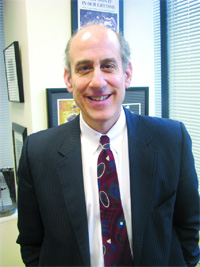
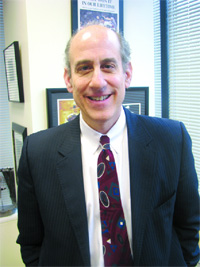
 Kimberly A. Klimczuk, Esq. is a partner in the law firm Royal & Klimczuk, LLC. She specializes in management-side labor and employment law; (413) 586-2288;
  Dean McKenzie, M.D., MHSA, has joined Providence Behavioral Health Hospital in Holyoke as Chief Medical Officer. In this role, McKenzie acts as a liaison between administration and members of the medical staff to support patient care services, while focusing on quality of care, patient satisfaction, risk management, and patient safety. A graduate of Hope College and the University of Michigan Medical School, McKenzie served his residency in the Department of Psychiatry at the University of Arizona. He is board-certified in psychiatry and neurology. He most recently served as Utilization Management Medical Director for Magellan of Arizona, a state-contracted, regional behavioral-health authority that provides a wide range of services, including crisis assistance, children’s services, and substance-abuse treatment.
  Jiminy Peak Mountain Resort in Hancock announced that Darcy Rogers has joined the resort’s conference sales team as Sales Manager. In her new position, Rogers will be responsible for soliciting new business, managing existing accounts, and working with other departments at the resort to offer high-quality conference and meeting services to clients. She works with clients in New York, New Jersey, and Pennsylvania, with a particular emphasis on the Albany area.




 Kristina Drzal Houghton, CPA, MST is the partner in charge of Taxation at Meyers Brothers Kalicka in Holyoke; (413) 536-8510.
 Westfield State College recently welcomed three new members of its Board of Trustees. They are: