Home Posts tagged nurses
Healthcare News

‘Earn-and-Learn’ Initiative Has Helped Her Realize Her Dream
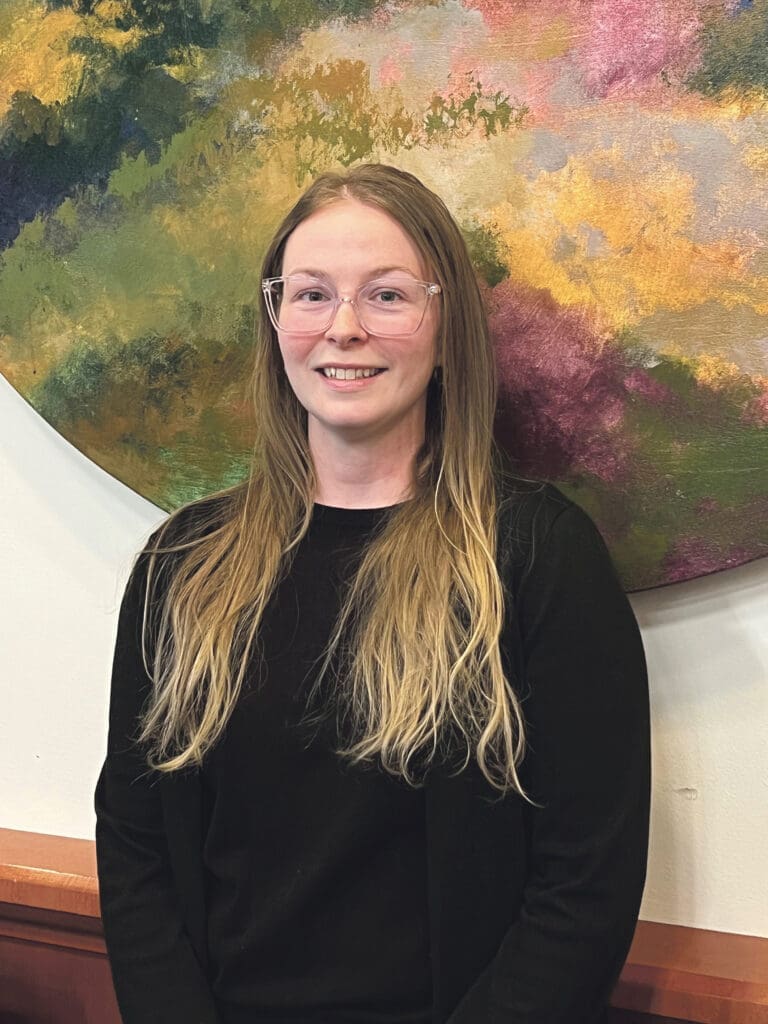
Jolene Alexander

Jolene Alexander

Jolene Alexander says her father suffered his first heart attack when she was 10 years old. He had another one a year later.

It was a scary time in many ways, she recalled, adding that it was made easier — for her father and the rest of her family — by the care and compassion provided by the team at Baystate Medical Center’s cardiac intensive care unit.

“I just remember how pleasant those nurses were to my family; they were very empathetic toward the situation, and they were very thorough, and he ended up pulling through, even though they weren’t sure what the outcome would be,” said Alexander, adding that the experience helped instill a desire to join the healthcare profession and serve in that environment.

And she did, eventually serving as a certified nursing assistant (CNA), and more recently as a cardiac monitor tech.

The dream, though, was to become a nurse — a dream that was put on hold for the better part of two decades by that thing we call life.

“I’ve always wanted to be a nurse — I did all the pre-requisites, but life just kept getting in the way,” said Alexander. “I left it at the pre-reqs, and I didn’t continue; I decided to just move forward with life as a mom.”

Things were further complicated by ongoing heart issues for her father, including several incidents in 2022, that compelled her to cut back on her hours and focus on family, including care for her father.

But the dream was resurrected — and put on a path to fruition by the Workforce Planning & Development team at Baystate Health and an ‘earn-and-learn’ initiative that blends education, hands-on experience, and paid employment, enabling individuals to enter and advance within healthcare careers without the traditional financial barriers.

In Alexander’s case, she was paid her salary as a cardiac monitor tech while attending the LPN program at Holyoke Community, from which she will graduate this June and then begin the next chapter in her career.

As she tells the story, when she was ready to come back to work full time in 2023, her unit supervisor encouraged her to attend a networking event off campus with someone involved with workforce development at Baystate.

I blindly went into it not knowing what it was all about,” she recalled. “Eventually, I learned it was about a grant they were trying to receive to help some employees get through LPN training.

“That was perfect for me, and it was perfect timing,” she went on, adding that the grant was secured, and she soon started in the LPN certificate program at HCC, thus becoming part of larger initiatives at Baystate and elsewhere to put more nurses in the pipeline at a time when many are retiring from the profession.

She noted that LPNs (licensed practical nurses) do not earn as much as registered nurses (RNs), who must complete a two- or four-year degree program to receive that designation, but the salary represents a significant step up from her present work. Meanwhile, LPNs handle most, but not all, of the same duties as RNs, she noted, adding that this change represents a significant step forward for her.

And she’ll take that step in a familiar setting, her current cardiac unit. There was an opening there, she applied for it, and was hired, she said, adding that she expects to start in mid-August.

“It’s exciting, but at the same time, I’m a little nervous about it, just knowing that now, I’m the one who’s going to have to make those critical decisions,” she said of her next challenge. “It’s more exciting than anything, but also a little intimidating.”

And while this has been a rewarding experience on many levels, it is certainly not without its challenges, said Alexander, adding that balancing life and school is difficult, and she could not have taken this step forward career-wise if Baystate didn’t pay her to learn.

“Every day I got up I said, “I’m not going today, I’m not going through this, it’s too stressful,’” she recalled, adding that she was balancing her classes with parenting responsibilities and helping to manage her father’s care. “It’s a lot, but it’s more manageable not having to work full time; that’s the biggest helpful piece in this program.”

While looking ahead, Alexander also did some looking back, noting that she got her start at Baystate nearly 20 years ago through something called the Baystate Springfield Educational Partnership, or BSEP, as it’s called. This is a health school career pathway program for high school students in Springfield. It includes exploration of health careers, a teen mini-medical school, and summer work employment opportunities to give students interested in healthcare careers direct access to people currently employed in the field and health careers training, which often leads to internships and employment.

That was the case with Alexander, who participated in the program as a springboard to her work as a CNA, and now, two decades later, her daughter is participating in the BSEP program.

“She had an introduction to many units within the hospital to see if she had interest in those,” Alexander explained, adding that she will be involved again next year as a senior, with the goal of landing an internship.

And then possibly taking one of many pathways into a career in healthcare, as her mother did.

This latest pathway has enabled her to take a dream that was delayed and turn it into a dream realized.


Healthcare News Special Coverage

On the Front Lines of Care

Nurses, in many ways, are the backbone of the healthcare system, caring for patients in dozens of different types of settings, often during the most distressing moments of those patients’ lives. It’s challenging work for sure — but also gratifying work, as the six individuals profiled on the following pages can attest. For our annual salute to nurses, BusinessWest sat down with three veteran nurses and three just entering the field about why they got into nursing, what motivates them, especially during hard days, and what the impact of their work means to them.


Click on the names below to read their stories:

Joseph and Vincent Bartolucci

Joseph and Vincent Bartolucci

Identical Twins Double Down on the Passion They Bring to Nursing


Yirancis Rivera

Yirancis Rivera

She Serves as an Inspiration — in Any Language


Kim Larrier

Kim Larrier

Fascinated by the Mind, She Forged a Path in Psych Nursing


Dave DesLauriers

Dave DesLauriers

This Veteran Nurse Seeks a ‘Bridge’ into Emergency Management


Kara Lombardi

Kara Lombardi

As Assistant Nurse Manager, Her Role Is to Be a Support Person


Healthcare News

Identical Twins Double Down on the Passion They Bring to Nursing

Joseph and Vincent Bartolucci

Joseph and Vincent Bartolucci say they’ve always enjoyed intentionally confusing people and assuming each other’s identity — starting in kindergarten.

Let’s call it an identical-twins thing.

“It was really fun, especially with our mom — I used to answer to ‘Vincent’ all the time,” Joe said. “She would always confuse us, whether it was calling for us across the house or seeing us in the room.”

And their mother, Michele, who they say possesses a healthy sense of humor, was never shy about joining in on the fun, to the point of using her eyeliner to draw a freckle on Joe’s right cheek to match the one on Vin’s, in an effort to further confuse their teachers and classmates. She would also dress them in identical outfits, making it still harder to tell them apart.

A penchant for fun is not the only thing the Bartolucci twins took from their mother. Another is a passion for helping others and, more specifically, the nursing profession.

Indeed, Michele Bartolucci has been a nurse at Mercy Medical Center in Springfield for more than 30 years, working in intermediate care and endoscopy, where she is now nurse manager.

“That’s her passion … she just loves the field; she just loves helping people,” Vin said. “She would always come home with stories, talking about how she would help her patients that day and how it made her feel. She had hard days, too, but she would always express that she just loved helping people.”

This sentiment rubbed off on the twins, who recently graduated from the nursing program at Holyoke Community College (HCC), where they were in most classes together and where they greatly confounded fellow students, professors, advisers, and even the photographer at commencement, who thought they were the same person.

“My mom would be working with the patients, and I saw how passionate she was and how awesome a nurse she was, and that was the moment when I said, ‘I can do this; I want to do this.”

And they are now both working at Baystate Medical Center as apprentice nurses, on separate units, which will certainly help both patients and co-workers, because these two are pretty much indistinguishable except for slightly different hairstyles, Vin’s freckle, and the different earring preferences. They even sound alike.

At Baystate, they are building on a family tradition of work in healthcare — their stepfather, Brett Hayes, is also a nurse at Mercy, and their sister, Lexie, who majored in public health at UMass Amherst, will be pursuing a nursing degree at HCC in the fall.

“I think maybe we influenced her,” said Vin, who, like Joe, recalls his mother taking the twins to work with her when she was on call — because she had no one to leave them with — and being inspired by what he saw and heard.

The Bartolucci brothers at their recent graduation at HCC.

The Bartolucci brothers at their recent graduation at HCC.

“We would sit in the recovery room,” he said. “My mom would be working with the patients, and I saw how passionate she was and how awesome a nurse she was, and that was the moment when I said, ‘I can do this; I want to do this.’”

Joe, who tells a similar story, said he started at Baystate, again as an apprentice, on a neurology unit.

“It was a challenging unit; it was a heavy unit, really sick patients with declines, lots of rapid responses and code blues on that floor,” he said, adding that he will soon move to a med-surg/telemetry unit at Baystate Medical Center.

As for Vin, he started as a patient care technician on a med-surg unit last August and is now a nurse apprentice on that floor. And, like his brother, mother, and stepfather, he enjoys all aspects of this work.

“The best thing is being the person that improves someone’s day or makes a person’s day better,” he explained. “A lot of the people that I see don’t really want to be in the hospital, so to make someone’s day a little better is the best feeling. And just to see someone smile or say ‘thank you’ is a really good feeling, and it makes you want to work harder.”

Joe concurred. “It’s a rewarding job, and it’s great to be able to make a difference in someone’s day,” he said, “even if that difference is making them feel a little cleaner or just talking with them and hearing about their concerns.”

Meanwhile, having a brother that he’s still living with, who’s also just starting his career and going through the same experiences, is a unique benefit, he went on.

“It’s really good to have someone to bounce things off,” Joe said. “Whether I have a good day or a bad day, I have someone to go to at the end of the shift and talk to about things.”

Joe and Vin don’t sound like they’re done having fun confusing people and assuming each other’s identity. But right now, they have more important things to do — like getting entrenched in careers they knew they were destined for while sitting in that recovery room on those days their mother was on call.

When it comes to bringing the requisite passion to their work, they’re doubling down — in all kinds of ways.


Healthcare News Special Coverage

Crossing the Finish Line

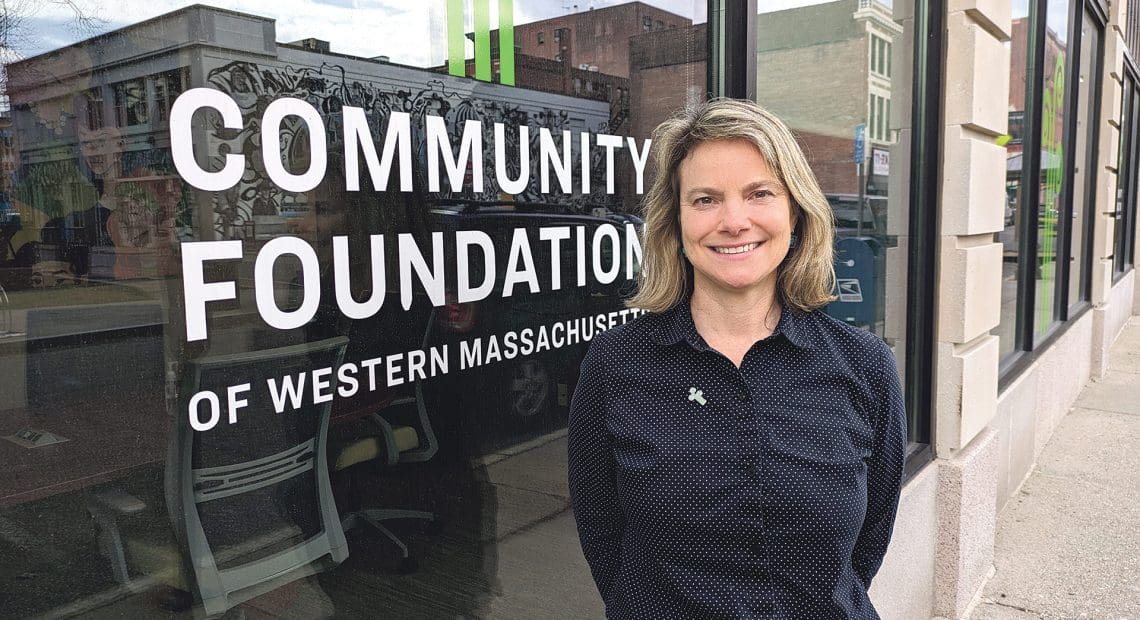
Community Foundation of Western Massachusetts President and CEO Megan Burke

Community Foundation of Western Massachusetts President and CEO Megan Burke


A few years ago, faced with a daunting statistic — that average college graduation rates are 60% at four-year institutions and 25% at two-year institutions — the Community Foundation of Western Massachusetts commissioned a study on factors that contribute to higher-education persistence.

From that effort emerged a program called Western Mass Completes, which recently supported 50 nursing and health-sciences students from 10 of the region’s colleges and universities, all of them identified by their schools as possibly being at risk of not finishing their degrees, for a variety of reasons.

The result? Forty-nine of them graduated on time and passed their certification exam, and most have secured employment in their field. The 50th simply missed a class and had to add an extra semester, but is expected to join the list of success stories.

That’s a remarkable result, but what may be even more impressive is the level of financial support involved: just $2,500 per student, to help pay for a range of expenses, from equipment to transportation to exam fees.

“From all these students who potentially were at risk of not completing, to have that much of a completion rate is really important,” said Megan Burke, president and CEO of the Community Foundation. “And because there was a preference for commuter students, these are now qualified nurses who are in our communities and are part of the local workforce. And most of them, as of this past winter, were employed — which isn’t surprising because we know there’s a great need for nurses.”

“It’s important to lift up the fact that there’s regional economic impact — that these folks are gainfully employed, making livable wages, and contributing to their local communities, which are very likely in the three counties that we serve.”

Based on the research of Becky Packard, a Community Foundation trustee and professor of Psychology and Education at Mount Holyoke College, who spearheaded the initial research, Western Mass Completes was developed with the understanding that it’s not enough to help students enter college — the bigger priority, for them and the region, is to see them cross the finish line.

Ten local colleges and universities joined the endeavor — UMass Amherst, Westfield State University, Bay Path University, Springfield College, American International College, Elms College, and Western New England University, as well as Greenfield, Holyoke, and Springfield Technical community colleges.

The research showed that students often need more time and more resources to complete degrees; many are working full-time while in school and taking a reduced course load, while others are balancing school, work, and family responsibilities. Those financial roadblocks create barriers to completion, especially for high-need, first-generation students.

Denise Hurst, vice president for Community Impact and Partnerships at the Community Foundation, noted that Western Mass Completes emerged from a growing focus on access to post-secondary institutions and the emerging realization that the biggest issue isn’t enrollment, but persistence and completion.

“From there, we really started to look at the areas where students were more apt to encounter financial barriers to completion,” she told BusinessWest. “And then the pandemic hit, and we knew there was a shortage in the nursing and allied health-sciences fields.”

Denise Hurst

Denise Hurst says Western Mass Completes has undoubtedly helped change the trajectory of some nursing students’ lives.

So the nonprofit launched a pilot program at four local colleges, providing financial grants to 20 nursing students. When the results came back positive, the program was expanded to 10 institutions and 50 students, some of them not in nursing but in health sciences, as not every school has a nursing program.

“We did that with the same sort of intention — how do we mitigate any financial barriers to completion — providing them with a grant during their time in school so that they could reduce their work hours, use it for food, gas, whatever it was that they needed that could impede their completion,” Hurst explained. “And we followed that up with providing them with a grant toward their NCLEX exam so they could be prepared to go right out into the workforce.”

While the Community Foundation is still working on next steps — determining what lessons can be gleaned from the pilot and how they can be applied to an overall workforce strategy in the region’s healthcare economy — it’s clear that students reaching the finish line is critical not only to their own career success, but to the long-term growth of a key sector.


Meeting a Need

Hurst listed a number of factors that Western Mass Completes seeks to address:

• The demand for skilled nurses has been at an all-time high and escalated with COVID-19, yet many aspiring nurses struggle to complete their education due to financial barriers.

• While tuition is a significant cost, smaller, but critical, expenses — like certification exam fees, technology costs, transportation to clinical training, medical equipment, and scrubs — can be the deciding factor between completing a degree or dropping out of an academic program.

• These challenges disproportionately affect students from low-income backgrounds and those without financial safety nets.

• Investing in students not only supports individuals, but strengthens the entire healthcare system by ensuring communities have access to well-trained professionals.

“Even though we might not know what particular niche of nursing they’ll go into,” she noted, “it’s important to lift up the fact that there’s regional economic impact — that these folks are gainfully employed, making livable wages, and contributing to their local communities, which are very likely in the three counties that we serve.”

Burke said it was important that colleges selected students for this assistance who were most in need of it.

A recent graduating nursing class at Holyoke Community College, one of the 10 partnering institutions in the Western Mass Completes program.

A recent graduating nursing class at Holyoke Community College, one of the 10 partnering institutions in the Western Mass Completes program.

“We recognized that the schools know their students really well and know who might be struggling or who might be facing barriers. When there is an application process, you don’t necessarily get the students who most need it; you sometimes get the students who are best able to complete an application.

“A lot of the students were so surprised and almost didn’t even believe it,” she added. “That was one of the challenges that our researchers had to overcome, which was to say, ‘no, no, this is for real. We’re giving you money, and we want you to be successful.’ And one of the things the students noted in the evaluation is that this vote of confidence, that we want you to succeed, was a really valuable component of the program for them.”

The fact that a relatively small grant can make a significant impact on completion rates is important to note, Burke said.

“It’s concerning that you could get three out of four years through nursing school and then potentially leave without a degree, not be able to pay back your student loans, not necessarily have an income to support your family — and $2,500 really made a significant difference in people’s lives,” she told BusinessWest. “It also helps to fill a nursing shortage in our economy.”


Strategy Sessions

The next big step, Burke said, will be a strategic planning process. “We really want to get a lot of community input into where can we best add value. So we’ve made it pretty clear that we will not be launching a new phase of Western Mass Completes right away until we can do some more of that learning.

“We do have other ongoing things that we’ll continue to do that contribute to student success, like our scholarship program, our interest-free student loans, and other pieces,” she added.
“But in this particular area of study, we’re waiting to learn what could be most useful.”

Another emerging factor, particularly for the community-college partners, is the success of MassReconnect and MassEducate, the state programs that offer an associate degree free of charge to a wide swath of Massachusetts residents.

“There’s also some input we’d like to get from employers who might be saying, ‘we have this program to try to recruit nurses,’ or maybe there’s a need in the early-education space, the daycare centers, who are struggling to employ. How can we build on the efforts that some of the employers are having?” Burke went on.

She noted that many students who are a good fit for a program like Western Mass Completes are

non-traditional students — typically older students who are returning to their education.

“A significant percentage have children, so they’re parenting, they’re sustaining a family, and they’re doing all these other things while they get their education. These are folks who are trying hard to improve the situation for their entire family. And the fact that we could do that with a couple thousand dollars — it feels so gratifying to know you’re helping a family stabilize itself, benefiting not just the one individual, but everyone else they’re supporting as well.”

Hurst agreed it has been satisfying to see the initial impact of the project, whatever strategies come of it. “To know that you were able to change the financial trajectory of someone’s life, something we know has generational impact, is really exciting.”

Business of Aging Special Coverage

Before the Fall

Early in Kate Clayton-Jones’s nursing career, she was struck by the cost — both financial and personal — of neglecting preventive care.

Specifically, of the feet.

“I kept seeing a whole bunch of people getting their feet amputated or having surgeries for having fallen,” she said, “and I thought, ‘my God, this is just so preventable.’”

That thought eventually (after plenty of planning, training, and persistence) became FootCare by Nurses, a model for preventive foot care that meets clients — mostly older people — where they are, especially in their homes.

“This isn’t nursing care like, ‘let me come in every day and feed you, clothe you, whatever else,’ but nursing care that could come episodically, once a month, or once every other month, and do this much-needed work, which is taking care of the feet of older adults.”

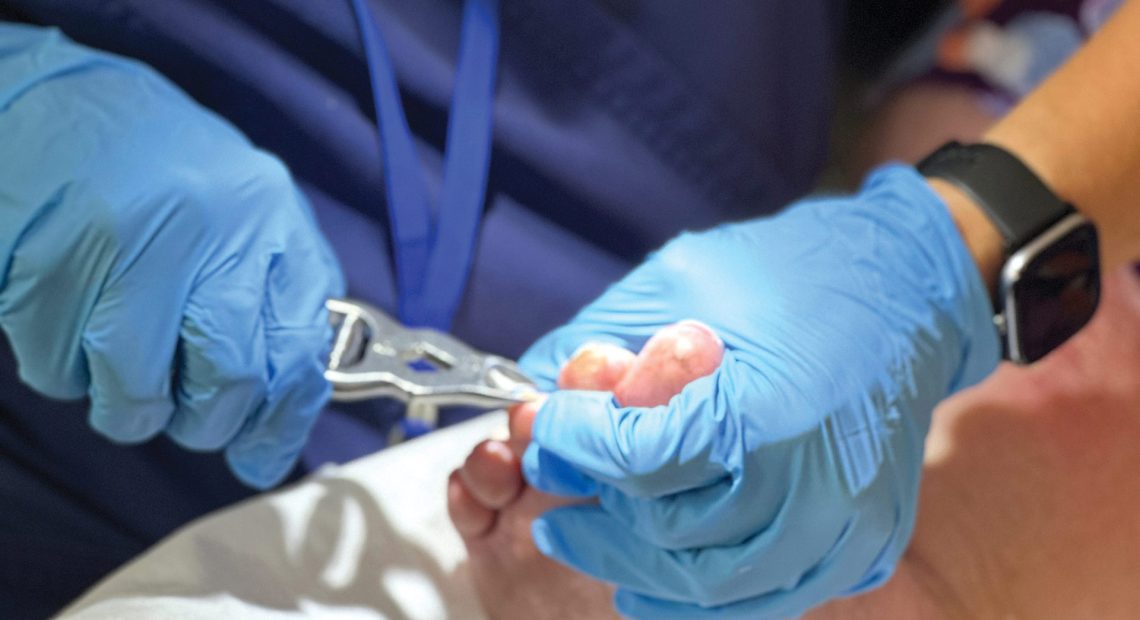
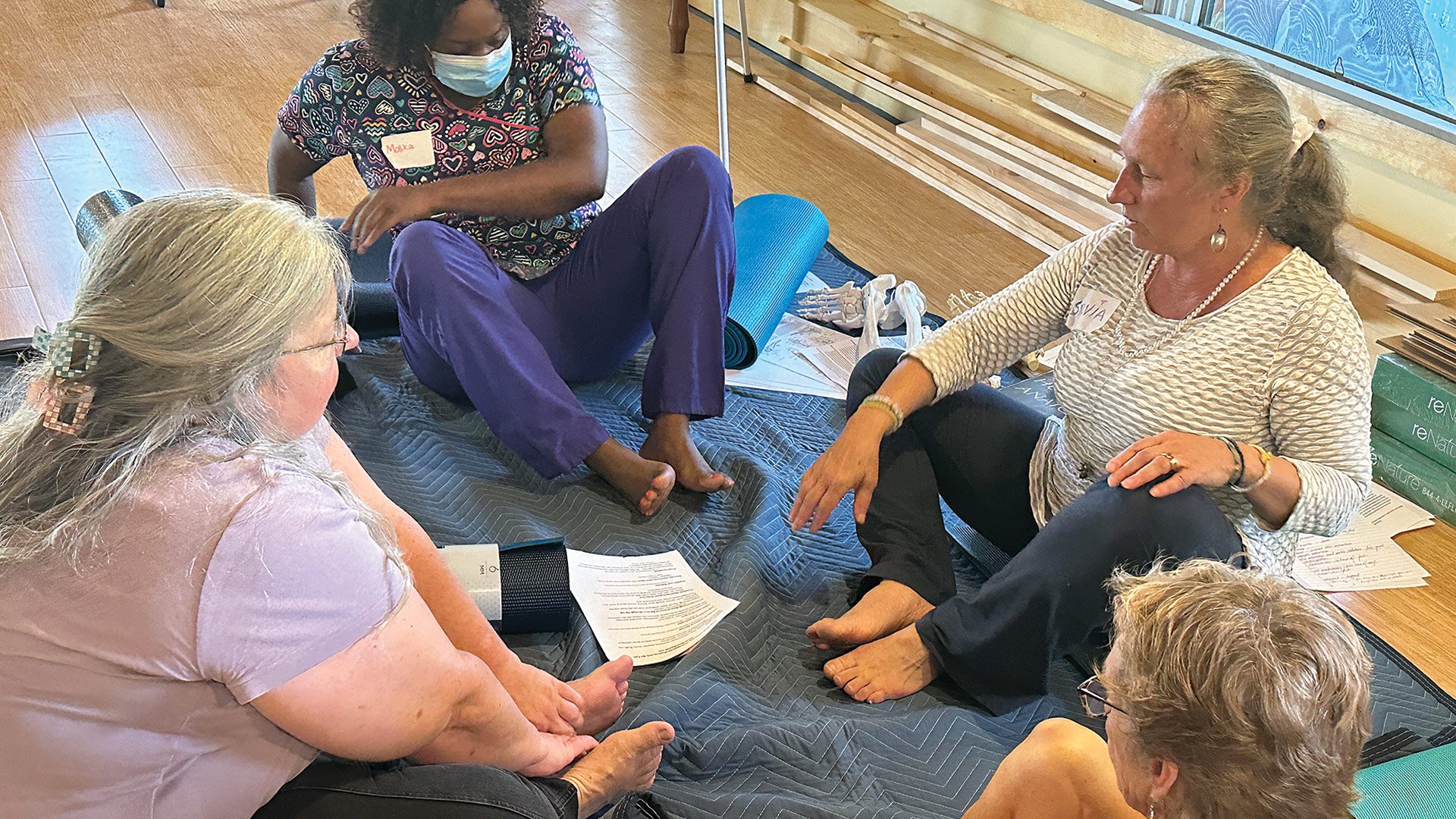
She explained that her nurses sit on the floor and look for circulation problems, sores, and calluses, and release tension in the toes that can limit flexibility and lead to falls. They also check the fit and lacing of shoes and make recommendations about socks. “All our work is designed to improve quality of life. This is an alternative pathway for foot care from typical podiatry or nail salons that most people know.”

For those who would prefer a clinic to a home visit, FootCare by Nurses also has offices in Greenfield, Lenox, and Fitchburg.

“It can be as simple as showing someone how to lace their shoes. We have an opportunity to spend time with people to help them understand simple changes like the way their shoes and socks fit, and skin care. We do a lot with balance and trip hazards,” Clayton-Jones explained.

“Elders are getting touched, and they’re having meaningful conversations. The work we do restores dignity and quality of life. Because we come in as nurses, we can talk about other things as well, and we see them on a regular basis, not just when they have an acute incident.”

While podiatrists are medical doctors whose responsibility is to diagnose and fix problems — recommending treatments and performing procedures — she and her team are licensed nurses with extensive training in foot care, whose responsibility is to prevent problems from happening in the first place. And there is some overlap.

“We have many podiatrists who support this work, though podiatry is a medical intervention, and a lot of this is not medical; it’s basic activities of daily living, and nursing is ideally suited to take care of people in that way,” she said. “There was this gap, and a huge opportunity to do something that is so meaningful, and it’s just a delight.”

The work is important, Clayton-Jones said, because people can become embarrassed by neglected feet and neglect them further — often with dangerous and even tragic results. She was thanked recently by a man whose edema was diagnosed by FootCare by Nurses, and he got the treatment he needed before the situation grew dire.

But even beyond such critical interventions, she said, people are happy when they can simply find pain relief and be able to leave their house or walk with their loved ones.

“We support quality of life in so many ways,” she said. “We not only make a difference when we walk in, but we give them peace of mind. It’s the only type of nursing I’ve done where I’ve heard someone say, ‘I can’t wait for that nurse to come back.’ It’s just such a nice intervention.”


Finding Her Footing

Clayton-Jones didn’t start off as a nurse; in fact, she earned a business degree and was working in aviation before shifting her flight plan to nursing school.

About a decade ago, while working on various floors of Berkshire Medical Center, she encountered patients with inflamed, infected feet, or — even worse — who had broken a hip in a fall, where poor foot care had been a factor. So she asked herself, “why can’t we, as nurses, take care of feet? I can learn to do it.”

So she sought further education through the Wound, Ostomy, and Continence Nurses Society. During that time, she recalls watching a toe amputation of a Korean War veteran who had developed an infection due to ill-fitting shoes a doctor had recommended.

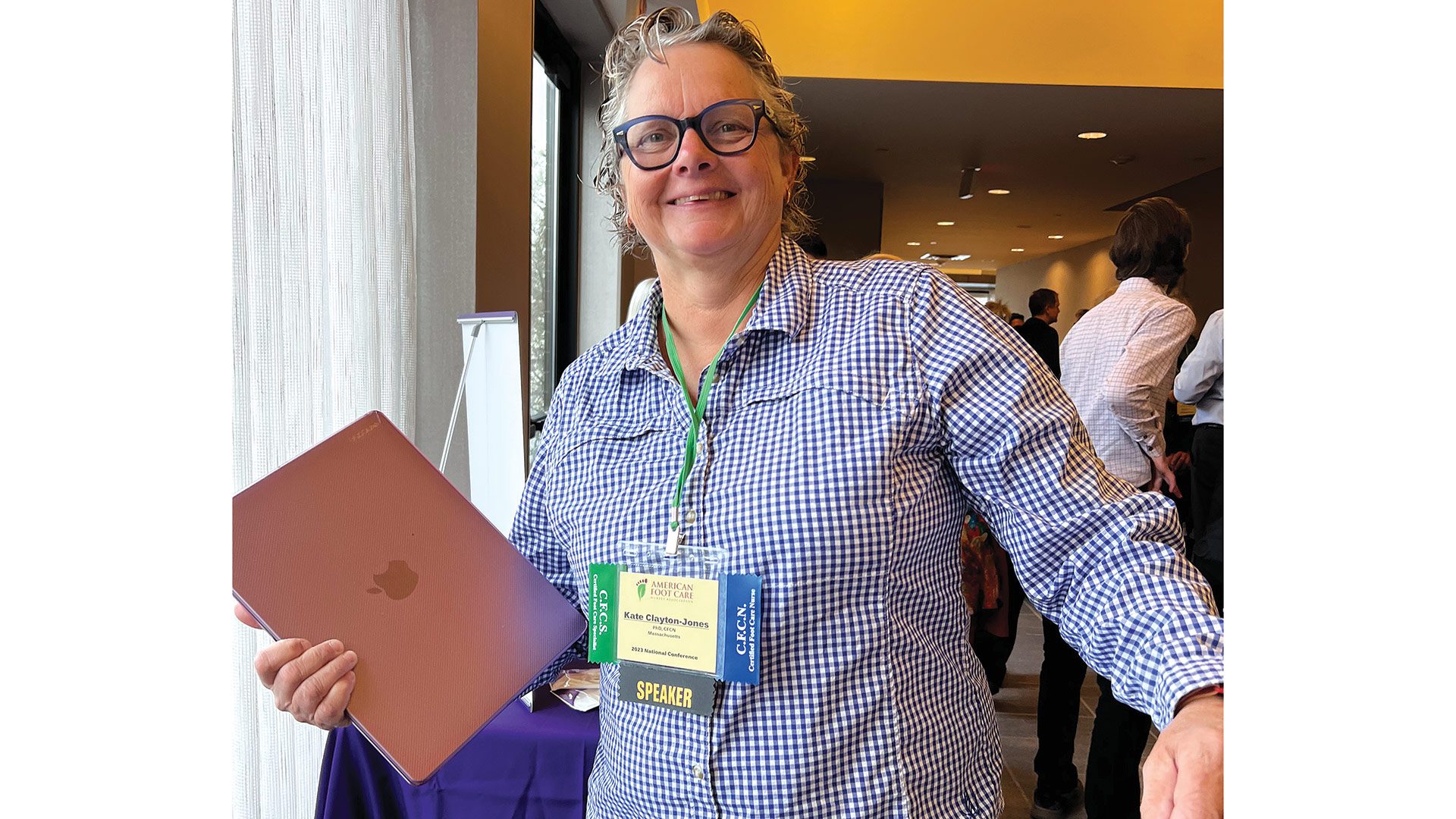
Kate Clayton-Jones

Kate Clayton-Jones at the American Foot Care Nurses Assoc. 2023 National Conference.

“The surgeon did a beautiful job. He was very nice and kind and connected to this man. But the man was very angry because he was losing a part of his body.”

It occurred to her that no one had checked on him and his new shoes — a simple intervention perfect for a nurse’s assessment skills. And she wondered how many other serious infections, debilitating falls, and amputations could be avoided altogether with simple, home-based foot care … by nurses.

After becoming a certified foot-care nurse, Clayton-Jones started treating people’s feet in various setttings. When met with skepticism by people who suggested clients just visit a nail salon, she had a ready answer.

“I said, ‘you don’t understand this population. They’re not able to go out. You’ll never see these people; they’ll never be on your radar, but they are costing the healthcare system an inordinate amount of money when they fall.’”

More importantly, “it gave me great joy to bring dignity and function to these humans who have put so much back into the community,” she added. “These are really incredible people. It doesn’t matter how wealthy or poor you are or where you live — your feet still need to be taken care of.”

By 2016, she had become very busy and realized she couldn’t provide all the care on her own.

“I knew, if I’m going to take on the responsibility of taking care of all these people, this needs to be a real business, with people who want to do this work,” she told BusinessWest. “I will train these nurses, but it needs to be a business that solidly sits on its own foundation.”

In doing so — the business has expanded from three employees in 2016 to 42 today — Clayton-Jones said she’s not only taking care of the community, but providing good jobs for nurses on schedules that work for them, which is especially important if they have families.

“They can start a quarter after nine, after they drop off the kids, see six or seven people, and pick the kid up by three o’clock,” she said, adding that “foot care is not an emergency — it’s prevention.” So if a snowstorm strikes, appointments can be easily moved to a different day. In short, she’s providing nursing jobs with predictable, and not burdensome, schedules.

nurse at FootCare

At right, a nurse at FootCare by Nurses teaches three new nurses how to touch and treat feet.

“I wanted to give them autonomy and responsibility and quality of life while also a joyful, meaningful job that’s not just about trimming toenails, but restoring the best function to an older foot.

“It turns out feet are really, really important,” she added, noting that 40% of cardiac flow is related to foot and leg movement, and toes are part of the body’s ‘seeing’ system for positioning itself in space, so the healthier the feet and toes are, the less likely an older person will fall.

“It’s just preventable with good foot care, good foot function, knowledge about how shoes fit. I started pulling the pieces together — what was behind everything we were doing. And we keep evolving the science.”

And as age demographics in the U.S. keep trending older, it’s a growing problem, especially among the Baby Boom generation.

“They need help — not just care at a podiatry office or a nail salon; they’re going to need this help at home because many can’t drive, or they’re cognitively impaired, or frail. They need to stay home and have care come to them,” she explained. “So the business model was not working with one visiting nurse association or one long-term-care facility — we would work with many, and I would work regionally.”


Next Steps

And the practice is still growing. Clayton-Jones — who regularly speaks on foot-care issues nationally and around the world — recently announced that three new contracts will allow FootCare by Nurses to expand its services in Central Mass., the city of Springfield, and some towns in Connecticut.

A contract with the Program of All-Inclusive Care (PACE) in Springfield will allow Serenity Care case workers to refer clients to FootCare by Nurses. The PACE program is centered on the core belief that, given a choice, most elders, the disabled, and their families would choose to receive care in their homes and communities rather than in a nursing home — so it meshes well with Clayton-Jones’s own mission.

Meanwhile, a contract with Tri Valley Elder Services will expand FootCare by Nurses’ services into the area south of Worcester. Additionally, FootCare by Nurses will take on former clients of Connecticut-based Pedi-care.

“This expansion and continued growth means adding close to 1,000 new clients and $300,000 in new revenue, which will trickle in slowly as referrals for foot care come in,” she said, adding that she plans to add two administrative positions and 10 nursing positions — and is actively hiring for them.

“At the end of the day, if you want a meaningful nursing career, this is just an excellent place. If you’re community-minded, if you like one-on-one conversations where you can make a huge difference, this is really a good career,” she said. “My nurses speak of it as the most joyous job they’ve ever had. They thank me for the autonomy and responsibility, and they get to use all their nursing skills. And they feel connected to the community that they live in, supporting other people.”

As the company grows, its mission — to redefine elder care by making evidence-based foot care central to general health — will not change, she added.

“Our mission is prevention, and our passion is caring. Feet are literally the foundation for our body; they allow us to be mobile, they pump blood back to our hearts, and they connect us to the world. Any fault in feet affects the whole body, just like faults in a foundation affect the entire structure. Yet, feet are too often ignored or neglected, while their care and well-being are essential.”

In short, Clayton-Jones stressed, FootCare by Nurses is not an aesthetic service that simply makes feet and toes more presentable.

“These people need nursing care; it’s a nationwide problem. I can’t tell you how many times I’ve seen nail polish glossing over toenail fungus or a callus or corn, and it continues to perpetuate because no one’s done preventive education,” she said.

“Nurses are educators. We teach people how to take their medications, what the side effects are … a lot of people recognize we’re the healthcare teachers out there. Our mission is prevention. Yes, we’re great at taking care of toenails, but we’re also there to prevent falls or wounds from happening — and we save lives.”

Cover Story Healthcare Heroes

Healthcare Heroes to Be Saluted on Oct. 25

HealthcareHeroes18

Passion.

If one were challenged to describe the Healthcare Heroes for 2018 — or any year, for that matter — with just a single word, this would be the one.

It is a common character trait within any healthcare profession, but it is certainly necessary to rise above the tens of thousands of men and women in this field and earn that designation ‘hero.’

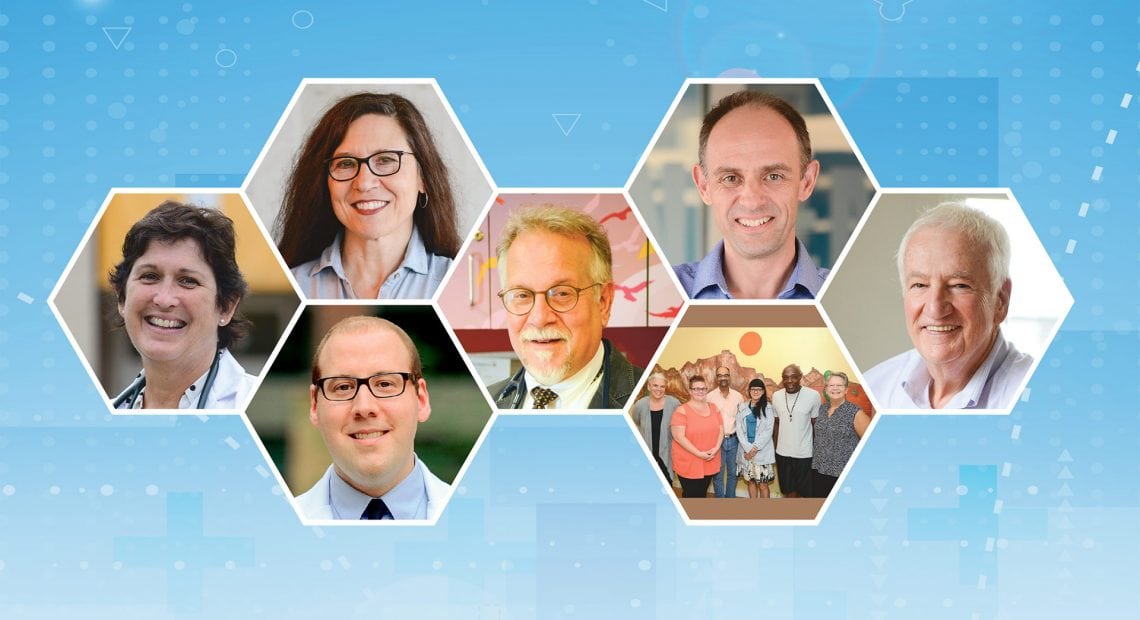
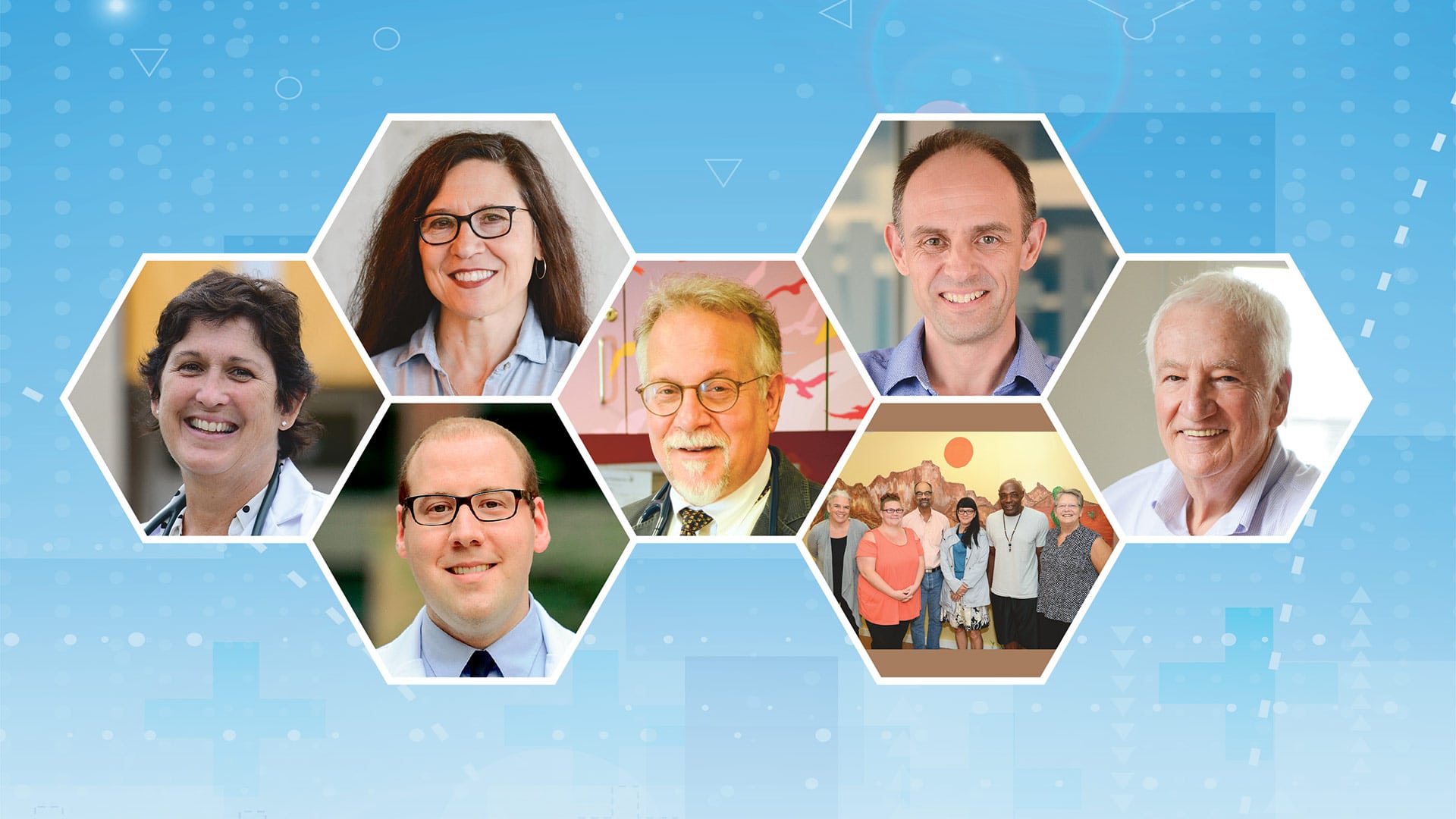
And it is certainly a common denominator in the remarkable and truly inspiring stories. The passion comes to the fore whether that story is about a career emergency-room nurse who shifted to work at college wellness centers and completely transformed the one at American International College, or about a nurse administrator at the Soldiers’ Home in Holyoke who is transforming care there while also serving as a mentor and role model for other team members. It’s the same when the story is about a large, multi-dimensional effort to battle opioid and heroin addiction in rural Franklin County, or about a pediatrician dedicated not only to the residents of a community, but to making that community a healthier place to live.

Fast Facts

What: The Healthcare Heroes Gala
When: Thursday, Oct. 25, 5:30-8:30 p.m.
Where: The Starting Gate at GreatHorse, Hampden
Tickets: $90 (tables of 10 available)
For more Information: Email [email protected]

That we said, passion is the word that defines these heroes. And it will be on clear display on Oct. 25 at the Starting Gate at GreatHorse in Hampden, site of the Healthcare Heroes Gala.

This will be the second such gala. The inaugural event was a huge success, not because of the venue (although that was a factor) or the views (although they certainly helped), but because of the accomplishments, the dedication, and, yes, the passion being relayed from the podium. It will be same in about seven weeks.

But first, the stories that begin on the facing page.

There are seven winners in all, in categories chosen to reflect the broad scope of the health and wellness sector in Western Mass., and the incredible work being done within it:

The Healthcare Heroes for 2018 are:

• Patient/Resident/Client Care Provider:

Mary Paquette, director of Health Services/nurse practitioner, American International College

• Health/Wellness Administrator/Administrator:

Celeste Surreira, assistant director of Nursing, the Soldiers’ Home in Holyoke

• Emerging Leader:

Peter DePergola II, director of Clinical Ethics, Baystate Health

• Community Health:

Dr. Matthew Sadof, pediatrician, Baystate Children’s Hospital

• Innovation in Health/Wellness:

TechSpring

• Collaboration in Health/Wellness:

The Consortium and the Opioid Task Force

• Lifetime Achievement:

Robert Fazzi, founder, Fazzi Associates.

American International College and Baystate Health/Health New England are presenting sponsors for Healthcare Heroes 2018. Additional sponsors are National Grid, partner sponsor, and Elms College MBA Program, Renew.Calm, Bay Path University, and Trinity Health Of New England/Mercy Medical Center as supporting sponsors.
HealthcareHeroesSponsors

Photography by Dani Fine Photography

Tickets to the Oct. 25 gala are $90 each, with tables of 10 available for purchase. For more information or to order tickets, call (413) 781-8600, or email [email protected]


Meet the Judges

There were more than 70 nominations across seven categories for the Healthcare Heroes Class of 2018. Scoring these nominations was a difficult task that fell to three individuals, including two members of the Class of 2017, with extensive backgrounds in health and wellness. They are:

Holly Chaffee

Holly Chaffee

Dexter Johnson

Dexter Johnson

Dr. Michael Willers:

Dr. Michael Willers:

Holly Chaffee, MSN, BSN, RN: Winner in the Healthcare Heroes Health/Wellness Administrator/Administration category in 2107, Chaffee is president and CEO of VNA Care, a subsidiary of Atrius Health. Formerly (and when she was named a Healthcare Hero) she was the president and CEO of Porchlight VNA/Homecare, based in Lee.

Dexter Johnson: A long-time administrator with the Greater Springfield YMCA, Johnson was named president and CEO of that Y, one of the oldest in the country, in the fall of 2017. He started his career at the Tampa Metropolitan Area YMCA, and, after a stint at YMCA of the USA, he came to the Springfield Y earlier this decade as senior vice president and chief operating officer.

Dr. Michael Willers: Winner in the Patient/Resident/Client-care Provider category in 2017, Willers is co-owner of the Children’s Heart Center of Western Mass. Formerly a pediatric cardiologist with Baystate Children’s Hospital, he founded the Children’s Heart Center of Western Mass. in 2012.