Home Posts tagged Robert Johnson
Education Special Coverage

School of Thought

Western New England University President Robert Johnson


“A shift in the market.”

That’s how Robert Johnson, president of Western New England University, chose to describe the current state of higher education, knowing this is a huge understatement.

Indeed, colleges and universities were already under great amounts of stress due to declining enrollments, rising costs, weaker bottom lines, and mounting questions about the cost and value of a college education. And that was before the Trump administration started what the Boston Globe and others are calling a ‘reign of terror,’ pressuring institutions on matters such as DEI policies and efforts to curb antisemitism with threats involving everything from the cancelation of grants to removal of schools’ tax-exempt status.

“It was already a fairly rapid pace of change, and what’s going on at the federal level is merely accelerating the pace of change, creating high levels of anxiety,” said Johnson. “I don’t think higher ed has ever been through this — I’ve been in higher ed 35 years, and I’ve never seen anything like this.”

But, at the end of the day, and in his opinion, this is just … a shift in the market, or another shift, one of many that higher education institutions have faced over the years, decades, or centuries, depending on how long they’ve been around, said Johnson, who referred early and often to the proverbial ‘other side’ of this current shift.

“I don’t want to call it a ‘new normal,’ because I think we’re creating ‘normal,’ and it’s going to be different,” he said. “What that ‘different’ is … who knows? But I think we must remain agile enough to change with the times. My perspective is simple; when it comes right down to it, places like Western New England University — we started as a branch campus for Northeastern University — are at a place where we’ve come through world wars, the Great Depression, the Civil Rights movement, Jim Crow, the dot-com bubble, the Great Recession … and now this. And we’ll figure this out.

“I don’t want to call it a ‘new normal,’ because I think we’re creating ‘normal,’ and it’s going to be different. What that ‘different’ is … who knows? But I think we must remain agile enough to change with the times.”

“Anyone who says they have a crystal ball and understands what it’s going to look like on the other side is fool’s gold,” he went on. “The best that we can do is be agile and try and manage as best we can given the resources that we have to emerge from this. It’s not going to be fun — this is not the golden age of higher education post World War II — it is a shift in the market, and that has to be our view, and there will be winners and losers.”

These were just some of the thoughts from Johnson in a wide-ranging interview with Johnson that turned out to be an exit interview, if you will. Indeed, he announced, just a few days after he talked with BusinessWest, that he will be stepping down from the university in August.

As he talked about the current landscape, he came back repeatedly to his contention that, to survive this latest shift in the market, schools will have to be agile and proactive in response to the factors that created this paradigm. And WNE is doing exactly that, he said, noting that, through several new strategic initiatives, it has improved its position.

Indeed, the school enrolled the largest entering class in its history in the fall of 2024, just two years after it recorded one if its lowest figures in a quarter century, he said. “Three years ago, we had just over 6,700 applications for our entering class. This year, we’re right on the cusp of 13,000 applications.”

This was accomplished, he said, by stressing brand value and return on investment — “including a 94% job-placement rate, starting salaries higher than 52 of the top-100 universities in the country — 36% higher than any of the other schools in this region.

Robert Johnson says that, through aggressive, targeted marketing, WNE entered its largest class ever in 2024, and is on pace to do the same this September.

Robert Johnson says that, through aggressive, targeted marketing, WNE entered its largest class ever in 2024, and is on pace to do the same this September.

“That’s the message that we keep driving home,” he went on. “And it’s showing up in our applications, deposits, campus visits … that’s my story, and I’m sticking to it.”

Beyond marketing, these increases in applications and enrollment are due to new programs designed to provide a bridge to the workforce, he said, citing the school’s new master’s degree program in Biopharmaceutical Technology, due to launch in September, as just one example.

If current trends continue, the school could exceed 1,050 students, and perhaps more, for the class entering this September, said Johnson, adding that this would be the largest class yet again.

For this issue and its focus on education, BusinessWest talked with Johnson about the current state of higher education and the many factors that will determine how and to what extent schools can ride out this storm.


Course of Action

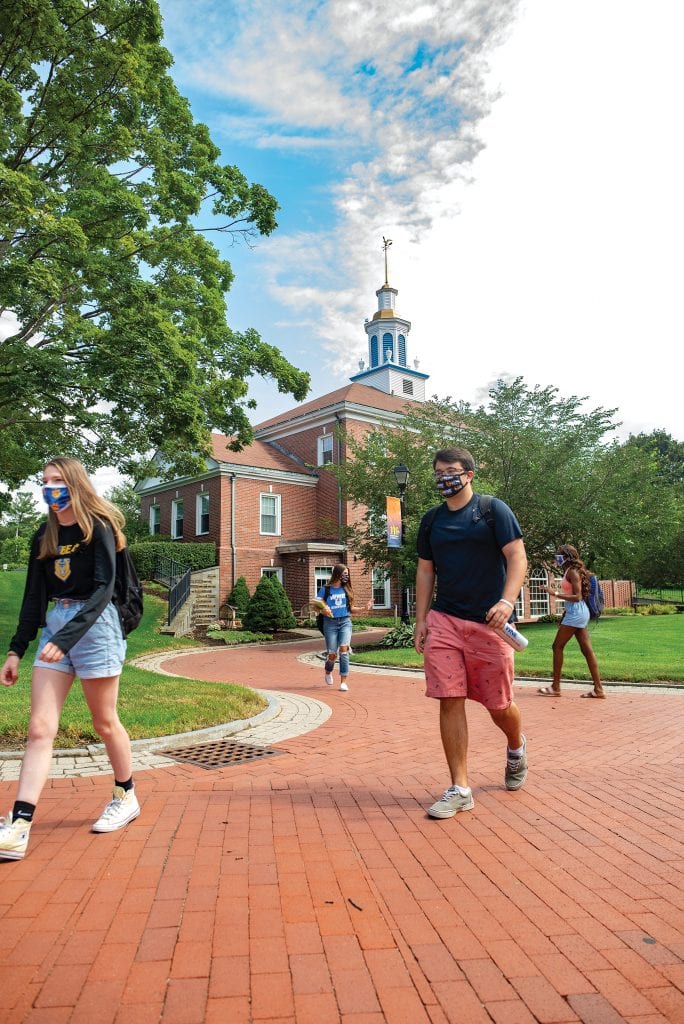
Johnson, who arrived at WNE just as COVID did, noted that the pandemic represented a stern test for all institutions of higher education, one that forced them to rethink what they were doing and how, and make often dramatic changes to carry on and continue their missions.

This latest shift, one marked by demographic changes and governmental changes alike, and where 40% of private schools in New England are under some form of financial distress, is similar in many ways, but also fundamentally different.

“With COVID, there was a predictability to it — you knew that if you did certain things you would get through it,” he said. “Right now, in this environment we’re in right now, there’s no predictability; that’s what creates the high levels of anxiety we’re seeing right now.”

And this brings him back to that notion that schools will “figure this out.” Or not.

‘There’s something about the human spirit that says, ‘no matter what we’re going through, we’ll come out on the other side,’ and oftentimes, it really does come down to sheer determination with a plan of action that has the ability to pivot as you get different information or new information along the way that enables you to move forward.

“The indelible human spirt says that when a group of people work together toward a common goal, and they’re all rowing in the same direction, you can’t find a time in human history where they did not come out on the other side. And that’s going to be the difference — the institutions that can pull together and have that indelible human spirit that says ‘yes, I can.’ It’s possibility thinking and operating from a perspective of assets and not deficits — ‘I’m not going to focus on what I don’t have and therefore what I can’t do, but what I do have and what we can do with that.”

Elaborating, he said WNE’s success with growing its numbers for applications, deposits, and enrollment, comes down to one word — marketing.

“We’ve been really focused on telling our story,” he explained. “Because if families are going to make the investment, they want to know if I can get a job, a good job. It’s about outcomes, outcomes, outcomes.”

This marketing involves traditional vehicles, but especially social media and digital marketing, he said, but it also involves getting students on the campus.

“Getting them on our campus matters; there’s a higher probability of enrolling a student if they’ve been to the campus,” he said, adding that the school succeeds at being welcoming.

“This is place where, no matter who you are, where you’re from, or what you look like, you’re welcome. “It doesn’t matter what your political persuasion may be. And we don’t engage in highly politicized debate that’s happening in the external world; our heads are down, this is where you come to go to school, where you come to get a job — you don’t have all the drama about what’s going on in the world.”

When asked about how schools will emerge on the other side, and the factors that will determine what will look like when they do, Johnson said financial models and roadmaps that will provide long-term sustainability and growth, where revenues align with expenses, are obviously a key. But the bigger factor will the level to which institutions can focus on academic programs that can provide real jobs, “not just education for the sake of education.”

He mentioned examples at WNE including the new Biopharmaceutical Technology degree program, the Center for Advanced Manufacturing, FinTech program, and the recently opened XR/VR Lab, which provides students with hands-on access to cutting-edge virtual, augmented, and mixed-reality technologies.

“With COVID, there was a predictability to it — you knew that if you did certain things you would get through it. Right now, in this environment we’re in right now, there’s no predictability; that’s what creates the high levels of anxiety we’re seeing right now.”

“Those are the kinds of things that will matter moving forward,” he said. “Part of what will make a winner is programs that are relevant, that enable students to get real jobs … that have innovative and entrepreneurial components in place that become creative in nature and allow students to have hands-on experience and take that experience and go out into the world of work.”

“At the end of the day, each institution will have to decide what’s best for them, and position themselves accordingly,” he went on. ‘For many of them, probably most of them, elements of their plan will work, and for some of them, their plans will not work, and it will be to their own demise.”


Bottom Line

Johnson stressed that neither he, nor anyone else, really, knows just what ‘different will, indeed, look like.

But in these unprecedented times, when there is, as he said earlier, no predictability, schools must be creative and diligent if they are going to get to the other side.

“One of the outcomes of what we’re seeing now is that you’ll see some of the institutions come out of this and evolve and thrive, and there will be others that will contract and perhaps go out of business,” he continued. “I go back to the Great Depression, when the economy was rough, to say the least — which is what we’re starting to potentially see as an outcome of tariffs and uncertainty in the marketplace — some of the greatest companies in the world were started or evolved during that time. And that’s what we’re going to see on the other side of this with higher education — there will be institutions that will be reborn in a different way that will evolve and thrive in an environment in whatever ‘different’ will look like.”
Daily News

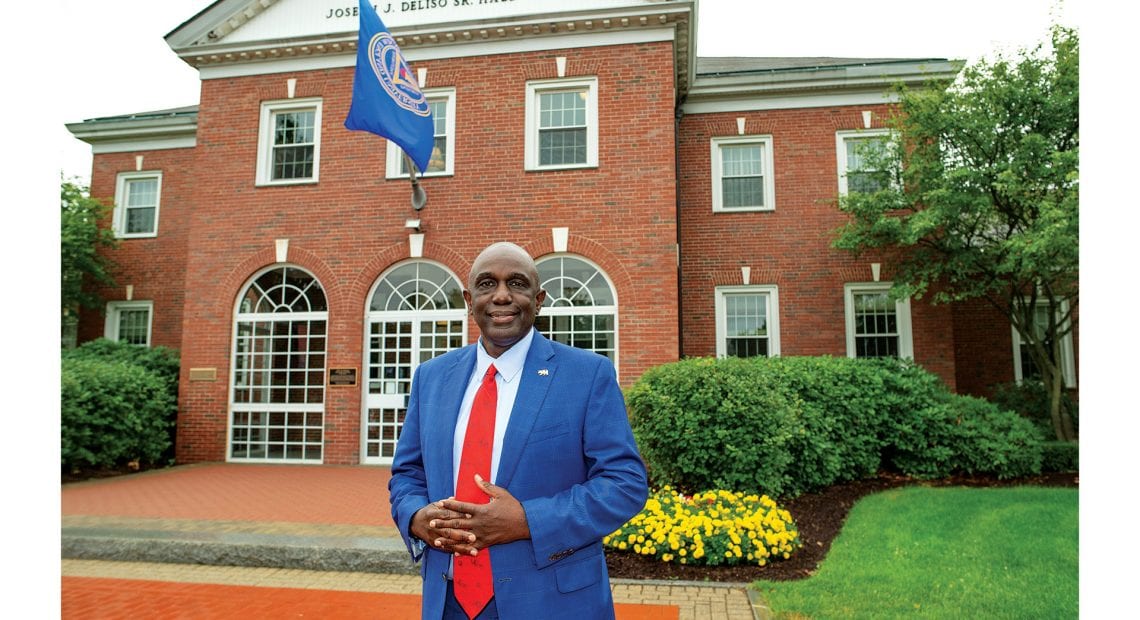
SPRINGFIELDWestern New England University (WNE) announced Tuesday that President Robert Johnson will step down from his role, effective August 1.

The announcement was shared with the Board of Trustees earlier on Tuesday.

Johnson, who began his tenure in 2020, has guided the University through a time of significant transformation and challenge, including the COVID-19 pandemic. Under his leadership, WNE remained committed to in-person instruction, expanded mental health resources, including Mental Health First Aid training, and embraced a future-focused philosophy rooted in agility, adaptability, and lifelong learning. 

“It has been my honor to serve as president of Western New England University,” said Johnson. “Together, we have navigated unprecedented challenges and embraced opportunities that have redefined what it means to prepare students for the future of work and society. I am deeply proud of what we have accomplished and confident that WNE’s brightest days are still ahead.” 

Johnson’s accomplishments at WNE include the launch of the XR/VR Lab, the FinTech Center, the Center for Advanced Manufacturing, and the Kevin S. and Sandra E. Delbridge Career Center. Most recently, WNE unveiled the Golden Bear Discovery Curriculum — the first major revision of the general education program in 25 years — marking a bold step forward in the university’s commitment to interdisciplinary learning and academic excellence. 

During his presidency, the university has experienced steady enrollment growth, including welcoming the largest incoming class in recent history. WNE has also doubled its applicant pool and achieved a 94% job placement rate, with graduate starting salaries that rival those of top institutions. Golden Bear Athletics has flourished, celebrating multiple conference championships and national tournament appearances.

Johnson has also strengthened WNE’s community partnerships and regional presence, exemplified by his service as honorary chair of the 2023 Bright Nights Ball and his support of civic and cultural initiatives throughout Springfield and beyond. 

“On behalf of the Board of Trustees, I want to express our deep appreciation to President Johnson for his outstanding leadership and service to Western New England University,” said Board of Trustee Chair Nicholas LaPier. “His vision, energy, and commitment to student success have strengthened our institution and positioned us well for the future. While we will miss his leadership, we fully support his decision to embrace the next chapter of his journey. We are grateful for the strong foundation he leaves behind and confident in the continued momentum of the university community he has so ably guided.” 

The WNE Board of Trustees will begin planning for the leadership transition, including the appointment of an interim president and the launch of a national search for the university’s next leader. Details of the process will be shared in the coming weeks. The board’s goal is to name an interim president with time for overlap and continuity before Johnson’s departure.

Cover Story Education Special Coverage

Writing the Next Chapter

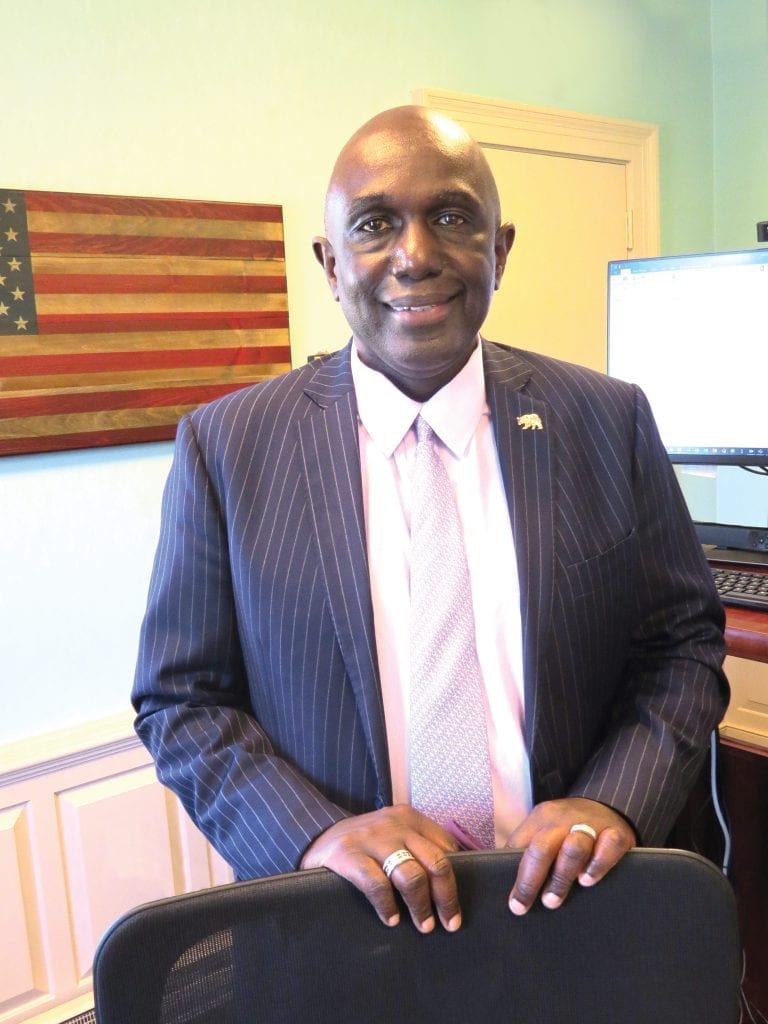
Robert Johnson, president of Western New England University

Robert Johnson, president of Western New England University

At least once, and perhaps twice, Robert Johnson strongly considered removing himself from the mix as a search committee narrowed the field of candidates to succeed Anthony Caprio as president of Western New England University (WNEU) in Springfield.

It was early spring, and the COVID-19 pandemic was presenting every institution of higher learning, including UMass-Dartmouth, which he served as chancellor, with a laundry list of stern — and, in some cases, unprecedented — challenges.

Johnson told BusinessWest that the campus needed his full attention and that it might be time to call a halt to his quest for the WNEU job. But he “hung in there,” as he put it, and for the same reason that he eventually decided to pursue the position after at least twice telling a persistent recruiter that he wasn’t really interested.

“We are at an inflection point in higher education,” said Johnson, who arrived on the campus on Aug. 15, just a few weeks before students arrived for the fall semester. “Western New England has a good balance of the liberal arts and the professional schools, along with the law school, that puts it in a unique position to write the next chapter when it comes to what higher education will look like.

“I think it’s fair to say that, when we think about higher education, the last time we’ve seen the level of transformation that is about to happen was just after World War II, with the GI Bill and the creation of more urban public universities, community colleges, and the list goes on,” he continued, as talked through a mask to emphasize the point that they are to be worn at all times on this campus. “As we think about the world of work and the future, colleges and universities will be educating people for jobs that don’t exist yet, utilizing technologies that haven’t been created to solve problems that have yet to be identified.”

Elaborating, he said today’s young people, and he counts his son and daughter in this constituency, are expected to hold upwards of 17 jobs in five different industries (three of which don’t currently exist) during their career. All this begs a question he asked: “what does an institution of higher learning look like in an environment like this, where the pace of change is unlike anything the world has ever seen?”

The short answer — he would give a longer one later — is that this now-101-year-old institution looks a whole lot like WNEU, which, he said, is relatively small, agile, and able to adapt and be nimble, qualities that will certainly be needed as schools of all sizes move to what Johnson called a “clicks and mortar” — or “mortar and clicks” — model of operation that, as those words suggest, blends remote with in-person learning.

The process of changing to this model is clearly being accelerated by the pandemic that accompanies Johnson’s arrival at WNEU, and that has already turned this fall semester upside down and inside out at a number of schools large and small.

“Western New England has a good balance of the liberal arts and the professional schools, along with the law school, that puts it in a unique position to write the next chapter when it comes to what higher education will look like.”

Indeed, a number of schools that opened their campuses to students have already closed them and reverted to remote learning. Meanwhile, others trying to keep campuses open are encountering huge problems — and bad press: Northeastern University recently sent 11 students packing after they violated rules and staged a gathering in one of the living areas, for example, and the University of Alabama has reported more than 1,200 cases on its campus in Tuscaloosa.

It’s very early in the semester, but Johnson is optimistic, even confident, that his new place of employment can avoid such occurrences.

“The decision to go with in-person learning was essentially made before I got here, and I think it was the right decision,” he explained, noting that students are living on campus and only 16% of the courses are being taught fully online, with the rest in-person or a hybrid model. “We’ve tested more than 2,500 individuals, and we’ve had only three positive cases, all asymptomatic. It’s worked out well so far, but this is only the end of the first week.

“We’re cautiously optimistic, and we take it day to day,” he went on, adding that the school’s smaller size and strict set of protocols, such as testing students upon arrival, may help prevent some of those calamities that have visited other institutions. “We’ve been very judicious, and our small size makes us a bit different. We’re kind of like Cheers, where everybody knows your name; we don’t have tens of thousands of students that we have to manage.”

For this issue and its focus on education, BusinessWest talked with Johnson about everything from the business of education in this unsettled time to the next chapter in higher education, which he intends to help write.

Screen Test

Flashing back to that aforementioned search for Caprio’s successor, Johnson noted that it was certainly different than anything he’s experienced before — and he’s been through a number of these, as we’ll see shortly.

Indeed, this was a search in the era of COVID-19, which meant pretty much everything was done remotely, including the later rounds of interviews, which usually involve large numbers of people sitting around a table.

Robert Johnson says he’s confident

Robert Johnson says he’s confident that WNEU, a smaller, tight-knit school, can avoid some of the problems larger institutions have had when reopening this fall.

“It was all Zoom, and it was … interesting,” he said of the interview process. “You don’t know if you’re truly connecting or not. As a person being interviewed, you have much more self-awareness of not only what you’re saying but how you’re saying it, and your own non-verbal communication, because you can see yourself on the screen.

“You have to make sure your background is right, the lighting is right, you’re wearing the right colors, all that,” he went on. “It’s like being on TV, literally, because the first impression people get is what they see on screen.”

Those on the search panel were nonetheless obviously impressed, both by what they saw and heard, and also the great depth of experience that Johnson brings to this latest stop in a nearly 30-year career in higher education.

Indeed, Johnson notes, with a discernable amount of pride in his voice, that he has worked at just about every type of higher-education facility.

“I worked in every not-for-profit higher-education sector,” he noted. “Public, private, two-year, four-year, private, Catholic, large, medium, and small — this is my seventh institution. And I think that gives me a unique lens as a leader in higher education.”

Prior to his stint at UMass Dartmouth, he served as president of Becker College in Worcester from 2010 to 2017, and has also held positions at Oakland University in Michigan and Sinclair College, the University of Dayton, and Central State University, all in Ohio.

As noted earlier, when Johnson was invited by a recruiter to consider perhaps making WNEU the next line on his résumé, he was at first reluctant to become a candidate.

“The search consultant, who I happen to know, called me two or three times, and I did not bite,” he noted. “But as she told me more, and I learned more about Western New England University, I began to take a look. I knew about the school, but I had never taken a deep dive into the institution, its history, and what it had to offer.”

He subsequently took this deep dive, liked what he saw, and, as he noted, hung in through the lengthy interview process because of the unique opportunity this job — at this moment in time — presented.

Since arriving on campus, he has made a point of meeting as many staff members and faculty as possible, but this, too, is difficult during the COVID-19 era. Indeed, meetings can involve only a few participants, so, therefore, there must be more of them.

“We can’t have any of those big ‘meet the president’ meetings,” he noted. “So I’ve had six, seven, or eight meetings with small groups or facility and staff, and I probably have another 15 or 20 of those scheduled. I’m getting to know people, and they’re getting to know me; I’m doing a lot of listening and learning.”

Overall, it’s a challenging time in many respects, he said, adding quickly that higher education was challenging before COVID, for reasons ranging from demographics — smaller high-school graduating classes, for starters — to economics and the growing need to provide value at a time when many are questioning the high cost of a college education.

“The business model for higher ed was going to change regardless — I think, by 2025, given demographics and a whole host of other things, colleges and universities were going to have to figure out how to do business differently,” he told BusinessWest. “I think COVID, overnight, expedited that.

“The business model for higher ed was going to change regardless — I think, by 2025, given demographics and a whole host of other things, colleges and universities were going to have to figure out how to do business differently. I think COVID, overnight, expedited that.”

“It was a Monday, and seven to nine days later, every college in the country was teaching remotely and working remotely, in ways we never imagined,” he continued. “So the very idea that colleges and universities will go back to 100% of what that old business model was is a non-starter. So the question is, ‘how do we reinvent ourselves?’”

Courses of Action

As he commenced answering that question, he started by addressing a question that is being asked in every corner of the country. While there is certainly a place for remote learning, he noted, and it will be part of the equation for every institution, it cannot fully replace in-person learning.

“Some would say that online learning is the way, and the path, of the future,” he noted. “I would say online learning is a tool in terms of modality, but it is not the essence of education.”

Elaborating, he said that, for many students, and classes of students, the in-person, on-campus model is one that can not only provide a pathway to a career but also help an individual mature, meet people from different backgrounds, and develop important interpersonal skills.

“Some would say that online learning is the way, and the path, of the future. I would say online learning is a tool in terms of modality, but it is not the essence of education.”

“For the student coming from a wealthy family, I think they need socialization, and they need a face-to-face environment,” he explained. “For the first-generation student whose parents did not go to college, I think they need socialization. And for students who come from poor families, they need socialization.

“My point being that online learning is not a panacea,” he continued. Some would argue that, if you have online learning, it would help poor kids go to college. I would say that the poor kids, the first-generation kids, are the very ones who need to be on that college campus, to socialize and meet people different from themselves. And the same is true for those kids coming from the upper middle class and wealthy families — they need that socialization.

“In my humble opinion, face-to-face never goes away,” he went on. “But does that mean that one might be living on campus five years from now, taking five classes a semester, with maybe one or two of them being online or hybrid? Absolutely. I think the new model is going to be click and mortar, or mortar and click.”

Expanding on that point while explaining what such a model can and ultimately must provide to students, he returned to those numbers he mentioned earlier — 17 jobs in five industries, at least a few of which don’t exist in 2020. Johnson told BusinessWest that a college education will likely only prepare a student for perhaps of the first of these jobs. Beyond that, though, it can provide critical thinking skills and other qualities needed to take on the next 16.

“That very first job that a student gets out of college — they’ve been trained for that. But that fifth job … they have not been trained for that,” he said. “And I think the role of the academy in the 21st century, the new model, is all about giving students and graduates what I call the agile mindset, which is knowledge and the power of learning — giving students essential human skills that cannot be replicated by robots and gives them the mindset to continually add value throughout their professional careers.

“We’re educating people to get that first job, and to create every job after that,” he continued. “We’re making sure that every person who graduates from college is resilient and has social and emotional intelligence and has an entrepreneurial outlook, which is not about being an entrepreneur; it’s about value creation and having those essential human skills. What that means, fundamentally, is that no algorithm will ever put them out of a job.”

To get his point across, he relayed a conversation he had with some students enrolled in a nursing program. “They said, ‘this doesn’t apply to us,’ and I said, ‘yes, it does, because there are robots in Japan that are turning patients over in hospitals. So if you think technology does not impact what you do, you’re mistaken.’”

Summing it all up, he said that, moving forward, and more than ever before, a college education must make the student resilient, something he does not believe can be accomplished solely through online learning.

“How do I put the engineer and the artist together, give them a real-world problem, and say, ‘have at it, go solve it?’” he asked. “They have to be face to face, hands-on. We can come up with alternate reality, virtual reality, and all the technology you want, but at some point, people have to sit down and look each other in the eye.”

Bottom Line

Returning to the subject of the pandemic and the ongoing fall semester, Johnson reiterated his cautious optimism about getting to the finish line without any major incidents, and said simply, “get me to Thanksgiving with everyone still on campus.” That’s when students will be heading for a lengthy break after a semester that started early (late August) and, to steal a line from Bill Belichick, featured no days off — classes were even in session on Labor Day.

But while he wants to get to Thanksgiving, Johnson is, of course, looking much further down the road, to the future of higher education, which is, in some important respects, already here.

He believes WNEU represents that future, and that’s why he “hung in there” during that search process.

George O’Brien can be reached at [email protected]