Home Posts tagged Westfield MA
Special Coverage Technology

Armed with Automation

A robotic palletizer tackles a load of boxes.

A robotic palletizer tackles a load of boxes.


No one likes loading boxes onto a pallet. But machines don’t seem to mind.

Mike Holmberg noted as much as he pointed to a neatly palletized pile of boxes from a liquor distributor. In a non-automated facility, he said, someone would be loading those by hand.

“They’re making the different spirits, and then they put them in a bottle, put the bottle inside a case, then the case comes down a conveyor, and some person is picking up each one of these, and they’re stacking it in this stack, all day long. It’s not a fun job,” said Holmberg, senior vice president at Elm Electrical in Westfield.

“So we developed a solution for a robotic palletizer,” he said, pointing to the robotic arm and related equipment on Elm’s engineering floor. “It will now take the box as it’s coming off the conveyor, pick it up, and build this pallet. That’s called robotic palletizing.

“It’s a huge labor saver. And it’s about safety, too. It’s backbreaking. And it’s also work that people don’t want, so they don’t last. And in today’s day and age, it’s hard to find employees,” he went on. “Customers, manufacturers in particular, are having difficulty keeping those kinds of jobs filled. You’ve got to train them, they have to go through all the safety protocols, and then they come in and work for a few days and go, ‘hey, I don’t want to do this,’ and they’re out of here. Now you have to start over.”

On this recent afternoon, Holmberg led BusinessWest on a tour of the floor where it builds, programs, tests, and demonstrates robotic equipment in a growing automation division that serves clients in a number of fields.

“We essentially procure robotic arms from them, and then we integrate them. We do the programming, and we come up with the end-of-arm tool, which is like the robot’s hand. We develop that solution, and then we teach the robot to do whatever task it needs to do.”

Elm Electrical’s journey into automation was gradual, he explained, as the company originally specialized in electrical contracting and eventually moved into programmable logic controller (PLC) systems, which automate and control electromechanical processes, becoming a Rockwell Automation integrator.

“We integrated their product, and we use their product to develop solutions. And over the years, we’ve morphed into supporting different market segments, whether it’s water or wastewater, food and beverage, machining, material handling. And as automation started to grow, we started to get involved in robotics,” Holmberg explained.

To that end, Elm is an authorized FANUC robotics integrator, partnering with FANUC, a global leader in robotics and automation products.

“They make the robotic arms — that’s an arm that’s programmed to pick and place and move things. So we essentially procure robotic arms from them, and then we integrate them. We do the programming, and we come up with the end-of-arm tool, which is like the robot’s hand. We develop that solution, and then we teach the robot to do whatever task it needs to do.”

This FANUC robotic arm is set up to demonstrate its capabilities for an Elm Electrical client that makes wine racks.

This FANUC robotic arm is set up to demonstrate its capabilities for an Elm Electrical client that makes wine racks.

One arm on display was being used to nail together components of a wine rack. “The wood gets put down in this fixture, and now the robot holding the nail gun can go and build this for them,” Holmberg said. “And so you can rotate this on a table, rotate the next one in, build the next one. That frees the operator up from doing this tedious task all day to focus on quality control or doing some other portion of the business — more high-value tasks.”


Behind the Scenes

Holmberg noted that he brings that arm to trade shows to demonstrate opportunities for robotics.

“Behind the scenes, there’s a controller, which is essentially a computer that’s controlling that robot, telling it what to do,” he said, pointing out the physical capabilities of the arm and potential tools that can be attached to it. “There’s a motor in each one of those, and it can move in six different directions — it can spin, or it can move forward and backward. And those little motors have to be controlled.

“So we build control panels to hold all those controls, and we give the operator a touchscreen interface to make it easier to operate. Behind the scenes, here at Elm, we wire this; we put in all the technology to make that robot run. We design the control panel, we’ll connect it to the robot, then our engineers will program it to make it work.”

The robots can also be “set up for vision,” as he explained by using a set of multi-colored dice, which the arm can sort.

“Let’s say I want all the blue colors to be picked up. Well, it’ll roll them until it sees a blue color, and then it’ll pick it up and put the blue over here. That’s to show that, in the world of automation, there are times where random parts are coming down a conveyor, and I need to pick those random parts up. That illustrates to a customer that we can do vision-guided robotics. There are industries that would support.”

Whatever the capability, Holmberg continued, “we do all the programming, we do all the testing here, and then we take it to their site, install it, and then train their operators. We do the whole thing.”

While there has always been negative talk about robots replacing workers, Holmberg said this technology can be a positive for both employers and employees.

“Automation sometimes can be a taboo thing because people say, ‘well, it’s eliminating jobs.’ But in some cases, it’s creating opportunities for clients that can’t find laborers to do the work anymore. So in some instances, without automation, they’re not going to survive because they can’t do the work. This allows companies to be able to differentiate themselves and do things less expensively because they can do things faster. This doesn’t take a break, doesn’t go home sick, it doesn’t do any of that stuff because it’s running all the time.

“But I also look at it as an advancement for the employee,” he went on. “If I’m the employee that was doing that tedious task of picking something up and placing the round peg in the round hole all day long, now I get to operate the robot that’s doing that. And maybe I’m operating several robots. So I’m able to achieve a higher value at a job by learning the robotics, learning those skills, and now I have a much different career.

“I envision it as creating opportunities for people in the technology space. If they’re operating the robots, they get a little higher-tech job, and it’s much easier than the backbreaking work they were doing before.”

“So I envision it as creating opportunities for people in the technology space,” he added. “If they’re operating the robots, they get a little higher-tech job, and it’s much easier than the backbreaking work they were doing before.”


Complete Package

Holmberg explained that Elm Electrical has long operated as a four-legged stool, so to speak — its construction division (the main business, which launched the company), an automation group, a service group that provides 24/7 support service for companies, and its control panel business.

“So, ideally, we like to sell a solution that has all four of the legs in the stool. If we can sell an automation solution where we get the after-market support service, that’s great. If we can do our installation, our construction group can install it and put it in place. And if it has control panels in it, now we’ve sold all four legs of the stool. That’s what we try to do.”

Most electrical contractors don’t offer all four niches, he added. “Typically, they would have the service business unit and the contracting division, but they don’t have a panel shop where they build the control panels; they would typically farm that work out. And most integrators doing the automation work like we do, that’s all they do, and they would hire an electrical contractor to do the installation. So it’s rare to find somebody that has all four legs and be able to supply that complete turnkey solution.”

While automation is a growth industry, he added, it also requires significant investment up front, which can be a challenge for potential clients.

“There’s not a manufacturing facility that can’t leverage automation. They want to do something to make their job easier and to make their products faster. They want to open up capacity. They want to make it higher-quality. Now, whether or not they can afford to do that is the next question. Do they have the capital to do that? That’s an investment.”

He acknowledged that further growth is complicated by uncertainty in manufacturing around the economy, tariff impacts, and other factors, but the overall potential remains.

“I feel like automation is a place to be. Think about it — today, everybody wants something now, they want it tomorrow, they don’t want to wait. You can order something on Amazon, and it’s delivered that day,” Holmberg said. “That mindset means you’ve got to build it faster, you’ve got to have it ready faster — and all that is going to take automation.”

At the end of the day, he told BusinessWest, “we want to help customers solve their problems. That’s what we hope to do. We want to develop solutions. That’s the business we’re in — developing solutions and helping customers solve a problem.”

And those customers aren’t choosing from pre-designed models, he added. “Everything we do is custom. We develop it for you. It ends up being your solution for your project. So we like to be a partner with our clients. That’s how we get more work — by doing good things for good people.”

Community Spotlight Special Coverage

Community Spotlight

Mayor Michael McCabe

Mayor Michael McCabe says it’s important to expand the tax rolls with both new businesses and housing growth.

Westfield Mayor Michael McCabe is a believer in business growth — specifically, bringing new businesses to the city to boost the tax base and general vibrancy. But for every opportunity, there’s a challenge.

For example, “how do we balance the environment with new growth? Our north side pretty much all sits above an aquifer system, which has caused us some angst because most of the land that we have for economic development and growth is on the north side.

“So if you’re trying to be respectful of your aquifer and at the same time trying to figure out how you get new growth, it’s an interesting scenario,” he went on. “As you know, new growth is one of the things that actually funds the city. It’s where you get new tax revenue from, so you don’t have to tax your residents more.”

“Elm Street Plaza has really worked out beyond our expectations.”

That said, while this city — the region’s fourth-most populous and one of the largest geographically in the state — has seen new businesses lay down roots, from several new restaurants downtown to industrial businesses on the north side, what’s been happening at the municipal level has made the biggest news lately, including:

• The completion of the five-year Cowles Bridge replacement project on Routes 10 and 202, which should be finished by Sept. 25;

• A planned reimagining and redesign of Mass Pike exit 41 — funded by the Massachusetts Department of Transportation — that aims create a more motorist- and resident-friendly traffic pattern involving three roundabouts;

• A coming new Police Department headquarters on Union Street, expected to be open by the end of 2027; and

• Elm Street Plaza, a gathering and performance space that has not only drawn both city residents and visitors to Westfield’s downtown for events, but opened up much-needed parking for retail shop and restaurant owners;

“Elm Street Plaza has really worked out beyond our expectations,” McCabe said, “with the amount of events and the amount of use it gets, and the amount of free parking it has, so merchants can have customers in and out who don’t have to worry about trying to find parking.”

That development has coincided with a number of new restaurants downtown, offering culinary diversity to the central district, he added.

“If you’re looking for something to eat and you don’t want traditional America cuisine, you have Spanish, you have Italian, you have Turkish, you have Ukrainian, you have Slavic, you have Polish, you have Vietnamese … I mean, you have a pretty eclectic mix, all within a tenth of a mile.”

Amanda Waterfield

Amanda Waterfield says events in Westfield, from Friday night concerts to Starfires games, have a multiplier effect when visitors stay in the city to eat and drink.

The downtown will also play host to a welcome-back party for Westfield State University students, one way the city is trying to connect the school to its downtown, McCabe added. “I think there’s a realization that vibrancy begins with people walking around downtown.”

Amanda Waterfield, who has been executive director of the Greater Westfield Chamber of Commerce for just over two years, echoed the mayor’s focus on hospitality businesses, noting that the chamber is planning a Restaurant Week this Nov. 4-9, featuring menu specials, unique promos, and other activities aimed at raising the profile of participating eateries just before the start of the holiday retail season.

Noting about 70 restaurants, coffee shops, breweries, and other culinary businesses in Westfield and Southwick, Waterfield said she’d like to see at least a third of them participate, and then grow the event from there in subsequent years.

“And I really would like to reach out beyond Westfield,” she added. “I’d like everybody in the Valley to think of Westfield as a destination.”


On the Right Track

Westfield Gas & Electric (WG&E) adopts the same philosophy on the importance of growth, which partly explains its launch, a decade ago, of Whip City Fiber, which has now completed wiring the entire city for high-speed internet, and also serves 23 other communities, including the region’s hilltowns as well as East Longmeadow and, most recently, West Springfield, where it has begun to build out infrastructure.

That has brought in significant revenue, and the WG&E is using some of it — $15 million over 15 years, in fact — to pay the city’s bond (with interest) for an $11 million athletic complex at Westfield High School, which broke ground last month.

“My overall goal is to see downtown thrive. Restaurants are a wonderful draw, but we need more than just restaurants. We need more things for people to do when they come into town. I’d love there to be a little more retail to draw folks in and keep their dollars local.”

“It’s a stadium with a full collegiate track, lights, and turf fields,” said Tom Flaherty, general manager of WG&E, noting that the field will be used for football, men’s and women’s soccer and lacrosse, field hockey, and more, while a second multi-purpose field, without lights, is being developed behind the school for overflow events; the softball field is being turfed as well.

“We’re really planning for the future with something all of Westfield can use — people of all ages, including senior citizens, who can walk on the track at night safely,” he noted. “I see that all the time in Southwick; a great deal of people use the track they put in about 10 years ago.”

In addition, Flaherty noted, “the fields are for everyone, from youth soccer and youth football all the way to potentially having a revenue stream for the school athletic department by leasing it out to private club teams.”

Westfield Gas & Electric

Westfield Gas & Electric hosted a groundbreaking last month for an $11 million athletic complex at Westfield High School.

McCabe agreed that the benefits of the project are many, and would include the potential of hosting regional tournaments on both the high school and collegiate levels, possibly working with Westfield State University — all of which would bring more visitors to the city, in the same way the Westfield Starfires, now winding down their seventh season of play in the Futures Collegiate Baseball League, or the city’s 14 municipal pickleball courts, have done.

“The greater the exposure to Westfield, the greater commerce there is in the city,” the mayor added. “And it’s not all Westfield residents. People will stop by one of the cafés downtown, or have a drink with their friends afterward, and all of those things are very good, obviously, for the city. So that’s what we’re trying to embrace.”

Waterfield added that Elm Street Plaza has enhanced Westfield’s visibility as a cultural focal point; in fact, the city received a Massachusetts Cultural Council designation last fall.

That’s important, she said, because it brings in marketing dollars to organizations working collectively to raise the city’s profile. For example, an organization called Artworks Westfield puts on eight Friday nights concerts at the plaza during the summer, all free to the public.

Westfield at a Glance

Year Incorporated: 1669
Population: 40,834
Area: 47.4 square miles
County: Hampden
Residential Tax Rate: $15.18
Commercial Tax Rate: $29.17
Median Household Income: $45,240
Median Family Income: $55,327
Type of Government: Mayor, City Council
Largest Employers: Westfield State University, Baystate Noble Hospital, Mestek Inc., Savage Arms Inc., Advance Manufacturing Co.
* Latest information available

“Those seem to be drawing folks in,” she said. “It’s just a good time on a Friday night — bring your lawn chair, there’s food trucks, there’s beer trucks. It’s very family-friendly. I see people with their dogs.”

The prevailing theme with many of these efforts is to get people to notice Westfield — and come back.

“I think if you’re from Westfield, you know what we have to offer here. There’s a lot here,” Waterfield said. “But people might think, ‘I’m from Longmeadow; am I going to make the trek to Westfield?’ Well, yes, actually, you should. You know, come on Thursday to the farmers market and then stay for dinner. Come on Friday and have dinner beforehand and then go to a concert. Go see a baseball game.”

What visitors find, she added, is that Westfield has numerous important elements that contribute to a robust community, from Westfield State University to Baystate Noble Hospital to Barnes Municipal Airport (and the Air National Guard’s 104th Tactical Fighter Group, which recently procured new F-35 fighter jets) to a river and a rail trail.

In addition, “I’m encouraged by the lack of crime downtown, which is wonderful,” she said. “And I give the big businesses downtown credit for being here. The banks, the Gas & Electric, they don’t have to be downtown, but they choose to support the community by having a really visible, meaningful presence here.”

McCabe also praised the Police Department’s work, not only in crime prevention, but being visible to residents, just one more factor in why Westfield has a strong housing market.

“People want to live here,” the mayor said, but, like virtually every town in Western Mass., Westfield needs more housing stock. “We’ve looked at two spaces on the north side for multi-use housing, and we’re hopeful that we were going to see some help from the state in terms of grant funding from the Massachusetts Housing and Livable Communities office.”


Local Focus

Waterfield said she’s made progress in her goal to engage more businesses with the chamber; membership was under 200 when she came on board, but is at 258 now, and her goal is 275 by year’s end.

“That’s partly what I hope Restaurant Week will do, give community members an idea that the chamber is here to support the businesses and ultimately improve the state of living in the city.”

She and her team also updated the chamber’s strategic plan last year, and moving the chamber offices to a downtown storefront has been a plus as well.

“My overall goal is to see downtown thrive. Restaurants are a wonderful draw, but we need more than just restaurants. We need more things for people to do when they come into town. I’d love there to be a little more retail to draw folks in and keep their dollars local,” she told BusinessWest.

The mayor was quick to run down why people might want to move to Westfield, from the ones already mentioned — the university, the community hospital — to recreation opportunities.

“We have Stanley Park, which is 225 acres of preserve. And there are plenty of venues to go to now where the kids can play. The parks have been brought back up to speed to where they’re supposed to be. Our municipal parks have pickleball and tennis courts and baseball fields and softball fields.

“And we have good service organizations — the YMCA and the Boys and Girls Club of Greater Westfield do phenomenal work,” he added. “So I think we’re doing pretty well.”

Community Spotlight

Community Spotlight

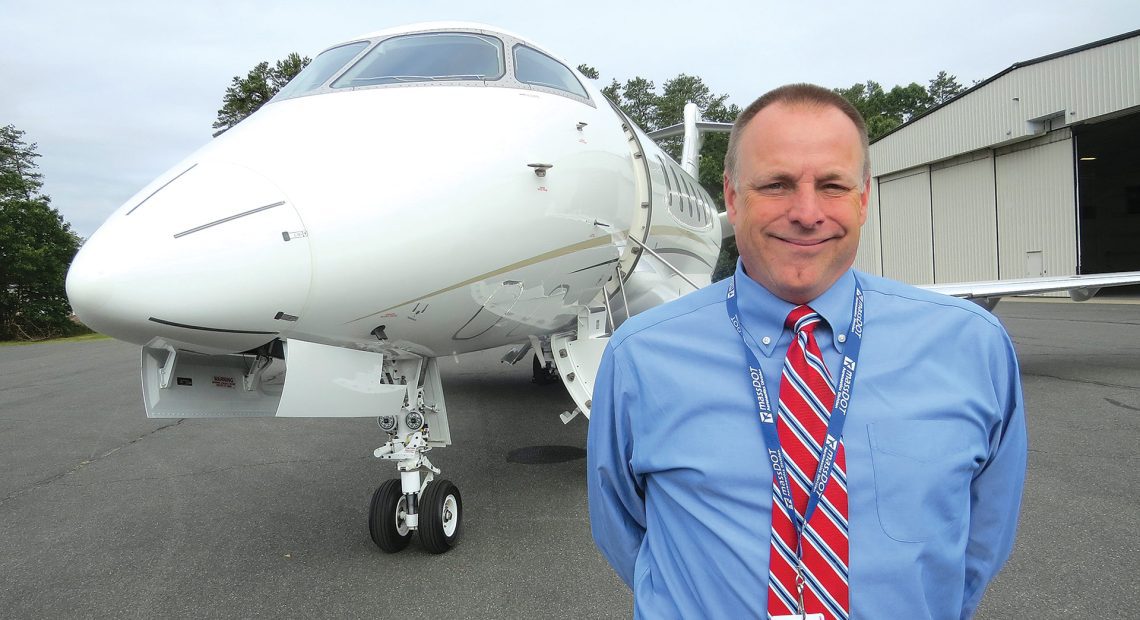
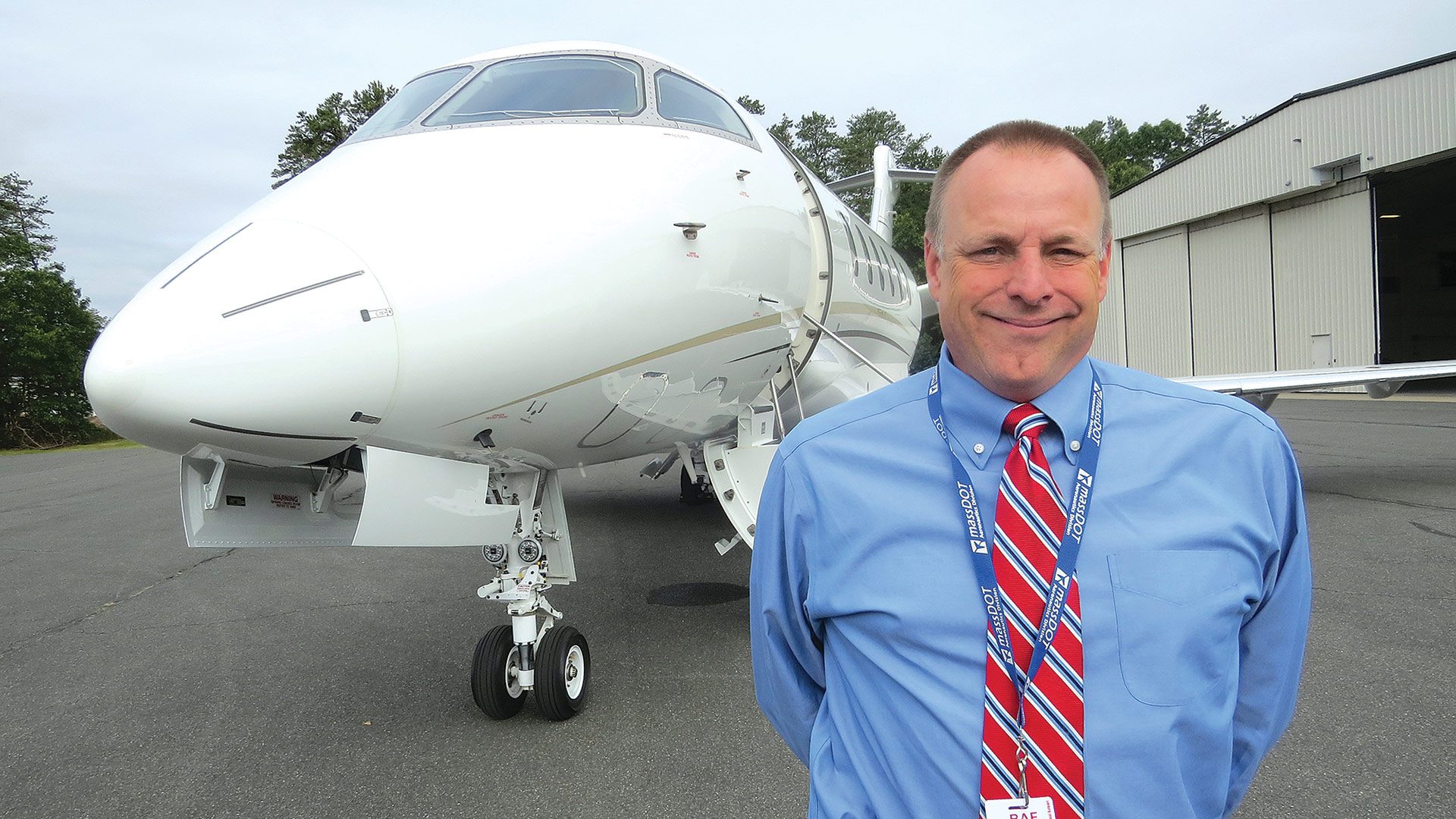
Chris Willenborg stands in front of one of the private jets

Chris Willenborg stands in front of one of the private jets based at Barnes Westfield Regional Airport, one of the many assets contributing to economic-development efforts in the city.

The F-35 stealth fighter is nicknamed ‘Lightning,’ and it is certainly expected to provide a powerful surge in Westfield.

The Pentagon announced in April that 18 F-35A fighters will be based at Westfield Barnes Regional Airport with the Air National Guard’s 104th Fighter Wing, replacing the F-15s that have been flying over the city — and on missions around the world — since 2007.

Rick Sullivan, president and CEO of the Western Massachusetts Economic Development Council — but also a former mayor of this city for a dozen years and currently a city councilor — said the F-35s will become an obvious point of pride for the community and the region, but there is an economic-development component to this decision as well.

Indeed, the move will stabilize and secure the long-term future of the 104th, which brings more than 1,000 jobs and millions of dollars in direct support to the local economy each year.

“The F-35s are obviously hugely important, not only to the operation of Westfield Barnes Regional Airport, but to the 104th, which is a significant employer in the region, and a significant business,” Sullivan explained. “Aside from being an absolute point of pride for the city and the region, it’s an important economic development as well.”

Chris Willenborg, manager of the airport, agreed.

“The F-35s mean a lot to the future of the 104th’s presence at the airport,” he told BusinessWest. “This decision really solidifies the 104th Fighter Wing having a mission at Barnes Regional Airport for the next 50 or 60 years; having a new fighter based here will be a significant asset for the airport moving forward.”

Meanwhile, the F-35s provide a powerful, up-close representation of an important part of the city’s economy: its precision-manufacturing shops, large and small, many of which provide parts to the defense and aerospace industries and planes like the F-35A.

Indeed, Sullivan, in talking about the presence of the precision-manufacturing sector and its importance to the region, has often noted that, when military or commercial planes fly over the region, residents can point to them and note that components of those aircraft are made in the 413.

And especially in Westfield, which boasts companies such as Advance Manufacturing, Boulevard Machine and Gear, and Peerless Precision, all of which have a number of customers in the aviation, defense, and aerospace sectors.

Tom Flaherty

Tom Flaherty says Whip City Fiber has become a $30-million-a-year business.

Kristin Carlson, president of Peerless, told BusinessWest that, after a lull toward the middle of the pandemic, business is picking up for Peerless and other precision manufacturers, who say their biggest challenge remains finding enough talented workers, especially as members of the Baby Boom generation retire in ever-larger numbers and the numbers of young people looking to get into this field remains … well, underwhelming.

“It’s still very much an employees’ market,” she said, adding that firms in this city and neighboring communities are competing tooth and nail for a very limited supply of qualified help, which is driving wages and benefits skyward and making it harder for smaller shops to compete against the larger national and international players.

While precision manufacturing remains a large and stable employer, the city’s economy is strong and diverse, said Mayor Michael McCabe, the former police captain who sought and won the corner office in 2021 and will seek a second two-year term this fall.

He noted the strong presence of manufacturing and distribution facilities, many of them located at or near the airport, as a well as strong retail (Walmart, Home Depot, and many others have locations in the city) and hospitality sectors, and major employers including Baystate Noble Hospital and Westfield State University.

It could also become home to a sprawling, $2.7 billion hyperscale data center complex planned for the city’s north side. That project and an accompanying tax-incentive financing plan have been approved by city officials, and the developers are awaiting word from the state on economic incentives it will provide to support the massive undertaking.

McCabe also cited a changing, rebounding downtown, one that will never again be the retail hub that is was decades ago, but is evolving into a collection of diverse shops and intriguing new developments, such as the housing complex taking shape in the former Lambson’s furniture store building on Elm Street.

For this, the latest installment of its Community Spotlight series, BusinessWest turns its focus on Westfield, where things are looking up — and so are people, especially when the F-35s are flying overhead, as they did at the recent airshow at Barnes and will do for perhaps the next 30 or 40 years.


Ready for Takeoff

McCabe said Westfield is a city that has long boasted a number of enviable assets when it comes to business and economic development. And it has taken full advantage of those assets.

That impressive list includes developable land, a commodity lacking in many area communities, especially in its North Side, which, as noted, has become home to a number of manufacturing and distribution facilities, the latter drawn by not only land but a turnpike exit, easy access to other highways, and rail service.

The list of assets also includes the university, the airport, and a municipal utility, Westfield Gas & Electric, which, through its comparatively low electric rates and expanding fiber-optic network, has become a key contributor to economic development in the city (more on that later).

As for the airport, it has long been a somewhat hidden gem, but it continues to emerge as a force in the local economy as home to not only the 104th, but also companies like Gulfstream Aerospace, where private jets are serviced, and also as a home base for a handful of jets and dozens of other planes.

“Westfield is at the crossroads of the interstates, I-90 and I-91, there’s rail access … and coupled with that is an industry-welcoming community.”

This will go down as a big year for the airport, which has thrust itself into the limelight in a number of ways.

For starters, it is celebrating its 100th birthday, Willenborg said, adding that this comes on top of the announcement of the F-35s, which brought press coverage locally, regionally, and nationally. There was also the recent Westfield International Air Show, which featured a wide range of aircraft, including the F-35A, and brought more than 100,000 people to Barnes. And just a few weeks ago, the Commemorative Air Force, a nonprofit group based in Texas, brought several vintage World War II aircraft — and thousands of spectators — to the airport.

On top of all that, Barnes is enjoying what could be called a building boom, he said, noting that there are four new hangars in various stages of construction, investments totaling between $8 million and $10 million, as well as two taxiway projects on the docket, one to start this month and the other set for next year.

Overall, the airport, which sees 50,000 takeoffs and landings each year, contributes roughly $1.2 million of direct revenue to the city, and its overall economic impact, according to a 2019 statewide study, is roughly 2,100 direct and indirect jobs and economic output of $236 million, numbers that take into account the 104th.

“The airport is definitely a major economic engine and employer here in Western Massachusetts,” Willenborg said, adding that the arrival of the F-35s is only expected to increase that impact.


The Jet Set

Also making a considerable impact is the city’s utility. General Manager Tom Flaherty said Westfield G&E’s rates are considerably lower than investor-owned utilities such as Eversource and National Grid, a competitive advantage that, when coupled with those assets listed above, gives the city a leg up when it comes to landing large manufacturing and distribution facilities, as well as the planned data-center campus.

One of the latest examples of the saleability of this package of assets is the arrival of James Hardie Building Products, which plans to open a construction siding factory in the former Old Colony Envelope plant in the city’s north side.

When it opens, the James Hardie plant will become the G&E’s largest natural-gas customer and one of its 10 largest electric customers, said Flaherty, adding that utility rates certainly played a role in the company’s decision to come to Westfield.

“It was a solid a mix of things — Westfield is at the crossroads of the interstates, I-90 and I-91, there’s rail access … and coupled with that is an industry-welcoming community,” he explained. “And when it narrows down to utility cost, and people are looking at cost and system reliability and the capability to meet that gas demand, Westfield has all that.”

Elaborating, he said Westfield has its own natural-gas spur that comes off the Tennessee Gas pipeline, which the G&E wholly owns, giving it — and the city — a huge advantage over communities such as Holyoke and utilities currently enforcing moratoriums on additional natural-gas service.

Another advantage — again, for both the city and its utility — is the G&E’s expanding fiber-optic business, Whip City Fiber. Launched in 2013 to provide fiber-optic service to residents and businesses in Westfield, the endeavor has become a $30 million-a-year business whereby the G&E has built out and now manages fiber-optic networks in 20 area communities — from Blandford to Goshen to Colrain — with more in the pipeline.

These include West Springfield and Southwick, said Flaherty, adding that more cities and towns in this region and beyond will be joining that list in the years to come.

“In the beginning, the broad goal was to bring an additional service to the residents and business of Westfield and, hopefully, break even,” he told BusinessWest, adding that, today, through its continued expansion in the city and to other communities, Whip City Fiber generates roughly $3.5 million in net income for the utility, money that is currently poured into expansion of the fiber-optic network to different parts of the Westfield.

Westfield at a glance

Year Incorporated: 1669
Population: 40.834
Area: 47.4 square miles
County: Hampden
Residential Tax Rate: $16.98
Commercial Tax Rate: $33.52
Median Household Income: $45,240
Median Family Income: $55,327
Type of Government: Mayor, City Council
Largest Employers: Westfield State University, Baystate Noble Hospital, Mestek Inc., Savage Arms Inc., Advance Manufacturing Co.
* Latest information available

When the entirety of Westfield is covered by the service, that revenue can be put toward other initiatives, such as the utility board’s recent vote to make additional payments in lieu of taxes to the city with the intention that they be used to upgrade athletic fields in the city.

“We’re looking to partner with the city to turf up to six fields and pay the bond for that, up to $1 million a year,” he said, adding that many of the city’s athletic fields are in need of upgrading or expansion. “That’s a project where we can give back to the community as we continue to bring in revenue from communities outside of Westfield.”


Soar Subject

While the F-35s are expected to provide a boost in civic pride and some stability for the 104th and the local economy, the precision manufacturers in the area are hoping they do something else — generate some interest in the field.

Such forms of inspiration are still very much needed, said Carlson, adding that, despite attractive pay rates, good benefits, and even growing flexibility in the workplace, it remains a struggle to find and retain talent, a challenge that is testing many of the shops in the city, including hers.

Hiring was an issue before COVID, noted Carlson, who was honored by BusinessWest with its Difference Makers award in 2021, primarily for her tireless work to educate young people about this sector and hopefully draw more of them into it, adding that the pandemic and its many side effects, including generous unemployment benefits, only exacerbated the problem.

“Whoever thought it could get harder for manufacturers to find good people?” she asked with a laugh. “It’s always been a struggle for our industry, and post-pandemic, it’s been even worse; somehow, I was able to fill open positions inside of a month this year, and I’m not really sure how that happened.

“There are a lot of us in Westfield who constantly have job openings, and we’re trying to fill them, as is the case with every manufacturer in the state and the country, for that matter,” she went on. “The problem is the same that it’s always been — we have a limited skilled labor force that we can pull from, and we’re all competing for the same ones.”

Elaborating, she said Westfield Technical Academy graduates 16 to 18 students a year from its manufacturing department, and there are roughly 30 shops in Westfield alone competing for those students, many of whom are brought into shops as part of a co-op program while they’re seniors, with the goal of seeing them stay with the firm in question.

Meanwhile, the pandemic had the additional effect of pushing many Baby Boomers over the retirement cliff, Carlson said, adding that this drain of experienced talent further tested shops large and small, including Peerless, which saw two long-time employees retire over the past year.

Still, despite these challenges, most shops, including Peerless, are thriving, she said.

“We had a slump last year, but we’re coming out of it, and we’re at almost 90-degree climb now, so it’s good,” she said, using an aviation-industry term to get her point across. “We’re seeing a lot of large customers who had really slowed down during the pandemic coming back in full force, and we’re seeing customers come back that we hadn’t done business with in three years because of the pandemic.”


Uplifting Thoughts

Speaking of 90-degree climbs … the F-35s are not expected to arrive until 2026. But already, expectations, and the overall outlook for the city, are sky high.

After years of effort and lobbying on the part of city, state, and national officials, the latest-generation F-35s will be coming to Barnes, providing — as Sullivan, McCabe, Willenborg, and others told BusinessWest — both a point of pride and an economic boost for the city and region.

It’s a lightning strike, to be sure, and one with a powerful jolt.

Home Improvement

Reflecting on a Legacy

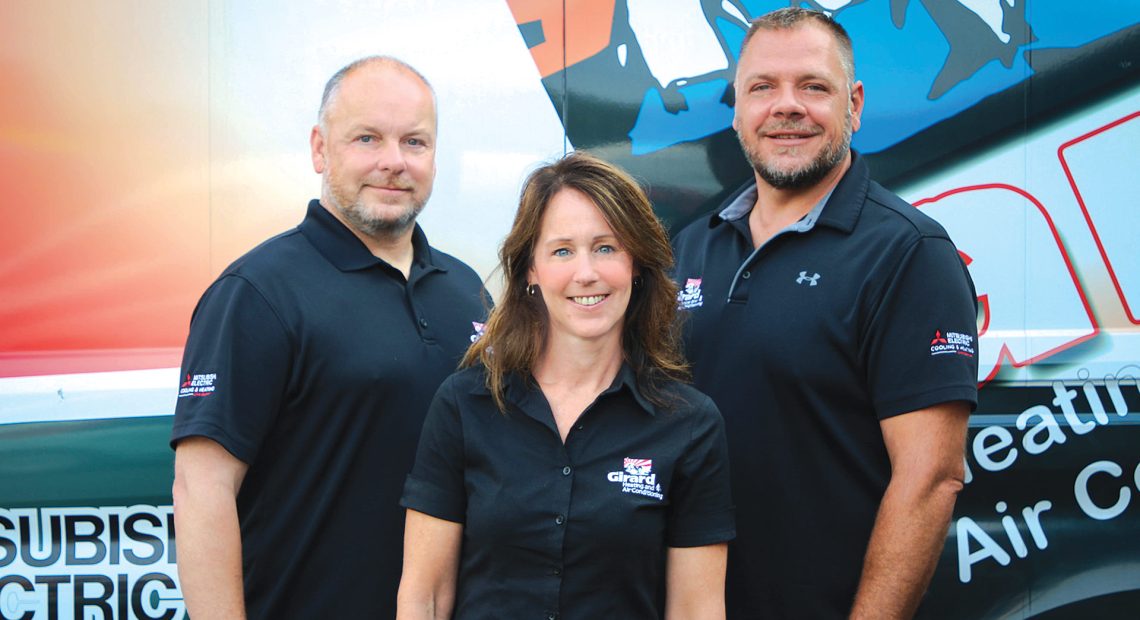
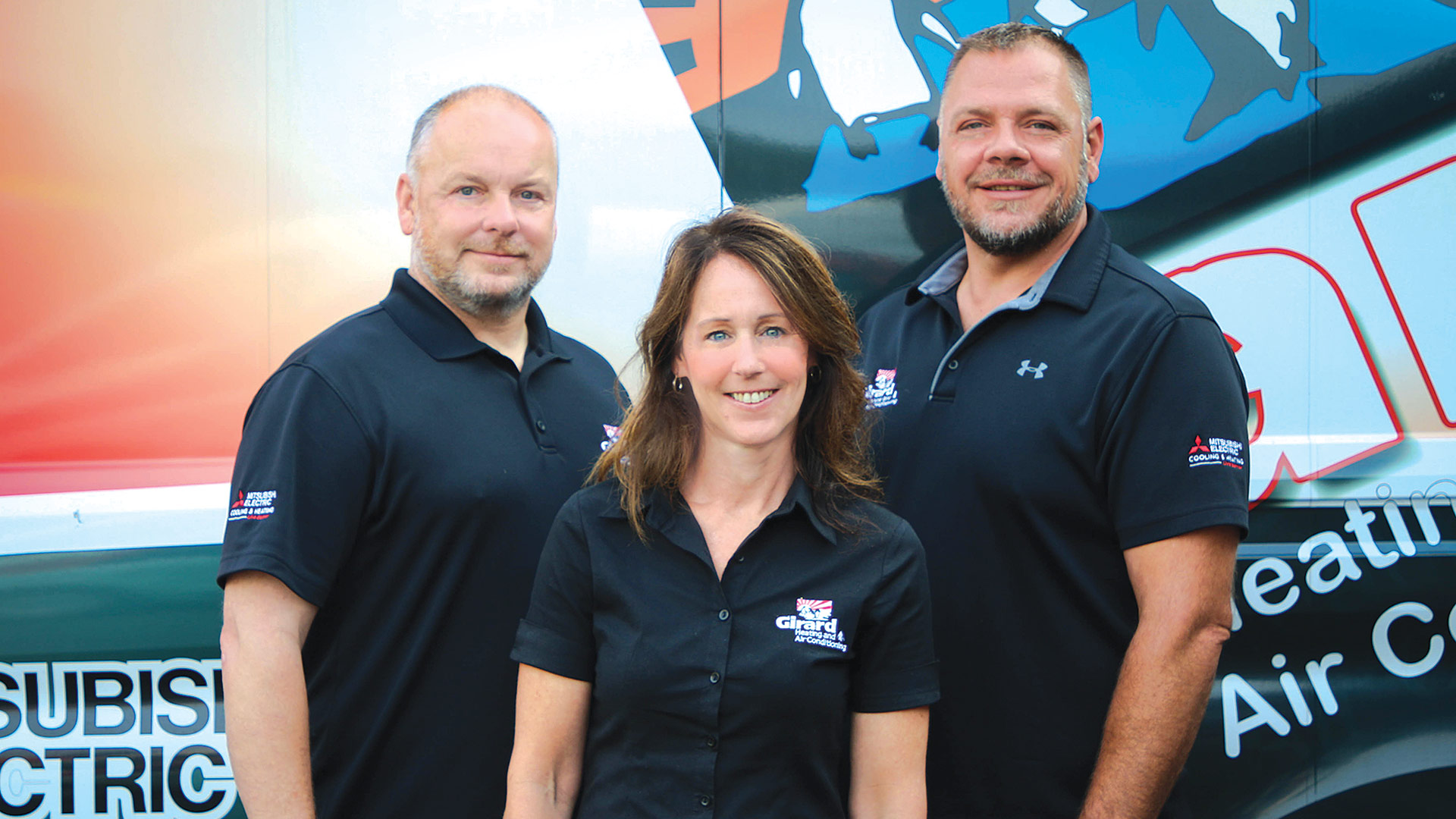
From left, partners Steve Girard, Jennifer Gagnon, and Bob Girard.Photo by Market Mentors

From left, partners Steve Girard, Jennifer Gagnon, and Bob Girard.
Photo by Market Mentors


To build a company and steer it to three decades of growth, one needs to be future-focused. But Steve Girard has been thinking a lot about the past, too.

“When you get to my age, you start thinking about your legacy,” said Steve Girard, president of Girard Heating and Air Conditioning, which is celebrating its 30th anniversary in 2023. “I’m proud of the guys I’ve trained over the years who are doing great things in the industry — they can track their lineage back to me, and that means a lot. The other thing is, we’ve got customers who are grandparents, and we took care of their kids and then their grandchildren. I look at the generations of people we’ve helped, and in some instances, they almost feel like part of the family.”

Since opening his doors in Westfield in 1993, Girard said, the company has become the premier installer of ductless Mitsubishi Electric cooling and heating systems and has consistently provided service that exceeds customer expectations. It’s a legacy — there’s that word again — he says he’s continuing from previous generations.

Indeed, Girard began his career during his middle-school years when he worked for his grandfather, who owned a heating and cooling company. “I didn’t realize I was learning anything,” he said. “I thought I was just hanging out with my grandfather.” 

After enrolling at Westfield State University, Girard continued working during school breaks for the person who bought his grandfather’s shop. Realizing how much he knew about the industry, he took a summer job at Westside Air Conditioning. 

“It’s not like we came up with a recipe 30 years ago and just rode it out. We come up with a plan for three or four years, then we have to scrap it and come up with a new one.”

“I had a great summer and loved what I was doing,” he recalled. “I decided to continue working, and did not go back to college.” 

After being employed as an installation foreman for another company, Girard decided to start his own business. He brought his brother, Bob Girard, and his cousin, Jennifer Gagnon, into the business, and about a decade in, the three became partners in the company. 

“Having been a part of the business since its inception, I am so proud to see Girard thrive over the past 30 years,” Bob Girard said. “I’m excited to see what future successes lie ahead for our business.”

Steve Girard said one of the biggest changes he’s witnessed in the industry has been technology. “There’s just so much going on now with technology, connectivity, smart systems, and everything else. It can be daunting at times.”

He added that, over the past three decades, he’s had to adapt the business many times to meet consumer demands and trends, such as the recent interest in heat pumps (see related story on page 43).

“It’s not like we came up with a recipe 30 years ago and just rode it out,” he concluded. “We come up with a plan for three or four years, then we have to scrap it and come up with a new one.”