Daily News

SPRINGFIELD — Bulkley Richardson announced the passing of long-time colleague Ronald Weiss. 

Born and raised in Springfield, Weiss was an alumnus of Classical High School (1964), Dartmouth College (1968), and the University of Pennsylvania Law School (1972). He was a past member of the U.S. Army Reserves. 

“As a senior partner at Bulkley Richardson, Ron has been an integral part of Bulkley Richardson for decades, earning him the reputation as one of Western Massachusetts’ most respected and esteemed lawyers,” the firm said in a statement. “Known for his sharp legal mind and unwavering ethical standards, he was a trusted advisor to many and a guiding force in the legal field. Internally, he was a fierce mentor, laying the groundwork for a legacy of skilled lawyers to follow in his path.” 

An advocate of organizational growth and sustainability, Weiss was committed to many leadership roles throughout his career and volunteered his time to community organizations. He was instrumental in the founding of the Community Foundation of Western Massachusetts, an institution that has provided millions of dollars in scholarships and grants, where he also served as general counsel. He co-founded the Pioneer Valley Family Business Center, was actively involved in the Jewish Foundation of Western Massachusetts, and was a steadfast advocate for the Springfield Symphony Orchestra, where he held leadership roles for decades. His tireless efforts earned him the prestigious Pynchon Medal, awarded for his exceptional contributions to civic life through a “remarkable ability to understand and solve complex problems” and his “long-term dedication and commitment to the success of the organizations he serves and to the region in which he and his family live.” 

Bulkley Richardson added that “Ron’s friendship, wit, and brilliant mind will be greatly missed.” 

Daily News

GREENFIELD — Gagne Wealth Management Group has been named to the Forbes 2025 Best-In-State Wealth Management Teams list, a prestigious recognition that highlights the top financial-advisory teams across the country.  

Since founding the firm 15 years ago, Merrill Gagne has built Gagne Wealth Management Group from the ground up, developing a client-centric approach that emphasizes goal-oriented financial planning, personalized investment strategies, and risk management. The firm is dedicated to creating customized portfolios tailored to each client’s aspirations, ethical values, and risk tolerance, ensuring a financial strategy that is both empowering and educational.  

“This recognition by Forbes is an incredible honor and a reflection of the hard work and dedication of our entire team,” Gagne said. “Our goal has always been to help our clients feel confident about their financial future by providing strategic guidance that aligns with their personal values and long-term objectives.”  

Merrill, who now leads a team of financial advisors, has a history of industry accolades, including being named a Forbes Best-In-State Wealth Advisor last year, along with being featured on Forbes’ Top Next-Generation Wealth Advisors list. Earlier in his career, he was recognized as a top producer at Northwestern Mutual, achieving #1 in the Platinum category for the Eastern Region.  

Beyond his professional achievements, Gagne is deeply committed to his community. He is a driving force behind the Franklin County YMCA’s development committee and serves as a board member for the Greenfield Public Library Foundation. He is also a dedicated volunteer, donor, and weekly driver for Rachel’s Table, a major sponsor of the Children’s Advocacy Center. Additionally, he served as a project sponsor for Alternative Investments under Mila Sherman at the Isenberg School of Management at UMass Amherst. 

“Merrill’s influence extends far beyond financial planning,” said Jessye Deane, executive director of the Franklin County Chamber of Commerce. “His dedication to our local community — through his work with the chamber, Franklin County’s YMCA, Greenfield Public Library Foundation, Rachel’s Table, Ja’Duke, youth sports leagues, and more — demonstrates his deep-rooted commitment to enhancing the quality of life in Franklin County. This recognition is a testament to his leadership in both business and philanthropy.” 

Daily News

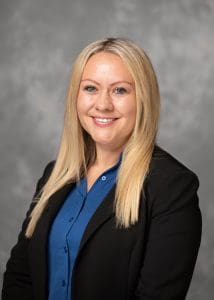
Vanessa Stratton

CHICOPEE — Polish National Credit Union (PNCU) announced that Vanessa Stratton has joined the institution as vice president of Finance. 

Stratton, a certified public accountant, brings more than a decade of experience in the banking industry. She earned an MBA with a focus in finance and has held several key positions throughout her career, including chief financial officer and treasurer at a community bank. Her areas of expertise include financial analysis and reporting, GAAP compliance, internal control, and investment management. 

In her role as vice president of Finance, Stratton will oversee PNCU’s financial operations, including financial reporting, budgeting, and cash-flow management. She will also work closely with the executive team to implement strategic financial initiatives and support the credit union’s growth. She is known for her strong leadership skills and her ability to drive process improvements and efficiencies. 

“We are excited to welcome Vanessa to our leadership team,” said Jim Kelly, President and CEO of Polish National Credit Union. “Her extensive experience and deep understanding of financial management make her an ideal fit for this role. I am confident that Vanessa will play a key role in furthering the success of PNCU and serving our members with excellence.” 

Daily News

SPRINGFIELD — Big Y’s annual Sack Hunger campaign provides funds for four food banks within its two-state marketing area. In turn, these food banks support local soup kitchens, food pantries, senior food programs, daycare centers, and many others of the 2,100 member agencies they help every day. Their goal is to maximize access to nutritious food and other resources that support food security for those at risk of hunger. 

Throughout this past holiday season, customers and employees generously supported Sack Hunger at Big Y supermarkets and Table & Vine Fine Wines and Liquors. Every $5 donation brought 10 meals to those in need of support. Additionally, Big Y added more ways to boost their efforts with specific proceeds from the produce, floral, and meat departments, along with a portion of every one of Big Y’s family of private-label brands. 

Big Y’s Sack Hunger campaign started in 2010, when 740 meals were donated. With this year’s 1 million meals, the program continues to expand its efforts to support those in need. Big Y’s Sack Hunger donation is part of its ongoing support throughout the year, including almost daily donations of meat, fresh produce, and bakery products, along with grocery, frozen, and dairy items. The four regional food banks are the Food Bank of Western Massachusetts, the Worcester County Food Bank, the Greater Boston Food Bank, and Connecticut Foodshare. 

“Each year, our customers and employees come together to support families across Massachusetts and Connecticut impacted by food insecurity during the holiday season,” Big Y President and CEO Michael D’Amour said. “We are thankful for the opportunity to make a meaningful impact in the lives of those in need, and we appreciate everyone involved in spreading hope throughout our communities.” 

Community Spotlight

Community Spotlight

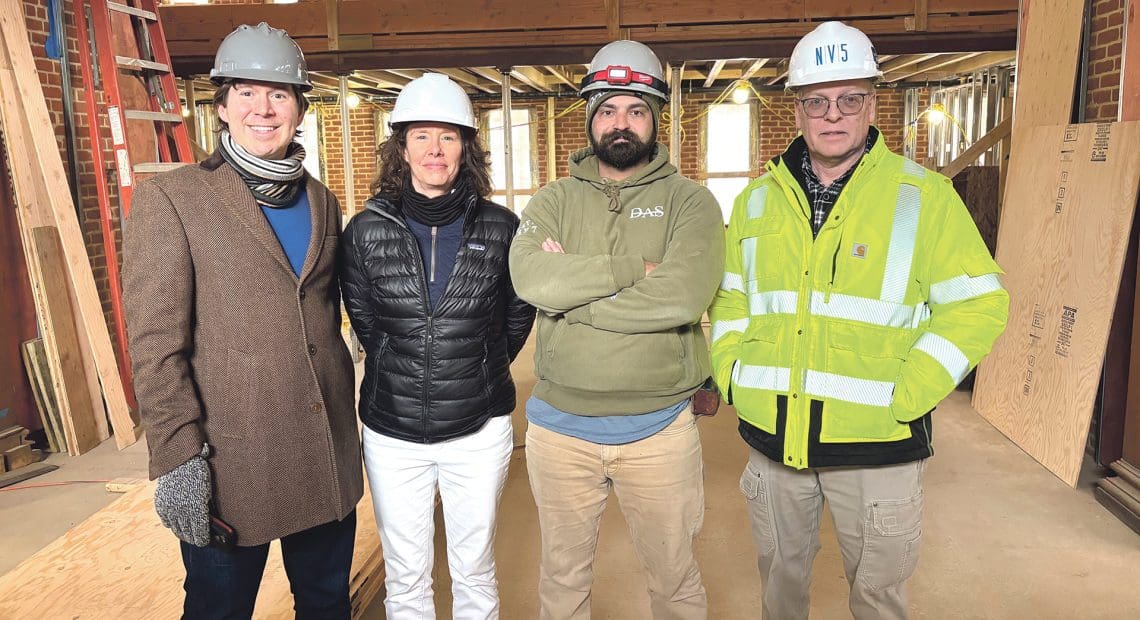
From left, Lee Pouliot, Krista Benoit, Brett Brown, and Bob Alger stand in the main entrance to the former main library in Chicopee, now undergoing historic rehabilitation for use as a community hub.

From left, Lee Pouliot, Krista Benoit, Brett Brown, and Bob Alger stand in the main entrance to the former main library in Chicopee, now undergoing historic rehabilitation for use as a community hub.


‘Historic rehabilitation.’

That’s the phrase Lee Pouliot and others used to describe work at Chicopee’s historic City Hall and the neighboring, long-closed main library.

In doing so, they made the distinction between this type of work and historic restoration.

Indeed, the latter returns something to what it once was at a specific point, said Pouliot, director of the city’s Planning Department, adding that this will not be the case with either building.

Indeed, the library, closed since 2004, when a new facility was built, will be renovated for use as a community hub, home for a farmer’s market, and meeting space, said Pouliot, while phase 2 of a project at City Hall and its annex will involve an office-by-office renovation of spaces to suit current needs and technology and make the best use of those spaces.

“One purpose of the project is to right-size some of the office spaces; we have some offices that have too many people crammed into too small a space,” he explained. “Another priority is building security. In working with all the department heads, we identified the offices that get the most visitation on a daily basis and tried to relocate them to the lower floors of the building, so we didn’t have the public accessing areas that they don’t need to.”

The City Hall project, which has been ongoing for a decade, has been slowed by the pandemic, but also a lengthy — as in more than three years — design phase that required large amounts of data collection from city department heads and employees about space requirements and specific needs.

Historic rehabilitation of the two downtown landmarks, work that has been ongoing through four mayoral administrations, is just one of the storylines involving Chicopee, the region’s second-largest city.

“One purpose of the project is to right-size some of the office spaces; we have some offices that have too many people crammed into too small a space.”

Others include everything from ongoing efforts to repurpose several old mills and create sorely needed new housing — projects that dovetail nicely, as we’ll see — to efforts at Elms College to cope with the many issues and challenges in higher education today, especially the so-called demographic cliff, a sharp decline in the number of the number of 18-year-olds entering college. But there are others as well, including the soaring cost of higher education and the need to help students and their parents meet it, as well as free community college, which is both a challenge and an opportunity.

The college is taking steps to help bring that cost down and afford more opportunities for a college education through initiatives such as the recently announced Elms Promise, a financial-aid program designed to provide full tuition coverage for students from families earning less than $85,000 annually.

“The cost of a college education has been on the increase, and families’ income has not increased as fast as the rise in tuition,” Elms College President Harry Dumay said in explaining the genesis of the program, adding that, since its inception, the school has placed an emphasis on being affordable for all types of students.

For this, the latest installment of its Community Spotlight series, we take an in-depth look at Chicopee and how it is building momentum — in all kinds of ways.


History in the Remaking

As they talked with BusinessWest in the former City Council meeting chambers on the fourth floor of City Hall, Pouliot; Krista Benoit, a project manager for Northampton-based D.A. Sullivan & Sons; and Bob Alger, senior project manager for NV5, a Hadley-based engineering firm, noted that the renovation of City Hall, opened in 1871, has been a decade-long project that essentially began when two panes of stained glass fell out of the rose window at the front of the building.
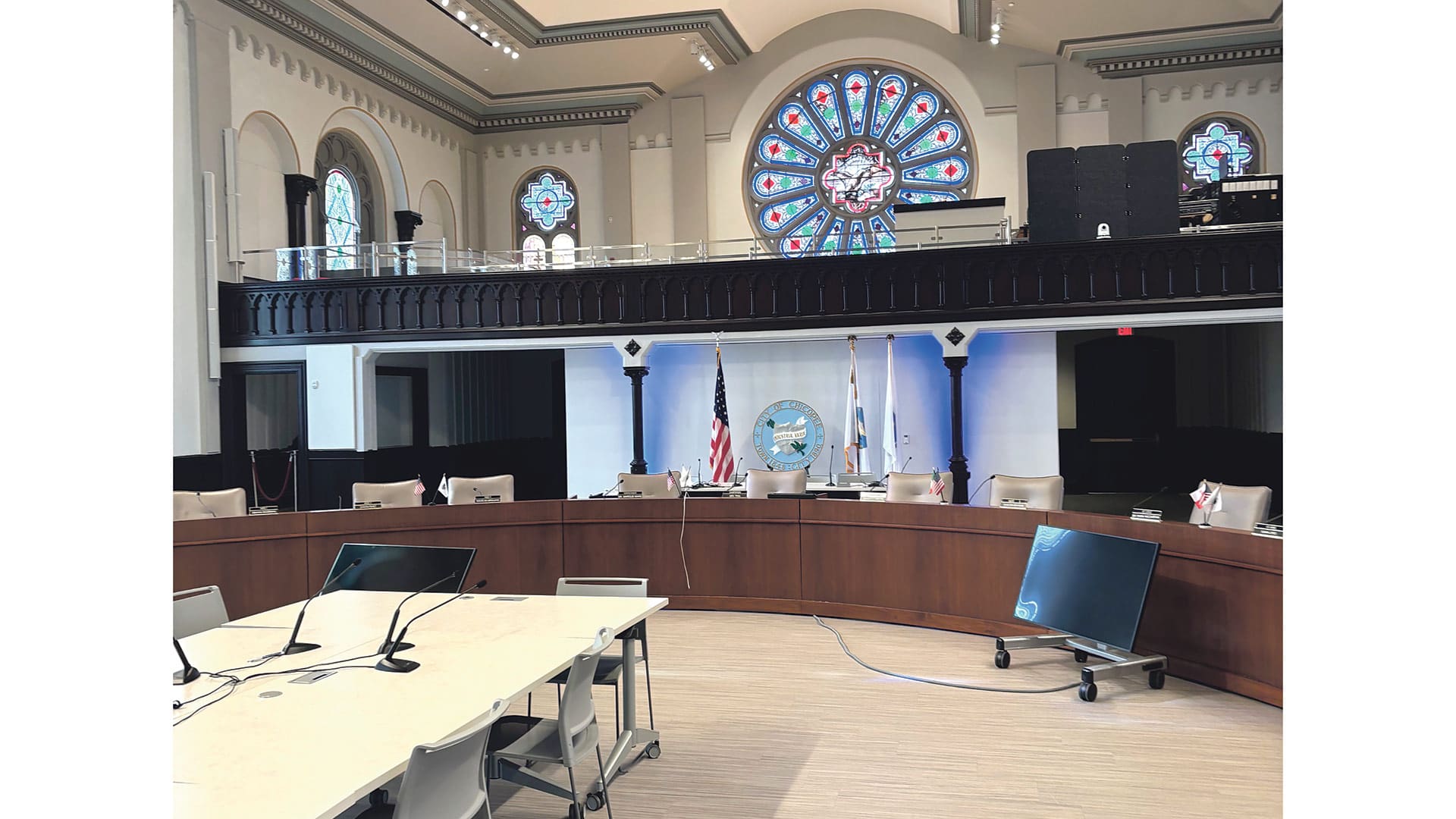
Phase 2 of the ambitious City Hall project will follow recent work like this renovated auditorium.

Phase 2 of the ambitious City Hall project will follow recent work like this renovated auditorium.

Then-Mayor Richard Kos asked Pouliot to undertake an emergency stabilization and historic-structure analysis to determine if there were physical deficiencies in the building’s structure. Dietz & Company Architects of Springfield was hired to work on both, and the firm determined that there were a number of significant deficiencies that needed to be addressed in both City Hall and the annex.

Emergency stabilization work included everything from the removal of stones from the clocktower amid fear of them falling to removal of the stained glass throughout the building for protection, Alger said.

Following these initiatives, funding was secured for phase 1 of historic rehabilitation work, which entailed work on the building envelope and the HVAC systems, he went on, adding that this included roof replacement, stone and masonry repair, brick repair, replacement of all the windows in both buildings, and a stunning renovation of the auditorium, a $17 million endeavor overall.

Phase 2, a $16 million project, will involve a three-year schedule of moving through the building, renovating and rightsizing offices, said Benoit, who first became involved in the project while working as a designer for Dietz and Company, and is now on the construction side with D.A. Sullivan, which also handled phase 1.

She noted that D.A. Sullivan has a strong track of work for area municipalities and in the areas of historic restoration and rehabilitation.

“We’ve been around for so long now, 1897, we’re now renovating many of the projects we actually built,” she said, adding that the Chicopee projects involve buildings on the National Register of Historic Places.

Pouliot noted that the contractors will hopscotch through the buildings, renovating a few offices at a time.

“We’re taking two to three office spaces offline at any given time, relocating staff to vacant office space, remodeling those offices, and moving staff back in,” he explained, adding that several departments will be moved to different floors or different areas that better suit their needs and those of the public.

These will be gut remodels, he went on, adding that it will take three to eight months to ready each space for its new occupant.

As for the library, Pouliot said there have been several requests for proposals issued for the city’s old library, and, over the years, a few intriguing uses have been proposed.

There was talk of a brewery that never really got off the ground, he said, adding that the concept that gained the most traction — but not enough to become reality — was to make the landmark home to the largest private collection of Franklin D. Roosevelt memorabilia, some 10,000 pieces, once housed in Worcester. There was even talk of the possible creation of a Roosevelt Study Institute and a collaboration between the museum and Elms College.

The ‘community hub’ concept was ultimately deemed the alternative that made the most sense, said Pouliot, adding that it transforms the library into a different kind of community resource, one that will hopefully bring more people and vibrancy to the Market Square area.


Grade Expectations

While the city works to rehabilitate its landmarks, one of its leading institutions, Elms College, is trying to build a more secure future by taking a proactive approach to the many challenges facing higher ed today, especially smaller, private institutions.

“There’s never a moment to rest,” said Dumay of this challenging time, describing Elms as being “healthy, not wealthy.”

By that, he meant that the school has a small endowment — $12 million, although it’s much larger than it was even a few years ago — but it remains in solid fiscal heath, thanks to steady enrollment in many of its divisions. These including transfers, continuing education, and graduate programs, making up for a decline in enrollment among high-school graduates, something being seen across this region and across the country, a situation exacerbated by what Dumay (and many others) have called the “less than adequate rollout” of Free Application for Federal Student Aid, or FAFSA.

“We had a really good year of students transferring to Elms College, a good year for students completing their degrees through our continuing-education program, and a good year of graduate students,” he explained. ‘Overall, we took in around the usual number of 500 students that we traditionally take in for all categories, despite the fact that, with our first-time freshmen, we didn’t reach the target that we were looking for.”

In this environment, schools need to be aggressive in telling their stories, stress their strengths and values — and the value they provide — and be responsive to those challenged by the high cost of a college education, he said, adding that the Elms Promise was created to help empower those students least likely to afford higher education, and it underscores the school’s affordability.

Chicopee at a Glance

Year Incorporated: 1848
Population: 55,560
Area: 23.9 square miles
County: Hampden
Residential Tax Rate: $15.16
Commercial Tax Rate: $32.62
Median Household Income: $35,672
Median Family Income: $44,136
Type of Government: Mayor; City Council
Largest Employers: Westover Air Reserve Base; J. Polep Distribution Services; Callaway Golf Ball Operations; Dielectrics; MicroTek
* Latest information available

“Having this Elms Promise out there clearly and crisply conveys to students and their families that an Elms College education can be as within their reach as some of the other alternatives available to them,” he explained, adding that this includes MassEducate, the state’s free community-college initiative, which, as noted earlier, is both another challenge and a great opportunity down the road.

“I’ll always be in favor of any initiative that makes college accessible for students,” said Dumay, a first-generation college graduate himself. “And we already know that this has increased enrollment at community colleges significantly, in this area and beyond. And because of the articulation agreements we have with all the area community colleges, and because many of the community-college students transfer to us, we’re expecting the number of students that will transfer to us to increase, and we see that as an opportunity down the road.”


Developing Stories

While Elms copes with its challenges, the city continues its work to put some of its former mills back to productive use while also addressing an urgent need for more housing.

Pouliot said the owners of the last remaining building in the Facemate manufacturing complex, the so-called Baskin parcel, are finalizing the securing of resources from the Commonwealth, and a groundbreaking is expected in the near future on 105 units of housing.

Meanwhile, a developer has been recommended for the four remaining buildings within the massive Uniroyal tire-manufacturing complex, the redevelopment of which has been a more-than-40-year saga, said Pouliot, adding that a mixed-use development that includes housing is being eyed.

These projects are moving slowly, he noted, because of the high cost of rehabilitating former mills of this kind into housing and other uses, as well as the time-consuming process of securing the various forms of financing, often including historic tax credits, needed to make such endeavors viable.

“Slow but steady wins the game when it comes to mill conversion,” he told BusinessWest, adding that the Uniroyal project will most likely develop in phases over several years.

In the case of another huge old mill, Cabotville Industrial Park, formerly home to dozens of various-sized businesses but now mostly vacant, progress has come very slowly, and its fate remains a large question mark.

“There have been a number of owners that have suggested a significant redevelopment project there,” Pouliot said, adding that such talks have been going on for more than 20 years now. “We’ve been stuck in this current round with the current owner, Silverbrick, for two or three years. But it’s a viable project for the right developer with the right experience.”

Housing remains a critical need in the city, he noted, adding that, in addition to the Facemate property and its 105 units, other, smaller projects are advancing, including plans to develop the site of a former Masonic lodge on East Street and the conversion of the former Belcher Elementary School into 24 apartments.

Melissa Breor, executive director of the Chicopee Chamber of Commerce, said redevelopment of Cabotville and other large mills, as well as the smaller projects in and around the downtown area, form one of the keys to continued growth and greater vibrancy in the central business district, which has seen many new businesses open in recent years amid of a spurt of entrepreneurship, which continues today.

She cited the planned redevelopment of a large Victorian home on Grove Street in Chicopee Falls into a mix of housing on the upper floors and a possible wine bar on the first, being undertaken by the owner of nearby Falls Pizza, as an example of this entrepreneurship and the importance of new housing.

“In terms of economic development and workforce development, housing is at the center of all that,” she said. “We have some great developments that are in process and at various stages, and with those housing developments, people are going to need services and places to go. To have a business owner have that vision is really exciting.

“Investments like the one at Falls Pizza show great vision,” she went on, adding that new housing, in general, spurs new business development, which is good news for a city with a rich past and a promising future.


 

Construction

Chairman of the Boards

Joe Marois, left, and Carl Mercieri.

Joe Marois, left, and Carl Mercieri.


When asked why he left work as an insurance adjuster to start his own construction business, Joe Marois gave an answer as direct as it was insightful.

“It was a conscious decision to do something on my own so I wouldn’t have anyone to blame if I was a failure,” he told BusinessWest. “In the corporate world … I played that game for a while, but I wasn’t going to try to rely on someone when I was older, waiting for that promotion; I couldn’t deal with that.”

A half-century of change and economic ups and downs later, ‘failure’ is certainly not a word that comes to mind when assessing not only Marois Construction, but also his other ventures, the Orion Farm equestrian centers — there are two, one in South Hadley and the other in Wellington, Fla. — and what could be called his commercial real-estate subsidiary as a self-storage business. Indeed, they are all success stories.

And now, 52 years after he got his start in his mother’s garage, Marois will be spending maybe a little more time with those latter two ventures.

Indeed, he is passing the torch of management at Marois Construction to Carl Mercieri, a 35-year employee of the company who, like Marois, got his start as a field carpenter and then worked his way up to estimating and eventually project management.

Mercieri will take the title of president, while Marois will serve as chairman of the board. Together, they plan to continue following the blueprint drafted in 1972, one of seizing opportunities as they emerge and following what has become the company’s marketing tagline: “Building What Others Envision.”

They also plan to continue a course of expansion and diversity, one that has seen the company take on more public-sector work and broaden its geographic reach up and down the I-91 corridor, into Berkshire County and beyond.

“It’s simple … we want to keep growing and building on what we’ve been able to accomplish,” said Mercieri, adding that, aside from some titles and responsibilities, little else will change at this company that can borrow a term from the horse farm and say it has a great track record.


Building on the Foundation

Marois, who copied Morse code while serving in the Air Force in Alaska before landing work as an insurance adjuster, said he started his construction venture with a tool belt and a used Royal typewriter to type invoices.

He also had the requisite entrepreneurial energy, that aforementioned desire to control his own fate, and confidence in his own abilities born from experience — as well as lessons and encouragement from mentors.

“I always had a proclivity for carpentry,” he explained. “I worked in high school for some contractors, framing houses and so forth. I liked it, and I had some good mentors in those days; they recognized that I had some ability, and they took the time to teach me stuff.”

“It was a conscious decision to do something on my own so I wouldn’t have anyone to blame if I was a failure. In the corporate world … I played that game for a while, but I wasn’t going to try to rely on someone when I was older, waiting for that promotion; I couldn’t deal with that.”

Marois also had a few contacts, and one of them helped him land a job rehabbing the lower floors of a block of buildings in Holyoke into apartments.

“I did the drawings at my house on the kitchen table,” he said, adding that the project eventually led to others in the Paper City, and soon he had a foundation on which to build his company.

Over the years, the firm has handled a good mix of public and private work, with clients ranging from most of the area’s colleges and universities to municipalities (public-safety facilities are one of the firm’s niches) to several area banks and other businesses.

Recent projects have included everything from extensive renovation of a former computer-assembly facility into the new home of Veritas Preparatory Charter School to an emergency-systems upgrade at the John Adams high-rise dorm at UMass Amherst; from a LEED-rated PeoplesBank branch in Northampton to conversion of the former HUB Insurance building in Agawam into a new public-safety facility.

Such diversity, crucial to success in this sector, is what has developed over the years, said Mercieri, who, as noted, also started out as a carpenter.

“I was a millwright, and I worked at a mill; a friend of mine’s father was a VP at this company, and he got me a job,” he recalled. “I was young, so I was the guy carrying everyone’s tools, and I worked for plumbers, electricians, masons … I learned all the different trades. I spent 10 years there earning my ribbons, and then I went out on my own and did residential work for four or five years before landing here.

“Going back to my millwright days, that was quite the experience, learning all those different trades,” he went on. “I go to a job site, and I see electricians and plumbers … I’m no expert at it, but we can speak the same language.”

“I was young, so I was the guy carrying everyone’s tools, and I worked for plumbers, electricians, masons … I learned all the different trades.”

Building on the company’s portfolio of diverse projects and keeping a steady flow of projects in the pipeline are the primary goals as Mercieri and Marois complete this transition of leadership, something that has been in the works for several years now.

“Succession planning is important, and it’s unique to each company that does it,” Marois said. “It’s been a smooth, amicable process on our side … it was just about the bells and whistles.”

What emerged is a plan whereby Mercieri will manage the construction company and Marois will maintain ownership of — and remain active in — the various businesses under what could be called the Marois umbrella.

That includes a portfolio of commercial real-estate properties, as well as Orion Farms North and South, with the former sitting on 40 rolling acres in South Hadley, an old dairy farm that Marois acquired decades ago, and the latter an equestrian facility in Wellington, Fla., where Evans trains during the cold months and competes at the Winter Equestrian Festival.

“I wasn’t sure what I was going to do with it, but the more I got into it, the more I fell in love with the prospect of having some type of farm there,” he said, noting that the acreage is now home to a multi-faceted business. He and partner Linda Evans, an accomplished rider and trainer who has competed in shows resulting in many national champions, have a riding school catering to beginners and experts alike, with a stable of 40 horses (Warmblood show jumpers for the most part), as well as boarding and other services.

Like the construction company, the horse farms are a labor of love for Marois, who grew up near the South Hadley farm and developed a passion for riding himself, although he’s mostly retired from that activity.


Bottom Line

He has no plans to retire from his various businesses, though.

He joked that the announced transition plans are designed to “let people know that they don’t have to call me; they can call Carl — although they can call me if they want.

“And I can focus on getting old,” he continued with a laugh, adding quickly that his focus will actually be on his businesses, people, horses, and the continuation of what he started 52 years ago.

That would be a success story on every level imaginable.

Health Care Healthcare News

Food for Thought

New research from Anna Maria Siega-Riz, professor of Nutrition and Epidemiology and dean of the School of Public Health and Health Sciences at UMass Amherst, finds a pervasive low-quality diet among pregnant and postpartum individuals, reflecting “an urgent need for widespread improvement.”

The study, recently published in the American Journal of Clinical Nutrition and co-led by the Eunice Kennedy Shriver National Institute of Child Health and Human Development, assessed diet quality in the same individuals from the beginning of pregnancy through one year postpartum. Few studies have analyzed diet quality in pregnancy and postpartum in the same participants.

Siega-Riz and her colleagues used the USDA’s Healthy Eating Index (HEI), which is based on federal dietary guidelines, to develop a diet quality score for participants in the Pregnancy Eating Attributes Study (PEAS). Because diet quality during pregnancy and postpartum impacts short- and long-term health outcomes for parent and child, the team of perinatal nutritionists and epidemiologists aimed to identify risk factors for low diet quality to develop effective interventions.

The overall average HEI score for the study participants’ diets was ranked on a 0-100 scale at 61.6. On a traditional A-F scale, the grade would be barely passing, a D, although that score is 10% higher than the average HEI score of the overall U.S. adult population. The HEI score is based on the adequate consumption of nine foods — total fruit, whole fruit, total vegetables, greens and beans, whole grains, dairy, total protein, seafood, and plant proteins, as well as fatty acids — and the consumption of four foods in moderation: refined grains, sodium, added sugars, and saturated fats.

Anna Maria Siega-Riz

Anna Maria Siega-Riz

“You’re only capable of changing your diet if your income and your environment support it. And that, I think, is something that a lot of people forget.”

Among all the study participants, HEI scores were stable from early pregnancy through one year postpartum. But researchers noted differences in scores according to sociodemographic characteristics, weight status, lactation duration, and tobacco smoking.

“You would think that pregnant women are highly motivated to eat better during pregnancy, precisely because they are pregnant. And that’s true in certain populations,” said Siega-Riz, the study’s senior author. “You saw higher-income women having a higher-quality diet, and lower-income women having a lower-quality diet.”

She noted that lower-income women may be working multiple jobs and either don’t have access to higher-quality foods, can’t afford them, or need more overall support from family, friends, and healthcare providers. “You’re only capable of changing your diet if your income and your environment support it. And that, I think, is something that a lot of people forget.”

Unmarried study participants and those participating in more than one federal assistance program recorded the lowest mean HEI scores. In addition, a higher body-mass index (BMI) was associated with a lower-quality diet. The highest mean HEI scores were seen in participants with higher education and among those who reported never smoking.

“What women eat during pregnancy is mostly the same things they eat in the postpartum period, with the exception of a few foods,” Siega-Riz said. “They sometimes return to caffeine and alcohol and resume eating more refined carbohydrates after giving birth.”

The study participants’ diets were assessed at six points — in each trimester of pregnancy and two months, six months, and one year postpartum. Overall, they scored high (A+) on eating enough whole fruits, total protein, and greens and beans. They scored lowest — a failing grade — on eating adequate whole grains and fatty acids, and lower on dairy products. On the moderation side, they scored a lower grade on sodium intake and saturated fats than on added sugars and refined grains, though there were no high scores.

The message of the study? “Healthcare needs to change, to be more comprehensive. And right now, that’s not our model,” Siega-Riz said. “Policymakers and prenatal care providers need to understand that even pregnant women need support and guidance to be able to change their dietary habits for the better.”

In a related PEAS study published in the Journal of Nutrition, Siega-Riz and her team performed a genomic analysis of the gastrointestinal microbiome of participants during the second trimester of pregnancy after collecting fecal swabs.

“We wanted to look at the relationship between diet and what’s in the microbiome, and then also how the microbiome might be at interplay with what’s happening in utero that the fetus ends up being imprinted by,” she said.

The researchers found an association between a diet with higher saturated fat and added sugar and the composition and function of the microbiome during pregnancy. But they don’t know yet what that means. They will continue to examine both the parent’s and the child’s microbiome in ongoing and future research.

“Although the results provide an initial landscape of microbial factors that are associated with specific dietary components, such as dietary sugar, fat, and dairy, the story is complicated and evolving, and we hope that these findings will be a foundation for future hypothesis-driven research and investigation,” the paper concludes.


Health Care Healthcare News

Thinking About Losing Weight?

The numbers tell the story.

Nearly one in three adults are overweight, more than two in five adults have obesity, and about one in 11 adults have severe obesity.

When most people think of obesity, their thoughts usually don’t go much further than the notion of being overweight. But, in truth, there is a lot more to obesity than the numbers on the scale.

“Obesity is itself a disease that often triggers a number of severe health conditions. Over time, those conditions can become chronic, progressive, debilitating, and potentially life-threatening,” said Dr. John Romanelli, medical director of Bariatric Surgery and chief of the Division of General Surgery at Baystate Health. “For many, the struggle to lose weight is complicated by the challenge of managing those health conditions. Individuals who are unable to sustain a healthy weight and are experiencing chronic conditions are often strong candidates for weight-loss surgery.”

Dr. John Romanelli

Dr. John Romanelli

“Obesity is itself a disease that often triggers a number of severe health conditions. Over time, those conditions can become chronic, progressive, debilitating, and potentially life-threatening.”

Factors that may contribute to excess weight gain among adults include genetics; types and amounts of food and drinks consumed; level of physical activity; degree of time spent on sedentary behaviors, such as watching TV, engaging with a computer, or talking and texting on the phone; sleep habits; medical conditions or medicines; and where and how people live, including their access to and ability to afford healthy foods and safe places to be active.

Here, Romanelli answers several key questions for those considering losing weight to benefit their health.

Q: Why should you always check with your primary-care physician before starting any diet?

A: Changing your diet could alter how your medications work, and you need to be certain that you are in good cardiovascular health before starting a fitness plan.

Q: How can you determine if you truly need to lose weight?

A: The bottom line is, if you think you need to lose weight, you likely do and should discuss it with your primary-care physician. Normal body-mass index (BMI) is 25 or below. Sadly, most Americans are above this number. BMI is your weight in kilograms divided by height in meters squared. There are many BMI calculators available online to help.

Q: Why is it important to lose weight?

A: Our body physiology works more effectively when we are the correct weight. Virtually every body system is adversely affected by being overweight. The most obvious systems are cardiovascular — high blood pressure, heart disease — and endocrine (diabetes). But all body systems work less well when you are overweight.

Q: Losing weight safely and at a realistic pace is the best way to reach your healthy weight and to maintain that loss in the long term. How much should you lose in a week or month?

A: It is different for all patients, so this is hard to generalize. But the best weight-loss intervention is to do something that is sustainable in the long term. Otherwise, you risk reverting to ‘normal’ eating behaviors and habits, which got you into the need to diet in the first place.

Q: How do you make heads or tails among all the advertising promoting various diets?

A:  Any significant diet should be discussed with a healthcare professional prior to starting it. Two tenets: if it sounds too good to be true, you are likely correct, and if it sounds like it isn’t good for you, you are also probably correct.

Q: How can a dietitian help?

A: Most of us know very little about how to eat correctly, and what we are taught in schools is inaccurate, unhelpful, and, for those of us in our 40s or older, has been debunked. Dietitians can teach many things about hunger, appetite, and making good food choices. For example, do you read the labels on the food products that you buy? You should, but very few people do so.

Q: When should bariatric surgery be considered?

A: It should be seriously considered when sustained efforts at dieting and exercise have failed, and a doctor thinks it is the next step for a patient. Ours is a comprehensive program that will take patients anywhere from six months to one year to complete. Patients need to know that this is not something that can be done overnight. Weight-loss surgery is a tool that can be very helpful when employed the right way and only works well in coordination with calorie-burning exercise, substantial behavioral changes, and a firm commitment to eating a better diet.

Weight-loss surgery is an option for people who are severely obese (about 100 pounds over your ideal body weight and a BMI of 35 and above) and cannot lose weight with diet and exercise alone. Improving your lifestyle, eating right, and staying active is still important.


Cybersecurity

In Times of Turmoil, Patience and Communication Are Key

By Sean Hogan


The day began long before the sun rose. At 3 a.m. that summer morning, I found myself groggily pulling myself out of bed to prepare for a 5:30 flight to a business conference in Montana. The early-morning hours are never the easiest, but the promise of a productive trip and the excitement of the conference kept me going.

Arriving at Bradley International Airport at 4:30 a.m., I was met with the usual hustle and bustle of travelers, all with their own destinations and stories. After clearing security, I found a quiet spot to sit and wait for boarding. As I sipped on a hastily bought coffee, I read a brief article on my phone about flights being canceled in Australia. Little did I know that this was a harbinger of the chaos that lay ahead.

Shortly thereafter, the first signs of trouble began to emerge. Flights and monitors at Bradley International started shutting down one by one. It was an eerie sight, and a sense of unease settled over the terminal. The day, which had started so early, was about to get much longer.

As the minutes turned into hours, it became clear that this was no ordinary delay. Delta, the airline I was flying with, was one of the hardest-hit by what was later revealed to be a widespread issue with their cybersecurity software, provided by CrowdStrike. The software update had inadvertently disabled Delta’s primary communication method — its app.

Sean Hogan

Sean Hogan

“In Delta’s defense, it did have a solid commitment to CrowdStrike and leveraged its cybersecurity software to protect its systems. However, the unintended consequences of the software update highlighted a crucial lesson: the importance of effective communication, especially in times of crisis.”

Throughout the day, as the delays dragged on, one of the most frustrating aspects was the lack of communication from Delta. In our interconnected world, where information is always at our fingertips, the silence was deafening. The uncertainty and lack of updates left us all in a state of limbo, not knowing when or if we would be able to reach our destination.

In Delta’s defense, it did have a solid commitment to CrowdStrike and leveraged its cybersecurity software to protect its systems. However, the unintended consequences of the software update highlighted a crucial lesson: the importance of effective communication, especially in times of crisis.

The entire experience was a true test of patience. As the hours passed, I tried to remain calm and focused, but the stress and frustration of the situation were palpable. It was a stark contrast to the level of communication we have at my company, Hogan Technology, where transparency and timely updates are prioritized.

Eventually, after a grueling 12 hours of delay, we did manage to get to Montana. The relief of finally boarding the plane and taking off was immense, but the day had left a lasting impression on me.

This ordeal taught me several valuable lessons about the customer experience. In moments of uncertainty and disruption, clear and consistent communication is paramount. Customers need to feel informed and reassured, even if the news isn’t always positive. The silence from Delta only amplified the stress and frustration of the situation.

Furthermore, the experience underscored the importance of patience. In our fast-paced world, delays and disruptions can be incredibly frustrating, but maintaining a calm and composed demeanor can make a challenging situation more bearable.

Again, in the end, we made it to Montana, and the business conference proved to be productive and insightful. But the journey there was a stark reminder of the importance of effective communication and the value of staying patient in the face of adversity.


Sean Hogan is president of Hogan Technology Inc.