Daily News

SPRINGFIELD — GZA GeoEnvironmental Inc., a multi-disciplinary firm providing geotechnical, environmental, ecological, water, and construction management services, announced that two staff professionals have earned premier wildlife biology credentials that will bolster GZA’s ability to support clients with a wide range of ecological capabilities.

GZA Senior Biologist Robin Casioppo recently became a certified wildlife biologist (CWB), and Ecologist Susanna Sousa became an associate wildlife biologist (AWB), certifications overseen and awarded by the Wildlife Society. Both are based in GZA’s Springfield office and serve clients throughout New England and the nation.

The CWB and AWB certifications document that the credential holders have met the society’s standards for professional experience, ethical standards, and educational attainment. The society has qualified a total of 1,900 CWBs and 400 AWBs throughout the U.S.

“On behalf of all of their colleagues, I want to congratulate Robin and Susanna for all the work they have done to earn these prestigious credentials,” GZA Springfield District Office Manager Guy Dalton said. “They will help GZA provide specialized support to our clients by evaluating the impact of projects on wildlife populations, identifying rare and threatened species native to project sites, and supporting compliance with applicable laws and regulations, designing and implementing habitat protection and restoration projects, and much more.”

Casioppo, who earned a bachelor’s degree in environmental biology from Plymouth State University and a master’s degree in environmental studies with a concentration in conservation biology from Antioch New England University, is a professional wetland scientist. Sousa earned a bachelor’s degree in conservation in wildlife management from Delaware Valley University, a master’s degree in environmental studies with a concentration in conservation biology from Antioch New England University, and a certified ecologist professional certification from the Ecological Society of America.

Daily News

SPRINGFIELD — The Springfield Thunderbirds announced new front office hires to the team’s award-winning staff heading into the 2025-26 AHL season.

Joe Manning and Lorenzo Stisser have been promoted to account executives in the team’s ticket sales department, while Nina Liquori and Brianna Carroll have joined the organization as inside sales specialists.

Manning is entering his second season in the organization after serving as an inside sales specialist during the 2024-25 season. He also interned for the team in the 2023-24 season in the team’s sales and communications departments. He is a 2024 graduate of Springfield College, where he played three seasons for the school’s club hockey program.

Stisser joins the organization full-time after serving on the team’s game night staff and the inside sales department over the past two seasons. He graduated from Springfield College this month and was a member of the school’s men’s gymnastics program.

Liquori joins the Thunderbirds as an inside sales specialist after graduating from Southern New Hampshire University, where she played on the school’s women’s lacrosse team.

Carroll also joins as an inside sales specialist after graduating this month from Western New England University, where she played on WNE’s women’s soccer team.

Daily News

SPRINGFIELD — The Springfield Library Foundation and PeoplesBank announced a $10,000 grant from the bank to support the Springfield City Library’s Summer Reading Program.

Thanks to this grant, this year’s program, called Level Up at Your Library, will feature greatly expanded activities for children and other users throughout the city of Springfield at the library’s nine locations as well as with other community partners.

“We are very grateful to PeoplesBank for their stalwart support of the library,” said Matt Blumenfeld, executive director of the Springfield Library Foundation. “PeoplesBank’s investment matches funds that come directly from the Library Foundation and will provide the City Library with critical resources to expand outreach and impact of this vital and fun program.”

Added Rachel Gravel, the library’s manager of Adult & Youth Information Services, “this summer, our mantra is ‘one million reading minutes.’ We have set an ambitious goal and want to increase participation in the program to 3,000 children, youth, and adults this summer.”

Matt Bannister, PeoplesBank’s senior vice president of Corporate Responsibility, formally presented the grant to the Springfield Library Foundation.

“Our commitment to the community is demonstrated through volunteerism and financial support, and we see this grant as an investment in encouraging and inspiring new generations of lifelong learners and readers,” he said. “We are proud to support the Library Foundation and, in turn, the City Library to expand their reach and impact.”

The Summer Reading Program will host all-ages kickoff events throughout June, with a system-wide Adult Summer Reading Kick-off party on Thursday, June 12 at the Mason Square Branch. The program will conclude with a big all-ages, city-wide End of Summer Celebration on Saturday, Aug. 23.

Among the many activities made possible by PeoplesBank’s grant will be music classes, musical petting zoos, story city series, mobile arcade, VR experiences, RPG and board game clubs, bingo, and escape rooms. Children and teens will get a free book of their choice with sign-up, and there will be weekly prizes and celebrations throughout the summer as participants track minutes read to reach the one million minutes goal. All participation is free and open to the public. For more information, visit www.springfieldlibrary.org.

Daily News

MONSON — Monson Savings Bank continued giving back to the communities it serves by donating $5,000 to the Salvation Army’s Ware/Monson Area Housing Assistance Program. This contribution will directly assist local individuals and families experiencing housing instability, helping them stay in their homes and avoid homelessness.

The donation was presented by Dan Moriarty, Monson Savings Bank’s president and CEO, and Heather Arbour, vice president BSA/Fraud officer and Compliance manager and longtime Salvation Army volunteer, to Wilfred Leslie, Service Extension director for the Salvation Army’s Massachusetts Division. The funds will be used to support residents in the bank’s communities by providing assistance with rent, utilities, and emergency housing needs.

“At Monson Savings Bank, we are deeply committed to helping our neighbors in need,” Moriarty said. “We understand how important it is to feel safe and secure in your home. Through this donation, we’re proud to help ease the burden for individuals and families who are facing financial hardships. The Salvation Army is a critical partner in these efforts, and we are honored to support the meaningful work they do.”

Leslie expressed his sincere appreciation to the bank. “This support from Monson Savings Bank allows us to do more for the people who need it most. This donation will go a long way in helping families stay in their homes during times of crisis. We are grateful for the bank’s dedication to community well-being and for being an ally in our mission.”

Features

A Whole New World


Michael Weber says he eases anxiety around AI while giving businesses real tools and strategies to use it.

Michael Weber says he eases anxiety around AI while giving businesses real tools and strategies to use it.


After 20 years building a successful commercial printing business, Michael Weber stopped the presses and took a step into his future — both his own and that of the changing role of business IT.

The printing story begins around 2004, when Weber and his wife, Lindsey, who were living in Boston at the time, had the opportunity to buy Minuteman Press in Enfield, Conn. So they moved to this region and began to grow that business, eventually expanding it to two more locations in Springfield and Brattleboro, Vt., with numerous employees at all three sites.

When Weber received an offer to sell the company in late 2023, he was intrigued.

“The business had changed a lot over 20 years, and I thought it was an interesting opportunity and an interesting time to do something new. So that’s what we did,” he told BusinessWest. “We accepted the offer and took some time off. We traveled with the kids and tried to enjoy life the best we could for a little while — knowing that I needed to get back to work at some point.”

Before his two decades in the printing world, Weber earned a degree in management information systems at Worcester Polytechnic Institute and built a career as a middleware engineer, and had kept his finger on the pulse of IT since. His idea for a second career was to become a fractional chief technology officer (CTO), someone who offers technology leadership and expertise to client companies on a contract basis.

That’s how his current enterprise, North Star Technology Leadership, was born.

“I have a unique skill set in the sense that I understand technology, but I also understand business. So I can talk to business owners about their technology in a way that’s very different than most technology people can,” he explained. “Most technology people are so focused on the bits and the bytes and those kinds of things, but the business people just want the technology to work right. As somebody who’s been on both sides, I feel like I can bring that to the table more clearly than so many other technology companies.”

He chose the name of his firm purposefully. “I wanted to make it clear that I’m not competing with those other technology companies, those managed service providers that come in to fix your computer. I don’t want to do that. I could fix your computer if that’s what I needed to do, but I’m trying to provide leadership and an understanding of technology.

“I have a unique skill set in the sense that I understand technology, but I also understand business. So I can talk to business owners about their technology in a way that’s very different than most technology people can.”

“I felt like part of doing that meant I had to be sitting next to the CEO of the company and not across the table, and the only way I can do that is if I don’t sell anything other than myself,” he went on. “So I don’t sell any products, and I don’t accept commissions. I’m not competing with that MSP who’s already selling hardware and software to the client.”

But the needs Weber does meet are significant, particularly for companies that don’t have a CTO. North Star’s services fall into a few broad buckets, including technology leadership and management; technology roadmap and alignment with business objectives; technology staff and vendor management; and risk, security, and compliance management.

One example of a specific service is a technology stack review. “That’s just understanding what do they have, and is it working, or is it not working? Often, they’ve been doing a process for 15 or 20 years because that’s how they’ve always done it, and nobody’s ever looked at it and said, ‘this is not the efficient way to do it.’

“One of my clients was doing a payroll export from their payroll software into Microsoft Excel and then manipulating that data file for about two hours every payroll period to get it into a format they needed. I was able to automate that task and turn it into, like, 25 seconds. That’s a huge savings,” he explained. “That’s not uncommon, and it’s not his fault that he didn’t know how to make those changes because he’s not a technology person.”


Mindset Shift

One major focus with clients lately — and for the foreseeable future — is the role of artificial intelligence in myriad businesses and industries.

“The biggest concern seems to be understanding the data policy and what is happening with their data. You have employees who are scared of AI as a concept. You have a lot of business owners who don’t understand it, but want to understand it, and they don’t know who to turn to. So I’m providing that level of knowledge and guidance for them,” Weber explained.

“In terms of using AI, the easy ways are using it to rewrite your email to make it more clear and concise, or using it to build your PowerPoint presentation deck that you need to pass off to a client, or using it for data analytics. All those things are really low-hanging fruit, and we can show their staff how to actually engage and use these things in a productive manner that doesn’t have gigantic bills behind it, and is just there to make their day easier and more efficient.”

“You have employees who are scared of AI as a concept. You have a lot of business owners who don’t understand it, but want to understand it, and they don’t know who to turn to. So I’m providing that level of knowledge and guidance for them.”

After he conducts presentations on current uses of AI in the workplace, he noted, “they’re understanding it better, and they’re saying, ‘oh that’s not so scary,’ or ‘yes I can do that better.’ Because it is an amazing technology, and it’s a whole mindset shift in how you’re using it because it’s not just a Google search window. There’s so much more to it and so much more feedback it can provide to you — if you understand the right questions to ask and how to use it.”

Whatever the issue, Weber says he has found a niche in a landscape where many mid-sized businesses — he typically works with firms between $5 million and $50 million in annual revenue, in a wide range of sectors — don’t have this expertise in-house.

“It has to be companies that are interested in growth because you’re not going to bring in somebody as a fractional CTO if you’re just kind of plodding along and doing OK. You’re interested in growing your company, and now you’re looking for those efficiencies to make everything work better. That’s the space I’m filling.”

Since opening North Star last September, Weber has seen a steady influx of clients. He noted that the field isn’t as competitive as one might think.

“There are a lot of fractional CFOs,” he said, referring to the financial side of a business. “Companies will go, ‘accounting is important, and I don’t know what I’m doing anymore, and I need a guy.’ So they bring in a person to fill that role. So a fractional CFO is a very common thing.

“A fractional CTO is very uncommon,” he went on. “I don’t think I’ve met another one in this area. Again, I think I’m unique by bringing the technology and the business sense together, which creates a unique situation.”


Change Agent

Weber also appreciates that he’s able to lessen anxiety — for both business owners and employees — around the changing face of IT, and especially AI.

“Obviously, people get scared whenever there’s change, and that is understandable,” he said, while noting that today’s students may be preparing for high-tech jobs that don’t exist yet, while other careers will fade away. “People need to be aware of both those sides. I mean, if I was a young person today and I was graduating high school or college, I would want to know what’s not going to exist and what is still going to exist in a period of years.

“I was doing an AI presentation the other day, and a woman was talking, and she has a son who’s in high school, and he wants to be a plumber. His job is safe for now. That’s not going anywhere anytime soon,” he noted. “For somebody like him, AI is just an asset because it can help answer questions and provide guidance, but the actual work of a plumber is still going to be done by a human. It’s not being replaced by AI anytime soon.”

For many other jobs and industries, the outlook is less certain, but Weber is optimistic that he can steer clients toward growth and opportunity as they grapple with all the coming changes.

“I owned a small business for a long time, with employees and multiple locations. And now I have the opportunity to help businesses in different manner,” he said. “I’m having a lot of fun, and my clients seem to be really enjoying engaging with me and having this conversation. So it’s working out really well.”

At the end of the day, Weber added, he loves helping and teaching people, demystifying the role of IT, and seeing the impact he can make on a growing pool of clients.

“It’s like I was saying before — I’m kind of a unicorn in the sense that I can talk about technology in a way that regular people understand. And that is rare. You find a lot of really smart IT people that you wouldn’t want to have a coffee with because you couldn’t understand them. And you find a lot of amazing business people that don’t know anything about their technology, but they need to. So I can bridge that gap for them, and that’s what I’m doing.”

Features

Deep Dive

Ted Hebert says his story has been one of being knocked down and always getting back up.

Ted Hebert says his story has been one of being knocked down and always getting back up.


As Teddy Bear Pools & Spas marks its 50th anniversary this year, it’s safe to say most in the business community have read — in this publication and others over the years — Ted Hebert’s story of humble beginnings, perseverance through severe challenges, and current status as not only one of the region’s venerable business owners, but a strong supporter of area nonprofits.

But ask him what the milestone means, and he says, “I don’t see the significance of 50 years.”

That’s not because he lacks gratitude or perspective on his career — he certainly has both — but for him, when he thinks about the work itself, he’s actually been doing it for closer to 60 years, starting as a gofer at a pool store at age 14.

“That developed over about three years. I started to become a pool installer. The above-ground pool would be dropped off at someone’s house, and my late friend Kenny and I would go and build a pool. Back then, we used to hand-dig the above-ground pool. We used to wheelbarrow the dirt into the backyard. We’d even do two pools a day. We’d work from maybe 6, 7 in the morning to 8, 9, 10 at night. I remember working on pools in the dark.”

His own work is, obviously, much less physically strenuous now, but those early years gave Hebert an appreciation for his employees that he’s quick to express.

“I guess I don’t realize the reality of 50 years because I don’t have a job. This isn’t work for me. I mean it sincerely. My employees are my extended family,” he said, noting that some have been with him for decades, and some are second-generation team members.

“Many times, people will say to me, ‘I can’t wait to retire.’ But I do not work — I love what I do. I’m not here for the money. Teddy Bear Pools is my home away from home. I get enough free time, but in May and June, I try to be here almost seven days a week because I want to see my customers.

“I’ve achieved every goal that I could ever think of. I’ve achieved fantasies. I’ve been on top of the mountain. But I’ve also been on the very bottom, with betrayal by close friends, people that I trusted, people in my wedding party. I’ve had a lot of really low points in my life.”

“I built someone’s pool 30, 40, 50 years ago, and now their kids are coming in,” he added. “I call every customer that buys an above ground-pool, a spa, or even a liner, and I call to thank them personally.”

That gratitude extends to his own journey, which has seen both highs and lows (more on that later), but has also been marked by hard work, dogged persistence, and faith.

“I’m a survivor,” he said. “I think, being in business, you need to be a survivor. A lot of people can’t. It’s a challenge, but if you’re up to the challenge, it’s going to be very exciting.”


Into the Deep End

Hebert has told the story of how he wanted to become a doctor, but didn’t have the money for medical school, so he eventually started his own pool company from the carport of his parents’ home. Although the original name he chose for his business was Custom Pools by Ted, his mother suggested he use his childhood nickname of ‘Teddy Bear,’ a play on the French pronunciation of Ted Hebert.

By 1976, Teddy Bear had grown enough to allow Hebert to rent a former car-wash bay on Memorial Drive in Chicopee and turn it into a storefront. When the property was foreclosed upon three years later, he purchased a run-down former car dealership in a dilapidated building on East Street in Chicopee, which remains his address today.

The East Street store wasn’t always surrounded by display pools, as this photo from around 1980 shows.

The East Street store wasn’t always surrounded by display pools, as this photo from around 1980 shows.

In the early years, the business grew steadily, but he suffered two major setbacks during the 1980s in the form of employee betrayal and mismanagement. The first event occurred in 1986 when an audit undercovered $1.2 million of money and goods not accounted for, and the second took place while he was on his honeymoon in 1987. When he returned, he found an additional $200,000 of money and goods missing.

“I’ve been embezzled twice, but I never went bankrupt,” he recalled. “I went back to church, and I prayed to God to help me through this. I worked seven days a week, living at home with my mom. I was like 35. It took me a few years, but I paid off everybody.”

Those times have instilled in him an appreciation for the success that followed.

“I’ve achieved every goal that I could ever think of. I’ve achieved fantasies. I’ve been on top of the mountain. But I’ve also been on the very bottom, with betrayal by close friends, people that I trusted, people in my wedding party. I’ve had a lot of really low points in my life.”

And with that appreciation of his journey, Hebert was even more determined to redirect his own success back on his community. In 2022, he was honored by BusinessWest as a Difference Maker, for his many years of giving back to the community, not just by writing checks to nonprofits (though he does a lot of that), but by sitting on boards and volunteering at fundraising events.

He and his wife, Barbara — who, it should be noted, is an equal partner in all this community service — give time and money to many different types of organizations, but have a special place in their hearts for animal welfare. For example, as a longtime supporter of Second Chance Animal Services (whose CEO, Sheryl Blancato, was also named a Difference Maker this year), Teddy Bear hosts two rabies and parvo vaccination clinics each year for the nonprofit, helping hundreds of pet owners access free or very low-cost services.

Barbara Hebert said some of their civic work hits close to home, as with their support of Camp Words Unspoken, a program for kids who stutter — an issue Ted overcame in his youth, and that Barbara still sometimes struggles with.

“We’re not saying that you have to do as much as us, but if everybody gave a little bit, it would make the world a better place.”

“Between the company and our personal ability, it’s nice to just give back,” she said. “We’re not saying that you have to do as much as us, but if everybody gave a little bit, it would make the world a better place. There are people we know that don’t take the time. They say they’re too busy. We are too, but we make time.”

Ted said his mother, who grew up humbly in the Great Depression, instilled in him a love for identifying needs and meeting them.

“It feels great to give. Whether it be money or time. I can’t explain it. I just love giving to people. So we have the opportunity to sponsor teams, sponsor golf tournaments, be involved in local charities, award scholarships for different programs.”

In recent years, the couple established Ted and Barbara Hebert Charitable Ventures, a 501(c)(3) entity, through which they also give to charity.

“We want to give away our money to help others — furry friends and people young and old — while we’re alive,” Ted said. “It’s not like we have millions of dollars, but we have more money than the average person. So we’re very blessed and very humbled to give some of that money away while we’re alive. We love it.”


A Story Worth Telling

Hebert has also done plenty of motivational speaking over the years — again, quite the accomplishment for someone who once fought a stutter — though he likes to use the term ‘inspirational speaking’ instead.

“I cannot motivate you. In my opinion, motivation is from within,” he said. “But I want to inspire you. If I can inspire you, that motivation may come awake. When I used to do speaking, people would say, ‘you’re an inspirational speaker. You inspired me to do things.’

“And that’s my goal in life: to inspire people to do better for all people, all living creatures, to make this a better world — starting with your family, then in your community, your country, and the world. Because time is infinite. I don’t know when it started or when it’s going to end. My life on this earth is a speck of time. And I’m hoping to make it a better place. Because I will die, and I hope I have more pluses than minuses.”

Teddy Bear Pools & Spas has certainly experienced more of the former, despite challenges ranging from the aforementioned employee betrayals to a number of economic downturns that tend to dampen the sales outlook for luxury items, including pools.

“If you’re going to be in business, you’d better have thick skin, you’ve got to have perseverance, and you’ve got to plan ahead,” Hebert said. “I’ve always put money away for rainy days in the business.

“But I’ve been very blessed and lucky,” he added. “It’s like a boxer getting knocked down. I won a lot of championships. But I’ve been knocked down many times, and instead of quitting or throwing in the towel, I got back up.”

These days, he still shows up in the ring — er, the store — most days, simply because he enjoys running this business that has defined his life, and he enjoys helping customers and supporting employees.

“I’m only as good as my employees; they’re your greatest asset or your greatest liability,” he said. “I know it sounds common, but I try to treat people like I want to be treated. And I’ve been blessed.”


Autos

Progress Report

By Nicole Sherwood and Rich Sherwood

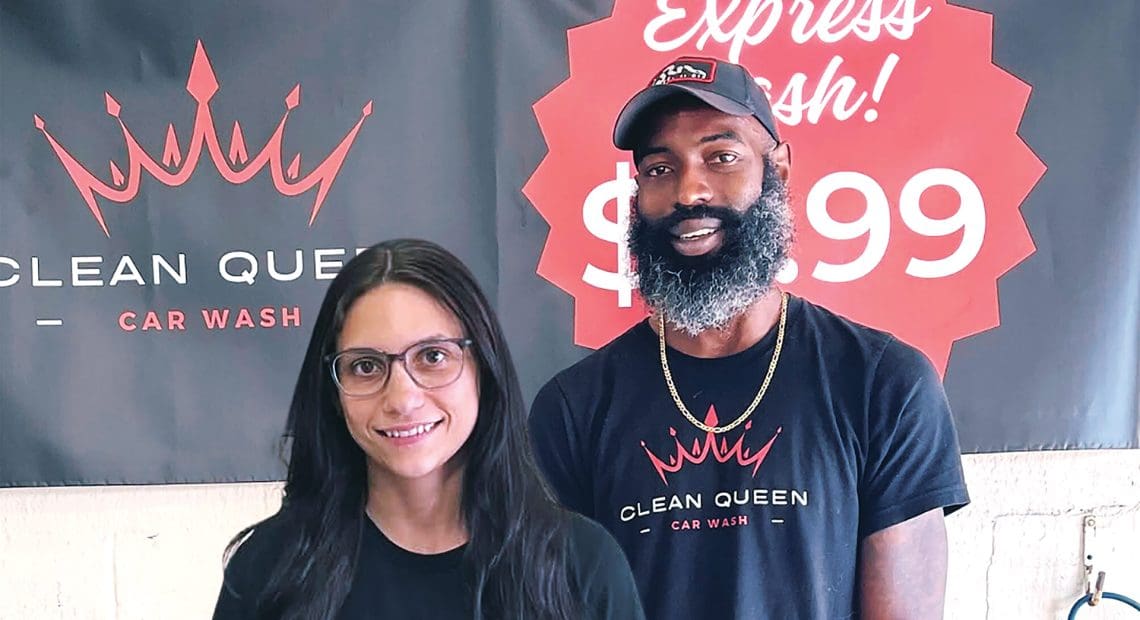
Clean Queen Car Wash owners Nicole and Rich Sherwood.

Clean Queen Car Wash owners Nicole and Rich Sherwood.

When we took over Clean Queen Car Wash in Holyoke a year ago, we knew we were in for an adventure. We had the skills — Rich, with his deep experience in automotive repair, and me, with my background in customer success and business operations. But no amount of preparation fully equips you for the real experience of running a business together as a couple.

Reflecting on our first year, we’ve seen incredible growth, faced unexpected challenges, and learned more than we could have imagined. Here are five things we did well — and five things we wish we had done better.


Five Things We Did Well

Customer Experience First. From day one, we prioritized a high-quality wash and detailing service. We listened to customer feedback and made adjustments to improve efficiency and satisfaction. The result? A growing base of loyal customers. We also introduced additional services, like family pricing and express interior detailing, to create long-term value and repeat business.

Investing in the Right Equipment. We quickly realized that outdated or poorly maintained equipment leads to inefficiencies and downtime. Investing in high-quality tools, staying on top of repairs, and proactively maintaining the machinery have minimized disruptions. A single breakdown can cost us hundreds in lost revenue, so preventive maintenance has been a key factor in keeping things running smoothly.

“A single breakdown can cost us hundreds in lost revenue, so preventive maintenance has been a key factor in keeping things running smoothly.”

Marketing and Social Media Presence. We made a strong push on social media with promotions, giveaways, and engaging content. This helped us gain traction in the community and bring in new customers, especially through targeted Facebook ads and seasonal campaigns. Our fall-themed ads and winter promotions helped drive membership sales and increase awareness of the dangers of salt buildup on vehicles.

Building Community Relationships. Hosting fundraisers, supporting local organizations, and engaging with the community has strengthened our brand and built goodwill. One of our proudest moments was raising $500 for Holyoke Youth Football. We’ve also worked with local businesses for cross-promotions, helping expand our reach while supporting others in the area.

Learning Every Aspect of the Business. Rich made it his mission to understand the ins and outs of the car wash. From mechanical repairs to customer service, knowing every aspect has allowed us to be hands-on owners and troubleshoot problems quickly. I focused on streamlining operations, improving customer retention strategies, and refining our service offerings. This hands-on approach has allowed us to stay lean and maximize profitability.


Five Things We Wish We Did Better

Work-life Balance. Running a business as a couple means work follows you home. We often found ourselves discussing operations at dinner or on weekends, which led to burnout at times. Setting clear work-life boundaries earlier — such as designated ‘no-business’ hours — would have helped us recharge and avoid unnecessary stress.

Financial Planning for Unexpected Costs. While we had a budget, unexpected repairs and maintenance issues caught us off guard. For example, when a major piece of equipment broke down unexpectedly, we had to scramble to cover the repair costs. A larger emergency fund from the start would have reduced financial stress and allowed us to handle surprises more smoothly.

Hiring and Delegation. We took on too much ourselves in the beginning. Trying to manage every detail left us stretched thin. Learning to delegate and trust employees sooner would have helped us focus on growth rather than just daily operations. We now understand the importance of hiring the right people and providing clear training to ensure the business runs smoothly without us having to be there 24/7.

“We took on too much ourselves in the beginning. Trying to manage every detail left us stretched thin. Learning to delegate and trust employees sooner would have helped us focus on growth rather than just daily operations.”

Better Systems for Membership and Promotions. Our unlimited membership program is a great value, but in the early months, we struggled with managing renewals, tracking customer accounts, and efficiently promoting it. Implementing a more robust system from the start would have saved us headaches and provided a better experience for our customers.

Clearer Communication as Business Partners. Running a business together is different from a personal relationship. We had to learn to separate emotions from business decisions and communicate more effectively about expectations and responsibilities. Early on, miscommunications sometimes led to frustration, but over time, we developed a clearer structure for dividing tasks and making decisions together.


Looking Ahead

Our first year was full of lessons, and while we’ve made mistakes, we’ve also built something we’re incredibly proud of. We’ve increased our customer base, established a strong local presence, and created a business that continues to grow. As we move into our second year, we’re focusing on scaling, refining our processes, and continuing to provide top-notch service to our customers in Holyoke and beyond.

To fellow entrepreneurs — especially couples diving into business together — our advice is simple: plan for the unexpected, communicate openly, and celebrate the wins (big and small) along the way.

Here’s to another year of growth, learning, and cleaner cars!


Nicole and Rich Sherwood are the owners of Clean Queen Car Wash in Holyoke.

Workforce Development

Mindfulness and Mentorship

By Chelsea Russell and Mia McDonald


Chelsea Russell

Chelsea Russell

Mia McDonald

Mia McDonald

Mentorship is essential in every career to help foster personal and professional growth among employees. These relationships are instrumental in developing the culture of your business by improving performance, increasing productivity, and encouraging continued learning.

Thoughtfully and strategically pairing individuals together to build a strong and successful connection is a win all around. For both parties to obtain the most benefit out of the mentor-mentee relationship, there are four main mental-health and mindfulness practices that can be utilized: visualization, goal setting, reflection, and gratitude.


Visualization

The first key in building a strong mentor-mentee relationship is visualization. This mindfulness technique is a practice that, even when informally used, can ensure that the mentor and mentee are on the same page when it comes to what they are each looking to get out of the collaboration. The mentor and mentee must come to the table with their own intrinsic motivation and determination to succeed.

Visualization can help each person regularly see their end outcome and plan out the processes that will help them get to their desired outcome. This practice can also be used to manage stress and everyday obstacles by reminding everyone that every step and obstacle is another day closer to the future and their vision.


“Establishing and setting goals creates purpose and provides a baseline for an ongoing, supportive relationship, with measurable benchmarks to continually gauge progress.”


Goal Setting

While visualization builds confidence and encourages forward thinking about what the future could hold, goal setting takes the next step by making those visions tangible. Mentors can offer invaluable help and guidance in setting and measuring short and long-term goals; therefore, this should be a collaborative process. Establishing and setting goals creates purpose and provides a baseline for an ongoing, supportive relationship, with measurable benchmarks to continually gauge progress.

Mentorship is about sharing and building on experiences to help define and refine meaningful objectives. Therefore, a best practice to build accountability in the mentorship would be to set up monthly check-ins to measure goal progression.

Goals can be fluid, as life happens and sometimes gets in the way of targets. However, having a mentor champion your goals with you can help determine where goals can be adjusted or what additional resources may be beneficial. Throughout the mentorship, always remember to celebrate the accomplishments and benchmarks along the way, no matter how big or small.


Reflection

An important part of goal setting and personal growth is reflecting on the outcome and the journey. The mentor and mentee should have open communication and provide regular feedback in a timely manner. When goals are completed, the mentor and mentee should reflect on what went well or what could have gone better, and then determine areas for growth.

During the mentorship, each person should reflect on their own progress individually and then discuss what they can do to improve or how they can provide better support for each other. Regular evaluation throughout the span of the relationship will create the most value.


Gratitude

Gratitude is something we all take for granted. As important as it is to continue looking for ways to improve, it is equally, if not more, important to slow down and practice regular gratitude — for each other and for the process. Being able to appreciate all the positive aspects and milestones of navigating the workforce and life will create more joy and improve overall well-being.

Expressing gratitude can be as simple as writing down what you are thankful for or telling a co-worker you are thankful for their guidance and support. This practice enhances the trust, mutual respect, and open communication that guides these meaningful relationships between the mentor and mentee.

When there is a sense of appreciation for each other and the process of mentorship, each person will grow, learn, and collaborate more effectively. Every challenge encountered is a building block toward the end goal and vision, so remember to be grateful for the learning opportunities provided and the continued growth.


Bottom Line

Achieving any success in the workplace is a measure of time, effort, and dedication. Success cannot be achieved alone; it is dependent on the help and support of others. Embracing the uncomfortable to push for new challenges and embracing ways to incorporate individuality will make any mentor-mentee relationship the most successful.


Chelsea Russell is a senior manager, and Mia McDonald a senior associate, at the Holyoke-based accounting firm Meyers Brothers Kalicka, P.C.


Commercial Real Estate

Designs on Growth

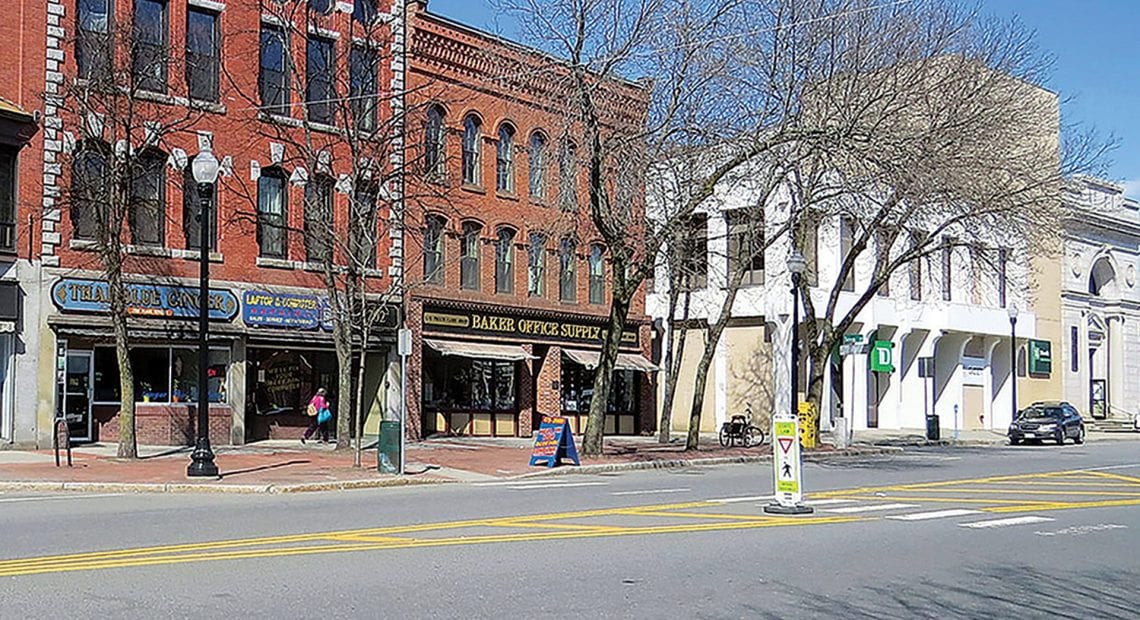
The Franklin County Chamber of Commerce & Regional Tourism Council recently announced that it has been awarded the contract to spearhead the Rural Downtown Redevelopment Project, an initiative aimed at revitalizing the downtowns of Northfield, Turners Falls, and Shelburne Falls/Buckland.

The project, administered by the Franklin Regional Council of Governments (FRCOG) and funded by the Massachusetts Executive Office of Economic Development, aims to bolster economic growth and develop a sustainable regional model for rural downtown management. 

The year-long pilot project builds upon a 2023-24 study conducted by the BSC Group, which identified the need for enhanced coordination and administrative capacity to support rural downtowns. The Rural Downtown District Project aims to strengthen economic growth and improve collaboration between business owners, municipal leaders, and community stakeholders to boost local economies and improve overall downtown vibrancy, and pilot a regional downtown coordination model that, if successful, may be replicated throughout Franklin County and other rural areas. 

Project organizers say the Franklin County Chamber of Commerce, serving as the county’s only regional chamber and state-designated regional tourism council, is well-positioned to lead the effort. With more than a century of experience supporting local businesses, promoting economic development, and marketing Franklin County locally and regionally, the chamber looks to improve collaboration and leverage existing resources to maximize the pilot’s success. 

“This project is an exciting opportunity to plug in additional administrative capacity to enhance regional collaboration and downtown vibrancy and test a replicable regional model for economic growth.”

“After a robust planning process, we are excited about the opportunity to work with the chamber on this pilot phase of the Rural Downtown Redevelopment Project,” said Ted Harvey, senior economic development planner at FRCOG. “At its core, this project is about building capacity and supporting our communities to grow their local economies sustainably. Given the chamber’s strong local partnerships and its success as a regional dot connector, the chamber is well-positioned to bring this program to life in the three downtown districts.” 

Harvey explained that each of the three pilot communities prioritized enhanced coordination in their local rapid recovery plans, making them ideal starter locations to pilot this new approach. 

He said the Franklin County Chamber will collaborate closely with the Franklin County Community Development Corp. (FCCDC), FRCOG, municipal officials, and local leaders to launch the pilot. A key part of the project will include hiring a downtown district coordinator to convene working groups in each community. These downtown working groups (DWGs) — comprised of business owners, residents, nonprofit leaders, arts and culture representatives, property owners, and town officials — will identify two or three priority projects in each district, help guide the downtown district coordinator, and inform long-term planning. 

“This project is an exciting opportunity to plug in additional administrative capacity to enhance regional collaboration and downtown vibrancy and test a replicable regional model for economic growth,” said Jessye Deane, executive director of the Franklin County Chamber of Commerce & Regional Tourism Council. “This is a great, low-risk opportunity to pilot a regional coordination model and give our downtowns a measurable boost.”

Deane said the downtown district coordinator’s work will be guided by input from local stakeholders to ensure that projects reflect each community’s unique vision and needs. The DWGs will also help determine how to best leverage available resources and identify new opportunities for funding downtown projects. 

“The Franklin County CDC is excited to work with the chamber and FRCOG on this project. We work one-on-one with many businesses in the area to strengthen their business plans and work with them on marketing, operations, and finances. We provide capital when appropriate,” said John Waite, executive director of the FCCDC. “We also know that each individual business is stronger when the other neighboring businesses are stronger. This project will help businesses and vested stakeholders work together and use their various strengths to make each downtown greater than the sum of its parts.”