Daily News

SPRINGFIELD — The Springfield Regional Chamber will host its newly named Springfield Regional Chamber Spotlight and Annual Meeting: Recognizing the People Behind the Progress on Wednesday, June 11 from 5 to 7:30 p.m. at MGM Springfield. The evening will provide an opportunity to reflect on the chamber’s recent accomplishments, honor community members, and look toward the future.

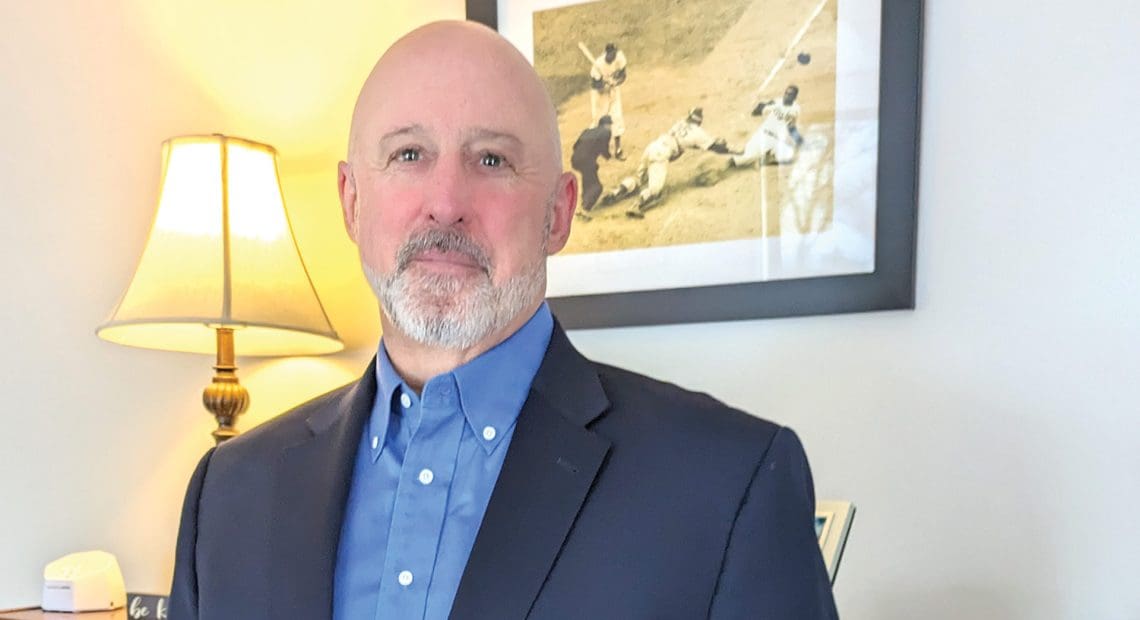
This year, the chamber will honor Richard Tettemer, longtime WWLP 22News anchor, as the 2025 Richard J. Moriarty Citizen of the Year. A graduate of the University of South Florida, he holds a degree in mass communications and broadcasting. He began his career in 1984 as a videotape editor at WFLA-TV in Tampa, later becoming a weekend sports anchor at KODE-TV in Missouri. He joined 22News in 1988 as sports director and transitioned to morning news anchor in 2006. A trusted voice in Western Mass. for more than 37 years, Tettemer has earned 13 Associated Press awards and has been recognized as the region’s top sportscaster by both the Springfield Advocate and Valley Advocate.

“Rich Tettemer has been a steady, inspiring presence in our community for decades. His professionalism, humility, and care for the people of Western Mass. embody the spirit of the Richard J. Moriarty award,” said Diana Szynal, president of the Springfield Regional Chamber. “We look forward to an evening of reflection and celebration with our members and partners who make this region such a special place to live and do business.”

The event will also include the election of the chamber’s board of directors and a variety of additional recognitions. These include the Lifetime Achievement Award for Jeffrey Fialky of Bacon Wilson, P.C., the Outstanding Board Member award for Sharianne Walker of Western New England University, the Outstanding Legislative Steering Committee Member award for Allison Ebner of the Employers Assoc. of the NorthEast, the Outstanding Ambassador award for Candace Pereira of Windsor Federal Bank, and the Outstanding New Member award for Wash Works. Additionally, the chamber will highlight the names of all organizations that have been members for more than 50 years.

A cocktail hour will begin at 5 p.m., featuring an array of Italian favorites from MGM Springfield, including an antipasto bar with Caesar salad and fresh tomato bruschetta, classics like chicken parmigiana and meatballs in pomodoro sauce, and a live pasta station serving penne a la pomodoro and orecchiette Alfredo with broccoli and bacon.

Tickets cost $75 for chamber members and $100 for general admission. Tickets can be reserved by clicking here. For additional information, contact Karen Tetreault at [email protected] or (413) 755-1309.

Daily News

SPRINGFIELD — Attorney Amelia Holstrom of Skoler, Abbott & Presser, P.C. was elected a library trustee at the Wilbraham Public Library. Following the election, she was selected as secretary by the board of library trustees. The board supports the library’s strategic plan and efforts to provide free and open access to information and programs.

Holstrom, who joined the firm in 2012, is a partner at Skoler Abbott. She practices in all areas of employment defense. She provides counsel to management on taking proactive steps to reduce the risk of legal liability that may be imposed as the result of illegal employment practices and defends employers who are faced with lawsuits and administrative charges filed by current and former employers.

“I am honored to represent my community as a library trustee,” Holstrom said. “The library is one of our biggest assets as a town, and I want to ensure that it remains a cornerstone of our community for generations to come.”

Holstrom is an active member of the Greater Springfield community. In addition to serving as a library trustee, she is a member of the Wilbraham Personnel Advisory Board, Wilbraham Commission on Disability, the boards of Clinical & Support Options Inc. and the East of the River Five Town Chamber of Commerce, the board development committee for the Girl Scouts of Central and Western Massachusetts, and the personnel committee for the Food Bank of Western Massachusetts.

Daily News

Susan Cody

EASTHAMPTON — bankESB recently promoted Susan Cody to assistant branch manager of its 605 Granby St., South Hadley office.

Cody has nearly four years of banking experience. She was hired in 2021 as a teller and was most recently a teller supervisor in bankESB’s 85 Broad St., Westfield office. In her new role, she will support daily branch operations, assist in team leadership, and contribute to delivering excellent customer service to the community.

Cody earned a bachelor’s degree in communications and business management from Westfield State University.

Daily News

SPRINGFIELD — The spring 2025 Starlight book deliveries wrapped up on May 23 after three weeks of distributing books to young children across the region, continuing the program’s mission to spark a love of reading and build home libraries. A total of 22,856 books were delivered to 43 public schools across Springfield, Holyoke, and Agawam, as well as 28 additional child-focused support service locations.

These locations include Head Start programs, Educare, early learning centers, Square One, Valley Opportunity Council, Boys and Girls Clubs, and YMCAs, reaching thousands of children where they learn and grow every day.

Each spring and fall, the Starlight program gifts four books to every participating child, for a total of eight books per year. The kids enjoy these books in the classroom and then take them home, so they can share stories with their families and keep the reading fun going.

The Starlight initiative, a program of the Harold Grinspoon Charitable Foundation, reflects Grinspoon’s enduring commitment to early childhood literacy and educational equity. By putting high-quality books directly into the hands of children, the program continues to support families, educators, and communities in fostering a lifelong love of reading.

“As always, we are so incredibly grateful for these book deliveries,” said Amy Roque, director of Early Childhood Education for Holyoke Public Schools. “Please thank all involved at Starlight, and Mr. Grinspoon, for this wonderful donation.”

Amy Stec, school director at Educare Springfield, added that “the children and our educators love these books. They continue to give joy well beyond the initial reading.”

With each delivery, the Starlight program continues its mission to ignite imaginations, support learning, and ensure every child has access to the joy of books, one gift at a time.

Daily News

PITTSFIELD — Hot Plate Brewing Co., in partnership with Downtown Pittsfield Inc. and a collection of other Pittsfield-based businesses, announced the Pitt, a brand-new, 10-week, free concert series set to energize Dunham Mall.

Running weekly on Fridays from 6 to 8 p.m. for 10 weeks, the Pitt will showcase a dynamic lineup of musical acts hailing from Montreal, Boston, the Pioneer Valley, and the Berkshires. From indie rock and soul to emerging electronic artists, this series will celebrate both regional talent and international artistry, right in the heart of downtown Pittsfield, starting June 13.

In addition to the music, concertgoers can enjoy local food and drink offerings. Hot Plate Brewing Co. will host a beer garden, and Handcrafted, a new, Pittsfield-based restaurant, will serve up a variety of food.

“This series is all about showcasing independent artists and artisans and bringing some new energy to our downtown community,” Hot Plate co-founder Mike Dell’Aquila said. “We’re thrilled to bring this caliber of talent and culture to Dunham Mall.”

For more information and weekly lineup announcements, visit hotplatebeer.com/the-pitt.

Daily News

SPRINGFIELD — Visual Sound Productions Inc. (VSP), which specializes in live event production, A/V services, multi-media production, and entertainment, announced the continued growth of its team with the addition of three new team members: Nathan Dunahoo, Daniel (Dan) Gil, and Christopher (Chris) Coughlin.

Dunahoo joins as a creative specialist, bringing a background rooted in creative storytelling and multi-media design. His passion for compelling visual content and innovative design promises to add fresh energy to VSP’s production team.

Gil, a 2019 graduate of the University of Hartford with a degree in audio engineering, comes on board as an A/V technician. With a sharp ear for sound quality and experience in both live and recorded audio environments, he is ready to help bring events to life with precision and professionalism.

Coughlin, the newest member of the team, also joins as an A/V technician. A 2024 graduate of the University of Massachusetts with a degree in communications, he brings a strong foundation in media production and a drive to grow within the industry.

This expansion follows the recent onboarding of Kara Bombard, who joined the VSP team earlier this season to support operations and client engagement. With the addition of these new hires, Visual Sound Productions continues to strengthen its creative and technical capabilities to meet growing demand across New England and beyond.

“We feel very blessed because we keep hearing about the shortage of talent and, in the last few months, have found four total rock stars,” said Nicole Nell, president of Visual Sound Productions. “Nathan, Dan, and Chris each bring a unique set of talents that complement our mission to deliver high-quality, engaging experiences. As we continue to grow, investing in great people, and our community, is at the heart of everything we do.”

Daily News

SPRINGFIELD — MassMutual Federal Credit Union (MMFCU) announced the successful completion of its April children’s book drive, which saw the collection of almost 400 books through local member donations and a customized Amazon wish list. The books collected were donated to a member-nominated school, Talmadge Elementary in Springfield, providing students with valuable resources to enrich their educational experience.

MMFCU will match the value of books collected for Talmadge Elementary with donations to Edward M. Kennedy Academy for Health Careers in Boston and O’Connor Elementary School in Mesa, Ariz. This initiative will ensure that the impact of the book drive extends well beyond Springfield.

MMFCU’s commitment to community service went beyond the book drive. The credit union partnered with MassMutual’s Community Responsibility team to organize a volunteer effort to assemble activity kits for the recipient schools. These kits are designed to provide engaging and educational activities that complement the donated books, further enhancing the students’ learning experiences.

The success of the book drive and volunteer efforts underscores MMFCU’s dedication to supporting education. The collaboration with MassMutual’s Community Responsibility team highlights the power of collective efforts in making a meaningful difference in the lives of young learners.

MMFCU extends its sincerest gratitude to all donors and volunteers who contributed to this year’s children’s book drive.

Daily News

NORTHAMPTON — Herrell’s Ice Cream introduced four new UMass flavors to its rotating ice cream collection: the winners of the 2024 Ice Cream Competition. The first place winner is Brown Butter Miso Caramel, second place is Tea Time, third place is Apple Kruimel ijsje, and Pineapple Upside-Down Cheesecake won the People’s Choice Award.

These flavors will be sold in both Amherst and Northampton Herrell’s Ice Cream locations beginning May 30.

“All of these flavors are absolutely delicious,” said Judy Herrell, owner of Herrell’s. “They are imaginative and creative: all winners.”

Herrell and former Herrell’s Manager Kirsten Tabb worked with students throughout the spring 2024 semester to help them understand the intricacies of creating flavors. “In some cases, parts of teams’ flavor profiles did not exist, and they had to make something new,” Herrell said. “For example, some of the teams learned how to make variegates (swirls) for their ice creams.”

The criteria for the judging included texture, overrun, sustainability, olfactory, and taste. Charmaine Koo, UMass lecturer and professor for the class, believes as Herrell does: this is a great way to learn science.

Daily News

SPRINGFIELD — Bulkley Richardson announced that Lisa Harty, MD, JD, an attorney in the firm’s Litigation Department, has earned the prestigious NITA advocate designation, awarded by the National Institute for Trial Advocacy (NITA). This designation recognizes attorneys who have completed a rigorous series of intensive training programs focused on advancing courtroom and litigation skills.

To earn this recognition, Harty completed NITA courses in Boston, Chicago, and New York City, each offering immersive training in trial advocacy techniques. The NITA advocate program is nationally respected for its intensive instruction in core litigation areas, including perfecting trial skills, delivering persuasive oral arguments, taking and defending depositions, and mastering both written and interpersonal legal communication.

NITA offers participants practical, hands-on training in trial advocacy through realistic courtroom simulations, personalized feedback, and instruction from experienced judges and litigators nationwide. Earning this designation reflects a deep commitment to ethical, effective, and client-centered advocacy.

Harty’s dual training in medicine and law positions her to handle complex litigation with insight and precision, the firm noted.

“Lisa joins an esteemed group of NITA advocates who have demonstrated their dedication to advocacy for clients,” said Chris Visser, chair of Bulkley Richardson’s Litigation Practice. “Lisa’s experience at the firm, combined with NITA’s training, provides her with a powerful advantage to best advocate for her clients.”

Daily News

SPRINGFIELD — With work to prepare the electric system to support Eversource’s transition to smart meters nearly complete in Western Mass., the energy company is alerting customers that crews will begin upgrading meters in the next few months. Eversource will begin installing the first smart meters at customers’ homes and businesses in late July and continue through the following months.

At the same time, the energy company will expand to Eastern Mass. its work installing network devices — technology that will extend the range of Eversource’s meter network and help the smart meters safely and securely communicate important information back to the energy company.

Eversource will send customers in Western Mass. a series of notification letters approximately 90, 60, and 30 days in advance of work to install smart meters starts in their community. The energy company is also reaching out directly to customers in Eastern Mass. with information about what to expect as work to support the transition to smart meters begins in their neighborhood.

“Now more than ever, we’re focused on empowering our customers with greater control over their energy use, and smart meters are key to those efforts,” Eversource Senior Vice President of Customer Operations, Digital Strategy and Chief Customer Officer Jared Lawrence said. “Upgrading to smart meters is like replacing an old flip phone with a smartphone. This modern, smart tech will enable our customers to monitor their energy use in near real time — including how they use power, how much they use, and peak times of use during the day — so that they can make informed decisions about the most effective ways to reduce their energy consumption and bill. The information smart meters provide will also significantly improve service for our customers by enabling our team to proactively address power outages before they occur and to deliver enhanced, real-time outage alerts.”

Daily News

SPRINGFIELD — Freedom Credit Union will once again offer the opportunity for Western Mass. residents to securely purge unwanted paperwork.

In cooperation with PROSHRED Springfield, Freedom is offering its free Community Shred Days at two of its branches on Saturday, June 7: 9-10 a.m. at 1976 Main St., Springfield; and 11 a.m. to noon at 296 Cooley St., Springfield.

The public is invited to bring old bills, bank statements, tax returns, and other sensitive documents for free, quick, secure on-site shredding. Members and non-members alike may bring up to five file boxes or paper bags per vehicle. There is no charge for this service.

Daily News

BOSTON — Massachusetts Clean Energy Center (MassCEC) announced $1.4 million in funding for 12 organizations through its Innovation Ecosystem Program, which provides critical funding to support Massachusetts’ growing network of climatetech entrepreneur support organizations (ESOs). These grants will empower ESOs to expand services, strengthen infrastructure, and increase support for early-stage climatetech startups.

“The world looks to Massachusetts for innovative solutions to our planet’s toughest challenges,” Gov. Maura Healey said. “That’s because we value the groundbreaking work and the significant economic impact of entrepreneurs and researchers. We’re going to continue to invest in the innovators and companies who are leading new discoveries in climatetech.”

Since 2016, MassCEC has awarded more than $6 million to 22 ESOs through this program, indirectly supporting more than 1,300 climatetech startups. The Innovation Ecosystem Program enables a wide range of ESO activities, including operations and management expenses, facility and infrastructure build-out, equipment purchases, and networking and workshop events.

“Massachusetts is home to a thriving climatetech startup ecosystem, thanks in part to a robust network of accelerators, incubators, and innovation hubs that help early-stage companies navigate commercialization and scale their impact,” said Emily Reichert, CEO of MassCEC. “Through the Innovation Ecosystem Program, we’re investing in the organizations that provide critical infrastructure and mentorship to growing businesses, ensuring that homegrown innovation translates into real-world climate solutions.”

This year’s awardees are: Activate Boston, Boston, $175,000; ACT’s Cleantech Open Northeast Program, Somerville, $120,000; Berkshire Innovation Center, Pittsfield, $139,800; the Engine, Cambridge, $50,000; FORGE, Somerville, $120,000; Greentown Labs, Somerville, $175,000; Harvard Innovation Labs, Cambridge, $50,000; InnoVenture Labs, Beverly, $120,000; Lever Inc., North Adams, $100,100; MassChallenge, Boston, $75,000; SeaAhead, Cambridge, $175,000; and UMass Lowell’s Innovation Hub, Lowell, $100,100.

Daily News

Christopher Scott

EASTHAMPTON — bankESB recently hired Christopher Scott as vice president, Commercial Lending, based at its 241 Northampton St., Easthampton office.

Scott has 12 years of banking experience. He was previously commercial lender at PeoplesBank and, before that, credit analyst at TD Bank. In his new role, he will be responsible for developing and managing a portfolio of commercial lending relationships. He will work closely with businesses to understand their financial needs, structure customized lending solutions, and provide expert guidance on credit and banking services. He will play a key role in driving business development, fostering community relationships, and contributing to the overall growth strategy at bankESB.

Scott earned a bachelor’s degree in finance from UMass Amherst. He also earned a certificate in credit analysis from TD Bank University and attended the Leadership Institute through the Springfield Regional Chamber. He is currently a board member of the American Cancer Society’s Massachusetts Golf Classic.

Daily News

SPRINGFIELD — Bulkley Richardson recently welcomed three law students to its 2025 Summer Associate Program. The robust program introduces law students to the inner workings of a law firm, where they receive mentorship from lawyers ranging from firm leaders and retired judges all the way through the ranks to junior associates, and gain exposure to real-life legal matters.

Sylvia Labbe is currently attending Suffolk University Law School as a trustee academic scholar, where she serves as a senior staffer on the Transnational Law Review, as well as executive board member of the Labor & Employment Assoc. (treasurer) and Intellectual Property Law Assoc. (treasurer). She was a 2024 summer associate at a Boston-area law firm. This past winter, she was honored with the title of Best Oral Advocate at the Transnational Law Review Moot Court. Labbe earned a bachelor’s degree in legal studies and political science from UMass Amherst.

Gabriela Peterson, currently attending Vermont Law & Graduate School, is Head Notes Editor of the Vermont Law Review and a member of the Williams Institute moot court team on gender and sexuality law. She has held the positions of legal intern at an independent news organization and 2024 summer associate at a law firm, both in Washington, D.C. Peterson earned a bachelor’s degree in chemistry and political science from Monmouth College, where she received several honors for academic excellence.

Devan Ravino, currently attending the University of New Hampshire Franklin Pierce School of Law, is a Daniel Webster scholar and member of the Moot Court, Trademarks Team, and Women’s Student Law Assoc. She interned at the Civil Bureau of the New Hampshire Attorney General’s Office. Ravino majored in art history and economics, magna cum laude, at Mount Holyoke College.

“Bulkley Richardson’s Summer Associate Program has introduced the firm to stellar associate candidates over recent years, and this year’s class is no exception,” said Mike Roundy, chair of the firm’s hiring committee. “We have three exceptional law students who have already demonstrated their passion for the law, and we look forward to contributing to their legal careers as they take shape.”

Daily News

WESTFIELD — Greater Springfield Habitat for Humanity (GSHFH) announced a pickleball tournament open to players of all skill levels on Sunday, July 20 at the Picklr, 415 East Main St., in the Westfield Shops.

From noon to 4 p.m., seasoned players and rookies alike will play ‘king of the court’ three-person-style. Tickets cost $40 each, which includes prizes, snacks and refreshments, and swag bags. All are welcome to participate or spectate. To purchase tickets, visit habitatspringfield.org.

“We are excited to be hosting this event,” said Aimee Giroux, GSHFH executive director. “The staff at the Picklr has been educating us on all things pickleball and helping us to ensure a fun and lively event while raising awareness and supporting our construction programs.”

Daily News

CHICOPEE — MicroTek Inc., a nonprofit wire component manufacturer that provides employment support to individuals with disabilities, was awarded a Workforce Training Fund grant to provide workplace classes in English for speakers of other languages (ESOL) to its employees.

The ESOL training will directly support the company’s mission to foster an inclusive and empowering work environment. These courses will equip employees with the English communication skills needed to excel in their roles, contributing to the production of high-quality, cutting-edge cable and assembly work for industries around the world.

By enhancing understanding of workplace-specific vocabulary, including safety protocols, machinery, products, and procedures, the training ensures all employees can meet the company’s high standards while feeling confident and valued in their contributions. Aligned with MicroTek’s vision of creating an inclusive society, this training emphasizes building employees’ confidence to communicate openly with peers, managers, vendors, and customers. Participants will be better prepared to share their ideas, provide feedback, and take on leadership opportunities, furthering MicroTek’s commitment to respect, responsibility, and meaningful employment for all.

This project is funded by a Workforce Training Fund grant from Massachusetts Executive Office of Labor and Workforce Development. The grant program is administered by Commonwealth Corp. MicroTek partnered with English for New Bostonians and Valley Opportunity Council for the training program design and execution, including initial assessment of the employees’ English language levels, delivery of the English classes, and achievement of the training goals.

Business Talk Podcast Special Coverage

We are excited to announce that BusinessWest has launched a new podcast series, BusinessTalk. Each episode will feature in-depth interviews and discussions with local industry leaders, providing thoughtful perspectives on the Western Massachuetts economy and the many business ventures that keep it running during these challenging times.

Go HERE to view all episodes

Episode 235: May 26, 2025

BusinessWest Editor Joe Bednar talks with Amy Royal, CEO, the Royal Law Firm

Employers are dealing with plenty of changes these days, whether it’s mandates from the state or policy shifts at the federal level, impacting everything from disability and leave to discrimination and DEI efforts. Employment lawyers have an even greater challenge: processing those changes and helping their business clients craft policies that both keep them out of trouble and build positive, healthy workplace cultures. On the next episode of BusinessTalk, Amy Royal, CEO of the Royal Law Firm, talks with BusinessWest Editor Joe Bednar about the many shapes these changes and challenges take, and why it’s gratifying to help clients navigate these shifting tides and grow their operations. It’s must listening, so tune into BusinessTalk, a podcast presented by BusinessWest.

Also Available On

Daily News

SPRINGFIELD — GZA GeoEnvironmental Inc., a multi-disciplinary firm providing geotechnical, environmental, ecological, water, and construction management services, announced that two staff professionals have earned premier wildlife biology credentials that will bolster GZA’s ability to support clients with a wide range of ecological capabilities.

GZA Senior Biologist Robin Casioppo recently became a certified wildlife biologist (CWB), and Ecologist Susanna Sousa became an associate wildlife biologist (AWB), certifications overseen and awarded by the Wildlife Society. Both are based in GZA’s Springfield office and serve clients throughout New England and the nation.

The CWB and AWB certifications document that the credential holders have met the society’s standards for professional experience, ethical standards, and educational attainment. The society has qualified a total of 1,900 CWBs and 400 AWBs throughout the U.S.

“On behalf of all of their colleagues, I want to congratulate Robin and Susanna for all the work they have done to earn these prestigious credentials,” GZA Springfield District Office Manager Guy Dalton said. “They will help GZA provide specialized support to our clients by evaluating the impact of projects on wildlife populations, identifying rare and threatened species native to project sites, and supporting compliance with applicable laws and regulations, designing and implementing habitat protection and restoration projects, and much more.”

Casioppo, who earned a bachelor’s degree in environmental biology from Plymouth State University and a master’s degree in environmental studies with a concentration in conservation biology from Antioch New England University, is a professional wetland scientist. Sousa earned a bachelor’s degree in conservation in wildlife management from Delaware Valley University, a master’s degree in environmental studies with a concentration in conservation biology from Antioch New England University, and a certified ecologist professional certification from the Ecological Society of America.

Daily News

SPRINGFIELD — The Springfield Thunderbirds announced new front office hires to the team’s award-winning staff heading into the 2025-26 AHL season.

Joe Manning and Lorenzo Stisser have been promoted to account executives in the team’s ticket sales department, while Nina Liquori and Brianna Carroll have joined the organization as inside sales specialists.

Manning is entering his second season in the organization after serving as an inside sales specialist during the 2024-25 season. He also interned for the team in the 2023-24 season in the team’s sales and communications departments. He is a 2024 graduate of Springfield College, where he played three seasons for the school’s club hockey program.

Stisser joins the organization full-time after serving on the team’s game night staff and the inside sales department over the past two seasons. He graduated from Springfield College this month and was a member of the school’s men’s gymnastics program.

Liquori joins the Thunderbirds as an inside sales specialist after graduating from Southern New Hampshire University, where she played on the school’s women’s lacrosse team.

Carroll also joins as an inside sales specialist after graduating this month from Western New England University, where she played on WNE’s women’s soccer team.

Daily News

SPRINGFIELD — The Springfield Library Foundation and PeoplesBank announced a $10,000 grant from the bank to support the Springfield City Library’s Summer Reading Program.

Thanks to this grant, this year’s program, called Level Up at Your Library, will feature greatly expanded activities for children and other users throughout the city of Springfield at the library’s nine locations as well as with other community partners.

“We are very grateful to PeoplesBank for their stalwart support of the library,” said Matt Blumenfeld, executive director of the Springfield Library Foundation. “PeoplesBank’s investment matches funds that come directly from the Library Foundation and will provide the City Library with critical resources to expand outreach and impact of this vital and fun program.”

Added Rachel Gravel, the library’s manager of Adult & Youth Information Services, “this summer, our mantra is ‘one million reading minutes.’ We have set an ambitious goal and want to increase participation in the program to 3,000 children, youth, and adults this summer.”

Matt Bannister, PeoplesBank’s senior vice president of Corporate Responsibility, formally presented the grant to the Springfield Library Foundation.

“Our commitment to the community is demonstrated through volunteerism and financial support, and we see this grant as an investment in encouraging and inspiring new generations of lifelong learners and readers,” he said. “We are proud to support the Library Foundation and, in turn, the City Library to expand their reach and impact.”

The Summer Reading Program will host all-ages kickoff events throughout June, with a system-wide Adult Summer Reading Kick-off party on Thursday, June 12 at the Mason Square Branch. The program will conclude with a big all-ages, city-wide End of Summer Celebration on Saturday, Aug. 23.

Among the many activities made possible by PeoplesBank’s grant will be music classes, musical petting zoos, story city series, mobile arcade, VR experiences, RPG and board game clubs, bingo, and escape rooms. Children and teens will get a free book of their choice with sign-up, and there will be weekly prizes and celebrations throughout the summer as participants track minutes read to reach the one million minutes goal. All participation is free and open to the public. For more information, visit www.springfieldlibrary.org.

Daily News

MONSON — Monson Savings Bank continued giving back to the communities it serves by donating $5,000 to the Salvation Army’s Ware/Monson Area Housing Assistance Program. This contribution will directly assist local individuals and families experiencing housing instability, helping them stay in their homes and avoid homelessness.

The donation was presented by Dan Moriarty, Monson Savings Bank’s president and CEO, and Heather Arbour, vice president BSA/Fraud officer and Compliance manager and longtime Salvation Army volunteer, to Wilfred Leslie, Service Extension director for the Salvation Army’s Massachusetts Division. The funds will be used to support residents in the bank’s communities by providing assistance with rent, utilities, and emergency housing needs.

“At Monson Savings Bank, we are deeply committed to helping our neighbors in need,” Moriarty said. “We understand how important it is to feel safe and secure in your home. Through this donation, we’re proud to help ease the burden for individuals and families who are facing financial hardships. The Salvation Army is a critical partner in these efforts, and we are honored to support the meaningful work they do.”

Leslie expressed his sincere appreciation to the bank. “This support from Monson Savings Bank allows us to do more for the people who need it most. This donation will go a long way in helping families stay in their homes during times of crisis. We are grateful for the bank’s dedication to community well-being and for being an ally in our mission.”

Features

A Whole New World


Michael Weber says he eases anxiety around AI while giving businesses real tools and strategies to use it.

Michael Weber says he eases anxiety around AI while giving businesses real tools and strategies to use it.


After 20 years building a successful commercial printing business, Michael Weber stopped the presses and took a step into his future — both his own and that of the changing role of business IT.

The printing story begins around 2004, when Weber and his wife, Lindsey, who were living in Boston at the time, had the opportunity to buy Minuteman Press in Enfield, Conn. So they moved to this region and began to grow that business, eventually expanding it to two more locations in Springfield and Brattleboro, Vt., with numerous employees at all three sites.

When Weber received an offer to sell the company in late 2023, he was intrigued.

“The business had changed a lot over 20 years, and I thought it was an interesting opportunity and an interesting time to do something new. So that’s what we did,” he told BusinessWest. “We accepted the offer and took some time off. We traveled with the kids and tried to enjoy life the best we could for a little while — knowing that I needed to get back to work at some point.”

Before his two decades in the printing world, Weber earned a degree in management information systems at Worcester Polytechnic Institute and built a career as a middleware engineer, and had kept his finger on the pulse of IT since. His idea for a second career was to become a fractional chief technology officer (CTO), someone who offers technology leadership and expertise to client companies on a contract basis.

That’s how his current enterprise, North Star Technology Leadership, was born.

“I have a unique skill set in the sense that I understand technology, but I also understand business. So I can talk to business owners about their technology in a way that’s very different than most technology people can,” he explained. “Most technology people are so focused on the bits and the bytes and those kinds of things, but the business people just want the technology to work right. As somebody who’s been on both sides, I feel like I can bring that to the table more clearly than so many other technology companies.”

He chose the name of his firm purposefully. “I wanted to make it clear that I’m not competing with those other technology companies, those managed service providers that come in to fix your computer. I don’t want to do that. I could fix your computer if that’s what I needed to do, but I’m trying to provide leadership and an understanding of technology.

“I have a unique skill set in the sense that I understand technology, but I also understand business. So I can talk to business owners about their technology in a way that’s very different than most technology people can.”

“I felt like part of doing that meant I had to be sitting next to the CEO of the company and not across the table, and the only way I can do that is if I don’t sell anything other than myself,” he went on. “So I don’t sell any products, and I don’t accept commissions. I’m not competing with that MSP who’s already selling hardware and software to the client.”

But the needs Weber does meet are significant, particularly for companies that don’t have a CTO. North Star’s services fall into a few broad buckets, including technology leadership and management; technology roadmap and alignment with business objectives; technology staff and vendor management; and risk, security, and compliance management.

One example of a specific service is a technology stack review. “That’s just understanding what do they have, and is it working, or is it not working? Often, they’ve been doing a process for 15 or 20 years because that’s how they’ve always done it, and nobody’s ever looked at it and said, ‘this is not the efficient way to do it.’

“One of my clients was doing a payroll export from their payroll software into Microsoft Excel and then manipulating that data file for about two hours every payroll period to get it into a format they needed. I was able to automate that task and turn it into, like, 25 seconds. That’s a huge savings,” he explained. “That’s not uncommon, and it’s not his fault that he didn’t know how to make those changes because he’s not a technology person.”


Mindset Shift

One major focus with clients lately — and for the foreseeable future — is the role of artificial intelligence in myriad businesses and industries.

“The biggest concern seems to be understanding the data policy and what is happening with their data. You have employees who are scared of AI as a concept. You have a lot of business owners who don’t understand it, but want to understand it, and they don’t know who to turn to. So I’m providing that level of knowledge and guidance for them,” Weber explained.

“In terms of using AI, the easy ways are using it to rewrite your email to make it more clear and concise, or using it to build your PowerPoint presentation deck that you need to pass off to a client, or using it for data analytics. All those things are really low-hanging fruit, and we can show their staff how to actually engage and use these things in a productive manner that doesn’t have gigantic bills behind it, and is just there to make their day easier and more efficient.”

“You have employees who are scared of AI as a concept. You have a lot of business owners who don’t understand it, but want to understand it, and they don’t know who to turn to. So I’m providing that level of knowledge and guidance for them.”

After he conducts presentations on current uses of AI in the workplace, he noted, “they’re understanding it better, and they’re saying, ‘oh that’s not so scary,’ or ‘yes I can do that better.’ Because it is an amazing technology, and it’s a whole mindset shift in how you’re using it because it’s not just a Google search window. There’s so much more to it and so much more feedback it can provide to you — if you understand the right questions to ask and how to use it.”

Whatever the issue, Weber says he has found a niche in a landscape where many mid-sized businesses — he typically works with firms between $5 million and $50 million in annual revenue, in a wide range of sectors — don’t have this expertise in-house.

“It has to be companies that are interested in growth because you’re not going to bring in somebody as a fractional CTO if you’re just kind of plodding along and doing OK. You’re interested in growing your company, and now you’re looking for those efficiencies to make everything work better. That’s the space I’m filling.”

Since opening North Star last September, Weber has seen a steady influx of clients. He noted that the field isn’t as competitive as one might think.

“There are a lot of fractional CFOs,” he said, referring to the financial side of a business. “Companies will go, ‘accounting is important, and I don’t know what I’m doing anymore, and I need a guy.’ So they bring in a person to fill that role. So a fractional CFO is a very common thing.

“A fractional CTO is very uncommon,” he went on. “I don’t think I’ve met another one in this area. Again, I think I’m unique by bringing the technology and the business sense together, which creates a unique situation.”


Change Agent

Weber also appreciates that he’s able to lessen anxiety — for both business owners and employees — around the changing face of IT, and especially AI.

“Obviously, people get scared whenever there’s change, and that is understandable,” he said, while noting that today’s students may be preparing for high-tech jobs that don’t exist yet, while other careers will fade away. “People need to be aware of both those sides. I mean, if I was a young person today and I was graduating high school or college, I would want to know what’s not going to exist and what is still going to exist in a period of years.

“I was doing an AI presentation the other day, and a woman was talking, and she has a son who’s in high school, and he wants to be a plumber. His job is safe for now. That’s not going anywhere anytime soon,” he noted. “For somebody like him, AI is just an asset because it can help answer questions and provide guidance, but the actual work of a plumber is still going to be done by a human. It’s not being replaced by AI anytime soon.”

For many other jobs and industries, the outlook is less certain, but Weber is optimistic that he can steer clients toward growth and opportunity as they grapple with all the coming changes.

“I owned a small business for a long time, with employees and multiple locations. And now I have the opportunity to help businesses in different manner,” he said. “I’m having a lot of fun, and my clients seem to be really enjoying engaging with me and having this conversation. So it’s working out really well.”

At the end of the day, Weber added, he loves helping and teaching people, demystifying the role of IT, and seeing the impact he can make on a growing pool of clients.

“It’s like I was saying before — I’m kind of a unicorn in the sense that I can talk about technology in a way that regular people understand. And that is rare. You find a lot of really smart IT people that you wouldn’t want to have a coffee with because you couldn’t understand them. And you find a lot of amazing business people that don’t know anything about their technology, but they need to. So I can bridge that gap for them, and that’s what I’m doing.”

Features

Deep Dive

Ted Hebert says his story has been one of being knocked down and always getting back up.

Ted Hebert says his story has been one of being knocked down and always getting back up.


As Teddy Bear Pools & Spas marks its 50th anniversary this year, it’s safe to say most in the business community have read — in this publication and others over the years — Ted Hebert’s story of humble beginnings, perseverance through severe challenges, and current status as not only one of the region’s venerable business owners, but a strong supporter of area nonprofits.

But ask him what the milestone means, and he says, “I don’t see the significance of 50 years.”

That’s not because he lacks gratitude or perspective on his career — he certainly has both — but for him, when he thinks about the work itself, he’s actually been doing it for closer to 60 years, starting as a gofer at a pool store at age 14.

“That developed over about three years. I started to become a pool installer. The above-ground pool would be dropped off at someone’s house, and my late friend Kenny and I would go and build a pool. Back then, we used to hand-dig the above-ground pool. We used to wheelbarrow the dirt into the backyard. We’d even do two pools a day. We’d work from maybe 6, 7 in the morning to 8, 9, 10 at night. I remember working on pools in the dark.”

His own work is, obviously, much less physically strenuous now, but those early years gave Hebert an appreciation for his employees that he’s quick to express.

“I guess I don’t realize the reality of 50 years because I don’t have a job. This isn’t work for me. I mean it sincerely. My employees are my extended family,” he said, noting that some have been with him for decades, and some are second-generation team members.

“Many times, people will say to me, ‘I can’t wait to retire.’ But I do not work — I love what I do. I’m not here for the money. Teddy Bear Pools is my home away from home. I get enough free time, but in May and June, I try to be here almost seven days a week because I want to see my customers.

“I’ve achieved every goal that I could ever think of. I’ve achieved fantasies. I’ve been on top of the mountain. But I’ve also been on the very bottom, with betrayal by close friends, people that I trusted, people in my wedding party. I’ve had a lot of really low points in my life.”

“I built someone’s pool 30, 40, 50 years ago, and now their kids are coming in,” he added. “I call every customer that buys an above ground-pool, a spa, or even a liner, and I call to thank them personally.”

That gratitude extends to his own journey, which has seen both highs and lows (more on that later), but has also been marked by hard work, dogged persistence, and faith.

“I’m a survivor,” he said. “I think, being in business, you need to be a survivor. A lot of people can’t. It’s a challenge, but if you’re up to the challenge, it’s going to be very exciting.”


Into the Deep End

Hebert has told the story of how he wanted to become a doctor, but didn’t have the money for medical school, so he eventually started his own pool company from the carport of his parents’ home. Although the original name he chose for his business was Custom Pools by Ted, his mother suggested he use his childhood nickname of ‘Teddy Bear,’ a play on the French pronunciation of Ted Hebert.

By 1976, Teddy Bear had grown enough to allow Hebert to rent a former car-wash bay on Memorial Drive in Chicopee and turn it into a storefront. When the property was foreclosed upon three years later, he purchased a run-down former car dealership in a dilapidated building on East Street in Chicopee, which remains his address today.

The East Street store wasn’t always surrounded by display pools, as this photo from around 1980 shows.

The East Street store wasn’t always surrounded by display pools, as this photo from around 1980 shows.

In the early years, the business grew steadily, but he suffered two major setbacks during the 1980s in the form of employee betrayal and mismanagement. The first event occurred in 1986 when an audit undercovered $1.2 million of money and goods not accounted for, and the second took place while he was on his honeymoon in 1987. When he returned, he found an additional $200,000 of money and goods missing.

“I’ve been embezzled twice, but I never went bankrupt,” he recalled. “I went back to church, and I prayed to God to help me through this. I worked seven days a week, living at home with my mom. I was like 35. It took me a few years, but I paid off everybody.”

Those times have instilled in him an appreciation for the success that followed.

“I’ve achieved every goal that I could ever think of. I’ve achieved fantasies. I’ve been on top of the mountain. But I’ve also been on the very bottom, with betrayal by close friends, people that I trusted, people in my wedding party. I’ve had a lot of really low points in my life.”

And with that appreciation of his journey, Hebert was even more determined to redirect his own success back on his community. In 2022, he was honored by BusinessWest as a Difference Maker, for his many years of giving back to the community, not just by writing checks to nonprofits (though he does a lot of that), but by sitting on boards and volunteering at fundraising events.

He and his wife, Barbara — who, it should be noted, is an equal partner in all this community service — give time and money to many different types of organizations, but have a special place in their hearts for animal welfare. For example, as a longtime supporter of Second Chance Animal Services (whose CEO, Sheryl Blancato, was also named a Difference Maker this year), Teddy Bear hosts two rabies and parvo vaccination clinics each year for the nonprofit, helping hundreds of pet owners access free or very low-cost services.

Barbara Hebert said some of their civic work hits close to home, as with their support of Camp Words Unspoken, a program for kids who stutter — an issue Ted overcame in his youth, and that Barbara still sometimes struggles with.

“We’re not saying that you have to do as much as us, but if everybody gave a little bit, it would make the world a better place.”

“Between the company and our personal ability, it’s nice to just give back,” she said. “We’re not saying that you have to do as much as us, but if everybody gave a little bit, it would make the world a better place. There are people we know that don’t take the time. They say they’re too busy. We are too, but we make time.”

Ted said his mother, who grew up humbly in the Great Depression, instilled in him a love for identifying needs and meeting them.

“It feels great to give. Whether it be money or time. I can’t explain it. I just love giving to people. So we have the opportunity to sponsor teams, sponsor golf tournaments, be involved in local charities, award scholarships for different programs.”

In recent years, the couple established Ted and Barbara Hebert Charitable Ventures, a 501(c)(3) entity, through which they also give to charity.

“We want to give away our money to help others — furry friends and people young and old — while we’re alive,” Ted said. “It’s not like we have millions of dollars, but we have more money than the average person. So we’re very blessed and very humbled to give some of that money away while we’re alive. We love it.”


A Story Worth Telling

Hebert has also done plenty of motivational speaking over the years — again, quite the accomplishment for someone who once fought a stutter — though he likes to use the term ‘inspirational speaking’ instead.

“I cannot motivate you. In my opinion, motivation is from within,” he said. “But I want to inspire you. If I can inspire you, that motivation may come awake. When I used to do speaking, people would say, ‘you’re an inspirational speaker. You inspired me to do things.’

“And that’s my goal in life: to inspire people to do better for all people, all living creatures, to make this a better world — starting with your family, then in your community, your country, and the world. Because time is infinite. I don’t know when it started or when it’s going to end. My life on this earth is a speck of time. And I’m hoping to make it a better place. Because I will die, and I hope I have more pluses than minuses.”

Teddy Bear Pools & Spas has certainly experienced more of the former, despite challenges ranging from the aforementioned employee betrayals to a number of economic downturns that tend to dampen the sales outlook for luxury items, including pools.

“If you’re going to be in business, you’d better have thick skin, you’ve got to have perseverance, and you’ve got to plan ahead,” Hebert said. “I’ve always put money away for rainy days in the business.

“But I’ve been very blessed and lucky,” he added. “It’s like a boxer getting knocked down. I won a lot of championships. But I’ve been knocked down many times, and instead of quitting or throwing in the towel, I got back up.”

These days, he still shows up in the ring — er, the store — most days, simply because he enjoys running this business that has defined his life, and he enjoys helping customers and supporting employees.

“I’m only as good as my employees; they’re your greatest asset or your greatest liability,” he said. “I know it sounds common, but I try to treat people like I want to be treated. And I’ve been blessed.”

Autos

Progress Report

By Nicole Sherwood and Rich Sherwood

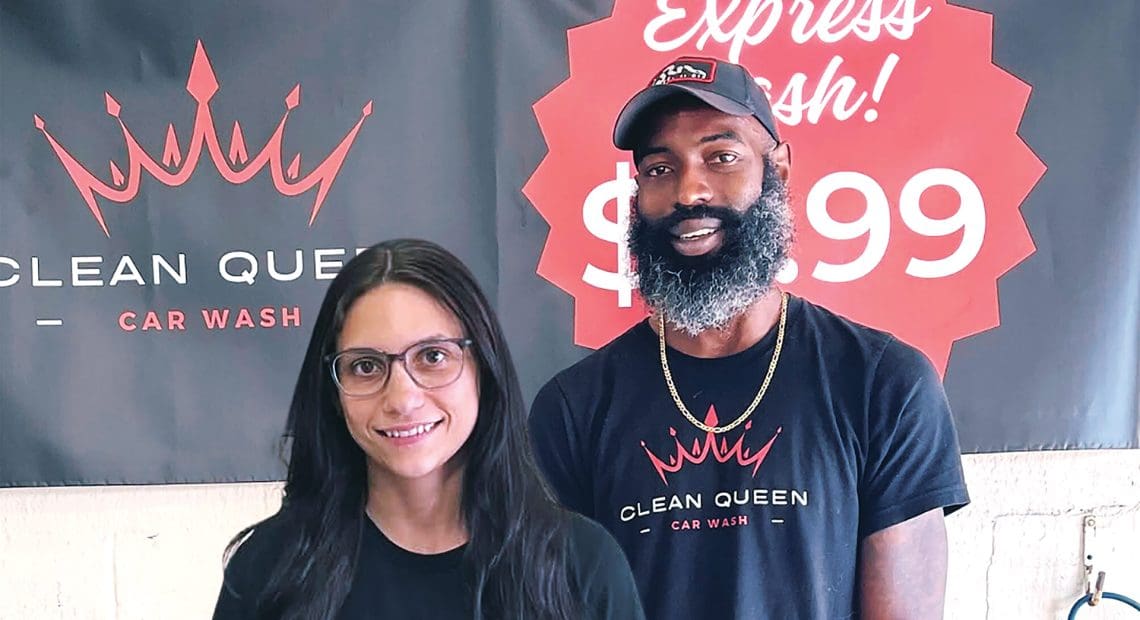
Clean Queen Car Wash owners Nicole and Rich Sherwood.

Clean Queen Car Wash owners Nicole and Rich Sherwood.

When we took over Clean Queen Car Wash in Holyoke a year ago, we knew we were in for an adventure. We had the skills — Rich, with his deep experience in automotive repair, and me, with my background in customer success and business operations. But no amount of preparation fully equips you for the real experience of running a business together as a couple.

Reflecting on our first year, we’ve seen incredible growth, faced unexpected challenges, and learned more than we could have imagined. Here are five things we did well — and five things we wish we had done better.


Five Things We Did Well

Customer Experience First. From day one, we prioritized a high-quality wash and detailing service. We listened to customer feedback and made adjustments to improve efficiency and satisfaction. The result? A growing base of loyal customers. We also introduced additional services, like family pricing and express interior detailing, to create long-term value and repeat business.

Investing in the Right Equipment. We quickly realized that outdated or poorly maintained equipment leads to inefficiencies and downtime. Investing in high-quality tools, staying on top of repairs, and proactively maintaining the machinery have minimized disruptions. A single breakdown can cost us hundreds in lost revenue, so preventive maintenance has been a key factor in keeping things running smoothly.

“A single breakdown can cost us hundreds in lost revenue, so preventive maintenance has been a key factor in keeping things running smoothly.”

Marketing and Social Media Presence. We made a strong push on social media with promotions, giveaways, and engaging content. This helped us gain traction in the community and bring in new customers, especially through targeted Facebook ads and seasonal campaigns. Our fall-themed ads and winter promotions helped drive membership sales and increase awareness of the dangers of salt buildup on vehicles.

Building Community Relationships. Hosting fundraisers, supporting local organizations, and engaging with the community has strengthened our brand and built goodwill. One of our proudest moments was raising $500 for Holyoke Youth Football. We’ve also worked with local businesses for cross-promotions, helping expand our reach while supporting others in the area.

Learning Every Aspect of the Business. Rich made it his mission to understand the ins and outs of the car wash. From mechanical repairs to customer service, knowing every aspect has allowed us to be hands-on owners and troubleshoot problems quickly. I focused on streamlining operations, improving customer retention strategies, and refining our service offerings. This hands-on approach has allowed us to stay lean and maximize profitability.


Five Things We Wish We Did Better

Work-life Balance. Running a business as a couple means work follows you home. We often found ourselves discussing operations at dinner or on weekends, which led to burnout at times. Setting clear work-life boundaries earlier — such as designated ‘no-business’ hours — would have helped us recharge and avoid unnecessary stress.

Financial Planning for Unexpected Costs. While we had a budget, unexpected repairs and maintenance issues caught us off guard. For example, when a major piece of equipment broke down unexpectedly, we had to scramble to cover the repair costs. A larger emergency fund from the start would have reduced financial stress and allowed us to handle surprises more smoothly.

Hiring and Delegation. We took on too much ourselves in the beginning. Trying to manage every detail left us stretched thin. Learning to delegate and trust employees sooner would have helped us focus on growth rather than just daily operations. We now understand the importance of hiring the right people and providing clear training to ensure the business runs smoothly without us having to be there 24/7.

“We took on too much ourselves in the beginning. Trying to manage every detail left us stretched thin. Learning to delegate and trust employees sooner would have helped us focus on growth rather than just daily operations.”

Better Systems for Membership and Promotions. Our unlimited membership program is a great value, but in the early months, we struggled with managing renewals, tracking customer accounts, and efficiently promoting it. Implementing a more robust system from the start would have saved us headaches and provided a better experience for our customers.

Clearer Communication as Business Partners. Running a business together is different from a personal relationship. We had to learn to separate emotions from business decisions and communicate more effectively about expectations and responsibilities. Early on, miscommunications sometimes led to frustration, but over time, we developed a clearer structure for dividing tasks and making decisions together.


Looking Ahead

Our first year was full of lessons, and while we’ve made mistakes, we’ve also built something we’re incredibly proud of. We’ve increased our customer base, established a strong local presence, and created a business that continues to grow. As we move into our second year, we’re focusing on scaling, refining our processes, and continuing to provide top-notch service to our customers in Holyoke and beyond.

To fellow entrepreneurs — especially couples diving into business together — our advice is simple: plan for the unexpected, communicate openly, and celebrate the wins (big and small) along the way.

Here’s to another year of growth, learning, and cleaner cars!


Nicole and Rich Sherwood are the owners of Clean Queen Car Wash in Holyoke.

Workforce Development

Mindfulness and Mentorship

By Chelsea Russell and Mia McDonald


Chelsea Russell

Chelsea Russell

Mia McDonald

Mia McDonald

Mentorship is essential in every career to help foster personal and professional growth among employees. These relationships are instrumental in developing the culture of your business by improving performance, increasing productivity, and encouraging continued learning.

Thoughtfully and strategically pairing individuals together to build a strong and successful connection is a win all around. For both parties to obtain the most benefit out of the mentor-mentee relationship, there are four main mental-health and mindfulness practices that can be utilized: visualization, goal setting, reflection, and gratitude.


Visualization

The first key in building a strong mentor-mentee relationship is visualization. This mindfulness technique is a practice that, even when informally used, can ensure that the mentor and mentee are on the same page when it comes to what they are each looking to get out of the collaboration. The mentor and mentee must come to the table with their own intrinsic motivation and determination to succeed.

Visualization can help each person regularly see their end outcome and plan out the processes that will help them get to their desired outcome. This practice can also be used to manage stress and everyday obstacles by reminding everyone that every step and obstacle is another day closer to the future and their vision.


“Establishing and setting goals creates purpose and provides a baseline for an ongoing, supportive relationship, with measurable benchmarks to continually gauge progress.”


Goal Setting

While visualization builds confidence and encourages forward thinking about what the future could hold, goal setting takes the next step by making those visions tangible. Mentors can offer invaluable help and guidance in setting and measuring short and long-term goals; therefore, this should be a collaborative process. Establishing and setting goals creates purpose and provides a baseline for an ongoing, supportive relationship, with measurable benchmarks to continually gauge progress.

Mentorship is about sharing and building on experiences to help define and refine meaningful objectives. Therefore, a best practice to build accountability in the mentorship would be to set up monthly check-ins to measure goal progression.

Goals can be fluid, as life happens and sometimes gets in the way of targets. However, having a mentor champion your goals with you can help determine where goals can be adjusted or what additional resources may be beneficial. Throughout the mentorship, always remember to celebrate the accomplishments and benchmarks along the way, no matter how big or small.


Reflection

An important part of goal setting and personal growth is reflecting on the outcome and the journey. The mentor and mentee should have open communication and provide regular feedback in a timely manner. When goals are completed, the mentor and mentee should reflect on what went well or what could have gone better, and then determine areas for growth.

During the mentorship, each person should reflect on their own progress individually and then discuss what they can do to improve or how they can provide better support for each other. Regular evaluation throughout the span of the relationship will create the most value.


Gratitude

Gratitude is something we all take for granted. As important as it is to continue looking for ways to improve, it is equally, if not more, important to slow down and practice regular gratitude — for each other and for the process. Being able to appreciate all the positive aspects and milestones of navigating the workforce and life will create more joy and improve overall well-being.

Expressing gratitude can be as simple as writing down what you are thankful for or telling a co-worker you are thankful for their guidance and support. This practice enhances the trust, mutual respect, and open communication that guides these meaningful relationships between the mentor and mentee.

When there is a sense of appreciation for each other and the process of mentorship, each person will grow, learn, and collaborate more effectively. Every challenge encountered is a building block toward the end goal and vision, so remember to be grateful for the learning opportunities provided and the continued growth.


Bottom Line

Achieving any success in the workplace is a measure of time, effort, and dedication. Success cannot be achieved alone; it is dependent on the help and support of others. Embracing the uncomfortable to push for new challenges and embracing ways to incorporate individuality will make any mentor-mentee relationship the most successful.


Chelsea Russell is a senior manager, and Mia McDonald a senior associate, at the Holyoke-based accounting firm Meyers Brothers Kalicka, P.C.


Commercial Real Estate

Designs on Growth

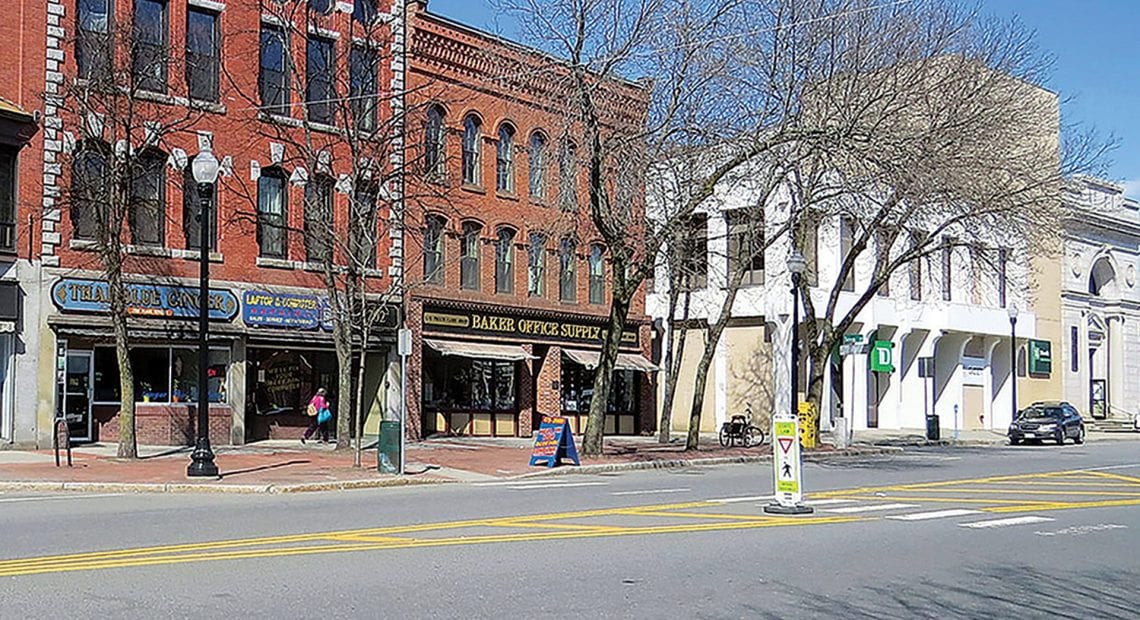
The Franklin County Chamber of Commerce & Regional Tourism Council recently announced that it has been awarded the contract to spearhead the Rural Downtown Redevelopment Project, an initiative aimed at revitalizing the downtowns of Northfield, Turners Falls, and Shelburne Falls/Buckland.

The project, administered by the Franklin Regional Council of Governments (FRCOG) and funded by the Massachusetts Executive Office of Economic Development, aims to bolster economic growth and develop a sustainable regional model for rural downtown management. 

The year-long pilot project builds upon a 2023-24 study conducted by the BSC Group, which identified the need for enhanced coordination and administrative capacity to support rural downtowns. The Rural Downtown District Project aims to strengthen economic growth and improve collaboration between business owners, municipal leaders, and community stakeholders to boost local economies and improve overall downtown vibrancy, and pilot a regional downtown coordination model that, if successful, may be replicated throughout Franklin County and other rural areas. 

Project organizers say the Franklin County Chamber of Commerce, serving as the county’s only regional chamber and state-designated regional tourism council, is well-positioned to lead the effort. With more than a century of experience supporting local businesses, promoting economic development, and marketing Franklin County locally and regionally, the chamber looks to improve collaboration and leverage existing resources to maximize the pilot’s success. 

“This project is an exciting opportunity to plug in additional administrative capacity to enhance regional collaboration and downtown vibrancy and test a replicable regional model for economic growth.”

“After a robust planning process, we are excited about the opportunity to work with the chamber on this pilot phase of the Rural Downtown Redevelopment Project,” said Ted Harvey, senior economic development planner at FRCOG. “At its core, this project is about building capacity and supporting our communities to grow their local economies sustainably. Given the chamber’s strong local partnerships and its success as a regional dot connector, the chamber is well-positioned to bring this program to life in the three downtown districts.” 

Harvey explained that each of the three pilot communities prioritized enhanced coordination in their local rapid recovery plans, making them ideal starter locations to pilot this new approach. 

He said the Franklin County Chamber will collaborate closely with the Franklin County Community Development Corp. (FCCDC), FRCOG, municipal officials, and local leaders to launch the pilot. A key part of the project will include hiring a downtown district coordinator to convene working groups in each community. These downtown working groups (DWGs) — comprised of business owners, residents, nonprofit leaders, arts and culture representatives, property owners, and town officials — will identify two or three priority projects in each district, help guide the downtown district coordinator, and inform long-term planning. 

“This project is an exciting opportunity to plug in additional administrative capacity to enhance regional collaboration and downtown vibrancy and test a replicable regional model for economic growth,” said Jessye Deane, executive director of the Franklin County Chamber of Commerce & Regional Tourism Council. “This is a great, low-risk opportunity to pilot a regional coordination model and give our downtowns a measurable boost.”

Deane said the downtown district coordinator’s work will be guided by input from local stakeholders to ensure that projects reflect each community’s unique vision and needs. The DWGs will also help determine how to best leverage available resources and identify new opportunities for funding downtown projects. 

“The Franklin County CDC is excited to work with the chamber and FRCOG on this project. We work one-on-one with many businesses in the area to strengthen their business plans and work with them on marketing, operations, and finances. We provide capital when appropriate,” said John Waite, executive director of the FCCDC. “We also know that each individual business is stronger when the other neighboring businesses are stronger. This project will help businesses and vested stakeholders work together and use their various strengths to make each downtown greater than the sum of its parts.”

Daily News

WARE — Mary McGovern, president and CEO of Country Bank, was elected to the board of directors of the Massachusetts Bankers Assoc. (MBA) at its annual meeting in May. Founded in 1905, the MBA is the only association representing FDIC-insured community, regional, and nationwide banks serving consumer and business clients across the Commonwealth.

“As a dynamic industry, it is crucial for the association to incorporate the insights of banking leaders like Mary,” MBA President and CEO Kathleen Murphy said. “Their expertise and experience empower us to fulfill our priorities of delivering exceptional resources, advocacy, and thought leadership to our members, thereby strengthening their ability to serve their clients and communities. The market knowledge that Mary contributes allows the association to anticipate and address emerging banking needs and economic trends, supporting our members as they cater to a vast consumer and business footprint across the Commonwealth.”

Added McGovern, “I am excited to share my election to the board of directors for our industry’s association, which has successfully served banks for 120 years. Serving on the board allows me to work alongside fellow banking leaders to help shape the future of our industry while advocating for policies and initiatives that support Massachusetts banks. This role aligns perfectly with Country Bank’s mission to make a difference in the lives of employees, customers, and communities. By contributing to the broader banking landscape, we are better positioned to deliver innovative and responsible solutions that strengthen the local economies we serve with pride.”

Daily News

CHICOPEE — MicroTek Inc., a nonprofit wire component manufacturer that provides employment support to individuals with disabilities, announced the promotion of Ellie Labonte to the position of sales representative.

Labonte began her career with MicroTek in 2017 as an assembler and progressed to a sales coordinator position, where she managed sales activities by supporting customers and coordinating production with the manufacturing floor. As a sales rep, she will focus on strengthening customer relationships and developing new opportunities.

MicroTek also announced the promotion of Luz Fernandez and Erin Miller to sales coordinator roles. Both employees have significant product knowledge gained from on-the-floor experience as a production supervisor and tooling technician, respectively.

“MicroTek is committed to providing professional development and advancement opportunities to its employees,” the company stated. “This next generation of sales professionals is well-positioned for success.”

Daily News

Nicole Pepin

WESTFIELD — James Hagan, president and CEO of Westfield Bank, announced that Nicole Pepin has been appointed assistant branch manager at the bank’s Park Street location in West Springfield. She will assist in managing all areas of the branch, including customer service, retail and business product sales, employee development, and general operations.

Pepin began working for Westfield Bank 26 years ago as a teller in its Agawam location. She has worked in many of the bank’s communities, as both a teller and better banking specialist, before advancing to her current role. She graduated from Holyoke Community College with an associate degree in business administration.

“Nicole is extremely hardworking and has a large customer base due to her commitment to customer service,” said Heather Zielenski, vice president, branch manager. “She not only goes above and beyond for her customers, but for her team as well.”

Daily News

SPRINGFIELD — In keeping with its community-minded approach to business, Freedom Credit Union recently announced its support for Square One’s “Back to Square One” capital campaign for its new campus. The credit union pledged $7,500 for the project.

“This gift represents Freedom Credit Union’s strong support for our mission and vision for the future of the families who live and work here,” said Kristine Allard, Square One’s vice president of Development & Communication. “We know that our new campus will play a vital role in positioning our region’s young children for long-term success. We are so grateful to our friends at Freedom Credit Union and everyone who has supported our campaign.”

In March of 2023, Square One formally announced plans to expand access to its high-quality early learning and care for the region’s children and families. Since that time, the campaign has succeeded in securing more than $13 million to build a new early learning and family support center in Springfield’s South End, at the same location where Square One once stood prior to the 2011 tornado. The building is slated to open next month.

“We are proud to support the important work Square One does every day to help children and families in our community grow and thrive,” Freedom Credit Union President Glenn Welch said. “Their vision to effect meaningful change that results in more promising futures for children, families, and our community closely reflects our own cooperative spirit.”

Cover Story

Mission: Imperiled

Nicole Blais, CEO of Holyoke Chicopee Springfield Head Start

Nicole Blais, CEO of Holyoke Chicopee Springfield Head Start


Nicole Blais was troubled when she clicked the link.

Forwarded to her by her the executive director of the Massachusetts Head Start Assoc., it led to an April 14 U.S. News & World Report article stating that the Trump administration was considering an FY 2026 budget that would zero out funding for Head Start.

Overall, the piece confirmed what Blais, CEO of Holyoke Chicopee Springfield (HCS) Head Start, already knew about the federal budget and this $12 billion line item — that a presidential budget is essentially a wish list, only Congress can allocate federal funding, and Head Start enjoys support on both sides of the aisle.

But she wasn’t in any mood to be complacent.

Indeed, within days, she had penned an op-ed for area media outlets, stating, “HCS Head Start is more than just a program; it is a lifeline that connects families to vital resources. The looming threats of federal funding cuts — especially to programs that safeguard the health and well-being of our children and families — is an issue affecting more than just those we serve.”

On May 2, said Blais, the president unveiled what’s known as a ‘skinny budget,’ which did not list Head Start as a program to be eliminated. But, as with that April 14 article, this latest report, while reassuring, is by no means final.

“That budget is just a proposal that’s sent to Congress. That was a good sign, but we’re still waiting to see the budget that Congress puts together before we exhale.”

“That budget is just a proposal that’s sent to Congress,” she said. “That was a good sign, but we’re still waiting to see the budget that Congress puts together before we exhale.”

There are many nonprofit managers and board members holding their collecting breath these days, including Andrew Morehouse, executive director of the Food Bank of Western Massachusetts, who said proposed cuts to SNAP (Supplemental Nutrition Assistance Program) funding and Medicaid would dramatically increase demand for the agency’s services at a time when demand is already soaring due to inflation and a softening jobs market.

“For the fiscal year October of 2023 to September 2024, we saw a 30% increase, and since then, we’ve seen a 10% increase,” he said, adding that this number will likely increase due to tariffs and other forms of pressure on consumers.

Meanwhile, several grants for area programs and initiatives have already been terminated, including:

• A $20 million grant from the Environmental Protection Agency to Springfield that was slated for home energy retrofits, air pollution monitoring, and de-leading of homes, an initiative involving several area nonprofits;

• A $1 million EPA grant to address asthma in Western Mass. through in-home environmental remediations, such as mold removal and improved ventilation, in Chicopee, Holyoke, and Springfield;

• A $50,000 National Endowment for the Arts (NEA) grant to MASSMoCA in support of Jeffrey Gibson’s “Power Full Because We’re Different” exhibition;

• A $400,000 funding package from the U.S. Department of Agriculture to the Food Bank for the fiscal year ending in August; and

• A $20,000 grant from the NEA to Amherst Cinema for its Bellwether series, which promotes “creative, thoughtful, and inventive approaches to non-fiction cinema,” according to a statement from the theater.

That list, and it is certainly just a partial list, shows that the cuts have come across the broad spectrum of nonprofits, agencies in categories ranging from the arts to public health to food security.

Common denominators, aside from language from the Trump administration stating that the programs in question fall outside the administration’s priorities, are actions to appeal the cuts while also looking for other ways to fund them — when possible.

Andrew Morehouse says looming cuts to SNAP benefits and Medicaid could greatly increase demand for services provided by the Food Bank of Western Massachusetts.

Andrew Morehouse says looming cuts to SNAP benefits and Medicaid could greatly increase demand for services provided by the Food Bank of Western Massachusetts.

That’s not possible with a $20 million grant or even a $1 million grant, but it is with the NEA’s grant to the Amherst Cinema, for example, and also with the cut to the Food Bank’s budget, and both agencies are appealing to the public.

Meanwhile, at least one nonprofit, the YWCA of Western Massachusetts, is considering the launch of a capital campaign to sustain programs that are funded by federal grants that are mostly no longer available (more on this later). And many nonprofits are reaching out to area foundations, not only with appeals for funding, but for support with efforts to find ways to collaborate with other agencies to meet needs within the community and keep their agencies active and financially stable.

“People are reaching out, and not just with appeals for direct funding; we’ve been in conversations with our current grantees and others in the nonprofit ecosystem, and we’ve been having conversations about how else we can be of service in these challenging times,” said Denise Hurst, vice president of Community Impact and Partnerships with the Community Foundation of Western Massachusetts. “They’re asking about opportunities to partner with one another, share ideas, and collaborate in real time to navigate these difficult times.

“There’s still domestic violence going on, there’s still child abuse going on, there’s still sex trafficking going on, there’s still human trafficking going on, and there’s still stalking going on. And that means that the nonprofits in that arena that do that work are being stripped of the funding, and the survivors aren’t able to get the services they need.”

“We’re just four months into this new administration, and we’re really thinking about stabilization and sustainability of the nonprofit ecosystem,” she went on, adding that the region’s nonprofits not only meet critical needs, but they are an important pillar in the Western Mass. economy, providing not only jobs but critical services that benefit employers and their workforces.

For this issue, BusinessWest examines this time of challenge and high anxiety for nonprofits, what’s at stake, and how these agencies are responding.


Waiting to Exhale

As she talked about the plight of her agency, Liz Dineen, CEO of the YWCA of Western Massachusetts, shared information concerning grants from the Department of Justice for programs to assist those the agency serves.

They fall into various categories, such as transitional housing assistance grants for victims of domestic violence, dating violence, sexual assault, and stalking; grants to improve the criminal justice response program; the Sexual Assault Forensic Exam hiring and training program; and others, she said, adding that she and her staff continuously peruse the DOJ website, and, specifically, the Office of Violence Against Women, for notices of funding opportunities and apply to whatever is available.

Colleen Shanley-Loveless

Colleen Shanley-Loveless

“Private funding is not going to have the impact of some of these larger grants, and the state can’t make up for all of it.”

But starting in January and the start of the Trump administration, there has been very little available. Indeed, the DOJ recently terminated more than 360 victims’ services grants, which stripped hundreds of millions of dollars away from programs that promote public safety and provide victims and survivors with access to safety, security, and justice.

“Traditionally, at the beginning of February, there’s a bunch of new grants that are posted; they posted several new grants at the beginning of February, and then they pulled every one of them,” she explained. “There were no federal grants at all available for us to pursue.”

Recently, there were a few grants posted, one for Indian tribes and the other for rural areas, which meant this particular YWCA is ineligible for both, she went on, adding that the one program the agency could apply for had just 19 grants for the entire country.

“In the past, we might have had an opportunity to look at 30 to 35 grants; now we’re looking at one,” she said, adding that she’s found it difficult to even talk with anyone at the DOJ to get some direction on what’s happening — or not happening. “There’s a real dearth of opportunities out there right now.”

This reality prompted Dineen to consider a capital campaign so that the agency may continue to provide its services. A feasibility study is now underway, she noted, adding that the question isn’t whether there will be a campaign, but what the monetary goal should be.

“We’re trying to gauge what funders and foundations will be able to give us,” she said, acknowledging that, in most campaigns of this nature, funding is sought for capital projects such as a new building, but in this case, it’s to continue programming for which the agency can no longer secure grant funding.

“There’s still domestic violence going on, there’s still child abuse going on, there’s still sex trafficking going on, there’s still human trafficking going on, and there’s still stalking going on,” she said. “And that means that the nonprofits in that arena that do that work are being stripped of the funding, and the survivors aren’t able to get the services they need.”

What Dineen is experiencing — and her response, in terms of both action to keep programs running and strong words about what will happen if they are curtailed or eliminated — is being repeated across the region, at dozens of nonprofits.

Including Revitalize Community Development Corp. (CDC), where President and CEO Colleen Shanley-Loveless is responding to the termination of that $1 million grant to combat asthma as well as a $1.5 million stake in the EPA grant to Springfield that was terminated.

The former went to the state Department of Public Health, she said, adding that roughly $900,000 was left to be spent on the Healthy Homes program and initiatives that have been successful in bringing the rates of asthma down in this region.

“Indoor air quality in housing is impacted by gas stoves, older housing stock with leaky roofs, poor ventilation, etc.,” she said. “We piloted healthy homes work with Revitalize CDC and the city of Springfield. The work to address housing needs is critical to keep people healthy; these are proven interventions to help folks control asthma.”

Elaborating, she said funds have been terminated, or are in limbo, for several air-quality-related initiatives, including an EPA grant to the Hitchcock Center in Amherst and Springfield’s $20 million EPA Community Challenge grant, and the impact from these cuts could be devastating, with area health officials projecting increases in asthma hospitalizations and the cost of that care, as well as higher morbidity and mortality rates.

Jessica Collins

Jessica Collins

“We were being set up for a decade’s work to engage, educate, and inform people of how climate impacts health, but also to work with partners like the city of Springfield to literally change policy and infrastructure. And now, all of that will be paused.”

Shanley-Loveless said her agency has diverse funding streams and some public support, but nothing that can make up for the loss of millions of dollars in federal grants.

“Private funding is not going to have the impact of some of these larger grants, and the state can’t make up for all of it,” she explained. “And that’s the challenging part; $1.5 million is a large amount — if we apply to a foundation for $50,000, that’s a good amount, but it doesn’t come close to the amount and the impact of those federal grants.”


Clearing the Air — or Not

Jessica Collins, executive director of the Public Health Institute of Western Massachusetts, agreed, adding that, while nonprofits of all kinds are under duress, the Trump administration seems to be “piling on” when it comes to those involved with public health.

She has some theories about why, including lingering resentment over how the COVID crisis was handled. But the ‘why’ isn’t as important as the ‘what,’ she noted.

“The attack on climate change is really devastating,” said Collins, adding that her agency was to be a major subcontractor to Springfield to help the city carry out strategies related to that $20 million EPA grant, just one initiative in the broad realm of climate change her agency was slated to be involved in.

“We were being set up for a decade’s work to engage, educate, and inform people of how climate impacts health, but also to work with partners like the city of Springfield to literally change policy and infrastructure,” she said. “And now, all of that will be paused.”

There will be appeals to lawmakers to restore the funds and, in many cases, lawsuits to accomplish that same end, said Collins and others we spoke with, but nonprofits are bracing for the possibility, if not the probability, that they will have to move on without that funding.

And that has implications for individual nonprofits as they look to maintain staff and carry out missions, as well as their various partners in various initiatives.

“Last year, our budget was $4 million, but more than $1 million went out to 35 different organizations in subcontracts,” she explained. “So when we take a hit, everyone else kind of takes a hit as well because we’re seen as a convener and a lot of the funding we get is collaborative.”

And while shoes have already dropped for many nonprofits, others are bracing for the possibility that they might be impacted as well, while hoping they’re not — while at the same time acknowledging that hope is not a strategy.

That’s certainly the case at the Food Bank of Western Massachusetts, where the threat of cuts to SNAP benefits and Medicaid loom large over the agency and all those food pantries and survival centers that it supports.

“To the extent that those programs are cut, more people will turn to their local food pantry, meal site, and, ultimately, the Food Bank for more food,” said Morehouse, adding that a 20% cut in SNAP benefits has been proposed, which, if it becomes reality, would result in the loss of 19 million meals in Western Mass.

“That’s more than the Food Bank provides in a whole year, our entire inventory,” he went on, adding that there are nearly 200,000 people in the four counties of Western Mass. that receive SNAP benefits totaling $35 million a month. “That’s a lot of food, and it would, at the very least, result in a tremendous increase in demand for food assistance to make up for that loss. This would be a devastating blow.”

The same sentiment prevails at HCS Head Start, where Blais is optimistic that Head Start will remain in the federal budget, but not complacent given what’s at stake.

“At a time when the early-education world is rebounding from COVID and we’ve been so focused on providing access, this would be a ginormous step in the wrong direction,” she said, adding that Head Starts are “making noise” locally and nationally about how cuts to the agency would impact young people, families, and businesses still struggling to maintain workforces. “It’s like that ripple on a pond. Head Start reaches so many people; it’s not just families and children in the classroom.”

In the wake of cuts (and possible cuts), area nonprofit leaders are responding in many different ways — from hard looks at other sources of funding to educating the public and elected leaders alike on what’s at stake with these cuts, to looking at ways to collaborate to provide needed services.

Hurst told BusinessWest that the Community Foundation has received calls from nonprofits across a broad spectrum — including public health, the arts, environmental justice, and higher education — about cuts, what they mean, and how their broad impact can be mitigated.

“We’re doing a lot of deep listening, learning, and connecting them with resources,” she said. “We’re connecting them with other organizations so they can think about resource sharing and partnering with other organizations that are also trying to figure out next steps and strategy around culturing some of these funding losses as well as stabilizing internal operations.

“We’re there to listen, and thinking about ways to use that information that we’re gathering to influence and inform how we move forward,” Hurst went on, adding that the discussions are far more about strategies for meeting needs than plugging gaps in funding — because the gaps are too large to plug.

“We’re having discussions and conversations with donors about the importance of giving locally and regionally,” she said, “and how to be more strategic and intentional with their giving, both in the current and the long term.”

Autos Special Coverage

Too Many Moving Parts


‘Fascinating.’

That’s the first word Ben Sullivan, chief operating officer at Balise Motor Sales, used to describe the current landscape for the auto industry, and especially dealers, as tariffs of some kind, involving some countries and some products, loom over the sector.

He would use many others, especially ‘uncertainty’ and ‘volatility,’ terms that explain why, by and large, the large Balise stable of dealerships across Western Mass., Connecticut, and Cape Cod isn’t really doing much of anything at this point in response to what’s happening and is conducting what could be described business as usual.

That includes refraining from use of ‘beat the tariffs prices’ advertisements and similar messages that many others have deployed — although they’ve been discussed.

“We just didn’t think we had enough clarity to do that,” Sullivan said, hitting on just how much uncertainty exists today. “If we’re going to say something to our customers, we have to make sure that we’re on solid ground. We absolutely stayed away from creating any kind of frenzy around these things because we just don’t know if it’s true or not.”

But while it’s business as usual in some respects, dealers are certainly doing more business than usual for this time of year.

“Consumers are getting smart when it comes to how to manipulate the market and take advantage of the best opportunity and time to upgrade their vehicle and learning how to really maximize their equity.”

Indeed, while Sullivan said sales in March and April were up 24% over that same period a year ago, Carla Cosenzi, president of TommyCar Auto Group, which has five dealerships in Hampshire County, put the number at more than 30% across all brands, with Hyundai and Volkswagen leading the way.

“We’ve seen a surge in consumer urgency — they’re trying to get ahead of the potential tariffs,” she said. “And, right now, incentives are still good — there are a lot of low APRs available for consumers across the board — and their trade values are worth more than now than they were a month ago or two months ago. That combination is driving a sense of urgency.”

Other impacts include:

• An increase in leasing, as consumers in need of a new car survey the situation and see that option as a way to get a decent price and buy themselves some time until there is more clarity on what will happen long-term, or at least longer-term;

• With uncertainty about new cars, marked growth in demand for used cars, with prices holding generally steady, at least for now, said Cosenzi, adding that this demand translates into those higher trade-in values she mentioned; and

• A similar increase in demand for service contracts as consumers read and hear about how the prices of parts might be soaring as well due to tariffs.

“Consumers are getting smart when it comes to how to manipulate the market and take advantage of the best opportunity and time to upgrade their vehicle and learning how to really maximize their equity,” said Cosenzi as she surveyed the landscape and what’s she’s seeing from her front-row seat regarding all of the above.

Ben Sullivan says there are too many variables and unknowns to say with any kind of certainty what the short and long term look like for auto dealers.

Ben Sullivan says there are too many variables and unknowns to say with any kind of certainty what the short and long term look like for auto dealers.

As for what comes next … well, that’s where uncertainty takes over, especially with headlines changing seemingly every week, or even every day, on the levels of tariffs, possible exemptions, new deals with countries — such as the 90-day truce recently struck with China — and possibly individual manufacturers, and more.

“Nobody’s making major adjustments — the manufacturers are not making wild swings in what they’re doing because the landscape is changing almost by the day,” said Sullivan, who drew a parallel to the recent run on iPhones, a surge that quickly abated when it was announced that there would be exemptions on those products, but then picked up again when it was announced that the chips inside them would not be exempt.

“Overall, I don’t believe the tariff news will end up being as bad as we fear or as good as we hope,” said Sullivan as he summed things up, adding that it is simply too soon to know what will happen in the months and years to come.

Cosenzi agreed, noting that, beyond prices, inventory will be something to watch. Availability will likely become more limited, she said, adding that the great unknowns are when and to what degree this will happen.

“It’s too soon to really know, and it depends on the brand, but we’re starting to see that slowdown with brands like Volvo and VW,” she noted, adding that she doesn’t know if these cars are still in Europe or at the dock waiting for the smoke to clear. “It’s really complicated right now, and it’s very gray, so it’s hard for us to give consumers a clear picture.”

‘Fascinating.’ ‘Complicated.’ ‘Volatile.’ ‘Gray.’ These are the adjectives that describe the current state of the auto sales market, and it appears they will prevail for some time.


Driving Forces

March and April are traditionally not big months in the auto industry, said those we spoke with. They’re not bad months, necessarily, but they’re not like February (the real start of the sales season), end of year, or even some summer months, when there are usually deals to be had.

But this year was, of course, different.

With the coming of President Trump’s Liberation Day and news reports of car prices rising several thousand dollars as a result of traiffs, consumers took the initiative and found not only locked-in prices, but some incentives as well, said Cosenzi, adding that demand has been steady across the board, brand-wise, with small to mid-sized SUVs still dominating sales. Overall, the trend continues even as the rhetoric on tariffs continues to soften.

“When you back it up and look into an industry like ours with a truly global supply chain, it is nearly impossible right now to determine all of the impacts.”

Some of these buyers needed a new car, she said, but most were trying to beat the clock when it comes to expected price hikes and reduced availability.

“They may not necessarily be in the market for a new car, but they’re saying, ‘I might as well take advantage of the market conditions and upgrade sooner rather than later,” she explained, adding that this surge speaks to still-high levels of confidence in the economy.

Meanwhile, some manufacturers are price-protecting until the end of May and June in some cases, which provides even more incentive to buy now.

“If someone is in the market for a new car or coming up to be in the market, this is the perfect time to purchase,” said Cosenzi, adding that, while no one has a crystal ball and can say what the landscape will look like in six months or even six weeks, it is unlikely that it will look as good as it does now for consumers.

So, for now, it is still business as usual, and more of it. The overriding question is for how long. And no one really knows.

There are too many variables, especially when it comes to the impact on the thousands of parts that go into a vehicle, how many times these parts cross boundaries, and, thus, how many times they may be subject to a tariff.

“When you back it up and look into an industry like ours with a truly global supply chain, it is nearly impossible right now to determine all of the impacts,” Sullivan said. “A car might be assembled in Alabama, but there are parts from all over the world. And some of those things start as a small part, get put into an assembly, they cross the country border, get into the next stage of development … some of these assemblies might cross a country border seven times. So, if the tariffs become stackable, it would be devastating to consumers.”

Which explains the surge in new-car and used-car buying in March and April, but also the increases in leasing and service contracts as consumers digest the news and look to beat some worst-case scenarios with regard to both pricing and availability.

“With the tariffs, inventories will start to tighten, and consumers want to get ahead of that,” Cosenzi said. “They don’t want to be in a situation like the one they were in with COVID, where if they wanted a car, they really had to sacrifice what they were looking for in terms of color or trim.”

Carla Cosenzi says March and April were much busier than normal amid tariff and inventory concerns, and that trend is continuing.

Carla Cosenzi says March and April were much busier than normal amid tariff and inventory concerns, and that trend is continuing.

While this is certainly a good time to buy, and many consumers are, Sullivan said Balise has been reluctant to encourage consumers to buy now because of the high levels of uncertainty and the pace at which the landscape is changing.

“Most industry analysts say the average car price could go up by between $4,000 and $15,000 if all this comes to pass,” he noted. “There will certainly be some cost increase, but I don’t think it will be as severe as people fear at this point. But there is so much that is not known.”

Dealers are already seeing swings in consumer activity, he went on, adding that, while April was a very strong month for Balise, by late April, as the headlines started to reflect a softening of tone on tariffs, the pace of sales eased accordingly.

He drew some parallels to the early months of COVID, when news of shortages of paper towels and toilet paper sent consumers into stores for what amounted to panic buying.

It’s not quite like that with auto sales, but there was a similar knee-jerk reaction, Sullivan said, adding that the frenzy, if it can be called that, is already abating.


Bottom Line

Returning to his analogy with iPhones, Sullivan said it provides some appropriate context for any conjecture on what might happen next in his industry.

“You go to bed one night assuming that your iPhone is going to cost $2,000, and the next morning, it’s still going to be $800 to $900 for the top-end models that it was the day before,” he said, adding that the same is likely — not definite, but likely — to be the case with all those mid-sized SUVs on the market today.

But no one really knows.

So dealers have to be ready, willing, and able to adjust on the fly and absorb whatever comes at them, Cosenzi said, adding that, over the past several years, they’ve had plenty of practice at pivoting.

“This is a really challenging industry anyway, so dealers have to be resilient to be able to be in this business,” she explained. “We know how to pivot quickly and adjust to whatever the customers’ needs and demands are, and that’s what we’re doing in these unsettled times.”

That’s what’s needed when there are so many moving parts, literally and figuratively.

Special Coverage Workforce Development

Focus on the Future

Executive Director Todd Gazda

Executive Director Todd Gazda

“Everyone is a learner.”

Those are the words used on marketing materials for the Collaborative for Educational Services (CES), one of 24 such collaboratives in Massachusetts and arguably the most robust when it comes to programming.

“We’re kind of different than the other 23,” Executive Director Todd Gazda told BusinessWest. “The other 23 collaboratives really focus on special education and direct services to students — autism programs or behavior programs or programs for students with developmental delays, situations where their regular public school district doesn’t have the capacity to effectively meet their needs and they are looking an out-of-district placement.

“What happens is the districts get together and form a collaborative to pool resources and work in a manner that supports maximizing resources,” he explained. “One school district may be too small to apply for a grant, but if the collaborative pulls together three or four or five districts, then they can help coordinate what happens.”

CES does some of that too, and also runs two programs that provide direct services to students: HEC Academy, a special education school in Northampton, and Mount Tom Academy on the Holyoke Community College campus, which serves non-traditional students who, for whatever reason, are having difficulty succeeding in a regular public school setting and need more personalized instruction and support.

“We’ve seen incredible success for the students who attend both of those programs,” Gazda noted.

That said, he added, the Collaborative for Educational Services is much broader than that. For one thing, it runs statewide programs; as one example, for the past 15 years, it has provided all educational programming for the Department of Youth Services (DYS).

“So, for every youth lock-up in the state of Massachusetts, we run the schools. We hire the teachers, we do the curriculum, and it’s just like a regular public school setting.”

CES also provides special education in institutional settings, from DYS to Department of Mental Health programs to county houses of correction. Other statewide services include the Massachusetts Migrant Education Program, which connects migrant youth and their families with services and supports, and the Special Education Surrogate Parent Program, which connects special-education advocates with students whose parents, for whatever reason, aren’t in the picture.

“One of the areas that we’ve really gotten into recently is AI — how do we support districts as they seek to kind of adapt to AI and its use in schools and its use in instruction, and how do we effectively utilize it to support learning in the classroom?”

CES also does a lot of consulting and professional-development work statewide for teachers, schools, and districts, running the gamut from curriculum development to strategic planning.

“One of the areas that we’ve really gotten into recently is AI — how do we support districts as they seek to kind of adapt to AI and its use in schools and its use in instruction, and how do we effectively utilize it to support learning in the classroom?” Gazda explained. “That’s been a big area of growth for us.

“We’ve also done quite a bit of work helping districts navigate difficult conversations. There may be an incident in a school district that creates an emotionally charged atmosphere; we’ll go in and facilitate listening sessions and focus groups and pull people together to help bridge those differences so that people can have thoughtful conversations about their differences. We’ve been doing that work across the Commonwealth as well.”

CES also has an Early Childhood division that serves students “from cradle to career,” Gazda said — from pre-K education all the way up through internship programs to help link them to careers.

“Early Childhood, again, works statewide with school districts, helping them build more robust preschool programs and provide good services to their preschool students,” he explained, adding that other CES programs deal in community wellness, local food policy, and substance-abuse awareness and prevention.


Career Goals

One particularly robust element of the collaborative’s services is its workforce development programs.

“We partner with school districts, and they plan and implement a variety of workforce and career development programs for students — skills trainings, career development, helping students create and refine résumés, interviewing skills,” Gazda said. “These are all things we work on with our member districts to help students so, as they look to go into the workforce or prepare for a career, they have this skill set.”

One of those initiatives has been a paid STEM internship program, helping students prepare for careers in science, technology, engineering, and math. Since 2018, the program has placed 265 students in good-paying internships across 28 Western Mass. school districts.

“These are high-school kids who literally get paid to do work in businesses. It’s a leg up for the kids, but it’s also a leg up for local businesses, particularly those in the STEM fields, because it gives them an opportunity to train these students and generate a future workforce for them. It’s a win for everybody.”

While providing support for students in its local districts, as all such collaboratives do, CES also runs statewide programs.

While providing support for students in its local districts, as all such collaboratives do, CES also runs statewide programs.

Placements, typically for between 100 and 270 hours, are typically done over the summer when students have more time and opportunity. The fields include biomedical engineering, molecular biology, biotechnology, biochemistry, polymer science, neuroscience, oncology, nursing, and other fields within the STEM realm.

“They have paid stipends at the state minimum hourly wage or higher,” Gazda noted. “And they get training and support in researching, communicating, interview preparation, cover letter and résumé writing, and internship performance reviews. They gain professional and scientific experience, and they gain references to support college applications and job applications.”

The STEM program has grown from serving 30 students in 2018 to 69 last year, and 98% of participants complete their internships. Those results aren’t a matter of luck, Gazda said.

“There’s a lot of work that goes into matching the student with the employer in the correct field to get that kind of a completion rate. So it’s a good fit,” he noted, adding that, since 2018, the program has served 28 school districts in Western Mass., with 60 employers hosting student interns.

Funding has come from a variety of sources, but the biggest and longest supporter is the Massachusetts Life Sciences Center (MLSC), which supports internships of up to 270 hours.

“We can coordinate with MLSC to pay for 19 placements at UMass Amherst,” he said. “In 2024, the Massachusetts Executive Office of Education’s STEM-focused internship program funded 47 internships and a portion of our director’s salary. Community partners supported three internships, and a private donor in Hadley supported three internships. And we were able to secure private donor funding to support 41 students this summer with paid internships.”

Finding the finances to support this work is always a challenge, Gazda said.

“The problem is uncertainty at the federal level, which is leading to changes in state funding priorities,” he noted. “The Executive Office of Education is no longer offering funding under the STEM internship program, and the Massachusetts Life Sciences Center is reducing its support for student stipends as well. So this is where we find ourselves — in kind of a state of flux, funding-wise.”

CES, founded in 1974 and now the largest collaborative in Massachusetts by membership, geographic size, and revenue — around $39 million last year — gets funding from grants, contracts, and fees for service. But much of its money filters through the state or federal government in some way, meaning it’s vulnerable to the spending cuts happening in Washington`.

“If we run short, I can’t go back to a town and say, ‘we need more money.’ It just doesn’t work that way. We’ve got to earn and raise and generate revenue to support all of the different programming that we do to support our districts,” Gazda said.

“These are high-school kids who literally get paid to do work in businesses. It’s a leg up for the kids, but it’s also a leg up for local businesses, particularly those in the STEM fields, because it gives them an opportunity to train these students and generate a future workforce for them. It’s a win for everybody.”

“Typically, when you have a lot of grant-funded programs, there’s always a certain amount of trepidation about when that grant is going to end. Will you get another one? Will it be extended? And now, that’s kind of heightened by that additional question regarding anything directly from the federal government: are they going to cut it off with no warning?”

He certainly hopes not, noting that the internship programs have no real downside, for either the students or the businesses.

“The employer business partners who host school STEM interns enjoy the re-energizing benefits of mentorship and the additional support to complete certain projects. Employers are given a seat at the table in creating a pipeline of future researchers and workers,” he told BusinessWest. “Having an educated workforce is critical for our business community to thrive, and this is one vehicle whereby we can help make it happen.”


Revenue Questions

Gazda was superintendent of schools in Ludlow for nine years and has been working for 24 years in public education. Before that, he was an attorney, doing corporate litigation in New York City.

“I just came to the realization that wasn’t the job I wanted or the life I wanted to live. So I moved back home to Western Mass. and became an eighth-grade history teacher,” he recalled. “It was a little scary making that switch, but I’ve never regretted it once.”

The Ludlow district belongs to the Lower Pioneer Valley Educational Collaborative, the only other collaborative in Western Mass. It primarily runs special education programs, as well as a vocational school. “So it’s a slightly different type of collaborative and more in line with the other collaboratives across the state.”

At CES, Gazda has broadened his focus, applying lessons from the classroom and public school administration to an agency that is doing impactful work across a much wider playing field.

“It is a lot, and trying to keep all those moving parts going, particularly in this fiscal environment, has created challenges for the organization,” he noted, adding that the financial challenges aren’t new. “The pandemic really shook things up, and we’re seeing the results of uncertain finances in districts across the state where they’re being forced to adjust to declining student populations, less revenues, and increased expenses. So there’s a ripple effect that creates the system that we have to work within.”

Still, he remains optimistic, and focused on the work. “We continue to monitor the situation in order to be ready to respond to whatever happens to come next.”

In other words, keep on learning, always with an eye on the future.

Commercial Real Estate Special Coverage

Warrior Mentality

Richard Knight says USA Ninja Challenge not only develops core strength, agility, and flexibility, but offers a positive, supportive environment to get in shape.


Richard Knight said the idea for a business that now boasts dozens of franchises across the U.S. — and will soon come to Western Mass. — has its roots in a video found on the internet.

Twelve years ago, he recalled, he was sitting at a luncheon with his friend, Dale Grant, who owned a gymnastics studio in Concord, N.H. with his wife.

“A friend sent a video to him of a child going over homemade obstacles, and we were sitting there saying, ‘that’s just like the TV show American Ninja Warrior,’” Knight recalled.

The child’s enthusiasm was infectious — and the show, which poses a series of challenges along a grueling obstacle course, was peaking in popularity around that time.

At the same time, Grant was lamenting the fact that boys were dropping out of gymnastics — it was becoming harder to keep them engaged as they got older — and he and Knight began talking about opening a different kind of gym. Knight had sold a business in 2008 and was looking for a different opportunity, and in 2015, the pair launched the first USA Ninja Challenge facility in Manchester, N.H.

“The kids see it as variety, working on cool new obstacles. What they’re doing is working different muscle groups — but don’t tell the kids that. They’re having a great time doing something different every week.”

“It’s an interesting model,” said Knight, a New Hampshire native and now the company’s CEO. “We took the basics of our backgrounds from gymnastics and CrossFit and built a curriculum for training children. It’s a different lesson plan every week. The kids see it as variety, working on cool new obstacles. What they’re doing is working different muscle groups — but don’t tell the kids that. They’re having a great time doing something different every week. The variety makes it exciting for them.”

Seven years ago, after a second site opened in Concord, USA Ninja Challenge opened its first franchised location in South Windsor, Conn. Since then, the company has opened — or is in the process of opening — about 50 such locations across the U.S., including three now operating in Massachusetts: in Andover, Marlborough, and, most recently, Norton.

And now Knight and Grant have Western Mass. on their radar. They have researched communities including Northampton, Holyoke, Southampton, and others, and are looking to open up to five locations in and around the Pioneer Valley, with the first expected to open during the first half of 2026.

“All our gyms are doing great in the Massachusetts market, and we’re looking to expand our footprint,” Knight said, before talking about why the company’s franchise model is attractive. “We’ve been able to get 60% of our gym owners to go cash-flow positive in the first month. That’s huge when you start a business — to get to that break-even point. That’s the first hurdle for any business owner. After that, you’re adding kids every month to the program.”

He said USA Ninja Challenge looks for locations within a short driving distance from at least 15,000 to 20,000 people, a quality the Valley has in spades. The sites will ideally have between 3,500 and 8,000 square feet of space.

“It takes about six months to find the right location. We’re looking for light industrial space, flex space — we don’t need retail, similar to a gymnastics studio. That’s what we’re targeting,” he explained. “Once we find a location and sign a lease, it’s 13 weeks to open. It’s highly automated, highly structured, from that point.”

With ambitious plans taking shape, Knight talked with BusinessWest for this issue’s focus on commercial real estate about what USA Ninja Challenge does for kids — and what it can bring to this region.


Fit and Focused

Open to boys and girls aged 2 to 17, USA Ninja Challenge is a year-round obstacle-course training program that combines basic skill sets from gymnastics, climbing, cross training, and track and field. The program features six levels to master with a wide variety of progressions, drills, and challenges, including rings, balance obstacles, tumbling surfaces, cargo nets, traverse walls, slack lines, ropes, ladders, and warped walls.

Ninjas that demonstrate their mastery of skills advance to the next level of training, and each participant progresses according to their own ability. Essentially, Knight said, the program aims to build children’s self-esteem, confidence, and sense of accomplishment, one obstacle at a time.

“When I put my stepson in the program, he was probably 20 to 30 pounds overweight and didn’t like school sports, and six months later, he was doing 10 good push-ups and holding a plank. At the end of the year, he was doing 100. Now he’s 21 years old, and he’s a fit young man.

“Traditional sports never worked for him. He didn’t like football, soccer, or basketball. Ninja gives kids of all abilities the chance to be challenged and get in shape, and we can also take top athletes and elevate them even further,” he went on. “The program helps develop core strength, agility, and flexibility for kids. You develop the upper body as well. It really helps in other sports because, if you have a strong core, that helps you with everything you do in life.”

Kids can enroll in memberships for one, two, or three visits a week, and those classes are supplemented with events like birthday parties, camps, and competitions, he added.

“What sets us apart from other franchises is a focus on families and community give-back,” Knight went on. “People we attract as owners are people that want to work with children and develop long-term relationships with families. It’s about helping kids get fit and feeling good about themselves, and putting kids and families first.”

He called the sport a “positive positive,” then explained what that means.

“We’ve been able to get 60% of our gym owners to go cash-flow positive in the first month. That’s huge when you start a business — to get to that break-even point. That’s the first hurdle for any business owner. After that, you’re adding kids every month to the program.”

“Say you go to a basketball game. People in the stands are booing kids, booing players, booing referees, and they’re cheering their own kids as well. In ninja, when we have a competitive event, you cheer for every athlete. There’s no booing. There’s no ‘oh, ref, you’re terrible.’ There’s none of that. The kids get exposed to an environment that’s all about themselves in a very positive environment.

“From a sports standpoint, that is huge with our kids,” he added. “There’s a lot going on in society today, and here, children can be in a very positive environment and feel good about themselves and grow. And that’s very good for us as parents, too.”

As for the community element, franchises have become involved, through fundraisers and other activities, with organizations like school PTAs and PTOs, Girl Scouts and Boy Scouts, 4-H, the American Cancer Society, Best Buddies, and many more.

“It’s really part of our nature to do those things on a regular basis,” Knight said. “So people who tend to be owners really like the family aspect of it, working with children, and the local give-back. That’s what’s unique about our business model, unlike a fast-food restaurant where you can make good money, but may not make the same kinds of relationships.”


Olympic Dreams

The latest development that has Knight and Grant excited is the elevation of obstacle course racing to the Summer Olympics, starting in 2028 in Los Angeles.

Specifically, it’s now part of the pentathlon, replacing equestrian show jumping. A few years ago, the International Olympic Committee evaluated a whopping 62 proposals to replace that event before deciding on a ninja-style obstacle course. The other four pentathlon events remain swimming, fencing, pistol shooting, and running.

Knight and Grant both believe this development will further legitimize the sport, providing both opportunities for kids to get fit — particularly those who don’t enjoy traditional youth sports — while boosting the profile of USA Ninja Challenge. Knight expects the number of franchises to reach around 90 within a year.

USA Ninja Challenge is looking to open up to five locations in Western Mass., starting in 2026.

USA Ninja Challenge is looking to open up to five locations in Western Mass., starting in 2026.

“We have a partnership with U.S. Olympics,” he told BusinessWest. “We run competitions for our kids, and top athletes get to train with Olympic coaches in the summer. We’re the only one that has a program like that because we have a curriculum that’s all about progression training for kids.”

“People we attract as owners are people that want to work with children and develop long-term relationships with families.”

The company has also been involved with the Junior Olympics program, offering ideas to help create a pathway for kids to compete for the Olympics in this sport. And it is growing worldwide. The Ultimate Ninja Athlete Assoc. saw about 10,000 kids from 23 countries at its championship in Anaheim, Calif. last year — a tenfold increase from 2023.

And when the Olympics added the sport to its pentathlon, 160 countries immediately signed on — the biggest adoption of any sport introduced to the Olympics, Knight said.

He’s equally excited about the potential of this growing youth activity to get kids active and in shape, a particular concern in this era of copious screen time. An article on the USA Ninja Challenge website touts several studies linking youth fitness to better performance at school as well.

In short, he said, the benefits are manifold, and for Western Mass., they will also include that community element he spoke of, as well as job creation.

“We need people to work with kids and provide kids with a positive, safe environment to develop,” he told BusinessWest, adding that there will be a need for coaches, managers, and other positions at the new gyms when they start to open up in this region next year. “It’s remarkable the positive impact this can have on the community.”

Community Spotlight Special Coverage

Community Spotlight


The Daniel Arts Center is one of many individual pieces on the Bard College of Simon’s Rock campus that have caught the attention of developers.

The Daniel Arts Center is one of many individual pieces on the Bard College of Simon’s Rock campus that have caught the attention of developers.

John Weinstein said the phones started ringing seemingly within hours after the news broke last November.

This was the official announcement that Bard College at Simon’s Rock, an institution in Great Barrington for 60 years, would be closing its campus there and relocating programs to Bard College’s main campus in New York for the start of fall classes.

The phone calls were — and are (they’re still coming at a good clip) — from those interested in acquiring and developing all or a piece of the 280-acre campus, with a wide range of specific intentions, including housing.

“The inquiries have ranged from totality to the very granular,” said Weinstein, the school’s vice president and provost, meaning everything from the entire campus to individual buildings to specific pieces of equipment.

Interest in those pieces picked up in intensity with passage of an overlay zone at the recent town meeting, one that will permit many different uses beyond education, said Weinstein, adding that some uses — cannabis facilities and an amusement park, for example — are still not allowed.

The fate of the Bard campus and the prospect of losing such a large contributor to the Great Barrington economy are at the top of a long list of storylines involving this picturesque Southern Berkshires community and its mostly tourism-driven business community.

“The inquiries have ranged from totality to the very granular.”

“This will have an impact on the town in multiple ways,” said Betsy Andrus, executive director of the Southern Berkshire Chamber of Commerce, based in Great Barrington. “We won’t have the influx of students coming into the town for shopping and eating, and you also have teachers and staff, an athletic center, and the Daniel Arts Center; it’s certainly a loss for this area.”

A loss that is in many ways balanced by anticipation about what might come next.

As for other storylines, they include everything from new ownership for several downtown properties — and reshaping of those properties for retail and office use (including a new home for the chamber) as well as residential units — to lingering housing concerns, especially a shortage of affordable, or ‘workforce,’ units, putting a burden on both business owners and their employees.

“This whole area needs more workforce housing; our employees can find places to live, but often at a fairly substantial commute,” said Janis Martinson, executive director of the Mahaiwe Performing Arts Center. “It’s a real challenge; people are coming a long way to get to work because they don’t have a choice.”

Janis Martinson says the Mahaiwe Performing Arts Center will open a second facility later this year, one of many efforts to connect the community to the arts.

Janis Martinson says the Mahaiwe Performing Arts Center will open a second facility later this year, one of many efforts to connect the community to the arts.

On another note (pun intended), this is shaping up to be a big year for the Mahaiwe, built in 1905, which has a full slate of performances on tap — from classic movies like Casablanca, shown on Valentine’s Day, and Sabrina, which aired May 23, to a Brian Cox tribute to opera, comedy, and a wide variety of musical performances — and is set to open an accessory venue in the town’s former fire station.

“A group of businesspeople have restored the firehouse, and they’re leasing us a portion of the first floor,” said Martinson, adding that the building is roughly the same age as the Mahaiwe. “We’re using that as an intimate, flexible performance venue and a concession space.”

The Mahaiwe is one of many key contribitors to a vibrant downtown that has made a near-complete recovery from COVID and extensive infrastructure work in the central business district, said Martinson, adding that, while Great Barrington once had slow times of the year — most of September, for example — it is now vibrant year-round.

“I think the town has grown a little younger,” she said. “And while there used to be some times when it would be pretty sleepy, it’s not like that anymore; this is a 12-month-a-year busy town.”

Andrus agreed, noting that the investments made in several downtown properties will bring more people, and more vibrancy, to the area, with some new businesses and several existing ones with new mailing addresses.

“I think the town has grown a little younger. And while there used to be some times when it would be pretty sleepy, it’s not like that anymore; this is a 12-month-a-year busy town.”

“Change is always a positive thing,” she said, noting that several existing businesses have or will find new and better spots. Meanwhile, new housing units equate to more people living in the central business district — and more opportunities for some workers to shorten their commute.

For this latest installment of its Community Spotlight series, BusinessWest takes an in-depth look at Great Barrington and the many developing stories in this destination community.


A Loss — and an Opportunity

Weinstein said the decision to close Bard College’s Great Barrington campus and relocate its various programs — early college and some high-school offerings — came down to numbers.

Getting more specific, he said it was the number of students that would make sustaining that campus feasible. That number is at least 450 and preferably much higher, he noted, adding that the school hasn’t been able to reach that threshold, and with current demographic shifts — specifically fewer high-school-age people — it wasn’t going to get there anytime soon.

So the decision was made to move the school and its programs to the main Bard campus, where economies of scale will make this operation much more sustainable, said Weinstein, adding quickly that, while this move represents a loss for the community, the campus as a whole and its individual parts present a unique development opportunity.

And the zoning overlay district certainly helps in this redevelopment, said Weinstein and others we spoke with, noting that it will permit operation of an athletic center and performing-arts center — those are just two examples — without a school being attached.

“Those most interested in the future of the property did that shift,” said Weinstein, noting that the redevelopment of the campus will afford the town an opportunity to address some of its pressing needs and challenges, a list that certainly includes housing.

Great Barrington at a Glance

Year Incorporated: 1761
Population: 7,172
Area: 45.8 square miles
County: Berkshire
Residential Tax Rate: $13.79
Commercial Tax Rate: $13.79
Median Household Income: $95,490
Median Family Income: $103,135
Type of Government: Open Town Meeting
Largest Employers: Fairview Hospital; Iredale Mineral Cosmetics; Prairie Whale
* Latest information available

Andrus agreed, noting, as Martinson did, that businesses and their employees are impacted by the current lack of affordable housing.

Many of these businesses are in the broad tourism, hospitality, and retail sectors, said Andrus, noting that Great Barrington draws visitors from nearby New York, other communities within the Berkshires, and well beyond. Meanwhile, its population increases threefold in the summer, from 7,000 to 21,000, as snowbirds and those with second homes in the area return.

“With that influx of people, even going to the grocery store can be chaotic,” she noted, adding that the town’s character changes as its population swells, especially the central business district.

Residents and visitors alike enjoy a very walkable downtown that features attractions like the Mahaiwe, a diverse lineup of restaurants, and unique arts-related programs such as Berkshire Busk — organized street entertainment (everything from singers and flamenco dancers to poets and aerialists) that runs on Railroad Street and other parts of the downtown on Friday and Saturday nights from early July to Labor Day.

There have been some changes within this downtown, and more are on the way, as some aging properties have changed hands, said Andrus, adding that this list includes the so-called Mahaiwe Block, the Marble Block, and other properties.

“All these buildings have changed hands to younger, probably more energetic people,” she said, adding that these landmarks are being renovated and, in some cases, reimagined, with mixes of retail, office, and much-needed housing.

The chamber’s new home at 343 Main St., across from Town Hall, is a good example. The property there, acquired and redeveloped by the Alander Group, will house the chamber’s offices as well as an enlarged visitors’ center, as well as other retail, 15 apartments, and a wine bar, said Andrus, noting that, prior to its move, the chamber was in two locations, a small visitors’ booth in front of CVS and a business office on Railroad Street, a situation that was less than ideal.

“It was like working in a cave — it was hard to find; it wasn’t easily accessible,” she said of the Railroad Street location. “Now, we’ve combined the business office and visitors center, and it’s a real improvement.”

The Alander Group also owns the Mahaiwe Block, which houses the performing arts center, she said, adding that it also features retail and housing units.

Meanwhile, at the Marble Block on Main Street, the former Gorham & Norton grocery store, a fixture for generations, is being remade into Robbie’s Community Market, said Andrus, adding that the property will soon feature several apartments as well. As for the market, it will be a collective, including a coffee bar, pizza oven, sandwich shop, and more, combining the past — this was a soda counter decades ago — with the present.


Taking Center Stage

These investments, as well as the new or relocated businesses and residents they bring to the area, will create more vibrancy in the downtown, said Andrus, adding that, overall, the downtown continues to thrive and build on its status as a destination.

Martinson agreed. She took the reins as executive director of the Mahaiwe in January 2020, just two months before COVID arrived and essentially shut down its scheduled season.

But the facility survived that challenge by getting creative, she recalled, adding that one of first initiatives that year was to partner with Bard College at Simon’s Rock to create a drive-in movie theater in one of its parking lots.

“They had a parking lot outside their performing arts center that happened to be tiered down a hillside, so we could have all the cars facing in one direction and put the screen at the bottom of the hill,” she recalled, adding that the schedule included a few of the Star Wars movies, American Graffiti, The Princess Bride, and other family stalwarts.

“That’s how we got through summer,” she went on, adding that the Mahaiwe partnered with other performing arts nonprofits in the area to record concerts from its stage in efforts that were more about the arts than revenues. “We managed to stay in touch with our community throughout the pandemic, and that’s really the point — to bring people together, and bring them together around the performing arts.”

This creative spirit continues today, she said, adding that the facility hosted more than 125 individual events last year and will grow that number this year, especially with the opening of the new space in the renovated former fire station.

“We’ll be able to do much more intimate performances there — things that are a little more niche and involving emerging artists and more local artists,” Martinson told BusinessWest. “And we’ll be able to rent that space out to local performing arts organizations.

“We’re really excited about that coming online,” she went on, adding that there have been some ‘sneak previews,’ with a planned opening for later in the year, probably the fall.

The auxiliary theater is part of a broader five-year strategic plan now in year two, said Martinson, adding that, in simple terms, the plan calls for bringing more performing arts than it already brings to its main stage and “reaching further into our community.”

That community includes Great Barrington residents, but also visitors from a wide radius, she said, adding that this town is a true destination, one that has made its way all the way back from the dark days of COVID.

And one that is looking to turn the loss of Bard College at Simon’s Rock into new opportunities.

Daily News

SPRINGFIELD — Some like to have cheese with their wine, but the Zoo in Forest Park is pairing wine with animal encounters at its annual Wine Safari on Saturday, May 31 from 2 to 6 p.m. Guests will be guided on an adventure around the world as they sample wine from different countries while meeting and learning about animals native to that region.

“How often do you get to drink wine for a good cause?” said Gabry Tyson, assistant executive director at the Zoo in Forest Park. “Wine Safari is a unique way to support our animals’ care, as many cannot survive in the wild for reasons related to injury, illness, permanent disability, or habituation to humans.”

Guests must be age 21 or older to attend. The $55 ticket includes wine samples from 2 to 6 p.m. (while supplies last), a reusable glass courtesy of MGM Springfield, food provided by Jersey Mike’s Longmeadow, and animal encounters and keeper talks from members of the Zoo’s animal care and education teams.

Advanced tickets are required to attend, and all IDs will be checked at the door. Tickets are limited and are on sale now at www.forestparkzoo.org/wine-safari.

The zoo will be open to the general public on May 31 from 10 a.m. to 1 p.m., but promptly at 1 p.m., it will close to the public to allow staff to prepare for Wine Safari.

Daily News

CHICOPEE — Polish National Credit Union (PNCU) announced the promotion of Shane Hall to vice president of Marketing.

Hall began his career with PNCU as a summer intern in 2016 and joined the team full-time in 2018 after completing his master’s degree. He will continue to lead the Marketing department and oversee all facets of marketing strategy, communications, and community engagement.

“Shane’s leadership and creative energy have elevated our brand presence across all platforms,” said James Kelly, president and CEO. “He brings a strong combination of marketing expertise, community focus, and professionalism to the role, and we’re excited for what’s ahead with Shane leading our marketing efforts.”

In his new role, Hall will continue to manage the marketing department and is responsible for the credit union’s digital marketing, advertising, sponsorships, and event coordination. He is known for his engaging public speaking style and active involvement in the community through hosting seminars, luncheons, and civic events on behalf of the credit union.

A graduate of Merrimack College, Hall holds both a master’s degree in management and a bachelor’s degree in business administration with a concentration in marketing and a minor in political science. He serves on the board of directors for the Boys and Girls Club of Chicopee and is also a board member for Providence Ministries.

He is also an Eagle Scout and an active member of the Holyoke St. Patrick’s Parade Committee, where he currently serves on the budget & audit committee, as well as a member of the Ancient Order of Hibernians James A. Curran Division 1 in Holyoke.

Daily News

HOLYOKE — Holyoke Mall announced the start of its Center Enhancement Project to revitalize and refresh the property with a number of improvements.

Over the next several months, customers will see enhancements including repaving lots and replacing curbs, updating landscaping, and painting the exterior of the mall. During this time, traffic patterns and available parking areas will be subject to change, and traffic will be redirected as needed.

While work is ongoing, the PVTA bus stop has been temporarily relocated. The stop located in the yellow lot near JCPenney has moved to the lower green lot near Best Buy and the outer ring road. This relocation will remain in effect for the foreseeable future.

“We’re excited for this refresh and committed to making investments in the property,” said Kristen Hinckley, Marketing director. “We appreciate our customers’ patience and understanding as we work to enhance their shopping experience.”

Daily News

SPRINGFIELD — United Way of Pioneer Valley (UWPV) will host a facilitated workshop focused on board retention, recruitment, and finding the right board members for one’s nonprofit. It will be held on Thursday, May 29 from 8:30 to 10 a.m. in the TD Bank Conference Room at 1441 Main St., Springfield.

The discussion will be co-led by Rebecca Coolong of Human Service Forum and Sarah Tanner of Financial Development Agency. The roundtable discussion will center on exploring and sharing successful approaches toward attracting the right fit of individuals to an organization and how to keep them engaged and productive. Participants are encouraged to come with specific challenges to discuss and best practices to share with the group.

To register, visit onboard-workshop.eventbrite.com.

Picture This

Email ‘Picture This’ photos with a caption and contact information to [email protected]


Shoot, Score, Get a Job

On April 21, Hampden District Attorney Anthony Gulluni’s ninth annual Hoop Up Springfield Basketball Tournament & Summer Job Fair brought together more than 150 attendees from across Hampden County for a day of athletic competition, career exploration, and community connection at American International College. Youth basketball teams competed in a fast-paced 3-on-3 tournament, while others participated in a cheerleading clinic led by local professionals. At the job fair, more than a dozen local employers offered summer job opportunities to high-school students.

On April 21, Hampden District Attorney Anthony Gulluni’s ninth annual Hoop Up Springfield Basketball Tournament & Summer Job Fair brought together more than 150 attendees from across Hampden County for a day of athletic competition, career exploration, and community connection at American International College

On April 21, Hampden District Attorney Anthony Gulluni’s ninth annual Hoop Up Springfield Basketball Tournament & Summer Job Fair brought together more than 150 attendees from across Hampden County for a day of athletic competition, career exploration, and community connection at American International College


Rebuilding Healthy Neighborhoods

Monson Savings Bank recently donated $10,000 to Revitalize Community Development Corp. in support of its 33rd #GreenNFit Neighborhood Rebuild event on April 26 at Calhoun Park in Springfield. #GreenNFit brings together hundreds of volunteers to transform multiple homes in a single day. This year, more than 20 Monson Savings Bank team members rolled up their sleeves to work alongside more than 700 community volunteers on the project, which impacted 11 homes, the Miracle House, Ronald McDonald House Charities of Connecticut and Western Massachusetts, and the park itself.

Monson Savings Bank recently donated $10,000 to Revitalize Community Development Corp. in support of its 33rd #GreenNFit Neighborhood Rebuild event on April 26 at Calhoun Park in Springfield.

Monson Savings Bank recently donated $10,000 to Revitalize Community Development Corp. in support of its 33rd #GreenNFit Neighborhood Rebuild event on April 26 at Calhoun Park in Springfield.


New Space, Same Mission

On May 1, Girls Inc. of the Valley unveiled its newly renovated program space to celebrate the extraordinary achievements of all girls and alumni leading up to Girls Inc. Week 2025 and Girls Inc. Together – Day of Giving. Girls Inc. of the Valley is encouraging the community to support it in addressing a critical issue facing youth today: mental health. Guests at the event also heard from award-winning children’s book author and keynote speaker Lesléa Newman.

Pictured: Girls Inc. of the Valley Executive Director Suzanne Parker (back row, center) and members of the board of directors. (Photo by Hillary Lynn Photography)

Pictured: Girls Inc. of the Valley Executive Director Suzanne Parker (back row, center) and members of the board of directors. (Photo by Hillary Lynn Photography)


Foster Care Awareness

In recognition of Foster Care Awareness Month in May, All Our Kids Inc. (AOK) launched a campaign aimed at raising awareness of the unique challenges faced by foster families and the state of foster care in Western Mass. As part of those efforts, All Our Kids hosted an open house on May 7. Marianna Litovich (pictured second from right, with AOK board members) founded the nonprofit and has grown it over the past decade as an organization dedicated to building community, providing resources, and increasing public awareness of the foster care system while encouraging active community involvement. (Photo by Hillary Lynn Photography)

All Our Kids hosted an open house on May 7. Marianna Litovich (pictured second from right, with AOK board members) founded the nonprofit and has grown it over the past decade as an organization dedicated to building community, providing resources, and increasing public awareness of the foster care system while encouraging active community involvement. (Photo by Hillary Lynn Photography)

All Our Kids hosted an open house on May 7. Marianna Litovich (pictured second from right, with AOK board members) founded the nonprofit and has grown it over the past decade as an organization dedicated to building community, providing resources, and increasing public awareness of the foster care system while encouraging active community involvement. (Photo by Hillary Lynn Photography)


Honoring a Community Champion

Springfield Partners for Community Action honored Paul Bailey for his 24-year tenure as the organization’s leader on May 3 at the Sheraton in Springfield. Bailey officially retired on Jan. 31. Under his leadership, Springfield Partners increased revenue and funding by more than $4 million, and he oversaw the development and implementation of many new services. In 2024, Springfield Partners celebrated 60 years of serving more than 7,000 area residents each year through its various programs, which include home and energy services, income tax assistance, money management, transportation, veterans’ services, and scholarships.

Springfield Partners for Community Action honored Paul Bailey for his 24-year tenure as the organization’s leader on May 3 at the Sheraton in Springfield

Springfield Partners for Community Action honored Paul Bailey for his 24-year tenure as the organization’s leader on May 3 at the Sheraton in Springfield