Daily News

WARE — Country Bank announced the appointment of John Jahne as senior vice president and chief technology officer, a key strategic hire to support the bank’s continued growth, operational excellence, and digital transformation initiatives.

Jahne brings more than 25 years of experience in technology leadership, vendor management, and enterprise operations. With a proven track record in managing high-performing technical teams and delivering cost-effective solutions, his approach aligns with Country Bank’s commitment to customer service, efficiency, and innovation.

“John is a dynamic and forward-thinking leader,” said Marco Bernasconi, chief operating and innovation officer. “His deep expertise in IT strategy, enterprise architecture, and core banking systems will enhance our capabilities as we continue to evolve to meet the needs of our customers and communities.”

Throughout his career, Jahne has been a strategic leader on projects involving core banking conversions, mergers and acquisitions, and strategic sourcing, all while maintaining a sharp focus on cost savings and service improvements. He has also managed complex vendor relationships and negotiated high-impact contracts that improved operational performance and supported long-term institutional goals.

In addition to his corporate leadership role, he previously operated his own consulting and training firm, further demonstrating his entrepreneurial mindset and depth of technical knowledge in information security, server and network infrastructure, and application engineering.

“I’m excited to join Country Bank at such a pivotal moment,” Jahne said. “This is an organization deeply committed to its customers, communities, and corporate values of integrity, service, teamwork, excellence, and prosperity, and I look forward to contributing to its mission by delivering smart, scalable, and customer-focused technology solutions.”

Outside of his professional work, Jahne is a dedicated community leader and educator. He serves on the board of the Children’s Community School in Waterbury, Conn., supporting its mission to educate the minds, bodies, and spirits of children from urban environments. He is also a long-standing member of the Simsbury (Conn.) Technology Task Force, helping the town enhance its technology strategy and infrastructure. Within the banking industry, he contributes as a faculty member for the Connecticut School of Finance and Management, a program of the Connecticut Bankers Assoc., where he teaches technology in banking.

Daily News

HOLYOKE — OneHolyoke CDC will host a lunchtime event, “Building & Sustaining Livable Communities,” featuring U.S. Rep. Richard Neal, on Monday, June 16 at noon at Wyckoff Country Club, 233 Easthampton Road, Holyoke.

The event will feature speakers Neal, ranking member of the U.S. House Ways and Means Committee, who will offer a perspective from the federal level; Richard Sullivan, president and CEO of the Western Massachusetts Economic Development Council, who will offer a perspective from the business community; and Elise Rapoza, senior research associate at MassINC Policy Center, who will provide a viewpoint as a public policy expert, presenting her report on “Fostering Mixed-income Neighborhoods to Close the Economic Divide.”

There is a suggested donation of $50 for the event, which includes lunch. To register, visit oneholyoke.org/sustaining-communities.

Michael Moriarty, executive director of OneHolyoke CDC, will serve as moderator for the event, which aims to begin a conversation around how resources, innovation, advocacy, and collaboration all play a role in weathering the current instability of federal cutbacks, the specter of a recession, and related uncertainties affecting gateway cities and other communities large and small.

Daily News

AMHERST — The Amherst Business Improvement District (BID) announced the launch of Amherst Restaurant Week, taking place Sunday, June 8 through Thursday, June 12 in downtown Amherst. With more than a dozen participating restaurants and eateries, this weeklong event invites residents, students, and visitors alike to explore the diverse food scene that makes Amherst a standout dining destination.

Building on the legacy of the Taste of Amherst, which last ran in 2019, this reimagined event brings the focus back to the restaurants themselves. Diners can enjoy special offers, prix fixe menus, and exclusive deals at a wide range of local favorites, from casual cafés to upscale taverns; global flavors to homegrown comfort food.

“Amherst Restaurant Week is all about celebrating the incredible talent and variety we have right here in downtown,” said Robert Allingham, Marketing & Communications manager for the Amherst BID. “We want to make it easy and exciting for people to visit multiple restaurants, support our local businesses, and discover something new.”

To kick off the week, downtown Amherst will come alive on June 8 with free entertainment and local flavor. From 4:30 to 6 p.m., local band Prone to Mischief will perform a lively outdoor set downtown, creating an ideal atmosphere to stroll, dine, and enjoy the evening. At the same time, chef Bill Collins will host a free cooking demo at the White Lion Brewing patio, preparing asparagus marsala for attendees to sample and learn how to make themselves.

Participating locations will be marked with ‘Restaurant Week Participant’ window decals and table signage inside, and additional details — including each restaurant’s specific offer — can be found at amherstdowntown.com and by following @AmherstDowntown on Instagram.

Daily News

LENOX — Local seniors and families can learn about elder law issues at events being hosted by area councils on aging in Great Barrington (June 11), Lee (June 12), Stockbridge (June 21), and Monterey (June 25) in collaboration with the Massachusetts Bar Assoc. (MBA) and Berkshire Law Group of Lenox.

The events are part of the statewide Elder Law Education Program presented by the MBA, which correspond with its publication of the revised and expanded “2025 Elder Law Education Guide.” The 16th edition of the resource guide will be available for free at events and online at the MBA’s companion website, www.massbar.org/elderlaw.

This year’s program will feature Paula Almgren, an elder law and estate planning attorney and founder of Berkshire Law Group. Almgren, who contributed to the resource guide, has been on the front lines of eldercare for more than years. She will give a presentation entitled “I Wish More Seniors and Families Knew … Insights from an Elder Law and Estate Planning Attorney.”

Attendees will learn how elder law expertise adds value to estate planning, five critical financial and health directives for estate plans, key options and strategies for protecting a home and assets, little-known community benefits to help pay for care, and three ‘what-if’ questions every senior must ask themselves.

Almgren will be joined by two Berkshire Law Group colleagues, attorney Bryan Murphy and RN/Care Coordinator Kulli Bloom, who leads the firm’s TWC (the Whole Crew) annual program combining estate planning and asset protection with care advocacy and coaching for seniors and families.

The events are open to the public. Times and locations are as follows:

• Great Barrington Council on Aging: Wednesday, June 11, 1:30 p.m. at the Claire Teague Senior Center, 917 South Main St.

• Lee Council on Aging: Thursday, June 12, 1:30 p.m. at the Lee Council on Aging and Senior Center, 21 Crossway St.

• Stockbridge Council on Aging: Saturday, June 21, 10 a.m. to noon at the Red Lion Inn. Continental breakfast is free, but reservations are required by June 10 by calling (413) 637-5075 or emailing [email protected].

• Monterey Council on Aging: Wednesday, June 25, 2 p.m. at the Monterey Library, 452 Main Road.

Alumni Achievement Award Cover Story

All AAAs

In 2015, BusinessWest, created a new recognition program. Well, let’s call it a spinoff of an existing initiative.

Indeed, the Alumni Achievement Award recognizes those individuals who have most expanded upon the résumés that earned them membership in the 40 Under Forty Club.

And while there is usually one winner each year (there have been two on a pair of occasions), we profile the finalists for the award each year, because … well, just being among the handful of top scorers is an achievement of note.

The five stories on the following pages certainly convey continued excellence in the professional world — usually with a step or two or three up the ladder — and continued commitment to giving back to the community. They also provide some looks into the personal lives of some outstanding individuals, each of them worthy of the award known as AAA.

The Five Finalists for 2025 are:

Click on the photos below to read their stories

The winner will be announced at the start of the 19th annual 40 Under Forty gala on Thursday, June 19 at the MassMutual Center. Once again, the presenting sponsor of the AAA program is Health New England.

Meet the 2025 Alumni Achievement Award Judges:

Ashley Bogle is assistant general counsel and director of Legal Services for Health New England, where she manages the day-to-day operations of HNE’s Legal Department, from reviewing contracts to providing regulatory guidance and maintaining licenses and accreditation. A 40 Under Forty honoree in 2021 and a founding member of HNE’s diversity, equity, inclusion, and belonging committee, she was recognized by the Urban League of Springfield this year as its Health & Wellness Hero for her commitment to health equity, legal advocacy, and community enrichment.

A 27-year veteran of Monson Savings Bank, Dan Moriarty has been the institution’s president since 2020 and added the title of CEO in 2021. Earlier this year, BusinessWest named him one of its 2025 Difference Makers, largely for his commitment to the community — he volunteers about 200 hours a year — but also his stewardship of a philanthropic culture at Monson Savings, which has given about $1 million to 420 organizations over the past five years, with employees donating about 1,700 hours in the community each year.

Meghan Rothschild, a member of the 40 Under Forty class of 2011 and the recipient of the 2024 Alumni Achievement Award, is president and owner of the marketing and public relations firm Chikmedia, which puts an emphasis on female-run organizations and women business owners, offering strategic marketing planning and creative public relations. Increasingly in demand as a public speaker on topics ranging from enterpreneurship to social media training to women’s health, she is also a melanoma survivor and a fierce advocate for skin cancer awareness and prevention.

Features Special Coverage

Filling in the Canvas

Raipher Pellegrino stands near the huge curved window on the second floor of the property at 280-302 Worthington St., known as the Underwood Building.

Raipher Pellegrino stands near the huge curved window on the second floor of the property at 280-302 Worthington St., known as the Underwood Building.


Raipher Pellegrino paused at the huge, curved second-floor window facing the corner of Worthington and Dwight streets.

“How’s that for a view?” he asked rhetorically, noting that it’s been quite some time since anyone — other than those he’s had out for tours — has looked out that window, some recent history he intends to change.

Indeed, he envisions a Pilates studio, a gym, or something similar on the second-floor space at 280-302 Worthington St., a property known as the Underwood Building, which has been vacant or mostly vacant for more than decade. And that space is just part of a much larger canvas that Pellegrino, the noted personal injury lawyer and real estate developer, working in partnership with his brother, Joseph, and the city of Springfield, is intent on filling in.

While doing so, he’s writing the intriguing next chapter in the history of what has been called (and is still called, even though it hasn’t lived up to the title) Springfield’s ‘entertainment district.’

This is the Worthington Street corridor, specifically the blocks just west of Dwight Street. It has been growing increasingly quiet over the past decade or so as restaurants, clubs, other businesses, and even a nonprofit (Suit Up Springfield) have shuttered or moved. The closing of Dewey’s Jazz Lounge last month was just the latest blow for the area.

It was with the intent of reinvigorating that corridor that Pellegrino and his brother acquired the three buildings east of Duryea Way at auction in 2021. With support from the city in the form of a $2.5 million grant and infrastructure improvements, Pellegrino is filling in his canvas.

Some of the spaces have been filled, like Petra Hookah Lounge, which features Mediterranean food and reopened last fall in extensively renovated space. Others are nearing completion, such as the new restaurant called Mamou, to be owned and operated by the chef at the former Chef Wayne’s Big Mamou, set to open this summer. And still others, including three more restaurants, a music venue to host between 250 and 400 people, and other businesses, like that projected Pilates studio, are still weeks or months away. Meanwhile, several residential units have been renovated, and more will be added to the mix.

“I think it’s vitally important to bring this area back — it raises the quality of living for those living downtown, and it provides places for people to go and eat. That was my desire with this, and it’s a much more difficult project than I think anyone envisioned, but I think we’re starting to see it evolve, and we’re seeing a lot of momentum.”

“The pieces are coming into place,” said Pellegrino, who envisions five restaurants in all, most with doors opening out onto Worthington Street and outdoor dining, in addition to a club and other businesses that will support one another and bring people — and energy — back to the Worthington Street corridor.

“I think it’s vitally important to bring this area back — it raises the quality of living for those living downtown, and it provides places for people to go and eat,” he said. “That was my desire with this, and it’s a much more difficult project than I think anyone envisioned, but I think we’re starting to see it evolve, and we’re seeing a lot of momentum.”

Tim Sheehan, Springfield’s chief Economic Development officer, agreed, noting that the city has invested more than $3.2 million in the entertainment corridor for everything from outdoor dining facilities to small-business assistance to interior buildout for commercial tenants.

This ground-floor space in the Underwood Building is being renovated for use as a music venue, what Raipher Pellegrino describes as an “Iron Horse-like” facility.

This ground-floor space in the Underwood Building is being renovated for use as a music venue, what Raipher Pellegrino describes as an “Iron Horse-like” facility.

“The city’s investment continues in the corridor, and with what’s coming forward, people will see a lot of different options relative to dining in the dining district,” he said, adding that the goal is to bring both new businesses and a degree of long-term stability to a region that has not seen much of the latter.

Indeed, Brian Connors, deputy Development officer for the city, used understatement when he said the entertainment district has had “ebbs and flows.”

By that, he meant some good times, but also controversy with several late-night/early-morning incidents, and, from a business perspective, a high degree of turnover when it comes to restaurants and other businesses, problems compounded by the natural-gas explosion a block away in 2012.

For this issue, BusinessWest takes an in-depth look behind the plywood and brown paper over the doors and windows along that stretch of Worthington and into the future of the city’s entertainment district.


Work in Progress

It was raining intermittently as BusinessWest took its visit to the properties being redeveloped along that block on Worthington Street. The showers quickened the pace of the walks between the buildings, but they could hardly dampen the enthusiasm Pellegrino brought to his work as erstwhile tour guide, something he’s been doing often.

“This is a labor of love,” he said of the project, which is now approaching roughly $6 million in cost and represents perhaps the most extensive undertaking in a growing portfolio of real estate projects in Pellegrino’s portfolio.

That list includes the property at 265 State St. in Springfield — the large home later populated by commercial tenants but vacant in the ’90s and then restored by Pellegrino as a home to his offices — and its adjoining carriage house.

But it also includes a diverse mix of other properties, from charter schools in Springfield and Lowell, where Pellegrino went to college as an undergrad, to Springfield Country Club, which he acquired in partnership with the Hannoush brothers; from the property at 401 Liberty St. in Springfield, a former wire-manufacturing complex, now home to Behavioral Health Network, to the former Lunt Silversmith property in Greenfield, now home to a substance abuse center and mental health offices.

“The tenancy that we have needs to be established tenancy. In terms of going into the restaurant business as a startup business, it’s very, very difficult, and if the business model isn’t spot on, you have a tendency to have what we’ve had — businesses come in, businesses go out, businesses come in.”

Often, the projects involve properties that are historic in nature that require considerable renovations and modernization. Such is the case with the Worthington Street properties, which comprise a new challenge and a tremendous opportunity to reshape and reinvigorate the entertainment district, said Pellegrino, who started his tour at Petra Hookah Lounge, which opened its doors last fall, with the intent of showing what will be happening at the other properties along the street.

The block-long string of properties includes three buildings: 250-270 Worthington St., 272-280 Worthington, and 280-302 Worthington. The first two were built in the 1880s, and the third dates to the early 1930s.

Moving west to east, the properties were in progressively worse condition, he told BusinessWest, adding that 250-270 Worthington, most recently home to Jackalope Restaurant and now Petra (next door), was in decent shape, although both the residential units and restaurant spaces needed upgrades, including new HVAC systems. The property at 272-280, formerly home to several different restaurants, was in worse shape, he said, while 280-302 was “horrendous … uninhabitable.”

Efforts to make it habitable are among the many going on concurrently along that block, a project that came, as Pellegrino noted, with plenty of challenges — everything from renovating historic but badly deteriorated structures to securing established tenants — which became clear as he walked and talked about each of the buildings and the progress being made.

“With historic buildings like these, including one that hadn’t been occupied in 15 years, there are a lot of challenges,” he said, listing everything from floors one could see through to roofs that needed replacing to staircases that no longer meet code and need to be replaced. “This is a project that you can only figure out as you do it; we’ve systematically started at one end, 250-270 Worthington Street, and are working our way to the other.”

Starting with 250-270, he said Petra is now an established tenant, and there will be a new restaurant moving into the former Jackalope space by August or September. He declined to say what the entity will be but noted that it is an already established Springfield restaurant.

Raipher Pellegrino projects that five new restaurants, a music venue, other businesses, and new residential units will take shape along Worthington Street, reinvigorating the city’s entertainment district.

Raipher Pellegrino projects that five new restaurants, a music venue, other businesses, and new residential units will take shape along Worthington Street, reinvigorating the city’s entertainment district.

At 272-280, another new restaurant, Mamou, is expected to open later this month, and another new restaurant, a “bar-like” establishment with light fare, will be opening in the fall, he went on, adding that 280-302 Worthington will have a music venue, a breakfast/lunch restaurant, and other commercial spaces, six units in all, with tenants yet to be identified.

The music venue he’s envisioning will not compete with but rather complement existing venues such as the MassMutual Center, Symphony Hall, and the former CityStage, now being renovated into an arts center for youth, and be an “Iron Horse-like” venue, he said, a reference to the Northampton landmark that reopened last spring.

“The concept is to offer people live entertainment, but also support the restaurants,” Pellegrino said. “If you have an act and sell 250 to 400 tickets, people will want to eat before that.”


Building Momentum

As he stopped at that massive, curved window in the second-floor space above what will be the music venue, Pellegrino pointed to all the parking in the surrounding area, one of the many keys to the success of this project and the entertainment district overall.

Others include everything from improving the perception of public safety to creating stability with the business mix, as well as that supportive element that he mentioned.

Indeed, as the canvas gets filled in, the entertainment district will have a core of new restaurants and businesses, as well as some established eateries — Theodores’ and Del Rey Taqueria on Worthington Street, Osteria on Bridge Street, the nearby Student Prince, and other restaurants and taverns that will support one another, said Pellegrino, adding that the critical mass in his block of buildings should become a draw.

“All of the tenants understand the synergy — there’s discussion about that, and they work well with one another,” he noted. “The idea is that maybe someone can have dinner in one place tonight and have a drink in your place the next night; it feeds off one another. The more people we pull down into the region, the better the restaurants will do. The idea is to create the entertainment district, and the more the merrier.”

Sheehan agreed, noting there are several other keys to the success of this iteration, if you will, of the entertainment district.

These include everything from bringing experienced restaurateurs with proven concepts into the area to infrastructure upgrades.

“The tenancy that we have needs to be established tenancy,” he noted. “In terms of going into the restaurant business as a startup business, it’s very, very difficult, and if the business model isn’t spot on, you have a tendency to have what we’ve had — businesses come in, businesses go out, businesses come in.

“Our objective is to get more stabilized entrepreneurs into the spaces, and I do believe the tenancy that [Pellegrino] is putting forward reflects that stability,” he went on, adding that infrastructure improvements continue in the area, including additional upgrades, including more uplighting and plantings, to Stearns Square, capitalizing on work previously undertaken at that landmark.

Overall, the city has made a large commitment — in funding but also other forms of support — to the stability and growth of the entertainment district, said Connors, noting that public sector support, in the form of loans and grants for initiatives like outdoor dining, interior renovations, and relocation costs, are critical at a time when banks are often reluctant to lend for restaurant and brewery initiatives.

Pellegrino agreed, adding that the investments being made in the three properties along that block of Worthington Street and the individual spaces for restaurants and other businesses are another factor in the success quotient.

“These are major facelifts … these are beautiful, state-of-the-art restaurants. They’re coming into beautifully renovated spaces,” he told BusinessWest. “There’s no guarantee that any restaurant is going to succeed, but this gives them the best opportunity to succeed.

“Everyone has to do their part,” he went on. “The restaurateur has to put out good food and atmosphere; we collectively, with the city, have to provide a safe atmosphere and parking, so it’s inviting, and people feel comfortable coming downtown.”

Whether this picture will come together as Pellegrino and city officials anticipate remains to be seen. But there is great anticipation about what’s behind all that plywood and brown paper.

It’s the next big chapter in the life and times of Springfield’s entertainment district.

Insurance Special Coverage

Smart Policy

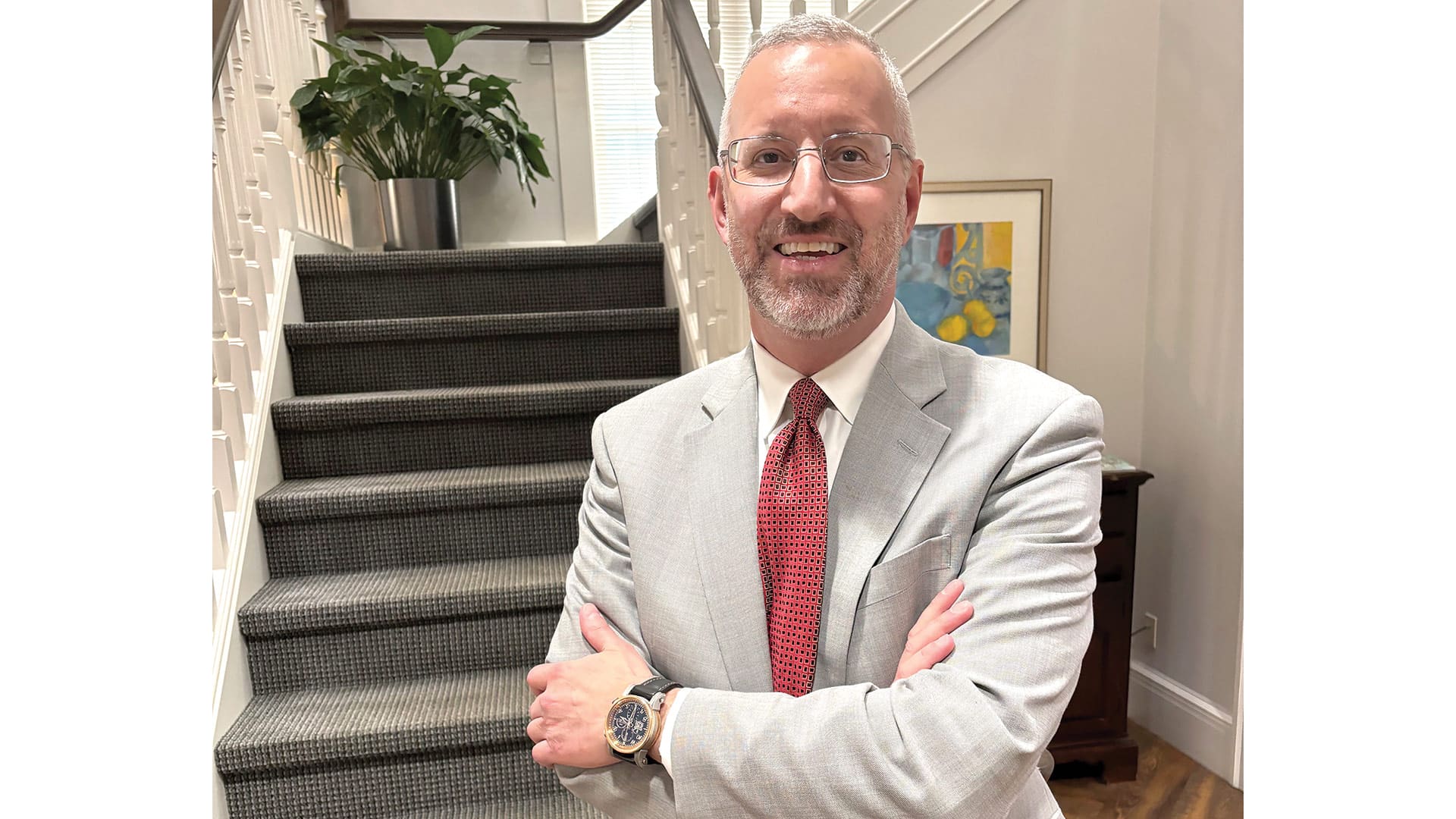
HUB International New England President Timm Marini

HUB International New England President Timm Marini

HUB International New England may be the largest insurance broker in those six states, President Timm Marini said, but that’s a point of pride that goes only so far.

That’s because there’s a difference between largest and best, and the latter is what the company strives for each day, and with each acquisition it makes.

And there have been plenty of those.
“We bought six agencies last year. We focused down in Connecticut a lot. You’ll see a couple more coming soon,” he said, adding that each acquisition has to make sense for both parties. “We bought two agencies down there, one in Fairfield County and one in the Putnam area — both smaller operations, but thirsting to partner with the backroom services that we offer, risk control, loss management, claims, financial services. We just do so many different things now.”

HUB International is no stranger to growth. The company was around 500 employees strong when FieldEddy, one of Massachusetts’ larger agencies, joined the organization in 2014; today, it boasts 19,000 across the U.S.

“A lot of it has been through acquisition, a lot of it through talent acquisition,” Marini said. “We’ve been out there acquiring really good people in their space where they operate — marketing, claims. I don’t know how many attorneys we have working for us in non-attorney jobs, but we’ve got highly educated people transacting and helping our customers.”

As for the smaller firms that join the fold, “they get expertise that they otherwise couldn’t necessarily afford on their own,” he said, noting that was essentially the draw for FieldEddy 11 years ago. “They get shared resources that are available to help make sales happen, make retention happen, and make the customer experience better. Just different minds, different thought processes.”

“We want to have a lot of conversations about how to help our customers and prospective customers survive through the maze of confusion. It’s dizzying the amount of change that goes on every day.”

HUB’s services run the gamut from business insurance and employee benefits to personal insurance and retirement services, with a wide range of specialties within each.

“We’ve refocused on small business, which Western Massachusetts has a ton of,” Marini said. “We’re focusing on some automation in there, some quick quotes, but also day-to-day service, partnering with our carriers to provide top-notch service to those customers. It’s our lifeblood. Small business is a backbone of the United States, and especially in Western Mass., Maine, Vermont, everywhere we are.”

On the middle-market business front, rates have receded a bit after a long stretch in the other direction. “It’s been three to four years of just delivering bad news, but you’re starting to see little to no increase, so that’s nice. Some of it is just loss-driven; if the customer had losses, then they’re getting increases.”

Since its entrance into the Western Mass. market in 2014 through acquisition of FieldEddy Insurance, HUB International has significantly grown its presence through both geographic and organic expansion.

Since its entrance into the Western Mass. market in 2014 through acquisition of FieldEddy Insurance, HUB International has significantly grown its presence through both geographic and organic expansion.

Meanwhile, HUB’s investment services represent one of its fastest-growing businesses; HUB has paired locally with Epstein Financial Services on that front. And these are important times for investors to have someone to consult with, he added, so they understand what’s happening in an uncertain market.

“There’s a ton of confusion, and it’s tough to keep track of all this,” Marini said. “With small business, middle market, employee benefits, and financial services, those four businesses, nobody can know everything. So it’s nice to have a peer group of experts to recommend to our customers so that they can deal with quality people.

“It’s funny, because if you think about what’s going on in the economy, it’s done nothing but really push people to talk to their advisors. And that’s kind of what we want to do, right?” he went on. “We want to have conversations, whether it’s about insurance or investment or risk services. We want to have a lot of conversations about how to help our customers and prospective customers survive through the maze of confusion. It’s dizzying the amount of change that goes on every day.”

That said, “seek your counsel; seek the advice of your experts,” he advised. “Don’t read your investment statement and get all upset and whatnot. Have a conversation. There may be some things moving around that you don’t know.

“I try not to look at my statements and things of that nature,” he added. “Of course, as you get older, you start to look at it. But at the same time, I don’t want to panic.”


Help … in Many Forms

Marini emphasized that the broad reach of expertise at HUB gives clients exposure to team members that can help them and have experience in their particular business or situation.

“We see the exposures, and we see the opportunities for improvement that could help their efficiency and effectiveness. And if you’re helping a business with efficiency and effectiveness, then you’re saving them time and money.”

“We see the exposures, and we see the opportunities for improvement that could help their efficiency and effectiveness. And if you’re helping a business with efficiency and effectiveness, then you’re saving them time and money.”

For example, “coming out of COVID really affected a lot of our manufacturing businesses. We heard a lot about the slowdown of supply and things coming in slower. That created a heck of a budgetary concern for some of those customers. But the only solution wasn’t to do more — because people were slow with reinvesting — but to do it more efficiently and more effectively over a shorter period of time. Better quality control, quality checking. That’s what we try to build, business solution relationships.”

The company employs high-tech methods to determine risk scores, he added. “We have data folks that can put in a mathematical equation using industry standards and data to predict loss. Not necessarily storms or things like that, but how much a machine can run before it breaks down, before it has a problem. It’s amazing the analytics we now see in our business.”

At the same time, he doesn’t want to lose the human touch of the company and especially a workplace culture that prioritizes work-life balance and employee appreciation.

“We want to make sure our employees feel the culture — that this is a pretty good place to work, and it’s a pretty good place to do business with. I never say the best because we’re still striving.”

Marini says HUB International has long maintained relationships of another kind as well — with the nonprofits and community organizations it supports with money, time, energy, and expertise.

Timm Marini, seen here with staff members during an employee-appreciation day at HUB, says the agency emphasizes a healthy workplace culture.

Timm Marini, seen here with staff members during an employee-appreciation day at HUB, says the agency emphasizes a healthy workplace culture.

HUB was recognized on the Military Times 2024 Best for Vets employers list for its efforts to hire veterans, and the company is working with Epstein Financial on a campaign to prevent veteran suicide.

Meanwhile, the company’s philanthropic and volunteerism arm continues to invest in its communities in myriad ways.

“It’s amazing how many different things that we invest in,” Marini said. “Our carrier partners invest along with us. Sometimes they’ll give us dollars to match, or, if we invest a certain amount, then they’ll double it or sometimes triple it. It’s nice to see that, especially in a time of need right now. I can’t tell you how many social service nonprofits, schools, educational institutions, and Boys & Girls Clubs we help.”

Meanwhile, employees are encouraged to volunteer for schools, nonprofits, and other community groups, often during their work hours if they need to.

“I still remain on about six boards, and they’re near and dear to my heart,” he noted. “Every time I think about walking away, I see the level of leadership on those boards is less and less, and doesn’t even meet quorum sometimes; it’s like, I can’t leave now. Some of them I’ve been on 20, 25 years. I’ve learned so much from doing it.”


Expansive Efforts

Marini has said HUB undergoes a due-diligence process before making an offer to acquire a smaller firm, one that involves three questions. Is it a good fit? Are they bringing something to the party to make HUB better? And can it grow? Meanwhile, for the agencies that come aboard, being part of a large, national company is a healthy balance between local autonomy and broader resources.

“We like to say we no longer have to grow just to grow, just to be big. We’re never going to get to the largest,” he told BusinessWest. “We’re around $5.7 billion dollars of revenue, and that affords us some scale in the marketplace so that we can invest in talent and we can grow, but hopefully just not to be big. We don’t want to just be big; we want to be best.”

It’s a message he hopes resonates with those 19,000 employees, who hopefully, as he noted earlier, feel the culture and do what they need to do to maintain a healthy work-life balance, and that means taking time off.

“I always promise, when people take their vacation, ‘don’t worry about your vacation. Your work will be there when you get back. We will take care of what the customer needs.’ And we allow them to enjoy their time.

“I often say, we’re not brain surgeons; we don’t save lives,” Marini added. “But we make lives better.”

Special Coverage Women in Businesss

Sisters at Work

Owners Abigail (left) and Rachel Begley

Owners Abigail (left) and Rachel Begley


The name says it all. The word ‘dream’ in particular.

It’s the culmination of a dream of two sisters, who grew up on a tree farm, to co-found a business centered on a passion for nature they both share.

Now, just a year after launching American Dream Landscape Design from her home in East Longmeadow, Rachel Begley said she and her sister, Abigail, have built a steady pipeline of projects, largely through word of mouth.

“We definitely have a passion when it comes to outdoor work, but we both had separate life paths. Abby moved out west. She was involved in commercial agriculture and other growing operations, kind of off the grid,” Begley said. “My life path was that I always had an interest in gardening, but I had other jobs throughout the years and raised my family for the past few years.”

But last April, the sisters started talking about a business plan.

“I said, ‘I have this idea. I would love to start a woman-owned landscape business. I have no idea how I’m going to do it, or if there’s even a need, but I just noticed there’s no women out there doing this,’” Begley continued. “And Abby adored the idea. She really encouraged it. And it kind of brought us back together.”

While walking BusinessWest around the property she and her husband, Hayden Smith, own, Begley pointed out flower beds, both complete and under development, that will serve as models to show potential clients.

“We work with flowers, mostly — my specialty is sustainable, native flowers — and we do a lot of the softscaping,” she explained, noting that they also put in trees and bushes. “So that means a lot of the vegetation — we’re adding in the plant features and the garden art, but we don’t do the earth-moving type of landscaping.”

At one recent job in Ludlow, they planted three trees and are going back to install an orchard with some fruiting trees and more flowering trees. A typical job begins by sitting down, hearing what the client’s goals are, and mapping out a plan.

“We’re helping save time and effort in the garden, but also we’re helping out with their property values. We’re improving their property, and we’re also making people happier. It’s nice being welcomed home with a beautiful, fresh flowerbed.”

“I listen to what their interests are, favorite flowers, and from there, I’ll just take off; I’ll start researching and drafting things. I usually go back one or two times before we start breaking ground. That way, we’re all on the same page.”

As for who drives the conversation, it’s a healthy mix, Begley added. “A lot of times, people have a good knowledge of different plants, but a lot of times, I am bringing in fresh ideas.”


From the Ground Up

On her website, Begley described the origins of American Dream as simply years of playing in the dirt with her sister and dreaming up beautiful outdoor spaces.

“Growing up on a farm, we’ve always been deeply connected to the land, learning the value of nature and sustainability. Over the years, Abby built her expertise in horticulture while I honed my skills in design, and together, we created a company that’s rooted in family values and environmental care,” she explained.

Rachel Begley says planting beds like this one serve as models for clients.

Rachel Begley says planting beds like this one serve as models for clients.

“From the very beginning,” she added, “we’ve been fortunate to meet so many inspiring people — fellow entrepreneurs, clients, coaches, and mentors — who have offered invaluable advice and support. Every step of this journey has been shaped by their wisdom and encouragement.”

Part of that process was going through an entrepreneurial program at EforAll Holyoke, followed by a few months of just ramping up working out the details of the business. American Dream didn’t tackle many projects that first year, “but then we got a good amount of customers asking us to start their projects this spring. And as soon as May started, we hit the ground running, and every week since, we’ve had jobs.”

She credits much of that early success to word of mouth, noting there are plenty of property owners who want yardscapes filled with flowers and plants, but may not know how to go about it, or simply don’t want to put in the work.

“We’re helping save time and effort in the garden, but also we’re helping out with their property values. We’re improving their property, and we’re also making people happier. It’s nice being welcomed home with a beautiful, fresh flowerbed.”

Besides growing their own plants, American Dream sources plants from a number of local growers, from Stony Hill Farm in Wilbraham to Garden’s Dream and Tarnow Nursery in Enfield, Conn. — relationships that essentially form an ecosystem of connected outdoor-focused businesses.

“As we all know, small business is the backbone of the economy. So, yes, I am a big promoter of small businesses,” Begley said. “Both my parents are entrepreneurs, so I’ve learned from them.”

Meanwhile, this growing business — no pun intended — is an opportunity to train other young people in gardening and landscaping. Ethan Andrews, one of two people who work in the business with the Begley sisters, has enjoyed his time there since coming on earlier this spring.

Rachel Begley says it’s gratifying to support other small businesses, like the nurseries from which she sources flowers and plants.

Rachel Begley says it’s gratifying to support other small businesses, like the nurseries from which she sources flowers and plants.

“It’s a very friendly, inclusive environment, we have a good time on the jobs, and it’s not very intense at work — it’s not super tiring,” he said. “And it’s good to see the work you can do, and you definitely help out people, make them happier, and make a nice, bright place for them to come home to.”


Garden Path

The team at American Dream see plenty of growth potential — and the opportunity to hire more employees — as they build their name and book of business. And while almost all their jobs so far have been residential, Begley sees potential on the commercial side; their first job this spring was at an industrial park outside Bradley International Airport in Windsor Locks, Conn.

“So I guess a goal for the business in the future is more collaborations with business owners or real estate professionals,” she said, noting that the days it takes to complete a project vary. “It depends on how big it is — that industrial park, we were able to accomplish in a week, and I did hire a couple of people to help out, so we had a team of six going. But it’s usually within two or three days that we can complete the job.”

Rachel Begley with Ethan Andrews, a new hire at American Dream in 2025.

Rachel Begley with Ethan Andrews, a new hire at American Dream in 2025.

Begley will have to wait a while to see if her own children want to work in the business — her daughter, Emerson, is just 4, and her son, Arthur, is almost 2 — but she enjoys having them nearby as she tends to her display gardens at home. “They help out with a little backyard biology once in a while,” she joked.

They might eventually feel like Andrews does. “What I enjoy most is that my office is in the great outdoors, and that every project is different,” he said. “You know, the goal of the project changes so often, and just tackling the problems and finding solutions is the best part.”

Begley agreed, adding, “there have been a lot of surprises. But it’s very, very gratifying. I think that this was the right path for me to take. I just wish I took it sooner; that’s the only regret. This is honestly my calling.”

Healthcare News Special Coverage

Critical Gaps


When Beverly Fein surveys the nursing landscape at Holyoke Medical Center, she sees both positives and challenges, and the difference is generational. Take new nursing graduates, for example; the hospital hired more than 25 of them last year.

“Many of them do their clinicals here. They have a good foundation working for us. They like the environment. So we’ve been lucky — we’ve been able to attract them,” said Fein, senior vice president and chief Human Resources officer for Valley Health Systems, which includes HMC.

“And many others were student nurse techs with us, which means they come on earlier during their schooling, while they’re still juniors or seniors, and we hire them as techs, and that creates a pipeline for nurses,” she added. “Many have come through that pipeline, which is a good thing.”

But finding experienced nurses? That’s been much tougher — and it’s a common lament across the healthcare industry.

“The biggest gaps are in nursing, especially when it comes to RNs and LPNs. The shortage is huge. So how does that impact bedside care at hospitals and long-term care facilities? They’re feeling the shortage.”

“We’re always looking for experienced nurses,” Fein said. “We have had a number of different open house events over the year, and we’ve been able to hire experienced nurses. We have a weekly Walk-In Wednesday, and we’ve been able to hire some experienced nurses just walking in, getting interviews on the spot, offers on the spot. That’s been a tactic we’ve been using in addition to some strong advertising on our intranet, as well as all the social media platforms.”

Nicole Polite, CEO of the MH Group in East Longmeadow, a staffing and recruiting firm with a robust healthcare niche, understands the industry challenges as well.

Beverly Fein says Holyoke Medical Center has hired dozens of new graduate nurses recently, but experienced nurses are harder to come by.

Beverly Fein says Holyoke Medical Center has hired dozens of new graduate nurses recently, but experienced nurses are harder to come by.

“The biggest gaps are in nursing, especially when it comes to RNs and LPNs. The shortage is huge,” she said. “So how does that impact bedside care at hospitals and long-term care facilities? They’re feeling the shortage.”

As are other settings. “Home health and hospice are definitely feeling it. Even outpatient and ambulatory centers are feeling it. Then, there’s a dire need for nurse practitioners and physician assistants in primary and urgent care. Believe it or not, we’re even struggling with telemedicine, especially in rural areas and underserved areas.”

The list goes on. Polite cited workforce gaps locally in behavioral health — psychiatrists, licensed social workers, and licensed professional counselors are in high demand — as well as physician specialties including cardiology and oncology (again, especially in rural and underserved areas). As for home health aides, she said the industry is exploding with the continued aging of the Baby Boom generation.

Michele Anstett, president and director of Visiting Angels West Springfield, promoted two CNAs into recruiting positions to bolster the home care agency’s efforts to maintain a workforce that keeps up with demand.

“They use their own personal stories and experiences with Visiting Angels to sell how much they love working here,” she said, adding that aides and nurses with plenty of options are prioritizing workplace culture as much as pay. “Now what is important is telling our story, and whether they like the way the work environment sounds.”

Karen Rousseau, dean of the School of Health Sciences at American International College, sees the workforce crunch from a different perspective — and a positive one for graduates.

She noted that nursing enrollment has been impacted a bit by free community college in Massachusetts, but it’s still strong, and there’s plenty of interest in AIC’s graduate nursing programs, with nursing recognized by many young people as a secure career choice, given the current state of the workforce.

“It’s a pretty strong job market in the region. The labor statistics show growth in PT and OT, and there continues to be a nursing shortage,” she noted. “Our graduates having no trouble finding positions. I’m hearing that current students seeking employment are being selective in what they choose.”


Glass Half Full

Anstett said recruiting has become more challenging in home care for a number of reasons.

“I’m a person who always thinks positively. I don’t try to dwell on, ‘gee we can’t get people.’ I try to think, ‘how can we get people?’ We do tend to use some different tactics, and it’s much different than before, when it was just putting an ad in the paper, and people would answer it. Now you have to get on social media, get on all these job sites, and you have to word it in a way that the algorithms won’t put it down at the bottom and no one will ever see it.”

Karen Rousseau

Karen Rousseau

“Our graduates having no trouble finding positions. I’m hearing that current students seeking employment are being selective in what they choose.”

One annoying aspect of the current market is … well, the ability of some applicants to be dismissive of the process, or even rude.

“A lot of times, we do have people that respond to the ads and seem interested, but then, when we set up an interview, they’re no-shows. One reason is they never intended to have a job, or applying for a job might have been a requirement to receive some kind of aid.

“It’s a different kind of mindset, and I don’t think it’s generational,” Anstett went on. “I definitely think it’s a society thing. We’ve had people of all ages do this ghosting thing. They come for orientation, and then they’re nowhere to be found. And it’s hard for us because it’s quite a process. We have to do background checks and reference checks and check their skill level, everything. It’s a dollar investment, and it’s heartbreaking when they get all the way through and you schedule them, and then they don’t show up.”

She said Visiting Angels continues to bring in quality caregivers, but the process is tougher, as she may wind up hiring two for every 10 interviews — and even then, their work-hour preferences might change between the interview and the hire.

As for retention, Anstett said it’s a mindset.

Nicole Polite says employers need to understand that potential young hires demand different a culture than in the past.

Nicole Polite says employers need to understand that potential young hires demand different a culture than in the past.

“I really believe a good work environment is the key. It’s creating a family culture at work, which is also very respectful of their family. If they need to get to something for their son or daughter, we do our best because we’re all moms and dads. My belief that no one in Visiting Angels is any better or more important than the other person. We’re all very important to the whole team, and I think that resonates.”

Another thing employers need to be mindful of today is burnout, Polite said, as many nurses and other healthcare workers are feeling it, and often feeling it intensely.

That’s one reason many nurses and doctors who are placed through the MH Group work in a contract capacity.

“Being a contract employee helps them to have work-life balance; they get to select when they want to work. The new term is Uber nursing, the ability to sign up for work when they want, like an Uber driver, which allows them more balance and to alleviate burnout.”

While the model is great for workers who desire it, it can actually benefit organizations as well, as the agency pays for benefits and malpractice insurance. Meanwhile, both sides get to test the waters before perhaps committing to something longer-term, Polite explained. “They find out, do they want to stay? What’s the environment like? What’s the culture like?”


Michele Anstett

Michele Anstett

“We’ve had people of all ages do this ghosting thing. They come for orientation, and then they’re nowhere to be found.”

She added that a nationwide shortage of nursing professors — who also sometimes feel burnt out — is taking its toll on the workforce as well, with many aspiring nurses being turned away from programs for lack of capacity.


Meeting the Needs

Speaking of higher education, colleges and universities with health programs are also looking at shifting needs in healthcare when planning new programs. For example, this fall, AIC will introduce a master of population and community health degree to meet a growing need for professionals who can mobilize community resources to address factors that affect people’s health and well-being.

“We feel there’s a need for public health in the community,” Rousseau said. “We had a master’s of public health, but we’re phasing that out. There hasn’t been a large demand for that, and UMass has a very large program. But a master’s in population and community health practice was driven out of the way we see the needs of employers in the region, and what will help them.”

Rousseau noted that there are many different types of roles in healthcare besides nursing, OT, and PT, noting another AIC program, its exercise science track. “It’s strength and conditioning, but you also use exercise as medicine to help people heal. You can perform all kinds of roles with that degree as well. Healthcare is a big industry. It’s not just the things you think of right off the bat.”

To meet its own workforce needs, Holyoke Medical Center has been innovative beyond just the Walk-In Wednesdays for nurses. Open houses for phlebotomists, another in-demand career, have been successful, Fein said, and the hospital has used temp agencies for roles like medical assistants and medical lab techs to test out their fit.

“We’ve recently been happy with the response to our open house events. It’s nice to have leadership from these areas present and for them to make offers on the spot if we feel there’s a great fit after the tour. If we have good dialogue and they have some experience and we feel good about them, we can bring them on pretty quickly. We’re trying to remove some of the hurdles and roadblocks, basically, and streamline the process.”

At the same time, Fein emphasized the importance of benefits to retention efforts, from a health package to a robust tuition reimbursement program that can funnel $7,000 to $8,000 annually toward a degree and help employees move into the positions they aspire to.

“I think a lot of new employees are very focused on work-life balance as well,” she said, noting that HMC has made some changes to vacation policies with that in mind. “That work-life piece is definitely significant with them. They’re speaking about it a lot.”

Polite hears the conversations, too.

“There will be a shift in the newer generation in terms of the healthcare workplace,” she told BusinessWest. “They’re in demand, and their demands are different; they have a different need for flexibility. So everyone needs to come to the table and come up with a better way to staff those medical positions, and it will need to include flexibility for employees.”

Filling in the gaps will take years, Polite she. “And the big fix is going to have to come from the government. There has to be some incentives for the younger generation coming in from their college years, giving them funding if they enter that field.”

It’s just one of many possible solutions to boosting the workforce, decreasing rampant burnout, and, most importantly, making sure patient needs are met.

Alumni Achievement Award

State Representative, 9th Hampden District

Orlando Ramos

Orlando Ramos

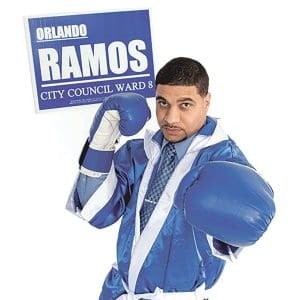
Orlando Ramos when he was named to the 40 Under Forty class of 2014, and today (top)

Orlando Ramos when he was named to the 40 Under Forty class of 2014, and today (top)

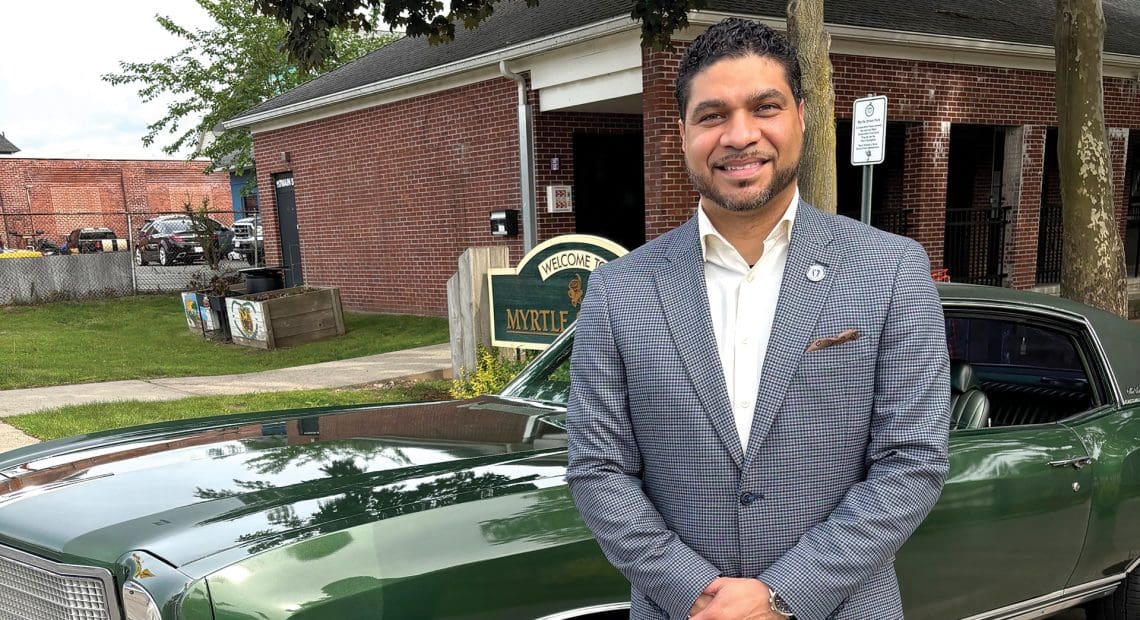
Orlando Ramos has a small classic car collection.

He once had four vehicles, but recently sold a 1974 Corvette. He still has a 1970 Chevy Monte Carlo, a 1989 Chevy Camaro IROC-Z, and a 1991 Ford Escort, and shows them all at area shows.

The Escort doesn’t sound particularly sexy, and Ramos acknowledged that, but it has taken home a lot of hardware at those shows, as has the Monte Carlo, he said, adding that the Camaro wins at pretty much every competition he brings it to.

Beyond first-place ribbons, the cars bring Ramos memories, a chance to meet new people and add more friends to an already large roster, and, perhaps most importantly, some relaxing moments to counter the many chaotic ones at the State House and within his district.

“I try to drive them on the weekends when I get some downtime, and I do some car shows on the weekend if I’m not busy with work,” he told BusinessWest. “It takes my mind off things. That’s where I find my peace — driving my classic cars … no radio, just the sound of the engine with the windows down.”

He considers the cars a passion, one of two that he has, with the other being the city of Springfield, which is now his sole focus within the 9th District (he used to represent a small section of Chicopee).

He grew up in the City of Homes, among several other places (his family moved frequently in his youth), graduated from Putnam Vocational Technical High School, did some boxing in the city, and later settled in Indian Orchard, which he still calls home. He served on the City Council, including as its president, before being elected to the House, and ran, unsuccessfully, for Springfield mayor in 2023, leaving the door wide open for another run down the road.

Most of those who nominated Ramos for the Alumni Achievement Award — and there were several — called him an ambassador for the city, a mentor to young people, and, in many ways, an inspiration to those in the minority community.

FAST FACTS

Age: 42
40 Under Forty Class: 2014
Title Then: Springfield City Councilor
Title Now: State Representative, 9th Hampden District
Walk-up Song: “Aguanile” by Marc Anthony
Years an AAA Finalist: 2

In addition, he’s a prolific filer of bills designed, in many cases, to safeguard the interests of his constituents while also addressing inequalities that still exist on many levels.

Indeed, Ramos said he filed 27 bills at the beginning of this session, the most he’s ever filed, and they involve everything from regulations for facial surveillance technology (there currently are none) to measures to protect taxpayers and cities and towns from utility companies that withhold property taxes by closing existing loopholes.

“The law was intended to help small, mom-and-pop businesses and individual residents that were struggling to pay their tax bills,” he explained. “It wasn’t meant to help multi-billion-dollar utilities to abuse that loophole.”

In addition to all this work at the State House, Ramos remains actively involved with the community, whether it’s in his neighborhood, where he sits on the Indian Orchard Citizens Council; coaching in a basketball league; turning up at car shows; or supporting small businesses.

“I always try to show up at small businesses and festivals and community events and be supportive of everything that’s happening in the community,” said Ramos, who has a new initiative that touches on many of his priorities, goals, and efforts to make a difference.

It’s called Ties to Success, and it’s designed to teach young men in Springfield public schools how to tie a tie — what he calls an important but overlooked life skill.

“Eventually, I hope to reach every graduating class in the city,” he said, adding that, in this, the program’s inaugural year, he and others working with him started with about 30 students at Putnam.

“I’ve recruited about 15 volunteer mentors from the public and private sector,” he said. “In addition to learning how to tie a tie, each student will leave with a brand-new tie, written instructions, and the invaluable experience of connecting with positive role models from the business and government sectors.”

Speaking of tying the knot, Ramos, a proud single parent of daughter, Ariana, now 21 (who was his date at his 40 Under Forty gala), announced that he recently got engaged to a member of the 40 Under Forty class of 2024, Natalie Mercado, owner and CEO of Sweetera & Co.

That adds another passion to a man who has several, including those cars. You might say he’s a driving force for positive change. Many people do.

—George O’Brien

Alumni Achievement Award

Owner, RMC Strategies

Ryan McCollum

Ryan McCollum

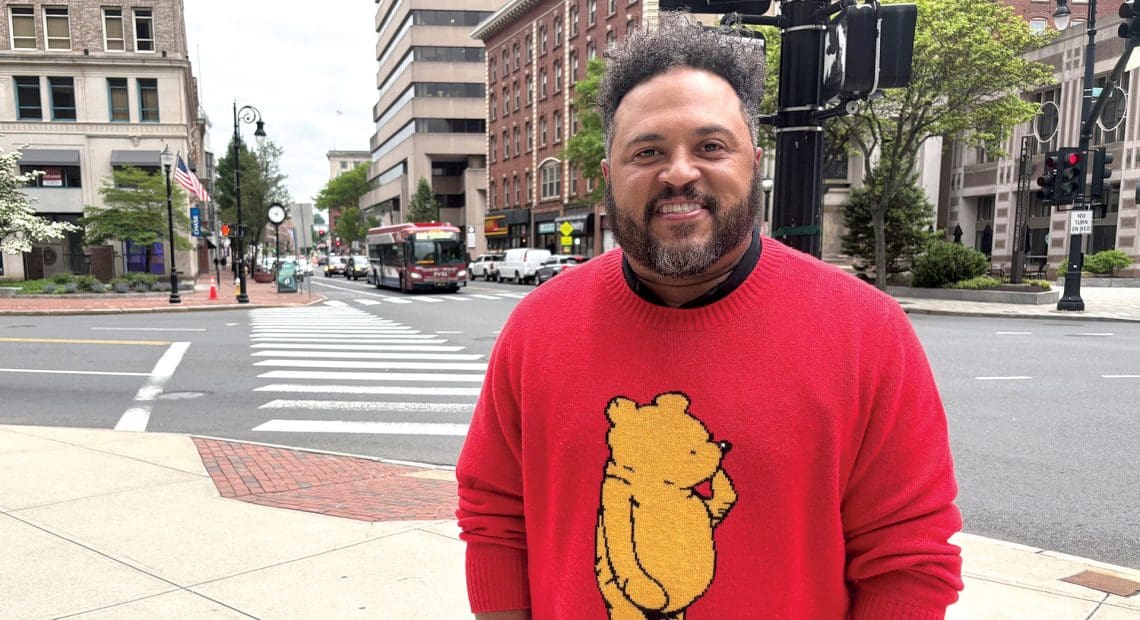
Ryan McCollum when he was named to the 40 Under Forty class of 2012, and today (top)

Ryan McCollum when he was named to the 40 Under Forty class of 2012, and today (top)

Ryan McCollum says he likes to have the circles in his life intersect.

And by circles, he means people who are in his life for various reasons — clients, friends, colleagues, elected officials — and causes and agencies he supports, everything from early childhood education provider Square One to the game of golf, especially for populations not generally associated with it.

To get his point across, McCollum gave a couple examples that help tell his story, and this particular story of how he is again a finalist for the coveted Alumni Achievement Award.

One references his involvement with a group called 16 Lyrics (formed with 15 friends), which is committed to combating racism and, among other initiatives, helps provide schools with books featuring diverse characters, authors, and storylines — “because, whether it was books or TV, it was hard to find characters that looked like me,” he noted.

“We had a golf tournament last year,” he said of 16 Lyrics. “I had Trap Golf, which I work with to bring people in the game, donate a bunch of stuff. I had a client from PricewaterhouseCoopers play with me. I made sure to ask elected officials to play or sponsor — we had a cart full of state reps. My wife and daughter helped in planning it. Circles intersected: my charitable world, a lobbying client, my family, and all my friends, and Get Set Marketing designed and printed all the tee signs and the like, and I work with them.”

FAST FACTS

Age: 45
40 Under Forty Class: 2012
Title Then: Owner and Principal, RMC Strategies; Marketing Consultant, Get Set Marketing
Title Now: Owner, RMC Strategies
Walk-up Song: “Get By” by Talib Kweli
Years an AAA Finalist: 2

The second example involves one of his clients, Holyoke Mayor Joshua Garcia, and the kickoff to his re-election campaign in February.

Garcia wanted Lt. Gov. Kim Driscoll to attend, and McCollum made some calls and secured an appearance, not just for that announcement, but also for a tour of the Hope for Youth Arts Center (formerly CityStage), a project being undertaken by another McCollum client, Robert Bolduc, and his Center for Hope & Families Foundation. He also helped organize a fundraiser for the lieutenant governor at LightHouse Holyoke, a non-traditional middle and high school that is another McCollum client. And to top it off, Young at Heart, the Northampton-based chorus and yet another client, performed at the event.

You might say bringing worlds together and having circles intersect is what McCollum does. Professionally, he’s an entrepreneur, the owner of RMC Strategies, a consulting firm that partners with Get Set Marketing to provide one-stop shopping for those with political marketing needs. He’s worked on several campaigns over the years, including those for Garcia and State Rep. Orlando Ramos, another of this year’s AAA finalists (see story on page 19).

McCollum is also heavily involved in the community and has been for decades. He’s among the founders of the Young Professional Society of Greater Springfield and currently sits on several boards, including those for Square One, Suit Up Springfield, 16 Lyrics, the Healing Racism Institute of Pioneer Valley, and the National Conference for Community and Justice.

“When people ask me what I do, I tell them I’m a political consultant, I tell them I’m a lobbyist, but I do a lot of connecting of folks whom I think should be connected,” he said, adding that this unique and important skill has defined his professional career and personal life.

And it certainly explains why is a finalist for the Alumni Achievement Award for the second time in three years.

As does his outlook on simply … being kind.

“Kindness, and being kind, is a great business and career strategy, and on so many levels,” he told BusinessWest. “Especially in my business — the relationship business. Treating people kindly goes a long way. It can be hard to be kind all the time, because we’re all human … but it’s important, and it’s something I work on.”

As for the game of golf, McCollum plays whenever he can — he’s partial to Springfield’s municipal courses, Franconia and Veterans — and has become involved with various efforts and outfits, such as Trap Golf out of Atlanta, which was created to bring more people into the game, “especially communities that don’t intersect with it often,” as he put it.

“I like to be America’s golf guest,” he joked, adding that he plays with friends as well as entering tournaments for various causes throughout the summer.

“It’s a great game,” he went on, adding that, among other things, it provides more opportunities to enable circles to intersect and for him to continue his work as a connector.

—George O’Brien


FAST
FACTS

Age: 45

40 Under Forty Class: 2012

Title Then: Owner and Principal, RMC Strategies; Marketing Consultant, Get Set Marketing

Title Now: Owner, RMC Strategies

Walk-up Song: “Get By” by Talib Kweli

Years an AAA Finalist: 2

Alumni Achievement Award

Partner, Meyers Brothers Kalicka, P.C.

James Krupienski

James Krupienski

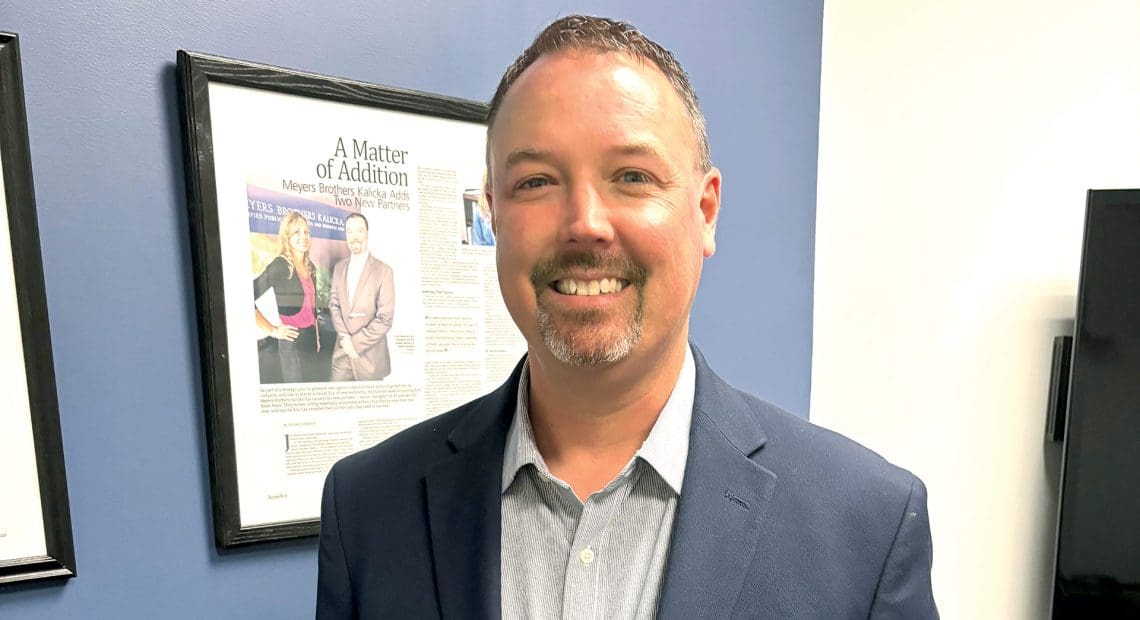
Jim Krupienski when he was named to the 40 Under Forty class of 2010, and today (top)

Jim Krupienski when he was named to the 40 Under Forty class of 2010, and today (top)

It’s called Krupienski’s Korner.

That the name of the … let’s call it gathering spot in the break room at the accounting firm Meyers Brothers Kalicka.

Jim Krupienski is host and unofficial bartender at the Korner on Friday afternoons just after 5 during tax season. He said tax preparers and others at the firm can get a libation if they are so inclined, but also, and more importantly, a much-needed reprieve from the pressures that build as April 15 approaches.

FAST FACTS

Age: 46
40 Under Forty Class: 2010
Title Then: CPA Manager, Health Care and Pension Audit Divisions, Meyers Brothers Kalicka, P.C.
Title Now: Partner, Meyers Brothers Kalicka, P.C.
Walk-up Song: “Dream On” by Aerosmith
Years an AAA Finalist: 1

“It’s just a way for people to step away after a long week and just talk about something other than tax returns, take a deep breath, and unwind,” said Krupienski, noting that, with his Korner, he is continuing a tradition started years ago by retired partner Bob Perry, who operated Perry’s Pub for those same reasons.

Korner keeper is one just one of the many additional roles and responsibilities Krupienski has assumed since he joined the 40 Under Forty club in 2010. Then, he was CPA Manager for the Health Care and Pension Audit Divisions. Now, he’s one of six partners who together manage all operations at the firm.

Krupienski’s focus points are marketing and what’s known as the firm’s Business Development Group, an initiative that empowers emerging professionals to develop their networking skills, build a clientele, and foster strong client relationships.

To this and his many other assignments, Krupienski brings energy, creativity, a strong emphasis on teamwork, and a mindset of building a stronger firm through a focus on people. All this helps explain why he is a first-time finalist for the Alumni Achievement Award.

“Jim has not only enhanced his professional stature but also elevated the firm’s reputation in the broader business community,” wrote Howard Cheney, another of the firm’s partners, who nominated Krupienski for the honor. “This ongoing commitment to excellence, innovation, and community engagement has significantly contributed to the firm’s success and continued growth, marking Jim as a pivotal figure in its upward trajectory.

“Jim’s contributions to the firm’s corporate culture, especially through initiatives like Krupienski’s Korner, illustrate his dedication to creating a cohesive, supporting, and engaging workplace environment,” Cheney continued. “These somewhat intangible contributions to the firm are invaluable, playing a significant role in enhancing employee satisfaction and morale.”

Krupienski, who became partner in 2017, said his new role and responsibilities have created learning experiences on many levels that are, of course, continuing. He listed COVID as one of those experiences.

“That was an interesting, challenging time … we were all learning together,” he said of the partnership team. “We’d have partner meetings several times a week just to figure out the next steps while the governor was making his decisions; we were trying to figure it all out and make very quick, very real decisions that were impacting people and their well-being. And this was the in middle of tax season.

“Through it all, we learned a lot about ourselves, about our firm, about our employees — and in the end, we came out stronger,” he went on, adding that this learning continues on many levels.

And while he continues to mature as a leader, mentor, and motivator, Krupienski remains active in the community, especially in his home community of Westfield. There, he is involved with everything from Little League to the Chamber of Commerce to the YMCA. He is also current chair of the Westfield Foundation.

Meanwhile, he is involved with the firm’s many efforts to support area nonprofits and individual causes and initiatives. Under his influence, MBK has supported entities such as Habitat for Humanity of Greater Springfield and the Food Bank of Western Massachusetts through donations, volunteering, and raising awareness. He’s also a strong supporter of the firm’s Dress Down for Charity Days, a fundraising effort that benefits various local charities, including the Veterans Home at Holyoke and the Massachusetts Special Olympics.

And he is continually encouraging those at the firm, especially the young professionals, to get involved themselves, as supporters of nonprofits, but also as board members, roles that support those agencies but also help individuals develop into leaders in the community.

When not working — at MBK or in the community — Krupienski is usually spending time with family — wife Megan, son James, and daughter Hayley. His children were very young when he joined the 40 Under Forty club, but are now a junior in college and a graduating high school senior and softball player, respectively, with James poised to follow his father into the accounting field.

—George O’Brien


Alumni Achievement Award

Partner, Skoler, Abbott & Presser, P.C.

Amelia Holstrom

Amelia Holstrom

Amelia Holstrom when she was named to the 40 Under Forty class of 2015 and today (top)

Amelia Holstrom won’t ever have any trouble remembering when she joined the 40 Under Forty club.

It was near the time her first child was born. Make that very near.

Indeed, the day after Holstrom posed for her 40 Under Forty photo — “they told me to bring a prop; I said, ‘isn’t my stomach enough of a prop?’” — she was in labor. She recalls being in the hospital after delivery and facing a deadline to pick a walk-up song for the gala.

FAST FACTS

Age: 39
40 Under Forty Class: 2015
Title Then: Associate Attorney, Skoler, Abbott & Presser
Title Now: Partner, Skoler, Abbott & Presser, P.C.
Walk-up Song: “Gonna Fly Now” from Rocky
Years an AAA Finalist: 1

“I didn’t have a lot of time to think, so I just went with the theme from Rocky,” she recalled, adding that the gala at the Log Cabin that June marked her first real public event since she gave birth to Carter, who is now 10 and an avid soccer player.

Attending his games, and also her younger son Reid’s track meets, are just a few of the many things Holstrom now packs into a busy schedule that also includes many forms of giving back, including several roles within her home community of Wilbraham, as well her day (and sometimes night) job as a partner with the Springfield-based law firm Skoler, Abbott & Presser.

It’s a schedule that’s helps explain why she is a finalist for the Alumni Achievement Award for 2025.

Holstrom was an associate attorney when she became a member of the class of 2015. Today, she is a partner and one of the leaders of a firm that specializes in employment law, a subject Holstrom likes to talk about, and on many different levels, from interviews with the press to leadership roles in events hosted by the Employers Assoc. of the NorthEast, MassHire Springfield, and others.

“I pride myself on being able to explain complex issues in everyday language so that everyone will understand and get a grasp of what they need to know.”

This is an intriguing area of the law, she told BusinessWest, one where there is both constant change and an overriding mission — to help employers stay on of top of all that change and, at the same time, avert potential legal trouble.

“In this area of the law, I have a unique opportunity to advise employers before something happens,” she said. “I can give them advice so that, if they are sued by an employee, they’re in the best position to defend that matter. And sometimes, I can guide them through the process with a specific employee issue, and a lawsuit never arises.

“Employment law is an area of the law that changes frequently, and it’s really important for employers to keep up with that change,” she went on. “If they don’t do that, they could find themselves facing a lawsuit, including a wage-and-hour claim or another type of claim. So I’ve dedicated my time to learning employment law inside and out, knowing everything there is to know.”

Helping employers navigate the rough seas created by constantly changing employment law requires several skills, said Holstrom, especially the ability to both listen and communicate effectively.

“One of my mentors when I first started with the firm really talked about how knowing the information is one thing, but being able to explain it to supervisors and managers in a way that is understandable is the most important part of the equation,” she noted. “I pride myself on being able to explain complex issues in everyday language so that everyone will understand and get a grasp of what they need to know.”

And there are several areas they need to know, including, most recently, paid family medical leave and issues involving diversity, equity, and inclusion.

As for other items on her busy schedule … these include serving with several area nonprofits, including the Girl Scouts of Central and Western Massachusetts, as chair of board development; the Food Bank of Western Massachusetts, as a member of the personnel committee; Clinical & Support Options, as a board member and clerk; and the East of the River Five Town Chamber of Commerce, as legislative chair.

Meanwhile, in Wilbraham, she serves as vice chair of the town’s Commission on Disabilities, chair of the Personnel Advisory Board, and, most recently, library trustee; she filled a short-term vacancy on that board and was recently elected to a three-year term.

These various contributions to the community were recognized by the Massachusetts Bar Assoc., which honored Holstrom with its Community Service Award for Hampden County in 2016.

And then, there’s her family, for which she always finds time, and to which there will always be a special connection to 40 Under Forty.

—George O’Brien


Alumni Achievement Award

Managing Shareholder, Bacon Wilson, P.C.

 Jeffrey Fialky

Jeffrey Fialky

Jeff Fialky when he was named to the 40 Under Forty class of 2008, and today (top).

Jeff Fialky says being managing shareholder of a law firm allows him to “put my money where my mouth is.”

For decades, he’s been counseling business owners large and small on matters from personnel to growth through acquisition to being prepared for the future and whatever it might bring.

And now, he’s doing all of the above and more for Bacon Wilson, a firm celebrating its 130th birthday. Fialky says it’s his job — his mission, in fact — to make sure it’s around for another 130.

“We have 115 employees, four offices, and we’re looking to expand — we’re looking at other geographic areas, other firms, other attorneys looking to join,” he said. “And you balance that with a business with exponentially increasing expenses, which creates unique challenges, but is exciting for someone who has been representing businesses and business owners for 30 years.”

Including the recently announed class of 2025, there are 760 members of the 40 Under Forty club. Fialky is now among the … let’s call them ‘most senior.’

“Will humans get to a point where they’re satisfied looking at a blinking cursor and a computer screen? I don’t think I’ll see that in my lifetime, but as lawyers, as a legal industry, we must be thinking about what the future has in store.”

He was honored in 2008, the program’s second year, just a few years after joining Bacon Wilson as an associate. That was so long ago, honorees didn’t have their own walk-up music, as they do now. When asked what he may have chosen, Fialky gave an answer that spoke to just how many years have passed.

“My tastes have changed over time … it would probably be something country now,” he said. “Back then, probably Beastie Boys, Metallica, or something in between; now it’s country.”

While his tastes in music have changed over the years, so have the responsibilities for Fialky, a finalist for the Alumni Achievement Award several times early on (the award was created a decade ago), but not recently. His ascension to managing partner has something to do with his return to the field, as does his continued involvement with the community.

With the former, he noted, it’s an intriguing challenge at any time, but especially now — for the legal industry and for business in general.

FAST FACTS

Age: 55
40 Under Forty Class: 2008
Title Then: Associate Attorney, Bacon Wilson, P.C.
Title Now: Managing Shareholder, Bacon Wilson, P.C.
Walk-up Song: None
Years an AAA Finalist: 4

“I enjoy this side of what I do,” said Fialky, who remains chair of the firm’s corporate and commercial department and serves as the senior mergers and acquisitions attorney as well. “I enjoy the entrepreneurial aspect, as well as the management, and they’re different.

“The management side is the day-to-day, P&L and balance sheet, the budget,” he went on. “The entrepreneurial side is imagining where the future lies and the practice of law in the Pioneer Valley.”

Which brings him to the subject of AI, technology that is casting a shadow over the future if many industry sectors.

“I don’t think we’ve seen it yet in our day-to-day, but you have to be realistic that it is going to change the way the practice of law looks in the future, maybe five to 10 years out,” he told BusinessWest. “Predicting what that’s going to look like is more art than science, but you must be thinking that far out as you see the billions that are being invested in AI and will continue to be.

“For so long, people wanted to look their lawyer in the eye; they wanted to hear from a human being when they were asking, ‘what should I do?’” he went on. “Will humans get to a point where they’re satisfied looking at a blinking cursor and a computer screen? I don’t think I’ll see that in my lifetime, but as lawyers, as a legal industry, we must be thinking about what the future has in store.”

As for his work in the community, Fialky continues to be involved with several nonprofits and business groups. That list includes the Springfield Regional Chamber of Commerce, which he has served as a board member since 2007 and as chair from 2013 to 2016, and the Springfield Museums, which he has served as a trustee since 2012.

Previously, he has been involved with agencies and causes ranging from the United Way to the Young Professional Society of Greater Springfield; from Leadership Pioneer Valley to the American Cancer Society.

Today, while continuing to give back and leading Bacon Wilson into its next 130 years, he finds time for family, especially his son, Samuel, born just after he was presented with his 40 Under Forty plaque, and daughter Madeline.

“They’re both just wonderful, so I spend a lot of time with them,” said Fialky, the now country music fan who has returned to being a finalist for the Alumni Achievement Award.

—George O’Brien