Daily News

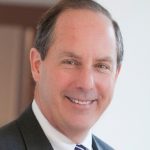
Dr. Mark Keroack

SPRINGFIELD — The Springfield Museums elected new members to its board of trustees at its annual meeting of corporators, held Sept. 24. The newly elected trustees are Jon Berthiaume and Dr. Natasha McKay, with Dr. Mark Keroack named board chair. Kate Kane was also named to the trustees emeriti and two new corporators were elected as well, bringing the total number of Springfield Museums corporators to 325.

Jon Berthiaume

Former CEO of Baystate Health, Keroack has served on several local boards focused on improving the quality of life in Springfield and across Western Mass., as well as several state and national boards. During his time at Baystate Health, he expanded the reach and variety of its clinical services by overseeing the implementation of two new community hospitals, as well as growing its outpatient practices. He also provides strategic oversight for philanthropic and community benefits activities in support of the health system.

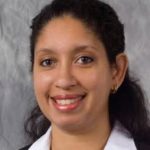
Dr. Natasha McKay

Berthiaume has served in executive brand marketing leadership roles at MassMutual and eBay. In his positions, Jon has stewarded brands including American Express, Deloitte, and Walmart to focus on portfolio and architecture strategy and new brand introductions, and he has led global go-to-market activations. He is currently a board member for the Spirit of Springfield Inc. and was banquet co-chair for the 2020 National Conference for Community and Justice. He is a member of the Springfield Museums’ marketing, communications and community relations and Mi Museo committees.

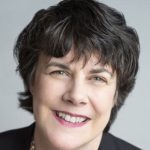
Kate Kane

Since relocating to the Springfield area from New York City in 2005 to join Mercy Medical Center as a neurosurgeon, McKay has held positions such as serving on the board of directors of the Colony Club and is currently completing her second term on the board of the YWCA, where she served four years as chair of governance and two as vice president. She also serves on the board of directors of Mercy Medical Center. She has been a long-time member of the Society of William Rice, joined the subcommittee, and serves on the collections committee.

Kane, a wealth management advisor for Northwestern Mutual and board chair at Elms College, has been a long-time supporter of the Springfield Museums in many different capacities. She is a former trustee, committee member, volunteer, and Society of William Rice member. She also helped organize the Museums’ ad hoc inclusion task force when she was chair, as well as helped the Museums pivot its strategy during the COVID-19 pandemic. Among many regional awards, she was honored as a Difference Maker by BusinessWest in the inaugural class of 2009.

Daily News

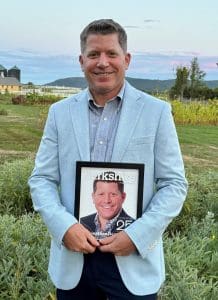
Jonathan Denmark

NORTH ADAMS — MountainOne announced that Jonathan Denmark, president and chief operating officer of MountainOne Insurance Agency and executive vice president of MountainOne Bank, has been named to Berkshire Magazine’s prestigious Berkshire 25 list.

Now in its 12th year, the annual honor celebrates 25 individuals who have made a significant impact on the Berkshire region in Massachusetts. Selected from a wide range of professions, honorees are recognized for their creativity, dedication, and influence. Nominations are submitted by the public and are reviewed by a committee of past Berkshire 25 recipients, with final selections determined by the Berkshire Magazine editorial board.

Denmark, president and COO of MountainOne Insurance and executive vice president of MountainOne Bank, has played a pivotal role in the company’s growth and evolution. Under his leadership, MountainOne Insurance has expanded from four offices to nine in the Berkshires and Pioneer Valley. His strategic vision and commitment to community engagement have helped strengthen MountainOne’s presence and impact throughout the region.

In addition to his leadership roles within MountainOne, Denmark serves as board chair of the Pittsfield Economic Development Authority; on the mayor’s economic development council, the finance committee of the Berkshire Innovation Center, and 1Berkshire; and as vice president of administration at Congregation Knesset Israel in Pittsfield. He also a member of the Housie Shakers, a band that performs at local venues and charitable events.

“It’s quite an honor to be recognized among so many changemakers in the Berkshires,” Denmark said. “I share this recognition with the remarkable teams I work with and the community that continues to motivate and inspire me.”

Robert Fraser, president and CEO of MountainOne, added that “Jonathan’s leadership is rooted in vision, integrity, and service to our communities. His inclusion in the Berkshire 25 is a well-deserved honor that reflects the impact he has within MountainOne and across the entire region.”

Daily News

EAST LONGMEADOW — Excel Dryer Inc., inventor of the touchless, high-speed XLERATOR hand dryer, announced that its D|13 integrated sink system featuring the XLERATORsync hand dryer has been honored with a 2024 GOOD DESIGN Award by the Chicago Athenaeum: Museum of Architecture and Design and the European Centre for Architecture Art Design and Urban Studies.

As the world’s oldest and most prestigious program for design excellence, the GOOD DESIGN awards recognize products that embody innovation, sustainability, and transformative impact. Founded by designers and known for crafting high-end commercial restroom fixtures in close collaboration with architects, engineers and clients, D|13 Group partnered with Excel Dryer to bring the award-winning system to life.

The D|13 integrated sink system integrates high-efficiency fixtures that wash, rinse, and dry on the sink deck, eliminating water from restroom floors and providing a touchless, hygienic user experience. With customizable finishes, shapes, and dimensions, the system can be tailored to complement the design and aesthetic of any facility, making it a premier choice for high-end establishments and sustainable commercial restrooms.

“This recognition from GOOD DESIGN validates our commitment to creating innovative restroom solutions that blend sustainability, performance, and design,” said William Gagnon, executive vice president and chief operating officer of Excel Dryer. “By partnering with D|13, we’ve delivered a system that not only enhances the user experience, but also sets a new standard for efficiency and environmental responsibility.”

Daily News

SPRINGFIELD — The Springfield Chamber Players (SCP) will launch their 2025-26 season at 52 Sumner on Sunday, Oct. 26, at 3 p.m. Alexander Svensen, assistant principal bass of the Springfield Symphony Orchestra, will perform works by Bach, Bartók, Dragonetti, and more. He will be joined by Romina Kostare, violinist with the Springfield Symphony Orchestra, and Patrick Berry, radio and TV personality, on select pieces.

This will be the second season for the Springfield Chamber Players at 52 Sumner and will feature more musicians of the SCP in this five-concert series. Another series at the Westfield Athenaeum, as well as a partnership with the Springfield Youth Orchestras, are planned for this season.

Daily News

HADLEY — Six-Point Strategy announced the launch of its first Next Gen Summit, a one-day retreat designed for emerging leaders in family businesses. The event will be held on Tuesday, Nov. 5 from 9 a.m. to 4 p.m. at Venture Way in Hadley.

The summit is built around the unique challenges of succession and generational leadership. Next generation leaders have the difficult task of navigating the ‘in-between’ space, shaping the future of their companies while still carrying the weight of family legacy. Participants will gain tools, frameworks, and connections to help them lead with confidence and authenticity.

“Family business leadership is unlike anything else,” said Meghan Lynch, CEO of Six-Point Strategy. “The stakes are high, the dynamics are complex, and the path forward isn’t always clear. The Next Gen Summit creates a rare space where emerging leaders can step out of the day-to-day, wrestle with those challenges openly, and leave with tools, connections, and confidence.”

The event will be facilitated by three leaders with deep expertise in family business, leadership, and strategy:

• Lynch has built a national reputation as a consultant and speaker on generational branding. Under her leadership, Six-Point has evolved from a creative agency into a strategy-first brand advisory specializing in family business succession, growth, and reputation. She has spoken at major family business centers across the U.S., including Prairie Family Business Assoc., the Jim Walcott Family Enterprise Center, and the University of St. Thomas Family Business Center.

• Ira Bryck, founder and longtime director of the UMass Amherst Family Business Center, has coached and advised hundreds of family businesses over his 25-year tenure. He is also the author of three plays on family business dynamics, which have been performed nationally and internationally as ‘living case studies.’

• Joshua Hornick, director of the Hornick School for Coaching, is a professional certified coach with nearly two decades of experience working with business leaders, entrepreneurs, and organizations worldwide. A former corporate lawyer and nonprofit director, he brings both strategic insight and a deep commitment to helping individuals unlock their full potential.

“The Next Gen Summit is a chance to bring next-generation leaders together with experts who have lived these challenges from every angle,” Lynch said. “We wanted to create a space where participants can find their own leadership voice, test their instincts, and connect with peers who truly ‘get it.’ Ira and Josh bring such deep intention and expertise to both the event design and the content. They are both experts who are recognized globally, and who are excited to offer their talents and insights to this next generation of leaders in our own backyard.”

Summit highlights include “Leadership Styles” (balancing authenticity with authority), “The Power of Being Different” (why differentiation matters more than excellence), “Family-ness in Business” (using family culture as a superpower), and “Peer Learning” (shared conversations on succession and influence).

The program is designed to be intimate and highly interactive, ensuring every participant has a voice. Space is limited, and early bird registration is open through Oct. 3 at a discounted rate of $395. Standard tickets are $495. For more information or to register, visit sixpointstrategy.com/nextgensummit.

Daily News

SPRINGFIELD — Way Finders and its research partner, the UMass Donahue Institute, will release findings from “Building Homes. Building Futures.” — its first-ever housing study to cover Berkshire, Franklin, Hampshire, and Hampden counties — at an event on Thursday, Oct. 1 from 9 to 11:30 a.m. at the UMass Amherst Henry M. Thomas III Center in Springfield.

“Our research confirms that Western Massachusetts is facing a severe housing shortage. Although the region is more affordable than other parts of the state, incomes are lower and remain out of sync with prevailing home prices, burdening households. This burden is especially acute for low-income, renter, and BIPOC households,” said Mark Melnik, director of the Economic & Public Policy Research group at the UMass Amherst Donahue Institute.

Western Mass. needs 23,000 new housing units to meet current demand. Even with projected declines in population locally, the gap will still be more than 16,700 units by 2035. The report, along with its online interactive data dashboards, provides Western Mass. communities with information to address this crisis.

“Housing is at the center of our region’s economic future,” said Keith Fairey, Way Finders president and CEO. “The answer to the housing crisis is clear: we need to build more homes. Housing promotes thriving communities and helps grow businesses and stronger schools. ‘Building Homes. Building Futures.’ provides the critical information our communities need to understand the housing crisis and to create the solutions we need.”

Daily News

SPRINGFIELD — The Springfield Symphony Orchestra’s (SSO) opening night on Saturday, Oct. 11, “A Night in Italy,” will feature music from The Godfather, cannolis, wine, and much more at Springfield Symphony Hall.

Tickets for opening night and season subscriptions are available at springfieldsymphony.org or by calling the SSO box office at (413) 733-2291.

Concertgoers are invited to purchase tickets to an Italian-themed pre-concert reception at 6 p.m. in the Mahogany Room, hosted in partnership with Springfield’s Italian Cultural Center. The reception will feature sweets and treats from local Italian eateries La Fiorentina and Frigo’s, and a sampling of Italian wines paired with a charcuterie board. Limited tickets are available for the pre-concert reception, which are $25, and should be reserved in advance at springfieldsymphony.org or by calling (413) 733-2291.

There will also be a classical conversation with guest conductor and SSO Artistic Advisor Mei-Ann Chen starting at 6:30 p.m. in the hall.

“A Night in Italy: Verdi, Respighi, & Rota” will be highlighted by “The Godfather Orchestral Suite,” exciting fans of the movie franchise. The audience will also witness a meaningful collaboration with members of the Springfield Symphony Youth Orchestras performing alongside the SSO musicians.

Opening night will also honor the memory of Ron Weiss, a long-serving member of the SSO board of directors who passed away earlier this year.

According to Heather Caisse-Roberts, president and CEO of the SSO, “Springfield has such deep-rooted, rich Italian history, and so we’re thrilled that our opening night not only offers our community the opportunity to experience iconic Italian music, but also to experience Italian culture through our partnership with the Italian Cultural Center. We invite concertgoers to come before the concert to a reception in the Mahogany Room, featuring some of the amazing Italian offerings we’re lucky to have right here in Springfield, including delicious eats from Frigo’s and La Fiorentina.”

Established in 1985, the Italian Cultural Center of Western Massachusetts was founded to promote and celebrate Italian culture and heritage in all its aspects, bringing various Italian cultural groups under one umbrella. It promotes Italian language, music lessons, scholarship, and exchange students. Its original location was on Acushnet Ave., and in 2008, the center moved to its current location at 56 Margaret St.

The SSO’s 2025-26 season, its 82nd, will offer eight performances at Springfield Symphony Hall, filled with a blend of classics, audience favorites, and fresh repertoire. This season will provide audiences with new formats and creative programming, responding to the community’s desire to feature more pops and hybrid (blending classical and pop) performances. MassMutual and Massachusetts Cultural Council are the season sponsors for the 2025-26 season.

Features

Doubling Down

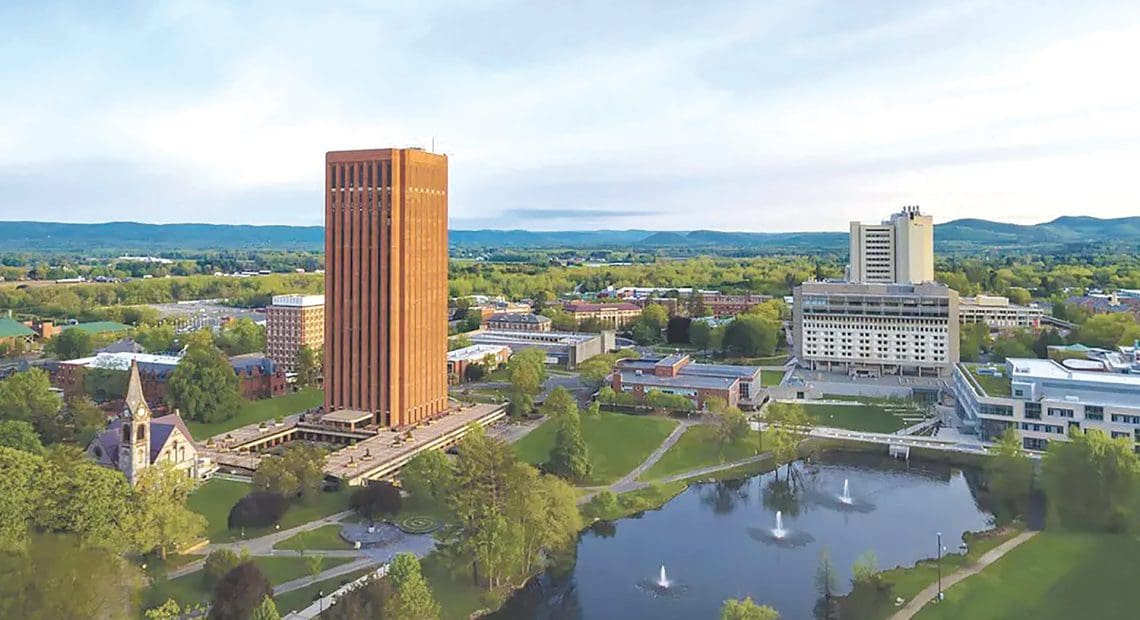
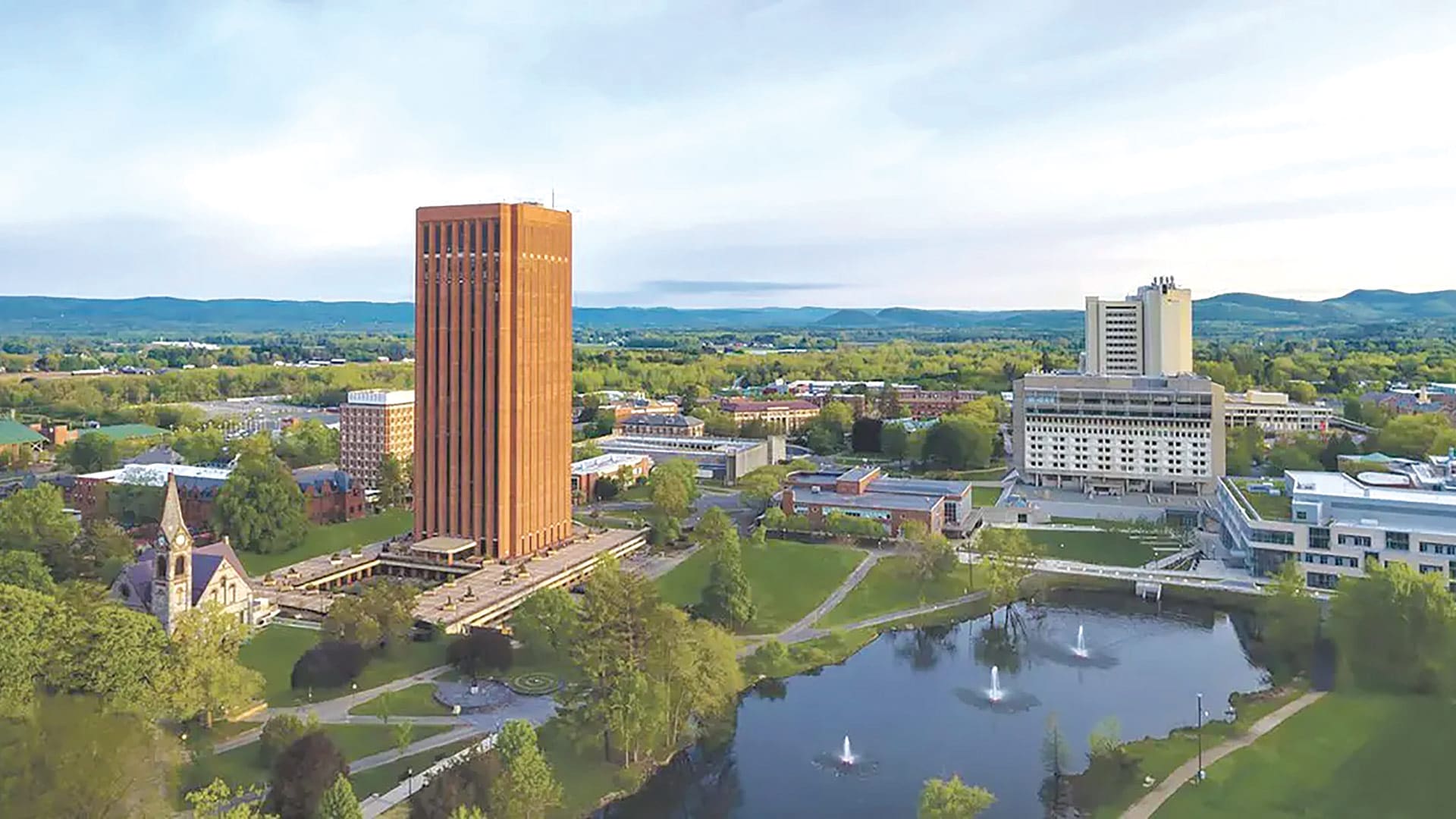
UMass Amherst has always been an economic engine for the region, and officials there want it to be even more of a force.

Tony Maroulis says UMass Amherst has always been focused on regional economic development, and it has always been an economic engine within the 413 and often well beyond, from its own large workforce to providing interns for area businesses, to concepts that are taken from its labs to the marketplace.

But now, the flagship campus of the state university is … well, let’s call it sharpening and broadening that focus, said Maroulis, executive director of Community and Strategic Initiatives for the university.

“It’s an emphasis on economic development that we perhaps haven’t put on it in the past,” he explained, referencing an announcement by UMass Amherst Chancellor Javier Reyes at the university’s annual Community Breakfast late last month — specifically, the launch of an initiative to leverage the full breadth of the university’s expertise, talent, innovation, and partnerships to spur job creation, entrepreneurship, and community revitalization, as well as workforce and small business development locally, regionally, and across the state.

“As the state’s flagship public university, UMass Amherst has a responsibility to serve as a catalyst for economic development at the local, regional, and statewide levels,” Reyes said at the breakfast. “Embracing this responsibility creates important opportunities for programming, analysis, and collaboration that can foster more inclusive, resilient, and innovation-driven growth across the Commonwealth.”

When asked about the initiative’s goals, how they will be addressed, and how success will be measured, Maroulis started by saying virtually everything the university does has an economic development component.

“Whether it’s our sporting events, which have an economic impact on the community, to the construction on our campus, to the graduates we place in the workforce — all of that is economic development,” he said. “What the chancellor is interested in us doing at this particular time is being a more active participant in the economic development efforts of our local communities, our region, and also the state.

Javier Reyes

Javier Reyes

“As the state’s flagship public university, UMass Amherst has a responsibility to serve as a catalyst for economic development at the local, regional, and statewide levels.”

“This means being a more visible player in these conversations that happen in all three places,” Maroulis went on, “and contributing with our expertise and with the faculty and staff, researchers, and students that we have here in that economic development discussion.”

Elaborating, he said Reyes has essentially challenged the campus community to “wake up thinking about economic development, how we impact those three spheres — local, regional, and state — and how we can increase that impact.”


Ambitious Goals

Overall, the announced initiative, to be guided by an executive committee consisting of senior campus leadership, will have several principal goals, including:

• Collaborating with communities to address challenges and opportunities around housing, healthcare, transportation, and services to overall infrastructure;

• Advising university leadership on strategies, partnerships, and investments that expand economic development impact with local, regional, and statewide focus;

• Identifying opportunities for university collaboration with industry, government, nonprofits, and community organizations.

• Providing input on and supporting the growth of university initiatives encouraging workforce development, entrepreneurship, innovation, and applied and translational research;

• Offering recommendations on policies, programs, and practices that promote resilient, innovative, and inclusive economic growth;

• Driving investment to the region and across the Commonwealth;

• Supporting strategic initiatives critical to the Commonwealth’s future;

• Creating talent pipelines for study, internships, and employment for the region and the state; and

• Cultivating research capacity with economic development priorities.

Assessing this list, Maroulis said there are many things the university is already doing within these various realms.

Examples include the recent announcement that the university will partner with Baystate Health to create SHINE: Strengthening Healthcare Innovation through Nursing and Engineering. Funded with a $3 million grant from the National Science Foundation, the initiative will establish the nation’s first graduate training program designed to combine nursing’s hands-on patient care with engineering’s technical knowledge.

Tony Maroulis

Tony Maroulis

“Our workforce development career pathways work … we do that locally, regionally, and statewide. We want to create deeper engagement with industry so there’s more opportunity for students to have pathways to jobs post-graduation and to have access to internships.”

The goal moving forward will be to simply ramp up such efforts. This will be the case with issues as disparate as workforce development and the state’s housing crisis.

“Our workforce development career pathways work … we do that locally, regionally, and statewide,” Maroulis said. “We want to create deeper engagement with industry so there’s more opportunity for students to have pathways to jobs post-graduation and to have access to internships. These are things the chancellor would like to see us do even better than we do it now.”

As for the housing crisis, the those involved with the initiative will look at how the university can better work with municipalities on land use reform and infrastructure development to develop critically needed new housing.

That housing would benefit the university, its staff, and students, but also the region’s business community by giving their workforce access to more housing — specifically more affordable housing.

Other issues to be addressed include transportation and childcare, he went on, adding that there are barriers to opportunities for university students and area residents alike.

“These are the kinds of issues that we will be engaged in, both as a thought partner and sometimes as a thought leader, and as an advocate with other organizations and agencies in the region that are working on these kinds of issues.”


Collective Engagement

One key to the initiative’s success will be its council, made up of officials from across the university, including representatives of the Isenberg School of Management, the Berthiaume Center, the Mount Ida campus, Government Relations, the Donahue Institute, the Massachusetts Small Business Development Center, and the Institute for Applied Life Sciences.

The council will work with a leadership team — Maroulis; Sundar Krishnamurty, vice provost for Innovation, Entrepreneurship, and Creativity; and Carl Rust, assistant vice chancellor for Corporate Engagement — to recommend priorities and track progress.

This will be an ongoing initiative, meaning it’s not necessarily a five-year or 10-year plan, said Maroulis, but one that will seek some “quick wins,” as he called them, but also focus on the long term.

When asked how success will be measured, he said there will be several metrics and yardsticks, everything from growth of the current $2.9 billion in direct and indirect impact on the state’s economy to increases in local purchasing, to the number of startups created at the university and the jobs that result.

“The chancellor believes that we have a responsibility to serve as a catalyst for economic development,” he went on while summing up the initiative, adding that the university has always been that.

The mission moving forward is to take it to a new, more impactful level.

Where Are They Now?

Where are they now?

Seventeen years after being honored among the 40 Under Forty, Bill Collins says he hasn’t lost any of the enjoyment he gets from seeing people enjoy good food — and each other.

Seventeen years after being honored among the 40 Under Forty, Bill Collins says he hasn’t lost any of the enjoyment he gets from seeing people enjoy good food — and each other.

When BusinessWest caught up with Bill Collins this month at his East Longmeadow restaurant, Center Square Grill, he was about to head over to the Big E. It’s a relationship that started in 2014 when the director of the fair’s agricultural programs asked him to stop by.

“She said, ‘hey, I’ve got a group of 4-Hers, and I’ve got some lamb. Any chance you’d come in and cook a recipe?’ So I did that. And 11 years later, I’ve surpassed 96,000 samples of recipes that I’ve cooked there and given away. Every day of the fair from 11 to 1:30-2, I go in, get on a microphone, and cook a dish, and all the dishes I prepare are from local farms around New England.

“It has become a little bit of a passion for me,” Collins went on. “It’s a cool experience to be able to take somebody who might not understand the economics of where the money goes in the community if you buy local, versus at the big box store, and the differences in the meat. To be able to talk about that stuff is pretty cool.”

The same year he started demonstrating recipes at the Big E, Collins opened Center Square Grill, which was a success out of the gate and has remained so, albeit not without some challenges, from the difficult pandemic years to the current inflationary landscape that has made everything more expensive, to a sprinkler system that malfunctioned last year and shut the place down for a few months — followed by a fight with the insurance company.

“We paid all of our front of the house and back of the house employees for eight weeks while we were shut. And I paid the employees in the front the average of their tips as well, because we felt there was some gray area in the way our policy was written, and we felt that we could get paid back for that,” Collins said.

“When I talked to my wife, I said, ‘listen, we’re going to do this, and I’m scared because it’s a lot of money.’ But if we didn’t, the employee market was so competitive at that point. And everybody was so well-trained that if we didn’t do that, you know, it wouldn’t have been two months we were closed — it would be more like six by the time we hired, retrained, and everything.”

So Collins cashed in a retirement policy to pay his staff in full, and when the insurance company initially refused to cover the tip pay, he stood firm and made it clear he’d fight that decision — and eventually was reimbursed for all of it.

“What was the alternative? Center Square Grill goes away for six months, right? Nobody wins there,” he recalled.

When Collins was named to BusinessWest’s second-ever 40 Under Forty class in 2008, he was 28 years old, working as director of Operations in the Spoleto Restaurant Group, overseeing six dining locations owned by noted restaurateur Claudio Guerra.

“You know, it’s funny — when I met Claudio, I was 19 years old, and I didn’t have two nickels to rub together, but I always envisioned being in business for myself. I was always a hustler,” Collins recalled.

“I don’t believe I actually deserved to win that award in 2008,” he added. “I think now I do; we’ve accomplished a lot. But I don’t know that I was fit to be in that group of people at that point, but I’m still appreciative — it was an awesome honor.

“But at that point, I was definitely thinking about being on my own. And when I did go on my own, I probably wasn’t economically in the right position to give it a shot, but when is the right time, you know? You eventually have to go for it. And it had been in the back of my head since I was a kid.”

The original vision for Center Square Grill was a creative American eatery with multiple culinary influences, where people would want to visit more than once a week.

“We didn’t want to be too specific. Everybody in town already had their favorite Italian place, they already had their favorite Chinese place. What I felt was lacking was a quality, slightly upscale version of a tavern — a place where you can get a burger and a beer or come in for a date night for steak and oysters.”

“We didn’t want to be too specific. Everybody in town already had their favorite Italian place, they already had their favorite Chinese place. What I felt was lacking was a quality, slightly upscale version of a tavern — a place where you can get a burger and a beer or come in for a date night for steak and oysters.”

These days, Collins employs around 90 people at his businesses, most of them at Center Square. He also owns a percentage of Barburrito in Ludlow, and is a partner in Hawks Landing, a farm in East Longmeadow that the owners plan to use for everything from pumpkins, apples, and a corn maze in the fall to an activity space for community events — while producing farm-fresh produce for their various other businesses, which include One Way Brewing in Longmeadow. He also recently launched a food, travel, and lifestyle TV show on WWLP called The Food Explorer.

Meanwhile, “my wife and I know that the restaurant business is tumultuous. So we decided to live on a fixed income from the restaurant, and anything extra that we earn, we’ve developed into a real estate company. We have about 20 doors in this area for rentals, and a lot of our employees actually live in them. And we continue to be on the hunt for quality properties to add in the portfolio. That, I think, might eventually be bigger than my other businesses.”

Bill Collins said Center Square Grill was an immediate success, but has had its share of challenges, from the pandemic to last year’s sprinkler malfunction.

Bill Collins said Center Square Grill was an immediate success, but has had its share of challenges, from the pandemic to last year’s sprinkler malfunction.

Like he was mentored under Guerra and others in his younger years, he takes pride in seeing his own employees spread their wings, like Andrew Brow, who started working with Collins at age 16 and eventually struck out on his own with a series of area restaurants (and 40 Under Forty honors himself in 2023).

“It’s been a cool journey,” Collins said. “I always say it’s one part luck, it’s one part hard work and smarts, and it’s one part being in the right position and knowing the right people.”

As for what he enjoys most about coming to work each day, Collins may have put it best during a visit last year to the BusinessWest podcast, BusinessTalk.

“It’s the people,” he told us. “When I sit back in the corner of a restaurant that I’ve built and I see people enjoying themselves and having this little bit of escapism going on — whether they got a babysitter and they’re having a date night or they’re celebrating a birthday or an anniversary — and the whole vibe is good, the music’s spot on, the lights are right, the food is good, and I just see two people so happy together, enjoying their night … that’s what does it for me. I love giving people that small escape, even if it’s just for an hour.”

Tourism & Hospitality

Meeting Expectations

It’s called the Assoc. of Rural and Small Libraries, or the ARSL.

As that name suggests, its mission is to “build strong communities through advocacy, professional development, and elevating the impact of rural and small libraries.”

Its members were in Albuquerque last week for the group’s annual conference. But a year ago, they were in Springfield, some 1,400 of them.

This is a national association that takes that annual conference to every corner of the country, said Alicia Szenda, vice president of Sales for the Greater Springfield Convention & Visitors Bureau, now doing business as Explore Western Mass, adding that it will likely be several years before it returns to the Northeast and maybe several more before it comes back to the City of Homes.

But there’s a decent chance it will — because the group liked what it saw, everything from a library with some architectural significance to an attraction that can’t be found in New Mexico or anywhere else.

“They couldn’t have been more thrilled with the fact that Dr. Seuss was from Springfield and there’s a Seuss museum here,” said Szenda, adding that ARSL typifies the type of group this region is trying to attract, and its reasons for coming here point to why the past fiscal year (July 1 to June 30) was a good one for the 413 when it came to both hosting meetings and conventions, and, even more importantly, putting events on the books for the next several years.
Alicia Szenda

Alicia Szenda

“They couldn’t have been more thrilled with the fact that Dr. Seuss was from Springfield and there’s a Seuss museum here.”

Indeed, just five years after COVID devastated the conventions sector, it has made a nearly full recovery, said Mary Kay Wydra, longtime president of Explore Western Mass, adding that, by and large, meetings and conventions have returned to in-person affairs.

And this region is more than holding its own in the increasingly competitive climate for gatherings large and small, with the main competition for those eyeing the Northeast coming from Hartford, Conn. and Providence, R.I., but also Boston for some shows, as well as Worcester, Lowell, Manchester, N.H., and other cities. For national groups, there is obviously much more competition, said Wydra, adding that this region bumps up often against such cities as Des Moines, Iowa and Harrisburg, Pa.

As it has for years now, the region continues to try to sell event planners on what Szenda and Wydra call the ‘3 A’s’ — affordability, accessibility, and attractions.

Affordability comes in many forms, but especially a $169 hotel room rate, on average, for groups, which is far less than Boston and competitive with those other cities listed above. Accessibility refers to the region’s proximity to several major highways (for groups that will drive to their meetings), but also a location that makes it convenient for residents of all six New England states and New York. As for attractions, the Seuss Museum and MGM Springfield now give the region more selling points in addition to the Basketball Hall of Fame, Six Flags, and other destinations.

For this issue and its focus on travel and tourism, we talked with Szenda and Wydra about the region’s ongoing efforts to attract meetings and conventions and the dollars they bring to several different sectors of the local economy.


Staying Power

The state’s Democrats staged their annual convention in Springfield earlier this month.

Most business was conducted over a Saturday, but still, more than 300 hotel rooms were booked for the gathering, said Wydra, adding that the Democrats meet in different Bay State cities on a rotating basis.

Such return business — and this region sees a good amount of it — is one of the keys to long-term success in this business, she said, adding that another is getting in front of groups and making a pitch for the 413.
Mary Kay Wydra

Mary Kay Wydra

“When we saw it, we said, ‘we know we can do an amazing job of hosting this event,’ and we started working then and there to push the Commonwealth to come west.”

And the team at Explore Western Mass has been making more of these pitches, which is indicative of the aggressive nature of its pursuit of convention business, but also stronger interest in this region and those 3 A’s.

“In fiscal ’25, we had more site visits than we did the year before,” Szenda said. “And those are so important to us because we find that, once meeting planners and event right holders come to the area and see what we have to offer and meet the teams everywhere, we have a really good conversion rate.”

In fact, she noted, 75% of those groups who came to this region for a site visit wound up booking their event here.

“That’s a great number,” she said, adding that it can be attributed to several factors, from the region’s affordable character to the strong customer service provided by the team at Explore Western Mass, to the fact that the Convention Center Carpark was nearing completion and is now open, making downtown Springfield much easier to navigate.

“Opening the parking garage is huge,” she said, adding that the carpark and the new space next to it called the Landing gives the city and this region another strong selling point.

Szenda was pushing these points at the recent Destination East trade show in Providence, attended by groups looking to meet in the eastern part of the country.

“We had planners from Florida up to Maine, all the way up the coast,” she explained. “I’ve already had several conversations since I left Providence with some meeting planners and have received some opportunities for business specific to Western Mass.”

And there is already a solid number of meetings and conventions on the books for the next few months and years, a mix of new and repeat business that includes the New England Chapter of the American College of Sports Medicine, the Massachusetts Health Officers Assoc., Yankee Security’s annual trade show (coming in October), the New England Grooming Show (a dog grooming competition coming back for a third year in Springfield), the Steubenville East Youth Conference, New England Regional Volleyball (slated for next February), a variety of regional dance and cheer events, the Ironman triathlon, and more.

Putting more events in the pipeline, the goal of every city and region, often comes down to making a strong case, and then, when an event comes here, helping to make sure things run smoothly, said Wydra, adding that communication is key, as is working with groups on issues such as the closed parking garage.

Both ends of the equation were on display with a gathering of the Governors Conference on Travel and Tourism, an event that was resurrected by the Healey administration after not being held for several years.

The first conference was staged in Boston, said Wydra, and while attending that gathering, those at Explore Western Mass became determined to bring it here — and they did.

“When we saw it, we said, ‘we know we can do an amazing job of hosting this event,’ and we started working then and there to push the Commonwealth to come west,” she told BusinessWest. “Alicia put together a great response to their request for proposals, and we did a lot of hospitality. We wanted to showcase to the Office and Travel and Tourism and all the people in our industry how we service visitors. The amenities we offer when a pet groomer comes or the rural librarians come, we did for the guests of the governor’s conference.

“And we got high marks on the survey after the conference for all those extra steps,” she went on, adding that these good scores are common and help explain why the region often stands out in the crowded field for meetings and conventions, and why there is so much repeat business. “We’re competing with other destinations all the time, so the little stuff really matters.”


Drawing Conclusions

As noted earlier, the rural librarians may not return to Springfield and the Seuss Museum for several years, given the many areas of the country it will visit for its annual conference.

But they liked what they saw, and they gave the 413 high marks for its hospitality. This is all a region can hope to do as it brings groups in for their gatherings — make a solid impression that will bring them back.

This formula has helped Western Mass. make a full recovery from the pandemic when it comes to meetings and conventions — and create some real optimism for the years to come.


Construction

From the Ground Up

Regenerative Design Group, a landscape architecture firm based in Greenfield, recently announced that the Massachusetts Healthy Soils Guide for Site Design and Construction is now live at masshealthysoils.org.

Developed by the Regenerative Design Group and its collaborators, with support from the Massachusetts Executive Office of Energy and Environmental Affairs, this online guide provides practical, site-specific strategies for protecting and enhancing soil health, as well as increasing carbon sequestration, throughout all phases of land development.

Soil health is vital to climate resilience, food security, and ecosystem function, but it’s often overlooked in conventional construction practices, both residential and commercial, said Rachel Lindsay, senior designer at Regenerative Design Group.

“Landscapes are the only element of the built environment that have the potential to provide ongoing carbon sequestration after the completion of a project,” she explained. “This guide provides clear, actionable guidance on how typical activities such as excavation or soil stockpiling can be adjusted to better protect and maximize the amount of soil organic carbon retained throughout the construction process.”

The Massachusetts Healthy Soils Action Plan (HSAP), the state’s first-in-the-nation framework for protecting and restoring soil function across all land uses, identifies soil organic carbon (SOC) as the cornerstone of healthy soil functions. The living carbon component of soil increases drought resilience, mitigates flooding, filters sediments and pollutants, and supports vigorous plant and tree growth.

Rachel Lindsay

Rachel Lindsay

“Preserving and enhancing healthy soils during the construction process may have the greatest positive impact on the long-term health of the soil and soil organic carbon accumulation over the life of the project.”

“Preserving and enhancing healthy soils during the construction process may have the greatest positive impact on the long-term health of the soil and soil organic carbon accumulation over the life of the project,” Lindsay said.

Every time soil is disturbed, SOC is transformed into carbon dioxide and lost back into the air. The building sector is the second-largest source of greenhouse gas emissions in Massachusetts, accounting for 35%.

The difference developers and construction professionals can make is significant: there is roughly twice the amount of land in turf and ornamental landscapes in Massachusetts as there is in agricultural land. Small shifts in design and management practices — such as planting 25% of open lawn with trees, and increasing organic matter content in the top eight inches of lawns to a minimum of 3% — could sequester an additional 180,000 tons of carbon dioxide equivalent per year, the same as taking over 38,000 gas-powered passenger vehicles off the road.

The Healthy Soils Guide for Site Design and Construction offers tools and strategies for implementing ‘soil-smart’ practices that improve healthy soil outcomes before, during, and after construction projects. The website also features access to the full HSAP, a curated resource library, events, and industry engagement and adaptation efforts. More than 360,000 additional acres of soil in Massachusetts may be impacted by development over the next 35 years, a critical period that could impact the trajectory of net carbon emissions in the state.

“This guide is designed to meet professionals where they are, whether they’re managing a construction site, developing soil specifications, or planning a resilient landscape,” Lindsay said. “It’s about making soil health easier to understand and implement across real-world projects.”

The guide is the result of a multi-firm collaboration led by Regenerative Design Group, Linnean Solutions, BSC Group, and Sasaki, with industry support from A.D. Makepeace, Read Custom Soils, and others. Funding was made possible through a $99,900 Healthy Soils Challenge Grant from the Massachusetts Executive Office of Energy and Environmental Affairs.

Regenerative Design Group is a worker-owned ecological design practice. Since 2009, it has advanced resilient communities and landscapes through regenerative design, planning, and nature-based solutions.

Accounting and Tax Planning

Out of Luck

By Adam Hoffer, Garrett Watson,
and Jacob Macumber-Rosin


In a surprising tax code alteration that has frustrated Americans who enjoy gambling, a provision in the One Big Beautiful Bill Act (OBBBA) limits gambling losses that can be used to offset gambling winnings to 90% of their value. This provision, which previously allowed for 100% deductibility of losses against winnings, introduces a steep tax penalty for professional gamblers and certain casual bettors.

The OBBBA provision limiting the deduction of gambling losses might cause individuals to owe taxes on imaginary income, incentivizing gamblers succeeding on thin margins to exit the U.S. or participate in illicit markets.

While the Joint Committee on Taxation estimated that the deduction limit would generate $1.1 billion in tax revenue over eight years, behavioral responses and tax avoidance could quickly reverse that effect. If only a fraction of professional gamers take their bets outside of legal U.S. markets, the effect will be a net loss to tax collections and an increase in illegal activity.

“The OBBBA provision limiting the deduction of gambling losses might cause individuals to owe taxes on imaginary income, incentivizing gamblers succeeding on thin margins to exit the U.S. or participate in illicit markets.”

Consider Daniel Negreanu, perhaps the most famous poker player in the world. Thanks to his vlog and public tracking of poker payouts, we can estimate his tax burden under various tax designs. He successfully nets profitable payouts from his poker playing most years, though he notably lost $2.2 million in 2023.

In the 2025 World Series of Poker (WSOP), Negreanu won (cashed) $1,478,240. His buy-ins for the 2025 WSOP totaled $1,297,143, for net winnings of $181,097. Under pre-OBBBA policy, he would pay income tax on that $181,097, and, assuming his income is taxed at 37% (the highest income tax bracket), his income tax liability would be $67,006, resulting in take-home pay of $114,091.

When his post-OBBBA losses are limited to 90%, however, his tax liability jumps to $115,000, and his take-home pay is cut nearly in half to $66,097.

The new limit for loss deductions in the OBBBA would result in any gambler who breaks even now taking a net loss after paying taxes on money they never made. For example, the tax liability for a player who breaks even on $1 million of wagers would increase from $0 to $37,000. A player who nets $50,000 in winnings from $1 million in wagers — a profitable gambling season — would end up owing $55,500 in taxes to the IRS, resulting in negative take-home pay and an effective tax rate of more than 100%. This would create a unique precedent of taxing unrealized income.

Standard accounting practices allow for full deductibility of most business expenses, but it is worth noting that some limitations apply to things like meals and entertainment expenses and excessive corporate officer compensation. These limitations are fundamentally different from the proposed 90% wagering loss limitation, though. Traditional deductibility limits are largely designed to discourage abusive corporate behavior among large companies. In contrast, the new wagering loss cap primarily affects individual taxpayers who are engaged in a legal, heavily regulated activity.


Broad Impact

The impact of the new loss deduction limitation will likely be felt by individuals beyond Las Vegas. Seven states (Michigan, Pennsylvania, New Jersey, West Virginia, Delaware, Connecticut, and Rhode Island) have legalized online gambling, while popular land-based commercial or tribal casinos can be found in nearly every state, including Massachusetts. State tax revenues from online gaming, nearly $3 billion in 2024, will also be affected if gamblers change behavior.

Unpacking why this change was made may help explain why legislation to reverse this provision has bipartisan support, including some members of Congress who voted in support of the broader OBBBA.

In the Senate, the Byrd Rule requires that all measures in a reconciliation bill have a significant budgetary impact. In the 2017 Tax Cuts and Jobs Act (TCJA), Congress amended Sec. 165 of the Internal Revenue Code so that professional gamblers could no longer deduct non-wagering business expenses (e.g., hotel rooms, meals, and transportation) from their gambling winnings. This change aligned the tax treatment of professional gamblers with that of casual gamblers.

With that TCJA provision scheduled to expire in 2026, Senate tax writers were forced to make an adjustment to Sec. 165 in the 2025 reconciliation bill to generate a sufficient budgetary impact. Lowering the deductibility threshold to 90% satisfied the Byrd Rule. The original House-passed reconciliation bill, which did not have to comply with the Byrd Rule, did not include this provision.

If the change to gambling deductibility was primarily procedurally driven — and easy to overlook in legislation as substantial as the OBBBA — a reversal of this provision could make for better fiscal policy. In the House, lawmakers are co-sponsoring the bipartisan Fair Accounting for Income Realized from Betting Earnings Taxation (FAIR BET) Act, introduced by U.S. Rep. Dina Titus and co-sponsored by U.S. Rep. Guy Reschenthaler. U.S. Rep. Andy Barr separately introduced the Winnings and Gains Expense Restoration (WAGER) Act.

In the other chamber, U.S. Sens. Catherine Cortez-Masto, Ted Cruz, and Jacky Rosen introduced the Facilitating Useful Loss Limitations to Help Our Unique Service Economy (FULL HOUSE) Act.

When Congress back in session and Americans eagerly placing bets on their favorite football teams, congressional efforts to restore full gambling deductions will likely be an early priority. And rightfully so: full deductibility of gambling losses is a sound tax policy that would make the treatment of gambling winnings and expenses more neutral.