Daily News

Katie Streater

AMHERST — The Amherst Business Improvement District announced that Katie Streater has joined the organization as its new Marketing & Communications manager. In this role, she will lead social media strategy, promote downtown businesses, and support events that enhance the vibrancy and economic vitality of Amherst.

Streater brings a background in marketing, partnerships, and community engagement across both national and local organizations. Her previous work with Brand USA and Destination DC centered on promoting destinations and supporting small businesses, while her most recent role at FRESHFARM focused on strengthening partnerships that directly benefited farmers markets and surrounding neighborhoods. She holds a master’s degree in tourism administration from George Washington University and is passionate about fostering meaningful connections between people and place.

“We are so excited to welcome Katie Streater to the Amherst Downtown team,” said John Page, executive director of the Amherst Business Improvement District. “Her background in tourism and destination marketing will be a game changer as Amherst continues to promote its arts and culture, global dining scene, retail shops, salons, and more.”

Streater will lead downtown marketing campaigns and support community events that bring people together throughout the year. She succeeds Robert Allingham, who served as the BID’s Marketing and Communications director before departing in January to accept a position with Bigelow Tea in Fairfield, Conn., following his wife, Christina, a food scientist from UMass Amherst, to the company.

“I’m thrilled to join the Amherst Business Improvement District and contribute to such a dynamic downtown community,” Streater said. “I look forward to working alongside local businesses and partners to celebrate Amherst’s unique character and to create welcoming, engaging experiences for residents and visitors alike.”

Daily News

CHICOPEE — Elms College will welcome Christopher White, a renowned Vatican journalist and author of one of the first biographies of Pope Leo XIV, to campus. White will be the keynote speaker for the Reverend Hugh Crean Distinguished Lecture and the Sister Mary Dooley Lecture, which will be combined this year and take place on Thursday, March 19.

White’s lecture, titled “From Missionary Priest to Missionary Pope: Inside the Election of the First U.S. Pope,” will discuss the conclave that elected Pope Leo XIV in May 2025. The event will begin at 5 p.m. in the Elms College Alumnae Library Theater. The lecture is open to all. Click here to register.

White is the author of Pope Leo XIV: Inside the Conclave and the Dawn of a New Papacy (2025). He is a former Vatican and national correspondent for the National Catholic Reporter and Crux and currently works at Georgetown University as associate director for Strategic Initiatives and senior fellow of the Initiative on Catholic Social Thought and Public Life.

“There’s been no more exciting — or surprising — news story over the last year than the election of a pope from the United States,” White said. “I very much look forward to the opportunity to visit Elms College and the chance to pull back a curtain a bit to help explore the dynamics of the conclave that elected Pope Leo XIV.”

Since their inception, the Crean and Dooley lectures have brought prominent scholars and thought leaders to Elms College. This year’s lecture is sponsored jointly by the St. Augustine Center for Ethics, Religion, and Culture and the Institute for Theology and Pastoral Studies.

“The election of the first pope from the United States is an exciting time for American Catholicism in general, and for U.S. theologians and scholars of Catholic thought in particular,” Elms College President Harry Dumay said. “In keeping with the traditions of both the Reverend Hugh Crean and the Sister Mary Dooley lecture series, we are pleased to welcome author Christopher White as he shares his first-hand account of the church’s contemporary history.”

Daily News

BOSTON — Brick Marketing announced the development of a structured, integrated system designed to help businesses of all sizes and across all industries grow through a balanced combination of traditional search engine optimization (SEO), generative engine optimization for AI-powered search, content marketing, and strategically aligned social media promotion.

As search behavior evolves and AI-powered search experiences become more prominent, Brick Marketing’s system focuses on helping organizations maintain strong traditional search visibility while also positioning their brands to be discovered, cited, and trusted within AI-generated answers. The approach is grounded in long-term growth, data-driven strategy, and alignment with business goals rather than short-term tactics.

“Search visibility today is no longer about choosing between traditional SEO, AI search, or content marketing,” the company stated. “Real growth comes from balancing all three in a way that supports how people actually discover, evaluate, and trust brands.”

At the core of Brick Marketing’s system is traditional SEO, which remains essential for long-term visibility and credibility. Brick’s SEO approach focuses on technical excellence, on-page optimization, content relevance, and authority building. This includes site architecture optimization, page speed and performance improvements, keyword and intent research, metadata optimization, and structured content that aligns with how real buyers search.

Rather than chasing vanity metrics, Brick Marketing emphasizes SEO strategies that support measurable business outcomes, such as qualified traffic, lead generation, and sustained visibility in competitive search results. This foundation allows businesses to benefit from compounding gains over time while avoiding the volatility associated with short-term or overly aggressive tactics.

Building on traditional SEO, Brick Marketing integrates generative engine optimization (GEO), also known as SEO for AI search. As platforms like AI-powered search assistants and generative answer engines increasingly influence how people gather information, Brick helps brands adapt their digital presence to this shift.

The firm’s GEO strategy focuses on content clarity, topical authority, structured information, and trust signals that make it easier for AI systems to understand, summarize, and reference a brand’s expertise. Rather than replacing traditional SEO, GEO is designed to complement it, ensuring that businesses remain discoverable both in classic search engine results and within AI-generated responses. This balanced approach helps clients avoid undermining existing SEO performance while expanding visibility into emerging AI-driven discovery channels.

Content marketing plays a central role in Brick Marketing’s system. The firm develops educational, authoritative content that supports both SEO and GEO while addressing real customer questions throughout the buyer journey. This includes blog articles, guides, resources, webinars, and thought leadership assets designed to demonstrate expertise and build trust over time.

Brick Marketing’s content strategies are customized based on industry, audience, and business goals. Rather than producing content for volume alone, the focus is on quality, relevance, and alignment with long-term marketing objectives. This approach helps businesses establish topical authority, improve organic visibility, and create assets that continue delivering value well beyond their initial publication date.

“Search visibility today is no longer about choosing between traditional SEO, AI search, or content marketing,” Brick Marketing President Nick Stamoulis said. “Real growth comes from balancing all three in a way that supports how people actually discover, evaluate, and trust brands. Our system is designed to protect the SEO foundations our clients rely on while expanding their visibility into AI-driven search and reinforcing authority through high-quality content and strategic promotion. The goal is not short-term wins, but sustainable, measurable business growth.”

Daily News

BOSTON — MassDevelopment announced $4,455,000 in grants from the Small Business Technical Assistance Program to help 55 community and economic development organizations that provide services to Massachusetts small businesses.

The grants, ranging from $40,000 to $104,000, will help the organizations expand advising, training, and capital access programs for businesses with fewer than 20 employees. Funding supports one-on-one technical assistance, business skills workshops, and improved pathways to financing, helping small and micro-businesses start, stabilize, and grow.

“Massachusetts’ competitiveness depends on the strength of our small businesses,” Gov. Maura Healey said. “These grants will help entrepreneurs access the expertise and financing pathways that turn ideas into growing companies and jobs across the state.”

Administered by MassDevelopment on behalf of the Commonwealth, the Small Business Technical Assistance Program was created in 2006 by the former Mass Growth Capital Corp. to empower small business support organizations — such as community development corporations, community development financial institutions, and other nonprofit business service providers — to increase access to business planning support and capital for underserved small businesses throughout the state.

Last year, in FY 2025, MassDevelopment awarded $6.7 million in grants from the Small Business Technical Assistance Program to 73 organizations, helping grant recipients deliver assistance to 4,740 small businesses across Massachusetts and unlock a total of $116,948,899 in capital to help these companies meet their goals.

Seventeen of the 55 just-awarded projects are located in Western Mass.:
• Hilltown Community Development Corp. (Chesterfield) – $83,000
• Community Involved in Sustaining Agriculture Inc. (Deerfield) – $68,000
• Berkshire Agricultural Ventures Inc. (Great Barrington) – $80,000
• Community Development Corp. South Berkshire Inc. (Great Barrington) – $40,000
• Franklin County Community Development Corp. (Greenfield) – $103,000
• Nuestras Raices Inc. (Holyoke) – $90,100
• Assets for Artists Inc. (North Adams) – $80,000
• Cooperative Development Institute Inc. (Northampton) – $104,000
• The ICA Group Inc. (Northampton) – $82,000
• The Sphere Northampton Inc. (Northampton) – $85,000
• Valley Community Development Corp. (Northampton) – $95,500
• Berkshire Black Economic Council Inc. (Pittsfield) – $83,400
• Latinas413 Inc. (Pittsfield) – $40,000
• Pittsfield Economic Revitalization Corp. (Pittsfield) – $96,000
• Common Capital Inc. (Springfield) – $98,600
• Latino Economic Development Corp. (Springfield) – $91,100
• Quaboag Valley Community Development Corp. (Ware) – $90,500

Daily News

CHICOPEE — For one night only, Jess Miller is bringing the nationally touring hit comedy showcase “Funny Women of a Certain Age” to Western Mass. The event takes place Saturday, March 21 at the Portuguese Club, 149 Exchange St., Chicopee. Doors open at 5:30 p.m., dinner is served at 5:45 p.m., and the show begins at 7 p.m. Tickets cost $69.

Created and produced by comedian Carole Montgomery, this groundbreaking series celebrates the fearless humor of women who have lived enough life to tell it like it is. The show has appeared on Showtime three times, premiering as the network’s highest-rated comedy special of the year. Now, audiences in Western Mass. will experience the energy live and up close.

The evening includes dinner service (buffet style) followed by a high-energy evening of stand-up featuring Montgomery, Vicky Kuperman, and Missy Hall.

the dinner menu, included in the ticket price, includes slow-braised corned beef with mustard cream sauce or pasta primavera with eggplant parmesan, butter-braised cabbage with fresh herbs, roasted baby potatoes with Irish butter, glazed carrots, fresh bread, and salad.

“This is more than a comedy show — it’s a full evening out,” said event organizer Jess Miller, who was recently named one of BusinessWest’s Difference Makers for 2026. “Great food, great company, and nationally recognized talent all in one room — Western Mass. is in for a very special night.”

With limited seating and national buzz behind the show, early purchase is strongly encouraged. Tickets and additional information are available at jessmillercomedy.com.

Daily News

WORCESTER — Girl Scouts of Central and Western Massachusetts (GSCWM) announced a new partnership with Cornerstone Bank to deliver a year-long, hands-on financial literacy partnership for girls across Central and Western Mass. The program equips Girl Scouts with essential money management, financial planning, and practical skills they can use for a lifetime.

Through badge-earning activities, troop and community programs, and virtual learning experiences, girls will build confidence in budgeting, saving, banking, and goal setting. With Cornerstone Bank’s support, 1,500 Girl Scout financial literacy badges will be fully funded, allowing all Girl Scouts in grades K-12 to earn them at no cost.

“This partnership allows us to meet girls where they are and give them real-world tools that matter,” said Theresa Lynn, CEO of GSCWM. “Financial confidence is a critical life skill, and together with Cornerstone Bank, we are creating pathways for girls to lead with purpose and independence.”

Cornerstone Bank will also sponsor a virtual webinar series for Girl Scout seniors and ambassadors, offered throughout the year. The sessions will cover key financial topics including budgeting and saving, credit and responsible borrowing, banking basics, and personal goal setting and future planning. Additionally, Girl Scouts can visit cornerstonebank.com/girl-scouts to complete a financial literacy activity and bring the completed activity to a bank branch to earn the Cornerstone financial literacy patch.

“Girl Scouts of Central and Western Massachusetts has long been dedicated to empowering Girl Scouts to discover their strengths, build leadership skills, and make a difference in their communities,” said Todd Tallman, Cornerstone Bank’s CEO. “At Cornerstone Bank, we’re proud to partner with this impactful organization to help support programs that foster financial literacy, independence, and growth. Together, we’re helping build bright, confident futures.”

Daily News

NORTH ADAMS — Massachusetts College of Liberal Arts (MCLA) will welcome Russell Powell, research associate at the Center for the Study of World Religions at Harvard Divinity School, as part of its Green Living Seminar Series on Wednesday, March 11 at 5:30 p.m. in the Feigenbaum Center for Science and Innovation, Room 121.

Powell will present “Emerson’s Transcendentalism and Ecology: Politics Beyond Cynicism.” His talk will explore Ralph Waldo Emerson’s shifting concept of nature across the early and middle parts of his career, from the publication of his first book, Nature, through his second series of Essays in 1844, as key to understanding how he overcame the temptation of political cynicism. Given the strong draw of cynicism in today’s fraught political climate, Powell argues that Emerson’s passage from despair to hope is particularly instructive in seeking paths forward amid multiple ecological crises.

Powell leads a research initiative on transcendentalism at the Center for the Study of World Religions and is currently completing a manuscript on the relevance of Ralph Waldo Emerson’s thinking for environmental ethics and politics. His research focuses on the religious, ethical, and political resonances of contemporary environmental issues, particularly the religious dimension of American environmental thought.

MCLA’s Green Living Seminar Series brings environmental experts, scholars, and practitioners to campus throughout the academic year to engage students and community members in conversations about sustainability, ecology, and people’s relationship with the natural world. All presentations will be recorded as podcasts available at mcla.edu/greenliving. The event is free and open to the public.

Banking and Financial Services

Doubling Down


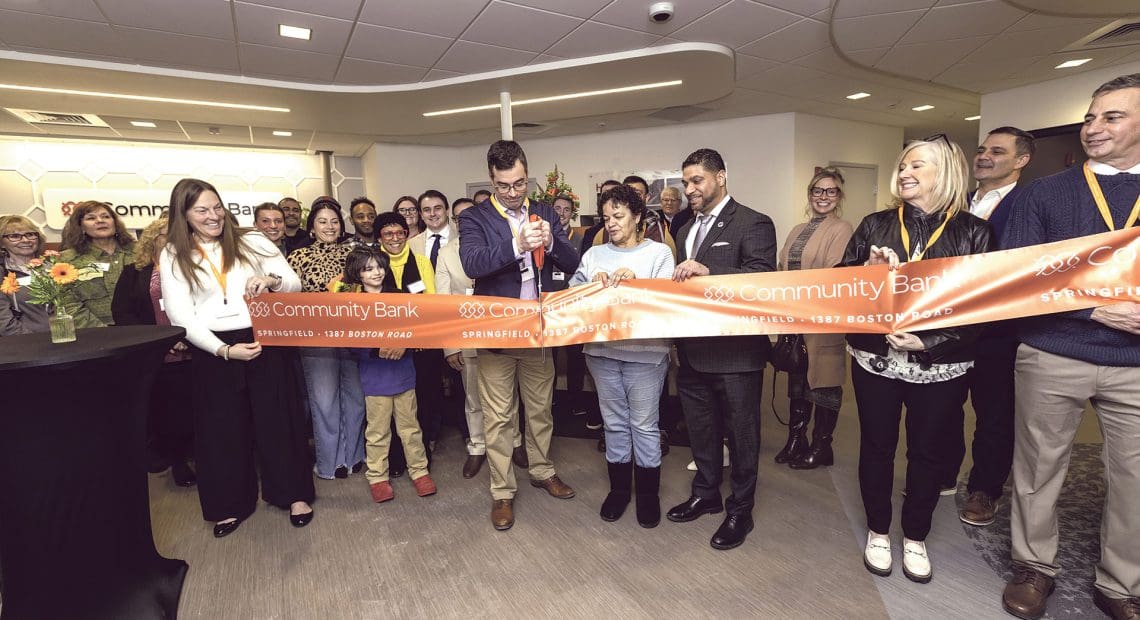
Community Bank hosted a ribbon cutting at its new Boston Road branch in January.

Community Bank hosted a ribbon cutting at its new Boston Road branch in January.


For Community Bank, N.A., Springfield was originally a remote outpost. But now, the institution is increasing its footprint in the City of Homes.

“We really are excited about Springfield as a market,” said Matt Plasse, regional president for New England. “I think it looks pretty similar to a lot of the markets where we operate — like, in upstate New York, I think of Syracuse or Rochester or Binghamton, markets where we really do well. There’s no single industry that dominates any one of those markets. It’s pretty diverse, small to mid-sized, family-owned businesses.

“And that’s what we do,” he added. “We’re a relationship bank. We don’t get too specialized in any one area. And at the end of the day, in order to be a community bank — which is part of our name, but it’s at the heart of what we do — you’ve got to have people in the market. So that’s why we are expanding in Springfield, and investing in that community.”

When Community Bank, whose strongest roots are in New York and Pennsylvania, acquired Merchants Bank in 2017, it gained a large network of branches in Vermont … and one in Massachusetts, in downtown Springfield’s Tower Square, which had been NUVO Bank before hanging the Merchants banner for a short time.

Located far from any other Community location, it would have been a prime candidate to be shed altogether, but instead, not only did it become a strong-performing branch, but its success has led, almost a decade later, to a second Springfield branch, which opened on Boston Road in late January.

Matt Plasse

Matt Plasse

“At the end of the day, in order to be a community bank — which is part of our name, but it’s at the heart of what we do — you’ve got to have people in the market. So that’s why we are expanding in Springfield, and investing in that community.”

“It’s not a small investment. We’re excited about this area,” Plasse said. “Boston Road is on the upswing. There’s a lot of investment going on in that side of the city, and we’ve already got great people in Springfield. And now, we’re putting more people on the ground.”

Like the first Springfield branch, Plasse said, the Boston Road office offers the usual range of banking services, from checking and savings accounts to lending, both personal — mortgages, home equity loans, auto loans, and the like — and business loans, from real estate to traditional commercial and industrial borrowers.

“We do have to be somewhat generalists and meet every customer where they’re at, so we have to offer everything,” Plasse said.

The Tower Square location has proven to be a strong performing branch over the past eight years, he added, which paved the way for the expanded footprint.

“That team has proven itself, and we like the market in general; it looks very similar to other places where we thrive. So it just reached a point where we said, ‘OK, we want to invest in Springfield.’ It’s a great opportunity for us.”


What’s in a Branch?

Most community banks have found over the past two decades that online banking did not make physical branches obsolete.

“That’s really how we deliver our model: having people in the markets, in our communities, establishing relationships. Customers can’t do everything online, so they’re coming to us to help their families or their businesses,” Plasse explained.

Even for routine transactions, “there’s still certainly a bunch of folks that just love to come in; maybe it’s part of their day. They’re very loyal customers, and we establish relationships with them,” he added.

“But certainly over my career, I’ve seen a shift. It used to be a very transactional role — high volume, you have people lined up out the door, you’re just trying to help everybody get their transactions completed. Now that role — and this is why we train our folks differently now — is more consultative. You’re asking them questions about why they’re there, what they’re looking for, how we can help them, and we have a lot more services to offer that can be super helpful.”

“That’s really how we deliver our model: having people in the markets, in our communities, establishing relationships. Customers can’t do everything online, so they’re coming to us to help their families or their businesses.”

Community Bank, in fact, offers what Plasse characterized as a four-legged stool when it comes to financial products, including its banking services, a wealth management group, an insurance entity, and retirement and benefits administration products.

“We position ourselves as a diversified financial services company. We see that as our differentiator from other banks in terms of our business model. And those entities really run on their own as fully scaled businesses, and they contribute an outsized portion of our revenue,” he went on.

“So, compared to our peers, we’re number one by far in terms of our revenue mix, the revenue that comes from non-bank fee income. But the only way to cross-sell those is to interact with your customers and consult with them and deliver those other options to them every day. So that’s the synergy we’re trying to get, and to have branches on the ground is the way to do that.”

At the same time, the bank intends to get involved in — and give back to — the local nonprofit landscape.

“It’s in our name, and it’s what we do every day, but as an institution, we give about $4 million a year to the community by way of donations and sponsorships, that sort of thing. Last year, we supported about 2,200 different organizations.”

The bank does so with a regional model, Plasse added, noting that the existing Springfield branch contributed about $61,000 to 22 different organizations last year, while team members volunteered more than 200 hours in the community.

“I’m the regional president for New England, which, for us, includes Vermont, New Hampshire, and Massachusetts. And we have separate committees within each region to identify what the community needs are. We don’t want to have a blanket approach. I’m part of that committee, and we decide where to put our dollars into the community along with members from each one of those states. So we have people representing Massachusetts on that committee and advocating for local nonprofits in the Springfield area, and then we have other folks from New Hampshire and Vermont as well.”

As part of the recent ribbon cutting event on Boston Road, Community Bank donated $5,000 to the Springfield Symphony Orchestra and also committed $25 per loan or deposit opened at that location to Rick’s Place, which supports grieving young people and their families.

“And it’s not only dollars — it’s volunteering, too,” Plasse added. “In New England alone, it was 2,700 hours last year, and bank-wide, it was 17,800 hours of community service from our teams. Everyone is really encouraged to live and breathe the bank. We put our orange on — we kind of stand out. We look like a bunch of hunters out there, but it’s pretty fun when everyone gets together.”


Focus on the Future

Plasse said Community Bank has its eye on further growth, both organically and, when opportunities arise, with new locations.

“The big headline the other day was about the Webster and Santander merger. So we we expect we’ll see some opportunities out of that; when there’s a merger, sometimes divestitures of locations can come up,” he explained.

In any case, “we’re not done in Springfield. I don’t know what the next expansion might look like, whether it’s a de novo branch like we did on Boston Road or something else. But ideally, you have a hub and the spokes of the branch network, with the hub being downtown and several spokes around it.”

While regional expansion in Western Mass. is certainly possible, he added, the focus now is building in and around Springfield.

“We are certainly opportunistic if we feel like it’s the right time to strike. Our CEO is not afraid to do that, and we’re actively looking at similar things in New Hampshire and other places,” Plasse explained. “But in in terms of market share in Western Mass., the branch up and running downtown obviously has done very well, and we will attempt to replicate that on Boston Road.

“We’re very excited about our customers in Springfield. They may not root for the same football team as our friends in upstate New York, but they they look and feel the same, and they appreciate our core values of integrity, excellence, teamwork, and humility,” he said, while putting emphasis on the last one.

“I’ve worked at other institutions where I didn’t necessarily feel like that was evident, but humility is huge; there are no egos at this bank. We had an entire executive team came to show up in Springfield, which hopefully tells the community how important it is. The CEO was there, the CFO was there, head of HR was there, and all the CEOs of the business lines were there — the four legs of the stool. They’re all zero-ego, totally approachable people, which has been really encouraging. And I think once people come in and interact with us in the branch, they feel that.”

Home Improvement

Home Team

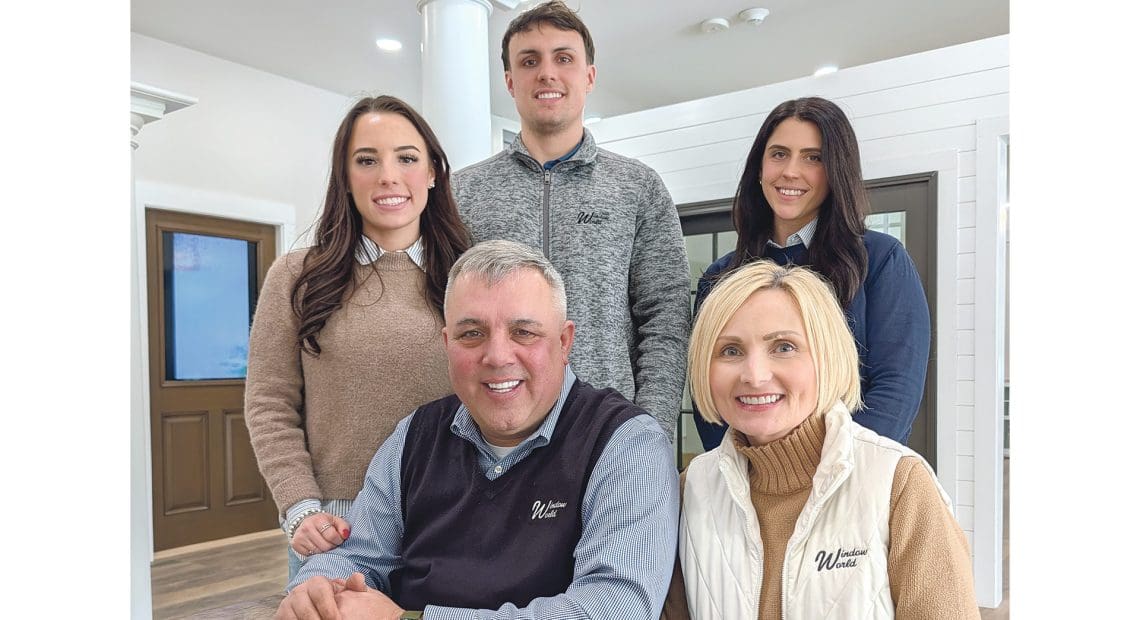
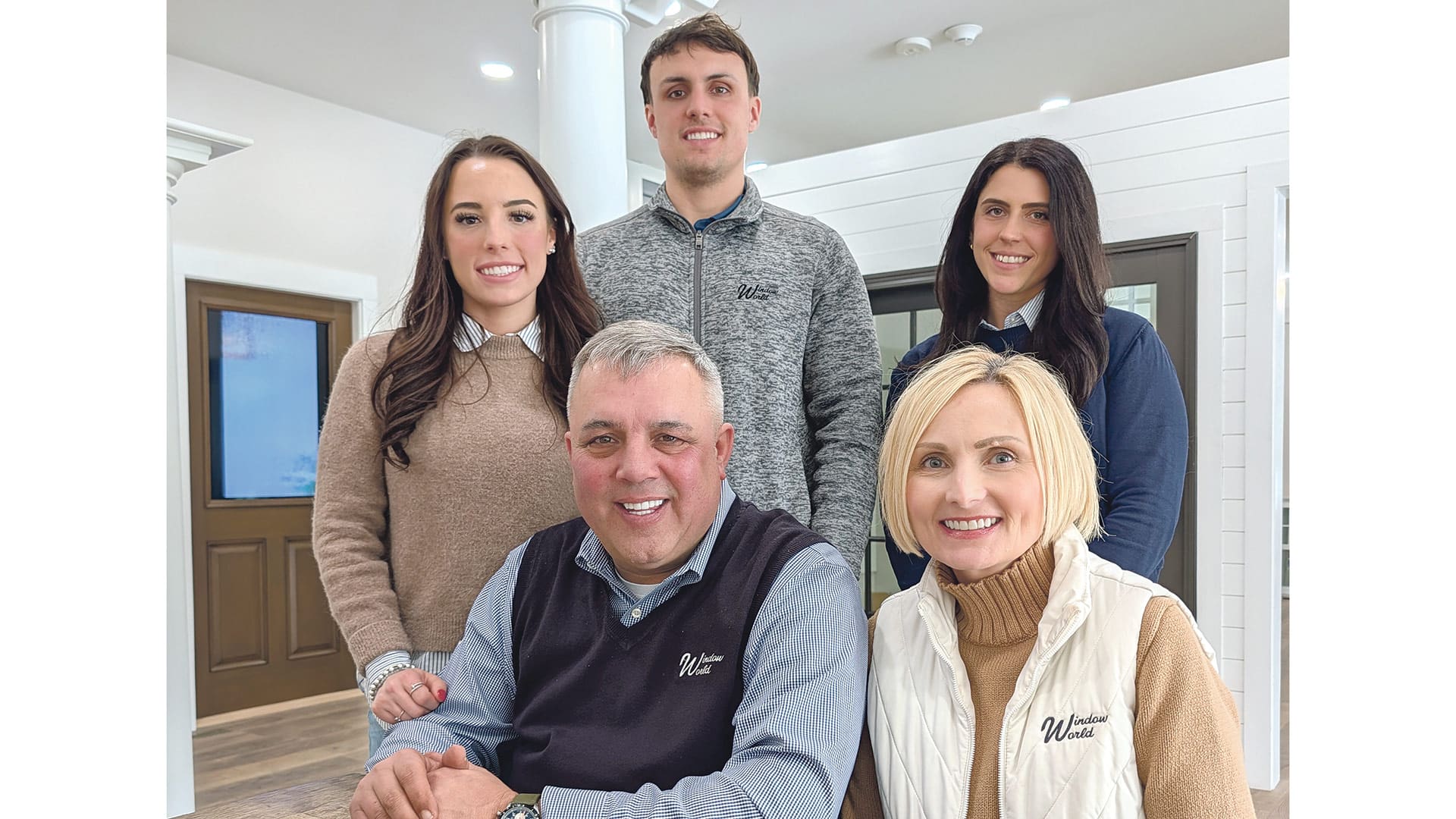
Window World of Western Massachusetts team members

Clockwise from left: Window World of Western Massachusetts team members Grace Drost, Nick Drost, Lanéa Bushey, Anna Drost, and Tim Drost.


Growing a company from within is a philosophy Tim Drost has lived out for a long time. So is the value of a family business.

That much was evident as Drost, CEO of Window World of Western Massachusetts, sat down recently to talk with BusinessWest at his Belchertown headquarters alongside four key members of his team: wife Anna Drost, son Nick Drost, daughter Grace Drost, and Lanéa Bushey, the daughter of Tim’s former business partner.

“I grew up in the business; I had a lot of family in the home improvement and construction business — everybody was in that space,” he said, explaining that he and Bob Bushey worked for many years at a large home improvement company.

“We had a crew of guys that we worked with, and we developed installation standards across the country and Canada for them,” he noted, before Bob left in 2010 to launch Window World of Western Massachusetts. “Then, as Lanéa’s dad was getting older, looking toward retirement, I came on in 2018 — I took my whole install team with me — and continued to grow this company.”

Grow is an understatement. From about $2 million eight years ago, the enterprise now records between $40 million and $50 million in annual sales through what are actually four companies under one umbrella — Window World of Western Massachusetts, Go Green Home Performance, Hometown Exteriors, and the Kitchen & Bath Co. — with more expansion planned in the near future.

Those moves have come about in different ways. The Kitchen & Bath Co. arose from the acqusition of the Kitchen Squad, a company that had been in business for 40 years.

“We had a great relationship with them, and their father was looking to retire. So we brought their team here. And we just built a new, almost 70,000-square-foot warehouse down the street. We renovated that whole property.”

One of the buildings on that site is a fabrication shop, the equipment for which was purchased from a millwork and fabrication company that had gone out of business. “So we put those two together and expanded that service in-house, and the kitchen business has been phenomenal for us,” Drost said.

“We want to be having an intelligent conversation with our customers when they’re replacing things, to not just look at fixing the thing that’s broken, but also improving the spaces where they live.”

Go Green, on the other hand — which specializes in insulation and the performance of a building’s envelope — was built from the ground up.

“We brought in some experienced guys that we’d been working with for years and years at a local company, brought their team in, and developed that,” he said. “You need to be looking at the building, not just from a carpentry standpoint, but also from a building performance. Obviously, with all the ice dams and things like that, people really can see it this year. But we want to be having an intelligent conversation with our customers when they’re replacing things, to not just look at fixing the thing that’s broken, but also improving the spaces where they live.”

All these companies — and Window World is also looking to purchase another local company in the HVAC and solar realm — essentially work together to give clients, which include builders, developers, and homeowners alike — a one-stop shop for anything they may need.

“I understand the service portion of the business and how companies need to evolve to meet customers’ needs today,” Drost added. “Also, I realized that there’s a massive gap in the way that home improvement businesses are managing the field today, compared to years ago, with a lot of the work being done by subcontractors and poor-quality labor. You don’t have an unbelievable labor pool today like you did when I was a kid, 30, 40 years ago, where people were passionate about being in the trades.

“I mean, if you look at the roofing business today, probably 90% of it is done by subcontractors or inferior labor. That’s a weakness in the marketplace, and it’s become accepted because everybody’s doing it,” Drost went on. “So we’re very focused on developing labor.”

He said he works closely with manufacturers in developing in-house apprenticeship programs.

“Then we break it down by trade. So window guys just do windows, door guys just do doors. We feel it’s been the rocket fuel of our growth — because it’s not normal to deal with subcontractors and unskilled labor. Customers want things done right,” he said. “So as we bring these other trades in to the family business, we can offer a complete service for the customer, and take the complexity out of doing home improvement. We’re very focused on that, and we will continue to be.”


From the Ground Up

Window World’s leadership, however, often wear many hats, Lanéa Bushey said.

“We have our hands in everything. But primarily, what I’m focused on is working directly with our customers, talking about energy efficiency, making sure their installation is perfect,” she explained. “I go to customer homes and do assessments; I love to work directly with our customer base and be able to be in the field, seeing what’s going on.

“And we all are heavily involved in our marketing and making sure that all of our businesses align and present a clear representation of who we are,” she added.

Grace Drost said she handles more of the back end in the office, speaking with customers at the start of the process and ensuring that the process goes smoothly on projects.

“With both Grace and Lanéa, we think that the brick and mortar is a massive piece,” Tim said of the company’s showrooms in Belchertown, Westfield, and one soon to open in Adams. “A lot of times, planning for home improvement is done on people’s kitchen tables, and you can’t get a real feel for what that actual building material is. With our showrooms, you can actually touch and feel and see those pieces installed. It helps customers make educated decisions.”

“Our family’s been in the trades for generations, so we’re passionate about that, and the apprentice program has been fuel for our growth for sure. People love working for a company that’s passionate about what they do.”

Nick Drost, meanwhile, is more focused on installations and spends most of his time in the field handling everything from the design phase and assembling a material list to seeing the job through to completion.

“I’m at pretty much every job, or at least I try to be. And if not me, one of our other project managers is,” he explained. “We decide how we’re going to handle a job, and we make sure that we’re there with the customer at the beginning, throughout the job, and at the end — that there’s always someone there for the customer to talk to and make sure that they have the exact experience that we promised them at the sale.”

That requires plenty of continuing education and staying up to date with changing codes and new technology, meaning training at the company goes far beyond its apprenticeship programs.

“We need to be able to look at the whole building envelope and the science behind it and understand the effects of what we’re doing on the house,” Nick said. “We’re doing training for energy and to understand even things like HVAC systems, things we don’t install ourselves, so we can understand what’s going on in the building, why is this happening, how we can help the customer on every front, not just saying, ‘OK, we can put this window in, and that’s the only thing we’re worried about.’ We want to help the customer in every aspect of it.”

Meanwhile, Anna Drost runs the kitchen business and also focuses on internal processes to ensure a better experience for customers, as well as technology initiatives, worker safety, and training.

The emphasis on apprenticeship and training programs helps ensure that this company — now 120 employees strong — can continue to grow from within, at a time when recruitment and retention are challenges across all building trades.

“There’s zero turnover,” Tim said. “Our family’s been in the trades for generations, so we’re passionate about that, and the apprentice program has been fuel for our growth for sure. People love working for a company that’s passionate about what they do.”

Nick agreed. “One reason why I feel like our retention is so good is, at the end of the day, people want to work somewhere they can grow and get better and have something new to learn, and continue evolving,” he said, adding that manufacturers often come out to participate in trainings on codes, technology, and the like, and the company partners with Milwaukee to make sure teams are using the latest tools.

And the passion of the workforce gets relayed to customers through constant communication, Tim added. “There’s not different companies converging on one project. It’s our employees. We have the same messaging, the same communication, and everybody’s on the same page.

“That’s why most of us live in the field — because that’s where our business is. We’re not a sales organization; we’re an installation organization. So how we communicate and how we develop our teams is part of that communication piece for our customers.”


View to the Future

Another priority at Window World of Western Massachusetts is constant growth from within, Tim explained.

“I’ve been working with some of our project managers for 30-plus years, but everybody in this company has started in the field,” he told BusinessWest. “The apprentices are working with skilled guys who have been there and worked their way up. All our foremen started off at the bottom and were very focused on constant education. We work both locally, where we see opportunities to develop our guys, and then with national programs to bring all those pieces in.”

And, as noted earlier, Drost and his team aren’t done evolving.

“We think building performance and that envelope piece are huge for our customers, and that is the future, whether it’s in remodeling or home building. So we’ll continue to add pieces,” he said.

“We really want to be a great service for our customers,” he added. “And the great thing for me is, even though I’m an old guy, the next generation is already in the business. So I think the businesses are in good hands, and our customers are in good hands.”

Home Improvement

Air Time

Scott Cernak says customers have long valued air quality, but the pandemic escalated that interest.

Scott Cernak says customers have long valued air quality, but the pandemic escalated that interest.

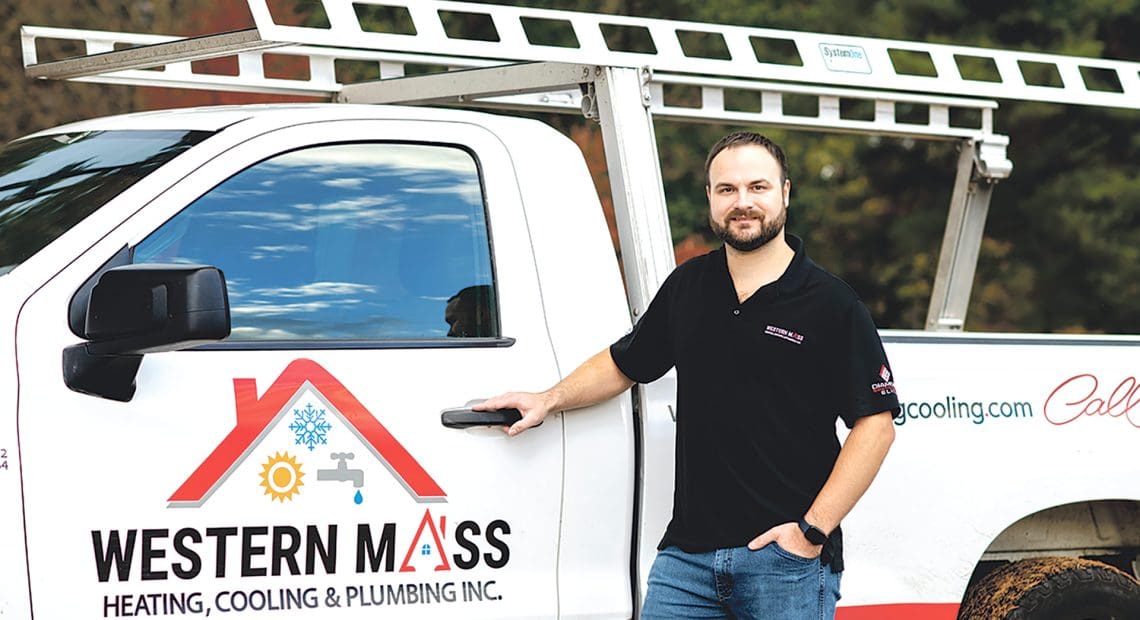
Scott Cernak recalls that, during the pandemic, the HVAC company he had just started was doing a lot of work with indoor air quality.

“But it certainly wasn’t a phase,” he said. “I’d say the pandemic probably escalated it a lot faster than it would naturally have. But people valued indoor air quality even before the pandemic — I just think we were paying more attention to it during the pandemic.”

It’s just one way the HVAC field continually morphs — for example, a recent shift toward heat pumps for people who value renewable energy — but essentially has always come down to keeping people as warm or cool as they’d like, and breathing easier, in more than one sense.

Cernak’s first interest in vocational school was plumbing, and he eventually got into HVAC as well. He started working for M.J. Moran Inc. as an intern at age 16 and turned his stay there into a career; he later spun his own company off that firm, opening Western Mass Heating, Cooling & Plumbing in 2020.

“The business has grown a lot — we were 24, 25 employees, and we’re up to 55 now,” he said. “And the revenue has more than tripled since the first year.”

He started the business in Haydenville but grew out of that location and opened a new building in Deerfield. “I always knew I wanted to grow the business. Maybe it was a little faster than expected because demand is high,” Cernak explained, noting that he’s made investments not only in new technology, but in training people who share his growth mindset in a field where there’s plenty of opportunity.

“The business has grown a lot — we were 24, 25 employees, and we’re up to 55 now. And the revenue has more than tripled since the first year.”

Sam Pomeroy, president of Climates by Pomeroy, with locations in Colrain and Deerfield, was also introduced to the HVAC industry in a vocational school setting.

“I was the youngest in a big family, and my brothers and sisters had gone to trade school also, and they were doing pretty well in life. At school, they send you through all the different disciplines, and HVAC was really interesting. Thirty-nine years later, it continues to be interesting.”

Pomeroy worked for a series of other companies before setting out on his own 12 years ago with a venture called Cornerstone Mechanical. He soon changed it to Climates by Pomeroy as a way to honor his father’s name, and said he takes pride in finding low-emission, high-efficiency solutions to customers’ comfort needs — and in sharing his passion for this work with others.

“The trade needs workers, and there are good jobs,” he said. “ Everyone that works here has got a good job, and they’re getting paid good money. And it’s a very specific job — robots won’t be doing our job anytime soon.”

As for still being enthusiastic about the work four decades in, “I guess I’m just wired that way, and I think a lot of us are wired this way,” he told BusinessWest. “And part of what keeps it so interesting is that it’s new all the time. It’s definitely not boring. I’ll work on a farm, on some refrigeration equipment for potatoes, and then go work at a bicycle shop; you see behind the scenes of lots of different businesses, so it’s forever fascinating.”


Heating Up

Pomeroy said his company’s work is typically split 60-40 between commercial and residential, though which comprises 60% can go back and forth. And he’s seen plenty of changes on the residential side, from the rise of mini-splits to much more efficient heating systems.

“When I was a kid, every house was a cookie-cutter, 100,000 BTUs. Now, the construction is so tight, we’re putting 25,000 BTUs in a house to heat it. It’s amazing to me,” he said. “When you change out a furnace in your house, it’s probably going to be smaller because, at some point, you’ve updated the windows, you’ve put a new roof on with another layer of insulation, and now you really have to think about what you’re doing. You can’t just compare apples to apples. If you are, you’re probably making a mistake.”

Sam Pomeroy

Sam Pomeroy says he enjoys fixing things for customers, and it feels good to be a “hero” in their time of need.

While the volume of work leans slightly to the commercial side these days, Pomeroy isn’t taking new residential customers right now because he wants to keep service response times quick. “There’s only a certain amount of us, and if I can’t get to your house tonight, that’s not so good for my business brand.”

Cernak’s business at Western Mass Heating, Cooling & Plumbing is currently about half direct-to-consumer residential service repairs, installations, and replacing existing heating, cooling, and plumbing systems; then about 30% residential new construction and renovations, and 20% small commercial customers.

He attributes his company’s growth and talent retention with finding the right people with a growth mindset, noting that skills can be trained, but the right mindset — one that buys in to the company’s ideals, learns from mistakes, and is hungry to grow — is particularly valuable.

“I also surround myself with a lot of the right people — not only employees, but also colleagues and peers throughout the construction and service industries, as well as the right partners: our bank, insurance company, accounting firm, financial advisor. When you surround yourself with enough of the right people, I think it becomes contagious.”

Tim Drost, CEO of Window World of Western Massachusetts (see story on page 23), is looking to add an HVAC service to his small group of ancillary companies, recognizing its importance as part of home design today, whether building or renovating.

“Ultimately they all go together” he said. “If you have a heating and cooling guy having one conversation, and the window and siding guy having a different conversation, and the framer having a different conversation, the customer might get good information, but if we’re all at the table in the morning, we can collaborate together.”


Cool Career

Cernak called recruiting and retention a challenge, but also an opportunity to grow the field.

“It’s not an unlimited pool to pull from, that’s for sure. But we’ve had success doing training programs. We’ve made a good investment in virtual learning and vendor training and then our own in-house trainings. I built a classroom in this new building, where we can do a lot of in-house training.

“It’s an investment we made three to four years ago in younger, talented apprentices,” he added. “They have now become leads, and we’re now hiring more apprentices and helpers, and we hope that they’ll eventually become leads as well. It’s really starting to pay off.”

That said, “anyone who’s patient will be successful in finding good people to work. You’ve got to pay well and provide good benefits, but it’s also about training and making people feel part of something bigger.”

“When somebody calls, they’re without heat, they’re desperate, and they’re grateful. When we go there and fix their heating system when it’s zero degrees, or they have no hot water and you replace the water heater — that’s very satisfying.”

But there’s another aspect of this career he feels is attractive to people who work in it.

“When somebody calls, they’re without heat, they’re desperate, and they’re grateful. When we go there and fix their heating system when it’s zero degrees, or they have no hot water and you replace the water heater — that’s very satisfying.

Pomeroy agreed. “I joke all the time that a lot of the people that are in this industry have hero syndrome. It feels so good to be like, ‘I fixed that,’ and the people are like, ‘yay!’

“I’ve left houses where it was five below zero, and I got the heat going. I was off this past weekend, and a little place I take care of, their walk-in freezer died, and I went down there and fixed it on my day off, and they were super psyched because everything important is in the walk-in freezer at the little store.

“So those kind of things really nourish me. You feel like you’re a hero, and it feels good,” he went on. “That’s one of the gifts of the job — a pat on the back for a job well done. So many jobs don’t have that; it’s just on to the next pile of papers. So it’s a rewarding career.”

New construction projects have their own type of gratification, Cernak said.

“It’s neat going into a new building, seeing it from the ground up, and you put the plumbing and the HVAC underground, and a few months later, when all the finishes are in, you know you put everything in the walls to make that house work and make the occupants comfortable and able to enjoy the modern amenities we have here in America. That’s pretty satisfying for people.”

And then there’s the bottom line view, which is another plus, Cernak added. “It’s actually a pretty high-paying industry with high demand and almost nobody with student debt because we pay for training, and so do many many companies in our industry. So you can make six figures and have no student debt.”

All that and being a hero too? For many HVAC technicians, that’s truly a breath of fresh air.

Healthcare News

‘Eat Real Food’

When U.S. Health and Human Services Secretary Robert F. Kennedy Jr. and U.S. Agriculture Secretary Brooke Rollins released the federal government’s “Dietary Guidelines for Americans, 2025-2030” earlier this year, they hailed the document as the most significant reset of federal nutrition policy in decades, boiling down the report with three words: “eat real food.”

The shift is important, they say, as nearly 90% of healthcare spending goes toward treating chronic disease, much of it linked to diet and lifestyle. More than 70% of American adults are overweight or obese, and nearly one in three adolescents has prediabetes.

“These guidelines return us to the basics,” Kennedy said. “American households must prioritize whole, nutrient-dense foods — protein, dairy, vegetables, fruits, healthy fats, and whole grains — and dramatically reduce highly processed foods.”

Added Rollins, “at long last, we are realigning our food system to support American farmers, ranchers, and companies that grow and produce real food. Farmers and ranchers are at the forefront of the solution, and that means more protein, dairy, vegetables, fruits, healthy fats, and whole grains on American dinner tables.”

Dr. Bobby Mukkamala

Dr. Bobby Mukkamala

“Today, the AMA is making significant commitments to improve clinical competency, deliver educational resources for physicians, and work with Congress to enact meaningful, lasting nutrition change that can improve lives. The AMA is focused on helping physicians translate this science into everyday care and helping patients improve their overall health.”

The new Dietary Guidelines for Americans (DGA), available at realfood.gov, emphasize the following recommendations:

• Prioritize protein at every meal;

• Consume full-fat dairy with no added sugars;

• Eat vegetables and fruits throughout the day, focusing on whole forms;

• Incorporate healthy fats from whole foods such as meats, seafood, eggs, nuts, seeds, olives, and avocados;

• Focus on whole grains, while sharply reducing refined carbohydrates;

• Limit highly processed foods, added sugars, and artificial additives;

• Eat the right amount of food based on age, sex, size, and activity level;

• Choose water and unsweetened beverages to support hydration; and

• Limit alcohol consumption for better overall health.

The guidelines also provide tailored recommendations for infants and children, adolescents, pregnant and lactating women, older adults, individuals with chronic disease, and vegetarians and vegans, ensuring nutritional adequacy across every stage of life.


Measured Praise

Major medical groups largely hailed the report, albeit with some pushback on the new protein emphasis.

“The American Medical Assoc. (AMA) applauds the administration’s new dietary guidelines for spotlighting the highly processed foods, sugar-sweetened beverages, and excess sodium that fuel heart disease, diabetes, obesity, and other chronic illnesses. The guidelines affirm that food is medicine and offer clear direction patients and physicians can use to improve health,” said Dr. Bobby Mukkamala, AMA president.

“Today, the AMA is making significant commitments to improve clinical competency, deliver educational resources for physicians, and work with Congress to enact meaningful, lasting nutrition change that can improve lives. The AMA is focused on helping physicians translate this science into everyday care and helping patients improve their overall health.”

The AMA also announced plans to launch a curated collection of nutrition education resources and continuing medical education; convene a series of roundtables with physicians, nutrition experts, and public health leaders to strengthen nutrition education and clinical competency; and work with Congress to incentivize nutrient-dense foods, expand food labeling efforts, define ultra-processed foods, and increase investment in nutrition research.

The American Heart Assoc. (AHA) also welcomed the report, particularly noting the emphasis on increasing intake of vegetables, fruits, and whole grains while limiting consumption of added sugars, refined grains, highly processed foods, saturated fats, and sugary drinks, all of which align closely with its own long-standing dietary guidance.

“In general, protein intake among Americans is adequate. Maybe some older adults have marginal intake, but the tone of the new DGA sounded like we have widespread inadequate protein intake.”

At the same time, “we see an important opportunity to educate consumers about the scientific basis for certain recommendations,” the AHA noted. “For example, we are concerned that recommendations regarding salt seasoning and red meat consumption could inadvertently lead consumers to exceed recommended limits for sodium and saturated fats, which are primary drivers of cardiovascular disease. While the guidelines highlight whole-fat dairy, the Heart Association encourages consumption of low-fat and fat-free dairy products, which can be beneficial to heart health.

“Protein is an essential component of a healthy diet, and we urge more scientific research on both the appropriate amount of protein consumption and the best protein sources for optimal health,” the AHA went on. “Pending that research, we encourage consumers to prioritize plant-based proteins, seafood, and lean meats and to limit high-fat animal products including red meat, butter, lard, and tallow, which are linked to increased cardiovascular risk.”


More Protein Concerns

The Harvard T.H. Chan School of Public Health released an interview with three of its faculty members who served on the report’s advisory committee: Teresa Fung, adjunct professor of Nutrition; Edward Giovannucci, professor of Nutrition and Epidemiology; and Deirdre Tobias, assistant professor of Nutrition.

“With some key exceptions, I was appreciative that the quantitative recommendations outlined in the new DGA are actually quite consistent with previous DGAs, carrying forward the recommended servings for the foundational food groups of fruits, vegetables, whole grains, dairy, and oils,” Tobias noted. “Long-standing limits for saturated fat (less than 10% of calories) and sodium were kept the same. The new DGAs also continue to emphasize whole foods.

“However, the biggest deviation from the science is a new prioritization of animal sources within the protein food group, instead of a plant-forward pattern,” she added, echoing the AHA’s concern. “Other critical deviations from science include the recommendation for full-fat dairy. Although vegetable oils were not forbidden, they were notably absent from being listed among healthy oils, despite being primary sources of essential unsaturated fatty acids.”

Fung agreed that the emphasis on animal protein, especially red meats, stood out. “In general, protein intake among Americans is adequate. Maybe some older adults have marginal intake, but the tone of the new DGA sounded like we have widespread inadequate protein intake.”

Still, Giovannucci added, “there are some positive aspects of the guidelines, such as the call to ‘avoid highly processed packaged, prepared, ready-to-eat, or other foods that are salty or sweet’ and avoid sugar-sweetened beverages. The guidelines are hard on added sugar, especially for children. Prioritizing fiber-rich whole grains and reducing refined grains is appropriate. These are good starting points.”

Fung noted that clinicians, nutritionists, and others use the federal guidelines to teach healthy eating, and a a number of federal nutrition programs also follow its standards, including the National School Lunch Program and Women, Infants, and Children. Changes in the new DGA may affect the food and nutrient requirements of these programs.