Daily News

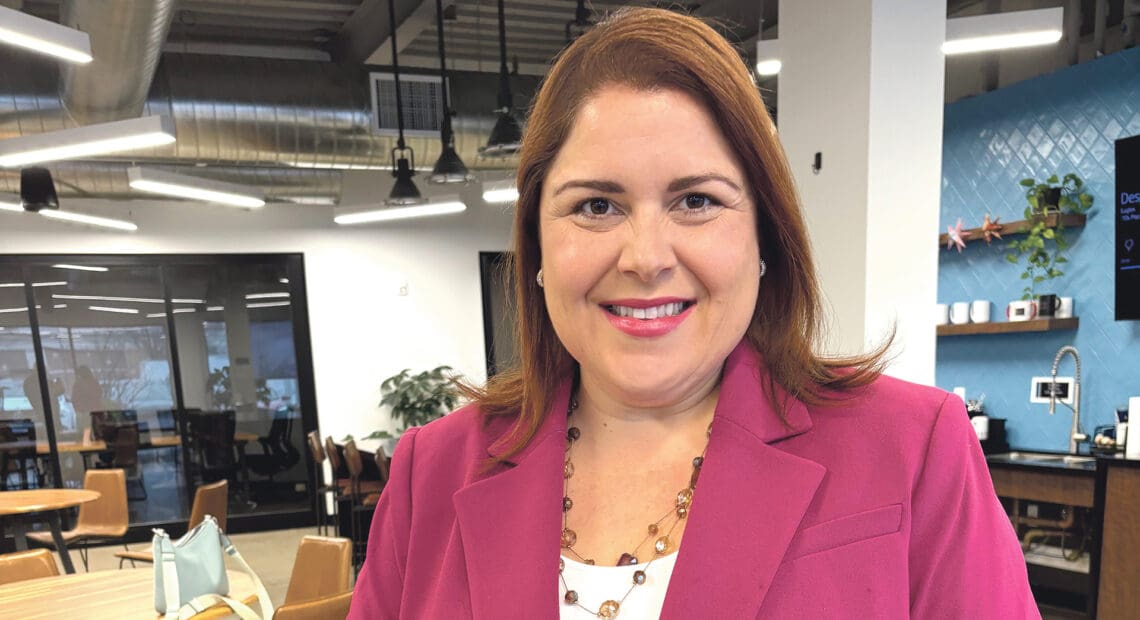
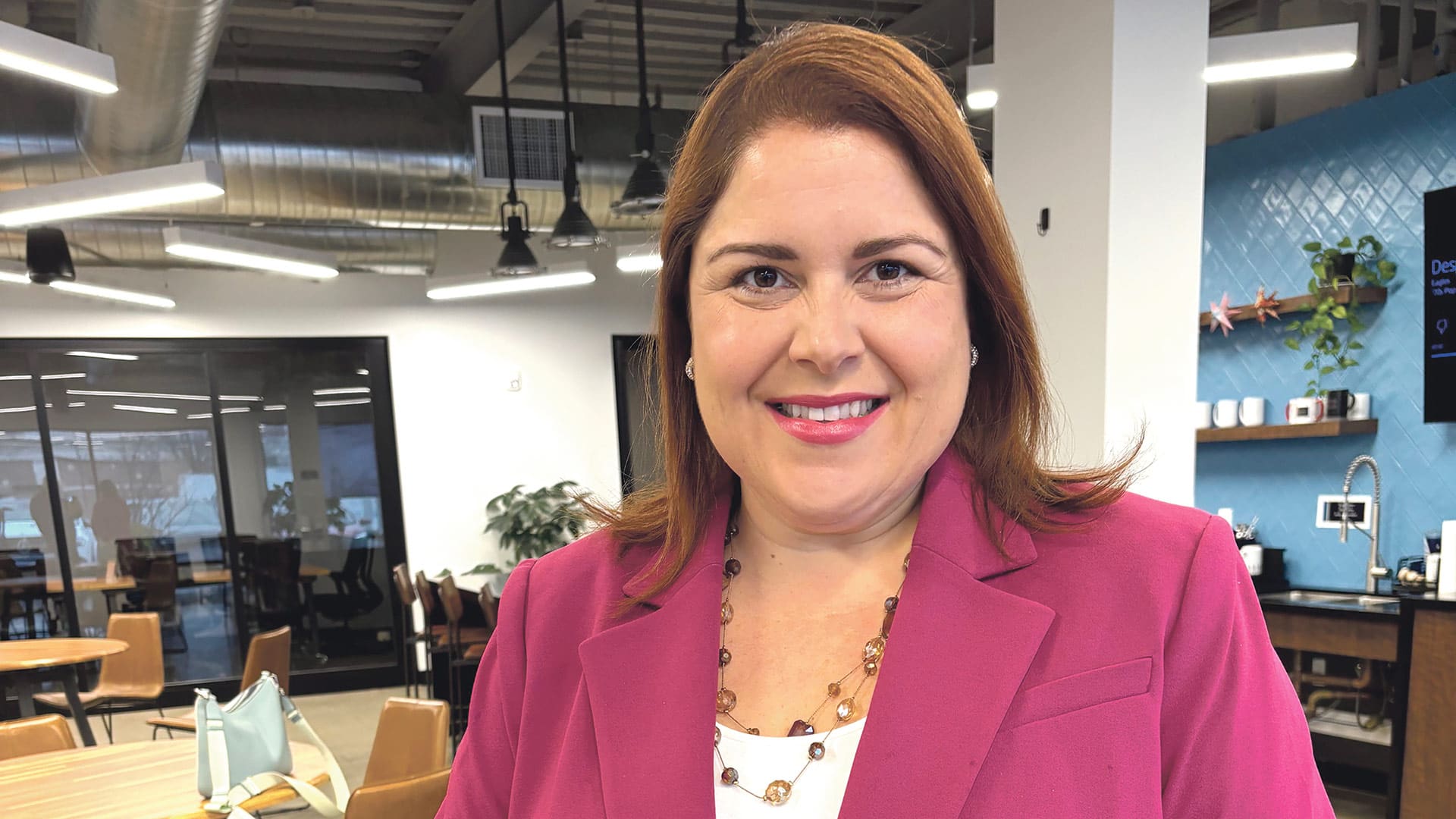
CHICOPEE — Peter Benton, chairman of the board of directors of Sunshine Village, announced the appointment of Michelle Theroux as the next president and CEO of the organization. She succeeds Gina Kos, who will retire at the end of April after more than 30 years of leadership.

Theroux brings more than 20 years of executive leadership experience in nonprofit, healthcare, and educational organizations. Most recently, she served as CEO of Berkshire Hills Music Academy in South Hadley for more than 12 years. Her earlier leadership roles included senior management positions at the Center for Human Development as well as Child and Family Services of Pioneer Valley, where she oversaw multi-site operations and expanded clinical services.

She currently serves as chair of Mercy Medical Center, is a regional board member for Trinity Health Of New England, and sits on the boards of the ERC5 Chamber of Commerce and MicroTek. She also serves as chair of the South Hadley Redevelopment Authority. Her contributions have been recognized by BusinessWest, which named her both a 40 Under Forty honoree and a Woman of Impact.

Theroux holds a master’s degree in counseling psychology from Springfield College and bachelor’s degrees in psychology and politics from Assumption University.

Established in 1967, Sunshine Village is a CARF-accredited organization that serves individuals with developmental disabilities and those on the autism spectrum. With several locations throughout Western Mass., Sunshine Village serves more than 400 individuals each year through employment, community integration, and day habilitation services.

Daily News

MERIDEN, Conn. — The Construction Institute recently announced the recipients of its 2026 Champions of Change Award: Sean Edwards, executive vice president at Suffolk, and Christine Jablonski, director of Preconstruction at Daniel O’Connell’s Sons (DOC).

Each year, the Construction Institute recognizes one woman and one man within the architecture, engineering, construction, and owner community who exemplify leadership, mentorship, and a deep commitment to advancing opportunity within the industry. These individuals serve as role models who actively support women and others in the profession while driving meaningful, lasting change.

Edwards brings more than 30 years of industry experience and leads Suffolk’s Higher Education and Life Sciences sector. He is widely recognized for his long-standing commitment to advancing women in construction, having spent over two decades mentoring and advocating for their growth. His leadership has helped reshape project teams across New England, increasing representation and positioning women in key leadership roles.

Jablonski, a member of DOC’s executive leadership team, brings more than 35 years of industry experience. A recognized leader in advancing diversity and inclusion, she has shaped recruitment strategies, mentored emerging professionals, and led initiatives such as the DOC Women’s Network. Her impact extends industry-wide through leadership roles with the Construction Institute and the Connecticut Building Congress, where she champions opportunity and inclusive growth.

The Women Who Build Summit is the Construction Institute’s premier annual event celebrating leadership, innovation, and progress across the industry. The summit brings together professionals from across disciplines to share insights, build connections, and advance the role of women in construction and related fields.

Daily News

BOSTON — The Massachusetts Housing Partnership (MHP) announced that Rachel Heller has officially begun her role as executive director, marking an exciting new chapter in the organization’s impact on affordable housing in Massachusetts.

With a track record of success and a deep and personal commitment to housing affordability across the state, Heller brings a wealth of expertise, vision, and leadership to MHP.

“I am honored to join the talented and dedicated MHP team to advance decades of innovative research, community assistance, and investments in homeownership and affordable housing to meet the housing needs of current and future residents, our neighborhoods, and our economy,” she said.

As executive director of MHP, Heller will play a pivotal role in creating more housing opportunities, making a direct and tangible difference in the lives of thousands of families across Massachusetts. This includes leading implementation of MHP’s strategic plan.

MHP is a public, nonprofit organization that expands access to affordable housing and promotes housing equity in communities across the Commonwealth. In September, after 40 years of leadership, Executive Director Clark Ziegler announced his retirement, effective at the end of March.

Cover Story

Taking a Big Swing

Ashley Schaffer has a fond memory from summer camp, when she was growing up in Texas.

“They had a big capture the flag event where everyone joined in — the entire camp,” she recalled. “All the adults were playing capture the flag with us, all the administrators, everybody. In my little kid head, it kind of blew my mind.”

So when she turned 40, she decided to do the same thing at her birthday party, inviting everyone she knew to a friend’s farm to play capture the flag.

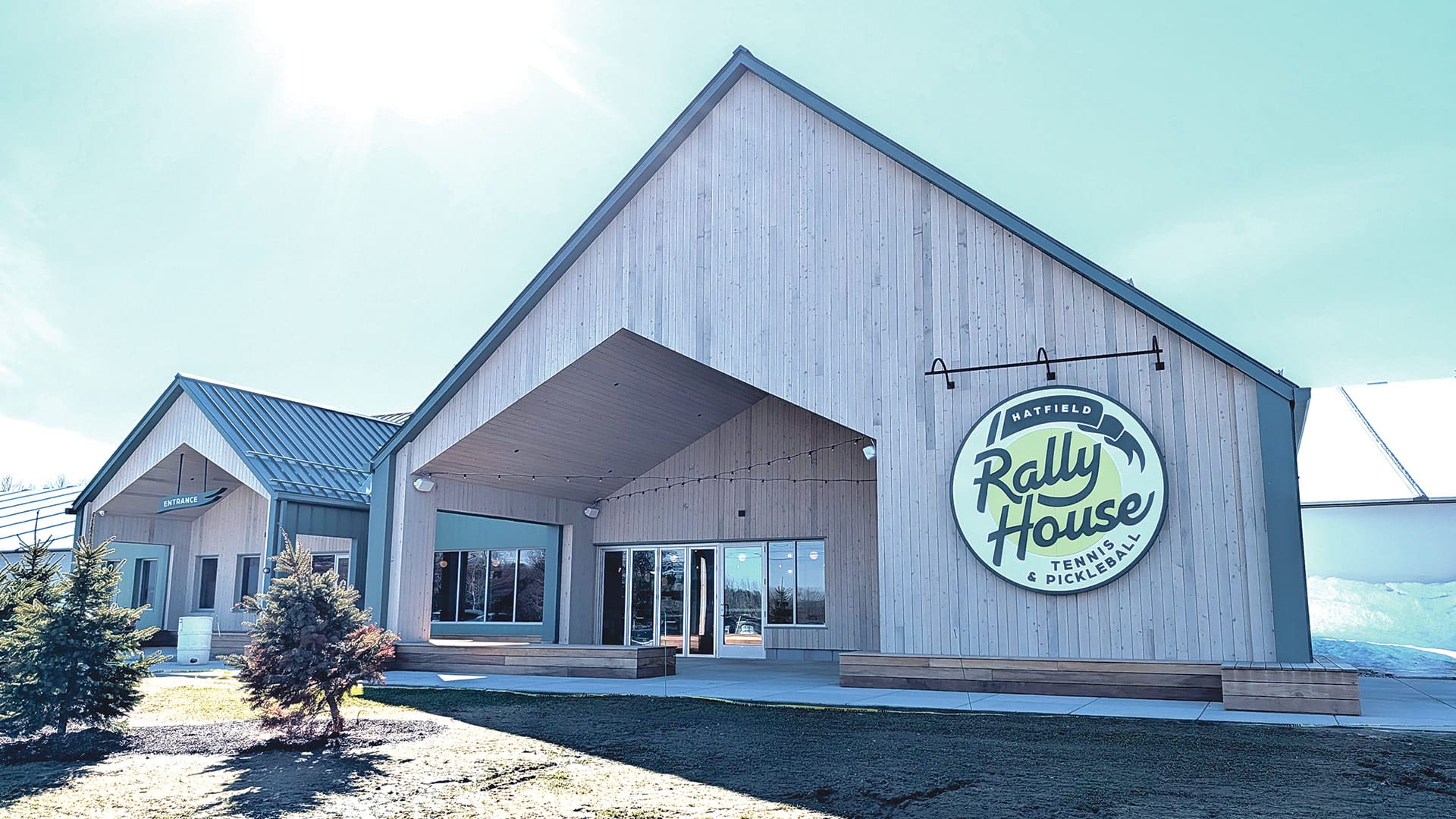
The venture she and Patrick Roche (her partner in business and life) recently opened — Hatfield Rally House, a tennis and pickleball facility just off I-91 in Hatfield — is kind of like that, Schaffer said. “This is me trying to live that out every single day.”

The idea, she explained, is connection. “I wanted to build something that’s not just tennis, not just pickleball. Everyone has lot of connections; sometimes they overlap, and sometimes they don’t. I love having a party where you can invite everyone you know and see how your different connections who don’t overlap can come together.”

And that coming together — among both friends and teammates who just met — is what she and Roche envisioned at Hatfield Rally House, which also features a café and lounge with big-screen TVs, and land outside to install volleyball and bocce courts when the weather gets warm, and invite food trucks as well. The vision was a place where people would want to hang out after playing — or not even have to play at all.

Patrick Roche and Ashley Schaffer aimed to create a sports facility where people would also want to come hang out and connect.

Patrick Roche and Ashley Schaffer aimed to create a sports facility where people would also want to come hang out and connect.
Photo by Derek Fowles Photography

“You can come into the lounge and watch a game and have a drink and chill,” she added. “I just want everyone to come, whether they’re into tennis and pickleball or not — just come and gather and meet some new people. They don’t even have to be into sports.”

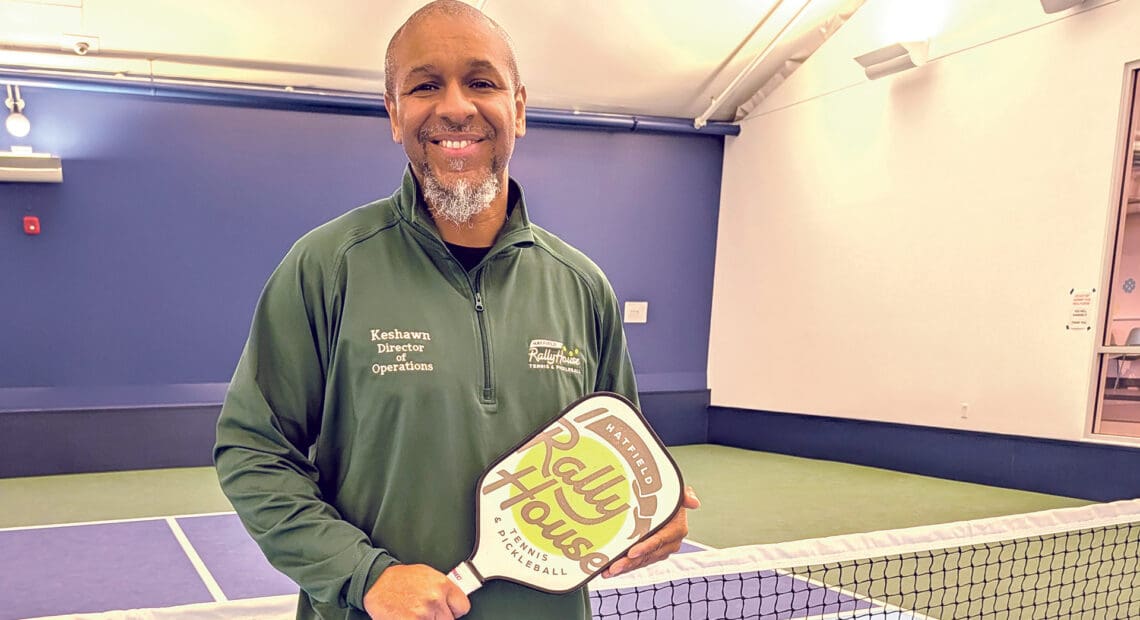
Director of Operations Keshawn Dodds told BusinessWest that the vision of Schaffer and Roche — he a tennis pro, but both avid tennis players who wanted to create something more than a tennis center — appealed to him.

“I just want everyone to come, whether they’re into tennis and pickleball or not — just come and gather and meet some new people. They don’t even have to be into sports.”

“They play at various places across Western Mass., and Ashley always said she wanted a place that she can call her home, that had the amenities to make sure that people felt welcome,” he explained.

“A lot of places that she went to didn’t have certain things. So she wanted to make sure we had a café, a place that kind of builds community and doesn’t focus on just the sport. So she and Patrick sat down and decided how to put tennis and pickleball together in a place where people can come and enjoy both sports, but also have more outside of that.”

The model centers around memberships, he explained, and although drop-in play for non-members is certainly encouraged, he said (day passes cost $20) a trial 30-day membership for $25 makes sense for most — and he said the facility has a strong turnover rate of people trying it out and remaining members after the first month.

The owners of Hatfield Rally House say its location just off I-91 was one of the selling points of the site.

The owners of Hatfield Rally House say its location just off I-91 was one of the selling points of the site.

Indeed, Dodds noted, the goal was to sign up 500 members in the first year of operation — and that was exceeded in the first month.

“So right now, it’s about managing all that. It made us happy to see this was actually something beneficial to not only the sports community, but the community at large. People are looking for something where they can be active and share that sense of community.”


Stay a While

Schaffer has experienced playing tennis or pickleball indoors and then doing … well, not much else.

“You have to get off the court at a certain time, and you ended up talking in the parking lot,” she said, adding that, while indoor tennis and pickleball isn’t a new idea, she had a specific vision for it — somewhere between that place with nothing else to do and an overly broad venue.

“In Texas, everything’s over the top. I didn’t want an over-the-top, country club place, but a place where you can come play with your friends and kind of lounge around afterwards and talk. You don’t even have to play.”

“After COVID, pickleball really took off. So it was just more on my radar, watching the pickleball culture, seeing how they operate. I felt like pickleball could float our tennis courts in terms of a business model. Eventually, we said, ‘let’s try to do this. We’ve been talking about it — we need to stop talking about it. Let’s do it.’”

She said a tennis-only model didn’t work financially because of the limited number of players who could support the square footage needed at any given time, but pickleball, with its more compact courts, had been gaining in popularity for years, and she and Roche saw an opportunity to combine the two in a way that could work.

“After COVID, pickleball really took off. So it was just more on my radar, watching the pickleball culture, seeing how they operate. I felt like pickleball could float our tennis courts in terms of a business model. Eventually, we said, ‘let’s try to do this. We’ve been talking about it — we need to stop talking about it. Let’s do it.’”

As for the business model — both in memberships and day passes — Schaffer said she’d heard that people won’t pay when they can find outdoor courts for both sports for free, but the first three months of operation (Hatfield Rally House opened on Dec. 14) have proven them wrong.

“It’s something that the community wanted,” Dodds said. “And it’s been bigger than what we thought, bigger than the expectations. So we’re happy.”

When Schaffer and Roche started calling architects, only one — Bonham & Douglas Architects in Northampton — seemed to take an interest in the project, and enthusiastic interest at that. “Dan Bonham picked up the phone and talked to me for 45 minutes, and finally, I was like, ‘OK, this is my guy,’” Schaffer said.

As for the location, just a few hundred feet off I-91 exit 30 northbound (and not far from exit 32 southbound), “I know they were looking at several different places, including a couple places in Northampton,” Dodds said, “but this was a farm area that somebody introduced to them, and they looked at it and decided it was just the right location. As a business owner, you say, ‘location, location, location,’ and this is right off the highway, easy access from up north. So this is the perfect spot. We got lucky.”

The 60,000-square-foot facility, built by Five Star Building Corp. in Easthampton, contains four tennis courts, eight pickleball courts, and fitness equipment upstairs, as well as full locker rooms and showers. Meanwhile, in the café and lounge up front, the business partners with Prospect Meadow Farm in Hatfield for food and Berkshire Natural in Northampton for snacks. “We try to keep it local as much as possible,” Dodds said.

“It’s amazing to have all of this here,” he quickly added. “And trust me, the thing that I love the most is when people say, ‘I still get this wow factor when I walk in.’”


Rising Tide

While Hatfield Rally House fills a specific niche in the region, there are other places to play pickleball, including Pickleball Kingdom in the Holyoke Mall, the Picklr in Westfield, indoor courts at Holyoke Community College, and others, including any number of outdoor municipal courts across the region.

However, “we don’t see it as competition — we see it as a help. We want people to understand they can play in other places, but they also have the opportunity to play here,” Dodds said, effectively suggesting a rising tide lifting all boats situation, where the more people introduced to the sport, the better, and the best facilities will do well by drawing in these new fans.

As for that early success, “we’re not in this to make a lot of money,” Schaffer said. “The goal is really to be self-sustaining. I didn’t want some windfall — I just wanted a different kind of place that I feel we didn’t have in Western Mass.”

“We provide lessons and clinics and ladders and open play — an easy way of connecting into the community. Sometimes you go to other places, and it’s a little intimidating. I’m trying to make it easy for people to come. We want to be super welcoming. That’s the whole thing.”

And now that she has it — and early returns are strong — she’s just trying to get the word out to more people who would enjoy a few games of tennis or pickleball. And human connection, of course.

“I feel like I’ve been shouting from the hills that we’re open. I’m not the type of person that starts a business, and the struggle is getting more people to know about it. There’s a lot of places you can go outside and play pickleball, tennis, whatever, but we’re inside, and to me the biggest asset we provide is programming and ways for people to come and play.”

Elaborating, she said Hatfield Rally House, like other places, offers open play so that anyone can show up without a partner and get into a game (and maybe make a friend or three). But they can also take a lesson to improve their skills.

“We provide lessons and clinics and ladders and open play — an easy way of connecting into the community. Sometimes you go to other places, and it’s a little intimidating. I’m trying to make it easy for people to come. We want to be super welcoming. That’s the whole thing.”

Again, Dodds emphasized the local nature of the business.

“These aren’t people that just are just trying to make more money — they’re here investing and being a part of every little nook and cranny. And the best thing about this is, we’re here to stay. We want to make it the best for everyone. Even today, we’re talking with members about how to make the programming better. We take their suggestions, and we put them into action right in front of them. They’re like, ‘wow, you guys are really receptive.’

“And that’s because we’re not a franchise. This is family-owned,” Dodds went on. “And we make the members feel like they have ownership of it — because this is their place. That’s how you make it a better community.”

In short, “a lot of people really wanted this. And luckily, we came together and built it.”

Features Special Coverage

Getting a Bounce

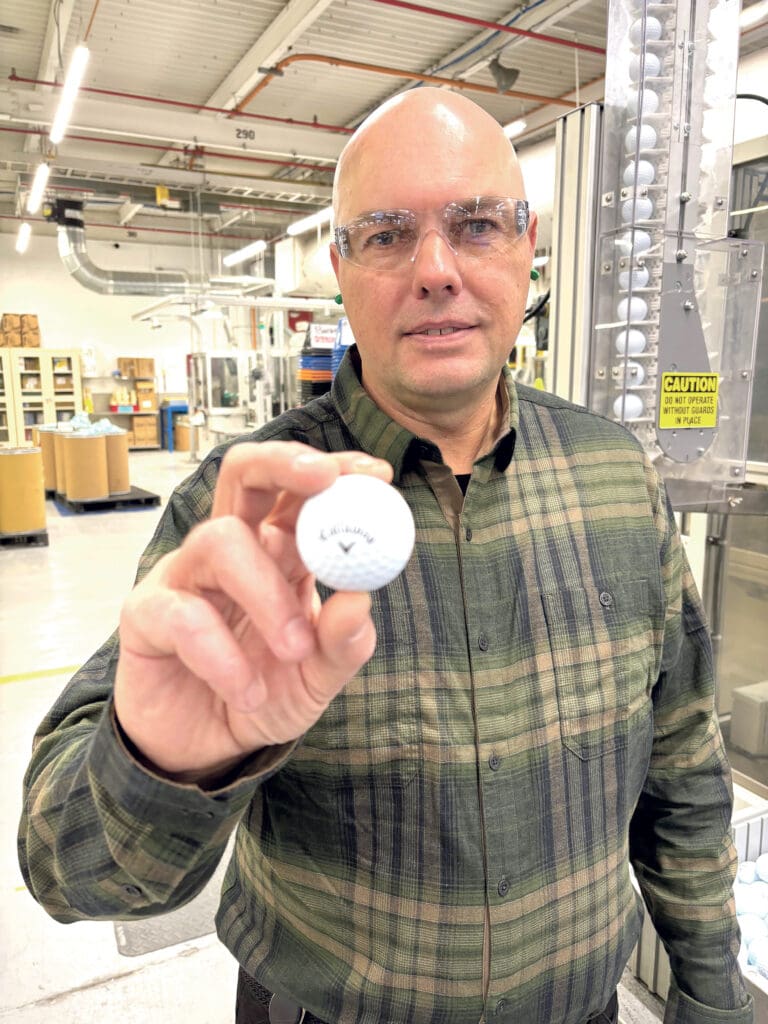
Algis Norkevicius says Callaway is the world’s second-largest golf ball manufacturer, and has its sights set on number one.

Algis Norkevicius says Callaway is the world’s second-largest golf ball manufacturer


Algis Norkevicius says it’s difficult to effectively quantify and qualify the overall impact from all those close-up shots of Callaway golf balls during television broadcasts as the professional golf tournaments wind to their climax on Sunday afternoons.

But he knows it certainly helps when ‘Callaway players’ such Akshay Bhatia storm from behind and win the Arnold Palmer Invitational, as he did earlier this month, or when Xander Schauffle is in contention at the Players Championship — and also at the Arnold Palmer Invitational. Or when Sam Burns is near the top of the leaderboard at the AT&T Pebble Beach Pro-Am.

“It’s great exposure for our products, and it’s fun to watch and follow these players,” said Norkevicius, senior director of Global Golf Ball Manufacturing for Callaway, which has facilities in different corners of the globe, but makes most of its balls in a sprawling facility on Meadow Street in Chicopee that was once home to Spalding.

He said these strong performances from those Callaway players comprise just one of many factors contributing to the company’s rise to number two among golf ball manufacturers, behind Acushnet, maker of Titleist, and on a path to steady growth — in sales, and in the number of balls produced at the Chicopee facility.

Another factor is the continued strong health of the game, which enjoyed a surge during COVID and has, by and large, been able to maintain that momentum since.

“Rounds of play and golf ball sales are directly correlated; statistics show that the average person uses around three golf balls a round,” Norkevicius said. “As rounds of play increase, so do golf ball sales. Last year, the National Golf Foundation released its annual report — golf grew again by 1% over the previous year, which was a record year.”

Then there are new products, such as the company’s recently introduced second generation of the Chrome Tour line, balls that tout greater speed, more consistency, and tighter dispersion, and are expected to be popular with players at all levels.

“We’ve grown our workforce, and we’ve increased our technical staff — all in pursuit of making a better golf ball.”

Norkevicius calls what’s going on at Callaway a “transformation,” one marked by everything from new products and the growing popularity of those products to new efficiencies in the manufacturing processes and, overall, more than $130 million in capital investments inside the facility.

“We took a look at each process and upgraded the equipment,” he said. “It started with our mixing line, and then core molding and injection molding; our printing equipment has been upgraded; and the last thing we’re upgrading is our packaging line, and we’re in the middle of that now.

“We’ve grown our workforce, and we’ve increased our technical staff — all in pursuit of making a better golf ball,” he noted, adding that recent results have shown that these substantial investments are certainly paying off.

Looking forward, he said the company is looking to continually grow its market share — the new Chrome Tour products are certainly expected to help improve those numbers — and eventually become the number-one golf ball maker in the world.

To get there, the company will look to make ever-greater use of technology, including artificial intelligence (AI) to not only produce a better golf gall, but achieve the most important quality in the manufacturing of these products: consistency.

The growing popularity of golf is a boon to manufacturers, as the average player uses about three balls per round.

The growing popularity of golf is a boon to manufacturers, as the average player uses about three balls per round.

For this issue, BusinessWest talked at length with Norkevicius about the golf ball business, the manufacturing of those products, and how Callaway continues on a strong growth trajectory.


Positive Spin

Norkevicius has been involved with golf ball manufacturing for nearly 30 years now. He started at Acushnet, which is both a company and a town in Bristol County where the golf balls are made.

He came to Callaway in 2019 to lead worldwide golf ball manufacturing operations, meaning the facility in Chicopee, but also other plants in Thailand, Taiwan, and Vietnam that produce mostly value and range products. He’ll visit those facilities once a quarter, on average, spending the bulk of his time in Chicopee.

“That knowledge base in how to make a golf ball is one of the key assets we have here.”

Over his time at Callaway, the company’s share of the overall golf ball market has risen from roughly 14% to 22% (Achusnet remains on top, with nearly 50% of the market). He attributes this to products that have captured the attention of players at all levels, such as those within what’s now known as the ‘Chrome family’ — the Chrome Tour, Chrome Tour X, Chrome Tour Triple Diamond, and Chrome Soft — but also other offerings, such as the popular Supersoft, Superfast, and Warbird.

Many of these balls are made in Chicopee, including the Chrome Tour products, as well as the Supersoft and the ERC Soft, he said, adding that the facility will churn out 5 million dozen golf balls a year, or 25,000 dozen a day, with three shifts operating five days a week (there are roughly 450 employees), with overtime on weekends during busy seasons — like this one.

Indeed, the months leading up the start of the golf season in the Sun Belt (March) and then the rest of the country (early- to mid-April) are among the busiest times for the Chicopee facility.

“There’s a seasonality to the business,” Norkevicius explained. “Typically, the summer months are one of the slowest times, and then it will ramp up in September and October in advance of the holidays, and then plateau — and then, around Memorial Day, it starts to get a little lighter.”

Overall, 2025 was another sold year for both the company and the Chicopee plant, he told BusinessWest, adding that the game continues to grow a percentage point or two a year in terms of the number of rounds played; as noted, this translates directly into more balls being used.

“We’ve created what I’d call a quantum data universe; on any given day, we’ll take 150 million data points from our processes, equipment, and our testing, and we load this data into the cloud. And from there, our engineers will use AI to help predict outcomes or potentially get ahead of failures before they occur.”

And this growth pattern is expected to continue in 2026, especially as the company releases the next generation of its Chrome Tour products, first introduced in 2024.

“We changed the ball so significantly that we separated Chrome Tour from Chrome Soft,” he explained. “That marked a leap in technology and performance. And over the past two years, we’ve continually refined the golf ball, working with R&D on some material changes as construction changes to optimize it even more, adding more speed and more distance, and then we were able to decrease our dispersion along the fairway; the ball lands in a tighter spot compared with previous models.”

The Chicopee plant started producing the new Chrome Soft balls last summer, he went on, adding that production has ramped up as the new season draws closer.


Drive to Improve

As he gave BusinessWest a tour of the Chicopee plant, Norkevicius said its best asset is its workforce, which boasts many team members who have been making golf balls for decades — some for a half-century.

“That knowledge base in how to make a golf ball is one of the key assets we have here,” he said, adding that the company has been working to blend this experience with new technology and improved processes to take golf ball manufacturing to the proverbial next level.

This includes the use of AI, which Norkevicius called one of the plant’s more significant advancements over the past several years.

“We’ve created what I’d call a quantum data universe; on any given day, we’ll take 150 million data points from our processes, equipment, and our testing, and we load this data into the cloud,” he explained. “And from there, our engineers will use AI to help predict outcomes or potentially get ahead of failures before they occur.

“They can monitor our processes, and as soon as there’s an indication that a process may be going out of control, they will alert a technician or engineer, and they can address that before we make a bad product,” he went on, adding that, with golf balls, the most important quality — even above distance, which is still important — is consistency.

“With every golf ball you use, you want it to perform the same … and we want to ensure that each ball goes the same distance, has the same dispersion, same flight, same spin,” he said. “And to do that, it’s difficult. Making golf balls is hard, and if we can understand and control all these parameters, we can make it a little easier.”

Elaborating, he said there is much that goes into the making of a golf ball, from its core to its cover; from rubber chemistry to injection molding, and maintaining quality through the many stages of the complex process is as difficult as it is essential.

“It’s not an easy process — it’s very challenging, especially to make things consistent,” Norkevicius told BusinessWest. “We need to have those controls in place, we need to have the knowledge of our processes, and we need to have those tools to help us identify when those processes go out of control — or start to go out of control.”

AI also helps the R&D teams create better products, he added.

“They can create virtual models based on what’s going on here, and then come up with an even better model for the next generation,” he explained. “They can basically do this analysis and future trials, utilizing AI to do that — they can then predict outcomes. Things that would take weeks to do, to test and compile … we can do that in minutes today.”

With this focus on quality and the use of technology to not only make better products but produce them more efficiently and more consistently, Norkevicius believes Callaway is well-positioned to not only continue on its strong growth trajectory, but achieve that ambitious goal of rising to the top among golf ball manufacturers.

“With the investments we’ve made here and the continued improvements to our products and processes, we know we have the foundation in place to increase our market share,” he said, adding that Callaway shares a goal common with golfers of all handicap levels — continuous improvement.

Accounting and Tax Planning Special Coverage

A Gen Z Perspective

By Samantha Calvao

The accounting profession is undergoing a generational and technological transformation. As seasoned professionals retire and new talent steps in, members of Gen Z (those born between the late 1990s and the early 2010s) are beginning to leave their mark.

For this group, career advancement is not defined solely by promotions or years of service. Instead, it’s about building adaptable skills, seeking meaningful work, and maintaining flexibility in a profession that’s shifting faster than ever before.


Starting a Career in a Changing Industry

Gen Z’s first years in accounting look different from those of earlier generations. Many individuals now start early in their careers by gaining experience through internship programs, where they develop a deeper understanding of the accounting industry by actively engaging with seasoned professionals and learning from their real-world experiences.

The days of starting with stacks of paper and hours of manual reconciliations are largely gone. Modern accounting systems, automation tools, and cloud platforms handle much of the repetitive work that once defined entry-level roles. This change means new graduate hires often jump directly into analysis, client communication, and strategic discussions — responsibilities that previously took years to reach.

Because of this early exposure and industry evolution, many young professionals are shaping careers that are more fluid than linear. They are open to moving between public and private practice, trying out specialized areas like forensic investigations or sustainability reporting.

In addition to moving between private and public, young professionals are open to being cross-trained in multiple industries and services. This diverse approach to career development provides opportunities for growth from multiple perspectives, positioning career advancement as a menu of options rather than a rigid path.

Samantha Calvao

Samantha Calvao

“Many Gen Z professionals seek roles where they can make a meaningful impact, whether by contributing to sustainability initiatives, participating in socially responsible projects, or aligning with companies that demonstrate strong ethical standards.”

Workplace culture plays a central role in these decisions. While salary still plays a factor, Gen Z places high value on flexible schedules, hybrid work arrangements, and leaders who prioritize a balance between well-being and workload. The young accountants anticipate regular feedback instead of waiting for annual reviews. They look for mentors who will provide guidance not only on technical work, but also on professional development and career planning.

Learning, Connection, and Purpose

For Gen Z, professional development is an ongoing process. Beyond the mandatory continuing professional education hours, they actively pursue training in areas such as data visualization, financial modeling, and cybersecurity. Many are drawn to learning methods that fit into busy schedules, consisting of short online modules, peer-led workshops, or interactive webinars. They appreciate employers who support a variety of educational formats creating the diverse web of opportunities in a career.

Networking has also evolved for this generation. While in-person industry events remain valuable, digital spaces have expanded their reach. Platforms like LinkedIn, virtual conferences, and even niche online communities allow Gen Z accountants to connect with peers, mentors, and potential employers around the globe. These connections often lead to opportunities that traditional local networking might not uncover.

Firms support young professionals by having business development groups, allowing them to take initiative in creating relationships among themselves and further in the business community. Business development groups not only expand young professionals’ networks, but also help them build essential soft skills such as communication, leadership, and relationship management, all vital for long-term career growth.

Purpose-driven work is another key motivator. Many Gen Z professionals seek roles where they can make a meaningful impact, whether by contributing to sustainability initiatives, participating in socially responsible projects, or aligning with companies that demonstrate strong ethical standards.

In short, firms should encourage young professionals to be actively involved with internal business development groups, niche-driven work, or being deeply rooted in ways to give back to the community.


The Road Ahead

As Gen Z gains experience and advances within the profession, their influence is likely to accelerate ongoing changes in accounting. Their desire for adaptability, meaningful engagement, and skill diversity aligns closely with the industry’s shift toward technology-driven advisory services.

They also understand that technical expertise alone won’t guarantee long-term success. Many are actively seeking opportunities to strengthen soft skills like leadership, collaboration, and clear communication abilities that enhance client relationships and open doors to management roles. By blending strong interpersonal skills with technical knowledge, they are positioning themselves for a wide range of career options, including roles that didn’t exist a decade ago.

In the years ahead, Gen Z will continue to build the profession, pushing for workplaces that balance tradition with innovation and value both the numbers and the people behind them. For these emerging professionals, accounting isn’t just about maintaining the books — it’s about creating a career that reflects their values, skills, and vision for the future.


Samantha Calvao, MBA is a senior associate at the Holyoke-based accounting firm Meyers Brothers Kalicka, P.C.


Architecture Special Coverage

Music to Their Ears

A rendering from Kuhn Riddle Architects & Designers of the planned exterior of Old Town Hall in Easthampton.

A rendering from Kuhn Riddle Architects & Designers of the planned exterior of Old Town Hall in Easthampton.


For Andrew Bagge, the ongoing CitySpace project in Easthampton is a meaningful endeavor in more than one way.

“Two of the greatest assets in Western Mass. are beautiful old buildings and community-minded nonprofits. Pairing the two is really a win-win situation,” said Bagge, senior architect with Kuhn Riddle Architects & Designers in Amherst, which began collaborating on the project in 2016. “Over those 10 years, we’ve been working closely with CitySpace to help them realize their vision for the entire project, including the entry addition and second-floor performance space.”

And recently, the project received a massive boost from the federal government: $3.5 million in congressionally directed spending to support the ongoing restoration of Easthampton’s historic Old Town Hall, a significant boost to the long-term effort to transform the landmark into a fully accessible, multi-level center for arts, culture, and community life.

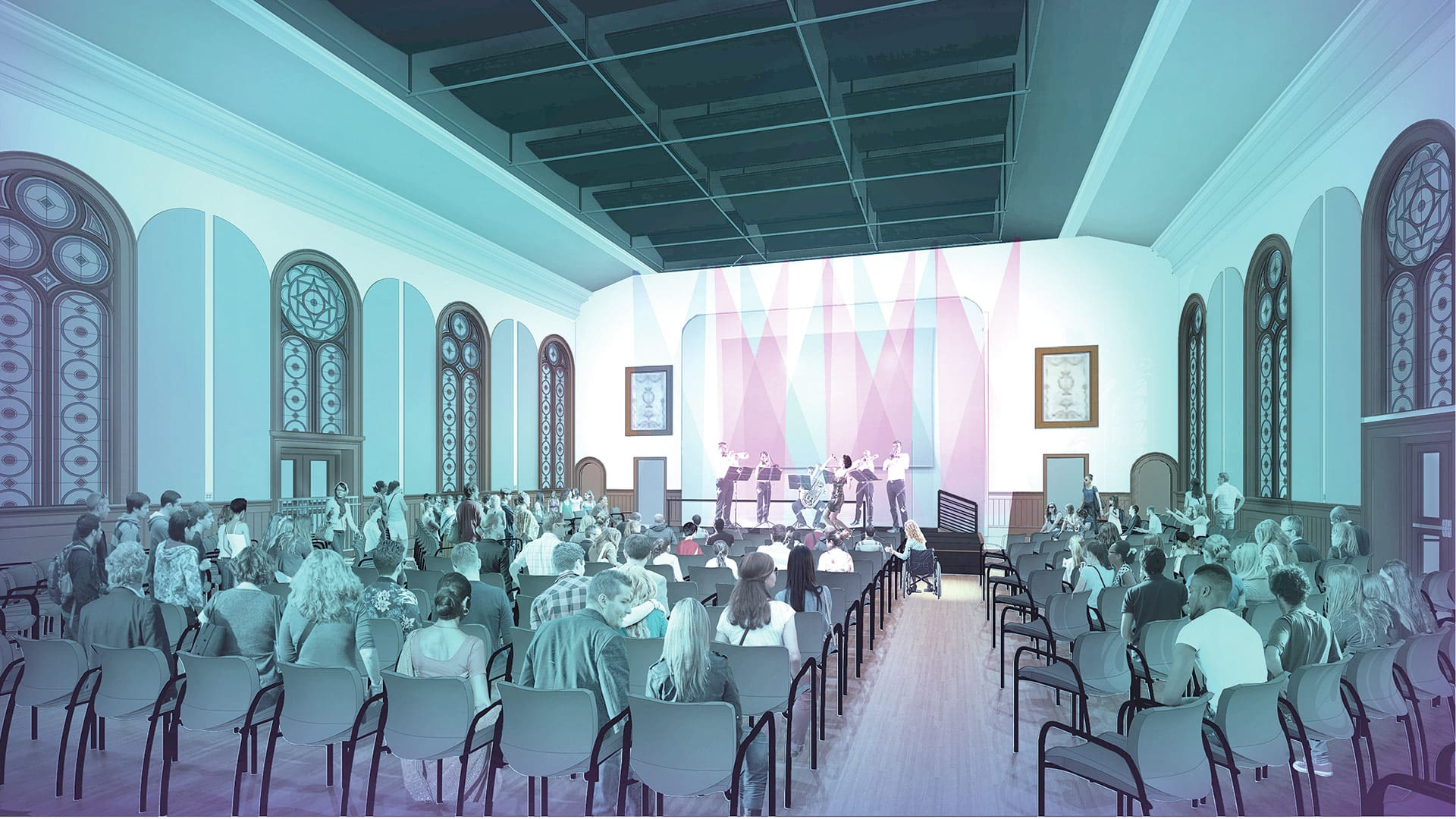
Specifically, the funding will advance the next phase of work to restore the building’s second floor as a 350-seat performing arts venue.

“The restoration and development of Easthampton’s Old Town Hall serves as a shining example of what is possible when a community has a vision,” said U.S. Sen. Edward Markey, whose office — and that of U.S. Sen. Elizabeth Warren — worked with CitySpace and local partners to further advance the project. “CitySpace, local leaders, and the Easthampton community have breathed new life into this historic structure, transforming a stranded municipal asset into an anchor of the local economy and a nexus for community initiatives.”

Easthampton Mayor Salem Derby added that “this $3.5 million federal investment is a powerful vote of confidence in Easthampton’s vision for Old Town Hall and in the extraordinary work of CitySpace to bring that vision to life.”


Two Decades in the Making

For more than a century, Old Town Hall housed municipal offices, and while its second floor served as a public performance and gathering space, it has been unusable for more than two decades.

The nonprofit known as CitySpace began managing the first floor of Old Town Hall as a multi-genre arts and community center in 2006, one that now welcomes more than 15,000 visitors annually. In 2019, the organization secured a 40-year lease from the city of Easthampton to fully manage Old Town Hall and restore the second floor, a project its leaders say has been shaped by regional community input and the needs of the performing arts community.

“Two of the greatest assets in Western Mass. are beautiful old buildings and community-minded nonprofits. Pairing the two is really a win-win situation.”

Since Burns Maxey joined the CitySpace board in 2011 — she became board president in 2015 — she and her all-volunteer team have worked to create a flexible arts and community space in Old Town Hall, which was built in 1869 and housed the town’s municipal offices until 2003. They have helped secure Community Preservation Act funds, multiple foundation grants, and historic tax credits, as well as operating a capital campaign in an effort to raise about $8.5 million for the project.

Phase one of the project involved renovation of the first floor, including the creation of a small, 80-seat rental performance space called the Blue Room. In conjunction with that, Maxey established a program called Pay It Forward to allow low-income artists the resources, space, and support to create or collaborate on a project, or have a residency to complete a project prior to public performance. The first floor also includes a number of art spaces.

Phase two of the project, which has already seen the HVAC system upgraded and modernized, will introduce a new accessible entryway, an elevator serving every floor, and the repair and display of a historic stained-glass window on the building’s street-facing entryway.

Michael Tautznik, the former long-time mayor of Easthampton who now serves as board treasurer for CitySpace, told BusinessWest that “the intention back in 2018 was to try to do this in one shot, but as we saw inflation and as COVID come in, we decided that it just wasn’t feasible. So we’ve broken that project down into three phases.

“We’ve got a great local contractor, Keiter Corporation, that’s doing the work, and we’ve had help from a couple of state grants, the city of Easthampton, and some very generous donors. And we’ve got that project underway; it’ll be finished this summer. And then we’re going to move into the final design and hopefully execution of the final phase, which is to create that venue on the second floor. That’ll be for entertainment, but it will also be a place for public gathering and just a way to celebrate that building’s history.”

The new federal funding will advance that third phase — easily the most expensive part of the project — which centers on the restoration of the second floor, creating a 350-seat performing arts venue in the space that once served as the building’s historic meeting hall, including restoring the ceiling and floors, adding restrooms, installing new electrical and fire safety systems, and investing in state-of-the-art theatrical and lighting equipment.

“The addition is a contemporary steel and glass structure, creating a light and transparent distinction between new and old. The materials, lighting, and finishes complement the existing building and establish an inviting presence on Main Street.”

Tautznik said the project reflects Easthampton’s growing identity as a hub for arts and culture — a priority for many regions, he added, and one he has seen the city embrace through reuse of its copious mill space.

“Easthampton is a community that has become aware of its purpose in the arts. The idea that arts are just for entertainment, I think, is past. We look at the arts as an economic engine. Our mill space is pretty inexpensive, so it attracts tenants that maybe can’t afford to be in downtown Springfield or class A space. So, from the perspective of reutilizing older mill buildings, you become an attraction. And bringing people into the community brings traffic to your downtown, which supports local businesses.”

As for the future performance space upstairs at Old Town Hall, he said it meets a regional need. “It’s a size that isn’t readily available in the region. There are lots of smaller venues, 200 seats and under, and there are some big venues — well, big for this region. But there’s not a lot in the 300- to 500-seat range.

Mike Tautznik

Mike Tautznik

“The idea that arts are just for entertainment, I think, is past. We look at the arts as an economic engine.”

“We think that there’s a real opportunity to try to tap into some of the artists that move through the Northeast,” he added. “It’s also the kind of space that an up-and-coming artist might be able to fill. And that’s important when you have a show, when you’re doing a performance — you want a full house. Bringing a 300-person performance to an 800-seat venue is sometimes disheartening for the artist.”


Realizing the Vision

For Bagge, the project is a chance to positively impact what is arguably the most iconic building in Easthampton.

“The primary goal of the addition is to provide an accessible way for the public to enjoy the entire building, particularly the second floor,” he said, adding that a “nuanced challenge” for Kuhn Riddle was to minimize the project’s impact on the building’s historic form while also showcasing CitySpace as a vibrant hub for the arts — in other words, respecting both old and new.

“The addition is a contemporary steel and glass structure, creating a light and transparent distinction between new and old,” he noted. “The materials, lighting, and finishes complement the existing building and establish an inviting presence on Main Street.”

Another hurdle was achieving all of this within the limited space adjacent to the building, which remains a challenge during construction.

“We’re asking a lot of a small elevator addition, but collaborating with a forward-thinking client has made it all possible. We’re applying the same strategies moving forward with the second floor performance space design, which will be the main event.”

Bagge said Kuhn Riddle has worked on countless adaptive reuse projects to help organizations like CitySpace find their home in an existing building.

“When we lose historic buildings, we collectively lose a piece of our cultural heritage, which plays a vital role in the unique character of the Valley,” he told BusinessWest. “I’m hopeful that our building codes will adapt to recognize the carbon impact of removing and replacing an existing building. The embodied energy in these buildings should be treated as an asset. It has been incredibly gratifying working on the Old Town Hall and collaborating with a client who understands the value in historic buildings.”

As for Tautznik, who has been both working and volunteering in Easthampton for more than 50 years, “I see this personally as an investment in my community, as a way to provide an anchor for that part of downtown,” Tautznik said. “The building is a place I remember as a child. Then when I first served as a selectman, it was in that building. And when I first became mayor, it was in that building.

“The fabric of the community is really what its citizens make it,” he added. “I hope to be a thread in the weaving of that fabric. And I think CitySpace is a big panel in that fabric. And the benefits are going to far outweigh the costs, which are the immediate challenge. It’s going to be exciting.”

Special Coverage Where Are They Now?

Where Are They Now?


Samalid Hogan

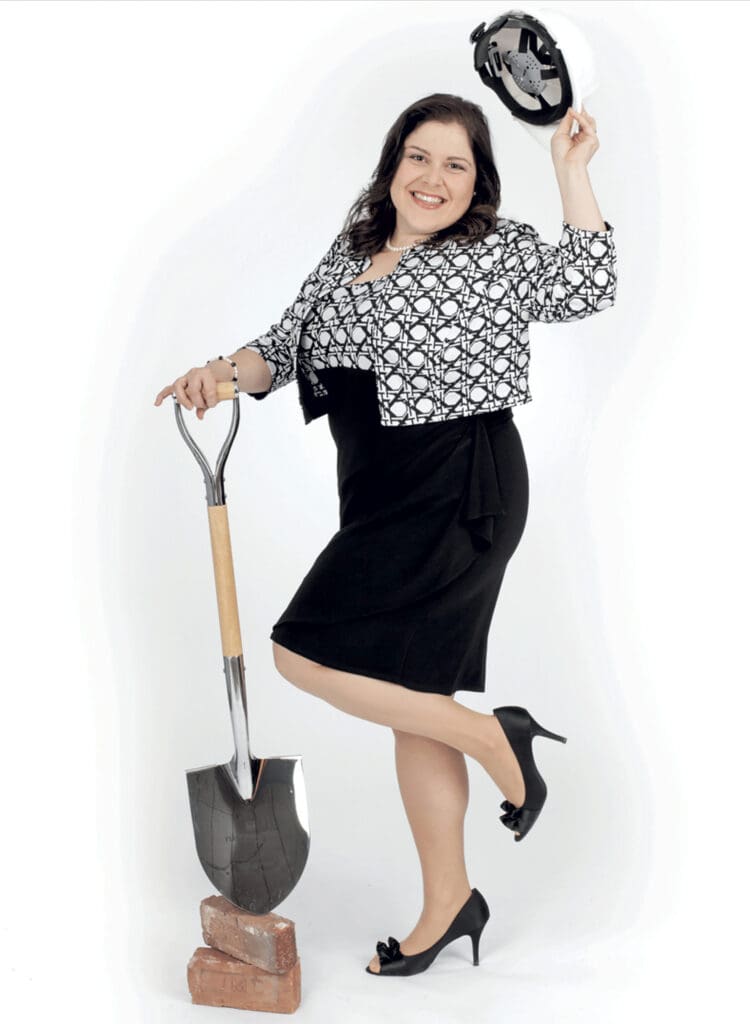
Samalid Hogan as a 40 Under Forty honoree in 2013 (below), and today.

Samalid Hogan in 2013

Samalid Hogan in 2013


Samalid Hogan likes to say she practices what she preaches.

By that, she means she applies what she tells her small business consulting clients — as well as those she assists as director of Business Support Services for the Boston Impact Initiative — to her own entrepreneurial ventures, including her latest one, Greylock Management Consulting, for which she has some ambitious expansion plans we’ll get to in a bit.

“I tell people the most important things are to know what your business is really good at, and keep an eye on the market, the industry, so that you know where things are going in the future, so you can be prepared to pivot and change your business model,” she said, adding that she does just that with Greylock, a growing venture that provides a wide portfolio of services that will soon get wider.

Hogan also likes to say she speaks the language of small business owners — because she’s been there (and is there), so she can relate to what they’re going through. She can speak from experience about what has gone right and, just as importantly, the mistakes she’s made and seen others make.

Hogan’s résumé is complete with a number of stops involving work with small businesses, many other aspects of economic development, and work on both a community- and region-wide basis. And while assisting entrepreneurs at many of these stops, she has always been entrepreneurial herself.

Indeed, her first professional stop was chief of staff for state Rep. Cheryl Coakley-Rivera in 2003. Later, she served as an economic development and policy analyst for the Pioneer Valley Planning Commission.

She was working as senior project manager and brownfields coordinator for the city of Springfield when she was selected as a member of BusinessWest’s 40 Under Forty class of 2013, and she was serving as regional director of the Massachusetts Small Business Development Center when she won the coveted Alumni Achievement Award — given each year to a 40 Under Forty alum who has most notably built on their success — in 2017.

Along the way, there have been entrepreneurial ventures of her own, such as CoWork Springfield and different consulting ventures, culminating with Greylock, which she launched in 2021.

There have been several other awards along the way as well, everything from the Women Trailblazers and Trendsetters Award from the Latino Chamber of Commerce to the Harold Grinspoon Foundation’s Entrepreneurial Spirit Award; from the Gateway Cities Innovation Award to her latest honor, the ALX 100 Award for Latino Leaders in Massachusetts.

“I don’t like telling people what to do. I want to help them discover their path, but also learn from others’ mistakes, so they don’t make those same mistakes, which can be costly.”

The various words in those award titles — ‘leader,’ ‘innovation,’ ‘trailblazer,’ and others — speak to how Hogan has dedicated her career to not only inspiring entrepreneurship and assisting small businesses, but also being involved in the community on many different levels.

And while the honors are nice, she says a greater reward has been her involvement, at various levels, with some intriguing entrepreneurial success stories — in this region and beyond. These include Las Kangris Restaurant & Bar in Springfield, for which she helped secure a $50,000 BizMPower grant from MassDevelopment; GJC Signs & Digital Signs; and Rozki Rides, a transportation service in Springfield.

For this latest installment of its Where Are They Now? series, BusinessWest checks in with Hogan, who is always getting down to business — and helping others do the same.


Reaching Higher

As for Greylock Consulting, that name was chosen as a nod to the state’s highest mountain and how she can help her clients achieve similar altitude, if you will, with their ventures.

“We want to take small business to new heights,” she said, adding that, as a consultant, and in her work with the Boston Impact Initiative, she acts as a guide of sorts, but one that lets the business owner choose the path. She acts to help keep that path clear of crippling setbacks.

“I don’t like telling people what to do. I want to help them discover their path, but also learn from others’ mistakes, so they don’t make those same mistakes, which can be costly,” she told BusinessWest. “It’s a great advantage, and I think I speak with a lot of credibility with the entrepreneurs. They’ll say, ‘she knows, she understands, she knows this is a 24/7 thing.’ As a business owner, you’re never off the clock. You might go on vacation, but you’re still thinking about it.

“I understand the frustration and the hard work it takes to run a successful business and the ups and downs that come along the way,” she went on. “Whether you’re dealing with people or cash flow issues, or your industry is changing, such as with AI, there’s always juggling.”

Helping business owners keep the many balls they’re juggling in the air has become a career for Hogan. In her current capacity with the Boston Impact Initiative, she provides strategic advisory and technical assistance to early-stage and growth-stage businesses, helping entrepreneurs strengthen business models, financial stability, and community impact.

In that role, she’s been involved in several key initiatives, including the securing of $532,000 in state Small Business Technical Assistance funding to launch and operate Accelerate Your Impact, the agency’s pre-investment business coaching program, as well as co-designing the GreenEdge Accelerator, a statewide program supporting 23 women and minority-owned businesses in the clean energy and climate sectors.

At Greylock Consulting, she is part of a small team that provides an array of services, including business development, operations development, financial models and business plans, applications for funding, technical assistance, marketing, and more.

That team, and that list of services, are both set to grow, Hogan said, adding that she is responding to recognized need in the marketplace with expansion plans.

“We’re going to be offering business support services in addition to the coaching that we do; this will include bookkeeping, human resources, payroll, marketing, and website development, as well as AI tools,” she said, noting that these additions will be launched in April.

“I understand the frustration and the hard work it takes to run a successful business and the ups and downs that come along the way.”

She’s been contemplating this expansion effort for some time now, noting that it was inspired in part by a study on barriers confronting minority contractors in Western Mass. as they bid for contracts. It revealed that, while these contractors were good at their various trades, they needed help with various aspects of running their businesses, such as back office help.

So Greylock is responding to this need in an aggressive but measured way, another example of practicing what she preaches to her small business consulting clients.

“I said, ‘we need something here in Western Mass. that can provide all those services under one umbrella,” she said, sounding like a true small business owner when she added, “I’m excited about all this, and I think it’s going to be great, but I’m also a little nervous. It’s a lot of moving pieces, and I’m bringing on three additional people.”


Stepping Out

As she moves forward with plans to expand her business, Hogan is also getting more involved in the community, another aspect of being in business that has always been very important to her.

Indeed, she is currently a trustee at Springfield Technical Community College, a board member at Tech Foundry and the Springfield Regional Chamber of Commerce, a member of the Governor’s Latino Advisory Committee, and vice president of the Rotary Club of Springfield.

“Slowly, I’ve been able to support more community more,” she said, citing, as just one example, becoming a sponsor of the Service Above Self luncheon put on by the Rotary Club and the Basketball Hall of Fame. “To me, it’s very rewarding to be able to make those investments in our community.”

All this sounds fitting for someone who has not only a 40 Under Forty plaque on her desk, but an Alumni Achievement award as well — and continues to build on all of it.