Daily News

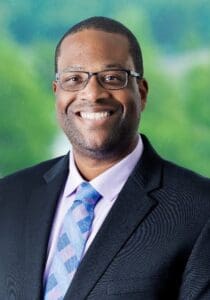
John Williams

MONSON — Monson Savings Bank announced the promotion of John Williams to branch manager of the Wilbraham branch.

Williams, who previously served as assistant branch manager at the bank’s East Longmeadow location, brings more than 11 years of banking and financial services experience, strong leadership abilities, and a deep commitment to exceptional customer service.

In his new role, he will oversee the day‑to‑day operations of the Wilbraham branch, guide and develop branch staff, and advance branch growth through new deposit account relationships. He will also continue strengthening local community connections through volunteer efforts and outreach initiatives.

“We are excited to congratulate John on his well‑deserved promotion to branch manager,” said Dan Moriarty, president and CEO of Monson Savings Bank. “John leads with integrity, compassion, and a true customer‑first mindset. His dedication to both his team and the community makes him an outstanding fit for our Wilbraham branch.”

Before joining Monson Savings Bank, Williams worked at Fifth Third Bank in Sarasota, Fla., where he served as a personal banker assisting customers with new accounts, lending, maintenance, and retirement planning. His career also includes experience with additional financial institutions, contributing to his strong operational foundation and relationship‑building skills. He is active in the community as a member of the Western Mass Referral Exchange (BNI Group) and regularly volunteers to support local initiatives.

“I am thrilled to join the Wilbraham branch of Monson Savings Bank,” Williams said. “My time at the East Longmeadow branch has allowed me to grow professionally and personally. I look forward to taking what I have learned to lead the Wilbraham branch and serve the community.”

Daily News

CHICOPEE — The Greater Chicopee Chamber of Commerce will host the Chicopee Business Expo on Tuesday, April 7 from 4 to 7 p.m., bringing together local businesses and community members for an evening of networking, discovery, and connection.

The event provides an opportunity for attendees to explore a wide range of local products and services, meet business owners, and strengthen relationships within Chicopee’s business community. The expo also marks the return of a regional tabletop-style showcase that recurred annually until 2019.

“This event is all about visibility and connection,” said Melissa Breor, the chamber’s executive director. “It creates a space where businesses can showcase what they do, build new relationships, and engage directly with the community.”

The chamber invites residents, professionals, and fellow businesses to attend and connect with more than 50 local businesses. Guests will be encouraged to play a bingo-style game to enter the door prize raffle. For more information or to register, click here or call the Chicopee Chamber of Commerce at (413) 594-2101.

Daily News

AMHERST — Economist and author Jared Bernstein, who chaired the White House Council of Economic Advisers under President Biden, will deliver the annual Philip Gamble Memorial Lecture at UMass Amherst on Thursday, April 16 from 4 to 5:30 p.m. in Bowker Auditorium. The event is free and open to the public, with seating available on a first-come, first-served basis.

In his lecture, “The Political Economy of Affordability,” Bernstein will explore affordability not simply as a problem of prices, but as a political-economic phenomenon shaped by institutions, regulation, market structure, and distributional conflict.

Bernstein is currently a senior fellow for economic policy at the Center for American Progress and a distinguished policy fellow at the Stanford Institute for Economic Policy Research. He led the Biden administration’s Council of Economic Advisers from 2023 to 2025. During the Obama administration, he served as Vice President Biden’s chief economist and economic adviser, executive director of the White House Task Force on the Middle Class, and a member of President Obama’s economic team.

Bernstein was deputy chief economist in the U.S. Labor Department from 1995 to 1996. He has also worked at the Center on Budget and Policy Priorities and the Economic Policy Institute, and taught at Howard University, Columbia University, and New York University. He has authored or co-authored numerous books, including All Together Now: Common Sense for a Fair Economy and The Reconnection Agenda: Reuniting Growth and Prosperity.

Daily News

EAST LONGMEADOW — UMass Amherst alumni and TRE Olive owners Joe and Michael Maruca announced the new release of a custom UMass 500-mL bottle of extra virgin olive oil.

The UMass bottle features the award-winning TRE Olive Select, a well-balanced extra virgin olive oil that is slightly sharp and has a peppery finish. It’s made with 100% Carolea olives that are selected when the olives are perfect for making olive oil.

The Maruca brothers are UMass Amherst alumni, graduates of the Isenberg School of Management, and members of the family behind TRE Olive, a business with deep roots in the Calabria region of Southern Italy. For generations, their family has been producing high-quality extra virgin olive oil, and in 2010, the TRE Olive brand was launched in the U.S.

“When we were approached by UMass to create a custom bottle, it was a no-brainer for us,” Joe Maruca said. “Our passion for olive oil began on our grandparents’ farm when we were children, and our entrepreneurial spirit was cultivated at UMass Amherst.”

TRE Olive’s UMass bottle is available for purchase at the UMass campus store, the TRE Olive store in East Longmeadow, and online at www.treolive.com.

Daily News

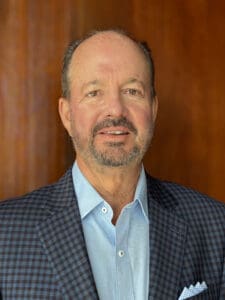
Jim Sullivan

HOLYOKE — The O’Connell Companies announced that President Jim Sullivan will retire from his role effective June 1, concluding a distinguished 44-year career with the organization. Chief Financial Officer Joe McMahon has been appointed president and will continue to serve as CFO.

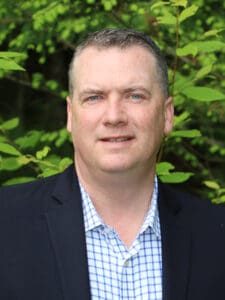
Joe McMahon

Sullivan joined the O’Connell Companies in 1982 and has played a central role in the organization’s growth and evolution. He was named president in 2019 and has overseen the strategic direction and operations of the company and its subsidiaries, including its construction, real estate development, and property management divisions.

Over the course of his tenure, Sullivan held several key leadership roles, including president of O’Connell Development Group and general manager of NEFCO. His leadership spanned significant milestones in the company’s history, including large-scale project execution, ownership transition, and long-term strategic planning.

“Jim’s contributions to the O’Connell Companies are substantial,” the board said in a statement. “His leadership has guided the organization through periods of growth, challenge, and transition, while reinforcing a culture grounded in integrity, trust, and accountability.”

Sullivan will remain actively involved with the company as chair of the board of directors, supporting long-term strategy and ensuring continuity in leadership and governance.

“Joe will become our eighth parent company president in our 147-year history, following in the footsteps laid by our founder Daniel O’Connell, his sons Daniel and Charles, his grandson Daniel, then Bob Mahar, Dennis Fitzpatrick, and me,” Sullivan said. “We are fortunate to have someone with the talent, knowledge, vision, experience, and values that Joe has, leading our company. Joe will continue in his role as CFO while also now becoming our president. I have full confidence that, under Joe’s leadership, our best days lie ahead.”

A native of Holyoke, McMahon has more than 25 years of experience in a broad range of industries in the Boston and Western Mass. markets. As CFO, he leads the company’s financial strategy and governance, with experience in acquisitions, mergers, and organizational restructuring.

“I’m honored to step into this role and build on what this team has accomplished,” McMahon said. “We’ve created a strong foundation, a great culture, and a group of people who care deeply about their work. My focus is on supporting our team and positioning the company for its next chapter of growth.”

A certified public accountant and graduate of Bentley University, McMahon has worked with privately held, venture-backed, and family-owned businesses. His appointment reflects a planned leadership transition and the company’s focus on continuity and future growth.

Daily News

Rachael Cavanaugh

CHICOPEE — Rush Insurance Group announced the addition of Rachael Cavanaugh to its team as an employee benefits associate. In this role, she will support the agency’s growing employee benefits practice, working alongside clients to deliver thoughtful, attentive service in the life and health insurance space.

Cavanaugh brings a strong foundation in the insurance industry, having launched her career at Safety Insurance following her graduation from the Isenberg School of Management at UMass Amherst, where she earned a bachelor of business administration degree in operations & information management with a certificate in business data analytics. During her time at Safety Insurance, she gained hands-on experience across personal and commercial underwriting, the service center, and customer representative operations, most recently serving as a personal lines analyst.

“We are thrilled to welcome Rachael to the Rush Insurance Group family,” President Sam Hanmer said. “Her background in property and casualty insurance, combined with her analytical skills and dedication to client service, make her a tremendous asset as she transitions into the employee benefits space. We look forward to supporting her growth and know she will make a meaningful impact for our clients.”

Cavanaugh is currently pursuing her life and health insurance licensure and is committed to building the expertise needed to serve as a trusted resource for Rush’s clients.

Daily News

HOLYOKE — Holyoke Community College (HCC) will host an open house and free community tasting event on Wednesday, April 15 from 4 to 6 p.m. at the HCC MGM Culinary Arts Institute, 164 Race St., Holyoke.

Visitors will be able to tour the state-of-the-art kitchens at the college’s culinary arts facility; sample dishes prepared by culinary arts students and faculty; learn about the college’s culinary arts certificate and associate degree programs, non-credit job training, and personal enrichment classes; and play Food Bash Bingo for a chance to win prizes.

“This event highlights the work happening across all of our kitchens, giving the community a chance to experience the talent and training our students are developing here at HCC, while also showcasing other HCC programs and our community partners,” HCC Culinary Arts Instructor and Facilities Coordinator Alex Torres said.

Visitors will have the opportunity to talk to representatives from HCC programs, including the Marieb Adult Learner Success Center, the HCC Foundation, Alumni Relations, Thrive Center and Food Pantry, El Centro, ALANA Men in Motion, and Jumpstart, as well as personnel from area community groups, including Tech Foundry/Tech Hub, United Way, and Holyoke Medical Center. Staff from the HCC Admissions office will also be on hand to discuss enrollment options, including MassEducate and MassReconnect, the state programs for free community college.

In 2021, HCC placed 50th among the Best Culinary Schools in America, a list that also includes such esteemed schools as the Culinary Institute of America. HCC’s culinary program ranked third in New England after Johnson & Wales in Providence, R.I. and Southern Maine Community College in Portland. Best Choice Schools cited HCC for the quality of its one-year certificate and two-year associate degree programs in culinary arts, as well as its 20,000-square-foot culinary arts facility, which opened in downtown Holyoke in 2018. The HCC MGM Culinary Arts Institute is equipped with four modern kitchens, a bakery, a hotel lab, and a student-run dining room.

Daily News

BOSTON — A delegation of the Western Mass Arts Advocacy Coalition (WMAAC) presented its seminal report, “Regional Perspectives from the 2025 Western Massachusetts Arts Economic Impact Summit” to legislators on March 3 during MASSCreative’s third annual Creative Sector Advocacy Day at the Massachusetts State House.

The report is a comprehensive presentation of the key issues identified and regional priorities and potential solutions raised at the Western Mass Arts Economic Impact Summit held last November at MASS MoCA in North Adams.

Roughly 10 legislators and state leaders received a copy of the report, including Aaron Vega, president and CEO of the Western Massachusetts Economic Development Council; state Sen. Jo Comerford; state Rep. Lindsay Sabadosa; and state Rep. Sean Garballey, who co-chairs the Joint Committee on Tourism, Arts, and Cultural Development.

All thanked the coalition’s founders for the information, and Comerford said, “thank you for educating me on this important work and for your visionary leadership.” She plans to meet with the coalition on April 14, as the next steps are to frame solutions to issues raised.

The November summit was hosted by state Sen. Paul Mark, chair of the Joint Committee on Tourism, Arts, and Cultural Development.

The summit emerged from a growing recognition that the Western Mass. creative economy, while deeply rooted, resilient, and innovative, is facing systemic pressures that require coordinated, cross-sector responses, according to Mark.

After meeting with a dozen arts organization leaders in Haydenville last June, Mark initiated the convening of the regional summit to bring together arts leaders, policymakers, funders, business partners, and civic institutions and move beyond isolated conversations and toward shared understanding and collaborative problem solving.

A subcommittee of the WMAAC developed the topics for discussion and program of events for the five-hour summit. In attendance were 110 individuals from across the state, discussing four key challenges facing arts organizations and artists in Western Mass.: creating affordable housing for artists; implementing alternative energy sources to strengthen arts organizations’ financial stability; finding creative financial approaches to ease funding gaps while waiting for reimbursement grants; and sourcing, training, and retaining arts workers.

Eighty private and public organizations were represented at the summit, including arts organizations, economic development, financial and educational institutions, employment, energy and housing organizations, as well as legislators and state leaders. Lt. Gov. Kim Driscoll gave the opening remarks, and Senate President Karen Spilka offered closing remarks.

WMAAC was formed in May 2025, when artists and arts organizations came together with a goal to increase the visibility and impact of the Western Mass. creative sector on the state level and lead to a stronger, more resilient creative economy. The coalition is comprised of 50 organizations and artists in Hampshire, Hampden, and Franklin counties and is organized around three pillars: advocacy and policy, creative economy and workforce, and resources and infrastructure. Within each pillar, member-led committees drive the work.

The first major project of the WMAAC was the summit and, subsequently, the development of the report, which has received recognition among state legislators and economic development organizations as an important documentation of the needs and potential solutions to sustain and strengthen arts organizations in Western Mass.

Several legislators, including Sabadosa, Garballey, Mark, and Comerford, pledged their continued support of the work, with plans underway to collaborate with the WMAAC on finding concrete, cross-sector solutions.

Daily News

HOLYOKE — Holyoke Community College (HCC) will host its second annual American Sign Language pickleball tournament on Saturday, April 4.

Sponsored by the HCC Deaf Studies Department, the tournament will run from 9 a.m. to 12:30 p.m. on the pickleball courts inside the Bartley Center for Athletics and Recreation.

This fun and friendly tournament is free for participants and geared for players of any skill level. Spectators are welcome. Paddles and balls will be supplied for players who need them.

The tournament begins at 9 a.m. with introductions and instructions in pickleball rules and strategy given in American Sign Language. Pickleball practice will start at 9:30 a.m., with the tournament running from 10 to 11:30 a.m., followed by an awards presentation and social time.

HCC ASL instructors Minh Vo and Mick Posner, who teach in the HCC Deaf Studies Department, will lead the pickleball instruction.

“The tournament is open to HCC as well as members of the local deaf community regardless of their pickleball skills and knowledge of ASL,” said Claire Sanders, chair of the Deaf Studies Department.

After practice time, players will be randomly assigned doubles partners, and the tournament will proceed using a round robin format. Certificates will be awarded to the top five players. To register, visit hcc.edu/asl-pickleball.

Daily News

SPRINGFIELD — Springfield Technical Community College (STCC) announced the return of College for Kids, a summer program offering engaging, week-long academic experiences for students ages 11 to 16.

Running June 22 to Aug. 14, College for Kids provides hands-on enrichment opportunities in science, technology, engineering, arts, business, and leadership, all within a supportive college campus environment. Programs run Monday to Friday, 9 a.m. to 3 p.m.

Organized by STCC’s Division of Workforce Development, the program introduces students to college-level subjects while encouraging creativity, critical thinking, and skill development.

“We’re thrilled to welcome students back to campus for a summer of exploration and growth,” said Gladys Franco, assistant vice president of Workforce Development at STCC. “College for Kids gives young learners the opportunity to discover new interests, build confidence, and experience what learning on a college campus feels like.”

Visit the College for Kids page on at stcc.io/cfk to view the full schedule and course descriptions, and complete the registration. Tuition costs $260 per week.

Daily News

ENFIELD, Conn. — Northeast apple growers are invited to attend a free webinar hosted by Farm Credit East and Horizon Farm Credit on Thursday, April 16 at noon. This webinar will provide a recap of the Northeast apple industry in 2025, as well as economic projections for the year ahead.

The webinar is free to attend, but registration is required at farmcrediteast.com/webinars.

For the past two years, many U.S. apple growers’ fresh apple prices haven’t covered the cost of production. Increased yields and declining exports have resulted in an oversupplied domestic market, forcing prices to break-even levels. Chris Gerlach of USApple will dive into what it will take to restore profitability through smarter production discipline, rebuilt export momentum, stronger health-driven demand, and more stable labor costs.

This webinar is part of Farm Credit East’s Insights and Perspectives series, which includes webinars and outlook papers for the diverse sectors of Northeast agriculture and forest products. Visit farmcrediteast.com/webinars to read the apple industry outlook report, along with articles and webinars for the grape, dairy, grain, maple, oyster, forestry and green industry sectors.

Features

Staying on Course

Runners get set at the starting line at the 2025 event.

Runners get set at the starting line at the 2025 event.
Photo by Keith Toffling Photography


Brandy Sullivan says the 15th iteration of the UMass 5K Dash & Dine is reason for celebration — but so were the other 14, because of the impact they’ve had.

Specifically, over the years, UMass Amherst has raised more than $50,000 for the Amherst Survival Center thanks to donors, runners, and walkers. UMass Dining, which puts on the annual event, donates 100% of all proceeds to the center.

“UMass Dining started this event 15 years ago in an effort to address food insecurity in our region,” said Sullivan, meal plan manager for UMass Dining, quickly tying the effort to one of the university’s values. “We work toward limiting food waste through sustainable practices here at UMass, and we’ve been proud to partner with the Amherst Survival Center as an extension of our work on campus. We work with Dean’s Office as well to promote food security here.”

The event — this year’s race is slated for Saturday, April 25 — features not just a competitive 5K beginning at 11 a.m., but Fun Run for kids age 8 and younger beginning at 10 a.m.

“It’s a great event. We have between 1,500 and 2,000 runners. When I started chairing this event, there were maybe 300. So it’s really grown,” Sullivan told BusinessWest.

“The students love it,” she added. “It’s a great outreach for them to give back to. For some of our students, this is the first 5K they’ve ever run, and it is a USA Track & Field certified 5K. We use Yankee Timing, which is also a USA Track & Field certified timing company. So you actually get a bib, and you get your real time, and people take it seriously.”

That said, “it’s a pretty easy race. I’m a runner, so I guess I can say that, but it definitely is a nice, safe race,” she noted. “It’s all on campus — we work with the UMass PD and the Amherst PD, who both support keeping the road safe for that little bit of time that we need.”

It’s also personally gratifying, she said, to see it all come together — and to see the impact the event has on the community through the work of the Amherst Survival Center.

Brandy Sullivan

Brandy Sullivan

“It’s a great event. We have between 1,500 and 2,000 runners. When I started chairing this event, there were maybe 300. So it’s really grown.”

And that work is plentiful. Since 1976, the center has promoted the health and well-being of residents of Franklin and Hampshire counties with a wide variety of programs designed to help people meet their basic needs.

The Amherst Survival Center, located at 138 Sunderland Road, serves more than 10,000 people each year. Its services, all of which are free, include a food pantry, daily community meals, fresh food distribution, services such as showers and lockers for those experiencing homelessness, information and referrals, as well as a variety of other support services.

Additionally, the center’s resource center hosts representatives from other area service organizations, making it a one-stop-shop for accessing resources. All of this is provided in a community center environment, with activities ranging from live music to sewing workshops to office hours with elected officials. All are welcome, and there are no eligibility or requirements to stop by.


Food for Thought

But ‘Dash’ is just one part of the equation. The ‘Dine’ is something most participants look forward to as well, as they’re invited to one of the university’s award-winning dining commons for a meal following the race.

And ‘award-winning’ is an understatement. UMass Amherst has been named Best Campus Food in the U.S. by the Princeton Review nine straight years — and counting. That achievement, according to the publication, underscores the department’s commitment to culinary excellence, sustainability, and experiential dining that features globally inspired, culturally driven menus.

UMass students encourage runners along the 5K route.

UMass students encourage runners along the 5K route.
Photo by Keith Toffling Photography

The Princeton Review’s most recent rankings were based on surveys of 170,000 students at 391 colleges and universities across the nation. UMass Dining is not only the largest collegiate dining program in the U.S., but its top ranking for almost a decade reflects an innovative approach to campus dining and a commitment to locally sourced cuisine from the campus’s five permaculture gardens and more than 100 local farmers and vendors.

“So you run the race and then you get to eat at one of our campus dining locations,” Sullivan said. “That’s a great perk. I run a lot of races, and that’s not usually the case — you don’t get that really great meal afterwards. So it’s a way for us to share our number-one campus dining.”

But more importantly, she said, it’s a chance to share the importance of the Amherst Survival Center, and nonprofits like it.

“Food security is important, and it’s close to home. We have a food pantry on campus that partners with Amherst Survival Center as well; it’s a clothing closet as well,” Sullivan explained. “That has been a great partnership, I think, because their core values mirror what the UMass community wants to share with our students and instill in our students through UMass dining — just having nutritional options.

“But it’s also great fun. This is an energizing position to have when we all work together. After all the work that goes on behind the scenes, having it all come together — and hopefully not be raining sideways or snowing — is very exciting,” she went on. “We’re always trying to make it a better event, but I love the excitement this brings to the UMass community; it has been kind of a passion for me.”

Sullivan said the UMass 5K Dash & Dine grows every year — weather permitting.

“We’re always trying to make it a better event, but I love the excitement this brings to the UMass community; it has been kind of a passion for me.”

“Inclement weather is always kind of scary,” she said, recognizing that some people register on race day — and might be reluctant if the weather is poor. But the year-over-year growth has been consistent. “It’s pretty competitive. We have local track teams, high school students, and we promote it with them; we’re able to share what we’re doing here on campus, as well as what’s happening at the Amherst Survival Center.”


The Details

As noted earlier, the 15th annual UMass 5K Dash & Dine takes place on Saturday, April 25 at 11 a.m., with the Fun Run starting an hour earlier. Registration is available online at runumass.com or at any of the dining commons and retail locations on the UMass campus. The cost is $15 for students of UMass Amherst or any of the Five Colleges, $25 for UMass faculty and staff, and $30 for the general public. Online registration ends at midnight on April 23, but walk-up registration is available on race day.

Community Spotlight

Community Spotlight

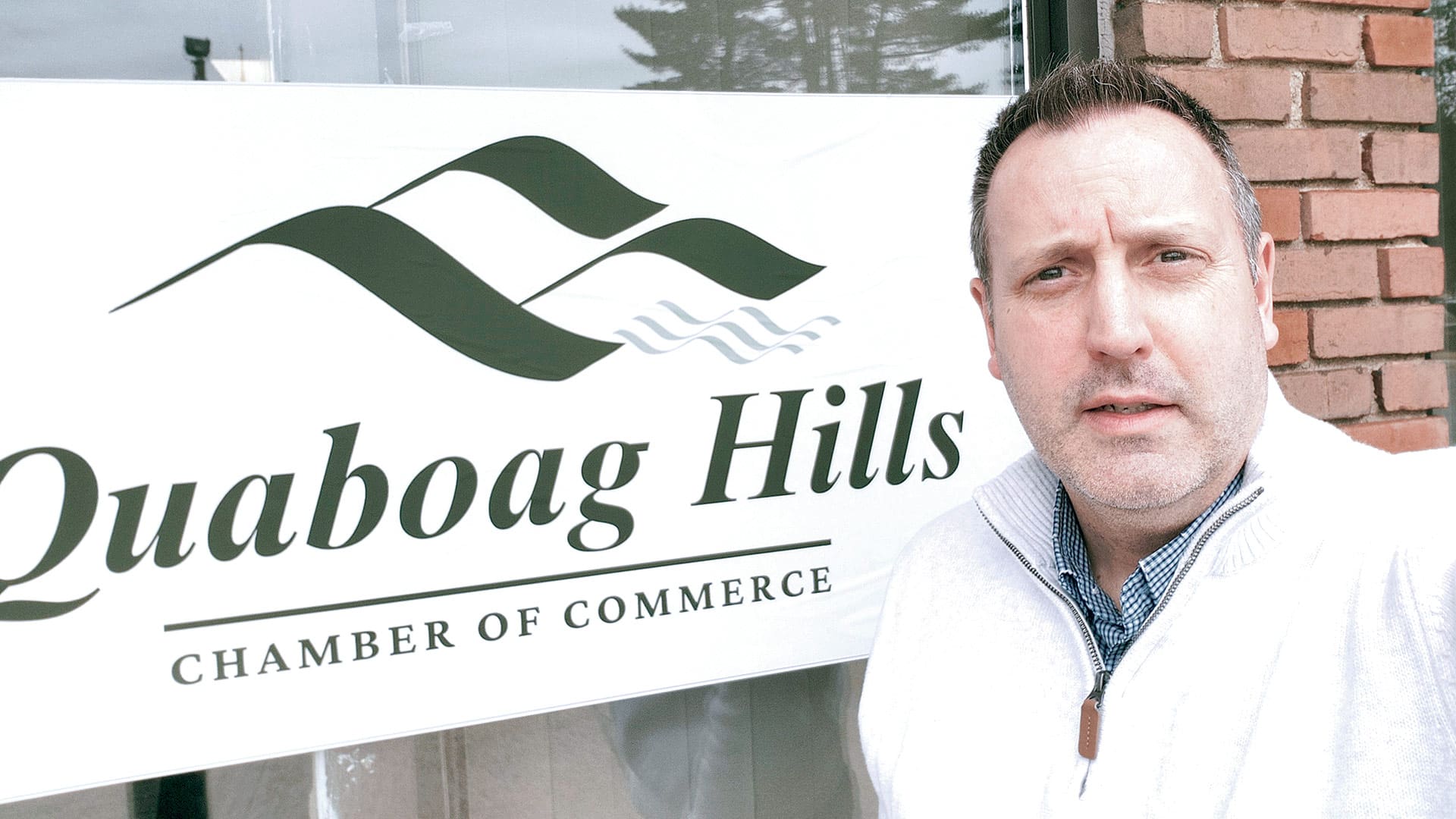
James Przypek says the chamber is excited that the east-west rail project in Palmer is gaining momentum.

James Przypek says the chamber is excited that the east-west rail project in Palmer is gaining momentum.

It’s called the TWIST program, an acronym that stands for Technical Work Instruction and Skills Training, and leaders at Sanderson MacLeod Inc. are excited to see it continue to grow.

The program blends hands-on engineering, mentorship, and real-world experience, giving local high school students the opportunity to learn directly from experienced industry professionals in an authentic manufacturing environment while developing practical skills needed for careers in advanced manufacturing.

Essentially, TWIST helps both Sanderson MacLeod — a 68-year-old manufacturer of twisted wire brushes — and young people, by helping preserve valuable manufacturing expertise while developing the next generation of local talent.

During the 2025-26 academic year, TWIST supported a co-op partnership at Sanderson MacLeod’s 137,000-square-foot manufacturing facility. Three students from Pathfinder Regional Vocational Technical High School worked through the summer, fall, winter, and spring sessions alongside Sanderson MacLeod’s team, gaining hands-on experience across multiple areas of the operation. They worked with engineering, maintenance, operations, quality assurance, logistics, and operations system integration teams, contributing to manufacturing engineering projects, equipment refurbishment, and process improvement initiatives throughout the plant.

The idea, company CEO Mark Borsari said, is to “harness their natural interest and take that next step and give them insight they wouldn’t normally get just from high school. So it includes financial training and leadership training; they meet with local CEOs and learn from self-made people what it takes to be a CEO. We take them through job interview skills and technical work with our engineers so they can see that this work can be fun.”

“I used to joke, ‘Palmer: you drive through us.’ But now, we want it to be ‘Palmer: you come here for a reason.’ Because there are things to do in town.”

The TWIST program is about developing the next generation of manufacturing talent in Palmer, he noted; as long-time process experts retire, programs like this create a path for that knowledge to be passed on to the next generation, while giving students the opportunity to bring their own fresh ideas to American manufacturing.

“It doesn’t have to be monotonous if you’re doing work that you love doing,” Borsari said.
“When you’re 17 or 18, you may have tremendous talent, but you don’t think of the value in it. A kid may be having fun putting together a 3D printer in his garage — well, you know, there are companies that would like to bring on that kind of ability. So we’re connecting the pieces a little bit.

“We have a unique opportunity to be producing here in Palmer,” he added. “This gives us a way to empower other people, and if they later come work for us, great. If not, you’re giving three or four kids a really unique perspective they can use to be successful somewhere else. If we’re making three to four impacts a year, over a period of years, that’s a pretty good reinvestment back into the community.”

Speaking of Pathfinder, surging enrollment has the school planning to open a second campus in Belchertown, while it has also launched a number of adult education and enrichment programs. Meanwhile, other Palmer-based organizations are doing their part for workforce developnent; River East School to Career helps high-school students connect with local businesses through internships and other programs, and Top Floor Learning helps adults earn their GED.

Mark Borsari

Mark Borsari

“So many jobs have gone overseas, but here we are in Massachusetts, selling brushes, a proud American manufacturer. So we’ve done something right.”

They’re all examples of how connections are being made locally to bolster a Palmer economy that already boasts a variety of strong sectors, from manufacturing to hospitality to healthcare — Baystate Wing Hospital alone employs more than 700 people. Meanwhile, a planned rail station project, as a future stop along the state’s planned east-west route, promises even more benefits.


Plenty to Build On

There are other signs of progress and vibrancy in town, from projects to convert two former schoolhouses (in Thorndike and Three Rivers) into residential apartments to the new Liberty Plaza strip mall on Route 32 near the turnpike exit, which now boasts Starbucks, Chipotle, Jersey Mike’s, and further investment opportunities.

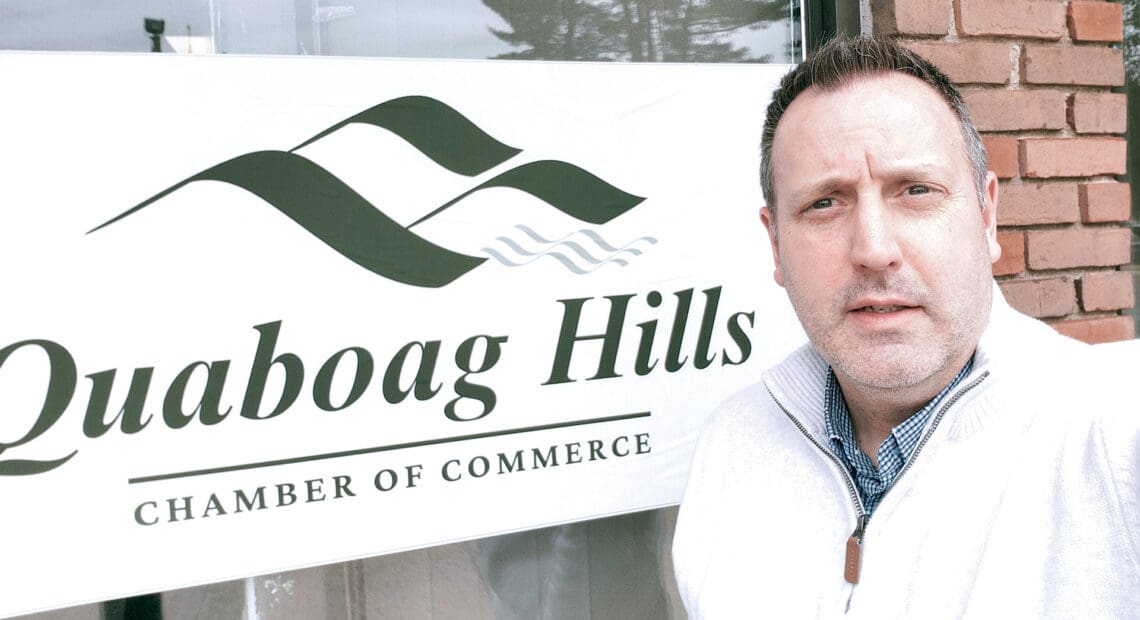
Those are all promising developments that add to an already-robust business landscape in town, said James Przypek, CEO of the Quaboag Hills Chamber of Commerce, which comprises 15 communities and 200 member businesses, 40% of them located in Palmer.

“When you think of Palmer, you think of Wing, our largest employer, which is not just a hospital — they have a rehab, a big ob/gyn department, about 40 physicians, 165 registered nurses … they’re certainly one of the backbones of the community.”

But he also thinks of manufacturing, from Sanderson MacLeod to Palmer Foundry, Palmer Paving (now owned by Peckham Industries of New York) to Adaptive Solutions, which makes medical devices.

On the retail and hospitality side, Figlio, an Italian restaurant on Main Street, is opening another location; 527 Candle Co. has opened downtown; and Seven Railroads Brewing Co. is thriving on Route 20.

“Palmer’s a neat little town. There’s a steampunk museum in town, there’s a pinball league in town … we’re all trying to do things to make it more of a place that people want to come to, rather than just like, ‘Palmer, what’s that?’” said Rachel Rosenbloom, co-owner of Seven Railroads. “I used to joke, ‘Palmer: you drive through us.’ But now, we want it to be ‘Palmer: you come here for a reason.’ Because there are things to do in town.”

As for the future train station, the state is moving forward with its chosen site, an open field at 1099 South Main St., south of Palmer Yard, land owned by Sanderson MacLeod adjacent to its plant. It will be several years before the facility is up and trains are stopping there, but residents and businesses alike are intrigued with the possibilities, even though not everyone is happy with the location; many wanted it closer to downtown.

A rail stop can benefit existing businesses in the broad hospitality sector and foster new ventures as well, and advocates say rail service will make Palmer’s location, already attractive because of its turnpike exit and close proximity to the state’s second- and third-largest cities, even more appealing to the development community.

“We’re very excited about the rail project,” Przypek said. “The chamber is in favor of having a railroad site, and we almost don’t care where it is, but where they proposed it makes sense, from our standpoint.”

As for that pike exit, where a casino was proposed some years ago, that site is still open and available, Przypek said.

“Last year, we worked with town officials in Palmer to identify a number of commercial buildings where land is available for sale or lease,” he noted. “Every quarter, we update that and post it to our website to give folks who want to invest in Palmer a glimpse at the properties that might be available. We’ve done that with other towns as well, but Palmer certainly is the most active. I guess the message is that Palmer is open for business.”


Manufacturing Progress

Sanderson MacLeod, which currenly employs about 115 people, recently entered into a partnership with GutterBrush of Rhode Island, and is bringing all its work into Palmer, Borsari said. “We’ve found ways to become business partners with certain people and make both companies more successful for the community.

“It’s an opportunity to keep growing and bringing people in instead of cutting back,” he went on, adding that automation at the plant is also helping the company become more modern and offer more advanced, higher-wage positions as well. And those connections it’s making with local students is just another way to grow the future in Palmer.

“If we or other manufacturing companies want to survive with a new generation coming up, we have to find ways to make it a cool place to work. It can’t be that drippy, oily concept that people have in their heads when they think of manufacturing. What can we do to give people purpose in what we’re making together?

“It’s really critical,” he added. “So many jobs have gone overseas, but here we are in Massachusetts, selling brushes, a proud American manufacturer. So we’ve done something right.”

Sports & Leisure

Steady Course

Ed Twohig Jr.

Ed Twohig Jr. says the game — and business — of golf are in relatively good health, although for many, it has become a nine-hole proposition.


Ed Twohig Jr. has been in and around the game of golf for more than 60 years now.

So he speaks from experience when he says that, while he’s seen the game healthier, it is, at the moment, in a comparatively good place.

By that, he meant people are getting into the game and, by and large, staying with it, despite its cost, degree of difficulty, and demands on time. Therefore, he said, the business of golf is relatively good, with courses faring well, but also related ventures, everything from the growing number of simulation facilities to retail outlets to the remaining practice and learning facilities, such as the Western Mass Family Golf Center in Hadley, where he provides lessons to a diverse mix of students, from middle schoolers to those pushing 80.

“Over the past few years, I’ve taught a lot of college and high school kids, both men and women, who want to get into the game.”

“Overall, the game is very, very healthy,” said Twohig, who grew up around the game as his father, Ed Sr., served as the pro at Amherst Golf Club, and Ed Jr. would later serve as the pro at the Orchards Golf Club and Springfield Country Club. “Over the past few years, I’ve taught a lot of college and high school kids, both men and women, who want to get into the game.”

Jesse Menachem, executive director and CEO of the Massachusetts Golf Assoc., agrees on the general state of the game and the business of golf. He said maybe the best measure of health and vitality of the game — the number of rounds played at courses across the Commonwealth — has continued to rise since a COVID-triggered surge in 2000, but there are other barometers as well.

“Rounds played, golfer engagement, wait lists at many of the private clubs, tee times that are still in high demand … these are all indicators that the health of the game is strong,” he told BusinessWest, adding that, while the total number of rounds is up only a few percentage points, the upward trend continues.

One of the best examples of the strong health of the game is the stunning turnaround at the Ledges Golf Club in South Hadley, which this year will mark its 25th anniversary. Once a losing proposition for the town and its taxpayers and an example of overreach when golf was booming in the late ’90s, it is now turning a profit and putting these proceeds back into the course, with effective results.
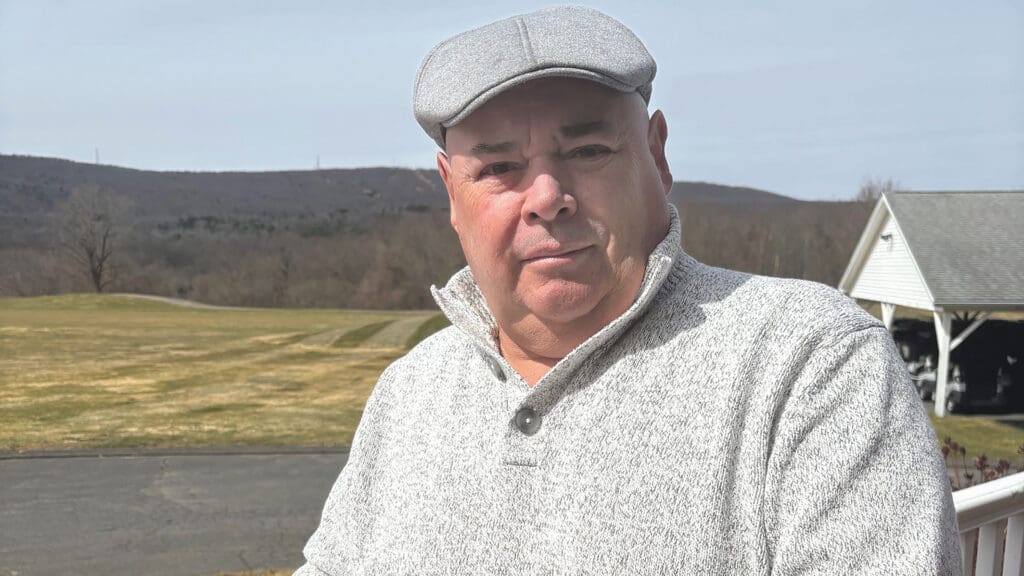
Mike Fontaine says the Ledges continued its growth trajectory in 2025 and is eyeing more of the same for the season ahead.

Mike Fontaine says the Ledges continued its growth trajectory in 2025 and is eyeing more of the same for the season ahead.

“We had another fantastic year in 2025 — we probably made $1.7 million, more than covering operating expenses for the town,” General Manager Michael Fontaine said. “And our goal is to do it again.”

Elaborating, he said ookings of outings is ahead of the solid pace set last year, and the course can afford to pick and choose which events it wants to host, another departure from the rough times years ago.

Still, there are challenges for those in the business, especially those who own and manage its courses, including a winter that has been unlike anything the region has seen in some time.

Indeed, despite some closures in recent years — Southwick Country Club, Hickory Ridge Golf Club in Amherst, and Elmcrest Country Club in East Longmeadow, for example — there is still considerable competition at a time of rising costs for everything from fertilizer to labor to gasoline for the carts.

“Rounds played, golfer engagement, wait lists at many of the private clubs, tee times that are still in high demand … these are all indicators that the health of the game is strong.”

Fontaine said he’s been getting some calls and visits from those managing other courses in the area essentially asking how the Ledges is doing all this. He said there’s no real secret, other than to provide a good product and essentially count revenue, not rounds — and price the product appropriately.

Elaborating, he said he believes many courses keep their prices lower than they should — probably a nod to all the competition in the area — and could go higher and still be competitive, not just with courses in this area, but in other markets as well.


Winter of Their Discontent

As he talked with BusinessWest by phone on March 13, Ted Perez Jr., the long-time pro at East Mountain Country Club in Westfield, paused on a few occasions to take calls to the pro shop. They pretty much told the story of a winter the likes of which the region hasn’t seen in maybe a decade or more.

“Yes … we’re open,” he told one caller, who then moved on to finding out just how playable the course was. “I just talked to a guy who made the turn … he said it’s … not bad out there.”

Not many courses in Massachusetts were open that day, but most of them were getting calls about when they would be, said Fontaine, who fielded a few himself. Like others we spoke to, he said this long, harsh winter should create substantial amounts of pent-up demand, which will help override what will likely be a later-than-usual start, probably the first or second week of April.

“That’s what we’re hoping for; it’s been a long, brutal winter,” he said, adding that some of the calls he’s getting are from people in the eastern part of the state, including the Cape, where courses can generally open earlier. But not this year.

Overall, he said the Ledges logs a good number of rounds involving people outside this area code, including the Hartford and Worcester areas, where golf is somewhat more expensive.

“We draw from everywhere — Albany, Worcester, Boston … our biggest is probably Connecticut, and I think it’s mostly because we’re a little cheaper,” he said, adding that the course’s rate of $75 with a cart on weekend mornings (the price drops later in the day) is better than what can be found in those other markets.

He’s not sure what impact rising gas prices might have on all this, but for now, golfers are willing to travel to save a few bucks — if the product and experience are good.

“I don’t think they figure the gas bill into the equation — it’s just grab your three buddies, get in the car, and go have a good round of golf in South Hadley, have a burger, and head home,” he said, adding that this equation could work for others as well if they maintain the quality of the product and market it effectively.

Overall, many courses did well in 2025, said Menachem, adding that they were helped by generally good weather — there was a stretch where it rained at least one weekend day for 10 straight weeks in the spring — as well the opportunity to open early and stay open into December.

They won’t have that luxury this year, he went on, adding that, despite considerable melting in early March, snow still covered many tracks. Meanwhile, the large amounts of snow will leave courses wet and in need of time to dry out, firm up, and clean up.

But he expects this late start to be overcome by pent-up demand.

“Given the climate of golf and the demand we’ve seen and continue to see, players are going to be ready and willing,” he said. “It might be a shock to the system for these courses to get prepared on short notice, but once they open, they should do well.”

Meanwhile, other aspects of the golf business are reporting growth as well, especially the simulation facilities, which provide a hedge against New England winter weather and provide opportunities to practice year-round.

“Anecdotally, it seems like more facilities are opening by the week,” he said, adding that there have been several new additions in and around Boston, including facilities that are focused on food and beverage as much as they are on golf. “And it’s serving as a nice complement — keeping clubs in people’s hands throughout the year.”


Going for the Green

It was the spring of 1983 when Perez took over the pro shop register from his father, Ted Perez Sr., who essentially designed and built East Mountain Country Club himself in 1963. With 43 years under his belt, he’s seen all kinds of winters — or ‘non-winters,’ as he calls what the region has seen more of in recent years — and he’s seen the game ebb and flow as well.

He remembers the halcyon days in the late ’90s and early 2000s after Tiger Woods arrived on the scene, when East Mountain was averaging roughly 50,000 rounds a year. He also remembers 2008 and the years that followed, when the course averaged about half that number, and the overall outlook was quite bleak.

“These days, it’s nowhere near 50,000 rounds, but it’s much better than it was,” he said, adding that it was during those down times that East Mountain started diversifying, if you will, using its banquet facilities for everything from comedy nights to bands to pro wrestling matches to bring in revenue and help pay the bills.

“We get 150 people in here for the wrestling — they have some food and some drink and watch some wrestling,” he said, adding that there is another such event scheduled for later this spring.

The venue is still used for a variety of revenue-producing purposes, he said, but, overall, golf is doing better than it was, and the outlook remains bright.

Twohig agreed, but noted that, despite healthy interest in the game, challenges such as its cost and time demands remain. So he’s seeing some fundamental changes.

“I believe that, for the majority of players, it’s going to be a nine-hole sport because of the time element,” he explained. “If you look at the clubs and the leagues … it’s all nine holes. People get their golf in, but they’re not spending their whole day there; there are too many options in the world now.”

Meanwhile, golf doesn’t have to mean nine or 18 holes on a course, he said, adding that many now enjoy practicing or playing courses on a simulator or simply hitting balls at the few remaining driving ranges in the area.
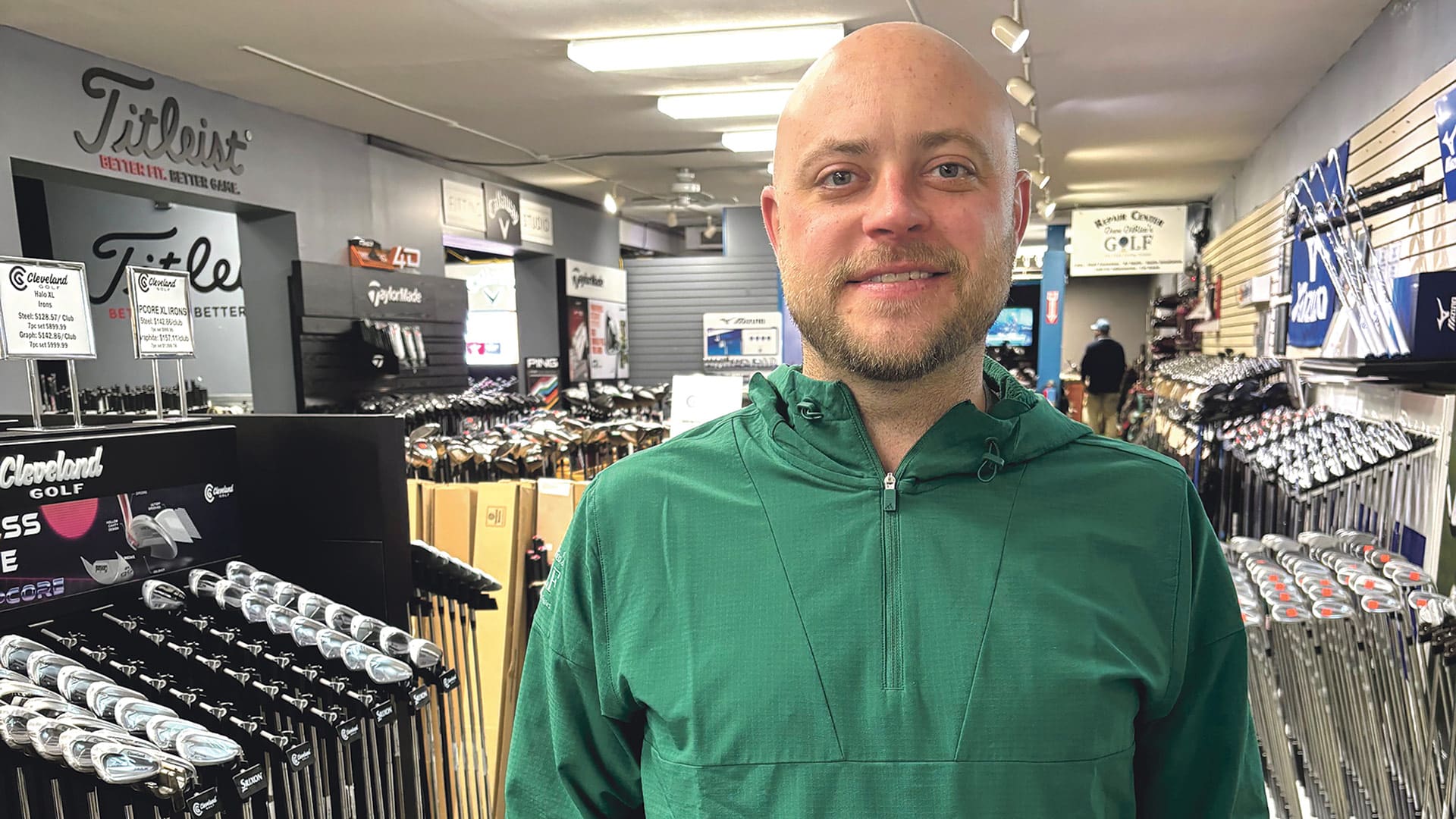
Drew Michael says golf has maintained the momentum generated during the pandemic, drawing new players of all ages.

Drew Michael says golf has maintained the momentum generated during the pandemic, drawing new players of all ages.

Drew Michael, store manager at Dave DiRico’s Golf in West Springfield, which features several simulators, agreed, adding that the surge in interest in the game since COVID is reflected in many aspects of his business.

That includes equipment sales, he said, adding that, in some respects, technology has helped make the game easier for many, and the winter and early spring months are generally the time to check out what’s new, whether it’s clubs, balls, shoes, or training aids.

And, like Twohig and others we spoke with, he said the sport — and the many businesses related to it — are maintaining the momentum gained during COVID.

“We’re seeing a lot of younger players, 25 to 35, and we’re seeing an uptick in women playing as well — those are the two fastest-growing categories,” he said. “It’s not quite like the book during COVID, but there’s still a lot of momentum with golf retail.”

He attributes this to the game gaining more exposure through everything from YouTube to TGL (Tomorrow’s Golf League), a high-tech, indoor, team golf competition that has succeeded in capturing the attention of many younger fans.

“You don’t have to tune in to CBS on a Sunday afternoon to watch a golf tournament,” Michael said. “YouTube is really big, TGL is gaining viewers, and you can watch any way you want — on your phone, computer, TV … all this is creating a wider audience.”

And it’s translating into more people getting into the game — and, in many cases, staying with it. Challenges remain, but golf seems to be a good place regionally, and on a steady course.


Accounting and Tax Planning

Defensive Measures

By Chris Wisneski

In 2026, businesses and nonprofit organizations are increasingly at risk of cyberattacks that can lead to very costly breaches.

Even a single incident can have severe consequences. In fact, the average cost of a data breach can exceed $4 million. For small and medium organizations, responding to a security breach usually costs more than $100,000.

Cyber insurance companies are raising their minimum coverage requirements. Many now scan customer networks for vulnerabilities and require controls like multi-factor authentication (MFA) and security awareness training to qualify for a policy.

The good news is that you can take steps to lower your cyber insurance costs and get more value from your policy. Here’s how you can lower your cyber insurance rates before you start shopping for coverage.

Chris Wisneski

Chris Wisneski

“Even a single incident can have severe consequences. In fact, the average cost of a data breach can exceed $4 million. For small and medium organizations, responding to a security breach usually costs more than $100,000.”


1. Multi-factor Authentication

A very effective way to lower cyber insurance costs is to use multi-factor authentication on all email and high-access accounts. MFA adds another layer of security by asking users to confirm their identity. MFA improves security by asking for two or more types of identity checks: something you know, like a password; something you have, like a token; or something you are, like a fingerprint.


2. Password Managers

Using a password manager is another good way to lower cyber insurance costs. Password managers create strong, unique passwords for every account and keep them safe in an encrypted vault. Since most people have many passwords to remember, password managers also make daily work easier and help prevent frustration from forgotten logins.


3. Train Your Employees

Studies show that more than 90% of security breaches happen because of human error. That’s why security awareness training is so important for reducing risk. Security awareness training teaches employees how to spot phishing emails, make strong passwords, and protect sensitive information. When your employees protect data well, your organization is less risky to insurers. By 2026, security awareness training is a required best practice and should be part of your main security controls.


4. Software Updates

It’s essential to keep your software up to date. Updates often include security patches that protect your systems from new threats. Make sure you have an automated patch management system that covers your operating systems, third-party apps, and network devices like firewalls. Cybercriminals often go after organizations that don’t keep their systems updated.


5. Cybersecurity Tools

Investing in cybersecurity tools is another critical step. These tools may include firewalls, antivirus software, application whitelisting, intrusion detection and prevention systems, and, increasingly, managed detection and response solutions. A cybersecurity professional can help you choose the right mix of tools for your organization’s needs.


6. Incident Response Plan

An incident response plan is a key part of any security program. It explains what your organization will do if there’s a cyberattack or data breach. Having a written plan helps limit damage and lowers the overall impact and cost of an incident.


7. Continuity Planning and Image-based Backup Solutions

Business continuity and disaster recovery plans are important parts of a strong security program. They help you recover systems and data quickly after a breach or disruption. Modern backup plans should use image-based backups, which save full system images for faster and more complete recovery. Use both local and cloud backups for the best protection.


8. Monitor Your Systems

Monitoring your systems helps you spot threats, vulnerabilities, and outages as they happen. Check logs and activity often to catch unusual behavior early. Active monitoring can stop small problems from turning into expensive security incidents and can mean the difference between a quick fix and major financial or legal trouble.


9. Be Proactive

Taking action early is one of the best ways to lower your cyber insurance premium and avoid surprise costs. When you lower your risk now, you can get lower premiums and are less likely to have future claims that raise your rates. This approach saves you money on both premiums and deductibles. Lowering your cyber insurance premium might seem hard at first, but it’s easier than you think. Taking these steps before you shop for coverage can make a big difference.


10. Get a Cybersecurity Risk Assessment

A risk assessment can help you understand your risks, strengthen your defenses, and better prepare for today’s cyber insurance requirements. And cyber carriers are now asking when you had your last one.


Chris Wisneski is IT Security and Assurance Services manager at Whittlesey. The Whittlesey technology team is made up of experienced cybersecurity professionals who work with organizations to assess risk landscapes and identify potential vulnerabilities, helping raise awareness before costly cyber incidents occur. Visit landing.wadvising.com/cybersecurity-health-check to learn more or to start a conversation.

Accounting and Tax Planning

Knowledge Is Power

By Liberty Bank

Tax season is here, and it requires us to be extra vigilant. Identity theft campaigns are common at this time of year.

Cyber criminals and fraudsters often rely on social engineering techniques to trick innocent victims into giving them personal information. This information can be provided directly or through a fake website for the IRS, or a fake website for tax returns.

At Liberty Bank, we want to provide you with information that will help you better recognize identify theft campaigns and ultimately avoid them.

“It helps when you know what to look for,” said Craig Bernier, Liberty Bank’s chief Information Security officer. “Vigilance and knowledge are important when it comes to avoiding scams. Before sharing your personal information with anyone, be sure to verify their legitimacy and do your research.”

Craig Bernier

Craig Bernier

“It helps when you know what to look for. Vigilance and knowledge are important when it comes to avoiding scams. Before sharing your personal information with anyone, be sure to verify their legitimacy and do your research.”

What to Know for 2026

Changes to tax filing programs and the discontinuation of a free government-run filing system can be confusing. Some taxpayers are uncertain what is legitimate, and scammers are taking advantage by creating “new filing options” and “tax program and eligibility updates.”

Scammers often use messages that advertise fake refunds or feature account alert messages that claim something is wrong. They rely on the pressures of tax season and are trying to create anxiety by making you believe that something is wrong with your tax return.

Some scammers promote fraudulent tax assistance by presenting themselves as legitimate government-backed or low-cost help.

Scammers use all available methods, such as phone calls, texts, emails, and social media posts to dupe taxpayers.


Tips to Avoid Scams

• Look for phrases such as “new rules” and “urgent account issue.” These phrases are designed to induce panic and quick responses.

• Take your time when evaluating any messages regarding your taxes and verify a message’s authenticity through a trusted third party.

• Do not click on any links, reply to any messages, or call any numbers included in suspicious communications. Instead, go directly to irs.gov for guidance.

• Remember, the IRS will never email you, text you, or contact you via social media. It will also never pressure you to do something immediately.

• It’s important to note that scam messages and emails may look real and may even have an IRS-style logo and ‘case’ number. Aspects of an email may look legitimate at first glance, but the email may ultimately be fake.

For more information about fraud protection and prevention, visit www.liberty-bank.com/personal/fraud-protection-prevention.