

Daily News

MONSON — Monson Savings Bank announced its support of the YWCA of Western Massachusetts’ transformative “Shifting the Paradigm: Empowering Women & Children, Empowers the Next Generation” campaign, a comprehensive, $7.5 million capital initiative dedicated to sustaining and expanding critical services for women, children, and families across the region. As a bank consistently dedicated to serving the needs of local communities, Monson Savings Bank committed to a $100,000 contribution.

The campaign aims to secure the long-term future of the YWCA, which has served Western Mass. for nearly 160 years by providing vital programs such as domestic violence shelter and advocacy, sexual assault counseling, youth education, housing support, and a 24/7 confidential crisis hotline that assists more than 6,500 individuals annually. The organization reaches more than 12,000 people each year, offering not just immediate support, but pathways toward healing, independence, and long-term stability.

Monson Savings Bank President and CEO Dan Moriarty is deeply engaged in this mission, serving as co-chair of the campaign as well as a member of the YWCA’s finance committee.

“At Monson Savings Bank, we believe that strong communities are built when people are supported, empowered, and given the opportunity to thrive,” Moriarty said. “The YWCA of Western Massachusetts does extraordinary work, providing not just safety, but hope and a path forward for individuals and families facing unimaginable challenges. It is an honor to help lead this campaign and to stand alongside an organization that so powerfully aligns with our mission of strengthening lives and communities.”

The “Shifting the Paradigm” campaign will invest in both immediate needs and long-term sustainability, including expanding programs for children and teens impacted by trauma, eliminating waitlists for critical services, and renovating essential shelter and housing facilities to ensure safe, dignified environments for those seeking refuge.

Elizabeth Dineen, CEO of the YWCA of Western Massachusetts, expressed gratitude for the bank’s leadership and community commitment.

“Monson Savings Bank exemplifies what it means to be a true community partner,” she said. “Their support goes beyond financial contribution — it reflects a shared belief that every individual deserves safety, dignity, and the opportunity to build a better future. With champions like Dan and the entire Monson Savings Bank team by our side, we are not only sustaining vital services, we are redefining what is possible for the women, children, and families we serve.”

This partnership reflects Monson Savings Bank’s longstanding commitment to community impact, rooted in its founding mission to empower individuals through financial opportunity, which is strengthened through ongoing investments in organizations that foster equity, resilience, and growth.

Daily News

Molly Merrihew

LENOX — Shakespeare & Company’s board of directors announced the appointment of Molly Merrihew as the organization’s new executive director, who takes the helm just as the company approaches its 50th anniversary. Merrihew has spent the last decade as an advocate and leader of the Berkshires arts community.

Merrihew, most recently managing director of WAM Theatre, has been appointed executive director following a national search. She will partner with Artistic Director Allyn Burrows to guide the organization’s programs and operational work.

For Merrihew, the role marks both a return and a continuation. Earlier in her career, she spent eight years at Shakespeare & Company in marketing and public relations before joining WAM Theatre, where she went on to serve as managing director and previously as artistic associate. During her six years in leadership at WAM, Merrihew helped oversee a period of growth that included expanded programming, strengthened governance, and deeper community engagement, while advancing the company’s mission of gender equity through theater.

“Molly brings strong strategic leadership and a deep understanding of this community,” said Beverly Hyman, board chair. “We’re pleased to welcome her to Shakespeare & Company.”

Burrows pointed to Merrihew’s collaborative approach. “We are truly thrilled to welcome Molly back to the Shakespeare & Company team in an even more robust capacity as executive director,” he said. “Molly knows the company well, and she brings a crucial skill set to help steward us toward new horizons.”

Merrihew said she sees Shakespeare & Company as a longstanding anchor of the region’s cultural life.

“I’m honored to join the organization and to work with its staff, artists, and board alongside Allyn,” she said. “There’s a strong foundation here; Shakespeare & Company is an extraordinary cultural institution with a rich legacy of performance, training, and education. I am inspired by its commitment to bold life-changing artistry and its role as a cornerstone of the Berkshires’ vibrant arts landscape. I look forward to building on 50 years and supporting a thriving, sustainable future as an arts leader of our community and across the country.”

Her appointment reflects the interconnected nature of the Berkshires arts scene, where artists and organizations often move between institutions and collaborate across disciplines. Merrihew emphasized that sense of shared purpose.

“The Berkshires are home to a strong network of artists and cultural organizations,” she said. “I’m committed to supporting that spirit of partnership across the region.”

At Shakespeare & Company, Merrihew will oversee administrative and operational leadership, working in partnership with Burrows and the board of trustees. She steps into the role at a moment of financial stability for the organization, which recently paid off its mortgage and has reported two consecutive seasons of strong box office sales.

Merrihew holds a master’s degree in arts administration from Boston University and an undergraduate degree from SUNY Potsdam, along with a graduate certificate in human resources from Cornell University, and brings more than 15 years of experience in nonprofit theater and the broader arts sector.

Opportunities for the public to meet Merrihew in her new role are expected to be announced in the coming weeks, including the company’s third annual Community Day on Saturday, May 23. For more information, visit shakespeare.org.

Daily News

WARE — Country Bank received the Chamber Legacy Award at the 2026 QHMA Choice Awards hosted by the Quaboag Hills Chamber of Commerce. This award recognizes organizations that have made a lasting impact through leadership, service, and continued commitment to the local community.

This recognition comes on the heels of Country Bank’s 175th anniversary celebration last year, further highlighting the bank’s longstanding dedication to supporting the communities it serves throughout Central and Western Mass. Country Bank was also honored to receive official citations from the Massachusetts Senate and House of Representatives recognizing this achievement.

“We are incredibly honored to receive the Chamber Legacy Award,” said Mary McGovern, president and CEO of Country Bank. “Coming off the celebration of our 175th anniversary, this recognition is a meaningful reminder of the relationships, trust, and community support that have shaped who we are today. We are deeply grateful to everyone who voted for us and continues to support our mission of making a difference every day.”

Country Bank also extends its appreciation to James Przypek, executive director of the Quaboag Hills Chamber of Commerce, for his leadership, dedication, and continued commitment to strengthening the local business community.

“We are proud to be part of such an incredible organization and community,” McGovern added. “Partnerships like these are what continue to make our region strong.”

Daily News

NORTH ADAMS — MountainOne has been named among the 2026 Best Places to Work by the Boston Business Journal in the Medium Business category (100-249 employees), marking the second consecutive year the organization has earned this recognition.

The Boston Business Journal’s annual ranking showcases Massachusetts companies that have built outstanding work environments for their employees. The 90 companies honored in 2026 represent a range of industries, including financial services, technology, retail, and healthcare.

“We believe when people feel seen, supported, and connected, it shows in how they support one another and serve our communities,” said Beth Petropulos, senior vice president, senior HR and SAFE Act officer at MountainOne. “Being named a Best Places to Work is especially meaningful because it reflects the experiences of our Mountaineers and the culture they create every day. Earning this recognition for the second year in a row makes it even more special.”

Businesses participated in employee-engagement surveys distributed by Boston Business Journal partner Quantum Workplace. Employees were asked to rate their work environment, work-life balance, job satisfaction, advancement opportunities, management, compensation, and benefits. Based on the results of those surveys, businesses were assigned a total score and overall ranking by Quantum.

“This year’s companies once again have set the bar for employees looking to retain their top talent,” said Carolyn Jones, market president and publisher of the Boston Business Journal. “In such a competitive hiring environment, the Best Places to Work employers continue to outshine their peers and competitors.”

Daily News

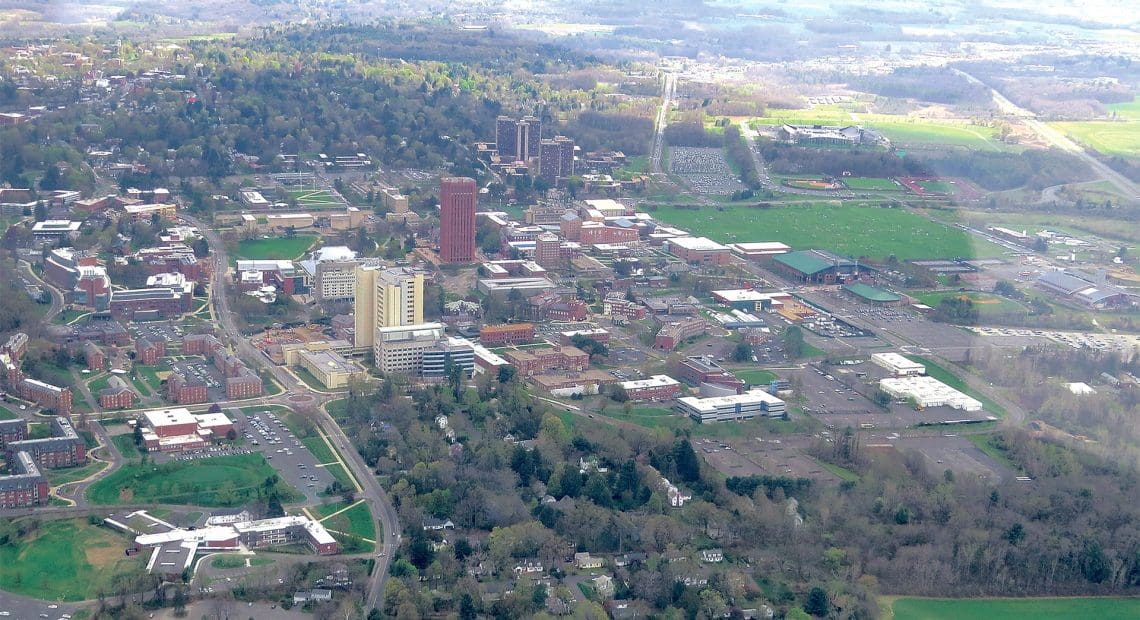
AMHERST — UMass Amherst, in partnership with the University of Massachusetts Building Authority (UMBA), announced it has selected a development team led by American Campus Communities (ACC) to collaborate on a comprehensive, long-range, and phased plan to modernize campus housing while maintaining affordability and exploring non-residential amenities to enhance the campus experience.

The strategic planning process will focus on both the Amherst campus and the Charles River campus in Newton. The project team envisions building new student housing to allow for the renovation or replacement of existing residence hall facilities in a multi-phase approach without the loss of current student housing capacity. The development team will also assist the university in evaluating non-student housing and non-residential amenities that have the potential to enhance student life, engage the community, and address campus infrastructure needs.

“We are excited for our community to begin working with our new partners on envisioning the near-, mid-, and long-term future of the flagship campus,” UMass Chancellor Javier Reyes said. “By focusing on how residential communities interact with and enhance academic, cultural, and recreational spaces, and aligning private partnership with investments in academic, research, and athletic facilities, we can design a cohesive campus that maintains affordability, achieves sustainability goals, and promotes community well-being.”

Beginning in the summer and fall of 2026 and throughout the multi-phase design and development process, the university and ACC will provide opportunities for recurring input from students, faculty, governance groups, and other campus stakeholders. Over the summer, the project team will work with campus governance groups to coordinate opportunities for broader campus community input at the start of the fall semester. Planning efforts will also leverage recent student feedback and survey data collected as part of the university’s campus planning processes to date. Any projects that emerge will require approval through the university’s multi-step approval process, including the UMBA board and the UMass board of trustees.

ACC is the nation’s largest developer, owner, and manager of student housing opportunities. After initiating a request for proposals through UMBA last year, the campus worked with real estate advisory firm Newmark to manage the RFP process that led to the selection of ACC from a large pool of competitive responses. The development team also includes Elkus Manfredi Architects and Suffolk Construction.

Currently, more than 60% of students live in 51 residence halls and apartment buildings on campus. Of the 209 ranked public universities, UMass Amherst is among the top five in the country for percentage of on-campus students.

“First-class facilities are needed to match the first-class quality and caliber of our students, faculty, staff, and operations,” said Andy Mangels, vice chancellor for Administration and Finance. “This project will position UMass Amherst to continue to attract top talent through a phased campus development that emphasizes creativity and affordability.”

The strategic planning process is informed by recent student housing market analyses, including student surveys and focus groups, and aligns with the Healey-Driscoll administration’s statewide housing priorities. This effort is separate from the BRIGHT Act, which is navigating the state Legislature and authorizes capital expenditures intended to upgrade campus infrastructure as well as support decarbonization efforts.

The public-private partnership procurement that resulted in the selection of the ACC-led group is based on an approach previously used by UMass and UMBA, and by higher education institutions nationwide, to create the best results possible for the UMass Amherst campus, its students, and the Amherst community while remaining prudent stewards of resources.

Daily News

LENOX — The Lenox Chamber of Commerce announced the return of the Lenox Farmers Market for the 2026 summer season, to be held at St. Ann’s Church, 134 Main St. The market will take place every Friday from May 22 through Sept. 11 from 11 a.m. to 3 p.m., offering a vibrant weekly gathering of fresh, local goods and community connection.

A staple of the Berkshires, the Lenox Farmers Market features 19 full-season vendors, along with a rotating selection of guest vendors throughout the season. Visitors can enjoy a wide variety of offerings, including locally grown produce, farm products, fresh-baked breads and pastries, prepared foods, and specialty items such as maple products, preserves, and craft beverages.

In addition to food, the market showcases local artisans and makers, offering handcrafted goods such as pottery, woodcraft, textiles, and homewares, as well as wellness products including natural soaps and body care. Shoppers will also find plants and flowers, along with community organizations sharing information and resources.

Each week, the market will be  enhanced with live local music, creating a welcoming atmosphere for residents and visitors alike.

“This market season will be the best yet,” said Amy Feld, market manager. “We have more vendors and more diversity than ever before. We look forward to welcoming you each Friday.”

The Lenox Farmers Market is free and open to the public. Attendees are encouraged to come early for the best selection and stay to enjoy the music and community atmosphere.

Daily News

GREENFIELD — The Franklin County Chamber of Commerce announced the launch of the inaugural Gagne Wealth Impact Invitational, a golf tournament experience designed to combine philanthropy, community engagement, and one of New England’s premier golf destinations.

Set at Crumpin-Fox Club in Bernardston, the all-inclusive invitational on Monday, Sept. 28 will feature a competitive 18-hole tournament, lunch, dinner, and an open bar, while creating a meaningful and measurable impact for Franklin County nonprofits.

Thanks to the generosity of the Gagne Wealth Management team, all tournament expenses have been fully underwritten, ensuring that 100% of all entry and raffle proceeds will be reinvested directly back into Franklin County and awarded to the top three nonprofit organizations selected by participating players.

Team spots are limited and will be filled through an application process. The minimum team entry donation is $1,000, and preference will be given to foursomes that demonstrate a strong philanthropic commitment and align with the spirit of the event.

Teams interested in applying for a foursome entry are encouraged to complete the application by clicking here. All foursome applications must be submitted by June 30.

Banking & Finance

A Leg Up to Homeownership

The Racial Wealth Gap Partnership at the Boston Foundation recently announced it is making an initial investment of $1.55 million in the Massachusetts Affordable Homeownership Alliance’s (MAHA) STASH Program.

The investment was made in collaboration with the MassMutual Foundation and the Boston Foundation’s donors and is the second from the Wealth Gap Partnership’s Down Payment Assistance Program. The program provides funding to housing organizations to create new or build upon existing down payment assistance efforts that create wealth by expanding homeownership in underserved communities.

“MAHA’s STASH program has a demonstrated record of giving homebuyers the financial and educational support they need to navigate the purchase process and begin building equity for long-term wealth./We are pleased to help make it possible for STASH to expand and enhance homeownership opportunities for families throughout Massachusetts.”

MAHA’s STASH (Saving Toward Affordable and Sustainable Homeownership) First-Gen Home Program is a groundbreaking matched savings and education program that provides first-generation, first-time homebuyers in Massachusetts with down payment assistance and financial literacy and homebuyer education.

Nearly 400 STASH participants have purchased homes since MAHA launched the program in 2019. The funds will be used to expand the program’s reach to all cities and towns throughout the state, with a goal of eventually catalyzing $5 million in investments to the program in the coming years. The partnership projects this will allow the STASH program to provide matched savings to more than 200 households seeking to become homeowners.

“MAHA’s track record of coupling critically needed financial assistance with the education to find and maintain affordable homeownership opportunities aligns perfectly with the partnership’s goal of expanding intergenerational wealth through homeownership,” said Lee Pelton, president and CEO of the Boston Foundation. “Thank you to all of the partners who are making this investment possible and available for prospective homebuyers across Massachusetts.”

“At MAHA,” added Symone Crawford, executive director of the Massachusetts Affordable Homeownership Alliance, “we are committed to making homeownership achievable for first-time and first-generation families. This investment in the STASH program helps us scale a proven model that builds financial capacity and long-term stability. Thank you to the Boston Foundation and the Wealth Gap Partnership for affirming this work through this investment.”

Launched in 2019 with a seed investment from Boston Children’s Hospital, the STASH program contains two main components: the provision of eight hours of financial literacy and homebuyer education and up to $20,000 in matched savings for program graduates to use for down payment and closing cost assistance.

“MAHA’s STASH program has a demonstrated record of giving homebuyers the financial and educational support they need to navigate the purchase process and begin building equity for long-term wealth,” said Dennis Duquette, president and CEO of the MassMutual Foundation. “We are pleased to help make it possible for STASH to expand and enhance homeownership opportunities for families throughout Massachusetts.”

The announcement of the $1.55 million marks the second major investment from the Racial Wealth Gap Partnership, which was founded in 2022 by the Boston Foundation and is a broad-based partnership of more than 40 members representing a wide range of financial, philanthropic, nonprofit, and civic leaders.

In late 2024, the partnership supported the launch of the ONE+ Program by the Massachusetts Housing Partnership (MHP) in collaboration with the Boston Foundation, the Commonwealth of Massachusetts, Eastern Bank Foundation, and the State Street Foundation. To date, that effort has supported nearly 400 first-time homebuyers across Massachusetts.

“This collaboration with MAHA is a wonderful complement to our ongoing work with MHP’s ONE+ program because it allows the partnership to broaden the avenues for access to homeownership for first-generation, first-time homebuyers across the entire Commonwealth,” said Courtney Brunson, director of Economic Equity Initiatives at the Boston Foundation. “Through its programs and partnerships with organizations across Massachusetts, MAHA is providing a powerful combination of resources to ensure families can buy their own homes and keep them to build long-term wealth. We look forward to our continued partnership in this work.”

Education

Sweater Weather

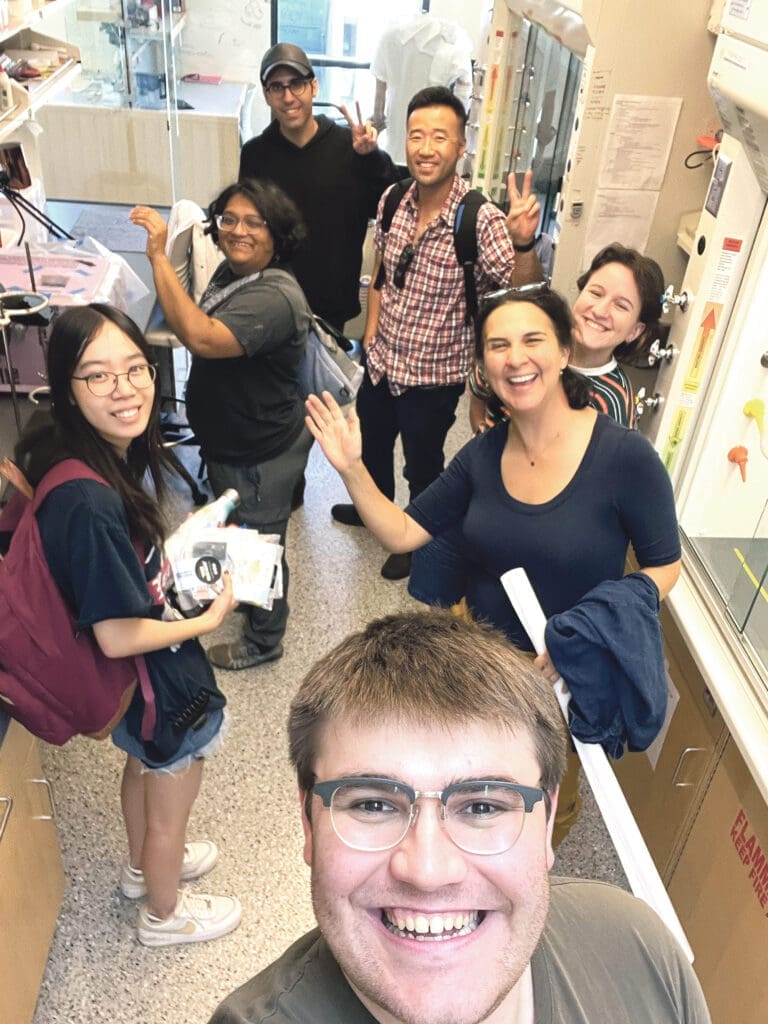
Trisha Andrew (left) and Carolina Aragón (second from right) with their research team members. (Photo by UMass Amherst)

Trisha Andrew (left) and Carolina Aragón (second from right) with their research team members. (Photo by UMass Amherst)

Researchers at UMass Amherst recently unveiled a tool to combat climate change, fossil-fuel dependency, skyrocketing home heating bills, and gentrification all at once — a simple fabric treated with a photothermal dye that, when placed on outside walls, can help keep a home almost 9 degrees warmer over the course of a day.

“Sometimes, a simple solution works best,” said Trisha Andrew, professor of Chemistry at UMass Amherst, and one of the paper’s senior authors, along with Carolina Aragón, associate professor of Landscape Architecture, and Ho-Sung Kim, senior lecturer in Building and Construction Technology.

“When you’re cold, you put on a sweater,” Aragón added, “so we started thinking: what would you do if you’re a building?”

Heating buildings is a huge driver of fossil-fuel consumption, greenhouse gas emissions, and energy insecurity. More than 33 million homeowners in the U.S. report trouble keeping their houses warm, and more than 24 million people — often renters — report skipping food or rationing energy in order to pay for heat. Meanwhile, according to the U.S. Energy Information Administration, residential and commercial buildings account for 39.1% of the primary energy used in the U.S. Reducing heating costs also translates into an enormous reduction in CO2 emissions.

The typical way to address an inefficient home is to tighten it up: new windows and doors, more and better insulation, etc. But renters don’t necessarily have these options open to them. Worse is the phenomenon of ‘reno-viction,’ where a landlord upgrades a property and then raises rents beyond what’s affordable for current tenants. “Too many people have to choose whether they heat or eat,” Aragón said.

But what if keeping a house snug were as easy and affordable as putting on a sweater?

Andrew, whose specialties include inventing high-tech fabrics that can mimic animals adapted to extreme cold — like polar bears — and Aragón, who has long worked at the community scale to tell the story of climate change, teamed with Kim, who is an expert in modeling architectural designs for energy usage.

The team initially thought of a building blanket, but ultimately what they designed and tested looks much more like jewelry: a series of removable tiles or panels that can be hung on any surface, which not only conduct the sun’s warmth, but insulate the building.

The key is a photothermal dye that Andrew invented. “We can put this dye on anything,” she said. “It doesn’t have to be on an expensive fabric. We chose to test it on umbrella fabric — something that was rugged and robust but still affordable.”

When they modeled their design, the results were eye-popping. “We saw up to a 15% decrease in energy costs for a residential building in a northern climate, like Massachusetts,” Andrew noted, “and up to 23% reduction in a large, 16-story apartment building.”

By comparison, a well-done traditional home renovation might yield a 2% reduction in energy costs.

“When you’re cold, you put on a sweater, so we started thinking: what would you do if you’re a building?”

These panels could even be sold as do-it-yourself projects that any renter could complete. The team imagines a scenario where people head to their local hardware store, buy a roll of the fabric and a few 2x4s, and, in an afternoon, have a cheap and effective way of helping to heat their homes.

“Because the heart of this technology is a dye, we can use it to make panels that are beautiful and blend in with the specific culture and aesthetics of an area,” Aragón said. “It’s important to get the architectural and aesthetic part of this right, in addition to the science.”

But before consumers rush out to ask for the miracle fabric, the team needs to conduct additional, real-world testing. Though they’ve proven the concept in the lab, they need more data and field tests with life-sized prototypes.

“This could have an enormously beneficial societal impact,” Andrew said, and Aragón agreed, noting, “there’s a role for anything that is empowering at the individual scale.”

The research appears in the journal ACS Applied Engineering Materials.