A chart of the area’s early childhood education facilities
Click Here:
EarlyEdChildCareFacilities BW0811c



Click Here:
EarlyEdChildCareFacilities BW0811c
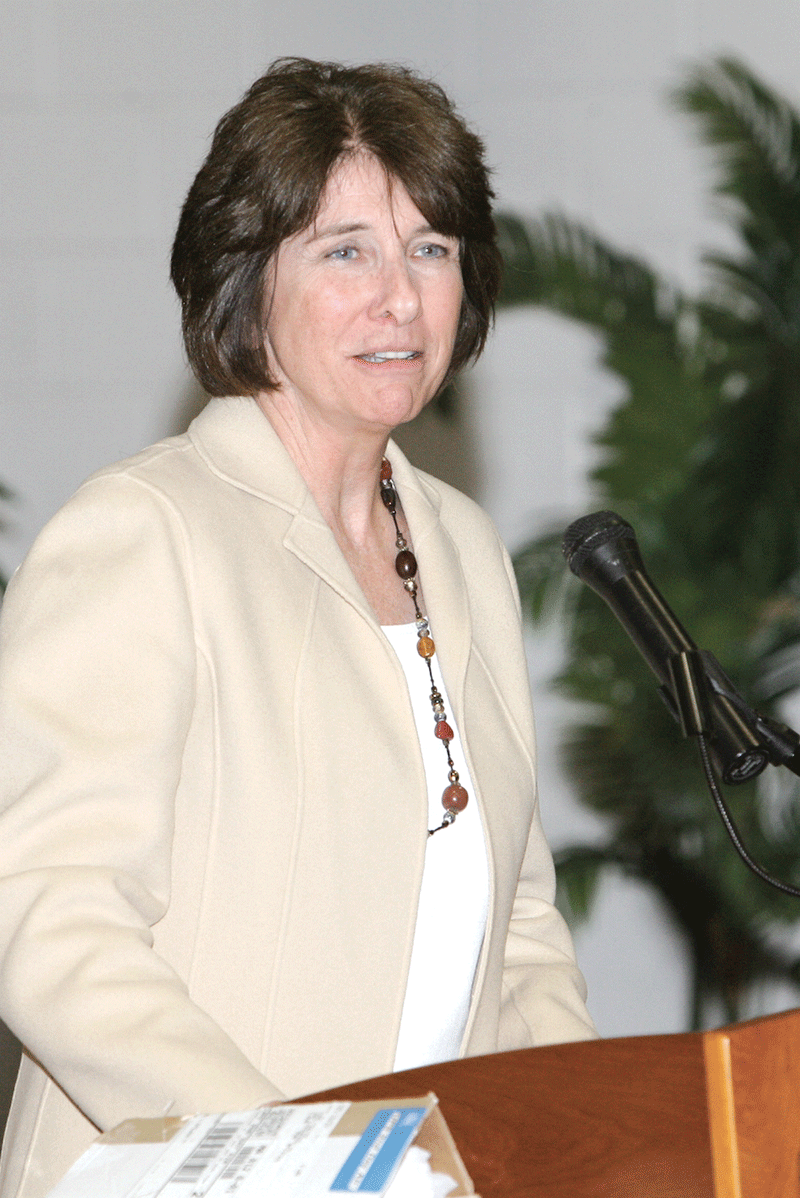
Julie Siciliano says the board intern program has injected youth into area institutions, while opening students’ eyes to the world of community service.
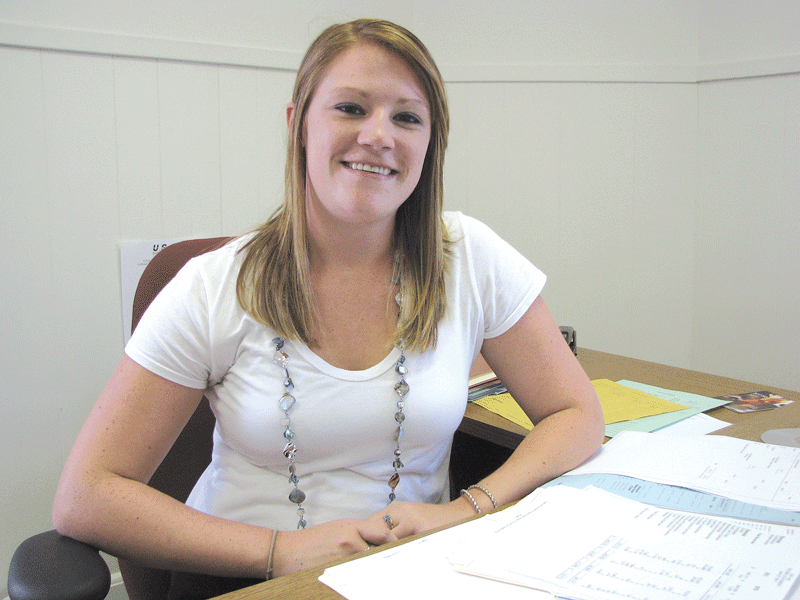
Tashia Kay says her time spent on the board of the Springfield Boys & Girls Club provided a number of learning experiences.
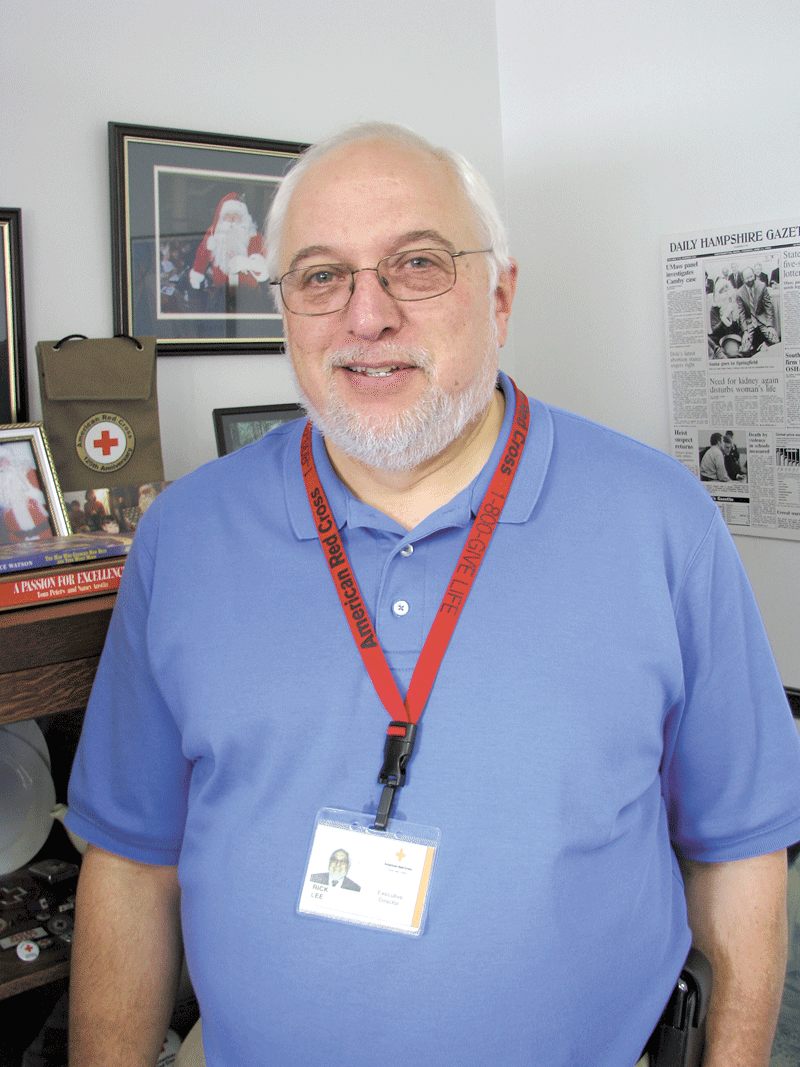
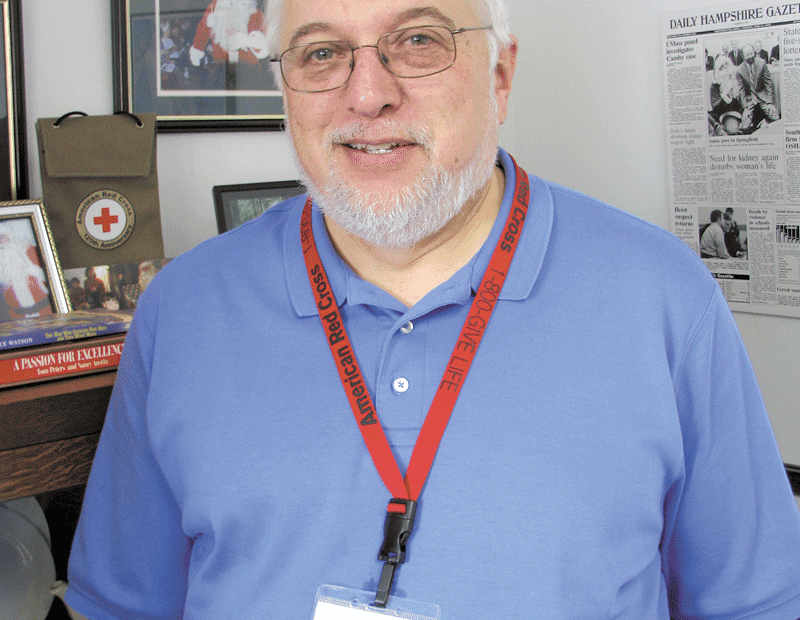
Rick Lee, director of the Pioneer Valley chapter of American Red Cross, says the board intern program has helped introduce young people to career possibilities in the nonprofit realm.
Seats at the Table
Garcia admits that she’s not a big baseball fan. She can’t recall, for example, which member of the Red Sox organization took the podium as keynote speaker for the YMCA’s huge spring fundraising breakfast in 2009 (it was knuckleballer Tim Wakefield).
What she does remember, however, is all the hours she spent helping to plan the event and then work it. Specifically, she recalls the teamwork necessary to pull off such a happening, and the satisfaction that comes when it is staged successfully.
“It was a lot of work, and it was interesting to see how it all came together,” she said. “Working on the event gave you an appreciation for the organization and the role it plays in the community.”
This is what Fitzgerald, Siciliano and others at WNEU had in mind when they blueprinted the nonprofit-board program. They wanted to create learning environments that would accomplish a number of goals — everything from giving students confidence-building experiences, to opening their eyes to the intriguing world of nonprofit management, to injecting youth onto those boards.
The program is still a work in progress, but most believe that to say it is accomplishing those goals would be an understatement.
Here’s how it works: Students in Business, Management, and Accounting are encouraged to apply for the internships, said Siciliano, adding that many are actually recruited by faculty members. There are a few prerequisites — a 3.0 grade point average, for example — but mostly, faculty and administrators are looking for individuals with leadership skills and an interest in serving the community.
Meanwhile, they are also recruiting nonprofits on which students can serve, organizations that, first and foremost, are open to the idea of a 21-year-old sitting on their board with full voting privileges (some are not) and that can offer those valuable learning experiences mentioned earlier.
It’s all part of a comprehensive matching process, said Siciliano, adding that from the beginning, the school has worked to create solid fits that maximize the experience for both parties.
And for this coming year, the school has created five such matches, involving the YMCA, Boys Club, Red Cross, United Way, and Dress for Success. The individual experiences will be different, said Siciliano, but there are important common denominators — especially opportunities to learn and participate.
And both of these qualities come in a number of varieties, said Gary McCarthy, executive director of the Springfield Boys & Girls Club. He noted that his organization has nearly two dozen board members, but even within that large group, the WNEU students who have served on that body have managed to stand out and make notable contributions.
“We found that the young people from Western New England were very committed to the process,” he said. “They were very vocal, and when they were passionate about something they definitely spoke up and put in their 2 cents and their recommendations on things.”
He specifically recalls them being active in efforts to engage the large alumni base.
“They were involved with some others in getting a Facebook page up and staging reunions,” he recalled. “They also got engaged in our fundraising events, like the Festival of Trees, and so they learned about the many aspects of putting on large events, like recruiting volunteers and public relations work, but they were also there on the front lines and doing the work.”
Meanwhile, the students also helped build stronger bridges between the club and the college, creating more connections in matters such as mentoring, he said, adding the organization has had student board members from both WNEC and UMass Amherst, and has forged stronger relationships with both institutions through those programs.
Votes of Confidence
Kay remembers all the work that went into the Festival of Trees, the hugely popular program in which businesses, institutions, and area families donate decorated trees, which are then raffled off, with the proceeds supporting club programs.
“I got to take part in the planning and behind-the-scenes work,” she explained, “but I really had no idea just how big this was and how many companies got involved to help the club. The day of the event, I was running around, helping everyone put trees together, getting the electricity going, making sure there was enough room for everyone, working on the premiere party, selling raffle tickets … and it was great to see what everyone was working so hard for.”
What she remembers more from her year on the board, though, was taking part in key votes on a proposal to merge the agency with another Boys & Girls Club, a concept that was eventually rejected.
“I got to be part of that decision, which was a real learning experience,” she recalled. “There was a feasibility study to determine if it was beneficial for us to move forward with the merger, and in the end, we decided that it just didn’t make sense to do it.
“Each club gets grant money, and if there was a merger, there would be one entity, and less money to go around,” she continued. “Taking part in that important vote was a real experience for me.”
Other participants in the program have had the opportunity to become involved with similarly important decisions and the research that goes into them.
Indeed, Lee told BusinessWest that the injection of youth to his board has come at a time of what he called “watershed change” for the Red Cross, and the interns have added tremendously to the dialogue.
“It began three years ago, and it has escalated over the past 11 months,” he said of the fast-paced evolutionary process. “It has literally changed the way chapter borders are defined, and changed the roles of staff members and board members; it has upset a number of apple carts as we try, to extend the analogy, and restack the fruit for the 21st century.
“And having young people be part of those discussions has helped with the breadth of the discussions we’ve had,” he continued, “and brought some different perspective to the conversation.”
Lee and other nonprofit managers we spoke with expressed the hope that the students’ experiences would inspire them to continue their involvement with nonprofits after they left the respective boardroom — and the college. And the reality is that many of them are.
Kay, for example, said she does a lot of work with nonprofits as a part-time accountant with Nicholas Lapier, CPA, and is confident that wherever her career takes her she will make time to get involved in the community.
Meanwhile, Garcia said her work with Jumpstart, as well as her current position with Commongood are reflections of her desire to make work within the community part of her career portfolio.
“I really enjoy working at Commongood,” she explained, “ because it’s a combination of the two things I love the most — working with nonprofits and HR and recruiting, which I developed an interest in while I was in college. This is perfectly in the intersection of the two.”
Her sentiments about nonprofits are reflected in the comments she offered for a piece in the spring-summer edition of the newsletter for the School of Business: “My internship on the board of the YMCA opened my eyes to a whole different idea of what business can be,” she said, “and how my skills can really serve others.”
The Bottom Line
Tom Marsh will be among the students serving on boards starting this September. His assignment is with the YMCA, and he’s hoping to take his experiences in sports and fundraising — he founded the club soccer program at WNEU, which involves both — and his desire to get involved in the community, and make them the basis for what he believes will be a memorable learning experience.
“I’m really excited about the prospects of getting a real-world experience and seeing how decisions are made and ideas arise,” he said when asked about his upcoming stint on the Y board. “I’m just hoping that I can contribute to the process and learn things I can take with me on my career path.”
Those who have done this before him would say he’ll accomplish all that and much more.
George O’Brien can be reached at [email protected]
Click Here:EarlyEd&ChildCareFacilBW0711a
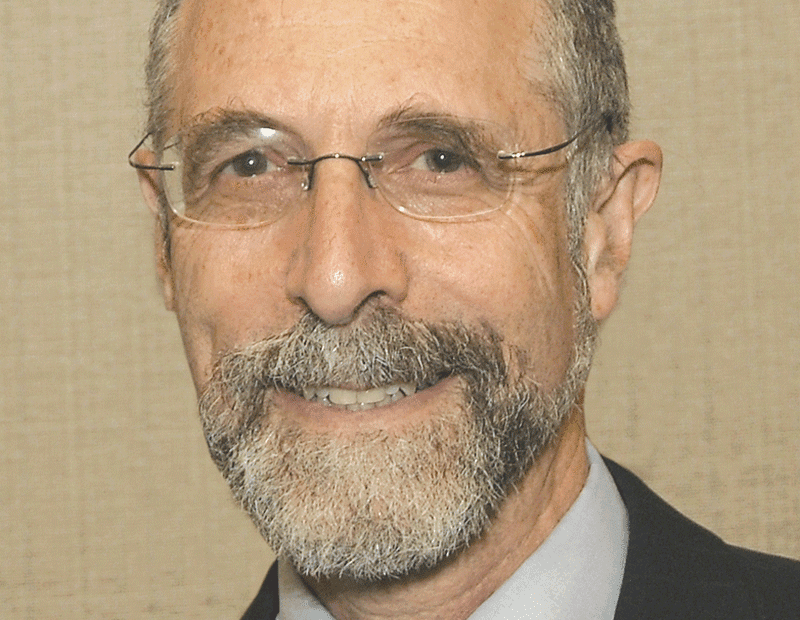
 There are many moving parts to the state Department of Higher Education’s Vision Project, but the bottom line is jobs, or, to be more precise, properly preparing individuals for the jobs that define a new, technology-centered economy. The Vision Project aligns all 29 public colleges and universities behind seven identified goals — from improving graduation rates to getting more people into math and science fields — and adds several layers of accountability.
Richard Freeland says there’s nothing new or particularly imaginative about the goals spelled out in the Mass. Department of Higher Education’s so-called Vision Project.
They range from improving graduation rates to increasing the numbers of people entering college; from eliminating historical disparities among racial and ethnic groups to encouraging more people to enter the math and science fields of study — and they’ve been goals for individual colleges and universities for decades.
What is new, said Freeland, the state’s commissioner of Higher Education, is a heightened sense of urgency attached to these goals, created by truly global competition and technology-focused jobs that increasingly demand a college education.

Richard Freeland
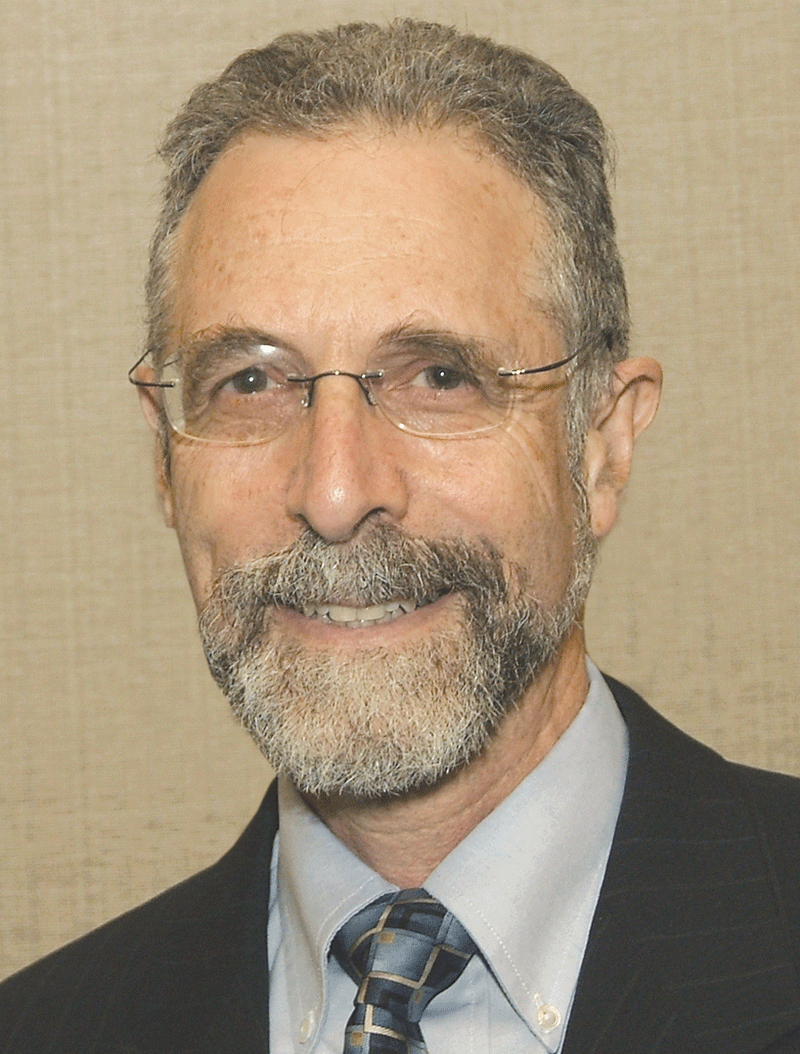
Ira Rubenzahl
Schools of Thought
Freeland told BusinessWest that there are several reasons why Massachusetts has historically lagged when it comes to attention to and funding of public higher education. One has been the predominance of private institutions that attract students from across the state and around the globe.
“The success and sheer number of these schools have made it possible for state leaders at different kinds of institutions, as well as the general public, to believe that, because we have Harvard and MIT, not to mention all those other great places like my alma matter, Northeastern, we don’t necessarily have to invest in public higher education the way California does or Texas does or Ohio does,” said Freeland, who speaks with decades of experience working in the public higher realm, including a lengthy stint at UMass Boston. “But that perspective is way, way out of date.
“Over time, public higher education has grown increasingly important as an educator of young people in this state,” he continued. “When I started in 1970, the majority of high-school students were still going to private institutions for college, but today, two-thirds of the students who graduate from our high schools are going to public institutions if they pursue education in this state; we have become overwhelmingly a primary provider of higher education for the broad population of this state at a time when we’re not having a lot of in-migration, we’re not having any population growth, and we have a workforce that needs a large number of highly educated workers.”
All this adds up to what Freeland called a heightened sense of urgency that hasn’t existed before, and the need for a plan of action, or agenda, moving forward.
And thus, the Vision Project was conceived in late 2009, and officially adopted by the Board of High Education in May 2010. It completed its first full year of implementation on June 30, and the Legislature is earmaking several million dollars in the fiscal 2012 budget for the Department of Higher Education to provide incentive grants to individual colleges and universities to organize activities around the goals of the vision project.
In a nutshell, the initiative was launched with the recognition that the state is in fierce competition with other states and countries for talent, investment, and jobs, and that its primary assets in this competition are the overall education level of its people, its workforce, and the overall competence and creativity of individuals and organizational leaders driving the state’s knowledge-based economy.
“There is a heightened sense of urgency, because I do believe that Massachusetts needs the best-educated citizenry and workforce in the country, because that’s about all we’ve got in the competition among states,” he said. “And if we neglect public higher education, we’re simply not going to have that.”
The Vision Project is, in essence, the vehicle through which public higher education will remain focused on preparing individuals for this economy — and holding itself accountable for results.
Several key outcomes have been identified, said Freeland, noting that, for the state to thrive in this highly competitive environment, it must achieve national leadership in several realms, including:
• College participation, or the college-going rates of high school graduates;
• College completion, or graduation and success rates of the students enrolled;
• Student learning, academic achievements by students on campus-level and national assessments of learning;
• Workforce alignment, or alignment of degree programs with the key areas of workforce need in the state’s economy; and
• Elimination of disparities, meaning achievement of comparable outcomes among different ethnic/racial, economic, and gender groups.
Meanwhile, the University of Massachusetts must claim national leadership in research activity related to economic development, and economic activity derived from research.
As it went about creating the Vision Project, the Commonwealth’s public higher-education community considered what other states are doing well in this regard, said Freeland, adding quickly that the state’s highly de-centralized system makes it difficult to replicate what other systems are doing. Meanwhile, the state’s track record with public higher education and a lingering lack of urgency in some camps makes it hard just to put such an agenda in place.
“You don’t have to make much of an argument in Ohio that public higher education is critical to a state that has been losing altitude as the Rust Belt has declined,” he explained. “There, public higher education is understood to be the name of the game, and Ohio State is the Harvard of that region. But you do have to make that case in Massachusetts much more strongly.”
Extreme Measures
As he talked about specific goals within the Vision Project, Freeland said there is a universal aspiration for each — that phrase “national leadership.”
This is inherently a subjective phrase, he said, but not in the case of such matters as graduation rates and diversity, where there are hard numbers to compare and contrast performance. It is one of the underlying missions of the project to create meaningful measures for the specific goals, and then to score high in each category.
Returning to the subject of graduation rates, he said the numbers used are broad and often misleading.
“The best metric for measuring student success and graduation rates, particularly at community colleges, is a vexed question,” he said. “The rate that is often cited as the national standard [about 25%] is based on whether or not students who begin as full-time students graduate in three years, which is a very small percentage of the students who actually attend our community colleges.
“So we are working to develop a much more useful metric,” he continued, “which would measure such things as how successful we are in graduating part-time students, how successful we are in graduating people who transfer in from someplace else, and how successful we are transferring students who start at community colleges and transfer on before completing a degree.”
And while graduation rates are certainly one strong focus of attention, there are several other goals within the Vision Project that are key to achieving that overarching goal of making the Commonwealth more competitive on the global stage, said Freeland.
And with that he referenced an acronym, and statewide initiative, that is gaining visibility and attention across the state: STEM. That stands for science, technology, engineering, and mathematics, and increasing the numbers of students enrolled in these fields — and then graduating them from those programs — are top priorities, said Freeland.
“Far too few young Americans are pursuing academic studies and scientific and technologically oriented careers, and far too few are coming out of our colleges with appropriate skills to drive an innovation-oriented economy,” Freeland told BusinessWest. “This has been a major focus in the business community as well as the education community.”
Local programs have been created to help spawn interest in the STEM fields, he said, listing everything from field trips to manufacturing plants to scientists coming into the classrooms to talk about careers, a “traveling road show,” as he called it, designed to inform and even entertain students.
One of the Vision Project’s goals is to build on these programs aimed at energizing students about STEM and graduating more students in those fields. “We get a good number of people coming out of high school who say they want to major in STEM fields, and start out in them,” he said, “but the dropout rate is very high.”
And the so-called ‘persistence rate’ is comparatively low, he continued, adding that this gauges how many students stay in the field of study they’ve chosen. Work to move those numbers higher is still another matter that the Vision Project will measure — and inject accountability.
The goal with all the initiatives is to prepare individuals for the job market they will face and create a workforce that will enable the state to compete for companies and jobs, said Rubenzahl, who echoed Freeland when he said the landscape has changed in nearly all aspects of business, and public higher education now has a larger role than ever in helping to create a pipeline of qualified workers.
He cited manufacturing and related fields such as biotech as examples of how things have changed, and how the role of public higher education has been broadened.
“We had some pretty good-paying jobs in various industries — originally it was textiles — that left,” he said. “And for many of those jobs, you didn’t need a college education. However, for many of the industries that stayed here or grew up here, you need much more education.
“The economy has changed, and public higher ed has a much larger role than it had before,” he continued. “Let’s face it, Harvard and MIT are not going to train highly skilled factory workers who can run these CNC machines or production workers in these biotech plants. They have a role, but we think we have a greater role as well.”
The Bottom Line
Summing up the Vision Project, Freeland said it is a comprehensive — and very visible — attempt to take public high education to a new level of excellence, responsiveness, and accountability.
“The campuses believe in these things … this isn’t about persuading schools to do things they don’t want to do,” he explained. “It is about taking it to a higher level of focus and having a higher level of aspiration and holding ourselves accountable.”
And it’s a long-term initiative, one that will play itself out over the next several years, involving perhaps many different gubernatorial administrations and college presidents. But he believes the program will stay on track, mostly because it has to if the state is going to thrive in this truly global arena.
“It’s easy for institutions to run out of gas addressing these very tough problems,” Freeland said. “You can bank on the fact that I’m not going to be here forever and Gov. Patrick isn’t going to be here forever, but these issues are going to be here forever.
“These are not issues for one day or one week,” he continued. “But once we get focus on them and get some momentum behind them, the gravitational force of statewide need will keep us focused. But it’s not going to be easy.”
George O’Brien can be reached at [email protected]