Home Sections Archive by category Education (Page 5)

Education

Education Sections
Willie Ross School for the Deaf Emphasizes Flexibility in Learning
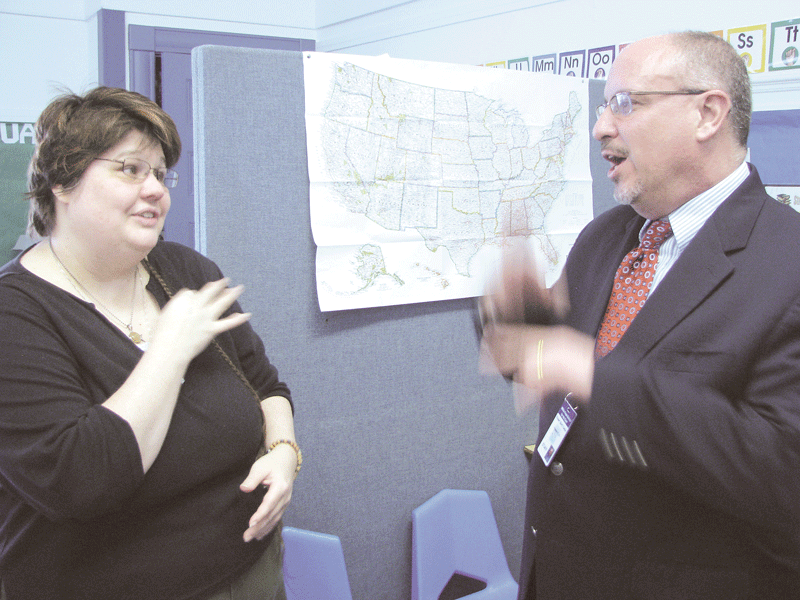
Bert Carter both signs and speaks with teacher Laura Chagnon

Bert Carter both signs and speaks with teacher Laura Chagnon — much like teachers and students communicate at the school.

The Willie Ross School for the Deaf was born out of tragedy. In the 47 years since, however, it has crafted a striking legacy of helping children overcome hardship.

Specifically, the Longmeadow-based school was founded in 1967 by a group of concerned parents who were struggling in the aftermath of a rubella epidemic that swept the East Coast and deafened thousands of children.

During that era, residential placement of all deaf children was virtually the only option for families. But these parents had a vision of a day placement program for their sons and daughters. Since existing programs did not provide such an option, they established their own day school.

“A group of concerned parents made the effort to put the school in motion,” said Robert “Bert” Carter, who took over as president and CEO last year. “I think we offer an alternative, and a big difference from other schools for the deaf, in that we’re not residential. We really are about serving the local region; we’re not interested in serving kids from the Boston area or Vermont. And we believe those kids should go home at night to their families.”

The school’s stated philosophy, in fact, is that it’s primarily the responsibility of the family, before the school, to make sure no child is left behind.

“We think families should be involved in the day-to-day lives of their children, and that they should have the opportunity to go home in the evening,” Carter added. “That’s not a criticism of residential schools; there’s a reason for those, too. But we offer this alternative.

“It’s a team educational approach,” he continued. “Again, there are several schools for the deaf in Massachusetts, and it’s good for parents that the approaches differ, so there’s some choice.”

Led by the late Gene and Barbara Ross — and named after their son, Willie, who resides in Southern California these days — the parent group sought to establish a program that would further their children’s abilities in an inclusive setting. Almost a half-century later, it has built a reputation and a track record that more than validate their decision.

Talk to Me

Betsy Grenier

Betsy Grenier sits with her young students on the floor, an intimate setting made possible by the small class size.

The non-residential nature of the Willie Ross School isn’t the only way it differed from established educational models. Another is the way students and teachers communicate and learn.

Specifically, the school began as an oral-only school, built on speech and lip reading, but over time parents and teachers saw limitations in this approach. Rather than abandon it completely, sign language was integrated alongside speech, and the school adopted a simultaneous approach known as ‘total communication.’

Over time, the school has integrated a number of communication approaches to enhance student learning, including advancements in the use of ‘residual hearing’ through digital hearing aids, FM systems (in which the teachers wears a microphone and transmitter and the student wears a receiver), and cochlear implants. These technologies, working in concert, maximize speech and understanding in a way that cannot occur when only a single method is available.

“With total communication, we use both speech and sign language to address the individual strengths of the child, Carter said. “We have students that use a variety of listening technologies, such as cochlear implants and the use of FM systems in the classroom. Again, we’re looking at each child’s strengths and needs and addressing those accordingly.”

In short, the school recognizes that instructional models must evolve along with the needs of the students it serves, and this extends well beyond how they communicate at school, but also encompasses where they learn. A case in point is the development of a dual-campus model. In addition to the 62 students based on the Longmeadow campus, other students are ‘mainstreamed,’ to some degree, at public schools in East Longmeadow.

“We have this campus here, which functions like a lot of schools for the deaf, but we also have classes in the East Longmeadow schools, at all levels — two classes in elementary school, two in middle school, and two in high school,” Carter said. “Students are served over there by our teachers and our staff, and they have opportunities to mainstream where it’s appropriate.”

This model, known as the Partnership Campus, is a good fit with many students whose families appreciate the mainstreaming opportunity but still want the benefit of an education overseen by Willie Ross-affiliated specialists. Whether through that program or learning at the Longmeadow campus, he explained, deaf students have the opportunity not to feel isolated among their hearing peers.

“Language access is important,” he said, noting that public schools offer diversity in a number of beneficial ways, but communication is critical. “For a student to be in a public school, even with a sign-language interpreter, it can be socially stifling.”

Forging Connections

Even in area public schools that aren’t part of the Partnership Campus — 17 of them, to be exact — the Willie Ross school is helping students feel less isolated through a consultation program, helping educators and staff understand the needs of deaf students and offering technical expertise and support regarding listening equipment.

“It can make a huge difference,” Carter said. “We have an audiologist go out to public schools with listening devices a student might benefit from. Technology changes constantly, so we help them stay ahead of that — we manage equipment, make sure it’s in good, working order, repair it if necessary, teach staff how to clean it, all those things.

“Along with that,” he added, “they work with students and remind teachers of simple things like having deaf or hard-of-hearing students sit in the front of class, and how to manage group situations — it’s hard to follow what’s going on when there are multiple speakers. We just provide consulting to school staff.”

The Willie Ross School also established its Outreach Division to provide services from infancy through age 22, encompassing everything from newborn screening to tutoring for high-school students.

“We have staff that go out to families at home and work with them around developing skills with the child and getting them ready to go to school,” Carter said, adding that the school’s philosophy of parental choice extends here as well. “We always go with what the parents are thinking. If they’re saying, ‘I want my child to speak and go to public school,’ we help them move through that process. If they’re saying they want the child to learn sign language, we help them do that.

“It can be a difficult process for the family,” he added. “They don’t necessarily expect that they’re going to have a deaf child; it’s usually a surprise, and you have to adjust expectations around that. Not that you don’t expect the child to be successful, but the process looks different. You have to be prepared for that. We help a lot of parents work through that and recognize the success their child has along the way.”

The Outreach Division also sponsors the Laurin Audiological Center, located in Pittsfield, so that public-school students in the Berkshires receive the same kind of audiological support available in Greater Springfield.

Personal Touch

Meanwhile, back at the main Willie Ross campus, small classes allow for plenty of individualized attention. Students are grouped by approximate age in most cases, but also by ability level, and many students have learning and physical disabilities in addition to deafness.

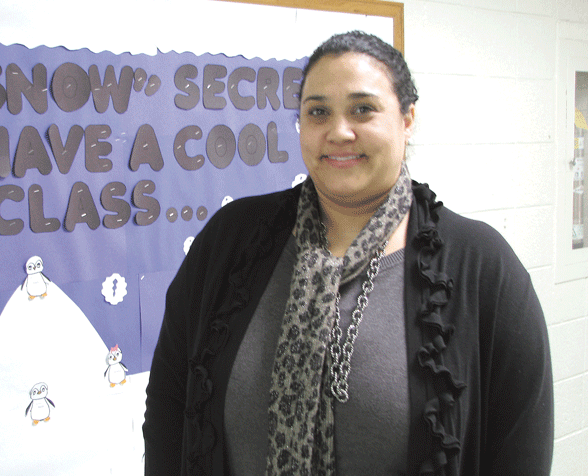
Laura Chagnon, who teaches a class of five boys, said most of them would struggle with mainstreaming, but at the same time, everything they experience at the school is preparing them in some way for mainstream life.

Carter understands that concept, having worked in some way with deaf and hard-of-hearing individuals for more than 30 years, most recently at the Austine School for the Deaf in Brattleboro, Vt. Having worked in adult social services as well as in education, he said, “it’s helpful to understand what happens to people after they leave school.”

These days, it’s his job to prepare them for that, and the Willie Ross School doesn’t cut corners on educational requirements.

“We have our own curriculum based on state standards, and our kids do well on state testing,” he told BusinessWest. “But even with all that, so many people in Longmeadow don’t know we’re here. Or, they know we’re here, but they don’t know exactly where.”

That’s not surprising, with the small, quiet campus tucked away on Norway Street, near the Connecticut border. But the impact of the school’s work, he said, radiates much farther out.

“The whole approach we take — with total communication, with the choice between two campuses — is based on what’s the most enabling environment,” he said. Perhaps surprisingly, it’s still considered an uncommon model.

“We’ve been asked to consult around the country on that, because it is an intriguing concept for people,” he continued. “Instead of looking at education as, ‘well, if you need this model, go somewhere else,’ we provide the whole continuum and can move fluidly between different modalities in our organization.”

Its students might be going places, all right, but for now, they’re staying close to home, learning and communicating in a variety of different ways. That’s something worth talking about. Or signing. Or both. Whatever works.

Joseph Bednar can be reached  at [email protected]
Education Sections
University Without Walls Offers Alternative Options for Adult Students

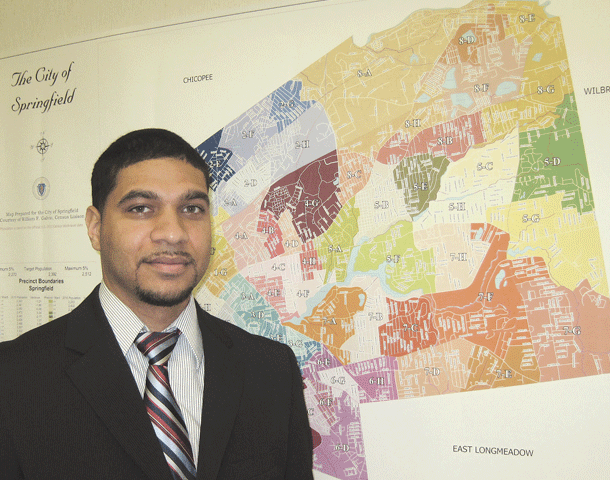
Orlando Ramos

Single father Orlando Ramos has been able to fit his degree work around his full-time job and his new role as a Springfield city councilor.

When Orlando Ramos of Springfield sits down to do his homework at the kitchen table, he’s often joined by another student — his 9-year-old daughter, Ariana.
As she completes her fourth-grade studies, Ramos, 31, is completing his concentration in Public Policy at the University Without Walls (UWW), a degree that will allow him to reach his next goals of a law degree and a future in public policy making.
Ramos is attending UMass Amherst’s adult degree-completion program, but, as the name implies, the classroom is one without walls, other than the walls of his home, due in part to his choice of completing his first degree completely online. The name conveys the fact that this is not a traditional university in terms of everything from physical structures to the hours spent in the ‘classroom.’
Adults like Ramos who want to change careers or never completed their degree programs, for whatever reason, need flexible support in the way of process and cost. As the nation pulls out of the Great Recession, President Barack Obama recently challenged colleges and higher-education leaders to adopt promising practices that include functions like ‘competency-based learning’ and ‘experiential learning.’ Such practices award college credits based on what students have learned in life and work experience, and offer more opportunities for adult students to get financial aid based on how much they learn, rather than the amount of time they’ve spent in class.
As one of the oldest alternative adult-education programs in the country, UWW is already at the forefront of meeting Obama’s challenge. Serving students in most fields available at the university, the unique program offers individualized degrees or course plans, 100% online, on-campus, or blended. UWW students earn a bachelor of arts or bachelor of sciences degree depending on the program they personally design, based on what credits they are able to transfer and what credits are attributable to experiential learning.
As a single father with a full-time job, it hasn’t been easy, Ramos admits, as some of his study sessions end with him waking up with a textbook stuck to his face. After years spent in construction and as a union steward with the United Brotherhood of Carpenters Local 108, a back injury just before the recession started had him considering his future options. After earning his associate’s degree in Liberal Arts from Springfield Technical Community College, he was accepted at another school to continue his education.
“But it just wasn’t for me … being in a classroom with students who were 10 years younger,” said Ramos, recalling a trying semester at a local university. “And it didn’t fit my schedule, so I really felt out of place.”
He soon found that right place at the right time in his life with UWW, and will graduate this May, according to a timeline he created.
And timelines are important, said Cynthia Suopis, a senior lecturer in Health Communications at UWW.  With the program for 12 years, she’s seen students like Ramos, as well as those in their 70s, who seek the degree that eluded them decades earlier.
For Angie Boris, 47, of Grafton, a career change from a $60,000-per-year job to her own business that she sold after the birth of a second son led to pursuing her dream of becoming a teacher through UWW online — again, on a timeline that fit her changing lifestyle.
All students, regardless of their story, enter into a process that allows them to evaluate and receive valuable credit for past experience; it’s called the ‘portfolio,’ and according to Suopis, it’s what sets UWW apart from all other online programs (more on this later).
For this issue and its focus on education, BusinessWest visited UWW to learn about this 45-year-old program, which offers a customized and affordable plan for adult students who want and need alternative means to earn a degree, and academically sound credit reflecting what they’ve truly learned in life — and on the job.

Degree by Design
Founded in 1971, the UWW program was considered fairly radical when it was rolled out, said Suopis.
“The movement was about the idea that education is more than going to classes for four years and getting a degree,” she noted. “It was started by a group of graduate students from all over the country, and the thinking was that adults have a lot of experienced work in their background; why couldn’t they get academic credit for that?”
With students ages 22 to 82, Suopis said the program has been a lifeline to individuals who have started and stopped school for families, experienced dramatic job changes, or endured hard times financially. But the philosophy of UWW is that, in addition to transferable courses from other schools, past work is honored, if it can be qualified.
While other schools may look at a student’s résumé and check off the list what is comparable to the school’s academic requirements, the UWW curriculum requires the student to spend an entire semester dissecting their résumé and other life experience; that process is called building the portfolio. It’s a reversal of the term ‘service learning,’ which means learning that starts in the classroom is then put into practice in the community. At UWW, students are bringing the practical experience with them to learn more, but receive academic credits for that past expertise.
Suopis explained that students with a minimum of 12 past college credits and a minimum 2.0 grade point average, once accepted, are required to accumulate 120 credits to earn a degree, or a ‘concentration,’ as the program labels it, and this can mean a focus on business, education, health, human services, or other fields such as journalism, criminal justice, public policy, sustainability, and applied psychology, all interwoven with their past experience.
Up to 75 of those 120 credits can go toward the selected concentration, and they are accumulated through two means: transferred credits from another school (up to 30 credits for the portfolio), or experiential learning outside the classroom.
Ramos transferred 47 credits and earned 21 more through his portfolio; Boris had 17 transferred, and her portfolio gained her another 18. Both have finished the four specific courses required of students, which entail writing the portfolio and designing their degree plan. The finished thesis is then evaluated by UWW faculty members, and not having to take classes for those credits saves not only money, but valuable time, Suopis noted.
The revenue from the four courses, either online or blended, allows UWW to be self-sustaining; the revenue from the additional online courses through UMass goes to the university.
The curriculum courses include:
• “Frameworks for Understanding,” where students design their course plan;
• “Reflections,” where they pick two subjects out of four: technology, organizations, leadership, and public policy; and
• The portfolio class, which involves a semester of critically analyzing what they’ve learned on many levels in their past.
The Reflections courses are not about content, said Suopis, adding that they are discussion points that impact students’ lives and help them write their portfolio. The first step is for the student to identify what they are good at, what they claim they know, and write about it. The writing process is a critical analysis that forces the students to pull out every minute detail of their past history and what they’ve learned, and in many cases, Suopis said, they are shocked to realize that they really did learn, and retain, a great deal of information and viable skills.
For Boris, the portfolio process was overwhelming but quite revealing.
“I consider myself fairly self-aware,” she told BusinessWest. “However, I learned that I had accomplished much more in my life than I had originally thought, and the portfolio process gave credibility to what I had done for my past career; basically my life experience was now worth college credit, and that was a big eye- opener for me.”
Suopis said this is a common reaction, and one that helps build the confidence needed for the remaining work to attain a degree.
“What we’ve found is that the sooner we get the student to write that portfolio, the better their chances are of graduating,” added Suopis, “because they see this huge number of credits coming to their transcript, and they’re like, ‘I can do this.’”

Personal Investment
But what about those students who are not skilled writers?
“There are two phobias at UWW — math and writing,” Suopis said with a laugh. “We’re not teaching them grammar, but if they can start at where they’re at and give us just five pages as we ask them a series of questions, we can get them to a place to be more comfortable with their writing.”
By the end of the semester, after numerous revisions and edits, those fearful writers are proud of their accomplishments in the past, Suopis said, and their newfound ability to record it all for credits saves hundreds, if not thousands, of dollars and valuable time.
The impact of the Great Recession is what prompted Ramos to alter his career plans. After his third back injury on the job kept him home for five months, and unemployment that followed due to a recession-prompted slowdown in the industry, he knew he needed to pursue a different, more stable path.
When writing his portfolio, Ramos learned that his past was a foundation for his future.
As a union steward, his main responsibility was to look out for the best interests of his union brothers, and little did he know back then that he was performing ‘constituent services’ — taking care of their issues and needs as a leader on the job site. And there were situations that weren’t all that easy to handle.
“As a steward, you’re not there to be friends,” he explained. “so there were a lot of situations where I had to build up the courage to stand up for my guys, and that’s a skill I know I’ve transferred to my current positions.”
Now as a district director for state Sen. James Welch, who represents the 1st Hampden District, Ramos stands up for Welch and his constituents. And as an newly elected Springfield city councilor, he’s standing up for the residents in Ward 8, which includes Indian Orchard and parts of Pine Point and Sixteen Acres, as well as all city residents with the entire council.
“I learned about what I really learned in the past,” Ramos said as he recalled the portfolio process. “It was interesting to link my experience and previous career to my current career positions because on the surface, it doesn’t look like it’s something that matches, but it does, and it’s helped me in public policy, legislation, and being elected.”

I Can Do Anything
UWW serves between 750 and 800 students each semester, with fully integrated UMass graduations of 150 per year at three different times: February, May, and September.
The stories of why students of all ages come to UWW are numerous. For some, it may be their last, best chance to earn a degree. But when a student speaks of future opportunities and self-worth, Suopis knows she’s succeeded in guiding another student in their journey to what could be their perfect job.
“We’re now having two and three generations that have gone though UWW — mom, daughter, and granddaughter — and as a 45-year old program, that’s pretty cool to see that happen.”
True to UWW’s website slogan, “we get adult students,” Ramos and Boris are good examples of non-traditional students who ‘get’ UWW, and are on their way to a future where doors will be opening because of their time spent at a university without walls.

Elizabeth Taras can be reached at [email protected]

Education Sections
HCS Head Start Strives to Get Preschoolers on the Right Track

Nicole Blais

Nicole Blais says HCS Head Start has evolved over the years to reflect the current emphasis on preschool academic readiness.

Fifty years is a long time in any field. Soit’s no surprise, Nicole Blais said, that early-childhood education has evolved quite a bit since Head Start was launched in 1965.
“We consider ourselves a comprehensive early-education and care program that focuses, of course, on school readiness,” said Blais, director of community engagement for the Holyoke-Chicopee-Springfield Head Start program, which boasts 16 area centers and benefits mostly low-income families in 15 different Greater Springfield cities and towns.
“But when it first started in 1965,” she continued, “it was a summer program that focused on health and nutrition, with the idea that poor children who had access to healthcare and access to healthy foods would have a head start when they entered kindergarten, and be able to catch up to their peers who might have had other opportunities available to them.”
While health and nutrition remain key elements of Head Start, however, the program has increasingly focused over the decades on instilling the foundations of literacy and learning in preschoolers, so they can hit the ground running when they reach public school.
“The field of education has evolved; it had been more about the care of children, as opposed to education,” Blais said. “We’re so happy that early-childhood education is finally being recognized as a field beyond babysitting. We just don’t play ring around the rosy in these classrooms. There’s a lot of learning happening with this age group.”
While moving from a summer to full-year program after its early years, Head Start has evolved in other ways as well, she added. For instance, “people realized they couldn’t do anything sustainable with this age group without finding ways to include and engage parents, since the parents are with their children the majority of time through those first years.”
Today, she said, teachers team up with service coordinators, medical assistants who perform needed health screenings, mental-health professionals, nutritionists, and others, who constantly aim to engage parents in the total development — educational and otherwise — of their children. “We’re looking at the child as a whole.”

One Tree, Many Branches
Thirty-two Head Start programs blanket Massachusetts, Blais said, each with its own catchment area. HCS Head Start, as it’s known in shortened form, operates most of its centers in the three cities that comprise its name, although it also has sites in Ludlow and Palmer. Children from other area communities may access out-of-town centers, however.
“We don’t have centers with classrooms in all of our towns because our charge is really to set up shop in communities where there’s a great need,” she said, noting that poverty tends to be more prevalent in urban areas. “We work with vulnerable children and families — children who are living at or below federal poverty lines. And 10% of our enrollment has to be made up of children who have a special need or disability.”
Under the leadership of its long-time executive director, Janis Santos, HCS Head Start operates three different types of programs. There are 904 slots for traditional Head Start, designed for 3-, 4-, and 5-year-olds. Meanwhile, 60 clients are enrolled in Early Head Start, which works with prenatal families and children from birth to age 3, with goals ranging from healthy prenatal outcomes to the development of very young children to cultivating a healthy family structure. “Then, when a child turns 3, they can transition into the preschool room,” Blais said.
Finally, “about 10 or 12 years ago, we became the Migrant Head Start grantee for the state of Massachusetts, and we are charged with providing Early Head Start services to eligible children whose families are working in agriculture. Our assessments showed that a lot of migrant families reside in Western Mass. as opposed to the eastern part of the state,” she explained. “That program is a little different in terms of length of operation; those families tend to be here in the summer months, so we have a fast and furious 13-week program to cover those summer weeks.”
Last year, federal budget cuts resulted in a loss of 200 slots, making the program more competitive than it already was. Blais said HCS Head Start aims to fill spots by the greatest need first — not only financial, but developmental as well. And homeless families are always a priority.
With the public education system so focused in recent years on testing and outcomes, there has been increased scrutiny of Head Start. Competing studies have produced very mixed data in determining how much of an advantage enrollees gain when they reach kindergarten.
One notable 2011 study by the U.S. Department of Health and Human Services claimed that Head Start benefits both 3-year-olds and 4-year-olds in the cognitive, health, and parenting domains, and aids 3-year-olds in the social-emotional domain.
“However,” it goes on, “the benefits of access to Head Start at age four are largely absent by first grade for the program population as a whole. For 3-year-olds, there are few sustained benefits, although access to the program may lead to improved parent-child relationships through first grade, a potentially important finding for children’s longer-term development.”
Blais noted that each child is a different case, and some make academic gains faster than others.
“Every child is unique, especially during this critical time. They all come in here at different stages, and they all have their unique ways of mastering different skills,” she told BusinessWest. “It can be hard to keep that in perspective. There’s this standard, but it’s sometimes hard to capture that. Sometimes it’s hard for people to understand the complexities when we’re working with unique little ones.”
That said, HCS Head Start — which makes sure all its teachers have degrees in early childhood education and that each classroom has no more than 20 students — is always looking for ways to self-evaluate.
“We’re always figuring out how to appropriately measure something that gives validity to the program,” she said. “Teachers can tell you a thousand anecdotal stories about successes in the field. In general, we’re working really hard trying to figure out how to measure those.”

Getting Better

What is clear, Blais stressed, is that parent involvement in the program makes a big difference.
“There’s been a lot of talk over the years about quality, and what makes a quality early-education and care program: things like staff and materials,” she said. “The unique thing with Head Start, what has made it stand out, is the parent-engagement piece. The staff really get to know the families.”
They accomplish this through home visits, family fun nights, cultivation of classroom volunteers, and a policy council comprised of elected parents who serve as consultants to HCS Head Start’s senior management.
“We always make sure the parent’s voice is included,” she said. “Parents are made aware of how the Head Start program works — not only what they see in the classroom, but in its entirety. We’re developing leadership skills and advocacy skills for the family, too, so they can hopefully get a different perspective on how Head Start works and how important their voice is. Sometimes our families have been through some challenging times, challenging situations, and they don’t always believe they have the power to make a difference.”
Other Head Start programs are aimed directly at family involvement, from the TLC Building Healthy Relationships Program, which helps adults and teens develop skills in parenting, conflict resolution, financial management, and other areas; and the MILK (Men Involved in the Life of Kids) Program, a father-involvment initiative that offers male-focused activities that bring fathers and their children closer together.
While parents become more active, Blais noted, the teachers never stop learning, accessing a host of professional-development opportunities, particularly in rapidly advancing fields like science and technology.
“Professional development is huge in Head Start. We do a lot of in-service trainings,” she said, citing one recent workshop in conjunction with Holyoke Health Center on helping children develop healthy eating habits. “Teachers are on the front lines with kids, so we’re making sure they have a wealth of information, including community-resource information they can pass along to families. It makes a big difference for the child in the end.”
With so much at stake — and a waiting list to be admitted — it’s not surprising that regular participation is critical. Specifically, Blais said, children need to maintain an 85% attendance record to stay in the program.
“Not only will they miss out if they don’t show up,” she said, “but we’re really trying to instill good attendance habits for when children go off to kindergarten.”
Just one more way, in other words, to get a head start.

Joseph Bednar can be reached at [email protected]
Education Sections
Square One Returns to Its Roots in the South End

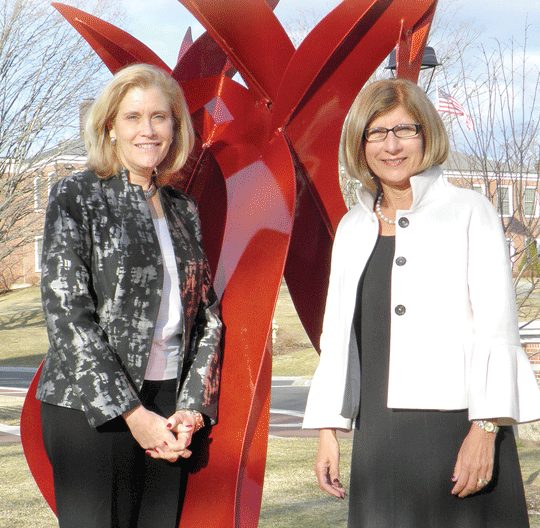
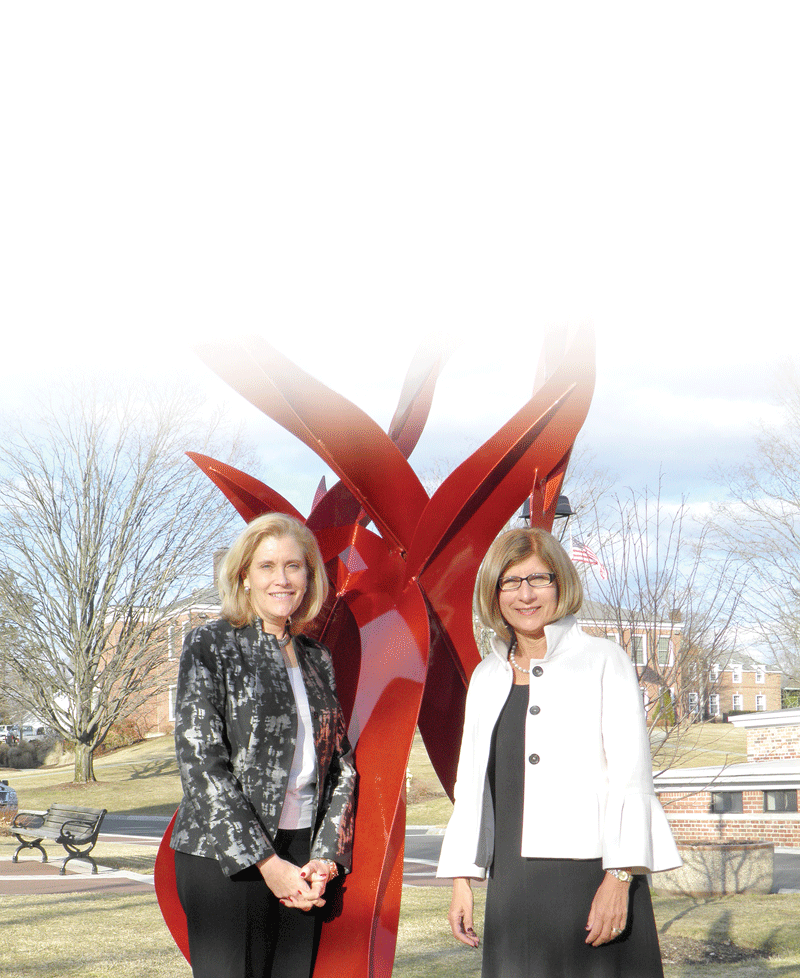
Joan Kagan

After more than two years of turmoil, Joan Kagan says Square One is happy to be back home in Springfield’s South End.

Joan Kagan says she never really settled in to her office at what is now known as the Business Growth Center in the Springfield Technology Park across from STCC.
She made it comfortable, finding some non-matching office furniture from various sources — including a table to replace the cardboard box that her printer sat on for months — and securing a print depicting landmarks at her alma matter, Columbia University, that was intended to somehow fill in for the diplomas that were lost when a tornado tore down Main Street in Springfield on June 1, 2011 and essentially leveled Square One’s facilities there.
But the suites in the growth center that housed several administrators with Square One, an early-education provider with facilities in Springfield and Holyoke, were always intended to be temporary, said Kagan, adding quickly that she knew going in that this is, indeed, a relative term.
And as it turned out, the stay was less temporary than she hoped, a development forced by another calamity roughly a year ago — the natural-gas explosion that took out another of Square One’s facilities, this one on Chestnut Street — and difficulty securing a place to rebuild in the city’s South End, the institution’s long-time home, because of speculation and relative uncertainty regarding MGM’s bid to locate a resort casino there.
But in what would have to be considered one of the company’s rare instances of good fortune lately, space unexpectedly became available for lease at 1095 Main St. (the former Grape Vine liquor store), just a block or so from Square One’s former location. A few months ago, elaborate ceremonies were staged to mark the opening of the company’s Family Square center, a family resource facility, on the first floor of that three-story property, and by March, Kagan expects other programs and personnel to be moved into the renovated second floor.
The 14,000-square-foot facilities are not exactly what Square One leaders had in mind as they conceptualized plans for the next chapter in the institution’s history following the tornado, Kagan noted, adding that the preference was certainly for new construction and ownership of the eventual new home. But they represent a chance to return to the South End, which has been home since the late 19th century, and an opportunity to bring back together programs and employees that had been scattered after the twin calamities.
“It’s exciting to be back in the South End — that’s our home,” said Kagan, adding that relatively long-term leases (five years for the first floor and seven for the second) have been inked, giving Square One time and opportunity to determine what ‘home’ will be in the years and decades to come.
Much will be determined by if, where, and how the MGM facility — now the only casino proposal for the Western Mass. region still on the table — takes shape.
For now, though, Square One is focused on the immediate future and proving John Updike wrong when he wrote “you can’t go home again.”
Back in September, there was a different kind of literary look and feel to the grand opening at 1095 Main St. Indeed, students, in a nod to that classic line from The Wizard of  Oz, wore T-shirts that read “there’s no place like our new home.”
The ceremonies came a tumultuous 27 months after the June 2011 tornado changed the landscape on Main Street. The Square One facilities there were so extensively damaged that they had to be torn down.
Programs and personnel were then relocated to a number of sites, said Kagan, listing facilities on Wilbraham Road, the MCDI building on Wilbraham Avenue, and, eventually, the Technology Park at STCC, among others. “We put people anywhere we could find a desk and an office.”
After a short period devoted to stabilizing operations, preliminary planning for building a new, larger facility in the South End commenced.
This was complicated by delays in obtaining an insurance settlement, but moreso by MGM’s announced plans to build an $800 million casino in the South End, mostly on underutilized, vacant, or tornado-damaged property directly across Main Street from Square One’s former home.
“We had owned one piece of property, and we were looking to expand that piece of property,” Kagan explained. “But people were talking to MGM, and MGM was optioning some land; people were hoping that MGM would come to them and make them an offer. There were simply too many moving parts for us to do anything.”
Plans then shifted, with a new goal of finding property to lease, she went on, adding that it was serendipitous that the property at 1095 Main St. became available when a tenant slated to move in backed out of the deal.
In August, Square One opened its Family Square center, as well as one 20-student preschool classroom. The center houses a number of what Kagan called “parent education support services,” and also hosts a number of programs and services, such as a group for mothers of 5-year-old children.
There are also computers at the facilities, on which parents can search for jobs, she said, adding that the new location on Main Street enables Square One to expand services offered at the center and bring under one roof a number of programs and initiatives that were scattered across the city.
And with a new home secured, Square One officials can continue efforts to realize the growth that was anticipated in early 2011, but then essentially shelved due to the loss of facilities from the tornado and gas blast.
Elaborating, Kagan said the company had planned to bring an additional 200 children into its expanded facilities on King Street in Springfield, but that additional capacity was absorbed by the displacement of students following the tornado and gas explosion.
“Those events essentially blew my business plan out of the water,” she said, adding that process of rewriting that document is ongoing.
Growth opportunities will likely accompany an MGM casino in the South End, she said, adding that provisions for day care for the children of employees are part of the agreement between the city and the corporation, which has already had preliminary discussions with Square One about where and how to provide those services.
Meanwhile, possible expansion into Union Station, which is currently undergoing extensive renovations, remains a possibility, she said, adding that a child-care facility has long been one of the potential reuses of the station — because of its location and the public transportation that will be based there — and it remains an option for that landmark.
Looking down the road, Kagan said she’s not sure what Square One will do long term, again, because of the uncertainty regarding the MGM proposal, how it will take shape, and what additional property the casino giant may acquire.
But she says the company is committed to the South End, and to being part of that community. And as it goes about writing that next chapter, Square One will adhere to a philosophy that was actually in place long before the tornado roared down Main Street, but has been reinforced by the events of the past few years.
“We never gave up … we simply said, ‘this is what we’ve got, now how do we move forward given that this is the reality?” she explained. “One of our mantras has always been to be solution-oriented; there’s always a solution, and you just have to get creative and figure it out. But it’s there.” n

— George O’Brien

Education Sections
Bay Path Looks to Carve a Niche in Emerging Field of Cybersecurity

Larry Snyder

Larry Snyder says positioning Bay Path College as a hub of cybersecurity expertise is an ambitious, but attainable, goal.

Larry Snyder says his broad goal is to help position Bay Path College as a “hub of cybersecurity in Western Mass.”
That’s a somewhat ambitious but certainly attainable goal, he said, noting that there are many aspects to the process of getting there, starting with the school’s decision to create what is believed to be the first master’s degree program in cybersecurity management in New England, which will be led by Snyder and launched later this month. There is also the Cybersecurity Management Summit, which the college will host on Oct. 11, featuring Robert Milton, retired commander of the Metropolitan Police Service, or New Scotland Yard (more on that later).
And in the fall of 2014, the school will launch an undergraduate program in cybersecurity, said Snyder, who has held titles ranging from director of the CyberSecurity Research Center at Herkimer Community College in New York to manager of fraud operations at First USA Bank in Wilmington, Del.
If all goes as planned, he told BusinessWest, Bay Path could soon join schools such as UMass, Utica, the University of Maryland, Stonybrook, and Champlain College as recognized leaders in academic programs and research in the emerging field of cybersecurity.
More importantly, though, it will be training individuals for a growing number of jobs in this emerging field, and thus helping to meet one of the recognized challenges moving forward — making sure there is an adequate supply of talent to enable the business community and society in general to cope with a security problem that grows larger and more ominous each year.
And the new master’s program will address one of the more pressing and immediate needs, said Snyder, citing a documented lack of management-level individuals to lead programs and individuals in the fight against cyberthreats.
“This program grew out of the sense that there was an opportunity — something was missing,” he explained. “Cybersecurity had been around for a while — there are lots of technical cybersecurity programs in academia — but what was missing, at the master’s level, was this cybersecurity management focus.”
Bay Path’s new 36-credit, online program will address this void, he said, by training people for some of those positions he’s held — in both academia and business — and a host of others.
And there will be great demand for such individuals, he said, enough to give graduates choices and some clout.
“The really great part about this — and what I tell students when I meet with them — is that they can really write their own career path,” he noted. “Typically, you’d expect them to fall into that chief information security officer level, but you’ll also see them as compliance officer, senior auditor in an accounting firm, and many others. It’s so wide open right now, and it really depends on the industry you’re interested in.
“This is a great time to get into the field,” he went on. “It’s been a great time for about 10 to 15 years, and it’s going to be a great time for another 20 years, I expect. These graduates are going to be able to take this field in a whole new direction.”
For this issue and its focus on education, BusinessWest takes an in-depth look at Bay Path’s new master’s program and its broader efforts to take a leadership position in a field where the prospects are bright and the job opportunities are expected to be plentiful.

Technically Speaking
“Digital Forensics.” “Financing, Cost Control, and Project Management of Cybersecurity Organizations.” “Information Assurance Manage-ment and Analytics.”
These are just a few of the 12 courses currently planned for the Master of Science in Cybersecurity Management program, said Snyder, noting that about 10 students have signed up for the program, and he expects probably double that number by the time it is launched at the end of this month.
And these individuals come from a number of industry sectors, he said, listing everything from accounting to gaming; from banking to law enforcement. This diversity provides more evidence of both the scope of the issue of cybersecurity moving forward and its promise when it comes to jobs in this field.
“President Obama calls it one of the most serious economic and national-security issues we face as a nation,” said Snyder, noting also that some of the nation’s leading industries are vulnerable to the ever-expanding threat of online attacks, cybercrime, and digital espionage. “Our financial systems, power grids, telecommunications, water supplies, flight operations, and military communications are all online, making them vulnerable to this growing, global form of cyberwar.”
Snyder has been on the front lines of this war, as someone both fighting the threats directly and teaching those who will join the swelling ranks of those hired to keep their employers’ interests safe.
A former military police officer in the U.S. Army, he would later serve as loss prevention/operations manager for Jamesway/Ames in New Jersey, manager of Fraud Operations for First USA Bank, and senior information systems auditor for NBT Bank in Canajoharie, N.Y., before shifting into academia.
He’s served as an adjunct professor focusing on crime investigation and cybersecurity at Utica, but his more recent, and far-reaching, work came at Herkimer County Community College, where he received accreditation for a cybersecurity program from the Committee on National Security Systems (CNSS), developed a curriculum, and handled ongoing assessment of the program and individual courses to meet standards set by the industry, the State University of New York, and the Middle States Commission on Higher Education.
At Bay Path, his first assignment is the get the new master’s degree program off the ground and win accreditation for it. He described it as a much-needed vehicle for training individuals for mid-level management positions in a host of sectors that will “bridge the gap between upper management and technologists that will be working for them.”
But his broader mission is to make the school that “cybersecurity hub” he described.
And the upcoming Cybersecurity Management Summit is one of many initiatives being undertaken with that goal in mind.
Subtitled “The Human Side of Cybersecurity Management,” the event will feature thoughts from Milton about the global challenges associated with this emerging specialty, and provide first-hand examples of what he has learned about human nature and its relationship to cybercrimes and cyberterrorism in particular.
The summit will also include a panel featuring, among others, Snyder and Marisa Viveros, vice president of IBM Corp. and leader of something called the Cyber Security Innovation Initiative. She will discuss efforts to create a pipeline of talent in cybersecurity and encourage collaboration between industry, government, and academic institutions.
Meanwhile, the undergraduate program in cybersecurity, currently on the drawing board and slated to begin a year from now, will represent another step forward in the process of gaining regional and national prominence in this field of study.
That program will have two focal points, or majors, he explained. One will be in ‘cybersecurity and information assurance,’ which will involve computer programming, and the other will be in ‘digital forensics,’ an emerging field that holds significant promise for Bay Path because there are currently very few degree programs in this realm.
“Digital forensics involves treating the computer, cell phone, or other electronic device as a crime scene,” he explained, noting that there will be demand for people trained to do this work. “Students will learn how to conduct a search for evidence on that particular device, and process it in the same way they would if they were at a more traditional crime scene collecting fingerprints or blood.”

Keys to Success

Summing up his outlook — and his assignment moving forward — Synder said that, in time, and perhaps not much of it, Bay Path could become a center of academic excellence in cybersecurity.
“We want to make an impact in this area,” he told BusinessWest. “This is a new endeavor for Bay Path, and something not typically connected to the school — this is not a technical school. But the management focus really hits home; we have a good business program here, and a good criminal-justice program. This is going to be a real growth program for Bay Path.”
That’s because ever-improving technology has fostered new types of crime and breeds of criminals — and a steadily growing need for people to fight it.

George O’Brien can be reached at [email protected]

Education Sections
Diocese of Springfield Wins Cathedral High School Insurance Fight

Ann Southworth (right, with Mark Dupont)

Ann Southworth (right, with Mark Dupont) says the “thousand details” of tornado recovery interrupted her broad vision for Cathedral, but her strategy is back on track.

When Ann Southworth became president of Cathedral High School, she was excited to implement a new plan to invigorate the school and increase enrollment.
A longtime educator and assistant superintendent in Springfield Public Schools, she was also a member of Cathedral’s board, and had helped shape some new ideas for the school.
But that was in May 2011, one month before devastating tornadoes tore a 39-mile path of destruction through Western Mass., and the 52-year-old Cathedral High School, which had also housed middle-school students since a 2009 merger with St. Michael’s Academy, was directly hit.
Southworth’s excitement over her new professional endeavor was quickly overshadowed by multiple challenges, starting with finding a temporary home for Cathedral’s grade 6-12 population — in less than two months.
“My first thought was, ‘we’ll overcome this; we’re going to keep going,’” she recalled, “and I found the principal, picked him up in the parking lot of Holy Cross, and we starting planning that next day.”
That summer, “a thousand details” had to be addressed, Southworth said, and administrators put on new hats — as realtors, searching for temporary quarters; as facilities managers, to move all offices to various buildings in and around Springfield; and as transportation coordinators, for getting students to wherever the new temporary home, or homes, would be.
Other church properties, including the St. Michael’s Priests Residence building and Our Lady of Mt. Carmel, were damaged as well, while the St. Jude Mission property in Springfield was hit hard by a microburst a month and a half later, and remains closed.
To diocesan leaders, pictures of Cathedral’s splintered roof and shattered windows spelled out an obvious need for major repairs, if not complete reconstruction. So, like many other commercial and residential property owners in the twister’s path, the diocese filed insurance claims in the millions for all four properties. Language in the policy with Catholic Mutual, the insurance company of which the Diocese of Springfield is a member, guided the determination of what the school believed to be ‘replacement value,’ Southworth said.
But that summer of a thousand details turned into a two-year difference of opinion between the insurance company and the property owner, because the initial settlement offer was unexpectedly — and jarringly — low.
“You try to work things out internally, especially when you have close relationships, but with our cost estimates as high as $70 million, for the worst-case scenario, and their $13 million response, it was just too great a gap to make up,” said Mark Dupont, director of public affairs and co-secretary for communications for the Diocese of Springfield, detailing how, when it came to questioning literally every element of the claim, Catholic Mutual didn’t give up.
But neither did the diocese.
The long journey to work through a process called a ‘reference procedure’ (more on this later) finally culminated this past Sept. 10, when the Diocese of Springfield and Catholic Mutual announced an amicable resolution of all claims, totaling $60 million for tornado damage to all four properties. A final step with the Federal Emergency Management Agency (FEMA) still looms for potentially more storm-related compensation, but the major battle is now over.
“When you’re facing challenges and hardships, you rise to the occasion,” Southworth said. “You come out of it better … and we did.”
For this issue’s focus on education, BusinessWest met with members of the Diocese of Springfield to learn more about their two-year insurance battle to secure what they felt Cathedral was entitled to, proving that patience is only one of their virtues.

Survival Mode
Bishop Timothy McDonnell explained to BusinessWest that the tornado that destroyed Cathedral High School and the other properties caused him many a sleepless night.
“But I couldn’t forget the words I had so often quoted to others, Mother Teresa’s words: ‘there’s nothing so bad that God can’t bring a greater good out of it — if we let him,’” he recalled.
Looking over the past two years, McDonnell said Mother Teresa’s words have been prophetic in the case of Cathedral, but the situation has been trying nonetheless for students, teachers, and parents. School choice and charter schools have affected the academic marketplace across the country, and specifically enrollment at Cathedral, which now stands at 236, said Dupont. The current goals are 300 high-schoolers and 200 in the middle school, but those figures could change as the school’s final footprint emerges.
“The school is struggling,” he said. “It’s fine to have a life raft, but you don’t want to live in the life raft.
“The tornado would have been devastating anyway,” Dupont went on, “but it came at such a pivotal point when we were ready to take that next step with Ann. And next thing you know, it was ‘where are they going to have classes in September? Where are we going to put the students we have?’”
Many of the options the diocese investigated involved undeveloped vacant space or non-academic space. Creative solutions were pitched by the city of Springfield, commercial realtors, and Springfield Technical Community College, but state regulations for using the college space would take far too long into the year to wait.
They received a call from the superintendent of schools in Wilbraham, a Cathedral alum, who suggested the diocese look at Memorial Elementary School. While it made a difficult situation even more trying for students and their parents, due to school busing, after-school programs, and other issues, said Dupont, the diocese still had to spend $750,000 to upgrade the school. With little time to widen the search, Memorial became the life raft for Cathedral, while the middle-school students went to the diocese-owned Holy Cross campus on Eddywood Street in Springfield. Dupont said the location has worked, and the lease in Wilbraham will be extended for as long as necessary.
But ‘as long as necessary’ is difficult for parents to hear when they want answers as to why the diocese can’t make a decision on whether to repair or rebuild. Yet, until engineers are allowed to venture into the damaged building, the extent of the damage is unknown.
“When you’re engaged in negotiations with an insurance company, you have to be prudent in how you proceed,” Dupont explained. “Because we were holding them [Catholic Mutual] to the full commitment of the policy, we weren’t going to give them any sort of ‘out’ to get around it — replacement cost is replacement cost.”
A total of $20 million was initially advanced to the diocese for preliminary cleanup and other expenses that were incurred, considering the magnitude of destruction, Dupont explained. But the initial low-settlement response persuaded the diocese to utilize the aforementioned ‘reference procedure,’ a Massachusetts law afforded in settlement claims, allowing both parties to appoint representatives for each side and a mutually agreed upon ‘referee.’
“That referee listened to months and months of testimony and reviewed data to determine what the real damage was that they could see,” said Dupont, likening the parading of engineers on both sides to a “battle of the experts.”
Due to the claims being challenged on almost every point, the process dragged for months, but the decision upholding $60 million worth of claims was finalized in September, with no more debate.

Cathedral justified far more

Diocesan officials knew the damage to Cathedral justified far more than the $13 million initially offered by its insurance company.

The settlement, Dupont said, brings all disputes with Catholic Mutual to an ultimate conclusion, without the possibility of further legal challenges, and allows the diocese to build whatever is in the best interest of all to update a 1950s school to the standards of the 21st century.
However, the next hurdle involves FEMA, which coordinates the federal government’s role in preparing for and responding to all domestic disasters, natural or man-made. The diocese is hoping to recoup some of its tornado-related costs, but that remains to be seen, said Dupont.
“Their regulations are daunting and very strict, and rightfully so, but we couldn’t go to FEMA until the claim was resolved,” he explained. “And any potential outcome is predicated on whether you’ve aggressively pursued your claim with your insurance carrier first.”

Valuable Assets
During the insurance battle, work on the new strategic plan never slowed, said Southworth.
The plan calls for more of a day-school curriculum and an extended day, where students stay from 8 a.m. to 5 p.m., with regular academic classes followed by experiential learning such as fine and performing arts, community service, internships, and sports.
A focal point in the school’s strategic plan will be the International Baccalaureate Diploma Program, which will set Cathedral apart from other schools, she said. Even as a pilot program, 71% of seniors and 61% of juniors are enrolled in one or more classes.
Tuition for Cathedral is now $9,300, but McDonnell has charged the administration to find ways to make Cathedral more affordable for lower-income families. Currently 57% of students receive some form of tuition assistance through the diocese, alumni, and donors, but to grow the school’s population, something more is needed. Another part of the plan, the Cathedral Tuition Foundation, as it is called, will answer that important issue.
“Since the tornado, the alumni have rallied in support of Cathedral, and it’s leading to a campaign to endow tuition funding so that future generations of Panthers may benefit from the same first-class education that has always been Cathedral’s hallmark,” said McDonnell. Simultaneously, St. Michael’s Academy has been able to undertake its own plan to ensure its growth and stability.
“The connections that Cathedral has are really powerful,” Southworth added, mentioning just a few of the noteworthy alums, including Michael Ashe (’57), the current Hampden County sheriff; Richard Monaghan (’66), research biologist with the patent for the first cholesterol-reducing drug; and Derek Kellogg (’91), head basketball coach for UMass.
The word is out regarding the foundation, but Dupont likened it to a chicken-and-egg scenario, since donors don’t currently know what Cathedral High School is going to look like. But that isn’t deterring the diocese from testing the waters.
“We’re a people of faith,” he said, “and this is going to require people digging into their reserves of faith and saying, ‘I’m going to make this commitment, even though I’m not sure how the site is going to play out.’”

Challenge Accepted
To this day, books and other educational materials remain in the damaged Surry Road school that teachers have not been able to retrieve, Southworth said. But not one lesson has been missed, even from the first day of classes in September 2011.
She said she’s committed to continuing that ‘show must go on’ mentality, adding that, as the FEMA process unfolds, she will continue implementing the invigorating plan that was her mission before disaster struck from the sky.
All agree that, whether the school is rebuilt or repaired, this new plan and new energy will help create a bright future for even more students of Cathedral High School — who are, after all, among the most valuable of the diocese’s assets.

Elizabeth Taras can be reached at [email protected]

Education Sections
MacDuffie’s New Campus in Granby Offers Room for Growth

Steve Griffin, left, and Tom Addicks

Steve Griffin, left, and Tom Addicks say the Granby campus can help create a stronger balance between boarding and day students.

Steve Griffin wasn’t at the MacDuffie School campus on Ames Hill in Springfield when the June 1, 2011 tornado tore through the middle of it, uprooting huge trees and damaging century-old buildings as it moved east.

He started as head of the then-121-year-old school two weeks later, when the institution was still sorting out the damage, adding up the cost, and counting blessings — the tornado hit on the last day of classes, and students and staff took shelter in a basement, with no recorded injuries.

Originally, Griffin’s first assignment when he arrived was to oversee relocation of the school to new quarters on the grounds of the former St. Hyacinth seminary in Granby — a process that started roughly two years earlier — but the tornado changed that plan somewhat. The new first order business would be a healing process.

“We have many tornado stories from the campus,” said Griffin. “And from my standpoint, since I wasn’t here during the storm, I was unaware of the extent of it, but you had people, even a year later, opening file folders and seeing shards of glass fall out.”

But if the memories of the tornado and some of the physical evidence of that day still remain, MacDuffie has certainly moved on from that calamity and some years of economic struggle that preceded it, and the new campus in Granby has greatly facilitated that process.

Indeed, the move represented what Griffin called a “new day” for the institution, and in many respects.

He explained to BusinessWest that the new campus enables the school to market itself more effectively to a much wider audiences — from residents of Hampshire County communities such as Amherst and Northampton, who were previously intimidated by a commute to Springfield, to international students.

The sprawling campus, coupled with recent renovation and expansion efforts, are enabling MacDuffie to continue and expand its respected academic programs, while also making huge strides in efforts to take its athletic programs to a much higher level.

The former St. Hyacinth seminary in Granby

The former St. Hyacinth seminary in Granby offers an environment in which the MacDuffie School can grow, with more classroom space, boarding quarters, and several acres of playing fields.

At the Springfield site, there were no playing fields to speak of, said Tom Addicks, assistant head of school and a math teacher, adding that the school had to make use of various municipal parks and sports facilities. “And here, we have so many playing fields and a very in-depth sports program, and that was very appealing to us.”

The sprawling grounds that roll out like green carpet to the stately stone former seminary offers the classic New England preparatory-school experience that appeals to parents of American and international students, and allows MacDuffie to compete with nearby Wilbraham Monson, Deerfield Academy, and Suffield Academy, said Griffin.

“The site is a real gem; it’s got the ‘look’ when you drive up the drive — ‘majestic’ is a great word for it considering the open space, the pastoral setting,” he noted. “I think parents feel this will be a safe environment for their children to learn, both day students as well as international students.”

And there are now hopes — and high expectations — for growing enrollment in both the day and boarding categories, he went on, adding that enrollment is currently at 246, with a capacity of 270 and a firm resolve to get to that number.

For this issue and its focus on education and going back to school, BusinessWest toured the ‘new’ MacDuffie, and talked at length with administrators about why the new location and facilities will help students grow physically, culturally, and academically.


History Lesson

MacDuffie can trace its history back to one of the first graduates of Radcliffe College, Abigail MacDuffie.

In 1890, she and her husband, John, recognized a need in the Greater Springfield area for a strong college-preparatory school that would open doors for women and provide them access to to the same quality education they received at Radcliffe and Harvard, respectively.

They opened the MacDuffie School with 70 girls and quickly earned a reputation for excellence, one that would eventually draw students from across the area and around the world. By 1990, the school had taken on a far more international feel — in many ways out of necessity —  with students from many foreign countries.

By the dawn of the new millennium, however, MacDuffie’s enrollment was falling, and the urban campus in Springfield, one that had charm but was still lacking in facilities, was viewed as one of the main reasons why.

The school’s board quietly began a search for a new, more suburban home, and eventually narrowed that search to the former St. Hyacinth’s, which had become a temporary home to Holyoke Catholic High School.

MacDuffie officials eventually commenced negotiations with Wayne Brewer, who was eyeing the site as home for the planned Granby Preparatory Academy, a facility he blueprinted based on a model very similar to MacDuffie’s. The school would go on to purchase the assets and intellectual property of Brewer’s business.

The school now owns 26 of the 500 acres at the St. Hyacinth’s location, with an additional 29 acres in negotiation. It has invested millions in building infrastructure, sports fields, and classroom improvements — including expanded dance, music, and art facilities — since the summer of 2011. Currently, a new computer lab is under construction within the main academic building, while a new, 400-seat auditorium, more classroom and boarding space, and sports facilities are in the planning stages.

The new location had an immediate and profound impact on enrollment, said Griffin, noting that there were 175 students at MacDuffie in the spring of 2011, and 206 enrolled by the start of classes that fall. The numbers have been steadily rising, due in large part to larger boarding facilities on the St. Hyacinth’s campus, which have enabled more students from overseas to enroll.

“There’s a real international appeal,” said Griffin. “The old campus was limited in its footprint, and we’ve been able to double the boarding population, and that’s just in two years.”

Moving forward, the school wants to grow enrollment in both the day and boarding categories, and create more balance within the student body; currently, 60% of those enrolled are boarding students, while the stated goal is a 50-50 split.

Historically, the school has been known for its performing-arts programs, specifically drama and dance, but is also noted for its math program, Addicks told BusinessWest. But while the academic offerings have never been an issue for the school, broadening its sporting opportunities had historically been a challenge.

The move to Granby has enabled the school to aggressively address such issues, said Addicks, noting that the MacDuffie Mustangs, members of the New England Preparatory School Athletic Council (NEPSAC), have moved to the AA division from the D division, a move made possible by improved facilities and a larger pool of student athletes.

The sports program includes boys and girls soccer, girls volleyball and lacrosse, badminton, cross country, golf, a swim club (which operates out of the Holyoke YMCA), tennis, ultimate Frisbee, and an advanced boys and girls basketball program that is bringing townspeople of Granby to the gymnasium.

“The town is realizing that this is some really high-quality basketball,” said Griffin. “The enhanced facilities have allowed us to broaden our appeal, so to speak.”

And broadening their appeal couldn’t have come at a better time.

“We survived the recession when other independent schools did not,” Griffin said. “However, while some private schools are recession-proof, most parents have to rely on more financial assistance these days.”

With day-school tuition at $20,250 (grades 6-8) and $25,250 (grades 9-12), and boarding tuition at $48,650 for all grades, Griffin and Addicks say MacDuffie’s prices are certainly competitive, and now offer additional value with the facilities at the new campus.

“I think our biggest selling point is the relationship we have between our teachers and our students, and our success at integrating our international students with our day students is a very important part of MacDuffie,” said Addicks.

Added Griffin, “we want our claim to fame to be known as the local full-service educational institution that can offer the individualized attention in a caring community.”


Common Ground

The tornado that touched down on June 1, 2011 represented a sad final chapter to MacDuffie’s long history in Springfield.

But as that book was closing, another was getting set to open 15 miles to the north.

The move to Granby was undertaken to give the school that new day that Griffin described, and the opportunity to grow and evolve in ways that were simply not possible on the Ames Hill campus.

Two years after the relocation, the picture is considerably brighter than it had been, and the potential for the future is as vast as the open spaces at MacDuffie’s new mailing address.


Elizabeth Taras can be reached at [email protected]

Education Sections
Colleges Increasingly Rely on Social Media to Interact with Students and Alumni

Janet Garcia

If colleges aren’t active in social media, Janet Garcia says, they’re not on prospective students’ radar.

In the age of smartphones and social media, Janet Garcia says, people are constantly on the lookout for information. College students are no different; in fact, they might embody that cultural shift more than anyone.

“This generation of students is on the Internet constantly,” said Garcia, director of Marketing at Westfield State University. “If you’re not on the Internet, you’re not on their radar screen.”

No worry of that at WSU, however, which uses Twitter as an information-sharing resource, LinkedIn as an alumni networking tool, and Facebook for — well, just about everything else.

“These social-media tools, are tremendously valuable to me from a marketing perspective because we’re able to engage with audiences while letting people know what’s going on and what’s coming up more efficiently,” said Garcia. “For us, it’s a great value that adds to the scope of our marketing.”

But while traditional marketing, advertising, or recruitment efforts have historically been one-way conduits, social media is, by definition, a back-and-forth effort, she noted. And that has turned the way colleges communicate with their various constituencies upside down.

“One of the best things about social media is that it facilitates a dialogue among groups that wouldn’t easily be in conversation with each other — current students, prospective students, alumnae, parents, friends of the college,” said Laurie Fenlason, vice president for Public Affairs at Smith College. “That lends authenticity and immediacy, which helps students considering Smith get a full and vivid picture of what life will be like in college and after college.”

She, like Garcia, emphasized the concept of engagement in describing her institution’s active use of Facebook, Twitter, Instagram, LinkedIn, and YouTube, as well as its lesser presence on Tumblr, Pinterest, and Foursquare.

Nancy Farrell

Nancy Farrell says the Elms is active on many social-media channels, but the common denominator is engagement.

“At Smith, we have an active social-media program that engages all of our key constituencies,” Fenlason said, including alumni, current and prospective students, parents, faculty, and staff among those groups. “Our goals are not only to maximize our followers, but to create engagement and dialogue.”

For example, “a Tweet or Facebook post about a Smith graduate’s achievements can go a long way toward making the case for Smith to a prospective student and her family; they can see an actual, vivid example of the value of the education we provide,” she explained. “And videos or Instagram images give prospective students a sense of what it feels like to be on our campus — what it feels like to be a Smithie — even if they’re half a world away.”

Nancy Farrell, director of the Office of Institutional Marketing at Elms College, also used that word engagement in noting why her school is active on Facebook, Twitter, YouTube, and Instagram. “Each one serves a unique function in our messaging, but the one commonality they have is engagement, which is the whole concept behind social media.

“The really important thing to understand is the behavior of this generation of students,” she added. “They want things immediately. You have to instantly respond and stay connected to them — to operate where they are, and work in their environment.”

For this issue’s focus on education, BusinessWest logs on to the world of social media, and how colleges have increasingly come to rely on it to inform, stay in touch, and, yes, engage.


Click Like

Take, for example, WSU’s comprehensive strategy for Facebook.

“We use it in a lot of different ways,” Garcia said. “Our admissions staff has their own Facebook presence and use that for their own purposes, for prospective students, to keep them apprised of what’s going on, let them know deadlines, open houses, things like that.

“We also create pages for each incoming class. For example, the 2017 page was just created this year. We invite prospective students to join the page and communicate with them,” she went on, noting that the college helps with planning and tries to increase their comfort level. “Then they use that page for four years here to communicate with their classmates, share information, talk about classes, sometimes try to sell books, and talk about events they’re going to and try to get their friends to go. It’s a real communication tool.”

It’s one that continues after graduation, only as an alumni page, she added. Meanwhile, the athletic department manages a page to keep students and the public up to date on games and athletes, while individual academic departments set up pages based around those students’ interests.

And, of course, “the university has a general Facebook page to keep the public engaged,” Garcia explained. “We provide information about events and keep people engaged with what’s happening on campus — everything from infrastructure changes to a faculty member getting a grant, that kind of thing … anytime we’re in the news. We really have quite a Facebook presence.”

The Elms also encourages a vibrant Facebook culture, said Karolina Kilfeather, web manager. She said today’s college-age generation doesn’t respond to traditional messaging like their predecessors did, but are looking for something more sincere — and, again, communication that runs in both directions.

“So we’re careful about not policing what students say, even if it’s something negative,” she told BusinessWest. “We do keep our eye out for inappropriate things, like bullying or being wantonly aggressive. But beyond that, we do the best we can to respond to complaints or negativity, but never try to shut anyone off. We don’t discourage students from being honest, and because of that, they stay engaged with us.”

In short, she said, colleges need to realize there’s been a seismic shift in the way young people communicate. “It has become much more of a dialogue. The hardest thing to learn is coming down from the mountain. The audience wants a two-way channel now.”

It’s gratifying, Garcia said, when that audience spans generations. “It’s interesting because we’ll have alumni go to a class page to talk to current students about when they were here, things they did, how much things have changed. That cross-generational communication happens on Facebook a lot.”


Press Play

Kilfeather said the Elms has certainly recognized the shift, using social media to make sure people know what’s happening on campus. “It’s been very instrumental getting crisis information out, if we have potential snow days … students look for information on Facebook and Twitter. We’ve learned we get a quick response to questions on social channels.”

Meanwhile, she said, Twitter has been a positive place to engage prospects, while YouTube is useful to showcase some of the campus programs with short videos, including footage of a cafeteria flash mob and a music video created by the field hockey team.

“These were student-driven, their idea, they came up with it, and for the most part, they produced it,” said Doug Scanlon, publications manager at the Elms. “It was organic.”

Social-media moments like that are useful in projecting a different side of campus life than someone might encounter in an official college publication, Kilfeather said.

“We have a reputation for a serious image, and this is an opportunity to use a lot more humor and candor and a more conversational tone. People have responded positively to that; students look for content after events, they want to see more videos, they want to see more photos. It has changed the tenor of the relationship between colleges and students.”

And they’re not waiting until they get back to their rooms, but living in virtual connectivity 24/7, Scanlon said. “These students all have smartphones, and they’re always checking in. It’s something that’s a part of their lives now.”

Managed correctly, Kilfeather said, social media can definitely pay dividends for a college, and that includes making sure the college’s website is not only accessible from various social-media sites, but optimized for smartphones and tablets. “Facebook and Twitter are very proactive about making sure they are successful on mobile devices. No longer does somebody have to be at the computer to interact with your message.”

As a result, “our percentage of mobile traffic to the website has more than doubled every year for the past five years,” she noted. “We know we have to be available that way, to make it easy to access and share that way. Mobile devices are certainly not going away.”

Neither, most marketing professionals seem to agree, is social media, and the constant challenge is learning how to use it and what platforms to adopt.

“It’s not about putting information out the way a lot of companies do when they get on the social-media bandwagon; they think of it as just another way of pushing, pushing, the way we use traditional marketing channels. This is very different,” Farrell said.

“As technology advances and different forms of social media come out,” she added, “we have to be very cognizant whether it’s the right move for us. Just because it’s there doesn’t mean we have to use it. That’s probably our biggest challenge moving forward: to carefully choose channels that work for us as an institution.”

That’s a challenge worth undertaking at Smith, Fenlason said, because colleges that don’t take social media seriously will find themselves at a competitive disadvantage.

“It’s vital to meet prospective students where they are, on the channels and devices they value,” she said, “with content that is truly social — visual, immediate, engaging, and real.”

Joseph Bednar can be reached at [email protected]

Education Sections
Holyoke Catholic Survives Through Its Close-knit Community

Theresa Kitchell’s quilt

Theresa Kitchell’s quilt, which showcases previous homes for Holyoke Catholic High School, tells only part of the story of this resilient institution.

Theresa Kitchell says she’s been quilting for decades now.

And like other practitioners of this time-consuming pastime, she enjoys it because it provides relaxation, as well as the ability to tell a story through one’s artistic expression.

The piece hanging in her office at Holyoke Catholic High School, which she has served as principal for the past three years, certainly does that. It features images of many of the historic buildings that were part of Holyoke Catholic decades before that name was ever put over a door — and there have now been several doors that have had that honor.

The only landmark missing is the current mailing address, 134 Springfield St. in Chicopee, said Kitchell, noting that she created the piece before the move to that location in 2008. (The quilt was created to be a featured prize at a fundraising auction, was given by the high bidder to his mother, an alum, and was then gifted back the school after she passed away).

But the quilt showcases only physical structures, Kitchell went on, so it tells only part of a remarkable story. The far more important chapters involve the perseverance and vision required for this school to live on through several forced relocations (more on those later), and the dedication of an alumni base and a current generation of parents who value quality and tradition more than a modern gymnasium and state-of-the-art auditorium — although those may also become reality in the not-too-distant future.

“I think ‘resourceful’ is a great adjective for us because we’ve had to make do for so many years,” said Kitchell, referring first to a move to Granby and the former St. Hyacinth Seminary, and later a move to the current address. “We had to start from scratch, in everything, and the faculty has been incredibly willing to do whatever needed to be done, in whatever facility we found ourselves.”

Today, Holyoke Catholic, with annual tuition of $8,000, boasts an enrollment of roughly 300, with students from 30 area communities and several from China. That number has remained steady in recent years despite a deep economic recession and the latest of those aforementioned moves.

Kitchell and Liz Adzima, director of Advacement, attribute this consistency to recognition among parents that, while the school still lacks some amenities, it is synonymous with value and excellence.

These are exemplified in the price tag — well below what is charged at area private schools — but also in the award-winning STEM (science, technology, engineering, and mathematics) curriculum, multiple partnerships with neighboring Elms College, and strong performing-arts and internship programs, among other initiatives.

“Parents make that decision to send their children here because they know that the sacrifices to be made are well worth it for the quality of education their children will receive here,” said Adzima.

For this issue and its focus on education, BusinessWest turns the spotlight on Holyoke Catholic, which has a rich, intriguing history and — because of that aforementioned resilience and vision — is adding new chapters to the story told by Kitchell’s quilt.


Quite a Yarn

Some of the institutions that came together to form what is now Holyoke Catholic High School can trace their histories back to the late 1800s, said Adizma, noting that Holyoke once had many small parish elementary schools and high schools.

These schools weren’t large enough to field their own sports teams, she went on, adding that, by the middle of the 20th century, several, including Holy Rosary, Sacred Heart, and St. Jerome’s, were bringing their athletes together to compete under the name ‘Holyoke Catholic.’ And as it became increasingly difficult for those smaller schools to exist on their own, discussions intensified about taking the concept of Holyoke Catholic beyond the playing field.

“Through that on-field unity, people started seeing that maybe it was time to come together,” said Adzima, adding that Holyoke Catholic High School was formed in 1963 on the campus of St. Jerome’s, located in the heart of the city’s downtown.

Eventually, however, those facilities became overcrowded and, worse, structurally unsafe — a determination made by Thomas Dupre, bishop of the Catholic Diocese of Springfield, in 2002.

The search for what all agreed would be temporary quarters eventually focused on the 500-acre St. Hyacinth College & Seminary in nearby Granby, said Kitchell, adding that, while the location was not ideal, especially for families in Holyoke, the school managed to maintain consistent enrollment numbers.

And while there was an initial push to raise funds to build a new Holyoke Catholic, fiscal constraints brought a focus on retrofitting an existing educational facility, Adzima went on, adding that sights were eventually set on a former elementary school on Springfield Street in Chicopee, between the Holy Name and Assumption parishes, and only a few hundred yards from Elms College.

The process of retrofitting the facility was completed in the summer of 2008, and the new Holyoke Catholic opened that fall, said Kitchell, adding that the move brings a number of advantages for the school, ranging from accessibility to the natural connection with the Elms.

“The parents have been most supportive; they wanted their children to go to Holyoke Catholic, and they made the move to Granby, which was really inconvenient, and then they made the move here,” Kitchell told BusinessWest. “The move to Chicopee was certainly the most feasible economically, and there were other real pluses; first, we’d be back in an urban setting, and second, we’d be in close proximity to the Elms.”

Elaborating, she and Adzima said the new location, just minutes off interstates 91 and 391, makes the school not only affordable, but also quite accessible, especially to major population centers such as Chicopee, Springfield, and Holyoke.

As for the Elms, that institution brings facilities and collaborative efforts that greatly enhance the value of a Holyoke Catholic education, she said.


Sewing Seeds

The partnership with the Elms only begins with Sr. Mary Reap, the college’s president, who serves on the Holyoke Catholic board of trustees.

It extends to the institution’s library — which extends full privileges to Holyoke Catholic students, who can now take in a number of exhibits and programs, such as last year’s Holocaust exhibit — and the Veritas Auditorium, which has become home to the high school’s performing-arts programs.

However, and ironically, due to construction at the Elms, those programs are utilizing facilities at the former MacDuffie School in downtown Springfield. (MacDuffie relocated two years ago to the former St. Hyacinth’s Seminary.)

The drive to Springfield is somewhat inconvenient, but such headaches are certainly nothing new for loyal parents and alums, said Adzima, adding that the performing-arts program has enjoyed great success.

She explained that students, including incoming freshmen, work throughout the summer to produce the popular annual fall performance; recent shows (there are three a year) have included Hello, Dolly!, How to Succeed in Business Without Really Trying, and Godspell, and this year The Wizard of Oz is on the schedule.

While quality and high expectations are the foundation of the Holyoke Catholic curriculum, and, historically, the English department has been very strong, Kitchell is proud of recent recognition from the state for the science department, which recently earned the 2013 Secretary’s Award for Excellence in Energy and Environment Education.

The award is fitting, she added, since 10 faculty members and 10 students were involved last year in a ‘technology frontier experiment,’ during which teachers and students used iPads daily in all departments to deepen their knowledge of that form of technology in a school setting.

“The use of handheld devices, not just pen and paper, is coming; that’s their world, and we just have to figure it out,” said Kitchell. “Students and faculty have been learning, literally, from each other across the board.”

Another perk of the school’s proximity to the Elms is the college’s advanced-placement program, which allows qualified area high-school students to take up to three college credits each semester in their junior and senior years, graduating from high school with a possible 12 college credits. Offered at reduced-credit cost, the late-afternoon and evening courses are a convenient walk across the street for about 30 Holyoke Catholic students per year, said Kitchell.

In addition to that program, Holyoke Catholic requires every senior to undertake a 50-hour internship at an area business or nonprofit. To fulfill that requirement, they must write a paper about their experience and present to members of a faculty panel.

“This year, we had students in the operating room with a surgeon at Baystate Medical Center, in court with attorneys — one student actually dug into the research and helped solve a case — and they really get put to work,” said Adzima. “It lets them see what it’s like in the real world, and the more time and attention that they give to identifying the correct spot for them, the better experience they have.”


Common Threads

Looking ahead, Kitchell said the school is looking at ways to fill in some of the missing pieces from its bricks-and-mortar presence, including a performance-arts facility and a gymnasium.

Two parishes in that section of Chicopee have merged, she noted, and this development may create opportunities for expansion down the road if the fiscal health of the diocese permits.

In the meantime, the school will continue to carry on and make do, something it has become quite proficient at in recent years, displaying vast amounts of imagination and resilience, skills that are among the many it tries to impart to its diverse student population.

Thus, while Kitchell says there are no plans to add new segments to that quilt on her wall, there are certainly new chapters to be written in the history of a school that has found its place — in more ways than one.


Elizabeth Taras can be reached at [email protected]

Education Sections
LTL Program Brings Businesses and Schools into Partnerships

Washington School

Stephanie Fitzgerald, left, had her picture taken after a read-aloud assignment at the Washington School, which is being sponsored by Fitzgerald Attorneys at law.

Stephanie Fitzgerald called it a “pleasant surprise,” and then an “unexpected benefit.”

She was talking about the relationship, or partnership, that has blossomed since Fitzgerald Attorneys at Law, with which she is a partner, signed on last spring to sponsor the Washington Street School in Springfield as part of an ambitious program launched roughly a year ago by the nonprofit group Link to Libraries (LTL).

Sponsorship entails a donation of $1,200 per year for three years, with that money used to help provide the school in question with roughly 300 new books each year. But beyond the monetary donation, companies are also asked to become engaged with the school in some way, with the most common methods being donations of time and imagination for read-aloud work in the classroom.

However, in this case, the engagement process has gone well beyond reading, said Fitzgerald, who summed up what’s happened in four short months by saying simply, “that’s our school — that’s how everyone here feels. We’re not just donating books.”

Elaborating, she said that the firm and individual staff members have done everything from bringing in school supplies and snacks for students to fulfilling a request that landed at the top of a recently compiled wish list — some picnic tables that would enable outdoor activities at the century-old school in the city’s Forest Park neighborhood.

There are now more than 30 area companies using the phrase ‘this is our school,’ or words to that effect (one area bank can say ‘these are our schools’), said Susan Jaye-Kaplan, co-founder of Link to Libraries with partner Janet Crimmins, who noted that, in every case, the experience has been heightened because it involves much more than writing a check.

“Banks are providing lessons in financial literacy, a technology company [Paragus Stratetic IT] is teaching kids about computers, and professionals are talking about their careers,” she said. “People are tutoring, mentoring, providing kids with mittens and gloves and fruits and veggies … this goes well beyond books, but that’s where it all starts.”

Many of these relationships are in the developmental stages, including the one involving Holyoke Community College and the Morgan School, in the Flats section of the city.

Erica Broman, HCC’s vice president of Institutional Development, said the college signed on as a sponsor in late spring, but a number of reading assignments have been undertaken, including a few involving HCC President Bill Messner.

Looking ahead, she said the college will explore ways to deepen the relationship in the fall, with, among other things, field trips to the campus that will provide an introduction to higher education aimed at inspiring students to make that a life goal.

businesses sponsoring schools

Among the many businesses sponsoring schools is the Springfield Falcons AHL hockey team, represented here by Sarah Pompea, second adult from left, the team’s coordinator of Marketing & Promotions, and player Cam Atkinson.

Kaplan said LTL’s goal is to have at least 50 companies in sponsorship agreements by the end of this year. That’s ambitious, but doable, she noted, adding quickly that, while response to the program has been tremendous, there are still dozens of area schools — including more than 20 in Springfield alone — that need sponsors.

“There is still a great deal of need out there,” she said, adding that these links between businesses and schools do much more than fill bookshelves. “It’s important for businesses to get involved with these schools and nonprofits because there are rewards for all those involved.”

For this issue and its focus on education, BusinessWest talked with many of those taking part in LTL’s Business Book Link program to get a good read on the latest chapter in an ongoing and quite inspiring effort to connect children with books and create excitement for reading.


The Latest Word

Kaplan told BusinessWest that the book-link program was a natural extension of LTL’s efforts to stock area school and nonprofit libraries and get area students started on their own collections.

Since the organization was launched in May 2008, it has relied on grant funding and donations from area businesses and foundations, gifts that have helped enable it to donate more than 165,000 new books and 3,000 used volumes to area schools and nonprofits.

The concept of business sponsorships was embraced to enhance fund-raising efforts, and it has certainly done that, said Jaye-Kaplan, but there were many other goals as well, especially a desire to directly involve businesses with area schools, thus making them an integral part of the solution to a region-wide challenge — properly stocking school library shelves and generating enthusiasm for reading.

Dr. Susan Landry, a physician who has put her medical practice aside at least temporarily, accepted Kaplan’s invitation to serve as project director for the program. She described her assignment as linking businesses to schools, and said that, with this endeavor, there hasn’t been a high degree of difficulty.

“This program has taken on a life of its own — the response has been tremendous,” she said, adding that, once the pitch is made — usually following a lead provided by Kaplan or Crimmins — businesses quickly understand that participation amounts to a win-win proposition. “And from new business partners we’ll get names of other businesses that might be interested … it has really snowballed.

“The schools benefit, and of course the students directly benefit, but the businesses do as well,” she went on. “The check is nice — it helps buy the books — but what we were really hoping for, and what we’ve seen, is that the business feels like a part of the school.”

In many cases, businesses are sponsoring schools in the communities where they’re based. Monson Savings Bank, for example, has taken on a school in that community, as well as another in Ware, the location of its latest branch. Holyoke-based Meyers Brothers Kalicka, meanwhile, is sponsoring that city’s Sullivan School, Dave’s Pet and Soda City has embraced the James Clark School not far from the company’s headquarters in Agawam, and Springfield College is sponsoring the nearby Kensington School. Some businesses have chosen to sponsor area nonprofits, as is the case with FieldEddy Insurance, which has partnered with the YMCA of Greater Springfield.

Fitzgerald Attorneys at Law is based in East Longmeadow, said Stephanie Fitzgerald, but the Washington School is just over the line in Springfield, and is an institution in far greater need than the schools in East Longmeadow.

The extent of those needs became apparent as lawyers and employees of the firm became engaged with the school, she continued, adding that, for many, the experiences were eye-opening and inspiring.

“Everyone is involved — from Frank Fitzgerald [her father in law], whose name is on the wall, to the assistant office manager,” she explained. “Everyone loves to read, the kids are so much fun, and the questions they ask … it’s just been a great partnership for everyone.”

Fitzgerald said the firm signed on in March, well into the school year, but has been “making up for lost time” with twice-weekly reading assignments, on average (a pace needed to include every student in the school), and other initiatives, such as talking with students about careers in law and the hard work it will take to make one reality.

Steve Lowell, president of Monson Savings Bank, said his original career ambition was to be a schoolteacher, so he is partial to endeavors involving education, as is the bank. And when Kaplan and then Landry made pitches for a sponsorship, the institution, which had made a few monetary donations to LTL in recent years, was quick to embrace the concept — in two communities.

Monson, as home to the bank’s headquarters, was a natural fit, he explained, and the experience there inspired the decision to also take part in Ware.

“We saw this as a great opportunity for us to do something really positive in that community,” he explained, “and for us to get involved in a very meaningful way.”


Epilogue

Looking back over the past year, Kaplan said the response from the business community has been inspiring, if not exactly surprising.

“We’ve always had strong support from area businesses, and we knew that this wasn’t going to be a hard sell,” she explained, adding quickly that the program has enabled LTL to broaden its reach, while also giving area companies license to say ‘this is our school.’

And each time that happens, it adds another chapter to what has been one of this best region’s best success stories.


George O’Brien can be reached at [email protected]

Education Sections
AIC Will Add Degree in Public Health to Its Roster of Options

Cesarina Thompson

Cesarina Thompson says AIC’s new program in Public Health is a strategic response to changes in the nation’s healthcare system, which stress prevention, not treatment.

Cesarina Thompson says the recently created program in Public Health at American International College in Springfield represents a coordinated response to ongoing trends in this region and across the country — specifically, a strong movement toward preventing disease rather than simply treating it.

“Healthcare is changing, and with the passage of the Affordable Care Act, it is projected that we’re going to be focusing more on disease prevention and keeping people healthy and out of the doctor’s office and the hospital,” said Thompson, dean of the college’s School of Health Sciences, noting that AIC’s decision to launch the program this fall is also a response to an anticipated surge in need for professionals in public health and what’s known as ‘health education.’

Indeed, projections show that demand for health educators in Massachusetts will grow by roughly 50% between 2010 and 2020, said Thompson, who pointed to a number of recent job postings to show what the job market looks like now — and what it will look more like in the future.

Fallon Community Health Plan, for example, recently advertised for an ‘employer group wellness specialist’ to “implement innovative educational strategies for general health and wellness, health promotion, and prevention for employees,” she noted, adding that Premier Health & Fitness Resources, with facilities in Springfield and Hartford, posted for a ‘health screening technician’ and ‘health educators,’ and Emerson Hospital in Concord advertised for a ‘manager of health and wellness programs.’

“We’re seeing more of these kinds of jobs, those focusing on wellness and community health,” she told BusinessWest. “And we’re going to see considerably more of them in the future. This is the direction that healthcare is taking, and there will be considerable demand for professionals who can work in this field.”


Recognizing a Need

Meeting that demand is the primary motivation behind the establishment of the bachelor’s degree program in Public Health, which will be launched this fall, said Thompson, adding that discussions about adding such an offering began soon after she came to AIC late last year from a position as associate dean of the School of Health and Human Services at Southern Connecticut State University.

She told BusinessWest that administrators at AIC have long sought to expand the School of Health Sciences, and a program in Public Health eventually emerged as the most logical and potential-laden option for doing so.

Careful due diligence revealed a need for such an offering in Western Mass., and specifically the Greater Springfield area, because, for starters, there is only one other undergraduate program in Public Health in this area (at UMass Amherst). But another motivating factor is Hampden County’s undesirable status as the least-healthy county in the state, as measured by the University of Wisconsin Population Health Institute and the Robert Wood Johnson Foundation.

“We’re at the bottom of everything in terms of mortality and morbidity, and health factors such as smoking, obesity, and quality of life,” said Thompson, a former nurse, referring to the latest data, from 2012. “These numbers were definitely part of our rationale for creating this program, and it seemed like a great fit for us as an urban institution in the heart of Springfield.

“What we’d like to do with this program is certainly reach out and serve the diverse community of students that we always serve,” she continued, “but also give back to the community, because I believe it will benefit this region to have more people educated as public-health professionals.”

Thompson said the initiative builds on AIC’s other offerings in its School of Health Sciences — Nursing, Physical Therapy, and Occupational Therapy — and uniquely positions these four programs under one roof.

“Although healthcare professions such as nursing, OT, and PT address health promotion and prevention concerns, given our current healthcare system, these professionals typically care for patients at the time of an illness or injury,” she explained. “Public health practice, on the other hand, focuses primarily on helping people to maintain and improve their health.

“What is unique about our new Public Health program is that it will be housed within the School of Health Sciences; students and faculty will have an opportunity to work and learn together, maximizing the expertise that each brings to healthcare, and collaborating to educate well-prepared professionals for our new healthcare system.”

Upon graduation from the program, which will include such courses as Global Health, Epidemiology in Public Health, and Community Health Promotion — as well as a required internship in the public-health arena — students will have amassed the skills needed for a number of well-paying positions, said Thompson, but also the option of gaining a master’s degree in Public Health, with the nearest such program located at UMass Amherst.

Employment opportunities for graduates of the bachelor’s program would come in a number of settings, including nonprofits, community health centers, municipal health departments, and many others.

“In public health, people work within towns and within states,” she explained, listing the state Department of Public Health as one potential landing spot. “If there’s an outbreak of some sort of health problem, these are the people out there providing information on what to do.”

Thompson said the college is projecting that enrollment in the program will likely be between 10 and 15 students this fall — it was not approved by the Board of Trustees until March, too late for the most recent recruiting cycle —  but the numbers are expected to swell to 50 within a few years.

And she expects interest from a number of constituencies — from high-school graduates to individuals looking to change careers to those already in the healthcare sector (or working their way there) who may see public health as an attractive option to clinical-care fields such as nursing.

“This is one of the fastest-growing careers in the healthcare field,” said Thompson. “And we expect that there will be a great deal of interest in this program.”


— George O’Brien

Education Sections
At Veritas Prep, College Isn’t a Goal — It’s an Expectation

Veritas Preparatory Charter School Executive Director Rachel Romano

Veritas Preparatory Charter School Executive Director Rachel Romano

Everywhere one looks at the Veritas Preparatory Charter School in Springfield are not-so-subtle reminders concerning what this place is all about — preparation for college.
For starters, there are old-fashioned pennants, representing dozens of schools from across the country, adorning several walls in the cafeteria and the hallways by the front office. “We got started by ordering a bunch of them,” said Rachel Romano, the school’s founder and executive director. “People will come in and say, ‘where’s my college?’ and we’ll tell them they have to get us a flag.”
Meanwhile, the three classrooms are named for schools attended by some of the faculty members — Bryant, Depaul, and Chicago (short for the University of Chicago) are currently in use. And there are large banners for UMass Amherst — the alma mater of many staff members — and Syracuse, where Romano majored in broadcast journalism, but ultimately, and obviously, took another career path.
These visual displays are designed to keep both students and staff focused on what could be considered a goal, but what Romano would prefer to consider something more — an expectation.
And that distinction is one of a host of things that separates Veritas Prep, which currently has a fifth-grade class but will eventually serve grades 5-8, from other middle schools in Springfield, where close to half the individuals who start high school don’t finish it.
Many of the others can be learned through a discussion of one of Romano’s more imaginative programs, called ‘scholar dollar paychecks.’ It’s an initiative designed to introduce students to the world they’ll eventually be joining, a professional world in which they’ll take home a paycheck.
The checks they’ve been issued since last September, when the school opened, are based on an initial ‘salary’ of $100 in phony currency. The amount on the actual weekly check is determined by how well a student lives up to the many Veritas Prep expectations (there’s that word again) for conducting oneself.
There are ways to earn bonuses, through work that exemplifies the school’s unofficial slogan: DRIVE (determination, responsibility, integrity, vision, and enthusiasm). But there are also deductions that come in many flavors and denominations.
There are $3 assessments, for example, for things like not sitting up straight after a reminder to do so, talking out of turn, and having a ‘fixable uniform violation,’ such as having one’s shirt untucked. And then, there are $10 hits for things like disrespect toward staff or a student, swearing or inappropriate language, or even “consuming candy, gum, soda, energy drinks, sports drinks, or juices of minimal nutritional value” during school hours.
At Veritas, the school day is roughly two hours longer than at most public schools (7:20 a.m. to 4 p.m., with after-school activities that keep many in this former nursing home until 6), the school year is 10 days longer, and students leave each afternoon with at least an hour of homework to do. There are many reasons for this, said Romano, but the most obvious is that these students need the extra time in the classroom and the extra work.
Indeed, most all of them came in last August behind grade level for all subjects — in some cases, well behind, she said, citing one student who didn’t even know the alphabet, but was nonetheless in the fifth grade.
He’s getting caught up, slowly but surely, she told BusinessWest, adding that the first assignment for the staff is to get all students back up to grade level. And from there, the goal is get them ready — and motivated — to do all the work needed to attend one of those places represented by all those pennants and banners.
For this issue and its focus on education, BusinessWest takes an in-depth look at this unique charter school, where a different banner in the cafeteria tells the story. “Home to the hungriest students in Massachuetts,” it reads, with Romano adding, “they’re hungry for the knowledge to send them to college.”

Grade Expectations
When asked how she wound up essentially handling payroll for 81 fifth graders, among myriad other duties as executive director, Romano eased back in her chair and offered a look that would suggest that this was to be a long story.
And it was, but one worth telling.
It starts, in most respects, on 9/11 and the days that followed, but to relate the saga properly, she went back further, to some career decisions upon graduating from Syracuse with that broadcasting degree.

banner in the cafeteria at Veritas Prep

This banner in the cafeteria at Veritas Prep tells the story about what this unique school is all about.

“I soon realized that I didn’t love the career enough to move to Steubenville, Ohio and make $15,000 a year, which is probably what I would have had to do in 1999,” she said, using sarcasm to describe the flight path of most who choose that career route, adding quickly that she opted for media sales (radio and Internet advertising) instead of journalism, and was soon doing pretty well with that pursuit.
So well, in fact, that, by the summer of 2001, she was able to move up from an apartment at 53rd and 9th streets that she shared with two others to a place of her own downtown, just a block from the World Trade Center.
Sept. 11 was the Tuesday after a Monday night football game featuring the New York Giants. Romano, who watched with some co-workers until the end, was running just a little late that morning, but enough to become trapped in her apartment building while the Twin Towers were attacked, eventually to collapse, just a few hundred yards away. It was a sequence of events she could generally hear — “when the towers fell, that was the loudest noise I ever heard” — but couldn’t see (there was no television because power was out), which was a real problem.
“I didn’t know what was going on; I thought my building was on fire,” she recalled. “I heard the towers had collapsed, but you can’t process that information unless you actually see it. I definitely thought I was going to die that day; I actually called my mother to say goodbye — I thought it was over.”
She was eventually hustled into the building’s basement, where she and others stayed for hours, but later that afternoon was bused uptown. She eventually found her way to Grand Central Station, and, with nothing but the clothes on her back, got on a train to New Haven, where her very relieved mother picked her up and took her home to South Hadley.
Unable to return to her New York apartment for three months, she stayed in Western Mass. for a while and soon grew tired of people asking her to relive the events of that infamous day — so tired that she took a job substitute teaching in her hometown.
And that’s where the story really starts to turn.
Romano found the work tedious — she was subbing at South Hadley High School, after all — but in many ways rewarding. But she quickly came to the conclusion that, if she was going to make a seismic career shift into education, it should be in a place “where it mattered.”
And by that, she meant the ability to change the course of a student’s life, something she was quite sure she wasn’t going to do in South Hadley, but thought she could do in Springfield.
“Kids in South Hadley or Longmeadow … they’re going to be fine, in spite of school; they’re probably going to go to college, and if they don’t, they’ll make another choice, but they’ll be fine,” she told BusinessWest. “Kids in Springfield need school to be successful in this world, and, unfortunately for kids in Springfield, the schools they’re getting aren’t preparing them to be successful in this world.
“If I was going to teach,” she continued, “it was going to be in a place where I could make a difference in someone’s life.”
Fast-forwarding a little, she got a job teaching sixth grade at Duggan Middle School. And while she enjoyed the work, she didn’t feel it offered her enough opportunity to make an impact, so she segued into leadership and became an assistant principal.
“I embraced the challenge and eventually became obsessed with it,” she said. “First it was my classroom for three years, and then it was like, ‘I have to help fix this broken school.’ I eventually came to think that it didn’t really matter what I did as a sixth-grade teacher — I can give kids one great year, but that doesn’t change the trajectory of their lives.”

Spelling It Out
Still desiring a way to broaden her impact in the community through work in education, Romano started conceptualizing a new charter school for Springfield, one she envisioned to be much more of an equalizer than other facilities in the city.
But the timing wasn’t right, and for many reasons. For starters, she thought she wasn’t quite ready professionally for such a venture. And, more to the point, charter schools were capped at that time, and they were starting to lose favor in many communities due to poor results. “Charter schools haven’t been very big in this region, and, quite frankly, they haven’t been very successful; we’ve seen some of these schools close.”
So Romano took a job as principal with a charter school in Framingham, where she grew professionally and found a number of best practices to borrow, but still felt the environment wasn’t what she was looking for. “I went home every night thinking, ‘these kids are going to go to college no matter what I do.’”
Eventually, the cap on charter schools was lifted in communities with the 10 lowest-performing school districts (and Springfield certainly fit in that category), and Romano went about making her dream a reality.
She recruited a board of directors, which included many area business leaders, and, after considerable editing, whittled her plan for what would become Veritas down to the maximum 155 pages, as directed by the state Board of Education.
Beyond the plan was an attitude. “I wanted to bring to Springfield a school that would get results, a school that would be a game changer for the city,” she noted. “The last thing Springfield needed was another underperforming school.”
The school’s reason for being is effectively conveyed in this paragraph from its executive summary:
“Veritas Prep’s mission and educational program are created in response to the compelling need in Springfield for a public middle school that prepares students to achieve in high school and college,” Romano writes. “With a high-school graduation rate of 54%, Springfield students are not prepared with the skills and competencies they need to move forward. Long before high school, Springfield students begin the process of dropping out of their education — and the promise of their and our future — prior to the successful conclusion of 12th grade. The source of this process for many of our most underachieving students has its roots in the middle school years.”
Summarizing the school’s approach to changing the equation for its students, Romano said it “sweats the little things” as it teaches students how to be Veritas Prep scholars, and that phrase applies to both education and behavior.
“At Veritas, we have incredibly high expectations for both academics and behavior,” she explained, “and a lot of support so they can meet those expectations.”
The first week of school amounts to orientation, she went on. “And we start from scratch, almost as if they’ve never attended school before. We teach them how to sit up at their desks, which we call being ‘in slant.’ They have to listen, and they show they’re listening by asking and answering questions, nodding their head, and tracking the speaker.
“That sounds like a very basic expectation,” she went on, “but if you, as a fifth-grader, have always sat at your desk with your head on your hand looking out the window, that’s hard to do.”
The same approach is taken with everything from morning greetings — Romano gives each student a professional handshake — to the dress code. “When they come here, they’re here to be a student, and there are expectations to be met.”

A Stern Test
As for learning in the classroom, the basics apply there as well, said Romano, adding that the initial goal is to have students learning at grade level, which is challenging, because most of these fifth-graders entered the school year last fall at what was basically the third-grade level.
In a nutshell, the approach is not to dwell on what’s happened — or not happened, as the case may be — in the past, but to focus on steady improvement that will get the student back up to where he or she needs to be. And in a charter-school environment, faculty members can focus on individual students’ needs.
“The teachers here have the flexibility and nimbleness to adapt their program to the needs of their students,” she explained. “So if Ray needs more math tutoring this week than he does reading, that’s what he can get. Being able to really differentiate our students based on their needs is so important, as is the ability to respond to the data we get from assessments.
“They’re learning to think, which is not something many of them are used to doing,” said Romano in summing things up. “It’s been hard, but we have seen considerable progress with getting them to talk, to discuss, and write thoughtfully.”
Praise and recognition are big parts of the equation at Veritas, said Romano, adding that students are singled out for earning large paychecks, making considerable improvement over the last paycheck, attendance, homework completion, and a host of other things.
Such praise is often directed at a student’s resilience, she went on, adding that this is another trait the school works to emphasize.
“One of the things we also teach kids is how to bounce back from a deduction,” she said. “We tell them that they make choices, and every choice earns them a reward or a consequence. They either choose to do the right thing, follow the rules, and keep their scholar dollars, or they choose to do the wrong things and lose them. But it’s important to bounce back and learn from those mistakes.”
Those scholar dollars can be used to ‘buy’ trips (college campus visits on Saturdays) and extra curricular activities (such as movie night at school), and supplies at the school store. Students can also use their earnings to bid on items at the ‘scholar dollar auction.’ which happens at the end of each trimester. Coveted auction items include things like being the school leader for a day, teaching one’s favorite subject for a day, hiking with a teacher, playing chess with a teacher, getting a violin or ukulele lesson, movie night with 10 friends, and a day for your entire class to be out of uniform (that one usually gets the highest bids). These exercises enable students to learn about financial literacy, said Romano, or, more specifically, about not spending more than they earn.
Summing up the basic philosophical difference between Veritas and most Springfield public schools, she once again went back to that word expectations.
“There are so many excuses that people make about why kids in Springfield, or any urban area for that matter, don’t achieve as well as others,” she said. “We know what the challenges are. We know that these families are struggling and the parents may not have educations themselves. But I really think it comes down to expectations.
“The first question I’ll ask teaching candidates, after we’ve screened them and asked them to answer a set of essay questions, is, ‘do you believe our students can achieve at high levels?’” she continued. “After explaining that most of our students come to us several grade levels behind, I ask candidates, ‘do you think we should hold these students to the same expectations at the end of the year as the fifth graders in Longmeadow, for example?’
“It’s usually a very gut reaction — people say ‘absolutely’ or ‘absolutely not,’” she went on. “And I know, if you say ‘absolutely not,’ what you’re telling me is that it doesn’t matter if you show up to work every day — these kids will never be where those children are, and we can’t have that attitude here.”
Romano noted Veritas is still only nine or so months old, and there are myriad challenges ahead — from finding talented faculty members as the school adds grades in each of the next three years, to finding or building a gym (physical education is currently limited to what students can do outdoors or in the hallways), to getting students’ parents more engaged in their education.
But she can already feel a strong sense of accomplishment.
“It’s been a lot of work, a real grind,” she said of the process of conceptualizing the school, making it a reality, and then carrying out its mission every day. “But it’s been the most remarkable thing I’ve ever done.”

Degree of Difficulty
While payroll bonuses are highly prized, the most coveted honor at Veritas at present is the so-called Golden Toilet Seat.
It goes to the team — boys or girls — that has the cleanest restroom, as determined by rigorous weekly inspections.
“It’s a big deal. We do a drum roll and everything: ‘and the winner of the Golden Toilet Seat is …,’” said Romano. “I think some of them of them still believe it’s real gold, although a few might be catching on.”
By the time they move on from Veritas, the students will be firmly focused on a much bigger prize — a college education. Time will tell how many of them will get there, but all indications are that their odds will be greatly improved by attending this unique facility.
That’s because, here, college isn’t a goal. It’s an expectation.

George O’Brien can be reached at [email protected]
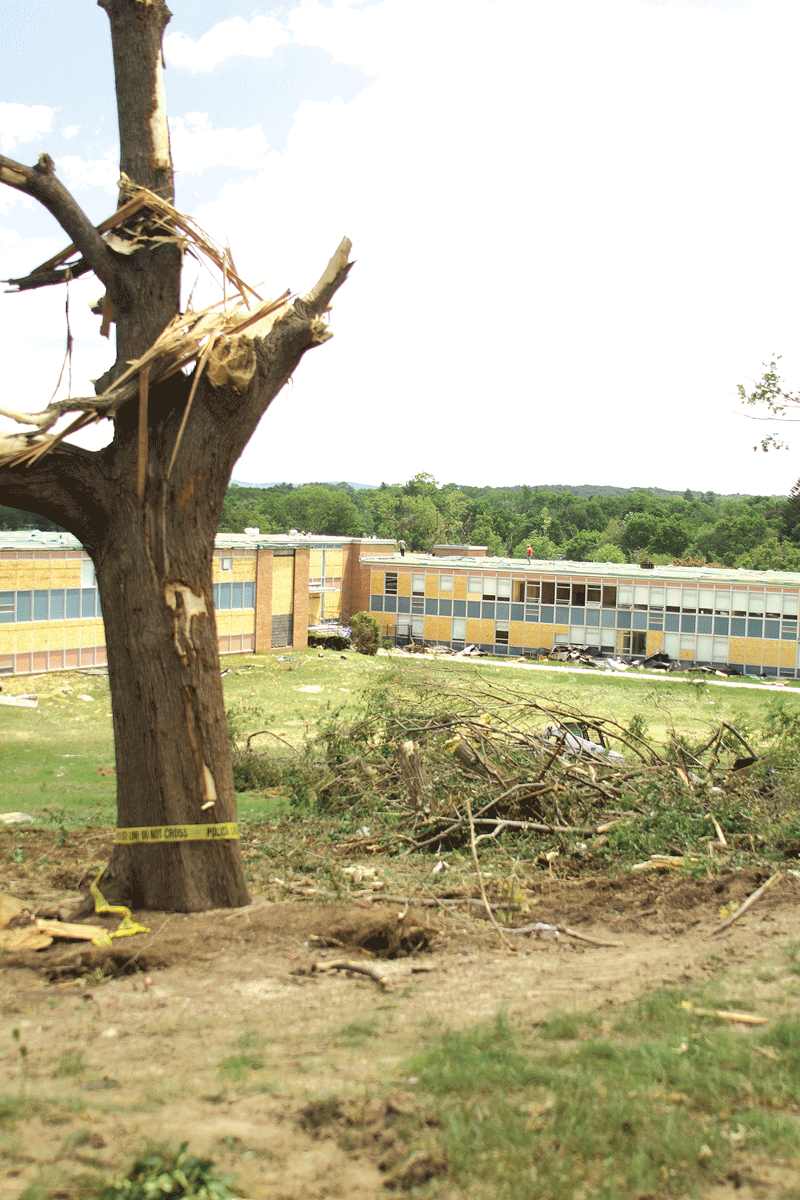
Education Sections
College Admissions Officials Face Host of New Challenges

Kevin Kelly

Kevin Kelly says a student’s grades and the difficulty of his or her high-school courses are the best predictors of college success.

Despite popular opinion that one exists, there is simply no magic formula for colleges and universities to use when deciding which candidates to admit, decline, or put on a waiting list.
Instead, there is a mix of quantitative and qualitative analysis, say those who work in the field known as enrollment management, and, in the end, a search for the right fit, however it is defined.
“It takes a combination of good grades and good courses, and the best predictor of future success is the degree of success students have had in high school,” said Kevin Kelly, director of undergraduate admissions at UMass Amherst. “We are looking for students who have taken the most challenging curriculum they can find and done well with it.”
And though this usually grueling process has always been like this, some changes in the procedures, coupled with a rise in student and parental expectations, have transformed the climate and created an atmosphere that is challenging for everyone involved.
Teens in high school are exploring options as early as their freshman year because taking the right courses can result in acceptance at a number of quality institutions.
“We’re seeing more and more families who start the process earlier,” said Charles Pollack, vice president for enrollment management at Western New England University. “We’re giving tours to high-school freshmen and holding open houses for juniors.”
Mary DeAngelo, director of enrollment at Springfield College, concurs. She said the school recently held seven programs for juniors in three weeks. “The whole process is accelerated as students narrow down the schools they’re interested in,” she noted.
However, even when students who have been accepted attend open houses, they are asking questions about job opportunities, internships, and experiential learning that will lead to employment at the end of their college career. “Families are much more proactive in seeking out information,” she went on.
During a recent event at Springfield College, a panel of graduates addressed potential freshmen and spoke about what the school had done to help them transition into careers. “Believe me, people were paying attention,” DeAngelo told BusinessWest. “In the past, students weren’t worried about the end of the experience, but now they are definitely thinking about it before they even start.”
Julie Richardson, dean of admissions and financial aid at Hampshire College, has been in the field for more than 20 years and agrees there has been a climate change. “I love helping students figure out how to get into the right college and pay for it. But students are applying to more colleges than ever before,” she said, adding that many have submitted applications to 10 or more colleges. As a result, students with good grades are often accepted at a number of institutions, which can make it confusing and difficult to decide where they really want to go.
Kelly said UMass Amherst set a new record with almost 36,500 applicants this year, and the numbers have been rising since 2006. As a result, the review process has become a double-edged sword, as admission officials cull through a growing tide of applications, then find themselves having to compete for candidates from the 98% of 18.6 million high-school graduates who have applied or will be applying to institutions of higher learning next fall. And until a student actually begins classes, nothing can be taken for granted.
“Some students go to an orientation during the summer, then change their mind about the college they have chosen,” Pollack said, adding that WNEU receives late applications as a result and admits students at the last minute whenever possible.
DeAngelo said that’s why it’s important for high-school students and their families to visit schools and talk to people on campus in advance to determine the best fit from an academic, co-curricular, and financial standpoint.

Numbers Game

Charles Pollack

Charles Pollack says he’s seeing families start the college-application process earlier than ever before.

The Common Application for Undergraduate College Admission, first established in 1975, provides a standardized form for students, and is used today by close to 500 colleges across the country as well as two international institutions. And, thanks to the Internet, it has become easier than ever for students to apply to a multitude of schools using this format.
Last year almost 2.5 million applications were submitted online, and many colleges depend exclusively on the Common Application.
But it creates an overwhelming amount of work, because students’ credentials must be examined on an individual basis. “The Common Application makes it so easy for students to apply that it can be difficult to tell who has the most interest in your college,” said DeAngelo, adding that Springfield College does not use the format.
Last year, WNEU had 6,400 applicants and admitted 906 students. Pollack said the institution’s name change — from college to university — yielded an increase in applicants from across the country as well as overseas. “At one time, our students were predominantly from the Northeast. But now they are from states ranging from Florida to Hawaii.”
In 2005, UMass Amherst admitted 80% of applicants, while last year the number shrunk to 63%. “We are being more selective,” Kelly said. “But we did admit 1,500 more students for the fall of 2013 than last year.”
When asked how the school goes about deciding which students to admit, Kelly said the process is both an art and a science, with some math thrown in as well.
Indeed, many schools recalculate a student’s grade point average and use only college-preparatory courses to determine that number, although honors and advanced-placement courses are given extra weight.
“We’re looking for trends such as whether the student started out well, then tapered off in their senior year,” Kelly said.
It’s also critical for students to have taken the necessary prerequisites for their majors. “But there is no rating system; we judge each student on their own merits, although there are differences in high schools,” he explained, adding that, even though he and other officials look at extracurricular activities, academic qualifications are far more important than anything done outside of the classroom.
SAT and ACT scores are also considered, but many schools don’t pay attention to the written portion of the exam because it is subjective and doesn’t have a direct correlation to college writing assignments.
DeAngelo said Springfield College considers how much students know about their school, but their personal statement and whether they have demonstrated leadership in high school can be a deciding factor. “Many of our applicants have a pretty strong record of community service, which is important to us because we have a lot of opportunities for students to continue that work. Our small community makes it easy for students to get involved in clubs and organizations, and we have several hundred who are volunteering in the community.”
Personal recommendations also play heavily into the equation at Springfield College, especially in physical therapy, occupational therapy, and physican assistant programs, where spots are very limited. “We have a lot of students who are very strong academically, so we need other factors to look at,” DeAngelo said, noting that interest continues to grow in all health-related professions due to the future job outlook.
But, in the end, it all boils down to grades.
“Participation in clubs, sports, and co-curricular activities makes a student well-rounded, and we like to see it, but it is secondary to their academic record. We analyze every transcript, but only look at college-preparatory classes,” Pollack said. “Many students don’t understand what our coursework will involve, and attending college is first and foremost an academic pursuit, although our students are also exposed to leadership skills to prepare them for graduate school or the world of work.”

Stiff Competition
Hampshire College is one of the many schools using the Common Application. “It makes it so much easier for students. The college search process is fraught with enough tough decisions and stress,” Richardson said. However, Hampshire asks students to submit an additional page that contains information about recent books they have read, other campuses they have visited, and why they believe Hampshire is a good fit for them.
This is critical since the school doesn’t have grades or majors, but encourages interdisciplinary work. “We want to make sure they know about our model and have taken steps to research us. We’re looking for students who are inquisitive and articulate, and we want to know what they are interested in,” she said. “A lot of students we admit are interested in sustainability or want to make the world a better place.”
Although Hampshire admits two out of every three applicants, last year it set a record with a 20% increase in applications, which has continued this year.
And despite the fact that the Common Application contributes to the growing tide of applicants, local admission officials are quick to cite the merits of their schools as a contributing factor.
Pollack said the number of students WNEU admits is carefully calculated due to space restrictions, because it doesn’t want more than two students in a dorm room, and most live on campus.
“But we also pride ourselves on personal attention and don’t have any teaching assistants, even in our labs. It is not our intention to ever become a large institution,” he told BusinessWest. However, he points with pride to the school’s new professional degree programs in pharmacy and civil engineering, which account for the largest recent growth areas.
“And there is more and more recognition of the depth and breadth of our programs, which are attracting students from overseas,” he continued, adding that there is strong interest in the business program, which has attained accreditation from the Association to Advance Collegiate Schools of Business, granted to fewer than 5% of business programs.
In some schools, such as UMass Amherst, students may not be admitted to their first program choice, especially in the fields of management, nursing, or engineering. But many are offered another track, even though they may not be able to switch to their desired major within a given time period.
Still, Kelly said every application is carefully reviewed, and every candidate has to submit at least one letter of recommendation and an essay. “There is no pre-screening done by the computer. We read them all,” he said, adding that the University subscribes to what many schools call a ‘holistic’ review process.
State colleges and universities can cost less than private institutions, but Kelly said it’s not the only reason students want to enter UMass. “It’s our academic reputation, the quality of our majors, and the overall value we offer.”
But any student’s decision about which school to attend can be tenuous. “In the end, it becomes like the tiger chasing its tail, because the more students a school tries to bring in, the more students they have with the possibility to go elsewhere,” Richardson said.

Future Outlook
The competition to attract high-quality students has intensified in recent years, and the Internet will continue to allow families to research institutions and their requirements more carefully than they ever did in the past.
“Students are trying to get a leg up on what they need to do to become competitive, and they want to make certain that they are making solid choices,” DeAngelo said.
In the end, however, it’s all about the right fit.
“The most important thing families can do is to be really judicious about the schools their children apply to,” Richardson said. “They should stretch their dreams and apply to the schools that really meet their needs.”

Education Sections
A Crash Course in the Options Available to Parents and Students

Doug Wheat

Doug Wheat

By any measure, college is expensive and continues to rise rapidly in cost. How to pay for college is one of the biggest financial concerns for today’s parents, no matter what their income level.
The parents’ concern is enhanced by the uncertainty of college costs and financial aid, the complexity of the application process, and the desire to provide the best education for their children. With a long-term plan that carefully balances savings, borrowing, and college selection, parents can help their children reach their dreams without bankrupting their retirement.
According to the College Board, for the 2012-13 school year, the average cost of one year of tuition, fees, room, and board was $17,860 for public in-state students and $39,518 for nonprofit private college students. These costs were up nearly 4% from the previous year. Locally, a year at UMass Amherst costs $23,000, Springfield College costs $46,000, and Amherst College costs $59,000.
The cost of college is having an increasing impact on the selection of schools. According to the Higher Education Research Institute, in 2012, 43% of college freshman reported that the cost of attending their school was important, compared to only 31% of college freshman in 2004. In addition, 13% of students were unable to afford their first-choice college.
An important tool now available on most colleges’ websites is called the ‘net price calculator.’ These calculators let you have an idea of the type of cost you might be expected to pay at specific schools depending on your specific financial resources.
There are six primary sources of funding for college: grants and scholarships, federal tax credits and grants, current income, savings, student borrowing, and parent borrowing. A comprehensive plan for school financing will try to balance these factors along with school selection to match a student with the school that fits his or her education goals.

Grants and Scholarships
While we all would like our children to get grants and scholarships to cover the full cost of college, the truth is that these will cover only a portion of the costs for most students. The amount a student receives from a college will depend on a combination of the financial resources of the family, the resources of the college, and the attractiveness of the student to the college.
Some students may qualify for ‘merit’ assistance from the college based on their academic or other accomplishments. But most students will require need-based financial aid. Need-based assistance starts with the expected family contribution (EFC), which is calculated after filing the federal FAFSA aid form and CSS Profile aid form for a small group of elite colleges.
The need for financial aid will be determined by subtracting the expected family contribution from the total cost of attending a college. If the cost of attendance is more than the EFC, the student will qualify for need-based financial aid, which may come in the form of grants, scholarships, loans, and work study. The more desirable a student is to the college, the more likely their need-based ‘aid package’ will be more desirable.
Since the EFC is the primary driver of financial aid, parents may be able to increase their award by understanding how the EFC is calculated. For example, some parents that have control of their income may try to decrease their income in the year leading up to college in attempt to show they need additional aid. Parents may also want to understand how colleges use student and parental assets in the aid formulas to determine their best college funding strategy, which will be discussed below.

Federal Tax Credits and Grants
There are two federal tax credits available to help pay for college, but you can only utilize one at a time. The Federal Opportunity Tax Credit provides a $2,500 credit per student for the first four years of post-secondary school. This credit (formerly known as the Hope Credit) is phased out for higher income levels (married couples with incomes above $160,000).
The Lifetime Learning Credit is worth up to $2,000 as a credit per tax return toward education expenses.
Pell grants are available for up to $5,550 per student. Students with family incomes up to $60,000 are eligible to apply, but the majority of awards go to students with family incomes below $30,000.

Current Income
Most parents would find it impossible to pay $60,000 per year out of current income. But by cutting corners and planning in advance, it is possible for many families to make a significant contribution to college costs from their current paychecks, which will help them avoid having to rely overly on debt.
One strategy parents might consider is to pay off their mortgage and other debt before their children get to college. This strategy will help free up cash flow while the student is in school, help the family adjust to living on a smaller budget, and reduce the amount of savings that might be used to determine the expected family contribution.
Income does have the largest impact on the financial-aid calculations that will ultimately determine the expected family contribution. The more you make, the less likely your children will qualify for need-based financial assistance (even if you have little savings).

Savings
Many parents have mixed emotions about saving for college. On one hand, they know college is expensive and they will be expected to pay a portion of the costs. On the other hand, they do not want to spend years saving for college only to have the financial-aid package from the prospective school reduced as a direct result of their savings.
To parents, it is not fair that they receive less aid for saving than a family of similar means that was not as prudent.
While the issue of fairness may nag at parents, it is important for them to take the long view and make sure they position themselves and their children in the best possible financial circumstances. To do this, the number-one priority for parents is to fully fund their retirement. Parents need to understand how much they need to save annually to pay for their retirement. The second priority for parents is to start saving early in the most advantageous types of accounts.
A 529 college savings account is generally the best savings vehicle, since these plans allow for tax-free growth and are considered parental assets for financial-aid purposes. The federal aid formula expects parents to contribute 5.6% of their savings to college costs each year. Accounts in the name of a student, such as UTMA accounts, are assessed by the federal aid formula at 20% per year. Since there is no tax deduction in Massachusetts for contributions to a 529 plan, residents are free to choose the plans with the lowest cost and best investment selections. In Connecticut, the state tax deduction for contributions means residents will want to participate in the CHET 529 plan.
Some people may find saving for college in a Roth IRA account advantageous if they are already fully funding their retirement in 401(k) or 403(b) plans. A Roth account’s advantages include being excluded from the federal aid formula, the ability to take penalty-free withdrawals to pay for qualified higher education, and withdrawals do not count as income. But withdrawals may limit your ability to take the Lifetime Learning tax credit, and there are rules that apply to withdrawals if the account is newer than five years old and you are under age 59 1/2. Be sure you understand all of the rules about Roth accounts and be sure your retirement savings are adequate before you use them as a college savings vehicle.
While few people can afford to save the $1,100 per month per child for 18 years that it takes to accumulate adequate savings for an elite private school, most people can save something each month. Undoubtedly, you will be glad to have saved as much as you can when it comes time to start paying college tuition bills.

Student Borrowing
Student borrowing has become one of the main sources of college funding as the cost of school has increased and the amount of government assistance has decreased. Dependent students may currently borrow up to $27,000 in subsidized and unsubsidized Stafford loans for four years of school. The interest rate for subsidized loans is currently 3.4%, and the interest does not start accruing until after the student graduates. Subsidized loans are available based on need. Unsubsidized loans have a current interest rate of 6.8%, and the interest starts accruing immediately.
Students should also check with their college to see if Perkins loans are available if they have extraordinary financial need.
Borrowing beyond the direct student lending amount of $27,000 will in most cases require parents to co-sign the loans and may come with higher interest rates. Many personal financial advisors recommend that students try to limit their loans to the amount that they can personally take out in order to make sure they do not enter the workforce straddled by too much debt. It is important to remember that student loans can rarely be discharged through bankruptcy, and this debt will stay with a student until it is paid off.

Parent Borrowing
Parents have the ability to take Parent Plus loans or private loans to make up the difference between the cost of attendance and any financial aid their son or daughter receives from a college.
Even if students qualify for need-based assistance, some schools may not have the ability or willingness to provide that aid (each school reports on the percentage of students whose ‘need’ is met). Filling a missing gap often results in parents being asked to take out huge college loans. Taking out tens of thousands of dollars or even hundreds of thousands of dollars in loans to pay for college may not be a wise financial step for parents.
It is important for parents to make sure they do not jeopardize their own retirement by paying for the college education of their children. Parents can inadvertently do this by taking out a large amount of debt only to see their ability to pay it back diminished by losing a job. For older parents, they might consider that they do not have many earning years left to pay back the loan if the parents are in their 60s when their children graduate from college.
For people with equity in their homes, taking out a home-equity loan to pay for school is currently attractive since home-equity rates are currently lower than the 7.9% Parents Plus loan interest rate. But before mortgaging their house to pay for college, parents should carefully consider their ability to pay off the debt. Maybe a less expensive school is a better choice for the family.

Know Your Contribution Limits
It is possible for nearly every person who wants a college degree to find a combination of school selection and financial resources that will allow them to attend. Today many families prefer to find less expensive options for attending school to help make college affordable. For example, a year of classes at Holyoke Community College costs less than $2,500, and you can attend Westfield State University for less than $10,000 per year if you live at home.
Regardless of where your children ultimately decide to attend college, be prepared to know what you can afford to contribute from tax credits, savings, income, and loans. By knowing the limits of your contributions up front, it can help guide the selection of the best colleges academically and financially for your children.

Doug Wheat, CFP is manager of Wealth Management for Holyoke-based Meyers Brothers Kalicka; (413) 536-8510; www.fwmgt.com

Education Sections
Bay Path Women’s Conference Continues to Educate and Motivate

Carol Leary, left, and Caron Hobin

Carol Leary, left, and Caron Hobin say the key to the success of Bay Path’s conference is effectively matching speakers to themes, such as this year’s ‘Be Bold.’

Her business card might say ‘vice president of Planning and Student Development’ at Bay Path College, but Caron Hobin’s supplementary title is ‘event organizer.’

And in that capacity, she has played a lead role in organizing and presenting Bay Path’s Women’s Leadership Conference for the past 18 years. Which means she can name drop — through the conference, she’s met everyone from former Secretary of State Madeleine Albright to author and screenwriter Nora Ephron to poet Maya Angelou. But she’s also had some anxious moments with some of the famous speakers.

Hobin recalled a phone message in 2001 from the representative of the keynote speaker, actress Rita Moreno — the only performer to have been awarded an Emmy, Grammy, Oscar, and Tony —  the night before the sold-out conference.

“She had lost her only living relative the day before,” Hobin recalled, breathing deeply just remembering the stress she endured more than a decade ago. With less than 24 hours to go, getting a replacement was impossible.

“Moreno’s representative said that they’d let me know the next morning if she was coming,” remembered Hobin, who said she had no idea what to expect. But at 11:30 a.m. on the day of the event, Moreno called her directly and said, “I’m going to honor this commitment; I’m a performer, and I’m coming.”

And the show went on, just as it has every spring since 1996.

While Hobin remembers that scare, she has many more memories of inspiring speeches, educational programs, and Bay Path students enjoying the unforgettable experience of being escorts for those who take to the podium (more on that later).

This year, one student will have the honor of being escort for musician, actress, author, and entrepreneur Queen Latifah, the main keynoter for the March 22 event at the MassMutual Center. Latifah’s unique personality is just one manifestation of this year’s theme, “Be Bold,” which is based on the new Bold Scholarship to help students disadvantaged by the recent recession.

Bay Path President Carol Leary called the rest of the day “an amazing lineup of speakers” and promises that professional women, students, and interested individuals will be boldly inspired, entertained, and, above all, educated. Other speakers include Susan Cain, author of Quiet: The Power of Introverts in a World that Can’t Stop Talking, and Jenn Lim, CEO and ‘chief happiness officer’ of Delivering Happiness, LLC, who will discuss shaping a corporate culture.

Leary emphasized the educational component of the conference — which is modeled after a program both she and Hobin experienced while working at Simmons College — is geared especially toward alumni who not only never stop learning, but, like all professional women, want to be refreshed, inspired, and motivated by nationally and internationally known speakers.

“The beauty of this program is that it’s not just inspiration and motivation, but useful information, so that women can go back to their office the next day and say, ‘I just learned in one of the skill-building breakout sessions how to encourage introverts and extroverts  … practical tips I can use immediately.’

“That was one of the two primary purposes for putting the conference together,” she continued. “One, we wanted to expose our own students, faculty, staff, and alumni to well-known, well-respected, influential women, and two, it was an opportunity to bring it to a large venue to serve the outlying community.”

For this issue and its focus on education, BusinessWest takes an in-depth look at how Bay Path College’s conference has become part of the landscape in Western Mass., and how, after nearly two decades, it continues to evolve, mature, and give area professionals plenty to think about.

Words of Wisdom

Leary remembers Hobin’s first week at Bay Path in August 1995. Hobin had just left Simmons to assume the role of dean of Continuing Education.

“I told her what her first assignment was,” Leary said with a laugh before Hobin finished the sentence for her: “the conference.”

“I said, ‘we’re going to do it,’” said Leary, ‘and we’re going to take that Simmons concept of a women’s conference, and we’re going to bring it to Springfield.’”

Hobin said she was very familiar with the Simmons model for a women’s professional conference, and remembers thinking to herself, ‘how hard could it be?’

By March, she would find out — there were a number of challenges, logistical and otherwise, with staging the inaugural conference at the Sheraton and Marriott hotels in downtown Springfield, but she was helped in her efforts by successfully landing keynote speaker Elizabeth Dole (then-director of the American Red Cross). This was a timely booking since her husband, then-U.S. Sen. Bob Dole, had just announced that he would run as the Republican candidate in the 1996 presidential race. (Elizabeth Dole would later run for president herself in 2000.)

“Getting Elizabeth Dole as our first speaker really helped — that was the first big ‘get,’” said Hobin.

There have been more since, she told BusinessWest, adding that securing speakers is one of many responsibilities that fall to the team tasked with orchestrating the conference each year. That team includes Hobin; Leary; Kathy Wroblewski, director of Communications and Marketing; and Briana Sitler, director of Special Events.

To be more specific, the assignment is to match speakers to a theme, said Hobin, which is an intriguing process. “Sometimes the theme comes first and then the speakers follow, and sometimes a really great speaker becomes the lead and then a theme emerges as a result.”

While planning the 2012 conference, Hobin kept hearing, seeing, and reading the word ‘compassion’ in various publications and electronic media. Using Wroblewski as her barometer, Hobin started to pare down concepts and wordsmith possible titles for a theme (“Lead with Compassion” was eventually chosen), while also locking in a keynote speaker whose work is the epitome of compassion — Sr. Helen Prejean, a leading advocate for the abolition of the death penalty.

“I pick up on little cues, and it’s an evolution,” Hobin told BusinessWest, adding that everyone from staff to students is involved. “And I tell the students this: the universe sends you messages; you just have to listen.”


Star Search

Looking back, Hobin said the theme for the 2011 conference, “The Power of Choice,” was shaped in part by a Legal Studies student who was forced to drop out of the college for financial reasons.

Her former Bay Path professor bumped into her at the job she took to make ends meet, and, through the course of their conversation, learned about a book she was enjoying titled The Other Wes Moore. The teacher made the Bay Path staff aware of the book, which then became the summer ‘common read’ for all incoming freshmen.

Hobin, connecting the student’s financial issues and subsequent decision and the subject matter of the book — choice  — created the theme and landed the author, Wes Moore, as the morning keynoter.  The student in question actually became his escort, to assist him for the day.

Leary remembers seeing the student point out an underlined part of the book to Moore — the most critical part of the book for her, and, as it turned out, for Moore as well. During his keynote, Moore referenced the student in the large audience to explain how profound her life could be just by making a different choice.

“The part that she underlined was, ‘you will step out, but you will step back in if you want it bad enough,’ and you could see the emotional connection right then,’” said Leary, noting that the student did come back and finish her degree. “There’s a lot of learning that goes on during the conference on so many different levels.”

As just one example, she recalled the 2005 conference, headlined by Albright, the first female Secretary of State, who availed herself to sit with 15 students and Leary at a large table at the Marriott.

“There was an incredible dynamic between our students and this powerful woman,” said Leary, who distinctly remembers the students asking Albright who she thought would be the first female president — as well as the answer, Hillary Clinton.

“We really believe that we’re educating not only our own community,” said Leary, “but the professional women in the region who can be inspired by women, like Madeleine, that they may never have had the chance to meet otherwise.”

The opportunity for students to meet the keynote speakers is vital to the internal success of the program, said Hobin, adding that it has created a few much-coveted escort positions over the past 18 years. And the more famous the speaker, the more in demand the escort position is, said Hobin, adding that those seeking it must submit a two-page essay explaining why they want such an assignment. Applicants must then go through a rigorous series of interviews.


Meeting of the Minds

“Be Bold” might be the theme for this year’s conference, but that phrase also constitutes the unofficial directive for those organizing and presenting the conference since the beginning.

They have been bold — and imaginative and, above all, diligent about providing attendees with a program that will not only inform, but also inspire.

Their track record for success has made the conference a spring tradition in Greater Springfield — and a learning opportunity that, as Leary noted, comes on a number of levels.


Elizabeth Taras can be reached at [email protected]

Education Sections
Springfield’s School Superintendent Sets the Bar High

Superintendent Daniel Warwick pays frequent visits to the district’s 54 schools and enjoys interacting with students.

Superintendent Daniel Warwick pays frequent visits to the district’s 54 schools and enjoys interacting with students.

When Daniel Warwick was interviewed by members of the Springfield School Committee for the job of superintendent, he outlined a detailed, five-year plan about what needed to be accomplished and how he would implement changes he felt were critical for every student to realize his or her potential.

Warwick has been on the job since last July, and his goals are lofty, given the fact that 85% to 90% of the city’s students come from low-income families, which creates a host of academic, social, and emotional challenges. But his deep commitment and history of success prove that he knows what it will take to fulfill what he calls “The Springfield Promise: A Culture of Equity and Proficiency to Raise the Bar and Close the Gap.”

arwick wants to lower the dropout rate and increase the graduation rate, which stood at 11.7% and 52.1%, respectively, last year. His vision is to create a district where “parents and community members move into Springfield for the privilege of sending their students to schools that are striving in a culture of equity and proficiency.”

It’s no easy task, as the system serves approximately 26,000 students in 46 schools at 54 sites, including eight alternative programs. They speak numerous foreign languages and are from diverse family, religious, and ethnic backgrounds. “In schools with high levels of poverty, there are good excuses to rationalize poor performance. But I approached the job with a no-excuses mantra and the attitude that we are going to change the outcome for our students,” Warwick said,

His reasoning is based on past endeavors in Springfield, honed during his tenure as principal at Glenwood School in the Liberty Heights section of the city. “When I took it over, it was one of the lowest-performing schools in the Commonwealth,” Warwick said.

But he instituted measures that turned it around, and within a few years, “Glenwood was the highest-performing high-poverty school in the state,” the superintendent noted, adding that he was feted with a bevy of state and national awards, including the coveted National Blue Ribbon School Award from the U.S. Department of Education and the Commonwealth Compass Award from the state.

His multi-pronged plan for the city’s school system includes instituting programs in every school similar to those he developed at Glenwood, changing the way subjects are taught, as well as developing an individual plan for every student at risk. “You have to believe that this work can be done and then have a deep commitment to do the hard work necessary to execute it,” he said.

However, he knows this will take time, and says the entire community is needed to ensure success. “We need the business community and faith-based communities to support the schools,” Warwick said. “Education is the key to the success of the future of our community. And the only way Springfield will be successful is if we have a highly effective school system. The future of the city depends on it.”


Rounded Perspective

Warwick grew up in Springfield, and his entire career has been spent in the city’s schools, making him uniquely aware of the challenges and opportunities.

“I absolutely believe that every student can learn, and I want to meet every student’s needs so they can reach their potential,” he said. “I have a ‘no child left behind’ mentality, so every student who is struggling will have an individual plan that will be monitored to ensure they are getting the services they need.”

He began work as a substitute teacher at age 21 after graduating from Westfield State College. After that, he was hired as a special-education teacher for severely emotionally disturbed students in an alternative middle- and high-school program situated in the Springfield Boys and Girls Club. “A lot of them were in the juvenile justice system,” he recalled.

He spent 10 years as a teacher and two years as a special-education coordinator, then was named supervisor of the department.

“There were tremendous challenges in trying to meet all of the needs of different populations with finite resources. So I did a lot of program development,” Warwick explained, adding that he was able to reduce the number of students in private schools or residential facilities. “The whole idea was to keep the kids in the least restrictive environment and still provide them services, which also freed up money that could be spent on all students.”

Daniel Warwick shows off the National Blue Ribbon School Award

Daniel Warwick shows off the National Blue Ribbon School Award, one of many honors he earned during his tenure as principal of Glenwood School.

The strategy worked and allowed him to create intervention programs, which met the needs of students who were struggling and prevented them from having to enter special-education classes.

Over the past few decades, Warwick has held many roles in the school system. One of the most pivotal was his 13-year stint as principal at Glenwood School, where he achieved extraordinary success. “I did a lot of research and had a reading coordinator and an instructional leadership team,” he said, adding that measures he instituted were later adopted across the district.

Warwick went on to serve as an assistant superintendent from 2004 to 2008. “One of my key roles was special education, but I also supervised one-third of the city’s schools and dealt with operational issues, such as budgeting and staffing allocations,” he said. “During that time, the schools in my zone made twice as much progress as the other zones.”

He said he worked closely with Special Education Director Mary Anne Morris to improve services and set up quality programs.

When he was named assistant superintendent for all of the city’s schools in 2008, he implemented evaluations of school principals and led the district’s efforts in obtaining state approval for construction of a new vocational high school.

Before being appointed superintendent, he served as deputy superintendent for more than a year. He managed the district’s budgeting team and successfully led contract negotiations with bargaining unions. Warwick also spearheaded the redesign of the district’s lowest-performing schools, which resulted in such exemplary improvements that state officials hailed Springfield public schools as a model for rapid transformation.


Multi-pronged Approach

Warwick said he put a lot of time into developing his five-year plan for the future. It contains four key points and is a result of his work with several superintendents, a great deal of research into best practices, and his own experiences and observations.

The first key is to coach, develop, and evaluate educators with the goal of improving instruction.

“All of the research that has been done talks about the importance of quality teaching,” he said. “And teacher effectiveness and strong instructional leadership are the key variables in raising student achievement.”

The state recently issued new regulations that change the way schools are evaluated, and Warwick said he was aware of what they would be when he created his plan. However, each school district has to implement changes based on negotiations with its teachers’ unions.

This has been done in Springfield, and one important change is that principals will be able to conduct unannounced observations in the classroom. “The focus will be on improving instruction, which will require a tremendous amount of training because principals will have to become instructional experts, along with the teachers. But it will make a huge difference,” Warwick said.

The state will also begin providing data about individual student achievement. “This will help us judge the quality of teaching and will play a major role in the goal of improving instruction,” Warwick said.

The second area of focus will be to develop and implement what Warwick refers to as a “world-class, 21st-century curriculum that will deliver on our promise that all students graduate college and are career-ready.”

It will require a strong focus on literacy as well as a multi-tiered system of support for instruction at all levels, backed by ongoing assessments. “There will be an entirely new curriculum taught in a new way that will be a challenge for every community in Massachusetts,” he said.

Warwick explained that the new core standards are far more rigorous than what was demanded in the past. “It will require teachers to teach differently by putting more emphasis on higher-order thinking skills, reasoning, and literacy skills. The state can issue mandates, but only quality implementation at the district level will make them a success.”

Teams of teachers have been meeting in Springfield and will continue collaborations for the next 18 months. But Warwick expects it will take three years and a great deal of professional development to get the new system up and running.

What makes it especially challenging is that Springfield’s high poverty rate generally leads to poor attendance. In addition, the school population includes a high incidence of English language learners, and families move frequently, which results in great gaps in learning.

“We also have a number of homeless children and students who are in the custody of Child and Family Services,” Warwick said. “Poverty results in social and emotional issues, and families typically don’t get help for them.”

The School Department has been working with the Irene E. and George A. Davis Foundation to offer more preschool classes, which are critical to student success, especially since many students entering school don’t have the language skills they need.

The city also has 10 schools with a Level 4 state rating, which means they need significant improvement.

But the third component to Warwick’s plan will help to address that, as it involves continuous improvement based on a new system of data dashboards.

“The dashboards will allow educators to see how every youngster in their class is doing compared to students across the state and the country, and allow them to make instructional decisions based on the data,” he said.

There will also be something called the Dropout Early Warning Indicator System, which factors in attendance and discipline problems, beginning in kindergarten.

The final key is to remove obstacles to learning and student achievement. This will include positive behavioral interventions and individual plans for at-risk students. Warwick said clinical counseling; an expanded array of afterschool, summer, and night-school programs; homework help centers; home/school parent liaisons; parent and community focus groups; strengthening alternative school models; and adding recreational supports, such as sports, will make a difference in “battling the negative effects of poverty.”


Continuum of Progress

Warwick said he expects to receive new data from the state this month about how his district is faring.

“I’m sure it will show we are moving in a positive direction; we plan to intervene one school at a time, and knowing what has to be done is very helpful,” he said.

“When I took the job, I understood what the district needed,” he continued. “It will take an enormous amount of work to implement it, but we will continue to remove obstacles to learning and student achievement. It’s a privilege and an honor to serve as superintendent, and I take the responsibility very seriously.”

Education Sections
Kittredge Center Course Teaches Soft Skills That MBAs Overlook

Richard Steiner, CEO of MD Enterprises

Richard Steiner, CEO of MD Enterprises

It’s a familiar scenario in the workplace.

The venerated top sales professional gets his big break and lands the coveted manager position. But soon, something is wrong. The top seller has no idea how to manage people, and it’s affecting the entire office. He’s been doing his own thing for years, and it’s always worked, but now he’s got to deal with everyone else’s personalities and problems.

Meanwhile, the expectations from upper management are not only higher than in his previous position, but completely different. In some cases, add to that the jealousy factor in the office because someone feels they were overlooked for the job.

“This new situation has to be based on facts, not opinions, and in the workplace, emotions — like guns and knives — need to be left at the door,” said Richard Steiner, CEO of MD Enterprises and a freelance business trainer at Holyoke Community College (HCC). “It’s critical that you recalibrate the relationship to recognize that this is a ‘professional’ relationship.”

But knowing how to ‘recalibrate’ that professional relationship, from peer to manager, requires behavioral skills that may seem obvious, yet unfortunately don’t come naturally to some, and are completely foreign to others.

That’s where the American Management Assoc. comes in.

The AMA offers a certificate in Management program through the Kittredge Center at HCC. Steiner explained that the cost-effective courses are held either one day a week for two weeks, or one evening a week for five weeks.

Instead of the analytical and technical hard skills that MBAs focus on, this series of courses is all about dealing with people, time, and how both affect company profits.

“It’s a program of study that focuses on a practical way to learn the soft skills of management,” said Steiner, “the sorts of things you don’t pick up at an MBA course.”

Of the 14 courses, each of which costs $325, the subject matter covers “The ABCs of Management,” “Effective Team Building,” “Essentials of Supervision,” “Conducting Productive Performance Appraisals,” and “Effective Communication Skills,” to name a few. If an individual completes five of the 14 courses successfully, Steiner said, the AMA issues an internationally recognized management certificate through HCC.

Jim Phaneuf sees the value in such a program.

While nothing was broken from within, Phaneuf, president of Bell & Hudson Insurance Agency in Belchertown, knew that he could use some help in the area of time management. But not all company executives, or those on the fast track to the C-suite, think they need help.

“A lot of business people think they have things right where they want them to be,” said Phaneuf. “I’ve always had the feeling that, if we’re not improving all the time, someone else is.”

For several professional levels of management and front-line supervisors at Holyoke Gas and Electric (HG&E), the courses on communications, supervision, and management ‘ABCs’ were eye-openers, said Comptroller Brian Richards. He called the courses a ‘framework’ in which a mix of those with MBAs and those lacking any management training could put what they learn to real use.

“There are ideas that are not inherent, but once you are exposed to them, you may use them,” he explained. “But unless you have the framework to actually put those ideas to use, the actions are not always effective. These courses give you that type of framework to put ideas into action and practice.”

Brian Richards

Brian Richards says the courses are useful to both those with MBAs and those lacking any management training.

The beauty of the program, both Phaneuf and Steiner said, is that, no matter who takes one of the 14 courses — a professional on the management fast track or a business student — the vital soft skills can be used immediately as soon as they walk out the door.

Steiner’s said too few companies pay attention to the importance of people skills, “and they wind up losing a valuable employee and gaining an ineffective or even destructive manager.”

For this issue’s focus on education, BusinessWest sat down with Steiner and some of his former students, all professionals in the region, to learn about the unique AMA courses, and how their focus on soft skills often overlooked in MBA college programs can help not only office morale, but productivity ― and, ultimately, the bottom line.


Talk Is Cheap

While it’s hard for Steiner to pick which course is the most important overall, communication training is high on his list because it’s often overlooked in the workplace, or at least not identified as a major problem for companies.

Steiner said the course, “Effective Communication Skills,” is as important, and as basic, as it gets.

“If a manager is complaining about communication, he or she should look in the mirror,” he said. “Communications is a loop: message transmitted, received, and the receiver gives feedback. They either do what the instruction was, answer what the question was, or agree or disagree with a proposition and close that loop.

“As a transmitter,” he continued, “if you don’t get that feedback, ask for it.” But closing the loop all the way doesn’t happen often enough, and when communication is hampered, time is wasted and productivity goes down.

One of Steiner’s classic examples is what he calls the “stone story.” A manager asks an employee to go get him a stone. The employer goes out and brings back a stone, but the manager says, “I wanted a rounder stone.” The employee returns several times with more stones, none of which are the right kind because little to no direction or description was given. But, Steiner added, “the employee is also wasting time by not asking.”

While humorous, Steiner said everyone can identify with a similar situation in the past where they were the one searching fruitlessly for something — or the one, sadly, who was giving the weak instructions for what kind of ‘stone’ they wanted.

For Richards and the professionals from HG&E, the communication classes were well-received, due partly to what Richards calls Steiner’s ability to speak to everyone’s discipline. “He did a good job of a balancing act by not making it too boring for some and not too much for others,” he said. “For many, this was their first time being exposed to these types of ideas, and it was conducive for people who are in different jobs — engineering, accounting, etc. — working together, and those younger and older were able to share their experiences about how situations come up and how people handle them.”

While communication is high on Steiner’s list, he said “Essentials of Supervision” is another key course for someone on the management fast track, who learns what to expect in the transition and some of the pitfalls to avoid.

Steiner teaches why first-line supervisors are important and the issues they have to deal with, like the balance between needing time to learn management skills and understanding what management is expecting of the group. Add to that the new, required workload that can’t be delegated to others, as well as the challenge of managing a group of different personalities.

One pitfall to avoid: reverse delegation. This is a scenario, Steiner said, in which an employee is given a task, then comes back and says he or she doesn’t know how to do it, so the new supervisor says, “OK, I’ll do it; let me find something else for you to do.”

The consistent act of reverse delegation trains the employee to know the manager will always finish the job, similar to a child learning that when a parent says ‘no,’ it doesn’t mean that at all.

With almost a wink, Steiner added, “in essence, management is very much like bringing up children.”

He also teaches the balance between being a micromanager and letting the staff freewheel through their day with no oversight whatsoever. In the “Managing and Resolving Conflict” course, students learn that those in charge who don’t want to deal with conflict professionally are going to see problems grow and fester beyond the area of the manager’s responsibility and up to the next level, which reflects badly on the manager and his or her obvious lack of skills.

At this point, one starts to see how the specifics of each session melts into other topics. A manager’s consistent avoidance can lead to employees who lose motivation or escalate to major conflicts that never get resolved — and that can affect every area of company business.


Planning Makes Perfect

Of all the AMA courses, Steiner said the one he really enjoys teaching is “Conducting Productive Performance Appraisals” because it is absolutely the most misunderstood area of management.

“Feedback should be a continuous process, both positive and negative,” he told BusinessWest. “The idea of performance appraisal is to improve performance and productivity all year long; it should not be a point where the boss unloads on the employee … it should be a summary.”

Steiner said the contents of an annual performance review should not be a surprise to anyone, and bad reviews are a classic sign of manager avoidance.

During the weekly meetings leading up to the review, one of Steiner’s rules is to never play the blame game. Start with determining how the process broke down, and use ‘I,’ not ‘you.’ His example of what not to say: “you’re always late; you never meet your deadlines.” Instead: “on this day, I observed that you were late,” or “I saw that you missed your deadline by a few days.”

Steiner said this makes the feedback more easily accepted because the situation, similar to the jealousy problem, should be unemotional and based on facts, not opinions.

Meanwhile, the “Managing Multiple Priorities” course discusses a trap that many new managers fall into: automatically putting a new job at the top of the priority list, which endangers the deadlines of everything else. It’s all about planning, said Steiner.

“We do a lot of meetings in our office,” Phaneuf noted, “and one of the courses helped us learn about planning agendas and making sure only the most important items are covered in meetings. And we now have a great understanding the cost of meetings … and the importance of not ‘meeting people to death,’ because when you add up what people are making per hour, meetings are expensive when nothing is accomplished.”

To sum up the program, Steiner argues that a good management foundation is necessary to have the most profitable bottom line. “Then success brings visibility and approval from peers outside the team, resulting in pride in a job well done and the motivation to do even more.”

From years of being a consultant and working in management-level positions, he also weaves into his teaching an affirmation he calls “Plan. Do. Learn.”

“Plan what you want to do. Do it. Analyze the lessons learned after to find if it worked or not and what you would do differently in the future,” he explained. “That way, you don’t make the same mistake twice.”

Richards said the courses provide a framework so that participants can look back later to see which ideas are most successful and determine how to do a better job moving forward.

Phaneuf added that the courses were helpful to him and his staff, not only for the basic, yet vital concepts, but because of the ability to literally go back to school.

“Sometimes it’s good to have an outside person give a second opinion,” he said, “because you’re just too close to it.”

He and Richards are among a growing group of managers who understand that going back to school at any age or level of professional management can only help the company as a whole, by getting the most out of its greatest asset — its employees.


Elizabeth Taras may be reached at [email protected]
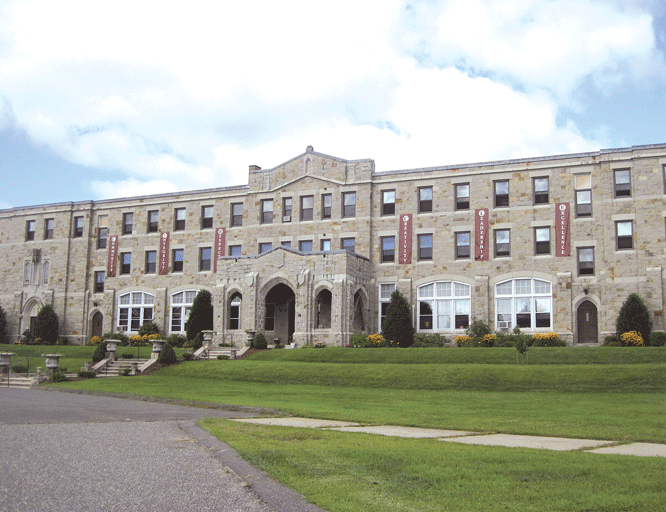
Education Sections
WNEU’s Mini Law School Program Helps Small Businesses Avoid Pitfalls

Eric Gouvin

Eric Gouvin said the Mini Law School program is meant to provide area business owners with a working understanding of many aspects of the law.

It’s called ‘Mini Law School.’

And while that name doesn’t exactly say it all, it says more than enough.

It aptly describes a program created by Western New England University Law School to provide area business owners with a working understanding of many aspects of the law.

And by ‘working,’ Eric Gouvin, professor of Law and director of the Center for Innovation and Entrepreneurship at WNEU, meant basic knowledge of the legal system and many aspects of the law — enough to help business owners hopefully stay out of trouble, especially with the many complex aspects of employment law, and also to help them decide when it is appropriate to invest in legal assistance.

“Sometimes, people in business are very cost-conscious; they’re a little reluctant to call an attorney,” said Gouvin. “So one of the things we hope this series does is give people a sense of when making that call is probably money well-spent, because it can add up.”

Patterned after a decade-old initiative created by Baystate Health called Mini Medical School, which provides the general public with a very basic understanding of the human body, the WNEU program consists of seven two-hour sessions (presented free of charge) spread over two semesters. Those sessions feature panels of area legal experts who not only present information, but also engage participants in discussion on the points addressed.

Gouvin told BusinessWest that the program brings a legal focus to a series of informational sessions being offered by the school called “The 1, 2, 3s of Financial Literacy,” with classes focused on subjects ranging from accounting to marketing to banking relationships.

Trinda Nehmer, a freelance designer of children’s apparel, textiles, and fabric designs for more than 30 years, was one of the recent attendees of Mini Law School. She took in the October session, primarily because of its title — “Current Tax Issues Facing Small Businesses and How to Handle an Audit” — and some issues she was facing.

She’d heard about the series from a friend, and having received a letter from the Internal Revenue Service a few years ago that had her questioning her next moves tax-wise, she knew she needed to be more “up” on areas that could become problems for her business.

“It turned out not to be an issue, but at the time I wasn’t sure if I should get legal advice or at least listen to how other small businesses would handle such a matter,” said Nehmer of her motivation for attending the session.  “Because I get a 1099 at the end of the year, not a W-2, I feel I have to keep myself educated in all areas.

“I really enjoyed listening to Paul Mancinone [of Paul L. Mancinone Co., P.C.] because he was to the point and extremely helpful,” she continued. “He explained very simply all the new tax laws, and he was very thorough. Over the years, I found I had to go back and get up to speed on some of these tax issues because I’d been getting a little lax in the tax area; this was a great way to educate myself.”

From hiring to firing and everything in between, there’s an important legal dimension to all aspects of running any size business. For this issue’s focus on education, BusinessWest takes a closer look at WNEU’s free Mini Law School program and how it can make a vast difference in the busy day-to-day life of a small business owner.


Cutting Through the Clutter

The stated mission of Mini Law School is to give small-business participants enough understanding of the law that they don’t make some common mistakes that can land business owners in court and cost them hundreds or thousands of dollars in fines.

Having offered the ‘small-business clinic,’ as it’s known in-house, for 10 years, and serving more than 250 business owners, Gouvin and his team understood the needs and concerns of the business community, and clearly saw both a need for a program specifically focused on legal issues and an opportunity to meet it.

The next matter at hand was determining a curriculum, he continued, adding that current events and prevailing issues within the broad spectrum of business law would essentially set the tone.

“There are a million things that we could be talking about in law,” said Gouvin. “But we’ve been working with small businesses long enough to see recurring patterns and things that crop up over and over again, and we identified our focus areas for these sessions based on that need.

“They almost always have problems with choices of entity, intellectual property, problems with employees,” he continued, “and the sad fact of life is that some of these businesses will fail.”

Thus, the April session of Mini Law School was devoted to bankruptcy issues, a depressing but necessary topic for discussion.

“Good planning would require that you at least think about it,” Gouvin said of bankruptcy relief, “because things that you do early on might affect how painful the process is or how productive it is.”

He added that, while he and his team know what areas are most relevant to small businesses, matters such as securities law, anti-trust law, mergers and acquisitions, and issues that pertain more to much larger companies might be touched upon during some of the sessions, but will not be a hard focus of the Mini Law School.

One thing that all businesses must be concerned with, regardless of size, is employment law, and as a result, the November session was devoted to many aspects of that broad speciality, and was, as expected, very well-attended.

The program focused on many timely issues, especially the often-complicated matter of classifying workers as employees or independent contractors, a question that has caused headaches for many employers.

“A lot of people think they know, but in Massachusetts it’s very hard to be an independent contractor,” said Gouvin. “That’s a sad fact, or an awakening moment for many owners when they think they can just give someone a 1099 and hope that nobody challenges them, because if they are challenged, under Massachusetts state law, they’ll owe back all that withholding they haven’t done, and all the interest and penalties — and it typically unfolds in a very unpleasant scenario.”

Gouvin added another, intriguing layer to the discussion by offering the example of a perceived independent contractor being in an accident and seriously injuring another person. That injured party will probably find out the connection to the business owner and then seek damages from the employer, he explained, adding that, at that point, it doesn’t matter what the business owner wants to call the worker; in the eyes of the law, if the worker really is an employee, not an independent contractor, serious problems will ensue.


Not Lost in Translation

Gouvin said the overriding goal of the program is not to throw information at participants, but to have them understand it and use to run their businesses more efficiently and in a manner that will keep them out of the courts.

“To go it alone, without having someone looking over a business owner’s shoulder, can be a very scary situation,” he said, adding that legal matters are often complex. And Mini Law School Law school was created to give business owners power through knowledge.

And that’s why the experts providing information and initiating discussions are instructed to do so using simple, straightforward language that participants can comprehend, which is one of the keys to avoiding legal problems.

Gouvin added that some of the participants are law-school students, who can benefit from hearing experienced legal professionals giving this type of talk.

“It’s different from the way they are used to hearing a law professor talk,” he noted. “But it’s a skill that any good lawyer should develop: the ability to translate legalese into English in a way that they can really communicate and connect with their future clients.”

Response to the simplicity and direct nature of the Mini Law School has been one of gratitude and a literal wipe across the forehead for some.

“People are always expressing thanks that they got so much information delivered in a way that is no fooling around,” said Gouvin. “The information is not legalese, but in a list form — ‘you need to know this, this, and this’ — and if you’re someone just trying to focus on running a business, the legal things are just a pain in the neck.”

With 32 participants for the November session on employment law, up from the 20 attendees at the October tax-issues session and the handful in attendance for the September class on risk management and legal entities, Gouvin told BusinessWest that the series does appear to be growing.

“The trend is that we are building an audience, and while we’d be very happy with 25 to 30, we can handle up to 60.”

Organizers also found that the timing in the spring, on Tuesdays from 4 to 6 p.m., was not conducive to busy business owners, so the time has been adjusted this year to the same day but later by an hour, from 5 to 7 p.m.


Justice Served

Gouvin said the plan moving forward is likely to involve rotating Mini Law School with the financial-literacy program on an annual basis. Such a schedule would give participants needed updates on legal matters, which they could then follow-up with a curriculum he described as “self-education.”

But he’s already seen enough to convince him that this program is needed, worthwhile, and certainly capable of meeting its primary mission — to help business owners avoid trouble, rather than rely on legal help after they get into trouble.


Elizabeth Taras may be reached at [email protected]
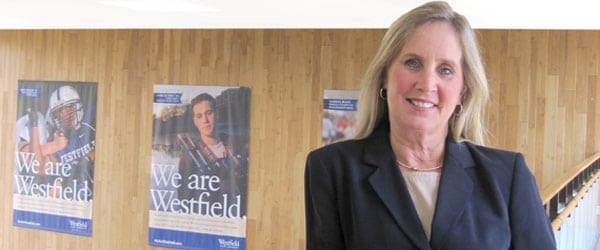
Education Sections
$2.38 Million Award to AIC Nursing Program Helps Disadvantaged Students

Dr. Cesarina Thompson

Dr. Cesarina Thompson said the ‘meaningful’ addition to the award means more money per student — in the case of AIC, 50% of tuition.

Dr. Cesarina Thompson called it a “no-brainer.”

But recognizing the need for a $2.38 million grant — which will benefit disadvantaged students at American International College — was the easy part. Landing it was more challenging, and gratifying.

Having just completed her first six months as the new dean of AIC’s School of Health Sciences, Thompson is thrilled to see the school on the receiving end of the largest federal grant ever awarded to the institution. In fact, the grant, spread over four years, is the largest awarded to a Massachusetts college under the Scholarships for Disadvantaged Students (SDS) program. AIC is in a select group, as only 99 grants were awarded nationally.

“The minute I saw the grant application before submission, I knew this was a no-brainer for us,” said Thompson, who helped to write and edit part of the grant proposal and offered suggestions before she came on board in July 2012.  “But these grants are very competitive, and the percentage that are funded are very few, so we are fortunate.”

The SDS program was redesigned to ensure larger, more meaningful awards to schools and therefore enable institutions to tackle the major barrier to a disadvantaged student’s access to a health-profession education, which is high tuition costs.

Thompson explained to BusinessWest that the ‘meaningful’ addition to the award means more money per student — in the case of AIC, 50% of tuition.

She added that, since AIC is a Title III Institution, it has a high percentage of first-generation and low-income students for whom the cost of attending the program poses a severe financial hardship. Thompson said the Title III program helps eligible institutions of higher education become self-sufficient and expand their capacity to serve low-income students by providing funds to improve and strengthen academic quality, institutional management, and fiscal stability. Because of this mission, AIC is already successfully developing and implementing programming to recruit and retain disadvantaged students, and the SDS grant is just one more plus for AIC students who need some extra help.

The SDS program promotes diversity among health-profession students and practitioners by providing scholarships to full-time students with financial need from disadvantaged backgrounds who are enrolled in health-profession and nursing programs. AIC will be responsible for selecting scholarship recipients, making reasonable determinations of need, and providing scholarships that do not exceed the allowable costs — which include tuition, reasonable educational expenses and reasonable living expenses — with a cap of $15,000 for the total scholarship award.

AIC currently has the largest BSN program in the area, and also offers a master of science in Nursing program. AIC President Vince Maniaci said the goal is to award the meaningful scholarships to at least 40 disadvantaged nursing students annually, which will enable more disadvantaged and minority students to obtain a baccalaureate degree in nursing.

“This money will help high-achieving, financially needy students to seamlessly progress in their nurse education without interruption. It should also increase the number of diverse nurses able to serve their communities,” Maniaci said.

The award, which comes from the U.S. Department of Health and Human Services, Health Resources and Services Administration (HRSA), is a small part of the Affordable Care Act, which President Obama signed into law in March 2010. The law aims to improve the nation’s current healthcare system by increasing access to health coverage for Americans and introducing new protections for people who have health insurance; it also provides new ways to hold insurance companies accountable.

In the case of those students less fortunate who want to pursue a career in healthcare, the law also supports programs that will help increase the number of primary-care physicians, nurses, physician assistants, and other healthcare professionals.

U.S. Rep. Richard Neal, a graduate of AIC who helped to secure the federal grant, was on hand recently to announce the award. “I know firsthand how important financial assistance can be during the college years. That’s why I am so confident this program will help more local students earn their nursing degrees,” he said.

Added Thompson, “it came to light recently that one student who was recently awarded would probably not have been able to compete the program because both her parents were out of work. And many of our students with the economic downturn are working 20- and 30-hour work weeks and trying to go to school full-time … that’s just near to impossible, especially when they are in a nursing program.”

Looking at the larger healthcare picture, Neal told BusinessWest that, as a result of this grant, future AIC nursing graduates will not only be on track to succeed in their career goals, but will share part of the responsibility of caring for millions of wounded veterans who will need some type of medical attention.

“The Affordable Care Act will create 32 million new healthcare customers,” he said. “And with the wars in Afghanistan and Iraq coming to an end, caring for all of our returning wounded is going to be a great honor and a great commitment.”


— Elizabeth Taras

Education Sections
STCC Nursing Program Celebrates 40 Years of Evolution, Excellence

The STCC Alumni Association

The STCC Alumni Association honored several STCC nursing alumni on Nov. 3. From left are honorees Kerry Fournier (’98) and Marianne Hamel (’72); STCC Dean of Nursing Mary Tarbell; STCC Dean Emeritus Mary Elizabeth O’Leary; honoree Sunshine Domaruma (’08); and STCC President Ira Rubenzahl. (Missing from photo is honoree Melissa Odom, ’04.)

Mary Tarbell was among those receiving pins at the graduation ceremonies for the first class of nursing students at Springfield Technical Community College in 1972, and she has many memories from those early days of the program she now directs.
She recalls, for example, that the fledgling nursing program was housed in what amounted to one half of a duplex, known then (and now) as Buildings 5 and 6 on the grounds of the closed Springfield Armory. “We had classes in the bedrooms,” she told BusinessWest, “and labs were in the living room; the faculty ate in what was the kitchen.”
She also remembers that there were some doubts within the medical community about the quality of this college-based program, which was created to help fill the gap when the hospital-based nursing programs that had been existence for decades closed their doors due to the high costs associated with them.
“After I got my first job, someone said to me, ‘do you really know what you’re doing?’ I said, ‘I think so,’” said Tarbell, who also remembers her first paycheck from that assignment, from Providence Hospital in Holyoke.
“It was for $144, and, if I remember right, 17 cents … I know I have that pay stub somewhere,” she recalled. “That was for a 40-hour week on the second shift. Today, that would represent about three or four hours for some nursing graduates.”
There was quite a bit of this looking back in retrospect going on at a recent get-together to mark the 40th anniversary of that first class of nurses at STCC, said Tarbell, noting that more than 100 people turned out, and all but a few are still active within the profession.
The event was a celebration of just how far the program has come in four decades, she said, as well as the broad impact STCC graduates have had on the large healthcare community in Western Mass.
But the milestone also serves as an appropriate time to examine where nursing education has been, where it is now, and where it’s going, Tarbell noted, adding that, while some things haven’t changed over the years, many things have, especially technology.
And Tarbell used that phrase to refer, collectively, to everything from high-tech simulation labs to students’ ability to put huge textbooks onto their cell phones.
“We can no longer teach the way we were taught,” she explained, referring to educators of her age. “You have to get very innovative; this is a different generation, and it’s a very tech-savvy generation. This class that just came in in September is the first class that’s required to have laptops. We’ve also converted all of our paper-and-pencil tests — we’re in the final phase of shifting all tests to a computer — and we do this to mimic the licensing exam.
“Technology has changed, and you have to embrace the technology, because that’s the only way we’re going to be able to continue to put out safe practitioners.”
For this issue, BusinessWest takes advantage of the 40th anniversary celebration to examine four decades of change and progress in nursing education, and what lies ahead for the STCC program.

School of Thought
Tarbell said the nursing program had simulation technology in 1972 — well, sort of.
“We had what we call a task trainer,” she explained. “You’d have a model of a leg … and you would use it to teach a student how to put on an elastic stocking or wrap a stump after amputation — something limited to that part of the body.”
Today, students learn from computer-controlled simulators that can talk back to them while displaying a wide range of symptoms and conditions, she continued, adding that this is one of many sea changes that have occurred over the past 40 years. Summing it up, Tarbell said that what’s being taught is virtually the same as when she was attending classes in Building 5, but how it’s being taught is radically different, because of changes in technology and the healthcare industry itself.
Turning the clock back to when Richard Nixon was in the White House, Tarbell said nursing education was undergoing a seismic shift with regard to where and how students were taught.
For decades, area hospitals had their own programs, she said, noting that, by the early ’70s, the last of them had closed due to the high costs of administering the schools. To fill the gap and put more students in the pipeline, college programs were created at STCC, Holyoke Community College, Elms, American International College, and other schools.
The transition process created both challenges and opportunities, she said.
“Those nurses who were going to the hospital-based programs were so exposed to patient care in a different way than an associate-degree nurse was exposed to patient care,” she explained, “because they were actually in the hospitals managing the units and running the units.
“When the associate-degree program came in, we were on limited hours — we were doing 12, maybe 15 hours, and as you advanced, maybe 18 hours a week in clinical, far less than what the diploma schools were doing,” she continued. “But we were getting a sound education based on the fact that we were taking college-level courses along with our nursing curriculum.
“But when we first went out there,” she went on, “no one believed that we could actually function. And that was just one of the obstacles we had to deal with as we went out into practice.”
Today, of course, there are no such doubts about the qualifications of those who graduate from STCC and other area programs, said Tarbell, adding, however, that today’s nursing students face other challenges when they enter the job market, particularly patients who are, overall, sicker than those who would be in a hospital 40 years ago.
And this phenomenon, prompted by a wave in changes in technology, how care is administered, and how it’s paid for, is reflected in how nursing students are prepared for their chosen profession, she told BusinessWest.
“What we see now in the hospital is different than what we saw years ago,” she explained. “Decades ago, if someone had their gallbladder out, a fairly simple surgery, that person would have a large abdominal incision and be in the hospital for a week. Today, you can be in the hospital at 6 in the morning, and many times, you’d be home that evening after having your gallbladder taken out.
“The fast turnover of patients has driven us to deliver care in a more intense fashion,” she continued, “but what you can’t separate from it is the caring and the safety and the knowledge. One of the key things we look at in all of our students is safety; if we find anyone who is unable to maintain safety, we counsel that student and we try to help them and facilitate how they can be a safe practitioner.”
There are other challenges awaiting today’s nursing graduates, said Tarbell, including a tighter job market than many industry and workforce experts were predicting even a few years ago. Graduates are still finding jobs, she continued, but sometimes not in the desired acute-care setting.
One of reasons for this is that many of the Baby Boom-aged nurses who were expected to retire over the past few years — including some from that first class at STCC — are finding that they can’t retire yet for financial reasons, or are not yet ready to leave the profession. But perhaps more importantly, she said, many employers, especially those in acute-care settings, are demanding more than an associate’s degree from their nursing applicants.
“We’re graduating nurses, just as the other schools are, but the vacancy rate is just not what it used to be,” said Tarbell. “You used to be guaranteed that, when an associate-degree nurse or a bachelor-degree nurse graduated, they would have a job in an acute-care facility — and not that many years ago, it was even before they graduated; they had their jobs in January, February, or March.
“Now, many places are not interviewing or even accepting applications until after that nurse has his or her license in hand,” she continued. “At the same time, when they [associate-degree recipients] graduate, they’re not guaranteed a job in acute care. It’s few and far between when it comes to associate-degree students being hired into acute care right away.”
Instead, they’re finding jobs in community nursing (as school nurses, for example), long-term-care facilities, and other settings, such as home care, she told BusinessWest, adding that there is still 100% placement within six months of graduation.
To help its graduates get the jobs they desire — and to address the demand for higher-degreed nursing graduates — STCC started collaborating with UMass Amherst and Baystate Health on a program that would enable the college’s two-year graduates to then earn a bachelor’s in a year plus the intervening summer.
“They can do it three years instead of four,” she said, adding that this program, in addition to similar initiatives involving other four-year schools, is designed to improve the likelihood that those leaving STCC with an associate’s degree can get the bachelor’s degree needed to open more doors, and in less time.

Class Acts
As she talked with BusinessWest, Tarbell paused for a minute and went to a bookcase to collect a textbook from her days as a student at STCC.
As she thumbed through Cooper’s Nutrition in Health And Disease, she marveled at the simplicity of the diagrams — and also the price tag on the inside cover: $9.75.
“That’s another thing that has changed, obviously,” she said with a laugh, noting that today’s textbooks, like the one recently sent to her one publisher in hopes that it might become part of the curriculum, cost perhaps 20 times what they did four decades ago.
Those inflationary changes aside, as well as the myriad advances in technology, the basic mission of the STCC hasn’t changed and won’t, said Tarbell. Now, as then, the goal has been to properly prepare students for the industry they have chosen.

George O’Brien can be reached at [email protected]
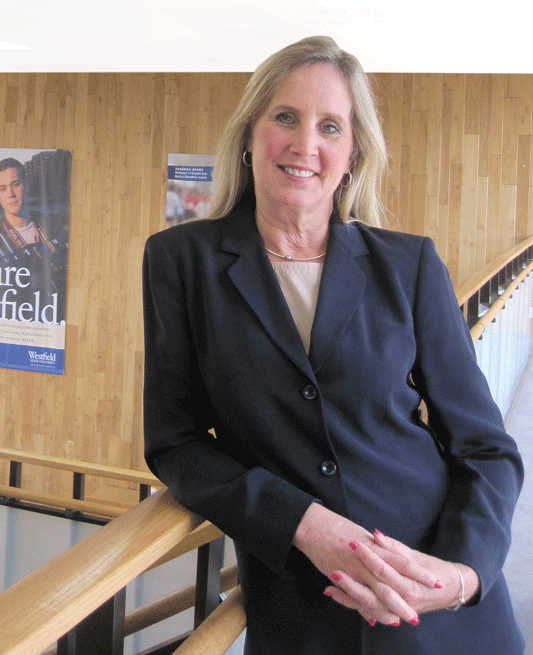
Education Sections
The Many Flavors of the Region’s MBA Programs

In an ever-more-competitive career marketplace, educational degrees don’t always carry the weight they used to.
“At the turn of the 20th century, if a person had a high-school education, that was fantastic,” said Kathryn Carlson Heler, director of the MBA (master of Business Administration) program at Springfield College. “Remember, most people finished eighth grade and were out working at age 14.”
In the years following World War II, she explained, the G.I. Bill and other factors boosted college attendance, and a bachelor’s degree became the ticket to a secure career. But, in many cases, that’s not enough anymore.
“Most professionals now are saying, ‘hey, what’s the next step?’ And I think the master’s has become an important step — and who knows if it’s going to go further?” she said. “Look at nurses, for example; most of them have bachelor’s degrees, and some hospitals prefer to hire people with their master’s. And in the business world, the MBA has become the degree to have.”
Others who spoke with BusinessWest agree. “The MBA does carry an awful lot of weight in the workplace,” said Tom Barron, director of the MBA program at American International College. “It can affect opportunities for promotion, raises, and the like.
“The MBA allows you to really look at other aspects of a business, not just your own area of expertise,” he further explained. “You end up seeing how your area impacts the other areas of a business, so you’re a lot more comfortable developing company-wide solutions. Many people who get MBAs consider changing career fields, exploring areas they wouldn’t have been able to before, because they now have a wider cross-section of knowledge and expertise.”
Mo Sattar, who directs the MBA program at Bay Path College, is another believer in the strength of the degree.
“It helps to create leverage: how can I be a little bit better than the next person or the next business? Knowledge creates power,” he said. “I believe in teaching students how to learn, how to be life learners. That really matters, especially in the MBA world.”
For this issue’s focus on education, BusinessWest sits down with administrators from six area institutions — Western New England University, Elms College, and UMass Amherst are the others — to talk about the elements of a vibrant MBA program, and how the schools are tailoring their offerings to a very diverse group of degree seekers.

Matt Fox

Matt Fox says WNEU’s MBA program, like many regional offerings, allows students to finish in a year or longer, working on campus or online.


Time Trials
Some undergraduates intend to continue on to an MBA program right after finishing their bachelor’s degree, while many MBA students are longtime professionals returning to school to enhance their career prospects — and don’t necessarily have time to tackle a full-time course load or daytime classes. That’s why many colleges offer online courses, evening classes, or a blend of options.
For example, Springfield College’s 4+1 program “is an opportunity for our undergrads to stay a fifth year and earn their MBA,” Carlson Heler said. “What they do is take two classes in the summer after they earn their undergraduate degree and eight classes over the next two semesters.
“We have also attracted professionals from the community. Some of them have done the program in one year, working full-time and also going to school full-time,” she said. “But most of my professionals who join our program do it on a part-time basis, and do about two classes a semester.”
Similarly, the MBA program at UMass Amherst, part of its Isenberg School of Management, also stresses flexibility — to pursue a degree full-time on campus, completely online, or in a blended format at any satellite campus location.
Katherine Piedra, the director of the full-time program, has a unique perspective on that track, having graduated from it in 2004; now, she handles admissions, acceptance procedure, and operations, among other roles.
“The format hasn’t changed much from when I was here eight years ago,” she said, noting that most of the core coursework is completed during the first year, with field work highlighting the second year.
“We get a gamut of people, and we want a diverse class — not just in the traditional diversity sense, culturally, but across the board. We have about 35% international students in our class,” Piedra said.
Having both full-time and online options provides needed flexibility for the differing needs of students, she added. “The full-time program tends to have more people who are career changers. With the online program, it’s people who want their MBA to stay within their company, but want that boost. The online students tend to be older on average, too.”
She noted that, over the years, online degree seekers have multiplied, with a corresponding decline in those pursuing the full-time program. So the playing field has changed, with a lot more entrants into the online market.” Piedra said
Like most regional offerings, AIC’s MBA program can be finished in under two years, although some students, largely working professionals, may spread it out over three to five years, Barron said. “We have an interesting mix, with students coming from undergraduate programs as well as people who have been in the workforce 5, 10, 20-plus years.”
Western New England University also offers a blended online and evening degree program. “Right now, we primarily serve working professionals,” said Matthew Fox, director of Recruiting and Marketing for Graduate Studies and Adult Learning. “But the traditional student coming right out of college with a bachelor’s degree, that’s growing.”
This fall, WNEU will launch a full-time, accelerated day program in addition to its existing track. “We see that as a great opportunity to cater to a growing international student body,” Fox said. “They’re clearly looking for an experience where they can be immersed in their studies and have that continuous, face-to-face interaction with the faculty, as opposed to the existing model that blends online and in-classroom time.”
In any case, he added, “we emphasize to students, whether they’re traditional students or working professionals, they can accelerate their studies and finish the program in as little as a year, or they can take longer. It’s quite flexible.”

What’s Your Niche?
Students are also finding flexibility in the focus of the region’s various MBA programs.
For example, the Elms, which launched its MBA program only last year, offers three areas of study — health care leadership, accounting, and management — in a fast-track, hybrid format that pairs online and on-campus courses, said Kerry Calnan, director of the program.
“We’re the last to the market, and it’s a saturated marketplace,” she noted, adding that the school’s leaders took to heart a study conducted recently at Harvard called “Rethinking the MBA.”
“When we were getting ready to launch, we talked about the old-school model of MBA programs and how we needed to change if we wanted to add value, so that people who go through our program are valuable in the marketplace. We want to make sure we’re fitting what the market needs.”
In doing so, Elms staff interviewed some two dozen senior-level business leaders in the region and asked them what they’d like to see in an MBA program that they’re not getting from current MBA graduates.
“We developed our program by listening to what they had to say,” Calnan said, adding that the program taps area professionals to participate in course instruction, to lend more real-world credibility to the program. In fact, the five core courses in each track are delivered by a team comprised of an academic and a professional.
Springfield College, another recent entry into the MBA market with a program that started in 2010, offers two concentrations: one in for-profit management, and one in nonprofit management. The latter is attractive to people eyeing opportunities in health care, recreation, youth, the arts, sports, and as fund-development officers, to name just a few possible career tracks.
In both its general management and nonprofit concentrations, Springfield College offers a one-year, 30-hour degree program that’s tailored for professionals, Carlson Heler said.
“It’s a very doable degree; our classes are offered in the late afternoon and evening so that students can work during the day and take classes at night,” she noted. “And the size of our classes is very small, so students get to know their professors, and the professors get to know them.”
As with the Elms, it’s important that the SC program involve area professionals in the courses, “so students have an opportunity to tap into their experience.”
And the benefits of those exposures go both ways, Carlson Heler noted. One executive involved in the program told her, “‘I get to know the younger generation, and they will be my future employees — or, in some cases, my future boss. I get to know how they think and how they view the world, and it’s very important for me to have that opportunity.’
“I think it’s important.” she added, “that we reach out to the business and nonprofit community and ask them, ‘what should our students learn? What is important for them to be successful, and for your company or organization to have the best employees it can?’”

Mo Sattar

Mo Sattar says Bay Path’s MBA program helps students “connect the dots” and understand how all aspects of business work together.

AIC offers both a traditional MBA program and a ‘high-performance’ degree, with concentrations available in health care management, operations management, international business, strategic marketing, workforce and leadership development, fraud and financial crimes, green business, and management and sustainability.
“AIC had the first MBA program in Western Mass.,” Barron said. “One thing that’s unique is our strong entrepreneurship program. In our capstone course, the final course, students are actually required to go through and develop a business plan they can use to start their own business.”

Going Global
One theme that surfaced repeatedly in discussing area MBA programs is a focus on international business — reflective of what has become a global marketplace.
“Throughout the history of AIC and its MBA program, we have always had a strong international base in all key studies,” Barron said. “When we’re going through, asking about finance, economics, operations, we’re always going through what’s happening from a global perspective.”
That distinction has become crucial over the past two decades with the emergence of the Internet as a business tool, he added.
“If you look at a business that wants to operate out of a home, 20 years ago, the geographic area was the area around the house. Today, with the Internet, you’re literally doing business and delivering products around the world,” he noted. “So, how do we take this knowledge from all these subjects and not only apply it to local industry, but learn how to deal with it on a global basis?”
UMass provides overseas opportunities for its MBA students by means of exchange programs in Sweden, China, India, Brazil, Denmark, and South Korea.
“We’re working in a global economy,” Piedra said. “Anyone with international work experience in their MBA program has an edge going out into the work world, because of that experience working with people from other cultures and other countries.”
Sattar emphasized the way a strong MBA program “connects the dots” throughout the content, giving students a broad perspective on business.
“Our program starts with a business introduction where students learn about business models and strategy models and start to analyze some case studies and use analytical tools, like Excel,” he explained. Once students are grounded in that foundation, they move on to specifics like marketing, organizational behavior, business law and ethics, and the like, always being pushed to see the overlap between all of these disciplines.
“We learn about the important building blocks in business and how to connect them together, how to synthesize and optimize and maximize them,” Sattar said. “I find that, sometimes, people working in one area don’t understand what’s happening in the next cubicle or the next office.”
The idea, he said, is to produce professionals who understand the big picture within the company they work for — or, in many cases, who are able to launch their own enterprises.
“The value they get is not just that they truly understand marketing, finance, and legal issues,” he stressed. “The value is seeing how they are all connected. It’s more like a symphony than individual pieces of music, and the value comes in connecting everything together.”

Value Proposition
That word ‘value’ was another concept that area administrators kept returning to.
“I’ve been working with the graduate office for approximately five years, and I have found that the number of students seeking their MBA has definitely increased, whether it’s for an entry-level position or to enhance their prospects within their organization, or even to secure their present job,” Fox said.
“I think the value of an MBA has held, and if anything, the interest has increased from students seeking their MBA. We’ve seen our enrollments more than double in the last four years. Yes, we’re dealing with smaller numbers than some other schools, but it’s significant for us. That, to me, is a positive sign.”
Even a recently established program like the one at Springfield College is reporting positive returns in the single most critical area — post-degree employment.
“In our first class, the class of 2011, all of my students found good jobs within six months,” Carlson Heler said. “With the class of 2012, half of them have jobs, and the other half are interviewing, and it looks really good.
“The jobs are out there,” she continued. “People talk about the economy, but my students are finding jobs — maybe not all in the Pioneer Valley, unfortunately, which we would love, but the jobs are definitely out there for the MBA graduates.”

Joseph Bednar can be reached at [email protected]
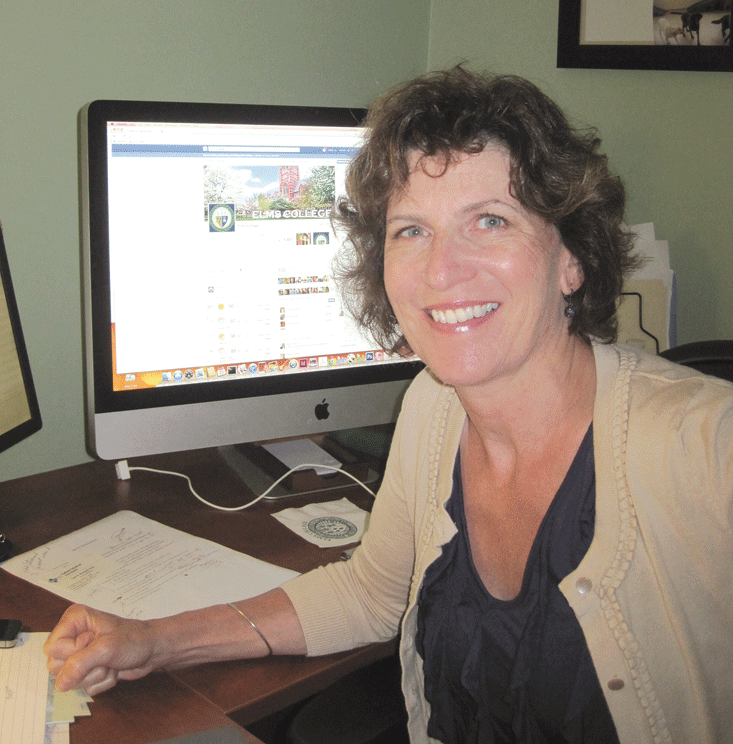
Education Sections
How the Tornado Helped Bring a School — and a Community — Together

Terry Powe

Terry Powe says the tornado that struck the Brookings School a year ago has helped provide a new sense of perspective for all those involved with the institution.

On the first day of school last August, a young girl pulled a broken chunk of slate from her pocket and showed it to Terry Powe.
“She told me it was a piece of our old school that she had found on the ground after the tornado and she kept it with her everywhere she went,” said the principal of Elias Brookings Elementary School in the Six Corners neighborhood of Springfield. “Her family had lost their home and was living in a shelter.”
The child was one of many Brookings families affected by June 1 tornado, which unleashed its fury on the neighborhood, destroying homes and businesses as well as the nearly century-old school.
Powe says it’s a miracle no one was hurt, as school was dismissed less than an hour before the twister hit the ground. “If it had been an hour later, there would have been deaths, and we would have needed grief counselors and still been in mourning,” she said, explaining that windows were blown out, walls collapsed, desks and furniture were strewn everywhere, and tree limbs and construction debris from nearby structures made the interior look like a war zone.
The girl with the slate is one of myriad anecdotes from the past 13 months that show, in rather dramatic fashion, how the school and the surrounding community has picked up the pieces — figuratively but also quite literally — and moved on, and with a renewed sense of commitment.
Indeed, while the tornado turned hundreds of lives upside down in that neighborhood, it has in many ways been a catalyst for the school’s rebound from poor performance ratings from the state and a feeling of being overwhelmed by the challenges being faced.
“People here see things differently now; everything has been put into perspective,” said Powe. “The tornado allowed everyone to take an inventory on life, realize the strengths we had, and put them into action. Since that day, everyone – including the children – has been working really hard and bringing their best efforts to school every day.”
Meanwhile, in the shadow of the boarded up school a modular facility has risen — a compelling story of triumph over adversity in its own right — and a new, $28 million school is being planned for a site at the corner of Hickory and Walnut Streets.
“The future is bright — so bright I might need sunglasses,” Powe said. “This really has been a blessing in disguise and allowed us to see how much care and thoughtfulness exists within different groups in the community.”
For this issue and its focus on education, BusinessWest visited Powe and others at the school to see and learn how a disaster gave all those involved with this institution a much-needed second wind.

Clouding the Issue
Powe has faced significant challenges since she was hired to run the Brookings school four years ago.
When she accepted the position, the school, named for a Civil War veteran and educator and opened in 1926, housed students in kindergarten through grade 8. However, officials decided to do away with the middle school classes and students in grade six, then seven and eight, began to be phased out.
The staff was still adjusting to the change when the Mass. Department of Elementary and Secondary Education named Brookings as one of the underperforming “Level 4” schools in the state. That’s the lowest level the state system has, and the designation required changes that included replacing 50% of the staff over a specific time line. In addition, the school day had to be lengthened by 45 minutes to give teachers more time to focus on areas where students had scored poorly on state tests.
“The designation gave us an opportunity to look at the root causes for performance and create a redesign plan to get back on track,” Powe said. “We implemented a plan without funding before the tornado hit and although we had some challenges, we did as much as we could to put it into action.”
It worked well, and prior to the tornado, the school had made significant gains; 25% of the staff members had been replaced, and although Brookings was still deemed underperforming, it had made double-digit gains in math and gained almost eight points in English Language Arts.
This year, thanks to additional funding, the school gained a new assistant principal and two additional coaches to help teachers hone their skills. “We have established a culture that we call the Brookings Way,” Powe said, adding quickly that change takes time.
However, she told BusinessWest that studies show that high-performing schools share three common traits — adaptability, cohesiveness, and a focus on goals, and all three are present, to one extent or another, at Brookings.
“Adaptation had been our lowest category,” said Powe. “In education, you have to look at the cards you are dealt and then play them, and our staff had had a really hard time playing those cards.”
And the tornado only shuffled the deck even further, she said, noting, however, that in many ways it has brought people closer together, provided fresh perspective on what’s important in life, and fostered a commitment to excellence that, in many respects, wasn’t there before the sky turned dark.

Winds of Change

Elias Brookings School Senior Custodian George Rollins

Elias Brookings School Senior Custodian George Rollins and adjustment counselor Gianna Allentuck say the tornado brought the school community together in a way that couldn’t have been imagined.

The day after the tornado, staff members assembled at two places: the school, where they worked to clear a path on the sidewalk, and at the Longmeadow home of adjustment counselor Gianna Allentuck.
Their first priority was to call every student to make sure they were safe. They then created a plan and took steps to kick off what would become a monumental collection effort for the 57 Brookings families that had lost their homes or been displaced.
The outpouring of support and donations was so substantial that Allentuck’s garage soon filled, so organizers staged a distribution program on July 1 in the J.C. Williams Community Center on Florence Street. They also held frequent distribution efforts outside the school, and students witnessed caring in action as their teachers stood outside throughout the summer, ready to share an encouraging word and a smile while handing out supplies that ranged from diapers to shampoo and underwear.
The staff members shifted their focus to collecting school supplies as the months went on and were astonished again by the outpouring of backpacks, crayons, and items students would need to return to classes. “My garage got so full, we had to rent storage space in Enfield,” said Allentuck, adding that the barrage of donations included stuffed animals, sleeping bags and towels, which necessitated a second major distribution effort.
Throughout the summer, staff members also visited families in shelters, hotels, and their homes to see how they were faring, and gave them donated items, while school nurse Pam Maynard did a tremendous amount of outreach.
The staff had also united to help the students finish the year in the days following the tornado. The children arrived at Brookings in the morning, then had to be bussed to two different schools depending on their grade, which meant many family members were split up.
“There were a lot of logistics involved and some of the younger kids were frightened,” said Allentuck. “It could have been chaotic, but the staff stepped up and made sure the children felt safe and loved. It was our finest hour.”

Moving Experience
In the meantime, school officials were working hard behind the scences to insure the children had classrooms to return to at summer’s end.
David Meehan, director of operations for Facilities Management in Springfield, said finding modular units, getting permits and assembling them in less than two months was a daunting challenge. “We did it in approximately 45 days; a project of this scope would normally take 90 days or more to complete,” he explained.
Rita Coppola-Wallace agreed. “A lot of people don’t realize the effort that goes into a project like this,” said the director of the Department of Capital Asset Construction in Springfield. “It took an extreme amount of coordination, but the vendors and city departments all rose to the challenge and did more than they needed. We literally pulled permits within hours, and everyone I called was phenomenal, from the contractor to the funding agencies.”
Thirty portable classroom structures, including 20 two-story units and 10 one-story units, were installed behind the old school on Hancock Street.
But there were unexpected setbacks. For example, right before the Fourth of July, water began gushing from the ground as workers set footings 30 feet into the ground. “They pumped water 24-7 for a week,” Coppola-Wallace said, explaining that the site is close to the Mill River. “It was a tough experience, but we had fun along the way. When people get hit by tragedies, their best side comes out.”
Meehan said Brookings senior custodian George Rollins played a major role in getting the job done on time. He worked close to 90 hours each week from the day following the tornado until school opened.
Rollins cares deeply about the school. It’s his alma mater, and he was determined to salvage everything possible from the old building, then do whatever it took to have the modular units ready for the children.
“At one point, we had 25 people cleaning furniture from the old building. We also had to coordinate getting teachers in and out of the building in the days following the tornado,” Rollins said, explaining they needed to salvage what they could from their classrooms, but could not stay inside long due to air- quality issues caused by the devastation.
“We put our heart and soul into this,” he continued. “It brought us together because we had to depend on one another. Everyone had to be cooperative and understanding, and even the kids had to give. They had to adapt to difficult circumstances, which for some included losing their homes.”
But stability seemed hard to come by, as the day Brookings was set to open, all Springfield Public Schools were closed due to an approaching hurricane, which downed trees, caused power outages, and wreaked its own devastation. And in the weeks that followed, there were myriad new adjustments as 25% of the staff was new hires and the modular units lacked a cafeteria, gym, and storage space.
But the community continued to step forward, and the spirit of cooperation and changes that took place within the school were remarkable.
Teachers held a book drive throughout the school year that proved so successful that each child was allowed to choose four books to keep at the end of the year. The school also staged a “Perfect Attendance Day” and due to community support, each student being honored received a $10 gift certificate. Allentuck said the numbers jumped from less than five with perfect attendance in February of 2010-2011 to 55 this year.
Staff members also began to pursue grant money that resulted in positive outcomes.
“This has been a year of celebration; even though I am a hopeful person, I never imagined we would be sharing the celebratory attitude that has been prevalent all year,” Allentuck said, adding that she doesn’t believe the transformation would have taken place without the tornado.

New School of Thought
Initially, the city hoped to save the 87-year-old school building, but a feasibility study determined that was not feasible. When the need for a new building became apparent, city officials approached Springfield College, because it owned a sizeable piece of vacant piece of land across Walnut street.
“It was not for sale, but they quickly jumped on board and were willing to become a partner,” Coppola-Wallace said. City officials are in the process of acquiring the land and plan to build a $28 million state-of-the-art school on it to replace the old building.
“I am very hopeful that we can finally get ahead of the game, because in the past the constants were always changing,” said Powe “We have stability now and I am looking forward to next year and the future in a new building.”
The day when that new school opens its doors is still a long way off, and there will no doubt be many challenges to overcome along the way.
But the tornado has fostered a new sense of resiliency at the Brookings School. All those involved, including the young girl with the slate, have picked up the pieces and shown that a disaster of this magnitude can destroy a building — but not dreams.

Education Sections
Sport-management Graduates Are Covering Their Bases

Lisa Masteralexis

Lisa Masteralexis says sport management is a growing industry, but also a competitive one.

Sport management is a broad term, Lisa Masteralexis said, but one way to narrow it down is to focus on the games people watch, not just play.
“Our students can go work anywhere in the industry, combining business and sports, but what they don’t do is recreation, health, fitness, those types of sports,” said Masteralexis, head of the Mark H. McCormack Department of Sport Management at UMass Amherst.
“We focus on spectator sports — imagine anything someone goes to see, then all of the support industries around that,” she added. “Think of the teams, the leagues, facilities, media, college athletics, Olympic sports, even high-school sports … really, anything a fan might go see, then all the sports businesses that go along with that.”
Sport-management students at Springfield College are taught the ins and outs of the industry through four lenses, said Matthew Pantera, professor and chair of the school’s Sport Management & Recreation Department. “There are four major areas: administration and management; event management and planning; maintenance, upkeep, and design of facilities; and problem solving. Those are highly transferable to quite a few degrees.”
In other words, he said, these are typically students with an interest in sports, but especially in what goes on behind the scenes; they are the individuals the fans aren’t watching when they click on the TV or file into the bleachers.
“We have kids working for ESPN, the Red Sox, the Miami Dolphins, doing sports marketing for the Basketball Hall of Fame, these types of organizations,” said Mei-Lin Yeh-Lane, professor of Sport Management at American International College. “Some are kids who like to work in the college or university arena.”
With a sport-management degree, “they can work as a sports agent; they can do event management, organizing a basketball, golf, or tennis tournament; they can join a marketing team to promote services or products; those types of things.”
In fact, the list is much longer, and while dreams of becoming the next Theo Epstein or Scott Boras might fall short, the spectator-sport industry in the U.S. — and internationally — has proven to be diverse, fast-growing, and relatively hardy even during recessions.
At the same time, however, college programs that teach students the business and behind-the-scenes aspects of sports have proliferated as well.
Adam Perri, pictured with Cookie Rojas.

Adam Perri, a 2011 graduate of Springfield College, now works as a marketing and sales representative with the Pawtucket Red Sox; he’s pictured with Cookie Rojas, general manager of sales for the Pawsox.

“There has been a lot of growth in the field, an incredible number of programs that have been developed over the past 20 years, and to be frank, I don’t think there are enough jobs out there for the number of students coming out of these programs,” Masteralexis told BusinessWest. “I feel like we’re in a position of luxury, having 40 years of alumni going out and making their way in the field; it’s more challenging for newer programs.”
The reason, she said, is all about connections.

Record Books
In those four decades the UMass program, part of the Isenberg School of Management, has been in existence, the school has cultivated an extensive alumni network, which is a great benefit to students seeking internships and eventual employment.
“As you can imagine, these positions are very competitive, and you have to connect with someone inside to get in; these teams and other organizations get thousands of unsolicited résumés,” said Masteralexis, meaning that it helps to tap into the influence of an alumnus or professor.
“We have alumni who really support our program by supporting internships, special projects, experiential learning … they really support our students in a mentoring capacity,” she explained. “We have an internship director and an internship database, hundreds of organizations where we place students, and some find internships on their own. In a nutshell, there are more internships than we have students to fill them.”
The same isn’t necessarily true for paying jobs upon graduation, which is why those internships are so crucial. In fact, many students are persuaded to take on multiple internships, both during the school year and over the summer, to set themselves apart from their competition and also broaden those networking opportunities that have become so valuable.
“With the growth in the industry, there are so many more internship opportunities, and I think the industry is recognizing the value of interns,” Masteralexis said. “However, one of the challenges is that many of these organizations do not pay students. It can be a difficult venture for a student who doesn’t come from means to live in New York City for the summer unpaid. How many of us could do that? So that’s very challenging.”
Pantera also recognizes the value of networking while in school, adding that Springfield College, which has operated its sport-management program for 30 years, has long cultivated invaluable relationships.
“We’re one of the few schools that visit every single one of these sites,” he told BusinessWest. “The fact that we go visit the Celtics and the Red Sox and the Indianapolis Colts with a professor helps us stay differentiated because not many schools are nurturing those contacts by visiting.”
Those efforts pay off when job openings arise, he added. “We just had a woman, in the middle of her master’s degree, get recruited by the Celtics in corporate luxury-box sales.”
In all, Springfield College is affiliated with approximately 900 organizations, large and small, throughout the U.S. and abroad, and around their junior year, students take on an internship, putting in 480 hours over a 12- to 15-week period. “Faculty members actually do visit them and see how they’re doing,” Pantera said. “It also gives us an opportunity to keep current with what’s going on, to stay on the cutting edge.”
As at UMass, the AIC program is part of the School of Business Administration, peppered with courses in sports marketing, finances and economics, communications, and the international aspects of the industry, in addition to those ubiquitous internships and experiential-learning opportunities
“As we know, sports are an important part of our lives,” Yeh-Lane said, noting that AIC’s program is relatively new compared to other disciplines, but growing, taking in about 25 freshmen per year.
“Sport management is a multi-billion-dollar industry, and it’s definitely more than professional sports teams. There’s event organizing, handling players’ contracts, budgeting and resource allocating. From a management perspective, there’s a really wide range of options, depending on what a student wants to do.”

Hire Ground
Although it’s been around since 1982, Pantera said, the Springfield College program has remained small, recruiting about 40 sport-management students and another 20 recreation-management students per year, as opposed to, say, UMass, which boasts between 400 and 450 undergraduates and 30 to 35 graduate students at any given time. One reason is to maximize opportunities, both on campus and in the field, for each student.
“Sixty is not that big a number, and we’re looking for leaders,” he told BusinessWest. “They’re getting face-to-face work with our professors. We don’t have graduate students teaching courses; we’re the ones in the classroom, and on the front lines with the students, and that’s an advantage of a Springfield degree.”
The sport-management industry, in all its diversity and vibrancy, “is a lot of fun, and a lot of work,” he added. “And it’s fun for us to work with the students and see them set goals for themselves. And it’s neat when they say, ‘I just graduated, and I got hired.’”
Getting there isn’t easy, Masteralexis reiterated, but “if you make a commitment to this industry, you can move up. We have alumni at the highest level — presidents, CEOs, and general managers, Division I conference directors, heads of Olympic programs, and some of the heads of ESPN and other organizations have come through the program. It’s a challenging road, often with long hours and low pay at the beginning, but once you get on track, you can advance.”
The types of students attracted to sport management tend to be personable and team-oriented, as much of the industry is very collaborative. “They’re people who want to be part of a team. And it’s constantly exciting.
“Our students have a passion for the business side of sports,” Masteralexis added. “I had a former student tell me, ‘the alarm goes off in the morning, and I want to go to work because it’s so much fun.’ I think that plays a role in the attraction. It’s like working in music or entertainment — it’s not the same thing every single day. Every day, there’s a new plan or new product to sell. One day, you might have a hidden gem like Jeremy Lin or Tim Tebow, and another day, you may have some disaster to deal with, but every day is a unique opportunity and a unique challenge.”
One thing it’s not (unless you’re Epstein or Boras, anyway) is a chance to be in the spotlight — that’s reserved for the players on the field — or to relax and cheer, like the spectators in the stands. “We tell students, ‘when everyone else is having fun, you’re working, creating fun for them.’”
For those who succeed in this competitive, fast-moving field, that’s reward enough.

Joseph Bednar can be reached at [email protected]

Education Sections
Bay Path Initiative Is Designed to Position Graduates for Success

Kathleen Bourque, left, and Carol Leary

Kathleen Bourque, left, and Carol Leary

It’s called WELL, short for Women as Empowered Learners and Leaders, a new program at Bay Path College in Longmeadow designed to test and enhance leadership skills. It’s part of a bold initiative to reposition the school as ‘the new American women’s college for the 21st century,’ an endeavor launched with the goal of enabling women to seize the opportunities that await them in what Bay Path’s president calls “the New America.”

Carol Leary wants to plant a stake in the ground that will distinguish Bay Path College as a learning environment where graduates can master the skills and rounded education necessary for success in what she calls “the new America.”
That stake is grounded in ethical behavior, good citizenship, financial literacy, a solid academic education, and the knowledge that volunteerism and health and fitness play a vital role in a woman’s well-being. “We want to become known as ‘the new American women’s college for the 21st century,’” Leary said.
To that end, faculty, staff, and college officials at the Longmeadow campus spent 10 months taking a thoughtful look at their course offerings as well as the skills graduates will need to transcend barriers in the future.
“We began looking at our evolution, and realized our history included some very interesting and bold initiatives that changed the status quo in many ways,” Leary said. “We have been educating and advocating for women since 1897, and the DNA of Bay Path is very entrepreneurial, so we had to take a close look at our environment to figure out how to best serve our population. The America of tomorrow will be a very different place, so we also had to determine what it will be like, as well as what we could do to promote the advancement of women to meet the demands of the workforce in the future.”
Although women have made many gains in recent years, there are still arenas where tremendous opportunity exists, Leary told BusinessWest.
“Women have so much potential to go further in business, science, law, and heath-related fields, and will play a critical role in the future of this country,” she explained, citing statistics to back up her statement. “About 50% of all professional and management positions in this country are held by women, yet women hold very, very few of the top leadership positions. There are eight women CEO’s in Fortune 500 companies, but that only accounts for 3.6% of the positions. And although 60% of college students are female, only 26% of college presidents are women. The glass is half-full, so women will have the opportunity to achieve these positions in the future.”
Transforming this vision into reality is an involved process, but everyone at Bay Path is excited about it. Their new program, known as WELL (Women as Empowered Learners and Leaders), contains a revamped curriculum and speaks to the broad goals the school has outlined.

Building Confidence
WELL, launched in September, includes mandated courses, or ‘destinations,’ for each year of study. However, the focus of the program is rooted in liberal arts. “We believe that studying liberal arts gives students a depth, breadth, and appreciation of the world,” said Leary.
The first WELL course, which all students take during their first semester, teaches them about leadership styles. They figure out their own style and identify their passions as they learn to work in collaboration with others. Leary said understanding leadership styles, which range from authoritarian to laissez-faire, can go a long way when employees work on projects with people whose styles differ from their own.
“We want to create a learning environment with many opportunities where students can test and enhance their leadership skills,” said Leary. “They need to learn how to hone these skills in a way that helps them achieve their dreams; we want women to dream boldly about what they want to do with their lives.”
She explained that this does not mean every woman needs to become a CEO. “But when they see a problem, we want them to step out of their comfort zone and say, ‘I will make a difference in this person’s life or change the way things are being done.’ The whole environment we are trying to create is so much broader than what students can learn inside a classroom.”
Leary has an open-door policy and often invites students into her office to talk about how they can facilitate change on campus. If they want to start a new club, she urges them to create a business plan to “solve the problem” and bring it back it back to her.
About six months ago, she gave an international student the title of ‘presidential ambassador’ and had her put together a plan detailing how the college could attract and recruit more international students.
In addition, a freshman was paid an hourly fee to interview students and find out what they thought when they heard the words “new American women’s college.” The student was given a deadline for the project, which included research to determine the number of students she would need to interview from each class to get a fair representation.
“We’re creating an environment with expectations. During our open house, we tell the young women that each one of them has incredible potential,” Leary said, adding that adult learners in their One Day a Week Saturday program say Bay Path has given them a second chance at success.
“The WELL program helps students find their voice as women so their inner spirit can be translated into leadership and they can take the initiative and solve problems,” she continued. “We want them to be willing to volunteer and be part of a team. If we create an environment where their potential is valued and we show them that we believe in them, they will soar to incredible heights.”
Kathleen Bourque, vice president for Institutional Advancement, agreed.  “A lot of women have never stopped to take stock of their own value. We want to give them that opportunity and also give them experiences that will allow them to grow.”

Practical Matters
During their sophomore year, students will take a course in financial literacy, which is especially important since the majority of women in the undergraduate program are first-generation college students. “We want to make sure they know how to invest for retirement and do so immediately after they get their first paycheck,” Leary said.
The course will also teach students how to read the fine print in contracts, whether they are purchasing an automobile or signing a rental agreement or home mortgage. “Some of our students don’t know how to balance a checkbook. They need to have these skills to become financially independent and be able to support themselves and their families,” she explained.
Health and fitness is another area WELL addresses. “If you model fitness to young people, they will incorporate it into their lifestyle and continue it when they have families,” Leary said. Their program includes education about nutrition, so the calorie count and salt content is listed on the menu of foods served in the cafeteria. Fitness instructor Rob Panetti also creates a daily list of ‘Rob’s picks,’ or food choices he recommends, and often sits with students while they eat to discuss their diets.
In addition, “when we introduced a boxing class, 90 students signed up,” Leary said, attesting to the enthusiasm the program is generating.
The college has also added a number of new offerings designed to provide more life skills. They include a Toastmaster’s group to enhance communication skills, and new fields of study, including majors in neuroscience and biochemistry, which will be introduced next fall. Bay Path is also in the process of getting the accreditation needed to offer a master’s degree for physician assistants, and a new online completer program was launched in January that allows women to transfer up to 60 credits (which can include credits for life experience) towards a bachelor’s degree.
“Women will play a greater role in the new America, and these programs will respond to the needs of the future of this country as well as the region,” Leary said. “The new America will be diverse and a place where people will need to think globally every day and understand how we fit into the global economy.”
Ethics is another area incorporated into the WELL program. In the past, students signed an honor code on their first day of classes agreeing to behave in an ethical manner. But the new program will take things a step further by introducing ethical dilemmas graduates may face in their chosen professions. “Ethical behavior is one of the most critical things we can teach,” Leary said.
The plan is to rotate the chair in ethics between academic departments so students in different disciplines can be exposed to situations they may face in the workplace. Faculty members will also be available to speak about the topic in public schools, which reflects Bay Path’s focus on community service.
“That value is introduced the day students arrive on campus,” Leary said, explaining that every new student must take part in a community-service project. Endeavors have ranged from working at Goodwill Industries to reading to children at Square One in Springfield, to cleaning up embankments along the Connecticut River.

Enhanced Tradition
On the first day of classes each year, the school holds an ‘awakening’ ceremony that begins at about 5:30 a.m. Students and staff members gather in a circle after walking around campus with lit candles, and speeches are given about the alpha and the omega — beginning and end — of their life on campus. “We use the circle as a symbol of community,” Leary said. “It’s a very moving experience, and one that is very spiritual.”
The ceremony is also an introduction and segue into ‘the new American women’s college for the 21st century,’ a place where dreams are born, and also where education encompasses the critical values, knowledge, and skills students will need to fulfill their potential on a rapidly changing planet.

Education Sections
Head of Academy Hill School Plans to Change the Way Students Learn

Stephen Edele

Stephen Edele has ambitious plans to institute an inquiry-based learning program to promote students’ interest in what they are learning.

Stephen Edele has ambitious goals for Academy Hill School in Springfield.
The newly appointed head of school wants to change the way students learn so that, in addition to succeeding academically, they become fully invested in and enthusiastic about all aspects of their education.
Although that may seem idealistic, Edele’s 40-year track record of instituting similar change proves it’s possible in an independent educational setting.
Academy Hill School caters to gifted and talented students, and Edele’s appointment last summer is a dream come true for the educator/administrator who has spent the majority of his career working in independent schools. He is glad to be back in New England after heading schools on the West Coast, and is excited to begin working on several goals he has set.
“When you talk about teaching bright kids, the assumption is that they learn faster than others,” he explained. “Most of the time it’s true, and while it is important to make sure the pace is appropriate, we can’t lose sight of the other side of learning, which is depth. We want to make sure that our students take the information they learn and apply it in ever-increasing levels of complexity by using it to solve problems with real-world applications.”
The school has 110 students in kindergarten through grade 8 who come from cities and towns across Western Mass. and Connecticut. And although many small, independent schools have experienced difficulties in recent years, Edele said Academy Hill has remained strong and continues to grow. He credits its success to the fact that “we have stayed absolutely true to our mission. We are a school for bright kids and don’t try to be anything other than that. We have done well by recognizing our niche and holding on to it.”
Edele has plans to take Academy Hill to new heights. One of his goals is to define the way technology is used in the classroom. Another is to develop a holistic program based on inquiry-based learning, which is an instructional method developed during the 1960s. It differs from traditional learning, which requires students to memorize material. Instead, it is an active form of schooling, where progress is measured by how well students develop experimental and analytical skills rather than by how much knowledge they possess.
“The teacher becomes more of a coach, instead of just being a fount of information,” Edele said. “The heart of it is about learning, then using the information to think critically and solve problems. Our job is to teach students how to be successful in the world on many different levels, and I am absolutely convinced that inquiry-based education is the best way of preparing them to enter the world. It allows students to be directly involved in their own learning and needs to be at the heart of what we are doing, not just an add-on.”

History Lessons
Edele brings a wealth of experience to his new position. “I have been through so much with so many kids and parents, you would have to try really hard to surprise me with something,” he said.
His career began in the early ’70s when he was hired to teach high-school English in a West Philadelphia public school. “It was a wonderful position; I learned a lot and got along well with the students,” he said, adding the majority of students were African-American and Vietnamese. “It was a fairly tough neighborhood, but that’s not what sent me scampering,” he told BusinessWest.
He said he felt a lot of pressure to conform, and when Edele was ordered to terminate an afterschool theater program he had begun, he made the decision to leave. The students had asked him if he would start the program because they hoped to stage a few small productions.
“I felt as if I were a puppet on a string. I had absolutely no say over what or how I taught,” Edele said, adding that he was teaching a class of ninth-grade gifted students.
His next stint was at the Pennington School in New Jersey, which catered to students in grades 6 through 12 via a boarding and day program. “I fell in love with the place and was there for 20 years. It was one of the first schools in the country with a program for kids with diagnosed learning differences,” he said.
Edele taught middle-school students in the school’s Center for Learning and discovered he loved working with the age group. “I really believe middle school is our last real chance to influence students in terms of who they will become. They are just beginning to separate from their parents and form their own identity and begin to think for themselves, but they have no idea how they will fit in the world,” he said, acknowledging that working with students of this age is a “roller-coaster ride, as their emotions are all over the place as they face enormous peer pressure.”
Edele believes schools have an obligation to educate the whole child. “It’s not just about making them the best in math, but about making them the best person they can be. It doesn’t just happen by itself, and it’s important for adults to guide students in how to make the right decisions,” he said.
He held a wide variety of roles at the Pennington School, including a stint as its first director of residential life, teaching advanced-placement courses, heading the middle school, then the upper school, coaching baseball and football, and directing middle-school plays.
“I loved it there until I had my own kids. And by 1995 I was itching to head my own school,” he said. So, he took a job at a facility in rural Virginia, then moved two years later to the Pegasus School in Huntington Beach, Calif., which catered to gifted and talented students.
Three years later, was recruited as head of the Harborside School in San Diego, a private school for students in preschool through grade 8. Seven years later it closed after losing a major benefactor, but Edele helped transition it into a charter school, then moved to a school on Vashon Island in Puget Sound, which was a 15-minute ferry ride from Seattle.
Although he and his family were attracted to the idea of life on an island, he found it isolating, and after three years, “I had the great fortune to end up here.”
But along the way, he learned many things, and one of the most important is how well inquiry-based learning works. He instituted the teaching method at the Harborside School and found the results were astounding.
Edele will never forget a project undertaken there by middle-school students. It was an election year in the U.S., and the students were tasked with learning Mexican history.
So the teachers divided the classes into two political parties and set up their own school election. One party supported a fictional candidate named Cortez, and the other supported a candidate named Montezuma.
The students did everything in their power to woo voters. They conducted research, used history from real-world politics to make their points, held debates, and developed comprehensive advertising campaigns within a budget.
Edele doesn’t remember who won that election, because the candidates were not real. But he does remember the effect it had. “The students were actually engaged in learning rather than reading about the subject in a textbook,” he said. “It was fun, and they will remember it forever. The old ways of teaching — reading a textbook and answering questions at the end of a chapter — are simply dull and boring and will certainly kill any child’s enthusiasm for learning. It’s important to keep them excited and engaged so they are active participants in their own learning, not passive recipients of information.”

Textbook Examples
Edele’s history has made him realistic about the time and energy it takes to bring a new style of teaching to a school.
“It’s not going to happen overnight. And I want to be absolutely certain that parents understand what I am trying to do and how and why new and different ways of teaching will benefit their kids. I also want to make sure that the faculty has all of the resources they need,” he said, adding that the staff will have to become fully grounded in inquiry-based learning.
But he knows it will add value to the Academy Hill program. “There isn’t another school in the Pioneer Valley with the same mission,” he said. “And what we’re going to do is the best way to prepare students for life after Academy Hill and beyond. Our students are bright, curious, and gifted, and this is our niche.”

Education Sections
Cambridge College to Move to Tower Square This Spring

First-floor space in Tower Square will be built out for Cambridge College this winter for an early-spring opening.

First-floor space in Tower Square will be built out for Cambridge College this winter for an early-spring opening.

Teresa Forte says Cambridge College’s upcoming move to Springfield’s downtown is a win-win, with benefits for both the school and the city.
“We’ve been in conversations with the college because our site was so badly in need of an upgrade, and we launched an extensive search to find a location where we could put it,” said Forte, director of Cambridge College’s Springfield Regional Center, currently located on Cottage Street.
“They narrowed it down, and Tower Square was the number-one option for us,” she continued. “So we’re updating to a state-of-the-art center to better serve our students, and also to serve the population of downtown, the people working downtown. We want to help the city while we help our students.”
By that, Forte intends for the school to become yet another cog in the intriguing downtown revitalization efforts involving education, including the Springfield School Department’s move to the former federal building on Main Street and the soon-to-open UMass design center in Court Square.
The Main Street location makes sense for Cambridge College as well, with its easy access from I-91, Forte explained.
“We have approximately 40% to 45% of our students coming from Connecticut, Springfield, and north of Springfield, so there’s a lot of travel along the 91 corridor,” she told BusinessWest. “Tower Square is right beside that, so it makes sense to make it even easier for those commuters. It also gives students a lot more exposure to downtown restaurants, dry cleaners, all sorts of services like that.”

Spring Forward
Construction will soon begin on the new facility, to be located on the building’s first floor, with the college expecting to move in sometime this spring.
Deborah Jackson, president of the Cambridge, Mass.-based school, which boasts a network of seven regional centers across the U.S., agreed that the Tower Square location makes the Springfield facility more accessible.
“Cambridge College is delighted to partner with the city of Springfield and Tower Square to offer a high-quality education in what will be a state-of-the-art facility,” she said at a recent press conference. “In this new facility, we look forward to continuing our 20-year tradition of offering exceptional undergraduate and graduate education to working adults in Western Mass. and Connecticut.”
Springfield Mayor Domenic Sarno echoed those sentiments. “I’m elated that my administration has worked hand in hand with President Jackson and Cambridge College to make this happen,” he said at the briefing. “Tower Square is a great location for the college — it fits right into our vision for downtown toward a more eclectic market rate and higher education focus.”
Fred Christensen, senior property manager of Tower Square, said the addition of Cambridge “will have have a tremendous impact not only on Tower Square, but also on downtown Springfield as a whole. We look forward to accommodating their students at their new location.”
The college will occupy 18,000 square feet of space near Lorilil Jewelers, which was at one time occupied by the U.S. Factory Outlets store. More than 300 faculty, staff, and students will make the move, which should boost business at eateries and retail shops in and around Tower Square.
Cambridge College, a private, nonprofit school which targets its programs at working adults, has had a regional center in Western Mass. since 1977, when it was established in Northampton. The center moved to Cottage Street in Springfield in 1991, and later to a larger building on that same street.

Overdue Move
Forte said the Springfield Regional Center is the oldest of the satellite campuses and in need of an update. “We currently have some issues with space, but we’re going from eight classrooms to 14 classrooms.”
The regional center offers graduate-degree programs in education, management, and counseling and psychology, many of which lead to licensure and certification. Undergraduate degrees are also offered in human services, management, and multidisciplinary studies.
“We’ve been in Springfield since 1991, and we want to continue to elevate the city and all of its people,” Forte said of the high-profile move to Tower Square. “Because it’s right on the first floor, we’re going to be really easy to find and be very accessible. We’re hoping to be done by late March or April; that’s our hope, but it all depends on construction.”

Joseph Bednar can be reached at [email protected]
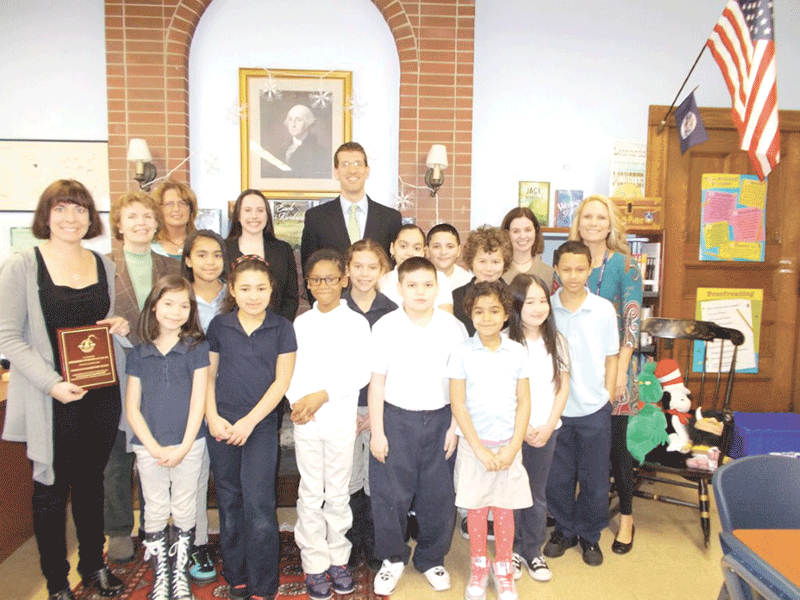
Education Sections
Start Early When Determining and Preparing for Life After School

Dennis G. Egan

Dennis G. Egan

Parents and guardians of special-education students often misunderstand the rights that state and federal law affords such students, particularly in the area of transitional planning. Transition services are those designed to prepare children for education beyond high school, employment, and independent living, and must be included in the first individualized education plan (IEP) in effect when a child turns 16 years old (typically developed when the student is 15).
Federal and state laws dictate that school districts provide transition planning to special-education students between the ages of 14 and 22. These services are in furtherance of the free appropriate public education (FAPE) that special-education students are entitled to receive.
Melissa R. Gillis

Melissa R. Gillis

The IEP process for a student receiving transitional services is much like that of any special education student; however, it differs in one critical area — once a student reaches the age of 14, he or she must be invited, though is not required, to participate in the IEP process. The key to effective transition planning is starting early and understanding what services your special-education child is entitled to, and which are appropriate given his or her academic achievement and potential post-secondary life skills.
Effective transition planning starts well before the student reaches the age of 14, however, and takes into account individual needs, strengths, weaknesses, and interests. Specific services may include academic instruction, exposure to social experiences, training in adult living skills, or soft skills such as interviewing or résumé writing. Effective communication between your child (however he or she is able) and you, as the parent or guardian, is always the first step in successful transition planning. Although most students — special education or otherwise — don’t know what they want to do after leaving high school, these discussions should take place early and often during the child’s high-school career.
Whether your child wishes to attend college is another important consideration, because the answer to this question often dictates the transition services requested and received. For example, both formal and informal assessments should be performed in order to evaluate how your child compares to other students, as well as identify his or her strengths and weaknesses, all in an attempt to make a determination about whether college, trade school, life class, or another avenue should be pursued.
In order to identify your child’s needs, preferences, interests, and strengths, the following assessments can be performed. Formal assessments are standardized tests that include areas covering knowledge on independent living skills, the student’s personality, career preference tests, and vocational-skills evaluations. Informal assessments are the subjective observation of your child both in and out of the classroom setting, and may include viewing him or her in their workplace or interviews.
Transition planning is not an abstract idea. In fact, your child’s IEP should clearly identify his or her post-secondary goals, as well as the services being provided by the school district in furtherance of those goals. As with any effective IEP, post-secondary goals should be clearly stated, deemed achievable, updated at least annually, and address three general areas — those that the student hopes to achieve after high school, those appropriate to the individual student, and those capable of being objectively measured — all focusing on education and training, employment potential, and independent-living skills. Appropriate questions to ask when developing an effective IEP include:
• What are your child’s hopes and dreams?
• What skills are necessary in order for your child to achieve those hopes and dreams?
• What areas need attention in order for your child to master these skills?
• What services will help your child hone these skills? and
• How will you know that the services are or have been effective?
Effective communication with your special-education child is only the first step to ensuring that he or she receives appropriate and successful transition services. In fact, such communication will assure optimal results only if it is committed to writing. In other words, not only must the IEP be well-written, but the services requested to be provided by the school district must be memorialized in writing via the Transition Planning Form (TPF) in order to ensure that all services requested are accepted and document what services are to be provided.
It is important to note that, like any area of an IEP, the transition-services provision is a ‘living thing.’ That is, your child may want to attend college when they are 14 or 15, but by the time they turn 16 or 17, they may decide that a vocational skill is more desirable. In such cases, effective communication with both your child and the school district is imperative in order to assure that transitional services are adjusted when necessary so that the post-high-school student is on the desired path.
While this article contains only general considerations with regard to transition services, like any other part of special education, it is vital that you as a parent are an active participant in the process. Advocacy on behalf of your child, as well as self-advocacy, are the only ways to ensure that he or she receives the transition services necessary to promote a successful post-secondary life.

Melissa R. Gillis, Esq. is an attorney with Bacon Wilson, P.C. in the special-education, domestic, and real-estate departments; (413) 781-0560; baconwilson.com/attorneys/gillis. Dennis G. Egan Jr. is an attorney with Bacon Wilson, P.C., concentrating in special education, business, and corporate law; (413) 781-0560;  baconwilson.com/attorneys/egan.

Education Sections
Link to Libraries Expands Its Mission — and Its Reach

Susan Jaye-Kaplan, left, and Janet Crimmins

Susan Jaye-Kaplan, left, and Janet Crimmins say the LTL mission has evolved and now involves much more than filling the shelves of area libraries.

It all started in early 2008 with a few dozen books collected and then donated to the library at the White Street School in Springfield. Since then, the work — and the mission — of Link to Libraries has expanded and evolved. Instead of simply filling shelves with books — although that’s still a big part of the equation — the organization is developing new and imaginative ways to not only put books directly in the hands of young children, but also involve business and civic leaders in the critical assignment of promoting childhood literacy.

By GEORGE O’BRIEN

Janet Crimmins says she’s read hundreds of letters from young students who have become involved in the Link to Libraries program.
Most of these missives come after a read-aloud program coinciding with a large donation of books to the school’s library from of the organization, which Crimmins and co-founder Susan Jaye-Kaplan started three years ago. Most of these handwritten notes come complete with some curious grammar and spelling, but they all get right to the point:
“Thank you for donating books to our library. We are going to have more fun and we are going to be smarter,” wrote Jerrick Wilson. “I can’t wieght [sic] to read it. I like the book you read to us. It was funny. The bookbag are [sic] cool.”
And there was this from a girl named Samantha: “Thank you Links to Librarie [sic]. I am so thankful because I got to learn new vocabulary to become smarter, so I can have a good job like you. Now I am going to read more books so thank you so much.”
As much as she likes reading such messages, and she really does, Crimmins says she covets her collection of photos featuring children and their books even more. “They’re more expressive than the letters,” she noted, adding that the smiles and the excitement they convey help those who volunteer time, energy, and imagination to this effort know that they are making an impact when statistical, measurable evidence to that effect is elusive and probably years if not decades away.
But those involved with LTL are driven by the belief that absolutely nothing bad can happen when you put books in the hands of young people who might otherwise not have that experience — and that plenty of good can result.
And their work is capturing the imagination of not only young people, their teachers, and principals, but also the business community, which is contributing in a number of different ways. Start with the space at Rediker Software’s headquarters in Hampden that’s been donated by the company as combination warehouse, staging area for donations and bookbag-packing efforts, and photo gallery (those aforementioned pictures of children with books now crowd the walls).
But there are many other efforts — ranging from financial gifts to donations of books and bookbags, to the recruitment of volunteer ‘celebrity’ readers, which include PeoplesBank President Doug Bowen; Steve Bradley, vice president of Government and Community Relations at Baystate Health; and Peter Rosskothen, co-owner of the Log Cabin and Delaney House — that speak to how far this organization and its work have come.
There is actually a waiting list for read-aloud assignments, said Jaye-Kaplan, noting that many individuals have expressed an interest in taking part in the program. There is another waiting list, however, one featuring several dozen schools seeking donations for their libraries, a situation that speaks to the toll the recent downturn has taken on education programs and facilities.
For this issue, BusinessWest relates the story of Link to Libraries, and how its founders are finding that the assignment they’ve taken on continues to grow in scope, importance, and overall satisfaction for those involved.

Must Reading
Margaret Thompson was asked for a snapshot of the student body at the Kensington Avenue School in Springfield. It’s not a particularly pretty picture.
Indeed, 96% of the youngsters, clustered into several streets near the ‘X’ in the city’s Forest Park neighborhood, live in poverty. Thompson, the school’s principal, says she has no hard figure on how many of her students live in single-parent homes, but offered “most all of them.” Some live with grandparents or other relatives, while others are in foster homes, and still others are in shelters, she told BusinessWest.
And then there’s the transience factor; between December and March of last year, 50 of the roughly 340 students in the school left as their parents or guardians moved out of the area, and another 30 came in, a revolving door that provides a stern test for educators.
“The neighborhood itself is not a safe place,” Thompson went on. “But the school is; it’s like a beacon in this neighborhood.”
It’s not written in the organization’s mission statement, but Link to Libraries was essentially created because there are, unfortunately, many schools like Kensington Avenue in the Pioneer Valley, and especially in urban areas like Springfield and Holyoke — places where the gift of a book is “like a treasure,” said Thompson, and donations of a few hundred books to that school’s library — extensively damaged in a flood two years — have an impact well beyond the dollar value of the volumes in question.
It was with facilities like Kensington Avenue School in mind that Kaplan and Crimmins launched Link to Libraries in early 2008. They started on Crimmins’ dining room table, where 65 books, gathered from various sources, were packed up and delivered to the library at the White Street School in Springfield, also in the Forest Park area.
The exercise served as an inspiring beginning, enough to validate what the co-founders were trying to do and ignite a passion to soon recalibrate goals and expectations.
“Everyone — the students, teacher, and principal — were so excited about what we left that we both said, ‘this is something we can do,’” Jaye-Kaplan recalled. “We spent the whole day afterward networking and talking about what we could do and what we should be doing.”
Such humble beginnings are certainly not forgotten amid the thousands of books that arrive at the warehouse monthly, but there have been profound changes and countless signs of exponential growth since a group of 10 volunteers got LTL off the ground.
Indeed, for an organization dedicated to the printed word, some impressive numbers are being used to tell the story.
For example, more than 35,000 books have been distributed to date, and the number for 2011 is approaching 25,000. Also, some 35 area schools and nonprofit organizations — most in Holyoke and Springfield, but several from other surrounding communities — have been involved in book donations, and nearly 10,000 students have received a book.
Meanwhile, another statistic was added this past September: 3,000. That’s the number of young people who received ‘Welcome to Kindergarten’ literacy kits for the start of the new school year. Each child receives two books, a bookbag, and several items for parents and guardians designed to stress the importance of reading and offer tips on encouraging children to do so.
The kit includes a bookmark supplied by the Reading Success by 4th Grade initiative created by the Irene E. and George A. Davis Foundation, as well as a pamphlet from the Harvard Graduate School of Education called Encouraging Your Child to Read.
The program is not exactly unique, said Kaplan, noting that many school departments in Massachusetts and other states have such initiatives. What is unique is that this is funded entirely by LTL, while the others are mostly supported by public dollars.
The kindergarten program, the contents of the literacy kits, as well as a new ‘Read Together’ initiative involving young, disadvantaged children are just a few examples of how the LTL mission has evolved from merely filling library shelves — which remains a big part of the equation — to putting books directly in the hands of children and offering encouragement to read.

Chapters and Verse
While Jaye-Kaplan and Crimmins both do a little of everything — and that includes lugging boxes of books up the three floors to the warehouse (“it’s good exercise; it keeps us in shape,” said the former) — they have developed their own assignment niches, and become quite proficient at each.
Crimmins is unofficially in charge of reading and reviewing children’s books and making recommendations for titles to be purchased and read, while one of Jaye-Kaplan’s primary assignments is writing grant applications.
“I’m the reader, she’s the writer,” said Crimmins. “I’m happiest when I have my nose in a book; I’ve probably read more than half the books we order — and that’s about 400-500 different titles at a time. Each one is chosen for a different reason; they’re all different topics, and they cover a broad age range.”
Jaye-Kaplan, who was a long-time grant judge for Billie Jean King’s Women’s Sports Foundation, believes she’s a better judge than grant writer, but has still enjoyed enormous success in winning funds for Link to Libraries. She says the organization’s mission and partnerships within the community help win the favor of the judges weighing her applications, and that she usually vies for smaller amounts — and for a reason.
“We know other organizations are in need of money, and if we get overzealous, then some others will lose out,” she explained. “So I’m willing to write more grant applications for smaller amounts and spread the wealth.”
And both founders have it within their job descriptions to recruit volunteers to help at the warehouse, readers for classroom duties, and businesses to provide both monetary and in-kind donations. And they don’t seem to be having problems on any of those fronts, especially when it comes to securing help from the business community.
Indeed, while wary of listing participating businesses out of fear that she might forget someone, Jaye-Kaplan eventually acquiesced, and noted that contributions in several shapes and sizes have come from businesses large and small.
She said companies as diverse as Excel Dryer, Big Y, Health New England, Kelly Fradet, Reddiker Software, and Johnson & Hill Staffing have provided financial support and/or help stamping books, loading bookbags, and helping to stock the shelves in the warehouse.
Meanwhile, the read-aloud initiative continues to grow, said Jaye-Kaplan, and is now an important component in the broader effort to promote literacy, not simply supply books to libraries.
She said there are a number of benefits for program participants, meaning both the adults and the children. The former gain an eye-opening look at the challenges faced by educators in schools and districts serving disadvantaged young people, as well as the satisfaction of being part of the solution to the problem. The latter, meanwhile, get to hear a story, while also gaining time with some positive role models (especially adult male professionals, who are missing from the lives of many of the students) and an understanding that community leaders think enough of this organization and its mission to take time out to volunteer.
Both the level of support from the business community and the growing ranks of celebrity readers help Crimmins, Jaye-Kaplan, and others involved with Link to Libraries answer that difficult but necessary question: is this initiative making a real difference in the community?
“I just look at the faces in the photos of the children,” said Crimmins. “They say a lot; they and the letters we get tell us that we’re making a positive influence in these kids’ lives.”
Said Jaye-Kaplan: “we have children tell us over and over again that they’ve never had a book in their home. Some of them are so overwhelmed that they don’t want to bring the book home for fear that it will be lost. We have principals and superintendents of schools who don’t just want us to deliver the books; they want to come here and see what we have, make suggestions, and thank us. They’re committed to helping us succeed.”

Far from the End
Given how far LTL has come in 3 ½ short years, Jaye-Kaplan and Crimmins say it’s difficult to project what those often-quoted numbers will be a few years out.
They both think it’s fair to say that the organization will continue to expand and hone its mission and find new and imaginative ways to put books in the hands of children, while continuing to preach the importance of childhood literacy.
Meanwhile, more read-alouds are scheduled to get more area business and civic leaders involved in the initiative and bring the message home in ways beyond the gleaming new volumes on the library shelves.
After all, there are thousands of children, like young Jerrick Wilson, who can’t wieght for their next book.

George O’Brien can be reached at [email protected]

Education Sections
Study on Community Colleges Prompts Questions, Criticism

Bill Messner

Bill Messner


Bob Pura says he found at least a few things to like about the recent Boston Foundation report titled “The Case for Community Colleges: Aligning Higher Education and Workforce Needs in Massachusetts” — especially the main subject of the account.
“I’m glad they focused on community colleges — we need and deserve that kind of attention,” said Pura, the long-time president of Greenfield Community College, noting that this segment of the Commonwealth’s higher-education portfolio is often overlooked due to the prevalence of top-shelf private colleges. He also liked the fact that the report, released late last month, said the 15 institutions are woefully underfunded and that the state needs to step up its commitment to the schools.
Bob Pura

Bob Pura

But beyond that, Pura had some major reservations about the document and its primary message — summed up by a recent local headline: “Report Slams Community Colleges” — that these institutions were essentially failing in one of their primary missions, to train individuals to succeed in today’s technology-driven job market.
Actually, this was the conclusion of two reports released within the same week. In the other, the Commonwealth Corp., in a report titled “Critical Collaboration,” found that the state’s community colleges are not properly aligning their training programs with the specific needs of the health-care industry. According to the report, the schools are not creating important standards that ensure sufficient academic performance from students.
This double whammy had many community-college presidents on the defensive, but those we spoke with mixed praise for the reports — especially the Boston Foundation document — with criticism that it was recommending that things be fixed that aren’t necessarily broken.
Pura said the report seemed far too Boston-focused to be considered complete and fully accurate — one of its main recommendations is the merger of Roxbury and Bunker Hill community colleges — and surmised that those doing the research might not have ventured west of Worcester or even Route 128 as they went about their work. If they were more thorough, he argued, they would have found plenty of evidence that community colleges are successfully training and retraining thousands of individuals.
Bill Messner, president of Holyoke Community College, agreed, and took exception to some of the report’s primary recommendations, including a centralization effort that would do away with local boards of trustees at the community colleges, and a call for a more singular focus on workforce training, presumably, he believes, at the expense of one of his school’s historical strengths — transfer programs to four-year schools.
Meanwhile, Messner, Pura, and others said a move back to a centralized board for all 15 institutions would rob those schools of individuality and probably stifle ongoing efforts at various schools to address many of the concerns listed in the report.
“How’s that going to enhance workforce efforts? I don’t know,” asked Messner in reference to the centralization proposal before answering his own question.
Ira Rubenzahl

Ira Rubenzahl

Meanwhile, Ira Rubenzahl, president of Springfield Technical Community College, said that, while many of the report’s conclusions can be debated, its basic argument — that community colleges have a huge role in both workforce development and economic development, and need more financial support to carry out that role — cannot be.
And this is what he hopes everyone — including the community-college presidents that have assailed the report — can take away from this exercise moving forward.
“The reason for looking at community colleges now is economic,” said Rubenzahl, referring to both the timing of the report and its main thrust. “We’re still in the throes of the Great Recession, and certainly employment has not responded. And if we’re going to have a vibrant economy in Massachusetts, the report argues, and I agree, that community colleges have to play an important role — a bigger role — for that to happen.”

Schools of Thought
The crux of the Boston Foundation’s report — and the reason for its focus on the role and performance of community colleges — can be found in its executive summary:
“Massachusetts has one of the lowest unemployment rates in the nation and has added more jobs throughout the recession than most states. However, this transition has not benefited everyone,” it reads. “Rather, as blue-collar jobs continue their long decline, it is leaving far too many workers on the sidelines. There are great rewards for those with the requisite levels of education and skills — and far fewer options for everyone  else, as the economy becomes more and more highly specialized.
“While traditional jobs are disappearing, the gap between the needs of the knowledge economy and the educational attainment of the state’s residents is growing every year,” the report continues. “The recession has been especially tough on on those with less than a high-school diploma, leading to unemployment rates that are four times greater than those of college graduates. Already there are regions of Massachusetts where low rates of educational attainment have exasperated high unemployment levels and stalled economic recovery.”
“The economic imperative for aligning the workforce needs of Massachusetts with the needs of students attending community colleges is powerful and growing,” the authors go on. “Massachusetts is at a crossroads in its capacity to compete — and the ability of its residents to fully participate in the current economy and the rewards that employment brings. For the Commonwealth to flourish going forward, a high priority must be placed on training the workforce that is needed by the industries that are driving the Massachusetts economy. That responsibility falls squarely on the Commonwealth’s public higher-education system, most predominately the 15 community colleges.”
To enable these institutions to effectively carry out that assignment, the report’s authors recommend a number of steps, starting with a clarification and simplification of the schools’ mission. Not only is that mission too wordy, says the foundation (252, compared to 102 for North Carolina and an ultra-concise 18 in Virginia), but it is too broad.
The mission statement “is indicative of a lack of focus and an attempt to be all things to all people,” the authors state. “It is time for community colleges to embrace their role as the link between elementary education and career. This encompasses transfer to to a four-year college, technical education, certificate programs, and career retraining programs. The mission should be providing the Commonwealth’s residents with the education and skills necessary for a productive career with a family-supporting wage.”
Other recommendations include:
• “Developing a strategic blueprint for building a system that effectively leverages the capacity of community colleges to be leaders in meeting the workforce needs of Massachusetts”;
• Strengthening the community-college system of governance and accountability. “The existence of 15 community college governing boards, to whom the presidents report, completely independent from the Board of Commissioner of Higher Education, is not conducive to achieving state and regional workforce-development goals,” the authors write;
• Adopting performance metrics;
• Better preparing students for community-college-level work and graduation;
• Forming a community-college coalition; and
• Stabilizing community-college funding and consolidating the funding into one line item managed by the commissioner of Higher Education.
Paul Grogan, CEO of the foundation, told the Boston Globe, “I hope the colleges see this is not a blame game, not an assault, but just the reverse — we’re saying these institutions are crucial to the economic future of the state.”

Grade Expectations
The community-college presidents we spoke with said this message is certainly embedded in the report, although they believe it may likely get lost amid headline-making recommendations such as merging two of the schools, eliminating local governance, and narrowing the schools’ broad focus to workforce-related initiatives.
Meanwhile, they hint strongly that the authors may have overlooked Western Mass. in their research, and thus some evidence that the schools are working on some of the issues the report details — specifically that often-mentioned jobs-skills mismatch — and achieving progress.
“I thought the study lacked perspective on Western Massachusetts,” said Pura. “I thought that the wonderful work that’s going on in Springfield, Holyoke, the Berkshires, and here in Franklin County was not spoken to. That fact is that community colleges are very tied to the workforce agenda, and they’re serving the communities of this region in a rather powerful and significant way.”
As examples, he cited work at Berkshire Community College to partner with business leaders there to help make graduates workplace-ready; a regionwide effort called the Healthcare Workforce Partnership of Western Mass., designed to draw more people into health care fields and train them for those jobs; and the recently announced collaborative between HCC and STCC called TWO (Training and Workforce Options) through which the schools are essentially combining their workforce-training initiatives.
And he also summoned a recent anecdote from his own school that he believes is quite typical of what’s happening across the region.
“I know of one particular individual who was laid off; he worked with the regional employment board, and essentially went through the system,” Pura explained. “He had never been out of work before, and didn’t know how he would provide for his family. He wound up at GCC, got involved in our sustainable-energy program, did an internship with Sandri Energy Co., and is now gainfully employed there.
“If you asked him, this gentleman would say that the system works,” he continued, “and there are countless other people who could say the same thing.”
Messner had some similar observations, but noted quickly that workforce preparation is simply a part of the community-college mission — a large part, to be sure, but only one component that should not become the singular focus of such institutions.
“As you read this report, you come away with the sense that what they mean is we should be focused on short-term training and technical training, and that this whole focus on general education and liberal-arts transfer amounts to resources that are misallocated — which we simply don’t agree with here,” he told BusinessWest. “We’re a comprehensive community college; that’s our mission. We do transfer, we do liberal arts, we do adult basic education.
“Is that a lot? Yes, but that’s what we’re in business to do; that’s what we’re charged with doing,” he continued. “And the notion that we’re somehow going to truncate our mission doesn’t make sense; more and more students are coming to us because they’re being priced out of four-year education, and they’re coming to us for a start in that direction.”
Rubenzahl, meanwhile, without necessarily disagreeing with his colleague’s comments, said he’s choosing to view the report in the most positive way he can, and that is by focusing on its central theme — that community colleges are at the crossroads of education and the workplace, and must function effectively in that role if the state is to reverse those recent trends concerning out-migration, unemployment, and underemployment.
“There has been a fundamental change in the way education has to interact with the economy,” he explained. “We all have to be very thoughtful about how to improve education in order to help the economy recover.”

Thoughts in Passing
Echoing Pura’s thoughts, both Messner and Rubenzahl praised the report’s authors for bringing needed attention to the plight of community colleges as they go about their work.
“I was generally pleased that we’re getting this kind of attention,” said Rubenzahl. “Because generally, community colleges have labored in this state without a lot of recognition, and without the kind of support that goes with more recognition.”
Whether that support is coming is a matter of conjecture, but for now, community-college leaders and state legislators have been given something to think about — and debate — concerning the future of institutions who are finally getting some due, even if it comes complete with large doses of controversy.

George O’Brien can be reached at [email protected]