
Megan McDonough
Executive Director, Pioneer Valley Habitat for Humanity
She Helps Families Achieve Life-changing Stability, One House at a Time
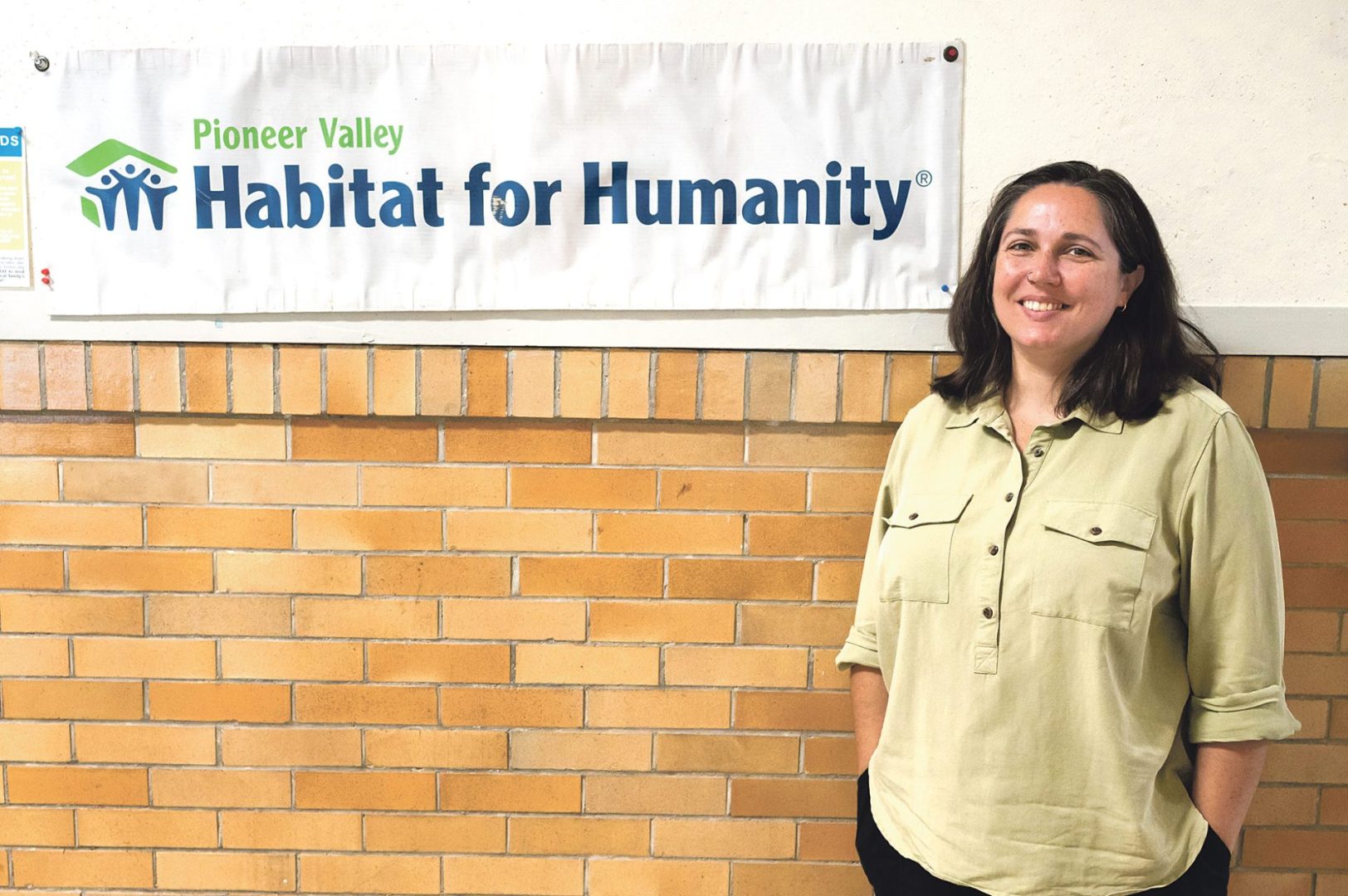
Photo by Focus Ashely Photos
“Timing is everything.”
That’s how Megan McDonough described the circumstances that saw her arrive at Pioneer Valley Habitat for Humanity in 2013 and take the reins as executive director a year later.
And she’s grateful for that timing — and the experiences that led her to be successful in that role — because of what the organization’s work has meant to so many low-income families achieving home ownership for the first time.
That experience began with a master’s degree in regional planning at UMass Amherst, with a concentration in housing and social issues. “My concentration was part of an overall desire to make a difference in the community and realizing how important housing was in that journey,” she said.
After working at the Center for EcoTechnology (CET) in Northampton for seven years, she joined Pioneer Valley Habitat for Humanity in 2013 as an office manager and was quickly elevated to the post of Operations manager, working with volunteer build teams and overseeing applications for zoning, planning, and building permits. In 2014, she shepherded the first Women Build project for two net-zero-energy homes — the chapter’s first — in Easthampton.
“Her work has empowered many women and families of marginalized racial identities to achieve the first step in building generational wealth through affordable home ownership.”
Those efforts, among others, caught the attention of Habitat’s board of directors, and when the organization’s executive director stepped down in 2014, McDonough won the job over 30 other applicants.
“It was clear to me after a couple weeks as interim ED that Megan would make a great ED,” said Peter Jessop, then board president. “It was her attention to detail and her can-do attitude that most impressed me during my short tenure at the board helm.”
McDonough told BusinessWest she was confident in her ability to lead the affiliate. “I had previous management experience and a master’s degree in planning and housing, and the board decided I was the best fit to take that leadership role.”
A decade later, that decision has been proven correct many times over, and McDonough has carved out a … well, impactful place helping families achieve stability in life. That’s a word she used a few times during this interview, and for good reason.
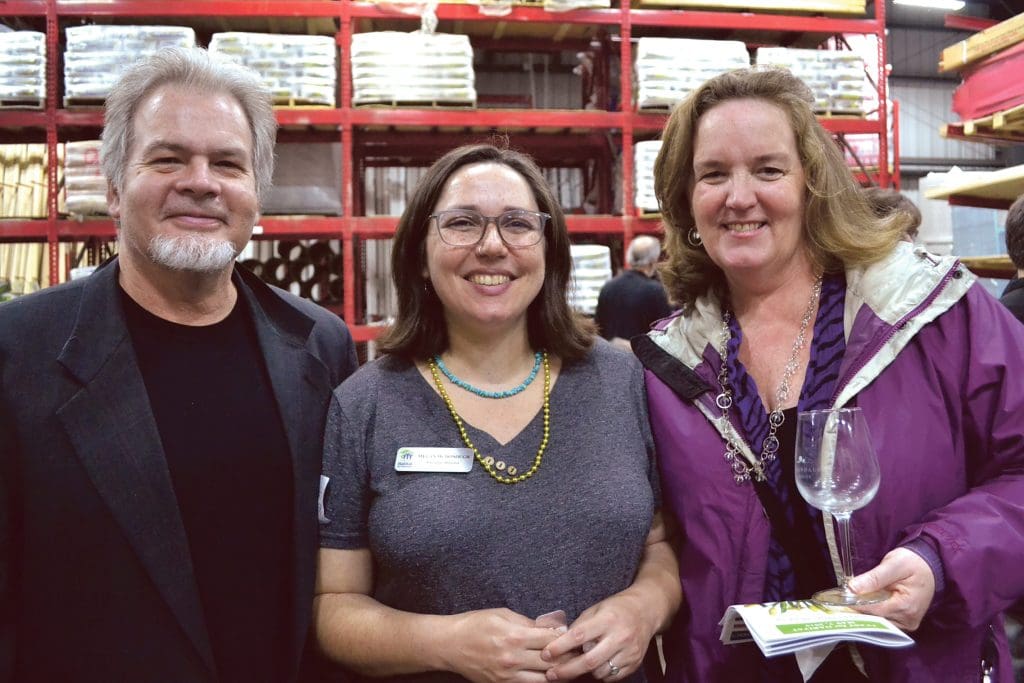
Megan McDonough (center) with Charles Roberts and Aelan Tierney of Kuhn Riddle Architects & Designers, which has provided pro bono design services for Habitat for Humanity projects.
“Stability is a word we use a lot because, when you’re a renter, you’re at the whim of your landlord; if they want to sell the building or the house, you’ve got to move,” she said. “Even if you’ve been a perfect tenant, you can still experience housing instability as a renter — whereas, when you own your own home, that gives you certainty to say, ‘OK, I’m putting down roots in this community.’”
She noted that Habitat International has done studies showing improved educational, health, and economic outcomes stemming from home ownership. “I’ve also heard anecdotal stories about our homeowners pursuing higher education or different job opportunities because they have that stability.”
Aelan Tierney, president of Kuhn Riddle Architects & Designers, nominated McDonough as a Woman of Impact, having worked with her during her time at CET, focusing on sustainable and energy-efficient building practices, and, more recently, having provided pro bono design services for sustainable Habitat building projects.
“Over these years, we have been witness to Megan’s unwavering passion and commitment to developing affordable, sustainable homes,” wrote Tierney, a Woman of Impact herself. “Her work has empowered many women and families of marginalized racial identities to achieve the first step in building generational wealth through affordable home ownership.”
“There’s this deep impact that happens with the family that’s selected and becomes a homeowner, but there are also hundreds of volunteers who are impacted as well, and I think that’s often underappreciated.”
Tierney noted that McDonough and her team have especially impacted the lives of single parents, many of whom never imagined home ownership would be achievable. In fact, of the 58 houses the nonprofit has completed, 60% are owned by female heads of household.
“Research reveals that Habitat homeowners go on to achieve higher levels of education, more advanced jobs, and better health outcomes than their non-homeowning peers,” Tierney added, “and as taxpaying members of their communities, they have more voice in and impact on their local towns and neighborhoods.”
Impact that ripples outward into the community and across generations — that’s Habitat for Humanity in a nutshell, and it’s also McDonough’s passion.
Building on a Vision
McDonough was quick to explain what Habitat does — or, more specifically, dispel some common misconceptions, like the notion that the homeowners are getting a free house.
“Habitat for Humanity builds homes for low-income families and then sells it to them with an affordable mortgage. And we do that to build strength, stability, and self-reliance for those future homebuyers,” she told BusinessWest. “We don’t give away homes for free. They do purchase them, but at a price that’s much more affordable than you could find in this area on your own.”
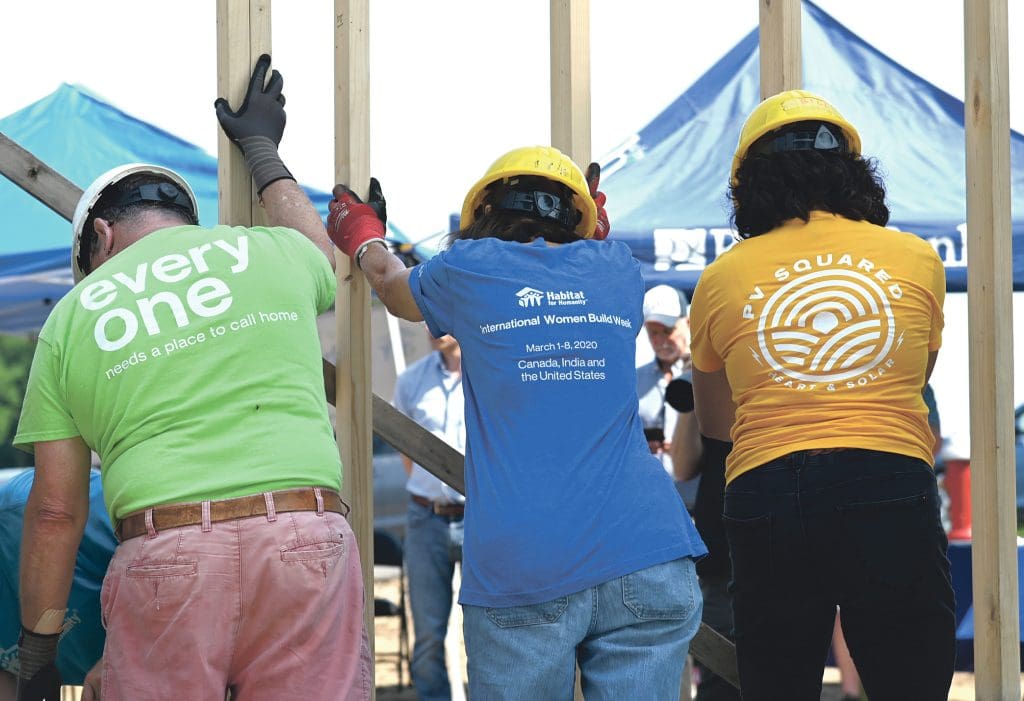
Habitat for Humanity projects bring together a raft of volunteers, both individuals and businesses.
That’s an especially big deal these days, as home prices are soaring. Equally important is the work the homeowners put into the projects.
“That’s the other thing that’s special about Habitat for Humanity: the future homeowners help build their own houses. They put in sweat equity in the construction alongside community volunteers, who also help bring down the cost of building the homes by donating their time,” she explained.
“It’s empowering to know they helped build the house and that they can take care of it themselves,” she went on. “One of the side benefits of sweat equity is they actually learn a lot of construction skills and how to use power tools. They were there caulking and painting alongside the volunteers, so if something needs to be touched up later, they’ll know how to do it.”
A roster of local businesses, from builders and roofers to landscapers and solar-energy installers, offer discounted materials to Habitat and even send workers to help out on a job, McDonough noted, adding that the organization relies first and foremost on volunteer labor.
“There’s this deep impact that happens with the family that’s selected and becomes a homeowner, but there are also hundreds of volunteers who are impacted as well, and I think that’s often underappreciated,” she said. “There’s the college student who learns how to use a hammer for the first time, or the professional carpenter who gets to give back and feels the accomplishment of sharing their skills and knowledge. There’s a lot of social capital building and community building that happens when people work together for a common goal. It’s extremely gratifying.”
“We had almost 80 applications for our last house here in Northampton, so the need couldn’t be greater.”
One of the key evolutions in the organization’s work has been an emphasis on energy efficiency and green building.
“We work really hard on bringing down our costs, selling a home at an affordable price, but if we get someone in there and they can’t afford their utility bill, we sort of missed the mark,” she said. “We’re not building fancy McMansions. We’re building a box, but a nice box — a new one with good insulation and high-efficiency mechanical systems. And we have been getting those homes Energy Star-certified for a number of years, and have added some additional green-building certifications as well.”
That focus on energy efficiency and renewable energy is a way to impact the future, McDonough told BusinessWest. “It’s not cost-effective to build small, simple, energy-efficient homes. They’re just not getting built in the marketplace. So it’s also really unique that we build high-quality but simple homes. We have laminate countertops; these aren’t luxury granite countertops. But we also have extra insulation in the walls to make sure it’ll be a cozy house. We put in air-source heat pumps so it can be all electric and part of the decarbonization of the future.”
At the same time, during her 10 years as the affiliate’s executive director, McDonough has hired and mentored dozens of interns through the Massachusetts Clean Energy Center’s internship program, and a significant number of these interns have gone on to careers in sustainable housing or related industries.
Generational Impact
The application process to be selected for a Habitat home is rigorous, McDonough said, and everyone who meets the criteria is placed into a lottery.
“They must have a minimum income so they can afford that mortgage, and they must good-enough credit so that they don’t have other creditors who are going to endanger their ability to pay their mortgage. And they have to have a low-enough income, under 60% of the median income, so that they have a housing need and couldn’t just go buy a house elsewhere.”
For many such individuals, without Habitat’s help, especially in the current market, home ownership would be simply unattainable.
“There’s a lot of talk right now about affordable opportunities for housing. That’s a huge story, and it can seem overwhelming, and the average person thinks, ‘well, that’s for someone else to deal with. That’s for the politicians or the developers,’” McDonough said.
“One of the things I value about Habitat for Humanity is that we know there’s this huge problem, and we know we have neighbors living in unsanitary, unsafe, or unaffordable housing, and we can’t necessarily solve that whole problem overnight,” she continued. “But can I show up tomorrow and do something to help this one family have a safe and stable place to call home. We take that huge problem and break it down into actionable steps. Someone’s got to go to the store and buy the paint, someone’s got to pick up the paintbrush and put it on the wall, someone’s got to raise a hammer. All these community volunteers come together to make it happen.”
As Pioneer Valley Habitat for Humanity celebrates its 35th anniversary, McDonough and her team have instituted the Framing the Future Legacy Society, which encourages donors to consider a legacy gift in their estate planning — another way the nonprofit is creating generational impact.
“Some of our volunteers have been here for 20-plus years,” she said, adding that there’s always a need for more. “And that longevity, that investment of time from the community, is what has built our ability to build good houses for these future homebuyers.
“I only see that growing in the future, so we can help as many families as we can,” she added. “We had almost 80 applications for our last house here in Northampton, so the need couldn’t be greater. My hope is that we can continue to navigate the complex systems, mortgages, construction, and fundraising, and increase our impact as we go forward.”
For leading these efforts to create safe, affordable housing and change lives throughout the Pioneer Valley, one build at a time, Megan McDonough is certainly a Woman of Impact.