LaTonia Monroe Naylor
Chief business educator at Monroe Naylor Consulting, LLC and president and CEO of Parent Villages








Chief business educator at Monroe Naylor Consulting, LLC and president and CEO of Parent Villages

Chief business educator at Monroe Naylor Consulting, LLC and president and CEO of Parent Villages
Staff photo
“When a patient walks into my room, they expect to have a seat and for me to talk with them about their history, about their journey. I take that information, and I use it to help them heal. I need to look at history. And sometimes patients come in and tell you horror stories, but I can’t discard it because I need it all to help that patient to live.”
Dr. Shirley Jackson Whitaker, a nephrologist by trade — that’s a kidney specialist — shares those thoughts toward the beginning of Ashes to Ashes, a documentary she produced in 2019. And they are apt when juxtaposed against the story she goes on to tell.
The film is actually two intertwined stories, both incredibly powerful. One is related by Winfred Rembert, an avid Star Wars fan and master leatherwork artist.
Clear-eyed but haunted, he relates a life-changing experience in 1967, when he drew the ire of law enforcement in Cuthbert, Ga. because of his work advocating for civil rights. They tossed him in a car trunk, and he emerged to see a noose hanging from a tree. They stripped him, hung him upside down, stabbed him, and made it clear they intended to castrate him, hang him, then burn his body. When one of the men suggested they stop, they moved on, and Rembert, bleeding and deeply traumatized, lived.
“In this country, no one really, genuinely talks about the people who were lynched.”
The other story in Ashes to Ashes concerns the 4,000 people lynched in the U.S. during the Jim Crow era, which, as Rembert painfully reminds us, didn’t end all that long ago. In 2017, Whitaker, a friend of Rembert’s who also grew up in Georgia, organized a funeral in Springfield to honor the many lynching victims who were never buried. As Whitaker explains in the film:
“Sometimes they would lynch people, then put them in the water with weights, so the family would never see them again. Sometimes they would take the bodies and cut them up and sell the pieces. Sometimes they would take the body after they lynched it and burn it up, so the families would not have anything. A lot of these people never got a funeral. It was often too dangerous for the families to retrieve those bodies. And sometimes, there were no bodies to retrieve. It’s not just black history — this is American history.”
At the funeral ceremony, participants read names of many of these unburied individuals, and members of a local theater group read monologues drawn from Whitaker’s historical research. The account of a father forced to choose to die along with his young son or watch the boy drown is especially wrenching.
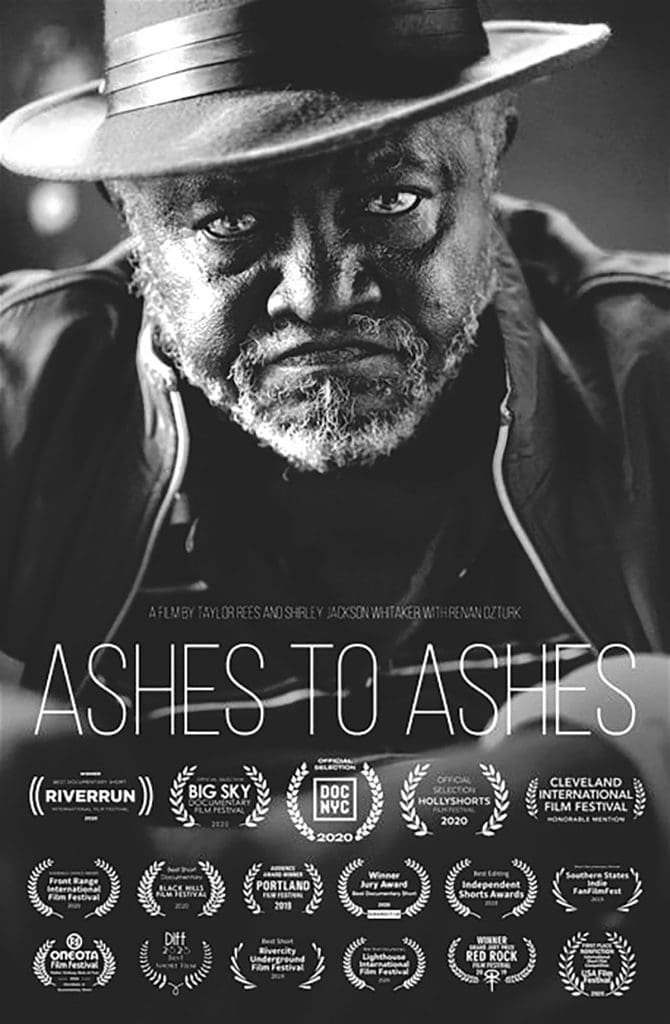
Ashes to Ashes gained acclaim on the festival circuit and was a finalist for Academy Award consideration.
“In this country, no one really, genuinely talks about the people who were lynched,” Whitaker says in the film. Which is why she produced it — to give those people a voice, get people talking about some too-recent history, and, by grappling with that reality, just maybe start the process of healing.
“I decided to have a funeral for the over 4,000 African-Americans who were lynched in the United States to close that chapter and move forward. America has to do the same thing to help heal this country. You’ll get some pushback from people: ‘why do you want to stir that up?’ But it hasn’t been stirred enough. People were saying, ‘ah, that’s so depressing.’ I say, well, if you think this depressing, try hanging from a tree.”
She then asks, “what can I do? I can’t bring them back, but I can give them a prayer.” For doing so much more, Whitaker is an uncommonly powerful Woman of Impact.
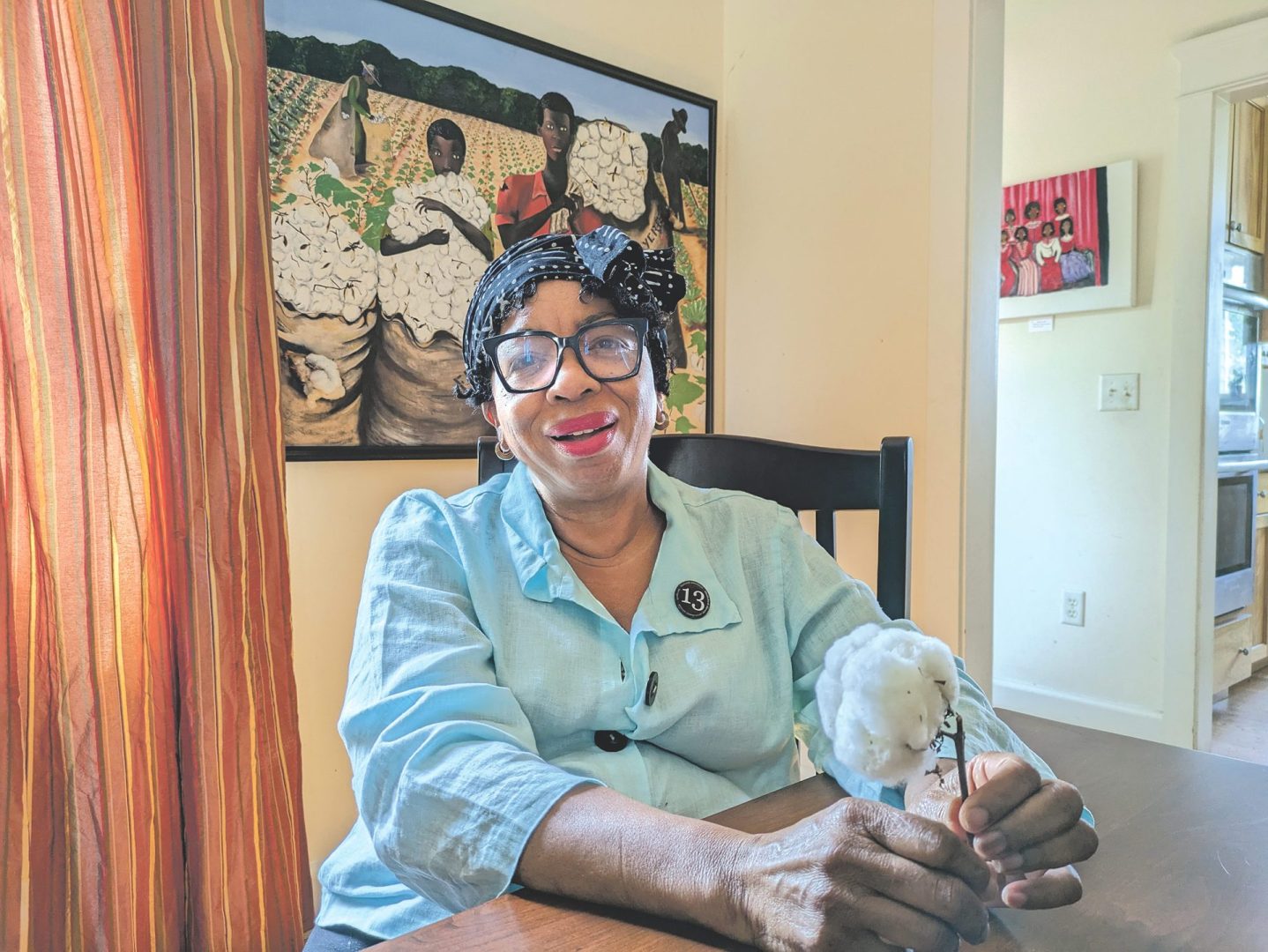
As she spoke with BusinessWest in her Amherst home about her multi-faceted life and career, virtually every wall in every room was covered with her paintings — some traditional in medium, some incorporating mixed media, including fabrics and, in a few cases, unprocessed cotton.
“Cotton has this fluffy appearance to it, but just take your hand and squeeze right there,” she said. “Just squeeze. You feel the seeds? Once Eli Whitney got the seeds out, they had more uses for cotton.”
And the slaves who picked it, as the cotton gin essentially rejuvenated the plantation slavery industry.
“The thing is, when you go to pick this, you’ve got to be careful because this is like knives,” she continued, pointing out the sharp wall surrounding the fluffy cotton. “You learn early how to avoid that.”
Rembert, who passed away in 2021, knew that well; he grew up picking cotton on a plantation, and he understood the dark history of the crop in the South.
Whitaker’s path was somewhat different; the seventh child of Eddie and Charlie Mae Jackson from Waycross, Ga., she attended Clark Atlanta University, graduating with a bachelor’s degree with honors and then earning a public health degree at Yale University School of Medicine and undergoing advanced medical training in internal medicine and nephrology at Emory University School of Medicine, where she was the only Black woman in her class.
After some years on the West Coast, she moved to the Pioneer Valley when her husband was hired at UMass Amherst as a professor of Mathematics. For a decade, she worked at Springfield Southwest Community Health Center, where, in addition to bettering and saving lives, she designed a children’s coloring book advising against drugs, created a community-health newsletter, and produced an imaginative ‘puppet opera’ for young people titled “Monsters Among Us.” In 2006, she went into private practice.
But nephrology wasn’t her only interest; to address her concerns about the academic standing of African-American children in Amherst schools, she established the Academic Initiative for Maximum Success, which resulted in a dramatic increase of Black students in AP math programs.
“In addition to caring for her patients’ health, Shirley brings joy and hope. Her contributions to her community through educational programs have provided many with opportunities that would not have been afforded without her initiatives.”
Whitaker has also continued to paint, authored two children’s books, and produced her award-winning documentary. These days, she continues to practice medicine two days a week at the Northampton VA Medical Center.
“When I look back and I think of all these things, and the ripple effect of it all, I’m pleased with that,” she told BusinessWest, adding that her honest, often hard assessments of patients made a long-term difference. “People to this day come up to me and say, ‘I remember what you said, and it changed my life. I changed my diet; I lost 40 pounds.’”
Taylor Rees, director of Ashes to Ashes, will certainly never forget her. “Dr. Shirley is a neighbor of mine who lived on the same street as my family in Massachusetts when I was growing up,” he wrote. “In 2015, she asked for help documenting her memorial, and throughout the year, we worked together to also visit with and listen to the personal and lived experiences of Winfred, her friend. The film evolved over time into an homage to both Shirley and Winfred and their work using art to address racial injustices in America.”
Whitaker has also made a powerful impression on Anika Lopes, who nominated her as a Woman of Impact a year after Lopes, president of the Ancestral Bridges Foundation, earned the same honor from BusinessWest.
“Dr. Whitaker is a woman of impact with every step she takes, a tireless giver, sharing all she has with others,” Lopes wrote. “As a medical doctor, Shirley has and continues to dedicate herself to the wellness of others; she goes far beyond expectation and keeps going. In addition to caring for her patients’ health, Shirley brings joy and hope. Her contributions to her community through educational programs have provided many with opportunities that would not have been afforded without her initiatives.”
Lopes added that Whitaker believes we all have a collective responsibility to create a better future, “and she sure is walking her talk.”
She’s doing so at a time when too many people don’t truly comprehend the horrors of slavery or the more recent legacy of Jim Crow, or are actively trying to erase that history. But she’s also hopeful about the future, currently working on a screenplay called Blanket, noting that “a blanket of hate can never cover the resilience, remembrance, and hope.”
As for Rembert, he spent more than 50 years struggling with sleep issues, stemming partly from the trauma he experienced in 1967, as he describes in Ashes to Ashes.
“Even today, now, it’s dragging me down. I can’t rest. I can’t rest. I lie in my bed, and I can’t rest. I’m running for my life every night. Somebody’s after me, and I don’t know what to do.”
And later in the film:
“I don’t think I can be healed. I think I’ll go to the grave with what I got, holding me down and holding me back. Even though those things were done to me years ago, they’re still holding me back. Can I send the message? Can I change this? I can’t change this world. I know I’m not a big enough man to do that, but I can put a dent in it. But you just keep going, and going, and going, and going.”
Whitaker has kept going as well, maybe not changing the world, but impacting her corner of it in profound ways as a doctor, educator, artist, and filmmaker. And she empathizes with the pain of friends like Rembert and thousands of people she never knew, but wanted to memorialize through a unique funeral service and a story that will live on as people continue to watch it.
“I talked to him like two days before he died,” she said of Rembert, “and he said, ‘I just want to know what it’s like to go to sleep.’”
“We’re looking back in history so this patient can live,” Whitaker said during that 2017 memorial service in Springfield, referring not to a nephrology patient, but to a nation with deep, unhealed wounds. “We’re looking back in history so this patient can thrive. We’re looking back in history so this patient can become very strong. But this patient could only live and get stronger if we’re willing to look back. So tonight, we start.”
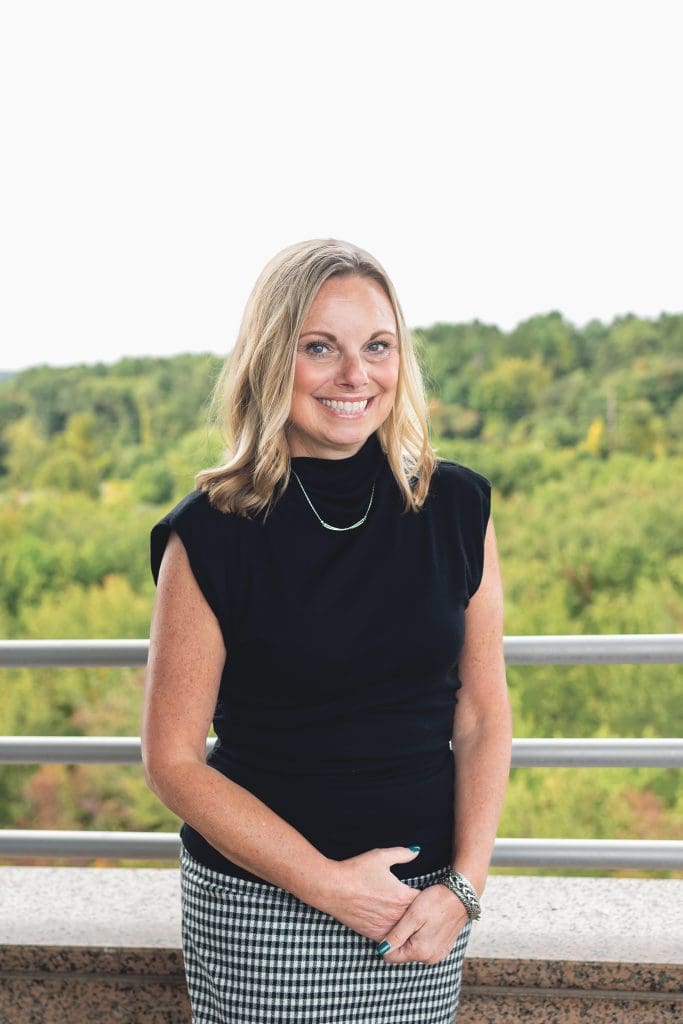
Photo by Focus Ashely Photos
Kristi Reale says it’s an unofficial assignment. In other words, it’s not written or her business card. In addition to serving as a partner with the Holyoke-based accounting firm Meyers Brothers Kalicka (MBK), she’s also in charge of the ‘fun committee’ there.
She even has a ‘fun drawer’ in her credenza, filled with Easter eggs to be hidden around the office at that time of year, golden coins and shamrocks for St. Patrick’s Day, material for the ‘decorate your space for the holidays’ competition, and much more.
Fun is an important part of the equation at this firm, she said, adding that there is stress throughout the year, but especially around the many tax-filing deadlines, such as those in April, September, and October, and fun is needed to help take the edge off.
“It’s a hard job, and you want to make it fun,” she said, adding that she tries to do something fun — like a Belgian waffle bar or hot chocolate bar — every Saturday during spring tax season, when many employees are in and trying to dig out.
But fun is just a part of that equation, as evidenced by the sign on top of that credenza, the one that reads, “Work Hard, Play Hard.” Those are words her father, Bill Hurley, a small-business owner who passed away in February, lived by, and Reale does as well, she said, adding that she stresses both elements — to anyone who will listen, but especially to the young women (and men) she mentors.
“Hard work is important, but you also need to have some fun,” said Reale, who is the proud (sort of) repeat recipient of one of the awards given out at the firm annually, this one to the individual “most likely to have squatted” at MBK, meaning you could find her at her desk at almost any hour.
“It’s not an award you really want to get,” said Reale, who has also been awarded a blanket by her colleagues, in part because she’s always, as in always, cold, but also as a nod to the notion that she sleeps in her office.
Hard work — but not necessarily the kinds of hours needed to win the ‘squatter’ award — is what Reale preaches to young people — as well as the need to balance that hard work with fun, to give back to the community in many different ways, and to mentor others on their way up, just as they were mentored.
She does all this, and that’s why she’s being honored as a Woman of Impact in 2024.
Her office helps tell the story: there’s the fun drawer, that aforementioned sign, photos of family (a nod to work-life balance), her 40 Under Forty plaque from 2009, her diplomas and credentials hanging on the walls, and — on this day, parked in one corner in large bags — 60 pairs of kids’ pajamas she had already purchased for an organization called Jammie Jingles, started by a firm member, which contributes new pajamas to children in need.
But comments from those she works with tell it better.
“She’s devoted 100% to the firm, to her clients, and, more importantly, staff,” fellow Partner Rudy D’Agostino said. “What’s great about Kristi is that she’s a mentor to many of our younger staff; she takes the time out of her busy schedule to meet with them, work with them, mentor them, and help them put a plan together.”
“Hard work is important, but you also need to have some fun.”
Howard Cheney, another partner at the firm, concurred. “Kristi has made, and continues to make, a remarkable impact on individuals, businesses, and organizations in Western Mass. The position she holds is a unique one because her job directly enables others to thrive in their own endeavors. The weight of that responsibility is not lost on her, as she goes above and beyond for her clients.
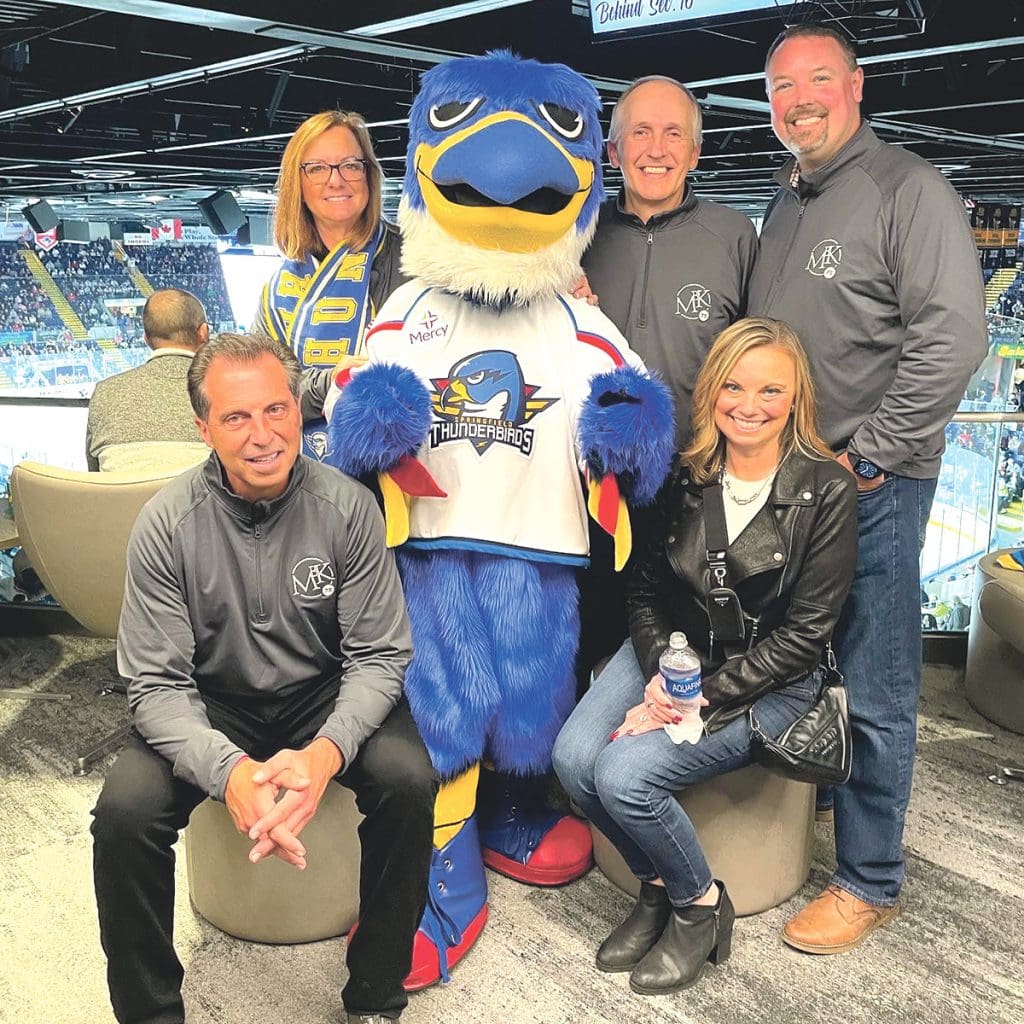
Kristi Reale, right, with Springfield Thunderbirds mascot Boomer and fellow Meyers Brothers Kalicka Partners (from left) Rudy D’Agostino, Kristina Drzal Hougton, Howard Cheney, and Jim Krupienski on the occasion of the firm’s 75th anniversary in 2023.
“Additionally,” he said, “Kristi serves as a role model to a number of young professionals on our staff, and she works hard as a mentor, helping these young accountants to navigate the road to success, as she experienced it herself.”
Reale was a student at Assumption College in Worcester, working toward a degree in accounting, when she decided that real world-world experience would be a good complement to what she was learning in the classroom.
Her advisor agreed, suggesting that she pursue an internship. So she did, with a vigor that would reflect her career to come.
“I opened the phone book, and I called every single accounting firm within driving distance of Assumption,” she said, adding that she scored some interviews, including one at a large regional firm in Worcester.
“When I went to interview with this person, he said, ‘how did you find us?’” she recalled, adding that she told him about opening that phone book and calling every accounting firm in Worcester and asking if they had an internship program. “He called me up and said, ‘Kristi, I’m a Bentley guy, and I had a Bentley student pinned for this internship, but I’m going to give it to you.”
She completed that internship in the spring and started with the firm in the fall, she went on, noting that times were different in the broad world of public accounting then; jobs were much harder to come by, and the competition for them was fierce.
“You went to work, you did your job, you did the best you could every day because, if you didn’t, there was a line of people outside waiting to get your job. It was a tough market,” she said, adding that this environment was fine with her because, from a young age, good working habits were instilled in her by her parents and, later, several mentors.
And she is essentially trying to impress that same message on young people today.
“What’s great about Kristi is that she’s a mentor to many of our younger staff; she takes the time out of her busy schedule to meet with them, work with them, mentor them, and help them put a plan together.”
Tracing Reale’s career, she stayed with the firm in Worcester for a few years before tiring of the commute from and a perceived lack of opportunities to advance. So she went to work at a smaller firm but was again stymied by a lack of opportunities, feeling “disposable,” as she put it. Frustrated, she decided in early 2001 that she was done with public accounting.
But she still needed to work, so she called her sister-in-law, an employee at Meyers Brothers, and asked if the firm needed any tax-season help. It did, and she came on board with the intention of making this a very temporary assignment and finding something else to do for a career.
Instead, she saw women in management roles, became inspired, and stuck around, passed the CPA exam, and plowed ahead.
“I knew no one was going to outwork me, and I was just going to do it,” said Reale, who eventually became the second woman to become a partner at the firm (her colleague, Kris Houghton, was the first).
As a partner and CPA, she works hard on behalf of her clients, but also on behalf of those she works with, setting an example and also acting as a mentor — to young people in general, but especially women.
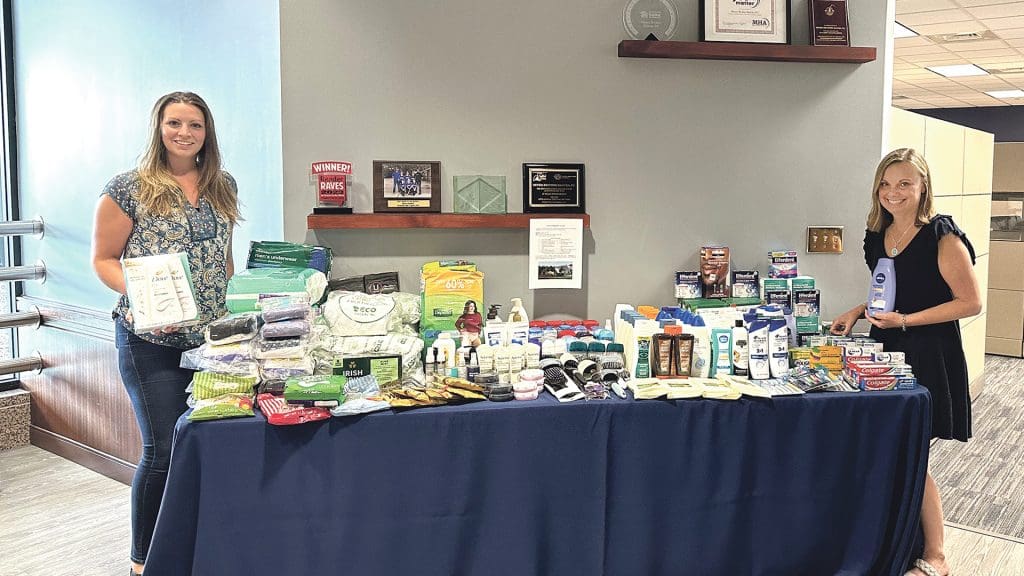
Kristi Reale, right, and Chelsea Russell, manager/CPA at Meyers Brothers Kalicka, display some of the many items collected during a supply drive to benefit the residents of Ruth’s House in Longmeadow.
“What I’m trying to encourage is for this next generation of women to be strong and financially independent, and to succeed. The glass ceiling’s already been broken; why not go for the moon?” she said, adding that most of her mentorship activity is informal, and she works hard to make herself accessible, with some colleagues calling her at 10 p.m. or later.
There is no managing partner at MBK; the six partners essentially split up the workload. Reale’s areas of emphasis include IT and administration.
But, as noted earlier, she’s also in charge of bringing some fun to the firm’s 80 or so employees. That’s a broad assignment that includes everything from activities around various holidays to celebrations when those tax-filing deadlines have passed, to random pranks and other efforts to coax smiles and relieve all that stress.
It’s an assignment she takes … well, seriously.
But in addition to her work with clients and her ‘work’ to supply fun, she is also very involved in the community — and in many different capacities.
She has sat on different nonprofit boards in the past and remains involved with the board at the Advertising Club of Western Massachusetts. She has also been involved at various levels with Habitat for Humanity, Trees of Hope Supporting Ronald McDonald House, Unify Against Bullying, and Dress for Success.
Meanwhile, the firm supports several different nonprofits and individual programs, with initiatives revolving on a monthly basis, and Reale makes a point of stepping up for each one.
Such as with those kids’ pajamas she started buying, with an emphasis on starting.
“I’m at 60, but I could be at 100 soon. This is fun; I enjoy this,” she said, adding that she does most of this kind of giving — including the purchase of pairs of Air Jordans for two teen boys in a family the firm adopted last holiday season — on a low-profile basis. (Since the firm went ‘casual’ at the height of COVID, she often wears Jordans herself; she says it gives her some street cred with the younger employees in the office.)
Overall, Reale is a giving person with an incredibly strong work ethic … and a great sense of humor, a blend of traits exemplified by her donation of a kidney to her husband 18 years ago, and the ultimate timing of that donation.
“I was tested and passed all the testing in late 2005, during the beginning of tax season,” she recalled. “I was cleared to be a donor in March of 2006, and they had an opening, but I told him I had to wait until the end of tax season. I said, ‘you waited like eight years … what’s a few more weeks?’”
All this explains why Reale is a Woman of Impact and why D’Agostino, who knew her father well, says he would undoubtedly be very proud of all she has accomplished and the manner in which she has, indeed, become a role model to so many.

Photo by Focus Ashely Photos
Mission-rich and Profit-powered.
That’s the title of the book LaTonia Monroe Naylor wrote, and its subtitle — A Guide to Transforming Your Passion Work into a Fully Funded Business — offers further clues to what’s inside.
And to how she helps businesses move purposefully to the next level, through her business, Monroe Naylor Consulting LLC, which seeks to help entrepreneurs build profitable, mission-driven businesses.
But that consultancy, and the book, are just two elements in what has become a life and career of helping others. It’s been a life of a Woman of Impact.
“When I came up with this, the idea was, how do you take your overwhelming passion and structure it in a way that you can be productive?” she explained.
“Most people don’t use the administrative part of their skillset, or they don’t have it, but that was a gift that I’ve always had,” Monroe Naylor told BusinessWest, noting that she was developing business acumen from a very early age, working at her uncle’s store.
While entrepreneurs typically bring the passion and purpose — that’s why they started the business, after all — they don’t necessarily know how to marry that with an understanding of how a successful business works. “Most people are not taught that because they don’t come from environments where people are teaching them that. So I want to teach people that; I want them to be successful.”
At the same time, “I want them to know that starting a business is not the only thing you should be focused on, so how do you sustain what you do and have harmony in your life?” she said, adding that people shouldn’t feel like they need to sacrifice time with their family for the sake of a job that keeps them separated 100 hours a week.
“That, to me, is mission-rich. How do you do the things that you love and embrace the things that you love, but still have enough stability that you can be comfortable and have a nice house?” she went on. “If you can’t have both, then you’re not going to be happy. And who wants to be miserable?”
Essentially, Monroe Naylor works with entrepreneurs, small-business owners, churches, and other organizations on culture, business sustainability, and other key elements of a thriving business. “I provide training on grants, management, strategy, funding, how to start your business, what you need, what kinds of people you need on your team. On the nonprofit side, how do you set up your board, who should be on your board, how do you ensure you stay compliant?
“Then, when I created the book, I literally thought about the last 20 years of my life. What were the biggest challenges and roadblocks that I ran into? And how do I simplify that for people in less than a three-hour read, so that they will actually read it?”
“How do you do the things that you love and embrace the things that you love, but still have enough stability that you can be comfortable and have a nice house? If you can’t have both, then you’re not going to be happy. And who wants to be miserable?”
Ayanna Crawford, president of AC Consulting and one of three individuals who nominated Monroe Naylor as a Woman of Impact, wrote that her story “serves as a testament to the power of resilience and unwavering dedication to making a difference. As a chief business educator, she inspires others to follow her lead and create lasting impact in their communities. She has reached the place she is today by focusing on others and making their needs a priority in light of her own.”
Monroe Naylor has long had a heart for the community, which manifested in running for, and winning, a seat on the Springfield School Committee in 2017 — a decision also influenced by a desire to help her young son navigate the challenges of school and life.
“We ran a very grassroots, non-political campaign because we didn’t know any other way to do it,” she recalled. “We just wanted to help our kids. I feel like, if you do things for the right reason, the good will always come back to you. Even though a lot of bad may happen, I focus on the good.”
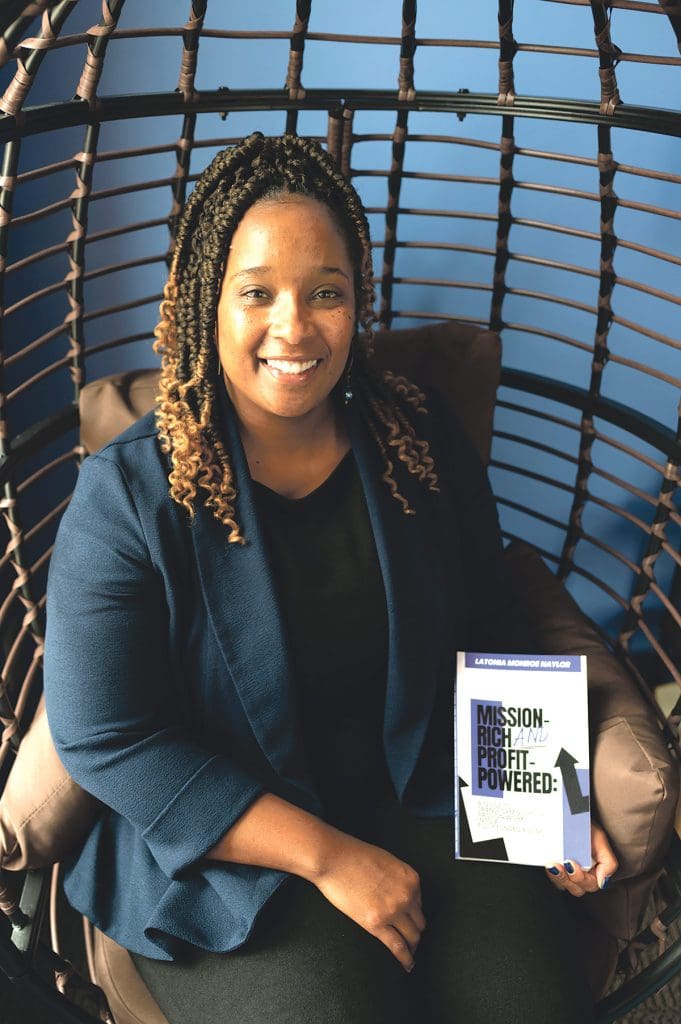
LaTonia Monroe Naylor says she wants people to be successful in business and happy in life.
Her experience on the committee led indirectly to her establishment, in 2018, of Parent Villages, a multi-faced nonprofit that works to improve educational achievement while also offering assistance for victims of violence, resources for family engagement and parent advocacy, and more.
The educational focus came from a presentation she heard as a School Committee member, about how 7% of kids aren’t prepared for kindergarten.
“I said, ‘70 or 7?’ And she was like, ‘7.’ So I said, ‘so 93% of our kids aren’t prepared for kindergarten.’ She said, ‘yeah,’ and I was floored,” Monroe Naylor recalled. “How can they be successful if they’re not ready for kindergarten? They’re starting off on a bad foot.”
So Parent Villages was born, first through meetings in at places like community centers and libraries.
“At one meeting, about 85 people came, all kinds of stakeholders, to try to understand what it is that we need to focus on,” she said. “And we found there were these disconnects; people just didn’t know about resources or how to access those resources.
“We also learned very quickly that the people who showed up to the meetings were parents like us, who were already in the 7% — our kids were already prepared. So how do we reach the other 93%? That’s when we built the organization and started to get into the schools, started working with Baystate Health and other programs to develop a strategy.”
Now, Parent Villages focuses on youth in grades 6 to 12 and their parents and caregivers — what Monroe Naylor called a two-generation model, which offers educational programming and workshops, but also provides interim support services.
“So if somebody is going through a domestic situation and needs housing, we help them. Over 90% of our folks are dealing with trauma, dealing with some type of violence, and just need help and support. They don’t know how to wrap their minds around where they need to go. We help them to see the end and see the potential they already have and help them grasp hold of the fact that they have a village, and that’s going to help them through it.”
The topic of trauma is personal to Monroe Naylor due to an event during her teenage years that almost killed her.
“I was shot when I was 16, and that changed my whole life,” she told BusinessWest. “I already had trauma dealing with the fact that I grew up in the neighborhood that I did — that was trauma enough. But when I was 16, I found a way to escape my day-to-day through music. I loved music, I used to rap, I used to do poetry; that was my safe space.”
So she’d spent time at local studios, working on her music. One day, while walking out of one, she was struck by a stray bullet from a fight on the street. Recovering from that physically wasn’t as challenging as the emotional aspects.
“It wasn’t just [the shooting] that that haunted me; it was the fear and the trauma after — the fear of going into certain spaces, or the fear of somebody coming after you. Those are the things you live with for the rest of your life.”
Through therapy, self-care, and a commitment to her faith, among other factors, she’s navigated that trauma, but always understood she had a solid support system, while many people dealing with trauma don’t, and need a village to be successful. Hence, the ‘village’ aspect of Parent Villages.
“It was the fear and the trauma after — the fear of going into certain spaces, or the fear of somebody coming after you. Those are the things you live with for the rest of your life.”
“The last couple of years, we’ve helped well over 700 people, and we consistently have about 40 youth that we work with throughout the year, and we have about 80 families that we’re working with, doing case management, throughout the year,” she said. “We have a great staff and a diverse board, and we focus on the important things that matter. We make sure we get what they need.”
An earlier nonprofit Monroe Naylor established in 2006, called VITAL Center, advised several nonprofit startups, sole proprietorships, and small businesses. These days, she’s also an adjunct professor at Springfield College and Worcester State University and volunteers as a mentor to youth and young adults in her church and community, establishing initiatives such as computer learning centers, youth summer programs, and other projects.
Monroe Naylor is no stranger to being recognized. A member of BusinessWest’s 40 Under Forty class of 2016, she was also named a Massachusetts Commonwealth Unsung Heroine in 2020, won the Commonwealth Black Excellence Award in 2021, and was named Community Builder by the Urban League of Springfield in 2022.
But Woman of Impact may be the broadest and most accurate way to sum up her life, which she says has been profoundly shaped by so many of the people in it, from her mother to her husband, Mah’dee Naylor Sr., a pastor who founded Dwelling Place Church in Springfield earlier this year, and their four kids — not to mention community giants like Dora Robinson, who was impactful in her life in her early years.
And make no mistake: Monroe Naylor aims to be impactful every day, whether on the business plans of a budding entrepreneur, the trauma of a victim of violence, or the well-being of anyone struggling to be all things to all people.
“A lot of women leaders are so heavily focused on everybody else that they forget to take care of themselves,” she said. “We talk about all the great things that happen, but we don’t talk about our own trauma that we have to deal with, our own internal struggles. How do you gather the inner courage and the inner fortitude that it takes to be a person of impact, and be able to do it on a continual basis? That’s something we don’t talk about enough.”
At the end of the day, she said, being there for other people requires self-care, so she can wake up the next day and continue to have that impact on the lives of others.
“The model that I live by is, whatever you do, make sure you can sleep at night. And if I can’t, I won’t do it. That’s how I hold fast to what I do and the decisions that I make.”

Photo by Focus Ashely Photos
She called it the “Mom Squad.”
This was a group of mothers recruited by Kim Lee or community service at nonprofits and even a few Springfield city departments. Beyond the good work they were doing, these women were using that community service as a way to earn a voucher for childcare that would enable them to address that challenge and eventually go back to school or join the workforce.
Lee — then working as vice president of Advancement for the child- and family-services provider Square One, previously known as Springfield Day Nursery — read the fine print on the literature pertaining to childcare vouchers, noticed the section on community service, and then did what she’s done throughout her career: she went to work helping those were less fortunate and needed a leg up.
Whatever that might be.
“There are so many women who might not be working, might not be employed, or in school, but they want to be, but there is the major barrier, oftentimes, of childcare for their kids,” she said. “The idea was to use what was available to us in order to help these women get the childcare they needed. Meanwhile, through their volunteerism, they were able to gain skills they could put on a résumé.”
There are plenty of other examples of how, throughout Lee’s career, she has gone well above and beyond her official job description to help others while also advancing the mission of the nonprofit in question.
At the Basketball Hall of Fame, where she worked early in her career, she played a pivotal role in curating the “Freedom to Play” exhibit, a landmark project that not only celebrated the pivotal contributions of African-Americans to the sport of basketball, but also served as a platform for discussing the broader themes of racial equity and inclusion within sports and society at large.
Meanwhile, at the Mental Health Assoc. (MHA), she helped secure the donation of a patio set for a residential program for teens, an initiative that was about much more than outdoor furniture.
“It was not about the table and four chairs and the umbrella,” she said. “It was really about giving young people that place, that space, that medium to just enjoy their time together outside.”
At MHA and now at her current employer, MiraVista Behavioral Health Center, Lee has been an advocate for those with mental-health and substance issues, and a facilitator, if you will, for bringing many individuals into programs of care.
“Each professional opportunity I’ve had has afforded me the chance to reflect my personal values and what I deem to be extremely important, which is to make a difference in the community,” she said in summing up what could be called her life’s work. “I’ve always strived to reach individuals who need support and access to services, and harness the energy and resources of an organization to make an impact.”
“I’ve always strived to reach individuals who need support and access to services, and harness the energy and resources of an organization to make an impact.”
But to understand her commitment to empowering the most vulnerable in society, one needs to go back to when she was only in grade school.
Indeed, at age 10, she organized a carnival for the Jerry Lewis Muscular Dystrophy Assoc. Telethon, raising significant funds and awareness of muscular dystrophy.
“This early venture into community service was a precursor to a lifetime of advocacy and engagement, setting the stage for her lifelong commitment to harnessing collective energy for the greater good,” wrote Darby O’Brien, president of Darby O’Brien Advertising, in his nomination of Lee for the Woman of Impact Award. “Throughout her career, Kim has spearheaded numerous outreach programs aimed at extending healthcare and support services beyond traditional settings, directly reaching those in urgent need.”
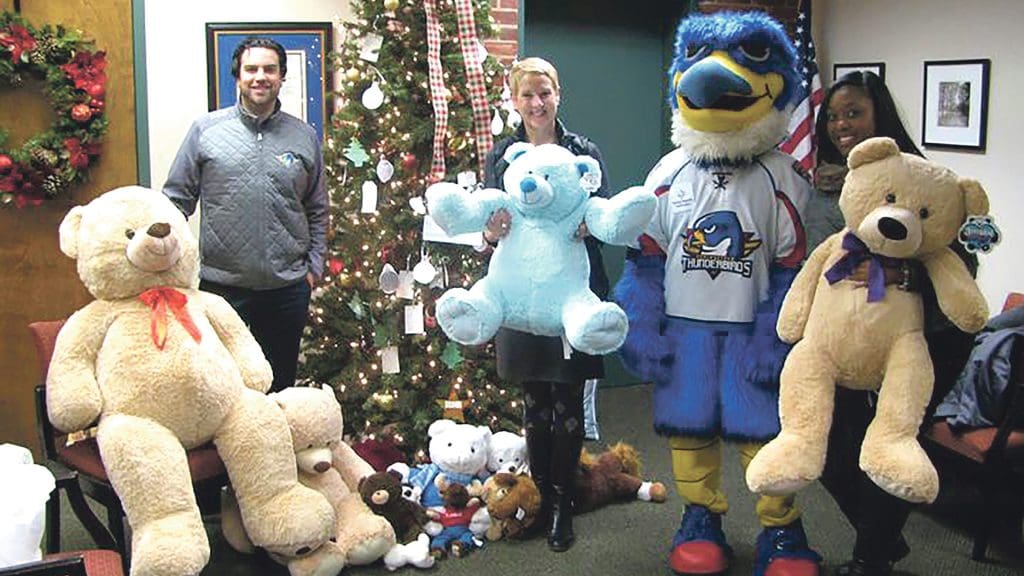
Kim Lee with Springfield Thunderbirds President Nate Costa and some teddy bears donated to the Center for Human Development’s youth-serving programs by the team through its teddy-bear drive.
O’Brien, who has worked with Lee on initiatives throughout her career, including the rebranding of Springfield Day Nursery to Square One, said her career is “a profound narrative of commitment, innovation, and compassion.
“From her early days organizing community events to her impactful work in healthcare and advocacy, she has consistently demonstrated what it means to be a leader who not only dreams of a better world, but takes tangible steps to create it,” he went on. “Kim’s enduring impact on individuals, families, and communities, coupled with her pioneering contributions to healthcare and social justice, make her an exemplary candidate for the Woman of Impact award.”
When Lee first applied for work at the United Way of Pioneer Valley after graduating from Westfield State University, she received a polite rejection in the mail.
Never one to give up easily on anything, she wrote back and included with the missive a man’s shoe.
“I told him I was just looking to get my foot in the door,” said Lee, referring to then-United Way Director Ty Joubert, who was so impressed with her creativity and determination that he put her on the payroll.
“This early venture into community service was a precursor to a lifetime of advocacy and engagement, setting the stage for her lifelong commitment to harnessing collective energy for the greater good.”
So began an impressive career in the broad realm of marketing, public relations, and development, one where creativity has been just one character trait she has brought to her work, in ways that have benefited not merely her employers, but the community at large.
After several years with the United Way, she was recruited (as she was with all subsequent positions) to the Basketball Hall of Fame, where she served as vice president of Marketing for three years before starting a lengthy stint with what was known then as Springfield Day Nursery.
As noted earlier, she was part of the team that rebranded the agency, but also one of the key players to lead the organization back from a series of unforeseen setbacks, including the 2011 tornado that destroyed its headquarters on Main Street in Springfield, and the 2012 gas explosion that rendered one of its facilities unusable.
In 2015, Lee was recruited to the Center for Human Development, where she served as vice president of Development and Marketing. There, among other things, she negotiated a strategic partnership with the Springfield Thunderbirds and also created and managed the Through Her Eyes Girls Conference. Designed for educators, social workers, and mentors with the goal of improving the lives of at-risk girls and young women, the conference drew 500 attendees annually and featured 21 workshops run by notable professionals.
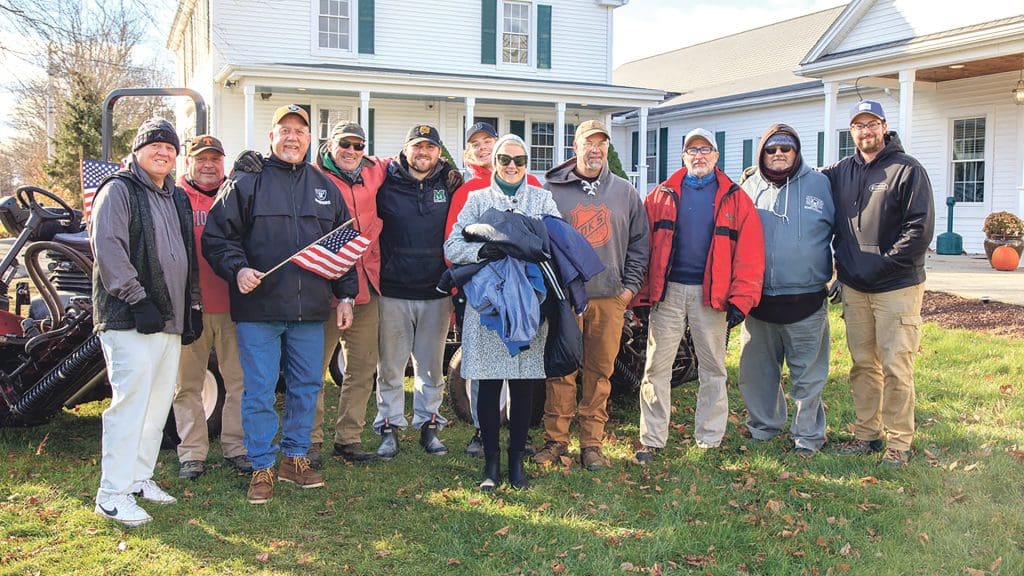
Kim Lee, center, with groundskeepers at the Country Club of Wilbraham, whom she successfully recruited to collect winter coats for children.
In 2018, she moved to Springfield-based MHA, where, as vice president of Development and Branding, her list of accomplishments included the launch of the You Matter Award program to highlight employees and members of the community committed to making a difference in the lives of others.
Then, in 2022, she was recruited to MiraVista, where, as chief of Creative Strategy and Development, she has helped forge partnerships and strategic collaborations to drive new business, while also propelling enrollment in substance-use recovery programming among providers throughout the region.
All of which makes clear that, at each career stop, Lee has leveraged the opportunity given her and, as O’Brien put it, committed to “harnessing collective energy for the greater good.”
As she did with the Freedom to Play exhibit at the Hall of Fame.
“It was the first exhibit of its kind, and I did it with some phenomenal people in the African-American community,” she recalled. “It gave me a real sense of accomplishment to take that vision that we all collectively had, bring it to reality, and really celebrate those significant contributions.
“That was a great example of harnessing an organization and being able to use that as a platform in order to make an impact,” she went on. “When you think about it, Freedom to Play … yeah, it was about basketball, but it was really about giving voice to a whole demographic, to a whole community of individuals who had not really had a chance to tell their story in that way.”
There have been many other examples, of course, including that table and chairs for the residential program operated by MHA, one of myriad instances where Lee has been able to find things for the nonprofits she’s worked for through outreach, relationship building, and communicating need.
At MHA, she became so good at this that she was labeled a ‘waterfinder,’ meaning that, if something was needed by a group, be it winter coats or backpacks or presents around Christmas, she would go out into the community and find it — often from some outside-the-box sources.
Such was the case when she reached out to the course superintendent at the Country Club of Wilbraham with a request for winter coats.
“From her early days organizing community events to her impactful work in healthcare and advocacy, she has consistently demonstrated what it means to be a leader who not only dreams of a better world, but takes tangible steps to create it.”
I asked if they had any interest in doing a coat drive, and they sure did,” she recalled. “I knew they spent a lot of time outdoors, and I thought that perhaps they had some coats that had been gently worn, or perhaps they’d have some interest in supporting the folks at MHA — and they ended up producing bags of beautiful coats.”
At MiraVista, Lee hasn’t been called upon as much to find things, but she has been effective at linking individuals to needed services.
“I spend a lot of time in the community,” she told BusinessWest. “I’ve had the opportunity to just set up tables in local parks and meet individuals where they are in terms of wanting to address their substance-use addiction.
“It’s extremely rewarding when you meet an individual and they’re ready to step on that pathway to recovery,” she went on. “They say they’re going to come in to MiraVista the next day, and I’ll say, ‘when you get here, let me know that you’re here.’ And, sure enough, they come through the front door and they ask for me; it’s extremely satisfying.”
And it’s just one of many examples of why Lee is a Woman of Impact.
Throughout her career, she’s always done her job, but she has also gone well beyond the job and into the realm of community leader.
“Her leadership style is characterized by empathy, inclusivity, and a steadfast commitment to justice and equity,” O’Brien said in his nomination, noting that it has been this way since she got her foot in the door — or that man’s shoe, to be more precise — all those years ago.
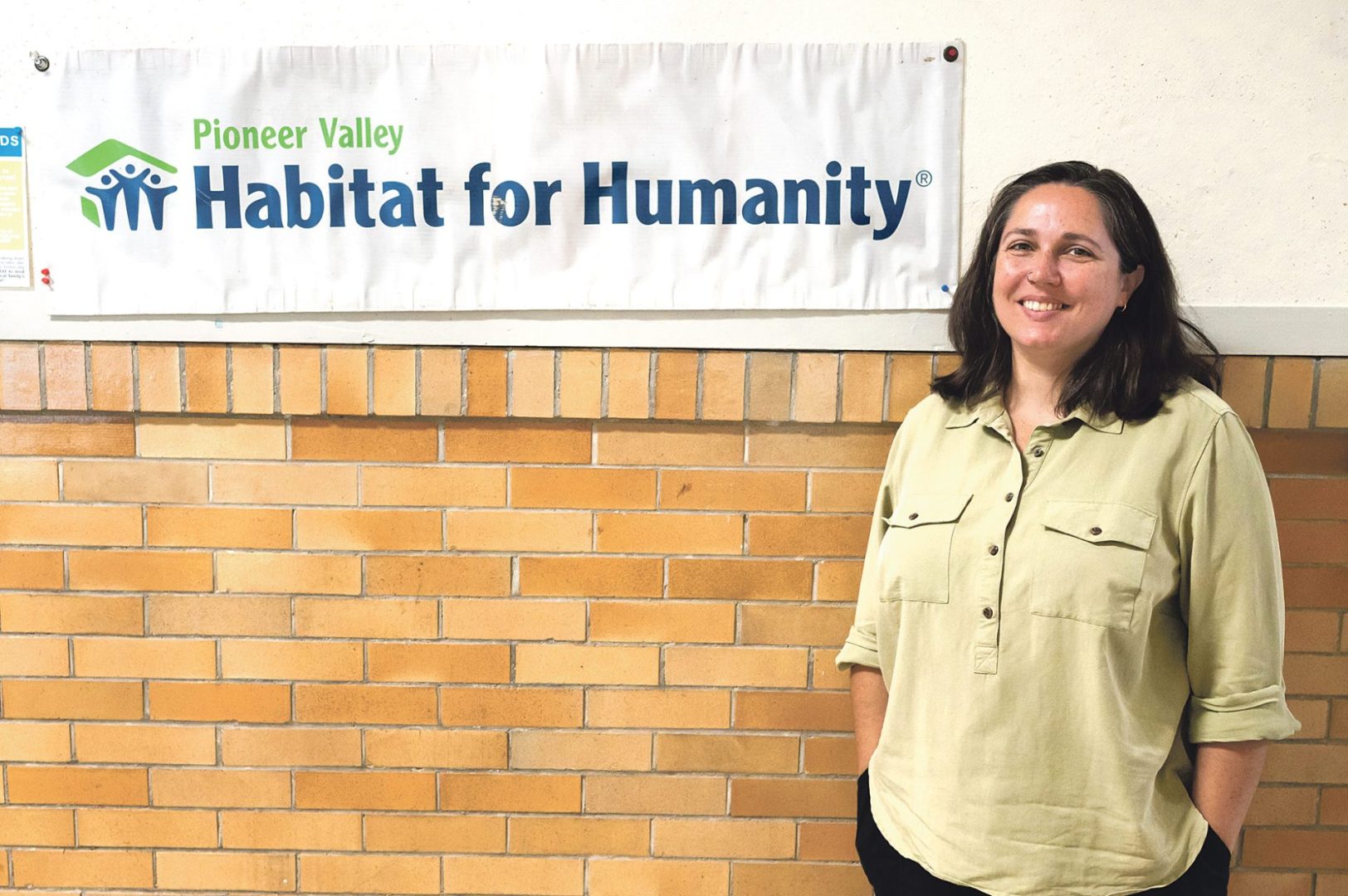
Photo by Focus Ashely Photos
“Timing is everything.”
That’s how Megan McDonough described the circumstances that saw her arrive at Pioneer Valley Habitat for Humanity in 2013 and take the reins as executive director a year later.
And she’s grateful for that timing — and the experiences that led her to be successful in that role — because of what the organization’s work has meant to so many low-income families achieving home ownership for the first time.
That experience began with a master’s degree in regional planning at UMass Amherst, with a concentration in housing and social issues. “My concentration was part of an overall desire to make a difference in the community and realizing how important housing was in that journey,” she said.
After working at the Center for EcoTechnology (CET) in Northampton for seven years, she joined Pioneer Valley Habitat for Humanity in 2013 as an office manager and was quickly elevated to the post of Operations manager, working with volunteer build teams and overseeing applications for zoning, planning, and building permits. In 2014, she shepherded the first Women Build project for two net-zero-energy homes — the chapter’s first — in Easthampton.
“Her work has empowered many women and families of marginalized racial identities to achieve the first step in building generational wealth through affordable home ownership.”
Those efforts, among others, caught the attention of Habitat’s board of directors, and when the organization’s executive director stepped down in 2014, McDonough won the job over 30 other applicants.
“It was clear to me after a couple weeks as interim ED that Megan would make a great ED,” said Peter Jessop, then board president. “It was her attention to detail and her can-do attitude that most impressed me during my short tenure at the board helm.”
McDonough told BusinessWest she was confident in her ability to lead the affiliate. “I had previous management experience and a master’s degree in planning and housing, and the board decided I was the best fit to take that leadership role.”
A decade later, that decision has been proven correct many times over, and McDonough has carved out a … well, impactful place helping families achieve stability in life. That’s a word she used a few times during this interview, and for good reason.
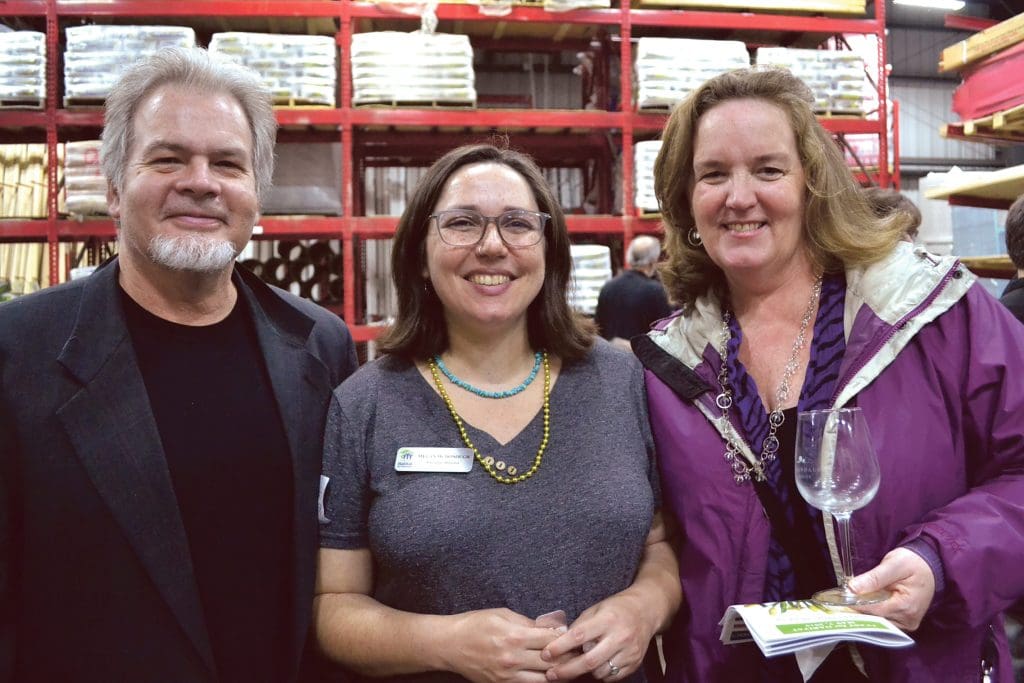
Megan McDonough (center) with Charles Roberts and Aelan Tierney of Kuhn Riddle Architects & Designers, which has provided pro bono design services for Habitat for Humanity projects.
“Stability is a word we use a lot because, when you’re a renter, you’re at the whim of your landlord; if they want to sell the building or the house, you’ve got to move,” she said. “Even if you’ve been a perfect tenant, you can still experience housing instability as a renter — whereas, when you own your own home, that gives you certainty to say, ‘OK, I’m putting down roots in this community.’”
She noted that Habitat International has done studies showing improved educational, health, and economic outcomes stemming from home ownership. “I’ve also heard anecdotal stories about our homeowners pursuing higher education or different job opportunities because they have that stability.”
Aelan Tierney, president of Kuhn Riddle Architects & Designers, nominated McDonough as a Woman of Impact, having worked with her during her time at CET, focusing on sustainable and energy-efficient building practices, and, more recently, having provided pro bono design services for sustainable Habitat building projects.
“Over these years, we have been witness to Megan’s unwavering passion and commitment to developing affordable, sustainable homes,” wrote Tierney, a Woman of Impact herself. “Her work has empowered many women and families of marginalized racial identities to achieve the first step in building generational wealth through affordable home ownership.”
“There’s this deep impact that happens with the family that’s selected and becomes a homeowner, but there are also hundreds of volunteers who are impacted as well, and I think that’s often underappreciated.”
Tierney noted that McDonough and her team have especially impacted the lives of single parents, many of whom never imagined home ownership would be achievable. In fact, of the 58 houses the nonprofit has completed, 60% are owned by female heads of household.
“Research reveals that Habitat homeowners go on to achieve higher levels of education, more advanced jobs, and better health outcomes than their non-homeowning peers,” Tierney added, “and as taxpaying members of their communities, they have more voice in and impact on their local towns and neighborhoods.”
Impact that ripples outward into the community and across generations — that’s Habitat for Humanity in a nutshell, and it’s also McDonough’s passion.
McDonough was quick to explain what Habitat does — or, more specifically, dispel some common misconceptions, like the notion that the homeowners are getting a free house.
“Habitat for Humanity builds homes for low-income families and then sells it to them with an affordable mortgage. And we do that to build strength, stability, and self-reliance for those future homebuyers,” she told BusinessWest. “We don’t give away homes for free. They do purchase them, but at a price that’s much more affordable than you could find in this area on your own.”
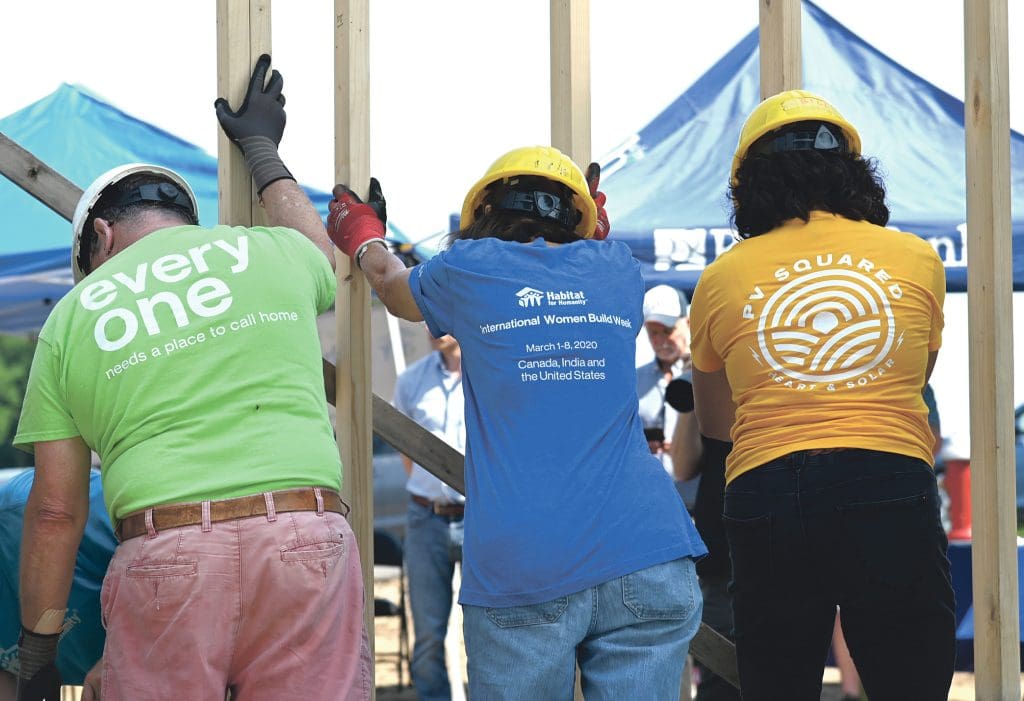
Habitat for Humanity projects bring together a raft of volunteers, both individuals and businesses.
That’s an especially big deal these days, as home prices are soaring. Equally important is the work the homeowners put into the projects.
“That’s the other thing that’s special about Habitat for Humanity: the future homeowners help build their own houses. They put in sweat equity in the construction alongside community volunteers, who also help bring down the cost of building the homes by donating their time,” she explained.
“It’s empowering to know they helped build the house and that they can take care of it themselves,” she went on. “One of the side benefits of sweat equity is they actually learn a lot of construction skills and how to use power tools. They were there caulking and painting alongside the volunteers, so if something needs to be touched up later, they’ll know how to do it.”
A roster of local businesses, from builders and roofers to landscapers and solar-energy installers, offer discounted materials to Habitat and even send workers to help out on a job, McDonough noted, adding that the organization relies first and foremost on volunteer labor.
“There’s this deep impact that happens with the family that’s selected and becomes a homeowner, but there are also hundreds of volunteers who are impacted as well, and I think that’s often underappreciated,” she said. “There’s the college student who learns how to use a hammer for the first time, or the professional carpenter who gets to give back and feels the accomplishment of sharing their skills and knowledge. There’s a lot of social capital building and community building that happens when people work together for a common goal. It’s extremely gratifying.”
“We had almost 80 applications for our last house here in Northampton, so the need couldn’t be greater.”
One of the key evolutions in the organization’s work has been an emphasis on energy efficiency and green building.
“We work really hard on bringing down our costs, selling a home at an affordable price, but if we get someone in there and they can’t afford their utility bill, we sort of missed the mark,” she said. “We’re not building fancy McMansions. We’re building a box, but a nice box — a new one with good insulation and high-efficiency mechanical systems. And we have been getting those homes Energy Star-certified for a number of years, and have added some additional green-building certifications as well.”
That focus on energy efficiency and renewable energy is a way to impact the future, McDonough told BusinessWest. “It’s not cost-effective to build small, simple, energy-efficient homes. They’re just not getting built in the marketplace. So it’s also really unique that we build high-quality but simple homes. We have laminate countertops; these aren’t luxury granite countertops. But we also have extra insulation in the walls to make sure it’ll be a cozy house. We put in air-source heat pumps so it can be all electric and part of the decarbonization of the future.”
At the same time, during her 10 years as the affiliate’s executive director, McDonough has hired and mentored dozens of interns through the Massachusetts Clean Energy Center’s internship program, and a significant number of these interns have gone on to careers in sustainable housing or related industries.
The application process to be selected for a Habitat home is rigorous, McDonough said, and everyone who meets the criteria is placed into a lottery.
“They must have a minimum income so they can afford that mortgage, and they must good-enough credit so that they don’t have other creditors who are going to endanger their ability to pay their mortgage. And they have to have a low-enough income, under 60% of the median income, so that they have a housing need and couldn’t just go buy a house elsewhere.”
For many such individuals, without Habitat’s help, especially in the current market, home ownership would be simply unattainable.
“There’s a lot of talk right now about affordable opportunities for housing. That’s a huge story, and it can seem overwhelming, and the average person thinks, ‘well, that’s for someone else to deal with. That’s for the politicians or the developers,’” McDonough said.
“One of the things I value about Habitat for Humanity is that we know there’s this huge problem, and we know we have neighbors living in unsanitary, unsafe, or unaffordable housing, and we can’t necessarily solve that whole problem overnight,” she continued. “But can I show up tomorrow and do something to help this one family have a safe and stable place to call home. We take that huge problem and break it down into actionable steps. Someone’s got to go to the store and buy the paint, someone’s got to pick up the paintbrush and put it on the wall, someone’s got to raise a hammer. All these community volunteers come together to make it happen.”
As Pioneer Valley Habitat for Humanity celebrates its 35th anniversary, McDonough and her team have instituted the Framing the Future Legacy Society, which encourages donors to consider a legacy gift in their estate planning — another way the nonprofit is creating generational impact.
“Some of our volunteers have been here for 20-plus years,” she said, adding that there’s always a need for more. “And that longevity, that investment of time from the community, is what has built our ability to build good houses for these future homebuyers.
“I only see that growing in the future, so we can help as many families as we can,” she added. “We had almost 80 applications for our last house here in Northampton, so the need couldn’t be greater. My hope is that we can continue to navigate the complex systems, mortgages, construction, and fundraising, and increase our impact as we go forward.”
For leading these efforts to create safe, affordable housing and change lives throughout the Pioneer Valley, one build at a time, Megan McDonough is certainly a Woman of Impact.
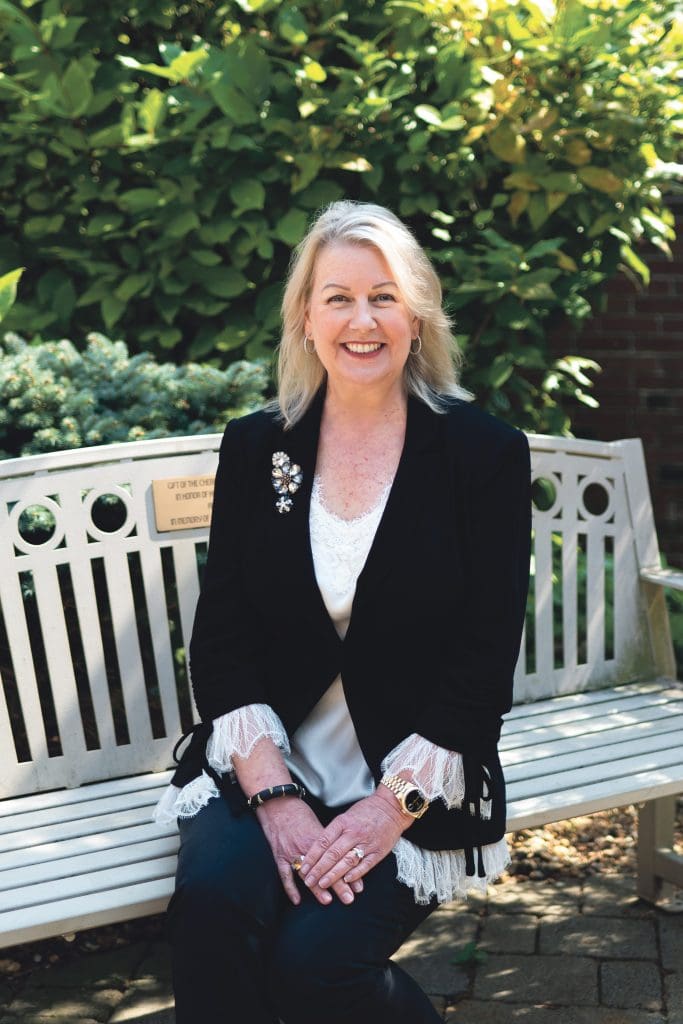
Photo by Focus Ashely Photos
JoAnne Finck grew up in Holyoke in what she described as “modest” surroundings. Her parents, from a young age, impressed upon her the importance of appreciating what one has and assisting those in need.
“They always taught me the value of helping,” she recalled. “One of the things that was really important was that my mother and father would always say, ‘there’s someone who has it worse, so what can you do to help?’”
All through her life, she’s been asking that question — and answering it proactively.
Indeed, throughout a career that has taken her from banking to a leadership role with an insurance company co-owned by her husband, Roger, to serving Friends of Cooley Dickinson (currently as its president), she has always gotten involved, and she has always worked to build a stronger community.
“My goal in life was to always to make a difference — in the community, and in someone’s life,” she said. “And if you can make the change for one person, then you’ve succeeded.”
She’s done just that while serving in volunteer leadership roles for local organizations ranging from the United Way of Hampshire and Franklin Counties to the UMass Fine Arts Center; from Pioneer Valley Symphony to the Greater Northampton Chamber of Commerce.
And she has especially done that in her role with Friends of Cooley Dickinson, where she has energized the organization and infused it with new members, while also leading several fundraising campaigns for CDH, now part of Mass General Brigham.
Finck chaired the Building Our Future Campaign, a comprehensive campaign that raised funds for the Mass General Cancer Center at Cooley Dickinson Hospital. She also volunteered on the Caring for the Future Campaign and was pivotal in raising funds for the Kittredge Surgery Center and an addition to the North Building.
The goal for the Building Our Future Campaign was $8.2 million, but $11.4 million was raised, in part due to Finck’s persistence, drive, and ability to communicate the importance of a strong CDH, and a modern, state-of-the-art cancer center, to Northampton and the communities that surround it.
“As a campaign volunteer, she stands out because of her unwavering enthusiasm and commitment; her grace, dedication to community, and persistency were paramount to our success,” wrote Christina Trinchero, Communications director for CDH, in nominating Finck as a Woman of Impact.
As she talked about raising money, be it for a college, a nonprofit, the United Way, or CDH — and she’s done it for all of the above — Finck said it is both art and science, and there is a key ingredient to success.
“One of the things that was really important was that my mother and father would always say, ‘there’s someone who has it worse, so what can you do to help?’”
“No one likes to ask for money, but if you believe in something, that makes it much easier,” she explained. “I don’t take every single cause — I look to how you can make a difference, how we can make a change, and if I believe in something, I will be very passionate, and I ask.”
“The hospital is a core supporter of the area; we are so lucky to have a world-class community hospital here,” she went on, adding that the merger with Mass General has taken the level of care and access to resources, specialists, and options to a new and much higher level. “Cooley will always be special to me in regards to being there for family and friends and giving our community world-class care within a community-hospital environment. Cooley makes a difference in the lives of its patients.”
She obviously knows a little about making a difference, and has essentially spent a lifetime doing what her parents impressed upon her that she needed to do — make full use of her time and talents to help others.
“Because of her expansive commitment to organizations across our community, JoAnne has made a lasting impact in a variety of areas ranging from education and healthcare to fine arts and social services,” said Trinchero, speaking for countless others when she said Finck is certainly a Woman of Impact.
Soon after graduating from Marymount College in Tarrytown, N.Y. and working briefly as a “grunt” on Wall Street, Finck returned to this region — and a tough job market — and eventually found work at Shawmut Bank in Greenfield, in its collection department.
She had a number of responsibilities, including being part of two-person teams that would repossess cars from owners who had fallen behind on their payments. And in the recession years of the early ’80s, there were plenty of cars to repossess.

JoAnne Finck and her husband, Roger, have long been strong supporters of Cooley Dickinson Hospital.
It was not glamorous work, obviously, and not something she recalls with any fondness, but it was a learning experience on many levels, and it reinforced an already-strong desire to help others.
“I got that delinquent rate from over 10% to 0.5% in less than a year,” she recalled. “And I learned that I was very good at working with people and helping them. I would try to work with them and say, ‘this is what you need to do … communicate with me, and we’ll get you on the right path.’”
She would move on the loan office, and as her banking career progressed, her desire to get involved in the community grew. She ran the Sustaining Campaign for Youth for the local YMCA in 1982, a successful initiative that would inspire involvement with the United Way of Franklin County.
“It helped children, it helped people of need, and, being the treasurer, I knew that the money raised stayed in the community, so I got very vested in the United Way,” she said, adding that she volunteered on its board for more than 20 years (including as treasurer and chair), ran leadership giving, and chaired its campaign in 1999.
“I was very vested in the United Way because I saw how it helped so many people,” she told BusinessWest. “We would have people speak to us, people who were homeless, people who had drug issues, and they talked about how this one place, the United Way, helped them. It was so impactful — for me, it was easy to raise the money. I hate asking people, but this was making a difference in people’s lives.”
“As a campaign volunteer, she stands out because of her unwavering enthusiasm and commitment; her grace, dedication to community, and persistency were paramount to our success.”
Finck also handled major gifts for Lilly Library in Florence before getting heavily involved with another institution in that area — CDH. Or more involved, to be more precise.
In the late ’80s, she would take part in phone-a-thons for the hospital’s annual giving campaigns before taking on a larger role with several of its fundraising drives, including the comprehensive Building Our Future campaign as well as the initiative for the cancer center, which started in 2008 and took eight years, largely because the hospital was in the process of being merged into a larger, still-undetermined healthcare group.
Later, she would get involved with Friends of Cooley Dickinson (formerly the hospital auxiliary), which this year is celebrating its 120th anniversary.
The group runs the hospital’s coffee and gift shops, conducts events, places art throughout the hospital (which can be purchased, with some of the proceeds going to Friends), and stages several fundraising events, including an annual Trees of Love event in the Healing Garden and an arts-and-crafts auction.
It has grown and gained new energy under Finck, who was recruited to be its president, as Trinchero explained in her nomination.
“She blends a respect for traditions and history of the auxiliary with a dynamic ability to manage change,” she wrote, “thus keeping long-standing auxilians and volunteers involved, while recruiting new members to reinvigorate the group.”
Finck’s passion for supporting CDH is in many ways personal.
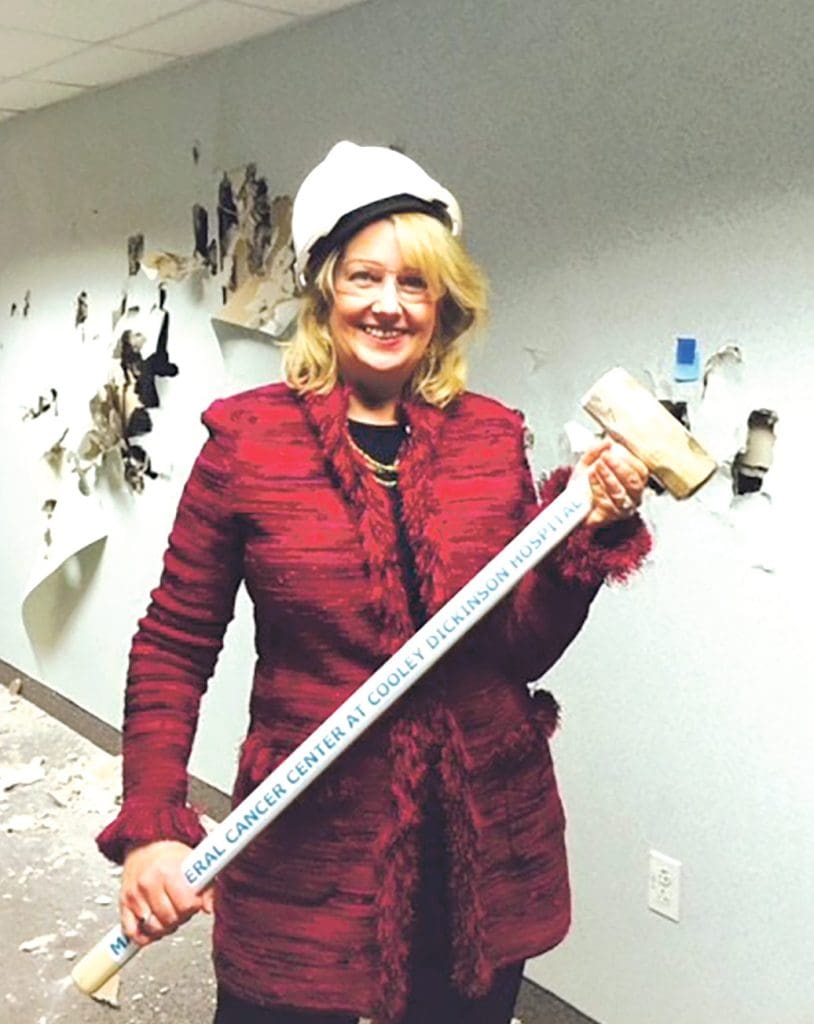
JoAnne Finck has been instrumental in many of the fundraising campaigns that have reshaped Cooley Dickinson Hospital.
To explain, she turned back the clock 20 years to when she arrived home at 2 a.m. after attending an insurance event.
“All the lights were on in the house,” she said. “My husband … I thought he was having a heart attack. He was pale; he was sweating. He said, ‘I sat up, I walked, and something was definitely wrong.’”
She took him to the ER at CDH, where X-rays were taken.
“You know it’s bad when they call you back right away,” she said, adding that tests revealed a huge mass in his chest, which turned out to be the largest bronchogenic cyst that anyone involved with removing it had ever seen. Finck said those at CDH (this was pre-merger days) fast-tracked her husband to Beth Israel Hospital and its head thoracic surgeon.
“We were just average people coming in with a problem,” she said, adding that, around that time, she was doing what she called minor fundraising for the hospital. She was good friends with Mike Kittredge, the founder of Yankee Candle, who passed away several years ago, who offered to make some phone calls on her behalf. She said that wouldn’t be necessary.
“The hospital took us under their wing, shipped us to Boston, and got it squared away. He had a six-month recovery, but he’s 100%,” she went on. “We were no one special, and that’s the point — they treat everyone like that.”
Repeat evidence to this effect has inspired Finck as she has taken on the lead in fundraising campaigns and her work with Friends, both of which she finds rewarding and fulfilling.
Especially the fundraising.
As she mentioned earlier, it isn’t easy asking for money — for anything and at any time — but when the cause is good, the assignment is easier. And when it comes to the campaigns at CDH and their purposes — from the cancer center to the ER to the childbirth center — the impact on the community is enormous.
Getting back to the art and science of making the ask, and getting individuals and institutions to commit, she said it comes down to being honest, persistent, and, above all, a true believer in the cause.
“When taking on a project, you must believe in the project and then research its impact to people and the community,” she explained. “Timing is essential for the ask, as is listening to the people you are talking to. After the ask … follow up, and then even more follow-up is mandatory, but the most important part is a ‘thank you’ — regardless of the outcome.”
Finck has become quite proficient at all of this, and that’s just one of many reasons why she’s a Woman of Impact.

Photo by Focus Ashely Photos
As someone with almost 20 years of experience in the fields of psychology and social work, Alison Berman was no stranger to working with young people. And when she learned about a national organization called Girls on the Run, something clicked.
“I had always wanted to work with kids and families,” she said of her motivation to earn a bachelor’s degree in psychology from Oberlin College and a master’s degree in social work from Smith College, after which she ran therapeutic preschools, worked in outpatient, inpatient, and day treatment; and did a lot of work in schools with trauma-sensitive programs.
Then she learned, through a friend of a friend, about Girls on the Run (GOTR), a physical activity-based, positive youth-development program that uses running games and dynamic discussions to teach life skills to girls in grades 3-8.
“There was no council here at that point. And it kind of fit into everything I was passionate about; I used to do a lot of group work, so the curriculum really spoke to me in the sense of the social-emotional life-skills piece, and integrating a physically active component. I guess I always wanted to do something bigger than just the individual impact I felt like I was making.”
Each Girls on the Run chapter conducts two 10-week seasons per year, in the fall and spring. Each session features a life-skills lesson drawn from a nationally distributed curriculum. Meanwhile, each team tackles a community-impact project to give back to their community. Both seasons each year end with a 5K celebration, with the spring event typically being the larger of the two.
The Western Mass. council of GOTR launched in 2015 with 90 girls on six teams. Now, the chapter boasts 80 different teams — more than 1,800 girls in all — and more than 300 volunteer coaches across Hampden, Hampshire, Franklin, and Berkshire counties. The national Girls on the Run organization was formed in 1996 and has since reached more than 2 million girls, with at least one council in every state; three call Massachusetts home.
The national curriculum gets updated regularly to meet the needs of where girls are right now, Berman told BusinessWest.
“A lot of stuff has evolved around diversity, equity, and inclusion, and in terms of mobility issues, disability, and then just streamlining the curriculum so that it’s easier for coaches also to deliver, but also making sure it’s meeting the needs of kids today,” she said. “We know there’s a mental-health crisis with kids, so they make sure the curriculum deals with issues that are very relevant to what’s going on.
“The overarching goal is to increase confidence and have kids realize that they can do things that they didn’t think were possible,” she added. “So, yes, that’s the 5K at the end, but to me, the overarching goals are, how can I be a better friend? How can I communicate more effectively? How can I stand up for myself and others?”
“The overarching goal is to increase confidence and have kids realize that they can do things that they didn’t think were possible.”
For helping girls answer those questions and become happier, healthier (in all ways), and more confident, Berman is certainly a Woman of Impact.
Girls on the Run claims to make a stronger impact than organized sports and physical-education programs when it comes to teaching life skills such as managing emotions, resolving conflict, helping others, and making intentional decisions. There are separate curriculums for grades 3-5 and 6-8, so the lessons are age-appropriate. And the girls keep journals to track their personal goals and progress.

Girls on the Run Western Massachusetts has now served more than 10,000 young participants.
That sense of personal growth — Girls on the Run describes itself as developing joyful, healthy, and confident girls — is an attractive quality when so many negative factors are weighing on kids’ mental health these days, Berman said. Specifically, the pandemic exacerbated those issues in ways that have not yet totally resolved.
“We know girls are having hospital visits, suicide attempts, having increased numbers of depression and anxiety. And it doesn’t mean it’s not happening with boys as well, but with girls, it has dramatically shot up, whether it’s related to the pandemic or everything else going on in society.”
In addition, by age 9 or 10, confidence among girls tends to decline rapidly, Berman explained. “They tend to drop out of youth sports or organized sports in those years. So I do feel like this piece is really helping bolster kids’ confidence and giving them some skills they can take with them.”
“Schools don’t have time to do the social-emotional piece. So I feel like their kids are really getting it from this curriculum.”
The changes in girls are noticeable, she added, even to their teachers and coaches back at school.
“They talk about how, in the classroom, they see the kids doing these exact things, like standing up for other kids. They say kids who haven’t been speaking in the classroom, who have been essentially mute, go and do Girls on the Run and come out of their shell, and then are back in the classroom taking a bigger role and speaking.
“So we’re really seeing the transfer of those skills,” she went on. “It’s amazing because schools don’t have time to do the social-emotional piece. So I feel like their kids are really getting it from this curriculum.”
Lisa Queenin, Development & Outreach manager for GOTR Western Massachusetts, who nominated Berman as a Woman of Impact, said it’s hard to overstate the mental-health issues among young people right now.
“Over the past decade, mental-health concerns among youth have escalated, with a notable increase in anxiety, stress, feelings of fear, and isolation. This crisis disproportionately affects girls. At the same time, schools were having to cut back on physical education and social-emotional learning,” she wrote. “Girls on the Run works to negate mental-health risk factors among girls.”
And it doesn’t happen in a vacuum, she added, but is the result of purposeful, compassionate leadership.
“Alison has fostered relationships with school principals and staff, who are an integral part of making the program possible,” she went on. “She works closely with coaches to make sure they feel supported and appreciated — they are the backbone of the program. Girls on the Run inspires girls to build lives of purpose and to make a meaningful contribution to society. I can’t think of anyone more capable of modeling this than Alison.”
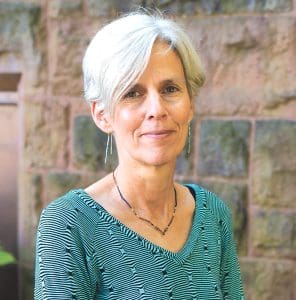
Alison Berman says Girls on the Run is capturing girls at an age when they tend to lose confidence and drop out of organized sports.
Photo by Focus Ashely Photos
At the same time, the program budget has increased to $432,000, derived from a variety of funding sources. In 2023, GOTR Western Massachusetts served 1,800 girls and provided more than $130,000 in need-based scholarships, roughly 30% of its budget.
“Alison makes sure that no girl is turned away from the program based on financial need,” Queenin wrote. “Her enthusiasm and genuine compassion inspire others to get behind the program and invest in its success.”
It’s a program that has certainly caught on and steadily grown nationwide; data from a national spring 2024 end-of-season survey of coaches, participants, and families showed that 95% of girls reported feeling more confident, and 92% of girls said they learned things at GOTR to help deal with strong emotions.
Teachers have definitely noticed, which may explain why they make up the vast majority of volunteers in the GOTR Western Mass. council.
“They’re doing this volunteering after they’ve spent a long day in the classroom, because, I think, they get to know the kids in a different way and have a different relationship, but also they see the impacts in their own classrooms,” Berman said. “And principals have told us that they see it reshaping the culture of their school as well. Parents are more involved, and attendance goes up with those kids.”
This aspect of the program — that rippling impact, as it were — delights Berman.
“When we started it, we never realized the impact it would have beyond the girls,” she said. “So when we see the impact on families and schools, I’m amazed by that. I see it as like this web that’s spread out around Western Mass., with the impact it’s had on the coaches and parents and schools.”
Communities are impacted as well; as noted earlier, a big piece of the curriculum is a project where each team does something to give back to their community.
“The Humane Society just gave us an award. We have girls giving to animal shelters or cleaning up their schools, planting gardens, writing notes to veterans. It’s up to the kids to decide, and part of that lesson is learning about compromise and figuring out what’s needed in their community. It’s seeing beyond themselves.”
Girls on the Run continues to see further opportunities as well, like a summer camp that essentially adds a third season to the annual programming. “It’s growing slowly, but we had about 40 girls this summer in camp. And they loved it,” Berman said. “Again, our coaches volunteer to come back and do that, which also shows how much they love the program.”
“Girls on the Run inspires girls to build lives of purpose and to make a meaningful contribution to society. I can’t think of anyone more capable of modeling this than Alison.”
Much of this success builds on early efforts by Berman to get the local council going, Queenin noted. “While the mission of Girls on the Run resonated deeply with Alison, starting a nonprofit organization from the ground up is no easy feat. Working for the first year without pay, Alison assembled a board of directors and drew on their expertise and connections to chart a course. She fundraised enough money from interested community members to attend training and secure the requisite license to create a council. She had to learn many new skills, from fundraising and budgeting to training and vetting volunteer coaches, all in real time.”
And now, GOTR Western Massachusetts has served more than 10,000 participants. With many alums now graduating from high school, the council started a scholarship program to support their further education. “That’s exciting, being able to help support kids to keep going,” Berman said. “And when we had teens apply for the scholarship program last year, they talked about the impact that it had on them.”
That impact has extended, in many cases, to continued athletic endeavors in high school and college, she noted. “Many of them talked about the impact of the values that they learned from Girls on the Run about helping others and giving back to their community.”
So it’s about much more than running, she said, but that end-of-season 5K is still inspiring.
“It brings tears to your eyes. It’s not timed; it’s not about who can run fast, and families show up with their entire extended family, sometimes wearing matching shirts, to support their kid. Parents who’ve never walked three miles are out there walking three miles, so it’s a ripple effect of getting families outside as well. That’s awesome.”