North Adams Continues to Redefine Itself
Community Spotlight

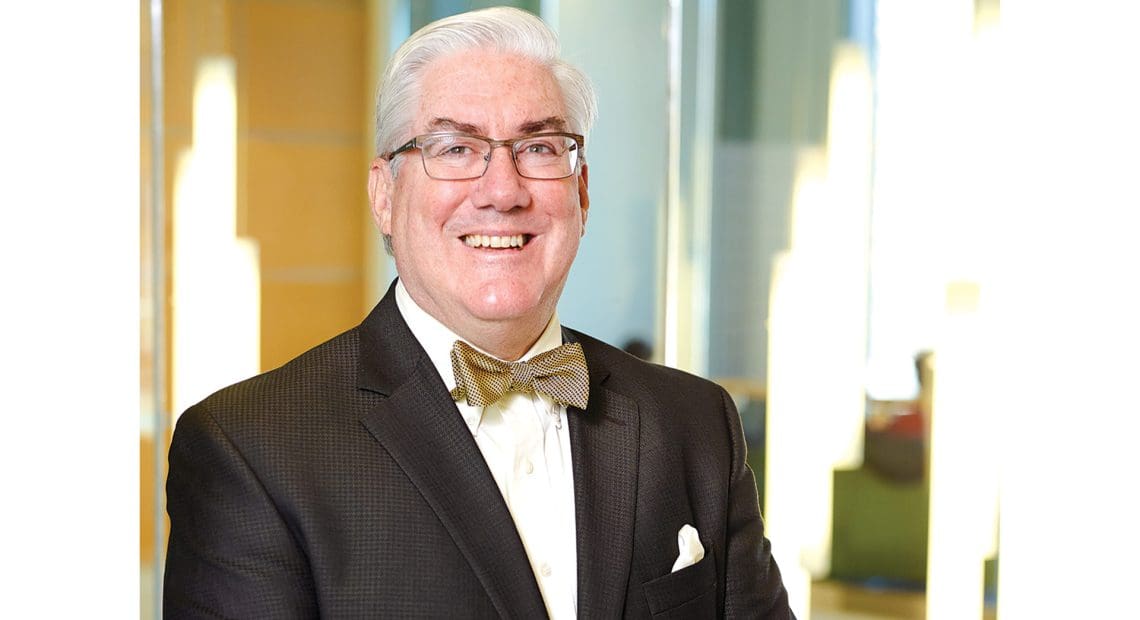
James Birge says MCLA owes its high ranking among liberal arts colleges to many factors, but especially its strong track record with helping students succeed.
Marya Kozik says North Adams is much like its larger neighbor to the south, Pittsfield, in that it is working very hard not to live in the past.
This is a past dominated by massive mills, led by Sprague Electric, that employed thousands; a thriving downtown fueled by payday at those mills; and a population that was significantly larger and much younger, said Kozik, director of Community Development and someone who grew up in the city.
“We’re trying to look forward to new opportunities, whether it be the creative economy or food science and entrepreneurship,” she said, adding that the focus is squarely on the present and the future, and continuing the process of redefining the community known as Steeple City because of the many church spires that dominate the skyline.
Elaborating, she the city is working to build its creative economy, headlined by MASS MoCA, located in the Sprague Electric complex, but including a growing number of art galleries and related businesses, while also trying to attract the many kinds of businesses that will bring young people here — and keep them here.
“The creative economy is taking off,” Kozik said. “We have a lot of artists coming into the community; we have small-scale manufacturing of artistic products and home goods that use the skills of artists who are here and, hopefully, the skills of other people who had left jobs that required that kind of manufacturing skill. There are opportunities coming back, and it’s nice to see new people coming in to the community.”
These efforts comprise many of the storylines now converging in North Adams, a community of roughly 13,000 people. Others include:
• Continued progress at the mill revival initiative known as Greylock Works. The former cotton-spinning mill has been converted into a thriving campus that includes a restaurant, a co-working community, a craft distillery, the Berkshire Cider Project, and event spaces that include the Weave Shed and Engine House, as well as 50 loft condos;
• The reopening last year of North Adams Regional Hospital. Now part of Berkshire Medical Center, the facility, closed after financial problems, was honored with a MassEcon Impact Award earlier this year;
• Progress, in the form of a $17.3 million grant from the U.S. Department of Transportation’s Rebuilding American Infrastructure with Sustainability and Equity program, toward creation of the Adventure to Ashuwillticook trail, a 9.3-mile stretch of shared-use pathway connecting the existing Ashuwillticook Rail Trail to the Williamstown Mohican Path by way of downtown North Adams and the rotary at the MASS MoCA campus;
• The North Adams Steeplecats, a team in the New England Collegiate Baseball League (which also includes the Holyoke Blue Sox), which continues to draw fans to Joe Wolfe Field, playing an important role in economic development within the community; and
• Massachusetts College of Liberal Arts (MCLA), one of the city’s largest employers. The school recently maintained its ranking of sixth among the nation’s public liberal arts colleges — marking 11 consecutive years in the top 10.
“This consistency in rankings reflects our core mission — providing an affordable, transformative liberal arts education that empowers students,” MCLA President James Birge said, adding that the school continues to evolve and add new programs and majors — from nursing to ‘music, industry, and production,’ to meet the needs of students and the business community.
Progress Report
As she talked about North Adams, what’s been achieved, and the work still be done, Kozik said the city’s evolution from a mill town to a city with an arts- and hospitality-based economy is still very much a work in progress.
MASS MoCA has been a part of this story, she said, noting that, while the facility — the most spacious modern art museum in the world, known for its large-scale installations — has not spurred the kind of economic development that had been hoped, it has become a valuable asset for the city and perhaps the most important piece of an economy now based mostly on tourism, hospitality, and arts-related businesses.
“Do we bring people here when we don’t have all the elements to support them? And how do we create the elements to support them, like restaurants and shopping venues, when we don’t actually have the people to support them?”
Pieces are coming into place, she said, but North Adams, like most all cities trying to attract young people, is facing what she called a ‘chicken-or-the-egg’ scenario.
“Do we bring people here when we don’t have all the elements to support them? And how do we create the elements to support them, like restaurants and shopping venues, when we don’t actually have the people to support them?” she asked rhetorically, adding that the city is essentially working on both sides of the equation simultaneously.
There have been several intriguing additions to the landscape in recent years, businesses created to meet needs and create vibrancy, Kozik noted, citing, as one example, Steeple City Social, a community-oriented bakery, café, and cocktail bar on Eagle Street, launched by a recent transplant to the city, Andrew Fitch.
“He saw a need for what they call a ‘third space,’” she said, meaning a place that’s not home and not the office. “He opened a space that’s a bakery in the morning and a café in the evening; it’s a place to gather, and people have been very supportive.
“Spaces like this build community,” she went on, adding that there have been other additions that fit this description, including several art galleries, many with ancillary products and services, such as tea, that make them more financially viable.
Still, there are considerable challenges to revitalizing the downtown, Kozik said, citing the loss of vitality that came with the loss of all those mill jobs as well as the aftereffects of ’60s-era urban renewal, which essentially left one side of Main Street intact and the other side demolished in favor of a parking lot and mini-mall, plagued by a high vacancy rate in recent years, that has gone by various names, including Steeple City Plaza, the Parkade, and the ‘L-shaped mall.’
“We have one side with beautiful old buildings, and the other side, across a four-lane road, which is unheard of in small cities, two vacant lots,” she explained. “We’re looking to restore the vibrancy of downtown in the storefronts, working with developers who are interested in restoring the top floors into apartments, but we also have these huge vacant lots.”
Meanwhile, outside the downtown, the city is seeing several signs of progress, including adaptive reuse of former mills.
North Adams at a Glance
Year Incorporated: 1878
Population: 12,961
Area: 20.6 square miles
County: Berkshire
Residential Tax Rate: $16.71
Commercial Tax Rate: $35.22
Median Household Income: $35,020
Family Household Income: $57,522
Type of government: Mayor; City Council
Largest Employers: BFAIR Inc.; Massachusetts College of Liberal Arts; North Adams Regional Hospital
* Latest information available
Indeed, Greylock Works has become one of the better success stories in North Adams. The initiative, led by architects and entrepreneurs Karla Rothstein and Sal Perry, who acquired the mill in 2015, has several intriguing elements, the latest being loft condos that will provide another housing option in the community.
Meanwhile, another former mill, the Norad Mill in the Braytonville section of the city, has been repurposed into office space and home for a diverse mix of tenants, including a yarn manufacturer, a dog biscuit baker, a coffee shop, and a candy company.
Overall, the city’s goal is to create more jobs — it will likely never replace all those lost when the mills closed — with a diverse mix of smaller businesses in those mills, and across the downtown.
School of Thought
Creating a workforce to support such businesses is one of the overriding goals at MCLA, formerly North Adams State College, which continues to thrive in its category because of its commitment to liberal arts, even as some colleges and universities have been cutting back on programs in that realm.
“There’s an initiative among institutions today to eliminate academic programs or majors that don’t really generate positive revenue streams, that don’t contribute to the overall revenue of the institution; that hasn’t been my approach here,” Birge said. “Because we’re a liberal arts institution, it’s important to have a broad base of academic programs and majors for students to develop critical-thinking skills.
“For example, we offer philosophy and modern language majors that don’t generate lots of tuition revenue for us, but they’re essential to a liberal arts education. We’ve leaned into those things, like history — we think that’s an important element in a liberal arts education,” he went on. “And because of the facility we have, students who major in those departments do very well.”
Elaborating, he said the school is far more likely to add new programs with potentially strong revenue streams so that it can maintain programs like those he just listed, rather than make cuts.
One example of this is the radiological technology program added just a few years ago, but one that has already become one of the most popular majors, along with health sciences and more traditional offerings such as business, education, and psychology.
“Because of the population of students we have — 50% are first-generation college students, and 50% come from families earning less than $38,000 a year — there are some challenges in terms of what they understand college to be and how they can be here, coming from an economically challenged background.”
As it offers such programs, MCLA has put a hard focus on helping its students, many of them the first generation in their families to attend college, succeed with their goals, whatever they may be.
And these efforts take many forms, from various mentoring programs to the school’s Essential Needs Center, which addresses hardships outside the classroom that can become obstacles to student achievement and overall well-being. The space, run by students, offers food, essential items, housing and transportation assistance, seasonal clothes, SNAP applications, and more.
“Because of the population of students we have — 50% are first-generation college students, and 50% come from families earning less than $38,000 a year — there are some challenges in terms of what they understand college to be and how they can be here, coming from an economically challenged background,” Birge explained. “So, as a result of that, we really try to help students through programs that don’t just advise students, but mentor them so that they can be successful with their academic goals.
“And we don’t necessarily define that in a limited fashion as graduation, but also, how do you achieve a certain grade point average? How do you make sure you succeed in a course that’s going to help predetermine what your major will be? How do you make sure that your academic success is meeting the standards in order to be a student leader in athletics, student government, or in the residence halls?” he went on. “A few years ago, we implemented this success coaching model, in addition to our academic advising, to guide students throughout their time here, not just as they’re coming in, but all along the way.”