Home Posts tagged Amherst Mass.
Community Spotlight Special Coverage

Community Spotlight

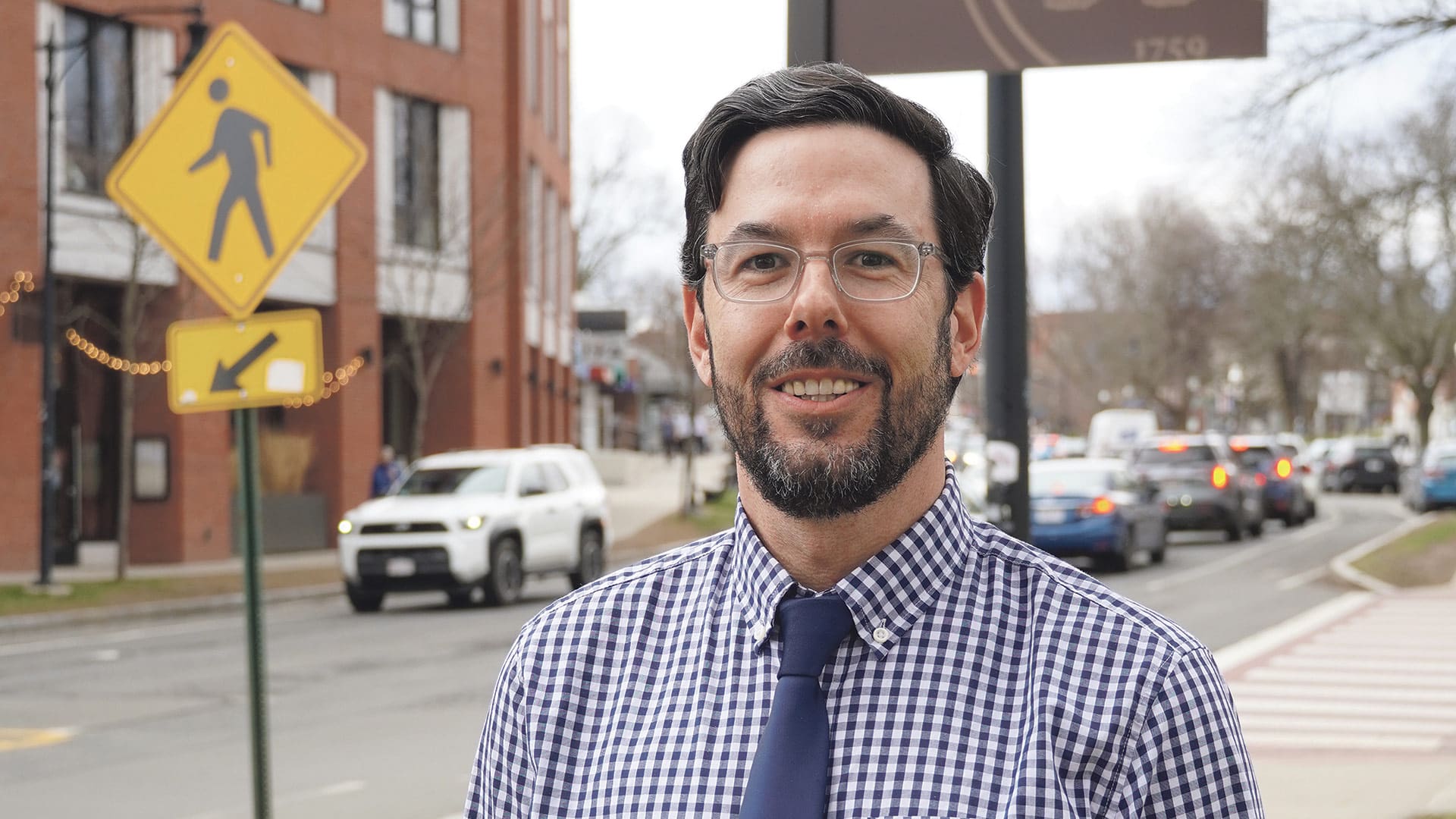
Jeff Bagg says Amherst is well-stocked with assets as it goes about competing with other area communities for the dollars spent by visitors.

Jeff Bagg says Amherst is well-stocked with assets as it goes about competing with other area communities for the dollars spent by visitors.

Jeff Bagg says he’s come full circle. Sort of.

He graduated from UMass Amherst back in 2002 and then worked for the town of Amherst as senior planner from 2008 to 2016. But now, after gaining different types of experience in various settings, he’s back in Town Hall, serving as director of Planning & Economic Development, a melding of two roles.

He started in December and has spent the past four months getting reacquainted with a community that is in a seemingly constant state of motion, but with challenges and opportunities that have been present for decades.

“I knew a lot about the town of Amherst, but it had been 10 years since I last worked there, so there was a learning curve,” said Bagg, who is involved in several initiatives at present, from a project to set new design standards for the downtown to a study of the East Amherst area with an eye toward creating core commercial development opportunities, to the collection of data to be used in creation of the town’s first economic development plan in several years.

“What we have available is pre-pandemic, and there have been really big shifts in the way people spend their money,” he said of that last initiative. “Knowing that businesses need a strong customer base and foot traffic, we really need to figure out ways to bring more residents out and visitors in, and the data drives a lot of that.”

“Knowing that businesses need a strong customer base and foot traffic, we really need to figure out ways to bring more residents out and visitors in, and the data drives a lot of that.”

These are just some of the many converging storylines in Amherst, a community that those we spoke with said is a college town, but so much more. Others include:

• Amherst Area Chamber of Commerce, which continues to grow membership and become ever more diverse — Executive Director Jacob Robinson said the chamber added 57 new members in 2025, roughly double the number welcomed in 2023 and the years prior — and build new events into the schedule, including a revitalized business expo;

• A Business Improvement District (BID) that is working with the chamber and individual businesses to make the community a true destination year round;

• The ongoing success story that is the Drake, a downtown live-performance venue that is planning 200 nights of performances for 2026 involving 500 artists from both the 413 and around the globe and more than 33,000 audience members, many of whom will support other hospitality-related businesses before and after those shows;

• The ongoing saga of Hampshire College, which has been fighting for survival in recent years amid declining enrollment and continuing fiscal hardship. That fight took a new twist recently when the New England Commission of Higher Education announced late last month that it will require the school to show cause in June as to why it shouldn’t be placed on probation or have its accreditation withdrawn over concerns the college may no longer be meeting the organization’s institutional resources standard; and

• Continued evolution of the community’s downtown, including several new businesses, the owners of which told BusinessWest there is a rhythm to the downtown, one dictated by the calendar, which takes some getting used to (much more on this later).

For this latest installment of its Community Spotlight series, we take an in-depth look at one of the more intriguing communities in the region — one marked by learning of all types.


Developing Story

Bagg brings a diverse résumé to his new position in Amherst. Indeed, after his stint as senior planner there, he served as project manager for the Central Massachusetts Regional Planning Commission before beginning what would become a six-year stint as director of Planning and Economic Development in Easthampton and then serving as senior planner for the BSC Group in Worcester.

He described his new role as a “good fit” and an opportunity to return to the public sector — in a community where change is a constant.

“I’ve been working in many different communities in Massachusetts, and more and more towns have increased their efforts to attract visitors; it’s an intense competition for people’s time and limited disposable income.”

Like others we spoke with, he said Amherst has both a number of assets and … let’s call them liabilities.

In that first category, he started with the obvious, the three colleges that provide the community with its distinct flavor — Amherst College, UMass Amherst, and Hampshire College — but also its many cultural attractions, ranging from the Emily Dickinson Museum and the Eric Carle Museum to the Drake and Amherst Cinema, which make it more than your typical college down.
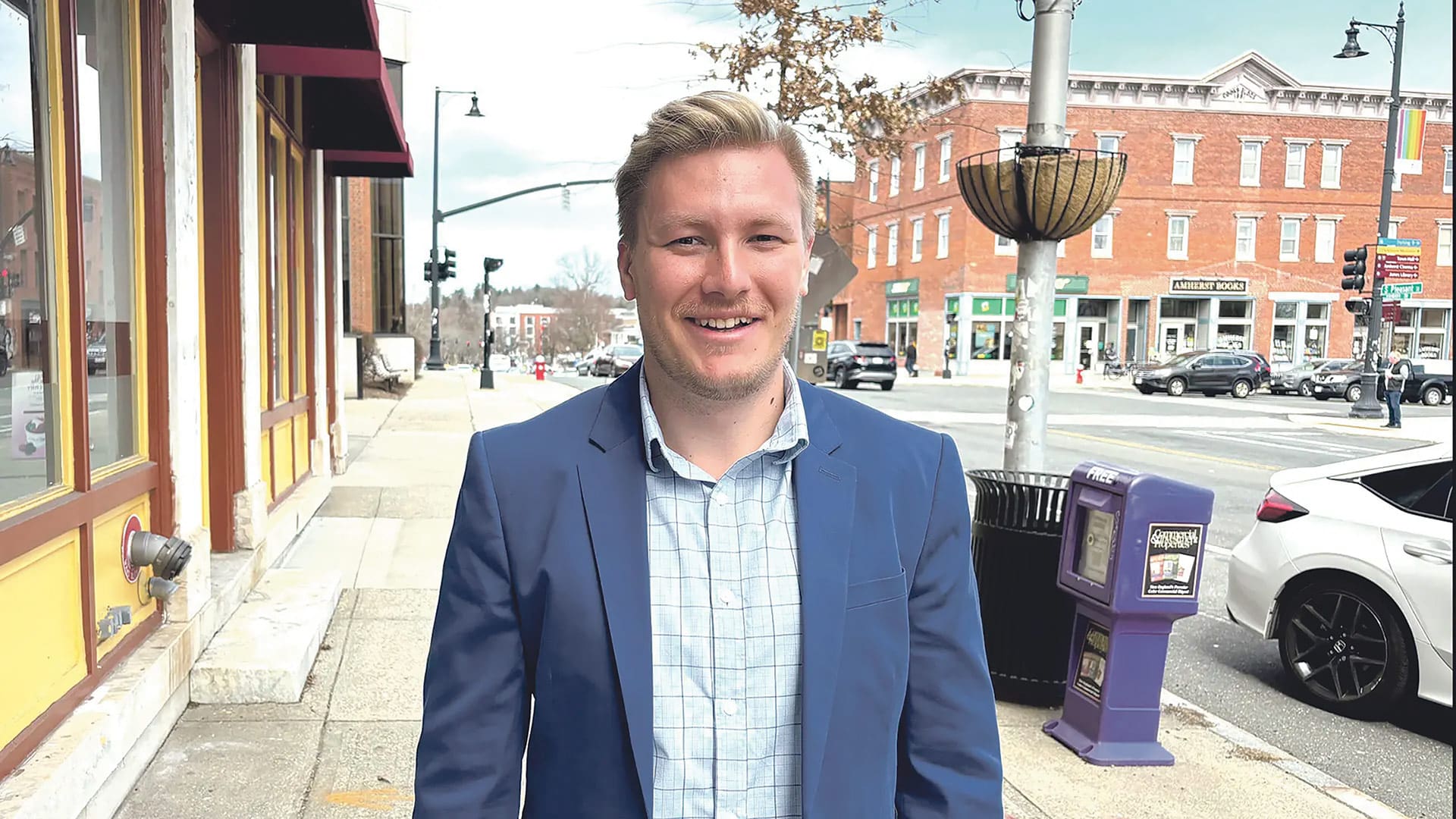
John Page says downtown Amherst is in a seemingly constant state of change and is always welcoming new businesses.

John Page says downtown Amherst is in a seemingly constant state of change and is always welcoming new businesses.

On the downside, this can be a difficult town to do business in, and Bagg acknowledged this with a comment intended to be diplomatic.

“We have a very engaged community, but there is some lack of agreement on where new growth should happen. Amherst struggles with its vision for the future and an identity that we can get most people to agree to,” he said, adding that town officials are making it a priority to make it easier to do business in town, such as with the hiring of a permit administrator to facilitate the process of setting up shop there.

Which brings him back to the economic development plan, and the collection of data that will help drive it.

“What we don’t have a good handle on is where people are spending their money — we don’t know where residents are spending their money, we don’t know where visitors spend their money when they come here, and how all that relates to demographics — population changes, the age of people coming and going, those are factors for what’s going to drive new businesses in Amherst, and we don’t really have a handle on that.

“I’ve been working in many different communities in Massachusetts, and more and more towns have increased their efforts to attract visitors; it’s an intense competition for people’s time and limited disposable income,” he went on, adding that this competition is one of myriad factors that will go into the development of an economic development plan over the next year or so.

Overall, the community is well-suited to succeed in this competition to attract visitors, said John Page, executive director of the Amherst BID, adding that there is already plenty to do in town — such as the recent Fire and Ice Winter Festival, which drew more than 2,000 people — and plans to provide more good reasons to make the trip.

That list includes the Amherst Literary Walk on April 11, a day of literary events throughout the downtown, including readings, workshops, literary trivia, and more, said Page, adding that one of the BID’s broad goals is to get people out and have them experience Amherst.

Another is to help bring new businesses to town and create an environment that will enable them to succeed year-round. Like others we spoke with, Page said Amherst has some unique assets, but especially the colleges and the people who go there to learn and to work.

“We have to keep showing up for these businesses that give this place its identity. These are not just storefronts — they create jobs, they build relationships, and they shape the character of the community.”

“There is this youthfulness,” he said, speaking to the environment created by the melding of the higher learning institutions and the omnipresent arts and culture. “You’ve got bands, you have artists of all ages, and a college town both because of the students and the faculty. There’s this appreciation for arts and culture — we have a lot of museums and a lot of live music going on, and that goes hand-in-hand with a college community, and that helps us out even when the students aren’t here because that reputation is great in the summer, when we want to invite other people to join us from across Massachusetts, across New England, and across the world.”

Robinson agreed, noting that the chamber is committed to promoting and supporting the downtown, but other ‘villages’ in the community as well, such as the Mill District in North Amherst and the South Amherst section of town.

“We have to keep showing up for these businesses that give this place its identity,” he said, summing up the chamber’s mission. “These are not just storefronts — they create jobs, they build relationships, and they shape the character of the community.”


What’s in Store

As she spoke with BusinessWest, Becky Guyer was gearing up for Easter, but also a very busy three-month stretch that includes Mother’s Day, college and high school graduations, some weddings, and other events that require flowers.

She can speak from experience about what this time means for her Floral Affairs shop in downtown Greenfield. But the one she opened last July on North Pleasant Street in Amherst … not so much.

Indeed, Guyer said she is still experiencing a learning curve when it comes to doing business in downtown Amherst. She was invited to look at the North Pleasant location, long a flower shop, at the behest of the building’s owner, who thought she might be interested in opening a second location there.

Amherst at a Glance

Year Incorporated: 1759
Population: 39,263
Area: 27.7 square miles
County: Hampshire
Residential Tax Rate: $16.91
Commercial Tax Rate: $16.91
Median Household Income: $48,059
Median Family Income: $96,005
Type of Government: Town Council, Town Manager
Largest Employers: UMass Amherst; Amherst College; Hampshire College
* Latest information available

After some due diligence, she determined that she was.

“I thought that this could be a good opportunity — this is a college town, there are some venues in town, some that we already do weddings with, as well as UMass events and Amherst College events,” she said, adding that the location was also across the street from a funeral home, which, in the floral world, is a real benefit.

“There were a lot of positives,” she went on, adding that the storefront, which had to be completely gutted, wasn’t one of them. But she moved forward with confidence, has found the move worthwhile, and has high praise for the chamber and the BID. But there has been a learning curve as she adapts to life in a college town.

“When the college kids leave … it was the worst Christmas I’ve ever seen in my life — so much so that it’s made us completely restructure our game plan,” she told BusinessWest. “I don’t necessarily have a designer in Amherst — it’s meant for convenience; all orders get run out of Greenfield, and we’ve made this location more of a convenience store.”

Overall, the downtown Amherst location is a work in progress, she said, adding that she is learning the cadence, if you will, of this college town, and the nuances of the calendar. Christmas was a letdown, and she’s not sure what to expect this summer, but she is optimistic about the upcoming few months and what they could bring, and the location itself.

“The walk-up traffic is fantastic — there’s a young, growing community there that comes in quite a bit,” she said. “There are a lot of $10, $15, and $20 sales, which is great.”

Andrea Marion is also getting used to the rhythm of Amherst’s downtown. She moved the Closet from a location in the Mill District to a storefront (a former restaurant) on Main Street last fall. She enjoyed the Mill District atmosphere but said there is more foot traffic in the downtown, and that suits her operation.

She described her business as a “curated resale boutique,” and herself as a “fashion concierge.”

“I hand-pick every piece that comes into the store — I don’t do consignment, generally, and I try to make sure I have something for everyone … I sell for all genders and all sizes,” said Marion, a nonprofit manager before she went into business for herself, adding that, while many items would be described as high-end (Fendi, Givenchy, and Prada handbags, for example), she has items at all price points.

Like Guyer, Marion said it takes some time to get used to the patterns of the downtown, especially when it comes to the students’ schedules, but overall, she says the area is becoming ever more vibrant and remains a good place to do business.

“There’s a lot of energy and activity,” she said, adding that she is accessible to more people now, which has broadened the customer base and made it more diverse, especially age-wise. “Amherst’s downtown has so much potential, and I’m really happy to be here.”

Community Spotlight Special Coverage

Community Spotlight

John Page describes Amherst as a “cultural college town.”

John Page describes Amherst as a “cultural college town.”

John Page calls it a ‘retail incubator.’

That’s the unofficial name given to a facility — still very much in the planning stages — designed to bolster retail in downtown Amherst and bring more balance (and more reasons to visit) to an area more known for its arts, culture, and restaurants.

“It’s a small location for retailers — people who are online, they’re artists, they do things at farmers markets — who are not quite ready to make the jump to a brick-and-mortar store, which is high-risk and quite complicated, said Page, executive director of the Amherst Business Improvement District (BID). “We’re hoping to make a half-step, where folks can start to test their concept out and learn more about being a brick-and-mortar retailer.”

The retail incubator (more details to come later this year, he said) is one of myriad initiatives in various stages of development in Amherst — a town where there is almost always a lot happening — that cross a wide spectrum, from housing to education; from new restaurants to new retail. That long list includes:

• A new elementary school that will be 100% carbon-neutral and ready for occupancy in the fall of 2026;

• Several new housing projects that include everything from market-rate apartments to home-ownership opportunities (much more on these later);

• An extensive, $46 million renovation and expansion of the Jones Library;

• A new restaurant, the Amherst Oyster Bar, which will bring much-needed new life to an historically vibrant spot, site of the former Judie’s restaurant on North Pleasant Street;

• An enhanced presence for both UMass Amherst and Amherst College downtown, with UMass Amherst recently opening UMass Downtown, a multi-purpose retail, event, and meeting space on North Pleasant Street, and Amherst College having opened a campus store on South Pleasant Street;

• Conversion of a former VFW post into a homeless shelter and supportive housing for veterans;

• The continued success story that is the Drake, a live-performance venue in the heart of downtown;

• The planned arrival of another cultural attraction downtown — Ancestral Bridges, an organization that celebrates the history of contributions of Black and Afro-Indigenous families in Amherst; and

• A reimagining of the space called North Common, a former a parking area that has become a popular gathering place downtown.

City officials and business leaders alike are enthusiastic not only about these individual developments, but how they will — and, in many respects, already are — working together to create more foot traffic and vibrancy in the downtown area.

“We’re between Boston and New York, and in such an academically driven area, you get a lot of people from those areas, and they’re looking for something they expect from a city vibe. That’s certainly new to Amherst, but that’s the direction we want to push things in.”

Indeed, the new housing units are bringing more residents to support the full spectrum of businesses downtown, said Page, adding that cultural attractions like the Drake and Amherst Cinema are bringing people to restaurants and bars before and after shows. Meanwhile, new retail, like Aster & Pine Market and the two college stores, are broadening the mix of things to do and reasons to come to the downtown.

“We have a lot of housing in our downtown, and that’s been very helpful to us because we have more people; those people go out to lunch and for coffee, and they spend money,” said Page, who referred to Amherst as a “cultural college town.”

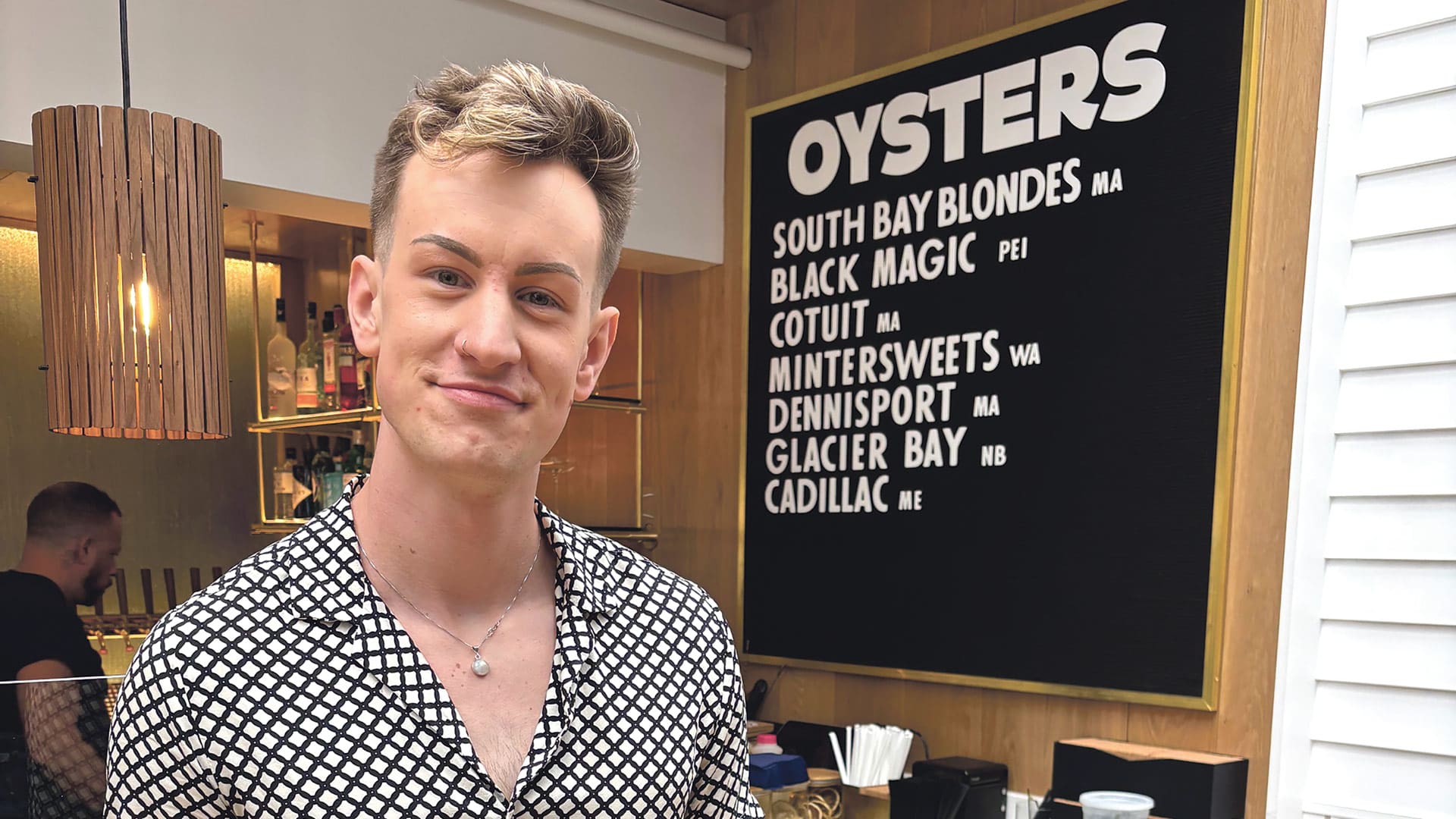
Alden Peotter shows off the recently opened Amherst Oyster Bar.

Alden Peotter shows off the recently opened Amherst Oyster Bar.

“Meanwhile, with Amherst Cinema and the Drake, we encourage people to enjoy a meal before or after, or maybe a cocktail, so that there is that stickiness — people linger and enjoy the downtown.”

Paul Bockelman, Amherst’s long-time town manager, agreed.

“The Drake, along with the Amherst Cinema, has made a huge impact in bringing people downtown to live events,” he said. “And once they’re there, they stay and they support other businesses.”

As for the Oyster Bar, it has been a long time coming. Its grand opening had been pushed back so many times that the eventual date, April 1, was taken by some as an April Fools joke, said Alden Peotter, operations manager for Amherst Innovative Hospitality, which also operates the nearby Protocol bar and restaurant.

He spoke with BusinessWest the day after a soft opening late last month, and said that both the Oyster Bar and Protocol, which opened as a bar but has evolved into a popular restaurant drawing people of all ages, provide what he called a “metropolitan vibe,” something he believes young people, and some not so young, are looking for.

“We’re between Boston and New York, and in such an academically driven area, you get a lot of people from those areas, and they’re looking for something they expect from a city vibe,” he said. “That’s certainly new to Amherst, but that’s the direction we want to push things in.”

For this, the latest installment of its Community Spotlight series, BusinessWest looks at the many forms of development and progress in Amherst, a college town that is so much more.


Building Momentum

For Page, who took the helm at the BID last October, his new job is a return to downtown Amherst.

Indeed, he worked at the Amherst Regional Chamber of Commerce, which shares space with the BID in an office on South Pleasant Street, handing marketing and membership, before taking a job at UMass Amherst working on large events like commencement.

“I wanted to get back involved with the town of Amherst and all that was happening downtown,” he said, adding that he was inspired to seek the BID job after doing consulting work for the agency on its summer concert series.

“It reignited my passion for that economic-development work,” he said, adding that, since arriving, he’s continued the BID’s work in tandem with the chamber to promote the downtown and generate more vibrancy in the central business district, which has made a nice recovery after being devastated by COVID — but with changes.

Indeed, while food and beverage taxes are exceeding 2019 levels, there are still fewer people going out, overall, with restaurants still doing strong takeout business. One goal — at the BID, the chamber, and with new destinations like the Oyster Bar and Protocol — is to get them back out.

Amherst at a Glance

Year Incorporated: 1759
Population: 39,263
Area: 27.7 square miles
County: Hampshire
Residential Tax Rate: $17.82
Commercial Tax Rate: $17.82
Median Household Income: $48,059
Median Family Income: $96,005
Type of Government: Town Council, Town Manager
Largest Employers: UMass Amherst; Amherst College; Hampshire College
* Latest information available

“Our real view on downtown Amherst is promoting not just nightlife, but getting people out of their house, getting people to form these communities that have really been missing due to COVID and what came after; we want to give them that location,” said Peotter, who described both establishments as “that third place.” By that, he meant it’s not home, and it’s not work — “it’s another place to be.”

Page said one of his focal points is what would be considered traditional, brick-and-mortar retail. The downtown has some, he said, and the goal is attract more, while also retaining what exists, through initiatives like the planned retail incubator, a site for which has yet to be determined.

“It’s a difficult industry,” he said, adding that Amherst is not known as a retail destination, but could become one. “You need critical mass — you need other retailers so that people view you as a shopping destination.”

Jacob Robinson, executive director of the Amherst Area Chamber of Commerce, agreed.

“Fortunately, downtown Amherst isn’t experiencing a significant vacancy issue, but there’s strong interest in attracting more retail to diversify the mix of businesses and further enhance the pedestrian experience,” he said.

“Of course, retail-space turnover is a normal and expected part of any dynamic downtown. As business owners retire, pivot, or evolve their offerings, it naturally creates opportunities for new entrepreneurs to bring fresh ideas and energy into the community. We’re seeing that play out in Amherst, with some beloved businesses closing for personal or planned reasons — often after years or decades of serving the community — and new ventures preparing to take their place. It’s a sign of a living, breathing local economy that continues to adapt and grow.”

Among the relatively new retail offerings are the Amherst College Store, which opened a year ago in the former A.J. Hastings space at 45 South Pleasant St., and UMass Downtown, which opened its doors in February at 108 North Pleasant St., in space most recently occupied by Greenfield Savings Bank.

The latter is a multi-purpose retail, event, and meeting space, said Nancy Buffone, associate vice chancellor of University Relations, who spoke with BusinessWest at the facility.

She said a downtown presence for the university has been talked about for many years, and it became a priority for Chancellor Javier Reyes when he arrived in 2023.

“This is truly about bringing UMass and the community together,” she said, adding that the facility will host both UMass events, such as lectures slated for this spring, and community events, such as registration for the Big Brothers Big Sisters Daffodil Run.

UMass Downtown has seen steady volumes of foot traffic, said Buffone, adding the numbers are expected to move higher as the weather improves and especially for commencement week and ‘destination days,’ when those students who have been accepted to the university, and their parents, are invited to take in the school and the town.


Developing Stories

Bockelman calls it the “mixing middle.”

He was referring to the broad segment of housing involving homeownership opportunities for segments of the population that might otherwise not break that barrier. This middle area is being addressed in a project on Ball Lane, undertaken by Valley Community Development Corp.

“We’re seeing a lot of apartments being built, but what has been largely missing has been homeownership opportunities, which is why the Ball Lane project is so exciting,” he told BusinessWest, adding that plans call for 30 units on an eight-acre tract.

The project is one of many housing initiatives, public and private, in various stages of development in town, and they address a critical need for new housing.

Other projects include two public projects totaling 78 apartments, 31 at the former East Street School and 47 at 70 Belchertown Road, said Bockelman, noting that these will be a mix, with varying levels of affordability. The developer, Way Finders, expects to have both sites developed and occupied by 2028.

On the private side, developer Barry Roberts is forwarding two projects, a large (but scaled-down) initiative at the corner of Amity Street and University Drive that will involve retail on the ground floor and apartments above, and the other at the former Hastings site. Meanwhile, Archipelago Investments LLC is set to break ground on a five-story, 68-unit project at Olympia Drive, a dorm-like building that will rise on the site of the former Iota Beta chapter of the Chi Omega sorority, which Archipelago acquired several years ago.

Archipelago has also been named designated developer for a project to create 140 residential units on a large tract of land owned by Hampshire College, adjacent to Atkins Farms.

These projects and others in different stages of development will make a large dent in the overall need for housing across the spectrum, said Bockelman, adding that such projects are needed to help seniors stay in town, young professionals to move there, and employees at many types of businesses, especially the hospitality sector, to afford to live in town.

Robinson agreed. “Housing remains a key issue,” he told BusinessWest. “While Amherst is actively exploring strategies to create more diverse and affordable housing options, it’s clear that housing supply directly affects workforce retention, talent attraction, and the overall economic vibrancy of the region. Our businesses need access to a stable workforce, and that depends in part on people being able to afford to live and thrive here.”


Community Spotlight Special Coverage

Community Spotlight

By Mark Morris

David Bourgeois

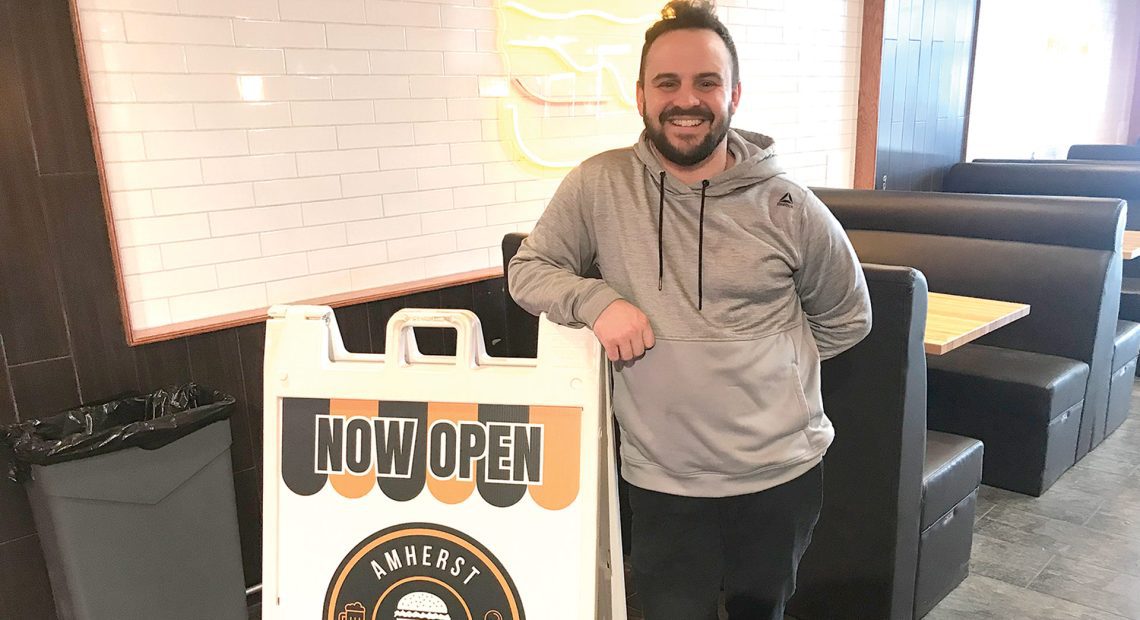
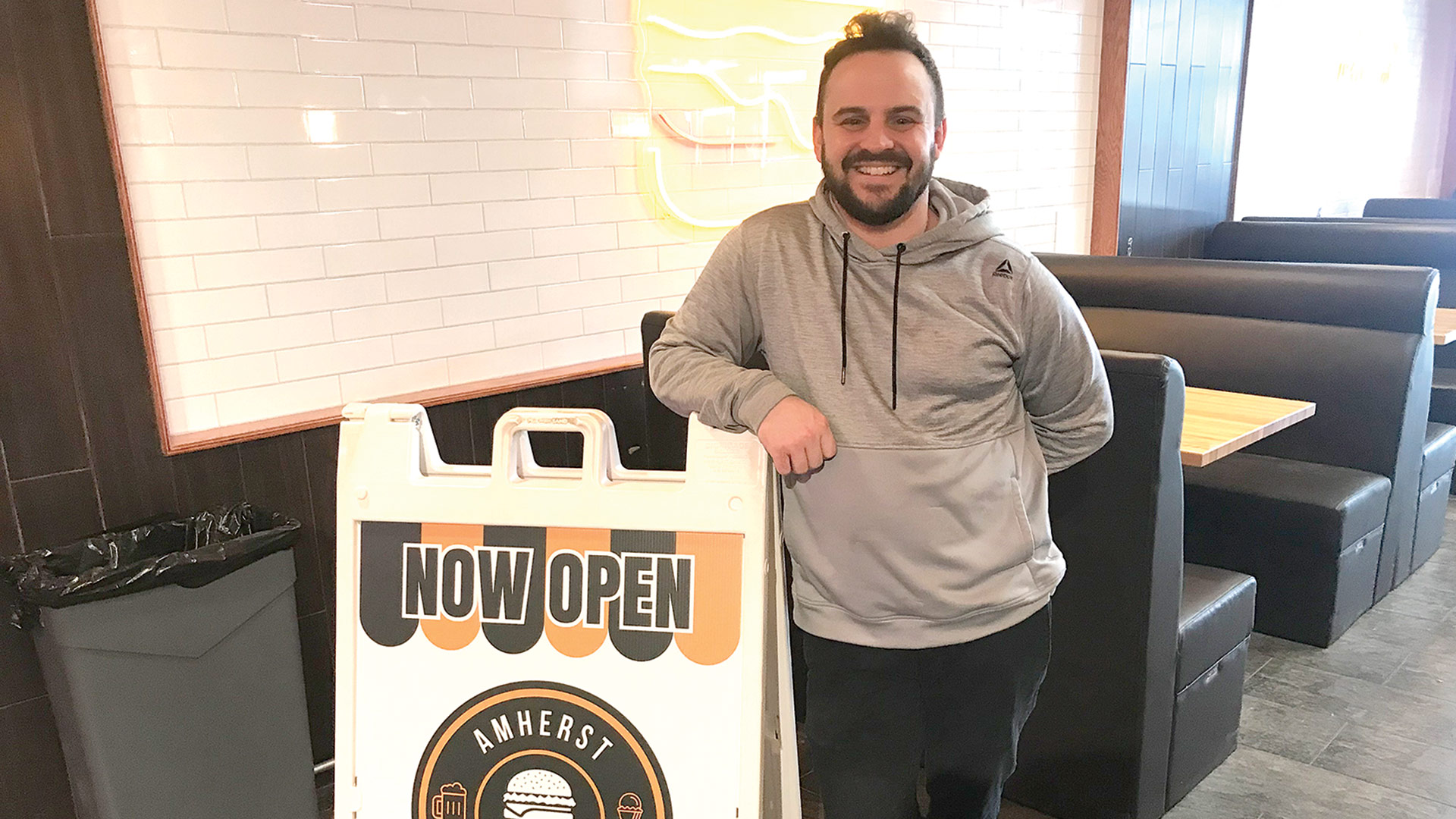
David Bourgeois says Amherst Burger focuses on fun food sourced locally.

By all indications, from bustling sidewalks to traffic congestion, Amherst is most definitely back.

As the home of UMass Amherst, Hampshire College, and Amherst College, the town had always benefited from the presence of all those students, faculty, staff, and visitors, both economically and with the energy they brought. When the pandemic hit, all those constituencies at all three campuses left town while people everywhere dealt with COVID-19.

Slowly but surely, the students returned as everyone learned how to work their way through the pandemic. Now, after persevering through a few very difficult years, there’s new energy and excitement in and about Amherst.

“When the colleges came back and started to re-engage with the community, it really set the tone for everyone else,” said Claudia Pazmany, executive director of the Amherst Area Chamber of Commerce. “The outpouring of students returning to downtown was huge.”

Currently, downtown Amherst enjoys a 4% vacancy rate for its commercial properties. Gabrielle Gould, executive director of the Amherst Business Improvement District (BID), said seven new restaurants have either recently opened or will do so by the end of the year, including a new White Lion brewery.

“At the Drake, the average age of our audience is in the 40s, and 70% of them live outside Amherst. It’s making our downtown destination-worthy, and as a result, we’re bringing in bigger bands and touring groups.”

“A staple of a successful downtown center is a brewery,” Gould said. “It’s something we’ve been trying to get for several years.”

Gould and the BID played an important role in establishing the Drake, an arts and entertainment venue downtown. Averaging 200 guests a night with four shows a week, the Drake is achieving the BID’s goal of bringing people, vibrancy, and a tricke-down effect to downtown.

While the return of the students is worth celebrating, older adults have also become essential in Amherst’s comeback.

“At the Drake, the average age of our audience is in the 40s, and 70% of them live outside Amherst,” Gould said, adding that audience polling shows they are eating at Amherst restaurants and going out for drinks after attending performances at the club. “It’s making our downtown destination-worthy, and as a result, we’re bringing in bigger bands and touring groups.”

Gould also credits Amherst’s revival to building owners downtown and in the Mill District who have helped entrepreneurs enter the restaurant or retail business, or open ventures themselves, rather than let their properties sit idle.

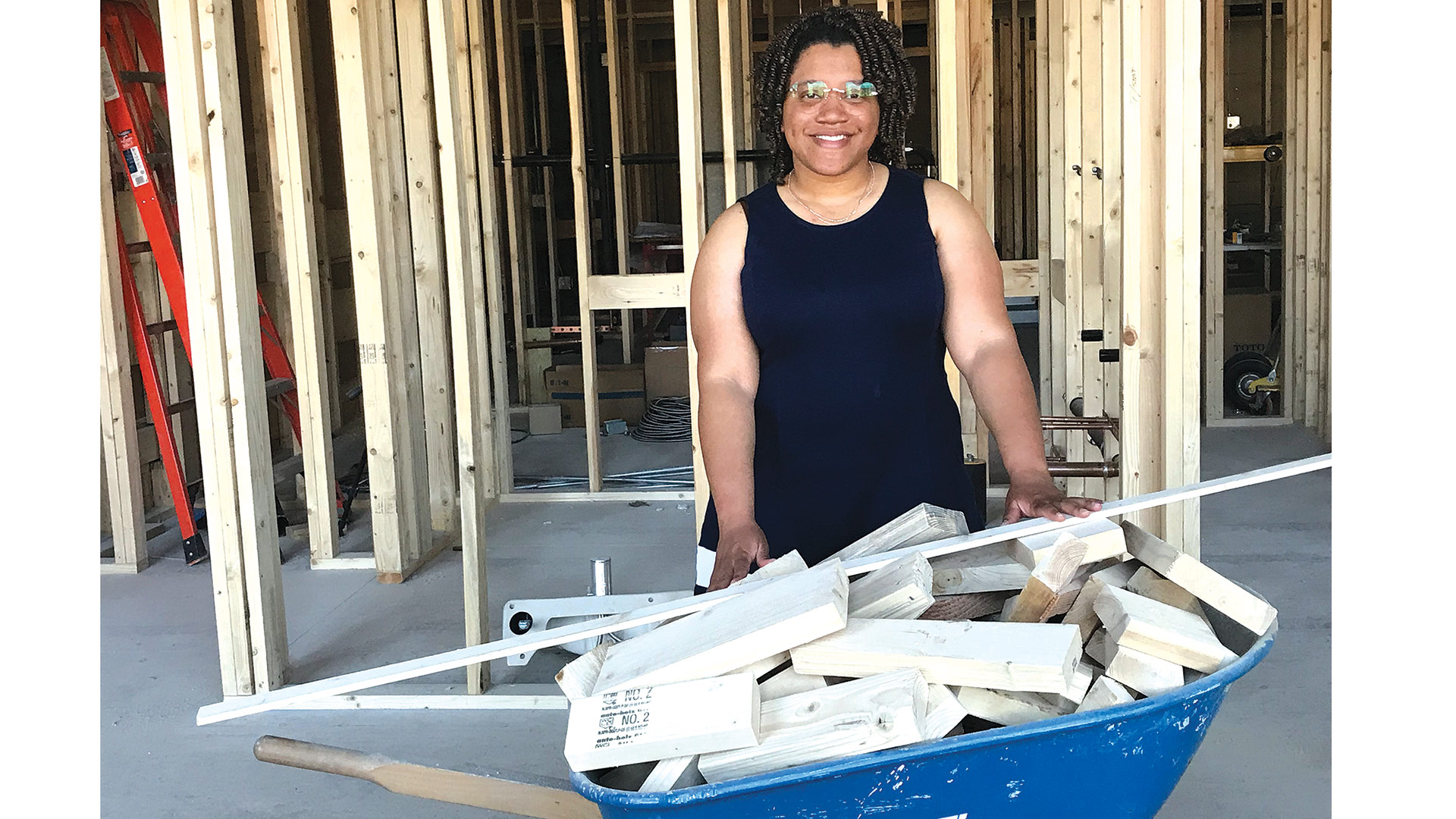
Alysia Bryant’s Carefree Cakery

Where the wheelbarrow of scrap wood sits is where the main counter of Alysia Bryant’s Carefree Cakery will be located when she opens in June.

“Landlords understand that opening a new business is hard, so they want to help people get started,” she said. “It’s an exciting shift that’s been happening.”

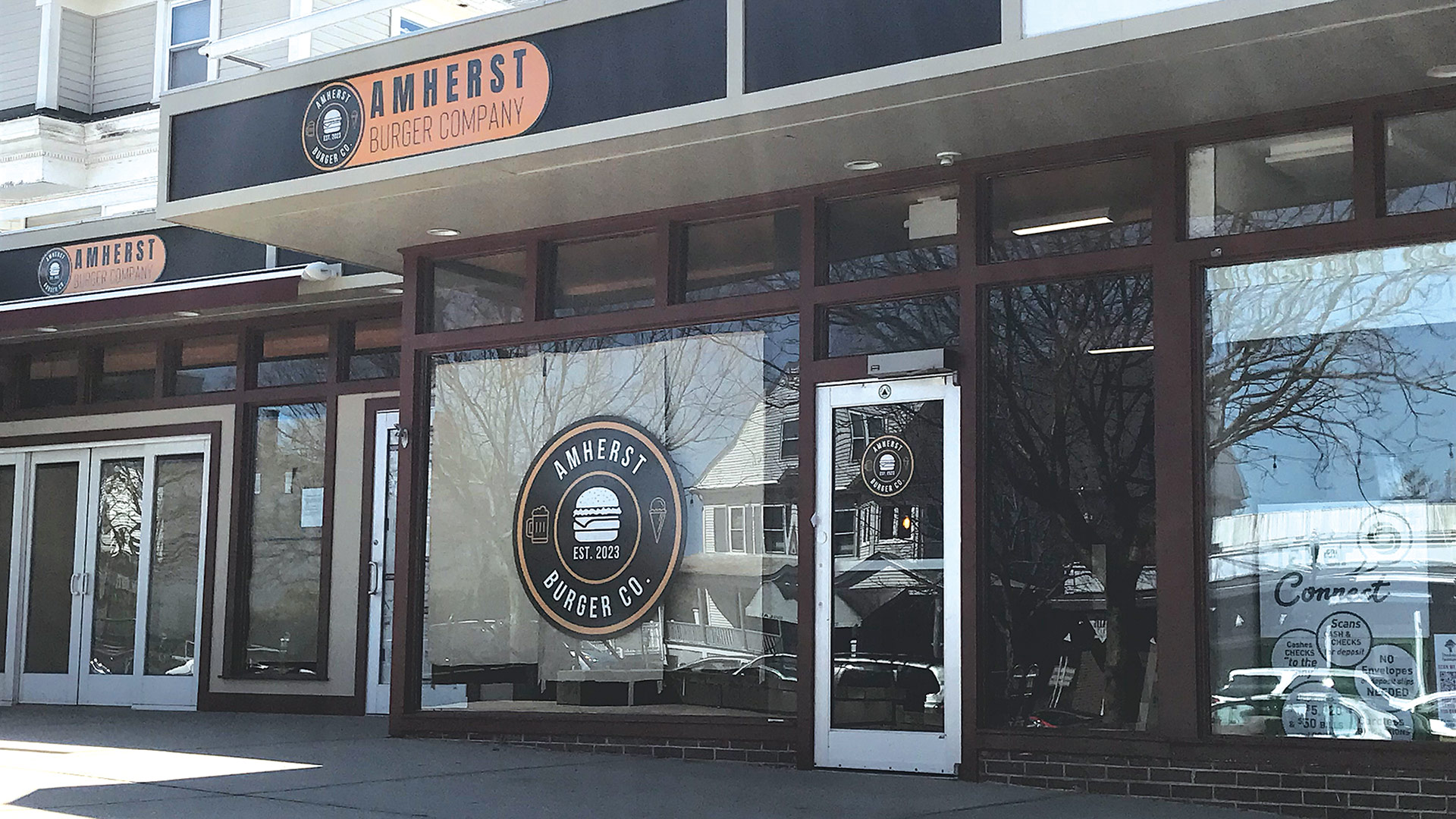
Barry Roberts owns several properties in Amherst and decided to create a burger restaurant when his previous tenant, Shanghai Gourmet, closed.

“We have lots of wonderful places to eat in Amherst,” said Roberts, who is also president of the BID. “But I thought there was a need for a moderately priced place where you can get burgers, beer, and ice cream.”

After brightening up the wall colors and repurposing booths, the Amherst Burger Company was launched. At press time, the restaurant was scheduled to open its doors by late April.

To manage the new restaurant, Roberts hired David Bourgeois, who has experience running other Amherst restaurants. The emphasis at Amherst Burger is on fun food sourced locally.

“We get our beef from Echodale Farm in Easthampton, our ice cream from Cook Farm in Hadley, and our milk from Mapleline Farm in Hadley,” Bourgeois said. “We are looking to build relationships with additional local farms as their crops come into season.”


Schools of Thought

While downtown has become home to many new businesses, the Mill District in North Amherst is emerging as another hotspot.

When BusinessWest visited Alysia Bryant, owner of Carefree Cakery, the walls in her store were still two-by-four studs. Slated for a June opening, the venture will feature fair-trade ingredients in all its baked goods.

Amherst Burger Company

Amherst Burger Company is just one of many new additions to the downtown landscape.

Bryant started college with the intent of becoming a doctor, but soon realized she didn’t have the passion for it and shifted gears to a business curriculum. At that time, she also began making brownies for friends in her dorm room. When her friends became bored with plain brownies, Bryant added different ingredients, such as peanut-butter swirl and cheesecake swirl, and discovered how much she enjoyed the process of modifying recipes to create new treats.

“I realized that I had a passion for helping people and that my skill was baking,” she said. “So I asked, ‘how on earth could I do both at the same time?’”

While the idea for her own place incubated, Bryant spent five years managing the Sherwin-Williams paint store in Hadley, where she refined her skills before running her own business. Additionally, she researched how to source fair-trade ingredients such as vanilla extract, chocolate, and other essential baking items.

“I knew fair-trade products would be more expensive,” she said. “And my biggest concern was, would people be willing to pay for them?”

To get the answer, Bryant teamed up with the Holyoke chapter of EforAll, a national nonprofit entrepreneurial organization, to conduct surveys on pricing and flavors. She was surprised at the positive feedback. “After the survey results, I felt less trepidation and more excitement about Carefree Cakery.”

The owners of Futura Café, located next door, are planning their opening in June at the same time Bryant opens her doors. They will join nearly a dozen other businesses featuring, among other things, vintage clothing, a general store, and an art gallery.

Amherst at a glance

Year Incorporated: 1759
Population: 39,263
Area: 27.7 square miles
County: Hampshire
Residential Tax Rate: $20.10
Commercial Tax Rate: $20.10
Median Household Income: $48,059
Median Family Income: $96,005
Type of Government: Town Council, Town Manager
Largest Employers: UMass Amherst; Amherst College; Hampshire College
* Latest information available

“I enjoy being in the Mill District because there’s real collaboration among the businesses,” Bryant said. “They’ve put an emphasis on building community here.”

Pazmany concurred, noting that the Mill District has created many new community events, including a recent Easter egg hunt that sold out. “It’s a family-friendly place that keeps growing as more people experience the shops there.”

And family-friendly locations are needed because the Amherst area is, well, attracting more families.

Indeed, over the past few years, Massachusetts has seen a slight decline in its population — less than 1%. But in that same time, Hampshire County has seen an increase in its population of roughly 11%, with Amherst on the leading edge of that growth.

“Private development of housing is a major economic driver at this time,” Town Manager Paul Bockelman said. “There’s a demand for housing because so many people want to live in Amherst.”

Realtors are noting trends of growing numbers of families looking to move back to their hometowns, and Amherst is no exception.

“I’ve talked with people who were unleashed from their offices and could live anywhere, and they chose to live in Amherst because of the schools, open space, and cultural attractions downtown,” Bockelman said. “Our town has become a real magnet for people who work remote most of the time.”


Signs of Progress

A key municipal project in the works is the renovation of the North Common, a project Bockelman said will transform the center of Amherst. The area is technically a green space, though most of it is currently covered in wood chips. He said the new design will be a great space for everyone.

“During the pandemic, we learned that people like to get takeout food but then want to linger downtown, and, of course, we want people to linger downtown,” he said. “With the new design, they will be able to get takeout from one of our restaurants and sit at a picnic table or park bench in the middle of a bucolic lawn.”

As the project goes out to bid, several contractors have already told Bockelman they hope to win the contract because the North Common will be such a high-profile job. Construction is scheduled to start in late fall, with completion slated for spring 2024.

“It will be a great civic space where we will have flag raisings, celebrations of different cultures, and, because it’s Amherst, we’ve even created a special space to stage protests,” he said.

Gould said more evidence that Amherst is back can be seen in the restaurants that are busier today than they were before the pandemic. “Restaurant owners are telling me that they’ve never had numbers like this. Many are looking at opening second restaurants.”

Meanwhile, the student population continues to increase as Hampshire College plans to add 200 additional students in the fall.

And downtown will get another boost, with Amherst Cinema being chosen as one of only 12 film houses in the U.S. to show entries into the Sundance Film Festival when it takes place next year. The popular cinema will be the only place in the Northeast to view the Sundance entries.

“That means, during the festival, people will be coming here from Manhattan and Boston because Amherst Cinemas is the closest place in this region to see those films,” Gould said.

Even longtime attractions like the Emily Dickinson Museum are benefiting from the new energy in Amherst. After closing for renovations for part of last year, the museum is busier than ever and draws visitors from all over the world. Many new visitors are young people who discovered the Belle of Amherst through the Apple TV+ series Dickinson.

In the office Pazmany and Gould share, the phone has been ringing much more of late with people complaining they can’t find a hotel room in the area. As much as Pazmany wants to accommodate all visitors to the area, she also recognizes one of those proverbial ‘good problems to have.’

There are actually several of them, she said, noting that people are also complaining about traffic and a need for more places to park.

“Well, the complaint desk is active again, and that’s certainly a sign that we’re busy again,” she said, adding that, after the COVID years, such complaints are more than welcome.

Business Talk Podcast Special Coverage

We are excited to announce that BusinessWest has launched a new podcast series, BusinessTalk. Each episode will feature in-depth interviews and discussions with local industry leaders, providing thoughtful perspectives on the Western Massachuetts economy and the many business ventures that keep it running during these challenging times.
Go HERE to view all episodes

Episode 130: September 26, 2022

George talks with Gabrielle Gould, executive director of the Amherst Business Improvement District

Downtown Amherst was among the regions hardest hit by the pandemic. With more than 30,000 students, faculty, staff, and more gone from the equation, it became, in many respects, a ghost town. But it’s staging a strong comeback as the students and everyone else return and many new businesses open their doors. Gabrielle Gould, executive director of the Amherst Business Improvement District, talks about these developments with BusinessWest Editor George O’Brien on the next installment of the BusinessTalk podcast. It’s must listening, so join us for BusinessTalk, a podcast presented by BusinessWest  and sponsored by PeoplesBank.

Sponsored by:

Also Available On