Home Posts tagged Insurance (Page 36)
Departments

United Financial Completes Second-step Conversion

WEST SPRINGFIELD — United Financial Bancorp Inc., the proposed Maryland holding company for United Bank and the successor company for United Financial Bancorp Inc., recently completed the syndicated offering portion of its second-step conversion. Orders for a total of 6,464,968 shares at a purchase price of $10 per share have been accepted in the syndicated offering, for which Keefe, Bruyette & Woods Inc. acted as lead manager. The company also received orders for 3,097,532 shares in the subscription offering and the community offering portion of its second-step conversion, including 753,834 shares to be issued to the employee stock ownership plan. As a result, the company anticipates that 9,562,500 shares will be sold in the subscription offering, community offering, and syndicated offering combined. In addition, upon the completion of the conversion and stock offering, each public stockholder of United Financial-Federal will receive 1.04056 shares of the company’s common stock in exchange for each of his or her shares of United Financial-Federal common stock. The company has also received the regulatory, stockholder, and depositor approvals necessary to complete the second-step conversion. The transaction is scheduled to close Dec. 3, at which time United Mutual Holding Company will cease to exist.

Hasbro Launches Annual Children’s Giving Tree Program

EAST LONGMEADOW — Hasbro Inc. recently launched its 23rd annual Hasbro Children’s Giving Tree, providing toys and games, as well as food over the holidays, to underprivileged children in the Springfield area. The initiative runs through Dec. 14 and is located at the Eastfield Mall in Springfield. As part of the program, Hasbro will donate toys and games through the United Way of Pioneer Valley and the Salvation Army of the Greater Springfield area. Hasbro officials encourage community members to donate nonperishable food items at the Eastfield Mall, which will be distributed to Rachel’s Table in Springfield. Food donations can be dropped off Mondays through Saturdays from 10 a.m. to 7 p.m. and on Sundays from noon to 6 p.m. In addition, area residents are welcome to display ‘Acts of Kindness’ messages, which will be displayed on the Giving Tree through the duration of the program. ‘Acts of Kindness’ forms are available at www.hasbro.org under ‘special programs,’ and on site at the Giving Tree.

Falcons Charities Tops $400,000 Mark in Giving

SPRINGFIELD — The Springfield Falcons Hockey Club and its related charitable organization, Springfield Falcons Charities, recently announced it has donated $400,000 over 12 years throughout the Pioneer Valley and also Northern Conn. Organizations that have benefited from the charitable program over the years include Shriners Hospital for Children in Springfield, the Springfield Sliders Sled Hockey Program, the Springfield School Volunteers – Time Out for Reading Program, the New England Junior Falcons Hockey Program, the YMCA, Greater Springfield Habitat for Humanity, and the Baystate Health Foundation. For more information on Springfield Falcons Charities, contact Carole Appleton, vice president of Falcons Charities, at (413) 739-3344, ext. 112.

Warfield House Inn Undergoing Renovations

CHARLEMONT — John Warfield Glaze, owner of the Warfield House Inn at Valley View Farm, has several changes in store for his restaurant business. In October, he closed the Warfield House Restaurant and will reopen it in the spring as a full-service banquet facility, catering to group tours, weddings, and special events. The restaurant originally opened in 1997 with one service bar and two small dining rooms, and over the years a pub was added for additional seating. The banquet facility will seat 130 guests and will boast a bridal suite. In addition, the pavilion, which seats 200 guests, also features a bridal suite. Glaze also noted that the 12-room bed and breakfast will remain open throughout the year and will feature a fresh new look for the spring. For more information, visit www.warfieldhouseinn.com.

HRU Honors Businesses, Supporters

SPRINGFIELD — Human Resources Unlimited (HRU) recently recognized three area businesses and one outstanding volunteer during its third annual Stakeholders Meeting. HRU awarded its prestigious Sheldon B. Brooks Award to Papa Gino’s on Boston Road in Springfield. The award, named after a longtime HRU board member, is given to a company that has a track record of employing individuals with disabilities for at least 10 years. The Rookie of the Year Award was presented to the Springfield Public Library. This award is given to a business partner that has worked with HRU for less than a year and a half and that demonstrates a commitment to hiring individuals with disabilities. Also, the Employer of the Year Award was presented to the Newman Center Cafeteria at UMass Amherst. The award is given to a company that has worked with a HRU program for more than one year and that shows a strong commitment to employing individuals with disabilities. Lastly, HRU presented the Armand Tourangeau Volunteer of the Year Award to Betty Lou Shepard for her volunteer services in support of HRU’s Forum House in Westfield. She was nominated due to her advocacy on behalf of those with mental illness.

Peebles Opens in Southampton

SOUTHAMPTON — Stage Stores Inc. recently brought its brand-name apparel, accessories, cosmetics, and footwear for the entire family to town. The company operates under the Peebles name throughout New England, as well as the Mid-Atlantic, Southeastern, and Midwestern regions, and under the Bealls, Palais Royal, and Stage names throughout the South Central states. The company touts its unique retailing concept and niche by offering a broad range of nationally recognized brand-name merchandise with a high level of customer service. The local store employs approximately 18 people and is located at 10 College Highway. The company opened 47 stores this year, and expects to open 70 in 2008.

UMass To Host National Fuel Cell Research Center

AMHERST — The UMass Amherst will create a new research center focused on the cutting edge of hydrogen fuel cell science, the National Science Foundation (NSF) recently announced, awarding a three-year, $1.5 million grant to the Fueling the Future Chemical Bonding Center. The center is one of only three in the nation funded through the NSF’s chemistry program that focuses on renewable energy, providing UMass Amherst a prominent role in the effort to reduce the country’s dependence on fossil fuels. The award also positions the campus to garner $30 million in additional funding, according to the NSF. The initial $1.5 million award is for a three-year period; centers that demonstrate “high potential” then will be eligible for $15 million in additional funding over five years, and another $15 million after that. The center will also have extensive education and outreach at all levels, playing a key role in addressing the human resources needed for the rapidly growing area of renewable energy technology. The center will also have a Web-based interactive network that acts as a public portal where educators, students, and the public can get accurate information on chemical energy topics.

FDIC Relocating Regional Office

SPRINGFIELD — The Federal Deposit Insurance Corporation (FDIC) will move its regional field office to 1350 Main St. on Dec. 15, citing the need to meet federal government code requirements. For 15 years, the FDIC’s offices have been located at 489 Whitney Ave., Holyoke, but the current building does not meet the federal government’s seismic requirements. The new office space, for 32 staffers, will feature 6,000 square feet in the Sovereign Bank building.

Physician Opens Venture Focused on Memory Disorders

SPRINGFIELD — Emily Grandey, MD recently opened a venture, called Memory Wellness, that is a specialized psychiatry practice for patients with memory disorders. Grandey will offer consultation and follow-up for patients who have memory problems ranging from mild impairments in daily functioning to all stages of Alzheimer’s Disease and other dementias. She will offer complete differential diagnostic evaluations of such patients, along with the most current interventions available to slow down or stop the progression of these illnesses.


Departments

The following is a compilation of recent lawsuits involving area businesses and organizations. These are strictly allegations that have yet to be proven in a court of law. Readers are advised to contact the parties listed, or the court, for more information concerning the individual claims.

FRANKLIN SUPERIOR COURT

Michael Elbery v. Lincoln Logs LTD et al
Allegation: Breach of contract: $260,500.00
Filed: 11/26/07

GREENFIELD DISTRICT COURT

Jean Dwight v. R.A.C Builders Inc.
Allegation: Medical expenses and lost wages due to noxious fumes in the workplace: $10,000
Filed: 10/31/07

HAMPDEN SUPERIOR COURT

Claire Kida v. Acres Medical Associates Inc.
Allegation: Negligence and personal injury due to fall: $135,000+
Filed: 10/23/07

Cynthia Williams v. Cumberland Farms Inc.
Allegation: Negligence and personal injury: $31,880
Filed: 11/08/07

Diamond Water Systems Inc. v. Falcetti and Clark Electrical Supply Company
Allegation: Damages caused by defective parts sold by defendant: $33,000
Filed: 10/23/07

HAMPSHIRE SUPERIOR COURT

Arcadia Insurance v. East Coast Construction Services
Allegation: Property damage due to negligent plumbing work: $10,940.77
Filed: 11/01/07

Christian Fitzgerald v. Ian Schein, M.D.
Allegation: Medical malpractice: $22,191.20
Filed: 10/12/07

Daniel R. Cooper v. Burrows Company
Allegation: Breach of contract: $56,601.20
Filed: 9/13/07

Rena Ducharme v. Big Y Foods Inc.
Allegation: Fall due to negligence: $143,663
Filed: 11/27/07
Tiger Press v. Connecticut Valley Bindery Inc.
Allegation: Breach of contract: $105,444
Filed: 10/10/07

HOLYOKE DISTRICT COURT

Daytech LLC v. Seasonal Décor
Allegation: Unpaid rent and utilities: $15,642.23
Filed: 10/30/07

NORTHAMPTON DISTRICT COURT

Northampton Lumber Company v. Northampton Rehabilitation
Allegation: Non-payment of goods sold and delivered: $9,241.04
Filed: 10/31/07

SPRINGFIELD DISTRICT COURT

Mary Mirski v. D’Angelos Sandwich Shop
Allegation: Negligence and personal injury: $6,039
Filed: 10/16/07

Richard Thompson v. West Springfield Auto Parts
Allegation: Motor vehicle negligence: $6,608.66; Filed: 10/07/07

Terry Macharia v. Bertera Metro-Jeep Chrysler Inc.
Allegation: Breach of contract: $15,000
Filed: 10/11/07

United Rentals Inc. v. BTR Framing, LLC
Allegation: Non-payment of construction goods and services: $127,043.43
Filed: 10/07/07

Waxcessories v. Country Candle Company Inc.
Allegation: Non-payment of goods sold and delivered: $15,480.62
Filed: 10/09/07

WESTFIELD DISTRICT COURT

Ruth Ohayon v. Patrick Kelley Roofing and Siding
Allegation: Damage caused by improperly installed roof: $2,000
Filed: 10/18/07

Superior Car Care v. Elmwood Auto
Allegation: Negligence causing property damage: $10,601.44
Filed: 10/30/07

Sections Supplements
Acupuncture Therapy Slowly Making Gains in the Mainstream
Debra Rusenko

Debra Rusenko says many Americans don’t understand acupuncture or have anxieties about it, but the treatment is attracting a growing number of satisfied converts.

Chi — the traditional Chinese concept of a life force or energy — isn’t an easy concept to explain. Debra Rusenko needed a growl and a resigned sigh to describe it.

“If you’re driving down the highway and someone cuts you off, you go, ‘grrrrr,’” she said. “And at the end of a long day, you’re tired, you cook dinner, then later you see the dinner dishes and go, ‘uuuhhh.’ You want to balance your ‘grrrrr’ with your ‘uuuhhh.’”

Rusenko, as a licensed acupuncturist with Abundant Wellness Center in Chicopee, helps people do just that. She can discuss the benefits of acupuncture from both the American perspective — how properly inserted needles reduce muscle tension and stress and improve circulation — and from the traditional Chinese perspective.

That philosophy, which might date back as much as 5,000 years, is based on chi, and how sickness and pain are basically imbalances in the flow of the body’s energy. Acupuncture is a way of restoring the balance, making it perhaps the earliest example of a holistic approach to health.

“From an Eastern perspective, acupuncture can be understood as the means of balancing the yin and yang of the body, as well as opening up and balancing the channels that run through the body, and balancing the chi — the life force that flows through the body,” added Jacob Wenger, a licensed acupuncturist who plies his trade at Laprise Chiropractic & Wellness Center in Springfield.

“In a healthy body, chi flows freely and unhindered,” he continued, “but when the body becomes diseased or stressed, the chi is blocked, and this leads to pain and discomfort. The Chinese have a saying: ‘if there’s movement, there’s no pain, and if there’s no movement, there’s pain.’ So acupuncture makes sure that the movement of chi is balanced in the body.”

For a practice that has been around for at least 2,000 years and perhaps as many as 5 millennia, acupuncture has fairly recent roots in America, having been in common use for no more than 40 years. But although it’s still considered an alternative therapy by mainstream medicine, a slow acceptance has emerged in some quarters, particularly on the West Coast and in other progressively minded regions — like Western Mass.

Sharp Focus

Acupuncture is anything but a one-size-fits-all solution to medical problems, Rusenko said.

“Every time someone asks me questions about acupuncture, I tailor my answers to their personal background and what they’re coming in for,” she said, noting that the four most common complaints are body pain, stress, digestive problems, and women’s issues, such as premenstrual syndrome, menopause, and infertility. That’s right — acupuncture, she said, has been shown to increase the success rate of in-vitro fertilization treatments.

There are different forms of acupuncture practiced throughout the world; for example, Chinese acupuncture uses a different type of needle — about the width of a dog whisker — inserted deeper than in the traditional Japanese style. But all recognize the basic set of meridians, or lines of the body, along which needles are inserted.

“Rivers flow in more than one place,” Rusenko said by way of explaining how a needle inserted in a certain place can affect the health of an organ or tissue elsewhere. “Nobody actually knows why or can prove the theory, but there’s plenty of empirically based evidence. As they say, billions of Chinese people can’t all be wrong, even if the modern scientific method of double-blind studies isn’t great at proving or disproving the effects. But lots of studies have demonstrated an excellent effect on specific things, like back pain and migraines.”

“Essentially, every culture gets introduced to the basics of acupuncture, and adds to it,” Wenger said. “In the West, we focus a lot on balancing the nervous system by releasing endorphins, and by releasing trigger-point muscle fibers that are caught in contraction by placing the needle into that trigger.”

Some might be skeptical of a practice which, as Rusenko admitted, is best proven anecdotally. But Wenger isn’t surprised that increasing numbers of people are giving it a try.

“I think people are becoming frustrated with the limitations of Western medicine,” he said. “Western medicine is great for acute situations and for dealing with infectious diseases, but when it comes to chronic conditions and long-term care, it doesn’t work as well as some of the alternative treatments. More and more people are trying acupuncture every day, and it’s becoming more accepted within each state as far as the legality of the practice and insurance coverage.”

Rusenko agreed, noting that “New England has become more aware of alternative therapies, and the West Coast has been doing it for a little longer.”

She noted that closed, Communist societies shut off much of Asian culture from the West for a long time, but starting in the 1960s and 1970s, acupuncture and other practices began to filter across the ocean. “Around the ’70s, relations started to open up, and Asian medicine specifically became a point of interest here, and Americans started studying it,” she said.

Not surprisingly, the biggest barrier for some people considering acupuncture is needle anxiety — and practitioners understand that’s a very natural reaction.

“There’s a common misconception that acupuncture hurts, but it shouldn’t hurt if done properly,” Rusenko said. “It’s common to feel a sensation of dullness, heaviness, tingling, sensations you can’t put your finger on … but there shouldn’t be a burning sensation, and it shouldn’t feel sharp.

“Most of the time, people don’t feel the needle being inserted,” she noted, unwrapping one of the thin, flexible, stainless-steel needles she uses — just once, of course — on patients, “It just feels like a tap on the skin.”

“Many people come in with hypodermic needle fear,” Wenger added, “and there’s definitely a level of anxiety with the first treatment: ‘is this going to hurt?’ ‘It’s strange to have needles all over my body.’ But generally, after the first treatment, people are pretty relaxed, and it makes sense to them.”

Pinning Down the Problem

To Rusenko, it all comes down to what each patient needs.

“I see 10 different headaches in a day, and rarely do I perform the same treatment twice,” she said. “It’s very individualized and tailored for the patient.”

It can also be a complementary therapy for patients also receiving chiropractic care or massage. Rusenko said people can achieve some relief from muscle tension and aches and pains through such modalities, but she believes acupuncture is a less fleeting solution — or, at the very least, a good partner to those other therapies.

“Acupuncture can make the chiropractic treatment last longer,” she said. “It can make the pain relief from massage therapy last longer. The goal is the same — maintenance for body pain — but adding a little acupuncture to the mix has a tendency to reduce discomfort over a longer period of time.”

Wenger agreed that acupuncture treatments are by their nature very individualized. “It’s different than Western medicine in that we’re not just treating the symptom, we’re looking at the whole body and searching for the underlying root of discomfort and disease.”

Rusenko believes acupuncture will become even more effective as it moves further into the mainstream because, right now, it’s typically a patient’s final course of action.

“We’re usually the last stop, which is unfortunate, because the sooner you get the treatment, the faster it will work,” she said. “As a general rule, with someone who has had shoulder pain for 12 years, it will take longer to make an impact than on someone who has had it for 12 days. People tell me, ‘I have surgery scheduled in three months; can you fix me instead?’ Well, yes, but I wish I had seen you 11 1/2 years ago.”

Joseph Bednar can be reached at[email protected]

Sections Supplements
401k Coach Program is a Nationwide Resource for Financial Professionals
Charlie Epstein and 401k Coach Program

The 401k Coach Program team in its Springfield offices.

Charlie Epstein, a financial advisor based in Springfield and owner of the 401k Coach program, isn’t looking for fame (necessarily), but he is selling his message on a national stage.

“I love getting out there and doing a little ‘edutainment,’” he said, noting that in the five years since he launched the 401k Coach program, which works with retirement-planning professionals to help them strengthen their business practices and, ultimately, their bottom lines, he’s traveled around the country sharing a detailed plan of action.

Americans have some real issues with saving money for retirement, he said, and moreover the financial-advising profession is one that is more complex and competitive than ever before, currently handling about $4 trillion in 401(k) assets. But before he gets to the nitty-gritty, Epstein is careful to break the tension with a story or two — he reminds his pupils that Mick Jagger is the new face of retirement, for instance, and at 64, even Jagger is still hard at work.

Epstein’s audiences have included advisors working with Nationwide, ING, MassMutual, and other firms, and the 401k Coach program’s unique approach to explaining often-tough concepts is garnering some great reviews.

Among other accolades, Epstein was recently included in 401k Wire’s list of the 50 top influencers in the industry for 2007. The news service, an affiliate of InvestmentWires, one of the most well-respected financial-services publications in the country, placed Epstein at No. 28 not only for his success as a financial advisor, but for his latest contributions to the sector.

And with a little bit of creativity, Epstein, who has a background in acting as well as financial services, is positioning 401k Coach for further ovations.

Encore Performances

Epstein created the 401k Coach program in 2002 as a means to train financial advisors across the country to optimize their businesses, in turn strengthening the investments and saving habits of their clients.

The program was designed specifically for financial professionals such as insurance agents, brokers, financial planners, CPAs, third-party administrators (TPAs), and plan providers — companies hoping to introduce their own retirement products to new audiences. Participants must commit to at least one year of membership in the three-year program, and sessions occur every 90 days, so key concepts and skills can be repeatedly revisited and reinforced.

Epstein has boiled these tenets down to 10 components he says are critical to building any retirement-planning business. Four of these, plus the 10-point system itself, are trademarked, and include the 401k Business Development Matrix, which deals specifically with pricing services; the 401k Coach Retirement Plan Solution, a six-step sales and service process; and the Quantum Leap, which introduces various management tools and systems aimed at spurring growth within a 401(k) business.

Many of these tools and systems are also trademarked properties of 401k Coach, and are designed to further assist financial professionals in initiating change. But there are other, broader attitudes Epstein tries to instill as well, such as taking the ‘old’ thinking, figuratively and literally, out of the retirement-planning equation. He refers to retirement plans as ‘desirement plans,’ which better reflects why people must save, and how financial advisors can help make the things their clients have worked for in life reality.

The first year of the program focuses on sales, including creation of a marketing system, developing and packaging an advising process, and mastering practice management, while in the second year, members learn to employ ‘repeatable systems’ for leveraging alliances in the marketplace and generating recurring opportunities, among other topics. Finally, in the third year, participants explore ways to create entrepreneurial capital, from branding a practice to acquiring the competition.

Epstein said the genesis of the multi-faceted program was his frustration with the financial advising industry, of which he’s been a part for 26 years.

“There was no one source to which practitioners could go to create success,” he said. “No one was teaching us how to be entrepreneurs, and people, my peers, needed to know their value. Financial professionals give away so much of their knowledge for free, in hopes of one day selling a product. But individuals don’t approach us for products — they approach us to learn from what we know.”

Epstein explained that there are several standards of service that all fiduciaries must adhere to legally and ethically, including disclosing fees, educating plan participants, and monitoring trends, but a financial advisor can meet all of these requirements and still fall behind in terms of business development and assembling a strong base of clients and referrals.

“This is a business in which we’re always asking ‘why?’” he said. “Why should I partner with this company or that? Why should I choose a certain product over another? We have to keep recreating the tools we use and how we assist our clients.”

What’s more, Epstein added, the financial marketplace is more saturated than ever before; entities that were once sources of referrals for fiduciaries, such as banks and credit unions, are now competitors.

“We’ve never had to market ourselves before,” he said. “This industry is being turned inside-out, and there’s $14 trillion in retirement plans out there. That means not only is this profession a full-time specialty, but it’s also one that requires incredible rigor.”

The Biggest Piece of the Pie

But beyond the challenges facing financial professionals today, there’s another, broader issue at hand that Epstein said plays a large role in moving 401k Coach forward, and that is the state of saving in the U.S.

Drawing a pie on a notepad in front of him, Epstein illustrated the problem.

“This here,” he said, carving out a slice, “is what you know.”

Then, carving out a second, similarly sized slice, Epstein pointed out that just as much of that pie is devoted to what people don’t know about financial planning.

“But that still leaves half of the pie, and that half is what we don’t know we don’t know,” he explained. “Therein lies the importance of the financial advisor: the people who are in the trenches, identifying what people don’t know, every day.”

But it’s not just financial professionals who need to step up their game. While Epstein focuses on training his peers through 401k Coach, there’s a marked trickle-down effect to business owners and individuals, who gain a better understanding and appreciation for retirement planning from their advisors.

“There is a huge savings problem in this country right now, and I want to inspire people to save,” he said. “People need to get responsible, and 401k Coach is well-positioned to make an impact. We’ve worked with 500 financial advisors, and I’m just getting started. Our goal is to work with 5,000.”

As the program continues to evolve, Epstein said a sort of master class is being added for members who have completed two years of coaching. The first session will be held in March on a dude ranch in Arizona, and its central theme will prompt financial advising companies to evaluate where their businesses will be, or could be, in three years.

Other opportunities are surfacing as well, as a greater number of industry players get acquainted with the 401k Coach model and approach Epstein with new proposals. These include coaching in more specific arenas, including marketing and hiring.

“I expect that we’re going to keep going in that direction, offering more specific advice and firm consulting,” he said, adding that he’s also working on a book that will help advisors and laymen alike think more deeply about long-term planning.

Fame: I’m Gonna Save Forever

“Maybe then I can be on Oprah!” Epstein joked, adding quickly that, while his primary mission is not to secure his 15 minutes of fame, any extra exposure does plenty to drive the central theme of the 401k Coach program home: that a retirement plan is successful only if it leaves individuals with enough money to actually retire.

Today, said Epstein, this dictum applies to virtually everyone, and requires everyone’s involvement.

“Pension plans are dead — it’s a global economy now, and the 401(k) plan is America’s savings plan,” he said. “But everyone has to take it upon themselves to make it work, and I want to inspire people to save.”

Jaclyn Stevenson can be reached at[email protected]

Departments

The following is a compilation of recent lawsuits involving area businesses and organizations. These are strictly allegations that have yet to be proven in a court of law. Readers are advised to contact the parties listed, or the court, for more information concerning the individual claims.

CHICOPEE DISTRICT COURT

Gilbert & Son’s Insulation Inc. v. Sturbridge Hills Inc.
Allegation: Breach of contract: $11,841.34
Filed: 9/24/07

Jazmin Castro v. Michael’s Towing
Allegation: Negligence causing personal injury: $2,255
Filed: 10/10/07

Pamela & Edward Rivera v. Neighborhood Home Improvement
Allegation: Breach of contract for home improvements: $9,500
Filed: 10/12/07

FRANKLIN SUPERIOR COURT

Dorothy A. Tyler v. Montague Energy Group, LLC
Allegation: Breach of contract and fiduciary duty: $50,000
Filed: 10/26/07

HAMPDEN SUPERIOR COURT

Bernadine Smith v. CitiMortgage Inc.
Allegation: Predatory lending and unfair trade practices: $175,000
Filed: 10/4/07

Elio Alfonso v. Commerce Insurance Company
Allegation: Breach of contract: $8,500
Filed: 10/18/07

Mark & Debra Discawicz v. Town of Ludlow
Allegation: Negligence causing damage to home: $150,000
Filed: 10/17/07

Mauricio Martinez, Reymundo Lopez, and Luis Morales v. Armida Arreola and Transcontinental Refrigerated Lines
Allegation: Motor vehicle negligence: $150,000
Filed: 10/15/07

HOLYOKE DISTRICT COURT

Broadcast Music Inc. v. Iron Horse Music Hall
Allegation: Breach of contract: $3,107.97
Filed: 10/11/07

Chiropractic Healthcare Centers v. National Grange Insurance Company
Allegation: Breach of contract — non-payment of medical bills: $2,403.12
Filed: 5/15/07

Danny M. Sola and Juanita Santos v. Infinity Auto Repair & Detailing
Allegation: Negligent repair of auto and unfair and deceptive acts and practices: $7,500
Filed: 10/1/07

NORTHAMPTON DISTRICT COURT

Baker Tanks Inc. v. Hydropress Environmental Services
Allegation: Non-payment of goods sold and delivered: $13,678.19
Filed: 10/17/07

PALMER DISTRICT COURT

Richard and Jennifer Toelken v. Windmere LLC and Newcastle Development Corp.
Allegation: Breach of purchase and sale agreement and construction of new home; failure to return security deposit: $17,000
Filed: 10/15/07

SPRINGFIELD DISTRICT COURT

A. Boilard Sons Inc. v. R. L. Lafley Construction Co.
Allegation: Non-payment of goods and materials: $11,032.95
Filed: 10/16/07

Kelvin Quamina v. Caribbean American Cultural Center
Allegation: Breach of contract: $4,234.27
Filed: 9/28/07

WESTFIELD DISTRICT COURT

George Panagos v. Thomas Tomlinson d/b/a Hire Image
Allegation: Negligence in reporting of plaintiff as guilty of felony instead of misdemeanor: $2,000
Filed: 10/1/07

Robert Todt v. Borges Construction
Allegation: Suing for damages done to home: $7,184.79
Filed: 9/27/07

Sections Supplements
At 60, the ‘Pedlar’ Blends Fine Fare with a Large Dose of History
Yankee Pedlar Inn

Yankee Pedlar Inn

The horse and buggy out by the curb have stood the test of time, although not without incident (‘Dobbin,’ as he’s called, has been ‘kidnapped’ and returned several times). He is a fixture in Holyoke, as is the landmark he’s associated with, the Yankee Pedlar Inn. Now marking its 60th year in business, the ‘Pedlar,’ as it’s called, blends history with fine food; tradition with a setting often described as unique.

The Yankee Pedlar Inn turned 60 a few months ago.

Six decades of uninterrupted business is quite a feat in the restaurant/banquet sector, but there haven’t been any real celebrations to mark the occasion, said Kim Clayton-McGrath. She’s sales manager at the ‘Pedlar,’ as it’s called, and daughter of current owners Martin and Rosemary Clayton, who purchased the Holyoke landmark in 1995.

“We’ve just been plugging along day to day, working hard … it’s been that way for the past 60 years,” she said of the definite lack of fanfare with regards to the recent milestone, noting that this industry, which is always challenging, is even more so these days with the economy sagging and soaring gas prices keeping people home. “We’re focused on today and tomorrow.”

And besides, she told BusinessWest, the Pedlar celebrates its history and traditions every day, not on those round-number anniversaries, and it does so in a number of ways.

There are the pictures on the walls of the Holyoke Room — one of several smaller banquet rooms — showing the landmark in its many stages of its development. And one of the other rooms is named Simone’s in honor of a recently deceased employee, Simone Patenaude, who worked there “forever,” said Clayton-McGrath.

There’s also the picture of the Pedlar’s first owners, Eugene and Catherine Tamburi, hanging in one of the hallways. Meanwhile, there’s a mural in the Tavern Bar & Grill, the main restaurant, that offers a time-altered view of life at the Pedlar; it includes personalities from the past (the Tamburis, Patenaude, and Johnny Marion, who played the piano there back in the ’50s and ’60s) sharing the room with some from the present, including the Claytons and waitresses, or “fixtures,” Sandy Mumblow and Carole Mazzu.

And then, there’s Dobbin, the stuffed horse attached to an antique carriage that has stood outside the Pedlar since 1953. Dobbin wasn’t in The Wizard of Oz, but he’s been a horse of many different colors. Now white, he’s been black and also spotted. He was painted green, gold, and white (by parties unknown) for one recent St. Patrick’s Day week (the route for the city’s famous parade winds past the landmark), and has also been hot pink for one recent holiday season.

“Who knows how many different colors you’d see if you scraped all that paint off,” said Clayton-McGrath, adding that the equine’s tail was recently stolen and replaced, for the umpteenth time. “He’s been kidnapped I don’t know how many times, but always returned to us; that horse is a legend around here.”

And like Dobbin, the Pedlar is a survivor, withstanding changes to Holyoke’s downtown and overall character; mounting competition, especially in Holyoke, where there are several banquet and meeting facilities; those higher gasoline prices; and several cycles of the economy. The facility owes its resilience to the fact that it is a landmark, said Clayton-McGrath, one to which individuals, families, businesses, and organizations have remained loyal for decades.

But it also has some features that make it stand out in a crowded marketplace. They include those smaller, and also unique, banquet rooms, something missing at most halls, she said, and also the Pedlar’s Opera House. Added by the Tamburis in 1973, the two-level room has been the site of theatrical performances, charity events, hundreds of weddings, and, until recently, a regular Sunday brunch.

That tradition was halted on the basis of pure economics, said Clayton-McGrath, noting that for some time the weekly brunch was taking in less money than it cost to put it on.

The demise of the brunch — there is some talk of reviving it — is a reminder that businesses, even those as old and storied as the Pedlar, have to balance tradition with good business sense. The ability to do this has given the landmark both a rich past and strong prospects for the future.

Talking Turkey

Clayton-McGrath sat down with BusinessWest just a few days before Thanksgiving.

This is always a busy time at the Pedlar. More than 1,000 people traditionally come through the doors for the holiday buffet, she explained, and there are always a number of gatherings of all sizes, including several high school reunions, scheduled through the long weekend.

Having all those activities go off as planned requires large doses of preparation and attention to detail, she said, noting that the staff at the Pedlar have had plenty of practice. Many of the employees have been with the establishment for years, if not decades. They’ve seen times change, but not the Pedlar’s blend of atmosphere and tradition.

It all started on June 7, 1947, roughly a year after the Tamburis purchased what had long been the home of Judge John Hildredth, who left England in 1871 to settle in Holyoke. The home, situated at the junction of roads known now as Routes 5 and 202, was built in 1875, and its size and location made it ideal for an inn.

Over the years, however, the restaurant, which seated only 25 when the Pedlar first opened, became increasingly popular, requiring the Tamburis and subsequent owners to devote ever-larger amounts of square footage to dining and banquet facilities. Today, only a few of the original guest rooms remain, and they are used as bridal suites.

Those rooms are put to great use, because the Pedlar has long been a very popular site for weddings, said Clayton-McGrath, and the Opera House has much to do with this phenomenon. “A bride feels like a princess in this room,” she said while decending from the Opera House’s balcony. “You can get some incredible pictures in here.”

Capable of seating more than 200, the room features a chandelier from the former New York Metropolitan Opera House, which was torn down in 1963, and a large wooden bar rescued from Kenilworth Castle. This was Holyoke’s version of the famed English castle, a brick-and-stone mansion that was home to E.C. Taft, one of the city’s many prominent mill owners, and torn down in 1959. Many artifacts from the castle, as well as pictures of it, dominate another of the smaller dining areas known as the Kenilworth Room.

In 1977, the Yankee Pedlar was purchased by the Banks, Frank and Claire, who put their own stamp on the facility through nearly two decades of ownership. They added the Garden Room, another popular site for weddings, those of the smaller variety; the Herb Terrace; and Simone’s, a small, French bistro-style restaurant inspired by a trip to Europe.

The Clayton family, which had been in Holyoke for three generations and owned the Martin J. Clayton Insurance Agency, located just down the street from the Pedlar, purchased the landmark in 1995. A year later, they remodeled the former sandwich and pub area known as the Oyster Bar and renamed it the Tavern Bar & Grill.

Food for Thought

How Clayton-McGrath, a former paralegal, came to be sales manager for her parents’ business venture is largely a matter of circumstance. She and her husband, Neil McGrath, a football coach by trade, were living in Maine (he was coaching at the state university), when the Pedlar was acquired. When Neil took a job at UMass in the mid-’90s, the couple relocated to Holyoke, and Clayton-McGrath accepted an invitation to help manage the city landmark.
She started with mother’s hours, but eventually made this a full-time exploit, something she believes her father had in mind from the beginning.

These days, Clayton-McGrath and other members of a management team that includes “Master” Chef Ed Klinger, Banquet Manager Nancy Wheeler, HR Director Abby Leroux, and Martin Clayton (now semi-retired and living in Florida) are leading the Pedlar through a time of change and challenge.

While the restaurant side of the business remains fairly steady, there are simply fewer people going to dinner, lunch, and, yes, brunch, these days, said Clayton-McGrath. There are several reasons for this, including time constraints on business people, a smaller business community in Holyoke, the general economy, and even gas prices.

“When gas hits $3 a gallon, a lot of people just don’t want to move out of their driveways,” she said, noting that she’s seen a drop in business since the most recent climb to that price threshold. “Just about everything affects this business; when people have less money to spend, they just don’t go out to eat as much.”

All this has contributed to a greater emphasis on the banquet and special-event side of the ledger, which, while it’s not recession or gas price-proof, continues to thrive at the Pedlar, despite mounting competition.

This success is due to a blend of flexibility, tradition, a diverse and reasonably priced menu, and strong customer service, she explained, noting that the Pedlar has eight banquet rooms of various sizes, many of which can accommodate groups of 20 or fewer, which helps the landmark stand out.

“The smaller parties add up,” she explained. “And people are very grateful when they can find a small room; we hear so many people say, ‘we can’t get anything anywhere for a party of 20; no one will take us.’”

As she offered a tour of the Pedlar, Clayton-McGrath started in one of those smaller facilities, the Kenilworth Room. She pointed to a stained-glass window that is just one of many artifacts from the mansion.

From the Tavern and its famous mural, Clayton-McGrath proceeded to the Holyoke Room, complete with photos of the Pedlar taken over several decades, as well as pictures of other landmarks, including Mountain Park, its famous carousel, and City Hall.

Other venues include the Pedlar Club, used typically for cocktail and hors d’oeuvres receptions; the Loft, so named because it’s on the second floor; and the Oakdale.

This volume and variety of smaller rooms gives the Pedlar the flexibility to handle functions ranging from small bridal showers to anniversary parties; from bus tours (many originating in Connecticut or New Hampshire stop at the landmark on their way to or from Yankee Candle, the Holyoke Mall, and other tourist stops) to a host of holiday parties.

“We’re booking more Christmas parties than ever before,” said Clayton-McGrath, noting that the Pedlar can handle virtually any-sized get-together. “And we’re doing more in January every year — that’s because everybody’s really busy in December, and we’re all looking for something to do in January.”

And then, there’s the parade.

Planning for the colossal undertaking is essentially a year-round undertaking, she said, noting that the Pedlar plays host to many meetings and events. Parade week is an especially busy time, and for Clayton-McGrath and most others, work on the day of the parade starts well before the sun comes up and ends long after it’s gone down.

“It’s just crazy, crazy here,” she said of parade day, noting that people start setting up chairs outside the Pedlar at 7 a.m. “It’s fun morning, noon, and night — we have the workers’ breakfast at 6 and the after-parade dinner.”

Mane Event

Glancing out her office window in the direction of Dobbin and the ancient buggy, Clayton-McGrath said the latter is overdue for an overhaul.

“It’s very, very old wagon, and we’re constantly putting tape around it and telling people to stay off,” she said, adding that many try to sit in for the parade, and the Pedlar doesn’t want to see anyone hurt. “It needs some work.”

Though it’s weathered, the buggy has stood the test of time — as has the Pedlar. It’s done so through a blend of tradition and atmosphere and more than a little … well, let’s call it horse sense.

George O’Brien can be reached at[email protected]

Departments

The following Business Certificates and Trade Names were issued or renewed during the month of October 2007.

AGAWAM

Viktoria’s Cleaning Service
418 Meadow St.
Viktoria Zagorodrjuk

AMHERST

Atkins Farms Country Market
1150 West St.
Pauline Lannor

Dancer Computers
450 West St.
Daniel S. Kaden

Echo Hill Art
64 Heatherstone Road
Natalie Stafford

Judy Associates
6 High Point Dr.
Judith Tambasco

Kelly’s Restaurant
314 College St.
Stephen M. O’Brian

Lincoln Real Estate
25 North Pleasant St.
Peter P. Grandinico

Mass Players Soccer League
134 Summer St.
Christopher Monteiro

New England Dance Quarters
316 College St.
Penny Manheim

Northeast Environmental Solutions
577 West St.
Taylor Davis

R & T Package Store
505 West St.
Leonard H. Pratt

Silicon Goblin Technologies
171 State St.
Steven Linberg

Stone House Farm
649 East Pleasant St.
Candace Talley

Sunrise Annex B & B
1330 S. East St.
Margaret Holcomb

The Mercantile
11 East Pleasant St.
Adrian Wilkins

UMass Rugby Football Club
302 Orchard Hill Dr.
Diego De Leon

CHICOPEE

Atlantic Marine Communities
4 Stephens St.
Atlantic Marine Corps Communities, LLC

Colonial Restorations
1174 Montgomery St.
James G. Chartier

Extreme Stucco & Painting
21 Nassau St.
Anatoliy Maksimchuk

JDR Sales
79 Shepard St.
John D. Roux

Reliable Limousine Services
376 Chicopee St.
Anzhelika Salagornik

TNG Stenography
807 Sheridan St.
Nicole E. Guilbert

EAST LONGMEADOW

Arnold’s Meats at the Barn, LLC
359 Shaker Road
Susan Katz

IRM Insurance Agency Inc.
75 North Main St.
Barry M. Stephens

Peppa’s by the Slice Pizza
33 Harkness Ave.
Argiro Degulielmo

The Pizza Shoppe
134 Shaker Road
Nicholas Guiggio

GREENFIELD

C & M Online Services
178 Chapman St.
Edward C. Craig Jr.

Dave’s Drywall & Painting
167 Conway St.
David R. Deforge

Historic Factories, LLC
2 Mead St.
Albert L. Shane

House Imagination
178 Chapman St.
Maria M. Ortiz

K & K Auto Sales
381 High St.
William D. Kilgour

Problem Wildfire Solutions
83 Puckett Lane
Rocky Fletcher

HADLEY

I.T.S./ Designers 2
12 Middle St.
Chester E. Abel

KFC
3 S. Main St.
John P. Hayes

Matthew Hallmark
115 Hampshire Mall
Ann M. Hofferberth

Michael Community Therapeutics
138 Russell St.
Kent S. Hesse M.D.

HOLYOKE

Boobu-Akees
10 Clinton Ave.
Marisol Cartagena

Calendar Club
50 Holyoke St.
Omar Khan

Flats Market
36 Ely St.
Evaristo Almonte

New Realty
183 Sargeant St.
Sarah Rose Stack

Now Who’s Next
241 Main St.
Eric Nieves

Pioneer Valley Flea Market
2200 Northampton St.
Richard A. Burns

Rivera’s Variety Store
368 High St.
Saiid Rivera

Seamus Pub LLC
80 Jarvis Ave.
Eileen O’Leary Sullivan

Target Optical Shop
50 Holyoke St.
Jack Dennis


LONGMEADOW

Cellular Products Consulting
116 Brooks Road
Michael Keene-Moore

Richard M. Russo Real Estate
61 Nevins Ave.
Richard M. Russo

LUDLOW

Balance Professional
77 East St.
Lori Miller

NORTHAMPTON

Fitness Together
18 Strong Ave.
Brandon Reed

Hair by Patrick
56 Main St.
Patrick J. Mansfield

Island Homes, USA
19 Tyler Court
Alan Michael Miller

M & M Links
28 Pleasant St.
Maureen Abdullah

PALMER

Gales Newsstand
1363 Main St.
Robyn Ottomaniello

GQ Painting
11 Holbrook St.
Gerald Quesnel

Sweet Pumpkin Catering
57 Laurel Road
Sara J. Sullivan

SOUTH HADLEY

Able Security Company
94 Hadley St.
John Muise

Advanced Telemessage Service Inc.
138 College St.
Morando DeFronzo

Mandarin Gourmet
481 Newton St.
Michael Wong

Spectrum Educational Technologies
30 Riverboat Village Road
Jason Frey

SPRINGFIELD

Al’s Paintball Discounters
171 Marsden St.
Andrew a. Clough

C.I. Clean
58 Dresden St.
Charlie Moore

Castellanos Restaurant
2895 Main St.
Samuel Rivera

Cephas Property Management
211 Wilbraham Road
Roberto McCarthy

Charlene’s Boutique
180 Eastern Ave.
Charlene Naylor

Crystal and Glass Creation
33 Greenbrier St.
Cynthia K. Lincoln

Cuddly Creation
1065 Boston Road
Michael Ventrice

Eric-N-Son’s Trucking LLC
52 Pearl St.
Eric Bernard Denson

H & L Auto Sales
1535 Bay St.
Larry J. Cole

J.B. Creative Photos
167 Laconia St.
Sheila M. Cotto

Jimenez Barber Shop
278 Oakland St.
Juan Jimenez

Josie Jewels
90 Allen St.
Jo Sette

Linda’s Dance Studio
233 Franklin St.
Linda C. Toombs

M Brothers Auto Repair
279 Mill St.
Jose Medina

Mbane International
147 Maple St.
Makala Francis

Medina Financial Inc.
2705 Main St.
Jose Juan Medina

WESTFIELD

AMR Automotives
170 Lockhouse Road
Michael Chaplin

Budget Rent-A-Car Inc.
190 East Main St.
Anne Lomonaco Avis

Day Lumber Company
34 South Broad St.
Jason Ryan Kaplan

Deals “4” Wheels, Inc.
115 Springfield Road
Darlene Roache

Coggin Creek Stables
1008 Granville Road
Brenda L. Coggin

WEST SPRINGFIELD

Alpha Home Improvement
1241 Elm St.
Gregory Gilbert

Connecticut Remodeling
15 Prince Ave.
Peter Gurchenko

J.A.M. Candles
76 Irving St.
Jessica Markel

Leo Hood D.M.D
1284 Elm St.
Leo Hood

Preco Power Equipment
2385 Westfield St.
John Grimaldi

Pavel Water Filtration
70 Windsor St.
Henry H. Pavel

Sharon’s Hair Care
1027 Westfield St.
Sharon Edith Hallmark

Sections Supplements
Bell & Hudson Builds a Legacy on History, Philanthropy, and Forward Thinking
Jim Phaneuf

Jim Phaneuf, owner and president of Bell and Hudson insurance, says streamlined management and philanthropy are two key aspects of the agency’s business model.

The sign on the front of the building says Bell and Hudson Insurance was founded in Belchertown in 1890. But the agency’s president and owner, Jim Phaneuf, estimates that it was a bit earlier.

A history buff and active member of Belchertown’s Historic Society, Phaneuf found a yellowed copy of the Belchertown Sentinel, the town’s local paper, not long after taking ownership of the agency.

In the issue, dated Sept. 1, 1950, George F. Bell spoke with reporters on the occasion of his retirement, and said that in actuality, the agency was formed during the Civil War by Frederick Taylor, a Granby businessman who owned a textile mill and created an insurance arm to protect his own holdings.

The business stayed part of the Taylor family until 1913, when Bell purchased it, taking Byron Hudson on as a partner in the 1930s.

Bell & Hudson, in its current permutation, was officially incorporated in 1940, serving Belchertown and its surrounding communities ever since.

The business was sold in 1950 to the Fuller family, which maintained ownership until 1992, when Phaneuf took the helm after five years of employment with the agency.

He said that as the business continues to grow and change with the times, honoring both history and community remain high on its list of priorities.

“I’ve been the steward of this business for some time now, and I’ve watched the town grow — and along with it, the business,” said Phaneuf. “It’s a great community.”

Blizzards and Benchmarks

Bell & Hudson has a strong philanthropic presence in Belchertown, said Phaneuf, adding that the agency is ‘there’ for the community in myriad ways, from fund-raisers for cancer to disaster preparedness.

“We’re ready to serve our customers in a blizzard,” he said, “because it’s during those times that people need their insurance companies. We’ve made great strides to be ready, with electric generators and other things, and we started that before it was on more people’s minds after Katrina.”

The agency has received high marks for its efforts to streamline various insurance processes and to make them more accessible, including claims-handling and customer service. It has twice received the Mass. Assoc. of Insurance Agents’ Five-star Award of Distinction, given to agencies across the state that, through an extensive, on-site examination performed by the MAIA every three years, prove exemplary performance in a number of key areas, such as customer focus and human resources practices.

Bell & Hudson is currently one of 32 agencies in the state to receive the five-star rating, but Phaneuf said even without the prize, the process of identifying best practices is a valuable one, which the agency uses to continuously improve.

“Agencies must go through a three-day audit. Auditors meet with employees, and look at performance in critical areas,” he said. “They look to see if an agency has a clear mission, and that staff members are well aware of that mission. They look at decision-making, corporate values, technical issues … even if we don’t get the five-star rating, at the end we have a great white paper that shows us what things we need to work on.”

Making the Upgrade

But there’s also a record of what the agency is doing right. Bell & Hudson, which specializes in various types of insurance for both families and businesses — most of its corporate clients are medium- to large-sized outfits with up to 125 employees — excels in technology-based systems that automate standard inquiries, claims, and other communication between the agency and the insurance companies with which it works. Phaneuf said keeping up to date with these systems has allowed the business to grow without necessitating more staff; there are currently 12 employees, a number that has not changed much in the past decade.

“Because we started earlier than most with our computer system upgrades, our number of employees has stayed level,” he said. “The upgrades never end; they are an expense, but it’s something we have to do to maintain a competitive edge and stay ahead of the curve.”

At this point, Phaneuf added, Bell & Hudson’s offices are also close to being paperless, and the systems also help navigate the many different filing practices of the 10 companies with which the agency works.

“Sometimes it’s difficult to support many different companies, but as an independent agency, it’s good for us in the long run because we’re satisfying the needs of our customers, whatever those needs may be,” he said. “Essentially, we sell promises, and a core part of our business is making sure those promises have been fulfilled. Working with insurance carriers can be sticky, and that’s exactly why there’s a need for independent agents. We speak their language.”

To ensure that nothing gets lost in the translation, employees are required to complete mandatory continuing-education courses each year to stay equally current with new trends and practices.

“I keep the staff on a course of continuous improvement,” said Phaneuf, noting that this has also helped him retain qualified personnel over the years. “It’s a challenge finding good people, and our staff members are mostly local people who take pride in their work. We have very low turnover; the average tenure is 10 years.”

This course includes certification and licensing programs that lead to a number of professional designations within the insurance industry, such as C.P.C.U. (Chartered Property & Casualty Underwriter), C.I.C. (Certified Insurance Counselor), and C.I.S.R. (Certified Insurance Service Representative).

A Putt Above

Beyond their career obligations, though, Bell & Hudson employees are also actively involved with the community, often planning large-scale events on their own time.

The agency’s largest philanthropic endeavor is its annual Putt-a-thon, or mini-golf tournament, which raises thousands of dollars each year for the Jimmy Fund and the Dana Farber Cancer Institute. Fighting cancer is a cause that’s dear to many at Bell & Hudson; several employees have been closely affected by the disease.

Dana Farber currently benefits from 150 individual golf tournaments, and Phaneuf said early on, he and his staff wanted to break from tradition and try something different. They devised a mini-golf tournament that the institute at first regarded with some skepticism. But those doubts were quickly erased when residents in the greater Belchertown area flocked to Evergreen Golf three years ago to putt 100 holes, and gather pledge donations for each hole. Local businesses also serve as sponsors. That first year, Bell & Hudson presented a check for $17,000 to Dana Farber, and this year, it raised close to $40,000.

The event, combined with other community assistance initiatives the agency has launched, as well as its strong track record in implementing current technology and processes to augment service, prompted the Quaboag Valley Chamber of Commerce to name Bell & Hudson its business of the year.

“It’s an amazing thing,” said Phaneuf of the putt-a-thon. “The event is still evolving — we’re still working out a kink here and there, and it has rained all three years we’ve had it. But if there’s a need, the people of this community come together. We have welcomed children from age 6 to an 86-year-old woman who came out to support us — and finished all 100 holes.”

Company Policy

What’s more, the event has spurred other communities to begin holding similar putt-a-thons, and Phaneuf said Dana Farber credits Bell & Hudson with devising the model.

“It’s not just about golf,” he said. “Actually, it’s not about golf at all. It’s about people — we might have put it together, but the customers make it happen.”

The agency’s philanthropic work also helps Bell & Hudson foster a level of comfort among clients and in the community that began in the 1800s, when Frederick Taylor sought his own peace of mind by forming what would become one of Belchertown’s longest-held and most successful small businesses.
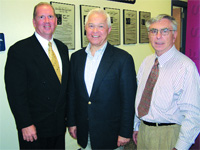
“People like doing business locally,” Phaneuf said, “and honoring that is what helps us succeed more than anything.”

Jaclyn Stevenson can be reached at[email protected]

Sections Supplements
Take Steps Now to Ensure Lifelong Financial Security

For parents of a grown child with disabilities, the most pressing question is “what will happen to my child when I’m no longer here?” This concern grows more urgent as parents retire or experience a decline in health.

Today, more than 700,000 adults with disabilities live with caregivers over age 60. While this reflects the positive trend of longer life expectancies for the seriously disabled and the general population, it also presents a new challenge for older parents: the need to make plans to preserve their children’s lifelong financial security.

Fortunately, it’s not too late to get started. Partnering with a team of professionals who are knowledgeable about disability issues — including a trusted financial advisor who can look at the impact on your overall financial goals — will help you take the steps necessary to secure a bright future for your child.

Step 1:Create a ‘Life Plan.’ The first step is creating a ‘Letter of Intent’ or ‘Life Plan’ that will serve as a road map for everyone involved in your child’s future care. With the help of a social service representative who specializes in your child’s area of disability, you can write (or record or videotape) your preferences, including where your child will live, what types of enrichment programs they’ll attend (e.g., vocational or adult activity programs), what type of daily care they’ll require, and who will assume a guardianship role.

To help caregivers view your child as a unique individual, it also is important to provide as much detail as possible about the child’s life, including medical and therapeutic history, challenges and triumphs, hobbies and interests.

Step 2:Calculate the Cost. The next step is estimating the cost of your child’s future lifestyle. A financial advisor trained in disability issues can help you do this using a specially designed financial calculator. You can find one by visiting www.totalmerrill.com/specialneeds. Based on information you provide about your child’s anticipated income and expenses — including costs for housing and enrichment programs — and assumptions about inflation and investment returns, the calculator will estimate how much you’ll need to set aside to close any shortfall in monthly needs.

Step 3:Preserve Public Benefits. As you take the next few steps, it will be critical to consider how your actions may impact your child’s eligibility for means-tested public benefits such as Supplemental Security Income (SSI). SSI serves as the gateway to Medicaid and numerous other programs that form the bedrock of support for the seriously disabled. Your child’s uninterrupted eligibility depends on having limited income and no more than $2,000 in assets.

Step 4:Fund Your ‘Special-needs Goal.’ Most parents wish to supplement SSI income to provide their children with a higher quality of life. If you’ve already set aside funds in your child’s name, named your child as beneficiary of policies or accounts, made a bequest through your will, or encouraged relatives to do the same, you’ll need to make some changes — with the help of a financial advisor and attorney — to avoid jeopardizing your child’s eligibility for SSI.

If you plan to fund your child’s needs with retirement plan assets or proceeds from the sale of your home or business, a knowledgeable financial advisor can suggest ways to balance your child’s financial needs with your own. If saving for this goal is out of the question, a financial advisor can help you consider cost-effective alternatives like purchasing a ‘second-to-die’ life insurance policy payable after both parents die.

Step 5:Consider a Special Needs Trust (SNT). However you fund your goal, where you place the assets will be of paramount importance. Generally, the only way to supplement the lifestyle of an individual receiving means-tested public benefits is to place assets in an SNT.

A disability and elder law attorney can help you establish a trust in a manner that supports your overall estate-planning goals.

Step 6:Plan Ahead for Long-term Care Needs. Finally, you’ll need to ensure that your own health care expenses won’t deplete assets set aside for your special-needs child. A long-term care insurance policy is one possible solution. A disability and elder law attorney can help you consider other alternatives, such as placing assets earmarked for your child in a ‘Disability Annuity Trust’ held inside an SNT.

Following an organized plan of action and working in concert with the right professional resources can ensure your child’s future. Partnering with the right financial advisor is essential to this strategy, and can help you assess and attain your most important intergenerational financial goals.

Chris Sullivan is vice president of Special Needs Financial Services at Merrill Lynch.

Features
As Confusion Mounts, Cautious Optimism Surrounds Health Insurance Reform
Christine Phillips and Carole Parlengas

Christine Phillips (left) and Carole Parlengas of United Personnel say health insurance reform could have some rocky times ahead, but they view the changes as necessary and important.

‘One calendar month is the calendar month, commencing with the first calendar month following the first day of employment, unless the first day of employment is the first day of a calendar month, in which case the calendar month commences with the first day of employment.’

That’s how one sentence, regarding employee start dates and how they affect a company’s calculation of full-time equivalent (FTE) employees, reads on the Mass. Office of Labor and Workforce Development Web site.

Carole Parlengas, vice president and CFO, and Christine Phillips, executive vice president with United Personnel, a staffing agency based in Springfield, said it’s also a good example of the verbiage surrounding the Commonwealth’s health insurance reform legislation that has their heads spinning.

“If just one sentence is overwhelming, think of all the other things we haven’t even seen yet,” said Parlengas, to which Phillips added that, while in many respects United Personnel has stayed ahead of the game in terms of implementing new requirements, there’s still an anxiety level surrounding what needs to be done, and how.

“From the beginning, we’ve said that we will work with whatever the state gives us in order to stay legally compliant and in step with the legislation,” said Phillips, “but we’re still nervous, because we’re not always sure what the state is doing. And from what I’m hearing, we’re actually ahead of some other companies who’ve gotten lost in the quagmire and are waiting for more direction.”

United Personnel represents the business sector that could be experiencing the most problems with the Commonwealth’s implementation of health insurance reform, signed into law by former Gov. Mitt Romney in April 2006. It requires all Massachusetts residents to have health insurance — the deadline was this past July — and through mandates and new filing requirements, places this responsibility not only on individuals, but state agencies, health plans, and employers as well.

Devil in the Details

While the plan has received little public criticism of late on administrative or legislative levels, employers are beginning to feel the weight of the new paperwork required by the law.

Staffing agencies are particularly stymied, trying to understand how to efficiently file new forms when employees are temps, often starting a new position multiple times throughout the year. This makes it difficult to pinpoint how many FTEs an agency actually has, not to mention those employees are scattered throughout various businesses, not contained in one office.

“I don’t think the administration ever thought about transient employees,” said Parlengas, who, over the course of the last month, has attended several meetings with legislators, health insurance companies, and other staffing agencies across the state as they scramble to find their place in the puzzle. “They thought of seasonal and part-timers, but not the temps.”

This concern has moved closer to the forefront in recent weeks due to the arrival of the first round of new annual filings for employers that are part of the legislation.

Employers were notified the week of Sept. 24 that beginning on the first of October, they would receive their first Fair Share Contribution report (FSC), which can be completed online and details whether or not an employer with 11 or more FTE employees has made a ‘fair and reasonable contribution’ to their employees’ health insurance, and if not, to what extent a per-employee Fair Share Contribution (of up to $295 per employee annually) must be paid.

Employers have also received a second form, the Employer Health Insurance Responsibility Disclosure report (HIRD), which confirms whether or not an employee has been offered a Section 125 plan, a pre-tax payment system for health coverage and the minimum requirement for employers. Forms must be signed by each employee regardless of their decision to accept or decline the plan, and must be kept on file for three years.

Further, they must be filed with the state by Nov. 15, and that quick turn-around has many people reeling. Staffing agencies have arguably felt the pressure first, but Phillips said she wonders if similar worries will surface in other industries, such as health care, which employs a large number of per diem employees, and in restaurants, in which servers rarely work ‘normal’ hours.

“The data is the scariest thing; it’s going to be a few rocky years for some companies,” she said. “It’s the biggest piece of this right now — record-keeping, and producing the data the state needs.”

In some ways, the problems brought on by the new filing requirements start at a very basic level, Phillips noted. For one, the computer systems currently used at United Personnel have no way of ‘answering’ the questions posed by the state: questions such as ‘what is the percentage of the premium cost for individual coverage your business offered to contribute for all full-time employees?’

“We need certain tools in order to report the data correctly that we don’t have; our databases weren’t built to deal with such sophisticated queries,” she said, adding that for now, the process has become a very human one — and therefore very time- and resource-consuming. “It’s daunting that record-keeping has become so important … especially when we don’t even understand what constitutes a calendar month.

“I think that when this was being planned out, the administration was thinking in terms of standard jobs, and standard hours,” she continued. “When I think of people in restaurant and hospitality jobs, or the medical field, I think they must have some of the same challenges as we do. I don’t think the administration thought long on logistics.”

Painting with a Broad Brush

Still, some with a bird’s-eye view of the reform say that while some roadblocks are bound to crop up, the plan has moved ahead as smoothly as they could have hoped.

Mike Widmer, president of the Mass. Taxpayers Assoc. (MTA), spoke with BusinessWest a year before the health coverage deadline, and at that time cautioned employers against leaping to any conclusions when the legislation’s reporting components began to fall into place.

“The classic, Massachusetts response at the first sign of trouble is ‘man the torpedoes,’” he said in May 2006. “We have to keep working, to progress into new territory.”

Today, his sentiments have not changed much.

“Massachusetts gets very high marks for how well the implementation has gone, and I include the Connector in that,” said Widmer, referring to the Commonwealth Health Insurance Connector Authority, an independent public authority created to implement significant portions of the health care reform legislation, including assisting qualified Massachusetts adult residents with the purchase of affordable health care coverage.

“The administration in general deserves high marks for implementing health care reform. It could have been a problem with a Democratic governor taking over after a Republican governor, but they’ve been sensitive to this and have not tried to reinvent solutions to the issues.

“It took a broad and unusual coalition to pull this off, and a group of constituencies sought to achieve compromises that have held together,” Widmer continued. “We’ve enrolled 200,000 people to date, and moreover, the Connector Authority votes on tough issues, like affordability. Those votes have been largely unanimous, and that reflects the compromise and proves that the board is not going to the mat on every issue.”

Widmer said he, too, has some looming concerns despite his confidence in the system, including the possibility of losing key federal funds.

“We are negotiating with the federal government to maintain funding in 2008 that is critical,” he said. “Once the reform was in place, they approved it, and we didn’t lose the money, but now, we must re-evaluate, and that’s going to determine how much funding we’ll get.”

The Finer Points

Jeff Ciuffreda, vice president of Government Affairs with the Affiliated Chambers of Commerce of Greater Springfield, agreed that while much remains to be seen, the current climate in the region seems to be one of acceptance of the law, and of respect for its objective. But like Widmer, he also guards his optimism.

“The roll-out of the products is being seen as fairly good,” he said, “and overall, we haven’t heard a lot of negative feedback. I do hope, though, that there aren’t too many people adopting a ‘let’s-wait-and-see’ attitude.”

Ciuffreda said he fears some employers may be unclear on some of the details of the legislation, in particular the role of the Fair Share Contribution, and that this could create a backlash later in the year as tax time approaches.

“I hope this lack of feedback isn’t a sign that employers are not understanding some of the fine complexities of the law,” he said. “When they file their taxes, they could face the first phase of penalty, and we could hear more complaints.

“The biggest misconception is that the Fair Share Contribution of $295 is a good deal, but that’s just the first part,” he added. “It could get exceedingly worse for those employers.”

That’s because if employees at a given company (of 11 employees or more) accrue more than $50,000 in health care costs drawn from the free care pool the legislation is aimed at eliminating, the employer is responsible for at least a portion of the bill, and possibly the whole amount.

“If the legislation hasn’t gotten people’s attention, those penalties will,” said Ciuffreda. “They’re not meant to fine; they’re meant to make health care ultimately more accessible for everyone, and by the end of this year, we’ll have a clearer picture as far as how that is progressing.”

Agents for Change

Despite the challenges they’re currently facing, Phillips and Parlengas also agreed that with any new legislation, especially one with such broad implications, there are bound to be some stumbling blocks.

Overall, though, they’re optimistic that the Commonwealth’s health insurance reform will achieve its goal — to make health care universally accessible to Massachusetts residents.

“We’re patient, and we’re positive,” said Phillips. “We have a commitment to making sure we’re compliant and we take doing business in this state very seriously.”

“Something needed to be done,” added Parlengas. “Even though it’s confusing now, and the employer bears the brunt — it’s important.”

Jaclyn Stevenson can be reached at[email protected]

Sections Supplements
Providing Care for Aging Parents

When an aging parent needs assistance to live at home, many children opt to provide the care personally. Often, the parent will not agree to hire health care professionals to provide care due to their inability to appreciate the decline in their ability to live independently. Occasionally, the parent has concerns regarding privacy or safety, and the only caregiver they trust is their child.

Regardless of the circumstances, the ‘caretaker child’ arrangement conjures up a variety of legal issues.

A caretaker child arrangement begins when either the parent begins residing with the child in the child’s home or the child begins residing, or continues to reside, in the parent’s home while receiving care similar to that of a facility.

hen the child resides with the parent in a caregiver capacity, it is common for the parent’s home or other assets to be transferred to the child as compensation. When the parent begins residing with the child, normally the parent’s home is sold and the proceeds are used to build additional living space for the parent in the child’s home or given to the child in exchange for the services the child agrees to provide.

In either situation, it is best to establish a care agreement. This is a contract between the parent and the child and possibly the child’s spouse, in which the parent agrees to pay the child (in either a lump sum or on an ongoing basis) or to finance an improvement to the child’s home, and the child agrees to care for the parent until the parent either passes away or is no longer able to perform two of the activities of daily living. These include bathing, eating, dressing, transferring, and toileting.

When establishing a care agreement, value must be associated with the services provided. One approach involves valuing the services as a package like those at a board-and-care facility, and this is only feasible when the services rendered are substantially the same as those rendered by such a facility. In this situation, the average monthly cost of the facility may be used in the agreement as the monthly cost of the care provided by the child.

An alternative approach involves valuing each service individually. This approach should be used when a child is performing only some of the caretaking activities or when there are indications that a non-caretaker child may challenge the agreement. Tasks performed by the child may include, but are not limited to, grocery shopping, meal preparation, accounting services, driving the parent to medical appointments, housecleaning, laundry services, etc. When using the individual pricing method, the child must keep a record of the services performed and receive payment based on the actual amount of service reflected on the time sheet.

In addition to valuing the services provided, there are various other provisions of the care agreement that are equally important. The purpose of the agreement should be clearly stated and should set forth the exact services that the child will provide as well as the location at which they will be provided. The parent’s space, as well as any common areas, should be described in detail. Additionally, the agreement should set forth whether the parent or the child is responsible for paying monthly utility charges, such as gas, water, and electricity, as well as yearly expenses, such as property taxes and homeowner’s insurance.

It is imperative that the parent and child decide under what circumstances the child is willing to care for the elder. The agreement should specifically state the terms and conditions upon which the parent or the child is allowed to cancel the contract. In order to avoid the appearance of an illusory promise on the child’s behalf, the agreement should provide that cancellation shall only occur upon the occurrence of specified conditions, such as when it becomes unsafe to continue to provide care in the home.

The services that the child provides with respect to housekeeping, laundry, meals, and personal assistance should be as detailed as possible. The agreement should detail a schedule for cleaning the parent’s room and establish parameters regarding the parent’s transport to and from medical appointments by the child.

The agreement should also address any property maintenance duties the child will perform, including, but not limited to, ensuring repair of the premises or its mechanical components as needed, mowing the lawn, additional landscaping and snow removal.

In addition, a formula should be provided to determine how increased costs will be calculated whenever anticipated. For example, if the elder pays $50 per month to cover the cost of food, any increase should be tied to the annual consumer price index increase or calculated in some other definable manner so that its application is precise. Without such a provision, a disagreement may arise between the parent and the child, which could, in turn, disrupt the ongoing performance of the agreement.

Any comprehensive care agreement should also address the disposition of the parent’s property upon passing or admission to a nursing home. As the parent’s last will and testament will govern the distribution of any remaining assets, the care agreement should mandate the execution of estate-planning documents by the parent.

The impact of a care agreement with respect to the parent’s long-term care financing options is substantial.

At present, the most common options for financing long-term care include obtaining long term care insurance, privately paying for care, or obtaining Medicaid benefits. When applying for Medicaid benefits, the Division of Medical Assistance will ask whether the applicant has made any gifts during the applicable look-back period. If gifts are found, the Division of Medical Assistance will assess a penalty upon the applicant. This penalty prevents the applicant from obtaining benefits for a certain time period based on the amount of the gift. When assets are transferred to a child as payment for care provided, it may be possible to avoid this penalty as the money was transferred to pay for services provided and was not merely a gift.

Although there are many issues to address when establishing a care agreement, the benefit of such an agreement far outweighs the effort involved in establishing one.

Outlining the responsibilities of each party will prevent most disagreements during the pendency of the agreement. Ultimately, working through the issues raised in a care agreement will lay the framework for a successful arrangement between the parent and the caretaker child.

Gina M. Barry is an associate with the law firm of Bacon & Wilson, P.C. She concentrates her practice in the areas of estate and asset protection planning, probate administration and litigation, guardianships, conservatorships, and residential real estate. She is a member of the National Association of Elder Law Attorneys, the Estate Planning Council, and the Western Mass. Elder Care Professionals Assoc.; (413) 781-0560;[email protected]

Sections Supplements
Misclassifying Construction Employees as Independents Can Lead to Serious Problems

Over the course of the past several years, there has been an upward trend in the misclassification of employees as independent contractors. While such a classification may have benefits to an employer, such as reduced insurance costs and certain tax benefits, it often has adverse affects on the individual that is misclassified, such as the inability to seek unemployment compensation when needed.

Construction companies are especially vulnerable to misclassifying their employees as independent contractors, and this can lead to very serious legal and financial penalties down the road.

To determine whether or not an individual is an employee, Massachusetts General Law states that an individual performing a service shall be considered an employee unless:

  • The individual is free from control and direction in connection with performance of the service, both under his contract for the performance of a service and in fact;
  • The service performed is outside the usual course of business of the employer; and
  • The individual is customarily engaged in an independently established trade, occupation, profession, or business of the same nature as that involved in the service performed.

The presumption that an individual is an employee may be rebutted only if the presumed employer established that it has met each of the above three tests. The employer bears the burden of proving all three conditions.

The Massachusetts Supreme Court has held that an employer’s direction and control of an employee versus an independent contractor follows the common-law analysis of a master-and-servant relationship. If the employer dictates stipulations such as mandatory work hours, place at which work is performed, and job oversight, with threat of discharge as penalty for lack of compliance and employer displeasure, the individual should be classified as an employee.

Although this three-part test seems straightforward, there are some instances where the line between employee and independent contractor becomes blurred. This is commonplace in the construction industry. Most construction projects have a general contractor and several subcontractors or independent contractors. But under what circumstances should these people actually be classified as employees of the general contractor?

By way of example, consider a home remodeling company that installs residential siding. It may be tempting to classify the company’s salesmen as independent contractors to avoid paying workers compensation and taxes. However, if these individuals’ sales appointments are generated and arranged by the remodeler, and the salesmen are required to show up at a predetermined time arranged by the remodeler, it would be a difficult legal argument to prove that the employer doesn’t have control over them. Therefore, the employer would fail the first requirement of the above, control over an employee.

The salesman is selling siding specifically for the remodeler, which would also cause his classification as an independent contractor to fail the second requirement that his business must fall outside the normal course of business of the employer, since selling siding is core to the remodeler’s business. By means of comparison, the marketing and accounting of the remodeling business may be subbed out to independent contractors, as these are completely outside the business of selling and installing siding on peoples’ homes.

In addition, the employer would have to prove in court that the salesman was customarily engaged in an independently established business of the same nature in order to pass part three of the above test. To be classified as an independent contractor, the siding salesman would have to be wearing the hat of his own independent enterprise or also selling products for other companies as well as those of the remodeler.

Continuing with our residential siding example, consider also the classification of siding installers. Those who work only on projects for a particular remodeler, with materials and tools supplied by that remodeler, at a rate set by the remodeler, and in a manner under which the remodeler determines when and how the subcontractor performs, would likely fail all three of the above stipulations classifying an independent contractor. Such conditions transform an independent contractor relationship into an employer/employee relationship.

A good example of the discrepancy between the employee/independent contractor designation centers on a case involving an insurance salesperson. The employer laid down many requirements, but when the salesperson visited clients or perspective clients, no one followed him to direct him as to details. He exercised his own skills and judgment, choosing among a number of allowable ways to present his products, and he closed sales as he judged best for each particular customer. Nonetheless, the court found him to be an employee.

In holding that he was in fact an employee, the court stated that his employer held a significant amount of discretion as to how he performed. For example, he sold only products of the employer, and he did not perform services of the same manner for any other employers. This finding proves that just because one performs services outside of an employer’s office, that does not always make him an independent contractor. The employer can still have a significant amount of control as to how the employee performs.

When a general contractor classifies his workers as independent contractors as opposed to employees, he usually does not provide for worker’s compensation insurance. Should one of those workers become injured, and it is later determined he should have been classified as an employee, the general contractor can be held liable for the worker’s pain and suffering, which is not permitted in a worker’s compensation claim. Similarly, if the general contractor’s workers’ compensation insurer conducts an audit and determines that workers should have been classified as employees and included on the workers’ compensation policy, they can back-charge the employer for the premium he should have paid. This can result in a large amount of money owed immediately.

Any employer, and in particular construction companies, should seriously consider the classification of their workers. Failure to do so correctly can lead to a multitude of problems in the future.

Adam J. Basch, Esq., is an associate with Bacon & Wilson, P.C. He is a member of the Litigation Department with expertise in the areas of construction, employment, and general litigation, as well as personal injury and creditor representation; (413) 781-0560;[email protected].

Departments

Microtest Labs Wins State Award

AGAWAM — Microtest Laboratories has been honored with a Massachusetts Economic Impact Award for its strong record of job creation and business expansion. The company was named the Silver Level Award recipient in the Western Mass. region by the Mass. Alliance for Economic Development (MAED). Microtest specializes in testing services and contract manufacturing for the medical device, pharmaceutical, and biotechnology industries. MAED is a private, nonprofit partnership of business, industry leaders, and government dedicated to the economic growth of Massachusetts. MAED will recognize its 2007 Team Massachusetts Economic Impact Award winners during a luncheon on Nov. 20. For more information, visit www.massecon.com.

United Financial Bancorp Starts Second-step Conversion

WEST SPRINGFIELD — United Financial Bancorp, Inc. recently announced it and United Mutual Holding Company, its mutual holding company, have received conditional approval from the Office of Thrift Supervision to commence its second-step conversion and offering. The company also announced that the registration statement relating to the sale of common stock by United Financial Bancorp Inc., its new Maryland corporation, was declared effective by the Securities and Exchange Commission. The subscription and community offering was expected to begin on or about Oct. 22, when offering and proxy materials were mailed to eligible depositors of United Bank, the savings bank subsidiary of the company. Proxy materials will be mailed to stockholders of the company eligible to vote on or about Oct. 22. A syndicated offering of unsubscribed shares to the general public is expected to begin at a later date. The Stock Information Center, which opened on Oct. 24, may be reached at (413) 788-3333.

Easthampton Savings Opens Westfield Office

WESTFIELD — Easthampton Savings Bank recently staged grand-opening ceremonies for its new branch on Broad Street in Westfield. Katrina Dziedzic, who has more than 20 years of banking experience, serves as branch manager. The new full-service branch includes a drive-up window, safe deposit boxes, a night depository, and a drive-up automated teller machine. Founded in 1869, Easthampton Savings also has branch locations in Easthampton, Southampton, Northampton, Hadley, South Hadley, and Belchertown.

Bauzá & Associates Expands Client Portfolio

HOLYOKE — Bauza & Associates recently announced it has greatly expanded its client portfolio during the second and third quarters of 2007. The new additions to its portfolio include Comcast, Northeast Utilities, Health New England, Eastern Connecticut State University, Stamford Hospital, Hartford Foundation for Public Giving, Well Done Productions, Eastern States Exposition, and the Mashantucket Pequot Tribal Nation. “We are proud to work with such incredible organizations who understand the value of the Hispanic market and are taking the right approach to building brand awareness and driving sales with Hispanic consumers,” said Hector Bauza, president. The firm also has offices in Boston and New Haven, Conn.

Dave’s Gets OK to Expand Store

AGAWAM — Dave’s Soda and Pet City has received permission from the Planning Board to eliminate 1,500 square feet of the former Ames department store on Springfield Street to make way for adequate parking requirements. David A. Ratner, owner of Dave’s, said he hopes to move his current operation from Ramah Circle to the new site by spring, which will also include a dog obedience facility and a grooming center. Ratner noted that the new site will feature 25,000 square feet of retail space and 10,000 square feet of warehouse space. With the additional space, Ratner plans to expand the Agway line.

Breast Cancer Awareness Program Expected to Raise Donation to Local Groups

SPRINGFIELD — Massachusetts Mutual Life Insurance Co. (MassMutual) recently kicked off an innovative breast cancer awareness program that will raise an estimated six-figure contribution for local cancer organizations across the country while also educating women about financial preparedness, especially when it comes to breast cancer and other unexpected life events. The program, part of a year-long effort by MassMutual to support breast cancer awareness efforts, will make charitable contributions of up to $3,000 to local cancer organizations in the name of each MassMutual agency that conducts a Pearls of Wisdom® financial education seminar in its local community in October. Additionally, as it does every year, MassMutual will undertake a variety of activities at its Springfield and Enfield, Conn., headquarters to involve and educate its own employees on the topic of breast cancer prevention. For more information, visit www.massmutual.com/women.

Mercy Medical Center, Cancer Society Team Up To Help Cancer Patients

SPRINGFIELD — Mercy Medical Center recently signed a collaboration agreement with the American Cancer Society which partners the two organizations in an effort to save lives and improve the quality of life for cancer patients and survivors in the Greater Springfield area. Each year, Mercy Medical Center serves more than 1,200 newly diagnosed cancer patients in Greater Springfield, offering a range of patient care services, including prevention, early detection, treatment, counseling and support, and patient education. The hospital collaboration agreement will ensure that all newly diagnosed cancer patients are informed of all resources, programs, and services provided by the American Cancer Society. Mercy also offers its cancer patients the only American Cancer Society cancer resource center in the area, staffed by well-trained volunteers, where patients can seek out additional cancer-related resources in the community.

UMass Professors, Town Officials Launch Wireless Network

AMHERST — In a distinctive town-gown electronic partnership, researchers from the University of Massachusetts Amherst and town officials have unveiled the first phase of a community wireless mesh network in the downtown area. This network allows the public and town workers access to a broad range of services from WiFi-equipped mobile devices including laptop computers, hand-held devices and smartphones. The new wireless network is the result of collaboration between Kristopher J. Pacunas, information technology director for the Town of Amherst, and Mark Corner and Brian Levine, professors in the UMass Amherst computer science department. The network has been in the testing phase for the last several months. UMass researchers are using the network to run a number of projects in mobile computing, networking for disaster management, and municipal sensor networks. The system will be managed and maintained by the town’s information technology department. Equipment and installation were funded through several grants to UMass Amherst from the National Science Foundation and the Defense Advanced Research Projects Agency. In addition to providing Internet access to the public, town officials have begun experimenting with operating some town services over the network, suggesting the potential to reduce costs for phone lines that the town leases for data from sewage and water sensors. In addition, town officials hope the network could greatly increase the monitoring of the town’s infrastructure, including traffic signals and pollution. For more information about the project, visit www.amherstma.gov/communitywireless.

Enterprise Fund Provides Business Loans to Two Local Companies

HOLYOKE — The Western Mass. Enterprise Fund announced it has provided small business loans recently to Cubit Wire & Cable Co. Inc. of Holyoke and Australis Aquaculture, a fish farm and processing company in Turners Falls. The small business loan to Cubit Wire in Holyoke will be used as working capital and will enable the company to capitalize on new opportunities and increase sales volume resulting in new job creation. Cubit focuses on manufacturing a special type of wiring for equipment such as ambulance track lights, railroad track lights, industrial air conditioning, aircraft instruments and pool vacuums. Cubit is a certified minority owned business and began operations after acquiring the former American Electric Cable Company in 2004. Australis will use the loan to purchase filleting and processing equipment needed to process its primary product Barramundi in house. The company has turned a previously unknown fish in the United States into a significant seafood trend. Australis has relationships with several of the country’s leading supermarket and restaurant chains. Australis grows its fish in an ecologically friendly indoor facility located in Turners Falls. According to Christopher Sikes, executive director of WMEF, “These loans highlight the diversity of our portfolio and the small businesses that operate in Western Mass. sometimes unnoticed. One company provides a unique and growing food product available throughout the country and another is a minority owned company with great potential for growth.”

ECS Announces Stock Ownership Plan

AGAWAM — Environmental Compliance Services, Inc. (ECS) announce the establishment of an Employee Stock Ownership Plan (ESOP). “The timing is right to continue our growth trajectory and to maintain the strong commitment of our dedicated and passionate employees,” said Mark Hellstein, Founder and President. “The employees have made this company what it is and they deserve the opportunity to control their destinies.” Currently celebrating its 25th year in business, ECS is a pioneering environmental consulting firm with more than 200 professionals. ECS’ full line of services includes site assessment, remediation and engineering, fuel system management, multi-media services, and cost-recovery services.

Departments

The following Business Certificates and Trade Names were issued or renewed during the month of October 2007.

AGAWAM

Carla Santia & Associates
154 Brookfield Lane
Carla Santia

Coach T’s
360 N. Westfield St.
Beverly J. Weil

AMHERST

C & C Clothing and C.D.’s
233 North Pleasant St.
Danielle Lesure

Choice Travel of Amherst
12 White Pine Road
Ati Jain

Cross Culture Journey’s
12 White Pine Road
Ati Jain

Rampage
233 North Pleasant St.
Valerie Vasquez-Alexander

Third Eye Production
28 Amity St.
Adrian D’Errico

CHICOPEE

Gracey’s Cleaning Services
155 State St.
Grazyna Syrek

Jan Peters Pottery
159 Moore St.
Janice B. Peters

Sayegh Jewelers Inc.
601 Memorial Dr.
James A. Sayegh

Zasco Productions Inc.
340 McKinstry Ave.
Michael W. Zaskey

EASTHAMPTON

Molly Montgomery Painting
69 Pleasant St.
Molly Montgomery

EAST LONGMEADOW

All For You Agency
469 Prospect St.
Galina Gertsezen

Bretta Automotive
20 Dorset St.
Roland Bretta

Caldwell Banker Residential Brokerage Real Estate School
55 North Main St.
NRT New England, LLC

College Counseling Services
14 Baldwin St.
Joan Tompkins

International Paintless Dent Removal
302 Somers Road
Wayne Pilon

The Pizza Shoppe
134 Shaker Road
Nichloas Giuggio

GREENFIELD

Carried Away
10 Miles St.
Mona A. Minor

Cycle Werx
322 Deerfield St.
Peter R. Graves

Freelance Writing By Josephine
57 Congress St.
Josephine Griswold

Hannoush Jewelers
269 Main St.
Joseph Hannoush Family Inc.

HADLEY

Barley Education Associates
105 Honey Pot Road
Patrick L. Leighton

Buck Brothers Concrete
340 River Dr.
Leonard Buck

Ken’s Catering
61 Middle St.
Kenneth Berestka

HOLYOKE

Barber Magic
1312 Dwight St.
Laura M. Renardson – Chabot

Eastern Arts MA
50 Holyoke St.
Lian Liu

Kid’s Foot Locker # 6715
50 Holyoke St.
Delphine Coot

Libreria Roca de Santidad
364 High Street
Juan Morales

Rayzor Sharp Images
118 Maple St.
Raymond Rodriguez

Sam’s Food Stores
515 High St.
Syed A. Ali

Sporting Chance Inc.
50 Holyoke St.
Rick Gileau

T. J. T. Furniture Store
677 High St
Margarita Herrera

LONGMEADOW

Accounting and Management Services
109 Colony Road
Monica Crowley

C & S Marketing
50 Yarmouth St.
Carlo A. Simeoli

FARaero
100 Cobblestone Road
Michael Gitlen

LUDLOW

Element Salon & Day Spa
21 Harding St.
Dani Montgomery

Golden Age Club of Ludlow
37 Chestnut St.
Florence M. Perrault

Joseph Kozicki Plumbing & Heating
153 Chapin St.
Joseph Kozicki

NORTHAMPTON

Healthy Homecare
71 Gleason Road
Sarah W. Nenner

Kunhardt Financial & Insurance Strategies
8 North King St.
Daniel B. Kunhardt

Prism Transcription
61 North Main St.
Mary Cassidy

Shelburne Falls Coffee Roasters
124 King St.
Curtis Rich

Staples
136 North King St.
Staple the Office Superstore Inc.

The Historic College Inn
74 Bridge St.
Todd Marchefka

PALMER

Northern Drywall
3119 Main St.
Jason Lebeau


O’Connor Auto Body
45 Commercial St.
Daniel P. O’Connor

Office Care of New England
55 Beacon Dr.
Kathleen Dyer

Rainbow Realty
324 Old Warren Road
Lewis Paul Councilman

RepairMasters
9 Ridge Road
James M. Hurley

SPY Enterprises LLC
2278 Main St.
Lynn Sampson

Total Quality
3171 Foster St.
Keith Lindsey

USAVE Discount Mattress
241 Wilbraham Road
Richard Plante Jr.

Walt’s Wallpapering & Painting
77 Nipmuck St.
Walter J. Reynolds

SOUTH HADLEY

Bridal Heirlooms
17 College Highway
Christine Auffrey

Covet Audio
51 Lamb St.
Eugene C. Trottier

Intelicoat Technologies
28 Gaylord St.
Robert B. Thumith

My Mushroom Mittens
536 Newton St.
April Prentiss-Was

Quality Auto Repair
3 Main St.
Brian Bogart

SOS Heating and Air Conditioning
89 Pitroff Ave.
Timothy Sosnicki

SOUTHWICK

Craft Manor Gifts
160 Point Grove Road
Raymond J. Coperchioli

SPRINGFIELD

J&D Polishing
33 Mohawk Dr.
Dennis Nelson

JC Remodeling
12 Ames St.
Melvin J. Gali

Jaisiah’s Dream
276 Longhill St.
Lucy L. Savage

Joey’s Place
356 Parker St.
Roberto Galvan

Knox Food Market
17 Knox St.
Tariq Mahmood

Latin Barber Shop
2881 Main St.
Jose Miguel Gonzalez

Le’ Buddies Helping Hands
79 Rochelle St.
Althea Carter

Liranzo Restaurant
895 Carew St.
Andrea Liranzo

Love 2 Sparkle Boutique
45 Monticello Ave.
Heather Ann Watling

New Era
902 Carew St.
Jason Torres

Payson Renovation
36 Wildwood Ave.
Stephen Carl Payson

Pennington Painting Company
363 Sunrise Terrace
Dustin Pennington

Puerto Del Sol Travel
270 Grisham St.
Maria R. Lozada

Pyramid Services Company
20 Dartmouth St.
Gregory R. Gavin

Reliable Painting and Roofing
217 Chapin Terrace
Eric Warren

Small Repair/PC
50 Hollywood St.
Fred Moskowitz

Tree Huggers Tree Care
85 North Branch Parkway
Norbert Maleshefski

White Glove Cleaning
28 Beaumont Terrace
Chandlen Daniels

YNV Entertainment
22 Phoenix St.
Moises Cepeda Jr.

WESTFIELD

Angelo’s Market
266 Elm St.
Angel Morales

Frankie’s Barber Shop
36 Mechanic St.
Frankie C. Pileggi

Liberty Exercise & Wellness
15 Coolidge Ave.
Susan M. Gouin

North East Lawncare & Landscape
543 West Road
Jeffrey Stokowski

Tobacco Barn
53 Elm St.
Mina Rishamwala

Wal-Mart
141 Springfield Road
Wal-Mart Stores East, LP

Wintersales
80 Tannery Road
John D. Strauss

WEST SPRINGFIELD

Greenwich Logistics International
71 Craig Dr.
Aloyce C. Assenga

Los Duenos Del Estilo Barber Shop
1146 Union St.
Luis Rivera

Sol’s Tire Service Inc.
953 Union St.
William R. Ellis

S.T.A.N.
791 Piper Road
Stanley J. Zalewski

T-130 Productions
11 Pleasant St.
Christopher Thibault

Ten Thousand Angels
1130 Memorial Ave.
David John Rowe

West Side Hypnosis
12 Railroad St.
Louise Ellen Jahr

Zenith Auto
86 Exposition Ave.
Igor Kuznetsov

Sections Supplements
The 2007 Super 60 Roster Conveys Strength and Diversity
Star Power

Star Power

A quick glance at this year’s Super 60 list reveals the diversity that defines the Western Mass. economy. There are manufacturers, technology companies, retailers, health care providers, and accounting firms. There’s also a
restaurant, a dictionary publisher, a pharmaceuticals maker, and even a private college. Together, these companies paint an encouraging picture of the local business community and its prospects for the future.

If there is one constant when it comes to the Super 60 — the annual roster of top-performing companies as compiled by the Affiliated Chambers of Commerce of Greater Springfield — it is change.

Each year since 1990, when the unique business-recognition program was launched, there have been new companies in both the ‘Revenue’ and ‘Revenue Growth’ categories. That change is refreshing, and it conveys both movement and diversity in the local economy, said Russell Denver, president of the ACCGS, who told BusinessWest that he enjoys seeing different business owners come to the podium at the annual Super 60 luncheon to accept their awards.
So he should really be looking forward to this year’s event, set for Oct. 26 at Chez Josef in Agawam. That’s because the field for 2007 is dominated by newcomers; 18 of the ‘Growth’ companies are new to that list, and 11 of the businesses on the ‘Revenue’ side are newcomers, said Teddy Woeppel, communications director for the ACCGS.

There are some other numbers of note when it comes to the Class of 2007, said Woeppel, noting that, combined, the 30 ‘Revenue’ companies earned $708 million in 2006, and average revenue for those businesses was $24 million. On the ‘Growth’ side of the ledger, the 30 companies posted average growth of 71% over the past three years, while more than half (57%) posted growth in excess of 50%.

Denver said both lists provide evidence of the strong diversity that is considered one of the strengths of the local economy. The ‘Growth’ list, for example, includes two banquet facilities under the corporate name Delaney Restaurant Inc., two accounting firms, several insurance agencies, a carpet and tile outlet, a law firm, a construction company, a pharmaceuticals maker, and and a medical device manufacturer, among others.

Meanwhile, on the ‘Revenue’ side, the list features a software maker, a private college, a maker of plastic containers, an architectural firm, a recreational boat dealer, a hardware chain, a drug store chain, and a dictionary publisher (Merriam Webster Inc.), among others.

While there were several newcomers in the top 10 for the ‘Revenue’ category, the top three finishers are familiar names when it comes to the Super 60. Springfield College topped the list, while Southwick-based Whalley Computer Associates, a technology-solutions provider, was the runner-up, and Springfield-based Rocky’s Hardware Inc., a chain now boasting 25 locations in Massachusetts, New Hampshire, and Rhode Island, finished third.

On the ‘Growth’ side, there were six newcomers in the top 10, and two in the top three. Leading the class is Kleer Lumber Inc., a Westfield-based producer of PVC trimboard, while Complete Payroll Solutions, a Springfield-based company that provides payroll, tax, benefits, and human resources services was runner-up. Kittridge Equipment Co., a commercial food service equipment dealer that has made several appearances on both Super 60 categories, finished third.

Other newcomers to the ‘Growth’ list, said Woeppel, are: Ace Metal Fabricators Inc., Allen & Burke Construction, Custom Carbide Corp., Delaney Restaurant Inc., Dimauro Carpet & Tile Inc., Egan, Flanagan and Cohen, P.C., Haluch Water Contracting, Innovative Physicians Services, LLC, Insurance Center of New England, M.J. Moran Inc., Moriarty & Primack, P.C., PC Enterprises Inc., R&R Industries Inc., Terrien Transportation Inc., Texcell Inc., and Tunstall Associates Inc.

Fast Facts:

What:The Annual Super 60 Luncheon
When:Oct. 26, starting at 11:30 a.m.
Where:Chez Josef in Agawam
Sponsors:Health New England, Hampden Bank, Sullivan Hayes & Quinn, Sovereign Bank New England, Westfield Bank, and WWLP 22News
Tickets:$45 for ACCGS members, $65 for non-members. Reservations must be made in writing and in advance. Reservation forms were mailed to Chamber members, and are available at the Chamber office, 1441 Main St., Springfield.

On the ‘Revenue’ side, the newcomers are: Atlantic Fasteners Inc., Biolitec, Chandler Architectural Products Inc., Governor America Corp., Kleer Lumber, Plastic Packaging Corp., Quabbin Wire & Cable Co. Inc., Specialty Bolt & Screw Inc., Springfield Spring Corp., and Suddekor, LLC.

Four companies — Kleer Lumber, Specialty Bolt & Screw, Kittredge Equipment Company, and Suddekor — qualified for both lists.

In the pages that follow, BusinessWest provides snapshots of all 60 companies that comprise the Class of ’07.

Departments

CHICOPEE DISTRICT COURT

Titan Roofing Company v. Klewin Building Company
Allegation: Breach of contract – unpaid services: $21,674.50

Steven Moran & Noreen Nowak-Moran v. Dan’s Quality Roofing
Allegation: Breach of contract – services not rendered: $6,500

Joe R. Perez, Delia Perez, Edwin O. Graciani, Elba L. Ruiz v. The Commerce Insurance Company
Allegation: Breach of contract-non-payment of personal injury benefits: $3,367

FRANKLIN SUPERIOR COURT

Action Air Inc. v. DJB Building and Construction & Greenfield Hotel, Inc.
Allegation: Breach of construction contract: $18,000

Kirk D. Ovitt Builders v. Robert Deeley Builders
Allegation: Breach of contract-failure to pay for services: $37,111

Mohammed Malekniaz v. Rodney Hunt Company, Inc.
Allegation: Employment discrimination based on race, color, ancestry, national origin, and retaliation: $25,000

Orange Oil Company, Inc. v. Eastern Services Inc.
Allegation: Failure to pay for goods: $65,598.37

GREENFIELD DISTRICT COURT

Blake Equipment Company v. Michael D. O’Dell d/b/a Mike’s Pump
Allegation: Nonpayment of goods and services: $6,672.02

HAMPDEN SUPERIOR COURT

Mirta Figueroa v. City of Springfield
Allegation: Action against the Commonwealth: $3,274

Shemy Lynch v. Comcast Cable Communication Inc.
Allegation: Employment discrimination: $25,000

HAMPSHIRE SUPERIOR COURT

General Casualty Insurance Company v. Hebert Plumbing Company
Allegation: Negligence causing destruction of property: $177,837.70

Biolase Technolog, Inc. v. Martin A. Wolh, D.D.S.
Allegation: Failure to pay for merchandise: $80,639

NORTHAMPTON DISTRICT COURT

Brent Delano v. Buderus Hydronic Systems
Allegation: Breach of contract: $22,500

Broadcast Music Inc. v. La Casuela Restaurant
Allegation: Breach of contract: $1,209.99

Vistar Corporation v. Todd Denis d/b/a Wings & Things
Allegation: Breach of contract: $6,564

SPRINGFIELD DISTRICT COURT

Joseph & Katherine Gonyea v. Metropolitan Property & Casualty Insurance Company
Allegation: Breach of contract: $22,999

Saga Communications v. Salty Dog Saloon
Allegation: Nonpayment of services rendered: $5,770.81

WESTFIELD DISTRICT COURT

B & M Electric v. Four Plus LLC
Allegation: Breach of contract: $1,630

New England Custom Countertops Inc. v. Regal Homes & Development
Allegation: Breach of contract-recovery for unpaid services: $1,129.28

Patricia Pezzillo v. Halsted Communications, LTD
Allegation: Property damage due to negligence: $1,500

Plymouth Rock Assurance Corporation v. F.L. Roberts & Company d/b/a Golden Nozzle Car Wash
Allegation: Recovery for damages to car: $1,538.78

Departments

Weight Staff


Mark Archer, right, vice president of Del Padre Visual Productions (DVP) in East Longmeadow, recently experienced the rare thrill of weightlessness aboard G-Force One, a specially outfitted 727 operated by the Zero Gravity Corp. DVP was contributing HD video footage of the event for a documentary for Northrop Grumman’s “Weightless Flights of Discovery” program, in which teachers from around the country get to bring the experience back to their classrooms and promote excitement in science education.


Matthew Reyes, director of Technical Operations for Zero-G, giving Archer a hand in keeping stable while weightless.

Cigars Under the Stars

More than 50 cigar aficionados turned out Sept. 18 for a special night at Max’s Tavern called ‘Cigars Under the Stars,’ a name that pretty much tells the story of this event. At top, from left, are Mark Lauria of Rexel CLS, Dirk Kidwell of Kidwell Electric, and Vito Costantiello and Joe Lapuma, both of Rexel CLS. Bottom, from left, are Max Bichler of The Cigar Agency, Michael Lynch of Florence Savings Bank, Jeff Anderson of the Crystal Company, Karin Tranghese, owner of The Cigar Room, Bob Borawski and Dave Malek, both of Borawski Insurance, and Ken Salem, of Salem Board & Beam.

Marketing Vehicle

On Sept. 12, Innovative Business Systems Inc. of Easthampton hosted a Technology Showcase featuring many local and national vendors, highlighted by the Microsoft Across America Mobile Event Experience vehicle. Pictured are Joseph Parente, left, and Dan Grenier, both of Grynn & Barrett Studios.

Meeting of the Minds

Modeling Change in Urban Communities was the first in a four-part planning series that will be hosted by Holyoke Community College’s Kittredge Center for Business and Workforce Development. At the Sept. 18 installment, urban policy experts James Stergios and Barry Bluestone put a magnifying glass to the struggles and triumphs that frame the experience of older industrial cities like Springfield, Holyoke, and Pittsfield. The two-and-a-half-hour meeting sparked some interesting discussion. From left are Bluestone, Holyoke Mayor Michael Sullivan, Stergios, state Sen. Senator Michael Knapik, and Allan Blair, president/CEO of the Economic Development Council of Western Mass.

Happy 20th

Ronald Marino, left, president of Uplinc, accepts a proclamation from state Rep. James Welch that recognizes the company on its 20th anniversary.

Physically and ‘Fiscally’ Fit Triathletes

More than 50 agents and employees of MassMutual and their families and friends recently participated in the Danskin Women’s Triathlon in Webster. Many triathletes participating in the race, which MassMutual sponsors nationally, raised money through pledges to benefit the Breast Cancer Research Foundation. MassMutual also hosted a pre-race ‘Pearls of Wisdom’ seminar, as it does in each of the triathlon series’ cities, to educate participants about ‘fiscal’ fitness. For each attendee, MassMutual donated $10 to the Breast Cancer Research Foundation. Last year, MassMutual donated more than $7,000 to the foundation as part of its involvement, and expects the total to be even higher this year.


Departments

The following is a compilation of recent lawsuits involving area businesses and organizations. These are strictly allegations and have yet to be proven in a court of law. Readers are advised to contact the parties listed, or the court, for more information concerning individual claims.

CHICOPEE DISTRICT COURT

Arnoldo Costa & Antonio Raimondo v. AN Construction Services Inc.
Allegation: Recovery of unpaid wages: $20,000

Evans, Mechwart, Hambleto, Tilton v. Miller Development Enterprise Inc.
Allegation: Recovery of unpaid wages: $19,780.12

FRANKLIN SUPERIOR COURT

Giffin v. Charlene Manor Nursing Company, LLC
Allegation: Personal injury: $56,000

Nancy Ducat v. Bernardston Cemetery Corporation
Allegation: Negligence: $40,000

Thomas Sogard v. Echo Industries, Inc.
Allegation: Breach of contract: $17,420

Uwins Trade Company v. Montague Energy Group, LLC
Allegation: Breach of contract and wrongful termination of lease: $100,000

GREENFIELD DISTRICT COURT

WEWS Television v. Hallmark Institute of Photography
Allegation: Nonpayment of television advertising services: $2,925

HAMPDEN SUPERIOR COURT

The Vine Group Inc. v. JRL Enterprises
Allegation: Breach of contract: $32,500

Prima North America v. Spartan Aerospace LLC
Allegation: Breach of contract: $50,000

HAMPSHIRE SUPERIOR COURT

Mara Lamb v. Keith Mortman, M.D.
Allegation: Malpractice during surgery: $49,480

NORTHAMPTON DISTRICT COURT

Dorothy DeJesus v. Mass Northampton Limited Partnership
Allegation: Negligence causing injury: $7,187.50

Ungerman Electric Inc. v. 5K Mortgage Corporation
Allegation: Recovery for unpaid services: $14,670.35

SPRINGFIELD DISTRICT COURT

Johnny Dickerson v. The Commerce Insurance Company
Allegation: Breach of contract: $3,357

New England Industrial Uniform Rental Services v. Olympic Manufacturing Group, Inc.
Allegation: Breach of contract: $24,529

WESTFIELD DISTRICT COURT

Donna M. Veith v. Classic Conservatories Corporation
Allegation: Damages due to negligence: $2,715

Leo C. Bolduc v. Lou’s Fuel
Allegation: Services not rendered: $380

O’Connell Oil Associates of Northampton v. Five Star Transportation Inc.
Allegation: Non-payment for goods and services rendered: $1,686.18

Southwick Electric Inc. v. Luigi’s Auto Body & Sales, Inc.
Allegation: Breach of contract: $680.40

William S. Ashby d/b/a Penfield Production v. Warren James d/b/a Accurate Signs & Painting
Allegation: Breach of contract: $950

Departments

The following Business Certificates and Trade Names were issued or renewed during the month of September 2007.

AGAWAM

Agawam Professional Business Services
36 Ellison Ave.
Jacqueline Nascimbeni

Carrie Egerton, LICSW
1325 Springfield St.
Carrie Egerton

Chestnut Property Valuation
499 Springfield St.
Michael Nicoria

New England Center for Marriage
335 Walnut St.
Gloria L. Stewart

AMHERST

Redbird Crafts
20 Mt. Holyoke Dr.
Emily Newburger

Shaolin Kung Fu of Amherst
100 University Dr.
Ryan Budny

Stay Put
63 Pokeberry Ridge
Sara S. Wolff

CHICOPEE

Arrehephoria
24 Simard Dr.
JoAnna Hughes

Century 21 Hometown Associates
957 Front St.
Steven Rovithis

Great China Restaurant
690 Grattan St.
Mun Ying Cheng

Salon Bocage
44 Walnut St.
Francine Mary Tadeo

EASTHAMPTON

M & R Concrete
One Loomis Way
Ranson Purinton

RB Rentals
181 Northampton St.
Richard R. Boyle

EAST LONGMEADOW

All For You Agency
469 Prospect St.
Galina Gertsezen

Go Graphix
436 North Main St.
James White

White Stone Marketing Group
436 North Main St.
James White

GREENFIELD

Carsense Transportation
14 Smith St.
Peter Silva

Leon’s Auto Repair
155 Main St.
Daniel Leonovich

Niedbala & Winsecki Construction
89 Haywood St.
Brian G. Niedbala

HADLEY

Carey Farm
188 River Dr.
Sarah & Cameron Carey

HOLYOKE

3 Bothers Auto Sales & Repair
522 Maple St.
Elisandro S. Cuevas

Atlas Chiropractic
1353 Dwight St.
James W. McCann

CPI Images, LLC
Whitney Road
Dave Heinz

New England Fish-N-Chips
530 High St.
Steve Masse

Peerless Auto Sales
604 Main St.
Richard Ryll

Rodriguez Auto Detailing
6 Adams St.
Julio A. Cruz

Sports Zone
50 Holyoke St.
James Dent

LONGMEADOW

Custom Courier
60 Williston Dr.
Anthony Ricco

Grapevine Pizzeria and Restaurant
753 Maple St.
George Kollias

Natural Nails by Yelena
17 Pioneer Dr.
Yelena Kofman

Weiss Consulting
704 Shaker Road
Anne Weiss

LUDLOW

Spa East
154 East St.
Michelle Kirnicki

NORTHAMPTON

Continuous Creations
123 Hawley St.
Cheryl Coltman

Dandie in the Underworld
7 Old South St.
Rosa Guerra

Dragon Fire Printing
140 Pine St.
Denise Badger

Robinson Real Estate
4 Conz St.
Steven Slezek

PALMER

Premier Theatre & Audio
17 Hobbs St.
John D. Perry

Proper Ink Tattoo
3033 Main St.
Philip Olivera

R. D. Enterprises
62 Commercial St.
Roland Dimato

Stevann Enterprises
27 Bowden St.
Steven Runnels

The Masters Touch
1405 Main St.
Giuseppe Marinesi

The New England Relocation Group
1581 North Main St.
David M. Bricker

SOUTH HADLEY

Headup Entertainment Corporation
25 Fulton St.
Andrew Bilach

Insurance and Financial Associates
95 Granby Road
Luke Gelinas

Taylor’s Scrapbooking Tools
8 Oakwood Circle
Scott Taylor


The Web Addition Group
18 North Main St.
Corey Harris

SOUTHWICK

Darling’s Energy Service
151 Vining Hill Road
Charles Frank Darling

Paws are Us
610 College Highway
Deborah Ritchie

CA & J’s Limousine Service
12 Gargon Terrace
Anthony J. Spririto

SPRINGFIELD

Admark Transportation
786 Newberry St.
Rene Romero

Alley Graphics 2
170 Boston Road
Iasia Equina Rochells

Alto Café Inc
301 Bridge St.
Alan Curtis

Apollo Panting and Home Improvement
290 Sumner Avenue
Aric John Pennington

Black Starline Express
119 Lucerne Road
Tobias Lowe

C & M Concrete
27 Continental St.
Steven W. Miller

Collins Construction
66 Undine Circle
John Charles Collins

Dance Rhiaction
340 Main St.
Rhiannon J. Gresty

DKY Web Design
212 Pearl St.
Dae K Yi

Ed’s Truck Service
3 Leete St.
Eduardo Sanchez

Ernesto’s Home Repair
100 Northampton Ave.
Juan Ernesto Zavala

Filter Tech Hood Cleaners
192 Albemarle St.
Robert C. Foster

First Laundromat
496 Page Boulevard
Taesun Kim

G-Spot Fashion
290 Locust St.
Ismael A. Figueroa

Ghetto Fabalous II
604 Page Boulevard
Ana I. Barbour

Girl Under Glass
19 Emmet St.
Andrzej Lipski

Hungry Hill Cuts
737 Liberty St.
Samuel Figueroa

Johnny Mac Liquors
1949 Wilbraham Road
John J. McCarthy

KC Associates
2594 Main St.
Anthony D. Motyl

Kevin’s Chore Service
1952 Page Boulevard
Kevin Laramie

Kool Smiles, PC
1070 St. James Ave.
Dr. Tu Tran

L.A. Fitness
1150 West Columbus Ave.
L.A. Fitness

M&D Auto Repair
8 Handing St.
Martin Morales

Malanson Landscaping
27 Chilson St.
Joseph Paul Malanson

Master’s Hair Salon
887 Sumner Ave.
Janet Disco

WESTFIELD

ADNAP
415 Pochassic Road
Terry Anne Austin

Beauty Control
10 Carpenter Ave.
Jennifer Lee

D&S Motor Sales
112 First St.
Francis J. Boissonnealt Jr.

Fine Designs
479 Montgomery Road
Orina Podolyanchuk

Glas-Master Windshield Repair
24 Murray Ave.
Michael Harris

Mike Bematchez Painting
30 Valley View Dr.
Mike Bematchez

Mindanao Fashion Imports
71 Steiger Dr.
Sean M. Fitzergerald

Tea Pot Gallery, LLC
184 Gun Club Road
Suzanne A. Tracy

The Country Clipper
9C Russell Road
Sara Noska

The Gavel Grille
243 Elm St.
Kevin Peck

WEST SPRINGFIELD

Adults Only
2025 Riverdale St.
Steve Alban

Avenue #511
935 Riverdale St.
United Retail Inc.

Market Mentors, LLC
181 Park Ave.
Michelle Abdow

Rainbow Nursery School
42 Sheridan Ave.
Marianne Frances Moran

Salon Blue
470 Westfield St.
Shaun Drugan

Sibley Lawn Care
101 Sibley Ave.
John Alexander Crocker

Suburban Painting
34 Eldridge Ave.
Ralph Figueroa

The Crest Room
706 Westfield St.
Sad-Fast Inc.

West Side Dance Center
380 Union St.
Karen Anne McMahon

Departments

The Springfield Group of Northwestern Mutual Financial announced the following:
• Gary E. Pemble has joined the organization as a Financial Representative;
• Andre S. Casimiro has joined the organization as a Financial Representative, and
• Michael J. Gexler has joined the organization as a Financial Representative.

•••••


Carlo Centeno Jr.

Carolino (Carlo) A. Centeno Jr. has been appointed Vice President of Marketing at D. J. St. Germain Investment Management in Springfield.

•••••

Bernard F. Travers, III and Scott A. Betsher were recently named Shareholders of Aaron Smith, PC in East Longmeadow.

•••••

Craig Tracy has joined Gomes, Bramucci & Co. P.C. of Ludlow as a Partner. Tracy specializes in tax and business planning needs of small to medium-size businesses and also has extensive experience in not-for-profit organizations.

•••••

John J. Furman, P.E., has been hired to lead the Springfield office of Vanasse Hangen Brustlin Inc.. His responsibilities will include leading the Springfield office’s integrated transportation, land development, and environmental services team.

•••••

Massachusetts Mutual Life Insurance Company (MassMutual) announced the following:
• Debra A. Palermino has been promoted to Senior Vice President of Corporate Human Resources. Her responsibilities include oversight of recruitment, business consulting, employee benefits, compensation, succession planning and talent development, and change management, and
• Isadore Jermyn, Senior Vice President, has been named Chief Actuary. In that role, Jermyn has enterprise-wide oversight of actuarial reviews, monitoring and compliance matters related to product reserves, product pricing and illustrations, legally required actuarial opinions, and other actuarial activities. He is also responsible for MassMutual’s actuarial team, recommends and develops the company’s annual policyholder dividend schedule, and serves as MassMutual’s primary rating agency liaison.

•••••

Valerie L. Petit has been named Human Resources and Affirmative Action Officer at Florence Savings Bank.

•••••

Paul Leclerc, President of Leclerc Brothers Inc., has been named President of the Home Builders Association of Western Mass.

•••••

Architect Jeremy Toal, AIA, NCARB, has earned his LEED accreditation. Toal is employed at Dietz & Company Architects in Springfield.

•••••

Brian Darnold has joined the civil engineering team at The Berkshire Design Group of Northampton. He previously worked as an engineering intern with the firm.

•••••


Douglas Greer

Douglas Greer has been named Director of New Leadership Charter School in Springfield.

•••••

Todd Audyatis has been named Director of Development at Westfield State College.

•••••

The Mahaiwe Performing Arts Center in Great Barrington announced the following:
• Beryl Jolly has been named Executive Director, and
• Karin Watkins has been named General Manager.

•••••

James P. Van Dyke has been promoted to Vice President of Environmental Sustainability at Jiminy Peak in Hancock.

•••••

Seder Foods Corp. in Palmer announced the following appointments:
• Tom Ferraro will be responsible for Boston market sales;
• James Rick will cover the Interstates 91 and 84 corridor business for the company, and
• Michael Williams will be responsible for all aspects of warehousing and transportation.

•••••

Marlina Duncan has been named Director of the American International College Core Education Program at American International College in Springfield.

•••••

Massachusetts College of Liberal Arts announced the following:
• Gerard Donnelly has joined the English/Communications Department as an Assistant Professor;
• Anne Goodwin has joined the Biology Department as an Assistant Professor;
• April Horstman Reser has joined the Psychology Department as an Assistant Professor;
• Christine Lozano has joined the Education Department as an Assistant Professor;
• Emilia Sciarra-Laos has joined the Modern Languages Department as a Spanish instructor;
• Elena Traister returns to the Biology Department as an Assistant Professor of Environmental Studies;
• Gerol Petruzella has joined the Philosophy Department as a visiting lecturer, and
• Rebecca Stone will be a visiting lecturer in the Biology Department.

Departments

A Day of Caring

The United Way of the Pioneer Valley staged its 14th annual Day of Caring on Sept. 7. Hosted by Peter and Melissa Picknelly, the event included more than 1,700 employees, representing 48 companies, who completed 209 projects in several area communities.


As part of a project for the Margaret Ells Elementary School in Springfield, volunteers from Baystate Health System participated in landscaping of the school grounds and painted a map on the playground.


Volunteers from MassMutual Financial Group, Baystate Health, and Hamilton Sundstrand participated in a project to benefit Child and Family Services. Activities included maintaining and repairing adaptive sports equipment (Hamilton volunteers) and cleaning a storage unit (Mass Mutual and Baystate Health).


Volunteers from Sisters of Providence Health System, The Junior League of Greater Springfield Inc., Westfield Bank, Mass Mutual Financial Group, and Meyers Brothers Kalicka, P.C. participated in activities to benefit Springfield Day Nursery, such as spending time with and reading to the children, cleaning the closets and playgrounds of the nursery, painting, and washing the nursery’s vehicles.


As part of a project for the Whispering Hose Therapeutic Riding Center in East Longmeadow, volunteers from Health New England, and Monarch Life Insurance Co. participated in projects such as painting a barn and fences, and cleaning their pasture.

Habitat Happenings

Employees of the Springfield-based law firm Cooley Shrair, P.C. volunteered their time recently to assist in the construction of a Habitat for Humanity home on the corner of Chester and Central streets in Springfield. “Cooley Shrair was proud to join the efforts of Habitat for Humanity,” said David Shrair, managing partner of the firm. “It’s part of our ongoing commitment to invest in and help revitalize the city.” The local affiliate of Habitat for Humanity is currently working on three homes, with five planned for completion in 2008.


Left to right, attorneys Dawn McDonald, Peter Shrair, David Shrair, and Candace Goodreau, and Denise Bryan-Dukette of Sovereign Bank work with Habitat for Humanity construction manager Dave Letellier.


Heather Hammon, Dawn McDonald, and Ryanne Nixon of Cooley Shrair work with Walter Valentine of Kleer Lumber of Westfield and Dave Letellier of Habitat.


David Shrair pulls nails with Walter Valentine of Kleer Lumber.


Attorneys Diana Sorrentini-Velez and Ryanne Nixon complete a project together.

Features
Max’s Golf Tournament Shows the Power of Philanthropy
Ann Marie Harding; Ron Sadowski; Jennifer Baril; Edward Reiter

Gathered on the play deck at BCH are, from left, A.M.Harding, Evnts. Dir. for Max’s Tavern; R.Sadowski, V.P of Williams Distributing; J.Baril, major gifts officer for the Baystate Health Foundation; & E.Reiter, Chm.of the Dept. of Pediatrics.

They call it a “shotgun start.”

That’s the name given to the process used to get as many as 120 people around a golf course in a timely fashion for a charity tournament or even a regular Saturday morning’s play at the local municipal course. The idea is to send everyone off at the same time, using all or most of the 18 holes, enabling them to finish at the same time.

The name is derived from the fact that in the old days, the individual starting the tournament would sometimes actually fire off a shotgun to signal the start of play. Those crackles have long since been replaced by horns.

But for the start of the first Max Classic tournament in 2004, organizers, looking to evoke some nostalgia or to just get the ambitious event off with a bang — literally — fired a Revolutionary War-era cannon to get things going. The blast cracked a mirror in the lobby at Crestview Country Club in Agawam.

Seven years of bad luck? Hardly.

It’s been four years of incredibly good fortune for Baystate Children’s Hospital — which has been the beneficiary of the tournament since the start — with the promise of many more to come. Indeed, the event, so-named because Max’s Tavern is the lead presenting sponsor, is fast becoming one of the most popular tournaments on the region’s crammed slate, and the benefiting organization is one that touches, in one way or another, virtually everyone who puts a tee in the ground or places their name on a tee sign. So the future looks bright.

The past and present aren’t bad, either. In four short years, the Classic has raised more than $500,000 for the Children’s Hospital. Those who organize or play in charity tournaments might think that’s a misprint; it’s not. But perhaps more important than the number behind the dollar sign is the direction in which the money goes — toward specific equipment purchases identified as priorities by hospital administrators.

In the first year, proceeds went toward purchase of omnibeds, or high-tech incubators, for the hospital’s Neonatal Intensive Care Unit — with the accent on the plural. Organizers thought they’d raise enough for one, but obviously did much better than expected. In years two and three, a total of more than $250,000 was channeled toward asthma programs at the hospital, and this year’s event raised more than $160,000 for a digital pediatric echocardiogram.

That’s roughly half the actual sticker price, said Dr. Edward Reiter, chairman of Pediatrics at Baystate Children’s Hospital, who told BusinessWest that the donation probably expedited the process of moving the echocardiogram up the list of capital purchases within the Baystate Health system. Overall, he said the golf tournament and other special events staged on behalf of the hospital have helped the facility stay on bthe cutting edge of technology and programs at a time of still-inadequate reimbursements for care and fierce competition for capital dollars.

“The challenge of the capital budget process for any children’s hospital is a dramatic one,” said Reiter. “That’s because the amount of revenue that comes in from insurance payers for clinical care doesn’t enable you to purchase all the things you need for a modern setting.

“That’s why the gifts from generous individuals and the proceeds from events like the golf tournament are so important,” he said. “New technology is very expensive, but it’s also very necessary if we’re going to provide the best care.”

In this issue, BusinessWest looks at what has become a perfect match between a company, Max’s, with a deep commitment to philanthropy, and a beneficiary that has important items on its wish list.

Round Numbers

It took some doing, but organizers of the 2007 Max Classic managed to get one of the manufacturers of the desired digital echocardiogram to bring one of the machines to the Ranch Golf Club in Southwick, one of two venues used for the tournament, so participants could see where their largesse was going.

The sales representative brought his son along to act as a ‘patient’ for demonstrations, said Jennifer Baril, major gifts officer for the Baystate Health Foundation. “We wanted to make a strong connection between the golf and the beneficiary,” she explained, adding that this has been accomplished in several ways, right down to ‘Children’s Hospital’ logos placed on the golf balls and bottles of water given to each of the players before the start of the tournament. “By making that connection, people can better relate to the hospital and see why their help is needed.”

As she talked about fund-raising efforts for the Baystate system and specifically the Children’s Hospital, Baril said there are several special events during the year involving the Children’s Miracle Network, the fund-raising platform for pediatric care — including an annual radiothon and telethon — that raise money for programs across the system. This includes two other hospitals — Baystate Mary Lane in Ware and Baystate Franklin Medical Center in Greenfield. The system also solicits major gifts from area residents and business owners that are often put toward specific purposes and programs.

The Max Classic is a type of hybrid, she explained, adding that it is a special, annual event, but one with a specific beneficiary — the Children’s Hospital in Springfield — and often very specific equipment purchases. It is quite unique, because it’s organized by a private entity, Max’s, and not the benefiting institution or non-profit group.

It all started with the philanthropic tendencies of Rich Rosenthal, founder and owner of a series of Max’s restaurants: the Tavern, within the Basketball Hall of Fame complex in Springfield, and five others in the Greater Hartford area.
When he started doing business in Connecticut, Rosenthal soon sought out a major beneficiary for fund-raising activities involving his restaurants, said AnnMarie Harding, events coordinator for Max’s Tavern, and found one in the Arthritis Foundation. His restaurant group has also staged events to benefit the Connecticut Children’s Medical Center and myriad other groups, she said.

Rosenthal’s arrival in Springfield coincided with efforts among supporters of the Children’s Hospital to find new funding sources, she continued, adding that the hospital seemed like a perfect fit for Rosenthal’s efforts to find high-impact ways to benefit the Greater Springfield community.

Fund-raising efforts for that facility started with grand-opening festivities for the restaurant in the summer of 2003 — continuing a tradition involving each of the Connecticut eateries — and have been followed up with several special events, including two galas staged at the restaurant and the golf tournament, which has quickly become one of the largest and most popular in the region.

Ron Sadowski, vice president of Williams Distributing in Chicopee, a family-owned business started by his father, Bill, said that despite a saturated schedule of charity golf tournaments, he and others recruited to organize the Max Classic knew there was room for one more, especially if it was unique and had a beneficiary with which area individuals and especially business owners could relate. He’s been proven right.

The Sadowsky family, which has been very philanthropic in its own right over the past several decades, has a strong connection to the Baystate System and especially the Children’s Hospital, said Ron Sadowsky, noting that his wife, Brenna, has been involved in several fund-raising initiatives for the facility and the group Friends of Children’s Hospital.

Couple that interest with Ron Sadowsky’s major contributions over the years — in both time and money — to golf tournaments for the American Heart Assoc. and the Jimmy Fund, and it’s easy to see why the Max’s tournament has become a Sadowsky family affair, with Ron’s brother Jim and his wife Barbara also becoming major sponsors.

And to honor Bill Sadowsky and the philanthropic traditions he established for his family, the 2007 Max’s Classic was played in his memory.

Fair Way to Succeed

The first Max Classic raised just over $100,000 for the Children’s Hospital, said Harding, and has grown in size — in terms of golfers and the number printed on the check given to the hospital — each year since, to the point where the amount raised is approaching that garnered from a similar event staged in the Hartford area for the Arthritis Foundation.

This has been accomplished by gaining the support of numerous corporate sponsors, who contribute on a number of levels. For the 2007 tournament, Max’s was joined as a lead, or presenting, sponsor by Cadillac and Winer/Levsky Group. There are several other sponsorship levels, said Sadowsky, adding that the event has added new supporters each year, again because of the uniqueness of the event and the beneficiary.

“The tournament has really captured the attention of the business community,” he said. “People come back every year, and more people want to be a part of it — it’s really amazing.”

The 2007 event was played seven weeks ago, but already planning is underway for next year’s edition. This means work on the part of the tournament committee to continue to find new and intriguing ways to bring value for sponsors and individual golfers, and among those involved with the Children’s Hospital to identify specific needs that could be met by the event.

A new fiscal year will be starting soon, said Reiter, adding that he and others will soon be reviewing lists for capital requests and programming needs to determine how the 2008 Classic can best help the hospital advance its mission.

He said that it is usually easier to capture the attention of hospital administrators — or golf tournament organizers — with requests for the latest high-tech equipment that can be seen, touched, and heard. It’s harder, but no less important, to gain funding for programs that will have long-term benefits for the region.

“What are the things that your children’s hospital should be doing for the community?” he asked, noting that this question should be the basis of the discussion. “We already have a comprehensive obesity program that needs to be increased in size, and a diabetes program, which is exploding in part because of the obesity problem, that needs more staff.

“And for some reason, this region is a hotbed for asthma,” he continued, adding that he expects the golf tournament and other special events to play a key role in expanding and improving programs to combat these problems for years to come.

Rub of the Green

For the second Max Classic, organizers dispensed with the cannon and started things off with strains from a bagpiper.

It was a safer approach — no cracked mirrors — but one no less poignant.

That’s because since the start, this has been a tournament, and a unique partnership, certainly worthy of note.

George O’Brien can be reached at[email protected]

Sections Supplements
A False Sense of Security on Flood Insurance Can Be a Costly Mistake

Despite the attention brought to the subject by hurricanes Katrina and Rita two years ago, and some local episodes that fall and since, many individuals and businesses continue to ignore the real possibility of suffering severe property damage resulting from a flood.

There are several reasons why people have a false sense of security: many believe that since they live and work in an area well away from the coastline, the danger of having a flood is relatively low; others believe their homeowners or business property insurance policies will provide coverage in the event of a flood. Still others believe that in the event of a flood, the federal government will provide assistance for flood damage. All or most of this thinking is off the mark.

Floods affect thousands of Americans every year. According to the Federal Emergency Management Agency (FEMA), more than 27,000 policyholders filed flood insurance claims in 2006, with thousands more being uninsured for flood damage. To many of us in Western Mass., it seems that these devastating events always occur in some other part of the country, and that here in the Bay State we have little to worry about when it comes to flooding. Recent experience tells us a different story.

In 2006 the National Flood Insurance Program paid more than $39.5 million dollars in claims to insureds in our state. This was more than the combined total payments made in all of the states bordering the Mississippi River for that same year. While some experts consider 2006 to have been an unusual year for Massachusetts, the National Flood Insurance Program (NFIP) has paid Bay State policyholders more than $2 million dollars in both 2004 and 2005.

Massachusetts areas away from the coast are at risk of suffering from floods. In fact, it is typical for the NFIP to pay between 20% and 25% of their claims in low- to moderate-risk zones. The good news about being in such a zone is that you may be eligible for a preferred risk policy, which provides very inexpensive flood insurance protection.

Many people believe that their homeowners and business property insurance will respond in the event of a flood. However, these policies in their standard format (which most insurance carriers follow) specifically exclude flood as a covered cause of loss. It is interesting to note that it was this exclusion that provided the basis for many insurance carriers to deny coverage to many homeowners in New Orleans and the southern states following Hurricane Katrina.

Insurance policies provided by the NFIP afford a rather generous definition of ‘flood.’ In order for the policy to respond, the flood must affect at least two properties in the area, or two or more acres. The flood can result from of an overflow of inland or tidal waters, what most people typically think of as a flood.

In addition, the flood could be a result of water from any source that causes an “unusual or rapid accumulation or runoff of surface water.” This source of water could be heavy rainfall, a water tower, or a broken water main. Certainly, most everyone lives and works in an area where heavy rain or a broken water main could occur and cause a flood as the NFIP policy defines one. It is important to take these sources of water into consideration when assessing your need for a flood policy.

When you purchase a flood policy from the NFIP, you have several things to consider: the coverage limit on the building, the coverage limit for the contents of the building, the per-claim deductible, and the waiting period before overage goes into effect. A maximum of $250,000 of building coverage is available for residential protection. Commercial structures can be insured to a limit of $500,000 for the building and $500,000 for the contents.

The maximum insurance limit may not exceed the insurable value of the property. For limits in excess of the maximums offered by the NFIP, private flood insurance is readily available.

Another important element to note in the NFIP’s definition of a flood is some very important wording that is not within its definition. What is missing is the requirement for the president to declare a federal disaster.

For those individuals and business owners who don’t carry flood insurance as part of their disaster recovery plan, they need to be aware that in order to receive funds through the Federal Disaster Assistance program, there are a few serious issues to consider.

First of all, as was just outlined, in order for FEMA’s Disaster Assistance Program to become involved, the U.S. president must declare that area a federal disaster.

With this declaration, FEMA can distribute funds in the form of a loan that must be repaid. In the case of a business loss, FEMA may require the business owner to first seek a loan through the Small Business Administration before they request FEMA support. Under the NFIP flood insurance policy, there is no need for a federal disaster to be declared. There is no need to pay back any claim payments. The policy will respond if the definition of a flood is met.

It is important to seriously consider the large potential physical and financial loss that a flood can cause.

While many people believe there are several ways to obtain assistance in the event of a flood, without a doubt incorporating a NFIP insurance policy into your personal or business disaster recovery plan provides a critical point of relief, at a reasonable and affordable cost. An independent insurance agent can discuss your necessary limits, coverages, and deductible options with you.

There are other elements of the policy that should also be discussed, such as valuations on claim payments, contents coverage, and basement coverage. To answer some questions on your own, you can visitwww.floodsmart.gov.

Corey Murphy is a certified insurance counselor and vice president of First American Insurance Agency in Chicopee;[email protected]

Sections Supplements
SCORE Volunteers Help Entrepreneurs Get Down to Business
Rick Forgay, Tom Toman, and Richard Lopatka

From left, SCORE volunteer counselors Rick Forgay, Tom Toman, and Richard Lopatka.

There are 45 volunteer counselors currently serving the Western Mass. chapter of SCORE, once (but no longer) officially known as the Service Corps of Retired Executives. Between them, these volunteers have seen just about every issue or problem that can confront a business owner, and by passing on their knowledge and experience they’re helping fledgling entrepreneurs and established business owners clear hurdles in the path to success.

Hendalee Wilson has seen more than a few friends and relatives push the panic button when the ‘check engine’ light comes on in their vehicle.

He told BusinessWest that the indicator, while helpful in that it alerts the motorist that something is wrong, can also bring on some serious anxiety, and unwarranted expense, because there are myriad reasons why the light comes on — many of them serious in nature, but some that are anything but.

He found this out through personal experience; he wound up paying more than $175 for a diagnostic test that revealed he needed to replace a $15 solenoid, or relay, something he probably could have done himself.

Sensing an entrepreneurial opportunity, Wilson, a recent graduate of Western New England College and now a senior technical programmer, analyst, and project leader in the school’s Office of Information Technology, has created something called the ‘CellAssist.’ In simple terms, this device communicates with a vehicle’s on-board computer, views the internal sensor readings, and displays the diagnosis through a simple interface on almost any standard cell phone.

The data extracted from the vehicle can then be transmitted over the Internet to a worldwide system that is viewable by mechanics, repair shops, towing companies, and car manufacturers that can provide assistance as necessary, he continued, adding that his product can let people know quickly, efficiently, and cheaply just what they’re up against — which is all anyone who sees that light go on wants to know.

“A cell phone is a piece of processing power that we all carry, and I thought to myself, ‘we can harness that processing power to create a wireless diagnostic tool,’” said Wilson, who has a patent pending on his invention, but acknowledged that his business venture is still very much in the conceptual stage. And for help in shaping that concept and deciding if and how to bring his product to market, he has leaned heavily on the local chapter (#228) of SCORE, an agency formerly known as the Service Corps of Retired Executives, which now goes largely by its acronym and the marketing line ‘Counselors to America’s Small Business.’

That’s because many of those providing such counsel are in fact not retired, said Tom Toman, former chief information officer with Stanhome, current president of the local chapter, and one of those advising Wilson on the many aspects of making his vision reality.

Like other volunteers we spoke with, he talked of how rewarding it is to be of assistance to people who have ideas and energy but often lack critical knowledge and experience. “It’s been an intriguing time with SCORE … it’s a great feeling when you can bring something to the table and help people through issues. These people often have a lot of the answers, but they don’t know how to bring it all together. That’s where we come in.”

There are hundreds of area business owners who have sought help from SCORE Chapter 228 and its 45 counselors. Assistance comes in a number of forms, said Rick Forgay, one of those not-yet-retired counselors who left a career in the newspaper business — his last stop was as circulation manager for the Republican — to start his own business, the Rick Forgay Leadership Institute. In fact, he was a client of the local SCORE chapter, and was so impressed with the organization and its volunteers that he became one himself.

He said SCORE volunteers provide everything from help with writing a business plan to the hard but necessary questions about whether the individual sitting across the table has what it takes to be an entrepreneur.

“One of our favorite questions is ‘is this a business or a hobby?’” he explained. “And I look for the passion level; do they have what it takes to weather the storm and stick to their guns when they’re under fire? We grill them very hard at the outset on things they may not have thought about, and sometimes we can save them considerable time, money, and pain.”

In this issue, BusinessWest takes an in-depth look at SCORE and how local counselors are helping would-be entrepreneurs and established business owners make smart decisions and avoid what can be very costly mistakes.

Checking Under the Hood

“They took it from something kind of laughable to something much more realistic.”

That’s how Wilson chose to describe how Toman and other counselors at SCORE helped transform his business plan for the CellAssist, which remains very much a work in progress.

“They brought up a lot of concerns; through their experience in business they had a lot of insight into points that potential investors would raise about the product,” he explained, adding that he first sought help roughly a year ago, or two years after he first starting conceiving his product. “They introduced me to a lot of people who have helped me understand the process of obtaining capital, which is the next critical step for me.”

The local SCORE chapter, headquartered in Springfield, has been imparting such knowledge and advice for 40 years now, and through a number of different vehicles, said Richard Lopatka, a retired United Technologies executive who has been a volunteer counselor since 1999.

He told BusinessWest that while business owners face common challenges, their ventures — and their routes to achieving success — are like snowflakes; none are identical. And because of this, the rich diversity of the SCORE volunteer base is an asset for clients, and the region as a whole.

“The journey we take with the client is very much focused on what their needs are,” said Lopatka. “We go on down the path that the client and his and her issues dictate that we take.”

In addition to direct counseling services, SCORE also hosts a number of workshops and courses, as well as an annual Women Business Owners Roundtable. Two of the workshops — ‘How to Write a Business Plan and Cash Flow’ and ‘How to Really Start Your Own Business’ — are staged monthly, while others are conducted once or a few times a year. The titles reveal the full depth and breadth of business subject matter the agency addresses. They include:

• ‘Planning Your Business Web Site’;
• ‘Building and Activating an Effective Marketing Plan’;
• ‘Increase Productivity, Growing Your Bottom Line’;
• ‘Tips on Commercializing Your Innovation’;
• ‘The ABCs of Strategic Planning’;
• ‘How to Gather and Implement Market Research’; and
• ‘How to Start and Operate a Non-profit.’

In fiscal year 2006, the 45 volunteers, including 13 women, contributed more than 5,000 hours of counseling. Overall, there were 1,500 “client services,” a 12% increase over FY ’05; 35 workshops, a 30% jump over the prior year; and a total of 412 clients attending those workshops, an 18% increase. And the projected numbers for FY ’07 show continued growth.

Meanwhile, there has been growth in facilities. The chapter continues to serve the area from Worcester to the New York border, but in recent years it has added offices in Greenfield, Agawam, and Pittsfield.

Counselors serving Western Mass. follow a formal five-step process, said Toman, adding that step one is “establishing rapport.” From there, volunteers move on to conducting a needs assessment; identifying business goals, challenges, and opportunities; preparing and implementing a plan; and finally, obtaining feedback and “setting a roadmap for mentoring.”

Overall, though, services are provided on a needs basis, with the broad goal of making entrepreneurs aware of the steps they need to take, and then helping them successfully take those steps.

“Rather than give them the whole bottle of pills to take, we’ll give them one or two pills at a time,” said Forgay. “We always encourage them to take a specific next step with their business, and then we encourage the accountability — coming back once that step’s been accomplished and going forward; it’s the accountability that they don’t get when they’re out there on their own.”

Referrals to the agency come from area banks — often after submittal of an incomplete or unrealistic business plan — and also area chambers and other economic development-related agencies, said Lopatka. Counselors are assigned usually at random, but sometimes on the basis of a specific knowledge base, such as marketing, creative design, and others.

Counselors work with clients for varying lengths of time, and often intermittently, with business owners returning when different issues or obstacles arise. In many cases, counselors become long-time mentors.

Bean Entrepreneurial

For Kristin Rigg and Samantha Sherman, help from SCORE was sought early and often with regard to a venture they’re now close to getting off the ground. It’s called Tekoa Mountain Coffee Roasters, so named because the two Westfield residents are frequent hikers on that summit, which straddles the Whip City, Russell, and Montgomery, and is known for its rattlesnakes.

“We haven’t seen any yet, but we’ve heard the stories and know someone who was bitten, so we’re real careful,” said Rigg, noting that the snakes, or the tales about them, are so legendary that she and Sherman have named one of their blends ‘Rattlesnake Roast.’ “It has a little more of a bite,” she said, without a hint of remorse in her voice.

Coming up with product names — ‘Tekoa Sunrise’ (“it’s a happy, morning coffee”) and ‘Mountain Zen’ are among the others — has been one of the few relatively easy assignments with getting this business going, said Rigg, an analytical chemist by trade who said most aspects of business were not only foreign to her, but ran counter to the way she was taught to think.

“The roasting and baking and figuring out numbers I was great with, but understanding business projections and just the entire paradigm of business is actually completely the opposite of science,” she explained. “In science, you take all the data and make a hypothesis; in business, you put out a projection and hope your data backs it up.”

SCORE has helped her learn a new way of thinking, she said, adding that this story started in 2004 when she and Sherman were working for a startup coffee shop in Hartford, one that was roasting its own blends. “We kept saying to ourselves, ‘if this were our shop we’d be doing things so much differently,’” she recalled, adding that before too long the two were talking more than hypotheticals, thanks to some chance developments.

Sherman took a job as catering manager with the food service handling Springfield Technical Community College and, upon handling some assignments in the Andrew M. Scibelli Enterprise Center on the school’s campus (where the SCORE office is located), started talking with some of the entrepreneurs doing business there. During one visit, she stopped into the SCORE facility and left with a brochure for one of its programs: ‘How to Really Start Your Own Business.’

The two attended that session and several others in the months to follow, including a program on business plan writing, and while doing so, began to solidify their own plans for a coffee-roasting venture. Over the past few years, they have assembled equipment, including several roasters, conducted market research and contrived specific blends, staged tastings (including one for SCORE counselors), and started to build a customer base. The next step is to find a location in Westfield, preferably close to the state college there, and launch their shop. SCORE has been providing help at every turn because Rigg, in particular, has been relentless in pursuit of it.

Indeed, when asked which counselors she had worked with, Rigg said, “all of them, I think.

“I just kept going back and asking more questions,” she said. “They’d answer them, I’d say, ‘OK, I need to think about these,’ and I’d make another appointment and ask more questions.

“They all have different backgrounds, so I can get help with just about anything,” she continued, referring to the counselors she’s worked with.

“Like health insurance … all I knew about it was going to the HR department and asking for it. I needed to know how to go about it as a business owner, and there was someone to help me.”

Getting the Idea

While Tekoa Mountain Roasters is not yet a success story, Lopatka, one of the many counselors to work with that client, is confident it will become one. Meanwhile, there are many successes already in the portfolio. He listed several instances where assistance from SCORE helped business owners avoid bankruptcy or shutting down their ventures.

But there would probably be many more such stories if business owners would seek SCORE’s help before a problem reached a critical level.

“Some people come to us too late, when they’ve already hit the wall,” Lopatka continued, noting instances when individuals seek help at times of severe financial hardship or other problems that threaten their existence. “I’ve heard many people say, ‘I wish I’d come here six months or a year ago.’”

To help prevent more of these episodes, those with the local SCORE chapter are working to make their agency and its services more visible to those in the business community or looking to enter it. Steps in this direction include a revamped Web site — www.scorewesternmass.org — that highlights the many programs and services offered, as well as new or expanded partnerships with area chambers and other business groups.

The obvious goals, said Toman, are to make more budding entrepreneurs and established business owners aware of SCORE and the many ways it can provide assistance, and to prompt such individuals to make contact before it’s too late.

Elaborating, he said ‘too late’ refers to both established businesses that are in trouble from which they can’t extricate themselves, and entrepreneurs who should have done a little more homework and sought out some practical advice before going out on their own.

“We don’t discourage anyone from going into business, but we’ll open their eyes,” he said. “We’ll ask the key questions; ‘you want to sell a T-shirt for $50, but do you have a market for that?’ Often, it’s the first time people really hear things like that. They have the idea, they have the excitement, and they have the drive, but they haven’t really thought about the financial aspects of making this a successful business.

“We’re an economic development agency,” he concluded. “We’re here to help businesses stay in business and, in the process, improve the economic health of Western Mass.”

Entrepreneurial Horsepower

As he talked about CellAssist, Wilson referenced journalistic exposés that have uncovered some exploitation of consumers on the part of some service providers handling the dreaded ‘check-engine’ light and whatever’s causing it to go on.

He said his product enables motorists to go to a garage or dealership “armed with some knowledge, something that will enable you to have an intelligent dialogue with the mechanic.”

In that respect, his invention is a lot like SCORE, which enables business owners and budding entrepreneurs to be similarly armed as they tackle the many, seemingly endless challenges to finding success in business.

And there is another similarity. They both go to work when the light comes on.

George O’Brien can be reached at[email protected]

Departments

Petitions to Foreclose Continue Rise

BOSTON — Petitions to foreclose and auction announcements in Massachusetts rose again in July, the 18th month in a row that announcements have risen compared to year-before numbers, according to The Warren Group, publisher of Banker & Tradesman. There were 2,185 petitions to foreclose filed in Massachusetts Land Court in July, up 66.5% from the 1,312 filed in July 2006. During the first seven months of 2007, 15,130 petitions have been filed, an increase of 66.5% compared to the 9,089 filed at the same time last year. Auction announcements rose 130.2%, from 490 in July 2006 to 1,128 in July 2007. Year-to-date announcements are up 165% from 3,287 during the first seven months of 2006 to 8,711 this year. Petitions to foreclose are the first step in the foreclosure process, and do not always end up in actual foreclosure. Some homeowners eventually sell their homes or refinance.

Enterprise Fund Distributes Loans

GREENFIELD — The Western Mass. Enterprise Fund (WMEF) recently provided loans to the Media Education Foundation Inc. of Northampton and Truck Crane Services Inc. of Westfield. The Media Education Foundation received a loan as part of a refinancing package that included tax-exempt bond financing through Florence Savings Bank. The local organization is a nationally known nonprofit that produces and distributes educational programs and films encouraging people to examine the impact of media on our culture. WMEF also partnered with United Bank to provide a refinancing package that included an infusion of working capital to Truck Crane Services Inc. The company is a locally owned family business and provides demolition, site remediation, excavation, and hauling services. For more information on WMEF programs, visit www.wmef.org.

Businesses Participate In Coats for Kids Project

SPRINGFIELD — This winter, 10,000 children will not go cold in the Pioneer Valley, if sponsors Berkshire Bank and Belmont Laundry, as well as many other area businesses, get their way. The Salvation Army’s “Coats for Kids” initiative is back, and their goal is larger than ever. Along with media sponsors 94.7 WMAS Radio and CBS 3 Springfield, many local companies have teamed up in a mission to help kids stay warm this upcoming winter season. For more information on locations to drop off coats, visit www.marketmentors.net.

Women-owned Businesses ‘Fact Card’ Updated

WASHINGTON — The most widely distributed source of facts on women-owned businesses was recently released by the Center for Women’s Business Research. The pocket-sized fold-out contains the top-line findings from current research by the Center and is expanded this year to also include facts from related research. Key Facts About Women-Owned Businesses — 2007 Update, is underwritten by the Massachusetts Mutual Life Insurance Company (MassMutual), based in Springfield, Mass. To obtain copies of the fact card, email [email protected] or call Christopher Clark at (202) 638-3060, ext. 718. The cost is $70 per packet of 100.

United Way Designates $260,000 Toward Community Impact Funding

SPRINGFIELD — United Way of Pioneer Valley’s Community Impact Committee recently awarded three local agencies with funding totaling $260,000. The allotment was awarded separately from the United Way of Pioneer Valley’s traditional allocation process in which funds are distributed to eligible agencies based on private citizen panel recommendations. The committee identified two primary community impact areas, “promoting successful children and youth” and “promoting strong and sustainable communities,” in choosing its award recipients. Agencies receiving funding were Enlace De Familias de Holyoke for its “One Family At A Time,” program, which assists 454 children and their families in crisis intervention and case management, HAP Inc., for its working capital fund to support and expand its neighborhood revitalization and affordable housing development activities, and The Food Bank of Western Massachusetts for its “Target: Hunger Springfield” program.

Economic Outlook Has Darkened

WASHINGTON — The revised second quarter GDP figures show an economy swinging up in that quarter, ahead of the financial turbulence that erupted in August, according to economists at Global Insight. Economists note the outlook has shifted slightly in the light of the sub-prime mortgage crisis, housing declines and sluggish consumer spending growth. The 4.0% growth rate in the second quarter followed just a 0.6% growth rate in the first. Economists note it is likely that the second-quarter figures overstated the economy’s momentum, while the first quarter figures understated it, so the average rate for the first half of the year (2.3%) better captures the underlying momentum. In the third quarter, the economy is expected to maintain a similar pace to the first half – in the 2% to 3% range – but the outlook is darkening for the fourth quarter and beyond. The tightening mortgage market will send housing construction down further, while tighter credit conditions and falling house prices will restrain consumer spending.

Departments

Firm Launches New Web Site

WEST SPRINGFIELD — LiftTruck Parts and Service Inc. has launched a Web site – lifttruckmass.com – which it hopes will provide customers with an effortless resource for all of their material handling needs. In addition to the general information that is accessible online, customers can also view the full line of products that are available through the company. LiftTruck Parts and Service is a full-service material-handling company with a wide range of specialties including new and pre-owned fleet sales, service, parts, short- and long-term rentals, financing, and on-site maintenance.

Hogan Communications Marks 20th Year

EASTHAMPTON — Hogan Communications, specializing in the installation, service and sales of voice, data and Internet services, recently marked its 20th year of operation, according to co-owners Sean and Andrew Hogan. Hogan Communications started as a two-man operation in Holyoke in 1987, and today boasts 21 employees in its 15,000-square-foot headquarters in Easthampton.

WNEC in Top Tier of U.S. News and World Report Ranking

SPRINGFIELD — Western New England College is once again ranked in the top tier in its category in U.S. News and World Report’s 2008 America’s Best Colleges ranking. WNEC is in the top tier of the “North” category among colleges and universities that provide a full range of undergraduate and master’s programs. This is the fourth year in a row that WNEC has been ranked in the top tier. The college’s overall score this year improved two points from last year.

Smith & Wesson Wins N.H. Contract

SPRINGFIELD — Smith & Wesson Corp. recently received an order for 500 M&P45 pistols from the New Hampshire Department of Safety. The pistols will be used by the New Hampshire State Police and Highway Patrol divisions and will replace the Sig Sauer P220ST .45-caliber pistols made by Sigarms Inc., of Exter, N.H. The New Hampshire agency noted the pistol’s enhanced ergonomics, ease of maintenance and magazine disconnect safety as primary factors for purchasing the firearms.

Consolidated Health Plans Expansion To Create 30 Jobs

SPRINGFIELD — Consolidated Health Plans, Inc., headquartered on Stafford Street, recently contracted with Nationwide Mutual Insurance Co. of Ohio to administer three of its insurance products. Consolidated officials expect to create approximately 30 jobs in the city with the new arrangement, and has already added 12 employees to handle the additional workload. Consolidated, a preferred provider organization and third party administrator, works to reduce health care costs for employer’s health insurance plans and colleges’ student health and accident plans. Consolidated employees will begin handling the claims and administrative aspects of three Nationwide insurance products.

Factory Unveils New Name

CHICOPEE — During a recent unveiling ceremony, signage at Top-Flite’s Meadow Street plant now announces factory as Callaway Golf Ball Operations. More than four years ago, Callaway Golf Co. purchased Top-Flite, the golf business of the former Spalding Sports Worldwide. Callaway officials noted that the Top-Flite brand will remain, as its new D2 ball is proving a success in the marketplace. Approximately 700 people are employed at the factory which makes about 20 million dozen Top-Flite and Callaway branded golf balls annually.

MassMutual Offers New Whole Life Product

SPRINGFIELD — Massachusetts Mutual Life Insurance Company (MassMutual) recently unveiled Whole Life Legacy 100(SM), a new whole life product that combines attractive traditional guarantees with new flexibility, such as the ability to increase or decrease coverage according to changing needs, and to customize the policy with riders. The product also addresses the needs of those consumers who want to provide a guaranteed legacy for family members, loved ones and favored organizations, and who desire the flexibility to alter their coverage as their circumstances and priorities change. For more information, visit www.massmutual.com/life.

Go FIT Receives Grant from Nisource/Bay State Gas

WESTBOROUGH — Go FIT Inc. of Greater Springfield is the recipient of a $5,000 grant from the NiSource Charitable Foundation. The foundation was established to provide funding to nonprofit organizations making a difference in the communities where NiSource companies operate or provide service. Bay State Gas Company, a NiSource company, serves 100,000 customers in its Western Mass. division anchored in Springfield. Go FIT programs provide a unique blend of services that promote health and general welfare by engaging economically underprivileged and underserved inner city youth and women in fitness activities. The grant funds helped Go FIT conduct a walking, running, and physical activity clinic at the Chicopee Boys and Girls Club during the summer.

Departments

The following Business Certificates and Trade Names were issued or renewed during the month of August 2007.

AGAWAM

A-Type/Spencer Stamp
418 Meadow F-11
Judith Neylor

Agawam Mini Market
703 Main St.
Asif Ali

Cavallon Construction
165 Leonard St.
Gregory V. Cavallon

Diane Lyons-Frasco Registered Electrologist
795 Main St.
Diane Lyons- Frasco

Estate Furnishing Outlet
1015 Mill St.
Joann Halpy

Ferrentino’s Restaurant & Pizzeria
7 South End Bridge Circle
Frank Ferrentino

Kopchak Property Management
1085 North St.
Fedor Songorov

Savmore Citgo
650 Suffield St.
Muhammad Intiag

AMHERST

Home Yoga
70 Eames Ave.
Kristin Leutz

K. Chulo Bags
85 Mt. Holyoke Dr.
Kaye E. Dougan

Mustard Seed Press
263 Northampton Road
Melanie D. Krumrey

CHICOPEE

GIG
417 Chicopee St.
Anna Dugan

Springfield Real Estate Sales & Services
97 Woodcrest Circle
Sheila E. Spring

EASTHAMPTON

Sullivan Consolidation Inc.
122 Pleasant St.
Robert M. Sullivan, Jr.

Venom Custom Automotive
2 Hill Ave.
Mike Moise

EAST LONGMEADOW

Mapleshade General Contractor
153 Vineland Ave.
Patrick Hellyer

GREENFIELD

Classic Kitchens & Bath
1173 Bernardston Road
Erica M. Smith

Rent A Center
278 Mohawk Trail
Barry Perkins

The Cleaning Gal
150 Elm St.
Kelli M. DoBosz

Valley Mart
4 Mill St.
Mohammad Yasin

HADLEY

Bottlenose
108 Russell St.
William Carr

HOLYOKE

B-Connect
1375 Dwight St.
Julio Monge

B & V Automotive
101 North Bridge St.
Robert S. Vogel

Cajun Café & Grill
50 Holyoke St.
Koang Cheu Yam

Extreme Auto Body
170 Main St.
Angel M. Narvaez

Fini’s Ice Cream
3 Fini Road
Diane M. Sutherland Fini

Hair Place
103 Chapin St.
Ronald E. Holland

Lyman Laundry
228 Lyman St.
Pan Chi Ping

Mereciana Market
773 Dwight St.
Juvencio Ponce

Paper City Cuts
444 Appleton St.
Jose M. Lopez

Podmore & Sons Home Improvements
30 Clinton Ave.
Brian Podmore

LONGMEADOW

American Society of Interior Designs
1158 Williams St.
Jacqueline Moini

CRC Services LLC
813 Williams St.
David M. Soja

Essentials
811 Williams St.
Clifford Feen

Nittoli Golf
400 Shaker Road
James Nittoli

LUDLOW

Classic Site Solutions
70 Margaret Lane
Cheryl Sady

R.C.S. Diesel Services Inc.
566 Holyoke St.
Ronald Chiasson

Michael’s Party Rentals
409A West St.
Michael Linton

NORTHAMPTON

China Wok Express
150 King St.
Waisan Chan

Continuous Creations
123 Hawley St.
Cheryl Coltman

Robinson Real Estate
4 Conz St.
Steven J. Slezek

Standard Design
254 Prospect St.
Thomas Joseph Pappalardo

PALMER

Griswold Corporation
1184 Park St.
Jeffrey Griswold

MCI Investigations
3044 Main St.
William E. McCarthy

Rising Tide Consulting
320 Flynt St.
Brian Kraft


Steer-Rite Inc.
1350 Park St.
Ronald Pisciotta

SOUTH HADLEY

South Hadley Publishing
18 Maria Dr.
Price Van Ray

Insurance and Financial Associates
95 Granby Road
Luke Gelinas

People’s Bank
494 Newton St.
Jeannine M. Pelchat

SOUTHWICK

Gigi’s Pizza
108 Congamond Road
Matthew Roberts

SPRINGFIELD

Main Source
164 Main St.
Josue Rivera

Martinez Towing
99 Milford St.
Agapito Martinez

MDG Transport
37 Collins St.
Michael D. Guidry

Meade’s Trucking
137 Lebannon St.
Garry Meade

Mobile Services 4 U 2
23 Ambrose St.
Arlene L. Hallums

Most Excellent Collectibles
752 Sumner Ave.
Jimmie C. Smith

McCaffrey’s
1171 Main St.
1171 Main St., LLC

P.J. Computers International
95 Maplewood Terrace
Paul J. Ehiwele

Professional Advantage
181 Buckingham St.
Cynthia L. Jones

Quax Caricatures
12 Mattoon St.
Quincy Brown

Rent To Own Auto
201 Berkshire Ave.
Kelly Rooney

Saint James Management
350 St. James Ave.
Michael J. Begley

St. James Custom Auto Body
503 St. James Ave.
Cory A. Taylor

Sullivan Consolidation
311 Industry Ave.
Robert M. Sullivan

TNT Roofing
323 St. James Ave.
Thomas Lynch

Tas Logistics
524B Main St.
John James Boucher

The Pioneer
723 Belmont Ave.
Stephon Ulysses

Tierra Nostra Handyman
137 Undine Circle
Alex Anderson Nieves

Underground Movie Network
141 Gresham St.
Greg Ellerbee

Unity World
106 Edendale St.
Dion Byrd

Valley Vogue Collections
34 Front St.
Susan S. Cagan

Victor’s Café
298 Belmont Ave.
Mei Yu Chen

Vietnam Import & Export
434 Belmont Ave.
Benjamin Nguyen

Yoelis Hair Salon
465 Main St.
Yoelis Harris

WESTFIELD

A.M.R. Systech
5 High St.
Ali M. Rahal

Big Adventures
77 Mill St.
Michael Ventrice

Closet Carousel
26 North Elm St.
Monica Casal-Dapaixao

I Wireless
82 Main St.
Bao Ngoc Tong

Mindanao Fashion Imports
71 Steiger Dr.
Sean M. Fitzgerald

Ryan’s Package Store
31 Franklin St.
Bharat Trivedi

The Seat Weaver
1 Kipling Ave.
Alice Flyte

Top to Bottom Cleaning
23 Reservoir Road
Lynn Cornelius

WEST SPRINGFIELD

Capital Enterprises
172 Harwich Road
Arthur A. Arena

Fine Finish Handy Works
1029 Elm St.
Daniel G. Moody

Grass & Stuff
73 River St.
Keith N. Konz

Jerry Rome Nissan
500 Riverdale St.
Balise JRN Inc.

JMR Welding and Fabrication
33 Allston Ave.
Jason Robert Moore

Music Tuitions
66 Irving St.
Mera Goroshit

Ryno Network Service
30 Windsor St.
Nancy Bletz

Starlift Equipment Inc.
36 Roanoke Ave.
Raymond Picarillo

West Side Wiring
34 Kelly Dr.
Jar R. Farrell

Whitney Nameplate Company
1700 Riverdale St.
Douglas D. Taylor

Sections Supplements
That’s What Springfield Wire Waged Before Finally Conceding Defeat
Bill Bradford

Bill Bradford says Springfield Wire waged an unwinnable fight longer than most companies would have — and probably longer than it should have.

Bill Bradford says impossible is a strong word — at least when it’s placed in the phrase ‘impossible to compete,’ and used to describe reality for an operation that’s been an integral part of the 85-year-old family business he’s managed for the past decade.

“But it’s an absolutely accurate word,” said Bradford, who announced three months ago that he was shutting down Springfield Wire’s plant on Cottage Street in Springfield (probably by the end of 2008) and moving the manufacturing once done there to Mexico and China, where the company opened plants over the past few decades.

This was a difficult decision for Brandford, whose great-grandfather was one of a small group of entrepreneurs who started the company in 1921 and eventually became sole owner, but a decision made fractionally easier by the knowledge that he had fought an unwinnable fight longer than most in his position would — and longer than he should have, by his estimation.

“We would say to some customers, ‘no, we’re not going to make that part in Mexico,’” he told BusinessWest, adding that such requests (and sometimes they weren’t really requests) came with increasing frequency in recent years.

And they would say, ‘fine, we’ll find someone who will.’ And they did.

“This isn’t the most efficient manufacturing operation in the world,” he continued, referring to the 110,000-square-foot Springfield plant. “But even if it was the most efficient manufacturing operation in the world, that wouldn’t be enough.”

Such is the disparity in the cost of manufacturing products such as heating elements and assemblies in Springfield and making them in China, Mexico, or other “low-cost countries,” said Bradford, who did some quick math and concluded that his company can hire perhaps as many as six people in China for the same cost ($10,000 to $12,000) that the company and an employee in Springfield would split to cover health insurance for a family.

And that number would be closer to eight employees were it not for recent salary inflation in China prompted by industrialization that has made jobs plentiful and given workers more options.

This is not a recent phenomenon, but rather an old story, said Bradford, who recently talked with BusinessWest about how he came to his decision and what lies ahead for the company. And it’s a recurring story, as businesses in his sector and many others are shutting down plants in this country because of an inability compete.

Springfield Wire will continue to have a presence in Springfield and the Pioneer Valley — 20 to 25 employees handling duties ranging from sales to process engineering will continue to work here. But it isn’t the presence Bradford wants, and it pales in comparison to the company’s high-water mark for employment (about 500 people) in the early ’80s.

But it is reality, and in this issue BusinessWest recounts the Springfield Wire saga to illustrate the extreme challenges — sometimes, as in this case, insurmountable — that face manufacturers in the Northeast today.

Taking the Heat

As he led BusinessWest on a tour of the Springfield plant at the start of a day’s second shift, Bradford pointed to several areas with little or no activity that would have been bustling years ago.

The relative quiet spoke loudly to the trends in manufacturing today, and about how the decision Bradford reached a few months ago could — and probably should — have been made many years ago.

“Over the past six months, I came to the conclusion that failing to do this [shut down the plant and move the operations elsewhere] really was failing to do my job,” he said, “and that I would put the entire business in jeopardy if I continued to be adamant about fighting global competition from a cost position that couldn’t be won.

“We don’t have a viable competitor based in the United States anymore,” he continued, “and a publicly held company would have shut down operations here a long time ago.”

The competitive landscape was much different in 1921, when Edward Bradford and several other partners started the venture. Bill Bradford said documented history of the company’s early days is scarce, and he isn’t exactly sure when his great-grandfather assumed ownership, nor is he really sure just what the company produced back then.

He does know that it eventually became one of the leading manufacturers of heating elements and assemblies for the appliance, process heating, commercial refrigeration, food service, automotive, and air conditioning industries. Management of the venture passed to his grandfather, who died in 1957, thus commencing 28 years during which the company was owned by the Bradford family but not managed by it.

That all changed in 1985, when family members sitting on the Board of Directors, including Bradford’s father, concluded that it was time for someone with that last name to get involved with day-to-day operations. That someone turned out to the Bill Bradford, who was teaching history in Delaware at the time, and admitted to be a somewhat reluctant recruit. “I got sucked in.”

He said he spent his first few years, during which he took several different titles, getting up to speed on the company — and business in general. He earned an MBA, an experience he credited with enabling him to “think like a business person, not a teacher.”

He became president in 1997, by which time he and others with the company and on its board could start to see the handwriting on the wall for the Springfield plant. It would be a few more years before it would become clear and, perhaps more importantly, undeniable.

“We had to move our highest-volume product out of here,” he said, referring to a series of events that started in the mid-’90s. “We did it incrementally … we didn’t have to do it lock, stock, and barrel because the global pressures were not that great.”

And the company could fairly easily backfill the product lines that were moved to Mexico, he said, adding, however, that before too long those global pressures, fueled by customers looking to take cost of their products, would increase, and it would become much more difficult to backfill.

“The cycle just continued to accelerate,” he continued, meaning that more product lines were being moved out of Springfield and there were fewer replacements, which added up to less profitability and, eventually, the point at which the Springfield division was losing money for the business.

And the cycle continued to accelerate.

But despite the mounting evidence that the company may not be able to meet customer demands through ongoing production in Springfield, Bradford continued to fight the good fight.

“I really believed that if we would become lean in terms of the Toyota production system, we could become world-class and take on anyone with the right product line, a limited product line,” he said. “But then, I realized that all anyone in a low-cost country would have to do is become lean themselves.

“We would not have done this as the first in our industry,” he said of the decision to halt the fight. “Our competitors got to China long before we did, and we had new competitors coming out of China that we didn’t even know existed five years ago that are knocking on the doors of our customers.”

It was over the course of several trips to China over the past few years that Bradford came to realize that the fate of the Springfield plant was essentially sealed, and that he was asking his employees here to do the impossible. “It had become a fight they didn’t have a chance to win.”

Down to the Wire

While Bradford was willing to recount the events of the past several years and especially the past few months for BusinessWest, his focus is clearly on the present and the future. There are perhaps eight to 10 major projects ongoing at the moment, he said, adding that much is involved with moving operations to China or Mexico, training individuals in those countries, finalizing the operations that will remain in Springfield, and disposing of the Cottage Street plant.

When asked about what will likely happen to that facility and where the 20-25 employees who will continue to work in this area will be based, Bradford said there are several possible scenarios, but one he believes is likely.

“In a perfect world, we would sell this building and lease back space for our operations,” he said, adding quickly, “but we all know the world isn’t perfect.”

Certainly not. In a perfect world, operations like Springfield Wire would never find it impossible to compete.v

George O’Brien can be reached at[email protected]

Sections Supplements
Unique Consulting Strategy Gives Business Owners Some Working Knowledge
Harry Gilligan and Roy Smalley

Harry Gilligan, left, and Roy Smalley say their breakthrough executive boards have helped small business owners cope with a wide array of issues impacting the bottom line.

Harry Gilligan doesn’t like the word roundtable, and doesn’t want to see it used to describe a unique concept he’s created with business partner Ray Smalley called the “breakthrough executive board.” Comprised of eight business owners and managers recruited by the two consultants, the executive boards provide a forum for not merely sharing war stories and discussing common issues — but for providing the kind of support and accountability needed to take a company to the next level.

Bill Grinnell says it’s a little like group therapy for business owners.

That was his colorful description for something called the “Breakthrough Executive Board,” the creation of two area business consultants, Harry Gilligan and Ray Smalley, who decided to partner in a somewhat unique business venture two years ago. The executive board is a value-added product, one of many provided by Springfield-based Breakthrough Business Advisors, said Gilligan, and thoughtfully designed to give business owners who don’t have boards of directors a forum in which they discuss common problems and issues and simply bounce ideas off the wall.

During one of the monthly sessions, Grinnell, principal and co-founder of the Webber & Grinnell Insurance Agency in Northampton, sought out some advice on marketing, specifically ways to make his agency stand out among many businesses delivering mostly similar messages and products. “No one had any magic pills,” said Grinnell, “but there was a lot of good feedback — people gave me some things to think about.”

That’s just one of the primary goals of the executive boards, which have been in session for roughly two years now, said Smalley, who added quickly that food for thought is just part of the equation. Results are the real goal of this program, which puts up to eight owners or managers of small to mid-sized business owners in a room for four hours each month.

And they’re achieved because the panels act just as a board of directors would, with respect to follow-up and accountability, said Smalley, adding that they go far beyond the typical business roundtable.

“Everyone learns from one another,” he said, noting that subject matter ranges from compensation policies to valuing a specific business to succession planning. “We’ve structured this process so that members can think things through, and determine where they want to take their business and how to get there.”

Members for the boards are recruited, said Gilligan, from groups attending monthly half-day briefings on business-related topics sponsored by TD Banknorth and staged in the auditorium in its downtown Springfield headquarters. Those invited to join are told to bring with them a commitment to get to that proverbial next level, a willingness to listen to others and share ideas, and, perhaps most importantly, an open mind.

In this issue, BusinessWest looks at how these boards, and the environment they create, have helped Gilligan and Smalley grow their venture, while providing many different kinds of value to all those gathered around the table.

Meeting of the Minds

Andy Myers knows his software.

Well, he knows his broadcast industry software. He started and grew a venture called Myers Information Systems, now based in Northampton, that produces ProTrack, versions of which are used by used by television and radio stations for traffic, program scheduling, content management, and sales.

What Myers didn’t know, and what he asked those gathered at an executive board meeting several months ago, was what software package would help him more effectively manage his own business. He got some good feedback from those in attendance, commissioned Smalley to do hard research and make a recommendation, and today is the proud owner of a program that he says is helping his operation run more smoothly and cost-effectively.

There are many similar stories about how the executive board sessions, facilitated by Gilligan and Smalley and often followed up with direct consulting services from them, have been able to help business owners and managers move their ventures forward and avoid costly mistakes by providing a forum conducive to sharing common problems and crafting solutions.

How the boards came into existence is a story of imagination and forward thinking on the part of two consultants who took two completely paths to arrive at the same place.

Smalley took what would be considered a fairly conventional route to a second career as a business consultant. He worked as a general manager for several different technology-related businesses in the Toronto area, experienced a falling out at his last stop, took some time off, handled a few consulting assignments, and then decided he liked working for himself and would make consulting a full-time venture.

As for Gilligan, well, his was certainly the road less traveled.

After earning bachelor’s and master’s degrees in Communications, he went into sports broadcasting and later sales in the Midwest. He went on to work in college sports as an assistant athletic director, before coming to Springfield in 1985 to start a women’s professional basketball team.

His Springfield Fame — and the U.S. Basketball League of which it was a part — failed to capture the imagination of fans over its first two seasons and then folded. Gilligan decided to stay in the Pioneer Valley and, eventually, started day seminars and training programs on such subjects as communications, time management, and stress reduction. He eventually went into more formal business consulting work and crossed paths with Smalley, who had relocated to the Pioneer Valley, in early 2005.

The two identified a niche within the local market — specifically a need for consulting services to help small-business owners do what they do better — and eventually teamed up to create Breakthrough Business Advisers. That’s a name chosen to highlight what the two partners believe they can help business owners do — break through to the next level of success and profitability.

While this service/promise is certainly not unique among business consultants, whose ranks are growing as Baby Boomers reach retirement age, one of their methods for trying to deliver it — the executive board — would be worthy of that adjective.

Talking the Talk

A “safe haven” is how Gilligan chose to describe the boards. Elaborating, he said, they offer a comfortable place for business owners and executives to discuss problems and issues among peers.

Such a comfort zone generally doesn’t exist in the workplace itself, he said, noting that managers usually feel uncomfortable talking with people within their own organizations about their concerns, goals, and ambitions, and there are few networking or business groups that can offer the same combination of privacy, business know-how, and climate for problem-solving.

“Most business owners don’t have someone to report to,” said Gilligan, noting, again, that many ventures are too small to have a formal board of directors. “This structure provides that someone.”

A look at the current list of executive board members reveals a high level of diversity, said Smalley, noting that there is a mix of manufacturers, service companies, and even a technology venture — Myers’. Meanwhile, membership, while stable, also changes over the course of time as some business owners move on, usually after a year or more of participation, and others join.

This diversity and state of flux are just two of the benefits the boards bring to the table, he said, also listing camaraderie, the ability to share best practices, and that aforementioned level of accountability that is, or should be, part and parcel to an actual board of directors.

Grinnell, who spent more than a year on an executive board before yielding his seat, recalls discussions and problem-solving efforts on topics ranging from finances to handling problem employees; from marketing to long-range planning.

“There were a lot of discussions on financial reporting, which were eye-opening for many of the members,” he said. “There was also a lot of talk about personality fits, and employees giving owners and managers a hard time. We’d try to get to the root of why there were problems and then develop strategies to solve those problems.”

Sessions are broken down into several different components. Each one starts with a quick review of topics to be discussed that day, and move on to something called the ‘hot topic,’ chosen to help members benefit from a strategic review of their company.

Each meeting also features a ‘spotlight company,’ a member who gives a detailed presentation about an issue or opportunity facing their business. Afterward, members provide feedback and advice from their own experience. There is then a lengthy ‘sounding board,’ during which members have the opportunity to put issues on the table and get immediate feedback from others in attendance.

Myers has been a board member for nearly two years now. He says he’s part of what he called the “second wave” of participants, and noted that a third is gradually assuming more of the seats in the room. Like Grinnell, he said it’s helpful to hear from others who are in the same boat and realize that he is not alone in facing what are often stern challenges to continued growth.

“It’s been a very interesting process,” he said. “We act essentially as each other’s board members. We discuss what our goals are and, more importantly, how we’ve made progress toward meeting those goals from session to session.”

Indeed, while issues are discussed, the board meetings are goal-oriented, he continued, with issues brought up and debated in the context of how they impact efforts to meet or exceed stated goals.

In Closing …

Smalley told BusinessWest that, for many small business owners, the word consultant might as well have four letters in it.

That’s because they’ve had a bad experience with one or more, meaning, usually, that they didn’t get what they would consider full value for the money spent, and didn’t get a specific problem or issue resolved.

The executive board was created to provide an additional option, or that value-added that is often missing from the equation.

The sessions have certainly helped Smalley and Gilligan grow their business, but they have also helped members in a number of different ways by opening their minds to ideas and ways of doing business — and then, for lack of a better term, helping them to ‘get better.’

And that’s really what group therapy is all about.

George O’Brien can be reached at[email protected]

Departments

Pride Purchases Inland Oil Stations

SPRINGFIELD — Pride Stations and Stores recently announced the purchase of three self-service gasoline stations in West Springfield, Westfield, and Southwick for an undisclosed amount. The Citgo-branded stations have been owned and operated by the Burek Oil Company, also known as Inland Oil, for more than 60 years. Plans include adding the sale of Massachusetts Lottery, and converting to the complete line of Pride renewable fuels. In other company news, Pride recently opened a station in Palmer, and has four sites under construction in Ludlow, Springfield, and Westfield.

WCA Places 251st on VARBusiness Top 500 List

SOUTHWICK — Whalley Computer Associates (WCA) was recently ranked by VARBusiness Magazine as the 251st largest computer reseller in North America. This designation places WCA in the top one-third of 1% of the more than 120,000 VARs throughout North America, according to Paul Whalley, vice president, WCA. “This year’s move for our company in ranking from 289th to 251st is a reflection of the investment we put this year into the number of customer service programs that we established,” he said.

Fuss & O’Neill Acquires ProActive

MANCHESTER, Conn. — ProActive, a New Haven-based network management firm, recently became part of Fuss & O’Neill Technologies, LLC of Manchester. ProActive provides managed services including IT infrastructure, security, and solutions. ProActive was founded by Brian Doyle and Frank Gesino, where they developed ProActive Management Services. Doyle will become vice president of business development, and Gesino will become vice president of professional services for Fuss & O’Neill Technologies. Fuss & O’Neill Technologies, LLC is part of the Fuss & O’Neill Inc. family. The firm’s practices include civil and environmental engineering, structural engineering, industrial plant services, building systems, manufacturing solutions, and design-build.

Baystate Offers Incisionless Stapled Anastomosis

SPRINGFIELD — A team of Baystate Medical Center physicians recently performed the world’s first reported stapled NOTES cyst-gastrostomy to successfully treat and save the life of a seriously ill patient who had been hospitalized for months with a chronic infected pancreatic pseudocyst — without the need of an abdominal incision. The emerging field of NOTES (natural orifice translumenal endoscopic surgery) is a cutting-edge surgical and gastroenterological approach which involves passing flexible surgical tools and a camera through the patient’s natural orifices to eliminate incisions, resulting in less pain and infection, and quicker recoveries. In addition, patients who are high-risk candidates for surgery may be able to be treated with this new, less-invasive surgical approach.

New Family Restaurant Opens in Chicopee

CHICOPEE — Cote’s Family Restaurant officially opened its second location in the city with a ribbon-cutting on July 25 at 582 Chicopee St., formerly LaCroix’s Market. The restaurant, boasting more booths and an ice cream counter, will offer a full menu including daily specials, homemade soups, homemade desserts, and monthly breakfast specials.

LiftTruck Celebrates 20th Anniversary

WEST SPRINGFIELD — LiftTruck Parts and Service Inc., a leader in the material handling industry, is celebrating its 20th year in business. The company is a full-service material-handling firm, with a wide range of specialties, including new and pre-owned fleet sales, service, parts, short- and long-term rentals, financing, on-site maintenance, and others. Founded by owner Mario Sotolotto, Lifttruck is an authoriuzed distributor for the material handling products of Mitsubishi Forklift Trucks and Komatsu Forklift USA Inc.

MassMutual Invests In NovaStar Financial

SPRINGFIELD — MassMutual Capital Partners, LLC, a subsidiary of Massachusetts Mutual Life Insurance Co., and Jefferies Capital Partners are investing $48.4 million into troubled NovaStar Financial. Based in Kansas City, Mo., NovaStar specializes in single-family mortgages for borrowers who may have difficulty qualifying for loans under conventional standards. The agreement includes NovaStar’s board of directors being expanded from six to eight.

Sections Supplements
Hampden Bank Makes Some Public Pronouncements
Tom Burton

Tom Burton shares the spotlight with Hampden Bank, which saw its name in lights in Times Square.

Hampden Bank President Tom Burton and an entourage of officers and board members were in Times Square late last month for a ceremonial ringing of the closing bell on the NASDAQ, where the bank’s stock has been trading since last spring. Behind the pomp and circumstance, those same people have been hard at work crafting a business plan for what is certainly a new era in the history of the 155-year-old institution, but one marked by the same values and philosophies that have yielded steady growth in recent years.

Tom Burton started making phone calls back in late January. And he had to keep on making them well into the spring.

After all, it isn’t easy to earn the honor of ringing the ceremonial opening or closing bell on the NASDAQ Stock Market. There are hundreds of companies looking for that privilege and only so many days in a year, said Burton, president of Hampden Bank, who told BusinessWest that winning such a once-in-a-lifetime opportunity boils down to one thing: persistence.

His eventually paid off.

There he was on July 27, carrying out a short, simple, but very well-choreographed push of a button that ended what was, overall, another turbulent day in Times Square and on Wall Street. Actually, it was the end of the worst week the Dow had suffered in five years (a loss of 500 points over two days), and the NASDAQ Composite didn’t fare much better — a 1.4% slide that Friday, following a 2% drop the day before.

But there was much whooping and hollering as Burton and an entourage of 17 Hampden Bank officers and board members counted down the final seconds of the trading day inside NASDAQ’s elaborate studios — and it wasn’t because the bank’s stock price had managed to gain a nickel, to $10.25, by the closing bell.

Instead, those gathered were celebrating the 18-month-long process of getting to that July 27 pomp and circumstance and, more importantly, the promise of the future, or what Burton, in an wide-ranging interview with BusinessWest earlier in the month, called the start of a new era for the 155-year-old Springfield institution — one as a publicly traded bank.

Overall, though, while there is much anticipation about what will happen at the bank now known to investors as HBNK, very little has changed at Hampden since it completed its initial public offering six months ago, said Burton. It has roughly $50 million in new capital to work with thanks to that offering. It also has a new $3.4 million foundation with which it can make a real difference in the community. And it has stockholders to which it is now accountable.

But none of this really changes the bank’s operating philosophy, said Burton, nor does it substantially alter the bank’s basic game plan moving forward. Hampden had been enjoying steady, often double-digit growth over the past several years, he explained, and the conversion to a stock bank was simply seen as the most effective way to continue that pattern.

“The way we do business hasn’t changed,” he said, adding that the conversion simply offers opportunities to do more business, perhaps across more sectors, and probably in places the bank hasn’t done it before. “The business is still the same — it comes down to a focus on the customer.”

Like other banks that have made full or partial conversions to stock institutions in recent years, Hampden is now faced with the challenge of effectively leveraging the capital it has raised. While doing so, the bank will be “judicious and conservative,” said Burton, noting that options come in many flavors — including adding additional branches to the current roster of seven; being more aggressive in the commercial lending arena, which is facilitated by a larger lending limit; and possibly acquiring businesses in other financial services sectors, such as lending outfits and insurance agencies.

A business plan is being crafted that will eventually include some of those options, he said, adding that common sense will dictate how and when the bank carries out growth strategies.

In this issue, BusinessWest recounts an historic day in the life of Hampden Bank, but also takes a broad look at the months and years ahead.

Stock Answers

Hampden Bank board member Mary Ellen Scott, president of United Personnel in Springfield, was doing a little sight-seeing in Times Square about an hour before the bell-ringing ceremony when a television reporter put a microphone in front of her and started asking questions about the stock market and the miserable week that was mercifully coming to an end.

She thought her comments — broad statements about remaining upbeat and investing for the long term — were destined for some local broadcast. Instead, they became part of Katie Couric’s report that night on CBS. Such was the level of national angst concerning the markets, which, after enjoying a mostly prosperous 2007, were being taken down by a few bad earnings reports and the sad state of the housing market. (They did rebound somewhat the following Monday).

The troubles for the Dow and NASDAQ were certainly the topic of discussion in New York and practically everywhere else that Friday, but they couldn’t put a damper on the afternoon’s festivities, which climaxed a process that began nearly two years earlier.

Actually, Burton told BusinessWest, talk of making a conversion had been ongoing at the bank for several years. It had long been considered one of the options to continue what has been a strong pattern of growth — assets have more than tripled since Burton arrived in 1993 (from roughly $150 million to the more than $500 million today) — and, in early 2006, it was deemed to be the best option.

“Toward the end of 2005 we were talking about ways to get more capital to keep the momentum going,” he explained. “We either had to get more capital or we had to slow down, and we agreed that it would be very disappointing to slow down.”

The bank’s officers and board members considered several options, including full or partial conversion, and chose the former. The resulting IPO, one of the most successful bank offerings in recent years, was oversubscribed, eventually netting just over $50 million.

When considering how to invest that money, Burton said the bank will continue to operate in much the same way it has since its very humble beginnings as an institution created primarily to serve the working-class population of Springfield, especially those toiling for the Western Railroad.

The bank’s geographic reach and product lines (for most of its existence it handled only variable-rate mortgages and consumer loans) remained generally unchanged until fairly recently, when it expanded into other communities, added a line of commercial products and services, and fully embraced technology to allow customers to do banking when and where they wanted.

Throughout it’s history, said Burton, Hampden has taken its cue from its customers, and that won’t change now that its stock is traded on the NASDAQ.

“Any business, no matter how it’s owned, whether it’s private or public or whatever … if it’s not focused on its customers, it’s not going to be successful,” he said. “We’re always been driven by our customers, and we always will be.”

Trade Secrets

As he talked about leveraging the capital raised by the IPO, Burton used the words judiciously and conservatively early and often. He said the bank has already started to become more aggressive in the commercial-lending realm, which is an ultra-competitive sector, and one in which a higher lending limit — Hampden recently raised its in-house limit from $4 million to $10 million — is a real asset to any institution.

“That $10 million number represents probably 99% of the commercial activity in this market,” he said. “Now, we can do larger loans and better serve our customers, which is important because this is a very competitive commercial market that has a lot more players than it did years ago.”

As for additional branches, Burton acknowledged that many areas and specific communities are now heavily banked, if not overbanked — Belchertown, Ludlow, East Longmeadow, Longmeadow, Westfield, and others would fall in those categories — but there are still some opportunities to be had for new locations.

“Even within the city of Springfield I think there are places that might be underserved,” he said, adding that there are also some communities that, while they are heavily banked, may also yield opportunities for new locations. The bank currently has three offices in Springfield — the latest opened in Tower Square two years ago — and one each in Longmeadow, West Springfield, Agawam, and Wilbraham. Further expansion, said Burton, will be dictated simply by what makes sense for the bank.

“We do a lot of demographic studies on potential sites, and there are lot of things that come into play,” he said of the decision-making process when it comes to new branches. “We start by looking at the level of competition, but we also look at the populations in a given area; you don’t want just high-wealth or just low- to moderate- income. You need a good cross-section for a branch to work.”

Overall, Burton projects continued solid growth, in keeping with expectations for a bank of this size in a region that is seeing relatively little commercial and residential growth and is among the state’s most competitive banking markets.

“We’re not going to get to $1 billion in assets in five years; that’s not realistic given this market,” he said. “We just want to continue the momentum we’ve gained in recent years.”

The visit to Times Square, which took six months of phone calls with NASDAQ officials to schedule and coordinate, was just a small part of that momentum-continuing process, he explained, adding that he was persistent in his quest to gain closing-bell ceremonies as a way to officially mark the next chapter in the bank’s story while also generating even more enthusiasm within the bank.

“It’s something I considered very important, something I really wanted to do; it truly is a once-in-a-lifetime opportunity,” he said that Friday, adding that seeing the bank’s name in lights on the NASDAQ tower served to symbolically reinforce the motivation for taking the bank public — bringing the institution to a higher level within the community.

As for the bank’s stock, Burton says he monitors it, but is not obsessed with the minor fluctuations that have characterized activity since trading began. Taking some of Scott’s advice, he’s thinking long-term. “I don’t check it every 15 minutes; I don’t feel it necessary to do that. I know the quality is there, and I don’t have to worry about what it’s doing hour to hour.”

In Closing

There is no actual closing bell to ring at the NASDAQ. Like everything else about the 35-year-old market, this ceremony is technology-driven; the push of a button closes down trading electronically. Meanwhile, the final countdown, with its yelling and clapping, is broadcast live on the NASDAQ tower in the heart of Times Square, providing Burton, the others, and Hampden Bank more than 15 seconds of fame.

The proceedings are well-orchestrated, with the steps laid out in advance and considerable coaching about where to stand, where to look, and how loud to yell. After the ceremonies, the group moved to a well-marked spot across the street from the tower to get just the right angle for pictures.

There is no such script for what a community bank does after it goes public, however. Burton and others at Hampden Bank are still writing one. There will some new plot twists — and no one really knows the ending — but the overall story line will be the same for the foreseeable future.

“This is a new era for the bank,” said Burton, “but we’re going to continue doing things the way we’ve always done them — with the customer coming first.”

George O’Brien can be reached at[email protected]

Departments

The University of Massachusetts recently announced two major leadership appointments:
• Michael F. Collins, M.D., to Senior Vice President for Health Sciences and Interim Chancellor of UMass Medical School, and
• J. Keith Motley, Ph.D., Chancellor of UMass Boston.
Collins and Motley began serving in their new positions on June 1, creating a revamped university leadership team that will include U.S. Rep. Martin T. Meehan, who became Chancellor of UMass Lowell on July 1.

•••••


David Winsper

David Winsper, Coordinator of the Honors Program, at Springfield Technical Community College, and English professor since 1979, was honored as Faculty Member of the Year at the college’s 40th commencement exercises. One member of the STCC faculty or professional staff has been singled out for this award each academic year since 1979.


•••••

Berkshire Insurance Group Inc., a Berkshire Bank company, recently announced the following:
• Jonathan S. Denmark has joined Reynolds, Barnes & Hebb Insurance Agency as a Commercial Lines Account Executive. Denmark is based in Pittsfield at the agency’s 166 East St. location and will be responsible for analyzing risk-protection plans for new businesses and providing solutions for business insurance needs, as well as maintaining and nurturing new and existing accounts;
• Patrick J. Ingoldsby has joined Reynolds, Barnes & Hebb Insurance Agency as a commercial lines account executive. Ingoldsby is based in Pittsfield at the agency’s 166 East St. location and will be responsible for analyzing risk-protection plans for new businesses and providing solutions for business insurance needs, as well as maintaining and nurturing new and existing accounts, and
• Rebecca M. Howard has been promoted to Commercial Lines Account Executive at MassOne Insurance Agency. Howard is based in Greenfield at the agency’s 117 Main St. location and will be responsible for analyzing risk-protection plans for new businesses and providing solutions for business insurance needs, as well as maintaining and nurturing new and existing accounts.

•••••

Big Y Foods Inc. in Springfield announced the following appointments as part of a reorganization of management roles:
• Antonio F. Gomes has been named Vice President of Marketing and Corporate Strategies;
• Phillip J. Schneider has been named Vice President of Sales;
• Michael P. D’Amour has been named Senior Director of Fresh Foods;
• Peter M. Dudis has been named Director of Grocery Sales;
• Mark L. Gaudette has been named Director of Loss Prevention, and
• Ann K. Wallenius has been named Director of Big Y brands.

•••••

Paul Steven Henry has been named Vice President of Product Development at MassMutual Retirement Services, part of the MassMutual Financial Group.

•••••

Carlene M. Shannon has joined Hampden Bank as a Mortgage Loan Originator.

•••••

Meyers Brothers Kalicka PC announced the following:
• Timothy D. Garstka has joined the firm as an Associate, and
• Ashley R. Lapointe has joined the firm as an Intern.
Both work in the Holyoke office.

•••••

Gina C. Birchall, a Vice President of Underwriting at Berkshire Life Insurance Co. of America, was one of four employees honored recently with the Berkshire Life Outstanding Community Service Award. A $1,000 check was made out in Birchall’s honor to the Elizabeth Freeman Center, where she serves on the board of directors.

•••••


Michael B. Katz

The regional law firm Bacon & Wilson announced that one of its partners, Michael B. Katz, was awarded the Mass. Bar Association’s Community Service Award at the Hampden County Bar Association’s annual meeting on June 21. The honor recognizes the various charitable and civic work that he does and is awarded annually to the person selected as the most outstanding community leader. Katz was cited for more than 30 years of service to the community, including participation as past president of the Jimmy Fund Council and Jewish Family Service, as a member of the Dana Farber Visiting Committee, and clerk of the United Way of Pioneer Valley, where he remains a current board member and this year’s campaign chairman.

•••••


Wayne M. Kapinos

The Insurance Center of New England Group announced that Wayne M. Kapinos has been appointed Account Executive. He will be responsible for sales and customer relationship management initiatives for the group’s Commercial Insurance Division, focusing on territories in Western Mass. and Southern Conn.

•••••

Christopher C. Cook has been promoted by Rugg Building Solutions to Chief Operating Officer. He had previously worked as Director of Finance and Administration.

•••••

Arthur R. Jackson, vice president for Student Affairs at Westfield State College, has been named vice chancellor for student affairs at the University of North Carolina at Charlotte. He is scheduled to begin his new position in August.

Departments

The following business incorporations were recently recorded in Franklin, Hampden, and Hampshire counties and are the latest available. They are listed by community.

AGAWAM

ADYS Mortgage Inc., 67 Hunt St., Agawam 01001. Adam J. Dubilo, 7 East Circle, East Longmeadow 01028. Mortgage broker.

TW Home Improvement Inc., 24 Dwight St., Agawam 01001. Timothy S. Wyckoff, same. Home improvement.

AMHERST

Financial Development Agency Inc., 49 South Pleasant St., Amherst 01002. Matthew Blumenfeld, 335 Middle St., Amherst 01002. To serve not-for-profit organizations with cost-effective grant writing, capital campaign and marketing services.

La Piazza Ristorante Inc., 30 Boltwood Walk, Amherst 01002. Mauro Aniello, 12 Lady Slipper Lane, Hadley 01035. Restaurant.

CHICOPEE

American Team Cleaning Services Inc., 94 Woodbridge Road, Chicopee 01022. Maggie O. van Zandt, same. Commercial cleaning service.

Cote’s Family Restaurant Inc., 582 Chicopee St., Chicopee 01013. Michael Cote, 31 Rowley St., Agawam 01001. Full-service family restaurant.

EASTHAMPTON

Mantis Graphics Inc., 1 Adams St., Easthampton 01027. Bradley J. Robbins, same. Graphic art production.

Stop and Wash Inc., 13 Matthew Dr., Easthampton 01018. Timothy McLane, same. To operate a laundromat.

EAST LONGMEADOW

Olympic Inc., 611 North Main St., East Longmeadow 01028. Chong T. Lee, 34 Tanglewood Dr., Longmeadow 01106. To instruct Tae-Twon-Do martial art, promote sportsmanship, etc.

Pattenaude Enterprises Inc., 191 Chestnut St., East Longmeadow 01028. Scott Pattenaude, same. Rent inflatables — sell spices wholesale and retail.

GRANBY

Digisoft Inc., 56 Morgan St., Granby 01033. Wayne P. Masse, same. To develop, manufacture, and sell computer software, operating systems, etc.

GREENFIELD

Cunill America Inc., 21 Mohawk Plaza, Suite 4, Greenfield 01301. Xavier Cunill, same. (Foreign corp; DE) Wholesale distribution of silver goods.

HADLEY

Mass Frenzy Inc., 2 Frallo Dr., Hadley 01035. Ralph W. Loos, same. (Nonprofit) To foster girls national amateur basketball competition, etc.

Valley Technology Outreach Inc., 84 Russell St., Hadley 01035. Delchie Bean, same. (Nonprofit) To collect technology equipment from schools, businesses, etc., to be refurbished and donated or sold to nonprofit organizations.

HAMPDEN

Hampden House Catering Inc., 128 Wilbraham Road, Hampden 01036. Dana R. Gahres, 131 Stony Hill Road, Hampden 01036. Catering business.

HOLYOKE

Angel Rivera Inc., 360 High St., #2, Holyoke 01040. Saiid Rivera, same. Retail.

Baystate Technology Solutions Inc., 199 Hillside Ave., Holyoke 01040. William P. Glover, same. Computer solutions.

HOLLAND

JJL Biomed Services Inc., 58 East Otter Dr., Holland 01034. Jeffrey J. Lafleur, same. To test biomedical patient related equipment in nursing and other health care facilities.


NORTHAMPTON

3 J Massad Inc., 54 Easthampton Road, Northampton 01060. Linda W. Massad, 63 Florence Road, Easthampton 01027. Gas station.

Main Street Motion Media Inc., 52 Olive St., Northampton 01060. Kathleen Evelyn Kamping, same. (Nonprofit) To educate and expand our community’s relationship to each other and the world through film and media arts, etc.

PALMER

Mangoes Inc., 233 Wilbraham Road, Palmer 01065. Felipe El Karim, 37 Brookfield Road, Brimfield 01010. Restaurant.

SOUTH HADLEY

Marlin Inc., 89 Amherst Road, South Hadley 01075. David Marlin, same. Computer software sales.

SOUTHWICK

Canterbury Lane Homeowners Assocation Inc., 106 Coes Hill Road, Southwick 01077. David W. Berry, same. (Nonprofit) To hold title to and maintain common areas in the Centerbury Lane, Westfield subdivision, etc.

SPRINGFIELD

44 Record Company Inc., 137 Undine Circle, Springfield 01109. Alex A. Nieves, same. Music recordings and promoter.

Andrew S. Jusko, M.D., P.C., 299 Carew St., Springfield 01104. Andrew S. Jusko, 1134 Longmeadow St., Longmeadow 01106. The practice of ophthalmology.

Angel Touch Cleaning Services Inc., 1655 Main St., Springfield 01103. Iris Enid Garcia Morales, 19 Arthur Picard Cir., Indian Orchard 01151. Cleaning and construction.

Brican Inc., 155 State St., Springfield 01103. Brian Gibbons, 80 Champlain Ave., Springfield 01151. General contractor; commercial construction.

Children Living with Aids Network-Kenya Inc., 1341 Sumner Ave., Springfield 01118. George Kasiligwa Kahi, 76 Ambrose St., Springfield 01109. (Nonprofit) To assist in caring for the orphans of the HIV/AIDES pandemic and affected children, etc.

Community Empowerment Services Corp., 736 State St., Springfield 01109. Linda Wellington, 20 Matthew St. Springfield 01128. Job placement, vocational evaluation, skill training.

WEST SPRINGFIELD

Bancroft Chrysler Jeep Inc., 499 Riverdale St., West Springfield 01089. Aldo M. Bertera, 162 Forest Ridge Road, West Springfield 01089. The retail sale and service of new or used automobiles, trucks, etc.

Racers Edge Performance Inc., 196 Baldwin St., West Springfield 01089. Anthony Stack, 618 Allen St., Springfield 01108. Sales/repairs.

WESTFIELD

G&F Custom Built Homes Inc., 419 Springdale Road, Westfield 01085. Shaun C. Giberson, 76 Wolcott Ave., West Springfield 01089. Real estate development and management business.

Morse Hospitality Concepts Inc., 19 Lockhouse Road, Apt. 9-1, Westfield 01085. Joshua Morse, 492 Federal St., Montague 01351. Hospitality.

WILBRAHAM

Madden Insurance Agency Inc., 132 River Road, Wilbraham 01095. Karen L. Madden, same. An insurance producer.

Departments


Karen Buell

PeoplesBank in Holyoke recently announced the appointment of Karen Buell as a Mortgage Consultant. She will focus on Internet-based lending for residential mortgage and home equity products in addition to managing and assisting customers.

•••••

Karen P. Cardoza, owner of Karen Cardoza Handcrafted Jewelry of East Longmeadow, has been named the 2007 Business Woman of the Year by the Women Business Owners Alliance. She designs and creates a wide range of jewelry using gems, freshwater pearls, and 14-carat gold and silver fill.

•••••

Massachusetts Mutual Life Insurance Company in Springfield has announced it has elected Thomas C. Barry as the newest member of its Board of Directors. Barry is CEO and founder of Zephyr Management, L.P., a New York City-based specialized investment firm.

•••••

Alan Schneyer, Ph.D., has joined the Pioneer Valley Life Sciences Institute in Springfield as a distinguished scientist. Schneyer’s research concerns the reproductive and metabolic roles of follistatin and follistatin like-3 proteins. Also, he recently received a research grant from the National Institutes of Health to support this work.

•••••

Angela M. Moorhouse has been promoted to Vice President of Direct Banking at TD Banknorth. She is in charge of the call centers in Springfield and in Lewiston, Me.

•••••

United Bank in West Springfield has hired Victoria Graffam as Security and Bank Secrecy Act Officer.

•••••

Berkshire Bank in Pittsfield has announced that Maura Kelly has been named Vice President of Cash Management. She is a certified treasury professional.

•••••

Century 21 Pioneer Valley Associates announced the following:
• Bruce Dearborn and Naomi Gendron have joined their firm, and
• Arthur Haskins III, Terry Bartus, and Erica Burns have completed the CREATE 21 New Agent Training Program.

•••••

Concetta Calitri has joined Ayre Real Estate in Agawam as an Associate.

•••••

American Rug in Holyoke has hired Diana L. Fitzpatrick as a Design Consultant.

•••••


Donna L. O’Shea

Health New England announced the following promotions:
• Dr. Donna L. O’Shea has been named Medical Director;


Julie Bodde

• Julie Bodde has been named Director of Finance;


Joanne Walton

• Joanne Walton-Bicknell has been named Reporting and Analysis Manager, and


Patrick O’Shea

• Patrick O’Shea has been appointed Statutory, Budget, and Tax Manager.

•••••


Peter Vecchiarelli, with Nutmeg Isuzu Trucks of West Springfield, has joined the Professional Landcare Network.

•••••

The board of directors of the Amherst Area Chamber of Commerce has appointed Patty Brandts as Executive Director of the Chamber.

•••••

Meyers Brothers Kalicka has hired Jamie L. Barber as a Senior Associate in the Holyoke office.

•••••

The Mass. Community Development Finance Corp. has named Charlene Golonka as its Lending Representative for Western Mass. Golonka will be responsible for Berkshire, Franklin, Hampshire, and Hampden counties.

•••••

Robert S. Wheten has been named Commercial Credit Officer at Easthampton Savings Bank.

•••••


Russell Fleury

Tighe & Bond of Westfield announced the following:
• Michael McManus has joined the firm as a Registered Professional Engineer;
• Michael Petrin has joined the firm as a Registered Professional Engineer, and
• Russell Fleury has relocated to the firm’s Worcester office. Fleury is an Environmental Scientist who provides regulatory compliance and permitting support to the firm’s client base.

•••••

The Springfield Business Improvement District has promoted Christopher J. Castellano to Operations Manager.

•••••

The members of the Mass. Alliance for Economic Development recently elected Directors for 2007. They include:
• William Hines, President and Chief Executive Officer of Interprint Inc.;
• Joe O’Leary, Senior Vice President and Regional Executive of Sovereign Bank;
• Rob Reilly, Vice President of Fidelity Real Estate Co., and
• Glenn Steiger, General Manager and Chief Executive Officer of the Massachusetts Municipal Wholesale Electric Co.
Re-elected Directors are:
• Carol Adey, Executive Director of CoreNet Global New England;
• Robert Brustlin, Chief Executive Officer and President of Vanasse Hangen Brustlin;
• Peter Corbett, Director of Foulston & Storrs, and
• Girard Sargent, Senior Vice President and Division Executive for middle-market commercial banking at Citizens Bank.
Directors elected as Officers include Michael DiGiano as Chairman, Girard Sargent as Vice Chairman, Tim Horan as Treasurer, and Robert Brustlin as Clerk.

•••••

The Greater Holyoke Chamber of Commerce announced the following during its recent annual meeting:
• James M. Lavelle, General Manager of the Holyoke Gas and Electric Department, has been elected Chairman of the Board;
• Stephen Corrigan of Mountainview Landscape was awarded the Henry A. Fifield Award for Outstanding Volunteer Service to the Chamber;
Officers elected included:
• Israel Schepps of Mastex Industries, First Vice Chairman;
• Stephen Corrigan of Mountainview Landscape, Second Vice Chairman;
• Deborah Buckley of Goss & McLain Insurance Agency, Treasurer;
• Carol Katz of Loomis Communities, Assistant Treasurer;
• Atty. John Driscoll of Resnic, Beauregard, Waite & Driscoll, Clerk, and
• Atty. John Ferriter of Ferriter & Ferriter, Past Chairman.
Elected to three-year terms on the Board of Directors were:
• Daniel O’Neill of Westfield Bank;
• Sheryl Quinn of Holyoke Geriatric Authority;
• James Sagalyn of Holyoke Machine Co., and
• Jeffrey Sullivan of United Bank.
Re-elected to three-year terms were:
• Douglas Bowen of PeoplesBank;
• Kathleen Buckley of Holyoke Medical Center, and
• Jorge Gomez of McDonald’s Restaurants.
Elected to two-year terms were:
• Wolfgang Schloesser of Ruwac Inc., and
• Joshua Vassallo of Country Inn & Suites.

•••••

Chicopee Savings Bank announced the following:
• Darlene M. Libiszewski will serve as Vice President of Information Technology;
• Jill D. Fox will serve as Vice President of Sales and Branch Administration, and
• Tammy L. Howe will serve as Assistant Vice President of Cash Management.

•••••

Veritech Corp. announced the following new members to its leadership team:
• David Sweeney has been named Vice President of Business Development & Operations. He will oversee all revenue growth, relationship building, and Veritech’s overall marketing and positioning;
• Carl Fortin, Chief Financial Officer, will oversee financial forecasting and the establishment of accounting policies and procedures, and
• Kimberly Mawaka-St. Marie, Comptroller, will oversee the day-to-day financial and accounting operations, financial reporting, and the company’s financial affairs.

•••••

Sherri L. Gagne has been named Media Director for the Momentum Group in East Longmeadow. Handling a wide variety of broadcast, print, and online media, Gagne will be responsible for research, planning, negotiation, implementation, and monitoring.

•••••

The Berkshire Chamber of Commerce recently announced its newly appointed board of directors members. They are:
• Vicki S. Donahue, Partner at Cain Hibbard Myers & Cook, P.C., where her practice focuses on corporate and real estate law;
• Joan Bancroft, President of Berkshire Life Insurance Co. of America, and
• Laura Cece, Director of Finance and Chief Procurement Officer for the City of North Adams.

•••••

Dr. Louis J. DeCaro, a South Deerfield podiatrist, has been elected to the Board of Trustees of the Massachusetts Podiatric Medical Society, an affiliate of the American Podiatric Medical Association. He is a staff member at Cooley Dickinson Hospital and Baystate Franklin Medical Center.

•••••

Janelle Soucia has joined Country Bank as a Retail Mortgage Originator serving the Wilbraham area.

•••••

George R. Ditomassi, a Holyoke native and 1957 graduate of the UMass Amherst, has been elected to the college’s Foundation Board of Directors. In addition to earning his bachelor’s degree in Business from the college in 1957, Ditomassi served in the U.S. Army as a finance officer and was honored as a distinguished military graduate. In 1980 he graduated from the advance placement program at Harvard College.

Opinion
The Coming Crisis for Medicare

The trustees of the nation’s Medicare trust funds have released their 2007 annual report, and once again the news is grave. As the result of health care costs increasing at a much greater rate than wages, the hospital insurance trust fund is projected to be exhausted by 2019. Indeed, Medicare is in far worse shape than the Social Security trust funds, which are also ailing but are not projected to run dry until 2041.

The one glimmer of hope in this bleak picture is that a “Medicare funding warning” has been triggered for the first time by the numbers in the trustees’ report. This action will finally force Washington to address Medicare seriously, and fix a system that threatens to bring our economy to its knees not many years from now.

Medicare’s main source of money is supposed to be the dedicated revenues generated by premiums and payroll taxes. But because of the rapid growth of Medicare expenditures, program costs financed by general revenues are projected to exceed 45% in 2013.

Under the 2003 Medicare reform law, whenever a forecast says that the 45% threshold will be crossed within the next seven years, the trustees are to issue a determination of “excess general revenue Medicare funding.” That determination has now been made in two consecutive years, so a “Medicare funding warning” has now been declared.

The warning requires President Bush to propose legislation that responds to the alert by early February 2008. The law then requires Congress to consider the president’s proposals on an expedited basis.

No one can predict the outcome of this exercise. But it will at least focus lawmakers’ attention on an incontrovertible fact: Medicare is not just undercapitalized; it’s a severely flawed system. Revenues and spending are inherently mismatched.

Exacerbating the problem is the fact that over the past 40 years, medical costs have outstripped economic growth by 3% annually. Advances in medical technology and patient treatment have driven of this trend; while the benefits of these advances are obvious, the price tag is huge.

With this crisis looming, why have no serious efforts been made to treat the root of the Medicare problem? For one thing, there are few, if any, incentives to prudently control the cost of medical treatment. It is well-documented that retirees will undertake treatment as long as the value of that care is more than their co-payment. As for providers of medical care, such as doctors, nurses, and hospitals, any desire to restrain costs through cheaper treatment alternatives is often overridden by self-interest or the perception that more expensive treatments are in order.

Finally, politicians have virtually no short-term incentives to tackle the Medicare problem. The reason is clear: any change that leaves the elderly worse off than before will lead to swift condemnation and ballot-box reprisals by a large and vocal segment of the population. And pressure from much younger workers who fund Medicare is nearly non-existent.

However, more encouraging signs may come from individual states’ experiments with health care, particularly those of Massachusetts and California. If a state can build a comprehensive medical care solution, it can provide guidance and even encouragement for a national approach.

Given the magnitude of the problem, there is unlikely to be a silver bullet. To bring costs and benefits closer together, policies need to target the inequities caused by incentives that tend to increase costs at an alarming rate.

Even this may be insufficient. Increases in taxes, cuts in benefits, and possibly means-testing of beneficiaries may be needed. Implicit in such policy change is the realization that all stakeholders — not just the young — need to bear the burden of making Medicare sustainable. It may be tough medicine to swallow, but we can’t keep blindly passing Medicare’s costs on to future generations.-

Thomas J. Healey is a senior fellow at the Kennedy School of Government. This article first appeared in the Boston Globe.

Departments

MassMutual Purchases Winmark Equipment Finance

SPRINGFIELD — Massachusetts Mutual Life Insurance Company (MassMutual) recently announced its purchase of Winmark Equipment Finance (Winmark), which had become one of the nation’s leading equipment-lending-finance companies since its founding in 2004. Winmark will now operate under the name MassMutual Asset Finance and will become a member of the MassMutual Financial Group of companies. MassMutual was one of the founding partners of Winmark along with Boston-based CrossHarbor Capital Partners, with each providing 50% of the original equity. MassMutual purchased all the shares of Winmark that it did not already own as part of the transaction. Terms were not disclosed. The firm is headquartered in Foxborough.

Decorated Products Receives Business Excellence Award

WESTFIELD — Decorated Products was recently named one of the winners of the Affiliated Chambers of Commerce of Greater Springfield’s Pioneer Valley Business Excellence Award. The award is based on the belief that quality management is the key to this country’s prosperity and long-term strength. Jeffrey Glaze, president of Decorated Products, said the company was able to reach the high expectations of the award because of his employees’ outstanding commitment to quality and excellence. The “Torch of Excellence” Award will be given to Glaze and his staff at the annual meeting and awards ceremony of the Chamber on June 21. Decorated Products specializes in the manufacturing of name plates, decals, roll labels, and signage.

Baystate Health Receives National Award

SPRINGFIELD — Baystate Health recently received a 2007 Environmental Leadership Award from Hospitals for a Healthy Environment (H2E), a not-for-profit organization affiliated with the American Hospital Association. Baystate received the national award for developing programs that set industry wide benchmarks for environmental stewardship. Baystate, which has received awards from H2E for six years in a row, was also inducted into H2E’s Environmental Leadership Circle in recognition of its sustained commitment to environmental excellence.

Williams House to Become Brewery

WILLIAMSBURG — Brewmasters Tavern recently conducted a groundbreaking ceremony for a new brewery at the former Williams House on Main Street. Anthony Rizo, one of the owners of the Brewmasters Tavern, has hired The O’Leary Company to design and construct the 3,975-square-foot, two-story addition. The addition is expected to have a historic New England barn design and will house the brewing equipment.

Spalding Provides Curriculum To 1.1 Million Students

SPRINGFIELD — Spalding is spreading the word on the scientific principles of its popular NEVER FLAT basketball in classrooms across the country. “The Science of Basketball” curriculum, which provides more than 11,000 science teachers across the country with handouts and posters, began this spring and will be used as part of sports science curriculum for years to come. Spalding officials expect the materials to reach more than 1.1 million students. The plans and curriculum handouts include ‘Meet a Basketball Scientist,’ ‘The Way the Ball Bounces,’ ‘The Energy of the Game,’ and ‘The Science of the Shot.’ Spalding’s program is in partnership with Weekly Reader Corporation Custom Publishing.

AIM Mutual Insurance Companies Assigned A Rating

BURLINGTON — A.M. Best Company, the nationally recognized insurance rating organization, recently upgraded the financial strength rating for the AIM Mutual Insurance Companies to A (Excellent) from A- (Excellent). At the same time, A.M. Best revised the Companies’ outlook to stable from positive. The A (Excellent) rating was assigned to the AIM Mutual Insurance Companies and its members, which consist of Associated Industries of Mass. Mutual Insurance Company and its wholly owned subsidiary, Associated Employers Insurance Company. Similarly, Mass. Employers Insurance Company, an AIM Mutual subsidiary formed earlier this year, received a financial strength rating of A (Excellent) with a stable outlook. All companies are based in Burlington. In its report A.M. Best cited the companies’ excellent capitalization, strong operating performance and conservative reserving practices, as well as the inherent benefits derived from the group’s sponsor, Associated Industries of Mass., Inc.

Sections Supplements
Employers’ Healthcare Reform Compliance Deadline Looms

Starting July 1, 2007, the Massachusetts Health Care Reform Law takes full effect, and all businesses will have to comply with it.

The law affects various-sized businesses in different ways and will have a significant impact upon the health care benefits employers must offer their employees. The goal of the legislation is to create an opportunity for access to health care coverage for a larger range of employees. While some elements of the Mass. Health Care Reform Law took effect in 2006, there are certain aspects of the law slated to take effect this summer.

The Mass. Health Care Reform Law is far reaching, and there are numerous requirements for employers of different sizes. For example, the law will require an employer with 11 or more full-time employees to ensure that least 25% of those full-time employees are covered by an employer-sponsored plan or some other qualified plan (such as a spouse’s), or pay at least 33% of employees’ premiums for health coverage. The law requires employers to offer a Section 125 plan that uses pre-tax dollars for health insurance premiums and also permits employees with dependents up to age 26, or for two years after the dependent loses IRS dependent status (whichever comes first), to access employer-sponsored plans, regardless of their “student status.” Finally, the law mandates that employer contributions to the health insurance premiums do not discriminate in favor of highly compensated employees.

The law imposes three new employer responsibilities. The first requires employers to permit employees to pay for health care coverage with pre-tax dollars. Known as a Section 125 plan, or cafeteria plan, this responsibility does not require employers to provide health care coverage to employees, but it does require employers to disclose their Section 125 plan with the Commonwealth Health Insurance Connector. The cafeteria plan requirement takes effect July 1, and applies to employers with more than 11 employees.

The second responsibility requires employers to distribute information statements with health care coverage information. Also known as a ‘coverage statement,’ this is similar to tax form 1099 because employers are required to distribute it when necessary, and employees are required to file the form with their income tax returns. The coverage statement requirement takes effect July 1, and it is suggested that employers prepare to distribute the forms in early January 2008 for tax year 2007.

Finally, employers are also responsible for distributing a health insurance responsibility disclosure form to employees who refuse their company’s health coverage. This third responsibility applies to employers with 10 or more employees, and employers will be required to keep the forms for three years.

The law also provides for an employer surcharge for state-funded health care costs. The ‘employer surcharge’ or ‘free rider surcharge’ requires employers with more then 10 employees to pay a portion of the costs incurred by employees who receive health care benefits from the Commonwealth’s Free Health Care Pool. The surcharge will be imposed if all employees seek free health care five times in one year or one employee seeks health care three times in one year.

The cost of the surcharge will vary between 10% or 100% depending upon the extent of free care. Additionally, it is worth noting that employers are also exempt up to $50,000 before the surcharge is imposed. They may be exempt from the surcharge if they participate in a partnership insurance plan, if they comply with Section 125, or if there is a collectively bargained contract that covers an employee who sought free coverage.

The Mass. Health Care Reform Law also creates greater opportunity for employees to gain access to health care benefits. Under a program called the Commonwealth Health Insurance Connector Authority, businesses with fewer than 50 employees will be able to purchase health insurance from the Authority for their employees. Employees will also be able to purchase affordable health care coverage through the Authority using pre-tax dollars.

In addition, employers will be able to take advantage of the expanded Insurance Partnership Program under the reform law. As in the past, the Insurance Partnership Program provides incentives to small businesses with less then fifty employees that pay at least 50% of the cost of employer-sponsored health care coverage. The Insurance Partnership provides subsidies to employers and employees depending on the type of plan the employer is sponsoring. Under the reform law, the eligibility requirement has been increased to 300% of the federal poverty level for a household of three.

The law also added several new restrictions, including double-dipping the subsidies from the employer and employee side. The measure essentially closed a loophole that in some cases permitted sole proprietors to receive subsidies as the employee and the employer.

Finally, it is worth noting that there are subtle differences in the language of the Mass. Health Care Reform Law. Do not confuse ‘providing’ and ‘non-providing’ with ‘contributing’ and ‘non-contributing’ when referring to an employer’s role in health care coverage. ‘Non-providing’ employers may be subject to a free rider surcharge whereas ‘non-contributing’ employers are not exempt from the fair share requirement.

The new health care law’s goal is to ensure that each and every resident in Massachusetts has health insurance. The burden of accounting for this goal falls on the shoulders of employers who are now required to keep track of whether their employees are covered by health insurance. Unfortunately, this social goal has fiscal consequences that may result in penalties and surcharges if the law is not properly followed.

Since the last provisions of the Mass. Health Care Law are about to become required on July 1, it is advisable that employers consult with an attorney regarding their obligations.

Kevin V. Maltby, Esq., is an associate with Bacon & Wilson, P.C. He is a former prosecutor for the Northwestern District Attorney’s Office with extensive jury trial and courtroom experience. His practice concentrates on litigation, employment, and family matters. He also handles personal injury and product liability; (413) 781-0560;[email protected].

Sections Supplements
To Ensure Adequate Support, Consider the Special Needs Trust

If you’re the parent of a disabled child, you’re probably concerned with the uncertainty of your child’s financial future and the realization that you will not always be around to provide for him.

Understanding your disabled child’s future needs and eligibility for available resources will allow you to create a plan that will protect his financial security. A supplemental needs trust (often referred to as a special needs trust) has become the preferred method to address these issues and offer assurance that your child will be taken care of after you can no longer do so.

Protecting Your Disabled Child’s Eligibility for Government Benefits

Your disabled child may be eligible for certain federal or state benefits such as Supplemental Security Income (SSI) and Medicaid (MassHealth). However, his right to receive these benefits may be jeopardized if he receives funds through a personal injury settlement, inheritance, or insurance proceeds, since SSI and Medicaid are designed for low-income and low-asset individuals. Each program has independent eligibility criteria that set limits on income and financial resources that an individual must maintain to secure or retain the benefits.

In order to qualify for SSI or Medicaid, a disabled individual cannot own more than $2,000 in assets, excluding certain items such as a car and, in certain circumstances, a home. Fortunately, the government has established rules allowing any additional assets over the $2,000 limit to be held in a trust for a recipient of SSI and Medicaid as long as certain parameters are met.

A special-needs trust provides a vehicle to preserve your disabled child’s eligibility for federal and state benefits by keeping these assets out of his name and setting aside all assets for expenses other than your child’s basic support. A special needs trust may not provide for room and board, but can pay for out-of-pocket medical and dental expenses, annual checkups, eyeglasses, transportation and vehicle purchase, education, insurance, rehabilitation, home health aides, entertainment (i.e. vacations, movies, concerts, ballgames), and goods and services that add pleasure and quality of life.

Types of Special Needs Trusts

Generally, there are two types of special needs trusts for disabled people. A self-settled special needs trust is one that holds funds originally belonging to a disabled child or his or her spouse, and a third-party special needs trust is one funded by someone other than the disabled child or spouse.

Self-settled Special Needs Trust

In August 1993, Congress enacted the Omnibus Budget Reconciliation Act of 1993 (OBRA 93) to assure that only the individuals who truly need such financial assistance have access to it. OBRA 93 created two types of self-settled special needs trusts that may be used by individuals who either presently are, or expect in the future to become, eligible for SSI or Medicaid benefits.

The first type of self-settled special needs trust is an individual disability trust, commonly referred to as the d(4)(A) Trust. It is typically used to protect and hold the proceeds of a personal injury lawsuit or an inheritance to which the beneficiary is entitled, so that the beneficiary remains eligible for SSI or Medicaid benefits. To create this type of trust, the disabled child must be under the age of 65, and it may only be created by a parent, grandparent, legal guardian, or a court. The potential disadvantage to a (d)(4)(A) Trust is that those assets remaining in the trust upon the beneficiary’s death must first be spent to reimburse Medicaid for any health care costs paid on the beneficiary’s behalf. However, after Medicaid is reimbursed, any unused assets can go to other family members or friends.

The second type of self-settled special-needs trust is the pooled disability trust, commonly referred to as the (d)(4)(C) Trust. This trust is typically used in a situation where a disabled individual does not meet the criteria necessary to establish a (d)(4)(A) Trust. Unlike the (d)(4)(A) Trust that can only be created for a disabled child under age 65, the (d)(4)(C) Trust may be created for the benefit of a disabled child of any age. Further, this type of trust may be created by the disabled individual himself. It is managed by a non-profit association that pools the funds of multiple beneficiaries for investment purposes, while maintaining separate accounts for each beneficiary.

The (d)(4)(C) Trust also requires a Medicaid payback requirement. Upon the death of the disabled child, a portion of the assets remaining in the trust will be paid to the non-profit entity that managed the assets, and Medicaid will receive reimbursement based upon an accounting of the principal left in the trust attributable to the disabled child. If there is any remaining balance, it can be left to the disabled child’s heirs or any other party named by the child. The (d)(4)(C) Trust is often a better option then the (d)(4)(A) Trust when the assets are insufficient to make it practical from an economic standpoint to appoint a corporate trustee to manage the assets.

Third-party Special Needs Trust

A third-party special needs trust is established with funds that belong to someone other than the disabled child. For instance, a parent or grandparent may create and fund it with cash, life insurance, or other assets during their lifetime or upon death.

A third-party special needs trust can be created for a disabled child of any age, and the main advantage is that Medicaid will not be entitled to any form of reimbursement for services when the disabled individual dies. Therefore, any assets that remain in the trust may be designated to other family members or friends. A third-party special needs trust is a good idea for families where aunts, uncles, and grandparents want to leave money for a disabled child.

An Alternative Solution — Establishing a Caretaker for Your Disabled Child

In lieu of establishing a special-needs trust, an alternative is to leave a fixed sum of money to your disabled child’s caretaker, typically a sibling or other close relative, with the understanding that the money will be spent on your disabled child. However, this alternative is problematic for several different reasons.

First, the money left to the caretaker on your child’s behalf is subject to that person’s legal judgments and divorce settlements, and it can even be lost in bankruptcy. Second, the caretaker is not subject to any legal obligation to use the funds on behalf of your disabled child, and therefore can spend the money as desired. Third, the caretaker may be subject to negative tax implications, which subject him to a higher tax rate than if the money was held in a Special Needs Trust.

Finally, in the event that the caretaker dies before your disabled child, without leaving a will, or does not provide for your child under his own will, the money would be distributed to his heirs.

Special-needs trusts should be considered when you begin your estate planning, and it’s never too early to start planning for your disabled child’s financial future. Your plan should be prepared by a qualified attorney to ensure that your goal to provide lifelong care for your disabled child is accomplished.

Brett A. Kaufman is an estate planning and elder law associate with the law firm of Bacon & Wilson, P.C. His practice includes sophisticated estate-planning issues, guardianship, conservatorship, and planning for long-term care; (413) 781-0560;[email protected]

Departments

Patrick Proposes $1 Billion Biotech Program

BOSTON — Gov. Deval Patrick, in the most sweeping policy announcement of his new administration, has proposed that the state spend $1 billion on embryonic stem-cell research and biotechnology development. His 10-year initiative, which has won the endorsement of legislative leaders, would fund academic research and start-up companies, as well as create a stem cell bank at UMass-Amherst. “We want Massachusetts to provide the global platform for bringing your innovations from the drawing board to the market,” Patrick told attendees at an international biotech conference in Boston. “Researchers all over the world will be using stem cells that are truly made in Massachusetts.”

Business Confidence Index Down in April

BOSTON — The Associated Industries of Mass. (AIM) Business Confidence Index lost eight-tenths of a point in April to 53.9, confirming the sharp drop (-4.5) recorded in March. After five declines in six months, the Index is now at its lowest level since October 2003 — also the last time the sub-index for conditions within the state was in negative ground (below 50) for two consecutive months. The decline in the April Index indicates that the March result was neither an artifact of timing nor a statistical outlier, according to Raymond Torto, co-chair of AIM’s Board of Economic Advisors, and principal, CBRE Torto Wheaton. Employers from across the state expressed serious concerns about the direction of the Commonwealth’s business climate and did not foresee improvement in the general business climate of the state or the nation in the six months ahead, according to Torto. By type of employer, confidence was up slightly among manufacturers (+0.7 to 55.2, following a large drop in March) but down among other employers (-2.7 to 52.2) for a fifth consecutive month. Both groups were more confident than in February 2006. Large companies were more positive than medium or small employers on nearly all questions. The monthly Business Confidence Index is based on a survey of AIM member companies across the state, asking questions about current and prospective business conditions in the state and nation, as well as for their respective organizations.

Business Activity Nationwide at 56%

TEMPE, Ariz. — Business activity in the non-manufacturing sector went up at a faster rate in April, according to the nation’s purchasing and supply executives at the Institute for Supply Management. Business activity, new orders, and employment increased at a faster rate in April than in March. The Prices Index increased slightly in April to 63.5%. Thirteen non-manufacturing industries reported increased activity in April, including arts, entertainment, and recreation; accommodation and food services; transportation and warehousing; utilities; information; public administration; other services; retail trade; real estate, rental, and leasing; finance and insurance; construction; educational services; and health care and social assistance. The two industries reporting decreased activity from March to April were wholesale trade and professional, scientific, and technical services.

Jobless Claims on Decline

In the week ending April 28, the advance figure for seasonally adjusted initial jobless claims was 305,000, a decrease of 21,000 from the previous week’s revised figure of 326,000, according to the U.S. Dept. of Labor. The four-week moving average was 328,750, a decrease of 4,500 from the previous week’s revised average of 333,250. The advance seasonally adjusted insured unemployment rate was 1.9% for the week ending April 21, a decrease of 0.1 percentage point from the prior week’s unrevised rate of 2.0%. The highest insured unemployment rates in the week ending April 14 were in Alaska (4.6), Michigan (3.9), Pennsylvania (3.2), Wisconsin (3.1), New Jersey (3.0), Puerto Rico (3.0), Vermont (2.9), Rhode Island (2.8), California (2.6), Massachusetts (2.6), Minnesota (2.6), and Oregon (2.6). The largest increases in initial claims for the week ending April 21 were in Massachusetts (+5,564), Michigan (+3,451), Connecticut (+2,783), North Carolina (+2,675), and Louisiana (+1,448), while the largest decreases were in New York (-13,569), New Jersey (-3,225), Wisconsin (-3,153), Ohio (-2,359), and Indiana (-1,805).

Uninsured Individuals Now Have More Health Plan Choices

BOSTON — The Commonwealth Health Connector recently launched its Commonwealth Choice health insurance plans, offering individuals unprecedented choice and affordability. The health plans, designed to help uninsured individuals get the health coverage they need, are now available for purchase by calling (877) MA-ENROLL. Information is also available at www.mass.gov/connector. The new Commonwealth Choice program offers health insurance plans from six carriers: Blue Cross Blue Shield of Massachusetts, Fallon Community Health Plan, Harvard Pilgrim Health Care, Health New England, Neighborhood Health Plan, and Tufts Health Plan. Each of the carriers offers three levels of benefits: Gold, Silver, and Bronze, as well as Young Adult plans for individuals ages 19 to 26. Later this month, the Connector will unveil its advertising and marketing campaign. Postcards will soon be going out to almost 3 million Massachusetts taxpayers, informing them of the requirements of the new law and of new opportunities available through the Connector. A letter detailing requirements for employers will also be mailed to the state’s 193,000 businesses.

Survey: Internships Play Key Role in Hiring Decisions

MENLO PARK, Calif. — Most college graduates know that internships provide an advantage when pursuing their first post-college job. What they may not realize is just how beneficial this experience can be. Half of the chief financial officers (CFOs) polled recently said that, aside from functional knowledge, internships influence their hiring decision most when evaluating entry-level accounting and finance candidates. This response was cited more frequently than referrals (24%), college alma mater (8%), or grade point average (5%). One of the biggest challenges new graduates face is a lack of professional experience, according to Max Messmer, chairman of Accountemps. Students who complete internships appeal to prospective employers because they often require less training and can begin contributing immediately in their roles, said Messmer, adding that, in addition to the experience and knowledge gained by exposure to real-world business scenarios, internships showcase a student’s level of initiative and engagement in his or her chosen career. The survey was developed by Accountemps and includes responses from more than 1,400 CFOs from a stratified random sample of U.S. companies with more than 20 employees.
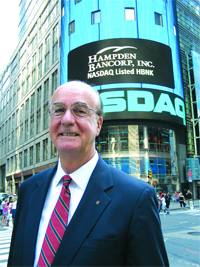
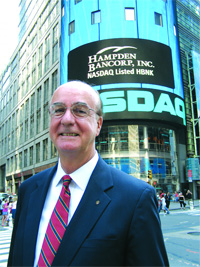
Cleanup Underway at Former Uniroyal Complex

CHICOPEE — A phased, $2 million cleanup at the former Uniroyal plant on Grove Street is now underway by Gannett Fleming Inc. of Princeton, N.J. Michelin North America Inc. hired the firm to oversee the cleanup of polychlorinated biphenyls (PCBs) from the soil, concrete, and sediment on the 17-acre site, as well as treat any groundwater contamination. The cleanup is scheduled for completion by December 2008. Following the completion of cleanup efforts, the city plans to take the property and raze several buildings, which will allow for redevelopment. Facemate Corp. purchased the property in 1981 from Uniroyal and filed for bankruptcy in 2003. The city is still owed close to $2 million in back taxes and has filed suit to recover the funds.

New Members Planned for Control Board

BOSTON — Three state appointees to the Springfield Finance Control Board will soon be replaced by Gov. Deval L. Patrick. Thomas F. Gloster III, Michael J. Jacobson, and board Chairman Alan L. LeBovidge, who is commissioner of the state Department of Revenue, will soon be replaced by Patrick appointees. The five-member board was created in 2004 by former Gov. W. Mitt Romney and the state Legislature to improve Springfield’s finances. Springfield Mayor Charles V. Ryan and City Council President Kateri B. Walsh also serve on the board because of their positions.

Survey: Employers Form Opinions of Job Interviewees within 10 Minutes

MENLO PARK, Calif. — Hiring managers often know whether they might hire someone soon after the opening handshake and small talk, a new survey suggests. Executives recently polled said it takes them just 10 minutes to form an opinion of job seekers, despite meeting with staff-level applicants for 55 minutes and management-level candidates for 86 minutes, on average. The interview begins the moment job seekers arrive, so applicants need to project enthusiasm and confidence from the start, according to Max Messmer, chairman and CEO of Robert Half International. The opening minutes of the conversation often set the tone for the rest of the discussion, making it wise to prepare especially well for the first few interview questions, added Messmer. Frequently asked questions include what you know about the firm, why you want to work for the firm, and why are you looking to leave your current position. The survey was developed by Robert Half Finance & Accounting, and includes responses from 150 senior executives with the nation’s 1,000 largest companies.

Departments

HCC Named To NASA Space Grant Consortium

HOLYOKE — NASA’s Mass. Space Grant Consortium recently announced that Holyoke Community College (HCC) has been accepted as a member institution, a move that will enable eligible HCC students to participate in NASA-sponsored internships and research opportunities. HCC is the only community college in Western Mass. to join the consortium, which includes 15 educational institutions statewide. The consortium is one of 52 nationally that funds the development and use of space-related educational outreach activities. X. Ran Duan, HCC dean of Science, Engineering, and Mathematics, will serve as the campus liaison for the program. The consortium seeks to stimulate interest in the fields of aeronautics, engineering, and other scientific fields among college students.

Monson Savings Approved as SBA Express Lender

MONSON — The Small Business Administration (SBA) recently approved Monson Savings Bank as an SBA Express lender. The designation allows the bank to offer loans to small and medium-size businesses that include a 50% SBA loan guarantee and are designed to provide expeditious service on loan applications. In addition, the program allows loans up to $250,000 with fixed or variable interest rates that cannot exceed SBA maximums. Up to 50% of these loans will be guaranteed by the federal government through the SBA.

Charter Oak Insurance & Financial Services Co. Receives National Award

SPRINGFIELD — MassMutual Financial Group recently announced that Charter Oak Insurance & Financial Services Co., a general agency of MassMutual, has earned the Chairman’s Trophy Gold Bowl Award for 2006. This marks the third consecutive Gold Bowl for the agency, led by General Agent Peter S. Novak, and the seventh such award in the last eight years. The competition is awarded to MassMutual’s top general agencies based on overall performance, including production, consistent growth, and new-agent development. Charter Oak Insurance & Financial Services serves clients throughout New England with offices in Springfield, Hadley, Westfield, and Boston, and in Farmington, New Haven, and Stamford, Conn. The firm specializes in risk management, consisting of life, disability income, and long-term care insurance, business services, and retirement and investment planning.

MassMutual Renews Membership in IMSA

SPRINGFIELD — MassMutual has renewed its membership in the Insurance Marketplace Standards Assoc. (IMSA), the premier standards-setting organization for the life insurance marketplace. IMSA promotes high ethical standards in the sale and service of life insurance, annuity, and long-term care products. For insurers to maintain IMSA member status, they must demonstrate that their ongoing business operations abide by IMSA’s strict code of ethical market conduct. Every three years, insurers must undergo independent assessment of all business operations by an impartial third party. MassMutual recently completed the independent review of its marketing, sales, and compliance practices required to maintain IMSA qualification.

Hampden Bancorp Reports First-quarter Loss

SPRINGFIELD — A net loss of $2.5 million was reported by Hampden Bancorp in the first quarter, attributed largely to a one-time charitable donation to its Hampden Bank Charitable Foundation after its conversion to a publicly traded company. When the company went public in January, a one-time, $3.8 million donation was made to start its charitable foundation. Following the conversion, net proceeds of $73.4 million boosted the company with total assets of $510.8 million at the end of the first quarter.

Harvey Industries Chooses Chicopee

CHICOPEE — Harvey Industries, a manufacturer of windows and doors, recently purchased a 30-acre parcel in the Chicopee River Business Park for $1.8 million. Company officials are relocating their business from Cottage Street in Springfield since its lease expires in 2009. The manufacturer, the second tenant in the business park located off Robbins Road, expects construction of its 250,000-square-foot building to take about 15 months. Harvey Industries employs approximately 230 employees.