
Home Posts tagged Insurance (Page 38)
Sections Supplements
Control Board Chief Says the Mission is Not Yet Accomplished
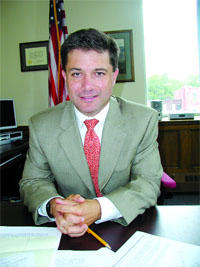
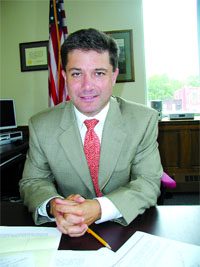
Phil Puccia

Phil Puccia says the control board needs at least another few years to institutionalize the changes it is making.

Phil Puccia says it’s one thing to make changes. To institutionalize change is something else altogether.

And this disparity explains why the Springfield Finance Control Board, which Puccia directs and which started its three-year assignment in August 2004, will need at least another two or three years to complete its work, by his estimate.

“That’s how long we’ll need to do our work thoroughly and completely,” he said in an interview with BusinessWest to discuss what the board has accomplished in 24 months at the helm of city governance — and what remains to be done.

With regard to the former, Puccia listed many forms of progress, starting with city finances. When the board started its work, the deficit was $41 million, nearly twice what was projected, he said. That number was cut in half the first year, and will be down to $2 million or $3 million when the final fiscal ’06 numbers are tallied and certified. By the end of fiscal ’07 (next June 30), the budget is expected to be balanced.

Meanwhile, the city has greatly improved its tax-collection efforts as part of a broad initiative to improve the revenue side of the equation, while also hammering away at the expense column through a number of initiatives, including changes to health insurance coverage for city employees.

Beyond finances, the control board will soon complete long and often painful contract negotiations with city unions that have yielded long-term pacts that provide economic stability and some emotional relief. Meanwhile, the city’s Economic Development Department has been overhauled and enlarged, and many other city departments have been consolidated.

As for the work still to do, Puccia there are many specific projects for which he believes control board oversight is necessary, including efforts to improve a beleaguered school system, install a new accounting system for city finances, implement an expedited permitting process for development proposals, and build a new Putnam High School. But the broad assignment remaining falls under the category of institutionalizing those important changes that have been made.

“We need to keep the hammer down on financial management,” he said, “and we need to make the changes we’ve made part of the culture of Springfield.

“We have a good story to tell — the question is, what will the ending be?” he continued, adding that several more years of control board influence will likely help script a better scenario for a city still very much on the mend.

Controlling Interests

When asked about what his first two years of essentially running Springfield have been like personally and professionally, Puccia flashed back to a conversation he had with a friend while he was mulling whether to take on the assignment.

“I was telling him what was involved and all the challenges the city was facing,” he recalled, implying that there were some questions about whether this would be a career choice he would later come to regret. “He told me, ‘you have to take this job.’

“And he was right. Looking back, I think not accepting this job is something I would regret,” he continued. “This has been the most interesting and challenging work I’ve ever done. I wouldn’t trade it for anything.”

That doesn’t mean any of it has been easy, he said, glancing skyward as he reflected on the hard choices and difficult steps taken, especially the often rancorous contract negotiations.

“This was not easy, it’s emotionally draining and very challenging,” he explained. “It’s tough stuff.”

Looking back over the past two years, Puccia said the control board’s work to date has come in several phases, or steps. The first was to quantify and qualify the scope of the problems, he said, noting that the city was in greater fiscal disarray than was anticipated. “We found that the deficit wasn’t $22 million, it was $40 million,” he said. “and we got a sense for how dysfunctional the communication system and the management structure were.”

What followed was roughly 18 months of what Puccia described as “fiscal triage” to stop the hemorrhaging of fiscal mismanagement and to begin to put in place new management structures and procedures.

Steps in this process included everything from consolidating city departments and reducing the number of direct reports to the mayor from 31 to 11 to making substantive changes to the health plan for municipal workers such as higher co-pays. “There was an effort to begin to institute some financial and management discipline,” he said, “because we had no choice; we were borrowing money to meet payroll and we couldn’t pay all our vendors on time.”

Several new cash-management steps, including aggressive collection of current and back taxes, and more-conservative budget-setting procedures helped quickly improve the bottom line, he said.

“When you start saying to the management team, ‘you better manage your budget, because we have no choice but to manage the budget and we’re going to hold you accountable,’ things will improve,” he explained. “When you start finding nickels, dimes, quarters, and sometimes dollars in a budget like that, you start saving money.”

Budgetary stability and other improvements could only have been accomplished with the cooperation of city officials, especially Mayor Charles Ryan, said Puccia.

“It’s like two guys were thrown into a lifeboat on a raging sea,” he said of his work, and relationship, with the mayor. “We found a way to row in the same direction.”

Part of the triage process was negotiating new labor contracts, he said, adding that the control board entered talks with the mindset that terms of those pacts would reflect fiscal realities in the city — an approach he deemed different than what had transpired in years prior.

He likened the negotiated contracts, and the process for obtaining them, to the settlement of a will. “In the end, no one is completely happy, but everyone agrees that the process was fair.”

Part of the reason those on the control board sought long-term (generally seven years) contracts with the unions, said Puccia was to gain a measure of fiscal stability, or predictability. But there is also the emotional side of the equation.

“A city can’t grow and recover if there’s constant labor turmoil,” he explained, adding that a tentative agreement on a teachers contract may soon bring an end to that long struggle, leaving only a few small unions with which to negotiate new pacts.

Puccia acknowledged that there may be some battle scars remaining from the often-contentious labor negotiations, but he ultimately expects teachers and other employees to focus on the future — and on making Springfield a stronger, more livable city — and not the past.

Change of Pace

With general labor peace soon to be achieved, and noted progress on the budget front, Puccia said the control board will be putting greater focus on several other priorities, including public safety, improving the school system, and economic development — and he believes all three go hand in hand. Meanwhile, it will also move forward with institutionalizing the many changes it has incorporated with regard to city management.

Elaborating, he said the city is primed for economic growth — there is pent-up demand for commercial real estate and many businesses are looking to expand — and developers are seeking assurances that the streets are safe and the public schools are good.

“We need to give people reasons to invest in Springfield,” Puccia explained, adding that he expects continued progress on reducing crime and improving the quality and image of the schools. “If you can’t say to the development community that you’re city is safe and that it’s not corrupt and that everyone gets a fair deal, you’ll never get development.

“We’re putting together a track record that says the city of Springfield can manage its budget, it can deliver on services, it can maintain its buildings, it can educate children, and it can catch crooks,” he continued. “With all that, you’ll have a reason to come to Springfield, or at least to give us a look, and we’re starting to see that.”

Solidifying such a track record will take time, perhaps several years, said Puccia, as will the work to make systemic changes in city management.

These include incorporation of an integrated financial-management system for the city and school department, he said, noting that the software is on order, but the process of incorporating it is probably a two-year assignment.

“That’s the average for a city of this size,” he said, noting that most well-run municipalities now use the Microsoft product. “It will allow us to integrate accounting, payroll, performance budgeting, tax collection, fees, and licenses all in one place.

“These are the kinds of things the board needs to stay on for and make sure they happen and are done right, he continued, adding that the same is true for the Putnam project, which has a projected $90 million price tag. “We need to stay on another two to three years if we’re going to successfully institutionalize change.”

Overall, Puccia said an extension of the control board’s oversight — something he says can be accomplished through legislation or a simple vote of the board — should be viewed as a positive for Springfield, not a negative.

“That’s how developers see it, and that’s how the bond rating agencies like Moody’s and Standard & Poor’s see it, too,” he explained. “They like the fact there’s a control board here helping to manage the place.

“And they ask questions like, ‘have you settled your labor contracts and can you afford to pay them?’ and ‘how do you manage your financials?’ and ‘how are you spending your free cash?’” he continued. “Those are very specific questions on how you’re running your government.”

And the current answers should enable the city to yield an upgrade for its bond rating in time for a $50 million bond issue in the next few months for capital projects, he said. “I think we’re going to do very well.”

Progress Report

As he wrapped up his talk with BusinessWest, Puccia pointed to the front page of that day’s newspaper to offer some perspective on Springfield and its plight. The lead story about was about New Orleans one year after Katrina slammed into the city.

“These people have a challenge,” he said. “We’ve got it tough, but not like they do; we’ve got some things still to do, but we can see many hopeful signs. This city is coming back.”

George O’Brien can be reached at[email protected]

Opinion
Getting Moving on Health Care

People say nothing is happening in Washington on health care. They say the only thing that has happened is that the crisis has gotten worse. They’re right.

But while Washington waits, Wall Street has acted. Too many big businesses are deciding that to compete and win in the global economy, many jobs no longer will come with healthcare.

While companies such as General Motors struggle under enormous health care obligations, companies such as Wal-Mart are opting out of employers’ traditional health care responsibilities. Wal-Mart currently insures fewer than half of its employees — that’s 800,000 workers left outside the system, some turning to Medicaid just to get health care at all. It’s not right, but it shouldn’t be a surprise. Good corporate citizens are coping with a competitive disadvantage in the global marketplace. GM pays $1,500 in health care costs on every vehicle it manufactures. Toyota pays only $200.

We’re stuck with a 20th century health care system that just doesn’t work for a 21st century economy.

The traditional employer-based health care system can no longer meet all our needs. Costs are too high, and businesses overseas are operating on a whole different playing field.

health care for a family of four now costs more than a minimum-wage worker earns in a year. Certainly, things have gotten worse. Under this administration’s watch, the number of uninsured Americans has grown by 6 million and premiums are up a whopping 73%.

This affects all of us. It matters if the kid down the block isn’t immunized. It matters to your tax burden when simple, treatable illnesses turn into expensive emergency room visits — often the only option for those without insurance. And it matters if we care about our moral obligation to others.

We need to cut health care costs. And we need a health care system that ensures quality, affordable health care for every American man, woman, and child.

We need big ideas and bold solutions, not more of timid Washington tinkering around the edges. If Americans can discover cures for the most devastating illnesses, we can surely find a way to make sure that all Americans benefit from those cures.

Right now the most expensive 0.4% of insurance claims account for 20% of all health care costs. We need to lower costs to businesses with a new federal reinsurance plan for catastrophic care — those with the most serious, and expensive, illnesses. Reinsurance is a simple concept: It’s insurance for insurers; a way for health plans to manage their risks and lower your costs.

Second, no child in America should lack health insurance. Leaving 11 million American children uninsured is wrong and, from the administration that brought us “No Child Left Behind,” it is breathtakingly hypocritical.

Most single moms raising two kids on $36,000 a year don’t qualify for any help. My Kids First plan would change that, covering all children up to three times the poverty level.

Finally, it is untenable for 35 million adults to go without insurance. We need to use every weapon in our arsenal until everyone is covered, including making the Federal Employees Health Benefits Program affordable and accessible for everyone in America with targeted tax credits for small businesses, middle-class families, and people between jobs. Members of Congress give themselves great health care and give taxpayers the bill — if it’s good enough for senators and congressmen, it should be good enough for every American who wants to choose it.

Doctors follow the motto “First do no harm.” So should Washington. We don’t want to reinvent the wheel on healthcare; we need to take what’s already working for those of us who are lucky and make it work for the millions of Americans being passed by. And we need to improve quality and lower costs for those with coverage today.

Americans have a choice. If Congress won’t fix healthcare, then Americans will fix Congress.

US Senator John F. Kerry is a Democrat from Massachusetts.

Departments

PeoplesBank Expansion Planned

HOLYOKE — Within the next two years, PeoplesBank plans to open six new branches between Northampton, Wilbraham, Springfield, and West Springfield. Depending on land acquisition or lease costs, PeoplesBank expects to spend between $2 million and $2.5 million per branch. PeoplesBank recently opened a branch in Westfield and will open two branches this month, one at The Village Commons in South Hadley and the other in the Sixteen Acres section of Springfield. In other news, the bank recently reported that assets have increased by $200 million, or 18%, and loans increased by 25% to $950 million. Also, bank deposits rose by 22% to $863 million over the last 12 months that ended June 30. PeoplesBank has 14 offices in Amherst, Chicopee, East Longmeadow, Hadley, Holyoke, Longmeadow and South Hadley.

MassMutual Creates Structured Settlement Annuity Concept

SPRINGFIELD — Massachusetts Mutual Life Insurance Company recently introduced MassMutual ® Structure Plus, a new concept using a structured settlement annuity that is designed to provide a more comprehensive solution for the life-care needs of catastrophically injured persons. The structure helps satisfy both the certain and uncertain needs of the injured party by providing access to trust services offered by the MassMutual Trust Company, FSB. With MassMutual ® Structure Plus, claimants place their settlement proceeds into a MassMutual structured settlement, which provides – for the convenience of the claimant – a lump sum payment which also funds a trust account for which the MassMutual Trust Company will serve as trustee. The advantage is that it works with the structured settlement annuity, and the structured settlement annuity is all that has to be funded by the initial settlement. A portion of the settlement proceeds will be directed from the structured settlement annuity to the MassMutual Trust Company, FSB, as trustee of a trust established by the injured party.

MassMutual Center Receives Positive Rating

SPRINGFIELD — The Pollstar Online listing recently ranked the MassMutual Center as one of the 100 most popular arenas in the world during the first half of 2006. The center was ranked 81st on its list of 100 facilities, according to total ticket sales. From January through June, the center held eight events, not including convention center programs and Falcons hockey games, and brought in more than $1 million with 60,276 tickets sold. Top-selling events included concerts by Motley Crue, Martina McBride and Larry the Cable Guy, as well as Disney on Ice and the Harlem Globetrotters. For September, country music star Alan Jackson is scheduled to perform and several children’s shows are planned.

Easthampton Savings Continues Strong Growth

EASTHAMPTON— Easthampton Savings Bank continued to experience steady growth during the second quarter of 2006, with total assets increasing $35.2 million from a year ago, an 8.8% increase over the last quarter. Total assets now stand at $647 million. In addition, the loan portfolio totaled $511 million at the end of June, an increase of $8.4 million, or 7%, for the quarter and $36.7 million or 8% for the year. Also, the bank experienced a deposit gain of $20.8 million from a year ago, representing a 4% increase since the end of June last year. In other news, the bank is now entering the permit phase of a new office in Westfield which is expected to open in approximately 15 months.

Roofing Contractor Receives Quality Award

SPRINGFIELD — Morris Roofing & Sheet Metal Corp. is a recipient of the 2006 Partner in Quality Award from Firestone Building Products Company. The award distinguishes the firm for its dedication to installing quality roofing systems and recognizes contractors who installed a minimum of four warranted Firestone roofs in each of the past five years, maintained at least 1 million square feet of Firestone roofs under warranty, and achieved an annual Quality Incidence Rating of 2.0 or less.

ValleyStone May Close Wal-Mart Site

SPRINGFIELD — Due to lower-than-expected traffic and earnings, the ValleyStone Credit Union may close its branch office in the Chicopee Wal-Mart since it will be forced to relocate its site when the company expands into a super center. Currently, the credit union is located just inside the entrance, however, with Wal-Mart’s expected super center expansion plans, ValleyStone will be forced into a new spot that will be less visible and have less square footage. ValleyStone officials acknowledged they had incurred considerable expense to build the current branch and would once again have to incur more costs to build the new branch. Wal-Mart has offered a small contribution to help offset the costs, according to ValleyStone officials.

Departments

The following is a compilation of recent lawsuits involving area businesses and organizations. These are strictly allegations that have yet to be proven in a court of law. Readers are advised to contact the parties listed, or the court, for more information concerning the individual claims.

NORTHAMPTON DISTRICT COURT
Sofco Inc. v. Northampton Nursing Home
Allegation: Breach of contract — Failure to pay for goods sold and delivered: $3,011.72
Date Filed: July 20

SPRINGFIELD DISTRICT COURT
Quality Building Products Inc. v. American Home Construction Services Inc. a/k/a N.E. Fine Homebuilding Inc. a/k/a N.E. Fine Homes
Allegation: Breach of contract — Failure to pay for goods sold and delivered: $19,900.69
Date Filed: July 10

Masco Contractors Servies East Inc. d/b/a Quality Building Products v. Brain Rourke d/b/a Rourke Builders
Allegation: Breach of contract — Failure to pay for goods sold and delivered: $4,300.92
Date Filed: July 11

Marker Volkl USA Inc. d/b/a Marker USA v. Ski d/b/a Ski Haus and Melissa Houston
Allegation: Breach of contract — Failure to pay for goods sold and delivered: $4,232.96
Date Filed: July 11

Dynasty International Models & Talent Agency Inc. v. Atwater Studios Inc.
Allegation: Breach of contract — Failure to pay for services: $3,120
Date Filed: July 11

Transit information Products & Division of Webb & Associates Inc. v. W.S. Sign Design Corp.
Allegation: Breach of contract — Failure to pay for goods sold and delivered: $9,814.41
Date Filed: July 17

Liberty Mutual Insurance Co. v. Tufts Transportation, LLC
Allegation: Failure to pay workman’s compensation insurance policy: $9,327
Date Filed: July 18

Liberty Mutual Insurance Co. v. Summit Homes Inc.
Allegation: Failure to pay workman’s compensation insurance policy: $5,560
Date Filed: July 18

Liberty Mutual Insurance Co. v. Hamel Contracting Inc.
Allegation: Failure to pay workman’s compensation insurance policy: $5,819
Date Filed: July 18

HAMPDEN SUPERIOR COURT
Land Air Express of N.E. LTD. v. Billings Transportation Group Inc.
Allegation: Failure to pay for goods sold and delivered: $67,302.98
Date Filed: July 21

Departments

MassMutual announced the following:
• Executive Vice President and Chief Administrative Officer Elaine A. Sarsynski has been named head of MassMutual International. She will have overall management responsibility for MassMutual International, a group of MassMutual subsidiaries that offer life insurance, health and accident insurance, annuity and pension products and asset management products, through a network of 15,000 full- and part-time representatives in Hong Kong, Taiwan, Japan, Luxembourg and Chile. She will also retain her responsibilities as Chief Administrative Officer at MassMutual, a role in which she has oversight of several corporate functions, including Corporate Services, Corporate Human Resources, Corporate Communications and Community Relations. She is also responsible for MassMutual’s Strategy Implementation Office, which oversees and facilitates the company’s overall strategy.
• Elroy Chan, who had been serving as head of MassMutual International, will continue in his role as Managing Director and CEO of MassMutual Asia Ltd. In addition, he will also serve as special advisor to MassMutual President and CEO Stuart H. Reese on a wide range of strategic business issues in Asia.
• While Sarsynski will now be responsible for international insurance operations, MassMutual Chief Investment Officer Roger Crandall will continue to oversee MassMutual’s investment subsidiaries abroad, including Baring Asset Management Limited and Babson Capital Europe Limited in London.


Ted J. Dickinson

Ted J. Dickinson of Dickinson Financial Consulting, Inc./Money Concepts FPC has received the 2005 Planner of the Year Award for the Western Mass. region. The award is presented by Money Concepts International, based in Palm Beach Gardens, Fla., and is in recognition of outstanding customer relations and leadership within the financial planning industry. Dickinson has won the award two years straight and has also won the President of the Year honor three of the past five years.

•••••

Gregory Rolland has joined Meyers Brothers Kalicka, P.C. of Holyoke and Greenfield as an Associate in the Holyoke office.

•••••

Dr. Julie Siciliano has been named Dean of the School of Business at Western New England College in Springfield. Siciliano joined the WNEC faculty in 1984, most recently serving as a Professor of Management. Dean Siciliano succeeds Dr. Stanley Kowalski, Jr., who stepped down recently after 27 years as Dean.

•••••


Glenda K. DeBarge

Health New England of Springfield announced the following:
• Joanne N. Shaw has been named Claims Manager;
• Kim N. Kenney-Rockwal has been named Manager of Workforce Development;
• Glenda K. DeBarge has been hired as an Account Executive;


Matthew J. Hastings

• Matthew J. Hastings has been hired as an Account Executive;
• Eric P. Harlow has been promoted to Sales Manager, and


Jim M. Buker

• Jim M. Buker has been promoted to Account Executive.

•••••


Jennylyn Fontaine and Melissa Voutour have been named Sales Managers for the MassMutual Center’s 64,000-square-foot convention center. Fontaine and Voutour will be responsible for overseeing all of the facility’s sales, including solicitation for new business for trade shows, corporate meetings, public exhibitions, weddings, and special events. Their responsibilities will also include working closely with the staff of the Springfield Convention and Visitor’s Bureau.

•••••

Keller Williams Realty in Longmeadow announced the following:
• William R. Resnick has joined the South Hadley/Northampton Market Center. He will specialize in residential real estate;
• Carl E. Sittard has joined the South Hadley/Northampton Market Center. He will specialize in residential real estate;
• Elizabeth A. Villani has joined the South Hadley/Northampton Market Center;
• Frances M. Hill has joined the Longmeadow Market Center. She will specialize in residential sales;
• Michele M. Caldwell has joined the South Hadley/Northampton Market Center. She will specialize in all areas of real estate;
• Sarah A. Hadley has joined the Agawam Market Center. She will specialize in residential sales, and
• Sophia J. Harvey has joined the Longmeadow Market Center. She will specialize in residential sales.

•••••


Denise Dukette has joined Sovereign Bank as Vice President and Relationship Manager in its commercial lending group.

•••••

Michele L. Billingsley has joined Better Life Whole Foods in Springfield as a Corporate Executive Assistant. She will focus on organic produce, meat, wines and beers.

•••••

Momentum Group has named Carlo Centeno as Vice President of Marketing.

•••••

Deborah A. Nadle has been named Branch Manager for the Holyoke Credit Union.

•••••

Park Square Realty in Westfield announced the following:
• Maureen L. Staccato has joined the firm as a Sales Associate. She will work in the Feeding Hills office.
• Leslie J. Lambert has joined the firm as a Sales Associate.

•••••

Richard E. Gore III has joined Lee Audio ‘N Security Inc., as an Engineer, responsible for sales and service of the company’s engineered systems throughout Western Mass. and eastern New York. He is the son of Lee Audio President Richard E. Gore II and grandson of company founders Richard E. Gore Sr. and Barbara Gore.

•••••

Diane McClellan, Chief Financial Officer of Hampden County Physician Associates LLC, has become a Fellow in the Healthcare Financial Management Association.

•••••

Carlos Rios has joined Applied Mortgage Services Corp. as a Loan Officer in the West Springfield office.

•••••

van Schouwen Associates LLC announced the following:
• Daniel W. Horlitz has been promoted to Art Director, and
• Rebecca J. Leutert has been promoted to Technology Director.

•••••

Harry Monti has been promoted to Senior Vice President of Benefit Management Services in the group benefits division at The Hartford Financial Services Group Inc.

•••••

Barbara Haswell, RN, COHN, MBA, has received the Medique Leadership Award from the American Association of Occupational Health Nurses Inc.

•••••

The Affiliated Chambers of Commerce of Greater Springfield announced the following election of officers:
• Chairman David M. Hobert, Sovereign Bank New England;
• Vice Chairman Arlene Putnam, Eastfield Mall;
• President Russell F. Denver, Springfield Chamber of Commerce;
• Treasurer Barbara Jean DeLoria, United Bank;
• Budget Director Malcolm Getz, Belt Technologies;
• Clerk David J. Martel, Doherty, Wallace, Pillsbury & Murphy, and
• Past Chairman Richard Ayers, Mount Tom Box Co.

•••••

Douglas K. Engebretson has been elected First Vice President of the National Council of Architectural Registration Boards.

Sections Supplements
Rondeau’s Dairy Bar Serves Up a Family Success Story
Dick and Mike Rondeau

Dick and Mike Rondeau say Alvina the cow has been a hit with customers who visit the 66-year-old ice cream stand.

In 1940, Alvin Rondeau borrowed $200, took a week’s vacation from his job, hired a couple of helpers for $100 each, and built an ice cream stand.

In doing so, he also built what would become a sweet legacy on Route 32 in Palmer.

“The big factor in our being successful here is that it’s homemade ice cream,” said Dick Rondeau, Alvin’s son, who now runs Rondeau’s Dairy Bar with his son, Mike.

“We have Camp Ramah right here, and the kids come up from camp,” Mike Rondeau said. “One day, I overheard the mother of one of the girls say they named their dog Rondo – they just spelled it differently. I asked where she came up with that name, and she just said, ‘your ice cream is wonderful.’”

Yes, it seems Rondeau Dairy Bar has a following, one that proves that in today’s fast-paced world, there’s still a place for the more leisurely traditions of the past – traditions the Rondeau family knows well.

Cranking It Out

Dick Rondeau said his father worked in the life insurance business, but “he had always fooled around with making ice cream – with a hand cranker,” he told BusinessWest. “He finally said, ‘I’m going to put a dairy bar on this spot,’ and he did.

“Back then, he sold a limited number of flavors, but not milkshakes – just white milk and chocolate milk,” he continued. “And, Blue Seal hot dogs.”

Rondeau still sells the brand today, but the menu has expanded considerably in the past 66 years. Patrons can now choose from almost three dozen hot and cold sandwich options, and a selection of seafood dinners. The stand boasts 34 ice cream flavors these days, plus four no-sugar-added options, as well as ice cream sodas, floats, and, yes, milkshakes.

Alvin Rondeau owned three dairy bars at one time, but the South Hadley location was overtaken by road expansion, and the West Springfield site was lost to the 1955 flood. Still, the original stand remains largely unchanged on Route 32, Dick said.

Another thing that hasn’t changed is the way the Rondeaus make their ice cream. After abandoning the hand crank, Alvin Rondeau favored a process – still in use today – that employs 40-quart batch freezers to turn ingredients like milk, cream, butterfat, and sugar into fresh ice cream at the rate of 50 gallons per hour – much slower than the 300-gallon-per-hour machines used by ice cream powerhouses like Friendly’s and Breyers.

“We always say we make our ice cream with a little bit of love,” Dick said.

“Every can that leaves here is touched by our own hands,” Mike added.

Just as consistent as the production method has been the Rondeau family tradition. Michelle Rondeau, Mike’s sister, tells of working for their grandfather from age 10 – and how they learned responsibility and built a strong work ethic from the experience. But Mike is quick to note that the business isn’t for everyone; two other siblings have nothing to do with the company.

Alvina, on the other hand, is just like family, and a visible player at Rondeau’s.

How Now, Blue Cow?

Alvina is a blue-and-white cow statue that has stood watch outside the business since October, serving both as a mascot and an educational tool. Fitted with working mechanical udders that give water (a sign encourages visitors to “squeeze, don’t pull”), the cow reminds customers of where their ice cream really comes from.

“I think a cow is the greatest factory in the world,” Dick said. “What we get from a cow is unbelievable. And she’s housebroken.”

This sort of dry wit is evident to passersby, who might see Alvina decked out in holiday attire, as on the Fourth of July, or in beach gear. When it rains, sometimes Alvina gets an umbrella. She has also been immortalized with her own flavor, Alvina Tracks: white chocolate ice cream with raspberry swirls and dark chocolate raspberry cups.

The Rondeaus admit that running the dairy bar is hard work, but the element of whimsy that Alvina represents reminds them that they’re in the business of fun – especially for younger patrons, many of whom are third- or fourth-generation customers.

To mark that passage of time, the dairy bar celebrated its 65th anniversary last year with a three-day special: hot dogs, fries, sodas, and cones sold for 65 cents each. Predictably, the lines were long. The staff served up 4,000 hot dogs and 2,500 pounds of fries.

So how do the Rondeaus top that weekend?

“We always need something to celebrate, and we couldn’t see having a 66th anniversary party,” Dick said. “So we thought, let’s give a birthday party to the cow.” And so they will, this October.

“We try to make it an enjoyable experience,” he said. “We don’t want this to be just some place to get a hot dog.”

In fact, it’s not. Rondeau’s is hosting its fifth annual car show on Sept. 2, and has hosted other events in the parking lot. Meanwhile, the family recently added shaded patio tables to encourage customers to hang out a little longer.

But it’s not just patrons who keep coming back. Dick Rondeau tells of a woman who worked for his father in high school before moving on to a long career in Monson. After retiring at age 62, she asked if she could return to part-time work at the dairy bar, which she did for eight years. “She was fantastic,” Mike said.

She outworked the high-school girls.”

The Long Haul

The Rondeaus will bring their mobile ice cream wagon to the Big E this year, as they do every year, but most of the time, they concentrate on strengthening what works at that little roadside stand in Palmer. A deep reverence for the past is evident in several touches throughout the building, including a framed T-shirt produced in 1970 for the company’s 30th anniversary.

“There’s an ambience here that people like, and we don’t want to make any drastic changes,” Dick said.

Mike noted that Rondeau’s is a place where patrons slow down and take the time to watch – and feed – the sparrows. “They’re fat sparrows,” he said. “They don’t fly as much as hop.” In the same way, the Rondeau ice cream business continues to hop along, putting smiles on patrons’ faces.

“We take pride in serving good food and good ice cream,” Mike said. “Customers have told us, ‘there’s got to be a Rondeau here. You could sell it to someone else, but it wouldn’t be the same.’”

But there’s no need to worry about that, Dick said. He recalls his father working until he suffered a stroke at age 78, but still stopping by regularly in his remaining years – he died at age 83 – to see how things were going.

“It will never be Michael’s and my life as much as it was his, because he brought the business up from nothing,” Dick said. “But I enjoy this. I’m 63 years old. He was here until he was 78, and I’d like to beat him.”

Features
The Majestic Theatre Marks 10 Years of Running Lines and Renovation

The ongoing success of the Majestic Theatre in West Springfield certainly wasn’t scripted. Instead, it’s been the product of determination, dedication, and imagination exhibited by a team of managers who understand that, in the theater industry, there is no such thing as business as usual.

It’s the climactic scene of the second act of the musical Miss Saigon.

A helicopter — or something approximating one — is lowered to the stage and then raised again as the last Americans are evacuated from the roof of the U.S. Embassy as the city falls to the Vietcong in 1975.

Large theater houses often struggle with the logistics of the demanding scene, and management at the Majestic Theatre in West Springfield, a small but popular venue, certainly had their doubts about whether they could pull it off. But like many of the other fears and concerns raised during the Majestic’s first decade of operation, this one proved unwarranted.

Indeed, the helicopter scene went off without a hitch, and Miss Saigon, staged just last season, would go on to become the theater’s highest-grossing show to date, pulling in more than $190,000 after extending its run for a week to meet audience demand.

“There hasn’t been a season when we haven’t wondered about a particular show or decision,” said Todd Kadis, the Majestic’s treasurer. “But it seems as though we’re always wrong; shows we’re not sure about always find an audience, and that helps us build our base.”

Like the shows it stages, the Majestic’s history is a compelling story, one with many plot twists and intriguing characters, including the theater’s founder, Danny Eaton. An actor, director, playwright, and entrepreneur, Eaton formed a theater troupe, known as The Theater Project, in 1993.

It began staging shows at the Church of the Good Shepherd in West Springfield, just down the street from its current home, the former Majestic Theater movie house, which the troupe moved to in 1997, adopting that name in the process. After first renting the 78-year-old landmark, The Theater Project (still the formal name for the non-profit corporation) purchased the property from United Bank in 2003 for $400,000.

Eaton said the venture’s first decade has been filled with challenges, triumphs, a hugely successful classic car raffle fundraiser — and plenty of sweat equity.
“It would be nice to have just one typical, standard year,” he said, “But we haven’t had one yet.”

The Play’s the Thing…

Indeed, the theater industry is one that requires constant upgrades in terms of technology and infrastructure, as well as diligent attention to cultural trends and audience preferences, to ensure that seats remain filled.

Marie Susen, the Majestic’s company manager, said a number of elements contribute to theater experience, and the devil is in the details.

“There are so many factors,” she said. “Everything factors into whether or not a ticket is purchased for the first time and into whether or not a person comes back — how they’re treated on the phone, if they are greeted at the door, the service at the cafe, the ambience … people are predisposed before they ever see anything on stage.”

Eaton agreed that all aspects of the Majestic, from the ticket price to the freshness of the popcorn, create the overall experience that the theater is trying to sell to a public that, unlike other regions, doesn’t already have a strong cultural undercurrent.

“Finding new audiences is tough,” said Eaton. “Western Mass. doesn’t have a cultural tradition like Boston or New York. We have to first sell people on the fact that theater isn’t necessarily a departure from the rest of their lifestyle. Then, it’s on to choosing shows that will appeal to wide audiences, while not requiring technical aspects that we can’t handle.”

The Majestic has already proven, through the helicopter scene in Miss Saigon, that it can clear logistical hurdles that some may have originally thought beyond its reach. But Eaton said the focus is always on the next challenges, not those in the past tense.

“I certainly recall when we first opened, how many people commented on how our dreams had just come true,” said Eaton. “But that suggests that we had reached the end of a long road, when in actuality, opening a theater is the easy part. Keeping it open is the real challenge.”

The Majestic has several plot points in its history that speak to that concern and its ability to address it through proactive steps designed to boost revenues and keep the venture financially sound.

Shortly after the Elm Street property was purchased, a cafe was added to the space for use during shows and to rent for private functions. And in addition to its current venue, Eaton said The Theater Project also purchased a second property on Baldwin Street in 2004 for use as a set shop, rehearsal space, and living quarters for actors.

The theater has also seen its share of renovations and upgrades each year, all geared toward continuous improvement of the space and the theater experience.
Kadis said most of those improvements come with large price tags.

A new sound system, for instance, recently cost the theater $60,000. The current challenge facing the Majestic is the installation of a new sprinkler system, mandated by the state, which has necessitated major construction on site at a price tag that is expected to exceed $115,000 when completed.

It’s not just these larger expenses that add up, however; regular operation of the theater and staging of its five shows each season also necessitates a number of expenses. These include rental fees for scripts and music scores, and salaries for actors and stage hands — all of the Majestic’s staff members are paid, Eaton said. And in the case of equity actors (those who are unionized), a minimum salary of about $380 each week is required for each, as is health insurance and living quarters.

“There are all of those things to take into account, as well as the prevailing goal of producing top quality theater,” said Kadis. “To offset costs, ticket sales are number one.” The theater’s season subscribers number approximately 3,800, and individual ticket sales usually fall between 22,000 and 25,000 annually. But Eaton added that box office sales alone aren’t nearly enough to cover expenses, and although sales have remained mostly steady for the Majestic, they are a source of revenue for all theaters that never holds a guarantee.

“The line-up is the line-up,” he said, “and we’re not going to win over every single audience with every play we do; people have different tastes and preferences. People’s time is worth so much more than that $26 ticket, and if we ever get to the point where people feel their time is being wasted, we’re in trouble, and we’re very conscious of that.”

Rewriting the Script

The theater actively seeks corporate sponsors each season, offering advertising in programs and on billboards throughout the year. However, it’s the theater’s largest fundraiser, a classic car raffle that began 11 years ago, that does the most to keep the Majestic in the black.

Each year, Kadis explained, raffle tickets are sold for a chance to win one of two classic cars or motorcycles, which are purchased by the theater from a variety of sources — from private sellers as close to home as Springfield or from dealers as far away as El Paso, Texas.

“Originally, the raffle was tied into the first show we held at this location — The Buddy Holly Story,” said Kadis. “We were selling tickets before the theater had even opened. It was such a hit, that we kept going. The raffle gave us the cash flow to open the Majestic, and now it helps us grow consistently every year.”

And that growth has allowed the Majestic to take some important creative leaps in the last few years. While its distinction as a professional theater (as opposed to an amateur operation) has its downsides, such as increased fees for script use based on box office revenue, it also holds some cache in the theater world, and sets the Majestic apart from other venues in the area — few hold such a distinction and employ largely local talent, as the Majestic does.

In turn, that reputation for quality has allowed the theater to stage some original shows without sacrificing audience turnout. Eaton has written three plays — titled Winds of Fashioning Time, inspired by the letters of Ethel Rosenberg; The Ride, which details a cross-country motorcycle trip of Vietnam veterans, traveling to the Washington, D.C. memorial; and Anthem, a musical co-written with Kadis.

Eaton would like to stage more of these original shows, perhaps by rehabbing a portion of the Baldwin Street property in the future to serve as a studio theater, or black box, space for additional performances. “That would make for more flexibility,” he said.

Such an endeavor would necessitate more grunt work for Majestic staff. There would be more concrete to pour, more cement blocks to place, and twice as many sets to paint. But a smaller venue would likely negate the need to cable a helicopter to the ceiling.

Maybe.

Jaclyn Stevenson can be reached at[email protected]

Departments

The following is a compilation of recent lawsuits involving area businesses and organizations. These are strictly allegations that have yet to be proven in a court of law. Readers are advised to contact the parties listed, or the court, for more information concerning the individual claims.

NORTHAMPTON DISTRICT COURT
American Express Centurion Bank v. Milton Gooding a/k/a d/b/a Milton P. Gooding
Allegation: Breach of contract — Failure to pay for goods sold and delivered: $$3,945.95
Date Filed: June 1

SPRINGFIELD DISTRICT COURT
Hale Trailer Brake & Wheel Inc. v. Cipolla Transport Co. LLC
Allegation: Breach of contract — Failure to pay for rental services: $4,038.53
Date Filed: June 7

USA Hauling & Recycling Inc. v. Spruce Hill Property Service Inc.
Allegation: Breach of contract — Failure to pay for services: $20,332.56
Date Filed: June 8

Granite State Insurance Co. v. Jackson Fernandes d/b/a Excel Construction and Renato DaSilva d/b/a Excel Construction
Allegation: Breach of contract — Failure to pay workmen’s comp insurance: $26,654.86
Date Filed: June 9

Lambert Plumbing & Heating Inc. v. Lussier Industries Inc.
Allegation: Breach of contract — Failure to pay for goods and services: $11,753.57
Date Filed: June 13

Select Energy Inc. v. Orlando Alban, Jr. d/b/a Mason Food Mart
Allegation: Suit on judgment: $7,804.60
Date Filed: June 14

HAMPDEN SUPERIOR COURT
Select Portfolio Servicing Inc. v. Sears Roebuck & Co., Irene Trench, Charles Morrissey
Allegation: Interpleaded action to deposit with court net surplus from prior foreclosure action: $20,403.70
Date Filed: June 27

Departments

Steady Job Market Anticipated for Springfield Area

SPRINGFIELD — Springfield-area employers expect to hire at a respectable pace during the third quarter of 2006, according to a new Manpower Employment Outlook Survey. From July to September, 32% of the companies interviewed plan to hire more employees, while 21% expect to reduce their payrolls, according to Manpower spokesperson Cathy Paige from the Springfield office. Another 22% expect to maintain their current staff levels and 25% are not certain of their hiring plans, added Paige. For the coming quarter, job prospects appear best in non-durable goods manufacturing, finance, insurance and real estate, education, services, and public administration. Employers in construction, durable goods manufacturing, and transportation/public utilities plan to reduce staffing levels, while those in wholesale/retail trade voice mixed hiring intentions. According to the national seasonally adjusted results of the survey, U.S. employers still won’t budge on hiring plans for the third quarter of 2006. Of the 16,000 U.S. employers surveyed, 31% expect to add to their payrolls during the third quarter, while 6% expect to reduce staff levels. Fifty-seven percent expect no change in the hiring pace, while 6% are undecided about their July-September hiring plans.

Westfield State President Resigns

WESTFIELD — Vicky L. Carwein, the first woman president at Westfield State College (WSC), recently announced her resignation to accept the chancellor position at Washington State University. Carwein said that the opportunity was too good to pass up since her husband also has a new position in the same area. Carwein will continue to serve as president at WSC through the summer and will assume her new position in the fall. The college’s Board of Trustees will soon embark on a national search for a successor to Carwein.

Hayden Tapped For Kittredge Center Post

HOLYOKE — Holyoke Community College (HCC) President William F. Messner has recommended the appointment of Jeffrey P. Hayden to vice president for business and community services and executive director of the Kittredge Center. Hayden’s nomination must be formally approved by the college’s Board of Trustees, which next meets on June 27. If approved, Hayden will begin the position in early July. Hayden has worked in the Office of Economic and Industrial Development for Holyoke for 12 years, and most recently as its director. Hayden was one of 38 candidates for the position, which was left vacant last summer when long-time HCC administrator Paul Raverta assumed the interim presidency of Berkshire Community College. Named after Yankee Candle founder and HCC alum Michael Kittredge, the Kittredge Center for Business and Workforce Development houses the college’s academic and community focused business services. The $18 million complex is home to the WISER (World Institute for Economic Research) Center, as well as the Center for Business and Professional Development.

Springfield Has Pros, Cons to Economic Profile

SPRINGFIELD — Twelve cities recently participated in a study by the Northeastern University Center for Urban and Regional Policy, with Springfield ranking in the middle of the pack. Springfield has been the only city to publicly release its information about the comparison, according to Donald Walsh, a senior fellow at Northeastern University, who also supervised the survey project. The participating cities answered 194 questions relating to the economic profile and municipal infrastructure, and then a survey of 4,000 site selectors, industrial and commercial real estate brokers, and developers ranked the importance of various measures of community performance. Springfield scored well on several issues ranging from modest traffic and the proximity of higher education to relatively low rental rates. Areas that ranked poorly in Springfield included limited parking near development sites, crime rates that are higher than average, and scores on standardized tests of students are lower than average. Mayor Charles Ryan noted that the city has been diligently working to improve results in several of the key areas cited in the survey. Other cities that participated in the survey were Attleboro, Brockton, Chelsea, Fitchburg, Haverhill, Holyoke, Lawrence, Pittsfield, New Bedford, Revere, and Worcester. The cities were chosen because they elected to pay the costs of participating, according to Walsh. The survey was co-sponsored by the National Assoc. of Industrial and Office Properties, the Mass. Executive Office of Environmental Affairs, the Pioneer Valley Planning Commission, the Merrimack Valley Planning Commission, and electric utility NSTAR.

Departments

Meyers Brothers Kalicka, P.C. of Holyoke and Greenfield announced the following:
• Donna Nichols has joined the firm as a Receptionist in the Holyoke office;
• Hanna Ramanenka has begun a 10-week internship at the firm;
• Timothy Garstka has begun a 10-week internship at the firm, and
• Chaim Muller-Ravett has begun a 10-week internship at the firm.

•••••

Richard D. Wilson Jr. has been appointed National Sales Manager for Massachusetts Mutual Life Insurance Company (MassMutual). He will have management responsibilities for the external team that wholesales life insurance product and sales concepts to the MassMutual career agency sales force.

•••••

The Springfield Falcons announced the following:
• Garrett Nolan has been promoted to Manager of Ticket Operations;
• Jason Gonet has been named Manager of Game Night Operations & Promotions/Sales Associate;
• Mike Mitchell has joined the team as a Sales Associate;
• Kyle Bousquet has joined the team as a Sales Associate, and
• Brent Bousquet has joined the team as a Sales Associate.

•••••

UMass Amherst announced the following:
• Engineer Jonathan Rothstein has garnered $300,000 over three years for his research in finding ways to modify the surface of an object to reduce drag. The Office of Naval Research Young Investigator Award will support his investigations of drag and how to reduce it;
• Lila Gierasch, professor of biochemistry and molecular biology, has been appointed a Distinguished Professor. Gierasch was recommended for the honor by Chancellor John V. Lombardi and Charlena Seymour, provost and senior vice chancellor for academic affairs, who called her a “world-renowned leader” in the study of protein and peptide structure and folding, and the interaction between proteins and biological membranes, and
• Brian Conz, a graduate student in geosciences, has been awarded a Fulbright-Hays Doctoral Dissertation Research Abroad fellowship from the U.S. Department of Education for political ecology fieldwork in Guatemala. Conz will carry out six months of fieldwork on indigenous people, conservation, and protected areas in Guatemala starting in July.

•••••

Mary Beth Wood has joined Park Square Realty of Westfield as a Sales Associate in its Feeding Hills office.

•••••

Sam Everett has been promoted to Vice President of RDW Group Inc. He will supervise RDW’s Worcester office.

•••••

Eric Person has joined Johnson Health Network in Stafford Springs, Conn., as Vice President of Johnson Development Fund Inc.

•••••

Carlson GMAC announced the following:
• Carole Sterritt has joined the firm as a Salesperson in the Longmeadow Shops;
• Linda Ferrero has joined the firm as a Salesperson in the Longmeadow Shops;
• Brian Spears has joined the firm as a Salesperson in the Wilbraham office;
• Michael Guardione has joined the firm as a Salesperson in the Wilbraham office, and
• Nathan Czub has joined the firm as a Salesperson in the Holyoke office.

•••••


John W. Therrien has been named Manager of Plant Operations at Holyoke Medical Center.

•••••

Greenfield Community College has appointed Anna Berry its Coordinator of Disability Services.

•••••

Maryann Aubuchon, Salon Manager at JC Penney in the Holyoke Mall at Ingleside, was among almost 100 Penney salon managers who were named Personal Best Award winners.

•••••

Nancy Harper, RN, BSN, RHP, has been promoted to Regional Director of Resident and Family Services for Benchmark Assisted Living, based in Wellesley.

•••••

New officers of the Pioneer Valley chapter of Business Network International are:
• Corrine Chartland of Charter Home Mortgage, serving as president;
• Steve Lang of Curry Copy, serving as vice president, and
• Eric Lubarsky of E & G Automotive, serving as treasurer.

•••••

Rocky’s Ace Hardware of Springfield announced the following:
• Lynn Kelly has joined the company as Director of Human Resources, and
• Laraine Johnson has joined the company as Vice President of Store Operations.

•••••

The Pioneer Valley Planning Commission, based in West Springfield, announced the following regional leadership and service awards at its recent annual meeting:
• Judith S. Eiseman received a regional recognition award for being a long-standing member of the PVPC’s Executive Committee. She is also a PVPC Commissioner representing the town of Pelham;
• Stanley E. Kowalski, Jr. received a regional recognition award for his service as a Plan for Progress Trustee. Kowalski is retiring as Dean of the School of Business at Western New England College, Springfield;
• Delania Barbee, a High School of Commerce graduate, received the Linda L. Petrella Springfield Summer Youth Internship Award, and
• Kinshasa Fowkles, a High School of Commerce graduate, received the Linda L. Petrella Springfield Summer Youth Internship Award.
Both teens will serve internships at PVPC this summer before starting college in the fall.

Opinion
The Real Energy Crisis

div align=”left”>

Turn the page of any paper or turn on any news show and you’ll likely hear about the global energy crisis and soaring gas prices. But the real energy crisis is not taking place in the oil fields of Texas and Iraq or the gas stations of New York and California, but rather inside the people and the companies that contribute to our global economy.

In a recent survey conducted by Harris Interactive Inc. less than 15% say they feel strongly energized by their work and only 20% feel very passionate about their jobs. While part of this crisis can be attributed to management (37% of managers are indifferent to their company’s fate) a big part of the problem can be associated with worker burnout; 42% are coping with burnout while 33% believe they have reached a dead end in their jobs, and 21% are eager to change their jobs.

The cost of fatigue, burnout, and a lack of engagement to corporate America is staggering. The Gallup organization estimates the cost to be $250 billion to $300 billon dollars, while workplace fatigue alone costs American businesses at least $77 billion per year, according to the National Sleep Foundation.

There’s no doubt that today’s employees as a whole are under-engaged, overtired, and overstressed. If you’re not convinced just try to eavesdrop on water cooler conversations. You won’t hear anything because they are not there. They’re hovering around the coffee pot or in line at the corner coffee shop. People are clearly searching for their energy, but unfortunately they are finding it in double lattes, diet sodas energy drinks, and other quick fixes that do not last.

After all, there are more Starbucks then ever but America’s workforce is more tired and less engaged than ever.

The fact is that enhanced energy, success, and performance cannot be found in a bottle or cup of espresso and we cannot replace sleep with a double latte. Just as the world must find alternative sources of energy to oil, it’s clear that Corporate America must look to alternative sources of energy besides coffee to power its workforce.

Instead of energy drainers, American businesses must focus on becoming power generators. Considering that only 31% (strongly or moderately) believe that their employer inspires the best in them, one of the most significant actions business leaders can take is to implement programs and business practices that develop positive, high performing engaged employees and teams that are fueled by purpose and enthusiasm.

Ironically, one of the great role models of this business philosophy and practice is Howard Schultz and Starbucks. From the very beginning Schultz realized and trained his managers that they weren’t in the coffee business serving people but rather in the people business serving coffee. He explained his vision that he wanted to build a company that valued, invested in, and respected its employees. One of the ways Schultz did this was by offering comprehensive health insurance to employees that work more than 20 hours a week.

Now, Starbucks spends more on health insurance then it does coffee beans. Schultz also hosts frequent town hall meetings with management and employees and he personally visits 30-40 locations a week to share his passion, enthusiasm, and purpose with his employees. They receive his positive energy and in turn they share this positive energy with their customers.

Judging from Starbucks growth and sales it is certainly a successful formula. But Starbucks isn’t alone. Daniel Goleman, author of Emotional Intelligence explains that a company with positive employees and a positive culture will outperform their negative counterparts every time. Also, consider that if you would invest in the top 100 best companies to work for, you would significantly outperform the market average. Positive work environments clearly produce positive results.

Thus, the answer to the real energy crisis is not a cup of Joe but the attitude, enthusiasm and energy of the Joe that is employed by your company. If you develop, engage and energize him you’ll be one step ahead of the competition.-

Jon Gordon is s a professional speaker, consultant, and energy and performance coach.

Features
Stuart Reese Leads a Cultural Change at MassMutual

Stuart Reese, who was thrust into the role of president and CEO at MassMutual in the wake of the scandal that took down his predecessor, Robert O’Connell, recently completed his first year at the helm. This has been a time of transition, he said, noting that in some ways — especially with regard to individual businesses and their performance, as well as community involvement — it has been seamless. But with others, most notably the corporate culture he’s instilling and a strategic plan he’s shaping, it’s been anything but.

Stuart Reese remembers the phone call. It would be a hard one to forget.

It was from board member James Birle (now chairman) and it came on June 2, 2005, around lunch time. He was calling to say that, amid a series of allegations of improper conduct, Robert O’Connell was out as president and CEO of MassMutual, the largest company in Massachusetts and a Fortune 100 stalwart, and that Reese, then the company’s executive vice president and chief investment officer, was in.

Asked to recall his immediate reaction to that news, Reese struggled somewhat, saying that the ensuing minutes, hours, and days were in some ways a blur, with he and many others at the company “going 24/7,” as he put it.

“It was a difficult moment conceptually and logistically, because there were so many issues that had to be dealt with very, very quickly, and so few people who knew what was going on,” he remembered, adding that he had to address regulators, rating agencies, the press, the board, and employees, all of whom were looking for answers.

“We had to engage a lot of people to get many things done quickly, and these people weren’t exactly sitting around waiting for this to happen; they were doing other things,” he continued. “The mindset at the time was that we knew there were so many good people at the company running the businesses; we said ‘let’s engage them and let them know what’s going on and rely on them to run the business while we deal with these other issues.’”

Thus began what has been an intriguing transition process, said Reese, one that is in many ways still ongoing. In some respects, that transition has been seamless in nature, he said, especially with regard to individual businesses and their performance — year-end 2005 and first-quarter ’06 numbers show strong gains in many areas — but definitely not in some others.

That was certainly the case with corporate culture, said Reese, who sat down with BusinessWest recently to talk about his first year at the controls of the company and his focus moving forward.

“We had to make a very clear statement internally and externally that there was a change in culture and that things were going to be different in some ways,” he explained. “There were some things that had been done wrong, and they were not going to be done that way any more. In that regard, the transition was intentionally not seamless in some ways.”

Elaborating, Reese said that since last June, he, the board, and the leadership team he’s assembled have promoted a culture defined by transparency — a word he would use often — as well as meritocracy and open lines of communication, all traits he believes were missing during the O’Connell years.

But the cultural shift involves more than improved communications and open doors, said Reese, noting that the company intends to be more customer-driven in the development and refinement of products and services.

“We need to be more of an outside-in driven organization, and less of an inside-out driven organization,” he explained. “We need to have a higher percentage of our employees closer to the customer and responding to the customer, so what’s taking place within the company is driven more by the customer than by internal processes.”

BusinessWest looks this issue at Reese’s first year of work guiding the financial services giant, and about how he’s spreading a new culture among its nearly 6,000 employees.

Mutual Respect

Reese says his primary goals for his first 12 months at the helm were to have a strategic plan in place and a team assembled that is “second to none.”

He’s just about there. “There are some ‘i’s to do be dotted and ‘t’s to be crossed, and we’ll do that by the June board meeting,” he told BusinessWest. “But those primary goals of having the team in place, as well as the strategy and the vision, have been accomplished.

“We still have some work to do communicating our plan to the company, and we’ll do that — there are many methods for communication,” he continued. “What I’ve learned is that people need to hear these things many times, so we’ve got lots of repetition ahead of us and helping people understand exactly what it all means; we’re just beginning execution.”

Reese uses the third-person plural quite regularly as he discusses the company, its present, and future. He’s spent the past year assembling his leadership team — there are a few holdovers from the O’Connell era, some from within the company in new positions, and several newcomers to MassMutual — and is a strong proponent of teamwork.

“I want people who are team players,” he said. “This isn’t about me, it’s about the company and moving it forward.”

The concept of ‘team’ is a recurring theme for Reese, who first came to MassMutual in 1993 and has served in a number of roles since.

A graduate of Gettysburg College in his native Pennsylvania, Reese majored in biology and had designs on a career in veterinary medicine. Such thoughts subsided when he actually started working for a local vet.

“I realized rather quickly that this wasn’t what I wanted to do with the rest of my life,” he told BusinessWest, adding that he took a few business courses, found the subject matter intriguing, and eventually earned an MBA at the Amos Tuck School of Business Administration at Dartmouth College.

He mulled several job offers before taking one from Aetna in 1979. There, he served in several capacities, most involving investments. He eventually rose to the rank of vice president and managing director of Capital Markets, overseeing the management of all external funds.

A search firm hired to identify candidates for positions in asset-management at MassMutual contacted him, thus beginning a dialogue that brought him to Springfield in early 1993. Over the years, he held various leadership positions at several MassMutual subsidiaries, serving as chairman and CEO of Babson Capital Management LLC, chairman of Cornerstone Real Estate Advisors LLC, and as a member of the Board of Directors for Oppenheimer Acquisition Corp.

As executive vice president and chief administrative officer, he was responsible for the management of the company’s general account and served as a key advisor on overall business strategy.

He was handling those duties and others when MassMutual and its State Street headquarters became ground zero for a highly public and controversial change of command, one that played itself out on the front pages of the Boston Globe and Wall Street Journal at the top of the local news broadcasts.

Details of the firing emerged, and specific allegations against O’Connell — all of which he denied — ran the gamut from improper use of company planes and helicopters to nepotism; controversial real estate transactions to questionable handling of a ‘shadow’ account.

Reese was reluctant to revisit the events of June ’05 — and the weeks and months that preceded them — other than to praise the board for addressing the matter, not covering it up, and also the team of leaders that effectively moved the company forward from that fateful phone call.

“Instinct plays some role in that process, but I think instinct is somewhat overstated,” he explained. “Basically, I had to rely on the existing management team, trust them to do the right things, and just grind through it. And that’s what we did.”

Policy-maker

While the O’Connell firing is not exactly behind the company — several investigations are still ongoing and arbitration requested by O’Connell is still pending — MassMutual has, in most respects, put that ugly chapter in its 154-year-history, in the rear-view mirror, said Reese.

Indeed, in areas ranging from community involvement to the Q1 numbers posted by the company and its subsidiaries, life has been seemingly unchanged, he told BusinessWest.

And if there has been change on the business end, it has mostly been for the better.

First-quarters numbers show strong gains: total assets under management for the company and its subsidiaries rose to $418 billion, a $23 billion, or 6%, gain from the end of ’05. That projects to a 24% increase for the year, slightly better than the already solid 22% registered in ’05. Life company assets climbed to $116.5 billion in Q1, up 7% from the same quarter a year earlier, while net income soared to $143 million for the period that ended March 31, up 55% from the $92 million posted in that same period a year earlier.

As for individual subsidiaries, most had strong performances in ’05. Oppenheimer Funds Inc. was recently named the ‘best large overall fund family’ and ‘best large fixed-income fund family’ at the 2006 Lipper Fund Awards in New York, said Reese. In addition to those top honors, three Oppenheimer mutual funds — Oppenheimer AMT-Free Municipals, Oppenheimer California Municipal Fund, and Oppenheimer Rochester National Municipals, were recognized for their individual achievements within their respective Lipper classifications.

Other subsidiaries, including Babson Capital Management LLC, Baring Asset Management Limited, Cornerstone Real Estate Advisers LLC, MassMutual International Inc., which has operations in Chile, Hong Kong, Japan, Luxemburg, Macau, and Taiwan, also had solid gains in 2005, said Reese.

“We had a fabulous year.” And while individual businesses have put up good numbers, the company has expanded its physical presence. It opened a 66-acre office complex (the former Phoenix headquarters) in Enfield last fall, and recently completed a $45 million renovation to the State Street headquarters. That project included construction of an 80,000-square-foot document-management building and renovation of a major building wing, including a complete overhaul and expansion of its employee cafeteria.

Progress in these areas, as well as continued strong involvement in the community — to the tune of $5.9 million in total corporate donations in 2005, a $2 million increase over ’04 — constitute the seamless elements of the transition, as Reese described them.

But there have been other changes for which that adjective would not apply, said Reese, referring to a new management team he assembled, an emerging strategic plan, and that broad cultural change he mentioned and its focus on transparency.

Open to Discussion

When asked what that word meant to him, Reese said it comes down to making all matters of the company visible to all constituencies, including the board, rating agencies, and employees.

Change, in the form of greater visibility, was needed, he said, because in the O’Connell years, the management style could be described as exclusive, not inclusive, with managers aware only of their specific piece of the company.

Reese used the term ‘hub and spoke’ to describe it.

“There was a relatively small group, maybe two or three people, that knew everything about what was happening,” he explained. “You had Bob and one or two other people at the center of the hub and everyone else on the outside, knowing only their small piece of what was going on.

“To me, this ‘you can focus on your piece and don’t bother with the rest of it, I’ll take care of it’ style is not an effective management strategy,” he continued. “I want a management team that’s involved in managing the entirety of the corporation; I lead the team, but every member of that team should have a clear understanding of what’s going on with the company.”

Which brings him to the strategic planning activities that have been ongoing since last June, and undertaken with the help of a consulting firm. Reese offered few real specifics on the plan’s contents, other than to say that this is a mutual insurance company owned by its policyholders and it will remain that way; there are no plans to take it public. Also, he said MassMutual will refocus on its core business — protection, especially the life insurance business.

Reese said the company will look for opportunities to grow its international business — China and India are two logical areas for expansion — and will also be exploring new acquisition opportunities, looking, as always, for ventures that make sense for the company and fit into its evolving strategy.

Overall, Reese said that more important than the strategic plan’s specific contents is the fact that employers and board members must know and understand the basic goals and how to achieve them.

And this is another change from the O’Connell administration, he continued.

“To the extent that there was a strategy for the company before, it was probably only known to a few people,” he said, referring to the hub-and-spoke nature that existed. “We want to clearly communicate our strategy to everyone.”

When asked how he intends to spread his new culture and explain his strategic plans to 6,000 employees, Reese acknowledged that this is certainly a challenge.
The process involves many methods, he said, including a trickle-down theory that involves individual businesses and departments and successive layers of leadership. But Reese will also work to get the message out personally.

He has staged several ‘all-employee meetings’ and recently initiated a series of what amount to ‘lunches with the president,’ involving small groups of employees covering all rungs on the ladder. The first installment was considered a success.

“From my vantage point it was great … there’s no agenda; you just pick up a pizza and talk about the company,” he explained, noting that he has staged such sessions in prior jobs and with measurable results. “It’s a chance for them to talk to me and for me to hear from them about what’s on their minds.”

The Bottom Line

The small gatherings are just one component of a much larger culture of openness and communication, said Reese, noting that such a change in a large company doesn’t come quickly or easily.

And it comes through teamwork, he stressed repeatedly, as well as a management philosophy in which there is no real hub or a few spokes. Instead, there’s a system of mutual understanding — both literally and figuratively.

George O’Brien can be reached at[email protected]

Sections Supplements
Insurance Agency Owner, Alpaca Breeder Is part of the Region’s Fabric

Cindy Moulton St. George has always loved handling claims.

“That’s the most personal aspect of the insurance business,” she told BusinessWest. “It’s when they have a claim that people come to fully understand why they’re paying premiums — to protect their assets; it’s very satisfying work.”

Moulton St. George still gets to process the occasional claim, but she has myriad other responsibilities as president of Moulton Insurance Agency Inc., the business started by her father in 1952. Those duties include managing three offices — in Ware, Palmer, and West Brookfield — and the 13 employees staffing those locations. She’s also constantly surveying the insurance landscape, scouting possible acquisitions — the company has made several over the past few decades — and even monitoring the latest projections for the hurricane season due to start in a few weeks.

“It doesn’t look good for the Northeast,” she said, adding that the severity of a season’s storms, and the projections of same, will impact the price and availability of certain policies. “They’re saying that New England is due.”

And then, there’s the business of alpaca breeding.

It’s one of several specialty areas for the agency, and one that Moulton St. George has learned from the inside out; she and her husband, Roy, started breeding this cousin of the camel and the llama, native to South America, several years ago.

“It was a diversion from the insurance business and a good investment,” she said, adding quickly that it is not a hobby. Instead, it’s a sometimes-intense business with duties that range from tending to the animals to marketing to attending regional and national shows.

While insurance and alpaca breeding are in many ways worlds apart as business ventures, they have many important similarities, said Moulton St. George. She noted that both are largely referral-related and customer-service oriented businesses.

“To be successful at either, you have to take care of your clients,” she said, “That’s the bottom line.”

Policy-making Decisions

Moulton St. George started working in the family business as a teenager; her father would bring papers home from work for her to sort, alphabetize, and file. By her junior year in high school, she was working in the Ware office during vacations, doing more filing before eventually moving on to claims.

She told BusinessWest that her father had laid out succession plans that had her playing a lead role work for the company. Her affinity for the insurance business and desire to be her own boss facilitated the transition of the agency to her control in 1994; one of her brothers, Glen, now manages a real estate agency, Century 21 Moulton, also started by her father.

Moulton St. George remains one of the few female insurance agency owners in the region, status that still leads to a few awkward moments.

“When I first became the agent I was very young (mid 30s),” she explained. “I would go to conventions and people would ask, ‘who do you work for?’ I would say, ‘I’m the who.’

“It still happens on occasion,” she continued. “People will ask for the owner, and they’re a little surprised when I say, ‘that’s me.’”

Such episodes are becoming increasingly rare, because Moulton St. George’s name and rank are becoming well known within the insurance community — and within the Quaboag Valley area as well, where she serves in a number civic- and business-related capacities.

She currently serves as chair of the Business and Development Committee for Baystate Mary Lane, a fund-raising arm for the Ware-based health care provider, and is on the board of directors for the Ware Community Chest. In previous years, she has been heavily involved with the Quaboag Valley Chamber of Commerce.

“I’ve always felt a responsibility to get involved,” she said. “If you’re going to do business in a community, you have to find ways to give back — and there are many of them.”

Her primary mission, however, is to continually grow the 54-year-old family business, which is a challenging assignment at a time of change and, for some, turmoil in the insurance business.

Moulton St. George told BusinessWest that the landscape is constantly changing, with new competition, in the form of banks, and new technology, in the form of the Internet, to cope with.

Consolidation of the industry is ongoing, she explained, adding that she regularly receives inquiries about making — or becoming — an acquisition.
To survive and thrive in such an environment, she said, agencies must focus on customer service, develop strong relationships with carriers, and develop specific niches that can create opportunities in this market and, in some cases, well beyond.

Mouton has several such niches, she explained, listing as one example bed and breakfast operations. The agency has developed a solid working relationship with a carrier that writes policies for such businesses, said Moulton St. George, and, through the Internet and other marketing vehicles, she has fielded inquiries from across the country.

“We just got a call from Hawaii,” she said, noting that those searching for insurance online will be directed to the Moulton Web site by entering the key words bed and breakfast. “We’ve had inquiries from the Midwest, all over; it’s a good niche for us.”

Another is farms, and, more specifically, alpaca farms. They are growing in number, she explained, as the animal becomes more popular in this country and business opportunities — in the form of breeding operations — are created.

Moulton St. George and her husband were encouraged to pursue such an opportunity by someone already in the business, and eventually took the plunge, starting with two breeding females. They steadily grew their herd of Huacayas over the years — although they’ve recently downsized to nine — and have sold dozens to a growing legion of alpaca-breeding entrepreneurs.

And they’re insuring some of these ventures as well; the Moulton agency now has more than a dozen alpaca farms, scattered across the Northeast, as clients.

A Breed Apart

Moulton St. George told BusinessWest that alpaca hair is one of the finest fibers in the world, warmer than sheep’s wool and lighter in weight.

These qualities help explain the animal’s growing popularity and the emergence of alpaca breeding as an often sound financial investment.

By making such a move, she has put her name and her stamp on two successful businesses. And hardly anyone still asks who she works for.

George O’Brien can be reached at[email protected]

Sections Supplements
Franklin Medical Center Expands its Horizons

Greenfield Savings Bank (GSB) recently pledged $500,000 to Franklin Medical

The population of Franklin County hovers around 72,000, but it’s growing.

Staff at Franklin Medical Center in Greenfield see that growth firsthand, introducing about 400 babies to the region each year. That statistic sends a very clear message: Franklin County is changing, and its time for FMC, its largest employer and only hospital, to grow up a little.

The facility is currently in the midst of a comprehensive five-year plan drafted by FMC to address issues caused by increased admittance, aging technology, and an increasingly health care-savvy public, which includes three major expansion projects currently underway and a number of safety and quality-improvement initiatives.

But according to Michael Skinner, FMC’s president, the physical changes are paired with the ongoing challenges all community hospitals face, as well as those currently affecting all Massachusetts hospitals in the wake of sweeping health care reform. It’s a balancing act, Skinner said, that is centered on providing the most quality care to the largest amount of people, while still remaining true to the community hospital model.

“What we hear again and again is that people like the fact that they can turn a corner and be greeted by one staff member after another making sure they’re getting the attention they need,” he said. “We don’t want to lose that feel. We want to get better, not necessarily bigger.”

But some growth is inevitable, and currently the hospital is seeing more construction activity than it has in years, simultaneously completing those three major renovation projects totaling $16.3 million and working toward a $5.5 million capital fundraising goal through a campaign dubbed Second Century.

“There are a lot of changes happening at once,” said Skinner, “But I think it’s pretty clear that we’re meeting the vast needs of the community and that’s the goal that we are most focused on achieving.”

Big Fish

Indeed, FMC has a formidable presence in Franklin County. It’s the county’s largest employer, with a workforce of nearly 900 people and a $35 million payroll. Skinner said numbers like these necessitate a very keen sense of responsibility to the community from an economic perspective, as does the hospital’s affiliation with Baystate Health.

“All community hospitals typically have peaks and valleys in terms of patient flow, but being part of the Baystate health care system allows us to access resources that other small community hospitals cannot,” he said. “That’s huge for us, because in many ways our systems, such as those for critical, clinical information, mirror those at the large acute care hospitals like Baystate, and that in turn benefits the well-being of the community.”

Skinner did note that not all challenges of the community-sized hospital are eradicated by such affiliations, however, among them staffing issues.

“We still must work very hard to recruit top-notch, experienced, board-certified physicians, because physicians have a lot of choices,” he said. “So small community hospitals have to pull out all the stops to convince prospects that yes, we provide great care, but there are also advantages to living and working in the community.”

The visible role FMC plays in Franklin County also helps to shape answers to a number of health care delivery-related quandaries that are unique to community hospitals.

“We meet frequently with a lot of other community hospitals, and we do share a lot of the same challenges,” he explained. “There is a sort of fraternity of folks who share strategies; all community hospitals face issues due to our smaller size, and there is an overall change everywhere in how health care is delivered that smaller hospitals must work harder to keep up with.”

Skinner added that those variables led specifically to the current renovations and projects on tap at FMC, and in turn fine-tuning of the Second Century campaign.
Now underway are major improvements to FMC’s emergency department, radiology department, inpatient medical/surgical unit, and the intensive care unit. The project’s $16 million price tag will be offset in part by Second Century funding, and represents the largest expansion effort the hospital has ever undertaken.

“In terms of the emergency and radiology departments, we were at capacity,” said Skinner. “We are adding emergency treatment rooms, expanding from 14 rooms to 20, all of which will be private and allow patients to be seen more quickly and efficiently.

“Without an expansion to the radiology department, we would be hard pressed to get any more patients through the door,” he added, noting that the renovations will also include the installation of a permanent MRI – the hospital currently uses a mobile unit a few days a week – and a brand new CT scanner.

But Skinner also told BusinessWest that in addition to capacity issues, some aspects of the renovations are in response to feedback from the community in terms of comfortable, efficient health care service.

“The renovations to the inpatient rooms are the third component,” he said. “We have quite a few four-bed patient rooms, and in the past, they have created the most dissatisfaction, among both patients, and staff. Now, the rooms will be semi-private – the improvement is another type of rationale that leads to caring for more patients more effectively. With more comfortable facilities, people are more apt to choose us.”

Second Sight

He added further that Second Century is expected to serve as a starting point for continued renovation and expansion in the coming years. While he said it’s not a goal of the hospital to change its community-based model, capital projects will take on a brisk pace over the next few years in order to address immediate needs and those that will be necessitated by aging Baby Boomers.

“We only want to be as large as we need to be,” he said. “But we need to project to the future and how many patients are coming in.”

Skinner added that upgrades in response to a changing health care landscape and the needs of Baby Boomers are a particular challenge for smaller hospitals, because many are still emerging from a school of thought that had them scaling down and reducing beds.

“At one time not long ago people still thought community hospitals would disappear, but the Boomers change that,” he said. “Now, we’re faced with planning delayed expansions because of the old model. We’re rapidly trying to catch up with Boomers. There is a wide range of issues to be addressed over time, and we can’t solve all of them with these three projects. We also can’t tear down our walls and build a brand new, $100 million hospital, so we hope the Second Century campaign will sort of whet peoples’ appetites for more projects and attract their support.”

The public portion of the campaign was launched this April after a ‘quiet phase’ that lasted about a year and centered on garnering contributions from FMC employees, medical staff, and its board of trustees.

“We did that to show to the community how the staff supports the hospital, and why others should as well,” Skinner explained, adding that soon after the public campaign was launched, several pace-setting contributions were made by Franklin County employers and organizations, including Greenfield Savings Bank, Channing Bete, the Rice Family Foundation, Greenfield Cooperative Bank, and MassOne Insurance.

“We’re close to the $4.5 million mark already, Skinner remarked, adding quickly, however, that the homestretch has become the most pressing – and community-oriented – phase of the campaign. “The large givers have made their pledges, but that doesn’t mean that we don’t have a long way to go. The public campaign has shifted to be primarily focused on individual community members, and we’re asking people to play some strong leadership roles in the campaign.”

To that end, Skinner himself has taken to shaking the proverbial trees, through a series of public awareness events. The events are not large or flashy in nature, he explained, but they are frequent, and often effective. To raise that last million or more, Skinner, along with Dr. Jacques Blanchet, FMC’s director of emergency medicine, have been visiting homes to conduct information sessions hosted by residents, and often attended by 20 to 40 friends and neighbors.

Growth Factors

“We’ve done about a dozen of them,” he said, noting that while the presentations center on the ongoing renovations and the Second Century campaign, a give-and-take of thoughts and ideas has become the definitive aspect of the home visits.

“We go in and present the hospital in its best light, but we also ask to hear opinions – the good, the bad, and the ugly,” he said. “A pretty intense dialogue usually occurs, but we are also learning what are we doing well.

“The vast majority of people seem to really love this hospital,” he concluded, “and it’s important for us to hear that and respond to it. We’ve chosen not to get bigger, just better at whatever size we choose to be.”

Jaclyn Stevenson can be reached at[email protected]

Departments

The following Business Certificates and Trade Names were issued or renewed during the month of May 2006.

AGAWAM

Bugmaster Pest Control Services
56 North West St.
Kevin Tessier

Creative Cousins
23 Halladay Dr.
Tina Wetmore

Green Tea Asian Restaurant
365 Walnut St. Ext.
Jiwen Shi

Nef’s Landscaping & Construction
75 River Road
Nefail Ahmeti

AMHERST

Bay Colony Farry
620 Bay Road
Helen Thelen

Tana Productions
310 West St.
Santo Alers

CHICOPEE

Brake King
519 Front St.
Front St. Auto Repair Inc.

Jimmy G’s Grass Cutting
28 Ingham St.
James Glanville

Serenity Salon
472 Burnett Road
Laurie Kareta

EAST LONGMEADOW

Mind — Body Connections
143 East Shaker Road
Cheri Brady

S & P’s Scent-Sational Scents & Gifts
176 North Main St.
Susan Lecuyer, Paul Copeland

HADLEY

Mastercuts
7201 Metro Blvd.
Alison Pearce

HOLYOKE

Sadies
50 Holyoke St.
Sadies LLC

Voltscooter
56 Nonotuck St.
Kenneth Harstine

LONGMEADOW

Mary Demers Massage Therapist
734 Bliss Road
Mary Demers

NORTHAMPTON

Fitzwilly’s
23 Main St.
Fred Gohn

Kidstuff
90 Maple St.
Tami Schirch

Taletfusion
15 Hawley St.
David Pollard

SOUTH HADLEY

Zahsr Inc.
12 Spring Meadows
M. Zubair Kareem

SPRINGFIELD

Alanson Auto Body
7 Ringgold Ave.
Robert Guay

Cordelia’s Florist
377 Belmont Ave.
Claudette Smart

1st Step Productions
83C Mill Park
Gabriel Ortiz Jr.

Just One Touch Barber
180 Eastern Ave.
Mahdee Naylor

Marty’s Real Estate
528 Main St.
Marty’s Inc.

OK Coins
189 Mulberry St.
Robert Cornell

O’Reilly Drywall
99 Granby St.
Sean Reilly

Springfield International Health Center
760 Chestnut St.
P. Kishore

Unburied Talents
47 Milton Court
Annie McNeil

Wally Property
23 Noel St.
Olubowale Shobande

WEST SPRINGFIELD

Arbella Insurance Group
1 Interstate Dr.
Arbella Insurance Group

D.A. Services
207 Morgan Road
John N. Demas

J & P Glass & Mirror
15 Bosworth St.
Josephine Forestier

Main Auto Sales
842 Main St.
William L. Matte

R.G.C.
90 Frederick St.
Yaroslav Zayats

Zephyr’s Express
469 Westfield St.
Karen A. Richard

WESTFIELD

Clark Landscape Service
67 Hawks Circle
Myrl Clark

Northeast Timber Co.
9 Gladwin Dr.
Matthew Swayger

Urban Image
36 Mechanic St.
Omar Martori

Uncategorized

Western Mass. was the latest stop on an informational tour of sorts taken on earlier this month by the Office of Health and Human Services, designed to provide answers to mounting questions regarding sweeping health care reform and the effects it will have on the Commonwealth’s employers.

Timothy Murphy, secretary of Health and Human Services for the Commonwealth, has been involved with the drafting and implementation of the health care reform legislation since its early stages, and is currently crossing the state and meeting with residents, legislative bodies, and groups of employers to provide an outline of the new law and answer questions as well as address concerns.

“We’re looking to provide an overview of the law, as well as explain why we approached the legislation the way that we did,” Murphy told BusinessWest at an infmormational session held in Springfield on Thursday, May 4. “Most important to employers, especially small businesses, is the information regarding new challenges, but also new opportunities, such as the changes to insurance options we’ve made to allow for more affordability.”

In terms of the questions he’s been fielding, Murphy said he doesn’t get a sense that the average resident or, more specifically, business owner, is inherently worried about the changes to come, but rather searching for more information on the legislation, and as much as possible before deadlines and requirements go into effect.
“We’re getting questions from a lot of folks, but I’m not seeing so much worry as I am a need for more information,” said Murphy. “Employers have a thumbnail sketch of what is going on right now, and it’s up to our office to fill in the blueprint.”

System Breakdown

Part of that process of filling in the blanks, Murphy added, is to stress the role that Massachusetts businesses played in the initial decision to make an overhaul of the Commonwealth’s health care insurance system.

“Let’s look at what ails the system,” he began. “For one, we are seeing double-digit increases in premiums, in addition to a half-million uninsured residents. Every year, many businesses, especially small businesses, are finding themselves unable to provide insurance to their employees. The bottom-line is we needed to do something to make the system simpler and more cost-effective to keep small businesses part of the health care insurance paradigm.”

To that end, Murphy spoke at length on the topic of the ‘Connector,’ the administrative component of the new law that will essentially serve as a one-stop resource for employers and individuals alike seeking health care insurance coverage. He said in large part, the Connector and its many moving pieces were devised with the state’s small businesses in mind.

“Small-business owners are, of course, focused on their own organizations and their bottom lines,” he said. “The Connector will create consumer choice, but also allow for individuals working within small businesses, including part-timers, to secure coverage on their own on a pre-tax basis. It allows for affordability and for portability — employees can take their accounts with them when they change jobs, and the only change that could happen is the amount they’re paying, based on the contribution that their employer makes.”

That takes some of the onus of implementing the new law off of employers, said Murphy, adding that in the coming years, it is a goal of the Office of Health and Human Services to continue to streamline the system to that end.

He did concede, however, that there are still a number of unanswered questions regarding the employer piece of the legislation, including the oft-discussed $295-per-employee assessment for employers who fail to provide coverage.

He explained that the fee has created confusion regarding its role in the overall legislation. Some have questioned whether the assessment could be a less-expensive alternative to providing insurance for employees, while others have criticized the measure as too punitive. Indeed, Murphy said his own office has issues with this aspect of the bill, but he was quick to note that it’s also not a major portion of the law.

“The $295 assessment is the compromise that was made among legislators to move this legislation forward,” Murphy explained. “And it’s a fee, not a ‘play or pay’ scheme. I don’t see it as an incentive or a disincentive.

“Measures have been built into the law to deal with employers who do not provide insurance and to level the playing field among all employers far beyond this assessment,” he continued, “and it’s not a meaningful part of the entire plan. Indeed, in some ways I think it’s counterproductive.”

Rules and Regulations

At this point, Murphy said his office and others on Beacon Hill are more focused on larger parts of the legislation, including the creation of the Connector and new insurance products. He said that, ultimately, there will be more pressing, concrete issues with all of the major parts of the bill that will need to be addressed and fixed, especially in the small business arena.

“There are going to be holes,” he said. “Businesses are entrepreneurial, and they will find them, and in turn we will find ways to work with that.”

But it’s not merely a matter of sealing loopholes at this early stage. Peter Straley, president and CEO of Health New England, the regional HMO based in Springfield, said even more pressing is the need for employers at all points across this new health care landscape to adjust to a more regulatory environment.
“A lot of this new legislation has been left to regulation, and that will gradually flush out the details; things will likely look different in a couple of years,” he said. “One area of concern we have at HNE is that the individual mandate might create excessive compliance costs for small businesses.

“Few small businesses have the resources for a full-time health insurance compliance person,” he explained. “And as we enter a regulatory environment, I hope the new pressures employers will face will be addressed in an even-handed, judicious manner.”

And to that end, Straley added that with the creation of individual mandates, new employer responsibilities, and administrative bodies, the reform law also calls for the formation of several new boards and commissions meant to oversee and regulate the many aspects of the law. In turn, he stressed that the lack of a Western Mass. presence on those boards would be a major setback for the region’s businesses in terms of dealing with the expected bumps in the road, as it could muffle the area’s voice in the matter.

“This is landmark legislation,” he said, “and I hope very much to see a strong Western Mass. presence involved as we move forward with the new law.”

Reform Referendum

Jeff Ciuffreda, government liaison for the Affiliated Chambers of Commerce of Greater Springfield, concurred with Straley’s call for local involvement.

“There will be six new boards formed as part of the reform,” he said, “totaling about 105 members collectively. Western Mass. involvement within that pool is key to fully addressing any problems we might face down the road across Massachusetts, because as we know there are differences from East to West.

“In the case of Western Mass.,” he noted, “we are represented by employers as large as MassMutual and as small as sole proprietorships, all of which will be affected by this new law. It’s more important than ever that the false wall between our business community and our legislators be broken down. How this impacts employers and their businesses in this area must be communicated, good, bad, or ugly. Our input has been asked for, and we must participate.”

Jaclyn Stevenson can be reached at[email protected]

Departments

UMass Professor Tapped for FDIC Post

AMHERST — Sheila C. Bair, a professor at the Isenberg School of Management at the UMass Amherst, has received the endorsement of the White House for the post of chairman of the Federal Deposit Insurance Commission. President Bush is expected to nominate Bair for the post which would be for a five-year term, and as a member through 2013. Bair, of Amherst, has a varied financial background including serving as senior vice president of government relations for the New York Stock Exchange from 1995 to 2000, and as a acting chairman of the Commodity Futures Trading Commission from 1991 to 1995. Currently, she teaches courses on insurance and corporate governance at the Isenberg School.

New England College Costs Consuming Growing Share of Family Income

BOSTON — Since 1992-93, the costs of attending New England colleges have grown considerably for families, even though both family incomes and grant aid have increased, according to a research report recently released by The Massachusetts Institute for a New Commonwealth (MassINC). Paying for College: The Rising Cost of Higher Education shows that families with students attending private colleges in New England are spending a third of their annual income on tuition, required fees, and living expenses. This represents a significant rise from 1992-93 when families spent 25% of their incomes. Families are also spending more to send a student to the region’s public four-year colleges. To cover these growing costs, more students and parents are taking out loans. Student debt load has increased significantly – even after adjusting for inflation – over the past decade. At public four-year colleges, fourth-year students hold an average debt of $15,399, a 39% increase since 1992-93. “Higher education is the gateway to the American Dream,” said Ian Bowles, President & CEO of MassINC. “But its cost is accelerating much faster than incomes, even more so in New England than the nation. As a region that is struggling with a high cost of living and the outmigration of young families, we should make this challenge a priority.” Sponsored by Blue Cross Blue Shield of Massachusetts, Paying for College examines the impact of New England college costs on families and students as well as the factors that contribute to those costs. While the long-term value of a college degree may left taking on debt to obtain it, many students leave school without earning a degree. College dropouts often incur the double burden of loan repayments without the economic advantages that a degree provides. The average costs of tuition and fees at public colleges in Massachusetts are higher than the national averages. In 2005-06, the average cost of the state’s private four-year colleges was $27,780, 31% higher than the national average. The average cost of the state’s community colleges was $3,477, 59% higher than the national average. “Our state depends on talented college graduates to drive its economy and bring depth to its civic life,” said Peter Meade, Executive Vice President of Blue Cross Blue Shield of Massachusetts. “We must work on improving graduation rates while keeping a first-class public higher education affordable for everyone.” The full report can be viewed at the MassINC Web site – www.massinc.org.

A.I.M. Sees Business Confidence Slip in April

BOSTON — In a recent survey of employers across the state, business confidence declined less than one point in April to stand at 57.4 on the Business Confidence Index, according to the Associated Industries of Massachusetts (A.I.M.). The index calculations are based on results of scores higher or lower than 50. Results registering above 50 indicate optimism by employers while results below 50 signal pessimism. Overall, respondents expect the state’s economy to improve in the next six months, however, results will be less than what had been anticipated earlier in the year. Most employers felt that the state needs an economic stimulus bill to make it easier to do business in Massachusetts.

Stormwater Education Campaign Underway

WEST SPRINGFIELD — The Pioneer Valley Planning Commission, in concert with the Stormwater Subcommittee of the Connecticut River Cleanup Committee, is launching a public education campaign about water pollution and protecting water resources from common pollutants found in stormwater. The multi-year regional public education and outreach program aims to raise awareness about how our daily activities affect the water resources around us. The outreach program will instruct people about better ways to manage landscape fertilizers, pet waste, car washing, and leaking car oil. Each of these activities generates waste products that are picked up by stormwater runoff and transported to rivers, streams, lakes, ponds and wetlands, causing pollution. Information will be disseminated to the public through newspapers, local cable access television stations, displays at town offices and libraries, town web sites and other venues. For more information, contact PVPC Senior Planner Anne Capra at [email protected] or (413) 781-6045.

Departments

The following is a compilation of recent lawsuits involving area businesses and organizations. These are strictly allegations that have yet to be proven in a court of law. Readers are advised to contact the parties listed, or the court, for more information concerning the individual claims.

NORTHAMPTON DISTRICT COURT
Jane Taylor Jewelry LLC v. James Zarvis d/b/a American New Media and American New Media Inc.
Allegation: Breach of contract — Failure to pay for goods sold and delivered: $13,400
Date Filed: April 17

SPRINGFIELD DISTRICT COURT
Liberty Mutual Insurance Co. v. Ronald P. Beauregard d/b/a Independent Welding
Allegation: Breach of contract — Failure to pay for workmen’s comp policy: $159,209
Date Filed: March 28

Select Energy Inc. v. Ace Precision Inc.
Allegation: Failure to pay judgment from January 2006: $11,848.19
Date Filed: March 30

Zimmerman & Partners Advertising Inc. v. Hampden Dodge Inc.
Allegation: Failure to pay judgment from May 2003: $4,666.79
Date Filed: April 3

Uncategorized

One question has been answered in Massachusetts: Is the Commonwealth moving forward with one of the most extensive health care reform packages in the nation’s history?

The answer is yes.

But there’s a host of additional questions and concerns that have yet to be addressed in terms of this landmark legislation, signed into law on April 4, and already some critics are ready to declare the plan unworkable.

We believe a measure of optimism is in order — or at the very least a willingness to give this bold initiative a chance to succeed.

At its core, the law was crafted to ensure that all state residents have health care insurance — a recognized step to reducing the total pricetag for health care and ensuring the long-term welfare of the Commonwealth’s fiscally challenged hospitals.

The first move toward these objectives will be to enroll 100,000 eligible residents in Medicaid through an outreach program. Later, the state plans to enroll 200,000 residents in state-subsidized programs. The remaining 200,000 uninsured will be required to obtain insurance as soon as a suite of affordable products is made available.

But as of yet, we don’t know when that will be.

Those products will be created by providers and submitted to the state, which will then approve or deny them based on overall value and affordability. One way these plans will be monitored and disseminated to the public will be through the Commonwealth Health Insurance Connector, which will provide individuals as well as employers with a one-stop shop for health insurance packages.

But the Connector doesn’t exist yet, nor do any specific criteria for inclusion.

As for employers, those with 11 or more employees will be required to provide insurance to their workers; those that do not are subject to penalties ranging from a $295-per-worker assessment to the total cost of any free care provided over $50,000 per year. There are questions about how such penalties will be enforced and what their impact will be on individual businesses.

Health care insurance providers, meanwhile, are wary that the new regulatory environment in which they are being placed will not afford them the flexibility they need to devise affordable plans that also cater to a wide audience.

In terms of the individual mandate itself, it remains to be seen how the uninsured will respond to this requirement. Massachusetts drivers are required to obtain auto insurance, but it’s no secret that some people do not. Will the punitive measures put in place ensure that all residents obtain coverage? And moreover, will the structure of the new system be the easily navigable invitation to obtain coverage that legislators hope it will be?

The answer to all of these questions is a proverbial shrug of the shoulders. We just don’t know. In short, individuals, employers, insurers, and providers are navigating an entirely new health insurance landscape.

But such is the nature of plans that do not follow any preconceived model, and that’s what we’re dealing with here. No other health care reform package exists like the one now on the books in Massachusetts, and in many ways the Commonwealth is emerging as a pioneer for dramatic change in the national health care system.
As Michael Widmer, president of the Mass. Taxpayers Foundation observed, some feel that Massachusetts has earned a reputation for knee-jerk reactions to potential failure: at the first sign of trouble, we man the torpedoes.

Widmer urges patience and a willingness to give these reforms a chance to work, and we concur.

Massachusetts is leading the pack – in fact, it is already one of the leading states in the nation in terms of the health insurance coverage of its residents – and showing it isn’t afraid to test imaginative solutions to nationwide problems.

There are going to be issues in the coming years as we move ahead with the goal of insuring an additional 500,000 people. There are going to be teething troubles, unforeseen pitfalls, and inevitable doubts about whether the plan is working. Let’s accept that, and move forward.

Was Rome built in a day? We all know the answer to that.-

Uncategorized

Massachusetts Senate President Robert Travaglini recently introduced legislation for a bold paid family leave program that would bring the state into the 21st century of employment realities, the ones where most families tenuously juggle job and family responsibilities.

The family medical and leave insurance program would offer workers time off to recover from an illness, or care for newborn or adopted children or ill relatives. It would provide up to 12 weeks of job protected leave (after a one-week waiting period), replacing 100% of weekly earnings up to $750 per week. The program would be financed by worker contributions to a newly established Strong Families Trust Fund.

Concerns about the proposal include the program’s cost and how it might affect both workers and employers. In a forthcoming report on the costs and benefits of paid family and medical leave that I co-authored with Alan Clayton-Matthews for the Institute for Women’s Policy Research and UMass Boston’s Labor Resource Center, many of the questions are answered.

An important thing to consider about the new costs of a paid leave program is that there are costs already. People take leaves or need care. Workers have children, pressing medical needs, and/or relatives who demand their care for serious illness.

Using a simulation model that estimates the costs and usage of family and medical leave, we calculate the amount of lost wages to the estimated 360,000 Massachusetts workers who take about 442,000 family or medical leaves each year to be $1.6 million. More than two-thirds of all leaves in the state are supported with some type of employer wage replacement (usually paid sick days and vacation time) to the tune of $370 million annually.

While the total cost (employer benefits and workers’ uncompensated wages) comes to about $530 per worker of all workers in the state, the average cost to the person who takes the leave is about $3,000 annually.

We estimate the number of leaves will increase to 470,000 under the new proposed program, supporting just over 200,000 leaves. Over half of those who take leaves won’t use the new program because they are not eligible or their employer provides better coverage.

We estimate a paid leave program will cost about $132 per worker annually ($2.50 a week), assuming two-thirds of eligible workers use the program. The cost could be less depending on program outreach and employers’ and employees’ attitudes toward using the new program.

What a paid leave program will do is spread the economic risk and costs over all workers and over longer periods of time. Like other social insurance programs, this one redistributes costs and benefits. In this bill, there are two redistribution mechanisms. The first is between employer and employee. Previous research indicates that workers are more likely to stay with an employer when they take a leave that is paid, reducing turnover costs and saving employers money. Workers will use fewer sick days with access to this new program, also reducing costs to employers.

The entire cost of this paid leave program is paid by workers even though employers will benefit.

The second redistribution that will occur is among workers. While all workers will increase access to wage replacement, low-income workers have the most to gain. Currently, we estimate 40% of leaves taken by workers in households with income of less than $20,000 receive any pay. This program boosts that to 60%. Low-income workers won’t achieve parity, but this program will tilt a very uneven playing field.

Travaglini’s proposal provides a much-needed safety net for Commonwealth workers. It will create more economic security for employers and employees.

Employers are getting a great deal — at no cost to them. Employees too are getting a good deal, as they will be able to take time off for family without the fear of having no income.

Randy Albelda is a professor of economics at UMass-Boston.

Uncategorized

There are many questions surrounding the Commonwealth’s landmark health care reform legislation, signed into law this month. There are new coverage plans to draft, advisory boards to form, and administrative tools that still need to be created. But the health care community isn’t wasting any time asking why … instead, it’s asking how, and when?

Michael Widmer, president of the Mass. Taxpayers Foundation, said the health care reform legislation that just made history in Massachusetts is largely an effort to level the playing field in terms of health care costs, accessibility, and coverage, and he thinks that the new law is on the right track.

But now, he says, the state has to stay the course.

“The structure of this legislation is inherently sound. But obviously, we’re going to hit some rough spots with this, and the classic, Massachusetts response at the first sign of trouble is ‘man the torpedoes.’

“This time,” Widmer stressed, “we have to keeping working, to progress into new territory.”

His sentiments are shared by many in the health care community in terms of this new legislation, passed by the Legislature on April 4 and signed into law by Gov. Mitt Romney a week later. The health care reform bill sets forth a number of changes to the Commonwealth’s health insurance make-up, all geared toward universal health insurance coverage for state residents.

Much has to happen before this well-watched experiment can be called a success, including the creation of new, affordable health insurance plans; the shifting of thousands of residents from the uncompensated (free) care pool to the Medicaid system; the implementation of new quality-reporting mechanisms within hospitals; and, perhaps most importantly, the retention of $385 million in federal funds, slated to shift from health care providers to health care insurers.

That’s a lot for any state to chew on, but with such a comprehensive plan now on the books after months of debate on Beacon Hill, few are ready to bow to a challenge, much less concede defeat.

“Everyone is concerned about how this is going to play out over the long-term,” said Daniel Keenan, vice president of Government Relations with the Sisters of Providence Health System and a 12-year veteran of the state Legislature, who left the House for his new position earlier this year. “But we’re going to have tangible proof of that very soon, and that’s a positive.”

Breaking Down the Bill

Indeed, the first aspects of the reform bill are scheduled to take effect in just six months, and the implementation phase will extend through 2009. Among other components, the legislation calls for:

• An individual mandate that will require, as of July 1, 2007, that all adult residents obtain and maintain health care coverage that satisfies a minimum standard, set by the state. Those who fail to secure coverage will be subject to tax penalties or fees;

• A new employer responsibility, set to take effect in October, which requires all employers with 11 or more employees that do not offer health insurance to pay a per-worker assessment to the state’s uncompensated care pool, capped at $295 and based on actual free care costs to the state (this provision was vetoed by Romney, and at press time that veto was expected to be overridden by the legislature). In addition, employers must offer a ‘cafeteria plan,’ which allows employees to access health insurance and other funding such as day-care subsidies, with pre-tax dollars. All employers with 11 employees or more who do not contribute to health coverage on their own or through contributions to a will be subject to a ‘free rider surcharge,’ triggered when employees or their dependents collectively utilize more than $50,000 in free care in one year;

• Overall market reforms, which are designed to streamline access to health care coverage, and include the creation of new, affordable health insurance products and the ‘Commonwealth Health Insurance Connector,’ an administrative piece of the legislation that will be monitored by the state Dept. of Administration and Finance, and will link businesses and individuals with affordable health insurance products, and

• Health care funding reforms, which will allocate an additional $90 million a year for Medicaid rate increases over the next three years, and will help to create an advisory board to review reimbursement rates and methodologies. Hospitals, conversely, will be required to meet and verify a number of performance targets in order to receive reimbursement rate increases, and both health care providers and insurers will be required to submit cost and quality data to the Health Care Quality and Cost Council, also created by the reform bill. This will allow for greater transparency within the industry and a more- informed consumer base.

With the framework for reform in place, work must now begin to set each aspect of the plan in motion, on the part of the health insurance sector, health care providers, legislators, and employers alike. The stated goal is coverage for all of the state’s 500,000 uninsured by 2009. To that end, the plan stipulates that an estimated 100,000 people who are eligible for but not enrolled in Medicaid (the disabled, elderly, children, and parents of children who also fall at approximately 200% of the poverty level) be enrolled through a comprehensive outreach program. In addition, 200,000 low-income residents who do not qualify for Medicaid must be signed-up for state-subsidized health insurance.

The remaining uninsured residents will be offered a number of health insurance package options — created and offered directly through health insurance providers in the Commonwealth — that are expected to feature reduced rates (by about 25%) and several targeted products, particularly for 19- to 26-year olds. The Connector will also provide for subsidies for these products on a sliding scale, for residents whose incomes fall at or below 300% of the federal poverty level (for example, $48,000 a year for a family of three). As part of that provision, all plans submitted by insurance providers must first pass muster with the Dept. of Administration and Finance before inclusion in the Connector system.

The actual creation of affordable health insurance products by health insurance companies, however, still begs a number of questions.

Cost and Effect

“There is still a lot of confusion,” said Peter Straley, president and CEO of Health New England, a Springfield-based HMO. “For one thing, the Connector is meant to oversee the products and give a sort of seal of approval to each product made available to the public, and we’re not sure what we’ll need to do to earn that seal. The Connector doesn’t exist yet, and there is confusion with regard to deadline dates – there are a lot of dates being thrown out right now.”

Straley said HNE will pay close attention to that 19- to 26-year old population, which he defined as one of the largest and most often overlooked segments of the uninsured. As the insurer of 5,500 employers with 50 employees or fewer, he’s also concerned with the effect the bill’s provisions will have on small businesses.
But he’s also wary of how much flexibility his company and others will have in terms of creating viable plans in a regulatory environment.

“We need to provide basic insurance that is affordable, and we don’t know if we can yet,” he said. “We can’t give absolute answers with regard to what these products are going to look like until we know more about what our boundaries will be. “

Widmer said the creation of those affordable products is an area of the legislation many other groups, including his own organization, are also keeping a close eye on.

“Health insurance providers have to hustle,” he said, noting that insurance providers are not only being charged with creating diverse packages for all types consumers, including low-risk residents and young or college-enrolled customers, but to also ensure that products include strong preventative medicine and catastrophic coverage components.

“It will be interesting to see the products they introduce, especially given that each product can be totally unique to each company,” he said. “We’re keeping an eye on the cost structure in particular, because the key to all of this is affordability.”

Widmer said the control over creation of the affordable packages was given to health insurance providers in part to offer consumers choice and variety among plans. Overall, he said, that structure is sound.

“More options will make the marketplace easier to navigate for individuals,” he said, “and that in turn will stimulate the creation of more comprehensive, low-cost plans.”

But Widmer agreed with Straley that a potential roadblock could be that the bill will not go far enough to give insurers the flexibility they need to create products at the low price points. Since individuals will not be required to purchase insurance until those products are available, that could delay the overriding goal of providing coverage for everyone in the state, and shrinking the free care pool, a major concern for health care providers.

Hank Porten, president and CEO of Holyoke Medical Center, said his hospital struggles with the realities of providing free care every day, and that he, too, is keeping watch over the creation of those affordable plans.

“My hope is that insurance coverage will be such that our patients will be able to effectively work with them,” he said. “I hope there is a strong focus on manageable co-pays and deductibles while these packages are being created.”

Similarly, Steven Bradley, vice president for Government Relations with Baystate Health, said he’s optimistic that the affordable plan structure will help to whittle down the free care pool and financial burdens on hospitals, as long as all affordable packages are easily accessible, state-subsidized or otherwise.

As the largest Medicaid provider in the Commonwealth, Baystate should get a boost from the initial shift of 100,000 residents from free care to the Medicaid program, because it will increase Medicaid reimbursements by $70 million a year and move the hospital close to the cost of providing those services, said Bradley. But the gap can’t be fully closed until the remaining plans are in place.

“Nothing will be perfect on day one, and nothing is going to work as well as people want it to at first,” he cautioned. “But the affordable plans are a great idea, and I’ve heard they will look a lot like Medicaid. The Connector will also establish some criteria. I tend to have confidence that these plans will be affordable for Massachusetts residents in the end.”

Connecting the Dots

Keenan said the plans will be also be searchable by individuals and employers alike through the Connector, which he called a significant aspect of this legislation that has been largely overlooked.

“The Connector is sort of an imaginary box that people who need insurance can open and sift through,” he said. “And part of what the Connector will do is make it easier for employers to satisfy the mandatory requirements and allow individuals to easily combine contributions from different employers. That’s huge for the many people living in Massachusetts who hold down two or three part-time jobs, and currently have no way of paying for health care.”

Keenan contended that the creation of the Connector will prove to be a critical component of the legislation despite being overshadowed by the debate that raged over other facets of the bill, including the employer assessment.

He said that, while the $295 per-employee annual assessment for employers who do not contribute to health coverage is another move toward stabilizing the free care pool and constitutes the only ‘new money’ filtering in as part of the health care reform bill, the amount is negligible when compared to the accompanying free rider surcharge. It stipulates that employers who don’t provide health care coverage to their employees could be responsible for up to 100% of the costs incurred by employees who access health care through the free care pool.

“That’s an issue that could potentially bankrupt employers,” he said. Widmer agreed, adding that the fee represents an alternative to a payroll tax that was originally proposed in an early draft of the bill, and which the MTF strongly opposed.

“A payroll tax would have been harmful to the Massachusetts economy, and the assessment is an alternative approach. A mandate it is not. This is a fair share contribution, and that’s a very different construct than a mandate. Those employers who do not provide coverage will have employees who draw on the free care pool, and in turn it will be those employers who are paying for it.

“The employer contribution was critical to breaking the log jam in the legislature,” Widmer continued, “but it’s not critical to the overall success of this legislation. The individual mandate, and the Connector, those are. Because if this reform works, there will gradually be less of a draw on free care, and therefore less of an assessment.”

All Hands on Deck

Overall, optimism regarding the reform legislation is high within the Commonwealth’s health care community, which sees the underlying drivers for the reform – increased access, controlled costs, and the preservation of millions in federal funding – as paramount to the inevitable kinks.

“This legislation is the product of new ideas and collaboration at the legislative level, and in the area of health care, there’s not a lot of either going on right now,” said Widmer. “I think there are pieces of this legislation that could absolutely serve as national models. We just need to see it through to the end.”

Jaclyn Stevenson can be reached at[email protected]

Departments

PVTA Administrator’s Contract Won’t Be Renewed

SPRINGFIELD — The advisory board of the Pioneer Valley Transit Authority recently declined to renew the contract of Gary Shepard, suspended administrator of the PVTA. Shepard will continue to receive his $114,000 annual salary until June 2007, when his contract expires. Under the 2001 agreement, the board has to give at least one year’s notice to Shepard if it chooses not to renew the contract. Shepard has been on paid leave since Feb. 23, following a raid by federal agents of the PVTA’s Main Street offices. A grand jury investigation is ongoing into possible bid-rigging. The PVTA provides van and bus service to 24 communities throughout Western Mass.

Mass. Hospitals’ Operating Costs Below National Average

BURLINGTON — Dispelling the myth that Massachusetts hospital care is the most expensive in the nation, a new report by Ingenix Health Intelligence/Center for Healthcare Industry Performance Studies shows that most hospitals across the state are operating at costs significantly below national medians. Also, hospitals in the Commonwealth are treating patients with more complex conditions, according to the ‘patient case mix index,’ which, at 1.2337 is much higher than the national median of 1.0800. The report also reveals that, relative to national averages, Massachusetts hospitals tend to be more efficient, with lower inpatient costs and higher inpatient occupancies. The study compares FY 2004 Massachusetts median hospital financial and operating indicators with national medians and incorporates data from the Almanac of Hospital Financial and Operating Indicators. The Mass. Hospital Association provided operating indicator data for 67 hospitals. The report illustrates that median Massachusetts hospital costs are significantly lower than national averages, with Massachusetts median cost per discharge at $5,406 and the national median cost per discharge at $6,459. On the other hand, the report illustrates concern that the state’s acute care hospitals are falling behind the nation with regard to capital maintenance and investment. The report also shows that Massachusetts hospitals are far less profitable than is the norm for the nation’s hospitals, but there’s been an improvement in total margin for the Massachusetts hospitals. The median rose from .3% in 2002 to 1.9% in 2004, while the national median rose from 2.6% in 2002 to 3.3% in 2004.

New Pioneer Valley Tourism Guide Available

SPRINGFIELD — The Greater Springfield Convention and Visitors Bureau’s 2006-2007 Guide to Massachusetts’ Pioneer Valley is now available. The guide will be distributed at hotels, attractions, and restaurants, as well as key highway information centers, the downtown Springfield brochure rack network, and the William C. Sullivan Visitor Information Center. The guide is also available by calling (413) 755-1351 or E-mail at [email protected].

Mass. Hotels Anticipate Strong Comeback

SPRINGFIELD — During a recent two-day Governor’s Conference on Travel & Tourism at the Sheraton Springfield, an optimistic spin on the lodging industry was delivered by Mark V. Lomanno, president of Smith Travel Research. Lomanno noted that while the state’s growth is lagging behind the rest of the country, he sees the promise of catching up in the next six months to a year. Lomanno also said that, despite modest growth in the inventory of hotel rooms across the state, the average daily room rate grew by 4.2% to $121.37, and total room revenue grew by 5.3%, to $1.9 billion. Parts of Hampden, Hampshire and southern Berkshire counties averaged 56.4% last year in occupancy rates, compared with the national average of 63.4%. In northwestern Massachusetts, the average occupancy rate was 48.2%.

Unemployment Rate Increases to 6%

SPRINGFIELD— Despite an increase in the number of jobs posted in the region, the unemployment rate for Hampden, Hampshire, and Franklin counties was 6% in February, according to the state Division of Unemployment Assistance. The seasonally adjusted statewide rate for February was 5.0%. Sectors that have seen an increase in jobs during the past year include natural resources, mining and construction, financial activities, and professional and business services. Educational and health services have also seen an upswing in hiring over the past 12 months. Sectors losing jobs during the past year include transportation, utilities, leisure and hospitality, and government. February unemployment rates in local cities and towns include Chicopee, 6.8%; Greenfield, 5.5%; Holyoke, 7.9%; Northampton, 4.0%; Palmer, 7.0%; Springfield, 8.1%; Ware, 6.3%, and Westfield, 5.5%.

CFOs Concerned about Rising Insurance, Health Care Costs

MENLO PARK, Calif. — Employee health care expenses top the list of worries for financial executives today, according to a new survey conducted by Robert Half Management Resources. Nearly half (49%) of chief financial officers (CFOs) polled recently cited the rising cost of insurance and health care as one of their three most pressing concerns. When asked how they are addressing it, more than half (53%) of respondents said they are cutting spending in other areas of the company.

Departments

The following Business Certificates and Trade Names were issued or renewed during the months of March and April 2006.

AGAWAM

Arrow Precision Company
168 Elm St.
Kenneth Boyer

Canterbury Café
369 Walnut St.
Jennifer Cummings

Crown Marketing
511 Springfield St.
Raymond Genovese

Dan & Nancy’s Antiques
491 North St.
Daniel and Nancy Rivers

Gem Products
35 Birch Hill Road
Lois Ruby

Hair Craft
324A Springfield St.
Rose Geaughan

MRG Remodeling
20 Anthony St.
Marc Guillemette
Time to Remember

Productions
25 Marla Place
Amanda Malouin

AMHERST

Blair, Cutting & Smith
Insurance
25 University Dr.
Insurance Encharter LLC

Confidential Design
433 West St.
Robert Wilson II

Elite Home Health Agency
409 Main St.
Thomas Porter

J. Shefftz Consulting
14 Moody Field Road
Johnathon Shefftz

MRC Auction Co.
500 West St.
Michael Chunyk

Shadlin Kung Fu Fitness
Center 100 University Dr.
Lisandro Vega

Simple Gifts Farm
1089 North Pleasant St.
Jeremy Barker-Plotkin, David
Tepfer

CHICOPEE

Glass Mass LLC (Glass Dr.)
516 Chicopee St.
Ronald Dowling, Charles
Remillard

Jan’s Auto Service
1737 Donahue Road
Jan Wegnzynek

Lussier Construction &
Remodeling
10 Atwater St.
Keith Lussier

Noah’s Ark Workshop
145 Post Road
Linda Stewart

EAST LONGMEADOW

Earth Angel Herbals
22 High St.
Linda Paquette

Meadows Medical Associates
294 North Main St.
Baystate Affiliated Practice
Organization Inc.

Peter Brasin’s Hairstyles
43 Maple St.
Peter Brasin

Shapes A Salon
219 Shaker Road
Beverly Pike

Styles A Salon
214 Shaker Road
Joanne Cirillo

HADLEY

The Emporium
206 Russell St.
Joshua Afonso

Steve Alban Inc.
206 Russell St.
Steve Alban

Wall Financial
100 Venture Way
Thomas Wall

HOLYOKE

Bittersweet Baskets & Gifts
151 Lincoln St.
Bridget Ann Allen

Gil’s Mobile Welding
87 Pearl St.
Gil Mejias

LONGMEADOW

Enchanting Designs
55 Knollwood Circle
Sandra DiBona

The Grout Crew
468 Frank Smith Road
Edward Comini

LeDuc Racing
25 Shady Knoll
Timothy Leduc

NORTHAMPTON

Bidwell Advisors
19 Forbes Ave.
Dennis Bidwell

Fotes
18 Mountain St.
Thomas Sadlowski

Glorious Fabrics
60 Pioneer Knolls
Gloria Stevens

Joel Minsky Furniture
8 Washington Ave.
Joel Minsky

The Zen Peacemaker Circle
241 Crescent St.
Marguerite Gregory

SOUTH HADLEY

Kaspir’s LLC
7 Landers St.
Pauline and Brian McCaflin

Maura Cullen
6 Promenade Way
Maura Cullen

Robot Monkey
3 Burnett Ave.
Randy Braun

SPRINGFIELD

American Exterminating Co.
169 Williams St.
James Russell

CDC Staff Management
12 Waterford Circle
Carlos Colon

FR Deliveries
29 Seymour Ave.
Francisco Maldonado

Giovanni’s Auto Sales
242 Main St.
Jessica Amaro

HNR Studios
93 Main St.
Roddick Ganous

Immortal Graphics
42 Redstone Dr.
Christopher Eddy

Joe’s Remodeling
31 Price St.
Joseph Smith Jr.

Kitchen Open
357 Cottage St.
Karen Duffy

Lawson’s Home & Office
Cleaning
302 Rosewell St.
Pamela Brodniak

Lozada Auto Repair
230 Verge St.
Samuel Lozada

N.E. Duct Cleaning
117 Fenwick St.
Alvin Medina

Pro Nails
162 Boston Road
Nhan Le

Ramos Real Estate
98 Hall St.
Alex Ramos

Splash N.E. Painting Co.
398 Page Blvd.
Vitaliy Yarovoy

UC
261 Jasper St.
Juan Santiago

Writing with Flair
32 North Brook Road
Marianne Stenta

WEST SPRINGFIELD

Balise Toyota Scion
1399 Riverdale St.
BTLS Corp. Inc.

The Book Rack
19 Westfield St.
June Garen

Comfort Inn & Suites
106 Capital Dr.
Nataver Corp. Inc.

Empire Buffet
1152 Riverdale St.
Qu Zheng

GKCOO
90 Frederick St.
Yaroslav Zayats

Majestic Theater
131 Elm St.
Danny Eaton

Paramount Store
179 Ashley St.
Gari Dinc

Professional Roofing &
Siding
461 Dewey St.
Michael Crum

Roberts Dental Search
30 Capital Dr.
Robert Francoeur

Scuderi Group LLC
1111 Elm St.
Michael Scuderi

Super 8 Motel
1500 Riverdale St.
Ghanshyam Patel

WESTFIELD

Dalaar Studio
310 Shaker Road
Laraine and Dale Persocki

Destination Organization
78 Christopher Road
Carol Ribeiro Groom

Lou Annino Property Service
107 Farnham Lane
Louis Annino

North-East Services
543 West Road
Jeffrey Stokowski

R.T.S. Distributions
108 Elm St.
Nicole Deorgoveanu

Twilight PC Repair
81 South Maple St.
Samuel Smith

Departments

Arlene Putnam, Vice President and General Manager of the Eastfield Mall, Springfield, has been named the 2006 Woman of the Year by the Women’s Partnership of the Affiliated Chambers of Commerce of Greater Springfield Inc. An active member of many prominent organizations, Putnam has made a significant impact in the business and public community. She began her career at Eastfield Mall in 1978 and rose within the company to achieve her present position in 1998. She is also Vice President and Director of Retail Operations of the Eastern Hills Mall in Buffalo, N.Y. Both companies are subsidiaries of the Mountain Development Company. She is also co-chair of the Boston Road Business Association, an organization she helped start in 1999. Her community activities include serving on the board of directors of the Springfield Chamber of Commerce, the Greater Springfield Convention and Visitor’s Bureau, and the Spirit of Springfield. She also serves on the executive committee of the Springfield Chamber and Greater Springfield Convention & Visitors Bureau and is a member of the Women’s Partnership.

•••••

The Greater Springfield Convention and Visitors Bureau has appointed Michael P. Egan as Director of Convention Center Sales for the MassMutual Center. Egan will be responsible for implementing strategies to promote and sell the MassMutual Center and the Pioneer Valley to conventions, meetings, and trade shows.

Steven F. Bradley


Springfield Technical Community College announced the following:
• Steven F. Bradley, Vice President of Government and Community Relations for Baystate Health, has been elected Chairman of the Board of Trustees;
• David P. Fontaine, President of Fontaine Brothers Construction Co., has joined the Board of Trustees;
• Celeste T. Budd-Jackson has been named Vice Chairman of the Board of Trustees, and
• Roberta Page, owner of Page One Productions, has been re-elected Secretary.
•••••
John Bartolucci, BC-HIS/ACA, Regional Director of Avada Hearing Care Centers has been elected to the national Board of Managers for Avada. Bartolucci has 33 years of experience as a hearing care professional and has served on several industry related boards in the past. This is his first term on the Avada Board of Managers.

•••••

Rep. Sean F. Curran has been chosen as the 2005/2006 Legislator of the Year by the Western Mass. Chapter of the National Tooling and Machining Association.


•••••

Mary K. Fallon

Mary K. Fallon, a Media Analyst at Garvey Communications Associates Inc. in Springfield, was recently accepted as an Associate member of the Public Relations Society of America. At GCAI, Fallon’s responsibilities include media relations, copy research and writing, Internet marketing and campaign implementation, and management.

•••••

GSB, MHC and its subsidiary Greenfield Savings Bank announced the election of two Corporators at its recent annual meeting. They are:

• Daniel F. Graves, a Partner of Curtiss, Carey, Gates and Graves, where he specializes in commercial and residential real estate, and
• Peter M. Haas, President and Chairman of the Board of Directors of Hillside Plastics Inc. in Turners Falls.

•••••

Shawana Perry of WSFB-TV in Hartford has been promoted to Executive Producer of the 11 p.m. newscast.

Country Bank for Savings in Ware announced the following:

• Robert R. Paulsen Jr. has been named Vice President of Commercial Loans;
• Christopher M. Wszolek has been named Vice President of Commercial Loans, and
• Denise Jaworski has been named Treasurer.

Evan Israelson has joined Sovereign Bank’s asset-based lending group as Vice President, Commercial Relationship Manager. He will be based at the bank’s Boston office, but will also work in Springfield.

•••••

Craig W. Kaylor has been promoted to Vice President and General Counsel for Hampden Bank in Springfield. Kaylor has worked for the bank since 1999, most recently as vice president and compliance officer.

•••••

Darlene Tebaldi, an Account Executive with Mass One Insurance Agency in Greenfield, has been awarded the Chartered Property Casualty Underwriter designation by the American Institute for CPCU.

•••••

Food author/instructor Betty Rosbottom has been hired as the Culinary Coordinator for Lamson & Goodnow Cutlery & Kitchen Tools in Northampton.

•••••


The Regional Technology Corp. has added new members to its Board of Directors, including:

• Deborah A. Basile of Doherty, Wallace, Pillsbury & Murphy;
• Phil H. Colburn of Cantor Colburn LLP;
• James C. Duda of Bulkley, Richardson & Gelinas;
• Michael Vann of The Vann Group, and
• Amy Zuckerman of A-Z International.

•••••


The University of Massachusetts Amherst Alumni Association recently presented its annual Distinguished Alumni Awards in the Great Hall of the Massachusetts State House in Boston. The honorees were:

• P. Anandan ’87 Ph.D., is Managing Director of Microsoft Research India, which conducts research in computing and engineering sciences, with a focus on technology for emerging markets, underserved communities, multilanguage computing systems, and geographical information systems;

• Mark E. Russell ’85 MS, is Vice President of Engineering for Raytheon Integrated Defense Systems in Tewksbury. He is responsible for leading all engineering activities, including the management of technology, strategic initiatives and product development;

• Patricia Reid Ponte ’76 RN, DNSc, FAAN, is Senior Vice President for Patient Care Services at Dana-Farber Cancer Institute and the Director of Oncology Nursing and Clinical Services at the Brigham and Women’s Hospital in Boston. Reid Ponte has conducted research on empathy and distress in cancer patients, advance practice nursing, and hospital practices;

• David M. Korins ‘99 is a theatrical set designer and the founder of David Korins Design Inc., based in New York City. His work has been seen on and off Broadway and throughout the country in regional theatres;

• David McLaughlin ’84, ’89 Ph.D., is Professor of Electrical and Computer Engineering at UMass Amherst and Director of the Engineering Research Center for Collaborative Adaptive Sensing of the Atmosphere (CASA). CASA is a national-scale research project that involves networks of small, low power radars that can be affixed to rooftops and cellular telephone towers, and

• Ed Klekowski joined the UMass Amherst faculty as an Assistant Professor in 1968 and is now Emeritus Professor of Biology, having retired in 2005. His research area is evolutionary genetics in which he has published more than 80 scientific papers and two books.

Since 1955 the Alumni Association has bestowed the Distinguished Alumni Award in recognition of alumni and faculty who have demonstrated distinguished service in the areas of public, business or professional service, community service, or service to the university.

Uncategorized

In many ways, the history of what is now The Williston Northampton School has been inexorably linked to Easthampton’s manufacturing sector — it was created by a fortunate button maker based in the mill town. Its early function was to provide educational opportunities for the common working man. Times, the fortunes of the mills, and the school’s demographic reach have all changed (it is now co-ed) but the basic mission hasn’t.

The story goes that Emily Graves Williston had a houseguest from Europe sometime in the early 1800s.

She noticed the buttons on his waistcoat were covered in bright fabric, and when evening fell, she crept into his room, snipped one of the buttons from the vest, and took it apart to see how it was made. She shared the discovery with her husband Sam Williston, an Easthampton-based button manufacturer whose business had begun to struggle.

The introduction of what became known as the Williston fabric button was the boon he needed to revive his finances — and part of his fortune went to found the Williston School, now known as Williston Northampton, in 1841.

The school’s current headmaster, Brian Wright, Ph.D. explained that Sam Williston wanted to provide educational opportunities to the ‘average working man,’ the types of men working in his then-bustling factory. In that way and many others, the history of the school is intertwined with Easthampton’s business community, he continued, adding and both have had many ups and downs.

Easthampton, for one, is seeing massive change demographically, only recently changing its distinction from a town to a city.

But more importantly, the school’s history mirrors the community-based model for education and collaboration that has become the hallmark of Williston Northampton, as well as the specific challenges that small, private schools face in today’s world.

Community Fabric

Wright said Williston controlled the school throughout his life, and consequently, its success rose and fell with his own finances. It flourished when Williston began producing those fabric-covered buttons, but it also suffered when the manufacturing heyday of Easthampton and of Western Mass. as a whole drew to a close.

“By the late 19th to early 20th century, the manufacturing sector in Easthampton started to decline, and he was no longer the force he had once been,” Wright said. “The school began to decline along with the town, and there was no institutional framework for fundraising because it was Williston’s school, and for a very long time he wanted to do things his way. This school has never been a wealthy one.”

In the 1950s, the Williston homestead was donated by the Williston family to the school, which, under the direction of then headmaster Phillip Stevens, soon became the new home to the school on Payson Ave.

“Stevens was charged with devoting much of the school’s resources to that moving of the school from the center of town to the Williston family property,” explained Wright. “When he started, the school was already somewhat behind the eight ball. After the move, it had virtually no endowment.”

Wright said Williston continued to struggle financially throughout the ’50s and ’60s, as did the nearby women’s school, the Northampton School for Girls. In 1971, Wright said Williston and Northampton followed a national trend among boarding schools and small colleges and merged to become one co-educational institution, still located on the Williston grounds.

“Like many schools, it was time for us to go co-ed,” he said, noting that while such mergers can solve some financial issues, they can create others. “It can spur setbacks in terms of the financial model. Northampton brought with it some debt, and we maintained a minimal endowment well into the 1980s.”

Indeed, even today the school remains largely tuition driven, while still offering substantial scholarship and financial aid packages to 40% of its 500-plus students. Those students are enrolled as boarders from 15 different countries and 26 states, and as day students from Massachusetts and Connecticut, in grades 7 through 12, with about a dozen post-baccalaureate students. He said the school has maintained its focus on providing a “triple-threat” education – academics, athletics, and the arts – to a wide range of students hailing from various socio-economic backgrounds and cultures, in keeping with Sam Williston’s original goal of providing education to the masses.

“We try to provide depth and strength in all areas of education,” Wright said, “and try to avoid giving students a narrow focus on any one discipline at an early age, which is actually a trend in many boarding schools today.”

While all types of students are still encouraged to apply to the school, Wright did note that admission policies are more stringent today than ever before at Williston Northampton, due in part to the school’s commitment to providing aid to a large percentage of students balanced against tuition costs. A boarding student now pays $37,000 in tuition, and the school’s day program, which includes about 135 local students, costs $26,500 (middle school enrollment is slightly lower). Both aid and admission are based largely on a student’s overall merit.

“Our job is to continue to offer top-notch programs, but to do that, we need to make every dollar dance,” he said.

Climbing Times

Wright, who took on the headmaster’s post six years ago, said his predecessor, Dennis Grubbs, managed the school’s finances very carefully, in an effort to stabilize and grow its endowment, and currently it’s Wright’s challenge to build on that base.

He’s spearheaded a $36 million fundraising campaign, focused largely on strengthening that endowment and procuring unrestricted gifts to boost financial aid packages and faculty salaries, as well as funding for some capital improvements on campus.

“When I arrived (in 1999), the school’s endowment stood at about $30 million, and it declined somewhat in 2000 and 2001. We are at about $38 to $39 million right now, and that’s still inadequate.”

Wright said similar, established boarding schools across the country such as Phillips Academy in Andover and Phillips Exeter in Exeter, N.H., often have endowments in excess of $300 million, and that’s a level Williston has never reached in its 165-year history.

“It’s a little daunting. We also don’t have a hugely wealthy alumni base, so fundraising becomes a dance in which we are constantly making far-reaching plans that will move us ahead steadily.”

One way the school is doing that is by drafting specific plans for improvement ahead of time, in order to provide to potential contributors a menu of choices when considering financial gifts. Williston Northampton recently completed a master plan, for instance, which details several goals for fundraising, construction, and programming in the coming years.

Wright cited a long-range plan to centralize the school on one side of Main Street to alleviate safety and traffic issues students now face when crossing the increasingly busy street to come and go from dormitories. “There’s no set date for that, we need a donor first. But that’s one major reason for the master plan – we all need a good, clear picture in our minds and real, concrete plans to get people excited enough to give money.”

The excitement seems to be growing; Williston just passed the half-way mark in terms of that $36 million goal, and has also secured a handful of grants for programming improvements, including a $50,000 matching grant from the E.E. Ford Foundation that has been used to augment the school’s writing center.

“The school has come a long way,” Wright told BusinessWest. “When we look at those schools that are our competition, we don’t compare in terms of endowment. But when we look at ourselves in terms of being part of the Western Mass. and the Easthampton community, it’s a different story. We’re one of the largest employers in town, and the community still has a very deep connection to the school. Some people still see us as ‘the wealthy school in a manufacturing town.’ We don’t see it that way, but we are careful to work closely with the city in ways that are appropriate.”

Educating the Public

Charles McCullagh, chief financial officer at Williston, said the school tries to remain as transparent and accessible to the town and the region as possible to continue to foster relationships. As a private school that does not pay property taxes, McCullagh said it’s doubly important to ensure residents, especially in a city growing and changing as quickly as Easthampton, that Williston Northampton takes its role in the community seriously.

“We try to be deliberate in making sure that the local community knows that we are working diligently with the town, not just within the town,” he said, noting that one of those deliberate actions to underscore what he calls the “town and gown” cooperation is an annual letter detailing various partnerships, contributions, and other financial data that impacts the area.

As of March 2005, for instance, the school employed 176 full-time and 50 part-time employees. That produced a payroll of $7,090,318, 74% of which went to Easthampton residents. Of the current student body, 33 hail from Easthampton, and were awarded a total of $522,300 in financial aid. The school also logged $577,000 in purchases of goods and services from businesses in Easthampton.

“Like most non-profit organizations, Williston Northampton has to be very mindful of multiple budget pressures,” added McCullagh. “Our health insurance increases, escalation in utility costs, and constrained income from the school’s endowment have made the last few years extremely challenging. Nevertheless, given the extensiveness of an operation such as this, there is bound to be some economic impact to Easthampton and the surrounding area.”

McCullagh listed a number of upcoming and ongoing programs taken on by the school to foster stronger relationships with the city, including a program that will donate 50 to 60 lap top computers, valued at $30,000, to the city every three years, beginning in 2007. The school also routinely donates or discounts the use of various athletic facilities and fields to the Easthampton Public School system, parks and recreation, and other departments. It also assists with the plowing and policing of roads that run through campus, and provides upkeep services for a portion of the Manhan Rail Trail.

“To remain community-minded without an incredibly wealthy donor base and not affect the quality of our programs is challenging, but also critical,” he said, noting that while partnerships between the city and the school often benefit the community, the school has been able to glean support – and, in some cases, shave expenses – through those collaborations.

McCullagh said one recent example was the renovation of Easthampton’s Whitebrook Middle School track, taken on by both the city and Williston Northampton at a cost of about $14,000. The renovation will provide a new track for the school, but also a practice space for Williston Northampton runners while the school’s Galbraith Field is renovated. In turn, Galbraith will be open to the public for a number of uses, from fundraisers to athletic events to use for the city’s annual fireworks display.

Buttoning Down

“That happens a lot,” he said. “There is a community reaction to financial realities, and subsequent constructive suggestions that are made to solve problems creatively, saving money, time, and energy.”

The school and the city in which it stands are no longer snipping buttons to make a dime, but the metaphor is not lost on many: bright ideas are often found in the most unlikely of places, large and small.

Jaclyn Stevenson can be reached at[email protected]

Uncategorized

Getting the Job Done

Merger of Workforce Training Agencies Will Create New Efficiencies

Bill Ward says discussions about merging Hampden County’s Regional Employment Board and Employment and Training Consortium had been waged for years.
Evidence of overlapping services was mounting, Ward, executive director of the REB, told BusinessWest, adding that the word redundant was being used with increasing frequency as the agencies and their roles were referenced.

What was lacking, he explained, was the political will to fold the consortium, essentially a city department, into the REB, a quasi-public nonprofit corporation. Springfield Mayor Charles Ryan filled that void, said Ward, and, in the process, led the drive to a merger of the entities that will take effect July 1, the start of the new fiscal year.

The merger, or absorption of the consortium into the REB, will result in a direct savings of more than $200,000 annually — through consolidation of the administrative structure, reductions in rent, and other steps — money that will be re-deployed, as Ward put it, to direct services for the REB’s many types of customers in Hampden County.

But there will be other benefits, as well, he continued, noting that the merger creates a single point of contact for funders, vendors, and customers, as well as unified accountability of performance, which will result in a reduction in contracting and payment processing time of at least 75%.
And beyond that, the new agency — and the region as a whole — will gain some respect among government agencies and other funding sources for workforce development initiatives, he told BusinessWest.

“We’ll be showing people that we’ve got our act together,” said Ward, noting that there are 14 other regional employment boards across the Commonwealth, and all or most of them still have redundant public agencies such as the consortium. “We’re going to be more efficient now, and we’re going to be able to serve clients better, and people are going to notice that.”

Hire Ground

As he talked about the merger and how it finally came to be, Ward described the consortium as an agency that had a specific purpose when first formed more than 30 years ago — administration of programs and contracts that were part of the Comprehensive Employment and Training Act (CETA) — but remained in existence long after that need was gone or being addressed by other organizations.

“In business, and especially in government, programs come up and new entities emerge to address the needs of those programs,” he explained. “What happens over the years is that these things just continue to pile on top of one another and you create a situation where nothing ever goes away.
“Some things just get a life of their own,” he continued. “Even in business that happens, and when it does, you have to step back and say ‘where did these structures come from?’ and ‘is this the best way to be organized?’

That’s the conversation that began about five years ago with regard to the REB and the consortium, he said, adding that, in addition to the redundancies in services between the two entities, the consortium was going through a tumultuous period marked by scandal involving top administrators.

The agency’s former director, James Asselin, and its former compliance officer, James Krztofik, were both sentenced to prison terms after pleading guilty to swindling more than $600,000 in bogus consulting fees and travel from a taxpayer-funded, non-workforce-development-related loan fund.

Still a number of factors, but primarily politics, kept matters from moving beyond the discussion stage, said Ward, adding that talks were renewed when Ryan took office in January, 2004. What the new mayor wanted was a sound case for melding the agencies and deciding which should be the surviving entity.

So Ward made one.

In a proposal presented in late March, he petitioned for a restructuring of the workforce development system in Hampden County, one that would create a single administrative entity for workforce development by merging all consortium administrative functions into the REB, which would serve as the consolidated fiscal, planning, and oversight organization for the county.

The plan also called for moving the 25 consortium employees off the city payroll, with 11 transferring to the REB and another 12 to the area’s two one-stop career centers, Future Works and CareerPoint, and leaving two vacant positions unfilled.

Keeping current staffers employed was a key consideration in the proposal, said Ward, noting that an agency focused on workforce development and job retention can’t endorse proposals that put people out of work.

Still, the new entity to result from the merger will be much more efficient than the two-headed monster that will exist for another 10 weeks, he said.

Savings to be derived from the merger, as outlined in a line-item budget comparison include a reduction in total salaries from the current $1.6 million for the two separate entities to $896,506; a reduction in employee benefits from $468,557 to $256,286; a drop in total rent payments from $115,067 to $75,067 (the REB, now located in the Regional Economic Development Center within the TD Banknorth building, will move into larger quarters there, while the consortium’s offices will close); and a reduction in auditing, legal, and insurance costs from $36,000 to $26,000.

Factoring in the additional cost of consortium personnel to be transferred to the career centers ($765,000), as well increases in phone, parking, chamber management fee, and other expenses, the net savings is $200,000, said Ward, adding that this money will still will coming to Hampden County, but will be directed toward services, not salaries and administrative costs.

“There are a lot of things we can do with $200,000,” he explained. “We can train many more people and provide more services; there are some very real benefits to this beyond saving money on rent.”

And the overall gains in efficiency and value from state and federal funding will eventually turn some heads in those circles, he explained.

“We’ll be sending a message across to funders that we’re operating with sound management principles and efficiency,” he continued. “We won’t just be saying, ‘give us more money’; we’ll be saying, ‘give us more money because we know how to spend it in the most efficient manner.’”

Survival of the Fittest

Summing up the merger of the two workforce development entities and the benefits to the region, Ward referenced management guru’s Peter Drucker’s philosophy of ‘organizational abandonment.’

In a nutshell, the management strategy, first introduced in the ’80s and endorsed by GE’s Jack Welch, among others, calls for businesses and non-profit entities to become more efficient — and more profitable — by not trying to be all things to all people. It calls for eliminating, or abandoning, those products or programs that do not move an organization forward, and becoming more efficient by being smaller and more focused.

“That’s what we’re doing here,” said Ward, adding that by essentially abandoning the consortium, or at least the redundant services it provided, Hampden County will receive better, more efficient workforce training services.

Uncategorized

Western Mass. Hospital had a patient not too long ago that several staff members remember clearly. Determined to fulfill a simple last wish – finish a plate of turkey and stuffing at the Thanksgiving table – she worked diligently with physicians, nurses, and therapists until November rolled around … and when she got home, she was well enough to stay there.

That story debunks the notion that patients enter Western Mass. Hospital and never leave, and it’s a success story that speaks more to the norm than the exception at the hospital. While not every patient will see as dramatic a recovery, many improve in ways both small and large, and lead long lives.

Western Mass. Hospital, a state facility that operates under the Department of Public Health (DPH), has been in existence for nearly a century, beginning in 1909 as a tuberculosis sanitorium. It has since evolved to offer one of the most comprehensive suites of care for chronically ill patients in the state. Despite those advances, however, Jill Turomsha, director of Admissions, said the stigma surrounding state-run hospitals like Western Mass. – a place of last resort – is a hard one to shake.
“It’s a stigma that began in the early 1900s, and in many ways, it persists,” she said. “But over the years, the hospital has changed and shifted dramatically to meet the needs of the community.”

Turomsha noted that in 1937, Western Mass. Hospital opened a wing for the treatment of cancer, and by 1960 had begun to open its doors to patients with other forms of chronic disease, changing its name from the Westfield State Sanitorium to Western Mass. Hospital two years later. She said educating the public on the breadth of services available at the facility is a particular challenge for all public hospitals, not only in the effort to erase negative perceptions, but also to underscore the importance of long-term and specialized care.

A Deep Breadth

Today, for instance, Western Mass. Hospital includes an Alzheimer’s and dementia unit, reserved for those patients unable to be treated in other facilities due to aggression or other issues.

It also boasts a neurological disorders specialty unit that treats patients with a number of diseases, including ALS, multiple sclerosis, and Huntington’s Disease; a respite care unit, which welcomes patients living at home for five days to two weeks at a time, up to four times a year; an end-of-life unit; an outpatient dental clinic for individuals with no insurance (the clinic is currently not accepting new patients due to the high number of patients); and a respiratory unit that opened in 1996 for ventilator-dependent patients and those with chronic respiratory disease.

Monica LeBlanc, RN, clinical liaison, said the respiratory unit is the latest example of the hospital’s ongoing evolution to meet specific needs within the Commonwealth’s health care landscape.

“Very few places will take patients on vents,” she explained, noting that the cost and staff proficiency level can often be prohibitive. “Up until very recently, these patients were literally living in acute-care hospitals, because right up until the early ’90s, there was nowhere else to go.”

There are health care delivery benefits, she said, that are unique to state hospitals, especially in an increasingly cash-strapped health care industry that is also seeing severe shortages nationwide in skilled health care jobs, and therefore a growing inability to provide comprehensive, specialized long-term care for patients with demanding needs.

“I always tell people to tour the facility before they make a decision,” said LeBlanc, noting that due to its specialized repertoire, Western Mass. Hospital welcomes patients from all over the state, not just the local region. “They need to see what goes on here to understand. Once they do, they’re generally supportive of our work.”

Dr. Ted King, a pulmonologist at Western Mass. Hospital, added that clinically, there are a number of treatments offered at the hospital that acute care and long-term care facilities can’t offer.

“Operated through the DPH, we’re a not-for-profit,” he said, “and in several ways that frees us from the constraints that acute-care hospitals face. Our mission has become to fill the niches that other facilities can’t.”

King explained that, for many acute-care hospitals, ventilator patients must be moved from the facility after about 28 days – respiratory patients consume a large amount of care and resources, he said, beds are often needed for more critical patients, and reimbursements begin to run out. But since Western Mass. Hospital’s state-appointed role is to provide what is officially termed Long Term Acute Care (LTAC), the facility’s goals can be that much more long range.

“Our philosophy is different,” he said. “We’re able to think in terms of weeks and months, not hours or days. We’re able to take the time for physical, occupational, and speech therapy, to wean people off ventilators when we can, to advance people’s diets gradually, and to deal with families much more often.”

Patients, a Virtue

The unit also helps to negate the idea that hospitals like Western Mass. are reserved for the treatment of the elderly or those at the end of their lives. The only state hospital of its kind in Massachusetts and one of only two facilities in the area with a long-term respiratory unit (Parkview Specialty Hospital in Springfield also has one), Western Mass. Hospital has carved a niche for itself in the care of long-term, chronic, or ventilator-dependent patients. Some are as young as 30, such as identical twins Matthew and David Gonyea, who occupy the only double room on the floor; the rest are private.

James Moran, respiratory manager, said a major goal of the hospital is to help patients achieve as high a level of independence as possible. For some, that means living at the hospital but leaving for day trips. The Gonyeas are out regularly, attending baseball games, pizza parties, and concerts; they’re currently planning a trip to see the popular hip-hop group the Black Eyed Peas.

“It’s a myth that people with breathing machines can’t do those things,” Moran said, adding that for other patients being treated in the respiratory unit, independence means eventually returning home, armed with new skills and the benefit of long-term therapy to keep them healthier. For others, it means regaining the ability to eat, or to communicate.

“That sounds small, but for someone who can’t do either, it’s paramount,” he said, noting that speech therapy will be incorporated for patients who may be able to regain the ability to talk, but for those who can’t, staff will turn to developing new communication skills, such as using physical therapy to learn to write messages, or even a series of eye blinks to answer questions.

“It’s very labor-intensive, hands-on care,” said Moran. “We’re also constantly serving as advocates for patients, who sometimes can’t speak for themselves.”
Still, King noted that part of the reason that stigmas surrounding chronic care persist is a lack of understanding or even acceptance of the reality. It makes a lot of people uncomfortable, he said, prompting them to turn a blind eye to what goes on behind Western Mass. Hospital’s walls.

This lack of understanding can lead to additional challenges, including staff shortages and financial strains. In the respiratory unit, a respiratory therapist must be on the unit at all times. There are 11 on staff now at Western Mass., but Moran said he’s short on every shift, reflecting a national shortage in the profession. Springfield Technical Community College, the only local college with a respiratory therapy program, currently has six students enrolled, but Moran fears that’s not enough — especially when, as a public hospital, Western Mass. can’t offer the attractive sign-on bonuses that many private facilities are currently offering.

“It’s a hard sell,” he said, “and not the happiest topic. People think that sick people should either die or get well. They don’t want to think about the long term, literally.”

Giving Thanks

But the tide is slowly turning, with the help of the stories of patients like Matthew and David Gonyea.

And there are other stories, such as those perhaps told around the dinner table — of the year a family member came home from the hospital, focused on little more than some Thanksgiving trimmings, and got to stay a little while longer than she’d even hoped.

Jaclyn Stevenson can be reached at[email protected]

Uncategorized

In 1999, the state Supreme Judicial Court codified the legal industry institution known as pro bono work — providing services to individuals or groups free of charge. Most lawyers didn’t need the so-called ‘aspirational’ rule, which recommends 25 hours of pro bono work per year, to inspire them to give back to the community — they’d already found many important, imaginative ways to do so.

In Hampden County Housing Court, Thursday is ‘Eviction Day.’

Hundreds of cases involving claims made by landlords and tenants are heard, and many of them end with an individual lacking a roof over their head.

In many instances, that result comes about because the individual was indigent and simply could not afford legal representation, said Dorothy Varon, an attorney with the Springfield firm Robinson Donovan, who was one of architects of a program designed to change that equation.

Called the Hampden County Housing Court Pro Bono Project, the initiative has put together a volunteer corps of area lawyers, each of whom report for duty a handful of Thursdays a year and represent both landlords and tenants who would otherwise be representing themselves.

The project has succeeded in producing many positive outcomes that would be unlikely, if not impossible, if the litigants were handling matters pro se, said Varon, noting that the Thursdays spent in Housing Court bring rewards for the volunteer lawyers as well.

“This is something you can really wrap your arms around,” she said, referring to the personal satisfaction she takes from helping someone involved in such important matters. “When you’re in court and housing is the issue, the stakes don’t get much higher than that.”

The Housing Court initiative is just one example of the pro bono work undertaken by area lawyers — meaning legal services provided free of charge or at substantially reduced rates for groups and individuals in need. Such work takes a number of forms, from helping a young writer by reviewing a publishing contract to assisting a non-profit group by drafting a set of bylaws to representing underprivileged individuals in civil rights cases.

Pro bono work is encouraged by virtually all firms and professional organizations, and it is also legislated — sort of.

Rule 3:07 of the Massachusetts Rules of Professional Conduct and Comments Public Service, as written by the Mass. Supreme Judicial Court and put into effect in early 1999, states: “A lawyer should provide annually at least 25 hours of pro bono publico legal services for the benefit of persons of limited means.”

This ‘aspirational’ rule, as it’s called, further stipulates that such services should be provided without compensation or expectation of same to persons or to charitable, religious, civic, community, governmental, and educational organizations “in matters that are designed primarily to address the needs of persons of limited means.” It also states that in lieu of such pro bono work, lawyers should contribute from $250 to 1% of their annual taxable professional income to one or more of the organizations described above.

Most lawyers don’t need the SJC to tell them to donate time and energy to worthy groups and causes, said Archer Battista, a partner with the Holyoke firm Lyon & Fitzpatrick, LLP and current president of the Hampden County Bar Assoc., who noted that Rule 3:07 met with considerable controversy when it was adopted.

“The great majority of lawyers who recognize the responsibility to provide pro bono work recognized it long before the SJC codified it,” he said, adding quickly, however, that the aspirational rule may well raise individual and collective consciousness among those who didn’t feel the need to donate some of their time.

Battista told BusinessWest that most area lawyers contribute far more than 25 hours of their time per year, and have a lengthy list of groups they support.

Such is the case for A. Craig Brown, a partner with the Springfield firm Doherty, Wallace, Pillsbury, and Murphy, who lists education, workforce development, and the sport of lacrosse among his passions and, thus, beneficiaries of his pro bono work

He has donated time and considerable energy to groups ranging from Springfield School Volunteers to the Regional Employment Board of Hampden County to the Urban League of Greater Springfield. Meanwhile, he officiated hundreds of high school and college lacrosse games during a lengthy career carrying a whistle (cranky knees eventually forced him to stop) and is currently chairman of U.S. Lacrosse, a group committed to advancing the sport.

“I was a lacrosse official for 18 years, and was very active at both the high school and college levels — and that means that probably four days a week I would leave the office early to go officiate games,” said Brown, who told BusinessWest that the key for him — and most lawyers — is finding pro bono work that will have an impact in the community and bring deep personal satisfaction.

“You find time for what you need to find time for and what you want to find time for,” he said, speaking for many in his profession.

At Home with the Idea

Donna Wexler remembers her traditional holiday season vacation in 2004, spent in upstate New York with family.

It was similar to others, except for a logistical bump in the middle — a quick trip back to Springfield to handle a real estate closing, in this case a home being acquired through the regional Habitat for Humanity program.

Wexler could easily have handed off the assignment to another lawyer at Bacon & Wilson, the Springfield-based firm for which she has been a partner since 2001, but she thoroughly enjoys being part of the process of placing Habitat families in homes.

“I get such a charge out of doing it … these people are so thrilled to be getting into a home,” she told BusinessWest, noting that the closings — she’s handled several over the past few years — comprise only a small portion of the part of the pro bono work she performs.

Working through the Volunteer Lawyers Service, a program of the Mass. Justice Project, Wexler has provided pro bono services to qualified individuals (usually low-income women) in areas including divorce, child support, paternity, and others. It is rewarding work, she said, and continues a tradition of community service at the firm.

“It’s really part of our culture here … the partners are all great role models when it comes to pro bono work,” she explained, adding that lawyers at the firm are encouraged to meld their particular specialties within the law with their specific interests within the community to make a positive impact.

Work with Habitat for Humanity is a natural fit, she continued, because it enables her to take her skills in residential real estate and apply them to a program that has helped dozens of area families achieve the American dream.

Meanwhile, her work with the Volunteer Lawyers Service addresses the fundamental mission of all pro bono work, she explained — making the justice system more accessible to all people, no matter their income level.

This was the motivation behind the Housing Court project, said Varon, noting that judges serving on that court, Hank Abrashkin and Dina Fein, and staff recognized a critical need to provide legal representation for those who find themselves at the court on Thursday.

“The court had identified a terrible, terrible need because the stakes are so high,” said Varon, adding that in her capacity with the Board of Trustees of the Women’s Bar Foundation, the charitable arm of the Women’s Bar Assoc., she and others started an initiative to address that need.

“There was great interest in helping, because when the court identifies an issue, you want to pitch in,” she explained. “There was so much pro se representation because a significant portion of that population simply cannot afford a lawyer, and it is a very technical area of the law.”

Elaborating, she said many tenants facing eviction due to non-payment are not aware of all their rights and possible counterclaims with regard to habitability. Meanwhile, many landlords are not sufficiently legally literate to prevail over what Varon called “nightmare tenants.”

After soliciting dozens of volunteers from area firms and solo practices, the Pro Bono Subcommittee of the Women’s Bar Foundation enlisted the Springfield firm of Heisler, Feldman, McCormack & Garrow (experts in this speciality) and specifically partner Suzzanne Garrow to provide training to those volunteer lawyers.

The program will celebrate its first year of service later this month with a pizza party, said Varon, noting that it has succeeded in placing volunteer lawyers in Housing Court almost every Thursday, and their presence has been felt by litigants and court personnel alike.

“It’s definitely having an impact — we’re getting a great response from the attorneys and the court,” she said, adding that in most, if not all, of the specific cases she has been involved in, the result would have been different if a lawyer was not involved.

Case in Point

This difference-making quality is what attracts most lawyers to pro bono work, said Battista, adding that the majority of those in the legal profession provide assistance that far exceeds the SJC-recommended levels.

That’s because there is great demand for such legal assistance, he explained, as well as a desire on the part of the local legal community, including local bar associations, to help lawyers meet their pro bono responsibilities.

In Hampden County, for example, there is a wide array of pro bono programs, similar to the Housing Court initiative, that target constituencies ranging from troubled youths to the elderly, from the homeless to AIDS patients.

And the work is not always done in the courtroom or behind a desk, said Battista, noting that lawyers have volunteered time to local soup kitchens by serving food, not drafting contracts.

“We have a number of programs that enable lawyers to find pro bono work,” he explained, listing as just one example an initiative within the bar association’s new lawyers section that helps match such individuals — those with less than 10 years in the profession — with volunteer opportunities.

Brown told BusinessWest that he has never had to look for pro bono work — it has often found him. That was the case with his lacrosse officiating and also with his work with several groups like the Urban League, REB, and the Springfield school system.

He said the work often takes two forms — specific legal services, such as helping to draft contracts or bylaws, and service on a board or commission. Brown has spent the past several years on the Urban League board, for example, and makes that agency’s annual presentation before the United Way.

Brown, like Battista, said lawyers bring more than just legal expertise to a board. Their training in the law, solid public speaking skills, and ability to problem-solve often facilitate debate and move agendas forward.

“Lawyers can help organize board decision-making and also help move things along,” he explained. “They can bring issues into focus and really make solid contributions to the work those boards do.”

Like Wexler, Brown said he has worked in a culture that greatly encourages pro bono work — he is only the latest lawyer at Doherty Wallace to win the Community Service Award presented by the Mass. Bar Assoc. — and that support system has enabled him to contribute in so many areas.

However, one challenge for lawyers is to find the right types of pro bono and an adequate volume, he explained, noting that some find it hard to say ‘no.’

“There are some times when I feel I have too much going on, but you get through those periods,” he said. “Squeezing everything in is hard, and it makes for a busy career — but it also makes for a rewarding career.”

Final Arguments

Reflecting back on her career in law, Varon, whose next scheduled Thursday in Housing Court comes later this month, said her pro bono work has taken a number of forms — from helping young artists with contracts to assisting seniors with health insurance issues, such as understanding coverage and maximizing benefits.
The common denominator was a simple desire to take the skills she acquired and use them in ways that would benefit individuals and the community as a whole, she said, noting that most area lawyers have similarly lengthy lists of benefactors.

“Sometimes you get a call from someone, and you know they don’t have the ability to pay you, but they have a compelling story,” she said. “You want to help, because you’re supposed to and because you can. It makes being a lawyer very satisfying when you’re in a position to help someone who needs your help.”

George O’Brien can be reached at[email protected]
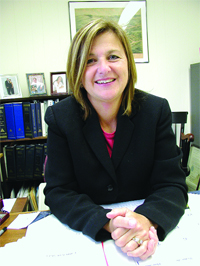
Those interested in participating in the Hampden Court Housing Court pro bono project can call Suzanne Garrow at (413) 788-7988, or E-mail;[email protected]

Departments

Manpower: Positive Job Market for Springfield

SPRINGFIELD — Springfield-area employers expect to hire at a steady pace during the second quarter of 2006, according to the recent Manpower Employment Outlook Survey. From April to June, 27% of the companies interviewed plan to hire more employees, while 10% expect to reduce their payrolls. Another 53% expect to maintain their current staff levels, and 10% are not certain of their hiring plans. For the coming quarter, job prospects appear best in wholesale/retail trade, education, and services. According to the national seasonally adjusted results of the survey, U.S. employers show no signs of changing their healthy hiring pace in the second quarter. Of the 16,000 U.S. employers surveyed, 30% foresee an increase in hiring activity for the second quarter of 2006, while 6% expect a reduction in payrolls.

Cities Receiving River Cleanup Grants

WEST SPRINGFIELD — The Pioneer Valley Planning Commission (PVPC), in cooperation with the Connecticut River Clean-Up Committee, recently announced that Springfield, Holyoke, and Chicopee will receive U.S. Environmental Protection Agency funding totaling $1.5 million for cleanup of combined sewer overflows (CSOs) to the Connecticut River. Springfield will receive $1,178,551 for the correction of CSOs in the Clinton Street/Washburn Street area, while Chicopee will receive $50,449 for sewer separation in the Jones Ferry/McKinstry Street area and $114,286 for sewer separation in the Fairview Street area. Holyoke will receive $175,871 for sewer separation in the Jones Ferry Road area.

Baystate Health Replacing Garage

SPRINGFIELD — A three-level parking garage will soon be under construction by Baystate Health at 280 Chestnut St. to replace its current aging structure. Visitors and vendors are asked to park across the street at the Holiday Inn on Congress Street. Signage will designate the parking spaces for Baystate patrons. The new garage is expected to be completed by the end of the year.

Officials Back Off Hotel Project

SPRINGFIELD — Developers will revise their proposal for a riverfront hotel project off West Columbus Avenue after Mayor Charles V. Ryan and David B. Panagore, deputy executive director of the Springfield Finance Control Board, recently rejected their bid. Both Ryan and Panagore instead have chosen to put the riverfront project out to bid. Ryan and Panagore cited several demands by Connecticut River Development LLC and NYLO Partners LLC that were too demanding for the city to consider at this time. Among the developers’ demands cited by Ryan included a 10-year period free of property taxes and freedom from sales tax on construction costs.

Tavern Restaurant Slates Summer Opening

SPRINGFIELD — The former owner of the Tavern Restaurant on Mill Street will once again take the helm this summer and reopen the popular eatery which was shut down last fall when the current owner, Frank L. D’Agostino, fell behind on rent payments. John J. Bonavita of East Longmeadow had owned the Tavern for almost 24 years until he sold it to D’Agostino in 2004. Bonavita had still owned the building that housed the restaurant and hired sheriff’s deputies on Oct. 7 to close the restaurant because D’Agostino was $5,625 behind in rent payments. Bonavita also reported to the License Commission that D’Agostino had let the insurance on the restaurant lapse. In a 5-0 vote, the License Commission granted a liquor license to Bonavita as part of his plan to reopen the restaurant.

State Rep. Wagner Seeks Tighter Control over Transit Authorities

SPRINGFIELD — With 15 regional transit authorities across the state, state Rep. Joseph F. Wagner, D-Chicopee, would like to see stricter state oversight since all are run by local advisory boards. In light of the recent fallout from the Pioneer Valley Transit Authority’s corruption probe, a legislative committee will soon begin seeking answers to increasing management and legal issues. A meeting of the Committee on Transportation was conducted March 27 at 4 p.m. in Room 303 at Holyoke Community College. Wagner stressed that the authority has far more independence on spending public funds and too little accountability to the Legislature. In addition, Wagner said that the transit authorities tend to run annual budget deficits, which forces the state to pick up as much as 75% of the additional costs.
Podcasting Teaching Communications Technology

SPRINGFIELD — Gordon Snyder, a professor of Electronic Systems Engineering Technology at Springfield Technical Community College, and Michael Qaissaunee, department chair for Engineering and Technology at Brookdale Community College in Lincroft, N.J., have begun recording weekly podcasts on communications technology for listeners worldwide to download. Their conversations have ranged from ‘2006 Technology Predictions’ to ‘Security 101: What Every Employee Should Know.’ Snyder and Qaissaunee said their listener base – at approximately 850 — grows each week as the site becomes better known. They use Skype in recording their podcasts, which can be downloaded free, or subscribed to through RSS (Really Simple Syndication). The podcasts can be played on an iPod or through a personal computer at any time that’s convenient for the user. The podcasts are available free at Apple iTunes and at www.nctt.org. Snyder is also executive director of the National Center for Telecommunications Technologies (NCTT), and Qaissaunee is director of the Mid-Atlantic Institute for Telecommunications Technologies, a regional partner of the NCTT.

Departments

The following is a compilation of recent lawsuits involving area businesses and organizations. These are strictly allegations that have yet to be proven in a court of law. Readers are advised to contact the parties listed, or the court, for more information concerning the individual claims.

NORTHAMPTON DISTRICT COURT

Vistar Corporation v. Todd Denis d/b/a Pizza, Wings & Things
Allegation: Breach of contract — Failure to pay for goods sold and delivered: $5,563.20
Date Filed: Feb. 22

WESTFIELD DISTRICT COURT

Spencer White and Prentis Foundation Corporation v. A.J. Virgilio Construc-tion Co. Inc.
Allegation: Breach of contract — Failure to pay for service, labor and materials: $18,745.85
Date Filed: March 3


CHICOPEE DISTRICT COURT

Allied Waste Services Inc. d/b/a BFI Waste Services v. Advanced Drain Systems Inc.
Allegation: Breach of contract — Liquidated damages. Did not have exclusive rights to waste and recycle materials as contract stated: $23,172
Date Filed: Feb. 17

Pro-Tech Waterproofing Solutions Inc. v. Michelson Properties Inc. and Samjay Inc.
Allegation: Breach of contract — Failure to pay for work, labor, supplies, and materials: $2,515.50
Date Filed: March 2

SPRINGFIELD DISTRICT COURT

Zurich American Insurance Co. v. Daniel Ransom d/b/a Five Star Towing
Allegation: Breach of contract — Failure to pay insurance premiums: $16,070.73
Date Filed: Feb. 22

The Southern New England Telephone Co. v. Robert Hawley d/b/a Environmen-tal Airtechs
Allegation: Failure to pay judgment of $5,300.39 entered October 2005: $5,096.51
Date Filed: Feb. 28

Langeveld Bulb Co. Inc. v. Phildante Inc. d/b/a Fini’s Plant Farm
Allegation: Breach of contract — Failure to pay for goods sold and delivered: $4,121.17
Date Filed: March 3

Departments

Timothy S. Rice

Baystate Health Inc. in Springfield announced the following new Trustees:


• Timothy S. Rice, President, Rice Oil Co., Inc.;


Elaine A. Sarsynski


• Elaine A. Sarsynski, Senior Vice President and Chief Administrative Officer, MassMutual Financial Group;


Richard B. Steele


• Richard B. Steele Jr., Managing Member, Longmeadow Capital Partners LLC; and


Dr. Howard G. Trietsch


• Dr. Howard G. Trietsch, Managing Partner, Baystate OB/GYN Group Inc.


•••••

Rebecca Bouchard has been named an Associate at Doherty, Wallace, Pillsbury & Murphy P.C. in Springfield. She will concentrate her practice in education and employment law as well as other civil litigation matters.

•••••

Dr. Andrew M. Scibelli, President Emeritus of Springfield Technical Community College, has been named Chairman of the Steering Committee for the 2006 Western Mass. Entrepreneurship Hall of Fame.

•••••

Maryanne Rooney has joined Elms College in Chicopee as Vice President for Institutional Advancement.

•••••

David P. Fontaine


David P. Fontaine, President of Fontaine Bros. Inc., has been appointed to the Board of Trustees of Springfield Technical Community College. As a 1983 graduate of STCC’s Civil Engineering Technology program, Fontaine was honored in 2001 with the STCC Distinguished Alumni Award, which is given annually to recognize outstanding achievement by a graduate of the college.

•••••

Southbridge Savings Bank announced the following:

Thomas Dufresne


• Thomas Dufresne has been promoted to Vice President-Chief Technology Officer;


Todd Tallman


• Todd Tallman has been promoted to Vice President-Chief Financial Officer; and


Susan Gunnell


• Susan Gunnell has been promoted to Vice President-Director of Human Resources.


•••••

James M. Lavelle has been elected Corporator of PeoplesBancorp, MHC, the mutual holding company of PeoplesBank. Lavelle serves as General Manager at Holyoke Gas & Electric.

•••••

Karolina M. Sadowicz recently joined American International College in Springfield as Assistant Director of Public Relations.

•••••

Friendly Ice Cream Corp. in Wilbraham announced the following:
• James Sullivan has been named Vice President for Franchise and Real Estate Development for Friendly’s Restaurants Franchise Inc., a subsidiary of Friendly Ice Cream Corp., and

• Robert Sawyer has been named Vice President and General Counsel of Friendly’s Restaurants Franchise Inc.

•••••

David Chandler, an employee of Western Mass. Electric Company, was recently honored by Northeast Utilities with its NU Chairman’s Lifesaving Action Award, the company’s highest honor. Chandler was honored for his role in saving the life of Steven Peters, a 22-year-old Gill firefighter, on Oct. 9.

•••••

Coldwell Banker Residential Brokerage Central New England announced the following:

• Karen King has been recognized for her ranking of 41 among 3,500 Coldwell Banker sales associates in Massachusetts for her achievements in real estate in 2005. King works out of the Wilbraham office;
• The following employees were recently honored with the Coldwell Banker Residential Brokerage International Sterling Society Award: Barbara Adornato, William Blair, Suzi Buzzee, Diane Fisher, Pat Ireland, Suzy Lyons, Gerry Marafioti, Joan McKenna, Cathy Mushenko, Lisa Oleksak-Sullivan, Dianne Schmidt, Cate Shea, Marcia Snyder, Mary Wait, Colleen Westberg and Linda Wortman. The award recognizes those sales associates for their listing and selling excellence in 2005;

• Priscilla Harman and Ann Turnberg received the Coldwell Banker Residential Brokerage International President’s Elite Award. Harman and Turnberg received the award for placing within the top 4% of Coldwell Banker Residential Brokerage sales associates and representatives internationally;

• The following employees received the Coldwell Banker Residential Brokerage International President’s Circle Award: Bridget Donato, Carol Roy, Peg Ryan, Debbie Taylor, and Kathy Wallis-McCann. The award recognizes sales associates for their listing and selling excellence in 2005; and

• The following employees received the Coldwell Banker Residential Brokerage International Diamond Society Award: Tammi Adair, Ray Authier, Lisa Catrett, Shannon Donohue, Shawn Mitchell, Lisa McGrady, Marge Thibodeau, Roger Trombly, Barbara Vaughn, and April West. The award recognizes sales associates for their listing and selling excellence in 2005.

•••••

Rene “Pete” Ledoux has joined Westbank in West Springfield as a Senior Vice President in the newly formed Financial Services Division.

•••••

Joseph B. Collins


James Lee of Inspiria Salon & Day Spa in West Springfield has been promoted to Lead Massage Therapist.


•••••

The American College of Bankruptcy in Washington, D.C., announced that Joseph B. Collins, a shareholder of Hendel & Collins P.C., of Springfield, will be inducted as a Fellow of the College. Collins is one of 22 nominees from the United States and abroad being inducted in the 2006 Class of College Fellows. All are being honored and recognized for their professional excellence and contributions to the fields of bankruptcy and insolvency.

•••••

Susan Gay, Administrator at Skoler, Abbott & Presser, P.C., has been elected President of the Association of Legal Administrators (Nutmeg) Chapter for the Western Mass. and Northern and Southern Conn. regions.

•••••

Robin Olejarz has joined Kostin, Ruffkess, Themistos & Dane LLC as a Manager, specializing in business valuation and litigation support.

•••••

William H. Booth has been named Chief Executive of Country Curtains.

•••••

Dr. Robert L. Matthews has opened a new facility, The Kids’ Dentist, on Park Street in West Springfield.

•••••

Thomas R. Creed has joined Sovereign Bank as Senior Vice President and Regional Executive in the Connecticut and Western Mass. market.

•••••

Benjamin J. Garvey has been appointed Senior Account Executive in the Commercial Insurance Division for the Insurance Center of New England in West Springfield.

•••••

The Mass. Association of Realtors announced the following:
• Corinne Fitzgerald, a Partner with Key 100 Real Estate in Greenfield, will serve as Vice President of Business Development for her second term; and
• Susan Renfrew, Co-owner of Renfrew Real Estate in Greenfield, has been named Vice President of Professional Development for the Association.

•••••

Dr. Andrew L. Karanas has been appointed to the Department of Surgery at Noble Hospital, Westfield. He has joined the practice of Dr. L. Willis Roberts, also a surgeon at Noble Hospital.

•••••

Aimee Griffin Munnings, founder of the New England Black Chamber of Commerce, has been named the 2006 U.S. Small Business Administration Massachusetts Minority Small Business Champion award winner. Munnings went on to win the New England competition for the award as well.

Uncategorized

The annual spring trade show of the Affiliated Chambers of Commerce of Greater Springfield moves to the MassMutual Center for 2006. Organizers say the new venue provides facilities and amenities that will take the Market event to a higher level and bring greater value for exhibitors and visitors alike.

Deb Boronski says a new venue, the MassMutual Center, will no doubt generate some excitement and curiosity for the 2006 Business Market Show, set for April 5.

“People are always asking, ‘what’s new for this year?’” said Boronski, vice president of the Affiliated Chambers of Commerce of Greater Springfield and coordinator of the Market event for the past several years. “Well, now we’ve got a pretty good answer for them.”

But the gleaming new convention center will do more than draw some attention to the event and perhaps a bigger crowd, she said; it will also create a bigger and better show.

Elaborating, she said the facilities at the center, especially the smaller function rooms, will enable organizers to schedule a number of programs and seminars during the day — from the monthly luncheon of the Advertising Club of Western Mass. to the launch of the Affiliated Chambers’ new Division of Business Excellence.

The number and variety of scheduled programs has even prompted organizers to change the event’s name. “It’s no longer just a trade show,” said Boronski, “we’re calling it a conference and exhibition.”

And it is one that will likely live up to that often-used phrase ‘something for everyone,’ she said. In addition to the nearly 200 booths on the exhibition floor, the 2006 show will feature seminars on everything from identity theft to Internet marketing; the region’s burgeoning Hispanic market to making full use of those electronic gizmos.

“This is not just a trade show any more it’s a showcase,” said Boronski. “What we’re doing is giving businesses more reasons to send more of the people to the show.”

Getting Down to Business

As she talked with BusinessWest in the main exhibition hall at the MassMutual Center, Boronski said the $70 million facility, opened last fall, gives show organizers a large degree of flexibility simply not obtainable at the Eastern States Exposition, the show’s home for the past decade.

“The Big E was a great venue, it served us well for many years,” she said. “But we were limited in some of the things we could do there; it was essentially one big room, which made it more difficult to conduct break-out sessions and seminars. Here, we have the facilities to do a lot more of everything.”

And, in the progress, provide the change and value (to both exhibitors and visitors alike) that a show must provide to succeed, she explained.

“Each show is going to be different from the one before,” she said, noting a turnover rate among exhibitors of about 30%. “But we strive each year to bring new programs and events that will give people ample reason to leave their offices and plants and come to the show.”

This year, there will be a number of incentives for coming to downtown Springfield, starting with the annual breakfast and its keynoter, Steven Little, a senior consultant for Inc. Magazine, who will speak on business growth and what he calls the “future of opportunity.”

Meanwhile, the Advertising Club of Western Mass. will stage its monthly luncheon at the show, and is inviting exhibitors and visitors to join in the festivities. Reservations will be needed for the luncheon (tickets are $25 for ad club members and $30 for non-members; visit www.adclubwm.org), which will include the program Branding: Making Your Mark. It will feature regional case studies that will examine the elements of effective branding.

In the afternoon — 4 o’clock to be exact — the ACCGS will launch its new Division of Business Excellence. A successor to the membership-driven agency SPACE, the Springfield Area Council for Excellence, the DOBE as it’s called will provide a number of services aimed at helping area companies become more competitive in a global marketplace.

These will include informational programs as well as linking business owners with consultants who will provide assistance on a fee-for-service basis with implementation of business excellence strategies including Kaizen, lean manufacturing, Six Sigma, and others.

“We thought the Market show was the perfect forum for us to launch the business excellence division,” said Boronski. “There will be hundreds of business owners and managers there, giving us an opportunity to generate awareness of the division and how it can make the region more competitive.”

Market 2006 will also feature a number of free business seminars, to be staged in morning and afternoon sessions, in the MassMutual meeting rooms next to the exhibition hall. The scheduled programs include:

  • Managing Your Electronic Gizmos and Office Technology, a how-to and ‘how-to-get-the-most-out-of-your-devices’ hosted by Sean Hogan, president of Hogan Communications;
  • Grow Your Business — Hire Right, led by Ethan Bloomfield of HRD Press;
  • The Business Incubator at the Andrew M. Scibelli Enterprise Center, led by Thomas Goodrow, vice president of Economic and Business Development at Springfield Technical Communnity College;
  • Entrepreneurship: Make the Transition to Grow Your Business, led by John Rogers, dean of the School of Business at American International College;
  • Internet Marketing, presented by David Flaherty of Ashton Services;
  • Run Your Business So You Can Leave it in Style, a panel discussion coordinated by the Bank of Western Massachusetts;
  • Focus Your Marketing Vision, led by Tina Stevens, president of Stevens Design Studio;
  • Improve Team Collaboration and Have Fun, led by Robert Rasmussen, president of Robert Rasmussen and Associates, LLC;
  • Understanding New England’s Hispanic Market Potential, led by Hector Bauzá and Francisco Javier Solé, of Bauza & Associates in Holyoke;
  • Credit Reports, Nondisclosure Laws, and Identity Theft, led by Guy Swiatlowski of Cambridge Cradit Counseling;
  • The LifeBridge Free Insurance Program, led by the MassMutual Financial Group;
  • Treat Business Like a Business and Family Like Family, a panel discussion coordinated by the UMass Family Business Center; and
  • More on the Future of Opportunity, led by Steven Little, senior consultant for Inc. Magazine.

The attractive lineup of events should attract a larger number of visitors than previous shows, said Boronski, adding that she is hopeful that individuals working in downtown office towers will set aside at least some of their day for the show.

“They don’t have to get in their cars and drive anywhere,” she said, noting that some people working downtown were put off by the prospect of driving to the Big E. “There are 9,000 pre-paid parking spaces in downtown Springfield — if we can get just 10% of those people to come to the show, that’s an additional 1,000 visitors, and that would make the event so much better.”

Show Time

The 2006 Business Market Show will be the 17th edition of the event, said Boronski, adding that since year 2, the goal — and the challenge — for organizers has been to make the show different and better.

The MassMutual Center provides the setting and the amenities to make that assignment somewhat easier, she said, noting that additions for this year take the event well past the label trade show.

“We’ve gone to a new, much higher plane,” she explained. “We’re still a showcase of 200 area businesses, but now we’re so much more than that.”

Fast Facts

What:The 2006 Business Market Show Conference and Exhibition
When:April 5
Where:The MassMutual Center in downtown Springfield
Schedule:Breakfast is at 7:15; the business exhibition runs from 9 a.m. to 5 p.m.
Breakfast Keynote Speaker:Steven Little, senior consultant for Inc. Magazine
Parking:Ample parking is available in downtown Springfield lots. Exhibitors will receive a $5 voucher for parking in the Civic Center garage. Fees for attendees will not exceed $8.
For More Information:Call Deb Boronski at (413) 755-1309
Web site:www.businessmarketshow.com


Departments

David Pinsky has been named President and Chairman of the Board of Tighe & Bond of Westfield. Joining the firm in 1988, Pinsky has led many project teams with his expertise in water supply, distribution and treatment.

•••••

Debra Mahannah

Debra Mahannah has joined The O’Leary Company of Southampton. She brings more than 20 years of experience in the design and management of office renovation projects in Western Massachusetts and Connecticut.

•••••

Carla Oleska, Ph.D., former Associate Academic Dean of Elms College, Chicopee, will serve as Executive Director of the Women’s Fund of Western Mass., based in Easthampton.

•••••

Architect Jeremy Toal, AIA, has joined Dietz & Company Architects of Springfield. Toal’s previous works incorporated renewable energy, energy efficiency, and healthy, durable, natural materials.

•••••

Massachusetts Mutual Life Insurance Company in Springfield announced the following:
• William F. Glavin, Jr. has been appointed head of the Individual Insurance Group at Massachusetts Mutual Life Insurance Company. He moves to MassMutual from his position as President and CEO of Babson Capital Management LLC. Both MassMutual and Babson Capital are members of the MassMutual Financial Group family of companies.
• Charles Schuhmann has been named Western Life Sales Manager, and
• Bradford Smith has been named Eastern Life Sales Manager.
Both Schuhmann and Smith will be responsible for MassMutual’s field wholesaling force that delivers life insurance products to independent life brokerage agencies and third party marketing firms in the western and eastern regions respectively.

•••••

Susan L. DeFeo

Susan L. DeFeo has been elected Senior Vice President, Director of Operations and Technology at Florence Savings Bank.

•••••

Sarah J. Zingarelli recently joined the Pioneer Valley Planning Commission of West Springfield as a Planner in the Land Use and Environment section.

•••••

UMass Amherst alumni Ellen Ferraro and Regina Valluzi will be honored by Mass High Tech as Women to Watch 2006. Mass High Tech is a weekly publication, based in Boston, which focuses on business and technology challenges in New England. Ferraro is the deputy director of the system validation, test and analysis directorate for Raytheon Integrated Defense Systems, and Valluzi is the founder and chief scientific officer of Evolved Nanomaterial Sciences. Both women were among 10 New England-based women who were recently recognized as future leaders and innovators at an awards dinner in Boston.

•••••

T. David Constant

Webster Bank announced the following:
• T. David Constant has been appointed Vice President of the West Springfield office, and

Amybeth Perry

• Amybeth Perry has been named Vice President of the Westfield office.


•••••

Sherry Leastman has been promoted to Branch Manager of Countrywide Home Loans’ Northampton branch, where she will be responsible for developing Hampshire, Franklin and Berkshire counties.

•••••

Matthew Nocton has been promoted to Senior Account Executive for MassLive.com. He will oversee major local and regional accounts.

•••••

Lisa Watts, owner of Cold Spring Events in Belchertown, has earned the designation of Certified Bridal Consultant through the Association of Bridal Consultants.

•••••

Crystal Carrol has joined the Palmer office of Carlson GMAC Real Estate as a Sales Agent.

•••••

Zoar Outdoor in Charlemont announced the following:
• Nicole Yezierski has been appointed Office Manager, overseeing customer service, reservations and group sales;
• Michael Porter has been appointed Assistant Rafting Manager.

•••••

Darryl Thomas has joined 84 Lumber in West Springfield as a Manager Trainee.

•••••

Lawyer Richard S. Ravosa Jr. has been recognized by Massachusetts Lawyers Weekly as a “Rising Star/Up and Coming Lawyer.” Ravosa has offices in Springfield and Boston, and is the founder and executive director of Town & Country Legal Associates, with offices in Springfield, Boston, Salem and Natick.

Gregory M. Schmidt has been named an Associate in the commercial transaction and banking practice of Doherty, Wallace, Pillsbury and Murphy P.C.

•••••

Vicki S. Donahue has been named a Director for Cain Hibbard Myers & Cook PC in Pittsfield. She has been an Associate with the firm for eight years.

•••••

United Bank of West Springfield announced the following:
• Joseph Young has joined the staff in Westfield as a Senior Vice President of Commercial Banking, and
• Darilynn Nardi has joined the staff as Assistant Vice President of Branch Administration.

•••••

Noble Health Systems in Westfield announced the following:
• James C. Hagan has been elected Chairman of the Board;
• Mark A. Morin, Vice Chairman;
• James F. Shea, Treasurer;
• Timothy P. Scanlan, Secretary;
• George J. Koller, President, and
• Murray Watnick, M.D., has been elected as a Trustee.
Board members also include Robert J. Bacon, John M. Greaney, Carol A. Kauffman, Robert L. LaPalme and Richard K. Sullivan Jr.

•••••

Bruce Leshine has joined the law firm of Jorden Burt LLP, as a Partner in the technology practice group. The firm has offices in Simsbury, Conn., Washington, D.C., and Miami.

••••

Monson Savings Bank announced the following:
• Carolyn E.D. Szarlan has been named Vice President for Information Technology, and
• Daniel R. Moriarty has been named Vice President of Finance.

•••••

Country Bank in Ware announced the following:

Denise Jaworsk

• Denise Jaworski has been promoted to Treasurer, and will be in charge of the bank’s finance and budget functions;


Robert Paulsen

• Robert Paulsen Jr. has been named Vice President of Commercial Loans, and will oversee the development of new and existing business relationships; and


Christopher Wszolek

• Christopher Wszolek has been named Vice President of Commercial loans, and will also oversee the develop ment of new and existing business relationships.

•••••

Debra Mahannah recently joined the staff of The O’Leary Company of Southampton, MA. She brings more than 20 years of experience in the design and management of office renovation projects in Connecticut and Western Massachusetts. Mahannah is a member of the Construction Institute and the National Association of Women in Construction. The O’Leary Company is celebrating its 50th year as a full service design-build firm specializing in large scale commercial and industrial construction.

•••••

Larry A. Letendre

Larry A. Letendre, Jr. recently joined Southbridge Savings Bank as the Branch Manager of the Ruthven Ave. location in Worcester. His responsibility is to establish new customer relationships with consumers and local businesses. Aside from his managerial duties, he plans to continue working with community groups in the area including Worcester Housing and the Worcester County Food Bank.

•••••


Beverly Ouellette

Beverly Ouellette joined the Phillips Insurance Agency Inc. as its new Benefits Director. Her responsibilities will include the management and marketing of the life, health, and employee sponsored benefits products.

•••••

Michelle N. Theroux, M.Ed., LMHC, has been named Executive Director of Child & Family Service of Pioneer Valley, Inc. Ms. Theroux served most recently as Director of Family Networks at Key Program, Inc., and was previously the Family Based Services Program Manager at Key. She is an adjunct faculty member in the Department of Psychology at Springfield College, teaching courses in Behavior Management and Life Span Development.

•••••

James C. Hagan was recently elected Chairman of the Board of Noble Health Systems. A Westfield resident, Hagan is the President of Westfield Bank. Other officers are Mark A. Morin, Vice Chairman; James F. Shea, Treasurer; Timothy P. Scanlan, Secretary and George J. Koller, President. Murray Watnick, M.D. was elected as a trustee. Other board members include: Robert J. Bacon, John M. Greaney, Carol A. Kauffman, Robert L. LaPalme and Richard K. Sullivan, Jr. Noble Health Systems is the parent corporation of Noble Hospital, Noble Visiting Nurse and Hospice Services and Westfield Medical Corporation.

Uncategorized

The salespeople employed by James J. Dowd & Sons Insurance Agency have, on average, more than 20 years of experience selling insurance products. And they’ve always done things their way.

“Now we require our salespeople to use PDAs,” said John E. Dowd Jr. one of the agency’s three partners, referring to the handheld electronic devices used to store and transmit information. “They’re all going high-tech – some of them kicking and screaming.”

OK, so maybe that’s an exaggeration – the fact that Dowd’s salespeople carry portable digital assistants and have learned how to navigate cutting-edge database software in the office hasn’t caused any actual screaming.

But still, “for people who have done things a certain way for 20-plus years, saying we’re going to throw away paper and centralize our technology has been a big challenge,” Dowd said. “And if we insist that they become high-tech, we have to provide the training for them to utilize the technology in which we’ve invested so heavily. Our challenge is to teach people how to use it in a way that makes them better salespeople.”

In short, even a company that has been a part of the Pioneer Valley for 108 years needs to continually adapt to new modes of doing business, Dowd said.

Long History

While the Dowd agency has long been a recognized name in the region, its origins are humble. James J. Dowd was one of 14 children brought to America by their father in 1865 to escape hard times in County Kerry, Ireland. In 1898, he and partner Jeremiah Keane opened the Keane and Dowd insurance and real estate business in Holyoke.

The company was renamed James J. Dowd & Son before Dowd’s son took over the firm in 1916, eventually moving it into a new, larger building on Suffolk Street in 1926. Over the next 50 years, two more generations of Dowds would move into company leadership. The agency moved into its current location on Bobala Road in 1993 and boasts branch offices in Amherst and Southampton.

Today, as part of the fourth generation of Dowds at the company, John Dowd says his path was inevitable. “I thought about no other careers,” he told BusinessWest. “From the time I started thinking about what I would do when I got out of school, I had only the insurance business on my mind. It’s in my blood.”

That heritage includes a well-honed sense of when to adapt to the changing times. For example, to survive in an increasingly competitive marketplace, today’s insurers have become more creative with the range of services they offer, and Dowd is no exception.

“We offer all lines of property and casualty insurance for any size business, from a corner store to a publicly traded company with worldwide operations. We have that range,” Dowd said, adding that the company also offers several personal lines, such as homeowners’ and auto insurance.

But in addition, Dowd also carries financial products ranging from life insurance and investment services to employee benefits such as 401k plans and health insurance.
“The idea is to become a one-stop shop for insurance and financial services,” he said. “We’re looking to expand that where it makes sense to provide other services that our customers might like to have available. From our standpoint, that’s the direction the industry has gone.”

The major shift came in 2002 when banks were allowed to sell insurance. “We, in essence, now look at them as competitors,” Dowd said, “so we compete with them not only on insurance, but on financial services as well. That really opened up the financial marketplace to where different services that were once separated are now sold under one roof.”

But the products Dowd offers are only one factor in the company’s success. He said customer service is crucial to building and keeping a loyal clientele.

“We’ve long recognized that we sell services and products similar to what’s being sold by many of our competitors,” he said. “But it happens to be a complex product that can be fraught with potential problems, concerns, and misunderstandings. We feel we need to see things from the customer’s standpoint, anticipate their needs, and make the whole process as easy as possible for them.”

That means putting a premium on finding information for clients quickly and making sure they’re able to talk to a person on the phone, not an automated wall of options behind an 800 number.

“People want to have their hand held, and we want to hold their hand,” Dowd said. “We’ve done surveys of our clients to assess how well they are treated, not just by us but by their insurance carriers and people in claim services. If it’s not a positive experience for whatever reason, we make sure that the parties involved are aware, and that steps are taken so the same problems don’t occur next time.”

He said those surveys produce consistently high feedback ratings, but he pays close attention to the few that do not. “Those are the people who can shape your reputation. For better or for worse.”

Repeated Cycles

In order to build a strong reputation over 108 years, a company in any industry must go beyond offering strong products backed by solid service. Part of the challenge is anticipating and riding shifting trends, and insurance is particularly sensitive to market shifts.

For example, throughout the 1990s, rates stayed low in a soft market as insurers were happy to underwrite policies at a loss because they were making more profits by reinvesting that money in financial markets, often to double-digit returns. But that couldn’t continue forever, and the market was already hardening when the terrorist attacks of Sept. 11, 2001 accelerated that process.

“Many insurance companies went out of business. It did turn the industry upside down for a time,” Dowd said. “But we’ve grown accustomed to going from a soft market to the inevitable hard market and back to a soft market. It’s a fairly predictable cycle. When insurance companies experience losses, they need to restore their surplus and profit margins.

“There is a softening now,” he added, “but it’s not in all segments of the marketplace. The challenge is to know which ones are susceptible to softening and which ones aren’t.”

One trend that emerged from the hard market following 9/11 was a new emphasis among companies on internal loss control and loss-prevention measures, such as disaster-recovery plans and safety awareness programs.

“Claims are inevitable, but good loss control minimizes the number of claims,” Dowd said. That, in turn, allows insurers to gradually sell policies at a lower price, and competitive pressures eventually toward another softening trend – that predictable cycle Dowd talks about.

Other trends have emerged in recent years as well, particularly in response to major insurance events. For example, following the devastation along the Gulf Coast last year following hurricanes Katrina and Rita, it’s difficult to find coverage for coastal properties, including on Cape Cod, Dowd said.

Around the World

James J. Dowd & Sons has come a long way in more than a century of insurance and financial services, now reaching around the globe as part of an international insurance network.

“If you have operations in Singapore, I can provide coverage for you,” Dowd said. “We’ve been able to provide everything from workers’ compensation to property and liability coverage for publicly traded companies as far away as Asia. This is a smaller world than we used to live in, and we can now insure companies with a global exposure.”

Whether dealing with customers around the world or close to home, he said, it helps that Dowd shares a strong relationship with its carriers, some of whom have been associated with the agency for 100 years.

“Those relationships do come into play when settling claims,” he said. “Our carriers trust us; they trust our knowledge and integrity, and that’s important to us.”

Dowd also boasts of the quality of his employees, not only the experienced sales force, but support personnel – a team he calls the strongest in the company’s history.

Still, he worries that the pool of insurance professionals on which to draw is shrinking, which is why the agency is teaming up with Holyoke Community College to help provide insurance-related courses and assist students with internships.

“We want to help this industry grow by helping people get into this business, so we can continue to have strong professionals serving our clients,” he said.

And if, along the way, they learn how to use a PDA, that can’t hurt.

Uncategorized

Clad in bright sweatshirts and comfortable walking shoes, four of the Eastfield Mall’s veteran mall walkers list the many benefits of participating in the well-known fitness activity.

Good exercise, improved health, and free gifts top the list.

But it has taken more than the occasional chotchke to keep the nationally known phenomenon in place for decades – welcoming thousands of participants during that time.

Many people hear of mall walkers, but never see them – most arrive at the mall before the stores open to get their laps in before the hallways get crowded. Still, there are mall-walkers like those who meet each morning at the Holyoke Mall at Ingleside, and organized groups like the Eastfield Mall Walkers Club scattered across the country. The groups entitle members to a number of perks – many free – in addition to early-morning walking privileges.

Physicians routinely recommend mall walking as an easy, inexpensive way to improve health through regular exercise, especially for seniors, and as an alternative to pricey gym memberships or unsafe walking conditions outside.

As part of that focus on improving health, many malls have taken steps to become more involved in the promotion of mall-walking benefits. Some measure out how many laps it takes to complete anywhere between one and five miles, allowing walkers to easily gauge how much exercise they’re getting. One lap around the Eastfield Mall, for instance, is five-eighths of a mile, and each level at the Holyoke Mall is three-quarters of a mile, so walkers can start slowly and work up to the level of exercise with which they’re comfortable.

Malls also often provide an informational packet when new members register and information sessions regularly, which include tips to maximize a workout – start slowly, pace yourself, maintain good posture, talk while walking (if you’re out of breath, you’re going too fast), cool down at the end our your workout, and have fun.

Talking the Talk

Lisa Wray, marketing director for the Holyoke Mall, said mall walkers are a constant fixture.

“We open our doors early, at 6 a.m., for mall walkers, but they are in and out throughout the entire day,” she said, adding that it can be hard to pin down an exact number of how many walkers pass through each day. “I would say hundreds walk throughout the week.”

As any mall walker will tell you, however, membership in a mall-walkers club entitles one to much more than access to a safe, warm place to exercise, at no cost.

Rather, many programs have evolved to include weekly health-related presentations, mini health fairs, annual get-togethers, discounts at mall stores, free gifts, breakfasts, and more.

Members of the Mall Walkers Club at the Eastfield Mall routinely brainstorm new ideas for programs, featured speakers, or events planned around mall walking – most are health related and take place in the morning. In addition to walking, free health presentations attract hundreds of guests.

“There’s always someone who comes in to talk with us and the programs are great,” said Warren Hudson of Indian Orchard, one of the club’s most seasoned walkers – he and his wife Jackie have been walkers since the club’s inception 18 years ago, even walking the perimeter of the building before an expansion was completed. “We’ve heard talks on every subject you can imagine – from Alzheimer’s to nutrition, and Social Security to changes in health insurance. It’s very informative, and all geared toward health. We even get our blood pressure checked twice a month.”

Those presentations are often held in partnership with local health care providers and businesses. Wray said programs are held in conjunction with Baystate Health at the Holyoke Mall, providing speakers to educate walkers through free presentations.

And according to Carolyn Varnadore, marketing associate at the Eastfield Mall, the Baystate Visiting Nurse Assoc. and Hospice and Baystate Senior Class, both aspects of the Baystate Health system, are the primary sponsors of the free health presentations at the mall. Meanwhile, quarterly health fairs are currently sponsored by Redstone Rehabilitation and Nursing Center in East Longmeadow and Springfield’s Boston Road Stop & Shop.

“We’re very proud of our mall walkers,” said Varnadore. “They are a wonderful group of people and a great addition to the Eastfield Mall, and we are always trying to add to the program for them.”

And the walkers themselves often participate in talks regarding improvements at the mall, she said, adding that they serve as a sort of built-in market research group and sounding board. As constant visitors to the mall, they weigh in on general issues concerning mall management and security, including safety, services for customers, and accessibility for the handicapped, children, or the elderly.

Jackie Hudson said she recommended, for instance, getting an indoor entrance installed within the mall leading to the 99 Restaurant.

“Before, you had to go outside, and it wasn’t as safe,” she said, noting that the improvement had an effect not only on safety at the mall, but also patronage at the restaurant, at least among her high-stepping associates. “We go there all the time now. It’s much easier.”

Ease on Down

But one of the most valuable aspects of the program, according to Janice Jones of Springfield, a four-year veteran walker at the Eastfield Mall, is the camaraderie.

“We all come to know each other,” she said. “We may not know your name at first, but we know the face, because we pass by walking, wave, and say ‘hello.’ It’s a very friendly atmosphere.”

Jones said she began walking as part of the Mall Walkers Club shortly after retiring.
“I didn’t know what was on television during the day, so I took some time to sit and relax, and bought all of my favorite snacks,” she explained. “Sure enough, my cholesterol shot up.”

Jones’ physician recommended walking, and soon thereafter she began regularly walking at the mall, her cholesterol lowered. The new friendships and the regular programs to look forward to help keep her going, she said.

Claire Lebel of Ludlow said her doctor also recommended walking, and advised mall walking over outdoor exercise, because her neighborhood doesn’t include safe sidewalks.

Lebel said she was skeptical of mall walking at first.

“He told me I should try mall walking, and I didn’t want to go alone,” she said, “but there were some other ladies in Ludlow that were in a club of their own and they asked me if I wanted to join. I made my mind up that I was going to do this and stick to it, so I came to the mall early one morning, and never stopped.”

Lebel added that walking does more than improve her health – it takes her mind off of her problems as well.

“You come in and sometimes you’re half asleep,” she joked, “but there’s always someone to say ‘good morning,’ and that’s a great feeling. It gets your day off to a good start and that’s important, because it stays with you all day long.”

The Finish Line

The mission of the club is still the exercise component, however, and those walkers who spoke with BusinessWest are all firm believers in mall walking as a fitness regimen that promotes overall wellness of the mind, body, and spirit.

In addition to Jones’ cholesterol numbers going down, Lebel’s health has also improved, and as she looks at a photo from a recent health fair, she smiles as she spots herself and her friends.

And Jackie and Warren Hudson have slightly different evidence of the health and longevity their mall walking has helped along.

“We’ll be married 58 years in June,” they say together with broad smiles, as Jackie jokingly waves a gold-ringed fist in the air, and Warren tightens the lace on his sneaker.

Jaclyn Stevenson can be reached at[email protected]
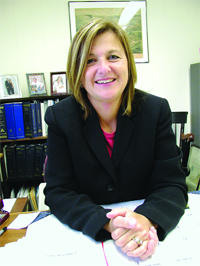
Departments

The following is a compilation of recent lawsuits involving area businesses and organizations. These are strictly allegations that have yet to be proven in a court of law. Readers are advised to contact the parties listed, or the court, for more information concerning the individual claims.

HAMPSHIRE SUPERIOR COURT

Quincy Mutual Fire Insurance Co.
a/s/o Mary Lakowsky v. Donald Lakowsky d/b/a One Source Electric
Allegation: Defendant’s breach of contract caused extensive fire damage to plaintiff’s insured dwelling: $114,714
Date Filed: Jan. 27

Energy East Solutions Inc. v. Bioshelters Inc.
Allegation: Breach of contract — Failure to pay for services: $29,631
Date Filed: Jan. 31

SPRINGFIELD DISTRICT COURT

Home Lumber Co. Inc. v.
Richard A. Neis, Jr. a/k/a Rick Neis d/b/a Pioneer Valley Construction
Allegation: Breach of contract — Failure to pay for supplies: $15,941.12
Date Filed: Feb. 9

Medforce Inc. v.
Northampton Healthcare Assoc. Inc. d/b/a Northampton Rehab and Nursing Center
Allegation: Breach of contract — Failure to pay for services: $23,007.60
Date Filed: Feb. 13

HAMPDEN SUPERIOR COURT

D.A. Sullivan & Sons Inc. v.
Young Women’s Christian Association of Western MA
Allegation: Breach of contract — Failure to pay for goods and services: $100,305.73
Date Filed: Feb. 9


Uncategorized

Just when you thought it was safe to put HIPAA aside, another deadline looms just around the corner.

The privacy rule of the Health Insurance Portability and Accountability Act (HIPAA) became effective for most health care providers, health care clearinghouses, and health plans on April 14, 2003. Now, three years later, those health plans that had to comply with the HIPAA privacy rule by April 14, 2003 will need to send a notice to its members by April 14, 2006 of the availability of its Notice of Privacy Practices.

Defining Privacy

The privacy rule protects health information from being disclosed without the individual’s authorization in most instances. There are several exceptions. These exceptions include a disclosure that must be made by the health care provider or the health plan for 1) treatment (i.e. a doctor may disclose an individual’s health information to another health care provider), 2) payment (i.e. a doctor may disclose health information to obtain payment from the health plan), or 3) health care operations (i.e. a health plan may disclose health information to its attorney when defending a claim for denial of coverage).

HIPAA allows disclosure of health information in other limited instances such as when: there is a threat to health or safety; the disclosure is needed to comply with legal duties; a government agency enforces state or federal regulations; the disclosure is needed during judicial and administrative proceedings, etc. These exceptions have additional safeguards that prevent unnecessary disclosures. Health care providers, health care clearinghouses, and health plans must provide a notice to the individual about how and when certain disclosures may occur. This notice is called the Notice of Privacy Practices.

Giving Notice

The Notice of Privacy Practices is a list of how the health plan will use and protect the patient’s health information. An individual has a right to adequate notice of the health plan’s legal duties with respect to the individual’s health information. The health plan must provide notification to the individual through the Notice of Privacy Practices.

A health plan is defined under HIPAA as an individual or a group plan that provides or pays the cost of medical care. Examples of health plans include employee benefit plans, health insurance companies, health maintenance organizations, nursing home insurance companies, Medicaid, Medicare, and state child health plans. Under HIPAA, these organizations had to send an initial Notice of Privacy Practices to their enrollees by April 14, 2003. Thereafter, the health plan must notify individuals at least every three years of the availability of the Notice of Privacy Practices and how to obtain it. If you are responsible for an entity that must comply with the privacy rule, now is a good time to re-examine the entity’s Notice of Privacy Practices and make any revisions that might be needed. The following is a review of the requirements for the Notice of Privacy Practices.

The Notice of Privacy Practices must have a header that states “THIS NOTICE DESCRIBES HOW MEDICAL INFORMATION ABOUT YOU MAY BE USED AND DISCLOSED AND HOW YOU CAN GET ACCESS TO THIS INFORMATION PLEASE READ IT CAREFULLY.” It also must contain a description and one example of the disclosure of health information for treatment, payment, and heath care operations and a description of other purposes that HIPAA permits the health plan to disclose health information without the individual’s written authorization.

The Notice of Privacy Practices must contain a statement that other uses and disclosures will be made only with the individual’s written authorization and that the individual may revoke such authorization to the extent that it has not been relied on.
Additionally, if the entity intends to use the individual’s health information for appointment reminders, information about treatment alternatives, or other health-related benefits and services that may be of interest to the individual, raising funds, disclosure to the plan sponsor (i.e. employer), then the Notice of Privacy Practices must have individual statements that specifically explain that these disclosures may occur.

The Notice of Privacy Practices must also describe the individual’s rights and how the individual may exercise these rights. In this respect, the notice must contain statements that the individual has a right to: 1) place restrictions on the disclosure of health information but that the health plan is not required to agree to a requested restriction; 2) receive confidential communications of health information; 3) inspect and copy his or her health information; 4) amend his or her health information; 5) receive an accounting of disclosures, and 6) request and receive a paper copy of the Notice of Privacy Practices.

Furthermore, the Notice of Privacy Practices must contain statements that the health plan is required by law to maintain the privacy of the individual’s health information and provide notice to the individual of its legal duties and privacy practices. The document must also explain that the health plan is required to abide by the terms of its Notice of Privacy Practices currently in effect. The health plan must describe how it will provide a revised notice, if there is a change in the health plan’s privacy practices. Also, if the health plan intends to apply a change to the health information that was created prior to a revised notice, the Notice of Privacy Practices must reserve the right to change the terms of its notice and to make the new notice provisions effective for all health information that it maintains.

Other mandatory statements include: the name or title and telephone number of a person or office to contact for further information or to file a complaint; how to file a complaint with the Secretary of Health and Human Services; and the date on which the notice becomes effective, which cannot be earlier than the date on which the notice is printed or published.

If the health plan, health care provider, or health clearinghouse makes a material change to either its uses or disclosures, the individual’s rights, the health plan’s legal duties, or other privacy practices, the Notice of Privacy Practices must promptly be revised to reflect the change.

A material change may not be put into practice before the effective date of the revised notice. If there is a material revision to the Notice of Privacy Practices, the entity must provide a revised Notice to individuals within 60 days of the material revision.

Sticking to the Plan

A health plan must provide a Notice of Privacy Practice to each new enrollee. The health plan satisfies the notice requirement by providing the Notice to the named insured of a policy. If a health plan has more than one Notice of Privacy Practice, it must provide the Notice that is relevant to the individual or other person who requests the Notice.

A group health plan that provides health benefits only through an insurance contract with a health insurance issuer or HMO and receives or creates health information, summary health information, or information on whether the individual is participating in the group health plan, must maintain a Notice of Privacy Practice and provide the notice to the individual upon request. A group health plan that provides health benefits only through an insurance contract with a health insurance issuer or HMO and does not create or receive health information is not required to maintain or provide a Notice of Privacy Practice. Both of these types of group health plans are exempt from providing notice every three years.

It is prudent to review your Notice of Privacy Practices on a routine interval to be sure it accurately reflects your entity’s information. The entity will need to revise its Notice of Privacy Practices if the entity moved to a different location, merged with another entity, changed ownership, changed privacy practices, designated a new contact person for HIPAA privacy issues or made other significant changes.

Minding Your Business

If your business is a health plan, you need to provide notice to enrollees by April 14, 2006 of the availability of your Notice of Privacy Practices. It is important to have a Notice of Privacy Practices that contains the correct information for the entity. The penalties for HIPAA violations can amount to thousands of dollars per incident.
Don’t be caught off guard.

June M. Sullivan, Esq. is an attorney with the Hartford-based firm Halloran & Sage LLP specializing in health care law, defense of health care providers, risk managment, and HIPAA compliance; (860) 241-4077.

Departments

Business Confidence Continued to Erode in January
BOSTON — The Associated Industries of Mass. (A.I.M.) Business Confidence Index lost 1.9 points in January to 54.7, a third consecutive loss that has left the monthly index at its lowest point since November 2003. There are rising concerns among employers about economic conditions in the state, especially as national growth appears to be weakening, according to Raymond G. Torto, co-chair of A.I.M.’s Board of Economic Advisors and Principal, CBRE Torto Wheaton. Torto added that employers surveyed were somewhat more positive about the situations of their own operations in the face of the slowdown. Confidence was off in January among both manufacturers and other employers. Manufacturers were on balance negative in their assessment of current and prospective conditions within the state, and expect national conditions to deteriorate as well. Readings were somewhat weaker outside Greater Boston, where confidence has declined in five of the last six months. Large employers were more positive than others on most questions. Rising energy costs, interest rates, and health insurance premiums erode both consumer and business confidence. The monthly survey of A.I.M. member companies across the state asks questions about current and prospective business conditions in the state and nation, as well as for their respective organizations. Readings above 50 on the 100-point scale indicate that the state’s employer community is generally optimistic, while a reading below 50 reflects a negative assessment of business conditions.

Five-Year Watershed Action Plan Underway
WEST SPRINGFIELD — The Pioneer Valley Planning Commission (PVPC), in partnership with the Westfield River Watershed Association and ESS Group Inc., has been awarded a contract under the Executive Office of Environmental Affairs to develop a five-year watershed action plan for the Westfield River. Created by watershed partners, the action plan will outline various issues and priority areas over a five-year period, charting a course of action for state agencies, watershed communities, and other decision makers within or related to the watershed. A steering committee is currently being formed to guide development of the action plan. Current members include The Nature Conservancy, the Westfield River Wild and Scenic Advisory Committee, Massachusetts Department of Environmental Protection, Mass. Department of Agricultural Resources, UMass Amherst and the Massachusetts Department of Conservation and Recreation. In addition, each of the 28 communities in the watershed has been asked to appoint a representative to the steering committee. A series of three public forums will be conducted this spring to solicit public comment and feedback on the plan. For more information, contact PVPC Senior Planner Anne Capra at [email protected] or (413) 781-6045.

Public Input Needed Online for Update-Use Plan on Land-Use Plan
WEST SPRINGFIELD — The Pioneer Valley Planning Commission invites public input via an online survey in the development of Valley Vision 2, the update of the region’s land use plan. Valley Vision 2 maps out a vision for smart growth in the Pioneer Valley based on more compact forms of development in and around existing community centers and preserved open space in outlying greenbelts. Public opinion is vital to developing this update, and PVPC relies on participation by citizens throughout the region in shaping the future vision of its landscape. To read the draft plan and take the survey, visit www.pvpc.org. For more information, contact Chris Curtis at the PVPC, (413) 781-6045,
or [email protected].

Mass. Hospitals Voluntarily Post Staffing Plans
BURLINGTON — Massachusetts hospitals delivered on the “Patients First” pledge beginning Jan. 27 to voluntarily post their staffing plans for public viewing. Through a Web site, www.patientsfirst ma.org, and notices in hospitals, consumers can now find the number and type of caregivers assigned 24/7 throughout each hospital in the state. A special consumer brochure, “It Takes A Team,” is also available at every hospital and explains the many professionals involved in patient care. The staffing plans that are posted on-site in each hospital and on the web will provide an overview of the staff available in each hospital unit, including RN’s and allied health professionals. In addition to the staffing plans, hospitals will document the quality of their care using a common set of nationally recognized measures. A pilot test of some of those quality measures is now underway, under the supervision of a team of leading patient care experts. The quality reports on all hospitals should be available by the end of this year.

Survey: Most Downsized Execs Anticipated News
HOLYOKE — The majority of recently downsized executives polled weren’t surprised to find themselves in career transition, according to a survey of 1,202 outplaced managers by Lee Hecht Harrison. Nearly 80% of executives anticipated their organization’s downsizing, and 57% weren’t surprised to learn they were among those to be laid off. Additionally, 35% of respondents said they had been downsized before and 65% had survived a previous downsizing with their most recent or prior employer. The good news for outplaced employees is that a significant number have become savvy about the changing world of work and have taken steps to ensure their future employability. For example, within the two years prior to their downsizing, 57% of respondents had updated their resumes, half pursued some form of career or skill development, 46% actively maintained their networks, and 44% explored other employment options. Lastly, one reason respondents had generally positive impressions of how their former employers handled their downsizings could be that they had received outplacement services.

Ashe: Housing Market Will Remain Strong in 2006
SPRINGFIELD — Residential real estate once again was the backbone of the U.S. economy last year, and in Hampden County, 2005 was statistically similar to the record-breaking year of 2004, according to Donald E. Ashe, Hampden County Register of Deeds. The number of deeds recorded in 2005 was only 0.7% less than the previous year. The total amount of money collected in 2005 did, however, increase by 3.6% over the prior year. The total number of documents recorded during 2005 was 122,837 and the amount collected from fees was $22.2 million. The most noteworthy change from 2004 to 2005 was the substantial decrease in attachments and foreclosures, according to Ashe. He predicts that the area housing market is in the process of “changing from record sales and double-digit price increases to a more stable condition.” Overall, Ashe said that the fundamental conditions in the housing market are strong and real estate activity will remain healthy in 2006. In other news, Ashe reported that the satellite office in Westfield completed its first full year of operation and collected more than $1.2 million in revenue and recorded more than 10,000 documents.

Uncategorized

Pedro Caceres says today’s businesses are — or should be — in a constant state of transformation.

“There is no time to rest,” said Caceres, vice president of Operations for East Longmeadow-based Hasbro Games. “That’s because the competition doesn’t just come from the company across town, but from companies around the world.”

This state of heightened competition, and the need for companies to respond to it, provided ample motivation for Caceres to step forward and assume a lead role with what is being called the Division of Business Excellence within the Affiliated Chambers of Commerce of Greater Springfield.

The DOBE, as it’s also called, is a mostly volunteer-led agency and the successor group to a membership-based organization known as the Springfield Area Council for Excellence. SPACE, as it was called, operated for more than a dozen years before ceasing operations last spring in favor of the new model for a business excellence division.

The ensuing months have been spent putting together a product and an operating strategy, said DOBE Executive Director and ACCGS Vice President Deb Boronski, who told BusinessWest that the group will roll out its ambitious plans at the chamber’s annual spring trade show on April 5 at the MassMutual Center.

Offering a preview, Boronski, Caceres, DOBE’s chairman, and other members of the group’s advisory board, said the new business excellence division will endeavor to fill the large void left by the demise of SPACE and, in so doing, help companies effectively compete in an increasingly global marketplace.

“There is a definite need for an organization that will promote business excellence and provide resources for area companies,” said Jeff Glaze, president of Westfield-based Decorated Products, who will lead the DOBE’s Business Process Improvement Team. “That’s why we came together … to address that need.”

John Maybury, president of East Longmeadow-based Maybury Material Handling and leader of DOBE’s Business Transformation team, agreed. He told BusinessWest that SPACE was created to help area businesses — and the region as a whole — remain competitive. It carried out that assignment through roundtables, assistance with implementation of specific excellence programs such as Kaizen, Six Sigma, and others, and creation of the Business Excellence Award, which provided a platform from which to promote excellence and show how area companies were achieving it.

The DOBE wants to do all that, said Maybury, but in a different format, one designed to reach a much broader audience.

Indeed, while SPACE tended mostly to its members — which numbered over 100 at its height — the DOBE will provide services and referrals for every company in the region, he said.

“We need to figure out how the Pioneer Valley and the Northeast as a region can stay competitive as we face wage issues, insurance issues, energy issues, and pressure from competition around the world,” he said. “We can do that by collaborating and working together to solve common problems.”

BusinessWest looks this issue at how the DOBE will carry out that challenging assignment.

Business Plan

Caceres told BusinessWest that after he attended an early meeting staged to outline what the new business excellence division would do and how it would do it, he came away impressed with the chamber’s intentions and desire to continue the work carried out by SPACE.

But he thought the DOBE lacked needed structure, and he set out to provide some. He was joined by Maybury and Glaze, also long-term SPACE members, and, working with Boronski, they have spent the past several months setting a tone and an agenda for the division.

The first step was creation of an advisory board, which includes several area business leaders. That group then went about generating a portfolio of events and activities that would enable the DOBE to meet its primary goal — becoming an effective resource for business owners who recognize the need for continuous improvement and need help to achieve it.

The DOBE will provide that help on a number of levels, said Maybury. First, it will conduct informational programs on specific issues and products in the broad realm of continuous improvement. It will also work to create an environment in which companies can share knowledge and experience in ways that make the region as a whole more competitive. The excellence division will also link business owners with consultants who will provide assistance on a fee-for-service basis.

Prospective consultants were being interviewed by the advisory board earlier this month, said Boronski, noting that a list of “excellence associates,” as they will be called, will soon be finalized. These individuals will provide direct support for implementation of a number of business excellence strategies, including lean manufacturing, Kaizen, the Japanese continuous improvement model, Six Sigma, various customer-satisfaction-improvement efforts, and others.

Lastly, the group will work to reintroduce and reinvigorate the Pioneer Valley Business Excellence Award, which was last awarded in 2004. Maybury, whose company won in the manufacturing category in 2002, described the process of applying for the award as a valuable learning experience.

“It helped make us a better company because we learned a lot about ourselves,” he said, referring to the review process carried out by a team of judges. “It was an awesome experience for everyone involved. We want more companies to benefit as we did.”

Entries for the award had dwindled in recent years, perhaps because of the time-consuming nature of the process, said Boronski, adding that organizers will seek to simplify it in an effort to prompt greater participation.

Re-establishing the PVBEA will be one of the duties assigned to the DOBE’s Business Transformation unit. That branch will have a number of sub-teams, including ones focused on small businesses, research, development, and innovation, and strategic sales and marketing. The Business Improvement Unit, meanwhile, will have teams focusing on lean enterprise, quality systems, “people development,” and top management.

The broad mission for all the teams is to promote the sharing of resources, said Glaze, noting that this is a key ingredient in efforts to enable the region to remain competitive.

“Sharing experiences and collective knowledge is important — that’s how all of us can get better at what we do, whether we’re in manufacturing or the service industry,” he explained. “The whole, in this case our combined knowledge, is truly greater than the sum of the parts.”

A long-time SPACE member, Glaze said that group was instrumental in helping his company, which produces nameplates, decals, and other promotional products, to incorporate continuous improvement programs and thus more effectively compete with competitors in China and elsewhere. But he said the membership fees charged by the group often served as a barrier, especially for small companies.

“What we’re doing is removing that barrier,’ he said, “and, in the process, creating opportunities to make programs available to all chamber members.”

Getting in Gear

Reflecting on the work performed by SPACE, Caceres said it was invaluable in helping companies operate in that state of continuous transformation he described.

“SPACE may be gone, but the need is still there and it’s real,” he said, explaining his commitment to the DOBE. “Comp-anies are in permanent need to re-examine how to improve, and it’s our mission to help them do it.”

For information on the Division of Business Excellence, contact Boronski at (413) 755-1309, or[email protected]

George O’Brien can be reached at[email protected]

Departments

Paul Petell

Chase, Clarke, Stewart & Fontana Insurance Agency Inc. in Springfield announced that Paul P. Petell II, formerly of the Paul Petell & Teece Insurance Agencies Inc., has joined its staff.

•••••

Benefits Consulting Group, LLC in Holyoke announced the following:
• Susan R. Retchin has completed the certification process through the American Society of Pension Professionals and Actuaries to earn her designation of Qualified 401(k) Administrator (QKA), and
• Steve C. Vernale has completed the certification process through the American Society of Pension Professionals and Actuaries to earn his designation of Qualified 401(k) Administrator (QKA).

•••••

James A. Russell, Chief Executive of American Exterminating Co. of Springfield, will receive the Barlett W. Eldridge Award from the New England Pest Management Association. Russell’s grandfather, Abraham Russell, started the company in 1913. His father, Mathew Russell, also operated the business and now his son, Robert Russell, is active in the daily operations.

•••••

Sue Rheaume of Landmark Realtors in Hampden has earned the designation of Graduate Realtor Institute by the Massachusetts Association of Realtors.

•••••

Matthew B. Hedenberg has been named Informational Technology Manager for OFS in Sturbridge.

•••••

Maryanne Rooney

Maryanne Rooney recently has been named Vice President for Institutional Advancement at Elms College in Chicopee. An Elms graduate, Rooney had been working at St. Mary’s High School in Lynn as Director of Development and Alumni Relations.

•••••

Byron S. Bullock has been named Associate Vice Chancellor for Student Affairs and Campus Life at UMass Amherst. Bullock, who is currently Dean of Enrollment Services at St. Augustine’s College in Raleigh, N.C., will assume his new post on April 2. He will oversee the new Center for Student Development (CSD), which coordinates programs and services aimed at promoting community and multiculturalism across campus. The CSD works closely with academic affairs units to develop students’ social, scholarly and leadership skills and improve student retention and success.

•••••

Glenn O. Steiger, a California utility executive with more than 35 years of experience in all facets of the electric power industry, has been named General Manager of the Mass. Municipal Wholesale Electric Company (MMWEC) in Ludlow. The MMWEC is a nonprofit, joint-action agency for public power in the state. Steiger will be responsible for the daily operations of the MMWEC, including management of administrative and plant operations in Ludlow, implementation of board policies, and interaction with the organization’s member and project participant utilities.

•••••

David J. Cameron, PWS, Senior Environmental Scientist, of Tighe & Bond Inc. in Westfield, recently became the company’s first Certified Wildlife Biologist (CWB). The CWB designation is granted by the Wildlife Society, a nonprofit scientific and educational organization representing wildlife professionals in conservation and resource management. Cameron has 13 years of wetlands, waterways, and rare species regulatory experience, and provides project review services for many of the town conservation commissions in Massachusetts.

•••••


R. Patricia Grenier

R. Patricia Grenier, CFP, CSA with BRP/Grenier Financial Services of Springfield, has achieved the designation of Certified Financial Planner (CFP). The designation is awarded by the CFP Board of Standards Inc. to individuals who meet educational, examination, experience, and ethics requirements.

•••••

Girl Scouts of Pioneer Valley recently announced the winners of the 2006 Women of Distinction award as follows:
• Vera Baker, Director of Visual and Performing Arts, Springfield Public Schools;
• Dr. Mary Anne Herron, Director, The Harold Grinspoon Charitable Foundation;
• Sr. Mary T. Quinn, President, Sisters of Saint Joseph;
• Marilyn Spedding, Educator, Springfield Public Schools, and
• Nancy Urbschat, President, TSM Design.
The women were chosen for their commitment, outstanding leadership and inspiration, and as exceptional role models for girls and young women.

•••••

Linda S. Rotti, a Real Estate Sales Manager at Jones-Town & Country Realty in Amherst, has been named President of the Realtor Association of Pioneer Valley for a one-year term. Rotti will be responsible for implementing the Association’s new strategic plan with includes an emphasis on education and government affairs.

•••••

Wallace W. Altes has been appointed to the Board of Directors of Berkshire Hills Bancorp Inc., the holding company for Berkshire Bank. He becomes the first Albany (N.Y.) Capital Region resident to serve as a Director of the Pittsfield-based financial institution. He is currently Executive-in-Residence at the Graduate College of Union University in Schenectady, N.Y.

•••••

Sales Agent Joyce L. Korona has joined Carlson GMAC Real Estate in its Westfield office.

•••••

St. Germain Investment Management announced the following:
• Paul J. Valickus has obtained the Certified Financial Planner designation from the Certified Financial Planning Board of Standards, and
• Brendon C. Hutchins has obtained the Certified Financial Planner designation from the Certified Financial Planning Board of Standards.

•••••

Berkshire Bank in Pittsfield announced the following:
• Valerie Brosseau has joined the bank as Manager of the Chicopee branch at 1339 Memorial Dr.;
• Terrie A. Lucaroni has joined the bank as Senior Probability Analyst, and
• Lisa A. Lemon has been promoted to Account Executive for Insurance Sales in the bank’s affiliate Berkshire Life Insurance Group Inc.

•••••

Srisubha Gadey has joined the accounting firm of Kostin, Ruffkess, Themistos & Dane LLC in Springfield.

•••••

Fuss & O’Neill’s West Springfield office announced these promotions:
• Eric Bernardin has been named an Associate and promoted to Project Director in the Civil Engineering unit;
• Kurt Mailman has been named Senior Project Manager in the Environmental Planning and Infrastructure unit;
• Gregory Russell has been named Engineer II in the Civil Engineering unit;
• Kyle Spear has been named Engineer II in the Facility and EHS unit, and
• Rebecca Budaj has been named Hydrogeologist II in the Environmental Assessment and Remediation unit.

•••••

Big Y Foods Inc. in Springfield announced the following:
• Thomas Morin has been appointed Food Safety Auditor;
• Theresa Jasmin has been appointed Senior Accountant;
• James Billingsley has been appointed Staff Accountant;
• Marybeth McNamara has been appointed Assistant Food Service Sales Manager, and
• Jennifer Eichorn has been appointed Store Merchandising Assistant, Eastern Zone.