
Home Posts tagged Technology (Page 36)
Sections Supplements
Diane Brunelle

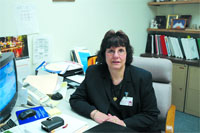
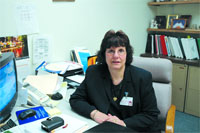
Diane Brunelle, vice president of Patient Care Services at Noble Hospital, says the legislation that passed in the House is not a true compromise.

A landslide vote in the House supporting nurse-staffing limits in Massachusetts hospitals, has supporters cheering and opponents reeling … many didn’t see this development coming. But regardless of which side of the debate they fall on, health care professionals across the Commonwealth are remobilizing their awareness efforts as the issue moves forward in the Legislature.

It came as a surprise to many health care professionals.

On May 24, the Mass. House of Representatives voted 133 to 20 to set mandatory nurse staffing levels at hospitals.

The vote was a coup for the Mass. Nurses Assoc. (MNA), the largest union of registered nurses in Massachusetts, which originally drafted the bill. However, several major organizations in the Commonwealth have publicly opposed nurse-staffing limits, and openly supported another piece of legislation called the Patient Safety Act, submitted by state Sen. Richard Moore (D-Uxbridge) for close to three years now.

Efforts to increase awareness and knowledge of both bills, however, must begin anew with proof of overwhelming support in the House. No date has been set for a Senate vote on either bill, and it is still unclear whether any votes will take place before the current legislative session closes in July; however both opponents and proponents of staffing limits agree that the House vote is a major factor in the outcome of this potentially landmark legislation.

“A lot of bills will die once the session ends,” said Stephen Bradley, vice president for Government and Community Relations for Baystate Health. “There are about seven weeks left, though, and that’s a long time in the legislative world. I’m sure there will be attention paid to this issue given the considerable pressure from both sides.”

If passed into law, the nurse staffing ratios bill (its proper name is An Act Ensuring Patient Safety) would make Massachusetts only the second state in the nation to set government-mandated limits on how many patients a nurse can care for during a shift. California set similar limits in 1999; 14 other states have similar legislation pending. The ratios, which have yet to be determined, would be put into place by 2008 in teaching hospitals such as Baystate Medical Center and by 2010 at community hospitals.

Conversely, Moore’s bill would attempt to address staffing issues, in particular the widespread nursing shortage, through a state-run oversight process of hospital staffing patterns, guidelines to bolster nurse faculty at state colleges and universities, and the creation of the Mass. Center for Nursing, which would require a $30 million appropriation, among other measures.

Legislative Landslide

Sharon Adams-Babineau RN, vice president for Patient Care Services at Mercy Medical Center, said she’s seen the breadth of the opposition to staffing ratios firsthand at all levels of her own organization, and was taken aback by the endorsement of staffing limits by House leadership last month.

“Only one in five nurses in the Commonwealth support this bill,” she said. “It wouldn’t have been so much of a surprise if the vote hadn’t turned into such a landslide.”

Adams-Babineau added that with such strong support of the Patient Safety Act among Massachusetts hospitals, particularly in Western Mass., many felt the staffing-limits legislation would easily fail on the House floor. Indeed, supporters of the Patient Safety Act have been both visible and vocal throughout the life of the patient safety debate on Beacon Hill.

In a particularly visible move, the CEOs of every hospital in the Commonwealth signed a letter to legislators opposing the nurse staffing ratios bill, which was delivered the day before the May 24 vote in the House. Sixteen nurse, health care, and business organizations, including the Mass. Hospital Assoc. (MHA), the Mass. Organization of Nurse Executives, the Mass. Taxpayers Foundation, the Mass. High Technology Council, and the Mass. Assoc. of Registered Nurses, also signed a letter opposing the measure.

And locally, the Western Mass. Economic Development Council and the Affiliated Chambers of Commerce of Greater Springfield both oppose the legislation, in addition to nine of the area’s hospitals – Baystate Medical Center, Franklin Medical Center, Holyoke Medical Center, Mary Lane Hospital, Mercy Medical Center, Providence Behavioral Hospital, Noble Hospital, and Wing Memorial Hospital.

Those organizations joined forces last year to initiate marketing and awareness campaigns surrounding the issue of nurse ratios and to support the Patient Safety Act. Dubbed the Western Mass. Hospitals Coalition, the group has become one of the Commonwealth’s most active forces in opposition to nurse staffing limits, and includes hospitals with both unionized and non-unionized RN populations.

“Many, including nurses, have been vocal in their opposition to staffing ratios,” said Adams-Babineau, “but I suppose that put us in a sort of nirvana, thinking that this wouldn’t happen.

“Through the coalition,” she continued, “we feel that we’ve done a great deal to educate the public on what ‘staffing limits’ really means. But what this vote says to me is that there is not necessarily a true understanding out there of the potential impact of nurse-to-patient ratios.”

Agreeing to Disagree

The legislation passed in the House represented a modified version of the original legislation, which the MNA calls a ‘compromise bill.’ Among other aspects, the MNA states that the new bill directs the Department of Public Health to undergo a regulatory process utilizing research, data, patient outcome information, and expert testimony to develop safe standards and limits.The measure also includes nurse faculty and recruitment initiatives, prevents understaffing of other critical health care workers, including licensed practical nurses and unlicensed assistive personnel, and places these workers in the formula DPH will create to adjust nurse staffing based on patient needs.

“Everybody wins here; hospitals, nurses, and most important of all, the patients,” said Beth Picknick RN, president of the MNA, referring to the revised bill. “The 23,000 members of the MNA join with the 104-member Coalition to Protect Massachusetts Patients in applauding the efforts of all involved to reach this compromise and in doing so, address this important patient safety issue.”

Still, most nurse and hospital administrators and others who oppose nurse-staffing limits didn’t budge in their stance, despite changes to the bill’s verbiage. Further, the term ‘compromise’ was also called into question following the overwhelming House vote.

In a statement released by the Mass. Hospital Assoc. (MHA) following the House vote, the organization urged legislators to reject the “micromanagment” of health care in the Commonwealth.

“We would like nothing more than to reach a mutually acceptable agreement with the MNA over the issue of nurse staffing,” the letter stated. “But, ultimately, we could not compromise … we believe that the entire care-giving team must be included in the development of flexible staffing guidelines. The union, by contrast, believes government should set RN-only ratios.”

Bradley added that the MHA’s position is not a radical one; national standards for quality of health care delivery are measured by the number of hours spent with a patient by all clinical staff, not just registered nurses.

“The measure of clinical hours should refer to the total care-giving team,” he said. “We’re simply asking that the national norms be applied here, as well as an acceptable definition of ‘overtime.’”

Diane Brunelle RN, vice president for Patient Care Services at Noble Hospital, echoed the MHA’s sentiments and clarified that while some aspects of the bill were modified to more closely resemble the Patient Safety Act, the major sticking points regarding staffing limits remain unchanged.

“The current revision that went through in the House is not a compromise,” she stressed. “The language is still there that talks about limits, and we feel that the decision should rest with nurse managers. Ratios could also have a profound effect on community hospitals – the teaching hospitals will have to recruit nurses first, leaving a shallow pool for us to work with to prepare for 2010. That could put community hospitals in some dire straits, and this region especially cannot afford to lose any facilities.

“Mandates are also not going to cure the nursing shortage problem,” she added. “What we need is to get more faculty into the nursing programs to accommodate the growing number of applicants, and create a larger pool of well-educated nurses.”

Fair and Flexible?

Janice Kucewicz RN, senior vice president and chief nursing officer at Wing Memorial Hospital, suspects that confusion in the Legislature, or at least a lack of complete information regarding staffing limits, led to the lopsided nature of the House vote.

“I think the point being missed here is that care is provided by a team, not just by the RNs,” she said. “There is a whole pool of care-providers who are not even considered through the staffing limits bill, and to best utilize their talents, we need to be able to work within flexible guidelines.”

Kucewicz added that that she too sees the staffing limits bill doing little to address the ongoing nursing shortage.

“There is a notion out there that these staffing ratios will create jobs for nurses, and bring in nurses from private practices and other facilities to our acute care hospitals,” she said. “But it’s a misnomer that there are nurses out there waiting in the wings to take these jobs. Nursing schools only have so many open slots, and currently applicants are being turned away. All ratios will do at this point is contribute to a vicious cycle.”

While the futures of both patient safety bills remain unclear, work will continue through the Western Mass. Hospitals Coalition and other entities to increase understanding of the various components of both pieces of legislation involved, with particular emphasis on the bills’ potential effects on the nationwide nursing shortage.

“We won’t give up our cause,” said Brunelle. “The coalition will continue to work to do the most to bring nurses to the bedside.”

Jaclyn Stevenson can be reached at[email protected]

Departments

The following business incorporations were recorded in Hampden and Hampshire counties and are the latest available. They are listed by community.

AGAWAM

Concept Builders Inc.,
1775 Main St., Agawam 01001.
Carlo P. Donavita, 68 Old
Feeding Hills Road, Westfield
01085. A construction company.

Namking Garden Inc.,
115 Southwick St., Agawam
(Feeding Hills) 01030. Kam
Kay Tang, 70 Southwick St.,
Agawam (Feeding Hills)
01030. Restaurant.

Root Technology Inc.,
188 Pine St., Amherst 01002.
Muthoni Magua, same.
(Nonprofit) To provide access
to computer technology to
African youth through
donations of computers and
software to schools.

Belchertown Flag Football League Inc.,
109 Howard St.,
Belchertown 01007. Josh
Kusnierz, same. (Nonprofit) To
create a framework for boys
and girls in Western Mass. to
play flag football games, etc.

BLANDFORD

Music Literacy Inc.,
112 North Blandford Road,
Blandford 01008. Nina Dawe,
same. (Nonprofit) To increase
awareness of the value of
musical educational programs
and technology, fund research
into new ways of teaching
music and into music and the
brain, etc.

CHICOPEE

EJ’s Pizza Cafe Inc.,
140 1/2 Exchange St., Chicopee 01013.
Evelyn Robinson, 57 Felix St.,
Chicopee 01020. Food service.

Sky Dragon Restaurant Inc.,
1995 Memorial Dr., Chicopee
01020. Jin Min Li, same.
Restaurant.

EASTHAMPTON

KSG. Inc.,
121 Holyoke St.,
Easthampton 01027. Scott D.
Akers, same. Pizza restaurant.

HOLYOKE

Ministerio Musical Un Nuevo Renacer Inc.,
14 Quirk Ave,
Holyoke 01040. Edgardo
Santana, same. (Nonprofit) To
make a difference in Christian
communities.

Pereira Mortgage Inc.,
82 Nonotuck St., Holyoke 01040.
Jesus M. Pereira, same.
Mortgages, first and second
liens and construction loans.

INDIAN ORCHARD

No Limit Investment Inc.,
17 Dunhill Ave., Indian Orchard
01151. David Sims, same. Real
estate purchase, improvement
and sales/rental.

LONGMEADOW

Hugh O’Donnell Metallurgical Enterprises Inc.,
389 Converse St.,
Longmeadow 01106. Hugh
O’Donnell, same. To provide
consulting and other services
in the field of metallurgy and
related fields.

LUDLOW

Delisle Management Inc.,
26 Chadbourne Ave., Ludlow
01056. Douglas M. Delisle,
same. Business management
services, coordinating retail
food sale entities.

Hair Gallery & Day Spa Inc.,
345 Holyoke St., Ludlow 01056.
Ann M. Roberts, 424 West St.,
Ludlow 01056. To own and
operate a beauty salon/spa.

PALMER

Computer Training of America Inc.,
1448 North Main
St., Palmer 01069. Thomas M.
Gingras, #2 Woodcrest Dr.,
North Oxford 01537. Computer
training and database
consulting.

Zin Food Corp.,
1432A Main
St., Palmer 01069. Alan R.
Aubin, 29 Highland St., West
Warren 01092. To carry on a
general restaurant, banquet and
catering business.

PLAINFIELD

Ravenwood Freedom Farm and Learning Center Inc.,
63 Hawley St., Plainfield 01070.
Saralinda Lobrose, 122 East
Main St., Plainfield 01070.
(Nonprofit) To provide
educational programs focusing
on the life sustaining
importance of human and
ecological diversity, farm,
nature, and arts-based
programming, etc.

SOUTHAMPTON

Opa Opa Brewing Co. Inc.,
162 College Highway, Southampton
01073. Antonios Rizos, 2 Geryk
Court, Southampton 01073.
Marketing, importing, exporting
and distribution of brewery
products.

RJM Landscaping Inc.,
33 Pomeroy Meadow Road,
Southampton 01073. Richard J.
Miller, same. Landscaping.

SPRINGFIELD

272 Worthington Street Inc.,
272 Worthington St.,
Springfield 01103. Paul V.
Ramesh, 935 Main St.,
Springfield 01103. Restaurant
and bar.

Dong Ting II Inc.,
19 Abbott St., Springfield 01118. Xiao
Ting Dong, same. Food service.
Harry Van Wart Painting Inc.,
160 Cambria St., Springfield
01118. Harry Van Wart, same.
Residential and commercial
painting.

Mason Square Veterans Association Inc.,
59 Tyler St.,
Springfield 01109. Richard
Horace Griffin, 252 King St.,
Springfield 01109. (Nonprofit)
To assist veterans and their
dependents access federal, state,
local and veterans benefits, etc.

NAOS Development Corp.,
100 Wait St., Springfield 01107.
Jae Wook Jee, 525 Hillside
Ave., Palisades Park, N.J.
06650. Bernal E. Ramirez, 100
Watt St., Springfield 01107,
registered agent. To engage in
the construction industry.

RBSGD Unlimited Inc.,
171 Belvidere St., Springfield 01108.
Grace Murray, same. To own
and operate a restaurant.

WESTFIELD

March for Christ — March for Life Inc.,
26 St. Paul St., Westfield 01085. Deborah Olive
Nilesmorgan, same. (Nonprofit)
To organize Christian marches,
gatherings and events for the
sole purpose of Christian
outreach ministry.

WILBRAHAM

Creative Woodworking Corp.,
995 Stony Hill Road,
Wilbraham 01095. Jim
Goodrich, same. Construction.

WEST SPRINGFIELD

Arena’s Fencing Inc.,
168 Windsor St., West Springfield
01089. Mark A. Arena, 127
Coyote Circle, Feeding Hills
01030. To install and deal in
fencing items.

United Charitable Foundation,
95 Elm St., West Springfield
01089. Dena M. Hall, same.
(Foreign corp; DE) To conduct
charitable activities.

Sections Supplements
Insurance Agency Owner, Alpaca Breeder Is part of the Region’s Fabric

Cindy Moulton St. George has always loved handling claims.

“That’s the most personal aspect of the insurance business,” she told BusinessWest. “It’s when they have a claim that people come to fully understand why they’re paying premiums — to protect their assets; it’s very satisfying work.”

Moulton St. George still gets to process the occasional claim, but she has myriad other responsibilities as president of Moulton Insurance Agency Inc., the business started by her father in 1952. Those duties include managing three offices — in Ware, Palmer, and West Brookfield — and the 13 employees staffing those locations. She’s also constantly surveying the insurance landscape, scouting possible acquisitions — the company has made several over the past few decades — and even monitoring the latest projections for the hurricane season due to start in a few weeks.

“It doesn’t look good for the Northeast,” she said, adding that the severity of a season’s storms, and the projections of same, will impact the price and availability of certain policies. “They’re saying that New England is due.”

And then, there’s the business of alpaca breeding.

It’s one of several specialty areas for the agency, and one that Moulton St. George has learned from the inside out; she and her husband, Roy, started breeding this cousin of the camel and the llama, native to South America, several years ago.

“It was a diversion from the insurance business and a good investment,” she said, adding quickly that it is not a hobby. Instead, it’s a sometimes-intense business with duties that range from tending to the animals to marketing to attending regional and national shows.

While insurance and alpaca breeding are in many ways worlds apart as business ventures, they have many important similarities, said Moulton St. George. She noted that both are largely referral-related and customer-service oriented businesses.

“To be successful at either, you have to take care of your clients,” she said, “That’s the bottom line.”

Policy-making Decisions

Moulton St. George started working in the family business as a teenager; her father would bring papers home from work for her to sort, alphabetize, and file. By her junior year in high school, she was working in the Ware office during vacations, doing more filing before eventually moving on to claims.

She told BusinessWest that her father had laid out succession plans that had her playing a lead role work for the company. Her affinity for the insurance business and desire to be her own boss facilitated the transition of the agency to her control in 1994; one of her brothers, Glen, now manages a real estate agency, Century 21 Moulton, also started by her father.

Moulton St. George remains one of the few female insurance agency owners in the region, status that still leads to a few awkward moments.

“When I first became the agent I was very young (mid 30s),” she explained. “I would go to conventions and people would ask, ‘who do you work for?’ I would say, ‘I’m the who.’

“It still happens on occasion,” she continued. “People will ask for the owner, and they’re a little surprised when I say, ‘that’s me.’”

Such episodes are becoming increasingly rare, because Moulton St. George’s name and rank are becoming well known within the insurance community — and within the Quaboag Valley area as well, where she serves in a number civic- and business-related capacities.

She currently serves as chair of the Business and Development Committee for Baystate Mary Lane, a fund-raising arm for the Ware-based health care provider, and is on the board of directors for the Ware Community Chest. In previous years, she has been heavily involved with the Quaboag Valley Chamber of Commerce.

“I’ve always felt a responsibility to get involved,” she said. “If you’re going to do business in a community, you have to find ways to give back — and there are many of them.”

Her primary mission, however, is to continually grow the 54-year-old family business, which is a challenging assignment at a time of change and, for some, turmoil in the insurance business.

Moulton St. George told BusinessWest that the landscape is constantly changing, with new competition, in the form of banks, and new technology, in the form of the Internet, to cope with.

Consolidation of the industry is ongoing, she explained, adding that she regularly receives inquiries about making — or becoming — an acquisition.
To survive and thrive in such an environment, she said, agencies must focus on customer service, develop strong relationships with carriers, and develop specific niches that can create opportunities in this market and, in some cases, well beyond.

Mouton has several such niches, she explained, listing as one example bed and breakfast operations. The agency has developed a solid working relationship with a carrier that writes policies for such businesses, said Moulton St. George, and, through the Internet and other marketing vehicles, she has fielded inquiries from across the country.

“We just got a call from Hawaii,” she said, noting that those searching for insurance online will be directed to the Moulton Web site by entering the key words bed and breakfast. “We’ve had inquiries from the Midwest, all over; it’s a good niche for us.”

Another is farms, and, more specifically, alpaca farms. They are growing in number, she explained, as the animal becomes more popular in this country and business opportunities — in the form of breeding operations — are created.

Moulton St. George and her husband were encouraged to pursue such an opportunity by someone already in the business, and eventually took the plunge, starting with two breeding females. They steadily grew their herd of Huacayas over the years — although they’ve recently downsized to nine — and have sold dozens to a growing legion of alpaca-breeding entrepreneurs.

And they’re insuring some of these ventures as well; the Moulton agency now has more than a dozen alpaca farms, scattered across the Northeast, as clients.

A Breed Apart

Moulton St. George told BusinessWest that alpaca hair is one of the finest fibers in the world, warmer than sheep’s wool and lighter in weight.

These qualities help explain the animal’s growing popularity and the emergence of alpaca breeding as an often sound financial investment.

By making such a move, she has put her name and her stamp on two successful businesses. And hardly anyone still asks who she works for.

George O’Brien can be reached at[email protected]

Uncategorized

Ellen Bemben says the talk is getting louder.

She was referring specifically to discussions taking place about the Greater Springfield region and its potential as a home for companies in the biotech and medical instruments fields, among others. There has been talk for some time, she acknowledged, but there is growing evidence that the talk will soon turn to action — and jobs.

“There are conversations that are going on that are more promising than ever before,” Bemben, the recently elected president of the Regional Technology Council (RTC) told BusinessWest. “But, in some ways, this area hasn’t really been discovered yet.”

Helping businesses in Boston, Cambridge, Worcester, and elsewhere navigate their way to the Pioneer Valley and the larger Knowledge Corridor — the region between Springfield and Hartford — is the informal job description for Bemben, who started her new assignment on May 3.

She brings with her more than two decades of work in the plastics industry — work that has taken her from New England to the Middle East — and confidence that the Springfield area can become the alternative, or “complement” (the word she prefers) to Boston and other higher priced areas.

“People are starting to look in this direction,” she said, referring to high-tech, medical device, and other technology-related ventures in the Boston market that may be looking for lower-cost alternatives. “I’m not talking about a long stare, but they are looking; we need to get them to look harder.”

BusinessWest looks this issue at how Bemben and the RTC intend to do just that.

Field Work

Bemben isn’t exactly new to the RTC and its broad mission.

She has been a member of the council’s board of directors for several years, and was actually one of the founders of its predecessor group, the Regional Technology Alliance (RTA). She was also the original chairperson of that agency’s Materials and Manufacturing Technology Network, or MMTN, one of three current networks, or clusters, that comprise the RTC.

Behind all those groups and acronyms is a movement, or desire to build a technology-related sector in Western Mass., said Bemben, who left a position as project leader and new-business development director for Enfield-based Specialized Technologies, formerly Springborn Laboratories, to steer the RTC.

She told BusinessWest she made that career move because she has seen a new energy within the RTC and its networks and what she considers tangible progress in the three main components to the task of building that technology base she spoke of — attraction, retention, and development of ventures in that sector.

“We’re trying to be as realistic as possible about the prospects of bringing more jobs to this region,” she said. “Do we think it can happen? We wouldn’t be wasting our time if we didn’t.”

Bemben is the third president of the RTC, following Humera Fasihudden, who was at the helm of the RTA when it changed its name and then became an affiliate of the Economic Development Council (EDC) in 2003, and her successor, Mamud Awan, who stepped down last summer. Bemben said she wants to build on the progress achieved by previous leaders and, overall, create more awareness and relevancy for the council.

“We’re a resource, but we’re also a partner with many different organizations and institutions in this area,” she said, listing everything from hospitals to community colleges to other economic development agencies. “Through those relationships, we can can build on a strong foundation for business attraction and growth in the region.”

Bemben brings a broad range of experience to the helm of the RTC. Prior to her stint with Specialized Technology Resources, she worked under contract for the government of Israel in successfully promoting its plastics industry to such companies as Gillette, GE Plastics, Elizabeth Arden, Johnson & Johnson, and Smith & Wesson. She has also worked for the General Polymers Division of Ashland Chemical, Nypro, and Everready Battery.

Bemben described the RTC as the technology arm of the EDC, and also as a “matchmaker,” linking companies with resources and tools to achieve growth. In that capacity, its role is to essentially maintain and grow the broad tech sector, which is comprised of businesses across several fields, including information technology/communications, clean energy, precision manufacturing, life sciences, health care, bioengineering, and medical device development and manufacturing.
The RTC, a non-profit organization that grew out of a grant originally awarded to UMass-Amherst, acts an umbrella organization with three neworks: MMTN, the BioEconomic Technology Alliance (BETA), and the Technology Enterprise Council (TEC).

The council is a membership-driven organization (the current number is just under 300) tasked with not only delivering new technology-driven businesses to the region, but also to help existing companies respond to changing conditions and a more global economy and remain competitive.

“In this environment, if companies don’t change, they’re going to go under,” she said. “We want to not only help companies stay afloat, but help them grow and get to the next level.”

As for attracting new companies — and jobs — to the region, Bemben said that assignment is multi-faceted, and it basically starts with building awareness of the region, its assets, and business success stories.

The Valley has always had a lower cost of doing business, especially when compared with Boston, Cambridge, or even Worcester, she said, but cost alone will not be enough. To lure businesses here, the region and its economic development leaders will have to provide evidence of a quality workforce, a strong higher-education infrastructure with a strong research component (in this case, UMass Amherst), and some examples of tech-related companies that are succeeding here.

The region has several, said Bemben, including Agawam-based MicroTest Laboratories, a pharmaceuticals manufacturer, Blackstone Medical, a Springfield-based company that has become a leader in development of spinal surgery implants and instruments, Marox Corp., the Holyoke-based manufacturer of medical devices, and many others.

“If they look, companies in Boston and elsewhere can see that we’re doing many of the things we’re doing,” she explained. “By building awareness of all that’s happening here, we can get people to look and talk about this region — and then do more than just talk about it.”

Under the Microscope

Turning talk into jobs and economic development is Bemben’s basic assignment at the RTC.

Like her predecessors in that role, she spoke about the region’s enormous potential as a home to technology related businesses in specific fields ranging from polymer science to pharmaceuticals manufacturing.

Turning that potential into reality is a work already in process, she explained. And that’s why the talk is getting louder.

George O’Brien can be reached at[email protected]

Uncategorized

The culinary field is booming, and local culinary arts students are heading into an industry with an unprecedented number and variety of career opportunities. While some still eye the restaurant kitchen, others are eagerly exploring options to cook for resort spas, assisted living communities, and even sports teams.

The lunch menu at Branford Hall Career Institute in Springfield last week was an extensive one.

Chicken Francaise was the main course, but spinach and Caesar salads were also available, in addition to stuffed Portobello mushrooms, Spanish rice, and two desserts: cheesecake and peanut butter pie.

Prepared by Branford Hall’s culinary arts students, the meal was indicative of the many skills these students must master before moving on in their careers, everything from pan-searing to puffed pastry.

But it was also a study of the fast-paced and fast-changing nature of the culinary field. The Spanish rice was made with healthy alternative ingredients, in order to respond to a strong health and wellness trend across the nation. The mushrooms were an answer to a demanding public’s need for gourmet-style food served quickly, and the clean-up of the entire production was a blur of activity, as students tried to wash down countertops and mixing bowls in time for their next class – Spa Cuisine.

Maggie Gifford, chair of the Culinary Arts program at Branford Hall, said several factors are contributing to the most diverse, and also the most demanding, set of culinary career opportunities the field has seen in years.

“There is a major trend toward cooking for healthy lifestyles,” she said, “and that is opening up many types of new jobs for people. But the public is also more in the know than ever before; they know what they want and they want it fast, and culinary students have to be that much more prepared.”

Gifford explained that, in addition to moving directly into posts in restaurants, catering outfits, or bakeries, today many graduates are choosing to follow some very different career paths.

Salad Days

The restaurant industry still forms a strong backbone for the culinary sector, but the hospitality and tourism industries are becoming an equally strong arenas. Many graduates are blending degrees in culinary arts with business and management degrees in order to enter the hospitality field at a management or executive chef level, or to open their own hospitality-based businesses.

The track can open some intriguing opportunities for culinary graduates across the globe, as fine cuisine becomes a greater draw for tourists at many resorts, hotels, and bed and breakfasts.

Joshua Stevens, a native of Ponce, Puerto Rico currently studying culinary arts at Branford Hall, has his sights set on returning to his home and working in one of the island’s many fine resorts, with the goal of rising to the level of executive chef.

“There, hotels are a much bigger industry than restaurants, and there are better jobs for people like me,” he said. “Wherever there is a beach, there is a hotel, and people to be served.”

Stevens added that international tourism hot spots like those in the Caribbean also allow chefs to work with a number of different types of cuisine and to stay abreast of current trends.

“To get a job in one of the big resorts, you have to know international cuisine,” he explained. “Everything from Asian to Mexican to exotic, tropical foods. The hotels will hire the people with the skills.”

That’s where the role of higher education in the culinary arts plays a large role, Stevens said. In programs such as those locally at Branford Hall and the culinary arts program at Holyoke Community College, students learn the fundamentals to create a knowledge base, which in turn allows them to branch out into any number of specialties.

Gonzalo Chacon, a native of Peru living in Springfield and studying culinary arts at HCC, said he has worked in restaurant environments for many years and has learned a great deal through experience. But his education is what he thinks will move him forward into the next level of his career.

“The culinary profession has become sort of glamorous and celebrated as the field grows,” he noted. “That means many people are entering the field, thinking it will be fun and easy. That’s not the case, and through a formal program like this, people learn that very quickly, and those who truly have a passion for it are the ones who stay and move on.”

Upon completion of the program at HCC this spring, Chacon plans to earn a bachelor’s in business administration, to hone his skills and techniques and keep a close eye on the trends within the industry, in order to follow one of those new career avenues that are creating new opportunities for chefs and other culinary professionals.

Power Lunch

Indeed, there are many paths to be taken in the current market. In addition to more traditional restaurant- and hotel-based careers, many other industries are beginning to incorporate fine cuisine as a major part of their corporate make-up.

Elder care and assisted living facilities, for instance, are one of the fastest growing areas for culinary job placement. Many such facilities are following the trend toward a healthy, well-rounded lifestyle for residents, and are reorganizing their services to create more-comprehensive, home-like environments. Part of that shift includes abandoning cafeteria-style dining commons for more intimate dining rooms and room service, both with extensive menus.

Culinary graduates are also increasingly finding unique jobs within both day and overnight spas and other health and wellness-based businesses, many of which are expanding to include complete menus and meal plans for clients, in addition to spa services.

And in the corporate sector, large companies across the nation are investing in upscale dining facilities for their employees, using the investment as an added benefit and incentive to garner and retain exemplary staff.

Ken Beauchemin of Westfield, a culinary arts student at HCC who will complete the program this month and move on to higher education at Johnson and Wales University in Rhode Island, has his sights set on capitalizing on that corporate market, eventually as an independent contractor. His ultimate goal is to enter the sports arena, one of the fastest growing markets for professional chefs, and to cook for a professional team – maybe even the Boston Red Sox.

“Major corporations everywhere are investing in a higher class of dining for their employees,” said Beauchemin, “and sports teams and media franchises such as ESPN are some of the front-runners in the move toward cuisine as part of employee benefit packages. They’re offering an incentive to work hard, and that’s opening up a lot of unique opportunities for people in culinary fields.”

Beauchemin added that securing a culinary job outside of a restaurant environment isn’t looked at as second best, either. Rather, corporate posts within sports and media franchises, technology companies, and colleges and universities, to name a few, as well as executive chef positions for smaller groups of people – a company’s management team, for instance – allow culinary professionals to develop personalized menus, spend more time on individual dishes, and strengthen their skills.

Corporate jobs also allow for a new set of entrepreneurial opportunities during a time when opening a restaurant is increasingly difficult, due to competition from chain restaurants offering high-quality meals quickly, at low prices.

“I hope to use fundamental skills and my own talent to thrive in an environment that is changing very quickly,” said Beauchemin. “The old style of cooking is starting to come to a close, and so is the old style of doing business. That’s the world that this class of culinary students is going to be entering.”

Maricarmen Alberti of Springfield, a student at Branford Hall who will soon enter her externship – essentially, an apprenticeship in a culinary environment – said she is still leaning toward opening her own family-style restaurant in the future as an ultimate goal. But she, too, recognizes the many options she’ll have upon graduation.
“Spa cuisine is definitely a business opportunity,” she offered as an example. “I’ve heard of massage therapists and chefs joining forces to open their own businesses. Opening a restaurant with good, hearty food for people is still what I hope to do, but there are a lot of great careers out there.”

Similarly, Jillian Rosenberg of Amherst, a culinary arts student planning to continue her education at the New England Culinary Institute in Burlington, Vt., added that the wide variety of jobs opening across many industries is also making it easier for culinary students to practice their specialties. Rosenberg will be studying pastry at NECI, and said she feels more secure about the choice given the current climate of the culinary sector.

“There are many opportunities to use a specialty now,” she said, “There is a lot of information about food and cuisine out there now, on television and in magazines, and people are more aware of different types of cooking.”

This trend is also creating a larger faction of people experimenting with fine cuisine in their own homes, but she said that’s a positive side-effect of a healthy industry, not a sign of waning business.

“The more people see,” she explained, “the more they want to learn, and the more they want to try at home. But that’s not nearly enough to make a dent in this industry.”

Pressure Cooking

Despite the many windows of opportunity opening for culinary professionals, the field is not without its challenges. In addition to being more discriminating than ever in all types of environments including restaurants and hotels, diners are also more concerned than ever before with convenience and speed as well as quality of their cuisine.

“Not everyone has a lot of money or time, but everyone wants good food at a good price, and they want to be able to get in and get out quickly,” said Alberti. “That makes it hard to balance the cooking side of things with the business side.”

Gifford added that, as Rosenberg observed, the average diner today is more knowledgeable than ever before in terms of ingredients and preparation, and also more fickle when it comes to variety.

“So across all sectors, people’s expectations are that much higher,” she said. “Today’s culinary students are entering their careers at a great time, but their skills are more important than ever.”

Jaclyn Stevenson can be reached at[email protected]

Uncategorized

Many employers seek to protect their business interests by entering into non-compete agreements with key employees such as executives, scientists, and salespeople. Non-compete agreements impose post-employment restrictions on such employees, typically prohibiting them from competing with the employer or soliciting the employer’s customers or employees.

Non-compete agreements also usually prohibit employees from using or disclosing the employer’s trade secrets or confidential business information, although employers sometimes place such confidentiality restrictions in a separate agreement. Massachusetts courts will generally enforce a non-compete agreement if the employer can satisfy the court that it was properly entered into, that it is necessary to protect the employer’s legitimate business interests, and that the restrictions on the former employee are reasonable in scope and duration.

In many instances, an employer who suspects that a former employee is violating a non-compete agreement will write, or ask counsel to write, a ‘cease and desist’ letter to the former employee and, occasionally, to the former employee’s new employer as well. These letters usually provide notice that the former employer may choose to take legal action if the perceived transgressions are not satisfactorily explained or remedied. Less frequently, the employer will go straight to court and seek an injunction that prohibits the former employee from engaging in conduct that allegedly violates the parties’ agreement.

Non-compete litigation is not for the faint of heart. It is intense and fast-paced. The parties usually find themselves before a judge quickly, armed with the best evidence that they can develop in a short amount of time. As with any other type of litigation, the outcome is never certain. Consider the case of Brooks Automation Inc. v. Blue Shift Technologies Inc., and Peter van der Meulen, recently decided in the Business Litigation Section of the Suffolk County Superior Court.

As part of a separation agreement, Peter van der Meulen agreed not to compete for a period of one year with his former employer, Brooks Automation. He had also signed an agreement not to disclose Brooks Automation’s confidential business information. Subsequent to van der Meulen’s departure, Brooks Automation became concerned because it could not close a deal to sell its semiconductor wafer manufacturing technology to a prospective customer, a large manufacturer of computer chip manufacturing equipment. Brooks Automation then learned that the potential customer was negotiating with Blue Shift Technologies, an entity recently formed by van der Meulen.

Despite a provision in the separation agreement requiring it to make ‘good-faith attempts’ to resolve any dispute, Brooks Automation struck quickly, filing a lawsuit alleging that van der Meulen had violated the terms of his confidentiality and non-compete agreements. Brooks Automation also alleged that van der Meulen and his new company had wrongfully interfered with Brooks Automation’s prospective contract with the equipment manufacturer. Blue Shift and van der Meulen denied these allegations and asked the court to hold an expedited trial.

Blue Shift argued successfully to the court that time was of the essence because, as a start-up company, its ability to close any deals with prospective customers and attract investors would be dramatically affected by the claims pending against it. In other words, Blue Shift argued, if the case were litigated on the usual timetable, Brooks Automation could effectively accomplish its purpose of neutralizing Blue Shift as a competitor, whether or not it ultimately succeeded in its lawsuit.

Blue Shift quickly went on the offensive by filing a counterclaim against Brooks Automation. In its counterclaim, Blue Shift alleged that Brooks Automation had wrongfully interfered with Blue Shift’s contractual relationship with the same equipment manufacturer by filing the lawsuit and then informing the equipment manufacturer about it before Blue Shift itself had even received notice.

The jury found that van der Meulen had not violated the terms of his non-compete restrictions and that he and his new company had not wrongfully interfered with Brooks Automation’s relationship with the equipment manufacturer. The case did not, however, end there. The jury went on to find on the counterclaim that Brooks Automation was liable to the start-up Blue Shift for interfering with its developing contractual relationship with the equipment manufacturer. The jury awarded Blue Shift, the original defendant in the case, more than $200,000.

Following the jury verdict, the court found that Brooks Automation had acted with reckless disregard as to whether there was any reasonable factual support for its lawsuit and further found that its actions were motivated by the desire to interfere with Blue Shift’s developing contractual relationship with the equipment manufacturer.

Applying the Commonwealth’s Consumer Protection Law, Chapter 93A, the court tripled the damages against Brooks Automation and found it responsible for Blue Shift’s attorneys’ fees. In doing so, the court recognized that Brooks Automation had harmed Blue Shift by causing it to expend time, effort, and financial resources in defense of a frivolous lawsuit at the critical start-up phase of Blue Shift’s existence. The court also made clear that the judgment amount, totaling more than $600,000 was intended to send a message to any corporation that contemplated using a frivolous lawsuit to injure a vulnerable competitor that “it will pay dearly for its misuse of the judicial process.”

All companies want to protect their business interests and, in particular, relationships with their customers. Non-compete agreements are a useful tool by which to do so, but, as the Brooks Automation case demonstrates, a company should only resort to litigation to enforce those agreements where reasonable factual and legal support for a case exists.

Otherwise, use of the legal system may result in a loss greater than the company would face competing in the marketplace.

Daniel, J. Blake, Esq., is counsel to Bulkley, Richardson and Gelinas, LLP, and a member of the firm’s Litigation/Alternative Dispute Resolution (ADR) Department and Employment Law Practice Group;[email protected].

Uncategorized

The 2006 Boston Marathon was about to start when a portion of the Boston Police Department’s communication system for the event went kaput.

The BPD’s new provider of communications equipment and service, Valley Communications in Chicopee, was called to the scene to troubleshoot complicated issues with the intricate system, which plays one of the largest behind-the-scenes roles with the 110-year-old race.

James Tremble, the company’s president, acknowledged the gravity of the client and the job. But in terms of the complicated work completed to get the system going, he chose only to comment on the end result.

“It wasn’t working. We got it working,” he said, with a slight smile.

And in the grand scheme of things, that’s all a client really cares about, and it also accurately represents the culture at Valley Communications: do it right, do it well, and do it for as long as possible.

Indeed, the family-run company celebrated its 60th year in business just last year. In its early years, in functioned as a photographic and motion picture supply store, under the name Valley Cinema.

But its founders, Ed and Rita Tremble, soon saw the opportunities to be had in telecommunications and, later, in imaging, security, and audiovisual equipment. Those services, although vastly changed by the advent of new technology, have remained the backbone of Valley Communications, now the workplace of about 100 employees, including eight Trembles spanning three generations. Rita, who will celebrate her 90th birthday in July, is still an active member of the team.

Divisions of Labor

The company is comprised of three major departments, which often overlap.

The first is the audio-visual department, which Tremble said services clients from “anyone who needs a microphone and a speaker” to those with the most sophisticated needs. The second is the telephony division, which includes Internet protocol (IP) and voicemail systems, and the third is the cable and wiring division, which provides wiring services for the other two aspects of the business.

Valley Communications has a solid reputation within the private sector, but also has a strong, long-standing relationship with the public sector, as evidenced by that recent trouble-shoot for the BPD. Valley also works extensively with a number of schools through state contracts in New England, and has done so for many years.
Tremble said it’s largely the service component – in addition to product sales, Valley also services what it sells and offers training for clients for the life of the product – that drives the company forward. But after six decades in business, Valley’s ability to change and move forward with the times, especially in the fast-paced world of information technology, can’t go unmentioned.

“I don’t see our length of time in this field as a detriment,” said Tremble, “because technology drives the sales, and if you don’t have it, clients will quickly move on. Competition is also a driver. If we can’t do it, people will move on just as quickly to someone who does.”

To that end, Tremble said staying current is an ongoing focus at the company, however that necessity is bolstered by time-tested, family business practices.

“We work with manufacturers providing the equipment we need that largely mirror our own company,” he said. “And we’ve been in business for so long, I truly feel that we represent the best manufacturers. They have to be current with the times as much as we do in order for us to sell in this marketplace, but we don’t do business with companies that have short survival rates in any way.”

Further, he said Valley Communications isn’t accepting every new technological breakthrough that comes down the pike.

“When new technology arrives, it’s up to us to accept and embrace it,” he said. “But we’re not accepting everything. Only what is right for our customer base. And our ability to service what we sell is always key in terms of that choice.”

Choosing and capitalizing on the right product, however, can spur growth in both the public and private sectors. Pat Parente, Valley’s manager of Repairs and Special Projects, said one such product that has helped boost sales of late has been the interactive whiteboard, becoming an industry standard in boardrooms as well as classrooms across the country.

“These are a very useful example of advanced teaching and meeting tools, as well as of true teleconferencing,” said Parente, who explained that the boards act not only as projector screens for computer programs, but can also transmit data to other whiteboards or locales anywhere in the world, in real time. “They’ve been a hot item for about five years, but they’re becoming more and more mainstream.”

He said in addition to schools and colleges, which are installing the boards at a rapid pace, banks are also big customers, because they can better interact with various branches on a more regular basis, and other industries are following suit.

“Still, there are many businesses and schools that don’t have them yet, so we expect it will remain a strong sales item for years to come,” said Parente.

Keeping Pace

But he was quick to note, as was Tremble, that Valley Communications rarely leans on any one product or service to sustain business. Instead, it returns to that family-based model: cultivating strong relationships and maintaining those that already exist. That not only moves the business forward steadily, but also stabilizes the bottom line.

“We are holding our own,” said Tremble, noting that the company saw about a 3% increase in sales in 2005 over the previous year. “Budgets are tight, especially in the education sector. But three things drive a new sale: the formation of a new company, replacements due to age, or new technology. It’s most important that we are ready to address those three areas.”

And with that mentality, Valley Communications is still in the race, or at least on the sidelines, ensuring that everything is up and running.

Jaclyn Stevenson can be reached at[email protected]

Uncategorized

For years we’ve heard the talk.

Actually, it’s more like a theory, and it goes something like this: technology and biosciences companies located in the Boston-Cambridge area and other locations will eventually become frustrated with the high costs of doing business in these communities and look longingly toward Western Mass. as a new home.

It hasn’t happened yet.

In fact, most all of the technology-related and life sciences ventures we have in the Pioneer Valley started here and have stayed here mostly because the principals involved have ties to this region. But that doesn’t mean our area’s economic development leaders should stop trying to lure outside businesses to this area code.

In fact, they should be redoubling their efforts, because, as we’ve said on many occasions, this region needs an economic spark — and the technology sector offers perhaps the most promise. The region’s manufacturing base continues to shrink, with ever more production going off-shore, and tourism/hospitality jobs, while growing in number, do not offer significant promise in terms of economic development.

Rather, this region’s best hopes appear to be health care, which has long been one of the pillars of Valley’s economy, and development of emerging sectors such as life sciences, medical device manufacturing, information technology, and others.

To do this, the region must do more than promote itself as a cheap alternative to communities inside Route 128.

And that’s why we’re encouraged that the Regional Technology Council (RTC) has new leadership, in the person of recently named president Ellen Bemben, and apparently some new energy.

The RTC, originally known as the Regional Technology Alliance, was started with good intentions. It grew out of a grant originally awarded to UMass Amherst aimed at fostering growth of the technology base in and around the Pioneer Valley. But it has struggled in many ways to carry out that mission. A sagging economy earlier this decade, the precipitous fall of the IT sector and the dotcoms, and frequent changes in leadership at the RTA and then the RTC have all played roles in the relatively slow pace of growth of tech-based businesses.

Bemben’s initial goals are to create awareness of resources, assets, and success stories in the Pioneer Valley, and use it to prompt companies located elsewhere to recognize this region’s potential as a home for ventures in several different technology-related fields. Right now, it would be fair to say that Western Mass. is barely on the radar screen.

Meanwhile, the RTC must continue its work to foster relationships between area colleges, the university, precision manufacturers, and health care providers to generate new opportunities for research and economic development.

In recent years, the RTC has made some headway through establishment of networks — the Technology Enterprise Council, the BioEconomic Technology Alliance, and the Materials and Manufacturing Technology Network — to monitor and, hopefully, improve the overall health of these specific business clusters.

By continuing and expanding efforts to retain existing businesses and jobs in these sectors, and also fostering ventures by taking research from the lab to area communities, the region can build a critical mass of technology-related companies.

And by doing so, it can make the task of attracting new businesses to the Valley that much easier.

All the evidence points to health care, the biosciences, medical device manufacturing, and other so-called ‘white coat’ businesses forming the base of the state’s economy in the future. Some would say that day is already here; the Mass. Biotechnology Council has grown from 100 members in 1995 to more than 500 today.
The Pioneer Valley is not yet a big player in this arena. To become one it must do more than focus on the cost of doing business, and instead concentrate on showing people that it can, indeed, happen here.-

Departments

Tighe & Bond Wins Top Award

WESTFIELD — Tighe & Bond Inc. was recently awarded the 2006 Build Connecticut Award, sponsored by the American General Contractors/CT Chapter. The awards competition is a bi-annual competition amongst contractors that recognizes the top project in four categories – large and small new construction projects and large and small renovation projects. The Lake Whitney Water Treatment Plant for the South Central Connecticut Regional Water Authority won the award for the top project in the category of Large New Construction. Tighe & Bond was a member of the design firm team that engineered the project. The firm participated in the pilot testing and planning stages of the project, and was responsible for the asbestos abatement and demolition of the old plant, and the civil/site, structural, electrical and engineered the pumping systems for the new water treatment plant. Tighe & Bond also assumed the lead role during construction.

MassMutual Completes $45M Construction Project

SPRINGFIELD — MassMutual Financial Group officially completed its $45 million renovation and expansion project at its Springfield home office on State Street on April 21. The project consisted of a new 80,000-square-foot document management building and a renovation of a major building wing first constructed in 1965, including a complete overhaul and expansion of its employee cafeteria. MassMutual is currently ranked 92nd on the Fortune 500 list, making it the largest company, based on revenues, in the state.

UMass Amherst, Elms Receive Grant

AMHERST — UMass Amherst and Elms College in Chicopee have been awarded a grant of $24,948 from the Massachusetts Board of Higher Education to encourage top honors students early in their nursing education to pursue an academic career. The initiative is designed to increase the number of nursing professors, now in short supply. ‘Increasing the Pipeline to Ph.D. Education’ will support five teams of faculty and students from each college in the conduct of clinical projects and research. Honors students will be identified in their sophomore or junior years, matched with faculty mentors, and conduct honors work during the 2006-2008 academic years. They will work as research assistants for the first year to develop research skills and then undertake honors projects and research during the second year. The students will be eligible for direct admission to the UMass doctoral program upon completion of the bachelor’s degree.

Client First Associates Redesigns Web site

NORTHAMPTON — Client First Associates, a Vann Group company, recently revamped its Web site at www.clientfirstassociates.com. The firm supports organizations through large and small change initiatives, ranging from organizational assessments, systemic change projects and leadership development programs to executive coaching and employee development programs.

Credit Union Breaks Ground in Ludlow

LUDLOW — The Luso Federal Credit Union recently began construction of a 15,000-square-foot building on East Street that will be three times the size of its present building at 535 East St. Luso membership boasts being one of the largest credit unions in the region despite its membership being limited to those who work or live in town. As of Dec. 31, total assets were $137.5 million. When construction is completed in early 2007, Luso’s new facility will feature 35 parking spaces, a drive-up teller lane and a drive-up automated teller machine lane. Luso was created by members of the Gremio Lusitano Club in 1971. Juster, Pope Frazier of Shelburne Falls designed the structure, while L.N. Bernache of Chicopee will serve as the general contractor.

Three Markets Have Charter Phone Options

Residents in Chicopee, East Longmeadow and Ludlow now have a telephone service option through Charter Communications. The service began in March, with Charter offering its cable customers a telephone service of $39.99 a month with unlimited local and domestic long distance calls, voice mail, caller identification and other features. The service is also compliant with the latest 911 safety technology which provides a name and address when users dial the emergency number. Charter provides Internet, cable and telephone service to 11 communities, including Chicopee, East Longmeadow, Easthampton, Hadley and Wilbraham.

Sierra Grill To Open

NORTHAMPTON — O’Brian C. Tomalin plans to open a new restaurant, Sierra Grill, at the former location of Brasserie 40-A, part of a three-story restaurant and lounge operation which closed in mid-April. Anthony B. Bishop and his father, Daniel J. Bishop Sr., co-owners of Brasserie 40-A, said they decided to close the restaurant because they were not getting the end result they had expected.

Uncategorized

When Paul Huijing started his own business two years ago, he put the name Oak Mountain Construction & Engineering on it.

His thinking was that his own name is somewhat unusual and difficult to pronounce (‘hewing’), and he considered it best to take a different approach.

But he soon came to understand that the best way to make a name for yourself in the ultra competitive world of residential construction is … well, to stress your name. And so he is, in a venture now called Paul Huijing Construction & Engineering.

The latter part of the name on the business card hasn’t changed, said Huijing, because he wants to stress the fact that he has experience in both residential building and mechanical engineering.

He worked for Westvaco (now Mead Westvaco) for more than a decade. There, he built envelope-folding machines and later worked in R&D, testing machines and their capabilities with regard to the quantity and quality of paper produced. But he came to realize that he had no inherent interest in paper, but did have a fascination with home building — one he started cultivating in his boyhood in Florida, where he would watch construction crews erect houses.

His passion for home building prompted him to leave Westvaco in 1999 and become a construction superintendent for Dan Roulier & Associates, a Connecticut-based residential builder. And it led him to start his own business, which he believes is unique in its commitment to efficiency, organization, responsiveness, and imaginative use of materials and processes to solve problems for clients.

“I’m a very efficient person, and that shows in how I approach my work,” said Huijing, who has written an article on project scheduling that was published in a national trade publication. “And by being efficient I can take much of the anxiety out of the building process, making it more enjoyable for the client.”

By making an often-stressful process more palatable, Huijing said he is engendering confidence from his clients — not to mention positive word-of-mouth referrals. Thus, he is simultaneously building homes, his business, and his reputation.

He is already ahead of the pace he mapped out in his initial business plan for Oak Mountain (he changed the name roughly a year ago) and is confident that he can continue to grow at a steady, controlled pace.

“I’m on target with the goals I set when I decided to go on my own,” he told BusinessWest. “The plan was to start with a few houses and some custom additions and get the name out. Now, I’m ready to build on that.”

BusinessWest looks this issue at how, by helping clients achieve the classic American dream — their ideal home — Huijing is making a different kind of American dream, a successful entrepreneurial venture, become reality.

Framework for Success

As he flipped through a portfolio of projects he’s worked on, Huijing stopped at a $1.2 million, 5,000-square-foot home he built in Somers for a now former resident of Chicopee who won $34 million in the state Lottery.

“That’s my favorite, naturally,” he said of the home, which he built while he was with Dan Roulier. “That project had a little of everything — we could really express our talents there.”

It was this desire to utilize and showcase his talents — in this case for home design and construction — that led Huijing to make a fairly dramatic career course change and leave Westvaco for Dan Roulier & Associates.

“I left because residential construction was really my passion,” he explained, noting that this affection for the craft was developed over time and largely through work to expand and modernize his own homes. “While I working as an engineer I would spend nights and weekends working on my homes. I would read all the magazines I could find and really became fascinated by it.

“At some point,” he continued, “I came to the realization that I should be doing this during the week, and that maybe I should be relaxing a little bit on the weekends.”

For Roulier, Huijing served as construction superintendent, working on subdivisions in Somers and Ellington, Conn., and East Longmeadow and Wilbraham. He built about 50 homes for the company over his four years there before deciding to hang out his own shingle.

He told BusinessWest that his current work is very similar to what he was doing for Roulier — he’s essentially the construction supervisor — but with all the additional responsibilities small business owners face, from marketing to soliciting clients.

The plan was to start slow, with a home and a few additions the first year, and that’s exactly how things played out, said Huijing, adding that he’s built a few Colonials in Belchertown, and has also handled a few custom additions/renovations.

One such renovation, for a home on Long Hill Drive in Somers, involved conversion of a back porch/deck into a sun room that allows year-round use and brings considerably more light into the house.

“The porch blocked light into the kitchen,” Huijing explained. “Our goal was to get more light in while also creating a very livable space; we accomplished that.”
He said the project is just one illustration of how he works with clients to solve problems and attain goals — and this is the reputation he is working to cultivate within the residential building community.

He told BusinessWest that his bachelor’s and master’s degrees in mechanical engineering — most builders started as carpenters or other types of tradesmen — bring additional talents and insight to what he called the ‘process’ of home building.

“I’ve been a project manager throughout my entire career,” he explained. “When I was building a machine, a lot of the same skills I utilize to build houses were used and developed. It comes down to quality and efficiency.”

Firm Foundation

As an example, Huijing pointed to the eight-room spec home he is currently building on Monson Road in Wilbraham.

A ‘twisted Cape,’ as he called it, the home’s design was chosen with the narrow lot on which it will be built in mind, he said, adding that it will be ‘efficient’ in a number of ways.

It will, for example, use about 50% of the energy that would be consumed by a house built to current energy code minimum standards, which translates into an oil savings of about 390 gallons per year (more than $800 at current prices).

Meanwhile, the home’s design will provide the most available square-footage per dollar invested, he explained.

“I look to this project to differentiate myself from some of the other builders out there,” he told BusinessWest. “I’m trying to do things that provide a little more character than the standard Colonial with the garage next to it.”

Innovations begin with the foundation, said Huijing, noting that the outside of the concrete will feature fiberglass insulation, a new product called ‘warm and dry board.’

“Most of the time, people will use polystyrene foam insulation, but insects tend to like to live in that material,” he said, “so while you’re solving one problem — keeping water and cold out — you might potentially be creating another one.

“My research shows that insects don’t like living in fiberglass boards,” he continued, “so I’m going to try this product. It will enable me to provide a much warmer basement, one that will become more of a conditioned space, and that will reduce energy costs.”

Huijing said his efforts to apply new technology and products to home-building — with the goal of creating efficiencies and reducing or minimizing the problems homeowners experience years down the road — should help him generate positive name recognition in the business.

In fact, he is using the Monson Road home, which recently went on the market, as a vehicle for showcasing his work. He believes the house is especially suitable for an older couple, perhaps some empty nesters, but he hopes to show it to a number of individuals to help gain some visibility.

But beyond displaying what he can build, Huijing wants to emphasize how he builds.

Indeed, he told BusinessWest that his emphasis on effective scheduling and communication help take many of the hassles out of the process of building a home or addition.

Using the contact-management software program ACT — or, more specifically, an overlay application called BetterACT — as well as a paper calendar, datebook, and notepad, Huijing says he can bring high levels of organization to a building job, effectively tracking both the work that’s been done and the steps still to come.

“By bringing more organization to the process I can instill confidence in my customers and that brings down their stress level,” he said, adding that he honed his scheduling skills while with Roulier, when he would often juggle eight or more projects at one time. “They’re not worried about chasing me around, because I do all the chasing of everyone else, and if they have a problem, they know I’ll get back to them right away.”

Room for Imagination

Through quality scheduling and construction, Huijing is doing what he set out to do when he took the name Oak Mountain off his business card; promote his name and his many talents.

The name may indeed be hard to pronounce, but at his current rate of progress, Huijing is providing ample reason for people to take the time to learn it. v

George O’Brien can be reached at[email protected]

Fast Facts

Company: Paul Huijing
Construction & Engineering
Principal: Paul Huijing
Address: P.O. Box 516,
Wilbraham, MA 01095
Phone/Fax: (413) 599-4884
E-mail:[email protected]
Services: Home building,
custom additions

Departments

Arlene Putnam, Vice President and General Manager of the Eastfield Mall, Springfield, has been named the 2006 Woman of the Year by the Women’s Partnership of the Affiliated Chambers of Commerce of Greater Springfield Inc. An active member of many prominent organizations, Putnam has made a significant impact in the business and public community. She began her career at Eastfield Mall in 1978 and rose within the company to achieve her present position in 1998. She is also Vice President and Director of Retail Operations of the Eastern Hills Mall in Buffalo, N.Y. Both companies are subsidiaries of the Mountain Development Company. She is also co-chair of the Boston Road Business Association, an organization she helped start in 1999. Her community activities include serving on the board of directors of the Springfield Chamber of Commerce, the Greater Springfield Convention and Visitor’s Bureau, and the Spirit of Springfield. She also serves on the executive committee of the Springfield Chamber and Greater Springfield Convention & Visitors Bureau and is a member of the Women’s Partnership.

•••••

The Greater Springfield Convention and Visitors Bureau has appointed Michael P. Egan as Director of Convention Center Sales for the MassMutual Center. Egan will be responsible for implementing strategies to promote and sell the MassMutual Center and the Pioneer Valley to conventions, meetings, and trade shows.

Steven F. Bradley


Springfield Technical Community College announced the following:
• Steven F. Bradley, Vice President of Government and Community Relations for Baystate Health, has been elected Chairman of the Board of Trustees;
• David P. Fontaine, President of Fontaine Brothers Construction Co., has joined the Board of Trustees;
• Celeste T. Budd-Jackson has been named Vice Chairman of the Board of Trustees, and
• Roberta Page, owner of Page One Productions, has been re-elected Secretary.
•••••
John Bartolucci, BC-HIS/ACA, Regional Director of Avada Hearing Care Centers has been elected to the national Board of Managers for Avada. Bartolucci has 33 years of experience as a hearing care professional and has served on several industry related boards in the past. This is his first term on the Avada Board of Managers.

•••••

Rep. Sean F. Curran has been chosen as the 2005/2006 Legislator of the Year by the Western Mass. Chapter of the National Tooling and Machining Association.


•••••

Mary K. Fallon

Mary K. Fallon, a Media Analyst at Garvey Communications Associates Inc. in Springfield, was recently accepted as an Associate member of the Public Relations Society of America. At GCAI, Fallon’s responsibilities include media relations, copy research and writing, Internet marketing and campaign implementation, and management.

•••••

GSB, MHC and its subsidiary Greenfield Savings Bank announced the election of two Corporators at its recent annual meeting. They are:

• Daniel F. Graves, a Partner of Curtiss, Carey, Gates and Graves, where he specializes in commercial and residential real estate, and
• Peter M. Haas, President and Chairman of the Board of Directors of Hillside Plastics Inc. in Turners Falls.

•••••

Shawana Perry of WSFB-TV in Hartford has been promoted to Executive Producer of the 11 p.m. newscast.

Country Bank for Savings in Ware announced the following:

• Robert R. Paulsen Jr. has been named Vice President of Commercial Loans;
• Christopher M. Wszolek has been named Vice President of Commercial Loans, and
• Denise Jaworski has been named Treasurer.

Evan Israelson has joined Sovereign Bank’s asset-based lending group as Vice President, Commercial Relationship Manager. He will be based at the bank’s Boston office, but will also work in Springfield.

•••••

Craig W. Kaylor has been promoted to Vice President and General Counsel for Hampden Bank in Springfield. Kaylor has worked for the bank since 1999, most recently as vice president and compliance officer.

•••••

Darlene Tebaldi, an Account Executive with Mass One Insurance Agency in Greenfield, has been awarded the Chartered Property Casualty Underwriter designation by the American Institute for CPCU.

•••••

Food author/instructor Betty Rosbottom has been hired as the Culinary Coordinator for Lamson & Goodnow Cutlery & Kitchen Tools in Northampton.

•••••


The Regional Technology Corp. has added new members to its Board of Directors, including:

• Deborah A. Basile of Doherty, Wallace, Pillsbury & Murphy;
• Phil H. Colburn of Cantor Colburn LLP;
• James C. Duda of Bulkley, Richardson & Gelinas;
• Michael Vann of The Vann Group, and
• Amy Zuckerman of A-Z International.

•••••


The University of Massachusetts Amherst Alumni Association recently presented its annual Distinguished Alumni Awards in the Great Hall of the Massachusetts State House in Boston. The honorees were:

• P. Anandan ’87 Ph.D., is Managing Director of Microsoft Research India, which conducts research in computing and engineering sciences, with a focus on technology for emerging markets, underserved communities, multilanguage computing systems, and geographical information systems;

• Mark E. Russell ’85 MS, is Vice President of Engineering for Raytheon Integrated Defense Systems in Tewksbury. He is responsible for leading all engineering activities, including the management of technology, strategic initiatives and product development;

• Patricia Reid Ponte ’76 RN, DNSc, FAAN, is Senior Vice President for Patient Care Services at Dana-Farber Cancer Institute and the Director of Oncology Nursing and Clinical Services at the Brigham and Women’s Hospital in Boston. Reid Ponte has conducted research on empathy and distress in cancer patients, advance practice nursing, and hospital practices;

• David M. Korins ‘99 is a theatrical set designer and the founder of David Korins Design Inc., based in New York City. His work has been seen on and off Broadway and throughout the country in regional theatres;

• David McLaughlin ’84, ’89 Ph.D., is Professor of Electrical and Computer Engineering at UMass Amherst and Director of the Engineering Research Center for Collaborative Adaptive Sensing of the Atmosphere (CASA). CASA is a national-scale research project that involves networks of small, low power radars that can be affixed to rooftops and cellular telephone towers, and

• Ed Klekowski joined the UMass Amherst faculty as an Assistant Professor in 1968 and is now Emeritus Professor of Biology, having retired in 2005. His research area is evolutionary genetics in which he has published more than 80 scientific papers and two books.

Since 1955 the Alumni Association has bestowed the Distinguished Alumni Award in recognition of alumni and faculty who have demonstrated distinguished service in the areas of public, business or professional service, community service, or service to the university.

Uncategorized

Engineering the Future
Tighe & Bond Continues to Grow in a Changing Environment

The last time BusinessWest visited with Tighe & Bond, the Westfield-based civil and environmental engineering and consulting firm, was almost five years ago. When this month’s interview came around to current projects, company President David Pinsky had to smile – because many of them were also current jobs back in 2001.
“In this business, projects can take a long time to complete, from conceptualization, planning, and funding through preliminary design, final design, and ultimately beneficial use,” Pinsky said.

He cited a large project for the city of Chicopee that will create a new wastewater treatment facility to handle combined sewer overflow (CSO) – an issue many municipalities deal with when their outdated sewer pipe systems are taxed during storms. “That’s a $30 million program that might span 20 years or so,” he said.

In that kind of business, relationships with customers is crucial, because they can be long-term marriages. And over the past 95 years, Tighe & Bond has built plenty of those relationships – which are perhaps among the only constants in this fast-moving business synonymous with a complex, constantly changing regulatory landscape.

Even Pinsky represents a change. The 18-year veteran of the company, who specializes in water supply, distribution, and treatment, was appointed to succeed David Healey, the recently retired president of the previous seven years. But Pinsky said the company’s culture of service will not change.

“It’s something we continue to stress with our employees – the importance of not only meeting clients’ expectations, but exceeding them,” he said. “I think we do a terrific job of that, and our ability to retain those clients and attract new ones is testimony to the service we provide.”

Proud History

Tighe & Bond was founded in 1911 to consult on broad-based civil engineering projects. Over the years, the company came to specialize in environmental engineering, focusing on water, wastewater, solid waste, and hazardous waste issues.

In those 95 years of engineering history in New England, the firm has measured its growth not only in numbers – it now boasts 170 employees and seven offices in Massachusetts, Connecticut, and New Hampshire – but in its technical and regulatory expertise.

Some two-thirds of Tighe & Bond’s work arises from municipal needs, from engineering sewer lines and treatment plants to resolving issues involving drainage and landfills. The company also helps developers to mitigate brownfields – properties saddled with groundwater contamination – a process that can involve anything from building demolition to preparing soils for redevelopment.

“It’s about taking old sites that have been either abandoned or forgotten, and working to develop them into desirable places to live or work,” Pinsky said. “We also assist local cities and towns in procuring brownfields grants. We’ve had success in that arena.”

While Tighe & Bond has become a larger name in environmental engineering, government regulations involving brownfields, wetlands, and other environmental concerns have become more complex – a potential minefield for municipalities and developers that Tighe & Bond is expected to help them navigate smoothly.

“There’s an onslaught of new regulations that communities have to comply with,” Pinsky said. “So we look upon ourselves as providing a benefit to society. We can provide the technical guidance to improve public health in the services we provide to water suppliers and others.

“Things have to be done right,” he continued. “There are more hurdles today, more hoops, more challenges.” And as the available pool of undeveloped sites shrinks across Massachusetts, many development efforts are met with more public opposition than in the past.

In addition, “there are typically more stakeholders involved in projects, so the ability to communicate effectively with all of them is important,” he said.

“So, yes, at times it takes longer to get things done, but in the end, the successful projects are those that are well-planned, well-thought out, and address the needs of society. And we think we do an exceptional job of navigating the more complex projects through the regulatory hurdles, whether it’s local permits or state and federal requirements.”

As an example, Pinsky cited a large water treatment plant in Southern Connecticut, a $50 million project to replace an older, slower sand filtration plant built more than 100 years ago.

“There were a great many stakeholders, ranging from neighbors to environmentalists to towns and park groups – the list goes on and on,” he said. “At the end of the day, the plant was constructed and is now online, and all the stakeholders are very pleased with the outcome. But along the way, there was a lot of handholding and a lot of communication.”

What’s Your Specialty?

In addition to its municipal work – such as the Chicopee project and an effort to add sewers to the southwest corner of Agawam – Tighe & Bond boasts a lengthy roster of private site development. The former Northampton State Hospital property is a good example of that, Pinsky said.

“We spearheaded the special permit portion of that project, provided demolition service, and are working toward the development of a planned urban village on that site,” he said.

“It’s rewarding when we can bring multiple skills to the table on a given project, whether it’s structural engineers, geotechnical engineers, wetlands scientists, hydrogeologists, environmental engineers, or civil engineers. That’s one benefit Tighe & Bond offers – we have so many capabilities under one roof.”

Over the years, Pinsky added, the company’s engineers have become more specialized.

“When some of the engineers joined the firm, it was important to be a jack of all trades, and we still have some of those,” he said. “But more and more, because of the complexity of the regulations and the technology that’s used to comply with those regulations, it’s important that we have a number of people on our staff who are truly experts in one area or another.”

Such flexibility is helpful when introducing new technology, such as geographical information systems, or GIS, which is a way to take data – such as water quality or water and sewer rates – and relate it spacially to a physical map. “It’s another tool we have to assist us in a great variety of projects,” Pinsky said.

Another shift at Tighe & Bond has been an increase in traffic and parking work, including traffic-impact studies, signalization designs, and plans for road improvements and parking garages.

“We’re doing a lot of that work for health care and educational facilities,” he said, citing Yale-New Haven Hospital and Deerfield Academy as two recent examples.
Still, “our bread and butter is the work that we do for longtime clients, including municipalities in this region,” Pinsky said. “It’s true that there are fewer new facilities being built in New England, but there’s always a tremendous need to improve and upgrade the existing infrastructure, whether we’re talking about roads, sewers, water mains, or treatment facilities.

“Most of what we have in New England is very old, and the fact that pipes are below ground, where we don’t see them, doesn’t mean they’re fine and in the same condition as when they were installed,” he continued. “We need to improve the infrastructure to meet today’s needs, because things don’t last forever, no matter what we’d like to think.”

In that sense, Tighe & Bond continues to make a significant impact on the landscape of New England – both literally and figuratively.

Departments

Hispanic Marketing Seminar

April 5: Bauza & Associates, a full-service Hispanic integrated marketing agency, will present a Regional Hispanic Marketing Seminar at 2 p.m. during the 2006 Business Market Show at the MassMutual Center in Springfield. The seminar will include best practices for effectively communicating to Hispanics. Interested participants are asked to call Francisco J. Sole at (413) 536-1110 or e-mail him at [email protected].

How to Use/Find/Avoid a Lawyer

April 12: How to Use/Find/Avoid a Lawyer will be sponsored by Western New England College’s Law and Business Center for Advancing Entrepreneurship from 4 to 5 p.m. in the teleconference room at the Scibelli Enterprise Center, 1 Federal St., Springfield. The free workshop will teach participants how to communicate one’s issues to an attorney and how to take steps to avoid litigation as a small business person. The workshop is open to the public; however, seating is limited, and participants should arrive early for best seating. For more information, contact Aimee Griffin Munnings, director, at (413) 736-8462 or e-mail [email protected].


Workshop for Nonprofits

April 19: The ABCs of Nonprofits will be presented by Western New England College’s Law and Business Center for Advancing Entrepreneurship from 4 to 5 p.m. in the teleconference room at the Scibelli Enterprise Center, 1 Federal St., Springfield. A discussion will include the nonprofit entity, including the writing of bylaws and articles of incorporation, as well as a review of legal issues involved in the creation of nonprofits. The workshop is free and open to the public; however, seating is limited, and participants should arrive early for best seating. For more information, contact Aimee Griffin Munnings, director, at (413) 736-8462 or via e-mail at [email protected].

Green Roof Design Workshop

April 20: The Springfield Technical Community College Assistance Corpora-tion will host a workshop titled “Green Roof Design” from 1 to 5 p.m. at the Center for Business and Technology, One Armory Square, Springfield. Workshop topics will include vegetative and living roofs, rooftop gardens, drainage techniques, and structural considerations for green roofs. David Bixby of Bixby Architects of West Stockbridge and Chris Kilfoyle of Berkshire Photo Voltaic Services will present the workshop. The workshop is free and open to the public; however, reservations are required. For more information, contact Sandy T. at (413) 536-8048.

Region Goes ‘Dutch’

April-August: Massachusetts’ Pioneer Valley has launched a six-month, Valley-wide celebration of all things Dutch. From artistic expression to culinary delights, the Valley will be donning its Dutch shoes, planting tulips, and sharing its Dutch spirit with visitors now through August at more than 20 mostly arts-related attractions. For more information on the GoDutch! promotion, call (413) 787-1548 for a brochure or visit www.valleyvisitor.com and click on the GoDutch link.

Humor Incorporated

May 5: Bay Path College will present its 11th Annual Women’s Professional Development Conference at the MassMutual Center. The day-long event will show how humor can be an effective tool to help get a message across and improve workplace communication. Keynote speakers include: noted journalist, novelist, screenwriter, playwright, and director Nora Ephron, who directed the hit movies Sleepless in Seattle and You’ve Got Mail; philosopher/comedian Emily Levine; and Lynne Truss, author of Eats, Shoots & Leaves and Talk to the Hand. In addition to the keynote speakers and their focus on the effective use of humor, the conference will feature several breakout sessions. This year’s offerings are: The Change Before the Change: Laura Corio, MD will address the subject of perimenopause, an important and highly misunderstood biological phase of womanhood; Reading Between the Lines: Jo-Ellen Dimitrius, considered the nation’s leading jury consultant, and author of the book Reading People, will offer insight into how individuals can decode the hidden messages in appearance, tone of face, facial expression, and personal habits to predict behavior and attitude; The Art of Possibility: Transforming Professional and Personal Life: Therapist and painter Rosamund Stone Zander will lead a workshop based on the book The Art of Possibility, which she co-authored with her husband, Benjamin Zander, conductor of the Boston Philharmonic. Zander advocates that art can be a springboard for creating innovative ways to reach personal and professional fulfillment; and Unfinished Business: a Democrat and a Republican Take On the 10 Most Important Issues Women Face, featuring Julianne Malveaux, a Democrat and featured columnist, and Deborah Parry, a Republican and political commentator.To register online, visit www.baypath.edu. For more information, call (413) 565-1293 or (800) 782-7284, ext. 293.

Departments

Manpower: Positive Job Market for Springfield

SPRINGFIELD — Springfield-area employers expect to hire at a steady pace during the second quarter of 2006, according to the recent Manpower Employment Outlook Survey. From April to June, 27% of the companies interviewed plan to hire more employees, while 10% expect to reduce their payrolls. Another 53% expect to maintain their current staff levels, and 10% are not certain of their hiring plans. For the coming quarter, job prospects appear best in wholesale/retail trade, education, and services. According to the national seasonally adjusted results of the survey, U.S. employers show no signs of changing their healthy hiring pace in the second quarter. Of the 16,000 U.S. employers surveyed, 30% foresee an increase in hiring activity for the second quarter of 2006, while 6% expect a reduction in payrolls.

Cities Receiving River Cleanup Grants

WEST SPRINGFIELD — The Pioneer Valley Planning Commission (PVPC), in cooperation with the Connecticut River Clean-Up Committee, recently announced that Springfield, Holyoke, and Chicopee will receive U.S. Environmental Protection Agency funding totaling $1.5 million for cleanup of combined sewer overflows (CSOs) to the Connecticut River. Springfield will receive $1,178,551 for the correction of CSOs in the Clinton Street/Washburn Street area, while Chicopee will receive $50,449 for sewer separation in the Jones Ferry/McKinstry Street area and $114,286 for sewer separation in the Fairview Street area. Holyoke will receive $175,871 for sewer separation in the Jones Ferry Road area.

Baystate Health Replacing Garage

SPRINGFIELD — A three-level parking garage will soon be under construction by Baystate Health at 280 Chestnut St. to replace its current aging structure. Visitors and vendors are asked to park across the street at the Holiday Inn on Congress Street. Signage will designate the parking spaces for Baystate patrons. The new garage is expected to be completed by the end of the year.

Officials Back Off Hotel Project

SPRINGFIELD — Developers will revise their proposal for a riverfront hotel project off West Columbus Avenue after Mayor Charles V. Ryan and David B. Panagore, deputy executive director of the Springfield Finance Control Board, recently rejected their bid. Both Ryan and Panagore instead have chosen to put the riverfront project out to bid. Ryan and Panagore cited several demands by Connecticut River Development LLC and NYLO Partners LLC that were too demanding for the city to consider at this time. Among the developers’ demands cited by Ryan included a 10-year period free of property taxes and freedom from sales tax on construction costs.

Tavern Restaurant Slates Summer Opening

SPRINGFIELD — The former owner of the Tavern Restaurant on Mill Street will once again take the helm this summer and reopen the popular eatery which was shut down last fall when the current owner, Frank L. D’Agostino, fell behind on rent payments. John J. Bonavita of East Longmeadow had owned the Tavern for almost 24 years until he sold it to D’Agostino in 2004. Bonavita had still owned the building that housed the restaurant and hired sheriff’s deputies on Oct. 7 to close the restaurant because D’Agostino was $5,625 behind in rent payments. Bonavita also reported to the License Commission that D’Agostino had let the insurance on the restaurant lapse. In a 5-0 vote, the License Commission granted a liquor license to Bonavita as part of his plan to reopen the restaurant.

State Rep. Wagner Seeks Tighter Control over Transit Authorities

SPRINGFIELD — With 15 regional transit authorities across the state, state Rep. Joseph F. Wagner, D-Chicopee, would like to see stricter state oversight since all are run by local advisory boards. In light of the recent fallout from the Pioneer Valley Transit Authority’s corruption probe, a legislative committee will soon begin seeking answers to increasing management and legal issues. A meeting of the Committee on Transportation was conducted March 27 at 4 p.m. in Room 303 at Holyoke Community College. Wagner stressed that the authority has far more independence on spending public funds and too little accountability to the Legislature. In addition, Wagner said that the transit authorities tend to run annual budget deficits, which forces the state to pick up as much as 75% of the additional costs.
Podcasting Teaching Communications Technology

SPRINGFIELD — Gordon Snyder, a professor of Electronic Systems Engineering Technology at Springfield Technical Community College, and Michael Qaissaunee, department chair for Engineering and Technology at Brookdale Community College in Lincroft, N.J., have begun recording weekly podcasts on communications technology for listeners worldwide to download. Their conversations have ranged from ‘2006 Technology Predictions’ to ‘Security 101: What Every Employee Should Know.’ Snyder and Qaissaunee said their listener base – at approximately 850 — grows each week as the site becomes better known. They use Skype in recording their podcasts, which can be downloaded free, or subscribed to through RSS (Really Simple Syndication). The podcasts can be played on an iPod or through a personal computer at any time that’s convenient for the user. The podcasts are available free at Apple iTunes and at www.nctt.org. Snyder is also executive director of the National Center for Telecommunications Technologies (NCTT), and Qaissaunee is director of the Mid-Atlantic Institute for Telecommunications Technologies, a regional partner of the NCTT.

Uncategorized

While other states have been adding jobs, Massachusetts has experienced a significant net loss of jobs, triggering an exodus of educated young people to other regions. Yet Massachusetts remains a leader in the life sciences, and if business, academic, and political leaders continue to provide inspiration and vision, the state can maintain leadership in this growing economic sector far into the 21st century.

The state’s success is based on assets that are clustered together to make Massachusetts special, including world-class universities and academic medical centers, innovative biomedical companies, astute venture capital firms, and an educated workforce.

But these assets are not necessarily unique, and competitors are convinced that they can replicate these assets.

The competition may be making inroads in that quest. For example, the Mass. Technology Collaborative recently reported that a number of competitor states have achieved a growing competency in attracting life sciences, often with aggressive state government support.

This fact is especially worth noting: Government investment in the life sciences is increasingly viewed as essential to a state’s future economic development.
Spurred by a number of economic report cards published in 2002, including the Massachusetts Biotech 2010 report, the political leadership picked up the gauntlet and ushered in a new era of government-industry-academic collaboration and cooperation concerning the Massachusetts innovation economy.

The first achievement of this new spirit was passage in 2003 of a groundbreaking economic stimulus initiative. Now, building on the success of Economic Stimulus I, the Legislature has proposed Economic Stimulus II.

This bill is before a conference committee, and there needs to be a rapid resolution of differences and quick passage of the final version, so that the state can maintain its competitive edge in the life sciences.

The most desirable outcome would be a melding of the best features from the House and Senate proposals.

The House provides an additional $10 million in funding for the Emerging Technology Fund, one of the shining successes of Stimulus I. A program that offers emerging tech companies a variety of financing vehicles, the fund, our most effective tool in competing with other states, has pledged all its initial capital to projects and is need of replenishment.

Stimulus I recognized that academic/industry collaboration is the key to future economic success. Stimulus II would recapitalize two other worthy initiatives created in the original bill: The John Adams Innovation Institute, which provides matching funds to leverage government and industry dollars for cutting-edge research and development, and the Mass. Technology Transfer Center, which promotes the crucial steps of taking academic research into the marketplace.

Senate language features new and visionary initiatives.

A newly created life sciences center would be an independent authority coordinating the multitude of activities and investments state government has approved or proposed to promote life sciences.

Based on successful models in North Carolina and Washington state, the center would focus state resources in a targeted way to propel further the sector that many consider the engine of our future economic growth.

The Senate has also proposed creating a bio-manufacturing network under the aegis of the University of Massachusetts, centered at UMass-Lowell and UMass- Dartmouth.

The state’s life sciences leadership stems from the excellence of institutions and the entrepreneurial spirit of individuals. But this leadership position is neither absolute nor guaranteed, facts thankfully recognized by state government leaders.

Passage of the stimulus legislation will allow Massachusetts to maintain its advantageous position in what has become a fierce global competition for life sciences supremacy.-

Una S. Ryan is chairman of the Massachusetts Biotechnology Council. Jack M. Wilson is president of University of Massachusetts.

Uncategorized

Industry Leaders Work to Put More Machinists in the Pipeline

An ongoing, well-documented shortage of qualified machinists is stunting the growth of many area shops and leaving business owners in that sector greatly concerned about the future. To address the problem, industry leaders are coming together to forge a multi-faceted strategy to improve the image of precision manufacturing and create better awareness of the job opportunities now available.

Al Nickerson calls it the ‘sweet spot.’ That’s a phrase he applied to the workforce at Berkshire Industries in Westfield and, specifically, its demographic profile.
The average age of those comprising the 160-person corps of machinists is approximately 47, said Nickerson, the company’s vice president of Finance, which means the workers are experienced, many with more than 20 years in the business, but still several years from retirement.

That’s the good news, he told BusinessWest, noting quickly that it is the size of the staff that concerns him — it would be considerably larger if Berkshire’s management team could find more qualified help — and the fact that he is focused on the future, when the workforce will be well out of the sweet spot.
And he’s hardly alone.

Indeed, shop owners across the region and the country are facing a shortage of machinists that can only be described as critical. At a time when the aerospace industry is booming, with Boeing and Airbus taking record numbers of orders for new planes and replacement parts, area shops like Berkshire that serve that sector are turning down work because they don’t have the capacity to fill the orders.

“I’ve turned down several jobs,” said Mark Dilorenzo, president of Tell Tool, another Westfield-based maker of parts for the aerospace industry. “It’s because we don’t have the bodies. We have to do something, anything, to get more people into the pipeline.”

To increase the flow, area manufacturers are working collaboratively in an effort aimed at improving the image of machining and, ultimately, providing a steady workforce for years to come.

They know this will be a tall order, in large part because public perception holds that manufacturing, especially in the Northeast, is in sharp decline and that in time — and not much of it — most of the work being done in the Pioneer Valley will move offshore. And manufacturers themselves have done little to dispel this notion.

“I remember one shop owner addressing a group of people and saying he was in a dying industry,” said Larry Maier, president of Westfield-based Peerless Precision, another supplier to the aerospace industry. “How are you going to attract young people to the business when you say things like that?”

To wage an effective fight, the Western Mass. Chapter of the National Tooling and Machining Assoc. (NTMA) is partnering with the Hampden County Regional Employment Board (REB) and area legislators in an organized, multi-faceted effort to not merely state the problem but do something about it.

The NTMA and REB have jointly applied for a $150,000, two-year grant from the John Adams Innovation Institute, a division of the Mass. Technology Collaborative. Called Regional Networks, or RENEW, the project outlined in the grant request calls for the hiring of a sectoral market manager to coordinate capacity-building efforts within the high technology precision machining industry in Western Mass.

These efforts will include everything from public relations-oriented steps des-igned to generate positive attitudes about the sector to lobbying state and federal officials for funds needed to expand high school and college programs that will train the next generation of machinists.

Word on the grant request should be received soon, said REB executive director William Ward, who told BusinessWest that he is encouraged by the level of organization displayed by local NTMA leaders and their commitment to finding long-term solutions to their labor problems.

“There is a solid core of leadership addressing these issues, and that is something new and different,” he said. “They see the threats to their industry down the road, and they’re responding in a proactive way.”

BusinessWest looks this issue at the scope of the labor challenges facing the precision manufacturing sector, and how companies intend to work together to fill the pipeline.

Not the Usual Drill

They call it “lights-out manufacturing.”

That’s an industry term used to describe production that is, to one degree or another, automated, or hands-off. It’s often done at night or on weekends, when a plant is otherwise shut down — hence the name.

Dilorenzo says his firm has turned to lights-out manufacturing for a few hours each weekend, mostly out of necessity. Price is one of the motivations, he told BusinessWest, noting that, with foreign competition mounting, his 40-year-old company must be thorough and imaginative in its approach to minimizing the cost of production.

But there is another, more ominous reason for letting machines do the work, he said — there simply aren’t enough qualified machinists to work those shifts.
Lights-out manufacturing has become part of the landscape in precision manufacturing — most area firms have implemented it to at least some degree — but machines will never be able to do it alone, said Dilorenzo. Acknowledgement of this fact has led a group of area manufacturers to come together in what is considered an unprecedented display of unity and determination to craft a game plan.

The urgency is real because the problem is certainly real, said Nickerson, who referred BusinessWest to a report conducted in 2005 to lay the groundwork for something called the President’s High Growth Job Training Initiative in the Aerospace Industry. The document lists a number of workforce challenges, ranging from an aging workforce to the failure of the nation’s K-12 education system to properly equip students with the math, science, and technological skills needed to advance the U.S. aerospace industry.

“The industry is confronted with a graying workforce in science, engineering, and manufacturing, with an estimated 26% of industry employees available for retirement within the next five years,” the report states, noting that the average production worker is 53 years of age and the average engineer is 54.

Those numbers keep trending up, said Maier, in part because employees are working longer — some don’t want to retire, and others can’t afford to — and because there are fewer people entering the field at a young age, meaning right out of high school or college.

This is not a recent phenomenon, but certainly a trend moving in the wrong direction for the precision manufacturing sector, he said, noting that there are other challenges beyond the aging of the workforce. These include the outmigration of individuals from Massachusetts, ongoing image problems and concerns about the future of manufacturing in the Northeast, and state budget cutbacks that have limited the growth potential of area vocational high schools while also forcing the closure three years ago of the Western Mass. Precision Institute.

Meanwhile, press coverage of plant closings and layoffs creates the perception that manufacturing is declining and that this is a field to be avoided, said Maier, when, in reality, most of those displaced workers find other opportunities in the sector quickly.

These factors have collided to create a situation that must be addressed by a coalition of industry leaders, legislators, and educators, said Maier, who was one of several area machine shop owners in attendance at the NTMA’s March meeting, staged at the Enterprise Center at Springfield Technical Community College. The agenda included an overview of a new Mechanical Engineering Technology CNC Machining certificate program the college will roll out in the fall (more on that later) as well as a general discussion of the state of the industry and its workforce challenges.

There have been many similar meetings in recent months, staged at area colleges, vocational high schools, and machine shops, said Maier, adding that they serve to provide a forum in which concerns can be addressed, solutions proposed, and assistance solicited in what will ultimately be a very broad initiative to attract more people into the industry.

At the March NTMA meeting, attendees focused on several common concerns, including the need to expose more people to the precision manufacturing sector and its job opportunities, while also working to dispel notions about the industry, its past, and its future.

Some proposed steps to address the situation include more job fairs at both area schools and machine shops; a television commercial that could correct misperceptions about modern precision manufacturing, its pay scales, and prospects for the future; and vehicles for changing the opinions held on manufacturing by parents, teachers, and guidance counselors.

“We have to educate the educators,” said Maier, who told BusinessWest that he has heard several anecdotal stories about guidance counselors steering young people away from manufacturing for reasons that he and others in this sector consider invalid.

The Die Is Cast

Educating the educators will likely be one of many duties that would be assigned to the sectoral market manager, said Ward. He told BusinessWest that this individual will have the broad assignment of facilitating industry efforts to tell its story.

And this is one of the keys to increasing capacity, he said, because it’s a story that needs to be told — to young students (starting in middle school if not before), and also to parents, educators, and legislators.

All those constituencies need to be told (or reminded) that the precision manufacturing sector is still an important economic engine in the Bay State, especially Western Mass., with its high concentration of shops. And they need to be told that today’s manufacturing scene is much different than the one that existed 100 or even 20 years ago.

It is cleaner, safer, and highly computerized, said Nickerson, adding that conditions in most precision shops are worlds removed from the picture of the dirty, noisy manufacturing plants of years ago. And the work is more specialized and imaginative.

Indeed, as he talked with BusinessWest, Nickerson took a quick trip to his car and returned with a part for Boeing’s C-17 Globemaster transport plane. The part, one of six manifolds that, when assembled, control the plane’s flaps, ailerons, and rudders, was created from a solid block of forged aluminum and has more than 5,000 characteristics.

It is typical of the high-end, “top-of-the-food-chain” work being done at Berkshire and other shops, said Nickerson, adding that it’s not work that can be sent overseas, and thus brings a strong sense of stability to the sector — if the right people can be found to produce it.

To recruit more individuals into the sector, said Maier, the NTMA, working in conjunction with the REB and area educators, will work to create awareness about the good jobs at good wages available across the sector — and other benefits that come with jobs in this industry.

Elaborating, he said qualified machinists can earn $15 or more an hour only a few years after graduating from high school, with a chance to earn much more with overtime. That’s a scale that many recent college graduates can’t match, Maier continued, adding that most machinists do not face the stress and long hours that many of those in business now encounter.

Despite what seems to be a great volume of evidence in support of careers in precision manufacturing, those in the industry know it will be difficult to change long-held attitudes about the manufacturing sector.

One study conducted recently in Pennsylvania, for example, revealed that 90% of the 335 students surveyed said they would not want to work in a manufacturing setting. More alarmingly, 79% of the students surveyed who had actually toured a plant said they would not want to work in that plant.

Meanwhile, when students were asked how they would feel if they went back to their 10th high school reunion and were employed in manufacturing, 121 said they would feel unsuccessful, and 93 said they would feel embarrassed.

Overcoming such attitudes will be a stern challenge, said Maier, who noted that one key will be getting people exposed to the environment, its wage scales, and the ability to leave work and not take it home at night.

STCC’s new certificate program may help in that regard, said Gary Masciadrelli, chairman of the school’s Mechanical Engineering Technology Department. He told BusinessWest that the program is geared toward individuals looking for a career change and is designed to provide skills needed to land some entry-level positions at area shops.

While doing so, however, it will hopefully expose more people to the machining industry and perhaps inspire them to pursue STCC’s two-year degree program in Mechanical Engineering Technology or other avenues to more specialized work in the industry.

“Overall, this sector needs to be more visible to the public,” said Masciadrelli, adding that if the region can provide exposure — through job fairs, television commercials, informational CDs, Web sites, and other vehicles — it will attract more individuals to the industry.

The second part of the equation, of course, is having the infrastructure to train those people, and this is where additional support from state and federal officials is needed.

Plane Speaking

Looking forward, Nickerson says there is reason for optimism.

There are programs in place in other parts of the country — Pittsburgh’s Manufacturing 2000 program, for example, is training upwards of 250 entry-level machinists and welders annually — that provide glimmers of hope for all regions confronted by the shortage of qualified help.

By working together, area shop owners and educators believe they can change the current equation in the precision machining sector and create a large, stable workforce.

And that will keep the staff at Berkshire Industries in the sweet spot.

George O’Brien can be reached at[email protected]
Sections Supplements
Collins Electric: A century of making connections
Larry Eagan, Bill Collins, and Joseph Collins say their company has the size and experience to respond quickly to the most demanding projects.

Larry Eagan, Bill Collins, and Joseph Collins say their company has the size and experience to respond quickly to the most demanding projects.

Wiring the Valley

Collins Electric Marks 100 Years of Making Connections

Bill Collins wants you to look at the Springfield skyline some night.

Note the buildings you see — Monarch Place, Tower Square, One Financial Plaza, the Marriott and Sheraton hotels, City Hall, and the Hampden County Hall of Justice. Collins Electric Co. has installed electrical systems — from lighting and alarms to phone and data lines — in all of them.

That’s an impressive resume for a company that began 100 years ago converting Springfield homes from gas light to electricity.

“In those days, the materials were delivered to the job by horse and buggy, and the workmen got to the site by trolley car,” said Collins, the company chairman who first joined his family’s operation in 1950.

A lot has changed since 1906, both in Greater Springfield and in the business of electricity overall. But Collins Electric, now headquartered in Chicopee, has endured as a family business now boasting four generations of history.

“How does a company stay in business for 100 years?” Collins asked. “It’s rather simple: we give our customers excellent service, and we have awfully good people who are very dedicated. We’ve had some customers for 80 years. Many other companies would like to have those customers, but our service is so good that people are delighted to have us as part of their team.”

This week, BusinessWest sparks up a conversation with a company that has been plugged into success for a century — with no sign of switching off the lights anytime soon.

Century of Change

Collins’ grandfather, John Collins, was the man who first loaded up the buggy and brought electricity into Springfield homes. “He was a good salesman, but not a good businessman,” Bill Collins said, so he persuaded his brother, Timothy, to help run the fledgling business in 1911.

In 1919, Collins Electric became a multi-generational family business, when John Collins’ son, William, joined as general manager.

“He felt there was a great opportunity in having a retail electric store, which he started during the Great Depression,” Bill Collins said. “There was no construction happening at that time, so the store really carried the company through the Depression.” After those years, in the buildup for World War II, construction began booming again, and Collins, now a long-established contractor, was well-positioned to take advantage of the momentum shift.

Over the next several decades, Collins Electric gradually expanded its range of services and scale of projects, becoming a full-service contractor offering both design-build and subcontracting services, depending on the needs of its clients.

The design-build element is especially important, said Larry Eagan, co-president of the company along with fellow fourth-generation officer Joseph Collins.
“We can truly give the best value to the customer by partnering with the owner and working on budgeting even as the construction is going on,” Eagan said. “We can make changes to stay on budget or make additions to the budget; either way, we give them the best value because we’re the installer as well as the designer.”

Not many electrical contractors have licensed engineers in-house to allow for the design-build option, Bill Collins added.

“Design-build work has some real advantages,” he said. “It allows the job to be done faster and at less cost than going with a conventional outside designer and a bidding routine.”

The facilities that have used Collins Electric in this capacity over the years — dozens of major names including the Berkshire County and Hampden County jails, the Wall Street Journal, MassMutual, Mercy Medical Center, Yankee Candle, and many of the Springfield skyline structures — speak to the company’s reach.

“We do work in Connecticut, and on occasion we go to New York, Vermont, or New Hampshire,” Collins said, “but our concentration is primarily in Western Mass.”

Built for Speed

As the largest employer of electrical tradespeople in Western Mass., Collins boasts a definite edge in its ability to respond quickly to large or difficult jobs, Collins said. And make no mistake: the industry has sped up, and customers have heightened their expectations on timelines.

“We find that the fast-tracking of jobs has actually helped our business because, being large, we have the manpower and resources to allocate to jobs,” Eagan noted. “We feel like we’re more responsive than many other contractors, which helps us perform better on a tight schedule when others would be hard-pressed to manage it.”

Bill Collins noted one recent school project in which another company was the low bidder, but could not commit to meeting the tight deadline, and Collins won the job instead.

“Everything is like that nowadays,” Joseph Collins added. “At some colleges, we’ll get an entire dorm renovation that has to be done in two months. Everything has sped up dramatically.”

Eagan said the company also separates itself from its competitors in its knowledge of electrical products on the market — some of it learned from experience. When T5 lights, a high-efficiency form of fluorescent lighting, appeared on the market several years ago, Collins installed them in its own warehouse for six months before determining that it was a reliable new technology for its customers.

“We know firsthand what products are best, and we’re up to speed with product reliability,” Eagan explained, “so we can recommend and install something that’s not only efficient but will also work well.”

A commitment to keeping abreast of industry trends has led Collins to several firsts, including the first fluorescent lighting system in the world, at the Springfield Armory in 1939 — a development so significant in energy efficiency that it helped many abandoned factories return to service to assist the World War II effort.

Bill Collins should know his history — he’s well into his sixth decade with the company. But he’s not the only one. Two employees who had joined Collins Electric out of high school recently retired in their 60s, and the company boasts other, similar lifetime relationships.

“We’ve got a loyal group of people,” Collins said. “They know they’re part of a good operation, and we pay them well. It’s a win-win situation.”

High Ground

Bill Collins noted that the company’s headquarters, at the east end of Interstate 291, is on geographically high ground, reflecting the fact that Collins Electric has, on several occasions over the past century, been able to help area businesses that were knocked out of service by floods.

But that elevated location also signifies the company’s position in the field of electrical contracting, and a reputation that has grown with each generation of the Collins family that oversees its legacy —even in times when the overall economic health of Western Mass. has ebbed.

“The economy does affect us a little bit; we’ve been through some pretty lean years, and we’ve been able to adjust very well,” Bill Collins said. “Even in those lean years, we’ve always been in the black.”

They’ve done that by keeping the Pioneer Valley in the light.

Uncategorized

Rob Parslow was getting pretty frustrated in his search last spring for an internship within the financial services sector, a step he considered critical to his pursuit of a new career in accounting.

He had sent out more than 40 resumes, including many to Fortune 500 companies that had active internship programs, and heard nothing back. He was on the verge of giving up when he went to a new Web site — and eventually hit pay dirt.

It was an opportunity with a small, East Hartford-based company called Horizon Services Corporation, which specializes in customized cleaning solutions for a wide range of clients. It had posted a listing onwww.internhere.comlooking for a quality-management intern who could help the company become ISO 9000 certified.

Parslow, a student at Springfield Technical Community College and a former Air Force officer, saw it, and became intrigued.

To make a long story short, Horizon Services eventually stepped back from its pursuit of ISO certification, but it engaged Parslow in the creation last fall of a quality-management system that is already paying dividends for the company.

And as he talked about Horizon, his work with the company, and the satisfaction he gains from knowing it is still using the system he implemented, Parslow made heavy use of the word we.

Which is exactly what the creators ofwww.internhere.comhad in mind.

The user-friendly, free of charge site was developed by business and economic development leaders involved with the Hartford-Springfield Economic Partnership, with the purpose of retaining more of the 235,000 students attending area colleges and universities; especially those who will be graduating in the next two years.

It is much too early to gauge how effective the site will be with regard to that mission, said Nancy Scirocco, vice president and business development officer for the Healthcare/Not for Profit Division of Webster Bank and chair of the committee that launched the site just over a year ago. But there are signs that it is successfully linking students with opportunities while helping companies, especially small- to medium-sized ventures solve problems and ultimately become more competitive.

“Student perceptions of the region have been causing them to seek jobs elsewhere,” she explained. “We believe this site can ultimately change those perceptions.”

At present, internhere.com is largely a Connecticut phenomenon — the vast majority of posted listings are from companies in that state and large firms there were instrumental in getting it off the ground — but officials on this side of the border would like to change that.

“I think this is a great tool with which we can hopefully keep more of our college graduates in this area,” said Bill Ward, executive director of the Western Mass. Regional Employment Board (REB). “We want to make people aware of this Web site and make full use of it.”

A Job to Do

Scirroco said the motivation for internhere.com can be found in statistics garnered from a 2003 survey completed by the Graduate Retention Committee of the Hartford-Springfield Economic Partnership.

Nearly half (45%) of the graduating seniors surveyed believed that better job opportunities were to be found elsewhere. However, 31% of those polled at the time of the survey were undecided. Meanwhile, 51% of students who had successful internships and co-ops in the area were more likely to stay in the region.

What the survey revealed was a matter of perception regarding the region and the job opportunities it presents, said Scirroco, adding that the region does have good jobs for graduates — but many simply don’t know about them.

The Web site was created to generate some awareness, she continued, noting that it has a wide array of information about the Hartford-Springfield region beyond internships, including its educational, cultural, and recreational assets. But part of its purpose is to link students with companies in ways that may create employment opportunities after the students graduate.

Here’s how it works. Employers wishing to use the site log on and enter a profile that will remain permanently on the site. Meanwhile, they can post specific internships and co-op opportunities and place them under categories of employment that range from accounting/auditing to underwriting; entertainment to IT.

Students, meanwhile, can log on and search through those listings as well as the company profiles, said Scirroco, adding that the site effectively exposes area students — not to mention others from well outside the area (inquiries have come from Brown University in Providence, for example) — to the vast array of career opportunities in the area.

But the site’s ultimate mission is to match students with employers, she said, and this is why the site remains free of charge — to encourage students and companies of all sizes to take advantage of it.

A look at some current postings gives an indication of the quantity and diversity of opportunities available. For example, the category ‘Communications and Mass Media’ lists dozens of entries.

They include internships in the University of Hartford Athletic Department, Boerhringer Ingelheim Pharmaceuticals, Jacobs Pillow, the acclaimed dance festival in Beckett, Mass., the Hartford Business Journal, the Connecticut AIDS Resource Coalition, ThinkGlobal Incorporated, the Northampton-based advertising and marketing firm, and many others.

Scroll down the listings in the category ‘Information Technology,’ and one finds posted internships for such companies and organizations as Abot Software, Hartford Stage, Pratt & Whitney, St. Paul Travelers, and New Wave Industries Inc., all in Connecticut and the Pioneer Valley Design Center in Springfield, among others.

Position Players

It was under the ‘Accounting and Auditing’ category that Parslow found Horizon Services’ posting for an internship centered around creation of a quality-management program. He submitted a resume, and got a call from the company’s president, Ted Hsu (pronounced ‘shoe’) the day it arrived.

The two met and shook hands on a paid internship that brought benefits to both parties.

“He essentially acted as a consultant for us,” said Hsu, noting that Parslow’s first assignment was to read and digest (hopefully) the 700-page ISO manual and offer some recommendations. “That was well above and beyond the scope of a traditional internship; he did a tremendous job for us.”

Hsu actually posted two internships on the site — the other was for someone to focus on marketing efforts such as search engine visibility — and he found matches for both. He told BusinessWest that the resource proved an effective way for his company to reach out to a large audience of qualified candidates.

“What was unique about this site is that it let students know that there are real opportunities out there in small, growing companies,” said Hsu, who was referred to internhere.com from a colleague on the Conn. Minority Supplier Development Council. “That was the first time that link had been made.”

Getting the word out on the Web site, the opportunities if offers small companies, and success stories like Parslow and Horizon Services is one of the challenges facing the committee coordinating the site, said Scirocco.

She told BusinessWest that some aggressive marketing is planned to create awareness. Organizers are using area chambers of commerce, technology councils, other business groups, and some media advertising to not only familiarize business owners and colleges with the concept, but make it part of the economic development fabric in the region.

“People need to hear the message two or three times before it really sinks in,” she explained. “And that’s why we want to work with the chambers and other groups to make sure internhere.com isn’t a best-kept secret.”

Meanwhile, the committee will search for additional and more permanent sources of funding for the venture, she said. Several companies and organizations (most in Connecticut) have contributed money or in-kind services to the cause, including St. Paul Travelers, the MetroHartford Alliance, The Hartford, Northeast Utilitities, Pratt & Whitney, and Ashton Services, based in Springfield, which currently hosts the site. The state of Connecticut is currently considering legislation to provide steady funding toward upgrades and marketing, she noted, adding that similar contributions are being sought from the Bay State, but thus far without success.

“It’s easier for us in Hartford, because this is the state capital and we have some clout with the Legislature,” she said. “It’s obviously going to be harder in Western Mass.”

Ultimately, the committee will look to hire an individual to manage and market the Web site, she continued, adding that such a step is predicated on securing a steady stream of revenue that must be achieved without charging students, businesses, and colleges for using the resource.

“We don’t want to do that, because that’s one of the site’s big advantages right now,” she said. “Because we don’t charge, many smaller businesses and non-profit groups are able to take part.”

Work in Progress

Still another challenge for the committee is to introduce tracking procedures that will let site organizers know how many students have been linked with internships and if any of those individuals have found permanent jobs in the region.

After all, the stated purpose for the site is to increase graduate retention rates and reduce brain drain out of the Hartford-Springfield area.

Ultimately, Scirocco believes it will succeed in keeping students — one of the region’s biggest assets — in the area.

“The opportunities are there,” she said. “We have to make people aware of them and then make some connections.”

George O’Brien can be reached at[email protected]
Uncategorized

You can’t get by on chotchkes. That’s a mantra that Roland Desrochers, president of Monson Savings Bank, subscribes to in this competitive banking market – the days of wooing new customers with toasters are quite over.

Monson Savings, a three-branch institution in operation in Western Mass. since 1872, has taken steps to offer what Desrochers says people really want and need – low fees or no fees, a wide range of services, and sometimes, cold hard cash.

The cash comes into play as part of some of the bank’s ongoing programs to attract and retain customers, such as a referral program that awards $50 to current customers that bring new business to MSB.

But the real emphasis is on convenience and the ability to cater to the bank’s core audience, Desrochers added, and that has lead to continued growth within the community bank and set the stage for more progress in 2006.

By All Accounts
In addition to its flagship branch in Monson and a facility in Hampden, the bank opened its third branch in Wilbraham on Boston Road two years ago, in part to serve a growing number of customers from that town, and a free-standing loan center on Main Street in Monson, as well, opened in 2004.

“Soon, we’re going to have to expand here,” said Desrochers, waving a hand around his Monson office. “We’re busting at the seams.”

The need for physical growth is a reflection of the strong patterns set in recent years at MSB. Those include an 11% increase in assets in 2005, up from the 9% growth the bank has averaged over the past five years.

Desrochers said the bank’s successes, small and large, are the products of quick, aggressive implementation of new services geared toward the needs of its customer base.

In recent years, the bank has focused on customer convenience as the driver for several new initiatives, in addition to developing programs geared toward diverse audiences, from kids to business owners, and keeping fees to a minimum. And once an idea has been accepted in the boardroom, the bank is quick to introduce it to the public.

“Obviously, in this state, there are plenty of banks and we’re all beating each other up to get one new customer through the door,” he said. “We’re focused on that. But we’re also focused on what we, as a community bank, can bring to the table. Convenience is the number one concern, and pricing is a close second.”

Some of those new services Monson Savings has put in place include extended drive-through hours from 7 a.m. to 7 p.m., Monday through Friday, and the installation of an ATM in a strategic spot in downtown Wilbraham, making banking easier for customers living on the outskirts of all three towns directly served by MSB, which abut near Wilbraham center.

It also has a suite of services that fall under the title of ‘family banking.’

Those products include Monson Savings for Kids and Teens, which offers special incentives for children, such as ice cream cone gift certificates – the occasional give-away doesn’t hurt, Desrochers said – after saving accounts reach certain benchmarks. Teenagers can take advantage of free checking accounts and personalized checks, debit cards, and online banking access, as well as tiered interest rates based on balance, instructions on balancing a checkbook, and dos and don’ts for financial independence.

In part to increase awareness of Monson Savings’ online bill pay program, the bank also instituted a promotion that pays $100 toward a new customer’s Internet service after three bills are paid online. The bank has made strides in online banking and services tailored to small businesses in recent years, Desrochers said, offering no-fee online bill pay and e-statements, and no-fee small business checking accounts.
“The no-fee small business accounts began to attract more people, and we continued the trend with the no-fee online banking,” said Desrochers. “I think it’s proof that in these competitive times, banks just can’t afford to charge people. We saw a 500% increase in the number of small business checking accounts and a 32% increase in online banking sign-ups in 2005.

“The drive-through hours and the ATM in Wilbraham have really been home-runs for us,” he continued, noting that even small additions like those can have a profound impact on a community bank’s bottom line.

“You have to be very aware of your market as a community bank,” said Desrochers. “When I think of some of the smaller banks that have set up branches in certain towns, thinking they can directly compete against those large banks … I shudder. For us, it’s about building strong relationships within the market we know and serve.”

Community Interest

And that includes, as it does for most banks, a strong philanthropic component. Monson Savings Bank contributes to a number of organizations and causes throughout the year, but with a special emphasis on those that operate in Monson, Hampden, and Wilbraham.

“We’ve increased our community investment as a percentage of income before taxes in each of the past three years,” said Desrochers, noting that much of that funding goes to smaller, local outfits. “You’re not necessarily going to see Bank of America giving to organizations like the Monson Arts Council, and that’s where the importance of community banks really comes into play. That’s why we need to survive.”

Desrochers said that Monson Savings is jumping into 2006 after a great year, and that has allowed the bank to give back in some substantial ways to the communities in which the bank operates.

“We’re thrilled with the way things are going,” he said. “Don’t get me wrong, the financial environment is just as challenging as everyone says it is. But we are pleased to report some pretty exciting numbers.”

In addition to that 11% growth in assets, Desrochers said deposits have also grown by 11%, and the number of checking accounts at the bank has seen a 10% boost.
“That’s something we’re pretty proud of in this competitive market,” he said.

In terms of the bank’s three branches, Desrochers said the Monson branch continues to hold steady, while the bank’s newest location in Wilbraham, eight months away from its third year in operation, is progressing on target. The branch recorded $16 million in deposits at the close of 2005, growth that is on par with the bank’s projections.

Growth in Wilbraham is slowed somewhat by the competition in the Boston Road corridor, Desrochers said, which is currently home to branches of Hampden Bank, Country Bank, First Pioneer Credit Union in Wilbraham, TD Banknorth just over the town line in Springfield, and soon, a Webster Bank branch will also open in Springfield, close to the Boston Road and Parker Street intersection.

But in neighboring Hampden, Monson Savings is proving, as he put it, that “you don’t have to go to Route 20 to make a buck.”

“The Hampden branch is doing extremely well,” he said, “and advancing faster than its counterparts from a growth perspective. The community is very supportive and appreciative that we were the bank that stepped forward to serve their needs.”

The bank has also reported continued growth in the loan department – a steady trend at Monson Savings that led to the creation of the loan center.

“There are 190 residential lenders in Hampden County alone,” said Desrochers, noting that as one might expect, MSB ranks number one in residential lending in Monson and Hampden, but more notably, comes in at number 17 in the entire county. Desrochers said one goal for 2006 is to improve upon that ranking by four slots – lucky 13.

“Interest rates increased steadily throughout the year, so we’re particularly pleased with our current success in this area,” he said. “And growth was spread out across all categories, with 11% growth in commercial real estate loans, 23% in commercial loans, and 14% in residential real estate loans.”

The bank is also up by 46% over 2004 in terms of construction loans, a particular niche for the bank that brings customers from Western Mass. and more eastern parts of the state as well, Desrochers said.

“I think we have a strength here, particularly with builders, in part because of our size,” he said. “We’re more responsive. When someone is finished with a certain phase of a project and needs an advance to continue, we try to be as accommodating as possible, and that has created a good name for us in this arena.”

Interest Rates and iPods

The most important thing the team at MSB does is to always try to think like the customer,” Desrochers concluded. “People are extremely pressed for time these days. They need convenience, choice, and expertise … we believe the trick is to offer a unique blend of technology, financial sophistication, and genuine, personalized, outstanding service.”

And in thinking like the customer, Desrochers said while he won’t rely on chotchkes, he understands the power of want as well as need. MSB recently offered a Dell laptop drawing for new online bill-pay customers, and has plans to offer new iPod Nanos to the first 50 people to sign up for a new checking account this spring
“You have to be aggressive with what you’re doing out there,” he said, “on all fronts.”

Jaclyn Stevenson can be reached at[email protected]

Uncategorized

Joseph Marois has a slick, professional brochure that he gives to potential clients of his company, South Hadley-based Marois Construction.

Inside, bright photographs tell the story of some the company’s recent success stories, from the Amherst College sports complex and the Mount Holyoke College equestrian center to the South Hadley Medical Center and the Westfield District Court. All the buildings feature sharp architectural lines, striking facades, and cutting-edge technology.

Then, on the very last page, is a photo of a small, ramshackle shed with thin walls, wood discolored by weather, and a plank leaning against a door to keep it closed. It is decidedly not a wonder of design.

Yet, it may be the most significant photograph in the brochure, because inside that shed, in 1972, Marois began his construction career by building cabinets and restoring furniture. Today, almost 35 years later, the Marois name is well-known for constructing buildings across Western Mass., particularly its cutting-edge work on college campuses.

In an industry where quality work survives for decades and even centuries, 35 years may not seem like a long time. But Marois Construction has ridden enough ups and downs in its field to make next year’s anniversary a notable accomplishment – especially in a region that has become so competitive for building contractors.

“There have been some significant market changes, and also an influx of contractors from the Worcester and Boston areas,” Marois said, “so we have more competition today.”

For someone who built a successful company from a backyard shed, however, that’s just another challenge to overcome.

Back to School

By 1978, Marois Construction had long left the shed, boasting seven employees and five trucks. Today, 75 employees work out of a large building on Old Lyman Road, into which the company moved about five years ago.

Growth has been steady over the years, but not always easy. “The late ’70s were the worst time, with 18% interest rates,” Marois said. “And the ’80s were pretty bad, too. But even in slow times, we have had a good customer base that thinks of us as a quality organization, and that loyalty had led us through the bad times.”

Much of that customer base has come from college campuses, where Marois has carved out its most recognizable niche. The company has constructed new academic and recreational facilities and renovated historic dormitories at UMass, Smith College, Amherst College, Mount Holyoke College, and others.

However, in the past few years, Marois has diversified its portfolio – partly because opportunities at colleges have slowed down somewhat, but partly to open other doors in a highly competitive marketplace. Notable current projects include a PeoplesBank branch in Westfield and a health facility in Stockbridge, reflecting two other longtime niches for Marois, banking and health care-related construction.

“We’ve long specialized in college work, but we’ve branched out a little,” said Carl Mercieri, the company’s vice president. “At the same time, I’ve noticed that our territory has expanded, and we’re going to where the work is as opposed to the work coming to us. That brings a certain amount of rewards, too.”

It’s also a necessary move at a time when longtime Boston- and Worcester-based firms are aggressively making inroads in Western Mass., due to a slowing market in the eastern portion of the state, Marois said.

“I think Boston has gotten a little slower. The state has cut back on a lot of public projects since they’ve been having some financial difficulties, so the contractors that rely on public work are seeking jobs in other areas, primarily the private sector where we’ve concentrated for many years.”

Mercieri agreed. “Times change and trends change,” he said, “but you do have to be well-diversified in today’s market. It’s a self-preservation thing. It has always been a competitive market, but with a lot of public school work coming to an end, contractors who specialize in that kind of work are moving into the private sector.”

Still, he continued, trends in public money shift over time, and that type of work will eventually pick up, easing competition across the board. And even in a slower period than in past years, Marois sees no end college and university jobs.

“College campuses seem to be competing right now for students,” he said. “We’re finding that a lot of them are putting up new dorms, doing high-tech science and technology buildings, and aggressively competing for students.”

One example is Smith College in Northampton, which has embarked on a multi-million-dollar project to build an engineering and technology building with state-of-the-art labs, increasing the campus size by 25%. Marois also recently finished new, high-tech labs at UMass for research and development of alternative energy sources – a project funded by a federal grant.

“That seems to be a wave of the future,” Marois said. “There’s no guarantee that we’ll get every project like this, but certainly we know campus work. We know what to do and how to do it.”

Building for the Future

Marois has seen plenty of other trends emerge in construction. For example, the company has employed more people in the past than it does now, but that’s because of an increasing specialization in the industry.

“We used to have more disciplines working for us than we do today,” he said. “We used to have painters, masons, all trades on our own payroll – everything except the licensed trades, like electric, plumbing, and HVAC. But that’s a very large furnace to keep fueled, and the trend now is to outsource a lot of those things.”

Other changes in the nuts and bolts of the construction industry have been driven by computer technology. However, a new, computer-driven emphasis on speed and efficiency has proven to be a double-edged sword.

“All businesses have been forced into the digital age, and we’re doing a lot more with computers than we were five or 10 years ago,” Mercieri said, referring to trends ranging from E-mailed communications to computer-assisted design (CAD).

“The good part is, we’re much more efficient. But some people in the industry rely too much on short cuts, and some people we deal with out there are not computer-literate. You still have to check everything by hand.”

Furthermore, Marois said, the speed of communications has increased consumer demands on construction firms, tightening time frames on all projects.

“It started with the fax machine, and now it’s computers and E-mail,” he said. “We have architects who are wiring us complete sets of drawings on e-mail, and our CAD department is busier now than it has ever been. As a result, you’re required to do things much more quickly, and everyone expects it to be done right away.”

Marois said the company has benefited from embracing each new technology as it emerged instead of fighting it, enabling it to meet the growing demands of its clients.
“A lot of our work comes to us through referrals by our other customers, so it seems like we’re doing something right,” Mercieri said.

Still, Marois said he doesn’t want to coast on reputation.

“I always keep in mind that you’re only as good as your last job,” he said. “We never allow ourselves to get too cocky. Mistakes happen, but we’ve never had a failed project, and we’ve always completed everything to the degree of quality expected by the customer.”

It’s a philosophy that applies to furniture restoration and the construction of multi-million-dollar facilities in equal measure – and it’s why Marois has built a respected name in the Pioneer Valley, literally from the ground up.

Uncategorized

The salespeople employed by James J. Dowd & Sons Insurance Agency have, on average, more than 20 years of experience selling insurance products. And they’ve always done things their way.

“Now we require our salespeople to use PDAs,” said John E. Dowd Jr. one of the agency’s three partners, referring to the handheld electronic devices used to store and transmit information. “They’re all going high-tech – some of them kicking and screaming.”

OK, so maybe that’s an exaggeration – the fact that Dowd’s salespeople carry portable digital assistants and have learned how to navigate cutting-edge database software in the office hasn’t caused any actual screaming.

But still, “for people who have done things a certain way for 20-plus years, saying we’re going to throw away paper and centralize our technology has been a big challenge,” Dowd said. “And if we insist that they become high-tech, we have to provide the training for them to utilize the technology in which we’ve invested so heavily. Our challenge is to teach people how to use it in a way that makes them better salespeople.”

In short, even a company that has been a part of the Pioneer Valley for 108 years needs to continually adapt to new modes of doing business, Dowd said.

Long History

While the Dowd agency has long been a recognized name in the region, its origins are humble. James J. Dowd was one of 14 children brought to America by their father in 1865 to escape hard times in County Kerry, Ireland. In 1898, he and partner Jeremiah Keane opened the Keane and Dowd insurance and real estate business in Holyoke.

The company was renamed James J. Dowd & Son before Dowd’s son took over the firm in 1916, eventually moving it into a new, larger building on Suffolk Street in 1926. Over the next 50 years, two more generations of Dowds would move into company leadership. The agency moved into its current location on Bobala Road in 1993 and boasts branch offices in Amherst and Southampton.

Today, as part of the fourth generation of Dowds at the company, John Dowd says his path was inevitable. “I thought about no other careers,” he told BusinessWest. “From the time I started thinking about what I would do when I got out of school, I had only the insurance business on my mind. It’s in my blood.”

That heritage includes a well-honed sense of when to adapt to the changing times. For example, to survive in an increasingly competitive marketplace, today’s insurers have become more creative with the range of services they offer, and Dowd is no exception.

“We offer all lines of property and casualty insurance for any size business, from a corner store to a publicly traded company with worldwide operations. We have that range,” Dowd said, adding that the company also offers several personal lines, such as homeowners’ and auto insurance.

But in addition, Dowd also carries financial products ranging from life insurance and investment services to employee benefits such as 401k plans and health insurance.
“The idea is to become a one-stop shop for insurance and financial services,” he said. “We’re looking to expand that where it makes sense to provide other services that our customers might like to have available. From our standpoint, that’s the direction the industry has gone.”

The major shift came in 2002 when banks were allowed to sell insurance. “We, in essence, now look at them as competitors,” Dowd said, “so we compete with them not only on insurance, but on financial services as well. That really opened up the financial marketplace to where different services that were once separated are now sold under one roof.”

But the products Dowd offers are only one factor in the company’s success. He said customer service is crucial to building and keeping a loyal clientele.

“We’ve long recognized that we sell services and products similar to what’s being sold by many of our competitors,” he said. “But it happens to be a complex product that can be fraught with potential problems, concerns, and misunderstandings. We feel we need to see things from the customer’s standpoint, anticipate their needs, and make the whole process as easy as possible for them.”

That means putting a premium on finding information for clients quickly and making sure they’re able to talk to a person on the phone, not an automated wall of options behind an 800 number.

“People want to have their hand held, and we want to hold their hand,” Dowd said. “We’ve done surveys of our clients to assess how well they are treated, not just by us but by their insurance carriers and people in claim services. If it’s not a positive experience for whatever reason, we make sure that the parties involved are aware, and that steps are taken so the same problems don’t occur next time.”

He said those surveys produce consistently high feedback ratings, but he pays close attention to the few that do not. “Those are the people who can shape your reputation. For better or for worse.”

Repeated Cycles

In order to build a strong reputation over 108 years, a company in any industry must go beyond offering strong products backed by solid service. Part of the challenge is anticipating and riding shifting trends, and insurance is particularly sensitive to market shifts.

For example, throughout the 1990s, rates stayed low in a soft market as insurers were happy to underwrite policies at a loss because they were making more profits by reinvesting that money in financial markets, often to double-digit returns. But that couldn’t continue forever, and the market was already hardening when the terrorist attacks of Sept. 11, 2001 accelerated that process.

“Many insurance companies went out of business. It did turn the industry upside down for a time,” Dowd said. “But we’ve grown accustomed to going from a soft market to the inevitable hard market and back to a soft market. It’s a fairly predictable cycle. When insurance companies experience losses, they need to restore their surplus and profit margins.

“There is a softening now,” he added, “but it’s not in all segments of the marketplace. The challenge is to know which ones are susceptible to softening and which ones aren’t.”

One trend that emerged from the hard market following 9/11 was a new emphasis among companies on internal loss control and loss-prevention measures, such as disaster-recovery plans and safety awareness programs.

“Claims are inevitable, but good loss control minimizes the number of claims,” Dowd said. That, in turn, allows insurers to gradually sell policies at a lower price, and competitive pressures eventually toward another softening trend – that predictable cycle Dowd talks about.

Other trends have emerged in recent years as well, particularly in response to major insurance events. For example, following the devastation along the Gulf Coast last year following hurricanes Katrina and Rita, it’s difficult to find coverage for coastal properties, including on Cape Cod, Dowd said.

Around the World

James J. Dowd & Sons has come a long way in more than a century of insurance and financial services, now reaching around the globe as part of an international insurance network.

“If you have operations in Singapore, I can provide coverage for you,” Dowd said. “We’ve been able to provide everything from workers’ compensation to property and liability coverage for publicly traded companies as far away as Asia. This is a smaller world than we used to live in, and we can now insure companies with a global exposure.”

Whether dealing with customers around the world or close to home, he said, it helps that Dowd shares a strong relationship with its carriers, some of whom have been associated with the agency for 100 years.

“Those relationships do come into play when settling claims,” he said. “Our carriers trust us; they trust our knowledge and integrity, and that’s important to us.”

Dowd also boasts of the quality of his employees, not only the experienced sales force, but support personnel – a team he calls the strongest in the company’s history.

Still, he worries that the pool of insurance professionals on which to draw is shrinking, which is why the agency is teaming up with Holyoke Community College to help provide insurance-related courses and assist students with internships.

“We want to help this industry grow by helping people get into this business, so we can continue to have strong professionals serving our clients,” he said.

And if, along the way, they learn how to use a PDA, that can’t hurt.

Uncategorized

The annual spring trade show of the Affiliated Chambers of Commerce of Greater Springfield moves to the MassMutual Center for 2006. Organizers say the new venue provides facilities and amenities that will take the Market event to a higher level and bring greater value for exhibitors and visitors alike.

Deb Boronski says a new venue, the MassMutual Center, will no doubt generate some excitement and curiosity for the 2006 Business Market Show, set for April 5.

“People are always asking, ‘what’s new for this year?’” said Boronski, vice president of the Affiliated Chambers of Commerce of Greater Springfield and coordinator of the Market event for the past several years. “Well, now we’ve got a pretty good answer for them.”

But the gleaming new convention center will do more than draw some attention to the event and perhaps a bigger crowd, she said; it will also create a bigger and better show.

Elaborating, she said the facilities at the center, especially the smaller function rooms, will enable organizers to schedule a number of programs and seminars during the day — from the monthly luncheon of the Advertising Club of Western Mass. to the launch of the Affiliated Chambers’ new Division of Business Excellence.

The number and variety of scheduled programs has even prompted organizers to change the event’s name. “It’s no longer just a trade show,” said Boronski, “we’re calling it a conference and exhibition.”

And it is one that will likely live up to that often-used phrase ‘something for everyone,’ she said. In addition to the nearly 200 booths on the exhibition floor, the 2006 show will feature seminars on everything from identity theft to Internet marketing; the region’s burgeoning Hispanic market to making full use of those electronic gizmos.

“This is not just a trade show any more it’s a showcase,” said Boronski. “What we’re doing is giving businesses more reasons to send more of the people to the show.”

Getting Down to Business

As she talked with BusinessWest in the main exhibition hall at the MassMutual Center, Boronski said the $70 million facility, opened last fall, gives show organizers a large degree of flexibility simply not obtainable at the Eastern States Exposition, the show’s home for the past decade.

“The Big E was a great venue, it served us well for many years,” she said. “But we were limited in some of the things we could do there; it was essentially one big room, which made it more difficult to conduct break-out sessions and seminars. Here, we have the facilities to do a lot more of everything.”

And, in the progress, provide the change and value (to both exhibitors and visitors alike) that a show must provide to succeed, she explained.

“Each show is going to be different from the one before,” she said, noting a turnover rate among exhibitors of about 30%. “But we strive each year to bring new programs and events that will give people ample reason to leave their offices and plants and come to the show.”

This year, there will be a number of incentives for coming to downtown Springfield, starting with the annual breakfast and its keynoter, Steven Little, a senior consultant for Inc. Magazine, who will speak on business growth and what he calls the “future of opportunity.”

Meanwhile, the Advertising Club of Western Mass. will stage its monthly luncheon at the show, and is inviting exhibitors and visitors to join in the festivities. Reservations will be needed for the luncheon (tickets are $25 for ad club members and $30 for non-members; visit www.adclubwm.org), which will include the program Branding: Making Your Mark. It will feature regional case studies that will examine the elements of effective branding.

In the afternoon — 4 o’clock to be exact — the ACCGS will launch its new Division of Business Excellence. A successor to the membership-driven agency SPACE, the Springfield Area Council for Excellence, the DOBE as it’s called will provide a number of services aimed at helping area companies become more competitive in a global marketplace.

These will include informational programs as well as linking business owners with consultants who will provide assistance on a fee-for-service basis with implementation of business excellence strategies including Kaizen, lean manufacturing, Six Sigma, and others.

“We thought the Market show was the perfect forum for us to launch the business excellence division,” said Boronski. “There will be hundreds of business owners and managers there, giving us an opportunity to generate awareness of the division and how it can make the region more competitive.”

Market 2006 will also feature a number of free business seminars, to be staged in morning and afternoon sessions, in the MassMutual meeting rooms next to the exhibition hall. The scheduled programs include:

  • Managing Your Electronic Gizmos and Office Technology, a how-to and ‘how-to-get-the-most-out-of-your-devices’ hosted by Sean Hogan, president of Hogan Communications;
  • Grow Your Business — Hire Right, led by Ethan Bloomfield of HRD Press;
  • The Business Incubator at the Andrew M. Scibelli Enterprise Center, led by Thomas Goodrow, vice president of Economic and Business Development at Springfield Technical Communnity College;
  • Entrepreneurship: Make the Transition to Grow Your Business, led by John Rogers, dean of the School of Business at American International College;
  • Internet Marketing, presented by David Flaherty of Ashton Services;
  • Run Your Business So You Can Leave it in Style, a panel discussion coordinated by the Bank of Western Massachusetts;
  • Focus Your Marketing Vision, led by Tina Stevens, president of Stevens Design Studio;
  • Improve Team Collaboration and Have Fun, led by Robert Rasmussen, president of Robert Rasmussen and Associates, LLC;
  • Understanding New England’s Hispanic Market Potential, led by Hector Bauzá and Francisco Javier Solé, of Bauza & Associates in Holyoke;
  • Credit Reports, Nondisclosure Laws, and Identity Theft, led by Guy Swiatlowski of Cambridge Cradit Counseling;
  • The LifeBridge Free Insurance Program, led by the MassMutual Financial Group;
  • Treat Business Like a Business and Family Like Family, a panel discussion coordinated by the UMass Family Business Center; and
  • More on the Future of Opportunity, led by Steven Little, senior consultant for Inc. Magazine.

The attractive lineup of events should attract a larger number of visitors than previous shows, said Boronski, adding that she is hopeful that individuals working in downtown office towers will set aside at least some of their day for the show.

“They don’t have to get in their cars and drive anywhere,” she said, noting that some people working downtown were put off by the prospect of driving to the Big E. “There are 9,000 pre-paid parking spaces in downtown Springfield — if we can get just 10% of those people to come to the show, that’s an additional 1,000 visitors, and that would make the event so much better.”

Show Time

The 2006 Business Market Show will be the 17th edition of the event, said Boronski, adding that since year 2, the goal — and the challenge — for organizers has been to make the show different and better.

The MassMutual Center provides the setting and the amenities to make that assignment somewhat easier, she said, noting that additions for this year take the event well past the label trade show.

“We’ve gone to a new, much higher plane,” she explained. “We’re still a showcase of 200 area businesses, but now we’re so much more than that.”

Fast Facts

What:The 2006 Business Market Show Conference and Exhibition
When:April 5
Where:The MassMutual Center in downtown Springfield
Schedule:Breakfast is at 7:15; the business exhibition runs from 9 a.m. to 5 p.m.
Breakfast Keynote Speaker:Steven Little, senior consultant for Inc. Magazine
Parking:Ample parking is available in downtown Springfield lots. Exhibitors will receive a $5 voucher for parking in the Civic Center garage. Fees for attendees will not exceed $8.
For More Information:Call Deb Boronski at (413) 755-1309
Web site:www.businessmarketshow.com


Uncategorized

Since Janet Wanczyk arrived at Springfield Technical Community College four years ago and started signing the checks in her capacity as vice president for Administration and chief financial officer, she has been on a mission to reduce the school’s enormous fuel bills.

“We’ve been scouring the Earth looking for ways to cut our expenses,” she told BusinessWest, noting that the campus, housed partly in former Springfield Armory buildings, occupies some 1 million square feet — perhaps three times the space of a more-modern school with similar enrollment — much of it very inefficient when it comes to heating and cooling.

The dire need to reduce fuel and electricity bills, which will reach $2 million for the fiscal year that ends next June 30 (a 33% increase over a year ago) has prompted the school to look at alternatives ranging from co-generation to windmills and to take steps that range from installing more energy-efficient exit signs to shutting down most buildings for two weeks during winter break.

And it also inspired a sequence of events that led to the installation of what is being called the largest photovoltaic (PV), or solar energy system in Western Mass. on one roof in the Technology Park that sits across the street from the STCC campus.

Installed in January and unveiled to the public late last month, the $255,000 system is comprised of 108 PV panels that effectively convert sunlight into electricity — roughly 33,000 kilowatt hours of it per year. That production rate will save the Technology Park, administered by the STCC Assistance Corp. (STCCAC) about $6,000 per year, making only a small dent in the park’s $1 million budget for fuel and electricity in FY ’06.

But the current system, which is expandable, is considered merely a “starting point,” said STCCAC Chairman Brian Corridan, who told BusinessWest that phrase refers to much more than the generation of electricity.

Indeed, he said the PV installation is expected to spark a number of academic initiatives, entrepreneurial ventures, and public-private partnerships in the broad realm of renewable energy. Looking down the road — and not very far down it — Corridan said he envisions developments in PV and other renewable energy products involving virtually every aspect of the college and its technology park.

This includes the training of individuals who will work in this field, the creation of new businesses focused on renewable energy, which could be nurtured in the Scibelli Enterprise Center within the tech park, and the emergence of a renewable energy business cluster, possibly at the tech park. Eventually, the STCC complex may become a teaching and demonstration center for photovoltaic energy in the Northeast.

“I think we’ve just taken the first steps in what will be a long journey,” said Corridan, adding that the ambitious expansion of the park’s focus into renewable energy, building on its base in telecommunications, is a natural progression — literally. “This is the kind of thing that a technology park should be doing.”

BusinessWest looks this issue at how the installation at the tech park came to be, and what it could eventually mean for the college and the region.

Shedding Light on the Subject

Chris Derby Kilfoyle became involved with photovoltaic energy pretty much out of necessity.

He had acquired a cabin in Vermont that was not served by the electric grid, and needed some way to light the place. He turned to what was then a technology still very much in its infancy. Indeed, in the early ’80s solar power was both less efficient and more expensive than it is now, but for some, it is essentially the only option.

Inspired by his own experience, Kilfoyle, a philosophy major in college but knowledgeable in the sciences, attended one of the first conferences on solar power in 1985 and later that year started Berkshire Photo Voltaic Services, which has installed more than 130 solar power systems (most of them residential) over the past 20 years, and was chosen to handle the project in STCC’s tech park.

He said the initiative is an intriguing one not merely for its size and cost-cutting capacity, but also for its ability to generate awareness for photovoltaic energy and to help that industry grow. And it comes at a time when President Bush is challenging the nation to reduce its dependency on foreign oil by expanding the use of alternative sources of energy.

“I get calls all the time from people who want to know about opportunities in this field … they’re excited about getting it, said Kilfoyle. “I believe it has a bright future, and what’s happening at the college is an exciting development.”

And it came about because Wanczyk was at wit’s end in her quest to do something, anything about the college’s staggering fuel and electricity bills.

Those bills and the need to reduce them eventually brought school administrators to the Mass. Technology Collaborative (MTC), a public agency and administrator of the Renewable Energy Trust, in search of grants to study photovoltaic systems and other forms of renewable energy.

The college was turned down in its initial bid for a $50,000 grant three years ago, said Wanczyk, but the tech park (STCCAC) later partnered with Appleton Corp., the management company for the park, and Western Mass. Electric Co., a park tenant) in a grant application that was eventually approved by the MTC.

The $123,000 awarded by the agency was essentially matched by STCCAC, she explained, and the project commenced last fall.

The 108 photovoltaic panels are placed at a 6-degree angle and positioned in rows at the southwest corner of what is known as building 111. Each cell contains 216 silicon semi-crystalline solar cells that produce power with no moving parts.

As Kilfoyl explained, electricity is produced as photons of sunlight penetrate the silicon, bumping electrons into a flow. This photovoltaic effect, as it’s called, produces direct current (DC) electricity, which is converted to alternating current (AC) to match the American standards of AC frequency and voltage.

Over the course of its 35-year lifetime, the PV installation at the tech park will replace the energy equivalent of 150 tons or coal or 31,000 gallons of gasoline, and avoids 756 tons of carbon dioxide emissions. Meanwhile, it will save the park an estimated $5,800 in annual energy costs, and will help WMECO more easily manage peak usage periods in the summer.

Current Events

The installation covers only a small percentage of the roof space at the tech park, noted Kilfoyle, adding that it can be expanded onto both flat and angled sections of roof. The pace of expansion will be determined by economics, the availability of grant money, and a current worldwide shortage of poly-silicon, the main ingredient used in the production of solar cells, and also computer chips.

“That shortage will definitely limit the availability of product,” he said, adding that there are no real estimates on how long the shortage will last.

In the meantime, a small (10 kilowatt) photovoltaic installation is being planned for the college, said Wanczyk, adding that, like the tech park installation, it is environmentally friendly and another step being taken in the effort to reduce dependence on fossil fuels.

And the benefits to the college and the tech park will far exceed cost savings, said STCC President Ira Rubenzahl. He told BusinessWest that the school has plans to revive its Environmental Technology associate degree program, with a focus on clean water or wastewater management, and will likely include options to that program in renewable energy.

Rubenzahl said the college offered an academic program in solar power in the’80s, but at that time, the field was not as technically advanced not as economically feasible for homeowners and smaller scale corporate applications. Now that the energy is more affordable and the technology more efficient, the school will look to take a lead role in the field.

“There are opportunities for initiating workforce development partnerships and training within the renewable energy industry,” he said, noting that the school’s Center for Business and Technology (CBT) is already talking with the North American Board of Certified Energy Practitioners, which offers a certification exam for PV installers. CBT is working with industry experts to develop a certification exam preparation course, which could be offered as early as the fall.

Meanwhile, for the tech park, the PV installation provides a foundation on which to build a renewable energy cluster to complement one in telecommunications that includes such tenants as Choice One Communications, CTC Communications, Northeast Optic Network Inc., WilTel (Williams Communications), Verizon Business, and MAP Internet.

“What we saw was an opportunity to draw companies that are in this field to the tech park,” he said, referring not only to photovoltaic energy, but also wind power, hydro, and other types of renewable energy. “These companies could use the college as a reservoir for talent that they need to grow.

“This would be a first step in that direction,” he continued, adding that as more companies in this broad field locate in the park, the environment will logically create a larger critical mass of businesses. “Telecommunications breeds more telecommunications, and renewable energy will breed more renewable energy.”

Watt’s Happening?

Wanczyk’s fight to reduce the school’s energy bills continues. The photovoltaic installation in the tech park, as well as the one soon to be installed at the college, will bring only minor relief.

But they are, as she and Corridan said, just the start of something bigger, and offer the promise of much more than some help with the bottom line.

They could help the school — and the renewable energy field itself — take steps toward a brighter future.

George O’Brien can be reached at[email protected]

Uncategorized

The attic of the Connecticut Valley Historical Museum holds a curious collection of artifacts from Springfield’s history.

There are two lanterns that sat atop the Memorial Bridge the day it opened in 1922. There are a few of the earliest calculators ever made, used by workers at MassMutual more than a century ago. One drawer contains some of the early monkey wrenches produced by the Bemis & Call Company in the city’s North End. And, at last count, there were more than 1,300 handguns — most of them made by Smith & Wesson, but also a few from some of the 400 other arms makers who operated in Springfield over the years.

And then, there’s the first (circa 1893) and last signs put over the door of the landmark Johnson’s Book Store. Both feature images of a shallop, the sailing vessel (Dutch in origin) that took William Pynchon and his party down the Connecticut River to Springfield in 1636.

Those items and thousands more are in the attic — or the basement — because there is simply not enough room to display them on a permanent or even a rotating basis, said Joseph Carvalho III, president and executive director of The Springfield Museums. This is a situation he plans to rectify with the creation of a new museum that could be open as early as the spring of 2008.

The ‘Museum of Springfield History.’ That’s the working title of a facility that will occupy the Verizon building located across the street from the Quadrangle and adjacent to an auxiliary parking lot used by The Springfield Museums. It is being purchased (the closing is slated for June) with $1 million bequeathed to the museums by Allen Swift in order to provide a home for his 1928 Rolls Royce Phantom I S273, manufactured in Springfield, which was also donated to the museums.

The new facility will display many of the products once — and in some cases still — manufactured in Springfield, from ice skates to automobiles, said Carvalho, but it will not be an industrial museum per se. Rather, it will celebrate and chronicle innovation, he explained, and Springfield’s history is replete with it.

It can be seen in the many industrial breakthroughs that occurred in Springfield, starting with the Springfield Armory more than 225 years ago, he said, but also in arts (Dr. Seuss), sports (basketball was invented in the city) and even in marketing, with such examples as the famous Breck Girls created by local artist Charles Sheldon.

“Springfield has had an incredible number of firsts,” said Guy McClain, director of the Connecticut Valley Historical Museum. “A great many things were invented here or produced here and it wasn’t by coincidence — it’s because Springfield had all the ingredients needed to get ideas off the ground.”

Carvalho agreed, and cited as just one example, the Duryea brothers, Charles and Frank, who manufactured the first gasoline-powered automobiles in Springfield starting in 1893

“The Duryeas weren’t from Springfield,” he explained, “but they came to Springfield, because they realized this was the place to find the technology, the techniques, the workers, and the materials they needed. And that pattern was repeated countless times.

“This is a story that needs to be told,” he continued, “and soon, we’ll able to tell it.”

Plane Speaking

Carvalho pointed to the GeeBee racing airplane, built at an airfield that once existed on the site of the Springfield Plaza, that is now suspended from the ceiling in a small room off one of the galleries in the Springfield Science Museum used for lectures and presentations.

“That’s the only place we could put it,” he told BusinessWest, adding that many visitors to the museum don’t even notice it’s there. “Most people discover it almost by accident; we’d like to put it out where everyone can see it, and also put it in the proper historical context, but we just don’t have the room.”

This lack of space is not exactly a recent phenomenon, he continued, adding that museum administrators have carried out a search for additional room for several years now.

The quest has prompted them to consider properties ranging from the old Basketball Hall of Fame to what remains of the former Technical High School; the York Street Jail to the city’s school administration building on State Street. But those options were either not workable or not affordable.

However, a series of circumstances came together late last year that gave the Springfield Museums a solution to its problem — and right across the street.

Swift, who was 102 when he died last October, was a legend of sorts among Rolls Royce collectors for owning his Phantom I longer than anyone in the world had ever owned an individual Rolls. He decided several years ago that he would donate the car to a museum; the question was which museum.

He was aware of The Springfield Museums because of its many programs on the history of transportation, said Carvalho, adding that in 2002 Swift started talking with museum administrators about the car, and agreed to donate it to the facility — if a building could be found to house it.

Several options were considered, including new construction, said Carvalho, but when the 30,000-square-foot Verizon office building at 85 Chestnut St. came on the market last summer, museum administrators knew their search was over.

“It was the logical location … the building is in good shape and it’s right behind the historical museum,” he said, adding that the two-story facility is being acquired for just under $900,000.

It will provide museum administrators with roughly twice the space currently available in the historical museum, as well as the flexibility needed for larger displays.

With the acquisition of the property all but finalized, several committees are moving on to the next series of steps and challenges in the process of creating the new museum, said Carvalho. These include raising the nearly $2 million needed to renovate the building and create displays, and determining what will be showcased in the new facility and how.

Meanwhile, museum administrators are seeking the support of the business community in the endeavor, said McClain, noting that financial help is needed, as well as contributions of artifacts that will help in the telling of Springfield’s story.

Business Cycles

To illustrate the types of items that would be put on display in the new museum, Carvalho and McClain ushered BusinessWest to the second floor of the Connecticut Valley Historical Museum. There, in a hallway off the stairs, an early Indian Motocycle, manufactured a few miles down State Street, and a Knox automobile, made in Springfield and restored by Friendly’s co-founder and avid car collector S. Presley Blake, are on display.

In one of the galleries sits another Indian, this one used by the Army during World War II. On shelves along one wall are several of the early games created by Milton Bradley, and, in a glass case, are some of the first ice skates manufactured by Everett Barney.

These items will join Swift’s Rolls Royce, the GeeBee, an old horse-drawn fire pumper truck (circa 1872), currently sitting in the historical museum’s basement, and many of those aforementioned items stored in the attic.

But it won’t be merely a collection of items invented, manufactured, or put to use in Springfield, said McClain. Rather, the new museum will chronicle how a pattern of innovation, beginning with the Armory, made Springfield what he called the Silicon Valley of late 19th and early 20th centuries.

Elaborating, he said the craftsmen and engineers that came to work at the Armory eventually gave the region a critical mass of both skill and innovation that led to many industrial breakthroughs and business success stories.

McClain cited Milton Bradley as just one example.

“He came to work at the Armory, he was a draftsman,” he explained. “He later had an idea to develop a board game. Why did he start his company here? Because he was here and the workforce he needed was here.

“That’s a story that was repeated time and time again,” he continued, adding that the machine shops and skilled workforce spawned by the Armory provided the perfect environment for development and manufacturing of cars, motorcycles, airplanes, adjustable wrenches, guns, and countless other products.

“It is absolutely no coincidence that all these innovations came out of Springfield,” he said. “It’s because of that critical mass that existed; if the Duryea brothers needed a particular part for their car and needed a machine that could produce it, they could go down the street and find someone who could do that kind of work. That wouldn’t have happened in other places in America at that time.”

The challenge for museum administrators is to create a facility that effectively tells that story, said Carvalho, adding that work is already underway to assemble pieces and design displays that convey what he described as a “mindset of innovation” that existed in Springfield.

“It goes beyond industry,” he explained. “Theodore Geisel took the language to places no one had taken it before. He wasn’t just a writer, he was an innovator. We want to tell that story — Springfield’s story.”

Driving Force

Projecting a few years down the road, Carvalho said the new museum will help educate people from across the Valley and across the country about the many contributions Springfield has made to the nation’s culture and industrial evolution.

But while informing visitors, he believes it will inspire them as well.

“I don’t want people, young people especially, to think that success always happens somewhere else,” he explained. “We want to show them that it happened here, and that it can happen here again.”

In that respect, he continued, the museum will go beyond showcasing innovation, and perhaps generating more of it.

George O’Brien can be reached at[email protected]

Features

Many times, succeeding in business means changing with the times. The Porfilio family has proven that for a half-century.

When William Porfilio Sr. launched Eastern Electronics in downtown Springfield in 1957, he specialized in antenna-based communications, from paging and intercom systems to radio repair. But when cable became the dominant mode of receiving broadcasts, Porfilio knew he had to make a shift.

That’s when he changed the company name to Eastern Electronics & Security, putting more emphasis on the security side of the business, which now encompasses a wide range of services to protect and monitor homes and businesses, as well provide tools to track the attendance and productivity of a company’s workforce.

“We had to change with the times, basically,” said William Porfilio Jr., the company’s current president. Heading into its 50th year, Eastern remains a family business, with another son, Richard Porfilio, serving as vice president and Porfilio Sr. continuing to act as CEO.

“Security will always be an important part of the business,” Porfilio Jr. continued. “Companies want to keep drivers from wandering around when deliveries are made. They want to control who’s entering the building, and they want to keep track of time and attendance.”

Those efforts not only keep companies secure, he said, but also benefit their bottom line – sometimes in unexpected ways.

This issue, BusinessWest examines how Eastern Electronics & Security, now based in West Springfield, has managed to remain ahead of the curve in the rapidly changing, increasingly technology-driven field of electronic security.

Shifting Landscape

Eastern Electronics had been a player in the Pioneer Valley for more than 20 years when Porfilio Jr. joined the business in 1979, followed by Richard Porfilio in 1982. Both have been there long enough to witness workplace security trends come and go.

For example, “right after 9/11, we were doing more in the food industry, but now we work with almost all industries, and everyone has their own needs,” William Porfilio said. “Some want to prevent people from entering the building, while some are monitoring employees or keeping an eye on production.”

Whatever the industry, Eastern tends to work with mid-sized and large companies more than smaller ones, in part because larger businesses have larger security budgets and more employees and facilities to protect.

“It is a long-term expense,” Porfilio explained. “I’m not saying smaller companies aren’t interested, but most of our growth has been with companies of 100 employees and up.”

“People want all the coverage. They want protection for their whole building,” Richard Porfilio added. “But when they find out what the bottom line is, they tend to do it in phases. It’s tough to do it all in one shot.”

Fortunately, Eastern offers an array of security options – including access control badges and biometric readers, video surveillance systems, fire and security alarms, and 24-hour remote monitoring – so that companies can prioritize them according to their individual needs. Clients can also purchase a range of communications products, including nurse call systems for health care facilities, digital phone systems, and paging and evacuation systems for industrial facilities.

In all cases, Eastern works closely with a client company to identify its security and communications needs, design a system to meet those needs, and install and service that system. It’s not a business that rewards complacency, Porfilio Jr. said, since the technology that supports these products is always changing.

“Unlike 20 or 30 years ago, most of this is computer-based,” he said. “So there’s definitely a learning curve – you have to know the software and the hardware, where years ago, it was all about the hardware.”

The march of technology has ushered in some effective tools. For example, only in recent years have employers had the ability to monitor their workplace on a laptop from a vacation spot across the country.

And certainly, GPS tracking devices for vehicles and shipped products weren’t part of the business landscape 20 years ago, but that’s yet another option for companies seeking ways to monitor their operations.

“That’s a new technology, and it’s still in its infancy stage, so it’s still on the higher end, pricewise,” Porfilio Jr. said. “But it will become more affordable. It’s the same as with any new technology – it starts out expensive, but as the technology improves, the price comes down.”

A Solid Investment

The Porfilios don’t shy away from the price factor in discussing their services. “Not everyone has the budget to do some of this,” Porfilio Jr. told BusinessWest. “There is a cost. But technology also allows us to do a lot more for the money than we could 20 years ago.”

He cited one local company that hadn’t addressed its security needs in 15 years. “As it turned out,” Richard Porfilio said, “it was more cost-effective to completely upgrade it than it would have been for them to work with the old system.”

Meanwhile, “there’s a lot of junk on the market, and you get what you pay for,” Porfilio Jr. added. For that reason, he said, Eastern deals only with high-quality vendors with proven track records, so clients can be confident they will be around five or 10 years down the road.

However, the Porfilios don’t allow costs to obscure what they believe is a financial return on investment – one that extends beyond preventing theft from outside intruders.

“There’s also theft of equipment and time” by employees, Porfilio Jr. said, which is why Eastern offers a number of workplace- monitoring products. He told of one company that discovered second- and third-shift employees hiding and taking naps over a long period of time. “That may sound funny, but that’s money,” he said. “You’re paying somebody to do the work, and they’re not producing.”

In addition, swipe cards can track the movement of employees, while GPS hookups in company vehicles can determine whether drivers are spending too much time taking breaks.

“Companies don’t realize what they’re losing,” Porfilio Jr. said. “You can track how many times someone takes a cigarette break over the course of the week, and how that affects productivity. So while this technology protects employees, it’s also there for the employer, to improve his bottom line.”

After all, a healthy bottom line is the best way to secure a successful future in business – and that’s what the Porfilio family has enjoyed for almost 50 years.

Uncategorized

Springfield-based Spalding has been making a name for itself in recent years for essentially re-engineering the common basketball. It started with a product that placed the inflating pump inside the ball itself, and continued with the introduction last fall of something called the Never Flat™, a ball that is guaranteed not to deflate. The product has met with solid early reviews, and sales for the company have been anything but flat.

When Bob Llewellyn talks about concerns over inflation, he’s not referring to the economy and the threat of price increases that Alan Greenspan spent a career working to minimize.

No, he’s talking about filling a ball with air or, to be more specific, the challenge of keeping one filled.

Over time, air will eventually leak out, he explained, adding that this has been a long-time problem for many consumers; people often put their pump and inflating needle in a special place — and then forget where that is.

They may never need to remember, thanks to a new product rolled out (literally) by Springfield-based Spalding last fall. It’s called the NEVER FLAT basketball, a name that is also a slight exaggeration.

The ball stays inflated 10 times longer than a traditional basketball, said Llewellyn, Spalding’s director of Consumer Marketing and Business Analysis, noting that this amounts o perhaps 15 months or so, longer than the lifespan of many balls.

So, in that respect, the ball often never does go flat, he said, adding that the product has become a real hit with retailers and consumers alike. Meanwhile, the new science involved, which includes proprietary pressure-retention technologies and, in essence, changes the air inside the ball, has been nominated for several sports-innovation-related honors.

Indeed, for Spalding, the ball represents another step forward in the use of new technology to improve product quality and enhance sales, said Llewellyn. Five years ago, the company introduced a product called Infusion, which features technology that builds an inflating pump into the ball.

It was introduced with basketballs, but was eventually incorporated into new models in football, volleyball, and soccer lines, he explained, adding that Never Flat, which goes one step further — virtually eliminating the need for a pump — will likely be used in other Spalding products as well.

For now, though, the focus is on the basketball realm, where the Never Flat gives Spalding a real opportunity to expand market share by giving consumers even more options, said Christy Hedgpeth, a former college and pro player who now serves as Spalding’s senior manager of basketball marketing.

Gesturing to a display in the company’s main conference room featuring dozens of different styles and colors of basketball, she said Spalding has greatly increased its number of skews in recent years, a strategy that has succeeded it giving it roughly half of all basketball sales.

The Never Flat will complement the existing portfolio, not render other models, such as Infusion, obsolete, she explained.

“We want to establish is the notion that no matter what price point they may be looking at, people can rely on Spalding,” she explained. “Hopefully, we’ll have something to meet the needs of everyone looking for a basketball; that’s how we’ll gain market share.”

BusinessWest looks this issue at how this new product is helping Spalding in its broader mission to become a stronger, more versatile sporting goods company.

Pressure Points

Lebron James, Shaquille O’Neal, Kobe Bryant, and other NBA players were the real standouts of the NBA All-Star game and related festivities staged last month in Houston.

But there was another, far less heralded, individual putting up some impressive numbers.

Like 26.5. That’s the number of continuous hours that Joseph Odhiambo dribbled a basketball during a special promotion during all-star week, a performance good enough to break a Guinness world record. He eclipsed another one two days later when he spun a ball on his finger for a continuous four hours and 15 minutes, shattering the old mark by 16 minutes.

He accomplished both feats with a Never Flat ball, said Hedgpeth, noting that one was also in use when students from Duke and the University of North Carolina squared off in record-breaking 58-hour basketball game staged in mid-January. The final score was 3,688-3,444, with Duke prevailing. Also tallied, sort of, was the number of times the ball bounced. Using an average-bounces-per-minute multiplier, the final number was projected at 125,000.

These exhibitions and others — Never Flats were used in recent attempts to break the Guinness records for most free throws and three-point shots made in one minute — are part of a broad campaign to introduce the ball to consumers, said Hedgpeth. All-star weekend was the perfect launch platform, she explained, noting that the various events and exhibits — and Spalding had a presence at all of them — were attended by more than 120,000 people.

They took in Odhiambo’s efforts at a facility called the ‘Spalding Record Setting Court,’ and also were exposed to banners, video promotions, and a host of other marketing strategies. “The ball was everywhere people looked,” she said.

To top things off, the company gave a Never Flat ball to an entire section of fans at the Toyota Center during the All-star game— an estimated 200-250 people.

What these individuals took home looked just like a normal basketball — on the surface. Inside, of course, things are much different, and this is what allows the ball to take its name.

Left on a shelf or a ball rack, the average basketball will eventually lose air, Llewellyn explained, noting that the recommended pressure for a ball is 7 to 9 pounds per square inch, and that over the course of a year that number will fall to 3 or 4 psi. Looking at it another way, he said a basketball will fall out of game-ball specifications in three months.

These numbers provide the primary motivation for the Never Flat, which was developed over the course of only a few months through a partnership between Spalding and Primo Innovations, an invention laboratory started by two materials scientists, Dan Sandusky and Michael O’Neill, after they left DuPont. The product attacks air loss through several changes in basic basketball design.

First, the scientists addressed air loss through solid membranes by reducing the porosity of the ball’s internal bladder through the incorporation of new materials that reduce the size and number of holes in the bladder. Next, Primo’s team addressed air leakage from the standard ball’s rubber valve by incorporating a removable plug. The hole in a valve is tiny, said Llewellyn, but air can still get through. Meanwhile, the plug keeps dirt from getting into the valve, further reducing the loss of air.

But the biggest change is to the air inside the ball itself.

Primo developed a proprietary gaseous concoction called NitroFlate. It is comprised of a mix of large and small gas molecules that effectively block the exits used by air molecules as they try to escape through the pores in the ball’s inner membrane.

The combination of these ingredients has produced a ball that lives up to its name, said Llewellyn, adding that the Never Flat exemplifies Spalding’s ongoing work to take the hassles out of playing a sport, but preserving its core aspects.

“The company has adopted the slogan ‘True to the Game’ to describe the products it brings on the shelves,” he explained, “and Never Flat builds on that reputation.”

The new technology has gained the attention of Popular Science, which made it a semi-finalist in its ‘Sports Edge Product of the Year’ competition, and by the Sporting Goods Manufacturing Assoc. (SGMA) which made it one of five finalists for ‘New Sports Product of the Year.’ It is competing against, among other things, a treadmill, an elliptical machine, and a sports bra that comes complete with a heart monitor.

Round Numbers

What the Never Flat technology allows consumers and (soon) college and high school equipment managers to do is forget about the needle and pump. And if that sounds like a big step forward in sports technology — it is, said Llewellyn.

And this was reflected in the reaction by retailers when they were first shown the ball and told about its performance capabilities last fall.

“They all wanted to know when they could get the ball, how many, and if they could have exclusivity,” he said, adding that the product made its retail debut at a Dick’s sporting goods store in Danvers, Mass.

That launch time, around Thanksgiving, is a period when stores are loading up for the holidays and floor and display space is at a premium. “But for this ball, they made space on the shelves,” he explained.

And the balls moved off the shelves as well. Spalding saw its market share in the basketball market jump from just over 40% to nearly 55% in the month between Thanksgiving and Christmas, said Llewellyn, noting that the share dropped back to the mid-40s in the subsequent months, which are generally slow when it comes to sporting goods sales.

Things pick up in the early spring, however, as the weather gets warmer and March Madness and, later, the NBA playoffs commence, said Hedgpeth, adding that Spalding will utilize the marketing slogan ‘enhanced performance under pressure’ to convey how the ball and the individuals using it can perform.

The company is gearing up for the spring with a series of promotional strategies, including print ads, in-arena marketing, as Hedgpeth called it, and a recently debuted television commercial featuring Boston Celtics star Paul Pierce.

Produced in conjunction with Lenox-based Winstanley Associates, the commercial was crafted in a way that seeks to take the target audience (12- to 24-year-old males) inside the basketball. Describing the effects used in creating the ad, Winstanley’s Creative Director Ralph Frisina said they had a dual mission.

“They needed to be so descriptive as to be scientific,” he explained, “yet cool enough to elicit a ‘wow, did you see that?’ reaction.”

Whether total sales volume will eventually wow Spalding executives remains to be seen, but if the Infusion’s performance is any indication — the company projected first-year sales of 250,000 and then sold nearly 1 million — the Never Flat will do well.

“We’re very confident that consumers will embrace this ball because it solves what is, for many, a real problem,” said Llewellyn, who declined to release specific sales goals or projections. “We know this product is a winner.”

A New Spin

As part of its broad promotional strategy for the Never Flat, Spalding supplied retailers with displays that let the consumer know exactly how long the ball they were considering would go before losing perfect pressure and game-ball status.

It reads ‘374 days, 04 hours, and 21 minutes,’ and was calculated to account for several days or even weeks on the store shelf before purchase.

Early indications are that most of the balls won’t be in the store that long. The product, and the technology, seem to be scoring points where it counts the most — the court of public opinion.

George O’Brien can be reached at[email protected]

Departments

United Bank Reports Growth in Earnings
WEST SPRINGFIELD — United Financial Bancorp Inc. recently announced a 23% increase in earnings in the fourth quarter of 2005. The company is the parent of United Bank, which has 11 branches across the region. Bank officials noted that earnings would have been up 19% without the effect of a charge resulting from a newly formed $3.6 million charitable donation for its new United Charitable Foundation. For the full year, net income stood at $4.4 million, compared with $5.5 million in 2004. Also, bank officials noted that total assets increased 17.4% to $906.5 million on Dec. 31, compared with $772.0 million in 2004, and deposits were $653.6 million at year’s end, when compared with $613.7 million a year earlier.

Berkshire Bank Reports Core EPS Growth
PITTSFIELD — Berkshire Hills Bancorp Inc. recently reported $2.11 in core earnings per diluted share for the year 2005, a 10% increase compared to $1.92 for 2004. Core earnings totaled $15.8 million in 2005, increasing by 44% primarily due to the acquisition of Woronoco Bancorp Inc. on June 1. Core earnings per share growth was less than core earnings growth, primarily due to the issuance of shares for the acquisition. Berkshire Hills Bancorp is the holding company for Berkshire Bank. The company also reported that a quarterly cash dividend of $0.14 per share will be payable on Feb. 21 to stockholders of record at the close of business on Feb. 6. Total assets were $2.0 billion at Dec. 31, 2005, up from $1.3 billion at year-end 2004. Also, loans totaled $1.42 billion at Dec. 31, increasing by $588 million or 71% from year-end 2004.

Easthampton Savings Posts Strong Fourth Quarter
EASTHAMPTON — Easthampton Savings Bank reported exceptional growth in assets, deposits, loans, and capital in the fourth quarter, according to William S. Hogan, Jr., president. Hogan also touted the success of its Fuel Line of Credit program which was developed to help the community deal with the rising cost of heating fuels. The program features special payment terms for those who prepay fuel expenses, as well as a special interest rate for low-to moderate-income families. For the record, the bank’s total assets increased $33 million over last year, up 5%, while total loans increased 6%, a total of $27 million. Total loans now stand at more than $495 million. Also, the bank’s deposit growth was $17 million for the year, an increase of 3%, according to Hogan. Total deposits now stand at $514 million.

Wingate Introduces Pavilion Suites
SOUTH HADLEY — Wingate Healthcare recently conducted a grand opening of the Pavilion Suites at its Wingate at South Hadley location. Pavilion Suites offer area residents an attractive alternative to short-term rehabilitation services. The state-of-the-art rooms offer care in private and semi-private suites. Also, the suites feature half baths, new furnishings, including built-in dressers, closets, nightstands, and flat screen televisions with cable and DVD player, wireless Internet access, and a private entrance. Wingate at South Hadley is a 132-bed skilled nursing facility that provides individualized long- and short-term rehabilitation services.

Thales Joins RTC As Corporate Sponsor
SPRINGFIELD — Thales Broadcast & Multimedia Inc. recently joined the Regional Technology Corporation (RTC) as a corporate sponsor. Thales, based in Southwick, designs, manufactures, sells and supports inductive output tube-based transmitters for UHF analog and digital television worldwide. In addition, the company re-sells and services a full line of solid state VHF and UHF analog and digital television transmitters. Thales can now benefit from RTC initiatives which include coordinating and managing the region’s technology economic development strategy as it relates to business development, attraction and creation. For more information on RTC, visit www.rtccentral.com or call (413) 755-1314.

Monson Savings Introduces e-Statements
MONSON — Monson Savings Bank customers now have access to their bank statements on-line with e-Statements. The e-Statements are similar to the bank statements that customers receive in the mail – only now are in an electronic format. Customers who sign up for e-Statements receive an E-mail each month alerting them when the statements are posted online. For more information, visit www.monsonsavings.com.

ReStore Offers Solution to Wood Disposal Ban
SPRINGFIELD — The nonprofit ReStore Home Improvement Center of Springfield recently announced plans to create a dimensional lumber and plywood recovery service to help contractors, waste haulers, and others comply with the new ban on disposal of clean wood that goes into effect July 1. The ReStore will charge a fee to accept clean, reusable dimensional lumber that is not treated, painted or stained, and is longer than six feet and separated from all other construction waste. Nails and/or splintered ends will be acceptable. The ReStore is also seeking a free or low-cost property to house the operation, as well as potential partners for providing the service to the public. For more information on the program, visit www.restoreonline.org or call (413) 788-6900.

AIC Dedicates Registrar’s Office To Local Woman
SPRINGFIELD — American International College (AIC) recently honored a living legacy during a dedication ceremony for its Registrar’s office when it was renamed the Esther Frary Hansen Registrar’s Office in honor of Agawam resident Esther Frary Hansen. She was honored for her more than 40 years of service to AIC, first as its women’s athletic director, later as dean of admissions and registrar. She graduated from the former Classical High School in Springfield, and received her bachelor’s degree in sociology from AIC in 1938. She was named director of athletics for women in 1938, and in 1946, was appointed director of admissions. Three years later, Hansen became the registrar too. During the dedication ceremony, AIC President Vince Maniaci acknowledged that Hansen has been a large part of AIC’s history and he was pleased she was given her proper recognition for her dedication to the college.

“Star Wars” Toys Propels Hasbro Profits
EAST LONGMEADOW — Star Wars-themed toys helped push up revenues and profits for Hasbro Inc. in the fourth quarter, while the game division reported declining revenue tied to its trading card games and plug-and-play electronic games. Hasbro announced net income of $94 million in the fourth quarter, compared to $81.9 million in the same quarter of 2004. For the full year, Hasbro had profits of $212 million on sales of $3.1 billion. Games sales across the country were $236 million in the fourth quarter, down 13% from 2004.

Rifle Is Latest Smith & Wesson Product
SPRINGFIELD — Smith & Wesson recently unveiled its new military style rifle – the M&P15 tactical rifle – which is now available for sale in states that do not have restricted sales of assault weapons. The semiautomatic rifle is being marketed to the military and law enforcement agencies, as well as to hunters and target shooters in states where it is legal to sell them. The basic version, with a price tag of $1,200, features an adjustable stock, removable carry handle and adjustable sights. For $1,700, the rifle will feature folding sights and a rail system to add laser aiming devices and lights. The M&P15 is the first long gun being sold by the company in almost 20 years, according to company officials.

Westbank Earnings Up
WEST SPRINGFIELD — Westbank Corp. saw an 11% earnings gain in the fourth quarter of 2005, with net income of $1.2 million, compared with $1.1 million in the same quarter of 2004. For the year, Westbank had earnings of $5.1 million, compared to $4.6 million in 2004. Also, deposits increased by 2%, or $9.3 million, to total $599.4 million at year’s end. Total assets increased to $808.7 million which was up 7% over the previous year. Westbank Corp. is the parent company of Westbank, with 17 offices in Massachusetts and Connecticut.

Aucella & Associates Garners Award
WESTFIELD — Aucella & Associates, a full service advertising agency, has received an American Graphic Design Award, presented by Graphic Design USA, a leading publication in the commercial arts industry. The award cited excellence in “communication and graphic design” and honored a presentation folder created by Aucella & Associates for Thales Broadcast & Multimedia. An international broadcast products and systems supplier serving radio, television, and wireless systems, MPEG-2 digital video processing, and multimedia distribution systems. Thales, Broadcast & Multimedia are located in Southwick. A nationwide panel of judges selected the project, which Aucella & Associates completed this year, to win the prestigious award. Graphic Design USA is in its 43rd year of publication; Aucella & Associates is in its 22nd year offering a wide range of advertising, graphic design, and Internet communications needs.

WGGB-TV Channel 40 Features High Definition
SPRINGFIELD — At year’s end, WGGB-TV Channel 40, the local ABC affiliate, began broadcasting some of its programming in high definition. Company officials said the move to high definition was based in part on the increased sale of flat-screen plasma and LCD television sets that needed the high-definition signal. High-definition broadcasts can be found on adjacent channels to the traditional analog signals.

Departments

Paul Petell

Chase, Clarke, Stewart & Fontana Insurance Agency Inc. in Springfield announced that Paul P. Petell II, formerly of the Paul Petell & Teece Insurance Agencies Inc., has joined its staff.

•••••

Benefits Consulting Group, LLC in Holyoke announced the following:
• Susan R. Retchin has completed the certification process through the American Society of Pension Professionals and Actuaries to earn her designation of Qualified 401(k) Administrator (QKA), and
• Steve C. Vernale has completed the certification process through the American Society of Pension Professionals and Actuaries to earn his designation of Qualified 401(k) Administrator (QKA).

•••••

James A. Russell, Chief Executive of American Exterminating Co. of Springfield, will receive the Barlett W. Eldridge Award from the New England Pest Management Association. Russell’s grandfather, Abraham Russell, started the company in 1913. His father, Mathew Russell, also operated the business and now his son, Robert Russell, is active in the daily operations.

•••••

Sue Rheaume of Landmark Realtors in Hampden has earned the designation of Graduate Realtor Institute by the Massachusetts Association of Realtors.

•••••

Matthew B. Hedenberg has been named Informational Technology Manager for OFS in Sturbridge.

•••••

Maryanne Rooney

Maryanne Rooney recently has been named Vice President for Institutional Advancement at Elms College in Chicopee. An Elms graduate, Rooney had been working at St. Mary’s High School in Lynn as Director of Development and Alumni Relations.

•••••

Byron S. Bullock has been named Associate Vice Chancellor for Student Affairs and Campus Life at UMass Amherst. Bullock, who is currently Dean of Enrollment Services at St. Augustine’s College in Raleigh, N.C., will assume his new post on April 2. He will oversee the new Center for Student Development (CSD), which coordinates programs and services aimed at promoting community and multiculturalism across campus. The CSD works closely with academic affairs units to develop students’ social, scholarly and leadership skills and improve student retention and success.

•••••

Glenn O. Steiger, a California utility executive with more than 35 years of experience in all facets of the electric power industry, has been named General Manager of the Mass. Municipal Wholesale Electric Company (MMWEC) in Ludlow. The MMWEC is a nonprofit, joint-action agency for public power in the state. Steiger will be responsible for the daily operations of the MMWEC, including management of administrative and plant operations in Ludlow, implementation of board policies, and interaction with the organization’s member and project participant utilities.

•••••

David J. Cameron, PWS, Senior Environmental Scientist, of Tighe & Bond Inc. in Westfield, recently became the company’s first Certified Wildlife Biologist (CWB). The CWB designation is granted by the Wildlife Society, a nonprofit scientific and educational organization representing wildlife professionals in conservation and resource management. Cameron has 13 years of wetlands, waterways, and rare species regulatory experience, and provides project review services for many of the town conservation commissions in Massachusetts.

•••••


R. Patricia Grenier

R. Patricia Grenier, CFP, CSA with BRP/Grenier Financial Services of Springfield, has achieved the designation of Certified Financial Planner (CFP). The designation is awarded by the CFP Board of Standards Inc. to individuals who meet educational, examination, experience, and ethics requirements.

•••••

Girl Scouts of Pioneer Valley recently announced the winners of the 2006 Women of Distinction award as follows:
• Vera Baker, Director of Visual and Performing Arts, Springfield Public Schools;
• Dr. Mary Anne Herron, Director, The Harold Grinspoon Charitable Foundation;
• Sr. Mary T. Quinn, President, Sisters of Saint Joseph;
• Marilyn Spedding, Educator, Springfield Public Schools, and
• Nancy Urbschat, President, TSM Design.
The women were chosen for their commitment, outstanding leadership and inspiration, and as exceptional role models for girls and young women.

•••••

Linda S. Rotti, a Real Estate Sales Manager at Jones-Town & Country Realty in Amherst, has been named President of the Realtor Association of Pioneer Valley for a one-year term. Rotti will be responsible for implementing the Association’s new strategic plan with includes an emphasis on education and government affairs.

•••••

Wallace W. Altes has been appointed to the Board of Directors of Berkshire Hills Bancorp Inc., the holding company for Berkshire Bank. He becomes the first Albany (N.Y.) Capital Region resident to serve as a Director of the Pittsfield-based financial institution. He is currently Executive-in-Residence at the Graduate College of Union University in Schenectady, N.Y.

•••••

Sales Agent Joyce L. Korona has joined Carlson GMAC Real Estate in its Westfield office.

•••••

St. Germain Investment Management announced the following:
• Paul J. Valickus has obtained the Certified Financial Planner designation from the Certified Financial Planning Board of Standards, and
• Brendon C. Hutchins has obtained the Certified Financial Planner designation from the Certified Financial Planning Board of Standards.

•••••

Berkshire Bank in Pittsfield announced the following:
• Valerie Brosseau has joined the bank as Manager of the Chicopee branch at 1339 Memorial Dr.;
• Terrie A. Lucaroni has joined the bank as Senior Probability Analyst, and
• Lisa A. Lemon has been promoted to Account Executive for Insurance Sales in the bank’s affiliate Berkshire Life Insurance Group Inc.

•••••

Srisubha Gadey has joined the accounting firm of Kostin, Ruffkess, Themistos & Dane LLC in Springfield.

•••••

Fuss & O’Neill’s West Springfield office announced these promotions:
• Eric Bernardin has been named an Associate and promoted to Project Director in the Civil Engineering unit;
• Kurt Mailman has been named Senior Project Manager in the Environmental Planning and Infrastructure unit;
• Gregory Russell has been named Engineer II in the Civil Engineering unit;
• Kyle Spear has been named Engineer II in the Facility and EHS unit, and
• Rebecca Budaj has been named Hydrogeologist II in the Environmental Assessment and Remediation unit.

•••••

Big Y Foods Inc. in Springfield announced the following:
• Thomas Morin has been appointed Food Safety Auditor;
• Theresa Jasmin has been appointed Senior Accountant;
• James Billingsley has been appointed Staff Accountant;
• Marybeth McNamara has been appointed Assistant Food Service Sales Manager, and
• Jennifer Eichorn has been appointed Store Merchandising Assistant, Eastern Zone.

Uncategorized
There is considerable excitement in Springfield about the industrial park planned for an 86-acre parcel next to Smith & Wesson — and with good reason. It has been quite some time since a large tract of land was primed for development in the City of Homes, and there are great expectations about job creation, tax revenue generation, and a much-needed dose of good news.

But as city leaders and Mass-Development, the quasi-public agency hired to act as project manager for the initiative move forward, they must do so with both caution and patience. Memorial II could become a key component in the city’s broad economic development strategy, but only if that precious land is put toward uses that will bring significant long-term benefits, not short-term gains.

Springfield needs both jobs and tax dollars, but what it really needs are new jobs — not positions merely shuttled from one side of the city to the other or even from another Pioneer Valley community — and those proverbial good jobs at good wages; many of the jobs created in Springfield in recent have been in the tourism and service sectors, which are generally not high-paying.

And this is where the patience and caution come in.

MassDevelopment and Springfield’s leaders could probably fill Memorial II very quickly — the shortage of developable land in this region, especially parcels with easy access to major highways is nearing the critical stage. But, as we said, this is not a job to be done swiftly; it’s one to be done properly.

And it may take some time to do that, because attracting new jobs to a region is much more difficult than moving existing ones across town.

For evidence of this, one needs only look at the Chicopee River Industrial Park, a facility that straddles the Chicopee-Springfield line and is currently being earmarked for companies from outside the Pioneer Valley, and preferably those in technology-related sectors. At present, there is but one tenant, Convergent Prima, which has been alone in the park for nearly three years.

There are many possible reasons why the Chicopee River park has been slow to fill up — everything from the decline of the tech sector in recent years to the highly publicized fiscal and social problems facing Springfield. Whatever the reason, the Economic Development Council of West-ern Mass. is sticking to its guns and preserving those parcels for what can truly be described as new jobs.

Long term, this seems to be a sound strategy.

Doing the same with Memorial II will not be easy. Already there is talk that the site could become the next home of Performance Food Group (PFG), the giant food distribution company currently located on Taylor Street. Moving PFG a few miles down Route 291 would solve that company’s needs for larger quarters, but would it bring long-term benefits for Springfield and the region?

Probably not, especially since these are not those ‘good jobs’ that everyone wants Memorial II to generate. However, if Springfield faces losing PFG, its jobs, and tax revenue (taxes are paid on all those trucks that run in and out of the plant) if the company cannot expand elsewhere in the city, then one could make a case for allowing the company to move there.

Let’s hope it doesn’t come to that, because there are other, better uses for that property.

These include light industrial operations, research and development facilities, and companies in emerging technologies such as the biosciences and medical device manufacturing.

Waiting for such opportunities will be difficult; there is enormous competition regionally and nationally for such jobs, and Springfield is at somewhat of a disadvantage due to its current fiscal and public relations problems. And it is these very same problems that will put enormous pressure on City Hall and MassDevelopment to fill Memorial II and fill it quickly.

We believe that this would be a mistake, because the tract is essentially Springfield’s last large piece of zoned, developable real estate. It is an enormous asset and it should used prudently, and not for any perceived quick fixes.

Departments

A.I.M. Creates HR Resource Center
BOSTON — The Associated Industries of Mass. (A.I.M.) recently launched a Web-based online HR management resource center to provide employers with timely, accurate and up-to-date human resource management information. When accessing A.I.M.’s Online Resource Center (www.aimnet.org), members can view sample policies, checklists, forms, and articles on hundreds of HR topics, according to Sandra Reynolds, A.I.M.’s Senior Vice President of the Employer’s Resource Group. Membership in A.I.M. is required to access the resource center, and terms and conditions apply. The information on the site is for educational and informational purposes only and is not intended and should not be construed as legal advice or opinion. A.I.M.’s HR Hotline, 1(800)470-6277, is also available to help personnel from member companies to gain access to information on a variety of management issues including performance appraisals, employment law, regulations and best practices. A.I.M. is an employer association of more than 7,600 companies and institutions across Massachusetts.

Planning Board Assistance Program Offered
WEST SPRINGFIELD — The Pioneer Valley Planning Commission (PVPC) is offering a new Planning Board Assistance Program to help communities that lack access to a professional planner or planning staff. Under the new program, an eligible PVPC member community may retain the services of a professional PVPC staff planner on a part-time basis. The program is not a substitute for a town planner or a community development professional, but may be an effective and affordable alternative depending on a particular municipality’s needs and circumstances. The program offers different levels of assistance depending on an individual community’s budget and objectives. Costs are typically billed on a fee-for-service basis. For more information, contact Christopher Curtis at [email protected] or Eric Twarog at [email protected], or call (413) 781-6045. A brochure describing the program is available at PVPC’s website, www.pvpc.org.

Lees Won’t Seek Re-election
SPRINGFIELD — Senate Minority Leader Brian P. Lees made it official – he is not seeking re-election this year. Lees said during a recent press conference that he has no immediate plans to run for another public office or to accept a position in the private sector. Area legislators immediately expressed interest in running for the seat including Rep. Thomas M. Petrolati (D-Ludlow), Rep. Gale D. Candaras (D-Wilbraham), and Rep. Mary Rogeness (R-Longmeadow). Lees added that he has considered running for U.S. Rep. John Olver’s (D) seat if Olver decides not to seek re-election.

Developer Interested in Danaher Site
SPRINGFIELD — A developer who is familiar with the region has expressed an interest in purchasing an 18-acre parcel on Wason Avenue that was the former site for the Danaher Tool Factory that closed in 2005. At press time, environmental reviews were still being administered to determine the extent of possible problems on the site. The proposed tract is in an area that is growing fast with medical buildings and is only one-quarter mile from an interstate highway entrance.

State Moves Toward Stricter Emission Rules
Massachusetts is the latest state to join California’s tough emissions standards for new motor vehicles which takes effect in 2008. The ultimate goal of the new rules is to reduce smog and greenhouse gases that contribute to global warming. The rules will affect trucks and cars sold in the state in late 2008, when automobile manufacturers introduce their 2009 models. The rules are expected to annually eliminate 18% of vehicle greenhouse gas emissions by 2020. States also joining California in tougher emission rules include Connecticut, New York, Washington, Oregon, New Jersey, Rhode Island, Vermont, Pennsylvania and Maine.

Firm Receives Grant For Engine Prototype
WEST SPRINGFIELD — The Scuderi Group will receive $1.2 million from the federal government in the coming weeks to build an engine prototype that could substantially increase fuel efficiency and reduce noxious emissions. The funds were secured in a Defense Appropriations bill that was signed by President Bush on Dec. 30. The firm is spending $15 million in research to prove the new technology works, and the $1.2 million will help defray the cost of the project. The company has contracted with a laboratory in San Antonio, Texas, to build two prototypes – one that will run on gasoline, the other on diesel fuel.

State Economic Picture Flat
Stagnant. That was how the Mass. Current Economic Index recently painted the economic picture for the state after November’s figures were analyzed. The index is prepared by the Donahue Institute of the University of Massachusetts Amherst. The leading economic index which projects economic growth in the next six months stood at 0.3% which is essentially flat. Analysts’ concerns include workers leaving the state, wages falling below the rate of inflation, the high cost of living and competition from Asia for the state’s information technology products. Also of concern for analysts is the high cost of heating oil and natural gas prices this winter, which in turn means consumers are less likely to spend money in other areas of the economy.

Sections Supplements
Edward Murphy, president of First American Insurance Agency in Chicopee, has a neat stack of poker chips sitting on the corner of his desk, ready for a friendly poker game.

But while Murphy might like to blow off some steam with a game of blackjack or Texas Hold ’Em every once in a while, in the ever-changing insurance industry, he never gambles with his own company. Instead, he has plotted a course for First American that, as the company celebrates its 20th anniversary, has allowed for steady growth, some national reach, stability in a difficult industry, and the creation of some community-focused business goals for the coming years.

And while the company remains ready for the current challenges within the industry – auto insurance reform and the trickle-down effects of Hurricane Katrina, which include price adjustments and an overall tightening of the types of policies that can be written, for instance – its specialty is anticipating the challenges ahead.

The company’s very reason for being, Murphy explained, is the need for services that didn’t exist in the mid-1980s.

“In 1986 when we first started, there were a lot of services that weren’t being offered in Western Mass.,” he said. “There was a need for new programs and new ideas, and it boiled down to providing the services that people needed most – insurance for life, as we know it.”

And that practice has become First American’s trump card. The company now enjoys a strong local presence as well as some reach into markets in other parts of the country, thanks to the niches created by addressing issues some other companies might have missed, and a growing strength within the small business community and industries such as manufacturing.

But despite that national success, Murphy said the company’s roots are in Western Mass., and that’s where they’ll stay.

“All companies, small or big, have to a part of their community,” he said. “And we’re not going anywhere.”

Movin’ On Up

First American’s first location was at the ‘X’ in Springfield, but as it grew, Murphy and his staff made a few moves to accommodate an expanding client base. The company moved from Springfield to West Springfield in 1990, and in 1994 moved again to Chicopee, where it has remained, having recently relocated to a new location on Front Street.

“We just kept growing beyond the space we had,” said Jim Lagodich, marketing director for First American. “We were continuously looking for buildings in which we could expand, that would remain customer-friendly and service-oriented.”

Lagodich added that First American has been a company that has worked to provide products that other agencies don’t offer in order to stand apart from the competition.

The company has been a front-runner, for example, in the areas of workers’ compensation and self-insurance, with programs such as COMPro, a workers’ compensation administrative service for stand-alone self-insureds, self-insurance groups, and large employers. Other specialties include bundled programs, which offer a number of insurance products within one package, claims administration, a service typically outsourced by agencies of First American’s size, and payroll deductible products for employers and the self-insured.

Dave Matosky, operations director at First American, said each of those products are good examples of initiatives that have led to increased flexibility when dealing with a diverse set of clients, and consequently growth within some specific areas, including small business.

“They allow us to react to market changes more quickly, “ he said, “and to serve clients more effectively. When working with larger employers, we can suggest programs and services they may not have known existed, or would be a good fit for them. And when working with smaller businesses or individuals, we can offer their core insurance needs in one package.”

That has made First American an attractive choice for many businesses, but also for municipalities, niche businesses, and, particularly, new start-ups.

“We get a lot of calls from people who are still just thinking about starting a business,” Matosky said. “Most have no idea what’s involved with things like workers’ compensation or group insurance at first, and they need a tailored approach and most importantly answers to those tough questions.

“The very fact that we don’t offer ‘the product off the shelf’ is what attracts those types of entrepreneurs to us,” he added, “and what helps us to retain them as clients and grow with them over the course of time.”

Soaring to New Heights

In fact, a greater push within First American to market itself through community outreach and educational programs has stemmed from that strength within the small business market. It began with seminars for managers and supervisors in a number of industries, addressing topics such as accident investigation, and the key points anyone in a supervisory capacity needs to know.

“We spend a lot of resources on education, for others and within the company,” Lagodich said. “That has allowed us to reach new audiences and has also expanded our boundaries – we’re not intimidated by new moves forward.”

One of the first educational seminars, that accident-investigation course, was open to new business owners and supervisors, and was held in Natick, Mass. But First American has also extended its reach into other locales, including New York, New Hampshire, and even Chicago, working with a large manufacturer.

“Educational outreach programs also contribute to retention of our employee base,” said Lagodich. “It fosters more contact with clients, helps build relationships, and keeps the job fresh, so overall, our employees are happier.”

But on the occasion of the company’s 20th anniversary, not all of the programs First American is rolling out are aimed solely at business growth. Currently, one of the most often-discussed initiatives within the agency’s offices is the S.O.A.R. program, a partnership with Chicopee’s Selser Memorial School that rewards students for good behavior.

The program – an acronym for staying Safe, Offering a helping hand, Aiming to achieve, and Respecting yourself, others, and your school – is a response to issues surrounding behavior, conduct and delinquency. The school originally solicited businesses in the community to sponsor the project in hopes of creating a turn-around within the young student body before the children reach high school age. But Corey Murphy, vice president at First American, said the company took the offer to partner with the school very seriously, and pledged support beyond financial assistance.

“Like most businesses, we’re constantly asked to help, but we really bought into this program,” he said. “It has become our one big, public program and has really helped to strengthen the ties between us and the community of Chicopee.

“As a business in this community, it is our responsibility to help the community, and we decided early on that our focus was going to be on the city’s kids,” Murphy continued.

And while programs like S.O.A.R. are sponsored by businesses across the region, First American has actually made community service one of its primary business goals for 2006, a move that Murphy said underscores the importance of such initiatives to the overall well-being of the region as well as to the business health of the company.

“We hope to begin more community programs like this within the year,” he said, noting that one such partnership might be with the Chicopee Boys and Girls Club. “It’s something we’ve decided to focus on in an effort to strengthen our role as a good corporate citizen.”

High Rollers

In addition to those community-oriented projects, Matosky added that additional goals for 2006 will be to continue to expand the company’s ability to find solutions to emerging issues within the insurance sector — the game is constantly changing, he said, bringing a new meaning to the word ‘proactive’ for all insurance agents – and to continue to foster steady growth.

“We’re going to continue to focus our resources on education, and there are the inevitable technology upgrades to think about,” he said. “Like a lot of offices we’re moving forward with going paperless, in part because of the changes in the industry. Things are moving at such a rapid pace that books are becoming obsolete. Now, it’s necessary that our resources be accessed quickly in order to stay current and do research for our clients – only online resources and databases make that possible.”

So as the stakes grow, First American plans to hold strong. And that’s a bet Edward Murphy is willing to take.

Jaclyn Stevenson can be reached at[email protected]

Sections Supplements
Curt Edgin gestured toward a photo of the old chapel at UMass-Amherst.
It’s one of many framed pictures that cover nearly every inch of wall space at the offices of Caolo & Bieniek and effectively tell of the story of this half-century-old architecture firm.

Indeed, the photos display the full range of the company’s work — from design of modern classroom buildings at Springfield Technical Community College, to libraries both new and renovated; from a large number of police, fire, and public safety complexes designed for communities across New England, to the old chapel, which illustrates some of the more unique work this firm does — duties that might seem to fall outside the realm of what some might expect from an architecture firm.

The oldest building on the UMass campus and perhaps the university’s most recognizable landmark, the stone chapel was earmarked in the mid-’90s for what university administrators thought would be minor repairs, what amounted to caulking work. Caolo & Bieniek, which was commissioned to assess the structure and design restoration efforts, quickly determined that the chapel was in far worse condition than previously believed.

“Essentially, the building was being held up by the forces of gravity,” Edgin, the company’s president, explained. “The lime mortar was gone — it was essentially sand between the stones. Any good tremor would have brought that building down.

“It ended up that the building was taken down to its base and reconstructed,” he continued, adding that individual stones had to carefully removed and numbered in order to reconstruct the building as it was originally built.

The old chapel work, which earned the firm accolades from the Mass. Historical Commission, is an example of how Caolo & Bieniek works imaginatively to meet client needs and address concerns — blending form and function, to borrow terms from the industry.

Such customer-focused efforts have enabled the company to survive the economic ups and downs that have a dramatic and often immediate impact on construction-related businesses — and provide a deep sense of optimism for the next 50 years in business.

BusinessWest looks this issue at Caolo & Bieniek’s rich history, the solid reputation it has built, and its prospects for the future.

Step by Step

As they talked with BusinessWest about their company and its recent milestone anniversry, Edgin and fellow principals Ken Jodrie and James Hannifan would use the photos on the walls to punctuate their remarks.

When talking about the public sector and the importance of cost-effective, low-maintenance building materials and design, Jodrie pointed to a sequence of shots of three classroom buildings built at STCC during the 1980s.

“These are durable materials, designed to last,” he explained, referring to the brick structures designed to blend in with the historical Springfield Armory complex that surrounds them. “That’s what the owner wants, something that can be easily maintained. That’s why they typically use masonry in buildings like this — because masonry is a product that once it’s installed the owner can ignore it for a long period of time; he won’t have to do anything to it for 50 years.”

Meanwhile, as they talked about diversity and specialties the company has developed over the years, the three pointed to public safety facilities built locally (Chicopee and Easthampton are just a few) and well beyond the 413 area code — Ashburnham, Mass., for example.

“Public safety is one of the areas we’ve moved into and developed quite a reputation for quality,” said Edgin, pointing to photos of complexes designed for Northampton, Lowell, and other cities and towns. “This is a highly specialized field, one where we’re achieved a good deal of success.”

As the walls attest, the company’s portfolio is extensive, and the process of building it began in 1955, when Vito Caolo (now deceased) and Victor Bieniek (retired since 2001) set up shop in a small office on Pearl Street in Springfield. As the company grew, it moved first to bigger quarters in the old Gilbarco complex in West Springfield and, later, to still-larger space on Cottage Street in Springfield.

Eventually, after the addition of several employees and the emergence of the next generation of ownership, the company moved once again, this time into the former Falls Provision market on East Street in Chicopee, which was renovated into a suite of offices.

As Bieniek was nearing retirement, he took steps to expand the staff and put succession plans in place, said Edgin, adding that he joined the firm in 1987 after working for architecture firms locally, and also in New Jersey and Kentucky. Meanwhile, Hannifan became part of the new leadership team in 1993, and Jodrie joined in 1995.

Over the years, the company has built its reputation largely in the public sector, with dozens of schools, libraries (including the new facility in Chicopee), police and fire stations, the Holyoke Soldiers Home, and even a parking garage or two in the portfolio — and on the walls. In addition to the buildings at STCC, for example, Caolo & Bieniek has designed new buildings and renovations at Westfield State College, Holyoke Community College, UMass, and a host of other schools.

But the public sector is easily impacted by swings in the economy and the flow of tax revenue to Boston and Washington, said Hannifan, citing, for example, the current stagnation (and growing backlog) of public school building projects — work is expected to start flowing again in 2007. This phenomenon necessitates diversity, he told BusinessWest, adding that the firm has handled work across a number of business sectors — from retail (including preliminary designs for a new Starbucks on East Columbus Avenue in Springfield) to physician offices.

And while new building projects comprise a good amount of the firm’s workload, renovations, restorations, and modernizations — at sites ranging from the old chapel at UMass to the central library in Springfield — have kept the company (and area frame shops) busy.

Edgin noted that schools built a century ago, or even 30 years ago — were not designed to accommodate today’s communications technology.

“Quite often the infrastructure and the electrical capacity isn’t there,” he explained. “As recent as the ’60s, there was one plug in the front of the classroom, for the overhead projector, and one in the back; now you need electrical supply everywhere, because everyone has a laptop.”

The qualities that have enabled Caolo & Bieniek to survive a half-century in the often-turbulent construction field, are the same ones that will propel it forward, said Edgin. Elaborating, he listed diversity as an obvious factor, but also, and perhaps more importantly, the firm’s ability to generate repeat business from satisfied customers.

Quality of work has much to do with this, but there is also the “comfort level,” as he described it, that the firm works to create.

“At many of the larger firms in Boston, New York, and elsewhere, you have people whose job it is to sell — and that’s what they do, sell,” he explained. “And after they’re done selling, those people probably won’t be involved with the project again.

“Here, it’s different,” he continued. “The three principals are involved in every project … we’re accessible, and we’re involved every step of the way. That’s the way we do things, and it has helped us generate a good deal of repeat business.”

Room to Grow

If a picture is really worth 1,000 words, then visitors to the offices of Caolo & Bieniek should allocate considerable time for ‘reading.’

The photos relate a 50-year success story, one with many chapters still to be written. The company that takes a highly personalized approach to doing business has no plans to deviate from that pattern.

If there’s an immediate challenge, it might be the need for more wall space.

George O’Brien can be reached at[email protected]

Departments

Lenox Recertified With OSHA ‘Star’

EAST LONGMEADOW — Lenox’s American Saw & Manufacturing Co. has been recertified for an additional five-year membership in the prestigious ‘Star’ Voluntary Protection Program (VPP) of the U.S. Labor Department’s Occupational Safety and Health Administration (OSHA). The plant, which employs 646 workers, manufactures saw blades and hand tools, including band saws, hack saws, tubing cutters, and utility knives. With its “Star” recertification, it continues as part of an elite corps of about 1,370 workplaces nationwide that have earned VPP recognition. The latest recertification came after an OSHA team’s thorough on-site review of the plant’s safety and health programs, interviews with employees, and a tour of the work site. The plant was first certified as a ‘Star’ site in June 1997 and re-certified in September 2000. The latest review of the plant’s safety and health management programs found that Lenox remains consistent with the high quality of VPP programs, according to Marthe Kent, OSHA’s New England regional administrator. In addition, the plant’s illness and injury rates remain well below the industry average for saw blade manufacturing, added Kent.

Firm Adds Three Clients at Year’s End

HOLYOKE — Bauzá & Associates closed out the year by landing three major accounts – Manny’s TV & Appliances, Williams Distributing, and Economy Insurance, Inc. Hector Bauzá, founder and CEO, said the firm had a “stellar year in 2005” by adding three clients who understand the importance of marketing to Hispanics as a prudent business objective. The firm’s main focus for these companies will be to develop strategic marketing platforms and media campaigns aimed at the Hispanic market, according to Bauzá.

TD Banknorth Massachusetts Ranked #2 in Small Business Lending

WORCESTER — TD Banknorth Massachusetts, a division of TD Banknorth, N.A., recently announced that the U.S. Small Business Administration (SBA) has ranked it the state’s second-largest lender in terms of dollar volume of SBA-backed loans, and fifth in terms of the number of loans made. For the year ending Sept. 30, TD Banknorth Massachusetts made 131 7 (a) SBA loans for more than $19 million, marking the fourth year in which the bank has ranked among the state’s top- 10 small business lenders. SBA loans, which are guaranteed by the SBA, help banks lend to small businesses that might not otherwise qualify for a loan. TD Banknorth, which is an SBA Preferred Lender, works in partnership with small business clients and supports them with loan decisions that are made locally.

Yankee Candle Exec Assumes New Duties

DEERFIELD — Harlan M. Kent, President of Yankee Candle Co., recently added the title of chief operating officer to his role. The COO position did not exist prior to Kent’s promotion. With his new duties, Kent will also oversee the company’s manufacturing and finance areas. He joined Yankee Candle in 2001 as senior vice president for the wholesale division, and was promoted to president in 2004.

Maryland Company Purchases Computer Services Firm

SPRINGFIELD — TEKsystems of Hanover, Md., recently purchased CSA-Tobin, a computer services company, for an undisclosed price. CSA-Tobin was created in 2004 by a merger of Tobin Systems, based in Springfield, and Computer Staffing Associates, based in Connecticut. Approximately 200 technical professionals are employed at the company, which specializes in creating custom programming and offering contract programmers for companies. The Farmington, Conn.-based firm has offices in Springfield, Stamford, Conn., and Tampa, Fla. TEKsystems offers temporary staffing for the computer industry, as well as provides project services to information technology companies.

Big Y Education Express Program Extended

SPRINGFIELD — Due to an overwhelming response from almost 2,000 participating schools, Big Y Foods has extended the fourth round of its Education Express Program to June 28. Education Express is a program in which Big Y shoppers purchase money saving products featured with the Big Y Express Savings Club electronic discount card to earn merchandise points for the school of their choice. Schools redeem these points for free equipment and supplies including computers, software, textbooks and sports equipment. Since the program started in 1994, Big Y has awarded more than $7.5 million in free teaching materials and classroom equipment to more than 1,900 schools in its market area. In this fourth round alone, schools have accumulated more than $2 million in Education Express points.

Bay Path to Offer Criminal Justice Major on Saturdays

LONGMEADOW — Bay Path College will expand the degree offerings available in its accelerated One-Day-A-Week Saturday College for women by adding a Bachelor of Science in Criminal Justice to its curriculum in January. The B.S. degree for One-Day students, with specializations in either fraud investigation or counseling, will prepare them for a career in the criminal justice field. For more information, call (413) 565-1273, (800) 782-7284, ext. 273, or visit www.baypath.edu.

Departments

The following is a compilation of recent lawsuits involving area businesses and organizations. These are strictly allegations that have yet to be proven in a court of law. Readers are advised to contact the parties listed, or the court, for more information concerning the individual claims.

NORTHAMPTON DISTRICT COURT

The Binding Source LLC v. Etchell’s Technology Corp.
Allegation: Breach of contract — Failure to pay for goods sold and delivered: $25,000
Date Filed: Dec. 5

HAMPSHIRE SUPERIOR COURT
C & S Distributors Inc. v. Michelson Properties Inc.
Allegation: Breach of contract — Failure to pay for goods sold and delivered: $40,692.98
Date Filed: Dec. 15


HOLYOKE DISTRICT COURT
Broadcast Music Inc. v. Pearl St. Night Club Inc. a/k/a-d/b/a Pearl Street
Allegation: Breach of contract — Failure to pay for services: $10,333.92
Date Filed: Nov. 25

SPRINGFIELD DISTRICT COURT
Valley Industries Inc. v. Todd Hanks d/b/a New England Cap & Hitch
Allegation: Breach of contract — Failure to pay for goods sold and delivered: $8,880.91
Date Filed: Dec. 6

Project Graphics Inc. v. Prodigy Sign Innovations LLC
Allegation: Breach of contract — Failure to pay for goods sold and delivered: $5,970.15
Date Filed: Dec. 12

Liberty Mutual Insurance Co. v. Autumn Rose Corp.
Allegation: Breach of contract — Failure to pay for workers’ comp insurance: $5,139
Date Filed: Dec. 12

WESTFIELD DISTRICT COURT
Industrial Technical Services Inc. v. Delray Contracting Inc.
Allegation: Breach of contract — Failure to pay for services: $8,319.91
Date Filed: Nov. 21

Features
It’s a little like that joke George Carlin told years ago, the one where he speculates about what John F. Kennedy Jr. would think or say when asking a cab driver to take him to J.F.K. Airport in New York.

When Andy Scibelli heads to the office now, he goes to a building with his name on it — the Andrew M. Scibelli Enterprise Center. Like other tenants, the former president of Springfield Technical Community College is trying to get a fledgling business off the ground.

In this case, it’s Scibelli & Associates, a consulting venture he started soon after retiring 18 months ago to help other colleges do as the team at STCC did — think entrepreneurially. By that, he meant creation of programs to help spur entrepreneurship, or E-ship, as he calls it, and, if possible, create incubator facilities to help new businesses get a solid start. To do that, colleges would themselves have to become entrepreneurs in the sense that they would have to take risks and think outside the box.

STCC did all that in the creation of its enterprise center, which includes two incubators — one for area high school and college students and the other for more-established businesses — and also houses the college’s Entrepreneurial Institute and a number of agencies that support small businesses. Scibelli led the team that acquired the funding and assembled the various components that comprise one of the most comprehensive programs of its kind in the country.

That’s why his name is on a sign over the front entrance, and also why he feels eminently qualified to help other colleges and universities undertake similar initiatives.

In an interview with BusinessWest, Scibelli said he has worked with a few public colleges in the Northeast that are exploring entrepreneurship programs, while also handling a few interim-president assignments — at Massachusetts Bay Community College and, more recently, Berkshire Community College.

He said Scibelli & Associates is still mostly a part-time pursuit, one that he looks to grow through word-of-mouth referrals, marketing, and networking. Those are some of the skills that, like other business owners in the SEC, he is still acquiring.

Actually, there have been several adjustments for Scibelli, who served as STCC’s president for 22 years.

“Before, when I wanted a PowerPoint presentation, I just called some people and a few days later, it was there,” he explained. “Now, when I order a PowerPoint, I’m ordering me to take care of it.”

Name of the Game

Learning PowerPoint has actually been one of the simpler challenges for Scibelli to wrestle with since retiring in the summer of 2004 — that and getting accustomed to the notion that his name is also his business address.

“That took a little getting used to … it’s cool seeing your name on the building,” he said. “A few times, I’ve been introduced to some people here who don’t know who I am; they hear the name and ask, ‘is this your building?’”

It’s not, but it came to be a part of Scibelli’s vision to make the portion of the old Springfield Armory located on the east side of Federal Street into a unique economic development initiative. It started with the creation of the STCC Technology Park in 1996, which currently houses more than a dozen technology related businesses that employ nearly 800 people, and continued with the conversion of one of the oldest Armory buildings into what was then known as the Springfield Enterprise Center.

The SEC was designed to promote entrepreneurship in a number of ways — through its incubators, which currently house a number of small businesses, support organizations based there, such as SCORE and the Mass. Small Business Development Center Network, and the Entrepreneurial Institute, which promotes programs for students at all levels.

When Scibelli retired, administrators at the college moved to rename the facility in his honor. He now occupies a suite on the ground floor, next door to former radio and television sales executive Fred Steinman, who last year bought the local franchise for the direct mail company Valpack.

In many ways, the SEC is not only Scibelli’s business home, it’s also a selling tool as he acts as consultant for colleges and universities mulling entrepreneurship. In other words, it’s a working model of an effective E-ship program, and it displays the many benefits that may come to a school — everything from closer ties to the business community, to a hands-on link to K-12 students, to strong media attention.
This is the message Scibelli has brought to several schools, including Broome Community College (BCC) in Binghamton, N.Y. An old industrial center, Binghamton is in many ways like Springfield in that it is looking for new economic development opportunities and has an inventory of older, mostly vacant mills that could be converted into incubators.

“They want to look at the full menu of opportunities when it comes to entrepreneurship,” said Scibelli. “They wanted to find out more about the subject, including incubators.”

BCC’s motivations are many, he continued, adding that the school wants to explore ways to expand its role in the community while also help in bringing new jobs to the region; there are currently 17 businesses in the Technology Park at STCC, and another nine in the SEC, said Scibelli.

“In Binghamton, as in most communities that are experiencing a downside, the Chamber and other business groups are saying, ‘who can come to the rescue?’” he explained. “For colleges to jump in and create businesses and jobs, that’s wonderful and everyone wants to cooperate.”

BCC is still in the early stages of creating an E-ship program, said Scibelli, noting that he is also working with Worcester State College in the preliminary steps toward a venture that may involve the school in new economic development initiatives there.

“That’s a city that’s re-inventing itself,” said Scibelli, referring to a shift within the state’s second-largest community from manufacturing to the biosciences and other technology-related fields. “And the city wants the colleges to play a role in that.”

To generate interest in E-ship programs and the opportunities they present for both two- and four-year colleges, Scibelli has staged a few seminars on the broad subject, including one early last year at Cornell University, and has another planned for next month in Florida. His goal is to get the schools’ presidents involved early on, because this is how to get the ball rolling.

“Without the commitment from the CEO, the president, a lot of this stuff never flies,” he explained. “It doesn’t matter what the level of commitment is from everyone else; if the CEO isn’t on board, it’s not going to happen.”

What he tells school presidents, and everyone else who’s interested, is that while entrepreneurship programs help the community, they can also bring a return on investment, or ROI, for the colleges themselves.

This can take a number of forms, he said, noting that some incubator ventures can actually become profit-making ventures. But in the meantime, schools can, and often do, increase enrollment, develop a broader donor base, add certificate and degree programs, and establish niche identification.

“If you fold it into the mission of the college, it has nothing to do with making a profit; it has to do with service,” he explained. “It’s another arm of an educational resource for the community — one that happens to grow new businesses.”

Culture Shock

As for his new business, Scibelli said he wants to achieve controlled growth. Elaborating, he told BusinessWest he wants it to be a successful venture, but not one that will become all-consuming.

He currently averages a few hours each day at the SEC, but generally works when and as long as he wants, and keeps his eyes (and schedule) open to other interim assignments or consulting projects. Meanwhile, he’s traded designer suits for designer sweatshirts and jeans, and is getting used to the notion of having no one to supervise but himself.

“I’ve had to learn how to do a lot of things,” he said, referring back to his adventures in PowerPoint. “Overall, I’ve really enjoyed the transition and being entrepreneurial.”
And he wants to show colleges and universities how to do the same.

George O’Brien can be reached at[email protected]

Uncategorized
The health care industry faces unique challenges when beginning new marketing initiatives, brought on by the service-related qualities of the sector and a culture shift that has many organizations struggling to define their very identities.

Often, an attempt with good intentions is effective when unrolling a new business practice.

But when it comes to the complicated topic of branding a health care entity, some say the old college try could do more harm than good.

Branding, or brand development, is an increasingly prevalent aspect of many marketing initiatives across several industries. Once utilized primarily by those in the retail, financial and legal sectors, branding attempts to define a business by illustrating and calling attention to specific services, strengths, and attributes through a number of initiatives. Those can include advertising, logo design, mission statement and tag line development, sales or event promotions, publicity, internal training, and much more, but all draw from a common, sustainable theme.

Several industries are now treating branding and rebranding as the most important aspect of their marketing endeavors, and the health care industry is no exception.
Many marketing professionals contend, however, that health care is following the lead of many other industries when it comes to brand development, and still has a long way to go in terms of understanding effective branding initiatives that resonate within a large audience.

There is the issue of marketing within health care in general, for one; some, including John Bidwell, president of Bidwell ID in Florence, say that in the past, providers have shunned the practice of marketing health care services.

“The uncertainty of health care plus the explosion of information on the Web has made for well-informed patients,” he said. “Marketing has traditionally been looked down upon, but now providers are realizing that the better-informed patients are making choices on where to go, and that they have to work to retain and attract those patients.”

There’s also the time and money required to roll out a new branding initiative, and the already lean resources of many health care facilities can be prohibitive. Plus, according to Suzanne Hendery, corporate director of Marketing and Creative Services for Baystate Health, the very nature of health care as a service-related industry can make pinpointing those tangible aspects of the business difficult.

“Branding for health care entities differs from product-related businesses,” she said. “In a service business, outstanding people are your key to success, and recruiting and retaining the best of the best can be a challenge, especially when there are national shortages in many health care professions.”

And finally, with health care still bringing up the rear when it comes to branding and marketing in general, there is the problem of the learning curve – knowing what branding is, what it will entail, and how to best implement it within a given facility and, for that matter, a unique region like Western Mass.

John Garvey, president of Garvey Communications in Springfield, said effective branding could, indeed, enhance the overall quality of health care itself.

“But attempting to brand … that can create more dangers than opportunities,” he said.

The Product of Wellness

That’s true on the national level, but even more so on the regional level, where a facility’s competition could be quite literally across the street, and budget pressures are felt that much more.

As Bidwell noted, the national health care industry is one that has historically shied away from big marketing blitzes. He said that was because, for a long time, the work spoke for itself. Patients didn’t travel far for their care, they didn’t shop around for the best possible physician or program, and they stuck with one doctor – their doctor – often for their entire lives.

But all of that has changed. “My general feeling is that health care is going through a huge cultural shift,” Bidwell said. “In the past, the medical industry was looked at sort of like a religion – people stayed with one doctor and did what they were told. Patients weren’t really proactive, but they’re becoming increasingly so. They don’t mind traveling so much, and locally there are many choices to pick from.

“Also, the rising uncertainty of health care costs is spurring much more shopping around,” he continued. “So overall there have been huge changes across the board in health care, and branding is becoming a response to that. What health care businesses are having to do now is recognize that they need to pay attention to their brand in order to stay competitive.”

And when it comes to defining branding, Bidwell noted that the term does indeed extend across several aspects of marketing and development within a given company or facility, and that will likely prove to be the biggest challenge for health care providers.

“It’s not just designing a new logo,” he said. “Branding begins as an exercise in finding out who you are and where you want to go. Businesses have to be brutally honest with themselves in regard to what they have been.

“My feeling is that health care in general is not on the cutting edge of branding,” he continued. “That is changing, though, and I think health care professionals will catch up fast. They are a smart group, and once they recognize the importance of branding and put in the resources, they could do very well.”

A See-through Message

Garvey added that branding can be defined as a promise, which focuses on specific attributes of a company or a particular service. Health care businesses typically want to pledge the best care to their patients and clients, and that is where branding usually begins for them.

But beyond that, he agreed with Bidwell that branding signals a major shift in marketing, which creates the need to place the most value on concrete, objective aspects of a business, not vague sentiments, and also an added challenge for all health care providers.

“The value a facility is trying to convey can’t be superficial,” he said. “A branding initiative can’t focus on something like, ‘We Appreciate You.’ It has to center on bringing out core attributes of a company that are unique.

“But,” Garvey continued, “the message also needs to be sustainable, and that’s where it gets more complex for businesses in health care.”

The reasons why are varied. First, a message that is sustainable must also keep an audience’s interest for a long period of time, and not mirror the messages of competitors too closely. It must be comprehensive, with all aspects tailored to share some common bond – a logo, use of the same, yet still fresh, fonts and design within ads, and the constant use of a tag line or mission statement are just a few examples. In addition, a company’s brand must also help to describe current advances at a given health care facility, thus proving that a business is, indeed, ‘keeping up with the Jones’.’

But those reasons are complicated, Garvey said, by the increased importance placed on transparency in health care – the release of information to the public regarding internal practices or a facility’s financial and patient-related statistics.
“If branding is a promise of something real and definable, then what happens if somehow that promise is broken?” he mused. “That danger, in relation to branding an institution, is that much more real as more information regarding quality in health care is made available to the public. The accountability becomes that much more important to marketing initiatives. It makes branding in and of itself risky.”

Bidwell agreed, adding that failure to address increased transparency within a given health care providers’ marketing messages could have a detrimental effect on a provider’s bottom line.

“Health care (providers) must left their actions like never before, and can’t hoard information,” he said. “The industry must explain what it does and be forthcoming with data. If not, the information will get out anyhow and the provider will simply get a reputation as a stonewaller. ‘What are they hiding?’ people may ask.”

Branding a Region

Still, there are some national health care entities that represent the best examples of effective brand development; Garvey cited Dana Farber and the Boston Children’s Hospital as two examples, based in part on their strong ties to nationally-renowned programs. But he added that local institutions face unique hurdles, created by increased competition within one of the region’s largest sectors. It’s important to remember, he said, that no one branding strategy is a cure-all for a health care provider’s marketing ills, and moreover, national standards for brand development differ greatly from those specific to Western Mass.

“Institutions like Dana Farber can lean on one major strength, like the Dana Farber Cancer Program, and create incredibly effective brand recognition based on that aspect,” Garvey explained. “But on the local level, health care providers are still facing the challenge of translating to the public that they can be all things to all people. Currently, what we’re seeing a lot of regionally is ‘We Got,’ and ‘We Have,’ in reference to new staff, programs, equipment … that’s the big branding message that providers are using now, and it can be effective as long as providers are consistent, clear, and able to cut through clutter with the message they’re sending.”

Garvey noted further that many institutions and smaller health care providers and businesses are quick to make their staff, including physicians, nurses, and others, a core piece of their materials, and that has proven to be an effective route.

“There are rock stars in the health care world, especially when it comes to cancer care, surgical technology, or cardiology, for example,” he said. “Those are the people that are famous for breakthroughs or for treating celebrities, and some national providers have used them as part of their brand with good results. We might not have those types of physicians here, but calling attention to familiar faces still works for us on a different level.”

Bidwell added that Western Mass. also excels in touting the benefits of a more holistic approach to medicine, and that includes spotlighting health care professionals in addition to physicians, as well as programs that draw from many different disciplines. He said that could stem from the unique history of the region.
“Many utopian societies were established here,” he said. “My gut feeling is that legacy is still here on some level – marketing of a more holistic approach to wellness is appearing here more than elsewhere.”

Regardless of the message, however, it must also be filtered through diverse media and means of communication, and touch every aspect of a business, reflecting a facility’s overall mission statement while remaining rooted in the tangible.

Indeed, a rebranding initiative doesn’t stop at a new logo design or a print ad campaign. Rather, it extends into television, radio, and Web advertising; sales strategies; internal and external publications; public relations initiatives; narrow-casting, or reaching niche audiences through various means, and other marketing tools.

The Sum of All Parts

Hendery told BusinessWest that increased attention to branding within the health care sector signals acceptance of a larger marketing shift, both nationally and regionally. But she stressed that an innate understanding of what is involved in brand development beyond marketing is necessary before any business or facility can launch a branding campaign.

“Because the term ‘branding’ is used so often, some don’t understand all that it means,” she said. “Branding is not advertising, and not just marketing and PR. It is the job of everyone in the organization, because when branding is done right it is fundamental to all you do, tied to your mission, vision and measurable goals – linked to every action you take, internally and externally.”

She said brand development extends across an entire business, affecting everything from employee involvement to quality control.

“For any business, before a brand is developed, the organization must have a number of solid business principles in place, a strong vision, identified values, service standards and operating principles that employees are accountable for, and measurable goals for the future based on a sound strategic plan,” Hendery explained. “Also key is a service-recovery program – because the way you treat a customer when a problem has occurred is where you gain or lose their loyalty and confidence – and a reward and recognition program for those employees who go above and beyond in exceeding the service standards. You also need a strong senior management team who easily lives and defines the best of the brand, and communicates often with employees and the community.”

Bidwell added that, to meet those needs, a healthy amount of research is required – of a facility’s strengths and weaknesses, of the population it serves, and of the practices of its competitors, to name a few.

“Of course, the amount of research will depend on your budget and size, but you need enough to get a realistic understanding of how you are perceived so that you can better align your communications with where you want to go,” he said.

And all of those issues must be addressed before any ad copy is drafted, or a new logo is even considered. But despite challenges, more health care businesses are creating a brand as one way to stay viable in an increasingly competitive industry.

Patients and Prospects

“There is a whole debate over whether or not branding is even the way to go for the health care industry,” Bidwell said. “ But I would contend that when it comes to an increasingly educated public making choices as to where they’re going to go for their care, marketing who you are and what you’re about is something a health care provider simply can’t ignore.”

When dealing with a more educated public, though, the health care industry is well served to keep in mind that in terms of branding, most are still students.

Jaclyn Stevenson can be reached at[email protected]

Uncategorized
ISO New England was created to manage the region’s electrical grid so power will always be available to consumers. In doing so, the Holyoke-based company has also made the electricity marketplace more competitive, reducing power costs and spurring the development of more innovative, efficient technologies. Now the non-profit firm looks to a future charged with promise.

When it comes to the role played by his company, ISO New England, Steve Whitley thinks in big terms.

“We keep the lights on in New England,” said Whitley, the company’s chief operations officer.

It’s an accurate job description. As a regional transmission organization (RTO), Holyoke-based ISO New England manages the six-state region’s bulk electric power system, directing the generation and flow of electricity across its interstate high-voltage transmission lines. The company also oversees New England’s wholesale electricity marketplace, where power is bought, sold, and traded on a daily basis.

It’s a niche that does indeed keep the power flowing – a scenario that wasn’t always guaranteed in years past.

In November of 1965, some 30 million people lost power across the Northeast in one of the nation’s worst blackouts. Concerned about the possibility of another such incident, the region’s power companies formed a series of “power pools” to boost the reliability and connectedness of the electrical grid – and the seeds of independent system operators, like ISO New England, were planted. What would bloom was a completely different way of doing business in electricity.

Today, the non-profit company, which is funded by a tariff on power sales, manages the electrical supply of 6.5 million households and businesses across its six states, all from its headquarters in Holyoke – which are currently being expanded.

This issue, BusinessWest takes a tour of the past 40 years of electrical history in New England, and delves into the crucial role of ISO New England in brightening people’s lives.

Seeing the Light

ISO New England has its roots in one of the original power pools formed in the years following the blackout. The New England Power Pool (NEPOOL) was created in 1971 to foster cooperation among utilities in the six-state region.

In 1965, the regional electrical system was weakly networked compared to what it is today. In fact, Maine largely avoided the historic blackout because its ties to the rest of New England were so unstructured.

During the next three decades, NEPOOL created a regional power grid that has grown to include more than 350 separate generating plants and more than 8,000 miles of transmission lines today, all interconnected to ensure that New England never again endures a region-wide power failure.

“In 1965, you had a loosely connected set of individual utility companies supplying their local customers, and interconnections between these facilities were primarily a matter of convenience and resource sharing,” said Gordon Van Welie, CEO of ISO New England. “Today, the transmission structure is like an interstate highway system moving this commodity called electricity across state borders, and connected to that highway system are producers shipping electricity to those willing to pay for it.”

But at the same time, power costs remained high and generators had little incentive to improve service or develop new technologies under the electric power industry’s system of regulated monopolies. In fact, by the 1990s, New England’s electric rates ranked among the nation’s highest, and the region’s power infrastructure was becoming increasingly antiquated.

As a result, the Federal Energy Regulatory Commission (FERC), on orders from the U.S. Congress, began to allow the deregulation of wholesale electric power, believing that competition would provide a lift to the industry, much as it had in the transportation, telecommunications, and financial services industries.

FERC essentially created a level playing field for competitive markets, encouraging states to force utilities to sell off power plants and ensuring equal access to transmission grids. The shift also aimed to eliminate regulator-set prices in favor of market-driven prices.

It accomplished this through the creation of ISOs, which were given the responsibility of overseeing the wholesale electricity market through a daily competitive bid process – a stock market for power, as it were.

“We had to have an ISO, so that generators of power would compete with each other,” Whitley explained, emphasizing that these generators can no longer be owned by the utility companies.

Working with the generators, utilities, and public power companies that make up NEPOOL, ISO New England implemented wholesale markets in 1999. Each day, generators of electricity essentially bid for the right to sell power. ISO New England examines the bids and accepts or denies them based on how much power is being offered at what price. Then it coordinates the distribution of power.

Since its creation in 1997, ISO New England has led the nation’s most extensive restructuring effort of electricity markets. Today, 88% of the power generation in the six states is unregulated, the most of any region in the United States. As a result, more than 260 market participants complete more than $7 billion in wholesale electricity transactions annually, about a quarter of all power sold in the region; the rest is sold through negotiated, long-term contracts.

Price and Service

Obviously, any market that shifts from regulation to competition will offer benefits to the end consumer – particularly in the area of price. Indeed, electricity prices have declined by 11%, on average, in New England since 2001.

“One of the primary purposes of introducing wholesale electrical markets was to shift the investment risk from consumers to investors,” Van Welie told BusinessWest. In the past, he explained, when utility companies owned both the transmission and generation sides of the power business, consumers bore the full risk of their investments, which was reflected in rising electric rates.

“There was dissatisfaction with that over the years, especially with cost overruns on large projects. So we moved to a system based on wholesale markets and competition,” Van Welie said, adding that the competition resulted in much more efficient allocation of resources, in addition to price breaks for consumers.

The other benefit of open markets has been a renewed investment in power-generation across New England. Since opening the wholesale markets in 1999, the region’s generation capacity has increased by 40%, which in turn boosts the reliability of the grid – the reason ISOs were created to begin with.

“We’ve added more infrastructure than any other region of the country because we have a good plan in place and great input from the states and our partners,” said Whitley. “New England is traditionally the most difficult place in the country to get anything built – but we’re getting it done.”

As a further benefit, the new power plants typically use more efficient and cleaner-burning natural gas technology – and produce fewer pollutants – than older plants. This, in turn, has reduced emissions of nitrogen oxide, sulfur dioxide, and carbon dioxide, which can be health or environmental hazards.

This is an example of the long-term thinking made possible by the ISO framework, Whitley said. In fact, planning ahead is one of the company’s main responsibilities.

“Our mission is the reliable dispatch of the power system and ensuring its long-term reliability,” Van Welie said. “In order to do that, we produce a regional system plan every year. This plan looks 10 years into the future and forecasts where we think our electrical function will be and also illuminates where we need to strengthen the underlying infrastructure and increase generation.”

For example, Whitley explained, the metropolitan Boston area and Fairfield County on the southwest corner of Connecticut have increased electrical usage the most and required the most infrastructure growth among all regions of New England.

oreseeing areas of need and encouraging capital investment in those areas is crucial to the company’s success.

ISO New England makes all these decisions free of conflicts of interest, as all its officers, board members, and employees must be free of any ties to utility companies, said Ken McDonnell, corporate communications officer. “That allows us to be completely independent in our decision-making.”

High-powered Growth

The electrical market in New England isn’t the only thing that’s expanding, however.
ISO New England has itself embarked on a building project that will house all its operations in two buildings on one Sullivan Road property. Three years ago, the company was forced to separate its administrative and operational divisions in two separate locations in Holyoke, but they will be combined once again at the completion of the $45.5 million building project, which is funded by a bond that will be paid back by the companies that do business in the wholesale electricity marketplace.

The project adds 100,000 square feet of space adjacent to one of the company’s two current locations. Not only will it streamline ISO New England’s operations and house all 400 employees in the two buildings, but it will cost, in the long run, about the same as leasing two properties today, McDonnell said. The new building is set to open in the spring.

Taking a cue from the cleaner technology ISO New England has promoted, the new building will be a ‘green’ facility, McDonnell added. “We have taken steps to make the building both environmentally friendly and energy-efficient.” The company is also reusing as much material as possible, including furniture and building materials, he said.

The move reflects both the company’s growing reach in managing electrical power for the region and its eye for innovation. When it comes to new ideas to streamline the busy electricity marketplace, the lights are on at ISO New England.

Features
The Greniers Studio Changes Its Name, Widens Its Focus
Dan, Chris, Larry, and Marc Grenier of Grynn & Barrett Studios

Dan, Chris, Larry, and Marc Grenier of Grynn & Barrett Studios

Second-generation members of the Greniers photography studio say the company is in a growth mode — expanding services, while also widening its geographic reach. To convey the growth of this family business, and facilitate it, the brothers Grenier are actually downplaying the family name somewhat, adopting Grynn & Barrett Studios as a new moniker. It’s a play on words they hope will resonate with a younger audience and show that while this is a company that knows how to have fun, it takes its business seriously.

One of the early entries was ‘S.O.B.’

That stands for Sons of Bob, as in R. Robert (Bob) Grenier, founder of the nearly 60-year-old photography business that still bears the family name — sort of — and his four sons, Larry, Dan, Chris, and Marc, who now run the company.

‘S.O.B.’ was one of several concepts floated as a new name for the Holyokebased business, which specializes in school and family portrait work, and sought a new name for several reasons, including territorial expansion and a need to consolidate many business divisions.

Ultimately, it was decided that, while S.O.B. was clever and well-liked internally, there would no doubt be problems making it work within a youth- and family- dominated customer base.

But the search for a name that conveyed fun and a contemporary focus continued and, ultimately, the company, with the assistance of the local marketing firm Darby O’Brien, came up with Grynn & Barrett Studios.

The words The Grenier Family, Photographers since 1948 accompany the new name in all marketing materials, letterhead, and business cards, said Larry Grenier, the company’s president and CEO, noting that the family name is well-known and respected in the community and the industry, and still holds great value.

But the company is pushing Grynn & Barrett, a play on words that the brothers believe conveys not only what the company does, but how it does it — with an accent on fun and outside-the-box thinking.

Meanwhile, they say the name change and the expansion with which it coincides, send a message to competitors that this family business is strong — and intends to get stronger.

“Within a part of the industry, our family name was getting trashed,” explained Larry Grenier. “People were saying that we’re a dysfunctional family, that we can’t keep the family together (a sister did leave to start her own venture), and that this business was not working well.

“We want to show those people that we’re not dysfunctional,” he continued, “and that we have plans and we’re moving them forward.”

Those plans include a physical expansion into Connecticut, where the company plans to open a second studio, probably in Rocky Hill, early next year. From there, the brothers want to continue their expansion effort into New York and perhaps beyond. With questions about how well the Greniers name would travel, the sons of Bob undertook a search for a new name.

BusinessWest looks this issue at how a family business intends to grow by actually downplaying the family name, and at how its broad expansion might ultimately develop.

Portrait of a Success Story

To announce the name change and new business strategy, the brothers Grenier took the company’s annual holiday pot luck lunch, staged Dec. 13, and turned it on its ear.

A light-hearted program began with announcements that the company had been sold (rumors to that effect have been circulating for years) and continued with the introduction of the new ownership tandem (both blind), and a display of their work. This was a set of poor, out-of-focus, badly aligned photographs that soon led staff members to realize that what they were seeing was all a gag.

But the new name and the company’s expansion efforts are serious business, said Dan Grenier, who heads studio operations for the company as vice president and director. He told BusinessWest that there were several motivations for changing an established name, especially the need to pull several different businesses, or divisions, under one brand.

Those divisions include one that he established, called Daniel’s School Pictures, which concentrates on portraits of students in grades K-11. There is another component that focuses exclusively on high school seniors (The Greniers), and still another, called Greniers ProSports, which concentrates on high school and youth sports.

These specialties have been developed over the course of the past 57 years, or since Bob Grenier, later nicknamed ‘Grin’ set up shop in the family home on Pine Street in Holyoke.

He started out with a partner, Lucien Ducharme, and the two names co-existed on the letterhead until the latter retired in the mid ’60s. The company grew steadily through the ’50s and ’60s, with wedding, family portrait, children, and high school senior photography.

In 1971, Grenier opened a second studio in the then-new downtown Springfield office/retail complex Baystate West. Soon thereafter, Larry Grenier became the first of the second generation to join the business. He was joined by Marc in 1976, Dan in 1979, and Chris in 1980.

The company saw a surge of growth in the ’80s, with the addition of the undergraduate student department, as it was called, and the sports department, which features products and services ranging from team photos to cards (similar to the ones for the pros) to championship plaques and refrigerator magnets.

Today, the company counts more than 60 high schools and colleges and about 300 elementary and middle schools on its customer list, as well as other clients ranging from the Vermont State Police Department to the Holyoke and Hartford, Conn. fire departments.

Bob Grenier eventually sold the business to his five children in 1991, and since, the company has continued to grow, while also consolidating. The Springfield studio (the company moved from Baystate West to a location on Mill Street in the late ’70s) was eventually closed, with all operations moving to Holyoke. This necessitated a larger facility, and, after a lengthy search of sites across the region, a location was found on Jarvis Avenue in Holyoke. A 24,000- square-foot, state-of-the-art studio was opened in July 2002.

Looking forward, the Grenier brothers believe they can build on their considerable success in Connecticut (roughly 50% of their business is generated in the Nutmeg State), which was amassed without an actual studio there.

Plans to construct an operation similar to the one on Jarvis Avenue are being finalized, said Larry Grenier, noting that such a facility should enable the company to secure a larger share of the Connecticut market and ultimately serve it more effectively.

The Big Picture

To take the company to the next level, and a broader territorial market, it was decided to create one name, or brand, said Dan Grenier, noting that this was an exercise approached with equal amounts of caution and determination.

“There is a lot of equity in the family name,” he explained. “But maybe not as much as we thought; it is well known in Western Mass. and Northern Connecticut, but beyond that, it doesn’t mean much to people.”

The search for a new name, he said, focused on finding something that would get people’s attention and make it clear that this was a fun company to work for and do business with.

Bob Grenier was brought in on the project early in the process, said his son Larry, noting that the company’s founder agreed that a new name would be needed to take the company into new and different markets.

‘S.O.B.’ was one of several contenders, although it was quickly confined to internal use, said Larry Grenier, and it will continue to be used in that capacity, with S.O.B. tshirts, sweat shirts, and other items for staff members.

Meanwhile, other suggestions for a new name included Churchill Studios, to connote the neighborhood in Holyoke in which the business grew up, and ‘The Brothers Grinn,’ another play on words.

‘Grynn & Barrett Studios’ emerged after several rounds of concepts and debate, said Darby O’Brien, because it conveys a sense of fun and contemporary thinking. This matches what goes on in the company’s studios, especially when it comes to high school senior portraits, where the nature of the final product is limited only by the student’s imagination.

Indeed, while decades ago, the photos were fairly static, with limited options, students today can blend their passions, modern technology, and even a little MTV to produce something truly original.

Larry Grenier

recalled one student who, wishing to pay homage to her father’s passion for the Red Sox, donned a uniform and was captured in a image in which a ball and bat seemed to be on fire.

“Our studio is built like a TV set,” he explained. “We can use a number of different backgrounds and elements to make this more than a photo — we want it be an event.”

Thus, the company wanted a name that would play with students and young parents, he continued. “And we think we’ve accomplished that.”

There was a good deal of discussion about the name change before the company moved forward, said Larry Grenier, noting that the proposed new brand was test-driven before some people in the photo industry.

“Most got a chuckle out of it; they thought it was fun, but also somewhat risky,” he told BusinessWest. “There is some risk involved, but at this point, we knew it was necessary to do something a little risky to move our business forward.

“We didn’t want something safe,” he continued. “We wanted to make a statement — to our staff, to our customers, and to our competition.”

Taking Their Best Shot

That statement is that the Grenier family is focused — figuratively and quite literally — on continuing the growth pattern that has defined the company since ‘Grin’ first told a family to say ‘cheese.’

The Grenier name will still be on each portrait taken, said Dan Grenier, adding that this long-standing tradition will not change. But the larger letters on the sign outside the Jarvis Avenue studio are reserved for the names Grynn and Barrett. They are there to make people laugh, but also take this family business seriously.

George O’Brien can be reached at[email protected]

Sections Supplements
Camera Manufacturers Say It’s Time to Throw the Kodachrome Away
Charles De Luca

Charles De Luca, product manager for Nikon USA, demonstrates the ‘Face Focus’ feature on a new digital model

When Paul Simon immortalized Kodak’s Kodachrome slide film in his 1973 hit of the same name, it’s unlikely that he realized the tune would eventually serve as a swan song for an entire medium.

Indeed, the days of film photography are nearly over, and Paul Simon fans of tomorrow will soon be Googling ‘Kodachrome’ to find out what the heck that song is about.

Like all personal electronics, new camera offerings for 2006 are trending toward smaller, sleeker styles with more capability and finer picture quality, at increasingly affordable prices, but film doesn’t even enter the picture, as this review of new camera techology reveals.

Compact, or point-and-shoot, digital cameras have eclipsed film camera sales, and sales of digital single lens reflex (SLR) cameras, those with interchangeable lenses, are expected to reach their highest rates yet this year.

Kodak itself might serve as the best illustration of the shift. Once synonymous with film, the company’s future was grim, until it caught the digital wave and secured the top sales spot in the U.S. earlier this year, topping 2004 numbers by 41%. Other companies, including digital giants like Sony and photographic staples such as Canon, Fuji, and Nikon are seeing similar success.

That’s because in terms of both cost and ease of use, digital cameras have reached the point at which they’re accessible to just about everyone. Unlike the first few digital cameras to hit the market more than a decade ago, they’re simple to operate and designed to take a beating. They come equipped with autoflash, autofocus, and red-eye reduction, use memory cards that include up to 1 GB of storage space, and nearly all include both optical and digital zoom.

They also start as low as $99, rising in price depending largely on zoom capability and the number of effective megapixels – most newly released digital cameras are capable of shooting at 5.0 megapixels or more.

Extra features also play a role in price, although many are becoming the norm as photo technology progresses. Many new digital cameras, for instance, come equipped with more than a dozen different shooting modes (portrait, landscape, and close-up or macro modes are some of the more recognizable settings; newer offerings include backlighting, panoramic assist, and dawn/dusk modes).

‘Capture modes’ are also advancing – in addition to simply snapping one photo at a time, most new digital cameras include options such as multi-shot – taking several photos with one press of a button – movie modes, which allow for digital video, and color options, which allow the photographer to take a picture in full-color, black and white, or even with sepia tones.

And photo-editing options are being seen more frequently on new camera models, and allowing for immediate red-eye correction, cropping, image sharpening, or voice memos, among other tools, before a photo is downloaded to a computer or printer. “Give Us Those Nice, Bright Colors”

A Glossary of Digital Terminology

Combined Zoom
Refers to the total zoom capability of a camera, when the optical and digital zoom are combined. Optical zoom means that mechanisms within the camera are actually moving to zoom in on the subject; digital zoom is a digital enhancement of the optical zoom.

LCD
Liquid crystal display; refers to the screen on the back of most digital cameras. The larger the screen, the easier it is to see the image and navigate through menu options.

Matrix Metering
The camera measures optimum exposure automatically, by comparing 256 areas of the frame.

Megapixel
One megapixel equals one million pixels, the tiny dots that create a digital photo. The more megapixels a camera is capable of using to shoot and save a photo, the better an image’s quality will be when printed, and the larger a print can be made. On a camera or in its literature, megapixels are typically denoted in numerical form, such as ‘3.1’ or ‘5.0.’ A camera with 4.0 megapixels will yield prints up to about 8×10. Most new cameras on the market have at least 5.0 megapixels.

MB/GB
Megabytes and Gigabytes – refer to the amount of memory available on a digital camera’s internal memory or on a memory card. A memory card with 1GB of storage space will hold hundreds of photos at a time.

Noise-reduction Mode
Reduces the ‘busy factor’ in photos taken with a long exposure – makes for a clearer photo, especially at night.

Panorama Assist
Allows you to take several side-by-side photos, then combine them later using photo editing software.

Nikon, for example, recently unveiled five new models in its Coolpix collection that offer many of the new features that are quickly becoming standard among digital cameras.

One feature common to all five models is Face Priority AF, which automatically focuses on a subject’s face to ensure clear, crisp portraits.

But the new models also add to three different series of cameras – the ‘L’, ‘S,’ and ‘P’ series, which are geared toward different types of photographers and tailor new features toward those audiences.

The P series appeals to consumers looking for the latest in advanced technology, and as such, includes one of the newest offerings among digital cameras – Wi-Fi, which allows for the wireless transfer of photos and digital video from the camera to a nearby computer or printer, and is available on the new P1 and P2 models ($549 and $399*).

“These are the first cameras to offer wireless technology,” said Charles De Luca, product manager for Nikon. “It’s a great feature if you’re, say, shooting photos at a party – the photos can be printed and ready for you without ever having to leave the fun.”

The technology also allows for the creation of slide shows, complete with music, and wireless printing with the use of the PD –10 wireless printer adapter (which De Luca said is about the size of a lemon), and a printer enabled with PictBridge, the industry standard for printing photos without the use of a computer.

Several camera, camcorder, printer, and mobile phone manufacturers are now creating PictBridge-compatible products, including Nikon, Canon, Pentax, Fuji, Kodak, Olympus, Hewlett-Packard, Panasonic, and Sony.

“The wireless capabilities open up a whole new set of options for people,” De Luca said. “With the ability to automatically create a live slide show or transfer photos to the computer, people can get their prints faster as well as send them right away to others – imagine getting a slide show of an event you can’t attend, while the event is still going on.”

Increasingly, digital cameras are being tailored to enhance those moments when they are most commonly used – during family functions, vacations, and at special events in general, and that includes the incorporation of new technology such as wireless transfer, digital video, and other features. But manufacturers have not lost sight of the style factor – many shoppers rate the look of a piece of equipment right up there with capability and durability.

Nikon’s Coolpix L series, for example, caters to the novice photographer, and the new L1, ($329) with 6.2 megapixels, features a large, 2.5-inch LCD screen set in a small, pocket-sized body.

The S series tends to appeal specifically to those in the market for stylish, designoriented electronics, and the new S3 ($379), dubbed ‘beautiful in black’ by Nikon, adds to that line, previously made up of only silver cameras.

New cameras in the Canon Digital Elph series, one of the most well-known product lines among all digital cameras, also lean heavily on design as a major selling-point.

All of the Elph models in the PowerShot line measure just a few inches, are slim in width, and come in a variety of finishes. The new PowerShot SD30 ($399) includes 5.0 megapixels and a 10x zoom, but also comes in four different colors with names like ‘Rockstar Red,’ ‘Tuxedo Black,’ and ‘Glamour Gold.’

Similarly, Fuji’s new additions to its digital line include the FinePix Z1, a product designed specifically with aesthetics in mind. Retailing for about $400, the Z1 includes a U-shaped cover that conforms to a palm, a sliding body that protects the camera’s lens while enhancing its look, and comes in both silver and black.

It also measures about 3.5 inches x 2.2 inches, following the trend toward smaller, more lightweight design that all digital camera companies are following.

Camera Ready?

B.J. Adams, a product and market analyst for Pentax, explained that it’s not typically the technical explanations of digital cameras that most shoppers find attractive, but rather the features that augment those capabilities, including compact, easy-to-use design.

That has been one goal for Pentax’s Optio line, which includes a number of cameras designed to appeal to various lifestyles. Most new digital cameras only weigh between five and seven ounces – the Optio WPi ($349) weighs in at only 4.2 ounces, and that has become one of the camera’s main selling points.

“It’s all about taking a lot and putting it in a very small package,” Adams said, noting however that while bells and whistles and snazzy design are important to many consumers at the point of sale, most will come to appreciate the capability a camera has that allow them to simply take better photos, and more of them.

The WPi is waterproof – able to take photos in five feet of water for up to 30 minutes. Perhaps more important, though, is the 6.0 megapixel camera’s versatility in many situations – during a romp with a slobbery dog, a child’s bathtime, or hike through misty mountains.

Adams dubbed it “life-proof.” “It tracks people very well,” he said, noting that not only is the camera durable, but it can also take a clear action photo and a well-framed portrait shot using a nine-point autofocus system that includes ‘sport’ and ‘pet’ modes.

The WPi was also designed to include an optical and digital zoom, like most digital cameras, but with a unique twist – while most optical zooms require a lens that extends from the camera body and can pose an added risk for damage if given a good whack, the optical zoom on the Optio WPi is actually encased within the camera. “All of the optics are inside the camera,” Adams explained, “and actually turn a corner within the camera in order to allow that design.”

Pentax is also currently featuring two other cameras as part of an overall marketing push for their ‘lifestyle’ cameras – the Optio S60, an inexpensive beginner’s model, and the istDL, a digital SLR.

“The S60 retails for $199, and is a great starter camera for anyone who is not familiar with digital photography or even with photography in general,” Adams said. “It has a help-mode incorporated into the camera that gives step-by-step directions, and the menu has a zoom, which is especially helpful for people with poor eyesight.

“There’s also room to grow and learn with this camera,” he continued. “As people learn, they can try new things, and included software allows them to share their photos online with friends and family.”

Additionally, the istDL ($799, which includes a standard lens) is marketed toward more sophisticated photographers, but includes some of the same features that many consumers are looking for – lightweight design, diverse capabilities, and durable manufacturing.

“The istDL is a great traveler’s companion,” Adams said. “It takes great photos and is compatible with a whole pool of Pentax lenses, so photographers can get creative. But it’s also one of the smallest, most lightweight SLRs out there, and that’s what people are looking for.”

…Forget About Rewind

And for those people still frightened by the prospect of a camera that doesn’t require loading those small, cylindrical canisters into the back, Adams said today’s camera manufacturers are more sensitive than some might expect.

“This is our business,” he said. “We understand completely how many changes have occurred in the photography arena, and our products are very consumer-centric. There is a bridge from film to digital, and all are welcome to cross.”

* – Manufacturer’s suggested retail price. Jaclyn Stevenson can be reached at[email protected]

Departments

Bulkley, Richardson and Gelinas, LLP in Springfield announced the following:

Daniel J. Blake

• Daniel J. Blake has been named Counsel. He is a member of the Litigation/ Alternative Dispute Resolution (ADR) Department and
Employment Law Practice Group;


Gastón de los Reyes

• Gastón de los Reyes has been named an Associate. He is a member of the Litigation/ADR Department;


Jennifer K. Cannon

• Jennifer K. Cannon has been named an Associate. She is a member of the Litigation/ADR Department;


Daniel A. Leonardo

• Daniel A. Leonardo has been named an Associate. He is anew Associate in the Boston office and a member of the Litigation/ADR Department, and


Seth M. Wilson

• Seth M. Wilson has been named an
Associate. He is a member of the Intellectual Property Group.


•••••

Meyers Brothers Kalicka of Holyoke and Greenfield announced the following:

• Brenda D. Olesuk has joined the firm as the Firm Administrator in the Holyoke office, and
• Daniel J. Eger has joined the firm as an Associate in the Holyoke office.

•••••

Western New England College Professor of Management Dr. William P. Ferris has been appointed Associate Editor of the Journal of Management Education. Ferris is an expert in team-building, leadership, and management education. It is his second stint as associate editor, having previously served from 1999-2002. In addition to this appointment, Ferris was recently named the Editorial Board Member of the Year for the Academy of Management and Learning, the educational journal of the National Academy of Management.

Edward J. Terault, President of Reil
Cleaning Services in Greenfield, recently attended the SSA/Interclean Conference and Trade Show in Las Vegas, which showcased new processes and cost-cutting methods in the commercial cleaning industry.

•••••

Tereza Perez-Morale recently joined the Pioneer Valley Planning Commission in West Springfield as a Secretary.

•••••

Junior Achievement of Western Mass., based in Springfield, announced that the following individuals have been elected to the Board of Directors:

• Sara McFadden, Assurance Manager for ricewaterhouseCoopers LLP;

• Lynn Starr, Vice President, Systems & Operations for Easthampton Savings Bank;

• Ravi Kulkarni, Business and
Professional Coach, and

• Russ Davies, Director, Manufacturing Logistics & SAP Operations for Hasbro Games.

•••••

PeoplesBank in Holyoke announced the following:

• Mary J. Meehan has been named Vice President for Commercial Loans;

• Joyce A. O’Connor has been named Assistant Vice President and Manager of the new Westfield office, opening in early 2006;

• Heidi Nowak Leonard has been named Mortgage Consultant for the new Westfield office;

• Halena Ramos has been named a
Mortgage Consultant for the Chicopee, Ludlow, Monson, Palmer, and Springfield areas, and
• Brady D. Chianciola has been named Branch Officer for the Chicopee office.

•••••

Hampden Bank announced the following:

• Donna J. Kennedy has been hired as a Customer Service Representative and Sales Manager in the Agawam office, and • Sheryl Shinn has been named Vice
President of Information Technology.

•••••

Two MassMutual Financial Group executives were recently elected to posts in industry associations:

• Matthew M. Abraham, National
Managing Director of Public Markets for MassMutual’s retirement services division, has been elected President of the 2005- 2006 Industry Committee of the National Assoc. of Government Defined Contribution Administrators. He will also serve on the association’s seven-member executive board, and

• E. Thomas Johnson Jr., Senior Vice President of Enterprise Marketing for Massachusetts Mutual Life Insurance Co., has been elected to the Board of Directors of the Profit Sharing/401(k) Council of America. He will serve a three-year term.