Getting the Band Back Together

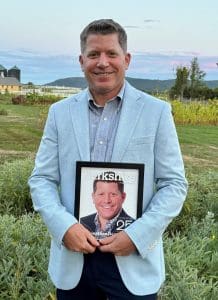
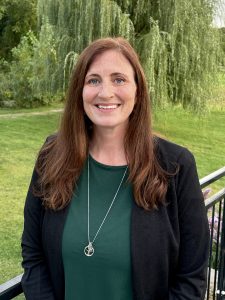
Paul Silva
They’re calling it VVM 2.0.
And that nickname for a new initiative called Innovate413 says a lot, said Paul Silva, who will be leading this effort to spark new, tech-based startups in the region, while not repeating some of the mistakes of the original VVM, Valley Venture Mentors.
Chief among them is getting into the real estate business, said Silva, noting that he was president of VVM when many of its board members pushed for a physical presence, and got one in the form of a building on Bridge Street in downtown Springfield that now bears no trace of the agency, which exists essentially on paper as an affiliate of the Western Massachusetts Economic Development Council, but hasn’t been active for years.
“One of the things that killed VVM was getting that space, because then you become a landlord, and then you’re tied to all the challenges of having space, as opposed to being focused on entrepreneurs — we’re not doing that again,” said Silva, quickly moving past the problems that visited the once-impactful nonprofit and focusing on the positive energy and dozens of startups it fostered in its better days.
It was this energy — and startups nurtured by VVM, such as Northampton-based Machine Metrics, and the critical need for more — that prompted Steve Davis, a director with the Irene E. and George A. Davis Foundation, to reach out to Silva and commence a dialogue about creating a new engine for fueling startups in the region.
These talks would eventually lead to the creation of Innovate413, what Silva calls a new kind of venture studio, one designed, according to the recently launched website, “to help bold ideas grow, connect founders to game-changing partners, and build the next generation of employers right here at home.”
“It doesn’t take a rocket scientist to realize that there’s trouble when big companies are shrinking and there aren’t any new companies being born … that’s not going to be great for us 20 years from now.”
With $150,000 in seed money from the Davis Foundation and another $100,000 from the MassMutual Foundation, Silva explained, Innovate413 will seek to foster startups and put them on the path to success by providing what he called “an unfair advantage.”
Elaborating, he said this advantage will come in two forms — access to potential customers, meaning large regional employers that will talk about problems facing them and all those in their industries, and access to the latest artificial intelligence and product development techniques.
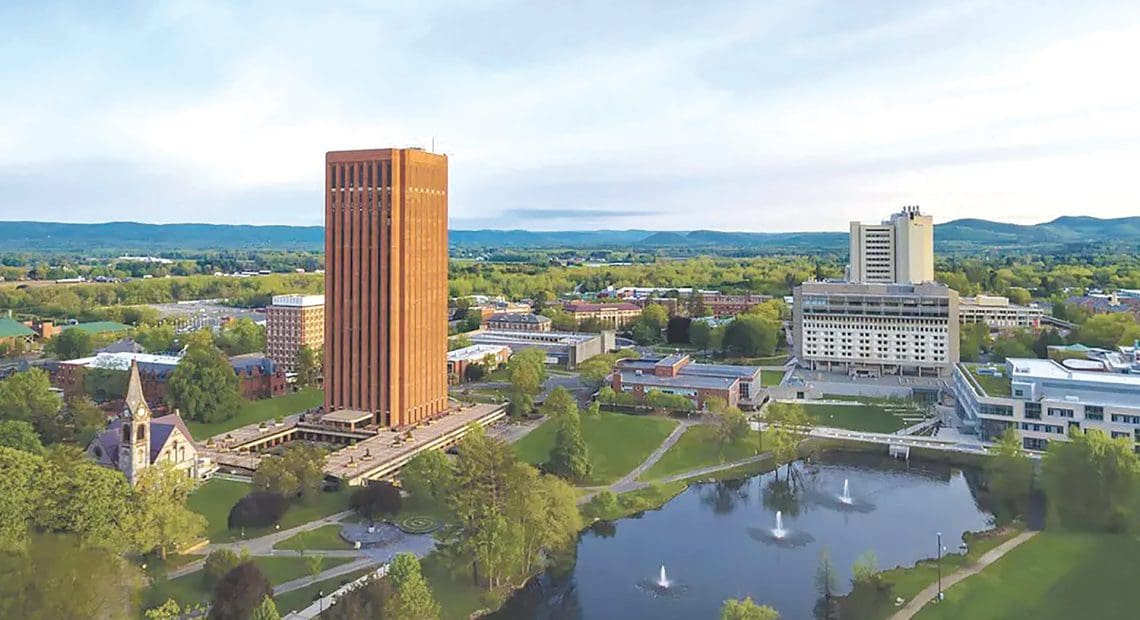
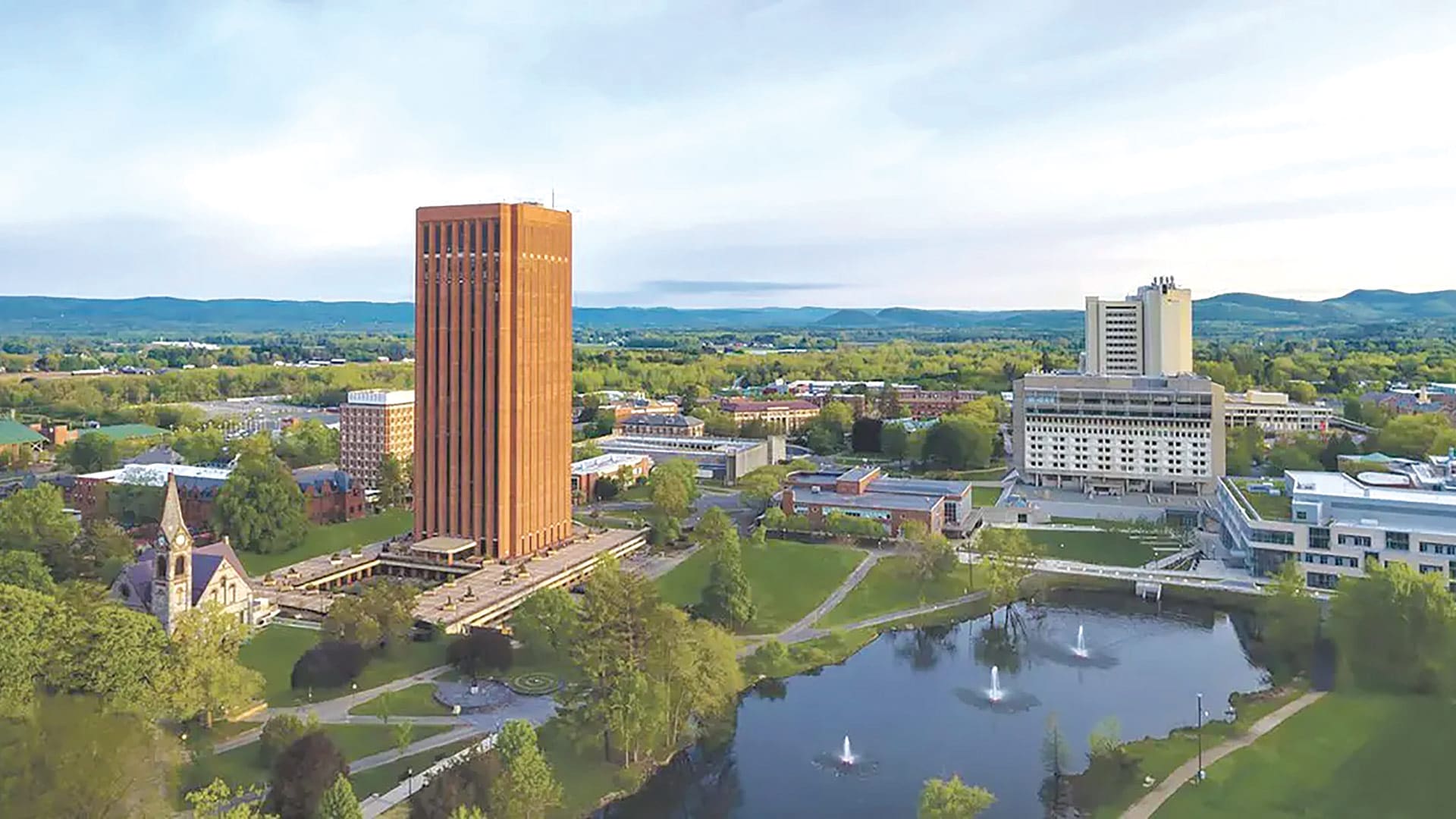
“When you’re in Silicon Valley or in Boston, you have access to that stuff, but the vast majority of the country doesn’t,” he noted, adding that access, in this case, comes largely from the Center for Data Science and Artificial Intelligence (CDS) at the Manning College of Information and Computer Sciences at UMass Amherst.
“This isn’t just an ivory tower institution — they actually work with the business community,” said Silva, adding that CDS is one of many catalysts that will work with startups through Innovate413 and help provide them with that unfair advantage.

Machine Metrics, profiled in this 2015 edition of BusinessWest, is an example of the kind of tech-based startup that Innovate413 will look to cultivate.
“Most programs have mentors — we’ve learned that we must go further,” said Silva, noting that these catalysts are businesses and organizations with pressing challenges and powerful networks. Early catalyst partners include the CDS, manufacturers such as Belt Technologies and OMG, the Human Services Forum, and PixelEdge, which builds software to give business leaders a competitive edge (more on that later).
Access to these catalysts can give entrepreneurs the equivalent of a running head start, he said, adding that startups will need any advantage they can get to move off the ground and then become scalable.
For this issue, BusinessWest talked with Silva about Innovate413, its importance, its mission — and how it will carry it out.
Bringing Back the Magic
As he discussed all that, Silva stressed that this agency is itself essentially a startup, one that, as noted earlier, has been given some seed money to solve a problem.
“I said, ‘look, I’m going to practice what I preach — here’s a small amount of money to try a new way; how do we do things in a way that will be more sustainable and engaging for the region?’” he said, summing up what he told those funding this pilot program. “‘And we should be able to figure out if we’re on the right track within a year; if not, you shouldn’t keep funding it. If we are, great — I’ll come back and ask for more money.’”
He emphasized that the need for an agency focused on fostering startups, and the need for that agency to succeed, is clear — and pressing.
“Steve Davis and I were commiserating on the tragedy of what’s happened to the entrepreneurship ecosystem since VVM’s demise,” he explained. “It’s on the order of 5% as many scalable startups being generated as there used to be.”
Elaborating, he said the region was generating as many as 50 scalable startups a year through VVM, and now, there are maybe a handful.
“Meanwhile … big companies are relocating jobs, and there’s not a lot of stories about companies moving tons of jobs to this area — it happens, but the trend has not been good,” Silva noted. “It doesn’t take a rocket scientist to realize that there’s trouble when big companies are shrinking and there aren’t any new companies being born … that’s not going to be great for us 20 years from now.
“So, Steve Davis asked me if I’d consider putting together a proposal, and a team, to bring the magic back,” he went on, adding that the proposal has become Innovate413, and in many respects, he is putting the band back together — meaning many of the mentors and supporters in the business community that made the original VVM so successful.
But Silva wanted to stress what’s different about this agency, beyond the real estate factor. To do that, he talked about what’s he’s learned from other startup-related agencies, such as MassChallenge, about what has made them successful.
“They have to find a way to create an unfair advantage for their startups that’s tied to the local economy,” he told BusinessWest, adding that this generally comes from access to customers — specifically, a pilot customer that can help a startup get off the launch pad.
“We’re bringing in big regional employers to have them talk about the problems they and their industry are facing, so that entrepreneurs won’t be coming up with some random idea and having no idea if anyone gives a crap,” he explained.
“We’re bringing in big regional employers to have them talk about the problems they and their industry are facing, so that entrepreneurs won’t be coming up with some random idea and having no idea if anyone gives a crap.”
“Instead, they’ll be someone with pain and a budget sitting across the table from me, who, as long as I’m nice, will go out for coffee with me,” he went on, assuming the role of an entrepreneur. “And if I make progress, they’ll keep going out for coffee with me, and they might even become my customer.”
To drive home the importance of such encounters with catalysts, he related the story of Machine Metrics.
“They stood up at a VVM meeting and said, ‘we make software that makes factories run more efficiently,’” Silva recalled. “And Al Kasper said, ‘I have a factory, and I’d like it to run more efficiently.’”
Kasper, then CEO (now retired) at Westfield-based Savage Arms, became sufficiently impressed with what he saw and heard, and Savage became the pilot customer for Machine Metrics, Silva went on, adding that Kasper introduced the team to its eventual second customer.
“For a startup, you’ve got to get that pilot customer in a narrow window of time,” he continued. “Otherwise … you’re dead. No one’s going to want to work with you. You’re stale; you’ve been around too long.
“So, we’re going to cheat,” he continued, adding that, by bringing in large employers with pain of some form, entrepreneurs can find problems to solve — and often realize that the solution is something they’ve been working on, or at least thinking about.
“Entrepreneurs can see if there’s something they can be passionate about, or maybe they were thinking about a solution that could solve a variety of different problems. And now they find … ‘back when I worked in healthcare, we solved this problem over and over again. These guys in manufacturing have the same problem; they just use different nouns and verbs. I’ll go work on that.’”
Starting Something
Such encounters will be one of the main thrusts of Innovate413, which will start to ramp up this fall — with events with names such as ‘idea jams,’ ‘startup sprints,’ and ‘hackathons’ — while also giving entrepreneurs exposure to cutting-edge AI and product development techniques through the AI center at UMass and PixelEdge, which Silva serves as chief innovation officer.
“The CDS and PixelEdge are donating the training, skills, and consulting to any startup that gets into the program so they can now have access to the most modern tools,” Silva explained, adding that access to such resources can help entrepreneurs dramatically reduce the time and expense of bringing a product or service to market.
“These days, there’s a number of situations where you don’t need a technical co-founder to get off the ground. You can use AI to build you an ugly, minimally viable product to get off the ground; you can use AI to let you do the thing that would have taken five people before. You still need the humans — humans working really hard — but if there’s one thing startups don’t have, it’s a lot of people, because they’re broke. This lets them magnify their capabilities.”
Overall, Innovate413 is a hybrid of many different models within the nation’s entrepreneurial ecosystem, said Silva, adding that several elements are being borrowed from DeltaClime VT, an accelerator based in Burlington, Vt. that serves startup and seed-stage ventures focused on climate economy innovation across multiple industries.
Among other initiatives, that agency puts entrepreneurs in front of utility companies to help identify solutions for that sector, he noted, adding that companies from across the country gather in Burlington for that opportunity.
As for events, programs are slated for early this fall at UMass Amherst, Mount Holyoke College, and Western New England University, he said, adding that these will likely include some gatherings with large employers, ase well as hackathons, which he likened to inventors’ contests.
“They usually take place over the course of a weekend,” Silva explained. “You bring together a lot of engineering-type people, you give them some tools, you talk about some types of problems, and they basically spend the entire weekend hacking — trying to build something to solve that problem.”
From there, the goal will be to turn that solution into a business, he said, adding that it’s a leap to go from developing technology to creating a startup and enrolling in an accelerator program to bring it to the market.
Efforts to facilitate such leaps are an element of the entrepreneurial ecosystem that has been mostly missing for the past several years, he noted, adding that Innovate413 was created to close the gap and grow the startup population in the region.
As with any startup, success is anything but assured, but Silva says the problem has been identified, and he believes he has a possible solution. As he said, we’ll certainly know more in a year.
For now, he’s getting the band back together. There will be a different sound, though, one focused on providing that much-needed unfair advantage.