Daily News

WESTFIELD — Westfield Bank President and CEO James C. Hagan on Thursday presented Springfield Urban League CEO Henry M. Thomas III with a $100,000 contribution to help launch a $7.5 million capital campaign to ensure the future of historic Camp Atwater.

“This contribution represents our firm commitment to the Urban League as it reimagines and reinvigorates an invaluable Massachusetts institution that has played such an important role in the lives of Black youth in Western Massachusetts and beyond for a century,” said Hagan. “Westfield Bank is very proud to come on board at this time of the campaign and we encourage other corporations, foundations, and individuals to join us in supporting Camp Atwater’s centennial. Creating opportunities for young people the way that Camp Atwater has done for decades is more essential than ever and the bank is excited to play a role in bringing this project to life.”

Said Thomas, “on behalf of the Springfield Urban League, Camp Atwater, and our thousands of alumni and families, I want to thank Westfield Bank for stepping up so generously at this early juncture. Westfield Bank has always been a staunch supporter of the Urban League and we are sincerely grateful to them for this terrific early lead investment in the campaign and their ongoing partnership with us as we strive to create a more equitable and just society.”

The Urban League has owned and operated Camp Atwater, located in North Brookfield, since 1921, making it the longest operating Black-owned summer camp in the nation. In its many years of service, Camp Atwater has had a profoundly positive impact on the lives and careers of the vast majority of the camp’s more than 55,000 alumni.

Galvanized by the needs of the Black community in Massachusetts and beyond, the Urban League is embarking on the $7.5 million Centennial Campaign to reimagine and reconfigure Camp Atwater so that it may continue as a foundational experience for campers for the next hundred years. Already recognized for its significance by being listed on the National Register of Historic Places, the Urban League is seeking to capitalize on the opportunity for Atwater to provide the preeminent camp experience for the African American community, and to develop ongoing generations of leaders by providing a unique blend of enriching programs and activities within a setting that is at once nurturing and challenging, while fostering self-discovery and growth.

With Westfield Bank’s support, as well as that of other early donors, significant work on the Camp’s buildings and grounds is scheduled to begin this summer and continue onward so that Atwater can welcome overnight campers back in the summer of 2023.


Daily News

SPRINGFIELD — Springfield College President Mary-Beth Cooper will serve as a voting member on a new NCAA Board of Governors, the highest governance body of the NCAA. The board members will assume their duties on August 1.

Cooper, the lone Division III delegate, was selected by the NCAA following the new NCAA constitution that was adopted in January by member schools and conferences.

The new board includes nine voting members: four from Division I (at least one school president and one conference commissioner), one from the Division II Presidents Council, one (Cooper) from the Division III Presidents Council, two independent members and one graduated student-athlete.

Cooper became the 13th president of Springfield College in August 2013. Known for her volunteer leadership, Cooper has served on the President’s Council of the NCAA, serves on the NIL Committee: NCAA Federal and State Legislation Working Group, and has been the president of the New England Women’s and Men’s Athletic Conference (NEWMAC).

Daily News

AGAWAM — The Local Farmer Awards, a funding initiative launched in 2015 by the Harold Grinspoon Charitable Foundation (HGCF) and Big Y Foods, reached the million-dollar milestone in May.

Over the past eight years, more than 470 grants have been made to farmers in Western Mass. and the Berkshires. Along with the Big Y and HGCF are 25 generous community and individual donors including Ann and Steve Davis, Charles and Elizabeth D’Amour, PeoplesBank, DeNucci Group at Merrill Lynch, Farm Credit East, HP Hood LLC, Audrey & Chick Taylor, Baystate Health, Country Bank and others.

“Hitting a million dollars in giving is a proud milestone in providing help, support, encouragement to our local farmers and their families,” said Big Y President and CEO Charles D’Amour. “The multiplier effect of these awards ripples throughout our Western Mass region and provides the important underpinning of our regional economy.”

Last month, 74 farmers primarily located in Western Massachusetts received the 2022 awards — checks of up to $2,500 for infrastructure improvements. Totaling $165,500, these grants help sustain robust projects related to growing, harvesting, and processing. Maple farmers at Justamere Tree Farm in Worthington launded the installation of its new vacuum monitoring system. “The award will enable us to monitor the vacuum within our entire 100-acre sugarbush which negates the need for endless hours of searching for leaks in poor weather conditions while also reducing energy costs. It will be a game changer for us.”

Program director Cari Carpenter said that the publicity generated by the Local Farmer Awards draws much needed attention to the productivity of all farms in the region, whether or not they have been award recipients. “We want to celebrate and encourage every farm in Western Mass and the Berkshires, not only our winners. Happily, the program returned in March to an in-person appreciation party, including all 120 farms within our applicant reach this year. Donors were able to grasp the impact of what they are doing — and the potential to do even more.”

Daily News

EAST LONGMEADOW W.F. Young, a global leader in animal health products such as Absorbine® and The Missing Link®, received two awards at the 2022National Animal Supplement Council Annual Conference, the NASC Visionary Award, acknowledging the animal wellness company as an originating/founding member, and the Visibility Award, for Outstanding Promotion of the NASC Quality Seal.

The National Animal Supplement Council is a nonprofit trade organization dedicated to protecting and enhancing the health of companion animals and horses throughout the United States. Founded in 2001, NASC is an all-industry association of stakeholders concerned with the issues surrounding the supply of health supplements for animals not intended for human consumption, such as dogs, cats, and horses.

“We’re honored and grateful for the NASC’s recognition, it has been a pleasure to work with them for over 20 years,” said Jaime McKinley, president of W.F. Young. “It’s important for us to align with an organization that cares about the wellness of our products as much as we do. We hope to maintain our relationship for years to come, and in that partnership, continue to assure customers that their pets receive the best quality and care.”

The 2022 NASC Annual Conference took place recently in St. Louis, Mo. at the Chase Park Plaza Royal Sonesta Hotel. The event featured networking opportunities for all the attendees, breakout sessions for science, compliance, business, and marketing, as well as exhibiting from sponsors, and a dinner and awards gala. Audra Mulligan, director of Regulatory Affairs and Development, was present at the ceremony and accepted the awards on behalf of W.F. Young.


Community Spotlight

Community Spotlight

By Mark Morris
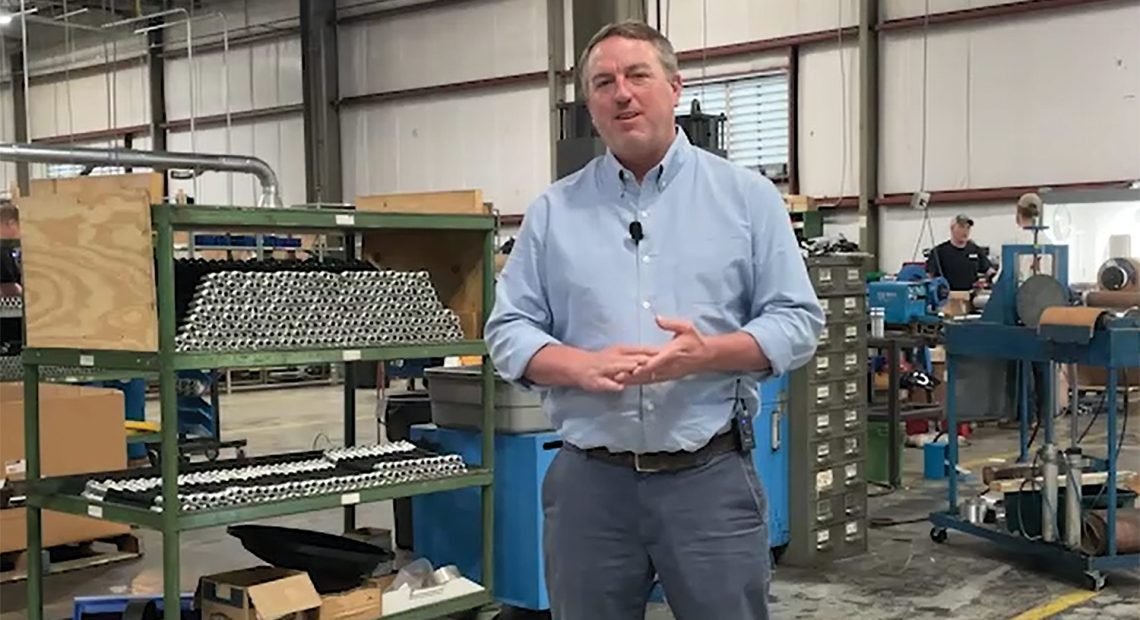
Alex McGill says his company considered other options, but decided it wanted to be in East Longmeadow

Roughly 60 years ago, McGill Hose and Coupling opened on Benton Drive in East Longmeadow. About six months ago, it moved into a new building around the corner on Industrial Drive that is more than double the size of its old location.

McGill is a custom fabricator of hoses and tubes for a wide variety of industries, everything from fuel delivery to food and beverage to pharmaceuticals. In short, any industry that requires hoses and tubing can be served by the company. Alex McGill, vice president at McGill, said the pandemic and supply chain challenges have caused some hiccups, but at the same time brought more business from pharmaceutical companies, especially in the Northeast.

“The opportunity came about because of the level of service we offer and because we are accessible to our customers,” McGill noted. “Our willingness to work around the clock to make sure customers get what they need has won us quite a lot of business over the years.”

While the company could be located anywhere, and could have moved anywhere when expansion became necessary, McGill has chosen to remain in East Longmeadow.

“We’ve grown to love the neighborhood and our neighbors,” he said adding, “we rely on our retail business where people can come in for their supplies. It’s also a friendly location for our employees.”

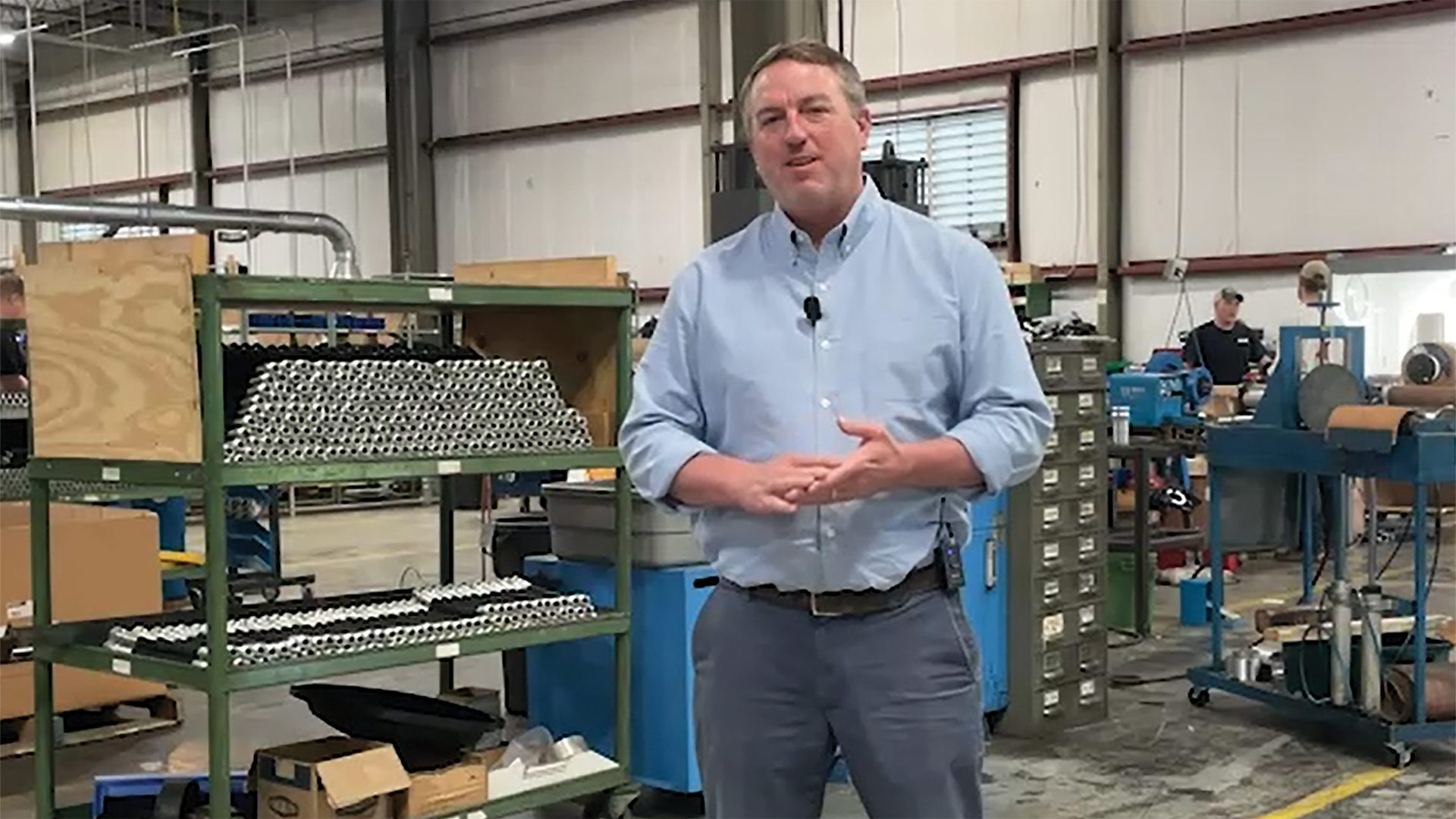
Secure Energy Systems has a story that is similar in many ways. The company was located on Somers Road until 2016 when a fire destroyed the company’s building. Nearby Cartamundi provided temporary space for Secure Energy while it sought out a new location.

“We’ve grown to love the neighborhood and our neighbors, we rely on our retail business where people can come in for their supplies. It’s also a friendly location for our employees.”

“The owners of the company had purchased a property in Enfield, but it just didn’t feel right to them,” said Erin Bissonnette, senior energy sales representative for Secure Energy. “They wanted to stay in East Longmeadow because they felt this was their home and they didn’t want to leave.”

So, in 2018 Secure Energy found the right space a few doors down from the manufacturer Cartamundi on Shaker Road and bought the building that formerly housed the laser company Biolitec.

These stories are among many others that relate how East Longmeadow has become an increasingly popular home for families and businesses alike. As for the ‘why’ this is happening — there are many reasons for that, including quality of life, a still-favorable commercial tax rate, available land and property, and, overall, a pro-business approach that is prompting new businesses to settle there, existing businesses to stay, and entrepreneurs to find space there to get started, as we’ll see.

And while businesses owners are choosing to invest in the community, East Longmeadow is making investments in itself.

The East Longmeadow Town Council recently passed the Fiscal 2023 budget, which includes funding for 19 capital projects in town. One prominent project involves a major redevelopment of Heritage Park. According to Town Manager Mary McNally, the initial design and permitting phase of the redevelopment will come from Community Preservation monies. Funding from the American Rescue Plan Act (ARPA) will cover the other 18 projects.

“They range from investing in the town’s IT needs to police cruisers, a fire engine and DPW trucks,” McNally said. “There are enough projects to stimulate lots of economic activity in town, providing we can get the contractors and the materials to get it all done.” 

For this, the latest installment of its Community Spotlight series, BusinessWest takes an in-depth look at how all these many kinds of investments are paying off for East Longmeadow.


Right Place, Right Time

After a renovation that Bissonnette described as “down to the steel beams” Secure Energy, which specializes in the procurement of natural gas and electricity for its commercial and industrial clients, now has a modern, airy office with amenities for employees such as a kitchen, large gym, and an outdoor gathering space. And there is plenty of room for growth.

“We negotiate with the same suppliers the utilities use and lock in the price and a term for the energy commodity, whether it’s for 6 months or 60 months,” Bissonnette said.

“These are women who have had certain passions and interests and now they are trying them out. They are exploring their ideas to see where it will all lead. It’s exciting to see.”

As a result, a business can know what their energy will cost for the length of the term, a service more valuable these days than ever before.

“Some clients will forget they extended their term beyond 2022 and will call us in a panic,” Bissonnette said. “Then we reassure them that our energy advisors grabbed the lowest prices months ago and locked in that rate. As a result, customers who were concerned are now very happy.” 

Secure Energy is part of a growing, very diverse business community in East Longmeadow, one that takes full advantage of many amenities, including a favorable location near population centers and the border with Connecticut, as well as land on which to build and grow.

McGill Hose and Coupling is another example.
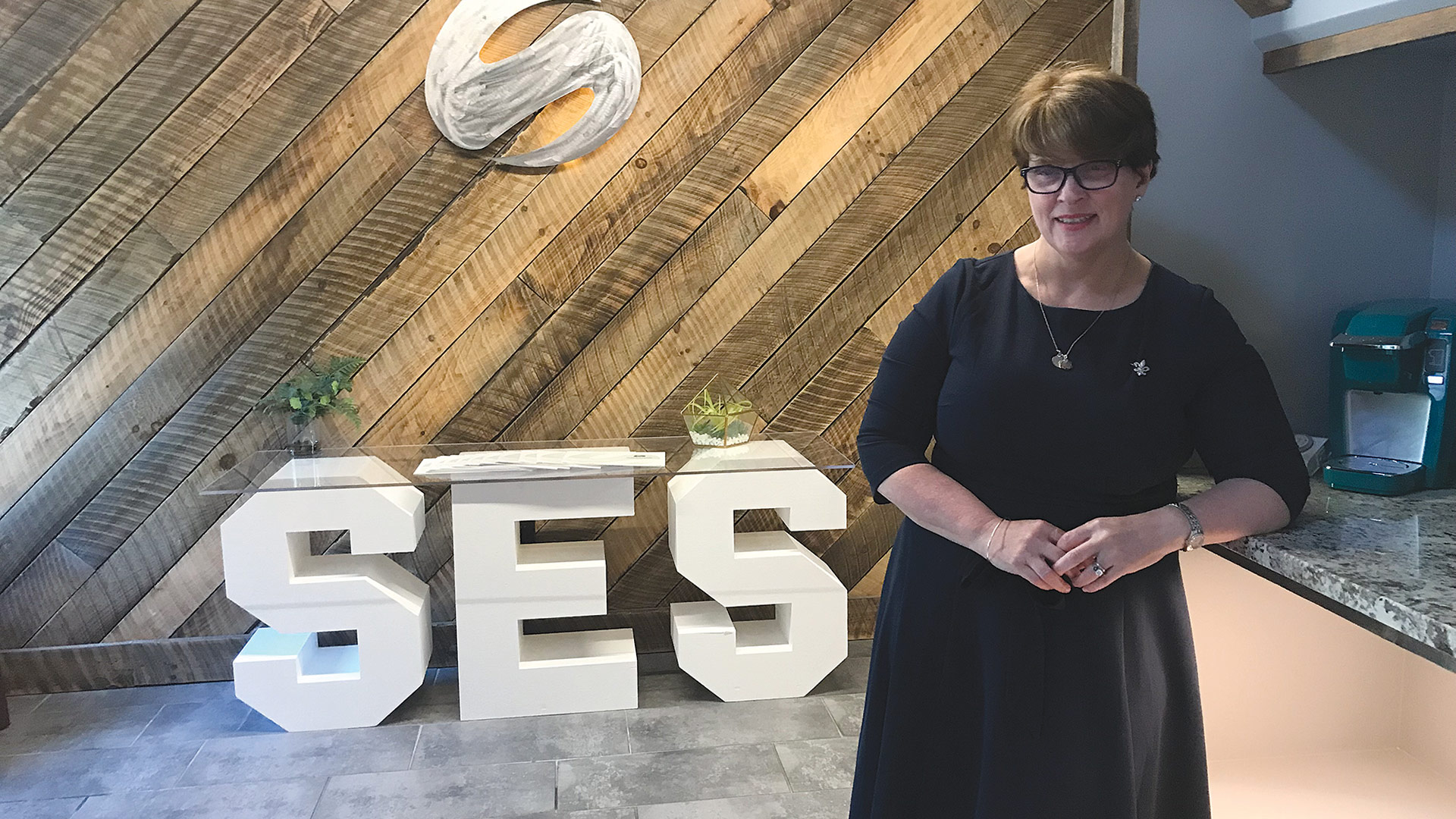
Erin Bissonnette

Erin Bissonnette says Secure Energy wanted to stay in East Longmeadow, because it “felt like home.”

As McGill employees settle into its new location, Alex McGill said the company’s next goal involves growing the business and the team working in East Longmeadow.

“We’re putting more of an emphasis on our employees,” McGill said. “We’re building a team atmosphere that has become a real catalyst for our recent growth.”

Using the strategy “if you treat your employees right, they will treat your customers right” is already paying off.

“We are poised for a nice shot of growth,” McGill continued. “We are paying attention to the future and investing in our employee culture serves as the guiding light for our growth.”

The same sentiments apply to the town and many of the investments it is making.

Indeed, as part of the budget, the town council also approved hiring for 13 positions in various town departments. McNally said Town Hall is scheduled to get 5 full time and one part time position out of the total.

“The staff at Town Hall work very hard to get things done,” McNally said. “Life would be easier if we had more staff, so I’m very pleased the council saw fit to fund these positions.” The extra staff presents a challenge of finding room where the new hires can work. The town is currently trying to find a balance between locating a department or two to another building without spreading municipal offices all over the town.

Meanwhwhile, a new high school represents a longer-term investment that is moving through town and state approval processes. The town will host three visioning sessions to show residents what a new school could look like and to solicit ideas from the public on what they would like to see for a new high school.

“These will be hybrid meetings so the public can take part in person or virtually,” McNally said. “I hope we get a good turnout and that people will participate.”

One of those 18 ARPA projects includes roof repairs to the current high school.

“This is a fix that can’t wait for the years-long process of building a new school,” said McNally.

Another investment trend in East Longmeadow involves people investing in themselves.

Grace Barone, executive director of the East of the River Five Town Chamber of Commerce, said recent networking events she has held are attracting many young entrepreneurs. Barone said new pop-up shops are beginning to appear and most of them are women-owned businesses.
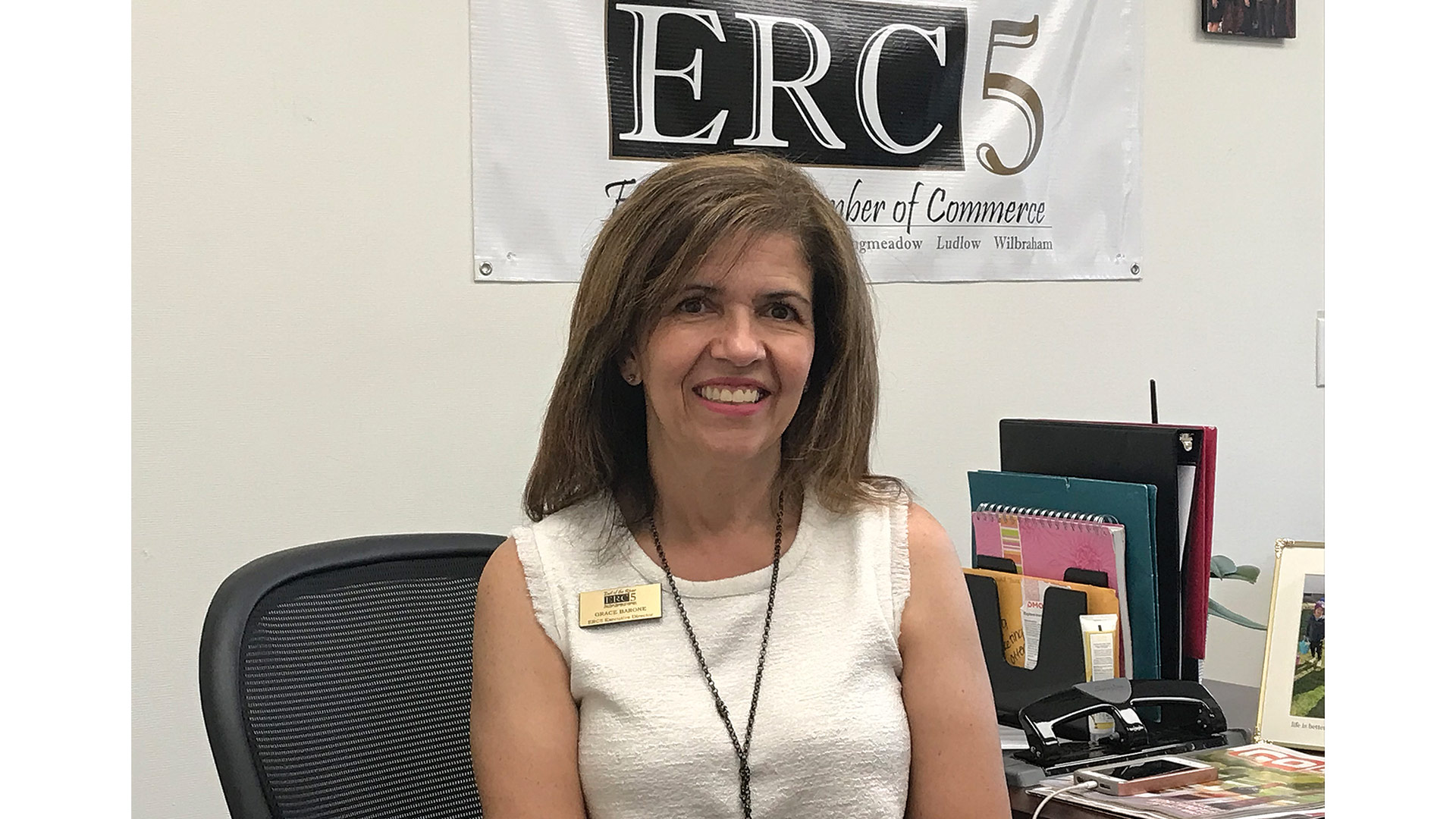
Grace Barone

Grace Barone

“These are women who have had certain passions and interests and now they are trying them out,” said Barone. “They are exploring their ideas to see where it will all lead. It’s exciting to see.”

One of those entrepreneurs recently leased space in the Reminder Building, where the Chamber office is also located. Chris Buendo, owner of the building, said he has welcomed startups to the Reminder Building and now has an eclectic mix of tenants. In fact, he allows tenants to provide a 60-day notice to break their lease instead of holding them to a typical one year or longer term.

“The shorter notice takes a little pressure off a start-up company,” said Buendo. “Rather than signing a long-term lease that they may later regret, I have faith that what they are doing is going to work so I want to relieve some of that pressure so they can succeed.”

The height of the pandemic was a scary time for commercial real estate, and Buendo said he lost many tenants who abandoned their office space to work from home. As the world slowly emerges from COVID concerns, he said business has come back.

“The good news is I’m getting calls again,” Buendo said. “Working from home is nice but it’s not a perfect scenario, so people are calling me to say it’s time to return to the office.” And return they have, as Buendo noted he has only one available space in the Reminder building.
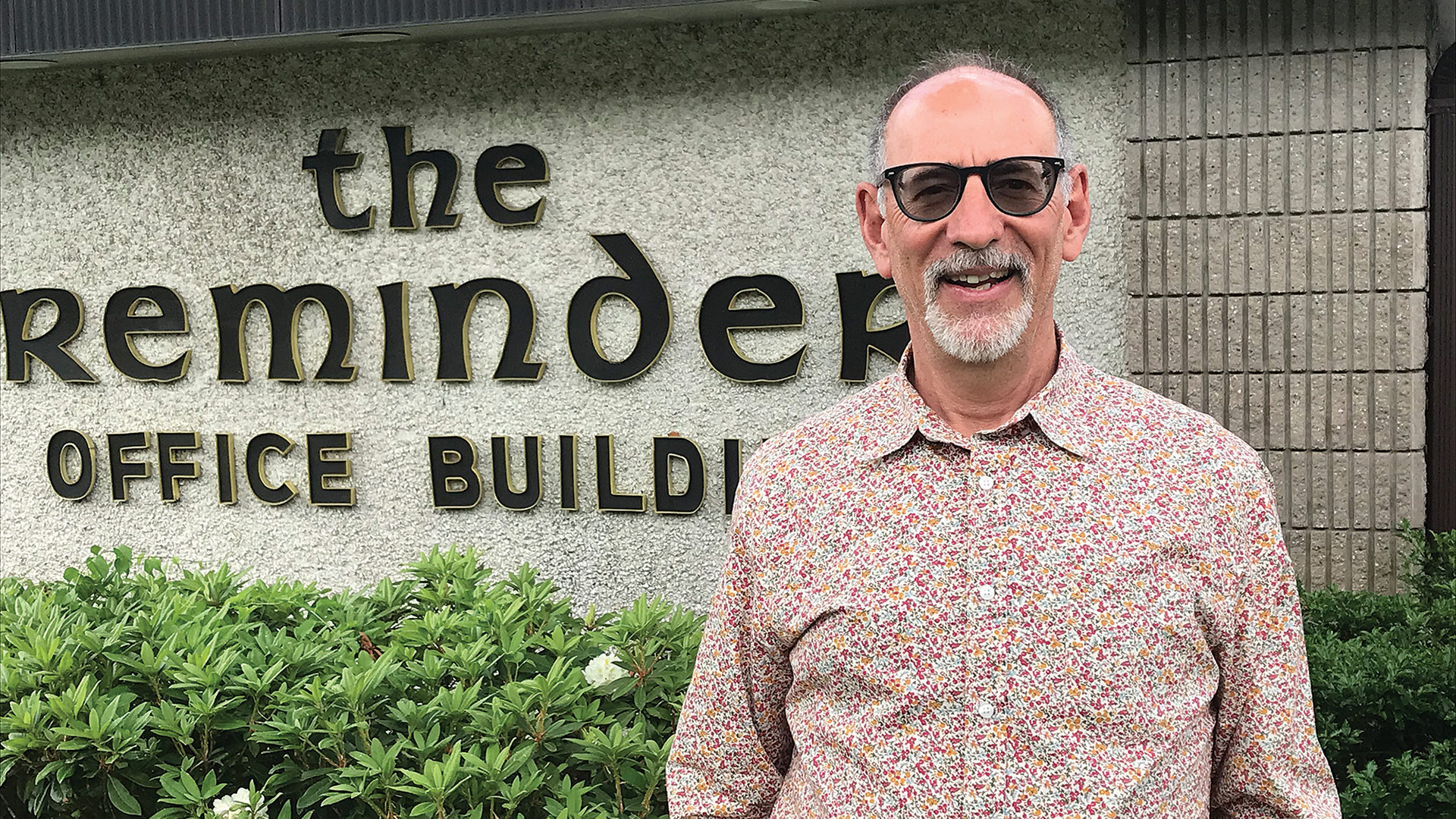
Chris Buendo

Chris Buendo says growing interest in office space in the town is a sign of progress.

At the town level, in addition to the new jobs approved by the council, several key positions have turned over because of retirements and career changes. McNally explained that over the last year the town has brought on a new planning director and a new library director. McNally herself plans to retire when her contract ends on June 30.

At press time the town had chosen a new town manager and was in the process of negotiating the final contract before announcing the new person.


The Bottom Line

As for McNally, her next move is well planned.

“I’ll be on the golf course, at the ocean, or with my family, not necessarily in that order,” McNally said. “I’m a lawyer by training so I could re-new my license if I get bored, but for now I’m ready to call it a day.”

As she prepares for retirement, McNally is pleased that thanks to investments from the private sector and the town, East Longmeadow is in solid financial shape going forward and in a position to continue the remarkable pattern of growth it has seen in recent years. u

Features

A Changing Dynamic

By Amy Roberts

It is no secret that the workplace has changed significantly over the past several years, requiring employers to adjust their operating principles to keep pace with what employees need and want. While many have labeled this time as the Great Resignation, this movement might better be explained by the term…the Great Re-evaluation!

For whatever the reason, and there have been plenty in these last few years, people are re-looking at how they work, what they do for work, and the impact their work has on the world around them. Employees expect that their job brings purpose to their lives and expect an employer to help them meet this need. If they review their current job and don’t find the connection with their own purpose, they are leaving for a role in an organization that they feel can provide them with this crucial requirement.

Amy Roberts

Amy Roberts

When attracting candidates and holding on to talent, Employers are being challenged to improve their impact on just about everything. The people they employ, the people they serve and the value they bring to the greater good. This challenge has led many employers to look at their impact on the world and revamp their entire value system in order to compete.

Attractive benefit programs and competitive pay will only get an organization so far in an evolution of their value. Organizations have to consider more broadly their impact on the lives of people. All the people! Not just the people who buy their products or services or their shareholders or the people that work for them. This means caring about the communities in which they are a part and also caring about the world beyond their headquarters, subsidiaries, and offices.

While there are many ways to create an employer value proposition that helps an organization stand out and compete for talent, perhaps the most impactful is to establish a corporate purpose that considers the company’s role and contribution to society. In the development and communication of this purpose an organization can articulate their value to an employee and in turn attract people who see value in being a part of the work being done by the organization.

Once established it is critical to provide employees with meaningful ways to reflect on the company’s efforts and their impact as well as ways to participate in these efforts. In other words, employees want to be a part of a company that strives to make the world a better place and they want to do the work that helps to make it so.

Another aspect for employers to consider is how work gets done within the organization and the systems and structure around work. While more a practical component of an employer value proposition than a corporate purpose, this area of work has become increasingly scrutinized by the workforce. People want to be challenged in their work, excited by the mission of an organization, and contribute to the outcomes of the organization in a way that makes sense for them.

In order to do this, an employer has to consider the person doing the work as an important aspect of how the work will be done. This represents a huge paradigm shift in workforce planning and it requires an organization to examine its policies and procedures of work to determine how to go about this in a consistent and sustainable way.

We all know it would be impossible for an organization to design its work structure to handle all of the elements of a person, so one approach an employer can take is to set some basic tenets of how work gets done, usually in the form of establishing goals and outcomes required of each role in the organization and then be flexible enough to meet people where they are when it comes to how that work gets done. This can look different depending on the organization type and can vary even within an organization depending on the position. Flexibility in the workplace isn’t new, but the fact that it is a requirement for many people in the workplace has caused many organizations to rethink work hours, days of work, and the location of work.

In different times companies were doing great things to provide an inviting and calm workspace with nice desks, décor that complimented the values of the organization and convenience amenities like a café, gym or dry cleaner. Now an employer is seriously considering four-day work weeks, 35-hour schedules, remote work, hybrid work, work from anywhere, and unlimited time off, just to name a few.

The stakes are higher than ever to implement programs that provide an organization with the desired outcomes to be successful in a way that allows employees to live a meaningful and well-balanced life. u


Amy Roberts is executive vice president and chief human resources officer at PeoplesBank.

Construction

Increase Pushes Level of Planning Above Most Recent Cyclical High

A measure of nonresidential building projects, the Dodge Momentum Index provides an analysis of the construction industry. Analysists delivered some bright news recently with the announcement that the Dodge Momentum Index increased 7% in May.



The index measures data about nonresidential building projects planned, to track spending in the sector. For May, the institutional component of the Momentum Index rose 9%, and the commercial component increased 6%.

May’s reading came in at 176.2, up from April’s 165.2.

According to Dodge Data & Analytics, May’s increase in the Dodge Momentum Index pushed the level of planning above the most recent cyclical high in November 2021.

During the month of May, commercial planning was led higher by an increase in office and hotel projects. Institutional planning saw a boost in education and healthcare projects entering planning. On a year-over-year basis, the Momentum Index was 17% higher than in May 2021. The commercial component was 24% higher, and the institutional component was 8% higher than one year ago.

A total of 19 projects with a value of $100 million or more entered planning in May.

The leading commercial projects were:

• $333 million Bitcoin Mining Facility (a large computing building) in Corsicana, Texas

• $300 million Gun Lake Hotel and Resort in Wayland, Mich.

The leading institutional projects were:

• $250 million Drexel University life sciences building in Philadelphia

• $160 million Colorado Research Exchange life sciences campus in Broomfield, Colo.

Despite higher interest rates and fear of recession, nonresidential building projects continue to steadily enter the planning cycle, according to Dodge. While higher prices and labor shortages may result in projects reaching groundbreaking later in 2022 or early 2023, they provide hope that the construction sector will be able to withstand a potential economic slowdown fed by higher interest rates.

Accounting and Tax Planning

And Why Does it Matter to My Business?

By Colleen Berndt, CPA


State tax nexus refers to the amount and type of business activity that must be present before the business is subject to the state’s taxing authority. Every state has its own set of tax laws and required filings. In recent years, the whole concept of state nexus for sales tax and income tax has dramatically changed.

Traditionally, state tax was based on more of a physical presence test. Thus, if your business did not employ people and property in a particular state, then most often the business would not be required to register or file in that state.

As with many laws, it takes time for states to address issues and make changes for how business is transacted in the modern world. How we conduct business is changing at a faster and faster pace. The COVID-19 pandemic generated unprecedented e-commerce growth in various economies across the globe and is anticipated to continue to grow at a rapid pace.

Colleen Berndt

Colleen Berndt

“While the Wayfair decision did not directly impact income-tax nexus, the removal of a physical presence requirement for sales-tax nexus has definitely encouraged more states to enact a sales threshold as an indicator for income-tax nexus.”

The pandemic also resulted in millions of people across the world to become remote workers, creating another major shift in how modern-day business is conducted. Remote working has become the ‘new normal,’ almost overnight.


The Wayfair case – a major shift in state taxation

On June 21, 2018, the United States Supreme Court ruled in South Dakota v. Wayfair Inc., et al, that states can require an out-of-state seller to collect and remit sales tax on sales to in-state consumers even if the seller has no physical presence in the consumer’s state. 

In doing so, the court overruled 50 years of its own precedent. The decision allows states to define a sales threshold (either by dollar amount or the number of transactions) that will trigger a sales tax collection requirement.  

Since the Wayfair case, Massachusetts enacted legislation to change the state’s economic thresholds to $100,000 in sales with no transaction threshold. Most states now employ a dollar and/or a number of transactions threshold for sales tax collection and remittance. The frequency in which the tax must be remitted also varies greatly from state to state.

While the Wayfair decision did not directly impact income-tax nexus, the removal of a physical presence requirement for sales-tax nexus has definitely encouraged more states to enact a sales threshold as an indicator for income-tax nexus.

The increase in states employing an economic nexus standard, combined with the change in how business is transacted, has opened the door for a migration toward market-based sourcing. Market-based sourcing is the idea of taxes being imposed on where the service is consumed, rather than the location where the service was performed.

Under Massachusetts law, “doing business” includes every act, power, right, privilege, and immunity exercised or enjoyed in the Commonwealth, as an incident or by virtue of the powers and privileges acquired by the nature of such organizations, as well as, the buying, selling or procuring of services or property. In addition, Massachusetts will presume that a business’s corporation’s virtual and economic contacts subject the corporation to the tax if the volume of the corporation’s Massachusetts sales for the taxable year exceeds five hundred thousand dollars. Again, each state has its own unique set of rules to determine nexus.


Remote employees’ impact on nexus

Generally speaking, a remote employee will create nexus for the employer for tax purposes. Many states provided relief for pandemic-related circumstances, but most of those provisions have since expired. Nexus created by remote-working employees can create significant tax liabilities in new jurisdictions, especially for income tax purposes where the company has significant receipts from the state and the state apportions using a single sales factor formula, as many do. Massachusetts still utilizes a three-factor formula (sales, payroll and property) for most businesses. Most states have transitioned to sales as a single factor to determine apportionment.


The impact on recordkeeping

In order to ensure state tax compliance, businesses must keep records that perhaps were not required in the past. Thankfully, most businesses have a computerized accounting system, however, it may require more detailed information then previously needed to determine filing requirements.

For instance, the number of transactions by state may not have been a standard reporting item in the past. Another consideration is that the invoicing state may not necessarily be the state where the product is being consumed. If that is true, then the shipping records must become integrated into the accounting records to provide accurate sales-by-state reports. Given the digital footprint left by any type of transaction, states are aggressively pursuing businesses looking for some type of economic presence requiring the business to register and pay various tax types.

Also, employers must keep track of employees who work remotely by state. This can be especially challenging for hybrid employees who may reside in a different state than which the employer is located. The record-keeping requirements and then complying with all state filings (employment, sales, income, gross receipts, and franchise taxes) can be complex, costly, and overwhelming for small businesses.

Not only can it be very complicated and costly to ensure that a business is complying with all state filing requirements, the rules are complex and subjective in nature. This is why it is always best to consult with your tax advisor.


Colleen Berndt, CPA is tax manager with Lapier, Dillon & Associates PC; (413) 732-0200.

Accounting and Tax Planning

It’s Always Important to Know the Rules of the Road

By Garrett Kelly, CPA


Garrett Kelly

Garrett Kelly

‘Can I deduct vehicle expenses on my tax return?’

This is one of the most frequent and open-ended questions a CPA will get. As a CPA, if you have been in the game for any period of time, you probably know that the answer is: “it depends.”

Here are some other commonly asked questions questions and scenarios regarding automobile deductions — and some answers.


‘I have a personal vehicle that I use in my business. Can I take an automobile deduction?’

Yes, if the vehicle is used in the business for business purposes, you are allowed a vehicle deduction. How you take the deduction, and receive the tax benefit, depends.

This is where a CPA can really add value. Maybe it should be a 100% write-off of the cost of the vehicle in the first year. However, many times the tax deduction comes in the form of a lease agreement, auto reimbursement from the company, or business mileage deduction.


“I bought a vehicle in my business that is used 100% for business purposes. How much can I deduct and/or depreciate?”

Weight and use of the vehicle matters. You can deduct the full cost of the vehicle. However, it is either 100% deductible in the first year, or it is deducted over multiple years. The answer depends on the weight and use of the vehicle.

An SUV or truck whose gross vehicle weight (GVW) is more than 6,000 pounds, or a special-use vehicle, can be 100% deducted in the year it is placed in service in the business. This is achieved through 100% bonus depreciation. A car, whose GVW is less than 6,000 pounds, is usually limited on how much can be deducted in the first year, resulting in the vehicle being depreciated/expensed over multiple years.

If your business owns a fleet, five or more vehicles that are used 100% in the business, you are able to fully deduct the purchased vehicle without consideration of the vehicle’s weight. This can be done through Sec. 179 expensing or 100% bonus depreciation.

This is just the tip of the iceberg, but it highlights the differences based on weight and use.


‘Should I deduct actual vehicle expenses or mileage?’

We typically lead with this follow up question: “is the vehicle expensive and/or do you drive a ton of business miles each year?” That’s not a very technical response but it gets the conversation started.

For example, in 2021 Mike purchases a $65,000 vehicle weighing more than 6,000 pounds that is used 100% for business purposes. Mike drove 30,000 business miles out of 30,000 total miles in 2021 and expects similar mileage in future years. He expects around $3,000 of vehicle expenses each year. He plans to utilize this vehicle in the business for another five years. We would recommend using actual-expense method in this situation.

A $65,000 deduction in the first year is about four times what the business mileage deduction would be in 2021 (see example below). It would take at least four years for Mike to achieve the same amount in tax write-offs. Not to mention the annual maintenance costs that are deductible each year under the actual expense method.

However, if this vehicle only cost $25,000, we would recommend deducting mileage. Yes, the actual method may achieve an additional $7,450 deduction in year one, but then Mike is limited to just deducting actual expenses in future years (around $3,000 a year). Mike is looking at around a $17,550 mileage deduction every year for the next 5 years, a total of $87,750 in write-offs, compared to a total $37,000 in write-offs with the actual expense method.

Now, all that being said, the IRS requires you to choose a vehicle-deduction method in the first year the vehicle is placed in service. If you choose to deduct actual expenses in the first year, you are stuck with this method for the life of that vehicle. If you choose mileage deduction the first year, you are able to switch to actual expense in later years.


‘What is the 2022 business mileage rate deduction?’

58.5 cents per business mile; 18 cents per mile for personal medical, military, and moving expenses; and 14 cents per mile for charitable driving.


‘I would like to start tracking and deducting my business mileage. What do you recommend?’

A logbook you keep in your vehicle is a classic method. If you have a smart phone, we recommend the app, TripLog. If you use QBO, then you have access to a free mileage tracker that you can access through your smartphone (see links below for details).

https://quickbooks.intuit.com/accounting/mileage/#mileage-app

TripLog: Automatic Mileage Tracker App


The IRS requires certain information when tracking mileage. Be sure you are recording the following:

• Beginning and ending destination;

• Business purpose of trip;

• Miles driven;

• Dates of trip;

• Odometer reading at the beginning and end of each tax year.


Hopefully this provides some insight into some of the more common questions on this often-confusing matter. Reach out to your tax advisor for more detailed information or individualized tax planning. Vehicle deductions are some of the largest tax deductions a business owner gets, and you want to be sure you are maximizing this tax write-off.


Garrett Kelly, CPA, Tax Manager, specializes in tax planning and compliance for residential and commercial real estate, pass-through entities, and family groups.