Daily News

BOSTON — The Massachusetts Gaming Commission (MGC) recently approved awards of more than $10.6 million in Community Mitigation Fund grants to numerous municipalities and other eligible entities across Massachusetts.

Since 2015, the MGC has awarded approximately $37.7 million in grants from the Community Mitigation Fund. The fund, established by the state’s gaming law, helps host and surrounding communities and other qualified applicants to offset costs related to casino construction and operation. Grant awards support a range of community needs, including education, transportation, infrastructure, housing, environmental issues, public safety, and emergency services.

“The more than $10 million in grants awarded through the 2022 Community Mitigation Fund is yet another example of the Commonwealth’s commitment to fully realize the benefits of its gaming industry as well as the Gaming Commission’s continued fulfillment of the mandate made by the Legislature to mitigate any unintended impacts tied to gaming in Massachusetts,” MGC Chair Cathy Judd-Stein said.

“The MGC is proud to support communities in the Commonwealth as they seek to improve government services and make advancements in road safety, tourism marketing, wellness and recovery services, public-safety training and personnel, and job-readiness programming,” she added. “On behalf of the Massachusetts Gaming Commission, I extend congratulations to all of our 2022 grant recipients and look forward to the numerous ways those awards will make innovative, tangible improvements to the Commonwealth and its communities.”

In Western Mass., the grants include:

• Agawam: $833,300 for reconstruction of the intersection at Suffield, Cooper, and Rowley streets;

• Hampden District Attorney’s Office: $75,000 to continue funding for personnel to handle casino-related prosecutions. The funding has been in place for three years;

• Hampden County Sheriff’s Department: $400,000 to provide lease assistance for the Western Massachusetts Recovery and Wellness Center after having to move its location to make way for the MGM Casino;

• Holyoke Community College: $500,000 for Work Ready 2022, a collaborative effort of HCC, Springfield Technical Community College, and Springfield Public Schools to provide adult education, career readiness, and occupational training to connect unemployed and underemployed residents to education, training, and employment opportunities to meet the workforce needs of MGM Springfield and the region;

• Longmeadow: $85,900 to provide funding for cameras at the intersection of the I-91 and Longmeadow Street/Route 5 junction. Monitoring this site will determine the most effective methods of deploying law enforcement and public-safety resources;

• Northampton: $75,000 to provide continued funding for development and improvement of the northampton.live website;

• Springfield: $300,000 to advance the site feasibility, design, and financing/development options for a new mixed-use parking garage recommended in the Springfield Parking Authority parking study;

• Springfield: $766,700 for the revitalization of East Columbus Avenue and Hall of Fame Avenue. Major elements will include roadway resurfacing, sidewalk and median improvements, bicycle accommodations, guardrails, and safety upgrades;

• Springfield: $1,500,000 to help fund the construction of near-term priority public realm improvements to reopen roadways, improve overall access, upgrade utilities, and enhance the pedestrian environment to reestablish connectivity with MGM and the 13-31 Elm building renovation project;

• Springfield Fire Department: $41,300 to purchase extrication tools for the apparatus that primarily responds to the casino area;

• Springfield Metro Police: $16,000 to address unforeseen deficits in the area of IT connectivity in support of the Gaming Enforcement Office;

• West Springfield: $200,000 to fund additional police and fire/EMS personnel hired to increase staffing for the impact to municipal services resulting from the opening of MGM; and

• West Springfield: $1,266,600 to fund Complete Streets transportation improvements of Elm Street (Route 20) from Park Street/Park Avenue to Garden Street.

Daily News

CHICOPEE — The Greater Chicopee Chamber of Commerce announced Melissa Breor as its new executive director.

“It brings me great joy to return to the city where I grew up, sharing my passion and skills to continue to create new opportunities for and strengthen the Chicopee business community,” Breor said. “I have always been confident that, in whatever work I’m doing, I want to support other people thriving in what they do and create community around it.

Breor spent four years at the Northampton Chamber of Commerce. Inspired by her work there leading the launch of Hampshire County tourism platforms, she co-founded Western Mass Beer Week in 2016 to celebrate the economic impact of the region’s burgeoning local craft-beer industry. After her time at the chamber, she worked as the assistant director of Marketing and later interim director at the UMass Amherst Fine Arts Center, finding new ways to connect, grow, and measure audience development. Most recently, she worked for Gateway City Arts in Holyoke as Press & Outreach coordinator, as well as in customer service at various businesses in the region.

“I can’t wait to meet you all and learn how you make our community so special and what more we can accomplish for Chicopee,” Breor added.

Daily News

MONSON — Monson Savings Bank has a long history of supporting literacy in its communities that continues as the bank celebrates its 150th Anniversary. Recently, Monson Savings Bank President and CEO Dan Moriarty met with Laurie Flynn, Link to Libraries president and CEO, to present her with a $1,500 donation. This donation was made as a part of the 2022 Monson Savings Bank Community Giving Initiative, where the public was given the opportunity to submit their votes asking the bank to support their favorite local charitable organizations.

“Monson Savings Bank is proud to show our support to the wonderful local organization Link to Libraries,” Moriarty said. “Unfortunately, not all children have access to age-appropriate reading materials. Link to Libraries fills this gap. This organization gives our local youth the valuable gift of reading, providing so many children in our communities with access to books. Because of Link to Libraries, children’s literacy and language skills are positively impacted, helping them to find success in their educational and life journeys.”

Flynn added that “we are very appreciative of Monson Savings Bank’s longtime support of Link to Libraries. Monson Savings is an incredible community partner, not only to our organization, but also to many others throughout our community. Thank you to everyone who voted for Link to Libraries in Monson Savings’ Community Giving Initiative. We are excited to put these funds to good use, purchasing books and distributing them to the children who need them most.”

Daily News

SPRINGFIELD — The Springfield Symphony Orchestra (SSO) announced that three new members have been elected to the SSO’s board of directors: Andrew Cade, Margaret Mantoni, and Evan Plotkin.

Cade is the senior vice president of the Urban League of Springfield Inc., which serves the Greater Springfield African-American community by advocating for and providing model services that enhance the academic and social development of young people and families, promoting economic self-sufficiency, and fostering racial inclusion and social justice. Apart from his job at Urban League, Cade also serves as president of the Springfield Cultural Council.

Mantoni is president and CEO of the Loomis Communities. She served for 30 years as the organization’s CFO prior to taking her current position. She is a certified public accountant and worked in a local accounting firm for eight years before joining the Loomis Communities. She serves on the Audit Committee of the United Way of Pioneer Valley, is a member of the LeadingAge Massachusetts board, and serves on the Capital Projects Planning Committee for the city of West Springfield. Mantoni has a bachelor’s degree from the University of Massachusetts and an MBA from Western New England College.

Plotkin is president of NAI Plotkin, a full-service brokerage and property-management company. He has extensive experience in all aspects of property management and commercial brokerage, including commercial office buildings, medical office buildings, industrial buildings, shopping centers, and condominium/residential management. Plotkin is one of the lead organizers of the Springfield Jazz & Roots Festival and the City Mosaic project, as well as the force behind Art & Soles. He was recently named the 2022 Richard J. Moriarty Citizen of the Year by the Springfield Regional Chamber. He has served on the boards of the Springfield Museums and Holyoke Community College.

“We are extremely pleased to add these new members to the SSO board, each bringing a unique set of skills as we rebuild the organization after the two-year hiatus brought about by the pandemic,” interim SSO Director Paul Lambert said. “Andrew Cade is heavily involved in the community through the Urban League and as president of the Springfield Cultural Council. Marge Mantoni brings business expertise in serving the Loomis Communities, the premier senior-living nonprofit in the region. Evan Plotkin owns and operates One Financial Plaza, and his love of jazz in establishing the Jazz & Roots festival is a demonstration of his commitment to the arts and to a vibrant central city.”

The SSO also recently announced its 2022-23 season, which will include six classical performances and two pops concerts, featuring an array of world-renowned guest conductors and soloists. Two of the guest conductors coming to Symphony Hall in the coming season, JoAnn Falletta and Theodore Kuchar, were included in a recent ranking of the 10 best living conductors in the world. For more information about the concerts and season subscriptions, visit springfieldsymphony.org.

Banking and Financial Services

Matters of Interest


team of mortgage consultants

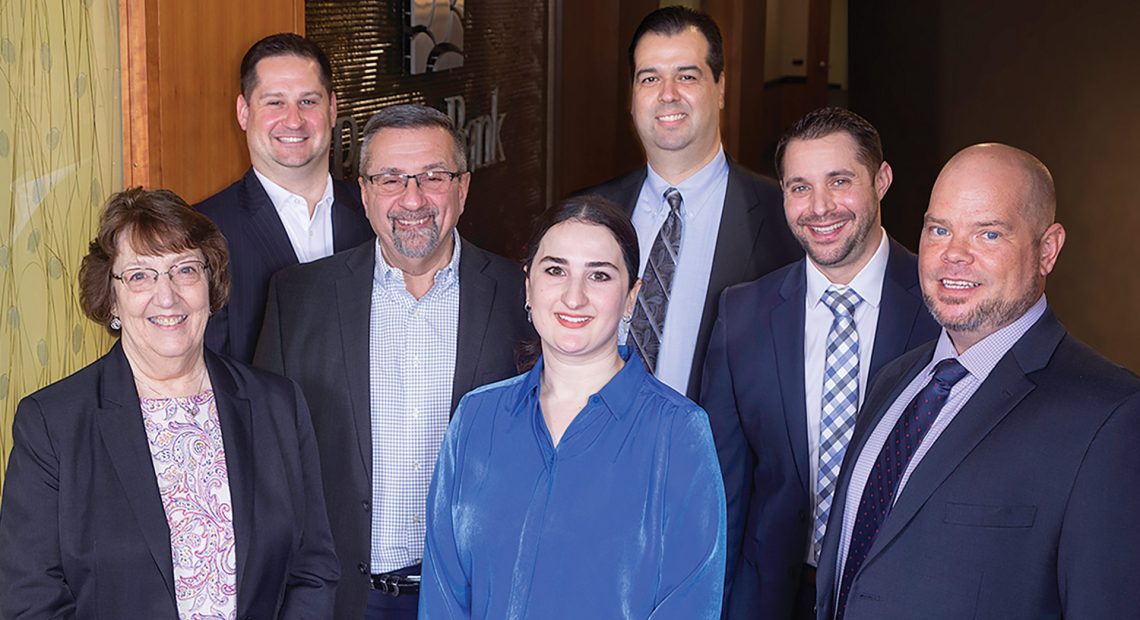
James Sherbo (third from left), senior vice president of Consumer Lending at PeoplesBank, with his team of mortgage consultants.


Mike Ostrowski remembers signing for his first mortgage.

The year was 1982. The 30-year adjustable rate was … wait for it … 16.37%.

“You could put a house on a credit card and beat that rate,” said Ostrowski, president and CEO of Arrha Credit Union. From that historical perspective, he noted, today’s rates, typically between 5% and 6%, don’t seem so onerous.

“We don’t make the market. We would like to see a nice, steady rate that does not fluctuate and move, but the fact of the matter is, even if the rates are hovering around 5% or 6% right now, that’s still a great rate,” he went on. “Did you catch the bottom of the market at 3%? Maybe some people did, and that’s great, but 6% isn’t ridiculous. It needs to be put in perspective. People forget.”

That they do, said Kevin O’Connor, executive vice president of Westfield Bank. “People were really used to rates of 3% for 30 years fixed,” he said, though he was quick to note that doubling that rate does alter the affordability of some houses when shopping in today’s market, and he’s sensitive to that reality. Still, “people are surprised right now, but 15 years ago, 8% to 9% was common, so a lot of us still view 5% as a good rate.”

Mike Ostrowski

Mike Ostrowski

“The whole goal in all of this is to cool down the overheated market, try to slow it down. If the Fed doesn’t take any action, you could be mired in inflation for a long time. And that’s certainly not to anyone’s benefit.”

James Sherbo, senior vice president of Consumer Lending at PeoplesBank, had similar thoughts, noting that, while 5% to 6% mortgage interest rates are historically low, they don’t seem low when people have been accustomed to a long stretch of much lower rates. And he understands why those interest rates, which are not directly tied to the Federal Reserve’s actions but tend to follow that pattern, are rising.

“Overall, it’s to slow inflation down, and part of that formula is the housing market,” Sherbo explained. “The thought is that, as rates increase, it will slow down the activity we’ve seen in the market the past couple of years.”

That activity has included an unprecedented swelling of home prices, driven by the laws of supply and demand — the former dragging way behind the latter in the wake of the pandemic and building-supply shortages.

“The whole goal in all of this is to cool down the overheated market, try to slow it down,” Ostrowski said. “If the Fed doesn’t take any action, you could be mired in inflation for a long time. And that’s certainly not to anyone’s benefit.”

O’Connor noted that the Fed’s recent moves to boost the prime lending rate, which has led to increases in other areas of the rate environment, including mortgages, have required banks to balance that reality with the needs of borrowers.

“In our case, how do we best position that rate for what the bank needs as well as what is good for customers and the community as a whole?” he said. “When rates were rising, we were probably looking at it daily. That’s not typical; we try to set rates as best we can for a week, so customers and Realtors are looking at something they can rely on, so they can plan.”

That daily whiplash has stabilized somewhat, to where the bank may alter the rate an eighth of a point during any given week, he added.

For this issue’s focus on banking and financial services, BusinessWest talked with several area industry leaders about why mortgage interest rates have been so volatile lately, and how they’re addressing the needs and concerns of borrowers.


Bottom-line Impact

Craig Boivin, vice president of Marketing at UMassFive College Federal Credit Union, understands the historical picture of mortgage rates, but also sees consumers’ side: that buying a house in 2022 will cost them significantly more on their monthly bill than a house bought for the same price in 2021.

“Compound that with the fact that rents are higher, and it puts people in a position of ‘should I bid on houses when the values haven’t come down yet, or pony up another year of rent, which has increased a couple hundred dollars as well?’

“We’ve had a lot of conversations internally about how to help people get into homes,” Boivin went on. “Home ownership is one way people move into a higher economic class. We also know how homeowners benefit from values going up, as they can tap into home equity. So, how do we help people navigate this crazy environment?”

Craig Boivan

Craig Boivan

“We often tell folks who are getting into the homebuying game, especially people entering this crazy world for the first time, ‘take the workshop. We’ll show you different rate options, who you’ll be working with, finding your agent, all those things. Just talk to us.”

One way is by offering a wide range of products and matching borrowers to the right ones. For instance, UMassFive’s adjustable-rate mortgage product, which offers lower fixed rates over the first several years, followed by variable rates later on, can be a solid option for certain people.

“Those loans got a bad rap in the 2000s leading up to the housing burst because there was a lot less strict criteria around granting mortgages; some financial institutions were giving loans to people who couldn’t afford them,” he explained, which led to financial pain when a loan’s rate shot up.

But some customers are ideal fits for these types of loans, he said, such as first-time homebuyers who are already planning to move to their next home early in the loan, or medical residents who move around often, or professors who don’t have tenure and expect their current job to be transitory.

“One of the main reasons we can offer such a wide range of products is the way we set up our mortgage department,” Boivin said, noting that UMassFive invested in a credit-union service organization, or CUSO, called Member Advantage Mortgage, back around 2008. CUSOs allow a number of credit unions to create scale by pooling their resources on a particular program — in this case mortgages — which allows them to craft unique products for their members while weathering the kind of economic volatility that can upend business.

Lauren Duffy, chief operating officer at UMassFive, is executive chair of the Member Advantage Mortgage board of directors, “so we have direct oversight and a lot of influence,” Boivin noted.

O’Connor said Westfield Bank helps potential borrowers through its pre-qualification program, called ‘lock and shop.’ “They leave here knowing what their level of affordability will be, and their payment, based on current market rates. Then they can go out there and do some shopping.”

The idea is to avoid situations where shoppers think they’ve found the perfect home, only to find it’s unaffordable later, based on current rates, he explained.
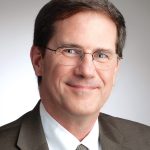
Kevin O’Connor

Kevin O’Connor

“We want to take the uncertainty off someone’s head and give them some stability. We try to work with people in that way in these unsettled times.”

“That’s certainly helpful. We want to take the uncertainty off someone’s head and give them some stability. We try to work with people in that way in these unsettled times. Certainly, as a community bank, we feel a strong obligation to the community to find security and peace of mind for customers through this process.”

Boivin said UMassFive likes to “lead with education,” which is the motivator behind its educational programs, like Home Buying 101.

“We often tell folks who are getting into the homebuying game, especially people entering this crazy world for the first time, ‘take the workshop. We’ll show you different rate options, who you’ll be working with, finding your agent, all those things. Just talk to us.’”


Dollars and Sense

While mortgage volume hasn’t gone down at most institutions, refinancing has understandably taken a hit.

“We saw lots of refinancing from 5% to 3%; these people are not going to give up their rate now for any reason,” O’Connor said. “But a home-equity line of credit is an alternative, so they can preserve their lower interest rate, and we’re seeing home-equity volumes back up. A line of credit is variable to prime, and people understand that, but for many people, it’s worth doing that rather than give up their fixed-rate mortgage.”

Ostrowski said there will always be some refinancing business “because there’s always a need for money. People always need to send their kids to college, and they always want to make improvements to their homes.”

On the mortgage-origination side, the first-time homebuyer segment is most affected by higher interest rates, Sherbo said, simply because they don’t have a home to sell in this inflated market.

“They have the double whammy of higher rates and higher prices at the same time, and they often don’t have the wherewithal to withstand a bidding war on a property. So we have to do our best and be as competitive as we can on our products and our rates. We historically have low loan fees compared to our competitors, and a strong relationship with the real-estate community here in our footprint. Over time, we’ve developed a very good reputation for getting things done.”

The good news is that higher rates, married with a slight easing of the supply-and-demand conundrum, may push prices down, “but I don’t think we’ve seen that happen quite yet,” Sherbo added. “I think things should at least start settling down a little bit. We’re not seeing the bidding wars as hot and heavy as we have in the past. In some areas, there are some signs things are cooling down a little bit, which will help prices stabilize.”

He emphasized the importance of a community bank’s role in guiding customers to good decisions. “We know the market, and we can make adjustments quickly. We’re very agile when we have to adjust and change our programs a bit. We have to be focused on being competitive on rates, and we want to give buyers options. As soon as you feel you’ll be in the market, come talk to us, get pre-qualified, and we can guide you through what your options are.”

Ostrowski hopes home prices ease as well, but new housing starts nationally remain slow, which is indicative of the still-high cost of building materials, among other factors. But considering the big picture, he doesn’t think current mortgage rates should stop potential buyers from jumping into the pool.

“Realtors care about making a sale as quickly as possible. I don’t blame them; that’s their job. So they’re going to take a more negative view on this,” he told BusinessWest. “I don’t look at it as negative. You have to deal with normal fluctuations in this business. It might be slightly more than normal right now, but I wouldn’t hesitate in buying in the current market.”


Joseph Bednar can be reached at [email protected]

Innovation and Startups

The Art of Connection

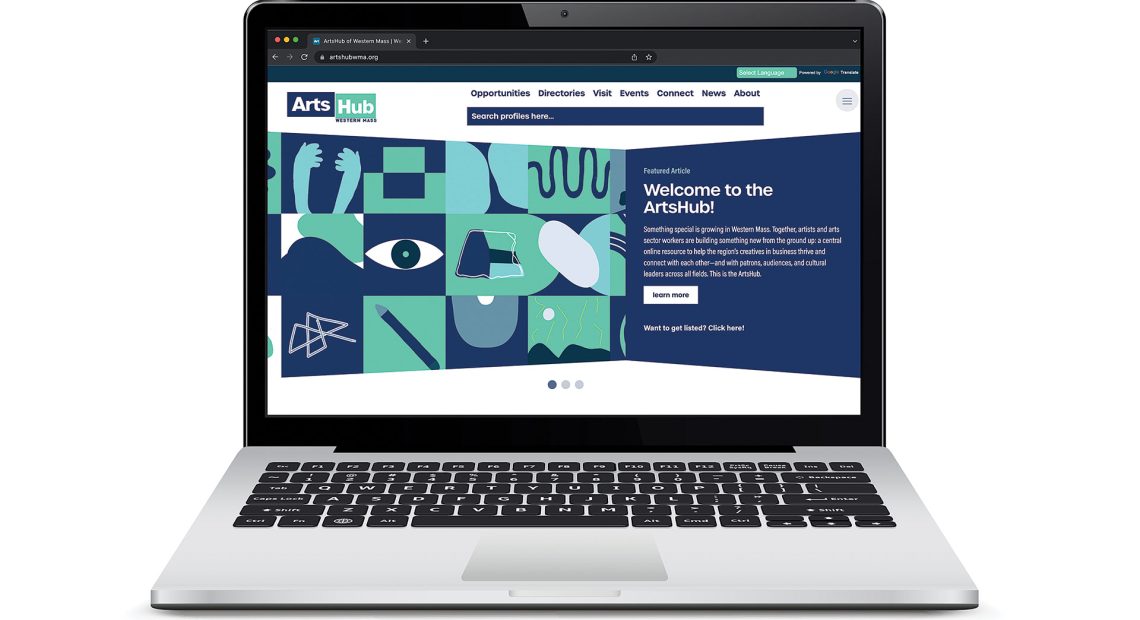
ArtsHub of Western Mass is a website, but for the region’s artist community, Lisa Davol and Dee Boyle-Clapp say, it’s so much more.


“Like the steampunk aesthetic, Bruce Rosenbaum thrives on paradox. His artwork is a blend of gilded era opulence, modern functionality, and futuristic aspiration,” author Daniel Hales recently wrote about the Palmer-based artist who specializes in creating steampunk-inspired objects. “Similarly, Bruce himself is simultaneously an unapologetic dreamer — an artist building fanciful castles in the clouds out of very heavy materials — and also a very pragmatic and successful businessman.”

That article, one of many on the ArtsHub of Western Mass website, perfectly encapsulates the dual worlds of art and commerce that so many creatives must inhabit. They may create in isolation, but rely on connection — of many different kinds — to bring their work into the light and make a living.

The ArtsHub, a free, centralized online portal that seeks to forge those connections, could be a game changer in that regard, said its founders, Dee Boyle-Clapp, director of the UMass Arts Extension Service, and Lisa Davol, Marketing manager for the Franklin County Chamber of Commerce.

Lisa Davol

Lisa Davol

“We’ve all been trying find a way to get artists together because artists are kind of working in their own silos, and they really needed a place to gather to see who’s doing what and to find access to resources, technical assistance, funding, and collaborators.”

Rosenbaum, Boyle-Clapp said, is “a person who’s an artist, but he’s always looking for other artists to hire because he needs people who have specific skills based on whatever art project he’s currently working on. And he needed a place to find other artists. So the ArtsHub is a spot for him to quickly find people who are in the region he can reach out to and hire. That’s one of the roles the ArtsHub is going to play.”

One of many, in fact.

“It’s a concept we’ve been talking about, and that the arts community has been talking about, for years,” Davol said. “We’ve all been trying find a way to get artists together because artists are kind of working in their own silos, and they really needed a place to gather to see who’s doing what and to find access to resources, technical assistance, funding, and collaborators. There’s such a huge arts economy in this area, but there’s a need for connection around that.”

The pair worked on creating an arts database in Franklin County, and similar efforts have been attempted in other areas of Western Mass. But the vision for ArtsHub, which caters to artists — visual, performing, written-word, you name it — across Hampden, Hampshire, Franklin, and Berkshire counties, started coalescing in earnest after the Western Massachusetts Economic Development Council convened a creative-economy network.

“It was really the first time everyone in the whole region was able to come around the table together and say, ‘hey, this is what’s going on in my region; what’s going on in your region?’” Davol recalled. “And all of the needs are the same, basically.”

Next came a planning grant from the Community Foundation of Western Massachusetts, followed by a much larger $186,000 grant from the Massachusetts Office of Business Development. After much planning and a virtual summit that drew artists around the theme of “How to Recover and Thrive” after the pandemic, the website was launched in January.

“Now we have a place to find resources,” Davol said. “This is sort of like a chamber of commerce for artists. It’s the same concept. They’re all small businesses, and they really need support and connection.”

As the website explains, “we want to collaborate across diverse sectors of the creative communities in Western Mass. and help one another locate opportunities for funding, studio and rehearsal space, collaborations, commissions, training, careers, storytelling, promotion, and more. A good hub makes space for all local creatives, from studio and performing artists to architects and spacemakers, graphic and web designers, photographers and videographers, singers and musicians, arts managers and administrators, employers and funders, tourists and visitors, audiences and customers.”

Boyle-Clapp noted that “we needed a website, a home base, a place to have an artists’ directory, a place where artists can find access to resources and studio spaces and answer the question, ‘how do I hire somebody?’ Those are all really important.”

Dee Boyle-Clapp

Dee Boyle-Clapp

“It’s a one-stop place for artists to find out what’s going on, what’s available, what can I learn, and what can I access that will help me with my career?”

Artists create a profile on the site and are able to interact with hundreds of other artists on matters like locating talent, professional development, public art opportunities, grants — the sky’s the limit, really. “It’s a one-stop place for artists to find out what’s going on, what’s available, what can I learn, and what can I access that will help me with my career?”


Making Contact

One reason ArtsHub has succeeded so far where other efforts have fizzled out is that its founders thought more strategically about how to partner with different entities to make it sustainable.

“A big part of it is the artists’ database. They’re so expensive to create and so hard to maintain,” Davol said. So ArtsHub has partnered with the New England Foundation for the Arts on that aspect, which broadens the range of exposure for participants.

Meanwhile, ArtsHub has enlisted a number of community liaisons to reach out to artists in specific communities — not just geographic, as in individual cities and towns, but into the Native American, Hispanic, African-American, and other demographic communities in the local creative ecosystem, to get them involved and develop a richer and more robust membership.

“The liaisons are working to help us understand what the needs are of those artists who represent those communities and help them tap the resources of the ArtsHub,” Boyle-Clapp said. “We think of the ArtsHub as a platform, and now we’re inviting other people to participate. Do you have a studio for rent? Are you looking for an actor or artist? Do you have a grant available? This is where to post it.

“It opens up opportunities for everyone, so it’s not an exclusive group, which is why the community liaisons are so important,” she went on. “They’re helping to open this up to the wider community of who’s working here.”

This effort comes at a time when the arts community is recovering from unprecedented challenge, particularly for those who depend on public gatherings, which were shut down for long stretches during the pandemic. The $186,000 grant, in fact, specifically targeted COVID-recovery efforts.

“The arts were hit so hard. Arts organizations were slammed. It’s one thing to be closed down, but another thing to have absolutely no access to venues and no place to be found.”

“How can we help this sector revive?” Boyle-Clapp said. “The arts were hit so hard. Arts organizations were slammed. It’s one thing to be closed down, but another thing to have absolutely no access to venues and no place to be found. One in six jobs in the Valley is tied to the creative economy, so it’s critical that this sector be supported and have access to resources. We are here to help facilitate that as much as possible.”

Most of the initial effort was building the site, Davol said, and now the engagement piece is in full swing, getting artists to sign up. And it’s been successful, with about 2,500 Western Mass. artists on ArtsHub now, many busy connecting over shared resources and opportunities, while posting events to a calendar page.

“I think at the one-year mark, we’ll be able to see what the impact has been,” she added. “There’s a lot of engagement on Facebook, a lot of people signing up. And the more people we can get, the better a resource this is for the creative community, and the more job postings there will be. It looks really great now, but it could be so much bigger.”

ArtsHub has also been engaging writers to share stories on the site, from the Rosenbaum profile to a recent discussion about non-fungible tokens, or NFTs. “We have writers doing stories about individual artists and concepts,” Boyle-Clapp said. “These are topics of interest to folks in the arts.”

A Lunch and Learn workshop series will likely follow, with artists given the chance to speak for 15 to 30 minutes about their work, she added. “I’m going to kick off the first one by talking about internships.”

Davol noted that the virtual creative-economy summit in January featured workshops on everything from how to get leads and market one’s work to how to get into galleries. “The Lunch and Learn may be a way to continue that. We’ll see what happens the first year and what needs are brought to the surface. What have we learned from this, what has been brought to our attention, and where can we go? We’re very open to possibilities.”


Developing Story

Not only is ArtsHub connecting artists with resources and encouraging the community to hire locally, Boyle-Clapp said the general public might find the site useful as well, whether they’re looking for a musician for a bar mitzvah or planning on visiting the region and seeking cultural activities to fill their itinerary.

“People have wanted this for a really long time. It’s a dream come true,” she told BusinessWest. “We’re really excited that it’s here, and now we’re just trying to get more people to know about us, to understand it, to access its potential. It’s a site that should be utilized as much as possible.”


Joseph Bednar can be reached a [email protected]