Daily News

WARE — Country Bank announced that the Boston Business Journal has once again named the bank an honoree in its annual 2024 Corporate Citizenship Awards, recognizing the region’s top corporate charitable contributors. The magazine annually publishes this list to highlight companies that promote and prioritize giving back to their communities.

“It is with honor that we present our list of the Top Charitable Contributors in Massachusetts, companies who gave $100,000 or more to Mass.-based charities in 2023,” Boston Business Journal Market President and Publisher Carolyn Jones said. “Collectively, they gave $362 million in cash contributions — a true example of the business community coming together to help those in need. We are proud to celebrate these organizations who give both money and time to make our communities a stronger and better place for all.”

During this year’s celebration on Sept. 5, 96 companies qualified for the distinction by reporting at least $100,000 in cash contributions to Massachusetts-based charities last year, as noted above. This year’s honorees include companies from such industry sectors as financial and professional services, healthcare, technology, retail, and professional sports.

Country Bank, ranked 51st, employs 220 staff members within Hampden, Hampshire, and Worcester counties. The bank’s employees actively promote its mission of making a difference in its communities by volunteering for various nonprofits throughout the year.

“We are honored to be recognized by the Boston Business Journal for Country Bank’s philanthropic efforts,” said Mary McGovern, the bank’s president and CEO. “As a community bank, it is our mission to help make a difference in the lives of others.”

Daily News

EASTHAMPTON — At a ribbon cutting and open house last week, the Chamber of Greater Easthampton officially opened the doors to its WorkHub on Union co-working space at 33 Union St., Easthampton. The opening followed four years of analysis, collaboration, and fundraising, and will provide valuable resources for entrepreneurs and businesses in the Greater Easthampton region.

WorkHub on Union is intended to be an innovative and inspiring environment where entrepreneurs, freelancers, and small-business owners can converge and thrive, offering support and services to local professionals, fostering entrepreneurial growth, and stimulating economic development in the community.

In addition to offering a dynamic and flexible workspace, the project, which received both public and private funding, will provide access to mentorship programs, networking events, educational programming, and other support services from the chamber designed to accelerate the growth of startups and small businesses.

“The fact that we could bring together dozens of partners at both the state and local levels, raising nearly $500,000 to bring this project to fruition, is a clear indication of the value WorkHub on Union will bring to our community and the local economy,” said Moe Belliveau, the chamber’s executive director.

In 2020, the chamber partnered with the city of Easthampton to undertake an extensive analysis of the city’s economic climate relative to entrepreneurialism and innovation. This analysis revealed that businesses would choose to locate or relocate in Easthampton if a supportive entrepreneurial community could be better enhanced and marketed. The analysis also showed that there are more than 13,000 companies in the region that are less than a year old, many of which have no employees and operate from a kitchen table. Over the past three decades, these types of companies have created an average of 1.5 million jobs per year.

The study went on to say, “it’s simple: the more contacts entrepreneurs can make early in the life of their companies — that is, the more help and information they can access — the greater their chances of getting products developed, finding viable markets, surviving the first years, and growing toward success.” From this information, the vision for WorkHub on Union was born.

“Led by our local general-contracting partner, Five Star Building Corp., our economic- and community-development vision was to take our existing building at 33 Union Street, redesign the space, reimagine its use, and renovate its interior to create a unique co-working space which will serve our community now and well into the future,” Belliveau said. “We are so proud to see the culmination of our strategic thinking, fundraising efforts, manpower, commitment, and blood, sweat, and tears.”

WorkHub on Union features flexible membership options on full, half, and hot desks, as well as day passes with virtual office options expected to be available in the future. All memberships include amenities such as 24-hour key-fob access; high-speed internet; a fully equipped conference room; lounge area with complimentary coffee, tea, and water; a private telephone area; access to photocopying, printing, and scanning; professional cleaning service; and on- and off-street parking.

Members of the chamber will receive a discount as a benefit of their chamber membership. The space will continue to house the headquarters of the chamber to create a more synergistic environment.

Daily News

LONGMEADOW — Bay Path University has been ranked ninth on U.S. News & World Report’s annual list of Top Performers for Social Mobility in the North. Bay Path was the only school in Massachusetts to appear in the top 10.

U.S. News & World Report’s social-mobility ranking is a measure of how well schools graduate economically disadvantaged students. Rankings were determined by looking at the number of enrolled students receiving Pell Grants, assessing the graduation rates of those students, and comparing those rates to the graduations of non-Pell-eligible students.

“Being recognized as a top performer for social mobility clearly illustrates the power of a Bay Path education. Our mission of providing an innovative, career-focused education to learners for whom a college degree is transformative — personally, professionally, and financially — is what continually motivates us,” Bay Path President Sandra Doran said. “This ranking affirms the dedication of our faculty and the drive of our learners.”

In recent years, U.S. News & World Report’s Best Colleges rankings and the attention they garner have been cited for perpetuating a culture of exclusion and feeding persistent inequalities. Critics champion the Social Mobility Index, which measures the extent to which a college or university educates more economically disadvantaged students (with family incomes below the national median) at lower tuition and graduates them into well-paying jobs.

“For many colleges, like Bay Path, our guiding principles are to expand access, increase opportunities, and strengthen the support we can offer our learners,” Doran said. “We see prestige in a mission that recognizes the talents and potential in all learners who have that drive to go further.”

Daily News

HOLYOKE — Holyoke Community College (HCC) recently received the Igniting Workforce Success award from the Massachusetts Rehabilitation Commission (MRC) for a cybersecurity training program it runs in partnership with the agency, which recently changed its name to MassAbility.

Specifically, the award recognizes HCC for its CyberOps training program, a free, nine-month remote program that trains MassAbility consumers to be cybersecurity analysts. MassAbility works with people with disabilities to empower their lives through counseling and various career and employment programs.

Kermit Dunkelberg, vice president of Adult Basic Education and Workforce Development, accepted the award on behalf of HCC at the MRC’s Igniting Workforce Success conference in June.

“We just completed our fourth year with MassRehab,” Dunkelberg said. “This award is a great recognition of that partnership. In MassRehab, which is now MassAbility, we have a great partner. They bring as much to the table as we do in terms of innovation and attentiveness to student success.”

The pilot program launched by HCC and MassRehab in 2020 was the first of its kind in Massachusetts. Based on the program’s success, MRC launched a second with Roxbury Community College, which also received an Igniting Workforce Success award.

“Together, we are re-envisioning employment and people’s lives,” MassAbility Commissioner Toni Wolf said in 2020 after the first cohort of students graduated from the HCC program. “In the wake of COVID-19, our perspective on what is possible for remote work is expanding on a daily basis, particularly how resilient and adaptive people with disabilities are. These Cisco certifications are nationally recognized and highly sought-after workplace credentials that will give these students the needed leverage to enter a high-paying industry.”

Since 2020, about 60 MassRehab clients have gone through the program, many emerging with paid internships that have led to full-time, benefited positions as cybersecurity analysts.

“It was MassRehab’s vision to offer training in the area of cybersecurity,” Dunkelberg said. “This is by far the longest-duration program that they run, and the most expensive, because it is not only a long duration, but very intensive. These students are studying 30 hours a week for about 10 months, so it ends up being 900 hours of training, but the difference that it can make in someone’s life is huge in terms of economic self-sufficiency.”

Once students complete the training, they take exams to qualify as Cisco certified support technicians and Cisco certified networking associates. Past program graduates have gone on to work as cybersecurity consultants and systems analysts for big tech companies, such as Dell Technologies.

“The story we always like to tell is one about a participant from our first program class who was making pizza at Big Y,” Dunkelberg said. “Upon conclusion of the program, he was making $80,000 a year as a consultant.”

Other students have more modest but no less meaningful career outcomes, he added. “We’ve had four or five students intern here at HCC in our IT department. For a lot of people, just getting that hands-on experience is the next step. Another one of our students got a job working in IT support at her local library, and that was just what she needed. Her family told us that, before she went through our program, she hardly had a life outside her home. Having a job she could walk to was the perfect outcome for her.”

In 2023, program instructor Dalip Singh received the Above and Beyond Award from Cisco Networking Academy for developing and teaching the cybersecurity class.

Overall, Dunkelberg said, the program has been so successful that the agency wants to explore new training partnerships with HCC.

Cover Story

Down to a Science

Mike Garjian

Mike Garjian

Mike Garjian likes the symmetry.

Indeed, standing in front of a massive manufacturing space in downtown Holyoke, complete with overhead cranes, where waterwheels, used to generate hydropower, were assembled more than a century ago, he envisions that same space soon being used to produce equipment he has invented that will reduce the amount of carbon dioxide going into the atmosphere.

“A century later, a different kind of green energy,” he said as he talked about the CarbonStar Catalytic Pyrolysis System and what it might mean for a planet that is heating up, he and many climate experts say, due to rising amounts of CO2 in the atmosphere.

CarbonStar is a company that Garjian, a serial inventor and entrepreneur, and his wife, Irene, created. And catalytic pyrolysis is the process by which biomass (wood chips, seaweed, and canola meal) is converted — through thermal decomposition under oxygen-limited conditions — into what’s known as biochar and other byproducts, such as wood vinegar, a liquid fertilizer.

Gargian calls biochar “almost a miracle substance,” one that can be used for everything for reviving depleted soil to acting as an additive in concrete to reduce the massive CO2 emissions from the production of that product.

In simple terms, Garjian’s system takes a tree that is dead or dying — as well as the biomass lying on forest floors — and essentially interrupts that part of the carbon cycle whereby the tree or biomass decomposes into CO2 or methane. And it creates a use for the biomass that has sat on forest floors, fueling fires from California to Canada to Australia.

All this is, as Garjian said, a different kind of green energy being produced at this same location on Main Street.

“The process of biomass decomposing and returning to CO2 in the atmosphere … that contributes 17 times more CO2 than all human activity combined annually.”

But there is much more to like beyond this symmetry. There is the environmental impact, driven home by numbers that Gargian uses to get his points across.

“The process of biomass decomposing and returning to CO2 in the atmosphere … that contributes 17 times more CO2 than all human activity combined annually,” he explained. “There it is, sitting on the sides of roads, spewing CO2 and methane. That’s the material that we’d like to get, chip it into smaller pieces, and run it through the system.”

Mike Garjian calls biochar “almost a miracle substance.”

Mike Garjian calls biochar “almost a miracle substance.”

There are also the business implications. Indeed, that space Garjian was standing in is intended for the production of catalytic pyrolysis systems, and he can envision that space being transformed for that purpose within the next few years.

And then, there are the jobs, involving everything from the production of these systems to the prospect of people being hired to remove the biomass from forest floors — “just 100 feet off the highway,” as Garjian noted — to feed those systems.

Overall, there are many potential wins from this, the latest venture for Garjian, who has nearly a dozen patents to his name and has developed products ranging from flat light sources (tubeless neon) to alternative fuels — specifically running diesel vehicles on waste vegetable oil — to conversion of waste agricultural products into pellets for wood stoves and then cat litter.

For this issue, we take an in-depth look at his latest project and its far-ranging potential — for the region and the planet.


Burning Issue

As he walked around the prototype catalytic vacuum pyrolysis system in the middle of the 7,000-square-foot space he’s now leasing, Garjian explained how it works while also giving a brief history of how, and why, it was developed.

He noted that while the environmentally friendly cat litter he produced sold well, that wasn’t exactly what he wanted to do with his time and energy. So, as a side venture, he got interested in pyrolysis and set out to develop a workable system.

After getting involved with a few different partners, he took the technology he helped develop and, with Irene, created CarbonStar to design, patent, and license the current mobile system now siting in that Holyoke manufacturing building.

Garjian and some investors subsequently formed E3 LLC to build the current system and act as the exclusive licensee to operate and manufacture systems in the New England region.

As for how it works, he said it’s rather simple — the system utilizes a computer-controlled vacuum tube to heat biomass, extracting moisture and leaving behind biochar, without combustion.

“We’re taking woodchips, any plant matter — it could be paper or cardboard — but mostly wood chips from lumber mills that would normally go to waste, and we introduce it into a vacuum tube, with a catalyst,” he explained. “That vacuum tube is heated — it’s computer-controlled — and with that catalytic action, we break down the long-chain hydrocarbons in the wood.

“The way the natural carbon cycle works is … the plant or tree absorbs CO2 from the atmosphere, gives off oxygen, and keeps that carbon to build its own physical structure — a tree is 40% to 50% carbon, depending on the species,” he went on. “That’s how the tree sequesters carbon from the atmosphere. When the tree dies, it decomposes, and all of that carbon is released back into the atmosphere as CO2. Or, if the tree falls in the water or lies on its side where there’s no oxygen involved, it becomes methane.”

As noted, this natural carbon cycle puts a large amount of CO2 back into the atmosphere, he continued, adding that these amounts have been compounded by taking oil out of the ground and burning it, the growing use of other fossil fuels, and the large numbers of fires that have been destroying forests at alarming rates; last year’s forest fires in Canada emitted more than 1 billion tons of CO2 between May and June alone.

“When the tree dies, it decomposes, and all of that carbon is released back into the atmosphere as CO2. Or, if the tree falls in the water or lies on its side where there’s no oxygen involved, it becomes methane.”

“By the time they burned out in November, months later, they had put more CO2 into the atmosphere than 138 countries,” Garjian noted, adding that such fires will continue in the years to come.

All this explains why the levels of CO2 in the atmosphere have been growing at alarming levels, and what those rising levels mean.

“It’s pretty much agreed to now by most scientists now that the level of CO2 in the atmosphere increases the temperature of the planet because CO2 holds more heat,” he explained. “Right now, we’re higher than we’ve been in hundreds of thousands of years. Prior to the Industrial Revolution, it was 250 parts per million in the atmosphere; 350 is kind of an agreed-upon upper limit. We’re now at 420.

“And the level of increase per year is increasing,” he went on. “It’s going in the opposite direction we want it to.”

All this also explains why Elon Musk created the $100 million XPrize for Carbon Removal, which Garjian sought a share of with his catalytic vacuum pyrolysis system, which he describes as one of the most carbon-negative processes in the world, meaning it sequesters CO2 from the atmosphere permanently.

CarbonStar didn’t win a cash prize — only four teams will, and these will be announced next spring — but the company was recognized in the official top 100 list; it officially placed 80th out of 1,400 entries, and in the top 28 among land-based systems.


It Comes Naturally

But there may be some even more important prizes in store for this company.

Indeed, Garjian and his team have made some improvements to the prototype, which is the next generation of a system he helped develop several years ago, and have started running it with wood chips supplied by a lumber yard in Westfield, with the goal of eventually running it 24/7, maybe 300 days a year.

Mike Garjian, standing in the large manufacturing space where water wheels were once assembled

Mike Garjian, standing in the large manufacturing space where water wheels were once assembled, says it will eventually be used to manufacture catalytic pyrolysis systems.

“Over the past three years, since we turned it on the first time, we’ve made some improvements in it, improved its throughput, and achieved better control over some areas,” he explained, adding that, while working on the systems, those involved also secured the space in Holyoke and moved in last year.

The system, which sequesters 367 tons of CO2 for every 67 tons it emits, will, as noted, produce biochar and several other products, including heavy and light bio-oils, which can be used as heating oil or refined to produce aviation and automotive fuels, as well as wood vinegar, which can be used as fertilizer.

“When we go in with a ton of wood, we’re going to get 520 pounds of biochar, which is 85% to 90% pure carbon, as well as 100 gallons of liquids, a combination of liquid fertilizer and bio-oils, and we’re going to get 75,000 cubic feet of a gas that we can use to generate electricity to run the system,” he explained, noting the highly sustainable character of this system.

As for biochar, as he scooped out a large handful of the substance, which he called “solid carbon,” Garjian said it has a number of practical uses.

“When I first began to produce it and sell it in 2006 — Irene and I were the first ones ever to sell biochar online — we were selling it as an additive for agricultural land. It improves the quality of the soil; it will replenish and bring life back to depleted soils,” he told BusinessWest, adding that it can also be an additive in the production of cement, and he is in preliminary talks with Sublime Systems, which will build a plant in Holyoke to produce environmentally friendly cement, about partnering with that venture.

While operating the system in Holyoke, the company plans to move into production of such systems in the adjoining manufacturing space, said Garjian, adding that needed capital to do so could be secured from any of several sources, including major corporations such as Microsoft and the federal government, which is pouring billions of dollars into carbon-removal technologies.

The systems themselves are mobile and able to operate in remote areas, he noted.

“Theoretically, when you have one these machines and you get it started with a small generator, it will begin to produce its own power to run itself, and provide electricity as well. So you can put them is small villages in isolated places, third-world countries, or places like Puerto Rico after Hurricane Maria; they didn’t have electricity for six months in the middle of the island.”

Manufacturing these systems will obviously lead to the creation of jobs for Holyoke and the region, he said, adding that, overall, jobs can be created on many levels, including the removal of biomass from forest floors and even spaces just off country roads, as he noted earlier.

These jobs, not to mention the myriad benefits for the environment, are just some of the many things, beyond mere symmetry, to like about this intriguing new business venture.

 

Entrepreneurship Special Coverage

Fired Up

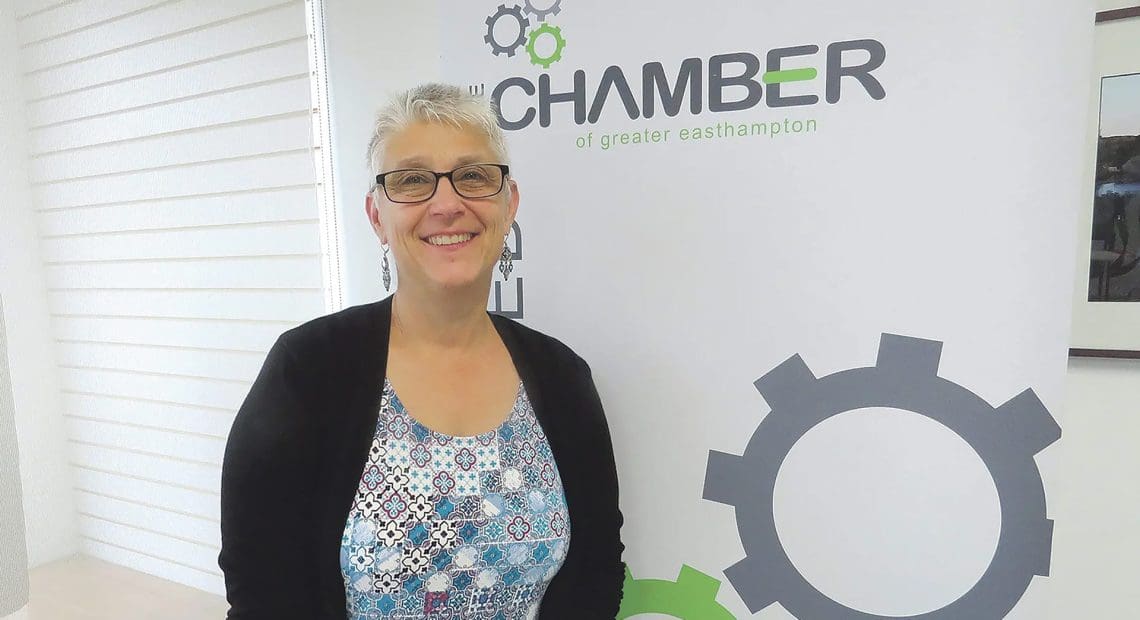
Chamber of Greater Easthampton Executive Director Moe Belliveau

Chamber of Greater Easthampton Executive Director Moe Belliveau


Technology, marketing, and talent.

Those are three elements virtually all businesses must take into account if they want to grow and thrive in 2024. They’re also the main themes of this year’s ignite conference, a “professional learning opportunity” being hosted by the Chamber of Greater Easthampton on Tuesday, Oct. 22 at Abandoned Building Brewery in Easthampton.

This year’s program, dubbed ignite:SPEED, aims to be a fun, fast-paced learning opportunity designed to empower leaders, business owners, professionals, entrepreneurs, employers, and employees with the knowledge and skills required to thrive in the ever-evolving landscape of work.

“In today’s business world, change is the only constant,” chamber Executive Director Moe Belliveau said. “To ensure success, all levels of employees must not only keep pace but anticipate and adapt, turning the momentum and speed of change into a catalyst for growth.”

Sean Hogan certainly sees value in such a conference. The president of Hogan Technology is one of the presenters in the technology category, kicking off the first cluster of presentations with an overview of safety in the dark web. Participants will learn how businesses can be protected from attacks such as webite hacking, security breaches, cyberattacks, ransomware, and phishing schemes.

“I’ll talk about what the dark web is, why it was created, what it’s used for, how to avoid it, and, once your information ends up on the dark web, what to do next,” Hogan told BusinessWest — a relevant concern, especially after the National Public Data breach, reported this summer, exposed some 2.9 billion personal records.

“In today’s business world, change is the only constant. To ensure success, all levels of employees must not only keep pace but anticipate and adapt, turning the momentum and speed of change into a catalyst for growth.”

A credit freeze with the three major credit bureaus should be the first step for anyone exposed, he said. “If you’re not buying something like a house or a car, nobody’s running credit on you, so just freeze them and then unfreeze them if you have to apply for credit somewhere, and then freeze it again.”

This year’s ignite conference is a one-day event following last November’s two-day affair at Abandoned Building, which focused on the latest trends and best practices in artificial intelligence and explored the intersection of AI and the human workforce.

More recently, the Chamber of Greater Easthampton and the Blackstone Valley Chamber of Commerce partnered to bring an ignite conference to the latter’s backyard in North Grafton. That two-day conference took place in April and was aimed at professionals who want to improve their emotional intelligence and learn how to interact with co-workers, customers, or donors more effectively.

Clearly, there’s no shortage of key topics affecting businesses and entrepreneurs, which bodes well for the prospect of keeping future conferences … well, ignited.


Robust Roster

As noted, Hogan will give attendees a crash course in the dangers of the dark web and how to use monitoring tools and other resources to respond to breaches and stay safe.

“If there’s a breach out there, assume that somebody is working to get into more accounts, trying to open credit cards,” he said. “When it becomes identity theft, it’s serious. You can paralyze somebody. You can lock up their bank accounts and ruin their credit for a long time.”

Sean Hogan

Sean Hogan

“If there’s a breach out there, assume that somebody is working to get into more accounts, trying to open credit cards. When it becomes identity theft, it’s serious. You can paralyze somebody. You can lock up their bank accounts and ruin their credit for a long time.”

Following Hogan’s presentation, the technology cluster will continue with Michael Lareau, vice president of Solution Engineering for SourcePass, who will discuss AI governance in the workplace. A recent blog post by Marsh McLennan noted that, while the explosion in AI usage by businesses has driven innovation, efficiency, and profitability, it can also expose businesses to organizational, reputational, and regulatory risks. Lareau will explore how businesses can appropriately govern the use of AI oversight to address risks such as bias, privacy infringement, and misuse while fostering innovation and trust among customers and employees.

Pat Brough, head of Sales and Marketing for Finck & Perras Insurance Agency, will review cyber insurance. According to Cybercrime magazine, 60% of small businesses go out of business within six months of falling victim to a data breach or cyberattack. Cyber insurance covers a business’ liability for a data breach involving sensitive customer information, such as Social Security numbers, credit card numbers, health records, and more.

The second cluster of presentations will focus on the changing landscape of marketing. Jeff Uzzel of Uzzel Design Co. will focus on telling a ‘brand story,’ which entails communicating a mission, values, and purpose in a way that that creates an emotional connection between an organization and its customers. Uzzel will discuss how to successfully tell a brand story and how it can build an organization’s reputation, customer base, and bottom line.

“Building Networks for the Long Game” will be the focus of Bob Burch, owner of Bright Cloud Studio. He will explore how to understand and process what is changing with networking and relationship building, how people can nurture customer relationships, and how to curate marketing to keep pace with it all to build lasting, trusted relationships resulting in repeat, long-term customers.

Blair Winans, president of Rhyme Digital, will end the cluster with a focus on the ever-changing social media algorithms. Social-media platforms utilize algorithms to keep users engaged and ensure users are seeing relevant content. Winans will talk about the various platforms and their algorithms and how businesses can adapt their social-media content to maximize each algorithm to reach a wider audience, increase consumer engagement, and boost their brand.

The final cluster of the program will highlight change in the workplace. With a tight labor market, top talent is in high demand, and talent recruitment, assessment, and retention are critical success factors that can yield a competitive advantage. Allison Ebner, president of the Employers Assoc. of the NorthEast, will discuss how businesses can adapt to the future of work, embrace generational diversity, better engage employees, and reskill and upskill to support retention.

Creating stability in the age of uncertainty and change will be the theme of Tricia Canavan, who will share insights gained as a former business owner, and now as CEO of Tech Foundry. She says technology has always been an industry in constant flux, but newer advances are creating a constantly changing work landscape and environment, causing employers to continuously adapt and upskill, and employees must learn to self-educate to keep pace.

“The fact that we could bring together dozens of partners at both the state and local levels, raising nearly $500,000 to bring this project to fruition, is a clear indication of the value WorkHub on Union will bring to our community and the local economy.”

Shannon Mumblo of Shannon Mumblo Consulting will close the cluster focusing on cultivating robust agility around change. She will help participants discover how to stay confident and resilient in times of uncertainty by embracing discomfort and cultivating a supportive network, and how to expand potential beyond a job description by thinking creatively and continuously adding new skills to one’s personal toolbox.

Registrations for ignite:SPEED cost $75 for chamber members ($110 for non-members) and include a casual dinner provided by Vegan Pizza Land. To register, visit easthamptonchamber.chambermaster.com/eventregistration/register/1690.


And That’s Not All

The ignite conference is just one development that has the Chamber of Greater Easthampton excited; another is last week’s ribbon cutting of the WorkHub on Union project, an ambitious co-workspace project providing resources for entrepreneurs and businesses in the Greater Easthampton region.

In addition to offering flexible workspaces, WorkHub on Union will provide access to mentorship programs, networking events, educational programming, and other support services from the chamber designed to accelerate the growth of startups and small business.

In 2020, the chamber partnered with the city of Easthampton to undertake an extensive analysis of the city’s economic climate relative to entrepreneurialism and innovation. This analysis revealed that businesses would choose to relocate or locate in Easthampton if a supportive entrepreneurial community could be better enhanced and marketed. The analysis also revealed there are more than 13,000 companies in the region that are less than one year old, many of which have no employees and operate from a kitchen table, and could benefit from a resource like WorkHub on Union.

“The fact that we could bring together dozens of partners at both the state and local levels, raising nearly $500,000 to bring this project to fruition, is a clear indication of the value WorkHub on Union will bring to our community and the local economy,” Belliveau said.

Insurance Special Coverage

Ready for the Storm


From water backups, ice dams, and snow runoffs in the basement to windstorms, fires, and floods that can cause much more damage, Beth Pearson has seen it all.

“We have a tremendous amount of experience with these events and have helped educate clients on snow and water-related coverages,” said Pearson, president of Pearson Wallace Insurance in Amherst and Pittsfield. “Then we get involved in the claim remediation and act as a liaison between the company, the carrier, and the client, and make sure it’s an easy process to expedite the claims payouts.”

That process may be a more common one in the coming years, while premium costs creep ever-higher, due to a combination of climate change and more severe weather events, inflation impacting labor and supply costs in the construction world, and insurance carriers basing their rates on what they expect to happen next.

“No area of the U.S. is immune to the impacts of climate risk,” Mark Friedlander, director of Corporate Communications at the Insurance Information Institute, told Bankrate recently. “Whether it’s hurricanes, wildfires, severe convective storms, tornadoes, floods, hailstorms, straight-line winds, or damage from heavy snow or ice accumulation, every county in every state is vulnerable to a multitude of risks.”

“The cost of a loss to a business or a home far outweigh the premium. So it’s important to understand what the replacement cost is. You might want a more expensive premium, but one that will respond to what you need if there’s a loss of business or personal assets.”

That said, the cost of prevention is much preferable to the cost of rebuilding, Friedlander added. “It’s essential that policyholders own their risk. This means they need to assess the risks they face where they live and determine what insurance coverage is essential to be financially protected from losses.”

Pearson agreed. “The premiums are becoming a more expensive budget item for both businesses and personal finances,” she told BusinessWest. “That’s unfortunate, but still, the cost of a loss to a business or a home far outweigh the premium. So it’s important to understand what the replacement cost is. You might want a more expensive premium, but one that will respond to what you need if there’s a loss of business or personal assets.”

That said, Pearson’s agency works with a large number of carriers. “One customer’s policy went from $3,000 to $12,000, and she wanted an alternative option. We found one that lowered it to the original $3,000 cost she was paying. There are options out there.”

Alex Bennett

Alex Bennett

“We come at this from an educational standpoint. It’s complicated, so we sit with every client, and we try to relate the information so they understand what a standard deductible is and how it applies in different claim scenarios.”

Alex Bennett, vice president of Business Development at Pearson Wallace, agreed. “Every carrier has different rates, and they set rates depending on a lot of different factors.”

One recent change due to climate trends has been a remapping of flood zones in Massachusetts and elsewhere, Bennett noted.

“That has changed a lot of the landscape of flood insurance, with the determination that water tables are rising and more floods are popping up,” he explained. “From an agency level, we try to let clients know that certain flood zones are changing, and floods are becoming more and more drastic in terms of actual water flow.”

They also explain that home-insurance policies don’t typically cover flood loss from groundwater, and that clients should consider that additional coverage, just as they would consider additional coverage from, say, earthquakes — which some policyholders do, even though such events aren’t common in the Northeast.

“They might come from the West Coast, where they experienced an earthquake, or a relative did,” Pearson said. “It’s not a standard coverage; it has to be endorsed in the policy. You don’t see a lot of East Coast activity, but it is available coverage if you want to add it.”

Wind damage is far more common, Bennett added, and wind deductibles can be different from other deductibles. In the case of named storms and other factors, the deductible is typically a percentage of the property’s value, which can catch policyholders off guard.

“We come at this from an educational standpoint,” he said. “It’s complicated, so we sit with every client, and we try to relate the information so they understand what a standard deductible is and how it applies in different claim scenarios.”


Ounce of Prevention

The other side of protecting property from weather damage — or at least mitigating the impact of that damage — is the broad realm of storm preparedness.

Lisa Eugin, manager of Marketing and Administration at Encharter Insurance in Amherst, recently prepared a checklist of considerations for businesses to protect their assets from severe weather. They include:

Develop a storm-preparedness plan. Identify the types of severe weather most likely to affect one’s area and evaluate how these weather events could impact business operations; compile a list of emergency contacts, including local emergency services, utilities, insurance companies, and key employees; designate evacuation routes and ensure all employees are familiar with them; and establish a reliable communication system to keep in touch with employees, suppliers, and customers during a storm.

“Do you have a proper replacement cost on your home or business? Five years ago, if you bought a home for $500,000, it might cost $400,000 to $500,000 to replace it. Today, it might be $1 million.”

Secure your physical assets. Regularly inspect buildings for vulnerabilities and repair any damage to roofs, windows, and doors to withstand severe weather; install protective measures like storm shutters, reinforced doors, and impact-resistant windows, as well as sandbags and flood barriers to prevent water intrusion; invest in a backup generator to keep critical systems running during power outages, and move valuable equipment and inventory to safer locations, while elevating sensitive items off the ground to protect them from flooding.

Safeguard your data. Perform regular backups of all essential data and storing copies in multiple locations, including off-site and cloud storage; and implement robust cybersecurity measures to protect against data breaches, which can become more common during chaotic situations.

Prepare your employees. Conduct regular training sessions and emergency drills so employees know what to do in the event of a storm; provide emergency kits for employees that include first-aid supplies, flashlights, batteries, water, and non-perishable food; and develop a remote work plan that allows employees to work from home if the business premises are unsafe or inaccessible.

Review your insurance coverage. Verify that the business insurance includes coverage for natural disasters relevant to the area, such as floods, hurricanes, and tornadoes; purchase business-interruption insurance to cover lost income if the business is forced to close temporarily due to storm damage; and make sure any policy covers damage to or loss of inventory and equipment.

Stay informed. This may include subscribing to weather alerts from reliable sources such as the National Weather Service (NWS) and local news channels, and utilizing resources from government agencies such as FEMA for the latest information and preparedness tips.

Conduct post-storm recovery. Conduct a thorough assessment of any damage to the property and assets, documenting the damage with photos and notes for insurance claims; implement a business-continuity plan to resume operations as quickly as possible; and provide support and resources to employees affected by the storm to help them recover and return to work.

“Even if you haven’t been in contact with the agent or carrier, first mitigate the losses,” Pearson added. “For instance, if a window is blown out, cover it up with plywood to prevent further damage.”

Bennett also emphasized basic preventive measures like winterizing one’s home, checking the roof and gutters, making sure the pipes are insulated, sealing doors and windows, checking the heating system, having a generator on hand, and preparing an emergency kit that includes essential food, medications, blankets, flashlights, and batteries.

“Something I talk about almost every single day is taking photos of your home — inside, outside, the garage, your possessions — maybe once a year,” he added. “If there was a total loss, if you were asked if you know everything you have in your home, most people would say no.”

Pearson also stressed the importance of business-interruption coverage, in case the business needs to be relocated or business income needs to be replicated during a shutdown.

“It’s really important for the clients to sit down with us to make sure there is coverage available and that it’s adequate enough,” she said, adding that both home and business owners need to understand the value of totally replacing a structure. “Do you have a proper replacement cost on your home or business? Five years ago, if you bought a home for $500,000, it might cost $400,000 to $500,000 to replace it. Today, it might be $1 million.”


Weather or Not

When a storm is on the horizon, Pearson Wallace often issues notifications to clients about the timing and expected severity, and the agency encourages property owners to carefully document damage after the event to ease claims processing.

“We work through the mitigation of claims and losses. We have conference calls with the carrier and advocate on the client’s behalf,” Pearson said. “A lot of agencies don’t offer that advocacy opportunity. But working with claims representatives is a tough go, particularly when you’ve had a loss and you’re focused on the loss. Having a claims-process advocate is important.”

And will continue to be important, Bennett added.

“Most carriers at this point are preparing their rates for the future based on continued extreme weather events. Whether it’s the West Coast, East Coast, Florida, regardless where you’re located, most carriers and most reinsurance companies are preparing for more extreme weather,” he told BusinessWest. “That’s a direct correlation to the change in weather patterns we’re seeing.”

Manufacturing Special Coverage

Reducing Barriers to Employment

Earlier this month, the Healey-Driscoll administration launched the Massachusetts Workforce Skills Fund, a pilot stipend program to provide financial support for eligible unemployed and underemployed Massachusetts residents enrolled in job training, including the Career Technical Initiative and Workforce Competitiveness Trust Fund programs.

Administered by the Executive Office of Labor and Workforce Development in partnership with Commonwealth Corp., the Workforce Skills Fund is designed to reduce barriers to job training and employment by providing financial support for eligible trainees and also attract and retain untapped talent pursuing skills and credentials for in-demand occupations in manufacturing, construction, healthcare and human services, and more.

The Massachusetts Workforce Skills Fund builds on strategies outlined in the administration’s Massachusetts Workforce Agenda, titled “Meeting the Moment to Attract, Retain, and Develop a Future Workforce,” released earlier this year. The document outlines the administration’s vision, goals, and strategies to support workforce development statewide, and recognizes a stipend program as a resource to attract and retain talent by providing greater means to pursue and persist in job-training programs that ultimately lead to employment outcomes.

Stipends are awarded to participants based on training duration and issued upon completion of three milestones. Participants in training programs that are fewer than three months will receive $3,000, and participants in training programs longer than three months will receive $5,000. Stipends are issued following the first two weeks of training, at the completion of the training program, and upon post-training employment.

“This new program through the Massachusetts Workforce Skills Fund is a meaningful step toward eliminating barriers to employment and building a strong and inclusive workforce,” Gov. Maura Healey said. “By addressing financial obstacles, this initiative will increase access for more individuals to succeed, compete, and contribute to our growing workforce.”

Gov. Maura Healey

Gov. Maura Healey

“This new program through the Massachusetts Workforce Skills Fund is a meaningful step toward eliminating barriers to employment and building a strong and inclusive workforce. By addressing financial obstacles, this initiative will increase access for more individuals to succeed, compete, and contribute to our growing workforce.”

Added Lt. Gov. Kim Driscoll, “as we support economic opportunity and mobility for Massachusetts residents, this new stipend program is an actionable approach to empower unemployed and underemployed individuals who we need active in our workforce. By offering this resource, our administration will maximize the labor potential of untapped talent, supporting both labor productivity and addressing larger social inequities within our workforce.”


Targeted Impact

The Workforce Skills Fund is being implemented for two specific, pre-existing programs that focus on unemployed and underemployed workers: the Career Technical Initiative (CTI) and the Workforce Competitiveness Trust Fund (WCTF). The stipends are a fixed amount of flexible dollars provided directly to individuals who will enroll in either of the two eligible approved training programs.

WCTF and CTI programs are designed to attract unemployed and underemployed workers. Yet, an array of barriers may hinder participants and prospective participants from enrolling, completing training, and entering the labor market, such as costs for childcare, transportation, and digital equipment. The stipend program through the Massachusetts Workforce Skills Fund aims to address these and other challenges, facilitating greater access to workforce opportunities.

“As Massachusetts strengthens its world-class workforce, we must provide a world-class support system with greater intentionality to reduce barriers to employment and support persistence and success in job-training programs,” Secretary of Labor and Workforce Development Lauren Jones said. “By launching he Massachusetts Workforce Skills Fund and initiating this stipend program, the Healey-Driscoll administration is teaming up with training providers and proven workforce programs to further attract and retain untapped talent and provide added resources aimed at improving outcomes and opportunities for more job seekers in Massachusetts.”

Lauren Jones

Lauren Jones

“As Massachusetts strengthens its world-class workforce, we must provide a world-class support system with greater intentionality to reduce barriers to employment and support persistence and success in job-training programs.”

Molly Jacobson, president and CEO of Commonwealth Corp., said her organization is excited to see the tangible impact the Massachusetts Workforce Skills Fund will have on job seekers’ lives across the Commonwealth. “This initiative not only provides essential support for people who need it, but also encourages participants to seize new opportunities for their future.”

Meanwhile, Department of Transitional Assistance (DTA) Commissioner Jeff McCue said the Workforce Skills Fund will be an instrumental resource for clients to utilize as they strive to reach their career goals and full employment potential, by providing flexible dollars that will help individuals and families overcome barriers to participating in the workforce.

“The Department of Transitional Assistance currently serves one in six Massachusetts residents with food and cash assistance,” he noted. “In addition to providing essential resources to the most vulnerable people in the Commonwealth, DTA also aims to connect clients with meaningful employment to improve economic mobility for families and ensure their long-term success.”


Statements of Support

Aisha Francis, president and CEO of Franklin Cummings Tech in Boston, called the Massachusetts Workforce Skills Fund a crucial resource for the Commonwealth’s technical and trade workforce.

“Stipends make it possible for individuals to complete high-quality training and secure jobs,” she added. “In partnership with the Workforce Competitive Trust Fund and JVS, Franklin Cummings Tech sees the positive impact of financial support on program outcomes. I applaud the Commonwealth’s leadership for recognizing this opportunity and acting quickly to innovate.”

Paul Bello, director of Career and Community Development at South Shore Vocational Technical High School in Hanover, noted that the school will train hundreds of veterans and unemployed or underemployed residents on the South Shore to prepare them for fulfilling jobs in carpentry, manufacturing, landscaping, welding, hospitality, automotive, and HVAC, and looks forward to assisting residents as they embark on new careers with new skills.

“There is great confidence that this program will make an immediate positive impact in people’s lives and will help produce vital members of the workforce in the South Shore area and around the Commonwealth of Massachusetts, he added.

Meanwhile, Susan Almono, director of Grants and Workforce Development at Greater Lawrence Technical School in Andover, noted that the school has provided adult workforce-development training to hundreds of area residents through the Career Technical Initiative.

“We are proud to facilitate entry into lucrative technical careers. However, often candidates can’t take advantage of this opportunity because they need to work rather than increase their skills, in order to pay the bills. We’re thrilled with the new Mass Workforce Skills Fund stipend program and the impact it will have on the lives of area residents. Trainees will be sustained through training and have access to career ladders to stability.”


Modern Office Special Coverage

Patient Approach

By James T. Krupienski, CPA

Every day, it’s the same story for physicians. A couple of patients arrive late for their appointments, and then a few unscheduled visits appear on your schedule. As the provider, you stay late into the evening, but never really seem to get caught up. To make matters even more difficult, reimbursement rates continue to be a struggle and expenses continue to rise, including the impact of employment costs in a post-COVID world.

One of the best ways to help combat these pressures is an effective workflow and time-management review. The problem is that we typically get so caught up in our daily schedules that we don’t always take the time to evaluate ways we can improve them. This is one area, however, where a little effort up front can help to reap significant financial benefits. This article will look at some of the ways that a physician can more effectively manage their time.


Office Workflow

The first step that should be taken is to review the workflow of your office. What inefficiencies exist from the time a patient walks in the door to when they leave? Is there a bottleneck of patients crossing paths in the hallway, or does the provider have to search to locate supplies that are continuously moved from place to place? If corrected, many of these inefficiencies can result in the physician seeing more patients throughout the course of a day.

To identify these inefficiencies, try putting yourself in the shoes of one of your patients. Come in as a patient and go through the entire process of being a patient within your practice. By looking at the flow from a different set of eyes, you may identify many areas where inefficiencies and redundancies may be eliminated, and the flow of your office can be improved.

James T. Krupienski

James T. Krupienski

“When you arrive for the day, after getting your cup of coffee, make sure that you have reviewed the schedule for the day before seeing any patients. This should include a review of the reason for the visits, as well as a review of the patient’s chart.”

An outside consultant may be extremely helpful in this exercise. They would be able to look at your workflow in an unbiased manner and compare what they see to models of successful practices. Additionally, this would make the best use of your time by allowing you to continue seeing patients while this takes place.

As you review the workflow of your practice, consider also how communication takes place. After seeing a patient, do you need to track down one of your nurses or assistants to explain to them the next steps in the care of the patient? Consider the use of technology in this process. A lighting or internal messaging system could let them know that a patient is ready for discharge or that they need to have lab work scheduled, all while allowing the provider to move right on to the next patient. Such a system may also allow the provider to be informed when something comes up that requires attention, without being interrupted during a patient visit.

Improving the efficiency of your practice workflow is an area where your electronic health records (EHR) system may come into play. Consider meeting with your EHR vendor to see what features or functions may exist in the system that you may not be utilizing to their fullest potential. A review of this process may help eliminate unnecessary paperwork or the need for documentation after a patient visit that could have been documented during the patient visit. You pay a lot for these systems, so it is important to make sure you are getting everything you can out of them.


Best Practices

The second step in improving the effectiveness of your time management would be to review some of your own daily tasks. When you arrive for the day, after getting your cup of coffee, make sure that you have reviewed the schedule for the day before seeing any patients. This should include a review of the reason for the visits, as well as a review of the patient’s chart.

For those patients coming in for a follow-up visit, this will ensure that you have received all test results before the patient arrives, as opposed to scrambling to locate them with the patient in the room waiting to be seen. When consulting with a patient, if they bring something up that was not scheduled, and it is non-life-threatening, consider requesting that they make another appointment so that you will be able to spend adequate time discussing the issue with them.

Additionally, be sure to build time into your schedule each day to catch up when you fall behind and to return emails and phone calls. Many providers work late each day and follow up on these items after everyone else has gone home for the day. The problem with this is that a patient waiting for a return phone call may call back multiple times a day until they hear from the provider. Additionally, leaving a pile of paperwork for your staff for when they return the next morning will make them stressed out for the day before they have even placed the first patient in an exam room.


Managing Patients

The one way that all providers can help to more effectively manage their own time is to better manage their patients.

First, when scheduling, particularly with new patients, consider changing your policy so that all patients arrive 10 to 15 minutes prior to their visit. Explain to them in advance this policy so that paperwork can be completed and your team can check weight, blood pressure, and changes from the last visit before their scheduled time with the provider.

Second, call patients in advance of the appointment to remind them of their visit. In this call, be sure to confirm with them the office’s policy for no-shows and late arrivals.

While many providers are busy with their caseload for the day, it is easy to get behind in your daily schedule. To be the most effective and productive, however, take a step back and evaluate some of the areas discussed in this article. They are all areas where a little effort up front will lead to greater rewards at the end of the day.


James T. Krupienski, CPA, MSA is a partner at the Holyoke-based accounting firm Meyers Brothers Kalicka, P.C.