Home 2024
Daily News

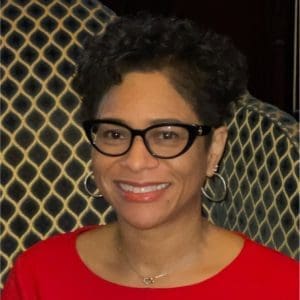
Angela Campbell

GREENFIELD — Greenfield Community College (GCC) announced the appointment of Angela Campbell as its inaugural vice president of Diversity, Equity, and Inclusion (DEI). She brings a wealth of experience in educational leadership and a deep commitment to fostering inclusive excellence in higher education.

Campbell joins GCC after serving as vice president of Mission, Diversity, Equity, Inclusion, and Belonging at Cabrini University. Her career also includes serving as assistant dean of the School of Education and co-founder of the Center for Urban Education, Equity, and Improvement at Cabrini University, and inaugural executive director of the Center for Student Diversity and Inclusion at Carnegie Mellon University. She has dedicated her career to promoting academic success, cultural competency, and community engagement within educational institutions.

“I am thrilled, honored, and overjoyed to join the GCC family as its inaugural vice president of Diversity, Equity, and Inclusion,” Campbell said. “Greenfield Community College’s commitment to preparing students to learn, launch, and lead in innovative ways resonates deeply with my vision for equity and inclusion.”

Raised in Philadelphia and Montgomery County, Penn., Campbell attributes her values to her hardworking parents and a family deeply rooted in education and public service. Her parents’ legacy of hard work, love, and integrity has significantly shaped her career and personal life. At GCC, she looks forward to implementing transformational DEI efforts and collaborating across the college to build an inclusive community.

“DEI work is not just about addressing challenges; it is about envisioning and building a future where all voices are heard and celebrated,” she said. “By integrating principles of inclusive excellence and justice, we aim to nurture a culture where everyone belongs and thrives.”

As the newly appointed vice president, Campbell aims to bolster GCC’s mission and values, ensuring equity and access for all community members. Her strategic vision includes advancing new DEI programs and initiatives that prepare students for diverse fields, including business, technology, and healthcare.

Daily News

SPRINGFIELD — The Royal Law Firm will present a seminar on “Compensation Plans and Contingent Compensation Pitfalls” on Wednesday, Jan. 8, 2025 from 8:30 to 9:30 a.m. at 33 Elliot St., Springfield.

Attorney Trevor Brice will present an overview and discussion of the possible issues with current compensation plans and contingent compensation pitfalls made possible by recent court rulings. Some of the topics to be discussed include issues with current compensation plans under the FLSA, restrictive covenants and compensation plans, problems with commission-based compensation plans and possible solutions, and when a bonus is not actually a bonus and issues under the Massachusetts Wage Act.

This seminar is ideal for HR professionals and anyone in a management position drafting compensation plans for current and prospective employees.

The cost is $30 per person. Payments should be mailed, and checks made payable, to the Royal Law Firm, 33 Elliot St., Springfield, MA 01105. Registration is required, and seating will be limited. Email Heather Child at [email protected] to register or with any questions about the seminar.

Daily News

BOSTON — The Healey-Driscoll administration recently announced that the Executive Office of Education (EOE) and the Department of Elementary and Secondary Education have opened a request to solicit vendors to develop a mental-health framework for early-education through higher-education students across Massachusetts.

This new framework will inform a statewide strategy for mental- and behavioral-health supports through the public education and licensed childcare system in Massachusetts and support coordination between early education and care programs, schools, students, families, and the state’s systems of community-based services and providers.

“We have a mental-health crisis that was only made worse by the pandemic, particularly for young people,” Gov. Maura Healey said. ”Our administration is committed to ensuring that Massachusetts students have the behavioral healthcare they need to balance their mental health and education. I look forward to seeing how this framework will deepen our current efforts and provide a strategy to support students at every level of education.”

The state’s FY 2024 budget included $5 million for this framework. In collaboration with health and human service agencies and other key stakeholders, EOE and its agencies aim to use this framework to identify, guide, and align collective efforts to better understand and address mental and behavioral wellness needs among students from infants and toddlers through adult learners, using common language, strategies, and metrics.

The framework builds on the administration’s existing efforts to support student mental health, including investing $13 million in the Bridge for Resilient Youth in Transition (BRYT) program, an in-school program supporting students who have fallen behind academically due to challenges with their mental health. Interested vendors should click here.

Daily News

MONSON — In 2024, Monson Savings Bank continued its strong support of one of its community partners, Martin Luther King, Jr. Family Services (MLKFS).

“Monson Savings Bank is proud to support our friends at MLKFS. The work that they do for the Springfield community and surrounding areas is absolutely amazing,” Monson Savings Bank President and CEO Dan Moriarty said. “We are grateful for the work that they do to keep Dr. King’s mission alive and well.”

In 2024, Monson Savings Bank was a supporter of the MLKFS local Be Love Project, a growing movement of courageous acts to achieve justice. The bank then sponsored the inclusion of MLKFS in BusinessWest’s 2024 Giving Guide. And in the last quarter of the year, Monson Savings Bank was a platinum-level sponsor of the Springfield organization’s first-ever Reunion Weekend, a three-day celebration of the nearly half-century-long legacy of MLKFS.

The first day, MLKFS Champion Event, acknowledged the leadership and support over the years that helped to create the legacy and impact of MLKFS across the region. The second day, Family Fun Day, was filled with reconnection, storytelling, plus food and fun.

The third and final day of the reunion, Fellowship & Worship, highlighted that there is no MLKFS without the vision of Project Mustard Seed. Attendees gathered in that spirit and tradition with a special worship service under the leadership of Rev. Terrlyn Curry Avery, pastor of the MLK Jr. Community Presbyterian Church. The crowd welcomed Project Mustard Seed visionary leader Rev. Ronald Peters, former pastor of the MLK Jr. Community Presbyterian Church, to bless everyone with his message and call to action. This celebration featured the MLK Community Choir under the direction of Elder Terrence Haynes, accompanied by Terrence Schider.

“Our fellowship is powerful. Together, we gathered to honor our ancestorial legacy leaders, the many who make up the fabric of MLKFS, and the dreamers who are investing in the vision forward,” MLKFS President and CEO Shannon Rudder said. “This awesome, three-day-long celebration would not be possible without the support of our community sponsors, like Monson Savings Bank. We are honored to have their support as we keep Dr. King’s dream alive in Western Mass.”

Daily News

Count us among those disappointed that the Boston Red Sox won’t be coming back to Springfield this January for Winter Weekend.

The team has decided to scrap those festivities in favor of a one-day Fenway Fest at Fenway Park and the MGM Music Hall. We’re not sure what the reasoning was for the change, but it certainly adds up to a loss for this region, and local fans as well.

Winter Weekend was definitely not a long-standing tradition in this region — there were only a few of them thanks to the partnership between the team and MGM — but it had gained some traction, and, like all events staged in this area, it was beneficial to hotels, restaurants, and other hospitality-related businesses.

Meanwhile, the event served as a way to spread the wealth, if you will, when it comes to the Red Sox and the Commonwealth. The team plays in Boston. Its Triple-A affiliate plays in Worcester. Winter Weekend gave Springfield a small — make that very small — piece of the pie.

And it gave the region some notoriety, especially the past few years. Indeed, as the team’s fortunes faded with a last-place finish in 2022, Red Sox owner John Henry and then-Chief Baseball Officer Chaim Bloom were roundly booed during the town-hall Q&A portion of the 2023 Winter Weekend at the MassMutual Center. That episode was recounted dozens, if not hundreds, of times on talk radio and other media outlets over the course of the equally disappointing 2023 season, leading to unending speculation about what would happen when Henry returned to Springfield in 2024.

Alas, the owner conveniently had a scheduling conflict for that weekend. Meanwhile, the town-meeting segment was scrapped in favor of a much friendlier (to the Red Sox brass, anyway) talk-show format.

And now, Henry won’t be coming to Springfield this January, or for the foreseeable future. Winter Weekend is gone, and so is any controversy — and any good that came to this region — from the short-lived but still appreciated event.

As far as Greater Springfield goes, this isn’t a big loss, but it’s a loss nonetheless.

Daily News

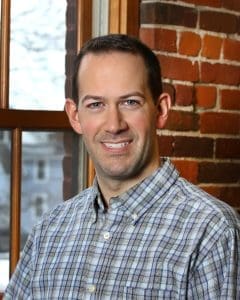
Dave Goodsell

NORTHAMPTON — Northampton-based D.A. Sullivan & Sons, Inc. (DAS) announced Dave Goodsell’s promotion to vice president of Operations, marking another step forward in the construction company’s continued growth and commitment to operational excellence.

Having been an integral part of the DAS team for the past three years as a project manager, Goodsell has consistently demonstrated exceptional leadership, management expertise, and dedication to delivering high-quality projects. In his new role, he will oversee construction field operations, focusing on workforce planning, employee development, safety initiatives, and streamlined project delivery.

“As DAS moves into the future, Dave’s leadership will play a pivotal role in enhancing field operations and ensuring the company’s continued success across Western and Central Massachusetts,” the company noted. “The entire team looks forward to the positive impact he will have on DAS’s projects, employees, and valued clients.”

Daily News

WEST SPRINGFIELD — The Massachusetts Supplier Diversity Office (SDO), within the Executive Office for Administration and Finance, has officially certified Unemployment Tax Control Associates Inc. (UTCA) as a minority and woman business enterprise (MBE and WBE). The certification was awarded on Dec. 20.

UTCA is a nationally recognized expert in the field of unemployment cost control for both corporate, nonprofit, and governmental clients across the nation. The firm was founded in 1990 by CEO Suzanne Murphy.

“I’m delighted to receive our certification. After nearly 35 years in business, it’s wonderful to receive this acknowledgment that benefits all our clients across the Commonwealth. Starting and growing UTCA as a budding businesswoman was daunting, but we’ve always led by example,” Murphy said.

“It’s still immensely fulfilling, enabling our clients to reduce their costs and empowering them to focus on their core competencies,” she added. “Whether it be corporations, nonprofits, or municipalities, I’m personally grateful for their continued trust in our service. This certification means so much to me personally, and I hope it’s meaningful to our clients as well.

“Being woman-led since 1990 in a space traditionally led by men, it’s a great honor to be recognized by the SDO,” Murphy went on. “We’re incredibly proud to continue producing significant results for businesses, nonprofits, and municipalities. As a Western Mass.-based firm, it’s very rewarding knowing we can help employers like the city of Springfield tame their budgets and maintain strong bond ratings.”

Daily News

SUFFIELD, Conn. — Suffield Pickleball will officially open its doors on Friday, Jan. 3 at noon. The brand-new indoor pickleball club will feature five courts that can host more than 9,000 players per month. The ownership team intends to host a variety of leagues, clinics, tournaments, and open-play events for players of all skill levels. The courts can also be reserved for private play through the Court Reserve app.

Grand-opening weekend will take place Jan. 3-5 and feature giveaways, including a pro membership (valued at $400), a Joola 3S pickleball paddle (valued at $280), 10% off at the pro shop for all paid members, and no-cost open play for those in attendance.

“We love the sport of pickleball and saw an opportunity to create a quality indoor facility for the Northern Conn. and Western Mass. pickleball community,” Suffield Pickleball owner Bo Fydenkevez said. “We knew what we would have wanted in a club, so we went out and created that for everyone else to be able to enjoy as well.”

Suffield Pickleball features three different membership tiers, as well as a non-member option. Each membership tier varies in pricing and perks, ranging from $400 to $1,000 per year.

Suffield Pickleball is proud to partner with Joola Pickleball, Six Zero, Franklin, and Hesacore to provide high-quality pickleball equipment and accessories in its fully stocked pro shop.

Daily News

BOSTON — The Healey-Driscoll administration recently announced $3.6 million in more than 100 grant awards through several programs, including the Agricultural Food Safety Improvement Program, the Agricultural Composting Improvement Program, the Cranberry Bog Renovation Program, and the Climate Smart Agriculture Program.

These grants, managed by the Massachusetts Department of Agricultural Resources, provide funding to local farmers. The funding supports farmers in meeting strict food-safety standards, improving soil health and management through composting, sustaining cranberry-growing operations, and adapting to changing climate conditions. It also enhances their contributions to the state’s carbon reduction and climate change mitigation goals.

“Our farmers face countless challenges, so it’s critical that we support them with the resources they need to succeed,” Gov. Maura Healey said. “These four programs help ensure a safe, local food supply, grown by dedicated farmers who prioritize sustainability, providing us all with healthy, responsibly produced food.”

State Sen. Jo Comerford added that, “once again, the Healey-Driscoll administration, in partnership with the Legislature and the Massachusetts Department of Agricultural Resources, is delivering timely and meaningful grants to farms and farmers in the Hampshire, Franklin, Worcester district. Our farmers work tirelessly to provide healthy, local products to residents across Massachusetts and need strategic state investments like these grants to support their work to rise to the challenges of climate change and economic volatility.”

Daily News

EASTHAMPTON — The Chamber of Greater Easthampton has begun accepting applications for its spring 2025 cohort of CO.STARTERS at WorkHub on Union entrepreneurial training program, made possible by a $50,000 American Rescue Plan Act (ARPA) grant as part of the continued economic-development partnership between the chamber and the city of Easthampton, with additional support from Common Capital.

CO.STARTERS is a 10-week, cohort-based program that equips entrepreneurs of all kinds with the insights, relationships, and tools needed to turn business ideas into action. The program will also provide a natural pathway for entrepreneurs to grow their business at the WorkHub on Union co-working space set to open in the summer of 2025.

Drawing from the experience of successful entrepreneurs and startup veterans from around the globe, CO.STARTERS at WorkHub on Union walks creative small-business owners through lean, effective business-modeling methods in a simple and intuitive way, while connecting them to a supportive community of peers and mentors. Participants are encouraged to build and test small models first, receive real-time customer feedback, update their models to meet customer needs, and avoid creating businesses based on incorrect assumptions, fueling a greater likelihood of success.

Once again facilitated by local business leader Cynthia West, former owner of Sonnet & Sparrow and the Flying Squirrel, entrepreneurs will be led through a comprehensive curriculum covering business fundamentals within the context of the local community and marketplace.

Guided by West, participants will learn how to identify key assumptions about why and how their businesses will work in real-world scenarios. This approach enables participants to rapidly uncover flaws in their concepts and quickly adjust their business and confidently and successfully bring their visions to life.

Upon completion, WorkHub on Union will provide these entrepreneurs with an affordable, flexible, low-risk professional workspace in the heart of Easthampton’s business, service, and retail districts, as well as direct access to the chamber and all the expertise it provides, such as relationship building, professional development, leadership education, entrepreneurial support, education, and technical assistance.

Aspiring entrepreneurs exploring a new idea, those close to starting up, and those in the early stages of a business that may need assistance to get to the next level are encouraged to consider the program. Applications for CO.STARTERS at WorkHub on Union will be accepted on a rolling basis through Feb. 18, 2025, with the program running Tuesday evenings from 5:30 to 8:30 p.m. beginning March 4, 2025.

The cost of the 10-week program is $3,500, but, thanks to the ARPA grant, participants will pay only $150. Interested individuals are encouraged to visit the chamber website at www.easthamptonchamber.org for more information and to apply.

Daily News

NORTH ADAMS — The North Adams Partnership, a nonprofit dedicated to fostering transformative downtown development and addressing housing and economic-development needs, recently announced its relaunch under new leadership.

Founded in 2010 by a cohort of civic and community leaders, the North Adams Partnership’s mission is to “enhance the economy of the city of North Adams and establish and maintain the city’s position as a small city center of commerce, culture, education, and innovation.”

After several years of post-COVID dormancy, the partnership appointed Jenny Wright, former director of Strategic Communications and Advancement at MASS MoCA and a member of the museum’s placemaking task force, as executive director, bringing a renewed focus and energy to the organization’s mission. The effort was made possible with support from Jack Wadsworth, a longtime investor in North Adams who developed the Porches Inn.

The newly constituted board of trustees includes local developer David Moresi (chair); Laurie Lamarre, systems vice president and chief operating officer of North Adams Regional Hospital (treasurer); 1Berkshire Vice President of Economic Development Ben Lamb (clerk); Amber Besaw, executive director of the Northern Berkshire Community Coalition; Blair Benjamin, director of MASS MoCA’s Assets for Artists; and Berkshire hospitality-sector leader Colleen Taylor.

“I am excited to step into this role at such a pivotal moment for North Adams,” Wright said. “By bringing together local and regional partners — including an incredible board composed of the people behind many of the city’s most recent success stories — the North Adams Partnership can create the capacity to help identify, fund, and implement transformative housing and economic-development initiatives, using the Vision 2030 Plan as our guide.

“The Route 2 overpass study, the Hoosic River flood chute feasibility study, the North Adams Adventure Trail, and the recent passage of the Massachusetts Affordable Homes Act are just a few of the major efforts currently underway,” she added. “With strong partnerships with Mayor [Jennifer] Macksey and her staff at City Hall, as well as with MASS MoCA, MCLA, BRPC, North Adams Regional Hospital, NBCC, local businesses, and community members, we have everything we need to work together to create a vibrant, inclusive North Adams that has something for everyone.”

Daily News

HOLYOKE — Holyoke Community College (HCC) will hold a Registration Express event for the spring 2025 semester on Saturday, Jan. 11, when prospective students can apply for admission, take the college placement test, meet with an academic adviser, register for classes, and set up financial aid, all in one day.

HCC’s Registration Express event will be held from 9 a.m. to 1 p.m. and takes place on the first floor of the Campus Center on the main campus at 303 Homestead Ave. and virtually over Zoom.

The spring 2025 semester begins Tuesday, Jan 21. HCC also has Flex Start dates on Feb. 3 (Spring Start II) and March 24 (Spring Start III). Full-term spring classes run for 14 weeks. Spring Start II classes run for 12 weeks. Spring Start III classes run for seven.

Registration Express will also be an opportunity for prospective students to learn about the state’s new program for free community college, MassEducate.

“Registration Express at Holyoke Community College provides an opportunity for students to complete the admissions and registration process all in one day and all in one place,” said Mark Hudgik, dean of Strategic Recruitment Initiatives, Admissions, and Financial Aid. “Admissions, financial-aid, and advising counselors will be available to help students get ready for the spring semester.”

Those who can’t make it in person on Jan. 11 can still participate on those days virtually over Zoom.

The Registration Express Zoom link can be accessed through a link on the Registration Express page on the HCC website, hcc.edu/regexpress.

Also, HCC offices will be open for extended hours, according to the following schedule: Jan. 6-9, 8:30 a.m. to 6 p.m.; Jan. 10, 8 a.m. to 4:30 p.m.; Jan. 13-14, 8:30 a.m. to 6 p.m.; college offices closed Jan. 15 for a professional day; Jan. 16, 8:30 a.m. to 6 p.m.; Jan. 17, 8 a.m. to 4:30 p.m.; Jan. 21-23, 8 a.m. to 6 p.m.; and Jan. 24, 8 a.m. to 4:30 p.m.

For more information, contact HCC Admissions at (413) 552-2321 or [email protected], visit hcc.edu, or enroll at hcc.edu/sign-up-for-classes.

Daily News

SPRINGFIELD — The Realtor Assoc. of Pioneer Valley (RAPV) announced its annual award winners at the association’s Holiday Luncheon on Dec. 12 at the Log Cabin in Holyoke. The 2024 award winners are Peter Ruffini of RE/MAX Connections, Realtor of the Year; and Kristin Gravanis of Westfield Bank, Affiliate of the Year.

The Realtor of the Year award is the highest recognition the association can bestow on a Realtor member. It is given to a member based on association activity, community activity outside the association, and business activity.

A Realtor since 1996, Ruffini serves as president of the RAPV board of directors in 2024. He has also served on the government affairs, strategic planning, bylaws and policy, and professional standards committees, and he continues to serve on the RAPV board of directors. He has given back to the community by supporting local charitable events, and serves as the chair of the Massachusetts Board of Registration for Real Estate Brokers and Salespersons. He also actively serves on several committees at both the state and national levels, demonstrating commitment to advancing the RAPV profession and supporting its members. He holds 11 professional designations and certifications.

The Affiliate of the Year award is the highest recognition the association can bestow on an affiliate member. It is given based on affiliate membership activities related to the association, community service in activities outside the association, and business activity.

A member of RAPV since 2007, Gravanis has served on the community service committee. She has supported the association through community outreach and volunteered in RAPV’s community-service efforts through fundraising and helping and preparing meals at the Friends of the Homeless volunteer program.

Daily News

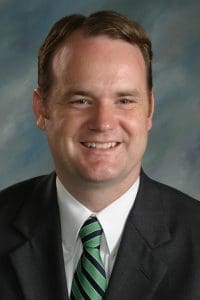
Todd McGee

HOLYOKE — Former Holyoke City Councilor Todd McGee has been appointed to the Holyoke Community College (HCC) board of trustees by Gov. Maura Healey. He attended his first HCC board meeting on Nov. 26.

McGee is a tax attorney and director of Estate and Business Planning for MassMutual Insurance, as well as a 1992 graduate of HCC. His term runs through March 1, 2029.

“I loved Holyoke Community College,” McGee said. “It has been part of my life for a very long time. I felt like an adopted son to President David Bartley. He always guided me along my career. I’m excited to be on this board. Anything I can do to help out, I will, because Holyoke Community College is really a family to me.”

After graduating from HCC with an associate degree in liberal arts, McGee went on to earn a bachelor’s degree in history from Northeastern University, a juris doctorate from Western New England School of Law, and a master’s degree in taxation from Boston University School of Law.

He served as a Holyoke city councilor for 18 years until 2023, his last three terms as City Council president. He briefly served as acting mayor in 2021 after the resignation of Mayor Alex Morse.

Daily News

FLORENCE — Florence Bank has pledged a gift of $100,000 to Caring Health Center of Springfield and officially presented the award on Dec. 19 at the center.

Florence Bank is committed to supporting initiatives that improve healthcare for vulnerable populations, and its mission aligns with that of the center. Among those at the check presentation were Tania Barber, president and CEO of Caring Health Center, and other leaders of the organization; Florence Bank President and CEO Matt Garrity and other bank officials; and local dignitaries.

The event underscored the need for health equity in the region’s diverse communities, and Barber told those in attendance that the bank’s donation offered the center a significant step toward the completion of its capital campaign.

“The funds will advance Caring Health Center’s mission to eliminate health disparities and achieve health equity by enhancing access to high-quality, value-driven care for our multi-ethnic community,” Barber said. “This gift will support capital improvements, including completing the Boston Road construction project, creating vital space to meet growing patient demand and diverse healthcare needs.”

Driven by a strong commitment to serving the community, community members established Caring Health Center to fulfill local needs. Since its inception in 1995, the organization has been dedicated to providing essential health services to community members, positively impacting the lives of many, serving more than 20,000 patients.

Its offerings include comprehensive primary care, behavioral health, dental services, paid on-the-job education through the Tania M. Barber Learning Institute, and community-focused programs like health and wellness initiatives, all delivered in a culturally appropriate manner.

Barber believes all people, regardless of their ethnicity, ability to pay, or background, deserve quality healthcare, and she is grateful for Florence Bank and its reputation for community giving.

“The bank is deeply embedded in its history and culture of community partnership,” Barber said. “For generations, the bank has demonstrated an unwavering commitment to supporting the neighborhoods it serves by investing in initiatives that foster growth, equity, and well-being.”

Garrity told those in attendance that Florence Bank is committed to supporting initiatives that improve healthcare for vulnerable populations, and its leaders were proud to make the $100,000 gift to Caring Health Center.

“Our goals for community health and wellness are well-aligned with that of Caring Health Center,” he said. “We are neighbors here in Hampden County, and we stand firmly behind the center’s mission to eliminate health disparities in all communities in our midst.”

Daily News

HOLYOKE — Holyoke Mall recently welcomed its newest store, the trendy Asian household goods retailer Ximi-V, with a grand-opening party on Dec. 21.

“Ximi-V believes shopping should be fun, inspiring, and filled with joy,” the mall shared. “They feature something for everyone, from home essentials to creative gifts, including beauty products, household goods, plush toys, jewelry, stationery supplies, and more, bringing style and charm to your everyday life.”

Daily News

SPRINGFIELD — Health New England awarded $250,000 in grants to five local organizations in honor of Dr. Mark Keroack, former president and CEO of Baystate Health and chair of Health New England’s board of directors. Keroack retired earlier this year after serving in these roles for a decade.

The Dr. Mark A. Keroack Health Equity Grant was designed to fund the work of nonprofit organizations advancing equity in healthcare, a passion and priority of Keroack, who served on the committee that chose the winners. These grantees will receive $50,000 each to fund these programs:

• Community Legal Aid’s Pioneer Valley Farmworker Medical-Legal Partnership embeds an attorney from its Central West Justice Center affiliate into the farmworker healthcare team at Baystate Brightwood Health Center, also known as La Cliniquita. The attorney will work onsite educating staff on patients’ legal rights, screening for social determinants of health, conducting know-your-rights workshops, and collaborating with the care team to address systemic challenges.

• Wellspring Community Harvest will expand its Go Fresh Mobile Market’s prescription produce program to Brightwood, Mason Square, and High Street health centers. The program connects individuals with diet-related illnesses to healthy foods through healthcare-prescribed fresh produce. The grant will also enable the distribution of health and nutrition information to the mobile market’s 12 other sites in public housing, senior housing, and community centers across Springfield. The initiative includes nutrition classes, screenings, and medical advice to promote the consumption of fruits and vegetables to reduce chronic health conditions like obesity, hypertension, and diabetes.

• Planned Parenthood of Massachusetts will develop strategies to ensure equitable, dignified, and quality care for undocumented immigrants and refugees seeking sexual and reproductive health services. The organization will use the funding to collect data, enhance language accessibility with translated materials, target its marketing efforts, and host know-your-rights education sessions. Planned Parenthood will also increase recruitment of multi-lingual staff.

• Stone Soup Cafe in Greenfield will enhance its weekly Community Meal and Community Store programs. Every Saturday, the Community Meal provides 550 to 600 balanced, nutritious, scratch-cooked meals made from fresh ingredients to more than 180 households on a pay-what-you-can basis, totaling 31,812 meals in 2023. The Community Store, open every Saturday, extends this impact by providing 80 to 110 households with groceries, produce, and personal-care items.

• The Care Center’s Healthy Homes, Healthy Families program in Holyoke will provide 10 families headed by low-income women with safe, stable housing; behavioral-health services; healthcare; and a tuition-free education from November 2024 to October 2025.

“I am deeply honored that Health New England has chosen to celebrate my work with these generous grants to advance health equity in Western Massachusetts,” Keroack said. “These organizations are critical to improving the social determinants that can have such a devastating effect on people’s ability to be well. They are true partners in helping improve the health of our communities in so many ways, and I am grateful to see their efforts recognized and supported.”

Added Richard Swift, president and CEO of Health New England, “in his leadership roles at Baystate Health and on Health New England’s board, Dr. Keroack has been a tireless advocate for making healthcare accessible to all. He played an integral role in selecting these projects, and we are proud to honor his legacy by funding these impactful initiatives.”

Daily News

NORTHAMPTON — The Spectrum Awards, presented by City Beat News, announced that Herrell’s Ice Cream in Northampton is the winner of this year’s Spectrum Award, which recognizes businesses that promote excellence and go above and beyond to provide exceptional customer service.

“I am humbled and honored and very excited for Herrell’s Ice Cream to be recognized,” said Judy Herrell, president of Herrell’s Ice Cream. “Receiving this award is an amazing testament to our fantastic staff who truly go above and beyond for our customers.”

Daily News

LUDLOW — Pioneer Valley Financial Group and Ludlow Veterans of Foreign Affairs will host the seventh annual First Responders Appreciation Dinner on Thursday, Jan. 9 from 5 to 7 p.m. at the Gremio Lusitano Club in Ludlow.

The event is a way of recognizing the dedication of local first responders, and is a night of food, fun, games, and prizes. Annual chief games will be hosted, a friendly competition between departments, as well as toys for all the children attending and raffle prizes.

This event is for local first responders and their families who live or work in Ludlow, Wilbraham, Hampden, including local police, firefighters, EMTs, the Hampden Country Sheriff’s Department, state police, emergency dispatchers, and all departments’ retirees.

There is no registration or charge to attend this event. Call Pioneer Valley Financial Group Community Outreach Manager Katherine Ferri at (413) 589-1500 with any questions.

Daily News

HOLYOKE — Taber Art Gallery, in partnership with Holyoke Art, requests applications for volunteers and partners interested in planning the first Holyoke Paper Festival. Set to take place over four days in late May in downtown Holyoke, this fine-art festival will feature exhibitions, workshops, lectures, and celebrations of the medium of paper and Holyoke’s history as the Paper City.

Organizers hope this becomes an annual event, a staple of the Western Mass. region, as well as a forum for art and dialogue on contemporary issues through the presentation of art made in, with, of, and about paper.

Anyone interested can apply at taber.fillout.com/hpf-planning. Applications are limited to adults in the Northeast region who are able to occasionally meet in person for planning meetings and regularly attend virtual planning meetings, and are committed to being in-person for the duration of the festival.

Daily News

WESTFIELD — On Dec. 20, local and national dignitaries celebrated the stationing of a new fleet of F-35 aircraft at Barnes Air National Guard Base (ANGB), which was made official after Air Force Secretary Frank Kendall signed the record of decision (ROD).

After Barnes was chosen as the preferred location for the new fleet of F-35s on April 17, 2023, the selection required favorable completion of an environmental impact statement. Upon favorable completion, the secretary of the Air Force needed to sign and report the ROD to Congress. Once reported to Congress, the decision to station the new aircraft at Barnes became official, putting in motion the assignment of 20 new F-35A Lightning II aircraft at Barnes ANGB.

“The Department of the Air Force’s decision to allocate F-35s to the 104th Fighter Wing marks a monumental moment for our unit and its critical role in our nation’s air defense,” said Maj. Gen. Gary Keefe, adjutant general of the Massachusetts National Guard. “The 104th Fighter Wing has long been a cornerstone of our nation’s air-defense capabilities, and this transition to the next-generation airframe solidifies our readiness and relevance for decades to come. This decision not only enhances our operational capabilities, but also ensures the Wing’s ability to continue its proud tradition of excellence as we look forward to future missions and challenges.”

U.S. Rep. Richard Neal added that “this is a great day for the city of Westfield and all of Western Massachusetts, as Barnes has solidified its place in our community for years to come. The decision to station a new fleet of F-35 aircraft at Barnes comes after years of advocacy by the Western Massachusetts delegation, as well as Major General Keefe and state and local officials. Ultimately, the Air Force recognized not only Barnes’ critical role in defending our nation, but also something we in Massachusetts already know — we take care of our servicemembers.”

The decision to station the new fleet of F-35 aircraft came after a rigorous selection process by the U.S. Air Force that reviewed F-15C units throughout the nation. Barnes was ultimately selected in April 2023 after the Air Force considered several factors, including community support, environmental factors, and cost. The review process also included an assessment of the location’s ability to facilitate the mission and infrastructure capacity.

“With the stationing of the F-35s at the Massachusetts Air National Guard’s 104th Fighter Wing, the 104th will continue its proud stewardship as the first line of defense for the northeastern seaboard of the United States,” Westfield Mayor Michael McCabe said. “The city of Westfield is honored to host them and would like to thank everyone who worked with us to make this happen.”

Daily News

HADLEY — Happier Valley Comedy, the only improv comedy theater in Western Mass., recently hit its goal to raise $115,000 in order to unlock a previously awarded Mass Cultural Council Cultural Facilities Fund Capital Grant for the same amount, so it can build a new, fully accessible performance venue in Hadley.

Managed in collaboration with MassDevelopment, the Cultural Facilities Fund provides major improvement grants to nonprofit cultural organizations in recognition of their profound economic impact on communities across Massachusetts.

“Just six months ago, I tearfully reported to our board that it felt impossible to raise the full amount necessary to build our dream theater on schedule,” said Pam Victor, founder and president of Happier Valley Comedy. “Though I’m usually a pretty optimistic person, I honestly thought we had come to the end of the road. We had never raised that much before in such a short period of time.”

In addition to an unprecedented amount of individual support for the small local arts nonprofit, several local companies stepped in to offer significant contributions, such as PeoplesBank, Diversified Equipment Services & Consulting Organizationof Hadley, and Greenfield Savings Bank.

According to Happier Valley board member Sally Ekus, “connecting with our donors to meet our fundraising goal has been a testament to the deep desire to spread more joy and laughter right now.”

Adjacent to Happier Valley’s original space, which will be used as a classroom and lobby area, the new performance venue provides expanded and raised audience seating, a larger stage with an improv-friendly set, theatrical lighting, and a fully accessible stage.

“Thanks to the overwhelming support, we are in a position to consider implementing dreams we hardly dared to dream for our new theater,” Victor said, noting that any additional funds raised will be used to install permanent, auditorium-style seating; purchase more comfortable chairs for larger bodies; and add small cabaret tables in the lobby.

“We’re so excited to see the dream theater slowly move from our brains and hearts into the real world,” said Scott Braidman, artistic director. “We’ll never underestimate our community again. The support has been overwhelming.”

The final drawings have been inked by Thomas Douglas Architects of Northampton, which is working closely with Braidman and the team at Integrity Development & Construction of Amherst to complete construction by the end of summer 2025.

“Together,” Braidman said, “we’re creating a space where people of all abilities and backgrounds can laugh, gain important life skills, and play onstage in front of a supportive crowd.”

Daily News

BOSTON — The state’s November total unemployment rate was 4.0%, a 0.1% increase from the revised October estimate of 3.9%, the Executive Office of Labor and Workforce Development announced. The Massachusetts unemployment rate was 0.2% lower than the national rate of 4.2% reported by the Bureau of Labor Statistics (BLS). Over the year, the state’s seasonally adjusted unemployment rate was up by 0.7%.

The labor force increased by an estimated 400 from the revised estimate of 3,853,600 in October, with 3,100 fewer residents employed and 3,500 more residents unemployed over the month. The state’s labor-force participation rate — the total number of residents 16 or older who worked or were unemployed and actively sought work in the last four weeks — remained steady at 66.4%. Compared to November 2023, the labor-force participation rate increased by 1.5% over the year.

The BLS preliminary job estimates for Massachusetts increased by 800 jobs in November, following October’s revised loss of 1,700 jobs. The largest over-the-month private-sector job gains were in leisure and hospitality, education and health services, and financial activities. Employment now stands at 3,743,600. Massachusetts gained 680,100 jobs since the employment low in April 2020.

From November 2023 to November 2024, BLS estimates Massachusetts gained 27,100 jobs. The largest over-the-year gains occurred in education and health services, government, and leisure and hospitality.

Daily News

NORTH BROOKFIELD — In the spirit of season of giving, North Brookfield Savings Bank (NBSB) announced the success of its annual food and toy drives. Due to the overwhelming generosity of community members, employees, and neighbors of NBSB, the food and toy drives made an impact in each of the bank’s communities.

During the NBSB annual food drive, held Oct. 1-25, the bank’s communities came together to donate 693 non-perishable food items and more than $1,000 in monetary donations. NBSB contributed an additional $3,000 to further support local food pantries. These donations provide crucial assistance to individuals facing food insecurity.

During the annual toy drive, which ran Nov. 1-29, community members, employees, and neighbors stepped up to the plate again, collecting 388 toys for children in need, alongside $1,432 in monetary donations. NBSB contributed an additional $1,500 to support those who need it the most and bring joy to children in the communities it serves this holiday season.

“Community is at the heart of everything that we do, and the success of this year’s food and toy drives is a testament to the compassion and generosity of our customers, employees, and neighbors,” said Audrey Moulton, Marketing manager at North Brookfield Savings Bank. “We are proud to hold our annual food and toy drives, making a positive impact for those in need during the season of giving.”

The bank partnered with the East Brookfield Baptist Church Food Pantry, Sharing Cupboard Food Pantry – First Congregational Church, St. Joseph’s Parish Food Pantry, First Congregational Church of North Brookfield, Trinity Episcopal Church – Jubilee Cupboard, St. Francis of Assisi Parish Food Pantry, and Palmer Food Share Inc. through its food drive.

During the annual toy drive, NBSB partnered with the North Brookfield Police Assoc. Toys for Joy Program, East Brookfield Toys for Joy Program, West Brookfield Police Assoc. Holiday Toy Program, Ware Police Department Christmas for Kids Program, Belchertown Firefighters Assoc. Adopt-a-Family Program, and Palmer Lions Club Holiday Toy Program.

Business Talk Podcast Special Coverage

We are excited to announce that BusinessWest has launched a new podcast series, BusinessTalk. Each episode will feature in-depth interviews and discussions with local industry leaders, providing thoughtful perspectives on the Western Massachuetts economy and the many business ventures that keep it running during these challenging times.

Go HERE to view all episodes

Episode 224: December 23, 2024

Joe Interviews Kathy Martin, president and CEO of Glenmeadow

Kathy Martin crafted an impressive career in higher education before pivoting, in the fall of 2023, to the world of senior living as president and CEO of Glenmeadow, a venerable Longmeadow facility that specializes in independent living, assisted living, and at-home care. It’s been an intriguing career change that gives this lifelong learner the chance to impact a much different demographic than college students. On the next episode of BusinessTalk, Martin talks to BusinessWest Editor Joe Bednar about challenges in senior care today, an exciting new program that recognizes accomplished individuals over age 60 around the region, and much more. It’s must listening, so tune into BusinessTalk, a podcast presented by BusinessWest.

Also Available On

Daily News

HADLEY — UMassFive College Federal Credit Union announced Sexton Roofing & Siding as the grand prize winner of its inaugural Small Business Spotlight contest. Driven by community nomination, the contest winner was formally announced at the final UMass football home game of the season at McGuirk Alumni Stadium on Nov. 30, which was also Small Business Saturday.

Sexton Roofing & Siding will be receiving an advertising package valued at $10,000 with UMass Athletics, allowing the business to be featured on digital displays, radio reads, and email blasts, as well as with tabling opportunities at the Mullins Center during UMass basketball and hockey home games for the remainder of the season.

The Small Business Spotlight contest drew more than 125 nominations from across Western Mass., highlighting businesses that demonstrate service, innovation, and community involvement. Two secondary winners, K’s Nutrition of Amherst and CLINIC Alternative Medicines of Northampton, were also recognized with $500 cash prizes to support their ongoing efforts in the local community.

This contest highlights the partnership between UMassFive, UMass Athletics, and UMass Sports Properties, UMass Athletics’ official multi-media rights holder, and their mutual efforts to uplift small businesses and deepen ties within the community, while celebrating small businesses that make a difference.

“Small businesses are the backbone of our community, and we’re honored to spotlight the incredible work they do every day,” said Craig Boivin, the credit union’s vice president of Marketing. “At UMassFive, we believe in investing in businesses that not only provide valuable products and services, but also give back and inspire others. This contest is our way of celebrating their impact and helping them grow.”

Ryan Bamford, director of Athletics at UMass, added that “UMass Athletics is proud to partner with UMassFive in this initiative to support and promote small businesses. Small businesses are vital to the vibrancy of our community, and we’re excited to provide this platform to amplify their voices and contributions to our fans and alumni.”

Sexton Roofing & Siding, a locally and family-owned residential and commercial roofing and siding contractor, expressed gratitude for the opportunity.

“This recognition means the world to us,” said Sasha Wilde, co-owner of Sexton Roofing & Siding. “Being featured at UMass Athletics home games is an incredible opportunity to introduce our business to a wider audience and share our passion with the community. This exposure will help us grow and continue making a difference.”

Daily News

WARE — Country Bank announced a $10,000 donation to the Quaboag Valley Community Development Corp. (QVCDC) to help local communities in the region.

“The Quaboag Valley Community Development Corporation is grateful for this generous donation from Country Bank,” said Melissa Fales, QVCDC executive director. “This donation will help us continue to run our Senior Outreach Program, which helps seniors with prescription pickup, grocery shopping, food-bank deliveries, and other chores. Country Bank’s support is not only an investment in the Quaboag Valley CDC’s mission, but an example of Country Bank’s commitment to making a difference in the community.”

Seniors’ underlying medical conditions can significantly impact their ability to get out safely to meet their everyday needs. The deliveries allow them to remain safely at home while addressing their critical needs.

To learn more about the various support programs the QVCDC offers, visit www.qvcdc.org.

Daily News

SPRINGFIELD — The Royal Law Firm will present a seminar on “Compensation Plans and Contingent Compensation Pitfalls” on Wednesday, Jan. 8, 2025 from 8:30 to 9:30 a.m. at 33 Elliot St., Springfield.

Attorney Trevor Brice will present an overview and discussion of the possible issues with current compensation plans and contingent compensation pitfalls made possible by recent court rulings. Some of the topics to be discussed include issues with current compensation plans under the FLSA, restrictive covenants and compensation plans, problems with commission-based compensation plans and possible solutions, and when a bonus is not actually a bonus and issues under the Massachusetts Wage Act.

This seminar is ideal for HR professionals and anyone in a management position drafting compensation plans for current and prospective employees.

The cost is $30 per person. Payments should be mailed, and checks made payable, to the Royal Law Firm, 33 Elliot St., Springfield, MA 01105. Registration is required, and seating will be limited. Email Heather Child at [email protected] to register or with any questions about the seminar.

Daily News

BOSTON — For the sixth year in a row, Eversource Energy has been recognized by Newsweek and Statista Inc. as one of America’s Most Responsible Companies for 2025. The award highlights the energy company’s environmental, social, and corporate-governance (ESG) initiatives, reaffirming Eversource’s commitment to sustainability throughout its operations and a workplace culture that embraces the values of corporate and social responsibility.

“We’re honored to receive this recognition once again from Newsweek and Statista Inc., which is a powerful reflection of our leadership in environmental, social, and governance areas throughout our business,” Eversource Chairman, President, and CEO Joe Nolan said. “As the energy landscape continues to rapidly evolve in New England, we recognize our responsibility to help address some of the greatest challenges facing our society, such as climate change and historical inequities faced by environmental-justice communities. Our unwavering commitment to sustainability is essential to securing a positive future for generations to come, and I’m tremendously proud of how our dedicated employees continue to incorporate this focus into all areas of our operations.”

The America’s Most Responsible Companies 2025 ranking focuses on a holistic view of corporate responsibility that considers environmental, social, and governance factors. Companies on the 2025 list were selected based on a review of publicly available data and a survey of 26,000 U.S. residents about their perceptions of companies related to corporate social responsibility. Since the annual ranking was introduced in 2019, Eversource has appeared in every edition of the list.

Community Spotlight

Community Spotlight

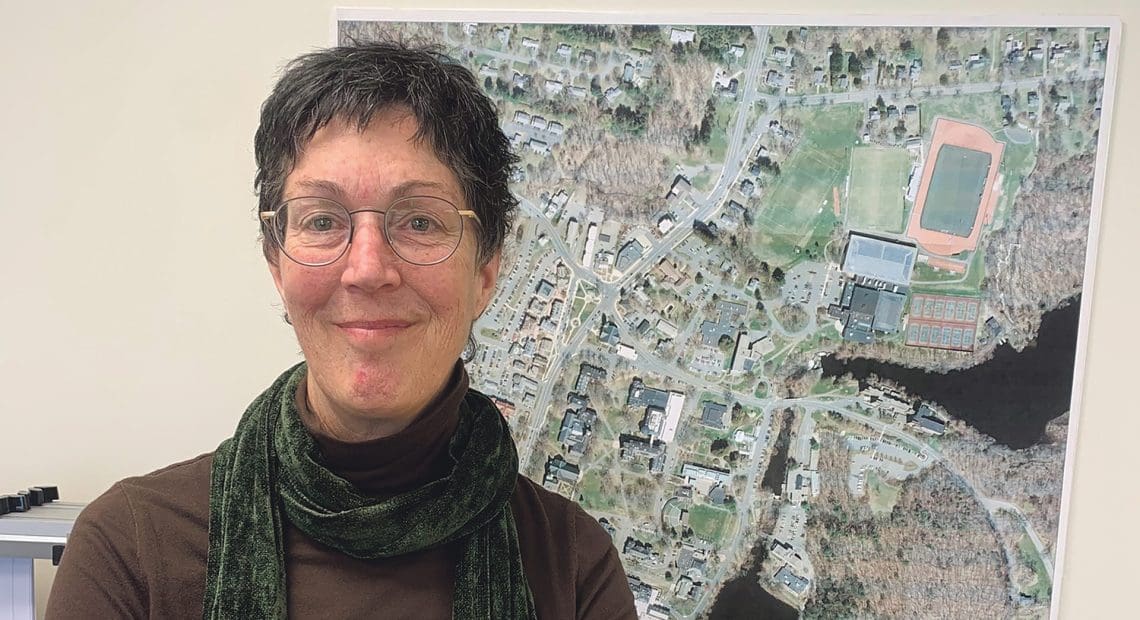
Karia Youngblood says Mount Holyoke College’s $175 million geothermal project is a bold move for the institution.

Karia Youngblood says Mount Holyoke College’s $175 million geothermal project is a bold move for the institution.

At its core, Mount Holyoke College’s $175 million geothermal energy initiative is an infrastructure project.

But, by design (in most cases, anyway), it has become much more than that.

Indeed, the massive undertaking, soon to enter its third phase, has become a living laboratory for many students, engaging them in learning opportunities involving everything from geology (during test-well drilling) to sustainable landscaping to humanities.

Meanwhile, the project has provided a captivating glimpse into the college’s past, with excavation work uncovering part of the foundation of the college’s original structure, the Seminary Building, which dates back to 1837, a find that provides some poignant symmetry, said Karia Youngblood, associate vice president of Facilities Management at Mount Holyoke.

“I worked with our archivist, and we overlaid the footprint of the Seminary Building and determined that foundation was actually the corner of the original boiler room of that building, which also explains why we found some fire bricks in that area,” she explained. “It felt like a really sweet, full-circle moment.”

Such symmetry is one intriguing aspect of this closely watched project, which is just one of many storylines unfolding in South Hadley.

“With our 19 units historically at 100% occupancy, with minimal opportunity to reside here due to lack of turnover, we believe the best way to sustain long-term success is to open the door to more housing.”

Others, said Town Administrator Lisa Wong, include everything from progress toward building a new elementary school to work toward development of a strategic plan for the town’s municipal golf course, to planned infrastructure work — and economic-development initiatives — in the community’s historic Falls section, which includes Town Hall.

“We’re hoping to raise some money and do some projects in that area, which is along the river,” she explained. “There are some businesses there, but we’re looking to attract more.”

As for established businesses that call South Hadley home, many can be found in the Village Commons, a setting unlike anything else in Western Mass. — a collection of buildings that has won awards for its design and is known for constant change, but also, in some ways, remarkable stability.

The Village Commons

The Village Commons has historically had a high occupancy rate for its retail and office space, and there’s a lengthy waiting list for its residential units.

Indeed, many of the commercial tenants have had this mailing address for decades, said Jeff Labrecque, chief operating officer of Center Redevelopment Corp., which manages the Commons for its owner, Mount Holyoke College, noting that the same is true for those occupying the 19 coveted residential units as well.

“We have one woman who has lived here for 36 years,” said Labrecque, noting that there is a waiting list for the units, one that people stay on for several years, on average, before there is a vacancy.

This lengthy waiting list helps explain why the Village Commons is actively looking to expand and add additional residential units, Labrecque told BusinessWest, adding that South Hadley, like most area cities and towns, has a critical need for housing, especially of the affordable variety.

“I’m an alum of the college, and the day the board approved this project, I felt so much pride in my institution that they had the courage to take such a bold step to preserve the environment, to preserve the legacy of Mount Holyoke.”

“We’re continuing to focus on residential expansion opportunities,” he said. “With our 19 units historically at 100% occupancy, with minimal opportunity to reside here due to lack of turnover, we believe the best way to sustain long-term success is to open the door to more housing.”

Meanwhile, one of the long-time commercial tenants in the Village Commons, the Bean Restaurant Group, founded by the Yee family, has continually expanded its presence within the complex. Three of the group’s 13 restaurants — Johnny’s Bar & Grill, IYA Sushi and Noodle Kitchen, and Johnny’s Tap Room, a banquet and events facility — are located within the Commons.

Overall, the group continues to grow in size, with the most recent addition being the Crush Wine Bar in West Hartford, Conn. but also in prestige, recently garnering the 2024 Restaurant of the Year Award from the Retailers Assoc. of Mass. (RAM), recognizing the company’s longstanding dedication to hospitality excellence, culinary creativity, and community engagement.

“It’s a feather in the cap, not for the Yee family, but really for our teams in every restaurant, because they’re the ones that build the relationships,” said Edison Yee, son of Johnny Yee, who laid the cornerstone for what would become a chain with the opening of the famed Hu Ke Lau in Chicopee. “They’re the ones table-touching every day, and they continue to bring that culture that my father instilled in all of us to our restaurants every day.”


Things Are Heating Up

Numbers certainly help tell the story of Mount Holyoke’s geothermal system. And there are quite a few of them.

When completed, there will be 26 miles of geothermal piping to be installed under the campus. The project also entails the drilling of 230 bores, each of them 600 feet deep, that will heat and cool 43 buildings covering 1.6 million square feet of real estate.

The most important numbers, though, are 2037 and 100% carbon neutrality. The former is a date, the college’s 200th birthday, and the latter is a goal to be reached by that date, a goal that in many ways inspired the geothermal project, said Youngblood, adding that this goal coincided with another one — to replace a 100-year-old, highly inefficient steam-distribution system.

Members of the second and third generations of the extended Yee family

Members of the second and third generations of the extended Yee family now managing the Bean Restaurant Group: from left, Matt Yee, Nathan Yee, Sonny Wae, Bonnie Wae, Emma Yee, Nick Yee, and Edison Yee.

Tracing the genesis and progression of the project, Youngblood, an alum who has been working in her current position for three years, said the college made a climate commitment in 2016, and in 2018 a sustainability task force was formed to look at how the college could reduce its carbon emissions.

That group’s work soon focused on the school’s fossil-fuel-powered heating plant and five large steam boilers, which produced 80% of those emissions. And it led to an energy master plan that looked at a handful of different technologies and was guided by several criteria, including cost, greenhouse-gas reduction, and technology that was both adaptable and able to offer engagement opportunities for on-campus researchers and students.

These and other guidelines were met by geothermal heat-exchange technology, she went on, adding that Mount Holyoke took inspiration — and some lessons — from a similar project at Carleton College in Minnesota, and commenced work in 2022.

“This is a bold step for the college,” Youngblood said as she put the many aspects of this initiative into perspective. “I’m an alum of the college, and the day the board approved this project, I felt so much pride in my institution that they had the courage to take such a bold step to preserve the environment, to preserve the legacy of Mount Holyoke. We’re a small liberal-arts college in Western Massachusetts, and many of our peers with larger endowments have yet to take such a step.”

As Wong noted, the geothermal project is one of many developing stories in South Hadley. Others include early-stage work to replace Mosher Elementary School; recent improvements to Buttery Brook Park, including wildly popular pickleball courts; the launching of an affordable housing trust to address that pressing issue; creation of a Human Services department; gaining designation from the state as a green community; and planned infrastructure work on Main Street.

Meanwhile, the town is also launching a strategic plan for its municipal golf course. Conceived in the late ’90s, when golf was enjoying a Tiger Woods-inspired boom, the course, called the Ledges, struggled for many years, but has fared better recently as golf has enjoyed another surge, this one fueled in part by the pandemic.

“The course is operating in the black, but it’s not covering all the debt right now,” said Wong, noting that the debt incurred to build the course and clubhouse will be paid off in four years, and the town wants a plan in place for maximizing that asset. A major focus will be on open space for the public, such as accessible walking trails.


It Takes a Village

While Labrecque takes the title COO of Center Redevelopment Corp., he likes to refer himself as an ‘innkeeper.’

In fact, at least one tenant calls him that, he said, adding that the hospitality-toned title is a better reflection of what he does day in and day out — and also what the Village Commons was designed to be and has certainly become.

“When you’re managing more than 70 tenants, and most of them are mom-and-pops, you really have to take on the innkeeper mentality, almost as if you’re running a bed and breakfast,” he explained. “And it’s always hands-on, very different from a commercial mall environment.”

As noted earlier, the Commons is noted for both its stability — some tenants go back to the very beginning in 1987, and many have called the complex home for 30 years or more — but also for the change that comes to any facility that is home to retail and office tenants.

That stability is marked by 100% occupancy on the retail and hospitality side of the equation, and 92% on the office side, which is strong compared to many office facilities in the post-pandemic, remote-work era, but still down from the Commons’ history of full occupancy, Labrecque noted.

“Hybrid work schedules continue to impact the office market, therefore creating an abundance of nationwide vacancies, leading to a heated and competitive leasing environment,” he said, adding that, while, these and other headwinds continue to present challenges to the Commons, the facility continues to more than hold its own.

Recent additions include Kiao Wan Thai restaurant, which opened its doors in October, and Eliza Moser Fine Art. Moser is an internationally trained oil painter, art instructor, and gallerist, and her facility hosts a broad range of weekly classes, paint nights, and one-day workshops that are routinely sold out.

Meanwhile, established tenants cover many sectors and include Odyssey Bookshop, Darby O’Brien Advertising, HUB International, Ochoa Day Spa, and Tower Theaters, which, like most cinema operations, is still in recovery mode from the pandemic, but making strides and continuing to be a destination that brings people to the Commons and its many restaurants.

“When you’re managing more than 70 tenants, and most of them are mom-and-pops, you really have to take on the innkeeper mentality, almost as if you’re running a bed and breakfast.”

Looking forward, the Commons is looking to advance what would be its first real expansion in more than 30 years, said Labrecque, adding that this expansion will come on the residential side, and with the twin motivations of meeting the town’s glaring need for more housing, while also providing more revenue with which to meet the growing costs of maintaining a complex now approaching its 40th birthday.

Additional residential units would constitute phase 3 of the Commons project, and it has been talked about for at least 20 years, he noted, adding that efforts have been slowed by the Great Recession, the pandemic, and other forces, but he expects some movement on this front within the next year.


Next on the Menu

Meanwhile, the Bean Group works to balance its ongoing efforts to expand with the day-to-day work of managing and operating 13 restaurants — and, during September, three more operations at the Big E.

It’s a complicated balancing act, said Nate Yee, a member of the third generation of the family now managing the group.

“We put a lot on our managers; we have a great amount of trust in them,” he told BusinessWest. “It comes with a lot of communication and checkpoints — that’s really how we do it. What sets us apart is that family touch where we’re in the units; we try our best to get to every restaurant at least once every week. It doesn’t always happen, and we rely on our managers.”

While the group is spread out across Western Mass. and now into the Hartford area, roughly half its restaurants are in South Hadley. In addition to those at the Commons, there are also the Halfway House Lounge, Johnny’s Roadside (a diner focusing on breakfast and lunch), and the Boathouse, located on the Connecticut River.

The 13 restaurants in the group run the gamut, from sushi to cheeseburgers and milkshakes at the two White Hut locations, and this diversity certainly makes it interesting, said Nick Yee, another of Johnny’s sons, noting that, beyond the wide variety of restaurants, the group is also coping with changes in eating habits, including a tendency among the younger generations to eat earlier and get home earlier.

“In South Hadley, our busiest time starts at 5, and it goes until 8,” he noted, adding that only a few years ago, peak time was closer to 7. “In South Hadley, we used to be open until midnight; now, we’ve cut that down to 9:30, 10.”

As for opportunities for expansion, there are many of them, said Nick, noting that “every restaurant is for sale, really.”

Nate agreed, adding that the group looks at many factors when it explores opportunities — from the lease conditions to parking; from the talent pool to the condition of the building in question — but, ultimately, it comes down to leadership and whether it would make a good fit with the group’s culture.

Maintaining that culture is job one, they agreed, adding that doing so contributes to awards like the one from RAM, but mostly leads to continued growth and success for a group that started nearly 60 years ago and is still thriving, especially in this town that’s progressing right along with it.


Wealth Management

Into the Metaverse

By Jeff Liguori


Social media has evolved from a niche digital trend into a global force, reshaping how people communicate, consume content, and interact with businesses. With billions of active users worldwide, platforms continue to evolve, adapting to new trends, technological advancements, and changing consumer preferences, with artificial intelligence a central force in driving that content.

Social media’s reach is staggering. As of 2024, more than 4.7 billion people globally use social media, accounting for nearly 60% of the world’s population. The sheer number of active users on platforms like Facebook, Instagram, TikTok, YouTube, and X (formerly Twitter) highlights the pervasive nature of social media in contemporary society.

These platforms are not only communication tools but also major drivers of entertainment, commerce, news distribution, and politics. For instance, Facebook, Instagram, and WhatsApp (all owned by Meta) have become critical for digital marketing, with businesses of all sizes leveraging these platforms for brand awareness, lead generation, and direct sales.

Jeff Liguori

Jeff Liguori

“With billions of active users worldwide, platforms continue to evolve, adapting to new trends, technological advancements, and changing consumer preferences, with artificial intelligence a central force in driving that content.”

These outlets have provided an infrastructure for the ‘influencer’ class, who directly profit from an increasing number of visitors or subscribers to their sites. It is estimated that an influencer on Instagram with 100,000 followers earns between $1,000 and $15,000 per post, depending on content, product placement, engagement with subscribers, and ads running on their sites.

For perspective, high-profile athletes and celebrities can earn millions of dollars per post. The professional soccer player, Christiano Ronaldo, arguably the most recognized and popular athlete in the world, has 645 million followers on Instagram and more than 1 billion on all his social-media accounts combined. Taylor Swift has 280 million Instagram followers and 550 million across all platforms.


Meta Dominance

Meta Platforms, which owns Facebook, Instagram, WhatsApp, and Oculus, is undeniably one of the largest players in the social-media space. The company has expanded far beyond its original social-networking service, diversifying into virtual reality (VR), digital advertising, and even the metaverse.

As of Q3 2024, Meta reported having 3.1 billion monthly active users across its family of apps. Facebook itself remains the dominant player, with more than 2.9 billion active users, followed by Instagram with 2.4 billion, WhatsApp with 2 billion, and Messenger at around 1.3 billion users.

Despite its massive user base, Meta’s stock performance has been volatile in recent years, especially following its aggressive push into the metaverse. While its quarterly earnings reports often show healthy revenues — primarily driven by advertising — investors have been divided on the long-term potential of Meta’s shift toward virtual reality and the metaverse. The company’s stock price has been subject to dramatic swings, particularly when its investments in the metaverse didn’t immediately translate to a clear revenue stream.

For instance, Meta’s stock price saw a significant drop in late 2022, losing nearly half of its value in just a few months. This was in part due to concerns that its focus on the metaverse was draining resources that could have been used to improve its core social-media business. But investors have gained confidence in CEO Mark Zuckerberg’s vision as advertising revenue has continued to grow, and its foray into AI-powered tools has generated excitement among investors. Since January of 2023, the stock price has skyrocketed nearly 400% to the end of November 2024.

Meta is now the fifth-largest publicly traded company in the world, with 72,000 employees and a total valuation of roughly $1.6 trillion. By contrast, Walmart, the largest global retailer, employing more than 2 million people worldwide, is valued at less than half of Meta currently.

The strategic shifts, user growth in key markets, and a focus on optimizing ad revenue continue to propel Meta’s profits. The company’s Q3 2024 earnings revealed a 20% year-over-year increase in revenue, with much of this growth coming from ad sales on platforms like Facebook and Instagram.

While Meta is undeniably one of the largest players in the social-media space, it faces intense competition from several other platforms. To get a better sense of the broader social-media landscape, the most recognized key performance metric is monthly average users (MAUs), which measures how many unique users interact with a product or service within a 30-day period.

The dominance of a few platforms, with Facebook, YouTube, and WhatsApp leading the pack in terms of monthly active users, is clear. Facebook remains the largest social-media platform with nearly 2.9 billion MAUs, a testament to its broad global reach. WhatsApp and Instagram, both under the Meta umbrella, have similarly vast user bases, collectively reaching more than 4.9 billion people each month.

Despite its impressive user count, TikTok has emerged as one of the most formidable competitors, with 1.7 billion MAUs. TikTok’s rapid growth, driven by its addictive short-form video content, has captured the attention of younger audiences and advertisers alike. The app has become a significant disruptor in the digital advertising space, particularly in reaching Gen Z, a demographic that Meta has struggled to retain.


The Future … Not Without Controversy

The future of social media is uncertain, with new platforms emerging and user habits shifting. While Meta’s advertising business remains robust, its long-term stock performance will depend on how well it can balance innovation in areas like the metaverse and AI, while maintaining its massive user base across Facebook, Instagram, and WhatsApp.

And the social ecosystem is not without controversy. Social media can contribute to mental-health issues, such as anxiety and depression, due to constant comparison and online validation. The spread of misinformation is another significant challenge, as false narratives can quickly gain traction and influence public opinion. Additionally, the pressure to maintain a curated, idealized online persona can lead to feelings of isolation and a lack of authentic connection.

Expect greater scrutiny of all things digital, especially as AI becomes exponentially more powerful, driving these sites and adapting to changing user habits.


Afterword

This article was almost entirely written using the AI platform ChatGPT. While I’m not an active user of AI tools for research or writing, I think it is an important commentary on the state of technology today.

I come from a family of writers — my brother is an editor for the New York Times and a vocal opponent of using AI for such articles. And while I agree there are many pitfalls to the artificial-intelligence phenomenon, as a society, we must work diligently to use all these tools for the betterment of humanity. With the ease of content production today, it is incumbent on all of us to use AI and social media responsibly and help police those that do not.


Jeff Liguori is the co-founder and chief Investment officer of Napatree Capital, an investment boutique with offices in Longmeadow as well as Providence and Westerly, R.I.; (401) 437-4730.

Wealth Management

Good News for Massachusetts Estates

By Hyman Darling, Esq.


In the fall of 2023, the Commonwealth increased the exemption for estate taxes for Massachusetts residents from the $1 million exemption (with the cliff) to $2 million with no cliff. The prior tax law was that each resident had an exemption of $1 million, but if the $1 million threshold was exceeded, then the exemption disappeared, and the tax was assessed on all assets back to the first dollar.

Therefore, the new Massachusetts estate-tax exemption is now a true $2 million exemption, such that only estates in excess of that amount are taxed. The law is retroactive and applies to all decedents dying on Jan. 1, 2023, and thereafter. The rates now start at 7% and increase at a graduated rate up to 16%.

Within the bill, however, Massachusetts attempted to tax real estate outside of Massachusetts owned by Massachusetts residents. Even the Department of Revenue’s instructions for completing the M-706 included language requiring that the non-state property of Massachusetts residents was to be included in the calculation of the estate tax. Under the Dassori v. Commissioner of Revenue case, however, the court ruled that the attempt by Massachusetts to estate-tax Massachusetts residents on their non-Massachusetts real estate was unconstitutional.

Hyman Darling

Hyman Darling

“The new Massachusetts estate-tax exemption is now a true $2 million exemption, such that only estates in excess of that amount are taxed.”

Good news — MGL Chapter 65C Sec. 2A was amended on Sept. 19 and now excludes the value of out-of-state property for estate-taxation purposes of Massachusetts residents. This law is also retroactive for deaths on or after Jan. 1, 2023. Non-Massachusetts residents who own property in Massachusetts will still need to file an estate-tax return where assets are in excess of the exemption, but these estates may have their Massachusetts estate tax reduced to a nominal amount as they are also entitled to the credit of $99,600 (the previous estate tax on $2 million).

For Massachusetts residents, we no longer need to list the out-of-state real estate with the value of -0- on the estate-tax return, claiming that the inclusion of the asset is unconstitutional. For example, if a Massachusetts resident has real estate and other assets in Massachusetts with a total value of $1.9 million and out-of-state real estate worth $1 million, a Massachusetts estate-tax return will no longer be necessary, and the fiduciary may file an affidavit of no tax due, in lieu of filing the estate-tax return to obtain a release of lien.

Massachusetts law provides that, when a person dies owning real estate within the Commonwealth, a lien automatically attaches to the real estate. This is how the state ensures that taxes will be paid. If the Massachusetts estate is less than $2 million, an affidavit may be filed in the Registry of Deeds, which releases the lien. If the estate is greater than $2 million, then a tax return is required to be filed to obtain a release of lien, even if no tax is due.

Of course, if the estate is large enough, a federal estate tax may have to be filed, as well as a state return for any state that still has estate taxes if the decedent owned property there. A good planning tool would now be to purchase property out of Massachusetts, which lowers the estate for tax purposes in the state. The CPA, investment advisor, and lawyer should be involved as a team in the planning process to determine the options available to lower estate taxes if possible.


Hyman Darling, a shareholder at Bacon Wilson and chair of the firm’s Estate Planning and Elder Law department, is recognized as the area’s pre-eminent estate planner, with extensive experience with all aspects of estate planning, trusts, tax law, probate and estates, guardianships, special-needs trusts and planning, elder law, and long-term care planning, and additional specialties including adoption and real estate; (413) 781-0560.

Wealth Management

Suspicion Warranted

By the Federal Trade Commission


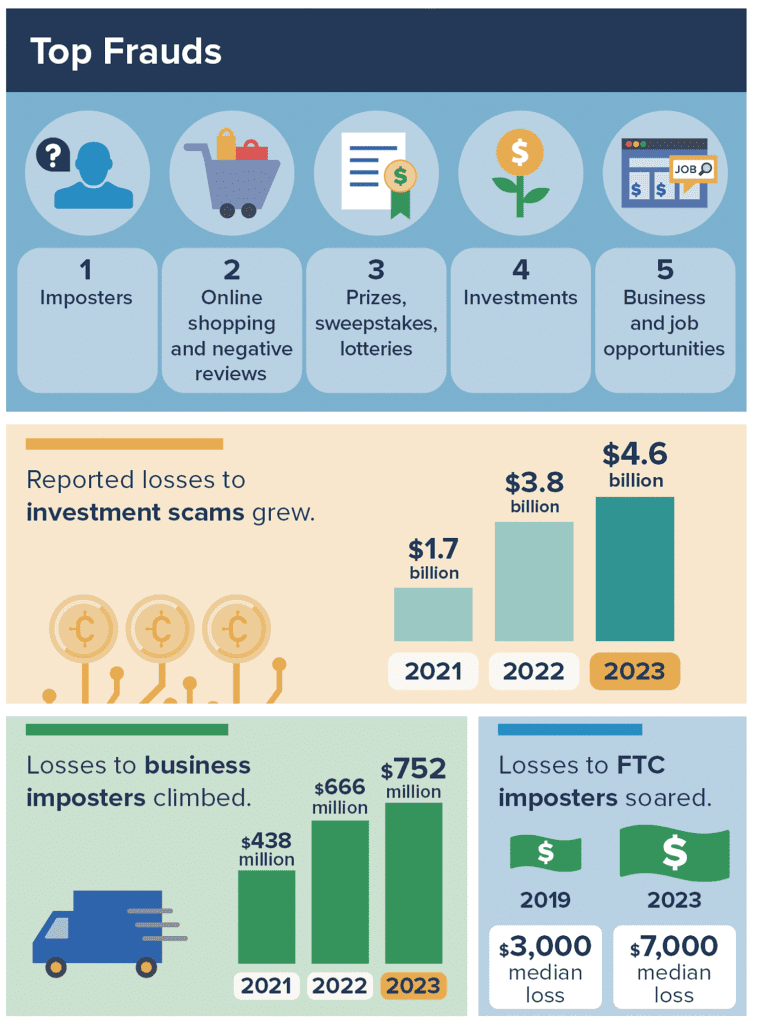
People use cryptocurrency for many reasons — quick payments, to avoid transaction fees that traditional banks charge, or because it offers some anonymity. Others hold cryptocurrency as an investment, hoping the value goes up.

However, scammers are always finding new ways to steal your money using cryptocurrency. To steer clear of a crypto con, here are some things to know.

Only scammers demand payment in cryptocurrency. No legitimate business is going to demand you send cryptocurrency in advance — not to buy something, and not to protect your money. That’s always a scam.

Only scammers will guarantee profits or big returns. Don’t trust people who promise you can quickly and easily make money in the crypto markets.

Never mix online dating and investment advice. If you meet someone on a dating site or app, and they want to show you how to invest in crypto, or ask you to send them crypto, that’s a scam.

Scammers are using some tried and true scam tactics — only now, they’re demanding payment in cryptocurrency. Investment scams are one of the top ways scammers trick you into buying cryptocurrency and sending it on to scammers. But scammers are also impersonating businesses, government agencies, and love interests, among other tactics.


Investment Scams

Investment scams often promise you can make lots of money with zero risk, and often start on social media or online dating apps or sites. These scams can, of course, start with an unexpected text, email, or call, too. And, with investment scams, crypto is central in two ways: it can be both the investment and the payment.

Here are some common investment scams and how to spot them.

• A so-called ‘investment manager’ contacts you out of the blue. They promise to grow your money — but only if you buy cryptocurrency and transfer it into their online account. The investment website they steer you to looks real, but it’s really fake, and so are their promises. If you log in to your ‘investment account,’ you won’t be able to withdraw your money at all, or only if you pay high fees.

• A scammer pretends to be a celebrity who can multiply any cryptocurrency you send them. But celebrities aren’t contacting you through social media. It’s a scammer. And if you click on an unexpected link they send or send cryptocurrency to a so-called celebrity’s QR code, that money will go straight to a scammer, and it will be gone.

• An online ‘love interest’ wants you to send money or cryptocurrency to help you invest. That’s a scam. As soon as someone you meet on a dating site or app asks you for money, or offers you investment advice, that’s almost certainly a scammer. The advice and offers to help you invest in cryptocurrency are nothing but scams. If you send them crypto, or money of any kind, it’ll be gone, and you typically won’t get it back.

Scammers guarantee that you’ll make money or promise big payouts with guaranteed returns. Nobody can make those guarantees, much less in a short time. And there’s nothing low-risk about cryptocurrency investments. So, if a company or person promises you’ll make a profit, that’s a scam, even if there’s a celebrity endorsement or testimonials from happy investors. Those are easily faked.

Scammers promise free money. They’ll promise free cash or cryptocurrency, but free money promises are always fake. Scammers also make big claims without details or explanations. No matter what the investment, find out how it works and ask questions about where your money is going. Honest investment managers or advisors want to share that information and will back it up with details.

Before you invest in crypto, search online for the name of the company or person and the cryptocurrency name, plus words like ‘review,’ ‘scam,’ and ‘complaint.’ See what others are saying.


Business, Government, and Job Impersonators

In a business, government, or job impersonator scam, the scammer pretends to be someone you trust to convince you to send them money by buying and sending cryptocurrency.

Scammers impersonate well-known companies. They might say they’re from Amazon, Microsoft, FedEx, your bank, or many others. They’ll text, call, email, or send messages on social media — or maybe put a pop-up alert on your computer. They might say there’s fraud on your account, or your money is at risk — and to fix it, you need to buy crypto and send it to them. But that’s a scam. If you click the link in any message, answer the call, or call back the number on the pop-up, you’ll be connected to a scammer.

Scammers impersonate new or established businesses offering fraudulent crypto coins or tokens. They’ll say the company is entering the crypto world by issuing their own coin or token. They might create social-media ads, news articles, or a slick website to back it all up and trick people into buying. But these crypto coins and tokens are a scam that ends up stealing money from the people who buy them. Research online to find out whether a company has issued a coin or token. It will be widely reported in established media if it is true.

Scammers impersonate government agencies, law enforcement, or utility companies. They might say there’s a legal problem, that you owe money, or your accounts or benefits are frozen as part of an investigation. They’ll tell you to solve the problem or protect your money by buying cryptocurrency. They might say to send it to a wallet address they give you — for ‘safe keeping.’

Some scammers even stay on the phone with you as they direct you to a cryptocurrency ATM and give step-by-step instruction on how to insert money and convert it to cryptocurrency. They’ll direct you to send the crypto by scanning a QR code they give you, which directs the payment right into their digital wallet — and then it’s gone.

Scammers list fake jobs on job sites. They might even send unsolicited job offers related to crypto like jobs helping recruit investors, selling or mining cryptocurrency, or helping convert cash to crypto. But these so-called ‘jobs’ start only if you pay a fee in cryptocurrency, which is always a scam, every time.

As your first task in your ‘job,’ these scammers send you a check to deposit into your bank account. (That check will turn out to be fake.) They’ll tell you to withdraw some of that money, buy cryptocurrency for a made-up ‘client,’ and send it to a crypto account they give you. But if you do, the money will be gone, and you’ll be on the hook to repay that money to your bank.

To avoid business, government, and job impersonators, know that:

• No legitimate business or government will ever email, text, or message you on social media to ask for money, and they will never demand that you buy or pay with cryptocurrency.

• Never click on a link from an unexpected text, email, or social-media message, even if it seems to come from a company you know.

• Don’t pay anyone who contacts you unexpectedly, demanding payment with cryptocurrency.

• Never pay a fee to get a job. If someone asks you to pay up front for a job or says to buy cryptocurrency as part of your job, it’s a scam.

Daily News

LONGMEADOW — Willie Ross School for the Deaf (WRSD) and Bay Path University held a joint ribbon cutting on Dec. 17 for newly developed early-education classroom space being created for Willie Ross on the Bay Path campus.

The event celebrated the collaboration between the university and WRSD as it addresses the need for more early-education space. The space is located on the first floor of Theinert Hall, a multi-use residence hall on campus.

Bay Path University President Sandra Doran; WRSD President and CEO Bert Carter; Ruth Lahti, dean of School of Education, Psychology and Humanities at Bay Path; Erika Kaftan, WRSD Education director; George Balsley II, chair of WRSD’s board of trustees; and Wayne Webster, vice chair of the Bay Path board offered remarks during the ribbon-cutting event. Bay Path University and WRSD faculty, staff, and board members were also in attendance, along with families served by WRSD.

The space developed in Bay Path’s Theinert Hall features approximately 7,500 square feet with four classrooms and several support rooms for students and staff. The process of transforming the space involved the demolition of first-floor dormitory rooms and bathrooms and the reconstruction of bathrooms and classrooms, along with the installation of required HVAC equipment, ceiling and lighting fixtures, and safety systems to meet current code requirements.

The new space on the Bay Path campus will enable Willie Ross to serve an additional 20 students as the school has experienced a growing Early Childhood program. The classrooms will also provide opportunities for hands-on experience for Bay Path University students.

“Our school is thrilled to join in this collaboration with Bay Path University,” Carter said. “As our early-education services have grown, and with our Longmeadow campus at maximum capacity for early-education classrooms, we looked for additional off-campus space to serve our students. Bay Path’s location near our own campus and willingness to envision how our program could serve their students creates a great marriage that will serve both of our institutions and our students.”

Added Doran, “at Bay Path, partnerships like this one are at the heart of who we are and what we do. We are proud to offer our resources and expertise to support the vital early-education work of Willie Ross School for the Deaf. Collaborations like these not only benefit our students by providing hands-on learning opportunities, but also strengthen our community. From early education to corporate and nonprofit lifelong learning, Bay Path has so much to offer, and we are always delighted to work with organizations that share our mission of empowering learners at every stage of life.”

Immediately after the ribbon-cutting event, Bay Path University held its annual holiday party for employees, featuring a long-standing tradition of presenting a local nonprofit organization with contributions from the university community. This year, in celebration of its new partnership, Bay Path selected Willie Ross School for the Deaf.

Daily News

Kelly Martins

EASTHAMPTON — bankESB recently hired Kelly Martins (Partridge) as social-media manager, based at its 36 Main St., Easthampton office.

Martins earned a master’s degree in nonprofit management and philanthropy with a focus on strategic planning and implementation from Bay Path University. She joins the bank from GRATI Consulting, where she was the director of Marketing & Business Development.

Daily News

SPRINGFIELD — The Zoo in Forest Park will host a winter version of its popular Zoo Camp on December 23, 24, 26, 27, 30, and 31 from 9 a.m. to 4 p.m.

Zoo Camp is for children ages six to 13 and gives kids the opportunity to assist with the daily animal care of a handful of animals. In addition, camp activities may include creating enrichment items for animals, participating in STEAM activities, hiking Forest Park, creating art, and playing games. Campers can either attend the full six days or choose to attend only the first four days of camp.

Registration is available at www.forestparkzoo.org/zoo-camp. The deadline to register is Friday, Dec. 20 at noon. The zoo also runs a Vacation Zoo Camp in February (Feb. 17-21) and April (April 18, 21-25) and nine weeks of Zoo Camp in the summer. Registration for Vacation Zoo Camp opens on Jan. 1, and summer Zoo Camp registration opens on March 3.

Daily News

CHICOPEE — Beauty Batlles Lounge will host its “Sponsor a Teen for the Holidays” event on Saturday, Dec. 21 at 2 p.m. at the spa, located at 46 Cabot St., Chicopee. This initiative aims to bring holiday joy to teens in the foster-care system by providing them with personalized gifts from their Christmas wish lists to open on Christmas morning.

Representatives from the Department of Children and Families (DCF) will attend the event to receive the gifts on behalf of the teens and ensure the presents are delivered to the teens on Christmas morning.

“We still have some teens available to sponsor,” said Ashley Batlle, owner of Beauty Batlles Lounge. “This is a wonderful opportunity to give back during the holidays and make a lasting impact on a young person’s life. There’s a special, personal joy in doing something thoughtful for someone you may never meet. It’s a reminder of the power of giving and the importance of showing love and care to those who need it most.”

Community members are encouraged to participate by sponsoring a teen, selecting items from their holiday wish lists, or donating to the cause. Every contribution helps ensure these teens wake up to a magical Christmas morning filled with love and joy.

For more information or to sponsor one of the remaining teens, contact Batlle at (413) 331-2737 or [email protected].

Cover Story

Driving Force

Alex Balise, left, and Jeb Balise with Dawn DiStefano, president and CEO of Square One

Alex Balise, left, and Jeb Balise with Dawn DiStefano, president and CEO of Square One, at the site of the agency’s new home.


Jeb Balise says he’s always called Springfield’s South End home.

He never lived in the neighborhood that straddles the Connecticut River and bumps up against the central business district, but, in many respects, he grew up there.

Indeed, that’s where his father and grandfather operated a Chevy dealership, and where he spent countless hours, starting in the early ’60s, when he was just in grade school, learning every aspect of the car business while also getting to know that neighborhood and the people championing it.

People like Leo Florian, president of the South End Citizens Council, and before him, and then alongside him, his aunt and mother.

“From my earliest days, I learned from them the importance of the South End and the community,” he recalled. “They were always supportive … they didn’t always agree or approve or endorse what we wanted to do, but they worked with me to find solutions.”

Today, Balise Motor Sales has dealerships across Western Mass., and also the Cape and Rhode Island. But in most all respects, the South End is still home. It’s there where the Balise company has made huge investments and built a campus that includes Hyundai and Mazda dealerships, a used-car store, a collision center, a car wash … and a laundromat. And there’s more to come, with the demolition of the Enterprise car-rental building and development of that site.

“From my earliest days, I learned from them the importance of the South End and the community.”

As for the laundromat, which we’ll get back to later, it was prompted largely by Florian, said Balise, who reminded him that, in addition to creating businesses and large parking lots, the Balise company needed to do something for the people of the South End.

Not that he really needed any reminding; Jeb Balise and the Balise company have long sought to step up and be counted in the South End, which explains that campus and that laundromat, and also why the South End Citizens Council currently resides in the former Baer Auto facility on Main Street (acquired by the Balise company) for monthly rent that doesn’t cover the electric bill, let alone the taxes paid on the property.

And it explains two recent decisions that will not only support childcare and family-services provider Square One, but also the South End neighborhood.

The first was a $1 million donation to the capital campaign to build Square One’s new facility near the site of its old home, damaged by the 2011 tornado and eventually razed. The second was the purchase of the property at 935 Main St., in front of the building now under construction, for $2 million, and the gifting of it to Square One, an acquisition that provides much-needed room for Square One while also solving what was becoming a problem.

“It was remarkable; this was a life-altering decision. I don’t think this would have happened, I believe, without that swift, remarkable gift, that gave everyone the feeling, ‘now we’re going to cross the finish line with this,’” Dawn DiStefano, president and CEO of Square One said of the $1 million gift, adding that the acquisition of 935 Main St. is equally life-altering, and, together, the gifts represent big steps forward for the agency, but also the South End community.

Balise agreed. “We decided that this would be good for the South End, tremendous for Square One, and good for South End citizens. We thought, ‘if we’re ever going to do something that’s a positive legacy and would make a difference, this was it.’”

From left, Jeb Balise, Alex Balise, Kris Allard, Dawn DiStefano, Leo Florian, and Police Commissioner Lawrence Akers.

From left, Jeb Balise, Alex Balise, Kris Allard, Dawn DiStefano, Leo Florian, and Police Commissioner Lawrence Akers.

This is an inspiring story with many themes, but mostly, it’s about a company, a nonprofit, and people like Florian, all with very deep roots in the South End (Square One has been there since 1883), who came together to make something groundbreaking happen, while also creating more momentum in an area, referred to by many as the gateway to the city, that has seen more than $1 billion in investments since the tornado tore through it, and is making tremendous strides.


Answering the Calls

DiStefano was on vacation when she got the phone call from Alex Balise almost a year ago — or what those at Square One generally refer to as the first phone call.

Balise, director of Marketing for the Balise Auto Group, and a Square One board member, wanted to know if DiStefano and Kris Allard, vice president of Development and Communication at Square One, could meet, and she suggested the following day.

Allard was also out of town, but she and DiStefano started thinking seriously about getting flights back into Springfield because there was some urgency attached to this meeting.

Indeed, while Square One was working to secure financing from PeoplesBank to construct its new home in the South End, a consultant working for the agency strongly suggested an additional $1 million in pledges to a capital campaign for the project would add strength to the loan application, as well as an application for New Markets Tax Credits.

The meeting with Alex Balise and her father, Jeb, eventually scheduled for a few days later, would be to discuss what the company might be able to donate toward that figure.

This aerial photo shows the extent of the Balise campus in Springfield’s South End.

This aerial photo shows the extent of the Balise campus in Springfield’s South End.

As they walked the five blocks to Jeb Balise’s office at 1441 Main St., Allard and DiStefano discussed what might be an appropriate ask. They thought about $100,000 — or perhaps $200,000.

Maybe a day later, Allard got another phone call from Alex detailing a commitment for $1 million.

“Kris made her repeat it because she didn’t believe what she was hearing,” DiStefano said. “And then we both couldn’t speak because we were crying so hard.”

Alex called the gift a “needed boost” to give Square One some important breathing room.

“I thought this was important and that we needed to step up,” she said, adding that this was an easy sell to her father and a gift designed to inspire other groups and individuals to step up as well.

And with that gift, DiStefano said, important pieces to a project, then a dozen years in the making, quickly fell into place.

“This was one of those turning points for the project,” she said. “PeoplesBank quickly signed a $6 million construction loan with a bond from MassDevelopment; by July, we signed all the closing documents for $15.5 million.”

But, as was noted earlier, there was to be still another unforgettable phone call from Alex Balise.

This map shows the location of Square One’s current home and its new home, now under construction.
Google Maps

This one, which came several weeks ago, involved the property adjacent to Square One’s old home, directly in front of where the new one is being built. Square One had been trying to buy it for years, but the price tag was prohibitive.

Vacant since the tornado and approaching eyesore status, if not already there, the property, known to those at Square One simply as the ‘brick building,’ was becoming a problem for those at Square One. Its owners were proposing a mixed-use plan for the future, one involving retail of some kind on the first floor and apartments on the second floor.

Florian, also a member of Springfield’s Planning Board, said the plans presented to that body by the building’s owner were permitted by the zoning of that area, and thus, the board would have a difficult time rejecting them. Still, he and many others were uneasy about this planned mix of retail and residential just a few hundred feet from a childcare facility.

And Florian communicated those concerns to, among others, Jeb Balise, who soon became committed to doing something about this situation.

Fast-forward to that second phone call. Alex and Jeb wanted another meeting with DiStefano and Allard. And as the two again walked together down Main Street, they speculated as to what this was about.

A few hours later, they had a commitment from Balise to buy the brick building for $2 million and gift it to Square One on the condition that they share it with the South End Citizens Council (the Baer Auto site is in poor condition and will soon have to come down). Jeb calls it a win-win-win — for Square One, the council, and the South End.


Coming Clean

As he talked about the Balise company’s commitment to the South End, as well as his unique relationship — and friendship — with Jeb Balise, Florian started by telling the story of how the South End Citizens Council secured its current home in the former Baer Auto facility, a large, glass-fronted building on Main Street.

The agency was headquartered in a tiny office across the street from the Baer facility, but it was essentially being evicted to make way for a thrift store, and Florian started poking around for new space.

Jeb showed him space in what was known as the Saw Center, a building eventually torn down to make room for the laundromat, and Florian was intrigued.

“But then he made the mistake of bringing me into Baer Auto — he said, ‘we just bought this,’” Florian noted. “We’re walking through, and I said, ‘now this is nice — with all these windows, you can see everything.’

“So he said, ‘what are you thinking — do you want me to break this up, and you can take a piece?’” Florian went on. “And I said, ‘no, actually, I think we need it all.’ He goes, ‘are you serious? I didn’t know neighborhood councils had that kind of money,’ because he had already offered it to people who wanted to rent it at crazy rent.’

“So Jeb said, ‘what are you thinking?’” he recalled. “I said, ‘I’ll tell you what … across the street, we pay $500 a month, and at the end of the year, we always run out of money and have a fundraiser — so I can comfortably offer you $400 a month, and we’ll take it off your hands.’ He first said, ‘are you crazy?’ and then said he wanted to think about it for a while. I think it was the next day, he was driving down my street; he rolled down his window and said, ‘let’s do the deal.’”

Before doing that, Balise talked at length at how Florian, and his mother and aunt before him, had always fought for the South End and never stopped looking for ways to improve that small, mostly low-income, but very proud neighborhood.

“I said, ‘I’ll tell you what … across the street, we pay $500 a month, and at the end of the year, we always run out of money and have a fundraiser — so I can comfortably offer you $400 a month, and we’ll take it off your hands.’”

And also about how he wanted to recognize those efforts by giving back himself, and as a company. “Leo has been a steadfast champion of the South End,” Balise said. “And if he’s Batman, I’m Robin.”

As things turned out, the laundromat — much-needed in this neighborhood where there is still comparatively little home ownership — and the sentiment that led to it became a motivating force.

“As you get older, you become more focused on the things that really matter,” Balise said. “And I would say that Leo inspired me a little bit to look at things and how we can focus on making them better.”

As it turned out, that deal for space for the South End Citizens Council was a precursor to something certain to be far more impactful.

Indeed, as he talked about what the new Square One, and especially the renovations to the brick building, might mean for the South End, Springfield Police Commissioner Lawrence Akers referred to what is generally known as the ‘broken windows’ theory.

“It goes back to the ’80s and ’90s, when people would look at property like that brick building; they would see it sitting there over a period of time, and they would look to see what would happen because it appeared unkept, so they would break one window,” he said, adding that this one broken window would lead to more “because no one really cared.”

The purchase of the property and the plans to renovate it show that someone cares, Akers said, noting that this is just the latest of many signs of progress in that neighborhood.

“The South End is a pretty good place to live now,” he added, noting that there is a trickle-down effect going on that has changed the look and feel of that area, and recent investments, including those at Square One, and the stability they bring to that part of the neighborhood will likely inspire more.


A Neighborhood on the Rise

There has already been a great deal of momentum seen in the South End over the past decade or so, said Springfield Mayor Domenic Sarno, noting that the linchpin, obviously, has been the $950 million MGM complex, which has made the South End a destination for many.

But there has been much more, he said, listing everything from the new condos on the site of the former Gemini plant, bringing more homeownership and all that comes with it to the area, to a renovated and re-energized Basketball Hall of Fame; from the arrival of national and regional chains like CVS, Wahlburgers, and Panera Bread to a host of small, local businesses.

And there is more on the way, including the much-anticipated reimagining of the Clocktower Building and nearby Colonial Block into mixed-used projects and the redevelopment of property at the corner of State and Main streets once occupied by MGM.

“There’s a lot of good things going on there, from new housing and new businesses to the expansion of existing businesses,” the mayor said. “That’s the entryway to the city, and there are many positive things happening, including what’s happening at Square One.”

Jeb Balise agreed.

“The South End has been on the rise — we’ve been part of a renaissance,” he said. “Getting Panera Bread, the expansion of AC Produce … there have been a lot of good cleanups that have made the South End more attractive and given it a much better feel. I feel like the South End is really on the upswing.”

DiStefano also agreed, noting that the new Square One building and renovation of the brick building will continue and perhaps accelerate this forward progress.

“At every step in this process, everyone has met this project with excitement, because who isn’t excited about a new building?” she asked rhetorically. “But there’s a level of rippling positivity — the noise of children re-entering that space is infectious. And from a public-safety perspective, activity is always better; there’s nothing but negativity when you have an open lot like that.”

Added Florio, “the tornado was the turning point for the South End. A lot of businesses thought that was it for the neighborhood, and some residents were looking to move out. But I met with the mayor, and he said to me, ‘we’re not giving up on the neighborhood; we’ll work together, and we’ll take care of this.

“We actually moved a couple of projects forward just to show people we weren’t going anywhere,” he went on, adding that MGM and several other projects have breathed new life into that historic area. “We’ve had millions of dollars invested in this small neighborhood over the past 10 years … and now we have developers that are listening to us and saying, ‘I’d like this whole block here — let’s tear down and rebuild.’”

Indeed, in the neighborhood Jeb Balise and Square One have always called home, more businesses and residents are now saying the same thing.


A New Chapter in the Square One Story

Balise Motor Sales’ purchase of the property in front of Square One’s new home, now under construction, presents both a huge opportunity and stern challenge for the agency.

The opportunity comes in the form of much-needed space; indeed, demand for Square One’s family-support services has grown to the point where the agency will have outgrown its new, 26,000-square-foot home before opening its doors.

The challenge comes with the significant buildout needed to accommodate both Square One’s wraparound services and the South End Citizens Council, which will also be housed in the 23,000-square-foot building at 935 Main St., and the price tag attached to it — roughly $4.7 million.

Kris Allard, vice president of Development and Communication at Square One, said the project has been jumpstarted by a $100,000 pledge from the property’s now-previous owner, Zee Raiz, as well as a $700,000 commitment from the city.

Additional donations are being sought toward the project, she said, noting that this initiative is essentially being rolled into a broader capital campaign for the new Square One, which has succeeded in raising $13 million to date.

The project to build out 935 State St. will come in phases, said Allard, noting that phase 1 will involve the first floor, which will house some Square One facilities, as well as the South End Citizens Council. Phases 2 and 3 will involve the second and third floors, respectively.

Alex Balise, director of Marketing for the Balise Auto Group, said the company’s decision to purchase the property at 935 State St., as well as commit an additional $1 million to the new Square One, were made in part to help inspire other donations to an initiative she believes will benefit not only Square One, but the South End neighborhood as well.

“This is an investment in the South End community, one we believe is a difference maker,” she said. “And we hope that it inspires others to support Square One and the South End.”

For more information on the project and the “Back to Square One” campaign, visit startsatsquareone.org or email Allard at [email protected].

Education Special Coverage

It Starts with a Plan

AIC interim President Nicolle Cestero

AIC interim President Nicolle Cestero

Amid a shifting landscape for higher education, Nicolle Cestero says, colleges that are unwilling to change will be left behind.

That’s the idea behind a new, expansive organizational business plan at American International College, announced last month, that will guide the college over the next several years, said Cestero, AIC’s interim president.

Dubbed Pathway to Progress, the document presents an array of changes to AIC’s operational model, including revising the academic portfolio, expanding degree options, launching new enrollment strategies, and streamlining athletic programming, including cutting programs and moving the men’s hockey team from Division I to Division II in the NCAA.

“There have been many changes in higher education over the course of the past 20 years, and even over the course of the past three to five years. And if institutions aren’t changing and being nimble, then they are finding themselves merging or closing,” Cestero told BusinessWest in a wide-ranging interview regarding the plan.

“This institution, in the opinion of myself and others — senior management, faculty, staff, board of trustees — believe that we are really important to the students that we serve and to this community, and we want to make sure that AIC is here for the long term,” she added. “So we had to look at ourselves and say, ‘what we’re doing right now isn’t sustainable. So what do we need to do in order to make sure that AIC is here three, five, 10 years from now?’ That’s where Pathway to Progress comes in.”

“There have been many changes in higher education over the course of the past 20 years, and even over the course of the past three to five years. And if institutions aren’t changing and being nimble, then they are finding themselves merging or closing.”

Among the shifts in the higher-education landscape, according to the plan’s designers, are disruptions caused by the launch of a new federal financial-aid model, changes in demographics across the Northeast, and the nationwide conversation around the value of a college degree.

“We can’t continue to do the same things that we’ve always done and expect the same results,” Cestero added. “So we needed to say, ‘what are we good at? What’s making us money? What’s not?’ — and then make the tough decisions to say, ‘we’re going to cut here, and we’re going to grow here in order to maintain the institution.’”

To get to those decisions, AIC contracted with a consulting company for a market analysis, financial analysis, and program analysis for athletics and academics. Then Cestero and Michael Dodge, executive vice president for Academic Affairs, put together a steering committee, including representatives from various constituencies.

After months of work, “it got to the point where it was pretty clear the direction the institution should go, and then Michael and I made those final decisions, obviously with the support of the board of trustees — and the board had responsibility for making a few of those decisions, too,” she added. “Then we rolled it out.”

Michael Dodge

Michael Dodge says AIC leadership engaged with faculty in determining where to build on areas of strength.

For this issue’s focus on education, we break down the three main pillars of AIC’s new organizational plan and how its leaders feel the college will benefit from each.


Academic Changes

First of all, AIC, is changing its degree offerings, embarking on a multi-year plan to launch new programs based on industry demand and market research, while discontinuing some undergraduate and graduate programs as well. Faculty positions will not be affected.

Following the previously announced launch of seven new online degree completion programs, the college plans to expand the number of program offerings beginning in the fall of 2025.

“I think, being a small institution, we can maybe run faster than some bigger schools or state institutions might be able to.”

“We looked at what makes sense for us to expand on, as opposed to just adding a program. What are we good at?” Cestero said. “But at the same time, we’re sunsetting programs. We’re saying, ‘OK, if we’re going to do all of this, we don’t have the resources to do all of this as well. So, unfortunately, this is going to have to go away. Those are hard decisions to make … but you have to recognize that those things need to happen in order for these other things to grow.”

For students who wish to earn an undergraduate degree more quickly, AIC will also begin offering three-year, 120-credit options for a variety of undergraduate programs, which make use of less expensive summer sessions, to provide time and financial savings to students (see related story on page 29). It will also launch a comprehensive re-enrollment campaign to engage and recruit former students to return to AIC and complete their degrees.

Thinking about how to refocus the academic program didn’t start only with Pathway to Progress, Dodge told BusinessWest.

“We’ve spent the last three years figuring out where are those areas where we can be really good, where we have some skills,” he said. “In the last couple of years, we’ve built a fully online master’s in criminal justice program. We’re getting into the degree-completion space, where students who’ve earned an associate degree at one of the amazing community colleges in the Commonwealth can come to AIC and have a seamless transition and convert that right over into their bachelor’s degree.

“We’ve also really tried to engage the faculty and build in the things that they are good at and that we can lean into,” Dodge added, as well as spaces AIC had not previously competed in, like computer science and data analytics, where market demand for talent is high — while also continuing to strengthen core areas where the college already excels.

Pathway to Progress includes launching a re-enrollment campaign to engage and recruit former students to return to AIC and complete their degrees.

Pathway to Progress includes launching a re-enrollment campaign to engage and recruit former students to return to AIC and complete their degrees.

“We’re really good at the health sciences, education, criminal justice. We have a number of our students in our business programs, so we always want to continue to improve those. But then, we also want to think about what else is out there, what’s the next thing. And I think, being a small institution, we can maybe run faster than some bigger schools or state institutions might be able to.”

Cestero said everyone impacted by decisions on academic programs was informed personally before the plan was announced, and then a town-hall event was held on campus for all parties — students, faculty, employees, vendors, and partners — to discuss them further.

“Any student that is in an academic program that is going away, we are teaching out those programs,” she explained. “All we’re doing is not bringing new students in, and they will have the same faculty. The faculty aren’t going away, either.”


Impacts on Athletics and Faculty

The big news in AIC athletics is the return of men’s ice hockey to Division II after the 2024-25 season, following 27 years in Division I. In recent years, the team has recorded significant success, earning national rankings from 2018 to 2021 and winning the Atlantic Hockey America conference regular-season title in 2019.

According to a press release on the Plan for Progress, the decision was made to position the program alongside the majority of AIC’s varsity programs in Division II, and that “this transition will provide a more equitable distribution of resources among all athletic programs and will allow ice hockey’s legacy to continue within the AIC Athletics portfolio.” All scholarships for affected athletes will be honored.

“When put it in the perspective of ‘what does this institution need to do to stabilize itself?’ I think it becomes a simpler decision,” Cestero said. “If this is siphoning off money that is leading to the institution not being stable financially and you want the institution here, it makes the decision easier than just ‘should we take it from DI to DII?’ I think the harder part is that the students have found a place here, and they are happy here, and knowing that you’re disrupting it, that’s the really hard part.”

“Because there were so many changes coming forward, we felt as though, if we aren’t clear about what the whole plan is up front all at once, then you’ve got a culture of fear, and that’s not good for anybody.”

It’s also tough for athletes in AIC’s women’s tennis and wrestling programs, which are being ended “to better meet industry demand and provide additional resources to other varsity sports,” the release notes. Again, all scholarships for affected athletes will be honored, though some may choose to use their remaining eligibility elsewhere.

“A freshman wrestler may want to go somewhere else because they have so much eligibility left, whereas a junior tennis player, if they were to transfer, they could lose out on transfer credits and things of that nature,” Cestero said. “Plus, you have your home here, right? You’ve got your circle of friends, you’ve got your major, you’ve got your faculty, your mentors, etc.”

Meanwhile, the Plan for Progress impacts faculty as well. To support the ongoing growth of AIC’s academic portfolio, the college will expand faculty options by introducing multi-year contracts, including a new ‘professor of practice’ role alongside the existing tenure-track pathway and adjunct/part-time faculty roles.

A professor of practice is a faculty member who typically has a non-academic background, but is successful and knowledgeable in their field, enabling them to improve students’ knowledge by providing a practical perspective, along with the theoretical perspective provided by an academic professor.

“We’re bringing these real-world experiences into the classroom, but these individuals that are going to become these teachers don’t necessarily have a doctorate, nor do they necessarily want one,” Cestero said. “But we’re allowing them a pathway to be a professor in higher education without needing to have that terminal degree. And it benefits the students at the end of the day.”

In addition, most full-time faculty will shift to a 5/5 teaching load, meaning five courses per semester instead of four, to better meet academic demands. In return, some tasks will move to staff advisors.

“We still have work to do. I mean, this is only a piece of what we need to do from a long-term perspective, but these are the things that we need to do now in order to become stable and then be able to grow.”

“Right now they teach 4/4, but then they have these other responsibilities for scholarship and community service and registering students for classes and things of that nature,” she explained. “And we said, ‘OK, they’re spread in many different ways. What if we were to take this responsibility and shift it over here? That would give them more time to focus on the actual teaching.’”


A Transparent Process

AIC has been out front with its plan, publicly detailing its various elements, including in this article. Cestero said there are three reasons for that.

“The first is, I’ve heard for years and years that people in leadership aren’t transparent, and specifically at AIC, that’s been said a lot. Secondly, you have to get everybody on board when you’re trying to do something this major, and if you’re not very open and direct and clear about what that is, then you’re not going to be able to get everybody on board.

“Three, when you’re not transparent, you create a culture of fear. Because there were so many changes coming forward, we felt as though, if we aren’t clear about what the whole plan is up front all at once, then you’ve got a culture of fear, and that’s not good for anybody.”

As a small, private college, AIC has challenges that differ from public universities and private colleges with much larger endowments. Cestero noted. But in the current climate, all institutions likely need to be strategizing about how to adapt.

“We still have work to do. I mean, this is only a piece of what we need to do from a long-term perspective, but these are the things that we need to do now in order to become stable and then be able to grow.”

That said, “I think that AIC is a really special place, and I want us to be able to continue to serve these students,” she said. “I think the students that we have are so amazing, and that’s why it’s important that we’re doing all of this.”

Special Coverage Wealth Management

Too Good to Be True

By Carlo Centeno

Some of the largest financial fraud schemes have taken place within the last 100 years. The truism “if it’s too good to be true, then it probably isn’t” has been pushed aside by those convinced that if they hesitate, they lose the opportunity.

Pride has a way of pushing a desire or perceived benefit into acceptance. The short version of that notion is commonly known as FOMO [fear of missing out]. White-collar criminals understand that, as investment tactics, strategies, and offerings become more complex, the easier it is to pull the wool over some eyes. For the unfortunate victims, the fear of missing out is all too real, but a greater fear comes to bear regarding their sense of self: in not wanting to appear naïve or uninformed, the ego takes over.

In the mid-1980s, Warren Buffet noted in a letter to Berkshire Hathaway shareholders about “two super-contagious diseases,” namely fear and greed. His analogy to disease — more specifically epidemics — made clear that uncertainty, time of discovery, duration, strength, along with other possible factors could compromise global economies and markets. Ultimately, this led to his aphorism, “we should be more fearful when others are greedy, and to be greedy when others are more fearful.”

According to psychologists, humans are motivated more to avoid pain than to seek pleasure. Put another way, studies have shown that, when it comes to fraud, fear is a stronger motivator than greed.

“According to psychologists, humans are motivated more to avoid pain than to seek pleasure. Put another way, studies have shown that, when it comes to fraud, fear is a stronger motivator than greed.”

Corporations and their minions take advantage of investors’ interests by feeding ‘data points,’ the kind of information most would like to hear. In a marketing sense, the perception is the reality; it’s not what investors are hearing, but what they believe they’re getting.


Investment Fraud

Investment reasoning is contrarian for most of us. We think that, when some assets are experiencing losses, we need to sell to reduce such losses, and then, when the market goes up, we should buy more of said assets. It’s been long documented that making investment decisions guided by emotions does not fare well. However well-intentioned the feeling might be, it’s usually not good in the long run.

Jim Ratley, president and CEO of the Assoc. of Certified Fraud Examiners (ACFE), notes that “there’s no such thing as small fraud, but fraud that has yet to reach their full potential.” The ACFE has reported that approximately 87% of first-time offenders have never been charged or convicted. In such cases, the idea of getting caught is real, but a sense of invincibility reinforces continuation of the tactics that keep money in the wrong hands.

Carlo Centeno

Carlo Centeno

“Investment reasoning is contrarian for most of us. We think that, when some assets are experiencing losses, we need to sell to reduce such losses, and then, when the market goes up, we should buy more of said assets. It’s been long documented that making investment decisions guided by emotions does not fare well.”

According to the Federal Trade Commission (FTC), consumers reported a record $10 billion in fraud losses in 2023. The amount represents an increase of 14% over losses in 2022. The top category: investment scams. The most used method of acquiring fraudulent cash was through bank transfers.

To be clear, this writer is not aware of any cohort consumer behavioral research which quantitatively ascertains why the losses are so high, though, based on the FTC findings, the means in acquiring fraud dollars can be attributed to a combination of factors: the increased use of online selling and buying, the growing sophistication of iterative websites that mimic actual sites, proficiency in acquiring personal information, in particular from social media, and trends in lifestyle resources appearing on tablet and mobile devices, in particular with health-related products and services, dating services, and financial management.

And the losses continue to grow. Here are some fraud examples that took place not that long ago.

• Lehman Brothers: When you hide $50 billion in loans and reassign them as assets, that’s bound to backfire. It did. The bank’s internal department discovered $3 billion in losses to investors; that money was bought by Cayman Island banks to be purchased later by Lehman Brothers. The majority of the first-timers involved with the scam had no prior criminal record. Due to lack of evidence, the SEC did not prosecute.

Enron: The Houston-based energy commodities corporation kept enormous amount of debt off the balance sheet. Clients and employees of the firm lost their retirement accounts, and shareholders lost a staggering $74 billion. Auditing firm Arthur Anderson was involved, CEO Jeff Skilling was sentenced to 24 years in jail, and CFO Andrew Fastow pleaded guilty and served jail time. Fastow forfeited $24 million and pleaded guilty to two counts of conspiracy. In a news interview, he said, “there are people who look at the rules and find ways to structure around them. The more complex the rules, the more opportunity. The question I should have asked is not what is the rule, but what the principle is.”

• Bernie Madoff: Running the largest Ponzi scheme ever, Madoff’s investment firm took $64.8 billion from investors. Any “returns” paid out came from money from other investors or even their own money. After he confessed to his sons about his fraud, the sons reported him to the SEC the following day. For all the technology available to the investment industry, the fraudulent information was stored in a 1980s-era IBM AS/400 server.

• Sam Bankman-Fried’s FTX Scam: One of the more recent scams involved cryptocurrency. The investment scam was Sam Bankman-Fried, with friends being his associates. Cryptocurrency, to this day, still poses a high level of risk (see related story on page XX). The securities platform called FTX was claimed to deliver higher rates of return in 2019. By 2022, it all came undone. Bankman-Fried was sentenced to 25 years in federal prison for the FTX fraud. At its zenith, FTX valuation reached $32 billion.


Bottom Line

Financial fraud is wrought with complexities in large part because of the size and scale of investments offered today. Adding to this depth and volume, the ongoing evolution of computers, satellite communications, storage, encryption, and verification (just to name a few factors) continues to develop ways to not only identify bad actors, but the means to identify transactions and activities that point to potential financial crimes.


Carlo Centeno is vice president and Marketing director at St. Germain Investment Management. Much of his career has been in corporate communications, primarily on the agency side, where he worked on a variety of projects with national clients. He has received both a Clio Award and a Golden Pyramid Award for strategic business-to-business communication programs. He received his bachelor’s degree in English literature from Boston University and an MBA from the Isenberg School of Management at UMass Amherst.