Daily News

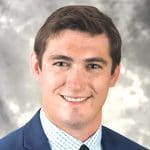
Sharale Mathis

HOLYOKE — Sharale Mathis, vice president of Academic and Student Affairs at Holyoke Community College (HCC), has been appointed to a national advisory board for community colleges.

Mathis was invited to join the Commission on Institutional Infrastructure and Transformation of the American Assoc. of Community Colleges (AACC), the primary advocacy group for U.S. community colleges. Her three-year term began July 1 and will run through June 2027.

The AACC’s Commission on Institutional Infrastructure and Transformation focuses on community-college efforts to improve student success, which includes administrative processes, infrastructure, technology, and workforce development.

As vice president of Academic and Student Affairs at HCC, Mathis oversees all academic divisions, as well as student records, the registrar’s office, planning and assessment, student-success programs, library services, advising, career services, transfer affairs, admissions, and financial aid, among others.

She holds a doctorate in educational leadership from the University of Hartfield, a master’s degree in biomedical sciences from Quinnipiac University, and a bachelor’s degree in biology from Eastern Connecticut State University. She joined HCC in 2021 after serving as dean of Academic and Student Affairs at Middlesex Community College in Connecticut, where she previously led the STEM division as director.

Daily News

SPRINGFIELD — Comcast announced it is awarding a total of $70,000 across three nonprofit organizations in Western Mass. to help provide area residents and students with technology and computer skills training. These grants are a part of Project UP, Comcast’s $1 billion commitment to advance digital equity through programs and community partnerships that connect people to the internet, advance economic mobility, and open doors for the next generation of innovators, entrepreneurs, storytellers, and creators.

Tech Goes Home will receive $30,000 to offer its digital-inclusion programs in Holyoke and Springfield, through which participants will complete 15 hours of digital skills training and earn a technology bundle that will include a personal device.

The Urban League of Springfield will receive $20,000 to support its digital learning lab, which provides participants with essential technology and internet skills training, specialty workshops, the Urban League’s Project Ready Mentor and STEM youth programs, and more.

The Boys & Girls Club of Springfield will receive $20,000 to support its e-sports programming, through which participants build social-emotional and STEM skills by engaging in educational, hands-on gaming sessions led by club staff.

“We are grateful to Comcast for supporting our efforts to help close the digital divide in Holyoke and Springfield,” said Daniel Noyes, CEO of Tech Goes Home. “By providing our participants with digital skills trainings and their own devices, we’re able to prepare them to navigate school, work, and life. We are excited to see the impact we can make in Western Massachusetts, thanks to the support from Comcast.”

Added Carolyne Hannan, senior vice president of Comcast’s New England region, “we understand the critical role that the internet plays in contributing to a future of unlimited possibilities for everyone across Western Massachusetts. In today’s world, digital literacy is essential to success, which is why we continue to support programs that empower individuals to explore and understand digital media platforms and technical capabilities to set them up for their professional futures.”

Daily News

SPRINGFIELDBusinessWest and the Healthcare News will celebrate this year’s eight Healthcare Heroes on Thursday, Oct. 17 starting at 5:30 p.m. at the Log Cabin in Holyoke.

The class of 2024, profiled in the Sep. 16 issue and at businesswest.com, includes Dr. Andrew Balder, attending physician, Baystate Mason Square Neighborhood Health Center; Lucinda Canty, associate professor of Nursing and director of the Seedworks Health Equity Program, UMass Amherst; Bernice Drumheller, past president, NAMI Western Massachusetts; Peta-Gaye Johnson, director of Healthcare Workforce Initiatives, MassHire Hampden County Workforce Board; Margaret King, occupational therapist, Baystate Medical Center; Alexa Mignano, director of School-Based Clinical Services, River Valley Counseling Center; Dr. Laki Rousou, chief of Thoracic Surgery, chief of Robotic Surgery, and medical director of the Lung Cancer Screening Program, Mercy Medical Center; and Janet Williams, professor of Biology, Elms College.

Tickets cost $95, and tables of 10 are available. To purchase tickets, visit businesswest.com/healthcare-heroes-tickets. Presenting sponsors include Baystate Health/Health New England and Elms College. Partner sponsors include Trinity Health Of New England/Mercy Medical Center and Holyoke Medical Center.

Community Spotlight

Community Spotlight

Mike and Barbara Trombley returned to Wilbraham for its quality of life — and to be the succession plan for the financial-services firm started by Mike’s father.

Mike and Barbara Trombley returned to Wilbraham for its quality of life — and to be the succession plan for the financial-services firm started by Mike’s father.

Like many young people who grow up in Western Mass., Mike Trombley left this region to start his professional career and then returned because of the quality of life it affords.

His story, and his career, have not been like most others, though.

Indeed, Trombley, who excelled on the baseball diamond at Minnechaug Regional High School in Wilbraham, would go on to play to play at Duke and be drafted by the Minnesota Twins.

Mostly a relief pitcher — with a career record of 37-47 and a high of 24 saves in 1995 — he played for the Twins, Orioles, and, briefly, the Dodgers until 2002. Living in Florida with his wife, Barbara, and three children after his playing days were over, he dabbled in real estate and managed to survive relatively unscathed when the market collapsed.

By 2009, the Trombleys decided that Florida wasn’t really for them, so they relocated to Wilbraham to live and essentially become the succession plan for Mike’s father, Ray Trombley, who founded the financial-services firm Trombley Associates in 1965.

The Wilbraham Mike returned to was and is very much like the one he left, meaning it has maintained its small-town charm and rural character — there are more than 20 farms within the community.

But there have been some significant changes, including the mailing address for the Trombley firm — Post Office Park on Route 20, a business park that includes the Scantic Valley YMCA, a post office (hence the name), and dozens of businesses — as well as many new businesses along that thoroughfare. There have also been some changes on Main Street and just off it, including the town’s new senior center, which was a dozen years in the making, and a new mixed-use development that includes several apartments, a brewery, a restaurant, and a wine-and-cheese shop.

This combination of small-time charm and an eclectic business community makes Wilbraham an attractive community, one where residents sometimes take all they have for granted but shouldn’t, Mike said.

“This is the quintessential New England town; any time anyone would go down Main Street and see Wilbraham & Monson Academy and the Village Store … it’s just a picturesque postcard driving through town.”

“It’s very interesting seeing Wilbraham as an adult. I grew up in this town, then left to go to go to college and play baseball; we were away a long time and came back. To see it as an adult … Barbara said to me, and it’s true, ‘Wilbraham is a charming town.’

“I’m a big fan of New England,” he went on. “And this is the quintessential New England town; any time anyone would go down Main Street and see Wilbraham & Monson Academy and the Village Store … it’s just a picturesque postcard driving through town, especially at this time of year, and I appreciate it much more as an adult.”

This is the message the town’s Economic Development Committee is trying to put out — or, at least, part of the message.

Indeed, the commission has ramped up efforts to let it be known that this community of almost 15,000 people is open for business and has plenty to offer those who wish to set up shop here.

That list includes a single tax rate, one lower for businesses than neighboring Springfield (and some other communities, for that matter); busy Route 20, which is already home to dozens of businesses, with room for many more; access to other neighboring communities; proximity to what will be a totally reimagined Eastfield Mall; that aforementioned quality of life; and, coming sometime soon, a town-owned fiber network that will bring faster and more reliable service to residents and businesses alike.

“We have many attractive selling points here in Wilbraham,” said Mike Mazzuca, chair of the Economic Development Committee. “And we’re going to work harder to make sure businesses are aware of all that we have to offer.”

For this, the latest installment of its Community Spotlight series, BusinessWest takes an in-depth look at Wilbraham and its ongoing, and quite successful, efforts to balance its rural character with needed business growth.


Getting Down to Business

Brady Suomala is a senior at Minnechaug High, captain of the soccer team, and … an intern with the East of the River Five Town Chamber of Commerce, which counts Wilbraham among the five communities it serves.

Since coming aboard just after school started, Suomala, who is focusing his internship on marketing and graphics, has been visiting many businesses in town with chamber Executive Director Grace Barone. He’s been talking with their graphics and marketing people about their work and possible career paths, while also, in some cases, gauging their marketing needs and whether the chamber might be of any assistance.

He’s stopped by a few banks, and recently visited with Sandy Polom, owner of the Scented Garden Gift Shoppe, located in the Wilbraham Shops on Route 20, who is coming up on her five-year anniversary of buying the business and is planning a celebration.

Brady Suomala

As an intern with the ERC5 Chamber of Commerce, high-school senior Brady Suomala is gaining unique insight into Wibraham’s business community.

Suomala’s work to date relates the importance of internships like his to introducing young people to the world of work, while also introducing them to businesses and possible careers. It also helps tell the story of Wilbraham’s business community, which, as noted, is both diverse — with a blend of local companies and regional and even national chains (like Home Depot) — and deep, with many businesses, like Trombley Associates, the Scented Garden, Rice’s Fruit Farm, and many others having well-established roots.

Indeed, the Scented Garden has been a mainstay in the community, and region, for more than 30 years now.

“We reached out to businesses at the mall and were successful in bringing a few here.”

Polom, who had been in medical and pharmaceutical sales for 26 years, was looking for a change, and less travel, and bought the business five years ago.

That was just a few months before COVID, which wound up essentially shutting her down for three and half months.

“That was a little scary, to say the least,” she said, adding that the pause, while unwelcome, gave her an opportunity to refresh the store and make some needed changes. Upon reopening, she has been continuously buoyed by local support — a running theme among business owners in town — but also shoppers from neighboring communities and those passing through along Route 20 or stopping in to other businesses in the shops.

They’re drawn to her mix of gift items, from women’s and children’s clothing to jewelry to home items, with a focus on products made in this country.

As for Trombley Associates, it has been a nice, but not easy, transition for Mike and a solid second career, one where Barbara, a CPA by trade, is his business partner.

Barbara, a frequent contributor of articles to BusinessWest on the many aspects of financial planning, handles the tax side of the business, but also shares the financial-planning work with Mike.

Wilbraham at a glance

Year Incorporated: 1763
Population: 14,613
Area: 22.4 square miles
County: Hampden
Residential Tax Rate: $18.50
Commercial Tax Rate: $18.50
Median Household Income: $65,014
Median Family Income: $73,825
Type of government: Board of Selectmen, Open Town Meeting
Largest Employers: Baystate Wing Wilbraham Medical Center; Friendly Ice Cream Corp.; Big Y; Home Depot; Wilbraham & Monson Academy
*Latest information available

Together, they have grown the client portfolio and, overall, continued a business that traces it roots back 60 years.

“I think my father would be very proud that we’ve carried the torch and, hopefully, made it better in his eyes,” Mike said.

The broad goal for the town’s Economic Development Committee is to help write more success stories like these in Wilbraham, said Mazzuca, adding that the mixed-use project on Main Street, which now includes several apartments, Pafumi’s on Main restaurant, the Guilty Grape wine-and-cheese store, and Scantic River Brewery, has generated momentum in efforts to bring more businesses, and vibrancy, to what would be considered the community’s downtown, the Main Street area.

Meanwhile, Wilbraham has become more focused on promoting itself and its assets and attracting more businesses. The town was successful is recruiting two of the former tenants of the Eastfield Mall — the Mall Barber and School of Fish, an aquarium store — for some of the reasons stated earlier, such as location and proximity to Route 20.

“We reached out to businesses at the mall and were successful in bringing a few here,” said Mazzuca, “because this is a great place to do business.”

Jeff Smith, vice chair of the Economic Development Committee and a small-business owner himself, agreed. He said the town’s single tax rate has incentivized Home Depot and other businesses to locate in town, and there are many other assets as well.

“We have a lot of open space — the trail systems are extensive, and we have two fantastic farms that put on all kinds of activities in the fall,” he explained. “There’s also water, sewer, access to Route 20, and a very business-friendly town government.”

As for the planned new Eastfield Mall … there are still many questions to be answered on that project, but if it is redeveloped as planned, with a mix of local and national stores and restaurant chains, it should bring more traffic through and into Wilbraham.

“If the stores that are proposed to go up do go up, that will draw more people into the area,” Mazzuca said. “For people going to the Eastfield Mall, when it’s time to go to a restaurant, you’ll have more people coming to Wilbraham. We have fantastic restaurants here, and in addition, some of our niche shops are spectacular.”


Bottom Line

Returning to those thoughts he had about how he appreciates Wilbraham even more now than when he was growing up there, Mike Trombley said that, overall, little has changed beyond that appreciation level.

“There’s no way you can avoid progress, which is a good thing, but the town has kept its home-town feel, which is good, too,” he said, noting, as others did, that this community has much to offer — to residents, yes, but also to those who want to get down to business here.

 

Entrepreneurship

Tools to Grow

Roz Freeman recognizes and values the connection between civil rights and economic justice, which is why she’s gratified by the work being done by BizGrow, an arm of Massachusetts-based Lawyers for Civil Rights (LCR).

LCR was born during the Civil Rights era, said Freeman, entrepreneurship manager for Lawyers for Civil Rights, noting that it sprung from the broader, national movement known as the Lawyers’ Committee for Civil Rights Under Law. “We work through the law to fight for justice. We have a team of litigators who litigate civil rights in collaboration with law firms that are doing pro bono work to support these cases.”

LCR was created in 1968 (more on that later), but about 20 years ago, it established BizGrow, which provides free legal assistance, business support, and technical assistance to minority, immigrant, and women business owners, aiming to ensure they encounter fewer obstacles and more opportunities. Assistance can come in many areas, including starting a business, growing an enterprise, shifting ownership, managing transactional issues, or any other challenge small businesses are faced with.

Now, LCR has launched a new partnership with Springfield City Library aimed at transforming the support landscape for small-business owners and entrepreneurs in and around the city. The collaboration will kick off with the free BizGrow Conference on Thursday, Oct. 10 from noon to 4 p.m. at the library, located at 220 State St.

At the BizGrow Conference, modeled after a similar annual event in Boston, current and aspiring small-business owners will have the opportunity to meet one-on-one with volunteer attorneys for free legal advice, connect with local and state organizations that provide essential resources and support to small businesses, and network with other local business owners. Dozens of business owners and entrepreneurs, pro bono attorneys, and providers of business technical assistance are expected to attend.

Roz Freeman

Roz Freeman

“We work through the law to fight for justice. We have a team of litigators who litigate civil rights in collaboration with law firms that are doing pro bono work to support these cases.”

“We are thrilled to deepen our connections to Springfield and offer this valuable event to the small-business community,” said Priya Lane, BizGrow director at Lawyers for Civil Rights. “Free legal support and business networking are crucial tools to help close the opportunity gap and fuel the small businesses that are the engines of our Commonwealth.”


Birth of a Notion

LCR traces its national roots back to June 1963, when President John F. Kennedy and Attorney General Robert F. Kennedy met with 250 leading American lawyers at the White House to discuss the role lawyers could and should play in the deepening civil-rights crisis.

The nation recently had been shaken by television and news accounts of police-led violence against peaceful demonstrations led by Martin Luther King Jr., and by the spectacle of U.S. Army intervention to enforce court orders requiring the University of Alabama to admit Black students against a defiant Gov. George Wallace.

The Kennedy brothers made an appeal to the lawyers to mobilize the voice and work of the legal profession to support the struggle for civil rights in the nation. Locally, the Lawyers’ Committee for Civil Rights Under Law of the Boston Bar Assoc. was formed in 1968. Funded with a grant from the Ford Foundation and contributions from major Boston law firms, it became the first of eight independent affiliates of the national Lawyers’ Committee. The only Lawyers’ Committee in the country affiliated with a major bar association, it rebranded as Lawyers for Civil Rights in 2018.

But before that, BizGrow developed from a recognition that social justice also means economic opportunity, and LCR had a role to play there as well.

Priya Lane

Priya Lane

“Free legal support and business networking are crucial tools to help close the opportunity gap and fuel the small businesses that are the engines of our Commonwealth.”

“After many years, we wanted to connect fighting for justice with economic justice and wealth creation for disadvantaged communities,” Freeman explained. “Lawyers for Civil Rights and BizGrow partner with law firms that provide pro bono opportunities to support small businesses. Businesses, in turn, get a free legal network to support them.”

Sheila Coon, owner of Hot Oven Cookies, which has locations in Sprngfield and Chicopee, speaks well of her experiences working with lawyers through LCR, and says others should reach out.

“The attorneys I’ve connected with through LCR and BizGrow have been invaluable to solving key issues for my small business,” she noted. “I am so excited that this amazing resource is coming to Springfield.”

Hot Oven is just one of roughly 1,600 different businesses Lawyers for Civil Rights has worked with in 2024 alone through workshops, free legal clinics, and its Boston conference, Freeman told BusinessWest.

And many one-on-one connections made at the conference between entrepreneurs and attorneys will be forged before the event itself, to ensure that each volunteer lawyer has the background needed to help a particular business owner.

“We match businesses with the right attorneys in the area; we talk ahead of time to make sure the questions are clear and they’re able to make most of the meeting with the attorney during the conference,” she explained. “Then, if they need long-term legal representation, we can make a match for free legal support. Any questions that don’t get answered within a 30-minute session during the conference, we can follow up with support.”


Support for the Journey

Of course, BizGrow’s presence in Springfield will extend well beyond one conference.

“We are reaching out to small-business owners to make sure they’re getting the wraparound supports that businesses need. So we offer workshops and legal clinics, too,” Freeman said. “But the reason for the in-person conference is we want to not only bring resources on the ground in Springfield, but also provide a networking opportunity for small businesses. That’s why we partnered with the library.

“Fifteen different small-business resource partners will be there. So entrepreneurs can come to the event and get the support they need and make connections with many of those business resources in the region,” she added. “We’re looking to support Western Mass. businesses in a way we haven’t before.”

The partnership with Lawyers for Civil Rights promises to be “a fantastic opportunity for Springfield’s small-business community,” said Elizabeth McKinstry, programming and training librarian for the 167-year-old Springfield City Library.

“We are thrilled to host the BizGrow Conference and bring such vital resources to our local entrepreneurs,” she added. “For many small-business owners, access to legal advice and business networks can be a game changer. We are hopeful this event will have a lasting impact on the growth of small businesses in our community.”

To register for the BizGrow Conference Springfield, visit bit.ly/BizGrowSpringfield2024.

Insurance

Rules of the Road

By Jack Dowd


Holiday season, which will ramp up over the next few months, is peak travel time. “From Atlantic to Pacific / Gee, the traffic is terrific,” goes the song, and it’s about 10 times truer today than it was when Perry Como sang it in 1954. The more people on the road, the more important it is to take extra care preparing for your trip and driving with safety in mind.


Preparation Is Key

90% of safe travel is in the planning. Even if you’ve driven to grandmother’s house more times than you can count, it’s still essential to run through a safety checklist before you hit the road.


Auto Insurance

Make sure your auto or motorcycle insurance policy is up to date and has the coverage you need. The rates of accidents spike during the holiday season, and even the most careful drivers can find themselves in dangerous situations. It’s best to be sure you’re covered.

Jack Dowd

Jack Dowd

“The one guaranteed result of road rage is regret. Don’t leap at the opportunity to join in on someone else’s bad judgment.”


License and Registration, Please

And pack proof of insurance while you’re at it. Again, despite a careful driver’s best efforts, accidents do happen, so be sure you’ve got an active driver’s license, current registration, and proof of insurance at the ready. We know you’ll follow all state and local speed limits, of course, so we won’t even bother to discuss that here.


Roadside Assistance

Whether you have roadside assistance through your insurance agency, your bank, a cell-phone carrier, or AAA, make sure your policy is active before you set out on your trip. If you choose not to participate in a roadside assistance program, be sure you have all the tools you need to change a tire or take care of any other minor repair en route. While you’re at it, check your spare and be sure it’s properly inflated and in good condition.


Basic Car Maintenance

If you’ve been putting off an oil change and haven’t checked your tire pressure in a while, take a little time to get your car ready for the long haul. Check the levels of oil, coolant, windshield fluid, and brake fluid. Test your lights, including turn signals, taillights, reverse lights, and the low and high beams on your headlights. Bring your tires up to their recommended PSI. Make sure your wipers work well and your windows are clean.


Know Where You’re Going

Don’t be too dependent on your phone to tell you where to go. Review your route carefully before you leave, and note some of the key milestones, exits, and turns. Heaven forbid you lose cell service, overshoot a turn, and miss the turkey!


Watch the Weather

Keep an eye on the weather forecasts for all the regions you’ll pass through along the way. Watch out for storm warnings and predictions of rain, snow, and ice. If it looks like a major storm will impact your route, seriously consider delaying the trip until it’s cleared. If you’re traveling through steep or mountainous terrain, or roads that tend not to be cleared regularly, bring tire chains with you or put your snow tires on before you leave.


Charge Your Devices

Start your drive with a fully charged phone. Bring along both a car charger and a rechargeable battery pack. That way, should your car break down, you can still keep your phone charged to call emergency services, friends, relatives, hotels, or airlines.


Keep a Calm State of Mind

When it comes to safe holiday driving, getting there is what’s important. Don’t worry about getting there before the car in the other lane or teaching that tailgater a lesson. It’s not a contest, and it’s not a race. The one guaranteed result of road rage is regret. Don’t leap at the opportunity to join in on someone else’s bad judgment. Maintain a smooth, safe speed; drive carefully; and visualize grandma’s apple pie. Relaxing music also goes a long way.


Mind the Speed Limit

Should you still be tempted to drive aggressively to make up time, get ready for a big surprise. According to AAA, speeding accomplishes nothing of the sort. If you drive 65 mph on a 45 mph-posted road for five miles, the most you will save is a whopping 1.9 minutes — not exactly worth risking your life or the lives of others. Keep cool and prioritize arriving in one piece.


Jack Dowd is vice president of the Dowd Agencies in Holyoke.

Manufacturing

Innovative Strategy

The Healey-Driscoll administration recently announced the expansion of job-training programs for individuals who face barriers to employment, including those staying in Emergency Assistance (EA) shelters. These programs are part of the administration’s efforts to meet the needs of the state’s employers who are looking to hire skilled talent and connect individuals experiencing homelessness with the training they need to get jobs and move out of shelters into more stable housing.

The administration has created a new ESOL (English for speakers of other languages) for Employment program to connect individuals experiencing homelessness with ESOL training, job-placement programs, and career wrap-around services. Eligible applicants, including community-based organizations, training providers, employers, community colleges, and industry associations, can apply at the Commonwealth Corp. website, commcorp.org/funding. The program is open to work-authorized individuals who are eligible for EA, which includes both long-term Massachusetts families and newly arrived immigrant families.

“Training and job-placement programs provide more access to underserved communities while helping our businesses stay competitive.”

“Employers across Massachusetts have job openings in high-demand fields like healthcare, manufacturing, human services, and hospitality. We also have individuals in EA shelter who have their work authorizations, who want to contribute to our communities and economy, and who want to move their families out of shelter into more stable housing,” Gov. Maura Healey said. “These programs help us meet all of those needs by providing EA residents with the training they need to succeed in the workplace and connecting them directly with employers who are hiring. We’re grateful to the Legislature for their continued partnership as we work to lessen the strain on the EA system and strengthen our economy.”

Lt. Gov. Kim Driscoll added that “training and job-placement programs provide more access to underserved communities while helping our businesses stay competitive. We know language is a barrier to employment, and that’s why the administration has launched a cross-secretariat effort to increase ESOL programs across the state, which will improve worker skills and productivity for our businesses.”

The administration has also made additional funding available for current Workforce Competitiveness Trust Fund (WCTF) awardees to incorporate additional cohorts or slots into pre-existing, currently active grants, including Kenneth Donnelly Success grants, ESOL Continuation grants, and Healthcare and Behavioral Health Hub grants. The WCTF invests in initiatives aimed at increasing access to well-paying jobs for residents facing employment barriers and improving the competitive stature of Massachusetts businesses by enhancing worker skills and productivity.

The funding for these programs was provided for in the April 2024 supplemental budget and distributed by Commonwealth Corp.

Additionally, the Division of Apprentice Standards (DAS) has made $500,000 available for training programs for individuals and families in the Emergency Assistance program or in temporary respite sites across the state.

“The Healey-Driscoll administration has been intentional in our efforts to connect work-authorized individuals with job training and placement, and these grants will help this effort by providing necessary workforce supports for some of our most vulnerable residents,” Labor and Workforce Development Secretary Lauren Jones said. “We look forward to working with applicants as they provide vital ESOL training and help individuals and families foster economic stability.”

Commonwealth Corp. President and CEO Molly Jacobson added that “this funding will support employers, training providers, and regional partners breaking down barriers for thousands of job seekers, particularly those experiencing homelessness.”

Manufacturing

Craft and Community


On Sept. 25, Hired Hand Signs of Turners Falls received an award for Outstanding Leadership Skills in the Manufacturing Industry at the ninth annual Manufacturing Awards Ceremony, presented by the Massachusetts Legislative Manufacturing Caucus.

Over the last decade, Jess Marsh Wissemann has built her sign shop and her career from the ground up. Her unique, hand-painted signs can now be found adorning independent businesses in the Pioneer Valley and across New England.

This award is part of the Massachusetts Manufacturing Mash-Up, and the ceremony, held at Gillette Stadium in Foxborough, was hosted by the Massachusetts Legislative Manufacturing Caucus and other key partners. State Sen. Jo Comerford and state Rep. Natalie Blais nominated Hired Hand Signs for this award.

Marsh Wissemann started painting signs when she couldn’t find anyone to create quality signage for her family’s farmstand. She has always been ambitious, so she picked up a paintbrush and did the work herself.

Jess Marsh Wissemann

Jess Marsh Wissemann

“As a signmaker, I’m passionate about elevating our region’s streetscapes with beautiful storefronts. Having my work recognized with this manufacturing award was an incredible surprise.”

Working as a traditional sign painter, she is on a mission to bring artistry and craftsmanship back to the sign industry. She noted that vinyl and digitally printed signs, while cheap and efficient to produce, don’t have the longevity and inherent character of hand-crafted signs. And, unfortunately, they cannot be restored when they start to peel and fade — they are destined for landfills. Marsh Wissemann provides an alternative for businesses wishing to distinguish themselves with signage that is produced the traditional way, with time-honored techniques and materials.

She also believes that streetscapes are defined by the character of their signage, and that protecting and reviving historic signs and hand-crafting new signage with care and craftsmanship for brick-and-mortar businesses is vital to maintain a thriving community. Through her robust social-media presence and appearances on television, she documents her process and her adventures in sign saving and sign making, with the aim of preserving the legacy of hand-painted signage and inspiring people to care about the places they live.

“As a signmaker, I’m passionate about elevating our region’s streetscapes with beautiful storefronts. Having my work recognized with this manufacturing award was an incredible surprise,” said Marsh Wissemann, who also co-created Mike’s Maze at Warner Farm in Sunderland with her husband and farm owner, Mike Wisseman. “I’m honored and humbled. It is immensely gratifying to know that my effort is making a positive impact on my community.”

Comerford said she was pleased to recognize Marsh Wisseman’s art and the value it brings to independent businesses across Western Mass. “Jess is an example to us all for her work to inspire people to invest deeply into the places they live. She is more than deserving of this Outstanding Leadership Skills in Manufacturing award.”

Blais added that the award “recognizes Jess as a visionary placemaker whose hand-painted signs are helping to define our downtowns.”

Modern Office Special Coverage

View to the Future?

From left, Declan O’Connor, Kelley Gangi, and Evan Plotkin in a classroom in the new Discovery High School.

From left, Declan O’Connor, Kelley Gangi, and Evan Plotkin in a classroom in the new Discovery High School.

Bob Bolduc remembers getting the call from Bill Low, a commercial real-estate broker based in Springfield.

Low was working with Bolduc on finding a new home for Discovery Polytech Early College High School, then located in cramped quarters within Chestnut Middle School, and he had an intriguing suggestion.

When Low explained that the space in question was the top two floors of 1350 Main St. in the heart of downtown Springfield, former home to BankBoston’s regional headquarters, Bolduc, former owner of the Pride chain of stores and gas stations who created the Hope for Youth and Families Foundation with proceeds from the sale of that chain, thought that concept had promise, but it was outside the box. As in way outside the box.

He recalls phoning Matt Brunell, co-executive director of the Springfield Empowerment Zone, which Discovery High is part of, and saying, “this is crazy … but we should at least give it a look.”

“Our school is a STEM high school — we’re an early-college high school, but we’re also a STEM school. Most of our kids are going to work in companies that look like our school. I had the amazing opportunity to work with a team and an architect to design a space that looks like a tech company.”

They did, and that was the official start to a journey that ended on Aug. 28, when the 250 students at Discovery High turned out around 7 a.m. for a different kind of first day at a different kind of school.

One with lots of windows and penthouse (literally) views of the city, the Connecticut River, neighboring communities, and much more. One where students take an elevator to get to class, and might share one with a lawyer, accountant, or nonprofit manager — or maybe one of each. One where they take a PVTA bus, not a yellow school bus, to school. One where the cafeteria looks like your typical school cafeteria … except it’s 17 floors up and has seats that face windows that provide those views.

That aforementioned journey came complete with a whole host of challenges, a super-tight deadline (the first day of school can’t be moved), and the chance to do something really special, said Evan Plotkin, president of NAI Plotkin and co-owner of 1350 Main. He told BusinessWest that bringing a high school, especially this one, where students start taking college courses as freshmen, to downtown Springfield, presents intriguing opportunities for the students, faculty, the businesses in the building — and other buildings downtown — and the city itself.

These opportunities include student internships at downtown businesses, being next door (again, literally) to the Springfield Symphony Orchestra and a block or two from the Quadrangle and its many learning opportunities, and just being part of the dynamic in the city’s central business district.

Add them all up, said Declan O’Connor, principal of the school, and what emerges is an opportunity for students to attend school at a place that looks and feels like the world of work — where they will hopefully be in a half-dozen years or so.

The classrooms at the new Discovery High

The classrooms at the new Discovery High have glass at the front and back and were designed to resemble workspaces at tech companies.

“This was about identity building,” he explained. “Our school is a STEM high school — we’re an early-college high school, but we’re also a STEM school. Most of our kids are going to work in companies that look like our school. I had the amazing opportunity to work with a team and an architect to design a space that looks like a tech company.”

Meanwhile, the relocation of Discovery High to a downtown office tower might become a model for what other cities can do with office space that isn’t needed anymore and is too difficult (and too expensive) to convert into housing, said Plotkin, adding that, for cities and towns, it might prove cheaper to lease space in buildings like his than build and maintain schools.

“The more we looked at the program, and the more we looked at what we think students are really going to need to succeed in life — not only these early-college credits they’re earning, but also work-based learning — we realized that the best place for a school was going to one where students were going to get ease of access to work-based learning opportunities and see themselves as part of the industry and commerce of the city of Springfield.”

“It’s cheaper to buy milk than own cows, as my father used to say,” he noted, adding that this project should generate discussion on the subject.

For this issue and its focus on commercial real estate, we take an in-depth look at how this project came together and what it means for the many stakeholders involved.


School Daze

Ninety days.

That’s roughly how long Plotkin and the architects and general contractors he assigned to the project had to convert the office space on the 16th and 17th floors after all the involved parties — and there were many of them — had given their respective green lights to Discovery High’s relocation to 1350 Main.

Plotkin recalls being nervous as the days seemingly flew by in August. But those involved got it all done.

And what they created is, as O’Connor said, a high school that not only helps prepare people for the world of work, but looks like the world of work.

Specifically, the classrooms look more like very large private offices, complete with glass at the front and back. There’s a grand staircase that connects the two floors and looks like it belongs in an elaborate corporate headquarters — and it did.

Then there’s the cafeteria, created in a space that was once home to rows of cubicles. As noted earlier, it looks like a traditional school cafeteria — but not really.

All this is what Low, Plotkin, Bolduc, Brunell, O’Connor, and others were able to picture back in the spring. Sort of.

Indeed, it would take a while for the picture to start to come together. Meanwhile, there were questions to be answered, said O’Connor, involving everything from security to how to get 250 students to school in elevators over a short time span.

The staircase linking the two floors at Discovery High looks like it belongs in a corporate headquarters — and it did.

The staircase linking the two floors at Discovery High looks like it belongs in a corporate headquarters — and it did.

One by one, these challenges were worked out, said those we spoke with, and now that the proverbial dust has settled — although this is still all very new — they can stop and reflect on what they and the students have here: an ideal setting for a still-young (this is only its fourth year) institution described by Brunell as a “wall-to-wall early-college” model, one where students can graduate from high school with enough credits for an associate degree.

The school had been located in Chestnut Middle School from the beginning, and, almost from the start, it had been looking for its next home, because that one wasn’t working, for many reasons. Cramped quarters was one of them, but high-school students being on a middle-school campus was the bigger one.

“The real innovation here was the city as a campus. The location here, more than any other, provided students with this very unique opportunity to have access to all the assets in the city.”

As the search commenced two and a half years ago, and especially over the past year or so as Bolduc and his foundation became involved in the project, the goal was always to think outside the box, said Brunell, meaning the consideration non-traditional spaces.

“The more we looked at the program, and the more we looked at what we think students are really going to need to succeed in life — not only these early-college credits they’re earning, but also work-based learning — we realized that the best place for a school was going to one where students were going to get ease of access to work-based learning opportunities and see themselves as part of the industry and commerce of the city of Springfield,” he explained.

Matt Brunell in the cafeteria in the new Discovery High School.

Matt Brunell in the cafeteria in the new Discovery High School.

A few different sites were looked at — within the downtown but also in commercial spaces near some of the college campuses where students attend classes. But after the initial visit, 1350 Main St. emerged as a “dream location,” one that married easy access to the school’s college partners with a space that could be tailored to Discovery’s programs and provide proximity to, and connections with, downtown businesses and cultural institutions.

“The real innovation here was the city as a campus,” said Kelly Gangi, chief of School Innovation for Discovery High. “The location here, more than any other, provided students with this very unique opportunity to have access to all the assets in the city.”


Setting the Stage

BusinessWest visited Discovery High mid-morning on a Thursday, which meant it was relatively quiet.

The sophomores, juniors, and the first batch of seniors — as well as some freshmen — were attending early-college classes at several different schools, including Springfield Technical Community College, Western New England University, and Quinsigamond Community College in Worcester. Most of the students who weren’t on the road were in class.

But it was still easy to see the many opportunities this site affords those attending the school. The accommodations, as noted, are both modern and different in that they look and feel more like class-A office space (which, again, this was) than a traditional school.

There’s also the opportunity to be more independent than in a traditional school setting — from taking a PVTA bus to being out in the downtown.

“The other day, Kelly and I were coming back from Starbucks and encountered some students walking in the other direction,” O’Connor recalled. “I said ‘where are you going?’ They said, ‘we’re going to Big Y … we have 12 minutes before school starts.’”

Such episodes help explain why the site offers much more than views out its many windows, said those we spoke with, noting that being downtown provides students with a chance to see and be part of their city in a way that simply wasn’t possible in their corner of Chestnut Middle School. And also a chance to maybe … well, gain some maturity in the process.

“One might think that students can’t handle a school that’s all glass — that they might be goofy with each other and be distracted by one another,” O’Connor said. “They’ve just settled into it because this whole experience is trusting them, as young adults, to exist in a space that they absolutely belong in.

“They’re learning how to move through the building, get on elevators and interact with adult professionals, ride the elevator up and enter a space and move through that space in ways that they are trusted to handle,” he went on. “It’s very much like working in a company, and I think that’s going to translate.”

And while this new downtown location is pioneering from an education perspective, the same is true when it comes to adoptive reuse of class-A office space, said Plotkin, noting that he hasn’t seen or heard of many — or even any — conversions like this one.

As he said, Discovery High might in time become a model for other cities with large portfolios of vacant office space in the wake of the remote-work surge — and there are many of them.

Plotkin said he’s thinking about writing an article for the New England Real Estate Journal on Discovery High landing in 1350 Main. In the meantime, a different kind of story is being written at the new Discovery High.

A story of innovation, outside-the-box thinking, teamwork, partnerships, and reaching higher. That’s what it took to get this done, and those are some of the things students are learning about in their unique new home.