Daily News

HOLYOKE — The Greater Holyoke Chamber announced the recipients of the 2024 Grow Holyoke Awards, a celebration of outstanding leadership and commitment to the community. This year’s event will honor remarkable individuals and organizations making significant strides in Holyoke. The chamber will also recognize chamber members celebrating company milestones.

The awards event will take place on Friday, Oct. 25 from 5 to 10 p.m. at Mill 1 at Open Square, an evening of dinner, dancing, and community recognition.

• The Business Persons of the Year are Miguel Rivera and Lidia Rodriguez, owners of Rewarding Insurance Agency. Their leadership and dedication have set a new benchmark for excellence in the business community, making them the first Latino recipients of this prestigious honor since the award’s inception in 1971.

• The Business of the Year is Rewarding Insurance Agency, celebrated for its impactful contributions to both the chamber and the local community.

• The Fifield Volunteer of the Year is Carl Eger, a longtime resident and dedicated volunteer, recognized for his unwavering commitment to improving the lives of others in Holyoke.

• The Nonprofit of the Year is River Valley Counseling Center, honored for its vital role in supporting mental health and wellness in the community.

Those being celebrated with milestones include BusinessWest, the Republican, PVTA, the Dowd Agencies, Holyoke Farmers Market, Enlace de Familias, WestMass ElderCare, the Plan, and RCollab.

Event sponsors include PeoplesBank, Holyoke Medical Center, River Valley Counseling Center, CubeSmart, and WestMass Eldercare, whose support makes this event possible. Tickets and sponsorship opportunities are still available. Visit holyokechamber.com for more information and to purchase tickets.

Daily News

LONGMEADOW — Bay Path University will host its 12th annual Cybersecurity Summit on Friday, Oct. 18 from 10 to 11:30 a.m., in person in Mills Theatre on the Longmeadow campus as well as virtually. This event is open to the public.

The event will feature Richard Diver, an expert in the fields of AI and cybersecurity. His presentation, titled “Exploring AI and Cybersecurity: Current Trends and Future Directions,” will delve into the impact of artificial intelligence on cybersecurity. Diver will discuss the transformative potential of AI in the industry while addressing the need for diversity in AI design and testing to ensure robust security frameworks.

Diver, author of Guardians of AI: Building Innovation with Safety and Security, will highlight practical examples of how AI enhances cybersecurity but also how its unpredictability can lead to challenges, such as misinterpretations caused by insufficient training. The summit will conclude with a Q&A session, providing attendees an opportunity to engage with Diver on pressing cybersecurity issues.

Bay Path University is committed to preparing future leaders in the field of cybersecurity through its master of science program in cybersecurity and undergraduate cybersecurity program, which combines cutting-edge curriculum with real-world experience. The Oct. 18 summit will provide a platform for students, faculty, and industry professionals to connect, collaborate, and explore the latest innovations.

This event is co-sponsored by the Western Massachusetts Economic Development Council. For more details or to register, click here.

Daily News

GREENFIELD — Greenfield Community College (GCC) announced two new members of its leadership team, Shanni Smith-Arsenault and Shelley Errington Nicholson.

Shanni Smith-Arsenault

Smith-Arsenault joined GCC in July in the new position of vice president for Enrollment Management and Student Success, a division that includes Marketing and Communications, Student Financial Services, Admission, Testing and Assessment, Dual Enrollment, Academic Advising, Career and Transfer Services, Registrar’s Office, and Student Affairs.

Smith-Arsenault brings more than 20 years experience in enrollment management and student affairs, including as director of Transfer Admission and Dual Enrollment at Anna Maria College, senior associate director of Admissions at Massachusetts College of Pharmacy and Health Services, and director of Advising at Mount Wachusett Community College.

She is deeply committed to bridging departments within the GCC community and to building diversity, equity, inclusion, and a sense of belonging for everyone who is part of the GCC community.

“I’m thrilled to be leading an amazing team of people who are passionate about helping students pursue their academic and professional goals and dreams,” Smith-Arsenault said. “As a first-generation college student myself and a beneficiary of Massachusetts public higher education, I know just how important enrollment and student success services can be.”

Shelley Errington Nicholson

Errington Nicholson began her position of dean of students at GCC also in July. She brings more than 20 years of higher-education leadership experience at institutions including Mount Wachusett Community College, Worcester Polytechnic Institute, Massachusetts College of Pharmacy and Health Sciences, Rice University, and the University of Edinburgh.

In her new role, she oversees and provides strategic direction for all student services, including Student Engagement and Leadership, the Veterans Center, the Women’s Resource Center, the Corner Market Food Pantry, Peer Tutoring, the Recreation Center, and the Wellness Center. In addition, she meets daily with students who have concerns or need guidance in many different areas.

“It is deeply satisfying to have even a small hand in helping students meet their academic, career, and personal goals,” Errington Nicholson said. “To be doing so at this dynamic and innovative institution is a tremendous honor.”

Daily News

SPRINGFIELD — Freedom Credit Union is helping families in need put food on the table. Its annual campaign for the Food Bank of Western Massachusetts extended over three months this summer, raising enough to cover the cost of more than 10,000 meals.

“It warms our hearts to know we’ve helped remove some of the stress families face as they struggle to keep up with the rising cost of food and other necessities,” Freedom Credit Union President Glenn Welch said. “We’re deeply thankful for the generosity of those who helped us support our neighbors living with food insecurity.”

Freedom Credit Union collected donations of cash, non-perishable food, and personal-care items at all its branches, raising a total of more than $3,350. For every dollar donated, the Food Bank can provide three meals. In addition, food donations weighing in at nearly 1,435 pounds were delivered to the Gray House, a member organization benefiting from the Food Bank of Western Massachusetts. That amounts to another 1,195 meals.

Every month, Freedom Credit Union collects donations for a different charity. This month, people can make contributions at any branch through Thursday, Oct. 31 to support Rays of Hope in its fight against breast cancer.

Cover Story

A Passion for Service

Yvette Frisby

Yvette Frisby


Yvette Frisby always wanted to live a life of both impact and service, and she traces some of that desire to her parents.

“I was raised in a house where my dad was a police officer for 30-something years, and my mom was a stay-at-home mom, so service was in us,” she recalled. “I grew up in a house that was about public service — giving back and making sure everybody was always OK within the community, on your street, and within your family.”

Sadly, no one is always OK. But in her 40 years with the Urban League of Springfield — and now as its president and CEO — she’s been, and continues to be, dedicated to helping as many individuals as possible access the resources and opportunities they need to achieve stability and success.

It’s a powerful — and gratifying — role, one Frisby doesn’t take for granted.

“When people say, ‘throughout those 40 years, did you know you wanted to be the president of the Urban League? What did you want to end up doing?’ … I didn’t know. I wanted to do whatever my soul led me to do, whatever felt right. And I believe that my steps are guided, so I am meant to be here in this time and place, right now. And it feels good.”

After longtime (as in 49 years) President and CEO Henry Thomas announced his retirement in the spring of 2023, Frisby was named to that role on an interim basis, and on Aug. 1 of this year, the board of directors concluded an extensive, national search by simply removing her interim tag.

“That’s a big component of what we’ve done over the years with our young people in the afterschool programs: leadership development, civic engagement, and also giving them the tools to make decisions to go on with their lives.”

The first woman to lead the organization in its 111-year history, Frisby was deemed the best choice to advance the organization’s mission of economic empowerment, equality, and social justice in the Greater Springfield area.

“Yvette is the ideal choice to lead the Urban League during this transformative and historical period,” said Maurice Powe, board president. “She is extremely knowledgeable about the organization on a local, regional, and national level. Yvette possesses a formidable executive viewpoint on the strategic direction the Urban League is moving in. During these challenging yet hopeful times, we are embracing a tremendous opportunity to impact the community and elevate the Urban League to the next level.”

The Urban League offers computer training

The Urban League offers computer training for seniors to help them build basic technology skills.

Starting in 1984, Frisby has held various positions, including office manager, executive assistant to the president’s office, Youth & Education director, and Camp Atwater administrator, and others. She stepped into a senior leadership role in 2003 and was eventually promoted to senior vice president of Operations & Administrative Services and then interim president and CEO, before being officially appointed to that role.

The Urban League’s programs, which have traditionally focused on education and youth development, health and wellness, economic and workforce development, and productive aging, have evolved over the years, Frisby said.

Currently, the organization’s main youth and education program is Project Ready Mentor, which focuses on college and career awareness and readiness for middle- and high-school students.

“Whether they’re going on to college or planning to go into a career, we give them the skills and the tools to make decisions around that — helping them with their academics and doing some civic-engagement activities with them so that they become familiar with Springfield and the surrounding area, know what the issues are, know what’s important for young people. That gives them a sense of belonging, which they hopefully keep to some degree and then give back to their communities.”

“Whether it’s seniors, whether it’s youth, whether it’s small businesses, by receiving the services of the Urban League, they become more engaged and involved in their communities and want to give back.”

Many people have generated such a legacy, she noted. In March, the organization will hold a celebration honoring four alumni of Urban League programs who have gone on to give back to their communities: Ashley Bogle, assistant general counsel and director of Legal Services at Health New England; LaMar Cook, deputy director of Gov. Maura Healey’s Western Mass. office; Anthony Moore, director of Membership Programs at the Black Economic Council of Massachusetts; and Kiyota Woods, dean of Student Initiatives, Academic Advising, and the Transfer Center at Springfield Technical Community College.

“They’re still continuing to give back in the work that they do,” Frisby said. “So that’s a big component of what we’ve done over the years with our young people in the afterschool programs: leadership development, civic engagement, and also giving them the tools to make good decisions.”

It’s that legacy of giving back — one she has helped shape in myriad ways for the past four decades — that she’s excited about as she charts a course for the coming years at the Urban League of Springfield.


Determinations of Need

As noted, the Urban League targets many programs at specific constituencies. Affiliates across the U.S. have created a ‘foster grandparents’ program that recruits older individuals to work with kids in schools and day-care systems. Locally, the Urban League has also offered computer training for seniors, to help them navigate the basic technological needs of life, from bill payment to using Zoom to virtually attend church or visit their grandkids.

Speaking of technology, the Digital Connectors program — a collaborative effort with the Urban League as one of its partners — is a movement that engages teens and young adults in leadership development, digital education, life-skills management, and community service to help them with educational advancement and workforce preparation.

Another program, launched about five years ago with the help of a significant MassMutual grant, is the Black Business Support Initiative, which has helped more than 30 entrepreneurs develop skills and access resources to turn an idea into a business or create a business plan to take an enterprise to the next level.

Camp Atwater continues to thrive 103 years after its establishment.

Camp Atwater continues to thrive 103 years after its establishment.

The impact of programs like that go well beyond the individuals and businesses served, Frisby noted. “These small businesses employ other people, plus they’re employing themselves. So it is growing the economy and contributing to the economy in a very impactful way.”

The Urban League also partners with other organizations on two job fairs at the Basketball Hall of Fame each year, partners with the Food Bank of Western Massachusetts on food distribution at the Dunbar Community Center, maintains an employment-opportunity program with some of the region’s largest employers, offers scholarships to local students, and … well, much more.

Including, notably, Camp Atwater, the oldest African-American camp in the U.S., which has been serving families for 103 years; part of Frisby’s expansive role is serving as the camp’s executive director.

“It’s a legacy for many of them; the parents send their children, and their children, when they get old enough, send their children,” she said. “We have a cycle of young people that are coming through Camp Atwater. It’s still thriving.”

The national Urban League has established a few areas of focus in 2024, encouraging its 92 chapters to create programming around the themes of “defend democracy, demand diversity, and defeat poverty.”

On the former, she noted that the Urban League is taking part in an initiative to encourage voter registration and make sure people know where to vote and what options they have, including early and mail-in voting.

“Where can we be more strategic about coming together so that we’re not working individually in silos?”

“I even instill that in my children, who are 38 and 42: ‘did you vote? We fought for this, so make sure you’re getting out there to vote,’” she said. “We need to make sure everybody exercises that right. It’s important.”

The thread running through all these efforts, Frisby noted, is impact that ripples out over entire communities, often across generations.

“Whether it’s seniors, whether it’s youth, whether it’s small businesses, by receiving the services of the Urban League, they become more engaged and involved in their communities and want to give back. They see the Urban League as a resource, not only to them, but to the community as a whole.”


Generational Impact

Born and raised in Springfield — and having lived there all her life — Frisby has a deep connection to her community that drives her passion to raise others up. That’s why, after five years at her first job, at MassMutual, she came on board at the Urban League and has never looked back.

“Having worked within every department within the organization, understanding the needs of each person in each department, gives me a leg up in being able to provide people what they need, whether it’s professional development or whether it’s computers or the tools they need to get their jobs done,” she told BusinessWest.

She also went back to school along the way, earning a bachelor’s degree in human services and a master’s degree in organizational management and leadership from Springfield College, which led to another role: teaching at Bay Path University.

“It was in grad school that I realized what I was really passionate about — not just working in the community, but also the development of girls and women,” she explained. “I haven’t been able to teach since I became interim because it was time-consuming, but I’m hoping, once things kind of level out, I can get back into the classroom because I really got a lot of joy out of teaching.”

Asked by the board to offer a vision of her first 180 days as president and CEO, Frisby had a few ideas, including an internal assessment to determine what each department needs and where the gaps exist in best serving the community, a focus on board development and making sure the governing body is diverse and represents all aspects of the community, and determining where the Urban League of Springfield should be building more civic partnerships.

“Where can we be more strategic about coming together so that we’re not working individually in silos?” she asked. “That’s a community assessment of who’s doing what and how can we be better partners and collaborators.”

On a more personal note, Frisby understands her role as an example and inspiration to other aspiring women leaders. To make that point, she mentioned a required first-term class at Bay Path called “We Empower Learners and Leaders.”

“It’s really about women doing self-reflection on themselves as leaders and looking at themselves as leaders, even if they didn’t feel like that. And at the end of the course, they put together their leadership-development plans,” she explained. “I never called myself a teacher; I called myself a facilitator because I was facilitating a process within them, and to see that come to fruition, to see that kind of impact on women, was really an awesome experience.

And now, to be the first female president of the Urban League of Springfield?

“There’s a lot of responsibility that comes along with that. But at the same time, I look at it like this: when I was growing up, I saw what was in front of me,” Frisby went on, pointing again to her parents and their examples of service and helping others.

“Now little girls can see me in front of them. When I go into Springfield Public Schools and do read-alouds and they say, ‘what do you do?’ I can tell them. It’s amazing to have that kind of impact and see young people light up when you tell them that.”

Construction Special Coverage

Cooling Trend

Dave Fontaine

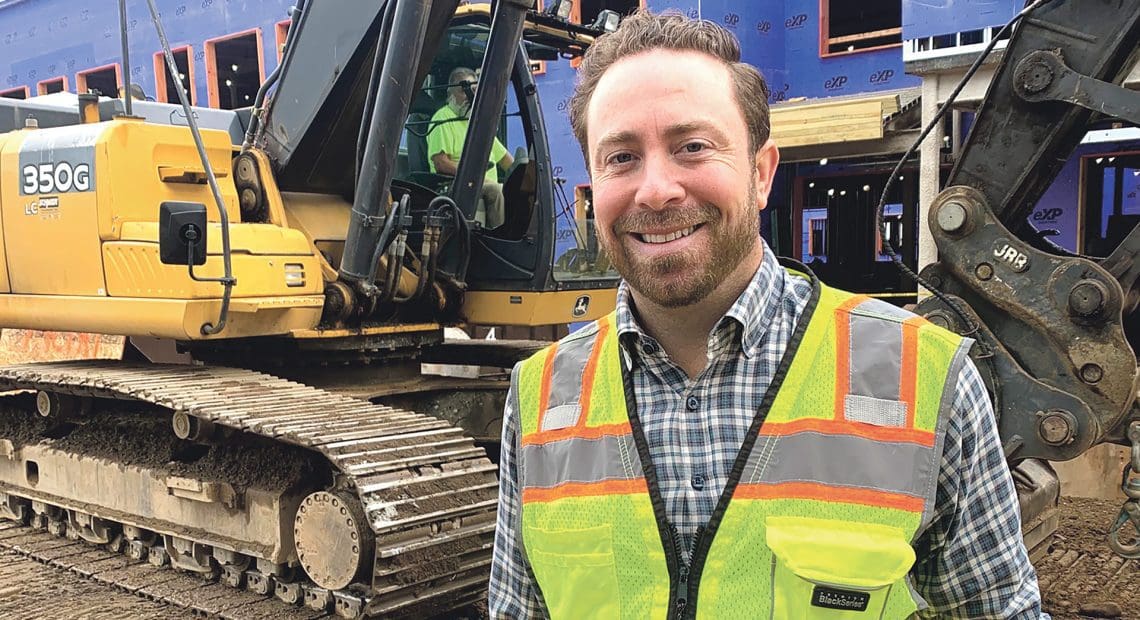
Dave Fontaine at the site of the new Peck Middle School in Holyoke.


Bill Jodice has lived through several economic cycles since he and a few partners bought the engineering and construction firm started by his father in 1964.

And he was quick to note that this current downturn, if it can even be called that, pales in comparison to the Great Recession of 2008, the post-9/11 slump, and even the prolonged recession of the early to mid-’90s, times when the phone seemingly stopped ringing.

Still, it’s been ringing a little less often (in a figurative sense) over the past several months, said Jodice, president of Bloomfield, Conn.-based PDS Engineering & Construction, noting that, while his firm is still quite busy, things are slowing down somewhat, a result of some clients hitting the pause button starting a little over a year ago, waiting for interest rates to come down, the presidential race to be decided, or both.

“We’ve heard some people say it all depends on what happens with the election and who’s managing the finances of the country when it comes to whether they move forward with a project,” he said. “If Trump gets in, they’re going to absolutely move ahead; if Kamala gets in, they’re maybe not going to do it, or at least give it some second thoughts. Some people get nervous around elections, and we hear about it.”

Scott Keiter, president of West Springfield-based Keiter Corp., reports a slowing of many segments within this sector, especially new residential construction, one of his firm’s specialties.

“We’ve seen a lot of deals and projects that were planned with lower interest rates — those in the 2021, 2022 range — in mind that have hit some roadblocks as the interest rates have been rising, borrowing costs have been going up, and the math starts to get difficult.”

He noted that his firm has been averaging five to 10 new homes a year over the past several years, and is certainly on the low end of that range this year, primarily because of higher interest rates and comparatively attractive prices for homes on the market.

“The combination of higher interest rates and well-priced options for people to move to has definitely hit home,” said Keiter, adding that his firm is still busy with work in several areas, from projects for colleges and nonprofits to home renovations, and enjoying the benefits of a diverse portfolio.
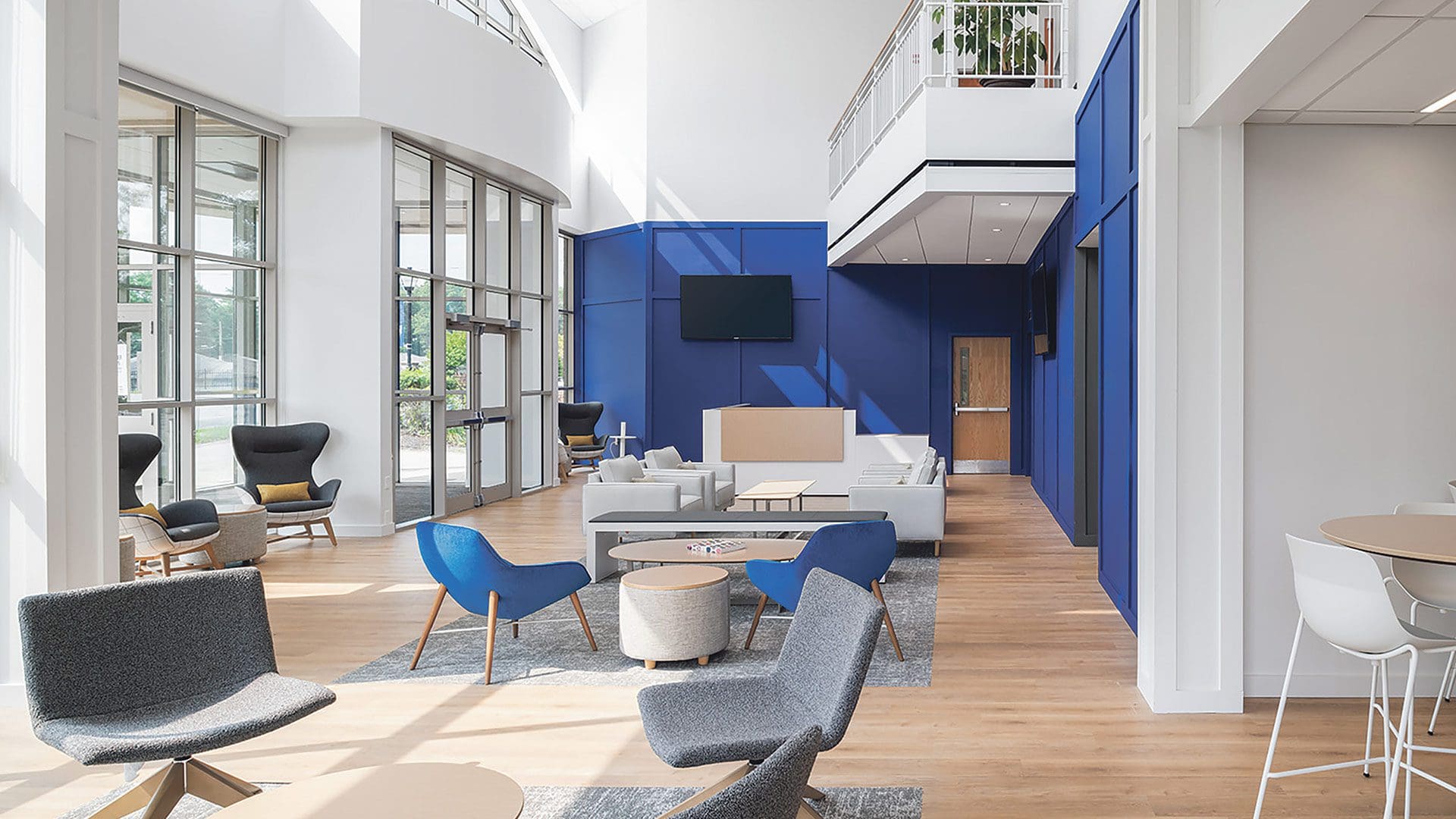
Welcome Center at Western New England University

The interior of the new Welcome Center at Western New England University, one of the many institutional projects in the Keiter Corp. portfolio.

John and Josh Raymaaker, co-owners, with their parents, of Westfield-based J.L. Raymaakers and Sons Inc., agreed. John noted that the number of invitations to bid on projects (especially on the private side) started trending downward several months ago and remains well below the pace of a few years ago.

“They’ve slowed from maybe 10 to 15 a month to eight to 10 a month — it’s not drastic, but it’s definitely noticeable,” he said, adding that the public side of the ledger, which comprises 75% of the firm’s portfolio, remains solid and seemingly unfazed by recent events.

Bill Jodice

Bill Jodice

“We’ve heard some people say it all depends on what happens with the election and who’s managing the finances of the country when it comes to whether they move forward with a project.”

Dave Fontaine, CEO of Springfield-based Fontaine Bros., noted that, generally speaking, the broad construction sector is somewhat of a lagging indicator, meaning decisions to pause or discontinue projects often don’t impact contractors until months later, meaning most firms still have projects on the books.

“We’ve seen a lot of deals and projects that were planned with lower interest rates — those in the 2021, 2022 range — in mind that have hit some roadblocks as the interest rates have been rising, borrowing costs have been going up, and the math starts to get difficult,” he said, noting that most of the hesitancy has been on the private-sector side. “We’ve seen some projects that have been put on hold and others that have been canceled.”

Meanwhile, this slowdown has manifested itself in several different ways, said Fontaine, noting everything from a general cooling of construction material costs from their peak highs (although labor costs continue climbing) to subcontractors, which were booked solid during COVID and the following years, being “hungrier” and more available (more on that later).

But, as noted, this sector remains quite busy, and most players, meaning general contractors, architects, and engineers, have plenty of work on the books now — and, for the most part, for the start of next year as well.

Michael (left) and Brian Sweitzer

Michael (left) and Brian Sweitzer at the site of the new Embr cannabis retail facility on Boston Road in Springfield.

“The money is still flowing, and we anticipate that it will continue to flow,” said Curtis Edgin, a principal with the Chicopee-based architecture firm Caolo & Bieniek Associates, which counts both public and private projects on the books, everything from an elementary school in Westfield to a new Rocky’s hardware store in South Hadley.

“It seems that people are somewhat apprehensive right now, but we’re still busy and hope to still be busy a year from now,” said Edgin, who was one of many to use the phrase ‘cautiously optimistic’ to describe the outlook for the foreseeable future.


Busy Signals

Jodice calls it a “wave.”

He was referring to the explosion of new car-wash centers in Connecticut, a development that has certainly benefited his firm.

“It’s moving across the state,” he said of this wave, mostly involving facilities that offer monthly wash passes that provide benefits to consumers (if they use them) and guaranteed income to those building these facilities.

Curtis Edgin

Curtis Edgin

“It seems that people are somewhat apprehensive right now, but we’re still busy and hope to still be busy a year from now.”

Beyond the car-wash wave, PDS is also benefiting from what Jodice called an ongoing “arms race” in the auto business whereby makers — Ford and Chevrolet are among the latest — are continuously refreshing dealerships to lure customers to showrooms and service bays, as well as an ongoing self-storage boom and Connecticut’s dire need to rehabilitate some aging prisons.

All of the above have brought new projects to the PDS portfolio in recent months, he said, noting that it includes several car washes for a chain called Russell Speeder’s; new dealerships or renovations for Executive Kia in Wallingford, New Country Porsche in Greenwich, and Curran Volkswagen in Stratford; and work at a prison in Cheshire.

But there has been a discernable slowing across the board, particularly in some sectors, including the defense industry (PDS has done work for several of the smaller companies that supply large defense contractors like GE and Pratt & Whitney), which he finds puzzling given the wars in Ukraine and the Middle East.
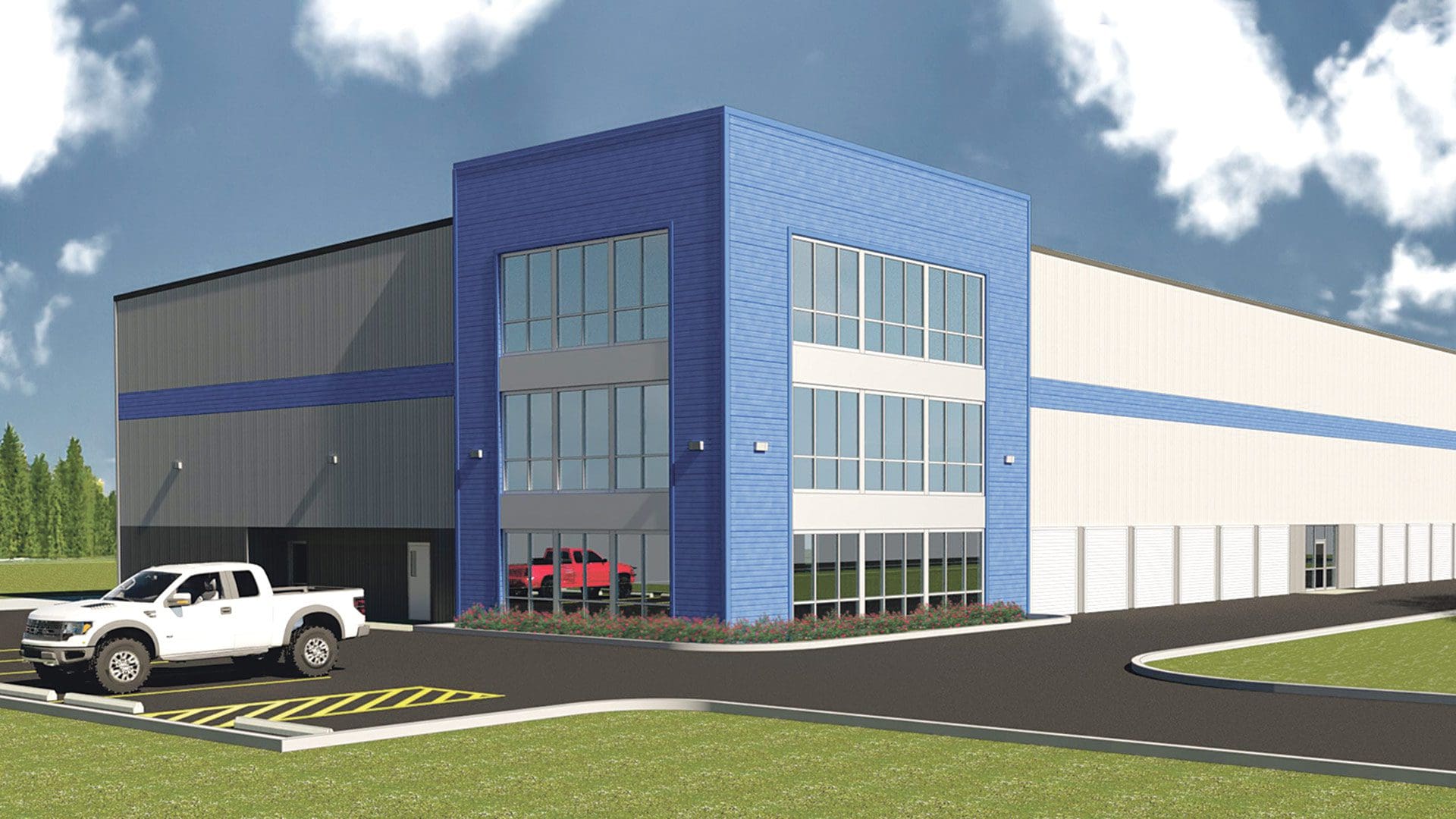
A new self-storage facility in East Longmeadow

A new self-storage facility in East Longmeadow is one of many recent projects in the PDS Engineering & Construction portfolio.

Overall, rising interest rates have prompted some commercial and residential clients to hit pause, or at least think about whether to pause, said those we spoke with. They noted that, while interest rates are still historically low, they are certainly much higher than they’ve been over the past five or six years.

And with the Fed’s move to finally lower rates by half a percentage point last month, there is the possibility, if not the expectation, that they will go lower in either the fourth quarter of this year or the first quarter of next year.

Pat and Craig Sweitzer, the husband-and-wife owners of Monson-based Sweitzer Construction, said they’ve already seen one client benefit from waiting until this fall to build rather than early this year, as originally scheduled, and they believe there is a lot of that going on.

“That’s the first time I’ve ever heard someone say they were happy there were delays,” said Craig, noting that many clients did their original pro formas based on 3% interest rates, and with rates at or around 7%, profit margins are smaller, breeding hesitancy.

Still, like the others we spoke with, the Sweitzers, who share management responsibilities with sons Brian and Michael, are busy, having just wrapped up a new cannabis retail facility called Embr on the large, long-vacant site of the former Russell’s restaurant on Boston Road in Springfield.

The firm specializes in medical facilities, especially dental offices, but has taken on several projects in the cannabis realm over the past several years, said Pat, adding that, at this time, or any time, for that matter, diversity is an important asset.

Josh Raymaaker agreed, noting that his family’s firm remains busy with both private and especially public projects. The list for the former includes a new Dunkin’ Donuts in Easthampton, a new hangar at Barnes Airport, and construction of a new headquarters for the Raymaakers firm on Falcon Drive in Westfield.

On the public side, the firm has several projects in progress, including new sewer lines in Suffield, Conn., pump-station rehabs in Great Barrington, bridge projects in Braintree and Alford, and a new hangar for C5s at Westover Air Reserve Base in Chicopee.

“The combination of interest rates and the costs of construction have definitely affected which version of the project our clients are able to proceed with; in order for them to make their numbers work, they are having to make some concessions.”

Keiter said that, while things are slower, his firm is busy on several fronts, from a move to a new headquarters building in West Springfield to projects across several realms.

Indeed, he said residential renovation work remains vibrant, despite the higher interest rates, while the firm is also handling projects for several colleges and universities, as well as nonprofits, including Girls Inc. of the Valley, which is moving onto the latest phase of renovations to its new home in the former Daniel O’Connell’s Sons headquarters in Holyoke.

“We continue to work with our nonprofit partners — we’re still seeing a good pipeline there — and with the private sector as well,” he said. “But the combination of interest rates and the costs of construction have definitely affected which version of the project our clients are able to proceed with; in order for them to make their numbers work, they are having to make some concessions.”

Elaborating, Keiter said that, while prices for materials and labor are still comparatively high, they are lower than what has been seen since the pandemic. The same is true for availability.

“Our benchmark is … screwy,” he told BusinessWest. “When you say materials availability is better, it’s in reference to a time when it was abnormally askew.”


Moving Forward

Fontaine noted that, while he can certainly understand why some businesses institutions — and homeowners — would put projects on hold until interest rates come down, there are definitely advantages to going forward now as opposed to waiting.

At the top of that list is a cooling of construction prices and better availability of materials, which are already impacting some of the projects the firm is handling, including the new East Longmeadow High School, the new Peck Middle School in Holyoke, and work at Deerfield Academy and the College of the Holy Cross.

“Just the fact that the costs have steadied and that there is increased predictability of costs is starting to be a good thing again for the market; we’re even starting to see some isolated decreases in costs,” he said, adding that these developments could and should incentivize action now, rather than waiting.

“If you can get a lower construction cost, that’s a finite figure for a project,” Fontaine noted. “People always have the option to refinance later if rates come down, but you only have one chance at lower construction costs, and that’s why this might be a good time to build.”

Keiter wouldn’t go that far, noting that no one really knows what tomorrow will bring.

“It’s always a good time to build — it just has to work for you,” he said, adding that, for some clients across different segments of this sector, it’s more difficult to make things work.

And that’s why there is anxiety and some hesitancy among those considering residential and commercial building projects.

Still, as Jodice noted at the top, while this is a slowdown, it doesn’t compare with the far more serious cycles that have visited this sector. And that’s certainly something to build on.


Healthcare News Special Coverage

Pink Power

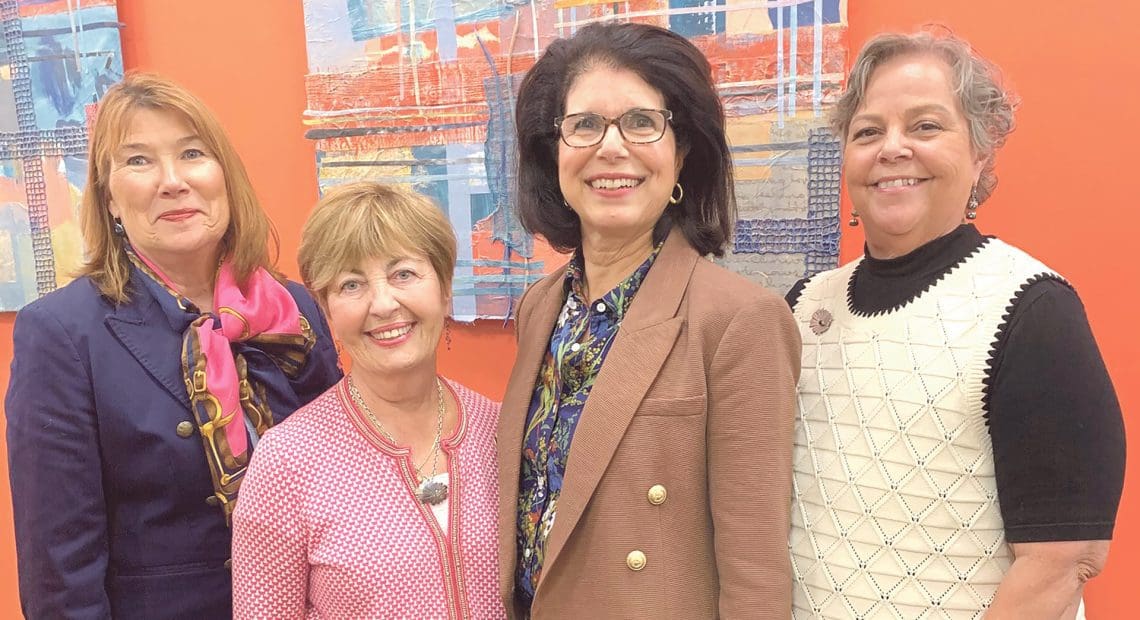
From left, Kathy Tobin, Lucy Giuggio-Carvalho, Dr. Grace Makari-Judson, and Michelle Graci.

From left, Kathy Tobin, Lucy Giuggio-Carvalho, Dr. Grace Makari-Judson, and Michelle Graci.


Kathy Tobin calls it a “big pink hug.”

That’s one of the many colorful ways she and others referred to Rays of Hope, the comprehensive program to support those with breast cancer and raise money for research, services, and grants, culminating in the annual walk and run that will take place on Sunday, Oct. 27.

To Tobin, director of Annual Events and Giving for the Baystate Health Foundation, that hug conveys that Rays of Hope (ROH) is more than a series of fundraisers, more than a gathering, more than the Walk & Run Toward the Cure of Breast Cancer, which has, to date, raised more than $17.2 million and become a time when a community of survivors, family, and friends gathers, reunites, walks, and inspires others in this fight.

It’s a support network, if you will, for those fighting breast cancer and who have survived it.

“The walk is an event, but what has happened is that this has become a year-round organization of support,” she explained. “It’s about executing support services and being there for people who call us on our phone lines; they’ve just been diagnosed, and they don’t know what to do. Or it’s someone who doesn’t have the money for a breast prosthetic; can we help them? We support, through our grant program, other organizations that are in the trenches with survivors.

“We’re like a network that works year-round. We want to surround people with a diagnosis with what they need.”

“We’re like a network that works year-round,” she went on, adding that this what she and others mean when they say ‘big pink hug.’ “We want to surround people with a diagnosis with what they need.”

Dr. Grace Makari-Judson, co-director of the Rays of Hope Center for Breast Cancer Research, agreed, noting that there have been significant advancements in breast-cancer diagnosis, treatment, and delivery of services over the past 30 years, with Rays of Hope’s fundraising efforts helping to make many of them possible, especially a far more integrated delivery of care.

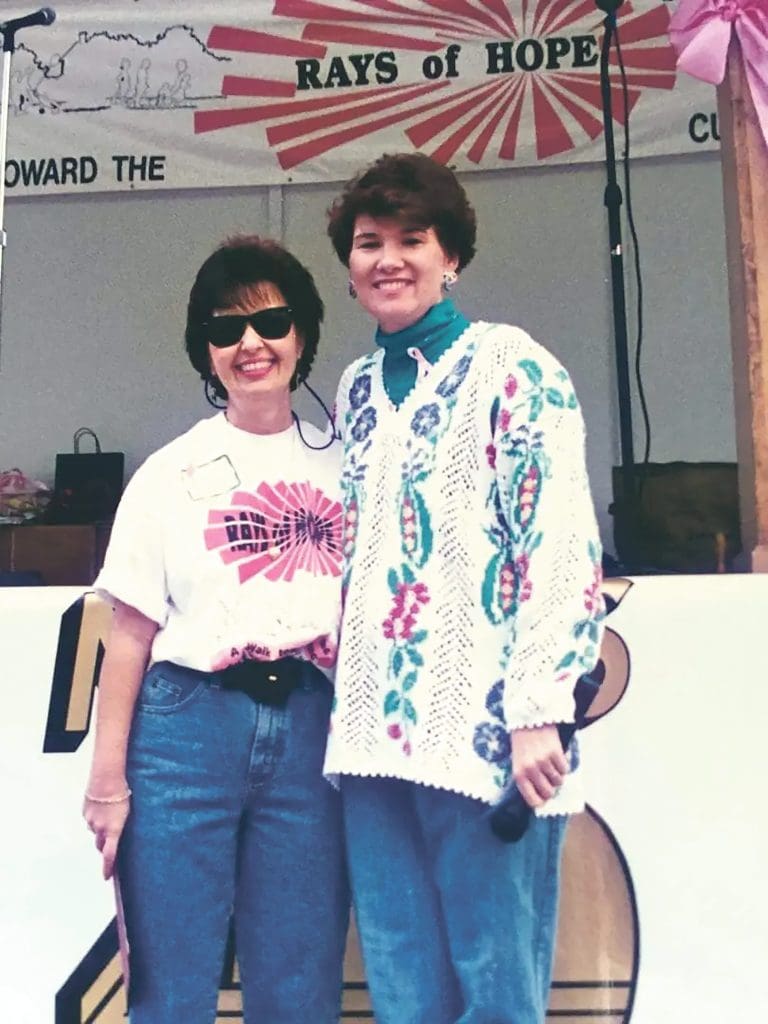
Lucy Giuggio-Carvalho (left) and Kathy Tobin at the first Rays of Hope walk in 1994.

Lucy Giuggio-Carvalho (left) and Kathy Tobin at the first Rays of Hope walk in 1994.

“Before 1994, care was very much linear,” she explained. “A patient would have her mammogram and biopsy, and the mammogram was often in a hospital, beside people getting imaging for other illnesses, not for health management. Meanwhile, the biopsies were often done as surgical biopsies in the operating room, as opposed to outpatient biopsies that we do today. And if there was a new diagnosis of breast cancer, the surgeon would do their breast surgery in a complete vacuum, a complete void — just doing their thing.

“And after the surgery, they would send the patient to the medical oncologist, who would do their thing if they needed chemotherapy or hormone treatments,” Makari-Judson went on. “And when they were done with that, they would go next to the radiation oncologist, who would do their thing. It was very linear — and that was not optimal.”

Since its inception 30 years ago, Rays of Hope has been supporting individuals in their breast-cancer fights by walking with them on their cancer journey, literally, but also figuratively. Through the Baystate Health Breast Network, ROH supports research at the Rays of Hope Center for Breast Cancer Research; provides funding for state-of-the-art equipment, breast-health programs, and outreach and education throughout Baystate Health; supports patients and survivors; and provides grants for complementary therapies and cancer programs to community partners across the region.

All this is what Lucy Giuggio-Carvalho, a breast-cancer survivor, had in mind when she conceived the Rays of Hope walk back in 1994. Well, sort of.

Back then, she just wanted to do something to help those facing what she faced, and provide the kind of love and support she felt when faced with her own diagnosis.

She told BusinessWest she was thinking big back then, but couldn’t have imagined just how broad and impactful her concept would become.

“I wanted it to be an event from day one, but I never thought it would just go on and on, get bigger and bigger, and survive,” she told BusinessWest, noting, like Tobin, that it has become more than an event; it has become a powerful force for those battling the disease and looking for many different forms of support.

“There was no breast center at that time. You had to figure out who to see and what to do next. I already had a medical background, but I found it extremely difficult because you’re dealing with all the emotional aspects of having breast cancer.”

Three decades later, there is now also a Rays of Hope Endowment within the Baystate Health Foundation, through which the community can designate gifts that will perpetually support the mission.

For this issue and its focus on cancer care, we take an in-depth look at this big pink hug; how it has grown, evolved, and widened its impact; and where it can go from here.


Walking the Walk

“In 1993, I was 38 years old and diagnosed with stage-1 breast cancer. I felt overwhelmed, alone, and lost about how to proceed with treatment and life during and after breast cancer. I was on an emotional rollercoaster with many ups and downs. My family and friends came together to support me, and I realized the incredible power of love and support when facing breast cancer.”

That’s one of the many powerful passages in a message Giuggio-Carvalho wrote for the fall 2023 issue of Supporting Hope, a newsletter of the Baystate Health Foundation on the 30th anniversary of the walk and run.

Looking back — and ahead — she and others we spoke with said ROH continues to meet its mission and help ensure that no one facing breast cancer has to feel alone, overwhelmed, or lost. There will always be an emotional roller-coaster ride with ups and downs, but ROH can make that ride more manageable.

Looking back, Giuggio-Carvalho, who was named a Difference Maker by BusinessWest in 2011 for her efforts to launch Rays of Hope, said she started the program to help provide the region with all that was missing when she (an oncology nurse at the time) was diagnosed with breast cancer.

Walkers gather at Temple Beth-El before one of the past Rays of Hope events.

Walkers gather at Temple Beth-El before one of the past Rays of Hope events.

“There was no breast center at that time,” she noted. “You had to figure out who to see and what to do next. I already had a medical background, but I found it extremely difficult because you’re dealing with all the emotional aspects of having breast cancer.

“That, in itself, is one of the more remarkable things that Rays of Hope has brought,” she went on. “We have a team; we have a breast center where people can go. That was lacking at the time, and that’s what precipitated my idea to start a walk and raise money — I was in Boston and went to a breast center, where all the people met together and I was able to hear everyone’s opinion at the same time. I said, ‘this is what we need,’ and now we have it.”

Tobin agreed. “The way we took care of breast cancer was on the cusp of changing — Rays of Hope made it happen faster.”

Makari-Judson concurred, noting that perhaps the biggest, most-needed change was a shift toward a more team-based, integrated model for delivery of care.

“Today, we have a multi-disciplinary team; people communicate, and it’s very integrated, so that people get not only the best care, but the best care in the right sequence,” she explained, adding that the Baystate Health Breast Network was created to look at guidelines and ensure that people were being treated in a guideline-based, consensus-based approach.

There have been many other advances over the past 30 years, she said, adding that, prior to 1994, there were limited support services, limited educational materials, and no survivorship clinics or programs. ROH has helped make them all available, as well as other products and technology needed to provide comprehensive care.

“When we hear that budgets are tight and there isn’t money for something, that’s when we step in,” Tobin said. “Or if there’s something we can’t afford that capital year, we can sometimes provide the funding so we get it a little faster and we keep this region ahead of the curve.”


Steps in the Right Direction

Rays of Hope has been able to support services, research, and developments such as a tissue registry, as well as providing grants through fundraising that has also evolved over the years, adding events and programs such as Pink in the Rink, established by the Springfield Thunderbirds and staged each March.

As for the walk and run itself, it has continued to grow and evolve, said Michelle Graci, manager of Events for the Baystate Health Foundation, noting that COVID forced the actual event (but not the fundraising) to pause for two years, with turnout slowly building back to what it was pre-pandemic.

Last year, more than 20,000 people turned out, with the event raising more than $500,000, she said, noting, as others did, that the walk owes its success to the manner in which organizers listen to participants, adjust, and keep the event fresh and different, while also maintaining elements that have become synonymous with its mission.

These include a survivors’ photo, one that gets bigger each year, as well as a moment to reflect on those who have lost their battles to breast cancer. Overall, said all those we spoke with, the walk is intended to be a celebration — of survivors, the progress made in diagnosing and treating the disease, and the fighting spirit of those battling the disease and their many supporters.

“We celebrate life — this is not a downer,” said Tobin, noting that the gathering of walkers and runners in the parking lot of Temple Beth El in Springfield has become a tradition, an opportunity to renew acquaintances, swap stories, and show that there is strength in numbers.

Graci agreed. “Everyone just crowds into that parking lot, and there’s a lot of love, a lot of laughter, hugging, tears — happy tears, sad tears. It’s just a lot of giving, as Kathy said, a giant pink hug.”

And while the event continues to grow in size and impact each year, organizers have long understood the need to make sure the work of Rays of Hope continues for decades to come — and ensure that it will through the creation of an endowment, through the Baystate Health Foundation, to coincide with ROH’s 30th anniversary.

“This is now a place where people can put their money, and those who understand the importance of long-term planning will get that, and this endowment will only continue to grow,” Tobin said. “Based on the support we’ve received over the past 30 years, I’m confident that this fund will grow proportionately now that it’s in place.”

Overall, Rays of Hope has provided ample proof that a small group of people can accomplish big things and make a huge impact when they work together, Giuggio-Carvalho said.

And this, as much as anything else, is what is being celebrated each October as thousands of people gather to walk and run.

Law Special Coverage

Beyond the Job Title

By Michael Roundy, Esq.

The U.S. Supreme Court recently changed the landscape for certain workplace discrimination claims with its decision in Muldrow v. City of St. Louis, issued in April. Employers need to be aware of the change as it could affect their internal decisions on how to address allegations of discrimination and avoid similar lawsuits.

In Muldrow, the Supreme Court held that transferring an employee to another position, even without any loss of pay or benefits, may violate the anti-discrimination provisions of Title VII of the Civil Rights Act of 1964. Although the case dealt with an internal transfer, the court’s opinion focused on changes to the terms and conditions of employment, which could implicate workplace changes far beyond transfers.

Sgt. Jatonya Muldrow worked for nine years as a plainclothes officer in the St. Louis Police Department’s Intelligence Division. When a new commander took over the division, Muldrow was transferred out, against her wishes, in favor of a male officer who the new commander said was a better fit for the division’s “very dangerous” work.

While Muldrow’s rank, pay, and benefits did not change, her new position in uniform involved different responsibilities, offered fewer perks, was less prestigious, and required weekend shifts, all of which were changes to the terms and conditions of her employment.

The District Court had dismissed Muldrow’s sex-discrimination suit on a motion for summary judgment on the grounds that the changes in the conditions of her employment did not meet a heightened standard requiring her to show a “significant” change to her responsibilities. The Eighth Circuit affirmed that decision.

The Supreme Court took up the appeal to address and resolve a circuit split over whether a Title VII discrimination claim requires a showing of “significant” harm or just some degree of harm caused by the changed working conditions. Most circuit courts, including our First Circuit, had required that a change or detrimental impact be a “material” or “significant” change to working conditions, whereas the D.C. Circuit had recently rejected such a requirement.

The Supreme Court held that the statute does not require any elevated standard of harm. On its face, Title VII makes it unlawful to “discriminate against any individual with respect to his compensation, terms, conditions, or privileges of employment because of such individual’s … sex” (among other characteristics).

Michael Roundy

Michael Roundy

“Investigations handled internally may be perceived as biased and conclusory, particularly where the allegations involve upper management. Using an outside, neutral third party can counteract that perception of bias.”

The court held that this language does not require a “significant” or “serious” or “material” change, but only that Muldrow show some disadvantageous change in employment terms or conditions. Put another way, the statute prohibits “treat[ing] a person worse” because of her sex or other protected trait (race, color, religion, national origin).

A Title VII claim, therefore, must show “some harm” relating to a term or condition of employment, and need not show “significant” harm. In this case, the transfer of Muldrow to a position with less responsibility, fewer perks, less prestige, and requiring a rotating schedule including weekends met the “some harm” requirement. The Supreme Court therefore vacated the Eighth Circuit’s judgment, resurrecting Muldrow’s discrimination claims, and remanded the case for further proceedings.


The Takeaway for Employers

Outcomes like this could be avoided by employers by addressing complaints when they arise, long before they result in litigation. More and more employers have recognized the value of thorough and impartial workplace investigations conducted quickly after complaints arise. An external, third-party investigator limits the perception of bias by the complaining employee, helps ensure that manager actions are properly scrutinized, and may in some cases even help limit liability.

A credible investigation requires more than just an impartial investigator. It requires that the investigator be perceived as impartial as well. Investigations handled internally may be perceived as biased and conclusory, particularly where the allegations involve upper management. Using an outside, neutral third party can counteract that perception of bias.

As an outside investigator, I often find that employees will speak more freely with me and provide more complete and detailed information than originally reported internally to HR. With the benefit of more complete information, I am able to render better-informed findings and provide the employer the context needed for sound decisions and better workplace practices going forward.

In the context of Muldrow, a prompt and impartial investigation may also help employers avoid taking employment actions that later end up in litigation, by identifying responses and practices that should be avoided.

If an employee complains about sex discrimination, for example, and a prompt, neutral investigation confirms there may be some form of discrimination occurring, the employer will be in a position to avoid taking actions that could lead to liability — actions such as transferring the complaining employee to another position that changes the terms and conditions of his or her employment, changing the employee’s shift without his or her consent, or changing the job duties in a way that harms the employee’s chances for advancement. Each of these changes may not be considered “significant” changes, but under Muldrow, they could nonetheless result in liability for discrimination.

The employment law landscape is continuously shifting, as Muldrow v. City of St. Louis illustrates. Employers should continue to seek guidance and assistance from experienced labor and employment attorneys to ensure their policies are up to date and implemented properly and that, when complaints arise, they are investigated quickly and neutrally.


Michael Roundy a partner at the Springfield-based law firm Bulkley Richardson.

Special Coverage Technology

Designs on Innovation

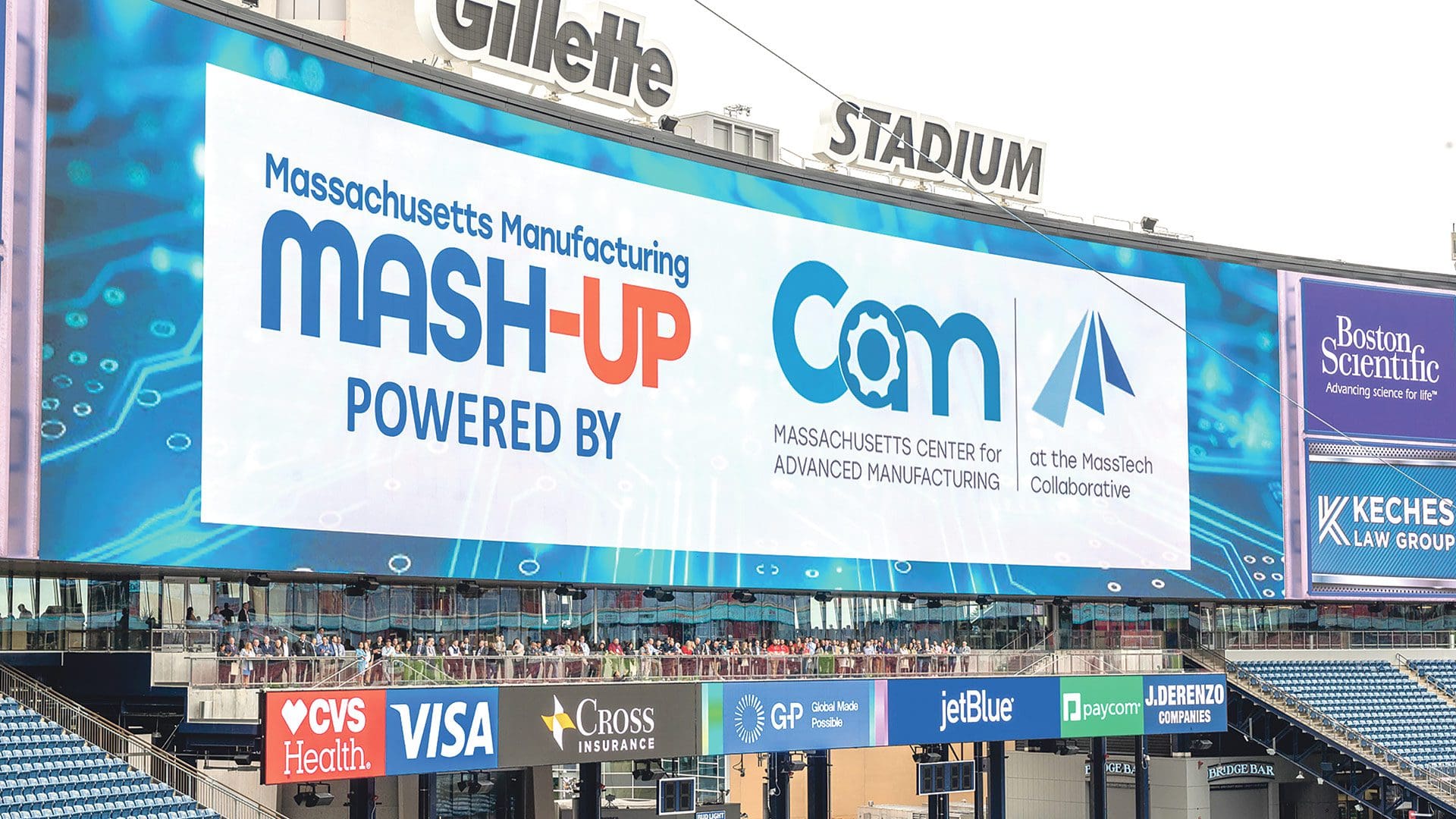
Manufacturing Mash-Up at Gillette Stadium.

Twenty-three companies, including five from Western Mass., were awarded significant grants at this year’s Manufacturing Mash-Up at Gillette Stadium.


Yvonne Hao, secretary of Economic Development, put it succinctly when she explained the critical intersection of manufacturing, technology and innovation, and workforce development in Massachusetts.

“Massachusetts excels in advanced manufacturing because of our robust ecosystem made up of researchers discovering cutting-edge tools and technologies, universities spinning out startups and a pipeline of talented workers, and businesses advancing new solutions to meet global demands,” Hao said during last month’s Manufacturing Mash-Up at Gillette Stadium in Foxborough. “We’re excited to showcase the strength of our ecosystem at the annual Mash-Up event, and to invest in the manufacturing sector through these MMAP awards.”

Specifically, she was referring to more than $3.5 million distributed at the event to 23 manufacturing companies through the Massachusetts Manufacturing Accelerate Program (MMAP), which aims to strengthen supply chains and spur growth in the manufacturing sector. The grants will support the creation of up to 130 advanced-manufacturing jobs in Massachusetts and training for up to 151 workers.

“Massachusetts companies benefit from a state that engages with the private sector to catalyze collaborations with nonprofit partners and provide the resources needed to support growth in manufacturing through the adoption of state-of-the-art technologies.”

The Mash-Up, which brings together companies, students, and state officials, is hosted annually by the Massachusetts Center of Advanced Manufacturing (CAM), a division of the Massachusetts Technology Collaborative (MassTech), a public economic-development agency tasked with supporting business formation and growth in the Commonwealth’s tech and innovation sectors.

“Every year, the Mash-Up proves Massachusetts has a vibrant and engaged manufacturing ecosystem,” MassTech CEO Carolyn Kirk said. “CAM is inspiring the next-generation workforce to enter the field, as evidenced by the hundreds of students who turn out to participate in the event.”

MMAP invests in small- to medium-sized manufacturers, funds capital equipment purchases, and creates partnerships between the manufacturers and nonprofit, academic, or quasi-public partners.

Yvonne Hao

Yvonne Hao

“Massachusetts excels in advanced manufacturing because of our robust ecosystem made up of researchers discovering cutting-edge tools and technologies, universities spinning out startups and a pipeline of talented workers, and businesses advancing new solutions to meet global demands.”

“Massachusetts companies benefit from a state that engages with the private sector to catalyze collaborations with nonprofit partners and provide the resources needed to support growth in manufacturing through the adoption of state-of-the-art technologies,” said Ben Linville-Engler, CAM’s chief investment strategist and acting director. “Programs like MMAP also invest in workers through new jobs and upskilling opportunities, which will help ensure we have a strong advanced-manufacturing technology and talent base to support sectors across the Commonwealth’s economy.”


Local Impact

Five of the 23 companies awarded grants are based in the Pioneer Valley or the Berkshires. The total amount is $772,134.38, and the projects will create an estimated 27 to 35 jobs.

• Bay State Machine in Easthampton is a manufacturer of components for a wide array of companies within the defense, aerospace, medical, and semiconductor industries. Its $179,000 grant will enable Bay State to purchase a five-axis CNC machining center with an auto loader, allowing it to run lights-out to support its increasing demand for complex parts. As a result of this project, Bay State expects to upskill one to three employees.

• Berkshire Sterile Manufacturing in Lee is a contract manufacturer that produces sterile injectable drugs for biotechnology, pharmaceutical, and medical device companies. Its $200,000 grant will enable it to purchase a state-of-the-art, high-capacity, pharmaceutical-grade vial washer, allowing Berkshire Sterile to ensure compliance with stringent regulations, increase automation capabilities, and save energy while reducing wastewater production. As a result of this project, Berkshire Sterile expects to upskill at least 11 employees.

• Cartamundi in East Longmeadow is a card- and board-game manufacturer that produces games for Hasbro and others. Its $193,134.38 grant will enable it to purchase a high speed, side-weld pouch machine for the manufacturing of plastic card sleeves used to protect trading, game, and collectible cards. There are no known manufacturers of protective sleeves within the U.S., with the current sleeves on the market being produced in China, Vietnam, and Japan. As a result of this project, Cartamundi expects to upskill four to six employees.

• Elegant Stitches Inc. in Pittsfield is a minority-owned custom embroidery and screen-printing company, whose clients include the U.S. Army and the FBI. Its $198,930.21 grant will enable it to purchase two new embroidery machines, a laser cutter and engraver, and a robotic sewing machine, allowing it to produce at higher volumes and efficiency and positioning the company to be a formidable manufacturer in the defense industry. As a result of this project, Elegant Stitches expects to upskill four to six employees.

• Lenco Industries Inc. is the nation’s leading designer and manufacturer of commercial armored response and rescue vehicles used by the U.S. military, U.S. law enforcement, and government agencies worldwide. Its $200,000 grant will enable it to purchase a robotic welding system, allowing it to automate a formerly manual process. Lenco will produce small batches of custom parts and high-volume components at a quality that will meet strict standards. As a result of this project, it expects to upskill seven to 10 employees.

The 18 other grant awardees include Accutronics LCC in Chelmsford ($200,000), Aimtek in Auburn ($106,205), Allium Engineering in Somerville ($200,000), Alogus Innovation & Design in Somerville ($55,217), Atlas Devices in Chelmsford ($100,000), Evans Machine Co. in Brockton ($200,000), Finwave Semiconductor Inc. in Waltham ($61,972), Gemline in Lawerence ($200,000), H&S Tool and Engineering Inc. in Fall River ($200,000), Innofiber in Sterling ($110,000), Iradion in Uxbridge ($84,255), OutCast Lures in Holliston ($58,894), RH Adhesives in Acton ($200,000), Salem Metal Inc. in Middleton ($200,000), South Shore Millwork Inc. in Norton ($200,000), Steele Canvas Basket Corp. in Wilmington ($139,851), Stergis Windows and Doors in Attleboro ($200,000), and Wellness Croft Inc. in Plymouth ($100,000).