Daily News

Patrick Parker

SPRINGFIELD — Attorney Patrick Parker has joined the Royal Law Firm team. He is a seasoned employment litigator who has defended employers in myriad employment claims. He not only has extensive experience in the courtroom, but also regularly advises senior executives on complex issues with an eye to mitigating risk and avoiding litigation.

Prior to joining Royal, Parker worked at the law firm Clifford Chance in New York. He also served as in-house counsel for UBS Americas Inc. and Merrill Lynch. He is admitted to practice in Massachusetts, Connecticut, and New York, and is a graduate of Northeastern University School of Law and MIT School of Management.

Daily News

Sean O’Brien

LONGMEADOW — Bay Path University announced that Sean O’Brien has been named program director for its undergraduate and graduate cybersecurity programs.

O’Brien joins Bay Path with more than two decades of experience in cybersecurity, privacy, and higher education. He is the founder of Yale Privacy Lab and an associate research scholar at Yale Law School, where he has taught courses in digital security, blockchain, and artificial intelligence.

He is also the creator of the zero-knowledge collaboration platform PrivacySafe and has held leadership positions at global, security-focused firms, including ExpressVPN. His work spans secure app and infrastructure deployment, bug bounty and VDP management, IAM administration, and endpoint management of cryptocurrency assets.

O’Brien’s approach to information technology is backed by deep experience with sensitive systems such as student records, legal databases, and encrypted email infrastructure. His hands-on technical background is complemented by his work with legal teams, risk managers, and compliance officers across the public and private sectors.

He is a lifelong educator, delivering remote classes to large cohorts of students and professionals before joining the faculty at Bay Path University. He has successfully delivered curriculum across a wide variety of areas in IT, from the Hacking and Cybersecurity program at the Lawfare Institute to the Cybersecurity for Business Leaders program at the University of Oxford and the AI Risk Management workshops at Ivy Cyber Academy.

O’Brien honed his skills in data science, threat research, and cloud computing through leadership roles at privacy-focused blockchain firms, including Tari Labs. As an active CISSP at ISC2 and a member of IEEE SA Open, he continues to bridge technical fluency with legal and regulatory insight while he contributes to standardization and open-source communities. His technical work emphasizes penetration testing and software supply chain with special attention to privacy law, global compliance frameworks, and the practical challenges of the connected world.

“I am honored to join Bay Path University and excited to support a new generation of students entering the cybersecurity field,” O’Brien said. “Cybersecurity is no longer just a technical discipline: it’s a cornerstone of business, law, and civil society. Bay Path’s mission and commitment to accessible, career-focused education align perfectly with my own values as an educator and an advocate for proactive security practices.”

The cybersecurity programs at Bay Path, delivered both online and on campus, prepare students for in-demand careers in areas such as ethical hacking, incident response, and digital forensics. Under O’Brien’s leadership, the programs will expand offerings in AI risk management and open source security, areas where he has led international workshops and initiatives.

Daily News

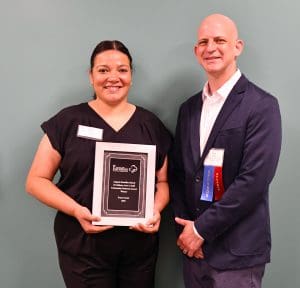
Chef and HCC Culinary Arts instructor Tracy Carter (left) receives the Community Outreach Award from Richard Harber, associate director of Instructional Design at the Auguste Escoffier School of Culinary Arts.

HOLYOKE — Chef Tracy Carter, a Culinary Arts instructor at Holyoke Community College (HCC), was recognized recently for community outreach by two national culinary arts organizations.

In June, Carter, chair of the HCC Culinary Arts program, received the 2025 Community Outreach Award from the Auguste Escoffier School of Culinary Arts and the Center for the Advancement of Foodservice Education (CAFÉ). The national award recognizes a culinary/hospitality program or individual making a positive impact in their community via outreach programs such as food banks, recycling efforts, skill development for the disadvantaged, and other services.

As program chair, Carter has committed herself to building bridges between the college and community groups on wellness campaigns. This year, the HCC Culinary Arts program partnered with the Western New England University College of Pharmacy and Health Sciences to develop an adaptive cooking series designed for people with disabilities and their caregivers. The goal of the class is for participants to gain confidence in the kitchen, develop essential life skills, and foster a sense of independence and joy around food. The program is entirely hands-on, complete with accessible tools, modified recipes, and supportive instruction to meet diverse needs.

“For me, this award is a reflection of the amazing work happening every day in our kitchens at HCC,” said Carter. “It means a great deal to be recognized nationally, not just as an individual, but as a representative of a program that truly values community, inclusion, and student success.”

She added that she believes food can break down barriers and bring people together. “This program exemplifies that belief in action, merging culinary education with therapeutic outcomes to serve those who are often overlooked.”

Carter is a graduate of the International Culinary Schools at the Art Institute in Los Angeles. She grew up in Springfield and joined the HCC teaching staff in 2018 after living for several years in New York City, where she worked as a freelance food stylist and culinary producer at the Food Network on shows such as Chopped, preparing the baskets of ingredients for the cooks involved in the on-air competitions and working alongside famous chefs like Bobby Flay.

The award provides a $1,000 prize and commemorative plaque. Additionally, Carter received a complimentary registration to attend CAFÉ’s 2025 Leadership Conference in Pittsburgh, where the award was presented.

“This recognition reinforces that we’re on the right path, and it energizes us to keep growing, innovating, and building a culinary community where everyone belongs,” she said.

With campuses in Austin, Texas and Boulder, Colo., the Auguste Escoffier School of Culinary Arts is the largest culinary school brand in the U.S. Based in Annapolis, Md., CAFÉ’s mission is to link culinary educators with the foodservice industry.

Daily News

SPRINGFIELD — After a sold-out debut that earned national recognition from Breakthrough T1D as one of the Top New Fundraising Events of 2024, Party with 1 Purpose will return to the Basketball Hall of Fame on Saturday, Oct. 4.

Chaired by David Fontaine Jr. and Sarah Fontaine, the gala unites community leaders, local families, and businesses in support of Breakthrough T1D’s mission to cure, prevent, and treat type 1 diabetes (T1D). Guests will enjoy an evening on Center Court featuring live music, an energetic auction, inspiring stories from local T1D families, and opportunities to directly fund life-changing research.

This year’s Fund a Cure will shine a spotlight on the Kouflie family and their son Braden, who was diagnosed with T1D at just 7 years old. The Kouflies will share their journey of navigating the daily challenges of diabetes while holding onto hope for a cure, giving guests a personal look at why Breakthrough T1D’s research is so critical.

“This event is about more than one night,” said David Fontaine Jr., whose daughter Grace was diagnosed with T1D at age 3. “It’s about building a movement here in Western Mass. that accelerates progress toward a cure.”

Sponsorships and tickets are now available at www.breakthrought1d.org/ctma/wmassgala2025, and organizers are aiming to surpass last year’s record-breaking fundraising total.

Cover Story

Moving Story

Jackie Janulewicz (left) and Tony and Jenna Gleason

Jackie Janulewicz (left) and Tony and Jenna Gleason


Tony Gleason recalls that the landscaping business he started when he was 16 and had grown into one of the 100 largest such ventures in the country was at a critical crossroads.

“We had substantial, profitable, high-end accounts, and we thought we had achieved optimal growth,” he explained. “Our future paths would have been an outward geographic expansion or inward expansion through our real estate and self-storage portfolios, and I felt that, when comparing the offers that were presented and looking at both paths, it was going to be easier, and bring me more joy, to go down the path of real estate growth and expansion and moving our self-storage business forward than to try take our landscape and snow removal business regional.”

Thus, he sold the business to Yellowstone Landscape, the second-largest landscaping firm in the country, in May 2023, thus beginning what we’ll call the next chapter of his entrepreneurial exploits. It includes the formation of the Gleason Realty Group and that inward growth of the real estate and self-storage divisions that he mentioned.

With the former, the company has acquired what would be considered downtown Northampton landmarks — the historic Coolidge building, also known as the old Post Office on Pleasant Street, as well as what Gleason calls a three-part purchase of the Fitzwilly’s building on Main Street and the Fitzwilly’s and Toasted Owl operating businesses.

The portfolio also includes 179 Northampton St. in Easthampton, a mixed-use campus, as well as the Gleason complex on Pearl Street, where the family has done business for more than a century, and where other tenants, from a brewery to the Registry of Deeds, reside. And it will continue to grow in controlled fashion, said Gleason, adding that the real estate market is in an intriguing state of flux where both opportunities and challenges abound (more on this later).

“Storage can be extremely profitable or stagnant, depending on how you enter the market. You have to take a lot of time to invest in the diligence process and look at the metrics — there’s square-footage-per-capita metrics that tell the story of the demand, and you have to remain true to those metrics.”

With the self-storage division … it has become the purview of Gleason’s wife, Jenna, who left a job working in marketing and brand strategy for Baystate Health to assume this challenge. The two are both BusinessWest 40 Under Forty winners, Tony in 2010 and Jenna in 2017; Tony also won the Alumni Achievement Award in 2022.

“It was a big jump and a big risk, but it’s one that we believed in, so I totally pivoted my career,” said Jenna, while offering a primer on the self-storage business and acknowledging that she had to learn it herself, and is still learning.

Tony and Jenna Gleason

Tony and Jenna Gleason at their self-storage facility in Easthampton, part of a portfolio that now includes more than 2,200 units.

“I had limited exposure to the storage industry — Tony had some experience in that he owned a facility in Hatfield for three or four years — but it was really my baptism-by-fire learning experience,” she went on. “I looked at everything from different software programs we wanted to use to how to brand ourselves and differentiate ourselves; we really got to create it from the ground up.”

This side of the venture, called GiGi’s Self Storage, started with the acquisition of property in Easthampton that included 46 units of self-storage, a site that has been further developed, bringing the number to 200 units. Since then, there have been additions to the portfolio in Greenfield, Northampton, and, more recently, Sunderland, Pittsfield, Palmer, Leicester, and Stafford Springs, Conn., bringing the totals to nine locations and 2,200 units.

These investments include a mix of existing businesses and new developments, including the conversion of older properties into self-storage, as happened with the Dumont factory building in Greenfield, and in Pittsfield, where a three-decade-old warehouse and, more recently, a cannabis facility is being similarly converted.

As with the real estate arm, the plan for the self-storage division is controlled growth but eventually becoming one of the largest self-storage operators in the country, Jenna said, noting that the goal for the next several years is to continue filling in the spaces between the pinpoints already on the map.

Tony agreed, while noting that there is still room for considerable growth in this still relatively young business, with many communities in this region far from saturated — although some, like Springfield, have likely reached that point.

“Storage can be extremely profitable or stagnant, depending on how you enter the market,” he explained. “You have to take a lot of time to invest in the diligence process and look at the metrics — there’s square-footage-per-capita metrics that tell the story of the demand, and you have to remain true to those metrics.”

For this issue, we take an in-depth look at the Gleason Realty Group, now with a portfolio value approaching $70 million; its recent investments, totaling more than $30 million; and its plans for continued expansion.


Space Exploration

Tony Gleason told BusinessWest that his family has a long business history in Northampton — his great-grandfather operated a moving and storage company in what is now the Gleason complex — and with its most famous resident, the country’s 30th president.

Gleason said his great-grandfather’s company moved Calvin Coolidge into the White House when he assumed the office after the death of Warren Harding in 1923, and also helped move his items back to Northampton and into his presidential library. Meanwhile, Gleason Realty now owns and manages the Coolidge building, and the Fitzwilly’s building is home to Coolidge’s old law office. It’s on the second floor and is now occupied by a researcher.

The old Post Office in Northampton

The old Post Office in Northampton is one of several recent additions to the Gleason Realty portfolio.

But enough about Silent Cal. His former office is a small part (250 square feet) of a much larger picture, with the Gleasons and their team still filling in the canvas.

On the real estate side of the equation, there have been several additions over the past several years, including the mixed-use campus in Easthampton, which houses a diverse mix of tenants, including a doctor’s office, a tattoo parlor, a chiropractor, and other small businesses, said Jackie Janulewicz, a former school librarian (who also worked for Gleason’s landscaping company while earning her master’s degree in education) who joined Gleason Realty in 2024 and serves as director of Operations and Development and wears many hats, including property manager.

But much of the recent activity has been in downtown Northampton. The Coolidge building was acquired at auction in late 2023 when it was only half-occupied, said Tony, adding that it is now 100% occupied, with a mix of medical, office, and special-use tenants.

Meanwhile, the Fitzwilly’s building and the Fitzwilly’s and Toasted Owl businesses were acquired over the past few months. (The acquisition also includes a separate building off Route 9 in Hadley that will be separately marketed for sale or lease.)

“My first thought is always that we’re helping our customers, which are, ultimately, also our neighbors.”

The Fitzwilly’s building, also known as the Masonic building, was broken up into six different condo units with separate ownership, said Janulewicz, adding that the property is nearly full. “I only have two small spaces left, and I have bites on both. I don’t imagine them being vacant much longer.”

Moving forward, Tony said the real estate division will continue to grow and add to its portfolio, but in a smart, controlled fashion.

“We’re always looking for new opportunities, but the deal has to be right, and we have to be cautious and conservative in all of our decisions related to the commercial real estate business, because there are ebbs and flows to occupancy and varying levels of risk factors that tie into different types of tenants that may into a building,” he explained. “Our primary focus is on our self-storage business growth, but we are always going to look at Western Mass. real estate opportunities as they come around.”

Elaborating, he said the trend toward remote work continues to impact the commercial real estate industry, with many larger buildings in different markets seeing higher rates of vacancy as businesses continue to downsize. There is interest in smaller spaces, 5,000 square feet and under, he noted, adding that his company will continue to look for opportunities that provide those footprints.

“One of the reasons we did these last two deals is that a lot of these spaces are smaller in nature, and it’s easier to grow occupancy,” he explained, adding that there are many properties now coming onto the market, and the company will be diligent and cautious as it seeks to grow the portfolio.

“I think I look at 10 or so deals a week,” he explained. “Some advance five minutes, some advance 20 or 30, and some four to six months through a due-diligence process that ends up in an actual acquisition. What sets us apart is trying to remove emotion from the decision, as well as not going after everything that’s available; 95% of what’s out there is not going to work, and that’s OK.”


What’s in Store

Jenna Gleason remembers telling friends and colleagues at Baystate of her decision to leave her role in marketing, shift to the family business, and focus most of her energies on growing its self-storage portfolio.

“Some of them were like, ‘what are you thinking … you’re getting into self-storage?’” she recalled with a laugh, adding quickly that this is serious business, one that has grown steadily over the past half-century or so and still has enormous growth potential.

But before getting into it, she had to learn it, as she acknowledged earlier. And there was a lot to learn.

The Fitzwilly’s building

The Fitzwilly’s building, another addition to the Gleason Realty portfolio, is now at nearly 100% occupancy.

“I listened to a lot of podcasts on storage and tried to read as much as a I could on the business and the industry — any article I could find — and we worked together to figure out how we were going to leave a footprint,” she recalled, adding that she got involved as Tony was fully engaged with selling the landscaping business. If she had a problem, she said, he would usually reply, ‘figure it out.’ And she did, learning while doing.

From the beginning, the goal has been to stand out in a field that was crowded with players of all sizes and has become more crowded since, she went on, adding that she believes the company differentiates itself through a personal approach defined by building relationships with customers.

“My first thought is always that we’re helping our customers, which are, ultimately, also our neighbors,” she explained. “When someone’s in need of storage, typically it’s a stressful time in their life; they’ve lost a loved one, it might be a change in a professional career, a change in a relationship or home life — there’s usually a quick, dire need for storage. So we want to be there for them and make this less of a hassle and more easy.”

As for the name, Gigi is a family nickname for Jenna, and GiGi’s Self Storage gives the venture a less corporate feel, they said, adding that, as with the real estate division, the goal with this side of the business is controlled growth.

There are plenty of existing facilities that come onto the market, said Tony, adding that the company is continuously looking for opportunities that make sense, knowing that size brings obvious efficiencies and economies of scale.

And there is room for new development as well, they said, noting that, unlike with the banking and cannabis sectors, most area communities are not yet saturated or oversaturated with self-storage facilities.

Still, there are risks involved with such developments, and due diligence, in the form of understanding a market and its needs, is necessary.

“When you’re building from the ground up, you have to be very confident in the market — that you can lease out the spaces,” Tony said. “You want to make sure the demand is there. The worst possible scenario would be to build or overbuild a facility and look back three or four years later and not be able to fill it.”

And for the first time in the history of the industry, there are signs of oversaturation in some markets, he went on, adding that smart growth will be the course with GiGi’s, which is still a tiny player within the market, but has plans to become one of the 100 largest in the country, and can get there by growing four or fivefold.

That’s the plan for the next five to 10 years, anyway, and based on the success of Gleason’s landscaping business, there is little doubt that these driven entrepreneurs can get there.

Law Special Coverage

Can I Fire Someone for That?

By Michael Lewis, Esq.

Employers regularly wonder: “can I fire someone for that?” You might assume the answer is simple, especially in an at-will state like Massachusetts. But the reality is more complex. Missteps can land your business in court. Here’s how to avoid them and keep your company focused on growth, not litigation.


Myth: At-will Means Any Reason Goes

At-will employment allows termination without contractual cause. Yet, anti-discrimination laws and retaliation protections still apply. Even a valid reason, like poor performance, becomes risky if the employee recently complained about harassment, requested an accommodation, or reported a safety issue. Terminating soon after a complaint invites legal trouble.

For example, you want to fire Sarah for repeated tardiness. But what if she reported sexual harassment a few weeks earlier? Timing alone can create exposure. So document performance issues as they arise.

Also, check if the employee recently returned from Family and Medical Leave (FMLA) or Paid Family and Medical Leave (PFML). A Springfield auto repair shop faced a claim after firing a worker the day after he returned from PFML to care for his newborn. The company blamed tardiness, but the timing triggered months of legal headaches.

Michael Lewis

Michael Lewis

“At-will employment allows termination without contractual cause. Yet, anti-discrimination laws and retaliation protections still apply. Even a valid reason, like poor performance, becomes risky if the employee recently complained about harassment, requested an accommodation, or reported a safety issue.”

Myth: No Documentation Needed

Some employers assume that no paperwork is necessary under at-will rules. That approach creates unnecessary risk. Without records, even lawful firings appear questionable. Weak evidence damages credibility.

Imagine Tom, a low performer who never received formal feedback. If you fire him after years of positive reviews, expect scrutiny. Always provide timely written warnings and accurate performance evaluations. Keep emails, attendance records, and coaching notes. Would your records persuade a jury that the termination was justified?


Myth: We Treated Everyone Fairly

Fair treatment requires consistency. If one employee is fired and another is only warned for the same violation, questions follow.

Consider two salespeople, Mike and Jose, both caught inflating sales numbers. Mike receives a warning. Jose gets fired. If Jose claims racial bias, inconsistent discipline strengthens his argument. Review prior disciplinary decisions. Can you show a clear record of equal treatment?


Myth: We Can Share the Reason Widely

Managers sometimes explain a termination too broadly, believing transparency protects the company. In reality, public disclosure creates legal risk.

An employee fired for theft sued his employer after leadership announced it to the entire staff. Even truthful statements, shared excessively or with ill will, can spark defamation claims. A local example: a Chicopee retailer emailed all employees, naming a worker fired for alleged cash shortages. That email became exhibit A in court. Limit disclosure to those who truly need to know.


Avoiding Retaliation Claims

Retaliation is the most common Equal Employment Opportunity Commission claim. Firing someone after they complain about discrimination, request leave, or raise pay concerns often leads to lawsuits. Subtle actions can count, too — cutting hours, assigning undesirable shifts, or excluding them from meetings.

Did Lisa report a wage issue last week? If she now gets the worst shifts, her attorney will call it punishment. Train managers to pause and ask: “does this look like payback?” In one Springfield restaurant, a server who complained about tips was fired days later for “attitude.” The Massachusetts Commission Against Discrimination viewed the timing as retaliation, and the case settled quickly.


Managing the Termination Meeting Professionally

How you fire someone matters. Keep the meeting short and calm. Speak plainly. Avoid debate. Bring a neutral witness, usually HR. Disable system access and collect company property immediately. For remote workers, coordinate IT to end access during the call.

Have you prepared your team to stay composed when an employee gets angry or upset? A concise, professional exit reduces emotion and litigation risk.

“You can prevent most legal problems with proactive steps. Train managers to document consistently. Encourage employees to raise concerns early, and respond appropriately when they do.”

Reducing Risks Before They Occur

You can prevent most legal problems with proactive steps. Train managers to document consistently. Encourage employees to raise concerns early, and respond appropriately when they do.

Also, follow Massachusetts requirements: final wages and accrued vacation must be paid promptly, sometimes the same day. Missing or delaying a payment can trigger penalties. Review whether your managers apply standards uniformly. Track disciplinary trends by department or supervisor. In one Holyoke warehouse, inconsistent discipline across shifts led to multiple claims that could have been avoided with routine audits.


Quick Pre-termination Checklist

• Document the issue in writing.

• Confirm whether the employee recently exercised protected rights (complaint, FMLA, PFML, workers’ compensation).

• Ensure similar cases were handled consistently.

• Complete a fair investigation and allow the employee to respond.

• Prepare final pay and unused vacation in compliance with Massachusetts law.


Bottom Line

Employee terminations happen. Legal trouble does not have to. Careful documentation, consistent actions, and thoughtful communication protect your business. Before acting, stop and ask: “have we done this right?”

Taking these steps helps you confidently answer, “can I fire someone for that?” That answer should never rest on guesswork.


Michael Lewis is an attorney at the Royal Law Firm who helps employers resolve workplace challenges. He counsels and defends businesses across Massachusetts and Connecticut, handling matters involving discrimination, harassment, retaliation, wage and hour claims, restrictive covenants, and breach of contract. His practice includes litigation in state and federal courts and before administrative agencies.

Special Coverage Women in Businesss

Lessons Learned at Home

Lindsay LaBonte


Lindsay LaBonte recalls how she felt growing up, watching her father, who owned an independent mortgage broker company, help people get into homes.

“He always came home from work so satisfied with being able to help people reach the American dream and own a house,” she said, adding that she decided early on that she wanted to do the same. “I knew I had to go to school and get that done, but I really wanted to work. So when I was 16, I started as an intern with him, and the rest is history. I worked my way up, got licensed as a loan officer, happened to be good at it — and I enjoy it.”

These days, LaBonte enjoys that work as branch manager of the Applied Mortgage team at the Northampton branch of HMA Mortgage, the most recent national company Applied Mortgage has been affiliated with.

“We’ve had different parent companies. In the mortgage world, it’s a franchise model, where branches often run as a team name and feed up to a larger parent company,” she explained. “So we’ve had different parent companies over the decades, but always the same Northampton-based Applied Mortgage team.”

Her father entered the business in 1987, and LaBonte’s success over the past two decades — she’s one of the top loan originators in Western Mass. — has turned this family success story into a multi-generational one.

“For people who are buying a home, no one’s process is the same as the next person because everybody’s got different goals, different financials. We take those goals and financials and put them together, figure out the mortgage that’s going to work, and get them into that home.”

“A lot of family businesses don’t work out, but I’m really fortunate — my dad is an awesome dad, an awesome mentor, an awesome boss at the time. I ended up being his boss. Now he’s retired, so it’s been a good run.”

That run continues with LaBonte and her team serving a variety of clients in Western Mass.; the business is licensed in more than 30 states, but about 99% of its business is centered in Hampshire, Franklin, and Hampden counties.

The focus is residential mortgages, she explained — purchases, refinances, and renovations of primary or second homes, and some clients who rent out homes as entrepreneurial enterprises. About a third of her clients are first-time homebuyers, while the rest are either upsizing, downsizing, repeat buying, or renovating.

With that volume of clients navigating the process for the first time, LaBonte said strategic planning and financial education are important parts of what Applied Mortgage brings to the table.

“What I love the most, at least professionally, is getting to meet with and speak to people from all different walks of life,” she said. “For people who are buying a home, no one’s process is the same as the next person because everybody’s got different goals, different financials. We take those goals and financials and put them together, figure out the mortgage that’s going to work, and get them into that home.”

For this issue’s focus on women in business, BusinessWest sat down with LaBonte for a wide-ranging talk about the mortgage business, why she enjoys it, and how she connects with the community in a number of different ways.


Sharing the Love

It’s called Local Love Days.

That’s a program recently created by Applied Mortgage as a way to give back and support local businesses. On select days, the team will partner with local small businesses and invite the community to stop by, explore what they offer, and show their support. To spark participation, Applied Mortgage will cover the cost of a small thank-you item, such as a coupon for the first set of shoppers, a free drink or appetizer, or another offering tailored to the partner business.

Lindsay LaBonte (center) with HMA Mortgage colleagues

Lindsay LaBonte (center) with HMA Mortgage colleagues Bob Petrelli (left) and Jess LaMothe.

“We’ve always, throughout the years, supported nonprofit organizations,” LaBonte said. But at the same time, “we’ve got a lot of business owners we work with. So, while we want to continue to give back to the nonprofit sector, I was trying to brainstorm, how do we directly impact and help businesses?

“If if we’ve got a network of about 10,000 to 15,000 homeowners that we’ve helped over the last 35 years, how can I mobilize those people to come out and support businesses and also give them a cool incentive or coupon or something? So the Local Love Days really came from trying to tie that all in together,” she went on.

“We’re selecting some businesses to partner with and having a day where maybe the first 50 people get a free donut on Tuesday morning at such and such donut shop, or maybe something at a happy hour at a bar, or a free yoga class. We’re trying to span the three counties that we work in, span all different types of restaurants and retail, and use this as an opportunity to mobilize our network and help connect people and bring them out to support businesses.”

As she noted, the company supports dozens of nonprofits as well through volunteerism and philanthropy, and LaBonte also serves on a number of local boards. That, like her business goals, was partly due to her father’s influence.

“I think my dad was maybe a little ahead of his time, starting in the ’80s, being in a mortgage company and raising his hand for corporate social responsibility. We’ve always had that ingrained in our core values. And I picked that up from him when I started.

Lindsay LaBonte

Lindsay LaBonte

“I think my dad was maybe a little ahead of his time, starting in the ’80s, being in a mortgage company and raising his hand for corporate social responsibility. We’ve always had that ingrained in our core values. And I picked that up from him when I started.”

“He said, ‘you’ve got to get out there,’” she added. “So part of it was business networking, and another part of it was, what do you want to support? In the financial world, we’re in a spot where we can financially support causes, as well as volunteering and lending our expertise.”

As for that volunteering, LaBonte — now the mother of two kids, ages 4 and 3 — has had to learn how to balance work, family, and her passion for the community.

“I got engaged with some of the local young professional organizations originally, and it kind of grew from there. I was probably 20 at the time that I served on my first committee, and once you raise your hand as a young professional, you get pulled by a lot of different organizations. So most recently, it’s been figuring out where it makes sense and learning how to not say yes to everybody, even though it’s really hard to do that.”

That said, she finds as much time for all of it as she can, and laughed when asked what her typical day is like.

“Typical is not really in my vocabulary anymore. It used to be,” she said, noting that she was “very type A” at one time, but having young kids changed that.

“About 10% of our homeowners actually are entrepreneurs. And a lot of my time is speaking with other entrepreneurs, business owners right here in the Pioneer Valley. And we do a lot of work with nonprofit organizations, giving back to over 30 organizations a year. So my day kind of bounces between actually working on mortgages to just meeting and networking with folks, and then also doing a lot of the community support that we get to do.”


Changes and Challenges

LaBonte said the mortgage field has changed in some ways, especially through new technology, which now incorporates everything from electronic portals to share information to clients using FaceTime to view houses.

“There’s just so much more video and photography and text messaging and all these different aspects. I think that’s the biggest change. And what we always try to do is use technology and social media and all those other support tools to enhance relationships rather than to replace the relationship.”

Of course, the biggest challenge for clients these days is the fact that home values have soared, inventory is tight in most areas, and mortgage rates are higher than they have been in the recent past.

“I was just speaking with somebody earlier this week, and they said, ‘wow, this just isn’t my mom’s housing market.’ I’m like, I need to make a T-shirt that says that. Because it’s hard, right? I mean, where do you typically go for your advice? Probably your parents or close friends or someone else who bought a house five or 10 years ago. And really, in the last five years, there’s been a big switch.

“It’s attainable for some people, but not for everybody. And it’s less affordable to buy a house than it has been,” she went on. “So we’ve always incorporated an element of education into everything we do. I always tell people, it’s never too soon to contact us to just start making a plan.”

For many clients, especially first-time homebuyers, that’s crucial, LaBonte added.

“There’s not really financial 101 kind of stuff in schools. Sometimes, when we’re talking to people, it’s their first time ever seeing their credit score or really sitting down and making a budget. So we have those conversations that are just a base plan, all the way up to people who own five, six, seven investment properties, and they’re trying to figure out how to structure things to make their next move. So it can be basic or intricate.

“We consider ourselves their debt advisors,” she went on. “Financial advisors are managing the assets, and we’re trying to figure out how do you best structure this debt? Because a mortgage is usually attached to somebody’s biggest asset, but it’s probably their biggest debt, and they’ve got to be able to pay it, and it’s got to make sense and be comfortable.”

That’s another quality she said she absorbed from the way her father conducted business.

“I learned from my dad originally to give people the time of day, to sit down with them, meet them where they are, and just help them. And I think, through that mindset, we get repeat customers. People who worked with my dad before send their kids, even their grandkids now. And it’s really wonderful.

“It’s a great community,” she added. “We’re really fortunate to have a community that values supporting local folks. And we just stick to that mission of just doing good. Good business begets good business. And it just grows from there.”

Like her father, LaBonte is gratified when she comes home having helped someone secure a home in a region she’s clearly passionate about.

“I always ask homeowners, because I am curious, ‘why now? Why are you moving here? What’s the draw?’ And mostly what I hear is we kind of have the perfect area,” she told BusinessWest. “We have the Five Colleges system. We have great public schools. We have great hospitals. We have all these little downtown areas with great retail, great restaurants. People value that. Plus we have a good environment for hiking, biking, whatever outdoor activities that people like.

“So I do think it’s really a perfect landing place for a lot of folks,” she went on. “And that makes it trickier with our low supply and high demand of housing inventory. But that’s a whole other conversation.”


Success Stories

LaBonte has been a Banker & Tradesman top loan originator across the four Western Mass. counties for eight consecutive years, has been named among Scotsman Guide’s top 1% women originators nationally, and was featured in Mortgage Banking’s Powerful Women in Mortgage Banking in 2022.

“I think, when it comes down to it, those are just accolades, right? she said. “It’s the actual people that we’re helping who motivate me — making sure that we’re actually serving people’s best interests.”

When LaBonte was named to BusinessWest’s 40 Under Forty class of 2018, she was asked what three words best describe her, and she replied, “goal-oriented, efficient, planner” — and judging from the recognition from the publications noted above, those traits have certainly served her well.

But she’s also personally evolved quite a bit since 2018.

“What’s that, seven years ago? That was before I was married, before kids, before I was actually managing my own group. My mindset was so much more individual — and you can see that in the words that I picked.

“So yes, I think that foundation definitely got me here, but I think I’ve also learned a lot more empathy and sympathy and leadership skills and everything else since then,” she went on. “And I have such an awesome team now. I’m thankful for that. So I think now it would be a lot more team-oriented.”

She’s also more grateful for each individual client success.

“It’s harder now, and it’s not just helping people get to the finish line of owning the home —that’s really the starting line. It’s everything we do after that to support people and the conversations we have and making sure that they’re continuously able to stay in their home. It’s got to be one of the coolest jobs.”


Home Improvement Special Coverage

Nailing It

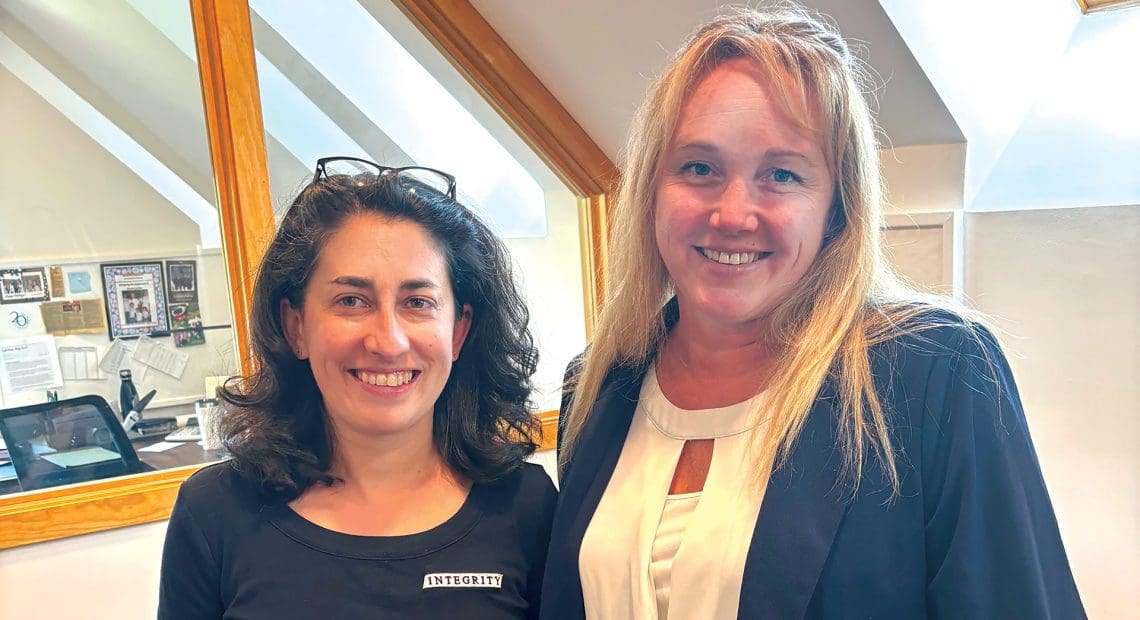
Anna Cook (left) and Heidi Flanders

Anna Cook (left) and Heidi Flanders


Both Heidi Flanders and Anna Cook described it as the best alternative to having to look for work.

That was their somewhat tongue-in-cheek way of explaining how and why they became co-owners of Integrity Development & Construction, a design-build firm based in North Amherst. Only they weren’t kidding.

It was 2012, and then-owner Peter Jessop was looking to retire, and was either going to find a buyer — preferably from among his staff — or close the doors, recalled Flanders, adding that she and Cook decided to step in and take that giant step from being employee to employer.

Beyond fear and loathing of the job market, there were other reasons for wanting to take that entrepreneurial leap of faith, primarily a comfort level with the business, the staff, the course the venture was on, and, especially, each other.

“We worked really well together as colleagues,” said Cook, co-owner and project manager, who started at Integrity as an unpaid intern from UMass Amherst in 2002. “By 2012, she was the only designer, I was the only project manager; we felt like the two of us were working hand-in-hand on every project.”

Flanders, co-owner and designer, agreed. She came to Integrity as a designer in 2008 and worked closely with Cook as the company weathered the Great Recession — becoming smaller and leaner in the process — and rebuilt from there. “We partnered up because we felt we were burning the midnight oil together anyway; we decided we’d rather do that than try to find jobs.”

“We partnered up because we felt we were burning the midnight oil together anyway; we decided we’d rather do that than try to find jobs.”

Over the past 13 years, they have kept Integrity on a course of steady growth, building a deep portfolio of residential, commercial, and institutional work that effectively conveys the diversity that has enabled it to withstand several downturns in the economy and other recent challenges ranging from workforce shortages to price and supply chain issues.

“We do a little bit of everything,” Flanders said. “That really helped us survive when commercial work was drying up; we could shift to other things.”

On the residential side, the company handles everything from new home design and construction to kitchen remodels; from porch, deck, and garage additions to aging-in-place design. On the commercial side, it specializes in office renovations, commercial storefront improvements, new office building design and construction, and more.

This Colonial home in Conway is one of many recent additions to the Integrity portfolio.

This Colonial home in Conway is one of many recent additions to the Integrity portfolio.

The kitchen in that new home in Conway.

The kitchen in that new home in Conway.

There is still demand for work in pretty much all those categories, said the partners, adding quickly that the unsettled nature of the economy and widespread uncertainty about what comes next has some clients, on both the residential and commercial sides, pumping the brakes.

“We’ll have a preliminary conversation with someone, and then they’ll come back to us and say, ‘we just want to let the dust settle for a few months — we’re not sure about the state of the economy,’” said Cook, adding that some who once thought their jobs were stable are now not quite so sure, especially in the higher education sector, which dominates the firm’s primary coverage area.

But, overall, the company has a considerable amount of work on the books, said Flanders, adding that 2024 was a very solid year, 2025 has been strong to date, and the simple plan moving forward is to continue building on solid word-of-mouth referrals and a pattern of smart growth.

“Our goal over the past 13 years has been to grow steadily — we don’t want to see large peaks and valleys in that growth,” she went on. “And we want to continue on that path moving forward.”

For this issue and its focus on home improvement, we talked at length with Flanders and Cook about what they’re building — both in the field and with their company — and where they want to take this venture.


Solid Foundation

Flanders told BusinessWest that her mother has run a mom-and-pop store for decades, and she learned a lot from her about all that’s involved with owning a business.

“I’ve watched her work every day, 12 hours a day, 364 days a year, so I know what it takes to go into something like that,” she told BusinessWest. “That piece of this — knowing that I would be working long hours and knowing that I would be doing just about anything on any given day — didn’t scare me.”

It didn’t scare Cook, either, which explains their willingness to take a risk in 2012 to acquire Integrity from Jessop, who would stay with the company in a type of advisor and mentor role for several years.

But they didn’t consider it a huge risk because of the solid foundation they, Jessop, and the rest of the team had built, and confidence in themselves.

There were some learning curves along the way, especially on the accounting and HR sides of the ledger, as there are with almost all small business owners, and COVID proved to be an anxiety-filled time. But the two knew the business and what it took to continue that pattern of steady growth, and they’ve been hitting their targets since taking ownership.

As for the current and recent portfolio, it includes, as noted earlier, projects across a wide spectrum, with most work undertaken in Amherst and surrounding communities, including Belchertown, Northampton, Conway, and others.

On the commercial side, the project list includes a law office renovation, a dental office, the Trolley Barn in North Amherst, some historic preservation work at Amherst College, as well as an intriguing project to convert a two-family home into a veterinary hospital in Turners Falls.

On the residential side, the company handles new home construction, both custom and modular homes, and has tackled many of both across the region. The bulk of its residential work, though, is renovations and additions, from one or two rooms to an entire house, as well as energy retrofits, which are in demand as area residents look to pare their energy costs by becoming more efficient and ‘green.’

“We’ll do as little as replacing a few windows and as much as the whole house, top to bottom,” said Cook, adding that the commercial side is dominated by small to mid-size projects, many of them renovations and fit-outs.

“There’s a lot of fear and uncertainty about pricing — questions about what’s happening with tariffs and how that will affect a project. The future is unknown.”

The residential side of the ledger is generally a mixed bag, with some new construction, but a great deal of work involving improvements to existing homes, noted Flanders, adding that many recent projects involve helping people stay in their homes as they age.

“We do get a good number of calls from Baby Boomers who are trying to stay in their homes,” she told BusinessWest. “They don’t want to wind up in a nursing home, so they’re proactive now to improve the home to ensure that they can stay in it long-term.”

Conversely, the firm is getting more calls from younger people who want to renovate or build an addition to a home to accommodate an aging parent.

Indeed, as more communities pass measures permitting in-law apartments, there has been a big uptick in interest in such accommodations, said the partners, adding that there is a learning curve for clients, especially with all that’s involved — and the price tag — with such facilities.

“There’s a big disconnect concerning this,” Cook said. “If we’re building a two-bedroom, one- or two-bath, small, detached space … for us, that’s a whole house; it needs all the things a house needs. But mentally, people think of this as an accessory to their house, so there’s a learning curve on the cost of things.”


Building Momentum

While work is steady and the pipeline is full of projects, there are challenges, said the partners, starting with some anxiety concerning the economy in general and prices for materials in particular.

“There’s a lot of fear and uncertainty about pricing — questions about what’s happening with tariffs and how that will affect a project,” Cook said. “The future is unknown.”

Flanders agreed, noting that there have been recent issues with price and availability of fixtures and other items due to tariffs on specific metals.

Meanwhile, there’s the economy and uncertainty about the future, especially in sectors like higher education, they noted, adding that, while it’s generally good to be based in a college town — or the Five College area, as the case may be — current conditions are not the norm.

“People are worried that jobs that were once considered stable may not be so stable anymore,” she noted. “If you’re on soft money and your grant got clawed back and your position is now in question, you may not want to go ahead with a project.”

Then are lingering workforce issues affecting the entire construction sector, said the partners, adding that, as long-time staff members retire — and several of them have in recent years — replacing them is becoming increasingly challenging.

And workforce is an issue at a company that self-performs much of its work as opposed to construction managing and subbing the work out to others, as Cook explained.

“We self-perform everything from demo to framing to painting, and we do that for quality control,” she noted. “We could sub things out more, and we could then do more projects and increase our capacity, but we feel like we would lose a handle on the quality. So the side effect of that is that we have to schedule things out a little farther.

“We want to staff the project with capable, skilled carpenters and the right helpers with them,” she went on, adding that staffers often get to work on a project from start to finish, rather than just take a small segment of the work.

Flanders noted the firm works with two schools — Smith Vocational and Agricultural High School and South Hadley High School — that have co-op programs, and they have introduced dozens of students to the field through those initiatives and gained several employees in the process.

“It’s proven to be a good pipeline … we currently have four current carpenters on our staff that have come through those programs over the years,” she noted, adding that, overall, finding skilled labor has been a stern challenge in recent years.

“We often joke here … where did the 30- to 50-year-olds go? We don’t know — they’re disappearing,” she said. “Getting people who actually have experience is pretty challenging. We’ve found a few over the past few years, which is great, but it’s few and far between.”

And workforce plays a huge role in both long-term plans for continued growth and shorter-term efforts to slot in a broad mix of projects large, small, and in between.

“We have a full pipeline of projects,” said Flanders, noting that some of these initiatives have been in the discussion stage for months or even years, and others just a few days or weeks, and they’re handled as quickly as workforce, materials, and other factors will allow. “Some people take their time and don’t move as fast; other people move fast, and then we have a backlog.”

Cook concurred. “Because we’re in a college town, we call it our ‘rolling admissions policy,’” she said. “When you’re ready to send the contract, you get the next spot on the schedule.”

To continue this use of higher-ed terminology, it’s fair to say Cook and Flanders have more than made the grade as business owners and key players in this challenging industry.

Community Spotlight Special Coverage

Community Spotlight

Mayor Michael McCabe

Mayor Michael McCabe says it’s important to expand the tax rolls with both new businesses and housing growth.

Westfield Mayor Michael McCabe is a believer in business growth — specifically, bringing new businesses to the city to boost the tax base and general vibrancy. But for every opportunity, there’s a challenge.

For example, “how do we balance the environment with new growth? Our north side pretty much all sits above an aquifer system, which has caused us some angst because most of the land that we have for economic development and growth is on the north side.

“So if you’re trying to be respectful of your aquifer and at the same time trying to figure out how you get new growth, it’s an interesting scenario,” he went on. “As you know, new growth is one of the things that actually funds the city. It’s where you get new tax revenue from, so you don’t have to tax your residents more.”

“Elm Street Plaza has really worked out beyond our expectations.”

That said, while this city — the region’s fourth-most populous and one of the largest geographically in the state — has seen new businesses lay down roots, from several new restaurants downtown to industrial businesses on the north side, what’s been happening at the municipal level has made the biggest news lately, including:

• The completion of the five-year Cowles Bridge replacement project on Routes 10 and 202, which should be finished by Sept. 25;

• A planned reimagining and redesign of Mass Pike exit 41 — funded by the Massachusetts Department of Transportation — that aims create a more motorist- and resident-friendly traffic pattern involving three roundabouts;

• A coming new Police Department headquarters on Union Street, expected to be open by the end of 2027; and

• Elm Street Plaza, a gathering and performance space that has not only drawn both city residents and visitors to Westfield’s downtown for events, but opened up much-needed parking for retail shop and restaurant owners;

“Elm Street Plaza has really worked out beyond our expectations,” McCabe said, “with the amount of events and the amount of use it gets, and the amount of free parking it has, so merchants can have customers in and out who don’t have to worry about trying to find parking.”

That development has coincided with a number of new restaurants downtown, offering culinary diversity to the central district, he added.

“If you’re looking for something to eat and you don’t want traditional America cuisine, you have Spanish, you have Italian, you have Turkish, you have Ukrainian, you have Slavic, you have Polish, you have Vietnamese … I mean, you have a pretty eclectic mix, all within a tenth of a mile.”

Amanda Waterfield

Amanda Waterfield says events in Westfield, from Friday night concerts to Starfires games, have a multiplier effect when visitors stay in the city to eat and drink.

The downtown will also play host to a welcome-back party for Westfield State University students, one way the city is trying to connect the school to its downtown, McCabe added. “I think there’s a realization that vibrancy begins with people walking around downtown.”

Amanda Waterfield, who has been executive director of the Greater Westfield Chamber of Commerce for just over two years, echoed the mayor’s focus on hospitality businesses, noting that the chamber is planning a Restaurant Week this Nov. 4-9, featuring menu specials, unique promos, and other activities aimed at raising the profile of participating eateries just before the start of the holiday retail season.

Noting about 70 restaurants, coffee shops, breweries, and other culinary businesses in Westfield and Southwick, Waterfield said she’d like to see at least a third of them participate, and then grow the event from there in subsequent years.

“And I really would like to reach out beyond Westfield,” she added. “I’d like everybody in the Valley to think of Westfield as a destination.”


On the Right Track

Westfield Gas & Electric (WG&E) adopts the same philosophy on the importance of growth, which partly explains its launch, a decade ago, of Whip City Fiber, which has now completed wiring the entire city for high-speed internet, and also serves 23 other communities, including the region’s hilltowns as well as East Longmeadow and, most recently, West Springfield, where it has begun to build out infrastructure.

That has brought in significant revenue, and the WG&E is using some of it — $15 million over 15 years, in fact — to pay the city’s bond (with interest) for an $11 million athletic complex at Westfield High School, which broke ground last month.

“My overall goal is to see downtown thrive. Restaurants are a wonderful draw, but we need more than just restaurants. We need more things for people to do when they come into town. I’d love there to be a little more retail to draw folks in and keep their dollars local.”

“It’s a stadium with a full collegiate track, lights, and turf fields,” said Tom Flaherty, general manager of WG&E, noting that the field will be used for football, men’s and women’s soccer and lacrosse, field hockey, and more, while a second multi-purpose field, without lights, is being developed behind the school for overflow events; the softball field is being turfed as well.

“We’re really planning for the future with something all of Westfield can use — people of all ages, including senior citizens, who can walk on the track at night safely,” he noted. “I see that all the time in Southwick; a great deal of people use the track they put in about 10 years ago.”

In addition, Flaherty noted, “the fields are for everyone, from youth soccer and youth football all the way to potentially having a revenue stream for the school athletic department by leasing it out to private club teams.”

Westfield Gas & Electric

Westfield Gas & Electric hosted a groundbreaking last month for an $11 million athletic complex at Westfield High School.

McCabe agreed that the benefits of the project are many, and would include the potential of hosting regional tournaments on both the high school and collegiate levels, possibly working with Westfield State University — all of which would bring more visitors to the city, in the same way the Westfield Starfires, now winding down their seventh season of play in the Futures Collegiate Baseball League, or the city’s 14 municipal pickleball courts, have done.

“The greater the exposure to Westfield, the greater commerce there is in the city,” the mayor added. “And it’s not all Westfield residents. People will stop by one of the cafés downtown, or have a drink with their friends afterward, and all of those things are very good, obviously, for the city. So that’s what we’re trying to embrace.”

Waterfield added that Elm Street Plaza has enhanced Westfield’s visibility as a cultural focal point; in fact, the city received a Massachusetts Cultural Council designation last fall.

That’s important, she said, because it brings in marketing dollars to organizations working collectively to raise the city’s profile. For example, an organization called Artworks Westfield puts on eight Friday nights concerts at the plaza during the summer, all free to the public.

Westfield at a Glance

Year Incorporated: 1669
Population: 40,834
Area: 47.4 square miles
County: Hampden
Residential Tax Rate: $15.18
Commercial Tax Rate: $29.17
Median Household Income: $45,240
Median Family Income: $55,327
Type of Government: Mayor, City Council
Largest Employers: Westfield State University, Baystate Noble Hospital, Mestek Inc., Savage Arms Inc., Advance Manufacturing Co.
* Latest information available

“Those seem to be drawing folks in,” she said. “It’s just a good time on a Friday night — bring your lawn chair, there’s food trucks, there’s beer trucks. It’s very family-friendly. I see people with their dogs.”

The prevailing theme with many of these efforts is to get people to notice Westfield — and come back.

“I think if you’re from Westfield, you know what we have to offer here. There’s a lot here,” Waterfield said. “But people might think, ‘I’m from Longmeadow; am I going to make the trek to Westfield?’ Well, yes, actually, you should. You know, come on Thursday to the farmers market and then stay for dinner. Come on Friday and have dinner beforehand and then go to a concert. Go see a baseball game.”

What visitors find, she added, is that Westfield has numerous important elements that contribute to a robust community, from Westfield State University to Baystate Noble Hospital to Barnes Municipal Airport (and the Air National Guard’s 104th Tactical Fighter Group, which recently procured new F-35 fighter jets) to a river and a rail trail.

In addition, “I’m encouraged by the lack of crime downtown, which is wonderful,” she said. “And I give the big businesses downtown credit for being here. The banks, the Gas & Electric, they don’t have to be downtown, but they choose to support the community by having a really visible, meaningful presence here.”

McCabe also praised the Police Department’s work, not only in crime prevention, but being visible to residents, just one more factor in why Westfield has a strong housing market.

“People want to live here,” the mayor said, but, like virtually every town in Western Mass., Westfield needs more housing stock. “We’ve looked at two spaces on the north side for multi-use housing, and we’re hopeful that we were going to see some help from the state in terms of grant funding from the Massachusetts Housing and Livable Communities office.”


Local Focus

Waterfield said she’s made progress in her goal to engage more businesses with the chamber; membership was under 200 when she came on board, but is at 258 now, and her goal is 275 by year’s end.

“That’s partly what I hope Restaurant Week will do, give community members an idea that the chamber is here to support the businesses and ultimately improve the state of living in the city.”

She and her team also updated the chamber’s strategic plan last year, and moving the chamber offices to a downtown storefront has been a plus as well.

“My overall goal is to see downtown thrive. Restaurants are a wonderful draw, but we need more than just restaurants. We need more things for people to do when they come into town. I’d love there to be a little more retail to draw folks in and keep their dollars local,” she told BusinessWest.

The mayor was quick to run down why people might want to move to Westfield, from the ones already mentioned — the university, the community hospital — to recreation opportunities.

“We have Stanley Park, which is 225 acres of preserve. And there are plenty of venues to go to now where the kids can play. The parks have been brought back up to speed to where they’re supposed to be. Our municipal parks have pickleball and tennis courts and baseball fields and softball fields.

“And we have good service organizations — the YMCA and the Boys and Girls Club of Greater Westfield do phenomenal work,” he added. “So I think we’re doing pretty well.”