Daily News

AMHERST — The Downtown Amherst Foundation (DAF) has named Claudia Pazmany its new executive director, bringing a familiar downtown leader back to Amherst in a role focused fully on the foundation and its signature cultural enterprise, the Drake.

Her first day will be June 1.

“Bringing Claudia onto this team feels like the most natural next step,” said Gabrielle Gould, president of the Downtown Amherst Foundation Board of Directors. “I truly can’t imagine a better person to join us at this moment in our growth.”

Gould said the hire marks an important step as the Drake builds on four years of momentum as a destination for live music, community gathering, and downtown energy.

“The Drake has thrived because of the support of our community and key partners across Amherst,” Gould said. “We’re grateful to everyone who has helped bring us this far and to the generosity that is allowing us to take this next step toward long-term sustainability and success.”

Pazmany previously served as executive director of the Amherst Area Chamber of Commerce from 2019 to 2024, where she was a visible advocate for local businesses and the vitality of downtown. She most recently served as chief development officer for Martin Luther King Jr. Family Services in Springfield, helping advance fundraising, partnerships, and new initiatives.

That combination of downtown knowledge, nonprofit leadership, and community-building experience makes Pazmany well positioned to guide the foundation’s next chapter.

“My time at Martin Luther King, Jr. Family Services has been profoundly shaping,” Pazmany said. “I’m proud of what we built together — from launching inaugural events and statewide collaborations to strengthening partnerships and laying the groundwork for sustainable fundraising. I remain dedicated to advancing its mission as a volunteer.”  

“As I step into this new role, I bring that same commitment to community, belonging, and bold, collaborative growth,” she said. “I’m excited to help expand the reach of the arts across our communities, deepen access, widen participation, and help shape the next chapter of The Drake’s impact in Amherst.”

Daily News

BOSTON — The Boston Celtics Shamrock Foundation (BCSF) announced that it will be awarding $2 million through the Fast Break Fund, naming Horizons for Homeless Children and Square One as the inaugural recipients of grants exceeding $1.2 million cumulatively to support education-focused initiatives across their communities.

In addition to the two selected organizations receiving grants, $670,000 will be distributed across an additional nine nonprofits in support of their outreach programs.

The Fast Break Fund is a newly established funding initiative through BCSF as part of the organization’s ongoing commitment to help children and families in New England. Designed to create a “fast break to impact” for beneficiary organizations, the fund also pays homage to the

Celtics teams of the 1950s and 1960s — trailblazers of fast break basketball who helped define the franchise’s identity both on and off the court. The fund was introduced as part of the organization’s 75-year celebration of social impact, a legacy that began in 1950 with Chuck Cooper becoming the first Black player drafted by the NBA.

Founded in 1883, Square One provides a comprehensive range of education and family support services designed to meet the evolving needs of children and families. Its programming spans early education and care, youth workforce development, home-visiting initiatives, and broader family services, helping to build a strong foundation for long-term growth and well-being. This grant will support the expansion of a clinical team specializing in early childhood education for youth who have experienced significant trauma.

The grant announcement took place during the 2026 NBA Playoffs Round 1, Game 2 at TD Garden, during the Celtics’ matchup against the Philadelphia 76ers, where representatives from both groups were recognized as part of an in-game presentation highlighting nonprofit organizations. Under the premise of being featured for their work, each was surprised with the news of their selection as Fast Break Fund grant recipients.

Daily News

AGAWAM — The Harold Grinspoon Charitable Foundation (HGCF), and its Local Farmer Award partners, announced the 2026 recipients, granting more than $270,000 to 128 farmers across Western Massachusetts. With this year’s awards, the program’s total investment in local agriculture surpasses $2 million — marking a major milestone in its 12-year commitment to strengthening the regional food system.

“Reaching the $2 million mark reflects our foundation’s and our partners’ deep, ongoing commitment to supporting the hardworking farmers of Western Massachusetts,” said Harold Grinspoon, founder of the Local Farmer Awards and the Harold Grinspoon Charitable Foundation.  

Philanthropist Steve Davis, a long-time supporter of the program, emphasized the real-world impact of the awards: “I am proud to support these awards, which help farmers strengthen their operations and bring fresh, local food directly to our communities.”

Since the program’s launch, the Local Farmer Awards have helped fund practical on-the-ground improvements such as infrastructure, equipment, and production upgrades to help farmers grow and sustain their operations. The awards help farmers improve efficiency, expand production, and strengthen the region’s local food system.

The 2026 winners represent a diverse mix of farms of varying sizes across the four counties of Western Mass. Funds of up to $2,500 will help support projects such as:

  • Fencing, cattle chutes, headlocks, calf housing, and feeding systems;
  • Greenhouses, hoophouses, energy curtains, and irrigation inside structures;
  • Cold storage, wash stations, and processing equipment; and 
  • No-till preparation, cover cropping, composting, and pest management.

Kitchen Garden Farm, a vegetable farm in Sunderland, plans to purchase harvesting crates with support from the Local Farmer Awards.  Co-owner Lilly Israel explained, “Having these reusable stackable crates makes harvesting and storage more efficient and environmentally friendly,” said co-owner Lilly Israel.

This program is made possible through community funding from the Harold Grinspoon Charitable Foundation, in partnership with Big Y, the Mass. Society for Promoting Agriculture, and the Irene E. and George A. Davis Foundation. Additional support is provided by PeoplesBank; Ann & Steve Davis; the Elizabeth & Charles D’Amour Family Fund at the Community Foundation of Western Massachusetts; Audrey & Chick Taylor; Andrew Associates; DeNucci, Crosby, & Associates – Merrill Lynch Wealth Management; Eastern States Exposition; Farm Credit East; Hood; Three County Fair; bankESB; Baystate Health,  Franklin First Federal Credit Union; & Country Bank.

Daily News

GREENFIELD — The City of Greenfield announced the painting of 10 sidewalk murals in celebration of the United States Semiquincentennial. Over the next several weeks, artists will be painting sections of sidewalks at various locations throughout downtown Greenfield and beyond as part of the city’s 250th Anniversary of the American Revolution Art Walk. 

Locations include: The Greenfield Public Library, The Franklin County Justice Center, City Hall, John Olver Transit Center, Fiske Avenue Pocket Park, Main Street & Sears Avenue, Federal Street Cemetery, Deerfield St benches near the Arbors, Historical Society, and Federal Street School. 

“I am thrilled that Greenfield will be host to 10 beautiful sidewalk murals in celebration of the 250th anniversary of the signing of the Declaration of Independence,” said Mayor Virginia Desorgher. “This artwork will speak to the American experience while making our city more vibrant.” 

Artists will paint their murals in stages to allow pedestrian traffic to continue to pass while the work is completed. The finished murals will be coated with a non-skid layer for safety. 

An inaugural tour of the central downtown murals will take place on June 26 at 5 p.m. in conjunction with the Greenfield Arts Walk. The tour will be led by members of the project committee and will begin in front of City Hall. Each mural will include a QR code to access a self-guided tour on demand. 

Funding for the project was provided by the Massachusetts Office of Travel and Tourism (MOTT). 

Daily News

SPRINGFIELD — American International College (AIC) has announced a comprehensive transfer support initiative for students affected by the closure of Anna Maria College at the conclusion of the spring 2026 semester. The initiative is designed to provide a seamless transition for students seeking to continue their academic programs without disruption.

“At AIC, our priority is ensuring that students can continue their education with clarity, stability, and support,” said Nicolle Cestero, President of AIC. “We understand how difficult this transition may be, and we are committed to helping Anna Maria students move forward without losing time or momentum toward their degree.”

AIC is implementing an expedited and student-centered transfer process, including: guaranteed admission for eligible Anna Maria College students; no application fee; a dedicated Anna Maria transfer application; acceptance of unofficial transcripts for immediate review; and admission and transfer credit decisions within 72 hours of completed application materials.

To support academic continuity, AIC will maximize transfer credit acceptance wherever possible, provide individualized degree completion plans, and offer clear pathways aligned with students’ current programs.  

Many of Anna Maria College’s most highly enrolled programs align directly with AIC offerings, including fire science, criminal justice, business, nursing, and education. 

“These pathways allow students to continue in their chosen field with minimal disruption,” said Michael Dodge, Provost at AIC. “Our focus is on helping students finish what they started.” 
AIC is also offering financial and residential support to ease the transition, including a $4,000 transfer scholarship, or eligibility for the AIC Guarantee for in-state students, expedited financial aid review, and guaranteed on-campus housing for the Fall 2026 semester. Students may also choose to begin coursework in Summer 2026 to stay on track or accelerate their progress. 

Daily News

Western New England University (WNE) will host its annual Emerging Engineers Expo, featuring more than 100 student projects spanning all class years — from first-year innovation projects to senior capstone design projects — on Tuesday, from 9:30 a.m. to 12:30 p.m., at the Caprio Alumni Healthful Living Center.

The expo offers a firsthand look at how students apply classroom learning to real-world challenges in areas such as infrastructure, manufacturing, and emerging technologies. As employers seek graduates with practical experience and problem-solving skills, WNE’s hands-on, project-based approach is preparing students to contribute on day one. The Expo demonstrates how academic work translates directly to workforce readiness.

The expo is being sponsored by Hampden Engineering Corp.

Daily News

NORTHAMPTON — Pianist, composer and band leader Paul Arslanian has been named a Jazz Hero by the Jazz Journalists Association in its 26th annual recognition of “activists, advocates, and altruists of jazz” across the United States.

Since 2001, the Jazz Journalists Assoc., a nonprofit organization with 250 international members, has identified and hailed individuals from local jazz communities across America who go beyond their basic responsibilities to sustain and expand musical activities.

For the past 16 years, Arslanian has led the Northampton Jazz Workshop, a year-round organization that brings leading jazz musicians from New York City, Boston, and Philadelphia to Northampton nearly every week to perform with the Green Street Trio. Performances are followed by Arslanian-curated jam sessions featuring students, professors, teachers, and other local jazz musicians.

The presentation of Arslanian’s Jazz Hero certificate will be held at The Drake in Amherst on Wednesday at 7:30 p.m. before the regularly scheduled Northampton Jazz Workshop featuring special guest, saxophonist Chris Cheek. Ruth Griggs, president of the Northampton Jazz Festival and a 2025 JJA Jazz Hero and Bonnie Johnson, host of Colors of Jazz on WICN in Worcester, a 2024 JJA Jazz Hero, will be in attendance for the award presentation. The Northampton Jazz Workshop is open to the general public with a $10 cover fee.

“Sustaining the Northampton Jazz Workshop over the years hasn’t been easy,” said “Arslanian. Typically, jam session formats can be pretty short-lived, but the combination of being within driving distance of major cities, the large number of professors, teachers and students of jazz in the area plus a hip and generous jazz audience has kept this thing going beyond what I thought possible when I started it at the Green Street Café back in 2010.”


Arslanian, of Northampton, is also an advisor to the Northampton Jazz Festival, having served as Executive Producer for 14 years. In that capacity, he led the creative direction of the festival, seeking out and booking jazz musicians as well as directing all aspects of producing the concerts on Jazz Fest Day each year.

In 2018, Arslanian founded the Jazz Artists in the Schools program with the JFK Middle School and Northampton High School. An educational program of the Northampton Jazz Festival, Arslanian collaborates with the school band directors to bring in working jazz musicians each semester for workshops and clinics with students. Funded through donations, it exposes young jazz musicians to professionals, allowing them to experience and play at a level not afforded in the normal classroom environment. Arslanian works closely with the band directors to select artists who will support and complement the students’ specific music needs.

Class of 2026 Cover Story

40 Under Forty was launched in 2007 to honor young professionals in Western Massachusetts, not only for their career achievements, but for their service to the community. Winners hail from a host of different industries. Many are advancing the work of long-established businesses, while others have created their own entrepreneurial opportunities. 

Meet the class of 2026 and read their stories below.

You can view the interactive flipbook HERE

CELEBRATE THE CLASS OF 2026!

Join Us on June 11th at The Mass Mutual Center

Paul Accorsi Jr.
Paul Accorsi Jr.
Alexandra Balise
Alexandra Balise
Felicia Barr
Felicia Barr
Anthony Boido
Anthony Boido
Alicia Brown
Alicia Brown
Kate Caligaris
Kate Caligaris
Lezlie Braxton Campbell
Darryl Cole
Darryl Cole
Mychal Connolly Jr.
Mychal Connolly Jr.
Steven Costa
Steven Costa
Giancarlo Crivelli
Giancarlo Crivelli
Danielle Delgado
Danielle Delgado
Mariana DeLobato
Mariana DeLobato
April Doroski
April Doroski
Jack Dowd
Jack Dowd
Tom Dowling
Tom Dowling
Jill Foley
Jill Foley
Evan Garber
Evan Garber
Ted Hanna
Ted Hanna
Ali Haqq
Ali Haqq
Brooke Jones
Brooke Jones
Sara Landaverde
Sara Landaverde
Kylie LaPlante
Kylie LaPlante
Heather Leclerc
Heather Leclerc
Siobhan Matty
Siobhan Matty
Jesse McMillan
Jesse McMillan
Daniel Miller
Daniel Miller
Robyn Miller
Robyn Miller
Jamillah Joy Medina Nova
Shannon O’Connell
Shannon O’Connell
John Page
John Page
Leanese Ramos
Leanese Ramos
Bianca Romero
Bianca Romero
Corrine Ryan
Corrine Ryan
Aimee Salmon
Aimee Salmon
Amanda Shafii
Amanda Shafii
Nicole Stevenson
Nicole Stevenson
Brandon Towle
Brandon Towle
Yeselie Tulloch
Yeselie Tulloch
Isaac Weiner
Isaac Weiner

Presenting Sponsor:

Partner Sponsors:

Meet the Judges

This year’s judges — all 40 Under Forty alumni themselves — were chosen to reflect the program’s 20-year breadth.

When Patrick Leary was named to the inaugural 40 Under Forty cohort in 2007, he was a partner with Moriarty & Primack, P.C. That firm is now MP CPAs, where Leary is a shareholder, directing accounting and auditing services and working with closely held and family-owned businesses providing advisory services in a wide variety of industries, including construction, distribution, and manufacturing.

Scott Foster was named to the fifth 40 Under Forty class in 2011, as an attorney with Bulkley, Richardson and Gelinas. Now a partner with Bulkley Richardson, he has represented startups, angel investors, and venture capital groups, as well as corporations in industries like precision manufacturing, high-growth technology, commercial food production, and multi-family residential housing.

Shannon Rudder was director of MotherWoman Inc. when she joined the 10th 40 Under Forty class in 2016. Today, she is president and CEO of Martin Luther King Jr. Family Services, leading innovative programs in educational enrichment, public health, youth leadership, food access, family support, and economic opportunity, empowering individuals, youth, and families to overcome barriers and lead purposeful, liberated lives.

Matthew Kushi was chosen for the 15th edition of 40 Under Forty in 2021 in his role as academic matters coordinator of Graduate and Professional Programs for the Isenberg School of Management at UMass Amherst, and for his success as owner of Kushi Farm and North Hadley Chili Pepper Co. Today, as academic advisor of Graduate Programs at Isenberg — and on the farm — he remains busy in both worlds.

Representing the most recent cohort of 40 Under Forty honorees, from the class of 2025, Tori Thompson has forged a successful career as vice president and head of Internal Audit for PeoplesBank, spearheading a critical line of defense for the institution — while also being recognized internally by the bank for her volunteerism and dedication to community causes.

Features Special Coverage

Up in Smoke?

UpInSmokeCannabis

Meg Sanders calls it “a huge threat.”

She’s referring to a question that might be put to Massachusetts voters on Election Day in November, seeking to undo the state’s 2016 legalization of recreational, or adult-use, cannabis.

“We’re concerned if nobody comes out and votes; it’s an off-year election, and overall, America is not great about voting,” said Sanders, CEO of Canna Provisions, which just opened its third Massachusetts dispensary this month in Pittsfield, to complement its existing stores in Lee and Holyoke.

“If you’re in cannabis, you have to understand how civics and government policy work,” she added. “Anti-cannabis groups have raised $10 million for this battle. And if we do nothing, if we don’t raise the dollars they have, they have a very good chance of winning.”

The ballot measure’s main goal is to end legal, recreational cannabis by repealing the laws that made the trade permissible in the Bay State. That means closing adult-use dispensaries and ending the regulated retail market, eliminating home growing, banning personal cultivation, and scaling back possession; adults could still possess around 1 ounce without criminal penalties, while larger amounts could bring civil fines instead of full criminal charges.

Medical marijuana would remain legal; the proposal generally keeps the medical cannabis system in place, though potentially with tighter rules. As a result, Massachusetts would shift from a fully legal, taxed, commercial cannabis market to one with no legal recreational sales, limited personal possession, and medical-only legal access.

The name of the repeal initiative is “An Act to Restore a Sensible Marijuana Policy,” and that’s problematic on its own, Sanders said.

Meg Sanders

Meg Sanders

“We have to be aware that, if we do nothing, or do the bare minimum, it could pass. Full legalization didn’t have that big a margin. There are people in Massachusetts who don’t love this particular product, who don’t support the industry, who have fears about it, concerns about it. And I get that — but our job is to educate them.”

“The complexity of the legislation, and the title of the bill, are so misleading. People think, ‘of course I want common sense,’” she noted, adding that there’s no reason to relitigate cannabis legalization at all.

“For us as an industry, and people who support this industry, and people that believe in freedom, this question has been asked and answered,” she said — but that doesn’t mean it’s safe from repeal, especially if midterm election turnout is low and the pro-repeal faction is more motivated to get to the polls.

“We have to be aware that, if we do nothing, or do the bare minimum, it could pass. Full legalization didn’t have that big a margin. There are people in Massachusetts who don’t love this particular product, who don’t support the industry, who have fears about it, concerns about it. And I get that — but our job is to educate them.

“Sending this back underground is not what constituents want,” Sanders went on. “I don’t think people want folks to start going back to jail because of a plant. And if we ban all adult-use stores, the revenue loss would be huge. The industry has proven time and again that it’s doing the right thing, carding people correctly, not advertising to children, being very thoughtful with how we present ourselves in the community, and doing the best we can to be good corporate stewards.”


Behind the Campaign

The ballot campaign is being led by Wendy Wakeman, spokesperson for Coalition for a Healthy Massachusetts, who opposes recreational cannabis on numerous grounds, from public health impacts, especially on young people, to crime and corruption, to even the pervasive smell of weed in public places.

“We don’t have a lot of information on the public health effects, on what it does to people who smoke marijuana, in the same way that we have information on people who use alcohol or people who use nicotine. And at the same time, it just makes everyday life a little bit more difficult,” she told a legislative hearing in March, adding that the ballot question is being driven by “parents, teachers, employers, public health professionals, and doctors who have seen the effects of legalized marijuana in a way that is not positive.”

Jessica Troe

Jessica Troe

“The cannabis industry in Massachusetts, as in the rest of the country, continues to evolve and mature, and revenue for the state and cities and towns has started to plateau slightly.But there is potential for future increases in revenue and more opportunities to advance social equity via the cannabis industry with the rollout of social consumption and cannabis cafés coming to the Commonwealth.”

According to the Coalition for a Healthy Massachusetts, “the Cannabis Control Commission has been a disaster. The state-run organization has faced significant problems for years, including widespread mismanagement, a toxic internal culture, financial oversight, and regulatory non-compliance.

“A recent state audit found regulatory non-compliance created public safety issues, such as the sale of contaminated products to persist and put consumers at risk,” it added. “There were products that had previously passed testing but were later found to contain unacceptable levels of contaminants that can cause severe health issues, including serious lung infection. Stopping recreational sales would protect consumer health and safety by eliminating the ongoing risks from untested and mislabeled products in the recreational for-profit market.”

Jessica Troe, deputy director of Research and Policy Analysis for the Massachusetts Budget and Policy Center, spoke before the recent legislative panel as well, touting the economic benefits of legal cannabis — specifically, a statistic that about $2 billion has flowed into state and local coffers between 2018, when adult-use dispensaries opened, and 2025.

Those funds come from fees, fines, licenses, and permits, as well as a state excise tax, local sales taxes and environmental impact taxes, and other sources, much of it earmarked at the state level to public health and social equity program spending, and locally to whatever cities and towns prioritize.

“This typically goes into the general fund for cities and towns, and that goes to local spending to support various local services and programs,” she noted, later noting that some of these revenue streams have leveled off somewhat.

“The cannabis industry in Massachusetts, as in the rest of the country, continues to evolve and mature, and revenue for the state and cities and towns has started to plateau slightly,” Troe said. “But there is potential for future increases in revenue and more opportunities to advance social equity via the cannabis industry with the rollout of social consumption and cannabis cafés coming to the Commonwealth.”

By social equity, of course, Troe refers to the effort to use cannabis regulations and revenue benefits to help communities that were disproportionately harmed by the War on Drugs. To illustrate those impacts, she noted that, in 2017, the last year before recreational cannabis sales began, Black and Latino residents comprised 22% of the Massachusetts population, but 57% of its prisoners, and 75% of those convictions were mandatory minimum sentences for drug possession.


Relief and Accountability

Amid the ballot anxiety, for those who work in the cannabis industry — or support it — there was some good news out of Boston last month, when the Senate and House both overwhelmingly passed a cannabis reform bill, quickly signed by Gov. Maura Healey, that “the industry is pretty happy with,” Sanders said.

It doubles purchasing limits — one ounces to two ounces, five grams to 10 grams, etc. — on each transaction. “Although it’s exciting, New York is still triple that,” she noted.

The main change in the law, however, is a reset of the Cannabis Control Commission, dissolving the existing CCC and rebuilding it with new guidelines. It shrinks from five commissioners to three, all appointed by the governor, instead of a mix of officials. The goal was to fix an agency said to be plagued by infighting, delays, and weak oversight, and make it more efficient and accountable.

“The only way you can keep revenue up is to have more stores. I’m only going to get so much revenue out of each store. So the way to grow the business is to add more stores to the business.”

The law also increases the license cap per company from three to six stores, a change aimed at helping struggling companies survive by spreading costs and stabilizing a market grappling with falling prices and closures — although critics worry it could favor large corporations over small, local operators.

“That’s very exciting,” Sanders said, calling the move a means of survival in a world of too much cultivation and too many stores, where businesses are cannibalizing each other. “Holyoke, for instance, has 10 or 11 dispensaries. The only way you can keep revenue up is to have more stores. I’m only going to get so much revenue out of each store. So the way to grow the business is to add more stores to the business.

“I hear all the time, ‘let the free market figure it out,’ but this is not the free market, when you limit retail and price compression happens,” she added. “In January 2025, according to the CCC, the price per gram was over $5. It’s dropped to $4. You signed a lease for X amount of months, and you need X amount of people in the store, so you can see how the math becomes problematic if you’ve got price compression.”

The new law also removes the rule that medical cannabis operators must be vertically integrated (growing, processing, and selling everything themselves); clarifies classifications around seeds, hemp, and other gray areas; creates new oversight, transparency, and safety measures (from reporting of illegal activity to more robust public health reporting to workplace safety studies); and prepares the industry for the coming of cannabis cafés and broader retail models.

“It’s really exciting,” Sanders said. “I’m hopeful about the new structure, which dissolves the old commission and creates a new one that reports to the governor. We’ll see what happens, but hopefully we’ll see that progress has been made. There have been a lot of positives, and we hope we can keep the momentum going.”

Special Coverage Tourism & Hospitality

A Milestone Celebration

It’s a big word that’s hard to pronounce: semiquincentennial.

It’s a lot easier to say ‘250th birthday,’ and that’s what the nation will be celebrating this summer. Only, in many ways, the celebration has already begun, especially in this region, which is eager to showcase the many ways in which Western Mass. played a vital role in the nation’s fight for independence.

Indeed, whether it’s stops along the Knox Trail, the so-called Noble Train of Artillery that Col. Henry Knox brought from Fort Ticonderoga in New York to Dorchester Heights in Boston; or programs at the Springfield Armory, the region is already commemorating its strong role in the formation of a new nation.

And the celebrations will continue — with everything from special exhibits at area museums to lectures to an Independence Day celebration featuring fireworks viewing from the Armory grounds.

Area museums and other institutions are expecting an influx of visitors, from this region and well beyond, and they’re hoping the many 250th anniversary celebrations can bring opportunities to introduce, or reintroduce, people to all that they offer.

For this issue, BusinessWest talked with three area institutions — Springfield Museums, the Norman Rockwell Museum, and the Springfield Armory — about what they have planned for the semiquincentennial, the planning that went into these exhibits and programs, and what they expect visitors will take home from these experiences.

To read more about the three institutions click here:

Springfield Museums

Norman Rockwell Museum

Springfield Armory


Law Special Coverage

When Savings Aren’t Savings

By Tanzi Cannon-Eckerle, Esq.

When employers cut costs, the wrong cuts can get expensive fast.

As employers head into the second quarter of 2026, a lot of businesses are in the same mode: cut costs, stay lean, keep moving. The problem is that some ‘savings’ decisions don’t save anything; they just shift the spend from payroll to legal fees, investigations, back pay, and distraction. Here are five cost-cutting moves I’m seeing right now that can blow up fast, and what to watch before you make them.


1. Cutting Payroll by Restructuring Too Fast

Layoffs, role consolidations, and schedule cuts are classic budget levers. They’re also where employers make avoidable mistakes. Massachusetts final-pay rules are strict, and wage and hour claims can come with automatic treble damages. If you’re moving fast, slow down just enough to get the basics right: final pay timing, earned vacation where required, clean documentation, and accurate time records.


2. Reclassifying Employees as 1099s to Save on Benefits and Taxes

This one looks like an easy win on a spreadsheet. In practice, it’s a liability magnet. Massachusetts uses a tough independent contractor standard (the ABC test), and misclassification can trigger wage claims, tax exposure, and insurance issues all at once. If the job walks and talks like employment with a set schedule, supervision, and core business work, then the 1099 label won’t hold.


3. Handling Complaints Off the Record (and Triggering Claims)

When budgets tighten, HR becomes everyone’s side job. That’s when a small issue turns into a big one. Many retaliation claims start with a simple complaint about wages, safety, leave, or discrimination/harassment, followed by a rushed manager move: hours cut, schedule changed, discipline, or termination without a clear record. And if you treat similar employees differently (or a decision hits a protected group harder), you’ve also created discrimination risk. The low-cost fix is boring but effective: consistent process, tight documentation, and manager discipline.


4. Treating Accommodations as ‘Nice to Have’ to Keep Staffing Efficient

When every head-count line matters, accommodation requests can feel like operational chaos. But obligations for disability, pregnancy, mental health, and schedule flexibility are expanding, and Massachusetts law is more strict, and accommodation requirements are broader, than federal law. The Pregnant Workers Fairness Act adds another layer. The cheapest path is a consistent, documented interactive process. The expensive path is a quick ‘no,’ a delay, or radio silence.

“The problem is that some ‘savings’ decisions don’t save anything; they just shift the spend from payroll to legal fees, investigations, back pay, and distraction.”

5. Cutting Website Spend (and Getting Tagged with an Accessibility Demand)

Website updates are often first on the chopping block. Plaintiffs’ firms know it, and they look for easy targets: missing alt text, inaccessible menus, unlabeled forms, and non-compliant PDFs. Massachusetts is a hotspot for ADA website accessibility claims, and there’s no small business exemption. Basic fixes usually cost far less than responding to a demand letter or lawsuit.


Where Smart Prevention Pays Off

Even in a cost-cutting cycle, a few targeted investments pay for themselves because they prevent the disputes that drain time, money, and leadership bandwidth:

• Payroll and classification audits catch problems before they become claims (and stop payroll leakage).

• Manager training prevents the one bad conversation that turns into a retaliation or leave claim.

• Structured accommodation processes improve retention and reduce ‘quick no’ risk.

• Website accessibility updates reduce demand-letter exposure and improve usability (and often SEO).

• Simple documentation habits make decisions defensible and keep issues from snowballing.

• Fractional general counsel support gives you a senior legal sounding board without the full-time overhead. Just make the phone call so you catch risk early, negotiate smarter, and avoid emergency outside-counsel spend.


Tanzi Cannon-Eckerle

Tanzi Cannon-Eckerle

“Even in a cost-cutting cycle, a few targeted investments pay for themselves because they prevent the disputes that drain time, money, and leadership bandwidth.”


Why Fractional General Counsel Is a Cost-control Move

A fractional general counsel is designed for businesses that need experienced legal coverage, but don’t need (or can’t justify) a full-time inhouse hire. The ROI is straightforward: you’re buying fewer surprises and faster, cleaner decisions.

Here’s what that looks like in real life and where engaging a fractional GC typically pays for itself:

• Restructure triage before you push ‘send.’ Use sanity-checking layoff selections, documentation, and final-pay steps so a cost-cutting RIF doesn’t turn into a wage claim or discrimination case.

• Clean up classification before it becomes back pay. Review a ‘convert to 1099’ plan and flag the roles that fail the ABC test so you fix the model (or pricing) before you create misclassification exposure.

• Stop the retaliation claim at the manager level. Step in when a complaint comes in to script the next steps (what to document, what not to say, and what actions to pause), so a simple issue doesn’t become a termination plus a lawsuit storyline.

• Replace one-off legal fires with reusable tools. Build offer letter language, separation checklists, accommodation forms, and investigation templates so you’re not paying outside counsel to reinvent the wheel.

• Create contract and vendor leverage. Tighten vendor terms (auto-renew, indemnity, limitation of liability, data/security) and negotiate faster, avoiding the ‘sign now, fix later’ premium.

• Ensure accessibility demand readiness. Create a response plan and coordinate quick remediation so a demand letter doesn’t spiral into expensive, time-sensitive outside counsel work.

• Focus on cost avoidance. Spot wage-and-hour, leave, classification, and documentation issues early before they become claims, audits, or back pay.

• Reduce outside counsel spend. Reserve outside counsel for true specials (litigation and complex deals), not routine day-to-day calls.

• Make faster decisions. Get real-time guidance on terminations, restructures, policies, and vendor contracts so leadership doesn’t stall or improvise.

• Create cleaner documentation. Tighten records, templates, and manager practices so your decisions hold up if challenged.

• Make better risk tradeoffs. When you do take risk, do it with eyes open and with a plan.

For Massachusetts employers trying to lower overhead without creating new liability, the goal is simple: don’t ‘save’ money today and spend more money tomorrow cleaning up the fallout. A little structure, plus the right legal support at the right time, goes a long way.


Five Quick Fixes to Reduce Risks and Save Money Now

1. Audit Payroll and Timekeeping. Spend 30 minutes pressure-testing overtime calculations, meal break deductions, and final-pay procedures, and make sure your handbook explains the your compliant procedures properly. This is one of the most expensive categories of Massachusetts employment claims.

2. Re-evaluate Contractor Classifications. Apply the state’s strict ABC test to every 1099 role. Fixing misclassification early beats defending it later.

3. Train Frontline Managers. Most retaliation and accommodation claims start with one poorly handled conversation. Short, targeted training reduces risk fast.

4. Document the Accommodation Process. Use a simple, repeatable form to track ADA and pregnancy-related requests. Consistency is one of your strongest defenses.

5. Fix Website Accessibility Basics. Add alt text, label forms, caption videos, and update PDFs. These are low-cost improvements that can reduce ADA exposure and improve customer reach.


Tanzi Cannon-Eckerle is a local business and labor & employment attorney operating as fractional general counsel for businesses in the New England area; [email protected]; (413) 369-9220; www.gcbycannon.com


Community Spotlight Special Coverage

Community Spotlight

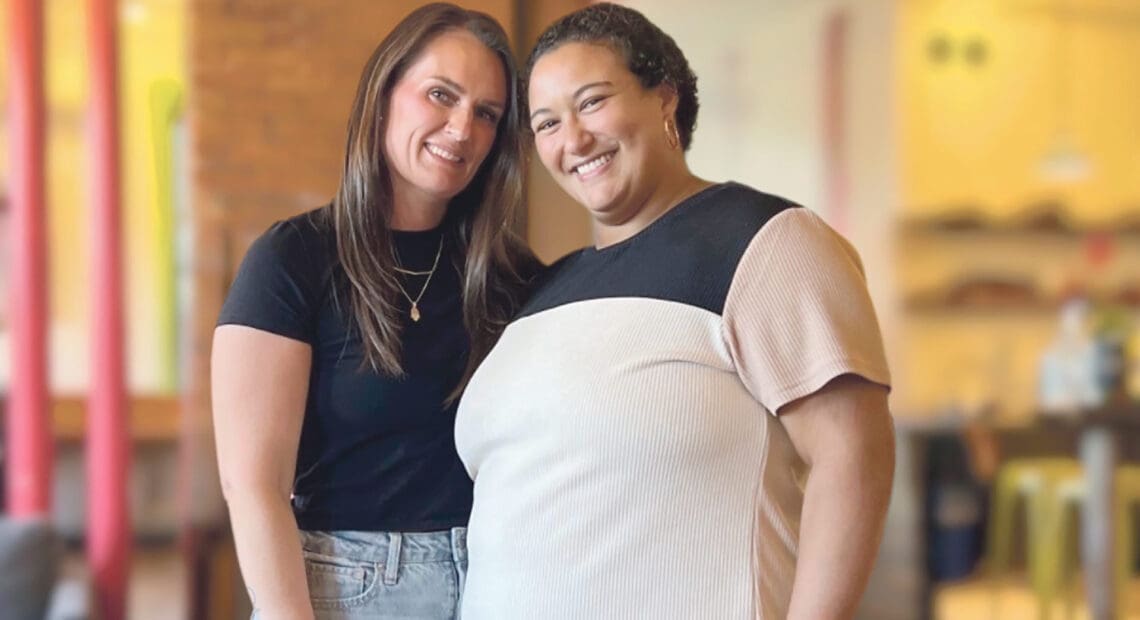
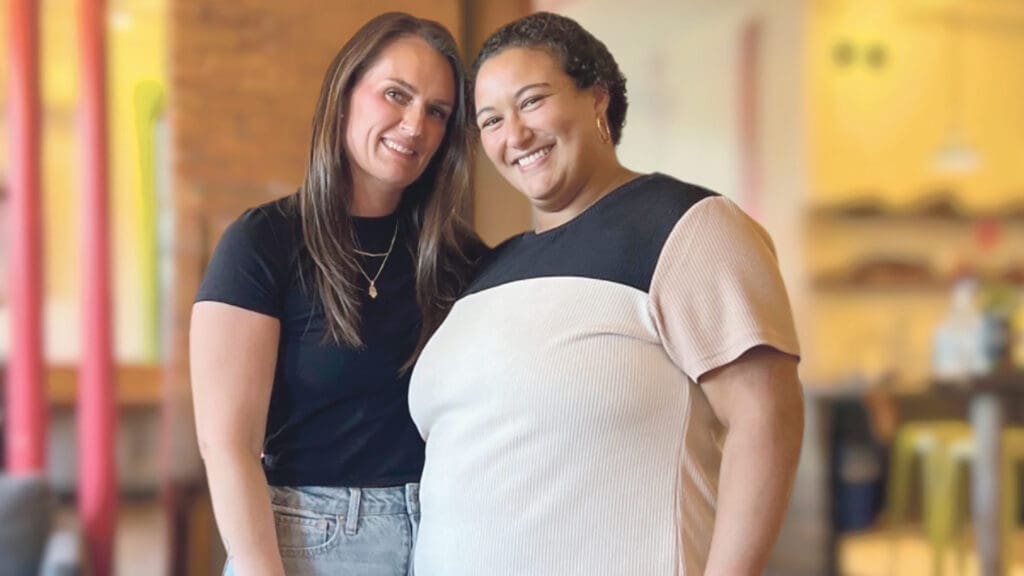
Sarah Little (left) and Nismah Osman want people to walk into Greenspace CoWork and think, “I belong here.”

Sarah Little (left) and Nismah Osman want people to walk into Greenspace CoWork and think, “I belong here.”


For Nismah Osman, acquiring Greenspace CoWork late last year with business partner Sarah Little feels like a full-circle moment.

After relocating from Boston to Gill, her first job in the area was at Hawks & Reed. She used Greenspace, which Jeremy Goldsher and Jeff Sauser launched in 2018, almost daily for printing and overflow work and felt drawn to the space from the start.

“When we learned the space might be available, it just felt right,” Osman said. “Greenspace had already played a role in my journey here. We wanted to honor what Jeremy and Jeff created while expanding what’s possible.”

Little, who grew up in Gill in a small business family, sees the space as a natural extension of Franklin County’s entrepreneurial culture.

“We want this to be a place where people can build something meaningful — not just a place to sit and work, but a place to connect, collaborate, and feel supported,” she said.

“We want this to be a place where people can build something meaningful — not just a place to sit and work, but a place to connect, collaborate, and feel supported.”

Jessye Deane, executive director of the Franklin County Chamber of Commerce & Regional Tourism Council, noted that entrepreneurs and remote professionals are an increasingly important part of Franklin County’s economic future, and Greenfield is no exception.

“We’re thrilled to see Sarah and Nismah leverage their own venture to support other small business owners,” Deane said. “Greenspace attracts career-oriented professionals to downtown Greenfield who might otherwise be working from home. That translates into increased foot traffic, stronger connections, and more commerce for our local restaurants, retailers, and service providers. It’s a win for Greenspace CoWork members and for the entire downtown ecosystem.”

That downtown foot traffic is something Hannah Rechtschaffen thinks about a lot. As executive director of the Greenfield Business Assoc. (GBA), she said her organization’s efforts to drive and promote downtown activity fall into a few buckets.

“First, we’re tending to what is visible on the surface — downtown, but all over Greenfield, too — where we can. That’s a multi-pronged approach around cleanliness, beautification, and activation of vacant storefronts, and really bringing business owners together to have more communication and connection among themselves,” she explained, adding that some of those are new businesses in town, like Victoria Bar, Freedom Café, the Sparkle Cave, and Ja’Duke.

“We’re working with business owners in different ways to pull people together and have some collaboration going on,” Rechtschaffen told BusinessWest. One is an effort to encourage downtown businesses to stay open until 8 p.m. during Arts Walk events, which happen the last Friday of every month, and on certain Saturdays throughout the year that coincide with big Greenfield events.

“We’re targeting activation. Business owners are not being asked for the moon; they’re just being asked to lean into things that have a lot of structure,” she said, adding that the GBA is also working to activate vacant storefronts and encourage businesses to liven up active windows.

Rechtschaffen noted that attendance at Greenfield events has been a concern, even though social media engagement with local organizations is up.

“We continue to hear things like, ‘there’s nothing going on downtown.’ And that disconnect, for us, feels like a responsibility,” she told BusinessWest. “We’re continuing to amplify things on social media, share things broadly, work with our partners. What’s keeping people from going out? Maybe it’s been overstated, but post-COVID has seen such a behavioral change in how people engage, and maybe there has to be something to our approach that’s different.”

To that end, a downtown business meet-up group will gather for the first time on April 30 to crowdsource what’s keeping people from going out, she added. “It’s not just marketing. Clearly we see more traffic to the websites, but attendance is still shaky.”

“They’re looking for the kind of life that we offer in Western Mass. — and they’re leaving the state for it. So it would be wonderful to see the state looking at how they can leverage Western Mass. to solve one of our major issues, which is people leaving the state.”

In this latest installment of our Community Spotlight series, we take a look at progress being made in Franklin County’s largest municipality — and how local leaders plan to generate more.


On the Move

Another of the GBA’s buckets of focus is economic development; Rechtschaffen and her team are working closely with the Office of Community and Economic Development and its executive director, Amy Cahillane, as well as with the Franklin Regional Council of Governments. The GBA also recently hosted Aaron Vega, president and CEO of the Western Massachusetts Economic Development Council, for a day visiting local businesses.

“That was amazing,” Rechtschaffen said. “We’re working to make sure Greenfield gets attention and gets focused on. We’re proud to be the heart of Franklin County, but we oftentimes fall outside certain advocacy efforts and funding efforts. We’re not a rural place, in a county that’s largely rural, so Greenfield doesn’t fall under certain funding structures, and we need to step up our advocacy for Greenfield and our connection to Franklin County in a healthy way.”

Hannah Rechtschaffen

Hannah Rechtschaffen

“We have 100 units of affordable housing coming online in downtown Greenfield in the next two years. That’s going to be huge for us.”

She told BusinessWest there’s been a national trend of people moving to rural and bucolic places, but in many cases, they’re moving out of urban areas in Massachusetts to Connecticut, Rhode Island, New Jersey, and elsewhere.

“They’re looking for the kind of life that we offer in Western Mass. — and they’re leaving the state for it. So it would be wonderful to see the state looking at how they can leverage Western Mass. to solve one of our major issues, which is people leaving the state.”

Mayor Virginia Desorgher recently wrote on Greenfield’s website that expanding the city’s tax base through development is its best long-term solution for stabilizing taxes and stimulating the economy, and housing is one place where the city is making significant strides.

That includes the continuing development of the former Wilson’s department store into a mix of retail and housing, as well as a project undertaken by Rural Development Inc. (RDI) — an arm of the Greenfield Housing Authority — to develop 32 units of mixed-income housing at 176 Main St.

MassDevelopment acquired the Wilson’s property at 242-262 Main St. in 2022 with plans to expand and relocate Green Fields Market to the building’s first floor, while turning the upper floors into 65 mixed-income rental apartments. The RDI project site includes an existing single-story commercial building and a 22,000-square-foot surface parking lot to the rear of the buildings, all in the heart of downtown Greenfield. Also in the works is the city’s plan to develop a property at 53 Hope St. into a residential or mixed-use development.

“We have 100 units of affordable housing coming online in downtown Greenfield in the next two years. That’s going to be huge for us,” Rechtschaffen said, noting, again, that development can be challenging in the city because of certain state funding restrictions.

“Our population is too high to be considered rural in the eyes of the state, which excludes us from certain funding pools, but we’re also too small to be considered a gateway city, which is also an amazing program.”

Still, she added, we continue to see small developers in Greenfield really step up, going above and beyond turning old office space into apartments. We have folks up here working hard and investing in ways that, for them, don’t always make financial sense; it’s because they care deeply about people being able to live up here and be part of what’s happening here.”


Street-level View

Desorgher noted that the city is building a downtown that meets everyday needs in part by upgrading infrastructure and incentivizing the occupation of vacant storefronts.

“In 2026, we should see the results of a new tax credit grant designed to revitalize long-vacant spaces,” she said. In terms of infrastructure, “we are focused on the basics that impact daily life: better sidewalks, smarter recycling, and parking improvements. We have replaced roughly 10% of our total sidewalk mileage since 2018, including nearly 4,000 feet replaced in 2025 alone.”

Greenfield at a Glance

Year Incorporated: 1753
Population: 17,768
Area: 21.9 square miles
County: Franklin
Residential Tax Rate: $19.31
Commercial Tax Rate: $19.31
Median Household Income: $33,110
Median Family Income: $46,412
Type of Government: Mayor, City Council
Largest Employers: Baystate Franklin Medical Center, Greenfield Community College, Sandri
* Latest information available

Through June 1, the city is accepting applicants for its Storefront Improvement Program, which provides resources for storefront upgrades to elevate downtown aesthetic appeal and economic vitality, with the ultimate aim of enhancing the area as a welcoming place to visit, shop, and work.

The program is funded through the federal Community Development Block Grant Program and administered by the city’s Community and Economic Development Department, and businesses located in the central commercial zone can apply for up to $10,000. While funding is prioritized for signage and awnings, other visual storefront improvements may be eligible.

“We are putting federal funds to work in our effort to improve downtown vitality and support small, local businesses,” the mayor noted. “The Storefront Improvement Program is a great opportunity for local businesses and organizations to improve their curb appeal while contributing to the overall health of our downtown.”

Meanwhile, Osman and Little are excited to be overseeing Greenspace CoWork’s two locations on either side of 289 Main St., hoping to deepen partnerships with local organizations; continue collaborations such as the Take the Floor competition with the Franklin County Community Development Corp.; and host incubators, retreats, workshops, mixers, and conferences that further strengthen the downtown sector’s business network.

Goldsher and Sauser originally designed Greenspace to elicit calm and focus, incorporating wood, abundant natural light, and a variety of real plants throughout the space. Under Osman and Little’s leadership, that aesthetic foundation remains intact while the mission evolves.

Under their ownership, Greenspace has introduced several updates, including a streamlined, automated booking system; a more affordable and flexible membership option for those who do not need full-time access; complimentary monthly yoga sessions for members; and expanded amenities.

“These details might seem small, but they make a difference. We want people to feel seen and considered when they’re here,” Osman said, adding that, as BIPOC and LGBTQ+ women business owners, they’re committed to creating spaces that feel welcoming and inclusive to all.

Added Little, “we want people to walk in and think, ‘I belong here’” — a sentiment certainly shared by many city business and municipal leaders striving to make Greenfield more of a place people want to live, work, and visit.

Tourism & Hospitality

Springfield Armory

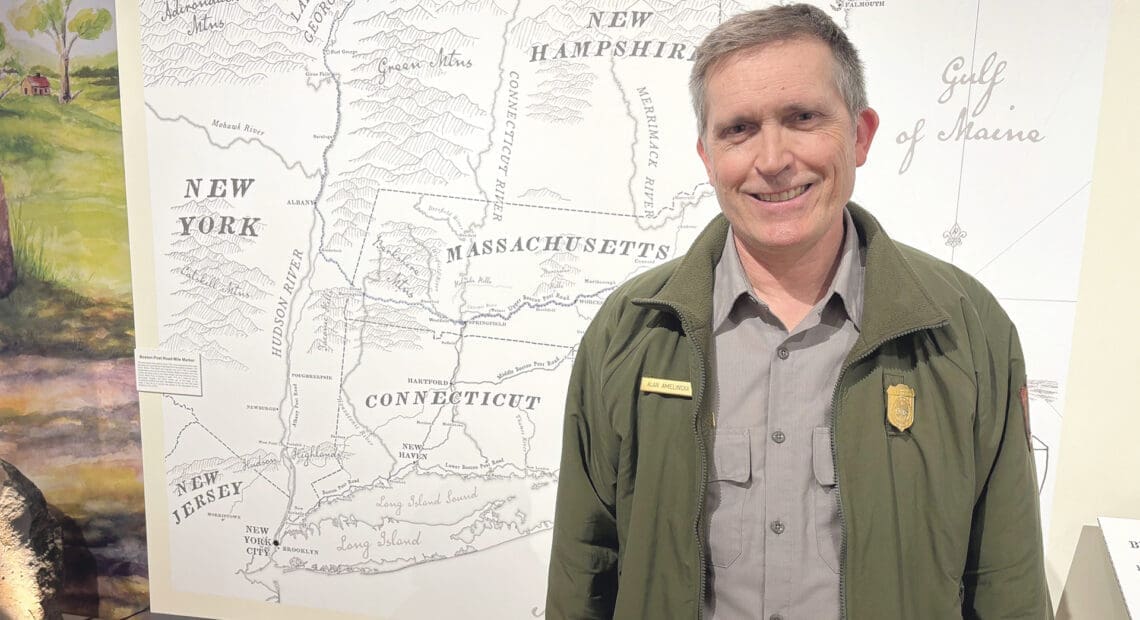
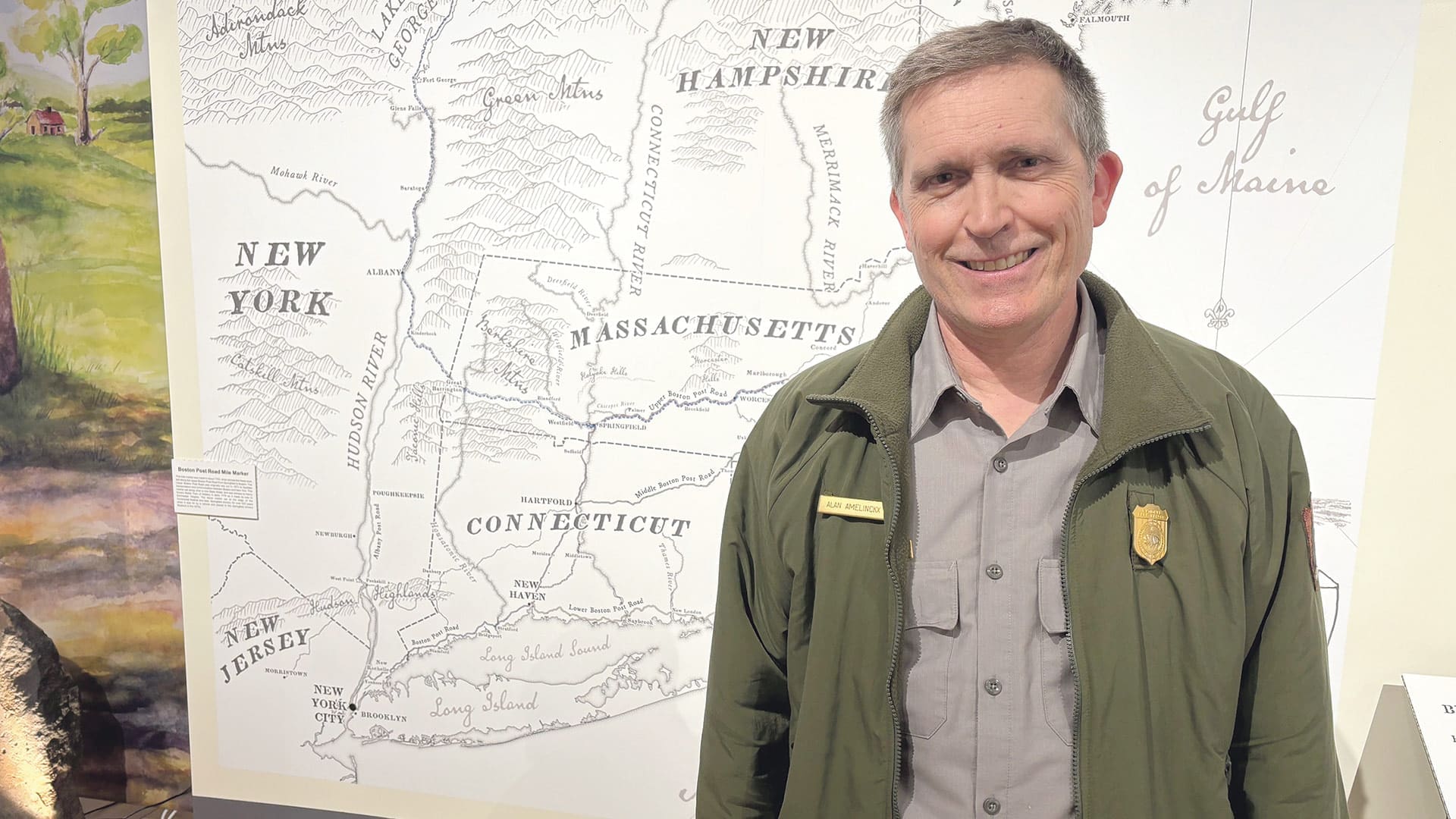
Alan Amelinckx stands by a map tracing the path of Col. Henry Knox’s Noble Train of Artillery.

Alan Amelinckx stands by a map tracing the path of Col. Henry Knox’s Noble Train of Artillery.

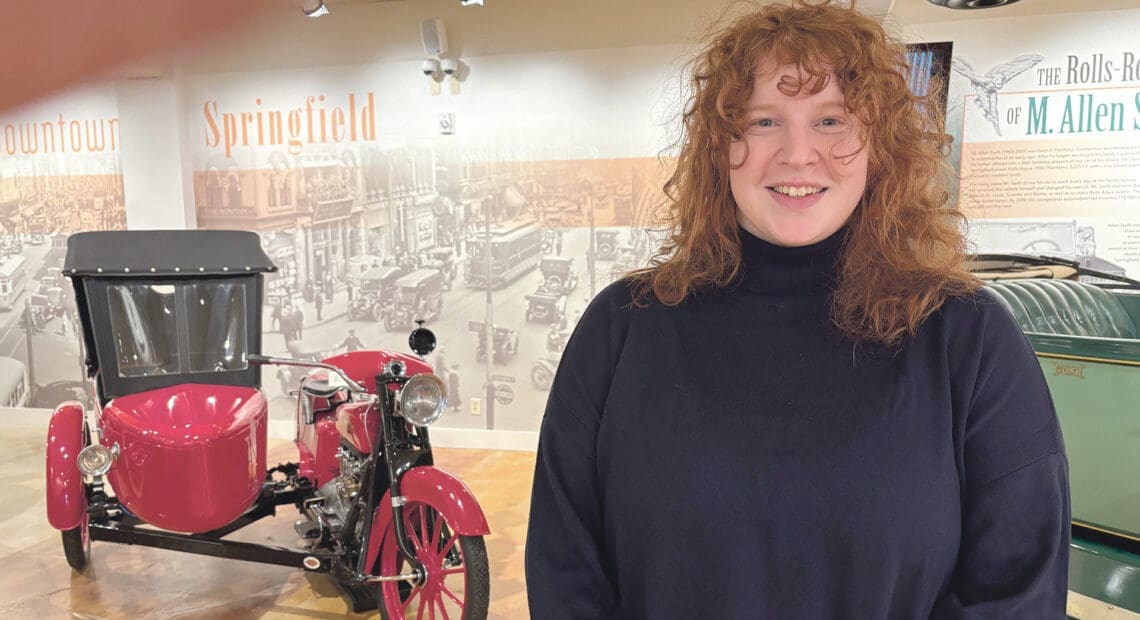
Alan Amelinckx says there is one overriding goal for the Springfield Armory National Historic Site and its many programs and events to commemorate the nation’s 250th birthday — to educate the public about the importance of that location, and this region, to the birth and development of the country.

Many people know the story of the Armory, which was closed in 1968, with many of its buildings becoming home to Springfield Technical Community College, said Amelinckx, program manager for Interpretation and Education at the Armory, adding quickly that too many do not. And a year’s worth of exhibits and programs will address that reality.

“We really wanted to focus on this site and its role in the American Revolution,” Amelinckx said, adding that not only was the site chosen for what became known as the Continental Arsenal of Springfield, and later the Springfield Armory, but it was also known for innovation and manufacturing milestones, such as the first real assembly line. It was a site through which Col. Henry Knox passed with his Noble Train of Artillery — it was Knox who suggested to Gen. George Washington that the property on a hill overlooking the growing city of Springfield would be the ideal site for an arsenal — and it was the site of Shays’s Rebellion in 1786.

“This site was on a hill, it was easily defensible, and Knox liked the fact that, while it was on the Connecticut River, British warships could not attack the site,” Amelinckx noted, citing the dam in Enfield as a barrier to those ships. “It was on the Boston Post Road, so that made it a convenient spot.

“Meanwhile, Shays’s Rebellion was one of the big turning points in American history,” he went on. “The founding fathers realized that the Articles of the Confederation weren’t working, and they needed a stronger central government.”

To educate and entertain the public about all this and more, the Armory, as noted, has a full year of exhibits and programs on tap for the 250th.

“We really wanted to focus on this site and its role in the American Revolution.”

These include a temporary exhibit at the Armory Museum which includes a map tracing the Knox Trail as well as information about how and why the Springfield site was chosen for the arsenal, said Amelinckx, adding that there is also a French cannon within the exhibit that is on display for the first time.

They also include programs late last year and earlier this year commemorating the Knox Trail, including a recreation of the trek through Springfield that drew more than 1,000 onlookers, as well as a lecture on the Battle of Saratoga and a discussion earlier this month titled “The Most Proper Spot in America.” Led by Armory Curator Alex MacKenzie, it focused on the Continental Arsenal, why the site in Springfield was chosen, and the arsenal’s contributions to American independence.

Other events include everything from an Independence Day celebration — visitors can watch the Springfield fireworks from the Armory grounds — to a Heritage Pops Concert on July 25 featuring a big band performance in front of the Springfield Armory Commandant’s House, to Forging Freedom on Aug. 29, a day of re-enactments and demonstrations celebrating American manufacturing.

Based on the strong turnouts for the Knox Trail recreation and program on the Battle of Saratoga, Amelinckx said there is keen interest on the events of the Revolutionary War period, and he expects this to translate into stronger visitation numbers for the Armory throughout the year and solid attendance at those upcoming events.

“The interest is palpable,” he told BusinessWest. “Our events are drawing people from across the region, but they’re also attracting people who live in the area and have never been to the Armory. There’s definitely a lot of interest in celebrating the 250th in this area.”

—George O’Brien

Tourism & Hospitality

Norman Rockwell Museum

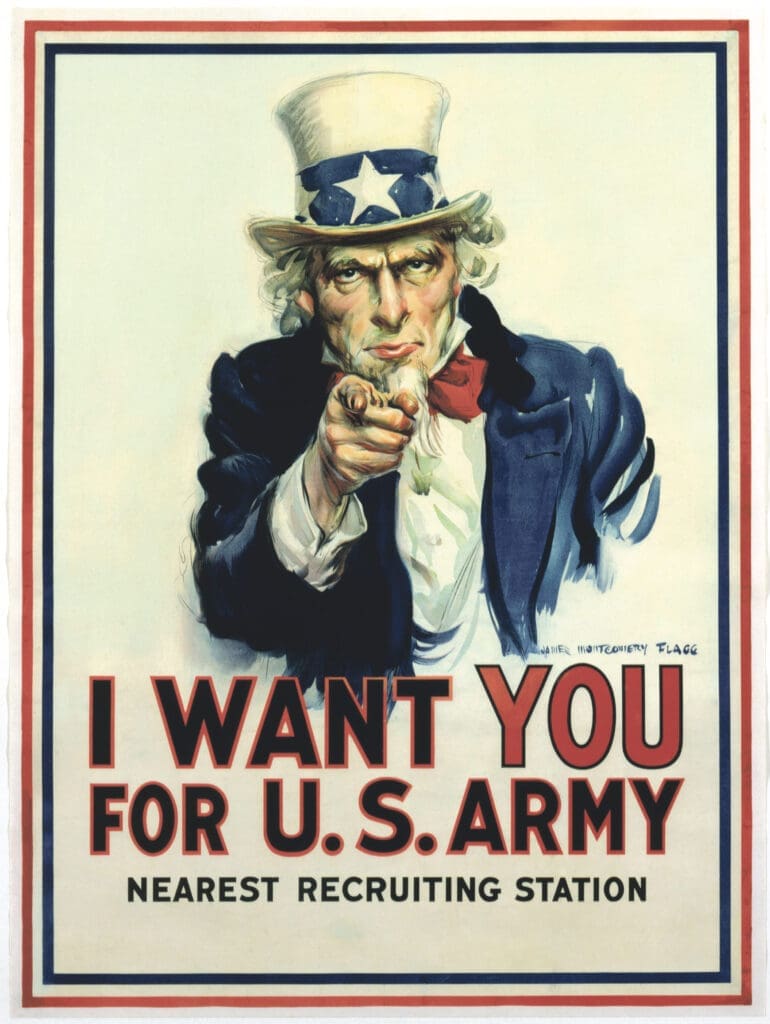
“American Stories, from Revolution to Rockwell” includes James Montgomery Flagg’s “I Want You for U.S. Army” (1917, chromolithograph on paper, private collection).

“American Stories, from Revolution to Rockwell” includes James Montgomery Flagg’s “I Want You for U.S. Army” (1917, chromolithograph on paper, private collection).


Russell Lord says planning for the nation’s 250th birthday at the Norman Rockwell Museum in Stockbridge began several years ago, and kicked into a higher gear when he arrived as chief of Curatorial Affairs in late 2024. Eventually, a mission emerged.

“As a museum devoted to not only Norman Rockwell, but also the history of illustration, we felt like we had something unique to offer at this moment in time,” Lord said. “Also, we understood that it might be somewhat expected of us to do something because Norman Rockwell is so closely associated with American identity and this vision of America.

“We wanted to both embrace what people expected of us and also add a little bit of the unexpected,” he went on, adding that both will come together in “American Stories, from Revolution to Rockwell,” which explores how artists from the Revolutionary era to the present “shared the ideals and evolving story of the United States in pictures and captured the American imagination in the process.”

Organized around a series of thematic chapters — including industry and innovation, immigration, the Civil Rights Movement, and civic life — that cut across time periods, the special exhibit, which runs from June 6 to Oct. 26, will bring together a wide range of works. These include illustrations, textiles, ceramics, paintings, prints, drawings, books, posters, advertisements, and digital media, from the nation’s founding to the present day, with each object telling a story.

“The United States is young enough to have its entire history extensively illustrated,” Lord said, noting that early works by engravers such as Paul Revere and Benjamin Franklin issue calls for unity against, and independence from, an oppressive monarchy.

“In the 19th century, artists served as visual journalists, entertainers, and advocates for reform,” he went on. “In the 20th century, illustrators captivated the public with idyllic scenes of American life, while also confronting the realities of racial injustice and political division. Today, in the 21st century, artists continue the legacy — engaging critically with the past and imagining possible futures — circulating images faster and more widely than ever through digital platforms.”

Among the items assembled from the museum’s extensive holdings (some 30,000 works representing 350 illustrators), as well as loans from institutions and private collections worldwide, are James Montgomery Flagg’s “Uncle Sam Wants You for the U.S. Army” and Howard Miller’s “We Can Do It!” posters, as well as Rockwell’s portrayals of American presidents and politicans such as Dwight Eisenhower, John F. Kennedy, Robert F. Kennedy, and Ronald Reagan, said Lord, adding that the goal is to blend some familiar works with others that visitors have likely not seen before.

“Two of the things I wanted to explore with this exhibit are history and myth, which is to say pictures that tell us about the actual history, and then pictures that are so famous — like ‘Uncle Sam Wants You’ — that they’ve taken on this kind of mythical status, and in some ways, that often means we don’t think about them as deeply as we might; we see them, and we say, ‘we’ve seen that, we recognize that.’”

Russell Lord

Russell Lord

“As a museum devoted to not only Norman Rockwell, but also the history of illustration, we felt like we had something unique to offer at this moment in time.”

And while the exhibit, which will occupy nearly all of the museum’s exhibition space, was created to celebrate the nation’s 250th birthday, there is another purpose as well, said Lord, adding that the times call for a collection of works that show that this complicated era in the nation’s history is not without precedent.

“American Stories, from Revolution to Rockwell”

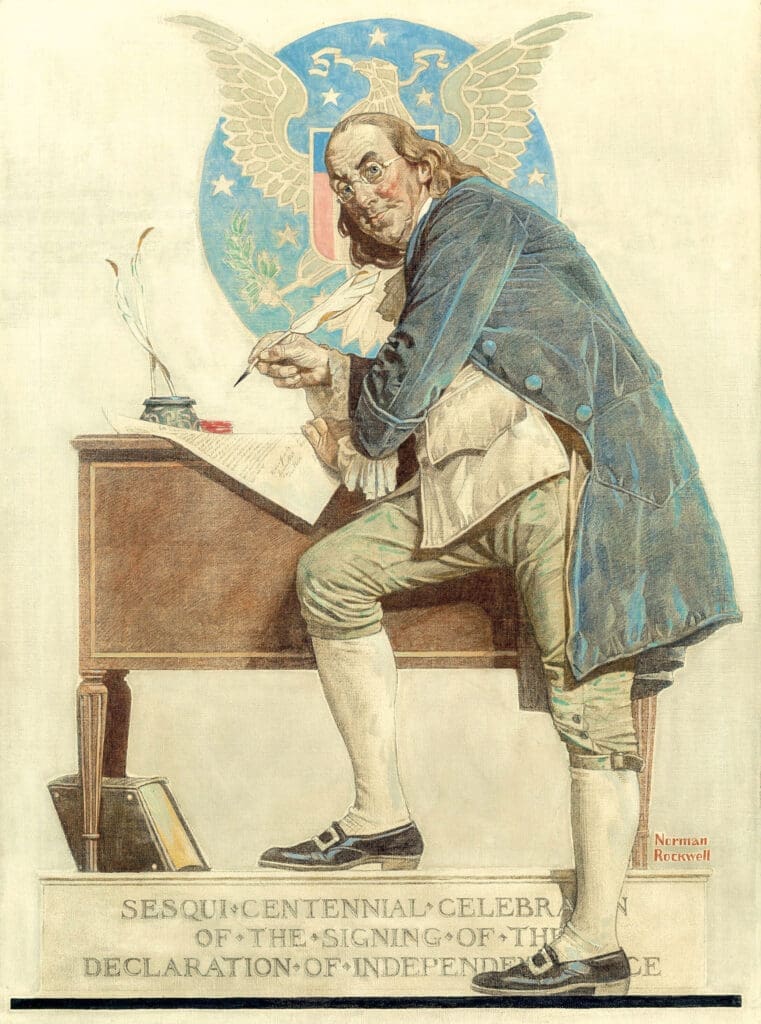
“American Stories, from Revolution to Rockwell” includes, above, Norman Rockwell’s “Ben Franklin’s Sesquicentennial” (cover illustration for the Saturday Evening Post, May 29, 1926),

“When I put together an exhibit, I like to ask the question, ‘why this exhibit now?’” he told BusinessWest. “Obviously, there’s an anniversary, but that’s not the only reason for this to have relevance right now.

“No matter where you sit on the political spectrum, I think everyone would agree that this is a very complicated moment for our own identity in the world,” he went on. “I always like to think that it can be somewhat unsettling to think that this is an unprecedented moment, and I also like to think about how there might be a precedent for this. A lot of the conversations we have today about our own identity in the world — about how other countries view us and how we view ourselves — are not new discussions.”

Image makers have wrestled with many of these identity crises from the very beginning, he continued, adding that this is one of many things he expects visitors will take away from an exhibit that offers both a visual journey through American history and a timely reflection on the enduring power of pictures to shape national identity.

—George O’Brien

40 Under 40 Class of 2026

Assistant Vice President, Business Banking Lender, PeoplesBank: Age 31

As he talked about his role as assistant vice president and business banking lender, Paul Accorsi said there are many rewards.

One of them, and he does this often, is pointing out businesses or properties while driving with his wife, Tara, and saying, “that’s my customer … I helped them finance a vehicle,” or “I helped them finance a piece of equipment,” or “I financed that building for that person as they were starting their journey as a landlord.”

He takes pride in helping mostly small to mid-sized businesses with loans that enable them to get started or, more often, take a critical next step, and says there’s satisfaction in creating success stories that those outside this line of work might not appreciate.

Accorsi started his own professional journey at the former Chicopee Savings Bank as a summer float teller. He later worked in nonprofit accounting roles and returned to banking as a commercial credit analyst at TD Bank. He joined PeoplesBank in 2021 and served in the same role before being promoted to business banking lender in 2023.

Active in the community, Accorsi is a member of the Springfield Kiwanis Club and former president of the group, helping to grow two of its major fundraisers — an annual grand raffle that supports six area Key Clubs and an annual cornhole tournament.

In addition, he serves on the board of the South End Community Center; participates in many charitable road races, including the Hot Chocolate Run to benefit Safe Passage, the Springfield Rescue Mission 10K Run to End Homelessness, the Holyoke St. Patrick’s Day 10K, and the Magic for Maddie 5K; and volunteers for many other causes and agencies, including Enfield’s Fourth of July celebration.

Whether helping clients at work or volunteering outside the office, “it’s nice to take the community I love and put a positive spin on it whenever I can,” said Accorsi, adding that his career — and his commitment to community — have, in many ways, been inspired by his father, who passed away in 2012 after battling ALS.

“He was a commercial banker for a long time, and as a kid, I saw him involved in the community, and he did a lot of good — he was on multiple boards, including the YMCA of Greater Springfield and Sunshine Village in Chicopee,” Accorsi recalled. “I like all the philanthropic work that he did, but he also made a lot of friends along the way, and I really liked that aspect of the job.”

—George O’Brien

Tourism & Hospitality

Springfield Museums

Elizabeth Kapp says the Springfield Museums’

Elizabeth Kapp says the Springfield Museums’ exhibits will focus as much on revolutionary ideas as the Revolutionary War period itself.

Elizabeth Kapp says she’s long had a passion for history.

“I’ve always been fascinated by the stories of the past and how many of them seem so improbable because things have gone wrong so many times along the way,” Kapp, curator of History for Springfield Museums, told BusinessWest. “It was the determination and innovation of the people on the ground that opened up so many doors for us today.”

She would put the birth of this nation firmly in that category, and determination and innovation are just two of the qualities that will be celebrated with exhibits and programs as the Museums mark the Semiquincentennial.

Kapp joined Springfield Museums two years ago and immediately made the 250th celebration a priority for the institution. Such occasions are rare, she went on, noting that, while she was born well after the Bicentennial in 1976, she has studied that event and what it meant for history museums, house museums, and similar facilities.

“There was truly a boom of opportunity and interest in 1976, and it actually helped shape the modern museum world in a professional sense,” she said, adding that she is anticipating something similar this year.

And as Kapp talked about what the Museums have planned, she said she and other organizers began with a purpose, or mission. “It’s an opportunity to collectively visit the past,” she said of the 250th. “And see how the decisions and actions of groups and individuals in the past led us to where we are today.”

“I thought it was important to give our visitors an opportunity to see how revolutionary thinking can come in a lot of different ways, shapes, and forms.”

With that in mind, the Museums — specifically, the Wood Museum of Springfield History — are planning exhibits that will focus not so much on the Revolutionary War, as other institutions are, but rather on “revolutionary ideas.”

“I thought it was important to give our visitors an opportunity to see how revolutionary thinking can come in a lot of different ways, shapes, and forms,” she told BusinessWest. “If we look at the past, time and time again we see that anyone can be revolutionary.”

Elaborating, Kapp said the Museums’ exhibit for the 250th, slated to open May 16, will have three historic themes, or time periods, with one centered on what Springfield was like at the time of the Revolution, but with a focus on what she called the “domestic side” — an approximate interior of a typical home from the 1770s.

“There will be slight inspiration from a Colonial-era coffeehouse,” she said, “because, historically, that’s where a lot of these discussions of revolutionary ideas took place.”

A second component on the exhibit will be called “Defining the Dictionary,” and it will focus on the revolutionary (there’s that word again) Merriam-Webster dictionary, the work of Noah Webster and the Merriam brothers, George and Charles. The company they founded is still creating dictionaries today.

“As a young man, Noah Webster was one of the few who were in a position to influence and help the new nation figure itself out,” Kapp explained, adding that this section of the exhibit will focus on the dictionary and the “power of words.”

“Revolutionary ideas often come with revolutionary words and phrases that need to be recorded,” she went on, adding that the exhibit will enable visitors to explore the words of early America and see how the work of Webster and the Merriam brothers helped establish the American language.

Visitors will have the opportunity to guess the definition of words like ‘macaroni’ (which was much different 250 years ago than it is today), ‘unalienable,’ and ‘patriot.’

The third segment of the exhibit will focus on the Industrial Revolution and how Springfield came to be the home to countless innovations and inventions that have had a profound impact worldwide, she said, listing everything from the development of interchangeable parts and the assembly line to ‘firsts’ that include the Duryea automobile, the motorcycle, and the GB aircraft.

And, like the other segments of the exhibit, this one will be interactive, Kapp said, adding that visitors will get an opportunity to work on a mini-assembly line and handle interchangeable parts used in the production of some of the vehicles on display at the museum.

“Again, the foundation that we built off is that anyone can be revolutionary,” she said. “And my goal is that people walk away with an understanding that these ideas and actions that we historians call revolutionary were people thinking outside the box — and we want to encourage them to do the same.”

—George O’Brien

40 Under 40 Class of 2026

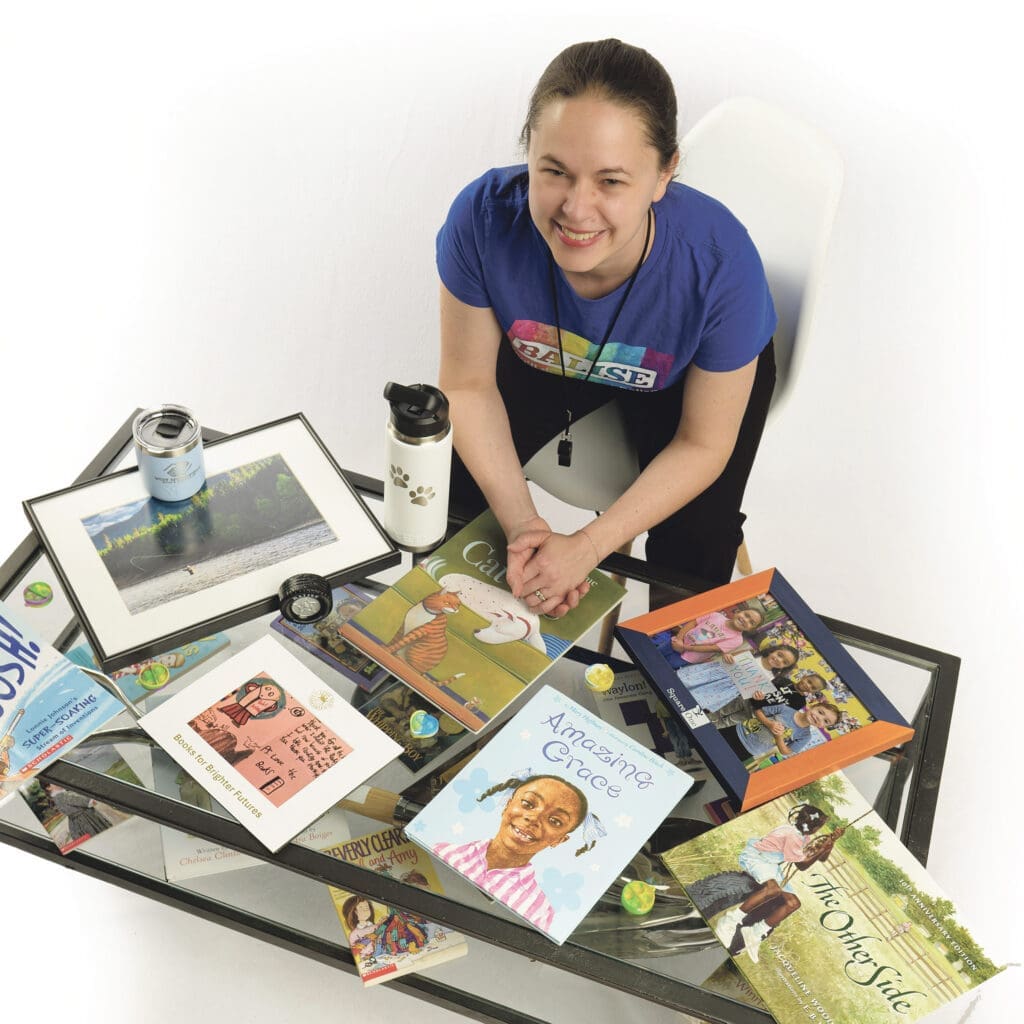
Director of Corporate Strategy, Balise Auto Group: Age 38

Alex Balise calls it her “happy place.”

This is the fishing camp in Quebec where she, her husband Trevor, and children Connor and Emma spend a week each summer around Connor’s birthday

“The phone doesn’t work … it’s quiet, it’s relaxing, it’s fun — even if you don’t catch anything,” said Balise, director of Corporate Strategy for Balise Auto Group, adding that she has a number of happy places. Others include Benjamin Swan School in Springfield, where she reads to students as a Link to Libraries volunteer and also leads efforts to donate coats to those students, continuing a tradition started by her uncle, Mike; Square One, where she serves as a board member but has also become heavily involved in programs and fundraising, especially for its new headquarters building; and the Big E, where they spend Emma’s birthday.

And then there’s 1441 Main St. in Springfield, Balise’s corporate headquarters. OK, maybe this place isn’t as ‘happy’ as the others, but it’s where she has emerged as a true leader at this 106-year-old family business started by her great-grandfather.

Since she came to Balise in 2015, Alex has taken on several roles and assumed ever-greater amounts of responsibility. She started as an analyst for the company’s then-emerging car wash business and later served as project manager for its new Kia franchise, before becoming director of Marketing.

As director of Corporate Strategy, she has a wide range of duties, including current work to oversee the company’s conversion to a new document management system. She also works on compliance and legal matters — “all the fun things that happen behind the scenes that are important to the business but not glamorous.”

While managing all those responsibilities, she remains very active in the community — with the aforementioned Square One, Benjamin Swan School, and Link to Libraries; the Zoo at Forest Park, where she played a lead role in facilitating the donation of a vehicle, enabling its education team to expand outreach programs; the West Springfield Boys & Girls Club; and the Balise company’s annual holiday giving and back-to-school backpack campaigns.

“Anyone who knows Alex knows of her soft-spoken demeanor,” Square One President and CEO Dawn DiStefano wrote in nominating Balise for this honor. “But behind her gentile smile is a powerhouse of community support and activism.”

A powerhouse indeed, both as a leader at Balise and a force for youth and families within the 413.

—George O’Brien

40 Under 40 Class of 2026

Service Director, Bertera Auto Group: Age 38

Felicia Barr says her journey through the ranks in the automotive service world has been a satisfying one, but she also hopes it’s inspirational.

“I teach my children that if you work hard, care about something, and show up, everything is possible,” she said. “When I look at my career, it was hard work, showing up on time every day, asking questions … it works.”

But it’s not only her own three children she aims to inspire. Barr is also heavily involved with local vocational schools through mentorships and co-ops, aiming to draw more young people into what has been a rewarding field.

“I’ve had one student since he was 16; now he’s going to be 20. I’ve had him here for a few years. I can watch them grow into young adults — that’s probably the most rewarding thing I do in my job. Those years can be kind of a rough time, not knowing what they want to do in life. But this is a place they can come and find themselves.”

Barr certainly found herself; from her entry role as a greeter in the service department of one of Bertera’s dealership, she became a service advisor, then manager of the Service department at Metro Chrysler Dodge Jeep Ram in Chicopee. There, the revamped the entire department, doubling its size and offering more service options to area car owners.

She has also used her leadership role to connect Bertera with local nonprofits, especially those benefiting families and children. She has worked extensively with children’s charity Unbroken Wings to benefit the Children’s Miracle Network (CMN), helping organize fundraisers like the Thunder in the Valley music festival and Cruising for a Cause, as well as themed car shows at the Metro dealership, all to benefit kids.

“You can see where the money is actually going, and that’s what I love,” Barr said of Baystate Children’s Hospital, the region’s only CMN hospital. “My children have had to go to the hospital; my niece was in the NICU for two months. And you see the cameras that allow you to see your children when you’re not there? Well, the money we raised helped to purchase those. So to actually see that come to fruition is incredible.

“When I was a kid, I had an immune deficiency, and I was in and out of hospitals. I remember the nurses who cared for me; they meant a lot,” she added. “I want to help people in need — and children can’t speak for themselves.”

—Joseph Bednar

40 Under 40 Class of 2026

English Teacher, John J. Duggan Academy: Age 39

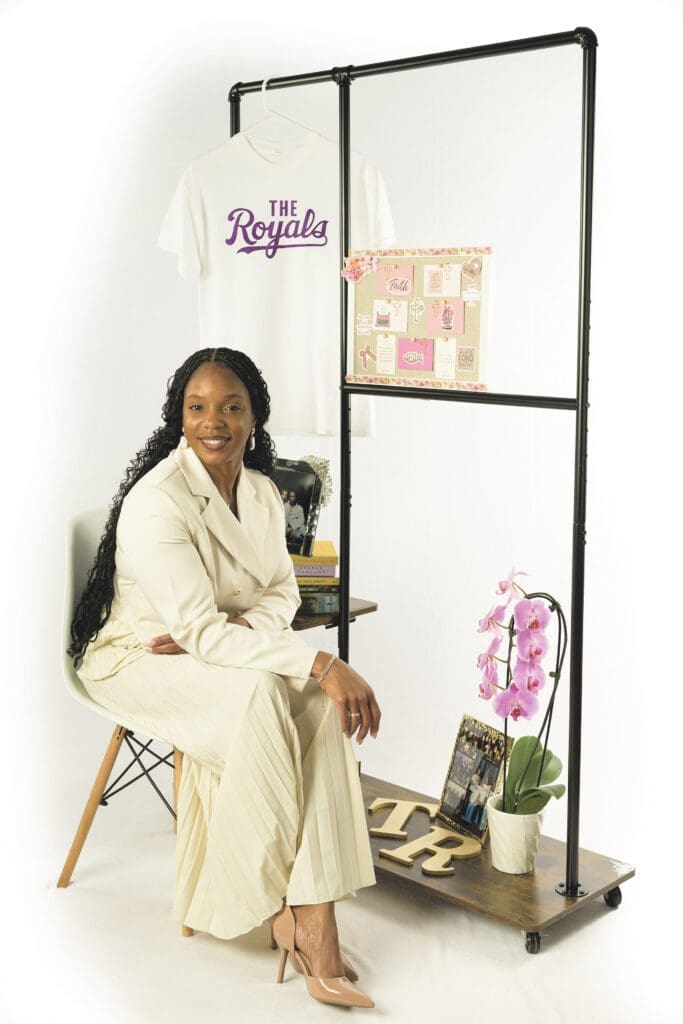
It’s called ‘the Royals.’

That’s the name Alicia Brown gave to a program she created to empower young women in middle and high school through mentorship, leadership development, and life skills education. It’s an after-school program that initially started in the basement of her church.

“We get together every two weeks, and we engage in meaningful conversations and activities,” said Brown, an English language arts teacher at Springfield’s John J. Duggan Academy, adding that the program is centered around mental health awareness in young women and “helping them build healthy coping mechanisms to navigate life.”

The Royals is just one example of how Brown is making a difference inside the classroom and beyond, and building on a passion for working with, and helping to guide, young people that goes back to the days when she was a summer camp counselor.

“I grew up in Springfield myself, and I love the fact that I can build these relationships with my students where they can see a teacher that they can relate to,” said Brown, a graduate of Springfield College, adding that she’s always focused on making an impact that goes beyond a day’s lessons in English. “Not only are we focusing on academics in the classroom, we’re also teaching them about the foundations of life and how to be successful outside these four walls.”

Elaborating, she said that much goes into being a Royal, and that designation, if you will, goes beyond participation in the twice-monthly meetings.

“You being a Royal … you wear that everywhere you go,” she explained. “It means we’re taking our academics seriously and we’re making sure we show up to school, and it’s important that we have healthy communication skills when we need to converse with one of our friends when we feel that something is a little off; it’s how you carry yourself outside of here.”

Brown’s impact inside and outside the classroom was summed up by Duggan Principal April Robinson, who nominated her for the 40 Under Forty award. “She’s my go-to teacher when a student needs extra support and uplifting,” she wrote. “This strong teacher-student rapport positively impacts student confidence, engagement, and overall achievement.”

When not teaching and guiding young people, Brown enjoys spending time with her 20-year-old daughter, Imani, and other family members. “I’m very family-oriented,” she said. “Spending time with my family is very important to me.”

—George O’Brien

40 Under 40 Class of 2026

Vice President, Human Resources Program Management, Liberty Bank: Age 34

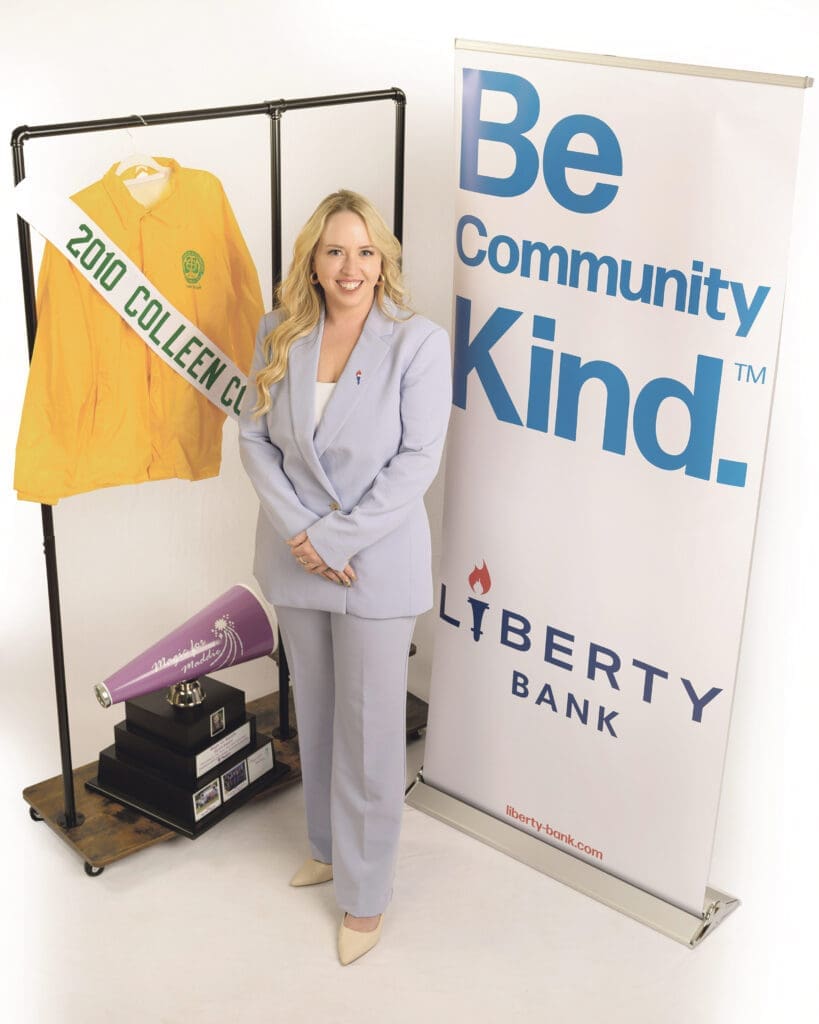
It’s called the Mirror Ball Trophy.

It’s awarded by the organizers of the Fancy Steps fundraiser, a dance competition of sorts for the Children’s Museum at Holyoke, not to the best dancer — “I would never have gotten it if that was the case,” Kate Caligaris joked — but instead to the one who raises the most money for the institution.

In this case, for the 2025 event, Caligaris raised more than $15,000 by “getting creative,” with initiatives that included everything from celebrity bartending to soliciting Holyoke businesses for donations.

The trophy (yes, its main feature is a mirror ball) now sits on Caligaris’s desk at Liberty Bank, where she serves as vice president of Human Resources Program Management. It will soon be joined by a 40 Under Forty plaque, which she has earned through a combination of excellence in her day job and a strong commitment to community, especially in her hometown, and now her current home — Holyoke.

Her role brings a diverse set of responsibilities, she said, listing everything from administering the intern program to system integration initiatives; from serving as HR business partner for several members of the bank’s C-suite to overseeing the change to a new 401(k) provider. “It’s a little bit of everything, and that’s what I like about it,” she said.

As for her work in the community, it includes years of work on the Holyoke St. Patrick’s Day Parade Committee, continuing a family tradition that started with her grandfather. In 2010, she was named Colleen, and today she serves as chair of the Colleen Pageant and oversees all that happens after that competition.

“I’m with the girls all through the green season — the school visits, the hospital visits, chamber breakfast … you name it,” she said, adding that she walks beside the Colleen float on parade day.

Caligaris is also a Board of Health commissioner in Holyoke, and served for many years on the board of the Children’s Museum and remains active with that institution. She is also co-chair of the American Cancer Society’s Massachusetts Golf Classic, which will be staged later this spring, and sits of the board of Magic for Maddie, a nonprofit created in honor of Madeline (Maddie) O’Hare Schmidt, who lost a courageous battle against pediatric brain cancer in 2022. Over the past four years, the agency has raised more than $1.3 million money for research, but also to assist families waging their own fight against the disease.

—George O’Brien

40 Under 40 Class of 2026

President, TNT Tent and Table Rentals: Age 38

Anthony Boido was working for the town of Agawam in 2012, and also serving in the U.S. Air Force Reserve — he deployed three times to Afghanistan and Iraq — when the local Taylor Rental was going out of business, which gave him an idea.

Having worked for an event and tent rental company almost a decade earlier, he borrowed $1,000 from his parents; bought a couple of used tents, 10 tables, and 100 chairs; and launched TNT Tent and Table Rentals.

“I was doing it on the weekends to make a little extra money,” Boido said. “Over the next few years, it really took off and started to grow. I wasn’t expecting it to grow as fast as it did, but I came to a point where I had to make a decision: ‘this is getting too big. Do I stay at my job, or do I take it full-time?’ I decided I had to give it a shot.”

That was a wise decision. The company now boasts more than 150 tents, more than 500 tables, more than 7,000 chairs, and the ability to serve not only backyard parties, but large events like air shows at Westover Air Reserve Base and Westfield-Barnes Regional Airport. Last year, he set up 130 tents for the Big E alone.

And he loves every connection he makes.

“When we’re showing up at someone’s house or event fairgrounds, whether it’s a baby shower, wedding, birthday party, graduation, it’s usually something meaningful to them, and everyone’s in a great mood. They’re happy; they’re telling us all about who’s getting married or what’s happening. And it makes our lives, in a blue-collar business, a lot easier.”

Boido also shares his success with nonprofits like Shriners Children’s New England, St. Jude Children’s Research Hospital, and veterans’ organizations.

“In my first year in business, I called Shriners and said, ‘I want to give something to you guys.’ We had a great first year in business, so we took all our tip money and donated it to Shriners. It was a small donation, but it was a great feeling. I said, ‘I’m going to help out every single year in every way I can.’ And I’m a veteran, so helping veterans’ organizations was an easy thing to get on board with.”

To Boido, it’s about staying true to his community.

“When you become successful, it’s not just about take, take, take or make, make, make. It’s about giving back and helping those who helped you get to where you are.”

—Joseph Bednar

40 Under 40 Class of 2026

Deputy Director, Neighbor to Neighbor: Age 32

Lezlie Braxton Campbell is a big believer in the agency known as Neighbor to Neighbor.

Indeed, he first got involved as a board member and then as board chair before joining the staff of the organization two years ago.

He now serves as deputy director, a role that comes with a broad job description that essentially boils down to carrying out the agency’s broad mission — making democracy work for everyone.

“It’s an organization for community and political organizing,” he said of the agency now celebrating its 30th year, adding that Neighbor to Neighbor gets involved at the grassroots level on issues ranging from housing to criminal justice reform to climate and environmental work.

It’s currently involved in a letter-writing campaign to urge passage of the Clean Slate Act, which would automatically seal old criminal records, removing barriers to jobs, housing, and stability for thousands of state residents.

“I enjoy my work because we’re a multi-issue organization,” he told BusinessWest. “I can be talking about voter engagement, then get deep into other issues … and then, there could be a bill we’re pushing. So it does put you out in many different directions.”

A graduate of Westfield State University, where he earned a bachelor’s degree in business management, Campbell is currently working toward a master’s degree in politics & education at Columbia University. He brings a diverse résumé to his current role, including a 5-year stint in education (humanities and social studies) that included teaching at both the Springfield Public Schools and Springfield Technical Community College. He’s also been involved in a number of local, regional, and statewide political campaigns, and ran for City Council in Springfield himself.

He said his current job description includes a mix of administrative duties, work on specific issues, such as the Clean Slate bill, and getting to know the people and issues facing them in communities served by the chapter, including Springfield, Holyoke, Worcester, and Lynn.

Active in the community, Campbell is a part of the LUCE Immigrant Justice Network in the Bay State, executive vice president of Young Democrats of America, and a former mentor with the Academic Leadership Assoc. Last year, he received the Black Excellence on the Hill Award and the Ronn D. Johnson Servant of All Award.

And now, he has another plaque for his desk, one that identifies him as a member of 40 Under Forty.

—George O’Brien


40 Under 40 Class of 2026

Global Cyber Product Consultant, Liberty Mutual: Age 39

Cyber insurance is one of the more dynamic corners of today’s business world. Just ask Darryl Cole.

“I would say the cyber insurance marketplace is evolving as rapidly as technology itself,” he said. “When I first started in underwriting, we were looking at theft of credit card data as the biggest exposure company could have, and we were looking at retail and hospitality operations — restaurants and hotels, things like that — as the most risky businesses. Now it’s a lot more generalized.”

Cole was an underwriter for a decade before taking on his latest expansive role at Liberty Mutual.

Darryl Cole

Photo by Bob Zemba, Simple Truth Imaging

“What I’m doing now is helping other underwriters do their job. I’m responsible for helping to set global strategies; set strategies for marketing materials, presentations, and content for our underwriters; and helping underwriters learn and develop, helping them understand what’s happening in the cyber market from an insurance perspective and a risk perspective. To be able to do that globally is pretty cool.”

Active in the community, Cole has been PTO president at his children’s school, served in his church’s youth ministry, volunteered for Junior Achievement and the United Way, and helped coordinate local efforts for Convoy of Hope.

And last year, he was elected president of Wilshire Athletic Assoc., one of the most venerable youth sports nonprofits in Western Mass., bringing his business acumen and ability to connect with people to the organization’s leadership.

“Because I have a business and insurance background, I noticed a few opportunities and I was really eager to bring Wilshire forward,” he said. “And we’ve hit this year running – we’ve increased our social media presence, brought in guest speakers for banquets, and put on a basketball showcase to celebrate our players. We have amazing volunteers – from our board of directors to coaches – and we’ve been able to accomplish a lot.”

Much of his volunteer work stems from his heart for children.

“I want to make sure kids are supported and cared for,” Cole said. “At my core, I just care about helping people in whatever way I can — particularly children, but anybody, really.

“As humans, we all deserve security and respect and care and support,” he went on. “And I’m always looking for ways to live up to those ideals, whether it’s an informal setting, offering whatever I can, or more formal opportunities like partnering with community organizations. I think it should be a way bigger part of the human experience to make sure our fellow humans have everything they need.”

—Joseph Bednar


40 Under 40 Class of 2026

CEO, Realistic CEO: Age 19

One of the intriguing aspects of 40 Under Forty turning 20 is the opportunity to welcome multiple generations into the club. But while Mychal Connolly Jr.’s father, the creator of entrepreneurial enterprises like Stinky Cakes, Stand Out Truck, and Marketing and Cupcakes, was inducted into the class of 2009, this 19-year-old — one of the youngest honorees ever — has created his own very different, and very impactful, niche.

It’s called Realistic CEO — an enterprise inspired by a school project during which a teacher told Mikey that his dreams of being a CEO were, well, unrealistic.

Connolly has turned that motivation into a leadership and success platform serving young people from elementary school through college through books — including a much-distributed illustrated book that tells his own story — as well as curriculum, workshops, media platforms, and speaking engagements.

“The last couple of years, we’ve impacted about 17,000 students through our books, our curriculum, and our programs, and we’ve been working on expanding our reach from the local area — Springfield and surrounding towns and cities — to going a little farther, to the Boston area and Worcester,” he explained.

“Our goal is to be able to impact 500,000 students. The whole goal behind Realistic CEO is to help students with career readiness, workforce readiness, and financial literacy,” he went on. “My goal is to help students prepare for careers — and we do it in a way that we want every single student to feel like they’re worthy enough to be an executive.”

Connolly also hosts the Realistic CEO podcast, now topping 100 episodes, in which he interviews local business leaders about their journey and how they seek to inspire others. And he also launched Realistic Lemonade, a nonprofit that raises money and seeks sponsorships to enable him to go into more schools. Oh, and he’s doing all this as a full-time honor roll student at Holyoke Community College.

“My favorite part is seeing the difference in the way students light up,” he said of those visits and speaking engagements. “Maybe the lightbulb needs to be twisted a little more to be totally turned on. And you see the light is fully on after we speak. That’s my favorite thing — to see the students believe in themselves, to hear them after we’re done, saying, ‘thank you, I needed this.’

“We know how bright and smart the students in the community really truly are,” he added, “and we’re able to create a bridge that allows them to cross.”

—Joseph Bednar

40 Under 40 Class of 2026

First Vice President, C&I Lending, Beacon Bank: Age 34

Steve Costa started his professional career in public accounting, with one of the Big Four firms. He enjoyed that work — but “didn’t love it” — and had no real intention to make a change until a friend, mentor, fellow churchgoer, and chief credit officer with a local bank gave him something to think about.

“He pulled my arm and said, ‘I think this is something you’d be really good at; you’re extroverted, you have a good personality for it, you’re relationship-driven, sales-oriented, and high-energy. I think you’d do well at this banking thing.’”

Turns out, he was right. Costa has done pretty well at this ‘banking thing,’ and because of all those attributes he listed.

He started at Country Bank and later moved to Berkshire Bank (now Beacon Bank), where he has been promoted several times and currently serves as first vice president, C&I Lending, managing a $150 million portfolio that has grown steadily over the years. He finds the work rewarding on many levels.

“I love the people, love the relationships, love making a difference,” he said. “The networking side of it is awesome. Being high-energy myself, I like getting out and meeting people, hearing about their life stories, learning about their businesses, knowing that a good banker can actually make a real big difference at a company.

“Every bank’s money is green,” he went on. “But that relationship side of the business is extremely important, and I enjoy working with people and helping them reach their goals. Seeing a business grow, hire new employees, and contribute to the local economy … it’s not just about the numbers; it’s about making a real impact.”

While doing that, he’s making an impact on other fronts as well. Indeed, Costa is active in the community, serving as a member of the Square One finance committee and as a member of the St. George Greek Orthodox Cathedral audit committee. And through his church, he serves various volunteer efforts, including Glendi, its annual Greek festival, and teaching Sunday school.

He also supports cancer fundraising efforts through his role on the executive leadership committee for the American Cancer Society’s Massachusetts golf tournament, and volunteers with agencies and causes ranging from Junior Achievement to the Zoo in Forest Park.

When not doing any of that, he’s spending time with his family — his wife Kerri and son Crew — which will get larger soon; a second child is due at the end of this month.

—George O’Brien

40 Under 40 Class of 2026

Executive Director, Fishing Friends: Age 24

For Giancarlo Crivelli, fishing has always been more than a pastime.

It’s been a passion, a way to connect the generations in his family, and a vehicle for bringing joy, and some valuable life lessons, to others.

Indeed, Crivelli has lasting memories of fishing with his father and grandfather when he was younger. They both passed away when he was 12, and since then, fishing has always been a way to remember them and bring him closer to them.

And in recent years, fishing has become even more — a way to honor his father’s legacy of using the activity to connect with young people in the community who didn’t have a father figure in their lives.

“He would take them fishing, too, and it soon became a regular thing,” Crivelli recalled. “He would become a friend to these kids, teaching them about the importance of getting back in touch with nature. Fishing, he would say, grounded us, helped us relax, and taught us the value of patience.”

All of this informs the mission of a nonprofit that Crivelli started called Fishing Friends. The 501(c)(3) provides fishing trips to local young people throughout Western Mass. — but it goes beyond baiting hooks and casting lines. Trips are designed to educate children on boat safety, water stewardship, fishing, patience, kindness, sharing, and more.

These are skills that can last a lifetime, said Crivelli, adding that Fishing Friends has several components, from the fishing trips to conservation cleanups, where participants gather to protect and preserve local waterways, to Harbor Hands, a youth boat repair program.

As for the best fishing spots … Crivelli didn’t reveal all of them or get too specific. But he gave a partial list, including Hampton Ponds in Westfield, Five Mile Pond in Springfield, the Oxbow in Northampton, and Red Bridge, a recreational area on the Chicopee River bordering Ludlow, Wilbraham, and Palmer.

“That’s just a few spots … we’re all about exploring new areas and teaching kids about all the different and unique places to go fishing,” he said.

And these places on the map are just a small part of the story, he went on, as he recited the Fishing Friends mission statement. “We teach youth about fishing so they can build character, connect with nature, develop meaningful relationships, and learn new life skills.”

That’s quite a mission, but he knows from experience, and all those coveted memories of times spent with his father and grandfather, that fishing can do all that.

—George O’Brien

40 Under 40 Class of 2026

Executive Vice President, Chief Delivery Officer, Farm Credit Financial Partners: Age 38

Mariana DeLobato would describe her work as mission-driven.

“Essentially, we are the tech arm that ensures that the institutions that serve the farmers, the producers, the rural communities, can operate efficiently and can scale and remain resilient. We do all the technical services on their behalf,” she said. “I love the mission of Farm Credit Financial Partners.”

In that role, she helps shape enterprise strategy and delivery, making sure the organization invests in the right priorities and has a sound financial model so it can deliver on those priorities.

“We support rural economies and a variety of communities. The better we do, the better they do, and it’s that broader impact that makes the work really, really meaningful. The mission is what keeps me going.”

DeLobato earned a bachelor’s degree at Bay Path University and an MBA at Elms College before joining Amazon Web Services, where she led large-scale cloud transformation programs for major enterprise clients as a senior engagement manager and national team lead (in fact, leading global teams of more than 100 people) before feeling a call to return to Western Mass. to work for Farm Credit Financial Partners (FPI).

“I went to school here, started my career here, and I wanted an opportunity to be a more active contributor to our community,” she explained.

Outside of work, DeLobato teaches at Bay Path, is on the board of Dakin Humane Society, and serves on the distribution committee at the Community Foundation of Western Massachusetts. She also volunteers at the United Way food pantry, volunteers with One More Dog Rescue, spent years with Link to Libraries supporting childhood literacy, is active with the Massachusetts LGBT Chamber of Commerce, and participated in a Blue Cross Blue Shield of Massachusetts program that brings together emerging leaders to work on systems-level health equity challenges.

“I’m always looking for ways to go beyond what FPI does because I truly believe in the region, and I’m fortunate to be part of an organization that not only allows us to deliver meaningful outcomes for our partners, but also allows us to show up in our communities and contribute beyond the 9 to 5,” she said.

“It was a very intentional decision to come back and bring my experiences and perspective to this region, and it’s very meaningful to be recognized by the community for making those decisions and participating in such a way. It’s something I take super seriously, and I’m proud of it.”

—Joseph Bednar

40 Under 40 Class of 2026

Principal, Brightwood Elementary School: Age 38

Danielle Delgado

Photo by Bob Zemba, Simple Truth Imaging

As a young child, Danielle Delgado gave herself options.

“I always wanted to be either a teacher or famous. And I learned right away you can’t be famous for nothing, and I can’t sing, so teacher it was,” she said. “When was little, I’d line up my stuffed animals and make them my classroom, or my great-grandmother would be my student — she was 97 years old, and I’d send her to the principal’s office, which was the bathroom, and she’d play along with me, which was hysterical.”

As she got older, Delgado realized she had a real heart for education. Her career began with an internship and undergraduate work at Kensington International School in Springfield, and she gradually rose through the ranks to become principal at Brightwood Elementary School.

“Springfield Public Schools offered so many development opportunities for me. I became an instructional leadership specialist, then I went into administration and naturally progressed over time.”

Delgado is also committed to connecting Brightwood to the community in some intriguing ways. She co-founded the North End C3 Community Basketball League in collaboration with the Hampden County Sheriff’s Department, the Springfield C3 police unit, and the New North Citizens Council, and she also established after-school programs like a dance team and drama club, and piloted a program to distribute fresh produce to food-insecure families.

“By extending outside the school, we’re not just serving students, but the whole child. By making sure we are part of the community even beyond the school day, we’re all taking care of each other, supporting each other,” she explained. “We’re putting mentors in different parts of the children’s lives, and that’s incredibly special.”

Back at school, Delgado said, it’s a challenge, but a rewarding one, to make sure all 450 students and 68 staff members have what they need each day, and that the school culture remains a positive one for all. “By the end of the day, I’m exhausted, but it’s good. Thank goodness for good coffee,” she joked.

“The most rewarding thing is getting to see the excitement when students are learning and growing, and seeing the same excitement from teachers when they see their students learning, and as they grow and develop as educators — to see the joy and pride on their faces,” she added. “Educators are asked to do so much, and we can’t do it alone. Speaking as a teacher, that proverb, it takes a village to raise a child, is incredibly true.”

—Joseph Bednar

40 Under 40 Class of 2026

Senior Wetland Scientist, Team Leader, Fuss & O’Neill: Age 35

It’s come to be known simply as the ‘mushroom calendar.’

That’s because it features photographs of mushrooms, taken and collected by April Doroski, who encounters numerous varieties of the fungi while out in the field serving as a team leader and senior wetland scientist for the Springfield-based engineering firm Fuss & O’Neill (F&O).

The calendar, which graces the cubes of many employees at the company, and several other settings as well, is offered as part of a fundraiser. Since 2020, Doroski has raised more than $6,500 for environmentally focused nonprofits including the Clean Air Task Force, Ecology Project International, Biobus, and Trees for the Future.

And such efforts comprise just a few of the ways Doroski has become … well, a standout in her field.

Indeed, as a senior wetland scientist and permitting specialist at F&O, she is a key member of its environmental permitting practice and the firm’s climate resilience work. She leads environmental permitting strategy and preparation for a wide array of climate adaptation, ecological restoration, transportation, energy, water, infrastructure, and development projects across the state. She has delineated wetlands across New England and has conducted compliance monitoring, as well as water quality and hydrologic assessments.

This is work she’s been drawn to since she was very young.

“As far back as I can remember, I always enjoyed spending time outdoors, camping with my family, and I knew I was interested either in microbiology or environmental science, and I ended up in environmental science,” Doroski said, adding that she enjoys many facets of this work but especially the places it brings her and the improvements she helps create.

“I drive by projects or sites or areas where I’ve performed wetlands delineation, and I always point them out to people,” she said, adding that she’s proud of the work she and other team members carry out across the region, such as the removal of obsolete dams that are no longer being used and repair of those that still serve a purpose.

“There are a lot of dams and infrastructure that are outdated and not needed,” she explained. “And the dam removals are exciting projects because we’re restoring the rivers to their natural flow and natural state.”

When not working or putting together the mushroom calendar, Doroski enjoys traveling — she has a trip to Spain planned for this summer — and snowboarding, two activities that provide her with more time outdoors, which is where she thrives.

—George O’Brien

40 Under 40 Class of 2026

Partner, Vice President, Sales & Marketing, The Dowd Agencies: Age 37

Jack Dowd says he never really thought about anything other than a career in insurance when he was young. This certainly differentiated him from most people his age, but for a good reason.

Indeed, he watched his father, John, and grandfather before him thrive in this business, with their name on what had become a Holyoke institution, and he liked what he saw.

“It all centered around my father — I held him in such high regard, and I just wanted to be like him,” recalled Dowd who represents the fifth generation involved in the family business, and worked his way from the ground up — literally. Indeed, he started as an intern working in the basement, converting paper to electronic files.

At his father’s advice, he started his career outside the family business, gaining experience at an agency in Boston and then for Quincy Mutual. He joined the Dowd Agencies in 2016 and has moved up the ladder to partner and vice president of Sales and Marketing.

He wears a lot of hats during this intriguing time for the company and industry, one marked by continued consolidation — and opportunities for companies like Dowd to grow and expand their footprint.

He’s a producer himself, but he also manages the sales team as well as the marketing team. And as a member of the senior leadership team, he’s involved with efforts to explore acquisition opportunities and, in many cases, make them happen.

“We’ve really started to push and grow beyond Western Massachusetts; we’ve realized there’s some opportunity to grow faster in Northern New England,” he said, adding that Dowd has purchased two agencies in Vermont over the past 18 months, among other acquisitions, and is looking at similar opportunities across the region. “We’ve tripled in size since I came to the agency.”

Dowd is also active in the local community, serving on the Swish Night committee for Make-A-Wish Massachusetts and Rhode Island and on the board of directors for the Holyoke Taxpayers Assoc. Previously, he served on the board of the Western Massachusetts Council of Boy Scouts of America, and on a committee supporting Brightside for Families and Children.

And when not working and volunteering, he’s spending time with his family — wife Vanessa and two children, John IV and Clara — especially at Lake Sunapee during the summer.

“They’re getting into sports now, and T-ball will be starting soon, so I’ll be coaching that,” he said — yet another hat for someone who already wears many.

—George O’Brien

40 Under 40 Class of 2026

Partner-in-Charge, Holyoke, Whittlesey: Age 39

Tom Dowling says he’s always been drawn by the variety of work offered by the broad realm of public accounting.

By that, he meant the wide range of business sectors as well as the diverse nature of individual companies and nonprofits he gets to work with — especially the latter.

Indeed, Dowling, partner-in-charge for Whittlesey’s Holyoke office, manages a large book of clients, many of them nonprofits, for which he has become a trusted advisor, providing services that go well beyond tax and audit work.

“He guides them through regulatory changes, funding changes, and leadership changes,” wrote Drew Andrews, Whittlesey’s CEO and managing partner, who nominated Dowling for the 40 Under Forty. “As Massachusetts nonprofits face more financial pressure, Tom’s advice goes beyond audits; he helps clients find new funding, improve internal controls, work more efficiently, and build long-term financial plans.”

These sentiments help explain why Dowling was drawn to public accounting, and why he is a rising star in this field. But there’s more to the story.

Indeed, he came to Whittlesey in 2017 and played a key role in its merger with the Holyoke-based firm Lester Halpern and then in strengthening the Hartford-based firm’s presence in Western Mass. and growing market share in this region. He was named partner in 2022 and now oversees the Holyoke office and its staff of 20.

His portfolio of clients is diverse, but, as he noted, one of the focal points — for him and the firm — is nonprofits, which are now facing ever-rising levels of uncertainty and challenge.

“This year has been busy with the current developments in the political landscape — it seems like every other day, there’s something that’s changing and impacting a nonprofit or creating some uncertainty in their funding,” Dowling said. “And we are constantly in discussions with all of our clients to make sure they’re aware of these issues and that they know how to assess and react if needed.”

Active within the industry — he’s a member of the American Institute of CPAs, the Massachusetts Society of CPAs, and the Assoc. of Certified Fraud Examiners, among other groups — he is also busy in the community, especially as a committee member for the Make-A-Wish Massachusetts and Rhode Island Swish Night event, but also as a youth basketball coach.

“I’ve been coaching my kids since they were able to play,” he said, referring to sons Carter, 14, and Wesley, 8. “It’s one of my favorite times of the year, and it’s nice to see the kids grow.”

—George O’Brien

40 Under 40 Class of 2026

Director of Membership, Massachusetts Society of CPAs: Age 36

Jill Foley is not an accountant, and she doesn’t play one on TV.

But she’s essentially made a career out of promoting and supporting accountants from across the state.

Indeed, she’s been director of membership for the Massachusetts Society of CPAs for eight years now, playing a major role in growing membership, expanding networking events, and providing more opportunities for members to connect and develop professionally. It’s a role that brings rewards on many levels.

“Relationships, and connecting people with people, are a big part of what I do and what our team does,” she told BusinessWest, adding that this work takes many forms.

These include everything from the agency’s Small Firm Roundtables, created to provide firm owners and leaders with a collaborative, non-competitive space to share best practices, discuss operational challenges, and learn from one another, to an expanded Sip and Socialize, MassCPAs’ most lucrative and best-attended networking event, from a single annual gathering in Boston to a multi-region, three-event series with Boston and Springfield locations.

It also includes the launch of a new program to support entrepreneurial CPAs who have recently started or are planning to start their own business, surpassing year-one participation goals by more than 50%.

A graduate of Assumption College, Foley majored in accounting, drawn to the profession by the diversity of opportunities available to people in the accounting world — and the importance of those professionals to individuals, businesses and nonprofits of all sizes.

An entrepreneur herself, she also created Fed by Foley, a food service business serving the Pioneer Valley, which she operated until late last year.

In the venture’s second month, she created Charcuterie for Community, where she worked alongside other organizations to support general operations or special projects for organizations and causes ranging from the Food Bank of Western Massachusetts to Cancer Connection; from Cooley Dickinson Hospital to Nonotuck Community School.

“The business grew in ways I never imagined — over a thousand orders over those four years,” Foley said. “It’s so hard to open a small business, but so many people in this region want to support you.”

That’s one of many examples of how she makes giving back a priority. She’s a board member for the People’s Institute of Northampton, raises funds for the National Brain Tumor Assoc., and serves as a non-medical volunteer for the Medical Reserves Corps of Massachusetts.

Add it all up — that’s what they do in accounting — and it’s easy to see she’s a member of this year’s 40 Under Forty.

—George O’Brien

40 Under 40 Class of 2026

Architect of Political Strategy, Anthony L. Cignoli & Associates: Age 26

As a child, Evan Garber surprised his parents when he took a keen interest in one of President Obama’s State of the Union speeches. And he never lost his interest in the political sphere, even when he enrolled at UMass Amherst thinking he might be a teacher someday, like both his mother and father.

But he shifted gears in graduate school, earning a master’s degree in public policy and getting connected to Tony Cignoli for an internship. And he found a real passion for the work being done at that business, governmental, and political consultancy — and he’s been there ever since, eventually becoming the youngest vice president in the firm’s history.

“I love the variety of impact we have. If I was working a desk job in a cubicle doing the same repetitive tasks every day, I would explode,” he said. “I love a variety of challenges, new things that come in every single day, whether it’s working with Hollywood clients like Ed Begley Jr. or doing pro bono work for a local nonprofit, or working with international clients like Eastman, or political campaigns in Georgia and South Carolina.”

Equally gratifying is seeing the community impact of some of that work. For example, Garber helped secure state and federal funding for the ongoing, multi-million-dollar renovation of Easthampton’s Old Town Hall for the CitySpace performing arts project.

“They’re constructing an elevator shaft and making the whole building accessible for arts programming, and driving past that every day is so cool,” he said. “ It’s a concrete example of the work we do. I’ve always been engaged with local communities — how we can solve our big issues?”

Active in the local theater scene, Garber has also taken on numerous community volunteer roles over the years, like his work with the Manhan Rail Trail Committee, with which he oversaw a MassTrails grant for repaving, organized and completed a trail map update, and has worked with MassBike to implement bike valet at community events.

“I moved to Easthampton after grad school, and now I’m on the rail trail all the time. So I asked, how can I give back to this?” he said. “Especially after COVID, a lot of these nonprofits and municipal boards don’t have as many people on them, so it’s really good for young people like me to join these things — anything I can do to give back to organizations that have given so much to me.”

—Joseph Bednar

40 Under 40 Class of 2026

Commercial and Residential Real Estate Agent: Age 37

Ted Hanna didn’t start out in the real estate world, but he recalls how that career took flight — literally and figuratively.

Specifically, he worked in corporate aviation. “I started at Westfield-Barnes, and then I went out to Hanscom Field in Bedford. That company had a bunch of bases around the state, but my main post was a $25 million private jet facility, where I got hired on as a general manager,” he explained, adding that, from there, he worked as airport manager at Westover Metropolitan Airport.

A large portion of his work at Westover was buying up residential property around the airport through an FAA grant, relocating residents to nicer properties and paying their moving expenses, and converting the land to more airport-friendly uses.

During COVID, when people cut back on flying, Hanna decided to pivot into real estate. Today, working with Cohn & Company Real Estate, he’s a five-time Platinum Sales Award recipient, and as managing partner of Hanna Investment Group, he has built and manages a growing portfolio in Shelburne Falls that includes three mixed-use properties supporting 31 tenants. He also co-owns, with his brother, 5 State CoWorking.

“When we bought the historic McCusker’s building in 2023,” Hanna said of his foray into investment in Shelburne Falls, “we thought, ‘how cool would it be to renovate this crown jewel, this building where we grew up, going to market and getting pieces of cheese handed over the counter by Mike McCusker? To invest in the community where I live is so special.”

So is his service on the Shelburne Falls Community Alliance, which promotes downtown revitalization; his volunteerism in schools with the Shelburne Police Department’s community outreach team, and his work co-organizing, with two others, the West County Community Meals Program — an initiative spearheaded by his father for a quarter-century. Every Friday evening at Trinity Church, a volunteer team serves meals to anyone who shows up.

“It’s called the community meal because it’s for the community,” Hanna said. “Whether you’re food-insecure or you don’t feel like cooking that night, or you just want some community engagement, some social time, and meet new people, that’s what it’s all about.

“I was afforded a great childhood growing up here and a lot of great opportunities, and it just feels right to give back to that community,” he added. “My dad’s a career-long mental health professional, and he said the key to happiness is service to others. That’s something that’s always stuck with me.”

—Joseph Bednar

40 Under 40 Class of 2026

Center Coordinator, Department of Elder Affairs: Age 38

Ali Haqq has plenty on his plate when it comes to his role overseeing daily operations at the Hungry Hill Senior Center in Springfield.

Those responsibilities include connecting seniors with food stamps, a brown bag program, and other vital resources; offering a technology assistance program where they can learn how to use a computer, access basic programs, and navigate the internet; overseeing activities ranging from a bowling program to arts and crafts; and generally handling administrative work, assisting with marketing, and supervising the center’s volunteers … just to name a few.

What all that boils down to, he said, is forging positive relationships and improving clients’ quality of life. “What I find most gratifying is connecting with the seniors and learning from them — understanding where they’re coming from and knowing they’re just like you and me.”

Haqq has been involved in senior services for 13 years, as an activity director for seven of them. “I love learning from our seniors,” he added. “I call them our wisdom community.”

He even elevates older people through the media company he launched in 2019, Ali Productions Entertainment. For instance, he’s the lead organizer of an annual senior brunch, started in 2023, where he presents the Pillars of the Community Awards, honoring local elders for their lifelong contributions and leadership.

But Ali Productions goes far beyond that, he said. “I wanted to create a platform focused on the arts, culture, and community-centered entertainment.”

Deeply committed to the community, in just the last five years, Haqq has served as president of Springfield Pride; launched a Holiday Brunch Toy Drive, recognizing organizations and individuals who give back during the holiday season; served as entertainment coordinator for the Hickory Street Harambee Committee, which supports culturally rooted programming and community unity; served as LGBTQ outreach coordinator for Out Now, strengthening engagement, visibility, and access to resources for LGBTQ+ residents; executive produced The Real Creatives of Springfield, the first reality TV show based in the City of Homes, spotlighting local creatives, entrepreneurs and changemakers; and served as network coordinator for Union Capital Springfield.

He has also served as board committee member for the Alzheimer’s Walk, chief diversity officer for Springfield Mass Studios, and a board member for both Upper Hill Neighborhood Council and Make-It Springfield. He’s also campaign manager for Nicole Coakley, who is running for state representative in the 11th Hampden District.

Yet, somehow, Haqq still has time to connect with senior citizens — and learn something new from them each day.

—Joseph Bednar

40 Under 40 Class of 2026

Director of Survivor Advocacy & Outreach Programs, YWCA of Western Massachusetts: Age 31

Sara Landaverde has always had a passion for working with children.

“Growing up, I always wanted to work with kids who experienced trauma, who went through a hard time,” she said, adding that, while earning her undergraduate degree at American International College, a discussion with one of her professors left her convinced that social work would be the lane she would travel down.

“And I’ve been in that lane ever since,” said Landaverde, director of Survivor Advocacy & Outreach Programs for the YWCA of Western Massachusetts, where she started as a clinical intern while completing her master’s degree in social work at Boston College.

Early on, Landaverde displayed “something special that made her stand out,” said Elizabeth Dineen, the agency’s CEO, who nominated her for this award. “Sara distinguished herself because of her intelligence, empathy, and creativity. She had the drive and ability to figure out how to reach a child who had literally closed down due to profound trauma.”

After completing graduate school, Landaverde was hired as a child and family clinician. Four years later, she was named a director, and she now supervises more than 20 employees.

In this role, she oversees four programs — the domestic violence counseling program, the sexual assault counseling program, the 24/7 hotline, and the data program — and while doing so, she mentors younger employees and interns and conducts many different forms of outreach to inform the public, and potential partners, about the many programs and services provided by the YWCA. And while doing all that, she still manages a small case load herself.

Active in the community, she is a board member of Holyoke Children’s Museum and a member of the Elms College social work advisory board. She’s also a guest speaker at colleges and churches throughout Western Mass., educating others about sexual assault, domestic violence, and human trafficking. And when not working, volunteering, or public speaking, she’s a devoted dog mom who puts aside time to spend with family — her mother, five brothers, nieces, and nephews.

Although her work at the YWCA is challenging, Landaverde considers it rewarding on many different levels, especially the opportunity she and others have to change the course of survivors’ lives.

“My goal has always been to make some little change in someone’s life,” she explained, “so that they were able to change the paradigm and be able to change their family history with regard to any childhood event they may have gone through.”

—George O’Brien

40 Under 40 Class of 2026

Deposit Operations Officer, Monson Savings Bank: Age 36

Like many 40 Under Forty honorees over the past 20 years who hail from the world of banking, Kylie LaPlante didn’t originally plan on a career in finance, instead earning a degree in management from Assumption College. But when she interviewed for a job with Monson Savings Bank after graduating, she found she liked the atmosphere and the work — and saw plenty of potential.

“That’s how I got my start in banking,” she said. “I wasn’t planning to get into that, but I enjoyed it — and I’ve moved through a lot of different roles in the past 15 years.”

Indeed, beginning her career in 2011 as a customer service associate, she’s been promoted to CSA supervisor, assistant branch manager, branch manager, business relationship manager, and assistant vice president, business development officer.

In her current role, LaPlante leads key deposit operations and fraud prevention activities, ensuring strong internal controls, regulatory compliance, and customer protection at a time when financial institutions face increasing risk and technological complexity. In 2019, she graduated from the New England School for Financial Studies, a prestigious professional development program for rising leaders in the industry.

“Kylie’s ability to combine operational rigor with a people-centered mindset has earned her respect across departments and positioned her as a trusted leader within the organization,” wrote Dodie Carpenter, the bank’s first vice president and Human Resources officer, who nominated her colleague for 40 Under Forty.

LaPlante has also earned respect in the community, with impactful volunteer roles ranging from ambassador with the Ludlow Boys & Girls Club to treasurer for the Salvation Army’s Ware service unit to house captain for Revitalize CDC’s GreenNFit Neighborhood Rebuild.

“My whole life, I saw the importance of adults giving back to youth and mentoring youth so they can grow and develop to get to where they want to be,” she said. “With the Boys & Girls Club, I might not be working directly with the kids, but I’m helping raise funds to mentor these kids to get them where they need to be in life.”

And with Revitalize CDC, she added, “it’s just a really amazing experience to come together with thousands of people in the community and lead volunteers to help people who are in need and can’t do it themselves. You’re giving them that little push and encouragement. When things are happening in someone’s world and you’re able to help, it brings joy to your day.”

—Joseph Bednar

40 Under 40 Class of 2026

Business Partner, Riley Home Realty; Membership & Events Coordinator, Home Builders & Remodelers Assoc. of Western Massachusetts: Age 37

Heather Leclerc admits the pandemic was “the craziest time” to start a new business. But that’s exactly what she and her brother, contractor Nick Riley, did when they launched Riley Home Realty in 2020.

“It was such an uncertain time for the economy, but we said, ‘let’s do this,’” she recalled. “We had an idea to start a real estate business and build something together. I was looking for a new adventure in my career, and it was a perfect time to learn the ins and outs of building a business from the ground up. It was really exciting because I love a good challenge — and it was a trial by fire.”

But that’s not the only way Leclerc is deeply involved with regional development. As Membership & Events coordinator with the Home Builders & Remodelers Assoc. of Western Massachusetts, she supports industry growth, member engagement, event planning, social media marketing, and more.

“Event planning has always been fun for me,” she said. “The association didn’t prioritize that prior to my arrival, so it was fun to come in and build that role.”

But Leclerc is also known for her dedicated, wide-ranging commitment to civic leadership. She serves on the board of directors and financial committee for Lorraine’s Soup Kitchen & Pantry and plays multiple roles with the Chicopee Chamber of Commerce, which recognized her this year with its Shining Star Volunteer of the Year Award.

And no surprise — her work in the community includes reading at local schools, supporting the Love of Good Foundation, serving as a PTO vice president, volunteering at all three of her children’s schools, and coaching youth soccer programs. She has also spoken at high school scholarship ceremonies; organized coat, food, and Toys for Tots drives; volunteered for an Extreme Makeover: Home Edition renovation; serves as board treasurer of the Black Rose Academy of Irish Dance; is an active member of the John Boyle O’Reilly Club; sponsors foster children during the holidays … the list goes on.

“It’s very important to me to give back and stay connected to where my roots are,” Leclerc said. “Even in my Shining Stars speech, I mentioned my kids are right alongside me volunteering, and I’m instilling those values in them. It’s important for them to see me giving back to the community because it becomes a part of their lives as well.”

—Joseph Bednar

40 Under 40 Class of 2026

Owner, Lovelo Cycle & Strength: Age 25

Only a few months after Brooke Jones started taking spin classes, her instructor saw something in her, and started training her to lead classes herself.

The first time she led a class, “I was so stressed, writing down every song and what I was going to do with it. I spent hours trying to figure it out,” she recalled. “I got up there and … I’d really overprepared. It was not as stressful as I thought it was going to be — and it was the best thing ever.”

It turns out her instructor (2022 40 Under Forty alum Jazlinda Navarro) really did recognize in Jones a skill and passion for fitness training.

“It was so great to be in the room with people who had similar energy and who were there to move their bodies and feel good about themselves,” Jones recalled. “I felt so confident in myself. I wanted it to be not only a workout, but a safe space for people to be themselves, to free themselves and move their body. That was what drove me, just creating that safe space for people.”

After working for Navarro for a while at the latter’s juice bar, Cellf Juices, Jones made the entrepreneurial leap to open her own spin studio last August, called Lovelo Cycle & Strength — and has been helping clients make a difference in their lives, health, and self-confidence ever since.

It was Navarro who encouraged her to make the leap to business owner. “She said, ‘I think you need to do this,’” Jones said. “But I was so young. I said, ‘it’s not for me.’ Then I thought how empowered I felt with the first spin class — and that’s what motivated me. So I said, ‘I can do this.’”

But that’s not Jones’s only foray into athletic training. She also coaches cheerleading at Central High School in Springfield, and will begin her fourth season this fall.

“That has also been an amazing journey,” she said. “They had a program, but they weren’t competing. And we went from having a team that had never really competed to bringing them to states and placing top 10 in the state the past three years.”

Jones credits many friends with helping her build a satisfying career, but especially gives thanks to her mother.

“I wouldn’t be the person I am if it weren’t for my mom, who paved the way, showing me what hard work and dedication is. She is the reason why I’m the person I am today.”

—Joseph Bednar

40 Under 40 Class of 2026

Assistant First Vice President, Financial Advisor, St. Germain Investment Management: Age 35
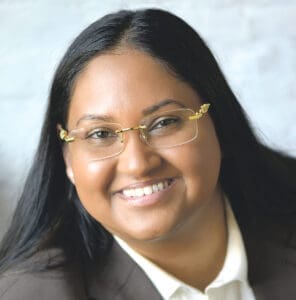
Siobhan Matty recalls her father’s commentary when Paul Marchese, director of Business Development for St. Germain Investment Management, suggested she join the firm her dad served as president.
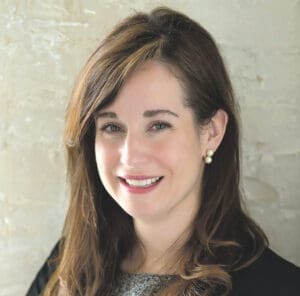

“His response was, ‘you can hire her — I can’t,’” she said with a laugh, adding that, eventually, he did, suggesting that her strong social skills would translate well into work as a financial advisor — and work within the community as well.

Turns out, he was right about all that.

Indeed, Matty has established herself as an advisor with a strong ear, and also one with a big heart, volunteering her time, energy, and talent to several institutions and causes.

“Siobhan’s advancement in this field is a direct result of her earnest and compassionate nature,” wrote Mary Orr, media specialist for Trinity Health Of New England, who got to know Matty when she became friends with her daughter. “She gets to know her clients as people with needs, not only as the individual they are, but also with needs that may change as they age due to illness, divorce, or loss of a loved one.”

When asked what she liked about her work, Matty was direct. “I like helping people; it’s that simple — knowing what they have and what they need to do. It’s not about ‘what’s the hot stock?’ — and you do get asked that sometimes. I tell them, ‘that’s not what we’re doing.’”

While listening to her clients and helping them meet their financial goals, Matty is also involved in the community on many levels.

She currently serves as a board member and a development committee member for Glenmeadow Retirement Community and as a board member and marketing committee member for the Springfield Public Forum. She has previously served on boards for the Ronald McDonald House in Springfield and New Haven, Conn., the United Way of Pioneer Valley, and Link to Libraries.

She also volunteers with Junior Achievement of Western Massachusetts, most recently participating in the organization’s 20th annual Stock Market Challenge, and as a celebrity bartender at the agency’s recent fundraiser.

Giving back has been a pattern throughout her life and career. Indeed, following the suicide death of a high school friend, she worked with that friend’s mother to organize the Kayla Rae Clark Walk to raise money to support the addiction recovery program at the former Providence Behavioral Hospital in Holyoke.

That’s just more example of how Matty has always focused on making a difference in the lives of others.

—George O’Brien