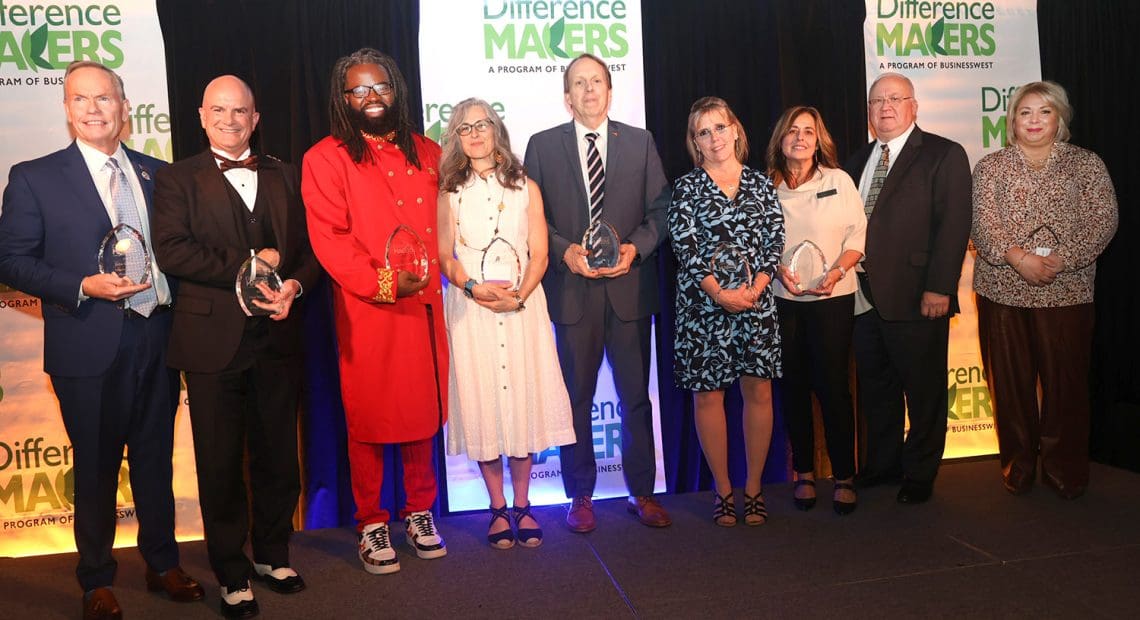
Class of 2025








President and CEO, Monson Savings Bank
He’s Always Put the Emphasis on Team — and Teamwork

Dan Moriarty
Photo by Bob Zemba, Simple Truth Imaging
Dan Moriarty will be the first to acknowledge that he goes heavy on the sports terms and comparisons between the athletic field and the workplace, especially when it comes to the power of teamwork.
Make that really heavy.
But it’s understandable, and for many reasons.
Moriarty was a star athlete at Monson High School and later at Providence College, excelling at soccer. And he remains an athlete; he’s competed in several marathons and half-Ironmans (including the one in this region), as well as a full Ironman, which involves a 2.4-mile open-water swim, a 112-mile bike ride, and a 26.2-mile run (a full marathon). A few years back, he bicycled some 60 miles between Monson Savings Bank’s seven locations, a trek he called the ‘Tour de Branches.’
In the small-world department, he and Mike Rouette, executive vice president and chief operating officer at MSB, were teammates on the Monson High soccer team. In fact, they both scored goals in a 2-1 win over Monument Mountain in a 1984 game that propelled the team to the regional finals.
So, Moriarty certainly comes from a sports background.
And with that experience, he knows the full value of teamwork and understands that it’s more than a catchphrase managers will use to get employees to pull in the same direction.
Indeed, Moriarty stresses that, whether on the athletic field or in the workplace, individuals can excel and score goals (either figuratively or literally), but teams win games and accomplish great things together.
“Mike and I will sometimes maybe overuse the analogies from sports, but the best teams are the ones that have the best teamwork, and not necessarily the best players,” he said, adding that this the mindset he works to instill from the top, while also acknowledging that he has some pretty good players.
In keeping with this mindset, when called to inform him that he had been named a Difference Maker for 2025, he said simply, “I’m honored, but I’d rather give it to the team here.”
It is this ability to promote teamwork, while fostering a philosophy of giving back and getting involved, that makes Moriarty worthy of this award.
“Dan exemplifies a culture of support and community giving,” said Dodie Carpentier, first vice president and Human Resources officer at MSB, who nominated Moriarty for the Difference Makers award. “Leading a community-focused bank, he has overseen contributions of approximately $230,000 to local nonprofits this year, with bank staff collectively volunteering around 1,700 hours of their time. Over the past five years, MSB has supported 420 organizations, donating more than $1 million, and collectively volunteering more than 10,500 hours of time.
“Dan himself sets a powerful example, dedicating approximately 200 hours annually to nonprofit work, embodying the bank’s commitment to community involvement,” she went on. “As a member of the bank’s community outreach and community reinvestment committees, he actively fosters initiatives that align with the needs of the local community, encouraging his team to engage deeply and give back. His leadership reflects a genuine dedication to building stronger, more supportive communities.”
Claire Clini, owner of Professional Paralegal Services and a long-time MSB board member, and, before that, a corporator, agreed.
“Mike and I will sometimes maybe overuse the analogies from sports, but the best teams are the ones that have the best teamwork, and not necessarily the best players.”
“He’s a caring, compassionate individual, and he’s perhaps not the stodgy model of a bank president of years ago,” she explained. “He’s very transparent with the board and other employees relative to discussing his ideas, and certainly with the board, he encourages conversation relative to the strategy and the broad mission of serving the local community and the customers. I find that open communication to be refreshing, interesting, and very positive given what’s going on in the world today.

Like his former Monson High soccer teammate (and now colleague at Monson Savings Bank) Mike Rouette, left, Dan Moriarty says he understands, and preaches, the importance of teamwork.
Photo by Bob Zemba, Simple Truth Imaging
“He’s always willing to give his time and his talent with a lot of local organizations, including several nonprofits,” she went on. “And I think that’s a quality to be admired by others.”
These comments explain why Moriarty will invariably use ‘we’ instead of ‘I’ when talking about anything at the bank, why he’s looked upon as a mentor and role model, and why he’s a true Difference Maker.
Goal Oriented
You might say that sports — and community involvement — run in the family.
Indeed, the soccer field at Monson High, home to the Mustangs, is named in honor of Moriarty’s grandfather, Robert.
“He was a great educator and coach in Monson; he started sports in Monson, so he was well-respected in a small community,” he said. “He was a coach from the ’20s to the ’60s, and he was an inspiration because he gave everyone an opportunity to succeed, and with the students and athletes who needed help, he would spend more time with them; he was their first real mentor.”
Moriarty said he has tried to follow his grandfather’s — and parents’ — lead throughout his professional career, which started at the accounting firm Coopers & Lybrand, now PWC, where he stayed a few years before coming to a realization.
“You have to let your team know that, even though there are people in positions that may have more responsibility, it’s still a team effort — no one’s better than anyone else here at the bank.”
“I felt like public accounting just wasn’t my style because you’d just go into a company for two or three weeks and do audit and consulting work with them, and then you would move on,” he explained. “You never really had a chance to help contribute to the business.”
His career took him to a few private companies, including Aetna and what was Rehab West, now HealthSouth, and then Unicare.
“But I kept feeling the same thing — that I wasn’t contributing to the overall success of an organization,” he went on, adding that, when he saw that Monson Savings Bank was looking for an account manager, he saw an opportunity to change that equation.
Unfortunately, he didn’t get the job. Fortunately, the woman who did — who, coincidentally, worked with him at Unicare — became frustrated as the bank went through a conversion and decided to leave, letting Moriarty know the job was open again.
“I told her, ‘it doesn’t sound like a great role if you’re leaving.’ But it was my hometown, so I decided to take a chance,” he recalled.
Over the years, he moved up in the ranks, with titles ranging from controller to senior vice president and chief financial officer, and eventually, president in 2020, followed by president and CEO in 2021.
As he discussed how he manages, Moriarty described himself as a servant leader.

At Monson Savings Bank, Dan Moriarty has fostered a culture of teamwork and giving back.
“I’ll do anything from the menial task of cleaning the vestibule, blowing out leaves, to leading the executives on complex situations, loan opportunities, and market-expansion opportunities,” he said, adding that, in all cases, he tries to lead by example and set a tone.
Elaborating, he said he sets this tone by being transparent and empathetic while also helping employees with the challenging assignment of balancing work and life.
“I try to set reasonable goals and expectations, but also let them know that I support them in any way I can, without getting in their way of accomplishing what they want to do,” he said, crediting his wife with reminding him, early and often, that he needs to listen and be open to new ideas.
“And that’s an enjoyable part of my job,” he went on. “I work with tremendously intelligent people who have great ideas, which makes it a really good team environment here.”
He Knows the Score
Throughout his tenure, Moriarty has stressed community involvement, said those who know him, and he has set the tone personally.
Indeed, he has been involved with many nonprofits, causes, institutions, and industry groups. The long list includes his church, St. Patrick’s in Monson, and the Monson Free Library. It also includes several nonprofits, including Link to Libraries (LTL), I Found Light Against All Odds, and the Community Foundation of Western Massachusetts, as well as Baystate Wing Hospital, the East of the River Five Town Chamber of Commerce, the Western Massachusetts Economic Development Council, and the Massachusetts Bankers Assoc. He was also recently asked to be on the board of the Healing Racism Institute of Pioneer Valley.
As he talked about them, he used ‘I’ and ‘we’ interchangeably, meaning there is often not a distinction between himself and the bank. That’s especially true with nonprofits such as LTL and I Found Light, where he plays a role himself, but the bank supports those causes as a company.
Moriarty said he says yes to requests to get involved whenever he can, and often, these yeses involve organizations focused on food insecurity, education and literacy, financial literacy, healthcare, and more.
And while giving back and fostering a culture where others do as well, he is always working to take the good players he has at the bank and create an ever-better, ever-stronger team.
When asked how he does that, he said there are many things that go into that assignment.
“You have to let your team know that, even though there are people in positions that may have more responsibility, it’s still a team effort — no one’s better than anyone else here at the bank,” he explained. “And you must stress that we all celebrate when we achieve things, but we all have to take responsibility for our actions and show appreciation, the best that we can, to the organization and the employees.
“You can’t have silos in your organization, where one department thinks it’s better than another department,” he went on. “You remove one department in the organization, and the organization is going to be weak.”
He put an exclamation point on his comments about teamwork and teammates by saying, “it’s a team effort. I couldn’t achieve any of this without the incredible team at Monson Savings Bank. Their unwavering dedication inspires me to strive for excellence. It’s their deep commitment to our communities and customers that keeps me focused and driven.”
When asked what he thinks about biking 56 miles, running 13 miles, and swimming just over a mile (a half-Ironman), Moriarty said his mind will wander in several directions.
“I think about a lot of things — family, friends, business — but then, when you get toward the end, it’s a soul-searching experience; you’re pretty close to God at that point.”
He also thinks about how to be a better manager and leader, and often comes back to his wife’s reminders about communicating and, especially, being a good listener.
He’s already good at that, but he’s committed to becoming better, which makes him a good teammate — yes, there’s that word again. And it’s just one of the things that makes him a Difference Maker.
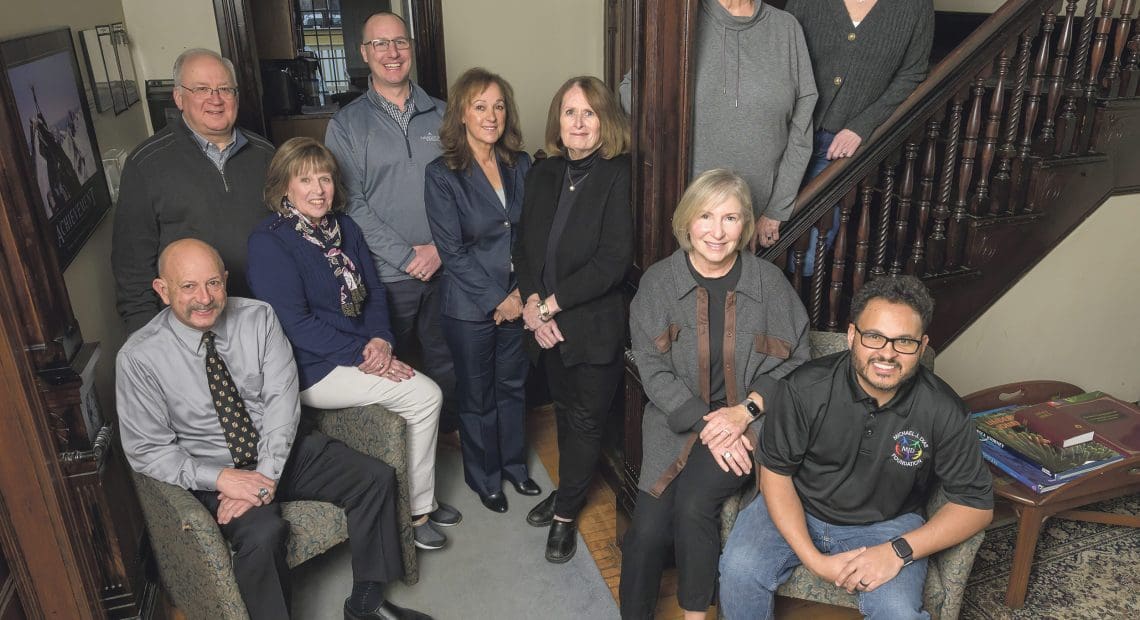
A Parent’s Darkest Hour Has Become a Beacon of Light and Recovery
Michael J. Dias Foundation
Photo by Bob Zemba, Simple Truth Imaging
Michael J. Dias was a smart kid — an athlete and pianist who excelled in high school and college. He didn’t fit the stereotype of a drug abuser.
So, when he took his life after struggling with steroid addiction, his mother, Grace, had to know why. So she got in touch with Michael’s friends, and what she heard shocked her.
“It turns out he was on massive amounts of steroids. He tried to bulk up, and there were a lot of characters at the gyms selling that stuff,” she told BusinessWest, adding that she also found out he was selling to support an ever-more-desperate habit.
“It was a rude awakening. The thought process in society is that the drug users are kids that grew up in the streets of Springfield that were homeless, that didn’t have good families, didn’t have the right upbringing. Well, we lived in a 3,200-square-foot home in Ludlow. My kids had everything. And they were great students, both of them. So that didn’t make sense.”
Around the same time, Grace’s nephew was struggling with addiction, and the family started a support group for people in similar situations, then raised funds to create awareness in schools. Later, with her sister away on a trip, her nephew wound up detoxing in her house, then wanted her to take him to a sober home in Worcester.
“I dropped him off in this house that was disgusting. People were smoking in there; the house was filthy. I left there crying, thinking, ‘I just left my nephew in a space that I wouldn’t leave my dog in. How is he going to get better in a place like that?’
“We thought, ‘that doesn’t happen in our little community. My children couldn’t possibly know about that world.’ But it’s everywhere.”
“So, on the way home, I had this bright idea — I don’t know, they come to me at times — that we should start a foundation. And we should open a sober house.”
So a small group — Dias and her sisters, plus a few friends — set about raising money and wound up buying and fixing up a two-story home in Springfield for around $40,000, all the funds they had. In 2014, Michael’s House opened as a haven for men in the early stages of addiction recovery. There, she explained, they enjoy the support of a community of peers, guided by staffers who understand the path to recovery, in an atmosphere of accountability. Residents are encouraged to find employment and pay a modest rent.
And that’s how the foundation’s story begins — but not remotely where it ends. We’ll tell the story in a linear fashion, with every step along the way demonstrating how the Michael J. Dias Foundation has been, and continues to be, worthy of the title Difference Maker.
Tragedy into Victory
Katie and Ed Wilczynski were among the earliest members of the Michael J. Dias Foundation board. Like Michael, their son, Sean, grew up in a close-knit family in Ludlow.
“We were churchgoing people. He was involved in Boy Scouts and travel sports. We were together all the time as a family. He was very active in school,” Katie said. But life can take some sad, unexpected turns, and Sean’s turned quickly into painkiller addiction.
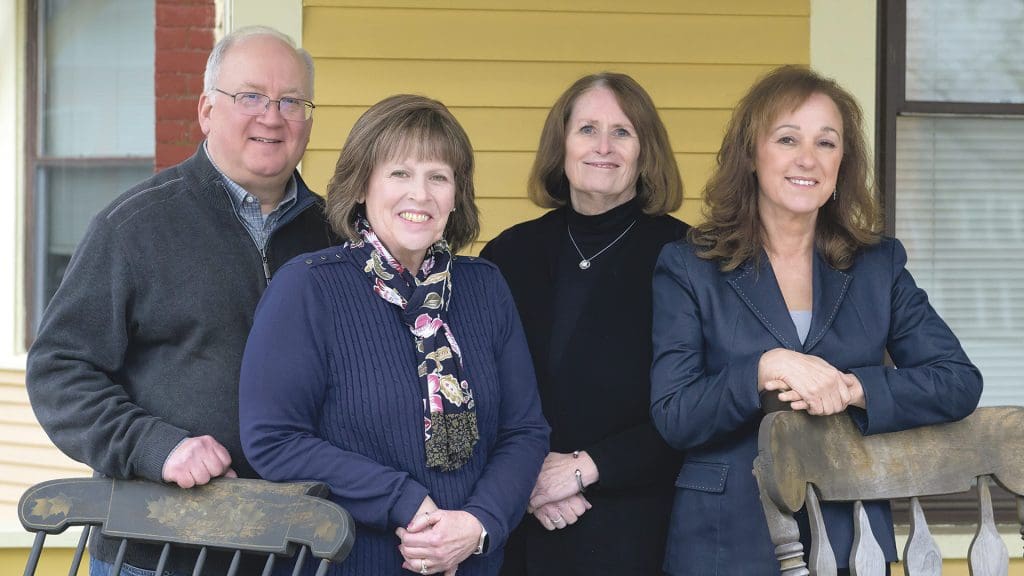
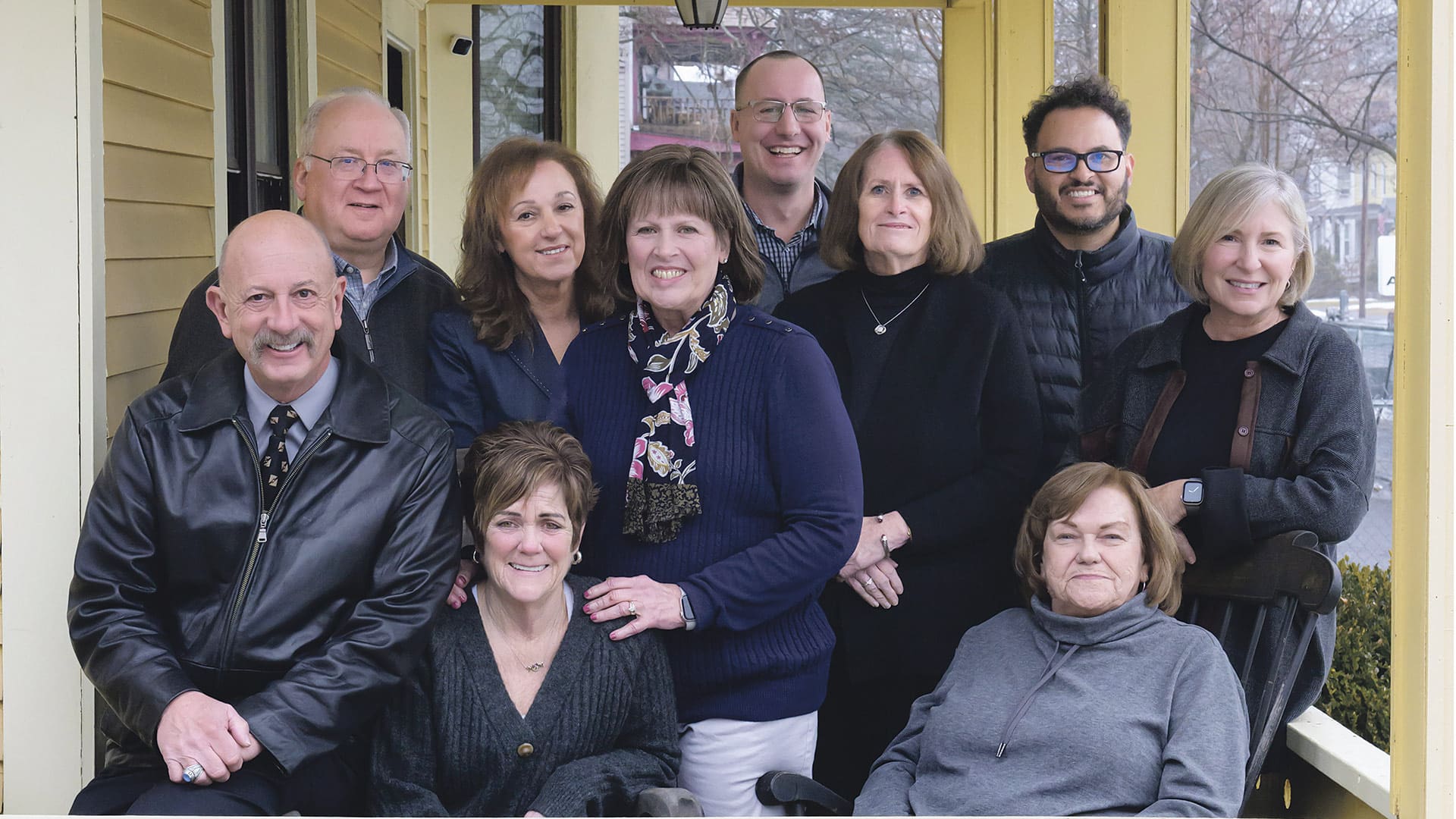
Michael J. Dias Foundation board members (from left) Ed and Katie Wilczynski, Mary Ellen Metzger, and Grace Dias.
Photo by Bob Zemba, Simple Truth Imaging
“Somewhere along the way, he injured his back and mentioned it to a classmate, and the classmate said, ‘oh, I’ve got something that might take the edge off of that.’ We think that’s where it started,” Ed explained. “He was a very talented hockey player, and he had aspirations of going on and doing more with his hockey. He was a driven, committed, very smart kid.”
Katie said society has become much more open to talking about the pervasiveness of drug addiction — and the fact that it doesn’t discriminate.
“We thought, ‘that doesn’t happen in our little community. My children couldn’t possibly know about that world,’” she said. “But it’s everywhere. So our big issue, in trying to help Sean when we recognized he had a problem, was trying to understand the world of recovery and how it works and detoxing and trying to find sober homes and treatments and how to work insurance.”
Thus began a series of sober homes (some effective, many not) and relapses for Sean, who eventually succumbed to addiction and lost his life. But the experience gave the Wilczynskis valuable insight as the foundation developed Michael’s House, especially when it came to life outside it. In short, Sean had struggled outside those residences.
“We started recognizing gentlemen leaving our houses oftentimes fell into that same category,” Katie said. “One year just wasn’t enough to get a good, stable job to be able to financially sustain them or catch up on childcare payments, or reconnect with family and rebuild the connections that had been damaged by some of their drug use. So we recognized, whatever our second home would be, it needed to be a transitional home that would give our guys extra time if they felt they needed more stability in one area of their life.”
An anonymous donor’s generosity in late 2017 paved the way for Sean’s Place, the foundation’s transitional sober home, which opened in early 2019. This residence offers a social model for sobriety, creating a secure environment for residents to support each other in a less-structured environment than Michael’s House.
“Every guy that has ever relapsed and left our houses, I’ve never heard any of them say, ‘I didn’t like it there; I would never go back.’ Normally, they would call me and thank me for the chance they had to be here because, to them, it was a gift.”
“We also felt that some of the guys leaving Michael’s House graduated from the program, but the only place they had to go was back into the environment they came from, back into the neighborhoods, with the same old friends who may not be supportive of their new lifestyle, or are still using themselves,” Ed said. “This just provided an extra step for them to set up some goals and continue to work on their recovery, but in a safe environment.”
In 2020, the foundation acquired a third sober-living residence called Christian and Brian’s House, which operates much like Michael’s House, serving as a supportive and nurturing community for men in the early stages of their recovery. The purchase was made possible through a combination of foundation funds and a generous contribution from the Forest Park Project, a nonprofit organization dedicated to raising funds in memory of Christian Diaz and Brian Metzger, two compassionate, charismatic friends who lost their lives to addiction.
Mary Ellen Metzger, Brian’s mother and another Michael J. Dias Foundation board member, said her son’s recovery path was frustrating and, in the end, fruitless.
“Our journey took us all over Massachusetts, to a lot of sober homes and a lot of programs. And, much like Katie found, some places were just big houses where they took your rent. There was no program whatsoever. In our foundation, we follow a 12-step recovery program. It’s clean, it’s sanitary, it’s safe, it’s a structured environment, and it provides a support system that fosters recovery as people navigate that difficult time in their lives.”
The Forest Park Project has been a great comfort to Mary Ellen. “It said to me that his friends remember him as more than his problem. And all of us in this foundation realize that these young men and women who are cursed with this disease of addiction, they didn’t choose it, and they are much more than their disease.
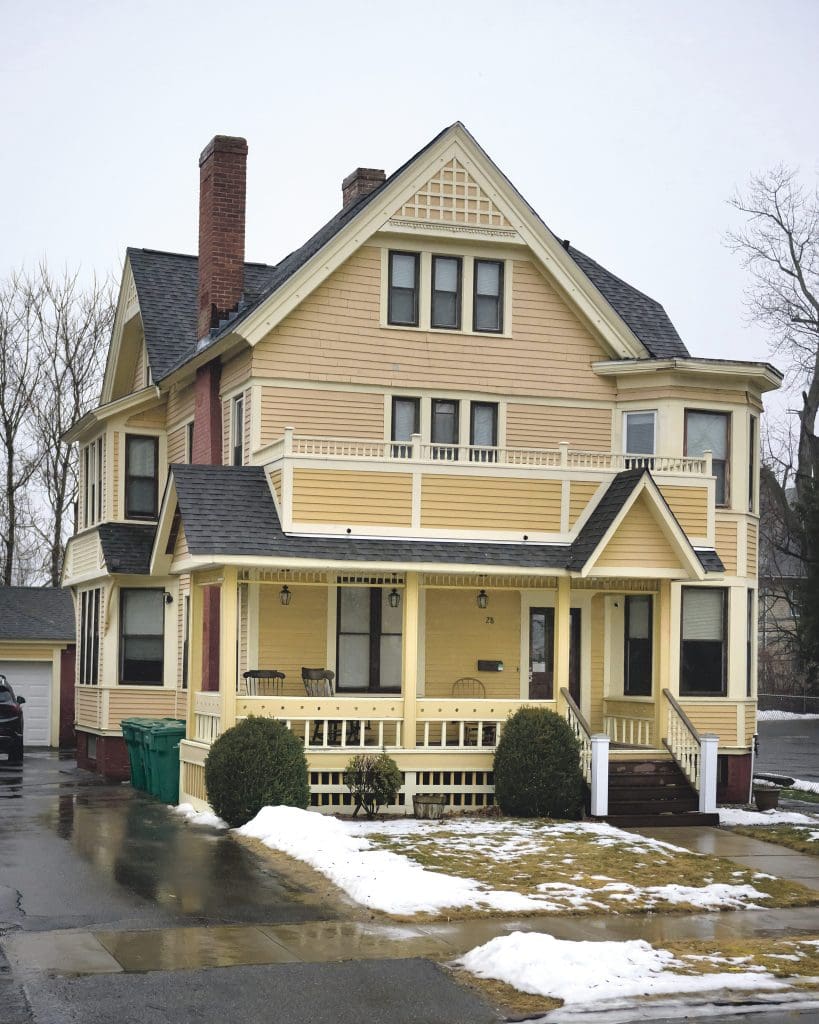
Michael’s House was the first of three (soon to be four) sober homes opened by the Michael J. Dias Foundation.
Photo by Bob Zemba, Simple Truth Imaging
“The message isn’t that you’re a throwaway, like some sober houses where they don’t care what you do,” she added. “The message is, we know you’ve got it in you to succeed, and we’re going to help you to do that. We try to take people where they are and bring them forward.”
A Home for Women
Michael’s House, Sean’s Place, and Christian and Brian’s House have a combined capacity of 44 men — but no women. That will soon change.
The Michael J. Dias Foundation launched a $500,000 capital campaign last year aimed at funding the creation of a 16-bed sober home for women. So far, $214,000 has been raised, with generous contributions from individuals, businesses, and community leaders helping to propel the campaign forward. Donations can be made online at www.mdiasfoundation.org/capital-campaign.
The campaign’s chair, Dr. Megan Miller, an assistant professor of Obstetrics and Gynecology at UMass Chan Medical School – Baystate and an addiction-medicine specialist, is a big believer in the project.
“I am very well-versed in how addiction affects women,” she said. “Gender-specific care is so important, especially in the early stages of recovery. In terms of receiving gender-specific care for substance abuse, women are an underserved population in Western Massachusetts. There is a dire need for a women’s sober home here.”
Ed Wilczynski agrees. “We did a little research last year before we started the capital campaign. We found that, in Western Massachusetts, only 11% of the beds were female-focused. The rest of the state had 25% of the sober beds focused on females. From a statistical perspective, 32% of those seeking recovery assistance are women. There’s a big disparity with beds available — especially the safe beds that we aspire to. So we decided that was the time to at least start the journey.”
As for the foundation’s journey, Dias believes it has been guided by God in many ways, from the way the members came together to the way needed funding and gifts have emerged. She’s especially proud that the organization has never taken on debt, paying for each project with money on hand instead of financing the properties.
It’s a dedicated group, too. There are four paid employees, including Executive Director Karen Blanchard, and everyone else, including all the officers and board members, are volunteers. As Karen Wilczynski put it, “your heart has to be in this.”
It really is a family, Dias said, one that provides temporary families for men (and someday women) in need of such a structure.
“Every guy that has ever relapsed and left our houses, I’ve never heard any of them say, ‘I didn’t like it there; I would never go back,’” she added. “Normally, they would call me and thank me for the chance they had to be here because, to them, it was a gift.”
And relapses do happen, Ed Wilczynski said. That’s the nature of addiction, which these parents know all too well.
“However, when it has happened to some of our residents, we are one of the first calls they make after they get out of detox, that they want to come back to us,” he added. “They know we had something, and they want to come back and get that reinforcement and work with our group again and then go back out on their own.”
Metzger said her son’s story didn’t end in a good place — but his legacy certainly has.
“In the 10 years of going through that merry-go-round with him, this was the only type of program that was set up for success,” she told BusinessWest. “I think every person involved in our houses feels valued, like they’re something special. You can have hopes and dreams, and we’re going to support them. And we’re going to hold you accountable — because that’s what real life does.”

President and CEO, Naismith Memorial Basketball Hall of Fame
He’s Led the Shrine Through Crisis and onto Stable Footing

John Doleva
Photo by Bob Zemba, Simple Truth Imaging
John Doleva knows a little something about recognition programs.
Indeed, he’s president and CEO of the Naismith Memorial Basketball Hall of Fame, which, in addition to being a sports museum, annually inducts a handful of individuals and groups, across all levels of the game, into the shrine.
In fact, he’s the one who gets to call these people and let them know they’ve reached the pinnacle of this sport.
So when he was called to inform him that he was named a Difference Maker for 2025, the shoe was on the other foot, and he was both humbled and a little … well, reluctant.
“Why me? I’m just doing my job,” he asked.
Maybe. But this job, which he’s held since 2001, has been far more challenging — and even more rewarding — than he could possibly have imagined when he took it.
The rewards have come from overcoming those challenges, most of them financial in nature, and taking the Hall from a position where it didn’t know every two weeks if it could make payroll or if it would have to file for bankruptcy, or if it might be moved to another city, to where it is now: financially stable and with a secure future. In Springfield.
And most would say he isn’t just doing his job — he’s also been active in his community, especially regarding youth sports, childhood literacy, and other initiatives.
Jerry Colangelo, the former owner of the Phoenix Suns, long-time Hall of Fame board of governors member, and its current chair, has seen the transformative change at the shrine and credits Doleva with being the right leader at the right time.
“He’s always talked about how important the Hall of Fame is to the city of Springfield and the great interest he’s had, and the Hall has had, in promoting the city,” Colangelo told BusinessWest. “When you look at the progress the Hall of Fame has made, I give a great deal of credit to John Doleva. He’s been a great leader, and I think he’s a very valuable asset for the city of Springfield. The Hall of Fame is in the best financial condition it’s ever been in, by far, and the future looks great.”
Frank Colaccino, another long-time board member, agreed. “John doesn’t waver — he’s a hard-working guy; he doesn’t give up,” he said. “He’s one of the key reasons this organization is where it is today. John is the engine that makes it go.”
Looking back, Doleva told BusinessWest that it was never his intention to stay at the Hall long enough to have people describe him in such terms. Indeed, he said his plan was to stay a few years and then return to the sporting-goods world from which he came.
What kept him from going back, what kept him at the Hall, was the enormity of the challenge and opportunity to lead the shrine through it.
“When you look at the progress the Hall of Fame has made, I give a great deal of credit to John Doleva. He’s been a great leader, and I think he’s a very valuable asset for the city of Springfield.”
“I wouldn’t call it a thrill, but it was the thrill of managing something that that was seemingly impossible,” he said. “It was a like a firefight; you get into it, and you’re making progress — you can feel it, you can see it. It took a long time, and there were a couple of stumbles like the 2008 recession. But I enjoyed seeing the Hall reposition itself — that was exciting to me.”
Over the past 20 years or so, the Hall has gone from $14 million in debt to a $4 million endowment. Doleva acknowledges both that the latter is certainly not enough, and one of his goals is to greatly grow that number, and that the turnaround at the Hall was not the work of one man.

John Doleva says the successful capital campaign accompanying a recent renovation of the Hall exemplifies its stronger financial footing and status within the basketball community.
Photo by Bob Zemba, Simple Truth Imaging
But those who know him say it’s Doleva’s leadership and ability to build vital relationships that were weak or non-existent that made it possible.
And that’s one of many reasons why he’s a true Difference Maker.
Not a Slam Dunk
As noted earlier, Dovela came from the sporting-goods world, specifically Spalding, then based in Chicopee at the site of what is now a Callaway golf-ball manufacturing plant.
He was 25 when he joined the company as assistant product manager in the early ’80s, eventually rising to vice president and general manager of the company’s Sporting Goods Group. He said his years working for President George Dickerman, noted for being a tough, demanding manager, were difficult, but ultimately invaluable learning experiences.
“Those first few years, I went through the wringer with him … there were lots of times when I said, ‘this is crazy, I’m going to quit, I’m going to quit, I’m going to quit,’” he recalled. “But the lightbulb went off one day that what he was doing was preparing those who wanted to be prepared to be really good managers.
“You were always ready with your numbers, for instance, and you had two or three options for every question you anticipated him asking,” he went on. “And I think that really helped me with my business thinking.”
Doleva said those years at Spalding under Dickerman certainly helped steel him for what was to come at the Hall, which he joined in 1999 as vice president of Marketing, with the encouragement of Dickerman, one of the many leaders forced out when Spalding was acquired by KKR in 1996. (Doleva took a package from Spalding and worked briefly for a technology company in the Berkshires before coming to the Hall.)
Just a few years later, when then-president Don Gibson left, Doleva was placed in the role of chief operating officer, and a year later, he was named president and CEO and thrust into what could only be called a crisis.
“Those first few years, I went through the wringer with him … there were lots of times when I said, ‘this is crazy, I’m going to quit, I’m going to quit, I’m going to quit. But the lightbulb went off one day that what he was doing was preparing those who wanted to be prepared to be really good managers.”
Indeed, the new Hall of Fame on the city’s riverfront was opening after a failed capital campaign and amid $14 million in debt that suffocated the institution.
Colangelo remembers Doleva calling him at the height of this crisis in 2002, asking for advice, and soliciting his help. Colangelo responded by pledging financial support and telling other NBA owners — “I didn’t ask them, I told them” — to support the cause as well.
The money raised by the NBA provided vital breathing room, but the crisis was far from over, and huge amounts of debt remained. The firefight, as Doleva described it earlier, would continue for years.
Describing how he and his team were able to steer the Hall out of serious debt, onto stable financial footing, and raise more than $30 million during a recent capital campaign to renovate the shrine, he said it’s been about building relationships — with the NBA, the NCAA, high-school basketball, other bodies, and especially the hall of famers themselves.
“When I first came to the Hall, we’d have enshrinement, and we’d invite existing hall of famers back, but we wouldn’t pay for their flights, we wouldn’t pay for their hotel, we wouldn’t pay for their ticket to enshrinement,” he explained. “And the return was very low; I remember one year we had five hall of famers return and a class of three. It wasn’t a very crowded room.

John Doleva, left, with former UMass coach John Calipari at his induction ceremony, has led the Hall through times of both growth and extreme challenge.
“The first thing I said when I took over — and this is when we had all that debt and no money — is that ‘we have got to offer to pay for hall of famers to come back, with a guest; we’re going to pay for their airfare, we’re going to pay for their hotel and their ground transportation … we’re going to treat them like hall of famers. And we’re going to bet that this will pay off in the future because they will get more involved.’”
And they have, with 58 hall of famers coming to Springfield for enshrinement ceremonies last fall, joining the 13 being inducted. Meanwhile, these inductees have become foot soldiers, as Doleva called them, acting as ambassadors for the Hall and taking part in its many events around the country.
Nothing but Net
This brings Doleva back to something he said earlier about seeing the Hall reposition itself over the years “from a place that had a lack of knowledge and lack of respect from the basketball community to something that was meaningful and respected and, in fact, revered.
“We’ve changed the minds of a lot of people in basketball about what the Hall is, what it represents, and what kind of quality image it has in the game,” he went on, adding that this work never stops.
While repositioning the Hall, Doleva has also become quite involved in the Western Mass. community. He’s active with the Greater Springfield Convention and Visitors Bureau, and also with efforts to create the annual Hoophall Classic, one of the nation’s largest and most prestigious high-school basketball tournaments, and Hooplandia, the annual 3-on-3 basketball tourney staged at the Big E, with select division championship games at the Hall.
Meanwhile, he has also been involved with the nonprofit Link to Libraries (LTL) — as a reader, program sponsor, and youth mentor — as well as the Greater Springfield YMCA, Springfield College, the Red Cross of Pioneer Valley, the Springfield Rescue Mission homeless shelter, and other area agencies.
“John is a dynamic, hardworking, caring, and humble man. He excels in many things, including his work at the Hall of Fame, but more importantly, he excels at being a truly wonderful and generous human being,” wrote Susan Jaye Kaplan, co-founder of LTL, as she nominated Doleva for the Difference Makers award. “He goes the extra mile each day, and not just in his work-related duties. He cares greatly for his Western Mass. community, and it is evident on a daily basis.”
Getting back to his role as the one who calls inductees with the good news, Doleva said that’s a bittersweet day — because he’s also the one who calls those who came up short in the annual voting.
And there are sometimes tears from those in both camps, he said, adding that this makes the day somewhat difficult.
As for the phone call he received from BusinessWest … there were repeated attempts to minimize his contributions to the Hall, the game, the city of Springfield, and this region by simply saying, “I’m just doing my job.”
But Doleva has been doing much more than that. He’s been a real leader and a true Difference Maker.

He Started a Bicycle Trek That Honors the Fallen and Impacts the Living
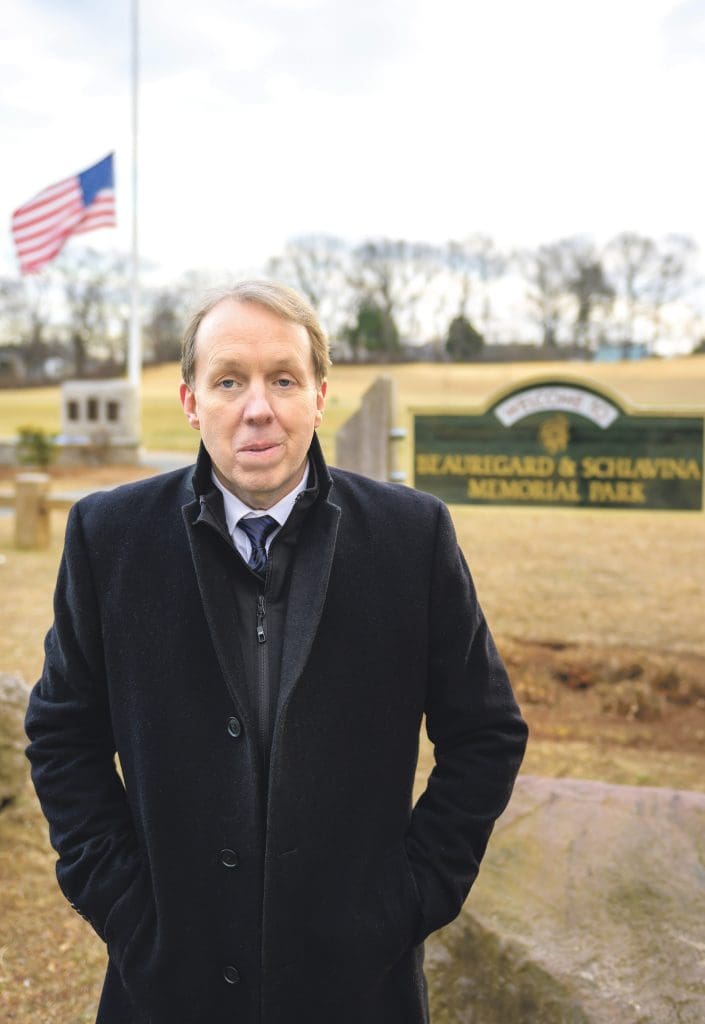
John Delaney
Photo by Bob Zemba, Simple Truth Imaging
John Delaney remembers, in vivid detail, the day his colleague, Springfield Police Officer Kevin Ambrose, died.
It was June 4, 2012, and Delaney was having lunch with his wife when his phone started blowing up. Ambrose had been shot in the line of duty, responding to a domestic disturbance.
“I raced to Baystate Medical Center and went into the ER, and when they saw me coming in, they directed me right to the room where a team of doctors and nurses were working on him,” Delaney recalled. “When I got in the room, Kevin was lying there. And within 30 seconds to a minute, the doctor pronounced him dead. It was kind of tough to take.”
He also recalled listening to dispatch from the hospital parking lot, to all the 911 calls still pouring in. “The world didn’t stop, and the police officers couldn’t stop just because they just lost one of their own.”
Delaney was tasked with planning Ambrose’s funeral — attended by some 5,000 police officers — and a celebration of life afterward, but he and some colleagues wanted to do something more to commemorate their friend. The death later that summer of Westfield Police Officer Jose Torres, who was struck by a truck in the line of duty, got them thinking about a broader event to honor fallen officers. “My friends and I were bike riders, so we said, ‘why not do a bike ride in their honor?’”
They planned a route from Springfield to Boston and figured maybe 50 people would participate, but about 170 signed up, and the Boston Police Department helped out by closing off the route to cars from Boylston Street to the State House.
“I’m riding along guys that I’d worked with for years, state troopers, police officers from around Western Massachusetts, and they’re all crying, strong guys that really show no emotion while they’re working, but they showed emotion that day,” Delaney recalled.
The initial organizers — Delaney, Officers Mike Goggin and Eddie Vanzant, and Gary Kennedy, who owned Competitive Edge Ski & Bike — knew this should be a regular event, but what they didn’t know was that, 14 years later, Ride to Remember would grow into one of the biggest cycling events in Massachusetts, drawing more than 500 riders per year and raising hundreds of thousands of dollars for worthy causes while honoring the memories of local fallen heroes from the ranks of police officers, firefighters, and corrections officers, as well as the families that must carry on after they’re gone.
“Every year, we ride for somebody to make sure that their family becomes part of the Ride to Remember family. And we let them know that we’re never going to forget. So every year we do the ride, we remember their names; we have signs with their pictures emblazoned on them along the route,” Delaney said. “We’re making sure that the average citizens that we protect and serve every day know that these cops gave their lives to protect them.”
Service in His Blood
Delaney understands the risk, sacrifice, and sometimes deep loss that come with public-service careers.
“I guess public service was in my blood. My grandfather died fighting a fire in Springfield. He was an acting deputy chief, but a captain in one of the station houses. He was always one of the first ones in, and he died fighting a fire. I never met him. That was way before I was born.
“And then my dad died when I was 10. He was in the Navy, also serving the public and the safety of citizens. So I guess that ran through my blood.”
“I’m riding along guys that I’d worked with for years, state troopers, police officers from around Western Massachusetts, and they’re all crying, strong guys that really show no emotion while they’re working, but they showed emotion that day.”
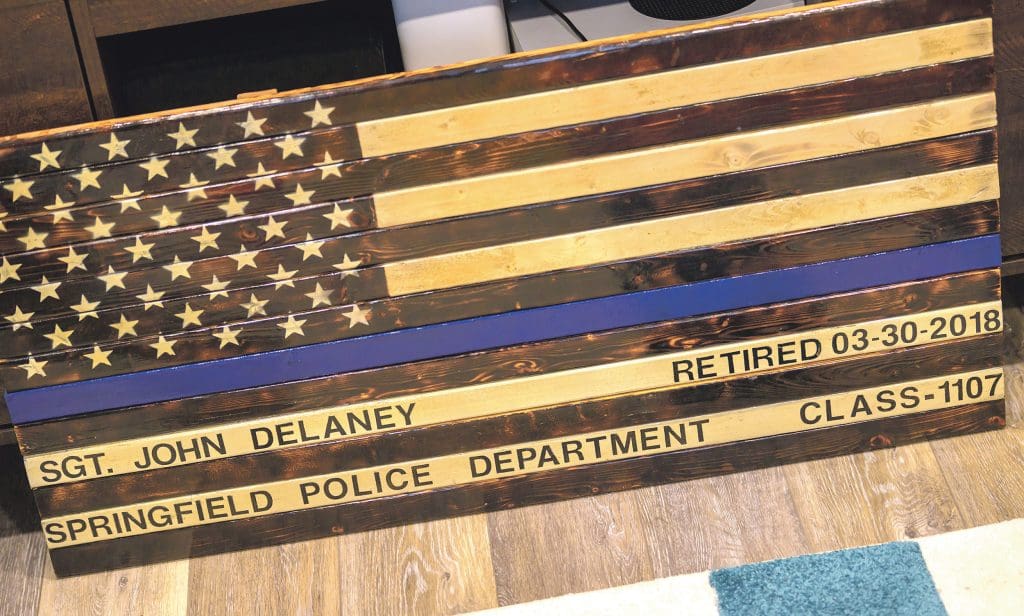
Delaney retired as a Springfield Police sergeant seven years ago — again, acutely aware that many officers don’t make it to retirement — and continues to teach at American International College. “I’m teaching young kids what it’s like to be a cop, hoping to mold them to become good police officers. And I continue on with this ride to make sure people don’t forget. That’s the only reason why I do it.”
He credits his wife, Gabriela, for being his “right hand,” not only helping with copious planning on logistics, supplies, and more, but grounding him when he becomes stressed.
“Every year I do this, I say to her a month before the ride, ‘this is the last year; I can’t do it anymore,’ because it’s stressful to feed everybody, hydrate everybody, transport people, make sure people are safe. We can’t publicize the route because I fear something might happen to the riders because there are a lot of crazy people out there. A lot goes into this ride, and I don’t sleep the night before the ride, but I pedal every mile, every year.”
Seven years into retirement from the Springfield Police Department, John Delaney has remained deeply involved in Ride to Remember.
Photo by Bob Zemba, Simple Truth Imaging
Ride to Remember is no longer a one-way trek to Boston, instead embarking on a different round-trip journey every year, always starting and ending in downtown Springfield. This year, it will head to Hartford and back, not for the first time; other years have employed routes that head to Worcester or wind around Western Mass.
“As we’re planning the route, we have to go to every jurisdiction that we hit along the way to get permits, to let them know we’re coming,” Delaney said. “It grew from 170 to 500. That’s a lot of people on a bicycle. If you see it in person, it just goes on forever. We have police officers on motorcycles, escorting the whole way, and we never have to stop. All the local jurisdictions help out. They’re all on board, and they meet us at each border.”
But the riders do stop for at least four rest and refreshment breaks, and everyone stays together; it’s not a competitive event, but a communal one.
“You don’t have to be a cop, fireman, or corrections officer to do the ride. Everybody can do the ride. Our oldest person that does the ride every year is 85 years old, and they start at 16, 17 years old,” he explained. Three Peter Pan buses follow along, and if anyone can’t keep up or finish a leg, they can put their bike on a truck and get on the bus, where volunteers offer hydration and massages; an ambulance also trails the pack for more serious concerns. Those on the buses can rejoin the ride at any stop.
“It’s more than just a ride. It’s a powerful tribute to the dedication and sacrifice of our local law-enforcement officers and first responders who put their lives on the line every day.”
“These are weekend warriors; they’re not like Tour de France professional bikers. We only go 13 miles an hour, which is a conversational pace. I highly encourage people to take part in this. People come up to me after every ride and say, ‘this is one of the best days of my life.’”
That’s because they’re pedaling for a reason, he added. “There’s camaraderie. You’re riding alongside people you don’t know, most of whom are first responders, and they develop friendships as they’re pedaling along. And if you get a flat tire, Competitive Edge changes it in 30 seconds, like it’s a NASCAR pit stop.”
Mutual Aid
Ride to Remember, which takes place on Sept. 6 this year, charges just $200 to participate. A winter indoor event has been added in recent years, which takes place this year on March 2 at Scantic Valley YMCA in Wilbraham and costs $45. But corporate sponsorships, including PeoplesBank, Country Bank, AFC Urgent Care, and Domino’s Pizza, among other partners, are critical.
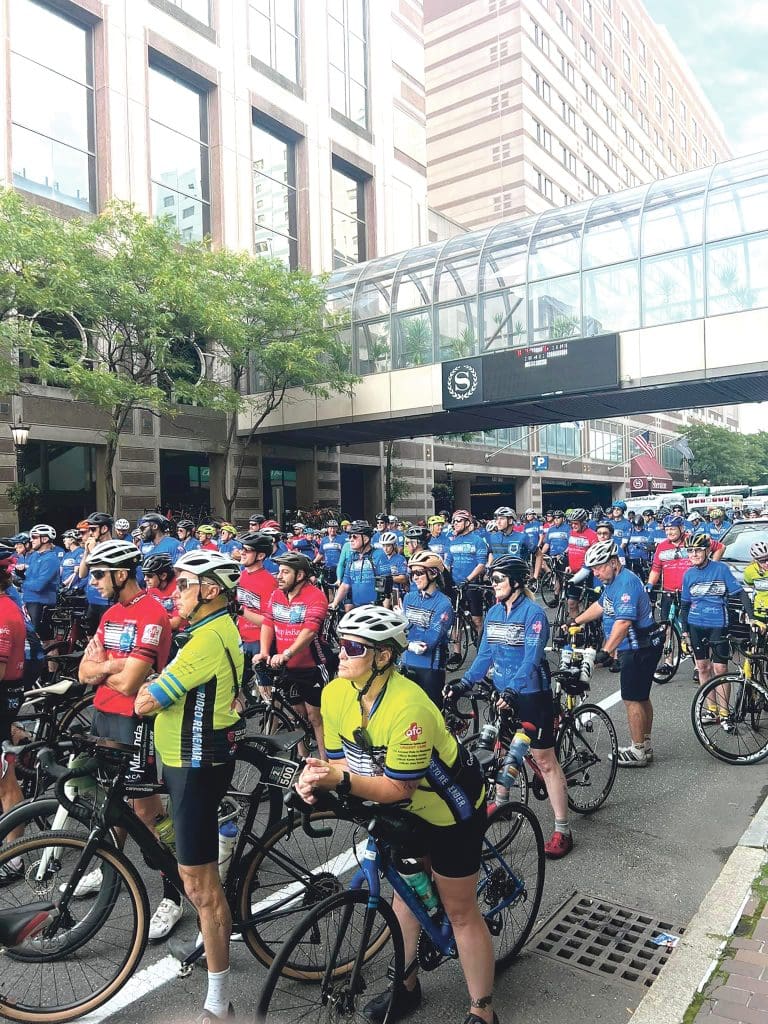
Riders gather in downtown Springfield, as they do at the start of every Ride to Remember.
Over the years, proceeds have supported many causes in the region, including Christina’s House, On-Site Academy, Square One, multiple police and firefighter memorials, several neighborhood playgrounds and soccer fields, and other community-based initiatives.
Shannon Mumblo, who founded Christina’s House and was honored by BusinessWest as a Woman of Impact in 2021, when she served as the nonprofit’s executive director, was one of three individuals who nominated Delaney as a Difference Maker this year.
“It’s more than just a ride,” she wrote. “It’s a powerful tribute to the dedication and sacrifice of our local law-enforcement officers and first responders who put their lives on the line every day.”
Those aren’t just words for Mumblo, who backs them up by organizing the ride’s 100-plus volunteers every year, Delaney said. “She gives them jobs, makes sure the rest stops are manned, helps collect the donated food … she’s a monster. She does everything, and with a smile on her face.”
With the support of people like that, as well as his dedicated wife and everyone else who contributes to the event’s success, it’s no wonder Delaney stressed, multiple times, that this Difference Makers honor isn’t his alone — not by a longshot.
And, again, the community impact is huge. Ride to Remember has supported Christina’s House — which takes in homeless mothers and their children and helps them return to independence — to the tune of about $250,000 over the years. Ambrose’s widow, Carla, chose that nonprofit as one of the ride’s supported causes because, Delaney said, Ambrose was a family man.
“I can remember when I was a younger cop, and we would come across women with kids sleeping in the bus station. We had no avenue … where do you take those people? It was definitely a void that needed to be filled in the community, and Christina’s House is filling it.”
As noted, other nonprofits have benefited from the ride as well. “We donate to a charity that helps police officers and counsels them through post-traumatic stress,” said Delaney. “If they witness a shooting or if they witness a baby dying, that weighs heavy on a cop’s shoulder. A lot of times, they have nowhere to turn, so we donate to that. I’m very proud of the charities that we donate to. All of them are based here in Western Massachusetts.”
He said the ride is deeply personal to each rider in their own way.
“A really good friend of mine, Sal Persico, was a police officer in Florida, and he came up here to live. I coached his daughters in soccer. He was my best friend; he was like my brother. He did every ride with me, but he died of a massive heart attack, taken way too early in life. I ride for him every year. His family is like my family.
“So every year, before the ride, I always give a little speech after a prayer, and I say, ‘the Ride to Remember means a lot to a lot of people. Everybody out here that’s riding, remember somebody that you’ve lost, that you’ve loved in life. It could be a father, uncle, grandmother, best friend, or the police officers. While you’re riding, remember that person. That’s what it’s about.”
Delaney still does plenty of riding on his own time. “My friends and I will go out and do 100 mikes a week. It’s just part of our nature.”
But even for those who can’t say the same, Ride to Remember is a very doable — and deeply meaningful — effort, one that truly makes a deep impact in the region. Just like the Difference Maker who helped start it because he wanted to keep some heroes’ memories alive.

CEO, Stand Out Truck
A Passionate Marketer and Mentor, He’s Helping to Raise Up Other Entrepreneurs

Mychal Connolly
Photo by Bob Zemba, Simple Truth Imaging
Mychal Connolly believes in entrepreneurship, but he also believes in learning and mentorship and absorbing the examples of success stories before him.
That’s why he’s fond of talking about the influences in his own life, like Yankee Candle founder Mike Kittredge, Vermont Teddy Bear founder John Sortino, Jelly Belly founder David Klein, and many others.
“I say this all the time: if you ever had the chance to speak to Mike Kittredge, you would know really quickly that it wasn’t about the candles when he sold for $500 million,” Connolly said. “You’ll know Mike Kittredge could have sold used chewing gum, and it would have been a $500 million used chewing-gum company. I loved that guy, man. And John Sortino’s the same way.”
But while he’s learned lessons about ideas, marketing, selling, and growing a business from those famous names, he’s also drawn inspiration from his adoptive father, Harry Connolly, who owned a pest-control business in their native Bahamas.
“I remember one night, the hotel that he was spraying forgot he was coming,” he said, and they left guard dogs roaming free — and Harry was badly hurt. “It was like a horror scene — there was blood everywhere. And you know, this man, the next night, was out spraying the homes he had lined up for that day. That made a serious impact on me.”
Connolly has gathered all these lessons — on hard work, dedication, innovation, and more — and applied them during an entrepreneurial career that actually began at age 9, when he would take some of the candy his grandmother brought back from trips to Florida and sell it to classmates in school.
But his first real business, launched in 2008, was Stinky Cakes, which offered practical gifts to new parents, most notably cakes shaped from diapers. As a result of his early success in business and marketing, he was asked to do some teaching, guest lecturing, and mentoring of young entrepreneurs by groups like Valley Venture Mentors and EforAll Holyoke.
One course was called the “100 Grand Plan,” which, as that name suggests, explains how to make one’s first $100,000. Among the keys to doing so, and one that is often overlooked, is marketing.
These efforts led to the creation of the Launch and Stand Out Agency, which is where Connolly learned about non-traditional advertising — including mobile, digital billboards, which became the basis of his current business, Stand Out Truck, which will celebrate five years in business on March 9.
That’s right. He started a very public-facing business on March 9, 2000.
“I never got to run my year-one business plan,” he recalled. “My year-one business plan was to completely figure out the owner-operator model. But on March 13, the world shut down.”
Which meant 2020, dominated by COVID, was a time of navigating challenges, pivoting, and putting into action all the lessons he had learned about business and marketing from the Kittredges and Sortinos of the world. He made sure he started out with enough capital to withstand some very soft months, and he found some creative avenues for his traveling billboard, like graduation messages for students whose ceremonies had been canceled.
Since that start, the company has steadily built a base of hundreds of clients, from local businesses to large, national brands, and even, in one case, President Biden, when he was pitching what would become the Bipartisan Infrastructure Law. And Connolly is planning to expand as well, possibly with a third truck and a larger team.
“Mike Kittredge could have sold used chewing gum, and it would have been a $500 million used chewing-gum company. I loved that guy, man.”
Meanwhile, he continues to mentor young people, most notably his son, Mychal Connolly Jr., — known to most as Mikey — who has been busy building his own first enterprise, Realistic CEO.
In short, Connolly Sr. has not only been an example of entrepreneurship, he’s helping others follow that path as well, benefiting not only their own careers and families, but the region’s economy. That’s the impact of an unconventional, charismatic, inspiring Difference Maker.
Realistic Plans
It’s also, as noted, the impact of a father on his oldest son’s entrepreneurial dreams.
The two of them co-authored a motivational book titled I Am a CEO. Realistic CEO after a high-school teacher told Mikey during a class project that his goal of becoming a CEO was, well, unrealistic. The book, illustrated by local artist DeAndra Roy, aims to inspire people to chase their dreams, no matter the odds.
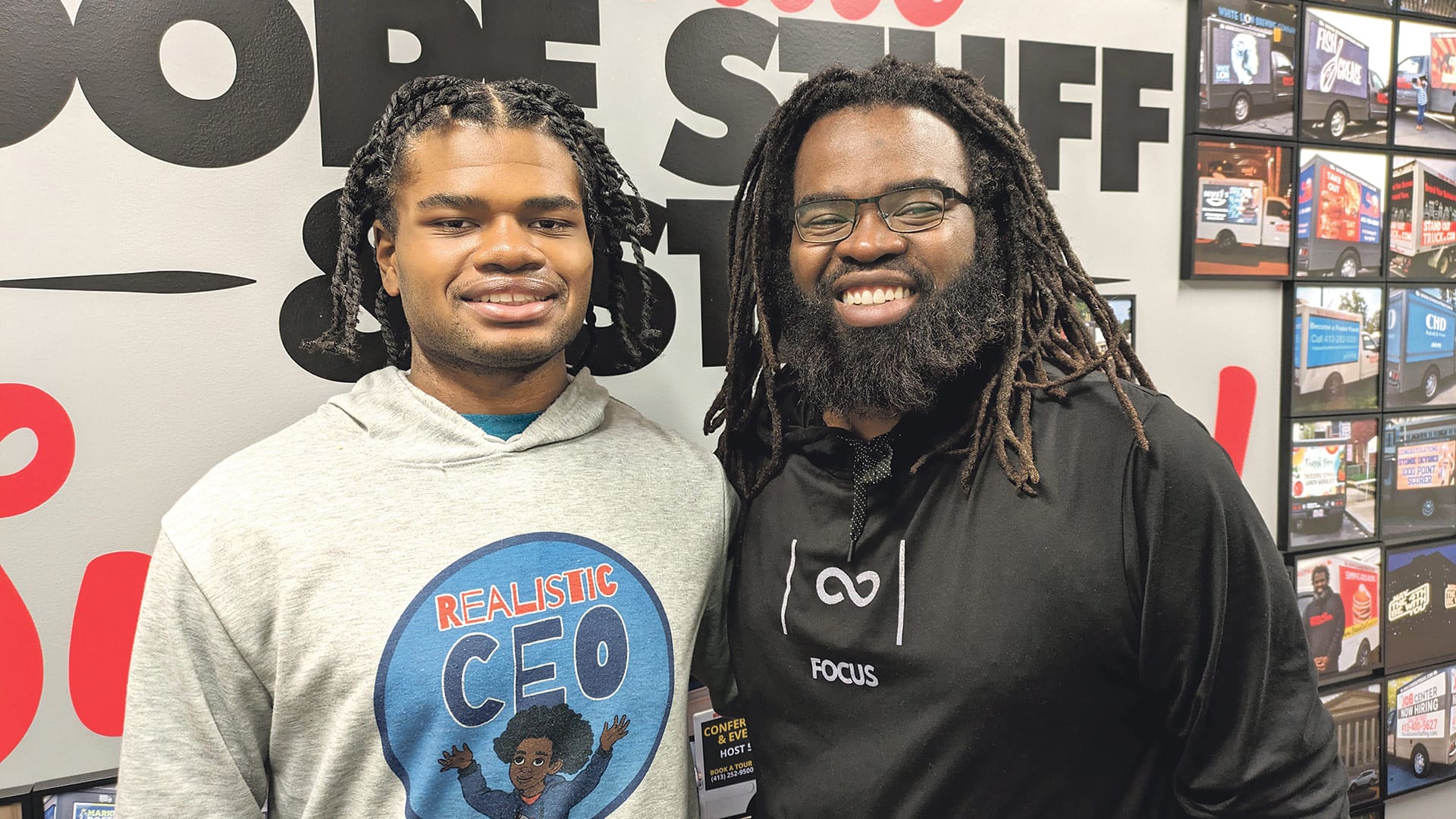
Mychal Connolly’s son, Mychal Connolly Jr. (left), has been influencing young people through his Realistic CEO enterprise.
Mikey also launched the Realistic CEO Podcast, a platform where he interviews successful business owners, CEOs, founders, presidents, executives, and community leaders. Coincidentally, two of his early guests were members of the Difference Makers class of 2025 — John Doleva and Dan Moriarty.
As he studies communication and journalism at Holyoke Community College — he made the dean’s list last semester while running his podcast and public-speaking business — Mikey is honing his skills in those fields through real-world experience, while teaching others what he learns about becoming a CEO.
“It’s definitely exciting,” he said. “A teacher who started following me on Instagram said she bought the book and she read to her class. Then she posted that one of her students already wants to start a nail-salon business. I thought it was kind of cool that, simply by reading my story, the teacher was able to see the vision of her student wanting to start her own nail salon.”
Connolly loves seeing his son work for his dreams — which currently involves a goal of distributing 500,000 copies of the book over the next five years and taking his inspirational message to young people on a much wider stage than Western Mass. — and knowing he can provide an example of successful entrepreneurship from his own life.
“When I think back to Stinky Cakes and all the things I wish I knew then, I’m able to tell him,” he said. “But I say to him, ‘dude, I can open doors for you, but I’m never walking through the door for you.’”
One recent initiative is a one-for-one program where anytime someone purchases a copy, Mikey donates one to a kid in a low- to moderate-income community or book desert.
“When I meet someone, I don’t see someone who is maxed out. When I’m talking to my clients, I’m not talking to them where they are today. I live in the future. So I’m sitting at the top of the mountain enjoying a coffee or tea with them at them being their best, at their peak. And that’s what I do for myself every day.”
“So his business model is that, after he does the 500,000 copies and makes an impact in so many communities, he’s going to be booked to speak all around the world on how to create an impact as a youth,” Connolly said. “And he really wants to make an impact. He wants to be an example. He wants young people — and older people — around the country to look at him and go, ‘man, you know what, you’re right, I can do this right now. And it doesn’t matter if someone says it’s unrealistic — I have a plan, and I can do this, just like the kid in the book.’”
Family support is important to Connolly, who often talks about the influence of his wife, Adrienne, in his life.
“A lot of people see the wins, and they go, ‘oh, man, Myke’s doing great.’ But in business, sometimes it’s days, weeks, months where everything’s going wrong. And in those times, she’s the glue. From Stinky Cakes to the agency to Stand Out Truck, when it’s going wrong, she’s the glue. She’s the reason I’m able to do a lot of what I do.”
That said, the successes are real.
“I’m very good at marketing, and we get some massive clients. To be able to serve them with my business, it’s a great thing,” he told BusinessWest. “I’ve built a pretty strong team of designers, writers, videographers, all these pieces that you need to run a successful marketing campaign.”
He stressed that his Launch and Stand Out Agency performs the necessary work in the background so his clients can shine up front.
“My son is one of my clients at the agency, and a big reason for so much of what he’s doing out there is because of the Launch and Stand Out Agency. He’s the rock star, and we quietly do the work behind the scenes from a marketing and advertising standpoint.”
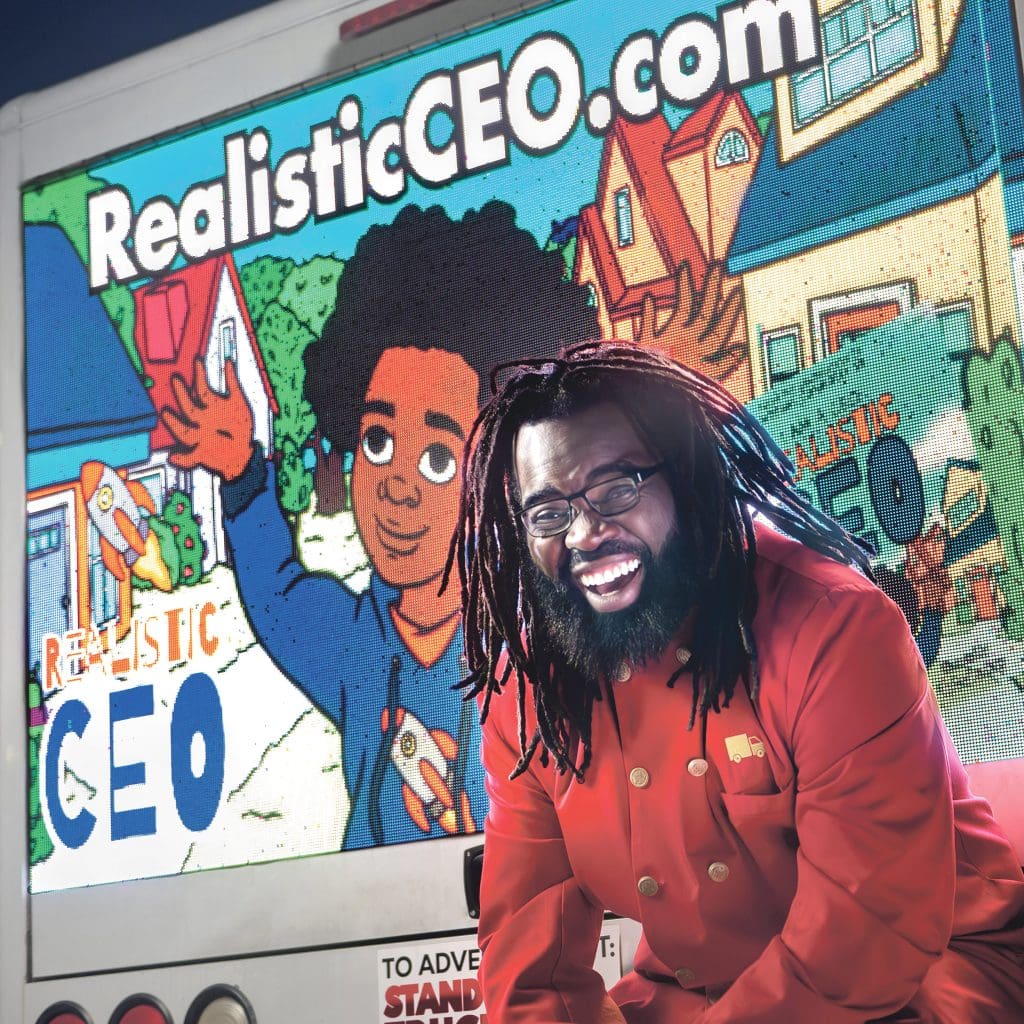
Mychal Connolly has taken Stand Out Truck to clients both within and well outside this region.
Photo by Bob Zemba, Simple Truth Imaging
One thing his famous mentors — Kittredge, Sortino, and Klein — taught Connolly is that marketing is, at its heart, a simple thing. So he keeps it simple when delivering lessons through Marketing and Cupcakes, his long-time entrepreneurship networking and mentorship program.
“I love entrepreneurship, man. I believe in entrepreneurs. Like, I believe in people,” he said, before adding, “I believe in kind people. And, like I always tell people, in a world of 8 billion, you’d be hard-pressed to find 1 billion just straight evil people. I think the majority of people in the world are really good people. And I love serving people.”
King of His World
Connolly’s handle on social media is standouttruckking — a bold decision, which he humbly explained.
“Some people are like, ‘you call yourself a king?’ And I go, ‘listen, the king is the greatest servant amongst the community. The people choose their king. Just because you have nice clothes and nice jewelry, that don’t make you a king. The king is a servant — the biggest servant in the community. And I believe in serving.”
And promoting clients in any way he can, including telling their stories right on his website through essays and photos. He’s a believer in their success, and he understands their struggles.
“I’ve been climbing these steps for so long, and every time I get to next step, it plateaus, and I feel like I’m not good enough or I don’t know anything,” he said. “But it’s not in a negative, self-defeating way — it’s like, ‘no, no, no, now it’s time to level up.’
“I don’t see people as they are; I see people at max potential,” he added. “So when I meet someone, I don’t see someone who is maxed out. When I’m talking to my clients, I’m not talking to them where they are today. I live in the future. So I’m sitting at the top of the mountain enjoying a coffee or tea with them at them being their best, at their peak. And that’s what I do for myself every day. Even the days when I don’t want to do it.”
“I can be having the worst day ever, but I can’t live in that space,” Connolly added. “That’s a skill you develop because I think everybody deals with the negativity, bad days, and you could turn it into impostor syndrome and curl up in a ball, or you could say, ‘well, here’s an opportunity to level up.’ There’s real value in communicating that to people, because everyone needs that.”
Even a Difference Maker.

CEO, DESCO Service
She Thrives by Bringing People Together to Cultivate Community
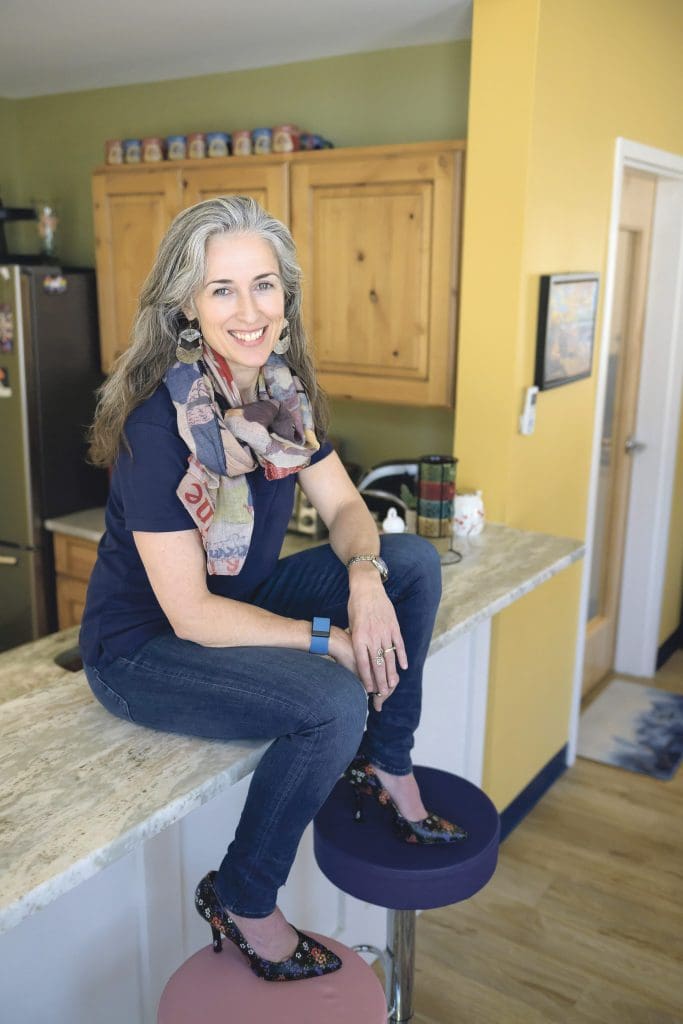
Andrea Bordenca
Photo by Bob Zemba, Simple Truth Imaging
Early in life, and then as she started her career, Andrea Bordenca had no real desire to work within, let alone manage, the business started by her father, DESCO, a healthcare emergency field-service response organization.
“I said, ‘it’s your thing, dad, but I don’t know if it’s my thing,’” she recalled, adding that she did work for the company in various capacities in her youth, but began working professionally as a technical writer and later handled marketing for her husband, an artist specializing in murals.
But things changed when her father got sick with kidney cancer.
“I thought it was something I needed to do to help my parents … and I eventually fell in love with it,” said Bordenca, who joined her mother, a nurse practitioner, in managing the venture, taking the role of president. Over the past 20 years, Bordenca, now CEO and chairperson, has expanded its services from laboratories to hospitals, surgery centers, clinics, restaurants, and hotels, taking sales from $4 million to $10 million while greatly improving profitability as well.
But her success in growing the company and taking it the next level is not why she has been named a Difference Maker for 2025, although it’s certainly part of her inspiring story.
Instead, it’s what she’s done at the space that … well, also serves as DESCO’s headquarters, at 200 Venture Way in Hadley.
There, she has created what she calls the Venture Way Collaborative, with the emphasis on the last word in that title. There, she brings together diverse voices and provides both the physical space and positive environment for people to grow and achieve something she never felt growing up — a sense of belonging.
“I thrive when people of all ages, races, and genders are in dialogue together,” said Bordenca, a self-described entrepreneur, executive coach, and youth and adult leadership educator. “And I believe that the only way toward systemic change is by bringing all community stakeholders together to create change together.
“In my leadership and coaching, I work with people to develop a grounded and powerful presence rooted in what drives them,” she went on. “This starts with creating awareness of how people see themselves. That awareness then creates choice to move differently in the world. The root of all these conversations is care. What are we taking care of? What needs more care? A common missing piece in the leaders, parents, and kids I work with is ourselves.”
She does this at Venture Way Collaborative, which she described as far more than space that can be rented for events, team-building exercises, community gatherings, nonprofit fundraisers, and yoga classes — although it is that, too.
“We don’t just rent space; we form relationships,” she told BusinessWest, adding that the collaborative is a “space for community members to work, learn, and explore creative solutions together.”
It is home to DESCO, which now boasts more than 60 employees and serves businesses across the country, but also Generative Leadership Consulting, which she serves as managing partner, as well as Lead Yourself Youth and the Women’s Collaborative, two initiatives she founded to enable those constituencies to address issues and challenges together and collaboratively.
Ira Bryck, the former director of the family business center at UMass Amherst, and a Difference Maker himself in 2020, first met Bordenca as she came to the center to navigate the many complex issues that confront those in family businesses.
In nominating her for this award, he said she helps individuals, and especially young people, become the best versions of themselves.
“When I would try my best, I wasn’t as good as my peers or my sister, so I developed this narrative that I was stupid because I didn’t do well in school, and I would try my hardest.”
“Her leadership methodology combines neurolinguistics, mindfulness, emotional literacy, and somatics, and this comprehensive approach facilitates the embodiment of leadership rather than passive learning,” he wrote. “She focuses on developing awareness and creating choices for people to move differently in the world, with care at the root of all conversations.
“On top of all these ventures and accomplishments, she is a wholesome, kind, generous, curious, inspired person, who loves nothing more than to make the universe a better place to live,” Bryck went on, adding that the sum of her accomplishments and attributes certainly makes her a Difference Maker.
Life Lessons
Before talking about what she’s created with the Venture Way Collaborative, Bordenca first talked about her own life, her own struggles to try to fit in, and her inability to see her own worth, because the two are related.
She grew up in Medfield, an affluent community in Eastern Mass., and struggled, as she put it, to feel like she belonged.
“I wasn’t a great student, and my older sister was,” she recalled. “And even though I looked like everyone else — it was a white-dominant town — I really struggled in school, and I was seen as disruptive.
“When I would try my best, I wasn’t as good as my peers or my sister, so I developed this narrative that I was stupid because I didn’t do well in school, and I would try my hardest. And as a defense mechanism, I ended up skipping school, got into drugs, and was just disruptive to get the acceptance of my peers. I recognize that now as an adult, but didn’t know it at the time.”
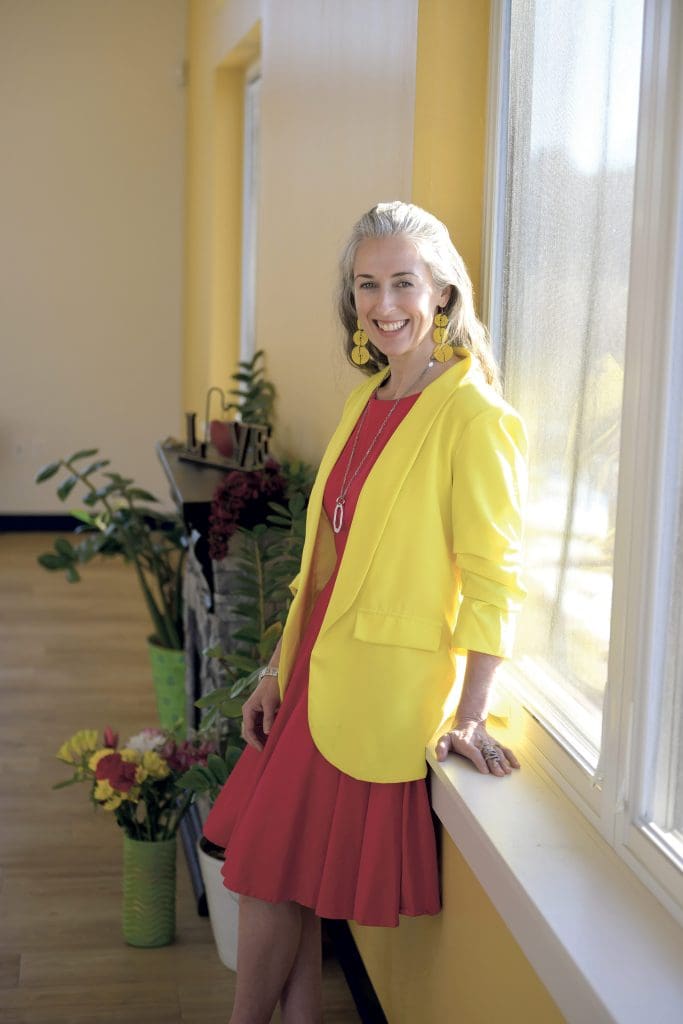
Andrea Bordenca says her many programs are designed to give people something she didn’t have growing up — a sense of belonging.
Photo by Bob Zemba, Simple Truth Imaging
A psychological determination would reveal that she had four learning disorders, including ADHD, and this helped her overcome feelings of being “stupid,” as she put it, although she struggled with various medications prescribed for her.
She credits her husband with helping her understand that “there was nothing crazy about me — I just didn’t fit into the box I was supposed to be fitting into in the town that we were in.
“That gave me some hope,” she went on, adding that she eventually took herself off those medications and “found what it was that gave me a sense of belonging.” And, in the simplest of terms, the Venture Way Collaborative was created to help others do the same.
She broke ground for the collaborative in 1999, just a few months before the pandemic arrived. COVID initially kept the facility from doing what it was designed to do — bring people together, in person — but Bordenca carried on through Zoom, and admits that her timing was actually good because she could not have afforded to build the facility amid the soaring construction costs that arrived post-pandemic.
As she mentioned earlier, it is physical space where people can meet, but it’s much more than that.
“It’s a physical space that manifests a place where I want to feel good, and where I want others, when they come in, to say, ‘this is good; I feel welcome.’ There are high ceilings, there’s expansiveness, there are bold colors — there are a lot of touches I curate so people feel like this is home,” she said. “I want it to be expansive and creative.”
That’s especially true of a large, 1,000-square-foot space that is called, among other things, the ‘classroom,’ or the ‘studio,’ depending on who’s using it.
“It has no furniture in it in, so there’s room to move around,” she said. “Everything I do has a component of awareness of the body and the nervous system, so I want to make sure that, when I’m doing leadership training, people can feel their bodies and are aware of their movement because that’s not something we’re taught to be aware of.”
The space now hosts groups ranging from the Queer Valley Library to the Women’s Fund of Western Massachusetts; from the Zonta Club of Quaboag Valley to Faces of Medicine, which shares the journeys, successes, and struggles of Black female physicians.
Building Emotional Resilience
Beyond her work at DESCO and as a landlord at 200 Venture Way, Bordenca is also a coach, working with both adults and young people. As part of these efforts, she created Lead Yourself Youth and the Women’s Collaborative to bring people together and create dialogue.
The former is not an official nonprofit, but rather an informal entity that provides professional development. Bordenca has worked with groups ranging from Girl Scouts to students and educators at the MacDuffie School in Granby and the Hadley school system, and focuses on normalizing different emotions, ranging from anxiety to frustration, using hands-on activities like juggling and sewing.
“A lot of it is helping people build that emotional resilience through these safe spaces of practice and simulation,” she said, adding that she does the same with women, a discussion that will take her to … golf.
“I talk to women professionals who say, ‘I golf, and I hate golfing,’” she explained, adding that she once put herself in that category. “And I say, ‘why do you golf, then?’ And they say, ‘that’s where the decisions are made.’
“I’ll say, ‘if this isn’t your thing, what is something that you can create that might attract some golfers and maybe non-golfers that are also influencers, decision makers, people that you’re trying to close deals with?’” she went on. “‘Can you create another event, like a hike or even a trip to an amusement park?’”
That’s just one example of how she encourages people to help cultivate communities by being creative and focused on knocking down walls instead of doors.
Overall, Bordenca said her broad focus is on helping individuals of all ages, genders, and life paths find common ground and that sense of belonging that eluded her in her youth.
“If people don’t have the people around them that have the same value system, they’re not going to get very far because they’re just going to have people tell them they’re wrong or ‘that’s the wrong way,’ which was a lot of my childhood,” she explained. “The work that I do with other children and also educators and other organizations is … ‘hey, there’s no right or wrong way; it’s just based on values and your compass.’
“If you work in an organization, if you live in a community, if you’re part of a family whose value systems are different, who are the people that you can find that share your values so you don’t feel crazy, isolated, alone, or so you don’t have to compete or fight so hard? It doesn’t have to be that way.
“As social animals, we need other people,” she continued. “And just because of the way we’re taught and we learn, I think it’s really difficult, especially post-COVID with all the social and emotional issues that children and people are having, especially Gen Z, to know how important it is, and how possible it is, to find the people who are just like you.”
Helping individuals do that — helping people find that sense of belonging — is just one of many reasons why Bordenca is truly a Difference Maker.

CEO, Second Chance Animal Services
Her Growing Operation Saves Lives While Keeping Families and Pets Together
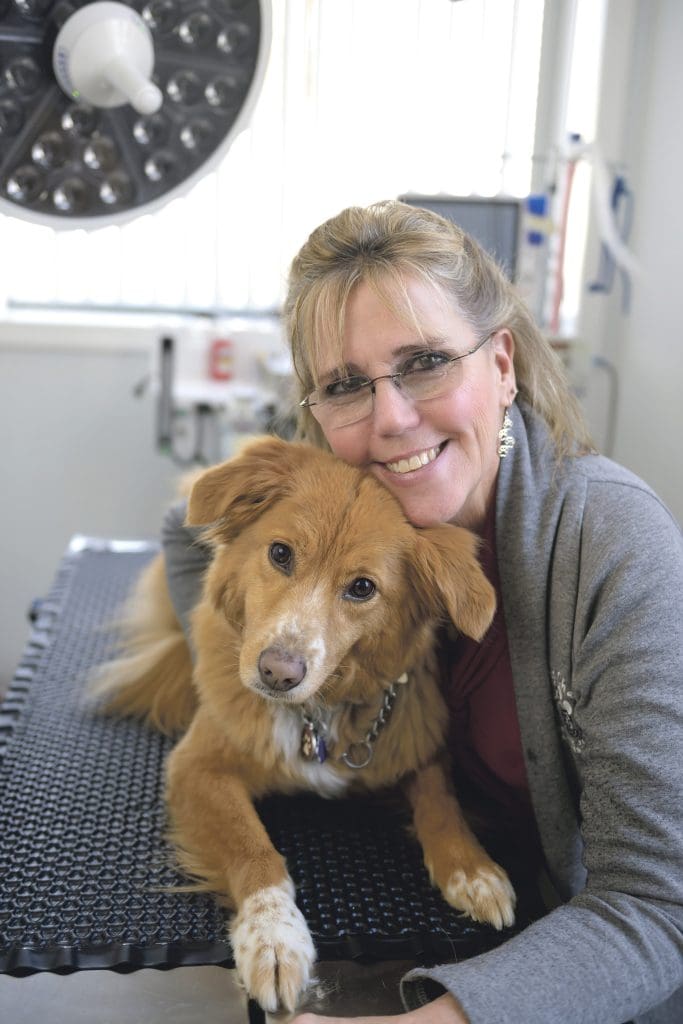
Sheryl Blancato
Photo by Bob Zemba, Simple Truth Imaging
Twenty-six years ago, Sheryl Blancato opened an animal shelter. And quickly realized it wasn’t enough.
“The initial plan was, ‘hey, we’re going to help the animals.’ But I quickly realized that it’s a band-aid. There was a much bigger issue here, and I’m a root-cause person. And the root cause is, ‘why are these animals coming into the shelter?’ That’s why we started doing vaccine clinics, because the animals were dying of preventable diseases, and we also did spay and neuter to prevent overpopulation.
“I still remember the day I went to my husband and said, ‘you know what? We need to start having hospitals because too many animals are being surrendered for perfectly preventable, treatable things, and it’s overwhelming the shelters. And if they’re already in a loving home, why not keep them there?’”
That idea became the foundation of everything Second Chance Animal Services does: addressing the root causes of why families have to give up their pets, and then keeping those families and pets together.
“You can never build a shelter big enough to help every animal in need,” Blancato said. “But you can build things to keep them out in the community where they’re already in loving homes.”
Programs like Homebound to the Rescue. The idea behind that initiative is that many senior citizens can’t afford to provide basic medical care for their pets or don’t have transportation to bring them to a vet. So Second Chance visits low-income senior-housing areas to offer low-cost vaccinations, testing, and other care, so the animals stay healthy and, just as important, don’t have to be surrendered because they can’t be properly cared for.
Then there’s Project Keep Me, which provides temporary housing for the pets of domestic-violence survivors, enabling their owners to seek safe housing arrangements while ensuring the well-being of their animal companions, and later returning them to a more stable environment. Without such a program, people in crisis often have to choose between staying in a dangerous situation and losing their beloved pets.
“I saw some people surrendering because they were in domestic-violence situations,” Blancato recalled. “They had somewhere to go, but they didn’t want to leave their pet, and they couldn’t bring their pet in this situation until they could sort things out,” she said. “So we hold on to those pets for up to 90 days, so they can go to their sister’s house, where their dog doesn’t get along with her cat. We’ll hold the dog for you; you get to your sister’s, get safe, get the assistance you need to get somewhere else, and then take your dog back.”
Second Chance now offers a similar service to veterans who need to seek medical treatment outside their home for an extended period. “If they can’t bring the animal with them, they’re not seeking the treatment. So we’re doing the same thing: we’ll give you up to 90 days so you can go get the treatment you need, get on the right path, and get your animal back.”
In fact, many of the programs that have evolved from that initial small shelter in East Brookfield were developed with the same goal in mind: to not only help animals find homes, but keep as many as possible from being surrendered at all.
This focus has seen Second Chance expand its reach dramatically over the past 26 years. It now encompasses four hospitals (in North Brookfield, Springfield, Worcester, and Southbridge) and serves more than 56,000 animals a year — a number that grows steadily every year.
Blancato has occasionally run into people who take the attitude of, ‘if they can’t afford pets, they shouldn’t have pets.’
“So I present examples. ‘What about your grandmother? Your grandfather died, and that little puppy, or that little cat, is their whole life.’ Or, ‘think about the single mom. I was a single mom at one time with three kids. That dog was everything to me. God forbid I had a serious medical issue; I didn’t have the money for it. But that dog meant so much to me and my kids at that time.’ And they say, ‘all right, I get it.’”
“The average family has less than $500 in emergency money. So, if you’re raising kids, $8,000 is a lot of money. I couldn’t have done it when I was a single mom. There’s no way. I would have had to make a really heart-wrenching decision.”
With tens of thousands of animal-loving families also getting it — and getting the help they need but could not otherwise afford — Blancato has made a career of keeping pets in loving homes. That’s the work of a true Difference Maker.
Paws for Concern
Blancato has often told the story of a puppy named Buster that she — then a single mother of three — adopted during her 20s, following a tough stretch in which her husband left and she battled cancer. Because Buster liked to escape his yard, Blancato got to know East Brookfield’s animal-control officer, and they became friends — and he eventually offered her a job as an animal-control assistant. He retired not long after, and she took over his role.
She’d pick up a lot of strays that were never claimed, and she struggled to get them medical care and into homes, so she decided to start a shelter on a neighbor’s donated plot of land. By that time, she had adopted another dog, Dusty, who had been abused.
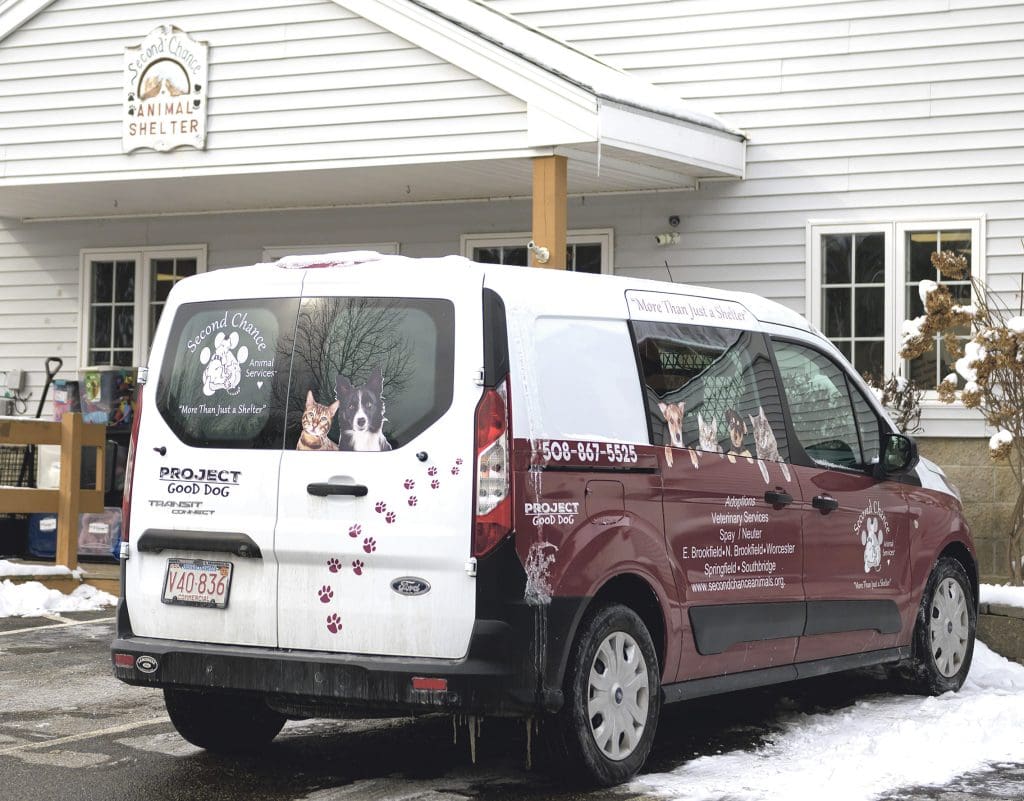
Project Good Dog matches behaviorally needy dogs with inmates in pre-release programs at local correctional institutions.
Photo by Bob Zemba, Simple Truth Imaging
So, while raising three children — and, by that time, two stepchildren — she took $400, raised whatever else she could, and built the adoption center that still sits on the property today.
The shelter was offering spay/neuter services and vaccines in the early years, but Blancato realized she could do more to keep pets and families together through expanded veterinary care. The first hospital was built in neighboring North Brookfield in 2010 and expanded to full-service care in 2013, and the other three hospitals followed, giving Second Chance a broad footprint across Central and Western Mass.
In addition to the hospitals and the programs mentioned earlier, Second Chance offers the Helping Hands outreach, which assists dozens of rescue sites, shelters, and municipal facilities by providing low-cost spay/neuter and vet care; Project Good Dog, which matches behaviorally needy dogs with inmates in pre-release programs at local correctional institutions, providing 24/7 care and training for the dogs while teaching handlers patience, compassion, and responsibility; a pet-food pantry; mobile adoption, education, and vet-care events; and much more.
The low-cost hospital care for families that need it can be the difference between keeping a pet and losing it. For example, the week before Blancato spoke with BusinessWest, a patient’s dog had swallowed a baby’s pacifier.
“That’s a $6,000 to $8,000 surgery in emergency. They didn’t have it. We were able to do it for $1,000. That’s life-changing for them,” she recalled. “The average family has less than $500 in emergency money. So, if you’re raising kids, $8,000 is a lot of money. I couldn’t have done it when I was a single mom. There’s no way. I would have had to make a really heart-wrenching decision.”
Other area veterinary hospitals have actually sent patients to Second Chance to avoid what Blancato called “economic euthanasia.” And the model of subsidizing care for low-income patients is catching on in other places, she added, though it’s not for the faint of heart.
“When someone says, ‘we want to start a hospital,’ I’m like, ‘OK, here’s the deal. It’s expensive, it’s hard, and you have to have a business mind because we work on a very tight budget.’”
That budget — about $10 million annually — comes in several forms: grants, individual donations, legacy gifts from people who pass away and leave money, as well as hospital co-payments and adoption fees. “We don’t get enough in the hospitals to sustain it all, so we need those donations.”
“What people don’t realize is the cost of medical equipment in veterinary medicine is equal to that in human medicine. It’s very expensive, and it doesn’t last forever. We also want to attract the best vets, the best techs, the best staff. And they need to get paid.”
And many clients do, indeed, pay full cost, which helps to subsidize those who need a hand.
Second Chance has gained national attention; it was one of just 12 organizations in the U.S. chosen by PetSmart Charities to be part of its inaugural Accelerator grant program. “The three-year, $1.1 million grant will go toward upgrades in our hospital, as well as helping expand the staff from 12 vets to 26 last year, while increasing total staffing by 20%,” Blancato said.
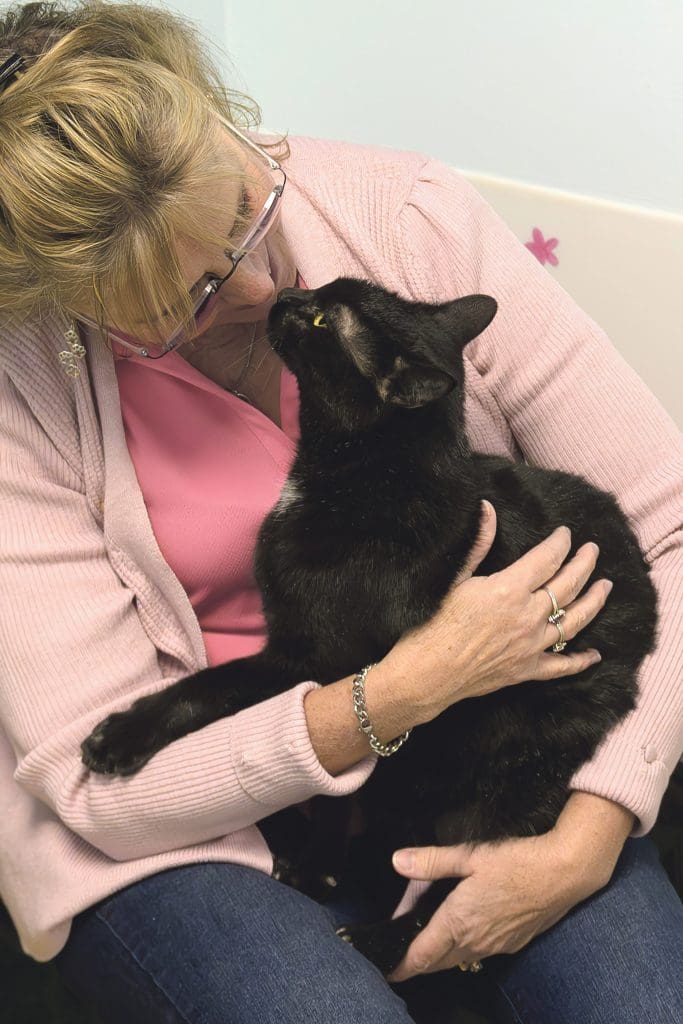
Sheryl Blancato spends time at each of Second Chance’s four hospitals every week.
Photo by Bob Zemba, Simple Truth Imaging
“That’s huge. What people don’t realize is the cost of medical equipment in veterinary medicine is equal to that in human medicine. It’s very expensive, and it doesn’t last forever. We also want to attract the best vets, the best techs, the best staff. And they need to get paid. They have bills to pay, too. So it’s staff, it’s equipment, it’s overhead. We have to raise all that money.”
Team Effort
Blancato, like several other Difference Makers this year, was quick to deflect the idea of this award as an individual one.
“This is not about me. We have over 100 staff, we have hundreds of volunteers … it’s a massive thing now. And what I tell staff when they come on is, ‘this is not just a job. This is the one job that, at the end of every day, you can get in your car, take 30 seconds, and think about at least one impact you had that day. It could be on a person. Maybe you were able to save that pet.’”
Like the family who brought in an ailing, 17-year-old cat, ready to say goodbye to an animal they adored. But Second Chance ran a quality-of-life exam and found the cat had thyroid disease, which was very treatable with medication.
“To be prepared to say goodbye and then take the cat home, that’s life-changing for those people. We gave them another two, maybe three years,” she went on. “We have hundreds of those stories. I always tell the staff when they come on, ‘yes, you’re getting a paycheck’ — we take good care of our staff. But they also get to have that rewarding experience — every day, something is going to be life-changing.”
Meanwhile, Second Chance’s adoption center has a 99.9% live release rate, an incredibly high number for a no-kill shelter.
“It’s amazing. As animal control, I used to pick up litters of puppies running down the street, and I just wanted to keep puppies off the street,” Blancato recalled. “To watch it evolve, with all the innovation and the programs and how many people are impacted, you sit back and go, ‘wow.’
“I always tell people, you can’t say, ‘I’m just one person. I can’t make a difference,’ because that’s not true. Yes, you’re one person, and yes, you have your limitations, but if you have a vision that people can see, then others will join in. That’s how this has become what it is. It’s your vision, then it’s other people coming out of nowhere, and the next thing you know, you have a whole army behind you. And that’s really exciting.”

Executive Director, Providence Ministries
She Hears the Cries of the Poor and Speaks Up for Them
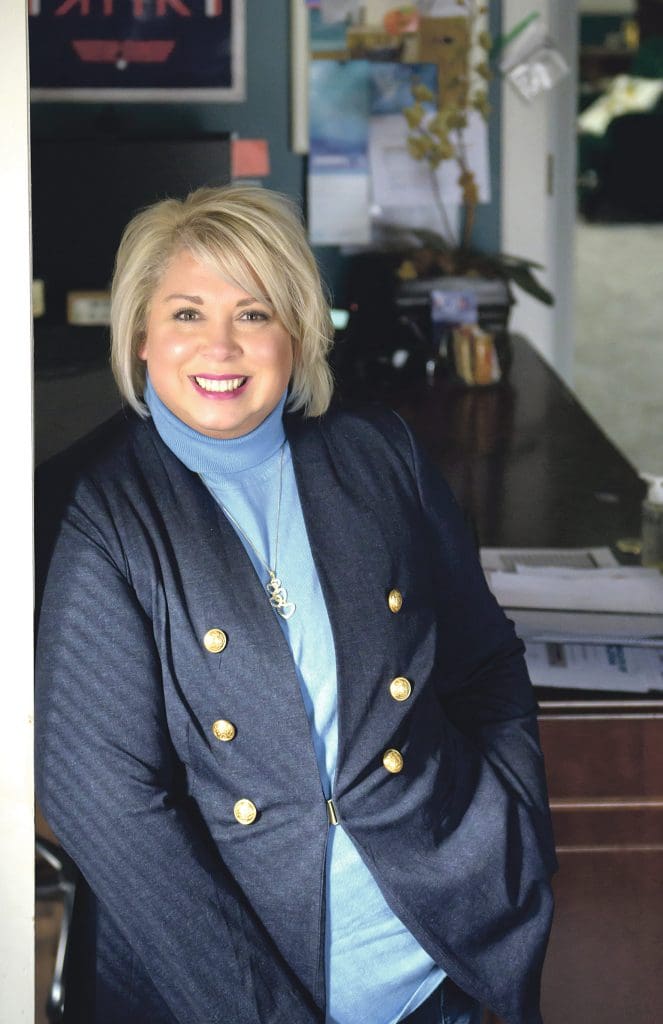
Jennie Adamczyk
Photo by Bob Zemba, Simple Truth Imaging
They called it ‘Fashion for Compassion.’
This was a fundraiser staged by Holyoke-based Providence Ministries for the Needy (PMN). Area ‘celebrities’ would stroll down a runway modeling clothes from area stores, with proceeds from ticket sales benefiting the nonprofit, which provides services ranging from a soup kitchen to sober homes for men.
Jennie Adamczyk was working for Ross Insurance, handling sales and marketing, and, through her work to bolster the agency’s social-media profile, she had reached that ‘celebrity’ status and was asked, along with her boss at Ross, to become one of the models.
So she did, sporting some offerings from Old Navy, and, in the process, getting to know some of the leaders at PMN and learning much more about its multi-faceted mission. She became intrigued, and soon she would get far more involved.
Fast-forwarding quite a bit (we’ll go back in more detail later), she became its executive director five years ago and commenced what could be called a turnaround for the agency, greatly improving morale among staff members, creating an even sharper focus on its mission, and nurturing a culture of caring.
“I’ve always tried to lead by example here — ‘this is how I want you talk to people, this is how I want you to engage with people.’ Everyone gets treated with dignity and respect,” said Adamczyk, who firmly believes that she and her staff members embody the spirit of Sr. Margaret McCleary, SP, founder of PMN, an agency affiliated with and sponsored by the Sisters of Providence.
“We model ourselves after Sister Margaret: if you see a need, you meet that need to the best of your ability,” she said. “And there’s no judgment. It’s not our job to decide if someone is worthy of help; that’s not what we do. We make sure that they’re fed, their stomachs are full, and we send them on their way. That is the attitude we take across all our programs, and it comes from her.”
We talked with Sr. Margaret, who described Adamczyk as the right person in the right place at the right time.
“She’s a wonderful administrator, but more than that, she has a courageous spirit,” she said. “This is needed when advocating for the least among us. Jennie hears the cries of the poor and speaks up for them and embraces them always with respect and dignity.”
Sr. Mary Caritas, SP, who served on the board of PMN for many years before recently stepping aside, agreed.
“She was never trained for the job she’s in, but she’s a natural. She took over at a time when we needed a real turnaround, and I’m very proud of the way she’s done that. She came into her own very quickly, and she’s just a natural leader,” she said, citing, as one example, how Adamczyk stepped forward when the city of Holyoke needed a pop-up warming shelter and converted the chapel in the former convent that serves as home to many PMN programs for that purpose.
“She takes people off the street like that when it’s cold, and there’s discipline, there’s love, and respect, but people have to abide by the rules,” Sr. Caritas went on. “And, for the most part, people do that willingly because there’s so much love and concern for who they are.”
“We model ourselves after Sister Margaret: if you see a need, you meet that need to the best of your ability. And there’s no judgment. It’s not our job to decide if someone is worthy of help; that’s not what we do.”
Adamczyk described her work as “challenging, exhausting, and fulfilling,” essentially because of the constituencies being served and the circumstances under which they come to Providence Ministries for help.
“You’re working in an environment where you never, ever see anyone at their best,” she explained. “People are coming in, and they’re depressed, they’re hungry, they’re financially crippled, they have an abuse history … the list goes on and on.
“No one’s at their best, and that takes a toll,” she went on. “But if we can instill a little bit of hope, a little bit of joy into the people we serve, then it’s all worth it.”
This is the attitude she brings to her work, the attitude she has instilled in her staff, the attitude that permeates this agency. And for making it so prevalent, so ingrained in the fabric of PMN, Adamczyk is truly a Difference Maker.
A Perfect Match
As she talked about her not-so-subtle career change, going from insurance sales and marketing to being the program manager at Providence Ministries for the Needy, Adamczyk said that, on many levels, and to most people, it didn’t make a whole lot of sense.
Jennie Adamczyk says she patterns her approach to managing Providence Ministries after its founder, Sr. Margaret McCleary (right).
Indeed, this was a lateral move. The salary wasn’t any higher, and the benefits were no better. But deep down, she knew this move was one she needed to make, personally and professionally.
“It felt right, like I was supposed to be here,” she told BusinessWest. “It felt like home — this is where I’m supposed to be — and that this mission is what I’m supposed to be doing. There was an overwhelming sense of peace being here; I felt that this is where God wanted me to be.”
Flashing back to her participation in Fashion for Compassion, Adamczyk said that, soon thereafter, the director at Providence Ministries asked her to join the agency’s fundraising committee, which she did, helping to create an enduring fundraiser called Retro Game Night, at which participants take part in old classics like the Match Game, Password, Name That Tune, and others.
Success in that realm led that same executive director to ask Adamczyk to become program director of PMN, an agency she knew about but had never visited. In fact, she practically had to ask for directions because she hadn’t been to that section of Holyoke, even though she lived in the city.
She was soon promoted to associate director when the director went out on maternity leave. And when that individual left, she became interim director, and then director when the candidate initially awarded that position did not pan out.
“She’s a wonderful administrator, but more than that, she has a courageous spirit. This is needed when advocating for the least among us. Jennie hears the cries of the poor and speaks up for them and embraces them always with respect and dignity.”
Today, Adamczyk leads the many programs at PMN, which fall into two categories — life-preserving and life-changing. The former includes Kate’s Kitchen, which served 74,000 people last year, and has seen demand of its services rise amid inflation and other economic woes; Margaret’s Pantry, which distributed 2.7 million pounds of food last year and has likewise seen demand for its services soar; St. Jude’s Clothing Center; and foodWorks@Kate’s Kitchen, a culinary training program that offers unemployed and underemployed individuals job training in the culinary field.
Meanwhile, the latter includes three sober houses for men, Loreto House, Broderick House, and McCleary Manor.
In addition, there is that pop-up warming shelter, a unique facility to say the least, and one of many programs in the former convent, which now, thanks to Adamczyk, also houses the agency’s administrative offices — before, they were at McCleary Manor, behind Providence Hospital — a move that speaks to her approach to this agency and its mission.
“When I first came here, I requested that my office be down here, because how can you run the programs if you’re not where the programs are?” she said, adding that all staff is at the Hamilton Street facility, and board meetings are staged there as well.
Warming to Her Caring Approach
Administering the agency’s programs is what Adamczyk does for a living. How she and her staff administer them is what makes her a Difference Maker.
As she talked about the ‘how’ element to her work, she started by saying, “I’m not corporate,” and returned to her thoughts about her approach and guiding philosophy, echoing that of Sr. Margaret McCleary.
“I tend to act when there’s a need, much like Sr. Margaret would have,” she said, adding that she doesn’t always follow all the policies and procedures when adding or amending a program. “That’s sometimes difficult to do in this kind of world; sometimes you just need to act and make a decision.”

Jennie Adamczyk with staff members, from left: Michael Clark, facilities manager; Stephanie Trombley, marketing coordinator; and Axel Fontanez, housing manager.
Photo by Bob Zemba, Simple Truth Imaging
Such was the case when she decided that Kate’s Kitchen would serve dinner in addition to lunch — because the need was (and is) there, and so was the infrastructure.
“We were already serving lunch, we had the staff … it just seemed like a no-brainer to open the doors for dinner as well,” she said, adding that this mindset guides her in everything she does, and in every program within PMN.
The pop-up warming shelter — open when the temperature dips below 10 degrees or the wind chill falls below zero, and with a capacity for 25 beds and more if need arises, which it often does — is another example.
It’s not your typical shelter in most respects — everything from allowing married couples to stay together to providing hot showers; from making popcorn and hot chocolate for the guests and popping in a movie to providing fresh clothes and food.
“Our job with the pop-up shelter is not to rehabilitate anyone,” Adamczyk explained. “A lot of them are coming in and using; they will actively detox with us through the evening, but they’d rather be sick than be out in the cold.
“We had a mother and her autistic son stay with us this last stretch of open nights,” she went on. “They came to us in the morning and said, ‘we want to thank you for opening because we would have died in our tent last night, it was so cold; I’m afraid we wouldn’t have woken up.’
As for the movies, they’re part of larger efforts to provide those who need the shelter “a moment of feeling normal; it doesn’t feel like they’re not seen,” she explained.
“I’ve never myself experienced that, but I can only imagine that walking through a day and feeling as if no one sees you — and if they do, it’s a negative connotation — would be pretty heavy,” she continued. “So we try to be as loving and positive as we can those shelter nights.”
Meanwhile, operation and staffing of this shelter speaks to the way Adamczyk has improved morale at PMN and created a culture of not only giving back, but going perhaps above and beyond. Indeed, there isn’t a separate staff for the shelter, she explained, adding that regular staff who volunteer to work there do so knowing they go straight from that detail to their regular job.
“I have many staff that are going to work overnight and still have their day job in the morning,” she said. “They are giving of their time, energy, and resources to meet the needs of these people. They say they do it because I do it.”
Bottom Line
Adamczyk likes to say she’s a Protestant living in a Catholic world.
She recalled that, when she reminded of Sr. Caritas of this, she jokingly responded, “well, everyone is flawed in some way.”
She certainly doesn’t consider it a flaw that, on occasion, she may not follow all the rules or procedures when adding a program or a service. Like Sr. Margaret, when Adamczyk sees a need, she tries to meet it.
That makes her the right manager for PMN — and also a Difference Maker.