Home Sections Archive by category Banking and Financial Services (Page 8)

Banking and Financial Services

Banking and Financial Services Sections
An Annual Insurance Review Is a Must for Any Business

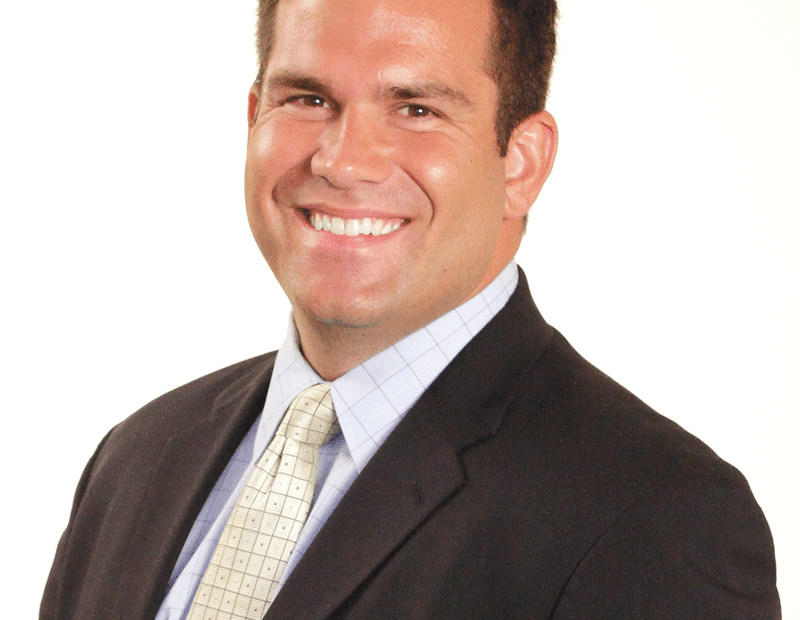
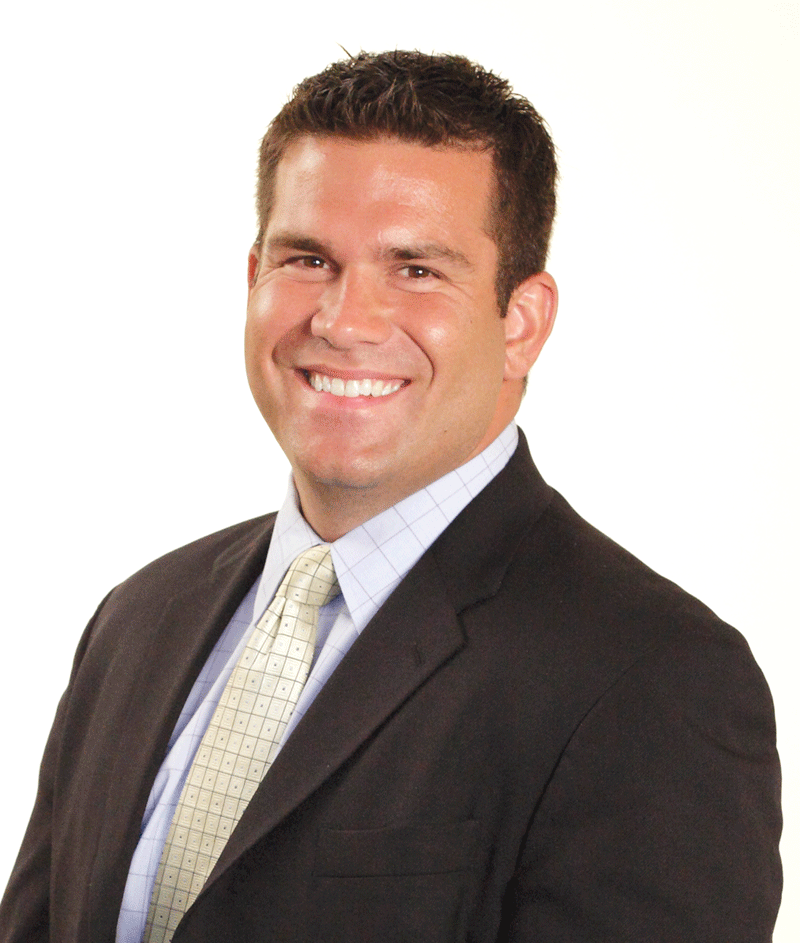
Corey Murphy

Corey Murphy

Many new business owners carefully consider what steps are needed to ensure the protection and success of their new enterprise. This exercise includes performing due diligence when it comes to obtaining a well-thought-out insurance plan.
As that enterprise evolves, changes, and adjusts to its competitive environment and growth opportunities, that same discipline of conducting timely insurance reviews is, regrettably, not always on the top of the to-do list. All too often, success and longevity can breed complacency when it comes to performing an annual insurance review.
Yet, an annual review is a crucial component to an evolving business. The need for policy updates and evaluations is essential. If you have the same insurance policies from five years ago, you likely are woefully underinsured or carrying insurance coverage that no longer suits your business. Circumstances change, and these changes may require different types of coverage.
With recent disaster experiences in mind, we don’t have to look far to find examples of business people who were crippled by a local disaster — fire, explosion … yes, even a tornado. The aftermath of such a catastrophe is not the time to find out how well your insurance planning has kept pace with your business. There are all too many vivid examples of cases in which some business people got their coverage plans right and others did not.
While the list of specialty insurance policies is lengthy, a thoughtful review will help you anticipate your insurance needs. Business policies can be customized in many different ways, and there are several additional coverages that can be incorporated. It is important that you and your insurance agent spend the time to calculate the right limits and select the correct coverages to build a policy that will financially support you and your business during a crippling disaster.
A critical element of your insurance program should be business-interruption insurance. An insurance program that includes a business-interruption policy could provide the resources for a business to survive the scenario we recently witnessed in our region.
In its simplest description, a business-interruption policy is designed to financially support your business should it be temporarily shut down due to a covered event.
Should a catastrophe shut your business down, it is a sad but true fact that your company’s bills will continue. A business-interruption policy can be structured to cover these bills along with the lost profit that your company is no longer generating. It also may allow your company to continue to meet payroll obligations while your employees are not working. It can be customized to provide reimbursement of above-normal expenses necessary to get the business to normal operations as soon as possible.
Make sure to coordinate a business-interruption policy with your existing property-protection policy.  As an example, check the ‘causes of loss’ covered on your property policy. The interruption segment will respond if the loss occurs as a result of a covered cause of loss listed on the property policy. So you need to make sure to review these policies together. The result of your effective review will ensure that your property coverage will cover the property of your business, while the business-interruption policy covers the operation of your company.
Unlike most insurance policies that have a monetary deductible, the business-income section of the policy has a time deductible; typically the wait period is 72 hours. It is important, when selecting the limit of insurance, to consider your past financial performance, the co-insurance clause on the policy, and your actual potential loss. If the limit of insurance that is purchased does not equal the co-insurance amount of the actual potential exposure, a reduction in the settlement could result. Fortunately, there are optional coverages that could be included to negate the co-insurance clause.
To get it right, take the time and work closely with your agent to find what best works for your circumstance. It is a process of thinking through risk and options, and then ultimately making an informed business decision.
With insurance, it is important to realize that you have to get it right before things happen.

Corey Murphy is a certified insurance counselor and president of First American Insurance Agency in Chicopee; (413) 594-8118; [email protected]

Banking and Financial Services Sections
Berkshire Bank Continues Its Ambitious Pattern of Expansion

Sean Gray says Berkshire Bank has become adept at mergers in recent years — not only executing them, but choosing the right ones.
“Acquisition is one of our core competencies. We’re very focused on growth,” said Gray, executive vice president of retail banking for the Pittsfield-based institution.
Indeed, late last month, Berkshire Hills Bancorp Inc., the bank’s parent company, completed the acquisition of Legacy Bancorp Inc., also based in Pittsfield, and merged the two banks under the Berkshire Bank banner. The deal leaves Berkshire Hills with more than $4 billion in assets and a branch network of 63 locations in Western Mass., New York, and Vermont. With the Legacy additions, the institution now employs about 845 people.
As part of its overall expansion strategy, Gray said, Berkshire Bank looks to organic growth first — as he put it, “getting the most out of our existing footprint.”
Still, with numerous acquisitions in the past several years — including Woronoco Bancorp of Westfield in 2005 and New York-based Rome Bancorp earlier this year  — “we’re very much seen as a consolidator in our market,” Gray said. “And Legacy was just what we look for in a partner. We always ask, do we share a similar culture? Legacy is a very community-based institution, very customer-centric. And because of their proximity to us, we’re very familiar with them and the talent there.”
Michael Daly, president and CEO of Berkshire Hills, said the merger will benefit not only the bank’s bottom line, but customers, through strengthened retail and business services.
“This acquisition results in improved market share and an expanded footprint in our attractive northeastern markets,” he said. “It contributes to our strong momentum in revenue and earnings growth. This partnership enhances our resources to support the needs of our regions and to provide exceptional, locally based service.”

Growing Footprint
Berkshire Bank had been in a strong position in its market well before acquiring Legacy, boasting $3.2 billion in assets and 48 branches in Massachusetts, New York, and Vermont before adding 15 of Legacy’s 19 branches in the Bay State and Eastern N.Y.
As part of federal approval of the merger, the two banks agreed to sell four Legacy branches — in Pittsfield, Great Barrington, Lee, and North Adams — to a third institution, NBT Bank, to resolve anticompetitive concerns in those markets. Those four branches, with deposits totaling $158 million, will operate as usual under the merger until being transferred to NBT by the end of October.

Sean Gray

Sean Gray

“When we announced our merger agreement with Legacy last December, we indicated that we expected to conduct a branch divestiture, and we are pleased with the financial terms we have achieved,” Daly said.
With 85% of Legacy’s branches located in Berkshire County, “there’s a lot of synergy” between the two institutions, Gray said. When you have someone so close, you have an intimate knowledge of the players and processes. We can take the best of both worlds from each company and deliver better, faster services to our customer base” — especially people who bank at Legacy.
For example, “Berkshire Bank is a larger institution than Legacy, and this [merger] affords us the ability to invest in things like larger insurance operations for our Legacy customers,” he explained. “We have more cash-management sophistication that Legacy customers can take advantage of. With this partnership, we can bring those things to their membership.”
As the eighth-largest bank in Western Mass. by assets, “Berkshire has all the services and sophistication of a large bank,” Gray said. “Some of the larger institutions are foreign-owned, and you see what’s going on in the global economy, the volatility on that front. But a bank of our size has all the products and services you’d need and a tremendous amount of talent — people with large-bank experience — at a community bank with local decisioning.
“So any customer can get what they need,” he added, “but we’re very active in the community and very committed to the communities we serve. Everything a big bank can do, we can do; we have big-bank services but the feel of a small institution.”
Even after the merger, the Berkshire Bank Foundation and the Legacy Banks Foundation will continue to provide charitable contributions to communities served by Berkshire Bank.
“We’ve got our foundation, and in this economically troubled time, we continue to invest in our communities,” Gray said. “We’re on pace to give out more than $1 million to charitable organizations this year, and we’ll continue that very active pace.”
Berkshire Bank officials saw some of those needs up close this year when tornadoes struck the region; the institution was one of the initial wave of companies — many of them banks — that quickly responded with financial relief efforts.
“And, unbeknownst to a lot of people, our Springfield branch was directly hit, and we suffered through some of that alongside the community and the customers we serve,” Gray noted.
The bank’s emphasis on community involvement extends to the employee level as well.
“One of the things we’re most proud of is the very distinct volunteer culture in the bank,” he said. “If an employee wants to take a day off and is really passionate about volunteering for a charitable organization, we’ll pay them for the day and let them out to work. We’ve contributed more than 17,000 hours in that way, and that’s a definitive value; we’re paying those folks, and they’re making an impact on the organizations they’re helping.”

Loan Stars
Like many locally based banks in Western Mass., Berkshire touts its strong bottom line and healthy lending capabilities, even as demand for new loans remains suppressed by a lingering economic downturn — one that might be further roiled by the recent debt crisis in Washington and the downgrade in the country’s credit rating.
“Demand has definitely slowed for much of commercial real estate, and we have seen a slowdown in the market,” Gray said. “But we’re proud that we’ve organically grown our commercial loans by double digits for the last three years,” through acquisitions and by attracting customers from other banks.
“That’s a tribute to the people we have and our value proposition, that we’re seeing good assets come from larger institutions to a bank where they’re going to have more of a relationship,” Gray said. “We’ve been able to to steal our share of business and grow and expand the portfolio by double digits although we’ve seen a slowdown.
National analysts sound a similar chord. “Revenue growth really is a challenge if you are not growing your loan portfolio organically,” Bob Ramsey, an analyst at FBR Capital Markets, told BankDirector.com. “If you don’t grow your assets, it’s difficult to grow your earnings unless you are able to do acquisitions.”
Berkshire Bank has managed to both successfully, and Gray said that all comes back to a strategy of finding partners that mesh with the institution’s culture.
“We bring an organizational foundation [to acquisitions] and base them on similar cultures and local decision-making,” he reiterated. “We’re very much community-oriented, and from a financial perspective, we look for partners believe in the Berkshire Bank story and understand the value of our currency and their future value as a part of it.”
And that’s a legacy that only continues to grow.

Joseph Bednar can be reached at [email protected]

Banking and Financial Services Sections
Chicopee Savings Seeks to Soar on the Wings of Creativity

CSB President Bill Wagner

CSB President Bill Wagner

Like all financial institutions in the region, Chicopee Savings Bank is struggling to grow in a challenging environment marked by historically low interest rates, razor-thin margins, and unparalleled competition. Despite the hurdles, the institution has managed to grow market share, increase deposits, and, in general, position itself for when there is less turbulence.

Bill Wagner says that the last time Chicopee Savings Bank drew out a five-year plan was as it was making its conversion to a publicly traded institution in late 2006.
It was solid in most respects, he said, but it couldn’t possibly have taken into account the events that would trigger the so-called Great Recession less than two years later, not to mention a string of governmental actions to stem its impact. These steps have brought interest rates to historic lows, cut bank margins to razor-thin levels, and, ultimately, made it extremely difficult, if not impossible, for financial institutions to post the kind of solid growth that was commonplace in the decade preceding the crash.
It didn’t anticipate the housing bubble, which was aggravated significantly more than past housing bubbles by the failure of certain types of financial institutions that engaged in the secondary mortgage market, he explained. “There were two years of extremely high unemployment that weren’t in the plan, either, and we didn’t anticipate the unprecedented interference in the free-market cost of money by the Fed and the Treasury Department.
“We don’t do five-year plans anymore,” Wagner added with a wry smile. “That’s too far ahead to plan; we do three years now; every year we do a three-year plan.”
And even three years is a virtual eternity in the current environment, marked by challenging conditions, a lack of confidence among business owners, virtually non-existent organic growth in the business community, and spiraling competition in all areas, especially commercial lending.
In this climate, said Wagner, the dean of the local bank presidents now in his 27th year at the helm at CSB, the goals are to take advantage of the opportunities that do arise, work diligently to create new opportunities, and properly position the institution for the time when conditions improve. Meanwhile, the bank needs to remain true to its mission, be a positive force within the community, and, in a word, be creative.
And CSB is doing all of that, he said, listing, as evidence, everything from positive gains in market share in commercial lending across the region to some new products and services, such as a rewards checking program, and even the fiberglass replica C-5 Galaxy transport plane now sitting in the bank’s headquarters on Center Street.
It is one of three planes sponsored by the Chicopee Savings Bank Foundation in a program to raise funds for a new senior center in the city. Like Springfield’s sneakers, West Springfield’s terriers, and Easthampton’s bears, the planes, with 7-foot wingspans, are themed artistically, and sponsored by area businesses and individuals. The plane in the lobby is called “In Your Honor,” and features the likenesses of Chicopee veterans who have fought in each of the nation’s wars.
“This is what it means to be part of the community,” Wagner said of the bank’s contributions to the program as he looked over the plane and pointed out veterans of various conflicts. “We’ve been here for nearly 170 years, and we’re going to keep on being here.”
And CSB will keep on slugging it out in a difficult environment where the choppy air is persistent and gaining altitude is a real challenge.

He’s Not Winging It
As he wrapped up his talk with BusinessWest, Wagner gave a quick tour of the Central Street facilities, focusing on the C-5 model and the many pieces of artwork hanging in his office, the hallways, and especially the ground-level conference room, which was the last stop.
There, among several framed pieces, are paintings by local artist Ted Fijal of Chicopee landmarks. There’s one of the main administration building at Elms College that dominates the back wall, and another looking down the hill on Springfield Street past the old Rivoli Theater and City Hall to the massive Cabotville Industrial Park, which has played such a big role in the city’s business history, dating back to the days when Civil War uniforms were manufactured there.
The artwork, along with the plane in the lobby, provide evidence of CSB’s devotion to the city that’s been its home since 1854, said Wagner, as does the fact that, while other institutions have removed geographic references from their names, this one hasn’t.
Nor has it struck the word ‘savings’ from the name either, years after most all other institutions thought it prudent to remove the adjective in a nod toward their institutions’ broader mission.
Rather than acknowledge change with new signage, CSB has done it with action, said Wagner, noting everything from the bank’s conversion to a public institution five years ago to its geographic expansion efforts (most recently in South Hadley and Ware; more on that later) to its ongoing evolution from a savings bank to an institution with a host of commercial and consumer products.
And that evolution continues, even in this current, ultra-challenging environment, said Wagner, adding that the bank continues to make solid gains in the realms of commercial lending and commercial real estate.
Indeed, as he looked over the latest statistics concerning commercial loan volume in individual communities, especially in the $100,000-to-$3 million range, or what he called the bank’s “sweet spot,” Wagner said CSB continues to grow market share.
“We’ve been pretty successful, in spite of the environment we’re in, in growing our commercial-loan department and maintaining asset quality,” he said, noting that, in many area cities and towns, the bank is at or near the top in volume of those sweet-spot-sized loans, and total volume of outstanding loans has gone from $51 million in 2008 to $75 million in 2010 and past $80 million this year. In the area of commercial real-estate loans, the numbers have risen from $150 million outstanding in 2008 to $178 million through the first half of this year.
It has been helped in these efforts, he continued, by continuing consolidation in the banking community (Berkshire Bank’s merger with Legacy is the latest example; see story on page 32) and movement away from such institutions and toward smaller community banks on the part of many business owners. But he also credits the bank’s team of experienced lenders that have enabled CSB to grow market share at a time when there has been marginal business growth across the region.
“It’s very difficult to grow as we have,” Wagner explained. “We have a solid, seasoned commercial lending team, we have a lot of technical skills, and we have the ability to service commercial accounts at a level business owners are comfortable with. We seldom lose a good commercial account, and we certainly gain a good deal more a year than we lose.”
And beyond sheer volume, the commercial portfolio boasts great diversity, he said, adding that this has been another asset during the recession and modest recovery. “It’s enabled us to go through this environment, knock on wood, without too many bruises and cuts; we’ve had higher-than-normal losses, but they’re still well within industry averages.”

Taking Flight
When asked what was in the bank’s latest three-year plan, Wagner said he wasn’t at liberty to reveal any specific details — in keeping with the rules governing the dissemination of information involving publicly traded institutions.
Speaking in general terms, though, he said there are no immediate plans for additional territorial expansion, and that one of the immediate goals is to grow the South Hadley and Ware branches, both opened in 2009, which are off to decent starts given the conditions.
Those branches represent the bank’s first foray in Hampshire County (although South Hadley borders Chicopee), and the Ware office represents its deepest move east. It was a common-sense move, said Wagner, adding that the location — near the Wal-Mart that serves the Greater Palmer area and not far from turnpike exit 8 — is ideal, and Ware, although headquarters to Country Bank, is not in the ‘overbanked’ category as so many area communities are.
“I went out to Ware one day to look at a piece of property and went by the Wal-Mart, and the place was packed,” he said while recounting how the journey to Ware started. “I drove through the shopping center and said to myself, ‘in this whole 10- or 12-town area, this has to be the busiest place.
“We thought that this would be the place to put a bank, and thus far, it’s worked out for us,” he continued. “It’s probably going to take a little longer than most branches, but it’s still progressing at an acceptable rate.”
While building up deposits in the new branches and gaining market share in commercial lending and deposits, the bank is taking other steps that would fall into the realm of building volume and effectively positioning itself for the day — whenever it comes (the Fed recently announced that it would keep its interest rate at nearly zero through the middle of 2013) — when interest rates start to rise and paper-thin margins start to increase.
“We’re going to continue to operate our franchise in the best interest of our stockholders and our customers,” he said. “And we’re going to continue to try the commercial sector as well as the retail sector, and try to be creative and differentiate ourselves from other banks.”
Rewards checking is one example of this creativity, Wagner said, adding that the product, rolled out several months ago, pays interest on accounts that maintain a certain level of activity in electronic banking services. It has helped the bank grow its retail portfolio in the same manner it has registered gains on the commercial side of the ledger.
“As a result of that and other efforts, we increased our demand deposits by $11 million over the past three months,” he explained. “This is part of our plan to continue to develop a high percentage of core deposits so that, when rates do go up, we have cheap money on our books.”
Meanwhile, the bank will continue its mission within the community, he said, adding that, beyond the planes purchased to help build the new senior center in Chicopee, the institution has been aggressive in its efforts to help victims of the recent tornadoes.
The bank has partnered with Salvation Army, the O’Connell Oil Co., and Channel 22 to assist in tornado-relief efforts. As of late July, more than $60,000 had been raised at CSB’s nine branches, and through parallel efforts involving the bank’s foundation and O’Connell’s convenience stores, the total has exceeded more than $120,000.

Soft Landing
Through nearly a half-century in banking (48 years to be exact, starting at the old Security National Bank in downtown Springfield), Wagner says he has been through six major bank crises by his count.
That includes the so-called ‘machine-shop recession’ of 1972, he said, recalling that, with severe cutbacks in defense spending as the Vietnam War was winding down, most of the machine shops in the area were hurt, and many didn’t survive. There was also the housing bubble of 1976, the deep recession of the early ’90s, which was particularly hard on banks, and others to follow. Comparing the current crisis to the one 20 years ago, he said the earlier one claimed more banks, obviously, “but this one has been very painful; it’s like comparing a broken arm to a broken leg — it all depends on whether you’re sitting or standing as to which one hurts more.”
Though they were all different in some respects, he went on, the common denominator with each crisis was the need for creativity and cautious aggressiveness to maneuver through the choppy air and be better positioned for when the skies cleared.
This time of challenge is no different, continued Wagner, who was exercising some plane speaking — literally and figuratively.

George O’Brien can be reached at [email protected]

Banking and Financial Services Sections
Start by Creating a Budget and Trimming Some Fat

Thomas J. Fox is

Thomas J. Fox is

Stress is a word we’ve become all too familiar with throughout the recession. According to the American Psychological Assoc. 2010 Stress in America survey, 76% of Americans say money is the significant cause of their stress. Although the economy has shown signs of improvement, many of us are still concerned about the future.  If you’ve seen your home lose a quarter of its value, watched your retirement account dwindle, or been forced to live a more frugal lifestyle, you know what I’m talking about.
Needless to say, no matter how good the country’s economy gets, we won’t consider the recession over until our personal economy rebounds. Now, we don’t know when that’s going to happen, but there are some things you can do to make things a little less stressful on yourself and your family until the situation has stabilized.
First, let’s look at the bright side of our economy. The Associated Press’s Economic Stress Index, a monthly release analyzing the financial strain of the nation, shows promise in our recovery. The Stress Index calculates the pressure Americans are feeling by county, and assigns a score, from 1 to 100, to the overall pressure the nation is feeling. Factors such as unemployment, foreclosure, and bankruptcy filings are considered when weighing economic pressure. As things get worse, the Economic Stress Index increases; as things get better, the score decreases.
According to the AP’s April release, America’s economic stress fell to a two-year low of 9.8, down from 10.5 in March. The decrease is attributed to strong private-sector hiring and lower bankruptcy filings. That’s great news, but we’ve still a ways to go before we can claim a full recovery. Plus, we have to contend with higher food and gasoline prices, which hamper our overall economic growth.
Even though there are signs things are improving, we may still be feeling the stress of a beleaguered economy for a while. So, what else can you do to keep calm during the recovery? The American Psychological Assoc. has some great tips on how to take the edge off your financial woes.
First, don’t panic. I know, easier said than done, but think about it. What have you gone through in your life? Have some experiences left you feeling like this is the end of the world? From my own personal experience, I know I’ve felt that way on a few occasions, but you know what? Things worked out, sometimes even better than I imagined. The point is, don’t worry about things you can’t control. You can’t put your life on autopilot, either, but you shouldn’t fret about the overall economy. Focus on your personal situation and make the best decisions you can to make things easier.
Some decisions require soul-searching and communication. Many of our expenses are personal in nature. However, when we really look at where our money is going, there’s always room to trim the fat. Sit down with your family and have an honest discussion of what you can eliminate from your budget or spending plan. If you don’t have a budget, make one. You can’t make a plan to alleviate your stress if you don’t know what’s stressing you out. There are plenty of online tools you can use to develop a budget, such as Mint.com, that will help you to create one in a jiffy. Once you know where your money is going, start to think about areas where expenses can be reduced. If you are having some difficulties cutting back, call your bank, utility companies, and creditors to see if there are any programs available to help reduce the amount of your monthly obligations.
The next bit of advice works in conjunction with cutting expenses. Most of us never took a course in personal finance, and to some, budgeting sounds about as fun as a root canal. The good news is that there are many services available to you that can help you to create a budget and reduce your expenses. Credit-counseling services employ financial professionals who have a great deal of experience helping people make sense of their finances. Each year, millions of Americans reach out to these nonprofit agencies for relief, guidance, and the expertise to deal with a host of financial issues. Even better, talking to a counselor is free — how’s that for reducing your stress?

Thomas J. Fox is the Community Outreach Director at Cambridge Credit Counseling, an Agawam-based professional housing and debt-counseling agency. He is an AFCPE-accredited credit counselor, a CFC-certified educator in personal finance, and an NCHEC-certified housing counselor; (413) 241-2362; [email protected]; twitter.com/thomasjfox

Banking and Financial Services Sections
STCU Stays True to Its Roots by Providing Education to Its Members

From left, STCU executives Michael Ostrowski, John Klimas, Jennifer Beylard, and Denny Keyes

From left, STCU executives Michael Ostrowski, John Klimas, Jennifer Beylard, and Denny Keyes say their institution is focused on helping its members achieve their financial goals.

Michael Ostrowski was talking about doing the “right thing.”
But the president and CEO of STCU Credit Union, who took over the helm June 10, wasn’t referring to moral choices. Instead, he was explaining the importance of helping members make sound decisions about how to save, invest, and spend their money based on financial literacy and education, which he says is integral to the institution’s mission.
“People come in here and they think they know what they need,” he said. “But we get the broad picture of where they stand financially and then try to encourage them to do what we think is in their best interests. Credit unions are about people helping people, and we try to make sure each person has the ability to make payments on a loan and is making prudent financial decisions. For example, someone might think they want a home-equity loan because of the low rates, when it may be smarter for them to rewrite their first mortgage. We look at what is best for them, as it’s part of our mission to guide them to make better decisions than they might make on their own.”
STCU was founded during the Great Depression by a group of teachers at Commerce High School in Springfield. It has come a long way since its beginnings in 1929, and today serves about 11,000 members who reside in Hampden, Hampshire, and Franklin counties. Although it is open to the public, the majority of members are educators who come from Springfield Public Schools, American International College, Springfield Technical Community College, Minnechaug Regional High School, and the Massachusetts Career Development Institute, among others.
The credit union has always been a place where members give their all to benefit fellow teachers. In fact, its first full-time manager, Joseph Della-Giustina, left a teaching job he loved at Commerce High School in 1988 and took early retirement because state officials wanted to take the credit union over and gave it a month to find a full-time person to run it.
“I loved to teach, but we were going to lose it; there were many times when we had to stretch our necks out to help people,” said the 88-year-old. “We listened to people’s stories, and during my time there, I saw many who left here with things looking up for them. To this day, I have people who come up to me and thank me for what we did for them.
“We started in one room,” he continued, “and worked on the credit union, and as long as we had people interested and willing to stick their necks out, we got things done.”
For this edition, BusinessWest takes a look back at STCU’s history and the factors that allowed it to grow and remain financially healthy through turbulent times and difficult periods in history.

Pooling Resources
In 1929, 31 teachers at Commerce High School pooled their money to start the Springfield Teacher’s Credit Union. It was housed in Room 125 at the school, and the records were kept in a locked closet. The hours were few: it was only open for about a half-hour each day after school closed.
“But it was a place where teachers could save and borrow during one of the most difficult times in U.S. financial history,” Ostrowski said. “STCU was born out of necessity. These people needed loans, so the founders did what they had to do to fulfill their fellow teachers’ needs. There were a lot of bank failures at the time, and it must have been very difficult for people who were gainfully employed not be able to get a loan or save properly, so this provided a solution to the problem.”
The members pooled their savings, which were recorded at $2,160. After several meetings, on Oct. 5, 1929, the credit union received a certificate of incorporation from the Commissioner of Banks and the Secretary of State.
Anthony Serafino, who was a former teacher at Commerce, was one of the key players in its history, as was Della-Giustina, who joined the credit union in the ’50s when he was teaching business math at the high school.
He remembers people who needed to borrow as little as $150 and were thrilled to have their requests met at STCU. However, he made it a point to tell members that membership was a two-way street and that, in order for the credit union to successfully serve their needs, they needed to support it by borrowing and saving there. He also told them to keep in mind that it was their credit union, which meant they had the opportunity to have a say in how it was run, elect people to the board of directors, and directly influence the products and services that were provided.
“Our sole purpose is to serve our members in good times and bad, and all the benefits of membership derive from that single purpose,” he said in a statement made in 1988.
As the membership grew, it became necessary for the credit union to move its operation out of Commerce High. Della-Giustina said a three-story building was available next door on 427 State St., and they rented it for a time before purchasing it.
The ground floor was a store, and one of the teachers who was handy and lived a distance from Commerce was given free rent in an upstairs unit in exchange for doing the work necessary to make it operational. Della-Giustina and Serafino oversaw a lot of the construction and made sure it continued to meet the needs of the teachers it served.
“But as time went by, we grew, and it became too small,” Della-Giustina said. He had a friend in the construction business who had purchased the piece of property the current main branch stands on at 145 Industry Ave. in Springfield, who was unable to use it for what he wanted and sold it to the credit union at his cost so it could put up its own building.
Ground was broken on Nov. 4, 1988, and the credit union opened its doors on Aug. 7 that year. By that time, STCU offered a wide array of products and services, but as its new manager, Della-Guistina had to petition city officials to allow direct payroll deposits and deductions for members, which he successfully obtained.
The credit union has continued to expand since that time and opened a branch in the Westfield Shoppes in 2006. Ostrowski said the name was changed about 10 years ago from Springfield Teacher’s Credit Union to STCU as it hoped to attract more members from  the general public and didn’t want people to think it was only for teachers.

Bright Future
Ostrowski, who has spent his life in banking in the Greater Springfield area, said he’s excited to be at the helm of STCU. He knows what it’s like to struggle, as he worked his way through pre-med school with a night job before a chance encounter led him to switch career paths. He has handled mortgage banking at Boston Pioneer Financial Cooperative Bank, started the residential mortgage department at Multibank National Bank in Springfield, and was a commercial lender at Ludlow Savings Bank, vice president and chief lending officer at Freedom Credit Union in Springfield, and vice president and senior lender at Barre Savings Bank before coming to STCU.
He likes the fact that credit unions work together, and is very committed to continuing the education that has been part of the mission of the credit union. “Teachers are a close-knit group and want to do the right thing, which falls into place with this credit union. We have the same attitude, which is a tradition that has been carried on since its beginning,” he said.
One of his goals is to work with schools in Springfield and Westfield to develop programs that will teach high-school students financial literacy.
“It’s important; you see so many college students who are in trouble due to credit cards and solicitations because they don’t know how to handle money,” he said. “I want to make sure we are doing everything we can to get kids on the right track.”
Classes would include an introduction to checking and how to save, and may also include sending a credit-union representative to the schools each month to make it easy for students to make deposits.
“Teens need to learn to be savers and understand when to get loans and when not to get them,” Ostrowski continued. “We see a lot of people who have overextended themselves financially because they are not financially literate, and since we are a teacher’s credit union, it’s really important to build that bridge, which ties in wonderfully to our roots.”
Ostrowski says the board of directors has always been financially responsible, and although the credit union took some losses two years ago, “we have turned the corner and are very much on solid ground. We are well-capitalized and are earning money.”
In short, it all comes back to doing the right thing — first and foremost for individual members, which translates into the bigger financial picture of the entire credit union.
And to this day, as Della-Giustina said, people who go there for help don’t forget what they learned in the hallowed halls of this teacher-founded banking institution that is still dedicated to education.

Banking and Financial Services Sections
There Are Financial Benefits to Putting Family Members on the Payroll

Dawn Badorini

Dawn Badorini


It is that time of year again. The kids are out of school, and you wonder what they are going to do all summer to keep themselves busy and away from the social-media frenzy. If you are a business owner, there are many potential financial benefits of hiring your children.
One of the biggest incentives of hiring your children is the potential tax savings. The tax savings will vary depending on the type of entity your business is. If you are the owner of an unincorporated business (Schedule C/Self-Employed) you have the greatest potential tax savings. If your children are under age 18, you will not have to pay FICA (Social Security and Medicare) taxes on their wages. Your children are also not required to have these withheld from their paycheck.
For employers, the Social Security portion of the tax is 6.2%, and the Medicare tax is 1.45%. For your children, the Social Security portion is 4.2% (reduced from 6.2% for 2011 only), and Medicare is 1.45%. Also, wages paid to children under age 21 are exempt from federal unemployment taxes (FUTA). Both the FICA and FUTA tax exemptions also apply if your business is a partnership or LLC as long as the only partners are the parents. This is a huge tax savings because you would have to pay these payroll taxes on any other employee you hired.
This does not mean there are no tax benefits if you are an S-corporation or a C-corporation. No matter what type of entity you are, you will get a business deduction for the wages paid to your children, assuming it is for bona-fide work at a reasonable rate. As a corporation, you also get a deduction for the payroll (FICA/FUTA) taxes paid on their wages. This reduces the amount of overall profit subject to income taxes. Assuming you are in the 33% tax bracket, if you pay wages of $10,000 to your child, this could potentially reduce your tax liability by almost $3,700. The tax liability to your child before possible education credits is $985 ($565 FICA and $420 federal income tax). The tax savings to the family is more than $2,700. If you are self-employed, it also reduces the amount of profit subject to self-employment taxes, further reducing your own overall income-tax liability.
Now let’s look at the tax impact on your children. If the wages paid to your children are equal to or less than the standard deduction ($5,800 in 2011), they will not owe any income taxes on their earnings. Even if you pay your children more than the standard deduction, there is typically still a tax benefit. Since your children are most likely in a lower tax bracket than you are, you are shifting income from your higher tax bracket to their lower one. In 2011, taxable income up to $8,500 is taxed at only a 10% rate for a single taxpayer. Also, earned income (wages) is not subject to the ‘kiddie tax.’
Another advantage is that older children may be able to offset any taxes owed by education credits of up to $2,500 claimed on their own individual tax return. In many cases, your income is too high to utilize these education credits. In order for the child to claim any of the education credits, the parents may not claim them as a dependent on their tax return. This results in you losing the deduction for their personal exemption ($3,700 in 2011). To demonstrate the benefit, lets assume the child earns $20,000 working during school breaks and maybe on weekends. Their tax would be $1,530.
This represents only the FICA tax on their earnings, since the income tax is fully offset by education credits. The first $5,800 is tax-free, the next $8,500 has a tax of $850 (10%), and the remaining $5,700 is taxed at 15% or $855. If you or your child paid college tuition of $1,705, they can get a tuition credit of the full $1,705 (100% of first $2,000 of tuition and 50% on next $1,000). The parents’ tax savings could be $4,534, which is a $20,000 deduction plus a deduction of $1,530 for employer FICA less the lost dependent deduction of $3,700, or $17,830 at 33% or $5,553, reduced by the employer FICA tax of $1,530 to net to the $4,534 benefit. Compare this to the child’s tax cost of $1,530, and the family unit saves $2,824.
However, assuming the child does have a tax liability, the overall tax savings is typically still greater when the child is able to claim the education credit. Furthermore, beginning in 2013, personal exemptions will once again be subject to phase-out limits based on income. If your income exceeds these limits, you get no tax benefit for claiming their personal exemption.
Something else you should consider is having your children begin to save for their own retirement by investing some of their wages in a Roth IRA. In 2011, they may make a contribution to a Roth IRA of $5,000 or their taxable compensation, whichever is less. This is an excellent long-term tax-savings investment for your child. They will be able to withdraw this account with all its earnings tax-free upon retirement. This could be substantial since it’s most likely 50 or more years from now.
Of course,there are some limitations and other considerations in employing your children. As mentioned above, in order to get the payroll tax savings (FICA, FUTA), your business must be unincorporated (this includes a sole proprietorship, limited-liability company, or partnership if the only partners are the parents).
There are no age limitations for employing your child, but the work performed must be necessary for the business, and the wages paid must be reasonable for the type of work performed. There could be a little more bookkeeping required as you should keep time sheets showing the dates, hours, and services performed. You will also need to file quarterly payroll tax reports and Form W-2 at the end of the year. However, if you have other employees, you are filing these already. Finally, money held in your child’s name may reduce the amount of financial aid available.
Everyone’s situation is different, but this could be a great opportunity for you to teach your child about your business and help them learn new skills, as well as begin to develop a sense of responsibility, limit the amount of time available for non-desired activities, and save taxes as well.

Dawn Badorini, MST is a manager in the Tax Division of Meyers Brothers Kalicka, P.C. in Holyoke; (413) 536-8510.

Banking and Financial Services Sections
New Monson Savings Bank President Has Ambitious Plans

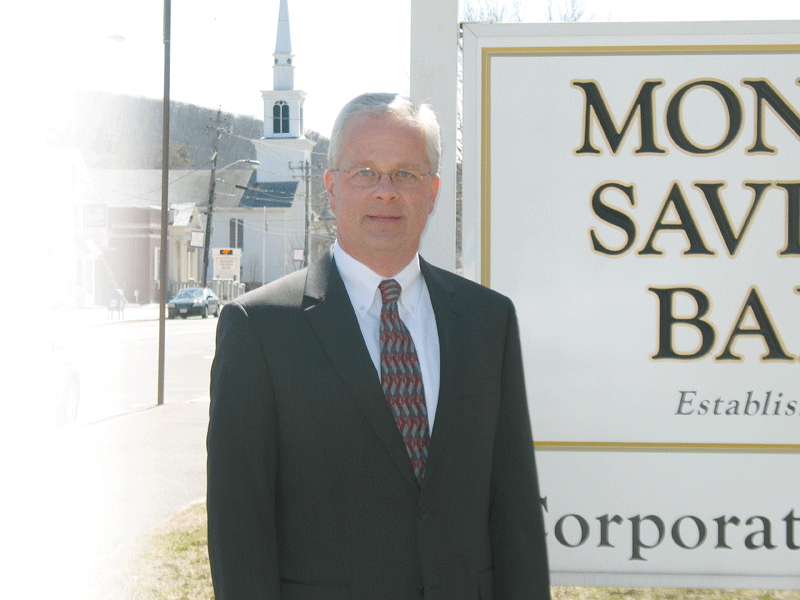
Steven Lowell

Steven Lowell says his primary goal is to continue Monson Savings’ strong growth pattern.

Under the leadership of just-retired President Roland Desrochers, Monson Savings Bank tripled its assets over the past 15 years while adding two branches, a loan center, and a host of retail and business programs. After he announced his retirement last year, the bank’s trustees launched a search for someone with the vision to take MSB to the next level. They think they’ve found that person in Steven Lowell, who says he wants to continue to grow market share while maintaining the community ties that customers have come to appreciate.

Steven Lowell knows something about growing community banks.
As chief operating officer and executive vice president of Cape Cod Cooperative Bank, he saw that institution expand from $150 million in assets to more than $580 million today.
He also knows something about long commutes, for years spending about three hours each day in the car between his workplace and his Central Mass. home.
In his new position as president of Monson Savings Bank, he plans on continuing one of those trends and drastically reducing the other.
“Commuting to Monson isn’t nearly as bad as going to the Cape,” he said. “This has cut my commute in half, so that’s been quite pleasurable.”
That should give Lowell plenty of extra time to contemplate ways to continue a similar growth pattern at MSB, which, under recently retired President Roland Desrochers, has seen its assets increase from around $80 million to $236 million in 15 years. The new man in charge says that’s only a start.
“I like building things, and clearly this bank is at a point where it needs to grow,” Lowell said. “Roland has done a great job growing it to the size it is, but it’s getting harder and harder for a small bank to be able to compete. The bank has built a great infrastructure; now we’ve got to build the size of the bank to fit that infrastructure.
“The opportunity to manage that growth is a huge appeal to me,” he continued. “I had the experience of doing that on the Cape, and I look forward to doing similar things here.”
Desrochers, who will stay on as CEO until June to oversee the transition in an advisory role, is pleased with who the bank’s trustees chose as his successor.
“I felt it was appropriate to provide as much time as possible for the board to make a decision about the individual who would replace me,” he told BusinessWest. “So I announced my retirement to the board last June, and we started the search process last September.”
The bank appointed a search committee and hired a search firm to manage the process and identify a number of candidates to interview. Eventually, they whittled the list to two, and in the end chose Lowell.
“He has a community-banking background, so he definitely fit into our culture,” Desrochers said. “He’s used to working in the community as well, which is an important facet. He’s knowledgable in business, and we felt he would work very will with the management team.”
Lowell said the transition has been smooth.
“Roland has been really helpful, introducing me to people in the community, helping me get ingrained in the culture of the bank,” he said. “We are a community-based organization, and that’s been my background, too. That part of the transition has been really easy. I think I’m the beneficiary of what Roland has set up here.”
Desrochers said the bank’s threefold growth in assets in the past decade and a half are a product of a deliberate, controlled growth plan. As opposed to the rapid branch proliferation of other regional institutions, MSB has added a loan center and expanded from one branch to three (adding sites in Wilbraham and Hampden) during his tenure.
“We’ve had pretty good growth, and it’s been profitable growth,” he said. “I think that’s an integral part of it. You just can’t grow for the sake of growth; you’ve got to make sure you have profitable growth and can maintain and increase your capital position.”
“It was challenging initially as an $80 million institution — talk about economies of scale,” Desrochers added. “We weren’t doing very many retail products at the time, there hadn’t been many loan products, so we needed to expand those areas. We were just a small, sleepy, small-town bank, and there’s nothing wrong with that by any means, but we needed to do something to make sure it existed longer-term.”
Now that Monson Savings has secured a stronger foothold, Lowell intends to shepherd the 139-year-old institution to the next level. For this issue, he spoke with BusinessWest about how he plans to do that, and why he’s feeling positive about much more than a shorter commute.

High Tech, High Touch
Lowell said one of the things that impressed him about MSB was the caliber of its management team — “a really positive sign for our ability to grow in the future” — but also its Internet offerings, from its online banking services to remote-deposit capture for businesses and a mobile-banking platform that’s in development.
“The use of technology is very impressive for a bank of this size,” he said. “They have done most of the things larger banks, including the one I came from, have done; for an organization of this size, we’re really ahead of the technology curve. It’ll be a challenge to continue to do that, but it’s very important. Customers are all about convenience, and technology allows you to be as convenient as the major banks.”
Community banks these days, he explained, must balance strong in-person customer service — traditionally one of their main selling points — with the ease of the online experience, Lowell added.
“That’s the challenge. We do a great job with customers in our lobby — that’s how we build relationships — but we also want to deliver that high level of service electronically. If we can do that, then everyone wins.”
The bank also uses an active Facebook page to reach out to customers. Desrochers recently spearheaded a project to ask customers on the social-networking site to identify nonprofits and charitable organizations they would like the bank to support; MSB made contributions to the top 10 vote-getters, on top of its other giving for the year.
“It was a great program and very well-received,” Lowell said, “and it helps bring us closer to our customers and the community.”
But philanthropy only goes so far in attracting and retaining customers, and Desrochers touts a number of retail initiatives introduced in recent years, such as First Rate Checking, a high-rate savings product tied to a checking account; Cash Back Checking, an account that pays the depositor back when they use their debit card; and NextGen Banking, which targets specific age groups with different features, such as enhanced online and ATM access for college-age customers.
“NextGen Banking has turned out to be quite popular,” he said. “Part of that is financial literacy and teaching younger people how to manage their money in a way that’s responsible and hopefully builds them into good customers for the future.”
Lowell also noted that the bank allows use of foreign ATMs and refunds the fees customers incur by using them — an appreciated service at a bank with only five of its own ATM locations. “A customer on the Cape may have trouble finding us, and it’s important that they have access to our products,” he said.
Desrochers agreed. “Everyone’s looking for convenience, what makes it easy for them,” he said. “That’s also true on the business side. We have cash management we’re able to offer through our technology. It really allows businesses to keep watch over their money and move money around electronically.”

Better Days

Roland Desrochers

Roland Desrochers described his 15 years at Monson Savings as a very exciting time for the bank.

These products are being offered at a time when banks are starting to see business tick up after some sluggish years, particularly in business lending.
“We’re starting to see a little more demand for commercial loans,” Lowell said. “We see signs that companies are willing to start reinvesting in their businesses and expanding — certainly not at a really fast level, but there are positive signs, and we haven’t seen those for awhile.”
Lending for home purchases, however, remains stagnant. “The big concern is that everyone has refinanced their mortgage, so the residential-mortgage business is really slow,” he said. “Unless we see property values go up and people looking to build new homes, that’s going to continue to be low for a little while.”
That trend is balanced by an ever-growing line of investment and insurance products that make Monson Savings, as Lowell put it, “pretty much a one-stop shop” for customers who want that.
“We have financial services available to both retail and commercial customers,” Desrochers added. “It’s nice to be able to say we have these mutual funds or annuity products. We can also help businesses with 401(k)s, life insurance, things of that nature. Those are important products to be able to offer.”
Overall, it adds up to a strong foundation on which to build, Lowell said.
“The primary goal is definitely to grow the size of the organization,” he told BusinessWest. “We know it needs to be larger in order to remain relevant in the marketplace, so we’re looking to do that.
“We’re also looking to expand commercial lending, and it doesn’t have to be limited to the three towns where we’re located,” he added. “We also need to keep a close watch on expenses; we need to remain profitable.”
Meanwhile, being a community bank, he stressed the importance of continuing the bank’s civic responsibilities.
“Right now, 10% of our bottom line goes back to the community in donations,” Lowell said. “That’s something the bank has done in the past that we’re looking to keep doing as we go forward. It’s a win-win for everyone; we get our business from the community, and for us to give back to the community, I think, completes that deal.”
As for Desrochers, he has no regrets upon leaving in June.
“This is why I’m retiring,” he said at one point, holding up the mug from which he had been sipping.
No, he’s not going into the coffee business. On the plastic container are several photographs of his grandchildren, a 6-year-old and a 3-year-old twins. Despite the regulatory and other challenges in banking today, he’s enjoyed his time at Monson Savings, but at this point in his life, he says he will enjoy the extra time with his family even more.
“I can’t believe it’s been 15 years already,” he said, “but it’s been an exciting time.”
Steven Lowell thinks the future can be just as exciting.

Joseph Bednar can be reached at [email protected]

Banking and Financial Services Sections
These Are Commercial Loans at Below-market Interest Rates

Gary Fentin

Gary Fentin


For business owners and nonprofit managers, there is a way to finance your next capital project from your own bank, on the same terms you would obtain conventionally — but at a reduced interest rate.
The vehicle is a tax-exempt bond issued by the Mass. Development Finance Agency (“MassDevelopment”), a product that comes in several forms, including industrial revenue bonds (IRBs), bonds for nonprofit organizations (501c3 bonds), and bonds for other eligible entities.
But what is a tax-exempt bond? What do they cost? How do you get one? Who is eligible? Are they more trouble than they’re worth?  These are all commonly asked questions.
This article is geared primarily to tax-exempt bonds that are purchased by a bank or single lending institution. Bonds that are publicly issued or credit-enhanced involve additional parties and additional cost. Here are the answers to those questions and several others.

What is a Tax-exempt Bond? It is a financing vehicle that works basically like a loan from a bank that satisfies certain federal tax and MassDevelopment requirements. From the borrower’s and the bank’s perspective, it looks and feels like a regular bank loan, typically with the same payment terms and collateral as the borrower would obtain generally, but with a lower interest rate.

What are the federal tax requirements? The primary federal tax requirement is that the project finance capital costs incurred for qualified initiatives. Although there are other federal tax requirements, if your project qualifies and you feel that a bond is cost effective, you should contact MassDevelopment or the author of this article to inquire regarding qualification.

What are the MassDevelopment requirements? MassDevelopment must approve the project and the applicant. This is a fairly straightforward process that includes speaking to the local MassDevelopment representative for Western Mass., Frank Canning, and completing and submitting an application. Canning will coordinate with one of the agency’s bond counsels to review the application and to prepare the forms of votes for the agency approval and notices of public hearing. Shatz, Schwartz and Fentin, P.C. is the only approved MassDevelopment bond counsel firm with offices located west of Worcester.

What is a qualified project? Tax-exempt bonds are available to finance eligible capital costs incurred in Massachusetts by manufacturing companies, 501(c)(3) entities, and certain assisted-living and long-term-care facility developers, affordable rental housing developers, and solid waste and recycling facilities.

What do they cost? The cost of an IRB includes the following: (1) the cost the borrower would otherwise incur to close a conventional loan for the same project with a bank (2) plus MassDevelopment’s issuance fee and the cost of bond counsel, which is generally $12,000 to $13,000. For a bond amount of $2 million, MassDevelopment’s fee would be $20,000 (1%) for a manufacturing project, or $10,000 (.5%) for a 501(c)(3) project, plus $13,000 bond-counsel fee, for a total of about $33,000 for a manufacturing project and $23,000 for a 501(c)(3) project.

Are they worth the money? Typically the interest rate on a bond is up to 2% or more less than conventional financing.  For a $2 million bond, the interest savings could be $40,000 in the first year, which would pay all of the extra issuance costs in one year. The savings on a $1 million bond ($20,000) would pay the extra issuance costs in about one year for a 501(c)(3) project, and in about 1.5 years for a manufacturing project.

What does bond counsel do? Bond counsel is responsible for filing the necessary federal and state approval and filing documents, drafting the basic bond documents, and issuing an opinion that interest payments received on the bond are exempt from federal taxation. The exemption from federal taxation of interest on the bond is the reason that the bank can charge a lower interest rate and still earn a similar after-tax yield as it would have received on a conventional loan.
Bond counsel is also allowed to represent the borrower or the bank, in addition to acting as bond counsel.

Who should you contact to see if you are eligible? Frank Canning at MassDevelopment, 1350 Main St. 11th Floor, Springfield, MA 01103; (413) 731-8848; [email protected]

How long do they take to get?  A bond can usually close on the same closing schedule the bank and the borrower would use for a conventional loan. Generally it takes about 4-6 weeks to close a bond from the issuance of a bank’s commitment letter, which is the time that the borrower and the bank generally need to prepare and submit their respective due diligence items.

Attorney Gary S. Fentin is a shareholder of Shatz, Schwartz and Fentin, P.C., and concentrates his practice in the areas of commercial and real estate finance and development, industrial revenue bonds, affordable housing, estate planning, business law, and business foreclosures and workouts. He is the only approved bond counsel for Massachusetts Development Finance Agency with offices located west of Worcester;  (413) 737-1131.

Banking and Financial Services Sections
This Plan May Have Attractive  Benefits for Many Individuals

Roth IRA conversions received a lot of press coverage in 2010 because the income limitation on these conversions disappeared. The Roth 401(k) has received much less attention, but offers similar tax-free growth advantages to a Roth IRA. Indeed, even if you decided a Roth IRA conversion was not right for you, Roth 401(k)s are worth a look.
A Roth 401(k) is a retirement savings plan that may be offered by employers in addition to a traditional 401(k) plan. Both of these plans allow employees to designate a portion of their current salary to be contributed to the plan with the intention of using it to pay for retirement expenses in the future. The essential difference between these two types of 401(k)s is that  unlike a traditional 401(k) plan, contributions to a Roth 401(k) are made with after-tax dollars. However, qualified withdrawals from your Roth 401(k) are not subject to income taxes, unlike withdrawals from a traditional 401(k).
The Roth 401(k) first became available in January 2006. According to a 2011 survey by benefit consulting firm Aon Hewitt, more than 36% of mid-to-large companies now offer a Roth 401(k) retirement plan, and this number is expected to reach 50% of employers by 2012. Non-profit and public employers that offer a 403(b) also have the option of offering a Roth 403(b), which follows most of the same rules as a Roth 401(k). So, chances are you currently have or will soon have the opportunity to contribute to a Roth 401(k) and may want to examine whether switching your contributions from a traditional 401(k) to a Roth is beneficial for you.

Let’s look at some important features of the Roth 401(k):

• There is no income ceiling for contributors — employees at all income levels are able to make contributions.
• Contributions are made with after-tax dollars, and “qualified distributions” may be withdrawn without tax or penalty.
• Contribution limits for 2011 are the same as a traditional 401(k) or 403(b) — $16,500 per year and $5,500 additional catch-up contributions if you are over 50.
• After age 59½ — and at least five years after the first contributions to a plan — investment earnings can be withdrawn tax-free.
• Minimum annual distributions must begin at age 70½, though a Roth 401(k) can be rolled into a Roth IRA, which does not require withdrawals.
• Employer contributions or matches will be made on a pre-tax basis (the same as a traditional 401(k)).

Perhaps the most crucial consideration in weighing a decision between a traditional or Roth 401(k) is your tax bracket — now and in the future. If you expect to be in the same or a higher tax bracket when you retire, a Roth 401(k) could result in greater savings. However, if you think you will be in a lower tax bracket after you stop working, it may be preferable to contribute to a traditional 401(k). The younger you are the more compelling the Roth 401(k) is likely to be.
Also, if you are a higher-income employee and are expecting tax rates in general to rise, you might also find a Roth 401(k) attractive because you will be paying the income tax on your contributions at today’s rates. If you are uncertain about tax rates in the future, you may want to stay with a traditional 401(k). As an alternative you might want to consider, separate annual contributions to a non-deductible IRA and then convert the non-deductible IRA to a Roth IRA. In this way, you have diversified your future tax burden by having both tax-deferred and tax-free income sources.
Let’s look at some situations that apply to managers and employees at all levels.
A young manager in her 30s and just starting out in the workforce may anticipate that her earnings will be much higher in the future and thus will be subject to higher tax rates. This person is likely to find contributing to a Roth 401(k) to be advantageous until she is in a higher tax bracket. She can fund the Roth 401(k) now with after-tax dollars and never have to worry about paying taxes on it in the future.
An executive in the middle of his or her career may currently be in one of the top tax brackets. In this case, contributing to a traditional 401(k) will allow him to defer taxes now when his tax rate is high and pay them in the future when his tax rate is lower.
A manager near the end of his career who will likely be in the same or higher income tax bracket during retirement may benefit from contributing to a Roth 401(k). Making contributions now to a Roth 401(k) using after-tax dollars will eliminate the possibility that these dollars would be subject to higher taxes in the future.
If you decide to move forward with a Roth 401(k), make sure you review how it will impact your net take-home pay. Most people select the amount they will contribute to retirement plans based on a percentage of salary. It is important to remember that if you currently contribute 10% of your salary to a traditional 401(k) and you switch to a Roth 401(k), your net take-home pay will decrease because you will need to start paying taxes on the amount contributed to your Roth 401(k). It is recommended that you ask your payroll department to calculate the difference in net take home pay from contributions to a Roth 401(k) vs. a traditional 401(k).

Doug Wheat, CFP, is a financial planner with Family Wealth Management; www.fwmgt.com.

Banking and Financial Services Sections
These Tools Can Help Secure Individuals a Paycheck for Life

Charlie Epstein

Charlie Epstein

We live in a world of automatic. From your coffee maker to your car, automatic makes our lives easier every day.
And since the Pension Protection Act of 2006, automatic has made its way into the world of the 401(k). This has greatly helped plan sponsors encourage their plan participants to save more and build their retirement accounts. There are four ‘automatic’ tools that can help ensure successful retirement outcomes for 401(k) plan participants: automatic enrollment, automatic increase, automatic default, and automatic open re-enrollment.
Here’s how they work:

Automatic Enrollment
This first automatic tool allows employers to automatically enroll their employees as participants in their companies’ 401(k) plans. This feature uses the inactivity of employees to their advantage. About 18% of large employers (companies with 1,000 or more employees) automatically enroll all employees (both new and existing workers). Considering that the opt-out rate in these employers’ plans is less than 10% of employees who are automatically enrolled, this feature does a great deal to boost enrollment.
If they do not opt out of participating in the plan, participants will begin saving for their future without even lifting a finger.

Automatic Increase
Automatic increase is another great feature to use in increasing the amount that each participant contributes to his or her plan. A 10% contribution rate provides for a successful retirement that also helps to offset inflation. However, many participants are currently saving on average well below this level. By automatically increasing contributions 1% each year up to 10%, plan sponsors can help to steer their plan participants in the right direction toward appropriate savings for retirement.

Automatic Default into a Qualified Default Investment Account (QDIA)
Today the majority of 401(k) plans allow individual participants to exercise control over the investment decisions of the assets in their 401(k) plan. But what happens if a participant enrolls in the plan but never elects where his or his employers matching contributions should be invested? In the past, this money was directed to a money market account, where it may remain for years. What happens if that employee is only earning a paltry 1% for 30 years? Who will be deemed responsible for that investment choice?
To provide protection to the plan sponsor fiduciary (think you, the business owner) from bearing the personal liability for an employee’s lack of interest in their 401(k) choice, ERISA allows the plan “fiduciary” protection to automatically direct 401(k) participants’ money to a qualified deferred investment account — typically a lifestyle fund, balanced fund, or target-date fund. This greatly relieves the plan sponsor of the burden of chasing down participants to make investment elections.
While the plan sponsor is still responsible for justifying the QDIA it selects and continuing the due-diligence of these funds, this feature provides fiduciary protection. When a participant is automatically defaulted into a QDIA, the plan fiduciary is protected against an employee lawsuit regarding that choice. This automatic feature not only protects plan sponsors and fiduciaries from a lawsuit, but it also protects employees from making poor investment selections.
The majority of 401(k) participants fall into the “don’t know and don’t want to know how to invest” group. For this reason, more than 70% of new 401(k) contributions go into a QDIA . By educating plan sponsors and fiduciaries, plan advisors can provide direction and confidence in their QDIA choice.

Automatic Open Re-enrollment
The automatic open re-enrollment keeps participants in a plan. Once a year, participants receive a letter stating that they will have 30 days to review their investment choices and, unless the plan sponsor receives notice otherwise, they will be automatically enrolled into a QDIA. The result of this feature has increased employee involvement in a QDIA, which, in turn, enhances the employer’s fiduciary protection.
It’s no secret that if employees and plan participants are left to their own devices, they will, most likely, not save enough for retirement. This retirement-savings auto-pilot program is attractive to plan sponsors and fiduciaries because of the liability protection it provides. It also pays dividends for the plan participants, because they are automatically positioned as intelligent savers, enrolling in their company’s 401(k) plan, automatically escalating their contributions, defaulting into a QDIA, and re-enrolling into that account. Automatic is a great innovation, and it has benefited and will continue to benefit the 401(k) industry well into the future.
Automatic enrollment has already been adopted by 40% to 50% of employers. However, many smaller and mid-size plans have been reluctant to add these features, for fear of negative feedback from their employees.
The benefits of these automatic features should not be overlooked by both small- and medium-sized businesses, and their employees. For the owner or an over-staffed administrative person, there is greater ease in gaining employee participation in a valuable benefit that you are sponsoring and paying for. In addition, the fiduciary protection afforded by ERISA makes these features even more enticing.
For the employees, ease of participation and in the end, greater employee success in replacing their future income and creating a paycheck for life make this a win-win feature for everyone.

Charlie Epstein, CLU, ChFC, AIF® is the founder of The 401k Coach® Program (www.the401kcoach.com), which offers expert training for financial professionals to develop the skills, systems, and processes necessary to excel in the 401(k) industry and facilitate successful retirement outcomes for plan sponsors and participants. Epstein has frequently been named to 401kWire’s Top 100 Most Influential People in the 401(k) Industry List and Top 300 Most Influential DC Advisor List and was recently named to the Legg Mason Retirement Advisory Council.