Home Sections Archive by category Economic Outlook (Page 2)

Economic Outlook

Cover Story Economic Outlook Sections

Questions About Sustainability Cloud the Picture for 2016

Outlook 2016

By most accounts, the state’s economy — and area businesses — had a solid 2015. Performance didn’t match pre-recession levels, but it was an improvement over the previous three or four years. The question looming over 2016 is whether that performance can be sustained, and there are enough doubts, or reservations — created by everything from a stronger dollar to still-falling oil prices to uncertainty about who will win the White House next November — to keep confidence in check.

Dan Flynn calls it “soft confidence.”

That simple, two-word phrase goes a long way toward explaining the current state of the local and national economy and the general attitude concerning it among business owners.

Elaborating, Flynn, executive vice president and chief operating officer of Wholesale Banking for West Springfield-based United Bank, said many of the institution’s commercial clients are doing well — not as well as before the so-called Great Recession that started in 2008, but performance has been solid. Some even recorded their proverbial ‘best year ever’ in 2015, he noted, adding that most saw at least improvement over 2014.

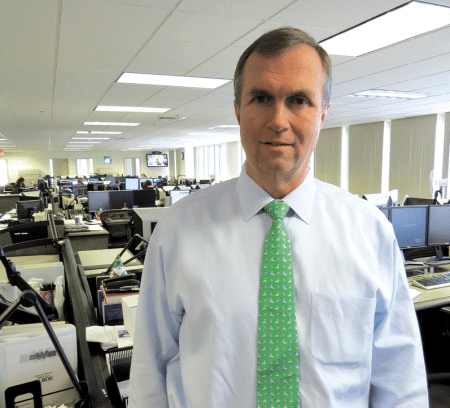
Dan Flynn says many area businesses had a solid 2015

Dan Flynn says many area businesses had a solid 2015, but the question moving forward is whether that performance can be sustained.

But — and this is an important ‘but’ — these business owners are not at all sure that such performance is sustainable given a host of factors that are almost all well beyond their control. These range from global and domestic violence to still-spiraling healthcare insurance costs to extreme uncertainty about who will prevail in the 2016 presidential election — and what he or she might do after getting elected.

Thus, existing confidence is, well, soft.

“For most business owners, their inventory backlog or their job backlog is building, but they don’t have the confidence that this will sustain itself in 2016 or 2017,” Flynn explained. “They think it will, but it’s not like that flat-out ‘we’re confident, we’re going to hire a couple of extra people, we’re going to add a second shift.’ They’re not that confident.”

John Patrick agreed. The CEO of Farmington Bank, which recently made a foray into the Western Mass. market with locations in West Springfield and then East Longmeadow, said there is some optimism about the year ahead, but there are also serious doubts, enough to keep confidence from becoming deep or profound.

“The economy, especially the local economy, is all about confidence,” he noted. “And I wouldn’t say there is strong confidence in the marketplace relative to everything that’s happening around them.”

And by ‘everything,’ he meant factors ranging from terrorism in Paris and California to the ever-rising cost of health insurance.

Bob Nakosteen concurred, summoning another word to describe the current picture and outlook for 2016: ‘fuzzy.’

He would go into much greater detail, obviously, but Nakosteen, professor of Economics at the Isenberg School of Management at UMass Amherst and co-editor of MassBenchmarks, the quarterly publication devoted to analysis of the Bay State economy, said that one word pretty much does the job.

Indeed, the outlook is fuzzy, as in not sharp, not clear, and, for the most part, not predictable.

“The picture is fuzzy, and through the fuzziness, we see a lot of positives, but we also see some risk,” he explained. “There’s a lot of internal strength in the U.S. economy, and it is going to overcome various weaknesses, and that means this state is going to do well. It’s a mixed picture, but the overall trend is positive. But do I have 100% confidence in what I just said? Absolutely not.”

That’s soft confidence personified.

“We’re in the middle of a slowdown … it’s not anywhere near a recession, but we’re definitely seeing some slowing,” Nakosteen went on. “The economy has been growing at 2% or a little less, and that’s not vibrant.”
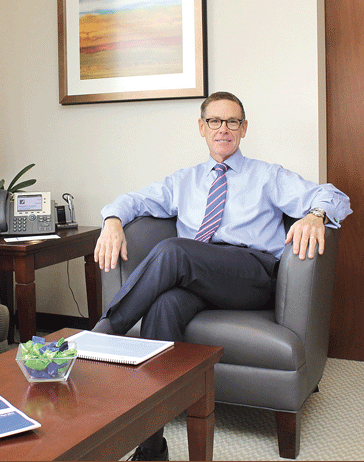
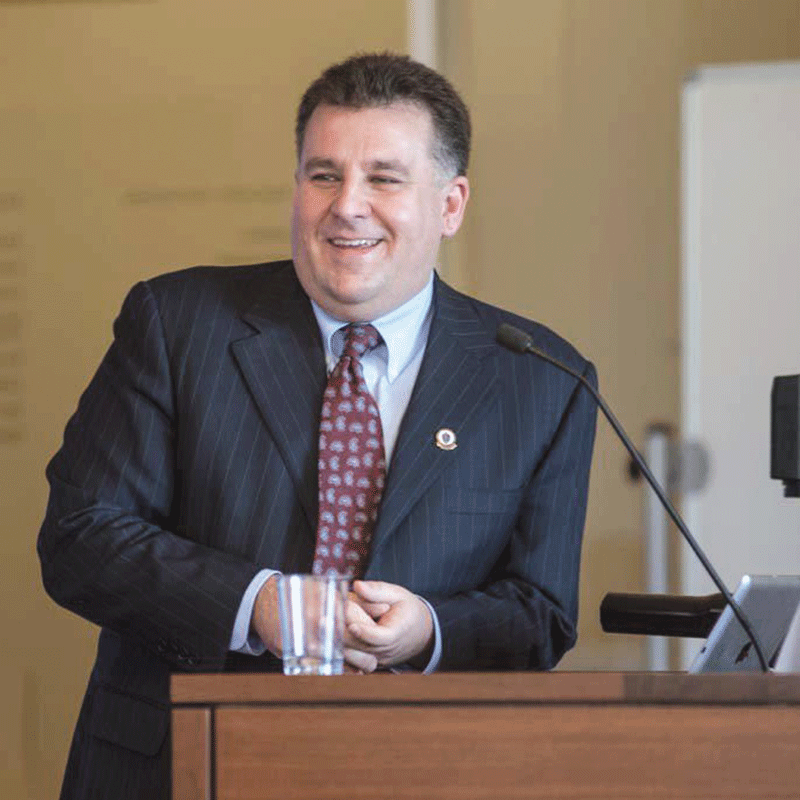
John Patrick

John Patrick says a number of area manufacturers have seen exports impacted by the weakening of many foreign currencies.

Moving beyond ‘fuzzy,’ Nakosteen, like Flynn and others we spoke with, said there are a number of factors impacting the state and national economy — everything from a weak Canadian dollar, which is hurting exports to that country, to the fact that most Americans are not putting the money they’re saving at the gas pump back into the economy, to impressive job growth in the Commonwealth (if not Greater Springfield). Together, they make predicting what will come next an even more difficult assignment than it generally is.

Most observers are expecting growth to remain right around that 2% level, but it could go higher or lower depending on how matters evolve, especially that critical confidence level among business owners.

Money Matters

As he talked with BusinessWest about 2015 and what will likely happen in the year ahead, Nakosteen said there are certainly plenty of reasons to look at the glass and declare it at least half-full.

“Within the lack of clarity that we’re seeing, there lies a solid core of economic strength,” he explained, adding that the Bay State continues to match or outperform the nation overall, but it is very much dependent on the relative health of this country, as well as international markets, for its success.

As evidence, he cited some recent data showing that Massachusetts is experiencing an economic expansion in many ways reminiscent of the late ’90s, though without the impetus of the tech bubble that drove that cycle, meaning that this one is more well-rounded.

Gross state product is growing robustly, he went on — 7.1% for the second quarter compared to national GDP growth of 3.7% — and employment growth is steady, although limited geographically. The unemployment rate remains low by historical standards, and has been below the national rate since — and even before — the Great Recession.

“The current expansion appears to be on firm footing — the economy in the state has slowed down recently, but it’s still been a really good year,” he said while offering the global view.

“We’re expecting strong growth over the year or so,” he went on, using ‘we’ to mean the editors at MassBenchmarks. “It might be as strong as what we had up to the second quarter of this year, but pretty solid growth. How much of it makes its way out to the western part of the state remains to be seen.”

Flynn agreed.

“Overall, clients performed better over the past 12 months than the previous three to four years,” he said while generalizing the comments of business owners within the bank’s portfolio. “As a whole, they’re not seeing the same rate of return as before the recession, but they’re doing better than they were a year ago.

“And it’s across the board,” he went on. “You can take retail, manufacturing, wholesalers … generally, companies are performing better than they had.”

Given all that, though, the question looming over 2016 is whether that performance — by individual companies and the economy as a whole — can be sustained. And strong doubts about whether it can have led to heavy use of phrases such as ‘soft confidence,’ ‘fuzzy picture,’ ‘mixed signals,’ and the always-popular ‘cautiously optimistic,’ which Flynn said he’s heard repeatedly.

That’s because most all of the factors that will decide the fate of 2016 come complete with ‘ifs,’ ‘buts,’ question marks, and both points and counterpoints.

Take the jobs picture, for example. The nation’s economy added another 211,000 jobs in November after a gain of nearly 300,000 in October, a solid boost by most accounts that exceeded almost all expectations and propelled the stock market to a more than 2% gain the day the figures were released.


Click HERE to download a PDF chart listing the region’s largest employers


But do those numbers and the stated 5% national unemployment rate reflect real progress in what’s happening locally? The short answer is ‘no’ or ‘probably not.’

“I was in New York recently, and I heard a nationally respected economist who said that, if you really take a look at the numbers, unemployment on a normalized basis is closer to 9% when you take into consideration all the people who are unemployed and those working part-time who would prefer to be working full time,” said Patrick.

Like others, he noted that, overall, many employers have not yet reached — and likely won’t reach for some time — that threshold of confidence needed to add back some of those employees trimmed during extensive efforts during and after the recession to become more efficient and rightsize.

“Businesses are a little apprehensive about continuing to make significant investments in people, technology, and franchise, because they’re just unsure about what’s going to happen,” Patrick told BusinessWest. “And there many businesses that, because of the cost of healthcare, don’t want to go over that 50-employee number, and they’re trying to manage their business accordingly.”

Meanwhile, Nakosteen said, despite the start of work on the Springfield casino and a host of other construction projects across Western Mass., the employment needle has “barely budged” in the city of Springfield, meaning the jobless rate is still hovering around 9%, in sharp contrast to what’s happening elsewhere in the Commonwealth.
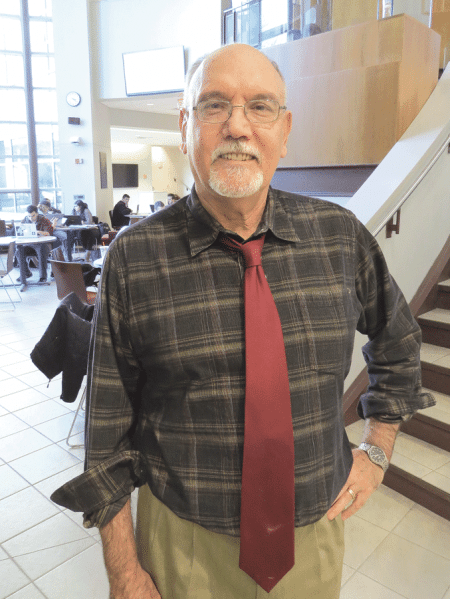
Bob Nakosteen says the Bay State added jobs at an impressive clip in 2015

Bob Nakosteen says the Bay State added jobs at an impressive clip in 2015, but by and large, those gains did not extend to Western Mass.

“Employment in the state has really grown at an amazingly fast clip over the past year to 18 months, but it’s not the same in Western Mass., as is usually the case,” he explained, adding that the Bay State has added 50,000 to 60,000 jobs over the past year, most of them in technology-related sectors, although healthcare and education remain solid contributors to such growth.

“A different picture emerges out here,” he went on, talking from his office on the UMass Amherst campus. “Springfield has added a few jobs but not many — at least it hasn’t gone down. The picture is better in the larger metropolitan area, but all the construction is in Springfield, so that’s where it should be recorded, but so far we’re not seeing it.”

Dollars and Sense

Another factor that is contributing to uncertainty is the stronger U.S. dollar. It certainly benefits those traveling overseas and has provided a huge boost for airlines and cruise lines, but overall, a strong dollar hurts exporters, including the many precision manufacturers that call the Knowledge Corridor home.

“I think many of the manufacturers in this region got off to a good start in 2015 and had good backlogs,” said Patrick, referring to companies on both sides of the border. “But companies within that corridor are usually producing a product that has export potential, and because of the strong dollar internationally, they’ve seen a lot of the orders slow down and some of them put on hold, with the buyer saying, ‘what we’ll do is wait for the dollar to drive down in value a bit.’”

There was some movement in that direction in early December, he noted, but overall, the dollar remains quite strong against all other currencies, and until a pattern of weakness occurs, exports will continue to suffer.

Nakosteen agreed, and said one country often overlooked when it comes to currency rates is Canada. It is a big trading partner, and at the moment that country’s dollar, also known as the ‘loonie,’ is in a hard spiral fueled by a host of factors, including falling energy prices and questionable monetary policy.

“Canada is our most important trade partner; a year ago, it was about one U.S. dollar to one Canadian dollar; now, a Canadian dollar is worth about 70 cents,” he explained. “What that means is for Candians, U.S. products are much more expensive, and you can see it in the export numbers — they’ve really dropped over the past year.”

As for falling oil prices, which analysts say will remain low for the foreseeable future, they are not producing a surge in consumer spending, as some had predicted, and in the meantime, they are taking a hard toll on the energy industry, which is having a ripple effect, in this country and elsewhere.

“We have not seen the surplus from lower gas prices turn into consumer spending — it’s going into savings or to reduce debt,” Nakosteen said. “It has not created the bump that was expected by everyone, including me.

“From everything I’m reading in the energy industry, low gas prices are here for a while,” he went on. “So it will be interesting to see if, over time, consumers start behaving a little differently and take this surplus and spend it.”

Still another factor is interest rates, which, after that strong November jobs report, are almost certain to rise after roughly seven years of stagnancy. The projected 0.25% increase, though minor, will finally bring some measure of relief to investors who have focused on low-risk options, such as bonds, which have yielded marginal returns. But the hike will also make borrowing more expensive, and this may slow the economy somewhat.

Cliff Noreen, president of Springfield-based Babson Capital, told Bloomberg News Radio recently that he welcomed the U.S. interest rate hike — “I think it’s about time; it’s been seven years, and we’ve been living with manipulated rates for that long, and we should go back to a more normal rate environment.”

“I think the biggest victims today are retirees — they retired with the assumption five or 10 years ago that they would earn a risk-free rate of 4%, 5%, or 6%; now, the risk-free rate is zero,” he told Bloomberg. “So they have to take more risk to make their return to live on, and they’ve been forced to invest in higher-risk assets like high-yield bonds and stocks, and they’ve had to adjust their asset allocation to make up for the zero-percent rate environment we’re in globally.”
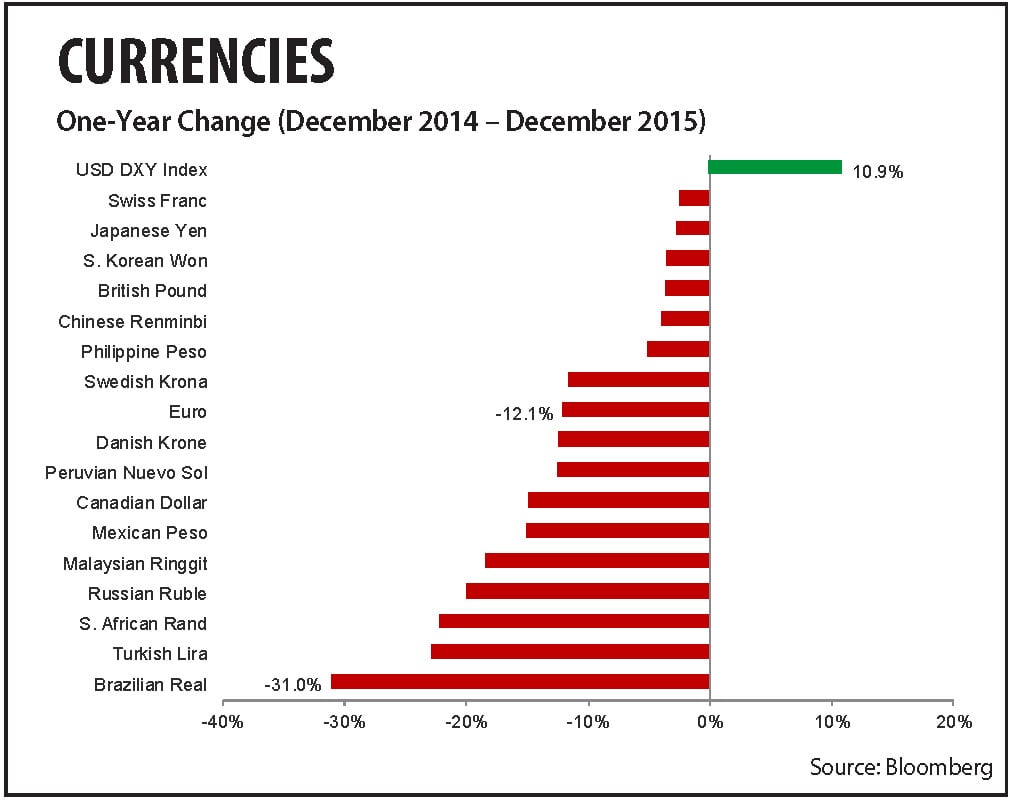
CurrenciesChartCommoditiesChartOverall, Noreen said there were several surprises in 2015 — from falling commodities prices to spiraling foreign currencies (see charts) to gasoline prices that could have fallen further than they did — and all signs point to these conditions (and the negative impact and uncertainty they bring) continuing into 2016.

“We expect lower-than-normal investment returns for all asset classes,” he noted, “and slow economic growth globally, although things have been stabilizing, and continued very, very low interest rates that are in the process of rising.”

And there are still other factors to consider looking ahead, said Noreen, listing everything from a slowing of the growth rate in China to slowing corporate-profit growth in this country, and historically low yields on bonds, with many European countries, including Germany, France, Belgium, and the Netherlands, gaining status in what Noreen called the “negative-rate club.”

As for the upcoming presidential election, Nakosteen noted that, while elections themselves typically don’t have an impact on the economy and individual presidents don’t often dictate fiscal policy, elections do generate anxiety, which has its own trickle-down effect.

Bottom Line

Speaking from experience, Patrick agreed, noting that the one commodity business owners dislike the most is uncertainty.

And because there is no lack of it at the moment — not just because of the election but all those other issues mentioned above — there is a corresponding shortage of perhaps the most important element for at least the short-term health of the regional and national economy: confidence.

There is confidence that the progress measured in 2015 can be sustained, but, as Flynn noted, it is soft confidence.

And as long as that condition remains, the picture for 2016 will remain fuzzy.

George O’Brien can be reached at [email protected]

Cover Story Economic Outlook Sections
Region’s Economy Gets a Jolt of Vibrancy

EcoOutlookDPartSince the end of the Great Recession in 2009, economic expansion in Western Mass. — and many other parts of the country as well — has been, in a word, limited.

And these limits have resulted from a host of factors that have stood in the way of more profound recovery. They include everything from lackluster hiring trends to high energy prices and their impact on businesses and consumers alike; from economic turmoil abroad, especially in Europe, to political chaos in Washington, as with the so-called fiscal cliff of early 2013; from a floundering housing market to a persistent lack of confidence among business owners.

But as the new year approaches, say experts we spoke with, much of this whitewater seems to be giving way to smoother conditions that are much more conducive to progress. The coast isn’t clear, they imply, but it is much clearer.

Indeed, Bob Nakosteen, a professor of Economics at the Isenberg School of Management at UMass Amherst, told BusinessWest that he sees positive signs almost everywhere he looks, something he hasn’t been able to say for at least the past seven years.

That includes the latest employment statistics for the Bay State, which show unemployment in Springfield at 8.4% (down from 10.6% a year ago), which he considers a bellwether.

“What’s happening now is that the economic recovery is actually permeating Western Massachusetts, something you couldn’t say over the past several years,” he noted, adding that Boston, Cambridge, and other communities have enjoyed a far-more-robust recovery. “If you look at the employment numbers, we’re adding jobs in this part of the state, and that’s a really good development.”

That also includes the gas pump, where the prices for regular are now below $3 a gallon in all but a few of the 50 states and below $2 in a few (Oklahoma, for example). By all indications, they should stay at those levels, or drop even further, in the weeks ahead.

“And this simply puts money in people’s pockets,” Nakosteen explained. “When you pay for gas at the gas station, most if that money leaves the state — some of it stays, but most of it just goes away. Now, that money is staying in people’s pockets, but hopefully not for long; there are some estimates that people will spend at least half of what they save at the pump, and that goes to local businesses.”

The positive trends also include the housing market, the balance sheets of both businesses and families (both are carrying less debt), and consistently rising numbers when it comes to business confidence.

And then, there’s that $800 million casino project in Springfield’s South End. It isn’t officially underway yet — at least in terms of demolition or construction — but it is already generating excitement, movement within the long-stagnant commercial real-estate market, and talk of opportunities in many forms.

“We’ve had two vendor fairs, and they were very well-attended by small and medium-sized businesses who are looking at the possibility of doing business with the casino, and that’s a real positive sign,” said Jeff Ciuffreda, president of the Affiliated Chambers of Commerce of Greater Springfield, noting that there is anticipation with regard to jobs — both construction and permanent — and the casino’s vast potential for bringing more meetings and conventions to the city and region as a whole.

Meanwhile, the announcement that Changchun Railway Co. will be building subway cars in the former Westinghouse site has spurred anticipation of more than 150 well-paying manufacturing jobs as well as hopes for further growth within the region’s once-prominent manufacturing sector.

Despite all this welcome news, there are some points of global economic concern, said Cliff Noreen, president of Springfield-based Babson Capital Management LLC. He cited everything from a slowing growth rate in China to falling bond rates in many European countries to the fact that, while corporate profits are soaring, that wealth is, by and large, not being shared with employees.

The $800 million MGM Springfield

The $800 million MGM Springfield, due to start taking shape in Springfield’s South End, is one of many sources of optimism across the region.

“In the third quarter, U.S. corporate profits were up 9% on revenue growth of 4%,” he explained. “And this results from a very intense focus on managing expenses, which is to the detriment of employees; wages as a percentage of GDP have dropped to 43%, the lowest level in years.”

But, overall, Noreen and others are generally optimistic about the year ahead, so much so that the adverbs ‘guardedly’ and ‘cautiously,’ which have preceded that term since the recession officially ended nearly six years ago, have been generally dropped from most commentary.

“I do think that the mood of small-business owners is positive — I sense a better buzz, a better feel now than I have in the past several years,” said Ciuffreda. “Some of this is downtown-centric, with UMass here, the progress at 1550 Main Street, NPR’s new facilities, new tenants in 1350 Main St. … the feeling is a lot better; the city is more positive than I’ve ever seen it.”

Fueling Speculation

Like Nakosteen, Noreen called falling gas prices a form of economic stimulus, and he offered some eye-opening numbers to get his point across.

“Every penny that gas drops results in $1.3 billion of additional money or funds for consumers and business in the United States — discretionary spending,” he explained. “Gas has dropped approximately 55 cents from the beginning of the year, which should result in a savings of $73 billion, which is effectively stimulus, which comes out to about four-tenths of 1% of GDP.”

Nakosteen cited estimates that the average family will save perhaps $60 a month due to the falling gas prices. “And if you do the arithmetic, take half that and add that up over a whole lot of households, that’s really money being spent in the region,” he said. “And from all I’m reading, this decline in fuel prices is not going to be short-lived; it’s going to last for a while.”

This windfall — unexpected but in some ways not surprising, given the explosion in the production of shale oil in this country — is just one of many reasons, large and small, for rising optimism regarding the economy, even as those numbers are tempered by the damage done to the energy sector when oil falls to below $70 a barrel.

Nakosteen said the improving employment numbers are equally important, if not moreso.

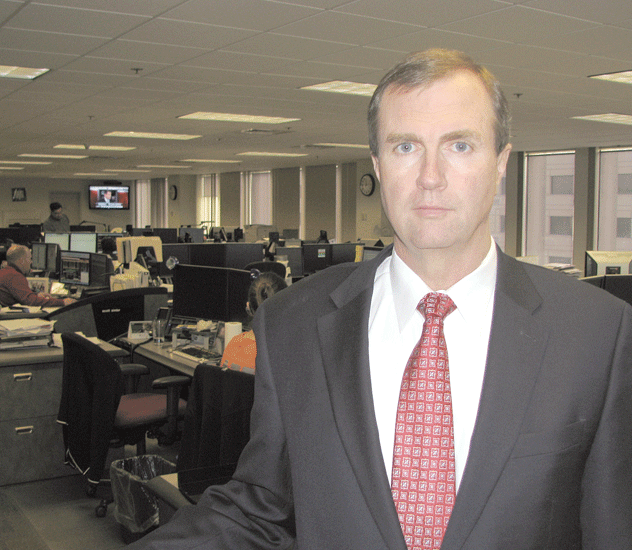
Cliff Noreen

Cliff Noreen says that, despite general optimism about the economy, there are many factors, here and abroad, that could impact the pace of growth.

Elaborating, he noted that, for the most part, whatever recovery this region has enjoyed over the past several years has been generally of the jobless variety. But recent employment reports show that perhaps that scenario is changing.

“It’s been really a slow slog,” Nakosteen said of employment in the four western counties and especially Springfield. “Maybe the recovery is really gaining traction in this part of the state, and recent developments are only going to help.”

With jobs come disposable income and a resulting trickle-down, said Noreen, noting quickly that optimism does need to be kept in check by the fact that many jobs being created, not only in Massachusetts but nationwide, are part-time in nature, and with wages that are not keeping pace with inflation.

“More than 321,000 new jobs were created on a net basis in November,” he said, citing the most recent jobs report. “Our concern, and we’ve been saying this to clients all year, is that the quality of jobs is not what it used to be, and many of these jobs are part-time jobs, they’re in service-type industries that are very low-wage, and many of the jobs are being taken by workers over 55 years old, either because they want to work or they need to work.”

But, overall, the job growth is being seen as a positive sign for the region’s economy, as is the growing confidence among business owners, said PeoplesBank President Doug Bowen, who cited not only the Associated Industries of Massachusetts’ monthly business confidence index and its recent steady improvement, but also trends and activity he’s noticed locally.

“The Massachusetts economy is on track to strengthen, with solid economic growth, and add more jobs in 2015,” he said. “We have a positive outlook for Western Mass. Companies in our portfolio, in general, are doing well and showing moderate growth. Some of these business owners are selectively investing in capital equipment and, to a lesser degree, new facilities.

“But we are seeing growth,” he went on. “We’re seeing some that are adding additional shifts, which always precedes the actual physical construction of new space.”

One of the sectors where he’s seeing such movement is aerospace, or machine shops, which he considers a positive sign because those jobs are generally well-paying. But he’s also witnessing growth in other manufacturing, healthcare, hospitality, and IT.

He said that most of these expansions are resulting not from speculation, but rather from current backlog and existing orders, which leads some to speculate on how long this might continue. However, Bowen noted that he’s seeing generally forward movement and, overall, less hesitation when it comes to additional hiring.

If there are speed bumps down the road for the region’s and nation’s economy, they will likely result from action — or inaction, as the case may be — in other corners of the globe, said those we spoke with.

“Japan is struggling, the Russian ruble has declined substantially, and China is growing at less than people thought,” Noreen explained, adding that these factors and others add up to less demand for U.S. products and commodities such as oil, iron ore, and concrete, which may eventually slow the pace of growth in this country.

“Over the past three years, China used more concrete than the U.S. used in the last 100 years,” said Jay Leonard, a director with Babson Capital Management. “That’s a stunning number, and it helps explain why, with China’s slower rate of growth, oil prices are down, copper prices are down, and steel is getting crushed.”

Meanwhile, Europe continues to be the biggest disappointment on the global economic stage, said Noreen, pointing to bond rates on 10-year government yields (2% in Spain, 1% in France, and 0.77% in Germany) that he called shockingly low.

Industry Terms

As 2015 approaches, those representing several economic sectors anticipate that this will be a year of change, but also challenge and, in many cases, opportunity.

For the long-suffering construction industry, one of the sectors hardest-hit by the recession and the lackluster recovery that followed, change is almost certainly good, said Dave Fontaine, president of Springfield-based Fontaine Brothers.

Doug Bowen

Doug Bowen says confidence among business owners is growing, and many are making investments in their ventures.

He told BusinessWest that, while 2014 has not been a banner year for his company — “we had work, but it was all booked in 2013” — there has been some improvement in several areas within construction, from home building to infrastructure work (roads and bridges). And the consensus is that 2015 will be better because of what he called “pent-up frustration.”

But easily the greatest source of optimism within the industry is the approaching start of work on the casino.

While the general contractor for this massive project will certainly be a firm from well outside the 413 area code, undoubtedly one with several casino projects in its portfolio, Fontaine said, there will be a trickle-down effect, with many area subcontractors and individual tradesmen (all unionized) in line to win much-needed work.

Just how much work remains to be seen, obviously, but Fontaine expects the project to have a deep impact on the sector and its workforce.

“The casino project is going to be good for the general trades, because I know that, for bricklayers, carpenters, and laborers, their hours were down significantly this past year,” he said. “These types of projects certainly employ a lot of people, and they employ them quickly and for a lot of hours, but then they’re done.”

What the sector will have to guard against, to whatever extent possible, is a shortage of manpower for other projects because of the attractiveness of the casino work in terms of hours, wages, and the opportunity for overtime.

“There’s the potential for some manpower shortages, because everyone would want to be down at the casino because they’re getting overtime and six days a week and whatnot,” Fontaine explained. “But our group of tradespeople that work for us, I don’t see them packing up and abandoning us to give their life to the casino for two years.”

Change is also expected in the banking sector, where Bowen believes the recent spate of mergers and acquisitions will give way to a more stable environment.

Indeed, 2014 saw the completion of the merger of equals between United Bank and Connecticut-based Rockville National, and the announced acquisition of Hampden Bank, the last institution based in Springfield, by Pittsfield-based Berkshire Bank.

“To a large extent, it’s pretty much over,” he told BusinessWest. “There may be one or two more organizations that come into play, but the organizations that positioned themselves for merger or acquisition have pretty much achieved their objective.”

These mergers present opportunities in several forms, especially for community banks like PeoplesBank, said Bowen, noting that, whenever such acquisitions take place and management of the acquired bank shifts away from Greater Springfield, commercial and consumer accounts will be moved to small institutions. Meanwhile, such unions generally result in downsizing, which enables banks to recruit talented individuals that already know the local market.

“As an independent, mutually owned bank with no shareholders, we often become the bank of choice for customers who have experienced some disruption in their banking experience,” he said. “This year alone, we’ve increased deposits by more than $100 million; a typical year might by three-quarters that amount.”

Another sector that bears watching in 2015 is healthcare, which is still struggling to cope with the changes brought on the Affordable Care Act (Obamacare) and the ongoing shift from a fee-for-service system to one focused much more on population health.

Such a shift requires providers to make significant investments in equipment, systems, and personnel, said Dennis Chalke, Baystate Health’s chief financial officer, treasurer, and senior vice president of Community Hospitals, adding that these investments come at a time when reimbursements for care are flat or declining and inpatient stays, a major source of revenue, are falling.

Thus, it’s becoming increasingly difficult to make them, especially for stand-alone hospitals, he said, which explains why North Adams Regional Hospital closed in 2014 and why Stewart Health Care System announced that it was shuttering Quincy Medical Center, the largest hospital closing in the state in more than a decade.

“Right now, Medicare is penalizing people if their readmission rates are too high,” he explained. “That means you have to now invest in tools and other things to decrease readmissions, so when patients leave the hospital you have to make sure they follow up with physician office visits and they that they are adhering to their medications and so forth — and that takes investments in things you wouldn’t traditionally invest in.

“That’s a good thing,” he went on. “But we’re not getting paid to do that. We avoid losing dollars when we do that; it’s almost like a negative incentive. And that’s the biggest challenge facing the industry moving forward.”

As for the casino, Ciuffreda said that, overall, apprehension about the gaming facility is diminishing, at least within the business community, and it is generally being replaced with optimism, although some concern remains about its long-term sustainability.

“The mood is very positive — the only slightly gray cloud hanging over the casino is its sustainability 10 years out or so,” he said. “About 95% of the people feel very comfortable about the next five years, and 75% are comfortable about the next 10 years, but some questions start to creep in about what happens after that.”

Money Talks

Challenge and opportunity. Those two words sum up the outlook for each sector and the regional economy as a whole.

But, overall, the emphasis this year seems to be more on opportunity, as it pertains to jobs, growth through additional discretionary spending, expansion, and the many forms of trickledown anticipated from the casino.

As Nakosteen said, it appears that the economic recovery is actually permeating Western Mass.

And it’s about time.

George O’Brien can be reached at [email protected]
Economic Outlook Sections
The Planning of 2014 Will Give Way to Construction in 2015

By JEFFREY S. CIUFFREDA

The year now drawing to a close might best be known for all of the planning that went into several projects, and therefore 2015 will likely become known as the year of construction, because many, if not all, of these planned projects entered into the construction phase.

Jeffrey S. Ciuffreda

Jeffrey S. Ciuffreda

Indeed, 2014 saw a fair amount of construction, and some of what took place was rebuilding from the 2011 tornado that ripped through Springfield and the surrounding area. Several schools in Springfield were either repaired or rebuilt, bringing construction volume to more than $100 million. While the construction trades had suffered double-digit unemployment for a few years, these public projects helped keep some of those workers employed.

Some long-time institutions spent considerable money in 2014 to upgrade their facilities, and in some cases add jobs. Mercy Medical Center completed a $20 million addition to its campus, and National Public Radio renovated a downtown building at the cost of $3 million, adding to the rebirth of the downtown that brought some jobs down from their Amherst location. Caring Health Center completed its renovations in the South End, spending $15 million to do so.

Looking ahead to 2015, there is more construction to come, but this time complete with new jobs.

This past year saw an up-and-down planning process with expanded gaming in Massachusetts, culminating in a final vote by the citizens of the Commonwealth to move forward with this concept. That gave the green light to MGM to commence its $800 million project in Springfield’s South End. It is expected that a general contractor will be named, and it will choose its subcontractors by spring, and construction will begin. Roughly 2,000 construction jobs are expected on site once the project is fully underway. The 3,000 permanent jobs this development promises will not be seen until 2017, but the planning for those jobs, including job training, will commence in 2015.

Another project that was in planning during 2014 and will begin construction in 2015 promises to bring 150 jobs to start. Changchun Railway Co., a Chinese firm, won the state’s bid to construct rail cars for the MBTA and chose to do so right here in Springfield. This company is a worldwide entity, yet, until this decision, it had no presence in North America. It hopes to make Springfield its North American headquarters and grow those original jobs to 300 within one to two years. These are good-paying machinist positions as well as countless other support jobs, all of which will greatly add to the economic well-being of our region’s major city and its people.

Adding to the region’s inventory of hotel rooms and, therefore, boosting the tourism sector of our economy is the new $ 5 million Hampton Inn on East Columbus Avenue in Springfield, which will open in 2015. The Silverbrick Co.’s rehabilitation of the old Morgan Square in downtown Springfield will remake those buildings into market-rate housing, and many of those units will be on the market for 2015. While these private-sector jobs are essential to economic development, there are several public-sector projects that will also be underway in 2015, many, again, related in some way to the devastating storms suffered over the past three years.

A new, $8 million South End Community Center, a $12 million senior center, and an $8 million police station will all add up to better facilities and better services. The year ahead will also be marked by the start of the largest infrastructure project the area has seen in a decade — the complete rehabilitation of the elevated section of I-91 that runs through Springfield from the I-291 intersection to just south of State Street.

This $235 million project will begin in late spring of 2015 and continue on for three years. While no project of this magnitude can be done without some inconvenience, it will guarantee the region a safe roadway, which is the crucial economic link to our Western Mass. region.

Meanwhile, the $82 million rehabilitation of Union Station into a transportation hub, complete with amenities and available office space, will be mostly completed in 2015, creating a true anchor for the North End of Springfield.

If 2014 was the planning year, and 2015 the construction year, 2016 will be filled with ribbon cuttings and new jobs, both construction and permanent. The outlook has not been this positive for our region’s major city in quite some time.

Jeffrey S. Ciuffreda is president of the Affiliated Chambers of Commerce of Greater Springfield.

Economic Outlook Sections
What to Expect in Labor and Employment Law in 2015

By SUSAN G. FENTIN, Esq.

For employers in Massachusetts, 2014 was quite a year: in addition to multiple Supreme Court decisions, the Equal Employment Opportunity Commission (EEOC) issued guidance on the Pregnancy Discrimination Act, and new Massachusetts legislation increased the minimum wage, created rights for employees who are victims of domestic violence, and mandated paid sick leave for employers of more than 10 workers.

SUSAN G. FENTIN

Susan G. Fentin

So what can employers expect from the new year? Based on Congress’s recent inability to pass any meaningful legislation, we don’t expect much from that body, and we don’t have a crystal ball as to what we can expect from the Massachusetts Legislature. But several cases pending before the U.S. Supreme Court could have significant impact on Massachusetts employers. Plus, we can count on some revised regulations related to wage-and-hour exempt status.

Here’s a summary of some issues that employers should watch for in the coming year.

Wage-and-hour Regulations

In March, President Obama directed the secretary of Labor to modernize and streamline the existing wage/hour regulations, specifically to consider how the executive, administrative, and profession exemptions should be updated to provide minimum wage and overtime protection to more employees.

In May, the Department of Labor (DOL) announced its plans to review these so-called ‘white-collar’ exemptions. Many labor and employment advisors expected proposed regulations to be issued after the November elections, but the DOL has announced that these regulations will not likely be rolled out until early 2015. There is no question that the regulations governing exempt status will be revised; the only questions are how and when. This is a change that will definitely take place in 2015, and employers should plan now to re-evaluate their exempt classifications when the final regulations are issued.

Supreme Court Cases

• Integrity Staffing Solutions v. Busk: In October, the court heard oral arguments in this case, which deals with whether time spent going through security is compensable under the Fair Labor Standards Act. Integrity staffs warehouses for its customers and requires workers in those warehouses to pass through security clearance before leaving for the day, a process that sometimes takes up to 25 minutes to complete.
If the court determines that the time spent in security is ‘integral and indispensable’ to the employees’ principal job activities — fulfilling online purchase orders — the employees will be entitled to be paid for that time. However, if the security line is determined to be ‘postliminary’ to the employees’ work, it’s not compensable.

• M&G Polymers v. Tackett: This is a labor case that wrestles with the interpretation of collective-bargaining agreements under the Labor Management Relations Act. At issue are retiree healthcare benefits for M&G’s unionized employees, as outlined in the CBA. In 2006, M&G announced that retirees would be required to begin making contributions toward the cost of their healthcare coverage. The union objected, arguing that, since the agreement was silent on the duration of the benefit, the employees were entitled to lifetime retiree healthcare benefits without any contribution. According to M&G, other documents, ‘cap’ letters, and ‘side’ letters were intended to modify the agreement for M&G’s plant in Apple Grove, W.V. The court will decide what type of language is required to support a benefit of indefinite duration.

• Mach Mining v. EEOC: In the Bay State, the vast majority of discrimination charges are handled by the Mass. Commission Against Discrimination, so many Massachusetts employers do not have to deal with the federal EEOC. However, for those that face an EEOC charge, this case may have consequences. When the EEOC finds probable cause in a discrimination case, it is required to engage in discussions with the employer in an effort to resolve the matter prior to litigation. In this case, the EEOC cut short the conciliation efforts and filed suit.
Mach Mining claimed that the EEOC did not attempt to conciliate in good faith and that the company should be able to defend the lawsuit on that basis. The court will decide whether litigating the EEOC’s good-faith efforts at conciliation can be considered an affirmative defense in such cases.

• Young v. UPS: This case dovetails with the EEOC’s newly issued enforcement guidance on the Pregnancy Discrimination Act. Young’s doctor restricted her ability to lift more than 20 pounds after she became pregnant, and as a result she could not meet one of the essential requirements of her position. Although UPS had a light-duty policy, it was available only to employees who had been injured on the job or who suffered from a disability under the Americans with Disabilities Act.
UPS gave Young an unpaid, job-protected leave until she could return to work, but the leave was unpaid, and she lost her medical coverage. UPS claimed that its light-duty policy was “gender-blind” because both women and men who were injured at work or disabled under the ADA were eligible for light duty. Young claimed that she was entitled to light duty under the PDA. The court’s decision will have far-reaching impact on the ability of pregnant workers to claim entitlement to light duty as a reasonable accommodation for pregnancy-related work restrictions.

• EEOC v. Abercrombie & Fitch
: Samantha Elauf wore a hijab (head scarf) to her interview for a retail position at Abercrombie. Although she scored well on the interview, she was not hired. She believed it was because her head scarf conflicted with the company’s dress code, although she never discussed her head scarf or any religious beliefs with the interviewer.
A lower court ruled that, because religious beliefs are personal, Elauf was required to tell Abercrombie that she wore the scarf for religious purposes in order to trigger Abercrombie’s duty to consider whether exempting her from its dress code would be a reasonable accommodation for her religious beliefs. The court will decide whether Abercrombie had notice of Elauf’s religious beliefs and their impact on her attire simply because she came to the interview dressed in a head scarf.

Employers who are interested in staying up to date on these and other significant developments in labor and employment law can sign up for a blog, “The Law@Work,” available at www.skoler-abbott.com.


Attorney Susan G. Fentin has been a partner at Skoler, Abbott & Presser since 2004. Her practice concentrates on labor and employment counseling, advising large and small employers on their responsibilities and obligations under state and federal employment laws, and representing employers before state and federal agencies and in court. She speaks frequently to employer groups, conducts training on avoiding problems in employment law, and teaches master classes on both the FMLA and ADA; [email protected]; (413) 737-4753.

Cover Story Economic Outlook Sections
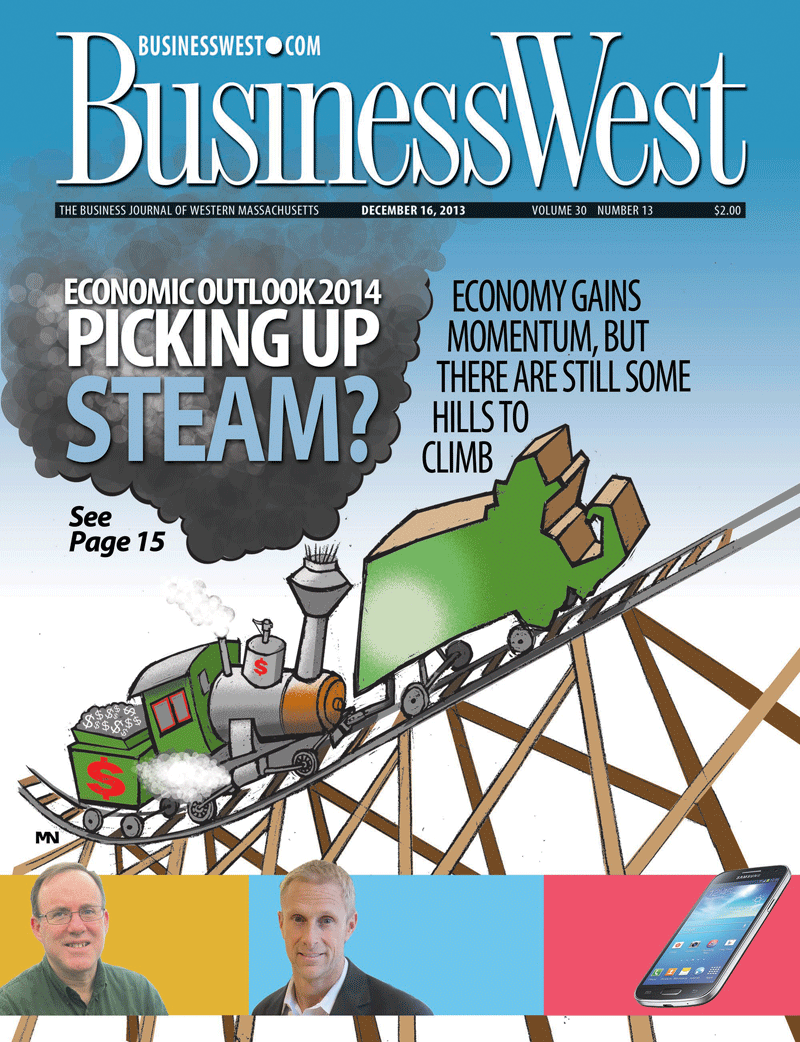
Economy Gains Momentum, but There Are Still Some Hills to Climb

COVER1213b3As the director of Economic and Public Policy Research for the Donohue Institute at UMass, Dan Hodge has been involved in a number of initiatives in — and involving — Springfield.
He had a role in the post-tornado initiative called Rebuild Springfield, for example, and has been both a close observer and color commentator of sorts with regard to the many different types of development that have emerged over the past several years.
Summing up the mood, or attitude, he believes is taking shape in the City of Homes, he said, “people are asking, ‘when are things going to happen here?’”
The answer, he went on, is now, or very soon.
Indeed, 2014 could be a watershed year, especially for Springfield, but also for the surrounding region, he said, noting such initiatives as the long-awaited redevelopment of Union Station and the recent announcement that UMass Amherst will proceed aggressively with establishment of a so-called satellite center at Tower Square, a $25 million undertaking.
And then, there’s that casino project that MGM Resorts International wants to build in the city’s South End. It is, at the moment, the only bidder for the coveted Western Mass. casino license still on the table. If MGM’s plan wins the favor of the Mass. Gaming Commission, and if the entire gaming initiative isn’t delayed — or waylaid — by a statewide referendum question now picking up speed (two big ‘ifs’), then cranes could start appearing on Main Street by next fall.

Dan Hodge

Dan Hodge says 2014 could be a year when things start to pick up, not only in Springfield, where many projects are expected to get underway, but with the economy in general.

“I think we could move from hearing people say, ‘it’s never going to happen,’ to ‘I think it’s going to happen,’ to ‘hey, it’s really happening,’” he noted, referring specifically to long-discussed projects like Union Station, but also to the city’s recovery in general.
And in some ways, the same can be said for the economy itself, said Hodge, noting that after four and a half years of tepid — at best — recovery, this region, and the state as a whole, is poised for something more substantial.
In fact, things started to improve late this year, said Alan Clayton-Matthews, senior contributing editor for MassBenchmarks and an associate professor of Economics and Public Policy at Northeastern University.
Massachusetts gross domestic product (GDP) grew at an annual rate of 3.5% in the third quarter of 2013, nearly a percentage point higher than the country as a whole, he noted, adding that this improvement (the state grew at only 1.7% in the second quarter) was due to slow but better job growth, rising wages and salary incomes, and a higher rate of spending on items subject to sales taxes. A recovering housing market and more robust consumer and business spending are driving economic growth and providing much-needed relief from what he called “considerable fiscal drag” in the form of mandated sequestration spending cuts and higher payroll taxes than last year.
Fourth-quarter numbers won’t be out for a few weeks, but Clayton-Matthews expects those trends to continue into next year, for which he projects further improvement to the employment picture, which is the real driver of additional spending.
“There are positive signs that private demand is picking up, and there is some backlog in demand that is now being felt in the market because of improving employment and household incomes, and improving wealth in households thanks to rising home prices and rising stock markets,” he said. “The net effect is that the economy is growing, and that will probably continue.”
However, discussion of the state and national economy and projections for brightening skies have come with a host of caveats in recent years, and 2014 will be no exception, said Michael Goodman, co-editor of MassBenchmarks and associate professor of Public Policy and chair of the Department of Public Policy at UMass Dartmouth.
Such caveats include the global economy, which continues to be weak, with several European countries still struggling with massive debt issues, and especially that aforementioned ‘drag,’ which has the potential to become significant and slow the pace of progress, he said, before using some terms more suited for driving to effectively get his points across.
Michael Goodman

Michael Goodman says the ecomic skies seem to be brightening, but several forces — some of them well out of the state’s control — could impede progress.

“When it comes to monetary policy, we have the pedal to the metal,” he told BusinessWest, referring to Federal Reserve policies intended to fuel confidence, bolster the markets, and generate growth. “But with fiscal policy, we have the emergency brake on.”
Indeed, while a year that gave us the dreaded fiscal cliff, sequestration, and a government shutdown is drawing to a close, he noted, the turmoil, partisan politics, and what he called “brinksmanship” on Capitol Hill remain, and there will be more recovery-threatening decisions to be made in the weeks and months to come.
“So how far is that car going to go?” he asked, returning to his analogy. “Given the recent track record, which isn’t incredibly encouraging, I think more of the same is the most sensible outlook.”
For this issue, BusinessWest takes its annual year-end look at the economy and the prospects for the future. The consensus is that, while this region appears to be picking up steam, there are still some big hills to climb.

On-the-money Analysis
As he talked with BusinessWest about the economy, the ongoing but limited recovery, and the forces that will shape the foreseeable future, Goodman summoned that old Chinese proverb (some would call it a curse): ‘may you live in interesting times.’
Some would use a different adjective to describe this period, but that term works, he said, adding that this has certainly been an intriguing time in which to watch the economy, discuss developments in the classroom, and attempt to make projections about what will happen next.
Clayton-Matthews agreed, and set the tone for his analysis by saying, “this has been a nightmare of a recession.”
And by that, he meant both the actual downturn, the so-called Great Recession, which officially ended toward the middle of 2009, and the often-painfully slow recovery that followed.
In many respects, it has been like the recession of the late ’80s and early ’90s — noted in Massachusetts for the loss of an entire industry (minicomputers), multiple bank failures, a 12% reduction in GDP, and an equally long and slow recovery period — but in some ways, especially the force of the turbulence confronting progress, it’s been worse.
But is the nightmare over?
That’s the $64,000 question, said Clayton-Matthews, adding that there are definitely signs that it might be.
These include three consecutive months of payroll growth registered in August, September, and October, he said, adding that, while the gains were outwardly not significant (perhaps 1.5%), they are made more impressive by the “significant headwinds coming from the federal government,” as he called them, referring to everything from sequestration to the shutdown.
“Considering all that, it’s nice that we’re having any payroll growth,” he said. “This is much faster growth than I was expecting.”
Clayton-Matthews said the payroll figures contradict, to some extent, household-survey results, which indicate that that there are fewer Massachusetts residents working now than at this time last year, but overall, he considers the payroll numbers more reliable, and he believes they translate into improving confidence and increased spending.
“It appears that both the national and state economies have been growing — not at a rapid rate, but they’ve been growing,” he said. “And that has been resulting in higher levels of employment and, therefore, household income, and the ability to spend and the willingness to spend.”
Cliff Noreen, president of Babson Capital, which has more than $188 billion in assets under management, agreed, offering this broad summation: “the U.S. economy continues to heal, but is not yet healthy.”
Elaborating, he said he has a host of numbers he can summon that would seem to justify optimism about the economy and where it’s heading, but also give credence to his belief that the healing process is far from over.

Cliff Noreen

Cliff Noreen says the economy is healing, but is not yet healthy, although it is likely to get healthier in 2014.

Start with those concerning corporate profits, which have reached record levels — $1.83 trillion — and are outperforming a stock market that is up more than 25% for the year, although this growth is attributable far more to cost-cutting and other efficiencies rather than climbing revenues.
Meanwhile, government debt, which exceeded more than $1 trillion a year ago, is now down to $650 billion, he noted, adding that, while this number is still historically high, the drop is encouraging. Meanwhile, there was more good news in the November jobs report, which revealed that the economy is up 2.1 million jobs this year and unemployment fell to 7% for the first time in five years.
“It does seem like the economy is finally getting stronger,” he told BusinessWest. Every year, we sit here and we hear that the economy will be stronger next year, and it doesn’t get stronger. But this year, it appears the economy is actually strengthening, and we should be into a better economic environment in 2014.”
Looking ahead, based on data in the New England Economic Partnership forecast for Massachusetts, Clayton-Matthews expects employment growth to continue and accelerate through 2014 into 2015, largely because of those rising numbers for employment and income and the resulting trickle-down effect, and expectations that the drag from the federal government, while still a factor, will be less impactful.
By 2015, payroll growth in the Bay State is expected to hit 2%, he went on, adding that the growth will come across many sectors of the economy, but especially construction (especially as the housing market improves), professional and business services, leisure and hospitality, education, healthcare, and the ‘information,’ or technology, sector.
After 2015, payroll growth is expected to taper off, due mostly to the escalating number of retiring Baby Boomers (a phenomenon that presents another challenge for the Commonwealth and its employers), but the immediate future is looking more promising.

Work in Progress
But while the economic skies would seem to be brightening, there are many forces that could impede progress, said Goodman, adding quickly that many of these forces originate outside the borders of this state, and the country, for that matter.
And with that, he returned to what he called “ongoing political shenanigans” on Capitol Hill, and his analogy to hitting the gas at the same time the emergency brake is on.
“The Fed is doing everything in its power to encourage growth,” he said. “It’s keeping interest rates low, it’s making it more attractive to borrow, it’s increasing the monetary supply through quantitative easing … the Fed is just trying to snap us out of this by encouraging investment and sparking economic growth.
“But at the same time, we’ve been engaging in these austerity-related budget policies,” he went on. “We have sequestration, the inability of the federal government to even pass a budget, moving from continuing resolution to continuing resolution, which injects all kinds of uncertainty into important parts of the economy, and the periodic brinksmanship, which has had such a demonstrably negative impact on economic activity in the periods leading up to those moments of truth.”
Although the Senate eventually passed a budget last week, other challenges loom. In another eight to 10 weeks, the latest continuing resolution that allows the federal government to continue operating will come to an end, said Goodman, adding that the debt ceiling is also nearing its limit. Which means there are more moments of truth to come, and they make it extremely difficult to project what will happen nationally and regionally.
Meanwhile, the same is true for what’s happening — or not happening — overseas, he said, adding that the international economy remains weak, and its overall health is certainly something well beyond the control of state and national leaders.
But it bears watching because of the Bay State’s strong export economy and its vulnerability to adverse conditions in Asia and especially Europe, where more than 40% of the state’s exports wind up.
“That’s been a growth driver for the entire state, and it has allowed us to do, until quite recently, a bit better that the country as a whole,” he said, referring to what’s generally referred to as the ‘innovation economy.’ “We’ve grown a bit faster until very recently, and we’ve had quite a difficult time with employment, housing, and other areas, even though we’ve certainly had challenges.
“All of that is driven by businesses and consumer markets around the world purchasing our products and services,” he continued, listing everything from healthcare to computer technology. “All of these things have been driven by demand from around the world, and we don’t know what’s going to happen with that demand.”
Compounding this vulnerability is the general uncertainty, not to mention actual cutbacks, in federal spending resulting from sequestration and other austerity measures, he went on.
“The fuel for the innovation economy has been not just that international and national private demand, but also federal funds in the form of research dollars, government contracts, and government expenditures,” Goodman explained. “When we think about the Pioneer Valley and its precision-manufacturing base and its reliance on government funding, the changes that are taking place, with many of them resulting from government policy choices, are putting some downward pressure on demand and creating a lot of uncertainty.”
At the same time, there are some other forces at play with regard to the economy, he went on, noting, for example, that many of those aforementioned products and services being exported but also sold in this country are enabling businesses to effectively do more with less, meaning fewer employees, which is certainly contributing to tepid gains in employment.
Also, noted Hodge, Massachusetts is facing the difficult challenge of creating employment opportunities for those without a college education, who increasingly face the prospect of being left behind in this innovation economy.
Elaborating, he said the state’s unemployment rate is at essentially the same level as the rest of the country — 7%. But because this state has a higher percentage of people with college degrees than other states, its unemployment numbers are skewed toward those who are less educated.
“This is a big challenge for the state,” he said, adding that there are several initiatives being undertaken, and a workforce study involving the Donahue Institute and the Pioneer Valley Planning Commission has been launched in an effort to identify strategies for enabling more members of this demographic to enter the workforce and stay in it. “One of the things we keep hearing is that there are some good programs out there, but they’re just not reaching enough people.
“The unemployment rate in Springfield is still over 10%, and it’s the same in Holyoke,” Hodge went on. “And the longer people are detached from the workforce, the less they see a future, and the harder it’s going to be for them. This is a big segment of the population, and it’s a largely untapped resource.”

The Bottom Line
When asked if it’s difficult to make a projection for the future of the regional and state economies, Clayton-Matthews laughed.
“It’s not difficult to make a projection,” he said, responding to the specific wording of the question. “But it is difficult to make an accurate projection.”
That’s because, while many arrows are pointing up, there are those headwinds to consider, as has been the case since the recession officially ended and the recovery, such as it is, began.
If all goes well — or at least better than it has — then that emergency brake Goodman mentioned may finally be taken off, and if it does, then the economy might actually be able to pick up some speed.

George O’Brien can be reached at [email protected]