
A list of area commercial moving companies
Supplements
Begin Planning Now to Take Full Advantage of This Opportunity

James Calnan
The tax credit is included in the Patient Protection and Affordable Care Act, which became law March 23, 2010 and is effective Jan. 1, 2010. The new law is intended to encourage small employers to offer health insurance coverage for low- and moderate-income workers by subsidizing premiums paid with a tax credit. Section 45R of the Internal Revenue Code was added to provide for this credit. IRS Notice 2010-44 was written to provide guidance in determining eligibility and to assist in calculating the tax credit.
Amount of the Tax Credit
The maximum amount of the credit is 35% (25% for tax-exempt employers) of a small-business employer’s premium costs in 2010. This rate increases to 50% (35% for tax-exempt) in 2014. To obtain the maximum credit, an employer must have no more than 10 full-time-equivalent employees (FTEs), and the average annual wages of its employees must be no more than $25,000.
For employers with more than 10 but less than 25 FTEs or with average annual wages of more than $25,000 but less than $50,000, the credit gradually phases out according to a formula.
For tax-exempt employers, there is an additional limitation. The maximum credit cannot exceed the sum of income and Medicare tax withheld from employees’ wages for the year and the employer share of Medicare tax on employees’ wages for the year.
Who is Eligible for the Tax Credit?
A qualifying employer must have fewer than the equivalent of 25 FTEs as defined in the act, the average annual wages of its employees must be less than $50,000 per FTE, and the employer must maintain a ‘qualifying arrangement’ under which the employer pays premiums for each employee enrolled in the health-insurance plan in an amount equal to a uniform percentage (not less than 50%) of the cost of coverage. For 2010, under transitional rules, paying 50% of the cost of single insurance coverage will satisfy this requirement.
Do Owners of the Business Count as Employees?
A sole proprietor, a partner in a partnership, a shareholder owning more than 2% of an S corporation, and any owner of more than 5% of any other corporation or business and their family members or members of their household are not considered employees for purposes of the credit. Their wages, hours worked, and premiums paid on their behalf are excluded from any calculations in determining the amount of the credit. This is significant because, in many cases, including owners would disqualify the related employer for the credit.
What is an FTE?
For purposes of this credit, an FTE is an employee that is paid for at least 2,080 hours of service, including vacations and other paid time off. So if an employee works part-time and is paid for 1,040 hours, the employee is considered a half or 0.5 FTE. The law allows three different methods for determining hours of service. To calculate the number of employee FTEs, divide the total hours of service by 2,080 and round down to the next-lowest whole number. Therefore, an employer with 25 or more employees may qualify for the credit if some of the employees work part-time.
Seasonal or temporary workers may be disregarded in determining FTEs and average annual wages unless each works for the employer more than 120 days during the taxable year; however, premiums paid on their behalf may be counted in determining the amount of the tax credit.
Determining the Average Annual Wages
To determine the average annual wages, divide the total wages (as defined for FICA purposes) paid by the employer during the year to the employees that were taken into account in determining FTEs by the FTEs for the same year, and round the result down to the nearest $1,000.
Qualified Insurance Premiums
For years prior to 2014, only premiums paid by the employer to health-insurance issuers, such as an insurance company or HMO licensed to engage in the business of insurance, are counted for purposes of the credit. Qualified health-insurance coverage plans include major medical, dental, long-term care, nursing-home care, home health care, community-based care, or any combination of the above. Also included are specific disease or illness plans, indemnity insurance plans, Medicare, and other supplemental plans.
Each type of plan must separately satisfy the qualifying arrangement requirement first before aggregating the premiums paid by the employer to calculate the allowable tax credit; i.e., at least 50% of premiums must be paid by the employer.
Finally, for taxable years beginning before 2014, the amount of the credit is limited to a percentage of the lesser of 1) the amount of non-elective contributions (premiums) paid by the eligible small employer on behalf of employees under the arrangement during the taxable year, and 2) the amount of non-elective contributions the employer would have paid under the arrangement if each such employee were enrolled in a plan that had a premium equal to the average premium for the small-group market in the state (or in an area of the state) in which the employer is offering health-insurance coverage. The secretary of Health and Human Services (HHS) determines whether separate average premiums will apply for areas within a state (‘sub-state areas’) and also determines the average premium for a state or sub-state area. Revenue Ruling 2010-13 sets forth the average premium for the small-group market in each state for the 2010 tax year. This table can be accessed through www.irs.gov.
Claiming the Credit
The credit is claimed on the small employer’s annual income-tax return. Information will be forthcoming from the IRS for tax-exempt employers on how to claim the credit. It is currently contemplated that the credit will be refundable for tax-exempt employers. Small-business employers whose credit exceeds their current-year income tax can carry the excess credit back one year (except for 2010) and forward 20 years.
Devil in the Details
As with most tax benefits, there are exceptions, conditions, and other complications that can limit the amount of the credit and tax savings:
• Members of a controlled group or an affiliated service group, as defined in the tax regulations, are treated as a single employer for purposes of the credit. Therefore, all employees and all related wages of the control group must be aggregated to determine eligibility.
• The amount of the employer’s deduction for health insurance premiums must be reduced by the amount of the credit claimed in that year.
• There are specific rules as to the effect that state tax credits and subsidies for health insurance may have on the amount of tax credit allowable to the employer.
Although the rules and calculations involved are somewhat complex, the tax credits can save a small employer tens of thousands of dollars in cash flow each year, so it behooves you to do the math.
Start Planning Now
You should engage your CPA or tax advisor now to ascertain whether you might likely qualify for this in 2010. The following steps must be followed to determine whether you are eligible for the tax credit under IRS Code Section 45R:
• Determine the employees who are taken into account for purposes of the credit.
• Determine the number of hours of service performed by those employees.
• Calculate the number of the employer’s FTEs.
• Determine the average annual wages paid per FTE.
• Determine the premiums paid by the employer that are taken into account for purposes of the credit. Specifically, the premiums must be paid by an employer under a qualifying arrangement and must be paid for health insurance that meets the requirements of Section 45R.
• Determine if there are any state tax credits or premium subsidies related to the employer’s health-insurance program.
Running a pro-forma calculation now not only gives you an indication of your eligibility, but also identifies an action plan to take over the remainder of the year to maximize the tax credit, such as timing of premium payments and changing the policy relative to employer-paid premiums.
The accompanying examples of small-employer tax credits published by the IRS (see box) shows the potential savings to small employers.
Conclusion
The small-business health care tax credit could represent the largest federal tax credit ever made available to small employers. Go to www.irs.gov and search for ‘small-business health care tax credit’ to learn more about this credit, including a fact sheet, a worksheet to determine eligibility, frequently asked questions, examples of applying the rules, Notice 2210-44, and Notice 2010-13. n
James B. Calnan, CPA, is a partner with Meyers Brothers Kalicka, P.C. in Holyoke, certified public accountants and business strategists; (413) 536-8510; www.mbkhealthcare.com
Small-Business Health Care Tax Credit Scenarios
Examples of Employers Receiving the Credit
Example 1: Auto-repair shop with 10 employees receives $24,500
credit for 2010.
Main Street Mechanic
n Employees: 10
n Wages: $250,000 total, or $25,000 per worker
n Employee health care costs: $70,000
n 2010 Tax Credit: $24,500 (35% credit)
n 2014 Tax Credit: $35,000 (50% credit)
Example 2: Restaurant with 40 part-time employees receives $28,000
credit for 2010.
Downtown Diner
n Employees: 40 half-time employees (the equivalent of 20 full-time workers)
n Wages: $500,000 total, or $25,000 per full-time equivalent worker
n Employee health care costs: $240,000
n 2010 Tax Credit: $28,000 (35% credit with phase-out)
n 2014 Tax Credit: $40,000 (50% credit with phase-out)
Example 3: Foster care nonprofit with nine employees receives $18,000
credit for 2010.
First Street Family Services
n Employees: 9
n Wages: $198,000 total, or $22,000 per worker
n Employee health care costs: $72,000
n 2010 Tax Credit: $18,000 (25% credit)
n 2014 Tax Credit: $25,200 (35% credit )
Pioneer Valley Hospitality Group Adds Springfield Landmark to Its Portfolio
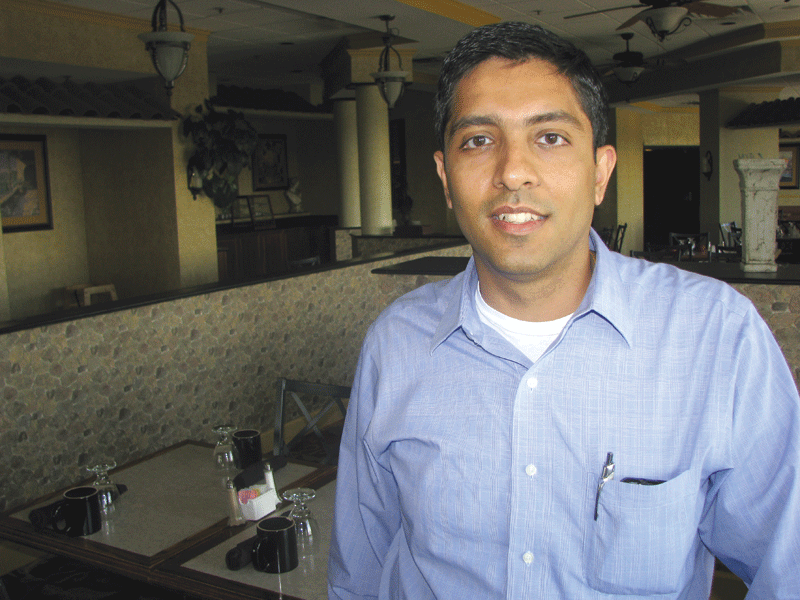
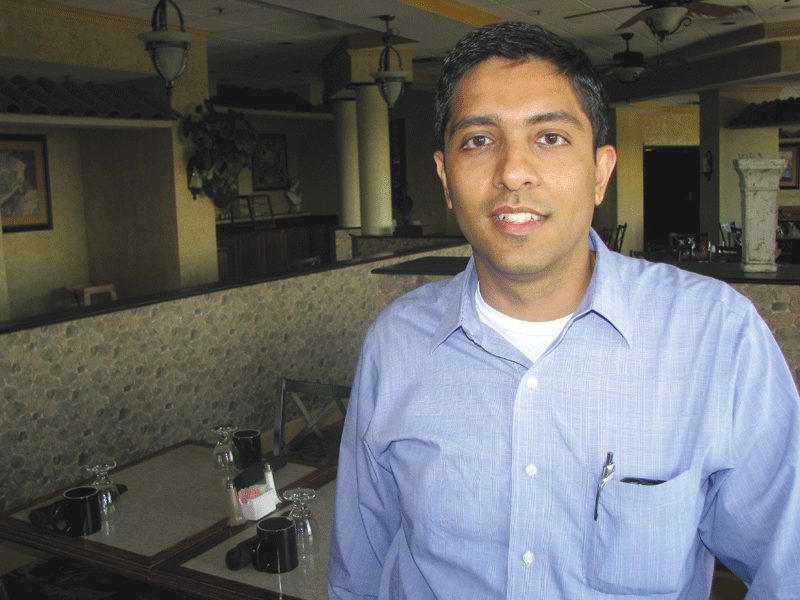
Shardool Parmar says City Place Inn & Suites, formerly the Holiday Inn, needs some work, but most of the fixes are small.
Shardool Parmar calls it a “fixer-upper — of sorts.”
That’s how he described what is now known as the City Place Inn & Suites — formerly named the Inn Place, and known throughout most of its existence as a Holiday Inn — on Dwight Street in Springfield. That qualifier “of sorts” was used to convey his opinion that the 12-story, 242-room landmark needs some work, “but the fixes are small ones.”
And many of them don’t involve a hammer, nails, paint, or wallpaper, he continued, noting that, overall, the building is in solid shape. Instead, they fall into the category of image repair and awareness-building.
“Many people don’t know this place still exists,” said Parmar, president of the Pioneer Valley Hospitality Group, the family-owned entity started by his father, Laxman, that now owns and manages four hotels in the region. He noted that, when the Dwight Street facility lost its Holiday Inn nameplate a year or so ago and became the Inn Place, it remained open, but lost a good deal of its presence within the market as an attractive, lower-cost alternative to the downtown Springfield hotels and others in the region.
The PVHG, as it’s called, is committed to gaining that standing back.
And Parmar says that process starts by simply going back to the basics of good service, something lost under previous ownership as its fiscal challenges mounted.
“Springfield has some great hotels that are on the higher end,” he explained. “Our goal is to provide quality service that won’t break the bank. This hotel has always had a lot going for it, but in recent years, it was simply not managed well.”
City Place Inn and Suites, which became part of the PVHG in late June, is now the largest property in the group’s portfolio — actually, it has more rooms than the other three, the Hampton Inn and Comfort Inn in Hadley and a Comfort Inn and Suites in Ludlow, combined — and represents a valuable addition, said Parmar.
It gives the group a presence in Springfield, something it hasn’t had since it sold the Howard Johnson’s on Boston Road, which it operated for nearly 20 years, he explained, adding that its location near the Turnpike, I-91, and I-291 makes it both accessible and visible. Meanwhile, the combination of location and lower price point has historically made the hotel a popular alternative for overflow from the downtown Springfield hotels and Hampshire County as well.
“Historically, this hotel has always done well,” said Parmar, noting that, until very recently, it enjoyed occupancy rates at or above 50%. “This is a great location; it’s situated so that you can quickly get north or south. The access is very good.”
Room for Improvement
As he talked about his family’s latest acquisition and what happens next for the PVHG, Parmar first went back in time. He opened his desk drawer and took out a brochure for the Holiday Inn that was about 40 years old.
Back then, and for several years thereafter, the facility’s main claim to fame was a revolving restaurant on the top floor, which offered stunning views of a downtown that had but one real office tower (Baystate West, as it was called then), as well as a North Blocks neighborhood just coming together after the building of Route 291.
The restaurant, now aptly named Panorama, remains a permanent fixture — literally and figuratively (it no longer spins) — but its look, and most other aspects of the hotel, have changed over four decades.
Over the past few years, the facility faded into near-obscurity as it lost the Holiday Inn flag and ownership let some aspects of service and infrastructure slide. Eventually, the hotel was lost to mortgage foreclosure. A broker was hired to sell the property, and the PVHG was among the many parties asked to give it a look.
But initially, the group had little interest in the hotel, said Parmar, adding that it was focusing most of its time and energy on plans to build a $15 million Hilton Garden Inn near Pulaski Park in Northampton. However, when that project was scuttled after PVHG failed to secure a needed $12 million bond, the group turned its attention to the landmark on Dwight Street.
What it saw was a hotel that was somewhat tired and had seen much better days, said Parmar, but one the family believed could make a full recovery from what was ailing it. In other words, the property represented the kind of challenge that the PVHG likes to take on.
“We’re always looking to find new opportunities that represent challenges,” he said, noting that both he and his father are engineers by trade and enjoy problem solving. “We figure that, if something’s easy, someone else is already doing it. We like taking on challenges and creating value.”
In the case of the former Holiday Inn, acquired by the PVHG for $2.5 million, the main challenges are bringing a higher level of quality to the service and building awareness of the facility and the fact that it is under new and better management.
“This business is fairly simple,” said Parmar, addressing the service issue first. “People’s expectations are very clear — they want a certain level of cleanliness, they expect all the lights to go on and the air conditioning and television to work properly. Our job is simply to make sure these expectations are met.”
As for awareness-building, some of it will come through word-of-mouth referrals from satisfied customers, he said, adding that he plans to do a lot of “face-to-face” work himself and get in front of the various constituencies he serves, especially the business community.
Meanwhile, there has been some infrastructure work undertaken, and more is planned, said Parmar. He noted that, in addition to considerable painting, wallpapering, and deep cleaning, hundreds of lightbulbs have been replaced with more energy-efficient units, and a poor chemical mix in the large indoor pool has been rectified.
“When we first started here, you couldn’t even see the bottom — now you can,” he said, adding that this new-found clarity has revealed a clear need to repaint the facility, a project to be undertaken down the road.
Overall, the hotel and its guest rooms are in generally good condition, he told BusinessWest, noting that significant renovations were undertaken three years ago, and that such initiatives usually have a shelf life of about a decade.
The challenge ahead, then, is to convince potential customers that the hotel that all but dropped from sight is still a viable player in the market, and to get that message out soon, with the Big E arriving in a month, ushering in the region’s busiest season for tourism.
Staying Power
Looking ahead, Parmar said he’s not sure when or if the PVHG will try to gain a prominent brand, like Holiday Inn, for the hotel, or remain independent.
There are significant costs attached to becoming part of one of the major chains, he explained, adding that one can certainly debate whether the resulting benefits justify those costs.
Meanwhile, he’s focused on the name currently on the property — City Place Inn and Suites — and making it a prominent part of the local hospitality sector. Meeting that goal will be a challenge, but, as he said, this family likes challenges.
George O’Brien can be reached at [email protected]
The Numbers Show the Big E Is a Driving Force in the Local Economy

Wayne McCary says the numbers clearly show that the Big E is a powerful economic engine in the region.
“It’s the tremendous diversity of the vehicle that causes so many people to come here,” said the long-time president of the Eastern States Exposition. “There really is something for everybody from babies in strollers to people who are 90 years old.”
The wheels have changed in size and scope since the exposition, known then as the Springfield Fair, opened in 1916, but they are still spinning in the right direction. In fact, in spite of the poor economy, the Big E set an all-time attendance record in 2009, with 1,260,400 visitors.
McCary attributes last year’s success to two factors: good weather and tradition. “The Big E has become a tradition in New England for thousands and thousands of people,” he said. “Everyone has prioritized the way they way they spend their money, and it’s clear that people stayed closer to home last year because of the economy. People look for value more than they did in the past, but they can have a wonderful time here and stay within their family budget.
“Still,” he conceded, “it was remarkable to set an all-time attendance record in 2009.”
However, the fair’s history shows that tradition trumps bad news, both economic and societal. “The Big E opened a few days after 9/11 in 2001,” McCary said. “Planes weren’t flying, and professional sports were grounded. But more than a million people came here.”
The 2010 edition of the fair, which opens Sept. 17 and runs through Oct. 3, is one of the largest in North America and draws vendors from across the U.S. and Canada. “We have a $2 million budget for entertainment, and 90% of it is free with admission, which is a big drawing card,” said McCary.
The American Bus Assoc. has listed the Big E in its top 100 places to visit for many years, and in 2009 it designated the fair as an ‘international’ event, raising its status to one shared by the Indianapolis 500 and Macy’s annual Thanksgiving Day parade in New York City.
“We are the only fair in that category. In fact, the Big E is the only fair in the nation that has more than one state participating,” said McCary. “The six New England buildings are a real draw, and people who go through them can actually claim they have been in all of the New England states, as each state owns its building and the land it sits on. Surveys show they offer a mini-tour with icon products that attract visitors.”
About 650 tour buses visit the Big E each year. They arrive from across New England, New York, New Jersey, Pennsylvania, and occasionally farther out, said McCary, who talked at length with BusinessWest about the fair, its traditions, and its strong influence on the local economy.
Economic Engine
A study conducted in 2008 by Regional Economic Models Inc. in Amherst showed that the 17-day fair is a powerful economic engine which generates just under $225 million as a result of visitor spending. That amount does not include money spent by people in Hampden County.
“The assumption is that people who live in the area would spend their money on other things if we weren’t here,” said McCary. “The number reflects new money for Hampden County.”
Almost half of the Big E’s visitors travel more than 60 miles to get to the fair, and 69% have a college education, according to the report. The fair draws 37% of its guests from Massachusetts, 50% from Connecticut, and about 12% from other places in New England. “The majority come for one day, but many people who live in close proximity come for multiple visits,” said McCary.
The Big E creates 2,800 full-time jobs and 3,500 temporary jobs in Hampden County which otherwise wouldn’t exist, the report concluded.
“The Big E impacts many sectors,” said McCary. “There is a trickle-down effect, and the hotels in the area are always filled to capacity. Vendors and competitors vie to get rooms during fair time.”
The Big E also contributes almost $500,000 in local hotel taxes, and adds $7.53 million to the state budget in sales-tax revenue.
When the report first came out, McCary found the results astonishing. “I was stunned at the magnitude of the Big E’s impact on the economy. It far exceeded what we were claiming, and the numbers were so strong, we asked to have the results reviewed to confirm they were accurate,” he said.
Paul Picknelly, who owns the Sheraton Springfield Monarch Place Hotel and the Hilton Garden Inn in Springfield, says the Big E is a tremendous benefit, not only for hotels in the immediate area, but also throughout the Pioneer Valley. “Our hotels do a substantial amount of business from that particular event,” he said. “The economic impact is significant for the hotel business.”
But more important is the year-round roster of shows held on the exposition grounds. “I don’t think there are more than a handful of weekends throughout the year when we don’t have rooms booked from visitors attending events at the Eastern States Exposition. To sum it up, it’s the largest hotel-room generator in Western Mass.,” said Picknelly.
Farm Factor
The Big E, known as the Springfield Fair until 1949, was founded by Joshua Brooks in 1916. At that time, regional farmers decided to to set aside state boundaries and work together to combat signs that agriculture was on the decline.
“Joshua went to the national livestock show in Chicago and convinced them to move it to West Springfield. At that time, there was nothing here but a swamp. None of the facilities had been built,” McCary said. “The first fair lasted only a few days, but it was big enough to launch a succession of fairs that have continued until today.”
Each year, thousands of children from 15 states participate in 4H and Future Farmers of America competitions during the Big E’s 17 day-run.
The agricultural component of the show remains important, and “the competitions are very crucial to people in the livestock, sheep, alpaca, and horse business,” McCary said. “The credentials of the Big E in agriculture are very strong nationwide, and winning a competition here adds value to their livestock.”
The exposition has survived storms, floods, and recessions, and encompasses many facets of New England life. Today, it extends far beyond its agricultural roots, and there are attractions to interest people of all ages. “There are so many elements to the Big E. People can shop until they drop, come for the entertainment, or eat their way through the fair. But many still come to see the farm animals,” McCary said. “The fair provides a unique opportunity for urban people. There is still something that makes the public want to reach out and touch a cow or see a chick hatch, and the Big E brings all this together.”
About 80,000 people enjoy the Big E circus each year. McCary has been producing it since 1970 and says each act is drawn from some of the most promiment circuses around the world. “Because it is a supercircus, we rotate the cast and generally don’t repeat acts from one year to the next. This year we have four acts that have never been seen here before.”
Other attractions include the Mardi Gras parade, which has been so popular, it will run twice a day this year. There is also the Better Living Center, with 127,000 square feet of what McCary describes as “wall-to-wall shopping,” plus Storrowton Village, where history comes alive.
Last year, the fair introduced the Craze-E-Burger, which earned the Big E international acclaim after the bacon cheeseburger, which is served on a glazed donut grilled with butter, was touted by Facebook fans. Director of Marketing Noreen Tassinari said it was talked about by Jay Leno and David Letterman and was written about in the New York Daily News, the London Daily Telegraph, and newspapers in Australia. “Social media is very important to us,” she said.
There is so much to see and do at the Big E that 90% of visitors surveyed over the past 10 years say they will return. “It’s a tremendous referendum for any product or service, and the challenge is how to live up to expectations,” McCary said.
But one thing is clear, he added. “When I am asked what I think about the future, I borrow a phrase from Coca Cola: it’s the real thing.”

‘The Carle’ Balances Exhibition, Education, and Celebration of Artwork

Rosemary Agoglia, left, and Alexandra Kennedy say the museum is much more than the home of Eric Carle’s works.
Alexandra Kennedy says that the most-commonly heard exclamations from first-time patrons to the Eric Carle, Museum of Picture Book Art are ‘I can’t believe this’ and ‘I had no idea…’
“They didn’t imagine something as vast and with as serious a purpose as what we’re doing here,” she explained with a sweep of the hand at the expansive great hall behind her.
Kennedy is the second director of the Amherst-based attraction, and as children galloped around the surrounding apple orchard or strolled through the soaring spaces with parents in tow, she and her colleagues told BusinessWest that, while the museum sits squarely in the cultural landscape of other exhibition halls of the Pioneer Valley, ‘the Carle,’ as it’s called, has a purpose and a presence far beyond the foothills of the Holyoke Range.
Nick Clark is the curator of the museum collections and exhibitions, and was the initial director of the museum that he helped to create with Eric and Barbara Carle. As he stood in one of the three elegant gallery spaces, he told how the initial idea for the Carle was a storefront-style operation in downtown Northampton, “not much bigger than the space we’re in right now,” he said.
While the foundation of the collection is Carle’s archive, Clark said it has always been the dream to encompass much more than that. “So instead of the Eric Carle Museum, it would become ‘the Carle.’ As the collection grows, people will realize that we are much more than just his works.”
And, indeed, the museum is much more than just a repository of picture-book art.
As director of education at the museum, Rosemary Agoglia explained three key aspects of the Carle: the galleries, a reading library, and an art studio open to all visitors at all times. But, she said, even within that framework, an important concept arises that all facets of the museum support.
“The intent is to raise a generation of museum-goers who are interested in being in a museum because they are interested in engaging their heart and mind,” she said. “In many museums, the typical visitor is engaged intellectually, but are they connected to it? This museum underscores the personal connection at its foundation.”
From educational concepts that Eric Carle was exposed to in Italy, where early-learning goals and techniques are addressed differently from testing and a formulaic, results-oriented approach, the museum that bears his name also maintains a similar philosophy.
But at the Carle’s core is that great, colorful palette of his artwork that is known to children of all ages — the Very Hungry Caterpillar, the Brown Bear, and the Mixed-Up Chameleon. Many of these originals, composed of torn tissue paper, are incredibly fragile, but the museum always has their namesake artist’s work on exhibit. And though you might not recognize some additional friends and characters on display from other artists, chances are that your children will.
And chances are that, after a visit to this museum, you might very well exclaim once again, “I had no idea…”
Table of Contents
Traveling in Europe and Asia, the Carles saw a variety of illustration museums, celebrating the art form in a way that they had not seen stateside. Kennedy explained that the distinction was that these museums, particularly in Japan, were preserving, promoting, and sharing picture-book art specifically.
She said that Carle has long felt himself an incredibly fortunate individual. “His fans and publishers have been great to him, and he has made incredible friends throughout the art community,” she said. “This museum was his idea to help give back.”
That original idea of a small, downtown space was scratched, however, because in a visionary fashion his scope grew as he recognized a need and a demand. In order to treat the artwork with respect, Kennedy said, the building would need to reflect that. He needed a place that was worthy of fine art.
Working with the firm Juster Pope Frazier in Northampton, Carle found architects that met his grand plans for the space. Earl Pope was the principal on that job, and the artist and draftsperson created an edifice that sits within the landscape harmoniously, complementing Carle’s commitment to nature, but also containing first-rate exhibition space.
Norton Juster, another member of that firm, contributed to the design process in more ways than one: architect by day, now retired, he is also an award-winning children’s book author perhaps most famous for The Phantom Tollbooth.
The philosophy of artwork and education was a primary goal for the museum’s design. Kennedy said that a great amount of thought went into the three gallery spaces, but added, “of equal importance is that the art is at the center of what we do, and also is a catalyst for programming. It’s a museum where people can bring children and experience picture-book art in a number of ways.”
To achieve that, an auditorium, handsomely trimmed in pale woods, offers year-round events. From authors’ readings to children’s theater and performances — through a partnership with the Northampton Community Music Center — to programming for adults within the purview of the picture book, the space is big enough to draw in the brightest lights of the industry.
At a recent opening for the Austrian artist Lisbeth Zwerger, whose jewel-like illustrations are currently on display, the museum was packed. Kennedy said that visitors came from as far away as California and London specifically for the event, underscoring the wide appeal of both the medium and the museum itself.
In the reading library, a comfortable nook with books organized by artist, Agoglia said that the function of this space is to bring the art seen out on the walls back to its original intent — “to rejoin the words and images,” she added.
Boston’s Simmons College has a renowned Library Science program, and it has partnered with the Carle, most notably in the utilization of the museum’s library. Graduate students share the space with youngsters, each finding something different in the colorful volumes.
The library is envisioned as the ‘living room’ of the museum, a place where families can gather, with parents reading to children and vice versa. But it is also home to serious scholarship in the nature of the published text.
The ‘whole-book’ concept was pioneered at the Carle library, said Agoglia, explaining how the process looks at the layout, artwork, and story as individual elements. “This technique has opened the eyes of librarians around the globe,” she said. “The book has greater potential than just the sum of its parts. The more you look, the more you see.”
Learn by Doing
From the hushed reverence of the library, the art studio at the opposite end of the Carle offers a sun-filled hubbub of creativity. The well-stocked studio is a child’s — and adult’s — dream of a space to sit down and try out different techniques.
“It’s a very open-ended approach to making things,” said Kennedy. “There isn’t any ‘make-this’ style of interaction. This is instead very much an approach akin to the practices of Reggio Emelia.”
That technique, an educational philosophy that Eric Carle was exposed to in Italy, emphasizes the importance of many different forms of critical engagement for children’s education. At the museum studio, Kennedy said this method never instructs a ‘right way’ to creatively express oneself, instead focusing on the importance of the expression itself.
“Children have an incredibly strong sense of aesthetics,” she continued, “and they learn from using tools and materials. They love to document what they think. They understand things visually. This studio encourages children to use critical thinking in the creation and viewing of art.”
Art is an expressive language, Agoglia said, and this was an important concept Carle wished to employ in the museum.
“The art studio is a place where people can learn the expressive language. It’s more about exploring the possibilities of materials, having been inspired by what they see in the galleries, what they see out the windows,” she said, gesturing to the apple orchard and hillside just outside. “It’s not project-focused space. We present people with materials and say, ‘what can you do with these?’”
Both acknowledged the shortfalls of arts funding for public schools, and how the economic downturn has prompted schools to cut back on the number and frequency of field trips to the museum. Unswayed by such circumstances, Kennedy said that the Carle has been actively venturing out into communities for art-outreach programs, and the studio technique has been a successful export, not only for schools, but for local children’s foundations as well.
The Treehouse Foundation in Easthampton is one of those groups, she said, one that she and her colleagues find inspiring to work with. An organization started by Judy Cockerton in 2002, its mission is to help improve the lives of foster children. Kennedy said that, when the foster kids are given books, with a nameplate that they can inscribe, that’s just one example of the museum becoming an important part of the lives of children in this community.
Picture This
The Carle hopes to broaden that scope of partnerships with local institutions, said Kennedy, adding, “our point of view is that we are an international institution that wants to have very deep roots locally.
“I think that, because we are young, there are people out there who don’t understand how many people we’re bringing here,” she continued. “We have a devoted local audience, but there are so many others out there.”
The Carle draws upwards of 50,000 visitors per year, and many of those guests come from well outside the region.
“During this time of year, we are the kind of place that people will make a stop on their way elsewhere,” Kennedy said, but as a member of the constituent offerings of the region, she added, “we will tell them, ‘while you’re here, why not stop in Northampton? There are great restaurants, as well as a great collection of picture-book art at the Michelson Gallery,’ or ‘here are some hotels in the area.’ We benefit from other regional venues, but I feel that we are a wonderful magnet.”
And of course, before they are wowed by the first moment walking in the door, they have come to see the picture-book art. For the permanent collections that the Carle houses, that first impression helps secure its place as a future repository of the genre.
When artists and families of artists come here, Clark said, they see what the Carles have done for the industry, and they want their material to be housed at the museum.
Zora and Les Charles, she a former first-grade teacher and he the co-creator of the TV show Cheers, have a world-renowned collection of children’s books and original artworks. They loaned the body of work to the Carle for an exhibition, but when they first visited the museum, that all changed, and the arrangement became permanent.
“Les walked in the door here and said, ‘oh my God, I had no idea about this space,’” Clark remembered. “Zora said almost immediately, ‘this is where my collection will come.’”
Another couple, Allan and Kendra Daniels, also loaned their collection to the Carle for an exhibition, but have pledged to donate a collection of early works. Clark said such gifts are an important addition to a museum with a very limited acquisitions allotment.
Several artists have agreed to make the Carle the destination for their own archives. Since the museum’s inception, collections from Zwerger, Petra Mathers, Leo Lionni, Antonio Frasconi, and what Clark called “the big enchilada,” the picture-book art of William Steig, have been added. “In many instances,” he added, “we have some of the great titans of the 20th century.”
Back to the Books
At 10 years young, the Carle has accomplished or moved stridently toward meeting many of the goals set forth by the founding members, artists and administrators alike. But Kennedy said that much more is necessary to look ahead.
“From an abstract perspective,” she said, “literature for children is changing so rapidly. I think it’s going to be important for us to carry on a mission to underscore the importance, emotionally, of reading with your children, and the impact it has on them. As wonderful as it is for children to experience other forms of entertainment, that is by all accounts the most enriching experience a child can have.
“And that’s a message that we want to keep out there,” she added.
The Carle will always be dedicated to books on paper, she explained, but will be open to the possibilities beyond. “Because it’s not the medium,” she continued, “it’s the art and the story that will be what stays with you.
“There’s a paradigm shift in the very concept of the modern museum, and that applies to us,” she continued. “You don’t want to think of yourself as merely a destination — that you’re defined by what people see when they walk in your front door. You really want to be a center for representing your mission, which for us means the promotion, presentation, and celebration of picture-book art.”
But chances are that for many years to come, she will still hear guests exclaim upon seeing the Carle for the first time, “I had no idea!”

Controversy Brewing over Non-compete Agreements

Tim Murphy
Recently, an active and organized segment of the business community has come out supporting restrictions on the use of non-competition agreements. This support has given traction to the proposed legislation.
Why Non-competes Are Used
To protect themselves from competition by departing employees, Massachusetts employers frequently require employees to sign non-competition agreements. As the name suggests, these agreements restrict the ability of former employees to work for a competing business.
Judges do not particularly like these agreements because they tend to limit an employee’s ability to earn a living in his or her chosen field; however, judges will enforce non-competition agreements if they protect the legitimate interests of the employer, and they are otherwise reasonable in the duration and geographic scope. The courts will not enforce non-competition agreements if they are only designed to protect a company from ordinary competition.
Protecting the Business
Proponents of non-competition agreements cite the role they play in protecting trade secrets, confidential information, and goodwill. They argue that, if businesses cannot protect these business assets, they will be unable to compete against businesses that can, and if businesses cannot protect their trade secrets, confidential information, and goodwill, job loss and economic stagnation will follow.
Business groups like Associated Industries of Massachusetts are wary of any change in the enforceability and use of non-competition agreements. They argue that reform is unnecessary because our courts can and do strike the right balance between protecting employers’ interests and employee freedom of mobility. They further caution that it would be unwise to make it harder for businesses to compete in the current challenging economic climate.
Non-compete Agreement Opponents
On the other hand, there are those in the business world that think non-competition agreements stifle economic growth. The Alliance for Open Competition (opencompetition.wordpress.com), a self-described group of entrepreneurs, employees, investors, and executives dedicated to fostering innovation, sees non-competition agreements as a barrier to entrepreneurialism because they force potential entrepreneurs who are subject to non-competition agreements to risk legal and financial ruin in order to start or join competing ventures. California is held up as the model because that state prohibits most non-competition agreements, and the theory is that this prohibition resulted in a vibrant entrepreneurial economy, although California’s economy is certainly less than vibrant today.
House No. 4607
Legislative proponents of reform, among them Rep. Cheryl Coakley-Rivera of Springfield, appear to have gotten behind House No. 4607, which is a consolidated version of two other bills authored by Coakley-Rivera. House No. 4607 reflects a middle ground between those in the business community who want no change at all and those who seek to eliminate non-competition agreements altogether. But make no mistake; if enacted, House No. 4607 would force major changes in the use of non-competition agreements.
Among the changes that House No. 4607 would bring, if enacted, would be to prohibit the use of non-competition agreements with employees who earn less than $75,000 a year. In addition, House No. 4607 would limit the duration of non-competition agreements to six months. Any agreements for a longer term would be presumed to be unreasonable.
Employers that require the signing of non-competition agreements as a condition of employment would also have to notify prospective employees of this requirement before the employees quit their current jobs, and, for existing employees, employers would have to offer a financial inducement for them to sign: at least 10% of annual compensation.
Moreover, if an employer sues to enforce a non-competition agreement, House No. 4607 would require the payment of the former employee’s attorneys fees if the employer acts in bad faith or the court does not enforce a term of the agreement (unless it is presumptively reasonable as defined in the bill). If the former employee sues to have a non-competition agreement invalid and wins, the employer would also have to pay the former employee’s attorneys’ fees.
House No. 4607 would not affect non-competition agreements arising out of the sale of a business or business assets. It would also not limit an employers’ ability to use non-solicitation agreements to prevent former employees from poaching existing customers or employees.
As this article is being written, passage of House No. 4607 this summer appears to be a long shot. A recent effort to attach it as an amendment to another bill under consideration failed. Whether House No. 4607 passes or not, the controversy surrounding non-competition agreements is likely to continue.
Timothy F. Murphy is a partner at the law firm Skoler, Abbott & Presser, P.C., a boutique firm that practices only labor and employment law and represents only the interests of management. The firm’s practice areas include all aspects of labor and employment law, including traditional labor law, contract negotiations, union avoidance and arbitrations, employment litigation in state and federal courts and before administrative agencies, employment counseling, policy review, and training; (413) 737-4753; [email protected].
Green-power Costs Shouldn’t Be in the Dark
Green power curbs greenhouse-gas emissions, reduces our reliance on fossil fuels, and has the potential to create new industries and jobs. But it’s not cheap, and consumers footing the bill for green power have a right to know what it costs.
All too often the price tag is either not disclosed at all or hidden in plain sight on customer utility bills, buried inside charges for power generation and distribution. NStar, as part of its obligations under the state’s Green Communities Act, recently asked state regulators to approve three windpower contracts the utility signed after a lengthy bid process.
Hundreds of pages of testimony supporting the contracts were submitted to the Department of Public Utilities, but on the copies available to the public, the product and pricing information for each contract were blacked out.
NStar says public release of the pricing information would result in the disclosure of competitively sensitive bid terms and hinder the ability of its suppliers to compete for future contracts. Disclosure might also set a floor on bids for future windpower contracts. “This is consistent with all of NStar’s energy-supply contracts,’’ says NStar spokeswoman Caroline Allen.
But green-power deals are different from most other energy-supply contracts because they are being subsidized directly by utility customers. NStar acknowledges as much in its filings, noting that the cost of its three windpower contracts — two of which last 10 years and one that lasts 15 — will exceed market prices by a combined $62 million.
These above-market costs are essentially the premium NStar estimates its customers will pay for the green power. It would be helpful to know what assumptions NStar is making about future energy prices to develop its above-market cost estimates, but the utility says that information is also proprietary and confidential.
National Grid has been more forthcoming about the pricing of its windpower contract with Cape Wind, in part because the contract was negotiated and not put out to bid. The utility initially proposed paying Cape Wind 20.7 cents per kilowatt hour starting in 2013, a price that would rise 3.5% a year for the remainder of the 15-year contract. The above-market cost of the contract was estimated at $65 million the first year and somewhere between $734 million and $885 million over the entire 15 years.
Attorney General Martha Coakley, who represents ratepayers in utility proceedings, was battling National Grid and Cape Wind last week for more information about the project’s construction costs and profit margins when she decided to give her blessing to the contract in return for a 10% reduction in the initial price. The new, reduced price still requires DPU approval.
One would think consumers would find out the actual cost of these green-power contracts and the state’s other energy and environmental initiatives when the charges for them start showing up on utility bills. But that’s not the case. Aside from assessments for some energy-efficiency programs and the state’s Clean Energy Center, most of the costs associated with the state’s green initiatives are lumped in anonymously with other charges on the bill.
For example, the distribution charge on customer utility bills is ostensibly the cost of delivering electricity to homes. But it has become a dumping ground for all sorts of green-power charges, including the above-market cost of long-term renewable power contracts as well as the tab for utility solar installations, smart-grid pilot projects, and other programs subsidizing renewable energy. Even the fees utilities collect for signing green-power contracts are rolled into the distribution charge.
The cost of the state’s green initiatives should be separated out and clearly identified, either on customer utility bills or separate-bill impact statements. That way, consumers can decide if the environmental benefits of green power are worth the extra cost. If state officials want consumers to embrace a green future, they have to be truthful about what that future costs.
Bruce Mohl is the editor of CommonWealth magazine, which recently published a special issue on energy and environmental issues.
A list of the region’s office furniture retailers
Demographics, Economics, and Going Green Impact How the Office Looks and Feels
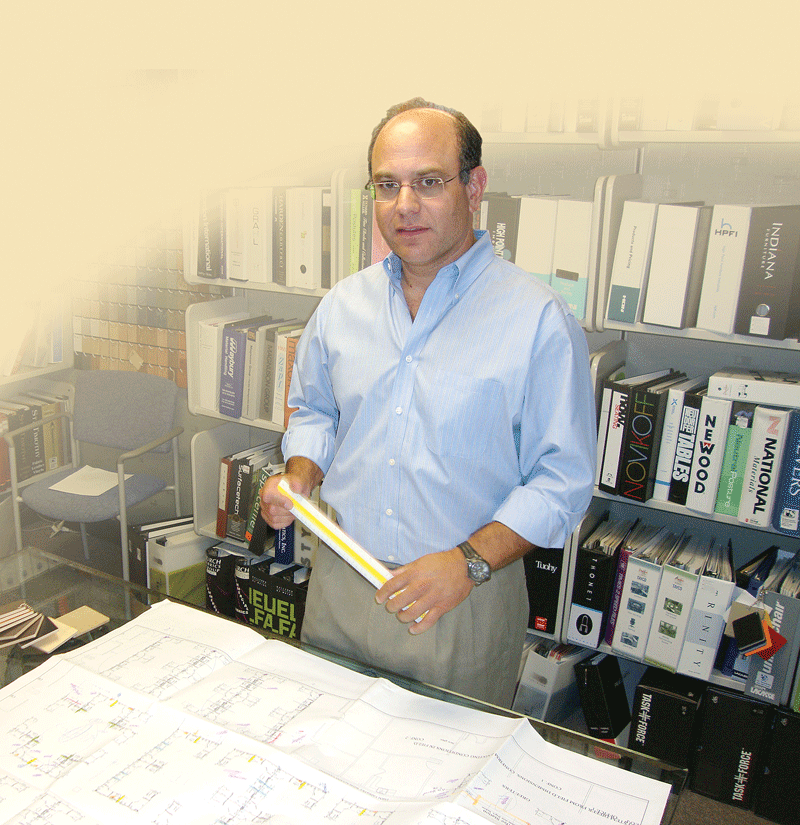
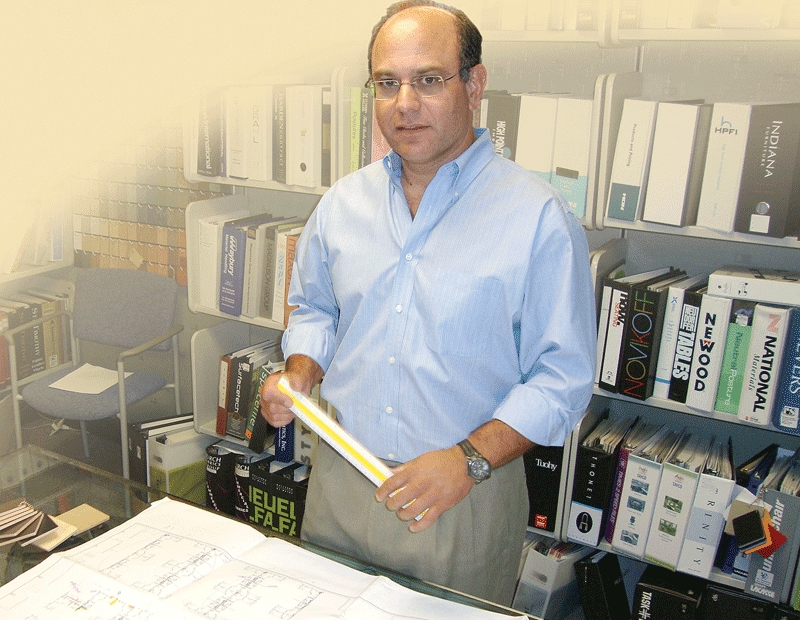
Ron Gordenstein says many of today’s offices are designed to facilitate a new culture of collaboration.
It’s no longer as simple a job as picking out the color of paint on the walls and the type of carpet in the hallway, says Debra Freedman.
As senior designer for Corporate Designs NE, she and Maria Czupryna, vice president of operations, said that interior design comes with an ever-increasing and shifting set of demands for the 21st-century office.
Many of these changes are strictly aesthetic, they said, with professional spaces mirroring current residential design. “There’s more of a ‘Pottery Barn’ quality to people’s aesthetics now,” Freedman explained.
But the modern office is reinventing not only the look based on current designs found in shelter magazines, but the very way that business within those walls is conducted.
Mary Wilczynski, design principal of Spec’s Design in Springfield, said that “jobs are changing so rapidly, and there’s a lot of movement within an organization. Current design reflects those needs.”
The days of the Dilbert-style cubicle are a thing of the past, said Ron Gordenstein, referring to that comic-strip portrayal of life in a droning example of corporate America. As president of Broadway Office Interiors of Springfield, Gordenstein said that his firm designs efficient and smaller work areas, “either to fit more people into that square footage,” he explained, “or to allow collaborative areas to happen, so that the business doesn’t have to find larger real estate.”
Such redesign of the nature of the workplace maintains an important concept of flexibility, he said, and furnishings and partitions are requested to maintain that goal. Reversible, L-shaped returns on desks and other modular concepts are a good means to allow furniture to be moved around the office.
“Let’s face it,” he said. “Office furniture is expensive. You want to make sure you’re making the best possible investment.”
Many trends have been introduced into the modern workplace, not the least of which is the concept of making the office greener. While finishes and furnishings can assist in a non-toxic environment, architect Steve Jablonski looks outside of the box — at the ‘box’ itself.
Using the term “adaptive reuse,” Jablonski is a local proponent of renovating existing, older structures to become contemporary workplaces. There are challenges to integrating high-tech and code-compliant infrastructure to these buildings, but he is committed to seeing these projects as the best possible use of resources.
For this issue, BusinessWest spoke to several design professionals to help get a better look at the specifics of the modern office, and how that institution is being reinvented, from the inside out.
Opening the Floor
Wilczynski said that, for the first time in her 25 years in the industry, some major changes are underway in how offices are designed, furnished, and, in some cases, how they operate.
“We used to have private offices in cubicles,” she explained, “but what we’re now seeing are those cubicle heights coming down, a lot more collaboration with project-driven teams, and less distinction between workstation designs. Before you’d have a supervisor, a manager with two side chairs, a technical person with one side chair, a data-entry person with a very small workstation. But now that footprint of the workstation is getting smaller and is being more universally designed.”
At Broadway Office Interiors, Gordenstein agreed that the changing nature of work practices has dictated a significant change in the workplace itself. He said that one of the most common terms he uses in meetings with clients is ‘collaboration.’
“When I first started in this industry,” he said, “I don’t think we ever used that term in a sales presentation. But today, I often ask, ‘tell me how your staff works with each other, and how they interact. How do they collaborate with one another to solve the problems of your business?’”
While this phenomenon would seem to be the style of creative-based offices and smaller boutique firms, Gordenstein said it is becoming common across all industries and among businesses of all sizes. “Companies aren’t staffed the way they once were,” he continued. “You have fewer people doing the same amount of work. In many cases there’s also a crossing over of traditional job descriptions. No longer does Mary do this and John does that. Now Mary and John do the work of three or four people.
“Inherently you have a need for better communication,” he added.
To illustrate this point, Gordenstein referred to one of his larger clients, a firm with more than 200 employees. Everyone in the office, from the president on down, sits within a space framed by panels that are 42 inches high.
“You can’t help but see, hear, and feel everything that’s going on around you,” he said.
Elise Irish of Spec’s Design added that, for companies operating with less staff, employee retention is more important than ever. “If you want to hold onto them, and you want them to do as much as possible, then you’ve got to give them the right environment.”
Across the table, Wilczynski added, “especially with Gen X and Gen Y, who might look to move through companies more rapidly, employers recognize that they have to design to a younger population.”
Addressing that workforce, with younger ages and attitudes, Wilczynski said that more ‘fun’ is being introduced to the office environment. Employers strive to fashion workspaces that closely mirror a more residential formula, with lounge areas and designated areas for staff to congregate and interact.
Explaining the benefits of such an office, Irish said that “you spend more time in your work environment than you really do in your home, and I think employers are aware of that. If you’re in a creative environment, you are more likely to think outside of the box.”
To help create a workplace that is less stressful, employers are looking for more ways to look after the health and well-being of their staff. Freedman says that in-house gyms have become more common, and one of her rural clients landscaped hiking trails around the facility.
“It’s very important for the employer to satisfy the needs of the employees,” she explained, “to show that they are valued, and that the boss is looking after them. They’ll do better work, and in the end, there’s better productivity.”
Trade Talk
The evolving workforce, with increased numbers of telecommuters, has introduced a new lexicon to the design trade.
It’s not just people who work from home, Wilczynski added, but staff that are encouraged to be out in the field, without the requirements of a full office.
These types of workers might share workspace, she said, “and the name for this style of space is the ‘touch down’ spaces — where your storage is separate, but you share a workstation. When you come in those one or two days per week, you bring your wheeled storage station to the work area, and it’s plug and play … no more leaning under the desk to get to outlets.”
But these aren’t restricted to non-traditional employees, Gordenstein said, but rather a non-traditional style of work. “A lot of employees today don’t sit at their desk all day long,” he said. “They have mobile technology, they’re walking around … they are in another employee’s office. So we create generic meeting spaces that are accessible and quick. They can be a simple table in the department, or a quiet meditative space for someone to read a trade journal, also.”
He added ‘hotelling’ to the new vocabulary of his industry.
“If you’re an outside salesperson,” he explained, “I as the employer don’t pay you to sit at your desk all day long. I need you out meeting clients and selling. If I make it too comfortable, you’re going to stay at your desk.”
Green Is Good
Another measure of creating a healthy workplace is the renewed importance of building and maintaining a green office.
When sales reps show her the latest in furniture and accessories, Irish said that the green option is always the first to be presented. “Because those questions do come up more and more now with our clients: what chemicals are used, were the components sustainably produced,” she explained.
Her colleague agreed with her, and added that tax breaks don’t exist for green office design to a great extent, so clients aren’t pursuing LEED certification, “but they are designing to it,” Wilczynski said.
“And we’ve been designing to it for about three years now,” she continued. “All of our specifications are written for finishes with low VOCs — we are very conscious about the products that we put into spaces. Regardless of whether a client wants to pursue the LEED plaque, we’re still finding a strong movement to designing greener spaces.”
Czupryna said that, while her office has also been seeing an increased use of green components in design, that consciousness extends to any material removed during office rehab. “It’s important to take it another step and take the older materials that have been removed and then recycle them,” she said. “The clients appreciate that we too are doing our bit.”
But going green can often come at a price that clients cannot carry. Gordenstein agrees that green is a popular phenomenon, yet, he added, “customers will ask me about ‘green,’ but they don’t really understand what it means, nor are they prepared to pay for what it means, or make the commitments for what it means.”
But greening the office often is a measure of changing technology as well. Wilczynski said that, as large central copy stations have been rendered irrelevant by desktop, all-in-one printers, those large spaces are now turned over to central recycling stations.
“And it’s the first time in my career that we are seeing the realization of the paperless office,” she continued. “It’s been a buzzword since I started 25 years ago, but it’s finally here. Technology has caught up.”
Everything Old Is New Again
Steve Jablonski sees the movement toward greener office spaces from a different perspective. The Springfield architectural firm that bears his name is well-known for its interest in historical redevelopment.
“With the emphasis on the environment and carbon footprints,” he said, “people are finally starting to say, ‘what’s the greenest thing you can possibly do?’— well, how about reusing what is already there?”
He agrees that it is easier to tear down and build from scratch; “that way, when you design a square, you get a square,” he said, simplifying the complexity of redeveloping older structures. But, he added, these resources are not only a link to history, but also to project cost.
“It’s a matter of enlightening the client to get over the hump of thinking it’s cost-prohibitive,” he explained of adaptive reuse of older buildings. “To knock down an existing building isn’t cheap. And all the hazardous waste has to go somewhere. So people are saying, ‘wait, I have to pay that much to throw it all away?’
“If you take the long-term picture,” he continued, “let’s say that in ten to 20 years you might come out ahead with the cheaper, bland office structure. But if you take the 50- to 100-year approach, that cheap and bland structure is going to need to be replaced itself. Whereas these buildings with character that have been modernized at first might be 10% to 20% higher in cost overall, but then after 50 years it’s still going strong.”
Admittedly, such a timeline is not suited to the budget concerns of every client, but for higher education, this is not only good for the schools’ mission to go green, but in many cases an important link to honoring their own history.
Jablonski unfurled the plans for a building project currently underway at Springfield College. Formerly called the Judd Gymnasium, the elegant, 19th-century brick structure is being converted to office and museum space, and has been rechristened the Stitzer YMCA Center.
The building’s older warren of rooms was quirky, he said, but he praised the vision of college President Dr. Richard Flynn, who had the initiative to make this the new showpiece of the campus.
It can often be a hybrid of architecture and archaeology, Jablonski said, during these projects. Pointing to a large room at the Stitzer Center, he said, “we took out the drop ceiling and restored the truss roof. People walk in and say, ‘this is beautiful, what you’ve done.’ But really, all we did was bring back what was already there.”
Springfield College joins the ranks of many other campuses across the country in the successful adaptive reuse of buildings, he said, adding quickly that “it takes leadership on the part of design people to take the initiative to use these spaces.”
He emphasized the importance of good office design as an important role for people like himself, and the people who furnish those rooms. But, ultimately, he credits the client for their acceptance of these reinvented workplaces.
“There’s only so much you can do as a designer to lead people along,” he said. “But if they’re not following, you’re not going to get far.”

How Manufacturers Can, with Careful Planning, Minimize Their Bills

Cheryl Fitzgerald
State and local governments, reliant on the profitability of corporations and individuals to fund their operations, are struggling to keep their states functioning and provide expensive services to their populace as unemployment statistics rise. Given these challenges, governors nationwide are turning to their legislatures to update tax codes and raise revenue. In some instances, these efforts result in legislative proposals to broaden the tax base through different methodologies, including the imposition of tax on Internet businesses that provide goods and services, the creation of new nexus standards, and the enactment of required combined corporate income-tax reporting.
Since many of these initiatives can impact the manufacturing industry in particular, it is important to consider how you as a manufacturer and taxpayer can combat some of these initiatives and use them as planning opportunities.
Nexus
Nexus, a Latin word used in state taxation, means ‘connection.’ States are continually seeking to show that out-of-state companies have nexus in (connection with) their state, requiring tax filings. States have become increasingly aggressive as a result of recent government victories in so-called ‘economic nexus’ decisions, and taxpayers are struggling with the validity of each state’s authority to tax out-of-state businesses. Taxpayers should be concerned that any decision they make as to filing gross-receipts tax returns based on economic nexus principles can have historic and long-range effects.
When confronting the issue of nexus, you might consider the following:
• Don’t give up the fight. Despite the lack of success with regard to challenging state gross-receipts taxes, taxpayers should not necessarily concede the economic-nexus issue. If taxpayers do cease such challenges and allow the states to impose these taxes based on economic nexus, the states may become even more aggressive in their pursuit of manufacturers under those regimes. If you are not convinced that you should be filing taxes in specific states, seek out the advice of a qualified tax advisor before you file.
• Also consider the risks. Taxpayers who choose to take an aggressive stance by using a wait-and-see approach in filing their tax returns will face an increased risk of exposure that could affect their financial statements. This risk is due to the potential for retroactive application of economic-nexus standards and a possible reduction in the voluntary disclosure and amnesty program deals offered by the various states. Manufacturers should carefully consider whether the risks outweigh the rewards, and, if so, may want to take advantage of the voluntary disclosure and amnesty programs currently offered.
• Will Congress step in? Finally, although the discussion of state-tax nexus continues at the federal level, manufacturers should not have confidence that these issues will be resolved any time soon. Until Congress steps in and clarifies this area of state-tax law, taxpayers may continue to press for favorable federal legislation through their own in-house government-relations professionals, trade associations, or other industry groups.
Apportionment
Another way that states are trying to increase revenue is through revisiting their approach when it comes to apportionment, the method used to determine what share of a company’s profit they are entitled to. Many states that use a three-factor apportionment (sales, property, and payroll) are modifying their formulas or even eliminating some factors. Because of this and other differences in calculating taxable income from state to state, the potential exists to subject more than 100% of a manufacturer’s revenues to tax.
One strategy used to counter this scenario begins with knowing what states you are doing business in and their ‘throwback rules.’ The throwback rule dictates that, when tangible personal property is delivered or shipped to an out-of-state purchaser, it is considered an in-state sale if the selling taxpayer is not taxable in the state where the property is sold. If you have a facility in a state where there are no throwback rules and can modify your procedures to have sales considered sold by the non-throwback state instead of your home state, you could create a overall percentage of less than 100% for your sales factor, which would provide for a lower tax.
Credits
While nexus and apportionment-tax reforms seem to be leading the way this year, some states are continuing to offer generous tax credits and incentives to manufacturers choosing to locate, expend, or retain jobs in their jurisdictions. A number of states continue to show support for companies included in state-designated ‘enterprise zones.’ Generally, these enterprise zone credits incentivize employers to hire, retain employees, or expand in certain designated areas. Some states and localities encourage ‘going green’ by offering incentives. They provide for this through property and/or income-tax credits, exemptions, or abatements tied to green initiatives. However, many states require you to become certified for eligibility before you can claim these credits.
Don’t be caught by surprise and miss potential tax-saving opportunities. Find out about available credits before you make a relocation or expansion of your business. Area economic-development agencies can help you identify potential credits.
Sales/Use Taxes
As with corporate income taxes, states are reviewing how their sales-and-use tax structures can be amended to bring about increases in revenue. There are two prevalent factors causing this: an economy stalled by lack of consumer spending, and an increase in transactions such as Internet purchases. Some states are trying to overcome their shortfalls by considering increases to their rates (states like Massachusetts, California, and Minnesota have recently increased their rates).
Some states are also considering expanding their sales-and-use tax bases to incorporate service transactions (i.e., accounting, advertising, information services). Finally, states are seeking out businesses they believe have sales-and-use tax nexus and assessing for uncollected sales tax on taxable sales into their states. This poses a significant liability since states typically look back seven years, and a company’s ability to correspondingly bill and collect from their customers is difficult.
Personal Property Taxes
Allocations to local cities and towns have also suffered, and they have become aggressive in the area of assessing personal property taxes. Cities and towns will often request taxpayers’ depreciation reports, which will be a listing of their personal property. They will use original cost on these listings as a starting point in their assessment of personal property subject to tax.
Some cities and towns contend that any asset you own cannot be worth less than 50% of its original cost. One way to help lower these taxes is to review your fixed-asset listings and remove all items that are no longer in service, or that have been discarded.
In Massachusetts, corporations that are ‘classified manufacturers’ benefit from a lower tax rate on their manufacturing machinery as well as their inventory. This benefit does not apply to any corporation that has not filed for classification as a classified manufacturer. Cities and towns are cross-matching their records of businesses in their locality to the annual state listing of classified manufacturers. Businesses that never filed or are organized as an LLC, partnership, business trust, or sole proprietorship do not benefit from the lower tax rates regardless of their line of business.
If your business is a Massachusetts-based manufacturer, consider the tax benefits of qualifying and enrolling as a classified manufacturer. Your tax adviser can help you with this process.
If yours is a manufacturing corporation doing businesses out of state, you need to be aware of the potential nexus and apportionment issues, increased rates, as well as the expanded taxable services. However, there are credits and strategies that can help you minimize your multi-state tax burden. A qualified tax advisor can help you make the most of these opportunities.
Cheryl Fitzgerald is a senior tax manager with the certified public accounting firm Meyers Brothers Kalicka, P.C., based in Holyoke; (413) 536-8510.

How One Insurance Agency Has Benefited from Its Premium on Health and Wellness

From left, Bill Trudeau, Christine Rousseau, and Judy Davis say employees of ICNE have embraced the challenge to change their lifestyles, from improved diet and exercise to smoking cessation.
By GEORGE O’BRIEN
Bill Trudeau calls it the “full Big Brother.”
That’s the Orwellian phrase he used to describe a company’s health and wellness plan that goes a little too far in terms of what it asks, or demands, of employees.
“You don’t want to go to extremes,” he said, meaning that employees don’t want to be made to feel as if they’re being watched, monitored, or judged by the way they respond to a plan.
Avoiding the Big Brother effect has been one of the goals set by the Insurance Center of New England as it implements a plan set in motion last fall, said Trudeau, partner and chief operating officer. Overall, the mindset is to keep things simple, he explained, and also make it easy for people and have the program become part of the culture at ICNE.
About eight months after the so-called Health & Wellness Journey started at the company’s offices in West Springfield and Gardner, all of that is being accomplished — and more. Or, as the case may be, less.
Indeed, there have been several recognized benefits: many people have quit smoking, and others are working on the problem and making progress; several employees are eating more fruit and walking regularly — and as a result are losing weight; and, already, there are some cost savings in terms of health-insurance premiums. But there’s something else, and it wasn’t exactly expected — a surge in employee morale that has paralleled the path taken by the program.
There are many components to the ICNE initiative, said Christine Rousseau, Human Resources Manager for ICNE. Some are rather involved, such as the creation of a smoke-free work environment (much more on that later), while others, such as the fruit basket placed in the kitchen, the walking program that many have joined, and efforts in the realm of education, such as a health and wellness library, are quite simple.
They are also relatively inexpensive (some require no upfront cost whatsoever), and they have been implemented to be minimally invasive on one’s work regimen and daily schedule.
“We run a business here, and service to our customers is very important,” said Trudeau. “I would say that 99% of this doesn’t interfere in our business in any way — it’s not a hugely invasive kind of program.
“There are some quick surveys, there’s fruit in the kitchen, some walking during lunch; it’s not like people have to say, ‘sorry, I can’t do that now, I have the health and wellness thing.’ Everything happens on the fringes, at lunch and in the regular flow of the office.”
For this issue, BusinessWest takes an indepth look at ICNE’s new program, and how it can be emulated by other companies to make their workplaces healthier and, in many respects, happier.
No Butts About It
Trudeau said the spark for ICNE’s program came last fall as the company was reviewing health insurance plans, both for its employees and its clients’ staffs.
It was decided, said Judy Davis, senior vice president of the company’s Employee Benefits Division, that it would be somewhat hypocritical of an agency that stresses the importance of wellness to those clients not to practice what it preaches.
Much of the early legwork came in the creation of a smoke-free work environment, said Rousseau, noting that the company worked in conjunction with Health New England — which had gone entirely smoke-free years earlier and has assisted many other companies with taking that route — to put a program in place.
There are several components to the smoke-free initiative, said Rousseau, including a new policy template stating that there is no smoking on company-paid time, and also a non-smoking affidavit to be signed by all new hires. There would be smoking-cessation reimbursements ($300 annually), and existing employees would be given a year to kick the habit.
Both Rousseau and Trudeau were anticipating some resistance from the dozen or so long-time smokers at the company (despite their best efforts to avoid the Big Brother issue), but to their surprise and relief, there was none. Indeed, a survey of employees revealed not only a lack of opposition, but the strong sense that employees were ready and willing to quit.
“This was scary; I thought there were a few people, diehards, who would really flip out,” said Trudeau. “But they didn’t. I think there was one person who said he just wasn’t going to quit smoking; the rest were ready.”
Creating a smoke-free environment not only made good common sense, but it was a big part of that ‘practice what you preach’ mindset, he continued.
“We sell health insurance … and if you happen to come to our back door and cross paths with three smokers, well, there’s a disconnect there,” Trudeau explained. “We also sell homeowners’ insurance, and people’s houses burn down from smoking mishaps. The whole thing is not something we want to be supportive of. We wanted to be solution-driven on this matter, and this was a nice solution.
“To be good examples ourselves, and say ‘we’re not just talking about it, we do it,’ is a real positive,” he went on. “But at the same, we can also be guinea pigs and find out what works and what doesn’t work ourselves so we can further relate real experience to people.”
While smoking was the natural place to start, those spearheading the health and wellness initiatives knew there would be other target areas, and they conducted a so-called health risk assessment to determine what they should be.
That assessment, which involved 30 participants and thus provided a corporate-wide picture, revealed several areas of concern. For example:
• 97% of employees didn’t eat the recommended daily amounts of fruits and vegetables;
• 55% were carrying too much weight;
• 29% had low-fiber diets;
• 13% had high blood pressure;
• 26% did not use good lifting techniques;
• 19% would drink and drive occasionally; and
• 45% did not exercise regularly.
With these numbers in hand, organizers then set about targeting some of the next steps, and decided to focus on cardiovascular issues, cancer prevention and education, accident management, and generating lifestyle changes.
Fruits of Their Labor
One of the first steps was the fruit bowl. It is filled every Monday morning, and often will have to be restocked long before week’s end. It is positioned in the kitchen, usually between the door and the snack machine, and thus it is giving many employees cause to stop, think, and spend 25 cents on a banana or plum instead of a dollar for a candy bar, said Davis.
Another step was an organized walking campaign called Every Step Counts, which kicked off May 1. Participants, usually going in groups, will devote some or all of their lunch break to walking in the area surrounding the company’s current headquarters on Park Street in West Springfield, near the expansive town green.
Pedometers have been given to all participants, and their collective steps are converted into miles, which are then used to chart the group’s progress in a so-called ‘virtual walk across America.’
Soon after the program started, the West Springfield group crossed over the Massachusetts border on this ‘virtual walk,’ said Jim Buker, a senior account executive in ICNE’s Employee Benefits Division, marathon runner, and fitness guru. Within a few weeks, the group had reached Florida. It then turned west, reaching San Antonio (tacks are placed on a map to show milestones), and then San Diego, before heading north to Washington State. It is now cutting back east toward Chicago.
Walking has become part of the culture at the company, said Rousseau, adding that this phenomenon has more than health benefits. Indeed, groups from the agency are now participating more often in fund-raising walks for nonprofit groups such as the Easter Seals.
Meanwhile, education is another area of focus, with program organizers working hard to put information into the hands of employees, through the in-house library of books and magazines that employees can borrow, as well as weekly company intranet health and wellness tips and news. One recent posting trumpeted the benefits of brown rice rather than white rice when it comes to lowering one’s risk for diabetes.
With the plan now in place for more than seven months, a focus on better health and wellness is becoming part of the fabric of the company, said Buker. But the focus on better health extends well beyond the eight-hour work day, he noted, which is the program’s real goal.
“The wellness program is starting to shift the culture — people are really get into it,” he said. “We started the walking program May 1. Already, two people have entered walking road races — one walked it, the other ran it — and a third … she’s out there running two miles a day now.”
The initial health risk assessment served to provide a baseline of information for program administrators, said Buker, adding that this snapshot, as he called it, helped decide which specific initiatives to put in place. In another six months, another snapshot will be taken to show what kind of progress has been achieved, and determine what the next steps might be.
“After a year, you take another corporate picture,” he said, adding that he expected it will reveal improvement with many of those risk factors. “We’ll certainly see a decrease in that 97% number on fruits and vegetables, for example. If we keep plugging away at that, if we keep talking about it, then hopefully we can bring that number down to 80% or lower.”
Exercise, and the need to do more of it, will likely always be a risk factor to be addressed, said Rousseau, adding that this need is already shaping plans for ICNE’s new corporate headquarters, to be created in the former Oaks banquet hall in Agawam. That facility will likely have a cardio room and shower facilities, she said, to encourage employees to take needed steps — literally and figuratively — to improve heart health.
“That will probably have a huge impact on the level of exercise, because it will make it more convenient for people,” she said. “Instead of just a walk, people can get on a cardio machine and give their heart a workout.”
Food for Thought
More than half a year after it was started, ICNE’s health and wellness program is “filtering its way into the subconscious,” said Trudeau, when asked to gauge the broad impact.
“In other words, people are thinking twice about that tradition of stopping and picking up a box of two dozen donuts for the office,” he explained. “And they’re saying, ‘jeez, do we really need a cake and three gallons of ice cream to celebrate someone’s birthday?’ It’s starting to bleed its way into the company a little bit.”
That’s what happens, he concluded, when a plan is simple, employees’ input is valued, and there’s nothing approaching the ‘full Big Brother.’
And that’s the key lesson that other companies can learn.
George O’Brien can be reached at [email protected]
Entrepreneurship Hall of Fame Steers into Its Second Decade
Ira Rubenzahl says that, a decade after its creation, the Western Mass. Entrepreneurship Hall of Fame has earned a place within the region’s business community — and so has the banquet at which inductees are announced and celebrated.
There are now 57 inductees. Some of them are individuals (Theodor Geisel, Mary Lyon, Milton Bradley, and Primus Mason are in this category), a few teams of partners (Horace Smith and Daniel Wesson, Charles and George Merriam, and Silas Lambson and Abel Goodnow), as well as a couple of organizations (such as Baystate Health, for example). But most are families that started businesses and ran them for decades.
Those family names include Picknelly, O’Connell, Fontaine, Steiger, Sandri, Balise, Roberts, Falcone, Scherff, and many others. They are now etched into plaques that hang in the main lobby of the Scibelli Enterprise Center in the Technology Park at Springfield Technical Community College.
And there will be more names added to additional plaques, said Rubenzahl, president of STCC, who told BusinessWest that, a decade after its founding, the hall of fame will continue to honor and celebrate the region’s tradition of entrepreneurship.
“This has been an important event for this region,” he said of the annual dinner. “The college and the college foundation wanted to continue this, and we’re enthusiastic about the program moving forward.”
But there will be a few changes moving forward, said Rubenzahl, with most of them involving the annual induction dinner.
For starters, the event, traditionally staged in November, will be moved to the spring, with the one honoring the class of 2011 slated for April 14 at the Log Cabin Banquet & Meeting House. Meanwhile, inductees, which have been announced each May for the past decade, will now be introduced at the college’s annual Top of the City party, with the next one slated for Jan. 20. And moving forward, proceeds from the dinner will go toward scholarships for entrepreneurship students at STCC; in the past, they were used for youth-oriented entrepreneurship programs.
Another change will be the larger role being taken by BusinessWest, which has also been honoring the region’s rich history of entrepreneurship and will collaborate with STCC in matters involving the Hall of Fame and the annual dinner.
The magazine, which has, since 1996, presented its Top Entrepreneur Award (the Holyoke G&E was chosen for 2009), will honor its latest winner at the Top of City party. In addition, BusinessWest will play a prominent role in introducing the inductees for a given year and handling logistics of the annual banquet.
“This region has a strong heritage of entrepreneurship, and it continues today with a number of new and exciting ventures and the expansion and evolution of many family businesses,” said Kate Campiti, associate publisher and advertising manager of BusinessWest.
“We’re looking forward to collaborating with STCC to recognize people from the past and present who are continuing a tradition of innovation and excellence,” she added.
Also working with the college on matters involving the Hall will be UMass Amherst, said Rubenzahl, noting that the university recently entered into a collaborative effort with STCC on the management of the Enterprise Center and its Springfield Incubator. Marla Michel, director of Strategic Communications and Outreach for the university, is now a shared executive, working two days each week as director of the incubator.
Representatives from UMass will be among those chosen to serve on a committee that will select the inductees for 2010, said Bill Kwolek, director of Development at STCC, adding that the panel will also include representatives of the college and several area economic-development agencies.
Here are the inductees for the first decade of the Western Mass. Entrepre-neurship Hall of Fame.
Class of 2009
• Bacon Wilson, P.C.;
• The Cambi Family (Springfield Foodservice Corp.);
• Larry Derose (Texcel Inc.);
• The Desrosiers Family (Hadley Printing);
• John Gormally (BusinessWest, ABC40/FOX6); and
• The Peters Family (Universal Plastics)
Class of 2008
• Baystate Health;
• The Jacobson Family (OMG Inc.);
• The Samble Family (Belmont Laundry);
• The Scherff Family (Student Prince restaurant); and
• The Young Family (W.F. Young)
Class of 2007
• Theodor Seuss Geisel (Dr. Seuss);
• Charles and George Merriam (Merriam-Webster Inc.);
• The Bassett Family (Bassett Boat Co. Inc.);
• The Falcone Family (Rocky’s Hardware);
• The Gordenstein Family (Broadway Office Interiors); and
• The Roberts Family (F.L. Roberts)
Class of 2006
• The Balise Family (Balise Motor Sales);
• The Fontaine Family (Fontaine Bros. Inc.);
• The Grenier Family (Grynn & Barrett Studios);
• Horace Smith and Daniel Wesson (Smith & Wesson); and
• The Lanier Family (Springfield Food Systems)
Class of 2005
• Sister Mary Caritas and the Sisters of Providence;
• Joshua Brooks (Eastern States Exposition);
• William L. Putnam (WWLP TV-22);
• Mary Lyon (Mount Holyoke College);
• Fran and Teddi Laurin (Laurin Publishing); and
• Joseph Napolitan
Class of 2004
• Albert and Amelia Ferst (Camfour);
• Silas Lamson and Abel Goodnow (Lamson and Goodnow);
• Joseph V. Gosselin Jr. (Commonwealth Packaging Co.);
• Emanuel (Manny) Rovithis (Manny’s TV and Applicances); and
• William Skinner and Family (William Skinner and Sons)
Class of 2003
• Channing Bete Family (Channing Bete Co.);
• Samuel Bowles (the Republican);
• Milton Bradley (Milton Bradley Co.);
• The Hannoush Family (Hannoush Jewelers); and
• Daniel J. O’Connell Family (Daniel J. O’Connell Cos.)
Class of 2002
• The Carroll Family (Riverside Park);
• John E. Reed (Mestek Inc.);
• The Sandri Family (Sandri Cos.);
• Stephen Spinelli Jr. (American Oil Change Corp.); and
• Albert Steiger (Steiger’s)
Class of 2001
• The Davis Family (American Saw and Manufacturing Co.);
• Jane and Jack Fitzpatrick (Country Curtains);
• Primus Mason;
• Peter C. Picknelly and Peter L. Picknelly (Peter Pan Bus Lines);
• George W. Rice and Caleb Rice (MassMutual); and
• Amos Rugg (Rugg Manufacturing Co.)
Class of 2000
• Frank S. Beveridge (Stanley Home Products);
• Curtis Blake and S. Prestley Blake (Friendly Ice Cream);
• Zenas Crane (Crane Paper Co.);
• Paul D’Amour & Gerald D’Amour (Big Y Foods);
• Joseph J. Deliso Sr. (HBA Cast Products);
• Michael Kittredge (Yankee Candle);
• Albert G. Spalding (Spalding Sports Worldwide); and
• Rita M. Tremble (Valley Communications Systems)
Bay Path Students Learn by Doing
Lauren Way, Bay Path College’s director of Entrepreneurial Programs and Cooperative Education.
Before a conversation began about the nature of entrepreneurial education, Lauren Way posed the hypothetical question, ‘what exactly is an entrepreneur?’
“Some would say it’s a person who takes the risk to start and run a business,” she continued. “Others would say that an entrepreneur is not a social or financial category at all, but rather it is a philosophy, a state of mind that focuses on seeking out opportunities, taking action, and finding ways to solve other people’s problems in a profitable way.”
Way is Bay Path College’s director of Entrepreneurial Programs and Cooperative Education, and she told BusinessWest that teaching college students the tools for starting one’s own business has a practical application that is more important than ever.
“About 50% of the current crop of undergraduates will own their own business one day,” she said, referring to the nationwide population of students. “They don’t realize it yet, but that is a statistic that is cited more and more often. And that’s all students, not just business students.”
Sure, she continued, there is also the statistic that says somewhere in the neighborhood of 90% of new businesses will fail in their first five years, but, she countered, “what that number doesn’t tell you is that the majority of those people go on to found another business.”
As part of Bay Path’s commitment to providing students with a career-focused education, the college has been fine-tuning its entrepreneurial academics on all levels, with offerings from graduate programs all the way to summer sessions for area high-school girls.
“At Bay Path, what we think is that employers want entrepreneurial thinking in need-finders and problem-solvers,” Way explained of the college’s mission. “That’s what our curriculum focuses on … not specifically that you’re going to start your own business, but asking what entrepreneurial thinking is all about.”
With that summer program gearing up, Way met with BusinessWest at her desk surrounded by the supplies for her upcoming week-long session. She explained how Bay Path is the leading entrepreneurial spirit on campus, and how the school hopes to be more widely known nationwide for its ongoing commitment to making entrepreneurial education not just a necessary discipline in higher education, but also a cultural mindset.
The Gifts That Keep on Giving
Way gives much credit for the beginnings of the entrepreneurial programs at Bay Path to the contributions of two charitable organizations.
She credits the Springfield-based Harold Grinspoon Foundation with “doing the impossible.”
“They were an early catalyst in getting 12 local colleges together for an Entrepreneurial Initiative [EI],” she explained, describing that organization’s mission. “Not an easy task to get such a number of schools all on board.”
Those colleges meet once every year for a conference at the MassMutual Center, and as testament to the growing popularity of entrepreneurship at the schools, the number that started out at 50 students this past year numbered close to 500.
In addition, Grinspoon’s EI endows an annual elevator-pitch contest between the colleges, with the winner taking home $2,000. Bay Path has had, in Way’s words, “unusual success” at the competition, taking top prize in five of the seven years, and placing in six.
The Coleman Foundation, based in Illinois, funds educational entrepreneurial programs across the country. Way said that its goal is to instill entrepreneurship on campuses, to make it interdisciplinary, and to embed it into a business department’s curriculum. Through a grant from that organization, she came to Bay Path.
But she said that much credit needs to go to the college’s president, Dr. Carol Leary, for her visionary approach to making Bay Path a fertile ground for all of these initiatives.
“One of the reasons I came here from Hampshire College,” Way said, “is that we are such an entrepreneurial college. In the four years that I’ve been here, we have started 10 new master’s programs. Talk about need-finding — we’re finding the needs of our students, and our region.”
Pitch Perfect
Way said that one of the biggest advantages to teaching entrepreneurship at Bay Path is the size of the college. “We’re small enough that we can focus on reaching all the students from all the different disciplines,” she explained.
In addition to the undergraduate program that is a focus of the business department, there is a certificate program that Way launched last spring for students in all majors. Psychology and Education draw a great deal of students to the program, she said. “Many of them want to start their own child-care centers,” she said, “or they want to invent their own game or learning tool.”
A capstone course for juniors and seniors is ‘Entre-vation’ (a word copyrighted by the college), which is described as a hands-on approach to entrepreneurship and innovation.
While business courses are typically taught by the Harvard Case Study method, Way explained that much of that dates to the 1980s. Entre-vation takes a different approach.
“During the summer, I choose five local entrepreneurs,” she continued, “and do a case study on them. We spend the first five weeks interviewing those businesspeople, learning what makes them tick, how they got started, what their background was.”
The students team up to offer innovative solutions to real-life cases entailing problems or challenges for these businesses. By the end of the course, the student teams present their findings to the business owners, often with surprisingly acute and helpful suggestions.
The next step up is a master’s program in Entrepreneurial Thinking and Innovative Practices, which is open to both men and women, and much of the course work can be completed online. There are students from across the U.S., and even one from Afghanistan, she said.
“We had a student at our last commencement, graduating with his master’s,” she said, “and he had never been to the campus before!” But, she added, there is a high level of interaction with professors in the online classes.
It is the MBA program that sets Bay Path apart from its contemporaries, Way said, describing the non-traditional student body for that degree.
“On the one end of the spectrum you’ve got the Millennial generation, then Gen-Xers, to Baby Boomers, even beyond, in their 60s,” she said. “I’d say that the average MBA student is in their mid-40s or 50s. I love those students … they know what they want to get out of their education, they have been in the world long enough to see links between the classroom and the world. They have hooks to hang the theories on. They have a wealth of material to bring to other students in the classroom.”
In addition, there is a Saturday Program, or the One-day Program, which Way describes as targeted to older women who never got their undergraduate degrees. “They don’t have to fit their schedules around classwork,” she explained.
But as she motioned around her office crowded with supplies for her upcoming one-week summer session, she spoke of the next generation of entrepreneurial education.
Going into its fourth year, the week-long training session is called “It’s My Business,” and is targeted at underserved area high-school girls. For a total of 40 hours in one week, the girls will have readings by high-school and college-aged entrepreneurs who hit the million-dollar mark, seminars with similarly-aged local business owners, and during this time the students will devise a plan for a startup company of their own.
The week ends with an elevator pitch before an assembly of faculty and peers. “Talk about stage fright,” Way laughed.
“Most of these girls say that there’s absolutely no way they can do that, but we have a great speech coach from Connecticut who helps them through it. And they all do it. It blows me away.”
Success Stories
Bay Path students have excelled in peer challenges, and Way is quick to point out how her students have exceeded her expectations more often than not. A sophomore Biology student won the campus elevator-pitch competition, sending her to the Grinspoon challenge with other local colleges, and Way said that “this was a student who was so shy that she couldn’t even make eye contact when I first met her.”
However, her idea for “popper stoppers,” a porous ear plug designed to help with fluctuating atmospheric pressure — no more ears popping on flights — won her campus renown as well as the top prize in the area challenge.
“The fact that our students win against all these other colleges,” Way said, “with older graduate students, and in some cases people who already have owned their own business, is incredible.”
But the successes from Bay Path alumni aren’t isolated to the collegiate arena. Way proudly told the story of Stacey Bilodeau, a woman yet to finish her bachelor’s degree, whose three-year-old company, Independent Solutions, saw $70,000 in revenues in its first year, with a spike to $500,000 dollars the second year, and 13 additional employees.
Bilodeau started full-time work at the age of 13, and quickly realized a vocational passion — working in home health care. “She started working for someone else,” Way said, “and saw the problems inherent in that industry. She realized she could do better than this.”
Providing home care for patients with traumatic brain injuries, Bilodeau is presently looking to hire new staff to help her meet great demand. And that’s where Bay Path’s education helps her keep the wheels on the ground, learning how to make the passion for her field grow in a measured and successful manner, while maintaining the high level of service and care that brought her to this role. Approaching the end of her third year, Bilodeau plans to double the size of her staff and expects to make $1 million.
Learn By Doing
Bay Path takes a philosophical approach to teaching entrepreneurial initiatives, but Way said that she doesn’t frown upon encouraging students to begin a business, even if there’s a better-than-average chance that it will fail.
Learning from mistakes is a growing theme in entrepreneurship, she explained, and added that people tend not to learn from their successes, but rather from their failures.
“Starting a business right away allows them at least to get in there,” she said of current students entering the business world, “and it makes them realize those pieces of their education that they do need to work on. Maybe they find they need more math skills, or customer service. Doing it helps you figure out what else you need to learn.
“It’s important for students to be exposed to failure to see how they react and to see what messages they will take away,” she continued, adding, “You can’t learn to dance by reading about it.”
Way sees Bay Path’s model of entrepreneurial training eventually having important ramifications not just in the workforce, but in society at large. Her hopes are for the college to become more widely known as the premier college for undergraduate and graduate students in entrepreneurial thinking.
“I would love the phrase ‘academic entrepreneurs’ to describe the way we do things here at Bay Path,” she said.
“We can all be more entrepreneurial,” she added. “We can take a more entrepreneurial approach with our jobs, with our relationships, in our communities and our churches. This method of thinking is really for everyone. It’s not just about starting a business. It’s about finding needs and meeting them — finding solutions for problems in a profitable way.”
Online Banking Services Surge in Popularity
Karen Buell says banks are being challenged to recognize what tech-savvy customers want, and then provide it.
When it comes to banking, Karen Buell knows how the younger generation thinks. That’s because she’s one of them.
“I’m Generation Y, and I haven’t been to the bank in years — I work at one, but that doesn’t count, does it?” said Buell, Internet branch manager for PeoplesBank. So she regularly asks herself what features she’d like to see in an online banking platform.
“Really, my job is to make sure that anything we can do in our branches can be done online,” she told BusinessWest. “Anything that can be done in person, you should to be able to do at home, 24 hours a day. We know that convenience is the key.”
That convenience is becoming more of a priority for an increasingly tech-savvy consumer base at Peoples and other regional banks. And Buell — as well as others we spoke with — said it’s not just younger customers moving to the Internet to do much of their banking.
“If you asked me a year and a half ago, I’d have said it’s mostly the younger generation, but it’s across the board now,” said Kelly Ryan, vice president of Operations for Berkshire Bank. “I think it’s convenient; it’s 24/7 access, having the information right at your fingertips.”
Lynn Starr, vice president of Systems and Operations at Easthampton Savings Bank, is seeing the same trend — specifically, more banking customers of all ages switching to online banking.
“I also think people are becoming increasingly comfortable with online shopping, using the Internet to search for products, just more comfortable with the electronic world, so to speak,” she explained. “So we see a wide spectrum of customers, from 18 to 65 or 70, using our online platform. It just depends on how comfortable they are with technology and how much they’ve adopted it in other areas of their lives. We don’t see it happening only in the younger generation, but across all demographics.”
That means that online banking has become more than just an innovative offering used by a small number of customers; it’s now a competitive issue, a feature increasingly seen as necessary. And that has required a shift in what services banks offer and how they market themselves to an increasingly tech-savvy clientele.
Logging On
According to a survey sponsored by Fiserv and conducted by Harris Interactive, more than 80% of households with Internet access last year used it for online banking services: to access balances, check account history, transfer money between accounts, or pay bills at a bank Web site — and the number continues to grow rapidly. Among those surveyed, 41% of online banking users said they planned to pay more bills online at their financial institution’s Web site in the coming months.
The major reasons survey respondents said they prefer to pay bills online included speed (79%), ease of use (72%), cost savings on stamps (71%), and control over the timing of payments (71%). In addition, 49% of consumers who use online bill pay said they are less likely to switch banks due to their experience, up from 43% the previous year.
“We believe that consumers will continue to conduct more and more of their financial activities online,” said Geoff Knapp, vice president of Online Banking & Consumer Insights for Fiserv. “Online banking and bill payment is a free service, and a convenient and environmentally friendly way to bank. Consumers are actively becoming fans of the user-friendly, secure services financial institutions are implementing.”
Ryan called Berkshire Bank’s online channel “robust,” noting that, “on the personal side, you can pay bills, check account balances, transfer funds between checking and savings, and get images and copies of cleared checks. But our major project recently has been FinanceWorks, an online financial-management tool for personal Internet banking. We had no marketing on it at first, but close to 1,800 hits in the first 24 hours. The product just sold itself.”
FinanceWorks allows customers to manage all their accounts — even those from other banks — with a single login, create and monitor budgeting categories to show where money is being spent, monitor recurring transactions, and remind the customer when bills are due, among other features.
“My total goal is to look at the infrastructure we have internally, then look at the Internet banking platform and keep it robust,” Ryan said, echoing Buell’s priority of making sure customers have access to as many services online as those who visit the branch — and, in the case of features like the budgeting tool, even more. “We do it because we have to be competitive.”
Fedelina Madrid, vice president and senior marketing officer for Berkshire Bank, added that many banks have a similar structure to their basic online services — again, to stay competitive in an area customers have come to expect — but her institution also offers customers online access to all the bank’s financial services, including investment and wealth-management products.
“Customers expect online banking,” she said, “but when we add network services, we move more customers our way.”
FinanceWorks has also been a hit at PeoplesBank, where customers appreciate the way it aggregates all accounts in one place, so they can see balances and account histories, and are able to set budgets and track spending habits and savings goals, Buell said.
“So if you go to Dunkin Donuts, it’s automatically categorized as dining or coffee, and you can set up a budget for that expense. If you want to spend only $20 a month on coffee and no more, you can tell if you’re close to that goal or exceeding it. It’s a helpful tool for budgeting and tracking. If people see us as a resource to help them manage their money most effectively with the best options, hopefully they’ll choose us.”
Secure Transactions
At Easthampton Savings Bank, “online banking is certainly becoming a much more popular option,” Starr noted. “It’s becoming more widely accepted as people become more comfortable online. We’ve structured our program so that you can do online what you can do in the branch. You can even open up many types of deposit accounts, apply for consumer and mortgage loans, and receive e-statements.”
Those are popular, Starr continued, partly because they give customers instant access to recent activity every time they log in, so they’re not waiting for a mailed statement to discover potential problems, like fraudulent use of their account. Ryan added that eliminating mailed statements, an option many banks offer, also eliminates the risk of the information being stolen out of a mailbox, a factor in identity theft. It also cuts down on paper waste and was part of Berkshire Bank’s recent ‘going green’ push, Ryan said.
Still, when most people think of online banking, they think of convenience, Buell said. “Within our online banking channel, we offer bill payment, transfers, account history, check images, e-statements, things like that,” she noted. “We also offer Direct Connect to Quicken for personal accounts, which allows you to manage your money a little easier, because you don’t have to manually enter all the data.”
Buell was also proud of the next step in online banking — mobile banking, which can be conducted on a wireless device.
“It’s a scaled-down version of online banking, but it allows for one-time bill payment and transfers on the personal side,” she explained. “We’re finding that more and more people are doing things from their mobile device; they want to do things straight from their phone. So our mobile banking adoption has grown immensely; we launched an actual application for the iPhone earlier this year, and since then, our mobile banking option has advanced even further.
“It’s important that we provide all these options,” Buell continued. “We know the demand is there; we just have to bring products to market to meet the demand.”
She noted that it’s a challenge to be among the first to bring products to market, but at the same time, that’s how banks differentiate themselves from their competition — and the online world has certainly become ground zero for that sort of competition.
So, will online banking eventually mean the death of branches? Starr doesn’t think so.
“It’s just another channel,” she said. “When ATMs came out in the late ’70s and early ’80s, we heard that ATMs will be the death of branches, the death of the lobby. And when online banking appeared a decade ago, we heard the same thing, that branches would go away. But it’s just another channel by which customers can do business with us. Some use only the ATM, some use only branches, some use online banking, and some use all of them.”
Starr noted that, unlike the days before Internet banking and especially before ATMs, when people would do more business in each trip to the bank, customers tend make more transactions today and do a little business at a time. In that way, she said, branches will continue to thrive.
But that doesn’t make the virtual world any less intriguing, Buell said.
“It’s an exciting job,” Buell told BusinessWest, “especially in a world where technology is progressing so quickly. Every day brings new challenges and new success. It’s all about creating convenience for the customer. Sometimes I step back and say, ‘how would I want to do this?’”
Good question — especially coming from someone who never goes to the bank.
Joseph Bednar can be reached
at [email protected]

What Every Small Business Should Know about Immigration
Joseph Curran
Every small business should understand the basic rules about its responsibilities under the immigration laws, and also the growth opportunities available under immigration laws.
Employer responsibilities are the first concern of a small business. The 1986 Immigration Reform and Control Act (IRCA) requires every employer to verify that all employees have proper work authorization — every single employee. The centerpiece of this system is the I-9 form, which employers must complete within three days of the start of work for each employee. Typically, each new employee must present photo identification and proof of employment authorization, with original, unexpired documents. Employers are not required to keep copies of the documents on file. A properly completed I-9 is all that is required.
It is not your job to make an actual determination whether the documents are legitimate. You are not an authorized Department of Homeland Security investigator. If you check the papers and fill out the form, and it turns out that the worker is illegal, you face no liability. The standard for reviewing the documents is “…reasonably appears on its face to be genuine.” Do not request more or different documents than the minimum required. The employee, not the employer, chooses which documents to present.
The employment verification regulations (the so-called ‘I-9 rules’) cover only true employees, not independent contractors. As in the area of workers’ comp, whether an individual or entity is an independent contractor is determined on a case-by-case basis — there are no bright line rules. The term ‘independent contractor’ includes those who “carry on independent business, contract to do a piece of work according to their own means and methods, and are subject to control only as to results.” In most cases, a company would have no obligation to check the immigration documents its subcontractors’ employees.
Violations of the employment-verification rules through a contract situation must be ‘knowing.’ This includes constructive knowledge and failure to exercise reasonable care in learning about and implementing immigration rules.
Beware of employment discrimination. An employer cannot selectively hire, or refuse to hire, nationals from certain countries. That practice is called ‘national origin discrimination’ under both federal employment-discrimination law and immigration law. Various federal statutes intersect on this issue; 8 U.S.C. § 1981 and Title VII apply to non-citizens, and prohibit discrimination on the basis of national origin.
IRCA adds another layer by prohibiting discrimination on the basis of national origin and citizenship in hiring and firing employees. IRCA violations are known by the legal acronym UIREP (unfair immigration-related employment practices). Employers may require only the minimum identity and employment documents outlined in the I-9 handbook. Employers may not require any specific or additional documentation. The UIREP provisions were added to temper the effect of IRCA on aliens who have proper work authorization. Congress did not want employers to stop hiring foreigners or people with accents out of fear of accidentally hiring an illegal alien.
Civil penalties for failure to fill out and maintain I-9s correctly can range from $110 to $1,100 for each I-9. Civil penalties for employment of unauthorized aliens can range from $275 to $2,200 per alien for the first offense, $2,200 to $5,500 for the second offense, and up to $3,300 to $11,000 per alien for the third or higher offense. Criminal penalties may be imposed in cases involving pattern or practice violations.
The Immigration Service (USCIS) has also implemented E-Verify, a Web-based verification tool that employers can use to check the visa status of potential employees, using information from USCIS and the Social Security Administration databases. E-Verify began as a voluntary program, but now government employers and government contractors, as well as some private employers, are required to use the program as part of their I-9 verification system.
IRCA enforcement is not consistent. Unless there is a pattern of violations, or you are unlucky enough to be targeted for a politically motivated ‘raid,’ you are not likely to be audited, and the penalties for IRCA violations are relatively mild. In fact, current INS policy favors a warning letter before fines are assessed. The goal of this policy is to educate employers and encourage them to correct problems without litigation. There are simply too many employers hiring foreign nationals for USCIS to keep track of them.
But keep in mind that this is all about politics, and the prevailing sentiment is strongly anti-immigrant. Any comprehensive immigration legislation that passes Congress will almost certainly include provisions to increase enforcement of the IRCA/I-9 rules.
In addition to the ‘defensive’ immigration concerns with I-9 compliance, employers should also consider the potential benefits available under the immigration laws.
If you have identified a skilled international professional who can help your business grow, there are employment visas available that will allow this worker to lawfully join your company. Because of the recent economic downturn, the numerical restrictions on these visas have disappeared, and the visa petition process is relatively straightforward. Keep in mind that the employer is the visa petitioner, not the foreign national. It is a process based on promises by the organization, not by the worker. Clearly, the worker gains a benefit from the visa petition, but the procedure must be initiated by, and controlled by, the employer.
The most common employment visa is the H-1B visa, but there are employment opportunities under a variety of visa classifications, including L-1, E-1/2, J-1, O-1, and other visas.
Joseph Curran, a partner with Northampton-based Curran & Berger LLP, has been exclusively involved in the practice of immigration and nationality law since 1985. He provides legal advice to individuals, corporations, and universities, specializing in immigration issues impacting business and health care in the New England area. He currently serves on the AILA Healthcare Committee and the Mass. Bar Assoc. Immigration Law Section, chairing the MBA’s Immigration Essentials Program.
How to Have Your Business Ready Before a Labor Union Comes Knocking
Amy Royal
Due in large part to the sympathetic ear of the Obama administration and the stagnant economy, labor unions have gained momentum over the past year, becoming much more aggressive than they have been in several decades. Also, with the explosion of social-networking Web sites, labor unions have seized the opportunity to reach broader bases and larger audiences by using this free social medium to spread their message with relative ease. In light of the recent uptick in union organizing, businesses must begin taking proactive steps to guard against unionization.
The two best union-avoidance practices that businesses should put into place now before the union comes knocking at their door are what’s known as ‘managing by walking around,’ and implementing an open-door policy. Managing by walking around is literally what it sounds like: managers, including those in upper management, walk around the company, going to each of the employees’ work areas. This type of managing is a win-win situation. It makes employees feel that management is accessible and approachable. It also makes them less likely to turn to a third party for representation.
Unionization is successful is not solely because employees want better wages and better benefits; it is also because employees do not feel recognized. When management comes to the employees’ work areas, workers will undoubtedly feel a greater sense of value and importance. That simple pause to tell an employee that her hard work is appreciated can go a long way. Managing by walking around also provides an opportunity to discover potential problems and nip them in the bud before they snowball. Certain problems that go unnoticed or are left unattended could ultimately lead employees to seek out the help of a third party.

Benjamin Bristol
Businesses should also consider implementing a formal grievance procedure that provides a process by which employees can express their concerns internally. Some companies have created formal grievance procedures that allow employees the right of appeal up through executive-level personnel. Other companies have gone so far as to model their practices after the typical union format, utilizing similar grievance procedures to that of a union. In either case, seeking union representation is less needed when businesses have created their own mechanisms for resolving problems internally. Indeed, the reason behind having these types of policies is simple: why would employees pay a union to do what the business already does for them?
Other policies businesses might consider implementing include non-solicitation and non-distribution policies. Such policies prohibit the solicitation of employees or the distribution of literature during work time and in work areas. Implementing a union-free-environment policy can also be a good way to communicate the reasons why the company believes a union is unnecessary in light of its current environment and culture.
As part of having an open dialogue with employees, businesses might actually consider using the ‘U’ word with their employees. Often times, management is reluctant to do so out of fear that saying it will somehow put the idea of unionization into the heads of their employees. Another reason management might be afraid to say the word or otherwise discuss unions is the fear of committing an unfair labor practice under the National Labor Relations Act. Educating management on what it can and cannot say about unions is key.
Management training in union avoidance will arm managers with the tools they need to know how to have lawful conversations with employees about unions as well as enable them to identify the early warning signs of unionization. Such training also teaches management how to react appropriately should union representatives show up at the company.
Once upper management is trained in union avoidance, supervisory training is crucial to guarding against a union since these individuals are the company’s first line of defense. Due to their close proximity to rank-and-file employees, supervisors must be trained in several key interpersonal and leadership skills, such as effective communication and listening, accessibility and approachability, and modeling appropriate behavior. Further, supervisors must be trained to handle conflicts that arise amongst employees. With these skills, supervisors will help to create a positive working environment, and employees will believe that they can resolve their issues with the person that they see every day.
There are no guarantees that a company can remain union-free. But with thoughtful and continual planning, businesses can make a preemptive strike against unionization instead of playing defense once the union is already knocking at the door.
Amy B. Royal, Esq. and Benjamin A. Bristol, Esq. specialize exclusively in management-side labor and employment law at Royal & Klimczuk, LLC, a women-owned, boutique, management-side labor and employment law firm; (413) 586-2288; [email protected]
A Chance for You to Advocate for Your Child
By DENNIS G. EGAN JR., Esq. and MELISSA R. GILLIS, Esq.

Dennis G. Egan
If your child is going through the assessment process, someone — either you or your child’s teacher or day care provider — at some point questioned whether or not your child has a disability requiring special education. However, knowing the basics of the assessment process can alleviate a great deal of this fear and help equip you with the tools necessary to advocate on behalf of your child.
The federal special-education law is the Individual with Disabilities Education Act (IDEA), which dictates how municipalities and state governments must provide early intervention, special education, and related services to those children who qualify. IDEA mandates that each child receive a ‘free, appropriate public education.’ This means that state and local governments must provide such services as determined to properly meet a particular child’s needs.
The first step in the IDEA is the determination that your child should be assessed. The next step is the assessment process itself. This process involves your child and you meeting with a team of special-education professionals. IDEA provides that “the evaluation must gather relevant functional, developmental, and academic information about the child, including information provided by the parent.” As such, it is essential that you not only take part in the assessment, but also that you understand your role as a parent. Oftentimes, parents feel that they are not experts in the field and should simply leave the assessment process to the professionals. Nothing could be further from the truth.
After the evaluation process is complete, the evaluation team, including you, will determine eligibility. This point in the process is crucial in that, if the evaluation team determines that your child is not eligible for special services, the process stops and your child is placed in a traditional classroom. While a determination that your child is not eligible for special services may seem like the best possible outcome to some parents, the only better determination is that a child in need of services is eligible for those services, and ultimately receives them.
If the evaluation team determines that your child is eligible for special-education services, an Individualized Education Program (IEP) meeting is scheduled. IDEA mandates that the IEP meeting take place within 30 days of the eligibility determination. You play a very important role in the IEP process, because out of this meeting comes the IEP plan, which is a written plan outlining your child’s needs and goals as well as the strategies to be implemented to achieve these goals. Once again, your input is critical, because you are your child’s best advocate.
Once the IEP is written, it becomes the road map by which your child’s education is conducted. It is important to note that once written, the IEP is not set in stone. Instead, it is reviewed at least annually in order to ensure that your child’s educational needs are being met and his goals are capable of being attained. If it is determined that your child’s needs are not being met, modifications are made to the IEP. This provides an ongoing opportunity for you to assure that your child’s best interests are furthered.
Melissa R. Gillis
It should be noted that you hold your child’s educational rights until (1) your child reaches the age of majority; (2) parents’ rights are terminated; or (3) one parent is awarded educational decision-making rights under a divorce decree or separation agreement.
In the end, knowing your rights, as well as your child’s rights, as they apply to the special-education assessment and IEP process will alleviate a great deal of stress and confusion. As a result, your child’s needs and interests will be better served.
While the information outlined above is meant to serve as a broad overview of this very intimate and important topic, further information can be obtain by contacting an education-law attorney, special-education advocate, special-needs assessment professionals, and/or your city or town’s school department.
Dennis Egan Jr. is an associate with Bacon Wilson, P.C. concentrating his practice in business and corporate law; (413) 781-0560; [email protected]. Melissa Gillis is an associate with Bacon Wilson, P.C. in the family law and real estate departments; (413) 781-0560; [email protected]

Business Community Takes Lead Role in Building a New Putnam

From left, York Mayo, Cleveland Burton, and J.M. “Buck” Upson stand in front of Roger L. Putnam Vocational Technical High School in Springfield.
Last month, a groundbreaking ceremony was held for the new Roger L. Putnam Vocational Technical High School in Springfield, which will open its doors in the fall of 2012. And although replacing the 1938 building is a event worthy of celebration, there is a private project underway which is equally important in shaping the school’s future.
It’s called the Roger L. Putnam Technical Fund Inc. and was started in August 2008 by John Davis of the Irene and George Davis Foundation with the goal of insuring that students and staff in the new school have state-of-the-art equipment as well as support and guidance from industry and business leaders so they can succeed in their fields of endeavor.
A trio of ‘retired’ businessmen, York Mayo, J.M. “Buck” Upson, and Cleveland Burton, have been working tirelessly for two years to recruit people from the business community, forge mutually beneficial relationships, and raise $9 million in donations and/or equipment, which is the shortfall needed to purchase furniture, fixtures, and equipment to keep students in line with today’s technology.
“We don’t want to bring an old school into the new building. We are looking to the future and figuring out what changes need to be made to be more future-oriented,” Mayo said.
School officials are grateful for their efforts, which have resulted in significant donations and a veritable army of volunteers who came on board after touring the school and listening to presentations by students.
“Building a new building is one thing,” said School Superintendent Alan Ingram. “But it’s what takes place inside that affects our students. What’s exciting about this fund is the impact it will have on them, their lives, their futures, and the community. The crux of this [fund] is making sure that the work that takes place inside the building is relevant, is rigorous, and is predicated on relationships between the kids and the business community.”
Putnam’s senior vocational administrator, Fred Carrier, agrees. “Our students are going to work in industries, and if we don’t have vibrant relationships with businesses, we won’t be able to meet their needs,” he said.
Mayo, Upson, and Burton put in more than 50 volunteer hours a week collectively to meet their goals and hope other volunteers will join them. “There is no silver bullet,” said Upson. “It’s just hard work. We are putting in a lot of hours and working as agents of change by promoting the idea of having the business community get involved in government and education.”
Trade Deficits
Davis had thought about forming the Roger L. Putnam Technical Fund Inc. for several years. But when plans for a new school became immiment, he knew it was time to formulate a plan of action.
He modeled the Putnam fund after the Skyline Fund at Worcester Technical High School, which has raised more than $4 million in cash and more than $3.5 million in equipment donations since its inception in 2005.
Davis knows people who are involved with that program and thought it could be replicated locally.
“I was really impressed by the program and by how involved the business community is with it, and I knew it could be beneficial for Springfield,” he said.
“Technology is changing much more quickly than it did in the past, and although the students are enthusiastic, they need to have the right equipment and training.”
One of the first steps he took in establishing the Putnam fund was to recruit Mayo, who worked for American Saw (which was Davis family’s business) for 30 years before retiring and becoming an active community volunteer. He agreed to take over the helm after he toured Putnam in August 2008 and met with Ingram and Principal Kevin McCaskill.
“Kevin told me that, during his tenure, the school expanded from 900 students to 1,637, and the graduation rate went from 29% to 70%,” said Mayo. “The school now has 350 kids on the waiting list. And students in vocational regional schools in the state score higher on the MCAS on average than students in a purely academic school, even though they spend only half their time in those classes. I was so impressed and felt I could make a difference in the lives of hundreds, if not thousands, of students by helping them get the right equipment.
“Our goal is to form entrustments with national companies who will lease equipment or sell it to the school at reduced prices,” he continued. “In exchange, they can use the school to show off the equipment to their clients.”
Mayo is dedicated to his role with Putnam. “We can’t sit back and criticize if we are not part of the solution,” he told BusinessWest. “It’s what we need to do to change our country. We can’t just pay educators and expect them to do the job. The business community has to make a sacrifice and become involved.”
Mayo noted that it’s critical for the business community to get involved, because over the next several years, thousands of Baby Boomers will be retiring, and those who will be entering the workforce must have the requisite skills to replace them.
That translates into opportunities for students in a number of vocations, including health fields. “Baystate [Health] says it will have thousands of jobs open due to expansion and retirements,” Mayo said, adding that Putnam has an Allied Health Trade program with 140 participants.
“The business community needs to align itself with Putnam and with Springfield Technical Community College and get involved,” he said. “The way to change the world is not by talking, but by having a vision. Ours is to get every business owner in our school because we want to make it the number-one vocational school in Massachusetts.”
Burton is another recruit from American Saw who worked in the Human Resources department as manager of employee relations for 36 years before retiring. “My role is to work with our business partners to make Putnam the best school on the planet,” he said. “We are looking beyond 2010 and are reinvigorating their advisory council. The new school will have four academies and 21 programs, and we are putting a business chair in charge of each department.”
The advisory committees are meeting on a regular basis to talk about what Burton calls “burning issues and opportunities for improvements in each program.
“Our focus is on students because they are the product of the school; we are going to enhance their programs and engagement because our goal is to have them in their career when they graduate,” he said. “It’s a lofty goal, but if we involve business partners and build the right program, by the time the students graduate, they will have gone through internships, cooperatives, and be employed.”
Parts of the Whole
The new school is designed to house 1,400 students, which is about 200 less than the current population. “It will be smaller, so there will be opportunity for more focus,” Burton said. “A lot of kids feel disconnected and don’t feel there is much opportunity for them. But we will accentuate the positive so the negative goes away. If we put the right processes and systems in place, we can make Putnam the school of choice in Hampden County. These young people are our future leaders, and we need to help pay the tab for them, just like someone paid for us. The clock is ticking, and if we don’t do it now, it won’t happen.”
One of the most successful strategies the team has employed is group tours. Over the past 15 months, organizers have conducted 34 tours of the school with 236 business people from 134 companies, and the results have been remarkable.
The tours include PowerPoint presentations by students which show what they are working on and what they would like to have in the school, as well as graphic layouts for the new floor plans.
Mayo said that when Jeb Balise, president of Balise Auto Sales, and four key employees who accompanied him on the tour saw the proposed layout of the equipment in the new school’s automotive-technology program, he recognized there was a real gap.
“He needs 40 technicians this year and can’t find them,” said Mayo. “He just completed his Honda store and invited his administrators to the presentation. They looked at our plans and showed us his plans. There was a gap, because he is looking to the future and we were still in the past. He offered to engage an architect to look at our plans and paid for it.”
The new design, which aligns with current industry standards, will be given to the architects working on Putnam, so they can make the necessary changes.
“This is what happens when you open schools to organizations,” Mayo continued. “It works beautifully and has resulted in donations from 11 companies and a half-million dollars in equipment so far.”
Carrier is thrilled with the success. “The tours have gotten so many people from the business community to become passionate about Putnam,” he said. “They have become involved with the life of Putnam and have opened up their doors to us for tours, internships, and cooperatives. We always had them, but the program has never been this rich.
“Parents and students are also realizing the trades are where the future is,” he continued. “ You can’t send plumbing or electrical work offshore. Those jobs will always be here.”
Another component of the program is to establish a partnership between the business and educational communities, which operate in two different realms. “The business community needs to learn the needs of the educational program, and they need to learn the needs of the business world,” Mayo said.
Carrier concurs. “It’s very important, and you always have to push to try to improve things. It’s very easy for educators to get complacent,” he said, adding that the school is conducting training sessions this summer on new pieces of equipment.
Lathe of the Land
Upson drives from Cape Cod every Monday morning to spend three days working at Putnam. The retired president and owner of Pioneer Tool in West Springfield is responsible for resurrecting the machine-technology program at Putnam three years ago.
He says that, although there are seven vocational schools in the Pioneer Valley, only 50 machinists were graduating from them, which was problematic, since two years ago, the UMass School of Business documented over 8,000 jobs in precision manufacturing in the Pioneer Valley, and a report by Northeastern University projects a growth of 100,000 jobs in that field in Massachusetts over the next 10 years.
“There are many Baby Boomers retiring and there is tremendous opportunity for educated students,” he said, adding that it is their hope that Putnam graduates will go to college, although it’s not required to work in the field. “Almost every shop in the Valley has tuition reimbursement,” he said. “These jobs pay high wages and offer profit sharing and excellent medical benefits.”
In order to get the program restarted, Upson sought help from former School Superintendent Joseph Burke, David Cruise of the Regional Employment Board of Hampden County, and the board of directors from the National Tool and Machining Assoc.
They had little to start with, except some machines recycled from the Springfield Armory used during World War II. But thanks to Upson and a dedicated staff, the program has grown, and this year 16 students were involved in a cooperative, which allowed them to work in the industry during the school year.
Smith & Wesson donated four machines to the program and promised a donation of $250,000 over five years. “They have been struggling for years to find qualified employees, as there are no apprentice shops anymore,” Upson said.
In fact, Smith & Wesson became so vested in Putnam that it hosted a meeting for area businesses last October and asked others to leverage the $250,000 it is donating.
“It was the largest assembly of manufacturing senior business owners in more than 50 years, said Upson. “It was a very successful fundraising initiative, and more than 50 companies attended. The L.S. Starrett Company in Athol made a $50,000 contribution in measuring devices, and ANCA donated a $100,000 cutter grinding machine.”
Upson said local firms are hoping Putnam will host a night program to allow workers to upgrade their skills on the new equipment. “Putnam will become a center for continuing education for the industry, in addition to educating 9th- to 12th-graders,” he said.
Since joining forces with the fund, Upson has also become involved with the graphic-arts program and has reached out to large and small shops to make sure the school’s curriculum parallels job skills needed in today’s world.
“There are plenty of things people in the business community can do if they are willing to volunteer,” he said.
Anyone interested is invited to contact Mayo at (413) 596-8634, or (413) 537-0197, or by e-mail at [email protected]
Hoteliers Are Doing Better, But Still Have Reservations
Lewis Kiesler says today’s short booking window makes it difficult to predict future hotel stays.
Lewis Kiesler was talking about how the hotel industry has fared since the economy crashed and how it has affected leisure travel.
“People are making arrangements at the last minute. You can enter a month that looks weak, then have people call up on a Wednesday and say they plan to arrive on Friday. It makes it very difficult to manage things when you don’t have advance bookings,” said Kiesler, president and general manager of the Cranwell Resort, Spa and Golf Course in Lenox.
His sentiments reflect those of other hoteliers across Western Mass., who say it is extremely difficult to predict what the rest of the year will hold. They hope things will improve, because 2009 was fraught with uncertainty as companies cut back on business travel and turned to vehicles such as Webinars in lieu of holding conferences in hotels. To make matters worse, the number of group tours fell, and people stopped booking hotel stays weeks in advance.
“We are seeing more business that is short-term than in the past. We don’t like it, but it’s a reality,” said Paul Picknelly, president of the Sheraton Springfield Monarch Place, who also owns the Hilton Garden Inns in Springfield and Worcester and the Country Inn and Suites in Holyoke.
Connie Foster, director of sales for the Pioneer Valley Hotel Group, which includes the Comfort Inn and Suites in Ludlow and the Hampton Inn and Comfort Inn in Hadley, says that, instead of making reservations two weeks to two months in advance, people are now calling two days to two weeks ahead. Even motorcoach tours, which used to book 18 months out, are booking only three to four months ahead.
“That business has gotten better, but there are fewer tours. People are making sure they have money in their hands before they are confirming trips,” said Foster.
Roughly half of the bus tours scheduled to stay at The Crowne Plaza in Pittsfield last fall cancelled, said General Manager Chuck Burnick. That was especially significant since October is normally a strong month due to the popularity of foliage tours in the Berkshires.
“Last year was the worst year I have seen in the past 10 years,” he told BusinessWest. “It got bad after 9/11, but it only lasted for a few months. This year we are up about 4% in occupancy, which is not great, and we are cautiously optimistic. But it’s really hard to predict the future because of the short booking window.”
Many business conferences were cancelled last year, and hoteliers said it was not unusual to see multiple-day conference schedules changed to single-day events. It didn’t help that most of those who did stick to multi-day conferences cut back on extra bonuses.
“It all comes into play,” Picknelly said. “Corporate clients scaled back in terms of conventions, and attendence was down. They continued to come here, but only had about 80% participation. Some groups cancelled breakfast or held one social hour instead of two.”
Foster has seen the tide of corporate travel ebb over the past three years. “Business travel still hasn’t picked up to where it was in 2007,” she said. “But it is increasing slowly, which is very promising.”
In fact, the EASTEC 2010 conference staged late last month in West Springfield was so successful that hotels in the area sold out. “This year, we were at 100% capacity,” Picknelly said. “We are seeing fewer and fewer cancellations and doing better than we did last year. It is still a little slower than we want it to be, but we are doing well.”
Guarded Measures
Still, it has become critical for hoteliers to maintain a vigilant watch over trends in the industry. They are keeping a close eye on competitors and hoping mainstays such as youth sports, the Big E, the Basketball Hall of Fame enshrinement, and other annual scheduled events, coupled with a pent-up desire on the part of the public to travel, will result in numbers that mirror or exceed those seen in 2009.
But they aren’t banking on anything.
“No one knew what would happen this year,” said Bill Hess, general manager of the Springfield Marriott. “We have stablized, and I think the second half of the year will be better. But if I look at the next six weeks, it’s a little soft. We are looking 90 days out to make sure we are priced properly.”
Kiesler believes there is some pent-up demand for travel and people are starting to feel better about spending. “But the whole thing is fragile because of the world picture,” he said, referring to problems in Europe and elsewhere. “I’m cautiously optimistic and hope it’s not just an aberration.”
In order to stay in the game, some hotels have had to cut their rates. Others refuse to do so, and all report working hard to avoid layoffs so they can continue to deliver services that insure guests have pleasant stays.
“We didn’t reduce rates because we felt it was important not to have a fire sale,” Hess said about the Springfield Marriott. “But we made sure all appropriate discount channels were open and value was there for people who were willing to plan ahead.”
Access to Internet specials and Web sites that allow people to compare rates has also fueled competition. “People have become very savvy. We used to say, ‘this is the rate,’ but now people call and tell us they have found a lower rate somewhere else and ask if we can match it,” Foster said, explaining that some hotels are offering people a low introductory rate, then doubling it for return visits.
“It’s scary, and the general feeling is that, when business is down, you need to lower your rates. But if I did so, I would have to reduce services and take things away, and we are trying not to do that,” she said. “I’m a big fan of value integrity.”
Unfortunately, some operations found they had no choice.
“We had to lower our rates last year to be competitive, but now we are trying to get back to where we were,” Kiesler said about Cranwell. Burnick said the Crowne Plaza reduced its rates slightly last summer, during a time period when they normally would have risen.
Bill Brown also reported a rate reduction. He is the director of sales and marketing for the Welcome Group Inc., which includes the Hampton Inn in West Springfield and the Enfield Crowne Plaza, which the Welcome Group purchased last September. It is undergoing a $1 million renovation and conversion to a Holiday Inn, which should be completed by mid-July.
Brown says he feels 100% more optimistic about business growth than he did last year. “I think people are beginning to have a little more faith in the future and think the worst is behind them,” he said.
But he believes 9/11 and the radical downturn in the economy in 2008 resulted in caution in the corporate and leisure travel populations, and he feels that is unlikely to change. “In the past, people made decisions about where to stay based on location, amenities, or luxury without even blinking an eye,” he said. “Now, people who used to spend $139 for a room are spending $99. So the whole hotel community has had to react.”
Forging Ahead
Although 2009 was difficult, Picknelly said, the Sheraton spent more than $3 million last year renovating its facilities. Improvements included refurbishing guest rooms and meeting spaces, as well as adding a free, state-of-the art business center called the Sheraton Link.
“Our commitment to customer service is paramount, and our customers have been very pleased with our investment,” he said, adding that it resulted in an increase in business.
Picknelly chose not to eliminate sales staff, although other hotel chains did so due to a lack of performance results.
He said the Sheraton has a joint marketing program with Six Flags, and business has increased over the past few weeks, which he attributes in part to fuel prices. “When gas approached $4 a gallon, it changed people’s travel plans,” he said. “Fuel has stabilized, which is a positive thing for us, because it’s no longer a concern for the average family. I think stay-cations are behind us now.”
The Basketball Hall of Fame moved its enshrinement ceremonies to August this year, which should help. They are usually staged after Labor Day, and Picknelly and other hotel owners are hopeful that families will be able to enjoy it this summer and extend their stays to visit area attactions. “We are pleased that they changed it to August,” he said. “It’s much more family-friendly and should result in an increase for restaurants and hotels.”
Hess is also hopeful about the second half of 2010. “The social segment of our business has been consistent. People are still getting married and having bar and bat mitzvahs and retirement parties. I think that will help offset the corporate decline and will allow us to finish close to last year,” he said. “Youth sports are still strong as teams have to travel to compete, and there are events coming up in the fall such as the Big E and the Tip Off Classic at Thanksgiving.”
Foster expects her group’s numbers to be up 2% to 3% percent over last year. “If they get up to 4% or 5%, I’ll be ecstatic,” she said.
Although 2009 was difficult, and the first quarter of this year was somewhat stagnant, Brown said his group’s numbers are running parallel to last year when they ranked second in occupancy rate among local competitors. “A lot is due to the economic climate, but the Hampton Inn in West Springfield was one of the market leaders in our competitive set. That means we did a very good job with our market strategies,” he said.
“Our business revenues are still behind 2009, but from April to June we saw some significant rebound, which is a good indication. We also got more inquiries in the second quarter, although the corporate market is still cautious about how they want to spend their dollars.”
He echoed Picknelly, saying a key ingredient to growth will revolve around the type of season that Six Flags, the Basketball Hall of Fame, and the Big E have.
“If these premier attractions generate more activity than in the past, it will be a clear sign that people are traveling — that the leisure traveler is back on the road again,” he said. “Everyone came into the first quarter hesitant, but the winter months are typically slow in Western Mass.”
Hotels in the Berkshires also have their eye on the future. Kiesler says advance bookings for July and August are ahead of last year in both the business and leisure arenas. “We survived 2009, and over the last few months we have seen a significant increase over last year’s bookings,” he said. “Tanglewood is reporting their advance sales are ahead of last year, which is a huge draw for business in the Berkshires.
“Everyone in the U.S. who is in the hospitality business has gone through a rough time, but things are coming back,” he continued. “It’s only June, and we have already exceeded our budget for groups for the year. The lead time is short, but we are cautiously optimistic that, if we see last-minute bookings, we will be in pretty good shape.”
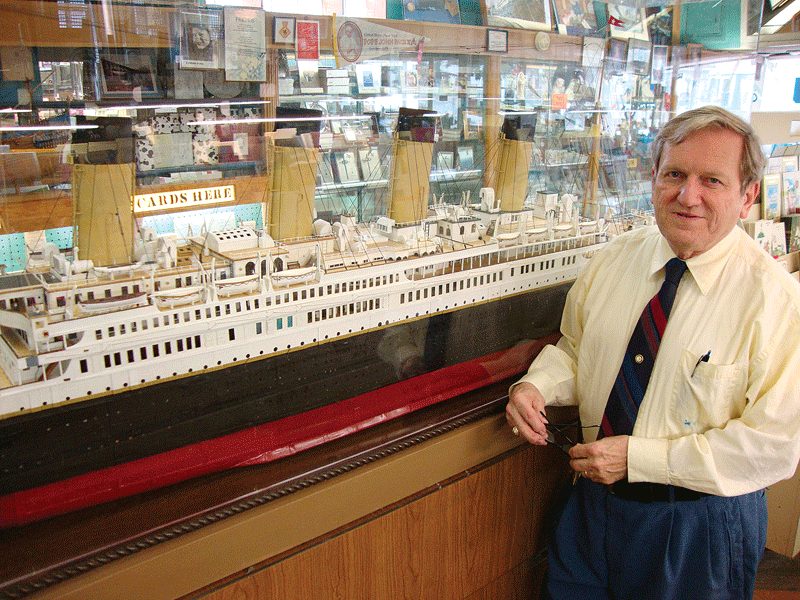
Indian Orchard’s Titanic Museum Keeps the Memories Alive

Ed Kamuda has taken his youthful interest in the Titanic and turned it into a lifetime passion.
“In 1912, there were some books, and there was a one-reel picture starring Dorothy Gibson, an actress who was one of the survivors,” Kamuda said of the year when the great ship sank, “but then interest dropped off. In the 1950s, with Walter Lord’s book, A Night to Remember, and then the film of the same name, there was some more interest, but that soon went away, too.”
But it was that movie, shown in the Grand movie theater in Indian Orchard, that set the young Kamuda on the course that would define his life.
As founder of the Titanic Historical Society, he is known worldwide as one of the leading authorities on the most legendary maritime disaster. From his small storefront on Main Street, across from the theater his family owned that started it all, he, his wife, and his sister maintain the Titanic Museum. While the museum is neither big nor flashy, Kamuda’s life’s work is regarded as one of the most important repositories for survivors’ narratives, and also has its share of treasures from the fabled vessel.
He said that, as a young man, he read the story “A Great Ship Goes Down,” published in a Reader’s Digest-style collection of stories, and when the 1958 movie came to his father’s theater, along with it was sent a ledger of production information for the film.
“In the back,” he said, opening the old book before him, “you see the names and addresses of the known survivors. The thought was that, if you were a theater manager, you might want to see if there was a local survivor to come to the opening night of the film for publicity. I contacted many of them, and they were all very surprised that anyone was interested in them.”
Kamuda began correspondence with many of those survivors, and when Walter Belford, chief night baker aboard the Titanic, passed away in 1963, he found out that his New York City landlord threw out most of the man’s possessions.
“When I heard this, I was very upset,” Kamuda said, “and at that moment I decided, ‘I’m going to form a museum to preserve all of those precious memories.’ That’s how all this came about.”
Taking a Bow
Walking around the small but densely packed space, Kamuda pointed out numerous treasures that relate not only to the Titanic, but also to the White Star line, owner of the ship, and her sister ships, Britannic and Olympic.
But what brings people from all over the world to the museum is the namesake collection: among many other things, a square of green wool rug from a first-class stateroom, taken before the ship left the Harland and Wolff yards in Belfast, Ireland; a small flag taken from a lifeboat; a rivet punching from the hull; original shipyard plans; John Jacob Astor’s wife’s lifejacket, given to the chief medical officer of the Carpathia, famous for rescuing the lifeboats; and the message which never made it to the ship’s bridge warning of ice.
“As survivors saw their lives coming to an end, they wanted someone to take care of their legacy,” said Kamuda as he explained much of the collection’s origins. “So they’d send it off to us. Or their children wanted a museum to take care of it.
“We don’t have any artifacts from the site on the ocean floor,” he emphasized, “because we feel that is hallowed ground, a gravesite, and should be left alone.”
It is the narratives the museum holds from those that were aboard on that night that carry a great deal of emotional resonance for Kamuda. He opened one of his Historical Society’s publications, The Titanic Commutator, to show a letter written to him by Frederick Fleet, the lookout in the crow’s nest on the starlit night that tragedy fell upon the Titanic.
In an old-fashioned hand, the letter informs his “Dear Friend” Kamuda that his correspondence will have to wait until he finds a new place to live, as his wife has just died and his brother-in-law and he “cannot agree.” It is postmarked just days before he took his own life.
Among Kamuda’s treasures are photos that Fleet had sent of his fellow seamen, along with two drawings that the sailor made: one of what the iceberg looked like on the horizon, and, alongside that, how it soon towered over the ship. It was Fleet who shouted the words, “ice ahead, sir.”
Among those who have benefited from Kamuda’s and his society’s expertise is James Cameron, director and producer of the 1997 epic film Titanic.
His production assistants were in frequent communication via e-mail with the museum, fact-finding myriad details to make the film as historically accurate as possible.
When it came time for filming in Mexico, Kamuda’s wife, Barbara, said it would be a fitting tribute for her husband to have a role in the film. It was Hollywood, after all, that had a hand in bringing the Titanic to Indian Orchard.
Both were offered bit parts, as well as society historian Don Lynch. The Kamudas’ Tinseltown time came in a scene out on deck with Kathy Bates and Leonardo DiCaprio. It was eight takes long due to the actress cracking jokes, he said, but the real shock came when he and his wife stepped on set for the first time.
“Cameron stopped production and called out to everyone there,” Kamuda said. “‘I want you to see these two people coming out here,’ motioning toward us. I looked at my wife and said, ‘what the hell is going on? Did we do something wrong?’
“He then said, ‘but for these two people, we wouldn’t be here today. They help to keep the memory alive.’ And then he said, ‘OK, let’s get to work!’”
Even Keel
Kamuda said that what keeps him going all these years is knowing that the stories from those people that were part of the Titanic will be preserved for all time.
“There will be people who walk in, look around, and ask, ‘that’s it?’” he said. “They don’t get that you can spend hours in here. You have to appreciate it. There’s so much to read. This isn’t a Disney-style museum.”
Some of the museum’s artifacts are lent out to a larger, more showy museum in Branson, Missouri — where one enters into a full-sized ship from the iceberg, and which has recreated the famous grand staircase — and Kamuda says that proceeds from that arrangement and loans to other museums are ultimately going to help in the creation of a larger facility here in Springfield.
As he tells how the society’s plans for the 100th anniversary of the Titanic disaster will involve not just a convention here in Springfield, but also the commemoration of a monument, currently in a fund-raising stage, planned for the city, it’s clear that his life’s work is a true calling.
“This is the mecca for Titanic history,” he said. “So many people have written books, or made films, and they all come to us for information.”
With the last survivor, Millvina Dean, now gone (she passed away last year), Kamuda said that his museum is one of the last things to remain for those whose fate was tied to the epic story of the Titanic.
“Luckily we have those interviews with them here,” he said. “Their story is history.”
Listings of area tourist attractions
Listed Alphabetically
TouristAttractions BW6.10b

Hurley & David Has Its Ducts in a Row

Ward Woodruff (center), with service manager Walter Thayer (left) and Mark Kent, says Hurley & David has changed with the times, but kept its emphasis on quality.
Ward Woodruff enjoyed going to work for his uncle 37 years ago — so much, in fact, that he never left.
That was 1973, the year Woodruff came on board Hurley & David Inc., the Springfield-based HVAC company, as a sheet-metal apprentice, during his summer break from college. His uncle, Donald Tucker, had recently purchased the company from its original owners, Frank Hurley and Peter David.
A year later, Woodruff decided to stay on full-time, deciding that was his best option for a first career.
“I had no other real, driving force to go somewhere else,” he told BusinessWest, “so that seemed like a reasonable choice, a place I felt I could advance in.”
Once Woodruff started working full-time at Hurley & David in 1974, he began taking classes in the evening to become a refrigerator technician, and worked in the field as a service technician starting in 1975. Two years later, he moved inside, working in materials management and some sales, with occasional forays into the field.
That was the beginning of his education in the HVAC industry. Over the years, Woodruff has obtained Massachusetts trade licenses as a refrigeration technician, refrigerator contractor, journeyman gasfitter, master gasfitter, oil-burner technician, construction supervisor, and sheet-metal worker. He holds various licenses in Connecticut as well.
In 2005, having mastered the ropes for more than 30 years, Woodruff bought out his uncle’s remaining interest and is now president of the company, which is celebrating its 50th anniversary this year.
The company repairs and installs heating and air-conditioning systems, air-purification equipment, air cleaners, filtration systems, humidifiers, and ventilation systems for homes and businesses, Woodruff said. In fact, environmental concerns about air quality — and the occasional legislation associated with those concerns — has presented a fast-growing host of opportunities for HVAC contractors.
“People are concerned about mold, bacteria, and viruses in the air system and duct work where they can be breathed. With the products available today, we can mitigate the growth of these things,” Woodruff said, adding that the company focuses on ridding homes and businesses of all three types of air-quality dangers: particles, microbes, and toxic gases and chemicals.
In this issue, BusinessWest sits down with Woodruff to talk about how the HVAC industry has changed over the years — even as many of the key players at Hurley & David have not.
No Revolving Door
In fact, Woodruff credits much of the company’s success to a core group of employees, many of whom have been with Hurley & David for many years, even decades.
For instance, construction manager Gary Lubas started in 1976 in a co-op program while a student in the sheet-metal program at Putnam High School. Joe Sherry, senior sheet metal worker, has been with the company since 1973. And service manager Walter Thayer tracks his experience back to 1968, when he started with the former Westside Air Conditioning Co., of which he later became a partner.
Mark Kent also came to Hurley & David from his own company, MEK Engineering, in 1994. A registered professional engineer in Massachusetts with 30 years of experience in the field, he recently earned a key certification that will benefit one of the company’s critical customer bases — health care.
Specifically, he was designated a health care facility design professional by the American Society of Heating, Refrigeration and Air Conditioning Engineers (ASHRAE).
The ASHRAE certification program identifies individuals who have mastered a body of knowledge covering the successful design and operation of health care facilities, said Kent, who is one of only 15 engineers in Massachusetts — and the only one in Western Mass. — to currently hold the certification.
“Health care facilities need to be accredited by JCAHO,” he said, referring to the Joint Commission on the Accreditation of Healthcare Organizations. That accreditation process includes environmental issues such as air exchange and how it relates to infection prevention — not just in the final product, but in the construction process itself, since it generally occurs not far from a sick, vulnerable population.
“Also, patients can be infectious,” Kent noted. “So you have to protect your employees and the public, too, from patients who might have a contagious condition.”
Because Hurley & David has performed HVAC work for many health care facilities in Western Mass. — the medical industry, indeed, is a key driver of the regional economy — having someone with that designation on board is a plus for organizations looking to hire a contractor to design and install HVAC systems, Woodruff said.
“The certification benefits building owners, employers, and individuals,” added ASHRAE President Gordon Holness in a press statement. “Firms who employ ASHRAE-certified engineers are better able to promote their services, and individuals who are certified approach their design responsibilities with greater confidence.”
Hot and Cold
The years have brought many new developments to the HVAC field, such as the use of ultraviolet light to kill contaminants. Woodruff pointed out how the shady side of a building builds up more mold than the sunny side, where “it gets a sunburn and dies. Ultraviolet light acts like the sun to kill those things.”
Then there’s the ‘Talking Thermostat,’ a user-friendly, programmable thermostat that guides the user through set-up and temperature options — ideal for elderly or visually impaired people.
But these days, the most significant development is one that affects all industries — a recession that has increased competition and whittled profit margins down. “It’s gotten soft. Prices are low,” Woodruff said — so low, in fact, that they often don’t cover the cost of labor, materials, and subcontractors, so Hurley & David actually finds itself passing up work.
But overall, he said, the field is a stable one, and the company that once installed HVAC systems in some 300 Friendly’s restaurants is confident of keeping its employees — including, these days, Woodruff’s son and daughter — busy as the next 50 years begin.
The flow of new talent into the field is strong as well, Woodruff said, noting healthy programs at local schools (like Putnam Vocational Tech High School in Springfield) and institutions like Porter & Chester.
“Right now you can find people,” he said. “But they have to be quality people who are trainable.”
Just like a college kid who took a flyer on a summer job 37 years ago.
Joseph Bednar can be reached
at [email protected]
A listing of available commercial properties
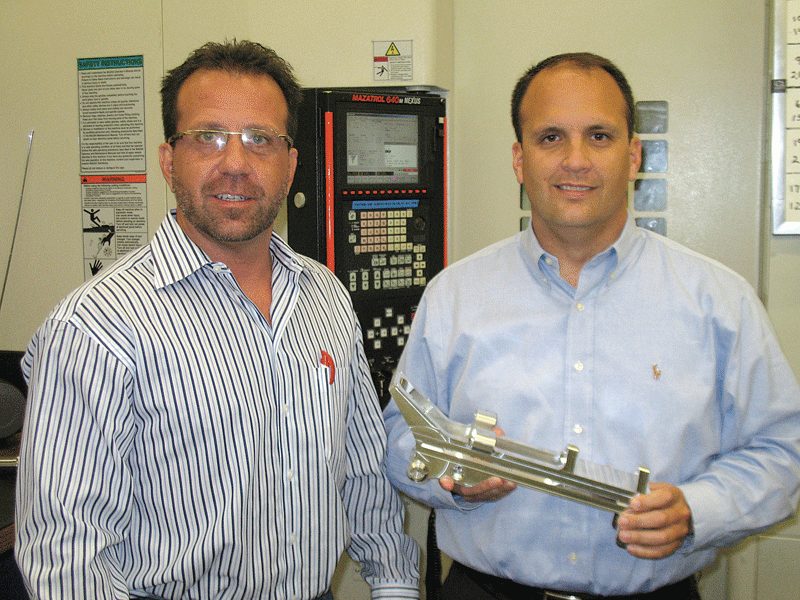
Manufacturers Seek to Forge Connections Through AMICCON
Eric Hagopian, right (with Douglas Hagopian, vice president and treasurer of Hoppe Tool), says AMICCON will benefit the area’s entire manufacturing sector.
That’s the driving idea behind AMICCON, or the Advanced Manufacturing and Innovation Competition & Conference, which is, nominally, a regional event set for this fall in Springfield — and yet, its organizers say, much more.
“I feel it makes sense for us to get out there and have an event where we are aggregated together, all of us — metal processing, electronics, paper manufacturing, all the different manufacturing capabilities — in one place,” said Eric Hagopian, president of Hoppe Tool in Chicopee and a member of the AMICCON steering committee.
Why is that important? Hagopian and others on the committee say that, despite the richness and diversity of the region’s manufacturing sector — the showcase of which is one of the conference’s goals — many manufacturers and supply-chain members are not aware of all that is produced in the Springfield-Hartford corridor. As a result, they look outside this area — to other regions of the U.S. or even internationally — to supply goods that are actually being produced locally.
When that happens, Hagopian said, area manufacturers lose potential customers — and profits.
“For us, AMICCON is a chance to be in the room with companies that we didn’t know about,” he told BusinessWest. “Who knows — we may be making the same mistake some of our customers are making, looking outside our region because we don’t know who the manufacturers are, what their capabilities are, and how they can help us.”
The conference, slated for Sept. 23 at the MassMutual Center, will focus on six key manufacturing niches: plastics and advanced materials, precision machining, paper and packaging, electronics, ‘green’/clean technology, and medical devices. Business opportunities in defense and aerospace will also be highlighted. Original equipment manufacturers from around the country and members of their supply chains are being invited personally to participate.
Committee member Jeff Sattler, president of NUVO Bank, said that, while Western Mass. manufacturers must compete to survive, they also benefit when the entire sector is healthy, and to create that robustness, they need to show each other what they have to offer, along with attracting customers from outside the region.
“Manufacturers are tired of watching corporations shut down and move out,” he said. “If they had a better understanding of what their supply chain is around the marketplace, maybe they wouldn’t leave. That may be idealistic, but it’s necessary.”
Sattler said he’s dealt with many manufacturers in his portfolio of commercial lending at NUVO, and he has often tried to foster business connections between them. AMICCON, he said, is a way to do so on a larger scale.
But that event is only the first phase of AMICCON, said Ellen Bemben, one of the conference founders.
“We have an ultimate goal, within five years, to turn this region into the hub for exotic manufacturing — nano, micro, precision manufacturing,” Bemben said. “It’s here; all we have to do is identify it and market it.”
To do so will require making connections with colleges and universities to cultivate the next generation of manufacturers, by developing programs that promote what the sector has to offer, said committee member Gary Gasperack, vice president of the Spalding Division of Russell Corp.
“This is an effort by manufacturers for manufacturers,” he noted. “However, the intent is also to tap into and involve the academic community in a total way — the MITs and RPIs, UMass, UConn, that whole playing field will be phase two of what we do. The conference is phase one, and phase two will deal with the education area. Phase three deals with entrepreneurs and innovations.”
Part of that third phase will be something called the Advanced Manufacturing Innovation Competition, which is designed to promote the sort of innovation that has lent the Springfield area its manufacturing heritage. Companies participating in the Sept. 23 conference will help underwrite the $50,000 prize with their entry fees.
Gasperack touted the regional component of AMICCON, which seeks to forge connections across the Massachusetts border as well as within the Bay State, noting that a manufacturing region is not necessarily defined by state lines.
“In the political arena, the players tend to be more provincial, focused more on their state’s needs,” he said. “We have an opportunity — because of the mission and purpose of this organization — to look beyond the borders, go beyond local jurisdictions, and pull companies together, and we believe we can be successful in a broader sense by having that focus.”
Sattler agreed. “There’s nothing bad about this … if it’s done right,” he said. “This helps every business in the marketplace. Everyone benefits when a business comes into the region. That’s the key.”
Joseph Bednar can be reached
at [email protected]
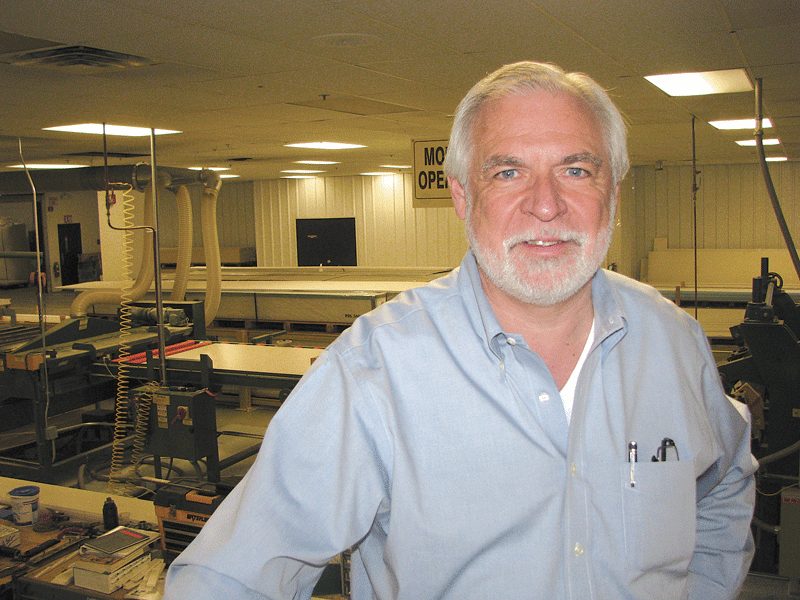
NuCedar Mills Owner Hangs Out His Shingle — and His Clapboard

Tom Loper is confident that a rebounding economy and the growing popularity of ‘green’ products will spawn strong growth at NuCedar Mills.
Elaborating, he said the official start came in late 2006, when Loper, one of the founders of the Westfield-based company Kleer Lumber, a maker of PVC trimboard, decided to commence another venture that would go where Kleer Lumber didn’t or couldn’t — into the making of a product that reproduces vertical-grain cedar clapboard siding.
The product was several years and considerable pain and anguish in the making, but, when it was finally ready, it was everything that Loper hoped it would be — beautiful, durable, low-maintenance, and ‘green’ (more on that later). But more important was something it wasn’t — recession-proof.
“Our timing at the start wasn’t exactly good,” said Loper with a discernable trace of sarcasm. “I don’t think it could have been worse.”
But Loper has long known that his product is a good one, and he has since developed several new ones as well, including a shingle that is catching the attention of the marketplace. These developments have allowed his investors to remain patient and actually give him more room and capital with which to work. All this, coupled with the fact that the housing market, and especially the high-end market to which he caters, is coming around, has the energetic and entrepreneurial Loper quite optimistic about his restart.
NuCedar is a story that touches many bases: manufacturing, because Loper has done some pioneering to get his products to market in terms of innovation and waste-reduction efforts; entrepreneurship — there were some sizable risks with this startup; ‘green building,’ because of the environmentally friendly aspects to this product; and even marketing, for the ways Loper has been able to put his products in the spotlight — some through creativity and others through determination and simply having a good story to tell.
These include exposure through last summer’s Extreme Makeover: Home Edition project (his siding was chosen for the home built in Suffield) to upcoming appearances on the show This New House (produced by the same people who put on The Old House and debuting later this year) to face time on something called Renovation Nation, hosted by long-time This Old House host Steve Thomas, on the Planet Green channel. Those latter two shows highlighted both the manufacturing innovations and the green qualities of the products.
“We had the This New House people out to tour the plant, and they spent the entire day here; they watched us make clapboard from beginning to end,” said Loper. “We just got the call last week … we’re going to be on the premier show. The producers liked us so much, we’re going to be a big part of that show.
“And we received a lot of time on Renovation Nation, which is great PR for us — people know those names and faces like Steve Thomas, and they respect him,” he continued. “And whenever we’re on one of those shows, the hits to our Web site increase significantly. That’s how we know people are watching.”
Loper is hoping that all this publicity will help in his restarting efforts, which are already off to a promising start with the introduction of the shingles and an apparent willingness on the part of consumers to spend on their homes again.
“We’re about two years behind schedule,” he said, referring to the timetable outlined in an original business plan that has seen a number of revisions and updates. “But we’ve got a really good chance to do some catching up.”
For this issue and its focus on green business, BusinessWest takes a look at a company that might have gotten off to a slow start, through no fault of its own, but certainly seems to have the right products at the right time.
House Money
Tracing the history of NuCedar, Loper said it came about through the simple observation that, if Kleer Lumber could make a high-quality PVC trimboard, then logic dictated that a similar product approximating traditional cedar siding could also be produced.
But Loper knew it wasn’t that simple. First, a system would have to be devised for making a product that looked like real cedar, was durable, could hold paint, could withstand the elements, and, most importantly from a business perspective, could be produced in a cost-effective manner. A supplier of the PVC material would have to found, and financing would have to be obtained.
The good news, said Loper, is that all those hurdles were eventually cleared, and the company was up and running at more or less full speed by the middle of 2007. The bad news is that it wasn’t at that speed for long, as the economy took its serious nosedive, and the bottom completely fell out of the new-home construction and remodeling markets.
Telling the story more slowly, Lopor said there was a considerable amount of research and development that went into NuCedar’s main product, the vertical grain cedar, which meets a real need within the building community — something that looks like cedar, specifically old growth trees, but isn’t.
That’s because, as Loper put it, when it comes to the real thing, “you can’t get it.”
Part of the reason is the spotted owl, he said, noting that it is partial to cedar trees and its presence has limited the number of trees that can be cut. And in areas where trees can be cut, there are other problems. “There are two things going on, fires and floods, and you take trees down, it makes both worse.”
New growth trees can be cut, said Loper, but that cedar doesn’t have the same look, and it often develops moisture problems that limit paint’s ability to stay on the board. “I have that on my house,” he explained. “It’s beautiful cedar, the best that was available, but I have to paint it every four or five years.”
Coming up with a cellular PVC product that had cedar’s looks but also much more durability and sustainability, were just some of the hurdles for Loper to overcome.
Indeed, innovative and cost-effective methods were found for everything from cutting the board to applying the paint; from devising and producing an interlocking system that allows each clapboard to support the one below it, to recycling the dust created in the production process.
The paint itself was a work in progress for many months. Working with supplier Sherwin Williams, Loper was able to secure a product that has a two-part coating that chemically hardens to form an impenetrable barrier. It also helps reduce energy costs and is available in more than 1,400 custom colors, five ‘historical colors,’ and 17 popular selections, including Watch Hill white, Chatham sand, Sunapee stone, Mohegan tan, and Suffield blue (the color chosen for the Extreme Makeover home).
The downturn in the economy certainly slowed the company’s development, but it didn’t stop it in its tracks, nor did it derail efforts to build on the original product line.
“We’ve been lucky … during the downturn, we went to our investors and said, ‘our timing really stunk getting started in the first place, based upon the way the housing market has gone. We’ve seen a lot of manufacturers shuttering their doors,’” he said. “We told them, ‘we’d like to go in the opposite direction. You can close the doors if you want to, but we’d actually like to get a little more money out of you and build a couple of other lines.’ And they let us go ahead and do it.”
So in addition to the traditional, or ‘smooth,’ cedar, the company has subsequently produced a few other offerings, including a roughsawn model that is proving to be quite popular with homeowners, said Loper, adding that it was this development that eventually brought the company into an entirely new product line: shingles.
“People looked at the roughsawn clapboard and said, ‘if you can do this, why don’t you just go ahead and make shingles?” he said, adding that the products are similar in looks and manufacturing techniques. “We did, and now it seems like we can’t make them fast enough, with the market coming back, especially on the high end.
“For a long time, people with money were reluctant to spend it, because they didn’t feel secure enough to,” he continued. “Now, they’ve gained the confidence to make the investments in their homes that they want to make and have probably put off for a long time.”
Board Meetings
But there are other elements leading to NuCedar’s success beyond the economy and a unique way to replicate cedar.
Indeed, beyond the good looks and durability of the company’s products are a number of ‘green’ attributes, said Loper, noting that these qualities have made NuCedar products popular among architects who want to incorporate green into their design, and also with consumers, who like being environmentally friendly — and saving money.
NuCedar’s offerings are 100% recyclable, said Loper, adding that they can yield 5% to 9% savings on energy bills, depending on location and wall insulation, due in large part to a solar-reflective coating that reduces heat transfer from the sun’s rays, reduces the energy required to heat a home, and permits dark colors to be used in warm climates. The company calls it “cool-wall technology.”
“The Department of Energy did a study — those are their numbers, not ours,” he said, referring to the potential savings rates. “And in the south, those percentages equate to big money on air-conditioning costs; we’re talking about thousands of dollars in some instances.”
One key to those savings is the use of ceramic-based pigments in the paint applied to the siding as well as the shingles, said Loper, noting that it is the same material used in what’s known as ‘cool-roof technology,’ now mandated in many parts of the South and West. It’s also used by the U.S. military on ground vehicles and aircraft.
“If you take a aircraft that’s made out of composite materials that goes from being in 100-plus-degree heat in the desert to 20 below when they’re high in the atmosphere — and they do that every day — the composite material expands and contracts at a furious rate,” he explained. “Our product also expands and contracts, but with this coating on it, there is less of that. More importantly, it’s solar-reflective.”
Moving forward, Loper says the pieces are falling into place for what is shaping up to be a very solid restart for his company. He noted that the high-end housing market is rebounding, with consumers now confident enough to move forward with renovations and new building. This confidence, coupled with the products’ increasingly popular green qualities, would seem to indicate that, this time around, the timing couldn’t be better for the company.
“The Wall Street people have gotten their bonuses, and a lot of them are spending them on their homes,” he said, citing just one example of consumer activity that is giving the company a needed lift as it looks to grow market share.
“All of the sudden, people who let the paint go and let the shingles go, they don’t want to let them go anymore, and we’re getting those jobs,” he said. “And we’re getting work all along the East Coast; Florida is still hurting, but many other areas are coming back.”
And then, there’s all that exposure through the media, which is prompting Web-site hits that lead to phone calls and, eventually, jobs to bid on. And once he has a chance to show what his products can do, Loper believes he has a solid chance of getting the work.
Through the Roof
As he talked about the strong start for his shingle products, Loper said they are opening the door to other types of business and bigger contracts. “People will look at them and how well they work and say, ‘what else do you have?’ This leads to people looking at the trimboard, and then eventually to the clapboard.
“We’ve seen that happen I don’t know how many times,” he said, adding that the diversity of product offerings and the chance to handle one or several aspects of a home-renovation project have led to opportunities as the market picks up.
This is just another of many factors that together indicate that, while this company didn’t get off to a good start, it may get off to a great restart.
George O’Brien can be reached at [email protected]

NTS Takes Its Problem-solving Approach into the Greater Springfield Market

Stan Bates, left, and Barry Kelly have plans to “conquer Springfield.”
Barry Kelly says he had a simple, three-word set of instructions for Stan Bates as he was joining East Hartford-based New Technology Systems (NTS).
“I told him to go conquer Springfield,” said Kelly, who founded the technology-solutions company with his brother in 1981 and, until very recently, focused the vast majority of his time and energy on the Greater Hartford area. Over the years, he picked up several clients on this side of the border, but he never really made Western Mass. a strong priority.
Until now.
Or, to be more precise, until Bates took on the role of business development manager for NTS and started talking up Western Mass. as a potential growth area.
“He was and is very bullish on Springfield,” said Kelly, adding that he’s giving Bates the room (a new office on the second floor of Monarch Place) and the resources to be aggressive in Greater Springfield and grow market share here.
And as he sets out to conquer Springfield, he says he’s selling the company’s full roster of products and services — hardware, software, and consulting — but what he’s actually offering to potential clients is partnerships. That’s the word he chose to describe how NTS goes about its work — with all customers, but especially the SMB (small to medium-sized business) clients, or those who don’t have an IT manager, let alone an IT department.
Describing his approach with clients and potential clients, Bates says he spends time and energy getting to understand someone’s business, and, from an IT perspective, identify their “pain points,” and reduce or eliminate them.
“I really try to think outside the box with technology and find ways to help people use technology more effectively, while also keeping their costs under control,” he explained. “We had one client who had a whole bunch of laptops that he couldn’t afford to upgrade with the recession — but he needed to do something. With the latest technology in hard drives, we were able to significantly increase the performance of his laptops, but at a fraction of the cost of upgrades. That’s what we mean by working in partnership with the client.”
Kelly and Bates say these partnerships are made stronger by the relationships NTS has forged with manufacturers, vendors, and service providers, including Microsoft, HP, IBM, Dell, Intel, Cisco Systems, and many others. Products handled include everything from copiers and printers to computer networks.
Over the past few months, NTS has hosted a number of events featuring some of these manufacturers and their latest products, and more will be scheduled. They’ve been successful, said Bates, because busy business owners often need an education in the latest products that can help them do what they do better and faster than before. What’s more, after pushing most major investments, including those in IT, to the back burner during the economic downturn, many business owners and managers are ready to spend again, or soon will be ready.
“We’re seeing things picking up somewhat … people seem to have more confidence in the economy now,” said Bates, adding that there is a lot of new technology for business owners to consider as they look at their needs and their budgets and try to determine what to do next. “Besides the new operating systems and new equipment that’s much faster and better, there’s new technology that we have to educate our clients on.”
For this issue and its focus on the technology sector, BusinessWest takes an in-depth look at NTS, and why Kelly and Bates believe the timing is right for its expansion into the Springfield market.
Technically Speaking
Tracing the history of NTS, Kelly said the company got its start in the Hartford area and, like most technology-solutions companies 30 years ago, had to work hard to establish itself and grow its client list.
The venture grew largely on the strength of handling all-sized accounts, but especially the large insurance companies that give that city its identity, or ‘enterprise businesses,’ as Kelly called them. NTS still has many in its portfolio, but its bread and butter has always been small to medium-sized businesses with 100 or fewer employees.
And it is this market that Bates has essentially been hired to penetrate in the Greater Springfield area, where NTS has always had a presence — it has handled work for several enterprise businesses over the years — but not a large share of the market.
Since arriving late last year, Bates, working closely with Kelly, has expended considerable time and energy making introductions to business owners and IT managers in Western Mass., and keeping NTS visible.
For example, he secured a major role for NTS in something called the MassISS, or Massachusetts Information Security Summit, a comprehensive program outlining the state’s new information-security regulations, staged on Jan. 27.
“We brought a lot to the table for that event, and it was a major success for us,” said Bates, noting that the company was able to not only introduce itself to the business managers and IT professionals who dominated the audience, but also gain some business, on both the new security law and other matters.
The company also staged an elaborate open house in early May to mark the opening of downtown Springfield office, as well as other events to put the NTS name out and educate its target audience about what’s new in technology. However, most all of the portfolio-building work is done the old-fashioned way, said Bates, through pavement-pounding and earning the kinds of word-of-mouth referrals that bring new business to the door.
From the beginning, the company has worked with that ‘partnership’ mentality, said Kelly, as he talked about how NTS works with clients find ways to get the most out of advancing technology to work better and smarter.
And most companies need a partner to handle those assignments properly, said Kelly, noting that most very small companies don’t have a designated IT person, and even in larger businesses, IT staffs are thin, to say the least.
“You’ll have some companies with 300 employees, and they’ll have one person in IT who’s not even full-time,” he explained. “It’s pretty hard to stay on top of technology under those circumstances.”
Bates agreed, noting that companies in that category, and there are many of them, need assistance with everything from coordinating break-fix work to determining when, how, and with what to upgrade technology.
“You go in looking for the pain, saying, ‘how can I help this customer?’” he said. “Then you work the problem and essentially try to make that pain go away.”
Elaborating, Bates and Kelly said company representatives work with a company’s managers and IT directors to first identify and quantify problems, and then generate solutions. The key to successful outcomes, they said, is asking the right questions, listening carefully to the answers, and creating solutions that serve the client, not the company selling products.
“We try to get the C-level, where we can help those managers lower the cost of technology, or to the IT directors themselves, who might need a little bit of a helping hand getting their network to the next level,” said Bates. “And we approach things with the mindset of forging a long-term relationship.”
Kelly concurred, and said that a client’s representatives will have one eye on managing and reducing costs, and the other on efficiency and optimizing the technology that’s on the market. NTS works on both sides of the equation.
“IT people are all about performance, while the C-level folks are focused on dollars and cents — if it’s going to save them money, on power or cooling, for example, they’re all about that,” said Kelly. “As for the IT people, if you’re solving problems that are keeping them up at night, that’s huge.”
While helping the tech people sleep better, NTS is focused on educating clients and prospective clients about new technology, how it works, and how it can help companies with everything from sales to marketing.
“Things like digital signage,” said Bates, referring to the LCD, LED, plasma displays, or projected images that are becoming more commonplace. “People are aware of the technology, but many don’t know how they can take advantage of it. I have five or six potential clients coming in to meet with us and some professionals on that subject who will be teaching them the pros and cons of digital signage.”
The company also staged informational events like one on May 13 at the Sheraton in Springfield, where attendees were briefed on Windows 7 and learned about HP business-notebook innovations and HP client virtualization, and it has more planned, said Bates, adding that these are true win-win-win scenarios. Clients and potential clients benefit from the education they’re receiving in new technology, while NTS and the manufacturers involved gain exposure and business.
Keys to Success
Time will tell how Bates fares with his assignment to “go conquer Springfield.” For now, both he and Kelly are confident that NTS has the products, services, track record, and excellent timing needed to accomplish that mission.
And as it goes about that work, the company will take the same approach that it does with clients and that process of eliminating pain: in short, NTS is in this for the long haul.
George O’Brien can be reached
at [email protected]
Squad 16 Consulting Provides Sales Staffs with the Ability to ACT!

Tom Najemy is a certified ACT! consultant and premier trainer.
Najemy owns Squad 16 Consulting with his wife Sarah, and he accomplishes this by customizing a contact-management software program called ACT! for his clients. He is one of 400 certified ACT! consultants in the U.S. and a premier trainer who conducts both public and private corporate training classes.
Najamy says many businesses don’t have a centralized database of information, a situation that can inhibit growth and productivity and result in duplication of efforts or missed opportunities. Without a central database, it can also be difficult to effectively deal with customers when someone is on vacation or leaves the company, as they often take their records with them.
“A customized ACT! program allows a business to have a centralized database which contains information about customers and prospects. It will track all of their interactions with clients, including phone calls, meetings, e-mails, quotes, and sales opportunities,” Najemy said, adding that the system can be set up with Web information tabs to provide users with direct links to social-networking sites such as Facebook and LinkedIn.
The end result is that, when a customer calls, everything the salesperson needs to know, including their contact information and all of the caller’s history with the company, can be accessed with a few clicks of a computer mouse.
Najemy says ACT! can be used by any industry and adapted for single users as well as by large workgroups, which include salespeople who need the ability to connect to their company’s database from a remote location. His clients range from manufacturers to security companies, moving firms, insurance agencies, construction businesses, entertainment agencies, publishers, and schools.
“The program is very diverse. What it does is put everyone in an organization on the same page. It puts everything at their fingertips, including social media, which helps salespeople make better connections with their prospects or clients,” Najemy said.
“The product can help a business and its employees become more productive and organized. If data is entered on a daily basis, everything a person has ever done is there for him or her to analyze,” he explained. This can prove invaluable, as the software preserves details in the client’s records, which include every e-mail, phone call, and sale made, as well as information about key contact people within organizations and the best time to set up a meeting with them.
Although company executives can choose to have access to all of their employees’ files with ACT!, the purpose of the program is not to monitor people’s actions, but promote growth through shared resources and information.
“This is not about micromanagement. It’s about being proactive and helping individual salespeople help themselves,” Najemy said. “This system can allow people to analyze their market. It allows users to document what occurs when they make a call or have a meeting, as well as schedule their next activity, whether it is a phone call, e-mail, or visit.”
Najemy has found that individuals within companies that don’t have a centralized database typically employ different methods of documenting their work. One may use Outlook, while another may use salesforce.com or Excel to track their interactions with customers and prospects. Still others have a list on their computer, information stored in a BlackBerry, or their own method of tracking appointments. This can lead to problems, including losing valuable information.
“Customer-relationship management is a growing field for both large and small companies, yet many offices don’t have a solution in place to increase their customer base and retention,” Najemy said.
He knows firsthand what a difference ACT! can make. He began using it 20 years ago when he owned an entertainment-booking firm. “My problem was how to book 30 bands at 3,000 potential locations. I needed to know who I had called, what I had said to them, and what the conversations were about,” he said. “The program allows you to see the last time you spoke with a customer, what you talked about, how many messages you have left, and more. It also allows all users in a company to know the history of the company’s interactions, from e-mails that go out and come in to proposals and quotes that have been given.”
He told BusinessWest that ACT! can also be used to conduct e-mail marketing, and can be integrated with Microsoft Office, which includes Outlook, Word, and Excel. “You can generate a letter and merge relevant information from ACT!”
Today, the program has undergone many changes and is in its 12th release.
Najemy not only kept up with the technology, he became so proficient in it that he decided to become an ACT! consultant and share his knowledge with others. The timing was serendipitous, as he also wanted to get out of the entertainment-booking business. Although he had done well booking up-and-coming bands, “the music business is a real tough nut to crack,” he said.
Najemy maintained his music-booking agency for about a year as he grew a base of ACT! customers. In 2000, he changed the name of his business from Squad 16 Entertainment and incorporated as Squad 16 Consulting.
Today, he says people call on him for two reasons. The first is that they have adopted ACT! but don’t know how to make the best use of it. The second is that they want to implement a program to track customer interactions.
The first step he takes after he is hired is to conduct a brainstorming session with company officials using a software program called Mind Manager. “We discuss what they want to track as well as the best way to do that using the ACT! program,” he said, explaining that the conceptual design includes many details, including the configuration of drop-down menus and their placement on the ACT! layout.
“When that is done, I build a prototype,” he said.
ACT! provides filters for viewing users’ activities, and since the program contains five levels of user security, company executives can decide how much or how little employees will be able to access. “There are plenty of security features, and records can be open to everyone or limited to certain users. People can also have private records,” Najemy said.
After the program is customized to a company’s specifications, Najemy imports data into it from a wide variety of sources. “It can come from employees’ records or include things such as an industry or conference list,” he said.
The next step is to conduct a full day of training so employees understand all of the nuances of the program. This can be done on or off site, remotely or in his office, which includes a room with computer banks dedicated to training. Najemy also provides technical support once the project is complete.
He has the ability to take a comprehensive view of things, as he lived in Beirut for 14 years, Greece for three years, Iran for a year, and has worked in international sales, as well as owning his own companies. Several months ago, Squad 16 moved from East Longmeadow to a larger office space in East Windsor, Conn.
Najemy’s experience has made him aware that business success comes from giving employees the ability to record and share information via a centralized system. “If becoming organized and developing long-lasting, profitable business relationships is essential to your success,” he said, “then ACT! is right for you.”

If You Think the IRS Is Becoming Too Lenient, Think Again
When preparing your tax information annually, does the likelihood of an audit cross your mind?The IRS feels that businesses and individuals may have become slightly lax in their record keeping due to a decreased presence of auditors. They believe this lack of compliance has led to a significant tax ‘gap,’ i.e., the difference between the tax the IRS estimates is due and the amount actually paid by taxpayers.
In response, the IRS has increased its number of audits. Many of these audits are under various ‘tax-audit initiatives,’ which are intended to provide data for the National Research Program (NRP) study of tax compliance.
One area of focus is cash-intensive businesses. A cash-intensive business is one that receives a significant amount of receipts in cash. This can be a business such as a restaurant, grocery, or convenience store that handles a high volume of small-dollar transactions. It can also be an industry that provides cash payments for services, such as construction or trucking, where independent contract workers are generally paid in cash.
The IRS has posted an Audit Techniques Guide (ATG) to provide guidance to its agents on how to examine income in a cash-intensive business. While the ATG is not an official pronouncement of the law or the IRS’ position (and cannot be used, cited, or relied upon as such), it does provide valuable information to practitioners and taxpayers on how the IRS audits cash-intensive businesses, including specific types of cash businesses.
The ATG notes that the income-tax gap is thought to be in the hundreds of billion of dollars. In part, this may be because there is an increasing underreporting of income by those taxpayers with the ability to determine their own reported income, such as businesses that receive most of their income in cash. Cash transactions are anonymous, leaving no trail to connect the purchaser to the seller, which may lead some individuals to believe that cash receipts can be unreported and escape detection.
The ATG observes that there are three main ways to misappropriate cash from a business:
• it can be skimmed from receipts before it is recorded;
• it can be stolen after it has been recorded; and
• a fraudulent disbursement can be created.
The ATG states that the most significant indicator that income has been underreported is a consistent pattern of losses or low profit percentages that seem insufficient to sustain the business or its owners. Other indicators of unreported income include:
• a lifestyle or cost of living that can’t be supported by the income reported;
• a business that continues to operate despite losses year after year, with no apparent solution to correct the situation;
• application of the cash-transaction examination method shows a deficit of funds;
• bank balances, debit-card balances, and liquid investments increase annually despite reporting of low net profits or losses;
• accumulated assets increase even though the reported net profits are low or there’s a loss;
• debt balances decrease, remain relatively low, or don’t increase, but low profits or losses are reported;
• a significant difference exists between the taxpayer’s gross profit margin and that of his industry; and
• unusually low annual sales for the business type.
The ATG stresses that examination techniques must be tailored to provide for the best analysis of a specific taxpayer’s possible income stream. There are several techniques that can be used successfully when working with cash-intensive businesses.
First, a financial status analysis, including both business and personal financial activities, should be done, the ATG advises. This is a required minimum-income probe. If it shows an imbalance in the cash flows indicative of underreported income, an examiner is told to request clarification or explanation from the taxpayer before beginning the use of an indirect method.
Indirect methods, such as source and application of funds or bank-deposit and cash-expenditures analysis, can be used to confirm the amount of any understatement.
The ATG says that the most critical aspects to successfully examining a cash-intensive businesses is the gathering of information about how the taxpayer conducts business, documenting cash inflows and outflows, and conducting a detailed interview with the owner of the business relating to business and non-business cash receipts and cash expenditures.
In addition to their focus on cash-intensive businesses, auditors are focusing on several other items, which in recent years were frequently not considered in audits. These include:
• Adequate substantiation of meals and entertainment expenses, including a record of who the expense was with, their business relationship, business conducted immediately before or during the meal or event, and supporting documentation.
• Establishing the business purpose of ordinary expenses, including airplane travel, vehicle expenses, membership dues, and external office expenses. The substantiation requires more than bank statements, credit-card statements, and canceled checks. For example, the IRS has long required that written records be maintained to document the business use of vehicles. They are now routinely requesting these auto logs, gas and repair receipts, and calculations of reimbursements.
• Employment tax compliance. This will mark the first such study conducted by the IRS since 1984. The IRS is expected to focus on the following five employment tax issues:
• worker classification (employee vs. independent contractor);
• fringe benefits;
• officer’s compensation;
• reimbursed expenses; and
• non-filers.
The initiative is intended to help reduce the size of the tax gap.
In many instances, the IRS is quick to assess accuracy-related penalties in addition to penalties for late payment of tax when items of income are erroneously omitted and unsustainable deductions claimed.
So gather up your receipts and other documentation, keep good notes, and resurrect that auto log. If you need assistance in clarifying the substantiation requirements for any expense or the proper use of an auto log, be sure to speak to your accountant or tax adviser. The little bit of pain you endure now in keeping good substantiation will save you the pain of writing a significant check to the IRS in the future.
Sean Wandrei is a tax manager with Meyers Brothers Kalicka, P.C. His technical concentrations are in multi-state taxation as well as real-estate entities; (413) 536-8510.

Crime Insurance Is a Vital Need in Today’s Business Environment

David W. Griffin Sr., CIC, LIA
The three most common categories of employee scams are fraudulent statements, asset misappropriation, and bribery or corruption. Two out of five businesses suffer more than five instances of fraud, and one in four loses at least $1 million as a result of fraud. For these reasons, crime insurance is a wise purchase, extending coverage to you and your business for fraud-related financial losses.
In addition to covering employee fraud, most crime-insurance policies also cover third-party scams including forgery, counterfeit currency, and theft of company property. Many policies also cover money losses due to computer fraud by hackers who seek company funds, customer credit-card numbers, or other financial data.
Technology makes fraudulent schemes much easier to accomplish. In fact, as more and more business is done over the Internet, computer coverage and protection against unauthorized funds transfers or computer access are on the rise. For example, with a simple scanner, it is easy to forge a check, and many fraudulent Web sites attempt to collect personal data from unsuspecting victims.
Not all fraud-related crimes involve money. Some involve company goods that have no apparent value. Keep in mind that there are markets for many unusual items. One insurance company tells of a meatpacking plant where an employee was stealing animal fat and selling it for personal gain.
Although many employees carry out such crimes because they are disgruntled, the most common motivations for employee fraud are greed, vindication against the employer, and financial need. Regardless of motive, you need to be aware of the possibilities, and adequately covered.
When employees get caught for such crimes, they do jail time, but companies never fully recover the total amount lost. That’s where crime insurance comes in. With proper coverage, you can recoup your financial losses.
In addition to crime insurance, it is also recommended to maintain a strong system of checks and balances to ensure that unethical employee behavior doesn’t pay off. Such controls can affect your company’s insurability and premiums as insurers examine the extent of internal controls, as well as a company’s history of fraud losses, when determining whether the company is a good risk. With a combination of crime insurance as well as internal control procedures, you will protect your company as well as show dishonest employees that crime doesn’t pay.
Please keep in mind that several carriers have added a coverage to their crime package called ‘funds-transfer fraud.’ The coverage is inexpensive, but if you are doing a lot of banking via the Internet, it will cover an exposure to your business that could be sizeable. Unfortunately, hackers are here to stay, and you must consider this exposure in developing your business risk-management program.
David W. Griffin Sr. is one of three partners at the Dowd Agencies, a full-service agency providing commercial, personal, and employee benefits. It is the oldest insurance agency in Massachusetts with operations and management under continuous family ownership. The Dowd Agencies has four offices in Western Mass.; (413) 538-7444; [email protected]

As He Prepares to Leave the SPHS, Vince McCorkle Looks Back, and Ahead

Vince McCorkle
Looking back on his 17-year career with the Sisters of Providence Health System, Vincent McCorkle said his time has been notable for several of what most people — and he is in this category himself — would call “bad business decisions.”
And he’s quite proud of all of them.
That’s because, while these might have become losing propositions as far as the bottom line is concerned, they are directly in keeping with the mission of the Sisters of Providence, and therefore they meet critical, and almost always unmet, needs within the community.
And so, McCorkle’s office, which he has been cleaning out in preparation for his departure and next career challenge — president and CEO of the Akron (Ohio) General Health System — is decorated in part with gifts from people essentially thanking him for making those bad business decisions.
There’s the drawing, a self-portrait, crafted by a homeless man and given to McCorkle for the system’s continuation of its Health Care for the Homeless program, that hangs on one wall. Meanwhile, on his credenza is a bamboo model of a boat given to McCorkle in thanks for the system’s willingness to continue something called the Vietnamese Health Project after state funding for the initiative was discontinued.
There are other bits of memorabilia, if that’s the proper word, in McCorkle’s office that speak to his time here, including one very recent addition. It’s a card fitted inside a glass plaque that sits on his desk. The wording amounts to what McCorkle calls a pledge, or commitment, to perpetuate the legacy of the founding Sisters of Providence, who are now few in number and getting on in years; only a few are under the age of 70.
“Everyone is committed to look at it at least once a day; it reminds us of why we’re here and what we’re called to do,” said McCorkle, noting that a leadership group of 100, now named the ‘Legacy Leaders,’ agreed to make that commitment.
In short, he continued, SPHS administrators are called upon to honor the mission of the Sisters of Providence, which, in some cases, requires making decisions that are not bottom-line-friendly, such as the transitioning of Providence Hospital to a behavioral-health facility, and the closing of the residential component at Brightside for Families and Children.
“Sometimes we’ve been criticized for making bad decisions, as in the case of Providence Hospital, which has never had a positive operating margin,” he explained. “So one could say, ‘that’s a bad business decision.’ We say it’s a ‘different decision’ because I can’t imagine what this community would be like if we weren’t finding ways to provide those services.
“This morning, before 9 o’clock, we dosed 993 people on methadone,” he continued. “If we stopped doing that, within 24 hours, 95% would have an insatiable appetite for a fix, and within 48 hours, they all would, so you can imagine the impact on Springfield, Holyoke, and the surrounding communities if we didn’t sustain those services. It would be devastating.”
While meeting those needs within the community, the SPHS, under McCorkle’s leadership, is effectively positioning itself for the future of health care with steps that include the recent formation of what the system calls a ‘micro accountable care organization’ (ACO) that is designed to enhance care management to improve care and reduce cost, improve the management of chronic disease, reduce hospital admission and readmissions, and, essentially, make health care providers more accountable (more on that later).
For this issue, BusinessWest conducts what amounts to an exit interview with McCorkle, a wide-ranging look back at his tenure with the SPHS and also a look ahead to the future of the system and health care in general.
Career Track
McCorkle told BusinessWest that, over the course of his long career with the SPHS, he’d been approached by headhunters on numerous occasions, perhaps quarterly by his estimates, with career opportunities.
And by his recollection, there were only two times when was interested enough in the position in question to pursue it with any degree of intensity. The first was a position within the Catholic Health East system, of which the SPHS is a part, which intrigued him enough to make inquiries, but not enough to leave the system, in large part because he didn’t think the SPHS had the requisite leadership in place to move forward in his absence. The second was the job in Akron, which he will assume in July because he believes it will make an intriguing capstone to his career and because, this time, he does believe the system is well-positioned for the future and has that leadership in place.
“I certainly did not see myself as indispensable to the system,” he explained, referring to his belief that the time is right for a move now, for both himself and the system. “I thought it was at a place where it could transition very smoothly. We have a very engaged and committed board, which is very important. And, sometimes when you say ‘medical staff,’ it connotes a cohesive group and it’s not, but our medical staff is in its evolution, and it’s well-positioned for the future.”
McCorkle was just 41 when he joined the SPHS, and while he didn’t at that time think it would be his last job, over the years, that mindset began to prevail. “I’ve never been one to spend a lot of time managing my career, and I try not to take myself too seriously,” he said. “But I take the role and responsibility I have seriously, and I like to say to people that I’ve had a love affair with the Sisters of Providence; they are just an incredibly remarkable group of women.
“I believe there’s no other health organization in the country like SPHS because of the range of services we provide,” he continued, “and we really are responsive to the needs of the community. The people who serve in our organization wake up every day knowing they can make a difference, and there’s great pride in that.”
Looking back on his time with the SPHS, McCorkle said there were many difficult decisions to be made over the years. The move in 1996 to transition Providence Hospital from acute care to a behavioral-health facility certainly fits that description because, while the move was deemed necessary, hundreds of employees were laid off. So does the decision made earlier this year to discontinue the residential component of the Brightside program.
The failed attempt to merge with Holyoke Hospital in the mid-’90s was another key moment in McCorkle’s tenure, as was the successful fight — one taken to the state attorney general’s office — to get Health New England (HNE), created and operated by Baystate Health, to include SPHS facilities in many of its coverage packages.
The common denominator in these and other initiatives, including the ones to continue programs such as Health Care for the Homeless and the Vietnamese Health Project, is that, ultimately, these were the right decisions for the community and, in most cases, involved access to needed services, said McCorkle.
Elaborating, he said the system is very deliberate with such actions, gets input from all stakeholders, and eventually makes what he calls “value-based decisions” arrived at after thorough community-needs assessments.
“If you look at the demographics of Springfield and Holyoke, the population has plateaued, and going into the future, there isn’t the expectation of dramatic increases in population,” he said. “But the population is aging in place, so one of the challenges is determining how our organization strategically positions itself to be able to meet those changing needs in the community.
“And it’s not something where you can say it’s cause-and-effect — this happened, so we’re going to do this,” he continued. “You’re looking for trends that are below the surface, but they really affect the lifeblood of the community; you look at those things, and you try to reposition the organization.”
Such was the case with HNE.
“There was a time when we felt that access to the Health New England commercial product was incredibly important for our organization,” he explained. “It was a very difficult decision for us. To engage the parent, Baystate, another community, not-for-profit organization, in a way that could adversarial was difficult, but we thought it was in the best interests of the community to have a strong Mercy, and that means viable.”
A Matter of Accountability
As for the transition of Providence Hospital, McCorkle, then president of that facility as well as Mercy, said it was another difficult decision that has, by and large, been validated by what the system has been able to accomplish there.
“I really don’t believe there’s any family that hasn’t been touched by addictive disease or mental illness; to this day there are waiting lists for Providence — the demand is great for those services,” he said. “It’s not infrequent that I get gut-wrenching calls from people who are crying, saying, ‘I don’t know where to turn, but I just found out about my husband or my daughter … what do I do? This will destroy our family.’
“I can direct them to the appropriate caregivers at Providence,” he continued. “I tell them that’s not because I don’t care, but because I want to respect their privacy and the privacy of their loved one. I tell them they’re not going to hear from me again, but if they need me, just call.”
When asked about his management, or leadership, style, McCorkle said he has always viewed himself as a coach or mentor, whose primary role is to get everyone within the system to share in its values, while also pursuing their own professional goals. And for some, this is difficult, so the system takes great pains to recruit carefully.
“We look at the initials after the name,” he said, “but we spend a lot of time trying to get to know the whole person, what motivates them, and what gives them satisfaction. People who join our operation … they either opt out in the first 90 days, or they become incredibly long-term members of our organization.”
McCorkle said he leads regular Monday meetings with senior managers to gather input, create dialogue, and solve problems collaboratively. The same methodology applies to a process he calls “strategic management.”
“Each month, we get key stakeholders together in the same room,” he explained. “We don’t talk about data, really, but we try to take data points and say, ‘what are the implications?’ It’s not to make a diagnosis, but to generate discussion. A lot of times ‘a-has’ come out of that discussion because, many times, we’ll look at data points and say, ‘I know what that means.’ Then, we’ll talk some more and go, ‘whoa, whoa, maybe that’s not what it means.’”
McCorkle said the SPHS has undergone a great deal of change over his tenure, all of it aimed at making the system more efficient and better-positioned for the future of health care. He said that, when he first joined the system, it operated from what he called a ‘holding-company model,’ whereby each organization behaved independently, with its own CEO and board of trustees.
All that has changed, said McCorkle, creating the word “systemness” to describe the new mindset. “If we had five CEOs then, we have one now; if we had five boards of trustees then, we have one strong board now,” he explained. “We have studied what can be consolidated, what can be centralized, and where we can collaborate. We have one strategic plan, one marketing plan, and one finance department. We think we’ve become very effective — when you look at the SPHS of today, it is very integrated, it has done very innovative things when it comes to partnering with physicians, and I strongly believe that we’re now well-positioned for the future.”
Which brought him back to the discussion of accountable care organizations, which, he believes, represent the future of health care in the nation, and especially Massachusetts, and the SPHS would appear to be on the cutting edge.
Mercy Medical Center and Hampden County Physician Associates have, as an alternative to Medicare fee-for-service provider arrangements, entered into a risk arrangement with a managed Medicare plan, and assumed care coordination and financial responsibility for 5,100 members, McCorkle explained. A structural framework has been developed to closely manage care, deliver disease-management services to high-risk patients, provide quality oversight and medical direction, and tightly manage budget and costs.
Performance incentives have been aligned so that health cost savings are shared by participating HCPA physicians and Mercy if quality and cost effectiveness benchmarks are achieved, placing an emphasis on efficiency and quality, rather than volume and intensity.
“As I sit on the board of the Mass. Hospital Assoc., I hear of only one organization that’s ready to do that (accountable care), and that would be us,” said McCorkle. “That’s because we’ve essentially been doing this for 10 years. We’ve volunteered to be the pilot for Massachusetts, and we’re very excited about that opportunity.”
As for the position in Akron, McCorkle said it will give him the opportunity to lead a much larger facility (650 beds compared to 355 at Mercy) and take on a new and different kind of challenge.
“Although I never expected to leave the Sisters of Providence Health System — I thought I’d finish my career here — from a professional standpoint, there are some challenges and opportunities for me there [Akron] because it’s a free-standing health system. I viewed it as a opportunity to be a capstone to my career and take the things I’ve learned along the way and hopefully add some exceptional value to that organization.
“At the same time, I thought I had positioned SPHS for the future, both strategically and from a leadership-succession perspective,” he continued.
When asked what was left for him to do at the SPHS, McCorkle said it mostly comes down to continuing in the roles of coach and mentor, and thus help make the transition as smooth as possible.
Meanwhile, he’s still cleaning out his office and finding everything from old magazine articles to more expressions of appreciation from people he and the system have helped have helped over the years.
Most people wouldn’t want to be reminded of bad business decisions, but McCorkle doesn’t mind at all. If that’s what he’s most remembered for, then he will consider his time with the SPHS an unqualified success.
George O’Brien can be reached at [email protected]

Karoun Yoga Meets a Need in Springfield — for the Gift of Peace and Silence

Karoun Charkoudian says her passion for yoga — and desire to share it — deepened around the same time she moved to Springfield and saw a need for a yoga studio.
Her original plan was much different. She earned a bachelor’s degree in Geology at Johns Hopkins University in Baltimore and followed that with her master’s at the University of Wisconsin, then worked for five years with Exxon Mobil in Houston, all the while practicing yoga for her personal benefit.
“I was in my late 20s, and I came to a place where I decided that the corporate work world just wasn’t for me,” she told BusinessWest. “So I quit my job and just planned to take some time off.”
Having grown up in Newton, she returned to Massachusetts, where two things happened.
First was her deepening interest in yoga, as she filled her sudden free time with intensive trainings. “I basically experienced a really intense, deep spiritual calling at one of these trainings,” she said. “It was kind of a shift that happened inside me. After that, I felt like I had to reach out to people, help them find a better place in life, help them heal and re-energize their life through yoga.”
Soon after, Charkoudian moved to Springfield because it was more affordable than living in the Boston area, and came to realize that the city’s downtown had no yoga studios. And everything just clicked.
“I had found my passion and also found a city that needed it,” she said. “In Newton or Northampton there’s a yoga studio on every corner, but coming here, I felt like I found my calling. I knew it happened for a reason.”
She opened Karoun Yoga last year, and has already been thrilled with the effect her sessions have had on her growing clientele.
“One of my students — she comes to class regularly, and she loves it — actually carries an oxygen tank with her,” Charkoudian said. “One time, toward the end of the class, I could hear her turning down the oxygen level in her tank; she didn’t need as much oxygen anymore.
“Another guy came to my class with anxiety issues,” she continued. “He wrote me a beautiful testimony about how he was struggling and needed to take medication, though he really didn’t want to. But once he started taking my classes, he was able to apply these breathing techniques in his life, and now we can control the anxiety, where before, the anxiety controlled him.”
The stories don’t end there, and Charkoudian is gratified by all of them.
“I have a woman who has asthma taking some classes with me, and she felt different immediately in class; she had bigger breaths, deeper breaths, more controlled breathing,” she said. “Then I had a senior man with arthritis literally everywhere, to the point where he has trouble walking, and walks slowly and rigidly. When he left my class, his walk was completely different; he was walking faster, taller, more upright in general.
“I have people come in at the end of class saying, ‘wow, I feel so amazing. Thank you so much.’ It runs the gamut from totally healthy people to those with health issues. But the thing is, even a 25-year-old who is otherwise perfectly healthy can be under a lot of stress. So this is very much a preventative health measure.”
Coming into Focus
Yoga serves that function by teaching people, through controlled breathing, posture, and other methods, how to live mindfully.
“The definition of yoga is the union, or yoking, of the body and mind,” Charkoudian explained. Stress arises when people fail to live in and focus on the moment; instead, whether they’re driving, eating, or simply watching TV, their mind is racing and obsessing about work tasks or anything else that might be contributing pressure to their lives.
“That kind of stress, even if it’s background stress, can build and build, and it sits there because you’re not releasing it” — something at which yoga is particularly effective, she explained. “Yoga is a way for people to stop and have this little gift in their day, a gift of peace and silence. A lot of people don’t realize how badly they need that. They have no idea how stressed out they are.”
Perhaps most satisfying is this testimony from a Springfield teenager: “I realized I’ve been stressed out a lot lately,” she wrote. “Those breathing exercises come in handy when I wanted to give up.” That note followed an intensive, four-day seminar with 10 girls from the Springfield Renaissance School, which “showed me how stressed young people are, between school and family, and how much they need this. So I’m building awareness.”
And making people in Springfield more aware of yoga also means dispelling some of the anxiety they might have about it.
“A lot of people get scared when they hear the word yoga; they think of some sleek studio in Manhattan where everyone’s skinny and in good shape,” she said. “We don’t have that here. We get all shapes and sizes, men and women, many different ages and ethnicities.”
Charkoudian leads a host of different classes, some scheduled, some drop-in. Her studio is located on Pearl Street, close to the city’s nightclub district, but she also conducts lunchtime classes at the Sovereign Bank building downtown, and she’ll soon begin offering free classes in the South End sponsored by the Recovery Learning Community.
“A lot of people may benefit from yoga who can’t afford it,” she explained. For her other classes, students pay per session but can purchase a five-class card for a cheaper rate.
She says the discipline of yoga can benefit people in several ways, mentally and physically. One client, a private-lesson student, played basketball with friends often, and realized after he began practicing yoga that his on-court skills were improving. “He actually felt like his response time was better.”
That has to do with that element of mindfulness and focusing on the moment, and it has implications for sports performance; indeed, increasing numbers of professional athletes are discovering yoga. But it can bring similar benefits to any job, Charkoudian said.
“You’re more aware of yourself, whether you’re at work or just walking down the street in the morning,” she said. “You have more focus, more clarity.”
Breathing Easier
Despite her own focus on building a successful business, “it hasn’t been easy,” Charkoudian said. “It’s been up and down. But a lot of that is just yoga education. Many people here don’t know what yoga is about. They’ve never seen gentle yoga; they think it’s crazy acrobatics. In a place like Northampton, it’s part of the culture, but here, I feel I’m introducing it to the city, trying to touch people with yoga.”
For that reason, her classes tend to be of the gentle variety of Hatha yoga. A typical class begins with simple breathing exercises and gentle poses to warm up the body, Charkoudian said. That leads into a series of lunges or squats and flowing arm movements, followed by deeper stretching. Each session ends with five to 10 minutes of guided relaxation, as participants lie down on the mat and focus on breathing.
In keeping with her passion of bringing yoga to new audiences, Charkoudian is changing the structure of her enterprise somewhat.
While she has focused on open classes during her first year in business, she wants to work more with groups, through events like corporate seminars and yoga parties, all with the goal of showing people how to incorporate yoga into their daily lives.
“I want people to know that they don’t need mats and blocks; you can be sitting in your chair in your regular clothes, or standing beside your desk, doing very basic breathing and stretching exercises. I’m basically giving people a way to eliminate stress at any time. I call it their toolbelt; I’m giving people tools so they can deal with stress right now without having to go to a yoga studio.”
And when they do visit Karoun Yoga, she wants to make sure people can explore what yoga has to offer in a fun, non-intimidating way.
“I want people to understand the benefits of yoga, but also have fun with it,” Charkoudian said. “Yoga can get serious very quickly, and I can be very serious as well. But having fun while learning to deal with stress at the same time is a unique combination, and I think I can help more people that way.”
And teach them how to help themselves, no matter where they are.
Joseph Bednar can be reached at
[email protected]