Home Sections Archive by category Supplements (Page 4)

Supplements

Sections Supplements
Commercial Market Remains Sluggish, but the Skies Are Brightening

Kevin Jennings

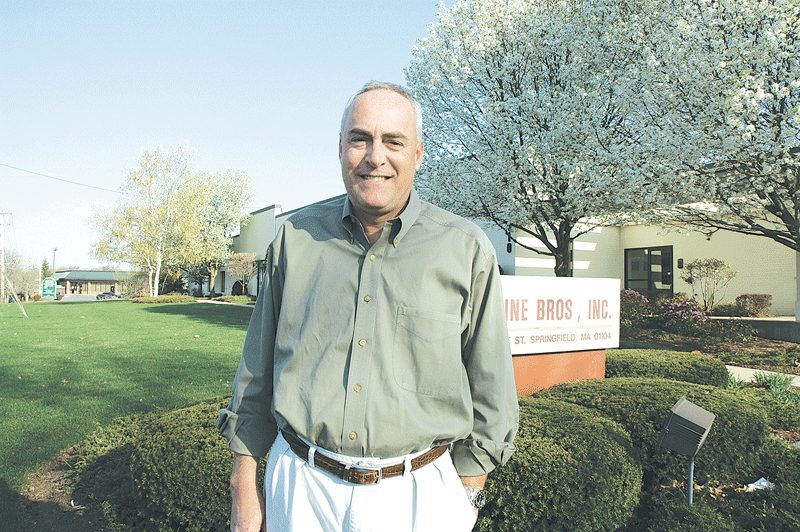
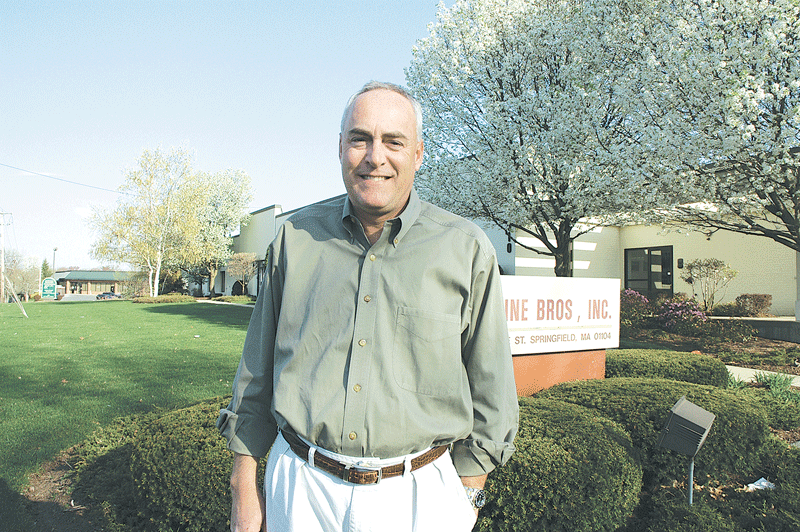
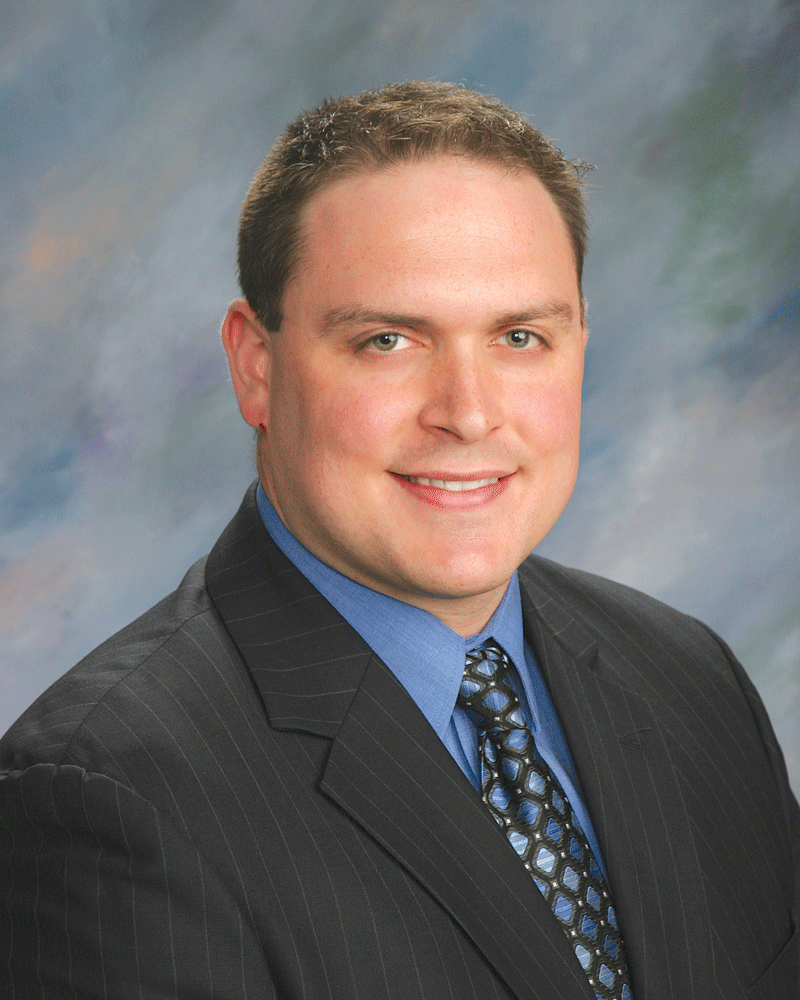
Kevin Jennings, seen in Chicopee at what will be the home of a distribution center, says the market is picking up after two years of relative stagnancy.

Area commercial real-estate brokers say the local market remains in a slump, with vast amounts of inventory and many business owners still reluctant to make investments. Many of the moves being made are upgrades to better space in this region, what one observer called “a game of musical chairs,” but there are some indications that conditions are improving and a healthier 2011 is in the offing.

Kevin Jennings was talking about speed bumps.
He used that term while discussing commercial real-estate deals and, more specifically, how much more difficult they are to consummate than they were before this sector entered its prolonged slump roughly two years ago.
“There are a lot more speed bumps now — everything’s slower and more methodical,” he explained. “Deals that used to take maybe 30 to 45 days to complete are now taking 60 to 90 days.”
And many are taking much longer than that, he continued, adding that there is much more scrutiny of the fine print these days, especially on the part of the tenant-to-be, who is still in the driver’s seat in most respects, and is pushing for every break, or concession, possible.
“Even after the fact, after the deal has been negotiated,” said Jennings, president of Springfield-based Jennings Real Estate, which handles a wide range of properties, but especially industrial and retail, “they still think they can chisel and grind.”
John Williamson, president of Williamson Commercial Properties in Springfield, agreed. “No one’s leaving anything on the table,” he explained, referring to rate or any other aspect of a lease. “And that’s why it’s taking much longer to get deals done. It used to get down to dollars per square foot; now it’s down to nickels and dimes per square foot.”
But the good news is that deals are, in fact, getting done, said brokers who spoke with BusinessWest, while noting early and often that things are still quite slow in this market and will be until more business owners gain the confidence to move ahead with expansion or relocation plans.
Indeed, Jennings used the phrase ‘optimistically cautious’ to describe the current picture, which is a considerable improvement over ‘stalled,’ which is how he would have classified this market a year or even six months ago. “There’s a fair amount of activity happening across the board,” he said. “We’re seeing some improvement.”
Bill Low, a broker with Springfield-based NAI Plotkin, concurred.
He said current market conditions are far from anything approaching what would be considered normal, but there is movement in some sectors and communities. He noted success with efforts to fill several vacant floors at One Financial Plaza in downtown Springfield (see related story, page 58) as one example, and said that there are some retail deals being inked, especially in what he called ‘B’ locations, where there are more opportunities, and transactions, than on the major retail strips such as Riverdale Road in West Springfield, Memorial Drive in Chicopee, and Boston Road in Springfield.
“It’s been a funny market,” he said. “It’s been extremely slow the past 18 to 24 months — the market’s been as bad as I’ve ever seen it. However, over the past year we’ve done a lot of office deals.”
Said Williamson, “it’s not gangbusters, but we’re seeing a steady stream of deals. It’s not the Mississippi River, but it’s at least one of its tributaries; there’s life out there.”
For this issue, BusinessWest takes a long look at the state of the current market and what should be expected next.

The Lease They Can Do
When asked to characterize what’s happening in his sector, Williamson cited a recent deal — actually two transactions — he completed in Hatfield that sums things up very effectively.
This was the sale of the Danish Inspirations complex just off I-91 to some local investors, and the subsequent lease of 10,000 square feet to Lumber Liquidators. Both deals were a long time in the making, and would best be described as ‘complex.’
The lease deal that brought the national retailer to the 413 area code was negotiated over more than 18 months, said Williamson, noting that the Virginia-based corporation wanted a presence in this market and wanted to be in that location. The trick was getting the space to work, which both parties were finally able to do.
The sale, meanwhile, took nearly four years to finalize. The original asking price was $2.8 million and was somewhat inflated, said Williamson, noting that the property finally went for $1.8 million.
Looking at those deals and how they were done, Williamson said they provide evidence of many things. For starters, they show that transactions are being made, and that there are opportunities for both investors and tenants looking to capitalize on a market where prices have come down and sellers are willing to negotiate.
“There are companies out there that are obviously thinking ahead to better times and taking advantage of pretty attractive lease rates and locking them in for seven years,” he said, referencing the term for the Lumber Liquidators lease. “For investors, this is a time to be opportunistic.”
But they also show how much more difficult it is to get signatures on the bottom line, said Williamson, who echoed Jennings when he said, “we’re doing some pretty substantial deals; it’s just taking twice as long to bring them to a conclusion. The kiss of death is when someone says, ‘this could be a quick deal.’ There are no quick deals these days.”
There are no easy deals, either, he continued, adding that both sides in transactions, and especially tenants and potential tenants, are being cautious in negotiations and, on the tenant side, understandably demanding.
“The deals are there; it’s just more difficult, and it takes longer to put them to a conclusion — if there is a conclusion,” he said. “One of the things I always loved about this business is that there’s an enormous amount of creativity involved, figuring out how to get over and around obstacles. These days, it takes even more creativity.”
In most all ways, this remains a tenant’s market, said those we spoke with, noting that this bodes well for business owners looking for more favorable terms to stay where they are — landlords are willing to be flexible to avoid creating more vacant space to fill — or to upgrade.
Indeed, Low told BusinessWest that much of the activity in the Western Mass. office and retail market involves what he calls “musical chairs,” companies already in this market moving to different, usually better, spaces. “I’m not sure the overall occupancy rate is any higher — it might have gone up a little bit,” he explained. “There’s still a lot of people just trading within the market.”
Most of these moves are upgrades, he said, meaning people exchanging Class C space for Class B, or B for A, and often getting rates comparable to what they were paying before, plus much more.
“Tenants are getting a lot more concessions,” said Low. “Tenant-improvement allowances are up, people are getting moving allowances, they’re getting cancellation rights in the agreement, all kinds of things.
“These days, companies want flexibility,” he continued. “They’re willing to pay halfway-decent rates, but they want flexibility, they want build-out, and they want all the amenities.”
On the industrial side of the ledger, Jennings noted that, while large-scale deals are still few and far between — an obvious sign of caution on the part of many business owners and managers — many smaller transactions have been completed “when the price was right.”
They include a 10,000-square-foot building on Doty Circle in West Springfield and a 4-acre parcel of land in one of the Westover industrial parks for a 33,000-square-foot distribution facility.
“There is some activity out there,” he said, noting, as other brokers did, that the region has suffered from a lack of movement from outside the market.
On the retail side, there have been some new arrivals to the region, Jennings continued, adding that this bodes well for a segment of the market has been hit hard by the recession.
“You’re starting to see some small signs of some of the retailers coming back,” he said. “Many of the discounters are expanding right now — the Family Dollars of this world — and that could give the region a boost.”
Looking ahead, the brokers we spoke with were in general agreement that the worst is probably over for this sector, and that, eventually, the pendulum will swing back in favor of landlords and rates will start to climb again.
“I think we’re at the bottom now,” said Low. “Most of the leases we’re signing now are beginning at a rental number that’s discounted to get them in here, but a lot of them go up over time. It’s hard to predict, but within six to 12 months we might be back to a halfway-decent, healthy market.
“Things are starting to turn,” he continued, “but they’re turning very slowly. I think we’ve reached the bottom, though.”

Space Race
In the meantime, though, expect more use of the phrases that have come to define this sector over the past few years: ‘tenant’s market,’ ‘musical chairs,’ and, yes, ‘speed bumps.’
As Jennings and others said, there have been more of them to navigate in the pursuit of deals larger and small. But if their projections for the road ahead are accurate, and the bounce back from the bottom has begun, then the ride ahead will certainly get much smoother.

George O’Brien can be reached at [email protected]

Sections Supplements
Region’s Construction Sector Remains Sluggish

David Fontaine

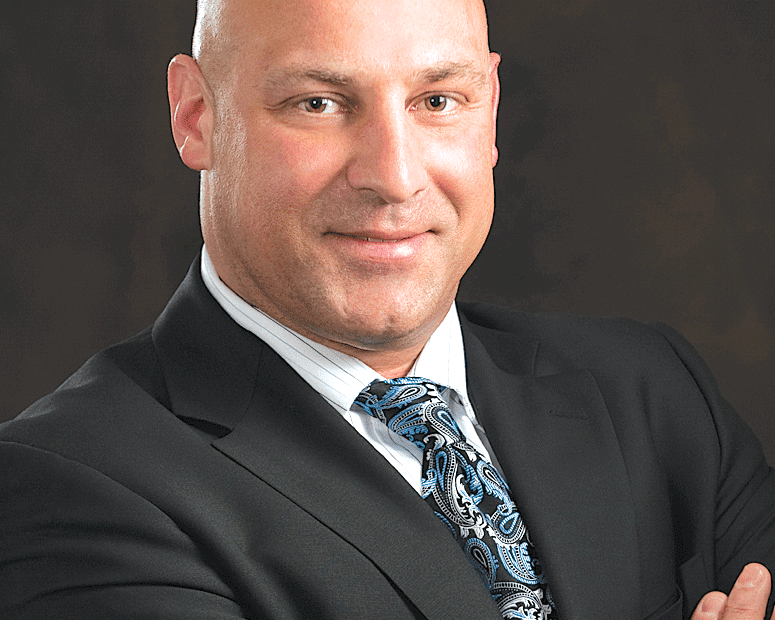
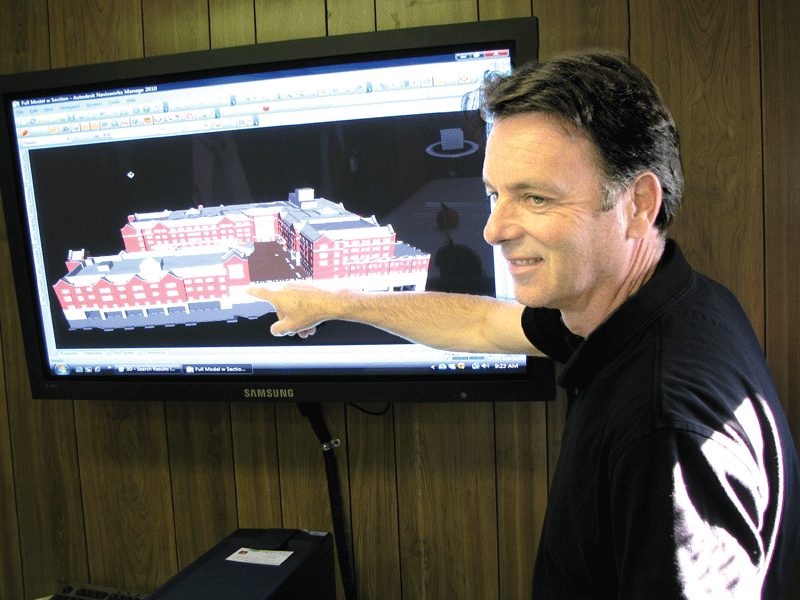
David Fontaine says new schools are being funded, but other construction sectors continue to lag.

The continued weakness of the region’s construction industry has become frustrating and stressful for area builders, who have seen not just a drastic reduction in the pace of available jobs, but a significant influx of bidders on each project, some from far outside the Pioneer Valley. Faint indications point to a recovery starting next year, but right now, contractors are just looking for some good news to build on.

Joseph Marois shakes his head when he sees some of the winning bids in the current, hyper-competitive construction marketplace.
“The bids are normally pretty clustered together, with everything within a few dollars,” said Marois, president of Marois Construction in South Hadley. “You look at it now, and the low bidder is substantially lower than everyone else, sometimes by 20%. It’s incredible. It’s hard to understand how they make a profit on the jobs they’re doing.”
David Fontaine, president of Fontaine Brothers in Springfield, has noticed the same phenomenon.
“The price structure right now is incredible,” he told BusinessWest. “With some of the bids you’re getting beat by, you just shake your head and send the plans back. There seem to be eight to 10 bids on everything, at minimum, and it seems like there’s always one guy with a bid you just can’t understand.”
William Crocker, president of Crocker Building in Springfield, said these days were forecast by the collapse of the housing market a few years ago and the ensuing economic downturn. “The slowdown tends to affect us as general contractors late,” he said.
But while some other industries are reporting cautious optimism, construction work is as scarce right now — and competition as fierce — as Crocker has seen it since the recession began. “You see it in the bidding activity,” he said. “When there’s an open bid, every contractor in Western Mass. shows up.
“The margins are tight, and the numbers are tough,” he continued. “There’s some activity out there, but we’re still holding our breath.”
For this issue, BusinessWest examines why the major trends in building — few of them good — are continuing deep into 2010, and what contractors are saying about the road ahead.

Looking for a Silver Lining
Mark Erlich, executive secretary-treasurer of the New England Regional Council of Carpenters, recently noted in New England Carpenter magazine that hours worked by union carpenters in New England dropped 38% in the last 24 months, and unemployment in that group has hovered around 30% for much of the same period.
However, he writes, “I believe the worst is over. There are no prospects for a quick or extensive recovery, but I think the bleeding has stopped, and we can begin to think more optimistically about what is next. New England is positioned to rebound sooner than other regions because of the heavy presence of health care, higher education, and life sciences, industries that are more likely to witness future growth.”
That seems to be the case in Massachusetts especially, where the eds-and-meds sectors have been traditional drivers of the economy, and are spurring a significant portion of what activity is occurring right now.
“Look who’s building in Springfield. Look at the North End, and even the work we’ve done in the past few years,” said Crocker, citing projects like a new building for Hampshire Orthopedics in Hatfield. Public works and utilities are relatively active, too; “we’ve got several projects for National Grid substations.”
Others have seen similar trends.
“It seems that a lot of the schools are being funded,” said Fontaine, whose business tends to be about 70% public and 30% private — not a bad ratio in these times. “We recently started the new high school in Wilbraham, and we’re halfway into a new dormitory at the College of the Holy Cross. We’re also just getting ready to start a Transit Authority office in a building up in Greenfield.”
On the other hand, Crocker said, some traditional markets for builders — manufacturing foremost among them — seem to be stagnant. But it pays to be diverse. In addition to the health care and utility projects on his recent slate, Crocker also just completed the framework for Springfield’s Macedonian Church of God in Christ, which burned down a couple of years ago.
It’s good to diversify when things get this slow, he admitted, but even so, there are only so many projects. “We’re not seeing much of the small renovations. Everyone seems to be holding their purse strings rather tightly.”
There’s a little more public work available than private work, Marois said, although neither sector is exactly robust, and some industry watchers fret about the slow pace of infrastructure-investment legislation coming from Washington to help stimulate the pace of progress.
“Some people are busier than others. I think we’ve gotten our fair share of work, although the profit margins are minimal,” Marois said. “We’re just trying to keep our core base of employees. They have families, and they’ve been with us for a long time, so we want to make sure we maintain our relationship with them. I think that’s a common goal you’ll find among my peers.”

Better Days
Marois sees the clouds clearing somewhat, but there’s still a long way to go.
“It seems like there are more projects to bid now than in the past, but that hasn’t eliminated the number of people bidding on each one,” he said. “I’m bidding on a project now with 16 contractors on it. That’s getting to be pretty typical.”
Nationwide, construction employment expanded in 56 out of 337 metropolitan areas between August 2009 and August 2010, according to a recent analysis of federal employment data by the Associated General Contractors of America. More cities added construction jobs during the past year than at any point since September 2008, although Western Mass. has yet to see that sort of rebound.
“With construction employment on the mend in an increasing number of areas, it appears that the worst is finally over,” said Ken Simonson, the association’s chief economist, on the national picture. “The fact remains, however, that this industry has a long way to go before we see construction employment back to pre–recession levels.”
That’s especially true in the Pioneer Valley and into Northern Conn. The Springfield market ranked 208th on the list of 337 metro areas with a net construction job loss of 6%. The Pittsfield market held steady, ranking it 57th in the study, while the Hartford market lost 9% of its construction jobs in that time, ranking Connecticut’s capital at 269th. Overall, 11 of 12 Massachusetts metro areas lost jobs.
Fontaine has seen no improvement in the overall picture, but expects things to pick up soon. “We had scaled down a few years ago, and we stayed scaled down,” he said. “But we’ve been talking to some architectural firms, and they’re saying maybe one more year to go. There’s some large work out there — $100 million, $200 million work — but in the marketplace we survive in, not much.”
That’s why he, like so many other contractors, has been forced to look outside the Pioneer Valley for opportunities. “We actually picked up three projects in the last year, but we bid on probably 50 — most in the eastern part of the state,” he said. “Most of the things we’ve chased have been probably 75 to 90 miles from here.”
Marois has been surprised, however, not that builders are roaming outside of their usual geographic territory, but how far afield some are willing to travel to find work.
“I bid a job with contractors from Rhode Island, New York State, New Hampshire, Vermont, and the Boston area,” he said. “That job had 18 bidders on it, and the Rhode Island contractor got the job.
“I don’t understand it — they have to mobilize and set up, and that costs, and they have to know the local economy, the local vendors — it’s not necessarily something I would do to land a job.”
Until the industry picks up significantly, each construction company has to make those decisions to keep their business running.
“This is the time to get ready for the recovery that will come,” Erlich notes. “It may not be coming as fast as we would like, and there will be continued hardships.”
And way too many bidders for too few projects.

Joseph Bednar can be reached
at [email protected]

Sections Supplements
Invasive Plants Can Be a Growing Problem for You or Your Company

John Prenosil

John Prenosil

Green isn’t always good — at least when referring to invasive plants.
Take a look in your yard when you get home. Do you see a burning bush? Japanese barberry? Norway maple? Yes, you guessed it. These are all invasives, as they’re called, which means they shouldn’t be there.
First off, let’s define what constitutes an invasive plant. These are non-native plants that share these characteristics: they begin growing earlier in the spring and grow longer in the fall than native plants, are typically more tolerant of poor soil conditions, grow vigorously, produce large amounts of seeds, grow well in disturbed environments, and have no natural enemies. Understandably, many invasive plants were historically chosen for landscaping because they required little maintenance, grew well in poor soils, and were disease and pest-resistant.
Burning bush was popular for its brilliant fall color, Japanese barberry for its durability and attractive purple and red leaves, and Norway maple for its summer-long crimson red foliage. These invasive landscape plants and more than 100 other plant species are currently identified by the Mass. Department of Agricultural Resources as prohibited for sale.
It is important to control and/or eradicate invasive plants in wetlands and forest environments because they disrupt habitats by outcompeting native plants, thereby decreasing biodiversity.
Try this analogy. A restaurant with two items on the menu is not as appealing to consumers as a restaurant with 50 items on the menu. An environment with only two items on the menu has low biodiversity; numerous items on the menu mean higher biodiversity. Animals like menus with more diversity. An environment comprised of multiple native plant species offers a host of food choices and habitat to a wide variety of wildlife. Fewer food choices results in a decreased mix of wildlife.
Invasive plant seeds are spread through birds, wildlife, and construction equipment. Aquatic invasive plants are inadvertently spread by boaters from plant fragments stuck to the hull or floating in bilge water. Many of the invasive plants found in our waterways, ponds, and lakes are a result of aquarium plants being flushed down the toilet.
Because established populations of invasive plants are difficult, costly, and time-consuming to control, early detection is paramount. Smaller populations are easier to monitor and control. Control of invasive plants requires a thorough knowledge of the target species, its biology, and an understanding of the environment in which invasive plants are found. Each situation is unique and requires a custom approach. Although herbicides are important for control of invasive plants, they are not always the best alternative.
Integrated Pest Management (IPM) offers a more comprehensive approach to controlling pests, including invasive plants. In addition to simply spraying invasive plants with herbicides, IPM addresses cultural practices and biological controls. An example of a cultural control would be mowing a section of road right-of-way (adjacent to a pond) instead of applying herbicide, which has the possibility of contaminating the water; mowing provides a non-chemical control method to keep the invasive plant population under control. An example of a biological control would be releasing an insect that has been found to eat a specific invasive plant. The goal of IPM is to use the least amount of herbicide to control a population of invasive plants. Eradication is not always necessary. Further, continual use of herbicides on the same plants may result in those plants developing immunity to the herbicide.
Control and eradication of invasive plants typically requires permitting through local and state agencies and application of any pesticides on property other than one’s own requires licensing and certification through the Mass. Department of Agricultural Resources. Licensed and certified professionals should ensure that people are not exposed, groundwater and surface waters are not polluted, wildlife is not be harmed, and damage to non-target plants is minimized.
Resources are available for landowners wishing to improve wildlife habitat on their property. The U.S. Department of Agriculture Natural Resources Conservation Service offers the Wildlife Habitat Incentive Program (WHIP), a voluntary approach to improve wildlife habitat that includes cost sharing up to 75% and technical assistance. Additional online resources related to invasive plants are available through the New England Wildflower Society (www.newfs.org/
protect/invasive-plants) and numerous other organizations.
The reader should keep in mind that this article is meant only for informational purposes. The author does not recommend that the reader apply herbicides or utilize other forms of control on their properties without first consulting an expert. Permits may be required.

John Prenosil is president of JMP Environmental Consulting Inc., which has completed WHIP-funded and other invasive-plant eradication and control projects throughout Massachusetts. Related services also include initial habitat assessments, invasive species management plans, eradication and control, and long-term monitoring; (413) 272-0111; [email protected].

Sections Supplements
This Software Company Has Several New Schools of Thought

inResonance President and CEO Kevin McAllister and Vice President of Global Sales Marlene Marrocco

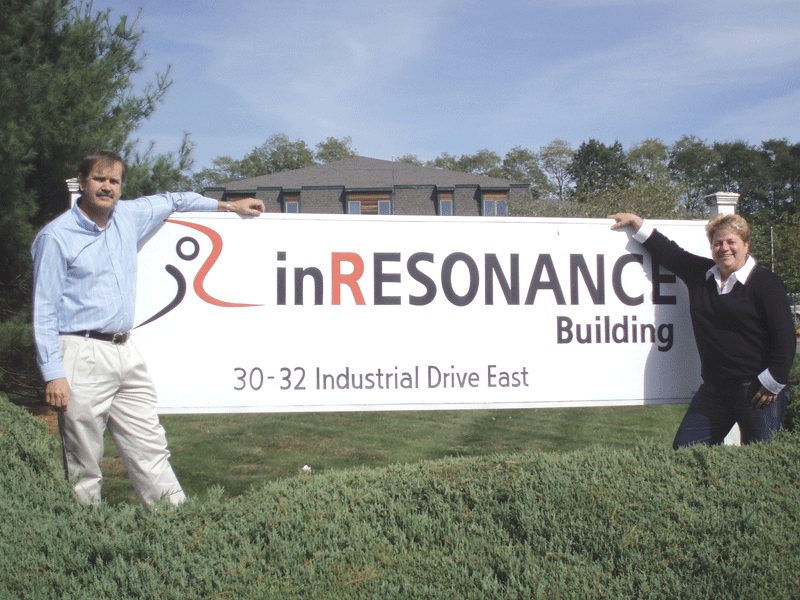
inResonance President and CEO Kevin McAllister and Vice President of Global Sales Marlene Marrocco say the company provides software to more than 275 private and charter schools, including American schools in Tokyo, Geneva, Singapore, London, Paris, and Amsterdam.

Kevin McAllister has first-hand knowledge of the challenges private schools face.
He spent 17 years as a Geology and Spanish teacher at Loomis Chaffee School in Windsor, Conn., where he witnessed the nightmare of paperwork that everyone working there had to deal with.
“As a teacher, I had to send reports to parents six times a year. They had to be produced in triplicate through photocopying, then they were stapled together and mailed out,” he said. “I wanted to solve the problem, so I built a very primitive software system to make sending comments to parents easier.”
That was in 1992, and this system, which was expanded to include admissions, worked so well that word about it spread quickly. McAllister began running a sole proprietorship called KJM Consulting, and within a few years, 50 private schools were using his software.
By 1999, he had clients overseas as well as in the U.S. He had served on state and regional IT boards, had contracts as a consultant with schools, and had spoken at conferences across the country. What had started as a small side business was now starting to dominate McAllister’s time and his dreams for the future.
“My two daughters were graduating from high school, and I decided to take the jump,” he said, meaning that he had decided to give up teaching and start a business, one he would call inResonance Inc.
Today, the Northampton-based company provides database solutions and related Web applications that include fund-raising and constituent management, admissions and enrollment, and registrar functions to more than 275 private and charter schools, including American schools in Tokyo, Geneva, Singapore, London, Paris, and Amsterdam.
McAllister’s wife, Susan, is director of client services at inResonance, and together they share a passion for helping others and making a difference, which stemmed from time they spent as Peace Corps volunteers. “Susan was a math teacher in Africa, and I was a university professor in Paraguay. Watching inefficiency drove us to look for solutions,” McAllister said.
The name of their company is a reflection of his mission — to keep everything in tune by providing people with the tools they need to be efficient. “The people we work with are intelligent, dedicated professionals, but they don’t necessarily know the most efficient way to do their jobs,” he said, adding that everyone in an organization should be in resonance with each other. “You want everyone tuned up, singing the same tune, because the business process is only as efficient as the people working together.”

Problem Solving
McAllister says one of the problems private schools face is processing applications. He explained that schools can have several thousand applicants a year and need to rank them as well as keep on top of the process, which includes details such as whether they have received a student’s grades, transcripts, birth certificate, recommendations, photo, and other requirements, such as interviews conducted when the student and parents visit the school.
“It’s a long and complex process because the typical prep schools funnels 3,000 inquiries, which turn into 1,200 applications. They may accept 250 students, but only 125 of them decide to go there because they have also applied to other schools,” McAllister explained. “Then you have to throw in the financial-aid component, which makes it very difficult to fill 125 spots.”
However, admissions is the most critical office in many private schools because 85% to 90% of their income is dependent on it, McAllister said, adding that the remainder typically comes from endowments.
“Schools purchase our admissions systems to provide online applications and to process them in an efficient way, which can save them hundreds of man hours a year. Every school has a customized application, and it’s a complete transformation of the process. What used to take employees hours and hours to process now takes minutes.”
Another of inResonance’s mainstay products is used by registrars’ offices, where challenges include scheduling classes, grading, attendance, and teacher’s reports. The inResonance software system allows parents to go online and see their children’s grades and records, which McAllister considers critical to success.
Everyone who works at inResonance has a background in education. “We are not a bunch of programmers. We are efficiency experts who bring technology tools to the table. That’s our ethos — to empower dedicated professionals,” McAllister said. “We don’t want to work with organizations that don’t want to change. We want to work with people who are doers and innovators. We expect to be in conversation with our clients for many years as part of their strategic planning.”
McAllister said the company’s systems are not built for large public-school systems with rigid rules and that cannot afford variations. “The important word for us is independent. Our schools may run different classes every six weeks and do interesting things educationally, which we can accommodate. We don’t have a cookie-cutter system,” he explained, adding that charter schools are a growing segment of their clientele.
The company’s software also solves problems inherent to lottery systems used to determine which students are chosen to attend a school. “Before this software, people were literally picking cards out of a bowl,” McAllister said.
One of the many benefits of the company’s software is that it can be adapted to suit different needs. “We don’t build a custom solution for every school, but have a solid core that can be customized. Because we are small, nimble, and flexible, we are involved with a lot of factors and can serve a variety of educational innovations,” he said.
Another product, called Generations, helps schools with fund-raising. “It keeps track of constituents, parents, grandparents, trustees, and all their giving by allowing the school to run statistics. It also generates annual reports, including all activities and fund-raisers,” McAllister said. “The product was developed about six years ago and has allowed us to really move into radically different markets.”
Three years ago, the company began working on a new initiative called NodeLinks, with the aim of helping the nonprofit sector. McAllister hopes to launch it soon, and says the basic concept involves connecting clusters of nonprofits into nodes or groups who join and share their resources to generate success.
“We believe that, because of their limited budgets, they need to work together to become efficient,” he said. “We would like to create nodes in every city and link them together.”
Each node would be made up of 10 organizations with partners that include consultants, students, philanthrophists, volunteers, the Web community, and community developers. They would each pay one-tenth of the salary of a shared employee who would help them realize common goals using technology.
“There are 700,000 nonprofits competing for funds, and we believe there is opportunity and possibility for them to work together so they could provide a common front to funders and write more realistic grant proposals,” McAllister said. “We want to pilot this in the Pioneer Valley and are looking for nonprofits and funding agencies to participate.”

Textbook Examples
NodeLinks will be a separate division of inResonance and will satisfy the McAllisters’ desire to help others just as they did when they were Peace Corps volunteers.
“My journey has been very circuitous,” said Kevin. “We have come full circle in what we have learned about making schools and nonprofits efficient. Susan and I both have a common ethos that came out of education and nonprofits. NodeLinks will allow us to come full circle with our passion and love, which is the nonprofit sector.”
If all goes as planned, the two will be adding yet another way for people to accomplish goals without frustration, he continued. “We are creating a structure to link people together so they can also work together in an efficient way.”

Sections Supplements
New Technology Keeps Users Connected 24/7

New Technology

New Technology Gadgets

It says something about today’s Internet users — that would be just about everyone — that the year’s biggest high-tech gadget story is an electronic tablet that’s not much good at producing media, but spectacular at helping people consume it. From the iPad and smartphones to GPS systems and cameras that upload to the Internet in a flash, today’s devices are all about keeping the world connected, every second of every day. Here are some of the products that led the way in 2010.

Take a bow, Apple. You created the story of the year in technology.
That story, of course, is the launch last spring of the iPad, a device that rode massive waves of hype and garnered, for the most part, positive reviews — with a few caveats. For our annual look at what’s new in the world of technology, that’s the best place to start.
Essentially a wi-fi platform for audio and visual media that’s bigger than a smartphone but weighs less than a notebook computer, the iPad ($499) sold to the tune of 3 million devices in the first 80 days alone, and could sell around 12 million by the end of the year.
New York Times technology writer David Pogue produced perhaps the most novel — and certainly one of the most-talked-about — reviews of the iPad by writing two separate essays, one for techies and one for everyday users.
He gives vent to concerns from the tech-savvy crowd that the device doesn’t offer anything that someone with a notebook computer and a smartphone doesn’t already have, and detailed its lack of multitasking, Flash video, USB ports, and a camera.
But he is more enthusiastic in his “review for everyone else,” praising the iPad’s fast processing speed and impressive presentation of applications (and there are tens of thousands available) ranging from the iBooks e-reader to maps and driving simulators. In short — and to use a line that has appeared in countless writeups of the product — the iPad isn’t good at producing content, but it’s revolutionary as a way to consume it.
“In its current incarnation, the Apple iPad could no more replace your main computing device than could a netbook,” according to tech blog mashable.com. “A decade from now, the iPad will be less useful than the first iPod is today, but it will forever be the face that truly launched tablet computing. For that, it deserves recognition.”
Of course, smartphones have allowed users to access media on the go for a long time — albeit on a smaller scale — and 2010 was the year that the Motorola Droid stole the most headlines. Actually released late in 2009, the Droid (which is distributed exclusively by Verizon Wireless) sold 250,000 units its first week and has emerged as a rival for the Apple iPhone (more on that later).
According to cnet.com, the Droid boasts a gorgeous display, a fast Web browser, the Google Maps navigation app, and high-quality messaging and contact management, as well as excellent call quality, long talk time, and improved speed over previous Android devices. The reviewer did downgrade the device for its clunky sliding keyboard, music and video capabilities that are only OK, and lack of support for Bluetooth voice dialing.
However, Motorola improved on the experience this year with the release of the Droid Incredible ($199), which, cnet.com reports, is faster than its predecessor, upgrades the camera and internal memory, and supports wi-fi, GPS, 3G, and, yes, Bluetooth.
But Apple remained the bestselling name in smartphones and captured strong reviews, with one significant drawback, for its iPhone 4 ($299). According to cnet.com, the newest iPhone offers enhanced performance, a lovely new display, an improved design, and plenty of additional features. However, reception (exclusively through AT&T) is spotty — a longtime iPhone problem.

Notebooks and More
Apple was also busy this year with its MacBook Pro notebook computer ($1,799), which gives users a much faster processor than earlier models, as well as a bigger battery, illuminated keyboard, seamless switching graphics technology, a versatile touchpad, and overall better design engineering, according to PC magazine.
However, the magazine had even better things to say about the Asus U45Jc-A1, which it hails as one of the best mainstream laptops to come down the highway, and a good value at $867. PC praised its high-quality design (both aesthetic and functional), outstanding battery life, graphics, and performance.
As for printing documents, mashable.com placed the HP OfficeJet 6500A Plus ($199) in the category of products that broke new ground in 2010 — a category that includes the iPad and Droid Incredible, so that’s strong praise.
“If your objectives are to reliably print, scan, and fax, you’ll be hard-pressed to find a comparable and viable competitor,” it reports. “The 6500A Plus comes with ePrint, a service that, among other things, allows you to send documents to a special e-mail address to be printed automatically — no drivers necessary.”
Speaking of transmitting documents, digital cameras continue to proliferate, as the rise of social media has individuals uploading images online like never before. Fortunately, the top-rated models for 2010 come in a variety of price points, with a wide range of features, making it easy to find a camera to match one’s photographic needs.
Among cameras, PC World gives high marks to the Canon PowerShot A3000 IS digital camera ($249), calling it a light, compact camera that’s highly automatic, yet takes very clear images. It docked the PowerShot a bit for a subpar shutter button and zoom controls, but overall recommended it for everyday use by amateurs who don’t want to fiddle with too many settings.
For a bit more money ($499), PC World also likes the Ricoh CX4 digital point-and-shoot, which is bigger than most compact cameras on the market, but still rests comfortably in the hand. It’s equipped with a big optical zoom lens, and its LCD screen is one of the best the reviewer has come across on a digital camera. “Unfortunately,” he adds, “it has limited manual exposure features, so you’ll have to let the camera decide the aperture and shutter settings on its own; despite this, it’s a camera that’s a lot of fun to use, and everyone who played with it during our tests loved it.”
A similar sense of fun highlights the latest offering from GPS leader Garmin, whose Nuvi 3790T, according to PC World, is not only “drop-dead gorgeous,” but provides the best overall navigational experience of any GPS unit on the market. The magazine praises its touchscreen, voice commands, traffic updates, safety alerts, and lane guidance, while nicking the device for its glossy screen and slightly slow performance at getting a GPS fix. It’s also premium-priced at $549.

Fun Stuff
When work is over and you’ve navigated home, why not kick back with some TV? Another product highly recommended by mashable.com, the 47-inch Vizio XVT473SV packs all the features most people require in an LCD TV, including full 1080-pixel quality and an especially precise picture achieved through accurate color saturation alongside deep blacks.
The TruLED feature allows the display’s LED backlight to dim and brighten independently, so the picture remains fully dynamic and realistic. But Vizio has also led the way in making its devices Internet-connected. The XVT473SV, for instance, features Netflix, Amazon Video on Demand, and more.
If reading sounds better than TV viewing, e-readers continue to make news, and Amazon still leads the way, according to toptenreviews.com, which ranks the Kindle 3 ($139) as the best such product available, boasting size, speed, and picture quality that set the standard, not to mention ease of use.
“Though the Kindle 3 does not offer a touchscreen, the screen provides a high contrast that truly makes users feel as though they are reading text from a sheet of paper as opposed to a handheld computer screen,” according to the review, which also praises the device for eliminating glare, enough memory to store 3,500 books, and a battery that lasts up to one month on a single charge, longer than any other e-reader.
And if you fall asleep while reading, have no fear; even alarm clocks are getting an overhaul. Well, the Sony Dash ($199) is actually a personal Internet viewer, but unlike the iPad or a smartphone, it needs to stay plugged into the wall. “But that doesn’t stop it from being what amounts to an alarm clock for today’s Internet-dominated world,” reports askmen.com, which ranks it among the year’s best new tech devices.
Sporting a 7-inch touchscreen and integrated wi-fi, the Dash packs a slew of useful features into a small package, the reviewer notes. “So if you’re sick of leaning over to grab your phone in bed for social networking updates or to check out the weather, the Dash can provide a ton of convenience and still replace your current, beaten-to-death alarm clock.”
Until it’s time to head back out into an increasingly connected work world.

Joseph Bednar can be reached
at [email protected]

Sections Supplements
This Unique Event Will Put Businesses in Front of Decision Makers

Mine Your Business

Mine Your Business

In 2008, the Greater Holyoke and Chicopee Chambers of Commerce commenced a search for an event that would be an alternative to the traditional trade show and typical networking event. What has emerged for 2010, and Nov. 4, to be more specific, is Mine Your Business, or what is being described as a networking and sales- building opportunity for companies across the region. Presented by BusinessWest, this unique event will give participants a chance to tell their stories in front of actual decision makers. Here’s a look at how Mine Your Business will unfold, and who will be taking part..

Peter Rosskothen says he gets some of his business at the Log Cabin-Delaney House from referrals, and still more from essentially showing people what he can do — putting on an event that prompts people to think of his venues when it’s their turn to stage a get-together.
But Rosskothen, co-owner of those Holyoke institutions, says that networking remains a big part of efforts to fill the calendars at both locations, and that’s why he does a lot of it. “It’s important to get in front of people, remind them you’re there, start new relationships, and strengthen existing ones,” he told BusinessWest.
For all these reasons, Rosskothen is a participant and strong supporter of Mine Your Business, what is being described as a networking and sales-building event slated for Nov. 4 at the Kittredge Center at Holyoke Community College. He said the gathering, presented by BusinessWest and sponsored by several area companies, including the Log Cabin-Delaney House, will give those involved a chance to not only tell their stories, but tell them to an audience of decision makers.
“And this is the audience you want to be reaching,” he said. “And that’s what makes this event different. At a trade show or a typical networking event, you get some exposure and you meet quite a few people, but you don’t generally get to see the decision makers, the people you need to be seeing.”
Here’s how it works: participating companies will send two representatives to the event — a decision maker and a top sales executive. This team will then meet a series of other teams for eight-minute discussions, or encounters, during which introductions can be made, information can be shared, relationships can be initiated or taken to a higher level, and, down the road, sales can be made.
With this sequence of events in mind, Kate Campiti, associate publisher and advertising director at BusinessWest, said that event organizers have incorporated the slogan ‘it’s where the conversation starts’ into Mine Your Business promotional efforts.
“People tend to do business with people they know and trust, people they have a relationship with,” she explained. “Relationships start when people get to know each other and come to understand their respective businesses can help one another.”
At press time, nearly two dozen companies, representing several business sectors, had signed on to take part in Mine Your Business. The list includes financial-services providers, printing companies, office-supply companies, a Ford dealer, and much more. Profiles of participating companies begin on page 21.
There is still plenty of time for companies to reserve space, however.
In addition to the Greater Holyoke and Chicopee Chambers of Commerce, Mine Your Business is being sponsored by First American Insurance, Holyoke Community College, Marcotte Ford, and Meyers Brothers Kalicka, P.C.
For more information or to reserve space, call the Greater Holyoke Chamber at (413) 534-3376, the Chicopee Chamber at (413) 594-2101, or BusinessWest at (413) 781-8600.

A to Z Moving & Storage Inc.
380 Union St., Suite One, West Springfield, MA 01089
(413) 736-4440
www.a-zmovers.net
A to Z can move individuals and businesses, and no job is too small or too large. A to Z can also store excess files — and a customer’s active ones — as well as providing delivery and pickup when needed them. All customers are treated with courtesy and professionalism.

ABC 40 and Fox 6 WGGB-TV
1300 Liberty St., Springfield, MA 01104
(413) 733-4040
www.wggb.com
As Springfield’s only locally owned TV stations, a commitment and access to local communities, support of viewers, and strength of programming combine to make WGGB-TV ABC 40 and Fox 6 a valuable partner to create visibility and awareness for local businesses.

BusinessWest
1441 Main St., Springfield, MA 01103
(413) 781-8600
www.businesswest.com
Founded in 1984, BusinessWest is the region’s premier business publication bringing local business news, trends, and information to nearly 30,000 readers. Published bi-weekly, BusinessWest is read by business owners, presidents, CEOs, senior managers, and professionals throughout Western Mass., and it is committed to the region’s economic health, vitality, and future.

Comcast Business Class
222 New Park Dr., Berlin, CT 06037
(413) 730-4579
www.business.comcast.com
Comcast Business Services offers Western Mass. businesses a one-stop solution for all of their communication needs. With business-class Internet, voice, and TV, companies can leverage the power of Comcast’s fiber-optic network while enjoying the convenience of one provider for all three services and 24/7 customer support.
 

Deliso Financial and Insurance Services
540 Meadow St., Suite 108, Agawam, MA 01001
(413) 785-1100
www.delisofinancialservices.com
After 20 years in the financial-services industry, Jean Deliso’s passion for finance and strategic planning led to the creation of Deliso Financial and Insurance Services in 2000. Deliso Financial and Insurance Services is a comprehensive financial-management agency.

First American Insurance Agency Inc.
510 Front St., Chicopee, MA 01021
(413) 592-8118
www.faiagency.com
This family-owned insurance agency is proud of its local heritage and committed to its strong principles of personal service. Founded in 1986 by President Ed Murphy, First American Insurance Agency is a proud example of the region’s powerful entrepreneurial spirit, growing to become a leading insurance agency specializing in both personal and commercial lines of coverage.

Hadley Printing
58 Canal St., Holyoke, MA 01040
(413) 536-8517
www.hadleyprinting.com
For more than 100 years, Hadley Printing has provided high-quality printing to a wide range of clients throughout the Northeast. Hadley Printing’s excellent reputation is a result of company values reflecting honesty, integrity, and a strong work ethic. Customers trust and respect Hadley Printing for high-quality work and exceptional service.

Holyoke Community College
303 Homestead Ave., Holyoke, MA 01040
(413) 552-2500
www.hcc.edu
Since 1946, Holyoke Community College has been a gateway to quality education and career advancement. Seeking to realize their dreams and aspirations, more than 100,000 students have come through the doors of the college. Today, HCC serves more than 9,000 students annually in more than 100 associate degree and certificate options, and more than 5,500 in non-credit and workforce-development courses.

Holyoke Gas & Electric/HGE.net
9 Suffolk St., Holyoke, MA 01040
(413) 536-9300
www.hged.com
Formed in 1902, HG&E is a municipally owned utility that provides electricity, natural gas, and fiber-optic Internet services to more than 18,000 customers. Its mission to customers is to provide competitive energy rates, reliable service, and excellent customer service.
 

INK Products
25 Grove St., Chicopee, MA 01020
(413) 594-7533
www.inkprod.com
INK Products was established in 1996 with the intent to bring businesses competitive prices on a wide variety of printing and office supplies, and to provide businesses with a source of answers to any questions regarding their supply needs. Service like this is not available at superstores or mail-order companies.

The Log Cabin Banquet & Meeting House
500 Easthampton Road, Holyoke, MA 01040
(413) 535-5077
The Delaney House
1 Country Club Road, Holyoke, MA 01040
(413) 532-1800
www.logcabin-delaney.com
Beautiful settings and Old World charm have given the Log Cabin and the Delaney House a reputation as premier banquet facilities and restaurants in the Valley. Attention to detail, exclusive service, and unrivaled menus distinguish the quality options offered to customers.
Marcotte Ford
1025 Main St., Holyoke, MA 01040
(800) 842-0699
www.marcotteford.com
Marcotte Ford is a premier new Ford and used car dealer. With a friendly and helpful sales staff, highly skilled mechanics, and multiple automotive certifications, Marcotte’s mission is to make every customer a customer for life by consistently offering superb customer care, competitive prices, and a knowledgeable staff.

Meyers Brothers Kalicka, P.C.
330 Whitney Ave., Suite 800, Holyoke, Massachusetts 01040
(413) 536-8510
www.meyerskalicka.com
Meyers Brothers Kalicka, P.C. is the largest independently owned and operated CPA firm based in Western Mass. Its mission is to provide professional services of superior quality and value to enable clients to achieve their goals. Every MBK client, from individual proprietorships to multi-million-dollar international organizations, receives the personal attention of one of the partners.
  

Moriarty & Primack
One Monarch Place, Suite 1300, Springfield, MA 01144
(413) 739-1800
www.mass-cpa.com
Moriarty & Primack, P.C. was founded in 1993 by the late Richard Moriarty and Jay Primack. At that time, each had 18 years of diversified public-accounting experience with Big Four firms. Today, many individuals on the staff have a large-accounting-firm background. The firm and its affiliates have a total professional staff of 28, of whom 17 are certified public accountants.
 

Northeast Security Partners
33 Sylvan St., West Springfield, MA 01089
(413) 733-7306
www.northeastsecuritysolutions.com
Northeast Security Solutions is a company driven by the goal of achieving total customer satisfaction in everything it does. It’s the only one-stop security company in the area offering mechanical and electronic security integration, saving customers time, money, and ‘buck-passing’ between suppliers.

Ondrick Natural Earth
729 Fuller Road, Chicopee, MA 01020
(413) 594-8803
www.ondricknaturalearth.com
Ondrick Natural Earth is the Greater Springfield’s most comprehensive supplier of landscaping and building stone. With an impressive inventory, a knowledgeable sales staff, and a homeowner-friendly store, Ondrick meets landscape, architectural, and building-stone needs, from wall and patio stone to natural thin stone veneers.
 

Peter Pan Bus Lines
P.O. Box 1776 , Springfield, MA 01102
(800) 343-9999
www.peterpanbus.com
Peter Pan is one of the largest privately owned intercity bus companies in the industry, with the most modern fleet on the road. Its new, state-of-the-art motorcoaches have changed bus travel, offering passengers amenities such as wi-fi, electrical outlets for laptops and cell phone chargers, tray tables, extra legroom, safety restraints, and more.

Telemundo
866 Maple Ave., Hartford, CT 06114
(860) 956-1303
www.zgsgroup.com
This Spanish-language, American television network is operated by ZGS Communication, a Hispanic-owned company with a profound commitment to serving the local communities where it conducts business.

Valley Engraved Gifts & Awards
120 Whiting Farms Road, Holyoke, MA 01040
(888) 226-5252
www.signature-engravers.com
Valley Engraved Gifts & Awards, a division of Signature Engraving Systems, is a privately held corporation and an offshoot of United Innovations Inc., an engineering design firm. Now the benchmark for computerized engravers, Signature has evolved to not only develop better tools and systems, but also educate the industry about personalization so they can benefit from increased margins and experience the pleasure of making their customers happy.

United Bank
95 Elm St., West Springfield, MA 01089
(866) 959-2265
www.bankatunited.com
United Bank is a federally chartered stock bank headquartered in West Springfield. The bank has been doing business in the Pioneer Valley since 1882. Today, it has more than $1.5 billion in assets and offices throughout the Greater Springfield area.

Valley Computer Works
84 Russell St., Hadley, MA 01035
(413) 587-2666
www.valleycomputerworks.com
Valley Computer Works has been selling and servicing computers in the Pioneer Valley since 1999. It offers a wide array of services for residential and commercial clients. Fueled by a growing client base and the constant expansion of its staff and facilities, Valley Computer Works has established itself as a premier computer consulting, sales, and service business.

Sections Supplements
Bequeathing Life’s Lessons, Dreams, and Hopes

Gina Barry

Gina Barry

There is richness to your life that cannot be measured in dollars and cents, but should be shared with future generations. In fact, some would argue that your emotional wealth — values, ideas, beliefs, and life experience — is worth far more than your financial wealth ever could be.
Yet many times, the wisdom of the generations is lost simply because the questions were never asked and the conversations were never had. Where typical estate-planning documents falter by not conveying this intangible wealth, ethical wills fill the void.
It is likely that you have executed a last will and testament and have possibly even established a trust. You’ve probably protected yourself from times of incapacity by executing a durable power of attorney and health care proxy. By most standards, your estate plan is considered complete, but it seems that a critical aspect is missing. While these documents are crucial to addressing the legal aspects of estate planning, they are very technical and ill-suited for passing on the intangible assets you have accumulated throughout your lifetime.
Ethical wills are the spiritual counterparts to traditional wills and trusts. They distribute blessings, life lessons, dreams, and hopes, as opposed to tangible possessions. As such, the creation of an ethical will often involves serious consideration of your values and morals, advice to loved ones, invaluable memories, and important events in your life. You may also contemplate themes, such as regrets and forgiveness, personal love, mentors and teachers, cultural beliefs, ancestry, or how you would like to be remembered.
There is no set format for an ethical will because it is not a binding legal document. Unlike traditional wills, ethical wills are not written in stone and are often revised to reflect turning points and transitions in the writer’s life, such as the birth of a child, a marriage, or end-of-life planning. Each ethical will is as unique as the individual who creates it, and your personal preferences are the only constraints.
You may choose to develop and impart a family mission statement or provide blessings for future generations. An ethical will can be a letter to loved ones or to children not yet born. It may also be a detailed account of a life journey or even a set of instructions regarding your family business. Your ethical will need not be limited to writing, either. It may incorporate multimedia messages, such as photos, drawings, music, or videos. The possibilities are endless.
While some may choose to keep their ethical will private until they pass away, creating one need not be an individual endeavor. You may share your ethical will with your family, friends, and loved ones during your lifetime. Indeed, by encouraging input from others, an ethical will may serve as a tool to give them insight into your wishes and intentions. Likewise, many a family rift has been healed during the creation of an ethical will, as the process serves to promote a family cohesiveness that can heal old wounds and last well beyond your lifetime.
If the thought of creating an ethical will is overwhelming, there are various resources available to assist you, including professionals who specialize in this area. These professionals may provide an individual consultation or group writing workshops. If you desire to make an ethical will that is oral or videotaped, they can assist you with the production aspects. They can also help you ascertain what is most important for you to express, and then guide you along in the process so that you will be certain to create an ethical will that is a true reflection of you. If you are inclined to work alone on your ethical will, an Internet search will provide a variety of free resources and examples that you may use as you pursue this process.
Although they have recently gained in popularity, the concept of ethical wills is not new. Medieval models of ethical wills have been found in Jewish, Christian, and Islamic cultures. In the days of illiteracy, wills were read aloud so that all concerned may hear. Thus, it became common practice to attach one last communication to a captive audience.
Today, ethical wills are increasingly being created alongside traditional wills as part of the estate-planning process. While traditional wills are filed in probate court and become public documents, ethical wills often become privately treasured family heirlooms.
Throughout their lives, your loved ones can continuously glean wisdom and advice from the life lessons you have bequeathed in your ethical will.

Gina M. Barry is a partner with Bacon Wilson, P.C. She is a member of the National Assoc. of Elder Law Attorneys, the Estate Planning Council, and the Western Mass. Elder Care Professionals Assoc. She concentrates her practice in the areas of estate and asset-protection planning, probate administration and litigation, guardianships, conservatorships, and residential real estate; (413) 781-0560; baconwilson.com/barry

Sections Supplements
Steps to Take from the Funeral Home Right Through to Probate

ToddRatner

ToddRattner

Coping with the death of a loved one is difficult. Since family members and friends will be experiencing a time of emotional strain, it is important for those involved with the funeral arrangements and estate settlement to have the fundamental information necessary to perform their respective tasks.
This article will demystify the important action steps needed to ensure a smooth process of administrating and settling a loved one’s estate.

Actions Immediately upon Death
Upon the death of a loved one, there are certain actions that should take place immediately. A funeral director should be notified, and an appointment should be made to discuss funeral arrangements. These may include transfer of your loved one to another location and the decision whether to pursue burial or cremation, which has become increasingly popular.
At that time, you should request certified death certificates from the funeral director, and in the event that you require additional ones, they may be obtained through the municipality or town where the death occurred. Notification of your loved one’s death should be made to the post office, especially if the decedent lived alone; the Social Security administration; a retirement plan custodian, if any; investment professionals; an accountant or tax-return preparer; and the attorney for your loved one’s estate, among others.

Duty to Deliver the Will
Massachusetts law requires that any person having custody of a will must, within 30 days of acquiring knowledge of the death, deliver the will to the Probate and Family Court Department for the county in which the decedent lived at the time of death. However, as a practical matter, oftentimes the will is filed more than 30 days after without penalty.

To Probate or Not to Probate the Will?
Probate is the court’s supervision of the process that transfers the legal title of property from your loved one’s estate to his or her beneficiaries. The court appoints an executor as the personal representative of the estate and adjudicates the interests of heirs and other parties who may have claims against the estate.
In short, the probate process proves the validity of the will. This counters the erroneous but widely held belief that, if you have a valid will, you will avoid probate. However, not all estates need to go through the probate process.
Basically, any property held in trust or in joint names is non-probate property, so in the event that all of your loved one’s property passes outside of his or her will, there is no need to go through probate. In addition, property passing by beneficiary designations to anyone other than the estate of the decedent, such as TOD accounts, POD accounts, life insurance, annuities, retirement, and pension accounts, are non-probate property. However, if any asset is owned individually by the decedent, without a joint owner or beneficiary, or is held in trust, the asset is considered a probate asset and must go through the probate process to reach its proper beneficiary.

The Probate of the Will
To start a probate action in Massachusetts, you must petition the Probate Court, asking for the allowance of the decedent’s will and appointment of the executor. Until the executor is appointed, he or she has no authority to pay bills or distribute your loved one’s property.
In the event that the decedent did not have a will, a similar procedure is necessary to appoint an administrator with power to handle the decedent’s property. It is important to note that, if the decedent’s assets are below $15,000, a shortened procedure, called a voluntary administration, may be possible.
An executor, or administrator, as the case may be, typically engages an attorney to prepare and file the petition for probate, as well as the fiduciary bond and other corresponding legal documents. After the petition is filed, the Probate Court will issue a formal notice that needs to be published in a local newspaper and sent to all heirs. This notice alerts any creditors and other interested parties that the will has been offered for probate. If no one objects to the will or to the appointment of the nominated executor or administrator, the attorney requests the allowance of the will, the judge to sign the fiduciary bond, and the appointment of the nominated executor or administrator.
Three months after the judge signs the fiduciary bond, and the executor or administrator is appointed by the court, Massachusetts requires the filing of an inventory showing the probate estate held at date of death. However, oftentimes the executor waits until the estate-tax figures have been established to complete and file the final inventory.
Massachusetts also requires an accounting at the end of the administration of an estate that provides for all probate estate items received and distributed during the administration, income earned, and fees and expenses paid. Accounts are either prepared annually, or a single account called the first and final account is prepared at the end of administration. Typically, once the court allows the account, the executor’s liability for the estate ends.
During the probate process, the executor typically performs the following tasks:
• Identifying and inventorying estate property;
• Paying estate debts, expenses of administration, and taxes;
• Distributing property as directed by a will or state law;
• Accounting to the Probate Court or beneficiaries for the collection and distribution of probate assets; and
• Preparing estate-tax returns if necessary.

Estate-tax Returns
Executors are required to have estate-tax returns prepared if the estate assets (probate and non-probate) reach a certain threshold. Under current law, the threshold for Massachusetts estate tax is $1 million. As of now, no federal estate-tax return is required for a decedent dying in 2010. However, Congress may enact a law during 2010, and if it does, it may be retroactive to Jan. 1, 2010. Federal and state estate tax returns are due nine months after the date of death.
Many people are interested in the distribution of the estate, including creditors, a surviving spouse, government taxing authorities, beneficiaries, and executors of the estate. Individual parties may have competing interests in the probate and estate administration, so sound estate planning during one’s lifetime often facilitates the estate administration upon death and prevents the various challenges and potential disputes that may plague the unprepared.

Todd C. Ratner is an estate-planning, business, and real-estate attorney with the Springfield-based law firm Bacon Wilson, P.C. He is a member of the National Academy of Elder Law Attorneys and recipient of Boston Magazine’s 2007, 2008, and 2009 Massachusetts Super Lawyers Rising Stars award; (413) 781-0560; baconwilson.com; bwlaw.blogs.com

Sections Supplements
National Labor Relations Board Declares Union ‘Shame’ Banners Lawful

Amy Royal

Amy Royal

In light of the new Democratic majority on the National Labor Relations Board (NLRB), many businesses have braced themselves for the flurry of pro-union decisions likely to come. In fact, in a decision issued in September, the new NLRB confirmed its suspected pro-union stance by significantly expanding a union’s ability to protest against neutral, secondary employers by displaying large stationary banners at their facilities.
In United Brotherhood of Carpenters and Joiners of America, Local Union No. 1506, 355 NLRB No. 159, the union accused several non-unionized construction contractors of paying substandard wages and benefits to their employees. In order to put pressure on the contractors to change their ways, the union began protesting at companies that utilized the services of the contractors (so called neutral businesses). In doing so, the union displayed large banners at the neutral businesses’ worksites that were three to four feet high and 15 to 20 feet long and contained messages, such as “SHAME ON [neutral business]” or “DON’T EAT RA SUSHI” directed at a sushi restaurant that did business with one of the contractors. Each message was flanked on either side with the words “LABOR DISPUTE” and were held as close as 15 feet from the entrance to the neutral company’s worksite.
Benjamin Bristol

Benjamin Bristol

In addition to displaying the banners, union representatives also distributed handbills to the public explaining their underlying labor dispute concerning the contractors who purportedly were not paying their employees enough. The handbills stated that consumers who patronized the neutral customers were “contributing to the undermining of area labor standards.”
The neutral businesses sued the union for unfair labor practices, contending that the union’s conduct by displaying banners at their businesses involved them in the union’s dispute with the contractors and, thus, amounted to a secondary boycott in violation of the National Labor Relations Act (NLRA). Section 8 of the NLRA prohibits secondary boycotts. Indeed, under the NLRA, secondary boycotts are defined as a labor union’s conduct that threatens, coerces, or restrains any person with the intention of forcing that person to cease their business dealings with any other person. The purpose behind the secondary boycott provision is to shield neutral businesses from improper pressure to stop them from doing business with a company with which a union has a dispute.
This issue of whether a stationary banner violated the NLRA had never been addressed before. Picketing at neutral companies, however, had previously been declared unlawful under the NLRA because of the confrontations that could occur between the picketers and other individuals who attempt to cross the picket line.
In a 3-2 decision, the NLRB held that the union’s conduct was not threatening or coercive and, therefore, did not violate the secondary-boycott provisions of the NLRA. In reaching this decision, the NLRB ruled that “the banner displays here did not constitute such proscribed picketing because they did not create a confrontation. Banners are not picketing signs … [and] the banner holders did not move, shout, impede access [to], or otherwise interfere with the [neutral customers’] operations.”
Despite the inherent similarities between picket signs and banners, the NLRB majority reasoned that, even though union representatives held the banners, the banners were not threatening or likely to lead to a confrontation like picketing because the banners were held in a stationary position and placed at a sufficient distance away from the neutral businesses’ entrances, and the individuals passing by could simply ignore the banners.
The NLRB’s decision signifies a considerable expansion of a labor union’s rights under the NLRA. By allowing the display of banners at a neutral party’s place of business, unions have increased their protesting power and access to companies and their employees with which they have no contractual relationship. Beyond these immediate implications, the NLRB’s decision also appears to foreshadow the types of decisions that will come out of the new Obama NLRB. Now that the term of Republican Peter Schaumber has expired, the current NLRB is comprised of only four members, three of which are considered to embrace pro-union views because of their lengthy prior careers as labor-side attorneys.
Pro-union decisions are likely to increase even more due to the U.S. Supreme Court’s ruling earlier this year voiding nearly 600 NLRB decisions from January 2008 to April 2010 when there were only two members sitting on the board. In response, the NLRB has begun to reconsider those cases. 
Because of the new dynamic of the NLRB and because of unions’ increased efforts to organize, non-union businesses should begin assessing their vulnerabilities to any potential organizing efforts and then create strategies, in consult with their labor and employment counsel, for responding to any such organizing efforts.

Amy B. Royal, Esq. and Benjamin A. Bristol, Esq. specialize exclusively in management-side labor and employment law at Royal & Klimczuk, LLC, a women-owned, boutique, management-side labor- and employment-law firm; (413) 586-2288; [email protected]

Sections Supplements
Region’s Top-performing Companies to Be Honored on Oct. 29

Super Sixty

Super Sixty

Formerly called The Fabulous 50, the Super 60 has become a tradition in Western Mass., a celebration of successful businesses. That tradition will continue with this year’s Super 60 lunch on Oct. 29 at Chez Josef. Individual companies will be honored, but the event will be recognizing the bigger picture — the depth and diversity of the region’s business community.

Russ Denver says the annual Super 60 luncheon has become a celebration of business success in Western Massachusetts.
For 22 years now, nearly 1,000 people have been gathering at Chez Josef not merely to honor the 60 winners in the Total Revenue and Revenue Growth categories (there were 10 fewer in the early days when the program was called the Fabulous 50), but to recognize the depth and diversity of the business community, and the number of success stories being written every year.
“We’re honoring individual companies and the people who manage them,” said Denver, “but we’re also celebrating the sum of what the 60 companies mean for this region, and that is a vibrant, diversified economy — a chain with many strong links.”
The 2010 event, slated for Oct. 29, will be more of the same, said Denver, noting that this year’s 60 companies — and both categories of entries — represent virtually every sector of the economy, from financial services to education; from human services to manufacturing; from health care to retail.
Combined, the companies in the Revenue category recorded sales of more than $850 million in 2009, said Denver, Meanwhile, companies in the Growth column averaged revenue increases of at least 35%.
The top finisher in the Revenue category, Whalley Computer Associates in Southwick, has been a regular at the top of that chart for the past several years. Springfield College, one of two area colleges to make the Super 60 (American International College qualified in revenue growth) placed second, while Sarat Ford in Agawam, placed third.
In the Growth category, Convergent Solutions in Wilbraham, a medical-billing-solutions company, finished at the top of the charts, while FIT (Fallon Information Technology) Solutions LLC, an IT placement-services company, finished second, and Universal Mind, a digital-solutions agency, placed third.
Both categories are defined by diversity, as the accompanying business profiles starting on page 27 clearly show.
The Revenue category includes the Center for Human Development, the Log Cabin, Pinsley Railroad Co., Rocky’s Hardware, Tighe & Bond, and W.F. Young, among others. The Growth ledger, meanwhile, includes Consolidated Health Plans, Adam Quenneville Roofing and Siding, Holyoke-Chicopee-Springfield Head Start, United Personnel, Valley Communications, and the YWCA of Western Massachusetts.
The Oct. 29 luncheon will be from 11:30 to 1:30. The keynote speaker will be Steven Little, a business-growth expert who will deliver a talk titled “The Milkshake Moment: Overcoming Stupid Systems, Pointless Policies, and Muddled Management to Realize Real Growth,” which is also the title of one of his books. A former president of three fast-growth companies, Little now advises business owners and managers. He is a former consultant for Inc. magazine, and is the author of several other books, including The 7 Irrefutable Rules of Small Business Growth and Duck and Recover: the Embattled Business Owner’s Guide to Survival and Growth.
For more information on the luncheon or to order seats ($50 for chamber members, $70 for non-members), call (413) 787-1555. n

TOTAL REVENUE
(Top 3, then the remaining listed alphabetically)

Whalley Computer Associates Inc.
One Whalley Way, Southwick, MA 01077
(413) 569-4200
www.wca.com
John Whalley, president
WCA is a locally owned family business that has evolved from a hardware resale and service group in the 1970s and 1980s into a company that now focuses on lowering the total cost of ownership of technology and productivity enhancement for its customers. Whalley carries name-brand computers as well as low-cost performance compatibles.

Springfield College
263 Alden St., Springfield, MA 01109
(413) 748-3000
www.springfieldcollege.edu
Dr. Richard Flynn, president
Founded in 1885, SC is a private, independent, coeducational, four-year college offering undergraduate and graduate-degree programs with its Humanics philosophy — educating students in spirit, mind, and body for leadership in service to others.

Sarat Ford Sales Inc.
245 Springfield St., Agawam, MA 01001
(888) 254-2911
saratford.dealerconnection.com
John Sarat Jr., CEO
Founded in 1929, Sarat has grown to become the largest Ford dealership in Western Mass. The third-generation business sells a wide variety of new and used vehicles and boasts a 24-bay service center with a $1 million parts inventory, and has received Ford’s Distinguished Achievement Award for excellent customer service multiple times.

American International College
1000 State St., Springfield, MA 01109
(800) 242-3142
www.aic.edu
Vincent Maniaci, president
Launched in 1885, AIC is a private, coeducational, four-year institution in the geographic center of Springfield. Liberal arts serves as the core in all its academic offerings, and the college is organized into schools of Arts, Education and Sciences; Business Administration; Health Sciences; and Continuing and Extended Studies.

Associated Electro-Mechanics Inc.
185 Rowland St., Springfield, MA 01107
(413) 781-4276
www.aemservices.com
Elayne Lebeau, CEO
Associated Electro-Mechanics Inc. is the largest independent industrial service center in the Northeast, providing industry with services that cover electrical, mechanical, machining, welding, and field services. Its multifaceted field-service crews and a staff of electrical and mechanical engineers complement the departmentalized staff operations.

Center For Human Development
332 Birnie Ave., Springfield, MA 01107
(413) 439-2252
www.chd.org
James Goodwin, CEO
CHD was founded in 1972 on a philosophy of helping people in the community, a major departure from the prevailing system of placing people in institutions. Almost four decades later, CHD is still providing vital support to needy children, people with psychiatric and developmental disabilities, the elderly, and the homeless.

Chez Josef Inc.
176 Shoemaker Lane, Agawam, MA 01001
(413) 786-0257
www.chezjosef.com
Linda Skole, president
Chez Josef has 40 years of experience in culinary and special-event planning, specializing in corporate events, nonprofit fund-raisers, holiday parties, weddings, bar/bat mitzvahs, and off-premise catering. Executive Chef Marcel Ouimet was recently awarded the “Chef of the Year” honor by the Western Mass. Restaurant Assoc.

CSW Inc.
45 Tyburski Road, Ludlow, MA 01056
(413) 800-9522
www.cswgraphics.com
Laura Wright, president
CSW Inc. has provided integrated services for packaging since 1937, including brand support, brand visualization, creative services, image engineering, flexographic printing plates, steel rule cutting dies, and workflow coordination. CSW has facilities in Ludlow; Rochester, N.Y.; and Toledo, Ohio to service national and international brands.

Delaney Restaurant Inc.
500 Easthampton Road, Holyoke, MA 01040
(413) 535-5077
www.logcabin-delaney.com
Peter Rosskothen, president
The Delaney House restaurant offers 13 private, themed rooms for any special occasion, with seating for up to 260. It offers two dining options — fine dining and the more casual Mick — and has been voted Best Brunch in the Pioneer Valley.

Dimauro Carpet & Tile Inc.
185 Shaker Road, East Longmeadow, MA 01028
(413) 525-1991
www.dimaurocarpet.com
Vincent Dimauro, president
For more than 30 years, Dimauro has been a provider and installer of carpet, tile, and wood and laminate flooring for residential and business customers in Western Mass. and Northern Conn.

Disability Management Services Inc.
1350 Main St., Springfield, MA 01103
(413) 523-1126
www.disabilitymanagementservices.com
Robert Bonsall Jr., president
Founded in 1995, DMS is an independent, full-service third-party administrator and consulting firm, specializing in the management of individual and group disability products. DMS is headquartered in Springfield, with an additional office located in Syracuse, N.Y., and employs more than 200 professional associates.

Environmental Compliance Services Inc.
588 Silver St., Agawam, MA 01001
(413) 789-3530
www.ecsconsult.com
Mark Hellstein, CEO
For more than 25 years, ECS has specialized in environmental site assessments; testing for asbestos, lead, indoor air quality, and mold; drilling and subsurface investigations; and emergency-response management.

Insurance Center of New England
246 Park St., West Springfield, MA 01089
(413) 750-7101
www.icnegroup.com
Dean Florian, president
In operation since 1866, Insurance Center of New England Group (ICNE Group) is a locally owned, independent insurance agency, providing full-service insurance solutions for individuals and businesses.

Joseph Freedman Co. Inc.
115 Stevens St., Springfield, MA 01104
(888) 677-7818
www.josephfreedmanco.com
John Freedman, president
Founded in 1891, the company provides industrial scrap-metal recycling, specializing in aluminum, copper, nickel alloys, and aircraft scrap, and has two facilities in Springfield — a 120,000-square-foot indoor ferrous facility, and a 60,000-square-foot chopping operation.

Kittredge Equipment Co.
100 Bowles Road, Agawam, MA 01001
(413) 304-4100
www.kittredgeequipment.com
Wendy Webber, CEO
Serving a variety of establishments and institutions for more than 80 years, Kittredge is a one-stop, full-service equipment and supplies dealership for the food-service industry, with three showroom locations — in Agawam, Natick, and Williston, Vt.

The Log Cabin Banquet & Meeting House
500 Easthampton Road, Holyoke, MA 01040
(413) 535-5077
www.logcabin-delaney.com
Peter Rosskothen, president
Set against the Mount Tom range, the Log Cabin Banquet & Meeting House offers quality banquet facilities for events including weddings, showers, anniversaries, engagement parties, bar/bat mitzvahs, business meetings, holiday parties, and more.

Marcotte Ford Sales
1025 Main St., Holyoke, MA 01040
(800) 923-9810
www.marcotteford.com
Bryan Marcotte, president
The dealership sells new Ford vehicles as well as pre-owned cars, trucks, and SUVs, and feature a full service department. Marcotte has achieved the President’s Award, one of the most prestigious honors given by Ford Motor Co., for nine years.

Maybury Material Handling
90 Denslow Road, East Longmeadow, MA 01028
(413) 525-4216
www.maybury.com
John Maybury, president
Since 1976, Maybury Material Handling has been designing, supplying, and servicing all types of material-handling equipment throughout New England. Maybury provides customers in a wide range of industries with solutions to move, lift, and store their parts and products.

Northeast Treaters Inc.
201 Springfield Road, Belchertown, MA 01007
(413) 323-7811
www.netreaters.com
David Reed, president
Northeast Treaters was founded in 1985 as a manufacturer of pressure-treated lumber. In 1996, an additional facility was added in Athens, N.Y. to produce fire-retardant treated lumber and kiln-dried before- and after-treatment products.

Pinsly Railroad Co. Inc.
53 Southampton Road, Westfield, MA 01085
(413) 568-6426
www.pinsly.com
John Levine, CEO
Pinsly Railroad Co., founded in 1938, is one of the oldest short-line railroad companies in the country. Pinsly focuses on acquiring short-line railroads and revitalizing branch and feeder lines of Class I and regional carriers. It now owns and operates numerous railroads and warehouse/distribution facilities.

Rediker Software Inc.
2 Wilbraham Road, Hampden, MA 01036
(800) 213-9860
www.rediker.com
Richard Rediker, president
Rediker Software is used by school administrators across the U.S. and in more than 100 countries, and is designed to meet the student-information-management needs of all types of schools and districts.

Robert F. Scott Co. Inc.
467 Longmeadow St., Longmeadow, MA 01106
(413) 567-7089
Leonard P. Rising III, president
Robert F. Scott Co. Inc. (known as Longmeadow Garage) is a locally owned and operated, full-service gasoline and automotive service station. Its staff includes ASE-certified technicians well-versed in all makes and models.

Rocky’s Hardware Inc.
40 Island Pond Road, Springfield, MA 01118
(413) 781-1650
www.rockys.com
Rocco Falcone II, president
With locations throughout Massachusetts, Rhode Island, and New Hampshire, the family-run business founded in 1926 is a fully stocked, convenient source for not only typical hardware-store items but also a line of goods for the home, yard, and garden.

Specialty Bolt & Screw Inc.
235 Bowles Road, Agawam, MA 01001
(413) 789-6700
www.specialtybolt.com
Alan Crosby, CEO
Founded in 1977, Specialty Bolt & Screw Inc. is a distributor of innovative fastener solutions. The company has engineering resources on staff to help determine the optimum fastener for each application, and utilizes state-of-the-art technology along with more than 30 years of experience to help clients achieve their objectives.

Spectrum Analytical Inc.
11 Almgren Dr., Agawam, MA 01001
(413) 789-9018
www.spectrum-analytical.com
Dr. Hanibal Tayeh, CEO
For more than a decade, Spectrum Analytical Inc. has provided quantitative analysis of soil, water, and, more recently, air samples, as well as petroleum products. Consulting firms, industries, municipalities, universities, and the public sector are among the constituencies that make up the client list.

Sullivan & Associates Inc.
551 East Columbus Ave., Springfield, MA 01105
(413) 733-6100
www.sullivanandassoc.com
Linda Sullivan, executive director
Sullivan & Associates provides individualized residential and day programs for people with developmental disabilities, interfering behaviors, and mental-health concerns. Its programs are based on a philosophy of unconditional positive regard.

Tighe & Bond Inc.
53 Southampton Road, Westfield, MA 01085
(413) 562-1600
www.tighebond.com
David Pinsky, president
Celebrating its 100th anniversary in 2011, Tighe & Bond specializes in environmental engineering, focusing on water, wastewater, solid-waste, and hazardous-waste issues, and provides innovative engineering services to public and private clients around the country and overseas.

Titan USA Enterprises Inc.
140 Baldwin St., West Springfield, MA 01089
(888) 482-6872
www.titanman.com
Ralph Colby, CEO
For almost four decades, Tutan USA Enterprises has served industrial distributors as a manufacturer of premium-quality, solid-carbide, high-speed steel, and cobalt cutting tools.

University Products Inc.
517 Main St., Holyoke, MA 01040
(800) 628-1912
www.universityproducts.com
David Magoon, CEO
University Products is a group of companies run by a family with roots in the archiving business that offers products to restore, preserve, and display collectibles, photographs, paper documents, and heirlooms.

W.F. Young Inc.
302 Benton Dr., East Longmeadow, MA 01028
(800) 628-9653
www.absorbine.com
Tyler Young, CEO
This family-run business prides itself on offering a variety of high-quality products that can effectively improve the well-being of both people and horses with its Absorbine brands.

GROWTH
(Top 3, then the remaining listed alphabetically)

Convergent Solutions Inc.
95 Post Office Park, Wilbraham, MA 01095
(413) 509-1000
Arlene Kelly, CEO
A health care billing solutions provider founded in 2006, Convergent Solutions provides hardware and software that help eliminate human error in medical billing processes, thus helping bring down the cost of health care.

FIT Solutions, LLC
25 Bremen St., Springfield, MA 01108
(413) 733-6466
www.fitsolutions.us
Jacqueline Fallon, CEO
FIT (Fallon Information Technology) Solutions provides staffing services for local IT positions. Launched in 2004 and serving both Massachusetts and Connecticut, the company doesn’t focus on the quantity of openings in the market, but takes a personal approach to staffing by focusing on quality.

Universal Mind Inc.
94 North Elm St., Suite 306, Westfield, MA 01085
(866) 429-2481
www.universalmind.com
Brett Cortese, CEO
Universal Mind is a digital-solutions agency specializing in custom, enterprise-grade, interactive applications for the Web, desktop, kiosks, and mobile and embedded devices. It creates engaging user experiences for customers on any device they use, strengthening client relationships, reducing operating costs, and opening new revenue streams.

Adam Quenneville Roofing and Siding
160 Old Lyman Road, South Hadley, MA 01075
(413) 525-0025
1800newroof.net
Adam Quenneville, CEO
Adam Quenneville offers a wide range of residential and commercial services, including new roofs, retrofitting, roof repair, roof cleaning, vinyl siding, replacement windows, and the no-clog Gutter Shutter system. The company earned the 2010 Better Business Bureau Torch Award for trust, performance, and integrity.

American International College
1000 State St., Springfield, MA 01109
(800) 242-3142
www.aic.edu
Vincent Maniaci, president
Launched in 1885, AIC is a private, coeducational, four-year institution in the geographic center of Springfield. Liberal arts serves as the core in all its academic offerings, and the college is organized into schools of Arts, Education and Sciences; Business Administration; Health Sciences; and Continuing and Extended Studies.

The Axia Group
73 Market Place, Springfield, MA 01115
(413) 205-2942
www.axiagroup.net
Michael Long, CEO
Professionals in five offices across the Pioneer Valley provide a variety of personal insurance products for automobiles, homes, and watercraft, as well as commercial lines that range from liability insurance, property coverage, and workers’ compensation to employee benefits and fiduciary and surety coverage.

Benchmark Carbide
572 St. James Ave., Springfield MA 01109
(413) 732-7470
www.benchmarkcarbide.com
Paul St. Louis, president
A manufacturer of carbide end mills and reamers, Benchmark (a division of Custom Carbide Corp.) sells its products to distributors throughout the continental U.S. and Canada. Its extensive line of products includes its bestselling aluminum series and its patented variable-helix end mills.

Braman Chemical Enterprises
147 Almgren Dr., Agawam, MA 01001
(413) 732-9009
www.braman.biz
Gerald Lazarus, president
Braman has been serving New England since 1890, using state-of-the-art pest-elimination procedures for commercial and residential customers. The company has offices in Agawam, Worcester, and Lee, as well as Hartford and New Haven, Conn.

Center For Human Development
332 Birnie Ave., Springfield, MA 01107
(413) 439-2252
www.chd.org
James Goodwin, CEO
CHD was founded in 1972 on a philosophy of helping people in the community, a major departure from the prevailing system of placing people in institutions. Almost four decades later, CHD is still providing vital support to needy children, people with psychiatric and developmental disabilities, the elderly, and the homeless.

Communication Solutions Partners Inc.
One Whalley Way, Southwick, MA 01077
(413) 569-4200
www.csp-net.com
Paul Whalley, vice president
Communication Solutions Partners (CSP) is a competitive local exchange carrier (CLEC) and an affiliated company of Whalley Computer Associates. CSP provides many of the basic services of a telecom company, such as local and long distance, voice over IP, Internet, and data services.

Complete Healthcare Solutions Inc.
1497 North Main St., Palmer, MA 01069
(800) 250-8687
www.completehealthcaresolutions.com
Michael Penna, CEO
Founded in 1994, CHS provides affordable software solutions for small to mid-sized health care practices. The company helps customers with electronic medical records, practice-management software, medical billing, document management, data security, and a host of other services.

Consolidated Health Plans Inc.
2077 Roosevelt Ave., Springfield, MA 01104
(413) 733-4540
www.consolidatedhealthplan.com
Kevin Saremi, president
Established in 1993, Consolidated Health Plans is a leader in providing third-party claims administration of medical, dental, disability, flex, accident, and life insurance programs for employees and college students throughout the country.

The Dennis Group, LLC
1537 Main St., Springfield, MA 01103
(413) 746-0054
www.dennisgrp.com
Tom Dennis, CEO
The Dennis Group offers complete planning, design, architectural, engineering, and construction-management services. The firm is comprised of experienced engineering and design professionals dedicated to excellence in the implementation of food-manufacturing processes and facilities.

FieldEddy Insurance
96 Shaker Road, East Longmeadow, MA 01028
(413) 233-2100
www.fieldeddy.com
Samuel Hanmer, president
One of the fastest-growing independent insurance providers in Western Mass., FieldEddy offers financial services, commercial insurance, personal insurance, and employee benefits. Its family of agencies offers a complete range of services for personal and business needs.

Footit Surgical Supplies Inc.
340 Memorial Ave., West Springfield, MA 01089
(413) 733-7843
www.footit.com
Marc Lucas, president
Footit Health Care Store has been providing the region with medical and health-maintenance products since 1953. It stocks various styles of walkers, wheelchairs, athletic braces, incontinence products, scooters, access ramps, mastectomy forms and bras, lift chairs, stairway elevators, diabetic shoes, wound-care products, and more.

Gandara Center
147 Norman St., West Springfield, MA 01089
(413) 736-8329
www.gandaracenter.org
Dr. Henery East-Trou, CEO
Focusing on the Latino/Hispanic community, Gandara Center provides substance-abuse recovery, mental-health, and housing services for men, women, children, adolescents, and families throughout the Pioneer Valley.

The Gaudreau Group
1984 Boston Road, Wilbraham, MA 01095
(800) 750-3534
www.gaudreaugroup.com
Jules Gaudreau Jr., president
The Gaudreau Group is an insurance and financial-services agency serving neighboring families and businesses since 1921. It offers a consultative approach to assessing needs and risks and then offering a custom solution.

Haluch Water Contracting Inc.
399 Fuller St., Ludlow, MA 01056
(413) 589-1254
Thomas Haluch, president
For 26 years, Haluch has served the region as a water-main construction and excavation contractor specializing in water, sewer, pipeline, and communications and power-line construction.

Holyoke-Chicopee-Springfield Head Start Inc.
30 Madison Ave., Springfield, MA 01105
(413) 788-6522
www.hcsheadstart.org
Janis Santos, executive director
Holyoke-Chicopee-Springfield Head Start is committed to providing low-income children and their families with a source of support for a brighter future. It does so by providing high-quality, comprehensive child-development services to enrolled children and empowering families to achieve stability in their home environment.

Jet Industries Inc.
307 Silver St., Agawam, MA 01001
(413) 781-2010
Michael Turrini, president
Jet Industries manufactures aircraft engines, parts, and equipment, as well as turbines and turbine-generator sets and parts, aircraft power systems, flight instrumentation, and aircraft landing and braking systems.

The Markens Group
1350 Main St., Suite 1508, Springfield, MA 01103
(413) 686-9199
www.markens.com
Ben Markens, president
Markens has guided hundreds of businesses toward excellence since 1988. It provides services in strategic management, profit planning, sales and marketing, mergers and acquisitions, and more.

Mental Health Association Inc.
995 Worthington St., Springfield, MA 01109
(413) 734-5376
www.mhainc.org
Linda Williams, executive director
The Mental Health Assoc. Inc. provides residential and support services to enhance the quality of life for individuals challenged with mental impairments. Affordable quality housing, advocacy, and public education are part of the agency’s dedication to empowering individuals to develop their fullest potential.

Moriarty & Primack P.C.
One Monarch Place, Springfield, MA 01144
(413) 739-1800
www.mass-cpa.com
Jay Primack, CEO
While audit and tax services continue to be a dominant aspect of the accounting firm’s business, practice professionals also provide a wide range of services in the areas of tax-planning and tax-compliance services.

Pioneer Spine & Sports Physicians
271 Park St., West Springfield, MA 01089
(413) 785-1153
www.spinesports.com
Dr. Scott Cooper, CEO
The practice specializes in the diagnosis and treatment of neurologic and musculoskeletal disorders. While best known for expertise in sports medicine and spine care, it treats a wide variety of conditions. In addition to routine non-operative care, the practice also provides the latest in minimally invasive and reconstructive surgery of the spine.

Proshred (EOS Approach Inc.)
75 Post Office Park, Suite 7401, Wilbraham, MA 01095
(413) 596-5479
www.proshred.com
Joseph Kelly, CEO
Proshred is a paper-shredding company providing secure on-site document-shredding and recycling services for safeguarding private information, maintaining legislative compliance, and protecting public image.

Spectrum Analytical Inc.
11 Almgren Dr., Agawam, MA 01001
(413) 789-9018
Dr. Hanibal Tayeh, CEO
For more than a decade, Spectrum Analytical Inc. has provided quantitative analysis of soil, water, and air samples, as well as petroleum products. Consulting firms, industries, municipalities, universities, and the public sector are among the constituencies that make up the client list.

Sullivan & Associates Inc.
551 East Columbus Ave., Springfield, MA 01105
(413) 733-6100
www.sullivanandassoc.com
Linda Sullivan, executive director
Sullivan & Associates provides individualized residential and day programs for people with developmental disabilities, interfering behaviors, and mental-health concerns. Its programs are based on a philosophy of unconditional positive regard.

United Personnel Services Inc.
1331 Main St., Springfield, MA 01103
(413) 736-0800
www.unitedpersonnel.com
Mary Ellen Scott, president
United provides a full range of staffing services, including temporary staffing and full-time placement, on-site project management, and strategic recruitment in the Springfield, Hartford, and Northampton areas, specializing in administrative, professional, medical, and light-industrial staff.

Valley Communications Systems Inc.
201 First Ave., Chicopee, MA 01020
(413) 592-4136
www.valleycommunications.com
James Tremble, president
Valley is a diversified communications company serving New England with broadband TV distribution systems, satellite-dish installations, data and voice cabling, computer interactive whiteboards, data/video projection equipment and systems, videoconference room design, telephone systems, sound systems, security systems, and AV equipment.

YWCA Of Western Massachusetts
One Clough St., Springfield, MA 01118
(413) 733-7100
www.springfieldy.org
Mary Riordan, executive director
The YWCA is a worldwide organization seeking to bring women of diverse backgrounds together to work toward a common vision of peace, justice, freedom, and dignity for all people. The YWCA of Western Massachusetts is a private, not-for-profit charitable corporation and a certified woman-owned business.


Sections Supplements
New ‘Green’ Laws May be Considered a Double-edged Sword

Dennis G. Egan

Dennis G. Egan

As Kermit the Frog so aptly put it: “It’s not easy being green.” While this may be true as it relates to a talking frog, achieving ‘green’ status doesn’t have to be an arduous process so long as you are familiar with the laws and regulations — federal, state, and local — that govern the process of going, and the status of being, green.
As the green movement continues to grow in both depth and breadth, so too do these laws and regulations.
In May, the Massachusetts Board of Building Regulations and Standards adopted an amendment to the Massachusetts building code, which has become known as the “Stretch Code.” This allows cities and towns throughout the Commonwealth to adopt stricter energy-savings provisions to their respective residential and commercial building codes. In communities that have adopted the Stretch Code, newly constructed single- and multi-family homes must achieve a HERS (Home Energy Rating System) index rating of 60 or less, as certified by a third-party HERS reviewer.
The HERS index is a ratings system introduced by the Residential Energy Services Network in 2006 that is used to calculate a home’s energy efficiency. The index is based on a point scale ranging from 1 to 100. The lower the score, the better. Locally, the Stretch Code has been adopted in Springfield, Holyoke, Northampton, Greenfield, Pittsfield, Palmer, and Easthampton, just to name a few.
As a point of reference, currently a newly constructed home in Massachusetts must achieve a minimum HERS rating of 99 (a rating of 100 represents the American Standard Building.) Consequently, a new single or multi-family home built in a municipality that has adopted the Stretch Code must be almost 40% more energy-efficient than the same home built in a municipality that has not adopted the code. Additionally, major renovations undertaken in cities and towns that have adopted the code must receive a HERS rating of 70 or less. While debate continues regarding the efficacy of the Stretch Code, one thing is certain — the cost of construction and/or major renovation of single- and multi-family homes in Stretch communities has increased, significantly in some cases.
One of the most recognized certifications that can be attained by builders, developers, building owners, and landlords is Leadership in Environment and Energy Design (LEED) standards set forth by the U.S. Green Building Council, which awards points based on building specifications. LEED certification can be achieved in a number of different areas, including but not limited to existing buildings (operations and maintenance), commercial interiors (leases/tenant improvements), core and shell (design for new core and shell construction), schools (construction of K-12 schools), retail (retail design and construction), and health care (planning, design, and construction for health care facilities).
More important is the fact that these certifications are being recognized and adopted as the benchmark in ever-increasing numbers by federal, state, and local governments. As such, many government entities are requiring that government buildings, new and existing, owned and leased, comply with LEED standards.
In Connecticut, a state law passed in 2006 that requires all new buildings costing more than $5 million dollars and financed with state funds to be constructed and designed in conformance with LEED standards. As a result, contractors who bid on applicable public projects must adhere to the LEED standards.
Likewise, in January of this year, California became the first state to implement a statewide green-building code. Some of the mandates of this new building code are the use of plumbing components designed to reduce water consumption, diversion of construction waste from landfills to recycling centers, and the inspection of mechanical systems and components to ensure that certain efficiency standards are being met. Interestingly, the code allows local municipalities to implement standards that are stricter than the state standards. As a result, a great deal of power will rest with local governments in determining their respective green-building requirements.
More and more companies and government entities are now demanding green lease space. For example, in 2007, the Energy Independence and Security Act of 2007 (EISA) was enacted, which set forth goals and standards for the reduction of energy use in federal buildings. This includes all buildings in which the federal government leases space. The new standards include the use of energy-efficient lighting fixtures and bulbs and a prohibition against federal agencies leasing space in buildings that do not have an Energy Star rating. Additionally, many companies have enacted sustainability statements that, in addition to other provisions, require that leases entered into by the company contain at least some green language. These mandates, along with a growing and continuing trend toward green building and green initiatives in general, are beginning to force landlords and tenants to rethink lease arrangements in order to meet the goals of both parties.
As you can see, the green movement’s momentum continues, and its reach has grown. As such, you would be wise to understand the related laws and regulations, and the effect they can have on your bottom line, both positive and negative. n

Dennis G. Egan Jr. is an associate with Bacon Wilson, P.C, concentrating in business and corporate law; (413) 781-0560; [email protected]

Sections Supplements
This New Tool Takes Construction to Another Dimension

Stanley Hunter

Stanley Hunter, project executive of Baystate’s Hospital of the Future.

The $230 million Hospital of the Future taking shape at Baystate Medical Center is the largest building project in the region’s history, and it is drawing attention for everything from its size to its projected impact on the health care landscape. The initiative is noteworthy for another reason — it represents one of the first, and largest, implementations of building information modeling, a new and exciting construction tool, or process, that effectively simulates a project’s many phases or individual components, thus minimizing the chances for error and reducing the cost of a project.
By GEORGE O’BRIEN

Ed Tobin was talking about the “good old days.”
They weren’t that long ago, he told BusinessWest, and, well, in retrospect, they weren’t that good, at least when compared to the new way of doing business in the construction industry, made possible by something called building information modeling, or BIM for short.
In those old days, builders and architects would have to pore over thousands of two-dimensional drawings to see how a building is supposed to come together, Tobin, general supervisor for Berry Construction, explained. “Now, through BIM, they can use three-dimensional computer models and advanced GPS [global positioning system] to essentially simulate and coordinate a project well before actual work begins. In so doing, they can see potential problems emerging before they happen, saving time, money, and headaches.”
What’s more, various aspects of a construction project can be handled simultaneously, he continued, where before, things were done on much more of a sequential basis, because one subcontractor would have to see how a phase of work was completed before beginning his assignment.
“This is going to change the whole way we do construction — and construction doesn’t change easily,” said Tobin, who spoke to BusinessWest in one of several Berry trailers now parked at Baystate Medical Center for construction of that facility’s $230 million Hospital of the Future.
BIM is playing a huge role in the Baystate undertaking, said Stanley Hunter, ‘project executive for the BMC Hospital of the Future’ (that’s what it says on his business card). He started by saying that the tool takes construction to another dimension, but quickly amended that to note that BIM takes building well beyond 3-D.
Elaborating, he said the key word in the phrase ‘building information modeling’ is the middle one. In addition to providing 3-D models of what buildings and individual components will look like, BIM provides contractors, subcontractors, and architects with more data sharing than they are used to.

Ed Tobin

Ed Tobin says BIM represents a vast improvement over how projects were coordinated in the “old days.”

“Information is the fourth and fifth dimensions,” he said, adding that, with that information, contractors can do everything from scheduling workers more efficiently to putting in various systems correctly the first time. And while BIM and the information it provides streamlines the construction process, it also makes it easier to maintain buildings long after they’re built.
“Five, 10, 15 years from now, when our staff has to go back and maintain this building, they can just click on that button and know how to replace something,” he explained. “So BIM goes well beyond the drawing phase.”
While Hunter used words to describe how BIM works, Tom Hill, project engineer for Berry, provided a powerful demonstration that more than backed up the commentary.
He called up a three-dimensional image of the Hospital of the Future, and then used his mouse and a few key strokes to turn it in every direction, so that one could even see the footings underneath the massive structure. Through BIM, he peeled off layers of the building, taking it right down to the structural steel. He took BusinessWest down hallways, inside new operating rooms, and then above the ceiling to show, in great detail, what goes where and how it will all come together.
When asked to quantify how much BIM might save Baystate in this massive project, Hunter said that would be very difficult to do, especially at this stage. But he could qualify it. “As they say in construction and every other business, time is money,” he noted. “And BIM will save us all kinds of time.”
For this issue, BusinessWest takes an indepth look at BIM from the perspective of the Baystate project. Those now working with the tool used various superlatives to describe it, but Tobin might have summed it up best when he said, “this reinvents how everybody works.”

Work in Progress
Both Hunter and Tobin stressed repeatedly that BIM is still very much in its infancy — which is just one of many things to get excited about when it comes to this process.
Indeed, as they looked at the images that Hill put up on the screen and talked about how BIM is changing the face of construction, they allowed themselves to ponder what might happen with this technology over the next decade or two.
“Five or 10 years years ago, GPS couldn’t get you within 100 feet of where you needed to be — it wasn’t applicable,” said Tobin. “Now, it can you within an eighth of an inch. And five years from now … who knows?”
But the present tense is certainly exciting enough, said Tobin, who noted that, while Berry first worked with BIM on a recent project at the Massachusetts Institute of Technology, the Hospital of the Future is by far the largest of the company’s projects to make use of the tool.
And he doubts there will be any large-scale projects undertaken without it in the future. That’s because BIM essentially changes the dynamic of a building project.
Hunter agreed, and said, in essence, that BIM will let construction and design teams know if something is buildable, or determine what Hunter called “constructability,” and then it will provide what amounts to high-tech, three-dimensional blueprints to be followed.
Elaborating, he said these blueprints are models of the actual parts and pieces being used to build a building. These models effectively ease the transition from the design phase to the construction phase by greatly improving the communication process between the parties involved.
The many benefits from BIM were generally known when the Hospital of the Future began to take shape on the drawing board, said Hunter, noting that, long before construction commenced in late 2008, Baystate officials had become sold on the technology’s capabilities and wanted to put them to the test.
To make a long story short, they have, and in the process, the Baystate project is providing lessons to both the health care industry and the construction sector about how BIM can be applied to not only large-scale projects, but also those on a much smaller level as well.
“We’re testing the boundaries of what we can do with BIM with this project,” he said, adding that he and others have been giving many demonstrations of how the process works. “There are many people in our industry trying to figure out ways that this can applied, so we’re fortunate to have this large project that we can apply it to.”
Tobin concurred, and before explaining how BIM works and why it is such a vast improvement, he returned to those aforementioned old days, meaning maybe a year ago.
When a project was handed off to a company like Berry, he and those representing the subcontractors would have to look over hundreds, if not thousands, of two-dimensional drawings to determine how floors, walls, and various mechanicals, including electrical systems, plumbing, and ductwork would come together.
“We’d have a series of meetings where we’d actually take a light table and lay these mylar drawings on top of one another and look for conflicts, look for two systems that hit each other and have to be moved,” he said. “It took months and months and months and dozens of these meetings to get the point where you were coordinated.”
BIM takes away all that handwork, he continued, adding that the computer software quickly and efficiently identifies potential hits. “It eliminates a lot of the time and solves potential conflicts.”

Model of Efficiency
To show how BIM accomplishes all this, Hill put his mouse to work.
He showed the Hospital of the Future from a number of angles, and then, after selecting one particular view, showed how the software can strip away layers of the building until only the steel remains.
Later, he focused on one of the operating rooms that will soon take shape and the “very coordinated spaghetti,” as Hunter called it, that represents the various mechanical systems, from plumbing to sprinkler systems, that would be installed in the high-tech ORs.
There is little margin for error when it comes to putting these systems in, Hunter continued, adding that, through the use of BIM, a contractor can greatly simplify and quicken the process known as clash modeling, or identifying where systems may collide and then making adjustments so they don’t.
“By using BIM, you’re essentially building something virtually before you build it in the field,” he explained. “So you can coordinate things so they don’t hit one another once you install them. And since you’re then confident that a system is in the right position, you can prefabricate long runs of that pipe instead of just building it all on site. So that makes the prefabrication process simpler, as well as the installation.
“In the first run-though, when you get everything plugged in, you’ll get hundreds of clashes, and then you sequentially go through them and solve them all,” he continued. “BIM tells them very quickly where the problems are; it takes a process that used to take a month down to a few hours and a few phone calls.”
In those old days, blueprints would simply be redrawn until the conflicts were eliminated, said Tobin, but inevitably, hits would be missed, a unction of human error that BIM eliminates.
“You’ll miss some when you’re hand-drawing things,” he explained. “But the computer doesn’t miss much.”
And because it doesn’t, Hunter and Tobin agree that the Baystate project has been a huge success in demonstrating just how beneficial BIM can be in construction projects of all sizes. Quantifying those benefits is difficult, and it may not be until this project is over before those involved with it can even begin to speculate on how much of a cost savings has been achieved because this process was chosen over traditional methods.
But Hunter believes that several months of time could eventually be taken off the construction process, and, as he said, time is certainly money. Meanwhile, Tobin believes use of BIM could easily take a few percentage points off the cost of a building project.
“As it becomes the standard, and as subcontractors become more comfortable with it, they won’t have to count every light switch; they can just push a button and know that there’s 5,000 light switches in the building,” he explained. “Just think about how much that saves over bringing an estimator out. And their prices go down, too, because they don’t have to spend as much time on coordination.
“There’s a lot of savings in terms of time and money,” he continued, adding that BIM will become even more efficient and cost-effective in the future. “This is what computers were invented to do; now we just have to apply it.”

Building Momentum
As he posed for some pictures on the roof of the parking garage across an entranceway from the construction site, Hunter said the project is on schedule for completion in the fall of 2011, and the facility should be open by early in 2012.
BIM has a lot to do with the pace of construction and scarcity of problems that can often hinder progress with such an undertaking, he continued, indicating that, if Baystate is indeed testing the boundaries of BIM with this project, then its potential may not have boundaries.
So while the name of this project is the Hospital of the Future, it has become a fertile testing ground for the building process of the future, one that, as Tobin said, reinvents how everyone works.

George O’Brien can be reached
at [email protected]

Sections Supplements
The Bottom Line Is That Each Product Serves a Different Need

James Krupienski

James Krupienski

Your certified public accountant (CPA) is able to assist you with many items throughout the year. As a business owner, one of the ways that you may be most familiar with is in the reporting on your annual financial statements.
There are three different levels of engagements that can be performed by your CPA when reporting on your financial statements: compilations, reviews, and audits. Deciding which you need should be based on an understanding of each level, your needs, and the needs of those with whom you will be sharing these statements. This article will help equip you to make this decision.

Compilations
Compilation engagements are the most basic type to be performed and offer no assurance regarding the overall financial activity being reported on. Your CPA will gather financial records that you provide and will assist in compiling them into a set of financial statements that are in conformity with generally accepted accounting principles (GAAP). While your CPA will look for obvious errors and misstatements, no testing of balances or activity will be performed. In order to make the conclusion that there are no obvious errors or misstatements, an understanding of your business and industry are required.
There are two advantages to compilation engagements, as compared to reviews and audits. First, compilation reports are allowed to omit footnote disclosures. This can save time and money, by not including disclosures that are required in standard GAAP reports, but may not be relevant to your needs or the needs of those reading the financials. Second, while your CPA generally must be independent, a compilation does not require that. The benefit of this is that, for small companies, it allows for your CPA to also assist in bookkeeping throughout the year.
These types of engagements are most beneficial for small, privately held businesses, where financials are sometimes required for equipment financing and insurance purposes.

Reviews
Review engagements are the middle level of service and provide limited assurance that the financial statements and related activity are free of error or misstatement. As with a compilation, specific testing of balances and activity are not required.
Through an understanding of your business and industry, your CPA will perform a series of analytical procedures and discuss a number of inquiries with you. These will include, but not be limited to, discussions of activity during the year, development of expectations, trending analysis and the review of various financial and industry-specific ratios. It should be noted that no audit procedures are performed during a review and that review engagements are substantially smaller in scope than an audit.
Reviews are typically best-suited for financial statements that are required by third parties, such as when applying for bank debt. Additionally, they are also common in situations with non-active owners who want greater assurance that there are no financial-statement errors.

Audits
Audit engagements are the highest level of assurance. Accordingly, they can be very expensive, depending on the size of the entity being audited. Audits provide the users with reasonable assurance that the financial statements are free of error or misstatement.
In order to complete an audit engagement, your CPA will be required to gain an understanding of your internal control environment, as well as to perform tests over account balances and activity. These tests include, but are not limited to, confirmations, observations, and review of other third-party evidence. Additionally, while audits are not designed to detect all instances of fraud or illegal acts, your CPA must consider these in audit planning.
Audit engagements are performed for many reasons. In some instances, such as not-for-profit entities, publicly traded companies, and certain employee benefit plans, audits are required by various regulations. In other instances, based on the size of the company and the nature of the business, third parties such as banks, insurance companies, or large customers may require an audit report.

Final Considerations
There are a few exceptions to the rules above that everyone should be aware of. First, even though you may engage your CPA to perform a review or compilation engagement, they can be contracted by you to perform special procedures related to certain account balances or activities. This can be particularly helpful to clients who have large inventory or accounts-receivable balances, but do not want to ultimately pay for a full audit.
Additionally, banks and other third parties are oftentimes willing to accept a compilation or review engagement, with additional procedures performed over certain areas. This provides them with added comfort over their areas of exposure, while helping to reduce your overall accounting fees.
Additionally, there are instances where you may be able to report your financial statements on a basis other than GAAP, otherwise known as an other comprehensive basis of accounting (OCBOA). The most common form of OCBOA financial statements include tax basis, cash basis, or modified accrual basis. There are two key benefits to such reporting. The first is that, depending on how information is displayed in your internal accounting records, such reporting may require fewer adjustments as compared to adjusting to GAAP. Second, there are certain disclosures, such as the consolidation of variable interest entities, which can be avoided by reporting on OCBOA as opposed to GAAP. This can be beneficial, and cost-effective, in cases where there may be two companies under common ownership, as well as in the case of real-estate holding companies.
Overall, the third parties that you deal with tend to have the final decision in directing the level of financial statement that you are required to produce in order to provide for their needs and concerns. However, being knowledgeable about the different options that are available may allow you to discuss with them their needs and concerns with an end result of saving real dollars and a lot of valuable time. Additionally, it will allow you to have a better appreciation for the services that are being performed by your CPA, as well as a better understanding of what you are receiving from them in the end.

Jim Krupienski, CPA, is an audit manager for Meyers Brothers Kalicka, P.C., a certified public accounting firm based in Holyoke. He provides accounting and audit services to for-profit businesses, as well as employee-benefit audit services to for-profit and not-for profit organizations. He is also part of MBK’s Health Care Services Division, providing niche accounting services to medical and dental practices in Western Mass. and Connecticut.

Sections Supplements

Greenfield Savings Bank Focuses on Economic Development

Rebecca Caplice, president and CEO

Rebecca Caplice, president and CEO

With almost a century and a half of history behind it, Greenfield Savings Bank has woven itself into the fabric of the community like few banks have — not just by dominating retail market share in its region or supporting local schools and charitable causes (both of which it does), but by taking an active role in promoting economic development and the overall vitality of area towns. After all, a healthy Franklin County bank begins with a healthy Franklin County.

Greenfield Savings Bank has been based in the downtown of its namesake community for 141 years. This means the insitution has witnessed a great deal of change in the central business district, and in recent years, most of it hasn’t been for the better.
The area, like many downtowns, has long struggled with vacancies and blighted properties. “Several of the buildings have been vacant for decades,” said Rebecca Caplice, the bank’s president and CEO. “In others, the upper floors were not in use because there were no elevators, or they need upgrades. And there hasn’t been any economic incentive to make the upgrades, because the owners felt they would never get the rents to pay for them.”
So the bank, working with institutions ranging from the Economic Development Council of Western Mass. to Greenfield Community College, spearheaded a unique development model that brought together about six property owners, representing more than a dozen buildings, who are using tax-credit financing, facilitated by GSB, to fund renovations of the vacant sites. “It wouldn’t have been cost-effective to do something like that on their own,” Caplice said.
The project is an ongoing one — scaffolding now covers one building across Main Street, and while some properties have been renovated, others are in flux — but results are already evident; for instance, a string of buildings on nearby Bank Row, all but one of which used to be vacant, are now thriving.
“I don’t know how many meetings we had with this table full of people,” Caplice said, gesturing across a long boardroom table where she spoke with BusinessWest. “Some have money, some don’t. There are different levels of expertise. Nonprofits and for-profit companies. It was exhausting; some days, it felt like herding cats. But when I see things happening, it’s so gratifying.”
That kind of project, said Caplice, is a natural fit for GSB, a bank that has long been involved in the civic and economic health of its communities. Five years ago, the bank launched an initiative called ‘civic action accounts,’ by which GSB donates money to school districts and other organizations based on how often customers use their debit cards.
In some ways, such community support is a reflection of how closely aligned the bank is with Franklin County life, with a 50% market share in savings deposits, as well as its position as the county’s number-one lender. For this issue, BusinessWest sat down with Caplice to talk about the bank’s role in the economic vitality of its region, and how it has succeeded through slow, steady growth and a focus on meeting community needs.

Still Standing
Amid dramatic changes in the financial-services industry that have swept some major names out of the picture, GSB and Greenfield Co-operative Bank are the only two institutions located in Greenfield 20 years ago that are still around today. Other banks have since entered the market, but GSB’s roots still run especially deep.
“We’re still here after 141 years, same name, same place,” said Caplice, who arrived at the bank in 1991 and succeeded Joe Poirier as president and CEO in 2007. “I think we’re the big fish in a small pond, and we continue to have growth.”
The bank has done so partly by differentiating itself with new products, like its trust business, which GSB started to cultivate during the 1990s when other banks with strong trust divisions, particularly Bank of New England and Shawmut Bank, left the Franklin County landscape. It now offers the region’s only in-house trust and investment department — a business most small banks don’t normally delve into.
“The trust business really sets us apart, and having officers who are local is a really unique feature,” Caplice said. “Some larger, more regional banks have trust services, but they don’t have people to deliver them locally. And as the Baby Boomers continue aging, there will be an increased demand for this.”
Joan Cramer, the bank’s vice president and marketing officer, told BusinessWest that offering a full palette of services — from retail checking and savings to commercial lending to investment products — is also critical to its continued growth.
“Our motto is, we want them all,” Cramer said of the constant challenge to add customers and grow market share. She cited efforts like free checking for retail and business customers, which began a few years ago and has proved popular. “That has drawn quite a bit of business to the bank.”
Cramer said GSB has also been boosted by its Employer of Choice designation, saying the bank has drawn a host of talent — some from other banks — who appreciate the culture of service that Greenfield has developed.
“People drawn to service industries are more likely to stay with a company that supports that culture,” Caplice said. “I want to be the best place in America to work.”

All Aboard
As workplaces go, it’s a healthy one, Caplice added. Like other community banks in Western Mass., it has a story to tell of surviving the international banking meltdown of 2008 mainly because it hewed to stricter standards than the large banks that found themselves awash in toxic loans. Or, as she put it, “we didn’t do stupid things.”
As a result, the commercial-lending window is still open to companies that are ready to make new capital investments.
“The idea that credit-worthy borrowers are having difficulty finding a loan — it’s not true here,” she said. “If you’re worthy, we’ll find you a loan.”
She told BusinessWest that people in some regions of the U.S. don’t know what it’s like to have that kind of faith in their local banks. “It’s really unique here,” she explained. “Some people think every area of the country is like us. There are community banks, but not like it is here, with so many banks that don’t lose sight of their local mission. That’s a New England phenomenon.”
Conservative growth is another Yankee hallmark, and GSB has chosen its expansion efforts deliberately. It merged in 1967 with the Crocker Institution for Savings in Turners Falls, making that office its first branch outside of Greenfield, and added another branch in South Deerfield in 1972. More recent additions included branches in Shelburne Falls and Conway, and the opening of what’s called the Amherst Financial Center in 2002 — marking the bank’s first physical presence in Hampshire County.
“We haven’t opened any new branches since, but we’ve done a lot with existing locations,” Caplice said, citing as one example the new building in Turners Falls, which resembles a train station, the former use of its site.
“We wanted to reflect the style of the town, which has many brick buildings, and the architect designed it to look like an old-style train station,” she said. “When a customer said to me, ‘it’s like I’m in a train station!’ I thought, ‘OK, it worked.’”
Other projects include the expansion of the Deerfield branch, doubling its size — “we’ve managed to expand with our growth,” she said — and ongoing renovations at the Greenfield main office, including a new building for drive-up service and a reconfiguring of the parking area to improve flow and landscaping.

Banking on an Idea
But Caplice is more concerned with the economic landscape of Greenfield, which will undoubtedly improve as those upper-floor units in several downtown buildings come to life with office, retail, and living space.
She told BusinessWest she was concerned that the newly available commercial properties would be largely snatched up by business owners already in town, leaving vacancies elsewhere, but she’s been pleased to see most occupied by out-of-towners.
“These are all-new ventures, new to the community. It really has been economic development,” Caplice said. “And I think the model could work in other towns. We’re not the only community facing this problem.”
But by working to develop a solution, Greenfield Savings Bank has set itself apart — as it has for almost a century and a half.

Joseph Bednar can be reached at
[email protected]

Sections Supplements
Get the Word Out: This Town Is Open for Business

Granby, Mass.

Granby, Mass.

The town of Granby has never been very successful at promoting itself. But that is about to change.
Emre Evren, who chairs Granby’s Planning Board and Master Plan Committee, said town officials have developed a new master plan that will focus on economic development.
It has been carefully crafted, using data collected from a number of sources. They include a self-assessment, a survey completed by residents of the town, and a list of Granby’s strengths, which were recently outlined in a report compiled by the Center for Urban and Regional Policy at Northeastern University. The new plan is scheduled to be completed this fall and will be presented to town residents thereafter.
Following one of the master plan’s recommendations, an economic-development committee will be formed, and it will take a proactive approach. “We are eager to send the message out that Granby is a great town for any type of business,” Evren said. “In the past, we haven’t promoted the availability of land and locations that are available and haven’t successfully told people we are open to new business. But the economic-development committee will drive relationships and promote the town to suitable investors.”
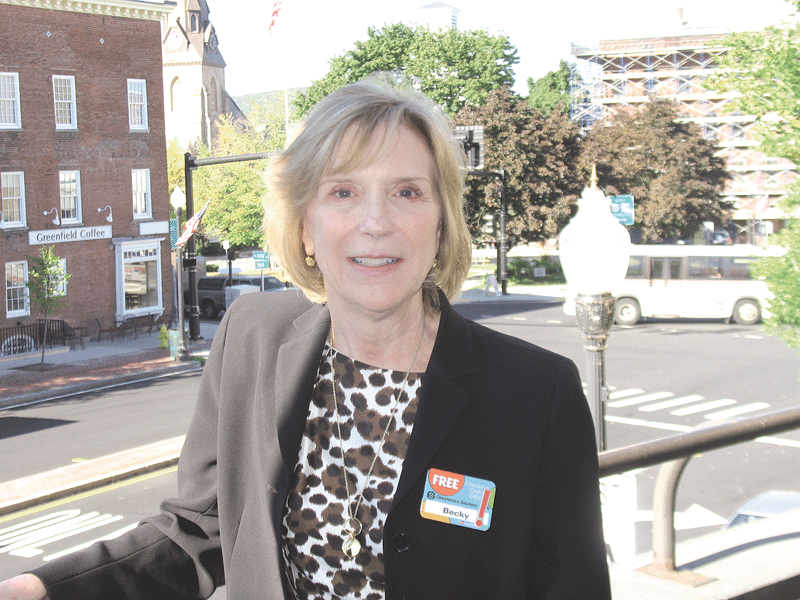
Evren cited strengths outlined in the Northeastern report as solid proof that Granby is a town that investors or business owners should consider. An important one is the uniform tax rate. “We were told our average tax rate is lower than most of the communities that participated in Northeastern’s survey. And the average square foot of manufacturing space is much cheaper here than in most other locations in the immediate area,” Evren said. “The report also stated that Granby has great access to a technically skilled and educated labor force. Plus, our housing market is affordable, and our public schools are well-performing, which is a concern for some business owners.”
Granby’s location is also a key to business success. Route 202 passes directly through the town, and the Massachusetts Turnpike and Route 91 are only about seven miles away. “People think we are in a remote location. But we are not,” Evren said. “We believe one advantage we have is that many neighboring residents drive through Granby. We are bordered by South Hadley, Chicopee, Belchertown, Ludlow, and Amherst, and we are only 15 minutes from Amherst Center.”
Cindy Mugnier, left, and Earleen Kenyon

Cindy Mugnier, left, and Earleen Kenyon, co-owners of the Earlee Mug restaurant/truck stop, say that business owners and residents have been extremely supportive since they purchased the eatery and renamed it a year ago.

Town officials are also working to streamline the permitting process. “We want to clear any unnecessary hurdles that new businesses may encounter, and are looking for ways to make the process more efficient,” Evren said. “We are taking a proactive approach to zoning and rezoning in certain areas to make them more attractive or suitable for businesses so we can meet our economic development goals.”
Evren said the emerging vision includes a livelier business district, which stretches along Route 202, from the South Hadley town line past the center known as Five Corners. Town officials would like to see more retail shops and restaurants open in that area. “Residents told us they would like to see more places in town where they could shop or eat.”

Food for Thought
Earleen Kenyon and her sister, Cindy Mugnier, have proof that residents will support restaurants. They purchased a truck stop/eatery known as Manny’s Place about a year ago and renamed it the Earlee Mug. Although they had never owned a restaurant before, they have done very well.
“We took a leap of faith when we bought it. But this is a good place to own a business,” Mugnier said. “The community gets behind you, and the town officials are very easy to work with. This is a rural community, and there is a real sense of community here. People have been here for multiple generations.”
The eatery is located between two farms, and both of them have been very helpful, letting Mugnier and Kenyon know when fruits and vegetables are at their peak.
“Pleasantbrook Farm and Feed has gone so far as to help us when we had problems with our cash register and other technology,” said Mugnier. “You get a real sense that everyone is pleased that you are here, that they want you to be successful and will do what they can to help that happen.”
Kenyon agrees. “The townspeople support local businesses,” she said, adding that she and Mugnier benefit from their location, which is directly across from Dufresne Park, which hosts events that range from baseball and soccer games to canine agility and horse shows. “Plus, we are right on Route 202, which is a busy road; everything is just pleasant here.”
Scott Merrill is vice president of Dressell’s Service Station. His family has owned the business since the 1960s, and he says Granby is a small but tightly knit community where people get to know one another.
“It has a nice country feeling and is a nice spot to live in. There is also quite a bit of land available,” he said. “There is room to grow and room to build — plenty of opportunity here. Plus, the taxes are lower than in surrounding communities.”

New Areas of Growth
Granby is home to large expanses of agricultural land and open space, since a portion of the Mount Holyoke Range State Park lies within its borders.
“Part of our endeavor is to keep a lot of open space,” Evren said. “We are trying to balance our agricultural/open space land with other types of economic development. Our premise is that new businesses should be consistent with Granby’s traditional New England town feel and fit in that overall mosaic, because we are a suburban town with a lot of rural characteristics which we don’t want to lose.”
Still, results from the town survey showed that the majority of residents are in favor of commercial and industrial development as long as new businesses don’t pollute the air or water.
To that end, the town is working on a green-communities initiative that could qualify Granby for state grants if it meets a number of requirements, which include designating an area for green-energy research and development or green manufacturing. “This would interest our residents based on our master plan survey results. We would like to see economic development, but it needs to be cognizant of the community’s environmental concerns,” Evren said.
Five Corners, located about a mile from the South Hadley line on Route 202, contains the majority of the town’s businesses. A corridor zoned for business extends several miles down the road, ending about a half-mile before the town common.
“This is the area that will be our primary target for new business,” Evren said. “There is vacant land available in that area.”
Five Corners offers connections to sewer and water hookups, which are not available in all parts of Granby. “But the town may be open to extending those services to new businesses along the corridor,” Evren said. “There is nothing concrete in place, but there has been conversation around it.”
Another area that holds promise for growth is New Ludlow Road. The town is currently working to install a sewer line extension there. “It will require some zoning changes, but there is a lot of possibility in the area,” said Evren, adding, “it could be an ideal location for an industrial or office park or light industrial development.
“The right new business could thrive in this town, because people are receptive and committed to local businesses,” he said. “Granby is a small town in terms of population. But we have a lot of land that would be suitable for businesses. We want people to come and take a look at what we have to offer. We believe they will like what they find here.”

Sections Supplements
Get on Board! Event Will Connect Individuals with Area Organizations

Ellen Freyman says the Get on Board! event scheduled for Oct. 28 at the Basketball Hall of Fame is all about making matches between area nonprofits and business groups scouting for board members and individuals looking to make contributions to the community.
And she knows that such matches aren’t made in a few minutes or a few hours. Instead, they may take days, weeks, months, or even years to materialize. But the process starts with introductions, questions, and answers, and generating those is what this unique event is all about.
“We want to introduce organizations to people, and people to organizations,” said Freyman, a partner with the Springfield-based firm Shatz, Schwartz and Fentin and founder of an organization called On Board, which she started in 1996 as a way to bring more diversity to area boards.
Back then, the primary focus was on women and getting them more seats at the table, Freyman told BusinessWest, but it quickly became clear that there were many other groups, including the Latino and African-American communities, that were not well-represented in the board group.
On Board has been working diligently toward achieving greater diversity on area boards, but the Oct. 28 event represents its most ambitious undertaking to date with respect to that mission.
It will make use of what has come to be called the ‘speed-dating’ method of making introductions. Participants will spend a few moments with the representative or representatives of one organization before moving on to another, and, hopefully several more. Freyman said the event has been put together to help both sides of the ‘match’ equation achieve their goals.
Elaborating, she said that all boards want to achieve greater diversity and add enthusiastic talent, but many need help with the process of identifying individuals who want to serve the community and can help their group met its mission. Meanwhile, many individuals who want to serve the community are looking for ways they can effectively give back. Get on Board! will spotlight a wide array of nonprofits and business groups and hopefully spur some people to get involved, or more involved, in matters impacting the region.
And that is the broader, more far-reaching goal of the event, said V. Van Johnson III, an attorney with Denner Pellegrino, LLP and one of Get on Board! organizers. He said that, when boards become more diverse, more groups and individuals have a stake in the future of the Pioneer Valley. Meanwhile, boards that stress greater diversity can more effectively serve the community because those gathered around the table more accurately reflect the community they represent.
At last count, more than two dozen organizations had signed on to participate. They include the Greater Springfield YMCA, the Dunbar Community Center, the Girl Scouts, the Springfield Public Forum, Greater Springfield Senior Services, Junior Achievement, Habitat for Humanity, the Food Bank of Western Mass., the United Way, and the Martin Luther King Community Center, among others. Meanwhile, Freyman and other organizers expect more than 150 individuals, including many from area young professional organizations, to attend.
When asked when and how organizers will be able to gauge the success of Get on Board!, Freyman said it may well take several months or even a year for the results to fully manifest themselves. But there will be some indications of success that night, she continued, adding that individuals and organizations alike will have a good feel about whether their specific goals, whatever they may be, can be realized.
Johnson agreed, but quickly noted that success in this case must be measured in ways that go well beyond effective matches.
“We’ll be providing opportunity that wouldn’t otherwise exist for boards to come into contact with people they may never have any other means to come in contact, and that’s a success in and of itself,” he said. “The other piece that’s a success is to get boards thinking about things that they wouldn’t necessarily have to think about if they were entirely homogeneous. I think that’s an important success.”
The event will take place on Center Court from 5 to 8 p.m. For details or to register, call Elizabeth Taras at (413) 687-3144, Brittany Castonguay at (413) 737-1131, or visit www.diversityonboard.org.

— George O’Brien

Sections Supplements
This New Event Puts Its Participants in Good Company

Mine Your Business

Mine Your Business

Kate Campiti says that one of the most important things for business owners and managers to do — and also one of the most difficult — is to get the time and attention of decision makers as they work to grow sales — and their company.
To simplify that process, at least for a few hours, Campiti, associate publisher and advertising director of BusinessWest, working in collaboration with other area business leaders and chamber officials, has put together a unique new event called Mine Your Business. That name is a play on words, but those behind this sales-building program, slated for Nov. 4, are, well, all business.

More to the point, they’re focused on providing a forum in which companies can not only make introductions, but also tell their story to the people they want to tell it to.
“That’s what separates this event from a typical trade show or business networking event,” said Campiti, noting that BusinessWest is presenting the event, to be staged at the Kittredge Center at Holyoke Community College. “Business owners and sales representatives are always striving to get in front of people who make decisions. At this event, with its unique format, they can get in front of a few dozen and make meaningful connections.
“People do business with those they know, like, and trust,” she added. “This networking event lends itself to building the relationship phase. Without that fundamental part of the equation, knowing your vendor, success is limited, and sales aren’t made or sustained.”
Here’s how Mine Your Business — which takes the main concept from an event called Speed Sales, staged in previous years, to a new, higher plane — will work:
Participating companies will send two representatives to the event — a decision maker and top sales executive. This team will then meet a series of other teams for eight-minute encounters, during which introductions can be made, products and services can be introduced or re-introduced, and possible relationships can be forged.
“Time is the perhaps the most precious commodity that business owners and managers have,” said Campiti. “This program will enable participants to use their time in a highly effective and potentially quite productive way.”
The two-on-two format effectively doubles the value of the experience provided by Speed Sales, an event conceptualized and staged the past two years by the Chicopee and Greater Holyoke chambers of commerce, said Doris Ransford, president of the Holyoke Chamber.
“It’s a very dynamic format, one in which a lot can be accomplished in eight minutes,” she said. “Companies can make a strong pitch in that time and perhaps generate solid leads that can generate sales.”
Gail Sherman, president of the Chicopee Chamber, agreed, and said that Mine Your Business will be an effective vehicle for helping area companies still trying to climb back from the effects of a deep recession that is in many ways still ongoing.
“These are still challenging times, and in this environment, companies need to remain visible,” she said. “But more than that, they need to be diligent and aggressive in the pusuit of new business. This program and its intriguing format allows them to meet all those goals.”
In addition to the two chambers of commerce, Mine Your Business is being sponsored by First American Insurance, Holyoke Community College, the Log Cabin-Delaney House, Marcotte Ford, and Meyers Brothers Kalicka, P.C. Each sponsor has seen direct business spring from their participation in the past.
For more information or to reserve space, call the Greater Holyoke Chamber at (413) 534-3376, or the Chicopee Chamber at (413) 594-2101.

Sections Supplements
Why Alternative Dispute Resolution Is Growing in Popularity

Dispute Resolution

Dispute Resolution

Parties in legal matters ranging from divorce and child custody to business contracts are increasingly opting for alternative dispute resolution to settle their differences. Proponents of this model note that conflicts can be settled more quickly and amicably — especially important when children are involved — but also in a way that gives both parties more control over the outcome, and at far less cost.

A judgment of the court — whether on a divorce settlement, child custody, breach of contract, or ownership of a business — is final. And that can be a frightening thought for parties on both sides of a dispute.
“You’re handing these issues over to a third party who, in the best of circumstances, is going to have a day or two in trial to understand all the aspects of a business that may have been going on for 100 years or a marriage that has gone on for 30 years,” said Carla Newton, an attorney with Robinson Donovan, P.C. in Springfield.
“No matter how studious or attentive or learned the judge may be,” she added, “he doesn’t understand as much as the parties themselves about all the details and nuances of the needs of a child or the management of a business. When you use alternative dispute resolution, you’re making your own determination how the issues are going to be resolved.”
Alternative dispute resolution, or ADR, is a growing niche in the legal world that bypasses litigation before a judge and instead encourages parties to work out issues themselves, typically with the help of one or more neutral parties.
“In the past few years, it’s grown tremendously,” said Michael Grilli, an attorney with Springfield-based Bacon Wilson, P.C. “It first gained acceptance because of the potential cost savings, as opposed to having to litigate things in a traditional sense. And it’s a cleaner way to do things, especially with issues involving children. People acknowledge that, although their relationship is broken, they still need to maintain some sort of civility to parent their children together to some extent.”
But Grilli also echoed Newton’s point about the desire for control on both sides of the table.
“When you take things in front of a judge, the judge is going to make a lifetime, life-altering decision for you and your children,” he said. “In alternative dispute resolution, you own the outcome because it’s something you arrive at.”
In this issue, BusinessWest examines the various types of ADR and the benefits they provide to opposing parties who, in many cases, just want to stop fighting and work it out.

Common Goals
Alternative dispute resolution can take several forms. In mediation, a neutral professional guides the discussion, with or without counsel present, and helps the parties reach consensus on all issues. However, they cannot force any resolution; the opposite is true if the parties choose arbitration, in which a mutually agreed-upon third party is authorized to make binding decisions.
Meanwhile, collaborative law involves both parties, their attorneys, and one or more experts in various fields, from finance to behavioral health, in a group effort to reach consensus.
“The attorneys are still advocating for their clients, but also working as a team to resolve the issue in a way that involves the expertise of everyone at the table,” Newton said, adding that this is a particularly beneficial model for dealing with issues of business law. “You have more time to explore all the issues, and there’s a transparency of information that’s crucial. All the information is on the table and shared in a way that people can make thoughtful and meaningful decisions about resources, income, and property distribution.”
Neutral experts weighing in on, say, the value of a business or piece of real estate “reduces the cost of having my expert go up against your expert,” she added. “It doesn’t mean that everyone always agrees on the valuation, but it does provide a more open forum to explore these questions and come to a resolution in terms of how that asset is going to be valued.”
A fourth model of ADR, conciliation, is similar to mediation but focuses on compromise and concessions to reach resolutions with a minimum of rancor. Grilli has been on both sides of ADR cases, as an attorney representing one of the parties, and as a conciliator working for both.
“We can’t force the outcome on anyone,” he said of his role as a conciliator. “They don’t have to trust us with their stories, and they don’t have to litigate their case with us. It’s more of a dialogue than a litigation.
“I encourage people to use it,” he continued. “Very often, in cases I have of a contentious nature, I’ll ask judges to make referrals to use alternative dispute resolution. I think the people appreciate it and get the sense that I’m pursuing all avenues to solve their case. And the other attorneys like it; at least in the family-law field, they’re getting very experienced mediators and conciliators who know what they’re doing. I’ve had a lot of good experiences with it.”
A good conciliator, he explained, can examine a case and tell both parties how a judge would likely rule on certain matters. “It opens their eyes. They think, ‘well, doesn’t it make more sense to see if we can reach some sort of settlement that mirrors that, with less money, time, and pain?’”

Cut to the Chase
An aversion to spending years in legal proceedings, with steadily escalating bills, is, in fact, one of the driving factors in the increasing popularity of ADR, Grilli noted. Take, for example, a damage claim in a personal-injury case — say, an automobile rear-ending accident — in which liability is not an issue.
“Instead of a long, drawn-out process for damages, you can submit the medical bills to an arbitrator or mediator, and the case expenses are significantly less, and cases are resolved more quickly,” he said.
“It’s all about cost and time. You could be looking at a couple of years after filing a case to get before a judge, as opposed to a couple of months, not to mention that much more money spent litigating. Claimants think, ‘I don’t want to wait two years to have my case resolved.’”
Overloaded dockets have lent a new appeal to ADR, Newton said.
“Our courts are very crowded, and there are limitations on the amount of personnel and resources available to move cases through the court process,” she told BusinessWest. But other factors take into account the long-term emotional health of the parties, especially in divorce and custody disputes.
“People are becoming more sensitive to the fact that there is a benefit to being able to resolve family matters in a way that preserves what can be preserved of these family relationships, especially in families with children, where the parties are going to be connected for the rest of their lives through the children,” Newton said.
“They want to maintain a respectful communication with the other party,” she added. “They want to sustain that after the proceeding is over, and many people feel they have a better chance of doing that through an alternative dispute process as opposed to a situation where they’re resolving arguments by testifying against the other person.”
Grilli agreed. “I’ve heard a lot of judges say they consider it a more child-centered way to handle things, as long as you can get everybody on the same page,” he said. “If we want the end result that is best for the child, then people should be able to put their own selfish solutions aside and work for the best interest of the child.”

Not for Everyone?
Brad Spangler, a former research assistant at the University of Colorado Conflict Research Consortium, notes, in an online article for the university’s Beyond Intractability Project, that ADR has some potential drawbacks if used inappropriately.
“Some critics have concerns about the legitimacy of ADR outcomes, charging that ADR provides ‘second-class justice,’” he writes. “It is argued that people who cannot afford to go to court are those most likely to use ADR procedures. As a result, these people are less likely to truly ‘win’ a case because of the cooperative nature of ADR.
In addition, Spangler notes, “compromise can be a good way to settle some disputes, but it is not appropriate for others. In serious justice conflicts and cases of intolerable moral difference, compromise is simply not an option because the issues mean too much to the disputants.”
Another concern is the private nature of ADR settlements, which are off the public record and not exposed to public scrutiny. “This could be cause for concern in some cases. For example, using ADR to settle out of court could allow a company to resolve many instances of a defective product harming consumers, without the issue getting any public exposure. On the other hand, a court ruling could force the company to fix all problems associated with the bad product or even to remove it from the market.”
On the other hand, that privacy aspect is an attractive quality of ADR when dealing with a family matter or a business issue that affects only the individuals in dispute, Newton said.
“It’s starting to gain more acceptance in the areas of business disputes, home repairs, and contract litigation,” Grilli added. “I think what makes it attractive to people are the time savings, the cost savings, and the sense that you’re a little more actively involved in the process than you would be with traditional litigation.”
As for those family-law matters often marked by bitterness and resentment, Newton stressed that no alternative to litigation can totally suppress the bad feelings that led the parties to court. But maintaining a sense of control over the proceedings, she noted, can significantly reduce their level of anxiety.
“The process itself is innately difficult,” she said. “But in the case of a custody dispute, it’s a given that both parents love the child dearly, and you’re asking someone who doesn’t know them at all to make a decision that is going to impact them for the rest of their lives. That’s an overwhelming responsibility for any judge.”
Individuals who opt instead for alternative dispute resolution, on the other hand, maintain more control over the situation even as they trust the other party with an equal measure of control, she noted. “They’re acknowledging that they, who love this child dearly, can make this decision. And the vast majority of people do have the ability to reach these agreements and, with the right guidance, understand that not every divorce resolution has to be one where someone wins and someone loses.”
At what is often the most difficult point in two people’s lives, that’s a goal worth fighting for.

Joseph Bednar can be reached at
[email protected]

Sections Supplements
A Recent SJC Decision Clarifies Their Status Under Massachusetts Law

Carla Newton

Carla Newton

Prior to the recent decision by the Mass. Supreme Judicial Court (SJC) in the matter of Kenneth S. Ansin vs. Cheryl A. Craven-Ansin, the status of ‘postnuptial’ or ‘marital’ agreements in Massachusetts was uncertain.
Massachusetts has long recognized (since 1981) the rights of parties to enter into premarital or antenuptial agreements before marriage and to enter into separation agreements (since 1976) when they are approaching divorce. Prior to Ansin, however, the issue of postnuptial or marital agreements, which are entered into after marriage and alter marital rights or distribute marital assets between parties not contemplating divorce, had not been decided in Massachusetts.
The use of postnuptial/marital agreements has been determined in other states with mixed results. Courts in Florida, Arizona, Wisconsin, and Tennessee, for example, have allowed such agreements under certain circumstances while Ohio, by statute, specifically prohibits them no matter when or where signed.
With the decision in the Ansin case, the SJC has now established criteria for the enforcement of what will be known as ‘marital’ agreements, which differ from the criteria for enforcement of prenuptial agreements or separation agreements. The SJC’s rationale for the difference in criteria rests on the leverage that a party has during the negotiation of the agreement. In the case of prenuptial agreements, if a party is not in agreement with the terms that have been proposed, then the party is free not to marry. When negotiating separation agreements, the parties have acknowledged that their marriage has failed, and each is negotiating for their own independent interests, and if they cannot agree, they are free to proceed to a determination of their rights by the courts. Once parties are already married, the scrutiny applied to the terms of a marital agreement should be more strenuous.
There are specific criteria set forth in the Ansin case that provide guidance as to factors by which future cases will be determined as follows: (1) each party must have had an opportunity to obtain separate legal counsel of his or her own choosing; (2) the marital agreement must have been signed freely and voluntarily without any fraud or coercion; (3) the marital agreement must contain a full disclosure of all assets with their approximate market value, a statement of each party’s approximate annual income, and, equally as important, disclosure of any significant future acquisitions or changes in income which are reasonably anticipated; (4) the marital agreement must also contain a clear and explicit waiver of the right to a judicial determination of marital rights and asset distribution in the event that a divorce does take place at some point in the future; and (5) the martial agreement must be evaluated to determine if the terms were fair and reasonable at the time of the execution of the agreement and are still fair and reasonable at the time of the divorce.
The SCJ has established that the spouse who seeks to enforce a marital agreement is the one who has the burden to prove that the other spouse’s consent was not obtained through coercion or fraud. In the Ansin case, Cheryl argued that Kenneth had committed fraud by misrepresenting his intention to remain in the marriage in his effort to convince her to execute the marital agreement. Kenneth presented evidence that he had made significant efforts to improve the marriage, that they had purchased and renovated at great expense a new home after the signing of the agreement, and that he did not file for divorce until Cheryl had asked him to leave the home and was involved with another man. It should be expected that, in any review of a marital agreement, a court will closely examine whether or not a spouse has been misled regarding the other party’s commitment to the marriage.
The decision in the Ansin case includes detail for the evaluation of whether or not there has been a valid waiver by a party of his or her right to have a judge determine his or her marital rights and asset distribution at the time of the divorce. The criteria for a valid waiver include whether or not a party has been represented by independent counsel, whether they had sufficient time to review the terms of the agreement, whether they understood the terms of the agreement and their impact, and whether or not they understood what their rights would have been absent the agreement.
The standard for evaluation of a marital agreement will differ from that of a prenuptial agreement because of the context in which the marital agreement takes place. There will be heightened scrutiny in the evaluation of marital agreements. Massachusetts has already described the contractual obligations between spouses in the matter of Krapf vs. Krapf in 2003 by stating that spouses “stand as fiduciaries to each other and will be held to the highest standards of good faith and fair dealing in the performance of their contractual obligations.”
When reviewing whether or not the marital agreement was fair and reasonable at the time of its execution, there are standards a judge ‘should’ consider and standards which a judge ‘may’ consider. The SJC has stated that a judge should consider the entire context in which the agreement arose, including a consideration of whether or not each party was represented by independent counsel. While the failure of independent representation will not be fatal to an agreement, it is likely to impact the scrutiny which is applied. A judge may consider: (1) the difference in the outcome under the marital agreement from the outcome under current law, (2) whether the purpose was to benefit the interests of third parties such as children from a prior relationship, (3) the impact of the agreement on the children of the parties, (4) the length of the marriage, (5) the motives of the parties, (6) the bargaining positions of the parties, (7) the circumstances which gave rise to the agreement, (8) the degree of pressure experienced by the spouse who is contesting enforcement of the marital agreement; and (9) other circumstances that the judge may want to consider.
When reviewing whether or not the marital agreement is fair and reasonable at the time of a divorce, the SJC requires that the same criteria be used that is utilized to evaluate a separation agreement. A judge may consider: (1) the nature and substance of the objecting party’s complaint, (2) the financial and property provisions of the agreement as a whole, (3) the context in which the negotiations took place, (4) the complexity of the issues involved, (5) the background and knowledge of the parties, (6) the experience and ability of counsel, (7) the need for and availability of experts to assist the parties and counsel, and (8) the mandatory and, if the judge deems it appropriate, discretionary factors set forth in G. L. c. 208 § 34.
Marital agreements will likely find a variety of uses as a method to protect third parties such as children from a prior marriage or to strengthen a relationship by providing assurances of asset distribution should there be a divorce in the future. Marital agreements also have significant estate planning consequences for married couples. Similar to those couples who enter into prenuptial agreements, a marital agreement will need to be reviewed by the attorney doing one or both parties’ estate plan.
Ideally, a marital agreement should be drafted in consultation with both parties’ estate-planning attorney(s). The document may set forth parameters within which the estate planning attorney must work to effectuate the individual or couple’s estate planning goals while ensuring that those goals will not interfere with the mandates of the new marital agreement.
Marital agreements, like pre-nuptial agreements, will often contain guidelines concerning gifts between the spouses as well as benefits to a surviving spouse upon the death of the other. All of these provisions, as well as others, can have a significant impact on a client’s overall estate plan. Further, marital agreements may well impact certain spousal rights and/or obligations with regard to Medicaid or MassHealth planning for either or both spouses.
In any contemplation of the use of marital agreements, it is clear that great care must be taken so that the intentions of the parties will not be undermined by the failure to follow the clear criteria that have been established.
This article is a general summary only and does not constitute legal advice.

Carla Newton is a partner at Robinson Donovan, P.C.; (413) 732-2301.

Sections Supplements
Adult Education Takes a Different Dimension at the University Without Walls

Cindy Supois

Cindy Supois, former director, now senior lecturer

Now celebrating 40 years in operation, the University Without Walls program at UMass Amherst continues a long tradition of empowering non-traditional students to earn that degree they’ve been coveting but unable to complete because life has gotten in the way. UWW, as it’s called, enables people to take their work and life experiences and translate them into college credits. It’s a unique program that has helped script thousands of success stories over the years.

Deb Savola said that, when she entered University Without Walls as a full-time parent, she started off with only 14 credits, and it didn’t seem like she would ever finish her degree.
“I figured I might graduate right around the time I started collecting Social Security,” she joked.
Savola said that, when she graduated from high school “some time ago,” she went straight to college. But working full-time didn’t give her the time to devote to an education. “I always figured that at some point I would kick it back up, but life goes on, and I hadn’t gotten there,” she said.
Her story is one that is entirely familiar to the staff and faculty of UMass Amherst’s division of adult education known as UWW. Started back in 1971, the program began as a means for people with lives on the move — with family constraints and job requirements — to not only have the ability to get their bachelor’s degree without disrupting their non-academic lives, but also to have that work experience transformed into credits toward their degree.
Cindy Suopis is one of the senior faculty members at the UWW, and is also the former director. She explained to BusinessWest what makes this program so much different than any other.
“First off, we are one of the only undergraduate programs to focus on adult students,” she explained, with an age range that spans 20-somethings on up. “The UWW is a degree-completion program, so people who started a bachelor’s degree at some time, at some place, be it at an associate college or at a school where they never finished, can pick up where they left off.”
Instead of majors, UWW offers concentrations, which, Supois said, run the gamut from journalism studies to business organizational leadership, “and just about anything in between.”
What makes UWW stand out is the focused one-on-one attention with advisors, so that students can find exactly what it is that they wish to study, and how their educational experience, and their life, can inform the concentration for their degree.
“Unlike a traditional major, saying you need to take this lockstep route,” Suopis explained, “we bring in the student’s experience. And often that’s work or volunteer experience. We are sanctioned by our faculty senate to give credits for that type of learning. It allows students to see a light at the end of the tunnel when they can receive anywhere from one to 30 credits for their experience. That’s pretty significant, and can replace several courses.”
A lot has happened in the four decades of UWW’s existence. But not so much that the core mission of the program has been altered. The biggest change has come in all classes taking place online, and Suopis said this initially caused a stir with some of the earliest supporters and administrators.
Sitting down with BusinessWest at the start of a new school year, Suopis described how the program reaching 40 years old has been able to keep up with both the times and the changing face of adult education.

Moving On … Line
Suopis started her affiliation with UWW as a program manager at MassMutual, bringing the academic classes to that workplace, something that was common in the days before the online classroom.
“That’s what the UWW has always done,” she explained. “We see a need in a specific place, and a capacity to make it sustainable, bringing the classroom to the marketplace.”
But five years ago, she said, the seismic shift of classroom geography began.
More and more classes were being offered online, and even students within the Amherst town limits opted for that format. “There was a time when we would offer a live class and an online class, and we’d sit back and say, ‘which one is going to fill up first?’ — it was always the online one. Even with locals, they would tell us, ‘my life is too busy. I’d like to take a live class, but really, the online format is much better for me,’” she said.
And thus UWW went online, and Suopis said the decision was a sound concept for the students, but also for the business model of the program. “As a result,” she said, “we can serve many more students in a much broader reach. When you’re delivering something live, you have some constraints. You have to have a classroom, you need people. Online, it’s much different. Classes can be bigger.”
But, she stressed, the core mission of providing one-on-one advising for students is one facet that will not change regardless of a student learning in a classroom or a living room.
“There’s a lot of bad press out there about the for-profits of the online education world, but we do not want to be categorized in that manner,” she emphasized. “We had to really think about how we wanted to deliver this type of education, and these types of goals, to students, and hopefully more students than we ever had before, in an online format.
“So we had to learn how to teach online,” she continued, “and we did have to learn how to teach differently. Pedagogically, we made changes, but also emotionally as well. Technologically, we’ve also learned some new skills as faculty members. And the outcome has been tremendous.”
What started out with 30-odd students has grown to approximately 550 students every semester, and in many different concentrations. Business-themed coursework is the most popular these days, she said, with early-childhood education and health and human services as respective second and third.
“Those are our so-called bread-and-butter programs,” said Suopis, “but if you look at our last graduating class, you’ll see any number of other things as well, from journalism arts, criminal science, construction management, and environmental studies.”

Telling Tales out of School
Bruce Michaels was one of those students from MassMutual who felt that finishing his bachelor’s degree wasn’t a practical reality.
After completing an associate’s degree at a community college, he went on to become certified to teach helicopter flight lessons. He entered the corporate world and knew that he wanted to get that bachelor’s, but “something always came up,” he said. “Getting married, or having a big project at work. I just never found the time to finish the degree, or have the consistency to finish.”
He went to an education fair at his workplace and met Suopis, who told him about UWW. He said that from the very first moment he was introduced to the program, he knew it was a home run.
“In my head I was thinking that this was a great opportunity to get credits based on what I did in the past, and get a jump start on my BA,” he said. “Finally, universities are starting to see the value in the workforce, and what they have done, and are giving credit for that. Someone going into college from high school doesn’t have that life resource.”
Savola was another MassMutual employee recommending co-workers to the UWW program at her workplace when Suopis asked her one day, “when are you going to sign up?”
The wife of a college professor, Savola and her husband were home-schooling their children and she told herself that, when her last child went to college, she too would take the steps to finish her degree.
“But I had a conversation with my family,” Savola remembered, “and I thought I’d go through the first semester where you write your portfolio to figure out how many credits you’ll get. I got so into it, and so excited about the opportunities and the many interesting ways to get credit. I saw it as something very doable, and my family was committed to it, knowing how much I’d always wanted to get a degree. So I jumped in and didn’t look back.”
Despite receiving a smaller credit load than she may have hoped for, Savola was undaunted by the prospect of someday graduating. “If I kept looking at that number of credits I needed for graduation,” she said, “I don’t think I could have done it. You don’t climb a mountain by looking at how far you have to go, but by one step at a time.”
Savola said that the possibility of finishing a college degree is a reality that anyone entering UWW can face, and she gives great credit to the faculty and staff there. But, at the end of the day, it is the possibility to realize one’s own personal goals that will carry them to the finish line.
“When I started this program,” Savola said, “my husband was my greatest cheerleader, and he said he was going to help me through it, knowing that I’d wanted it for so long. I was about a year and a half into it when he died of a massive heart attack.
“I was determined to stay in the program no matter how long it took,” she continued. “My dad died a year later, from pancreatic cancer, and I was helping my mom during that time. But I got this degree through the worst five years of my life. And as I look back, I think, where there’s a will there’s a way. We shouldn’t let things in our life discourage us from reaching for our goals.”
At her graduation day at the university football stadium, with thousands of fellow students and alumni, Savola said the enormity of the situation came clear to her. Standing there with her son, himself an alumni of UMass, she said, “It made me realize how much a part of something I was. If I can do it, I think anyone can.”
But she quickly added, it’s not just about finishing, and graduating. “I think if we look at our education as just getting a degree, that’s tunnel vision, and you miss out on the enriching aspects of it.”

The Secret Is Out
With the online class venue the most recognizable new development of UWW, Suopis said that new marketing techniques have been employed over the last few years to cast some light on what she called “one of the best-kept secrets in the Pioneer Valley.”
Successfully doing such outreach, the enrollment numbers are at an all-time high. But managed growth is of paramount importance to a program with such an individualized component.
“We do not want to have hundreds of thousands of students, to be a diploma mill,” she stated emphatically. “Remember, our model is one-on-one advising. If we became formulaic, if all our courses were templates, we wouldn’t be able to carry on that way. That’s not in our history, it’s not what we want to do, and it’s not what we will do.”
Alumni like Michaels and Savola0 have the highest praise for their experience, and strongly encourage anyone who finds themselves without a bachelor’s degree to consider the UWW.
“When I graduated from high school, everyone needed that diploma to move on into the world,” Savola said. “Nowadays, it’s the bachelor’s that is the minimum education required.”
Asked if one could ever be too old to finish their undergraduate career, she laughed and said, “I don’t think that’s an issue at all. When I was in school, one of my classmates told me that his mom was one of the first people in the program, and she did it in her 70s.”

Sections Supplements
Terrier Project Inspires a Town, Raises Funds for Art Education

Mike Dubois, left, vice president of Finance for Balise Motor Sales, and Balise graphic artist Crystal Childs

Mike Dubois, left, vice president of Finance for Balise Motor Sales, and Balise graphic artist Crystal Childs show off “Copper,” a Terrier Around Town at Balise’s new Honda dealership. Childs designed and painted the dog, which is wearing a real West Springfield police hat and uniform.

Her name is Poppy Love. She’s a fiberglass West Highland white terrier covered with brightly painted poppies who spent the summer in front of the Balise Mazda dealership on Riverdale Street in West Springfield.
Another oversized dog from her litter, Dr. Hairy Barker, has spent his summer stationed outside of a veterinarian’s office dressed in a white lab coat, while his pal, Tooth Tari, guards a dentist’s office.
These 36-pound fiberglass canines are among the 46 so-called terriers around town that comprise the first public art project in West Springfield’s history.
The dogs, which will be auctioned off next month, were bolted to concrete slabs and stationed throughout the town during the summer. They have generated so much interest that untold numbers of people keep track of their whereabouts, post online photos taken with them, collect memorabilia emblazoned with their portraits, and share stories created about them by adoring admirers.
“The public has become so possessive of them,” said artist Jane Barrientos, who conceived the idea for Terriers Around Town and brought it to life with West Springfield resident and hair sylist Christine Costani.
To date, the dogs’ lives are being followed by more than 1,000 Facebook fans, who have written interesting tales about each of them based on the theme the artist chose for the dog. One chronicles the ongoing romance between Dapper Dog, who sits in front of Lattitude Restaurant on Memorial Avenue, and Maria Margarita of Mardi Gras, who makes her home at Gate 2 at the Big E Exposition grounds.
The goal behind the fanciful community-arts project is to raise money for the Arts in Education program in West Springfield public schools. Barrientos and Costanzi both home-schooled their children, and believe students need more than academics to develop into well-rounded, responsible adults.
They modeled their project after other fiberglass art displays/auctions held across the country, showcasing cows, pigs, bears (Easthampton), and even sneakers (Springfield). “We decided to use the town mascot to increase awareness of our community pride, spirit, and respect, as well as to promote West Springfield as a destination for lovers of art,” said Costani.
To that end, many businesses have become involved with the exhibit, which has spawned numerous events, including a naked puppy party (before the artists went to work), a puppy parade, an auction preview party, and a gala charity auction that will be held Oct. 15 inside the new Balise Honda showroom on Riverdale Street. Tickets to the dressy affair are $75 and include food catered by Lattitude. “There will be a raw bar, two carving stations, and an open wine and beer bar,” Barrientos said.
Two dozen dogs have already been purchased by sponsors, but the 22 that remain will be auctioned off during the evening. Memorabilia, including magnets, coffee mugs, and a coffee-table book with photos of the dogs will also be sold. The goal is to raise $70,000, and Barrientos said they hope to reach it, since they have already made $10,000 from donations and the sale of gift items. However, they are still seeking donations for a raffle. For more information or tickets, visit www.terriersaround town.com or call Costani at (413) 233-7771.
Some of the dogs have already been removed from the spots they occupied all summer in preparation for the auction. But they all can be seen during the daily parade at the Big E on West Springfield Day, which will take place Sept. 20 at 5 p.m. They will sit on antique trucks while the artists who gave them personalities march beside them.
Barrientos and Costani were inspired to launch the art project after seeing the success that similar fiberglass outdoor art displays/auctions have generated. “Easthampton held a Bear Fest a year before us, Pittsfield used sheep, and Venice, Fla. had pigs,” Barrientos said, adding that Costani viewed that exhibit as well as one that featured fiberglass cows in Chicago.
The women began their campaign by soliciting design ideas from artists who expressed interest in painting a dog. They also knocked on doors and asked businesses to become sponsors.“We called on more than 200 businesses with School Committee member Pat Garbacik, who is also an artist,” Barrientos said.
Balise was the first to sign up. Vice President of Finance Michael DuBois said the project fit in perfectly with their philosophy of making charitable donations to causes that support children and education.
“This passed our litmus test, and (company President) Jeb Balise was very interested; we have a big footprint in West Springfield and a big stake here, so we feel a responsibility toward the community,” said DuBois, adding that the company’s collison center put a clear coat on all of the dogs after the artists finished painting them.
“One of our graphic artists designed a dog she called Copper that is wearing a [painted] police officer’s uniform,” he said, adding that Balise is delighted to host the auction in their new showroom.
Businesses that sponsored a dog were allowed to choose from more than 70 designs, as well as where their dog would be placed during the summer months.
“We constantly looked for connections,” Barrientos said, adding that many business people have discovered new resources via networking that has taken place at their events.
The women are amazed at the number of professionals who have lent their services to help. They include Atty. Simon Brighenti, who helped them navigate through the town’s regulations; CPA Nicholas LaPier; and Pete Morgan, who made the concrete slabs the dogs sat on, then spent six unpaid days with his employees working to position the dogs around town. United Bank served as a major sponsor of the project.
Parent-teacher organizations have also gotten involved, and 250 kindergartners and faculty members from John Ashley School put their thumbprints and names on a dog purchased for them by Kohls. It will be taken to the high school to sit on the lawn until the class graduates.
“This project will become part of the town’s history,” said Barrientos, adding that two families sponsored terriers, and a terrier tour map was created so people interested in the exhibit could find all of the dogs.
“There had never been a fiberglass terrier in the world before this,” Barrientos said. “Now, every one of our dogs has an amazing story, and so many people have connected with each as a result.”
Or, to put it simply, they have put their Poppy Love into action.

Sections Supplements
Health Care Hiring Is Sluggish — for Now

Mike Foss

Mike Foss calls the health care job market “cool,” but sees plenty of positive signs for current students.

Through good and bad economic times, health care has always been one of the most robust job markets in Massachusetts. But that has not been the case in the current recession, as hospitals and other organizations have been slow to hire, even resorting to layoffs in many cases. Demographic factors, especially an aging population, are likely to render this sluggishness temporary, but the job market that emerges in coming years might demand far more flexibility from those looking to build a career in health care.

Health care, an industry that accounts for about one in every six jobs in Massachusetts, has long been seen as recession-proof in the Bay State.
The extended economic downturn has tested that, with once-brisk hiring turning stagnant and hospitals across the Commonwealth resorting to freezes and layoffs. Yet, most industry-watchers see the current sluggishness as a temporary swing, if only because people will always need health care.
“Hiring has to pick up,” said Kelly Aiken, director of Health Care Initiatives for the Regional Employment Board of Hampden County. “The economy can’t change how much care people need.”
In fact, despite pockets of layoffs, employment in health fields has ticked up slightly since it essentially ground to a halt last year.
That’s good news to students studying in health programs at area colleges. The robust job market over the past decade has drawn increasing numbers of applicants to those programs, but recent graduates have been navigating scarcer prospects than those who entered the workforce several years ago. Still, there’s reason for optimism.
“Last year, there was definitely a reduction in job availability, and this was pretty much across a dozen fields of health,” said Michael Foss, dean of the School of Health and Patient Simulation at Springfield Technical Community College. “One department chair told me that, since January of this year, there has been an upward swing in job openings, and others were beginning to see that as well.”
That perception is borne out statewide. According to the Executive Office of Labor and Workforce Development, 486,000 people were employed in health care in January 2009, and the number rose to more than 494,000 in January 2010 before essentially plateauing there.
But as the Great Recession fades, optimists say, certain demographic truths will take hold — specifically, mass retirements by the Baby Boom generation, coupled with an overall aging of the population.
“This whole issue with the Baby Boomers retiring — that’s national, and it’s not industry-specific. But the opportunities to replace those retirees might be greater in health care,” said Jean Jackson, vice president for Workforce Planning at Baystate Health, the region’s top employer.
“People are living longer, and they’re going to need care,” she continued. “So you have a combination of people retiring and living longer, and they’re going to need more people to care for them.”
That adds up to what should be increasing opportunities for health care careers, but job seekers may face a far different landscape when it comes to how and where care is delivered. For this issue, BusinessWest examines some of those trends, and why many observers see the current slow job market as a curable condition.

Day by Day
Foss has observed the cycle of medical hiring long enough to recognize a downturn. “It’s not hot; it’s a cool employment environment,” he conceded.
Meanwhile, many of the available openings, in a number of fields, are for per-diem work, essentially part-time jobs without benefits, he explained. Yet, that’s not necessarily a negative trend.
“I know that in some fields, per-diem is actually highly desirable, especially for individuals with families, or they’re the second person working. They kind of like the idea of not being tied down to a rigid work schedule.”
In addition, “I think a lot of people see that as one way they can prove to an employer that they should be full-time,” he said. “And it’s an opportunity for them to see if this is the environment they want to be in, if it’s the right institution, right office, wherever. It almost gives you an automatic job interview because, when there’s a full-time opening, they see the good work you’re doing and that you’re the person they need to hire.”
But the full-time job openings are slowly increasing, Foss noted. “And Baystate, a very large system with multiple locations, is building a brand-new facility. So we know those jobs will be available in the future.”
Indeed, Baystate’s Hospital of the Future project, set to be completed in 2012, is only the largest of a flood of hospital expansions across the Pioneer Valley over the past decade. From Jackson’s perspective, Foss’ assessment of what that means for hiring is right on.
“You have to look at all the factors — turnover, what the retirement plans look like, what the potential growth will be,” Jackson said. “And when you factor it all in over the next 10 years, we are looking at a projection to hire 15,000 employees.”
However, she added, “many of these jobs in health care require specialized skills and training beyond high school, and that’s another trend: concerns about the availability of workers. At Baystate, part of our mission is to recruit from the local labor market, and our work with education, employers, and workforce-development organizations to find solutions has been absolutely critical.”
Economic development leaders have long been concerned about a ‘skills gap’ in certain career fields — health care and precision manufacturing are two often mentioned in those discussions — that leave available jobs unfilled, and potentially create a deterrent for new employers to locate in Western Mass.
The collaborative workforce projects Jackson alluded to range from the Community Based Job Training Grant, a $1.65 million grant from the U.S. Labor Department that will create awareness of and training opportunities in health fields, to Collaborating for the Advancement of Nursing: Developing Opportunities (CAN DO), a grant program aimed at creating career ladders in nursing. Numerous other regional programs have similar goals.
“Everyone is struggling with the economic environment now,” Jackson said. “Health reimbursements are down, patients are choosing not to do elective surgery, putting things off, and people are delaying retirement. But eventually, they’re going to retire.” And sooner than many realize, she continued, the region will need a strong pipeline of qualified workers to take their place.
Care Where It’s Needed
That future workforce will need to be flexible as well as skilled, Foss said.
“Where they work is going to be different. We’re already seeing a shift from always thinking they’ll work at a hospital. Look at all the long-term care facilities out there now. And the outpatient clinics — in my lifetime, I’d never heard of outpatient surgical centers. No way; you had to go to the hospital. But that’s another place where people will work outside of hospitals.”
Home care is expanding rapidly as well, he noted, again, a reflection of that growing senior population that wants to maintain as much independence as possible. In fact, according to the Bureau of Labor Statistics, opportunities for personal and home care aides will increase by 50% between 2006 and 2016.
“I do think that jobs are going to be located in different places,” Aiken said. “When the recession ends and the economy bounces back, coupled with health care reform, the trend across the continuum will be to deliver patient-centered care, and much of that care will be occurring in many, many different places outside of the hospital setting.
“People who go into nursing thinking their first job will definitely be in a hospital need to look beyond that. They need to look where care is being provided and where the need is.”
Foss said he’s encouraged by this changing face of health care.
“There are niches being filled that never used to be there, and all these wonderful things happening with new technology,” he told BusinessWest. “Even with the cool market, I think it’s an exciting time for health care.”
Aiken agreed. “I think there are going to be changes, new health care occupations that may evolve, that we don’t even know about right now.”
One thing is certain, though, Foss said: no one’s going to work forever, and opportunities will be abundant again.
“The Department of Labor and other pundits, they always come back to health care,” he said. “A lot of people in my age group will be retiring in three or four years, and those who have planned their retirement well — especially now, with health care reform — are going to be using the health care system.
“So while things may be a little cool at the moment,” he concluded, “there are still opportunities out there, and those opportunities are going to increase every single year for the foreseeable future.”

Joseph Bednar can be reached at
[email protected]

Sections Supplements
Take Some Precautions So These Pests Don’t Get Under Your Skin

Bed Bug

Bed Bug

You arrive at your hotel room after a long day of business travel. You enjoy a nice dinner with clients and wearily slip between the sheets. You wake refreshed and ready for another profitable day.
While performing your morning ritual, you look in the mirror and notice a line of red spots along your waist. They begin to itch, so you scratch. They get redder as you scratch and itch, and you begin to wonder … what could this be?
This scenario is becoming more and more prevalent for business and family travelers. Also, don’t rule it out after a visit from family or friends.
We’re talking about the unwanted, mysterious, hitchhiking, blood-sucking parasite called the bedbug. These are flat, reddish-brown, oval insects about the size of an apple seed, and they thrive on human blood.
The reason they are called bedbugs is because, like people, they do not want to work any harder than necessary to survive and thrive. They camp out as close as possible to their blood meal (you) and feed when they are least likely to be swatted or crushed (while you are in bed, asleep).
Bedbugs acquired a taste for people way back when man first sought shelter in caves. Scientists believe that they were already present surviving and thriving on bats and other mammals living there. Today they are comfortable resting and feeding on us in our homes. As stated, they prefer to be close, so … our bed frames, headboards, adjoining furniture, couches, and, yes, our beloved recliners are all fair game.
The good news is that, even though they are piercing our skin and violating our blood vessels, they do not transmit diseases. Some people can have a severe reaction to the bites but no disease transmission.
The bad news is that they are extremely difficult to eradicate, so travelers beware. The cost can run into the thousands of dollars. The reason for this is that an effective treatment requires a minimum of two people to disassemble bed frames, move and flip mattresses, box springs, dressers, couches, etc. Additionally, it usually takes a minimum of three treatments over three months. Extreme cases require even more.
So, what can we do as world travelers do to prevent the possibility of bringing bedbugs home with us? The extermination industry offers the following travel tips:
• When you first arrive at your hotel, pull back the sheets and check the mattress seams, particularly at the top corners. If you see insects, small dark spots (digested, dried blood), or anything suspect, change rooms and/or hotels.
• Check around the room before unpacking. Inspect the headboard, couches, chairs, etc. for the telltale signs.
• Upon returning home, check your suitcases before bringing them into the house. Vacuum them thoroughly and wash your clothes.
With regard to family and friends, these bugs do not reflect an unclean home or, for that matter, hotel. All bedbugs need is a blood meal and proper temperature to survive (incidentally, they can go months without a meal). They are equally happy living with Martha Stewart or your kid’s college roommate. They are hitchhikers and can be brought into your home on luggage or on your child’s boomeranging sleepover pack.
If you suspect something, check your home as described above and call a professional pest-management company. These bugs cannot be abated with do-it-yourself products.
Business travel is necessary, and enjoying family, friends, and traveling is one of the great pleasures in life. Nocturnal pests are no reason to change your plans, so … travel a little wiser, sleep tight, and don’t let the bedbugs bite!

Glenn Olesuk is the owner of Graduate Pest Solutions in Hampden. He is a degreed entomologist from the Syracuse School of Forestry and has 30 years experience in residential and commercial pest control; (413) 566-8222;
www.graduatepestsolutions.com

Sections Supplements
Five Star Building Corp. Enjoys Taking On Tough Challenges

Kevin Perrier

Kevin Perrier says Five Star Building Corp. welcomes difficult and challenging projects.

It’s not often that a construction company’s work is so impressive that a church service is held to say thanks.
But First Churches in Northampton did exactly that to recognize the difficult restoration work done in their nearly 200-year-old cathedral by Five Star Building Corp. in Easthampton and its subcontractors. The project, which earned Five Star several awards, stands as a testament to the company’s willingness to tackle complex projects and achieve desired results.
Five Star’s focus is on commercial and public work, with an increasing presence in health care, often performing construction very close to where patients are being treated (more on that later). “What sets us aside from other companies is that, when we see difficult and complex projects, we say that we can complete them on time and do an excellent job, even though other companies may not want to take them on,” said President and CEO Kevin Perrier.
First Churches is a good example. The church had been closed for a year when Five Star was hired by Architects Inc. of Northampton to replace sections of the 70-foot-high plaster ceiling that were collapsing. The height, coupled with the fact that the church pews and ceiling are curved, made erecting and working on scaffolding a difficult and complex undertaking.
But that was only the first obstacle Five Star encountered. The firm quickly discovered that the walls of the church, built in 1826, were in very poor condition and needed to be replaced.
“The walls had plaster medallions with gold-leaf painting and stenciling on them set high in the peaks of the ceiling which dated back 100 years,” Perrier said.
Five Star began its task of historic preservation with the utmost of care. In order to preserve the 24-inch bands of artwork on the walls, workers photographed them, made plaster imprints of the medallions, and created molds. After casting new plaster replicas, artists had to hand-paint them with gold leaf before they could be mounted on the new drywall that had been installed.
A sand finish was painted over to resemble plaster, and a team of artists recreated the elaborate bands of stenciling that ran along the top and lower sections of the walls. “We had local artists there for a month. Everything had to be painted by hand,” Perrier said. “We also had the artists chip away the original paint to uncover the original colors, so when the parishioners came into the church, it looked the way it had in the 1900s. They were so taken aback that they held a ceremony to thank us.”
Although the project involved more than double the amount of work initially anticipated, Five Star completed it six weeks ahead of schedule. “It was a really touching moment when they thanked us,” said Perrier. “This is the type of project you can walk into and feel very proud of. This represents what we do . . . the level of detail and the talent of our staff and subcontractors. We may not be the cheapest company around, but we are competitive, and our quality is impeccable.”

Healthy Spaces
Just as challenging, however, is the work taking place on a medical office building on Locust Street in Northampton which houses a plastic surgeon’s office, operating room, and thriving obstretrician/gynecology practice.
“The area we are actively pursuing now is health care,” Perrier said. The work is exacting, and the standards are even more stringent, because the work is often done in hospitals or buildings where patients are receiving care.”
The Locust Street building is another example, like the cathedral, of a project that became bigger than origianlly anticipated.
“We were called in to do a small repair because a window was sagging,” Perrier explained. “But once we began, we realized the building was rotting from the inside out. The flagships had been improperly installed when it was built 25 years ago, and water had poured in behind the windows for years. All of the casing and framing was completely rotted and had to be replaced, so the project went from being very simple to very complicated.”
The cosmetic surgeon uses the operating room in the building, and a constant stream of patients come and go from the gynecology office, whose needs must be taken into account by Five Star’s staff. “At one point, we were literally hanging drywall while, two doors down from us, an individual was having facial plastic surgery in the operating room,” Perrier said.
He explained that, in order to make sure the medical practices didn’t suffer as a result of the renovations, Five Star worked seven days a week, doing some of the labor after hours and on weekends.
Maintaining the quality of the air in the building is another vital consideration. “We were there at 6 a.m. today doing air sampling,” Perrier said. “We have worked on one section at a time, setting up containment and negative air systems. Dust and debris control is crucial in any type of health care environment, and there is zero tolerance for any type of particulate to escape from the air containment area.”
Perrier said that encountering obstacles and producing quality work in difficult settings is an area in which Five Stars excels. “Our projects that really stand out have occurred when we thought we were going in to do a straightforward job, and it ended up being completely different,” he said. “That is where our staff really shines. They can handle the challenges.”
Five Star recently hired a construction superintendent with an extensive health care background to oversee new projects. “You are held to very, very stringent standards when you are working in health care settings, and having staff with that experience is vital,” Perrier added.
But hiring the best people he can find is a practice Perrier has adhered to since he opened his business, shortly after graduating from Easthampton High School. “I always liked building things,” he said, adding that he worked in the construction field during high school.
The name of his company came about because his father, Mike Perrier, already owned a business called Five Star Entertainment. Since Kevin was short on cash, he talked his father into answering the phone with just the words, “Five Star,” which covered both businesses. “The name has stuck because we really try to pride ourselves on quality,” he said.
At first, Perrier worked alone, building decks and renovating small kitchens. “But within eight months, I was so busy I hired a laborer, and by the end of my first year I hired a second carpenter. By the second year, there were five of us, and we continued to grow,” he said.

Building a Legacy
Much of the company’s work involves interior buildouts for commercial space in existing buildings. “We do renovations to suit the client’s needs,” said Perrier. “Two years ago, we completely remodeled the interior of the former Ames store in Southampton, which became a tractor supply store. We also built them a loading deck and did some exterior work on the building.”
Other recent undertakings include building a fire department substation in Orange and a LEED-certified library in Westhampton. Five Star is currently working on a number of projects that are nearing completion. It is almost done renovating the Southampton Town Hall, which was a former school. “We gutted the entire interior,” Perrier said, adding that all town offices and the senior center will be housed in the building.
The company is celebrating its 10th anniversary this year, and Perrier attributes that feat not only to quality workmanship, but to his aggressive stance. “I wasn’t one to sit back and wait for the phone to ring,” he said. “I got involved with the Chamber of Commerce and other community events. The first three years, I took my profits and sunk them back into the company with advertising and equipment. It ended up really paying off.”
Although Perrier’s initial focus was residential construction, about five years ago he began phasing out of that arena. “I wanted to grow, and it was difficult to grow a residential market, especially since I saw a downturn coming,” he said. “We had started to do more commerical and public construction work, and I found that was where my passion is. We enjoy complex challenges and timelines. It’s not even remotely close to the residential world, because it takes more highly skilled contractors.”
This year, the company expects to do about $10 million in business.

At the same time, Perrier believes in giving back to the community. His company hosts an annual golf outing to benefit Dakin Pioneer Valley Humane Society. He is vice president of its board, and of the Easthampton Chamber of Commerce. “We care about others and about the work we do,” he said.
He added that he takes pride in the skill of the people who work for Five Star. “We hire the best of the best,” he said. One of those individuals is project manager Bud Korza, who joined the firm in 2007.
“It’s a young, aggressive company, and we take pride in our work and in customer satisfaction,” Korza agreed. “The whole construction business is a challenge, but we have been successful at the most challenging projects, which is due to a combination of everyone’s experience and efforts.”
After all, whether it’s preserving a nearly 200-year-old church or improving the environment for patients receiving medical care, there’s usually more at stake than just a building.

Sections Supplements
Tech High Project Is a Complex — and ‘Green’ — Undertaking
An architect’s rendering of the new data center

An architect’s rendering of the new data center, which will incorporate the façade of the old Springfield landmark.

The recently initiated work to build a data center at the site of the former Technical High School in Springfield is unique in that the façade of the 105-year-old building will be incorporated into the design of the $110 million facility. But beyond this challenging assignment, the project will incorporate a number of energy-efficient systems that will make it truly state of the art. Thus, this is a project that brings the past, present, and future together in one bold initiative.

Transforming the old Springfield Technical High School into a new and secure data center to house the state’s electronic records and serve as the backup for its primary data center is a complex construction and engineering feat.
A tremendous amount of planning has gone into the design of the new facility. It involves erecting a state-of-the-art 149,000-square-foot, energy-efficient building that will be connected to the front and side sections of the school’s historic façade. But the result will be something that not only serves a critical need; it will also put Springfield on the map.
“When it is complete, it will be one of the most energy-efficient buildings of its kind in the world,” said Kevin Flanigan, deputy director for the Mass. Office of Finance and Administration Division of Capital Asset Management. “It is a challenging project that involves a great deal of coordination and quality control due to its complexity.”
Although other data centers are being built across the nation, preserving the front of an old building and three window bays on its sides that measure about 30 feet in length, then incorporating them into a new building design is highly unusual, said Henry Cence, the on-site project manager for Skanska USA Building Inc., which was awarded the contract and has made data centers a specialty.
“It is something you don’t see very often,” he explained as he stood near the school, where water was being sprayed out from an upper-story window to keep the dust down.
Flanigan says the $110 million project is a major investment the Commonwealth has made to revitalize the State Street corridor. “It represents a critical component of our overall effort to bring new life to this part of Springfield,” he said. “This is a highly anticipated project for the city that will also fill an important need.”
The construction will take two years to complete and is expected to create about 200 full-time jobs in addition to 35 information technology positions that will be filled after the project is finished.
“In addition to the economic benefit and revitalization, this will address the state’s need for a highly secure facility that will provide a critical backup for systems used by state workers who need immediate access to information to carry out their jobs,” said Flanigan.
The offices in the building will be housed against the existing brick façade, while the computer rooms and computer systems will be contained within the modern, new two-story structure.
For this issue, BusinessWest gives readers an inside look at what it will take to preserve the exterior of the old brick school and attach it to a building that will become a model for green construction.

School of Thought
Ethel Macleod is the senior associate of architecture for TRO Jung Brannen, and project manager for the data center. She said the exterior of the old high school sits in the historic Quadrangle/Mattoon Street district, but the land behind it, where the new building will be constructed, does not. After several meetings with both state officials and Springfield Historic District members, they agreed that the new construction could take place as long as the front of the old school and sections of both sides were preserved, she explained.
“It was a real challenge to incorporate the old façade with the new addition, which needed to be distinct and not replicate what is already there,” Macleod noted, adding that the design had to include a fence to meet security specifications. “Our original plan had to be modified to preserve the historic character of the exterior.”
The final plan calls for a steel fence that will resemble wrought iron to reflect the neighborhood’s character.
The windows also had to considered. “We removed them, but have taken care to save them so the manufacturer will be able to match the sizes and create identical windows that are energy-efficient replicas of the old ones,” said TRO Jung Brannen Principal Sandy Smith.
Part of the building was demolished several years ago to make room for the new federal courthouse. But removing the remainder of the building is no easy task, and cannot be done without a great deal of preparation.
Steve Eustis, senior vice president of Skanska USA Building, explained that a temporary steel skeleton must be built to provide support for the existing façade. “Structural steel will be anchored to the footings at the front of the building near the sidewalk on Elliot Street during the first phase of the project. Once the skeleton is installed, it will support the new masonry work that needs to be done on the inside of the façade,” Eustis said.
The next step will be the demolition of most of the building, followed by excavation of a new foundation that will be larger and deeper than the old one. The remainder of the old foundation will be filled in, and the temporary skeleton will remain in place until a permanent steel skeleton is put up and the roof is finished. In order to maintain authenticity, however, the old bricks will be salvaged and reused to infill the basement windows that line the front of the façade.
Smith said the new building will have aluminum-framed glass curtains of walls in the building’s two glass stair towers, as well as at the front entrance to the lobby. The remainder of the building will be made up of terra cotta panels clipped to a substrate.
The preliminary underground infrastructure work will begin this fall, and the project is expected to reach completion in the summer of 2012. The facility will operate 24 hours a day, seven days a week, and will contain many sophisticated systems that will provide backups to the primary systems, so operations can continue even if electricity or water power is lost.

Down to a Science
Since data centers consume a tremendous amount of energy, Smith said the goal of the design process for the Springfield Project was to create a structure that would serve as a showcase for green technology.
“Many strategies were incorporated that are sustainable and energy efficient,” she said, adding that when the building is complete, the state plans to seek a USGBC Leadership in Energy and Environmental Design (LEED) gold certification.
“The design included selecting materials that are energy and water efficient and will sustain the environment in the building,” said Smith. “There are a number of ways to achieve this, but among the more unique is daylight harvesting, which will be done using sensors in the lighting system. When there is enough daylight, the lights will go off. Plus, 90% of the occupants will have daylight views.”
Stormwater will also be collected and used in the cooling towers. “Another strategy that is very innovative is the heating, ventilation, and air-conditioning system, which will allow us to take advantage of free cooling in the spring and fall; we are using very energy-efficient plumbing fixtures and also reducing the heat-island effect, which occurs when surfaces soak up sun and become too hot,” Smith said. This will be accomplished by installing a white, reflective roof and reflective paving in the parking lot, sidewalks, and driveways.
The fact that the computer systems will run continuously creates a challenge, because they generate a lot of heat, she continued. “Computer equipment is very sensitive to heat so there is a tremendous need to generate cooling to keep the center at the appropriate temperature, along with the problem of what to do with the waste heat,” Macleod said. “Some systems expel it, but ours will capture it and reuse it, which is part of our HVAC strategy.”
Energy star equipment and servers will be installed in the computer areas, and the designers are working with Western Mass. Electric Company to maximize utility rebates. “They are helping to identify energy-efficient equipment, which allows us to install more than we would without the program. We are optimistic that the project will benefit greatly from the rebates,” Flanigan said.
Energy-saving measures are also being taken during the construction process. “We are diverting waste from the demolition and construction activity and will recycle 75% of all the waste,” Smith explained. In addition, designers are using carpet, ceramic, acoustical tiles and other products from companies within a 500-mile radius to reduce transportation costs.

Eustis said Skanska has done several billion dollars worth of work on data centers throughout the world, including one that is almost finished in Utah.
“The information age is exploding and creating a tremendous demand for data centers in both the public and private sector,” he said. “Businesses are much more dependent on information sharing. But this design is among the most efficient you will find anywhere with today’s technology.”
It will also stand as an intriguing example of how architects and construction firms can work together to create new history in an old building and change the face of a neighborhood with environmentally friendly measures.

Sections Supplements
Knowledge of the Law Can Be Your Best Asset When Coping with These Issues

Gina Barry

Gina Barry

Certain ideas with respect to estate planning are widely accepted, yet unfortunately, inaccurate. This article will reveal and explain the most commonly stated estate planning myths.

Myth No. 1: ‘If I have a valid will, my estate does not have to go through probate.’
Many people believe that having a will means that their estate will not have to be probated when they pass away. A will is a document that, in part, gives instructions as to the distribution of the assets in the decedent’s probate estate. The assets in the probate estate are those assets that are held in the decedent’s name alone that do not have a designated beneficiary. Thus, whether or not probate is needed is not based upon whether or not the decedent had a will; rather, it is based upon how the assets are owned by the decedent.
If the decedent left probate assets, then in order for their will to ‘speak,’ a probate estate must be opened. If all the assets held in the decedent’s name are jointly owned with a right of survivorship or have named beneficiaries, then there is no need for probate.

Myth No. 2: ‘I can give away $10,000 to as many people as I want each year, but if I give more, then I have to pay gift tax.’
This myth emanates from the gift-tax system. In 2010, the rule with respect to gift tax is that you may give up to $13,000 to as many people as you want without having to file a gift-tax return. Note that the amount that can be gifted is stated incorrectly in the myth because most people remain unaware of the ongoing increases to the allowable gift amount.
Also under the current rules, even if a gift-tax return must be filed because more than $13,000 is given to one person, the giver of the gift will not pay any gift tax until he or she has gifted more than $1 million during their lifetime. Thus, if a person has $100,000 and gives all of it away in one year to one person, they will need to file a gift tax return, but they will not owe any gift tax because the gift does not exceed the lifetime threshold.

Myth No. 3: ‘I can give away assets when I enter a nursing home and still obtain Medicaid benefits.’
When faced with a nursing home bill of approximately $8,000 per month, many people wish to obtain Medicaid benefits to pay for this care. In order to obtain Medicaid benefits, an asset limit must be met; therefore, assets valued above this amount must be reduced to the asset limit before benefits will be granted. In their efforts to reduce the excess assets, many people believe that they can gift the excess assets due to the gift-tax exclusion explained in Myth No. 2. While a person can make a gift of up to $13,000 per person in 2010 without filing a gift tax return, the Medicaid program is not governed by the gift tax rules.
The Medicaid program imposes a penalty when any assets are given away within five years of the application for benefits, except in very specific circumstances. This penalty results in being unable to obtain Medicaid benefits for at least five years after such a gift is made. Thus, a gift of any amount will typically result in a penalty being imposed even if the gift does not have to be reported on a gift-tax return.

Myth No. 4 – ‘If I need nursing home care, Medicare will pay for my care.’
In part, this myth is perpetuated due to the fact that “Medicare” sounds very much like “Medicaid,” which does pay benefits for nursing home care for approved applicants. Medicare Part A will pay for medically necessary inpatient care in a skilled nursing facility, but only following a three-day hospital stay. Medicare will pay for up to 100 days of skilled nursing care or rehabilitation services. The actual length of benefits could be much shorter than 100 days if those services are no longer required.
When Medicare benefits are paid, Medicare pays 100% of the cost for the first 20 days, but only 80% of the cost of the next 80 days. Most Medicare recipients also have Medigap insurance, which will pay the balance not paid by Medicare. When Medicare benefits are exhausted, an alternative payment source is needed to pay for ongoing nursing home care.

Gina M. Barry is a partner with the law firm of Bacon Wilson, P.C., Attorneys at Law. She is a member of the National Assoc. of Elder Law Attorneys, the Estate Planning Council, and the Western Mass. Elder Care Professionals Association. She concentrates her practice in the areas of estate and asset-protection planning, probate administration and litigation, guardianships, conservatorships and residential real estate; (413) 781-0560; [email protected].

Sections Supplements
Visiting Angels Franchise Stresses Delivery of Compassionate Care

Joe Arduino

Joe Arduino says he wants his employees to treat clients as they would treat their own family members.

In 1983, Joseph Arduino’s father was dying of congestive heart failure.
“He was a hospice patient, and we had an aide from a local hospice agency taking care of my father,” Arduino said. “I was taken back and amazed at the compassion of this home health aide, how she treated my father and our family like it was her own family.”
He didn’t realize then that he would someday make a career of helping other families find similar comfort and help during difficult times. But in 1999, Arduino — at the time a copier salesman who had an itch for entrepreneurship — was on a plane when he stumbled upon a magazine ad for a fledgling chain of home-care services called Visiting Angels. He didn’t even wait until he got home to call the number in the ad, and later that year, he was in charge of the company’s ninth franchise.
“Here it is, 11 years later, and we’ve seen substantial growth,” he told BusinessWest.
Indeed, his franchise, which now employs just under 90 staffers and caregivers, has served more than 1,100 clients in the past 11 years. “We provide services to adults in any age range. Many are 65 years and up, but we have many younger clients as well, adults with disabilities or in need of assistance during a period of recovery from illness or injury.”
Still, he noted that the elderly demographic — particularly those 85 and up — is growing quickly, and many Baby Boomers entering their retirement years have long been independent in spirit, and don’t want to give that up, especially if their daily needs don’t yet require assisted living or skilled nursing care. That’s where home care has a real opportunity to explode in growth.
“Mostly, it’s our clients’ desire to remain in their home environment, and our job is to help them accomplish that goal of independence with dignity and safety, and to try to improve their quality of life, through good caregiver matching and a good, positive relationship with the caregiver.”
The success of the Visiting Angels chain reflects that outlook. It had surpassed 100 franchises just three years after Arduino came on board, and now boasts nearly 400 locations across the U.S., Canada, and countries as far-flung as Brazil and South Korea.
“When we first started in this business, it was a risk because the company was so new,” he said, noting that he and his wife, Michelle, “bet the farm” on Visiting Angels, taking out a second mortgage and cashing in their retirement funds to get started. But it has turned out to be a winning bet; after launching their venture in Worthington and later moving it to Westfield, they opened a second branch in Springfield in late 2006.
“The day we opened [in Springfield], gas prices shot up to $4 a gallon, ‘recession’ was plastered all over the evening news, and our sales had fallen off,” said Arduino. “But since that time, we’ve experienced steady growth in the Springfield office, and this year, our sales are up 24%.
That success has come despite the fact that the economy continues to struggle and joblessness remains high. And that’s due partly to the fact that home care is simply a growing need that families increasingly can’t live without.
For this issue, BusinessWest takes a look at why Arduino is optimistic about the future of his business, and why he’s committed to showing clients the kind of compassion once shown to his own father.

Caring Touch
Although Visiting Angels typically serves clients with chronic health problems or experiencing an acute health crisis, it is not licensed to provide medical care. But such individuals often need help handling other daily tasks.
“We provide personal care such as bathing, assistance with dressing, hygiene and toileting, meal preparation, medication reminders, routing housekeeping, companionship, and transportation to appointments,” he said. “Our care recipients are able to choose their own caregiver, and we remain available for customer inquiries after hours, with a 15-minute response time.”
Michelle Arduino, who had previously been the postmaster of Worthington, is Joe’s business partner, responsible for finances, human resources, and compliance. “She’s very business-savvy,” he said. “She really understands the balance sheet, and she has a keen sense of forecasting financial trends within the company.”
The fact that those trends have been largely positive, despite the economic downturn, is something that Arduino credits partly to the strong relationships Visiting Angels has forged over the past decade with referral sources.
“I can’t thank them enough,” he said. “We work with local rehabilitation facilities and nursing agencies, and have provided supportive home-care services with their patients as they’re discharged home.” Arduino cited other factors in the franchise’s success, from the professionalism of his administrative staff to the reputation the company’s caregivers have developed for compassionate care.
“Our clients, their families, and our referral sources trust Visiting Angels,” he said. “They trust us to send compassionate, honest, and reliable caregivers into their homes. And we take this very seriously. I say to the people in charge of hiring at our company, ask yourself this question: ‘would you send this person to your own parents?’ If they can’t say yes to that, they don’t work for Visiting Angels.”
Determining that level of trust in each individual job applicant starts with the most basic work values. “We look at how they’re dressed. Did they show up on time? Do they return for the second interview on time? We use those things as a guide when making decisions,” Arduino said, noting that, if someone doesn’t treat a potential employer with respect, how can they be trusted to care for a vulnerable person in their home?
Even more important, perhaps, are the criminal and backgrounc checks the company runs, which go beyond the CORI requirements of the Mass. Department of Public Health. “We also provide a national criminal database searcg, a national identity check, a motor-vehiclem search, and a drug test,” he explained. “We’re trendsetters when it comes to employment screening. We really check people out. It’s very difficult to get a job with Visiting Angels as a caregiver.”
That’s because Arduino knows what drew him to this industry in the first place – the remarkable comfort he felt that his father was in good hands. So, he says, he’s built his business around cultivating that same sense of trust with clients.

Life Lessons
Around the time he opened his franchise, Arduino’s mother required home care due to the onset of Alzheimer’s disease, making two parents who used such services, and at different stages in their lives. The potential of this care model was more obvious to him than ever.
“I’m very positive about the future growth of the private-duty home-care industry,” he said, noting that some 79.6 million Baby Boomers have either retired or are preparing to enter the ranks of retirees. “The demand for supportive home-care services will increase dramatically over the next several decades, and consumers as well as health care providers will look to private duty to provide for this population.”
In addition, he told BusinessWest, “I envision further cutbacks in Medicare and Medicaid services and reimbursement rates, which will increase the pressure on health care facilities to just discharge patients at a faster rate. This will put pressure on families to provide care for their loved ones and also contract with private-duty home-care agencies such as Visiting Angels.”
And it all started with his father’s illness, and what he learned about compassionate care.
“At the time, I didn’t realize that this would happen, my decision to start a home-care agency. It’s just something that happens to you in your life,” he said. “Later on, I knew I wanted to start my own company, and I saw an opportunity with Visiting Angels.”
Clearly, betting the farm was a risk worth taking.