
Great Barrington Is a True Destination
Community Spotlight

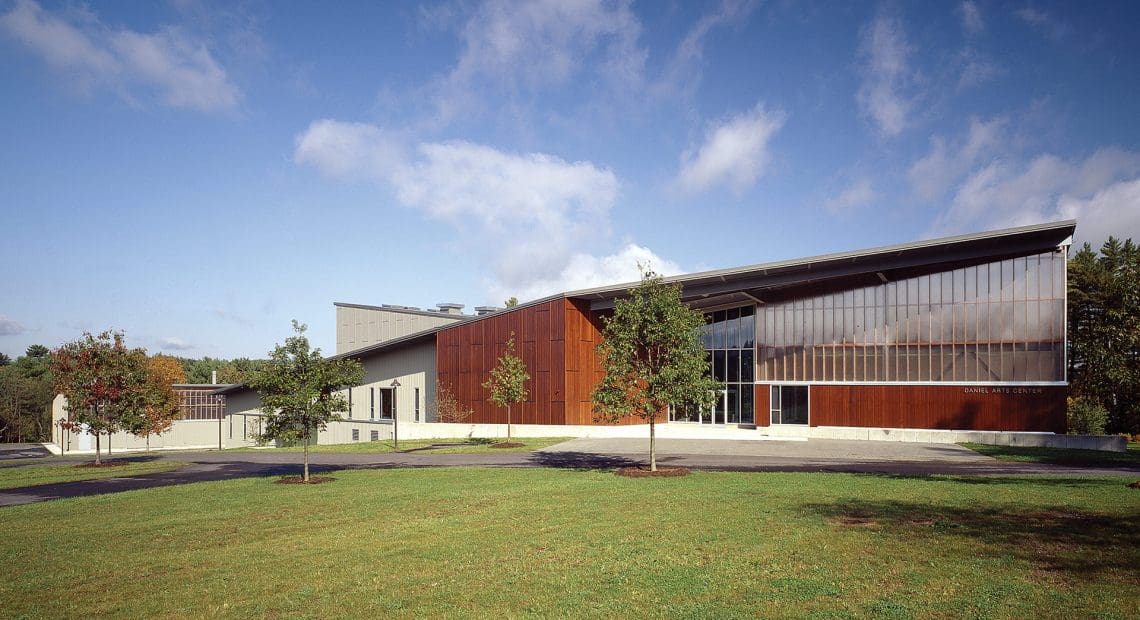
The Daniel Arts Center is one of many individual pieces on the Bard College of Simon’s Rock campus that have caught the attention of developers.
John Weinstein said the phones started ringing seemingly within hours after the news broke last November.
This was the official announcement that Bard College at Simon’s Rock, an institution in Great Barrington for 60 years, would be closing its campus there and relocating programs to Bard College’s main campus in New York for the start of fall classes.
The phone calls were — and are (they’re still coming at a good clip) — from those interested in acquiring and developing all or a piece of the 280-acre campus, with a wide range of specific intentions, including housing.
“The inquiries have ranged from totality to the very granular,” said Weinstein, the school’s vice president and provost, meaning everything from the entire campus to individual buildings to specific pieces of equipment.
Interest in those pieces picked up in intensity with passage of an overlay zone at the recent town meeting, one that will permit many different uses beyond education, said Weinstein, adding that some uses — cannabis facilities and an amusement park, for example — are still not allowed.
The fate of the Bard campus and the prospect of losing such a large contributor to the Great Barrington economy are at the top of a long list of storylines involving this picturesque Southern Berkshires community and its mostly tourism-driven business community.
“The inquiries have ranged from totality to the very granular.”
“This will have an impact on the town in multiple ways,” said Betsy Andrus, executive director of the Southern Berkshire Chamber of Commerce, based in Great Barrington. “We won’t have the influx of students coming into the town for shopping and eating, and you also have teachers and staff, an athletic center, and the Daniel Arts Center; it’s certainly a loss for this area.”
A loss that is in many ways balanced by anticipation about what might come next.
As for other storylines, they include everything from new ownership for several downtown properties — and reshaping of those properties for retail and office use (including a new home for the chamber) as well as residential units — to lingering housing concerns, especially a shortage of affordable, or ‘workforce,’ units, putting a burden on both business owners and their employees.
“This whole area needs more workforce housing; our employees can find places to live, but often at a fairly substantial commute,” said Janis Martinson, executive director of the Mahaiwe Performing Arts Center. “It’s a real challenge; people are coming a long way to get to work because they don’t have a choice.”
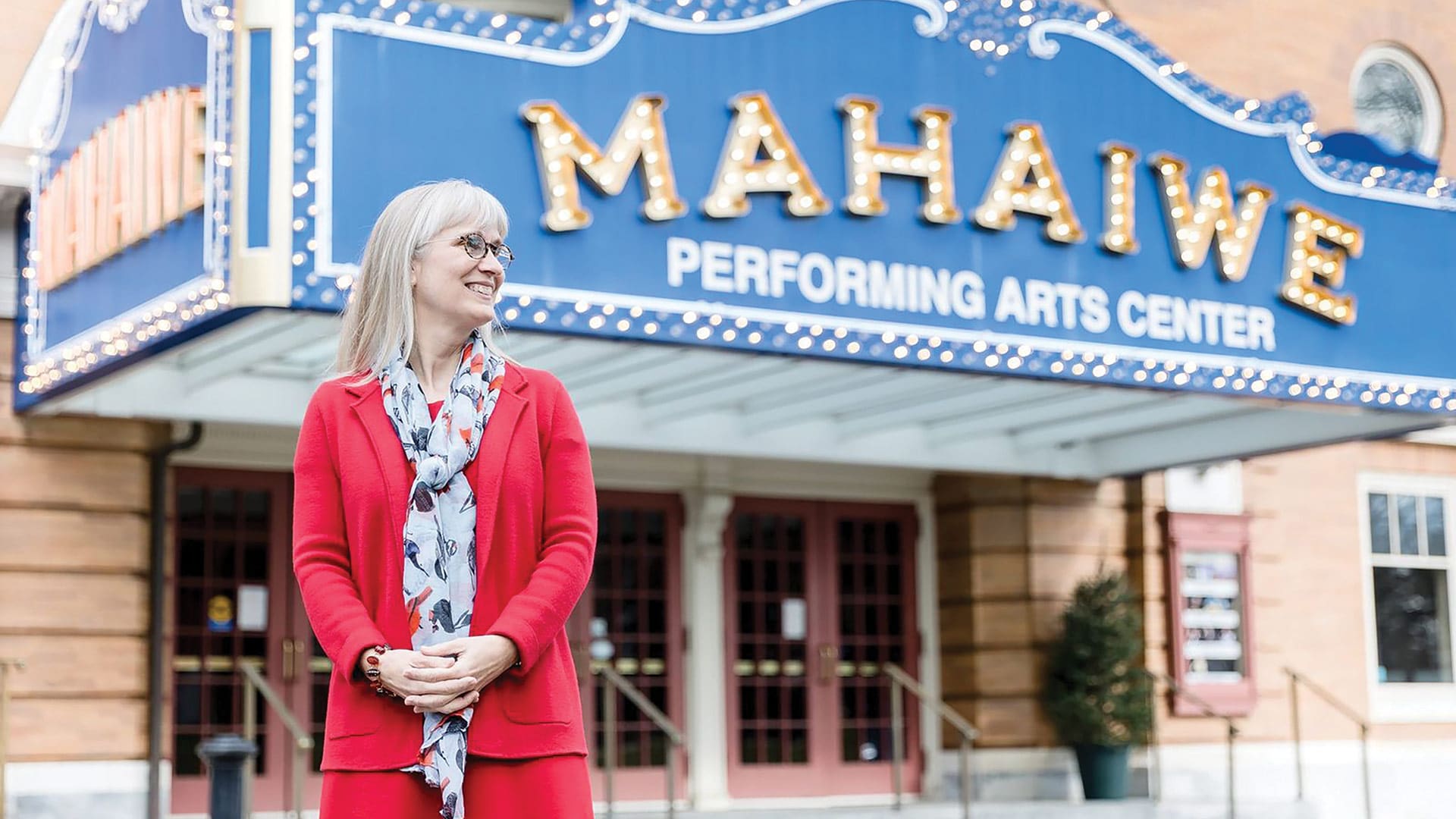
Janis Martinson says the Mahaiwe Performing Arts Center will open a second facility later this year, one of many efforts to connect the community to the arts.
On another note (pun intended), this is shaping up to be a big year for the Mahaiwe, built in 1905, which has a full slate of performances on tap — from classic movies like Casablanca, shown on Valentine’s Day, and Sabrina, which aired May 23, to a Brian Cox tribute to opera, comedy, and a wide variety of musical performances — and is set to open an accessory venue in the town’s former fire station.
“A group of businesspeople have restored the firehouse, and they’re leasing us a portion of the first floor,” said Martinson, adding that the building is roughly the same age as the Mahaiwe. “We’re using that as an intimate, flexible performance venue and a concession space.”
The Mahaiwe is one of many key contribitors to a vibrant downtown that has made a near-complete recovery from COVID and extensive infrastructure work in the central business district, said Martinson, adding that, while Great Barrington once had slow times of the year — most of September, for example — it is now vibrant year-round.
“I think the town has grown a little younger,” she said. “And while there used to be some times when it would be pretty sleepy, it’s not like that anymore; this is a 12-month-a-year busy town.”
Andrus agreed, noting that the investments made in several downtown properties will bring more people, and more vibrancy, to the area, with some new businesses and several existing ones with new mailing addresses.
“I think the town has grown a little younger. And while there used to be some times when it would be pretty sleepy, it’s not like that anymore; this is a 12-month-a-year busy town.”
“Change is always a positive thing,” she said, noting that several existing businesses have or will find new and better spots. Meanwhile, new housing units equate to more people living in the central business district — and more opportunities for some workers to shorten their commute.
For this latest installment of its Community Spotlight series, BusinessWest takes an in-depth look at Great Barrington and the many developing stories in this destination community.
A Loss — and an Opportunity
Weinstein said the decision to close Bard College’s Great Barrington campus and relocate its various programs — early college and some high-school offerings — came down to numbers.
Getting more specific, he said it was the number of students that would make sustaining that campus feasible. That number is at least 450 and preferably much higher, he noted, adding that the school hasn’t been able to reach that threshold, and with current demographic shifts — specifically fewer high-school-age people — it wasn’t going to get there anytime soon.
So the decision was made to move the school and its programs to the main Bard campus, where economies of scale will make this operation much more sustainable, said Weinstein, adding quickly that, while this move represents a loss for the community, the campus as a whole and its individual parts present a unique development opportunity.
And the zoning overlay district certainly helps in this redevelopment, said Weinstein and others we spoke with, noting that it will permit operation of an athletic center and performing-arts center — those are just two examples — without a school being attached.
“Those most interested in the future of the property did that shift,” said Weinstein, noting that the redevelopment of the campus will afford the town an opportunity to address some of its pressing needs and challenges, a list that certainly includes housing.
Great Barrington at a Glance
Year Incorporated: 1761
Population: 7,172
Area: 45.8 square miles
County: Berkshire
Residential Tax Rate: $13.79
Commercial Tax Rate: $13.79
Median Household Income: $95,490
Median Family Income: $103,135
Type of Government: Open Town Meeting
Largest Employers: Fairview Hospital; Iredale Mineral Cosmetics; Prairie Whale
* Latest information available
Andrus agreed, noting, as Martinson did, that businesses and their employees are impacted by the current lack of affordable housing.
Many of these businesses are in the broad tourism, hospitality, and retail sectors, said Andrus, noting that Great Barrington draws visitors from nearby New York, other communities within the Berkshires, and well beyond. Meanwhile, its population increases threefold in the summer, from 7,000 to 21,000, as snowbirds and those with second homes in the area return.
“With that influx of people, even going to the grocery store can be chaotic,” she noted, adding that the town’s character changes as its population swells, especially the central business district.
Residents and visitors alike enjoy a very walkable downtown that features attractions like the Mahaiwe, a diverse lineup of restaurants, and unique arts-related programs such as Berkshire Busk — organized street entertainment (everything from singers and flamenco dancers to poets and aerialists) that runs on Railroad Street and other parts of the downtown on Friday and Saturday nights from early July to Labor Day.
There have been some changes within this downtown, and more are on the way, as some aging properties have changed hands, said Andrus, adding that this list includes the so-called Mahaiwe Block, the Marble Block, and other properties.
“All these buildings have changed hands to younger, probably more energetic people,” she said, adding that these landmarks are being renovated and, in some cases, reimagined, with mixes of retail, office, and much-needed housing.
The chamber’s new home at 343 Main St., across from Town Hall, is a good example. The property there, acquired and redeveloped by the Alander Group, will house the chamber’s offices as well as an enlarged visitors’ center, as well as other retail, 15 apartments, and a wine bar, said Andrus, noting that, prior to its move, the chamber was in two locations, a small visitors’ booth in front of CVS and a business office on Railroad Street, a situation that was less than ideal.
“It was like working in a cave — it was hard to find; it wasn’t easily accessible,” she said of the Railroad Street location. “Now, we’ve combined the business office and visitors center, and it’s a real improvement.”
The Alander Group also owns the Mahaiwe Block, which houses the performing arts center, she said, adding that it also features retail and housing units.
Meanwhile, at the Marble Block on Main Street, the former Gorham & Norton grocery store, a fixture for generations, is being remade into Robbie’s Community Market, said Andrus, adding that the property will soon feature several apartments as well. As for the market, it will be a collective, including a coffee bar, pizza oven, sandwich shop, and more, combining the past — this was a soda counter decades ago — with the present.
Taking Center Stage
These investments, as well as the new or relocated businesses and residents they bring to the area, will create more vibrancy in the downtown, said Andrus, adding that, overall, the downtown continues to thrive and build on its status as a destination.
Martinson agreed. She took the reins as executive director of the Mahaiwe in January 2020, just two months before COVID arrived and essentially shut down its scheduled season.
But the facility survived that challenge by getting creative, she recalled, adding that one of first initiatives that year was to partner with Bard College at Simon’s Rock to create a drive-in movie theater in one of its parking lots.
“They had a parking lot outside their performing arts center that happened to be tiered down a hillside, so we could have all the cars facing in one direction and put the screen at the bottom of the hill,” she recalled, adding that the schedule included a few of the Star Wars movies, American Graffiti, The Princess Bride, and other family stalwarts.
“That’s how we got through summer,” she went on, adding that the Mahaiwe partnered with other performing arts nonprofits in the area to record concerts from its stage in efforts that were more about the arts than revenues. “We managed to stay in touch with our community throughout the pandemic, and that’s really the point — to bring people together, and bring them together around the performing arts.”
This creative spirit continues today, she said, adding that the facility hosted more than 125 individual events last year and will grow that number this year, especially with the opening of the new space in the renovated former fire station.
“We’ll be able to do much more intimate performances there — things that are a little more niche and involving emerging artists and more local artists,” Martinson told BusinessWest. “And we’ll be able to rent that space out to local performing arts organizations.
“We’re really excited about that coming online,” she went on, adding that there have been some ‘sneak previews,’ with a planned opening for later in the year, probably the fall.
The auxiliary theater is part of a broader five-year strategic plan now in year two, said Martinson, adding that, in simple terms, the plan calls for bringing more performing arts than it already brings to its main stage and “reaching further into our community.”
That community includes Great Barrington residents, but also visitors from a wide radius, she said, adding that this town is a true destination, one that has made its way all the way back from the dark days of COVID.
And one that is looking to turn the loss of Bard College at Simon’s Rock into new opportunities.