
Healthcare Provider
Occupational Therapist, Baystate Medical Center
She Brings Passion, Compassion to Her Work in the NICU
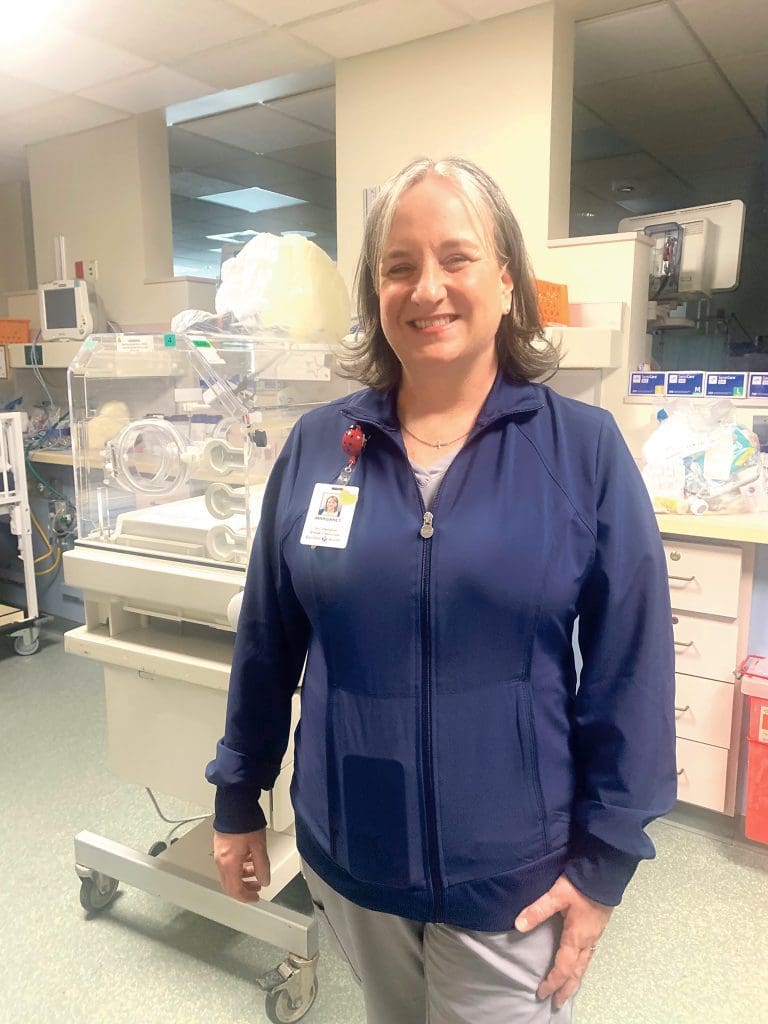
Margaret King
As she talked about her work as an occupational therapist in the Neonatal Intensive Care Unit (NICU) at Baystate Medical Center, and why she believes she was “born” to be in this setting, no pun intended, Margaret King flashed back almost 40 years.
As King tells the story, she and her mother were visiting her father, then a patient in a hospital in Texas, when her mother suggested they swing by the maternity unit and look at the newborns. And they did.
“I lit up, and I clearly remember my mother saying, ‘you should work with babies someday — I think you’d be really good at it,’” she recalled. “I have carried that with me, and I truly feel like this is what I was put on this Earth to do.
“I feel like I have the best job in the world,” she went on. “It’s a privilege to be able to do this work; these babies … they just melt your heart.”
King, a Healthcare Hero in the Provider category, has worked as an OT in pediatrics, and mostly in the NICU, for most of her career, and at Baystate for the past 16 years. And while this unit — for babies born prematurely (as many as 10-12 weeks prematurely) and babies with serious medical conditions — is not what most people think of when they hear the words ‘occupational therapist,’ there are many aspects to this assignment, she told BusinessWest.
“Occupational therapy, by definition, is about improving someone’s ability to participate in life skills,” she said. “Those are the jobs of living that we refer to, and a baby has jobs of living, too. They need to be able to grow correctly; they need to be able to sleep and rest because that’s also how they grow; they need to be able to eat, whether that’s bottle or breastfeeding; and they need to be able to bond with their parents.”
As she helps newborns with these jobs, King works in concert with other professionals in the NICU to essentially bring light to a unit kept dark to replicate conditions in the womb.
And, according to those King works beside, she is the consummate team player — supportive, always positive, and often serving as a mentor to younger OTs and other professionals.
“Maggie is known for her smile, kindness, patience, and resilience,” said Erin Jarosz, Rehabilitation manager for Baystate Health, who nominated her for this honor. “She is passionate about her care for babies, and she works closely with families to be able to best support the physiological needs of their babies and improve the babies’ abilities to participate in daily life activities.”
Olivia Fernandes, a Baystate Rehabilitation speech pathologist, agreed.
“Not only is Maggie a phenomenal clinician, she truly is a wonderful person,” Fernandes said. “She is a leader within our department and treats everyone with respect and kindness. I have looked up to her throughout my time at Baystate as I always value her guidance and advice.”
These qualities resonate not only with co-workers, but also with the parents and other family members of NICU patients, none of whom expected their child to be in this unit and all of whom agonize over each day spent there.
“This is not where they wanted to be — they didn’t want to meet me or anyone else in the NICU, so you have to start from there,” said King, adding that the unique setting, coupled with the emotional nature of the work, leads to relationships that last for years after the baby has gone home.
“I run into so many parents at the grocery stores, Target, places like that,” she went on. “That’s always sweet; that was such a unique, difficult time for them, and that’s why we become family to them during that stressful time, so it’s exciting to see them.”
King was — and still is — a part of hundreds of families across the region, families touched by her passion, warmth, and competence. Families who would say she is more than worthy of being called a Healthcare Hero.
Baby Steps
Whenever a baby goes home from the NICU, it’s an event, a celebration, King said. “It’s always a big thing, especially for the parents. And for me, if I’ve worked with them a lot, it’s just a very exciting day.”
And when a baby who has been there several months leaves those confines, there’s an even bigger sendoff, with pom-poms and the theme from Rocky playing in the background, a nod to the perseverance and fighting spirit of that child — and his or her family.
“She is passionate about her care for babies, and she works closely with families to be able to best support the physiological needs of their babies and improve the babies’ abilities to participate in daily life activities.”
King said it happens regularly, sometimes a few times a day. But it never, ever gets old.
“There’s lot of tears and hugs,” she noted. “Every situation in the NICU is meaningful and challenging, but some of those babies have been here for months, and it’s a big feat to get out of here.”
Helping babies ‘get out of here’ might be King’s unofficial job description — and, as she noted earlier, work she was born to do, even if it took a while to realize that.

Maggie King, center, with Rebecca Hillenbrand, left, and NICU Manager Stephanie Adam, has been called the consummate team player.
Indeed, she did a music-therapy internship while in high school, and during that time, she pulled an occupational-therapy journal out of the trash and remembers saying, “what’s this?”
“I starting learning about occupational therapy and really never looked back,” she said, adding that she focused on that specialty while studying at Texas Tech. She started in Texas, first in adult rehab and then pediatrics, but eventually relocated to New England (and Baystate) to be closer to family.
And for most of her career, the NICU has been … well, home.
It’s a unique setting, obviously, one where the patients are small, cannot talk — although they can certainly communicate — and, in many cases, their eyes are not yet open.
But they still need occupational therapy, and King loves to talk about that subject.
“Even when babies that are tiny — the 23-weekers — one of my jobs is to help with the positioning of that baby so their arms, legs, and bodies grow properly, but also in a way that keeps them calm so they can sleep and keep their vital signs stable so they can be medically well,” she explained.
“I love working with adults, and the main difference with them is that you can communicate with them and have a give and take, and they can work on following directions. With babies, you have to be really good at following their cues to know what they like and what they don’t like.”
With premature babies, she noted — and, really, all babies in the NICU — she and other team members work to keep those babies in the same position they would be in if they were still in the womb.
“As an occupational therapist, I provide positioning aids that we put the babies in to provide support and containment — we try to recreate the womb,” she explained, adding that this is why it’s kept dark in the unit. “For babies, looking at the light is very stressful; it can actually raise their blood pressure and elevate their heart rate, just because it’s too light. And it’s my job to protect babies from those stressors.”
There are many other aspects to this work beyond positioning, she said, listing everything from supporting the baby during painful procedures, such as putting in an IV, to help with feeding, which is obviously a large part of her work.
When asked what she likes about OT, King said it’s the ability to “work on a little bit of everything with a person, things that are meaningful to them, things that are necessary for life, and you get to establish relationships with people. It’s very unique, and it’s special, and you get to give a lot of yourself to make things happen.”
She stressed that all that is true even if the patient is a few days old and/or several weeks premature.
“I love working with adults, and the main difference with them is that you can communicate with them and have a give and take, and they can work on following directions,” she explained. “With babies, you have to be really good at following their cues to know what they like and what they don’t like.”
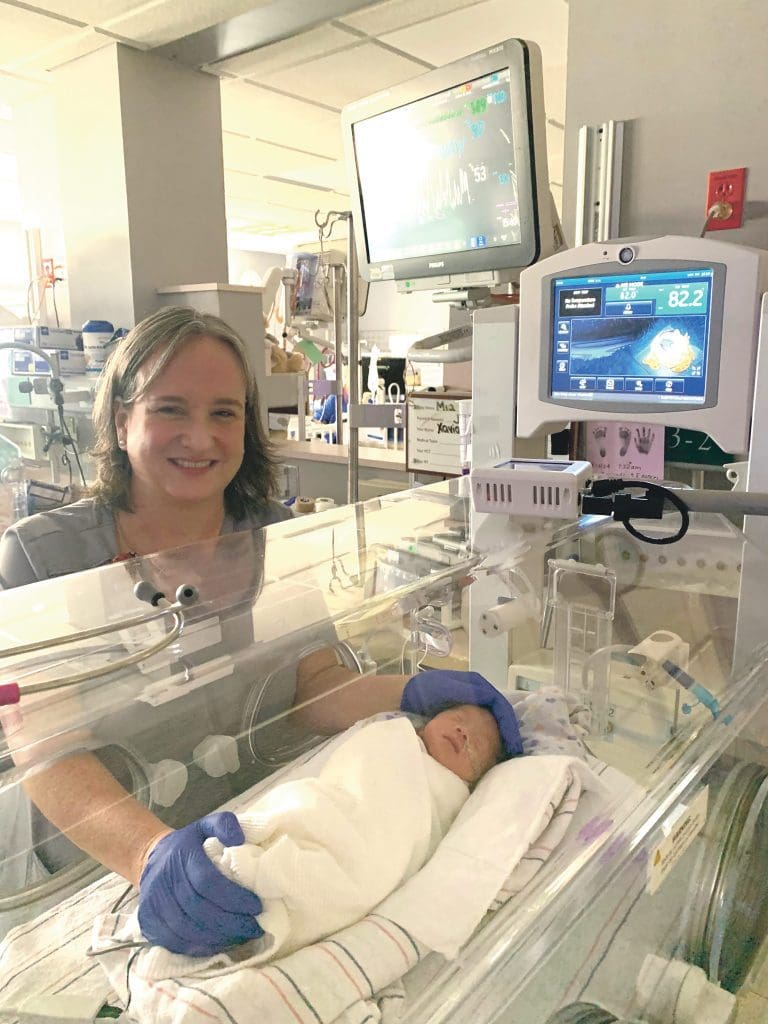
Maggie King says there are anywhere from 30 to 50 babies in the NICU at any given time.
They don’t like light, and they’re also put off by sounds, everything from phones ringing to isolette doors closing, she said. “Just small sounds to us can be painful to these babies, and we know that because of their vital signs.”
And while her primary work is with patients, King is also there for parents and other family members, who are obviously under a good deal of stress.
Parents of NICU babies are not ‘visitors,’ per se, as in a traditional hospital setting; they can come whenever they want and stay as long as they want.
“We do encourage parents to have rest breaks, take a walk, go get some lunch, maybe go home,” she said, adding that helping parents through this extremely difficult time is just one of myriad rewards that come with this job.
Born Leader
King told BusinessWest that the tiny patients in the NICU — there are between 30 and 50 at any given time — stay in that unit anywhere from a few weeks to several months, depending on how prematurely they were born or the severity of their condition. But the relationships forged with those patients and their parents last for years, if not decades.
Indeed, in addition to the yearly holiday cards she receives from the families she’s worked with, there are pictures sent as those former patients grow older, as well as invitations to their birthday parties — a steady stream of them, actually.
So many that King “sets boundaries,” as she put it. “I’ll go to a few of them. If I went to all of them, I’d be going to about 50 birthday parties a month.”
King is on those birthday-party invite lists because parents remember her, and they remember all that she brought to the NICU every day, from her competence to her passion to the smile that seems permanently etched on her face.
Those she works with see these same things every day, and they consider her the consummate team player: supportive, encouraging, and, in many ways, a mentor.
“Maggie has been consistently supportive and proactive in helping me work in this challenging, rewarding setting,” said Dan Lemaire, another Baystate Rehabilitation OT. “The NICU is, after all, an intensive-care unit; the patients are very involved medically, and Maggie’s experience and guidance has been essential to me in navigating this practice area. She has helped me understand an OT’s role amidst highly trained nurses, neonatologists, and other specialists. She has shown sensitivity and awareness regarding my skill level and readiness to approach different patients, and has guided me to appropriate training resources. Not least of all, Maggie is simply fun to work with.”
Upon reading or hearing such comments, one thing becomes abundantly clear: Maggie King’s mother, who died just a few years after that visit to the maternity ward in that Texas hospital, was right. Her daughter is really, really good at this, meaning work not just with babies, but babies in an intensive-care unit — and with parents who are under more stress than perhaps at any other time in their lives.
In such a setting, someone must bring to their job passion and compassion, and they need to bring it every day.
Maggie King does, and that’s why she’s a Healthcare Hero.

A Local Voice in Washington

Jaines Andrades says scholarship opportunities and ways to access funding need to be made more available to minority students — and more community-college programs should be tuition-free.
On May 2, Jaines Andrades, a nurse practitioner at Baystate Medical Center in the Trauma and Surgery unit, testified before the U.S. Senate Committee on Healthcare, Education, Labor, and Pensions (HELP) about ways to minimize the shortage of minority healthcare providers.
Andrades was invited to testify by Sen. Bill Cassidy of Louisiana based on her now-famous story of climbing the ranks in her healthcare career. Featured on CNN, Good Morning America, People magazine, and more, she first caught national attention in 2020 when she posted a photo of each of her hospital badges to social media, showing her progression from custodian to registered nurse to nurse practitioner, all in the same hospital.
Following a screening process with representatives of the bipartisan committee members, the Chicopee resident was invited to be part of the panel, which included three other healthcare professionals, to help senators learn about ways to decrease barriers between minority students.
At the Capitol Hill hearing, Andrades shared her story of struggling to figure out a way to afford a college education which would lead to an career with economic stability while she was a student at Putnam High School in Springfield. She told lawmakers that, by chance, she met a nurse who encouraged her to consider the profession.
She decided to take a job that would help her learn more about healthcare while completing prerequisites at Holyoke Community College, so she could enroll in a bachelor of nursing science program at Elms College, and eventually earn a doctorate of nursing practice degree. She said working with nurses was how she learned how to make the next step in her education feasible.
“Making students at all schools, most especially those in underserved areas, aware of healthcare as an attainable career opportunity would go far, letting these students know it is within their reach and that there are resources available to them as they embark on the journey to higher education.”
“I began working in environmental services, as a custodian, at Baystate Medical Center. I worked to keep surgery and procedure rooms clean. This gave me the opportunity to see, first-hand, what nurses did, what I would need to know to move ahead in a healthcare environment, and to get advice on how to proceed in my career,” Andrades said. “My colleagues also offered incredible insight on ways I hadn’t thought of to fund my education. They pointed me toward resources like the Western Mass. Community Foundation, where I had access to scholarships and interest-free loans.”
Based on her experience, Andrades recommended to senators that education be made more affordable through tuition-free community college. She also suggested that scholarship opportunities and information on ways to access funding need to be made more available to minority students.
She recommended programs like the Baystate Springfield Educational Partnership, which allows students from Springfield to learn about healthcare careers inside the hospital, get more funding, and be implemented in areas where minority students live. She said these programs give students the chance to consider different career options before entering college and provide mentorship from professionals already working in medical professions. She said by participating in these programs, students often see themselves represented among advanced-practice providers and physicians and are more likely to see these professions as realistic possibilities. It also gives them exposure to pathways and resources to pursue their careers.
“I feel fortunate to have had the opportunity to testify before some of the nation’s most instrumental lawmakers. It was an honor to share my experience and insight, and to represent my community and Baystate Health.”
“Robust college and career planning is very critical. Making students at all schools, most especially those in underserved areas, aware of healthcare as an attainable career opportunity would go far, letting these students know it is within their reach and that there are resources available to them as they embark on the journey to higher education,” Andrades said.
Of the experience, she said she is honored to represent her community, Baystate Health, and the nursing profession. Always eager to help raise awareness and share her story, she hopes her words will resonate in Washington and beyond.
“I feel fortunate to have had the opportunity to testify before some of the nation’s most instrumental lawmakers. It was an honor to share my experience and insight, and to represent my community and Baystate Health,” Andrades said. “I hope the senators will take my suggestions under consideration, but most of all, I hope my story reaches one person who will be inspired by it and find a way to pursue their own dreams.”
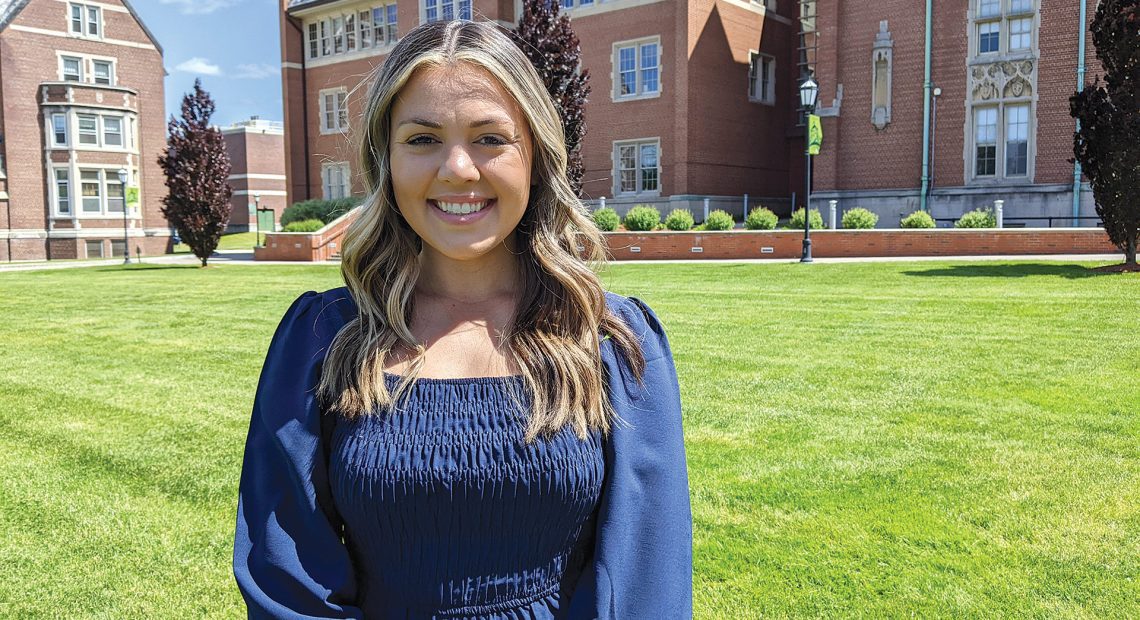
‘I Love the Profession’
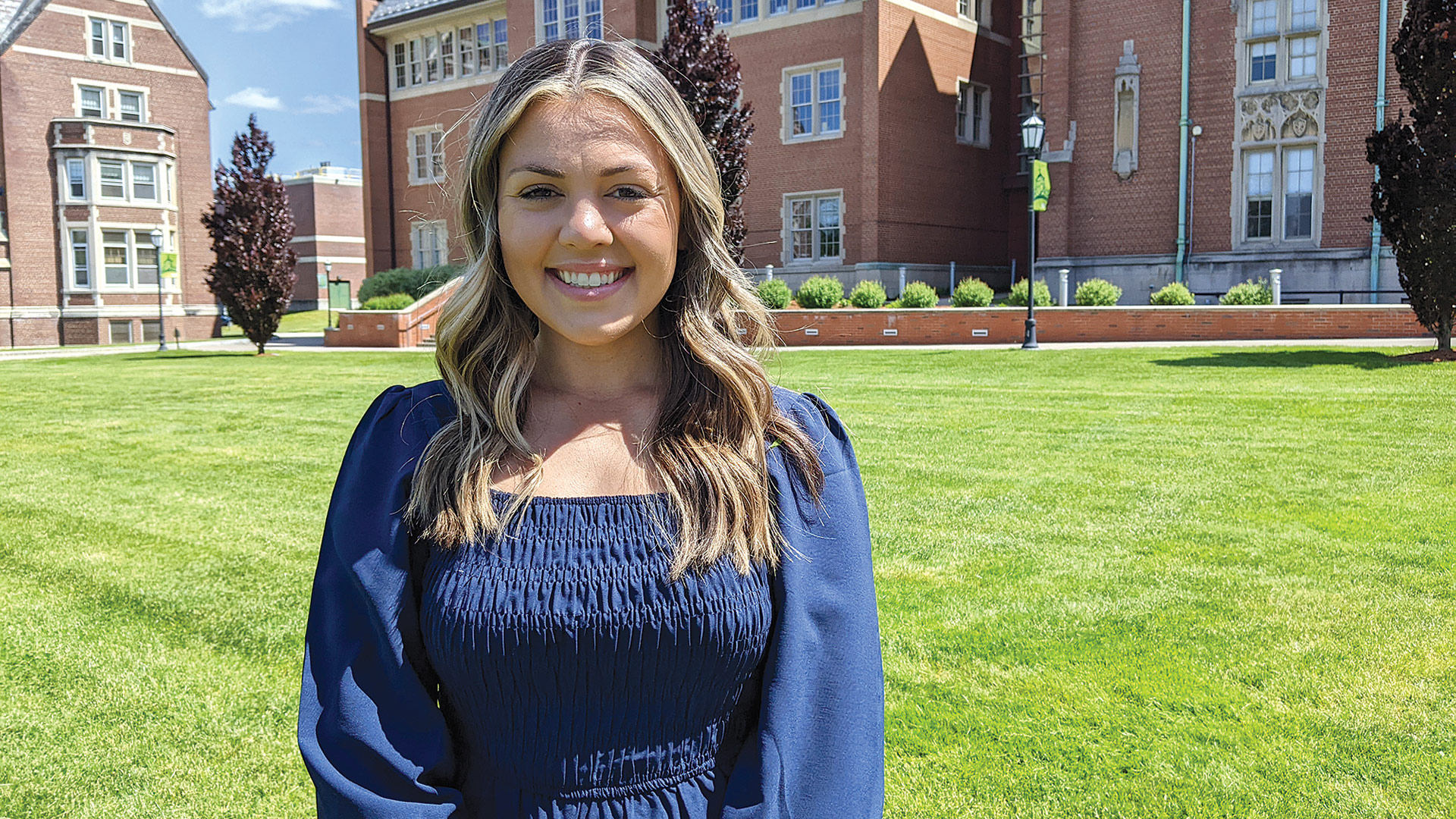
Ashley Girouard is gaining experience through Baystate’s SNAP program for new nurses.
To Ashley Girouard, seeing patients isn’t just treating them and sending them on their way. There’s a connection to be made in each encounter.
“I love making connections with my patients,” she said of her current work in an orthopedic unit at Baystate Medical Center. “A lot of these patients come in for routine hip and knee surgeries, and they’re healthy. And I love being able to talk to them. We’ll talk about sports, we’ll talk about their lives, their family, and I think it’s great. I love making those connections by talking to them.”
At Elms College, where she recently earned her bachelor of science in nursing degree and will soon add the title of registered nurse, Girouard followed in the footsteps of her mother, who made nursing her profession as well.
“I’ve always looked up to her. I see what she does day in and day out,” she said. “I know that I love caring for everybody around me, so I just decided to go into this profession … and I love it.”
Girouard currently works in the Student Nurse Associate Program (SNAP) at Baystate. SNAP nurses function in a supportive role to a registered nurse and work collaboratively with the healthcare team in the management of patient care. This position allows the student to gain experience in providing care to a diverse patient population and to develop strong communication and organizational skills.
Meanwhile, they perform direct patient care, obtain and record vital signs, collect laboratory specimens, document intake and output, communicate with patients and staff, promote patient safety, and function as a team member within the health system. Girouard appreciates the experience she’s getting through the program, not only in the specifics of orthopedics, but how to relate to patients. And she intends to keep learning, in a variety of settings.
“I want to get some med-surg experience, and I’ve always been interested in intensive care. And then I definitely want to go back to school,” she said, looking to move on to a master’s program. “My goal is to be a nurse practitioner.”
When asked why she strives for an ICU role, she said the “go, go, go” of the setting appeals to her. “These patients are very critical, and I’d like to be able to help them in any way possible, and just get them even a little better than they were in the morning.”
Taking classes and gaining learning experiences through the COVID-19 years was difficult, she admitted. “I’m a very hands-on visual learner, and having to learn from home in my room on a desk was not ideal at all.
“But we had amazing professors at Elms,” she added. “And they helped so much, all the time. They would have hourly extra time when you could go on Zoom with them, and if you needed help, they were always willing to help. I think the professors really made a difference. After all, they had to adjust to this big change as well.”
Even a period of mask wearing in class was a reminder that the pandemic wasn’t quite over, so being able to attend classes without masks this past year — and, more recently, work clinical rotations without them — have been pleasant reminders that life has returned to normal.
For health systems, of course, it’s still a very challenging time because of nurse shortages, as all the recent graduates we spoke with told us. And that means greater career opportunities for those entering the field, who are able to write their own tickets — with the right degrees of course.
“Even if there weren’t so many jobs out there, I still would be interested in nursing. I love the profession,” Girouard said. “But I think a lot of people want to go into nursing because they know they can go into deeper specialties like ICU or PICU, things like that.”
The work certainly requires certain traits, she said. “Definitely caring, for sure. And patience. If you don’t have patience, I don’t think this would be a good career choice for you; a lot of patients can be very difficult. And you need to be careful, too. A lot of errors can happen, and we learn in nursing school how important it is to prevent errors. It’s so easy to make a mistake.”
So, as Girouard ponders what might be next for her, both in the work setting and eyeing the next steps in her education, she’s walking into a world of opportunities as an RN with a healthy sense of caution and care, but not anxiety.
“I’m just so excited,” she said. “The last four years were so difficult, especially with COVID and working in the hospital during COVID. And now I get to go to work and not wear a mask. And I’m going to be a nurse, and actually take care of patients and be a difference maker.”
—Joseph Bednar
Vice Chair of Clinical Operations for Emergency Medicine,
Baystate Medical Center: Age 37
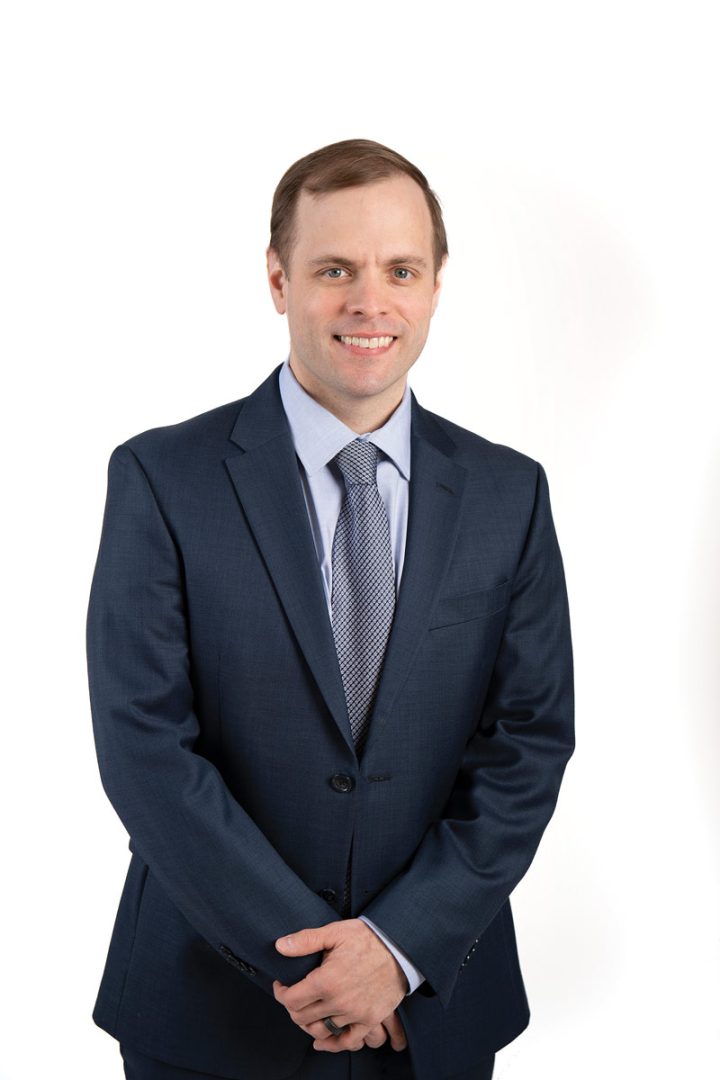
Dr. Seth Gemme
It wasn’t until late in his undergraduate studies at Westfield State University that Dr. Seth Gemme even thought about having those two letters appear before his name.
In fact, his initial aspiration was to be a meteorologist — he had an internship with Adam Strzempko at WWLP while in high school. But he eventually became an EMT, which brought him into the ER at Baystate Noble, which eventually led to a job there, which eventually led him to develop a fondness for the ER and the desire to be a doctor in that setting … which led him to the University of Buffalo Medical School, where he graduated first in his class.
That led to a residency at Brown University, and — here we can fast-forward a little — eventually Gemme returned to this region and to Baystate Noble Hospital, and then chief of the ED at Baystate Wing Hospital, and now, vice chair of Clinical Operations in the ED at Baystate Medical Center.
It has a been a fast and quite impressive ascent for Gemme, whose job (more of a passion, really) involves a mix of clinical work and administrative duties. When he’s not tending to patients, he’s working to improve processes, reduce wait times, and improve capacity management.
Like most who choose the ER, he prefers to say it found him, and he notes that he likes everything about it, from the pace of the work to the fact that every day, every hour is different.
“I like helping people at their most vulnerable time, and hopefully being someone who can change a life,” he explained.
He described the pandemic years as difficult and exhausting, with a full range of emotions.
“Initially, we were heroes; it was the first time where people stopped yelling at us and brought us food,” he joked, adding that the COVID years provided learning experiences and opportunites to grow professionally on many levels.
While the ER is the focus of his workday, Gemme has many other priorities and pursuits, starting with his family — his wife Chelsie and daughters Harlow and Hanna. There’s also his music — he plays guitar and piano and sings, and appears both solo and in an indie folk trio, the Ship and the Shield. Meanwhile, he’s also one of the team physicians for the Springfield Thunderbirds and a board member for Hilltown Ambulance.
Needless to say, he’s instrumental to the health and wellness of people of this region — in every sense of that word.
—George O’Brien
SPRINGFIELD — Baystate Medical Center and Roca Springfield are launching a first-in-the-region hospital-based violence-intervention program called Better Tomorrow to serve as a vital public-health response to violence in local communities.
Funded with a $1 million U.S. Department of Justice grant through the Byrne Criminal Justice Innovation Program, the joint effort will combine medical staff and community-based service providers to intervene with victims of violence in hospital settings, connect them with community services, and reduce further victimization and violent behaviors.
“Our mission is to decrease violence related to firearms and other forms of intentional injury in our community by increasing access to violence-prevention initiatives,” said Dr. Kristina Kramer, a trauma and acute-care surgeon at Baystate Medical Center who is serving as medical director of Better Tomorrow. “Our collaboration with Roca will enable us to work toward a common goal of reducing preventable injuries and death resulting from firearm violence.”
For the past 11 years, Roca Springfield has been supporting young men and women in Greater Springfield with its internationally recognized violence-intervention effort directed at those most likely to be involved with community violence.
“Roca transforms communities plagued by violence in two ways,” said Chris Judd, vice president of Roca Springfield and Holyoke. “First, we work long-term with young people to teach life-saving emotional skills to overcome their hurt and anger and see a future where they’re not in a casket or serving a life sentence by age 20. And second, we work with institutions to change how they think about helping young people who are traumatized. It takes relentlessness, seeing hope when all hope seems lost, and never giving up.”
Hospital-based violence intervention programs are multi-disciplinary teams designed to identify patients who are at risk of repeat violent injury and connect them with hospital- and community-based resources to help address underlying risk factors for violence. Research shows that these programs reduce repeat victimization and criminal-justice involvement while also decreasing healthcare and other costs associated with violence. They improve quality of life for patients by addressing disparities in access to healthcare, transportation, case management, and a range of other social determinants of health.
Kramer noted that trauma centers play an important role in reducing the impact of injury by participating in prevention efforts. These efforts are based on identifying specific injuries and risk factors in patients, families, and the community.
“Baystate is the only level-1 trauma center in Western Massachusetts with an obligation to aid injury-prevention efforts in our community,” she said. “Better Tomorrow is an example of a program that will serve people who are at increased/higher risk for intentional injury and interpersonal violence.”
SPRINGFIELD — Sam Skura, MPH, MBA, a healthcare professional with more than 25 years of clinical leadership experience, has been named president of Baystate Medical Center and senior vice president of Hospital Operations for Baystate Health. His appointment becomes effective Sept. 12.
In his new role, Skura will join the senior leadership team and serve as a member of the president’s cabinet, reporting directly to Marion McGowan, executive vice president and chief operating officer of Baystate Health.
Skura has an extensive background in hospital leadership and most recently served as chief operating officer reporting to the president at Beth Israel Deaconess Medical Center (BIDMC), a teaching hospital of Harvard Medical School. In previous roles, he served as senior vice president of Ambulatory and Clinical Services and chief administrative officer at BIDMC.
Prior to BIDMC, Skura was vice president of Clinical Operations at Lahey Hospital and Medical Center, reporting to the chief operating officer. He served on the leadership team of a combined group practice of more than 500 physicians and a 335-bed inpatient hospital. He also held administrative roles at Cambridge Health Alliance, where he provided oversight to senior leadership for 16 community health centers and practice sites and a three-campus Emergency Department. He was administrative director for Steward Health Care (formerly Caritas Christi Health Care System) in Boston, where he provided management for the largest emergency-medicine group in Massachusetts, trending more than 240,000 annual visits. Skura also held managerial roles at Brigham & Women’s Hospital/Partners Healthcare in Boston and Fallon Healthcare System in Worcester.
Skura earned an MBA from the Isenberg School of Management at UMass Amherst, a master’s degree in public health from Boston University, and a bachelor of arts and economics degree from Brandeis University.
Emerging Leader
Hospital Epidemiologist, Baystate Medical Center; Vice Chair for Clinical Affairs, Department of Medicine, Baystate Health
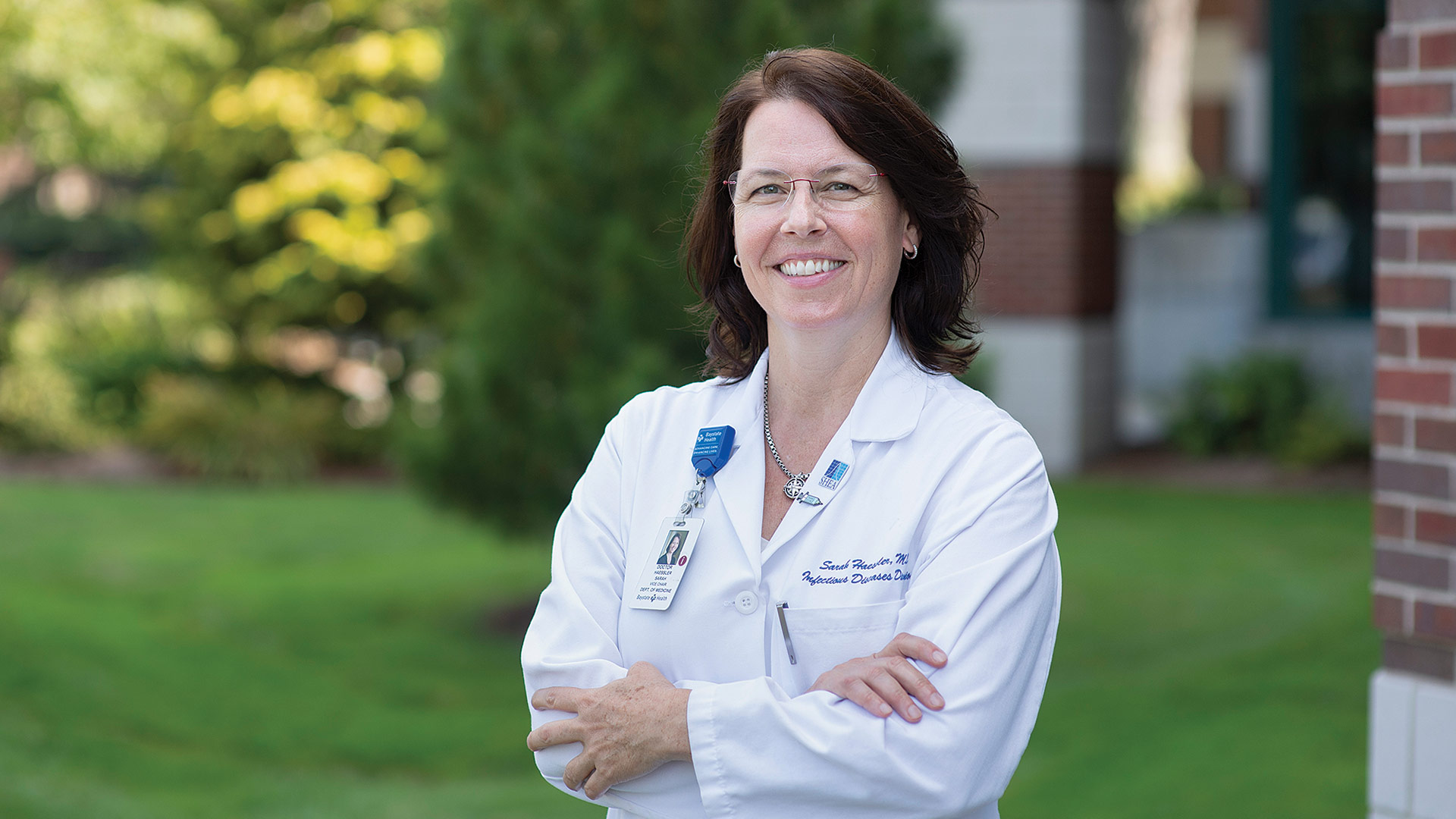
Dr. Sarah Haessler
She ‘Stands on a Wall Between the Community and Infectious Diseases’
Dr. Sarah Haessler has already been honored as a Healthcare Hero. Actually, a ‘Healthcare Superhero,’ to be more precise.
That was the unofficial title bestowed upon 76 fully vaccinated healthcare workers from across New England who attended the Super Bowl last February as guests of New England Patriots owner Robert Kraft. The group flew down on the Patriots’ team plane and got to see Tom Brady win his seventh Super Bowl — and promote vaccination while they were at it.
Haessler, hospital epidemiologist at Baystate Medical Center and vice chair for Clinical Affairs in the Department of Medicine at Baystate Health, was one of three from this region to be so honored; she was joined by Baystate colleague Stephen Boyle Sr., senior director of Hospitality; and Cherie Rodriguez, a respiratory therapist at Mercy Medical Center.
Haessler has many memories from that day, with only some of them involving the action on the field.
“It was the quintessential American experience,” she recalled, noting that healthcare workers from across the country were recognized at the game. “It was big. Everything about it was big. The music was loud, there were fireworks for everything, there were military flyovers, the jumbo screens had the president on them … America doesn’t do anything small. This was very big and very American.”
“Her role is to stand watch on the wall between our patients, our team members, our community, and the infectious agents that threaten their health. And she has successfully done this for more than a decade, not only in the face of a global pandemic the likes of which we have not experienced for more than 100 years, but every day of the year. Because in healthcare, those threats never cease.”
Haessler said pairs of tickets to the game were made available to various hospitals, and she was chosen by officials at Baystate to attend; she’s not sure how or why.
Matters are a little more clear when it comes to her being chosen as the winner in the intensely competitive Emerging Leader category for BusinessWest’s Healthcare Heroes awards. She has been chosen in large part for her many efforts to prepare those at Baystate for what was coming in early 2020 and for her ongoing work throughout the pandemic to plan, educate, and help carry out all the operations of a hospital during extraordinary circumstances. But there is certainly more to the story. Indeed, COVID-19 wasn’t her first experience with a highly infectious disease, and she acknowledged, with some resignation born from experience in her voice, that it won’t be her last.
Meanwhile, she has taken on more leadership roles over the years, serving as interim chief medical officer at Baystate Noble Hospital and currently sitting on the board of the Society of Healthcare Epidemiologists of America.
Her work in her chosen field, and her status as an emerging leader in Western Mass. and beyond, is best summed up by Dr. Andrew Artenstein, chief physician executive and chief academic officer, incident commander, COVID-19 Response, at Baystate Health, who nominated her for this honor.
“Her role is to stand watch on the wall between our patients, our team members, our community, and the infectious agents that threaten their health,” he wrote. “And she has successfully done this for more than a decade, not only in the face of a global pandemic the likes of which we have not experienced for more than 100 years, but every day of the year. Because in healthcare, those threats never cease.”
In a candid interview, Haessler talked about that harsh reality, her work at Baystate, her chosen career in epidemiology, and the many kinds of rewards that come with it.
At the Top of Her Game
When asked how she chose epidemiology as a specialty, Haessler started by saying that, during her residency at Dartmouth, she was interested — make that fascinated — by all aspects of medicine. It soon became clear to her that she needed to pick something broad that would cross all other specialties.
“When I sat down to pick one, I ultimately decided that the specialty where the cases that kept me up late or got me up early in the morning to learn more and read more and try to figure out what was wrong with this person — these puzzles — were the cases that were most interesting to me, and the most satisfying and challenging. And that was infectious disease,” she told BusinessWest.

Dr. Sarah Haessler was one of many ‘Healthcare Superheroes’ in attendance at last February’s Super Bowl in Tampa.
“I’ve never looked back — I’ve always loved it,” she went on, adding that, in this field, she does get to interact with specialists of all kinds. “It’s been an interesting career — I’ve never been bored. And the other thing about it is that it just keeps moving. I’m a high-energy person — I keep moving — so it suits me very well.”
Things were certainly moving in the latter days of 2019, said Haessler, noting that the information coming to her from hospital epidemiologists in China, and later the state of Washington, made it clear that something ominous was on the horizon.
“We saw the pandemic potential for it because it was so swift and had created a huge influx of patients in those hospitals in Wuhan,” she recalled. “It essentially overwhelmed those hospitals immediately, and the fact that China’s approach was to put the area in lockdown … that is the kind of organism, like SARS, that causes a pandemic.”
She said Baystate was ready, in large part because it had gone through this before with other infectious diseases and had learned many valuable lessons. And she was at the forefront of these efforts.
“We had been through H1N1, and then we had been through the Ebola epidemic,” she explained. “And this really created an impetus, and a framework, across the United States for preparedness for the world’s most contagious diseases.”
Because of Ebola, Baystate had created a Special Pathogens Unit to manage extremely contagious patients, said Haessler, who manages this unit and the team that operates it. And as part of that team’s work, it created protocols and procedures for how it would manage patients, took steps to ensure that there would be adequate supplies of PPE, put in place scenarios for how patients would be cared for and where, determined if, when, and under what circumstances elective surgeries would be halted, and much more.
In short, as Artenstein noted in his nomination, Haessler was the point person for preparing the medical center for what everyone could see was coming.
“Her work provided great comfort to all, knowing that we had such an expert in such a key role,” he wrote. “Her team’s magnificent work in collaboration with employee health services led to the earliest possible recognition of infectious contacts and allowed us to limit the risks for patients and staff during a time of great uncertainty and fear.”
While the past tense is being used for most of these comments, the work battling COVID is obviously ongoing, said Haessler, adding that the Delta variant brings a new and very dangerous thread to this story.
When asked about what the past 18 months has been like, personally and professionally, she said, in essence, that it’s been the culmination of all her training and hard work.
“It’s been one of biggest events that I’ve had to participate in, and while it’s been challenging, it’s also been very gratifying, because Baystate has been an incredible organization, rising to the occasion in this. I’m so proud of Baystate; I’ve never been more proud to work at this organization and to be part of the leadership team.
“The responsiveness, the focus on what was important and what remains important, has been incredible,” she went on. “It’s been a laser focus on the safety of the healthcare workers, and protecting our patients and our healthcare workers from getting and passing this disease, getting the resources we needed to enable safe management of these patients, and staying really, really focused on what’s important here has been a phenomenal experience and an opportunity for tremendous personal and professional growth.”
Passing Thoughts
Returning to Raymond James Stadium and Super Bowl LV, Haessler said she had the opportunity to meet with healthcare workers from across the country who had been, at that time, battling with COVID for roughly a year.
“It was an opportunity to meet with other people, commiserate, and just be among kindred spirits — people had been through so much,” she said, adding that, seven months later, the fight continues, and in some ways, it has escalated.
In the future, there will be other fights against infectious diseases, she said, adding that the best hospitals and healthcare systems can do is try to be prepared, because, as Artenstein noted, these threats never cease.
That, in a nutshell, is what her career has been all about. Her ability to exceed in that role and many others has made her a Healthcare Hero — and a ‘superhero’ — as well as an emerging leader in Western Mass. and her chosen field.
George O’Brien can be reached at [email protected]
SPRINGFIELD — A respected healthcare professional with more than 30 years of clinical leadership, Frank Cracolici, has been named interim president of Baystate Medical Center. Meanwhile, Joanne Miller, who has more than 30 years of hospital-operations experience, has been named interim chief Nursing officer (CNO).
Cracolici has an extensive background in leading hospitals and most recently served as senior advisor to the CEO of Morton Hospital, a member facility within the Steward Health Care System, a $7 billion system comprised of 36 hospitals with more than 40,000 employees. He was responsible for the day-to-day operations for the 125-bed hospital located in Central Mass., which includes 440 physicians and 730 associates, an active Emergency Department with more than 45,000 visits per year, 5,500 inpatient discharges, and an operating budget of $125 million.
Previously, Cracolici was president and CEO of St. Vincent Medical Center, part of Verity Health System, in Los Angeles, where he was responsible for all strategy, hospital operations, and ambulatory services for the 366-bed hospital. He has also held leadership roles as executive vice president and chief operating officer, and then president and CEO, at St. Luke’s-Roosevelt Hospital Center in New York City, where he was responsible for the oversight of 1,000 inpatient beds and strategic planning for all clinical and operational departments of the dual campus hospital center and level 1 trauma center.
Cracolici is a Johnson & Johnson fellow from the Wharton Business School at the University of Pennsylvania and has a master of professional studies degree in health services administration and a bachelor’s degree in business and health services administration from the New School for Social Research in New York City. He earned his diploma of nursing at Englewood Hospital and Medical Center School of Nursing in Englewood, N.J.
For 19 years, Miller served as senior vice president, Patient Care Services; vice president, Surgical Services; chief Nursing officer, and interim CEO in both major academic health systems and community-based hospitals.
Most recently, she served as CNO/vice president at Carson Tahoe Health in Carson, Nev., and interim CEO/CNO at Jupiter Medical Center in Jupiter, Fla. She was also CNO/vice president, Patient Care Services at Johns Hopkins Medicine/Sibley Memorial Hospital in Washington, D.C. In this capacity, she led the development, implementation and evaluation of nursing-practice and patient-care standards across the acute-care hospital, ambulatory sites, and its skilled-nursing and assisted-living facilities. She held system nursing leadership roles to foster collaboration and promote peer learning to improve quality and the patient experience.
Miller holds a doctorate in executive nursing practice from Drexel University, a master’s degree in nursing administration from the University of Hartford, and a bachelor’s degree in nursing from Mount Saint Mary College. She is a Malcolm Baldridge executive fellow.
She is a strong champion for safety, quality, and patient and staff experience, and has a proven track record in value-based purchasing measurements. She also brings to Baystate her expertise in lean innovation and the Pathway to Excellence/Magnet journey.
SPRINGFIELD — It’s a difficult decision to make, and there isn’t much time left. Should my son or daughter head off to college this fall with the coronavirus pandemic still prevalent in communities everywhere?
Some colleges will be offering online classes only, but others are welcoming freshmen and other students to a campus which should look much different than in the past, to protect the student body and staff.
One thing is for sure: college environments are high on social contacts, and large gatherings are prime for the spread of COVID-19. What precautions should be taken in classrooms, dorms, and dining halls at college? Dr. Armando Paez, chief of the Infectious Disease Division at Baystate Medical Center, answers these questions and more.
What questions should parents and students be asking their college about safety before returning to the classroom? It is important to ask your college about the policies and procedures they will implement to promote safe behaviors throughout the college environment, as well as their plans to prevent the spread of COVID-19. For example, you should ask about the college’s policies on students violating preventive measures, such as not wearing face coverings or practicing social distancing. Also, what are the guidelines for teachers and students when calling in sick for class, so that there is no fear of reprisal for not coming to class? How is the cafeteria set up to encourage physical distancing? What modifications have been made in the cleaning and disinfecting procedures of classrooms, toilets, and common places on campus?
What are the biggest risks for students heading off to college? The biggest risk is actually becoming infected with COVID-19 while at college, setting off an outbreak in the dormitories and at home and local communities when leaving campus. It is already known that young individuals can get infected, spread the virus, and they can also become severely ill from COVID-19. The risk increases significantly when students do not follow preventive measures, such as maintaining physical distancing.
What would you advise students about their social life at college? It is best at this time to avoid large gatherings, especially indoors, including bars. It is important to keep informed of new guidelines and recommendations from the college, state, and public-health organizations to protect you.
What considerations should there be if you are sharing a dorm room with someone? In light of what we know about COVID-19 transmission, the current dormitory setup will need to be modified for safety. Most dormitories will likely not be operating at full capacity, and single rooms may be available. However, for those sharing rooms, it is important to follow recommended preventive measures, including face coverings, frequent handwashing, and regular disinfection of shared spaces and commonly touched objects and surfaces. If the student or roommate feels sick, the dormitory administration should be notified immediately, and the protocol for isolation and COVID-19 testing, if suspected, should be followed.
What items should parents consider sending their children off to college with that they might not normally think of? Hand sanitizers and disinfectants approved or known to deactivate SARSCoV2, face coverings or masks, and a thermometer.
What about eating in the college dining hall? If eating in the college dining hall can be avoided, I would recommend you eat elsewhere, especially if necessary precautions have not been taken. Any congregation of individuals, such as in a dining hall, always poses a risk of COVID-19 transmission if just one individual is infected. However, most college dining halls, much like dormitories, likely will be modified in such a way that it will be reasonably safe for students to dine in with physical distancing at least six feet apart as much as possible. Other measures that should be adopted include limiting the number of individuals per table, assigning students specified times to come to the dining hall, use of disposable items, and more ‘grab-and-go’ options.
What would you advise a college student with comorbidities, such as diabetes or pulmonary problems, to do? If online learning is an option, this will be the best alternative for someone with comorbidities. If this is not an option, choose activities at the college that require little physical interaction or gathering. Also, avoid being near individuals who do not have face coverings. I cannot overemphasize strictly following preventive measures, such as frequent handwashing, physical distancing, face coverings, and more. If you feel sick or think you may have COVID-19, contact your healthcare provider within 24 hours and follow the school’s recommendations for those who think they might be sick with COVID-19.
Is living in a fraternity or sorority safe? Outbreaks of COVID-19 have been reported in fraternities and similar off-campus quarters. Similar to dormitories, these living quarters should have modifications, rules, and regulations to help prevent the spread of COVID-19. Fraternity and sorority parties have been linked to COVID-19 outbreaks and should be avoided.
Can students safely participate in college sports? Yes, I think students can play sports safely following some guidelines. The Centers for Disease Control and Prevention website (cdc.gov) has posted guidelines for playing sports. A player who feels sick or believes they may have COVID-19 should not play and alert their coach. In addition to frequent handwashing, there should not be any sharing of equipment. Handshakes, high fives, and fist bumps are discouraged. The risk of contracting COVID-19 increases depending on the physical closeness of the sport and whether competitions involve teams from different geographic areas. Coaches and spectators should wear face coverings, and coaches must decide if players need to wear them.

Getting Ready
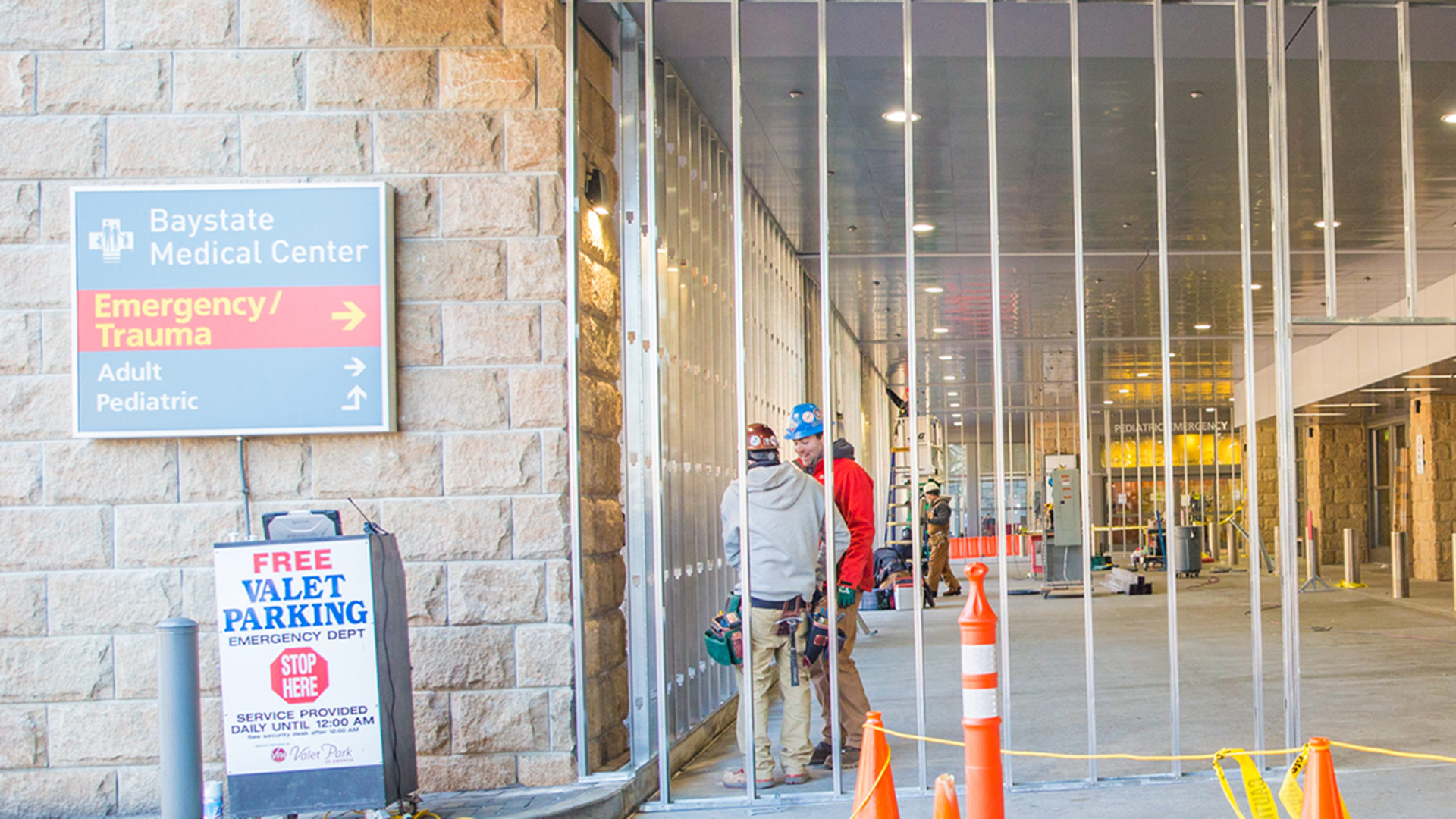 The Emergency Department was rather quiet at Baystate Medical Center on Monday morning.
And Dr. Niels Rathlev, chair of the Department of Emergency Medicine, attributed this to the fact that the public is listening to the governor and other elected officials and staying away from the ER unless they really need to be there.
But that relative quiet in the ER — one spokesperson for the hospital described it as “almost eerie” — is almost certain to be short-lived as the spread of COVID-19 continues in this region. And that eventuality was the inspiration for the construction of a rapid-response triage facility just outside the entrance to the ER.
Crews began work on the facility last Friday, and it is due to be completed by the beginning of next week, Rathlev told a group of reporters struggling to hear him over the sounds of the construction going on behind him. It is expected to hold roughly 35 to 40 chairs — each of them six feet apart — for individuals entering the ER.
“There’s community transmission of the virus at this point,” said Rathlev. “And we really are preparing for more patients showing up for screening. This is not to expand testing; the real issue is to try to keep patients that don’t require admission to the hospital — acute emergency care — and screen them rapidly out here.
“The next step is to really to develop protocols and figure out how we’re actually going to move patients through, as opposed to bringing them in through the building,” he went on. “Right now, this [triage] is happening inside the building; if we have numbers of patients coming in that require screening, we need to do this somewhere else, and this is where that’s going to happen.”
Construction of the triage center is a step that mirrors what is happening in other parts of the country, Rathlev noted, adding that some areas, such as the state of Washington, established such facilities days or weeks ago in anticipation of a surge in visits to the ER and the critical need to triage those coming in. Those communities are sharing best practices, and Baystate will learn from them as they put this facility in operation, he added.
“If you look at trauma centers in Boston and Worcester, we’re all preparing for this,” he said. “Washington State and California are ahead of us for obvious reasons — they’ve had multiple, multiple cases — so they’re sharing protocols with us, and we’re sharing as well.”