Home Posts tagged Design
Cover Story Healthcare News

View to the Future

The new Veterans’ Home at Holyoke is slated to welcome its first residents next September.

The new Veterans’ Home at Holyoke is slated to welcome its first residents next September.

An architect’s rendering of the new facility shows its compelling design and ornate gardens.

An architect’s rendering of the new facility shows its compelling design and ornate gardens.

The new Veterans’ Home at Holyoke won’t be welcoming its first residents for another nine months or so, but the gleaming, $500 million structure on a hill overlooking the Paper City has already captured the imagination of the region.

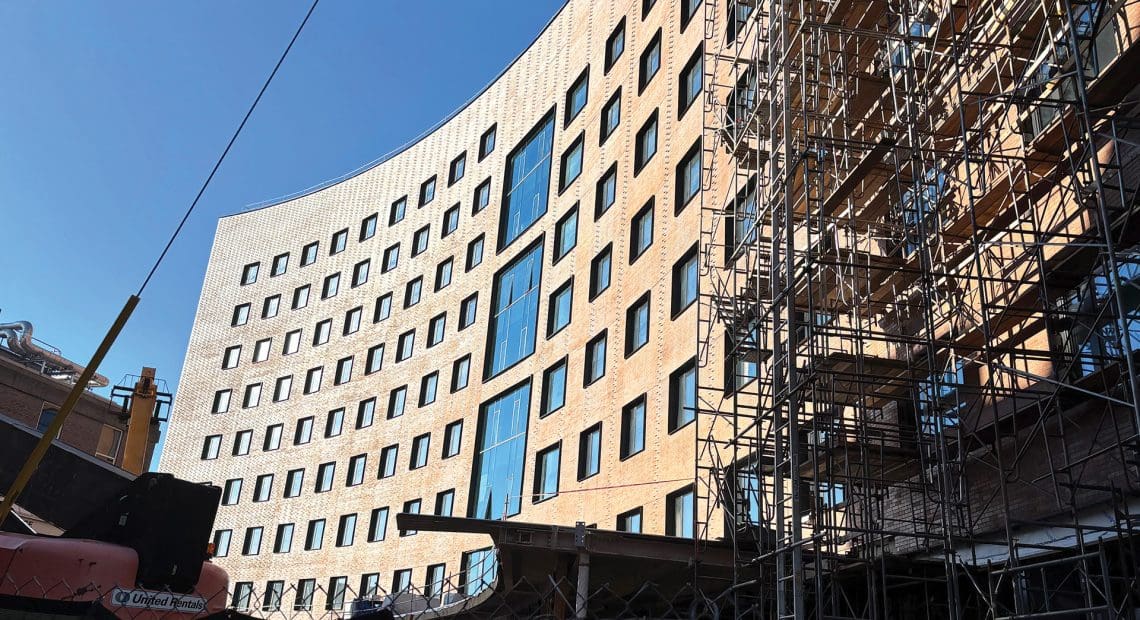
Highly visible to motorists on I-91 and to residents of Holyoke as well, the nine-story, Y-shaped building — a design one of those on the construction team said was inspired by the tricorn hats worn by Revolutionary War soldiers — serves as both a reminder of the tragedy that occurred during the early days of COVID at the structure it will replace, as well as a symbol of the state’s commitment to modernize the facility in the wake of that calamity.

Michael Lazo, executive director of the home, was a member of the National Guard unit that was dispatched to what was then called the Soldiers’ Home in late March 2020 amid a deepening crisis that would eventually take the lives of 76 residents in one of the nation’s worst COVID-19 outbreaks in a long-term care facility.

“I remember first walking in and not knowing what the heck we were walking into,” he recalled, noting that he arrived at the site on March 30, three days after the facility’s leadership made the fateful decision to combine two locked dementia units into a single undersized unit, precipitating the rapid spread of COVID. “Everything looked completely normal; you wouldn’t think anything was going on.”

Lazo would later be offered a full-time COO position at the home and eventually would be named interim director by the board of trustees and then the state. Today, he oversees all operations at the home while also preparing for the opening of the new facility, which will be called the Veterans’ Home, rather than the Soldiers’ Home, in deference to the veterans who served in other branches of the military.

“I think it just came down to money; other priorities probably stepped in and took precedence, so some of the funding this building should have received went elsewhere.”

“Especially the Marines — they’ve never liked Soldiers’ Home,” he joked, adding that he’s also finding time these days to offer tours of the building in progress — to staff, a few elected officials (more of those are scheduled to go through in the days and weeks to come), and a few media members.

BusinessWest was afforded such a tour late last month. As noted, the facility is several months from welcoming its first residents, and only a few floors are even approaching completion. But even at this early stage, it’s apparent that the complex itself is a work of art — one that will integrate the building with the surrounding landscape — and the structure will be state-of-the-art.

Indeed, building systems, designed to LEED Gold certification, include geothermal heating and cooling and facilities that are net-zero energy ready, a high-efficiency exterior envelope with triple-glazed windows, and natural ventilation. The foundation and outdoor retaining wall are made up of Goshen stone. Amenities include a great room, chapel, memory care floor, 40-person adult day health program, dental suite, salon, hobby room, four gardens, and a central kitchen.

Michael Lazo says the new Veterans’ Home at Holyoke emphasizes the privacy and dignity of residents.

Michael Lazo says the new Veterans’ Home at Holyoke emphasizes the privacy and dignity of residents.

Overall, said Lazo, the facility, complete with its curved brick walls, takes the form of three shells that overlap to define three inpatient neighborhoods, each of which benefits from light and views. A typical resident floor will be comprised of three ‘houses’ with 12 beds per house, nursing support, and community spaces, including dining, living, and den. A large garden anchors the complex, and in between wings are smaller, dedicated gardens.

For this issue, BusinessWest takes an early look at what will be one of the biggest stories of 2026, the long-awaited opening of the Veterans’ Home and the start of a new era of service to those who have served their country.


Learning Curves

Lazo said he wasn’t around, so he can only speculate and reflect on what he’s been told over the years.

But he believes that, in the years preceding the COVID tragedy, the state “simply forgot about” the Soldiers’ Home in Holyoke.

One of his predecessors in the director’s role resigned over what amounted to indifference on the state’s part concerning the facility, he said, adding that, in the decades preceding the COVID tragedy, there was little investment in the facility, and little oversight as well — and it showed, especially in the broad realm of preventive maintenance, or the lack thereof.

“I think it just came down to money; other priorities probably stepped in and took precedence, so some of the funding this building should have received went elsewhere,” he said, adding, again, that he was just speculating.

The tragic events in the early days of COVID and the investigations that followed certainly put the facility front of mind, triggering significant reforms to the state’s oversight of its veterans’ homes, he said, adding that what emerged were plans for a new long-term care facility that would serve more veterans and provide them with state-of-the-art amenities.

An architect’s rendering of the new Veterans’ Home at Holyoke.

An architect’s rendering of the new Veterans’ Home at Holyoke.

There was some talk of expanding and modernizing the current facility, he noted, but building new emerged as the more practical option. And while another site may have been considered, the state became committed to keeping the facility at its prominent hilltop location, a popular decision, but one that has presented challenges to the builders of the new facility as they squeezed it onto the site — and will present more to those that will tear down the current home.

Indeed, when finished, one corner of the new home will be just 10 feet from the current facility, which will eventually be used for parking and a garden area.

The new facility will house 234 residents, almost double the current population of 128. There will be 212 single-occupancy bedrooms and 11 double-occupancy bedrooms in those three neighborhoods mentioned earlier: North House, East House, and West House.

These neighborhoods, which will house veterans of several different conflicts (including World War II) and peacetime periods as well, represent substantial improvements over current facilities, said Lazo, especially in the realms of privacy and dignity of residents — each unit has a private bath and showers, while the current facility features common baths — as well as activities and things to do.

“Each veteran has a good-sized room, and there’s plenty of activity space, both on the first floor as well as in each individual unit.”

“The space for veterans is great,” Lazo said. “Each veteran has a good-sized room, and there’s plenty of activity space, both on the first floor as well as in each individual unit. Each floor will have a different activity; we’ll have an exercise bike or some small weights on one floor and arts supplies on the next floor, so veterans will be able to move about the building to do whatever activity they’re interested in at that time.”

And then, there will be the so-called great room, which will host large gatherings such as holiday activities and Super Bowl watch parties, he said, noting that it will be equipped with a 90-inch television.


Tour de Force

As BusinessWest toured the second floor of the new facility and a 30-unit memory care unit under construction there, we were directed to one of the 12- by 16-foot resident rooms, complete with a large window, spacious bath and shower area, space where a 55-inch television will go, built-in storage and shelving units, a desk, and other accommodations.

As the tour continued, Tim Senecal, general supervisor with Commodore Walsh Holyoke, a joint venture comprised of Commodore Builders LLC and Walsh Brothers Inc., referenced common den areas with huge windows and sweeping views of the surrounding area, the facility’s chapel, administrative space, and the location that will become the great room.

A rendering of the planned great room.

A rendering of the planned great room.

“The higher you go, the better the views get, obviously,” said Senecal, who talked as he walked — about everything from those views to the many challenges involved with construction, from excavating for the foundation to the brickwork, made more difficult by the curved nature of the structure, to the Goshen stone retaining wall.

Some of the building’s design elements were borrowed from the new Veterans’ Home at Chelsea, a smaller facility (154 beds) that opened last year, said Lazo, adding that the overall design is distinct, with input from the staff at the current home.

As noted earlier, the first residents will not move into the new home until next September; the first group of 24 will be moved from the fourth floor of the current facility to the third floor of the new one. After that, if all goes well, veterans will move in roughly 20 at a time, with the memory care residents being the last to move. Lazo said his goal is to have all residents moved by February 2027.

That 16-month period will be the most challenging for the staff members at the facility because they will be managing two facilities at the same time, he added, noting that final project completion, including the demolition of the current home, is slated for mid-2028.

As he talked about that teardown and the logistical challenges it will present, Lazo joked that it’s likely that several staff members wouldn’t mind helping with that effort and send the tired, tragedy-scarred property into history.

But that will also be a sad time, he said, noting that several generations from the same families, including his own, lived and died in that home.

The new home, born in many ways from that tragedy of nearly six years ago, will no doubt create its own memories and its own history.

But right now, it’s creating excitement for the next chapter in the story of this fabled property — and with good reason.

Architecture Special Coverage

Designs on the Future

Principals Rick Katsanos (left) and Don Hafner

Principals Rick Katsanos (left) and Don Hafner


As the long-time principals at HAI Architecture in Northampton, Don Hafner and Rick Katsanos don’t see the healthcare facilities they design — or any facilities, really — as simply physical spaces.

No, they see the impact on the people who live, work, and play in those spaces, and it’s a gratifying feeling, whether they’re designing an ICU for critical hospital care or a small outdoor stage for Forbes Library in Northampton.

“We don’t value healthcare systemically in this country,” Katsanos said of the former. “It’s more than just having a doctor; it’s more than just having the right medications. It’s about wellness. It’s about having an environment. And it doesn’t have to just be in a hospital. It can be in a clinic; it can be in a doctor’s office.”

As for the stage, which he called “a fun community project, a different thing for us,” there’s an element of wellness there, too.

“It’s mental health for the community. I like going and hearing the children’s choir, and instead of just standing on the muddy grass, there’s going to be a place for them. And I’m not placing an overemphasis on, ‘wow, we’re changing the world.’ But we’re changing a little bit of the world for the positive.

“And that’s all each of us needs to do — change the world a little bit for the positive. And then, cumulatively, great things can happen,” Katsanos went on. “That’s why I feel great about what we do. I’ve never felt like we’ve taken a project just for the money or we’ve taken a project that we weren’t proud of. I’m proud of every single thing this company has done.”

“We’re talking about some of these hospitals losing a hundred million dollars, two hundred million. That’s not insignificant. So that’s been an issue.”

Katsanos and Hafner met as freshmen at Penn State in the early ’80s and were among a group of architecture students who gravitated north after graduation to find work. Katsanos, a Wilbraham native, was hired in 1986 by Ed Jendry, who had launched Architects Inc. in Northampton in 1976. Two years later, Hafner, who had been working in Vermont, joined him at the firm.

In 1993, Katsanos and Hafner bought the business, which had also spun off a sister company, Healthcare Architects, to pursue work in the regional healthcare market — a decision that proved lucrative, as the firm still focuses heavily on designing modern, high-tech spaces for hospitals, health systems, and physician practices across the region.

The dramatic main entrance canopy was part of HAI’s work at Salem Hospital.

The dramatic main entrance canopy was part of HAI’s work at Salem Hospital.

Years later, the partners merged Architects Inc. and Healthcare Architects into one company, called HAI Architecture.

“Don and I have known each other for some 40-odd years. We met the first day of freshman year, and then went into business together,” Katsanos said. “We are fairly aligned. We have our differences, like every good relationship. Sometimes it’s like a marriage, sometimes it’s like siblings, sometimes it’s a business relationship. We run the gamut.

“And it’s important that we have differences of opinion; it helps,” he went on. “He’ll see something differently. I’ll say, ‘this is the way I’m going to design this.’ And he’ll go, ‘well, did you ever think that it might work out better this way?’ And that difference of opinion almost always makes it better.”


Healthy Returns

The firm is still heavily invested in healthcare projects, such as a just-completed ICU at UMass Memorial Health – Harrington Hospital in Southbridge and a new lobby addition and registration area at Salem Hospital — both of those long-time clients, as are some of the local hospitals, like Cooley Dickinson, Mercy, and the various Baystate facilities.

At Salem, “we’re doing a lot of radiographic technology stuff at their facilities and a bunch of clinical projects,” Hafner said, “and then also a bunch of infrastructure projects because we’ve always been a service provider in the truest architectural sense. We really love doing interesting architecture, but a lot of the stuff we’ve done with hospitals has always come from facility-based projects that help to support their infrastructure.”

“We have no idea if doors, which largely come from Canada, are going to be one and a half times what they were this time last year. Even stuff that is manufactured here is impacted by things like steel and aluminum prices.”

And those needs don’t stop, not even during the pandemic, when HAI stayed very busy.

“We never, other than maybe two weeks, had a slowdown. Everybody learned how to make sourdough bread, but I did not have that opportunity,” Katsanos said with a laugh. “We were fortunate because the healthcare sector needed to continue. The first project that went back online 10 days after the world shut down was a clinical trials facility — a lab that we were designing and in the middle of building for Baystate — because it was needed. The government told us we’re critical infrastructure.”

That said, healthcare is in a challenging time right now, he noted, with many hospitals and health systems — Baystate, for instance — grappling with serious red ink.

“They’re basically looking at scaling back a lot things that aren’t direct patient care. They have to re-evaluate where they’re going to spend money. We’re talking about some of these hospitals losing a hundred million dollars, two hundred million. That’s not insignificant. So that’s been an issue.”

In addition, Katsanos said, “I think we’re seeing the impact of COVID on healthcare. Like, they kept going and kept going because they needed to. Staffing costs were higher; everything cost more, but they needed to keep going. And I think it’s finally caught up, and there needs to be a little bit of a correction because everybody’s overextended.”

That trend happens to coincide with dramatic proposed federal spending cuts in all areas of life, including healthcare.

“That affects our flow of projects. We have some projects that have been delayed almost immediately because there’s just uncertainty. So, if you don’t have to spend — if it’s not, ‘oh my gosh, that piece of equipment is totally broken, and we need to replace it’ — then clients are scaling back.”

One of HAI’s projects in UMass Memorial Health – Harrington Hospital was this ICU renovation.

One of HAI’s projects in UMass Memorial Health – Harrington Hospital was this ICU renovation.

The same promises to be true across higher education, he added. “That’s a big one, and it’s been a target as well.”

But economic uncertainty can affect projects of all kinds, Katsanos added. “Even stuff like the stage [at Forbes] — it’s a steel-framed stage. We don’t know if the tariffs are going to actually impact the pricing on that. The prices are locked in, but there’s always a caveat of ‘barring uncontrolled circumstances,’ and certainly a tariff is not necessarily a controlled circumstance. It’s not in place at the time that somebody places a bid, and then, a week later, it is. It’s no way to run an economy, but here we are.”


Branching Out

In addition to its broad roster of healthcare projects, HAI has diversified into many other sectors over the years, from bank branches to work at a number of nonprofits, like Ronald McDonald House and the Northampton Survival Center, to facilities in the education world.

One recent project was the renovation of the Gateway City Arts complex in downtown Holyoke to house LightHouse Holyoke, a non-traditional middle and high school. “Working with those folks was fun and something a little bit different for us,” Katsanos said. “So that was pretty satisfying.”

He added that it’s simply good business practice to diversify, even when times are heady in the healthcare realm.

“You can get very complacent when healthcare is so busy that you can’t keep up with it. But we don’t say no to something that’s out of the ordinary. Sometimes it’s refreshing to work on something that’s just different. Like an outdoor stage for Forbes Library — I would not have targeted that, but it’s a wonderful project.”

He also appreciates the impact of something like creating a family room for Ronald McDonald House at Baystate Children’s Hospital.

“If you have a kid getting cancer treatment at Baystate, you don’t even have to walk two blocks to go to the Ronald McDonald House; you can go to this new family room and get a cup of coffee and check your email and be away from your child’s bedside, but literally 12 seconds away, and that is really cool.”

Hafner said projects like this, with palpable human impact, energize the staff as well. “They understand that we value the community that we live and work in. So it’s very exciting to do those kinds of projects.”

As noted earlier, there’s plenty of concern these days to go along with the highs of today’s architecture industry, stemming from the economic uncertainty of tariffs and funding cuts.

“I think there’s large-scale worry from the contracting area across the board,” Hafner said. “We have no idea if doors, which largely come from Canada, are going to be one and a half times what they were this time last year. Even stuff that is manufactured here is impacted by things like steel and aluminum prices.”

“So I think everybody is really on edge,” he added. “A number of the hospitals that have not signed contracts have put things on hold because they’re not sure if project budgets will hold. I think there’s going to be a wave that happens through the entire construction industry. It’s not going to be limited to any one thing in particular because all those issues impact every single aspect of every single building typology.”

That said, Katsanos told BusinessWest, “we’re positive. We’re optimists … cautiously. It’s not a fun time right now for anybody, on whatever side of the spectrum you are, because uncertainty is always difficult. So I’m not saying I’m not concerned about our industry — I am concerned. But I also am positive. We’ll survive, and we’ll persevere.”


Kindness and Gratitude

Katsanos said he committed to making 2025 a “year of kindness,” inspired by his mother, whom he described as very kind, and who passed away in August.

“It doesn’t have to be huge. We don’t have to be political and change the world. We all have to just do better. Cumulatively, there’s a lot of us, and we can do great things.

“That’s why we like healthcare,” he added. “I’m not a doctor, but I think the healthcare system can be improved, and we try to do it. We are very, very affordable, and we could probably make more money, but we do a lot of work for nonprofits, and those are little margins. And we make that work.”

Hafner agreed. “I’m very thankful for what we’ve been able to accomplish. I am very proud of the projects that we’ve done. They don’t always land on the cover of a magazine or anything like that, but over the period of time that we’ve done this, we’ve made an impact. I think we’ve done a reasonable job of making our community a better place through the work that we’ve done.”

Daily News


CHICOPEE — Caolo & Bieniek Architects (CBA) has been selected, and has begun work, on designing options for a public safety complex to serve the town of Northfield. 

The CBA design team boasts 60 years of experience working in Western Mass., with extensive knowledge in the construction of public safety complexes, police stations, fire stations, and emergency service facilities.  

The team will compose a feasibility study assessing program needs and developing Phase 1 – programing and conceptual design.    

The focus of the study is to explore design options that accommodate the town’s Fire Department, Police Department, and Emergency Medical Services Department. Each department’s current condition is in need of attention and redesign to better enable department members to effectively serve their community.  

Home Improvement Special Coverage

Upscale but Simple

While interior-design trends in homes can be slow to change — and, in many ways, have been, as evidenced by the white and grey colors that still dominate — the way people are using their homes did change somewhat over the past year. That, and a growing desire among older homeowners to age in place, has influenced what people are looking for in kitchens and bathrooms — and they have no shortage of options to achieve their vision.

By Mark Morris


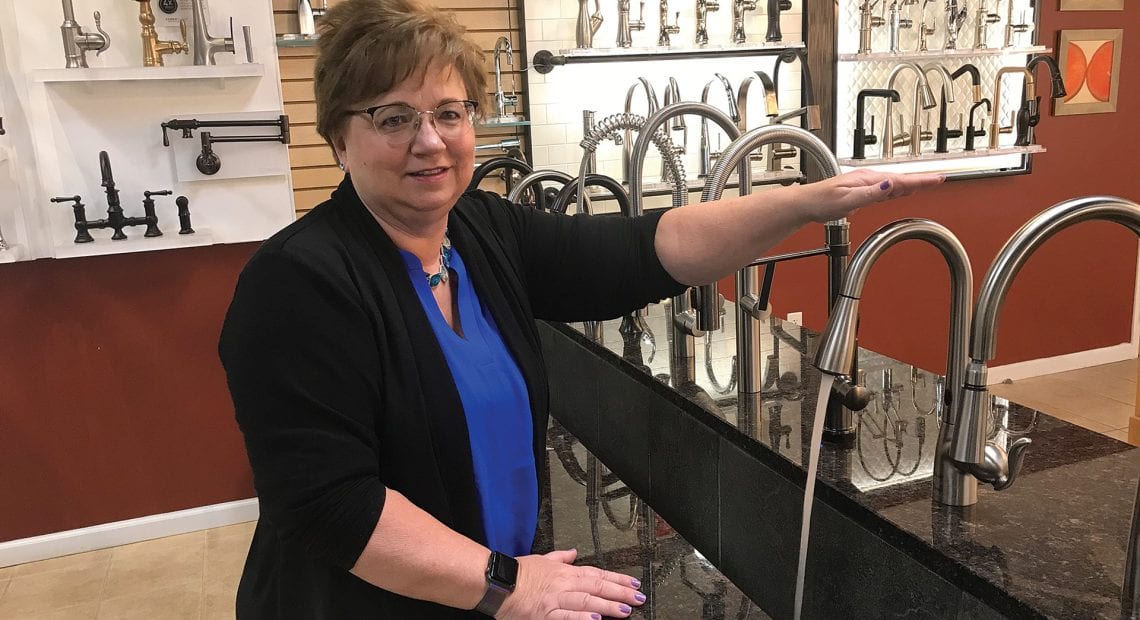
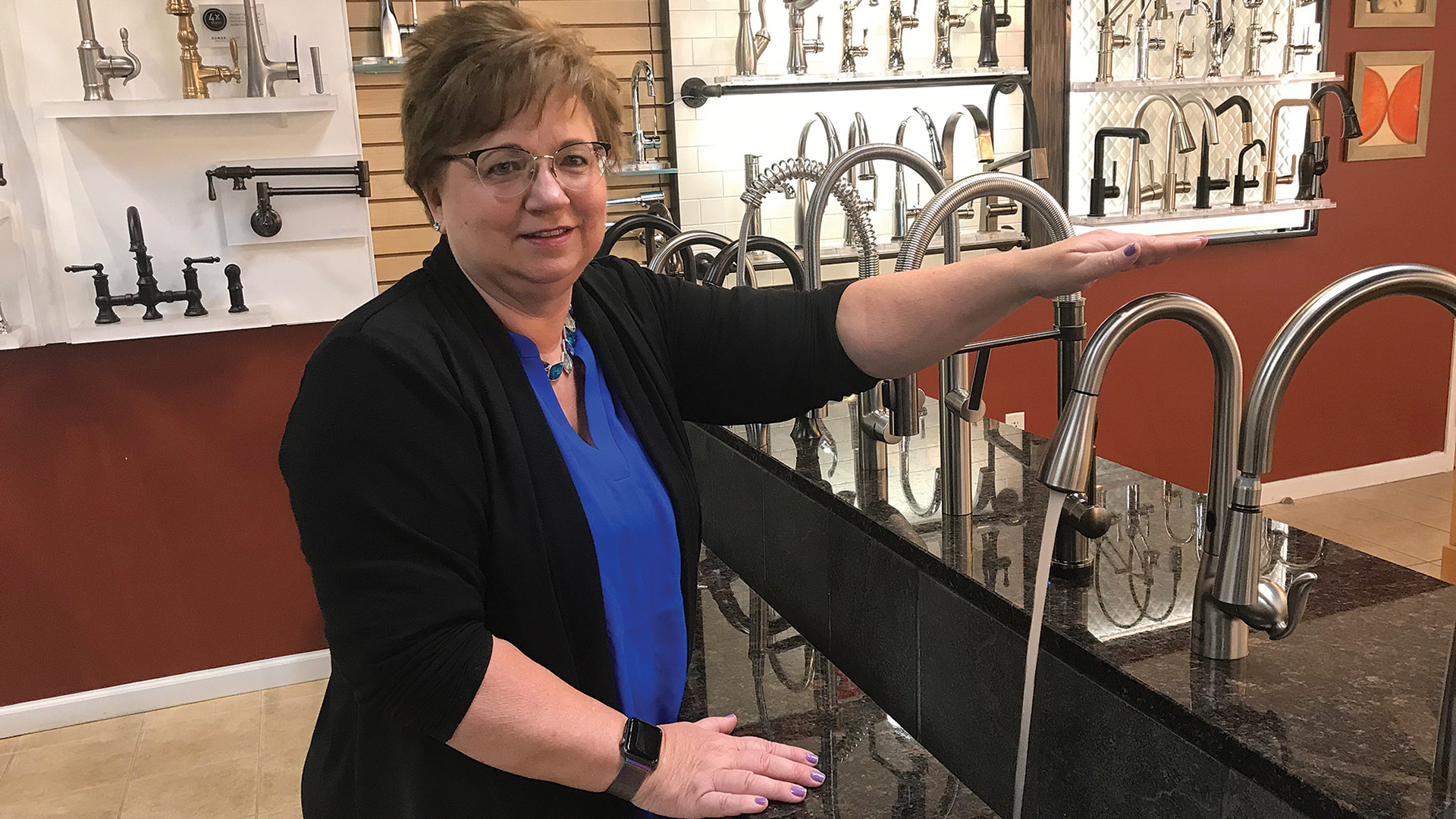
With a wave of her hand, Lori Loughlin makes the water flow from a touchless kitchen faucet.

With a wave of her hand, Lori Loughlin makes the water flow from a touchless kitchen faucet.


While homebuyers want to put their own stamp on a new house, Scott Keiter said, when it comes to kitchens, they tend to think alike.

In fact, the owner of Keiter Builders currently has six new homes under construction, and for every one, the owners want kitchens that provide plenty of light, an airy feeling, and enough room for people to gather.

“We’re seeing less of a distinction between the kitchen and living area and more of a merger as the two morph into one space,” he said.

In many cases, the anchor to this space is the kitchen island. While islands have been popular for years as a way to provide more counter and cabinet space, during the pandemic, they saw increased use for food preparation as people ate more meals at home. The island also served as a desk for many who suddenly found themselves working from home. As a result, Keiter said, islands have become more multi-purpose, and the kitchen is now seen as a multi-use space.

“On top of the normal cooking and food prep, we’re seeing a movement to make the kitchen a more communal room. It’s becoming a place to work from home, as well as a place for guests and friends to congregate.”

While the kitchen is becoming more of a gathering place and its form and function are changing, Dave Lloyd, manager of Budget Cabinet, said every customer looking to remodel that space shares one objective: convenience.

“While new houses allow for bigger islands, we do a lot of remodeling projects where people are limited by the footprint of their house,” he said.

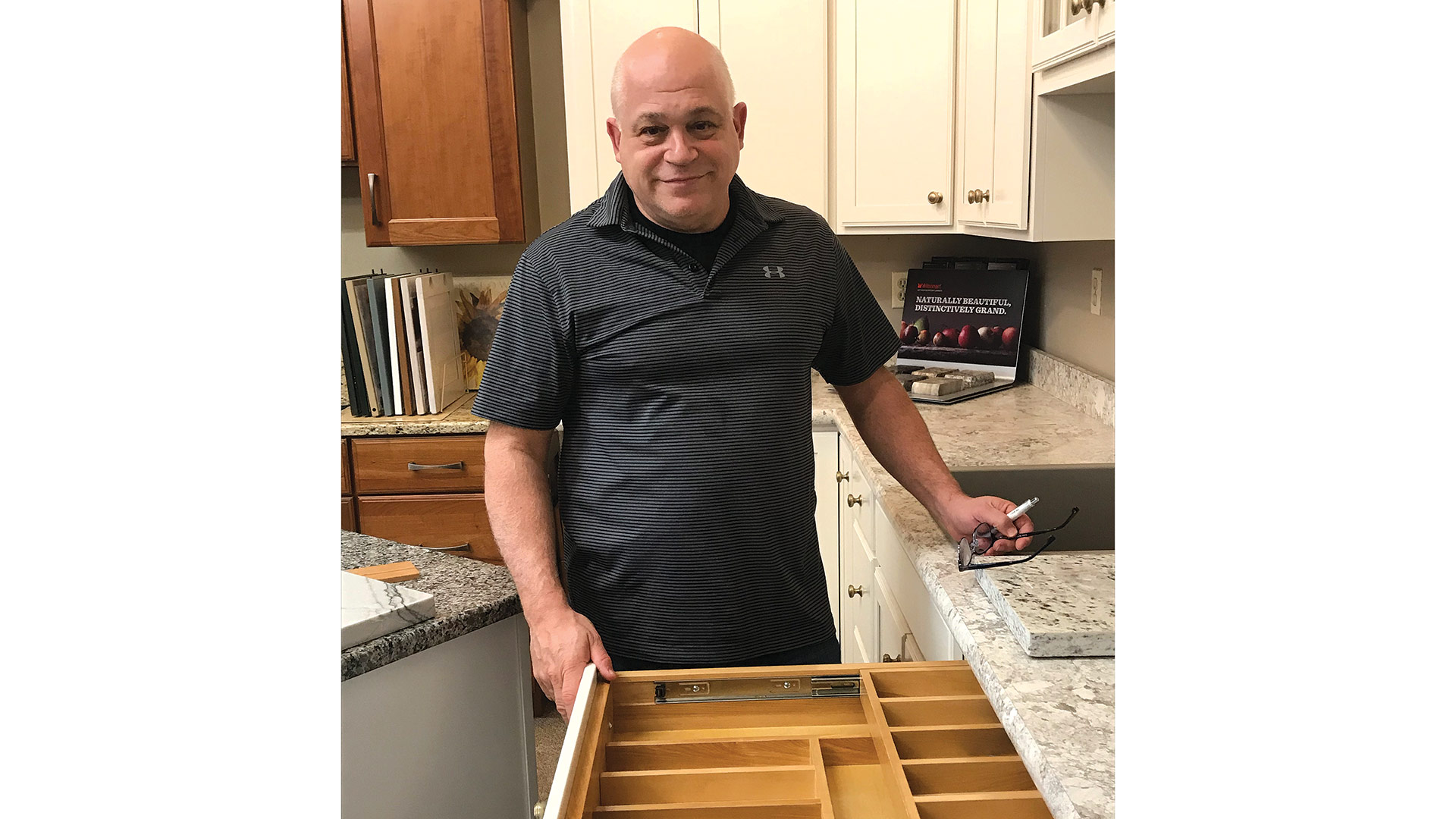
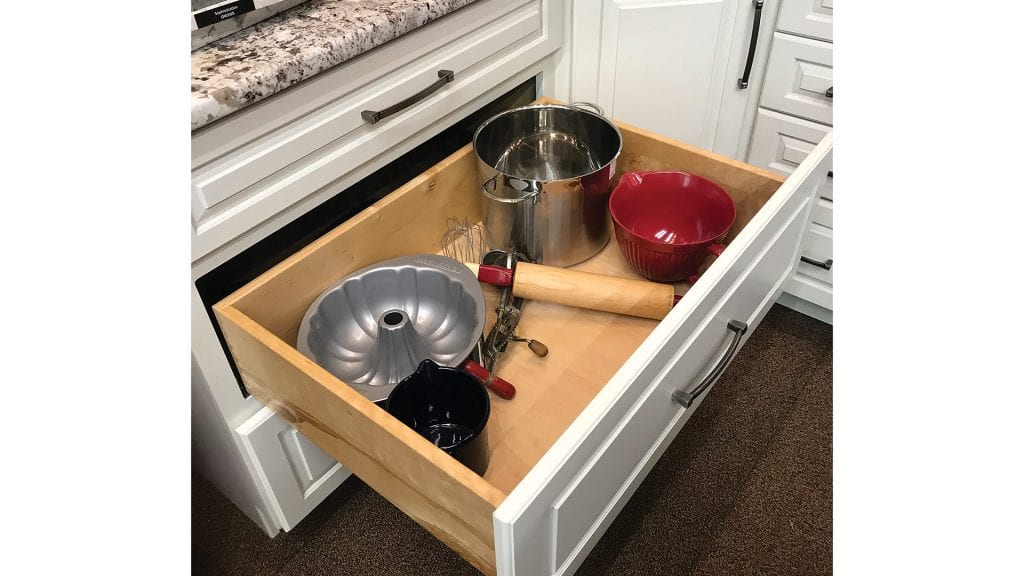
Whether incorporating an island or not, one trend that addresses convenience and improved function is what Lloyd called “drawers over doors.” Many cabinet designs offer wide and deep drawers to store bulky or heavy items. That way, instead of making someone reach overhead for heavy dishes in a cabinet, a waist-high drawer allows for easier access — which becomes more important as people age.

“We’re seeing less of a distinction between the kitchen and living area and more of a merger as the two morph into one space.”

Aging in place also comes into play in bathroom design, said Lori Loughlin, manager at Frank Webb Home. These days, she noted, handheld shower heads are the choice of nearly every bathroom renovation. Also popular are shower fixtures that combine a handheld with a rainfall feature.

“We work with many people who want to age in place, so we stress that a handheld shower is more convenient to use and clean the shower stall,” she explained.

Converting old bathrooms to accommodate a lower-threshold shower for the aging or physically challenged isn’t new, she added, but the styles are changing. “There are things we can do to make a shower safe and functional without it looking institutional. For example, there will be a seat and grab bars, but they are done with more style, so the result looks more like a spa.”

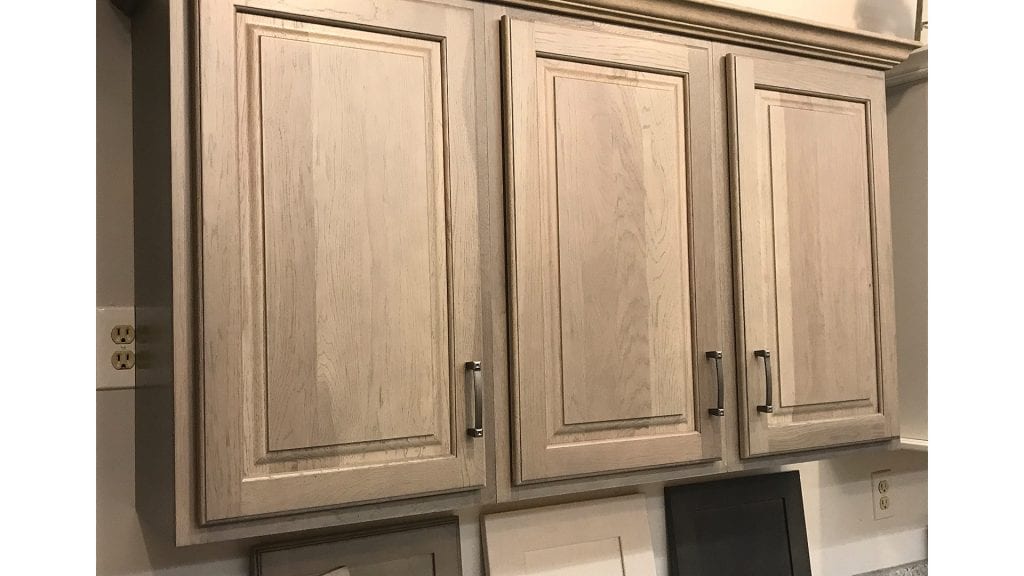
Colors such as gray translucent stain are appearing in more kitchens.

Colors such as gray translucent stain are appearing in more kitchens.

Aging in place also affects kitchen design, where islands are available in multiple levels, with a lower level constructed to accommodate seniors or people in a wheelchair.

Because everyone is more aware of touching surfaces, touchless bathroom faucets and a toilet that flushes by waving one’s hand over a sensor are available as well. While once considered gimmicky, sophisticated toilet seats that have a warmer built in, along with a bidet, are growing in interest. Loughlin noted that these more premium seats also contribute to aging-in-place considerations by allowing people who might otherwise need assistance to take care of themselves.

Such bathroom renovations might seem like an indulgence, Lloyd said, but the result is a space that provides easier access and convenience, again, allowing people to live in their homes longer.

During this boom time in home building and renovations, BusinessWest caught up with several professionals who shared what their customers are looking for in their kitchens and bathrooms — for both their present and future needs.


Form and Function

Lloyd noted that today’s kitchens emphasize designs that are high-functioning and less ornate, and tastes are trending toward cabinet designs with clean lines such as the Shaker look, as well as simpler cabinet hardware.

While the overall trends haven’t changed much over the years, he added, colors have seen some changes. “Translucent cabinet stains are becoming popular because it gives you some color, but you can still see the grain of the wood. Whites and grays — both light and dark — are still very popular color choices.”

Lloyd said his customers want interesting but not ornate designs in kitchen backsplashes, while upscale appliances remain very popular in kitchen remodels, with stainless steel a popular option and black stainless on the rise as a trend.

Black may become the new neutral, Loughlin said, noting that touchless and black faucets are currently big sellers in kitchens. “For the next couple of years, I think we will be seeing a trend of faucets with mixed metals, such as black and gold,” she noted, while faucets with a black finish are trending in the bathroom as well.

Dave Lloyd demonstrates a two-level silverware drawer.

Dave Lloyd demonstrates a two-level silverware drawer.

Deep drawers provide easier access for larger items.

Deep drawers provide easier access for larger items.

While white farmhouse sinks remain popular, she said they are now available in black and other colors to better match darker shades of quartz and granite countertops. Speaking of which, quartz has passed granite as the most popular stone countertop material.

“People are spending more time in their kitchens, so they are getting what they want,” she explained. The styles that resonate most with her customers include the contemporary farmhouse look and industrial chic, where faucets and lighting have a stylish but industrial look to them.

Lighting also reflects black and gold color schemes, with open fixtures creating an airy look. Pendant lighting, which once featured small pendants suspended from the ceiling, have grown into larger pendants that fill more space and provide more light.

Kitchen floor upgrades were once limited to hardwoods or tile floors made of ceramic or porcelain. Eclipsing both of those choices, the current most popular trend in flooring is LVT, or luxury vinyl tile. Resembling wood planks, LVT floors click into place and are known in the industry as ‘floating’ floors, so named because they are not glued down. Jake Levine, manager of Advanced Rug and Flooring Center, said the waterproof properties of LVT make it a best seller in his store.

“Because LVT handles water so well, it is replacing other more expensive alternatives,” he said. “LVT is also 40% warmer to the touch than a tile floor, and it’s not prone to chipping, also an issue with tile floors.”

Installing a hardwood or tile floor takes real expertise, Levine explained, noting that LVT floors can be a do-it-yourself project because they allow more room for error.

“If you don’t like the direction of the planks, you can unclick them and reinstall,” he said. “I’m not saying everyone will get the same results as a professional, but a capable DIY-er can do it.”

For customers who prefer a tile look, LVT is available in 24-by-12-inch pieces featuring stone patterns that click in place similar to the planks. This style and its waterproof properties make it a good choice for a bathroom, but Levine said most people still prefer porcelain or ceramic tile.

“For many people, the word ‘vinyl’ suffers from an old stigma of linoleum floors that discolored and peeled,” he said. “The click floors are very good for bathrooms because they are designed for areas that get water.”

As Western Mass. is known for its many older homes, a bathroom renovation can often involve converting a spare bedroom into a larger, more modern bathroom, usually adjacent to the master bedroom. Lloyd said this is a popular renovation among empty-nest couples.

Mixed metals are an increasingly popular option for kitchen faucets.

Mixed metals are an increasingly popular option for kitchen faucets.

“People who want to stay in their home are figuring out how to use the same square footage, but improve it,” he explained. “The idea of living space is changing, where people will give up a bedroom for a luxury bathroom with better lighting, better shower, and more storage in the cabinetry.”

While many bathroom renovations replace the tub with a more upscale shower, Loughlin said that decision is usually driven by personal preference.

“There are bath people, and there are shower people,” she noted. “People who like to take baths will spend whatever they want for a bathtub, while those who only want a shower won’t even install a bathtub in their master bathroom.”


As Seen on TV

For those considering upgrading a kitchen or bathroom, popular media such as the HGTV cable network and social-media sites Pintrest, Instagram, and others offer endless examples of what’s new in design and accessories.

“Every customer who comes in has at least one Pinterest photo on their phone, or they reference something they saw on HGTV,” Lloyd said, adding that houzz.com is another influencer.

Meanwhile, Levine credits HGTV shows with increasing the awareness of LVT flooring. “The vinyl plank is now common knowledge thanks to them.”

Loughlin said the Frank Webb showroom carries several kitchen sink styles that appear on HGTV because customers often have a vision that is influenced by the network. While helpful most of the time, however, these shows can also contribute to outlandish and unrealistic expectations.

“Some people think they can redo their house in 30 minutes; it just doesn’t work that way,” she said. “It’s not unusual for the timeframe to surprise people, especially now, when hiring a contractors is more difficult because they are all so busy.”

While new trends emerge in kitchens and bathrooms, older ones are meeting their demise. In new homes, Keiter noted, people still want bathrooms that are upscale and functional, but use less space.

“Real estate is so expensive now, some people are reassessing where they want to spend their money,” he said. “Instead of a 250 square-foot bathroom with a whirlpool tub, they are opting to lose the whirlpool and reduce the overall size of the bathroom.”

Instead, he said, customers are spending their money in the kitchen or a sunroom, where they spend far more of their time.

In the spirit of simplicity and a clean look, Lloyd said the recent trend of glass cabinet doors is on its way out because “people like to put things away and not have to keep looking at them.”

He also noted that counter space for wine bars is starting to give way to dedicated cabinetry to house an emerging trend: coffee bars. “Wine was big for a while, but coffee has become bigger of late.”

Though tastes may differ, kitchen and bath professionals all agree that customers these days have plenty of options.

“Manufacturers are expanding their product lines to accommodate many different tastes and needs,” said Loughlin, giving people the opportunity to follow their vision or create their own style.