Home Posts tagged Employment (Page 35)
Departments

Verizon Extends Broadband Network

WOBURN — Continuing to build on its strategy to provide voice and data networks to businesses and mobile professionals across the country, Verizon Wireless recently announced the expansion of wide-area wireless broadband services to the Springfield, Northampton, and Amherst areas through its BroadbandAccess and V CAST offerings. The expansion, based on the company’s Evolution-Data Optimized network technology, creates coverage along Interstate 91 traveling from the Connecticut border to the college towns in and surrounding Amherst and up to Hatfield. BroadBandAccess coverage is being expanded in Springfield, West Springfield, Amherst, Hatfield, Northampton, Hadley, Holyoke, Chicopee, Ludlow, Palmer, Wilbraham, Longmeadow, and Agawam. For more information, visit www.verizonwireless.com.

AIM’s Confidence Index up in October

BOSTON — The Associated Industries of Massachusetts (AIM) Business Confidence Index gained 2.9 points in October to 59.9, its highest reading in 20 months. The rise moved the Index above a narrow range in which it had fluctuated for most of the past two years, according to Raymond G. Torto, chair of AIM’s Board of Economic Advisors and Principal, CBRE Torto Wheaton. Massachusetts employers were significantly more positive about national economic conditions, reflecting rising stocks, falling energy prices, and favorable news on interest rates, added Torto. Survey respondents also reported stronger sales and an increase in hiring. The Index is based on a survey of AIM member companies across the state, asking questions about current and prospective business conditions in the state and nation, as well as for their respective organizations. For more information, visit www.aimnet.org.

Bay Path Seeks Sponsors for Women’s Conference

LONGMEADOW — ‘Resilience’ is the theme for the 12th annual Bay Path College Women’s Professional Development Conference on April 27 at the MassMutual Center in Springfield, and keynote speakers have been secured to address that subject. They are: Valerie Plame, the CIA operative whose identity was disclosed by the media, resulting in an unwelcome end to her career; Lynn Donohue, a high-school dropout who became a millionaire by starting her own bricklaying company; and poet and author Maya Angelou. Businesses interested in marketing opportunities during the conference should contact Kary Lewis, director of Special Programs, at (413) 565-1293 or via e-mail at [email protected].

Bright Nights Features New Area

SPRINGFIELD — Santa’s Cottage is a new display that will be featured at Bright Nights at Forest Park this holiday season, sponsored by the Spirit of Springfield and the Springfield Parks Division. The display will be the first opportunity for visitors to get out of their vehicles and walk among the lights leading the way to Santa’s Cottage. United Bank is the sponsor of the new area. Inside Santa’s Cottage, a cozy atmosphere will be created for Santa to greet visitors, pose for photographs, and listen to holiday wish lists. Bright Nights at Forest Park will open for its 12th season on Nov. 22 and operate Wednesday through Sunday until Dec. 10. Beginning Dec. 13, the lights will be lit nightly. For more information on Bright Nights, visit www.brightnights.org or call (413) 733-3800.

Region Expected to Trail Growth Nationally

BOSTON — The New England Economic Partnership expects New England to lag behind the nation in economic growth through 2010. The forecast group also noted that its twice-yearly predictions are speculative given the uncertainty about the current housing slump. The group also noted that employment in New England is expected to grow at an average rate of 0.8% a year through 2010, below the 1.3% forecasted each year across the nation.

Departments

The following business incorporations were recorded in Hampden and Hampshire counties and are the latest available. They are listed by community.

AGAWAM

P&M Advertising Inc.,
2 South Bridge St., Agawam 01001.
Michael R. Kessler, same.
To coordinate advertising products
and services for businesses and individuals.

AMHERST

D. J. Provisions Inc.,
97 Crossbrook, Amherst 01002.
Fred J. Wang, same. To own and
operate commercial real estate and restaurant.

CHICOPEE

The Christine Giera Polish Heritage Trust Inc.,
61 Roosevelt Ave., Chicopee 01013.
Christine Giera, same. (Nonprofit)
To bring cultural, historical, entertaining
and/or educational programs with
Polish themes to the public, etc.

EAST LONGMEADOW

New England Termite and Structural Repair Inc.,
121 Mountainview Road,
East Longmeadow 01028.
Eric D. Lucas, same.
Wood destroying insect inspection, treatment.

HADLEY

Western Massachusetts Anthroposophical
Therapies Foundation Inc., 38 Breckenridge Road,
Hadley 01035. John Rollinson, same. (Nonprofit)
To provide conferences, etc. which promote
an understanding of the spiritual underpinnings
of anthroposophically-oriented medicine, etc.

INDIAN ORCHARD

SNOW SPORTS Inc.,
34 Front St., Indian Orchard Mills,
5th floor, Indian Orchard 01151.
Paul F. Tetreault, 397 North Main
St., South Yarmouth 02664.
To organize and market ski and summer
travel packages, etc.

LONGMEADOW

Wealth Preservation Group Inc.,
145 Franklin Road, Longmeadow 01006.
John G. Dee, same. To provide information
to allow clients to make well-informed
insurance decisions, etc.

LUDLOW

NSS Contracting Inc.,
212 Clearwater Circle,
Ludlow 01056. Carolyn Scyocurka,
same. Environmental remediation
and demolition.

MONSON

A & B Essentials Ltd.,
266 Wilbraham Road, Monson 01057.
Ann Gallano, 148 Yale St., Ludlow 01056.
Retail merchandise sales.

NORTHAMPTON

C&J Motor Cars Inc.,
110 Pleasant St., Northampton 01060.
Christopher P. Cahillane,
384 South St., Northampton 01060.
Automobile sales.


Extra Mile Inc.,
459 Pleasant St., Northampton 01060.
John N. Davey, Jr., 197 Upper Rd.,
Deerfield 01342.
Motor vehicle sales and service.

SOUTH HADLEY

Laurence Associates Consulting Inc.,
130 College St., Ste. 200A,
South Hadley 01075.
Frederick L. Sliva,
15 Catherine St., Belchertown 01007.
To provide employment consulting services,
deal in real estate.

Northeast Towing and Recovery Inc.,
410A East St., South Hadley 01075.
Timothy Laizer, 240 East St.,
South Hadley 01075.
Transportation, towing and storage of vehicles.

SPRINGFIELD

Brodeur-McGan, P.C.,
1331 Main St., second floor,
Springfield 01103.
Lisa Brodeur-McGan, same.
All phases of the practice of law.

Gonzalez Used Auto Sales Inc.,
1608 State St., Springfield 01109.
Milagros Andres Gonzalez,
48 Warrenton St., Springfield 01109.
Used auto sales.

H & E Affordable Kitchens and Baths Inc.,
29 Berkeley St., Springfield 01109.
Horace John, same.
Kitchen and bath sales and installation.

Springfield Homeowners Association Inc.,
135 Oakland St., Springfield 01108.
Pascacio Reynoso, same. Real estate services.

WESTFIELD

Allstate Hood & Duct Inc.,
277 Sackett Road, Westfield 01085.
Todd W. Duval, same.
To sell and service commercial exhaust hoods.

Park River Market Inc.,
505 Granville Road, Westfield 01085.
Penny J. Mitchell-Rogers,
604 Loomis St., Westfield 01085.
To manage a convenience store.

Star of Hope Missions Inc.,
21 Charles St., Westfield 01085.
Yevgeniy Sevostyanov, same. (Nonprofit)
To disseminate Christian instruction,
support missionaries, teachers in the
USA and abroad, etc.

Time-Bandwidth Products Inc.,
61 Union St., Westfield 01085.
Thomas Richti, same. (Foreign corp; DE)
Marketing and retail sales of laser systems.

WEST SPRINGFIELD

Michael’s Pasta in-the-Pan Inc.,
2648 Westfield St., West Springfield 01089.
Melissa B’Shara, 1214 Longmeadow
St., Longmeadow 01006.
A restaurant and bar.

Departments

Guerrilla Marketing

Oct. 18: For business owners who want to grow their business but feel stuck in a rut, this presentation will be helpful in understanding how guerrilla marketing can improve sales without spending money on advertising. The Steady Sales Group will present the 8:30 to 10:30 a.m. workshop at the Andrew M. Scibelli Enterprise Center, 1 Federal St., Springfield. The cost is $30. For more information, call (413) 737-6712.

‘Wild on Wine’

Oct. 19: Max’s Tavern on West Columbus Avenue in Springfield will be the setting for a unique wine event titled ‘Wild on Wine’ to benefit the Springfield Boys and Girls Club. The fund-raiser will feature a large selection of fine wines complemented by hors d’oeuvres and carving stations from 6 to 9 p.m. A live jazz ensemble will provide the entertainment. Tickets are $75 per person, and $20 of the ticket price is tax-deductible. For tickets and more information, contact AnnMarie Harding at Max’s Tavern, (413) 746-MAXX, ext. 381 or via e-mail at [email protected]. The fund-raiser is sponsored by UBS Financial Services Inc.

Legislative Breakfast

Oct. 20: The Agawam Chamber of Commerce will host a Legislative Breakfast from 7:15 to 9 a.m. at Chez Josef. Speakers expected to participate at the breakfast include State Sen. Stephen Buoniconti and candidates for the state representative seat.

New Traps for Business

Oct. 25: Businesses need to be more aware of the everyday risks and liabilities resulting from new and evolving regulations relating to employment relationships (temporary labor, privacy issues, computer use and fraud, copyright and trade secret abuses, and lending transactions). The Nicolai Law Group, PC will present the 9 to 11 a.m. workshop at the Andrew M. Scibelli Enterprise Center, 1 Federal St., Springfield. The cost is $30. For more information, call (413) 737-6712.

Panel Discussion

Oct. 26: “Un/Welcome Guests: Labor, Law and the Politics of Immigration” is the title of a panel discussion in the Gamble Auditorium at Mount Holyoke College in South Hadley, beginning at 7:30 p.m. Legal experts, journalists, and activists will discuss the controversial issues of immigration, migrant labor, homeland security, and the U.S. and Mexican border issues. For more information, visit www.mtholyoke. edu/go/wcl. The event is free and open to the public.

Super 60

Oct. 27: The Affiliated Chambers of Commerce of Greater Springfield will present its annual “Super 60” program at Chez Josef in Agawam. The event is a salute to the entrepreneurial spirit of the region’s privately owned businesses.

Advanced Internet Marketing

Nov. 1: Participants will learn how to ensure one’s Web site serves its target audience as well as best practices for Web site design and maintenance as part of a 9 a.m. to noon lecture by Ashton Services. Topics also planned: how to judge Web site performance, how to budget for development and operation, and how to interpret Web site statistics and how they can tell you where to focus your efforts. The workshop will be conducted at the Andrew M. Scibelli Enterprise Center, 1 Federal St., Springfield. The cost is $35. For more information, call (413) 737-6712.

“Innovative Thinking & Entrepreneurship”

Nov. 8: Jeffrey C. Taylor, founder and CEO of Eons Inc. and founder of Monster.com, will be the featured speaker from 7 to 9 a.m. in Blake Student Commons as part of Bay Path College’s ongoing Innovative Thinking and Entrepreneurship Lecture Series. Eons Inc. targets people 50 and over, and Taylor is now focused on helping individuals enjoy a better life. Taylor’s new mantra is “Let’s live to be 100 or die trying.” A continental breakfast will be served from 7 to 7:45 a.m. Seating is limited, and reservations may be made by calling Kary Lewis at (413) 565-1293 or via e-mail, [email protected].

Team MA Economic Impact Awards

Nov. 21: The Mass. Alliance for Economic Development will host its third annual Team Massachusetts Economic Impact Awards luncheon at noon at the Seaport Hotel in Boston. For sponsorship and ticket information, contact Jess Millward at (781) 489-6262, ext. 15, or visit www.massecon.com.

Departments

UMass Is $4 Billion Economic Force in State

BOSTON — The University of Massachusetts is one of the state’s largest economic engines, generating $4 billion in economic activity each year, with every $1 of state support helping the university generate more than $8 in positive economic activity, according to a recently published report. UMass is a $2 billion enterprise, with 15,000 employees (making it one of the top 10 employers in Massachusetts), generating $377 million in research and development investments, and is the site of three recently awarded, highly competitive national research centers. While the state provides $524 million, or 26%, of the university’s $2 billion annual operating budget, the university generates $4.3 billion in economic activity. Translated into employment terms, 90 private sector jobs are generated for every 100 UMass jobs. In addition, with more than 57,000 students enrolled annually, UMass educates more state residents than any other higher education institution. Every year, the five-campus system graduates 11,000 students – more than 60% of whom stay to live and work in the Commonwealth. Research conducted at UMass generates $28 million in technology licensing revenue each year, outpacing every other state university. This revenue is, in turn, reinvested in the research enterprise, fostering a perpetual cycle of innovation. UMass boasts 215,000 alumni living throughout the state, and also conducts more than 90% of the research that takes place outside of Route 128 – making it the largest university research enterprise in every region of the state outside of Greater Boston. The report, titled UMass: A Strategic Investment: A Critical Asset for the Commonwealth’s Economic Future, was developed by the UMass Donahue Institute, one of the state’s largest providers of applied research and evaluation. The institute based its analysis on actual university expenditures during fiscal year 2006.

Mountain Park Property Sold

HOLYOKE — Local music and real estate mogul Eric Suher recently purchased the defunct Mountain Park property, paying $1.6 million for 60+ acres, according to Hampden Registry of Deeds records. The parcel was sold by Mountain Park Amusement Co. Inc. Mountain Park was built in 1894 by the Holyoke Street Railway. Suher operates several businesses including the Calvin Theatre, Pearl Street and Iron Horse, all in Northampton.

Friendly CEO Steps Down from Post

WILBRAHAM — John L. Cutter, chief executive officer of Friendly Ice Cream Corp., abruptly resigned late in September to pursue other interests. Board Chairman Donald N. Smith will assume the CEO position on a temporary basis while the company searches for Cutter’s replacement. Cutter had joined Friendly as president and chief operating officer and was named CEO in 2003.

Baystate, Noble Call Off Affiliation Plans

SPRINGFIELD/WESTFIELD — In a recent joint statement, Baystate Health and Noble Health Systems announced that the two organizations would not enter into an affiliation. Earlier this year, the boards of both institutions agreed to move forward with a due-diligence process to explore all aspects of such a relationship. During the past few months, Noble and Baystate leaders, physicians, staff, and trustees engaged in a coordinated, collaborative due-diligence process. Both assessed the opportunity to affiliate, and the decision was made not to move forward in that direction. Baystate Medical Center will continue an existing relationship with Noble Hospital through its partnership with Noble’s Women’s Center and Emergency Department.

National Economy Sluggish

WASHINGTON — The Commerce Department recently reported economic growth at an annual rate of 2.6% from April through June, a sluggish spell but one that is not expected to turn into a recession as election day looms. Weakness in the once-booming housing sector was especially felt in the spring, according to the report. The economy also was affected by once-surging energy prices and the impact of the Federal Reserve’s two-year string of interest rate increases. Growth is expected to stay subdued for the remainder of the year. In addition, the National Association for Business Economics has predicted the economy will expand at a 2.6% rate in both the June-September and October-December time periods.

Sections Supplements
AIC, Baystate Health Partner to Boost Nursing Numbers, Diversity Statewide
Richard E. Neal and Deb Morsi

U.S. Rep. Richard E. Neal and Deb Morsi, chief nursing officer for Baystate Health, announce the new partnership between AIC and Baystate.

As part of an ongoing effort to address the needs of underrepresented residents of the Springfield area, American International College has entered into a new partnership with Baystate Health and Springfield’s Putnam High School to provide new educational and career opportunities for disadvantaged students, and to address the Commonwealth’s pressing nursing shortage.

The Nursing Workforce Diversity Collaborative Project was announced on Sept. 18 at AIC by the college’s president, Vincent Maniaci, who explained that the program’s objective is to increase nursing education opportunities among minority and disadvantaged student populations, in turn creating a greater number of career options for those students.

A $1.1 million grant from the Department of Health and Human Services will provide the necessary support for the program, which focuses on the early introduction of health-related careers to high school students, academic training, and financial assistance in the form of scholarships and stipends for qualified applicants.

“There’s no question that this is a home run,” Maniaci said. “We have an exceptionally strong nursing program at AIC, and we are committed to making education as accessible as possible to those living in our community.”

Maniaci said the partnership is also an effort to address the Commonwealth’s widespread nursing shortage. It is estimated that Massachusetts health care providers currently need to hire about 7,000 additional nurses statewide to close the gap, and that number is expected to grow incrementally over the next two decades.

The collaboration furthers the mission of Baystate Health’s Springfield Educational Partnership (BSEP), by creating a bridge between high school- and college-level preparation for health careers. BSEP, a 10-year community assistance initiative, pairs the health system with various Springfield public schools to advance the academic and career development of elementary, middle, and high school students, and to promote the importance of math, science, and technology skills to health-related career paths.

U.S. Rep Richard E. Neal, who helped funnel the federal funding into Springfield, said he sees the new partnership as one way to boost the number of employed individuals in Western Mass., through a long-term, incremental plan.

“When you hear those statistics: ‘A need for 7,000 nurses’ – that means there are 7,000 jobs available,” he said. “But that only means something if we are able to place people in those positions, and creating a link between education and the job market is a key part of the ongoing mission of creating widespread, gainful employment.”

Deb Morsi, vice president for Patient Care Services and chief nursing officer for Baystate Health, added that the project is also the kind of multi-faceted, inclusive program that is necessary to address such a pressing need for qualified health care professionals both in Massachusetts and nationwide.

“Nursing is an extremely challenging and complex profession,” she said, “and in order to address this huge nursing shortage across the country, nursing students first need appropriate support and academic preparation.

“To meet those needs,” Morsi added, “we need to be creative, and we need to start early, in the high schools. There are many intertwining parts, but it’s a long-term strategy, not a short-term fix. We want to increase diversity among the nursing workforce as well as lower the vacancy rates, but we also would like to address issues with clinical preparedness and turn-over.”

Carol Jobe, dean of the School of Health Sciences at AIC, said the new collaborative program will include a four-week, part-time summer program for incoming freshmen enrolled in AIC’s nursing program, which will focus on improving verbal, math, and science skills as well as overall preparedness for the college experience and the rigorous nursing curriculum. Many of those students are expected to move on to AIC from Putnam High School, which is already involved in BSEP and has about 160 students enrolled in its ‘Health Academy.’

A student-tutoring program will also be established, pairing upperclassmen studying nursing, chemistry, or biology with freshmen nursing students, and faculty mentors will work closely with freshmen and sophomores. This, Jobe said, will not only help address specific academic issues students may have, but also attempt to curb attrition rates.

“The grant will help us address many needs,” she said. “Both high school and AIC students will benefit, and each student will be evaluated individually. The idea is to get students acclimated early and to maintain a high level of support throughout their college careers.”

The project is the latest offering at AIC geared toward diverse populations in the Greater Springfield area. In October of last year, the college instituted its ‘Community Engagement Initiative,’ awarding $10,000, four-year renewable scholarships to homeowners and their children residing in the city’s Bay Area neighborhood, which includes portions of the State Street corridor, Mason Square, Tapley Street, and Roosevelt Ave., and is home to more than 4,000 of the city’s 152,000 residents.

That announcement came weeks after Maniaci, who took the helm at AIC in August, 2005, signed dual admission agreements with both Springfield Technical Community College and Holyoke Community College, opening the four-year college experience to a greater audience, allowing students accepted at either of the community colleges to continue their education at AIC after two-years of coursework. The admission agreement also provided $4,000 scholarships to those students.

In addition to creating new opportunities for high school students interested in health care careers, Maniaci said this newest initiative is expected to boost enrollment in AIC’s nursing program by as much as 20%. Currently the program includes 350 students, and has the largest enrollment of any academic major at the college.

Jaclyn Stevenson can be reached at[email protected]

Departments

The following listings were omitted in error from the 2006-2007 BusinessWest Resource Guide:

Banquet Facilities
Melha Shriners
133 Longhill St., Springfield, MA 01108
(413) 736-3647
A fraternal organization supporting the Shriners Hospital for Children, which provides free care to children. The facility is available for social and business gatherings.

Early Education & Child Care Centers (Day Care):
YMCA of Greater Springfield
275 Chestnut Street
Springfield MA 01104
739-6951 ext 180
www.springfieldy.org
Capacity: 1,145
Infant (4 weeks) to age 13
Hours: 6:00 am-6:00 pm
Administrator: Kathleen Treglia
Services: Year- round educational programs at 19 convenient locations In Springfield, Chicopee, Wilbraham, Monson & Palmer. Scholarships available

Employment Agencies
Point Staffing
425 Union St., West Springfield, MA 01089
(413) 747-2516; Fax: (413) 747-2914
Web site: www.pointstaffing.com
Locations: 1
Owner: Mike Dumanie
Primary Specialties: Clerical and light industrial fields.

Multi-media and Video Production Firms
ATC Audio
89 Myron St., West Springfield, MA 01089
(413) 781-2327
Web site: www.atcaudio.com
Services: Audio, video, and lighting sales, rentals, and installation; system design, speaker repair, production assistance, and environmental noise analysis. Authorized reseller for audio, video, and lighting. Specializing in foreground and background music systems, small and large format sound reinforcement systems, whole house and home theatre audio-video systems, paging systems, and recording and production studios.
Employees: 7
President/CEO: Tony Caliento

Wassmann Audio Video
92 State Road, Whatley, MA 01093
(800) 286-9744; Fax: (413) 665-3732
Employees: 18
Web site: www.wassmannav.com
Services: Design and install audio, video, and multi-media computer projection systems and equipment for higher education facilities and businesses of all sizes.
President/CEO: Kirk Wassmann

Voice/Data Providers
Normandeau Communications Inc.
30 North Maple St., Florence, MA 01062
(413) 584-3131; Fax: (413) 586-1992
Web site: www.normandeaucommunications.com
Contact: Kim Durand
Service area: Massachusetts, Southern Vermont, and New Hampshire
Services: Sales, service, and installation of business telephone and voice mail systems. Installation of voice, data, and fiber-optic cabling for telephone service and connected voice and data equipment.

Restaurants
The Sierra Grille
41 A Strong Ave. Northampton, MA 01060
(413) 584-1150
Type of fare: Multi-ethnic foods; vegetarian and vegan choices, pick-and-choose sauces

The following listings contained incorrect information:

Advertising Agencies
Advertus Media was incorrectly listed as Advertus and Associates.

Banquet Facilities
The correct Web site address for The Delaney House in Holyoke is www.delaneyhouse.com.
The correct Web site address for Days Inn, Chicopee is www.trumpetsnightclub.com

Business and Manufacturing Resources
The correct information for the Biomedical Research Institute is: The Pioneer Vally Life Sciences Institute, 3601 Main St., Springfield, MA 01199
(413) 794-0653; Fax: (413) 794-0857
Contact: Dr. Paul Friedman
Web site: www.pvlsi.org

Credit Unions
STCU was incorrectly listed as the Springfield Teachers Credit Union.

Employment Agencies
The correct Web site address for Paratemps, Inc. is www.paratemps.net

Engineering Firms
The correct address for Vanasse Hangen Brustlin Inc. is One Federal St., Building 103-3N, Springfield, MA, 01105

Hotels and Meeting Facilities
The correct Web site address for Days Inn, Chicopee is www.daysinn.com/chicopeema
Park Inn in Chicopee should be omitted from this list.

Insurance Agencies
There was a misspelling in the listing for Crimmins Graveline Insurance; The information for top local officer should read: Tom Gravelin.

Internet Service Providers:
Crocker Communications, Inc.
Contact: Customer Care Division [email protected], 1-800-413-LINE, website: www.crocker.com
Services: Internet Access in Western MA (Dial up, DSL,T-1’s), Colocation, Web Hosting, Networking, Backup Server Protection
Prices vary by service/speed.

Voice/Data Providers:
Crocker Communications Inc.
Contact: Customer Care Division [email protected]
1-800-413-LINE, website: www.crocker.com
Services: VoIP (Voice over Internet Protocol), Telephone Answering Services
Prices vary

Features
ACCGS’s Boronski Earns Rare Chamber Designation
Deb Boronski

Deb Boronski, CCE, says chambers of commerce are now about much more than maps, and must provide large doses of value to their members.

Deb Boronski says it gets in your blood.

She was referring to the work undertaken by chamber of commerce administrators — duties that range from making coffee for a quick breakfast meeting to lobbying legislative leaders on minimum wage proposals and other matters that impact members and their bottom lines.

“The work is different every day,” Boronski, senior vice president for the Affiliated Chambers of Commerce of Greater Springfield, told BusinessWest. “You never know what business person will call you with what problem. It’s fun work and it’s challenging, and that’s why once it’s in your blood it doesn’t go away.” This explains why many chamber leaders stay in the profession, or sometimes one specific job, for many years, she said. “You become part of the community.”

Boronski speaks from experience; she’s been involved with chambers for more than two decades and has held leadership posts for the past 17 years, including a stint as president of the Chicopee Chamber and the past nine years in her post with the ACCGS. She wants to continue in this profession and build upon the skill set she has acquired, and for those reasons and others she sought and attained designation as a certified chamber executive.

Thus, she is now Debra A. Boronski, CCE.

Few of the officials working for the 4,500 or so chambers in the U.S. that have paid staff (perhaps 10%) achieve such status, she said, adding that doing so should help her advance her career in chamber work. But the designation also sends a message to the 1,500-odd ACCGS members that its leadership is serious about effectively serving its members and providing value for their investment in the chamber.

This is important, she said, because chamber members and would-be members are becoming ever-more-discerning customers, and ongoing education, including CCE designation, is necessary to effectively serve them.

BusinessWest talked with Boronski recently about that challenge, and also about a profession that few people really understand — or would even consider a profession.

Initial Reaction

Maps.
That what local chambers of commerce were perhaps most noted for years ago, said Boronski, adding that their lobbies were, and to some extent still are, dominated by maps of the community in question and brochures for area events, organizations, and hotels.

But the roadmaps that chambers are most concerned with now are more figurative in nature, she explained, adding that they detail how business owners and managers can run their ventures more effectively and more profitably.

This is part of an ongoing nationwide trend that sees chambers providing increasing value to their members, she said, adding that value is both needed and demanded.

“Businesses no longer join out of loyalty or feel-good reasons,” she explained. “Now, it’s all about WIFM — ‘what’s in it for me?’”

The need to effectively and continuously answer that question is one of many changes Boronski has witnessed during a long span of chamber involvement that began when she was the director of marketing and development for a Chicopee-based nonprofit organization known then as FOR Inc. and now as Sunshine Village, a group that provides employment opportunities for developmentally disabled individuals.

She became involved with the chamber’s women’s volunteer division known as the Super Cs. “The men had their own division called the Fireballs,” she said, rolling her eyes slightly. “That’s how long ago that was.”

Boronski became increasingly involved with the Chicopee chamber, and when its then-director, John Frickenberg, left his post and the profession, she applied for the job.

“I liked working for the business community,” she said of her decision to change careers, “and I felt like a natural in committee meetings and facilitating things; I really liked the work.”

It was the variety of that work and involvement in the community that most appealed to her, and these ingredients took on exponentially greater meaning when she became senior vice president of the ACCGS in 1997. That group, which has grown substantially over the past decade, now includes seven chambers — Springfield, Westfield, West Springfield, East Longmeadow/Longmeadow, Agawam, Ludlow, and Hampden/Wilbraham, and Boronski is very involved with each one.

“And that’s what makes each day different,” she explained. “One day you’re at a meeting on East Street Corridor work in Ludlow, the next it might be the Lowe’s project in East Longmeadow, or working with the redevelopment authority in West Springfield on the Merrick section initiative, or talking about Bowles Road in Agawam.”

Much of the work with and for those chambers would never be described as glamorous, she said, noting that there are countless breakfasts, golf tournaments, and after-hours gatherings for which her presence is required. But planning such events, and then being at them, networking with members, and listening to their concerns is part of the process of providing value to that membership.

Elaborating, she said that, while the chamber still provides maps and stages fundraising events like Chicopee’s famed Kielbasa Festival, which she orchestrated for many years, its primary function is economic development. “We’re here to help make businesses more profitable and to bring more businesses to cities and towns.”

This is achieved, she said, through a variety of chamber-led cost-cutting initiatives involving everything from health insurance to credit card transactions to a recently announced collaboration with W.B. Mason that will save members money on office supplies. Meanwhile, advocacy is another important element, she continued, adding that it is part of any chamber’s responsibility to see that the voice of the business community is heard.

Still another part of that equation is ongoing education, or “staying sharp,” as she called it.

“That’s how you effectively serve your members,” she said, “through education and learning from other chambers about what has worked in their communities and what could work in yours. We’re all happy to share ideas.”

As part of that ongoing education and process of getting better at what she does, Boronski first graduated from the U.S. Chamber of Commerce Institute for Organizational Management — a recognized standard for professional development and fundamental training in the chamber industry — and then sought CCE designation, which isn’t easy to earn.

“It’s quite a process,” she said, noting that first, applicants must qualify for the honor through several years of work in the industry, a demonstrably active role in the community, and service to the Association of Chambers of Commerce. Actual CCE designation is awarded through the accumulation of points — earned in several ways, including graduation from the institute, serving on and presiding over chamber association committees, and getting work published — and then several other steps designed to prove worthiness.

These include writing an essay on some aspect of one’s work — Boronski chose her involvement with the creation of the chamber’s new Division of Business Excellence — and also a lengthy interview with five CCEs, who grill applicants on subjects ranging from economic development to management style and grade their responses, and then a four-hour exam featuring essay and multiple-choice questions.

When the process is over, CCE designees are tired, but proud, said Boronski, noting that this is the only national certification for chamber professionals, and only a few people in the Commonwealth have such a plaque on their wall.

Chamber Music

Boronski told BusinessWest that while most people in the local business community understand and respect what she does, some confusion and/or ignorance remains.

“Some people will ask, ‘what’s your real job?’” she explained, “or they think I work in city hall.”

Having a few initials after her name is not likely to change that scenario any time soon, but it will give her a greater sense of pride and accomplishment that goes with venturing where few in her profession dare to tread.

And it will help her stay sharp.

George O’Brien can be reached at[email protected]

Departments

Modest Job Market Expected for Springfield

SPRINGFIELD — Area employers expect to hire at a conservative pace during the fourth quarter of 2006, according to the Manpower Employment Outlook Survey. From October to December, 20% of the companies interviewed plan to hire more employees, while 17% expect to reduce their payrolls, according to Manpower spokesperson Cathy Paige. Another 30% expect to maintain their current staff levels and 33% are not certain of their hiring plans. “Springfield area employers have softer hiring intentions than in the third quarter when 32% of the companies interviewed intended to add staff, and 21% planned to reduce headcount,” said Paige. “Employers have significantly more modest hiring intentions than they did a year ago when 43% of companies surveyed thought employment increases were likely and 17% intended to cut back.” For the coming quarter, job prospects appear best in Services. Employers in non-durable goods manufacturing and transportation/public utilities plan to reduce staffing levels, while those in durable goods manufacturing and wholesale/retail trade voice mixed hiring intentions. Employers in Public Administration are unsure of their staffing plans. Hiring in construction, finance/insurance/real estate and education is expected to remain unchanged.

Business Confidence Index Up in August

BOSTON — The Associated Industries of Massachusetts (A.I.M.) Business Confidence Index rose 1.7 points in August to 57.1, continuing its long-term fluctuation within a narrow, slightly positive range. The Index was down nine-tenths of a point compared to August 2005, and off 4.4 points from August 2004, but up over three and four years. Massachusetts employers reported stronger sales and hiring in August than in recent surveys, but did not foresee significant changes in conditions or results over the six months ahead, according to Raymond G. Torto, Co-Chair of A.I.M.’s Board of Economic Advisors and a Principal with CBRE Torto Wheaton. Confidence fell slightly in August among manufacturers and rose strongly among other employers. Confidence levels remained closely balanced statewide with Greater Boston moving above the rest of the state. Larger employers were markedly more positive than smaller ones on most survey questions, including those about sales and employment. The monthly index is based on a survey of A.I.M. member companies across the state, asking questions about current and prospective business conditions in the state and nation, as well as for their respective organizations. Readings above 50 on the 100-point scale indicate that the state’s employer community is generally optimistic, while a reading below 50 reflects a negative assessment of business conditions.

Asselins, Sotorian Plead Guilty to Variety of Charges

SPRINGFIELD — Several guilty pleas have been entered recently in a scandal at the Springfield Housing Authority. Raymond B. Asselin, former executive director of the authority and one of 13 defendants in a federal corruption case, recently pleaded guilty to racketeering, conspiracy, and tax evasion in U.S. District Court in Springfield. Other charges were dismissed in exchange for the pleas. He faces 11 to 14 years in prison and agreed to sign over his assets to the government to avert a forfeiture process. Meanwhile, his son, former state Rep. Christopher Asselin, pleaded guity to conspiracy to commit theft against the government and mail fraud, and will serve between 18 and 24 months in prison. Raymond Asselin’s assets include a BMW, a speed boat, $244,000 in cash, a $3.1 million home in Chatham and the equivalent of half the market value of his Mayfair Avenue residence. Asselin admitted to fleecing the housing authority for millions of dollars to decorate his homes and those of his children. Richard Asselin’s wife, Janet, also pleaded guilty to conspiracy to commit theft and tax evasion, and another son, James W. Asselin, also entered a guilty plea to conspiracy to commit federal bribery, conspiracy to commit theft against the government and mail fraud. Janet Asselin faces 10 to 16 months in prison under her plea agreement while James Asselin could receive 12 to 18 months in prison. Another former top official at the authority, Arthur Sortorian, agreed to forfeit his two homes and serve up to 14 years in prison for helping to embezzle more than $2.5 million from the authority.

Former Facemate Owner To Repay Retirement Fund

CHICOPEE — Walter F. Mrozinski, former chairman of the defunct Facemate Corp. on West Main Street, agreed to repay more than $13,000 into the company’s retirement fund. The judgment was recently settled in a suit filed in U.S. District Court in Springfield by the U.S. Department of Labor which charged him with failing to put money withheld from employee paychecks in 2002 and 2003 into the firm’s retirement fund. The retirement plan covers 39 participants, most of them former employees, according to the U.S. Department of Labor. Facemate made specialty textiles used in shirt collars until it shut down in November of 2003.

Survey: Lack of Company Knowledge Biggest Interview Mistake

MENLO PARK, Calif. — They say job-hunting success is all about who you know. But how much you know about prospective employers plays a crucial role too, a new survey confirms. Nearly half (47%) of executives recently polled said that having little or no knowledge of the company is the most common mistake job seekers make during interviews. The national survey, developed by Accountemps, includes responses from 150 senior executives with the nation’s 1,000 largest companies. Candidates should learn as much as they can about a company before meeting a prospective employer, according to Max Messmer, chairman of Accountemps. He added that the most successful applicants will have a beyond-the-basics understanding of the firm, including its history, chief competitors and business objectives. Armed with this knowledge, job hopefuls should be able to describe how their skills and experience can help the business reach its goals.

Sections Supplements
Entrepreneurial Training Program Kick-starts Small Businesses Across the Valley
Tani Duggar

Tani Dugger, an Entrepreneurial Training Program graduate, hard at work as the primary photographer and owner of her business, Insight Photography.

Tani Dugger, owner of Insight Photography in Belchertown, had this to say about her experience as a student in the Entrepreneurial Training Program administered by the Donahue Institute at UMass:

“They showed me all of the things I didn’t know I needed to know … so now, I know.”

Laughing at her own words, Dugger clarified by saying the program gave her the skills she needed to start her own business and to watch it grow.

“It gave me the time I needed to start my business, and a business plan that I could walk into any bank with, confidently,” she said. “And it gave me the skills I need to move forward knowing that I never have to be on unemployment ever again.”

Dugger is just one of several area business owners who have completed the Donahue Institute’s Entrepreneurial Training Program, or ETP, in hopes of gleaning the necessary know-how to move forward with a comprehensive plan for the future of their careers.

The program operates with assistance from the Massachusetts Division of Career Services (DCS), which currently contracts with six separate vendors across the state to deliver the program. Students who enroll are usually displaced workers with hopes to re-enter the workforce as business owners, and over the course of 20 weeks, they study everything from cash flow to marketing, and draft a complete business plan that is in turn used to guide the students through their first few weeks of self-employment.

The Donahue Institute, itself is a virtual entity that operates on all UMass campuses across the state, is responsible for staging the course in both the Pioneer Valley and Worcester County, just one of a wide variety of tasks the institute takes on each year. It operates a number of research and development, organizational development, training, and technical assistance programs, including MassBenchmarks, a quarterly report that provides high-level economic and policy research and analysis and the Academy for New Legislators, a three-day orientation seminar for new Massachusetts legislators, among several others.

Kathryn Hayes, director of the local program, explained that the entrepreneurial course is just one example of a much more extensive suite of services focused on workforce development. It has also been part of the Donahue Institute’s repertoire since 1997, however at that time it did not operate under the guidance of the DCS and was known as the Pioneer Valley Enterprise Program; that name, due in part to the institute’s work in Worcester County, is being phased out.

“The program was essentially the same as it is now, but we functioned more as a specialized career center with our own site in Easthampton,” Hayes explained, noting however that dwindling funding forced the institute to put the entrepreneurial training program on “hiatus” for about three years, from 2001 to 2004. “Then, we became involved with DCS and made the major change of connecting with area career centers, gaining most of our students through referrals from those centers.”

Hayes explained further that while the course is primarily geared toward dislocated workers, the application process is stringent, and only the most serious of candidates are accepted for a very limited number of slots each session.

“This is an opportunity for people who have lost jobs to create their own career,” she said. “They need to have a very clear idea of what they’re planning, strong skills in their field of choice, and a lot of dedication and passion.

“Applicants also need to do a good amount of market research to ensure that there is indeed a market for their service,” Hayes continued. “The idea of ‘build it and they will come’ doesn’t always work.”

Still, Hayes said there hasn’t been a problem filling the course to capacity, about 15 students, in the last two years.

“Preference goes to dislocated workers,” she said, “though we can tuition people in if need be, and we haven’t had that need. All of the slots are generally filled before we get to that point.”

That, Hayes added, underscores the fact that there is a definite need for programs such as the ETP among those who have lost their jobs, but also speaks to the success of the program in terms of addressing workforce development.

“The fact that we routinely fill the course without looking further than the career centers is proof that there is never any certainty about anybody’s job,” she said, “But I think this program is also economic development in and of itself. We’re not only creating jobs for the person in the class, but eventually for others as well, as their businesses grow. Studies are backing up that small businesses account for the greatest growth in the workforce, especially in Western Mass., so there’s no doubt that the program has value.”

Hayes said she’s noticed a trend in recent years of niche businesses and art-related companies emerging from the ETP, such as Dugger’s photography business that specializes in wedding photography and portraiture. But the companies formed with the assistance of the program are also diverse; recent classes have spawned design firms, cafés, video production companies, grocery stores, and a motorcycle shop, among others.

“Filling a niche is how small businesses survive,” she said, “and many of our graduates have been very successful with that.”

Hayes also noted that, statistically, business owners who have completed an ETP have a better chance of surviving the ups and downs of ownership that those who have not. In addition, some entrepreneurs complete the program only to discover that they have less of an affinity for self-employment than they once thought, and Hayes said those, too, are success stories in their own right.

“Some people realize how much is involved with starting your own business through the program, and in the end, opt to return to working for someone else,” she said. “And what we’ve found is those people are re-entering the workforce as better employees, so they too have gained some valuable skills.”

Still, because of financial constraints similar to those facing career centers such as Holyoke-based CareerPoint and Springfield-based FutureWorks, which both collaborate with the Donahue Institute to offer the entrepreneurial program, it’s becoming harder to offer the service to a wide gamut of people.

“In the last two years, we’ve held the program four times – twice in the Pioneer Valley,” said Hayes. “This year, though, we’ll only be able to hold it once, and it’s not just us being affected, it’s the entire career service sector.”

Hayes said career development programs such as her own are forced to do what they can with what they have, and in the case of the Donahue Institute’s ETP, that means relying heavily on the skills of various instructors, as well as past and present students.

Many students stay in touch after the program has wrapped, she said, and in turn develop a strong network of new business owners helping each other through both support and services. That’s a network she’s seen the positive effects of firsthand, and Hayes said in the future, developing and maintaining strong ties between students entering the business world together will be a primary focus.

“It’s important to belong to a professional group of some sort, because it creates a great network and produces great leads,” she said. “I’ve found that to be true even among groups of disparate businesses, and we’re going to be working on developing a stronger network in the future.”

In the Know

Dugger agreed that the network she became a part of through the class led to some great developments for her business. Fellow graduate Jason Turcotte, owner of Turcotte Design in Belchertown, created Insight Photography’s Web site, and now uses it as one of his ‘signature projects.’ She was also able to procure business cards and other marketing materials from fellow students.

But more important than business cards, Dugger said, were some of the intangible things she took away with her, among them a renewed sense of confidence, enthusiasm, and drive.

“I feel armed with everything I need,” she said. “I can look at my business now and say, yes, this is real. And yes, everything is going to be OK. I know it.”v

Jaclyn Stevenson can be reached at[email protected]

Sections Supplements
Community Foundation Makes Philanthropy Its Business
Katie Allan Zobel, Kent Faerber, Dawn LaPierre, Nancy Reiche, Michael Riley, and Mary Jenewin-Caplin

Katie Allan Zobel, Kent Faerber, Dawn LaPierre, Nancy Reiche, Michael Riley, and Mary Jenewin-Caplin of the Community Foundation.

A fiddlehead is a small, green plant with a curved top, like the scroll of a violin.

Indigenous to the Pioneer Valley, fiddleheads start out very small, but are hearty, growing incrementally from year to year and able to withstand the change of the seasons.

These characteristics have made the plant the symbol for the Community Foundation of Western Mass., and the fiddlehead is emblazoned on all of the organization’s printed materials. Based in Springfield, the foundation collects and manages large sums for distribution to various charitable causes. And like the unique plant, the foundation started very small, and has gradually, quietly grown in Western Mass. to become a multi-faceted philanthropic entity.

Formed in 1991, the Community Foundation provides grants, scholarships, and other charitable aid through a flexible pool of funds. A diverse set of contributors, both organizations and individuals, donate gifts, and those contributions are in turn managed and disseminated by the foundation, which makes awards in three cycles each year.

A total of 450 different funds are used to address needs within the community. Some are unrestricted, but many come with designated uses attached, or allow for the benefactor or an appointed board to advise the Community Foundation on its end use.

All told, there are seven different types of funds managed by the foundation: unrestricted; field of interest, which allows a donor to specify a cause to be served; donor-designated, which specifies one or more charitable organizations for endowment; donor-advised, which involves the donor directly in the grant-making process; scholarship, which allows for gifts to college-bound students; agency endowment, which allows nonprofit organizations to build their own endowment under the foundation’s direction, and agency-advised funds, which directly involves a nonprofit in the distribution process to other charitable organizations.

Planting Roots

Last fiscal year (from April 2004 to March 2005), the Community Foundation returned $5.9 million to the region, funding everything from restoration of Springfield’s Symphony Hall to four separate land preservation projects; dental screenings for Springfield children to training programs for parents of children with autism.

To cover operating costs, the foundation charges a fee on each fund it administers on another’s behalf, ranging from six-tenths of a percentage point to 1.5%, based on the fund. A small fundraising campaign raises about $50,000 annually, bringing the total operating budget up to about $1 million.

While an effective model for pooling and managing funds for philanthropic distribution, the Community Foundation of Western Mass. is one of only 600 such organizations, each independently operated, in the country. It’s also one of the younger outfits, but as the foundation’s president Kent Faerber explained, it’s also growing in both size and scope.

“We’ve become a major resource for the nonprofit sector,” said Faerber. “We take in about $6 million a year and give nearly all of that away. We tell people that they should be interested in that because the non-profit sector is a major part of our economy in Western Mass. — it’s about 7% of the national GDP, and I suspect it’s slightly more in our region.”

Several businesses in the area use the foundation to assist them in their philanthropic efforts. MassMutual, for instance, contributes about $700,000 each year that the foundation then disseminates across the region.

“We help businesses and individuals in the region support that sector in ways that they couldn’t otherwise,” said Faerber. “Giving money away is easy. It’s deciding who to give it to and how much that is hard, and that’s our expertise.”

Locally Grown

The foundation also keeps all of the funds contributed by area businesses and individuals in Western Mass., an attractive draw for potential contributors.
“We help local donors fund local causes,” Faerber added. “We’re trying to make local philanthropy more efficiently deployed, and that also makes us appealing to the business community because we are careful and deliberate.”

While the foundation’s core staff is relatively small, with 11 employees, it draws on the talents of an large cadre of volunteers who help distribute funding three times a year, based on grant and scholarship applications submitted by area nonprofits, students planning for college, and others. Those volunteers are experts in a variety of fields, from financial planning to higher education.

The work is long, arduous, and involved, but Faerber said there’s no cap to how many funds the foundation can or will administer.

“Every year, we welcome new people and new funds,” he said. “We have a set of procedures in place that can support many more … that’s not a problem.”

This year, the foundation has completed one cycle of funding, awarding thousands of dollars to 62 different organizations, including:

  • The American Foundation for Suicide Prevention, to finance two survivor conferences in Massachusetts this year;
  • The Amherst Writers and Artists Press, to finance writing and singing classes for up to 25 pregnant or parenting teens in Holyoke;
  • The Pioneer Valley Habitat for Humanity, to purchase construction materials for a duplex to be built in Northampton;
  • The Center for New Americans, to establish an ongoing employment assistance program; and
  • The Pioneer Valley Council of the Boy Scouts of America, to recruit low-income and high-risk boys and girls living in urban areas.

Seed Money

In addition, the foundation recently announced the dissemination of $2.2 million in scholarships for college-bound students, an annual component of the foundation’s funding structure. Thanks to that assistance, derived from 95 specially earmarked education funds, 740 students (the majority from Hampden County) will attend college across the country; however, those attending local colleges received the largest portion of funding.

Generally, the Community Foundation’s three funding cycles allow for awards to a diverse set of students and organizations. Mary Jenewin-Caplin, program officer, said rarely will the foundation reserve funds for specific uses, other than those directives made by contributors when individual funds are set up.

“Typically, we let the donor decide,” she said, “because essentially, that amounts to the community deciding its own fate.”

This year, however, the foundation has taken a turn, reserving one-third of its annual funding for a new initiative, the Five and Under Initiative, which will operate for at least the next three years.

As Jenewin-Caplin explained, it was not a decision that was entered into lightly, and resulted from three years of careful analysis of pressing needs in the Pioneer Valley. Working with the Pioneer Valley Planning Commission, the foundation was able to identify areas in which the Valley is unfavorably rated, compared to the rest of the state and the country.

One such area was child poverty, and Jenewin-Caplin said the need was pressing enough to prompt the foundation to move forward with a plan to use contributed dollars to address the issue.

“The decision was the result of our findings that the 10,000 children living in poverty age five years old and younger are one of the most vulnerable groups in the Valley,” she explained, noting that the number of children under age five living in the area hovers around 22% — more than twice the national average. “The impacts of that vary from disparities in school readiness to higher rates of hospital admissions. This initiative will be accomplished through grant-making that will address the root causes of poverty.”

The grants expected to be awarded will not stray from the foundation’s traditional model of funding a wide variety of programs, however. The Five and Under Initiative is expected to assist GED and ESL programs, home visit outfits, early childhood education, and child health programs, among others.

Fertile Ground

And as the foundation’s new initiative gets off the ground, Faerber said its staff is also gearing up for a new round of grant application reviews and visits (every applicant is evaluated on site by a foundation staff member), the recruitment of new fund contributors, and some new marketing efforts designed to put the Community Foundation on the map. As with fiddleheads, many people in the Pioneer Valley still aren’t familiar with the organization, or the strong, steady growth it has seen over the last 15 years.

“We’re sort of a stealth organization in that way,” he said. “We probably raise more money than any other area organization, with the exception of the larger colleges. But many people still don’t know that we’re here, or the extent to which we work in the field of giving.

“Over the next few years, we’re most interested in being more efficient and intelligent with our giving,” Faerber added. “The way we see it, we can function quickly, or we can function well. And in our view, smart is better.”

Jaclyn Stevenson can be reached at[email protected]

Sections Supplements
Initiative Looks to RENEW Faith in the Region’s Precision Manufacturing Sector
Dave Cruise and Jack Mitchell

Dave Cruise, left, and Jack Mitchell, say the precision machining sector has a good story to tell. The challenge ahead is to communicate it.

Faced with a shortage of qualified machinists that is hindering their growth and endangering their future, area precision machine shop owners are coming together in a unified effort to put more workers in the pipeline. Called RENEW (Regional NetWorks), the 18-month project that began late this spring is designed to build the capacity and profile of that sector, making it a workforce development and economic development initiative

Jack Mitchell finds it hard to comprehend why the precision manufacturing industry has an image problem, one that makes it a relatively hard sell to today’s career seekers.

Actually, he knows the reason. Simply put, people — meaning young students, their parents, many high school guidance counselors, and even some in the business and economic development community — can’t see what he sees.

As owner of Mitchell Machine in Springfield, a third-generation business that manufactures machines used to make everything from saw blades to semi conductors, he sees his 35 employees engaged in challenging, exciting work that is different from week to week if not day to day. The wages and benefits are good, the working conditions are as clean as some restaurants’, and the long-term future remains bright; the work being done at Mitchell’s Hancock Street facilities cannot be sent offshore because the standards for quality are too high, and that scenario won’t change anytime soon.

The story is the same in many of the precision shops in Western Mass., said Mitchell, noting quickly that the problem for this sector is making people know and understand these things and ultimately believe in this industry and its future.

And that’s one of the reasons why Mitchell and others in this sector pushed hard for a $150,00 grant from the John Adams Innovation Institute, which was awarded jointly this past spring to the Hampden County Regional Employment Board (REB) and the local chapter of the National Tooling and Machining Assoc. (NTMA).

The charge is quite specific: develop strategies to put more individuals in the machining pipeline, and the grant calls for the hiring of a sectoral manager to oversee a project called RENEW, an acronym for Regional NetWorks, which addresses that issue.

That job belongs to David Cruise, former human resources director for the Springfield public school system who has taken on other projects for the REB since his retirement from that post. He started his latest assignment by doing large amounts of looking and listening.

Indeed, he’s visited nearly 30 area shops of various sizes, as well as vocational schools and community colleges, to gain some perspective of the scope of the problem and ways to attack it. While compiling data, Cruise is also crafting strategies for creating additional capacity within the precision machining sector.

A Web site is being developed, and an informational DVD will be created and sent to area schools. Open houses at area companies and vocational schools will be scheduled, and a machine tool technology fair is being blueprinted. These tactics and more will be utilized to increase enrollment at area tech schools, improve graduation rates, and, ultimately bring more qualified machinists to the market.

A comprehensive, multi-pronged approach will be necessary, said Cruise, because statistics show both promise for the industry and general indifference toward it on the part of young people and their parents. This translates into a broad disconnect.

To eliminate it, RENEW, an 18-month initiative, will create what its name suggests — a network that will work to create a stronger workforce, a “sustainable pipeline,” as Cruise called it, for the short and long term.

Shop Talk

As he talked with BusinessWest about conditions within his sector, and especially at his shop, Mitchell stopped at a 100-foot-long machine being built to exacting specifications for a Holyoke company that produces disposable blood pressure cuffs.

“This is what we do here,” he said, sweeping his arm across the full breadth of the machine to show the various steps — and technology — involved with turning raw materials into a medical device. “We take a client’s concept, and its problems, and come up with solutions.”

The highly specialized work has kept the doors open at Mitchell for 85 years, he said, and there would seem to be little on the horizon that would prevent them from staying open or hinder the company’s growth potential — except what is now described as an acute shortage of qualified machinists in this market and others.

“It’s always been very difficult to find qualified people to do the work we want to do here,” he explained, adding that the company conducts considerable training designed to “turn machinists into machine builders,” and has benefited greatly from state Workforce Training grants received in recent years.

But merely finding people the company can train is becoming a stern challenge, said Mitchell, noting that he and others in the NTMA are looking for ways to build awareness and enthusiasm for the sector — and they know it’s a tall order.

That’s why the group enthusiastically pursued the John Adams grant, and why Mitchell and others pushed the REB to hire Cruise, a workforce development veteran, for the sectoral manager’s position.

“Good people are the lifeblood of this industry,” said Mitchell. “If we don’t have people in the pipeline, we can’t exist.”

To “develop a series of programs and systems that will enable educators, parents, and students to recognize the viability of high technology precision machining as a career-directed, financially rewarding profession.”

That’s what it says in a revised draft, dated July 26, of the scope of work for the Regional Networks’ education and awareness program. In other words, said Cruise, the task at hand is to build the profile and capacity of the precision industry in the Pioneer Valley.

The tactics to be employed for this assignment include various methods of delivering the message, including the Web site, DVD, and open houses. But the main vehicle for getting the job done will be partnerships — between employers and educators, elected officials, guidance counselors, and chamber of commerce directors. Through such partnerships, a story in need of telling can be effectively told.

Cruise cited recent survey results showing that, despite widespread doubts about the future of manufacturing in the Pioneer Valley and across the country, there is reason for optimism. Indeed, 43% of the local companies queried said they’re experiencing increasing sales, while 37% have increased their market share, 40% have national and international markets, and 69% plan to invest in expansion and new equipment.

At the same time, however, 80% of these companies expressed concern about an aging workforce and lack of a pipeline for new employees, while 69% reported recruitment problems for both skilled and unskilled labor, with a particular focus on skilled machinists and engineers, and 24% reported unfilled positions and growing employment needs.

On the surface, the responses to the second set of questions make little sense given the answers to the first, said Cruise, adding that this phenomenon would clearly indicate that he and the NTMA must do much more than throw a lot of numbers about the precision machining sector at seventh and graders and their parents and invite them to an open house.

This sentiment is verified by enrollment statistics for the machine tool technology programs at the region’s four vocational/technical high schools — Dean Technical, Pathfinder, Westfield Voc/Tech, and Chicopee Comprehensive (a fifth program at Putnam Vocational in Springfield is temporarily closed. The operating programs have total capacity of 230, but enrollment in 2006 was merely 162, while projected enrollment is 203 for this fall, better but still more than 10% under capacity. Meanwhile, those schools graduated only 28 students this spring, indicating a problematic dropout rate.

Developing strategies for putting more students in the classrooms and behind the machines — and keeping them in school — will be one of RENEW’s many goals.

Showing Their Metal

Cruise brings a diverse background in human resources, education, workforce development, and consulting to his current assignment. His most recent work came as a consultant to the REB for the Literacy Works of Hampden County initiative. Prior to that, he did some consulting work for the National Assoc. for Community College Entrepreneurship (NACCE) located at the Andrew M. Scibelli Enterprise Center at STCC.

He retired from the Springfield school system after 18 years and several different titles, including director of Human Resources, chief operations officer, director of Personnel, and director of Occupational Education. Prior to that, he served as director of the Mass. Career Development Institute for six years. Among his many responsibilities there, he directed program operations for career development and employment retraining, and also worked with employers to identify market demands and develop training programs to respond to them.

He will call on much of that experience as he goes about building the linkages considered vital to the overall success of RENEW. These linkages will take place at several points in the educational continuum and will involve students, parents, players in the industry, and administrators at area middle and high schools and community colleges.

The goal is to link students and parents with technology programs in area schools through various communication vehicles, and also to link precision machining companies and educational institutions along the Knowledge Corridor to develop what Cruise calls a “coordinated regional workforce development system” that responds to the changing technological demands of the industry by creating a sustainable pipeline of future workers in that sector.

Cruise said his work with RENEW will be similar in some ways to the REB’s literacy initiative. “There, we focused on creating awareness of the issue,” he said, “looking at existing programs and identifying strengths, weaknesses, gaps, and responses to the gaps.”

With regard to the precision machining sector, the obvious strength is the sectors itself, its depth, and its worldwide reputation. Weaknesses and gaps include limited awareness of the cluster and its seemingly bright future as well as an apparent shortage of programs to train individuals for work in the field.

Indeed, while the area schools are not running at full capacity, if they did, perhaps only another few dozen individuals would graduate each spring.

“That’s not going to be enough, certainly,” said Mitchell, “but 60 is a lot better than 28.”

Thus, Cruise has two immediate challenges — creating more slots at area schools and generating enthusiasm among young people to earn one of them.

Concerning the former, he had talks with Springfield school officials about restarting the program at Putnam — it closed a year ago, and state regulations stipulate that once a program shuts down it cannot reopen for two years. At the very least, Cruise and NTMA members want to make sure that a machine tool technical program is part of plans for a new Putnam, construction of which is slated to start in a few years.

As for drawing people to these programs, Cruise and Mitchell said the message must be sent early — to people in seventh or eighth grade or even earlier — and sent often. An effective Web site focused on the NTMA will be an integral part of this effort, they said, noting that the site now in the development stage will include information, a comprehensive section on career opportunities, and links to area companies and schools.

“We want the Web site to be a destination for parents, students, and educators,” said Cruise. “It’s going to be a big part of our work to make sure the story is told.”

Part and Parcel

Looking down the road about 15 months, Cruise told BusinessWest he’s not sure how many measurable signs of progress there will be when it comes to RENEW’s goals and basic mission. After all, it will take years, perhaps a decade or more before there will be a considerably larger flow of workers in the pipeline.

He expects that there will be some noticeable improvement in the enrollment numbers at area technical high schools, perhaps some progress in reopening the closed program at Putnam, and many new methods of communicating with individuals about the promise of the precision machining industry.

All these steps are keys to securing a long-term future for this sector — a process that begins by enabling more people to see what Jack Mitchell sees.

George O’Brien can be reached at[email protected]

Sections Supplements
Proactive Managers Must Manage the Art of Termination

Whether letting someone go for poor performance or downsizing an entire division because of declining company profits, the stress of firing for all concerned can be enormous. In fact, failing to plan and execute a sound procedure for firing can result in needless stress and anxiety, as well as potentially costly instances of litigation or retaliation.

Although never a pleasant process, proactive managers must master the art of termination in order to maintain operational performance, ethical standards and, at the same time, prevent any potential incidents of workplace violence.

1. Hire Tough, Manage Easy

Steps 2 through 10 would probably not be necessary if recruitment, selection, training, and retention efforts helped to match the best people with your organizational values and mission. It is far more advisable to spend the time, money, and energy on hiring the right people than it is to deal with the challenges of managing and ultimately firing the wrong ones. This should be a partnership effort between human resources and executive leadership to ensure that the organization brings on board the ‘best and the brightest who are willing and able.’

2. Spread the Word

Let each new hire know the organization’s expectations, standard operating procedures, and consequences for any breach of conduct or performance. It is far more difficult for a terminated employee to escalate to violence if the end-game outcomes are shared from the very first day of orientation training.

3. Plan with Precision

Managers should put a systematic plan in place for the inevitable firing process and headed by those with the best people skills. Every step in this process must be planned for and should include “what if?” contingency plans. For example, it is ill-advised to terminate an employee on a Friday afternoon or right before a holiday. Develop a keen understanding of the dynamics of dealing with an individual whose source of livelihood and personal and professional self-esteem have just been jeopardized.

Reactions by terminated employees can range from calm, resigned acceptance and compliance to more volatile defense mechanisms such as total denial, emotional outbursts, and in some instances physical violence. Managers that plan for each potential scenario are far more likely to achieve a peaceful exit interview.

4. Set the Stage

Termination proceedings should be held in a location free from prying eyes or a potential audience. The room should be neutral and without distractions (and company banners and logos which could inflame already sensitive emotions) and should be free of any objects that could be damaged or used as weapons. In addition, at least several persons should be present including a designated security representative during the exit interview to ensure accurate documentation while maintaining a safe environment in cases of verbal or physical escalation.

5. Cut to the Chase

Since firing an employee for whatever reason is never a pleasant task, it may seem appropriate for managers to take a while to get to the point or dodge the issue in an attempt to be nice. However, it is best to be clear, concise, and upfront about the purpose of the meeting and to summarize the reasons for the termination and the opportunities for development and improvement offered which were not met.

In addition, the seemingly good intention of being nice will only cause the terminated employee to resent you more. The longer the exit interview lasts, the greater the likelihood of further dysfunctional communication and potential for violence.

6. Show Them Their Money

Offer all past due salary or monies immediately to the employee without delay or fanfare. If there are appropriate severance pay offers, make them at this time. This will at least take some of the sting out of the termination experience.

7. Offer Win-Win Alternatives

In downsizing scenarios where you are forced to terminate high quality employees, make every attempt to help them locate additional opportunities, and be willing to write letters of reference when appropriate. Organizations that make attempts to take care of their valuable assets in good times and in bad will reap both short- and long-term benefits. You never know if or when the person you terminate today might be your supervisor tomorrow.

8. Allow a Graceful Exit

Unless a safety risk is present, allow terminated employees to say their goodbyes and gather their personal effects without a show of force. Yet at the same time, maintain common sense security precautions to prevent unauthorized tampering or theft of property. Be especially careful with sensitive computer data and back up all essential files in the event that the terminated employee decides to include sabotage as a going away present.

9. Keep the Yellow Light On

Have security and all key management personnel to be vigilant for any ‘return customers.’ Change is difficult for all personnel and termination is a significant event in anyone’s life. Although adhering to termination best practices will significantly reduce the probability of a re-escalation incident, there is always the remote chance for the terminated employee to return unexpectedly to settle the score. All organizations should exercise this healthy degree of caution no matter how calm the person appeared during the exit interview.

10. Document, Document, Document

Keep timely and accurate records at each level of the employment process including all cases of employee counsel, warning, suspension or termination. In nearly all cases of mediation, arbitration or litigation, the party with the best documentation will usually prevail.

Although never pleasant, using these win-win termination strategies will help to avoid potential workplace violence incidents or costly lawsuits and, in turn, ensure that both parties can move forward in their personal and professional lives.

Dr. Andrew Edelman has more than 20 years of experience in conflict management, crisis prevention, and juvenile justice. He has helped schools, universities, government and business organizations such as AT&T, Johnson & Johnson and the United Way:www.drandyedelman.com.

Sections Supplements
Business Center’s Director Forges a Game Plan for Workforce Development
Jeffrey Hayden

Jeffrey Hayden, director of the Kittredge Business Center

Holyoke Community College’s Kittredge Center for Business opened its doors in June. The $18 million facility will have a broad mission, said its director, former Holyoke planning director Jeff Hayden, but it boils down to expanding and enhancing the role that workforce development plays in economic development.

When he was planning and economic development director for the city of Holyoke, Jeffrey Hayden was one of many civic and business leaders in that community asked for input on plans to create a business center at Holyoke Community College.

Hayden doesn’t recall exactly what he offered as advice on how to shape the center and its focus, but he does remember thinking that it could become a key player in expanding the important role workforce development plays in economic development efforts in Holyoke and across the Pioneer Valley.

And now, he has a front-row seat for that performance.

Actually, as director of the recently opened facility, a post he assumed a month ago, Hayden will be more behind-the-scenes in his work, which he describes as a blend of administration and outreach, planning, and collaboration.

He joked that his first assignment is to shorten his title — ‘vice president for Business and Community Services and executive director of the Kittredge Business Center’ will barely fit on his business card — but the first real items on his to-do list are to create a business plan for the facility and to generate greater awareness of its role and how it will be carried out.

In other words, he wants area business owners and civic officials to know and understand that the center, named after Yankee Candle founder Michael Kittredge is much more than a mailing address for agencies such as the Mass. Export Center of Western Mass. and the World Institute for Strategic Economic Research (WISER). Instead, it is a resource that can, by working with other economic development agencies in the region as well as with UMass and the area’s other public and private colleges, address what he called a “disconnect” between the skills required by area employers and those possessed by many in the region’s workforce.

“We want to address that disconnect and eliminate it through effective outreach and collaboration with a number of agencies,” he said. “Our basic mission here is workforce development.”

Overall, Hayden said the role to be played by the Kittredge Center will be fluid in nature, not static. As the wants and needs of area employers and those in the workforce — and those who want to join it — change, the center will adjust accordingly.

“We want to continually look around the corner for what’s next so we can provide that for businesses, students, and residents,” he said, adding that the Kittredge Center represents the latest step in a broad workforce-development initiative in Holyoke and the college that has been building since the mid-’80s. “What’s the future model going to be? We’ll have to wait and see.”

This issue, BusinessWest talks with Hayden about the broad mission for the Kittredge Center — and also about his own career opportunity.

The Job at Hand

As he talked about that mission, Hayden drew on his own work experience, especially his 12 years in Holyoke City Hall, as an example of just one way in which he hopes the center may boost economic development efforts in the region.

“I’m a great example of what I call cooperative education,” he explained, noting that after a stint selling radio advertising and other jobs in the region, he went back to school (UMass) to pursue work in municipal planning. He first had an unpaid internship in the Holyoke Planning Office, then a paid internship in the Economic Development Office. Upon graduation, he took a full-time job in economic development, and eventually became assistant director and then director — adding the duties of city planner a few years ago.

Thus, he is a poster child of sorts for ongoing efforts on the part of regional economic development leaders to keep area graduates in this region by familiarizing them with job opportunities here and giving them reasons to stay.

“When it comes to this market, if we can get people to try it on, to take it for a test drive, to get a taste for it, then we can get more graduates to stay here,” he told BusinessWest, adding that the test drive analogy works not only for employment opportunities, but for college enrollment as well.

“How is a school like HCC going to continually grow its enrollment unless it develops a number of feeder systems that will bring new students?” he asked, adding that the Kittredge Center will work with a number of agencies to help provide literacy training, adult basic education, and other programs designed to motivate individuals to take the next step — a college education.

Providing these test-drive opportunities, in the form of GED preparation, internships, co-ops, and training programs, was one of the motivations for HCC leaders when they blueprinted the concept of a business center close to a decade ago. The broad vision was for a one-stop facility that would place several agencies under one roof — a green, environmentally friendly roof — thus linking employers, students, and area residents with a host of resources.

“One of the practical considerations of the facility is that it takes a number of programs that were somewhat disconnected because of space and brings them together,” he explained. “Hopefully, that synergy will allow us to do more and build upon what’s been accomplished to date.”

The 55,000-square-foot, five-story Kittredge Center is now home to the school’s Business Division, as well as HCC’s Community Services Department, which offers personal enrichment courses, adult basic education programs, educator professional development credit programs, GED preparation and testing, and youth summer programs.

The center also hosts a number of economic development and workforce development-related agencies, including:

  • HCC’s Center for Business and Professional Development, which offers a wide range of workforce development services designed to assess employee skills, identify knowledge gaps, and conduct training to remediate deficiencies;
  • WISER, home to the country’s leading database for international trade statistics, which relocated to HCC from UMass in 2005; and
  • The Western Mass. office of the Mass. Export Center, will offers market research, export training, and international business development resources.

The center also features 4,000 square feet of conference/meeting spaces — available for reservation by area businesses and organizations — equipped with high-speed and wireless Internet, videoconferencing, and state-of-the-art lighting and projection.

The sum of these various parts could best be described as a “regional asset,” said Hayden, adding that it his job to continually refine that asset and to ensure that the region and its business community are taking full advantage of it.

When asked what motivated him to take on that assignment, Hayden said that he was ready for a new career challenge, and considered the Kittredge Center’s evolving mission to be a new and different type of work in economic development.

“This was a great opportunity for me to stay in Holyoke and continue to work to make this a better, more vibrant community,” he said, noting that his assignments in City Hall were focused on bringing jobs and progress to the city. “Our basic mission is workforce development.”

By that, he meant collaborative efforts to address both the quality and quantity of the region’s workforce, which will need a wide array of skills to succeed in the modern workplace. To make area residents workforce-ready, and to assist business owners in their efforts to make their ventures more competitive, the center will partner with a number of local and regional entities, said Hayden.

These include the college; the city of Holyoke and its planning and economic development leaders; the Holyoke Chamber of Commerce, which has a number of training and job-matching programs; UMass, and other area colleges.

“We’re looking for every opportunity to make a better workforce development system,” he said. “And that can only happen through effective partnerships.”

One important early assignment for Hayden is to create broad awareness of the center, its various components, and the opportunities they provide for area residents and business owners.

This awareness will be generated through targeted marketing, said Hayden, noting that he intends to be quite visible in the community, driving home the point that the center is much more than its four walls. Indeed, it is what he called a bridge — between the college and the community, and between business owners and future employees.

Having built the bridge, said Hayden, the college wants to motivate people to use it.

Course of Action

When asked for a basic job description for his new post, Hayden told BusinessWest that it comes down to “keeping the college — and the region — on the cutting edge of workforce development.”

The school has a great track record in that realm, he continued, and it is now his challenge to not only continue that tradition but enhance it through effective partnerships and more of that ‘looking around the corner,’ as he called it.

By doing so, he believes the center can be a driving force in the biggest overall challenge facing regional economic development leaders — making the Pioneer Valley and its businesses competitive.

While doing all that, Hayden might still find some time to shorten the title on his business card.

George O’Brien can be reached at[email protected]

Sections Supplements
New Program at STCC Expected to Yield More Construction Managers
Ted Sussmann

Ted Sussmann says STCC’s new program in Construction Management should help ease a shortage of qualified help now challenging the industry.

The bulletin board outside the Civil Engineering Technology office at Springfield Technical Community College tells the story — or at least a good part of it.

It is nearly covered with letters from construction companies — the letterheads reveal some of the best-known firms in the region — all looking for help. The specific needs vary, but most operations are looking for individuals versed in what is known as construction management — the art and science of coordinating the various aspects of a specific project, from scheduling to tracking equipment rentals.

There is a consistent shortage of such individuals, said Joe Marois, president of South Hadley-based Marois Construction — one of the firms now posting job openings on that bulletin board — and for a number of reasons. Chief among them is a discernable shift in opinion about construction as a career, he said, adding that more young men and women are looking instead at the technology and health care sectors, among others.

“People are migrating to the less-physical fields,” said Marois, adding that, by doing so, individuals may be overlooking some fairly attractive career options in construction, ones with starting salaries of $40,000, $50,000, or more. The process of changing perceptions and attracting more people to the field requires exposure to the industry and an understanding of the opportunities it presents, said Marois, who is among those expressing optimism about a recently launched program at STCC that is expected do all that and thus put more talent in the construction pipeline.

An associate’s degree option in Construction Management completed its first semester of operation in May. There are just a handful of students in that program at present, said Ted Sussmann, chair of the school’s Civil Engineering and Architectural Technology program. But that number could grow to 20 or more in the future, and if it does, more matches can be found for the jobs posted on the bulletin board.

“Right now, there are about twice as many jobs as people to fill them,” he explained. “Look at the board — just about every construction company in the area is on there; everyone is looking for help, and right now I have to tell people, ‘sorry, everyone’s placed.’”

This issue, BusinessWest looks at what is becoming a fairly acute shortage of construction managers in the region, and how the STCC program may help close the gap.

Hammering out the Details

A quick look at the some of the required courses in the Construction Management program — ‘Business Law,’ ‘Principles of Management,’ and ‘Organizational Behavior’ have been added to such staples as ‘Construction Estimating’ and ‘Reinforced Concrete Analysis’ — reveal both the nature of the work such individuals now handle and also how construction has changed in recent decades.

“Everything is much more complex now; there is much more regulation of the business and a lot more paperwork,” said Marois. “It takes a talented individual to keep a job flowing properly.”

Jim Whalen, chief engineer for Daniel O’Connell’s Sons in Holyoke agreed. And in addition to the mounting paperwork, employment-law matters, and other bureaucratic issues, he said, construction itself is becoming increasingly elaborate and complex in terms of design and materials.

Citing the new federal courthouse taking shape on State Street in Springfield, an O’Connell project, as one example, he said the facility is curved, built almost in a semi-circle, posing a host of challenges for sub-contractors and the construction managers and project supervisors who coordinate their work.

“Everyone is using computers to make buildings much more complex, and not only in aesthetics and structure,” said Whalen, adding that while the courthouse is an extreme case, construction at all levels is more complicated and technology-driven, making it more difficult to attain the skills required of a project manager through merely on-job-training, as was possible years ago.

And this phenomenon coincides with that shift among young people toward less-physical careers, as Marois described them.

This confluence of challenges was part of the motivation for the Construction Management program, said Sussmann, adding that it was a blend of needs — construction companies looking for help and area residents seeking new career opportunities — that accelerated the process.

Sussmann said graduates of the new program will likely move on to four-year degrees in Construction Management, a step that is nearly a pre-requisite for employment with firms like O’Connell, which handles mostly large, complex projects. But the new option is not merely preparation for a baccalaureate degree.

Indeed, the advisory board that gauged need for the program and offered insight on its scope and direction, insisted that it provide “employable skills,” said Sussmann. “These graduates will be workforce-ready.”

And graduates of the two-year program should find ample job opportunities in this region and beyond, said Whalen. He noted that while most project managers at O’Connell have four-year degrees, the company has, when need and supply have dictated it, hired those with an associate’s. Meanwhile, each project the firm handles has ‘assistant managers,’ a job for which most STCC graduates would be qualified, and many smaller firms in this region are hiring individuals with two years of schooling — usually in civil engineering — for managers’ positions.

“There’s a need for project managers at all the various levels of construction,” he said. “Programs like this are valuable because they expose people to the construction industry, and they can see that, while this is demanding work, it’s also very rewarding.”

Exposure to the field is one of the main goals for the new degree program, said Sussmann, who, like Whalen and Marois, believes more young people would pursue work in construction if they fully understood the number and variety of opportunities now available.

To shed some light on the subject, Whalen and others at O’Connell hosted a series of visits to the courthouse site late last winter and spring. The visits, which featured discourse on the various stages of the project and the challenges involved with keeping the $55 million venture on time and on budget, was required of Construction Management and Civil Engineering Technology students, but some were also attended by others at the college.

The initial courthouse visit and the press it generated produced spikes in both interest and applications for the program, said Sussmann, noting that through such events, some advertising in construction industry journals, and news stories about the construction field and job opportunities in it, he expects steady enrollment in the Construction Management option.

Which is good, because both Marois and Whalen see no quick or easy resolution to the current need for qualified people.

“Looking down the road, I don’t see this problem solving itself,” said Marois. “In all the trades, it’s getting harder and harder to find people.”

Paving the Way

As he pulled one posting off the top of the bulletin board outside his office, Sussmann said the company requesting help hasn’t stopped with that letter.

“They’ve called at least three times … they really need someone,” he said, adding that he would like to help the firm but currently can’t connect it with a graduate or current student — they all either have a job or need more education to meet the need.

If the Construction Management program succeeds in putting more talent into the pipeline, as its organizers and area construction company owners hope and expect, then the phone may eventually ring less often.

But for now and the foreseeable future, need will outstrip supply — and that adds up to both challenge and opportunity for the region and its construction community.

George O’Brien can be reached at[email protected]

Features
New Program Takes Business- Retention Efforts to the Next Level
Ann Burke

Ann Burke describes HomeField Advantage as a proactive, team-based approach to business retention.

Ann Burke called it “a new way of looking at business retention.”

She then paused for a second and declared that she didn’t really like that word retention, or at least she didn’t think it worked properly in this context.

“It sounds too static, like we’re just preserving the status quo — and it’s much more than that,” she said, referring to a new program created by the Economic Development Council of Western Mass. (EDC) called HomeField Advantage. Describing it, Burke, vice president of the EDC, said it’s all about effective portfolio management — meaning the region’s portfolio of businesses.

HomeField, based on a model used in Louisville, Ky. and other cities, was created to help retain those businesses, Burke explained, noting that keeping existing companies in the 413 area code is an important part of the EDC’s broad mission. But it will also assist individual business owners with efforts to change, grow, and become more competitive.

How? By essentially enabling area economic development leaders and supporting agencies to become much more proactive in their approach to business-retention efforts.

“In the old days, you’d wait for business owners to come to you and say, ‘I’m getting ready to move out of town,’ or ‘my lease is up, and someone from North Carolina is recruiting me,’ or ‘I have to move because I can’t find a workforce,’” she explained. “What we’re hoping to do is be more proactive and develop relationships with these companies so we can help them for the long term.”

HomeField is a team approach, she said, meaning that affiliates of the EDC, including the Regional Technology Council, Affiliated Chambers of Commerce, and the Greater Springfield Convention & Visitors Bureau, other agencies, such as the Regional Employment Board, and legislative leaders are brought together to solve problems and create opportunities.

The field of focus is broad, she continued, and includes everything from workforce training to lean manufacturing processes; site and location analysis to internship opportunities with area colleges and universities.

Some of these issues are among those that a Homefield team is currently addressing with one of its first ‘clients,’ East Longmeadow-based Lenox America Saw.

The manufacturer of saw blades and hand tools has no intention of leaving the region, said its president, Bill Burke, but to remain in this area it must take action — and it will need some help as it does so.

Some of the costs of doing business are simply beyond the company’s control, he said, listing the skyrocketing price of steel as one example. But there are other expenses, everything from energy to workforce training to property taxes, that can be controlled (or reduced) through proactive steps.

“The companies that find themselves in trouble are the ones that are not proactive,” he told BusinessWest. “They wake up one morning and realize they have major issues that they can’t overcome overnight. I’m trying to stay ahead of the game and make sure that doesn’t happen to us.”

Ann Burke said HomeField, which had what she called a ‘soft startup’ six months ago, is being used to assist not only individual companies of all sizes, but also entire business clusters, including the region’s precision machining sector. For that group, officials helped secure a $150,000 grant to hire a cluster manager to help identify concerns — in this case, the overriding issue is securing an adequate supply of machinists for the future — and shape strategies for addressing them.

Overall, HomeField was created to bring a stronger sense of organization to business-retention and competitiveness issues, said Burke, “We’re not doing anything that we didn’t do before,” she explained. “We’re just taking a more comprehensive, team-oriented approach to the process.

“We want to make sure that nothing falls through the cracks,” she continued, using a phrase she would employ early and often as she described HomeField and its many potential benefits for the region.

The Game Plan

The marketing materials being developed for HomeField Advantage are still a work in progress, with some final design elements and fonts to be determined.

But the emerging image is that of interlocked paper clips, and Burke believes it will effectively convey just what this venture is designed to do: make connections.

Specifically, these are connections to resources, she said, which come in a number of shapes and sizes, from individuals to local, state, and federal agencies. A team comprised of several such resources then takes a three-pronged approach to specific cases: assessment of needs and challenges; professional advice on those issues; and linkage to strategic business information that may help in the development of strategic initiatives.

Here’s how it works: It starts with some initial contact, said Burke, noting that sometimes, businesses find HomeField, and other times, it’s the reverse. And there are several points of entry, including referrals from EDC affiliates, a link on the EDC Web site (www.westernmass edc.com), and a phone number — (413) 781-1591, ext. 19. The goal is to make things easier for business owners who may or may not know where and with whom to start with regard to their basic issues or problems.

Once contact is made and the concerns, goals, and challenges to meeting them are outlined, a team is assembled to take on that specific case and develop “customized solutions.”

To facilitate that process, the EDC has acquired a state-of-the-art business-Ann Burke called it “a new way of looking at business retention.”

She then paused for a second and declared that she didn’t really like that word retention, or at least she didn’t think it worked properly in this context.

“It sounds too static, like we’re just preserving the status quo — and it’s much more than that,” she said, referring to a new program created by the Economic Development Council of Western Mass. (EDC) called HomeField Advantage. Describing it, Burke, vice president of the EDC, said it’s all about effective portfolio management — meaning the region’s portfolio of businesses.

HomeField, based on a model used in Louisville, Ky. and other cities, was created to help retain those businesses, Burke explained, noting that keeping existing companies in the 413 area code is an important part of the EDC’s broad mission. But it will also assist individual business owners with efforts to change, grow, and become more competitive.

How? By essentially enabling area economic development leaders and supporting agencies to become much more proactive in their approach to business-retention efforts.

“In the old days, you’d wait for business owners to come to you and say, ‘I’m getting ready to move out of town,’ or ‘my lease is up, and someone from North Carolina is recruiting me,’ or ‘I have to move because I can’t find a workforce,’” she explained. “What we’re hoping to do is be more proactive and develop relationships with these companies so we can help them for the long term.”

HomeField is a team approach, she said, meaning that affiliates of the EDC, including the Regional Technology Council, Affiliated Chambers of Commerce, and the Greater Springfield Convention & Visitors Bureau, other agencies, such as the Regional Employment Board, and legislative leaders are brought together to solve problems and create opportunities.

The field of focus is broad, she continued, and includes everything from workforce training to lean manufacturing processes; site and location analysis to internship opportunities with area colleges and universities.

Some of these issues are among those that a Homefield team is currently addressing with one of its first ‘clients,’ East Longmeadow-based Lenox America Saw. The manufacturer of saw blades and hand tools has no intention of leaving the region, said its president, Bill Burke, but to remain in this area it must take action — and it will need some help as it does so.

Some of the costs of doing business are simply beyond the company’s control, he said, listing the skyrocketing price of steel as one example. But there are other expenses, everything from energy to workforce training to property taxes, that can be controlled (or reduced) through proactive steps.

“The companies that find themselves in trouble are the ones that are not proactive,” he told BusinessWest. “They wake up one morning and realize they have major issues that they can’t overcome overnight. I’m trying to stay ahead of the game and make sure that doesn’t happen to us.”

Ann Burke said HomeField, which had what she called a ‘soft startup’ six months ago, is being used to assist not only individual companies of all sizes, but also entire business clusters, including the region’s precision machining sector. For that group, officials helped secure a $150,000 grant to hire a cluster manager to help identify concerns — in this case, the overriding issue is securing an adequate supply of machinists for the future — and shape strategies for addressing them.

Overall, HomeField was created to bring a stronger sense of organization to business-retention and competitiveness issues, said Burke, “We’re not doing anything that we didn’t do before,” she explained. “We’re just taking a more comprehensive, team-oriented approach to the process.

“We want to make sure that nothing falls through the cracks,” she continued, using a phrase she would employ early and often as she described HomeField and its many potential benefits for the region.

The Game Plan

The marketing materials being developed for HomeField Advantage are still a work in progress, with some final design elements and fonts to be determined.

But the emerging image is that of interlocked paper clips, and Burke believes it will effectively convey just what this venture is designed to do: make connections.

Specifically, these are connections to resources, she said, which come in a number of shapes and sizes, from individuals to local, state, and federal agencies. A team comprised of several such resources then takes a three-pronged approach to specific cases: assessment of needs and challenges; professional advice on those issues; and linkage to strategic business information that may help in the development of strategic initiatives.

Here’s how it works: It starts with some initial contact, said Burke, noting that sometimes, businesses find HomeField, and other times, it’s the reverse. And there are several points of entry, including referrals from EDC affiliates, a link on the EDC Web site (www.westernmass edc.com), and a phone number — (413) 781-1591, ext. 19. The goal is to make things easier for business owners who may or may not know where and with whom to start with regard to their basic issues or problems.

Once contact is made and the concerns, goals, and challenges to meeting them are outlined, a team is assembled to take on that specific case and develop “customized solutions.”

To facilitate that process, the EDC has acquired a state-of-the-art business-retention software program called the Synchronist Business Information System, which, according to its makers, provides economic development professionals with a “360-degree view of their economic development portfolio.”

The program, which Burke described as one tool to be used by HomeField Advantage teams, enables users to organize, analyze, and report company information. By doing so, they can more easily identify companies with the best growth potential, predict businesses at risk, and create a valuable proprietary database.

Building that database has been one of the primary initiatives of the HomeField program, she said, adding that Synchronist is now being used in dozens of cities and regions and has helped script several success stories.

“It’s being used all over the country to help regions better understand the businesses they have,” she explained, “and to be able to analyze them and work with them to develop solutions.”

Burke said HomeField has already assisted several companies with specific concerns and questions, and expects the volume to increase once more business owners become aware of the program’s existence.

Lenox American Saw represents the best ongoing example of how the program works and why it was created, she said, adding that work to assist the company with a wide range of issues was initiated in the early spring. That list includes workforce training, the possible creation of an Economic Target Area, or ETA, a designation needed to qualify for tax-increment financing, or a TIF, and discussions with officials at Northeast Utilities about strategies to make the company more energy efficient.

The securing of state workforce training grants is at the top of the list, said Bill Burke.

“We’ve hired more people in the past six months than we did in the previous 10 years — we’re running the factory 24 hours a day, seven days a week,” he explained. “In doing so we noticed a significant strain on our existing employees and our need to focus on training and providing additional tools like Six Sigma training to ensure that the quality is second to none.”

Other priorities for the company include reducing energy costs — they have risen nearly 40% over the past year — as well as securing ETA status — East Longmeadow currently does not have that designation, and help from town officials and legislative leaders is needed to get it.

“For us, it’s about what’s happening to our business in terms of costs we can’t control like soaring utility costs and raw material costs — things that are just killing us from a competitiveness standpoint,” he said. “So we have to look for other areas to offset that.

“We’re doing well and we’re growing … my objective is to sustain that, and to be able to compete globally we need to have the best cost,” he continued, adding that, overall, he sees real potential in HomeField as an effective way to address business retention issues in the region. “We’re trying to do a lot as a region to recruit new companies, but it’s the businesses that are already here that are often neglected until they have to make a decision that they can no longer stay.”

The HomeField program may improve American Saw’s efforts to meet its goals, said Ann Burke, by better organizing assistance efforts and effectively fast-tracking them. Elaborating, she said that any company facing similar issues would eventually have to meet with such groups as the REB and the Affiliated Chambers. What HomeField does is put them all in the same room at the same time.

“We had one large meeting at the start,” she said, referring to Lenox American Saw. “Their team, which included HR people, the plant manager, and others, met our team, and we were able to make some assignments on specific issues. Our team meets on a regular basis and we communicate as a group back to their team to make sure nothing falls through the cracks.

“This is a way for us to provide assistance to a particular company, and it could be one issue or myriad issues,” she continued. “They have a central point of contact and access to a team of professionals.”

And while many of the HomeField initiatives will be on behalf of individual companies, work will also be focused on industry clusters, she said, returning to the region’s precision machining sector and proactive steps to help it.

Using Synchronist, and working in conjunction with the Regional Competitiveness Council, the EDC interviewed about 50 companies large and small to identify common issues, challenges, and opportunities. The information gleaned was eventually included in a summary given to Gov. Romney on the state of precision manufacturing in the Pioneer Valley, and also incorporated into the application that eventually landed the $150,000 grant from the Mass. Technology Council to hire the cluster manager.

That’s an effective example of how HomeField works, she said, noting that the broad mission
s to make full use of information and effective communication to drive measures that will yield both short- and long-term results.

And hopefully there will be many similar examples in the years ahead.

Box Score

Returning to the more common usage of the phrase ‘portfolio management,’ Burke said that individuals and institutions obviously want to see their investments grow, not remain static, and that’s why they need to be managed.

The same holds true of the region’s portfolio of businesses, she said, adding that simple retention is the baseline goal. Retention and growth are desired, she told BusinessWest, and HomeField provides an effective vehicle for meeting those broad goals.

“This portfolio needs to be managed,” she explained. “And this gives us the tools we need to do that more effectively.”

George O’Brien can be reached at[email protected]

Opinion

Here we can go again.

It seems like every five or seven years, the talk about commuter rail and high-speed rail starts to heat up again. It usually subsides, however, due to a lack of funding, a lack of momentum on Beacon Hill, or both.

But it always comes back again — this time in the form of a proposed route between Springfield and New Haven and preliminary talk of a route between Springfield, Worcester, and points east — and we’re not really sure why.

We understand the general theory — that if you can connect cities like these with a modern, fairly high-speed form of rail transportation, then people can live in one of those cities and work in the other, creating some employment opportunities. But the last time we checked, these cities were already connected, and rather effectively, by bus, specifically Springfield-based Peter Pan, which runs several routes to New Haven and Worcester a day. And relatively few people take them.

That’s because the bus is for poor people, or so goes the argument, which continues with the presumption that if there was a publicly subsidized commuter rail line, offering rates a few dollars cheaper than the bus, then people would rush to take it. Quite frankly, we don’t see it.

What we see instead are people clinging to an old, romantic notion of rail travel. Years ago, before the interstate highway system was built and jet travel made the country exponentially smaller, rail is how anyone got anywhere. A generation ago, people commuted to and from work by rail, often traveling dozens of miles in the process.

Commuter rail proponents, and there are many of them, say it could happen again. They say individuals who want to work in Boston and New York could do so — and while living in the Pioneer Valley. They also say that a commuter rail system will ease congestion on the region’s highways, improving commerce and creating other opportunities for growth. And commuter rail has, in fact, worked in other parts of the Northeast and other regions of the country.

But we see it as an expensive gamble, one with promise, to be sure, but also considerable risk. Indeed, high-speed rail may actually hinder economic development efforts in Western Mass., by taking talent and jobs out of the region.

Before this region, the Baystate as a whole, and Connecticut dive into commuter rail with both feet, it might be best to study the matter first. ‘Study’ is often a dirty word in government and economic development circles because it’s often meant as a way to stall things or put them on the backburner for a while and hope their proponents go away or find something else to promote.

In this case, however, study is necessary, because there is no real evidence that commuter rail will stimulate economic development, as proponents claim, only speculation, and lots of it. The Springfield-to-New Haven line presents little risk, at least in the form of financial burden, for the Commonwealth, which at this point is only being asked to pick up 10% of the $300 million cost, so it might serve as a litmus test of the concept.

But the region is far from ready to take on its commitment to the project — the Union Station renovation project seems dead in the water and there currently isn’t an infrastructure in place to handle a large-scale rail service in the city — and it has other priorities.

Proponents of commuter rail argue that this economic region, which includes Northern Connecticut, needs to be imaginative in its transportation planning if it is to see economic growth . Being imaginative is fine, but the region also needs to be practical and not create redundancies in a transportation infrastructure that has not been identified as a problem.

In short, more homework is needed before we can state with any degree of confidence that commuter rail can or should be part of the solution for this region.-

Departments

Steady Job Market Anticipated for Springfield Area

SPRINGFIELD — Springfield-area employers expect to hire at a respectable pace during the third quarter of 2006, according to a new Manpower Employment Outlook Survey. From July to September, 32% of the companies interviewed plan to hire more employees, while 21% expect to reduce their payrolls, according to Manpower spokesperson Cathy Paige from the Springfield office. Another 22% expect to maintain their current staff levels and 25% are not certain of their hiring plans, added Paige. For the coming quarter, job prospects appear best in non-durable goods manufacturing, finance, insurance and real estate, education, services, and public administration. Employers in construction, durable goods manufacturing, and transportation/public utilities plan to reduce staffing levels, while those in wholesale/retail trade voice mixed hiring intentions. According to the national seasonally adjusted results of the survey, U.S. employers still won’t budge on hiring plans for the third quarter of 2006. Of the 16,000 U.S. employers surveyed, 31% expect to add to their payrolls during the third quarter, while 6% expect to reduce staff levels. Fifty-seven percent expect no change in the hiring pace, while 6% are undecided about their July-September hiring plans.

Westfield State President Resigns

WESTFIELD — Vicky L. Carwein, the first woman president at Westfield State College (WSC), recently announced her resignation to accept the chancellor position at Washington State University. Carwein said that the opportunity was too good to pass up since her husband also has a new position in the same area. Carwein will continue to serve as president at WSC through the summer and will assume her new position in the fall. The college’s Board of Trustees will soon embark on a national search for a successor to Carwein.

Hayden Tapped For Kittredge Center Post

HOLYOKE — Holyoke Community College (HCC) President William F. Messner has recommended the appointment of Jeffrey P. Hayden to vice president for business and community services and executive director of the Kittredge Center. Hayden’s nomination must be formally approved by the college’s Board of Trustees, which next meets on June 27. If approved, Hayden will begin the position in early July. Hayden has worked in the Office of Economic and Industrial Development for Holyoke for 12 years, and most recently as its director. Hayden was one of 38 candidates for the position, which was left vacant last summer when long-time HCC administrator Paul Raverta assumed the interim presidency of Berkshire Community College. Named after Yankee Candle founder and HCC alum Michael Kittredge, the Kittredge Center for Business and Workforce Development houses the college’s academic and community focused business services. The $18 million complex is home to the WISER (World Institute for Economic Research) Center, as well as the Center for Business and Professional Development.

Springfield Has Pros, Cons to Economic Profile

SPRINGFIELD — Twelve cities recently participated in a study by the Northeastern University Center for Urban and Regional Policy, with Springfield ranking in the middle of the pack. Springfield has been the only city to publicly release its information about the comparison, according to Donald Walsh, a senior fellow at Northeastern University, who also supervised the survey project. The participating cities answered 194 questions relating to the economic profile and municipal infrastructure, and then a survey of 4,000 site selectors, industrial and commercial real estate brokers, and developers ranked the importance of various measures of community performance. Springfield scored well on several issues ranging from modest traffic and the proximity of higher education to relatively low rental rates. Areas that ranked poorly in Springfield included limited parking near development sites, crime rates that are higher than average, and scores on standardized tests of students are lower than average. Mayor Charles Ryan noted that the city has been diligently working to improve results in several of the key areas cited in the survey. Other cities that participated in the survey were Attleboro, Brockton, Chelsea, Fitchburg, Haverhill, Holyoke, Lawrence, Pittsfield, New Bedford, Revere, and Worcester. The cities were chosen because they elected to pay the costs of participating, according to Walsh. The survey was co-sponsored by the National Assoc. of Industrial and Office Properties, the Mass. Executive Office of Environmental Affairs, the Pioneer Valley Planning Commission, the Merrimack Valley Planning Commission, and electric utility NSTAR.

Uncategorized

Many employers seek to protect their business interests by entering into non-compete agreements with key employees such as executives, scientists, and salespeople. Non-compete agreements impose post-employment restrictions on such employees, typically prohibiting them from competing with the employer or soliciting the employer’s customers or employees.

Non-compete agreements also usually prohibit employees from using or disclosing the employer’s trade secrets or confidential business information, although employers sometimes place such confidentiality restrictions in a separate agreement. Massachusetts courts will generally enforce a non-compete agreement if the employer can satisfy the court that it was properly entered into, that it is necessary to protect the employer’s legitimate business interests, and that the restrictions on the former employee are reasonable in scope and duration.

In many instances, an employer who suspects that a former employee is violating a non-compete agreement will write, or ask counsel to write, a ‘cease and desist’ letter to the former employee and, occasionally, to the former employee’s new employer as well. These letters usually provide notice that the former employer may choose to take legal action if the perceived transgressions are not satisfactorily explained or remedied. Less frequently, the employer will go straight to court and seek an injunction that prohibits the former employee from engaging in conduct that allegedly violates the parties’ agreement.

Non-compete litigation is not for the faint of heart. It is intense and fast-paced. The parties usually find themselves before a judge quickly, armed with the best evidence that they can develop in a short amount of time. As with any other type of litigation, the outcome is never certain. Consider the case of Brooks Automation Inc. v. Blue Shift Technologies Inc., and Peter van der Meulen, recently decided in the Business Litigation Section of the Suffolk County Superior Court.

As part of a separation agreement, Peter van der Meulen agreed not to compete for a period of one year with his former employer, Brooks Automation. He had also signed an agreement not to disclose Brooks Automation’s confidential business information. Subsequent to van der Meulen’s departure, Brooks Automation became concerned because it could not close a deal to sell its semiconductor wafer manufacturing technology to a prospective customer, a large manufacturer of computer chip manufacturing equipment. Brooks Automation then learned that the potential customer was negotiating with Blue Shift Technologies, an entity recently formed by van der Meulen.

Despite a provision in the separation agreement requiring it to make ‘good-faith attempts’ to resolve any dispute, Brooks Automation struck quickly, filing a lawsuit alleging that van der Meulen had violated the terms of his confidentiality and non-compete agreements. Brooks Automation also alleged that van der Meulen and his new company had wrongfully interfered with Brooks Automation’s prospective contract with the equipment manufacturer. Blue Shift and van der Meulen denied these allegations and asked the court to hold an expedited trial.

Blue Shift argued successfully to the court that time was of the essence because, as a start-up company, its ability to close any deals with prospective customers and attract investors would be dramatically affected by the claims pending against it. In other words, Blue Shift argued, if the case were litigated on the usual timetable, Brooks Automation could effectively accomplish its purpose of neutralizing Blue Shift as a competitor, whether or not it ultimately succeeded in its lawsuit.

Blue Shift quickly went on the offensive by filing a counterclaim against Brooks Automation. In its counterclaim, Blue Shift alleged that Brooks Automation had wrongfully interfered with Blue Shift’s contractual relationship with the same equipment manufacturer by filing the lawsuit and then informing the equipment manufacturer about it before Blue Shift itself had even received notice.

The jury found that van der Meulen had not violated the terms of his non-compete restrictions and that he and his new company had not wrongfully interfered with Brooks Automation’s relationship with the equipment manufacturer. The case did not, however, end there. The jury went on to find on the counterclaim that Brooks Automation was liable to the start-up Blue Shift for interfering with its developing contractual relationship with the equipment manufacturer. The jury awarded Blue Shift, the original defendant in the case, more than $200,000.

Following the jury verdict, the court found that Brooks Automation had acted with reckless disregard as to whether there was any reasonable factual support for its lawsuit and further found that its actions were motivated by the desire to interfere with Blue Shift’s developing contractual relationship with the equipment manufacturer.

Applying the Commonwealth’s Consumer Protection Law, Chapter 93A, the court tripled the damages against Brooks Automation and found it responsible for Blue Shift’s attorneys’ fees. In doing so, the court recognized that Brooks Automation had harmed Blue Shift by causing it to expend time, effort, and financial resources in defense of a frivolous lawsuit at the critical start-up phase of Blue Shift’s existence. The court also made clear that the judgment amount, totaling more than $600,000 was intended to send a message to any corporation that contemplated using a frivolous lawsuit to injure a vulnerable competitor that “it will pay dearly for its misuse of the judicial process.”

All companies want to protect their business interests and, in particular, relationships with their customers. Non-compete agreements are a useful tool by which to do so, but, as the Brooks Automation case demonstrates, a company should only resort to litigation to enforce those agreements where reasonable factual and legal support for a case exists.

Otherwise, use of the legal system may result in a loss greater than the company would face competing in the marketplace.

Daniel, J. Blake, Esq., is counsel to Bulkley, Richardson and Gelinas, LLP, and a member of the firm’s Litigation/Alternative Dispute Resolution (ADR) Department and Employment Law Practice Group;[email protected].

Departments

Florence Savings Bank announced the following:

Big Y Foods Inc. in Springfield announced the following:

• Gary Dziekan has been promoted to Store Team Trainer in Produce;
• Jeanne Platt has been promoted to Store Team Trainer in Deli;
• Laura Heon has been promoted to Store Team Trainer in Floral;
• Margaret Shea has been promoted to Staff Accountant, Treasury;
• Marie Major has been promoted to Database Marketing Analyst, and
• Eva Gosselin has been promoted to Database Marketing Coordinator.

••••

Bacon & Wilson in Springfield announced the following:

Julie A. Dialessi-Lafley

• Associate Julie A. Dialessi-Lafley has been named a 2006 Massachusetts SuperLawyer Rising Star. She is a business lawyer with experience in all aspects of corporate, business, and commercial and residential real estate;


Gina M. Barry


• Associate Gina M. Barry has been named a 2006 Massachusetts SuperLawyer Rising Star. She is a member of the Estate Planning/Elder Law Department whose practice include estate planning issues including pet estate planning;


Justin H. Dion


• Associate Justin H. Dion has been named a 2006 Massachusetts SuperLawyer Rising Star. He is a general practitioner who specializes in business and financial matters;


Brett A. Kaufman


• Associate Brett A. Kaufman has been named a 2006 Massachusetts SuperLawyer Rising Star. His practice includes estate planning issues, guardianship, conservatorship and planning for long-term care, and


Mark A. Tanner


• Associate Mark A. Tanner has been named a 2006 Massachusetts SuperLawyer Rising Star. As a prosecutor and in private practice, he has spent considerable time advocating for his clients before judges, juries and administrative agencies in Massachusetts and New York.


•••••

Park Square Realty announced the following:

• Mary Jo Whiteway has been named a Sales Associate in the Agawam office, and
• Edward J. Salem has joined the Agawam office.

•••••

Donna Paquin has joined the Sales Team of the Westfield office of Coldwell Banker Residential Brokerage of New England.

••••

Gwen Glass recently received the Loomis Communities’ 2006 Elvira Whiting Ball Award, given to an individual who has demonstrated outstanding volunteer leadership and commitment to the organization’s mission.

••••

Holyoke Community College announced new members of the Board of Trustees: They are:

• Helen R. Caulton-Harris, Executive Director of Health Service for the Homeless Health Center in Springfield;
• James M. Lavelle, General Manager of Holyoke Gas & Electric;
• Douglas A. Bowen, Executive Vice President for PeoplesBank, and
• Kevin A. Jourdain, a Holyoke City Councilor.
Paul Boudreau and Harold Brunault, both longtime board members, recently retired.

••••

Carlson GMAC Real Estate announced the following:

• Rebecca Martin has joined the Agawam office as an Agent;
• Nathan Czub has joined the Holyoke office as an Agent;
• Carole Sterritt has joined the Longmeadow Shops office as an Agent;
• Linda Ferrero has joined the Longmeadow Shops office as an Agent;
• Brian Spears has joined the Wilbraham office as an Agent, and
• Michael Guardione has joined the Wilbraham office as an Agent.

••••

Holyoke Medical Center announced the following:

• Kathy Lefrenaye, R.N., has been appointed Oncology Nurse Manager;
• Hector Vega has been appointed Manager of the Patient Accounts Department, and
• William Sullivan has been appointed Nurse Manager of the Emergency Department.

••••

Paul A. Dombrowski, P.E., P.L.S., DEE, Senior Project Manager for Tighe & Bond Inc. in Westfield, was recently presented with the Alfred E. Peloquin Award at the New England Water Environment Association’s annual awards luncheon in Boston. The prestigious award is presented to an individual who has shown a high level of interest and performance in wastewater operations and who has made a significant contribution to the field. Dombrowski is known for his work in the wastewater engineering field, particularly in Connecticut.

••••

Michelle M. Begley, a Partner of the law firm Begley & Moriarty, LLC in West Springfield, has been honored with the distinction of Massachusetts Super Lawyer Rising Star for 2006. Begley’s areas of practice include employment law, domestic relations, family law/divorce, personal injury, real estate, criminal law and Social Security disability appeals.

••••

Florence Savings Bank announced the following:

Mary Ellen Kaeding


• Mary Ellen Kaeding has been elected Vice President/Retail Operations Director for the Operations Department, and


Susan Teixeira


• Susan Teixeira has been elected Vice President/ Operations Project Director and Information Security Officer of the Operations Department.


••••

Peter Pan Bus Lines driver Edward Hope has been named ‘Driver of the Year’ in the Scheduled Route Division at the 70th Annual Conference and Meeting of the Trailways Transportation System in Scottsdale, AZ. Trailways bases annual driver honors on demonstrated professionalism and documented safe performance records. The award was based on 2005, when Hope completed his 36th year of accident-free driving, becoming the first Massachusetts motorcoach operator to achieve 3 million miles of safe, accident-free driving, according to officials at the National Safety Council.

••••

Denis M. Horrigan has joined St. Germain Investment Management in its Hartford, Conn. office.

••••

Michael Ferrero has joined the Feeding Hills office of Century 21 Hometown Associates as a Real Estate Consultant.

••••

Dale M. Jones has been named Director of Development for the Cancer House of Hope in Westfield. She will be responsible for building the new Endowment Fund, implementing and overseeing fundraising events, and major development strategies.

•••••

Kevin Wright has been named Director of the Massachusetts Municipal Wholesale Electric Company’s new Supply and Trading Division.

Uncategorized

Massachusetts Senate President Robert Travaglini recently introduced legislation for a bold paid family leave program that would bring the state into the 21st century of employment realities, the ones where most families tenuously juggle job and family responsibilities.

The family medical and leave insurance program would offer workers time off to recover from an illness, or care for newborn or adopted children or ill relatives. It would provide up to 12 weeks of job protected leave (after a one-week waiting period), replacing 100% of weekly earnings up to $750 per week. The program would be financed by worker contributions to a newly established Strong Families Trust Fund.

Concerns about the proposal include the program’s cost and how it might affect both workers and employers. In a forthcoming report on the costs and benefits of paid family and medical leave that I co-authored with Alan Clayton-Matthews for the Institute for Women’s Policy Research and UMass Boston’s Labor Resource Center, many of the questions are answered.

An important thing to consider about the new costs of a paid leave program is that there are costs already. People take leaves or need care. Workers have children, pressing medical needs, and/or relatives who demand their care for serious illness.

Using a simulation model that estimates the costs and usage of family and medical leave, we calculate the amount of lost wages to the estimated 360,000 Massachusetts workers who take about 442,000 family or medical leaves each year to be $1.6 million. More than two-thirds of all leaves in the state are supported with some type of employer wage replacement (usually paid sick days and vacation time) to the tune of $370 million annually.

While the total cost (employer benefits and workers’ uncompensated wages) comes to about $530 per worker of all workers in the state, the average cost to the person who takes the leave is about $3,000 annually.

We estimate the number of leaves will increase to 470,000 under the new proposed program, supporting just over 200,000 leaves. Over half of those who take leaves won’t use the new program because they are not eligible or their employer provides better coverage.

We estimate a paid leave program will cost about $132 per worker annually ($2.50 a week), assuming two-thirds of eligible workers use the program. The cost could be less depending on program outreach and employers’ and employees’ attitudes toward using the new program.

What a paid leave program will do is spread the economic risk and costs over all workers and over longer periods of time. Like other social insurance programs, this one redistributes costs and benefits. In this bill, there are two redistribution mechanisms. The first is between employer and employee. Previous research indicates that workers are more likely to stay with an employer when they take a leave that is paid, reducing turnover costs and saving employers money. Workers will use fewer sick days with access to this new program, also reducing costs to employers.

The entire cost of this paid leave program is paid by workers even though employers will benefit.

The second redistribution that will occur is among workers. While all workers will increase access to wage replacement, low-income workers have the most to gain. Currently, we estimate 40% of leaves taken by workers in households with income of less than $20,000 receive any pay. This program boosts that to 60%. Low-income workers won’t achieve parity, but this program will tilt a very uneven playing field.

Travaglini’s proposal provides a much-needed safety net for Commonwealth workers. It will create more economic security for employers and employees.

Employers are getting a great deal — at no cost to them. Employees too are getting a good deal, as they will be able to take time off for family without the fear of having no income.

Randy Albelda is a professor of economics at UMass-Boston.

Uncategorized

Getting the Job Done

Merger of Workforce Training Agencies Will Create New Efficiencies

Bill Ward says discussions about merging Hampden County’s Regional Employment Board and Employment and Training Consortium had been waged for years.
Evidence of overlapping services was mounting, Ward, executive director of the REB, told BusinessWest, adding that the word redundant was being used with increasing frequency as the agencies and their roles were referenced.

What was lacking, he explained, was the political will to fold the consortium, essentially a city department, into the REB, a quasi-public nonprofit corporation. Springfield Mayor Charles Ryan filled that void, said Ward, and, in the process, led the drive to a merger of the entities that will take effect July 1, the start of the new fiscal year.

The merger, or absorption of the consortium into the REB, will result in a direct savings of more than $200,000 annually — through consolidation of the administrative structure, reductions in rent, and other steps — money that will be re-deployed, as Ward put it, to direct services for the REB’s many types of customers in Hampden County.

But there will be other benefits, as well, he continued, noting that the merger creates a single point of contact for funders, vendors, and customers, as well as unified accountability of performance, which will result in a reduction in contracting and payment processing time of at least 75%.
And beyond that, the new agency — and the region as a whole — will gain some respect among government agencies and other funding sources for workforce development initiatives, he told BusinessWest.

“We’ll be showing people that we’ve got our act together,” said Ward, noting that there are 14 other regional employment boards across the Commonwealth, and all or most of them still have redundant public agencies such as the consortium. “We’re going to be more efficient now, and we’re going to be able to serve clients better, and people are going to notice that.”

Hire Ground

As he talked about the merger and how it finally came to be, Ward described the consortium as an agency that had a specific purpose when first formed more than 30 years ago — administration of programs and contracts that were part of the Comprehensive Employment and Training Act (CETA) — but remained in existence long after that need was gone or being addressed by other organizations.

“In business, and especially in government, programs come up and new entities emerge to address the needs of those programs,” he explained. “What happens over the years is that these things just continue to pile on top of one another and you create a situation where nothing ever goes away.
“Some things just get a life of their own,” he continued. “Even in business that happens, and when it does, you have to step back and say ‘where did these structures come from?’ and ‘is this the best way to be organized?’

That’s the conversation that began about five years ago with regard to the REB and the consortium, he said, adding that, in addition to the redundancies in services between the two entities, the consortium was going through a tumultuous period marked by scandal involving top administrators.

The agency’s former director, James Asselin, and its former compliance officer, James Krztofik, were both sentenced to prison terms after pleading guilty to swindling more than $600,000 in bogus consulting fees and travel from a taxpayer-funded, non-workforce-development-related loan fund.

Still a number of factors, but primarily politics, kept matters from moving beyond the discussion stage, said Ward, adding that talks were renewed when Ryan took office in January, 2004. What the new mayor wanted was a sound case for melding the agencies and deciding which should be the surviving entity.

So Ward made one.

In a proposal presented in late March, he petitioned for a restructuring of the workforce development system in Hampden County, one that would create a single administrative entity for workforce development by merging all consortium administrative functions into the REB, which would serve as the consolidated fiscal, planning, and oversight organization for the county.

The plan also called for moving the 25 consortium employees off the city payroll, with 11 transferring to the REB and another 12 to the area’s two one-stop career centers, Future Works and CareerPoint, and leaving two vacant positions unfilled.

Keeping current staffers employed was a key consideration in the proposal, said Ward, noting that an agency focused on workforce development and job retention can’t endorse proposals that put people out of work.

Still, the new entity to result from the merger will be much more efficient than the two-headed monster that will exist for another 10 weeks, he said.

Savings to be derived from the merger, as outlined in a line-item budget comparison include a reduction in total salaries from the current $1.6 million for the two separate entities to $896,506; a reduction in employee benefits from $468,557 to $256,286; a drop in total rent payments from $115,067 to $75,067 (the REB, now located in the Regional Economic Development Center within the TD Banknorth building, will move into larger quarters there, while the consortium’s offices will close); and a reduction in auditing, legal, and insurance costs from $36,000 to $26,000.

Factoring in the additional cost of consortium personnel to be transferred to the career centers ($765,000), as well increases in phone, parking, chamber management fee, and other expenses, the net savings is $200,000, said Ward, adding that this money will still will coming to Hampden County, but will be directed toward services, not salaries and administrative costs.

“There are a lot of things we can do with $200,000,” he explained. “We can train many more people and provide more services; there are some very real benefits to this beyond saving money on rent.”

And the overall gains in efficiency and value from state and federal funding will eventually turn some heads in those circles, he explained.

“We’ll be sending a message across to funders that we’re operating with sound management principles and efficiency,” he continued. “We won’t just be saying, ‘give us more money’; we’ll be saying, ‘give us more money because we know how to spend it in the most efficient manner.’”

Survival of the Fittest

Summing up the merger of the two workforce development entities and the benefits to the region, Ward referenced management guru’s Peter Drucker’s philosophy of ‘organizational abandonment.’

In a nutshell, the management strategy, first introduced in the ’80s and endorsed by GE’s Jack Welch, among others, calls for businesses and non-profit entities to become more efficient — and more profitable — by not trying to be all things to all people. It calls for eliminating, or abandoning, those products or programs that do not move an organization forward, and becoming more efficient by being smaller and more focused.

“That’s what we’re doing here,” said Ward, adding that by essentially abandoning the consortium, or at least the redundant services it provided, Hampden County will receive better, more efficient workforce training services.

Uncategorized

Those who know their Pioneer Valley history understand that this region has a great industrial heritage, especially in the field of precision manufacturing.

It all started at the Springfield Armory, where countless innovations in mass production took place. Many of those who worked at the Armory would later go on to start their own businesses, specializing in everything from children’s games (Milton Bradley) to parts-making for a host of industries.

The manufacturing base in the region has steadily declined over the past 100 years, and many would now say that this sector is dead or dying, especially with more and more work going overseas to China and other low-cost countries.

But those still working in the precision machining realm think otherwise.

There is a cluster of shops in the Springfield-West Springfield-Westfield corridor, and many are thriving thanks to a surge in business for the aeronautics industry, on both the commercial and military sides of the ledger. However, many of these shops must actually turn down work because they don’t have enough qualified machinists to handle orders. The shortage of machinists is hardly a recent phenomenon, but it is reaching a critical stage, at which area shops are worried about today – and really concerned about tomorrow.

That’s why they have come together in a collaborative effort that holds some promise for producing some long-term solutions to ongoing problems. Their mission is to improve the image of the precision machining industry by educating young people, their parents, teachers, and guidance counselors that this is not the manufacturing scene that existed years ago.

We wish them well in their work, because this region simply cannot afford to let this important cog in its economic engine be lost forever. A quick look around would reveal that the region has simply not succeeded in attracting new jobs from outside the Valley, and those that have been created or imported are mostly lower-paying positions in retail, service, tourism, and warehousing.

So while looking for the proverbial ‘next big thing,’ the region’s legislative and economic development leaders would do well to try and preserve an old big thing.
They face some long odds as they do so, however. Perceptions of the machining industry are not good. Many Baby Boomers have vivid memories of large-scale layoffs in the manufacturing sector in the ’80s and ’90s. Some were victims themselves, while others watched parents, siblings, friends, and co-workers caught in the downsizing efforts. These individuals would not be quick to recommend the field as a career pursuit.

Meanwhile, in an increasingly status-conscious world, jobs on machine shop floors don’t provide much of that commodity. Perhaps they should.

As machine shop owners told BusinessWest, many of the jobs in today’s shops offer attractive wages, clean working conditions, and something many toiling in today’s modern office environment would love – the chance to leave work behind at the end of the day.

Members of the Western Mass. Chapter of the National Tooling and Machining Assoc. are partnering with the Hampden County Regional Employment Board, using grant funding in an effort to launch an orchestrated effort to increase capacity in the region’s precision machining sector. In other words, they want to put more machinists in the pipeline.

To succeed, they must do two things. First, they must inspire more people to seek careers in this industry. This will require targeting many audiences, including high-school and middle-school students, as well as those older individuals looking for new and better career options.

Next, they must create an infrastructure in which these aspiring machinists can be trained. At present, if more people wanted to get in this field, the area’s colleges and vocational high schools do not have the facilities to train them. Changing this equation will require infusions of state and federal dollars and a commitment from area machine shops to get the job done.

Let’s hope the pieces fall into place – figuratively and also literally – because, as we said, this region needs to keep what remains of its industrial heritage and perhaps inspire more of what put the Valley on the map.

Uncategorized

Executive coaching is hardly a recent phenomenon, but it is gaining growing acceptance within the business community as a way to help managers improve everything from time management to public speaking to delegation skills.

Professionals are forever searching for ways to maximize everything from their time to their profits, all the while struggling to remain true to their beliefs, their values, and the reasons they got into their career of choice in the first place.

The savvy ones realized long ago that a fan base telling them how great their last decision was isn’t going to get them very far. They don’t want scores of fans in the bleachers and a team of cheerleaders boosting their spirits at every turn.

A coach, however, is a different story.

Executive coaches, also known as personal coaches and business coaches, hail from a diverse set of backgrounds and employ a number of different tactics to help their clients. However, coaches all have one common goal: to help individuals achieve their personal bests in corporate arenas.

They also face a common set of challenges, especially a lack of familiarity with the concept of executive coaches among many business owners and managers, and little understanding of exactly what this new breed of professional does.

Lynn Turner, a coach and president of the Ironweed Business Alliance based in Palmer, recalled a client who rose from his desk when she entered his office, only to move to the side of the room, under the impression that Turner had been hired to organize his desk.

This lack of understanding is complicated by the many different approaches coaches take to their work. Most specialize in specific areas of performance development, among them entrepreneurship, media relations, time management, revenue growth, employer/employee relations, work/life balance, sales, leadership, and countless others.

Coaches are quick to note that their job is not to hand-hold or offer quick fixes, nor is the process disruptive to normal routines. In the interest of maximizing time with clients, much of the coaching process takes place over the phone. Guidance and feedback are given in real time, as problems or questions arise, and that is part of the appeal to major national corporations utilizing the coaching process.

But with the majority of U.S. businesses employing fewer than 50 people, translating the value of business coaching to new audiences is still a hurdle that coaches must clear before going any further with their work.

“Part of our job becomes educating the general public on what a coach is and how we differ from consultants and even therapists,” Turner said. “Consultants are hired to answer the ‘what’ — to answer questions and provide solutions. Often, a consultant will make a series of recommendations, and nothing is ever done.”

She said coaches attempt to eliminate that end point, at which many executives lose their way.

“Coaches work with clients to find various ways that lead to solutions,” she said. “We ensure that their business decisions, everything from hiring new staff to making a career change, fit within their core value system. We break down potential barriers and pull the answers out of the individual. That way, people are more apt to follow through, with the understanding that recommendations from corporate training exercises that are not applied translate into wasted dollars.”

Drafting the Play

The practice of using coaches to improve productivity, work ethic, or the bottom line is becoming increasingly accepted in the national marketplace. Ravi Kulkarni, a business coach and engineer, explained that it’s a phenomenon that has filtered down from some of the largest and most successful companies in the country.

“Large corporations have embraced coaching simply because it’s effective,” he said. “They’ve seen the statistics and the proof, and now others are following suit.”

That proof includes a study completed through the Harvard Business School, which reported that businesses with so-called ‘performance-enhanced cultures’ spurred substantial growth in revenue, employment, stock price, and net income when compared to those with no such enhancements. The study, conducted in 1992, reported, for instance, a 756% improvement in net income growth in performance-enhanced workplaces over those with no such interventions in place.

Some major corporations even have coaches on staff or long-term retainer; IBM, for instance, employs more than 60 executive coaches.

That alone lends credibility to the practice of coaching, which differs from other types of consultancy in that it takes a one-on-one approach to promoting change, whether coaches are hired independently by an individual or by a company to work with its employees.

It also helps to disprove the myth that coaches are used primarily to help poorly-performing managers or work with individuals who perceive themselves to be lagging behind on their career paths. On the contrary, says Kulkarni.

“I often coach people who have been enormously successful, and they have reached a plateau or are stretched so thin that they’re spinning their wheels,” he said. “When they reach a certain level in their careers, they recognize the need to try something new in order to move forward, and that’s where coaching often comes in.”
Kulkarni, an entrepreneur himself who built a manufacturing business in his native India 29 years ago and then moved to the U.S. to do the same, added that he often works with company founders and presidents who are three to 10 years into their business and looking to move to the next level in terms of size, reach, services, or financial goals.

He said he employs a four-step process to assist his clients, which begins with clarification — essentially, nailing down where a client is professionally, and where he or she wants to go. Second, Kulkarni moves on to simplification, which focuses on eliminating tasks that don’t effectively contribute to the overall mission of a company and the goals of the client. Third, that base becomes the jumping off point for maximization, which helps an individual identify his or her core talents and use them to achieve objectives and improve their overall work experience. And finally, clients are urged to move on to networking — sharing their talents with others and capitalizing on those of others.

“I work with people to help them discover what the real issues are within themselves and their businesses, to create benchmarks, and to help them think outside of the box,” Kulkarni said. “But essentially, we’re working toward what they really want, and that’s to make money and keep money.”
One of Kulkarni’s clients, Walt Shanaman, owner of Home Helpers and Direct Link, a home-based assisted living company based in Connecticut, spoke to the results he’s gleaned from his coaching experience.

“I have substantial business and management experience,” he said. “However, the one piece of the business puzzle I was missing was sales and marketing. Coaching guided me through the process with instructions and ideas, yet made me do the ‘heavy lifting’ rather than just giving me the answers.”

Shanaman added that in addition to addressing the issues he saw as slowing his company’s growth, he also made what he termed some “personal breakthroughs” through coaching.

“I feared cold calling, and public speaking made my voice crack,” he said. “Now, I look forward to public speaking. Cold calling is still not something that I look forward to, but I don’t need to fear it, and I am able to compartmentalize frequent rejection into the ‘they just don’t need my services now’ box. And I am able to move forward.”

Go Team

Turner, who works frequently with women in leadership positions and clients hoping to improve work/life balance, agreed that coaching reinforces positive behaviors, rather than dwelling on the negative. She added that coaching doesn’t only help people look inward to promote change, but also helps managers and business owners cultivate strengths within their employees, with the same emphasis on the positive aspects thereof.

“There is a misconception that managers should look at those employees who aren’t doing well first, but leaders need to focus on the people who are thriving, because they’re the producers,” Turner explained. “There’s a good deal of positive psychology involved; the process is generally focused on what is right, not wrong, and instead of dealing with the past, coaching tends to focus on the present and the future.”

Susan Bellows, president of Susan Bellows and Assoc., based in Hampden, said coaching also lends itself to that trickle-down effect because clients tend to be high-level executives or hold management positions.

“Those are the people who get it first,” she said. “The really smart executives have been using coaching for years.”

Bellows specializes in improving time management and work satisfaction, often working with clients with extreme constraints on their time or those who have identified unorganized work habits as a primary obstacle, including people with attention deficit disorder. She said that, regardless of their specific barriers, successful professionals are generally more ‘coachable,’ meaning they’re receptive to feedback, change, or new approaches to business development. Conversely, those who are more coachable are more likely to succeed.

“There are plenty of people who have some real performance or behavior issues that should be addressed, but if they’re not going to hear or accept what you have to say, it’s just not going to work,” she said. “There needs to be enough pain involved that they want to do something to change their current habits or the habits of their employees, and there needs to be a willingness to expend time and money to do so.”

Private Practice

Further, coaching is a personal experience that must be entered wholeheartedly by both the coach and the client. There are three terms that consistently come up in discussions about the business of executive coaching — accountability, rapport, and confidentiality — and it becomes the responsibility of a coach to ensure that a match can be made with a potential client through an initial consultation.

“Accountability between the coach and the client is a key factor that must be built in,” Bellows said. “Most people would rather complain about problems than act on them, and most don’t have strong personal accountability — they’re more likely to follow through with something if it will negatively affect someone else if they do not. A coach takes on that role, and a set of consequences and rewards for making changes is put into place.”

In many ways, that personal relationship is what defines coaching as a career and sets it apart from other types of consultancy, added Turner.

“People come to us for all types of leadership development,” she said, “and even if I’m hired for something specific, we touch on other things. Everyone wears many different hats, and coaches are accountable for each.

“Inevitably,” she added, “that leads to some personal things being discussed, and confidentiality, trust, and rapport become paramount. At times, people are telling me things their spouses don’t even know. For those reasons, coaches can’t brag about their successes with clients in the same way that people in other professions can.”

That’s just one hurdle coaches need to clear as self-employed practitioners. Because they can’t market their successes in the same ways other consultants can, coaches must be diligent in getting their name out in the appropriate circles while constantly educating the public on their profession.

Turner and Kulkarni, along with Nina Berman and Gail Sterner, founded the Western Mass. Business Alliance, which not only helps get the word out regarding coaching’s role in corporate development, but also assists the coaches in referring clients amongst themselves, depending on the clients’ needs.

Similarly, Bellows said she relies heavily on referrals from clients and networking opportunities to spread the business coaching message.

“At the beginning, I would go to the opening of an envelope,” she joked, noting that a natural momentum has begun to build as a greater number of people become aware of coaching and of the measurable benefits it can create.

The End Zone

“People learn through experience,” Bellows said, “and as more people realize that we’re not trying to give them the answers, just the tools and guidance necessary to find them on their own, the more they are seeing the value.”

And the proponents of business coaching say it indeed has helped to put them at the top of their game. At the very least, they’re no longer standing on the sidelines.

Jaclyn Stevenson can be reached at[email protected]

Uncategorized

Industry Leaders Work to Put More Machinists in the Pipeline

An ongoing, well-documented shortage of qualified machinists is stunting the growth of many area shops and leaving business owners in that sector greatly concerned about the future. To address the problem, industry leaders are coming together to forge a multi-faceted strategy to improve the image of precision manufacturing and create better awareness of the job opportunities now available.

Al Nickerson calls it the ‘sweet spot.’ That’s a phrase he applied to the workforce at Berkshire Industries in Westfield and, specifically, its demographic profile.
The average age of those comprising the 160-person corps of machinists is approximately 47, said Nickerson, the company’s vice president of Finance, which means the workers are experienced, many with more than 20 years in the business, but still several years from retirement.

That’s the good news, he told BusinessWest, noting quickly that it is the size of the staff that concerns him — it would be considerably larger if Berkshire’s management team could find more qualified help — and the fact that he is focused on the future, when the workforce will be well out of the sweet spot.
And he’s hardly alone.

Indeed, shop owners across the region and the country are facing a shortage of machinists that can only be described as critical. At a time when the aerospace industry is booming, with Boeing and Airbus taking record numbers of orders for new planes and replacement parts, area shops like Berkshire that serve that sector are turning down work because they don’t have the capacity to fill the orders.

“I’ve turned down several jobs,” said Mark Dilorenzo, president of Tell Tool, another Westfield-based maker of parts for the aerospace industry. “It’s because we don’t have the bodies. We have to do something, anything, to get more people into the pipeline.”

To increase the flow, area manufacturers are working collaboratively in an effort aimed at improving the image of machining and, ultimately, providing a steady workforce for years to come.

They know this will be a tall order, in large part because public perception holds that manufacturing, especially in the Northeast, is in sharp decline and that in time — and not much of it — most of the work being done in the Pioneer Valley will move offshore. And manufacturers themselves have done little to dispel this notion.

“I remember one shop owner addressing a group of people and saying he was in a dying industry,” said Larry Maier, president of Westfield-based Peerless Precision, another supplier to the aerospace industry. “How are you going to attract young people to the business when you say things like that?”

To wage an effective fight, the Western Mass. Chapter of the National Tooling and Machining Assoc. (NTMA) is partnering with the Hampden County Regional Employment Board (REB) and area legislators in an organized, multi-faceted effort to not merely state the problem but do something about it.

The NTMA and REB have jointly applied for a $150,000, two-year grant from the John Adams Innovation Institute, a division of the Mass. Technology Collaborative. Called Regional Networks, or RENEW, the project outlined in the grant request calls for the hiring of a sectoral market manager to coordinate capacity-building efforts within the high technology precision machining industry in Western Mass.

These efforts will include everything from public relations-oriented steps des-igned to generate positive attitudes about the sector to lobbying state and federal officials for funds needed to expand high school and college programs that will train the next generation of machinists.

Word on the grant request should be received soon, said REB executive director William Ward, who told BusinessWest that he is encouraged by the level of organization displayed by local NTMA leaders and their commitment to finding long-term solutions to their labor problems.

“There is a solid core of leadership addressing these issues, and that is something new and different,” he said. “They see the threats to their industry down the road, and they’re responding in a proactive way.”

BusinessWest looks this issue at the scope of the labor challenges facing the precision manufacturing sector, and how companies intend to work together to fill the pipeline.

Not the Usual Drill

They call it “lights-out manufacturing.”

That’s an industry term used to describe production that is, to one degree or another, automated, or hands-off. It’s often done at night or on weekends, when a plant is otherwise shut down — hence the name.

Dilorenzo says his firm has turned to lights-out manufacturing for a few hours each weekend, mostly out of necessity. Price is one of the motivations, he told BusinessWest, noting that, with foreign competition mounting, his 40-year-old company must be thorough and imaginative in its approach to minimizing the cost of production.

But there is another, more ominous reason for letting machines do the work, he said — there simply aren’t enough qualified machinists to work those shifts.
Lights-out manufacturing has become part of the landscape in precision manufacturing — most area firms have implemented it to at least some degree — but machines will never be able to do it alone, said Dilorenzo. Acknowledgement of this fact has led a group of area manufacturers to come together in what is considered an unprecedented display of unity and determination to craft a game plan.

The urgency is real because the problem is certainly real, said Nickerson, who referred BusinessWest to a report conducted in 2005 to lay the groundwork for something called the President’s High Growth Job Training Initiative in the Aerospace Industry. The document lists a number of workforce challenges, ranging from an aging workforce to the failure of the nation’s K-12 education system to properly equip students with the math, science, and technological skills needed to advance the U.S. aerospace industry.

“The industry is confronted with a graying workforce in science, engineering, and manufacturing, with an estimated 26% of industry employees available for retirement within the next five years,” the report states, noting that the average production worker is 53 years of age and the average engineer is 54.

Those numbers keep trending up, said Maier, in part because employees are working longer — some don’t want to retire, and others can’t afford to — and because there are fewer people entering the field at a young age, meaning right out of high school or college.

This is not a recent phenomenon, but certainly a trend moving in the wrong direction for the precision manufacturing sector, he said, noting that there are other challenges beyond the aging of the workforce. These include the outmigration of individuals from Massachusetts, ongoing image problems and concerns about the future of manufacturing in the Northeast, and state budget cutbacks that have limited the growth potential of area vocational high schools while also forcing the closure three years ago of the Western Mass. Precision Institute.

Meanwhile, press coverage of plant closings and layoffs creates the perception that manufacturing is declining and that this is a field to be avoided, said Maier, when, in reality, most of those displaced workers find other opportunities in the sector quickly.

These factors have collided to create a situation that must be addressed by a coalition of industry leaders, legislators, and educators, said Maier, who was one of several area machine shop owners in attendance at the NTMA’s March meeting, staged at the Enterprise Center at Springfield Technical Community College. The agenda included an overview of a new Mechanical Engineering Technology CNC Machining certificate program the college will roll out in the fall (more on that later) as well as a general discussion of the state of the industry and its workforce challenges.

There have been many similar meetings in recent months, staged at area colleges, vocational high schools, and machine shops, said Maier, adding that they serve to provide a forum in which concerns can be addressed, solutions proposed, and assistance solicited in what will ultimately be a very broad initiative to attract more people into the industry.

At the March NTMA meeting, attendees focused on several common concerns, including the need to expose more people to the precision manufacturing sector and its job opportunities, while also working to dispel notions about the industry, its past, and its future.

Some proposed steps to address the situation include more job fairs at both area schools and machine shops; a television commercial that could correct misperceptions about modern precision manufacturing, its pay scales, and prospects for the future; and vehicles for changing the opinions held on manufacturing by parents, teachers, and guidance counselors.

“We have to educate the educators,” said Maier, who told BusinessWest that he has heard several anecdotal stories about guidance counselors steering young people away from manufacturing for reasons that he and others in this sector consider invalid.

The Die Is Cast

Educating the educators will likely be one of many duties that would be assigned to the sectoral market manager, said Ward. He told BusinessWest that this individual will have the broad assignment of facilitating industry efforts to tell its story.

And this is one of the keys to increasing capacity, he said, because it’s a story that needs to be told — to young students (starting in middle school if not before), and also to parents, educators, and legislators.

All those constituencies need to be told (or reminded) that the precision manufacturing sector is still an important economic engine in the Bay State, especially Western Mass., with its high concentration of shops. And they need to be told that today’s manufacturing scene is much different than the one that existed 100 or even 20 years ago.

It is cleaner, safer, and highly computerized, said Nickerson, adding that conditions in most precision shops are worlds removed from the picture of the dirty, noisy manufacturing plants of years ago. And the work is more specialized and imaginative.

Indeed, as he talked with BusinessWest, Nickerson took a quick trip to his car and returned with a part for Boeing’s C-17 Globemaster transport plane. The part, one of six manifolds that, when assembled, control the plane’s flaps, ailerons, and rudders, was created from a solid block of forged aluminum and has more than 5,000 characteristics.

It is typical of the high-end, “top-of-the-food-chain” work being done at Berkshire and other shops, said Nickerson, adding that it’s not work that can be sent overseas, and thus brings a strong sense of stability to the sector — if the right people can be found to produce it.

To recruit more individuals into the sector, said Maier, the NTMA, working in conjunction with the REB and area educators, will work to create awareness about the good jobs at good wages available across the sector — and other benefits that come with jobs in this industry.

Elaborating, he said qualified machinists can earn $15 or more an hour only a few years after graduating from high school, with a chance to earn much more with overtime. That’s a scale that many recent college graduates can’t match, Maier continued, adding that most machinists do not face the stress and long hours that many of those in business now encounter.

Despite what seems to be a great volume of evidence in support of careers in precision manufacturing, those in the industry know it will be difficult to change long-held attitudes about the manufacturing sector.

One study conducted recently in Pennsylvania, for example, revealed that 90% of the 335 students surveyed said they would not want to work in a manufacturing setting. More alarmingly, 79% of the students surveyed who had actually toured a plant said they would not want to work in that plant.

Meanwhile, when students were asked how they would feel if they went back to their 10th high school reunion and were employed in manufacturing, 121 said they would feel unsuccessful, and 93 said they would feel embarrassed.

Overcoming such attitudes will be a stern challenge, said Maier, who noted that one key will be getting people exposed to the environment, its wage scales, and the ability to leave work and not take it home at night.

STCC’s new certificate program may help in that regard, said Gary Masciadrelli, chairman of the school’s Mechanical Engineering Technology Department. He told BusinessWest that the program is geared toward individuals looking for a career change and is designed to provide skills needed to land some entry-level positions at area shops.

While doing so, however, it will hopefully expose more people to the machining industry and perhaps inspire them to pursue STCC’s two-year degree program in Mechanical Engineering Technology or other avenues to more specialized work in the industry.

“Overall, this sector needs to be more visible to the public,” said Masciadrelli, adding that if the region can provide exposure — through job fairs, television commercials, informational CDs, Web sites, and other vehicles — it will attract more individuals to the industry.

The second part of the equation, of course, is having the infrastructure to train those people, and this is where additional support from state and federal officials is needed.

Plane Speaking

Looking forward, Nickerson says there is reason for optimism.

There are programs in place in other parts of the country — Pittsburgh’s Manufacturing 2000 program, for example, is training upwards of 250 entry-level machinists and welders annually — that provide glimmers of hope for all regions confronted by the shortage of qualified help.

By working together, area shop owners and educators believe they can change the current equation in the precision machining sector and create a large, stable workforce.

And that will keep the staff at Berkshire Industries in the sweet spot.

George O’Brien can be reached at[email protected]

Uncategorized

In 1999, the state Supreme Judicial Court codified the legal industry institution known as pro bono work — providing services to individuals or groups free of charge. Most lawyers didn’t need the so-called ‘aspirational’ rule, which recommends 25 hours of pro bono work per year, to inspire them to give back to the community — they’d already found many important, imaginative ways to do so.

In Hampden County Housing Court, Thursday is ‘Eviction Day.’

Hundreds of cases involving claims made by landlords and tenants are heard, and many of them end with an individual lacking a roof over their head.

In many instances, that result comes about because the individual was indigent and simply could not afford legal representation, said Dorothy Varon, an attorney with the Springfield firm Robinson Donovan, who was one of architects of a program designed to change that equation.

Called the Hampden County Housing Court Pro Bono Project, the initiative has put together a volunteer corps of area lawyers, each of whom report for duty a handful of Thursdays a year and represent both landlords and tenants who would otherwise be representing themselves.

The project has succeeded in producing many positive outcomes that would be unlikely, if not impossible, if the litigants were handling matters pro se, said Varon, noting that the Thursdays spent in Housing Court bring rewards for the volunteer lawyers as well.

“This is something you can really wrap your arms around,” she said, referring to the personal satisfaction she takes from helping someone involved in such important matters. “When you’re in court and housing is the issue, the stakes don’t get much higher than that.”

The Housing Court initiative is just one example of the pro bono work undertaken by area lawyers — meaning legal services provided free of charge or at substantially reduced rates for groups and individuals in need. Such work takes a number of forms, from helping a young writer by reviewing a publishing contract to assisting a non-profit group by drafting a set of bylaws to representing underprivileged individuals in civil rights cases.

Pro bono work is encouraged by virtually all firms and professional organizations, and it is also legislated — sort of.

Rule 3:07 of the Massachusetts Rules of Professional Conduct and Comments Public Service, as written by the Mass. Supreme Judicial Court and put into effect in early 1999, states: “A lawyer should provide annually at least 25 hours of pro bono publico legal services for the benefit of persons of limited means.”

This ‘aspirational’ rule, as it’s called, further stipulates that such services should be provided without compensation or expectation of same to persons or to charitable, religious, civic, community, governmental, and educational organizations “in matters that are designed primarily to address the needs of persons of limited means.” It also states that in lieu of such pro bono work, lawyers should contribute from $250 to 1% of their annual taxable professional income to one or more of the organizations described above.

Most lawyers don’t need the SJC to tell them to donate time and energy to worthy groups and causes, said Archer Battista, a partner with the Holyoke firm Lyon & Fitzpatrick, LLP and current president of the Hampden County Bar Assoc., who noted that Rule 3:07 met with considerable controversy when it was adopted.

“The great majority of lawyers who recognize the responsibility to provide pro bono work recognized it long before the SJC codified it,” he said, adding quickly, however, that the aspirational rule may well raise individual and collective consciousness among those who didn’t feel the need to donate some of their time.

Battista told BusinessWest that most area lawyers contribute far more than 25 hours of their time per year, and have a lengthy list of groups they support.

Such is the case for A. Craig Brown, a partner with the Springfield firm Doherty, Wallace, Pillsbury, and Murphy, who lists education, workforce development, and the sport of lacrosse among his passions and, thus, beneficiaries of his pro bono work

He has donated time and considerable energy to groups ranging from Springfield School Volunteers to the Regional Employment Board of Hampden County to the Urban League of Greater Springfield. Meanwhile, he officiated hundreds of high school and college lacrosse games during a lengthy career carrying a whistle (cranky knees eventually forced him to stop) and is currently chairman of U.S. Lacrosse, a group committed to advancing the sport.

“I was a lacrosse official for 18 years, and was very active at both the high school and college levels — and that means that probably four days a week I would leave the office early to go officiate games,” said Brown, who told BusinessWest that the key for him — and most lawyers — is finding pro bono work that will have an impact in the community and bring deep personal satisfaction.

“You find time for what you need to find time for and what you want to find time for,” he said, speaking for many in his profession.

At Home with the Idea

Donna Wexler remembers her traditional holiday season vacation in 2004, spent in upstate New York with family.

It was similar to others, except for a logistical bump in the middle — a quick trip back to Springfield to handle a real estate closing, in this case a home being acquired through the regional Habitat for Humanity program.

Wexler could easily have handed off the assignment to another lawyer at Bacon & Wilson, the Springfield-based firm for which she has been a partner since 2001, but she thoroughly enjoys being part of the process of placing Habitat families in homes.

“I get such a charge out of doing it … these people are so thrilled to be getting into a home,” she told BusinessWest, noting that the closings — she’s handled several over the past few years — comprise only a small portion of the part of the pro bono work she performs.

Working through the Volunteer Lawyers Service, a program of the Mass. Justice Project, Wexler has provided pro bono services to qualified individuals (usually low-income women) in areas including divorce, child support, paternity, and others. It is rewarding work, she said, and continues a tradition of community service at the firm.

“It’s really part of our culture here … the partners are all great role models when it comes to pro bono work,” she explained, adding that lawyers at the firm are encouraged to meld their particular specialties within the law with their specific interests within the community to make a positive impact.

Work with Habitat for Humanity is a natural fit, she continued, because it enables her to take her skills in residential real estate and apply them to a program that has helped dozens of area families achieve the American dream.

Meanwhile, her work with the Volunteer Lawyers Service addresses the fundamental mission of all pro bono work, she explained — making the justice system more accessible to all people, no matter their income level.

This was the motivation behind the Housing Court project, said Varon, noting that judges serving on that court, Hank Abrashkin and Dina Fein, and staff recognized a critical need to provide legal representation for those who find themselves at the court on Thursday.

“The court had identified a terrible, terrible need because the stakes are so high,” said Varon, adding that in her capacity with the Board of Trustees of the Women’s Bar Foundation, the charitable arm of the Women’s Bar Assoc., she and others started an initiative to address that need.

“There was great interest in helping, because when the court identifies an issue, you want to pitch in,” she explained. “There was so much pro se representation because a significant portion of that population simply cannot afford a lawyer, and it is a very technical area of the law.”

Elaborating, she said many tenants facing eviction due to non-payment are not aware of all their rights and possible counterclaims with regard to habitability. Meanwhile, many landlords are not sufficiently legally literate to prevail over what Varon called “nightmare tenants.”

After soliciting dozens of volunteers from area firms and solo practices, the Pro Bono Subcommittee of the Women’s Bar Foundation enlisted the Springfield firm of Heisler, Feldman, McCormack & Garrow (experts in this speciality) and specifically partner Suzzanne Garrow to provide training to those volunteer lawyers.

The program will celebrate its first year of service later this month with a pizza party, said Varon, noting that it has succeeded in placing volunteer lawyers in Housing Court almost every Thursday, and their presence has been felt by litigants and court personnel alike.

“It’s definitely having an impact — we’re getting a great response from the attorneys and the court,” she said, adding that in most, if not all, of the specific cases she has been involved in, the result would have been different if a lawyer was not involved.

Case in Point

This difference-making quality is what attracts most lawyers to pro bono work, said Battista, adding that the majority of those in the legal profession provide assistance that far exceeds the SJC-recommended levels.

That’s because there is great demand for such legal assistance, he explained, as well as a desire on the part of the local legal community, including local bar associations, to help lawyers meet their pro bono responsibilities.

In Hampden County, for example, there is a wide array of pro bono programs, similar to the Housing Court initiative, that target constituencies ranging from troubled youths to the elderly, from the homeless to AIDS patients.

And the work is not always done in the courtroom or behind a desk, said Battista, noting that lawyers have volunteered time to local soup kitchens by serving food, not drafting contracts.

“We have a number of programs that enable lawyers to find pro bono work,” he explained, listing as just one example an initiative within the bar association’s new lawyers section that helps match such individuals — those with less than 10 years in the profession — with volunteer opportunities.

Brown told BusinessWest that he has never had to look for pro bono work — it has often found him. That was the case with his lacrosse officiating and also with his work with several groups like the Urban League, REB, and the Springfield school system.

He said the work often takes two forms — specific legal services, such as helping to draft contracts or bylaws, and service on a board or commission. Brown has spent the past several years on the Urban League board, for example, and makes that agency’s annual presentation before the United Way.

Brown, like Battista, said lawyers bring more than just legal expertise to a board. Their training in the law, solid public speaking skills, and ability to problem-solve often facilitate debate and move agendas forward.

“Lawyers can help organize board decision-making and also help move things along,” he explained. “They can bring issues into focus and really make solid contributions to the work those boards do.”

Like Wexler, Brown said he has worked in a culture that greatly encourages pro bono work — he is only the latest lawyer at Doherty Wallace to win the Community Service Award presented by the Mass. Bar Assoc. — and that support system has enabled him to contribute in so many areas.

However, one challenge for lawyers is to find the right types of pro bono and an adequate volume, he explained, noting that some find it hard to say ‘no.’

“There are some times when I feel I have too much going on, but you get through those periods,” he said. “Squeezing everything in is hard, and it makes for a busy career — but it also makes for a rewarding career.”

Final Arguments

Reflecting back on her career in law, Varon, whose next scheduled Thursday in Housing Court comes later this month, said her pro bono work has taken a number of forms — from helping young artists with contracts to assisting seniors with health insurance issues, such as understanding coverage and maximizing benefits.
The common denominator was a simple desire to take the skills she acquired and use them in ways that would benefit individuals and the community as a whole, she said, noting that most area lawyers have similarly lengthy lists of benefactors.

“Sometimes you get a call from someone, and you know they don’t have the ability to pay you, but they have a compelling story,” she said. “You want to help, because you’re supposed to and because you can. It makes being a lawyer very satisfying when you’re in a position to help someone who needs your help.”

George O’Brien can be reached at[email protected]

Those interested in participating in the Hampden Court Housing Court pro bono project can call Suzanne Garrow at (413) 788-7988, or E-mail;[email protected]

Uncategorized

Attorneys Begley and Moriarty Make a Firm Commitment

Michelle Begley was afraid the phone simply wasn’t going to ring.

“That was my biggest fear,” she told BusinessWest, reflecting on her thoughts in the days before she and partner Tanya Moriarty opened their law firm. “I had visions of myself staring at the phone all day long, saying ‘please ring, please ring.’”

“Instead,” she continued, “there are days when I look at the phone and I feel like yelling, ‘stop ringing!’”

That’s a mild exaggeration, said Begley, who dutifully answered the phone several times in the course of her interview with BusinessWest. But both she and Moriarty agree that their first three months as a team have far exceeded the expectations spelled out in a business plan they know they must revise.

“I was a little apprehensive, too,” said Moriarty. “I pictured myself sitting at my big desk tapping my fingers and thinking, ‘now what do I do?’ But it certainly hasn’t been that way.”

Indeed, the two have melded their specialties — Begley handles personal injury, employment law, divorce, collaborative law, and Social Security disability, while Moriarty focuses on residential real estate, landlord/tenant issues and other Housing Court matters, immigration, and family law — into a venture with promise, fueled thus far by solid word-of-mouth referrals.

That’s not to say that there haven’t been some transition issues for the principals of Begley & Moriarty Attorneys at Law (the two let the alphabet dictate the name), especially for Begley. She left Bacon & Wilson, a large firm (for this market), and is making the adjustment from having a large support staff handle many tasks to doing everything herself.

“Before, if I was handling a personal injury case, the paralegals would handle all the administrative work on it,” she explained. “Now, I have to take care of all those things, like requesting medical records on individuals. I was amazed at how little I knew about those things — but I’ve learned quickly.”

The adjustment has been easier for Moriarty, who was an associate for a smaller firm — Johnson & Sclafani in West Springfield — before opting to put her name over her own door.

“As an associate with a firm that size, you have to do a lot of different things,” she explained. “I was the first point of contact with most clients; that experience has made it easier for me to make this transition.”

Solid Evidence

As she talked about her decision to leave Bacon & Wilson and start her own firm, Begley said there were several factors that went into the move, both personal and professional.

She said she has three young children, and desired a situation that provided greater flexibility. On the professional side, meanwhile, she told BusinessWest that, while she enjoyed her eight-year stay as an associate with the Springfield firm, there was an element missing from the equation — a sense of ownership.

“I considered myself at a crossroads in my career,” she told BusinessWest. “I was getting pulled in a number of directions and wasn’t really sure how to deal with it.”

At one point, she considered changing professions and becoming a teacher. But Moriarty, who had already been there and done that — she taught elementary school in England before attending law school at Western New England College — offered another option.

It was over dinner at Pintus in West Springfield about a year ago that the two, who knew each other because their husbands were lifelong friends, first started talking about creating their own firm. Over the next several months, the talks became more serious, and by last fall they concluded that they had the chemistry and shared vision needed to turn the talk into action.

On Jan. 1, the firm opened its doors on Park Avenue in West Springfield.

Both Begley and Moriarty retained many of their clients from their previous places of employment, giving them a solid base on which to build. They said they intend to grow by adding to their client list, but also by cross-selling, as they put it, to those for whom they’ve already provided services.

“When you complete a real estate closing for someone, you’re done with that work, but that individual may also need a will or a health care proxy,” Moriarty explained. “And with a divorce, often there’s the sale of a house, and most people need to have their wills reworked; we can provide a lot of different services for clients.”

Begley concurred, and said the practice of cross-selling is part of her transition process.

“Before, when I would handle a divorce for a client, that would usually be the end of it,” she said. “Now that I have my own business, I’m more focused on looking to provide additional services to clients beyond what they hired us for.”

Moriarty told BusinessWest that while the two partners do collaborate on a few cases, for the most part they manage their own workloads. In that sense, Begley & Moriarty is essentially two separate practices under the same roof.

But some decisions and business strategies must be made from the firm’s perspective, she continued, adding that these are handled at regularly scheduled Friday “board meetings” between the partners.

Among the subjects discussed recently is how the volume of work has greatly exceeded projections laid out in that business plan, a situation that presents both challenges and opportunities.

“We want to be careful, and make sure we can handle the business that is coming in,” said Begley, adding that the two partners are firmly focused on smart growth and quality service to the growing list of clients.

The two partners say they are somewhat surprised, but also pleased, that the current volumes of phone calls and business have been achieved without any real marketing beyond the phone book, word of mouth, and a recently activated Web site:www.BegleyMoriarty.com.

Moving forward, the two will continue to rely on that formula, while also working to become increasingly visible in the community through participation with various non-profit groups such as the Women’s Partnership, the Pioneer Valley American Red Cross, the YMCA of Greater Springfield, and others.

As for the partnership itself, both principals said they did a considerable amount of work preparing for their venture, taking full advantage of programs, seminars, and materials offered by the Mass. Bar Assoc. and other professional groups.

“We looked at it as a marriage — something you have to work hard at to make it work,” said Moriarty. “We have to get along personality-wise to survive; we also know there will ups and downs, good times and bad, but we believe we have the attitude to succeed through all that.

“We knew that it was going to be a challenge, and that it was going to be rough,” she continued, “but that’s part of what makes it exciting.”

Final Arguments

Returning to the subject of her ongoing transition from a large firm to a small one she co-owns, Begley said there have been some adjustments she’s had to make.
“Before, I would sign things and they would magically get filed with the court,” she said, referring to the large support staff at Bacon & Wilson. “Now, I have to handle all the forms and do a lot more things myself.”

Like answering the telephone, which, thankfully, hasn’t stopped ringing.

George O’Brien can be reached at[email protected]
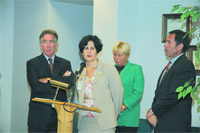
Departments

Manpower: Positive Job Market for Springfield

SPRINGFIELD — Springfield-area employers expect to hire at a steady pace during the second quarter of 2006, according to the recent Manpower Employment Outlook Survey. From April to June, 27% of the companies interviewed plan to hire more employees, while 10% expect to reduce their payrolls. Another 53% expect to maintain their current staff levels, and 10% are not certain of their hiring plans. For the coming quarter, job prospects appear best in wholesale/retail trade, education, and services. According to the national seasonally adjusted results of the survey, U.S. employers show no signs of changing their healthy hiring pace in the second quarter. Of the 16,000 U.S. employers surveyed, 30% foresee an increase in hiring activity for the second quarter of 2006, while 6% expect a reduction in payrolls.

Cities Receiving River Cleanup Grants

WEST SPRINGFIELD — The Pioneer Valley Planning Commission (PVPC), in cooperation with the Connecticut River Clean-Up Committee, recently announced that Springfield, Holyoke, and Chicopee will receive U.S. Environmental Protection Agency funding totaling $1.5 million for cleanup of combined sewer overflows (CSOs) to the Connecticut River. Springfield will receive $1,178,551 for the correction of CSOs in the Clinton Street/Washburn Street area, while Chicopee will receive $50,449 for sewer separation in the Jones Ferry/McKinstry Street area and $114,286 for sewer separation in the Fairview Street area. Holyoke will receive $175,871 for sewer separation in the Jones Ferry Road area.

Baystate Health Replacing Garage

SPRINGFIELD — A three-level parking garage will soon be under construction by Baystate Health at 280 Chestnut St. to replace its current aging structure. Visitors and vendors are asked to park across the street at the Holiday Inn on Congress Street. Signage will designate the parking spaces for Baystate patrons. The new garage is expected to be completed by the end of the year.

Officials Back Off Hotel Project

SPRINGFIELD — Developers will revise their proposal for a riverfront hotel project off West Columbus Avenue after Mayor Charles V. Ryan and David B. Panagore, deputy executive director of the Springfield Finance Control Board, recently rejected their bid. Both Ryan and Panagore instead have chosen to put the riverfront project out to bid. Ryan and Panagore cited several demands by Connecticut River Development LLC and NYLO Partners LLC that were too demanding for the city to consider at this time. Among the developers’ demands cited by Ryan included a 10-year period free of property taxes and freedom from sales tax on construction costs.

Tavern Restaurant Slates Summer Opening

SPRINGFIELD — The former owner of the Tavern Restaurant on Mill Street will once again take the helm this summer and reopen the popular eatery which was shut down last fall when the current owner, Frank L. D’Agostino, fell behind on rent payments. John J. Bonavita of East Longmeadow had owned the Tavern for almost 24 years until he sold it to D’Agostino in 2004. Bonavita had still owned the building that housed the restaurant and hired sheriff’s deputies on Oct. 7 to close the restaurant because D’Agostino was $5,625 behind in rent payments. Bonavita also reported to the License Commission that D’Agostino had let the insurance on the restaurant lapse. In a 5-0 vote, the License Commission granted a liquor license to Bonavita as part of his plan to reopen the restaurant.

State Rep. Wagner Seeks Tighter Control over Transit Authorities

SPRINGFIELD — With 15 regional transit authorities across the state, state Rep. Joseph F. Wagner, D-Chicopee, would like to see stricter state oversight since all are run by local advisory boards. In light of the recent fallout from the Pioneer Valley Transit Authority’s corruption probe, a legislative committee will soon begin seeking answers to increasing management and legal issues. A meeting of the Committee on Transportation was conducted March 27 at 4 p.m. in Room 303 at Holyoke Community College. Wagner stressed that the authority has far more independence on spending public funds and too little accountability to the Legislature. In addition, Wagner said that the transit authorities tend to run annual budget deficits, which forces the state to pick up as much as 75% of the additional costs.
Podcasting Teaching Communications Technology

SPRINGFIELD — Gordon Snyder, a professor of Electronic Systems Engineering Technology at Springfield Technical Community College, and Michael Qaissaunee, department chair for Engineering and Technology at Brookdale Community College in Lincroft, N.J., have begun recording weekly podcasts on communications technology for listeners worldwide to download. Their conversations have ranged from ‘2006 Technology Predictions’ to ‘Security 101: What Every Employee Should Know.’ Snyder and Qaissaunee said their listener base – at approximately 850 — grows each week as the site becomes better known. They use Skype in recording their podcasts, which can be downloaded free, or subscribed to through RSS (Really Simple Syndication). The podcasts can be played on an iPod or through a personal computer at any time that’s convenient for the user. The podcasts are available free at Apple iTunes and at www.nctt.org. Snyder is also executive director of the National Center for Telecommunications Technologies (NCTT), and Qaissaunee is director of the Mid-Atlantic Institute for Telecommunications Technologies, a regional partner of the NCTT.

Departments

Timothy S. Rice

Baystate Health Inc. in Springfield announced the following new Trustees:


• Timothy S. Rice, President, Rice Oil Co., Inc.;


Elaine A. Sarsynski


• Elaine A. Sarsynski, Senior Vice President and Chief Administrative Officer, MassMutual Financial Group;


Richard B. Steele


• Richard B. Steele Jr., Managing Member, Longmeadow Capital Partners LLC; and


Dr. Howard G. Trietsch


• Dr. Howard G. Trietsch, Managing Partner, Baystate OB/GYN Group Inc.


•••••

Rebecca Bouchard has been named an Associate at Doherty, Wallace, Pillsbury & Murphy P.C. in Springfield. She will concentrate her practice in education and employment law as well as other civil litigation matters.

•••••

Dr. Andrew M. Scibelli, President Emeritus of Springfield Technical Community College, has been named Chairman of the Steering Committee for the 2006 Western Mass. Entrepreneurship Hall of Fame.

•••••

Maryanne Rooney has joined Elms College in Chicopee as Vice President for Institutional Advancement.

•••••

David P. Fontaine


David P. Fontaine, President of Fontaine Bros. Inc., has been appointed to the Board of Trustees of Springfield Technical Community College. As a 1983 graduate of STCC’s Civil Engineering Technology program, Fontaine was honored in 2001 with the STCC Distinguished Alumni Award, which is given annually to recognize outstanding achievement by a graduate of the college.

•••••

Southbridge Savings Bank announced the following:

Thomas Dufresne


• Thomas Dufresne has been promoted to Vice President-Chief Technology Officer;


Todd Tallman


• Todd Tallman has been promoted to Vice President-Chief Financial Officer; and


Susan Gunnell


• Susan Gunnell has been promoted to Vice President-Director of Human Resources.


•••••

James M. Lavelle has been elected Corporator of PeoplesBancorp, MHC, the mutual holding company of PeoplesBank. Lavelle serves as General Manager at Holyoke Gas & Electric.

•••••

Karolina M. Sadowicz recently joined American International College in Springfield as Assistant Director of Public Relations.

•••••

Friendly Ice Cream Corp. in Wilbraham announced the following:
• James Sullivan has been named Vice President for Franchise and Real Estate Development for Friendly’s Restaurants Franchise Inc., a subsidiary of Friendly Ice Cream Corp., and

• Robert Sawyer has been named Vice President and General Counsel of Friendly’s Restaurants Franchise Inc.

•••••

David Chandler, an employee of Western Mass. Electric Company, was recently honored by Northeast Utilities with its NU Chairman’s Lifesaving Action Award, the company’s highest honor. Chandler was honored for his role in saving the life of Steven Peters, a 22-year-old Gill firefighter, on Oct. 9.

•••••

Coldwell Banker Residential Brokerage Central New England announced the following:

• Karen King has been recognized for her ranking of 41 among 3,500 Coldwell Banker sales associates in Massachusetts for her achievements in real estate in 2005. King works out of the Wilbraham office;
• The following employees were recently honored with the Coldwell Banker Residential Brokerage International Sterling Society Award: Barbara Adornato, William Blair, Suzi Buzzee, Diane Fisher, Pat Ireland, Suzy Lyons, Gerry Marafioti, Joan McKenna, Cathy Mushenko, Lisa Oleksak-Sullivan, Dianne Schmidt, Cate Shea, Marcia Snyder, Mary Wait, Colleen Westberg and Linda Wortman. The award recognizes those sales associates for their listing and selling excellence in 2005;

• Priscilla Harman and Ann Turnberg received the Coldwell Banker Residential Brokerage International President’s Elite Award. Harman and Turnberg received the award for placing within the top 4% of Coldwell Banker Residential Brokerage sales associates and representatives internationally;

• The following employees received the Coldwell Banker Residential Brokerage International President’s Circle Award: Bridget Donato, Carol Roy, Peg Ryan, Debbie Taylor, and Kathy Wallis-McCann. The award recognizes sales associates for their listing and selling excellence in 2005; and

• The following employees received the Coldwell Banker Residential Brokerage International Diamond Society Award: Tammi Adair, Ray Authier, Lisa Catrett, Shannon Donohue, Shawn Mitchell, Lisa McGrady, Marge Thibodeau, Roger Trombly, Barbara Vaughn, and April West. The award recognizes sales associates for their listing and selling excellence in 2005.

•••••

Rene “Pete” Ledoux has joined Westbank in West Springfield as a Senior Vice President in the newly formed Financial Services Division.

•••••

Joseph B. Collins


James Lee of Inspiria Salon & Day Spa in West Springfield has been promoted to Lead Massage Therapist.


•••••

The American College of Bankruptcy in Washington, D.C., announced that Joseph B. Collins, a shareholder of Hendel & Collins P.C., of Springfield, will be inducted as a Fellow of the College. Collins is one of 22 nominees from the United States and abroad being inducted in the 2006 Class of College Fellows. All are being honored and recognized for their professional excellence and contributions to the fields of bankruptcy and insolvency.

•••••

Susan Gay, Administrator at Skoler, Abbott & Presser, P.C., has been elected President of the Association of Legal Administrators (Nutmeg) Chapter for the Western Mass. and Northern and Southern Conn. regions.

•••••

Robin Olejarz has joined Kostin, Ruffkess, Themistos & Dane LLC as a Manager, specializing in business valuation and litigation support.

•••••

William H. Booth has been named Chief Executive of Country Curtains.

•••••

Dr. Robert L. Matthews has opened a new facility, The Kids’ Dentist, on Park Street in West Springfield.

•••••

Thomas R. Creed has joined Sovereign Bank as Senior Vice President and Regional Executive in the Connecticut and Western Mass. market.

•••••

Benjamin J. Garvey has been appointed Senior Account Executive in the Commercial Insurance Division for the Insurance Center of New England in West Springfield.

•••••

The Mass. Association of Realtors announced the following:
• Corinne Fitzgerald, a Partner with Key 100 Real Estate in Greenfield, will serve as Vice President of Business Development for her second term; and
• Susan Renfrew, Co-owner of Renfrew Real Estate in Greenfield, has been named Vice President of Professional Development for the Association.

•••••

Dr. Andrew L. Karanas has been appointed to the Department of Surgery at Noble Hospital, Westfield. He has joined the practice of Dr. L. Willis Roberts, also a surgeon at Noble Hospital.

•••••

Aimee Griffin Munnings, founder of the New England Black Chamber of Commerce, has been named the 2006 U.S. Small Business Administration Massachusetts Minority Small Business Champion award winner. Munnings went on to win the New England competition for the award as well.

Uncategorized

Rob Parslow was getting pretty frustrated in his search last spring for an internship within the financial services sector, a step he considered critical to his pursuit of a new career in accounting.

He had sent out more than 40 resumes, including many to Fortune 500 companies that had active internship programs, and heard nothing back. He was on the verge of giving up when he went to a new Web site — and eventually hit pay dirt.

It was an opportunity with a small, East Hartford-based company called Horizon Services Corporation, which specializes in customized cleaning solutions for a wide range of clients. It had posted a listing onwww.internhere.comlooking for a quality-management intern who could help the company become ISO 9000 certified.

Parslow, a student at Springfield Technical Community College and a former Air Force officer, saw it, and became intrigued.

To make a long story short, Horizon Services eventually stepped back from its pursuit of ISO certification, but it engaged Parslow in the creation last fall of a quality-management system that is already paying dividends for the company.

And as he talked about Horizon, his work with the company, and the satisfaction he gains from knowing it is still using the system he implemented, Parslow made heavy use of the word we.

Which is exactly what the creators ofwww.internhere.comhad in mind.

The user-friendly, free of charge site was developed by business and economic development leaders involved with the Hartford-Springfield Economic Partnership, with the purpose of retaining more of the 235,000 students attending area colleges and universities; especially those who will be graduating in the next two years.

It is much too early to gauge how effective the site will be with regard to that mission, said Nancy Scirocco, vice president and business development officer for the Healthcare/Not for Profit Division of Webster Bank and chair of the committee that launched the site just over a year ago. But there are signs that it is successfully linking students with opportunities while helping companies, especially small- to medium-sized ventures solve problems and ultimately become more competitive.

“Student perceptions of the region have been causing them to seek jobs elsewhere,” she explained. “We believe this site can ultimately change those perceptions.”

At present, internhere.com is largely a Connecticut phenomenon — the vast majority of posted listings are from companies in that state and large firms there were instrumental in getting it off the ground — but officials on this side of the border would like to change that.

“I think this is a great tool with which we can hopefully keep more of our college graduates in this area,” said Bill Ward, executive director of the Western Mass. Regional Employment Board (REB). “We want to make people aware of this Web site and make full use of it.”

A Job to Do

Scirroco said the motivation for internhere.com can be found in statistics garnered from a 2003 survey completed by the Graduate Retention Committee of the Hartford-Springfield Economic Partnership.

Nearly half (45%) of the graduating seniors surveyed believed that better job opportunities were to be found elsewhere. However, 31% of those polled at the time of the survey were undecided. Meanwhile, 51% of students who had successful internships and co-ops in the area were more likely to stay in the region.

What the survey revealed was a matter of perception regarding the region and the job opportunities it presents, said Scirroco, adding that the region does have good jobs for graduates — but many simply don’t know about them.

The Web site was created to generate some awareness, she continued, noting that it has a wide array of information about the Hartford-Springfield region beyond internships, including its educational, cultural, and recreational assets. But part of its purpose is to link students with companies in ways that may create employment opportunities after the students graduate.

Here’s how it works. Employers wishing to use the site log on and enter a profile that will remain permanently on the site. Meanwhile, they can post specific internships and co-op opportunities and place them under categories of employment that range from accounting/auditing to underwriting; entertainment to IT.

Students, meanwhile, can log on and search through those listings as well as the company profiles, said Scirroco, adding that the site effectively exposes area students — not to mention others from well outside the area (inquiries have come from Brown University in Providence, for example) — to the vast array of career opportunities in the area.

But the site’s ultimate mission is to match students with employers, she said, and this is why the site remains free of charge — to encourage students and companies of all sizes to take advantage of it.

A look at some current postings gives an indication of the quantity and diversity of opportunities available. For example, the category ‘Communications and Mass Media’ lists dozens of entries.

They include internships in the University of Hartford Athletic Department, Boerhringer Ingelheim Pharmaceuticals, Jacobs Pillow, the acclaimed dance festival in Beckett, Mass., the Hartford Business Journal, the Connecticut AIDS Resource Coalition, ThinkGlobal Incorporated, the Northampton-based advertising and marketing firm, and many others.

Scroll down the listings in the category ‘Information Technology,’ and one finds posted internships for such companies and organizations as Abot Software, Hartford Stage, Pratt & Whitney, St. Paul Travelers, and New Wave Industries Inc., all in Connecticut and the Pioneer Valley Design Center in Springfield, among others.

Position Players

It was under the ‘Accounting and Auditing’ category that Parslow found Horizon Services’ posting for an internship centered around creation of a quality-management program. He submitted a resume, and got a call from the company’s president, Ted Hsu (pronounced ‘shoe’) the day it arrived.

The two met and shook hands on a paid internship that brought benefits to both parties.

“He essentially acted as a consultant for us,” said Hsu, noting that Parslow’s first assignment was to read and digest (hopefully) the 700-page ISO manual and offer some recommendations. “That was well above and beyond the scope of a traditional internship; he did a tremendous job for us.”

Hsu actually posted two internships on the site — the other was for someone to focus on marketing efforts such as search engine visibility — and he found matches for both. He told BusinessWest that the resource proved an effective way for his company to reach out to a large audience of qualified candidates.

“What was unique about this site is that it let students know that there are real opportunities out there in small, growing companies,” said Hsu, who was referred to internhere.com from a colleague on the Conn. Minority Supplier Development Council. “That was the first time that link had been made.”

Getting the word out on the Web site, the opportunities if offers small companies, and success stories like Parslow and Horizon Services is one of the challenges facing the committee coordinating the site, said Scirocco.

She told BusinessWest that some aggressive marketing is planned to create awareness. Organizers are using area chambers of commerce, technology councils, other business groups, and some media advertising to not only familiarize business owners and colleges with the concept, but make it part of the economic development fabric in the region.

“People need to hear the message two or three times before it really sinks in,” she explained. “And that’s why we want to work with the chambers and other groups to make sure internhere.com isn’t a best-kept secret.”

Meanwhile, the committee will search for additional and more permanent sources of funding for the venture, she said. Several companies and organizations (most in Connecticut) have contributed money or in-kind services to the cause, including St. Paul Travelers, the MetroHartford Alliance, The Hartford, Northeast Utilitities, Pratt & Whitney, and Ashton Services, based in Springfield, which currently hosts the site. The state of Connecticut is currently considering legislation to provide steady funding toward upgrades and marketing, she noted, adding that similar contributions are being sought from the Bay State, but thus far without success.

“It’s easier for us in Hartford, because this is the state capital and we have some clout with the Legislature,” she said. “It’s obviously going to be harder in Western Mass.”

Ultimately, the committee will look to hire an individual to manage and market the Web site, she continued, adding that such a step is predicated on securing a steady stream of revenue that must be achieved without charging students, businesses, and colleges for using the resource.

“We don’t want to do that, because that’s one of the site’s big advantages right now,” she said. “Because we don’t charge, many smaller businesses and non-profit groups are able to take part.”

Work in Progress

Still another challenge for the committee is to introduce tracking procedures that will let site organizers know how many students have been linked with internships and if any of those individuals have found permanent jobs in the region.

After all, the stated purpose for the site is to increase graduate retention rates and reduce brain drain out of the Hartford-Springfield area.

Ultimately, Scirocco believes it will succeed in keeping students — one of the region’s biggest assets — in the area.

“The opportunities are there,” she said. “We have to make people aware of them and then make some connections.”

George O’Brien can be reached at[email protected]
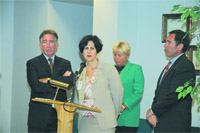
Uncategorized

A Phantom Stock Plan can be an attractive incentive option for an employer to provide a valued key employee with a financial stake in the growth of a company without actually giving the employee an actual ownership interest in the company or a vote regarding management of the company.

What follows is an overview of the basic structure of phantom stock plans as well as issues to consider with regard to creating such a plan.

Taking Stock

A phantom stock plan is a plan whereby a company gives an employee ‘phantom’ shares of stock in the company rather than real shares. Awards of phantom shares are generally given to employees based upon performance at the discretion of the employer at various times chosen by the employer. Phantom shares represent the right of the employee to cash payments upon the occurrence of a triggering event such as the employee’s death, termination of employment (in certain circumstances), retirement, or disability. The employee never actually owns stock and thus obtains no stockholder rights under the plan.

Phantom shares can typically be converted into cash payments to the employee under either of two scenarios. Under a ‘stock’ approach, the phantom share could be given the same economic value as if the employee were given an actual share of stock in the company. Thus, if the employee were given one phantom share and the value of the company never increased between the date of the grant and the date the phantom shares are ‘redeemed’ by the company, the employee would receive a payment equal to the value of one share of stock of the company.

An alternative is a ‘stock appreciation right’ approach, which values the phantom share at the date of the grant at the same value as the actual shares of the company at the time of the grant. When the phantom share is ‘redeemed’ the employee gets paid the difference between the value at the date of the grant, and the increased value, if any, at the date of redemption. Under this method the employee would only receive payment if the value of the company increased between the date of the grant and the redemption.

Phantom stock plans are not only attractive options to award key employees and retain their services by giving them a stake in the growth of a company, but they are also an attractive plan for employees and employers from a tax point of view, because the employee is not taxed upon receipt of phantom stock shares.

Rather, employees are only taxed upon their receipt of a cash payment from a phantom share award or sooner if pursuant to the plan the employee has the right to demand a cash distribution. Note that the plans are also attractive to employers as well as the company is typically entitled to deduct (as compensation) from its taxable income the payments made to employees pursuant to phantom stock plans. Payments to the employee are taxed at ordinary income tax rates.

Limitations on the Amount of Phantom Shares/Method of Granting.

Most phantom stock plans place a limitation on the number of phantom shares or percentage of the value of the company that will be granted pursuant to the plan. There are different ways in which the granting of phantom shares is structured. One method involves creating a schedule providing for a certain number of phantom shares to be granted each year for a term of years (such as 10 years) to be vested immediately upon the grant of the phantom shares.

For example, the employee would earn the right to the phantom shares for each year that he or she completes employment, subject to vesting. A twist on this approach is to grant a certain number of phantom shares each year (unvested) and provide that the shares vest after a certain term (such as 5 or 10 years or upon retirement after a certain age).

Another alternative to the grant schedule is for the employer to grant shares to the employee periodically at its discretion without a predetermined schedule but according to the employee meeting certain performance goals set each year. However, this method is less common because it typically does not provide the employee with any degree of certainty or security that his or her efforts will be rewarded, and may not have the ‘golden handcuff’ effect that most employers are seeking when establishing these plans.

One further alternative to annual grants (and which is somewhat related to the scheduled grants) is a one-time grant of a block of phantom shares, all of which vest at a certain time in the future (such as over 10 years) assuming no other triggering events occur prior to that time which would cause the shares to vest earlier or cause the shares to be forfeited.

Vesting/Other Triggering Events.

The phantom shares to be granted to an employee (irrespective of the method selected) should be vested over a term of years. Typically, if an employer chooses a term vesting plan or vesting schedule, the employee’s phantom shares are generally immediately vested under certain circumstances, including a change in control (such as a sale of the business), in the event of the employee’s death or disability, or if the employee is fired without good cause. If an employee is fired ‘for cause’ (i.e., for engaging in illegal or harmful conduct during the scope of employment), or if the employee resigns, all of the employee’s phantom shares are typically forfeited without payment irrespective of whether they are vested or not.

Payment of Phantom Share Awards.

Some phantom stock plans provide the employee with the right to exercise (cash out) their phantom share awards upon the vesting of the phantom shares. However, it is much more prudent to structure the plans in a manner in which the phantom share awards will only be payable upon certain triggering events such as termination of employment (other than termination for cause), death, disability and change of control.

Valuation of Stock.

If the phantom share award is based upon the increase in the value of the company from the date of the grant of the phantom shares until the date of the payment of the phantom share award, the plan must establish a means of evaluating the fair market value of the company. This value would be determined through a formula, which is described in the plan. The formula should accurately reflect the true value of the company and once the plan is put into effect, the formula typically cannot be changed unless both the employer and employee agree to the change. Normally, the formula takes into account the value of assets and goodwill.

Non-Competition/Non-Solicitation.

Most employers require plan participants to sign a non-competition/non-solicitation agreement in exchange for implementing the phantom stock plan for their benefit. The execution of this type of agreement is typically a condition attached to the participation in the phantom stock plan and is usually not considered to be unreasonable in light of the benefits to the employee associated with this type of plan.

In summary, phantom stock plans are very flexible agreements that may be specifically tailored to all businesses and employment relationships. They have increased in popularity over the past several years due to the fact that they provide the employer with an option to reward a valued employee with a financial stake in the success of a company and provide a means of retaining the employee without actually giving up a voting interest or stock in the company, which can help eliminate costly shareholder/member/partner disputes in the unlikely event that the employee/employer relationship deteriorates in the future.

Bruce E. Devlin, Esq. is an associated attorney at the law firm Robinson Donovan, P.C.; (413) 732-2301.

Uncategorized

After more than 30 years in business, the commercial real estate development firm of Development Associates has a keen understanding of the Western Mass. market, the emerging business sectors, and challenges facing area business owners. Armed with that knowledge, DA is forging ahead with a number of projects, many speculative in nature, designed to give new and evolving businesses the space to grow.

Fanning a stack of four-color postcards like a hand in a poker game, Ken Vincunas, general manager of Development Associates, said the cards are a small representation of DA’s growing presence in the region; they announce newly completed building projects and new space for lease across Western Mass.

“We have so many things going on right now that it can be hard to see what, if any, areas we’re missing,” he said.

Indeed, the company has its fingers spread across a large portion of the local landscape, and is continually expanding an already broad portfolio that includes the construction, renovation, brokerage, leasing, and management of properties from Connecticut to the Berkshires and beyond.

Based in Agawam, DA operates as a commercial and industrial real estate, construction, and development firm. Vincunas represents the second-generation management of a company started by his father and partner Edward J. O’Leary.

For the past 15 years, Development Associates has developed a strong foothold in the development of build-to-suit and multi-tenant lease facilities across the region. The company currently owns and manages several properties in Western Mass. and more than 1.1 million square feet of leased space in Massachusetts, Connecticut and New Hampshire.

Today, business is brisk at DA. Several projects are in various stages of development across the region, ranging from new construction of office and industrial facilities — such as two projects underway in Agawam and Chicopee — to renovations to the leasing and management of existing properties.

The company’s diversity, both in terms of the types of work it handles and the wide array of business sectors it serves, has yielded keen insight into the state of the local economy, current trends and challenges, and prospects for future growth and economic development.

Overall, Vincunas sees strong organic growth in a number of sectors, especially health care, retail, and education, but also recent struggles in efforts by area economic development leaders to bring new employers to the area.

BusinessWest looks this issue at DA’s strong track record in property development and management, and how it is responding to recent trends and growth opportunities with confidence, in for the form of spec building that many developers shy from, and imagination.

Strong Suit

Vincunas doesn’t take the old Field of Dreams outlook — ‘If you build it, they will come.’ But he does believe that if he builds the right facility in the right location, then business owners will come, look, and often lease several thousand square feet of space.

This is what the company is currently doing in two area industrial parks in Agawam and Chicopee, and what it has done through much of history.

“We have space of all kinds for all people in all areas,” he said. “We have a commitment to the area and its businesses, and we’ve been able to serve those businesses well … many tenants in our buildings will work with us when they’re ready to expand, and relocate into other buildings that we own or have recently constructed.”

And that’s an area that is also strong for DA – the construction and renovation of buildings at some new, key locations. One will be located at Silver and Suffield streets in Agawam, near the Agawam Regional Industrial Park, and will include 25,000 square feet for lease. The project, dubbed the Agawam Crossing Professional Center, is expected to commence in June, with space available for professional offices and specialty retail.

Also under construction in Agawam is a 20,000-square-foot industrial flex building on Gold Street that Vincunas has targeted for light industrial, manufacturing, service, R&D, or distribution uses.

In addition, DA is building a 42,500-square-foot facility in Westover Airpark North on Griffith Road in Chicopee, which is geared toward office and light industrial uses, and has development sites available on about 25 acres of land on Route 10 and 202 in Westfield near Barnes Municipal Airport.

A Finger on the Pulse

All of the buildings are expected to house several tenants across a wide spectrum of industries, but as the health care sector strengthens in Western Mass., so do the numbers of businesses moving into larger office spaces. The Agawam Crossing site, for instance, is expected to house several medical offices – either physicians, dentists, and other health care professionals or satellite businesses such as legal services, medical equipment firms, or staffing firms.

“The interior can be finished to suit, and we hope to attract medical businesses because Agawam is in need of a purely professional building,” explained Vincunas, adding that other sites are also seeing strong interest from the medical community, including the Griffith Road site in Chicopee, which is slated to become the new home for Hudson Home Health Care, currently located in Agawam.

On a larger scale, New England Medical Practice Management (NEMPM) recently signed a three-year lease at the Greenfield Corporate Center earlier this month; 2,550 square feet will be used as office space where NEMPM provides medical practice billing services. A veteran’s outpatient medical clinic, as well as the Visiting Nurse Association have also located in the 145,000 square foot Greenfield Corporate Center, and some office space remains for lease.

In the future, Vincunas said he hopes to beckon more health care and medical businesses to Western Mass., by providing them with appropriate space for their needs — be it getting started or taking a venture to the next level.

In South Deerfield, for instance, an industrial center adjacent to route 116 has ‘high technology’ space available, appropriate for office, lab assembly, clean manufacturing, or medical production.

“We hope to bring some of the biotech industry to the area with properties like the one in South Deerfield,” he said, referring to a sector that many economic and regional planning groups, including the Regional Employment Board (REB), MassDevelopment, and the Economic Development Council (EDC), have targeted as possible areas for new growth in Western Mass.

Overall, Vincunas said most of the growth in the region has been organic, a trend area development leaders would like to change.

“One trend we see is that people aren’t generally coming to Western Mass. from other places looking for industrial space,” said Vincunas. “We’re just not attracting people from other areas right now.”

What’s more, the cost of doing business – from fuel costs to engineering expenses – is rising, and that’s putting a crunch on the entire commercial real estate industry.

“High commercial tax rates are also having an impact in many communities,” he said, noting that this has spurred a trend toward development in outlying suburbs, such as Greenfield, East Longmeadow, and Southwick, where tax rates and the cost of real estate is often lower.

A Hand in the Future

“We have to keep our eye on potential new uses and new creative ways to fill and manage our properties,” said Vincunas, noting that this helps DA-owned and managed properties remain viable and relevant in various economic climates and to many industries. “A lot of factors might keep people from coming here, but with good buildings in good locations, there is always at least some healthy turnover within those buildings regardless of the economic climate.

“We have many resources for many industrial opportunities,” he continued, “so a primary focus for us now is to continue to serve and invest in the area by providing quality space and bucking the negative trends.”

Fanning that set of announcement cards on the table in front of him, Vincunas said DA’s hand looks good … but as far as its role in the region goes, they’ll continue to aim for a full house.

Jaclyn Stevenson can be reached at[email protected]

Departments

Business Confidence Continued to Erode in January
BOSTON — The Associated Industries of Mass. (A.I.M.) Business Confidence Index lost 1.9 points in January to 54.7, a third consecutive loss that has left the monthly index at its lowest point since November 2003. There are rising concerns among employers about economic conditions in the state, especially as national growth appears to be weakening, according to Raymond G. Torto, co-chair of A.I.M.’s Board of Economic Advisors and Principal, CBRE Torto Wheaton. Torto added that employers surveyed were somewhat more positive about the situations of their own operations in the face of the slowdown. Confidence was off in January among both manufacturers and other employers. Manufacturers were on balance negative in their assessment of current and prospective conditions within the state, and expect national conditions to deteriorate as well. Readings were somewhat weaker outside Greater Boston, where confidence has declined in five of the last six months. Large employers were more positive than others on most questions. Rising energy costs, interest rates, and health insurance premiums erode both consumer and business confidence. The monthly survey of A.I.M. member companies across the state asks questions about current and prospective business conditions in the state and nation, as well as for their respective organizations. Readings above 50 on the 100-point scale indicate that the state’s employer community is generally optimistic, while a reading below 50 reflects a negative assessment of business conditions.

Five-Year Watershed Action Plan Underway
WEST SPRINGFIELD — The Pioneer Valley Planning Commission (PVPC), in partnership with the Westfield River Watershed Association and ESS Group Inc., has been awarded a contract under the Executive Office of Environmental Affairs to develop a five-year watershed action plan for the Westfield River. Created by watershed partners, the action plan will outline various issues and priority areas over a five-year period, charting a course of action for state agencies, watershed communities, and other decision makers within or related to the watershed. A steering committee is currently being formed to guide development of the action plan. Current members include The Nature Conservancy, the Westfield River Wild and Scenic Advisory Committee, Massachusetts Department of Environmental Protection, Mass. Department of Agricultural Resources, UMass Amherst and the Massachusetts Department of Conservation and Recreation. In addition, each of the 28 communities in the watershed has been asked to appoint a representative to the steering committee. A series of three public forums will be conducted this spring to solicit public comment and feedback on the plan. For more information, contact PVPC Senior Planner Anne Capra at [email protected] or (413) 781-6045.

Public Input Needed Online for Update-Use Plan on Land-Use Plan
WEST SPRINGFIELD — The Pioneer Valley Planning Commission invites public input via an online survey in the development of Valley Vision 2, the update of the region’s land use plan. Valley Vision 2 maps out a vision for smart growth in the Pioneer Valley based on more compact forms of development in and around existing community centers and preserved open space in outlying greenbelts. Public opinion is vital to developing this update, and PVPC relies on participation by citizens throughout the region in shaping the future vision of its landscape. To read the draft plan and take the survey, visit www.pvpc.org. For more information, contact Chris Curtis at the PVPC, (413) 781-6045,
or [email protected].

Mass. Hospitals Voluntarily Post Staffing Plans
BURLINGTON — Massachusetts hospitals delivered on the “Patients First” pledge beginning Jan. 27 to voluntarily post their staffing plans for public viewing. Through a Web site, www.patientsfirst ma.org, and notices in hospitals, consumers can now find the number and type of caregivers assigned 24/7 throughout each hospital in the state. A special consumer brochure, “It Takes A Team,” is also available at every hospital and explains the many professionals involved in patient care. The staffing plans that are posted on-site in each hospital and on the web will provide an overview of the staff available in each hospital unit, including RN’s and allied health professionals. In addition to the staffing plans, hospitals will document the quality of their care using a common set of nationally recognized measures. A pilot test of some of those quality measures is now underway, under the supervision of a team of leading patient care experts. The quality reports on all hospitals should be available by the end of this year.

Survey: Most Downsized Execs Anticipated News
HOLYOKE — The majority of recently downsized executives polled weren’t surprised to find themselves in career transition, according to a survey of 1,202 outplaced managers by Lee Hecht Harrison. Nearly 80% of executives anticipated their organization’s downsizing, and 57% weren’t surprised to learn they were among those to be laid off. Additionally, 35% of respondents said they had been downsized before and 65% had survived a previous downsizing with their most recent or prior employer. The good news for outplaced employees is that a significant number have become savvy about the changing world of work and have taken steps to ensure their future employability. For example, within the two years prior to their downsizing, 57% of respondents had updated their resumes, half pursued some form of career or skill development, 46% actively maintained their networks, and 44% explored other employment options. Lastly, one reason respondents had generally positive impressions of how their former employers handled their downsizings could be that they had received outplacement services.

Ashe: Housing Market Will Remain Strong in 2006
SPRINGFIELD — Residential real estate once again was the backbone of the U.S. economy last year, and in Hampden County, 2005 was statistically similar to the record-breaking year of 2004, according to Donald E. Ashe, Hampden County Register of Deeds. The number of deeds recorded in 2005 was only 0.7% less than the previous year. The total amount of money collected in 2005 did, however, increase by 3.6% over the prior year. The total number of documents recorded during 2005 was 122,837 and the amount collected from fees was $22.2 million. The most noteworthy change from 2004 to 2005 was the substantial decrease in attachments and foreclosures, according to Ashe. He predicts that the area housing market is in the process of “changing from record sales and double-digit price increases to a more stable condition.” Overall, Ashe said that the fundamental conditions in the housing market are strong and real estate activity will remain healthy in 2006. In other news, Ashe reported that the satellite office in Westfield completed its first full year of operation and collected more than $1.2 million in revenue and recorded more than 10,000 documents.

Opinion
At some point in life, everyone needs to consult with an attorney, but there are many things that should be considered when trying to find the right one.

Knowing how to approach the task of choosing a lawyer is perhaps the first step in the process.

Where to begin?

The best references are from trusted associates. These can include accountants, friends, insurance agents, clergy, bankers, stockbrokers, etc. Consider people with whom you serve on civic boards or church organizations. Is there an attorney on the board whose manner of handling matters demonstrates leadership and intelligence?
If you do not have access to people who know an attorney, you can consider contacting your local bar association to request a recommendation. There are also professional organizations and publications that you can consult for recommendations, including Boston Magazine’s “Super Lawyers” issue, BusinessWest magazine, and Martindale-Hubbell, (martindale.com.) This well-established organization rates attorneys and law firms on both legal ability and professional ethics, and it is widely used throughout the legal and business communities. The highest quality lawyers will be rated AV.

Making Your Initial Contact:

Once you have identified potential attorneys with whom you would like to speak, it is recommended that you contact them by phone and explain the type of problem you have, to see if they are interested in handling that type of matter. You should ask if they offer a free initial consultation, or whether you will be charged for the first meeting.

Ask their experience level within your particular area of the law. Several of the basic legal areas include family, business, estate planning, personal injury, employment, litigation, real estate, immigration, tax, and banking. Even general practitioners tend to specialize in a few of them. Ask how many similar cases they have handled, the number of years that they have been in practice, and the size of their firm and support system.

Next, check the background of the attorney and his or her law firm. A good way to do that is to review the firm’s Web site. See what awards the attorney has won, undergraduate and law schools attended, and whether he or she has published articles that correspond with your practice area. All of these are indicators that will help you to further gauge the attorney’s level of expertise within your required field. You may also want to check with the state licensing authority to see if there have been any ethics violations brought against the attorney. In Massachusetts, that information can be obtained from the Mass. Board of Bar Overseers, located in Boston.

Discuss Fees and Billing Procedures:

Ask how the attorney sets legal fees. There are a few fee options, including hourly, flat, and contingency. An attorney provides knowledge in return for a fee, which normally includes charging you for phone call consultations as well as office visits, so you should clarify how fees are calculated.

  • Hourly fees are most often used by an attorney in non-personal-injury cases, whereby the attorney will charge an agreed-upon fee for the amount of time spent on your behalf;
  • Flat fees are most common in certain types of consumer cases, including real estate closings, simple wills, simple bankruptcies, and other matters that can usually be estimated to take a certain amount of time. This should be discussed and agreed upon before the work is done;
  • In personal injury cases, and sometimes in other instances, an attorney will agree to handle a matter on a percentage basis, called a contingent fee. In those cases the attorney is paid a percentage of the money that is recovered on your behalf;
  • In some cases, an attorney will consider a combination of the above fee distinctions; for instance, a reduced hourly fee may be agreed upon in combination with a contingency fee.

In regard to attorney bills, you should ask how they are determined and how often they will be sent. Will you be required to pay a retainer? If so, will you be billed monthly, quarterly, annually; and what does the fee you are paying include? In addition to legal fees, will you be responsible for filing fees and additional expenses if a lawsuit is filed?

Come Prepared for the Meeting

To best prepare yourself for that initial meeting with your attorney, you should be organized. This will ensure that you present all of your important facts to the attorney, and this will better allow him or her to address your issues. It is a good idea to provide a written narrative of the facts as you understand them, and bring copies of all of your documents so that the attorney can retain a set for further review and discussion.

It is important that you disclose all of the facts to the attorney, both good and bad, and that you do not hide any information. Full disclosure is the only way that an attorney can give you honest advice and a fair assessment of the viability of your case. Generally, all of the facts eventually come to light, and it is both embarrassing and disheartening to realize that had you disclosed all of the facts at an earlier stage, your attorney may have been able to dramatically improve your case.

Finally, remember that the attorney wants to succeed on your behalf and needs to know that you are as committed to your case as he or she will be. You should have a clear expectation of your prospects for successfully obtaining your goals after the attorney has presented his or her analysis of the potential outcome. If you do not get a positive feeling from your discussion with the attorney, or you sense a lack of enthusiasm for your case, you are probably better off to consult with another attorney to see if you can make a better connection.

Most attorneys are educated, compassionate, and caring people, who genuinely want to do well for their clients. Working together as a team with your lawyer will substantially improve your chances for success, whether purchasing your first house, obtaining immigration status for your aunt, forming your new business, or obtaining damages from the contractor who failed to properly finish your kitchen.
Hopefully, you will have a successful outcome and will have made a new friend for life.

Michael B. Katz, Esq. is a senior partner with the law firm of Bacon & Wilson, P.C. A frequent author and lecturer on business and health care matters, he specializes in business, insolvency and health care legal matters in the firm’s Springfield, Westfield and Northampton offices; (413) 781-0560;[email protected].

Uncategorized
The law firm Robinson Donovan, which has offices in Springfield and Northampton, has added three new associates over the past several months, bolstering its litigation, estate planning, and employment law departments in the process.

Civil litigation will be the primary focus for Dianne Brooks, a graduate of Harvard Law School who was an associate professor in the Department of Legal Studies at UMass Amherst for 15 years before starting her own practice in Northampton in 2004.

She joined Robinson Donovan in early January, seizing an opportunity to take her career in a different direction. “As much as I enjoyed having my own practice, I wanted to take my work to a higher level and take on more sophisticated litigation,” she told BusinessWest.

Her practice areas will incorporate civil litigation including business, employment, products liability, and intellectual property.

David Lawless will also be focusing on many of those specialties.

A 1998 graduate of the University of Connecticut at Storrs and 2005 graduate of the law school at UConn, he joined Robinson Donovan last fall. He told BusinessWest that he likes the Northeast, especially the Pioneer Valley, and joined Robinson Donovan for that reason and also the quality mentoring for which the firm is noted.

Lawless has worked in the New York County District Attorney’s Office and an investigative analyst in the Money Laundering and Tax Crimes unit. He will use that experience at Robinson Donovan in practice areas that include business litigation, employment law and litigation, and products liability.

Mentoring was also a motivating factor in Rebucca Mutch’s decision to join the firm last November.

“The level of mentoring here was a major selling point for me,” she told BusinessWest. “It drew me out of Boston and drew me out of litigation.”

A graduate of Mount Holyoke College and a 2004 graduate of Suffolk University Law School, Mutch practiced business litigation for a mid-sized firm in Boston before leaving to join Robinson Donovan. There, she will concentrate her practice in the areas of estate planning, probate litigation, and business law.

Opinion
With cold and flu season upon us, some interesting challenges for employers and employees alike arise. ‘Presenteeism,’ a newly coined term which means being present at work while sick or for some other reason disengaged from your assigned work, can be extremely detrimental to organizations and their workforce.

Traditionally, the focus of most organizations has been on absenteeism and the opportunities lost when an employee isn’t at work. This focus, however, assumes that when people are at work they are productive. Unfortunately, many times, this is simply an illusion.

According to a recent survey by OfficeTeam, a staffing service based in Menlo Park, Calif., 80% of employees polled frequently show up to work while sick; with only a mere 8% of the respondents reporting they never come into the office when ill. Performance levels of sick individuals are rarely at peak or even at an acceptable level.

In fact, employees who come to work when they are ill may be costing employers more in lost productivity than their employers pay for sick days and other medical and disability benefits. In 2004, Cornell University cited in WebMD that presenteeism may account for up to 60% of employer health costs, and found that up to 60% of the total cost of employee illnesses come from people who continue to work despite illnesses that reduce their productivity.

Morale and contagion are also concerns associated with ‘presenteeism.’ Being in contact with contagious individuals jeopardizes the health and productivity of all employees. According to CCH Inc., a division of Wolters Kluwer, a provider of employment law information and software, organizations with already-low employee morale are at even greater risk of sick workers on the job, with 52% of companies with poor or fair morale reporting presenteeism as a problem.

But presenteeism isn’t just limited to physical illness such as allergies, headaches, colds, or flu. Burnout, stress, and depression from work/life or work-related conflicts also contribute to loss of productivity while on the job. These causes may include emotional problems, family issues, elder or child care concerns, employee vs. employer distrust, overwork, or workplace distractions ranging from heat, light, or air quality, communication breakdowns, lack of training, and many other variables.

Curing the Problem

Employers can take steps to discourage presenteeism and enhance productivity. During cold and flu season, the Center for Disease Control and Prevention recommends individuals to stay home when they are sick. It also provides helpful tips and posters that can be displayed within the workplace. Employers can also create guidelines to help the workforce understand the conditions for staying home, when it is safe to return to work, and when to re-evaluate a company’s absenteeism policies.

The single most common absence-control program utilized by 91% of organizations surveyed by CCH is disciplinary action. This approach is counterproductive to helping sick workers stay home when they are ill, especially when one considers that most of these programs allow five sick days per year and one bad cold or flu can wipe an individual out for that same amount of time or longer.

An alternative to traditional sick day policies is paid leave banks, also known as Paid Time Off (PTO) programs. Under a PTO program, personal, sick, and vacation days are combined into a single bank of days that the employee can use in any way he or she needs; allowing the employee to have more control.

Employers can also work to foster a healthy work environment and set a good example. A 2005 Workplace Productivity Survey conducted by the Society for Human Resource Management (SHRM) states that poor management is the number-one factor hurting employee productivity. Therefore, managers need to be aware of how not only their words but their actions are being interpreted by employees. Are your employees comfortable in asking for time off when ill or for other necessary reasons?

What message are you sending when you come to work sick, injured, or distracted?
Employers should be sure to keep communication open with employees. With many companies experiencing lay-offs, relocation, and expecting employees to do more with less, job insecurity and overwork may compel employees to put in excessive work hours, many unproductive. This can then lead to stress, burnout, or illness.

Executive and business coaching programs can be very valuable in establishing effective communication throughout organizations and creating engaged and resilient workforces. Coaches work with management and staff to enhance performance, morale and productivity.

Besides coaching, employee assistance programs (EAPs), and other wellness or work/life balance programs offer employees assistance beyond cold and flu season by helping them maintain focus on work while at work. EAPs provide confidential 24/7 counseling to employees and their families helping them to manage both physical and emotional concerns ranging from addictions to loss and grief.

Wellness programs, such as flu clinics, blood drives with free cholesterol screenings, etc., create opportunities for workers to receive preventative health benefits while at work. Something they may not otherwise take the time to do on their own and thus maintaining their health and welfare. Because of busy schedules, many work/life balance programs have been initiated that make services and/or resources easily accessible to employees so they can spend their time on work while at work. Child care, elder care, and financial concerns are among the myriad of issues addressed through these programs. Many times these work/life balance offerings can be provided at no cost to the organization.

Multiple Remedies

Just as there are many causes for presenteeism, there is no one solution.
Each organization and its workforce has different needs and requirements. These needs may shift with time, so it is important to re-evaluate your programs periodically. Get employees involved and ask for their input. No one enjoys being unproductive. Adopt healthy, flexible, positive work environments that meet the multitude of personal and professional challenges faced by employees. Investing in your employees will help alleviate this drain on your people, profits, and productivity.

Lynn Turner is an executive coach and owner of Ironweed Business Alliance, a coaching and consulting firm specializing in leadership development, team building and work/life balance strategies. She is also the host and producer of a local radio talk show/Web site Business Link Radio (www.businesslinkradio.com); (413) 283-7091.

Departments

A.I.M. Creates HR Resource Center
BOSTON — The Associated Industries of Mass. (A.I.M.) recently launched a Web-based online HR management resource center to provide employers with timely, accurate and up-to-date human resource management information. When accessing A.I.M.’s Online Resource Center (www.aimnet.org), members can view sample policies, checklists, forms, and articles on hundreds of HR topics, according to Sandra Reynolds, A.I.M.’s Senior Vice President of the Employer’s Resource Group. Membership in A.I.M. is required to access the resource center, and terms and conditions apply. The information on the site is for educational and informational purposes only and is not intended and should not be construed as legal advice or opinion. A.I.M.’s HR Hotline, 1(800)470-6277, is also available to help personnel from member companies to gain access to information on a variety of management issues including performance appraisals, employment law, regulations and best practices. A.I.M. is an employer association of more than 7,600 companies and institutions across Massachusetts.

Planning Board Assistance Program Offered
WEST SPRINGFIELD — The Pioneer Valley Planning Commission (PVPC) is offering a new Planning Board Assistance Program to help communities that lack access to a professional planner or planning staff. Under the new program, an eligible PVPC member community may retain the services of a professional PVPC staff planner on a part-time basis. The program is not a substitute for a town planner or a community development professional, but may be an effective and affordable alternative depending on a particular municipality’s needs and circumstances. The program offers different levels of assistance depending on an individual community’s budget and objectives. Costs are typically billed on a fee-for-service basis. For more information, contact Christopher Curtis at [email protected] or Eric Twarog at [email protected], or call (413) 781-6045. A brochure describing the program is available at PVPC’s website, www.pvpc.org.

Lees Won’t Seek Re-election
SPRINGFIELD — Senate Minority Leader Brian P. Lees made it official – he is not seeking re-election this year. Lees said during a recent press conference that he has no immediate plans to run for another public office or to accept a position in the private sector. Area legislators immediately expressed interest in running for the seat including Rep. Thomas M. Petrolati (D-Ludlow), Rep. Gale D. Candaras (D-Wilbraham), and Rep. Mary Rogeness (R-Longmeadow). Lees added that he has considered running for U.S. Rep. John Olver’s (D) seat if Olver decides not to seek re-election.

Developer Interested in Danaher Site
SPRINGFIELD — A developer who is familiar with the region has expressed an interest in purchasing an 18-acre parcel on Wason Avenue that was the former site for the Danaher Tool Factory that closed in 2005. At press time, environmental reviews were still being administered to determine the extent of possible problems on the site. The proposed tract is in an area that is growing fast with medical buildings and is only one-quarter mile from an interstate highway entrance.

State Moves Toward Stricter Emission Rules
Massachusetts is the latest state to join California’s tough emissions standards for new motor vehicles which takes effect in 2008. The ultimate goal of the new rules is to reduce smog and greenhouse gases that contribute to global warming. The rules will affect trucks and cars sold in the state in late 2008, when automobile manufacturers introduce their 2009 models. The rules are expected to annually eliminate 18% of vehicle greenhouse gas emissions by 2020. States also joining California in tougher emission rules include Connecticut, New York, Washington, Oregon, New Jersey, Rhode Island, Vermont, Pennsylvania and Maine.

Firm Receives Grant For Engine Prototype
WEST SPRINGFIELD — The Scuderi Group will receive $1.2 million from the federal government in the coming weeks to build an engine prototype that could substantially increase fuel efficiency and reduce noxious emissions. The funds were secured in a Defense Appropriations bill that was signed by President Bush on Dec. 30. The firm is spending $15 million in research to prove the new technology works, and the $1.2 million will help defray the cost of the project. The company has contracted with a laboratory in San Antonio, Texas, to build two prototypes – one that will run on gasoline, the other on diesel fuel.

State Economic Picture Flat
Stagnant. That was how the Mass. Current Economic Index recently painted the economic picture for the state after November’s figures were analyzed. The index is prepared by the Donahue Institute of the University of Massachusetts Amherst. The leading economic index which projects economic growth in the next six months stood at 0.3% which is essentially flat. Analysts’ concerns include workers leaving the state, wages falling below the rate of inflation, the high cost of living and competition from Asia for the state’s information technology products. Also of concern for analysts is the high cost of heating oil and natural gas prices this winter, which in turn means consumers are less likely to spend money in other areas of the economy.

Opinion
Massachusetts stands at a crucial point in the push for health care reform. Gov. Romney and the state Legislature are in agreement about passing health care legislation to extend care to more of the 750,000 uninsured in Massachusetts. A driving force for reform is retaining current federal funding for Medicaid; Massachusetts stands to lose significant federal funding if legislation to cover more of the uninsured is not in place by June 2006.

As a result, the government is tinkering with the health care insurance system to try to cover more patients who do not have insurance.

Romney, Senate President Travaglini, and House Speaker DiMasi have each proposed their ideas for this “reform,” and the Legislature will hammer out the details.

Meanwhile, everyone is ignoring the elephant in the room. That would be the private health insurance industry, which siphons off a huge percentage of the health care budget. In fact, the United States would save $200 billion per year if this elephant were eliminated.

Private health insurance through employer-based plans, which all three of these Massachusetts legislative proposals would perpetuate, funds only 19% of the health care in the United States. The other 81% comes from taxpayer-funded public programs and private spending. Yet our legislators choose to support and take care of the private insurance companies, rather than the citizens of the Commonwealth.

For example, the nation’s largest private health insurer, Wellpoint, more than doubled its earnings in the third quarter of this year. Our state and national policies have been designed, and are continuing to be fashioned right now in Massachusetts, to protect and nurture the private health insurance industry, even though more and more burdens are being placed on employers, towns, patients, doctors, and hospitals.

Employment-based health coverage segregates a large sector of primarily healthy working individuals, and places them in a low-cost and low-risk pool for the insurance companies, while the state and federal governments pick up the costs of those with significant health care needs.

And what do we get for all the money that is funneled into the private health insurance industry? We get high administrative costs and exorbitant insurance company profits, while the price of insurance keeps going up and up, and patients are required to “share” more of the costs of their health care. (For example, the CEO of Blue Cross and Blue Shield of Massachusetts earned more than $3 million in salary and benefits in 2002).

Why don’t we extend government insurance coverage to everyone, and eliminate the middlemen? Why should administrative expenses consume 30% of the health care dollar, when a government program like Medicare takes only 3%?

Single-payer health care is the name for government-funded and administered health insurance; instead of many insurance companies, the government is the single payer. The legislation for single-payer health care in our state, The Massachusetts Health Care Trust, Senate Bill 755 (S.755), would cover everyone in the Commonwealth. But S.755 is not even on the negotiating table in this go-around for health care reform in the Legislature.

This affordable and comprehensive bill is the only one that meets the five criteria of the Institute of Medicine for coverage that is (1) universal (covers everyone), (2) continuous (not tied to a job), (3) affordable for individuals and families, (4) affordable for society, and (5) equitable and patient-centered (choice of doctors and hospitals). Yet single-payer legislation is being ignored by Romney and the state Legislature.

The insurance company elephant looms large; many politicians are ignoring it. Towns can do something about their out-ofcontrol costs, and citizens can create a grassroots movement to influence their politicians to legislate real health care reform. Suzanne L. King is a practicing physician and health care reform activist based in Lenox.

Sections Supplements
Chris Geehern says that even minor surges in fuel and electricity costs are cause for concern among the region’s manufacturers.

So when the talk about the upcoming winter includes speculation about 30% or 40% increases in electricity costs and the possibility – if not the likelihood – of rolling blackouts, then those in this sector have good reason to be alarmed.

“Manufacturers are large consumers of electricity,” said Geehern, vice president of the Associated Industries of Mass.

(A.I.M.) “So as we head into what could be a long, cold winter, there is a lot of concern in that sector.”

How that concern will manifest itself remains to be seen, said Geehern, adding that much depends on just how severe the winter is and what transpires with other related issues, especially the broad subject of health care reform and proposed legislation with mandates requiring employers to assume more of the cost of that care.

The confluence of these issues will determine if and to what extent the region can build on some modest growth in manufacturing employment recorded over the past year, said Geehern.

Between October 2004 and October ’05, the number of manufacturing jobs in the Greater Springfield area climbed from 39,600 to 40,200, he explained, adding that the ’05 figure probably does not reflect layoffs at Springfield’s Danaher Tool plant, Holyoke’s Ampad facility, or other recent closings.

Geehern speculated that much of the 1.5% growth recorded since October of ’04 came in the durable goods realm, specifically aerospace-related products and medical device manufacturing. This compares to relatively flat numbers the previous few years, and declines for much of the past decade.

“That 1.5% increase may not sound like much, but it’s a pretty good number, especially when you look at the rest of the state,” said Geehern, noting that, over the same period, manufacturing employment in the Commonwealth fell from 313,400 to 312,500, a .2% drop.

Given the projected increases in electricity and fuel prices and other factors that may increase the cost of doing business, the region is unlikely to see 1.5% job growth between now and next October, Geehern said, adding that while smaller increases are likely, overall job loss is a distinct possibility.

The worst-case scenario, he said, is that plant owners, especially those with facilities in other regions of the country or overseas will be prompted by those increasing costs to move operations out of the Pioneer Valley.

Bruce Stebbins, director of the regional office of the National Assoc. of Manufacturers (NAM), agreed that energy prices will likely be the most critical challenge for manufacturers in the year ahead. The reason is that the soaring costs touch producers in many ways – from heating and lighting plants to production processes (most of which involve petroleum- based products of some kind) to shipping expenses.

“And although there’s a little more flexibility on pricing than there has been, it’s very difficult for most manufacturers to pass on those additional costs to consumers,” he said.

Nancy Creed, a spokesperson for Springfield-based Western Mass. Electric Co., said new, much higher rates for electricity will go into effect Jan. 1. Increases, which result largely from soaring natural gas prices in the wake of Hurricane Katrina, will vary with the size of the customer, she told BusinessWest. Large users, many of them manufacturers, will see increases of about 50% over current rates, while smaller businesses will see costs rise about 28%. The rates are higher for the larger users because there are fewer of them and their demands are greater, she explained.

To date, there have been few calls to the utility concerning the increases and how to cope with them, said Creed, who expects that to change with the arrival of the first bills reflecting the new rates. WMECO is being proactive, she added, noting that letters have been sent to customers explaining the increases and outlining conservation programs.

“Conservation is really their best tool,” said Creed, referring to area business owners.“We can’t control the marketplace, butwe can help people control their consumption.”

While doing battle with soaring energy costs, many manufacturers are facing another challenge, said Stebbins – finding enough help.

Indeed, even at a time when some plants are closing or scaling back, many producers are struggling to find qualified workers, he explained, noting the problem is national, not regional in scope.

It is outlined in a study commissioned by NAM that identified what the agency is calling a “workforce skills gap.” More than 800 manufacturers were surveyed nationwide, said Stebbins, and roughly 75% of them said they have or had plans to hire, but can’t find the help.

Theories abound, he said, but the probable causes for the shortage include the retirement of many long-time manufacturing sector workers and a subsequent shortage of replacements, as well as a general shift in opinion about the sector following substantial job losses in the ‘80s and ‘90s.

To inform young people about the opportunities that exist – and eventually change some attitudes in the process – NAM launched a program called “Dream It, Do It.” The initiative educates young audiences about jobs in the field and the educational requirements needed to perform them.

“Locally, there is recognition of the fact that there are not enough qualified people out there,” said Stebbins, noting that there is interest among area manufacturers in‘Dream It, Do It’ and other programsdesigned to put more people in thepipeline.

Uncategorized
Volatile. That’s the word David Gadaire kept coming back to as he talked about the regional employment scene.

He has a front-row seat as director of Holyoke-based CareerPoint, one of the region’s two one-stop career centers that recently marked 10 years in business. In 2005, CareerPoint set new highs for people it placed in jobs, said Gadaire, adding quickly that this good news is balanced by the fact that the agency also set a new high-water mark for requests for assistance from those looking for work.

What that tells him is that there is quite a bit of instability in the local market, or “churning,” as he put it.

This is really nothing new, and it’s all part of what he refers to as the “free agent” nature of today’s jobs scene. There is less permanence, on the part of both employers and employees, he said, adding that he tells clients the agency places that, in all likelihood, they’re not going to a job they’ll retire to.

Meanwhile, many of the jobs that the region is losing are being replaced by service- oriented positions that are not as highpaying as some of the manufacturing jobs that have been lost.

“There’s not a lot of permanence in the job market,” he explained. “We’re busy in all areas – helping companies fill spots and also assisting people with finding employment.”

Bill Ward, director of the Regional Employment Board of Hampden County, said the job market in the region has mirrored most other elements within the economy; in other words, there was slow, steady growth, which represents a slight improvement over the previous few years.

“The job market is certainly not robust,” he explained. “But it’s holding it’s on own – we’re slowly starting to move forward.”

Mary Ellen Scott, president of United Personnel in Springfield, used similar adjectives to describe her company’s year– and the outlook.

“Our business was ahead of last year by about 5%; that’s not huge, but it is growth,” she said. “It’s always good when staffing companies see growth of any kind, because it means there is movement in the market.”

That movement, from what she has observed, has been in several areas, but especially light manufacturing.

On the supply side of the labor market, the region’s unemployment rate is around 5%, near the state figure. The number is higher in the urban areas, topped by Springfield’s rate of about 7.2%. On the demand side, there has been some hiring, but mostly in small denominations, he explained.

The ongoing challenge for the region, said Ward, is to properly match people to positions that come onto the market; in many cases, it’s a mismatch, which explains the higher employment rate at a time when many employers are struggling to find good help.

This is especially true in machining, where many tool and die shops are looking to add staff, but often cannot because properly skilled individuals are in demand – and not in adequate supply.

“Right now, those precision machining companies are pirating from one another,” said Ward. “That’s because there are few of those people out there, and you can’t grow them overnight.”

Looking back on 2005, Ward said the region lost several hundred jobs to plant closings and consolidation initiatives, including just over 300 to the closing of the Danaher Tool plant in Springfield’s North End. Other losses came at Holyoke’s Ampad plant, which has been downsizing for the past few years, and with the closing of a few manufacturing facilities in the Quaboag area. The closing of Ludlow Textiles Co. has been announced, but the plant still remains open, and no timetable has been established, he said.

Those losses have been mostly absorbed, he said, noting that Danaher employees were able to tap into federal re-training programs. Many Danaher employees were hired by other area manufacturers looking for qualified machinists, said Ward, while others, with fewer specialty skills have been retrained for other types of manufacturing or have opted to leave that sector due to its volatility.

Meanwhile, the region did gain some jobs, said Ward, with the health care and higher education sectors leading the way, and some gains in specialty manufacturing. Overall, the growth has been modest, but across the board, and more is expected for the year ahead.

“I think we’re though the worst of it,” said Ward, referring to the times when the losses were outnumbering the gains.

“Slowly but surely, the job market is moving forward.”

Departments

Springfield Museums Receive Support for ‘Learning Together’

SPRINGFIELD — The Springfield Museums has received a grant for the second year in a row for $95,000 from the MassMutual Financial Group for Learning Together,” a series of educational programs for Springfield Public School students. “Learning Together” addresses the goals of Step Up Springfield, the citywide initiative that challenges the entire community to work together to promote academic proficiency and character development among Springfield’s youth. The grant will support fee waivers for students to participate in educational school group programs at the museums and bus transportation for all fifth-grade students in the city to visit the museums for grade-specific science and social studies programs that target the M a s s a c h u s e t t s Curriculum Frameworks and MCA’s testing. Also, funding will be used toward coupons for a free adult admission to encourage students to visit the museums with their families, and afterschool outreach programs at the North End Youth Center, South End Community Center and Springfield Day Nursery. “Learning Together” activities will take place during the 2005/2006 school year. Throughout the year, museum staff, in consultation with Springfield Public School and MassMutual officials, will evaluate the progress of the project and discuss ways to expand and refine the program in succeeding years.

.Bright Nights Adds ‘Jurassic World’

SPRINGFIELD — The Spirit of Springfield recently announced a major addition to its popular “Bright Nights at Forest Park” for this holiday season – Jurassic World. The 12-piece display is being presented by the MassMutual Financial Group. The new light display features an array of dinosaurs, trees, and an erupting volcano. Jurassic World will be located in the park’s Memorial Grove. Jurassic World is the first major addition to “Bright Nights” since 2002, according to Judith A. Matt, President, Spirit of Springfield. The 11th season of Bright Nights opens Nov. 23 and operates Wednesday through Sunday until Dec. 11. Beginning Dec. 14, the holiday lighting display operates nightly through Jan. 1. Nightly, buses with reservations, are welcome from 5 to 6 p.m. For personal vehicles, Bright Nights is open Monday through Thursday from 6 to 9 p.m. for $12 per vehicle, and 6 to 11 p.m. on Fridays, Saturdays and holidays at $15 per vehicle.

For more information, call (413) 733-3800 or visit www.brightnights.org.

MHA: Nursing Vacancies Down Slightly

BURLINGTON, Mass. — The vacancy rate for registered nurse positions in Massachusetts hospitals dropped only slightly in 2005, as hospitals continue to battle against the current and looming larger national nursing shortage, according to a new study by the Massachusetts Hospital Association and the Massachusetts Organization of Nurse Executives. According to the survey of hospitals, the RN vacancy rate as of January 2005 was 6.4%, down from 6.8% in 2004 and 8.5% in 2003. The report noted that while vacancy rates have declined for the third consecutive year, they still stand at a high level relative to rates over the 18 years of data collection. National studies suggest that the slight dip in vacancy rates is caused by the reentry to the workforce of older, married nurses responding to increasing RN wages and the toll of relatively high unemployment rates on their families, and more recently, widespread private sector initiatives aimed at increasing the number of people who become nurses. However, these studies say the forecast of a long-term, structural shortage is unchanged. The acute care hospital respondents represented 91% of the state’s 66 acute care hospitals and 94% of the state’s acute care hospital beds.

UMass Computer Models Sharpen Securities Fraud Detection

AMHERST — The world’s largest private- sector securities regulator, the National Assoc. of Securities Dealers (NASD), has teamed up with UMass Amherst researchers to bring cutting-edge computer science to the world of securities fraud. By developing statistical models that assess data that most models can’t manage, the scientists aim to help the NASD discover misconduct among brokers and concentrate regulatory attention on those who are most likely to misbehave. Because broker malfeasance is often encouraged by the presence of those conspiring to commit fraud themselves, the researchers were given the task of developing statistical models that made use of this social aspect of rule-breaking. Such “relational” data is difficult for many models, which often assume independence among records. The work is part of an ongoing, joint project exploring fraud detection by UMass Amherst researchers and the NASD, and it was presented recently by doctoral student Jennifer Neville at the 11th ACM SIGKDD International Conference on Knowledge Discovery and Data Mining.

30-Year Mortgage Rates Climb Past 6%

NEW YORK — As realtors note a drop in the housing market frenzy of late, mortgage rates have climbed above 6% — the secondhighest level of the year. According to Freddie Mac, the nation’s housing agency that sells guarantees for home loans, this recent surge can have a psychological effect on persons considering purchasing a home or refinancing a home loan. A chief economist with Freddie Mac speculates that mortgage rates will gradually rise over time but that the 6% rate will hover for awhile before it rises again.

Small Businesses To Benefit From Grants

SPRINGFIELD — Small businesses in the North and South Ends and in Old Hill and Six Corners will benefit from an $80,000 grant administered by the Affiliated Greater Springfield Chambers of Commerce Inc. Several vacant storefronts in each neighborhood will be spruced up and occupied in the hopes it will turn the neighborhood around. Grant money will not be given to the business owners directly, but can be used for architectural costs, marketing, advertising, legal and accounting fees. Bills for the services will be processed through the office of Chamber President Russell F. Denver, who will use the grant money to pay them. Grant money can be used for a new business moving into a storefront or an existing business that wants to expand into an adjacent storefront. The state Division of Employment and Training provided the grant. For more information, contact Denver at (413) 787- 1555.

Two Supermarkets Planned for Sixteen Acres

SPRINGFIELD — Stop & Shop and Big Y Foods announced plans in October forsupermarkets in the city’s Sixteen Acres neighborhood. Big Y plans to reopen a store that was closed two years ago on Wilbraham Road – with a new twist – a smaller, specialty- food theme called Fresh Acres Market. Features of the market would include an area for a farmers market, floral and produce sections, food take-out, a deli and bakery. In addition, the market would feature a gourmet section and conventional store. Stop & Shop has proposed converting 415 Cooley St. into a Super Stop & Shop of 60,000-square-feet, along with 10,000 square feet for other retail space. Stop & Shop has purchased and plans to demolish four homes on Allen Street to accommodate its site needs, however, it still needs zone changes from the Springfield City Council in order to move ahead with its plans.

Food Bank Breaks Ground for Addition

HATFIELD — Western Mass. has a hunger problem, according to Robert Moorehouse, executive director, Food Bank of Western Massachusetts. In an effort to address the rising needs of those facing hunger throughout the region, the Food Bank recently broke ground on a 16,000- square-foot addition that will double the size of its facility. Currently, the Food Bank distributes perishable food to more than 400 shelters, pantries and social service agencies throughout Western Mass. With the new industrial coolers and freezers, the capacity for more perishable food, fruits and vegetables will help provide a healthier diet for the hungry. The Food Bank launched a Room to Grow Campaign last year which has raised $3.6 million toward the new $3.9 million addition. In addition, the Kresge Foundation has offered a $150,000 challenge grant to implement green technology in the new facility.

U.S. Colleges Still Costly

uring the annual survey recently released by the College Board, college cost increases slowed in 2005, the lowest rate since 2001. For students attending a public four-year university, a 7.1% increase is still well above the inflation rate and translates into an average of $5,491 for tuition and fees for one year. Students at two-year public colleges rose by 5.4% to $2,191. At private fouryear, nonprofit colleges, costs increased by 5.9% to $21,235. Most students do not have to pay the full price because of loans and grants, as well as tax breaks. The College Board noted that while total financial aid is increasing, loans accounted for more of the growth than grants for the third consecutive year. Students have to pay back loans, but not grants. Undergraduate borrowers are seeing an average debt of $15,500 – an amount that most experts feel is manageable for students. The College Board also criticized the proliferation of popular state programs that award college grants based on merit and not need.